Cleveland was not simply an industrial city.
It was an incubator of American modernity.
Some of Cleveland’s celebrated “firsts” were first demonstrations or first commercial applications in the United States not necessarily the first invention anywhere in the world.
The industrial ecosystem developed in Cleveland pioneered things like the petroleum industry; research of all kinds; new modes of transportation like automobiles and aircraft manufacturing, among many other things.
I will be taking you through the history of Cleveland in this post through the lens of these topics, and others, to show how Cleveland became the “Birthplace of Standard Oil & an Epicenter of the Industrial Age” and where and how all of this fits into our new historical narrative.
Cleveland was one of the great industrial centers of the American Industrial Age, particularly from the late-19th-century through the mid-20th-century.
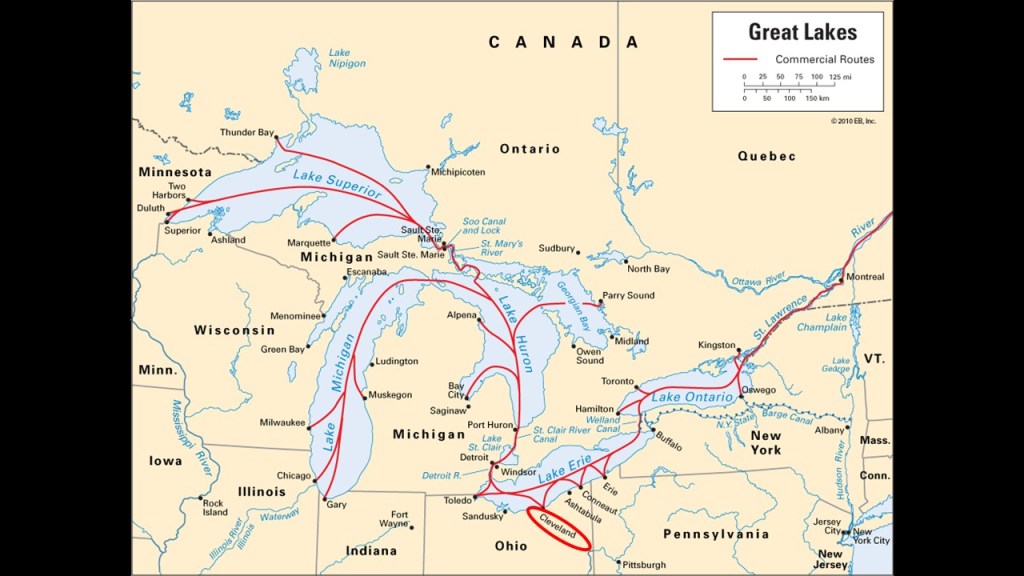
Cleveland sat at the intersection of the Great Lakes shipping network, major railroads, coal, petroleum and iron supplies, and the growing manufacturing economy of the Midwest.
Cleveland’s location on Lake Erie made it perfect for shipping raw materials like iron ore and coal, and industries like oil-refining and steel- and machinery-manufacturing boomed here.
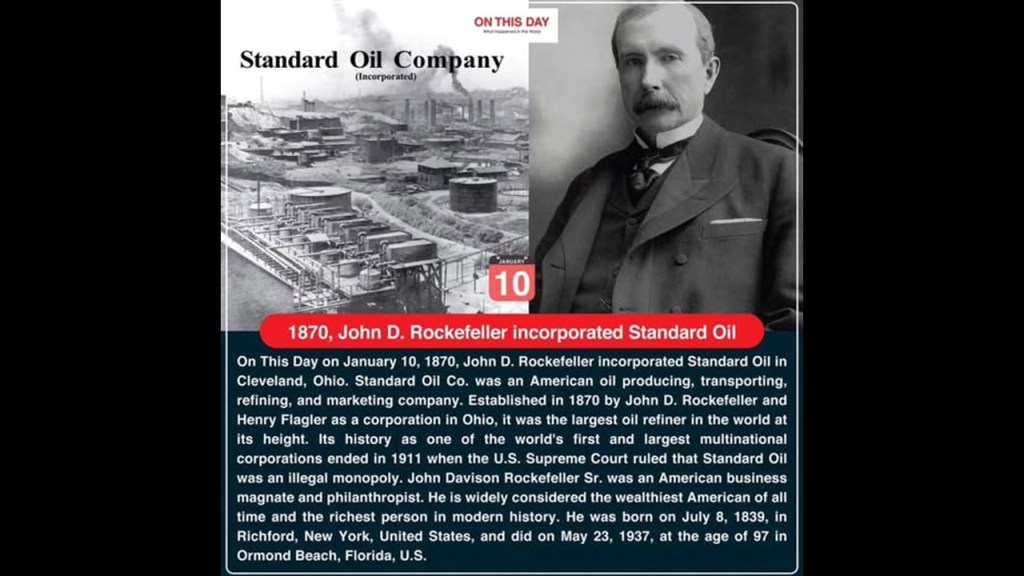
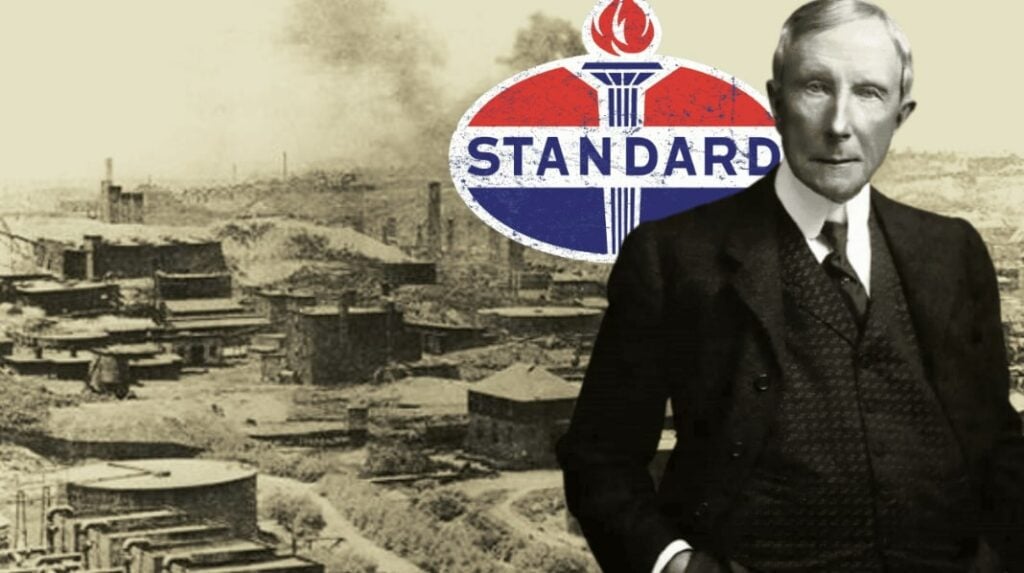
Cleveland was where John D. Rockefeller established Standard Oil in 1870, which transformed the city into a major oil refining hub.
The establishment of Standard Oil was one of the most consequential events in American Industrial history, and marked the beginning of the remarkable business empire built by John D. Rockefeller and his associates.
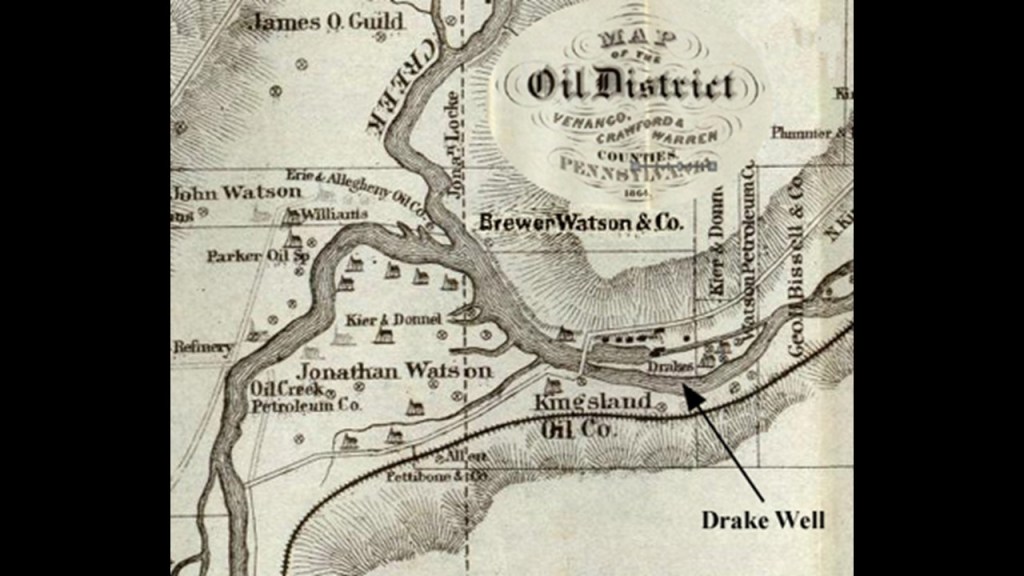
Standard Oil helped transform the United States into a global and commercial power just a few short years after the enormous oil boom in western Pennsylvania started after an oil well was successfully drilled by Edwin Drake in 1859 in Titusville, Pennsylvania.
For this reason, Titusville is called the Birthplace of the Oil Industry, and for a number of years this part of Pennsylvania was the leading oil-producing region in the world.
In the early years, the petroleum industry was booming, but the industry was chaotic and unorganized.
Interesting to note that the American Civil War took place from 1861 to 1865 in the years between 1859 when the oil boom started and 1870, when Standard Oil was established.
We are told that the American Civil War was a formative period for the petroleum industry, and actually expanded enormously during the war and laid the economic, industrial and transportation foundations for the Standard Oil Company.
Oil production increased dramatically, from an estimated 4,500 barrels/year in 1859 to 3-million barrels in 1862, resulting from new wells being drilled and wooden derricks were appearing throughout the countryside, and fortunes were being made by landowners, drillers, speculators, and refiners.
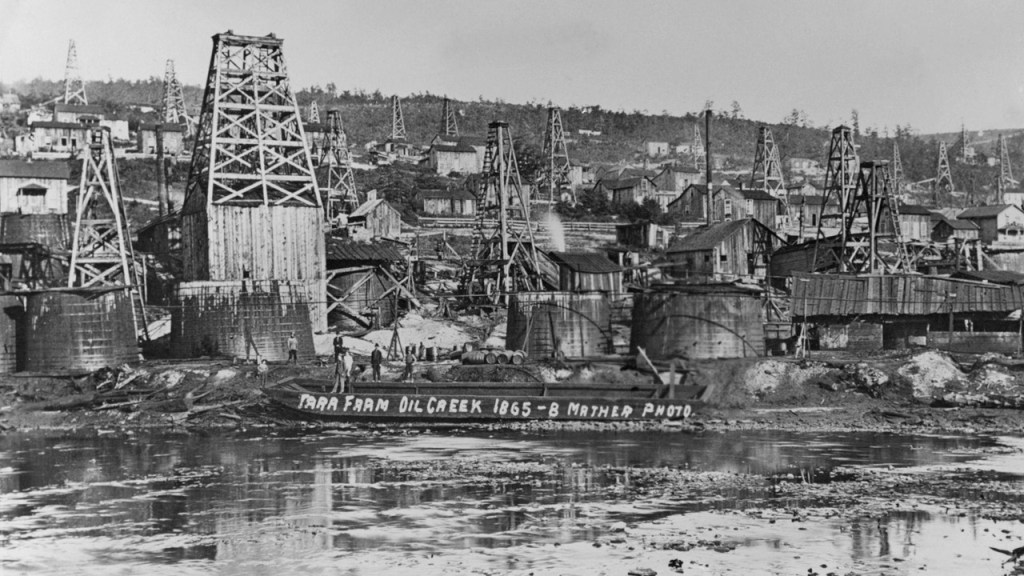
Kerosene was the most important petroleum product and was increasingly replacing traditional lighting fuels like whale oil.
It was used in all manner places, including but not limited to: homes and businesses; factories and workshops; railroad stations and facilities; hotels and commercial establishments; and military installations and hospitals, and also that the Union military had a massive logistical demand for lighting and lubricants.
During this time in our historical narrative, coal remained central to industrial and railroad operations and horses were important to transportation, but kerosene’s growing civilian and commercial market was particularly important to the petroleum industry’s development.
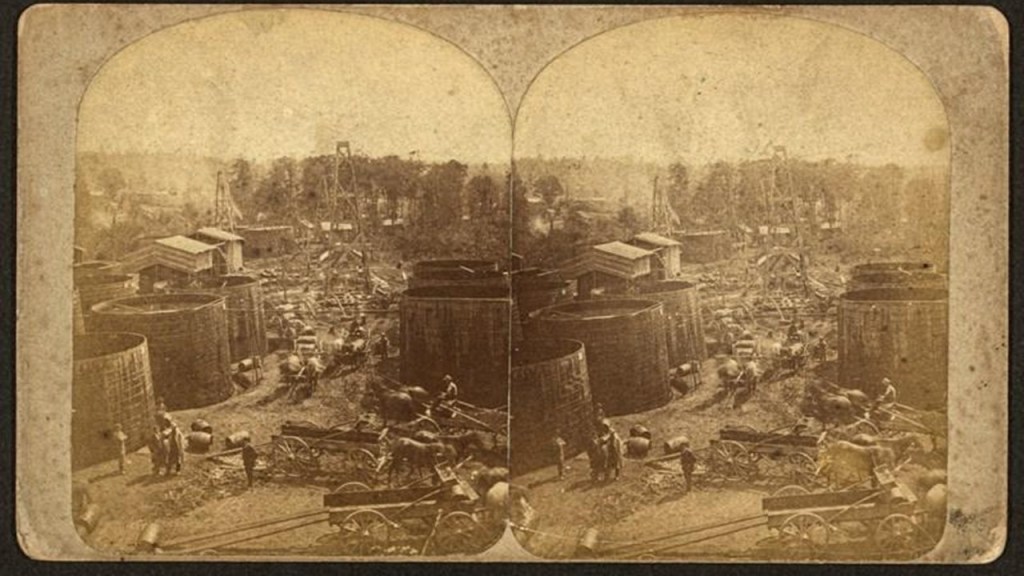
We are told that transportation was a big challenge during these early years, with oil initially being transported in wooden barrels by horse-drawn wagons over muddy roads, and by barges along Oil Creek and the Allegheny River.
Interesting to note the contrast in technology between the rudimentary means of transport shown in this historical photo with the massive steel tank in the background.
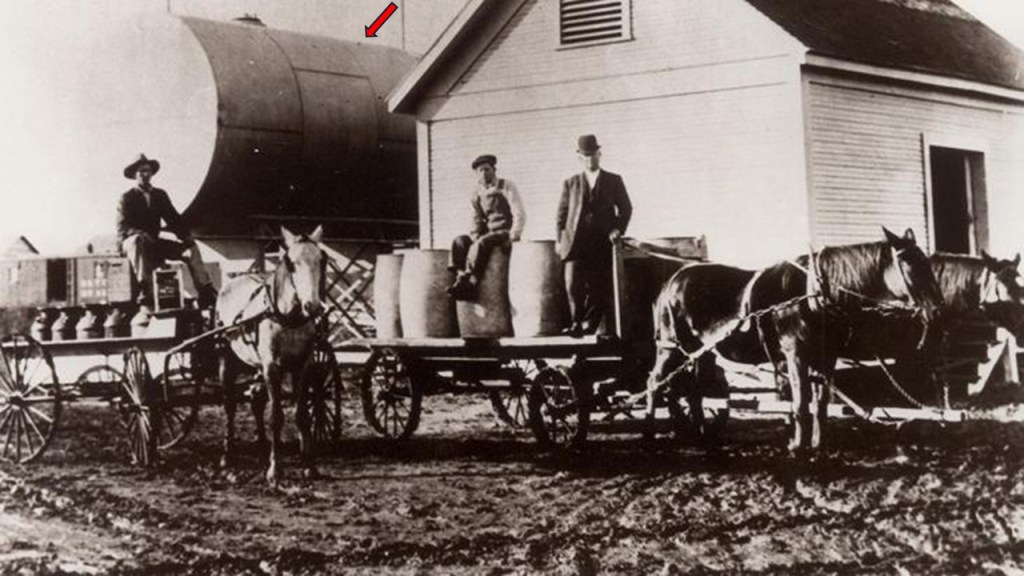
Railroads became essential to the industry, as oil-producing communities needed rail connections to transport crude petroleum to major refining centers such as Cleveland, Pittsburgh and Philadelphia.
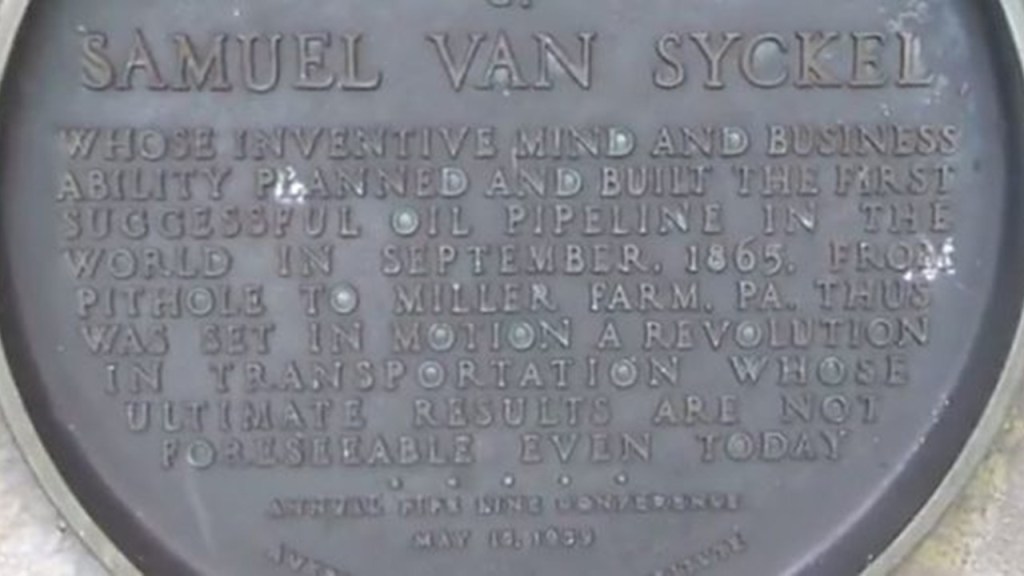
In 1865, the year the American Civil War ended, an important development took place when an early pipeline was constructed between an oil well and a railroad station a relatively short-distance away, and this demonstrated that pipelines could move petroleum more efficiently than relying entirely on wagons.
This was heralded as an important step toward the enormous pipeline networks that that would become central to the petroleum industry in America.
Another thing that happened during the American Civil War was the beginning of America’s international petroleum trade, as it was becoming increasingly attractive to foreign buyers, particularly in Europe, where kerosene was becoming important as a lighting fuel, and between 1861 and 1862, American petroleum was already being exported through Atlantic ports.
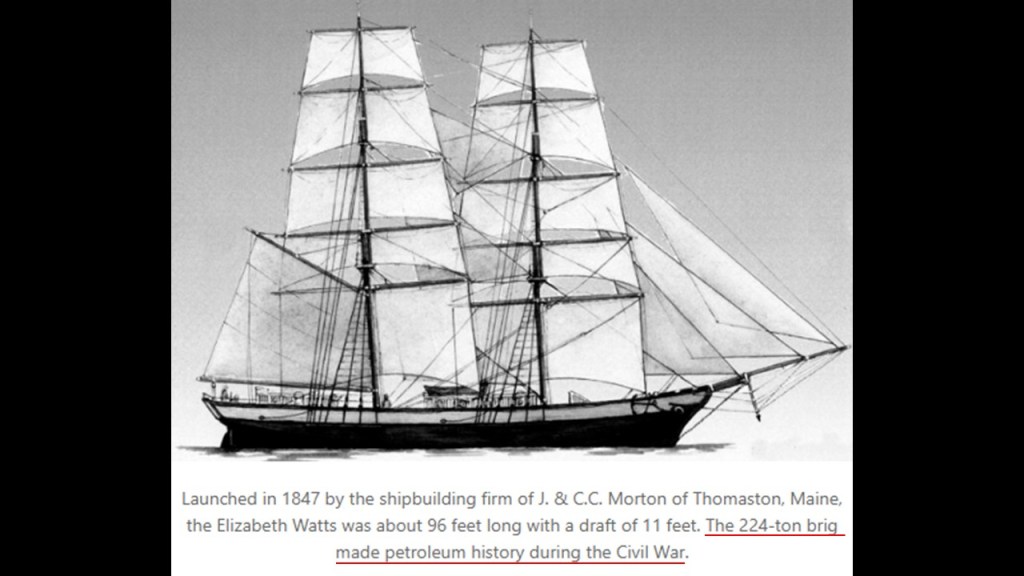
John D. Rockefeller entered the petroleum business in 1863, and this was where the Civil War connects directly to the founding of Standard Oil.
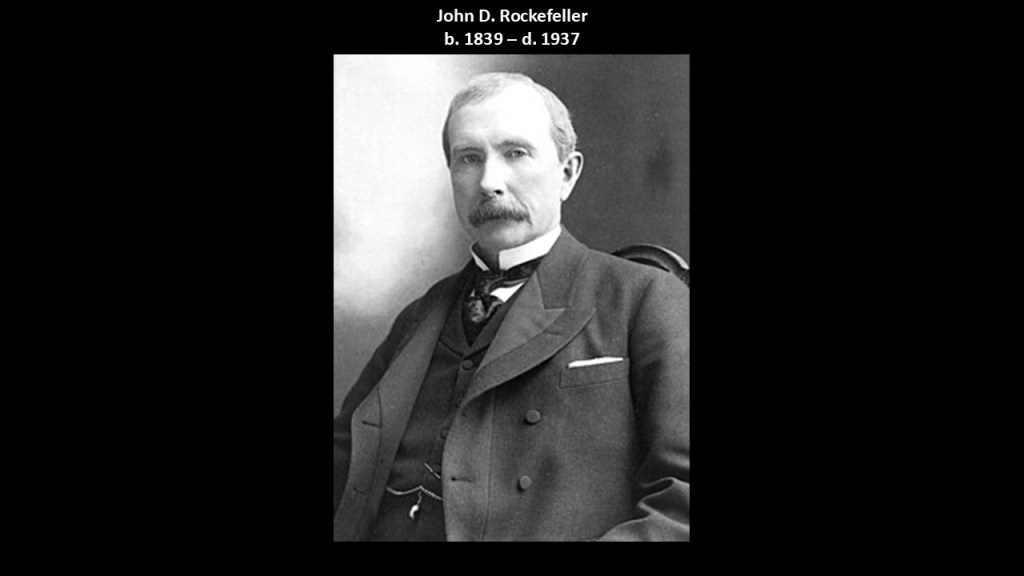
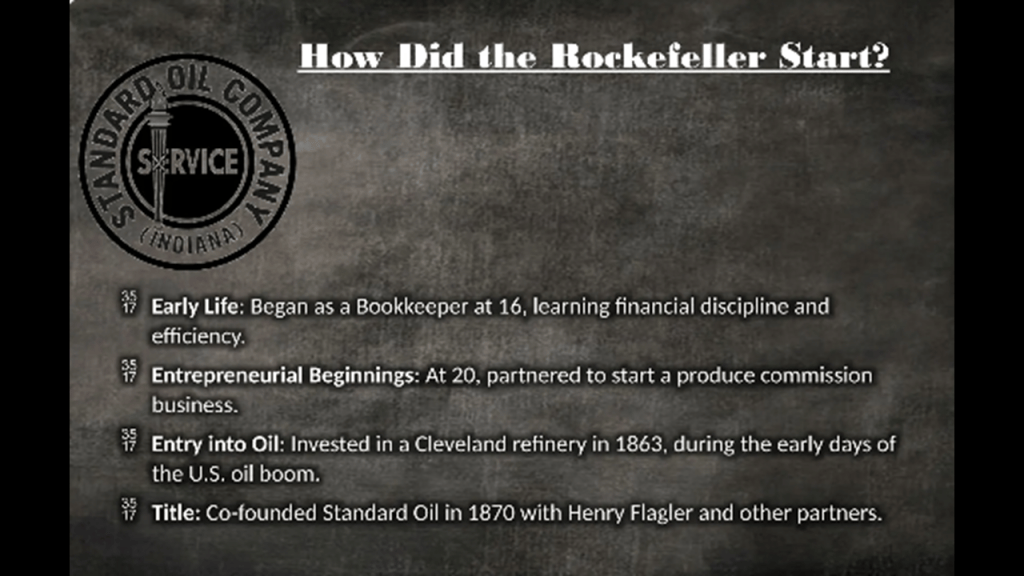
Rockefeller was a businessman in Cleveland, and in 1863, invested in petroleum refinery with partners Samuel Andrews and Henry Flagler, and the Rockefeller, Andrews and Flagler Refining Company was a direct predecessor to Standard Oil.
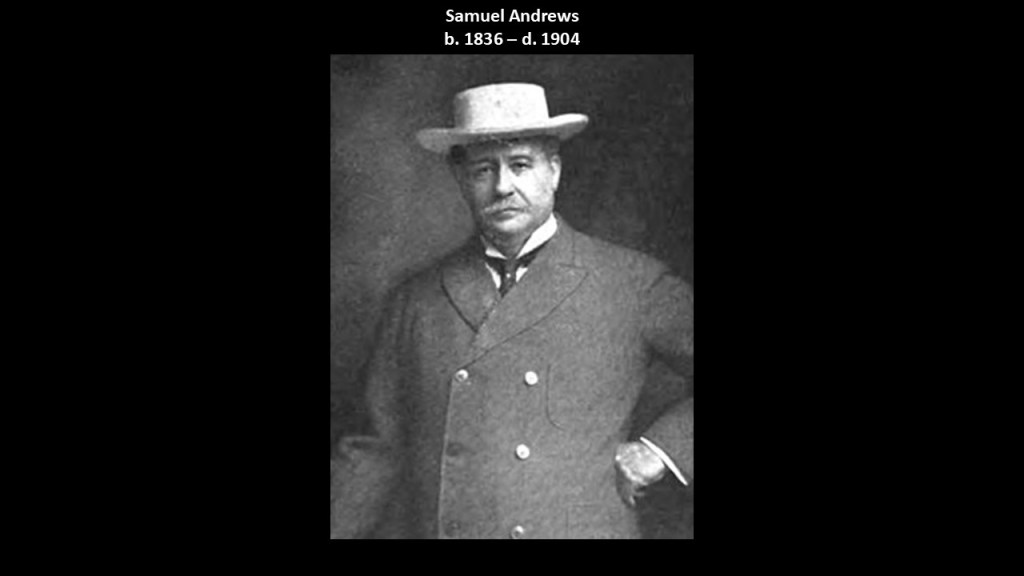
Samuel Andrews was an Englishman who immigrated to the United States in 1857, and who transitioned from a candle-maker to chemistry and petroleum-refining, and his expertise in petroleum refining was pivotal in shaping the operations of Standard Oil.
Henry Flagler was an American tycoon, and one of John D. Rockefeller’s partners in the establishment of Standard Oil in 1870, and one of Rockefeller’s most important business associates.
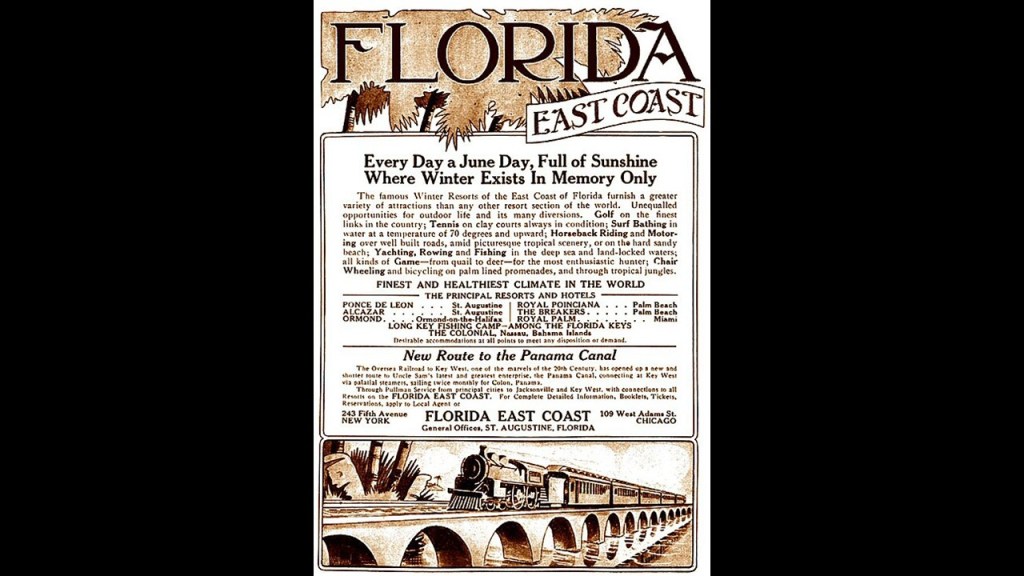
Flagler subsequently became interested in developing the railroad, resorts, industries, and communities all along Florida’s East Coast on the Atlantic Ocean, starting in 1885 when Flagler developed the Florida East Coast (FEC) Railway.
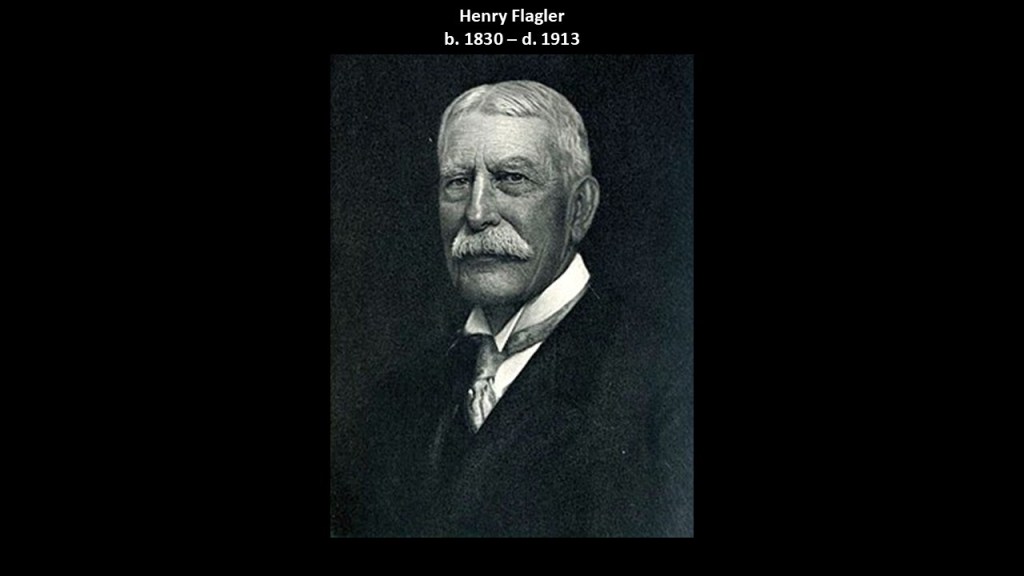
It was the preeminent rail service along Florida’s East Coast, and still is today while most of the state’s rail infrastructure is gone, having been abandoned over the years.
In our historical narrative, Rockefeller recognized that refining was more predictable and profitable than drilling for oil, which was speculative, so he began focusing on the refining business during the Civil War.
In 1865, he bought out his original refinery partners and took control of the operation, which helped establish the foundation of the business that eventually became Standard Oil in 1870.
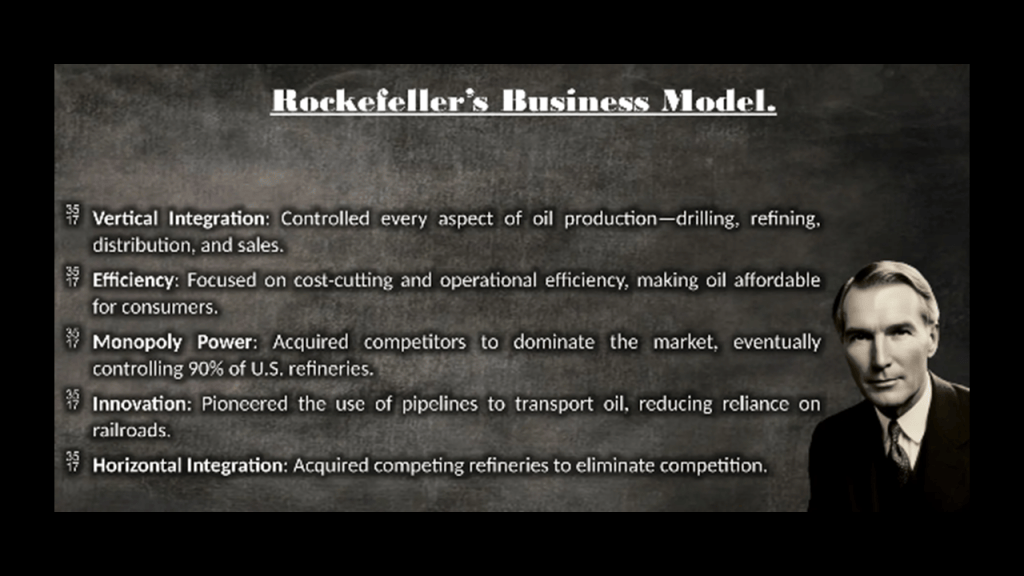
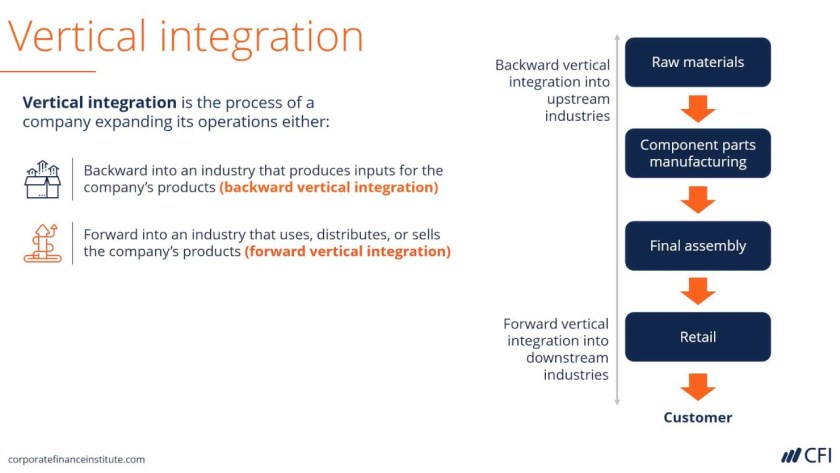
Interesting to note that Vertical Integration, listed at the top of Rockefeller’s Business Model, was used by other successful businesses of the day.
Vertical integration is where the supply chain of a company is owned by the company.
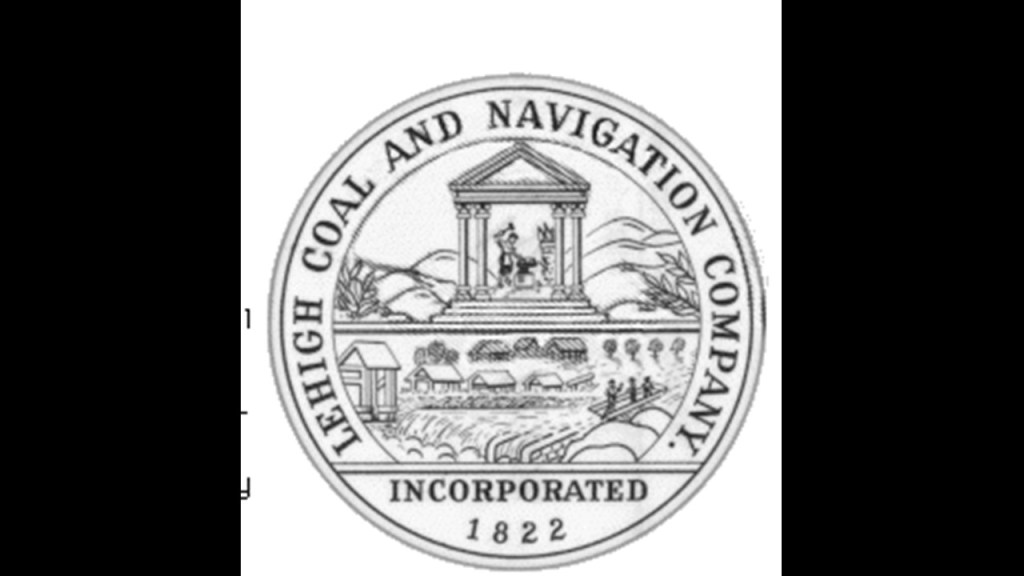
The Lehigh Coal and Navigation Company was considered to be the first vertically-integrated company in the United States, and was an anthracite coal mining and transportation company that was headquartered in Mauch Chunk, which is Jim Thorpe, Pennsylvania, today.
It operated starting 1818 and was incorporated in 1822, dissolved in 1964, and known for having an early and influential role in the American Industrial Revolution.
It controlled the anthracite coal, the transportation system used to move the coal, and much of the infrastructure necessary to get the coal to market.
This company also played a major role in the industrial development of eastern Pennsylvania.
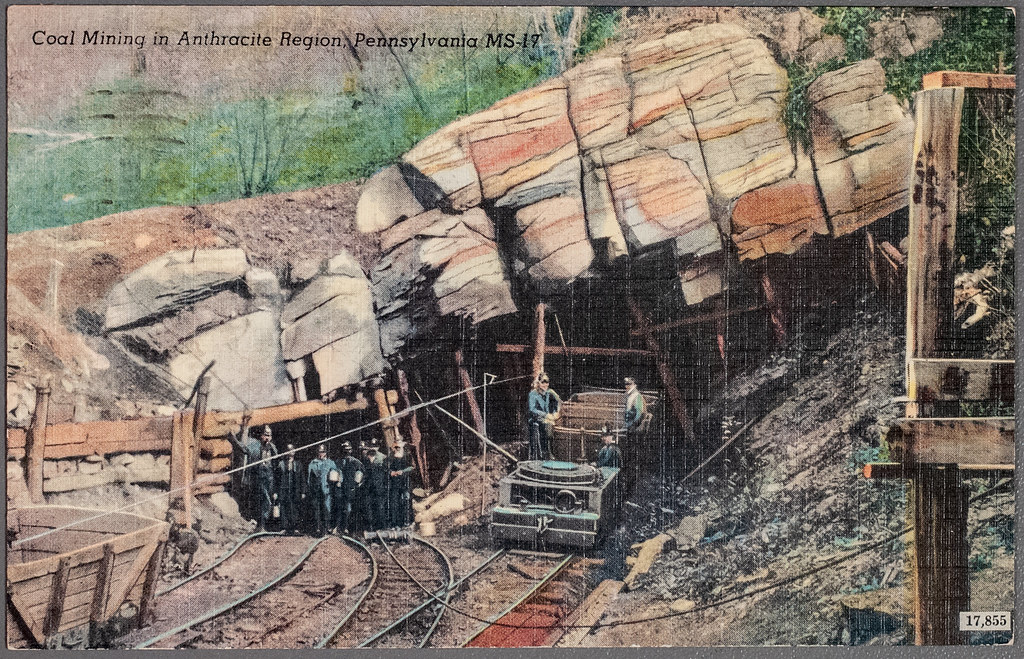
Anthracite coal, the purest form of coal, was first mined in Wilkes-Barre in Pennsylvania in 1775, and we are told that it fueled urban development in the region, resulting in a string of towns, industries, mines, roads and rail-lines to the south.
With regards to the petroleum industry, by the time the Civil War ended in 1865, it had already become an important part of American industrial development, and Rockefeller had entered the business, established his refining business in Cleveland, and positioned himself to take advantage of the industry’s expansion, and he incorporated Standard Oil five-years later.
Cleveland was particularly attractive because of its railroad connections, proximity to the Pennsylvania oil fields, and access to Great Lakes transportation.
The relationship between Cleveland’s railroad network, the Pennsylvania oil fields, and Rockefeller’s refineries is what allowed Rockefeller to build a petroleum empire.
Cleveland’s railroad connections made it possible to transport crude oil into Cleveland, refine it there, and ship the finished products to customers throughout the country and overseas.
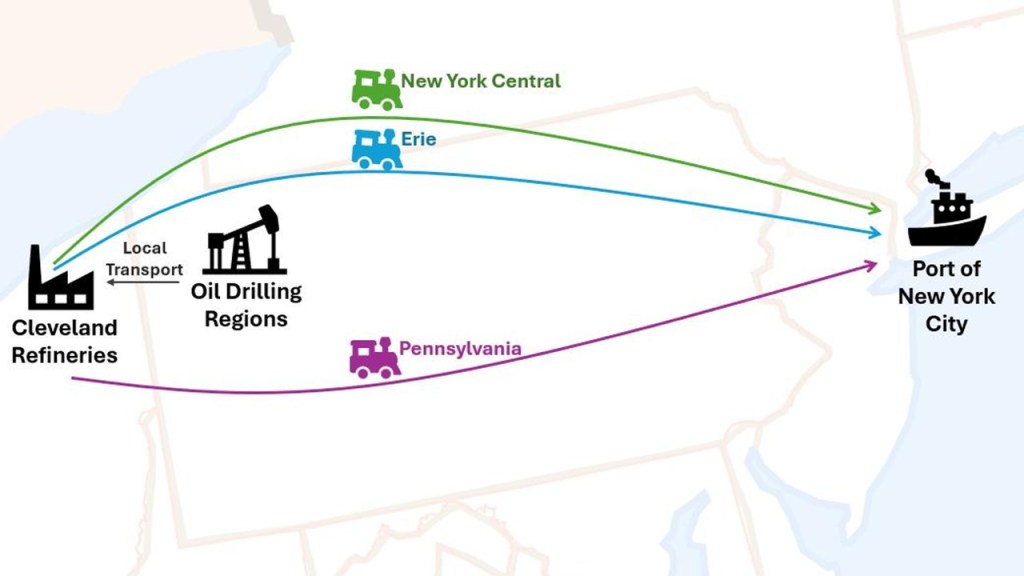
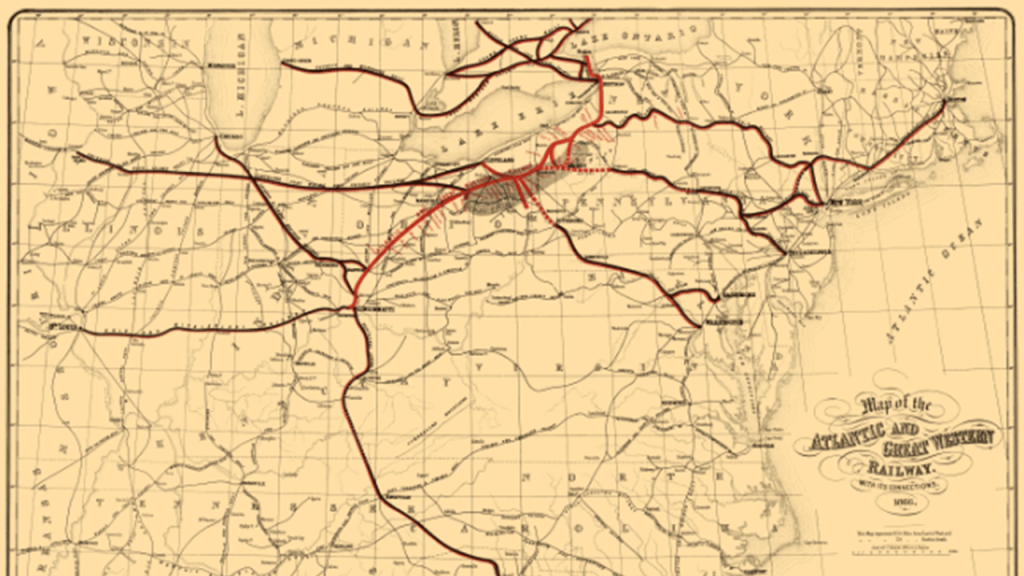
Three railroad interests were particularly important in extending their networks into the Pennsylvania oil-producing region: the New York Central Railroad; the Erie Railroad; and the Atlantic and Great Western Railroad.
The New York Central Railroad and its associated Lake Shore connections provided a major east-west transportation corridor along Lake Erie, connecting Cleveland with Buffalo and New York City.
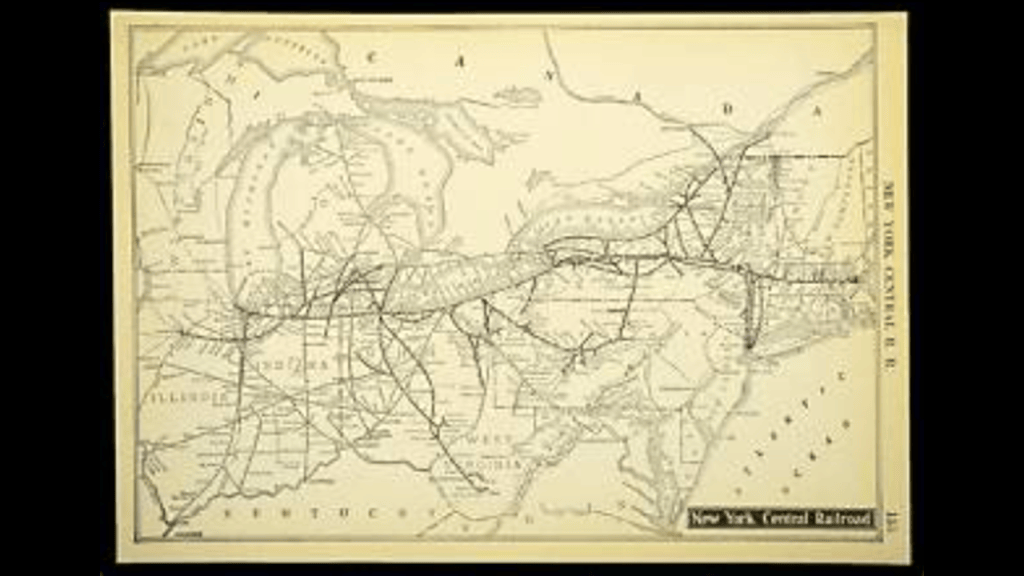
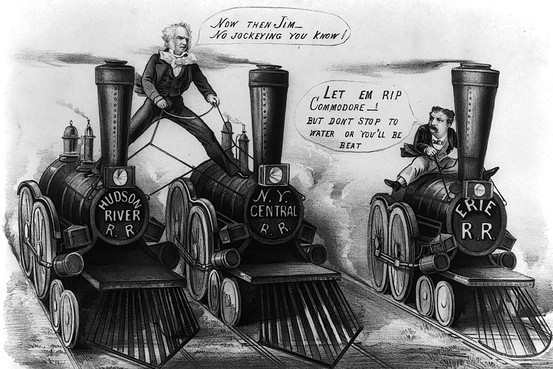
Staten Island-born Cornelius Vanderbilt got his start in regional steamboat lines and ocean-going steamships, and from there got into the railroad business.
He bought control of the Hudson River Railroad in 1864; the New York Central Railroad in 1867; the Lake Shore and Michigan Southern Railroad in 1869; and the Canada Southern Railway in 1876.
He consolidated his two key lines into the New York Central and Hudson River Railroad in 1870, the same year John Rockefeller established Standard Oil, becoming one of the first giant corporations in the history of the United States
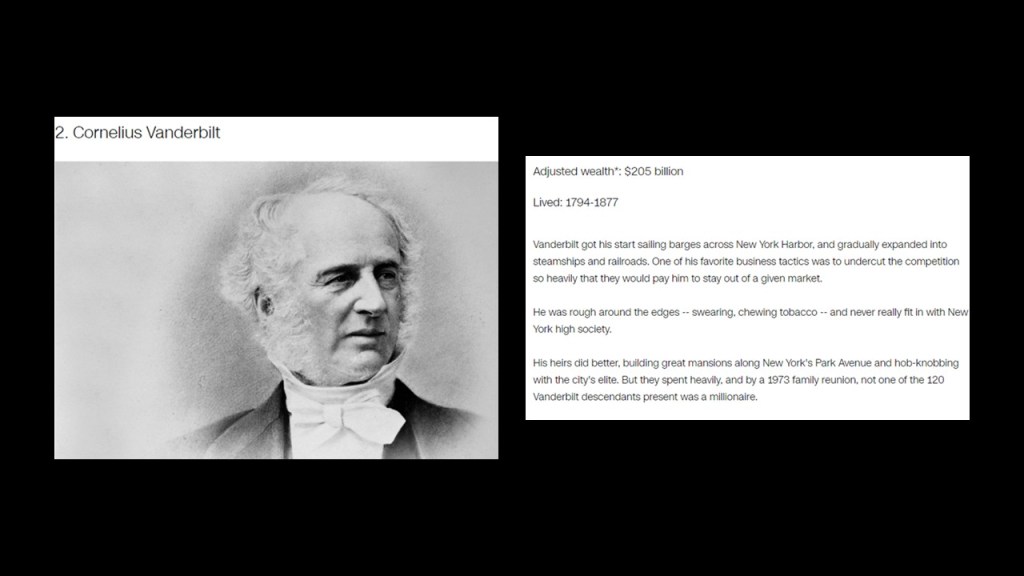
According to CNN Business, Cornelius Vanderbilt was the second-richest American in history, with an adjusted wealth of $205-billion.
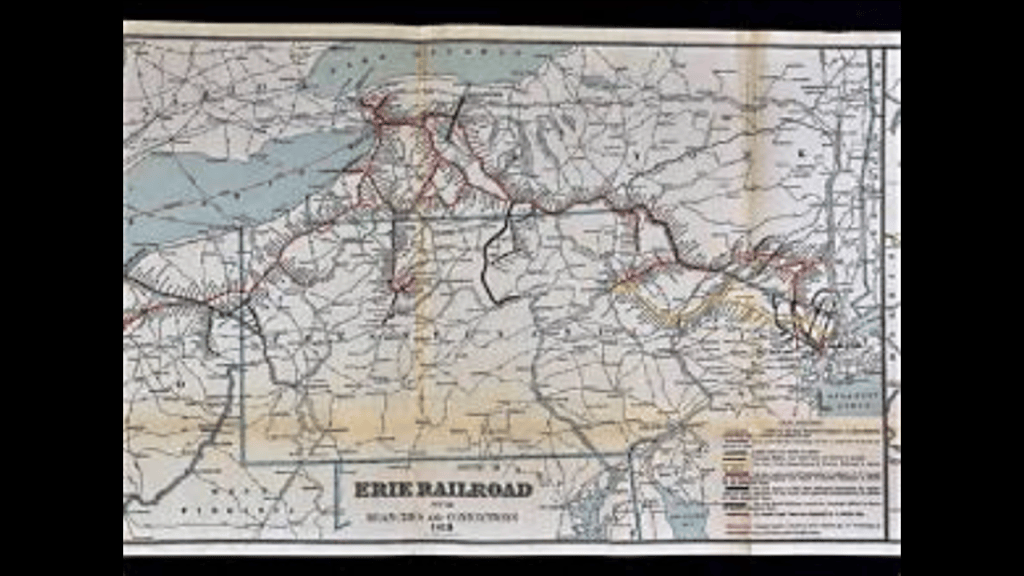
The Erie Railroad provided another important route across New York State, connecting the oil-producing regions with eastern markets.
And the Atlantic and Great Western Railway provided a connection between Cleveland and Pennsylvania’s oil-producing region through its network in Ohio and Pennsylvania.
Besides the railroad connections, Cleveland offered other advantages that made it attractive to petroleum refiners.
It was also a major Great Lakes port, and finished petroleum products could be shipped via lake vessels to other Great Lakes communities and western markets.
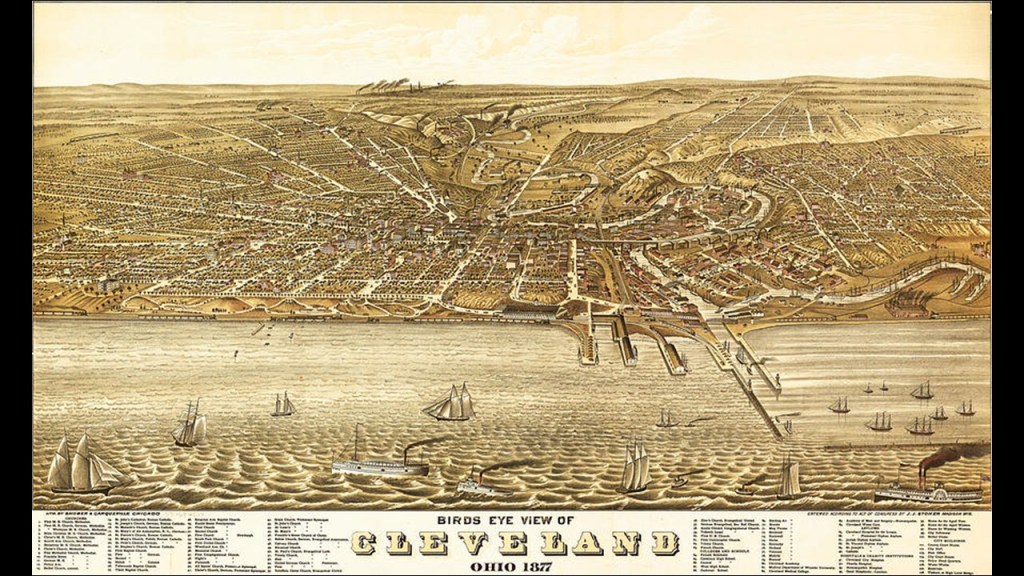
This is the graphic of the “1877 Birds Eye View of Cleveland,” showing a remarkably built-out city just seven-years after the founding of Standard Oil and twelve-years after the end of the American Civil War in our narrative.
By the early 1870s, Standard Oil was obtaining substantial rebates and other shipping concessions from major railroads who were competing for petroleum traffic.
As time went on, Standard Oil continued to benefit from special railroad arrangements, and transportation advantages like these helped Rockefeller acquire additional refineries and expand his control of the industry.
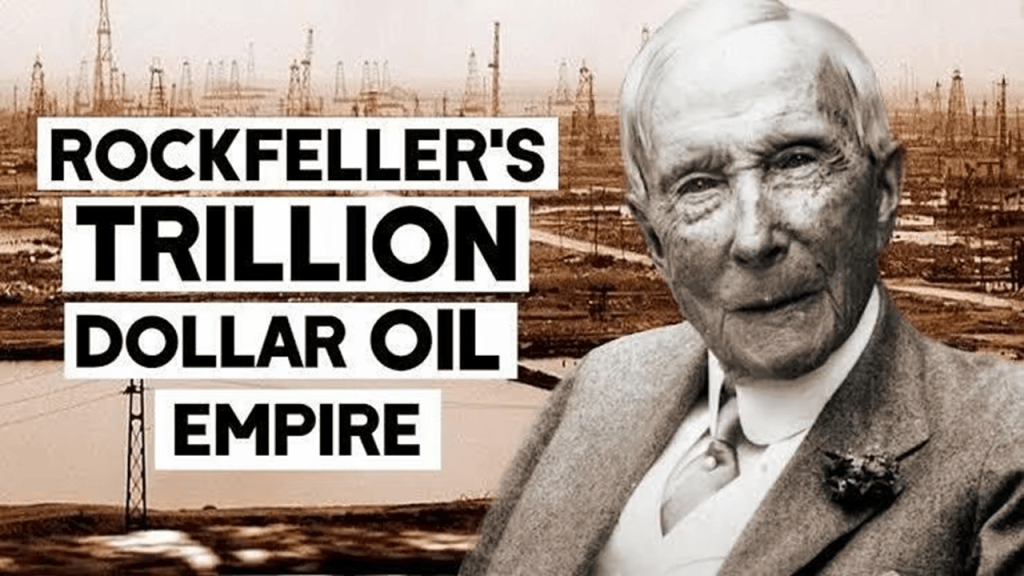
John D. Rockefeller’s wealth soared as kerosene and gasoline grew in importance.
At his peak, he controlled 90% of all oil.
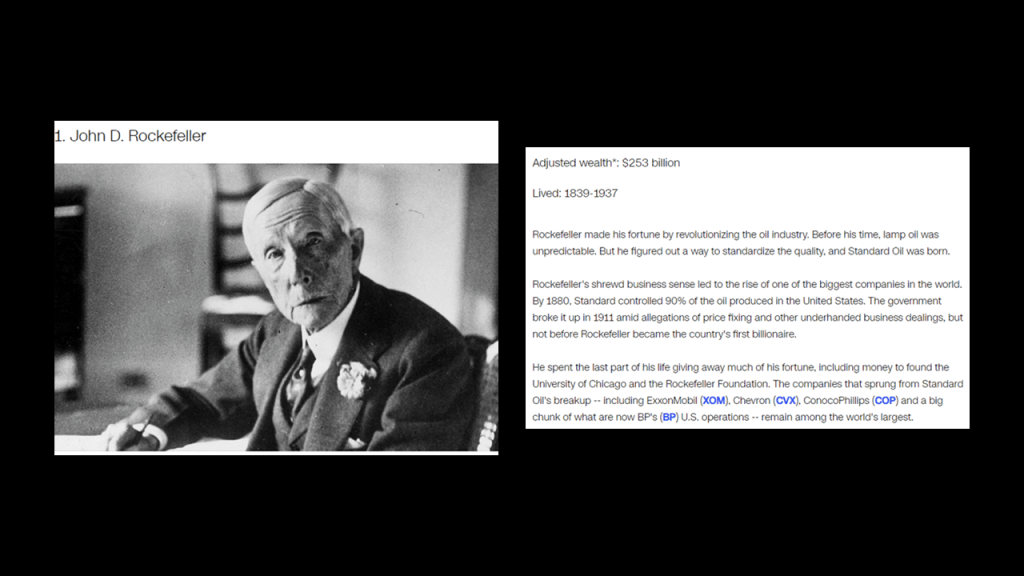
He was considered to be the wealthiest American of all time, as seen in this ranking by CNN Business, with an adjusted wealth of $253-billion.
Rockefeller Park in Cleveland was named in honor of John D. Rockefeller, who donated land for the park.
Rockefeller Park stretches for 2-miles, or 3-kilometers, along Doan Brook, and runs a northwesterly path between Shaker Heights and goes in-between the University Circle neighborhood and ends at Gordon Park on the city’s lakefront.
It is immediately adjacent to Wade Park to the southeast; and across Euclid Avenue on its northwest border.
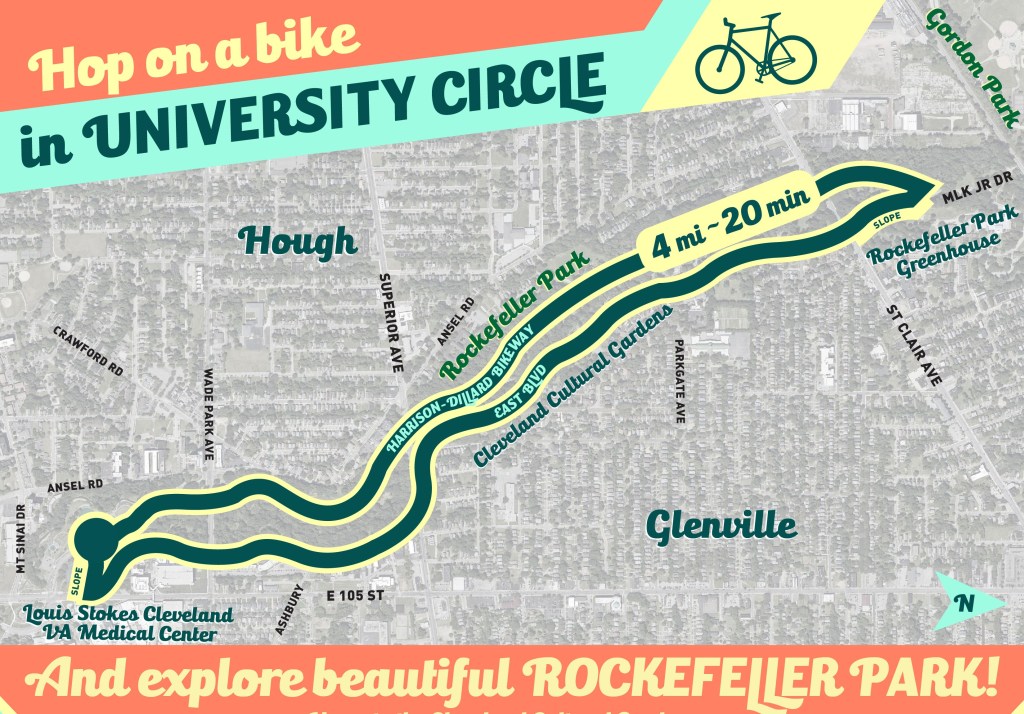
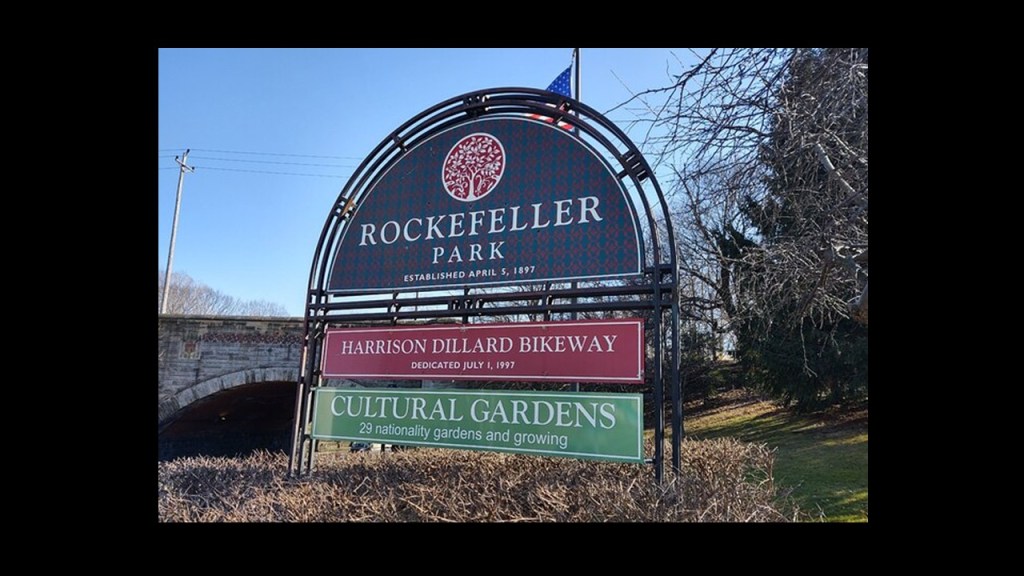
It is the largest park within city limits and was first opened to the public in 1897.
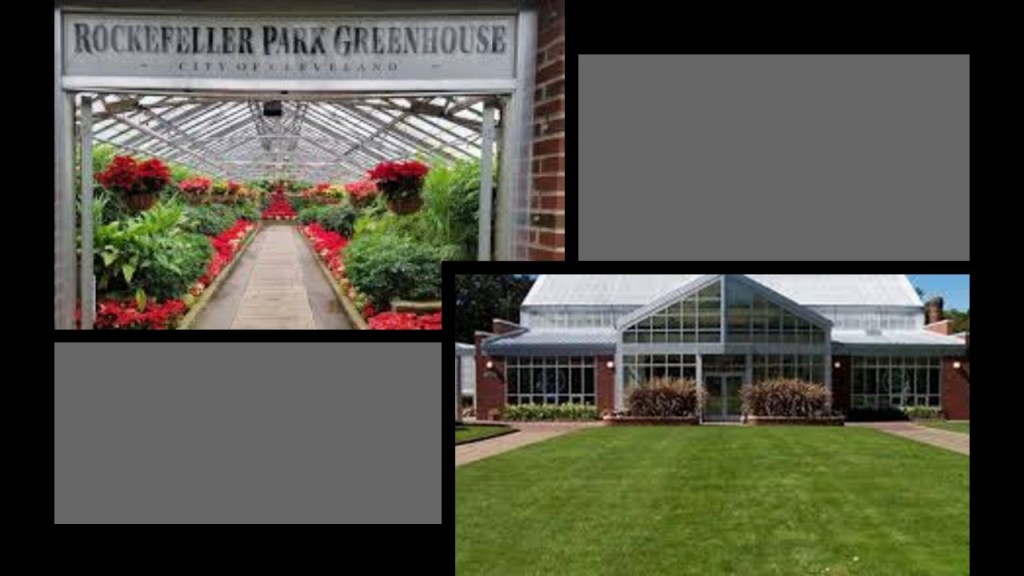
The greenhouse at Rockefeller Park first opened in 1905, and is a city-owned botanical garden and greenhouse, and hosts a diverse selection of indoor and outdoor gardens.
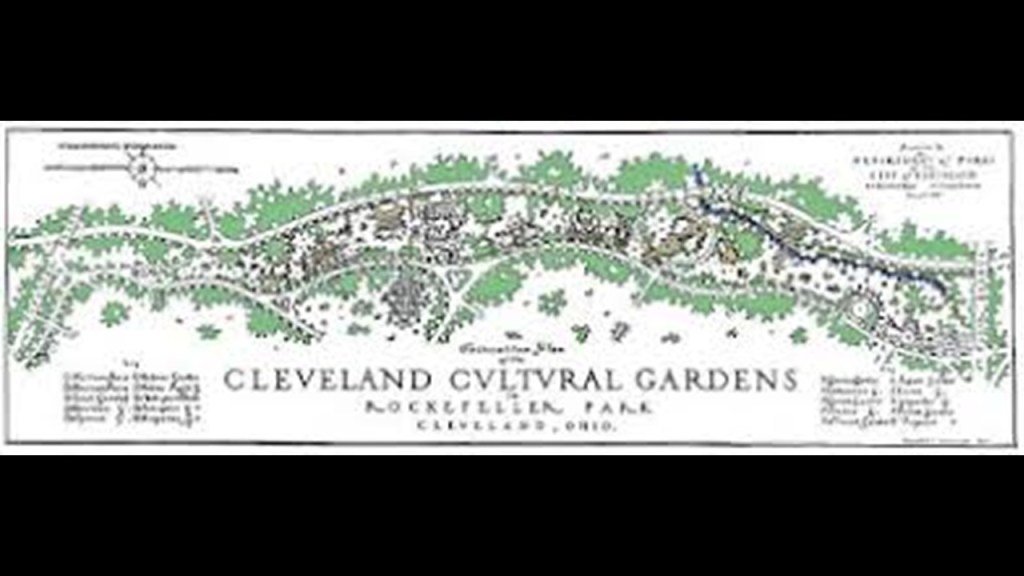
Also, the Cultural Gardens are a collection of gardens at Rockefeller Park that commemorate many of the ethnic groups who have enriched Cleveland and the United States.
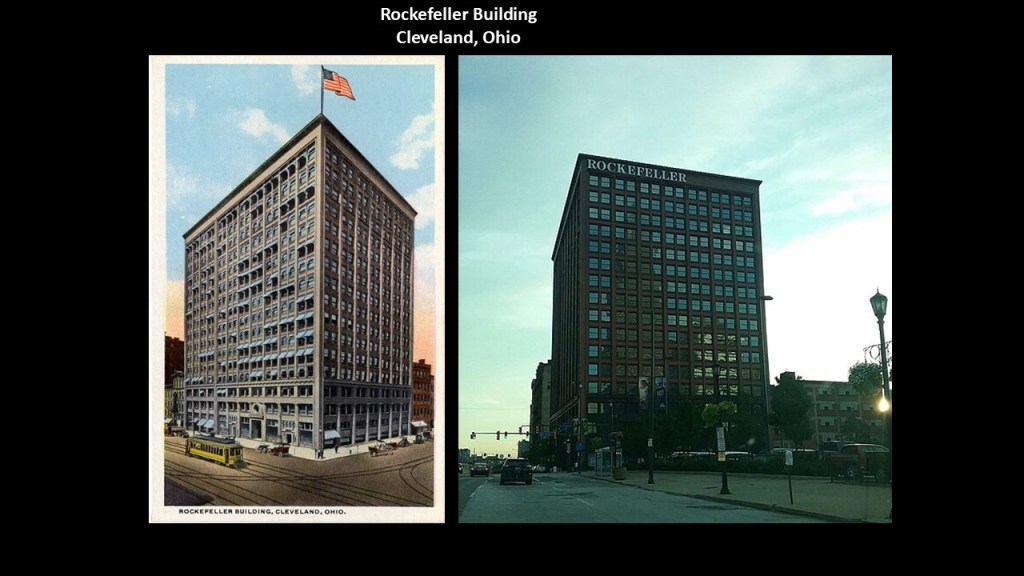
The Rockefeller Building in Cleveland was said to have been built between 1903 and 1905 at the corner of West 6th and Superior Avenue, and has displayed the Rockefeller name on the side of the building since it was first opened,
As we have already seen, John D. Rockefeller’s companies were instrumental in turning Cleveland into an industrial powerhouse.
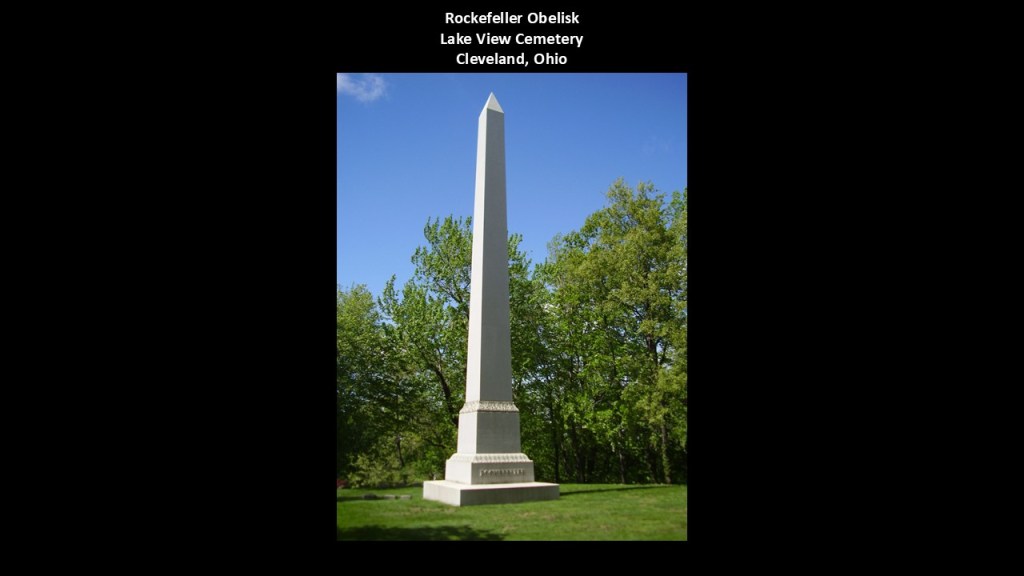
The Rockefeller Obelisk is in the Lake View Cemetery, which is on Euclid Avenue.
It is almost 70-feet, or 21-meters, -high and marks the final resting place of John D. Rockefeller, along with his wife and mother.
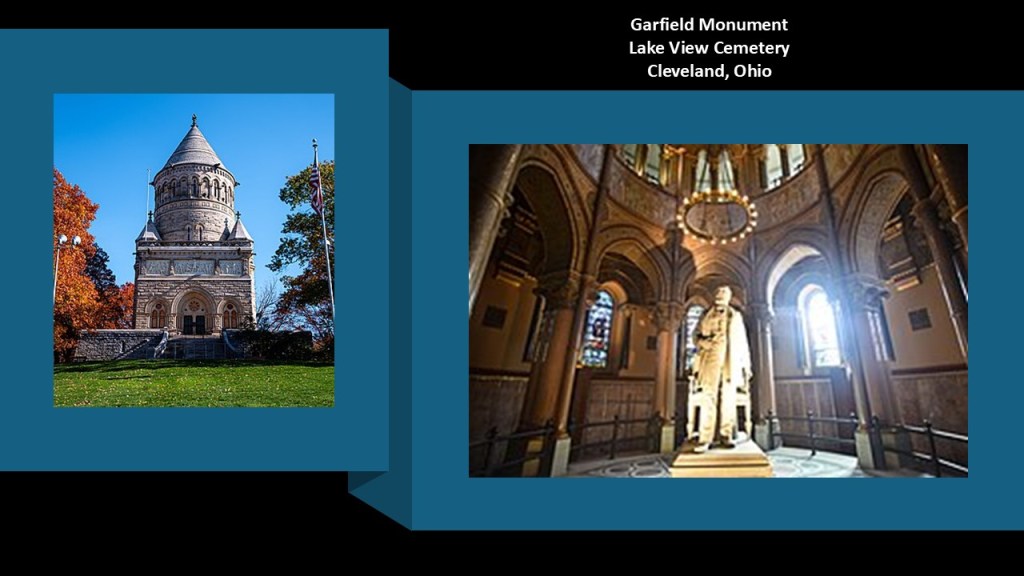
The nearby Garfield Monument is the final resting place of the assassinated American President James A. Garfield, who was shot in Washington, DC, on July 2nd of 1881 and died a couple of months later on September 19th of 1881.
It is a mausoleum in Lake View Cemetery that was said to have been constructed starting in 1885 and dedicated in 1890, and exhibits a combination of Byzantine, Gothic and Romanesque Revival architectural-styles.
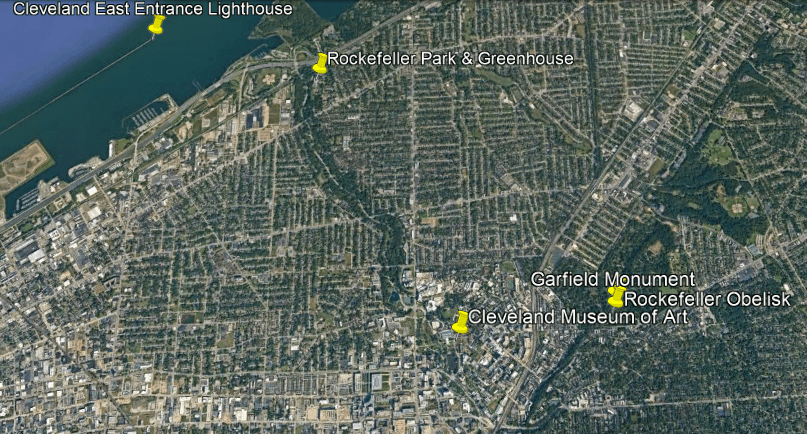
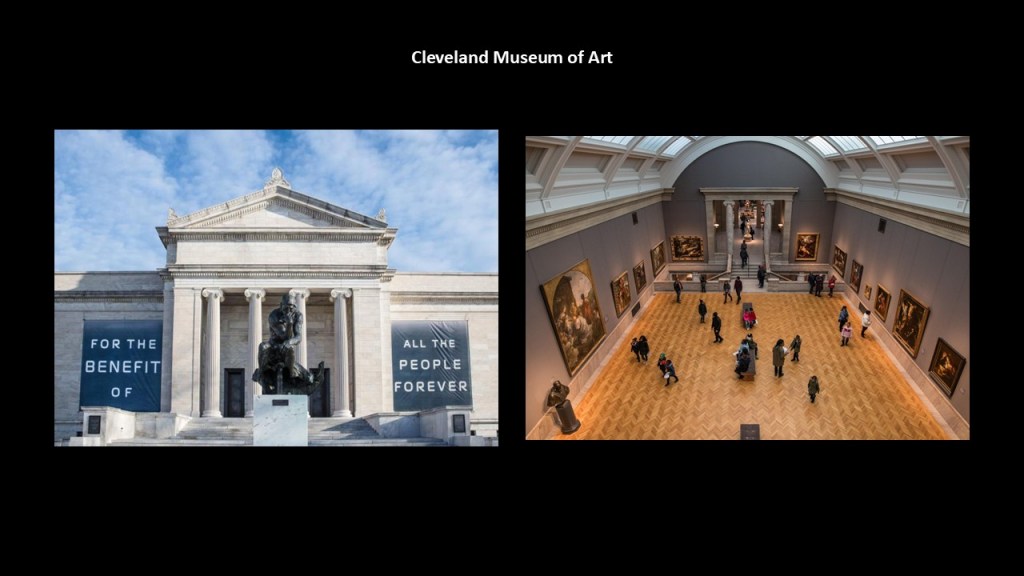
The Cleveland Museum of Art is close to the Rockefeller Obelisk and the Garfield Monument in the Lake View Cemetery.
The Cleveland Museum of Art was said to have first opened in 1916, which would have been in the middle of World War I.
We are told the original neoclassical building of white Georgian marble was designed by a local architectural firm.
So many buildings like these are proportionally much larger than the people who come to visit them.
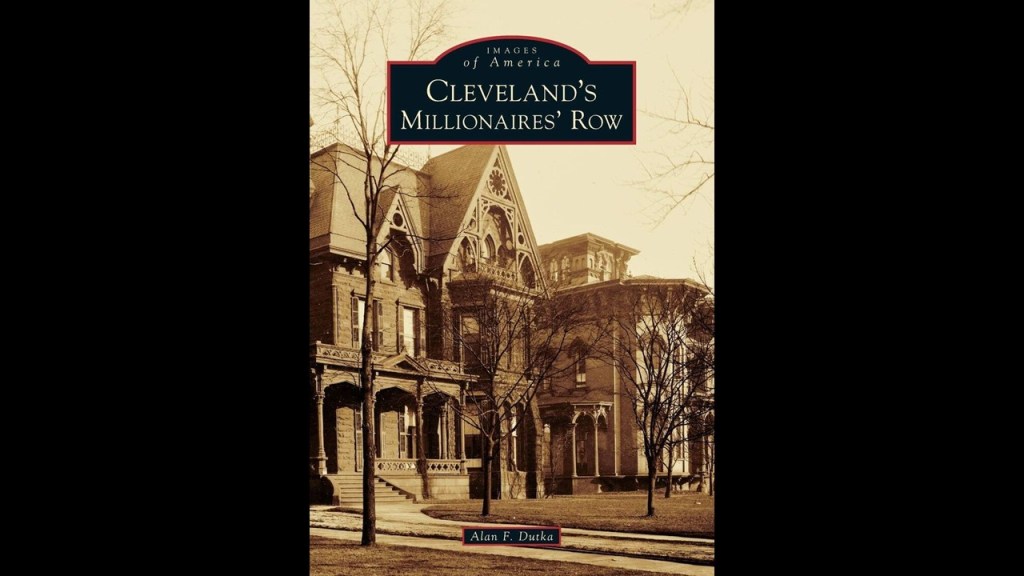
The years between 1873 to the 1930s were known as Cleveland’s Gilded Age, when nearly half of the world’s millionaires lived in Cleveland.
Euclid Avenue was known as Millionaire’s Row, and was a reflection Cleveland’s industrial history.
It was home to some of the nation’s most powerful industrialists, including, but not limited to, John D. Rockefeller, representing petroleum; Samuel Mather, Jr, representing iron ore and Great Lakes shipping; Amasa Stone, representing railroads; Sylvester Everett, a prominent financier; and Daniel Eells, a prominent banker.
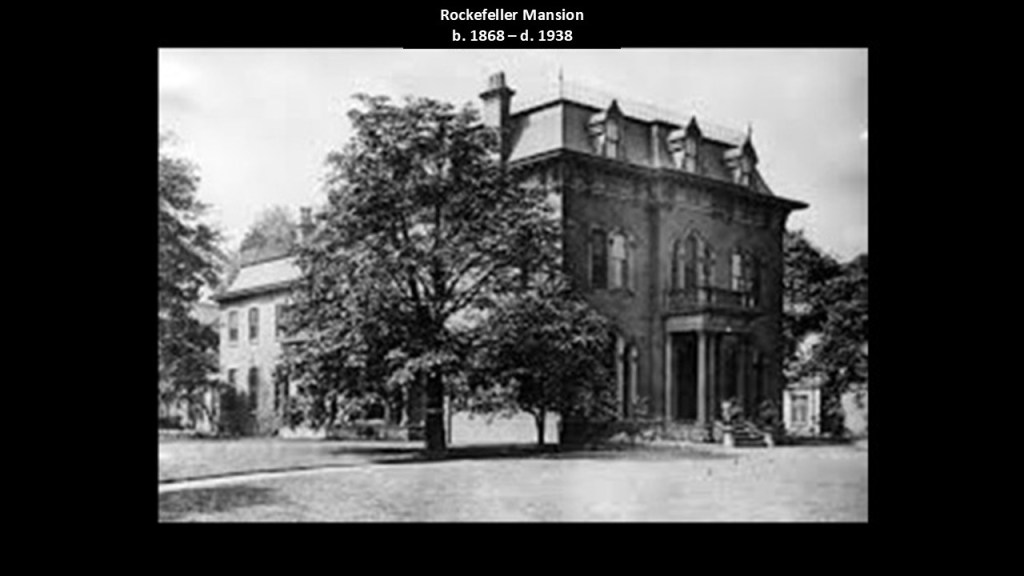
The Rockefeller Mansion in Cleveland was located at Euclid Avenue and East 40th Street, that he was said to have purchased in 1868 and where his children were born.
This mansion on Euclid Avenue was demolished in 1938, and where it was located is now part of an inter-belt highway.
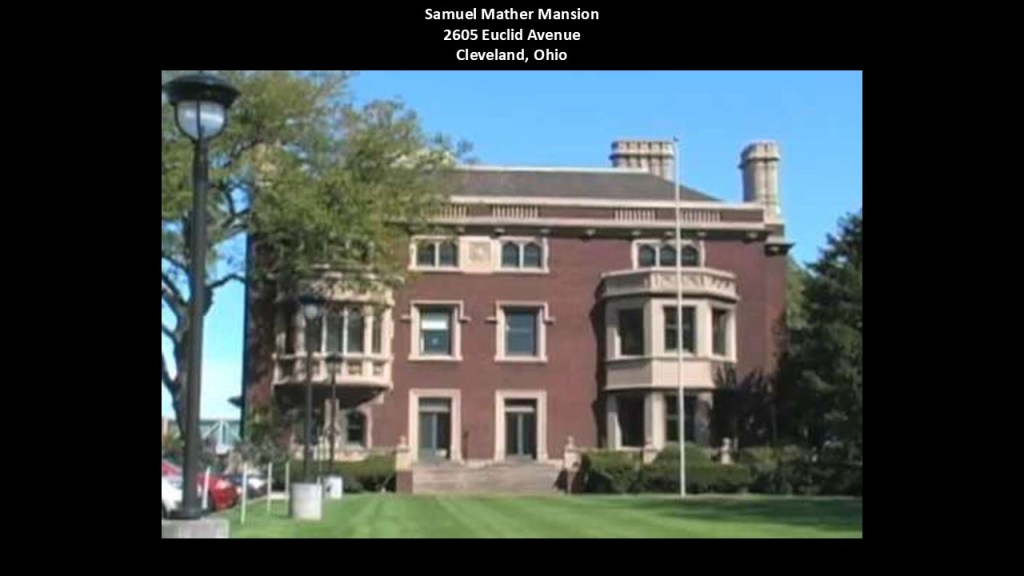
The 45-room Samuel Mather Mansion at 2605 Euclid Avenue was said to have been built between 1906 and 1910, for Samuel Livingston Mather, Jr.
In its day, it was considered the most expensive home in Cleveland.
The home has been owned by Cleveland State University since 1967, and is one of the few mansions still standing.
The Cleveland Iron Mining Company was founded in 1847 by Samuel Livingston Mather, Sr, and several associates, and chartered as a company in Michigan in 1850, after learning of rich iron-ore deposits in Michigan’s Upper Peninsula.
Soon afterwards the Soo Locks opened in 1855, which allowed for the shipping of iron ore from Lake Superior to Lake Michigan.
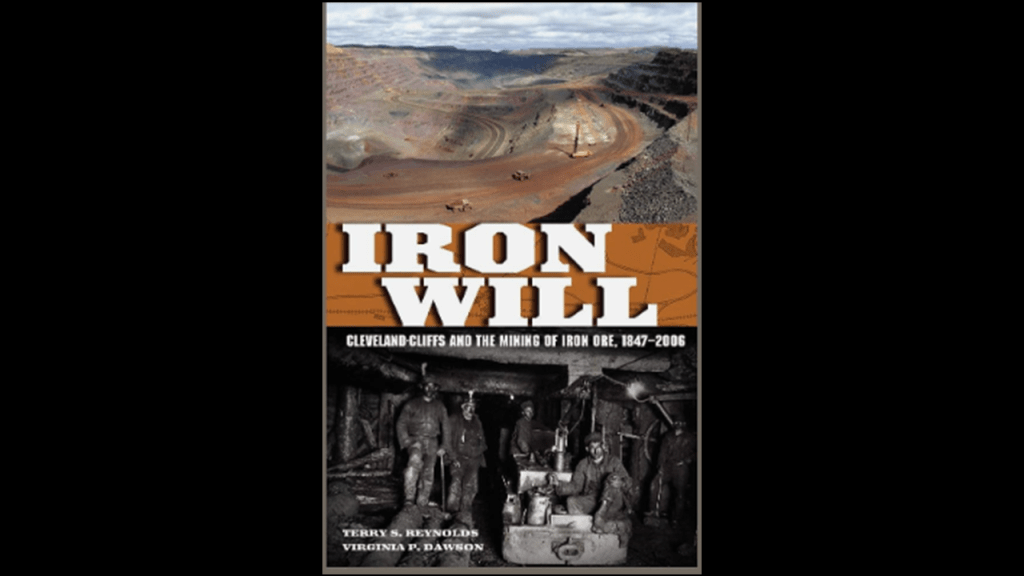
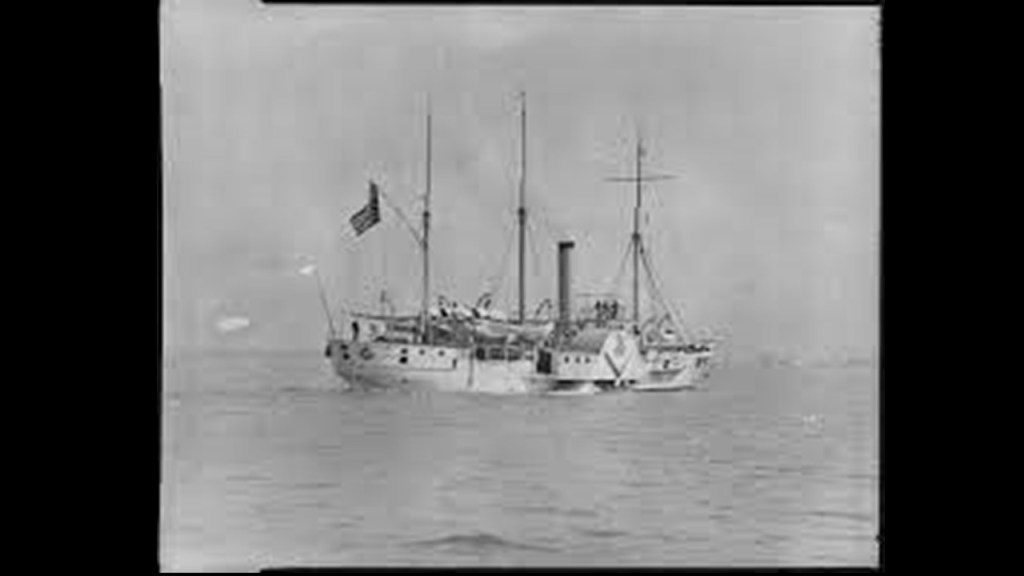
As an example of the working conditions of the time, there was a strike by miners in the Upper Peninsula Iron Ore Mines in July of 1865, after the company announced a wage cut since the American Civil War had just ended.
The miners ended up storming the mines and the town of Marquette, Michigan, looting and burning along the way.
The Cleveland Iron Mining Company requested military intervention to end the strike, and a U. S. Navy gunboat, the Michigan, and troops responded.
They were given 24-hours to go back to work, or the camp was going to be shelled.
They acquiesed, but after the Michigan left, they went back on strike.
The Michigan returned with more troops, and the miners’ strike was put down for good.
The Pickands Mather Company was formed in 1883 by James Pickand, Jay C. Morse, and Samuel Livingston Mather, Jr, the son of the founder of the Cleveland Iron Mining Company.
Pickands Mather dealt in iron ore, pig iron, and mining iron ore from two mines in the Marquette Iron Range.
The company quickly expanded into coal mining; iron ore and coal shipping; dock ownership, and the manufacture of coke and iron and steel-rolling mills.
After years of leasing and managing the freighters of other companies, Pickands Mather formed the Interlake Company, their own shipping company for lake freighter shipping in 1894.
It once had the second-largest shipping fleet on the Great Lakes in the 1910s and 1920s.
In 1992, Pickands Mather was sold to a private management group, and is still in operation as a private company.
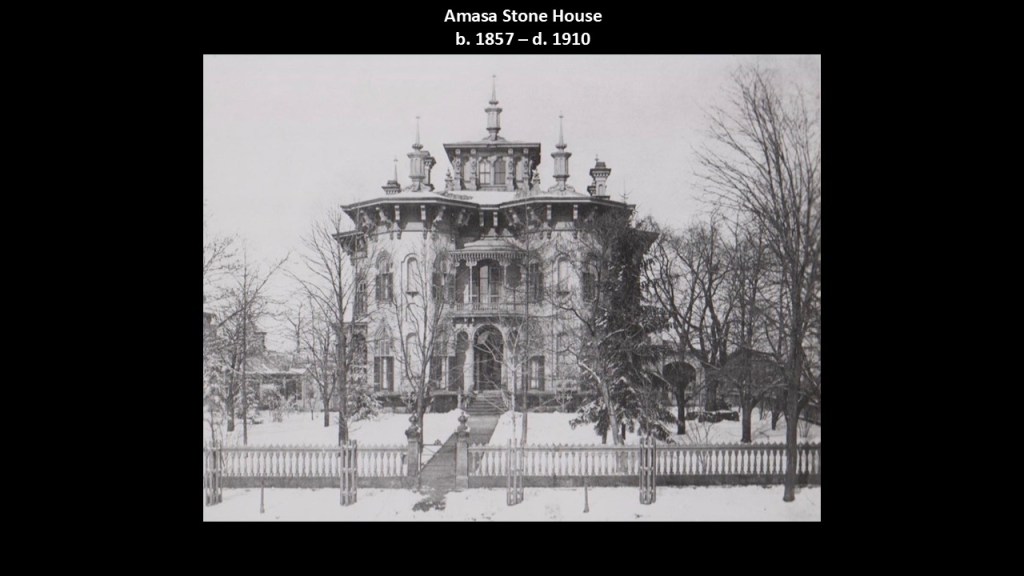
The Amasa Stone House at 1255 Euclid Avenue was said to have been completed in 1857.
Amasa Stone was a financier, railroad magnate, and bridge engineer who committed suicide in 1883 after a string of personal challenges, including the failure of one of his bridges and several of his manufacturing firms.
The Stone House stayed in the family until it was demolished in 1910 to make way for a department store building.
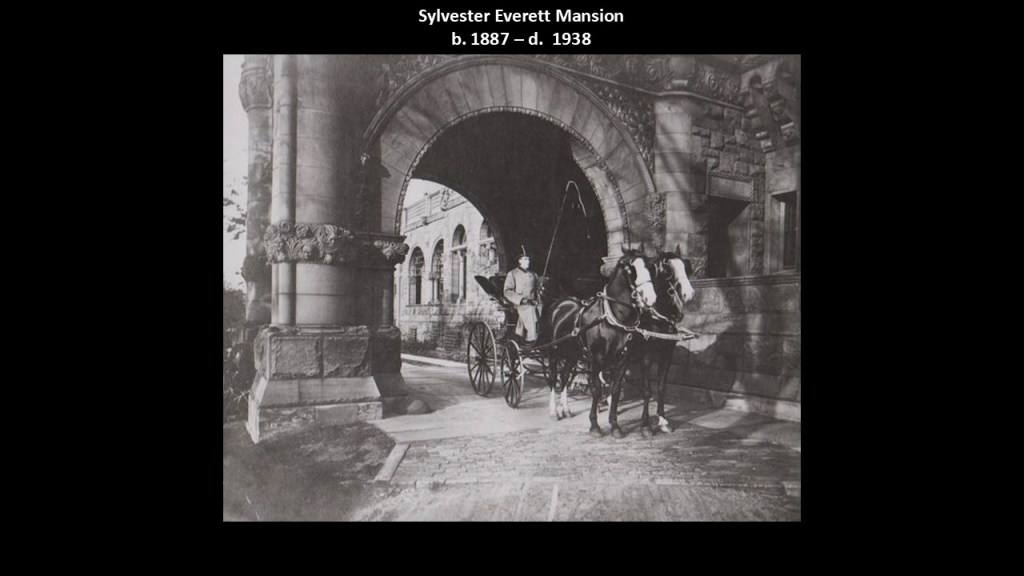
The Sylvester Everett Mansion was on the corner of Euclid Avenue and East 40th Street.
Sylvester Everett was a prominent financier who was personal friend of President James Garfield, and involved in significant projects like the Union Pacific Railroad and early electric streetcar systems, like Erie in Pennsylvania and Akron in Ohio.
His mansion said to have been completed in 1887 and demolished in 1938.
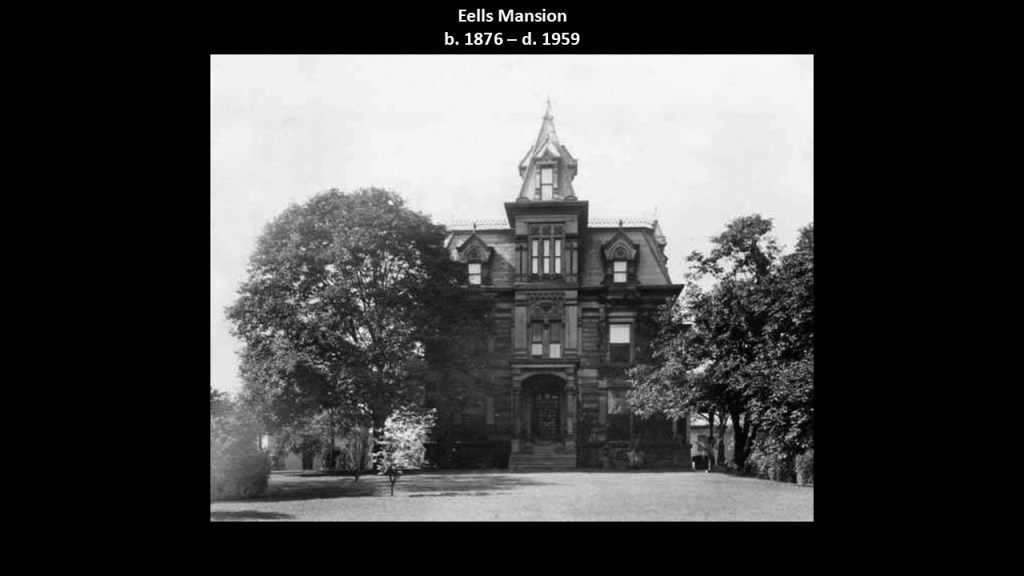
The Eells Mansion was said to have been built at 3201 Euclid Avenue in 1876 for prominent banker Daniel Eells and his wife.
Eells was president of the Commercial National Bank, and accumulated a fortune of $3-million by 1885.
We are told the Eells Mansion was demolished in 1959 to make room for the Sahara Motor Hotel, marking the decline of the once prestigious Millionaire’s Row, which was transformed over time from an elite residential boulevard into a commercial corridor.
The Cleveland Industrial Exposition of June of 1909 happened only 39-years after the establishment of Standard Oil in 1870, and its slogan was “Onward, Cleveland, Onward!”
It took place between June 7th through 19th of 1909, and was a major public showcase of the city’s manufacturing power.
It was organized by the Cleveland Chamber of Commerce to show that Cleveland was not just a city of steel-making and heavy industry but also one that was producing an extraordinary range of machinery and industrial technologies.
Cleveland was entering a period of tremendous growth, and was soon widely known as the nation’s Sixth City, behind New York, Chicago, Philadelphia, St. Louis and Boston.
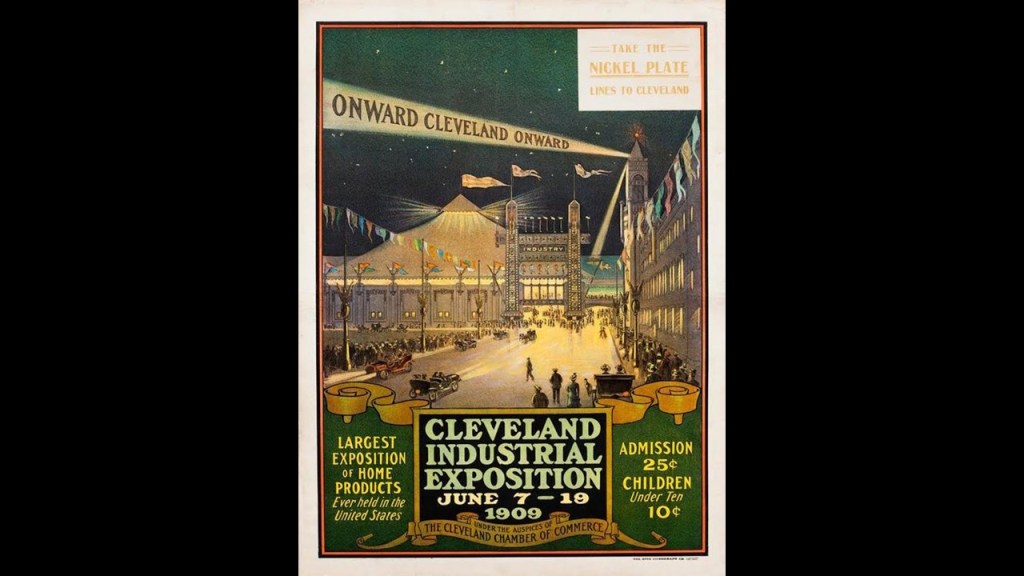
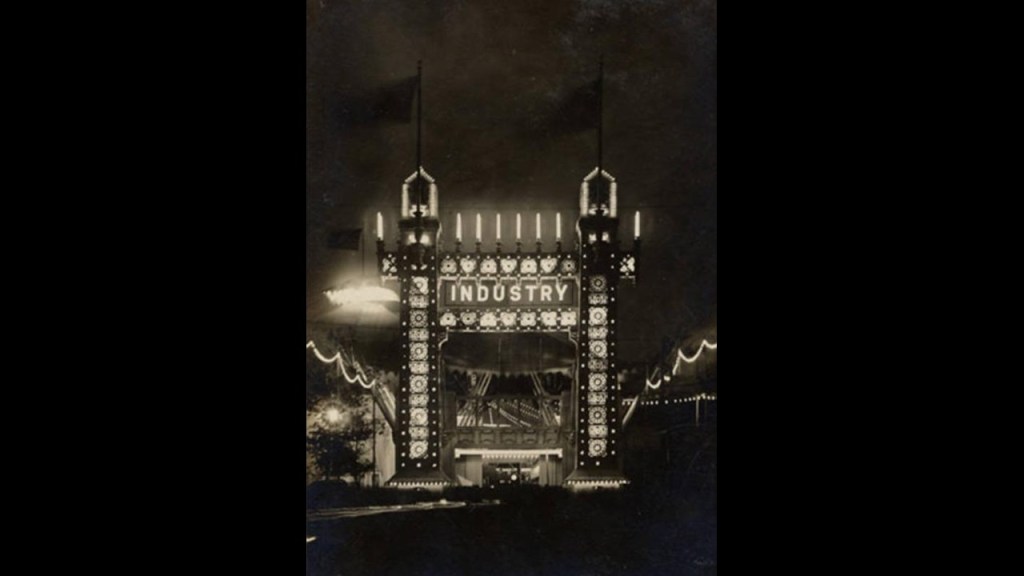
The main venue was said to be a temporary structure that was constructed for the event.
This was the main entrance to a tent-like, 57,000-square-foot, or 5,295-square-meter, wide-open space that had a canvas roof supported by tall masts and cables.
Taking only 47-working days to construct the exposition’s main space, there were more than 20,000 electric lamps installed throughout the location.
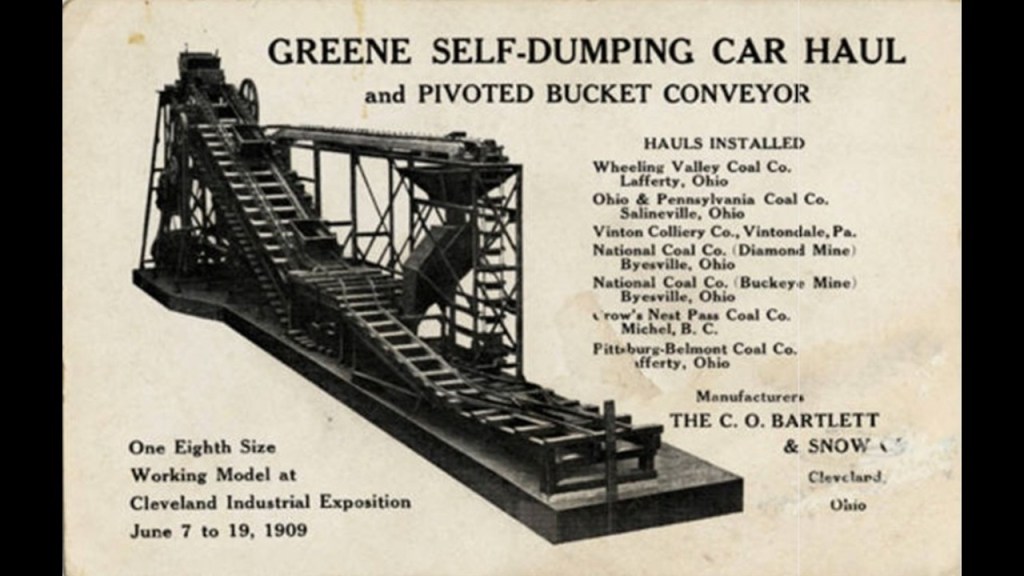
There were many exhibits for visitors to see, from automobiles from Cleveland-area manufacturers, to industrial equipment like the “Greene Self-Dumping Car Haul and Pivoted-Bucket Conveyor” for railroad use…
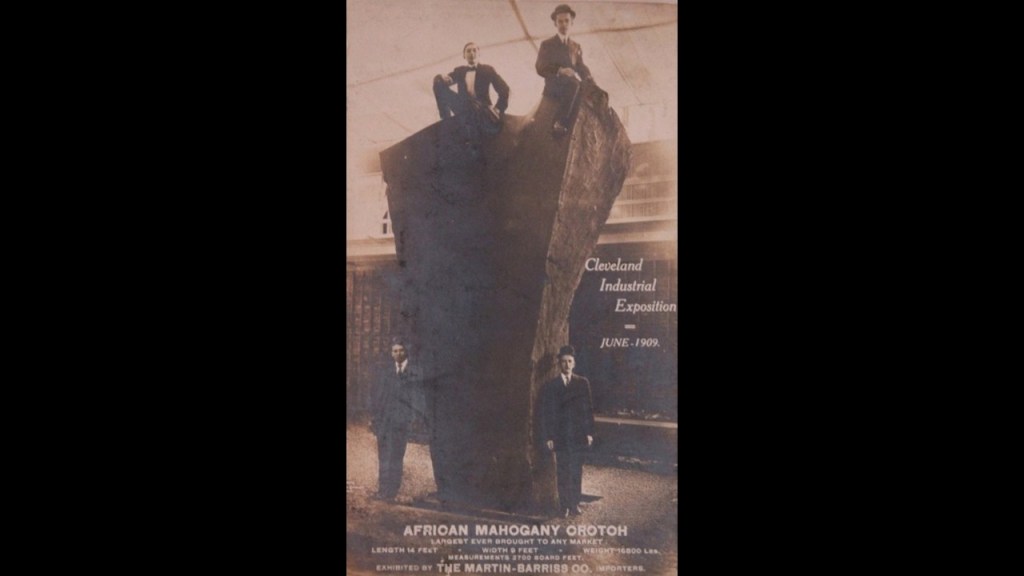
…to unusual exhibits like the world’s largest mahogany crotch log that weighed 16,800-pounds, or 7,620-kilograms.
A crotch log is a unique and valuable type of wood sourced from the wood of a mahogany tree that have unique patterns that are highly-sought after for fine woodworking.
The Cuyahoga River was crucial to the industrial development of northeast Ohio, particularly Cleveland and Akron, by transporting raw materials like iron ore and coal, and powering the growth of steel, rubber, and manufacturing industries.
Whiskey Island is situated next to the entrance of the Cuyahoga River at Lake Erie.
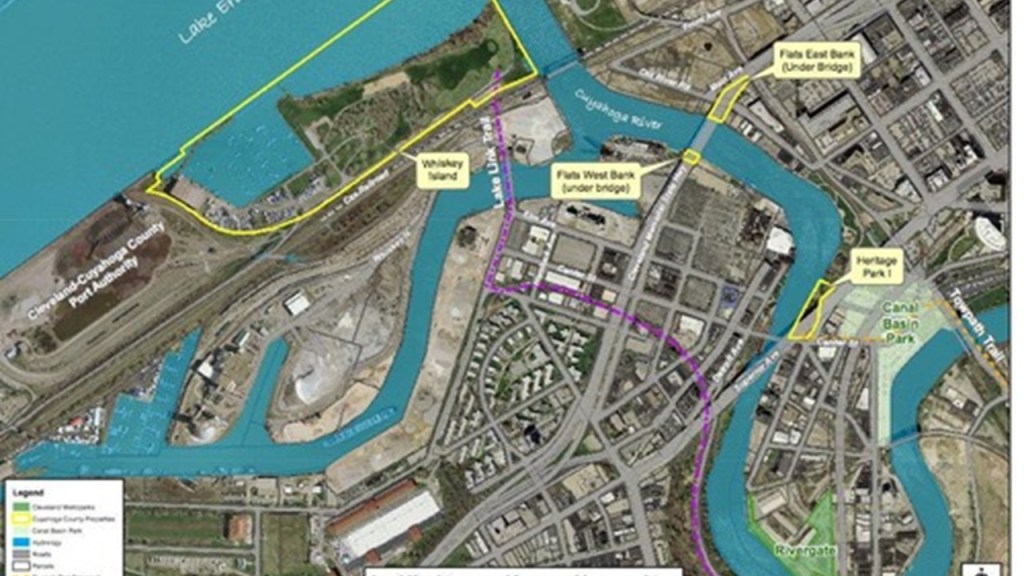
The historic C & P Ore Docks were located on Whiskey Island on the west-side of the entrance to the Cuyahoga River.
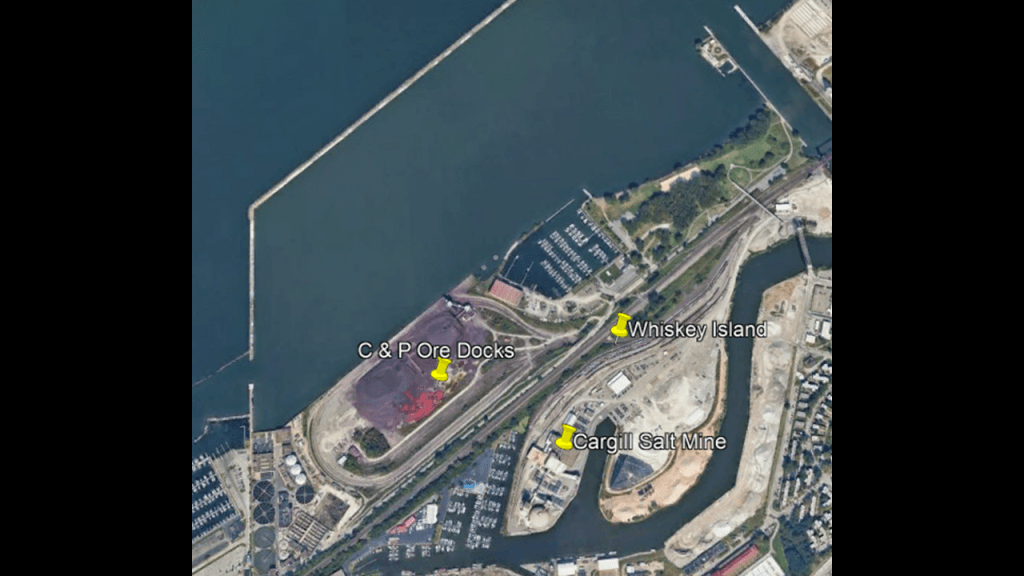
In our historical narrative, Whiskey Island was the first piece of solid land in the swamps that lined the entrance to the Cuyahoga River when Moses Cleaveland surveyed the area in 1796 for the Connecticut Western Reserve.
The Connecticut Land Company was a land speculation company that formed in the late 18th-century to survey and encourage settlement in the eastern parts of the newly chartered “Connecticut Western Reserve” of the former “Ohio Country,” which was part of the highly-prized “Northwest Territory.”
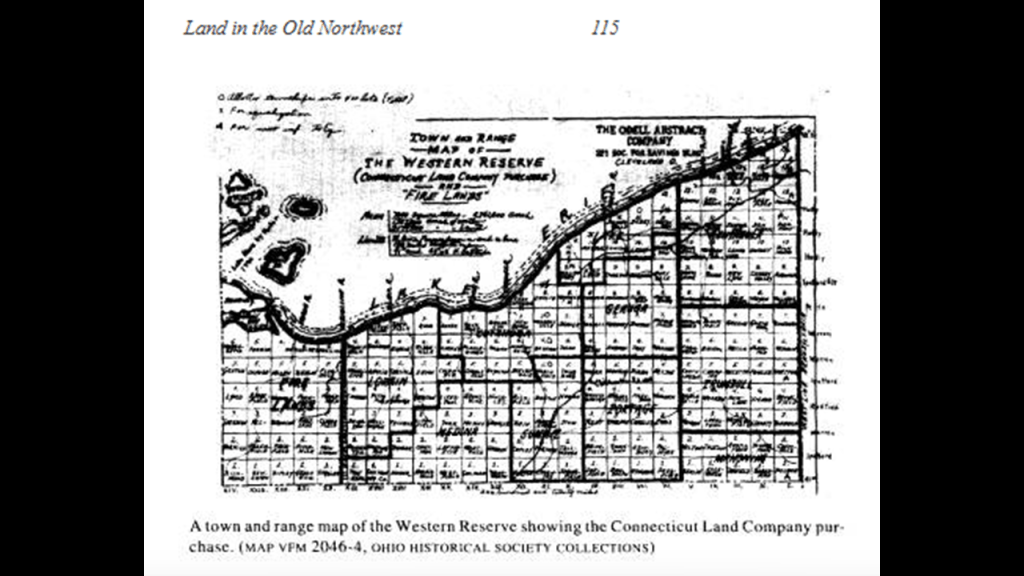
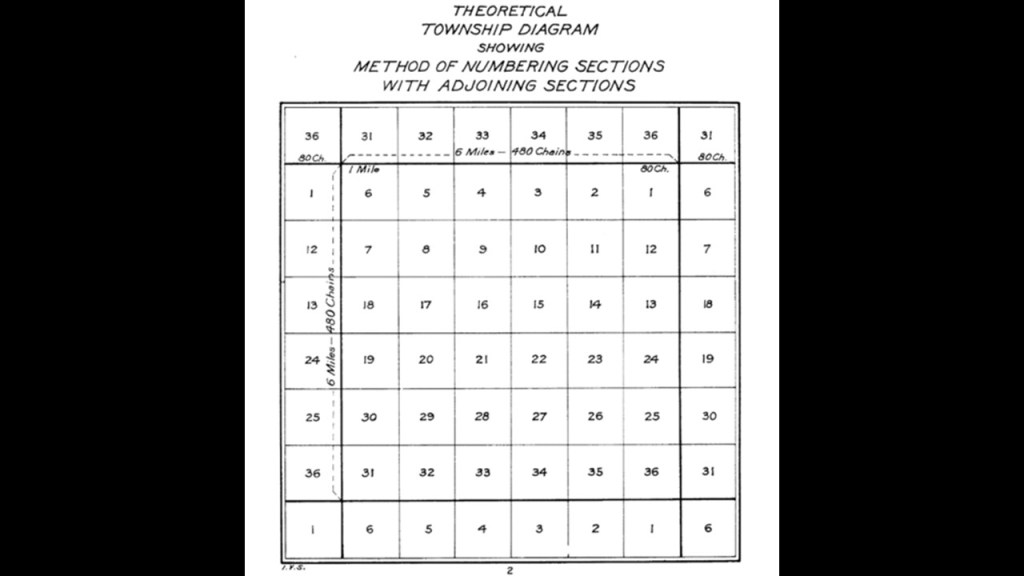
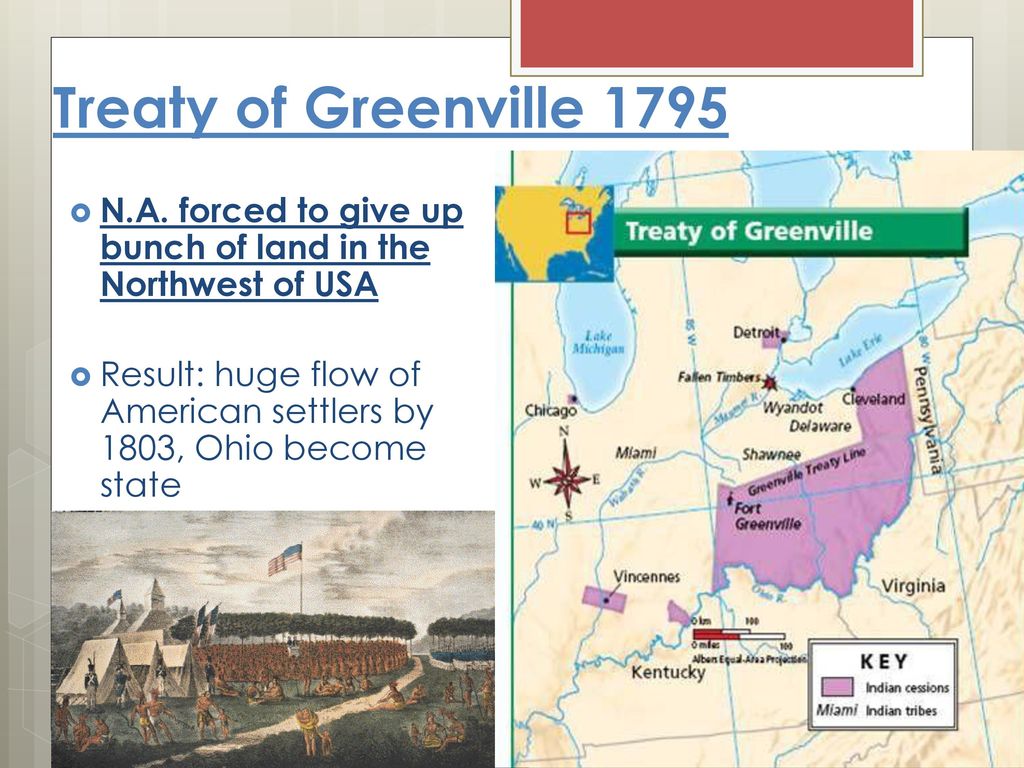
The Connecticut Land Company purchased 3-million-acres, or 12,000-kilometers-squared, of the western reserve in Northeast Ohio, in 1795, and settlers demanded that the land be surveyed prior to settlement per the Land Ordinance of 1785, which was a standardized system by which settlers could purchase title to farmland in the West.
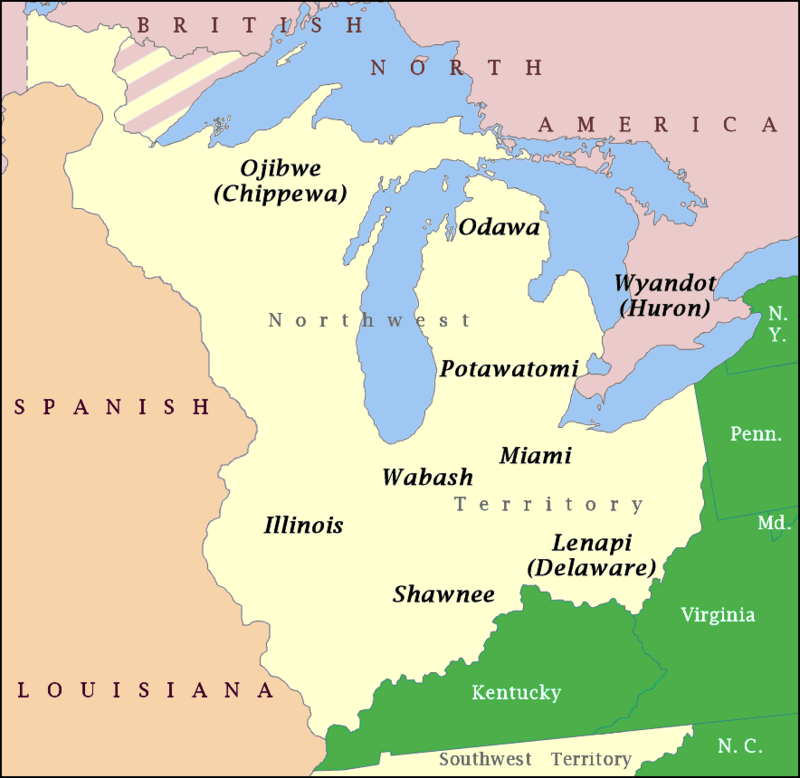
The Northwest Indian War took place in this region between 1786 and 1795 between the United States and the Northwestern Confederacy, consisting of Native Americans of the Great Lakes area.
The Territory had been granted to the United States by Great Britain as part of the 1783 Treaty of Paris at the end of the Revolutionary War.
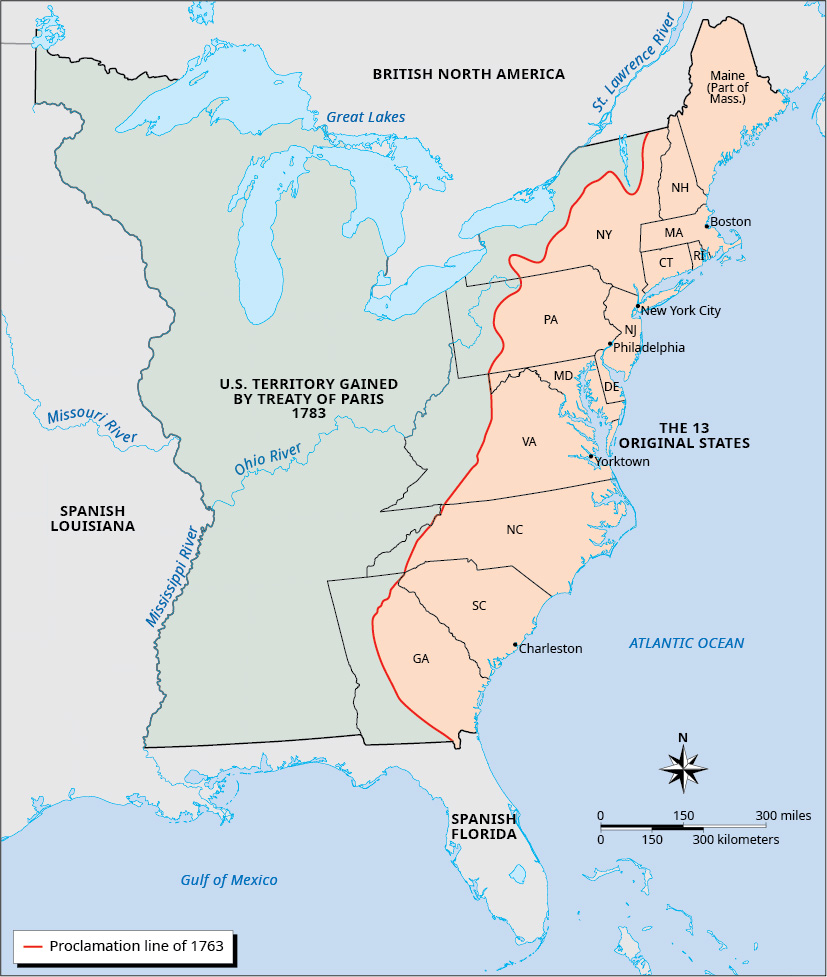
The area had previously been prohibited to new settlements, and was inhabited by numerous Native American peoples.
The British maintained a military presence and supported the Native American military campaign.
While the Northwestern Confederacy had some early victories, they were ultimately defeated.
Outcomes were the 1794 Jay Treaty, named for Supreme Court Chief Justice John Jay, the main negotiator with Great Britain.
As a result, the British withdrew from the Northwest Territory, but it laid the groundwork for later conflicts.

The 1795 Greenville Treaty that followed forced the displacement of Native Americans from most of Ohio, in return for cash and promises of fair treatment, and the land was opened for settlement.
The first permanent settler of Cleveland, Lorenzo Carter, built his family farm on Whiskey Island, which got its name for a distillery built on the site in the 1830s.
We are told that starting with the construction of the Ohio and Erie Canal in 1825, the area was settled largely by Irish immigrants.
Then in 1831, investors from Buffalo and Brooklyn purchased the Carter farm and divided its 80-acres into allotments along 22 streets, and manufacturing plants and docks were constructed.
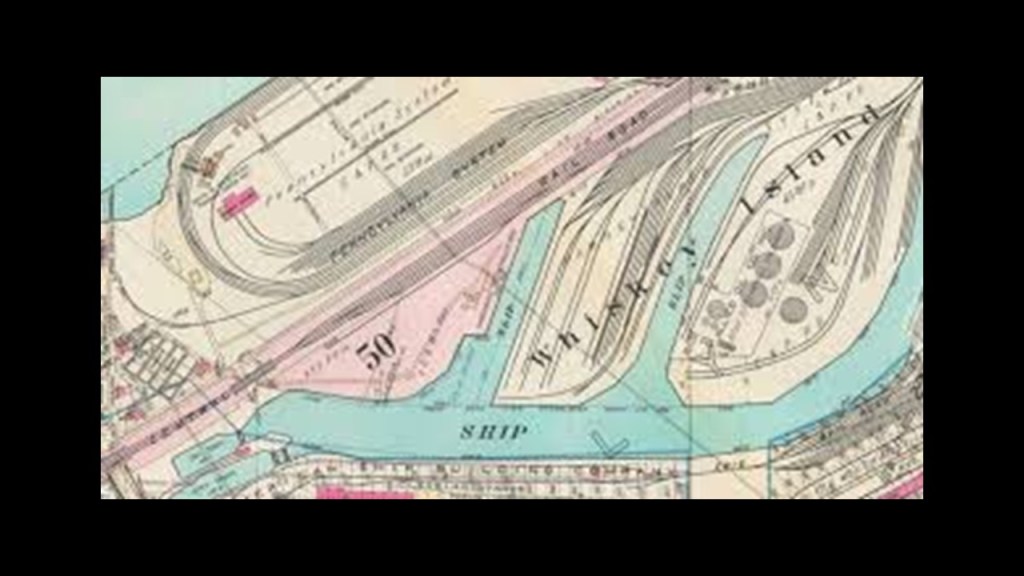
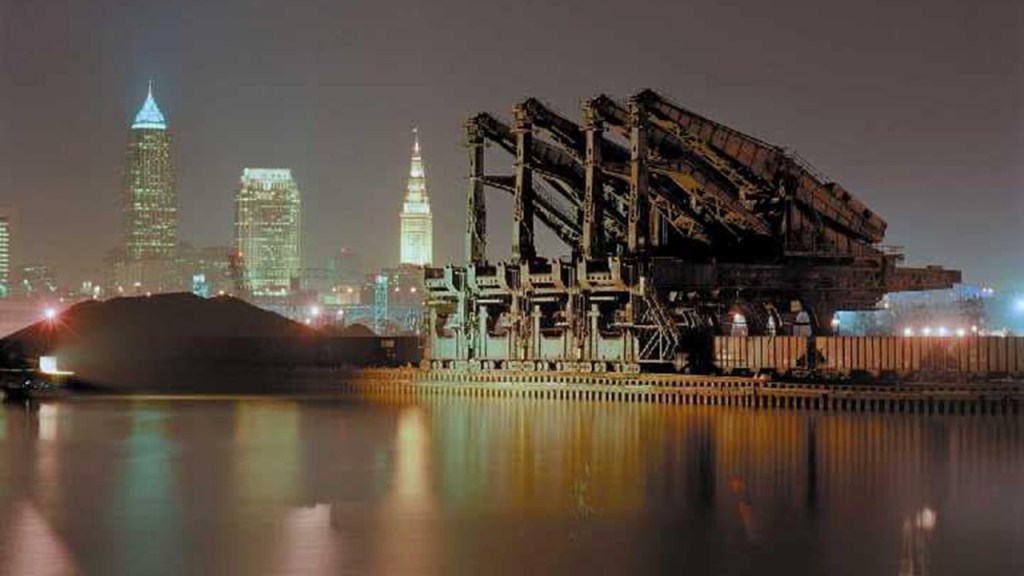
We are told the C & P Ore Docks were built by the Cleveland and Pittsburgh Railroad in the late 1800s, and used until they were abandoned in the 1990s.
At their peak, they handled millions of tons of iron ore every year.
The four towering Hulett Iron Ore Unloaders have been removed.
Two were removed and scrapped in 2000, and the remaining two were removed in 2024 and then scrapped.
There are some remnants of ore dock infrastructure that exist and are in-use as part of the bulk terminals of the working industrial waterfront.
The Cargill Salt Mine in downtown Cleveland on Whiskey Island is one of the largest salt mines in the world, and one of two salt mines in Ohio, the other being the Morton Salt Mine in Fairport Harbor.
The Cargill Salt Mine is located 1,800-feet, or 549-meters, beneath Lake Erie and is accessed by way of Whiskey Island.
It extends roughly 4-miles under Lake Erie, or around 6-kilometers, and covers about 16-square-miles, or 41-square-kilometers.
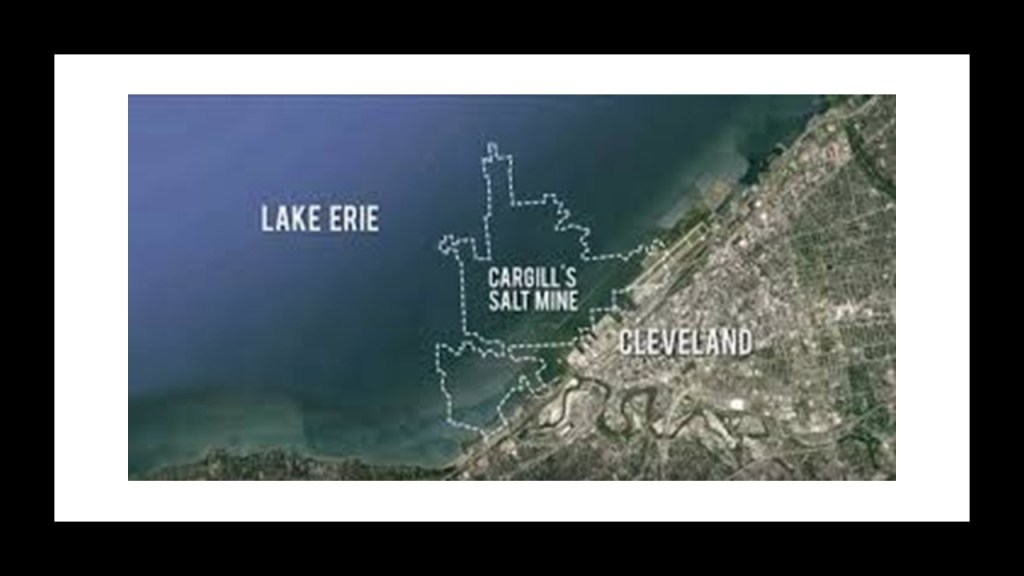
It is a massive 24/7 salt-mining operation that produces an estimated 2.6-million to 3.5-million tons of rock salt per year, that we are told is used in large part for de-icing roads in the Great Lakes Region in the winter months.
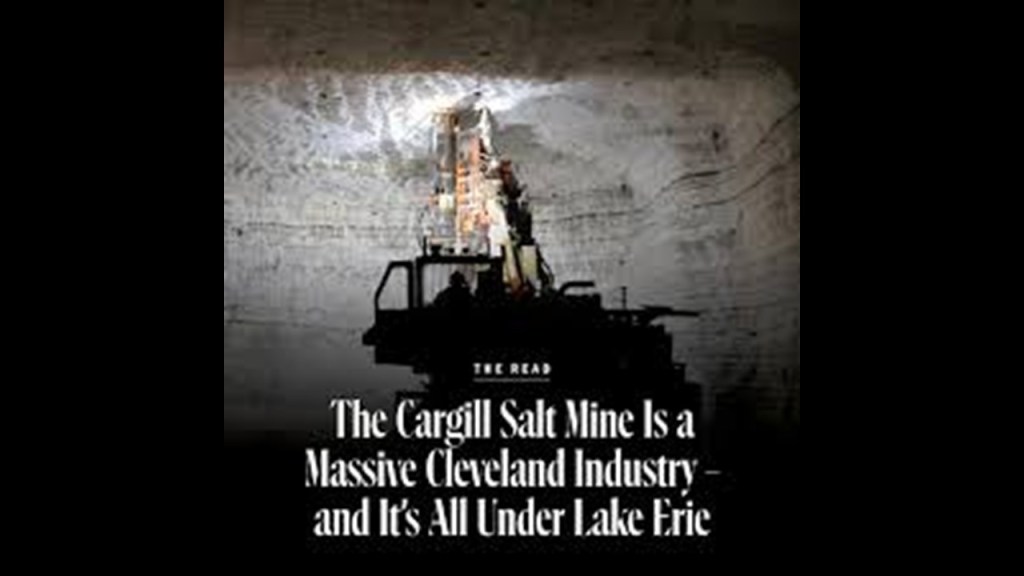
This brings me to the downtown Cleveland area.
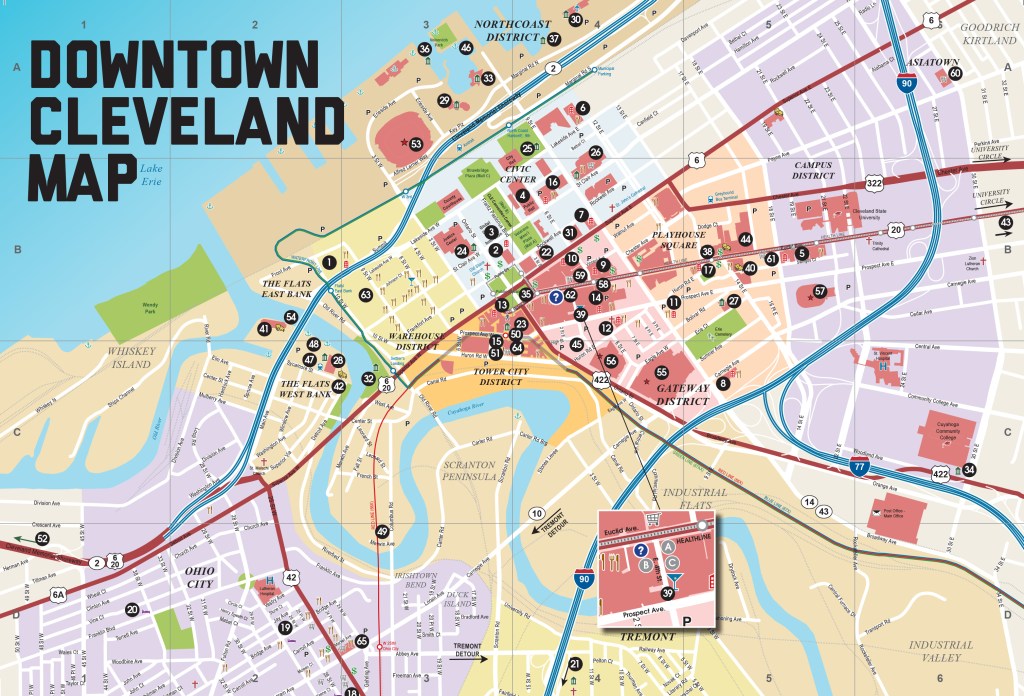
The places I am going to highlight here near or on the Cuyahoga River are the Cleveland Burke Lakefront Airport; the Huntington Bank Field; the present Amtrak Train Station and former Union Depot locations; the former Cleveland Union Terminal, which is now Tower City Center; the West Side Market; Industrial Valley; and the Ohio and Erie Canal Reservation.
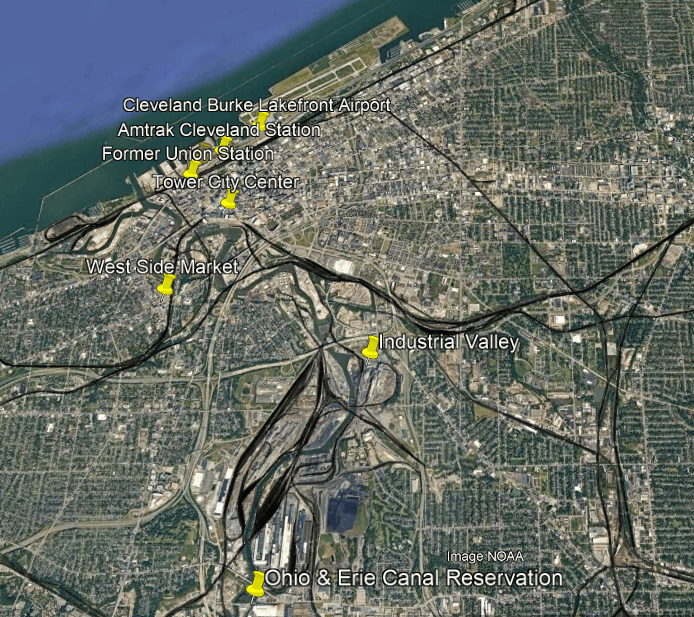
First, the Cleveland Burke Lakefront Airport.
Also called the Downtown Airport, it is located directly on Lake Erie.
It is a general aviation airport just north of Cleveland’s Central Business District close to major attractions and hotels in the city.
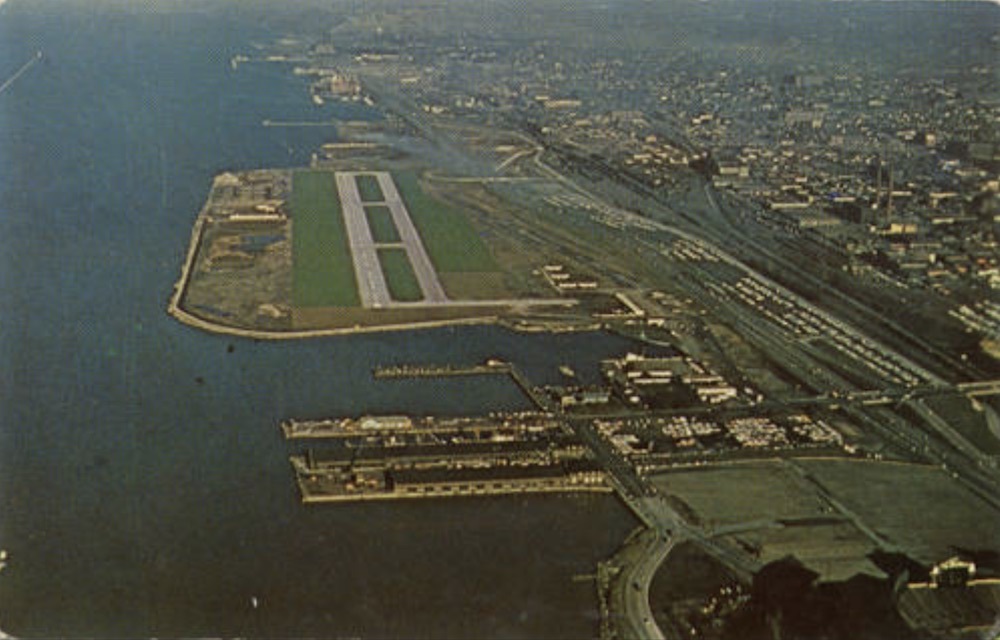
Interestingly, it is also known as the “Landfill Airport” for the given reason that during the Great Depression in the 1930s, the land it is situated on was used as a dumping site for the city’s waste.
Then we are told after it opened in 1947, the airport’s runways were expanded using dredged material from the Cuyahoga River to create solid land for the runways.
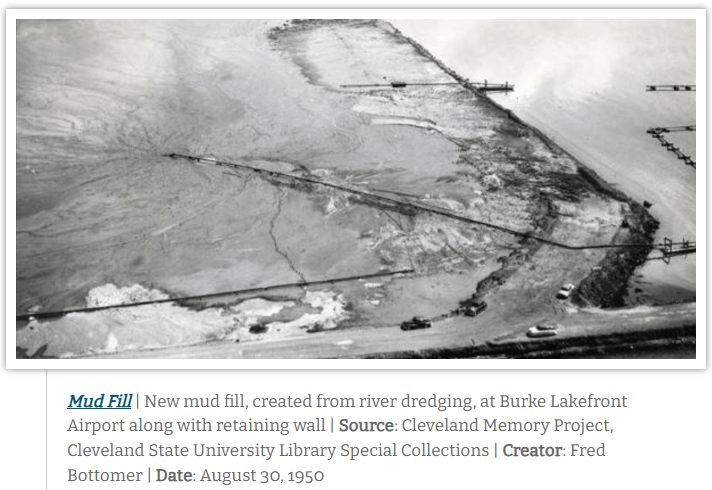
Huntington Bank Field is adjacent to the Downtown Airport.
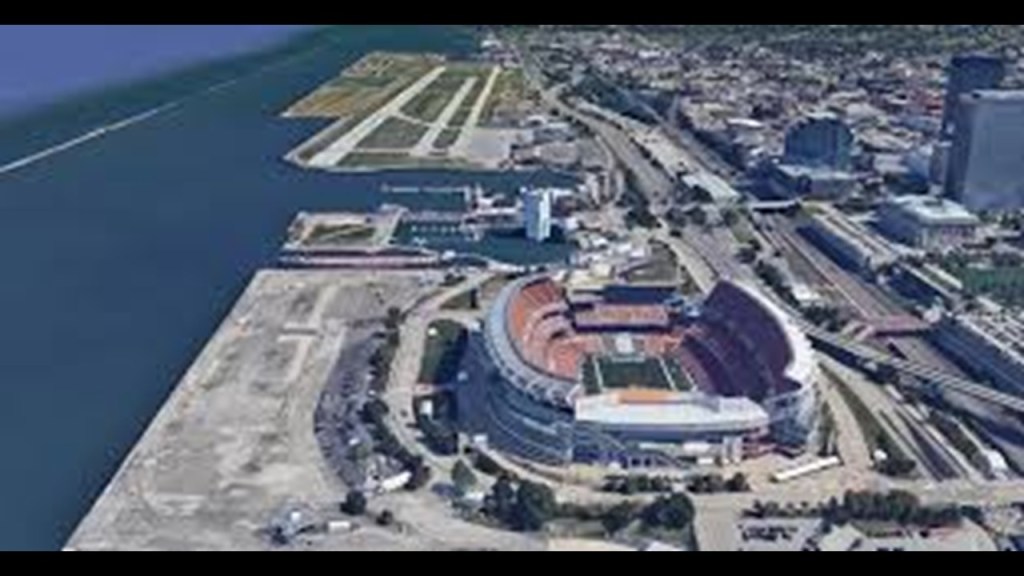
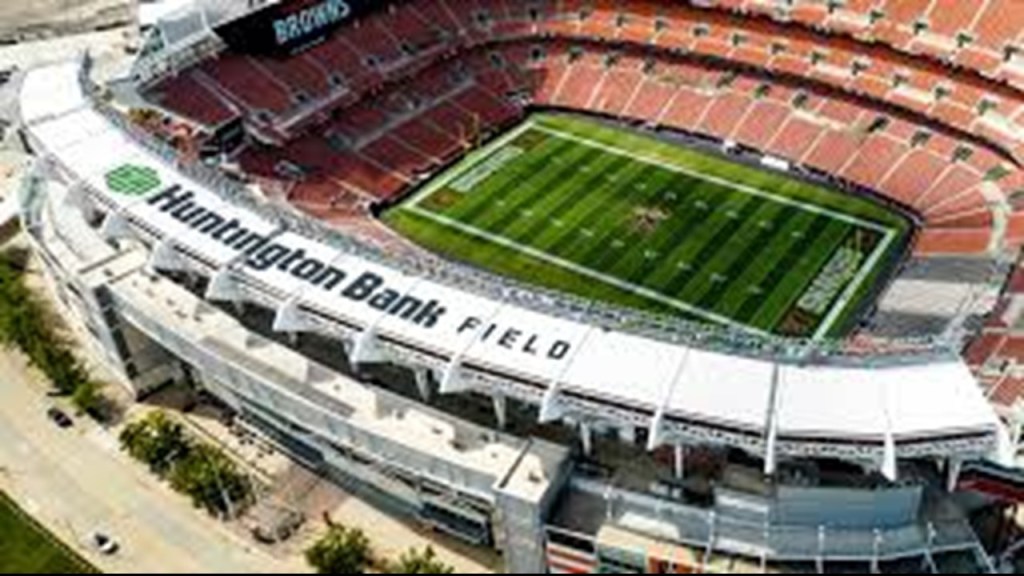
Huntington Bank Field is currently the home stadium of the National Football League’s Cleveland Browns, as well as serving as a large event venue for the community like other sporting events and concerts.
It also sits on the old landfill and dump site.
The stadium is next to the former Union Depot site and current Cleveland Train Station for Amtrak passenger service.
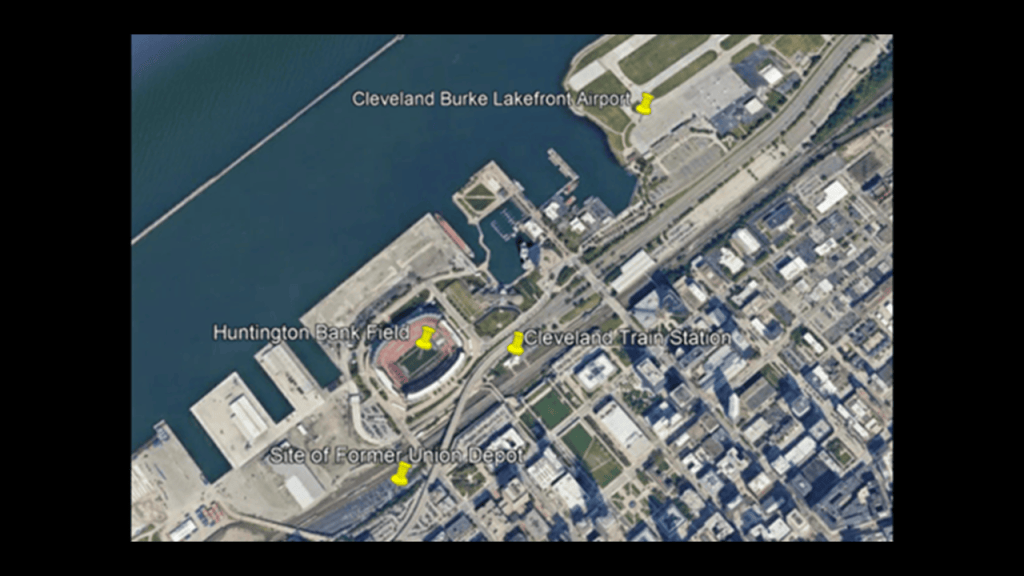
The former Cleveland Union Depot was said to have been built in 1866.
This picture was notated as having been taken in 1867, which would have been only two years after the end of the American Civil War in our historical narrative.
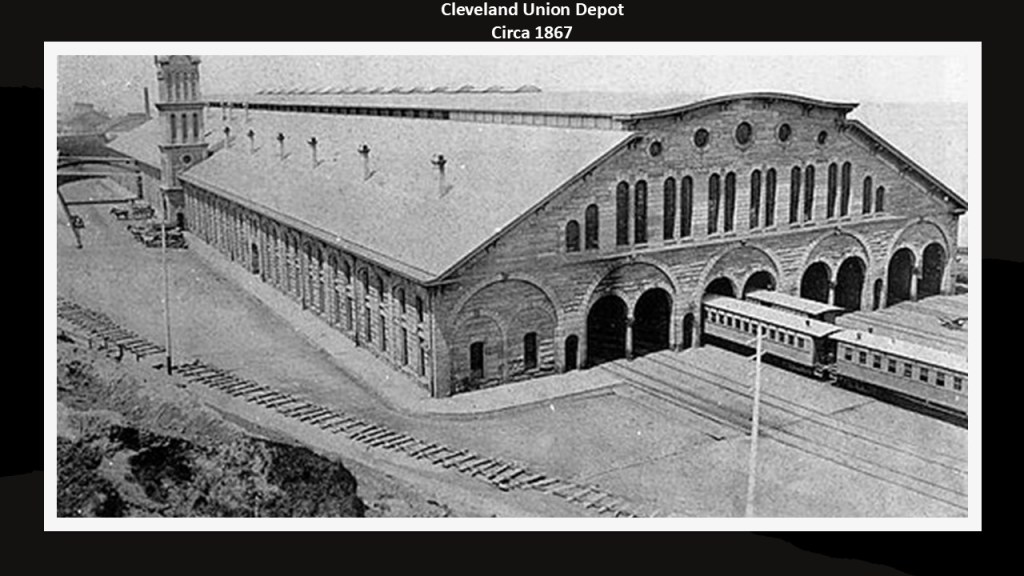
The Cleveland Union Depot was used by multiple railroads over the years.
The Pennsylvania Railroad was the only railroad still using this depot after 1930, when the Cleveland Union Terminal first opened for use in a different location, which I will come to shortly.
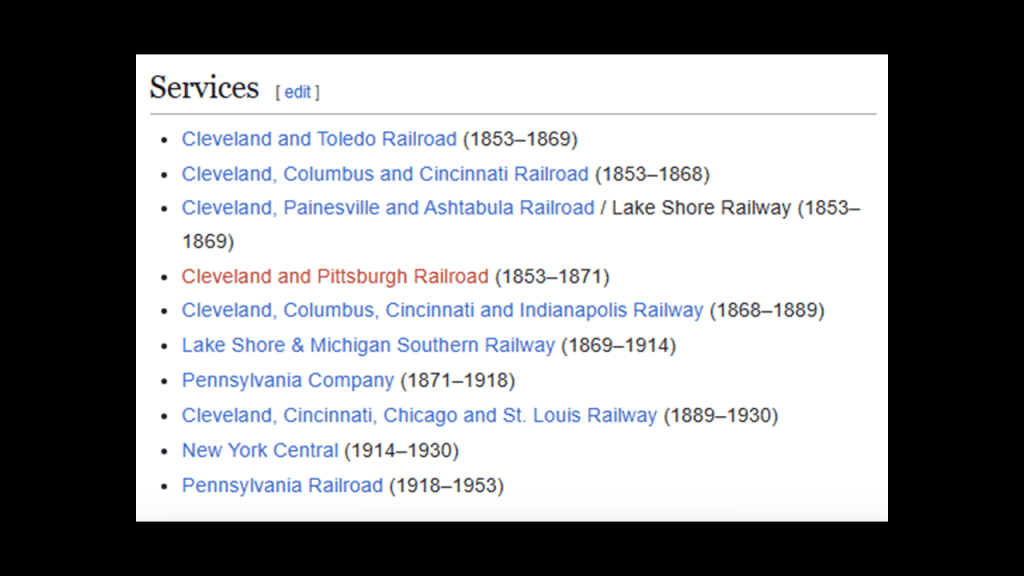
The Cleveland Union Depot building was demolished in 1959, six-years after the Pennsylvania Railroad stopped using it in 1953.
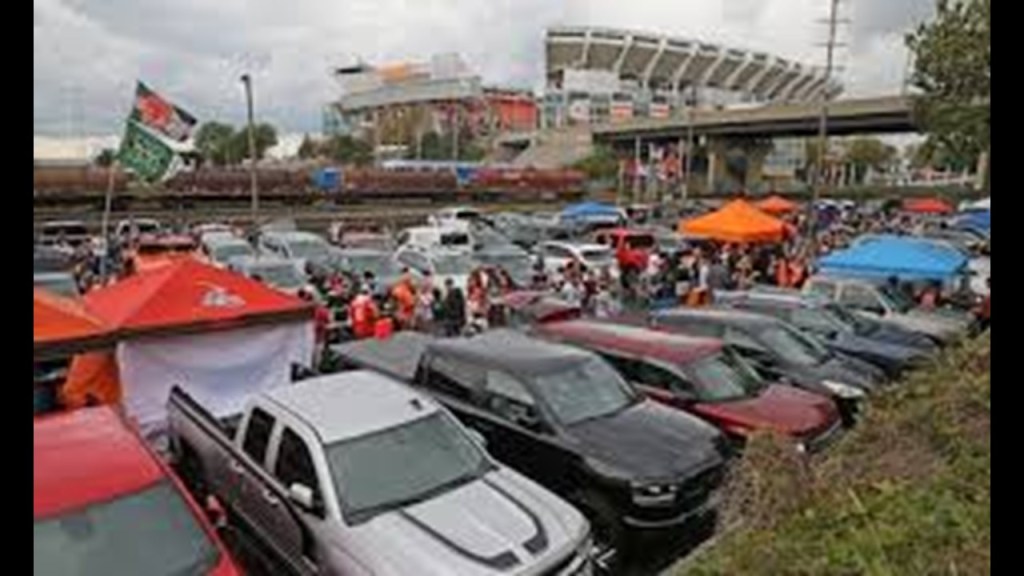
The Cleveland Union Depot was located where the parking lot nicknamed “the Pit” at the Huntington Bank Stadium is today, which is frequently used for tailgating during the Browns’ football games.
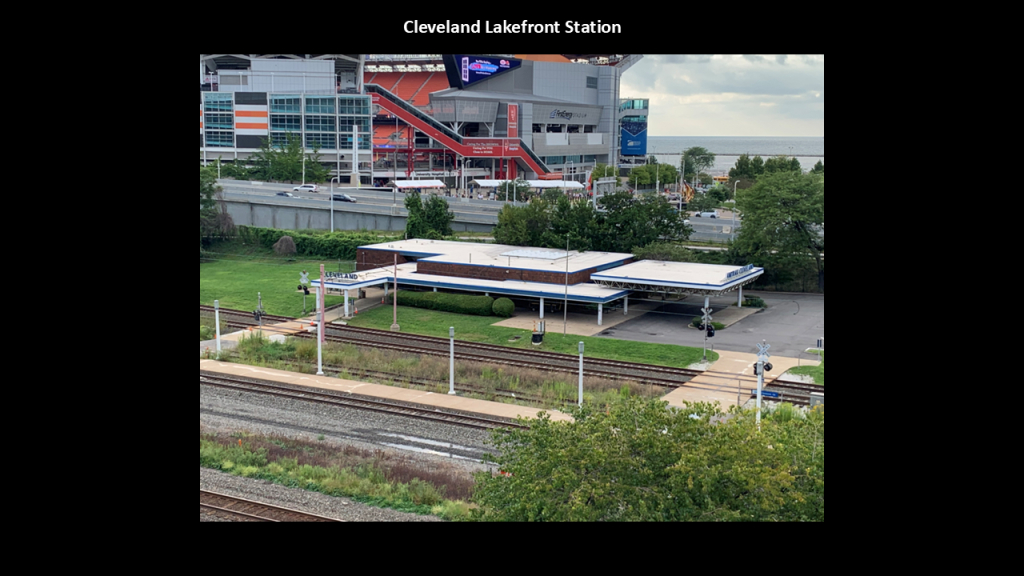
The nearby Cleveland Train Station, known as the Cleveland Lakefront Station, in front of the stadium not far from the former Union Depot site, has been used by Amtrak since 1977.
It serves the Lakeshore Limited passenger train from New York & Boston to Chicago; the Floridian line from Chicago to Miami, and the local Rapid Transit Waterfront Line.
Next, a few things about the historic Cleveland Union Terminal.
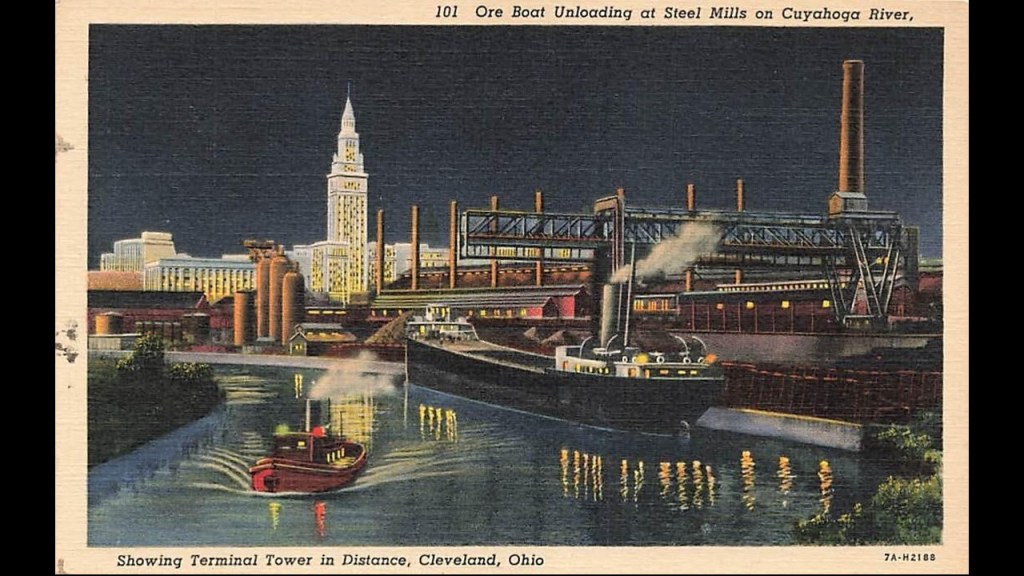
The Cleveland Union Terminal was described as a monumental 1920s project that turned Cleveland’s Public Square into a major transportation and commercial hub anchored by the 52-story Terminal Tower.
It was said to have been constructed between 1923 and 1930.
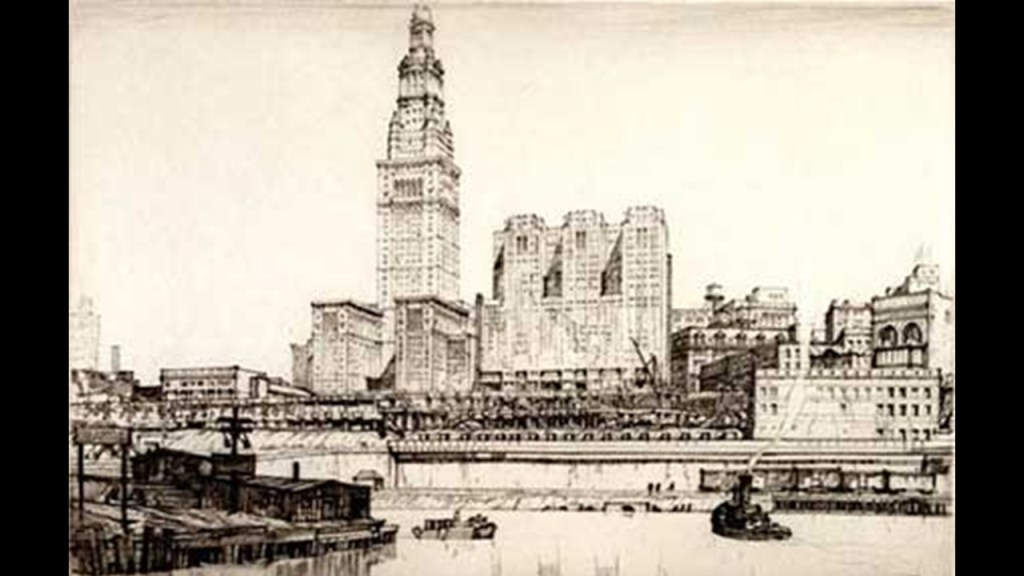
The Terminal Tower was the tallest building in the world outside New York City, and designed to be a city inside the city, featuring shops, hotels, and a post office in addition to the train station.
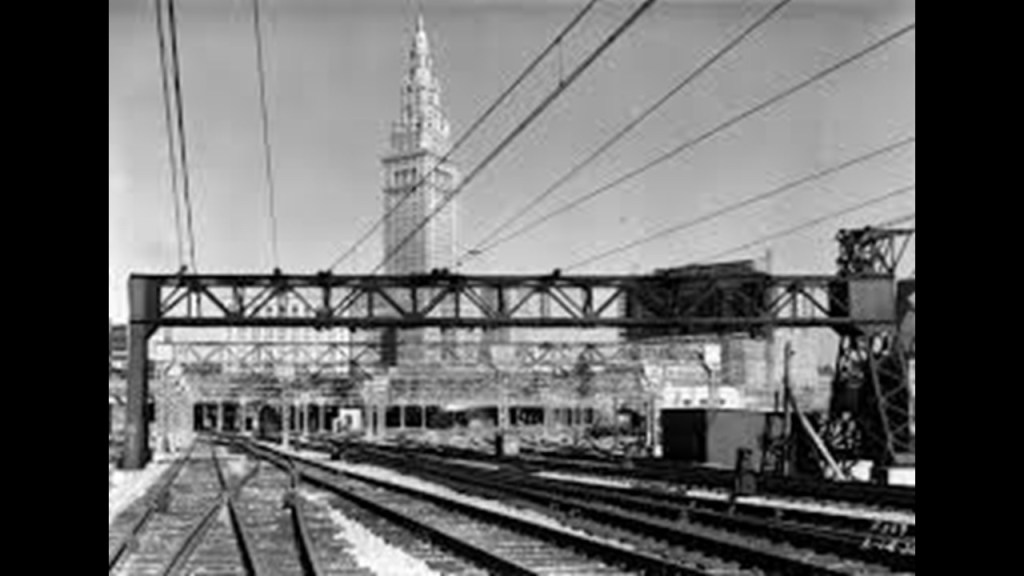
When the Cleveland Union Terminal Station opened in 1930, it was one of the busiest rail hubs in the country.
Then we are told that by the 1960s and 1970s, passenger rail travel declined sharply due to cars and air travel.
Amtrak took over passenger rail service in 1971 and continued to use the Cleveland Union Terminal Station for passenger service until 1977, when it moved over to the Cleveland Lakefront Station and that marked the end of rail service here.
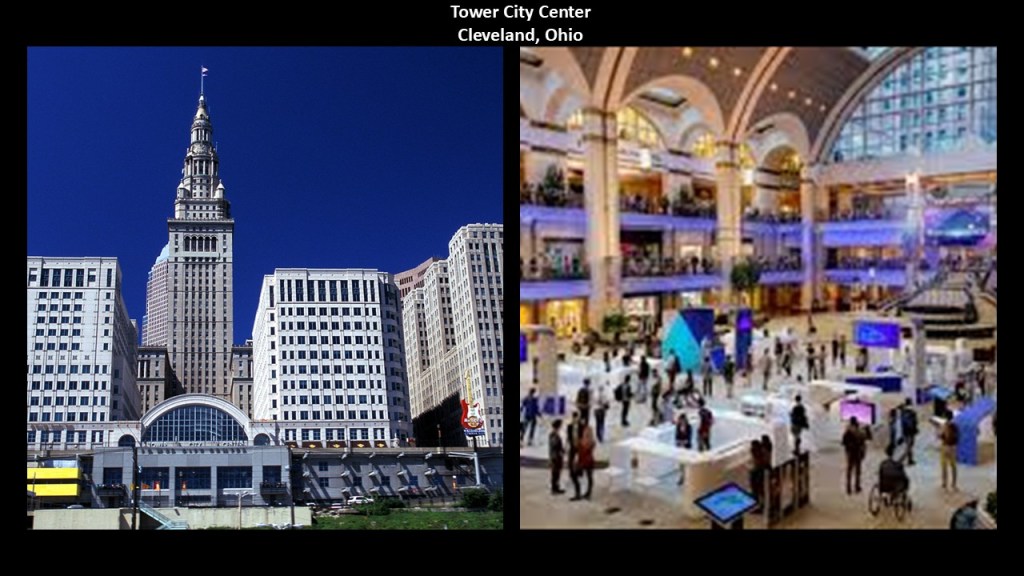
Today the Terminal Tower is part of the Tower City Center, and offers shopping, dining, entertainment, office space and local RTA Rapid Transit lines still operate out of this location.
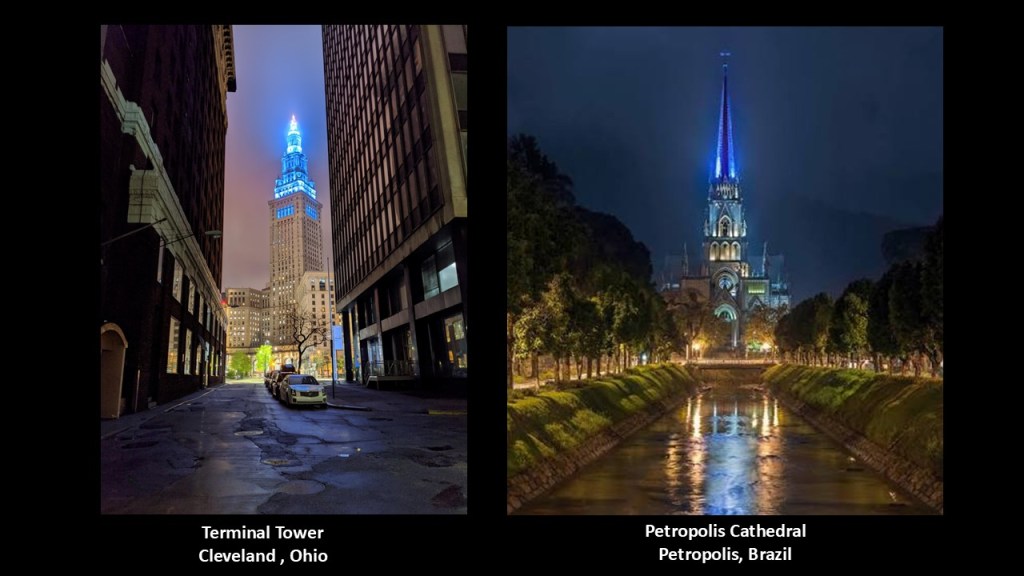
When I see places like the Terminal Tower in Cleveland, Ohio, on the left and the Petropolis Cathedral in Petropolis, Brazil, on the right glowing blue at night, it makes me wonder if there is still free energy flowing through the energy grid.
Here is an intriguing video clip that showed up on my social media feed about a year ago.
I would also like to mention the West Side Market.
The West Side Market is an historic public market owned by the City of Cleveland that has been continuously operating since it first opened in 1912, and has hundreds of thousands of visitors annually.
Besides its huge variety of vendors and cultural diversity, the West Side Market building is famous for its vaulted ceiling, and 137-foot, or 42-meter, -tall clocktower.
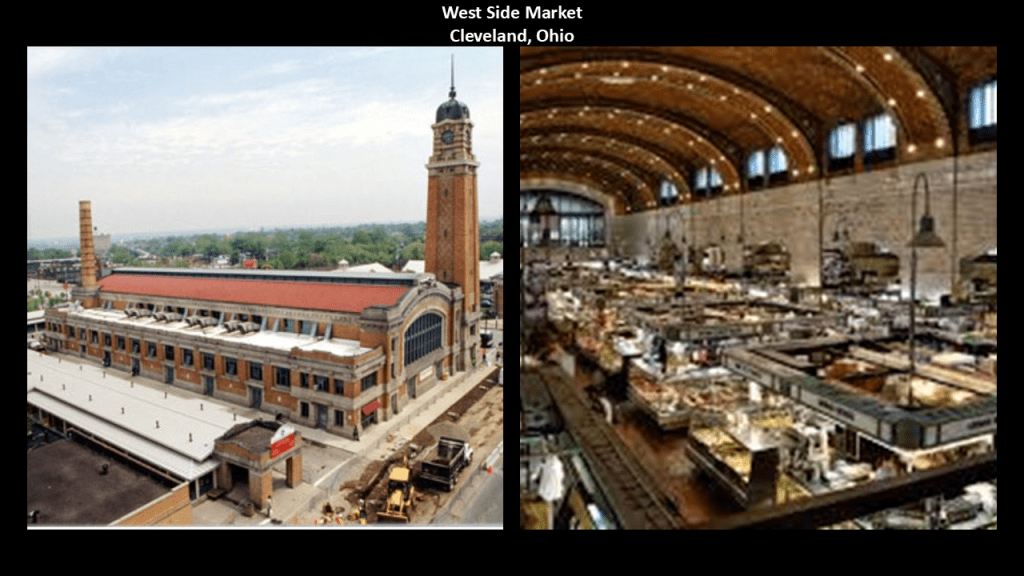
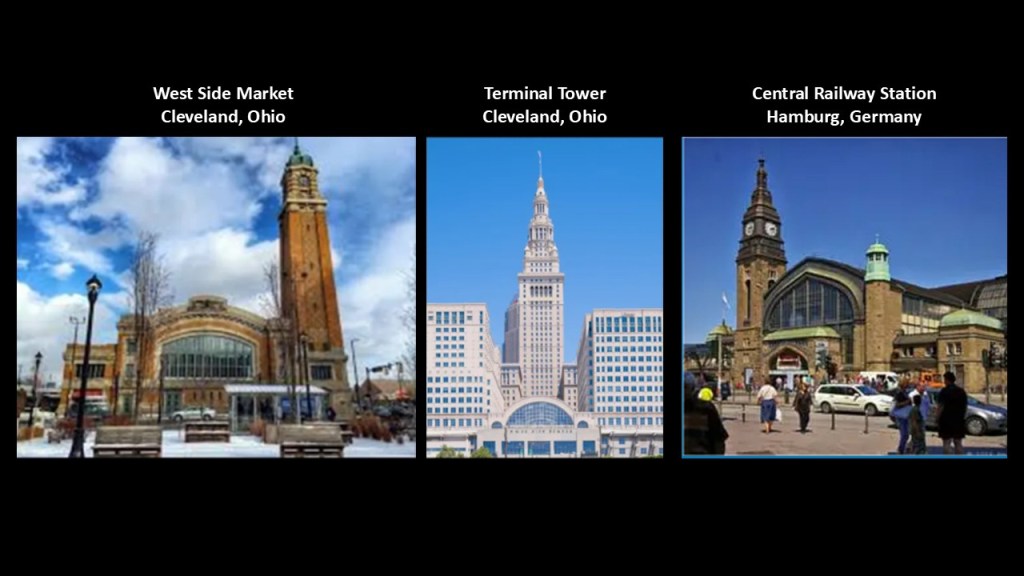
We are told this building was built specifically for the purposes of being a marketplace, but it definitely has features that remind me of a train station, like the previously seen Terminal Tower of the original Cleveland Union Terminal Station that is now Tower City Center; and the Central Railway Station in Hamburg, Germany.
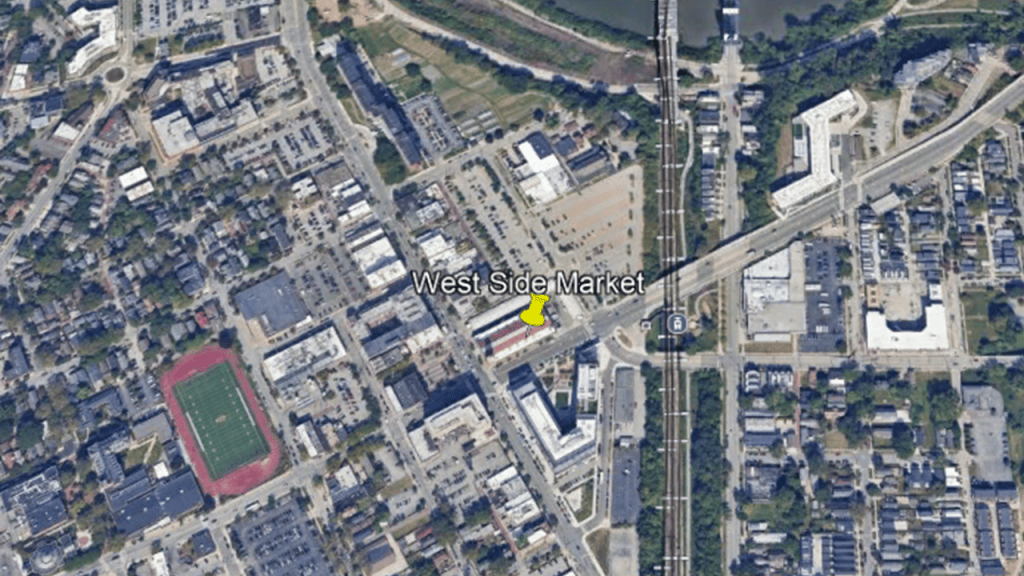
The West Side Market in Cleveland is even located next to railroad tracks.
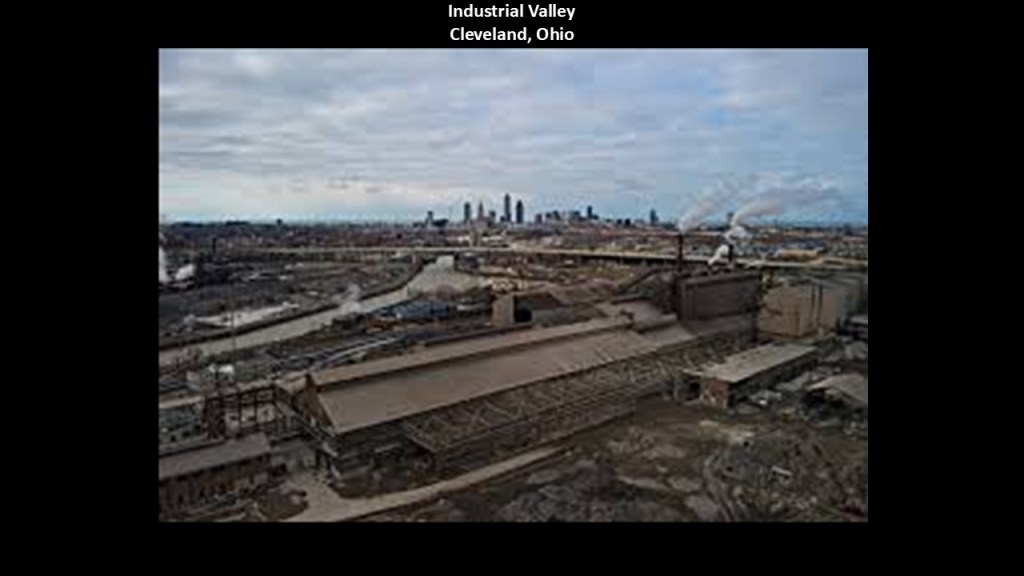
Next, the location where Standard Oil was established in Cleveland was “Industrial Valley,” which cemented Cleveland’s status as an industrial powerhouse.
Also referred to as “The Flats,” or the “Cuyahoga Valley Neighborhood,” it is a heavily industrialized district along the banks of the Cuyahoga River south of downtown Cleveland, and this location played a crucial role in the development of what would become one of the largest oil corporations in history.
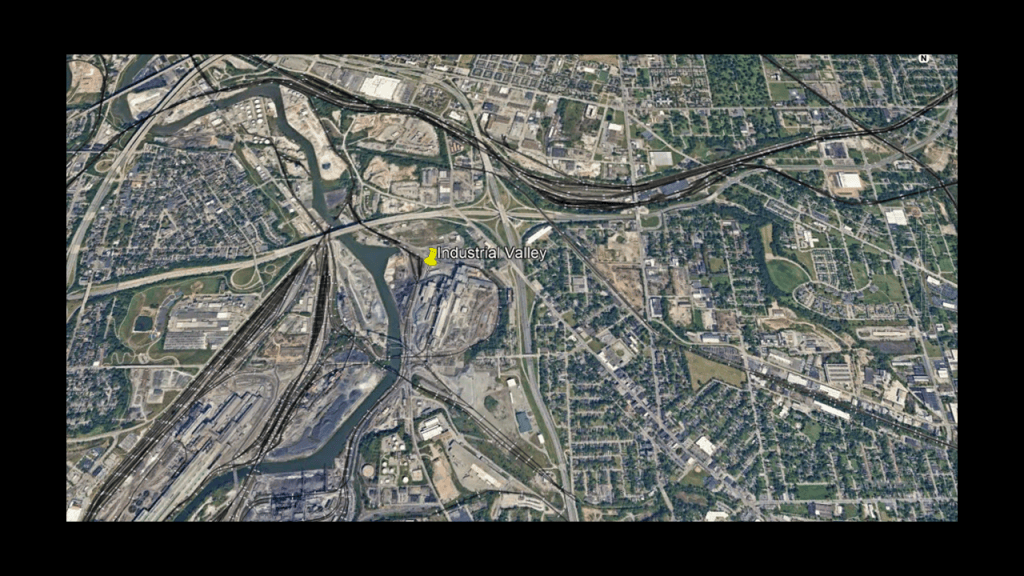
Even today, it is a hub for heavy industry, which includes, besides the Cleveland Cliffs steel manufacturer, chemical manufacturers, petroleum terminals, and scrap metal recycling centers.
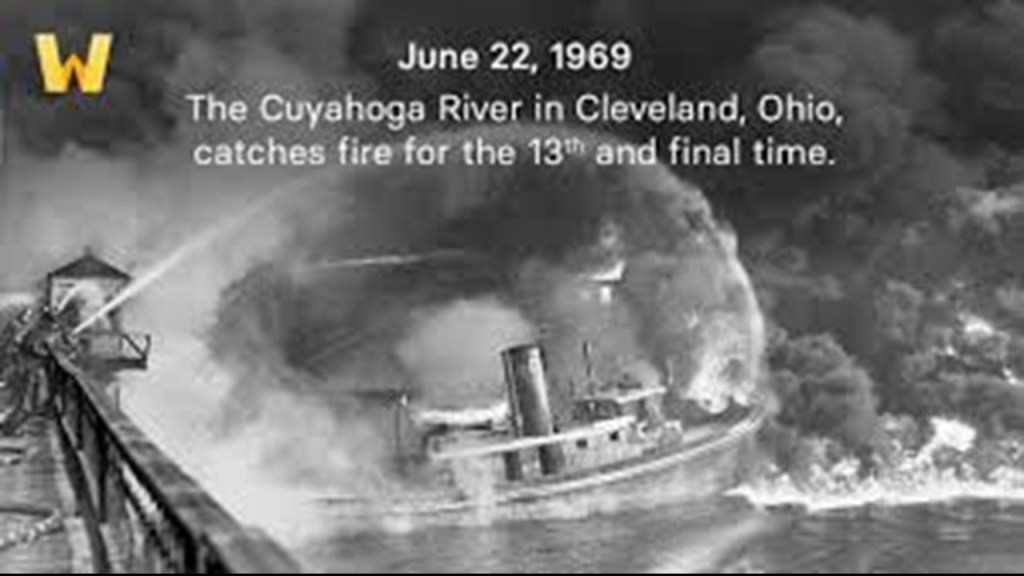
The intense industrial use of the Cuyahoga River caused extreme pollution, and the river caught fire thirteen times in our history between 1868 and 1969.
The 1969 fire on the Cuyahoga River led to the creation of the U. S. Environmental Protection Agency and the passage of the Clean Water Act in 1972 which mandated industrial pollution control and provided investments for modernizing sewage infrastructure.
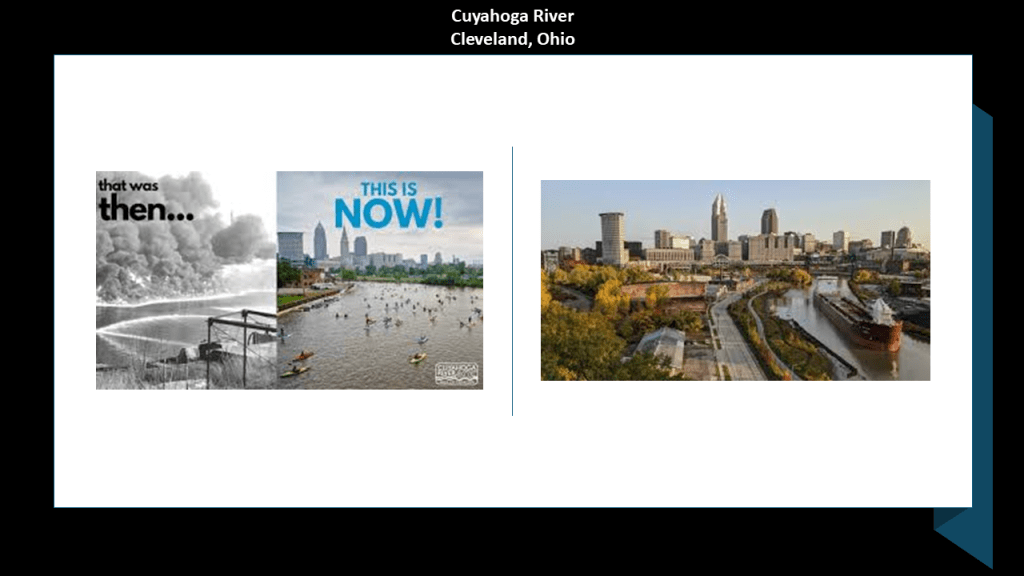
In today’s world, the Cuyahoga River has shifted to a center for recreation and tourism, though it is still a working waterway for large freighters to transport raw materials to the factories that remain.
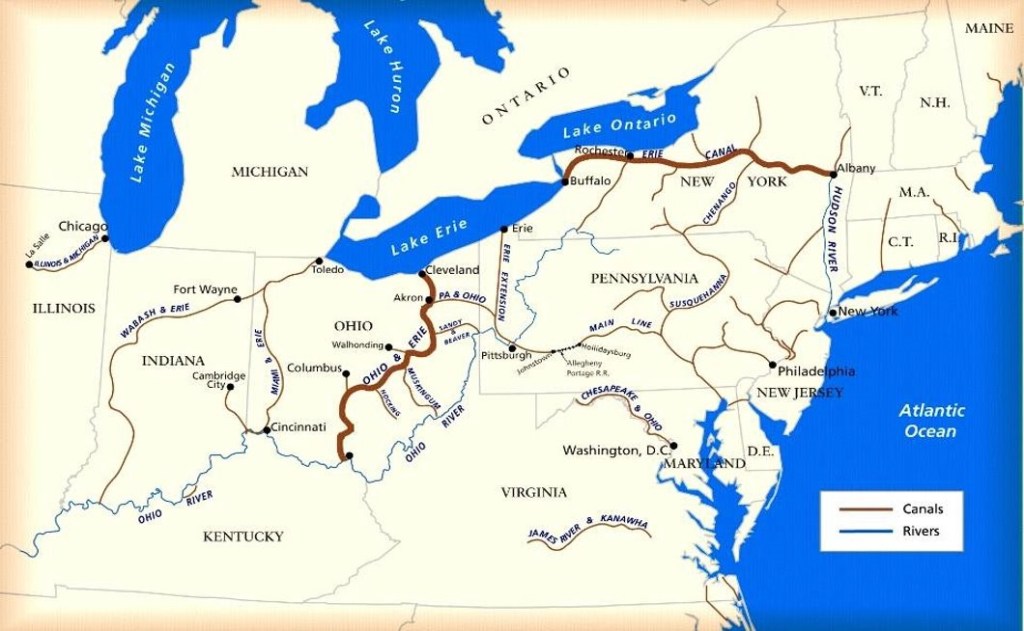
The Ohio and Erie Canal is here in Cleveland as well directly alongside the Cuyahoga River.
The 308-mile, or 496-kilometer, -long canal was said to have been constructed, from 1825 to 1832 to connect Lake Erie at Cleveland with Portsmouth on the Ohio River, and that it only carried freight from 1827 to 1861, when the construction of railroads ended demand.
Then from 1862 to 1913, the canal served as a water source for industries and towns.
In 1913, much of the canal system was abandoned after important parts of it were badly flooded.
The canal was said to have been dug manually largely by Irish immigrants, who used picks, shovels, and wheelbarrows, and using horses, oxen and dynamite to clear trees and blast through rock.
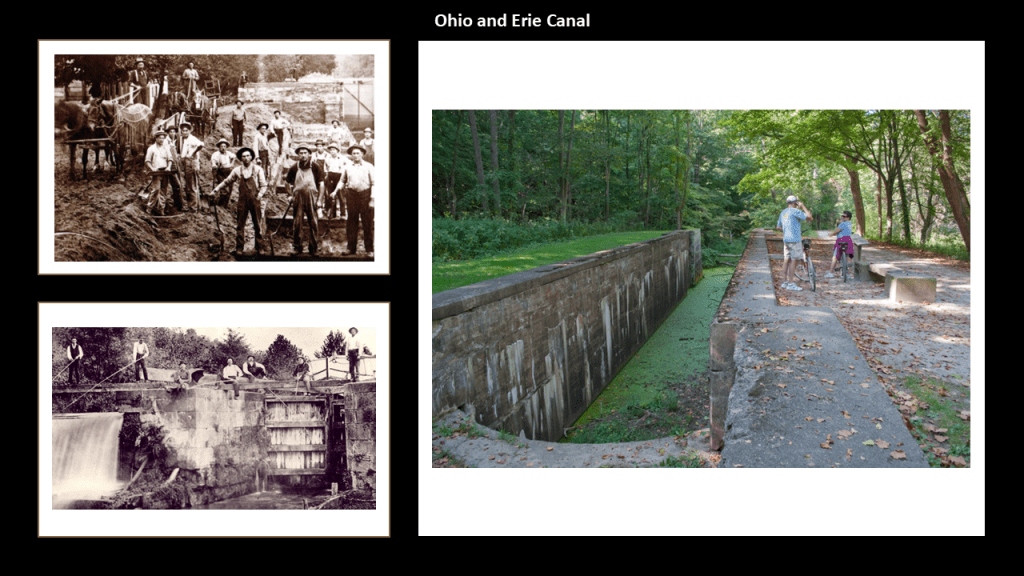
The other place I would like to look at here is the Ohio and Erie Canal Reservation, which is a 325-acre, or 132-hectare, park administered by Cleveland Metroparks.
It features a 7.2-mile, or 12-kilometer, trail, on the historic Ohio and Erie Canal, and runs between Harvard Avenue in Cleveland and Rockside Road in Valley View.
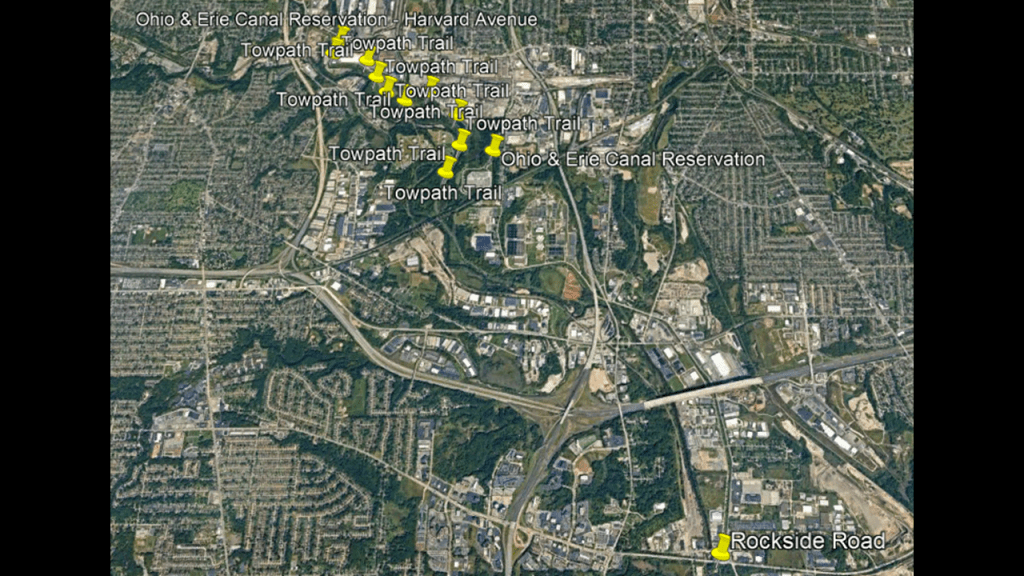
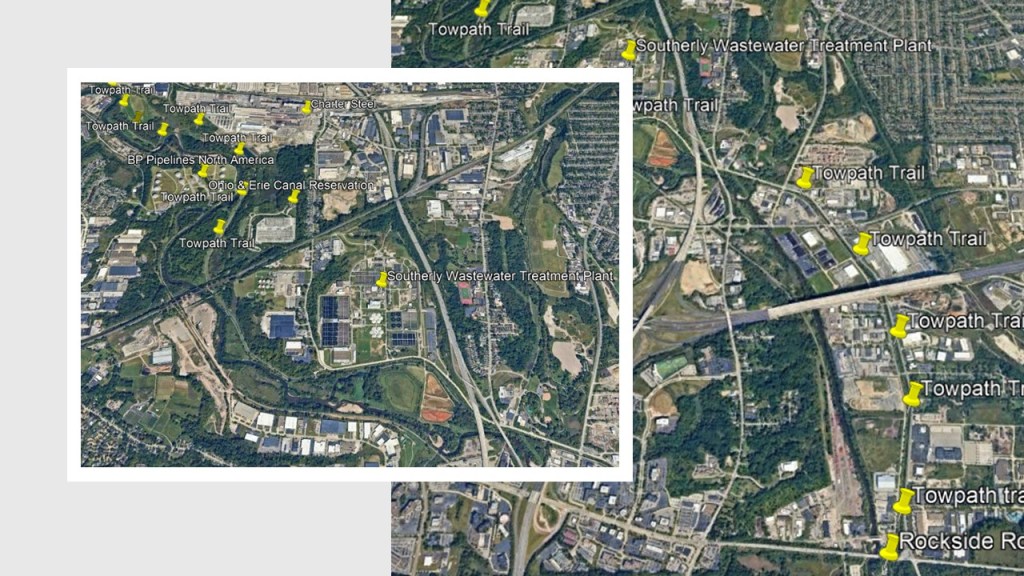
As we go down along the Ohio and Erie Reservation towards where it ends at Rockside Road in Valley View, we find more of the same kinds of things, like Charter Steel; storage facilities for BP Pipelines North America, which manages over 3,299-miles, or 6,150-kilometers, of pipelines transporting crude oil, natural gas and refined products; the large Southerly Wastewater Treatment Plant, and countless other industrial and commercial locations in the surrounding area.
There’s loads to unpack here at this location alone, but I would like to leave this thought for your consideration.
Along with rewiring the original free energy grid, which was for the good of all, into what is known as the Matrix, an energy-harvesting system designed to benefit the very few, this industrial rewiring process has transformed and inverted the original regenerative and free energy grid circuitry into an extractive energy system, and this is being done right in front of our eyes, but without our knowledge or consent as to what is actually taking place here.
Next, I would like to mention some of the historical trolley amusement parks in Cleveland.
First, the Euclid Beach Park was on the eastern-side of Cleveland in the Collinwood neighborhood.
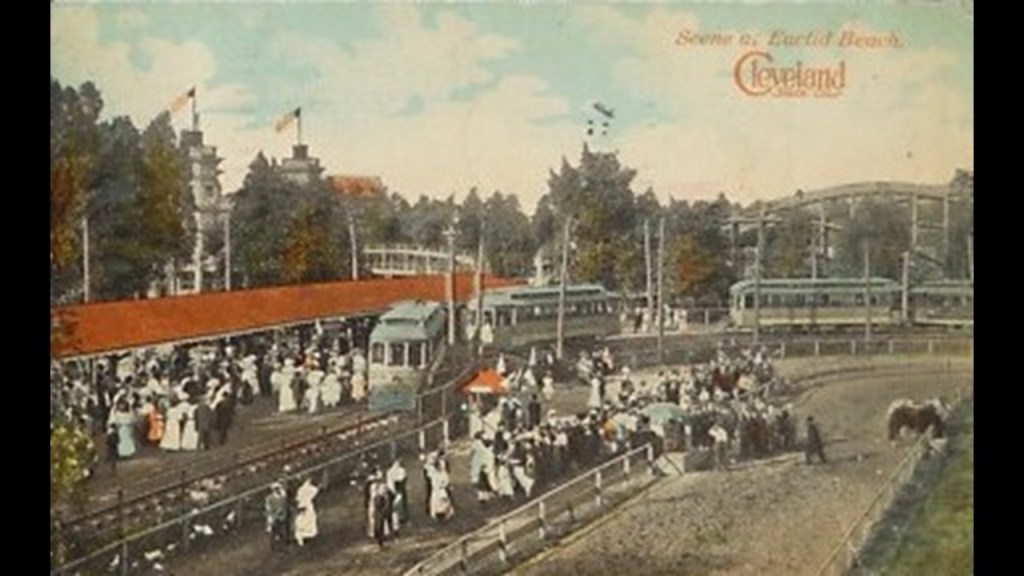
It was served by Cleveland’s local electric streetcar system, where the Euclid Beach Streetcar Service brought visitors directly to the park entrance.
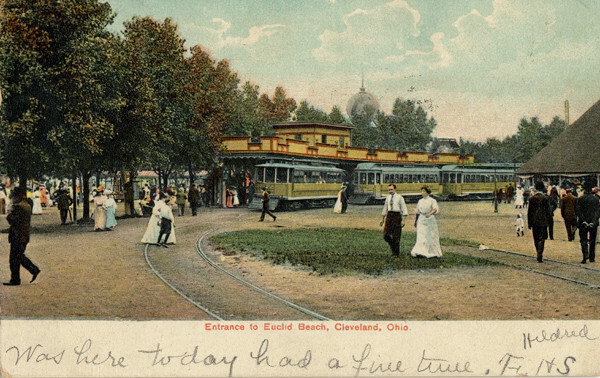
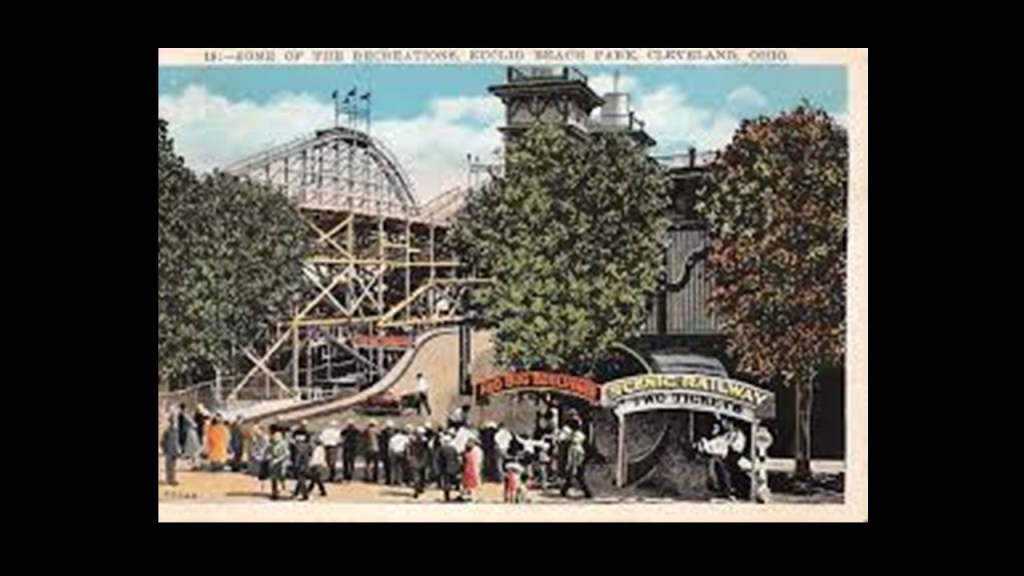
It operated as a trolley amusement park until 1963 when daily streetcar service from Public Square ended, and continued as an amusement park until 1969 when it closed for good.
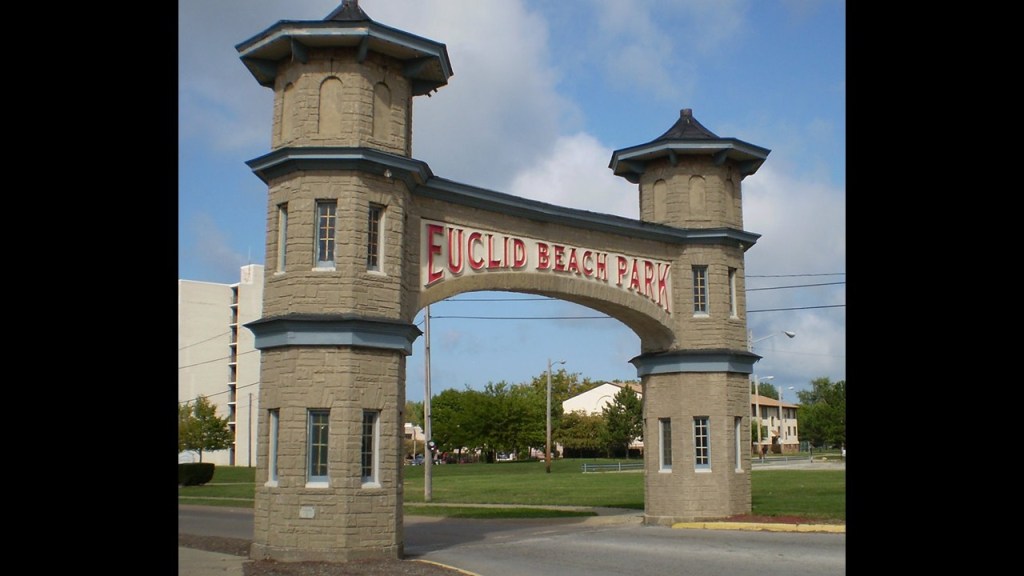
Remnants of the Euclid Beach Park include the arched main gate, which still stands, and having been declared a Cleveland Landmark, it is protected from demolition.
It was moved in January of 2025 from the roadway to an adjacent lot to be made the centerpiece of a park.
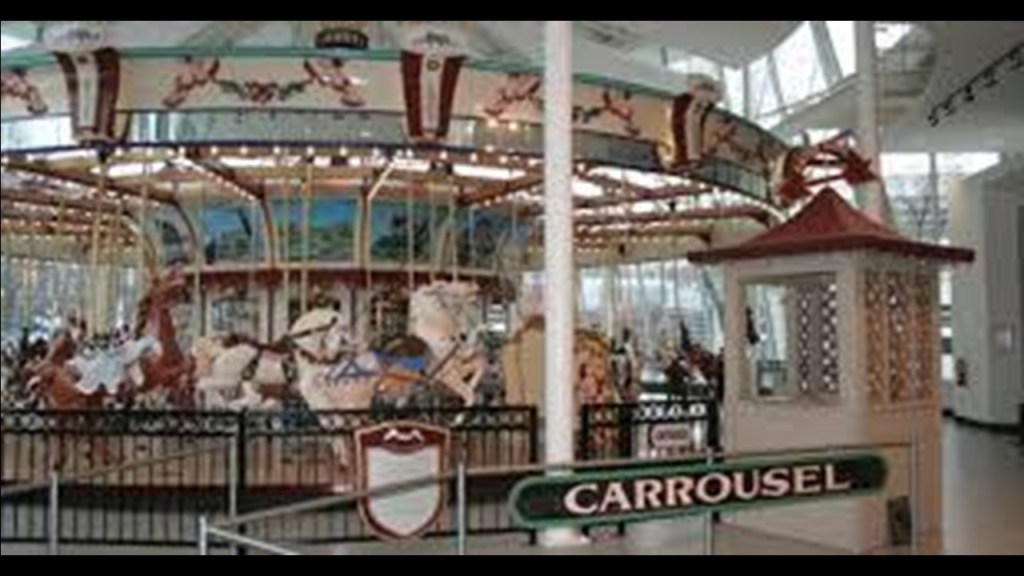
Another remnant is a carousel that was sold at auction after the park closed in 1969 and moved to another park in Maine, but efforts were made to get it back, and it finally returned home to Cleveland in 2014 where it is at the Cleveland History Center in University Circle.
Then there were the Puritas Springs Park in the western part of the Cleveland-area, and Chippewa Lake Park to south of Cleveland.
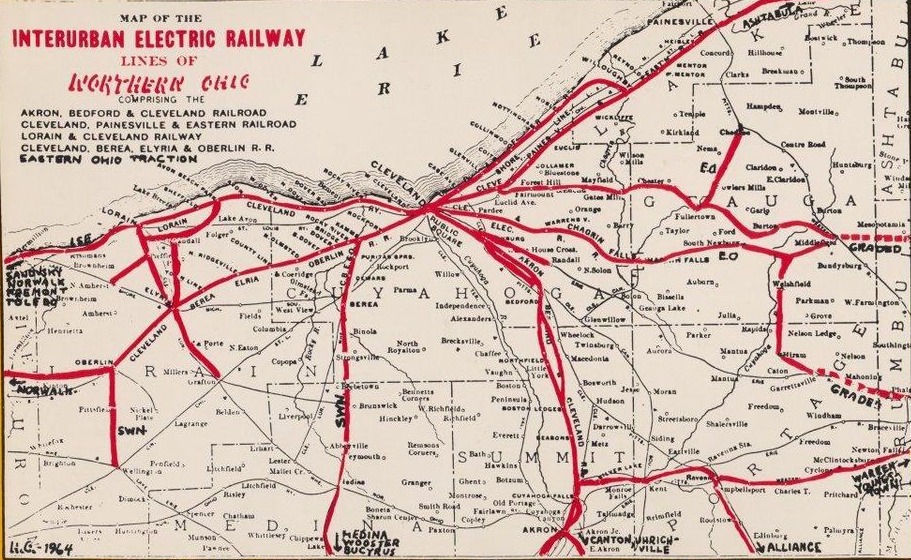
They were served by the Cleveland, Southwestern and Columbus Railway (CS&C), which was the primary interurban line connecting cities in this region.
It was a horse-drawn service from around 1870 to the 1890s, at which time it was electrified, and offered passenger and freight service until it was abandoned in 1931.
This interurban line connected Cleveland, with cities in the surrounding area, like Berea, Medina, Wooster, and Columbus.
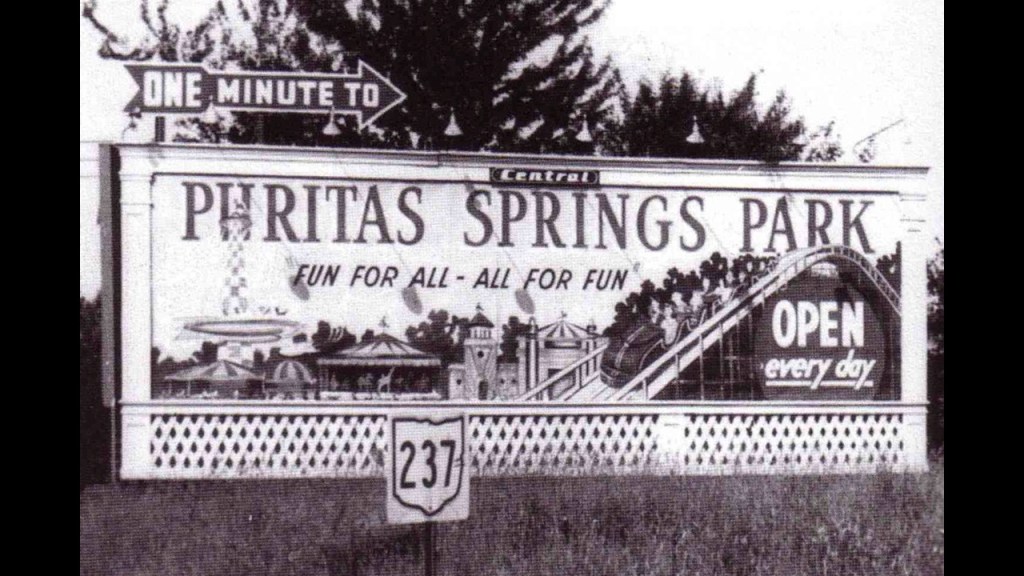
We are told the Puritas Springs Park was the first amusement park on the west-side of Cleveland, and it was operated by the interurban to draw riders.
It was located on a deep ravine overlooking the Rocky River Valley, and had things like a carousel, the largest roller coaster in Cleveland, and daily shows featuring exotic animals.
The park closed in 1958, and the land was turned into a residential development.
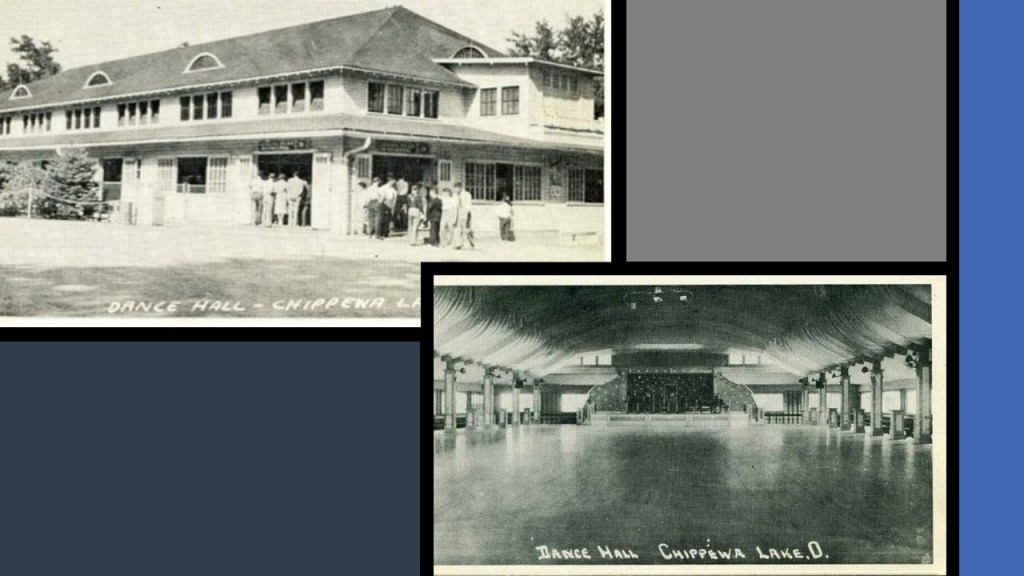
Another historic amusement park on this interurban line was the Chippewa Lake Park near Medina, south of Cleveland, and considered one of the most important amusement park destinations along the interurban’s rail network.

It operated for 100-years, from 1878 to 1978, after which time it was abandoned, with many of the original rides left to deteriorate in place.
As of today, most rides and structures have been removed, but remnants such as surviving foundations and pathways can still be found.

The Chippewa Lake Park Dance Hall burned-down in June of 2002.
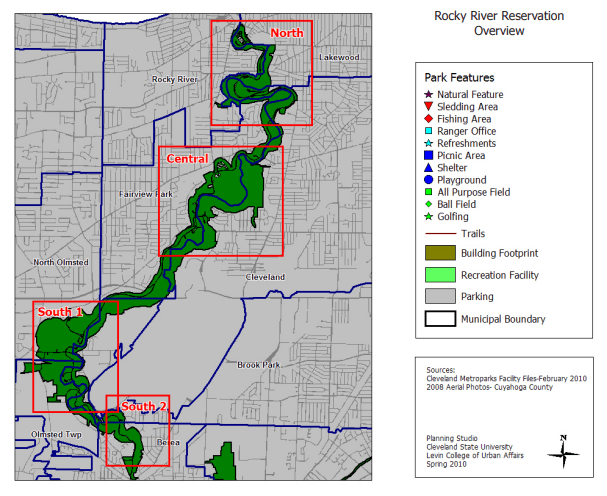
The former Puritas Springs Park was located near the Rocky River Reservation, which is in the Cleveland Metroparks system in West Cleveland.
We are told the character of the reservation is influenced by the Rocky River, with massive shale cliffs of a picturesque gorge rising above willow, sycamore and cottonwood trees, with many trails winding through the valley’s deep floodplain forests, meadows and wetlands.
What we are told is that the Rocky River Valley was heavily shaped by railroads in the 1800s and early 1900s.
Several railroad lines crossed the Rocky River near Berea, which is inside the reservation, and that as early as the mid-1800s railroads built stone arch bridges over the Rocky River Gorge.
While some of these bridges are abandoned, some are still in use today, like the one seen here above Berea Falls.
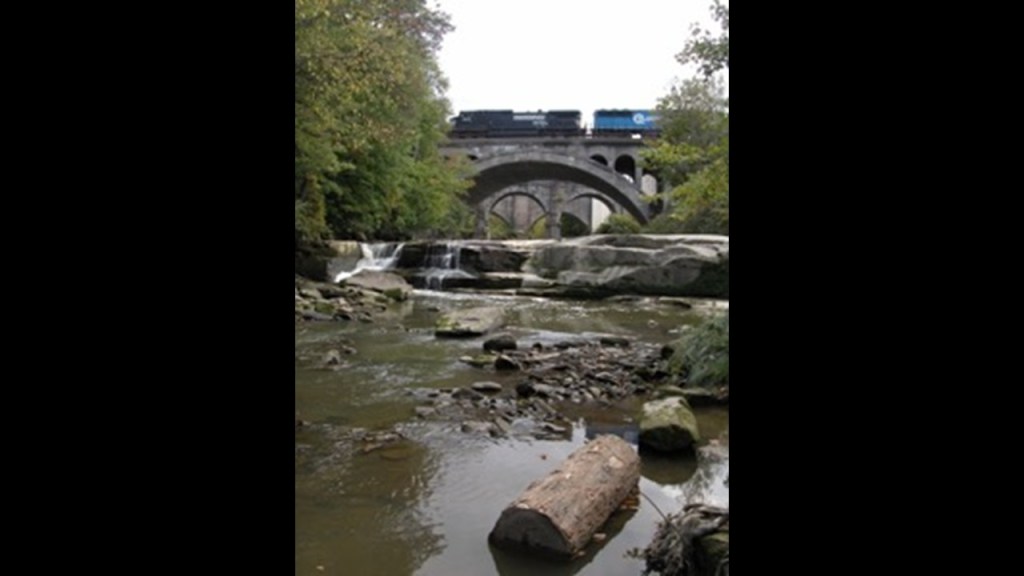
As a matter of fact, there are altogether three old stone bridges right next to each other above Berea Falls.

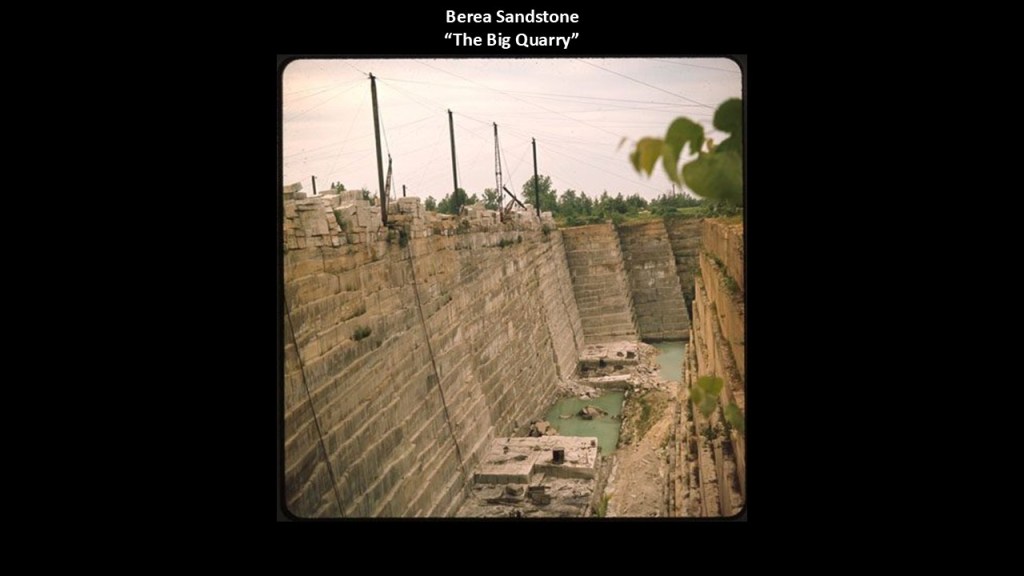
The nearby city of Berea was famous for sandstone quarries, for which railroads were an essential part of that industry, where quarry rail-lines connected the stone quarries to major rail-lines.
We are told some of those industrial rail spurs followed parts of the Rocky River.
Just for the record, I believe the stone quarries of this era were harvesting megalithic stone blocks from the original infrastructure of the ancient, highly advanced worldwide civilization that is missing from our collective awareness.
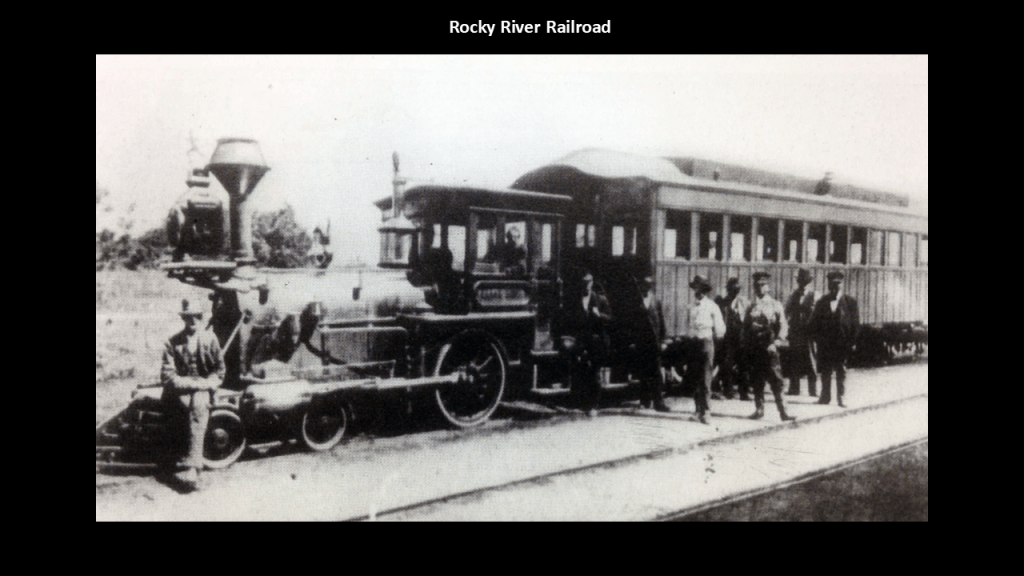
We are told the Rocky River Railroad Company was incorporated in 1868 as a 6-mile, or 10-kilometer, “dummy line” connecting West Cleveland to the Rocky River to support the new Rocky River Park in the summer months.
It featured specialized steam locomotives designed for shorter routes, using under-boiler water tanks.
It ran between 1869 and 1881, and we are told it was sold-off due to lack of business in the winter months to the Nickel Plate Road Railway.
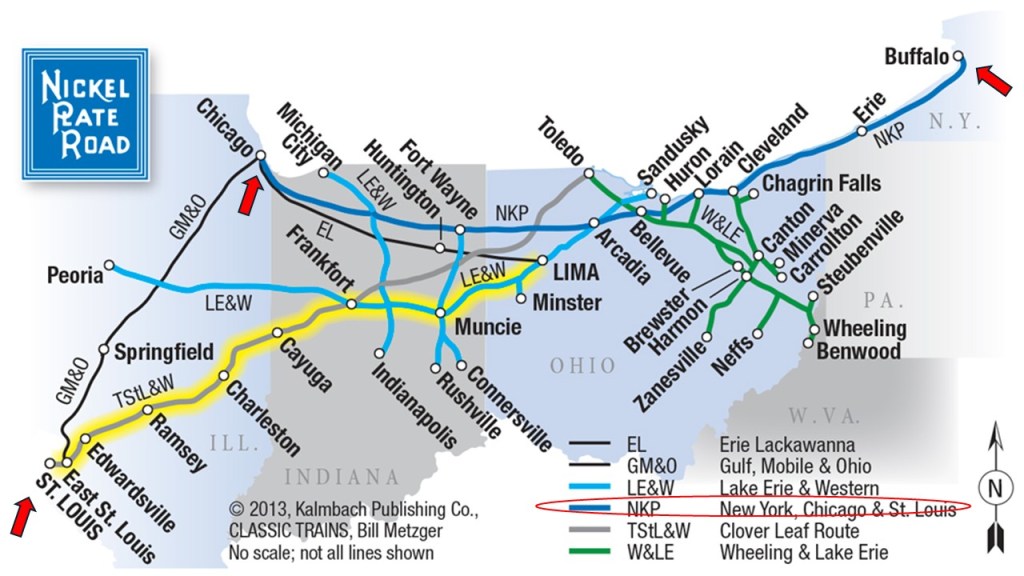
Also known as the New York, Chicago and St. Louis Railroad, the Nickel Plate Road Railway was said to have been constructed along the south shore of the Great Lakes in 1881 to connect Buffalo and Chicago in competition with the Lake Shore and Michigan Southern Railway.
In 1964, the Nickel Plate Road was one of several railroads that were merged into the Norfolk and Western Railway, a heavy-duty freight railroad .
Then in 1982, the Norfolk and Western Railway was combined with the Southern Railway to form the Norfolk Southern freight railroad.
So as we’ve seen so far, passenger rail infrastructure in the Cleveland area was said to have been constructed in the mid-to-late 1800s and early 1900s, and then discontinued, abandoned, or completely removed by and large only decades after it was said to have been constructed, and sometimes in a very short period of time.
This is a repeated pattern I have found consistently looking at cities and places all over the Earth.
Like I’ve shown here in the Cleveland area, public transportation by trains, city streetcar systems, and interurban streetcar systems connecting cities, as well as trolley parks, were brought on-line, only to be made to go away in most places, and replaced by cars and buses.
What changed?
It is my belief that after the original worldwide free-energy generating grid was destroyed, those behind the cataclysm and reset were shovel-ready to dig enough infrastructure out of the ruined Earth to restart civilization, known to us as the “New World.”
I have already outlined one thing that changed, which was the development of energy sources for other forms of transportation, like with the origins of the petroleum industry that I have already discussed.
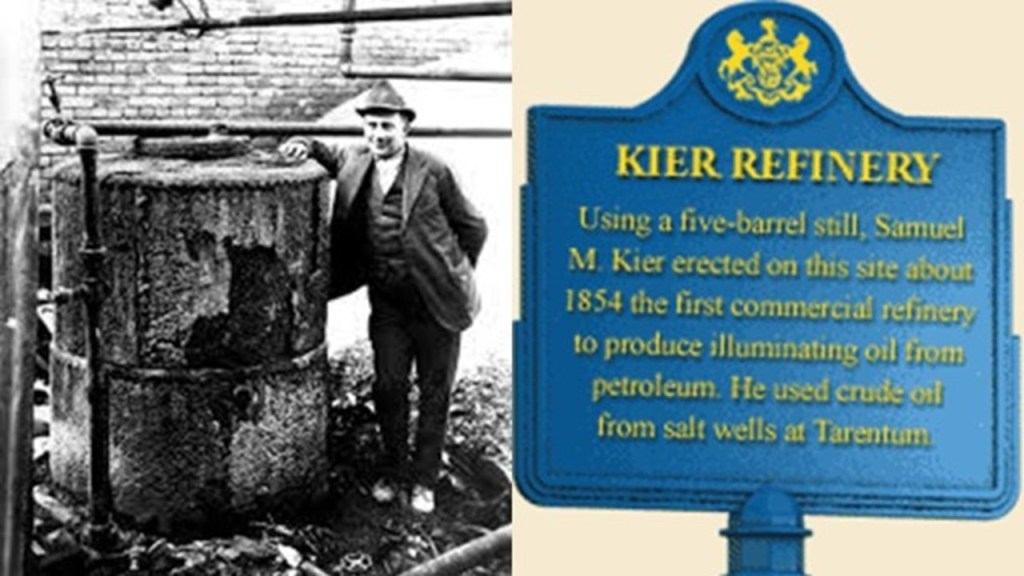
Samuel Kier established America’s first oil refinery for making lamp oil in Pittsburgh in 1854, just 5-years before Edwin Drake found oil near Titusville, Pennsylvania, in 1859.
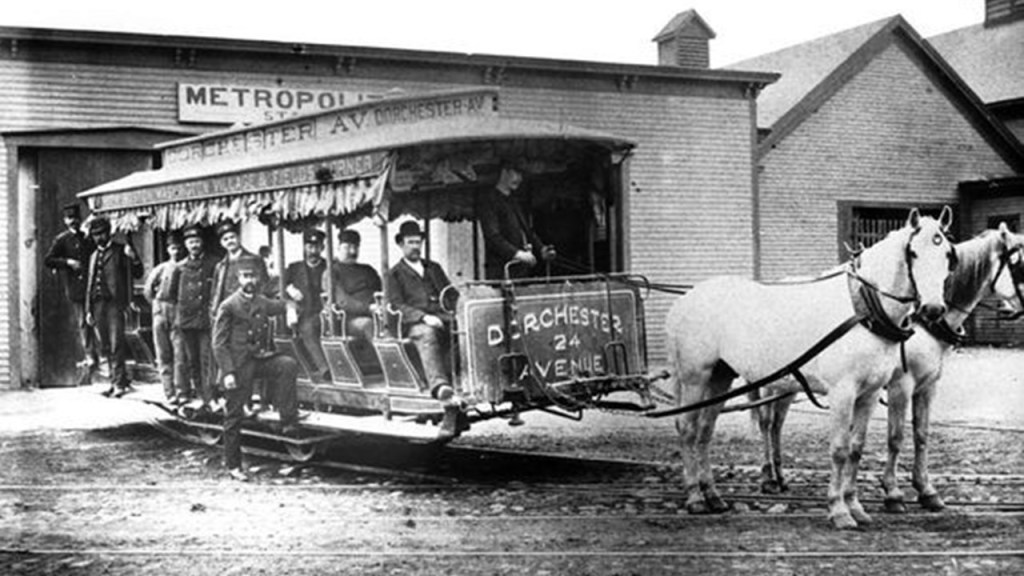
The year of 1854 was the same year that the Lynn and Boston Street Railway was put into service in Lynn, Massachusetts, and was powered by horses.
In 1888, Thomson-Houston Electric implemented the electrification of the same Lynn and Boston Street Railway.
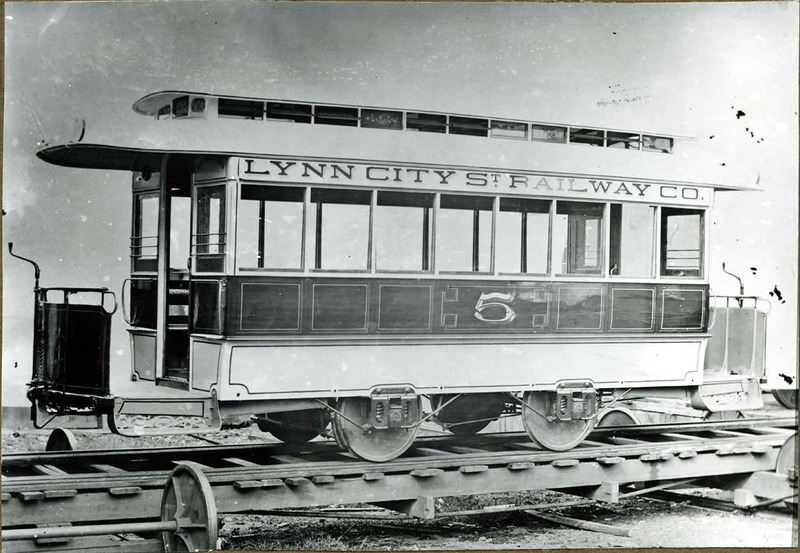
Thomson-Houston Electric was formed in 1882, when a group of Lynn, Massachusetts investors that bought out the American Electric Company from their New Britain, Connecticut investors in 1882, and the Thomson-Houston Electric Company moved their operations to a building on Western Street in Lynn, Massachusetts.

General Electric was founded in Schenectady, New York, on April 15th, 1892, by Thomas Edison, Elihu Thomson, Edwin Houston, Charles Coffin, and J. P. Morgan with the merger of the Edison General Electric Company and Thomson-Houston Electric.
The General Electric Company, or GE, is an American multinational conglomerate that operates through the following segments: aviation, healthcare, power, renewable energy, digital industry, additive manufacturing, venture capital and finance, and lighting.
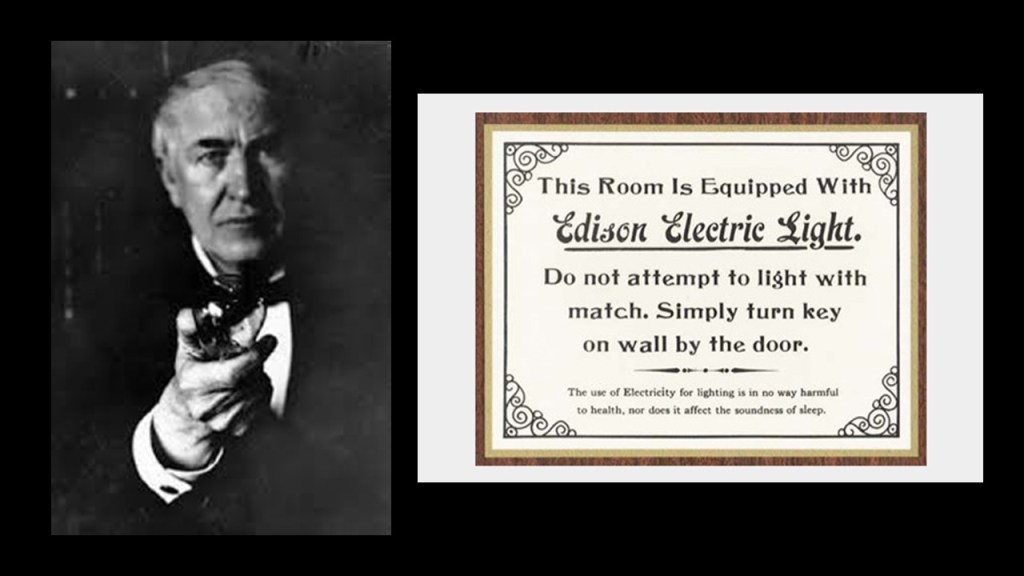
Edison General had been founded as the Edison Electric Light Company in 1878 by Thomas Edison to market his incandescent lightbulb, which he was given the credit for inventing in our historical narrative.
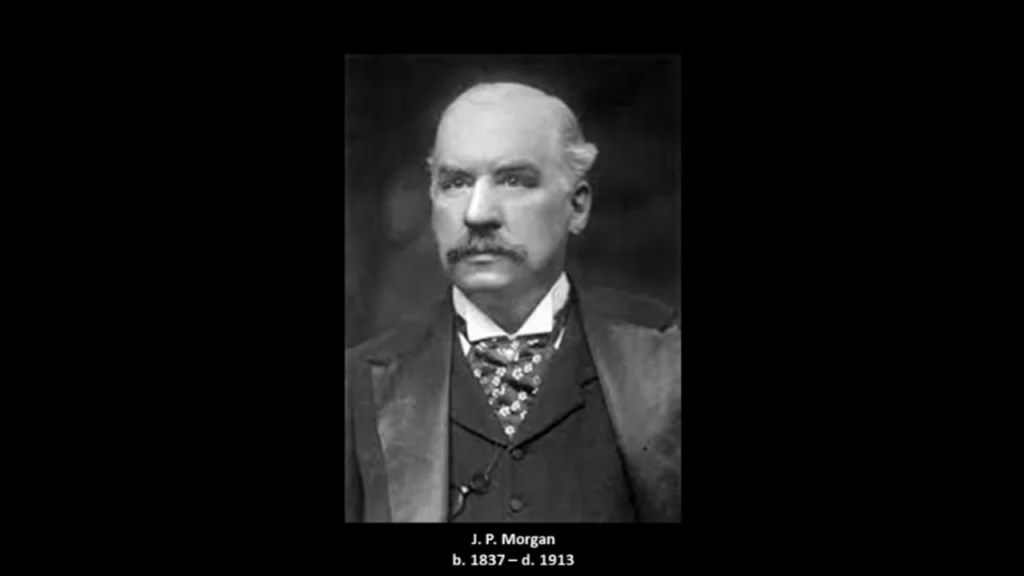
The merger of the Edison General Electric Company and the Thomson-Houston Electric Company was arranged by J. P. Morgan, an American financier and banker who dominated corporate finance on Wall Street throughout the period of time called the “Gilded Age,” between the years of 1870 and 1900.
He was a driving force behind the wave of industrial consolidation in the United States in the late 18th- and early 19th-centuries.
Besides his involvement in the formation of General Electric, he was also behind the formation of the U. S. Steel Corporation and International Harvester, among many other mergers.
This was the same pattern with the previously-seen Cleveland, Southwestern and Columbus Railway (CS&C), the primary interurban line connecting cities in this region.
It began its life as the Berea Horse Line in 1884, which ran from Berea to Cleveland.
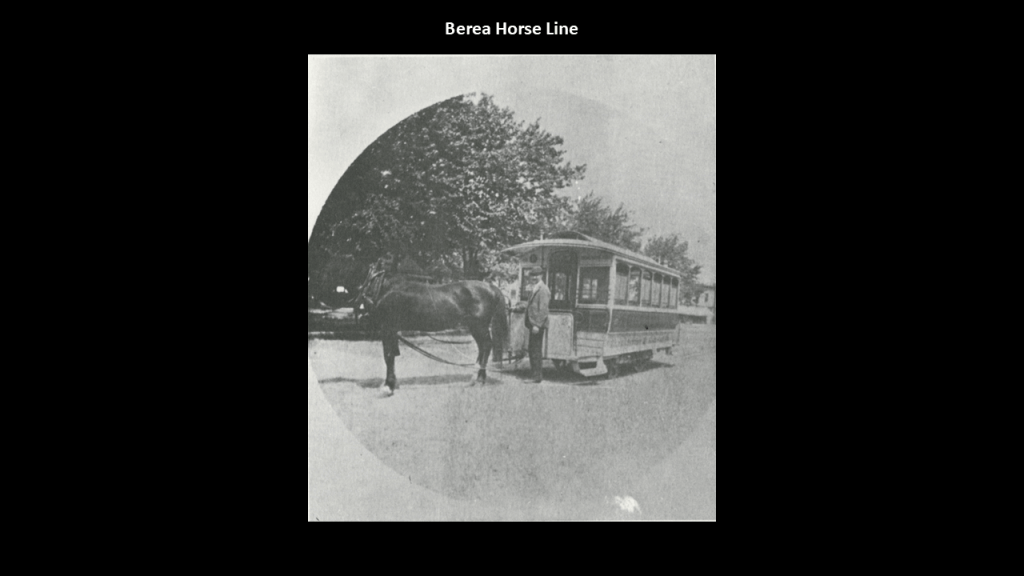
It was a horse-drawn service to the 1890s, at which time it was electrified.
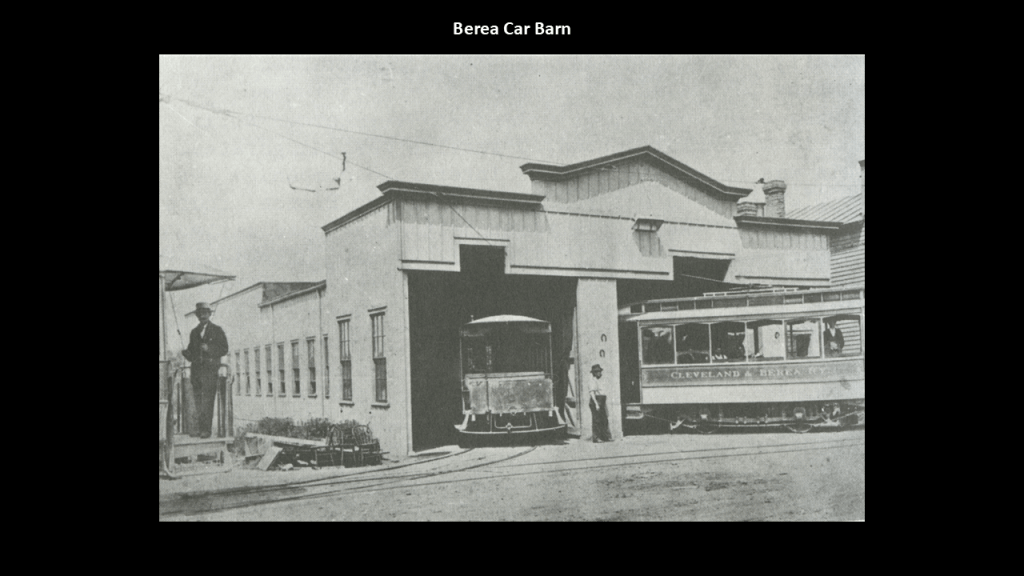
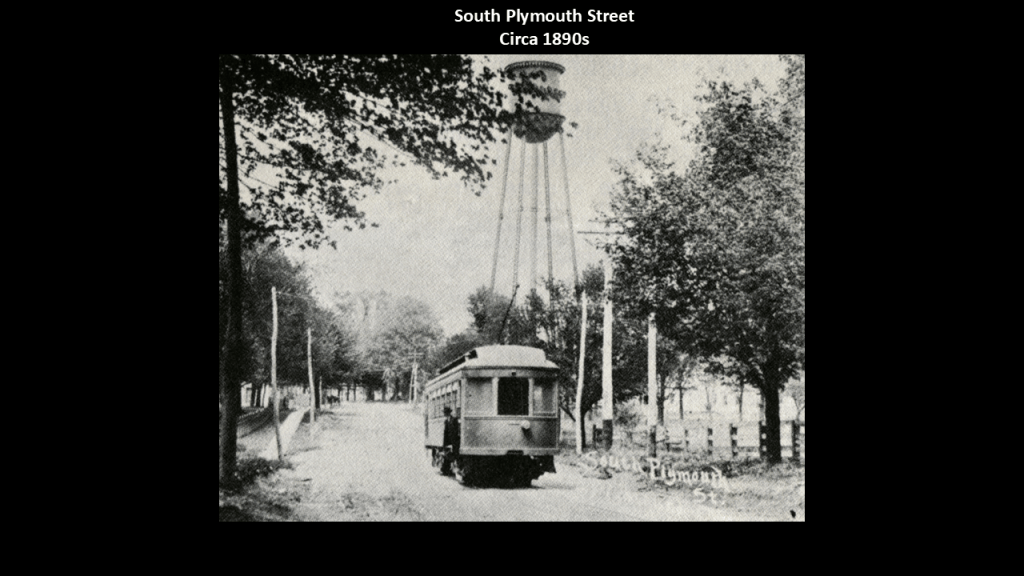
Here is a photo of an electric streetcar on South Plymouth Street circa the 1890s.
The Cleveland, Southwestern and Columbus Railway was in service until it was abandoned in 1931.
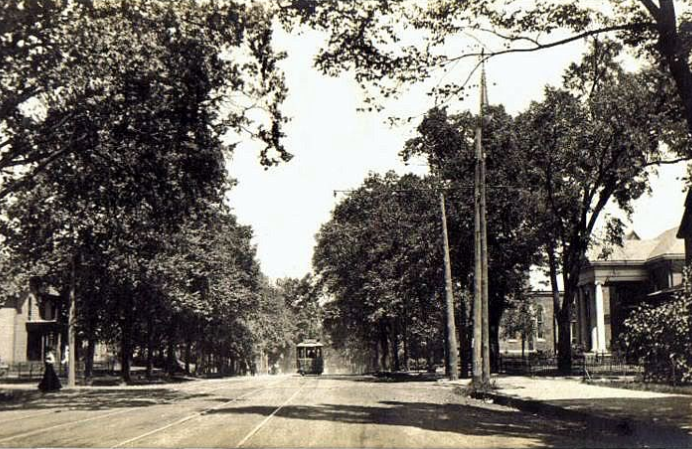
There continues to be mounting evidence that there had already been a worldwide free energy system in existence from the original civilization, including these electric streetcar systems, which included residential routes.
Here’s another photograph of one in a Charlotte, North Carolina, neighborhood.
This is what they needed to replace, and once they had their replacement transportation systems, they did away with entire rail systems.
Why, if there were electric rail transportation systems already in place everywhere?
It appears like the petroleum industry was developed in the 1850s in order to provide an energy technology to replace the free energy of the original civilization and to make immense amounts of money from the total control of the new systems.
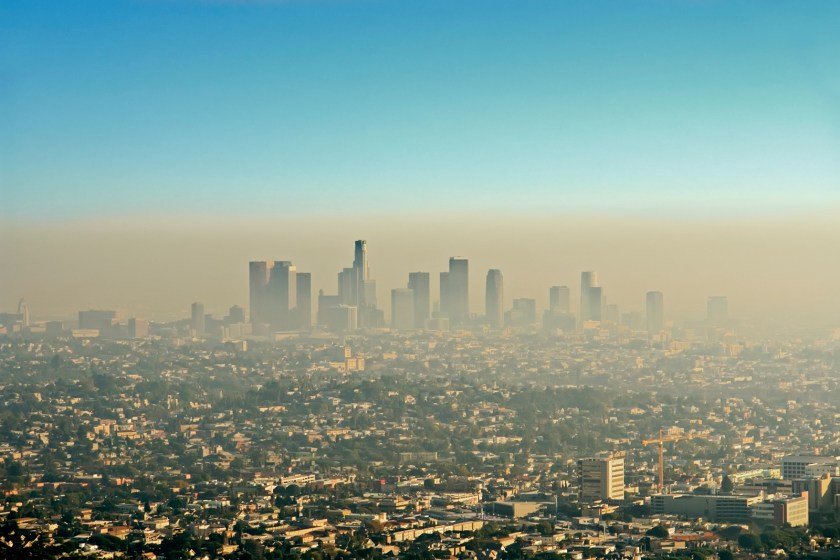
Another thing that needed to happen to replace the older rail technologies was the development of new automotive technology.
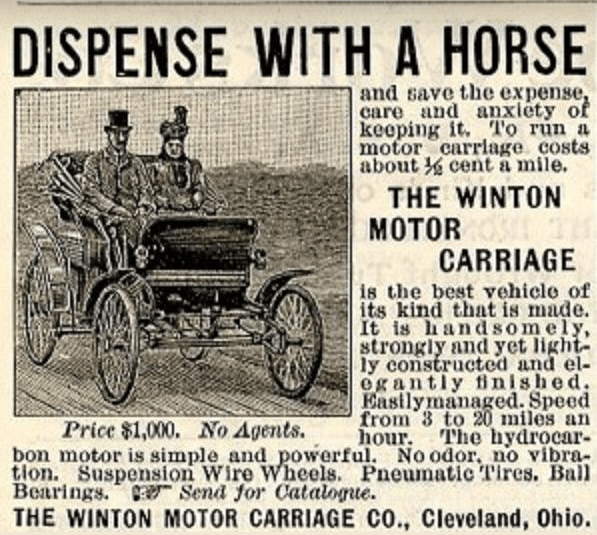
Cleveland was the location of some early car manufacturers, like the Winton Motor Carriage Company and the Peerless Motor Car Company, that were manufactured for those who could afford them.
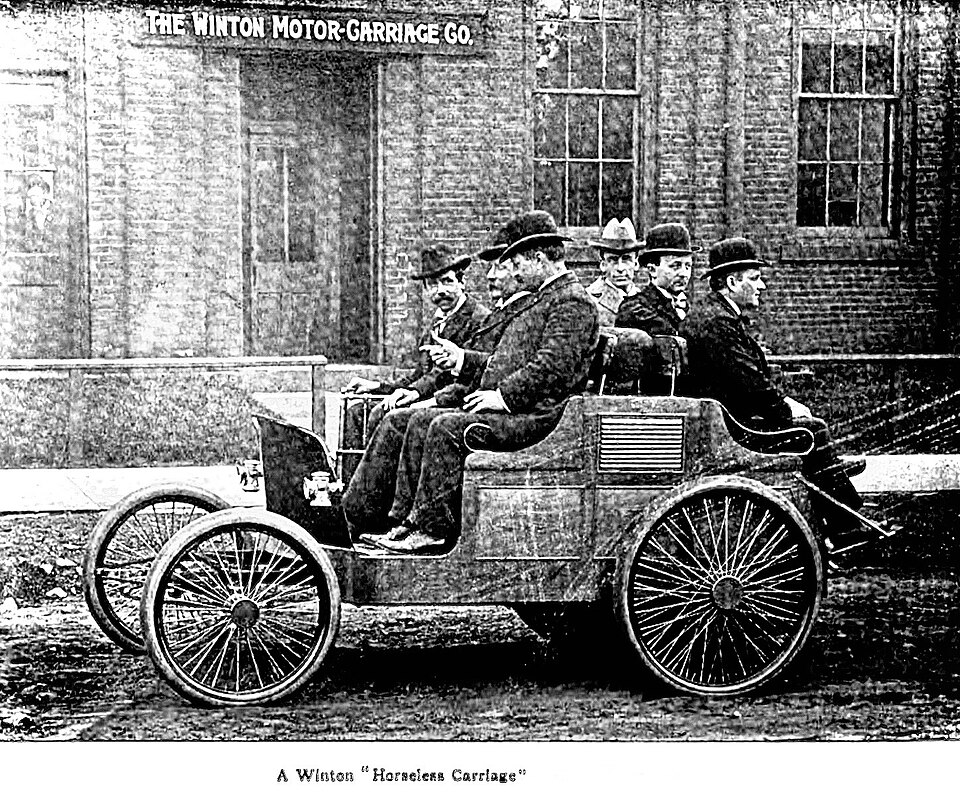
The Winton Motor Carriage Company was founded in Cleveland in 1897 by Alexander Winton, an immigrant from Scotland.
Winton turned from bicycle-production in 1896 to the production of an experimental, single-cylinder automobile, and he incorporated his car company in 1897.
The first cars were handmade, with painted sides, padded seats, a leather roof, gas lamps, and tires made by B. F. Goodrich, an Akron-based company.
He sold 22 cars starting 1898.
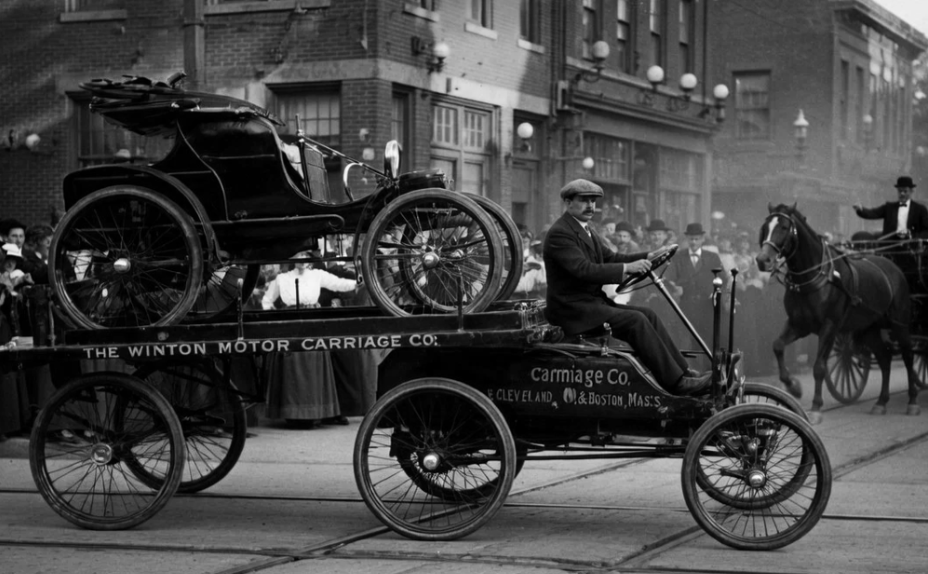
In 1899, Winton sold his first manufactured semi-truck, and more than 100 Winton vehicles were sold that year, making it the largest manufacturer of gasoline-powered vehicles in the United States, and helped establish commercial gasoline production.
Publicity generated sales, and the news that Reginald Vanderbilt and Alfred Vanderbilt had purchased Winton automobiles boosted the company’s image considerably, and Winton became one of the first American manufacturers to produce automobiles in commercial quantities, producing touring cars and limousines.
The company’s main factory moved from an industrial building in Cleveland to a larger complex on Berea Road in West Cleveland.
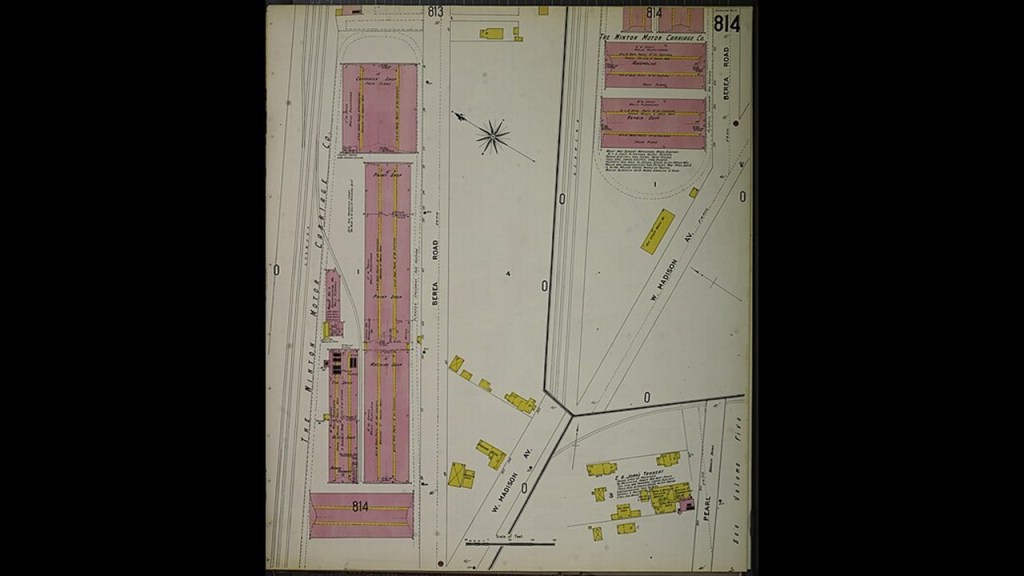
Winton’s success helped establish Cleveland’s reputation as an early American automobile manufacturing center.
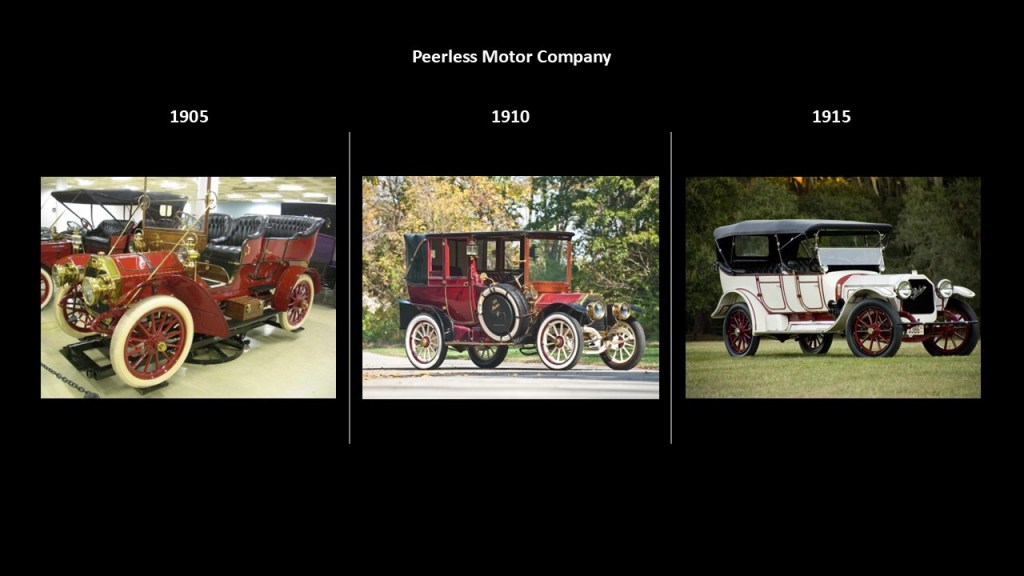
The Peerless Motor Company was one of America’s most prestigious early automobile-makers, and an important part of the story of Cleveland’s competition with Detroit during the early development of America’s automotive industry.
Peerless started out as a washing machine wringer company in 1889, then expanded into bicycle-manufacturing in the 1890s, and into cars by 1900.
The company initially experimented with small, single-cylinder automobiles called “motorettes,” but by 1902, quickly moved beyond experimental cars into expensive touring cars, and became synonymous with expensive, beautifully-engineered luxury automobiles.
By the 1920s, the company was experiencing increasing difficulties with a rapidly changing industry, and ultimately couldn’t compete in the mass market.
Peerless ended automobile manufacturing on November 4th of 1931.
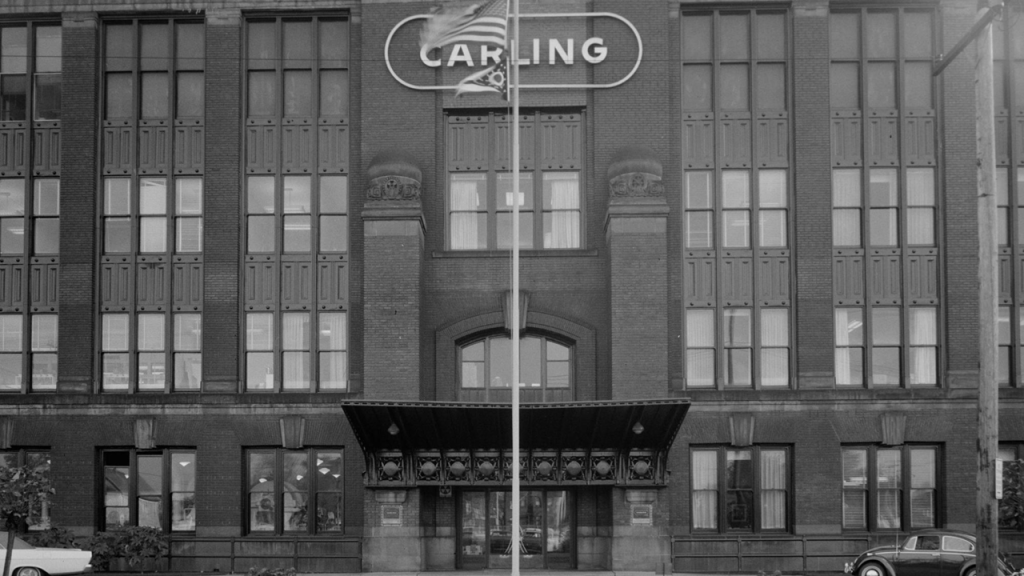
In 1933, the building which had produced Peerless automobiles was transformed into a brewery for the Carling Brewing Company, an important part of Cleveland’s brewing industry and one of the best-known beer brands in North America.
There were two other Cleveland-based automotive manufacturing companies that are important to mention.
One was the White Motor Company, and the other was the Baker Motor Vehicle Company.
The White Motor Company was a Cleveland-based automobile manufacturer that grew from an early maker of steam automobiles to one of the country’s most important heavy-truck and bus producers.
It developed from the White Sewing Machine Company, which was established by Thomas H. White in 1876, and benefited from Cleveland’s established metalworking and machinery industries.
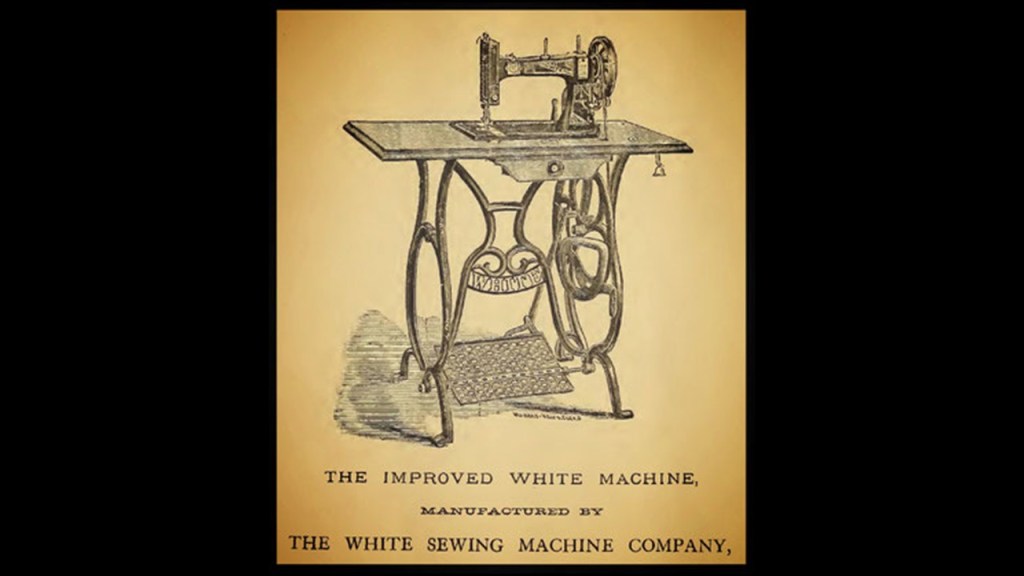
His son Rollin became interested in mechanical engineering and the possibilities of steam-powered vehicles.
Rollin was an inventor who believed steam engines could be an excellent means of powering automobiles, and in 1899, he developed an experimental, steam-powered automobile.
The first White Steam Cars appeared in 1900.
By 1906, the automobile operation separated from the Sewing Machine Company, and the White Motor Company was producing 1,500 cars annually, and had established itself as one of America’s leading steam car manufacturers.
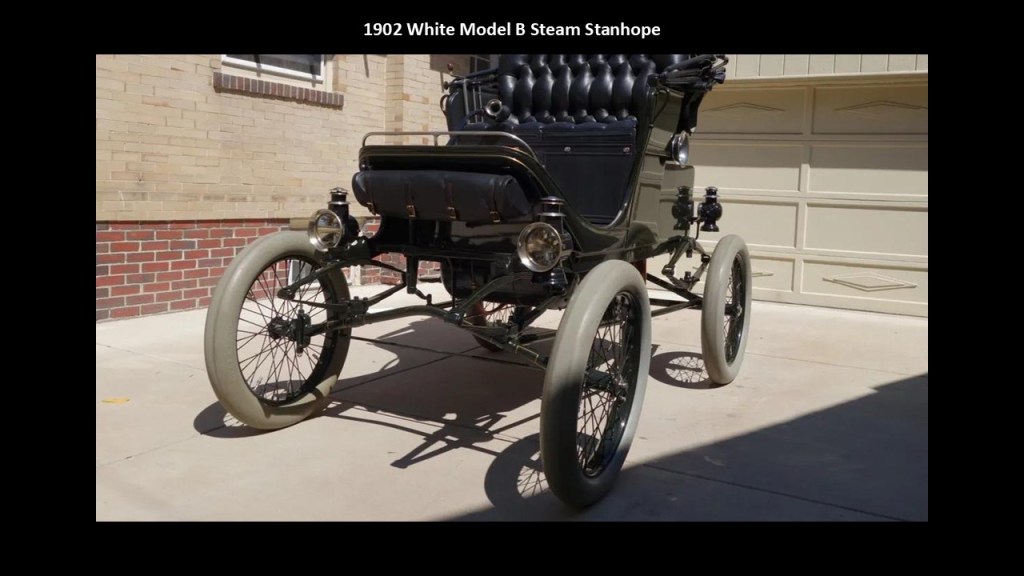
Around 1911, the company transitioned away from steam-powered automobiles to gasoline-powered vehicles, and completely ended their steam car production in 1912.
White increasingly concentrated on commercial vehicles like buses and trucks, which also became known for their high-quality, and by the end of the war, the company became a major supplier of military vehicles during World War I, and the company had established itself as one of the leading truck manufacturers in the country .
The company’s expansion into military vehicles continued during World War II.
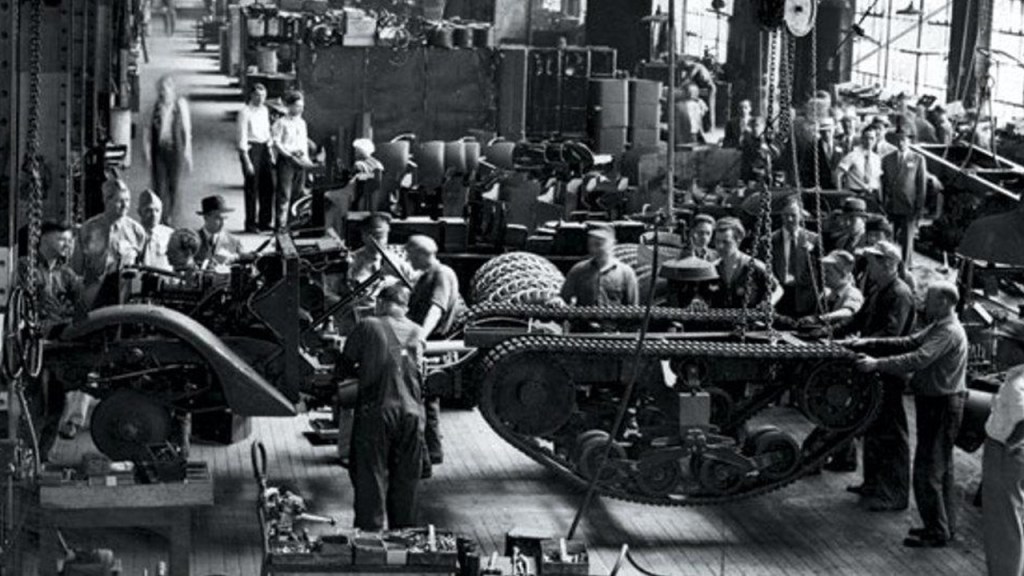
After the war, White became one of the country’s largest independent truck manufacturers.
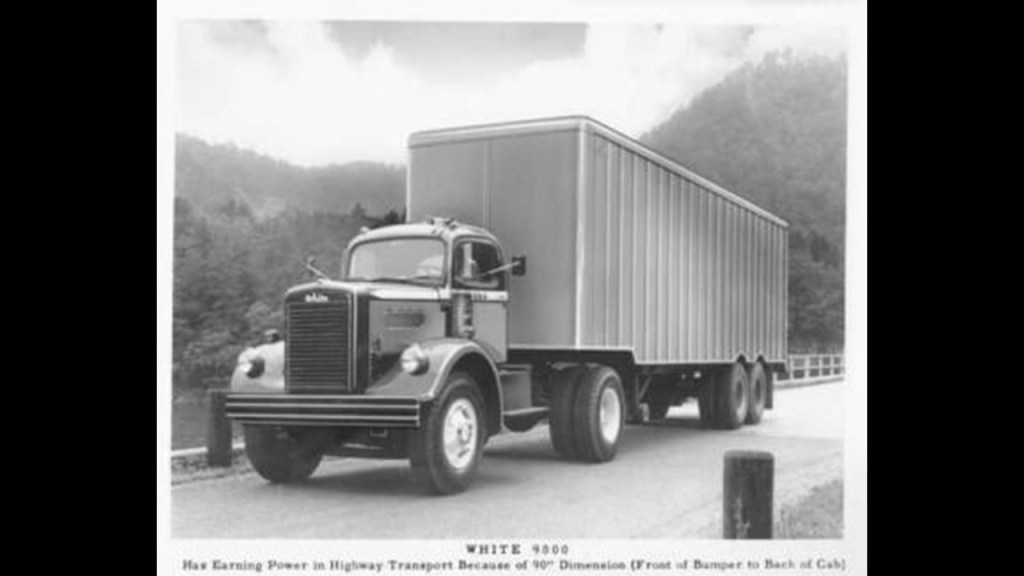
The company, however, ran into serious financial difficulties, initially filing for bankruptcy in 1980.
After the bankruptcy process had gone on for several years, the White Motor Company ceased to exist in 1985.
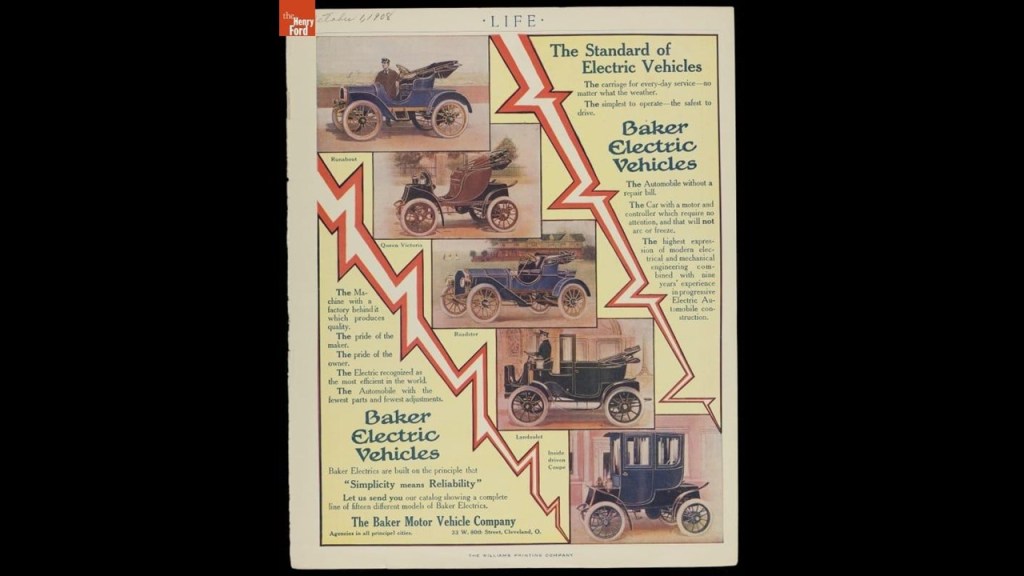
The Cleveland-based Baker Motor Vehicle Company was one of America’s most important early electric automobile manufacturers.
It was a serious competitor in the early 20th-century in an automobile industry that had not yet decided whether gasoline, steam or electricity would become the dominant source of power.
It was in fact, among the world’s leading electric automobile manufacturers, and particularly popular with wealthy customers.
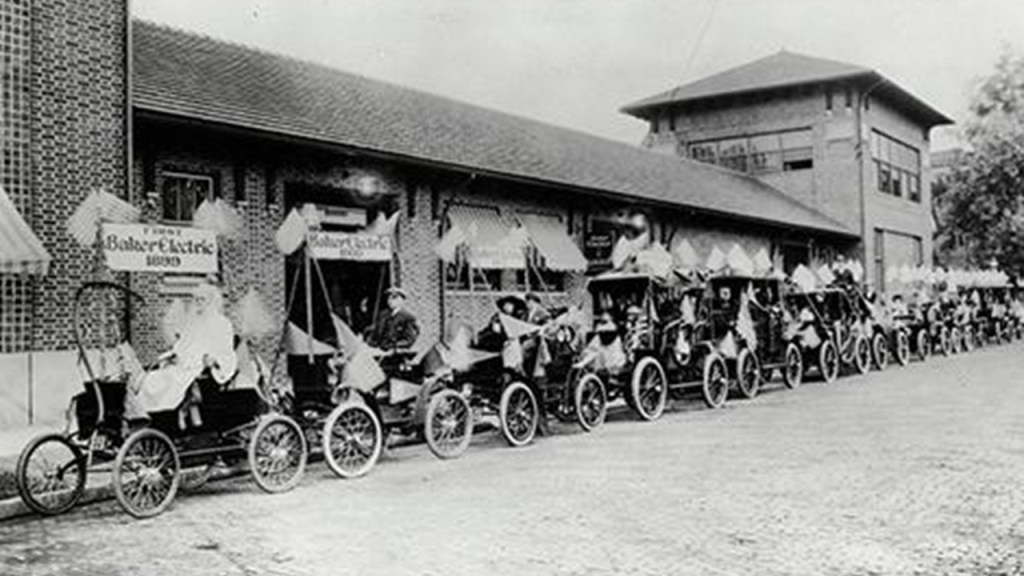
The company was founded by engineer and inventor Walter C. Baker in 1898.
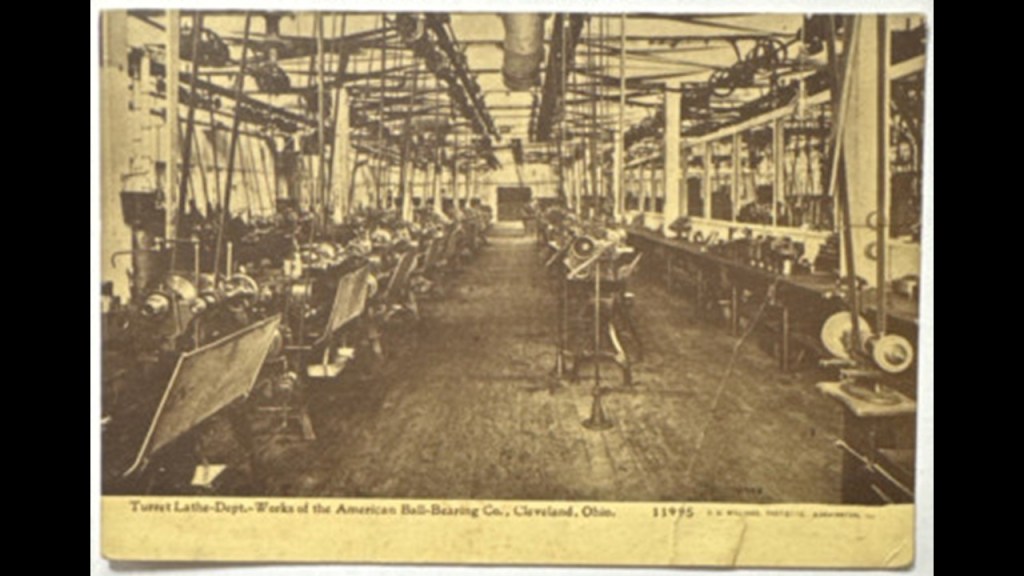
He was already involved in the manufacturing industry before turning to automobiles, when in 1895, he organized the American Ball Bearing Company, which manufactured bearings and other components for carriages and automobiles.
Baker became interested in electric propulsion and worked with engineer F. Philip Dorn to develop an electric automobile, and they organized the Baker Motor Vehicle Company in 1898 to manufacture their vehicles.
The company’s first production automobile appeared around 1900.
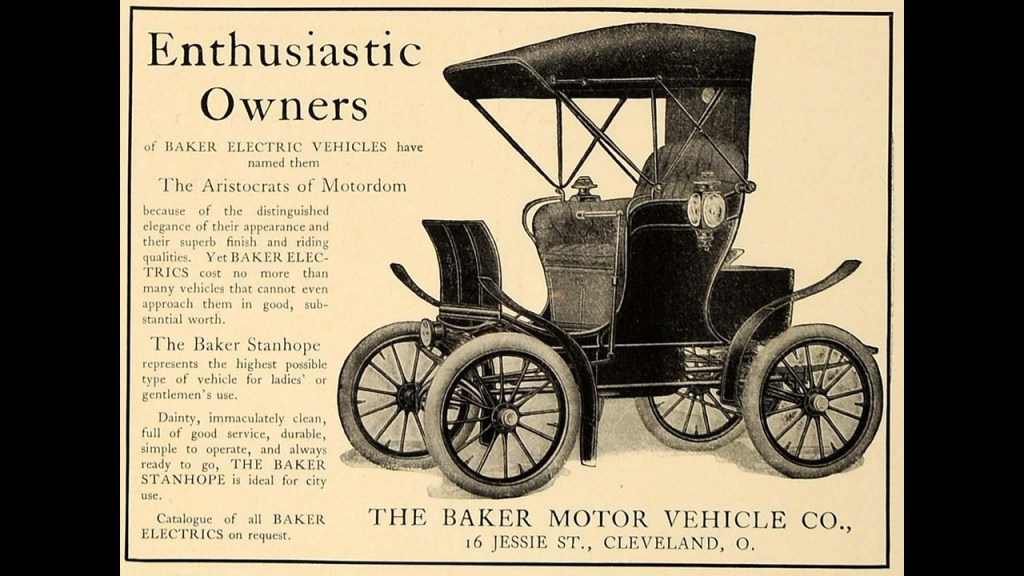
The early Runabout weighed between 550 and 650 pounds, or 250 and 295-kilograms, depending on the model.
One of the limitations was battery capacity, and early electric vehicles had relatively short driving ranges and required access to charging facilities.
The original Baker automobile had a motor rated at 3/4 of a horsepower, which was substantially less powerful than the Winton gasoline automobiles, but Baker was trying to build a convenient, reliable, and comfortable, urban vehicle, but not a particularly fast one.
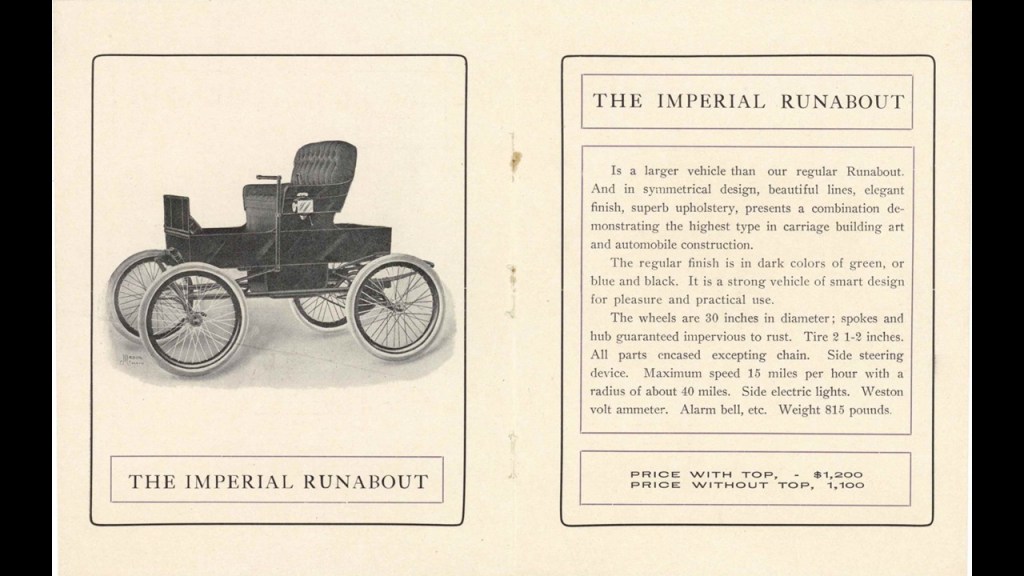
By 1905, Baker was producing about 400 vehicles annually, and by 1906, this number had doubled, making it one of the world’s largest electric automobile manufacturers.
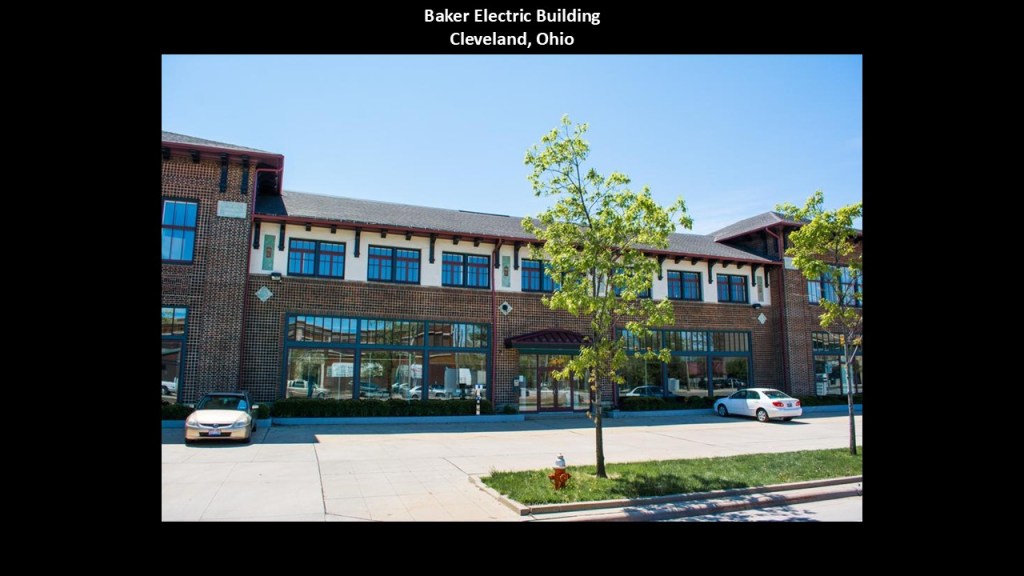
Baker had several important locations in Cleveland, and one of them was a car showroom at 7100 Euclid Avenue on Millionaire’s Row.
The showroom was designed to appeal to wealthy automobile buyers and became an early model for modern dealerships.
The last Baker automobiles were produced in 1916, and the company focused on electric industrial vehicles, like trucks and materials-handling equipment.
The Baker Electric Building on Euclid Avenue was not demolished like so many others, and was restored and adapted for commercial and medical-related uses.
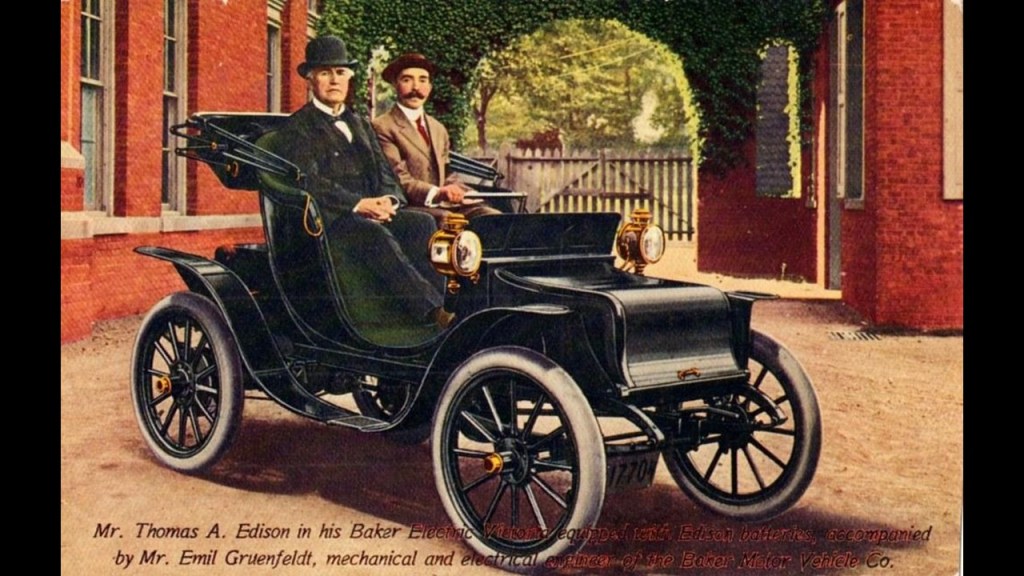
Baker had an important relationship with Thomas Edison, who had purchased an early Baker electric automobile and became interested in improving their batteries.
He was developing nickel-iron storage batteries, which he believed could provide a better alternative to conventional lead-acid batteries.
The first commercial Nickel-Iron batteries went on sale in 1904, but the early versions had problems with leaking containers, deteriorating capacity, and unreliable performance.
Edison suspended production and redesigned the battery, with the improved version returning in 1909.
While Edison did sell his batteries for electric vehicles, they found a much more dependable market in industrial applications.
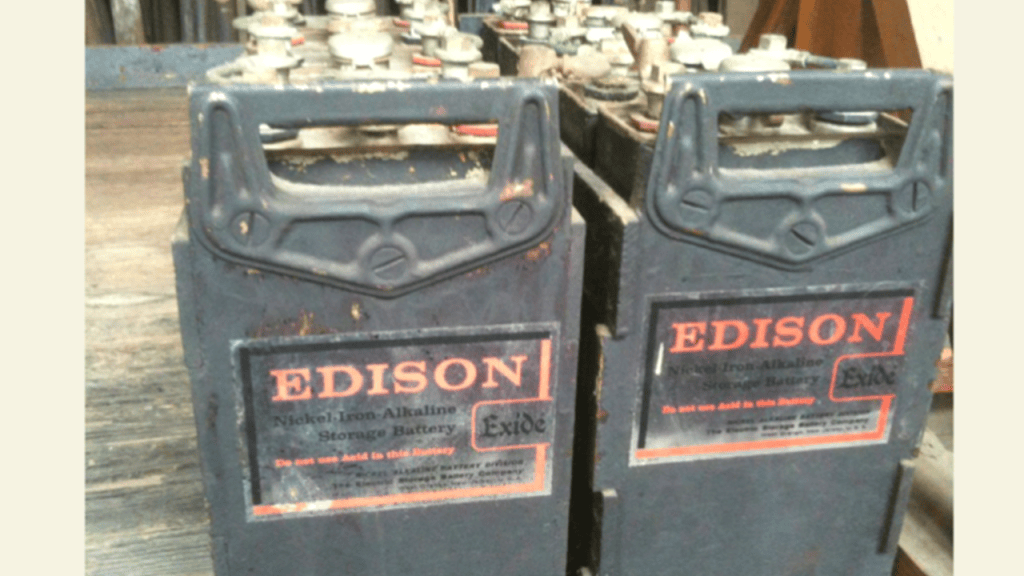
By the time the improved electric car battery returned in 1909, gasoline-powered cars were rapidly taking over the automobile market.
Henry Ford’s Model T had been introduced in 1908, which made gasoline-powered cars affordable to a much larger public.
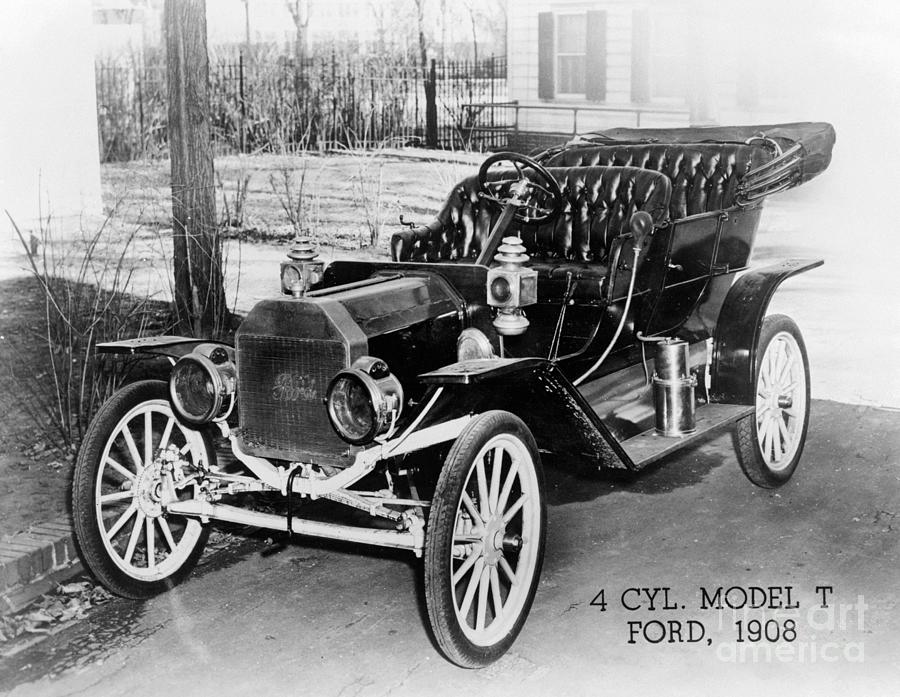
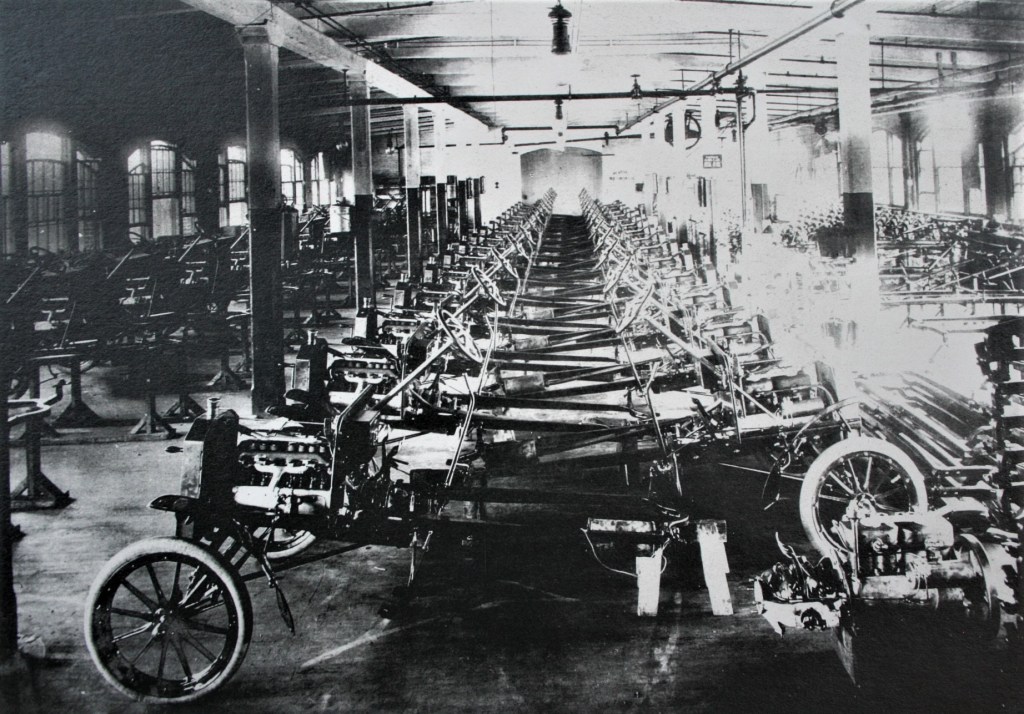
In the next ten years, the Ford Motor Company would lead the world in the expansion and refinement of the assembly line concept.
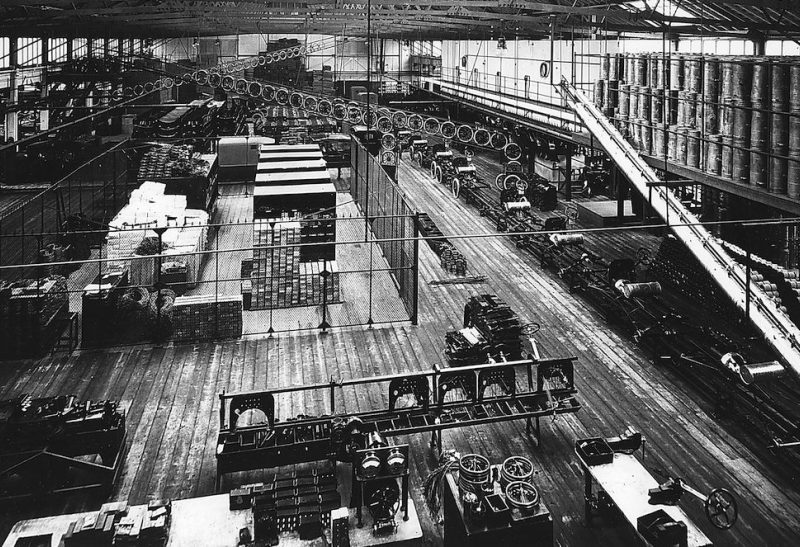
Henry Ford also utilized the practice of “vertical integration” in the Ford Motor Company.
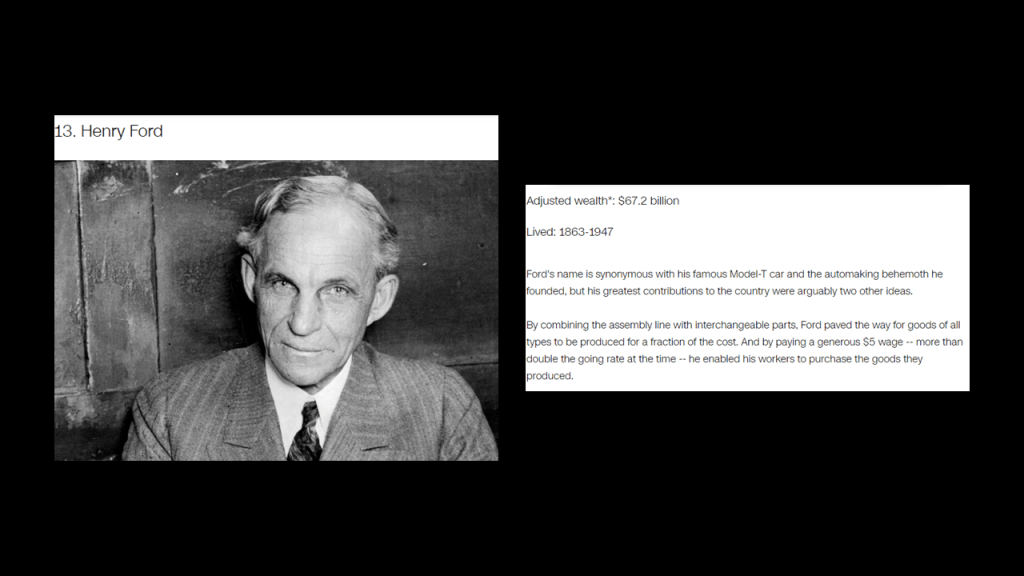
Henry Ford was also the 13th-wealthiest American of all-time according to CNN Business, with an adjusted wealth of $67.2-billion.
One more thing that I’d like to mention about Cleveland is its important place in the American aircraft industry.
It became one of the country’s notable airplane manufacturing centers, as Cleveland’s automobile, machine-tool, steel, and precision-manufacturing companies helped move it into aviation.
The central figure was Glenn L. Martin, whose company built military aircraft in Cleveland beginning in 1917.
In 1917, a group of prominent Cleveland businessmen persuaded him to relocate his manufacturing operations from California to Cleveland, and the Glenn L. Martin Company was organized in September of that year.
A major factory was established in the Glenville area, and it had an adjoining airfield for testing an flying aircraft.
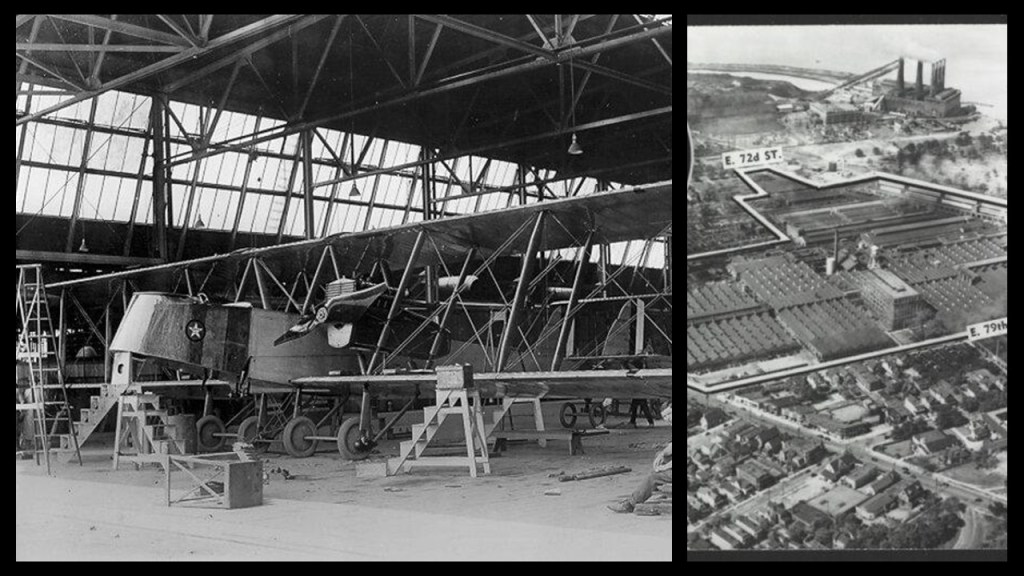
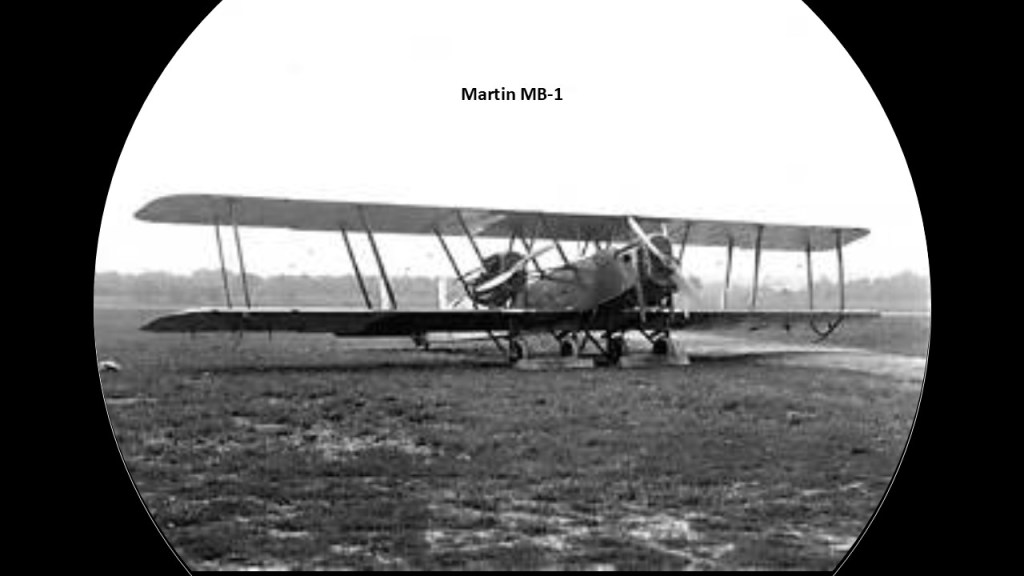
The Martin Company’s most important early product was the Martin MB-1, a large, twin-engine bomber.
Though it was not ready for operational service by the end of World War I on November 18th of 1918, it became an important Army post-war bomber, and was also adapted for commercial applications like mail and transport.
Martin’s Cleveland plant was an early training ground for people who would help build the American Aircraft industry, and produced notable aviation talent.
Donald W. Douglas was Martin’s chief engineer and designer, and he founded the Douglas Aircraft Company in California in 1920.
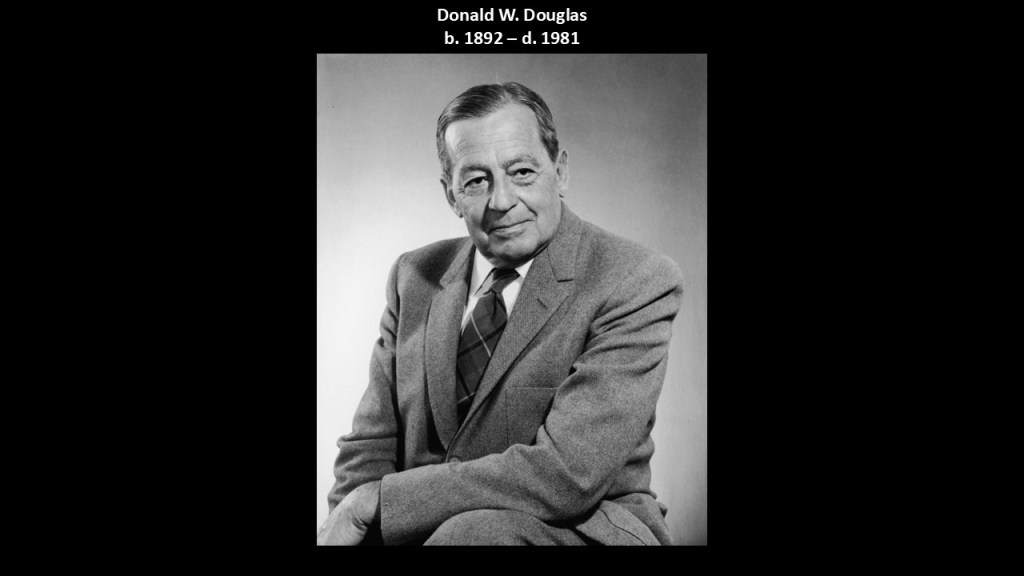
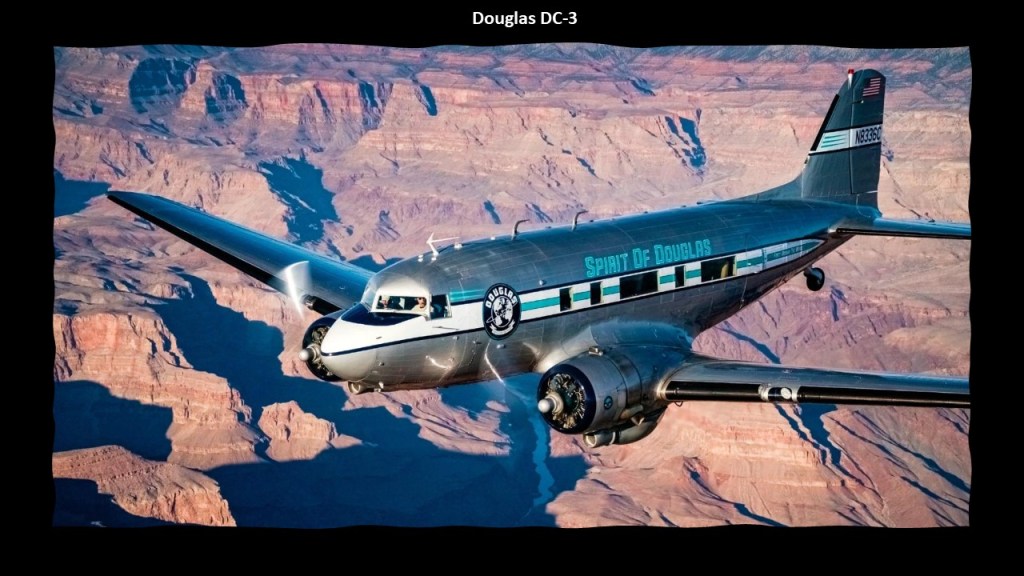
The Douglas Aircraft Company’s greatest commercial legacy is closely tied to the DC series, especially the DC-3.
The DC-3 was introduced in the 1930s, and combined useful range, capacity, reliability, and operating economics in a way that helped make passenger air service commercially practical.
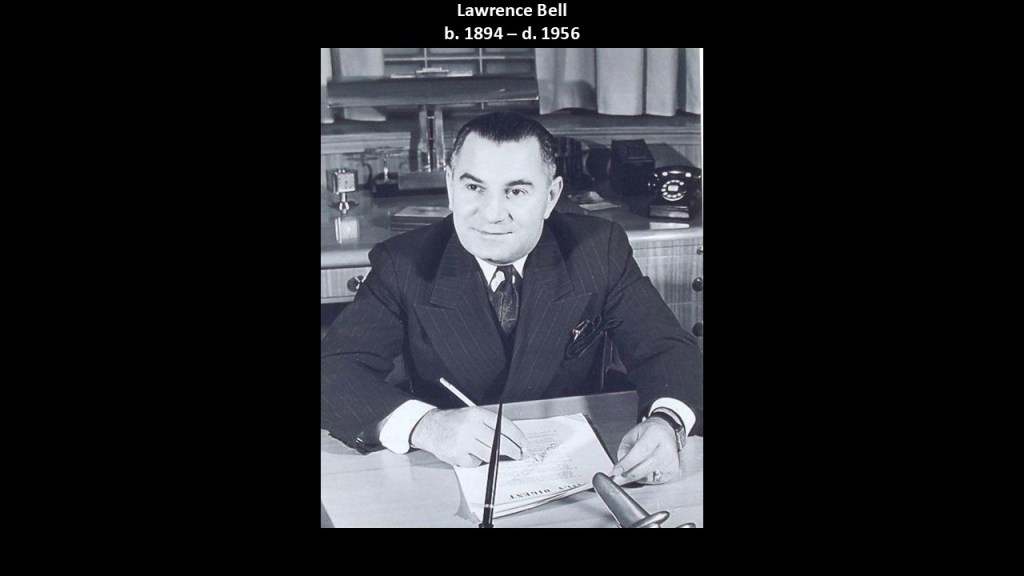
Lawrence Bell worked with Martin before establishing the Bell Aircraft Corporation in 1935.
His company became particularly important for experimental and military aircraft, with the most famous being the Bell X – 1, the aircraft that first exceeded the speed of sound in controlled, level flight.
James Kindelberger was another person from the Martin Company who became a leading figure in this field.
He entered aircraft engineering with the Martin Company in 1920, and moved to Douglas Aircraft in 1925, where he rose to become Chief Engineer and lead development of the DC-1 and DC-2 transports.
In 1934, Kindelberger became the President and General Manager of North American Aviation (NAA), and in 1948, he became its Chairman and CEO.
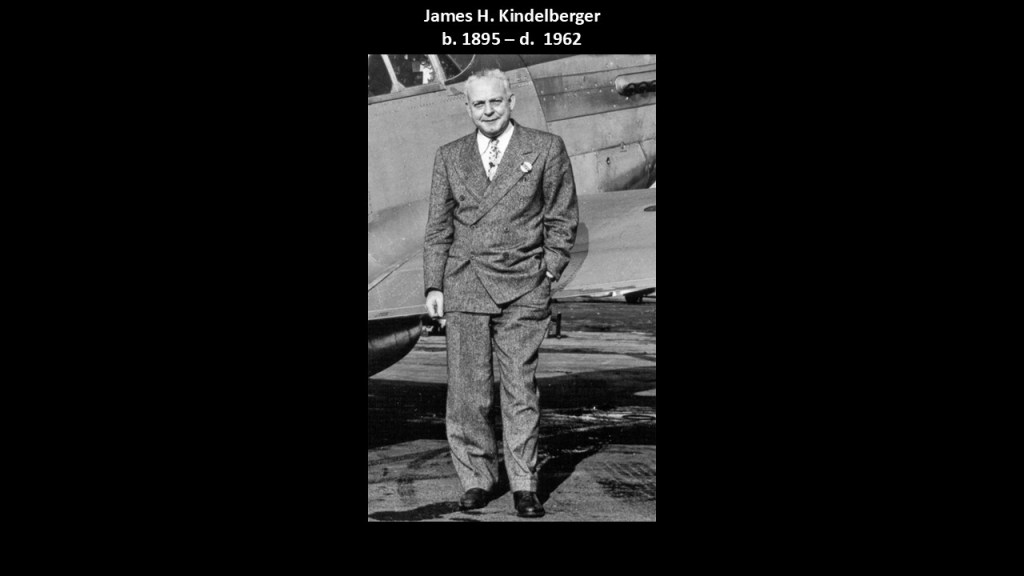
He helped transform a relatively small aircraft company into one of the defining American Aerospace manufacturers of the mid-20th-century.
NAA produced fighters like the P-51 Mustang, a single-engine fighter best-known for long-range escort missions during World War II, but also produced a variety of military aircraft like trainers and bombers, and after the war, moved into jets, missiles, rocket engine-testing, supersonic research and experimental aerospace vehicles, positioning the company for major participation in the emerging U. S. Space Program.
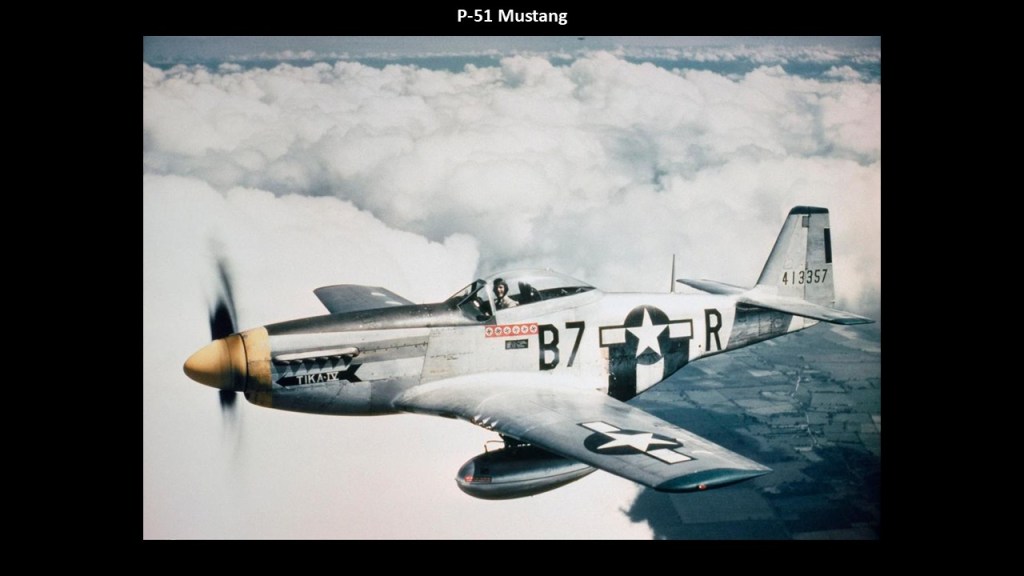
Cleveland’s aviation story eventually moved from manufacturing airplanes to researching their engines.
The Federal Government selected Cleveland in 1940 for the National Advisory Committee for Aeronautics new Aircraft Engine Research Laboratory.
It opened during World War II, and became an important center for researching aircraft propulsion.
After the war, it became the Lewis Flight Propulsion Laboratory, and in 1958, it became NASA’s Lewis Research Center, and it was renamed for NASA astronaut and Ohio-native-son John Glenn in 1999.
As one of the ten major field centers of NASA, The Glenn Research Center has as its primary mission the development of science and technology for use in aeronautics and space.
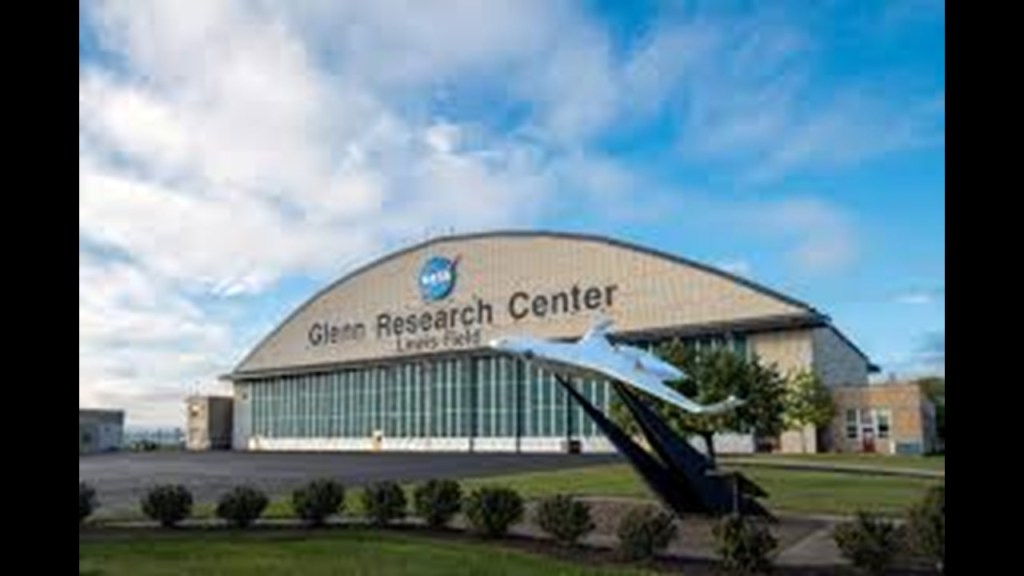
The Glenn Research Center is directly adjacent to the Cleveland-Hopkins International Airport.
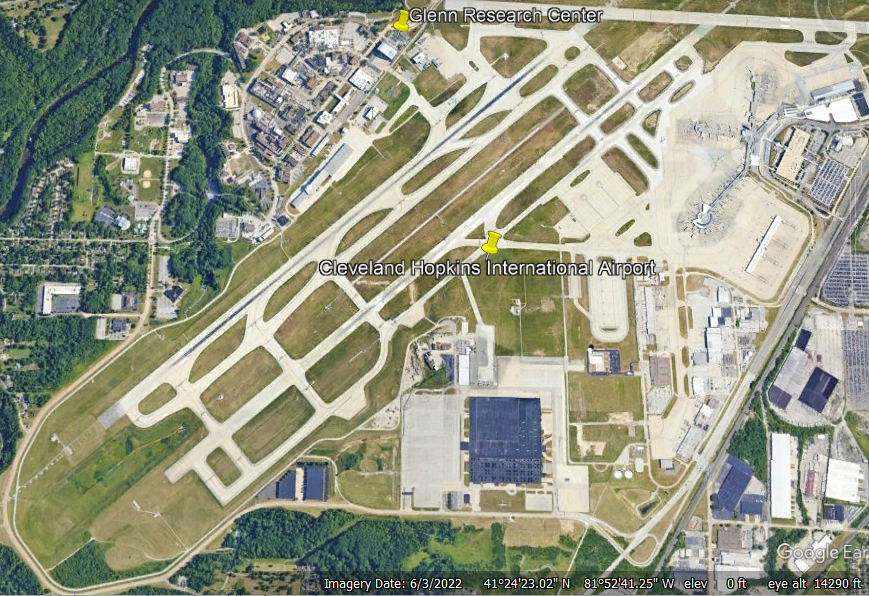
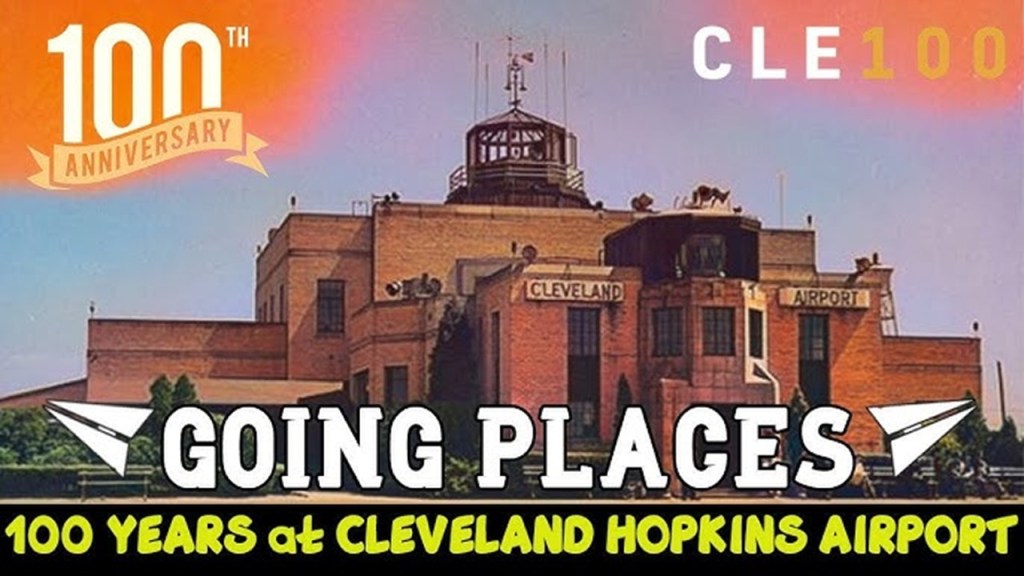
The Cleveland-Hopkins International Airport in West Cleveland is the primary airport serving Greater Cleveland and northeast Ohio, as well as the largest and busiest airport in Ohio.
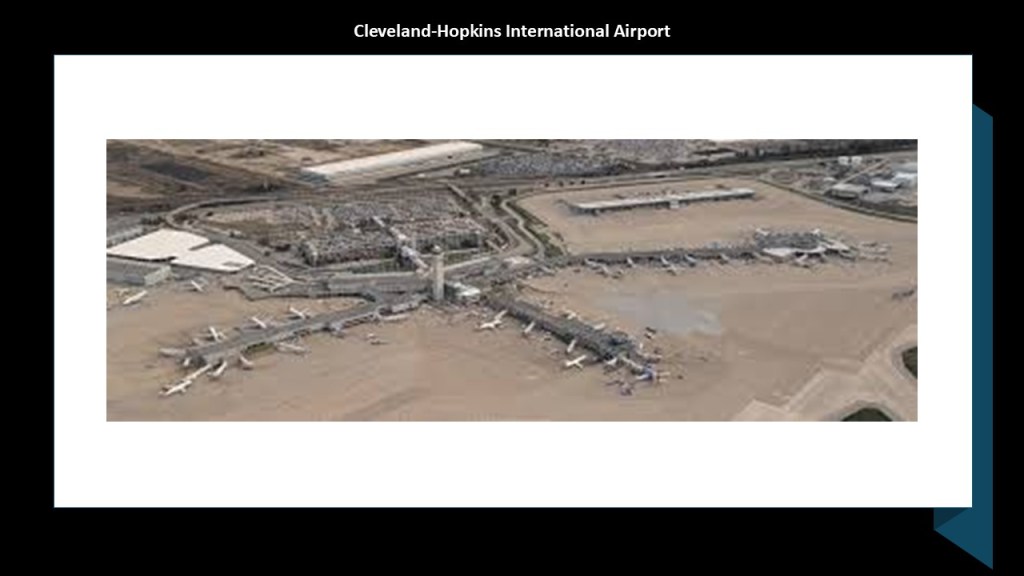
In our historical narrative, the airport was founded on July 1st of 1925, and was said to be the location of a number of firsts that set the worldwide standard.
It was the location of: 1) the first municipality-owned facility of its kind in the United States; 2) the first Air Traffic Control tower in 1929; 3) the first airfield lighting system in 1930; 4) the first ground-to-air radio control system in 1939; and 5) the first airport to be connected to a local or regional rail transit system in 1968.
In summary, Cleveland repeatedly stood at the forefront of American technology.
Cleveland evolved from being a railroad and shipping center, to an industrial powerhouse to a pioneer in automobiles, aviation and aeronautics.
Besides being a place where products were made, it was a place where new industries were developed, tested, commercialized, and in some cases, transformed the way the rest of the country lived.
Thanks to John D. Rockefeller and Standard Oil, Cleveland become one of the world’s major oil-refining centers and was significant in the history of American business as a laboratory for the modern industrial corportation.
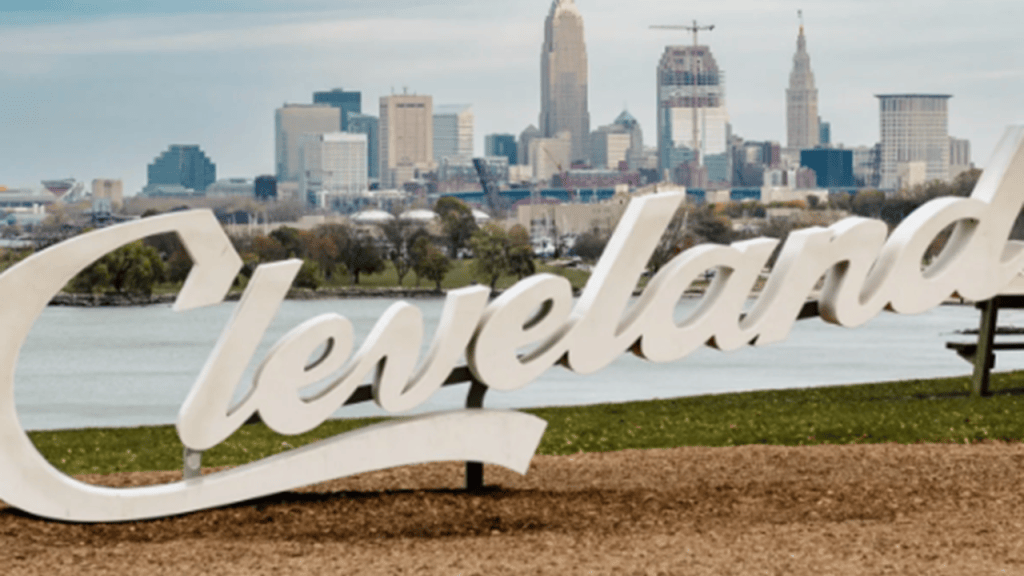
Why did Cleveland produce so many firsts?
Probably because Cleveland had an unusually powerful combination of advantages.
Like its geography, with its location on Lake Erie around the Cuyahoga River and Ohio & Erie Canal; and the extensive shipping and railroad network that connected Cleveland to raw materials, markets and customers.
There was an industrial diversity here, including but not limited to, oil-refining; iron and steel; machine tools; chemicals; electrical equipment, and manufacturing industries growing alongside one another.
And the entrepreneurial capital invested in infrastructure and businesses by Rockefeller and other industrialists.
I think Cleveland’s prominence in all these areas was intentionally developed, and that Cleveland had an importance far beyond what people are aware of in the reset of our history and the development of the New World Order agendas.
Powerful individuals and their families, best-known for their immense wealth and influence, are seen in different relationships in this post about Cleveland, like the Rockefellers, Vanderbilts, Morgans, Fords, who were among many other prominent people of great wealth during the Industrial and Gilded Age.
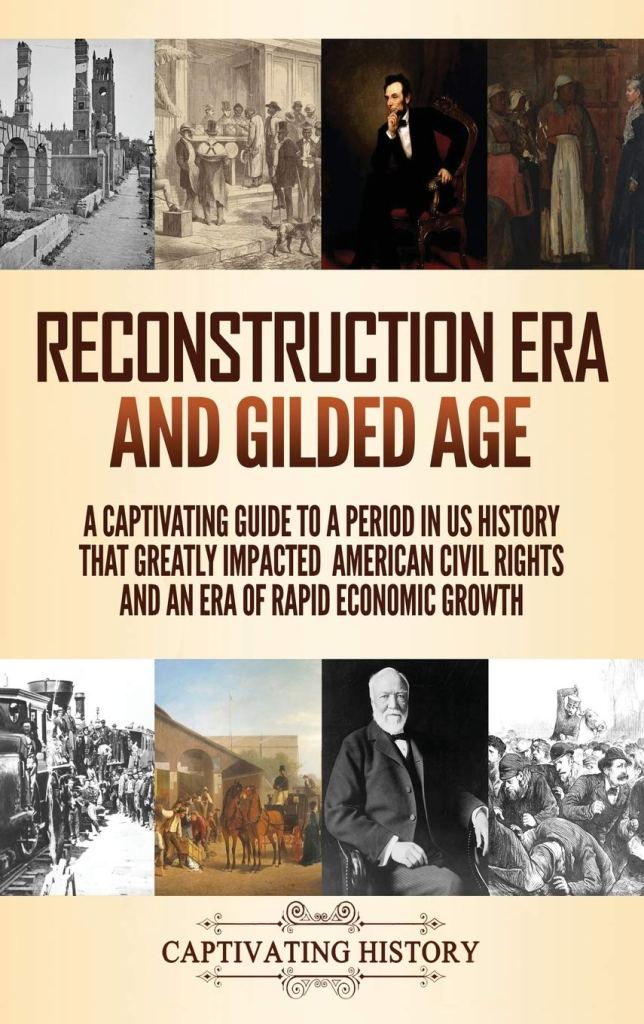
One definition that I found of “Gilded Age” is that it was a period of gross materialism and blatant political corruption in the United States from the 1870s to 1900.
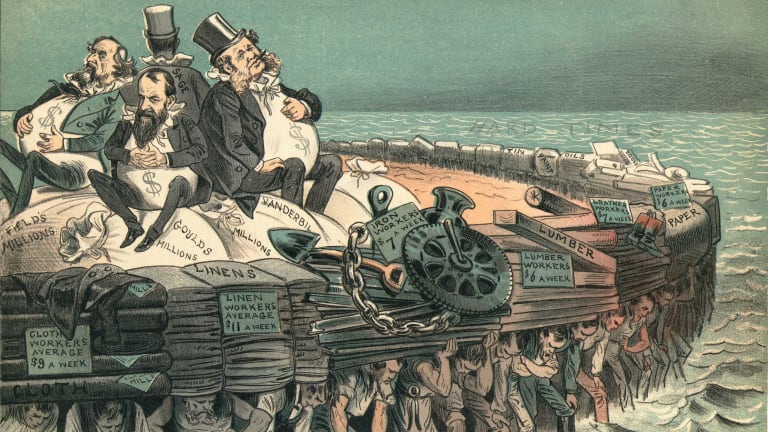
Another definition is that it was an era of rapid economic growth, especially in the northern and western United States.
I don’t think the goals driving the forces behind this were for immense wealth alone – that was just icing on the cake.
I think these forces have sought to change the very nature of the world we live in from organic to artificial, and to control Humanity, the Creator, and Creation, and we are the pawns they have been using to accomplish this.
I would like to start this subject with the concept of two kinds of takeover bids in the business world because I think it is a really important concept to understand with regards to what has taken place here.
The first is called a friendly takeover bid, and occurs when the Board of Directors from both companies (target & acquirer) negotiate and approve the bid.

Then there is the hostile takeover bid, which occurs when an acquiring company seeks to acquire another company – the target company – but the board of directors from the target company has no desire to be acquired by, or merged with, another company.
The two most common strategies used by acquirers in a hostile takeover are a tender offer or a proxy vote.
The tender offer is an offer to purchase shares at a premium to the market price.
The proxy offer is persuading shareholders of the target company to vote out the existing management.
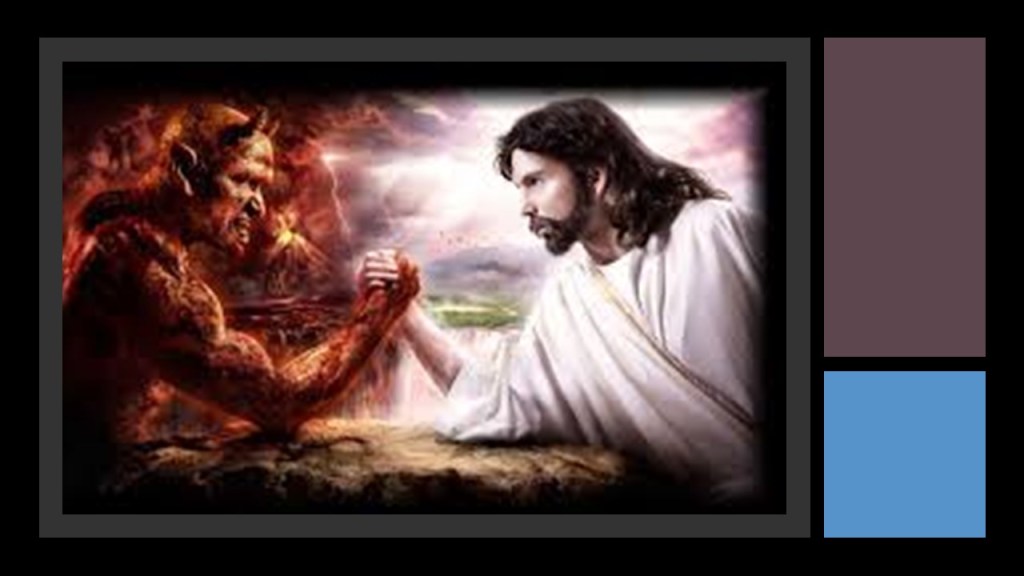
So we have Team Light on one side who, along with the ancient advanced Human civilization of Earth, were co-creating the fullest expression of Human Potential there ever was on earth.

Then we have Team Dark on the other side, comprised of beings with a negative agenda towards Humanity who have been interfering egregiously on Earth.

What was Team Dark to do?
They were jealous of Humanity…greedy…and hungry for power.
They wanted to rule over it all, take the wealth for themselves, and control the destiny of Humanity for their own benefit.
But the problem is in a Free Will Zone like Earth, the Human Beings who live here have to give their consent to choose whether to follow the Light or the Dark.

The negative beings behind all of this wanted to set up a new god as lord of this world and wanted a proxy vote for their hostile takeover.
They wanted to persuade enough of Humanity to voluntarily accept Lucifer over the Creator of the Universe.
The only way they can accomplish this acceptance, however, is by outright lies, deception and duplicity because if people knew the true agenda of these controllers, the majority of Humanity would never, ever accept this.

I believe that these beings with a negative agenda devised a complicated plan to knock Humanity off the positive Timeline of Higher Consciousness…

…in an interdimensional war in order to control Humanity, using Humans as their tools against the Creator and Creation.

I bring all this up is because it is important to know this is what has been going on here.
Humans are inherently sovereign beings.
They have gone to all of this trouble because, by Universal Law, they can’t lay a finger on us.
They have tricked us into accepting their sovereignty over our own.
While this new parasitic self-styled elite class lived in the lap of luxury, and helped themselves to the best of everything, they had little care for anyone or anything else.

A small number of related, elitist family bloodlines, hidden in different nationalities and religions to carry out their plans for world domination, brought into existence a New World built upon the ruins of the Old World, and have stolen the legacy and identity of the original people and the true builders of all of the original infrastructure of the Earth; claimed their legacy as their own while at the same time, robbing us blind of resources, wealth, and energy without us knowing anything about it because they educated us in a new history with them written in to it, and at the same time removed everything about the Old World from our collective awareness.
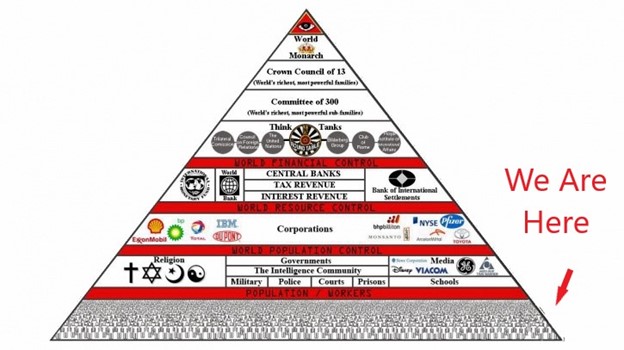
Today’s present seems a lot like George Orwell’s novel “1984,” doesn’t it?
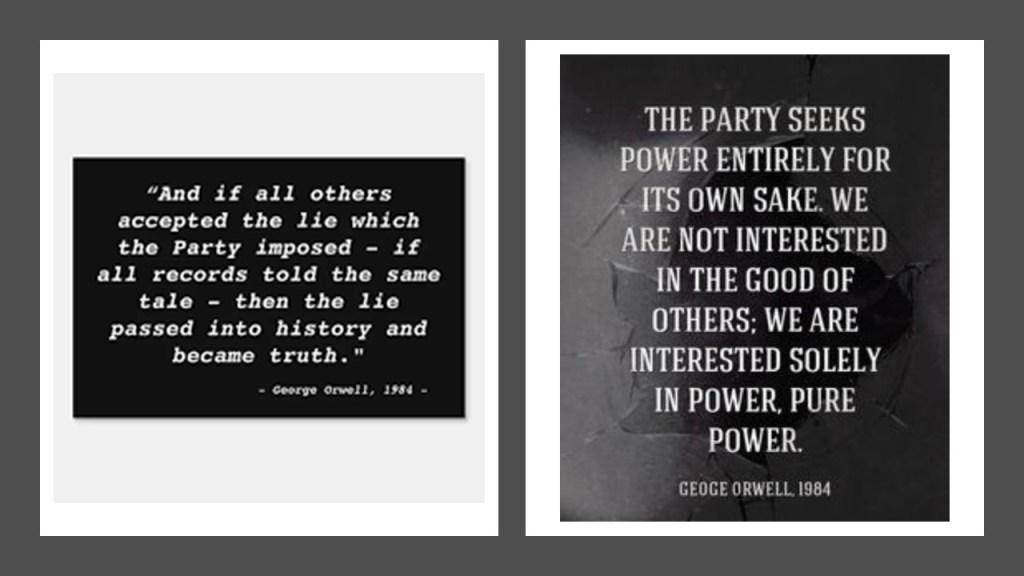
Does history repeat itself for randomly occurring reasons?
Or does history repeat itself because it is being planned to bring in specific outcomes?

We tend to imagine that times in the past were somehow better than in the present…

…and come to find out horrors from our past are still in our present.
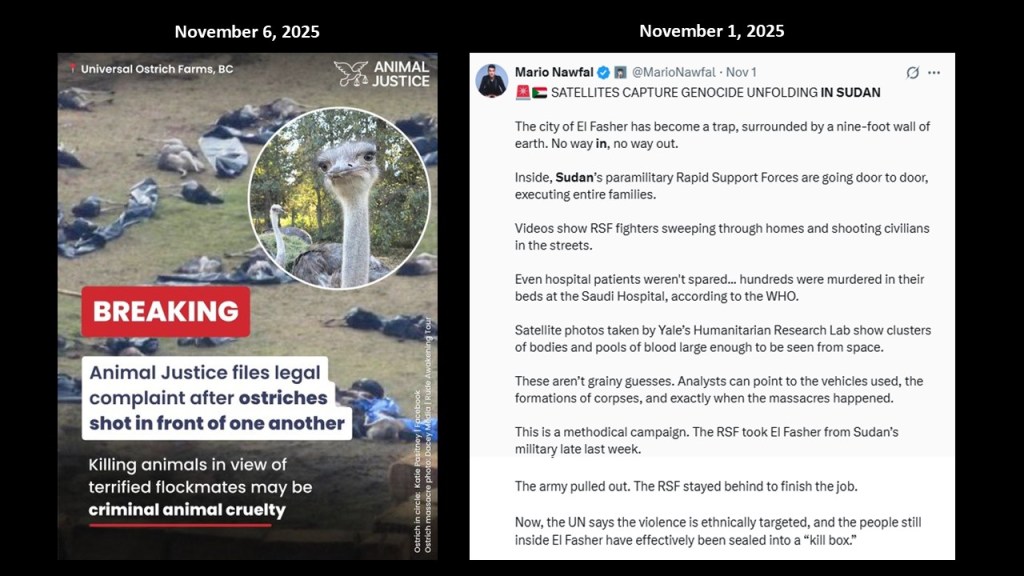
It is interesting what comes up to the surface when digging back through our relatively recent history, and looking at it with new eyes.
It’s not hidden.
It certainly seems like there was there something bigger going on with what has happened in our historical narrative behind the scenes, and that they were not random occurrences, like the worldwide replacement of streetcar systems with cars and buses as soon as the new technologies were perfected, to name a few of many.

Now that we have the internet at our disposal, we can do our own research; connect with each other all over the world; and see what is happening in real-time, unlike in the past.

Censorship is certainly still with us, but it’s kind of like whack-a-mole – you knock one down, but there’s still plenty of moles popping up from other holes.