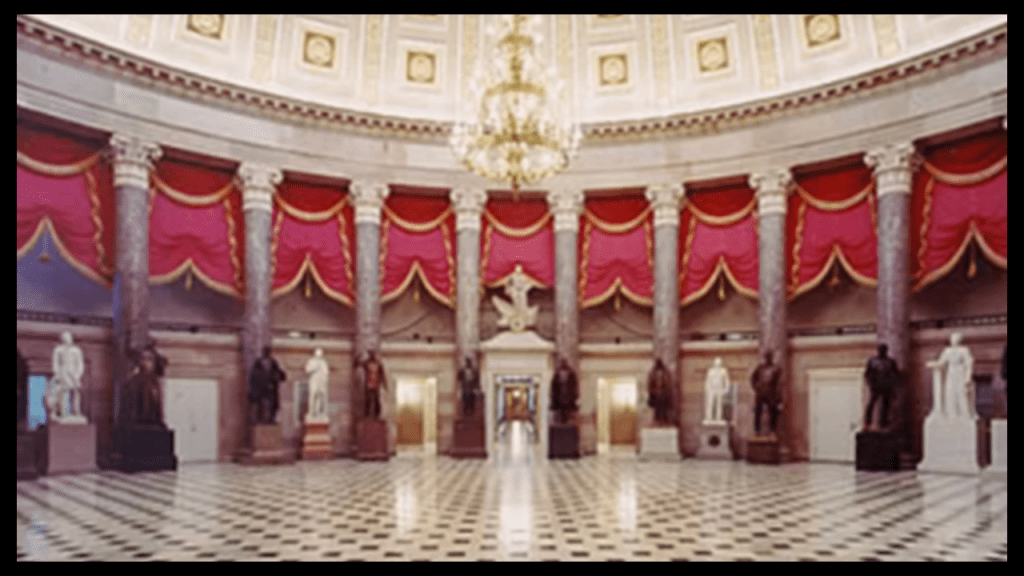
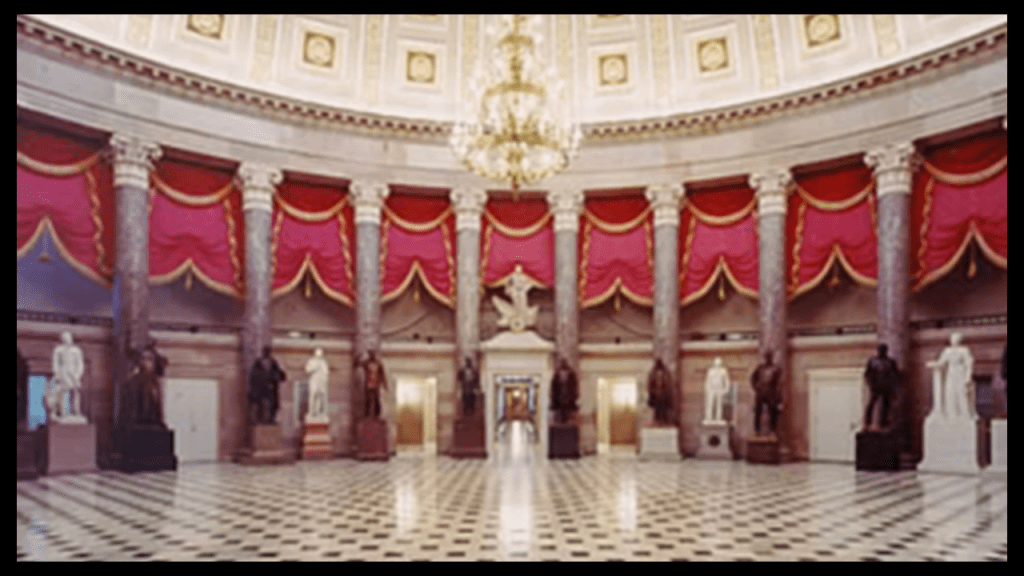
I am currently about half-way through the 50-states of looking at who is represented for each state in the National Statuary Hall at the U. S. Capitol Building in Washington, DC.
There are two statues representing each state.
I am bringing forward unlikely pairs of historical figures represented in the Statuary Hall who have things in common with each other in this separate series called “Snapshots from the National Statuary Hall,” as a way to highlight what I am finding out in the process of doing this research.
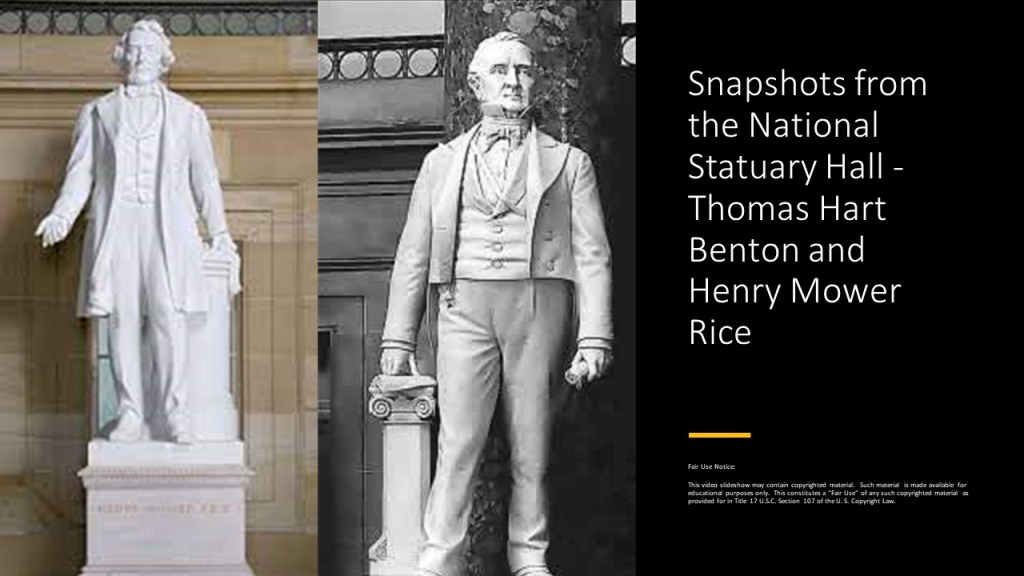
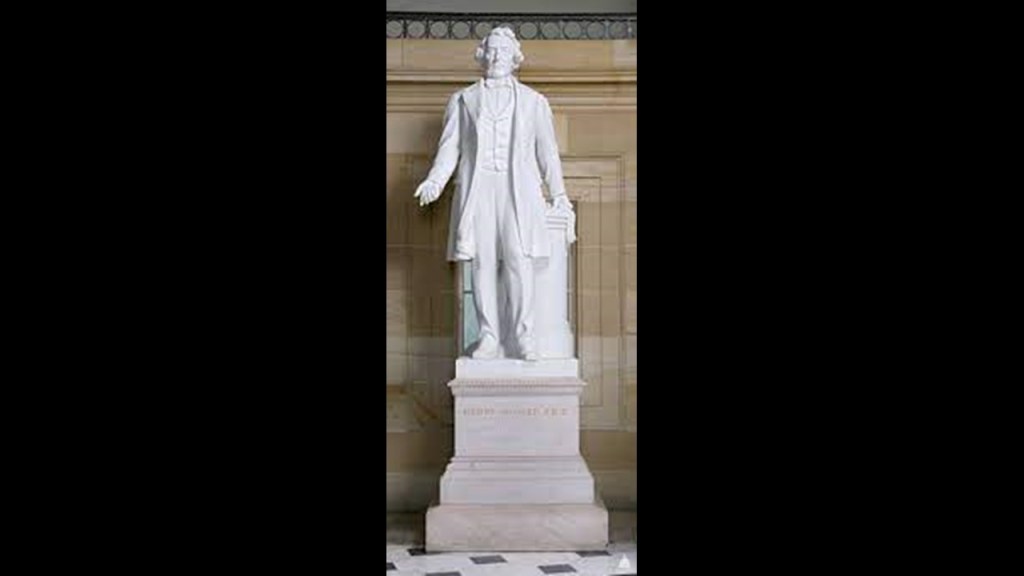
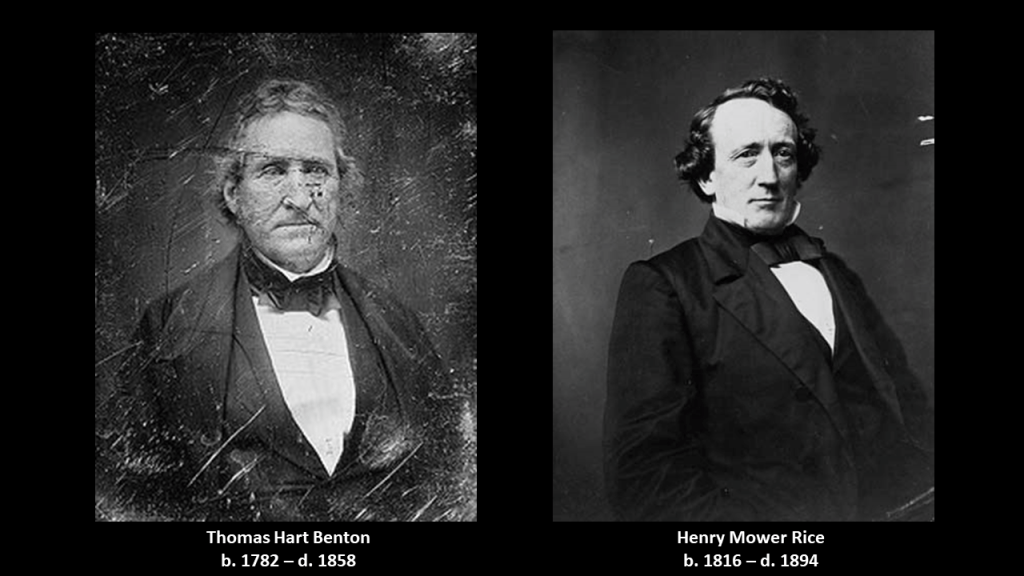
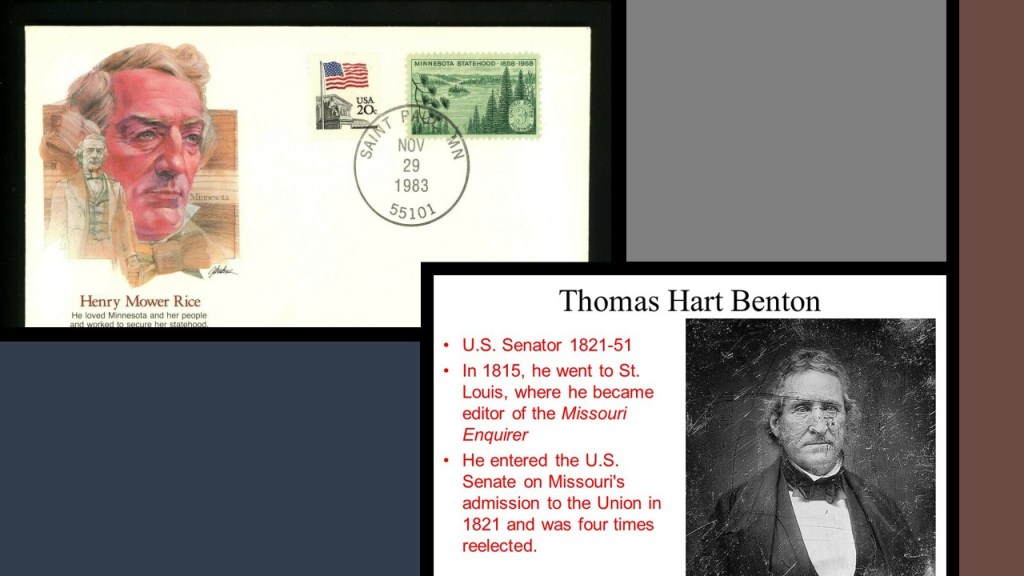
In this “Snapshot,” I am pairing Missouri’s Thomas Hart Benton and Minnesota’s Henry Mower Rice.
I have paired people like Michigan’s Gerald Ford,with Mississippi’s Jefferson Davis; Iowa’s Dr. Norman Borlaug, Ph.D, with Colorado’s Dr. Florence R. Sabin, M.D; and Louisiana’s controversial Governor, Huey P. Long, with Alabama’s Helen Keller; and Kentucky’s Henry Clay with Michigan’s Lewis Cass, among others.
Not only am I finding much in common between the pairs featured in each installment of the “Snaptshots from the Statuary Hall” series, I am finding, regardless of fame or obscurity, that the National Statuary Hall functions more-or-less as a “Who’s Who” for the New World Order and its Agenda.
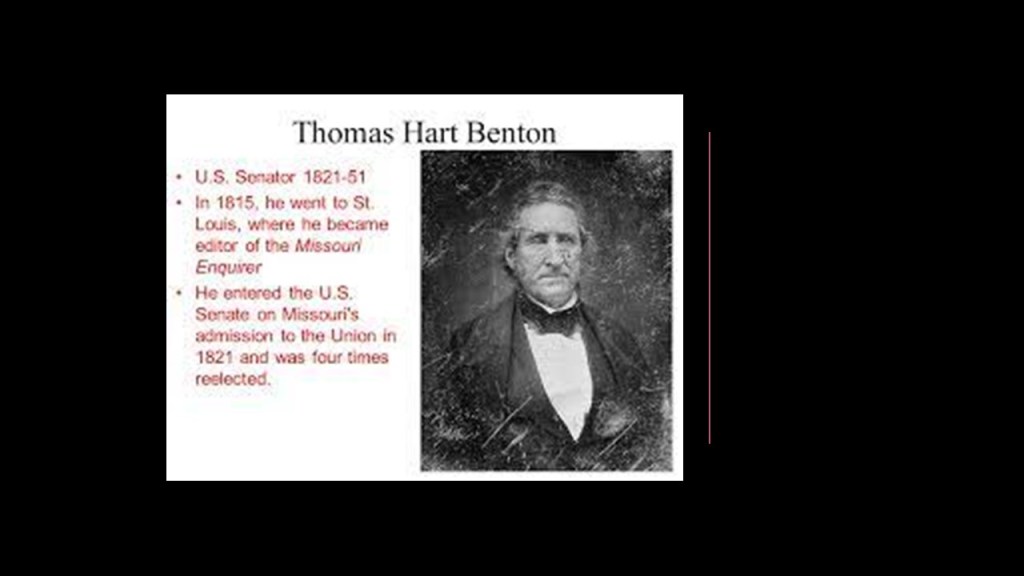
Thomas Hart Benton was a United States Senator from Missouri, and he was a champion of westward expansion, a cause that became known as “Manifest Destiny.”
He served in the U. S. Senate between 1821 and 1851, becoming the first Senator to serve five-terms.
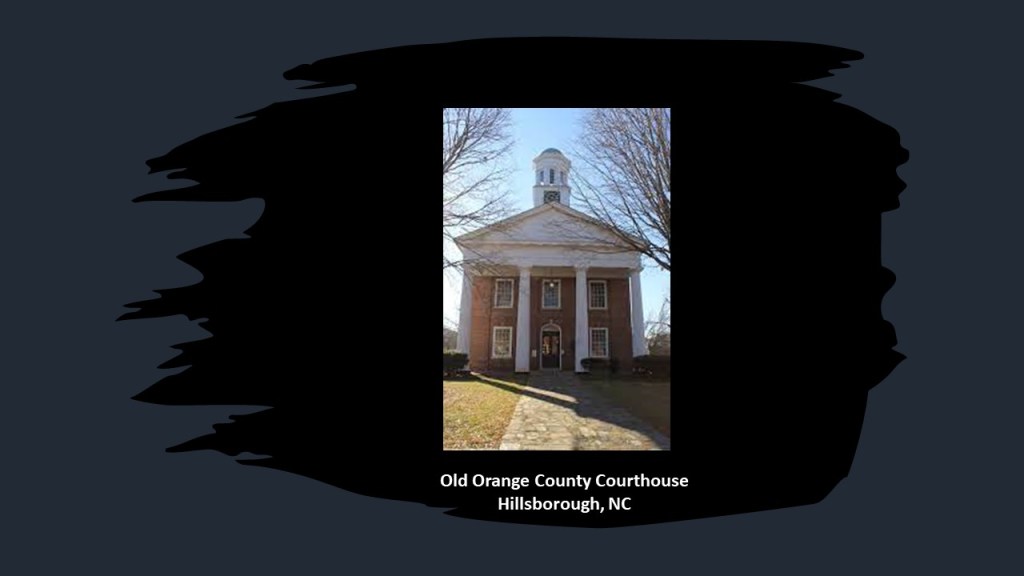
Thomas Hart Benton was born in March of 1782 near the town of Hillsborough, the county seat Orange County in North Carolina.
His father Jesse was a wealthy landowner and lawyer, and he passed away in 1790.
Apparently Thomas Hart Benton studied law at the University of North Carolina, but was expelled in 1799 for stealing money from other students, after which he managed the family estate for awhile.
The young Benton and his family moved west to a 40,000-acre, or 160-km-squared, holding near Nashville, Tennessee, upon which he was said to have established a plantation with schools, churches, and mills.
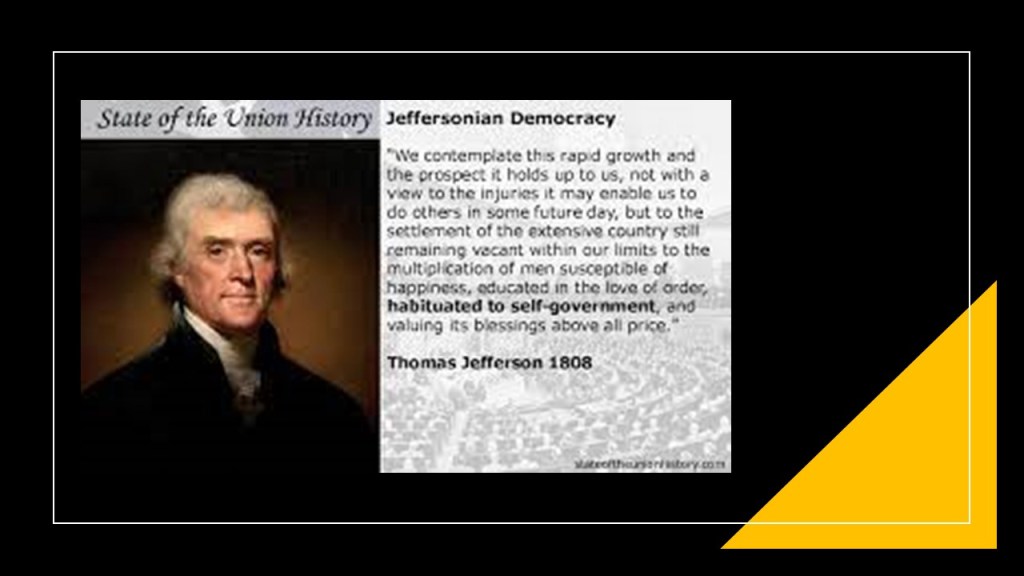
It was said that his experience as a pioneer during this time gave him a devotion to Jeffersonian Democracy during his political career.
Benton resumed studying law and was admitted to the Tennessee Bar in 1805, and became a state senator in 1809.
He caught Andrew Jackson’s eye, Tennessee’s First Citizen, and Jackson made Benton his personal assistant with a commission as a Lieutenant Colonel at the outbreak of the War of 1812.
He was assigned to represent Jackson’s military interests in Washington, DC.
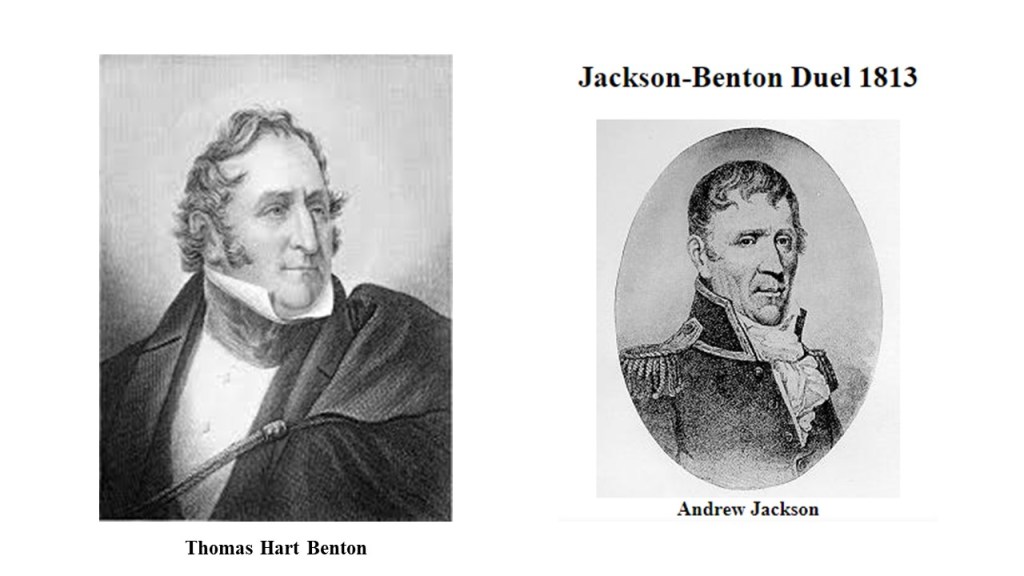
But this relationship turned sour somewhere along the way, and in September of 1813, Thomas Hart Benton and his brother Jesse engaged in duel with Jackson in the City Hotel in Nashville, where Jackson was seriously wounded by a gunshot wound in the shoulder.
In 1815, Benton moved to St. Louis, Missouri, where he practiced law and established and became editor of the Missouri Enquirer, the second major newspaper west of the Mississippi River.
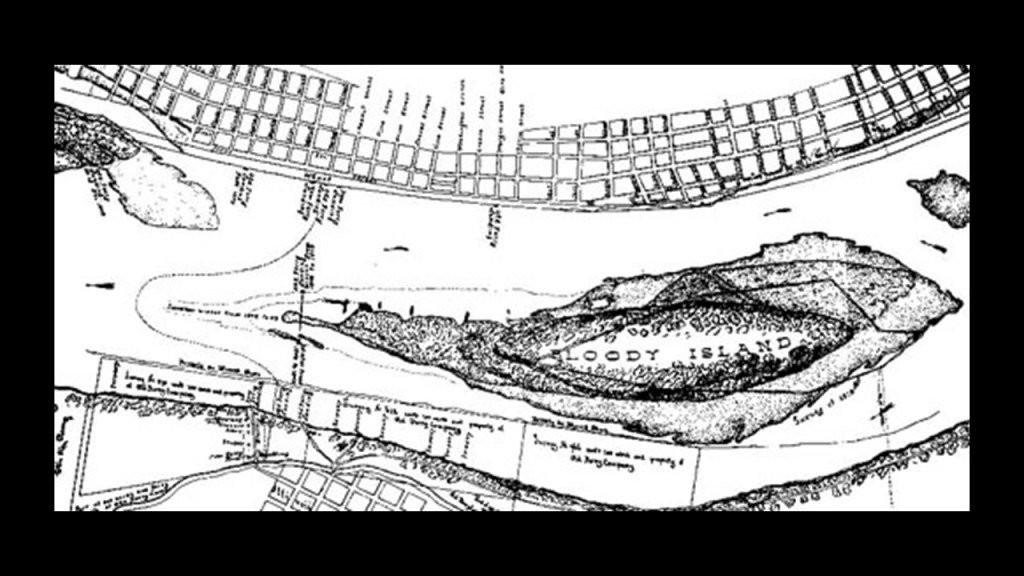
Then, in 1817, Benton and another attorney, Charles Lucas, got cross-wise with each other initially during a court case in which they were opposing each other, and the resulting animosity led to Benton killing Lucas in a duel on a place called “Bloody Island,” a neutral little island in the Mississippi River between Missouri and Illinois where duellists would go because it was not under the control of either state.
We are told that Bloody Island first appeared above-water in 1798, and posed a problem to the St. Louis Harbor.
Then in 1837, Capt. Robert E. Lee, who was then a part of the Army Corps of Engineers, established a system of dikes and dams that washed out the channel and joined the island to the Illinois shore.
The Miami people of the Great Lakes Region stopped on Bloody Island when they were being forcibly removed from their homelands in 1846, where their oral history relates they buried an elder and an infant somewhere in the vicinity.
Interesting to note that the south end of Bloody Island is located at the site of a train-yard.
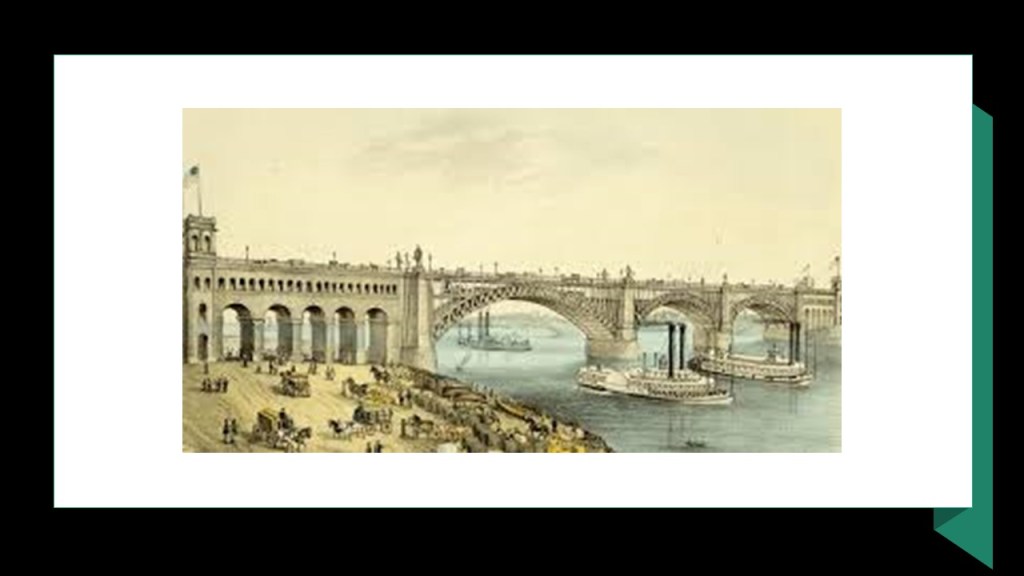
We are told that there was a ferry service that had been developed that operated between East St. Louis and St. Louis starting in the early 1800s that eventually developed the train-yards in the 1870s that carted train cars across the Mississippi River, using an 8-horse-team to power the propulsion, until the Eads Bridge, a combined road-and-railway-bridge opened in 1874, which is located between LaClede’s Landing on the northside, and the grounds of the Gateway Arch on the southside.
Construction of the bridge was said to have started in 1867 (two-years after the end of the American Civil War) and completed in 1874.
Bloody Island was once the site of a huge network of railroad tracks, but with the exception of a few rail-lines in use, the area has largely returned to nature.
And this location is in close proximity not only to the Gateway Arch, but to the Busch Stadium as well, home of the St. Louis Cardinals Major League Baseball team.
Hmmm…I wonder what they are not telling us about our true history and about this place!
When the Missouri Compromise of 1820 resulted in the Missouri Territory becoming a state, Benton was elected as one of its first U. S. Senators.
The Missouri Compromise was federal legislation that balanced the desires of northern states to prevent the expansion of slavery in the country, with those of southern states seeking to expand it.
It admitted Missouri as a slave state, and Maine as a free state, and prohibited slavery in the remaining Louisiana Purchase lands north of the 36.5-degree parallel.
Andrew Jackson was one of four candidates for President, along with Henry Clay and William H. Crawford, in the 1824 Election, with John Quincy Adams ultimately winning the election without a majority of the electoral or popular vote.
Andrew Jackson again ran for the Presidency in 1828, running against sitting-President John Quincy Adams, and this time he was successful, and ended-up serving two presidential terms.
Apparently Thomas Hart Benton and Andrew Jackson set aside their differences and joined forces over the issue of money and banking.
Benton, nicknamed “Old Bullion,” was in favor of “hard money,” like gold coins and/or bullion.
Jackson and Benton were both against the Second Bank of the United States, which was a federally-authorized national bank in Philadelphia, Pennsylvania, from when it was chartered in 1816.
It was a private bank with public duties, handling all fiscal transactions for the U. S. Government, accountable to Congress and the Treasury Department.
Four-thousand private investors held 80% of the bank’s capital, of which three-thousand of those investors were European, with a bulk of the stocks held by a few hundred wealthy Americans.
Kinda sounds familiar….
The “Bank War” started in 1832 during the Jackson Presidency, and was a political struggle that occurred over the issue of rechartering the bank, and a conflict that involved the Federal Government over the State Sovereignty in the U. S. political system.
The Second Bank of the United States had the exclusive right to conduct banking on a national scale, with the vision of stabilizing the economy, providing a uniform currency, and strengthening the federal government.
Jackson and Jacksonian Democrats saw the public-private organization of Second Bank as favoring merchants and speculators over the rest of society, and as unconstitutional, with the bank’s charter violating state sovereignty.
In 1832, President Jackson vetoed the bill Congress had passed to reauthorize the Second Bank’s charter, and quickly removed federal deposits from the bank, arranging for their distribution to state banks in 1833.
President Jackson was censured by the Senate in 1834 for cancelling the Second Bank’s Charter, for which Benton successfully led the campaign to remove Jackson’s censure from the official record in 1837.
The Second Bank never secured its recharter, and it was liquidated in 1841.
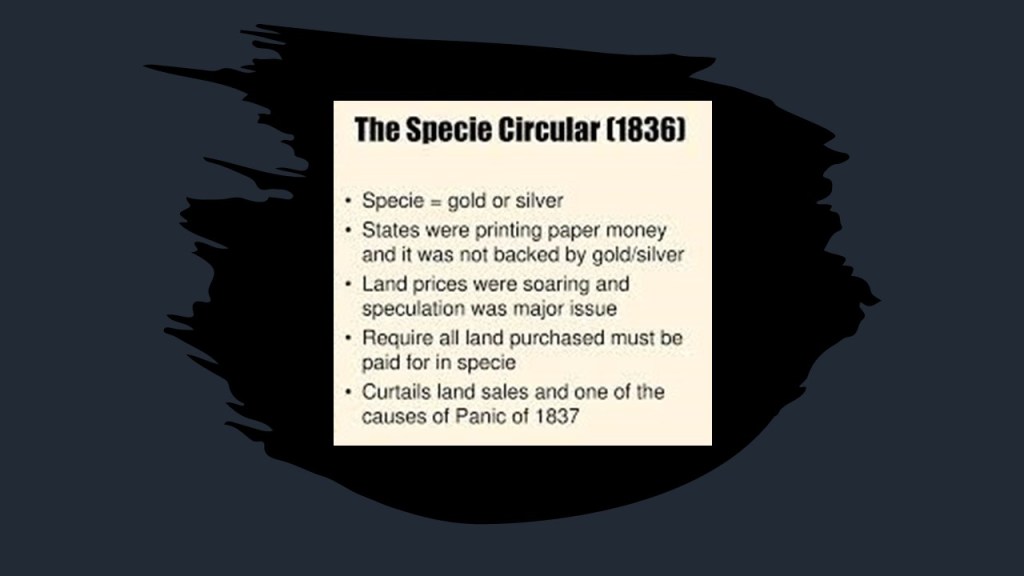
President Jackson issued an executive order in 1836 known as the “Specie Circular,” which required payment for government land to be made in gold and silver, and a reaction to concerns about excessive speculation of land that took place after the implementation of the 1830 Indian Removal Act, which also took place during President Jackson’s Administration as mentioned previously in this post.
Many at the time, and later historians, blamed the “Specie Circular” for the Panic of 1837, a financial crisis which touched off a major depression lasting until the mid-1840s, where wages, prices and profits went down, unemployment went up, and westward expansion was stalled.
We are told that by 1850, the economy was booming again because of the increased specie flows from the California Gold Rush.
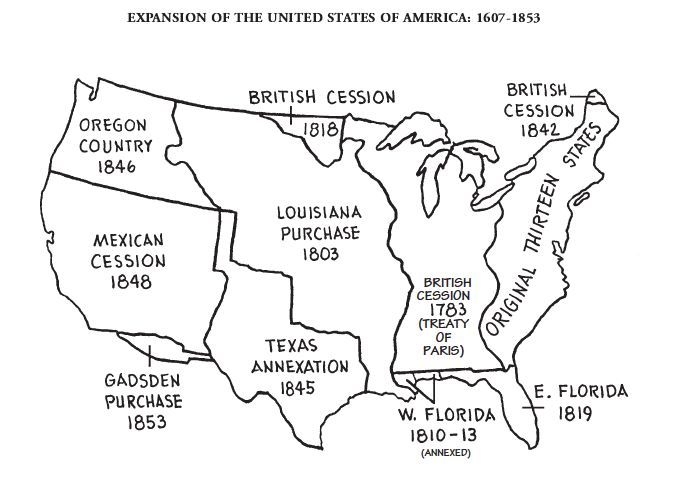
As Senator, Benton’s main concern was westward expansion, or what became known as “Manifest Destiny,” a 19th-century belief that the United States was destined by God to expand its dominion and spread democracy and capitalism across the entire continent.
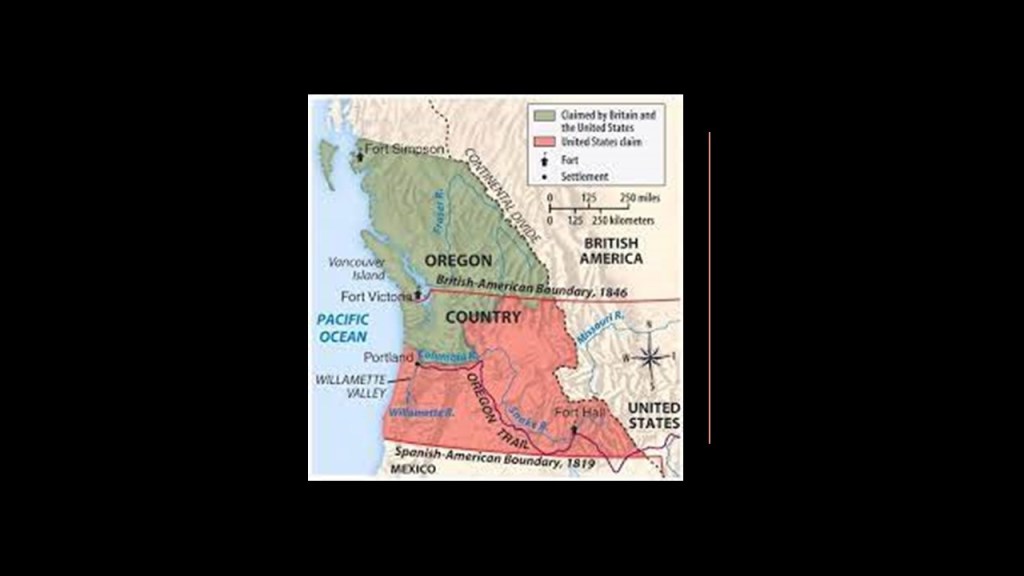
Benton was the major reason for the sole administration of the Oregon Territory, which had been jointly-occupied by the United States and Great Britain since the Anglo-American Convention of 1818.
Benton chose the current 49th-parallel border Between the U. S. and Canada set by the Oregon Treaty in 1846.
Benton pushed for more exploration of the West, including support for the numerous treks of his son-in-law, explorer and cartographer John C. Fremont…
…to get public support for the transcontinental railroad…
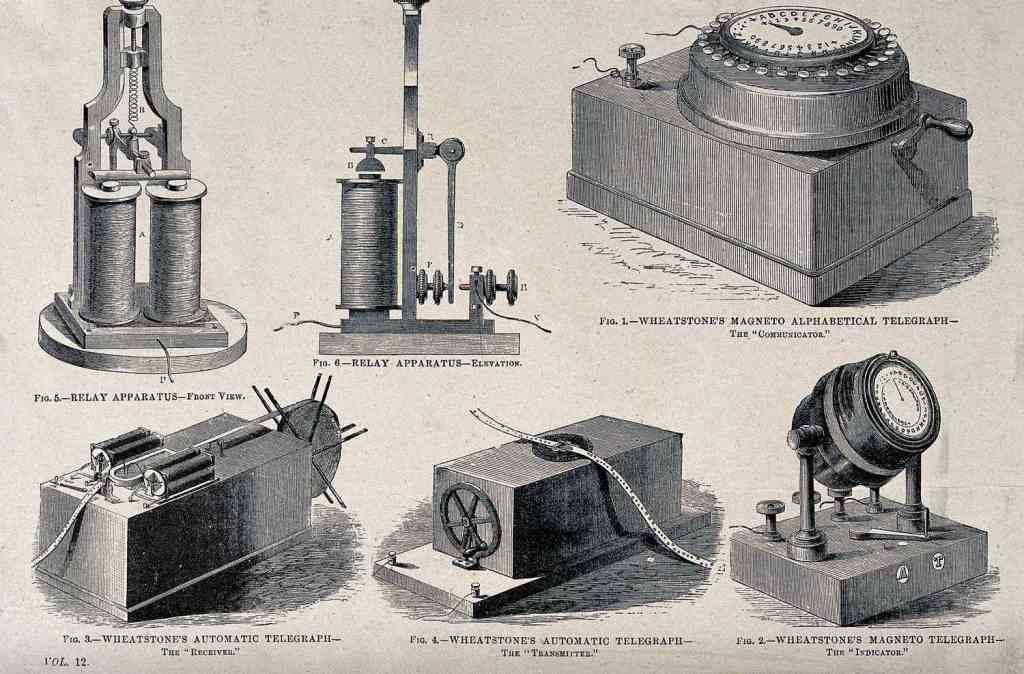
…and for greater use of the telegraph for long-distance communication.
Benton was the Legislative right-hand man for President Andrew Jackson, as well as the next President, Martin van Buren.
His power and influence started to diminish when James Polk became President in 1845, and by 1851, he was denied a sixth-term in the Senate by the Missouri legislature.
The last office he held was in the U. S. House of Representatives for two years, between 1852 and 1854, and he lost elections for both a second term in the House as well as for Governor of Missouri in 1856.
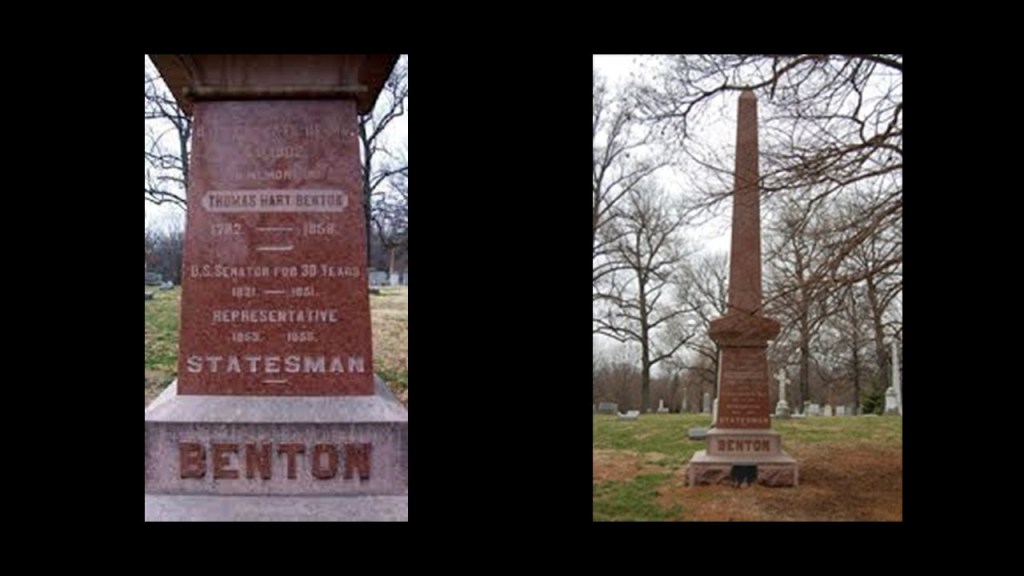
Benton died in April 1858 in Washington, DC, and he was buried in the Bellefontaine Cemetery in St. Louis.
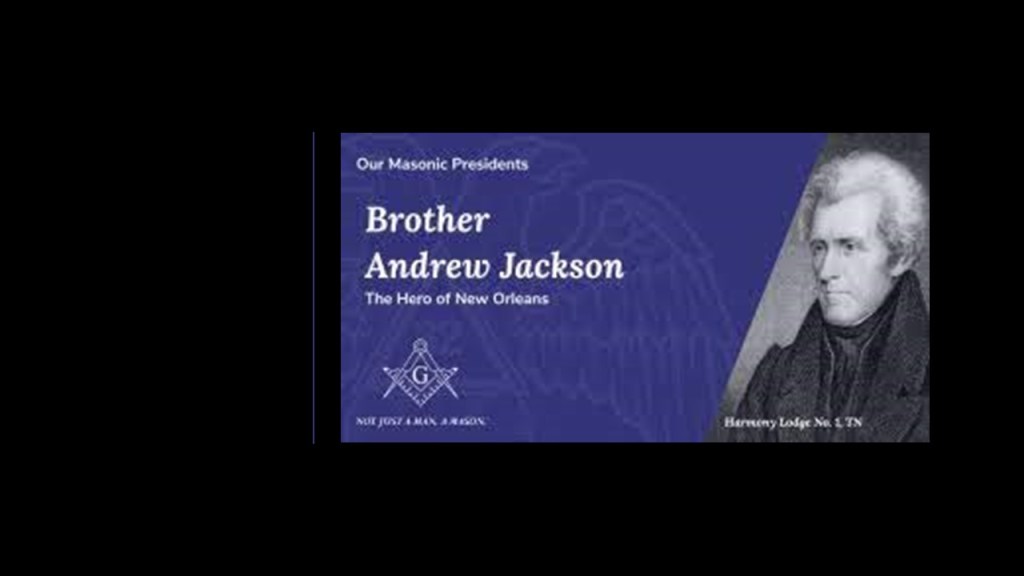
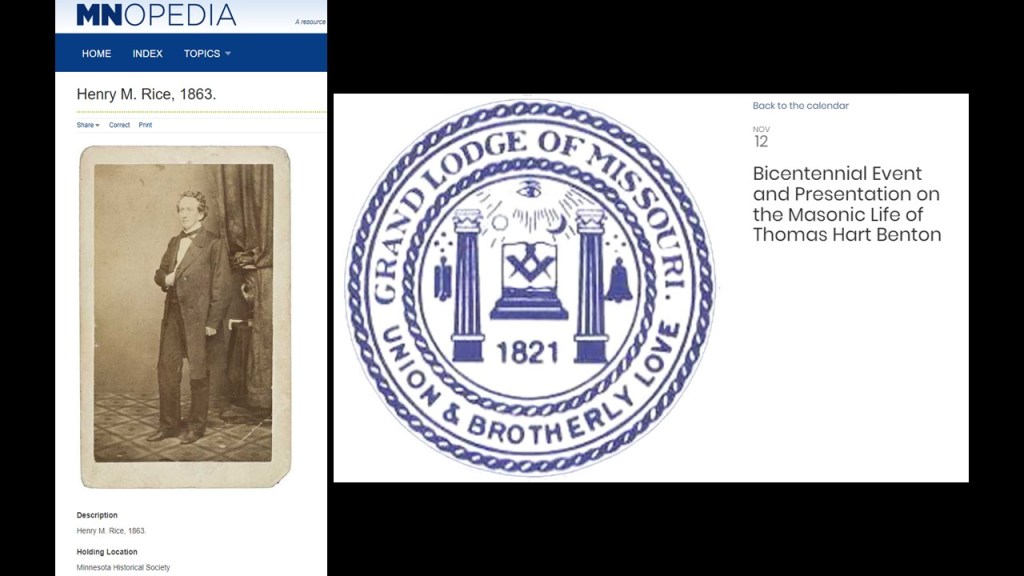
And was Thomas Benton Hart a Freemason too?
This certainly appears to be the case….
For that matter, Andrew Jackson was too!
Henry Mower Rice was a fur trader and prominent Minnesota politician involved in Minnesota becoming a state.
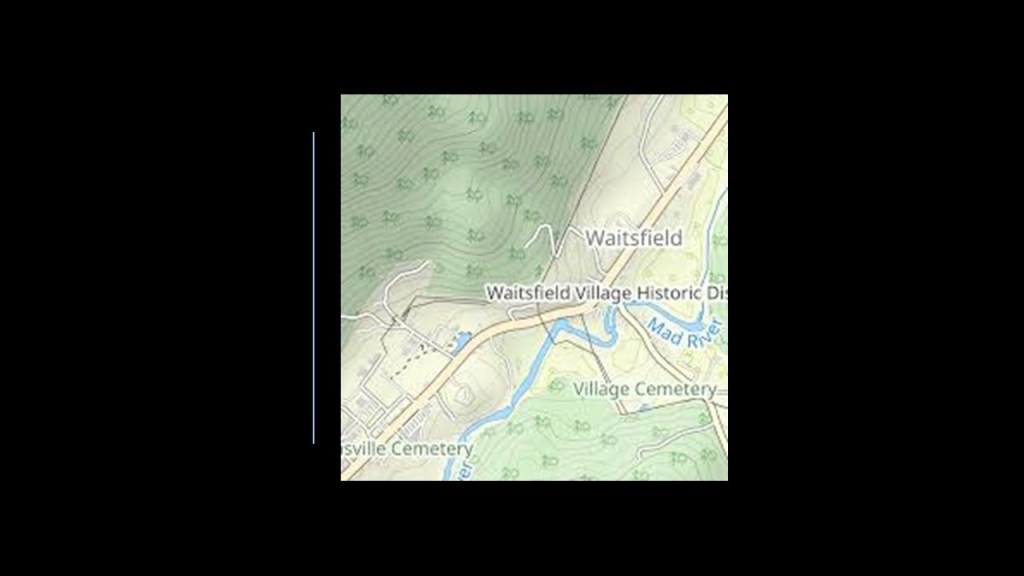
Henry Mower Rice was born in Waitsfield, Vermont, on November 29th of 1816, to parents of English ancestry in New England since the 1600s.
His father died when he was young, so he lived with family friends when growing up.
The town of Waitsfield was established by charter in February of 1782, and granted to Revolutionary War Militia Generals Benjamin Wait, Roger Enos, and others.
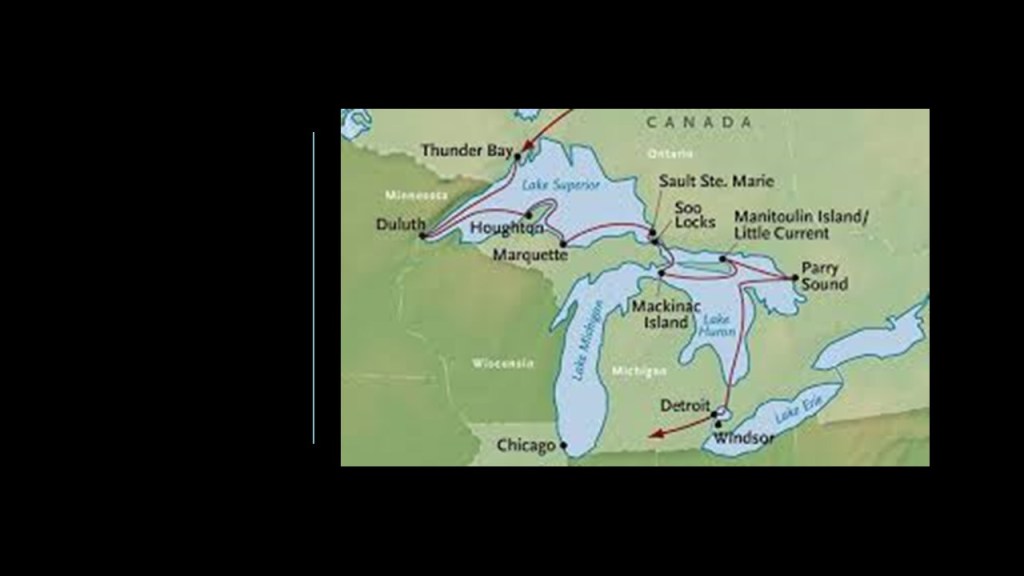
Rice moved to Detroit, Michigan, when he was 18, and he participated in surveying the canal route around the rapids of Sault Ste. Marie between Lake Superior and Lake Huron.
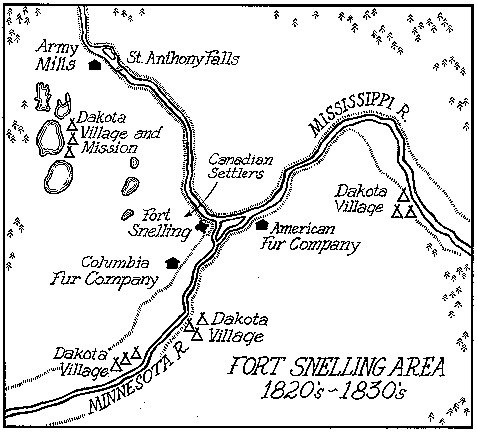
Then in 1839, Rice got a job at Fort Snelling, near Minneapolis, Minnesota, and became a fur trader with the Ojibwe and Winnebago people in the area.
Rice attained a position of trust and influence with them, and he was instrumental in negotiating the 1847 Treaty of Fond du Lac with the Ojibwe, in which they ceded extensive lands to the United States.
Historic Fort Snelling was said to have been constructed in the 1820s.
The Fort served as the main center for U. S. Government forces during the Dakota War of 1862, also known as the Sioux Uprising, an armed conflict between the United States and several tribes of the Eastern Dakota known as the Santee Sioux.
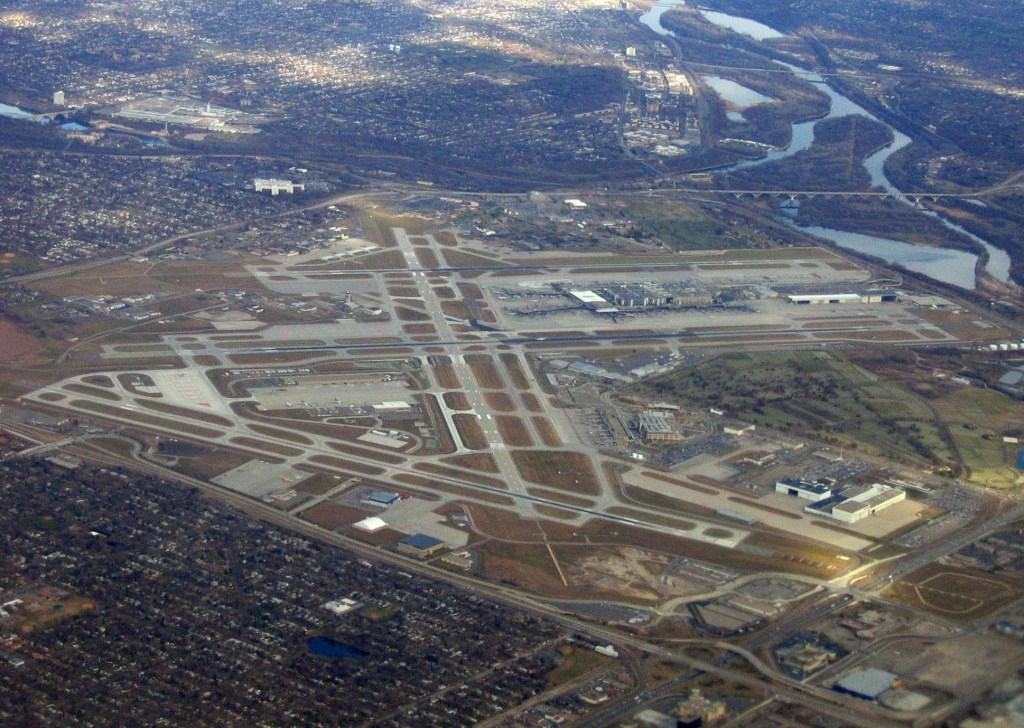
Today what is called the Unorganized Territory of Fort Snelling includes not only the historic fort, but the Coldwater Spring Park, Minneapolis-Saint Paul International Airport, parts of the Mississippi National River and Recreation Area, a National Guard base, a National Cemetery, the Minneapolis VA Medical Center, and several other state government facilities as well.
Rice lobbied for the bill to establish the Minnesota Territory in 1849, and went on to serve as its delegate in the U. S. Congress between March 4th of 1853 and March 4th of 1857.
He facilitated Minnesota becoming a state in 1858 by his work on the Minnesota Enabling Act, which passed Congress in February of 1857.
When Minnesota became a state, Henry Mower Rice and James Shields were elected by the Minnesota Legislature as Democrats to the United States Senate, and Rice served in this capacity from May 11th of 1858 to March 4th of 1863.
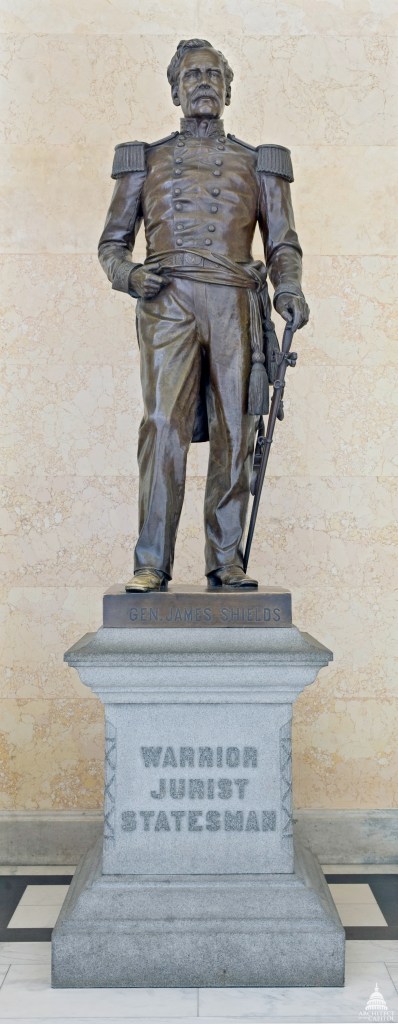
The other Minnesota Senator who served with Henry Mower Rice as the State of Minnesota’s first U. S. Senators, James Shields, represents the State of Illinois in the National Statuary Hall.
He was an Irish-American Democratic politician and U. S. Army officer, and the only person in U. S. history to serve as Senator for three different states, and one of only two to represent more than one state.
He represented Illinois from 1849 to 1855; Minnesota from 1858 to 1859; and Missouri in 1879.
In addition to the 1847 Treaty of Fond du Lac with the Ojibwe, Henry Mower Rice was involved in a number of treaties, including the 1846 Winnebago Treaty ratified in Washington, DC.
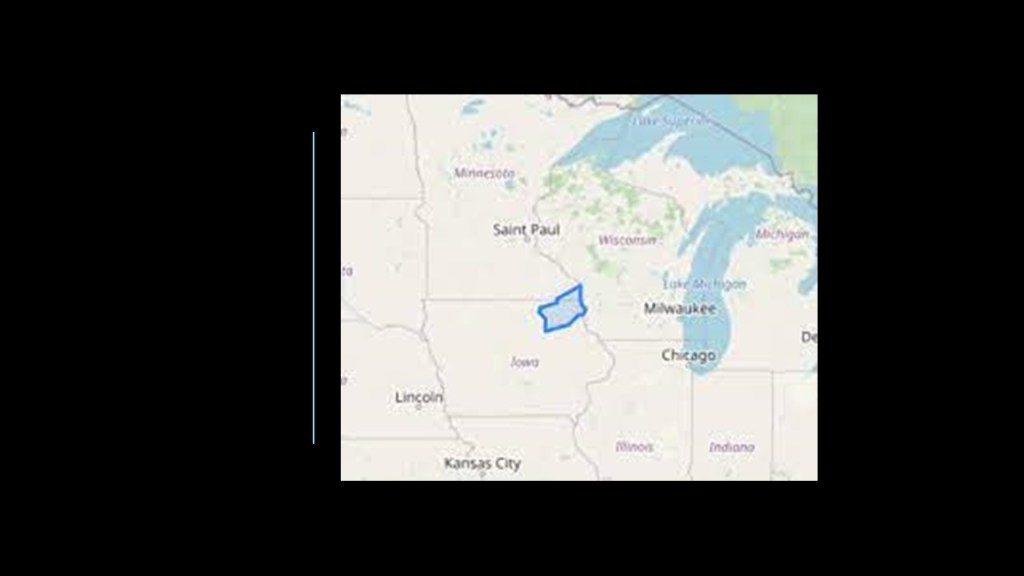
Originally native to Wisconsin, the Winnebago had been moved to a reservation in northeastern Iowa as a result of Treaties signed in 1832 and 1837 to a reservation in northeastern Iowa called “neutral ground,” an area considered to be a buffer between other native americans.
The Winnebago were unhappy with American settlers who were encroaching on their reservation land in Iowa, and asked to be moved, hence the 1846 Treaty.
So in exchange for their reservation land in the Iowa Territory for land in the Minnesota Territory, they were offered reservation land in Long Prairie, Minnesota.
Long story short, the Winnebago were shuffled around a lot, and Henry Mower Rice was involved in this whole process, both as a negotiator and in 1850 received a contract from the federal government to remove any Winnebago who had not moved to their reservation land in Long Prairie, Minnesota, in which he was paid per person to bring the unaccounted for Winnebago people to the reservation.
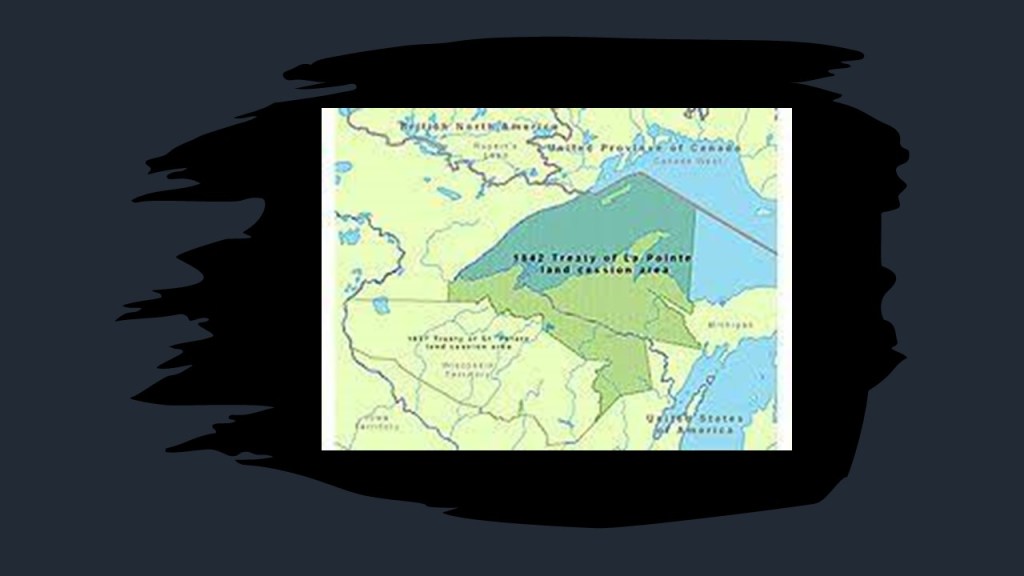
Rice was also involved in the 1854 Treaty of LaPointe, Wisconsin, where the Lake Superior Ojibwe ceded all of their land in the Arrowhead Region of northeastern Minnesota in exchange for reservations in Michigan and Minnesota.
All that is said of Henry Mower Rice’s death is that he died in 1894 during a visit to San Antonio, Texas, and was buried in the Oakland Cemetery in St. Paul, Minnesota.
I am bringing forward unlikely pairs of historical figures who are represented in the National Statuary Hall who have things in common with each other, as mentioned at the beginning of this post.
Both of these men were contemporaries and involved in shaping the future United States during their lifetimes.
Both men served as one of the first Senators of their respective states, with Thomas Hart Benton becoming one of the first Senators of Missouri in 1821 after Missouri became a State with the 1820 Missouri Compromise, and Henry Mower Rice becoming one of the first Senators of Minnesota in 1858 after the Minnesota Enabling Act he had worked on passed Congress in 1857.
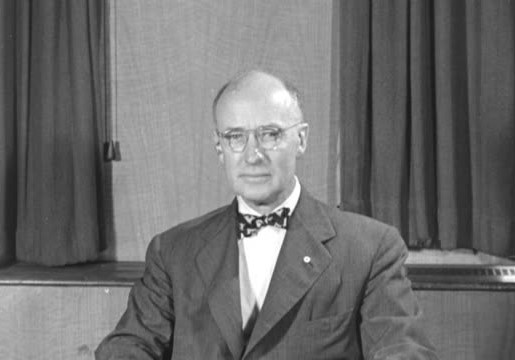
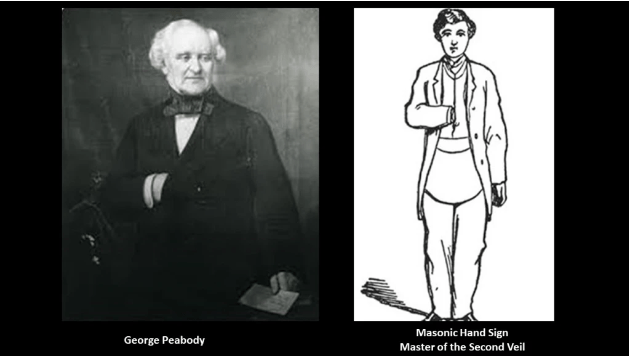
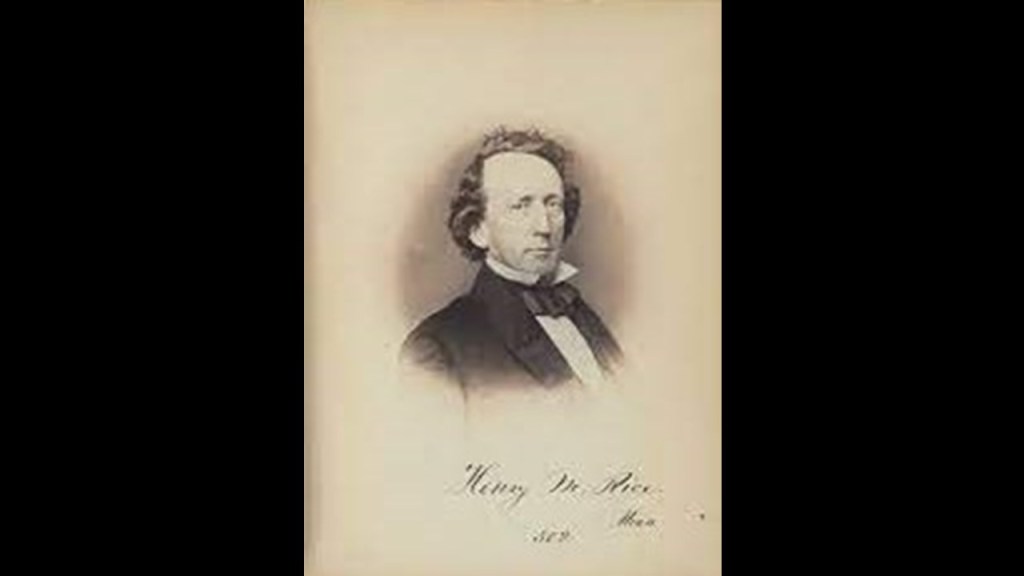
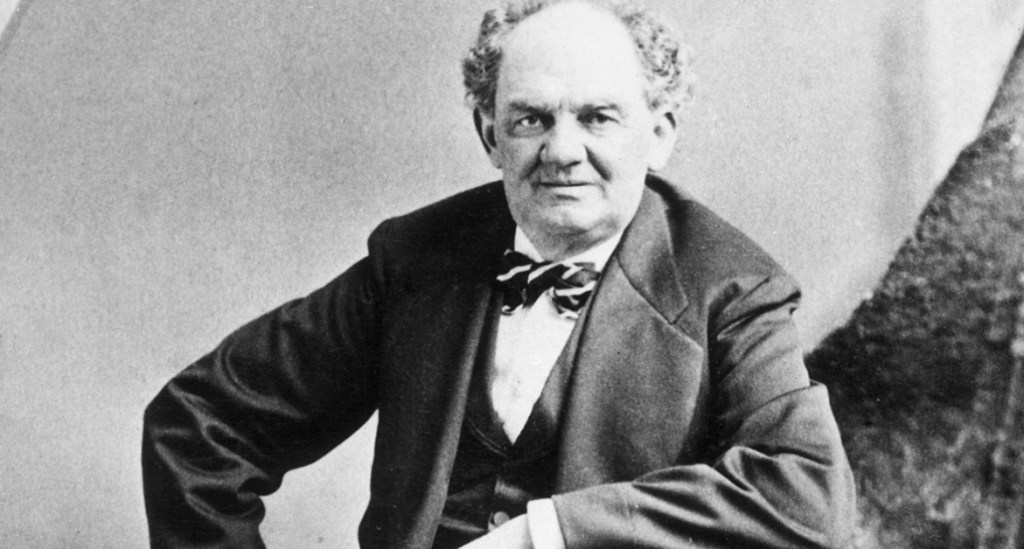
And while I couldn’t find a direct confirmation that Henry Mower Rice was a Freemason, like I did for Thomas Hart Benton, I did find this photo of Rice on the left with his right-hand tucked into his coat, which is a recognizeable masonic sign of the “Hidden Hand,” signifying “Master of the Second Veil.”
These two men fall into the category of obscure key players in the historical narrative in shaping and forming what became the United States.
I had never had heard of either man prior to looking into the National Statuary Hall.
I keep finding these obscure historical figures like these two represented here, whose lives and times tell a different kind of story than what we normally hear about.
Really have to wonder about why they were chosen to be so-honored, given things like Benton’s history of duels and Rice’s direct personal involvement in the removal of indigenous people from their traditional lands.
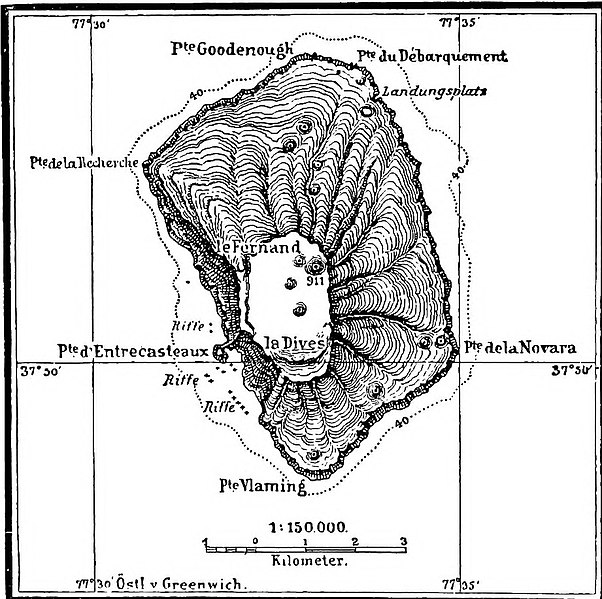
In my journey tracking cities and places in aligment with each other around the world, I kept coming across obscure, seemingly insignificant islands and island groups that are the subjects of territorial disputes between countries, many of which are still on-going in the present day.
I first published this post in October of 2019.
So I have been wondering about this for a very long time.
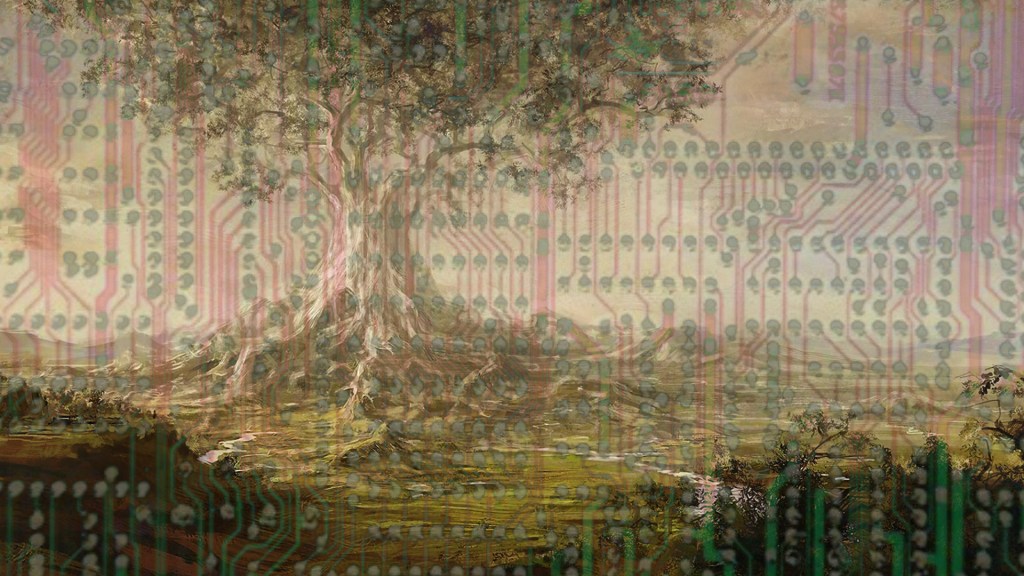
Now that I understand about the existence of Giant Trees with the help of Chad Williams of the “Deeper Conversations with Chad” YouTube channel, and their importance on the Earth’s grid system, I have a likely answer to the question posed in the title of this video…”What is it Exactly About the World’s Disputed Islands!”
In my latest conversation with Chad, “Giant Trees, the Earth’s Grid, and the New World Order,” among many other things, we talked about how the European Colonizers were going after tiny remote islands to claim for their countries.
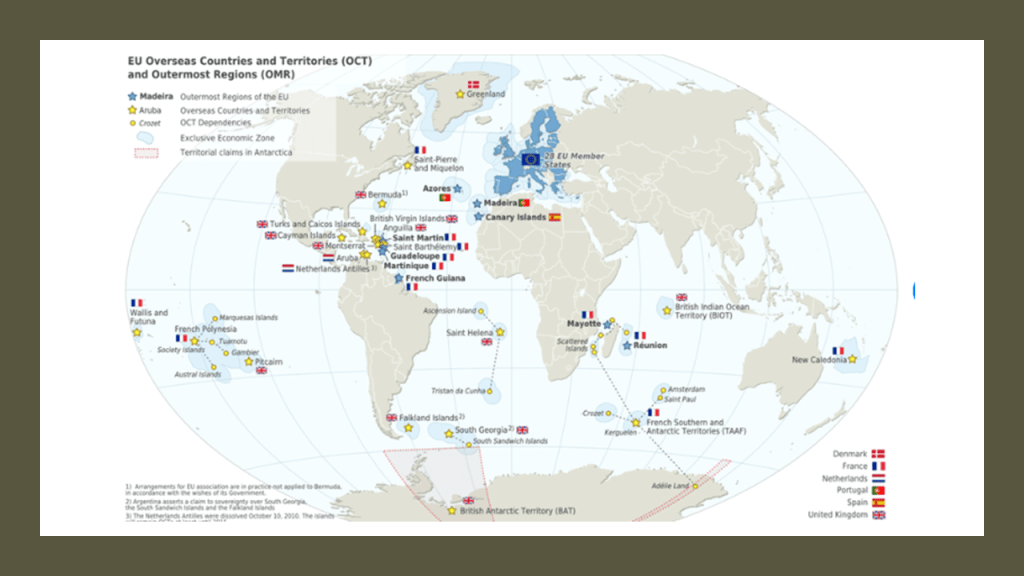
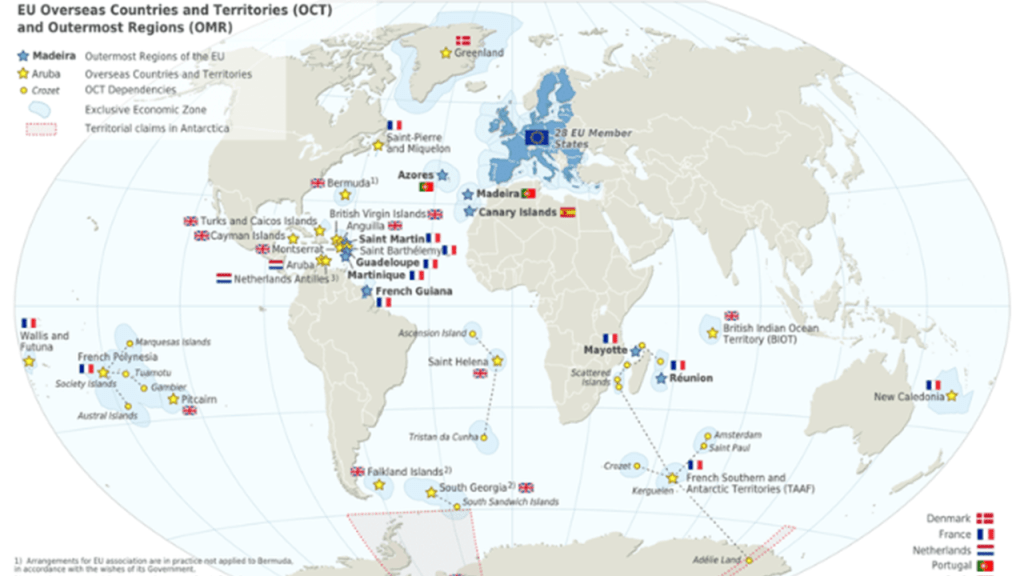
We discussed a number of these remote islands from the perspective that they were former giant tree locations, as I had come across many of these islands when tracking alignments that were claimed by different European Countries as “Overseas Countries, Territories and Outermost Regions.”
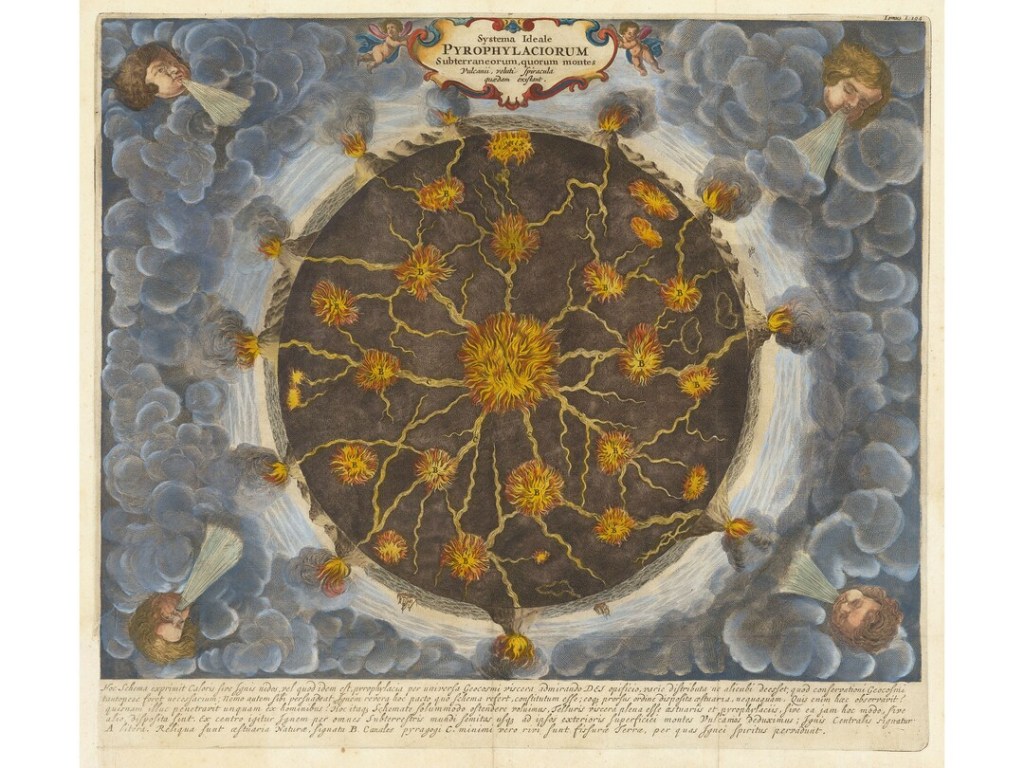
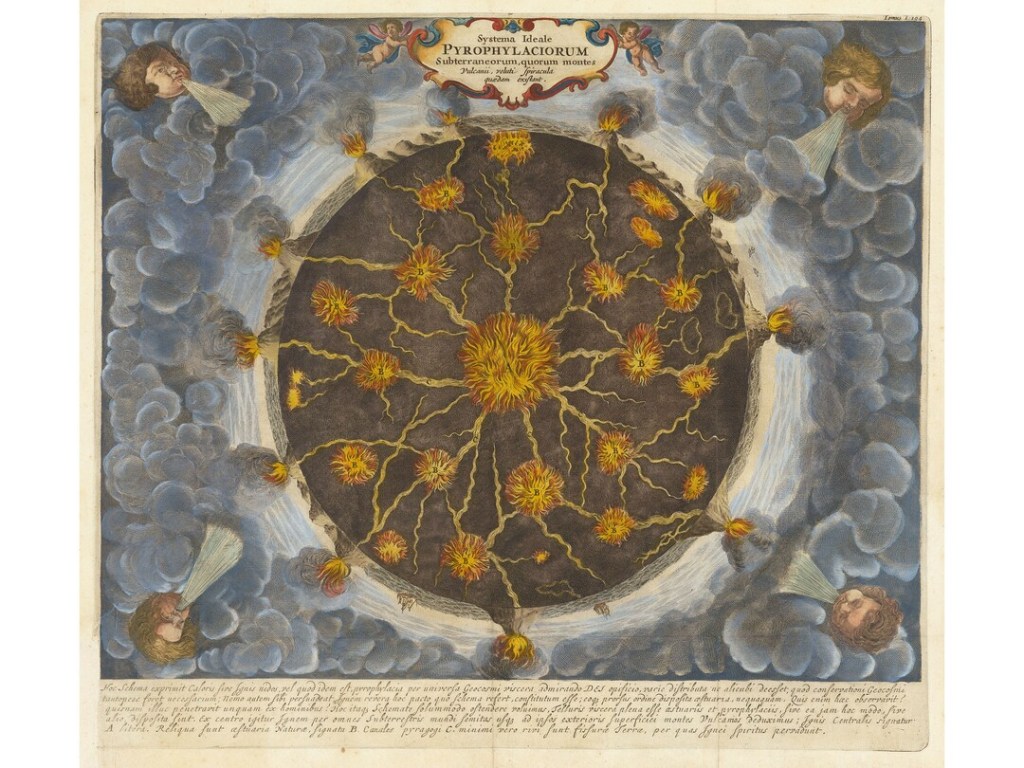
We also discussed this illustration that Chad found in his research that appears to depict volcanoes connected by a root system exploding simultaneously all over the Earth.
This could provide an explanation as to why the giant trees don’t look like trees any more, and are called by all manner of names, including “volcano.”
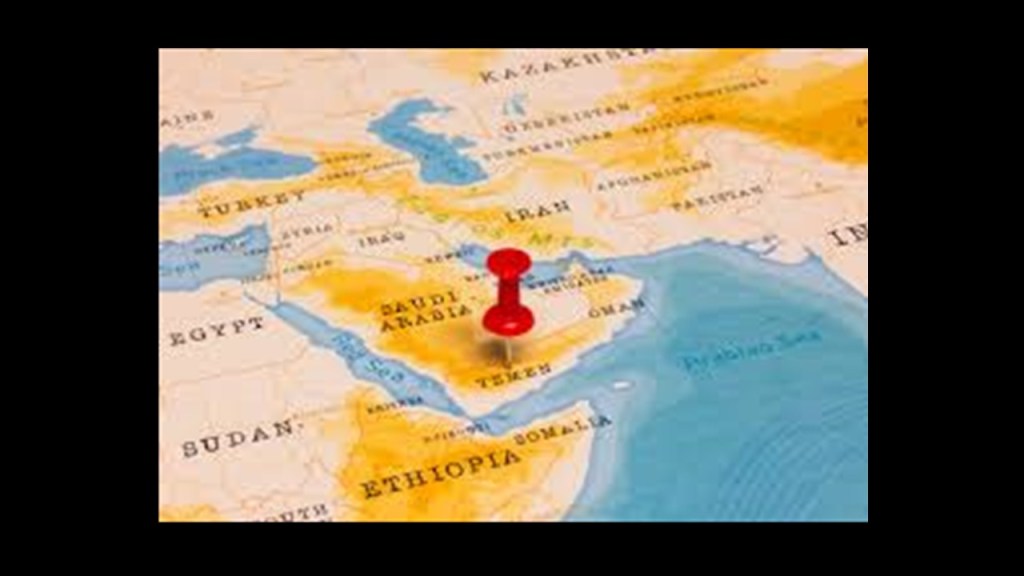
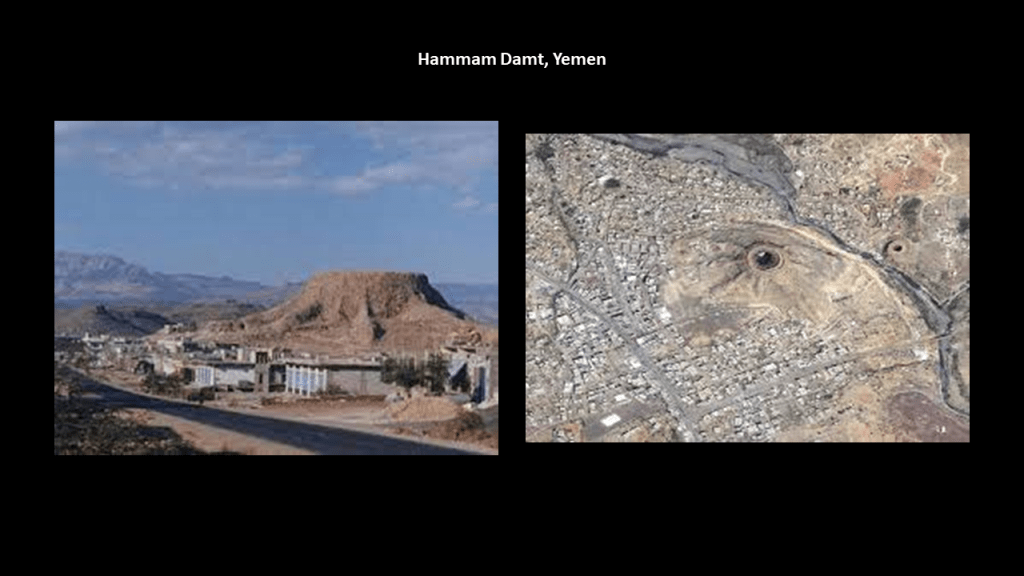
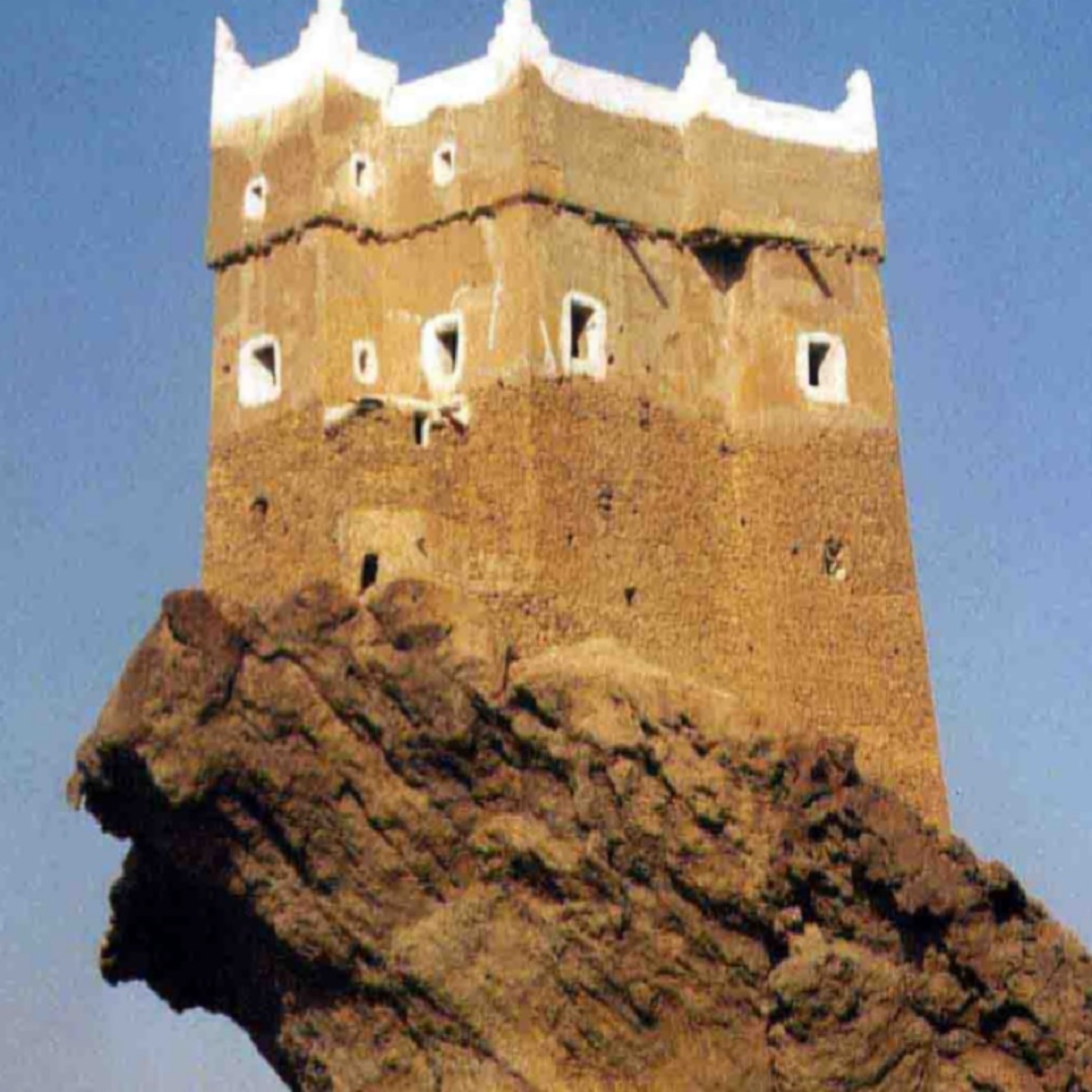
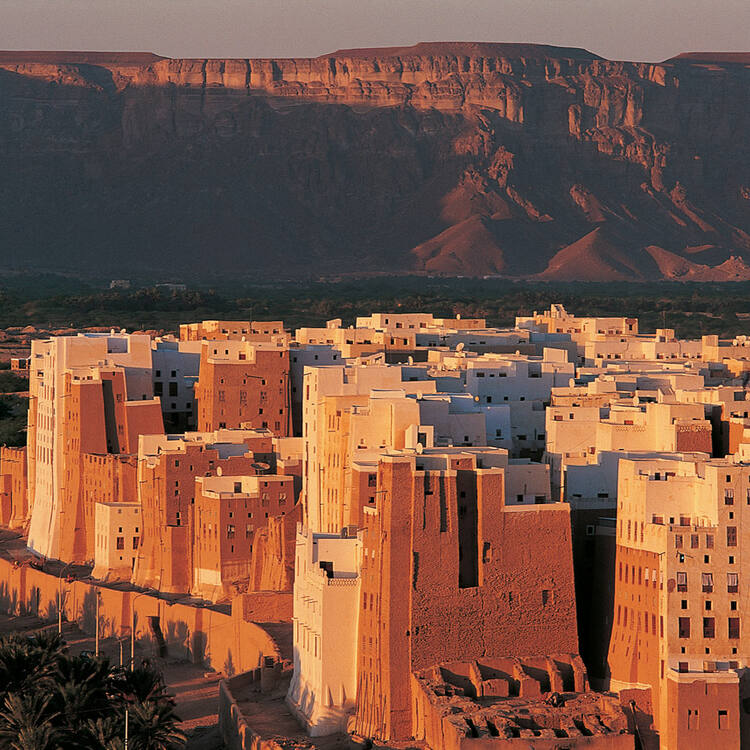
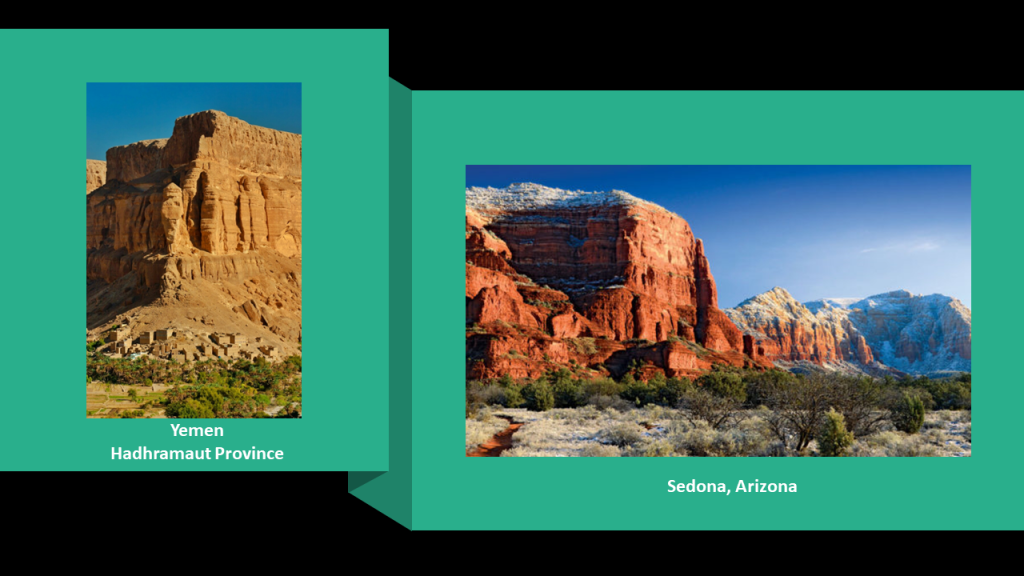
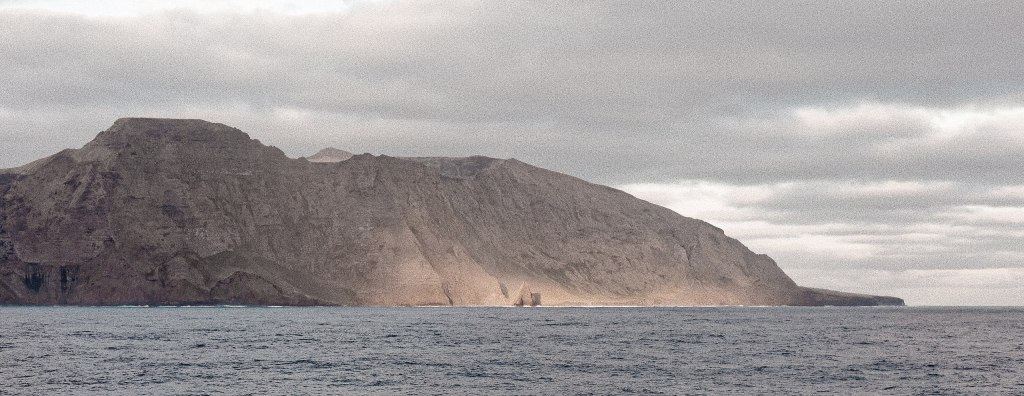
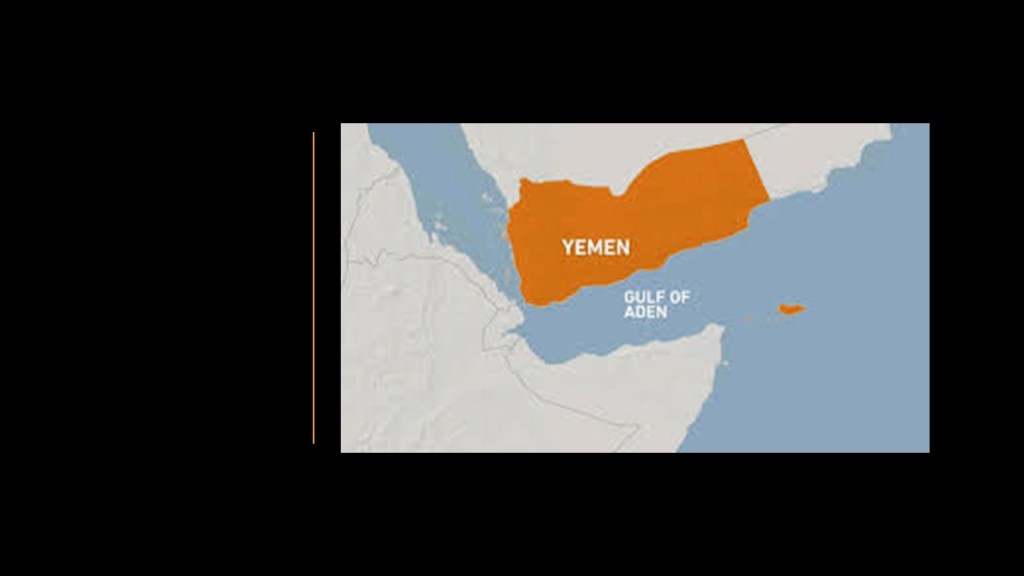
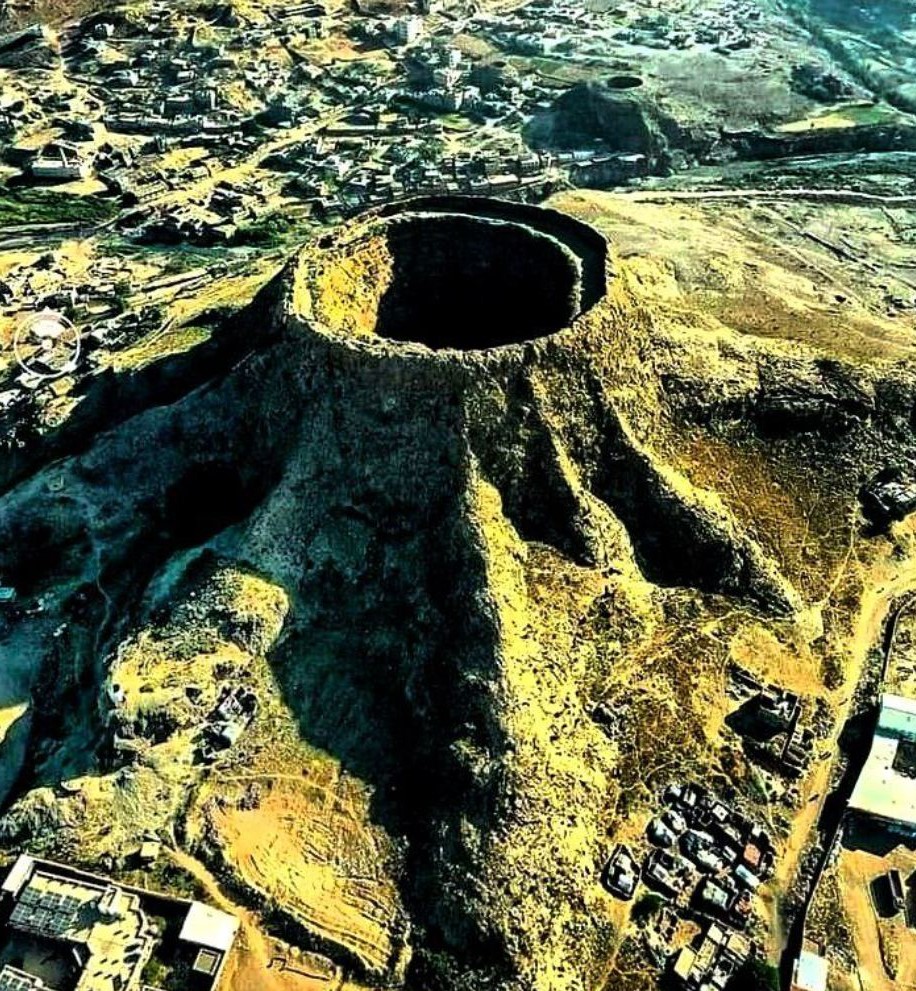
There apparently is a connection to volcanism with these giant trees that has been completely left out of our awareness, as seen in this photo of the tree-trunk-looking Harra of Arhab volcano in Yemen.
As I said at the beginning of this post, I also kept coming across obscure, seemingly insignificant islands and island groups that are the subjects of territorial disputes between countries, many of which are still on-going in the present day, in my journey tracking cities and places in alignment with each other around the world, and in many cases, the odd stories associated with these disputed islands.
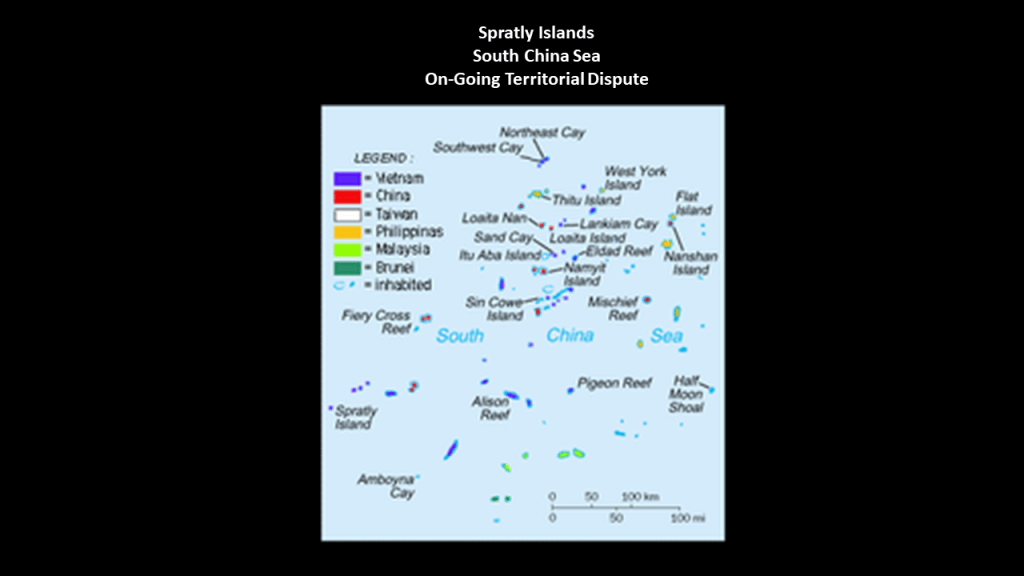
I will start with the Spratley Islands.
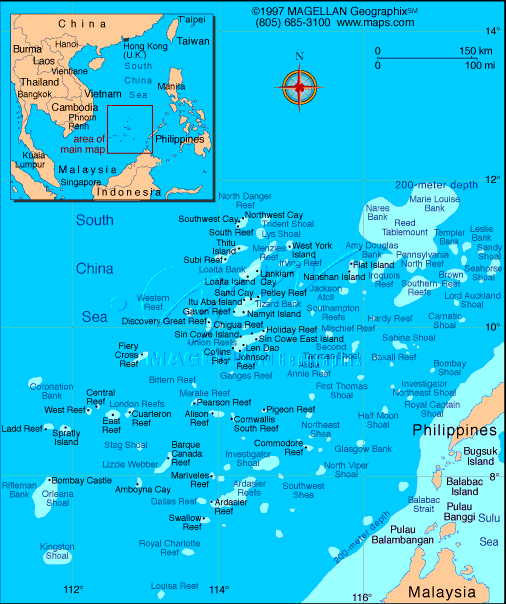
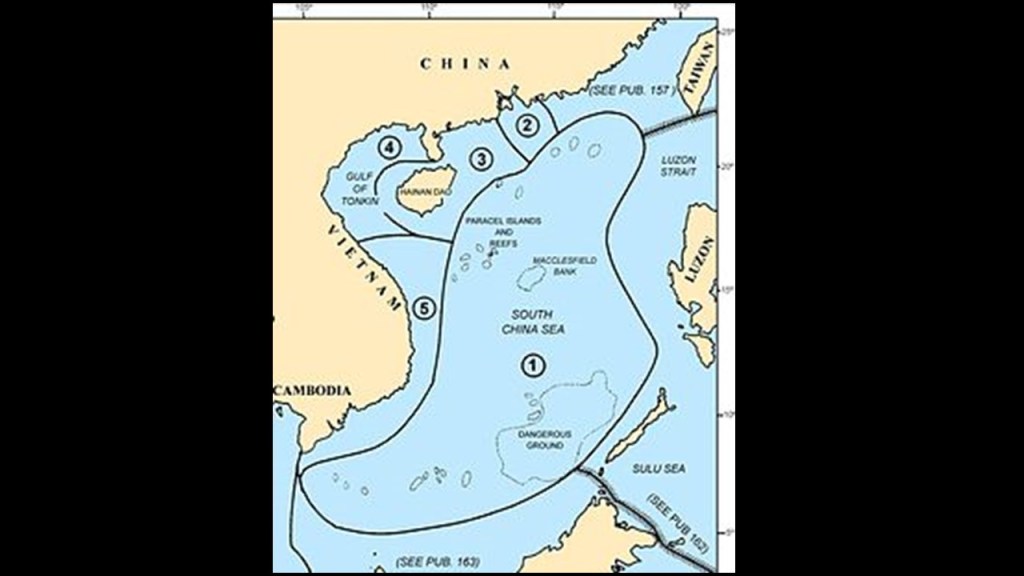
I found the Spratley Islands in the South China Sea when I was following one of the alignments that emanate off of the North American Star Tetrahedron at Merida, Mexico.
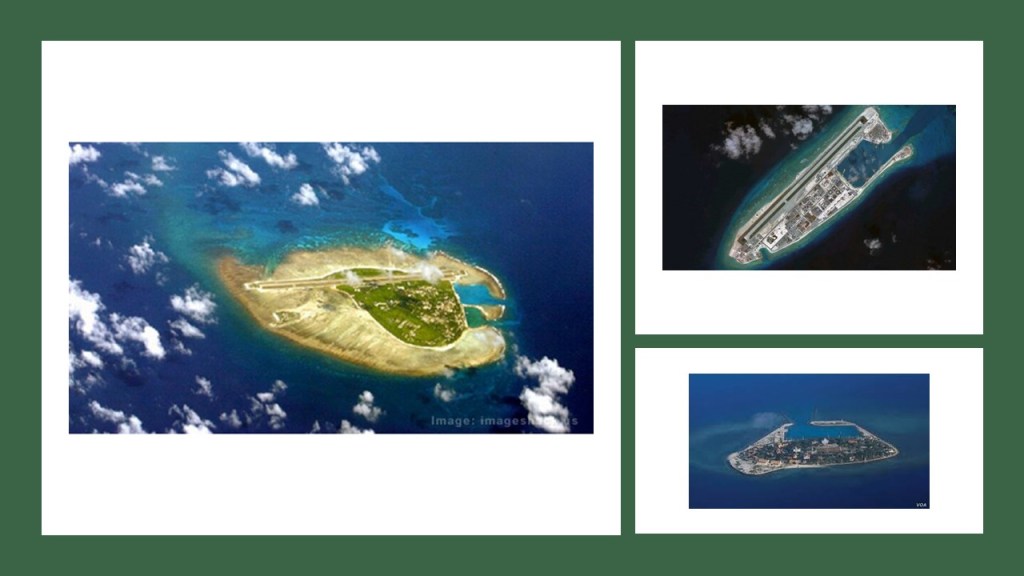
They consist of 14 islands or islets; 6 banks; 113 submerged reefs; 35 underwater banks; and 21 underwater shoals.
The northeast part of the Spratlys is known as dangerous ground due to low islands; sunken reefs; and degraded sunken atolls.
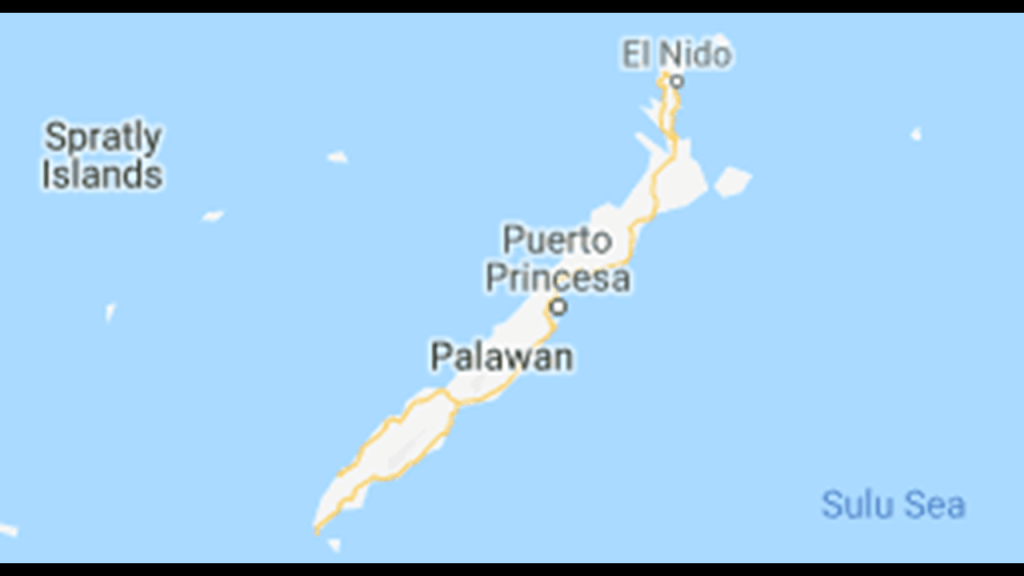
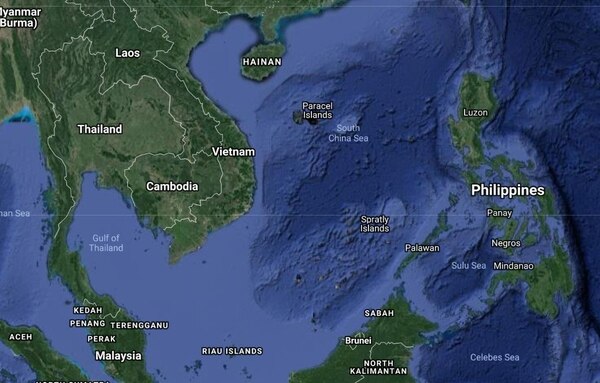
They are located on the alignment just northwest of Palawan Island…
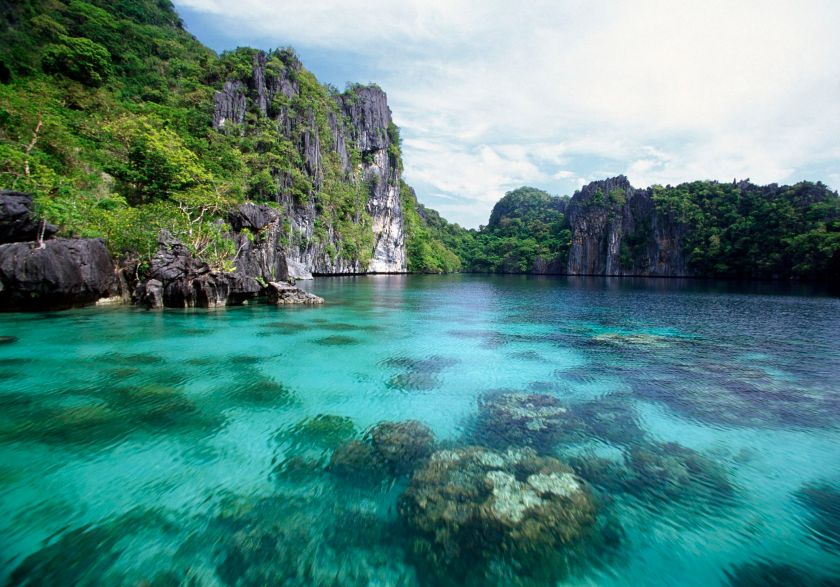
…and Palawan, in the Philippines, is considered by many to be the most beautiful island in the world.
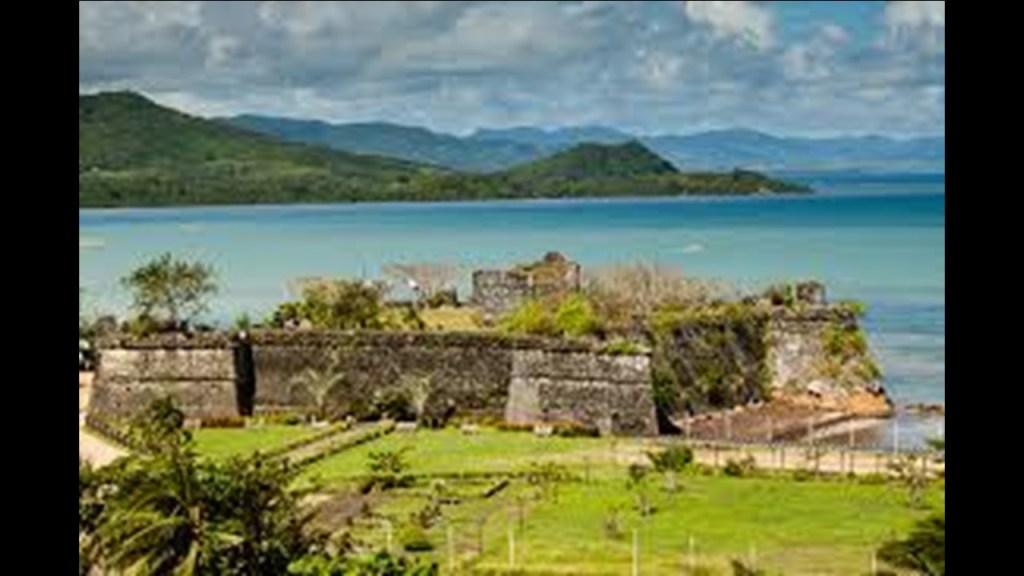
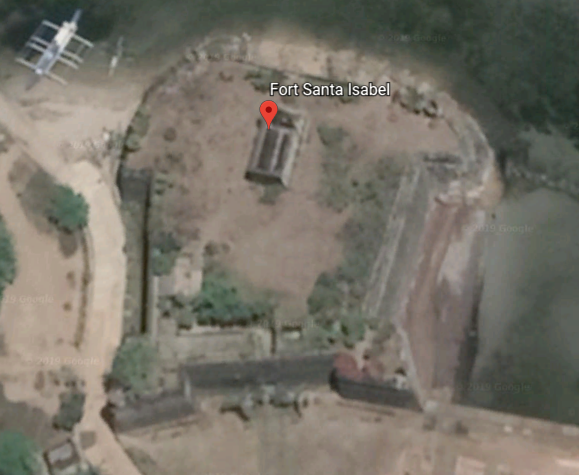
There is a star fort located in Taytay on the island of Palawan called the Fuerza de Santa Isabel.
From my extensive research on the physical lay-out of earth-grid alignments, and the frequent occurrence of star forts situated along the Earth grid system worldwide, I believe that star forts functioned as batteries on the Earth’s grid system, and were not originally military in nature as we have been led to believe in our historical narrative.
Back to the Spratley Islands.
The Spratly Islands dispute is an on-going territorial dispute between China, Taiwan, Malaysia, the Philippines, Brunei and Viet Nam concerning “ownership” of the Spratly Islands.
What is it about these islands?
Well, we are told they are of economic and strategic importance; hold reserves of natural gas and oil; productive fisheries; and is a busy area for commercial shipping traffic.
At the time I originally did the research for this post, I speculated that there is a powerful energy component here–whether placement, production, or something else–related to the Earth’s grid lines, and it is becoming clearer and clearer that the giant trees of the Earth were powerful components of the Earth’s grid system.
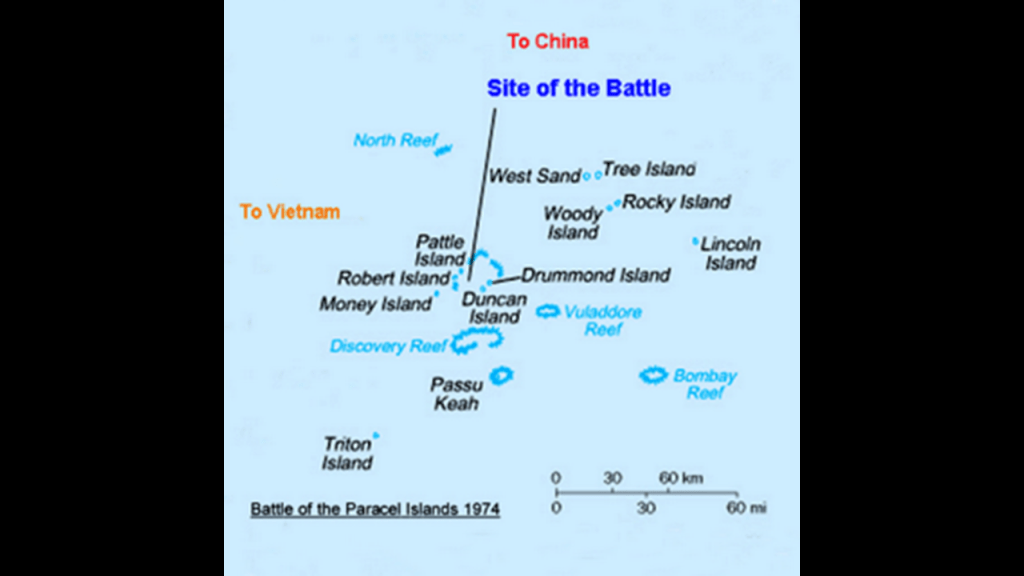
So, for another example of this in the South China Sea, just northwest of the Spratly Islands on the same alignment’s way through Hainan in China, the Paracel Islands are a similar group of islands, reefs, and banks that are strategically located; productive fishing grounds; and which also hold reserves of natural gas and oil.
While they are controlled and operated by China, they are also claimed by Taiwan and Viet Nam.
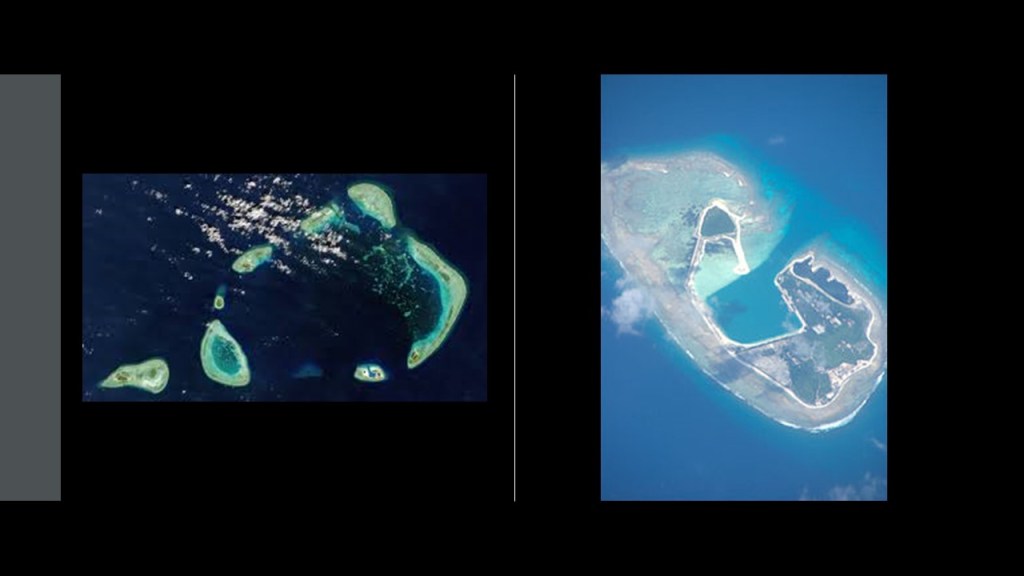
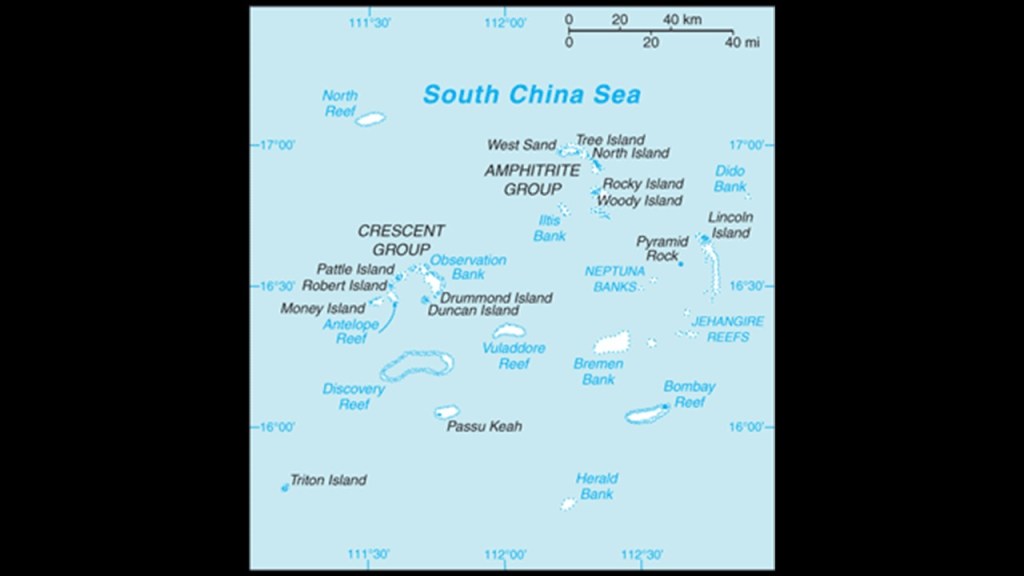
The archipelago consists of 130 small coral islands and reefs, most grouped into the northeast Amphitrite Group or the western Crescent Group.
Island names suggestively include: Tree Island; Woody Island; Pyramid Rock; and Money Island.
In ancient Greek mythology, Amphitrite was a sea goddess; the wife of Poseidon; and the Queen of the Sea.
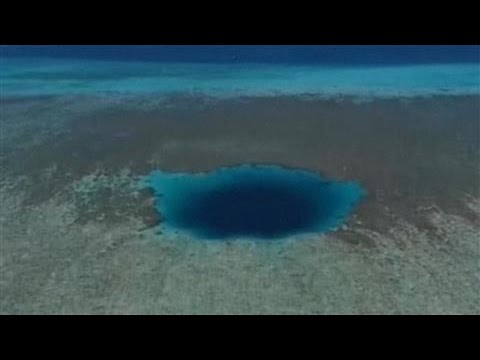
The Paracel Islands are also the location of the Dragon Hole, or Sasha Yongle Blue Hole, the world’s deepest known blue hole at 987-feet, or 301-meters, deep.
Former giant tree location perhaps?
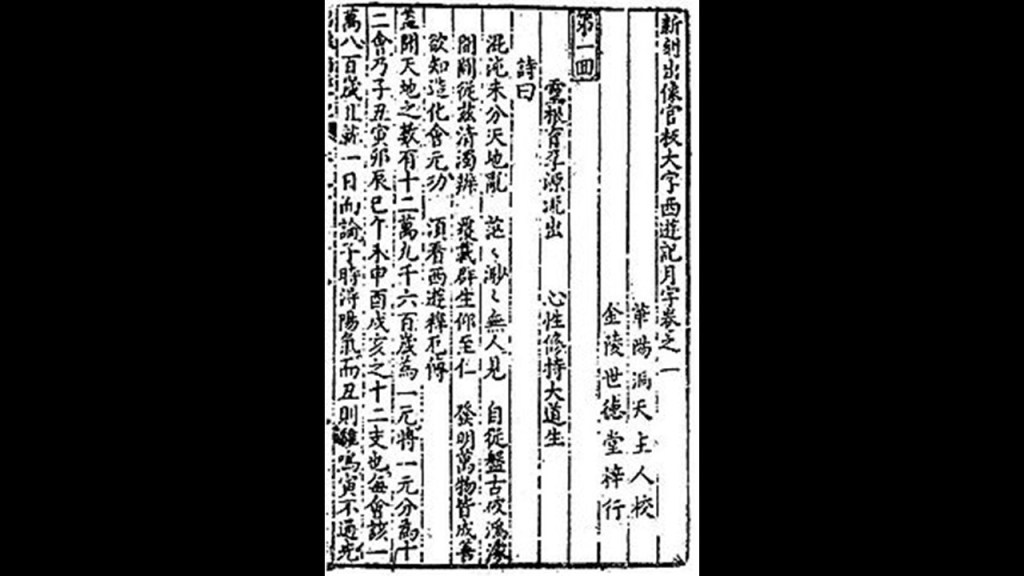
Dragon Hole is called the “Eye of the South China Sea,” and is where the Monkey King found his golden cudgel in the 16th-century Chinese classic of Literature “Journey to the West,” with authorship attributed to Wu Cheng’en.
The Battle of the Paracel Islands was a military engagement between the naval forces of South Vietnam and China in 1974, and was an attempt by the South Vietnamese navy to expel the Chinese navy from the vicinity.
As a result of the battle, China established de facto control over the Paracel Islands.
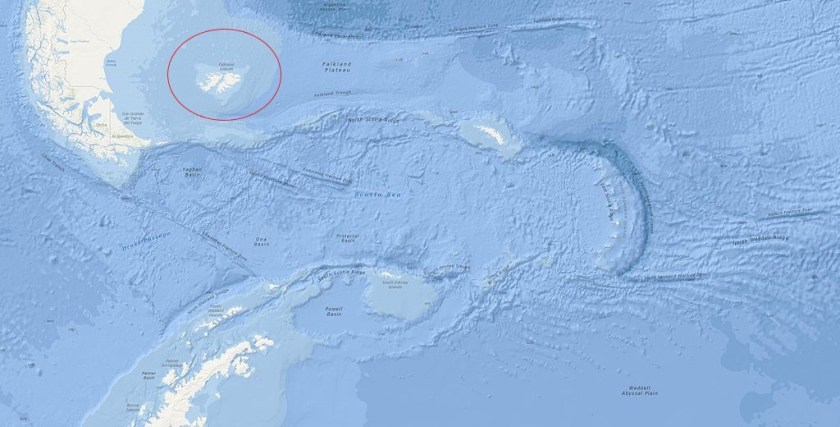
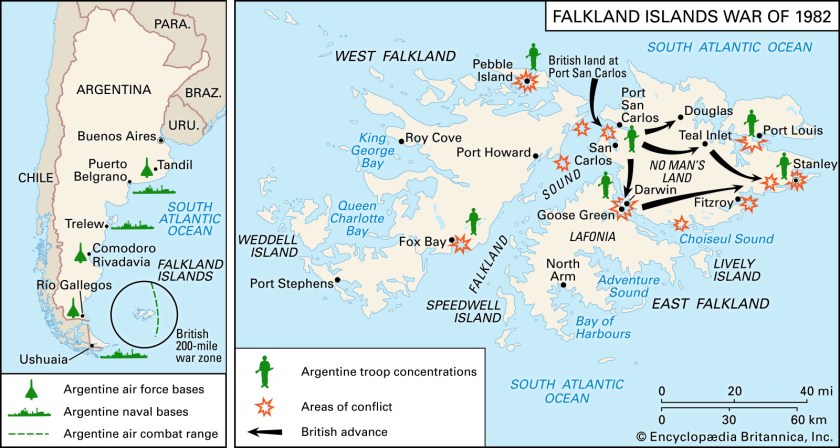
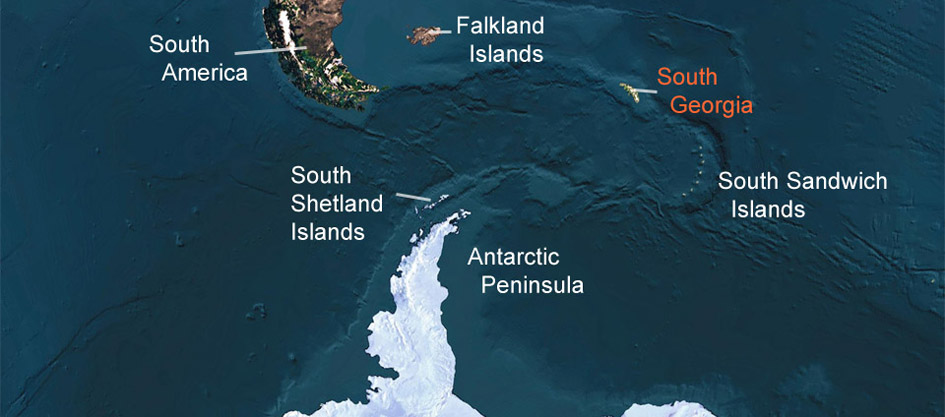
The next place that I am going to look at are the Falkland Islands, an archipelago in the South Atlantic Ocean on the Patagonian Shelf.
They are 300-miles, or 483-kilometers, east of South America’s southern Patagonian coast, and 752-miles, or 1,210-kilometers, from the northern tip of the Antarctic Peninsula, at a latitude of 52-degrees south.
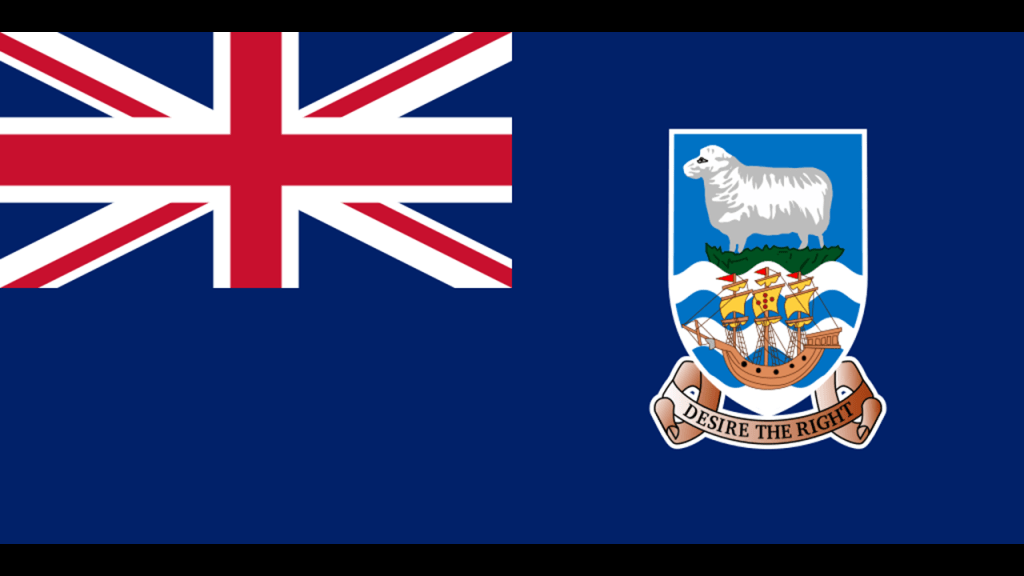
It is a British overseas territory, and consists of two large islands – East Falkland and West Falkland – and 776 smaller islands.
The population of less than 4,000 people are British citizens.
Britain reasserted its rule over the Falklands in 1833, with a colonial presence also including French, Spanish, and Argentine settlements.
Argentina maintains its claim to the islands.
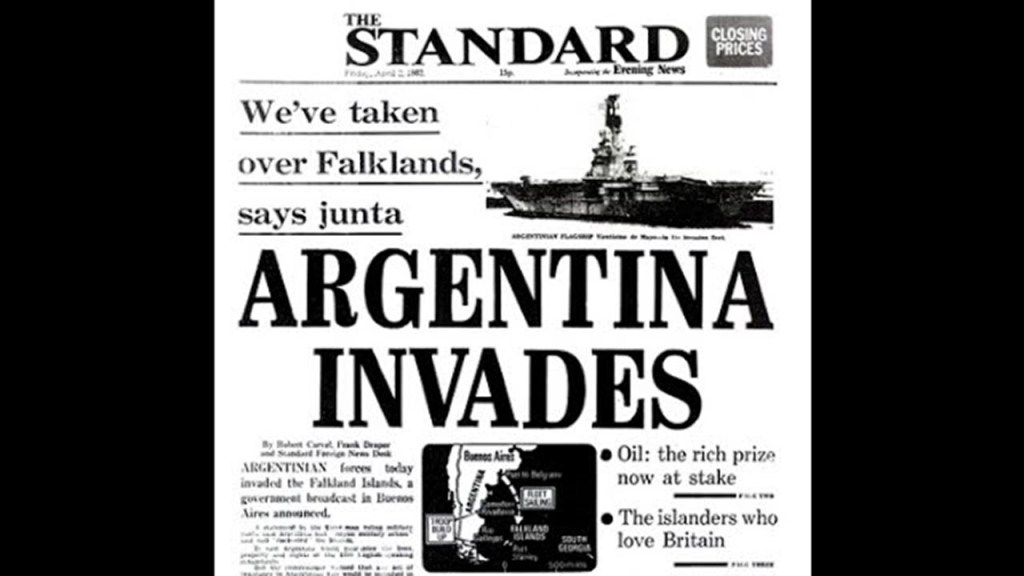
On April 2nd, 1982, Argentine forces occupied the Falkland islands.
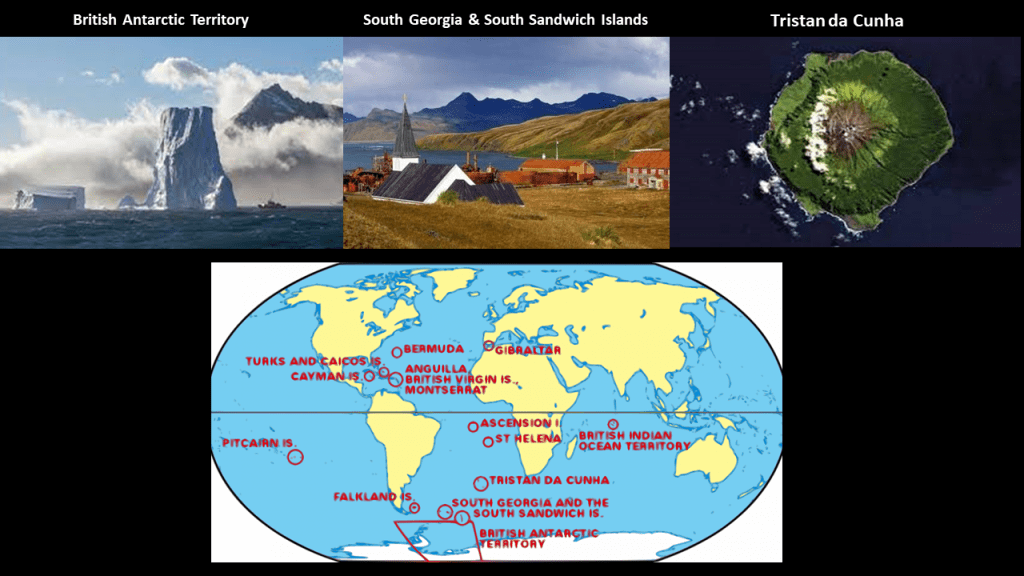
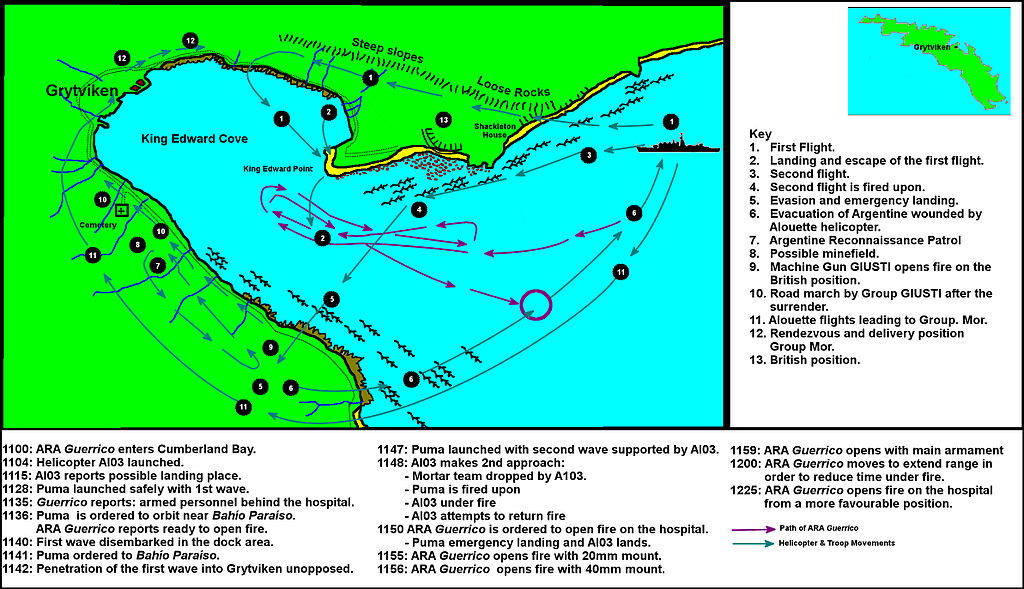
On April 3rd, 1982, Argentine forces seized control of the east coast of South Georgia Island in the Battle of Grytviken, part of the South Sandwich Islands, and another British Overseas Territory near the Falkland Islands that is claimed by Argentina.
On April 5th, 1982, the Falklands War between Argentina and Great Britain started. While not officially declared a war, it was declared a war-zone.
The conflict lasted 74-days, and ended with Argentina’s surrender on June 14th, 1982, returning the islands to British control.
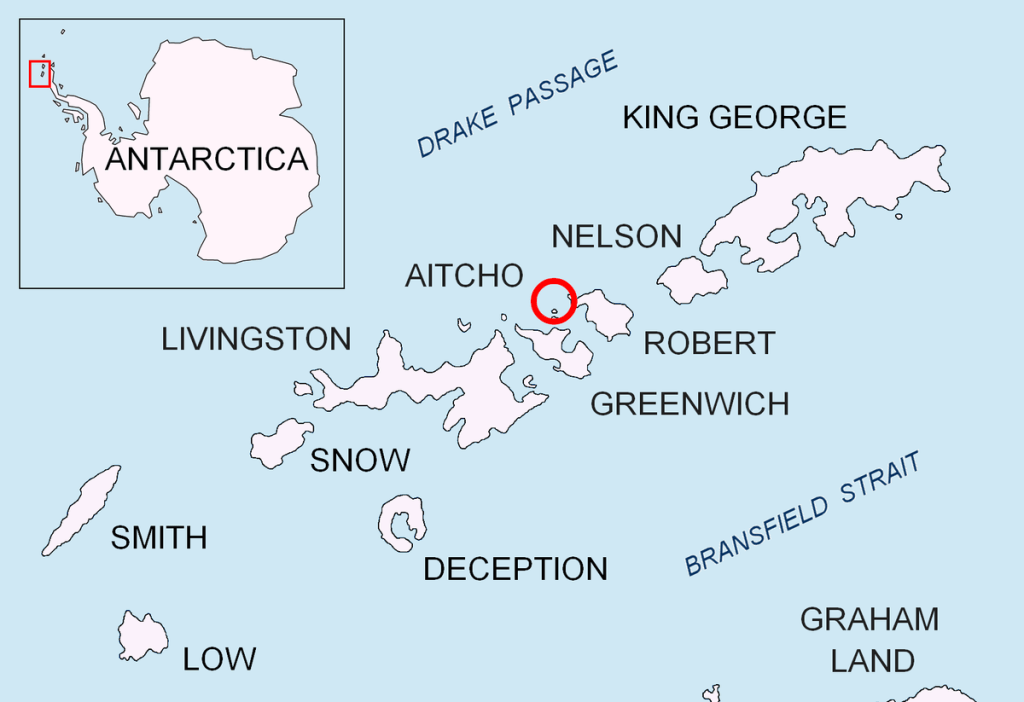
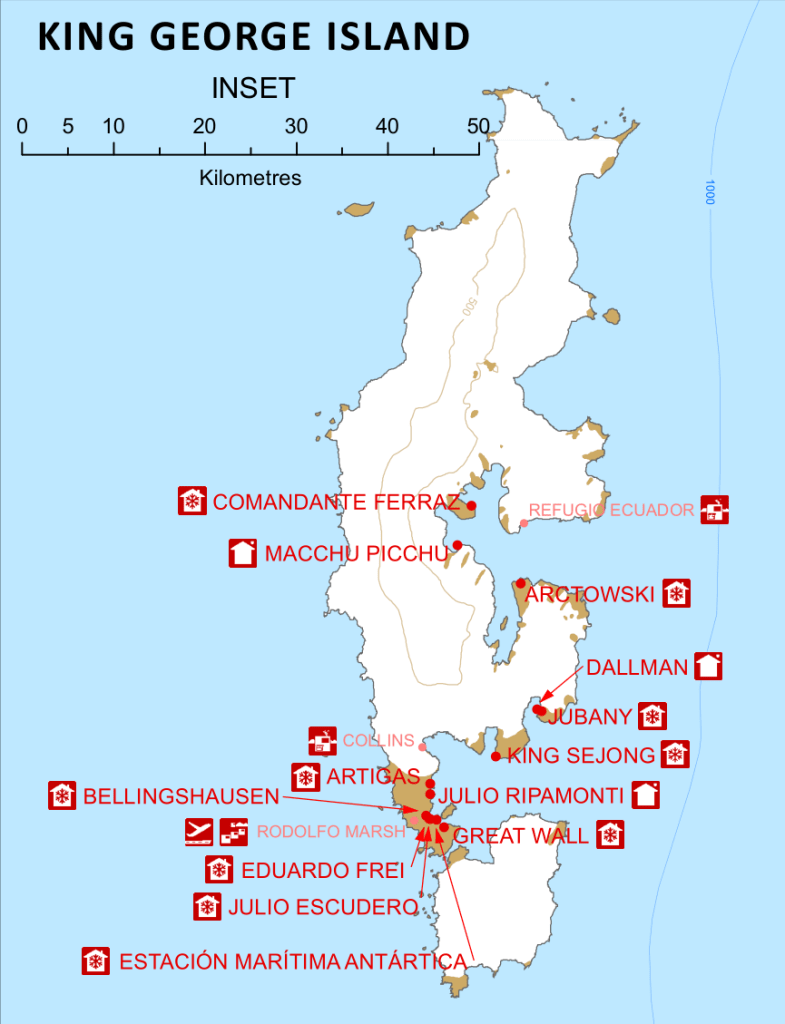
The South Shetland Islands shown here in this map are in the neighborhood of all these little island groups off the southernmost tip of South America, and are a group of Antarctic islands with a total area of 1,424 square-miles, or 3,687 square-kilometers.
By the Antarctic Treaty of December 1st, 1959, the islands’ sovereignty is neither recognized nor disputed by the treaty’s 12 signatories – Argentina, Australia, Belgium, Chile, France, Japan, New Zealand, Norway, South Africa, the Soviet Union, the United Kingdom, and the United States – and they are free for use by any signatory for non-military purposes.
However, the islands have been claimed by Great Britain since 1908, and as part of the British Antarctic Territory since 1962.
They have also been claimed by Chile and Argentina since the 1940s.
The Chileans have the largest number of research stations on the islands, as well having the Eduardo Frei airbase on King George Island, where the largest number of international research stations are located.
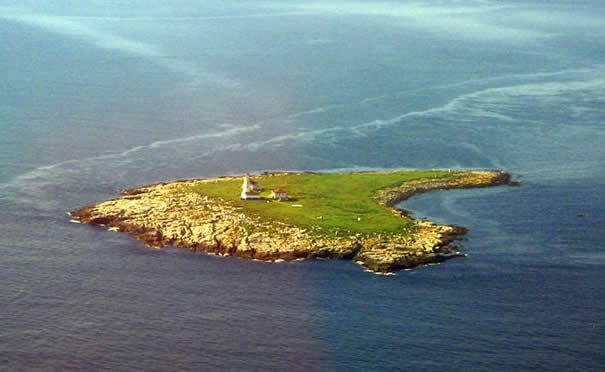
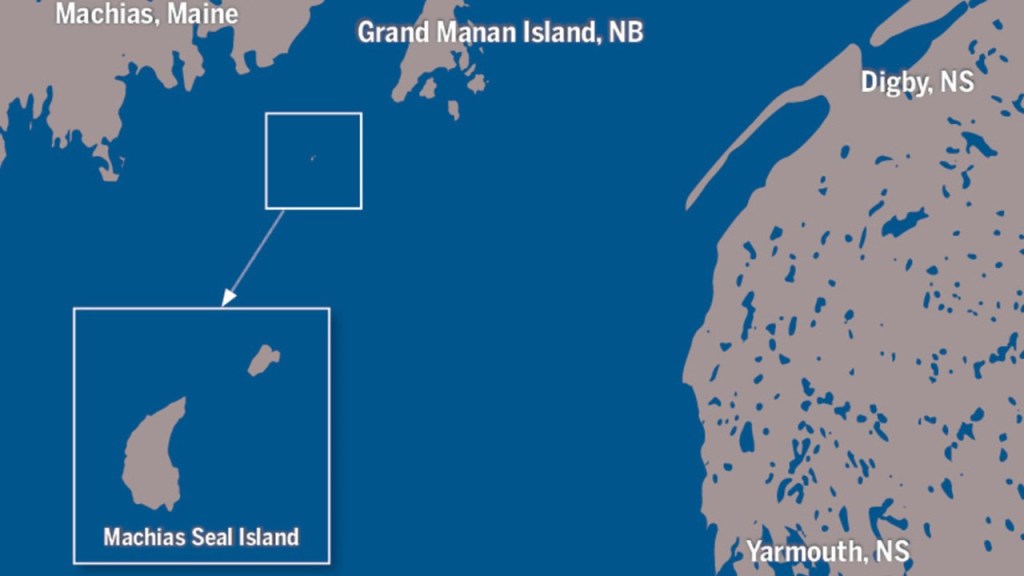
Moving to North America in the northern hemisphere, Machias Seal Island, which has a lighthouse in the center of it manned by the Canadian Coast Guard, is part of an on-going territorial boundary dispute between the United States and Canada.
Machias Seal Island is located on the border of the Gulf of Maine in the United States, and the Bay of Fundy in Canada.
Other boundary disputes, not limited to islands, between the United States and Canada include:
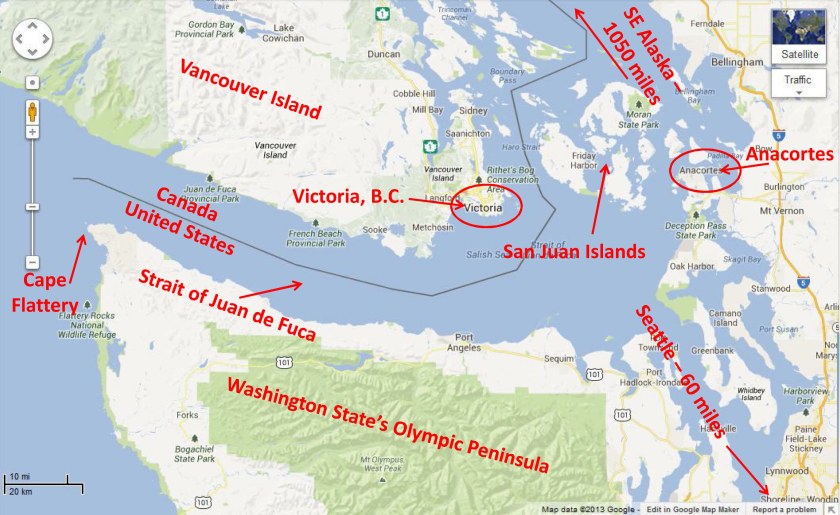
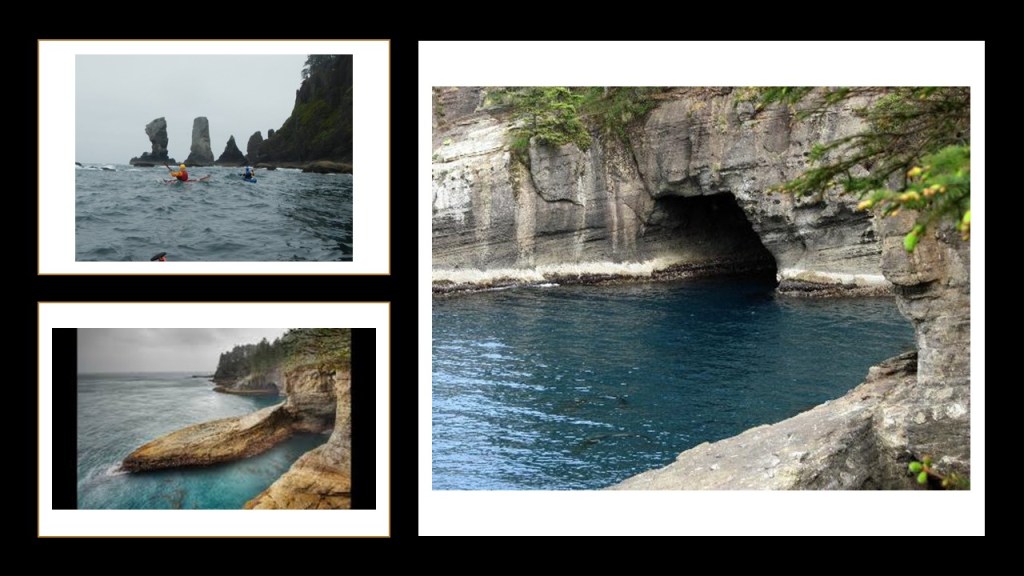
A fishing zone dispute at the mouth of the Juan de Fuca Strait between Washington State and British Columbia, and within which the International boundary between the two countries lies in the middle of the strait.
Here are photographs of what Cape Flattery looks like at the mouth of the Juan de Fuca Strait on Washington’s Olympic Peninsula.
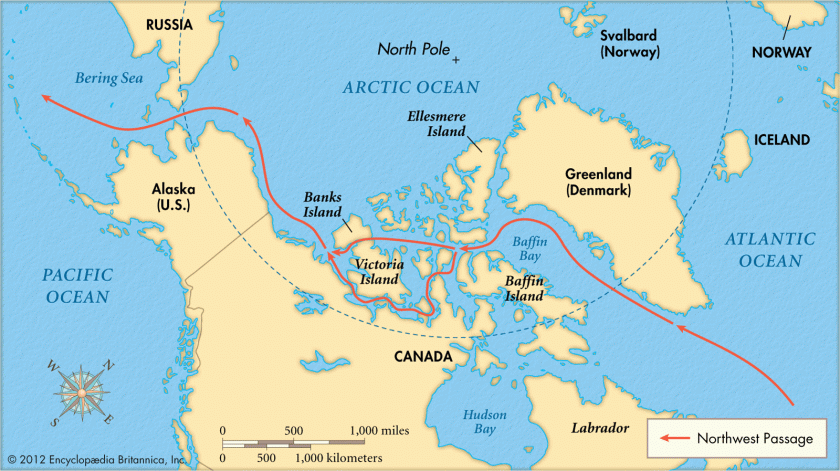
Another area of dispute between the two countries is the Northwest Passage, which Canada claims as part of its internal waters, and the United States regards as an international strait, open to international traffic.
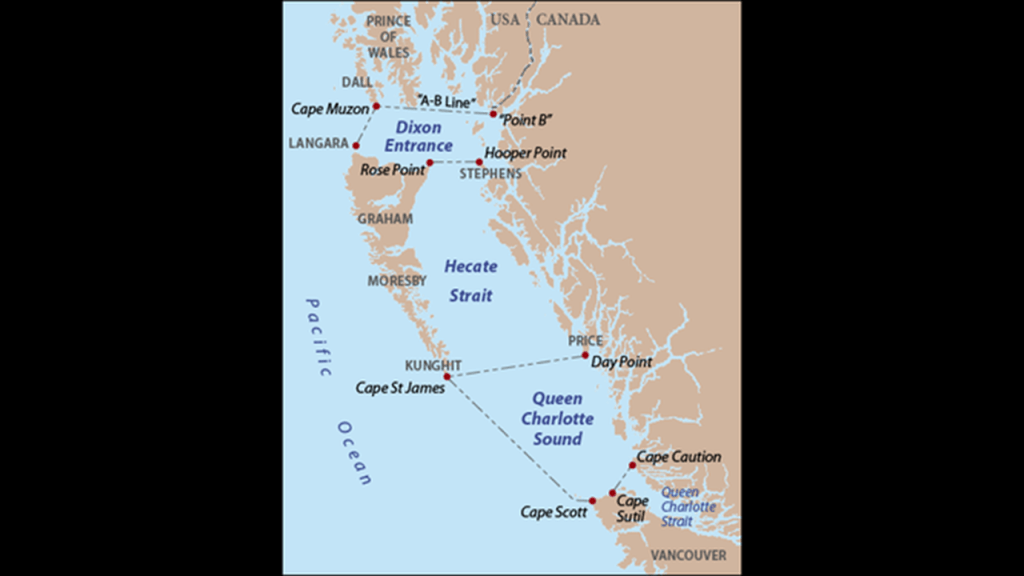
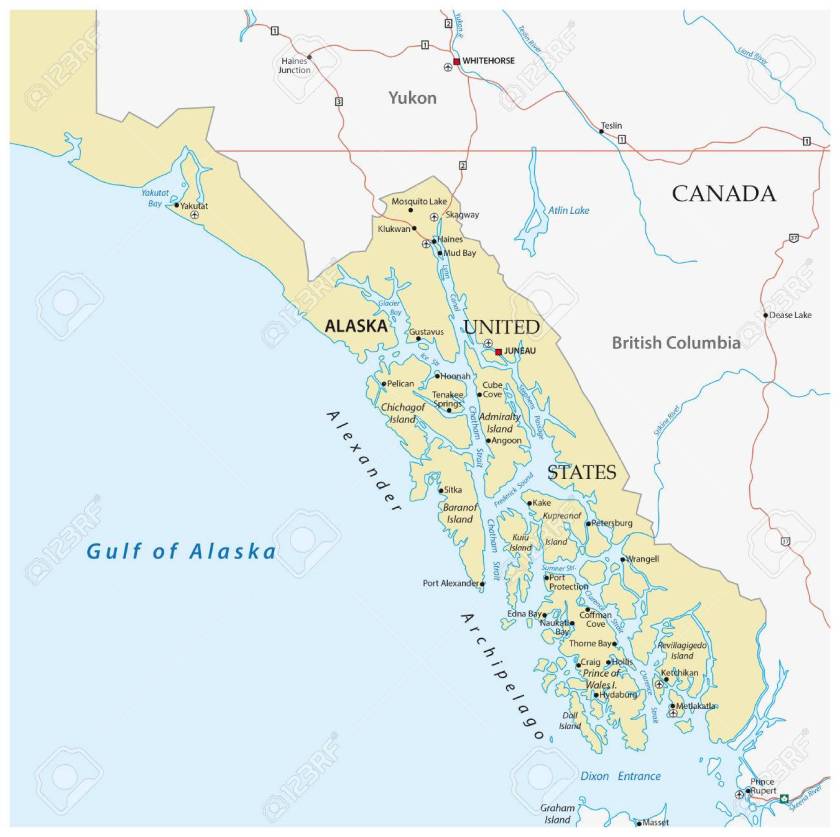
The Dixon Entrance, a strait about 50-miles, or 80-kilometers, long, between Alaska in the United States and British Columbia in Canada is also mutually claimed by both countries.
It is part of the Inside Passage shipping route.
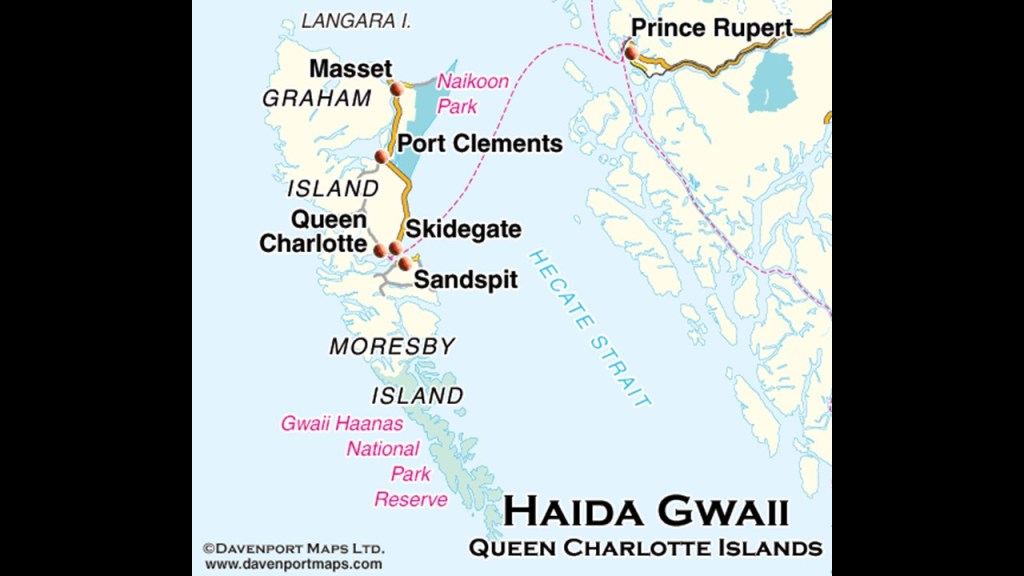
It lies between the Clarence Strait in the Alexander Archipelago, a 300-mile, or 480-kilometer, long group of islands in Alaska to the North…
…and the Hecate Strait and the islands known as the Haida Gwaii (or Queen Charlotte Islands) in British Columbia to the South.
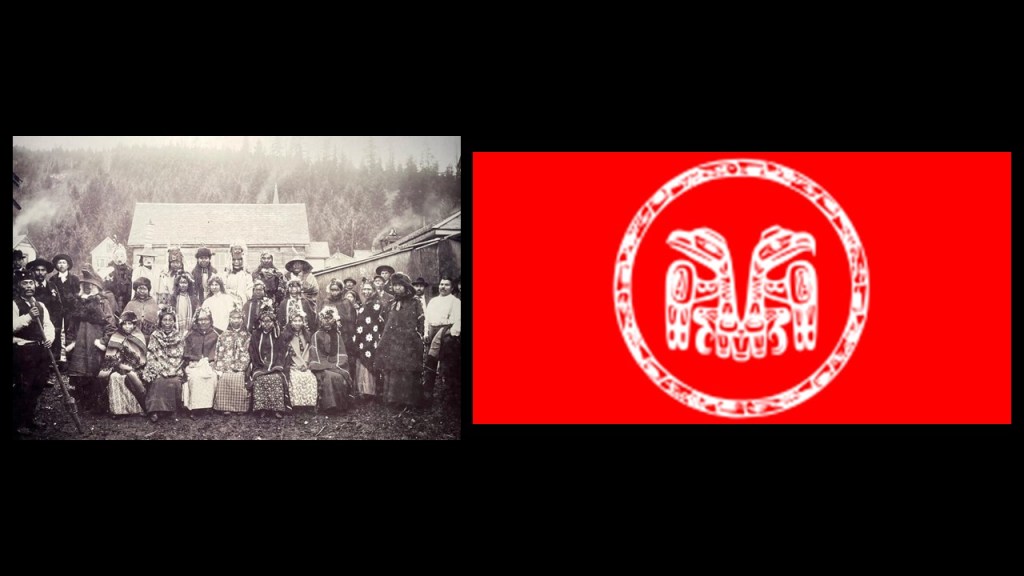
Members of the Haida Nation maintain free access across the strait, in the Haida Gwaii and islands in the Alaskan Panhandle where they have said to have lived for 14,000 years.
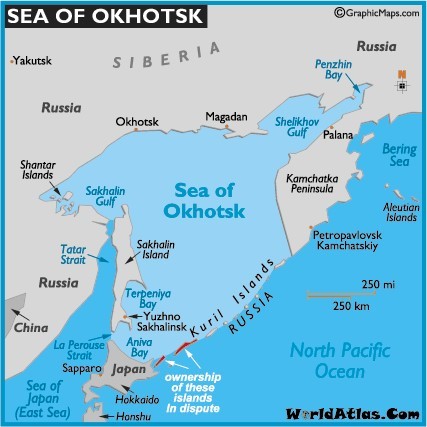
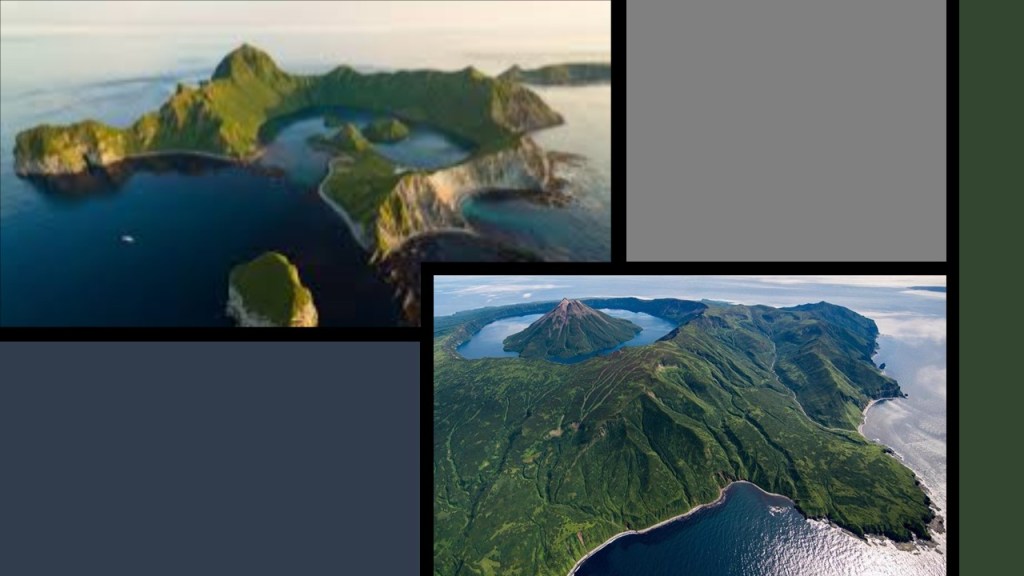
Next, the Kuril Islands dispute is a disagreement between Japan and Russia over the sovereignty of the four southernmost Kuril Islands.
They are a chain of islands stretching between the Japanese Island of Hokkaido at the southern end, and the Kamchatka Peninsula at the northern end.
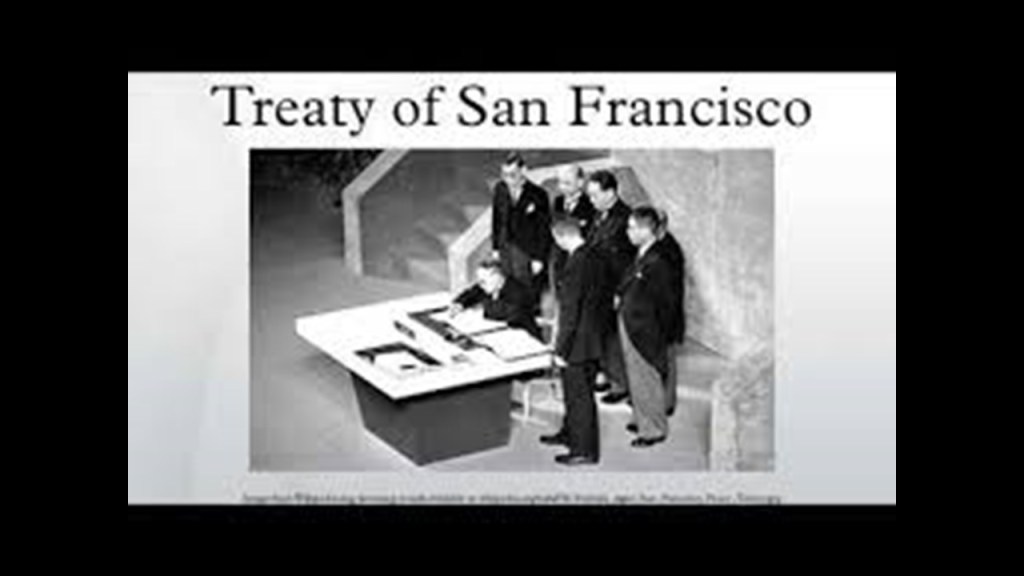
While the San Francisco Peace Treaty of 1951, signed between the Allies and Japan in 1951, stated that it must give up all right, title and claim to the Kuril Islands, Japan does not recognize Russia’s sovereignty over them, and this territorial dispute has not been resolved.
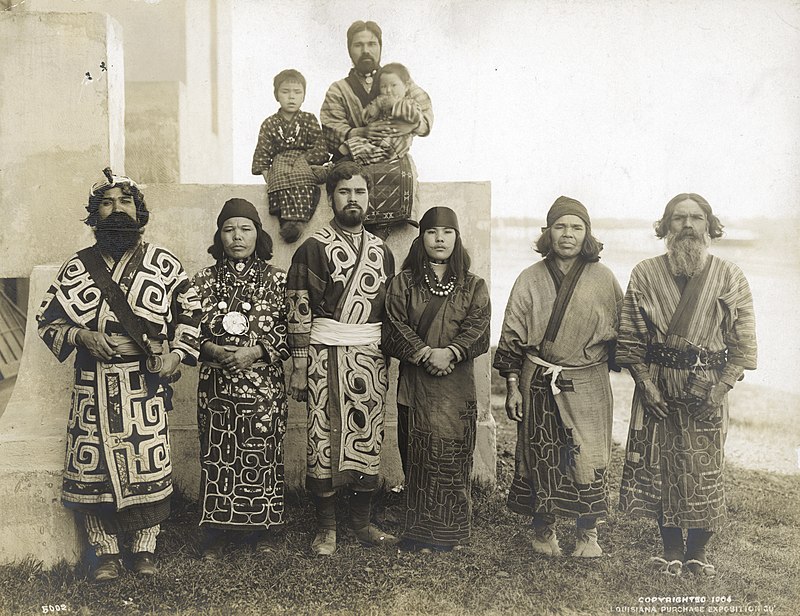
The original inhabitants of the Kuril Islands, and northern Japan for that matter, are the Ainu, as seen here in 1904…
…and today.
Other disputed islands around the world include:
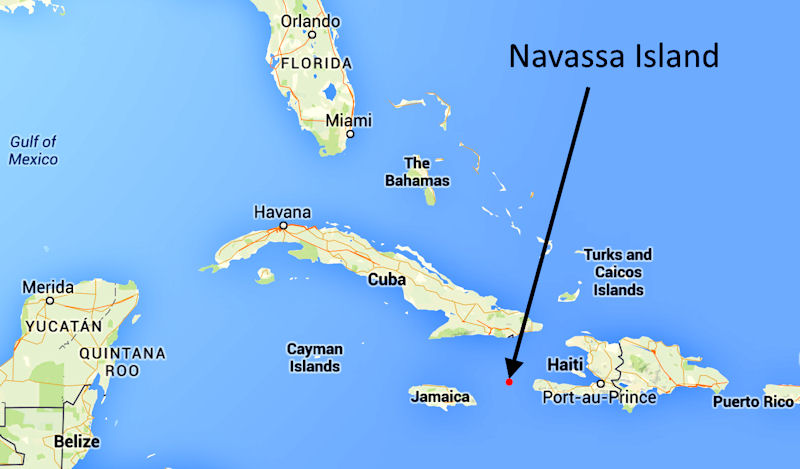
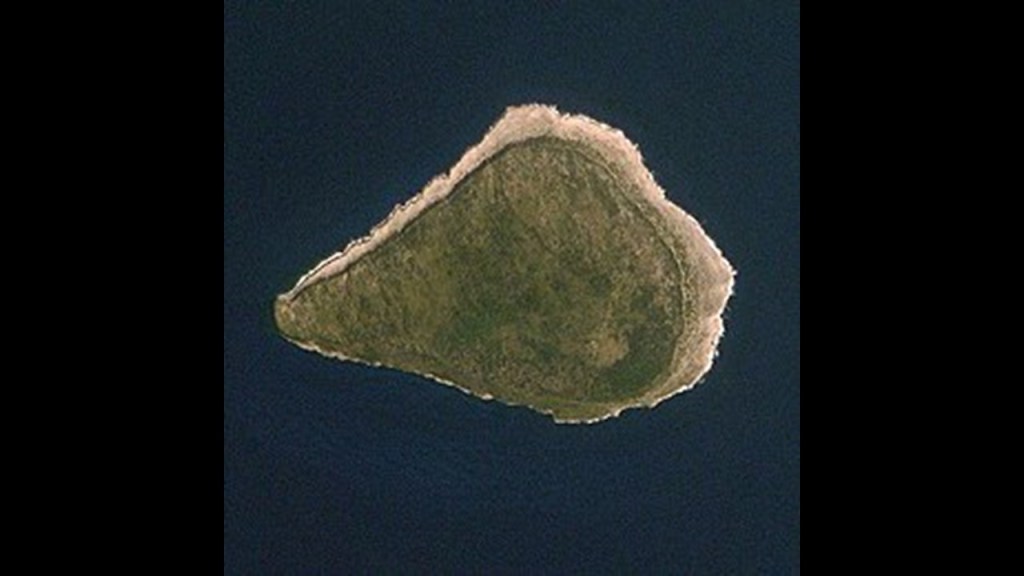
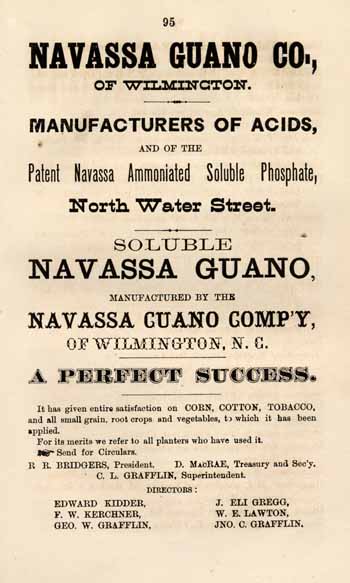
Navassa Island, an uninhabited island in the Caribbean Sea.
This small island is subject to an on-going territorial dispute between the United States and Haiti.
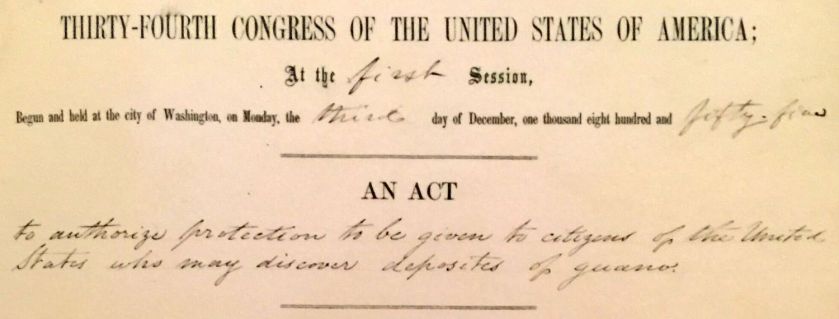
The United States claimed the island since 1857, based on the Guano Islands Act of 1856.
The legislation essentially said that an American could claim an uninhabited, unclaimed island, if it contained guano, or bird droppings, which was an effective early fertilizer.
Haiti’s claims over Navassa go back to the Treaty of Ryswick in 1697, which established French possessions in mainland Hispaniola that were transferred from Spain by the treaty.
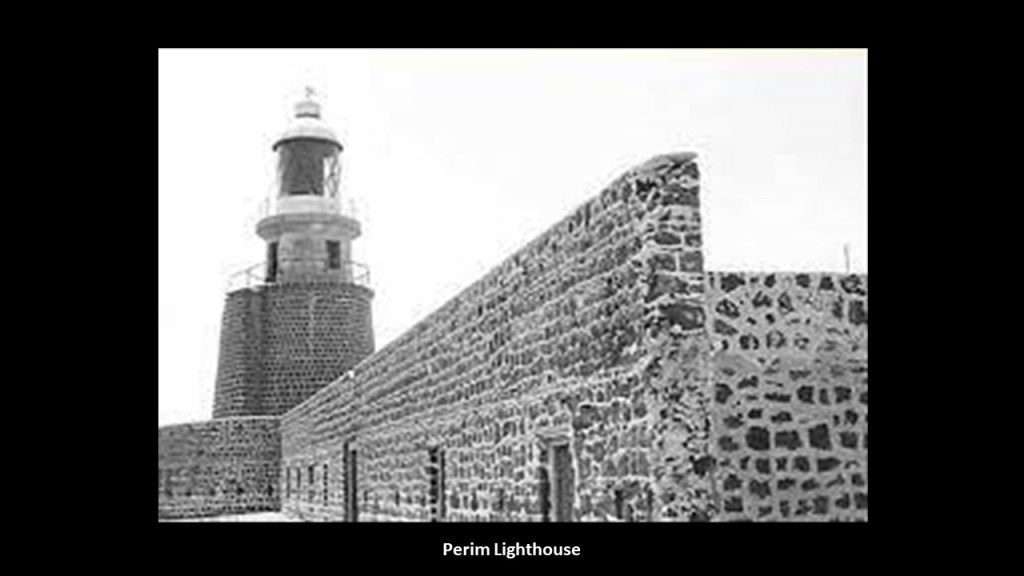
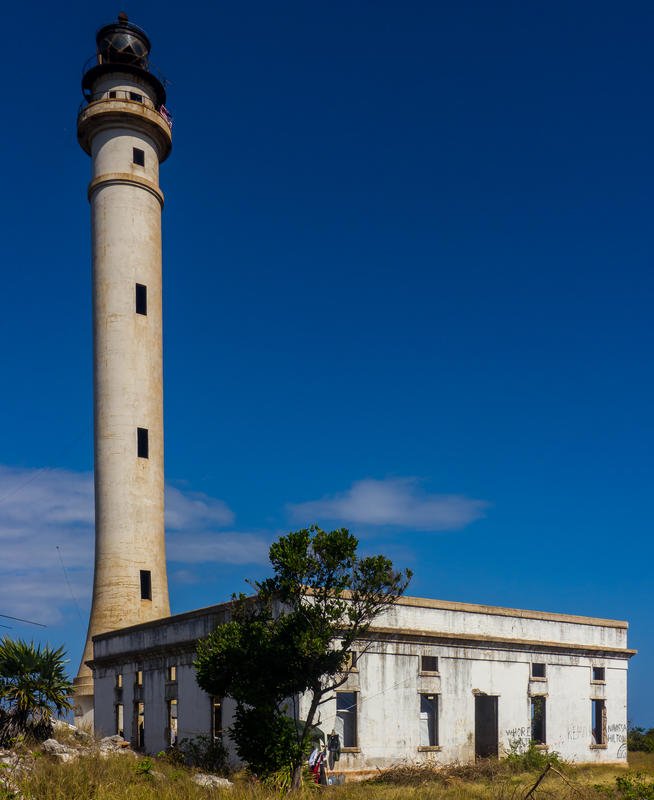
This is the deactivated lighthouse on Navassa. This is the only building left of what was previously on Navassa Island…
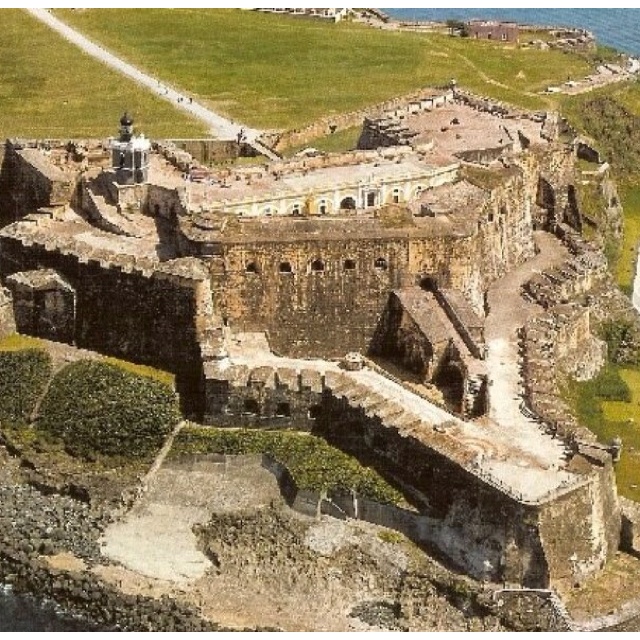
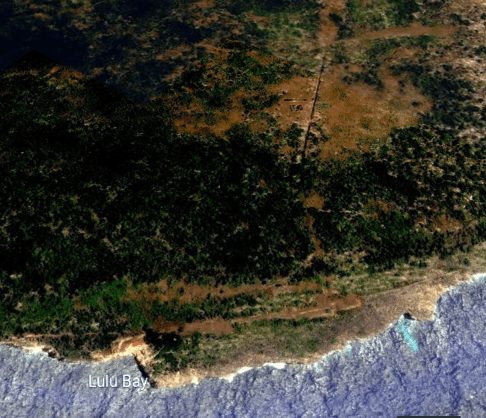
…possibly including this star fort identified as being in Lulu Town on Navassa, but I can’t confirm this finding because whatever was there isn’t there any more.
Lulu Town was previously situated around Lulu Bay on Navassa Island.
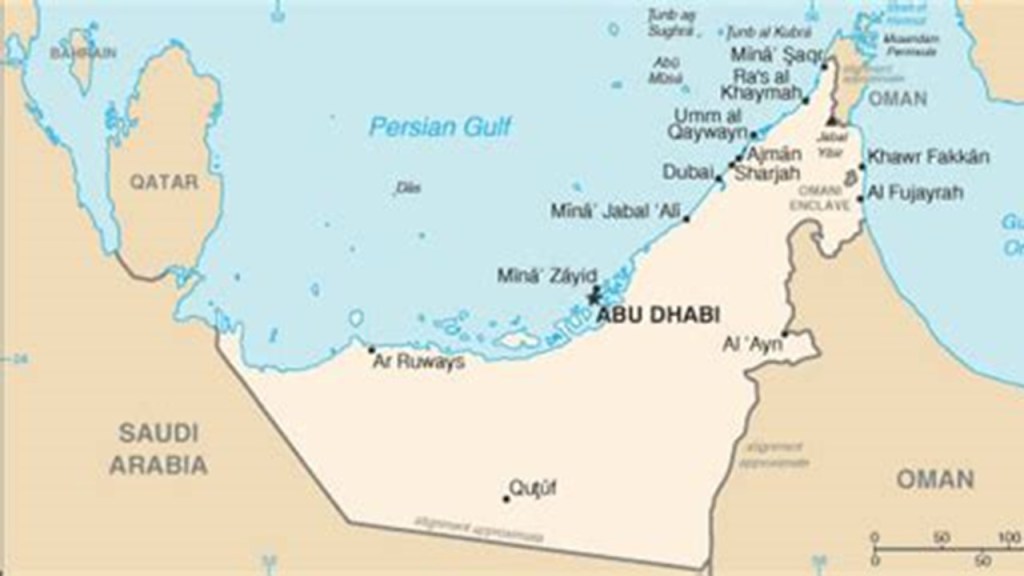
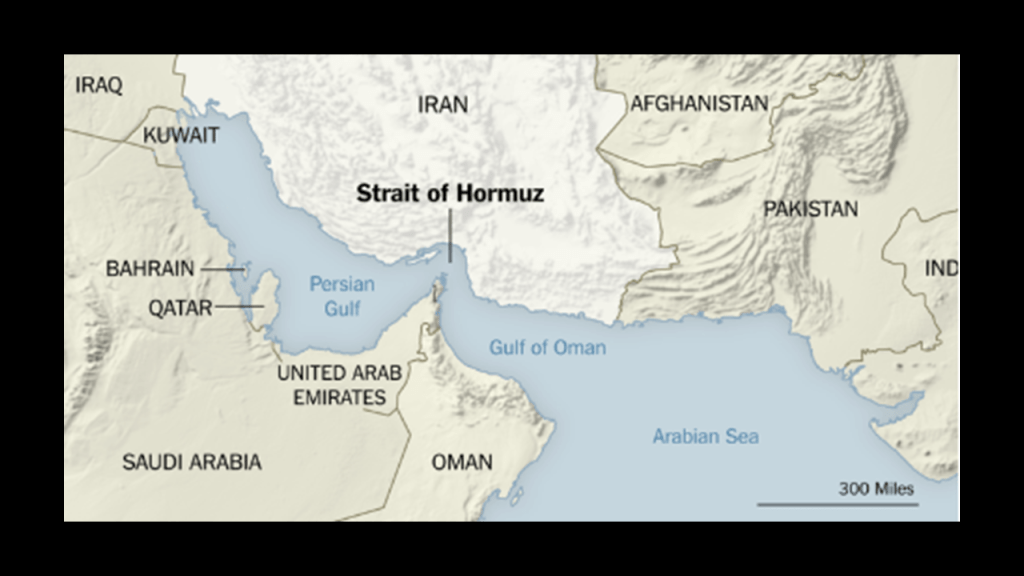
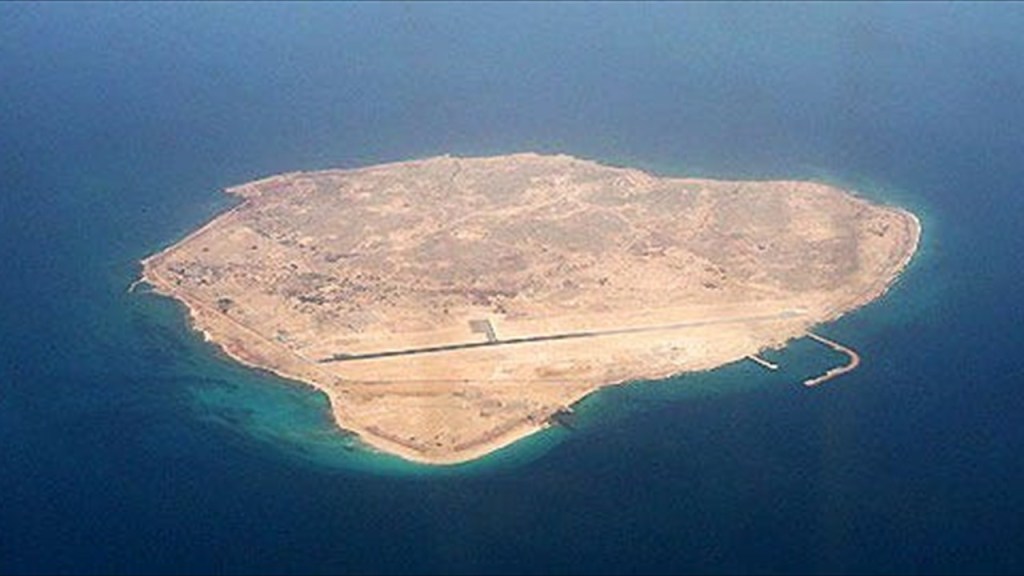
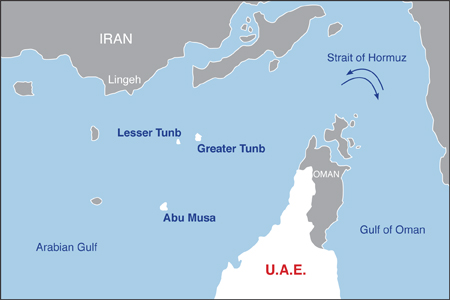
Abu Musa is a 5-square-mile, or 13-square-kilometer, island in the eastern Persian Gulf near the entrance to the Strait of Hormuz.
Abu Musa is administered by Iran as a part of its Hormozgan Province, but it is also claimed by the United Arab Emirates as a territory of the Emirate of Sharjah.
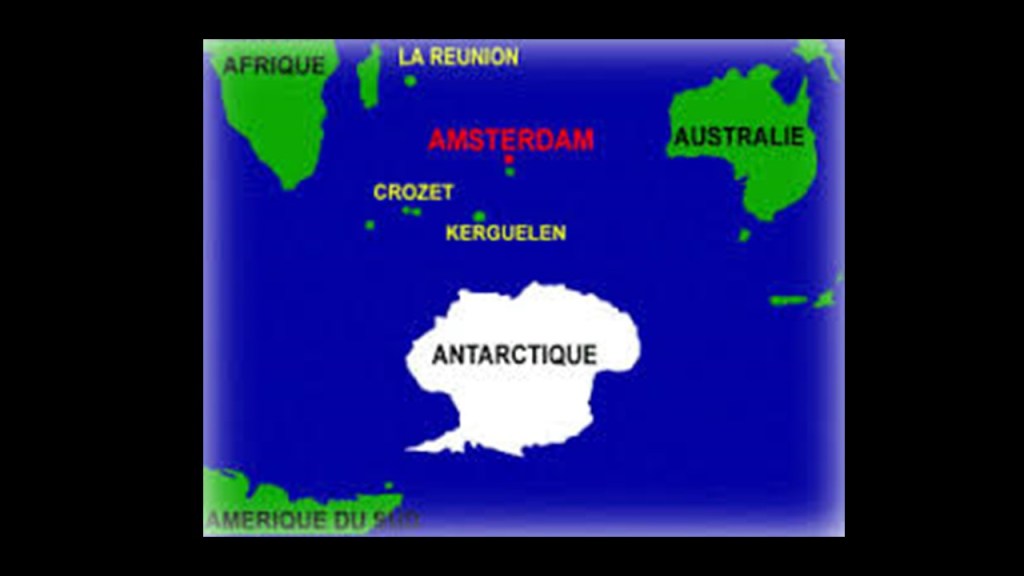
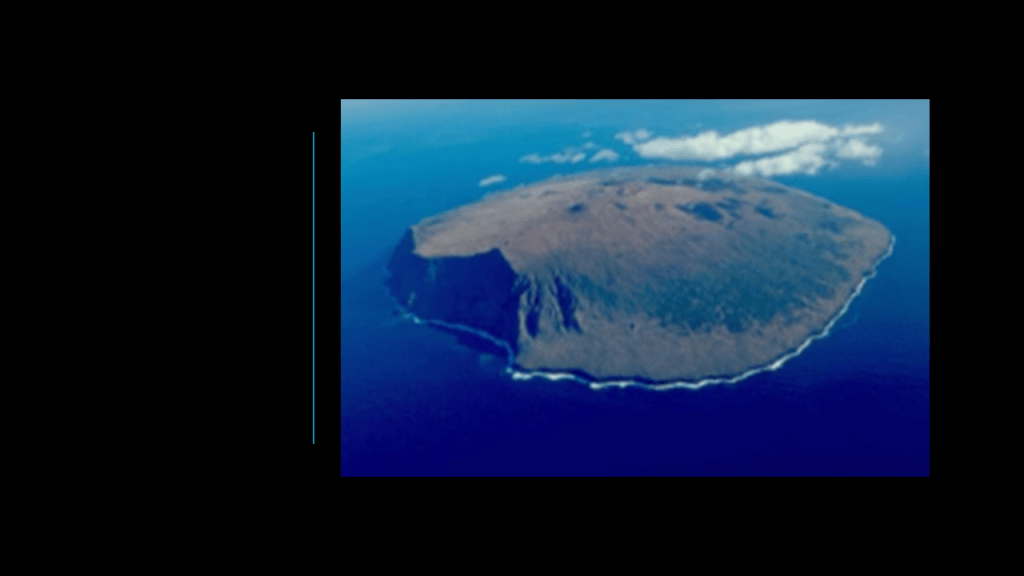
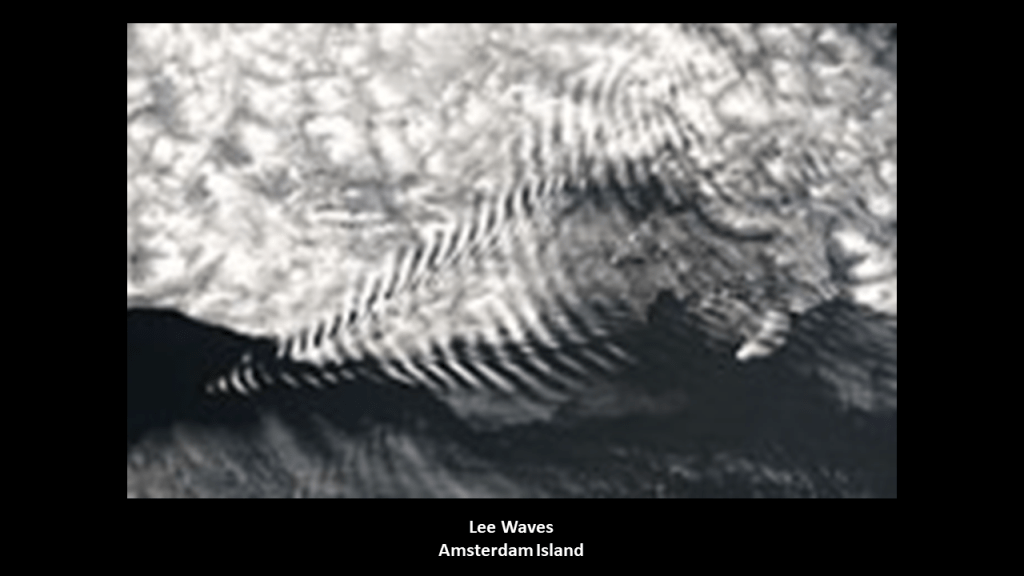
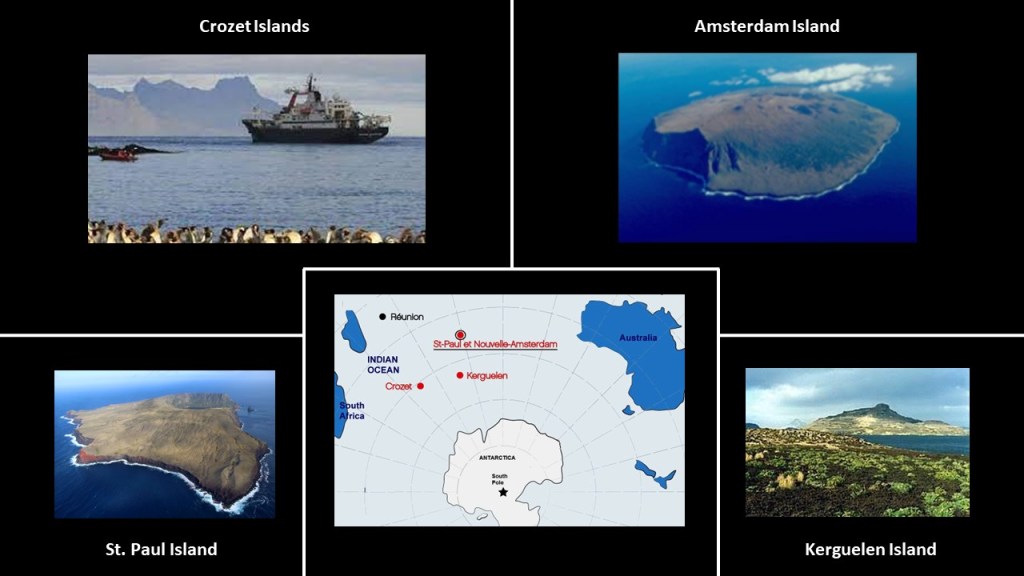
I found the island of Abu Musa, one of the islands of the Strait of Hormuz, when I was tracking the Amsterdam Island Circle Alignment.
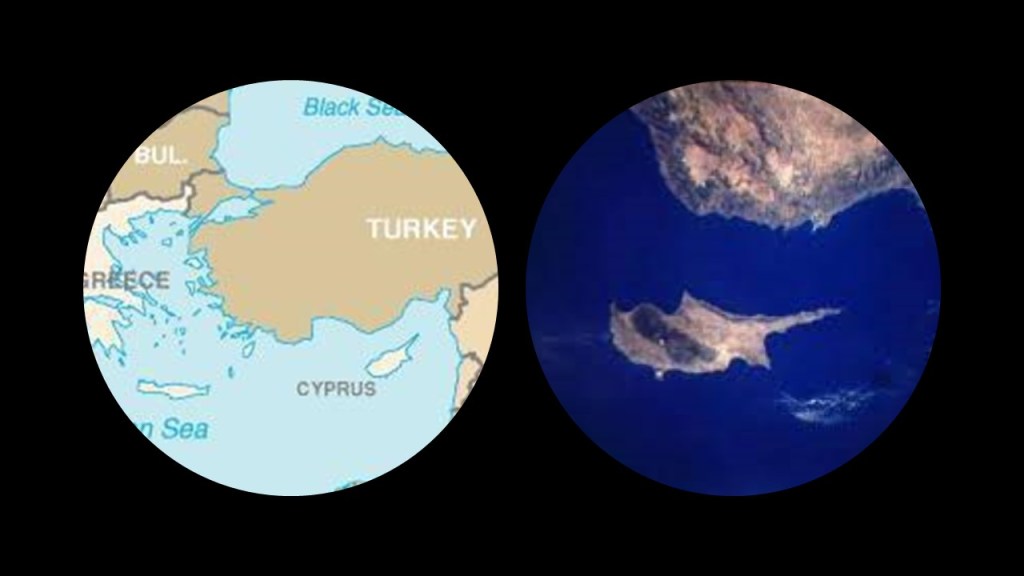
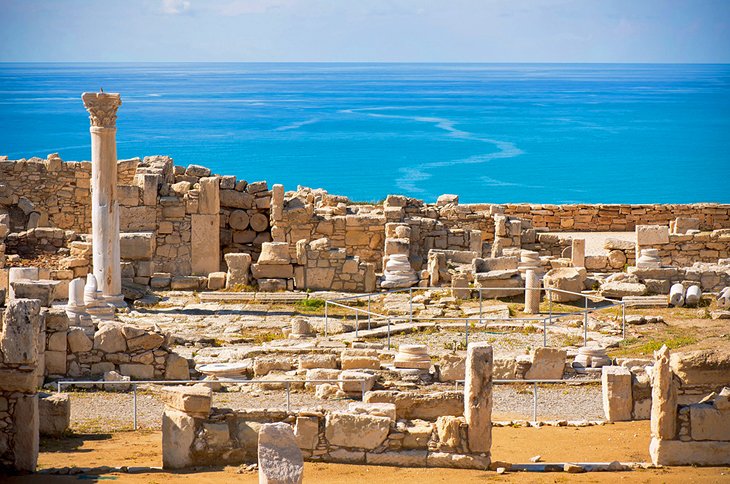
On to Cyprus, an island country in the eastern Mediterranean, located south of Turkey, and west of Syria and Lebanon, northwest of Israel and Palestine, north of Egypt, and southeast of Greece.
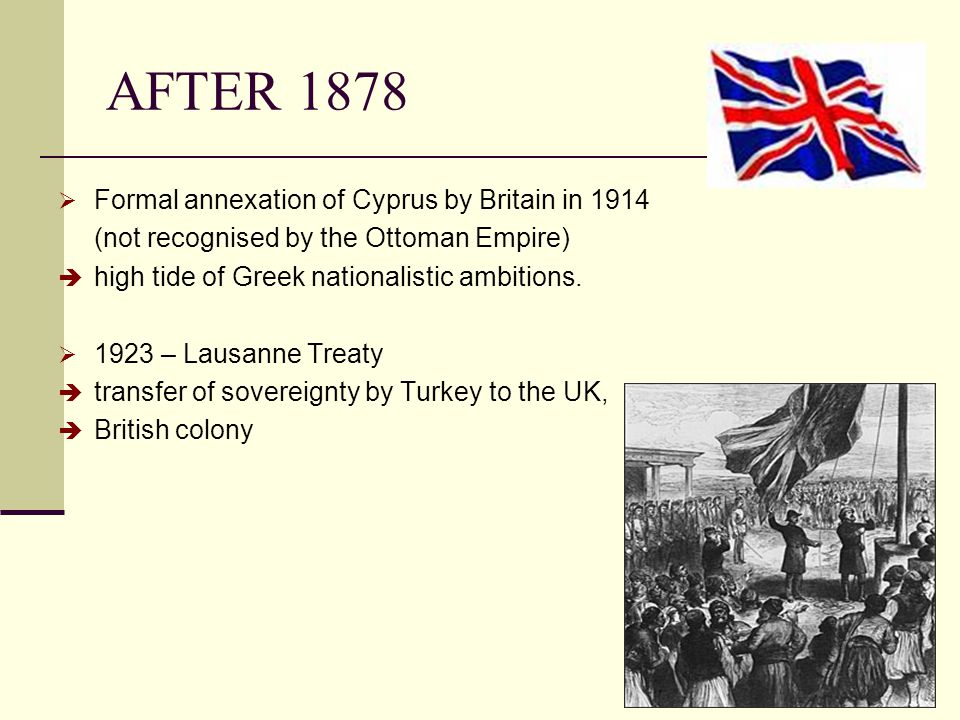
Based on the Cyprus Convention in 1878, Cyprus was placed under the United Kingdom’s administration, and formally annexed by the United Kingdom in 1914 (which would have been around the time of the start of World War 1).
While Turkish Cypriots made up 18% of the population, the partition of Cyprus and creation of a Turkish state in the north became a policy of Turkish Cypriot leaders and Turkey in the 1950s.
Turkish leaders for a period advocated the annexation of Cyprus to Turkey as Cyprus was considered an “extension of Anatolia” by them; while, since the 19th century, the majority population of Greeks on Cyprus and its Orthodox Church had been pursuing union with Greece, which became a Greek national policy in the 1950s.
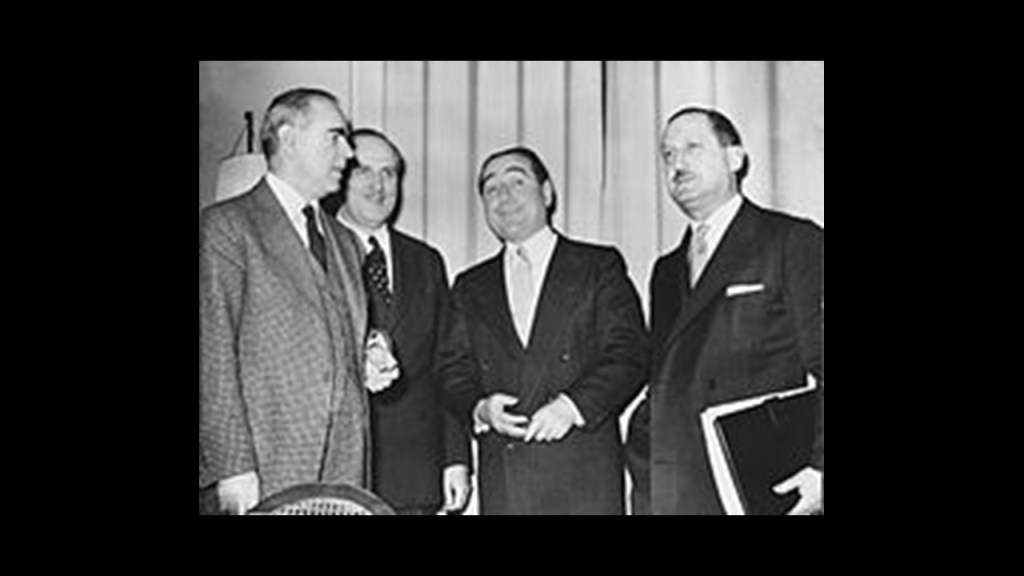
After nationalist violence in the 1950s, Cyprus was granted independence in 1960 via the London and Zurich Agreements of 1959.
At any rate, conflict in one form or another between Greeks and Turks has existed on the island for awhile, with the island partitioned between the two.
Regardless, Cyprus is a major tourist destination in the Mediterranean today.
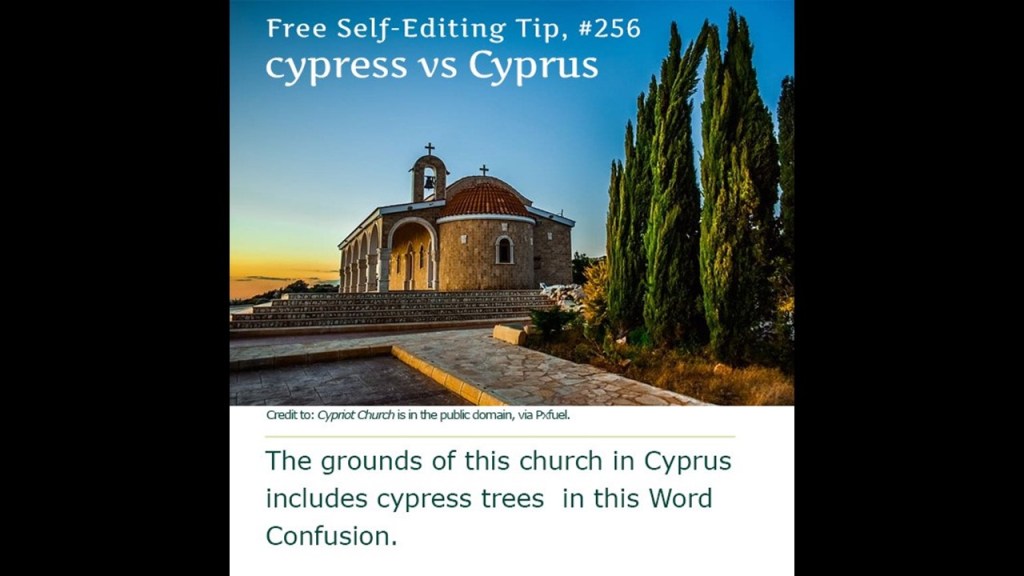
It’s important to note that the island of Cyprus shares the name of a tree, pronounced phonetically the same, though spelled differently.
So while we are told, no, they are not the same, there are in fact, cypress trees on Cyprus, and they are native to Cyprus.
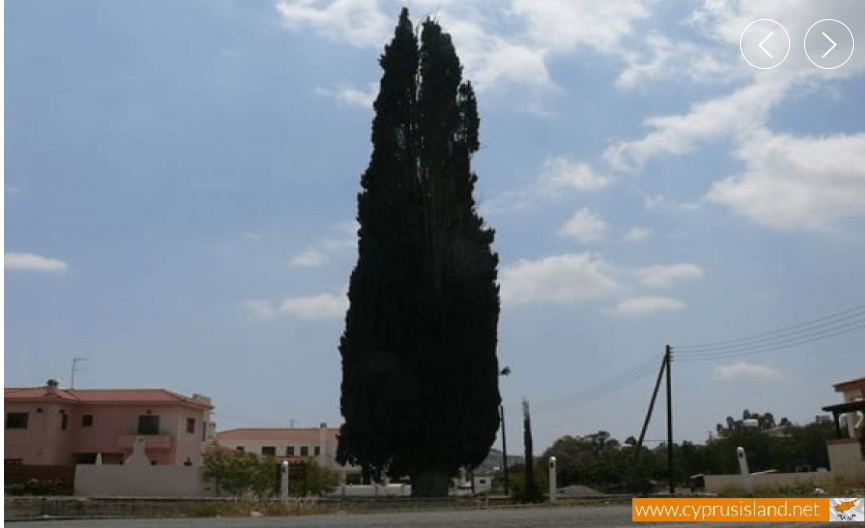
The “Frank Cypress” in Nisou, is said to be 500-years-old, in existence since the time of Frankish rule there, is one of the tallest cypress trees on the island today, at 28-meters-, or 92-feet, -tall, and 4.5-meters, or 15-feet, -wide.
Also important to note that Cypress wood was used in the building of Solomon’s Temple.
There seems to be a lot more to find here about ancient giant trees in general on Cyprus, but let’s just say they are revered here.
Just a couple of more places to look at.
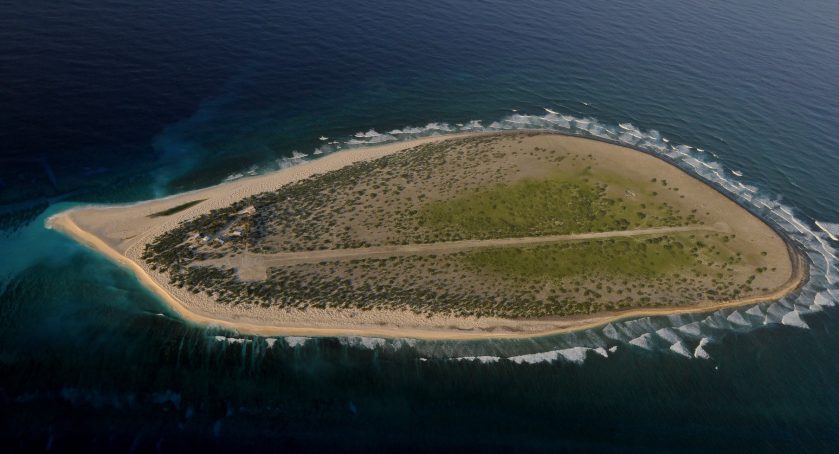
Tromelin Island is a low, flat island in the Indian Ocean.
Besides being a seabird and sea tortoise sanctuary, the only structure here is a meteorological station used to gather data in order to forecast hurricanes and cyclones.
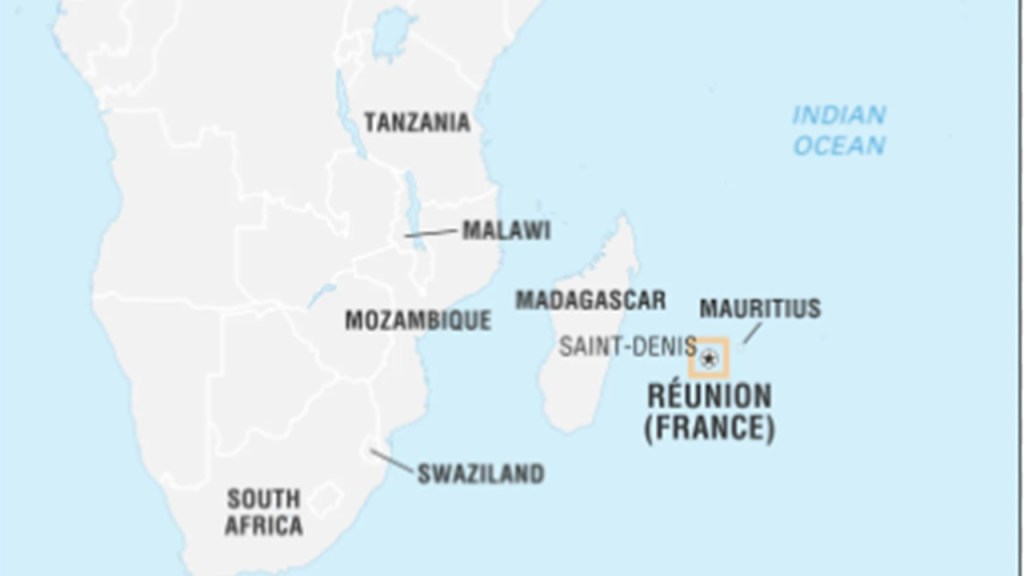
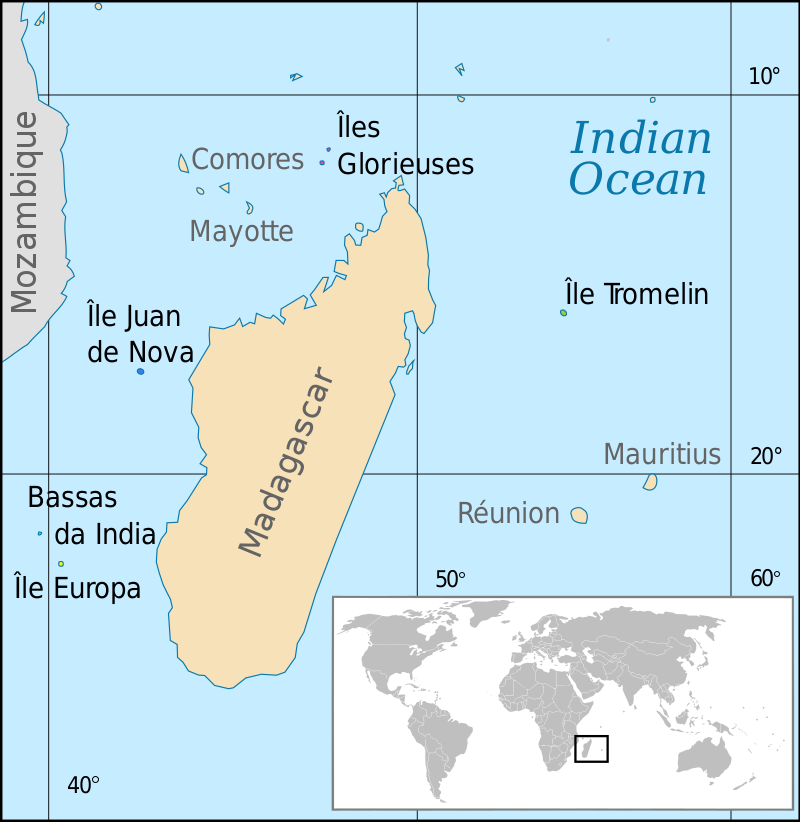
It is located 310-miles north, or 500-kilometers, north of Reunion Island, and 280-miles, or 450-kilometers, east of Madagascar.
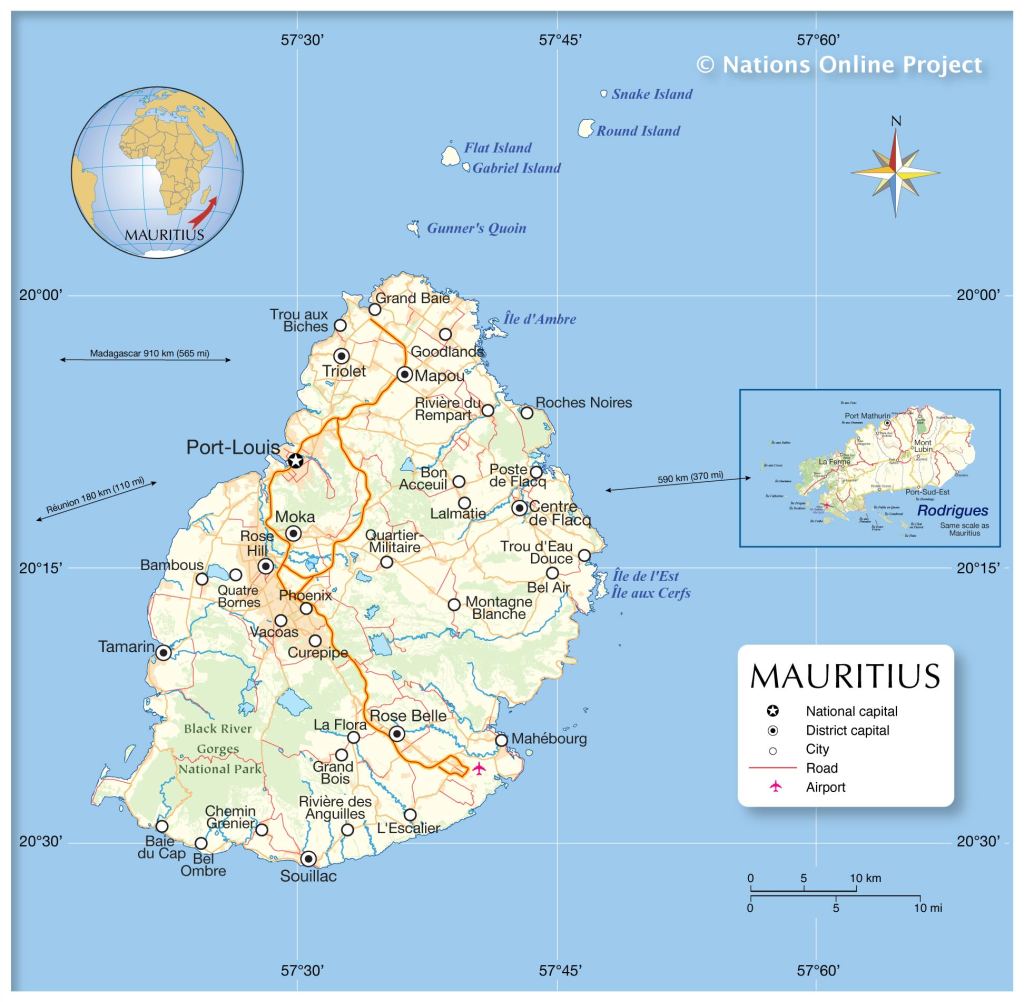
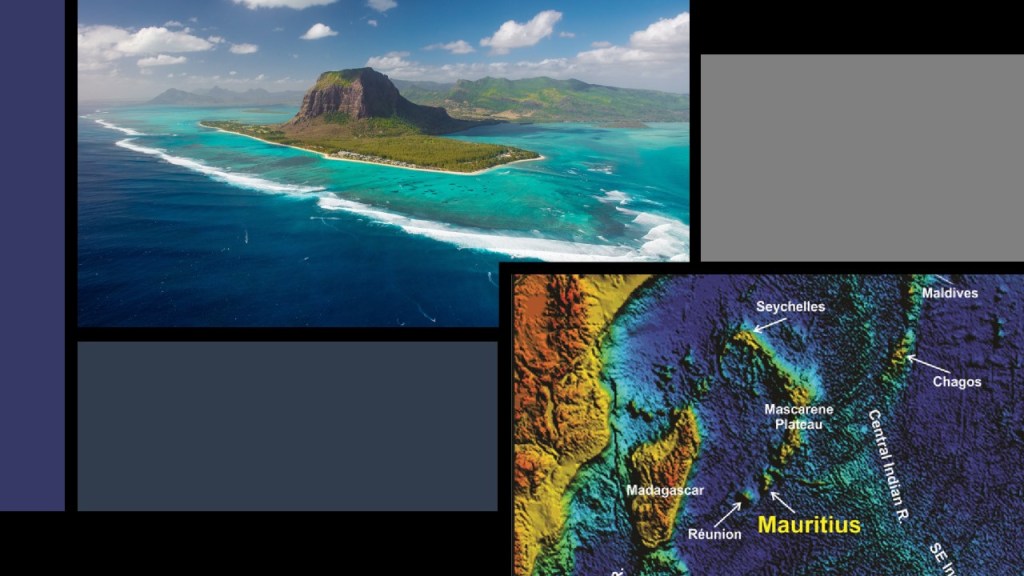
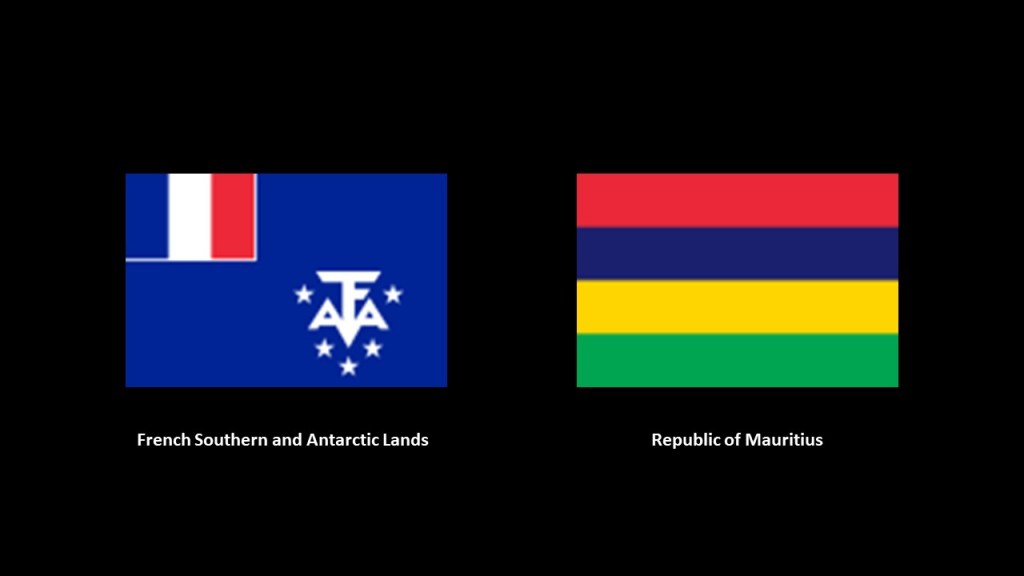
It is administered as part of the French Southern and Antarctic Lands as a French overseas territory, however, the island nation of Mauritius claims sovereignty over the island.
I found both Mauritius and Tromelin Island on earth-grid alignments.
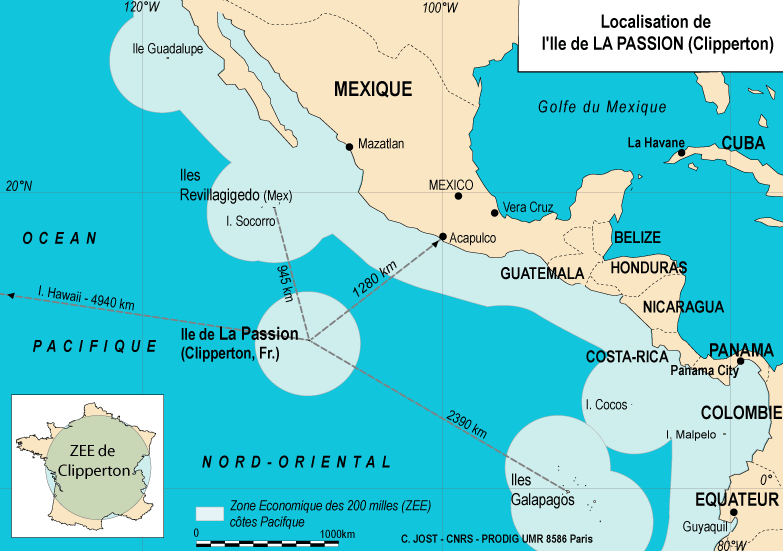
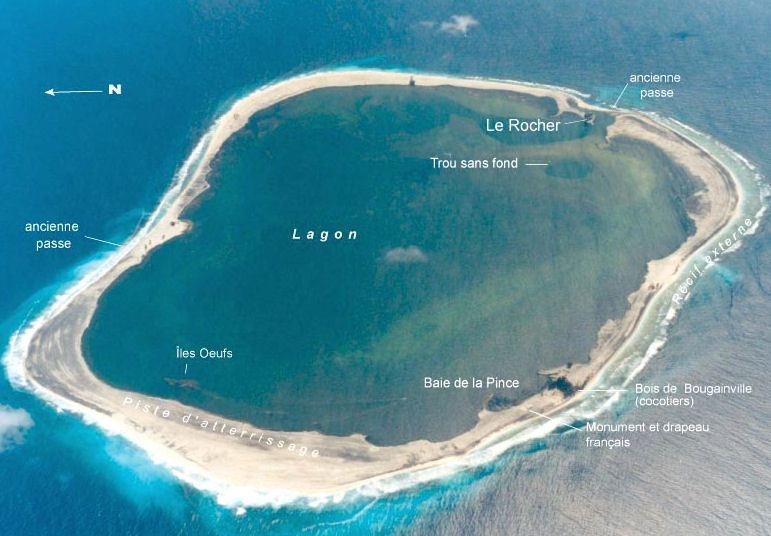
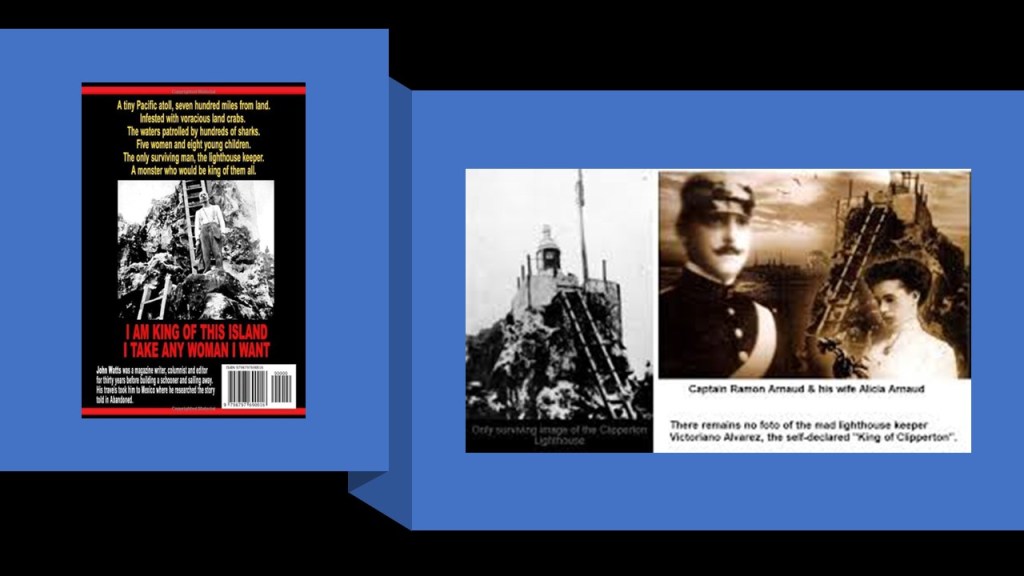
The last place I want to include in this post is Clipperton Island, an uninhabitated 2-square-mile, or 6 kilometer-squared island, in the eastern Pacific Ocean off the coast of Central America.
While it is not disputed now, it has been in the past.
It is an overseas minor territory of France, and administered under the direct authority of the Minister of Overseas France.
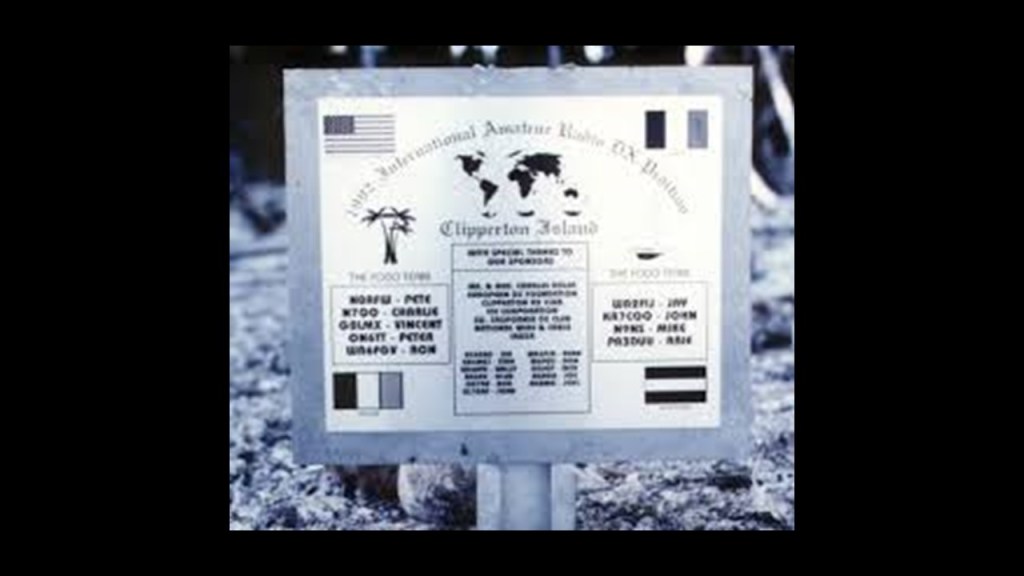
It has not been inhabited since 1945, though it is occasionally visited by fisherman, French Navy patrols, scientific researchers, film crews, and ham radio operators.
It is low-lying, and largely barren.
The surrounding reef is exposed at low tide.
Two Frenchmen first claimed the island for France in 1711, and named it “Ile de la Passion.”
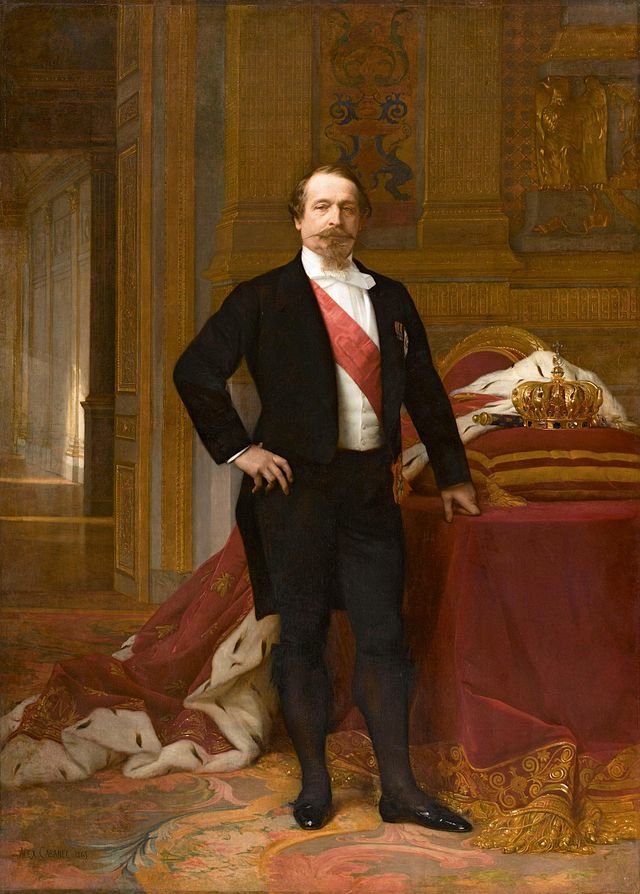
In 1858, during France’s Second Empire, Emperor Napoleon III annexed Clipperton island as part of the French colony of Tahiti, even though it is the considerable distance of 3,400 miles, or 5,400 kilometers, from Tahiti.
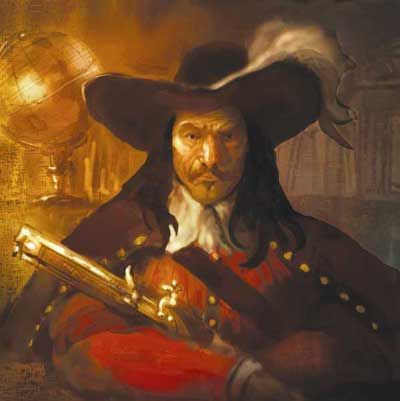
It was named Clipperton for English pirate and privateer John Clipperton who fought for the Spanish in the early 18th-century who may have used it as a base for his raids on shipping.
Other claimants included the United States, whose American Guano Company claimed it, like Navassa Island, under the Guano Islands Act of 1856…
…and Mexico due to its activities there as early as 1848 and 1849.
It also has a lurid and bizarre history of its own from its days as part of Mexico.
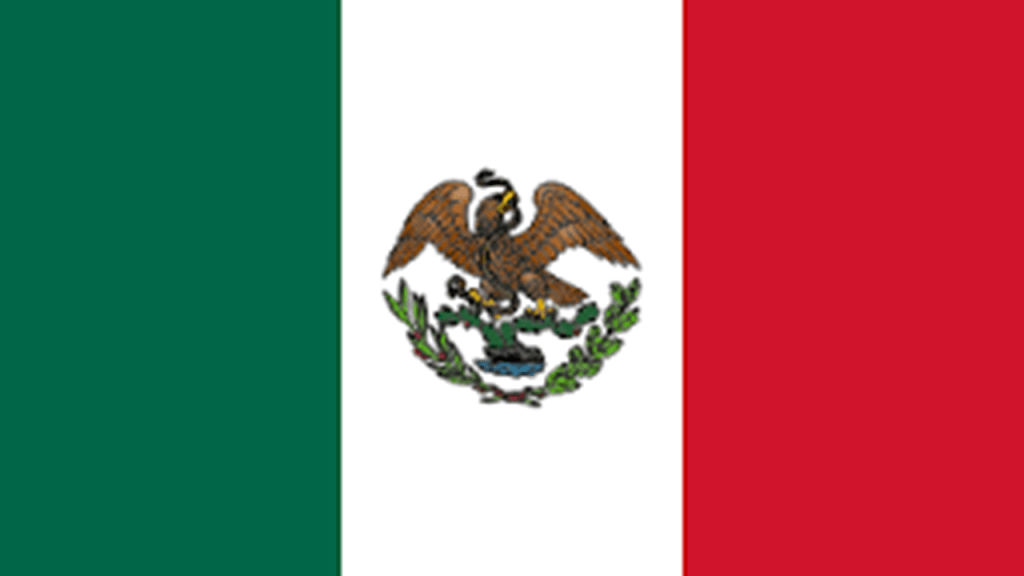
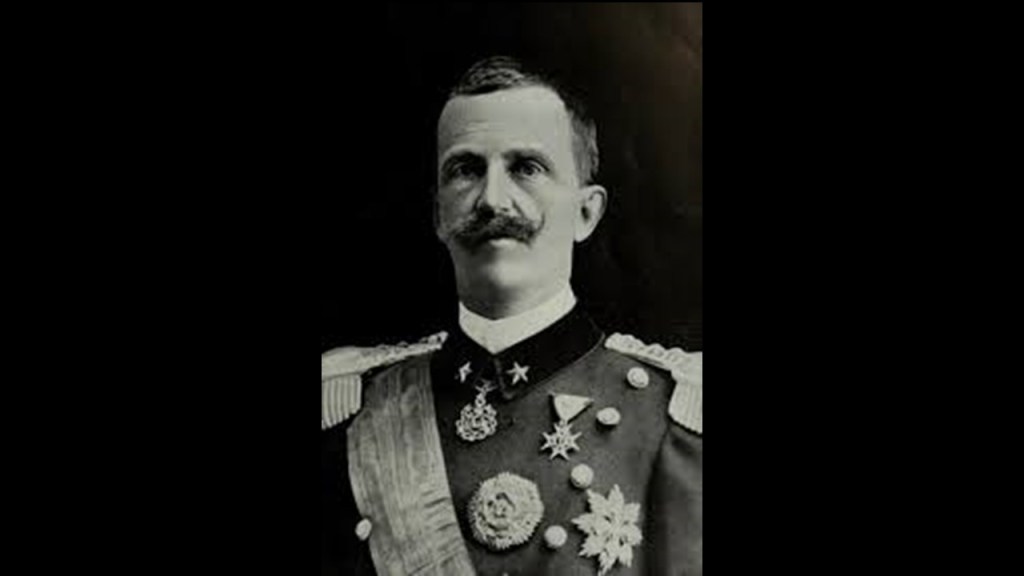
In 1909, France and Mexico agreed to submit the dispute over sovereignty to binding international arbitration, and 22-years later, in 1931, the King of Italy, Victor Emmanuel III, issued the final decision, declaring Clipperton Island to be a French possession.
However, after all of this territorial interest, Clipperton Island has been more or less abandoned since the end of World War II.
So, as expressed in the title of this post, there is something about the world’s disputed islands that make them desirable possessions worth fighting over.
As you can see from the locations mentioned in this post, these are mostly obscure, seemingly insignificant islands and island groups that are the subjects of territorial disputes between countries, most of which are still on-going in the present day.
There are many other examples of territorial disputes, but these are enough to give you the idea with regards to disputed islands.
I definitely think it’s significant that these little islands and island groups figure prominently on the Earth’s gridlines, and that there is much more to the story we are not being told, especially with regards to the once-existence of giant trees on Earth that were integral to the Earth’s grid system.
All of these islands are viewed as highly-coveted prizes, and as a critical part to nation-building plans.
The reason has been deliberately hidden from our view as to “What is it Exactly About the World’s Disputed Islands?”
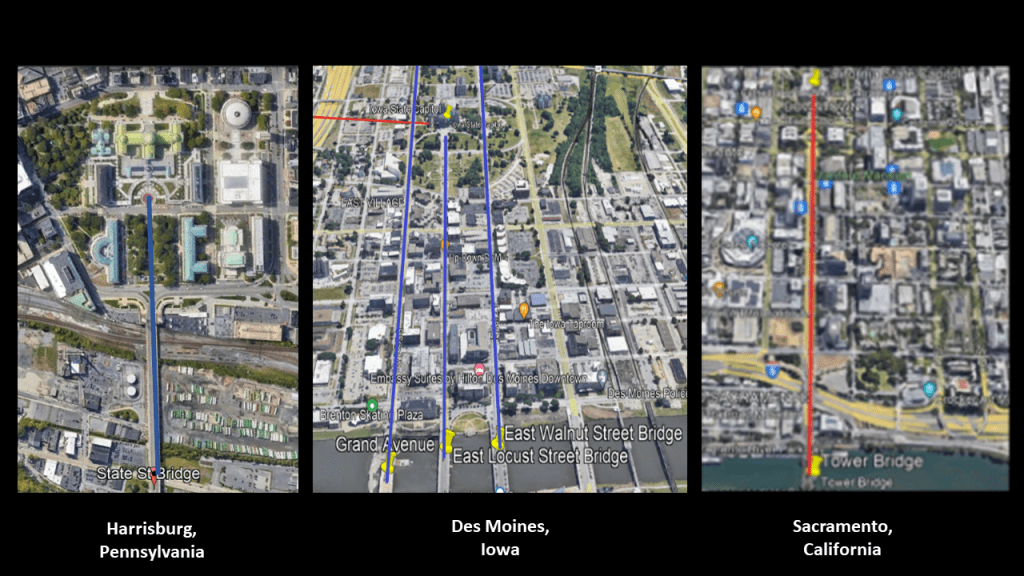
In the course of my research, I have had occasion to look into three State Capitol complexes – that of Harrisburg, Pennsylvania; Des Moines, Iowa; and Sacramento, California.
As we shall see, the locations chosen for modern seats of government would have been very special locations in the original advanced civilization of the Old World.
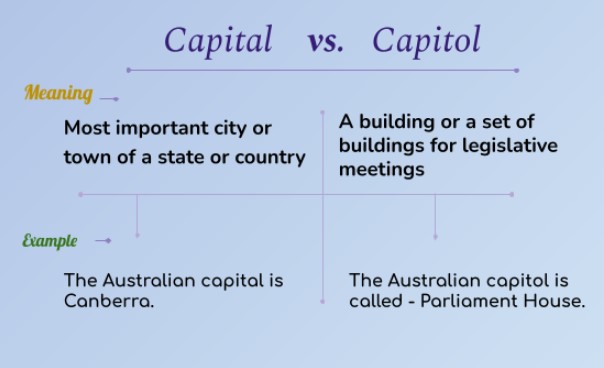
Before I begin, “Capitol,” spelled with an “o” is the building in which a legislature operates., and “Capital,” spelled with an “a” is the seat of government, of states, provinces, or countries.
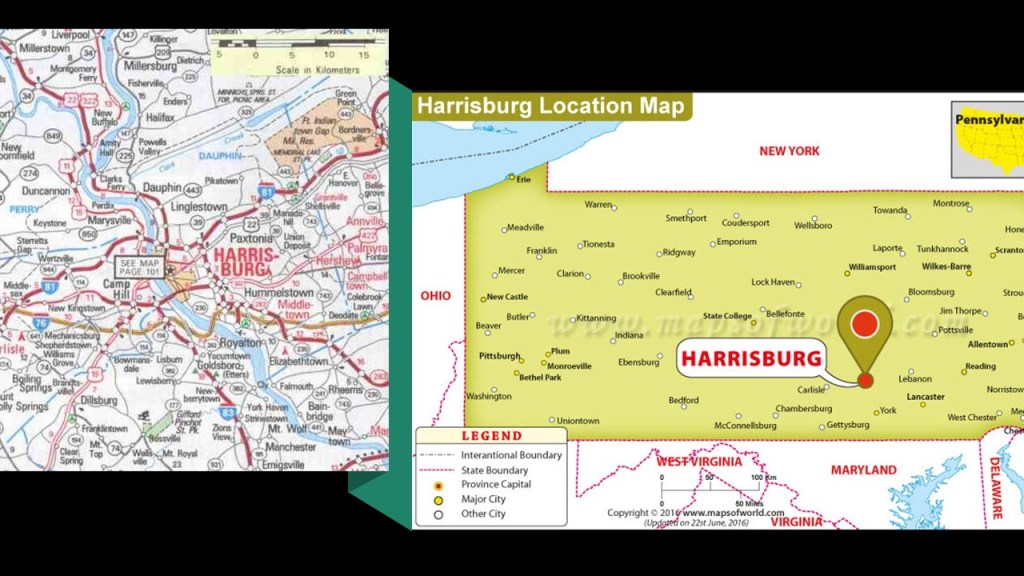
First, Harrisburg, the State Capital of Pennsylvania.
Harrisburg is situated on the east bank of the Susquehanna River, only 107-miles, or 172-kilometers, west of Philadelphia.
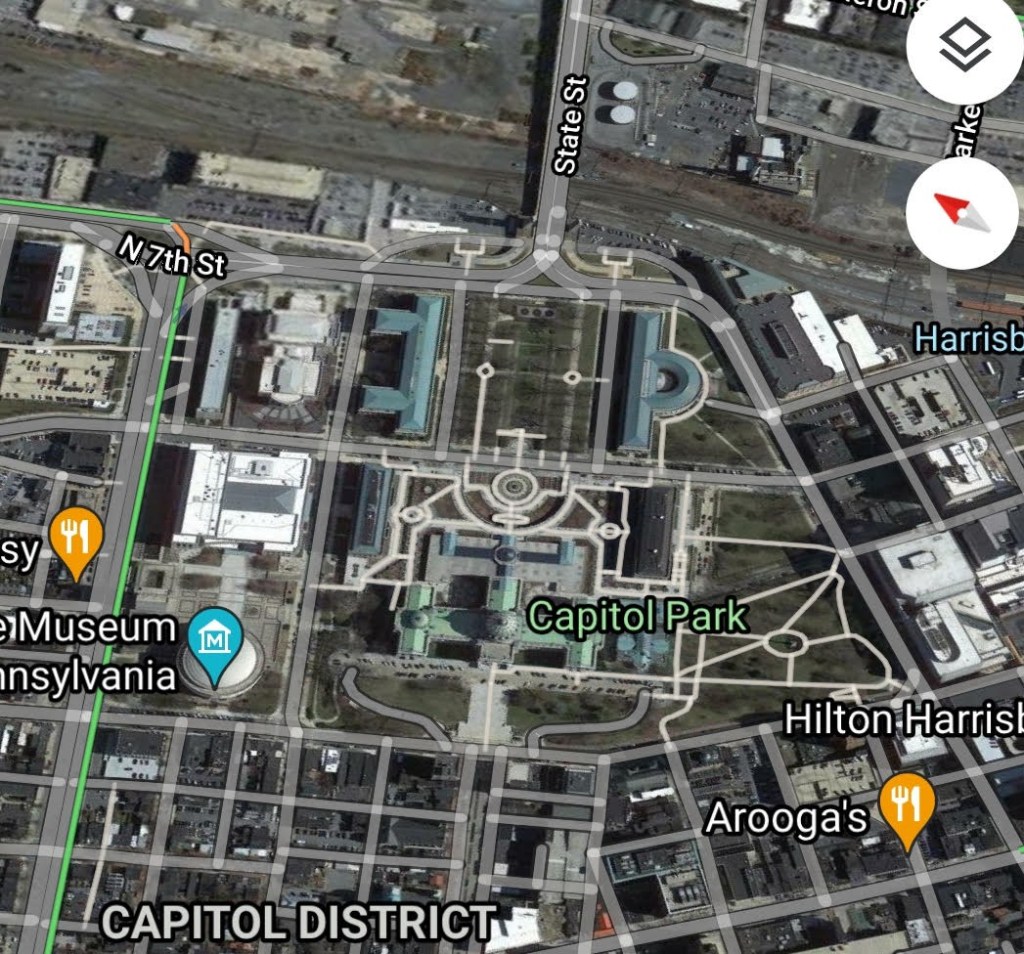
CZ had sent me screenshots of the Capitol District in Harrisburg aawhile back that was the basis for the research I did there.
What we are told is the land that became Harrisburg had been purchased by an English trader named John Harris Sr. in 1719; John Harris Jr. made plans to lay-out a town on his father’s land; and the land was surveyed by William Maclay, John Harris Sr’s son-in-law.
The city of Harrisburg became incorporated in 1791; and named the Pennsylvania State Capital in October of 1812.
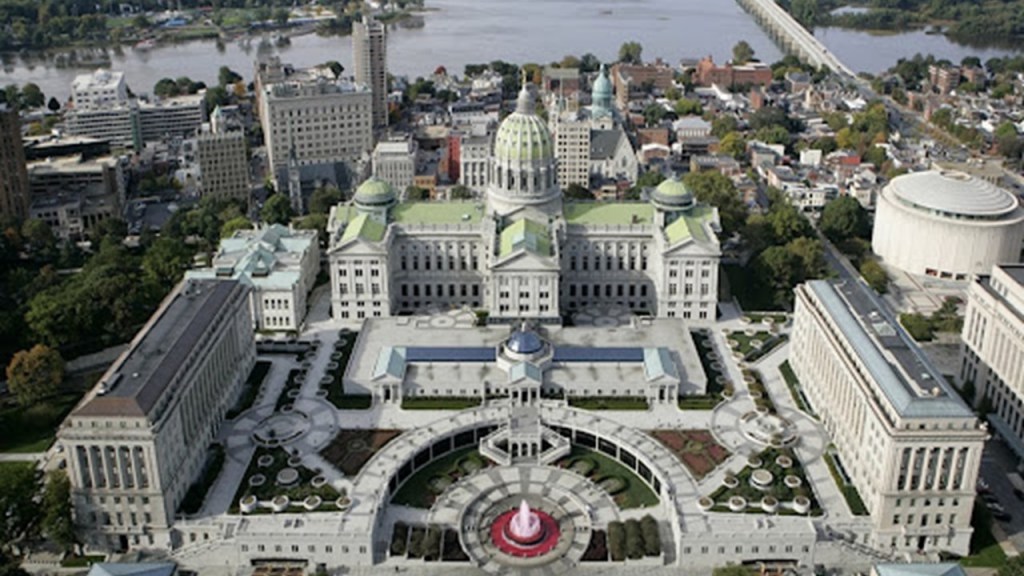
The current State Capitol Building was said to have been designed by architect Joel Miller Huston, and built between 1902 and 1906 in the Beaux-Arts style of architecture.
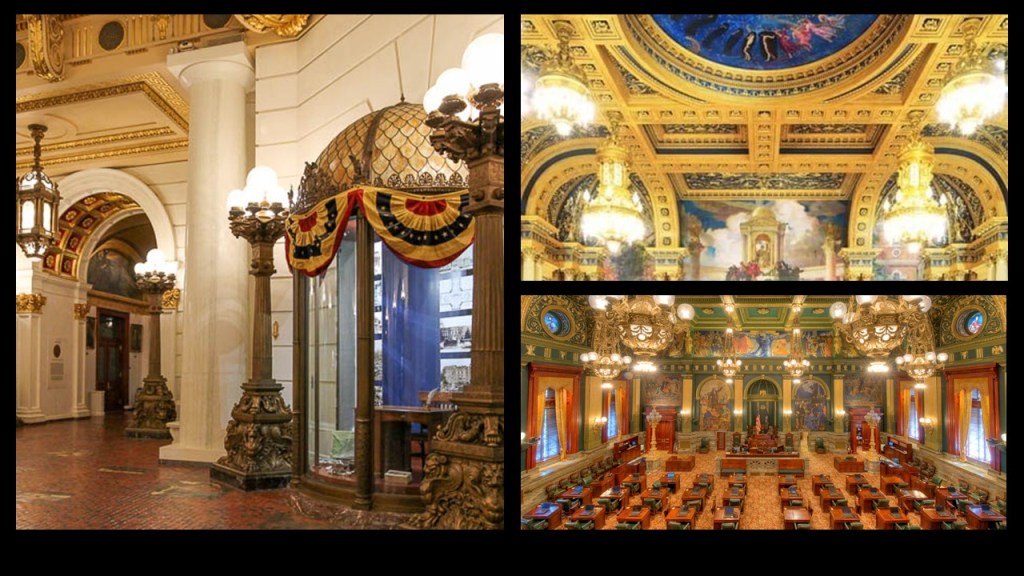
The interior of the Pennsylvania State Capitol is described as having decorative Renaissance themes throughout the building.
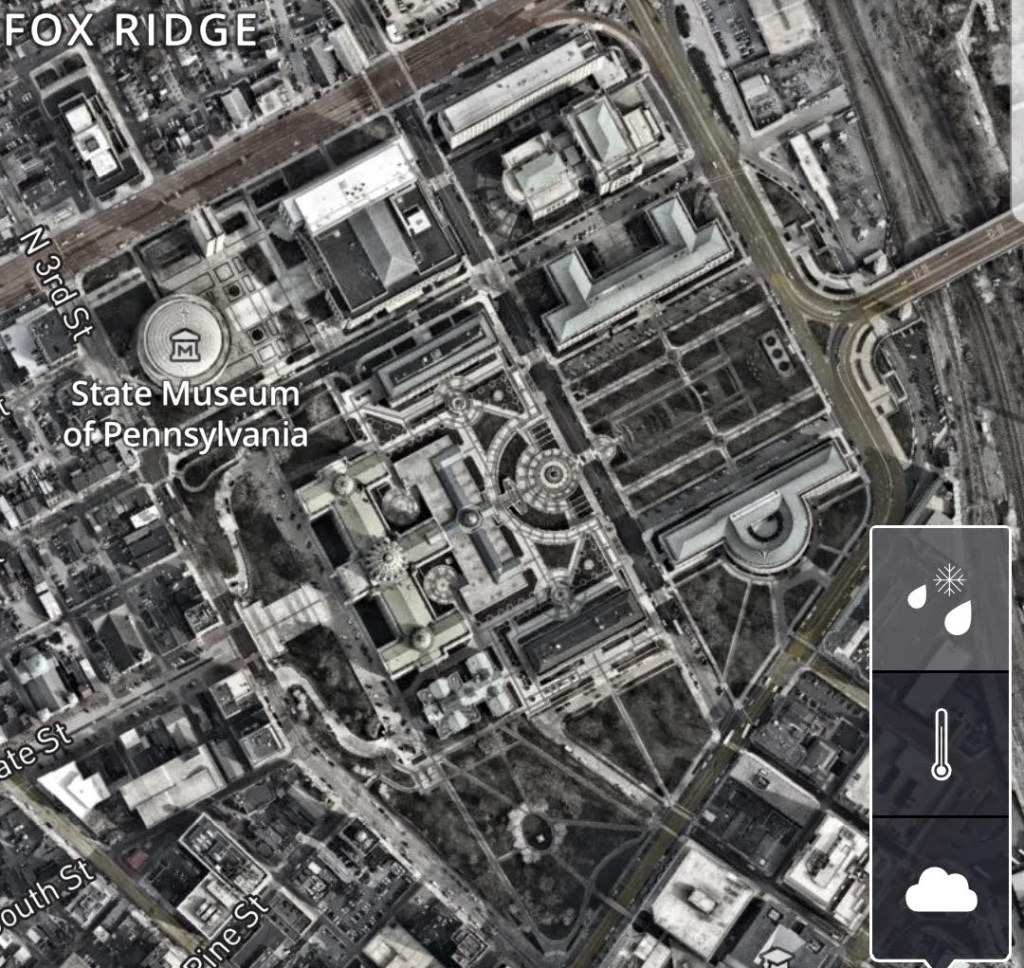
It is part of what is called the Pennsylvania State Capitol Complex.
On the East side of the Capitol building is what is referred to as the East Wing, described as a 1987 extension of the Capitol building.
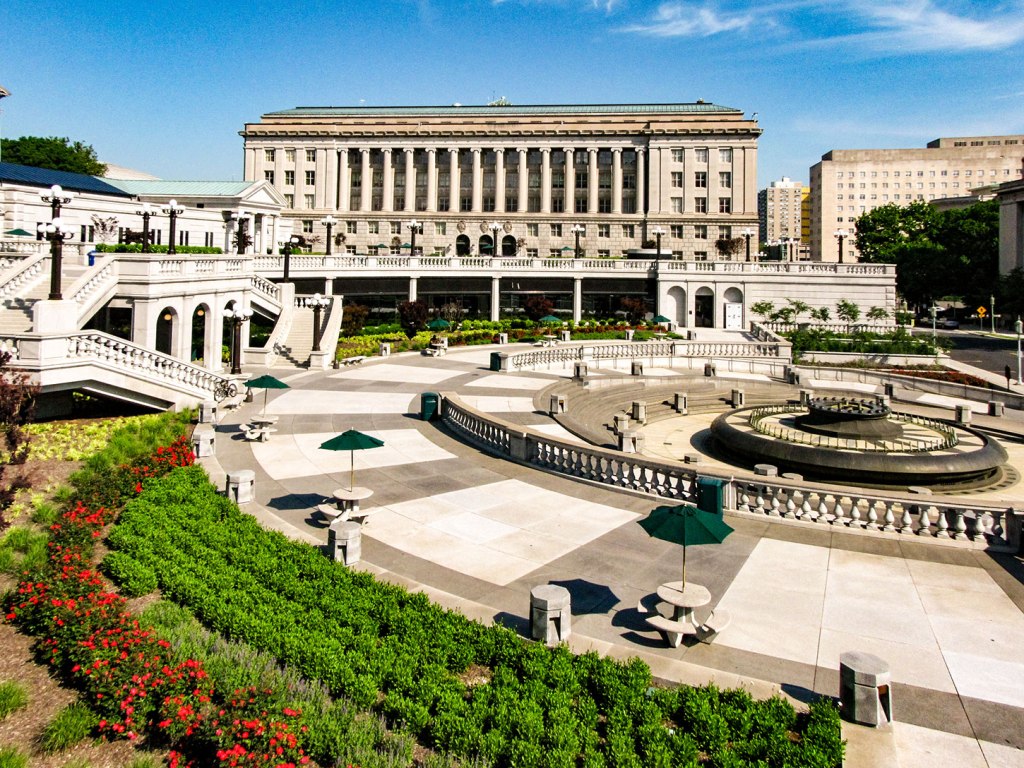
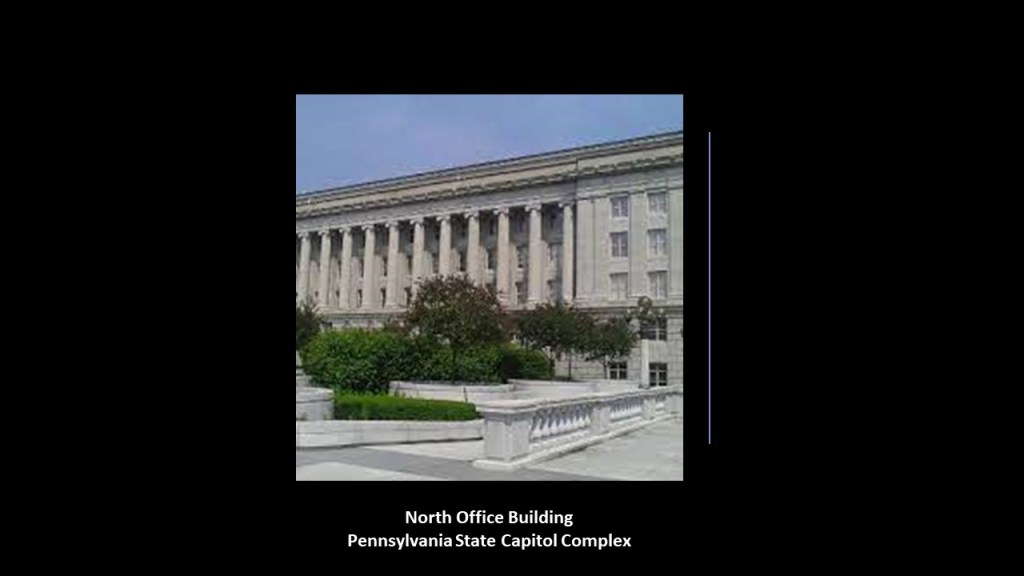
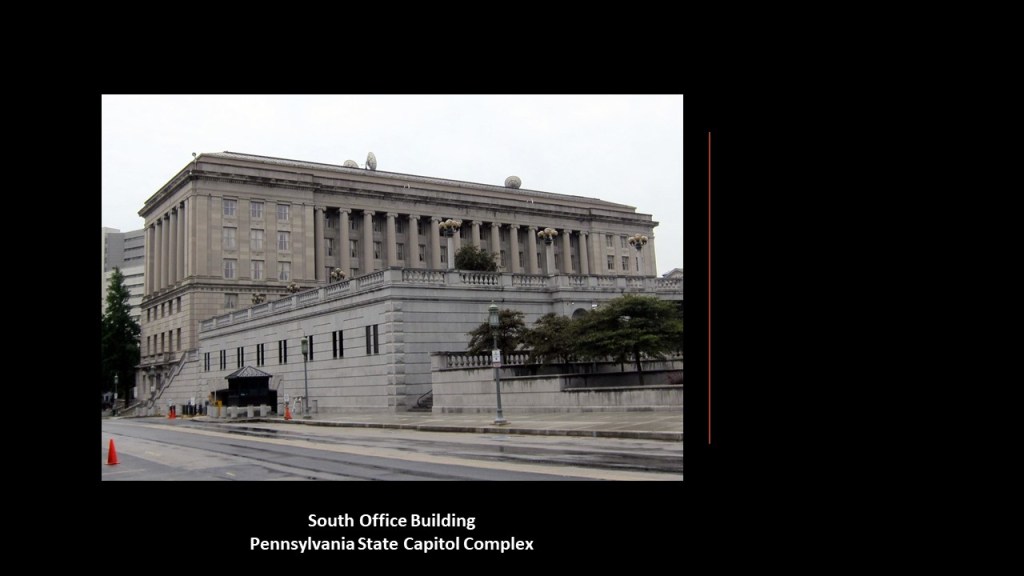
Flanking the East Wing are the North and South Office buildings,
The North Office building was said to have been built in Indiana limestone starting in 1927…
…and the South Office building in Indiana limestone starting in 1919.
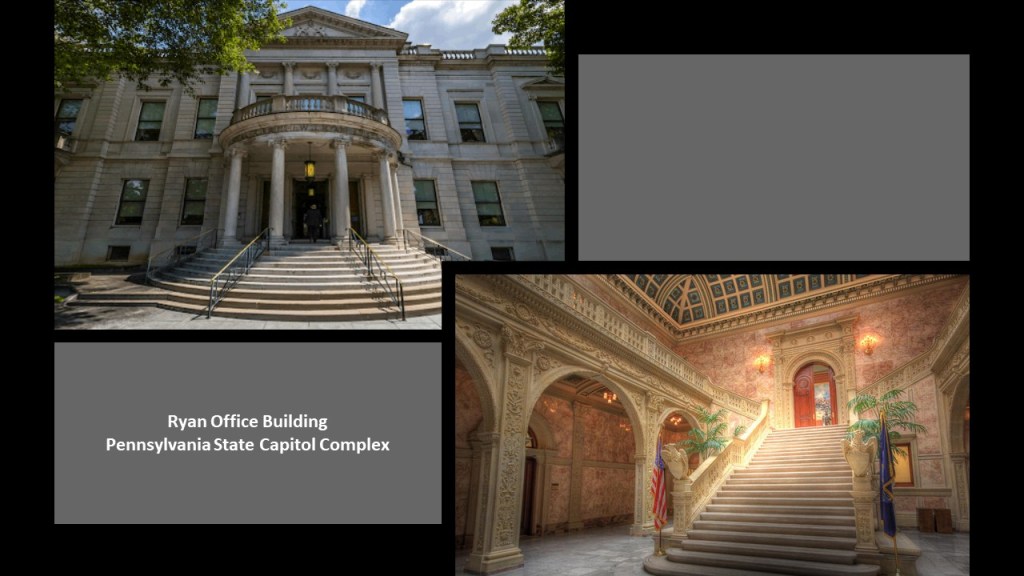
We are told the oldest building of the complex is the Ryan Office building, with a construction completion date of 1894.
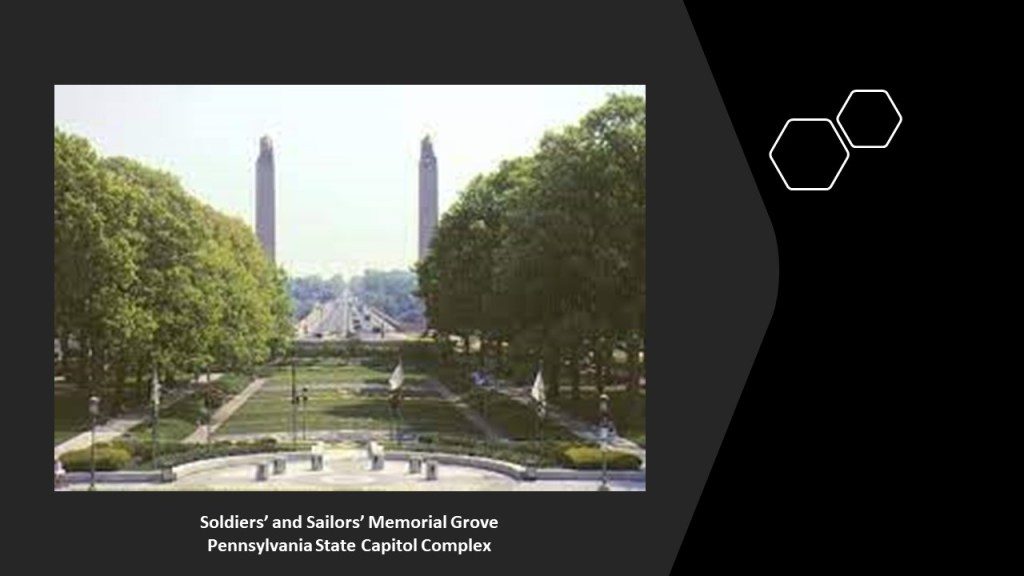
East of the North and South Office buildings, across Commonwealth Avenue, there are a pair of buildings situated across from each other at either end of the “Soldiers’ and Sailors’ Memorial Grove.”
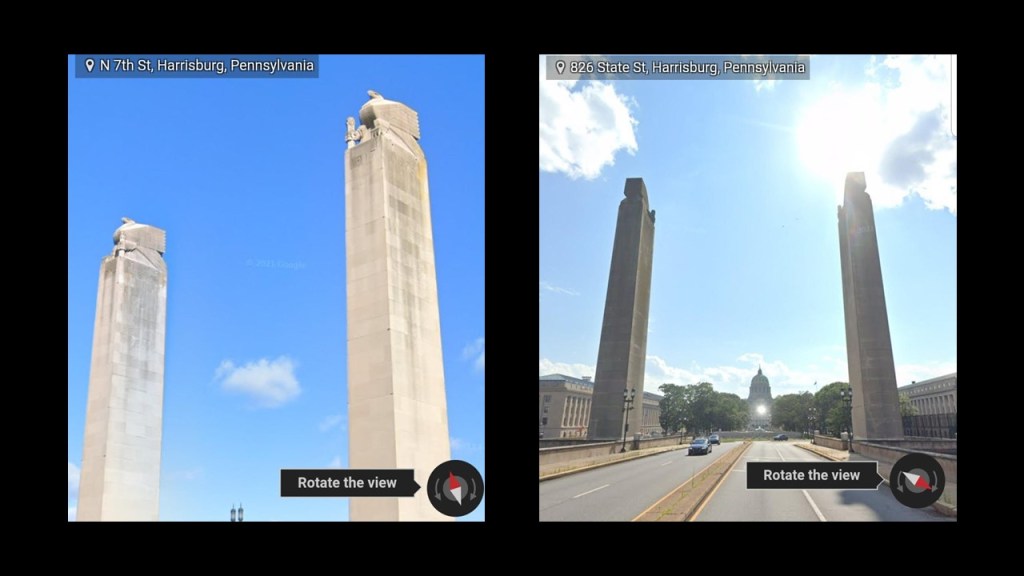
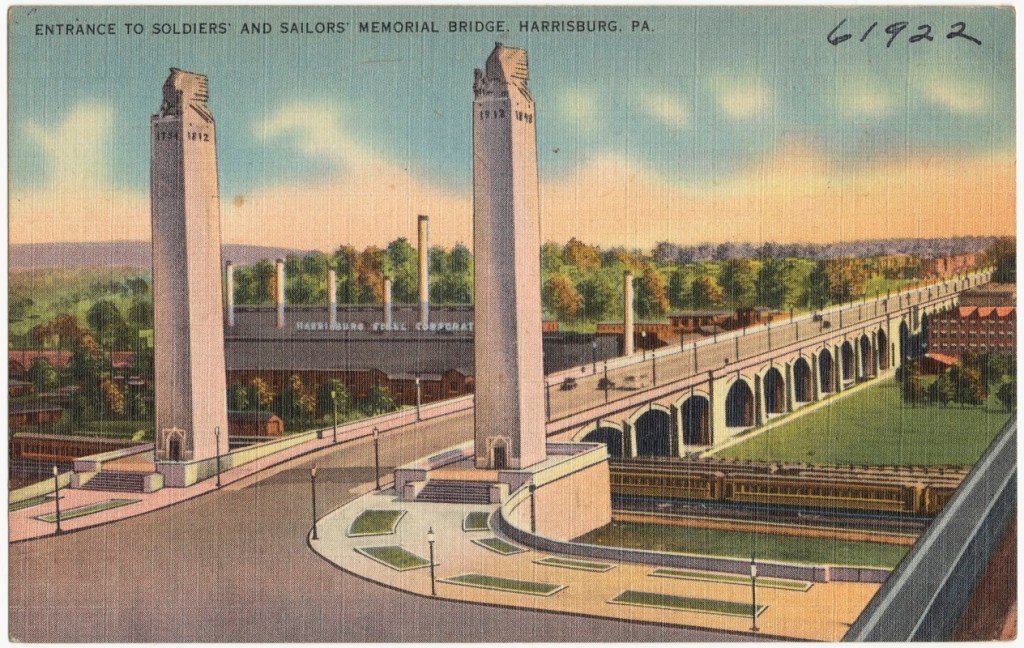
I will be touching more on the Soldiers’ and Sailors’ Memorial Bridge that you can see the pylons of in the background momentarily.
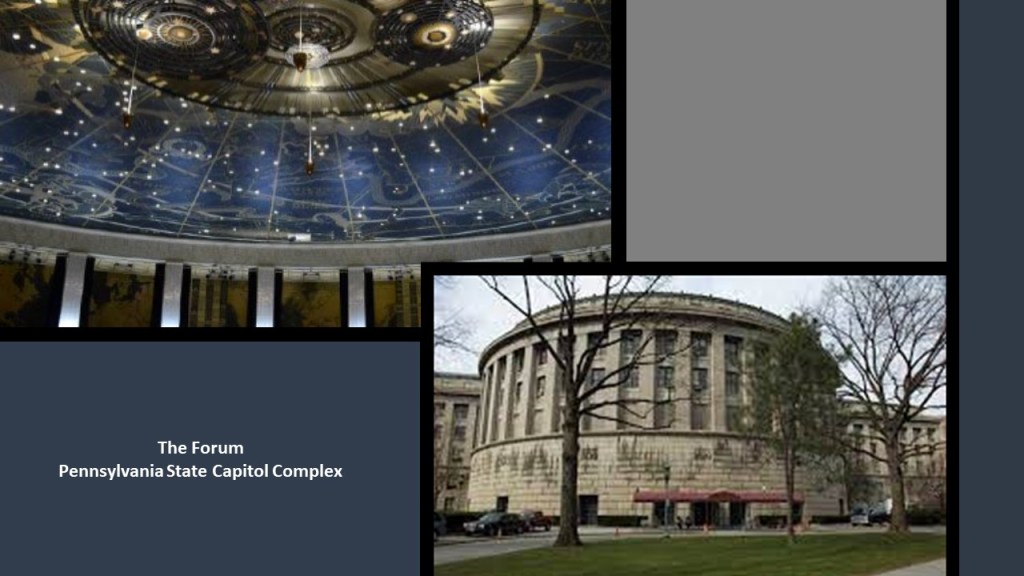
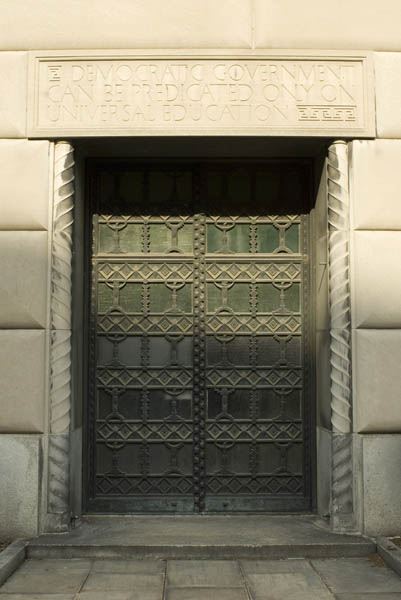
The Forum building is on the south-side of the Memorial Grove, was said to have been built out of grey limestone, and featuring 22 bronze doors, between 1929 and 1931 in the style of an open-air Greek amphitheater, complete with a star map of the night sky depicting the zodiac and other constellations with over 1,000 stars on the ceiling…
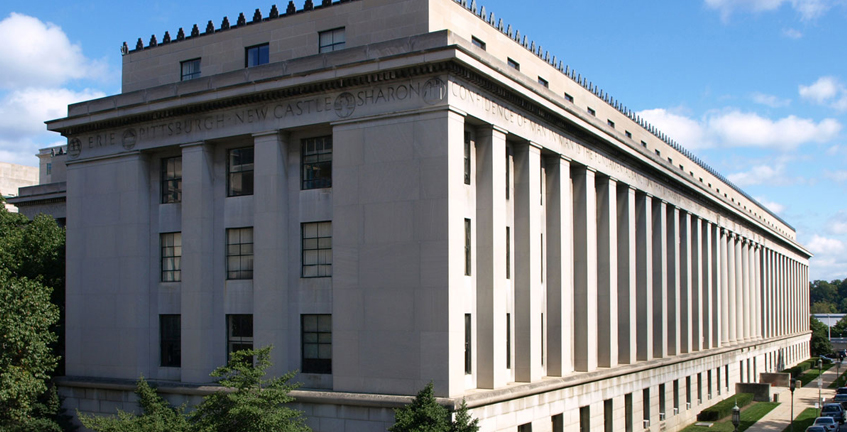
…and on the north-side of the Memorial Grove is the Pennsylvania Treasury Building, said to have been a project of the New Deal Era Public Works Administration during the Great Depression built between 1937 and 1940.
The eastern-most portion of the Pennsylvania State Capitol Complex is the “Soldiers’ and Sailors’ Memorial Bridge,”or the “State Street Bridge,” which connects the complex to neighborhoods across the railroad tracks that run east of North 7th Street.
It is a 1,312-foot, or 400-meter, deck-arch bridge said to have been constructed between 1925 and 1930.
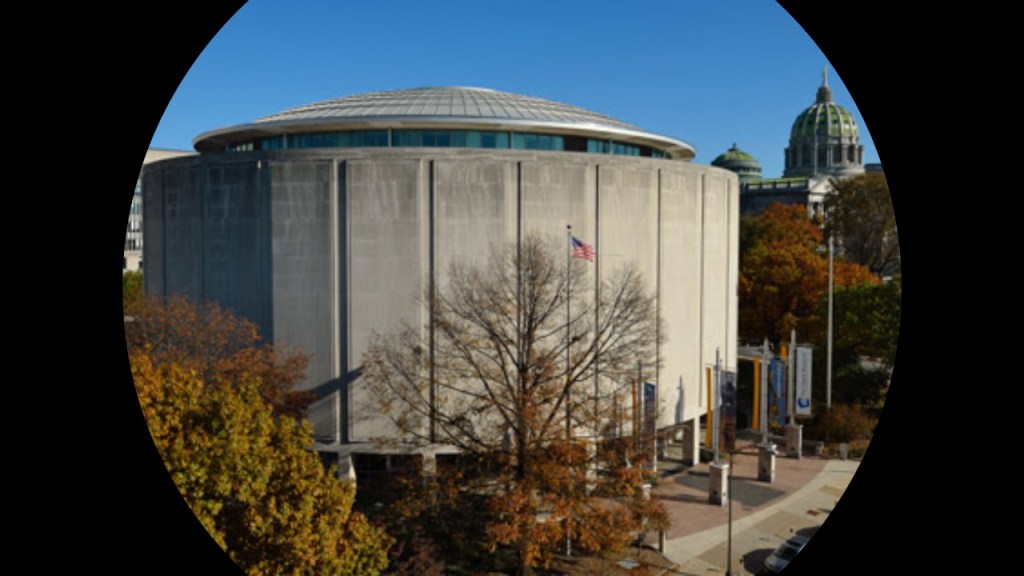
The State Museum of Pennyslvania is directly adjacent to the Pennsylvania State Capitol Complex…
…run by the state through the Pennsylvania Historical and Museum Commission to “preserve and interpret the region’s history and culture,” and includes a multi-media planetarium, and four-floors of exhibits covering Pennsylvania history from prehistoric times through today.
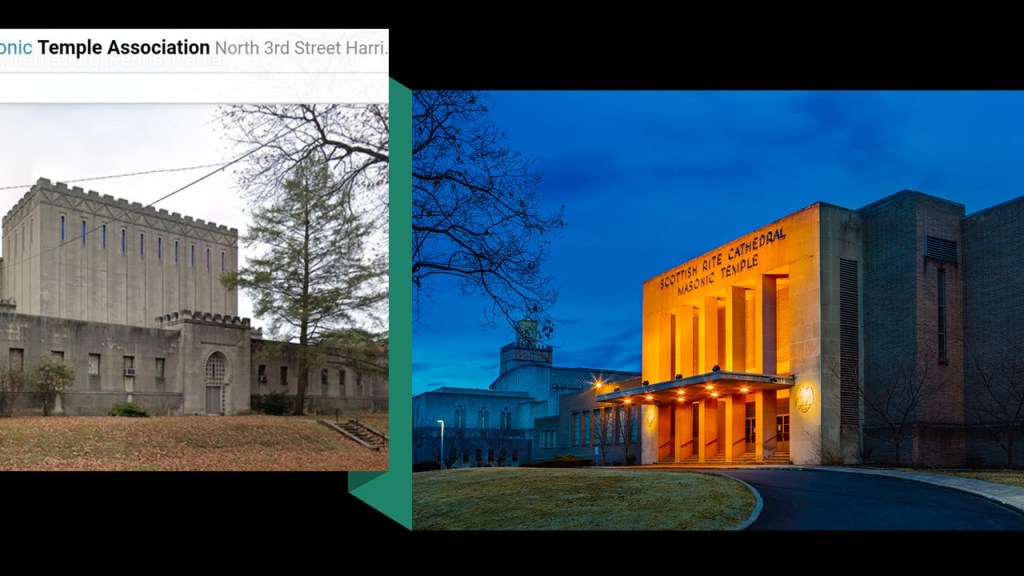
CZ also sent me screenshots of the Scottish Rite Cathedral and Masonic Temple of Harrisburg…
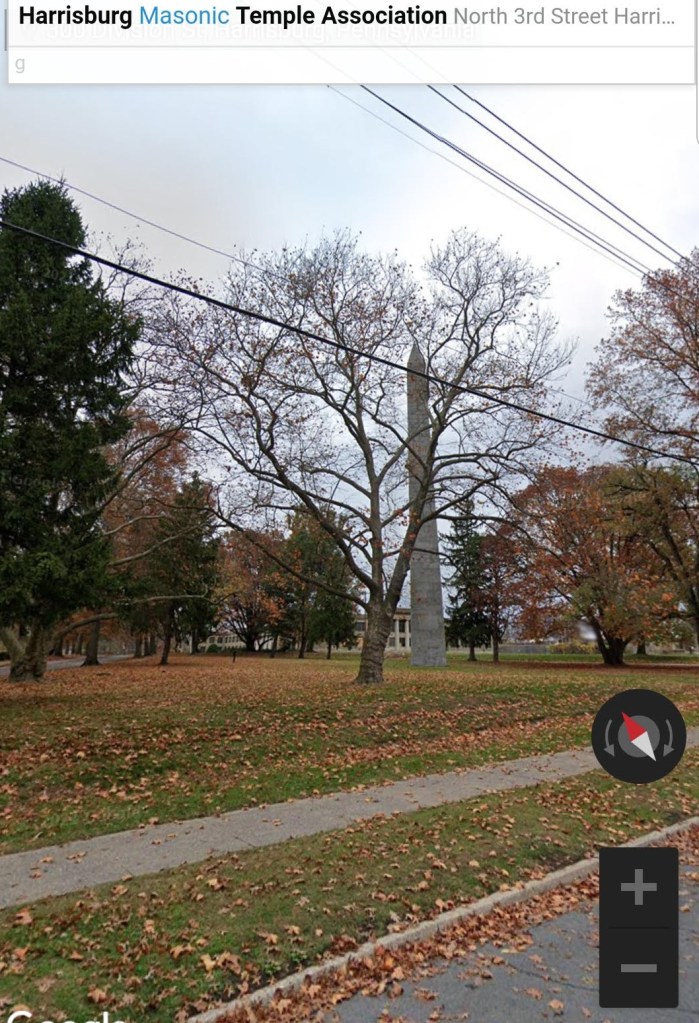
…with a tall obelisk on its grounds.
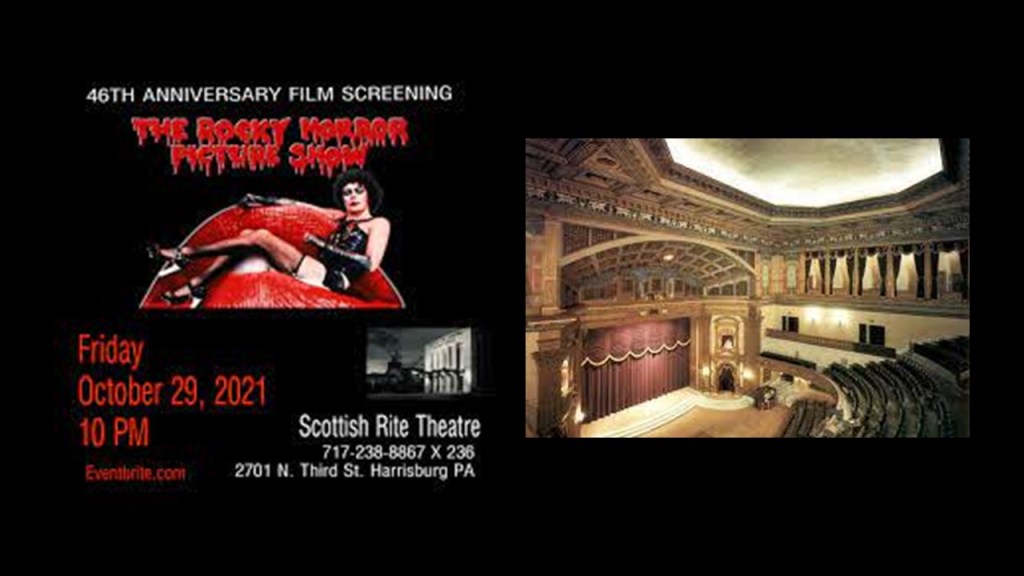
The 1,192-seat Theater and Ballroom at the Scottish Rite Cathedral is a popular community event venue.
And this seems to be the extent of what I am able to find out about it!
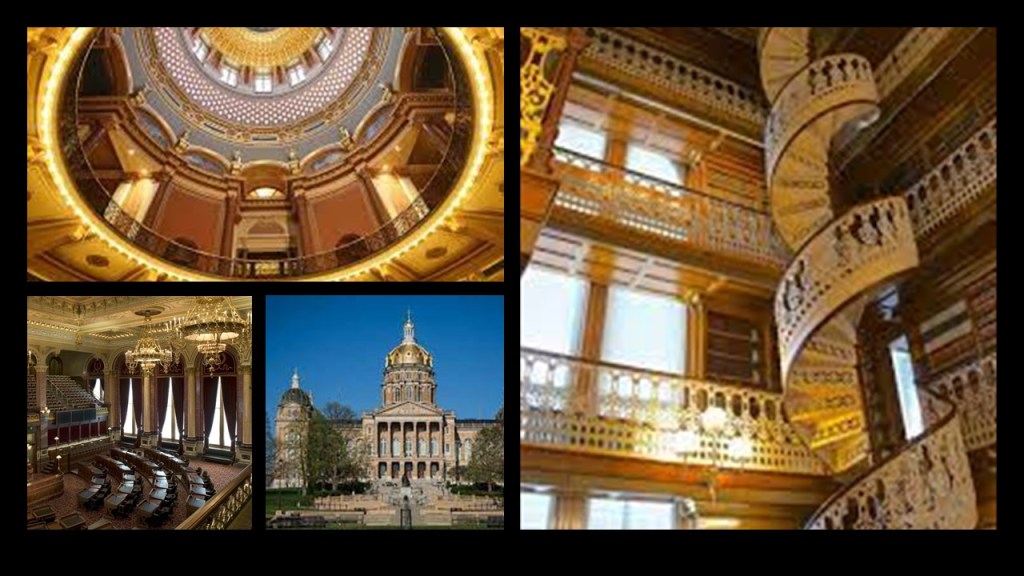
Next, I am going to take a look at the State Capitol Complext at Des Moines, the capital city of Iowa.
The Iowa State Capitol Building was said to have been built between 1871 and 1886, and the only 5-domed capitol building in the United States.
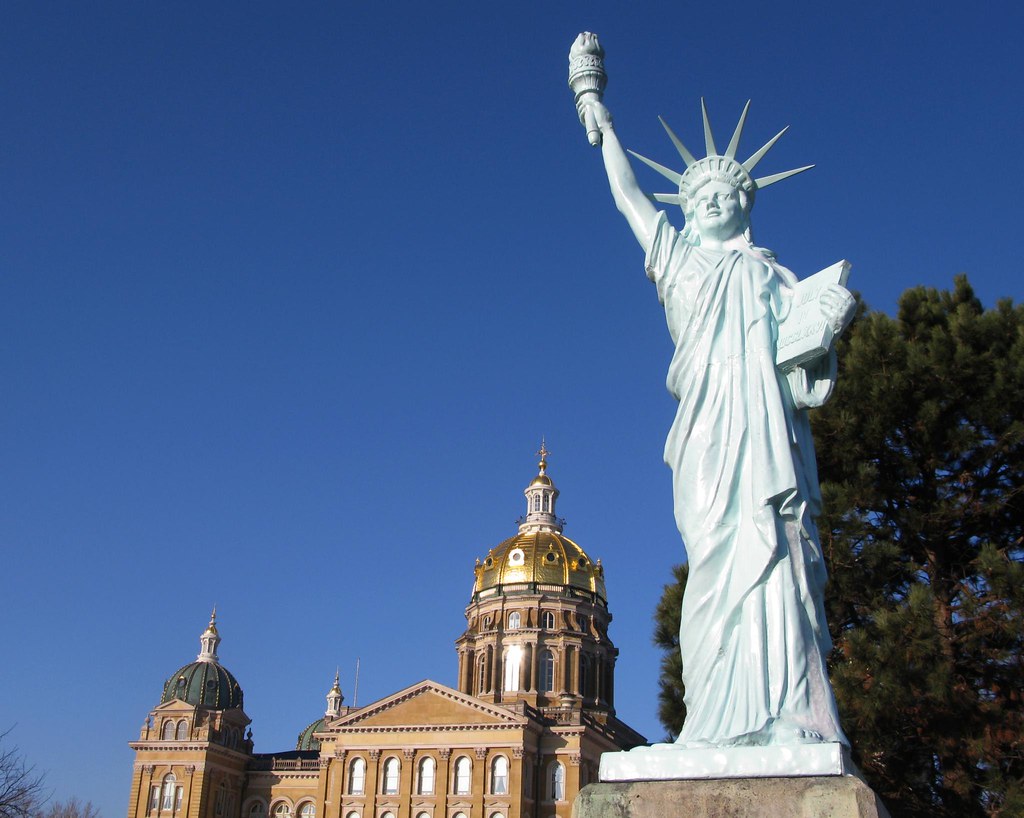
The Iowa Statue of Liberty is located on the capitol grounds.
It is described as a replica of the Statue of Liberty that was a gift in 1950 from the Boy Scouts of America as part of their efforts to “strengthen the arm of liberty.”
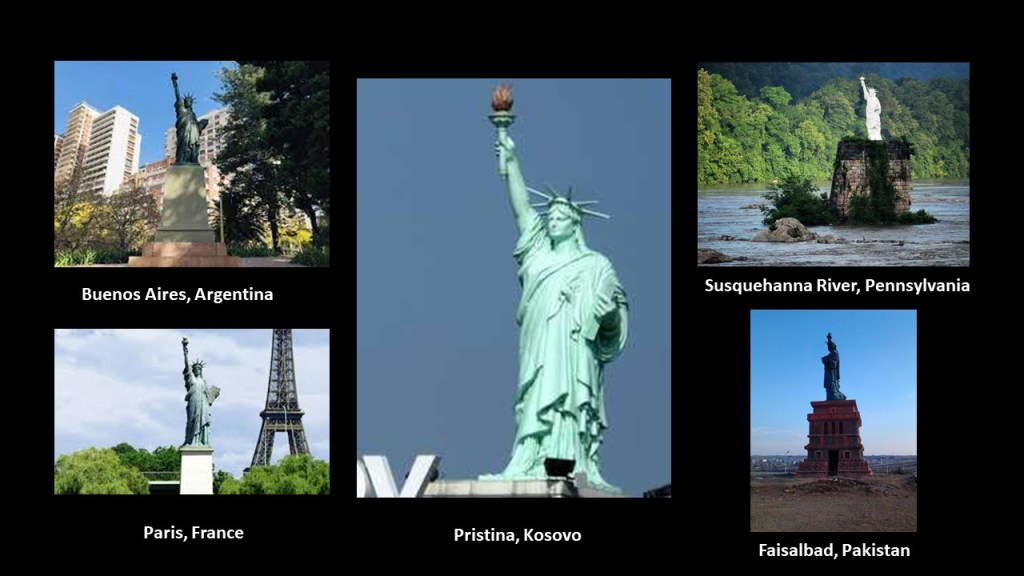
Interesting thing is, there are hundreds of replicas of the Statue of Liberty, said to be a figure of Libertas, a Roman goddess and the personification of liberty, all over the Earth.
Are they replicas…or do they represent something else entirely?
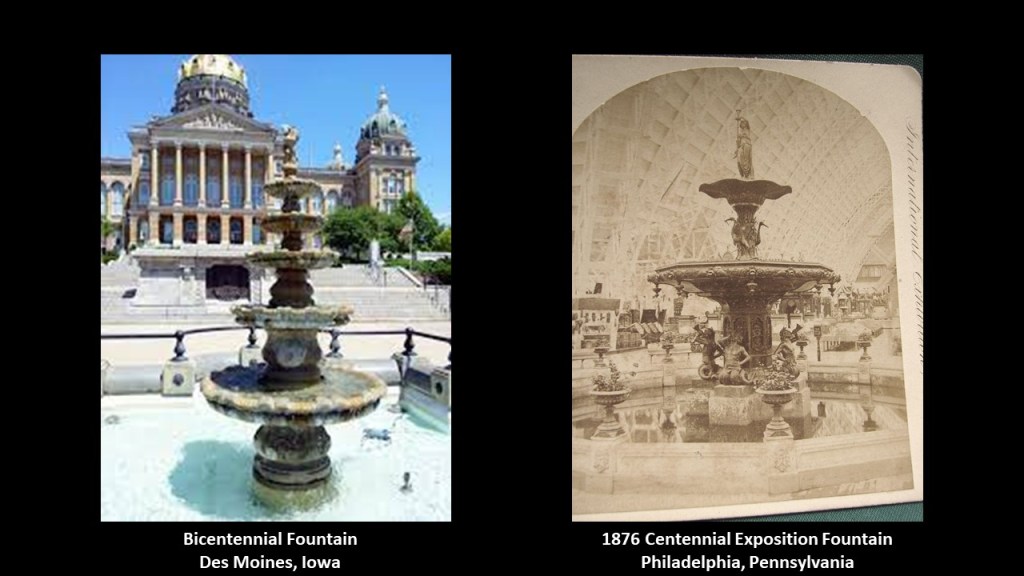
The Bicentennial Fountain is on the west-side of the State Capitol Complex.
What we are told about the Bicentennial Fountain is that it was originally a replica of a fountain that was displayed at the 1876 Centennial Exposition in Philadelphia, and that after years of vandalism and disrepair, it was replaced by a new fountain in 1982.
So there’s another “replica of” to explain something’s existence.
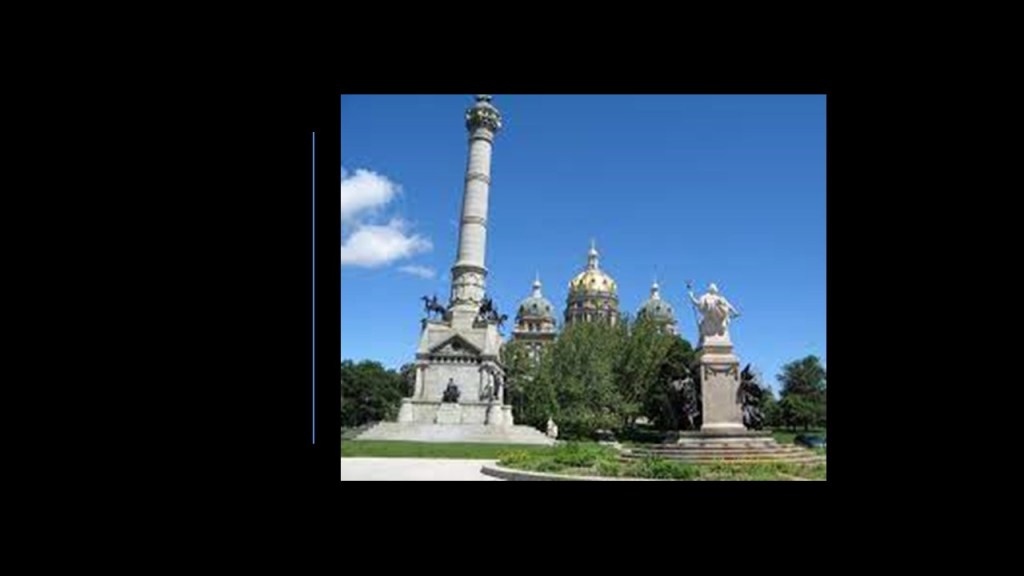
Also in the Iowa State Capitol Complex, to the rear of the State Capitol Building, we find the Soldiers and Sailors Monument, an obelisk-looking monument, in direct alignment with the dome of the Capitol building, which we are told was erected to commemorate Iowans who fought during the Civil War.
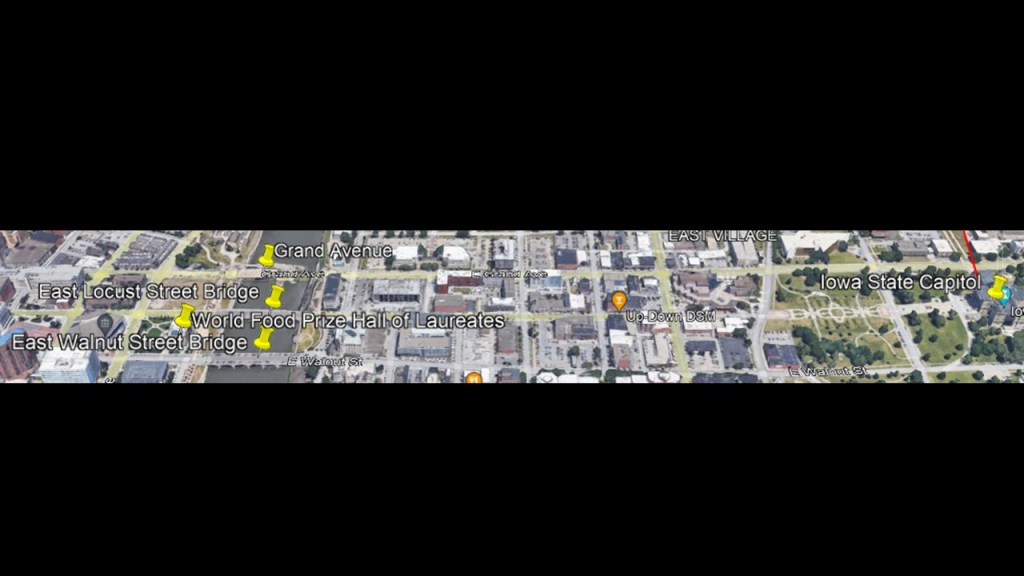
The last place I want to look at in the Iowa State Capitol are the bridges over the Des Moines River on the west-side of the complex.
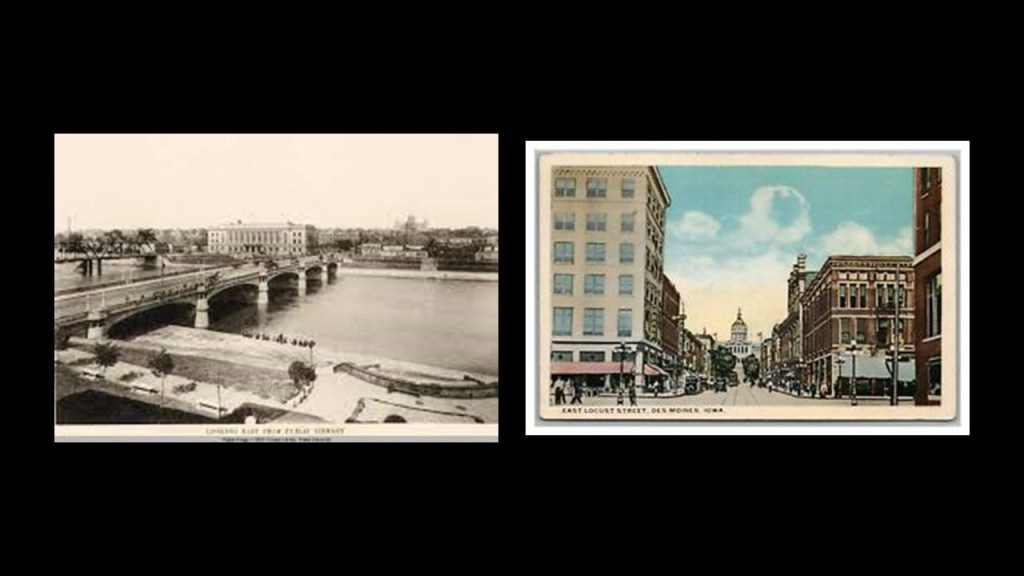
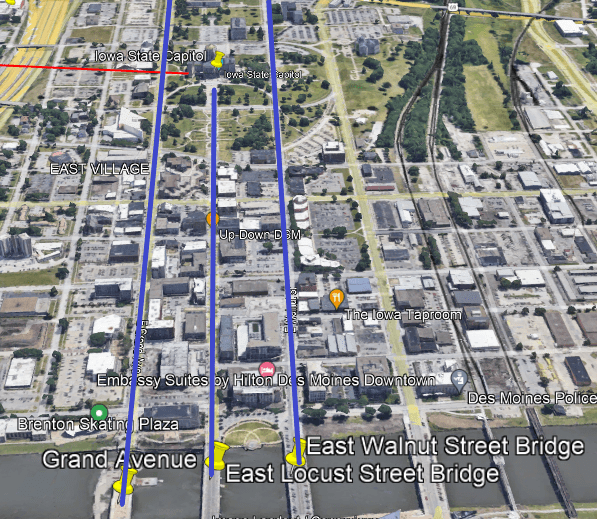
The East Locust Street Bridge is situated between the East Walnut Street Bridge and the Grand Avenue Bridge, and East Locust Street is in direct alignment with the Iowa State Capitol Building.
The other two bridges and streets go on either side of the complex.
Lastly, the California State Capitol complex in Sacramento.
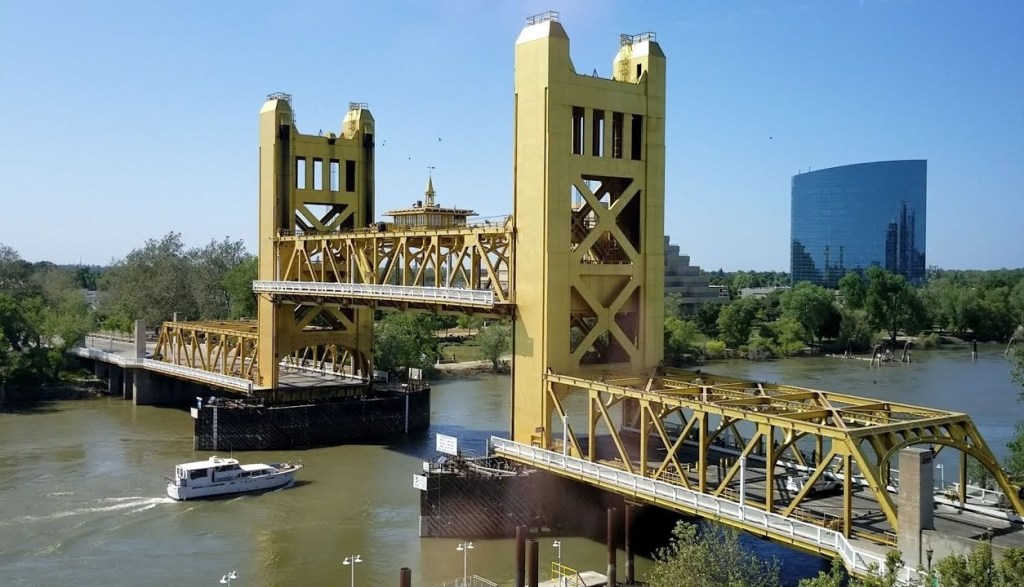
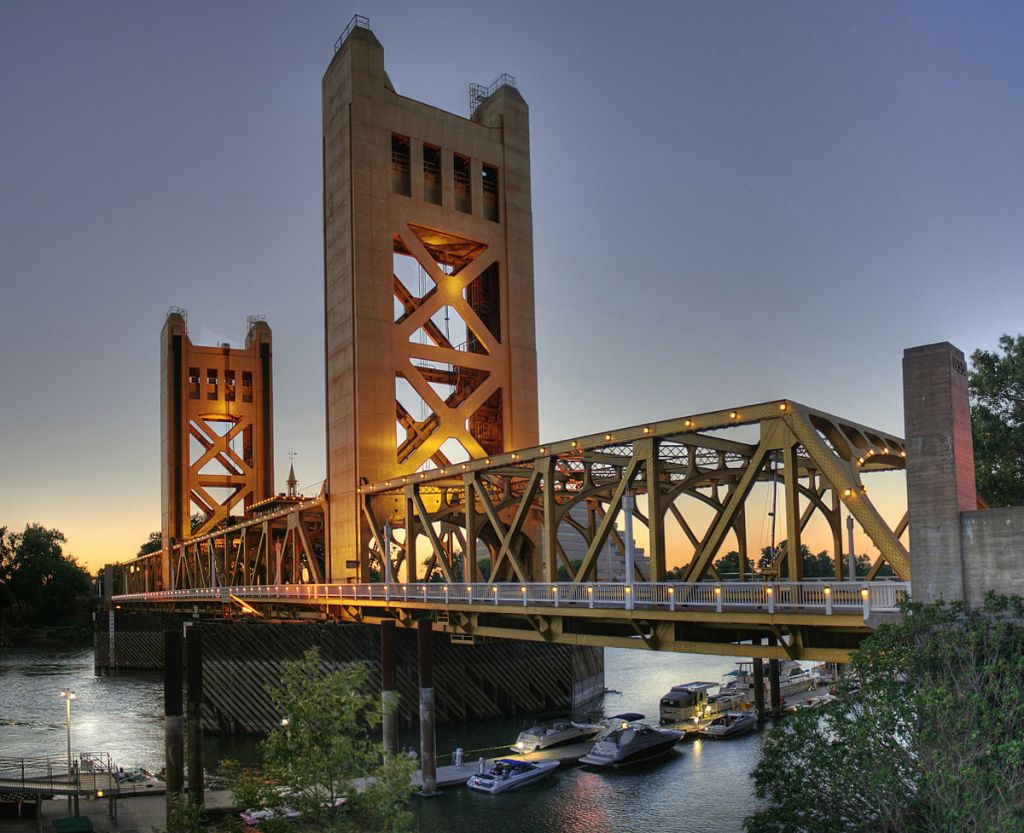
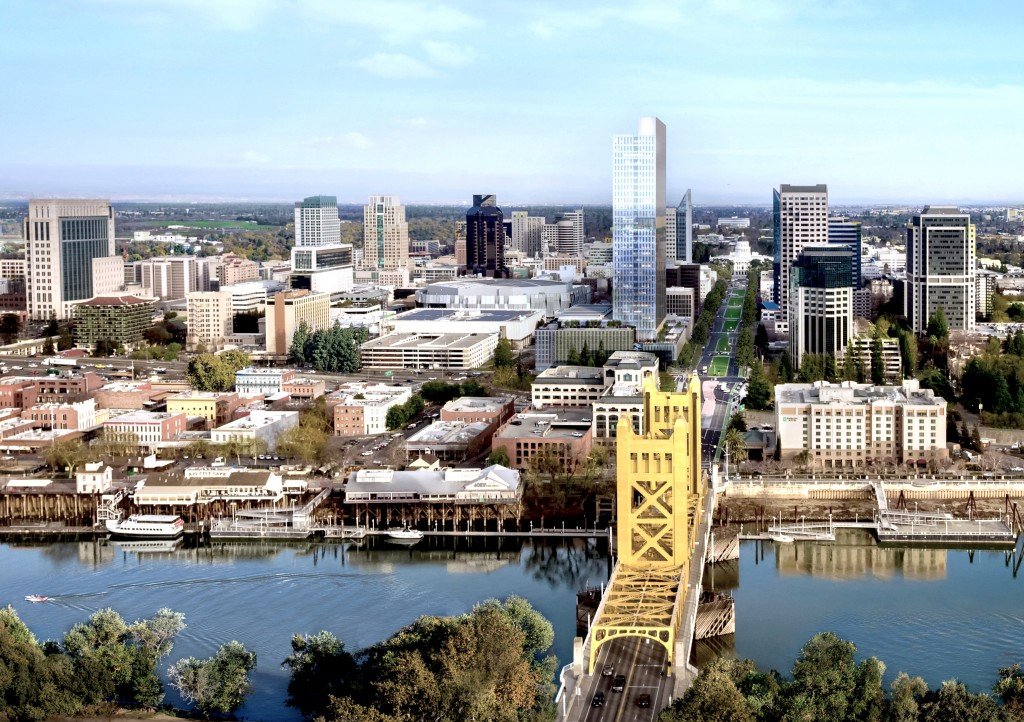
The Tower Bridge crosses the Sacramento River, and leads right in to the Capitol Mall in front of the California State Capitol Building, in the same manner as the precisely laid-out bridges and streets connect to the State Capitol complexes in Harrisburg and Des Moines.
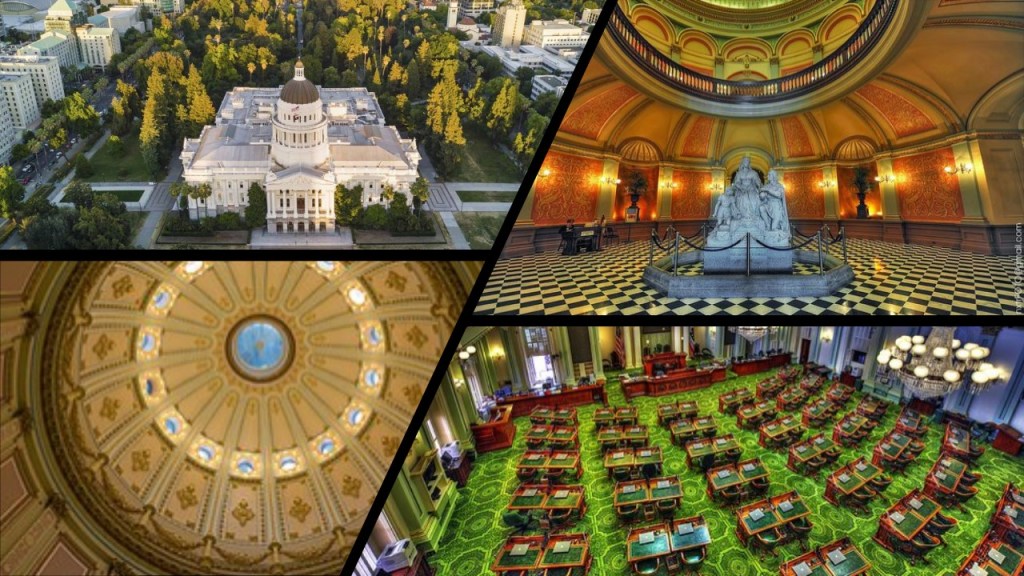
The California State Capital building was said to have been designed in the Neoclassical-style by Reuben S. Clark, and constructed between 1861 and 1874, which would have been completed three-years after the start date of the Iowa State Capitol building’s construction in 1871 according to the historical narrative we have been given.
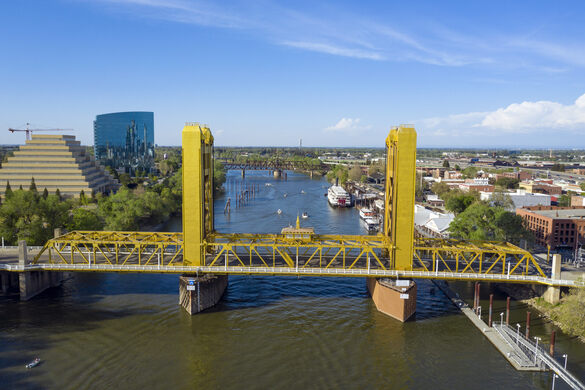
The Tower Bridge is also a vertical-lift bridge, and connects Sacramento and West Sacramento across the Sacramento River.
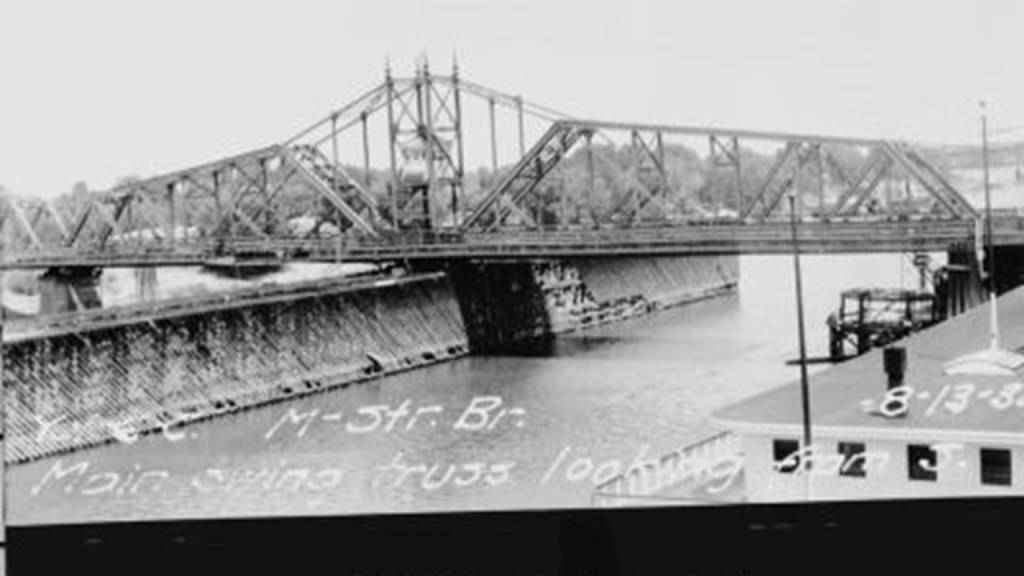
We are told the construction of the Tower Bridge as a replacement bridge for the 1911 M Street bridge was said to have started in 1934 and first opened in 1935.
This would have been around the time of the Great Depression and the beginning of World War II.
The original 1911 bridge was described as a “swing-through truss railroad bridge” that was determined to be inadequate as the result of Sacramento’s population growth doubling between 1910 and 1935, and the city’s concern for needing a better crossing over the Sacramento River in case of war.
Alfred Eichler was credited as the architect of the Tower Bridge, and its architectural-style described as a rare use of “Streamline Moderne,” a style of “Art Deco” that emerged in the 1930s.
The two towers of the bridge alone are 160-feet, or 49-meters, -high.
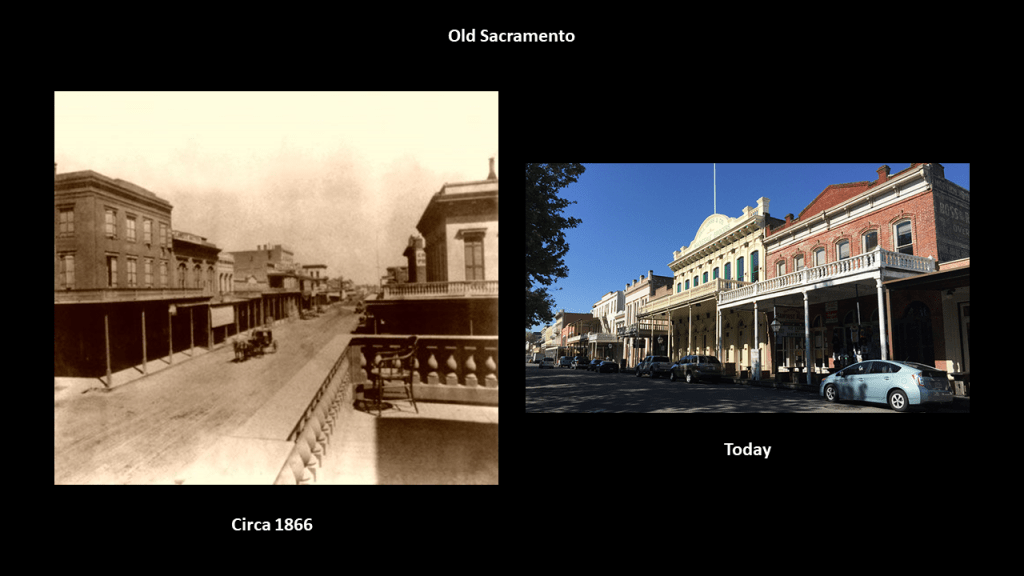
It is located in “Old Sacramento,” the riverfront historic district, with Gold Rush-era buildings attributed to Victorian-era gold miners.
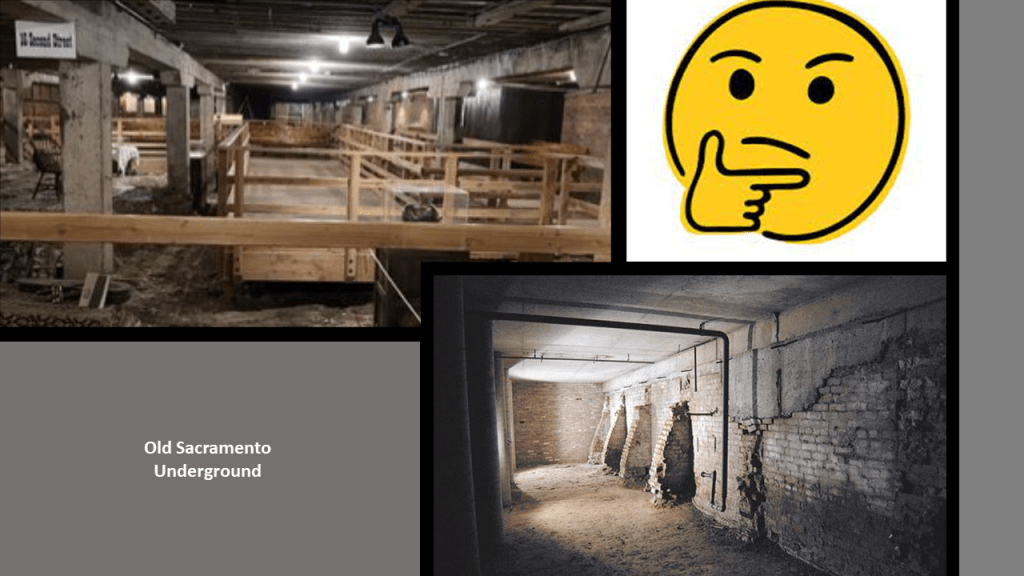
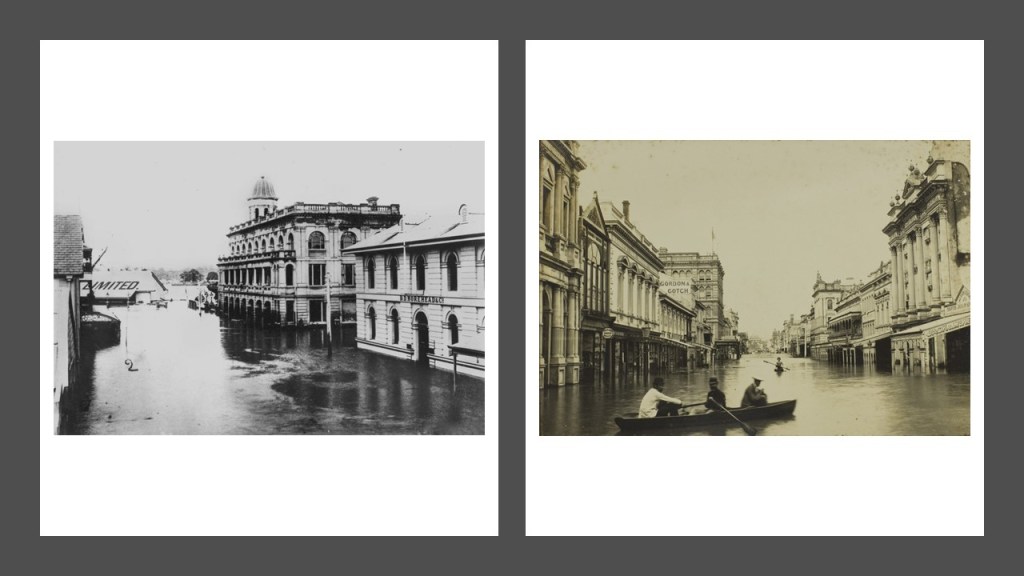
You can go on an “Underground Sacramento” Tour any day of the week, where you will learn how Sacramento lifted itself up out of floodwaters in the 1860s and 1870s by the “jacking” up of buildings to avoid further flooding.
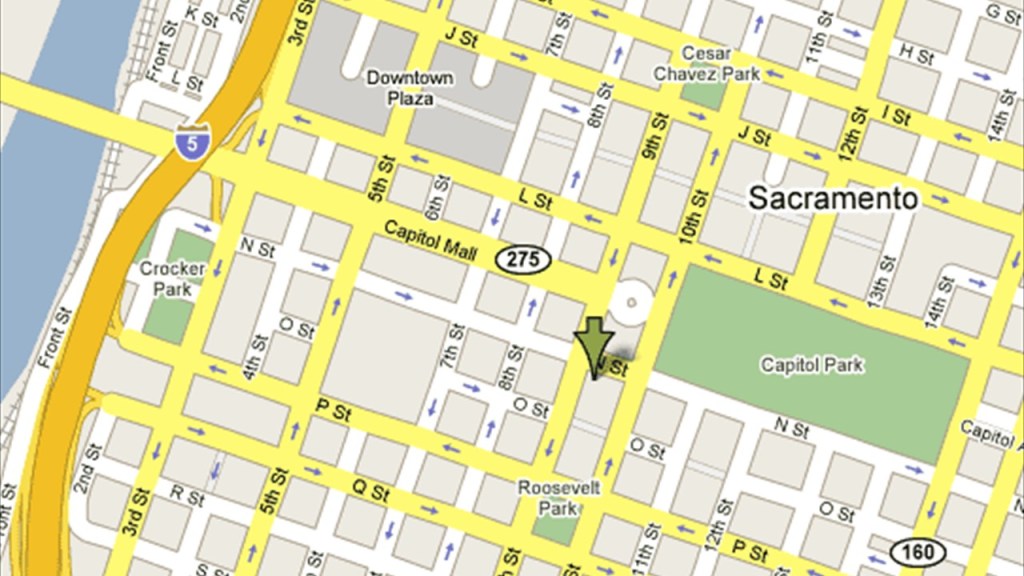
The Tower Bridge is part of State Route 275 which connects West Capitol Avenue and the Tower Bridge Gateway with the Capitol Mall in Sacramento.
The Capitol Mall in Sacramento is described as a major street and landscaped parkway.
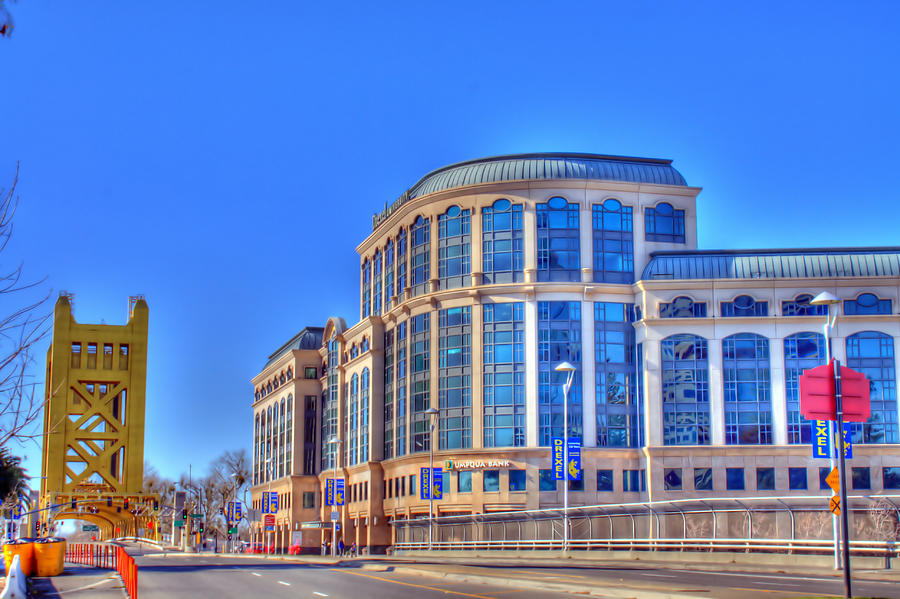
The former Drexel University Sacramento Center for Graduate Studies was in a building situated right next to the Tower Bridge at the address of 1 Capital Mall.
It opened in 2009, and started closing in 2015 to allow currently enrolled students to complete their studies.
It was then permanently closed.
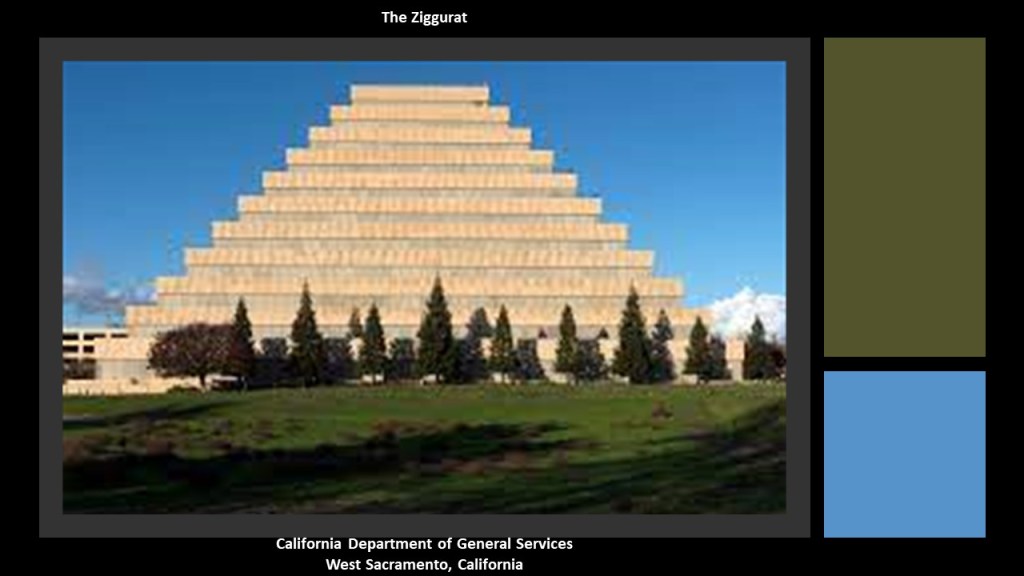
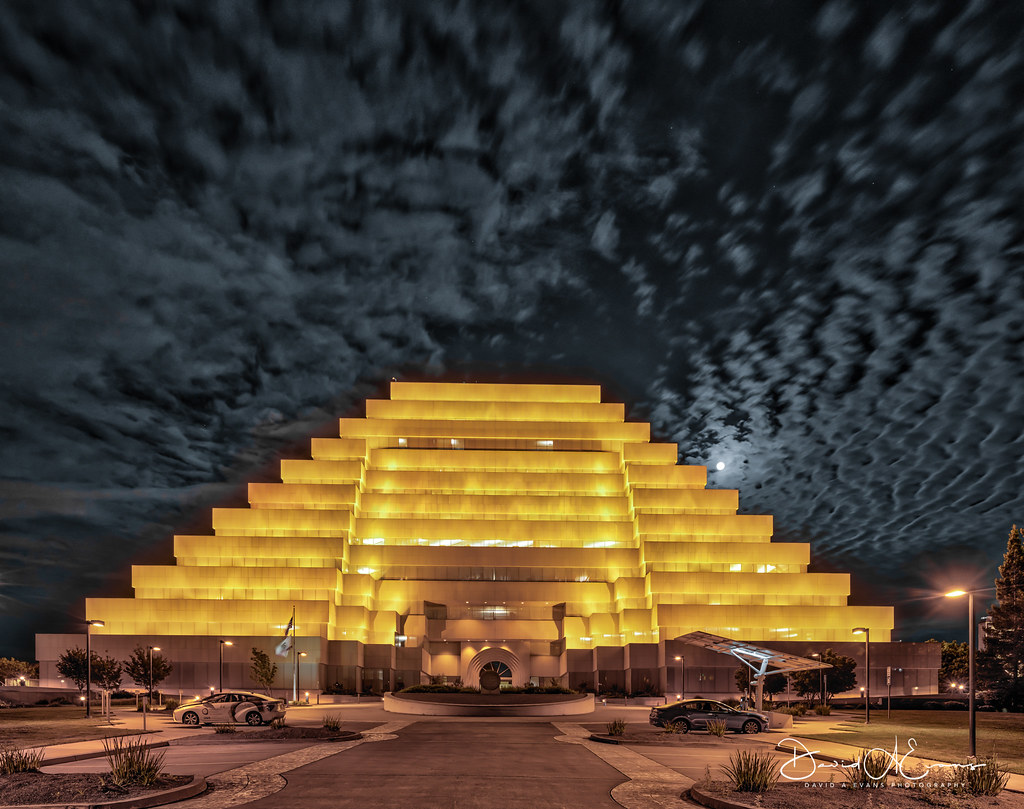
There is a California State Government building called “The Ziggurat” in West Sacramento right next to the Tower Bridge.
The Ziggurat was said to have been designed to resemble ancient Mesopotamian ziggurats and built by The Money Store in 1997.
Since 2001, it has been leased to the state as the headquarters of the California Department of General Services.
The Ziggurat is illuminated at night on special occasions.
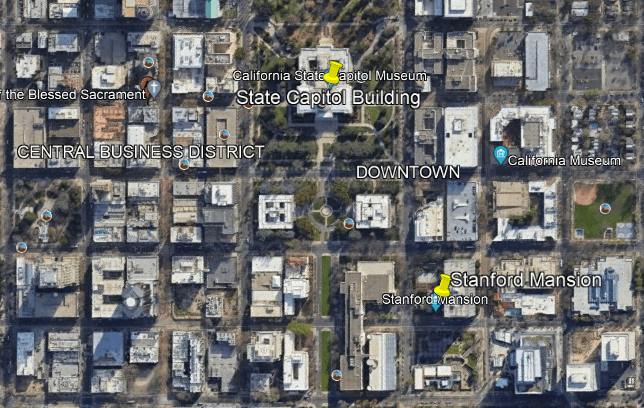
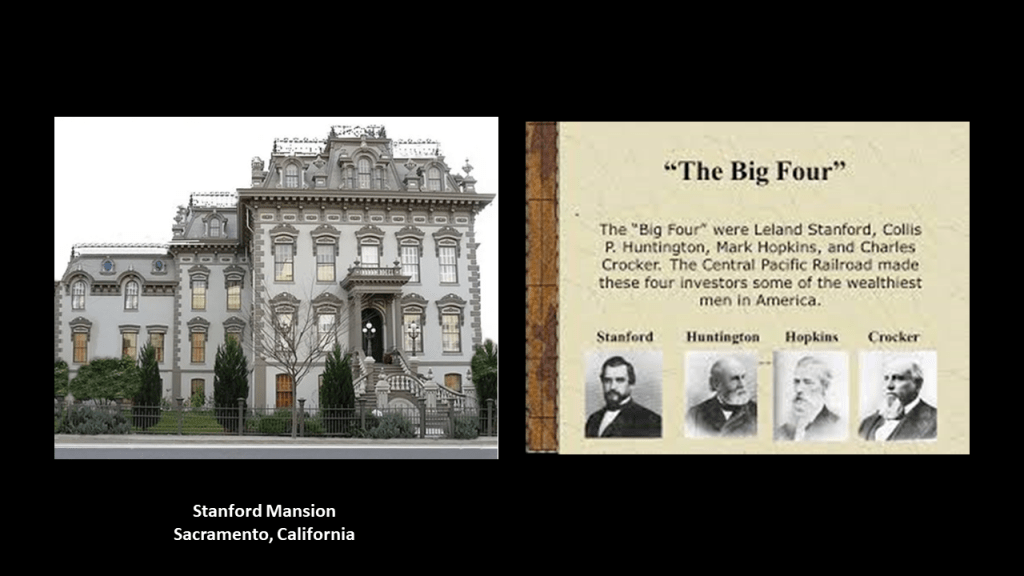
The Stanford Mansion is in the neighborhood of the Capital Mall, a couple of blocks south of the State Capitol Building and serves as the official reception center for the California government.
It was said to have been built in 1856 as a residence for Leland Stanford, a Railroad Baron who was a former California governor, and founder of Stanford University in 1885.
It was donated to the Roman Catholic Diocese of Sacramento in 1900, who operated a children’s home there until 1978.
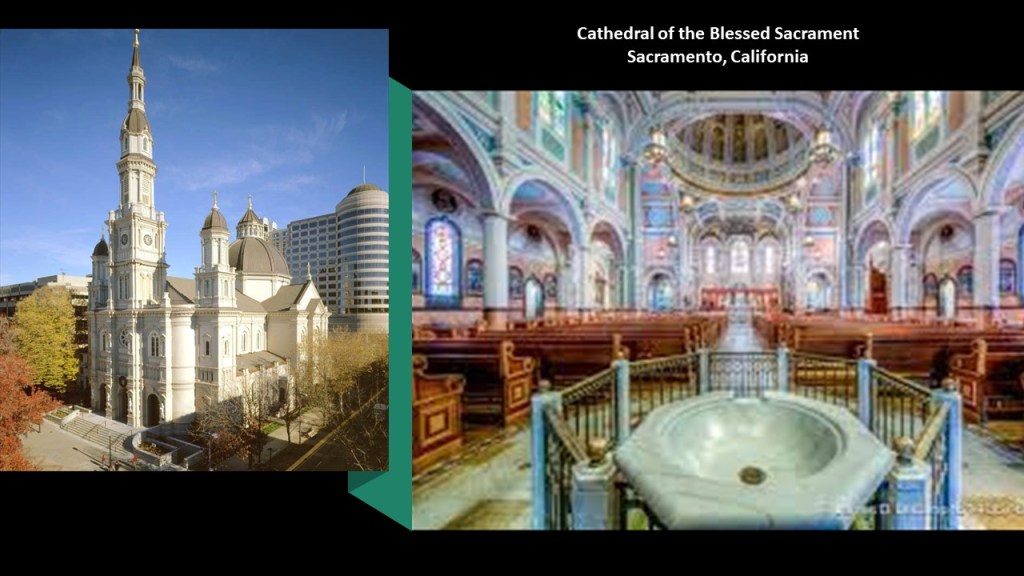
The Cathedral of the Blessed Sacrament, the seat of the Roman Catholic Diocese of Sacramento, and is one of the largest cathedrals west of the Mississippi River.
It was said to have been built between 1887 and 1889 in the Italian Renaissance architectural-style on the outside, and the Victorian architectural-style on the inside.
The cathedral’s designer was said to be Patrick Manogue, a former gold-miner who came to Sacramento through the California Gold Rush, who became a Catholic priest in 1861 after studying in Paris, and then the Bishop of Sacramento in 1886.
He was said to have based the design of his cathedral on a church he was inspired by in Paris, and that it was built on land donated by the State’s first elected governor, Peter Burnett.
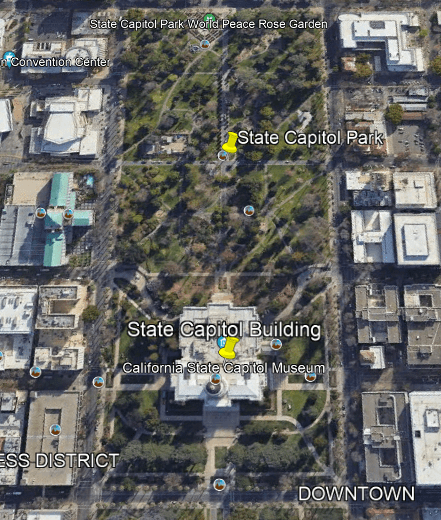
The Capitol Park in Sacramento covers 40-acres, or 16-hectares, and I will cover a few examples of what is found on the grounds.
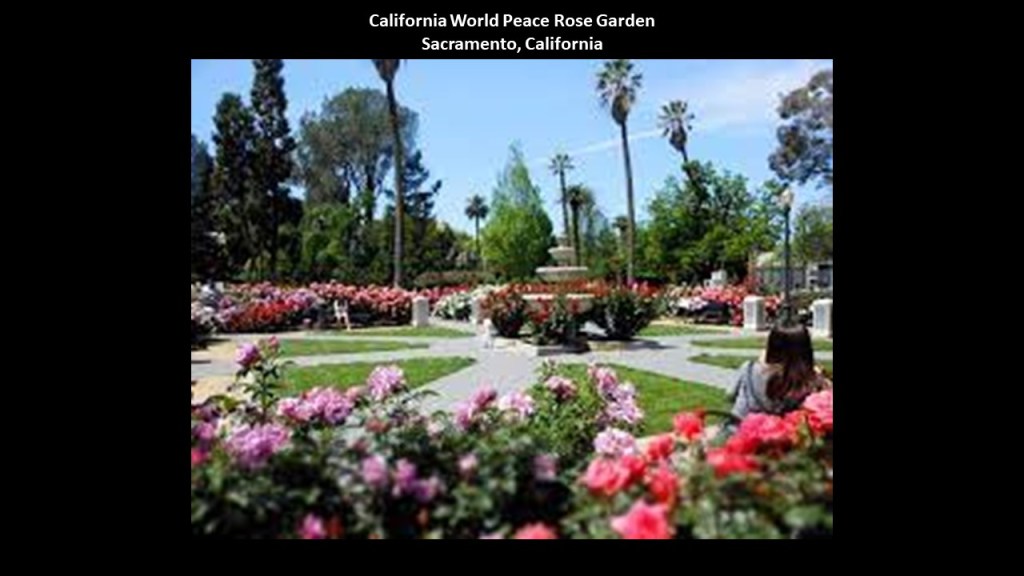
The California State World Peace Rose Garden occupies roughly 5-acres, or 2-hectares of the area it covers, featuring 650 roses with different colors and fragrances.
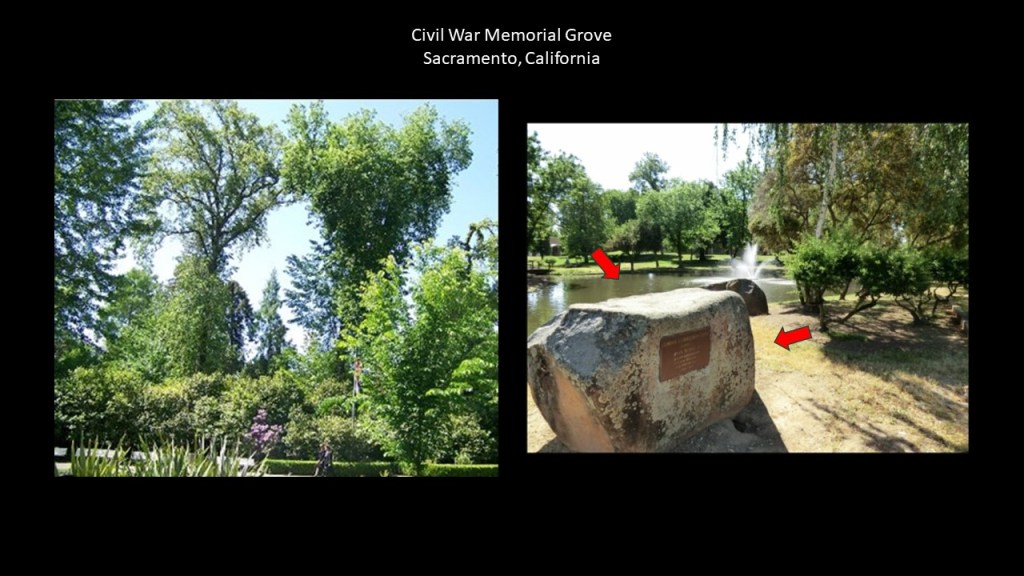
The Civil War Memorial Grove on the Capitol State Park Grounds was said to have been planted in 1897 with saplings from famous Civil War battlefields, like Manassas, Virginia; Harper’s Ferry, West Virginia; and Vicksburg, Mississippi.
You know, it’s interesting, that we don’t even notice the straight-edges of megalithic stone blocks all around us that get used, like in this case, as a place to put signage.
Instead, a label like “boulder” is put on huge cut-and-shaped stones like this and which covers it up nicely as not being something out-of-the-ordinary that we should be paying attention to.
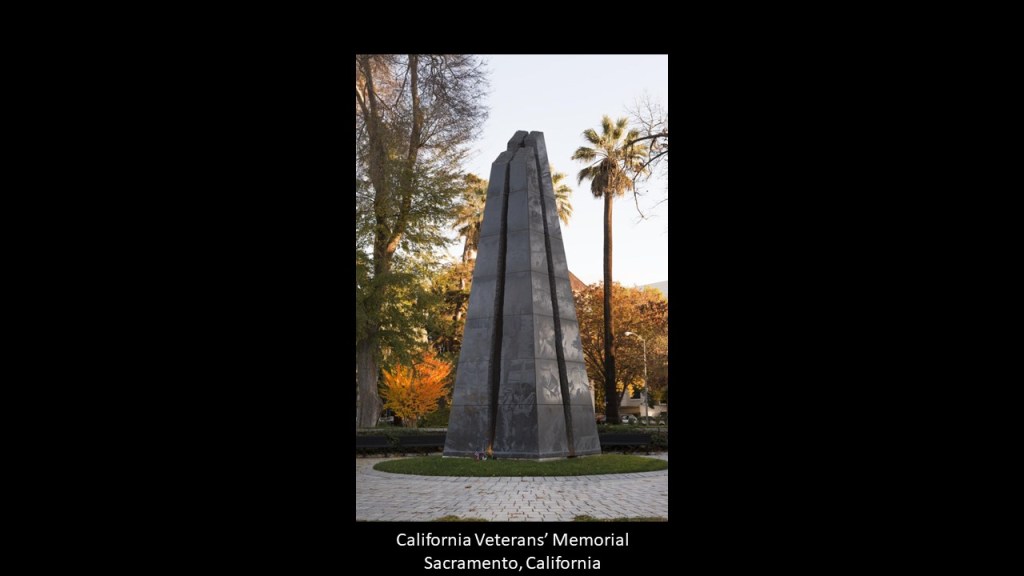
And the California Veterans’ Memorial on the Capitol State Park grounds is an 30-foot, or 9-meter tall, black-granite obelisk that was dedicated in 1998 to California’s veterans who had served in the Armed Forces since statehood in 1850.
These are just a few of the memorials and monuments to be found on the grounds of the park.
This is just a sample of countless examples of the shared characteristics of Capitol building complexes, and a few other locations nearby as well.
A sample is all that is needed to illustrate that they are all have similar characteristics of mind-blowing examples of monumental architecture and precise civil-engineering feats that do not match what we are supposed to have been capable of in our historical narrative, which would have been very low technology in the 19th-century and early 20th-century according to what we have been taught to believe.
The stories we are told don’t match the grandeur of the architecture and the incredible feats of engineering that we see in these places, and I would surmise the same is true of capitals the world over.
Things to consider in regards to how this ancient, advanced worldwide Moorish civilization has been hidden right in front in front of our eyes by those who have sought to keep our True History from our Awareness.
I have been working my way through who is represented in the National Statuary Hall at the U. S. Capitol Building in Washington, DC.
There are two statues representing each state, and I am currently about half-way through the 50-states.
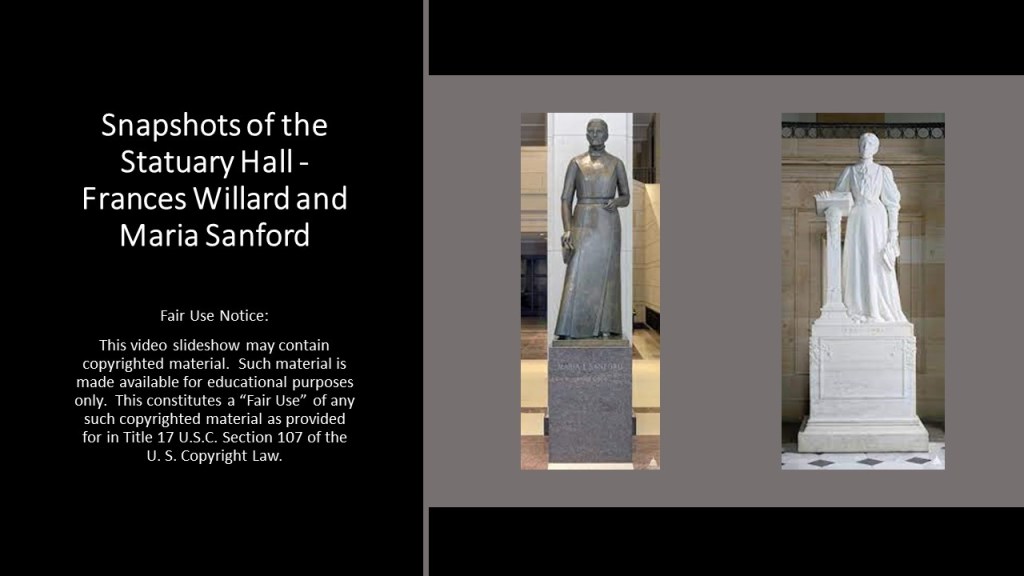
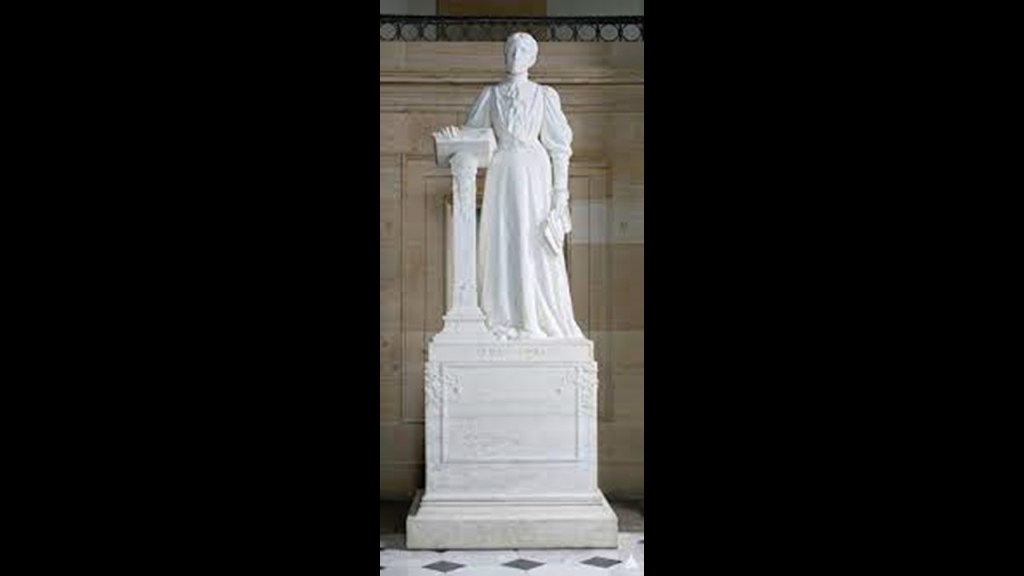
As a way to highlight what I am finding out in the process of doing this research, I am bringing forward unlikely pairs of historical figures represented in the Statuary Hall who have things in common with each other in this separate series called “Snapshots from the National Statuary Hall,” and in this post I am pairing two ladies, Frances Willard and Maria Sanford.
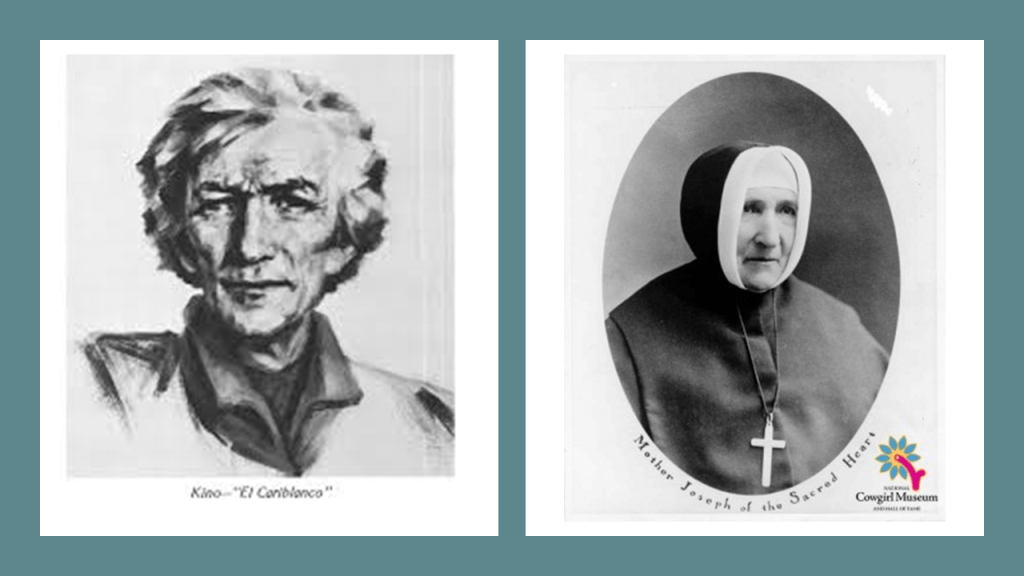
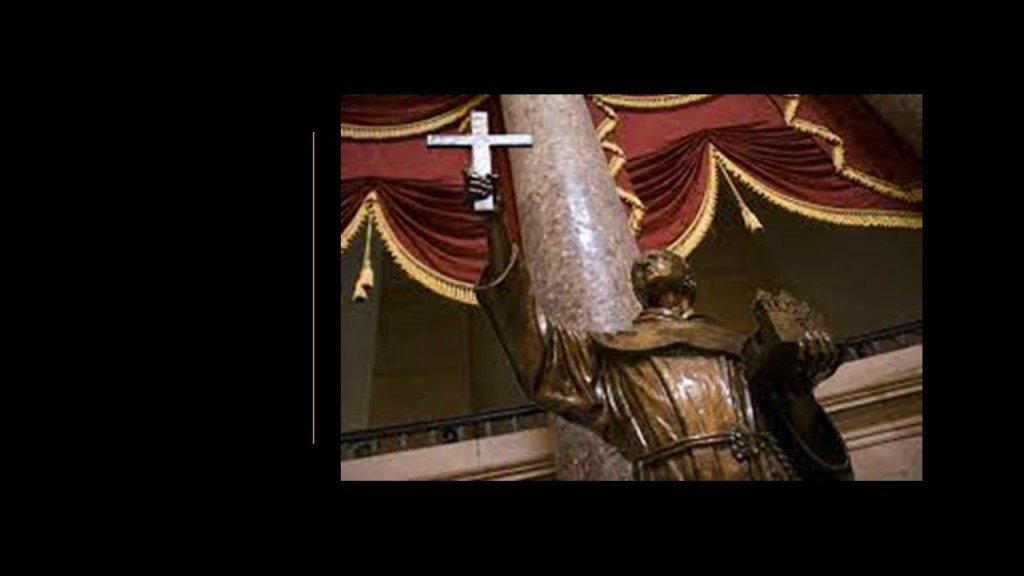
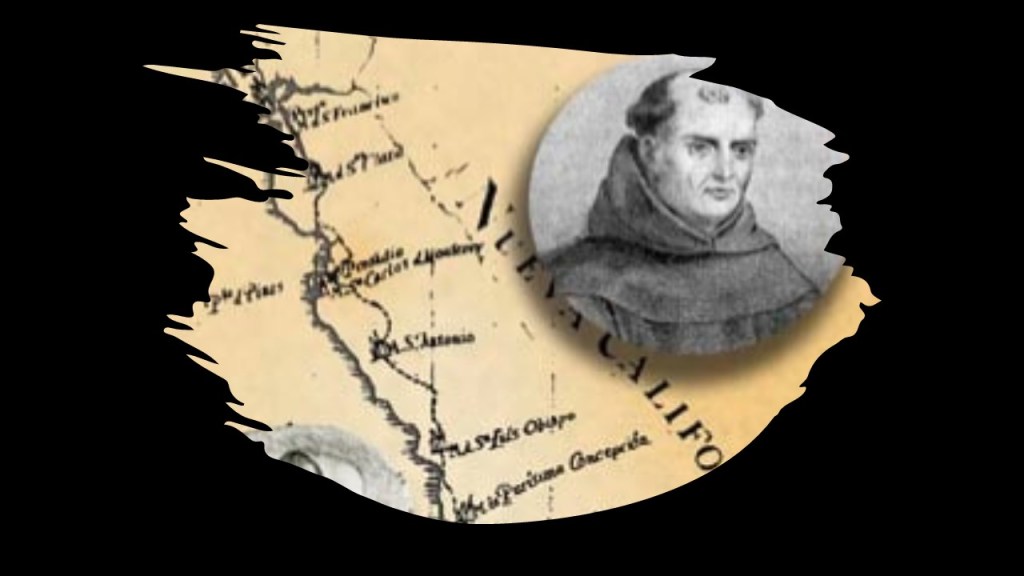
The only reason my attention was drawn here in the first place was because I encountered two historical figures in other research who are represented in the National Statuary Hall – Father Eusebio Kino, a Jesuit Missionary and Cattle rancher, for Arizona, and Mother Joseph Pariseau, a Catholic sister and self-taught architect, for Washington State.
Seeing these two little-known, and on the unusual-side, historical figures represented there got me to wondering who else was chosen by their State to be represented there and what else could possibly be going on here.
Not only am I finding much in common between the pairs featured in each of the nine- installments of the “Snaptshots of the Statuary Hall” series, I am finding, regardless of fame or obscurity, that the National Statuary Hall functions more-or-less as a “Who’s Who” for the New World Order and its Agenda.
I have paired people like Michigan’s Gerald Ford, a former President of the United States, and Mississippi’s Jefferson Davis, the former President of the Confederate States of America, and both men featured on the cover of the “Knight Templar” Magazine; Dr. Norman Borlaug, Ph.D, often called the “Father of the Green Revolution; and Colorado’s Dr. Florence R. Sabin, M.D, a pioneer for women in science, both of whom worked for the Rockefeller Foundations; and Louisiana’s controversial Socialist Governor, Huey P. Long, and Alabama’s Helen Keller, a deaf-blind woman who gained prominence as an author, lecturer, Socialist activist.
As I mentioned, I am pairing two ladies in this post.
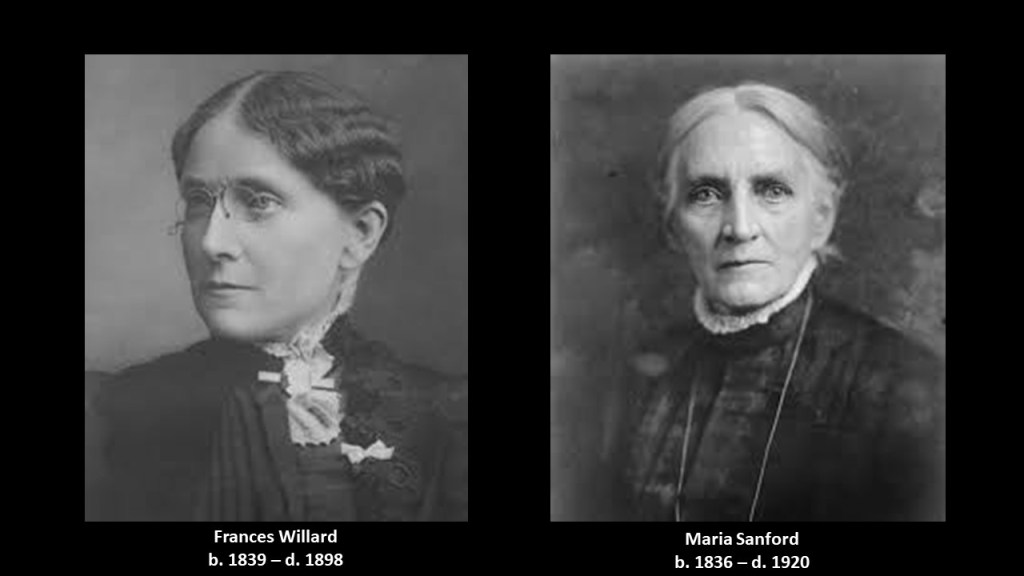
Frances Willard represents the State of llinois, and Maria Sanford represents Minnesota.
First, Frances Willard.
Frances Willard was an American educator, temperance reformer, and women’s suffragist.
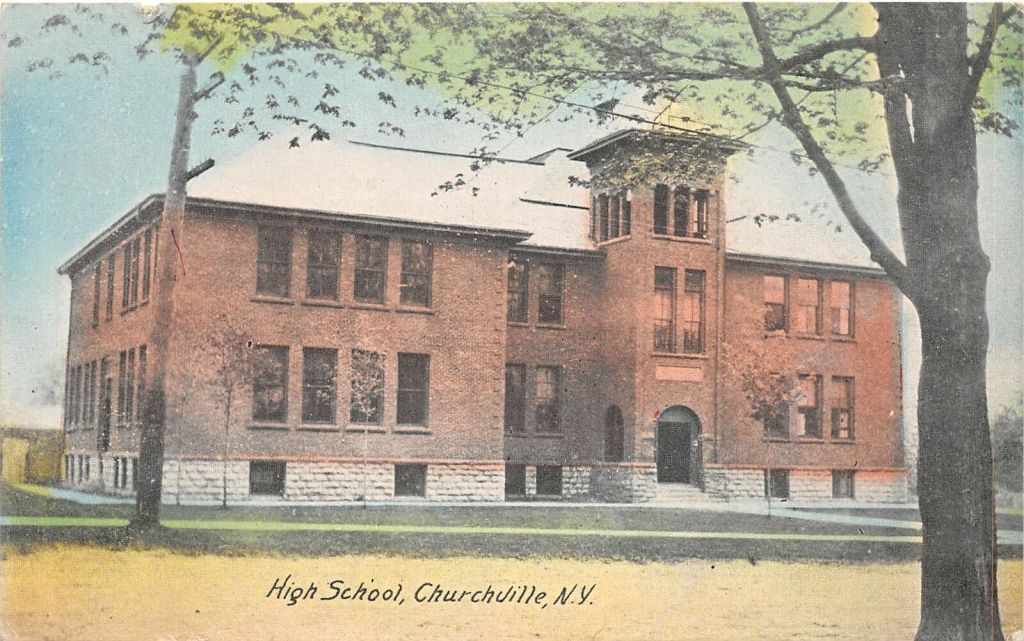
Frances was born in 1839 in Churchville, New York, near Rochester, to Josiah Flint Willard, a farmer, naturalist, legislator & businessman, and Mary Willard.
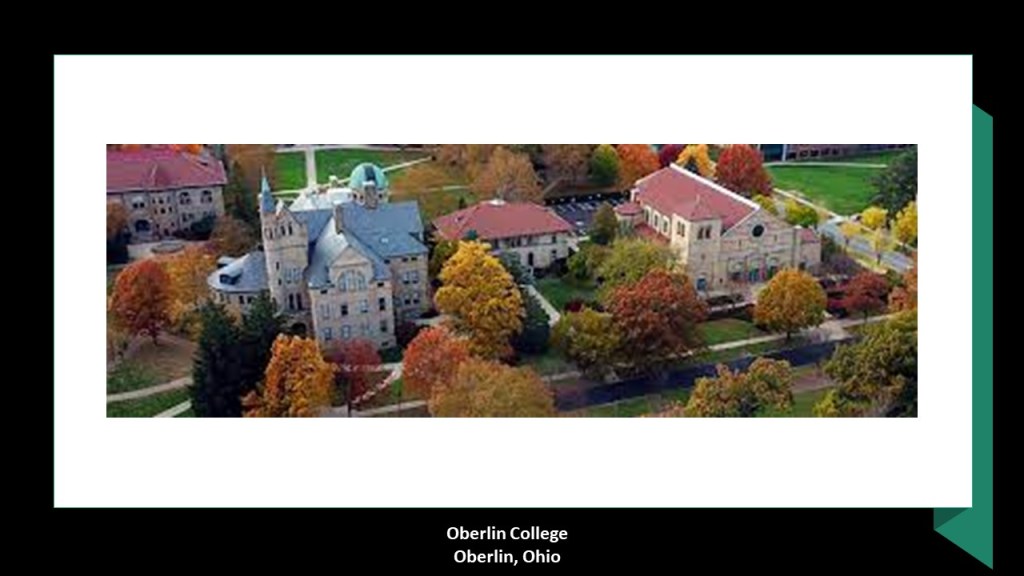
The family moved to Oberlin, Ohio, in 1841, where her parents took classes at Oberlin College.
Oberlin College was established in 1833, and is the oldest coeducational liberal arts college in the United States, and the second-oldest in the world.
Then in 1846, the family moved to Janesville, Wisconsin, for the given reason of her father Josiah’s health.
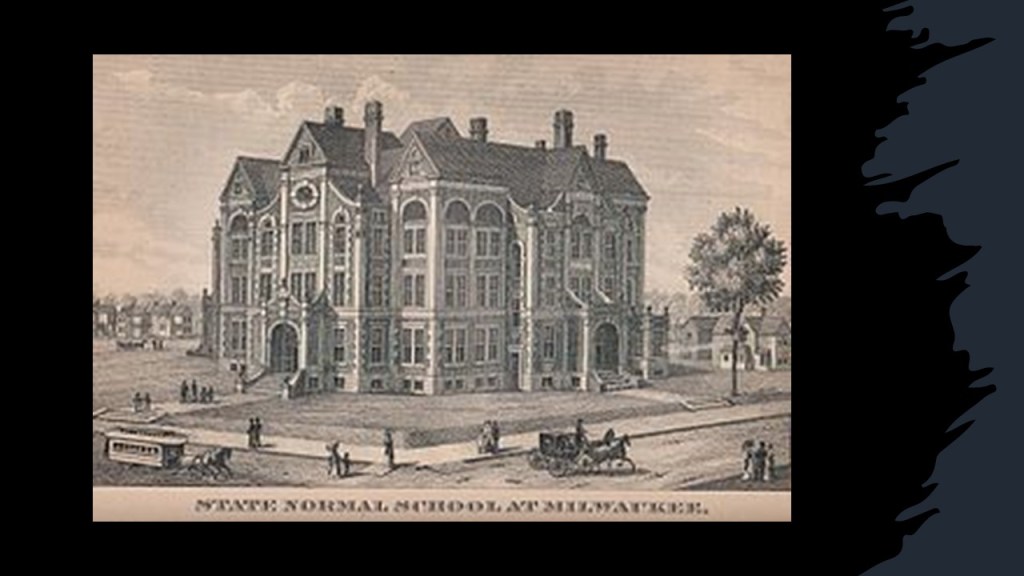
There, Frances and her sister Mary were said to have attended the Milwaukee Normal School, where their mother’s sister taught.
The Willard Family moved to Evanston, Illinois, in 1858, where Josiah Willard became a banker.
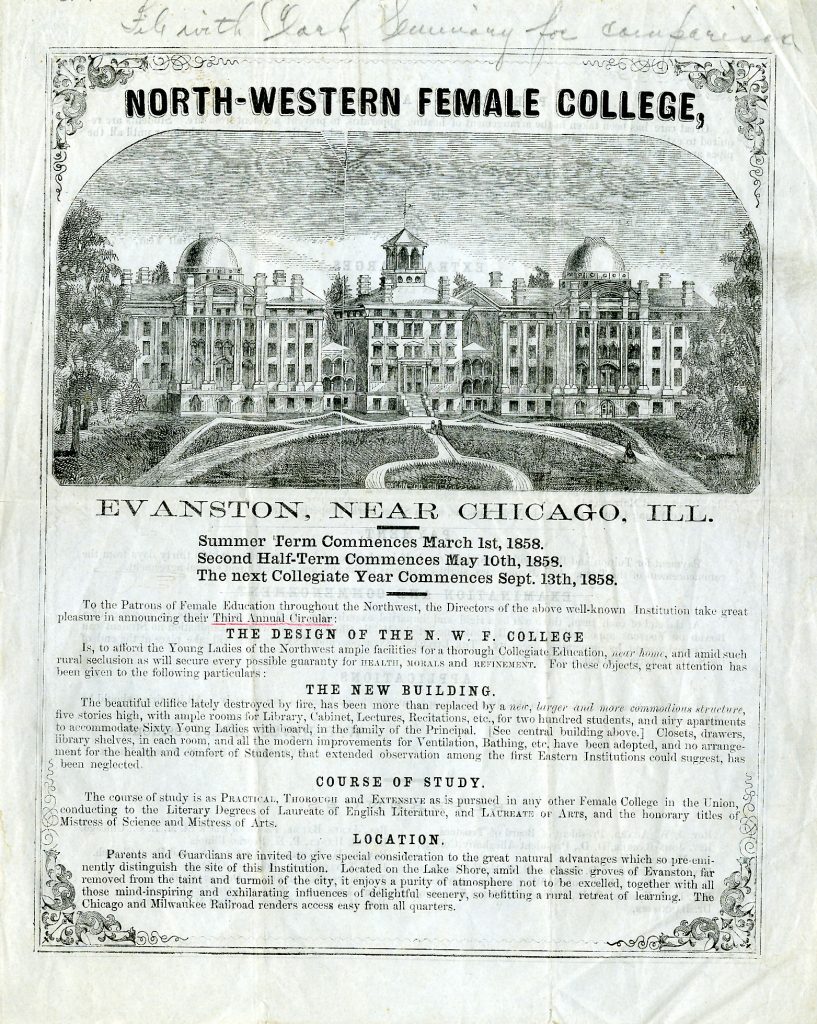
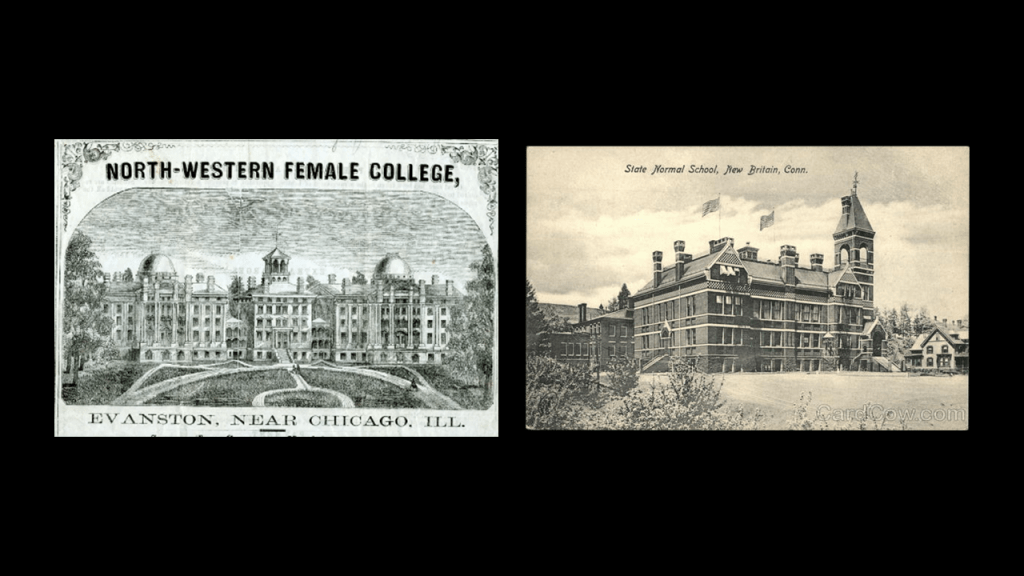
Frances and her sister Mary attended the North Western Female College there.
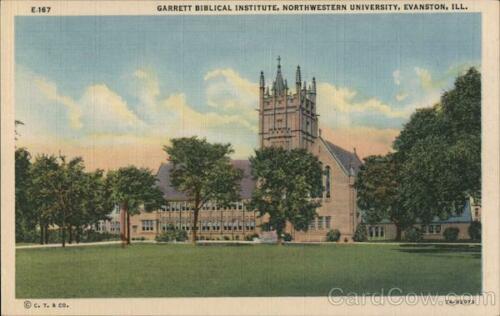
Their brother Oliver attended seminary at the Garrett Biblical Institute in Evanston.
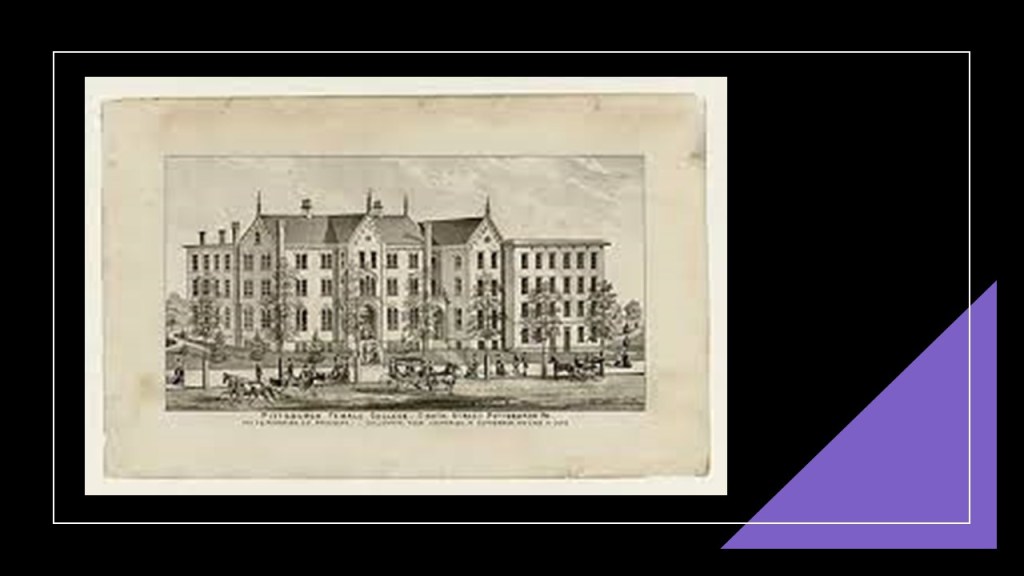
After Frances Willard graduated from the North Western Female College, she worked at the Pittsburgh Female College…
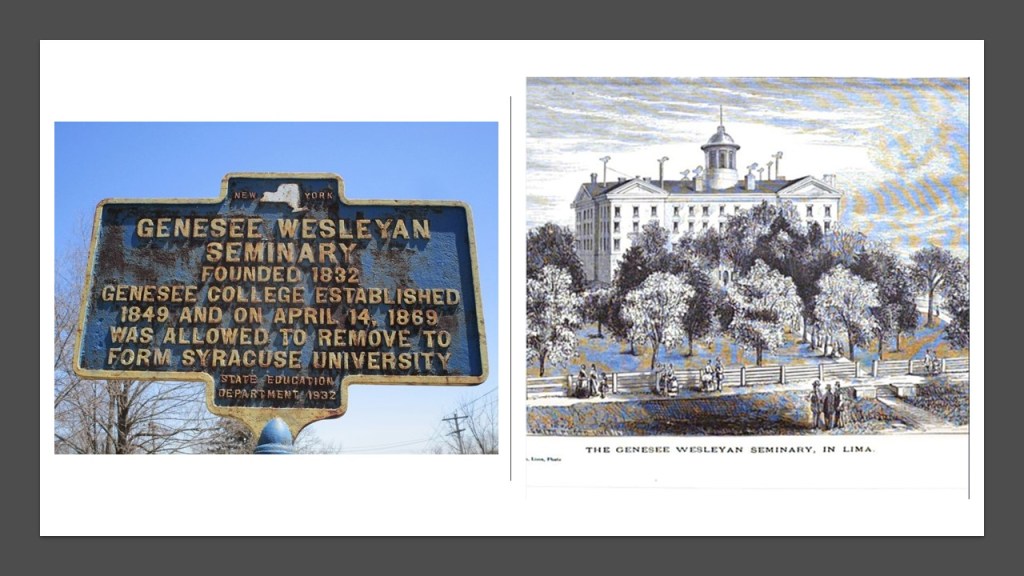
…and also at the Genessee Wesleyan Seminary in New York, which later became Syracuse University.
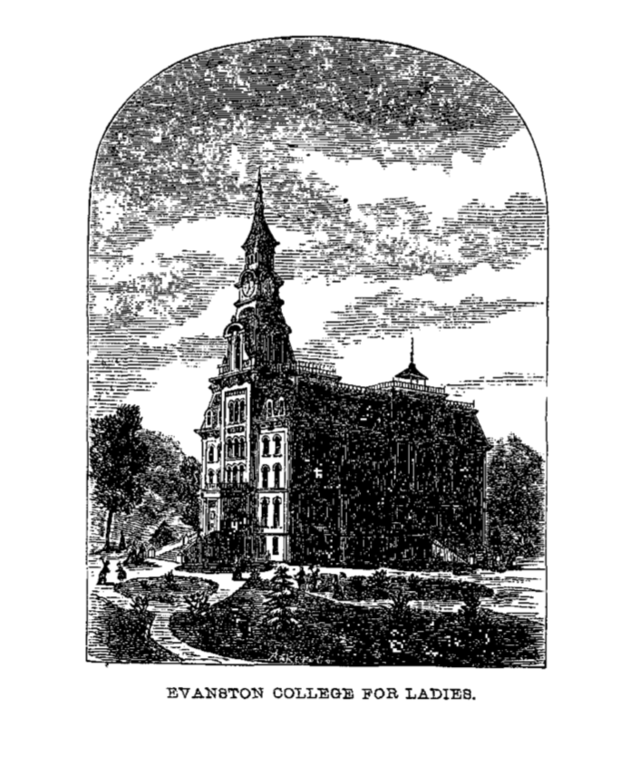
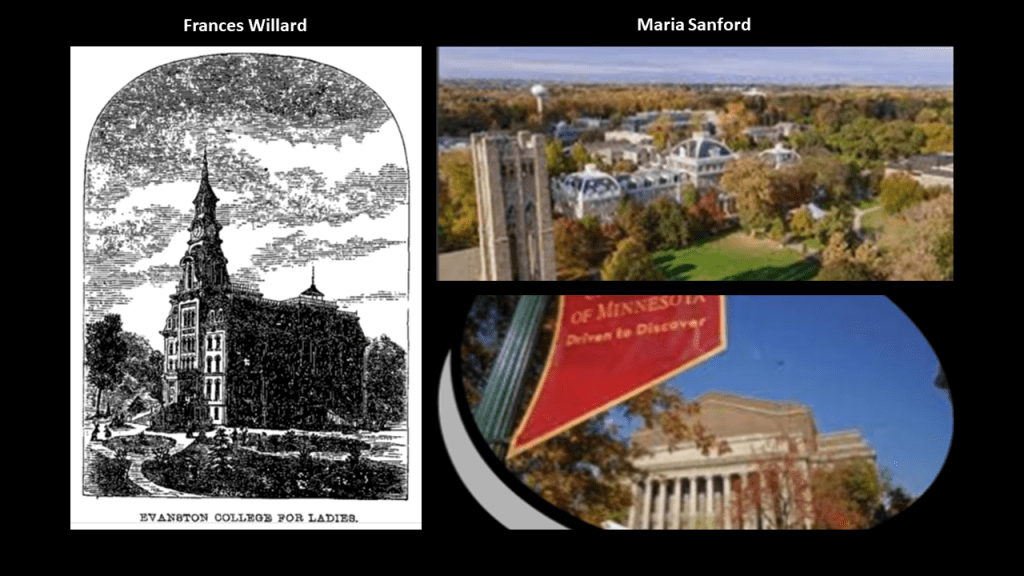
Then in 1871, she was appointed as President of the newly-founded Evanston College for Ladies.
In 1873, she was named as the first Dean of Women when the same school became the Woman’s College of Northwestern University.
This position didn’t last long for her over confrontations in 1874 with the University’ President, Charles Henry Fowler, who had been her fiance.
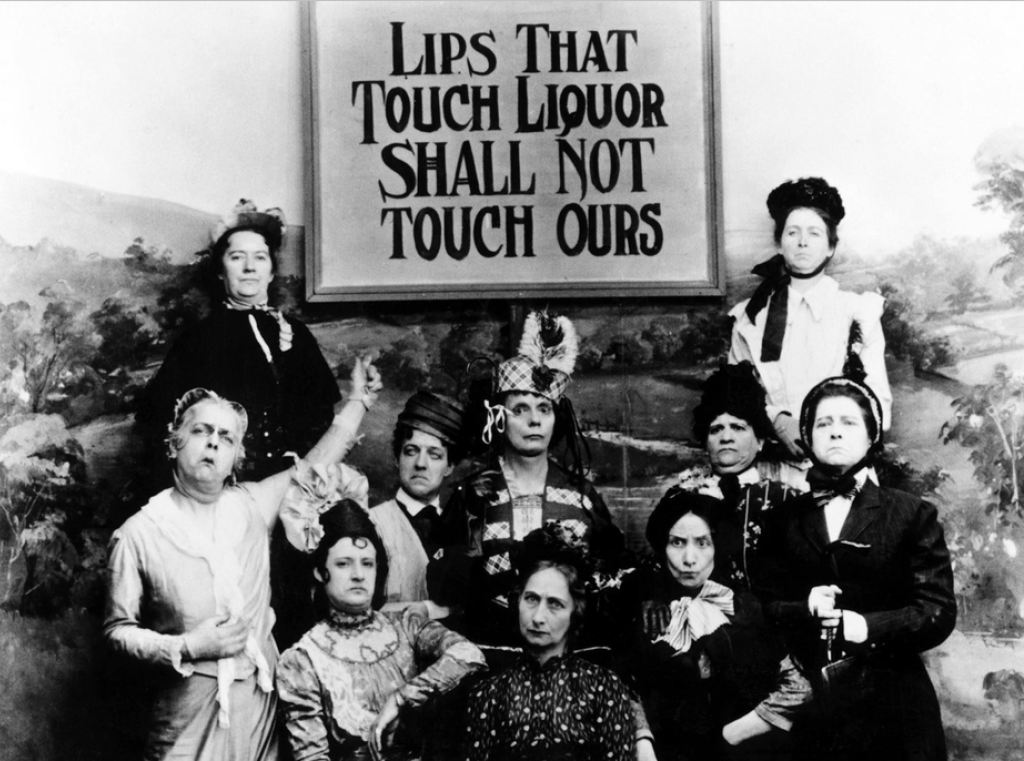
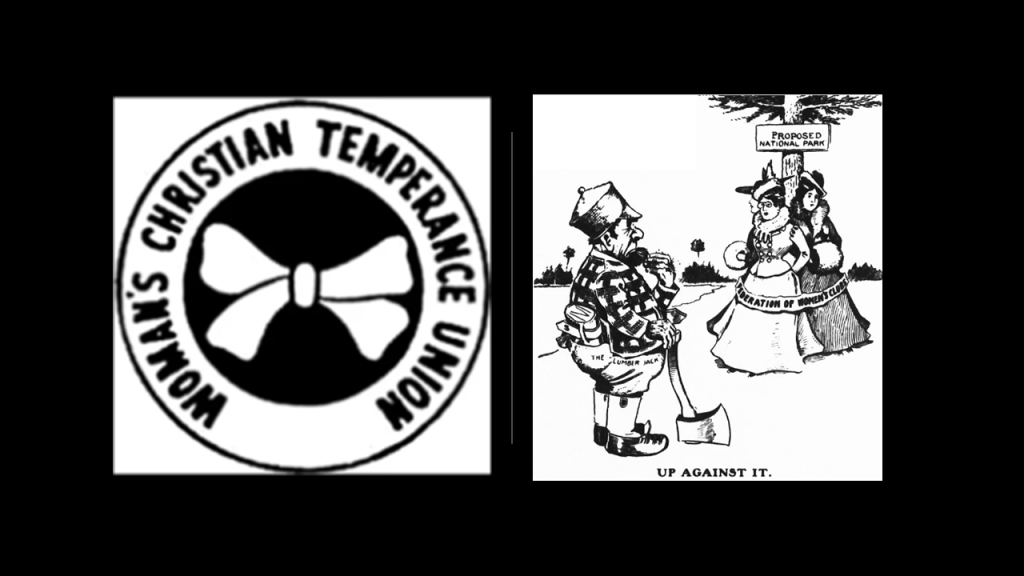
After this happened, she focused her career energies into the Women’s Temperance Movement, and she was involved in the founding of the Women’s Christian Temperance Union (WCTU), also in 1874, and was elected the first Corresponding Secretary.
The WCTU was among the first organizations of women devoted to social reform, playing an influential role in the Temperance Movement, supporting the 18th Amendment to the Constitution that established Prohibition, and influential in other social reform issues of the Progressive Era.
She was elected President of the National WCTU in 1879, and held this post until her death in 1898.
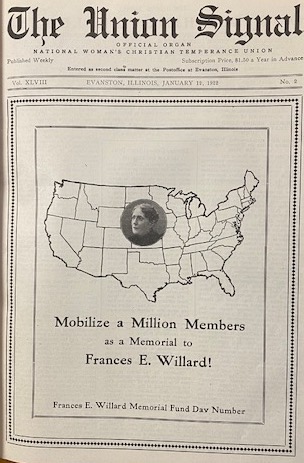
Frances Willard was also editor of the organization’s weekly newspaper, “The Union Signal” from 1892 to 1898.
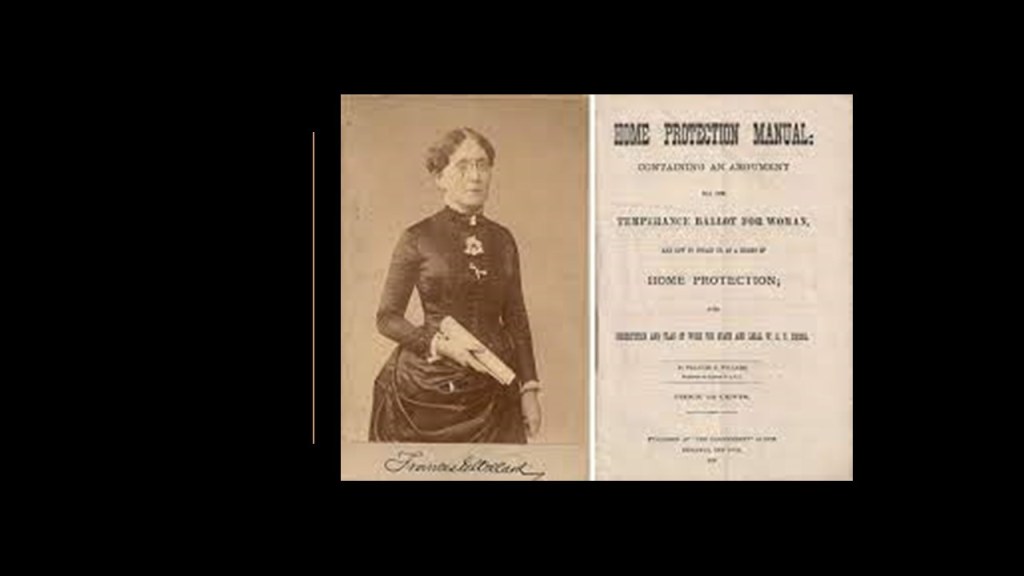
Willard argued for the right for women to vote, based on “Home Protection,” as President of the WCTU, as a part of which she argued that having the right to vote gave women a means of protection in and outside of the home against violent acts caused by intoxicated men.
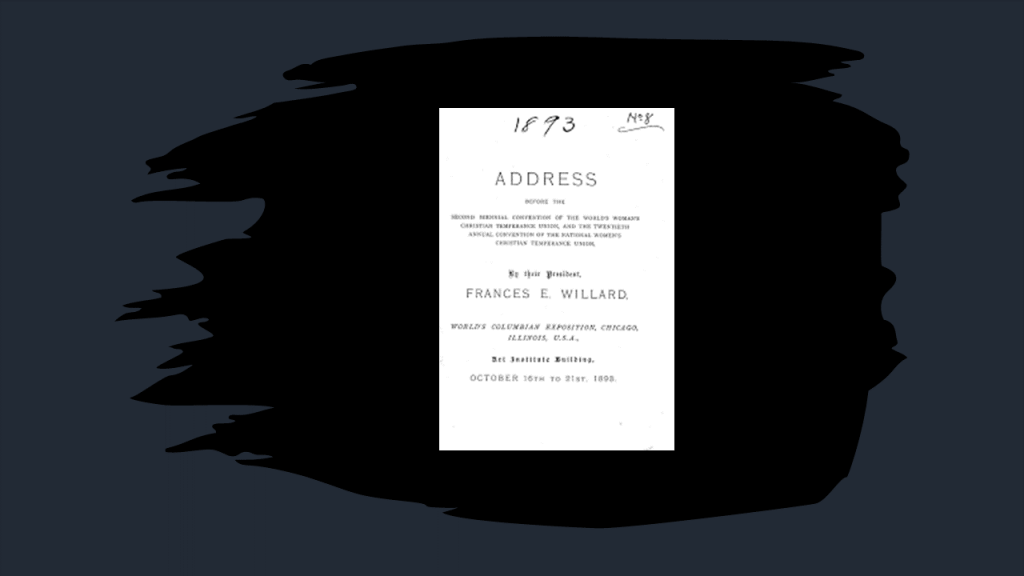
Frances Willard founded the World WCTU in 1888 and became its first President in 1893.
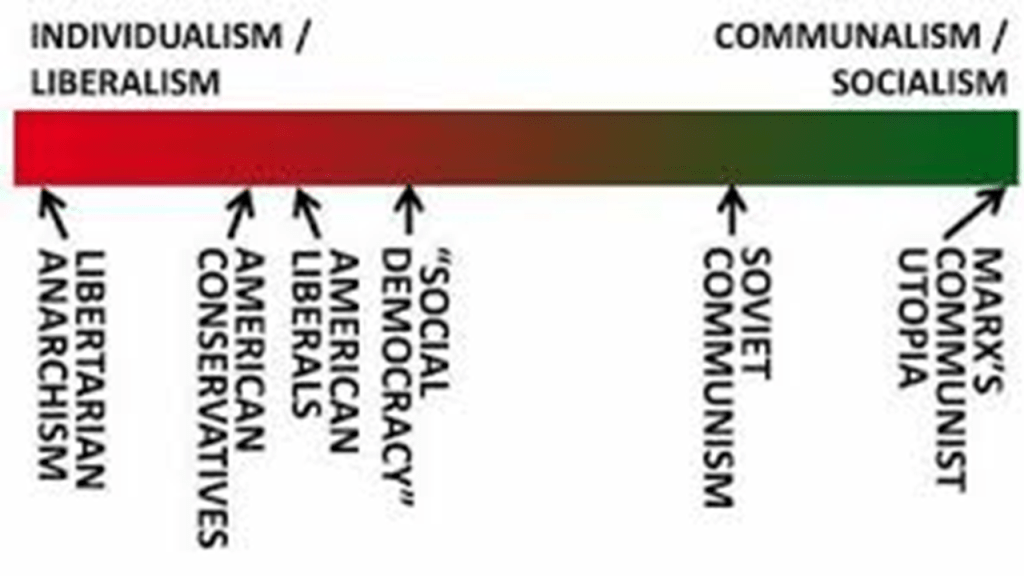
After 1893, Willard became a committed Christian Socialist, having been influenced by the Fabian Society in Great Britain.
The Fabian Society was a British Socialist organization whose purpose was to advance the principles of Democratic Socialism rather than by revolutionary overthrow.
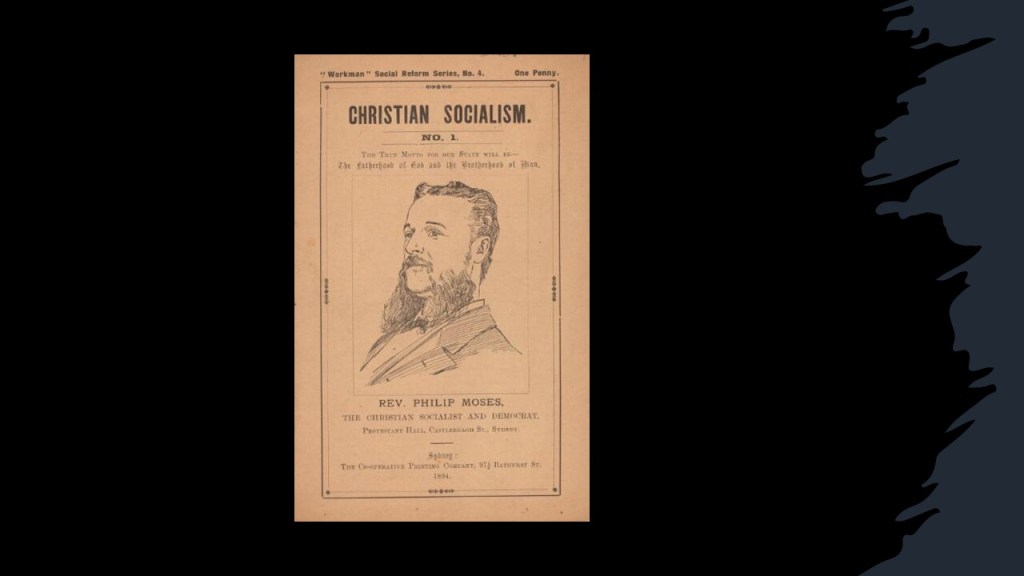
Christian Socialism was established as a religious and social philosophy that blended Christianity and socialism, advocating for left-wing politics and socialist economics from a Biblical perspective.
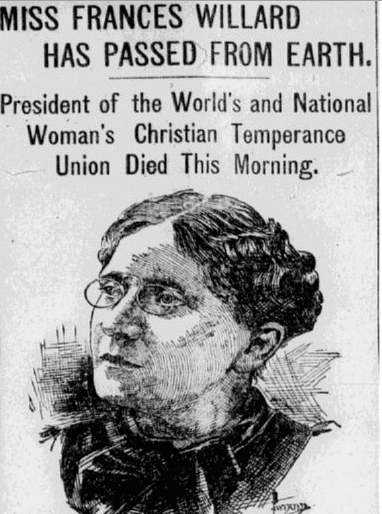
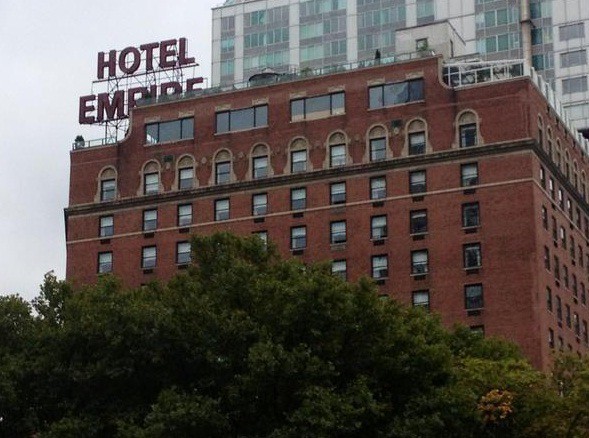
Frances Willard died in her sleep from influenza on February 17th of 1898 where she was staying at the Empire Hotel in New York City just prior to leaving for a European tour…
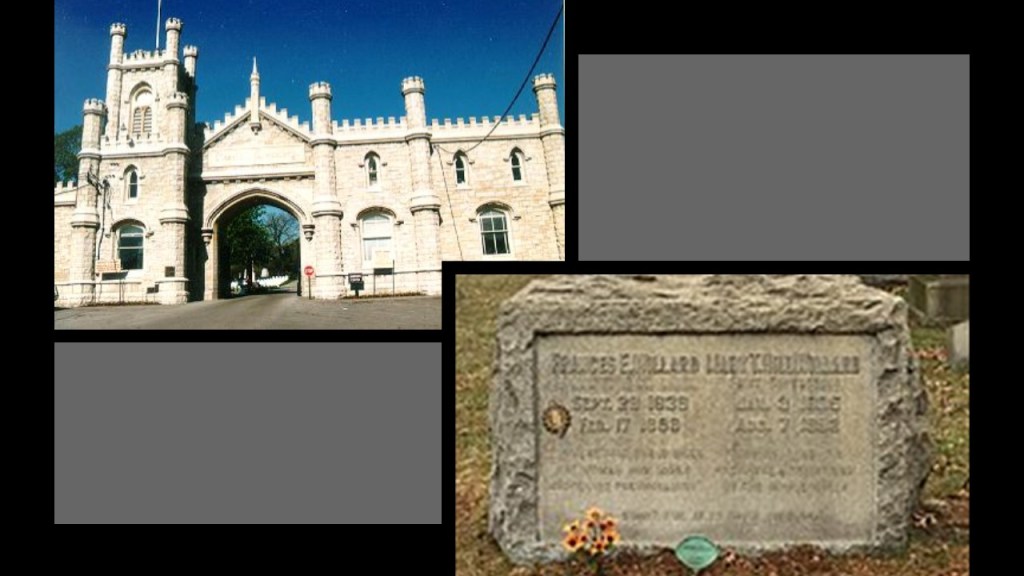
…and was buried in the Rose Hill Cemetery in Chicago, Illinois.
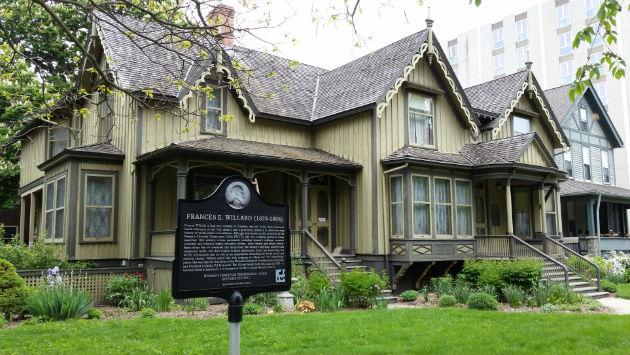
She bequeathed her home in Evanston to the WCTU, and it became her museum and the headquarters for the organization in 1900.
There are a couple things that stand out for me in Frances Willard’s life story.
One is her affiliation with something called “Christian Socialism,” which apparently was based on an organization that was modelled after a British Socialist organization whose stated purpose was to advance the principles of Democratic Socialism rather than by revolutionary overthrow.
So, it sounds like they were finding another way to advance the cause of socialism and communism around the world through the establishment of democratically-run socialist governments, versus by means of the violent overthrow of an existing government.
In other words, they decided to achieve the same outcome of overthrowing the existing government and economic system by vastly different means from straight-out revolutionary overthrow.
Another thing that I would like to point out is that I find the whole Temperance Movement to be extremely interesting from a social stand-point of those times
On the one hand, the Temperance Movement was called a social movement against the consumption of alcohol, and typically criticized alcohol consumption and emphasized alcohol’s negative effects on people’s health, personalities, and lives, and demanded the complete prohibition of it.
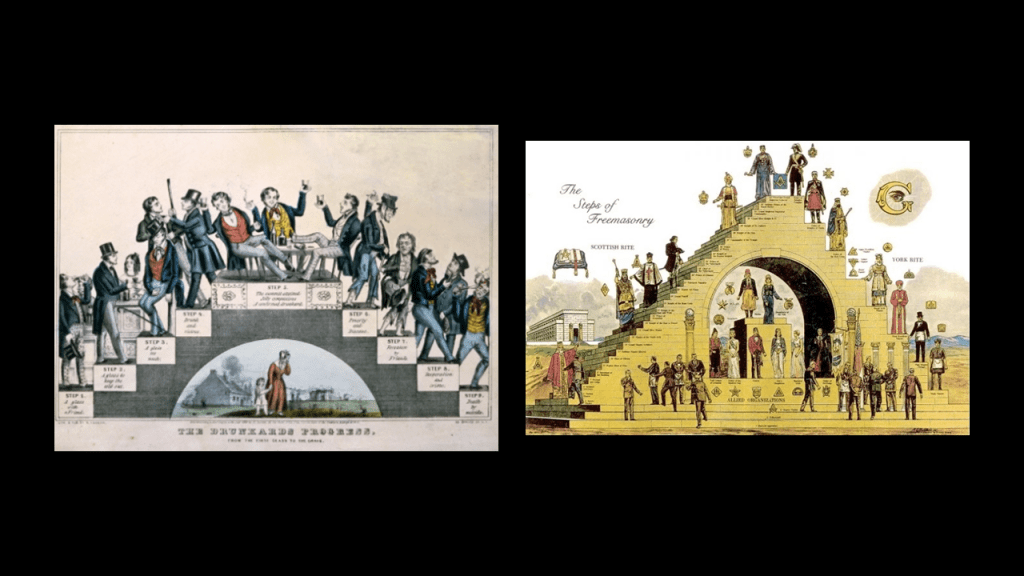
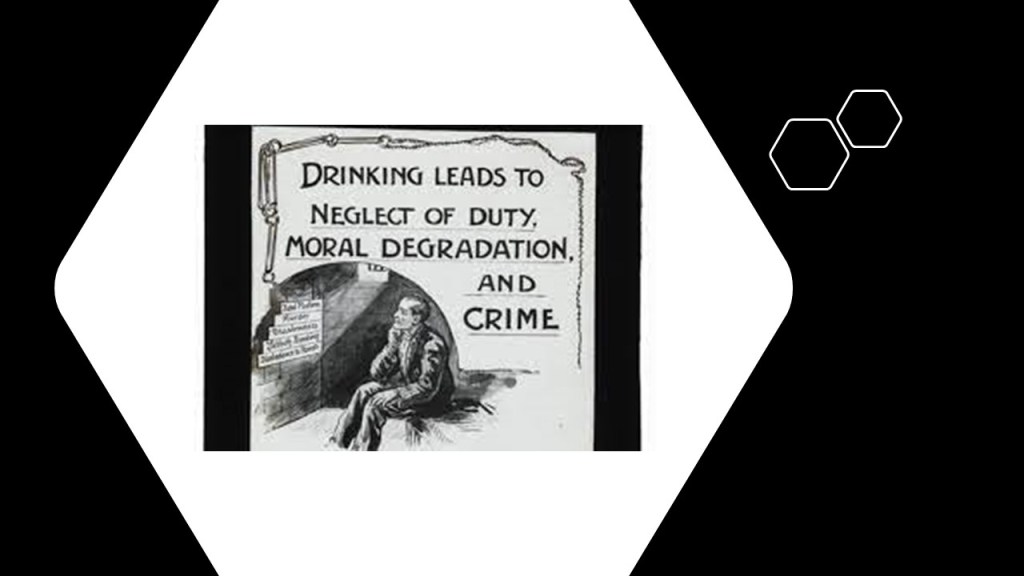
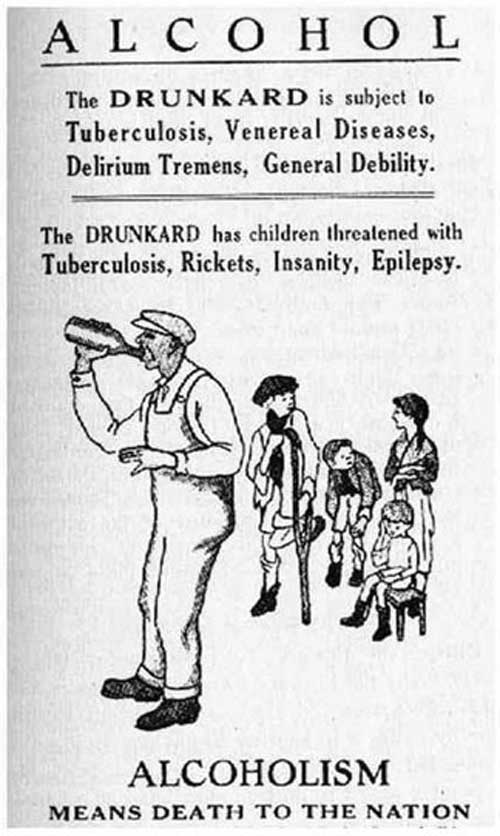
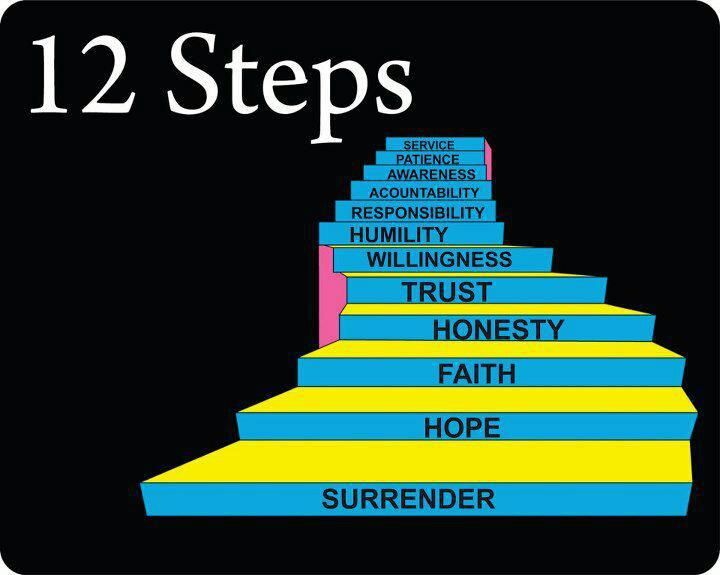
Notice how similar the Temperance Movement cartoon entitled “The Drunkard’s Progress” is on the left to the illustration of “The Steps of Masonry” on the right.
On the other hand, the alcoholic beverage industry was becoming well- established during this time period between 1830 and 1900, creating the juxtaposition of a culture that encouraged the profuse consumption of alcohol, and at the same time there was a counterforce within that same culture that not only criticized alcohol consumption, but that got involved in “charitable institutions” with stated missions of guiding the poor out of the impoverishment and crime coming from the problem of drinking too much alcohol.
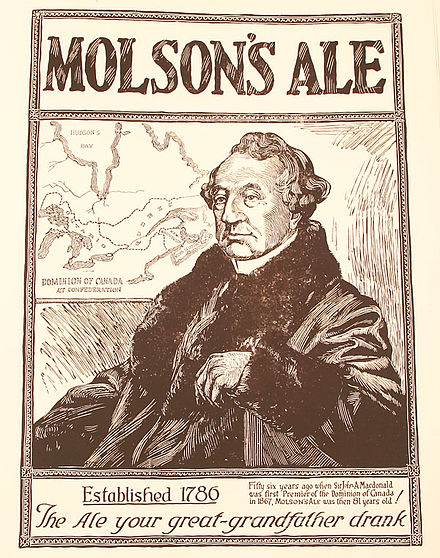
There has been an abundant supply of beer and hard liquor, starting at least as early as the late 18th-century, with people like John Molson in Montreal, whose business quickly grew into one of the larger ones in Lower Canada between 1788 and 1800, having sold 30,000 gallons, or 113,500-liters, of beer by 1791.
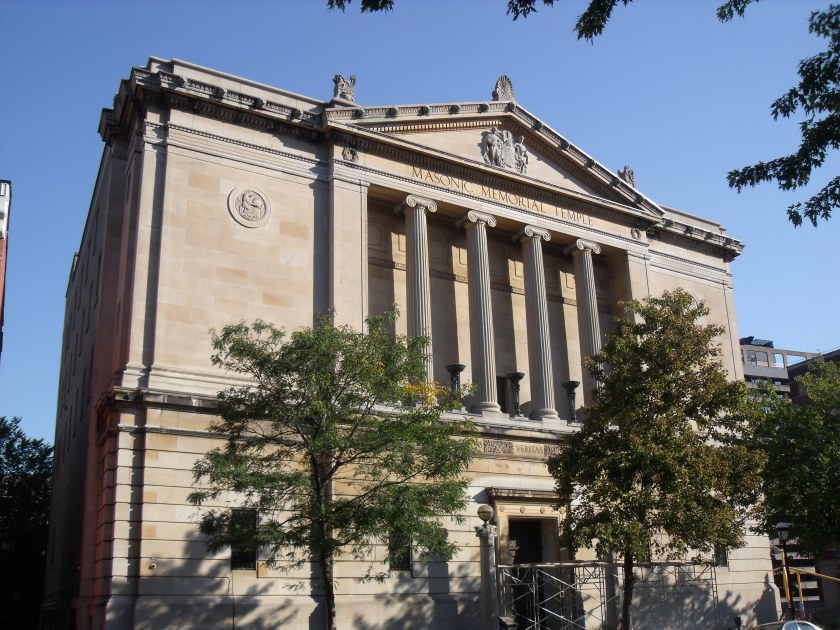
John Molson was also appointed the Provincial Grand Master of the District Freemasonic Lodge of Montreal by the Duke of Sussex in 1826, a position he held for five years before resigning in 1831.
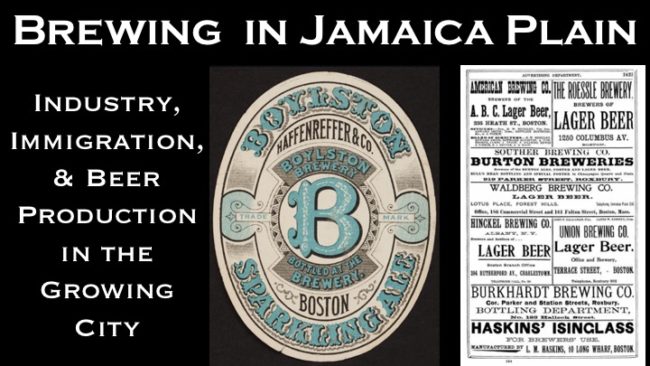
Here is one of countless examples of the ubiquitous brewing business in Jamaica Plain in Boston alone.
Jamaica Plain was the home to most of Boston’s thirty-one breweries prior to the outlawing of alcoholic beverages during the Prohibition Era starting in 1920.
The reasons given for the high number of breweries were: 1) the quality of the water from the local aquifer; 2) the cheap cost of land in the area after merging with Boston in 1868; and 3) the influx of German and Irish immigrants here with a taste for lager and ale.
Yet, invariably the drinking problems have always been squarely placed on individuals and their addictions, instead of the never-ending supply produced by the alcoholic beverage industry.
Heck, even “Alcoholics Anonymous” has a step reference, like “The Drunkard’s Progress” and “The Steps of Masonry,” with its “Twelve-Step Program.”
Next, I am going to take a look at Maria Sanford.
She represents Minnesota in the National Statuary Hall.
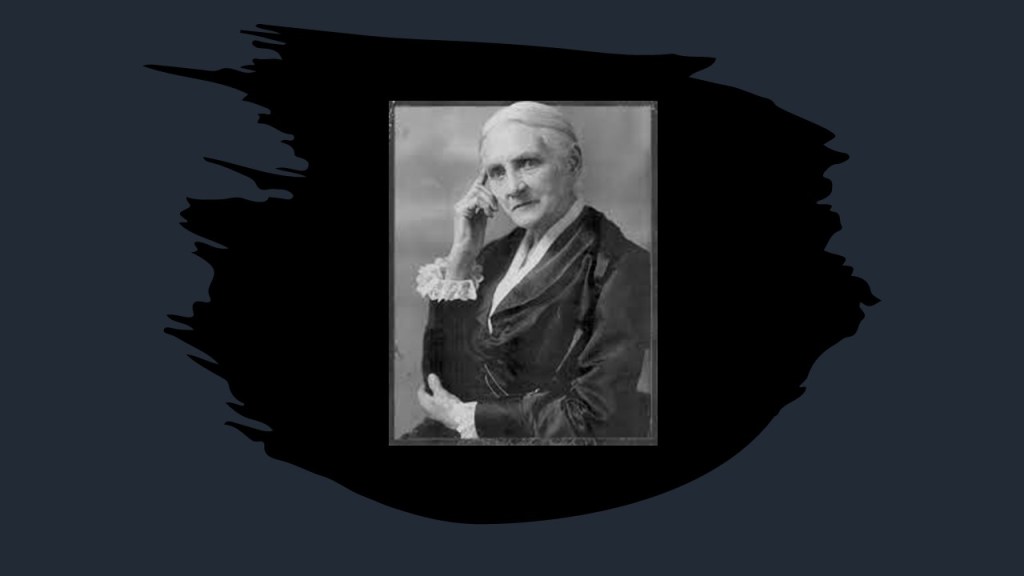
Maria Sanford was an American educator, and one of the first female professors in the United States.
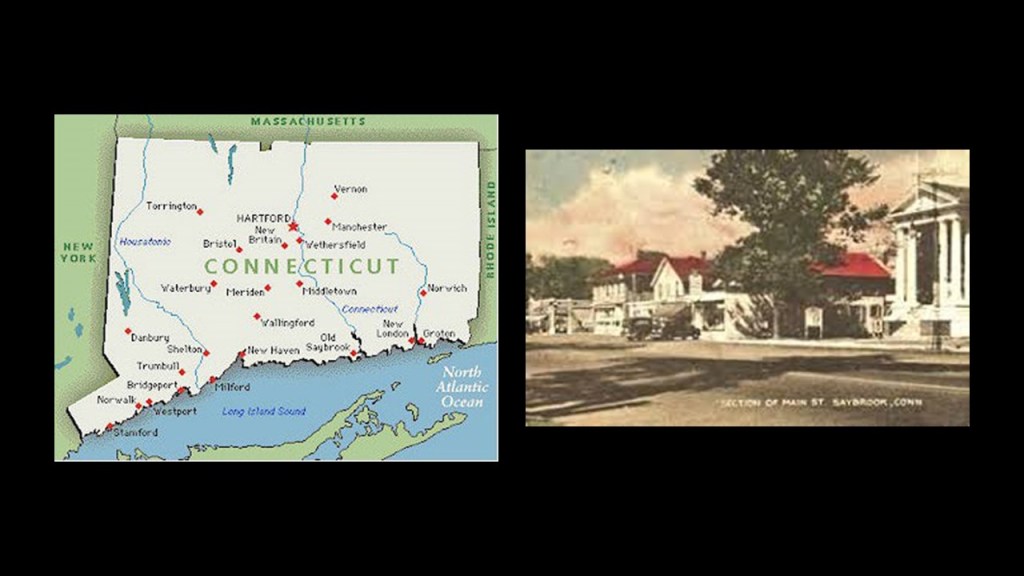
Maria Sanford was born in Saybrook, Connecticut, in December of 1836.
Old Saybrook is located where the Connecticut River meets Long Island Sound.
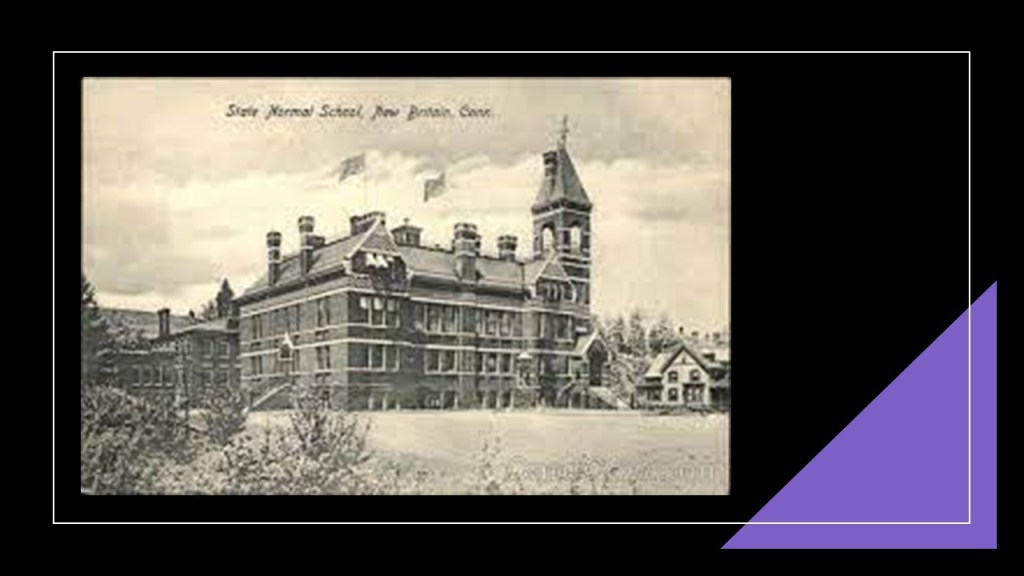
She received her education from the New Britain Normal School, the first training school for teachers in Connecticut, and the sixth in the United States.
Today it is Central Connecticut State University.
After graduating from the New Britain Normal School with honors in 1855, she taught in various schools around Connecticut for the next twelve years.
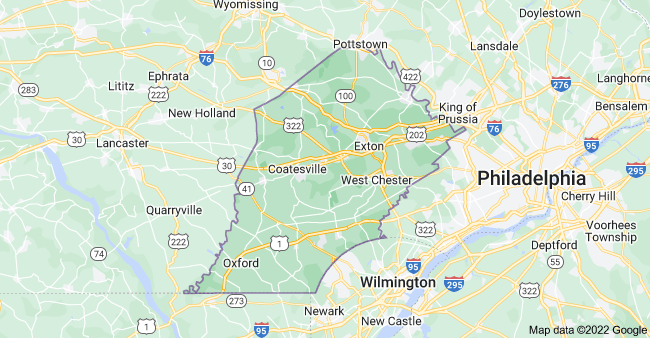
She moved to Pennsylvania in 1867, and became a principal and superintendent of schools in Chester County.
Known as an innovator, she conducted regular meetings of teachers and demonstrated new teaching methods.
She became a Professor of History and English at Swarthmore College in Pennsylvania from 1871 to 1880.
Swarthmore College was founded by Quakers in 1864, which would have been one year before the end of the American Civil War, and the first classes offered in 1869.
Sanford was invited to become a Professor at the University of Minnesota by its President, Dr. William Watts Folwell, and she joined the faculty there in 1880 as a Professor of Rhetoric and Elocution, where she also lectured in literature and art history, a position she held until her retirement in 1909.
She was a leading voice outside of academia.
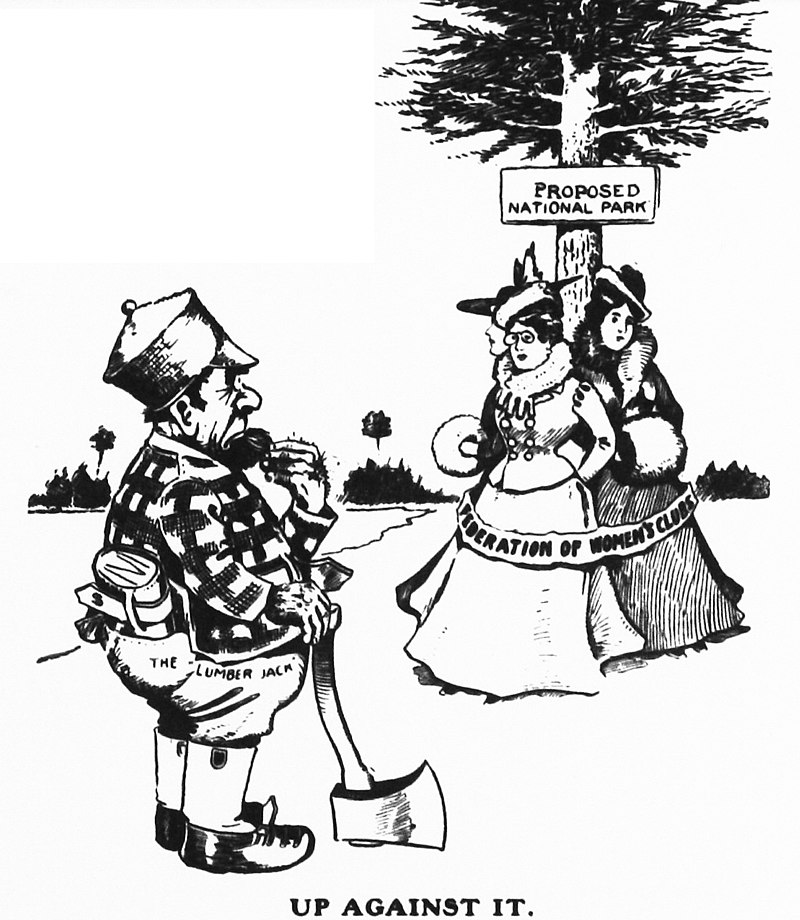
Among other things, she was an advocate for the conservation and beautification of Minnesota for the cause of the Chippewa National Forest from within the Minnesota Federation of Women’s Clubs, along with fellow clubwoman and forest conservationist Florence Bramhall…
Sanford reached out to her community and to the nation with the power of her speeches, travelling throughout the United States delivering more than 1,000 patriotic speeches.
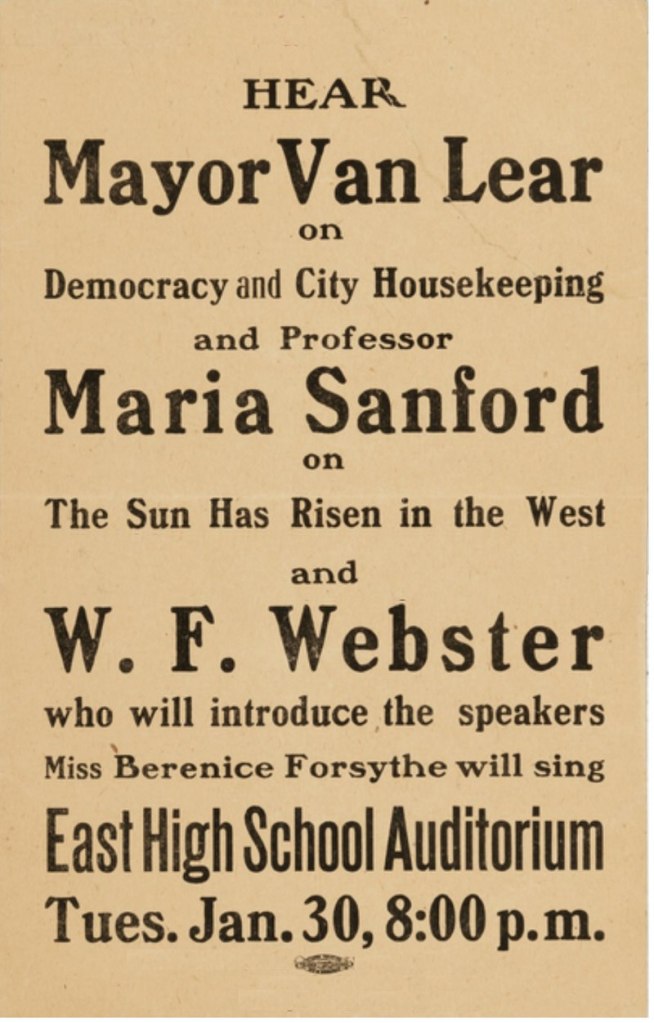
In 1917, she delivered a speech, along with the Mayor of Minneapolis at the time Thomas Van Lear, on good government and women’s suffrage.
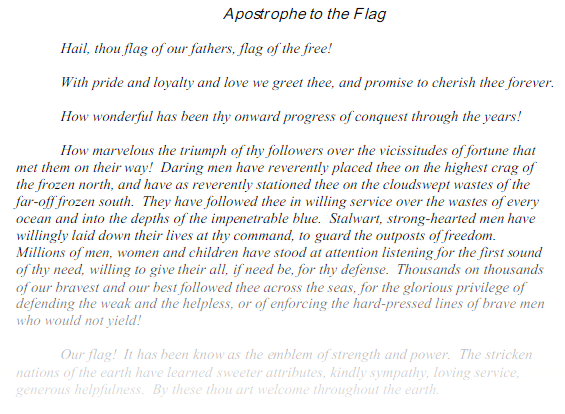
She delivered her most famous speech to the Daughters of the American Revolution Convention in April of 1920, entitled “An Apostrophe to the Flag.”
But not only did she give speeches, she took on a highly active role in the public sector, including, but not limited to, becoming the head director of Northwestern Hospital and serving as president of the Minneapolis Improvement League.
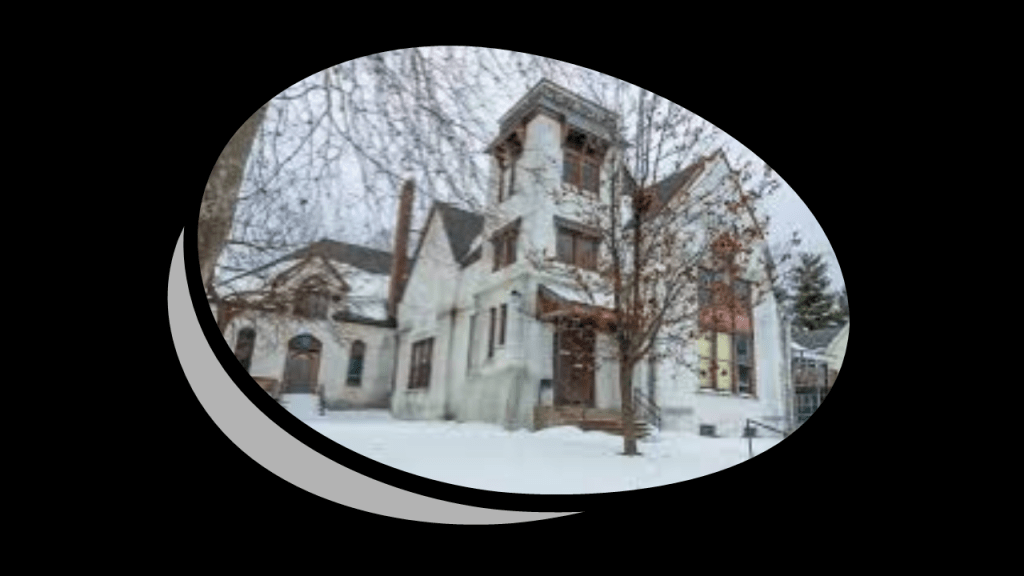
The University of Minnesota was said to have constructed Sanford Hall as a women’s dormitory in 1910 in honor of Maria Sanford.
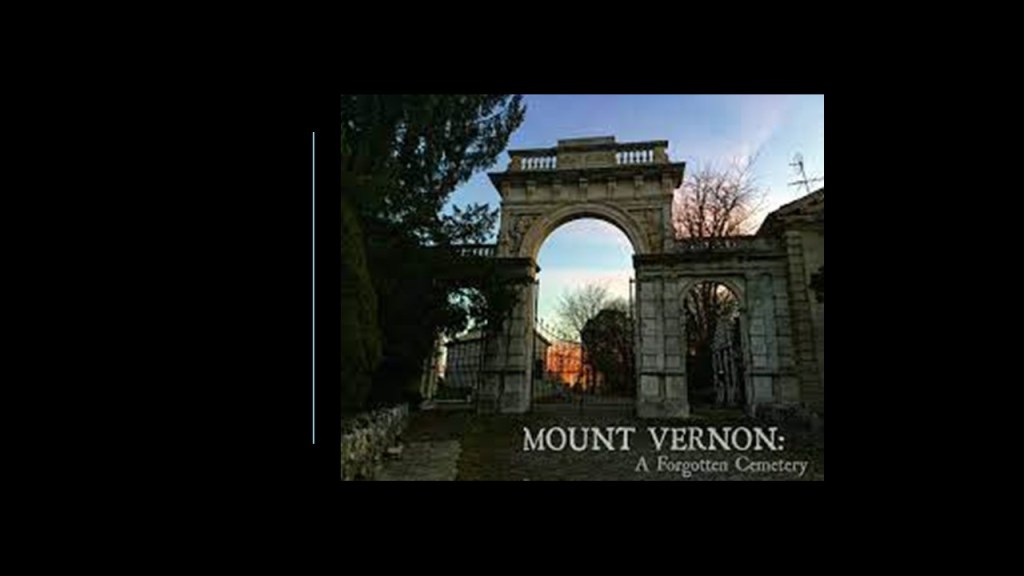
Maria Sanford died on April 21st of 1920 in Washington, DC, and was buried in Philadelphia’s Mount Vernon Cemetery.
We are told that for months after Sanford’s death, she was so beloved in Minnesota that gatherings in her memory were held at the University of Minnesota and her home church Como Congregational.
As mentioned at the beginning of this post, I am bringing forward unlikely pairs of historical figures who are represented in the National Statuary Hall who have things in common with each other.
For one, both women were very well-educated for their day, with both receiving an advanced education, with Frances Willard attending the Milwaukee Normal School & the North Western Female College, and Maria Sanford attending New Britain Normal School, the first training school for teachers in Connecticut.
Both women went into the field of Higher Education, with Frances Willard becoming involved in College Administration at the Evanston College for Ladies, which later became the Women’s College of Northwestern University; and Maria Sanford teaching at the college -level at both Swarthmore College in Pennyslvania and the University of Minnesota.
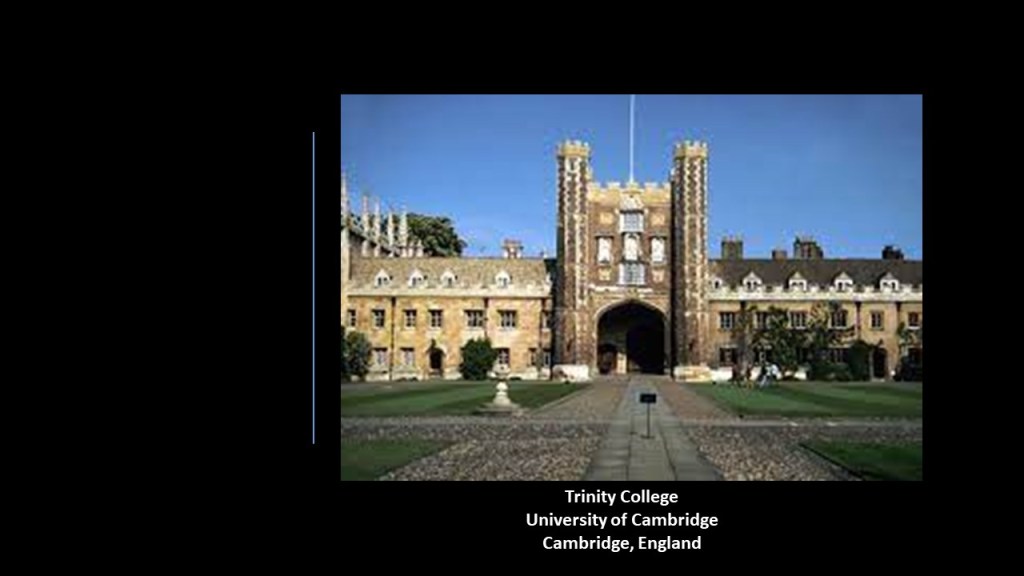
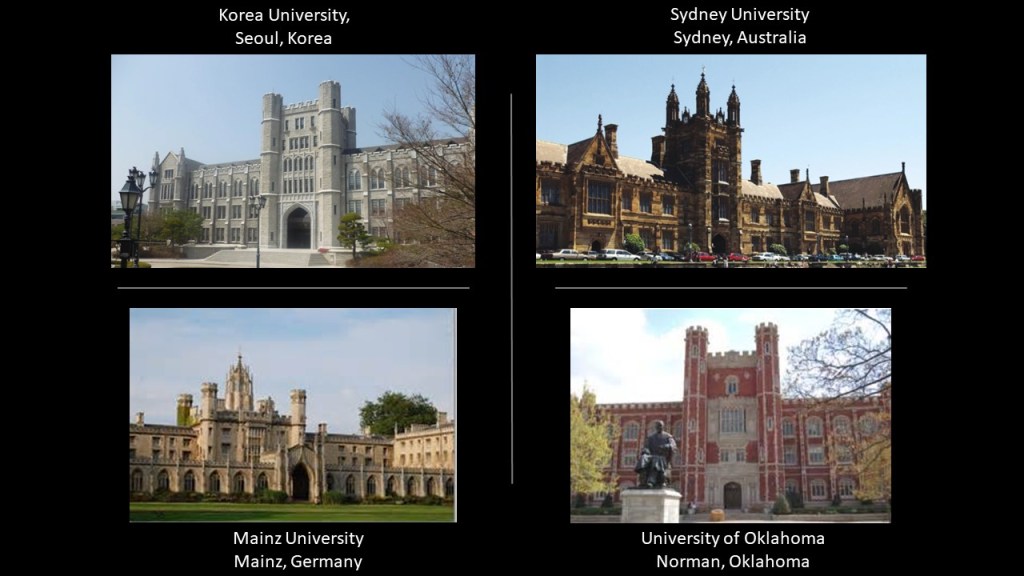
Just want to make note of the beautiful Old World architecture seen at all the schools these ladies were connected with.
And both women became leading voices outside of academia, with Frances Willard eventually becoming an International leader in the Women’s Christian Temperance Union (WCTU) in 1893, the same year she became a committed Christian Socialist; and Maria Sanford took on the causes of things like state conservation issues, and went on to become a nationally-known speaker praised for her powerful speeches.
These two women apparently were well-known influencers of their time in key areas involving women, social issues and politics.
But they both definitely fall in the category of obscure historical figures.
I myself would never had heard of them had I not been nosing around the National Statuary Hall.
I am going to just keep putting out there what I am finding in the National Statuary Hall at the U. S. Capitol building in Washington, DC, where in many cases, obscure historical figures like these two ladies were honored, but with their lives and times telling a different kind of story than what we normally hear about.
I am going to focus primarily on the historic trolley amusement parks of Brooklyn’s Coney Island in this post because there’s quite a bit of hidden history related to the historical reset to be found in this location.
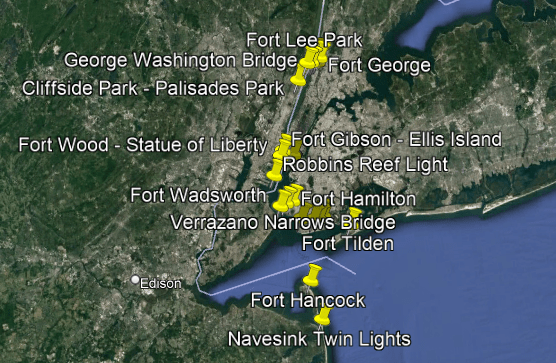
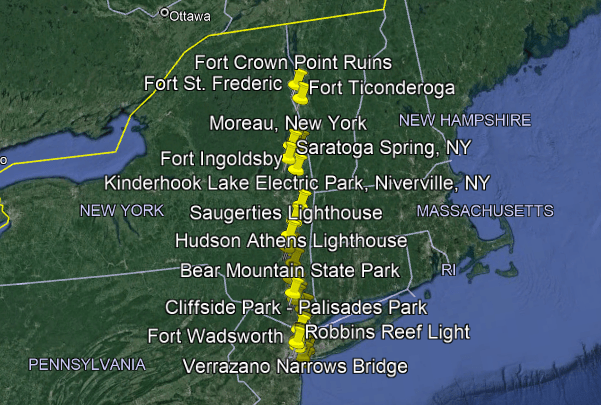
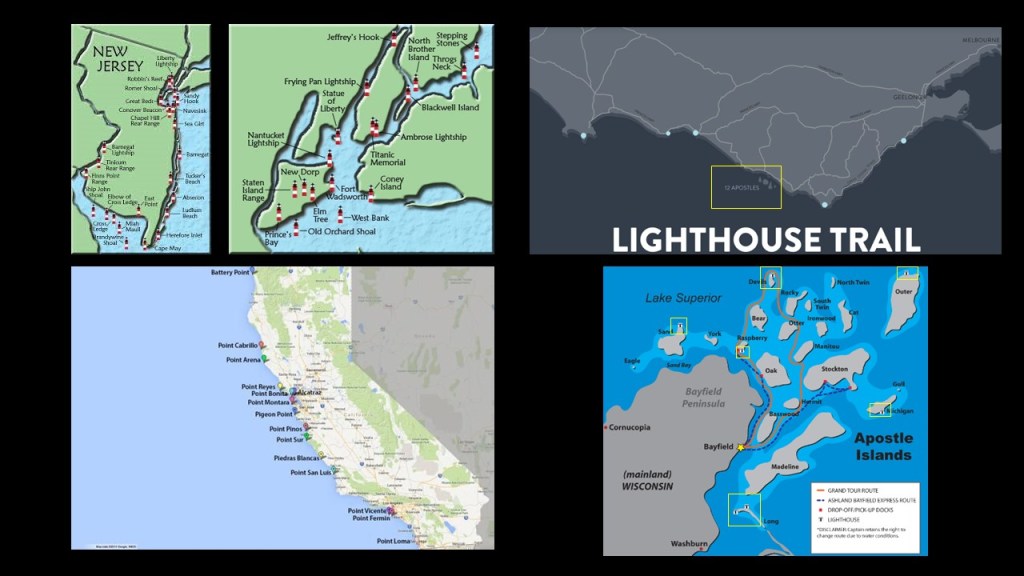
This represents just a small fraction of the historic trolley parks, star forts and lighthouses once found in the Upper and Lower New York Bays and the Hudson River Valley, which I detailed in a previous post called “Star Forts, Gone-Bye Trolley Parks, and Light Houses of New York’s Hudson River Valley & New York Bays.”
Just in the distance ALONE between the entrance to the lower New York Bay at the Atlantic Ocean to the locations around the George Washington Bridge, I found: eleven star forts that are in pairs and/or clusters; five major historic trolley amusement parks; and eleven lighthouses.
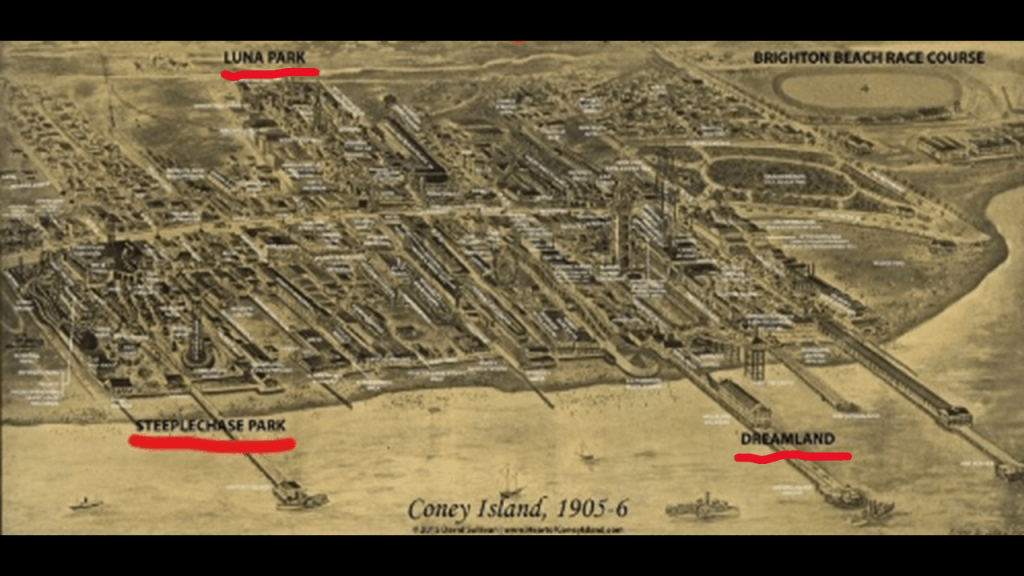
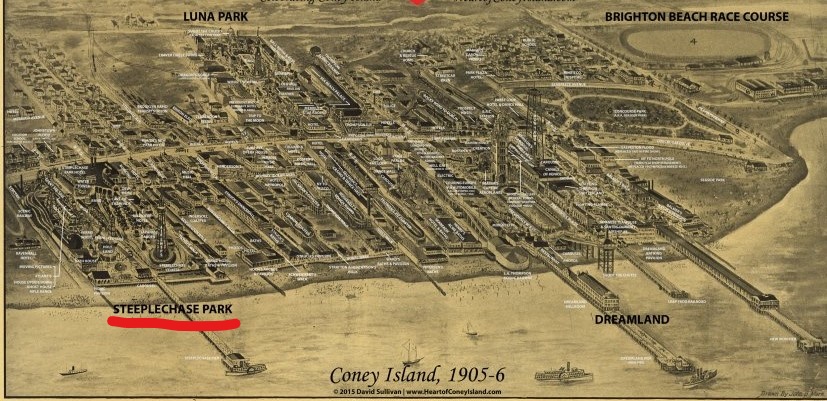
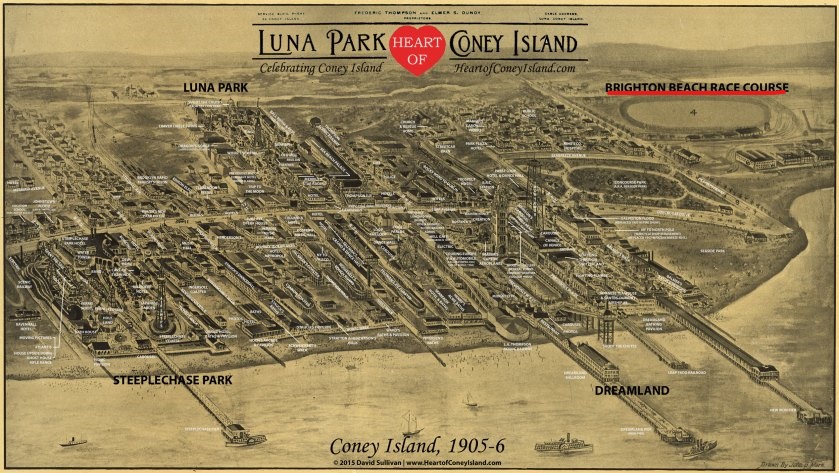
There were three historic trolley amusement parks on Coney Island in the New York City Borough of Brooklyn, located right next to each other – Steeplechase Park, Luna Park and Dreamland.
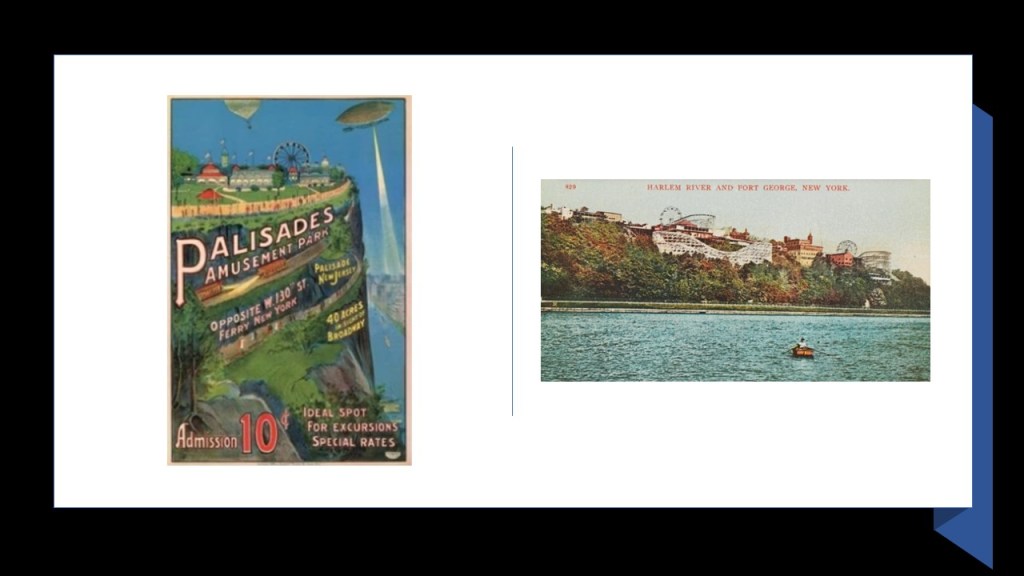
For informational purposes, the other two of the five historic trolley amusement parks in the Upper New York Bay were Palisades Park near Fort Lee, New Jersey, on the Hudson River, and Fort George in Upper Manhattan on the Harlem River.
This is what we are told about the historic trolley amusement parks of Brooklyn’s Coney Island.
First, Steeplechase Park.
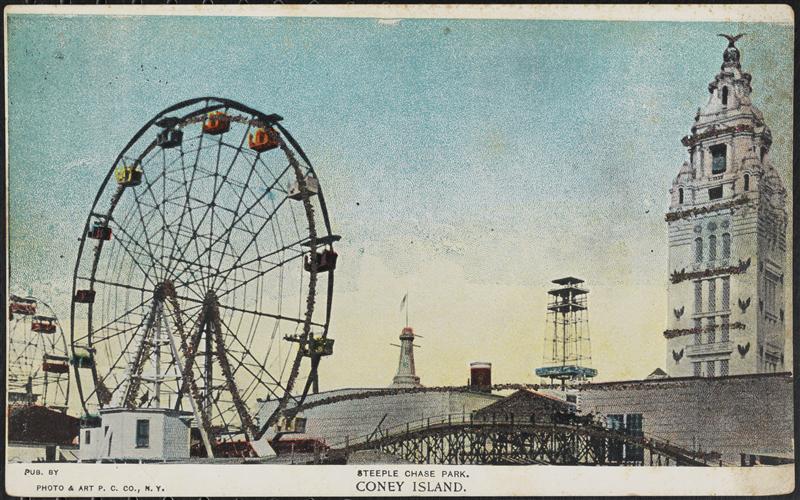
We are told that Steeplechase Park was created by entrepreneur George Tilyou in 1897.
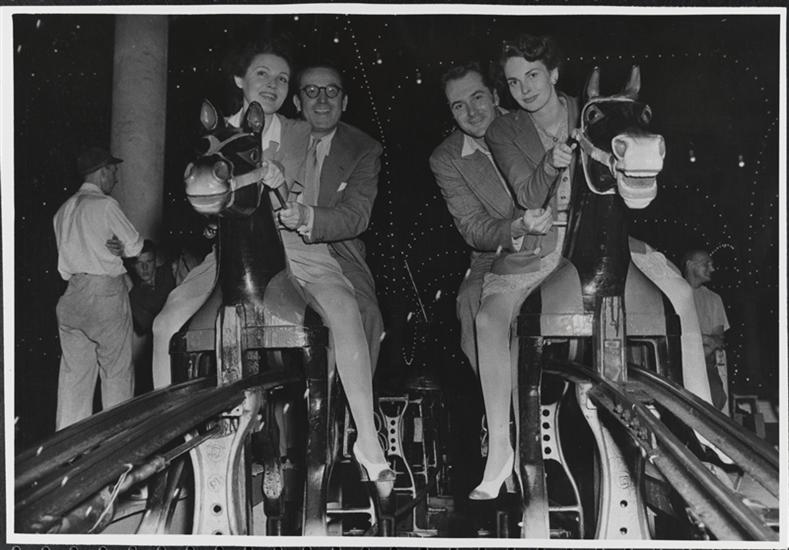
He bought and improved the Steeplechase Horses attraction, which featured mechanical horses pulled along metal tracks.
The owner George Tilyou adopted a “Funny Face” mascot depicting a smiling man with several dozen teeth, nicknamed “the Tilly,” as the icon for his park.
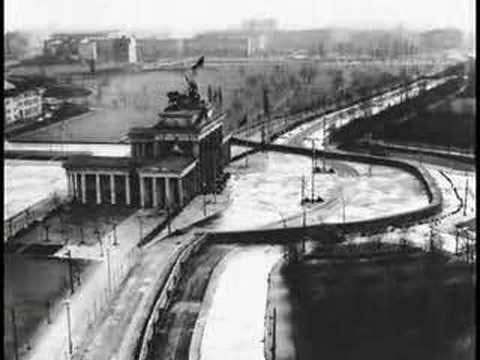
The entrance to Steeplechase Park had a grand archway, on top of which were the statues of four horses.
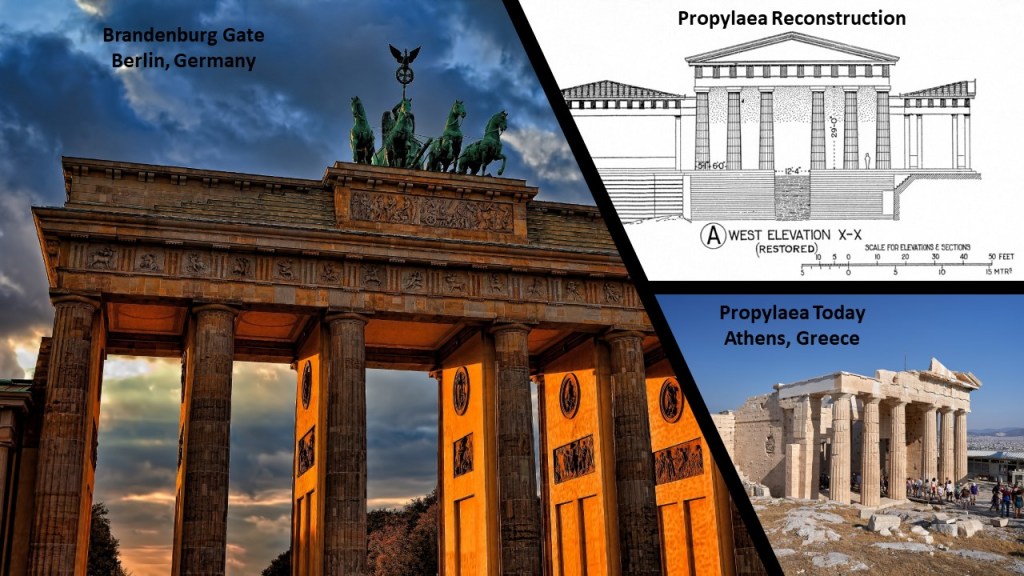
Interestingly, the famous Brandenburg Gate in Berlin was also topped by four-horses.
Hmmm.
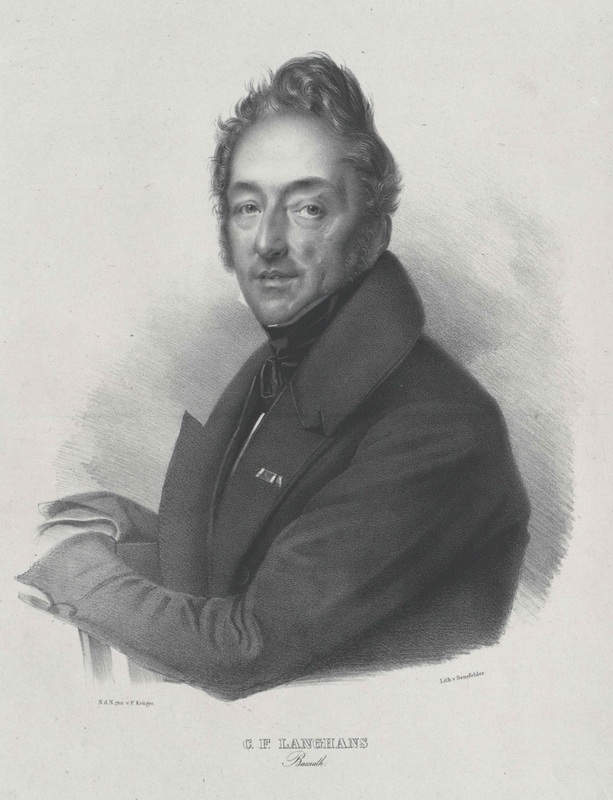
The Brandenburg Gate was said to have been designed by Carl Gotthard Langhans the Elder, who was inspired by the Propylaea of the Acropolis in Athens, and built between 1788 and 1791.
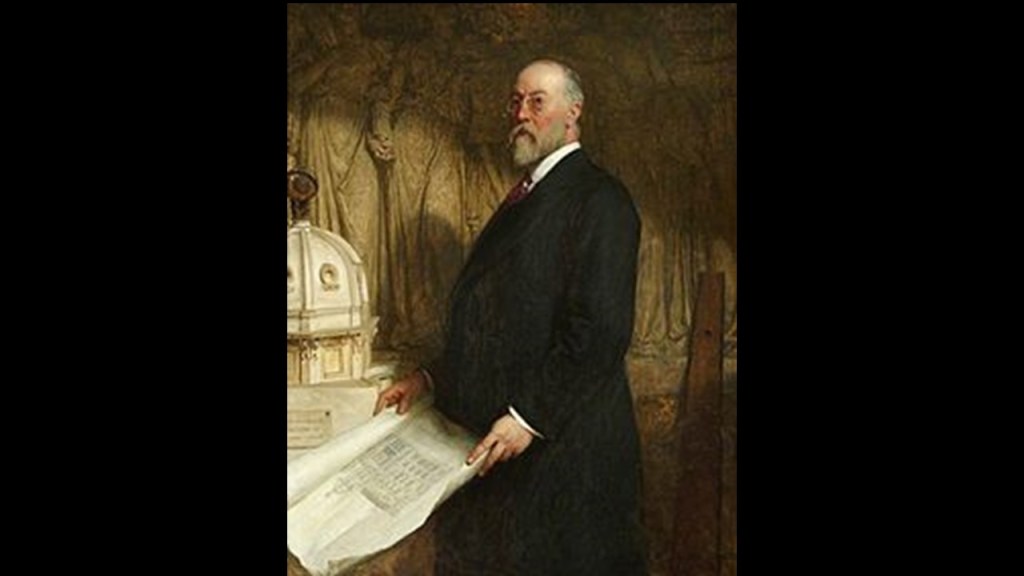
Carl Gotthard Langhans comes down to us in the historical narrative as a Prussian Master Builder and Royal architect in the Neoclassical-style, who was actually not trained as an architect, but instead educated primarily as a lawyer and mathematician.
His best-known work was said to be the Brandenburg Gate, but he was also credited with many churches, palaces, grand houses, interiors, city gates, and theaters.
We are told Carl Gotthard Langhans gained his architectural prowess from studying things like the ancient texts of the Roman architect Vitruvius.
Back to Steeplechase Park on Coney Island.
The park included at one time over 50 attractions on its midway alone…
…and Tilyou was said to have been inspired to build a Ferris Wheel after having seen the one at the 1893 Chicago World’s Fair on his honeymoon.
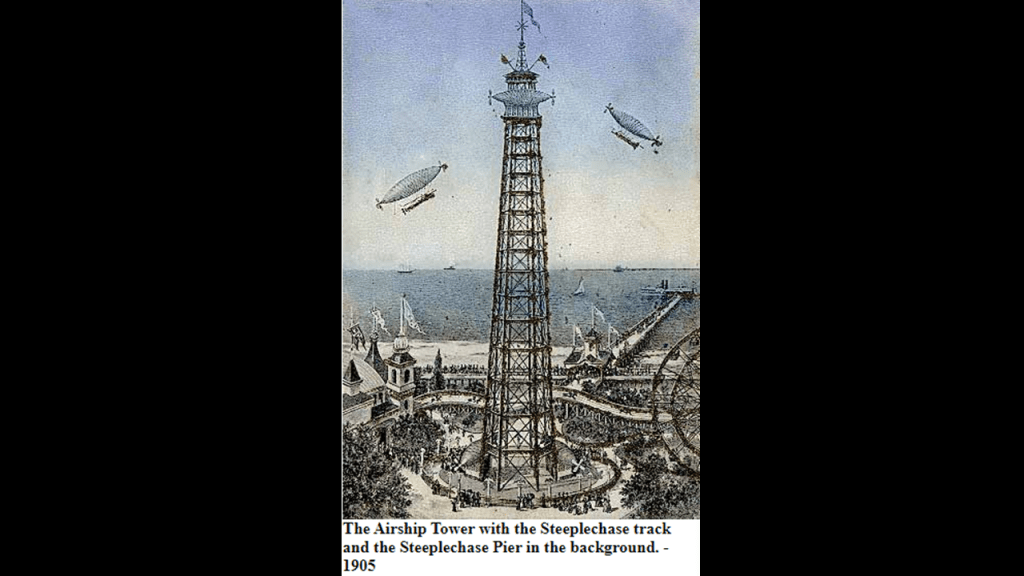
Other early noteworthy Steeplechase Park rides included the revolving Airship Tower, pictured here circa 1905…
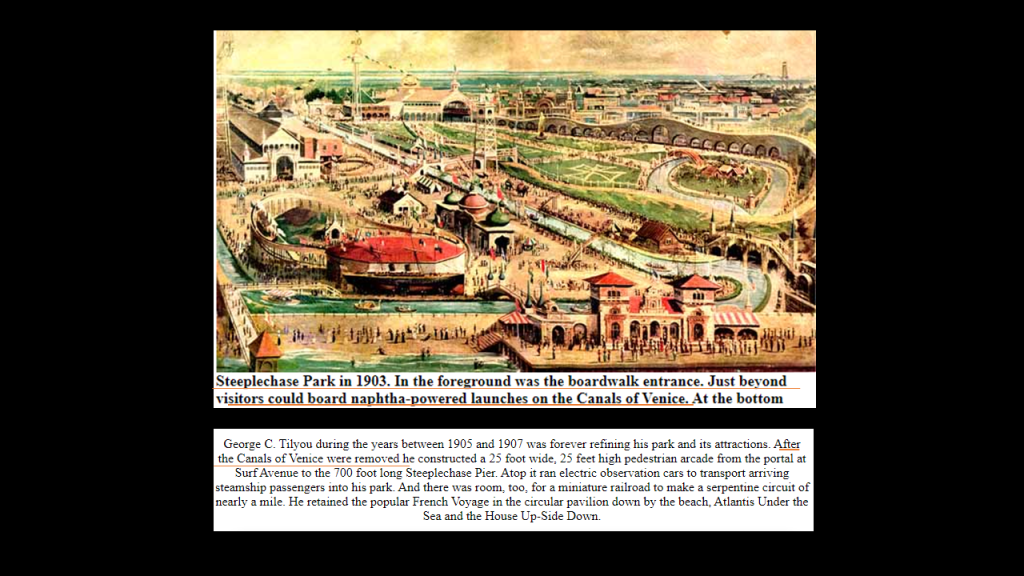
…boats powered by naphtha, a liquid petroleum-product used as a fuel, cruising the “Canals of Venice,” a ride which he had removed sometime between 1905 and 1907…
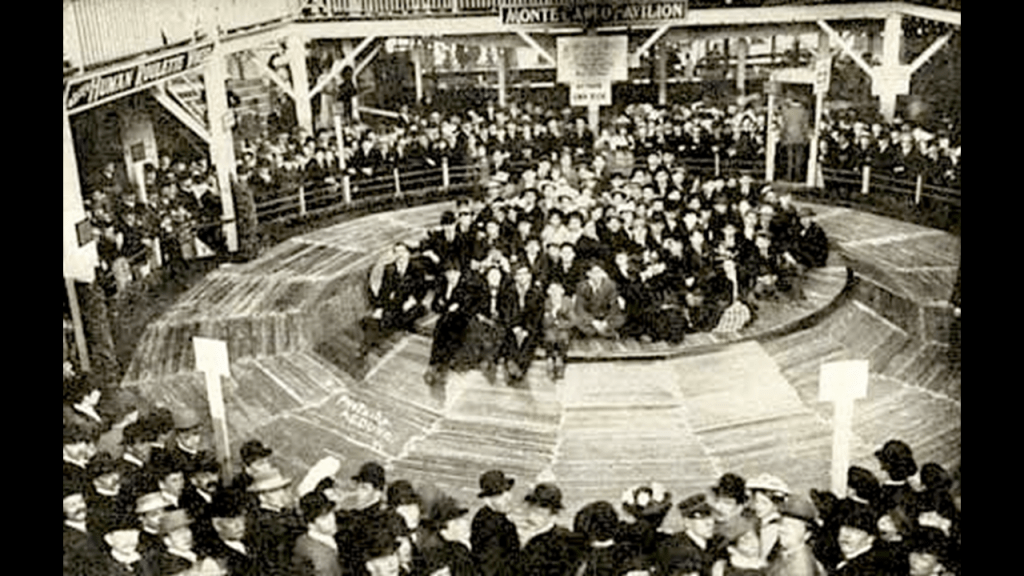
…and the “Human Roulette Wheel,” which featured a giant , polished spinning disc that riders would sit in the middle of and slam into each other as it spun faster-and-faster.
In Steeplechase Park’s history, from its opening in 1897 and its closing in 1964, there were things like fires, rebuilding, rides added, and so on.
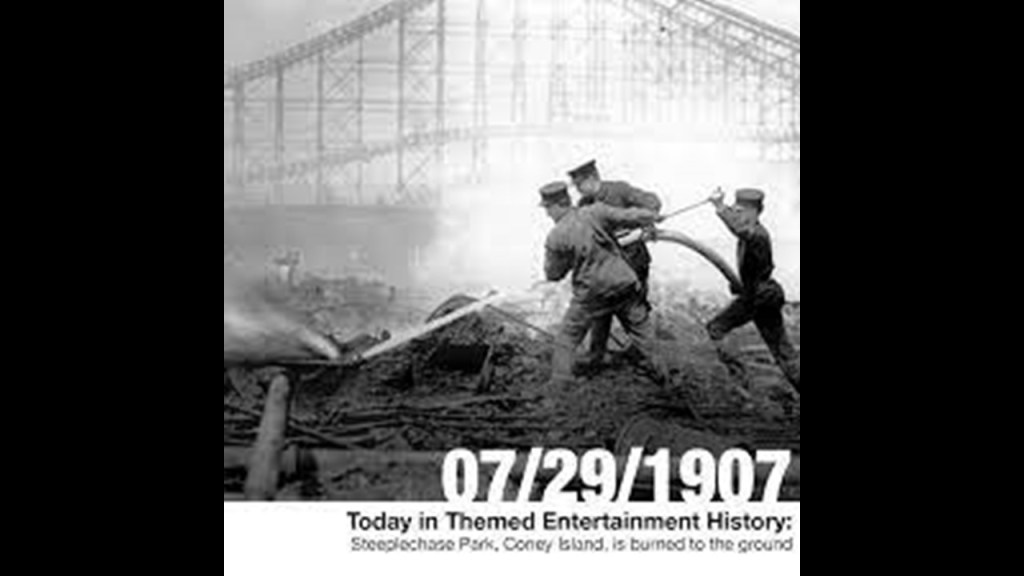
Like, for example, the 1907 fire.
This quick-spreading fire was alleged to ahve started from a carelessly-thrown, still-lit cigarrette into a garbage can at the “Cave of the Winds” attraction, and was finally extinguished two-hours later after having destroyed nearly everything within Steeplechase Park.
Remarkably, George Tilyou’s home at the corner of Steeplechase Park was spared due to the extra effort of fire-fighters on the scene.
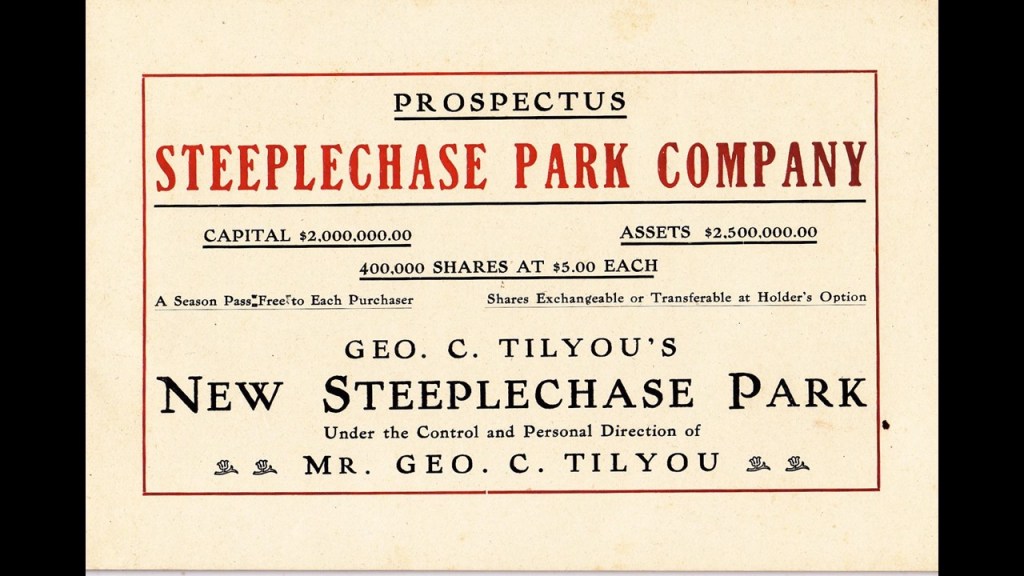
Undaunted, George Tilyou vowed to rebuild Steeplechase Park, and to raise the funds needed to do this, sold 400,000 shares at $5-each, and threw in a season pass for each purchaser on top of that!
We are told the park partially reopened in April of 1908, and the reconstruction was said to be finished by 1909.
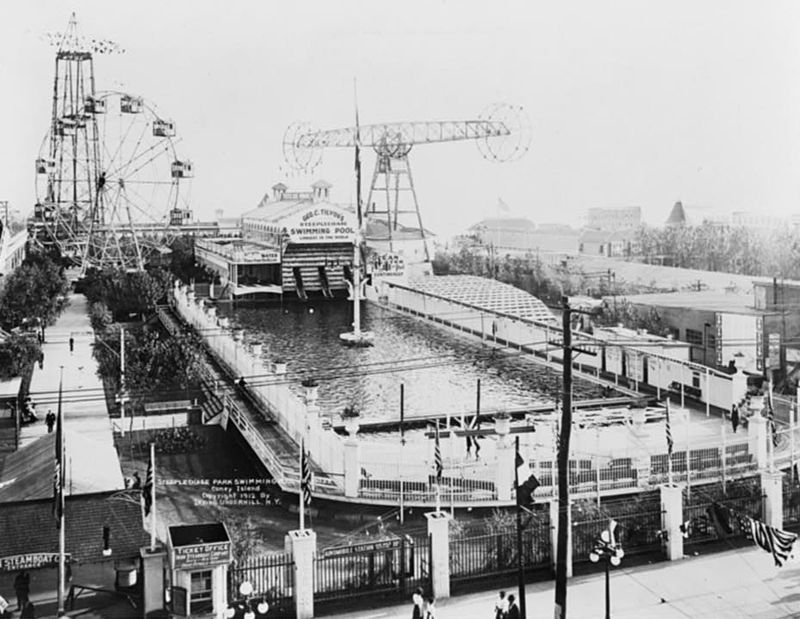
Here is a 1912 photo of Steeplechase Park, with the swimming pool front-and-center.
George Tilyou died in 1914, and Steeplechase Park remained in the Tilyou family until its closure in 1964, and over the years started to go into decline at different times for different reasons, but especially so with the onset of the Great Depression, which started in 1929 and resulted in a significant decline in park attendance.
The land of the former amusement park today is Maimonades Park, the location of a minor league baseball stadium.
The only remaining structure from Steeplechase Park is the defunct, but brightly-lit-up at night even today, Parachute Jump.
Next, I am going to take a look at Luna Park.
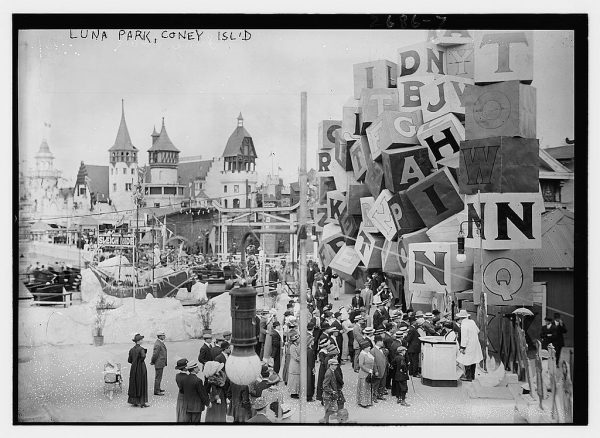
Luna Park at Coney Island opened in 1903.
It was said to have replaced Sea Lion Park that was operated by a man named Paul Boyton between 1895 and 1902, the first enclosed and permanent amusement park in North America.
Boyton was credited with being the first person to charge an admission fee to a large enclosed area containing multiple amusement rides and activities.
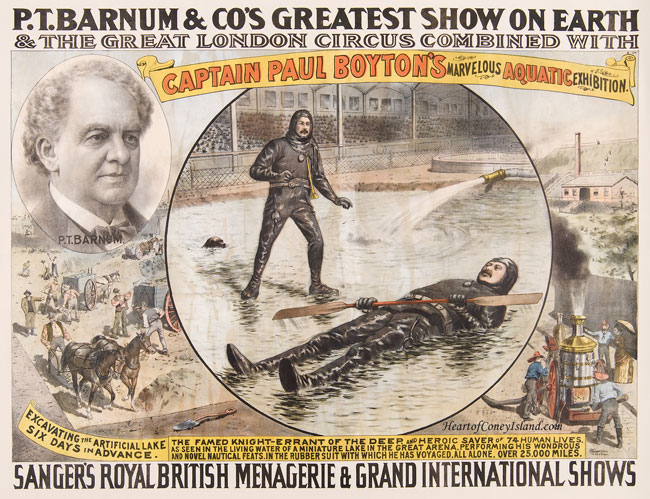
The so-named Captain Paul Boyton was a world-famous back-in-the-day aquatic daredevil and showman who travelled the world’s rivers in an inflatable rubber suit for “P. T. Barnum & Company’s Greatest Show on Earth & the Great London Circus.”
Here are some noteworthy historical side-notes about P. T. Barnum.
He was an early showman, businessman, and politician.
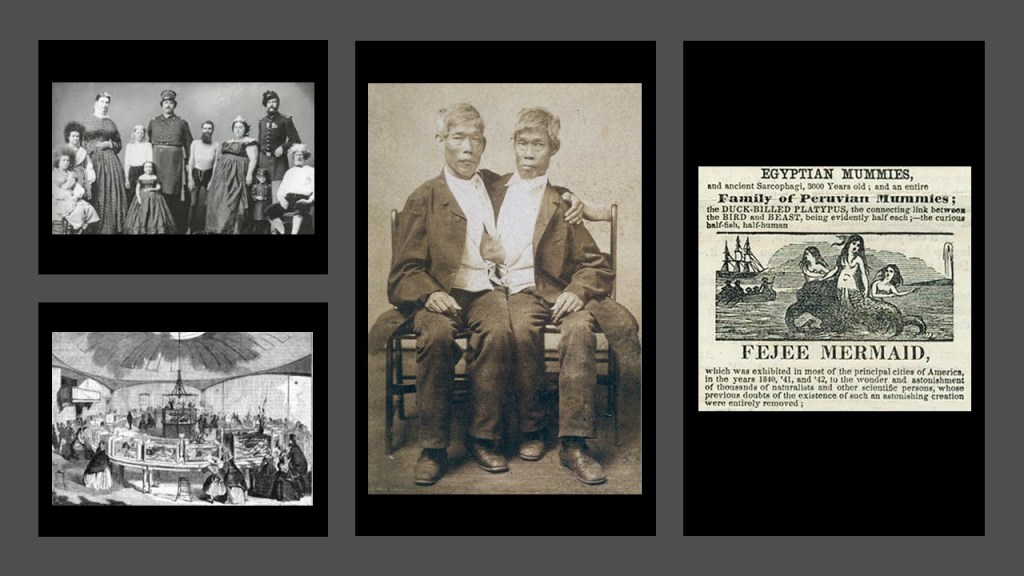
P. T. Barnum got his start in what is now the Financial District of Manhattan in 1841, with “Barnum’s American Museum,” which was known for its strange attractions and performances.
The attractions were a combination of zoo, museum, lecture hall, wax museum, theater, and freak show.
Apparently it became a central location in the development of American popular culture.
Barnum’s American Museum was filled with things like dioramas; scientific instruments; modern appliances; a flea circus; the “feejee” mermaid; Siamese twins, and other human curiosities.
The same “Feejee Mermaid” is still on display today at Harvard’s Peabody Museum.
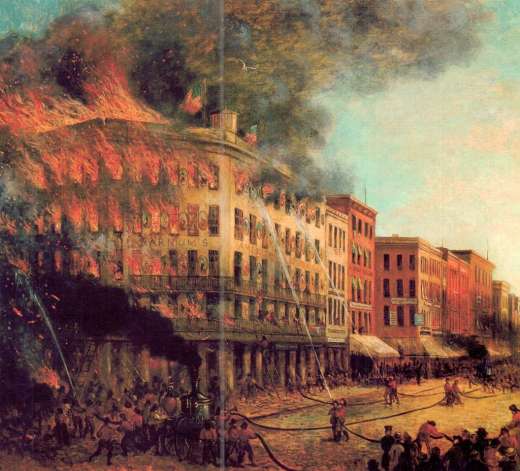
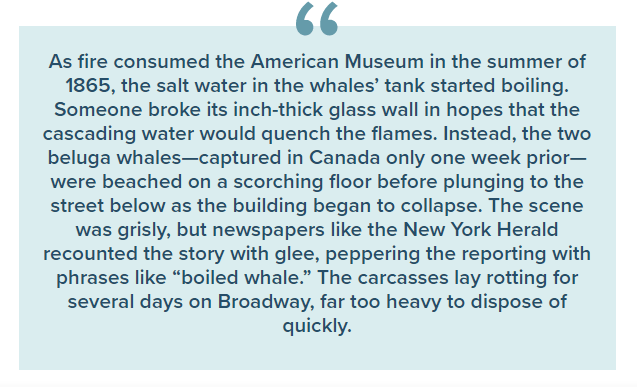
On July 13th of 1865, the building which housed Barnum’s American Museum caught fire and burned to the ground.
Apparently there were not any human deaths, but a number of the live animal exhibits, including two whales imported from the coast of Labrador, were burned alive.
This was the second of five major fires connected to P. T. Barnum.
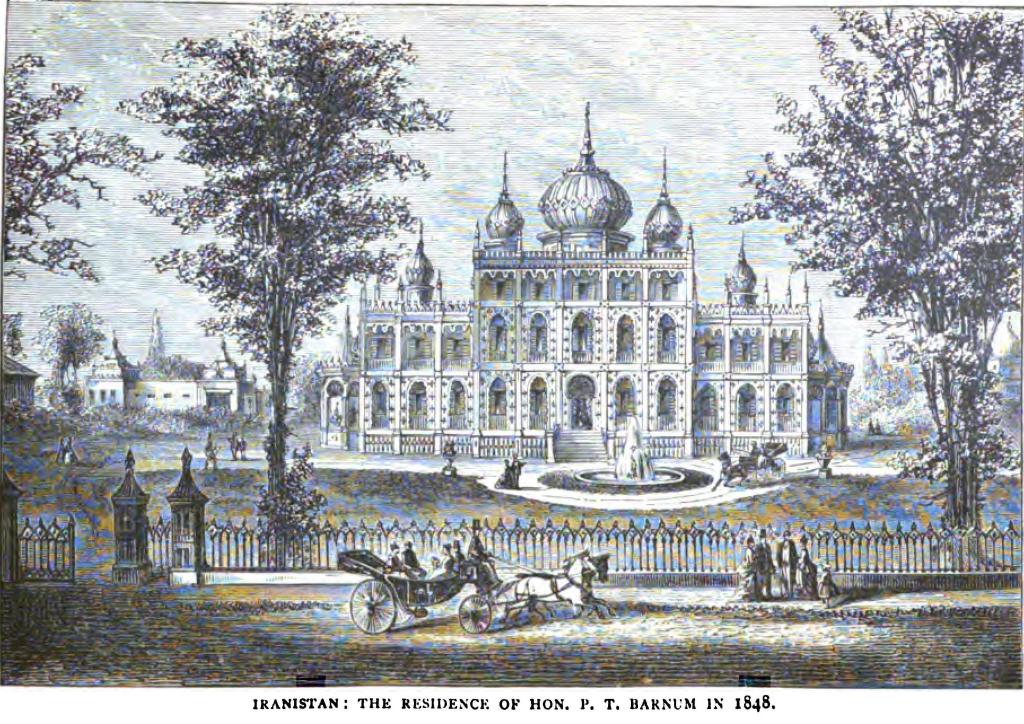
The first major fire associated with P. T. Barnum was the mansion he was said to have had built as his residence in Bridgeport, Connecticut, in 1848, and named “Iranistan.”
It was said to have been set on fire by workmen in 1857 when Barnum had been away for several months.
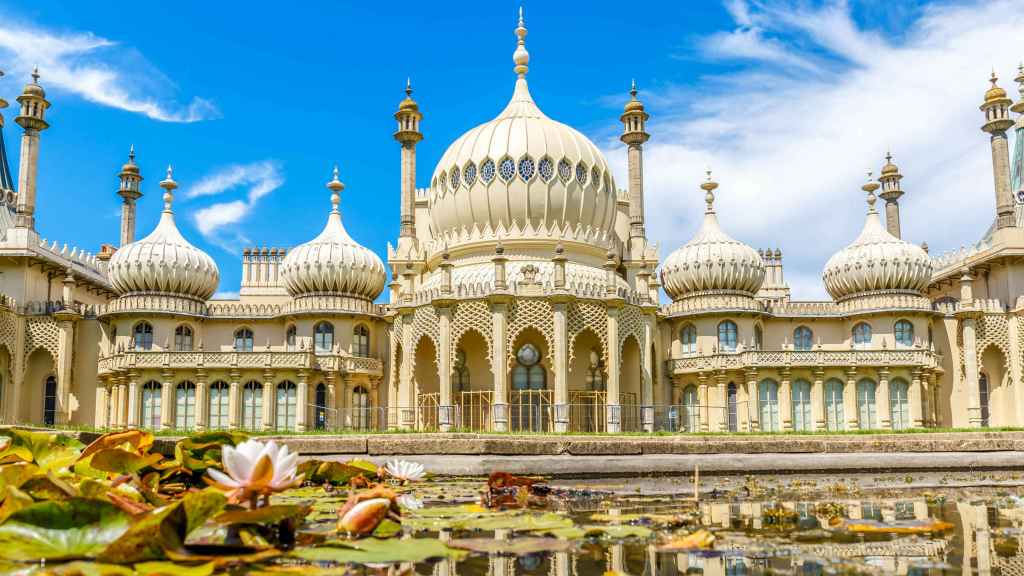
We are told Barnum had hired architect Leopold Eidlitz to design Iranistan as his own version of the Royal Pavilion in Brighton, said to have been constructed in England between 1787 and 1815.
The Royal Pavilion in Brighton was said to have been designed in the architectural-style of “Indo-Saracenic Revival,” as a seaside resort for the Prince Regent George, by British architect John Nash, who was called one of the foremost architects of the neoclassical-style of the “Georgian” and “Regency” eras.
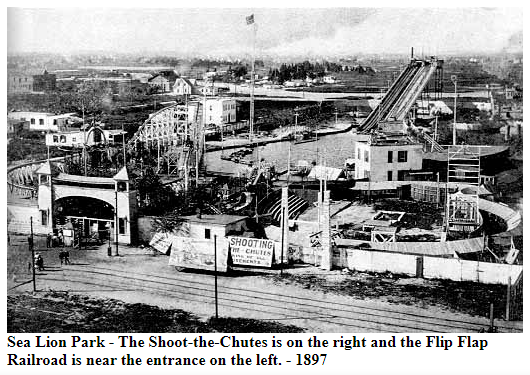
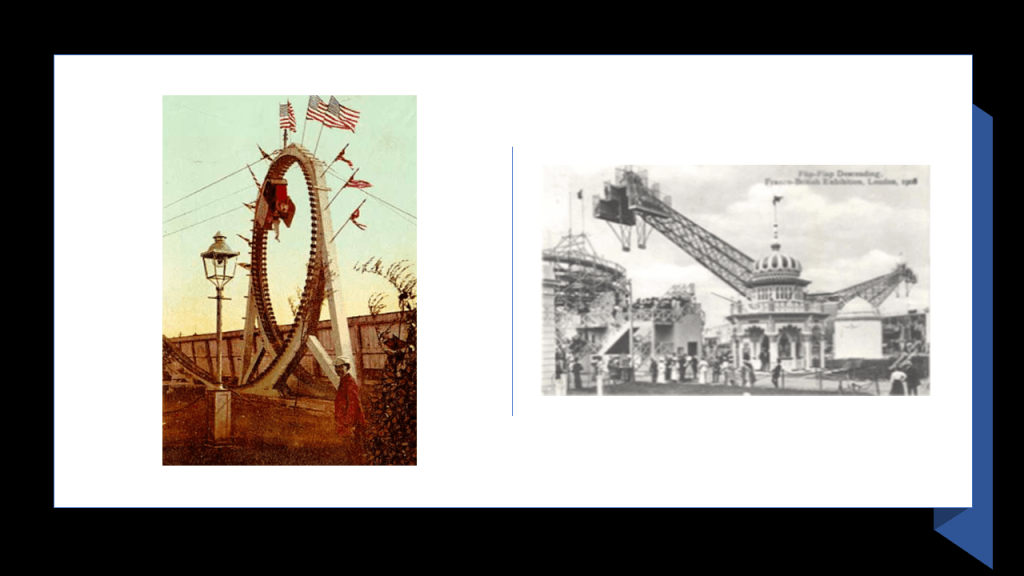
The Flip Flap Railroad mentioned at the bottom of this image of Paul Boyton’s Sea Lion Park…
…was said to be the first looping roller coaster, on the left, and another historic Flip-Flap ride that comes to mind was the one at White City in London in what was called the Elite Gardens at the 1908 Franco-British Exhibition, on the right.
John Belcher was credited with the design of buildings here as the Chief Architect of the 1908 Franco-British Exhibition .
He was an English architect and President of the royal Institute of British Architects.
Paul Boyton’s remaining long-term lease on Coney Island’s Sea Lion Park was bought out starting on October 1st of 1902 by Frederic Thompson and Elmer “Skip” Dundy.
Thompson and Dundy were invited to the Steeplechase Park by George Tilyou for the 1902 Season.
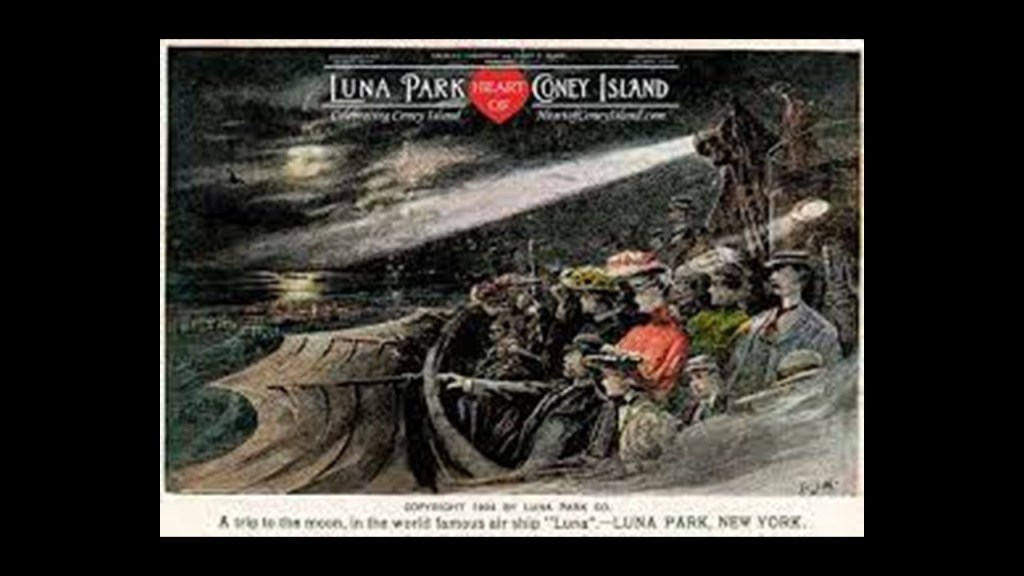
They were known for their ride called “A Trip to the Moon” that was at the 1901 Pan-American Exposition that was held in Buffalo, New York.
The name of the fanciful airship that was the main part of the “A Trip to the Moon” ride was “Luna,” the Latin word for “moon’ for which, we are told, Luna Park in Coney Island was built around.
Well, for one thing, the problem with that story is that there were, and still are, Luna Amusement Parks all over the world, including, but not limited to, Mashhad, Iran, and Ankara, Turkey.
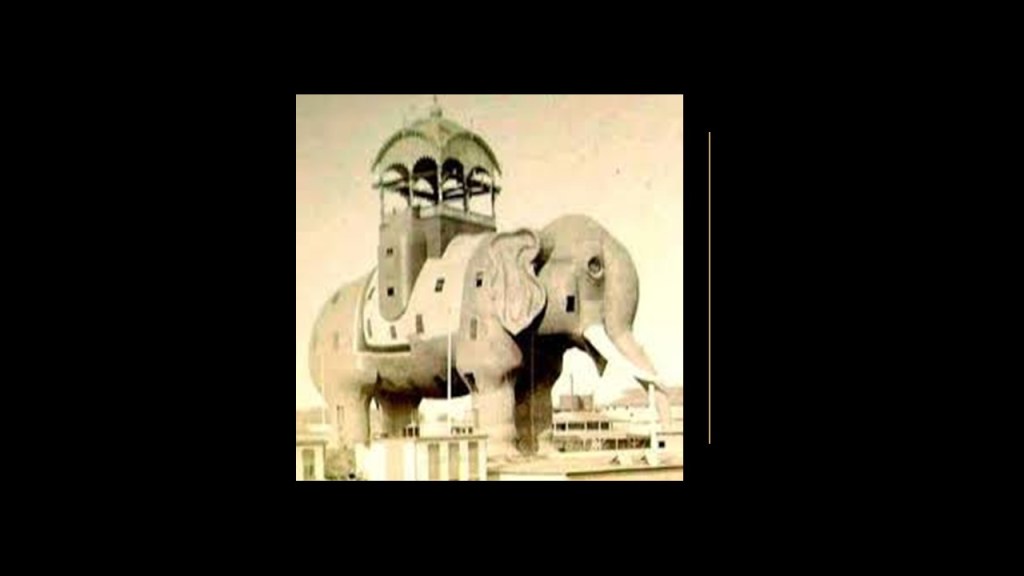
The land Luna Park was on was located next to where the Elephantine Colossus Hotel had been located.
We are told this hotel was a tourist attraction on Coney Island that was an example of novelty architecture, designed by Irish-American inventor James V. Lafferty.
The massive elephantine structure stood above Surf Avenue and West 12th Street from 1885 to 1896, at which time it burned down, giving Thompson and Dundy more land upon which to build Luna Park.
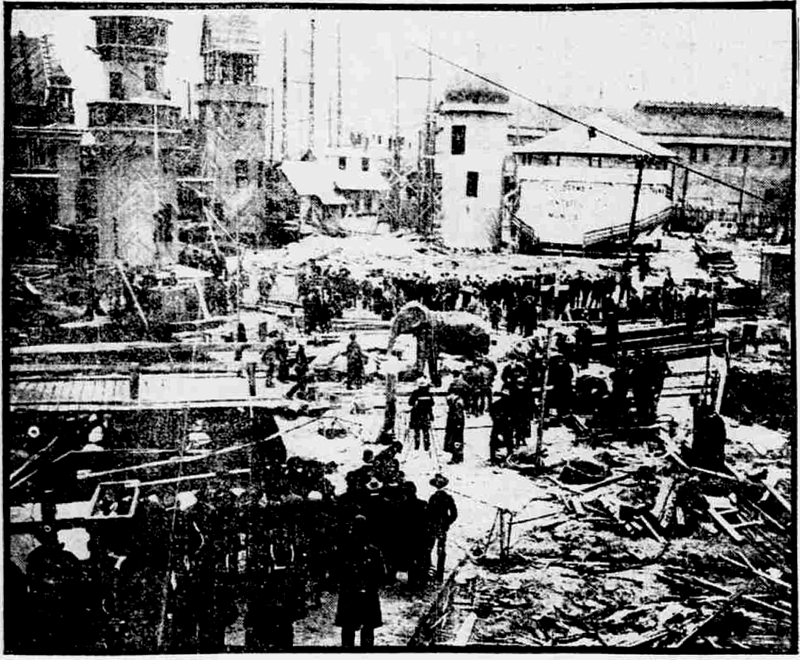
Speaking of elephants, this picture was taken in January of 1903, when Luna Park was said to have been under construction.
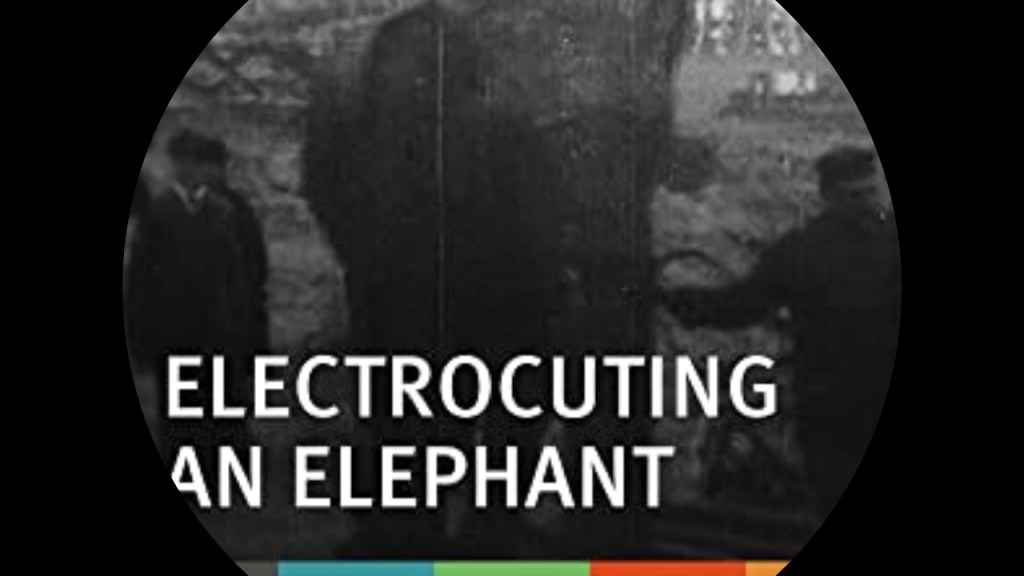
It shows Topsy the Elephant before she was executed by electrocution for being a “bad” elephant by Thompson and Dundy as a publicity stunt to advertise the opening of their new park.
This seems hauntingly reminiscent of the building fire associated with showman P. T. Barnum that resulted in the tragic deaths of the large, helpless whales, and other animals, trapped inside.
The invited press that day included the Edison Movie Manufacturing Company, who filmed the event.
It was released to be viewed in coin-operated kinetoscopes under the title of “Electrocuting an Elephant.”
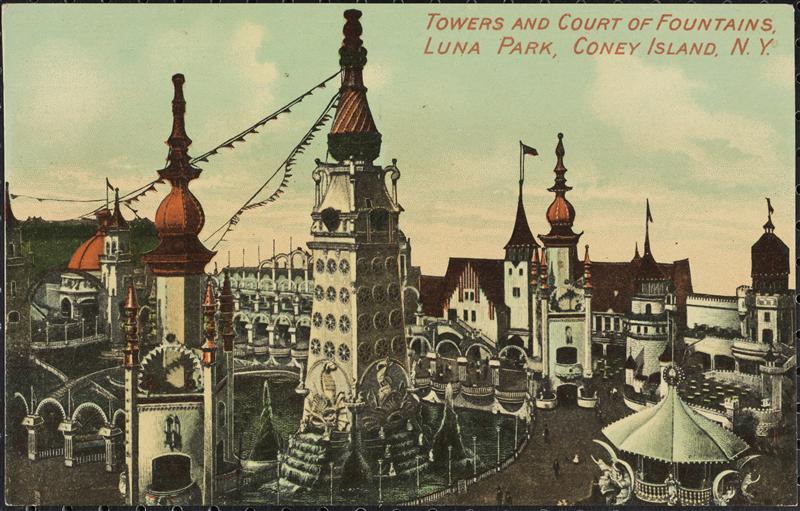
We are told the Luna Park’s architectural style was an oriental theme, with over 1,000 red and white painted spires, minarets, and domes on buildings constructed on a grand scale.
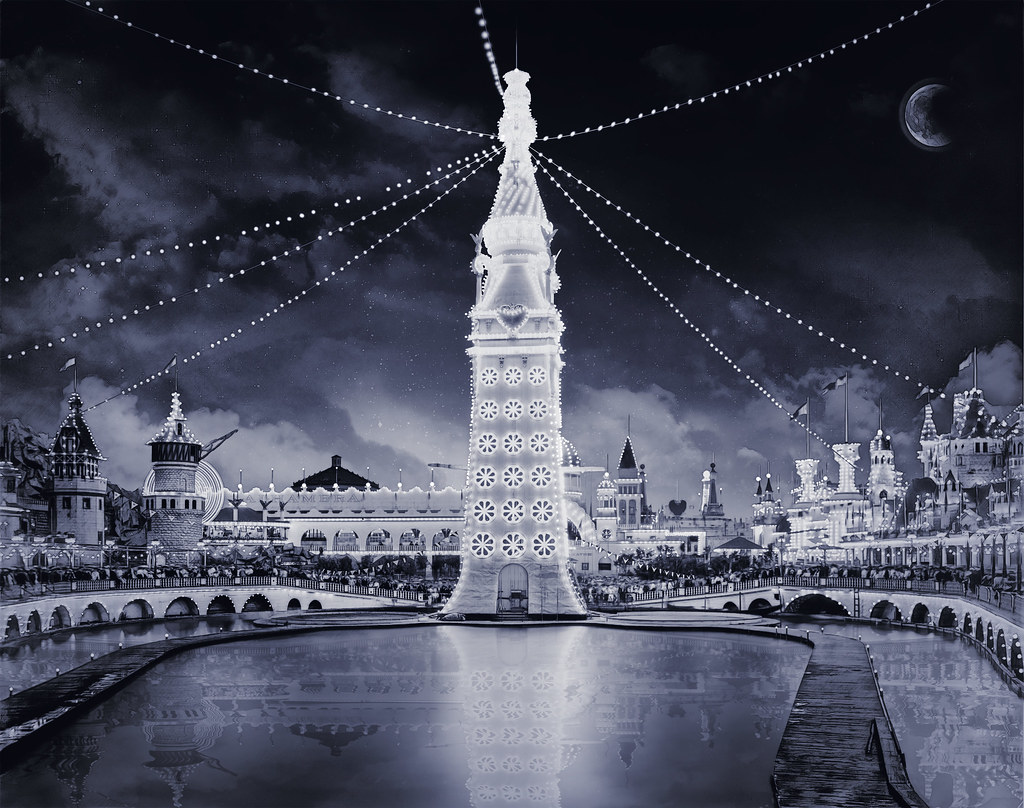
All the domes, spires, and towers were lit-up at night with several 100,000 incandescent lights.
In the middle of the lake at the center of the park was a 200-foot, or 61-meter, tall Electric Tower that was decorated with 20,000 incandescent lamps, said to be a smaller version of the Electric Tower featured in the 1901 Pan American Exposition in Buffalo.
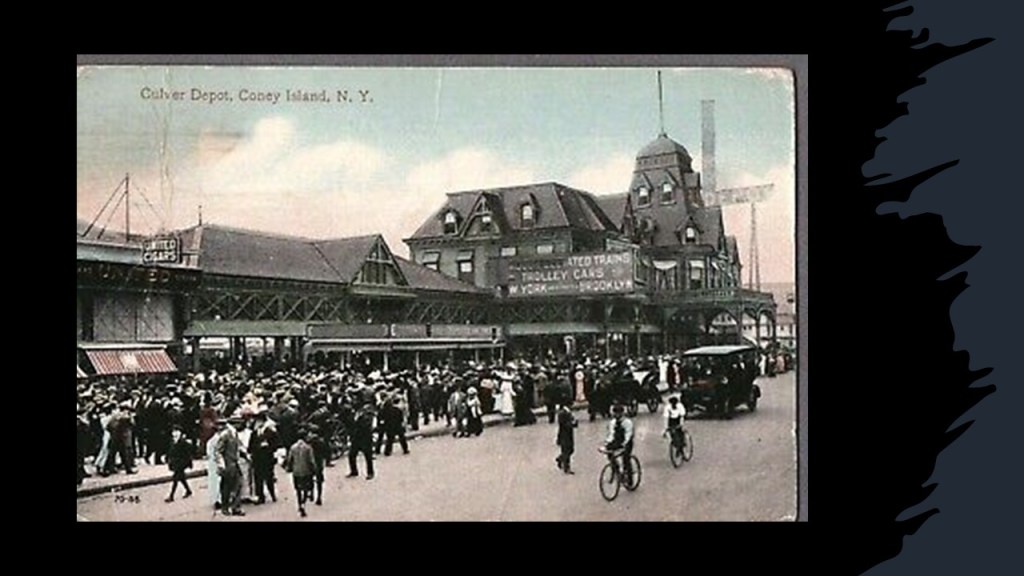
Luna Park was accessible from Culver Depot, the terminals of the West End and Sea Beach Streetcar and Railroad lines.
Besides a multitude of rides, attractions at Luna Park included infant incubators, described as a new type of infant care where infant incubators containing premature babies were displayed in shows called “Infantoriums.
They were touted as “neonatal healthcare,” helping newborn babies with compromised immune systems by providing a sanitary environment to reduce the possibility of getting an infection.
infant incubators for premature babies became widely available at fairs and amusement parks across America, rather than hospitals, which we are told, had nothing to help them.
What we are told is that many parents of premature, at-risk babies pretty much had to bring their infants to a side-show infantorium at an amusement park or fair, and that these infant shows were the main source of healthcare for premature babies for over forty years.
Say what??!!
Over the years, Luna Park would continue under different management, with constant changes.
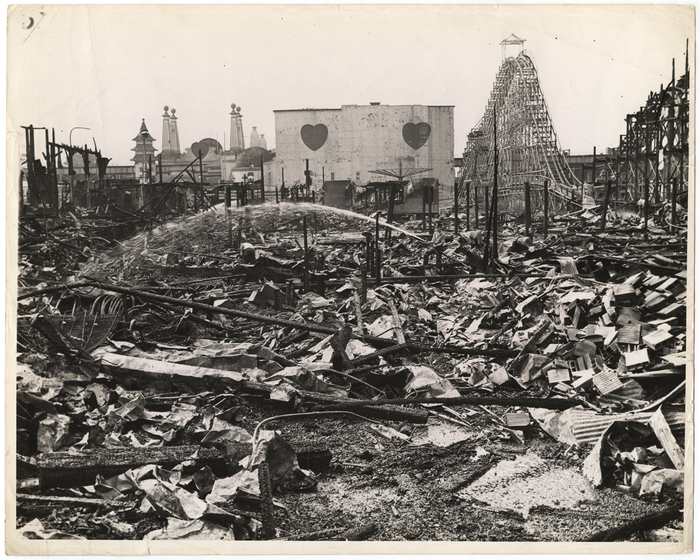
The end of Luna Park came with two fires in 1944, one in August and one in October, which destroyed the park, and in 1946, the whole park was demolished.
There has been a Luna Park operating near the original location since 2010 that has no connection to the 1903 park.
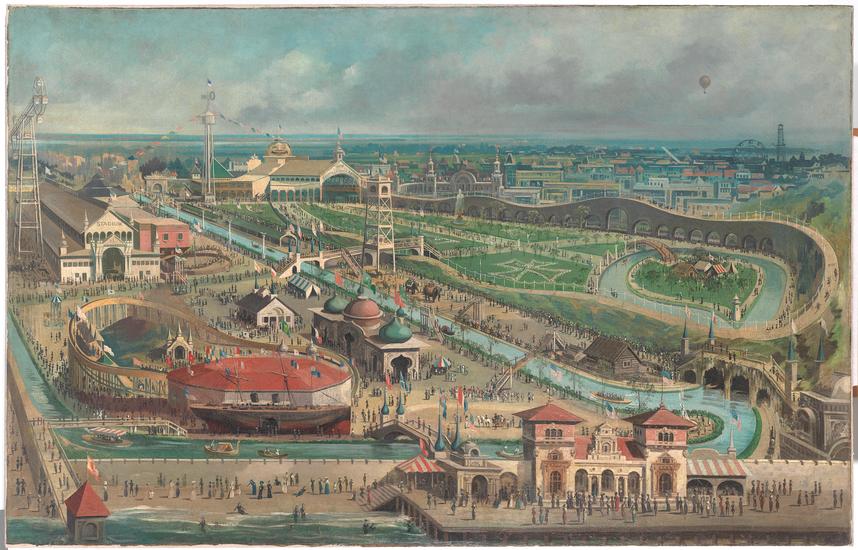
Dreamland was the third and last of the three original parks said to have been built on Coney Island in the early 19th-century.
Dreamland was said to have been founded by successful Brooklyn real estate developer and former State Senator William H. Reynolds as a refined and elegant competitor to the chaotic noise of Luna Park, and opened in May of 1904.
The location of Dreamland was near the West Eighth Street subway station opposite Culver Depot.
Everything at Dreamland was touted to be bigger than Luna Park, including the larger Electric Tower, and four times as many incandescent lights than Luna Park.
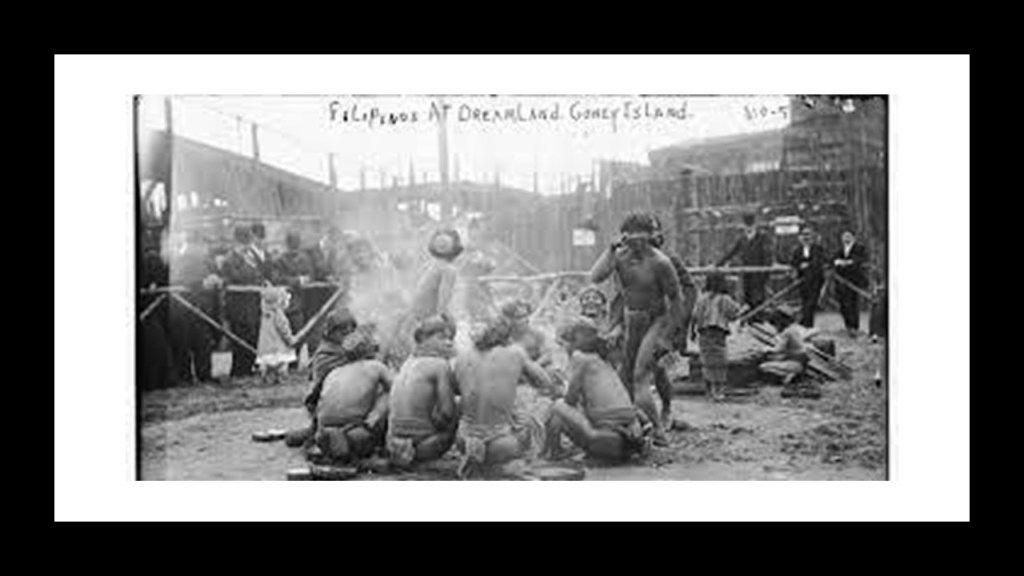
Besides having high-class entertainment, morality plays, and rides, Dreamland had human zoos featuring dwarf inhabitants in what was called “Midget City…”
…a Somali Village…
…and a Filipino Village.
And, like Luna Park, Dreamland also had an infant incubator sideshow attraction.
It was typical for these historic permanent amusement parks and temporary exhibitions like World Fairs to have these infantoriums and human zoos as visitor attractions.
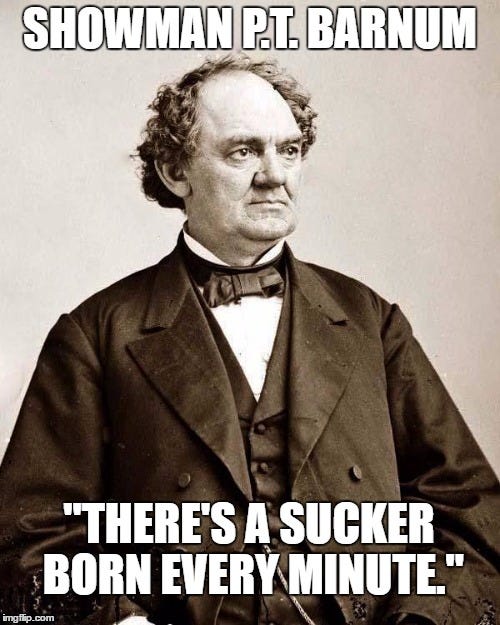
So, as we saw with callous disregard for the lives of the animals in their care, these showmen and entrepreneurs had no regard for the sanctity and dignity of Human life either, except for how it benefited them. A famous saying attributed to P. T. Barnum was “There’s a sucker born every minute!”
Another thing to mention is this, especially with respect to the existence of Human zoos during this time.
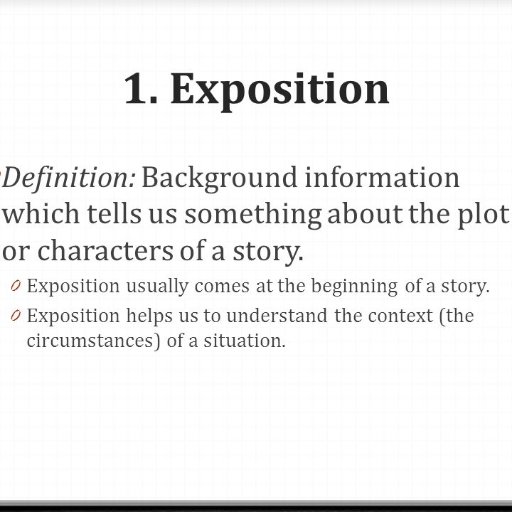
Exposition, the name frequently given to these large public exhibits, is a device used to give background information to the audience about the setting and characters of the story.
Exposition is used in television programs, movies, literature, plays and even music.
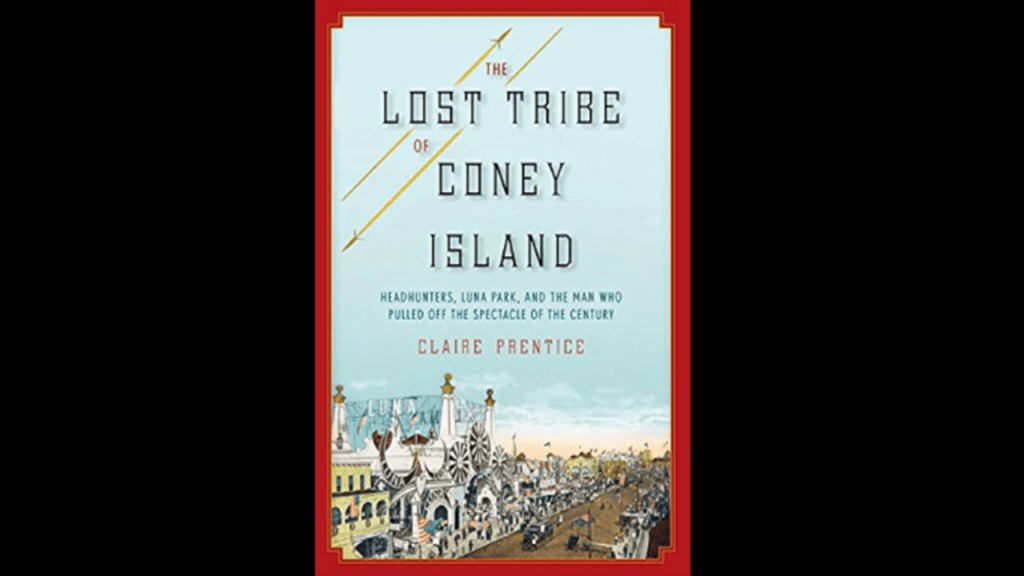
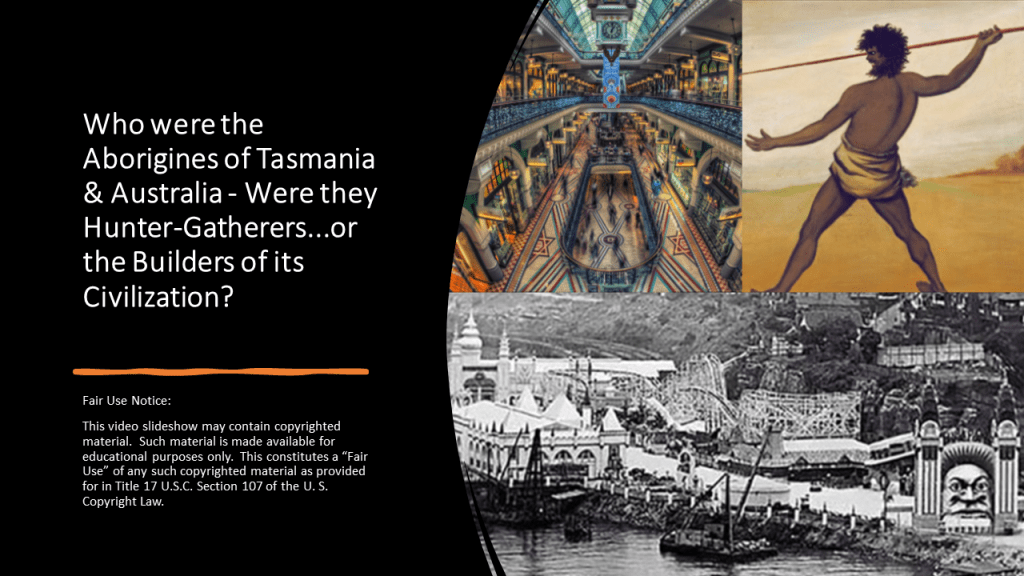
They were telling the general public the hunter-gatherer, or even head-hunter, narrative through these large expositions and exhibitions that they wanted people to believe and remember about these original people of the world, and not what they actually were as the builders of the original civilization.
Instead, they took credit for their accomplishments and legacy, and kicked the original advanced humans back to the Stone Age by their systemic practices of brutality, inhumane treatment, and marginalization, among many other things including large-scale genocide.
Dreamland’s life on Coney Island was ended only 7-years after opening.
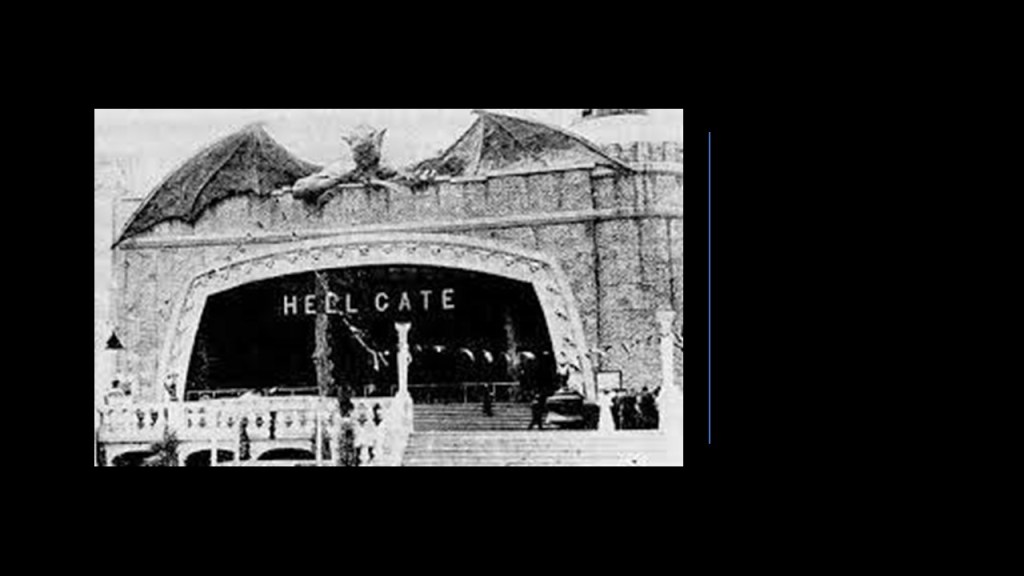
On May 27th of 1911, a fire started at the Hell Gate attraction the night before the season’s opening day, and spread quickly, completely destroying the park by morning.
Brighton Beach is adjacent to the three major historic Coney Island amusement park locations, and shares the same name with the location of the Royal Pavilion of Brighton mentioned previously in this post. If there was an actual connection between these two places in the original civilization, it is long-lost.
The Brighton Beach Race Course was an American thoroughbred horseracing facility shown here opened on June 28th of 1879.
It was instantly successful and drew wealthy patrons from New York City.
The track prospered in 1908, when the New York State Legislature passed the Hart-Agnew Law, banning gambling.
The Brighton Beach Race Track was eventually torn down, and by the 1920s, replaced by residential housing.
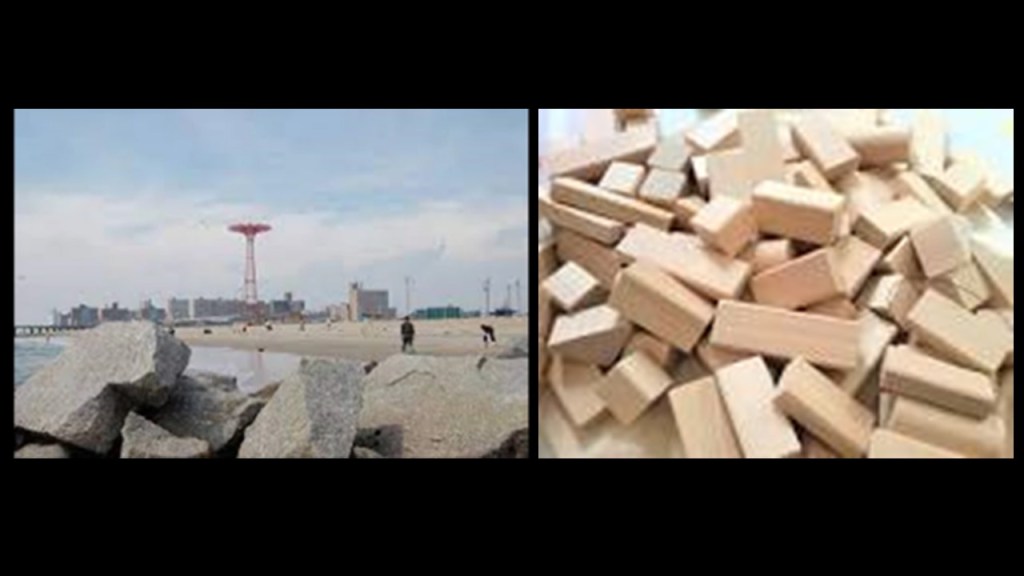
Back around 2015, about three-years before I started blogging and doing my own research in 2018, I remember seeing a video on the New Earth YouTube Channel about megalithic stones strewn about on Coney Island’s Brighton Beach, so I searched for images like this one of Brighton Beach on the left.
What force could possibly cause huge megalithic stone blocks like this to be tossed around like children’s wooden blocks?
And the explanation we are given for faces amongst the rocks was that there was a mystery artist in the 1970s who carved them.
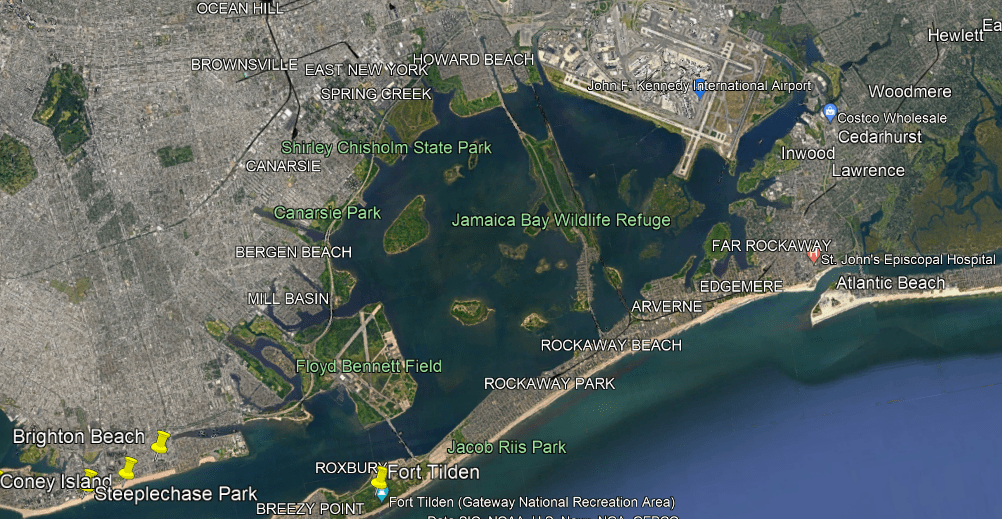
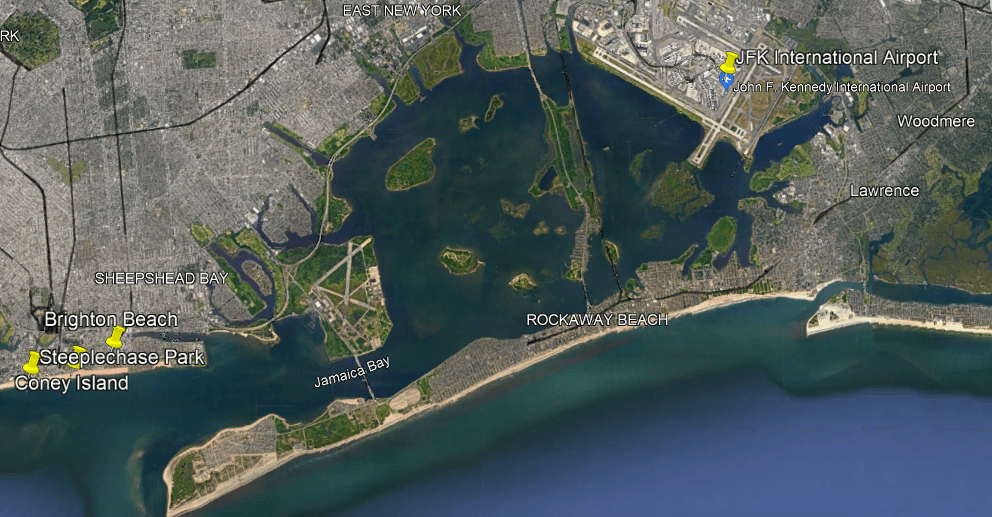
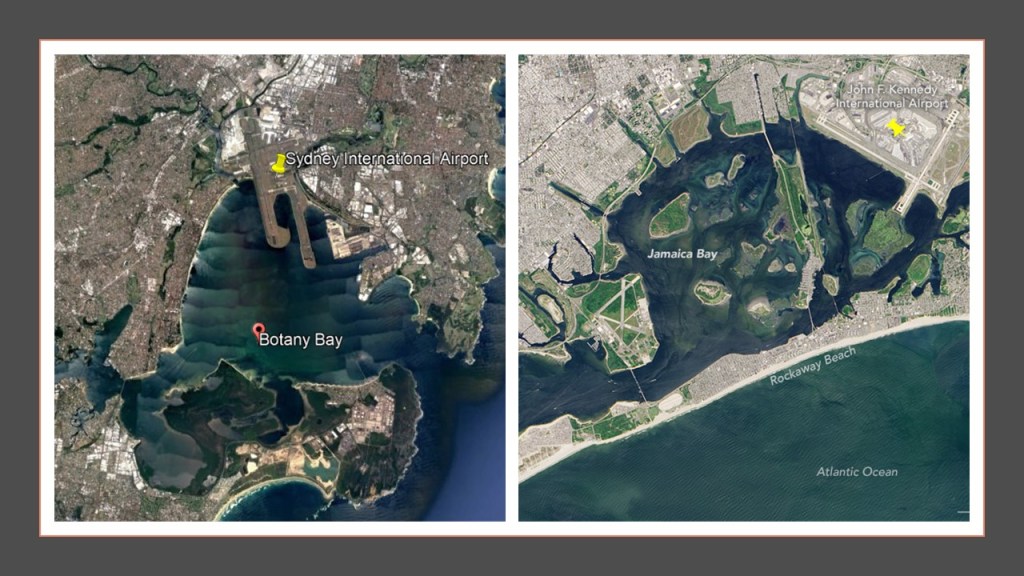
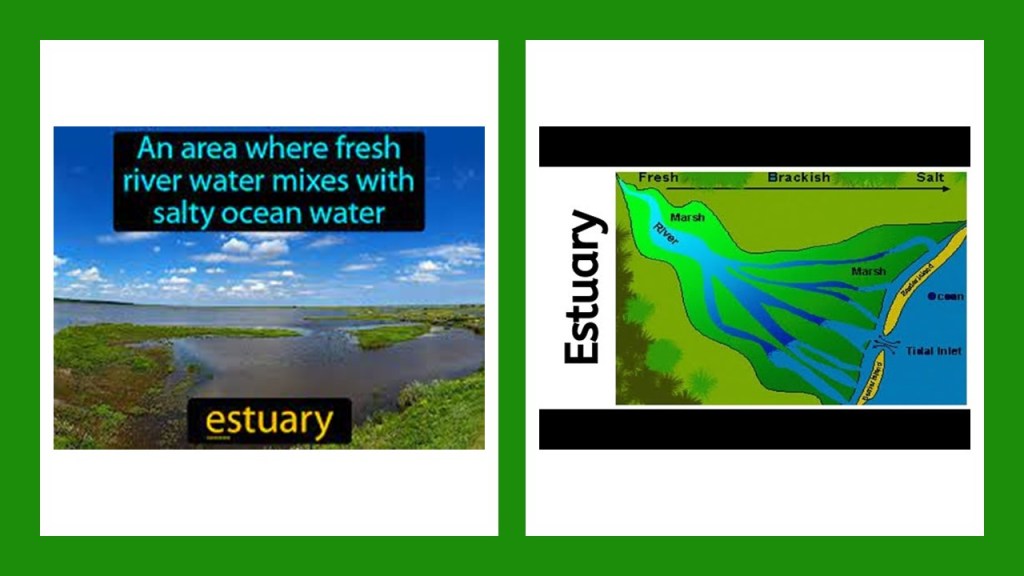
It is important to point out that the landscape looks absolutely ruined here, and Jamaica Bay just to the east of Coney is called a partially man-made and partially-natural estuary, and contains numerous marshy islands.
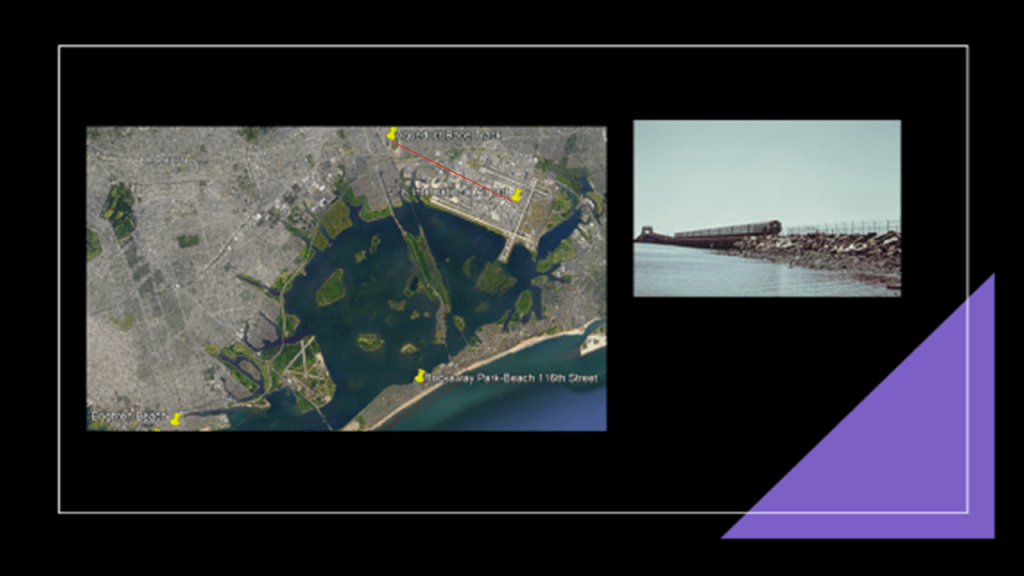
John F. Kennedy International Airport is on the northeast side of Jamaica Bay, and would have been in a short-distance, straight-line alignment with the former Brighton Beach Race Course.
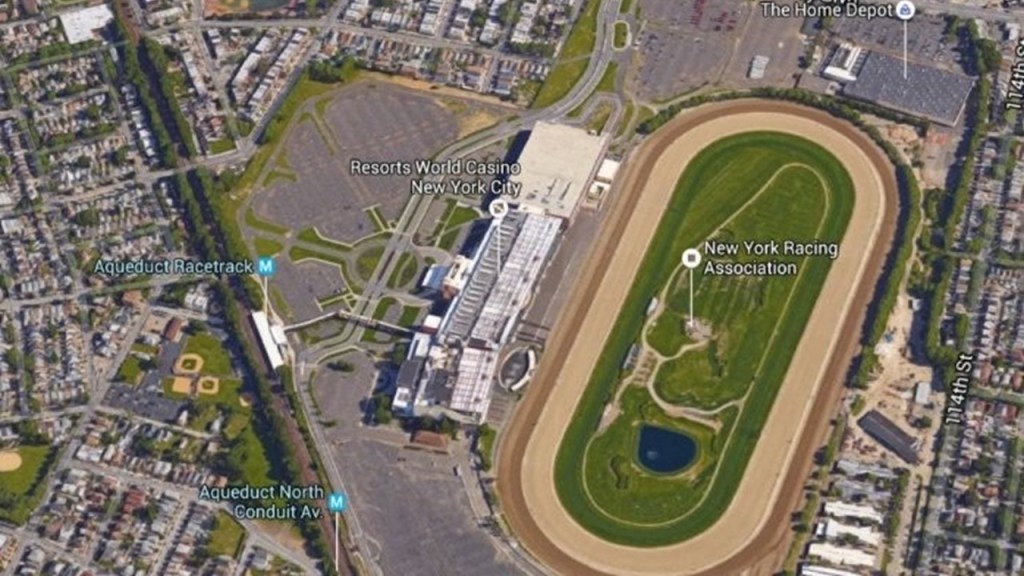
There is a rapid transit line of the New York subway system that operates through the middle of the marshy Jamaica Bay estuary, the IND Rockaway Line that runs between the Aqueduct Racetrack Station terminal, another racetrack a short-distance, straight-line alignment with JFK Airport, and Rockaway Beach.
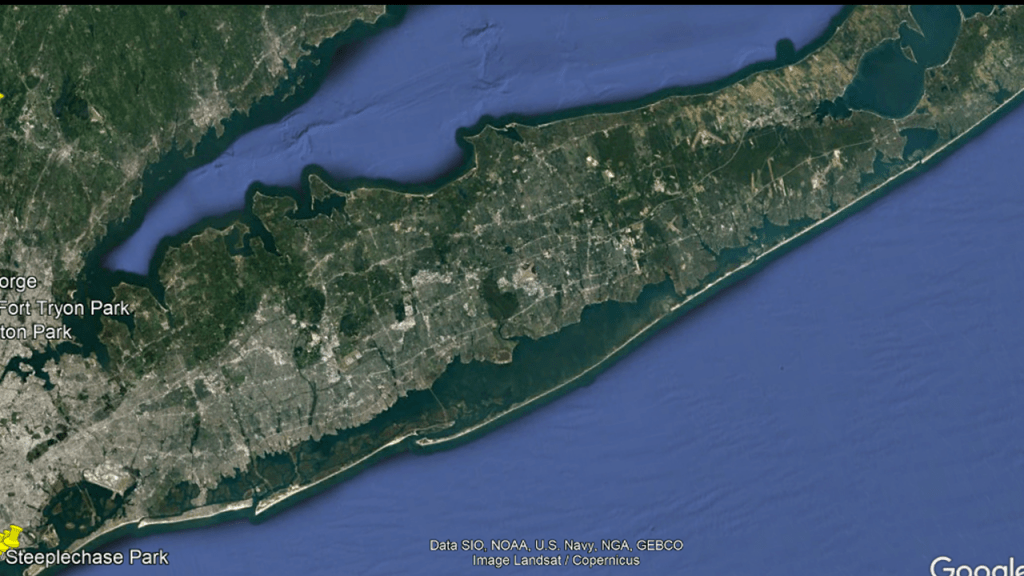
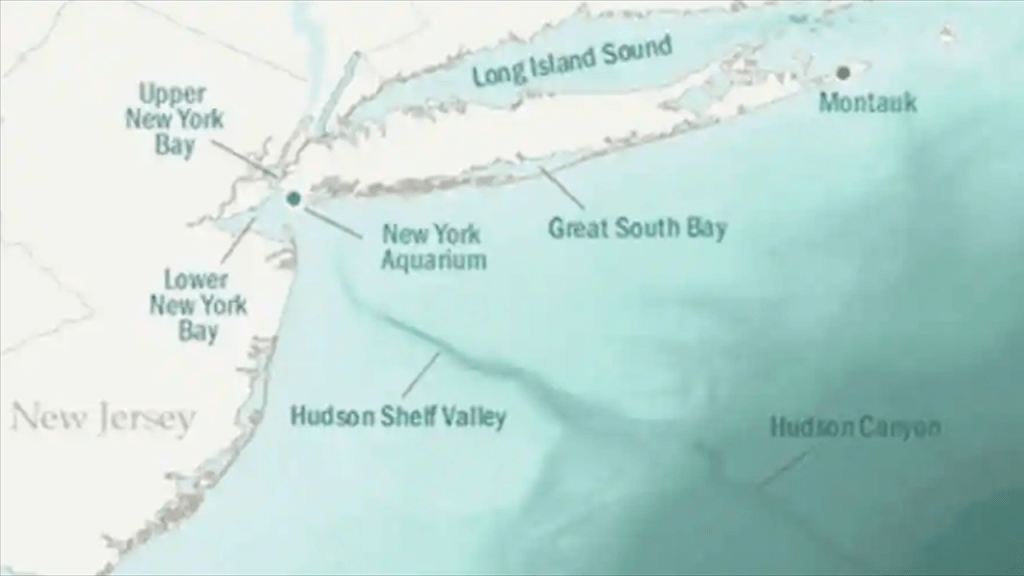
The long and narrow Great South Bay is east of Jamaica Bay on Long Island’s South Shore.
The Great South Bay is described as a lagoon that is 45-miles, or 72-kilometers-, long, and has an average depth of a little over 4-feet, or 1.2-meters, and is 20-feet, or 6-meters, at its deepest.
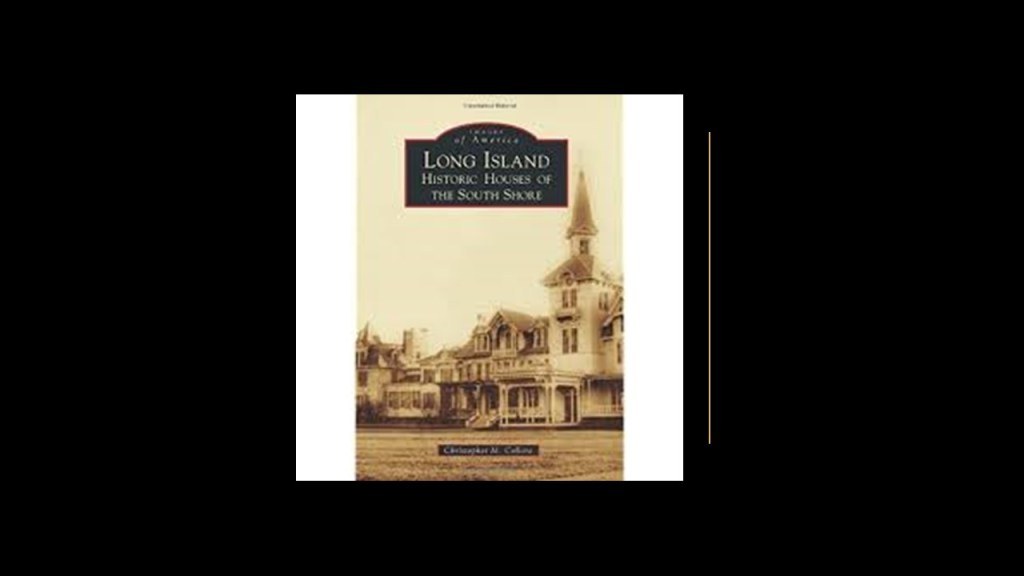
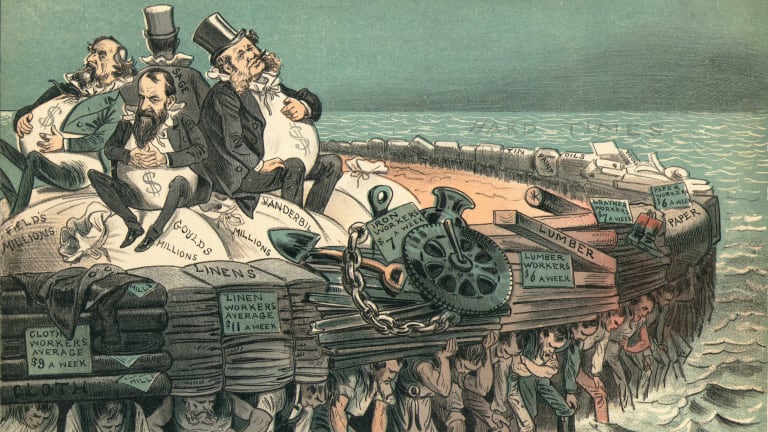
During the so-called Gilded Age, the Vanderbilts, Roosevelts, Whitneys, Morgans, and Woolworths were said to have built summer mansions on Long Island’ South Shore, and country estates on the North Shore of Long Island.
One definition that I found of “Gilded Age” is that it was a period of gross materialism and blatant political corruption in the United States from the 1870s to 1900.
Why were these wealthy families so interested in this marshy, ruined landscape on Long Island?
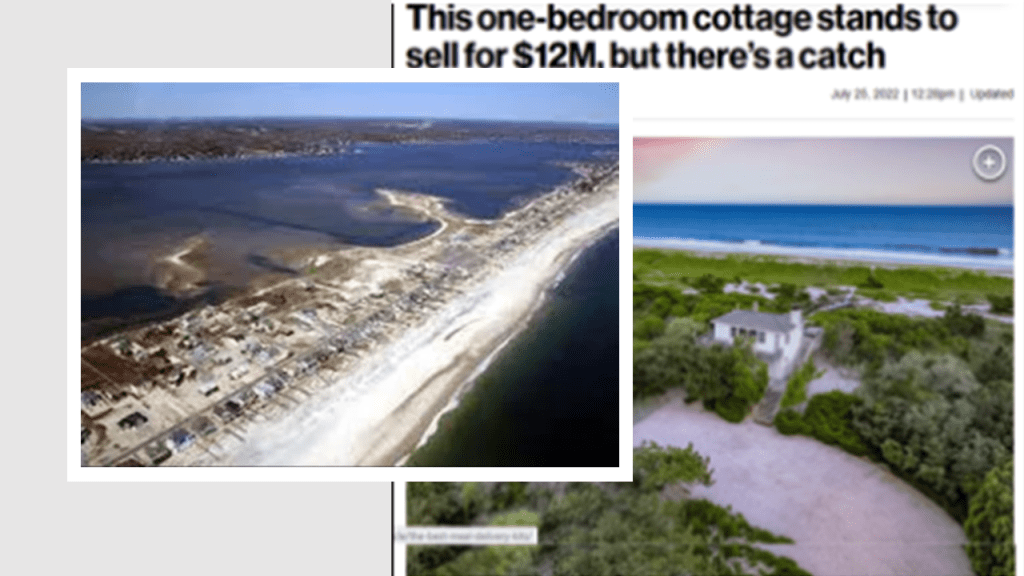
Just as one of many examples, the land on the Westhampton Dunes of Long Island’s South Shore is considered prime real estate.
But it wasn’t only on Long Island.
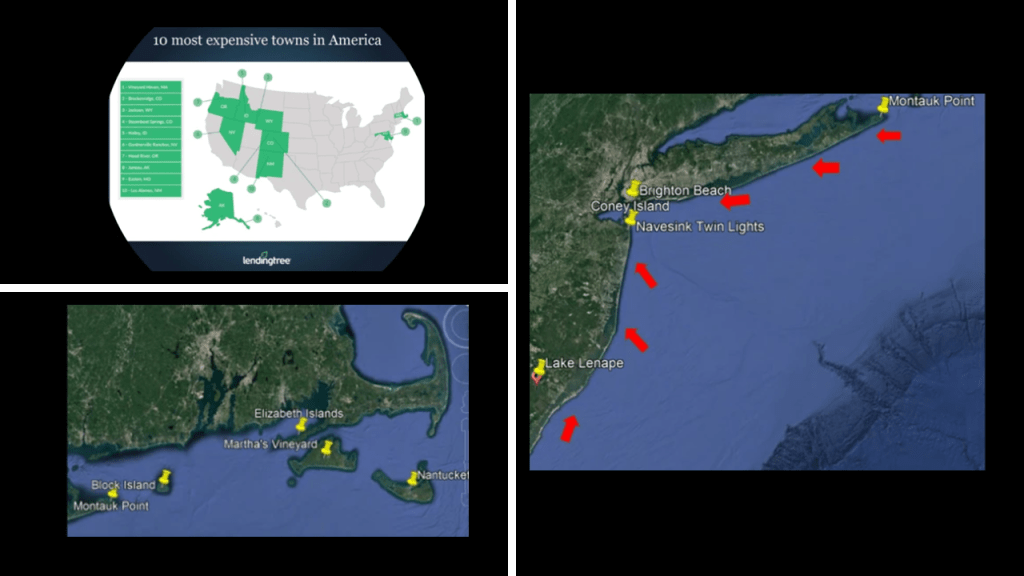
The Elites claimed the ruined land along the northeast Atlantic coast throughout the New York- New Jersey Estuary system for their special enclaves.
Why?
Clearly this was a very powerful place on the Earth’s grid system with all of the historic star forts, lighthouses, and historic amusement parks all along the Hudson River and New York Bays.
Similar to the still-existing IND Rockaway rapid transit line that runs through the Jamaica Bay Estuary, this is an old postcard showing the Atlantic City and Shore Railroad crossing a two-mile, or 3-kilometer, -long trestle bridge in the Great Egg Harbor Bay estuary, and was part of an interurban trolley system in New Jersey that served Somers Point and several other cities between Atlantic City and Ocean City in the years between 1907 and 1948.
The reason given for the end of its operation was a hurricane damaging the viaduct in 1948, and fixing it was cost prohibitive because of the decline in trolley use.
So those behind the narrative we are educated in, perhaps “indoctrinated” is a better word, definitely want us to believe these rail-lines were built by wealthy railroad barons, who in-turn were responsible for everything we know in our world coming into existence.
But what really flies in the face of this explanation are the countless examples of rail-lines, or historic rail-lines co-located with sunken, swampy, marshy, and also desert, lands, around the world, like in Portland, Oregon where there is a visible star fort point at the Smith & Bybee Wetlands Natural Area, which is now the location of the Bybee Lakes Hope Center for the Homeless.
This urban wetlands area in Portland is located right next to the still-operating BNSF Ford Railyard.
The chain of low islands and reefs called Adam’s Bridge, also known as Rama’s Bridge, or Ramsethu, which separates the southern tip of India from Sri Lanka…
…has a rail-line today that still operates from the town of Mandapam in Tamil Nadu to the Indian side of Adam’s Bridge.
The Pamban Bridge crossing through here is described as a masterpiece of engineering, with a movable section midway that is raised to allow ship and barge traffic to pass through.
Over a mile-long, at 6,776-feet, or 2,065-meters, It was said to have been constructed between 1911 and 1914, which was the year World War I started.
You can take a ferry across, in the same general location as the sunken parts of Adam’s Bridge, to Talaimannar, on Sri Lanka’s Mannar Island, and catch the train on to anywhere you want to go in Sri Lanka.
Sure looks like this part of the world was all-connected together at one time, and not that long ago.
Another example of a rail-line in an anomalous place is at the pink-colored Lake Burlinskoye in Siberia, where the rail-line still operates right through the water.
And the Salta-Antofagasta railway links Argentina and Chile through the Atacama Desert across the Andes Mountains.
These are just a few of many examples of railroads in anomalous places, and there are many more rail-lines that have been abandoned or removed all over the world.
I have come to believe through research findings like these, and others, that what has been characterized as the mud-flood was caused primarily by a deliberately-caused act performed by Aleister Crowley, known as the “Wickedest Man in the World,” on the day of the Philadelphia Experiment, that sent a massive energy surge through the Earth’s grid system by way of Montauk Point and Long Island, sending a ripple of energy across the entire surface of the Earth, causing the land itself to ripple, and in some places turn it into swamp, desert, or sink completely into the ocean.
I think the sinking of Atlantis took place much more recently than we have been led to believe in our historical narrative.
There are still abandoned railcars to this day in the Pine Barrens of New Jersey and the swamps of Louisiana.
There is a full explanation of this theory, with evidence that supports it, in a “Deeper Conversation with Chad” I had recently with Chad Williams and Adam Szecowka, called “The Destruction, Exploitation & Reverse Engineering Of The Earth’s Grid System,” in which we talk in-depth about this, and many other things.
Whatever caused the mud flood is being called a “reset” event, and photographic evidence exists demonstrating that buildings, canals, rail-lines, tunnels, among other things, were purposefully dug out after the event to the point where they could be used.
A sudden cataclysmic event accounts for how a highly advanced worldwide civilization of giants…
…could be wiped from the face of the Earth and erased from our collective memory.
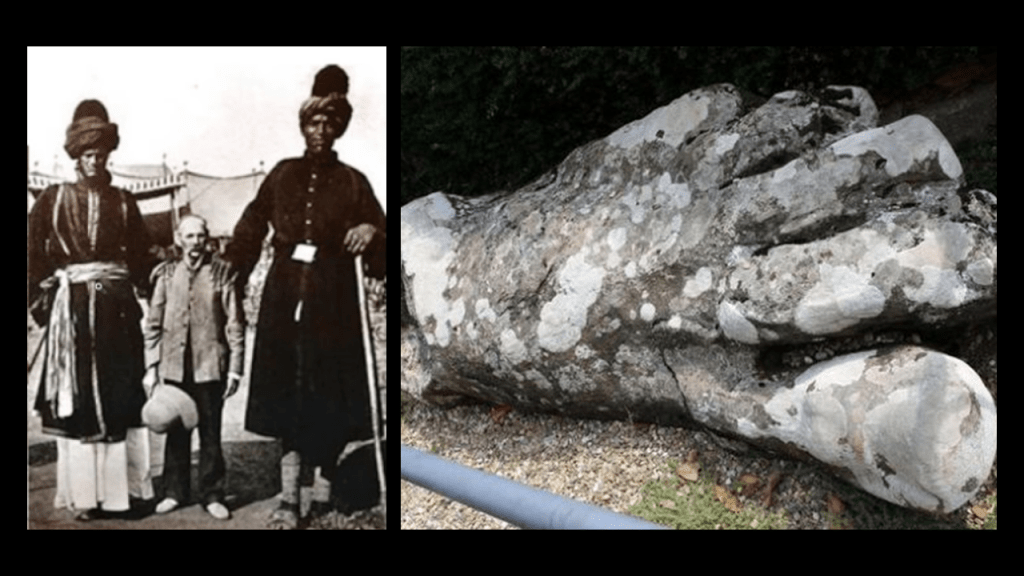
If all this sounds crazy, remember the old saying “Truth is Stranger than Fiction.”
And even if still seems too hard to believe in, the reality of the world we are living in today is pretty strange and crazy, and how did we even get to this upside-down world??
Well, one thing that has gotten us to this place is that we have been taught and told egregious lies by the Establishment from cradle to grave, and we have not been told about an advanced civilization that existed on Earth from the ancient time of Mu, through Atlantis, to relatively recent times.
The parasitic and multi-dimensionally aware beings behind all of this want us to believe that suffering, sickness, misery, destruction, division, and death was and is our normal state of being, and not question what we have been taught about who we are.
They are the only ones who benefit because they energetically feed on Humanity’s negative emotional states, at the same time they have sucked up all the wealth of the Earth for themselves.
This particular subject recently took front-and-center stage in my mind after doing research on the earliest Non-Governmental Organization (NGO) in our historical narrative, an organization that eventually became known as “Anti-Slavery International.”
In an effort to at the very least question the narrative about what we are told is the answer to this question, that the Aborigines were hunter-gatherers, I decided to bring together past and present information I have accumulated around the subject to demonstrate that a good case can be made that they were in fact actually the builders of its Civilization, and that they were part of a worldwide civilization that was identical in design from ancient times to relatively modern times.
First, I will start with the origins of “Anti-Slavery International.”
The origins of today’s “Anti-Slavery International” included the “Aborigines Protection Society,” which was formed in 1837, and we are told it was to ensure the “health and well-being, as well as the sovereign, legal, and religious rights of the indigenous peoples while promoting the civilization of the indigenous people who were subjected under colonial powers.”
This book by David Heartsfield looks at the “Aborigines Protection Society” from the perspective of “Humanitarian Imperialism in Australia, New Zealand, Fiji, Canada, South Africa, and the Congo between 1836 and 1909,” and mentioned things like how the policy of native protection turned out to be a reason for the growth of imperial rule, particularly that of the British Empire.
The Aborigines Protection Society published a journal called the “Colonial Intelligencer and Aborigines Friend,” which was comprised of “…interesting intelligence concerning the Aborigines of Various Climes and Articles Upon Colonial Affairs, with Comments Upon the Proceedings of Government and of Colonists toward Native Tribes.”
“Aborigines Friend”….or foe.
The “Aborigines Protection Society” and the “British and Foreign Anti-Slavery Society” merged in 1909, and together they became known as the “Anti-Slavery and Aborigines Protection Society.”
What had become the “British and Foreign Anti-Slavery Society” in 1909 went through several other name-changes over the years, and with the last name-change became “Anti-Slavery International” in 1995.
Here are this organization’s slavery statistics worldwide from 2020.
According to their own statistics, an organization that supposedly exists to working against slavery and other abuses, as recently as 2020, only three-years ago, there were 40.3 million people in slavery total, with at least 10-million of those people being identified directly as children.
Those numbers seem incredibly high for something that isn’t talked about openly in our day and age, and raises the question of what is really going on here.
It also brings up the question of how many different forms of human slavery have existed in the past and present-day, including Australia’s history as a penal colony.
Not only this, but also what could have possibly happened to its original people to kick them back into the Stone Age from a high-state of civilization, and this didn’t just happen in Australia, it happened all over the world when the European colonizers moved in and took everything over.
How could this even have happened to begin with?
No doubt brutal subjugation of the original people is part of the explanation, but there would have been many factors contributing what has taken place here.
By the end of this video, I will have provided a substantial amount of information and examples to demonstrate that there is something seriously amiss with the narrative, which has gaping holes in it from the information missing from it, that has been inadequately explained by those who don’t want us to know our True History and what has taken place here
These are typical of the kinds of paintings of the Australian Aborigines that have come down to us in our historical narrative.
But every once in awhile you can find an aboriginal face in an unexpected place, like this historical photo at the entrance of Luna Park in Sydney, with the huge face and Moorish-looking buildings.
Though still in operation today, Sydney’s Luna Park entrance had a face-lift for some reason.
So let’s take a walkabout Australia and Tasmania and see what we can find out.
The starting point for our walkabout is Darwin.
Darwin is the capital and largest city of the Northern Territory of Australia, which is sparsely populated.
It is also called the Outback Capital of the Northern Territory.
Notably, Darwin was the location of the first bombing in Australia, which occurred in February of 1942, after Australia had officially declared war on Japan on December 9, 1942.
Japanese forces bombed military bases in Darwin in one day.
One of the first hits, and explosions, was a ship loaded with TNT and ammunition.
There were a number of civilian casualties as a result of the bombings, and as a result of the attacks, more than half of the civilian population left permanently.
Interestingly, something very similar happened during World War I in December of 1917 in Halifax Harbor in Nova Scotia, when the high-explosive TNT-laden French cargo ship, the SS Mont-Blanc, collided with the Norwegian ship, the SS Imo, causing the largest, human-made explosion at the time.
Nearly all structures within an 800-meter, or half-mile radius, were obliterated, and the tsunami it caused wiped out the Mi’kmaq First Nation that had lived in the Tufts Cove area for generations.
Here is a picture of Darwin today, on the top left.
Of particular note is the shaped harbor in the foreground, which is a signature of places I have found tracking long-distance alignments of cities and places all over the Earth, like that of Sousse, Tunisia on the bottom left, and Olafsvik, Iceland, on the right.
This is described as a World War II gun emplacement in the Dripstone Cliffs of Darwin Harbor.
And this is a photograph circa 1890 in Darwin of Knight’s Folly in the middle; Fort Hill to the left and Government House to the right.
Fort Hill was said to have been the location of a George Goyder’s surveying camp in 1869; used for storing oil during World War II; and removed in 1945 to make room for an iron-ore loading wharf.
“Knight’s Folly” was another name given to an historic building called “Mud Hut, said to have been constructed in 1883 by John George Knight and built from “Egyptian Bricks.”
It burned down on December 31st of 1933.
And the Government House was said to have been built between 1870 and 1871…
…and to be the oldest European building in the Northern Territory, still in use today as the office and official residence of the Administrator of the Northern Territory.
I don’t know. Maybe it’s just me, but that building looks lop-sided to me!
Howard Springs Nature Park is on the outskirts of Darwin.
We are taught that there was nothing special going on in these places, nothing to see, so we fail to recognize the ancient megalithic masonry laying all around us.
These are cut-and shaped-stones. These are not natural occurrences, contrary to what we have taught to believe by historical omission. These in Australia…
…are like these two photos at Martin Nature Park in North Oklahoma City.
Lying around everywhere with no special attention drawn to them – just there. Taunting us but not telling us.
And only when you start realizing they are there. Because until you notice them, they just blend in to the landscape.
Next from Darwin going clock-wise around the coast, we come to Kakadu National Park, and Arnhem Land.
First Kakadu National Park, which is a UNESCO World Heritage Site.
Kakadu covers an area that is 7,646 square miles (or 19,804 kilometers). Besides its incredible biodiversity, land-forms, and river systems, one of the most productive uranium mines in the world is surrounded by the park, shown in the map as the Ranger Mineral Lease.
According to the narrative, Aboriginal people have occupied this land continuously for 40,000 years, and approximately half of the land of Kakadu is aboriginal.
And this is as good as any place to leave this photo here for your consideration. I personally think there is something to it, that the Australian Aborigines are of the Tribe of Reuben.
This kind of information is well-hidden, so some digging is required to find it. But it is out there on the internet if you start looking for it.
Back to Kakadu National Park.
Here are some pictures of the landscape there.
Kakadu National Park is part of Arnhem Land, one of the five regions of the Northern Territory, and which the alignment crosses over.
While the land is named for the ship of the Dutch East India Company Captain who sailed it into the Gulf of Carpenteria, the population of this region is actually mostly aboriginal, estimated to be around 16,000.
The following photos are of Arnhem Land on the top, and Minab in southern Iran near Old Hormuz on the Strait of Hormuz.
I have no difficulty seeing all of this as ancient infrastructure, as I had a perceptual shift when I realized there is a code of key words that covers up the ancient civilization.
But for most, since we haven’t been taught about this ancient civilization, and have only been taught to believe that it is the result of natural processes, that is how it is perceived.
Continuing around the coast, the Gulf of Carpenteria is in Queensland, Australia.
The Gulf of Carpenteria is described as a shallow sea enclosed on three sides, and bounded on the north by the Arafura Sea (which lies between Australia and New Guinea) .
Here is an aerial view of the Gulf of Carpenteria.
The Pellew Islands are in the southwest corner of the Gulf of Carpentaria.
They are a group of five islands with a total area of 2,100 square kilometers, named in 1802 by Matthew Flinders in honor of a fellow naval officer.
The Wellesley Islands are here, also named by Matthew Flinders, this time for the 1st Marquess of Wellesley, Richard Wellesley, the older brother of Arthur Wellesley, the 1st Duke of Wellington.
The largest island in the group is the interesting-looking Mornington Island, which was also named after Richard Wellesley, who was also the Earl of Mornington.
All traditional aboriginal lands.
On our way to Cairns, from Karumba to Normanton, there are the same world-wide S-Shaped riverbends, seen on the top left, compared with a photo of the river in Inner Mongolia, near Shangdu,the historical location of Xanadu, on the bottom left, and the River Thames in London, England, on the right.
Next we come to the city of Cairns.
Cairns is the 5th largest city in Queensland, and the 14th largest city in Australia.
It was said to have formed in order to serve miners going to the Hodgkinson River goldfield.
Cairns is also considered the gateway to the Great Barrier Reef.
It spans 1,400 miles (2,300 kilometers) off the Queensland coast.
It is the world’s largest coral reef system, with 2,900 individual reefs and 900 islands.
It is visible from space, and has been named a UNESCO World Heritage Site.
It has long been known and used by Aboriginal Australian and Torres Strait Islanders, and is part of their culture and spirituality.
The Torres Strait Islands are a group of at least 274 small islands between Australia’s Cape York and New Guinea.
Green Hill Fort was located on Thursday Island in the Torres Strait near Cairns.
Its complex was said to have been constructed between 1891 and 1893 as part of the Imperial and Colonial whole-of defense of Australia in response to the Russian Scare of 1885 that grew out of Anglo-Russian Rivalry in Afghanistan, also known to history as the “Great Game”and the European colonial expansion into New Guinea and the South Pacific.
Compare the Green Hill Fort for similarity of appearance with the Battery Boutelle on the left, on the north end of the Golden Gate Bridge in San Francisco, said to have been built in 1900 to defend the off-shore minefields against mine sweepers and fast torpedo boats; and the Alexandra Battery, said to have been built in St. George’s Bermuda to protect the north shore and ship’s channel.
I have long-believed that they are telling us the actually function of this infrastructure in the name battery, and that was the energy-related original function these “batteries” and “fortifications” played on the Earth’s grid system and that they were repurposed into having a military function and attribution.
Back to the Torres Strait and Great Barrier Reef.
The Torres Strait Islanders are considered distinct from Australian Aboriginal peoples.
The Great Barrier Reef stretches from the Torres Strait to the North…
…to an unnamed passage between Lady Elliott Island and Fraser Island in the South.
Lady Elliott Island is called a coral cay, has an eco-resort on it, and is a sanctuary for 1,200 species of marine life in the waters surrounding it, including manta rays and turtles and an old lighthouse is there as well.
And this is Fraser Island with its nicely-shaped shoreline, and rocky coast and a place called the Champagne Pools.
So for an example from the Champagne Pools, this highlights the presence of straight lines and edges in the stone at this location.
Why is it said that straight lines don’t occur in nature when there are clearly straight lines in places like this that we are taught are natural?
Food for thought.
Here are two photos of the Great Barrier Reef.
The first looks very much like a river in the water.
The second is an example of a point that I would like to make with the stone in the foreground.
What if the coral and marine life formed on top of sunken ancient infrastructure?
I mean like, coral reefs form on sunken ships, like this one. That’s no secret!
The next place we come to along the coast is Brisbane.
Brisbane is the capital of Queensland in Australia, and its largest city.
The metropolitan area of Brisbane is in the Brisbane River Valley, and goes from Moreton Bay on the coast…
…to the Great Dividing Range, called the third largest mountain range in the world.
Brisbane is situated on the Brisbane River, which has the same S-shaped river-bends seen all over the world as mentioned previously.
The Brisbane Central Business District was said to have been built on the location of a historic European settlement, located inside a peninsula of the Brisbane River, nine miles, or 14-kilometers, from the mouth of Moreton Bay.
Brisbane was said to be one of the oldest cities in Australia, and founded on ancient indigenous lands in 1825.
Here are some historic photos of Brisbane, 100 years later circa 1925 and 1926.
The Great Fire of Brisbane took place in 1864, thirty-nine years after what we are told was the year of the founding of the city. It burned out of control in the city’s Central Business District for several hours, destroying several blocks of businesses and homes.
The Great Flood of Brisbane took place in 1893, sixty-eight years after the city was established.
As a result of eight days and twenty inches, or 508-millimeters of rain, the Brisbane River rose almost 24 feet, or 7-meters.
In addition to the floodwaters sweeping away two bridges, the city itself was severely flooded.
Most importantly to note, the grand architecture with heavy masonry, cupolas, huge arches and huge columns in these historic flood photos was all said to have been built in less than 70 years, according to the historical narrative we have been given.
Fort Bribie on Bribie Island in Moreton Bay was said to have been built from 1939 to 1943 during the World War II time-period, for the defense of southeast Queensland, and to provide artillery training for Australian soldiers heading overseas.
There is an underground complex at the site that was purported to have been a hospital, but then nobody really knows much about it except that a large complex has been determined to lie beneath the sand here.
There’s also Fort Cowan Cowan on Moreton Island, also listed as a World War II fortification, said to have been constructed as a defensive installation in 1937 and operational until 1945, and closed down completely in 1960.
Fort Lytton at the mouth of the Brisbane River was said to have been built between 1880 and 1882 in response to fear that a foreign colonial power such as Russia or France might launch an attack on Brisbane or its port.
It is interesting to note that these three fort locations around Brisbane are in a triangle configuration, something which I have consistently found in different places around the world.
I found this configuration at the entrance to Puget Sound in Washington State, where Fort Worden, Fort Casey and Fort Flagler were said to have been constructed starting in the 1890s to be a “Triangle of Fire” against invasion from the sea…
…on Alderney, one of the Channel Islands, with a view of Fort Houmet Herbe in the foreground in a triangular relationship with Fort Quesnard on the top left, and the ruins of Fort Les Hommeaux Florains on the top right…
… and in the Milford Haven Waterway in Wales, between Stack Rock Fort, the fort on Thorne Island, and the Chapel Bay Fort.
In the Bowen Hills suburb of Brisbane, the Cloudland Funicular ran from the Main Road straight up to the Cloudland Dance Hall.
Funiculars, also known as incline-railways, were two cars are paired at opposite-ends and act as each other’s counterweight.
As such, there is not a need for traction between the wheels and rails, and thereby allowing them to scale steep slopes, unlike traditional rail-cars.
Thing is, there used to be a lot more of them than there are now, and funiculars were once a worldwide thing.
The Cloudland Dance Hall, also known as Luna Park, was a huge thing during the 40’s when the US troops were stationed there.
Cloudland had a great dance floor, where the wood even had a spring to it!
The funicular was demolished in 1967, and the Cloudhall Dance Hall was demolished in the 1980s, and the Cloudland Apartments occupy the former location of this iconic landmark.
Why were these funiculars and spectacular Dance Halls, demolished in the first place?
The same story is found all over the world!
At least Aberwystyth in Wales still has its funicular, the longest electric funicular in the British Isles…
…but the King’s Hall Dance Hall there is long gone, demolished for the given reasons of structural weakness and disrepair, and also replaced by apartment residences like in Brisbane.
They are constantly replacing buildings everywhere that were meant to last forever with buildings of vastly inferior quality!
Australia’s Gold Coast is just south of Brisbane.
The urban area of the Gold Coast sprawls almost 37-miles, or 60-kilometers, joining Brisbane to the north, and the Queensland state border with New South Wales to the South.
This area is the traditional home of the Yugambeh people of what is today southwest Queensland and northern New South Wales, with aboriginal people occupying the area for tens of thousands of years.
The Gold Coast on the left is a popular vacation resort on the south Pacific Ocean, and has approximately 400 km, or 249 miles, of canals. On the right is a south Florida canal system, Las Olas Isles in Fort Lauderdale on the Atlantic Ocean, for comparison of appearance to the Gold Coast canal system.
And Fort Lauderdale is located in what was the traditional lands of the Seminole.
So, where are the chances that both the Australian Aborgines and the Seminoles of Florida – one of what was called the Five Civilized Tribes of what became the United States – identify as the Tribe of Reuben; share the same colors of red, black and yellow for their emblem; and both historically inhabited a part of the world known for its canals; happened randomly?
Or is there a connection between these peoples that has been lost in the re-writing of history, including who they really were?
Oh yeah, and there were historic forts all around the Florida coast, many more than are shown here, just like what we are seeing around the coast of Australia so far.
One more thing.
These are historic photos of Seminole people you can find on an internet search.
Sydney comes next moving down along the east coast of Australia from Brisbane and the Gold Coast.
Sydney is the capital of the New South Wales State and the largest city in Australia.
The Eora, Dharawal, and Darug Aboriginal peoples are the traditional custodians of the land of Sydney.
In 1770, Captain James Cook first charted the eastern coast of Australia, and made landfall at Sydney’s Botany Bay, which interestingly has a shaped shoreline and the location of the Sydney International Airport is there.
Jamaica Bay in New York City has a similar appearance on the right, and JFK International Airport right next to it too.
Jamaica Bay is called a partially man-made and partially natural estuary on the western tip of Long Island, and containing numerous marshy islands.
Interestingly, there is a rapid transit line of the New York subway system that operates through the middle of Jamaica Bay, the IND Rockaway Line that runs between the Aqueduct Racetrack Station terminal, just 3.6-miles, or 5.78-kilometers, to the northwest of the JFK International Airport, to the Rockaway Park-Beach 116th Street Station terminal.
The Aqueduct Racetrack is a Thorough-bred horse-racing track in the Ozone Park and Jamaica neighborhood of Queens, and the only racetrack located within the city-limits of New York City.
The “Resorts World New York City” is co-located with the Aqueduct Racetrack.
In one of the series that I did on researching places viewers made in comments, I discovered airports all over the world having racing tracks in angular relationships short distances away.
One of the places a commenter suggested was the Sydney International Airport and the Royal Randwick Racecourse, which is the short-distance for 4-miles, 6.6-kilometers, northeast of the airport, roughly the same distance that is between the Aqueduct Racetrack and the JFK Airport in New York City.
The Royal Randwick Racecourse is a horse-racing track on Crown Land, a territorial area belonging to the British monarch, that is leased to the Australian Turf Club.
The first race at Randwick was held in 1833, and in the present-day is the host of racing championships with millions of dollars in prize-money.
There are approximately 30 casinos close to the Royal Randwick Racecourse.
I first noticed this relationship between airports and racetracks when I was doing research on the Shepherd’s Bush District of West London based on a commenter’s suggestion.
In the process of doing that, I realized I had seen the same angular relationship between London’s Heathrow Airport, and Shepherd’s Bush on the top left, where there had been a huge track at one time in White City, that had been used for Greyhound racing; and in my own research of the Tampa, Florida, neighborhood of Sulphur Springs a few years ago, when I had noticed that the Tampa International Airport, and the Sulphur Springs neighborhood in Tampa, Florida, where there was a greyhound racing track, had the same angular relationship.
After I made that initial connection, commenters left other examples of the same kind of relationship between airports and racing tracks, past and present, including, but not limited to, places like Montreal, Quebec, Canada, on the top right; Philadelphia, Pennsylvania on the middle left; Toronto, Ontario, Canada, in the middle ; Los Angeles, California on the middle right; and as I mentioned Sydney, Australia, on the bottom.
What are the odds of these similar relationship happening randomly is in diverse places across the world over long periods of time, as we are led to believe?
I have provided the evidence I have found that all the Earth’s infrastructure was precisely placed for a specific purpose and function as circuitry on the Earth’s Energy grid in my “Circuit Board Earth” blog post in June of 2021.
And wouldn’t it stand to reason that those behind the reset when setting up the New World would take advantage of the super science of the different types of circuits in the Earth’s grid system in order to harness their inherent power to enhance performance at sporting events, to make lots of money at highly-charged, prestigious gaming and betting venues?
We are told that in 1788, Arthur Phillip founded Sydney as a Penal Colony and the first European settlement in Australia.
So, what were they going to do with all these convicts?
Did they just ship them out to get them out of British society, or did they have some specific purposes in mind when they brought them here?
Phillip was the leader of the “First Fleet of Convicts,” a fleet of eleven ships consisting of two Royal Navy vessels, three store ships, and six convict transports, that brought the first colonists and convicts to Australia to Botany Bay in January of 1788.
Australia was formally proclaimed a British Colony by now-Governor Arthur Phillip on February 7th of 1788.
Governor Phillip was formally vested with complete control over the inhabitants of the Colony, and the British basically moved in and started the process of taking over absolutely everything, from land to credit for the infrastructure they found there.
The Queen Victoria building is described as a 5-story, late 19th-century building in Sydney’s Central Business District, said to have been designed on the “Scale of a Cathedral” by the architect George McRae, and constructed between 1893 and 1898.
…with its over 20 domes…
…and cathedral-style windows.
During its history, it has had some different uses, but primarily as retail space, which it is today…
…though the Queen Victoria building has been threatened with demolition at various time over the years, starting as early as 1959.
Makes sense, right?
More like make it make sense!
The Sydney Central Railway Station pictured on the left was said to have opened in 1906, and the third terminal railway station in Sydney, with the original station in Sydney having opened in September of 1855, with the railway having initially arrived in New South Wales starting in 1831, and making its way to Sydney in the late 1840s.
The similar-looking North Toronto Canadian Pacific Railroad Station on the right was said to have first opened as the main passenger station for Toronto in 1916.
Historical Forts around Sydney included: The Middle Head Batteries; the Georges Head Battery; and the Bradleys Head Battery.
The Middle Head Military Fortifications, also known as “the Old Fort” are located in the Sydney suburb of Mosman on what is known as the Middle Head of the “Sydney Heads.”
They were said to have been built between 1801 and 1942, with most said to have been constructed between 1871 and 1910 as part of Sydney’s Harbor Defenses.
The “Sydney Heads” is a series of headlands that form the entrance to Sydney harbor.
So something to consider when you look at the origins of a place-name like “Head” or “headland,” is whether or not the origin of the name was an actual “head” at one time.
My friend Wendy Sky from South Australia made some interesting finds in her research on Google Earth, raising the intriguing possibility that there might indeed have not only been actual “heads, but whole colossal statues, through this area at one time.
Other known features located on the “Sydney Heads” include:
The current Macquarie Lighthouse was said to have been designed by the colonial architect for New South Wales, James Barnet, and constructed between 1881 and 1883.
The first actual lighthouse at this location was said to have been constructed in 1818.
At any rate, the Macquarie lighthouse is said to be Australia’s first and longest-serving lighthouse.
Another intriguing find of Wendy’s in the locale of the Sydney Heads below the Macquarie Lighthouse on Google Earth is what appears to a tunnel entrance in the rock, possibly to a tomb, with a pair of carved giraffes’ heads supporting the entrance, and something else carved off to the side.
Whatever Wendy’s findings represent is definitely not to be found in our historical narrative!
Wendy and I talk about these and other of her findings in the video on my channel called “Australian Anomalies with Wendy Sky.”
The Hornby Lighthouse is located on the South Head, and said to have been designed by colonial architect Mortimer Lewis in the 1840s, and construction said to have been completed in 1858.
The Georges Head Battery, like the Macquarie Lighthouse, was said to have been designed by colonial architect James Barnet, and that it was built on what is known as Obelisk Point to defend the entrance to Sydney Harbor during the Napoleonic Wars starting in 1801 by a work gang of 44 convicts hewing it by hand out of solid rock.
The Bradleys Head Fortification complex was said to have been designed by government engineers built between 1840 and 1934 as part of the Sydney Harbor Defenses.
Among other things to find here, there is an amphitheater at this location, available these days for hire for private events…
…and the Bradleys Head Light, said to have been constructed in 1905.
It sits so low on the water that it looks like there might be more of the Bradleys Head Light underneath the surface of it.
It brought to mind the Stony Point Lighthouse on the Hudson River near New York City on the right, called the oldest lighthouse on the Hudson River.
Like everywhere else in the world it seems, trams, also known as streetcars, used to be all over Australia.
Today, Sydney is one of four population centers that has an operating streetcar system -also in Adelaide, the Gold Coast, and Melbourne.
Though, for example Sydney’s once-extensive system, from 1879 to its closure in its entirely in 1961, when it had 181-miles, or 290-kilometers of street mileage in 1923 at its height, making it the second-largest in the world in the British Empire after London…
…a portion of it was revived as a light rail system serving part of Sydney starting in 1997, including Randwick where the thorough-bred horse-racing track is located.
Melbourne is the capital city of Victoria State, and arguably the second-most populous city in Australia, because its population statistics are quite close to those of Sydney.
Melbourne still has its network of 24 tram routes, covering approximately 155-miles, or 250-kilometers, which is the largest in the world, having operated continuously in Melbourne since 1885.
So not sure why Melbourne is one of the few places in the world never to completely lose its tram service, and as a matter of fact, retain much of it, but there you go.
Also, comparing for similarity of appearance, the Flinders Street Station in Melbourne on the top left, said to have been designed in French Renaissance-style architecture by architects James Fawcett and H. P. C. Ashworth, and built between 1905 and 1910; and the Maranouchi Station in Tokyo, Japan on the bottom right, and built between 1908 and 1914.
It was said to have been designed by Japanese architect Tatsuno Kingo as a restrained celebration of Japan’s victory in the 1904 -1905 Russo-Japanese War, and possibly modelled after the Amsterdam Central Station in the Netherlands according to some guidebooks, but obviously it resembles other train stations as well, as in this example.
Before I head over to Tasmania across the Bass Strait from this location, I would like to take a moment longer to show you some things I found in Geelong an Port Campbell several years ago.
First, Geelong is located 40-miles, or 65-kilometers from Melbourne, and is Victoria State’s second-largest city after Melbourne.
I found Geelong initially by tracking a long-distance alignment that started and ended on Amsterdam Island, a tiny island that is part of the “French Southern and Antarctic Lands” in the South Indian Ocean.
This historic building was called the Geelong Exhibit Building and Market Square Clock Tower. The Clock Tower was demolished in 1923, and the remaining buildings were demolished in the early 1980s to make room for a new shopping center.
The Geelong Exhibition Building was said to have been built in 1881, the same year that the the First Presbyterian Church of Santa Ana was first established.
The semi-circular and triple windows of the first church building on the right reminded me of those of the Geelong Exhibition Building.
Here is a historic photo of the Old Geelong Post Office said to have been built between 1890 and 1891, which has actually survived to the present day.
The building is intact, but I wonder what those interesting looking towers were for, in front of the older picture of the building, that are no longer there.
Secondly I want to mention Port Campbell, which is only 142-miles, or 229-kilometers from Melbourne.
It is the location of “The Twelve Apostles.”
They are described as a collection of limestone stacks referred to as “Port Campbell Limestone,” deposited there in the Miocene Age 15- to- 5-million years ago, and that the stacks were formed by erosion from waves and harsh weather conditions over time.
So clearly that is what they want to us to believe about their origins – all the result of natural geologic processes over time.
“The Twelve Apostles” are located in the traditional lands in south-western Victoria State of the Eastern Maar Peoples, a name adopted by a number of Victorian Aboriginal groups that identify as “Maar.”
A word looking and sounding very close to the word “Moor.”
The Twelve Apostles are the main attraction found on the Great Ocean Road between Torquay and Port Fairy along the southern coast of Australia in Victoria State.
There are five lighthouses found all along the Great Ocean Road through here as well.
The Split Point Lighthouse at Airey’s Inlet was said to have been constructed in 1891, and which apparently aligns with the Milky Way.
The Cape Otway Lighthouse on the Victoria coast near the Twelve Apostles, and is said to be the oldest surviving lighthouse in Australia, said to have been built in 1848 also with a nice alignment to the Milky Way.
The two lighthouses at Lady Bay come next, located in the Flagstaff Hill Maritime Museum in Warrnambool, and the Lady Bay Complex was originally built between 1858 and 1859, with something of a convoluted history of being moved from original locations and so forth.
Lastly on the Great Ocean Road, the Port Fairy Lighthouse on Griffiths Island was said to have been built in 1859, shown here with the sun coming up behind it in alignment.
“The Twelve Apostles” in Victoria State came up when I was tracking an alignment that started and ended in Algiers, Algeria, that crossed over “The Apostle Islands” in Wisconsin on the shore of Lake Superior.
The Apostle Island National Lakeshore on Lake Superior is comprised of twelve-miles of mainland shore and twenty-one islands.
It is described as having spectacular nature-carved rock formations…
…and eight lighthouses.
Now, heading on over to Tasmania.
Tasmania is an island state of Australia, located 150-miles, or 240-kilometers, to the south of the Australian mainland, separated from it by the Bass Strait.
This is what we are told about Tasmania.
Tasmania got its present name from the Dutch explorer Abel Tasman, who first sighted the island on November 24th of 1642, when he was exploring in the service of the Dutch East India Company.
Its European first name, however, became Van Diemen’s Land, when Tasman honored his patron Anthony van Diemen, the Governor-General of the Dutch East Indies at that time.
The island was inhabited by aborigines from at least 40,000 years prior to the arrival of Europeans, when they settled the island starting in 1803 as a penal settlement of the British Empire, allegedly to prevent claims to the land by the First French Empire during the Napoleonic Wars.
The aboriginal population of the island was almost completely wiped out within 30-years from the time of European settlement, during a period of conflict in Tasmania between the 1820s and 1832 known as the “Black War,” as well as the spread of infectious diseases.
But what kinds of things do we find in, let’s say, the capital city of Hobart, that the Europeans happily take credit for, and leave us instead with these hunter-gatherer images of the indigenous people of Tasmania, and Australia for that matter.
First, I have known for awhile that there was an International Exhibition held in Hobart, which took place in 1894.
It was said to have been built on 11-acres starting in 1893, for a cost of not more than 10,000 pounds because that was all the money that was available, for the International Exhibition that was held there between 1894 and 1895, and that the builders of it never meant to last, having been built of hardwood…and plaster and concrete to make it look more elegant, and it is long gone!
The Hobart Cenotaph is located on the Queen’s Domain, a hilly-area northeast of the Central Business District.
The Cenotaph is on what was at one time called the Queen’s Battery.
More on Hobart’s historical Batteries in just a moment.
The Hobart Cenotaph today is the main commemorative military monument for Tasmania, and is described as an Art Deco reinterpretation of a traditional Egyptian obelisk.
It was said to have been designed by Hobart architects Hutchison and Walker after the firm won a design competition for it in 1923.
While we are told it was originally designed to memorialize Tasmanians who died during World War I, it was later modified to honor those who died in all military conflicts.
Here is a Google Earth Screenshot showing the location of the Hobart Cenotaph and Queen’s Domain, in relationship to other nearby places.
Battery Point is just across a small harbor from where the Hobart Cenotaph is located, and south of the Central Business District.
It was said to have been named after three batteries of guns established there in 1818 as part of the Hobart Coastal defenses.
These guns were subsequently decommissioned, we are told, after an 1878 review of Hobart’s defenses found its location would draw enemy fire on the surrounding residential neighborhood, so the location was turned over to the Hobart City Council for recreation and amusement.
They were located in what is called “Prince’s Park” today, where there are a few above-ground remnants…
…but mostly underground.
…and reputed to be haunted.
The Alexandra Battery, on a point of land further down from Battery Point and also said to have been built as part of the Hobart Coastal Defenses, still has much of its original structure intact, and is still accessible to visit by the public.
The Kangaroo Bluff Battery was directly across the Derwent River from Battery Point in Hobart.
The first railroad lines on the island were established starting in 1871.
Streetcars were in operation in Tasmania from 1893 to 1960.
Today, there is only freight railroad transport in Tasmania, with the main cargo being cement, and no passenger services in operation.
Again, same story all over the world.
Why would this be the case?
Today, in much of Tasmania, including Hobart, you can only experience the old rail trails by biking or hiking.
There’s a “Walls of Jerusalem National Park” in Tasmania.
“Walls of Jerusalem” In Tasmania?!
We are told the park got its name from geological features resembling the walls of Jerusalem.
Let’s take a tour, starting at Herod’s Gate.
Lake Salome is adjacent to Herod’s Gate.
The Pool of Bethesda is southeast of Lake Salome, between the lake…
…and what is called “The Temple” and “Mount Jerusalem.”
King David’s Peak…
…what is known as Solomon’s Buttress or Throne…
…are on the other side of the West Wall, across from Mount Herod and Lake Salome.
The East Wall runs between Mount Jerusalem and “The Temple,” to mention a few of the features of the Walls of Jerusalem National Park.
For comparison of similarity of appearance, there is a boulderfield on King David’s Peak in the Walls of Jerusalem National Park Tasmania on the left, and a feature actually called “The Boulderfield” in Long’s Peak in Colorado’s Rocky Mountain National Park on the right.
Was there a Jerusalem in more than one place?
It is interesting to note that the Rothschilds purchased Jerusalem, in what became Israel, in 1829, and subsequently acquired considerable land in Palestine in the 1800s and early 1900s.
Just a few things to think about what really might be going on here as opposed to what we have been told.
It is interesting that we find these physical references to Jerusalem in this part of the world, considering one of the reputed locations of the fabled Kingdom of Ophir and the Mines of Solomon is actually the Solomon Islands just up the way so to speak.
The Solomon Islands were a British-protectorate until independence in 1978, yet to this day it is a unitary parliamentary constitutional monarchy, with the British monarch as head-of-state.
We are told the islands were named after the wealthy King Solomon by the Spanish navigator Alvaro de Mendana, who in 1568 came to the islands of the South Pacific looking for the source of King Solomon’s wealth, and also that they were the biblically-mentioned land of Ophir, famous for its wealth and fine gold.
Wonder why he thought that?!
I am just sharing some interesting correlations between the history related in the Bible and this part of world because that’s what I have to go by since the True History has been completely removed from our awareness, and all we have been left are fragments with which to make sense of everything.
Other candidates for Ophir have included the Philippines; India; Sri Lanka; Africa; and Arabia; but to this day its actual physical whereabouts remain shrouded in mystery, with many claimants.
A mystery right up there for us with what happened to the Lost Tribes of Israel!
Deliberate historical obfuscations and smoke-and mirrors kinds of deception, perhaps?
Hard to take in but something to consider given everything else we have been lied to about.
Going back over to the southern coast of Australia, generally considered to be along the Indian Ocean, but also considered part of the Southern, or Antarctic, Ocean, we find the Great Australian Bight.
On the western end of the Great Australian Bight we find the Israelite Bay.
There used to be an “Israelite Plain” around here somewhere, but not anymore.
Might have been re-named the “Nullarbor Plain” seen here.
The Nullarbor Plain roughtly stretches between Israelite Bay on the western end of the Great Australian Bight, and Spencer Gulf on the eastern side of the Bight.
Some interesting things aout the Nullarbor Plain include:
It is the world’s largest single exposure of limestone bedrock…
…it has the longest section of both straight railroad and straight highway in Australia…
…and it was first crossed by European explorer Edward John Eyre in 1840- 1841.
Interestingly, a man named Henry Kingsley was said to have been writing about Eyre’s travels in 1865 when he wrote that the Nullarbor and Great Australian Bight”…was a hideous anomaly, a blot on the face of nature, the sort of place one gets into in bad dreams.”
What today is the Nullarbor Plain is the traditional land of the Yinyila Nation of Mirning Clans, who have strong connections to the whales.
Between 1956 and 1963, the British conducted nuclear tests at nearby Maralinga, the traditional land of the Maralinga Tjarutja People.
They, and other Aboriginal Tribes of the region, were removed from their homeland prior to testing.
The site was left contaminated with nuclear waste, with no clean-up attempted until 4-years later, in 1967.
In 2014, after two clean-up efforts costing millions of dollars, as well as compensation payments to the traditional owners, the last part of land remaining in the prohibited area was opened back up to free access.
Along with the Great Australian Bight, I have found the Southern California Bight on the Pacific Coast and the New York – New Jersey Bight on the northeast Atlantic Coast.
There are underwater canyons and shelves adjacent to the bights in all three places –and numerous canyons off the coast of the Southern California Bight.
The Hudson Canyon on the east coast off the New York – New Jersey Bight is one of the largest underwater canyons in the world, and is comparable to the Grand Canyon in Arizona in size.
Bear in mind, the Grand Canyon in Arizona has formations with Egyptian names, like the Isis Temple, the Osiris Temple, and the Temple of Set, and that these formations and others correlate with stars in the Orion Constellation.
An article appeared in the Arizona Gazette in 1909 that an explorer in the Grand Canyon had stumbled upon Egyptian artifacts, but news about the discovery disappeared from public view shortly after it was published, and it has been called a hoax ever since.
We are actually told is that the four northernmost Channel Islands in the southern California Bight are the remnants of an ancient landmass called Santarosae off the coast of present-day southern California.
We are told that at the end of the last ice age, Santarosae lost 70% of its landmass because the sea rose from melting glaciers, leaving a huge submerged landscape that is currently being explored.
Santarosae is called “California’s Atlantis” by some.
The Mirning speak of their ancestral country being submerged in the Great Australian Bight roughly along the 33rd-degree parallel South, with what they call the “last great sea-level rise.”
The burning question that I have is: Did the last great sea-level rise happen in the distant past as we have been told in our historical narrative…or did it take place relatively recently, which is what I have come to believe as a result of my research.
Let’s drill down into this latter idea!
The English word “bight” even sounds like the English world “bite,” meaning to “grip, cut-off, or tear with, or as if with, the teeth or jaws.
Gotta wonder if they are telling us something without telling us they are telling us!
There is unstable-eroded-looking landscape, as if the land just sheared-off into the ocean like what is shown here at all three bights!
I am not saying the following without having done a great deal of research on places with lighthouses and similar terrain and water features all over the Earth, based on what I am finding and seeing.
The original purpose of lighthouses is not what we are told.
I think “lighthouses” were quite literally referring to “a house for light” for the purposes of precisely distributing the energy generated by this gigantic integrated system that existed all over the Earth that was in perfect alignment with everything on Earth and in heaven.
Even the colossal “Statue of Liberty” was a lighthouse in Upper New York Bay, and utilized as such from November 1st of 1886 until March 1st of 1902 in our historical record.
They certainly ended up at the edge of cliffs and became utilized as navigational aids, but I think that was because the land sheared off and sank right beside where they were located, creating the rocky and dangerous reefs and shallow areas in the waters that the lighthouses became needed for.
We are told that in some places, lighthouses like this one on top of Mohegna Bluff’s on Rhode Island’s Block Island, had to be moved because the ground it was on originally was so eroded and unstable.
The Southeast Lighthouse pictured here, said to have been built in 1874 in the Gothic-Revival architectural-style, was considered one of the most architecturally sophisticated lighthouses built in the United States in the 19th-century, and the tallest lighthouse in New England.
Here is a comparison of lighthouse locations between New Jersey and New York on the top left; southern California on the bottom left; the Lighthouse Trail mentioned previously on the Great Ocean Road along the coastline of southern Australia, where the “12 Apostles” are located just off-shore; and the lighthouses of the similarly-named Apostle Islands on the southern shore of Lake Superior in Wisconsin.
I believe there was a worldwide sinking of land-masses, and the simultaneous creation of estuaries, swamps, deserts, and dunes happened relatively recently as the result of a deliberately-caused cataclysm in a targeting of the Earth’s grid-system by the self-styled global elite class behind the New World Order, with ambitions of world domination and control driving their agenda, and that they occulted the timeline we are currently living on.
Coincidentally (or not), the word “occulting” is used to describe a type of lighthouse light-characteristic pattern.
Let’s take a look at the “Archipelago of the Recherche.”
“The Archipelago of the Recherche” is a group of 105 islands, and over 1,200 obstacles to shipping, that stretch 140-miles, or 230-kilometers, west-to-east from Esperance to Israelite Bay in coastal waters designated as the “Recherche Archipelago Nature Reserve.”
“Recherche” translates to “Research” from the French.
Salisbury Island is one of the southernmost islands in the archipelago, and described as a massive limestone scarp that sits on top of a granite dome located near the edge of the continental shelf.
There are caves above and below water, and numerous man-made artifacts found around the island.
A “continental shelf” is defined as a portion of a continent that is submerged under an area of relatively shallow water.
We are told that in Australia, a long time ago, like in the Pleistocene Ice Age around 18,000 BC, places along the continental shelf were connected by dry land.
I think they are hiding sunken infrastructure in their use of the word “shelf” to describe these shallow underwater land features.
As of 2012, the only place allowed visitor access here is “Middle Island,” via a licensed tour operator.
Lake Hillier on Middle Island is a popular attraction, a saline lake with a distinctive pink color.
I found this reference on the Woody Island Eco Tours website about train tracks being visible next to the lake.
It is interesting to note that not along ago a pink lake in Siberia, Lake Burlinskoye, showed up on my YouTube feed that not only has railroad tracks in the lake, it still has an operating railroad that runs right through the water!
Matthew Flinders, a navigator and mapmaker who was the same explorer of the gulf of Carpenteria in Northeast Australia mentioned at the beginning of this post, was said to have explored the Recherche Archipelago in January of 1802 with botanist Robert Brown to collect flora material.
Flinders Peak on Middle Island, described as a large granite hill was named for him.
Capt. Matthew Flinders led the first in-shore complete navigations around mainland Australia all together between 1801 and 1803, for which he was identified as “Investigator.”
The time period of 1801 to 1803 in which Matthew Flinders was sailing around and exploring Australia was around the time of the Louisiana Purchase in 1803 and the Lewis and Clark Expedition thereof between 1804 – 1806…
…and Alexander von Humboldt, a Prussian naturalist, pioneer of the fields of biogeography and geophysical measurements, was an explorer of the Americas between and 1799 and 1804.
Berlin’s Humboldt University was so-named in his and his brother Wilhelm’s honor.
Humboldt University first opened in 1810, and was regarded as one of the world’s pre-eminent universities in the study of Natural Sciences in the 1800s and 1900s.
Famous faculty and alumni included names like: Einstein; Marx; Engels; Bismarck; Hegel; and the Brothers Grimm.
Humboldt University boasts 57 Nobel laureates, quite a bit more than any other German University.
I think these voyages of exploration, as well as ones that came before like Abel Tasman’s, and ones that came after, like the voyages of the HMS Beagle as well as those of other countries, were post-cataclysm, and among other things the explorers were coming to see and document what they would find, and at that time, or later, claim new lands for their respective European countries.
There is plenty of underground infrastructure worldwide for not only the those that desired a global takeover, but for the original people to live in as well, where places on the Earth’s surface would otherwise have been uninhabitable.
So as an example of what I am talking about, I mentioned the exploratory voyages of the HMS Beagle, of which there were three in total.
The HMS Beagle’s first voyage was between 1826 and 1830, accompanying the larger ship, HMS Adventure, on a hydrologic survey of Patagonia and Tierra del Fuego, under the overall command of the Australian Navy Captain, Phillip Parker King.
The second voyage of the HMS Beagle, between 1831 and 1832, was joined by naturalist Charles Darwin, on a second trip to South America, and then around the world.
Charles Darwin kept a diary of his experiences, and rewrote this as a book titled “Journal and Remarks,” becoming published in 1839 as “The Voyage of the Beagle.”
It was in “The Voyage of the Beagle” that Darwin developed his theories of evolution through common descent and natural selection.
The third voyage of the HMS Beagle took place between 1837 and 1843, and was a third surveying voyage to Australia, stopping on the way at Tenerife in the Canary Islands; Salvador on the coast of Brazil in Bahia State; and Cape Town in South Africa.
In Australia, the crew surveyed Western Australia, starting in what is now Perth, to the Fitzroy River; then both shores of the Bass Strait in Australia’s southeast corner; then north to the shores of the Arafura Sea, across from Timor.
In 1845, the HMS Beagle was refitted as a Coast Guard watch vessel in Essex, in the navigable waters beyond the Thames Estuary, moored in the middle of the River Roach, until oyster companies and traders petitioned to have it removed in 1851, citing the vessel was obstructing the river and its oyster beds.
The Navy List shows that on May 25th of 1851, the once-famed HMS Beagle was renamed “Southend ‘W.V. No. 7′” at Paglesham, and later sold in to be broken-up.
The Crystal Palace Exhibition started on May 1st of 1851 less than a month before..
I believe the Crystal Palace Exhibition was the official kick-off of the New World Order reset timeline.
Now I am going to take a look at first the town of Esperance, and then the Goldfields-Esperance region of Western Australia.
Esperance was first settled in the 1864 by the Dempsters, a rancher family of Scottish descent, when they initially brought in sheep, cattle and horses overland, built a landing, and then started shipping them in.
A telegraph station opened there in 1876, and Esperance became the “Gateway to the Goldfields” in the 1890s with the discovery of significant deposits of alluvial gold in Coolgardie in 1892, and Kalgoorlie in 1893.
More on the Goldfields in this region in a moment.
The Esperance Stonehenge was the first photo icon I clicked on Google Earth when I started to look around Esperance.
Esperance Stonehenge? New one on me!
The Esperance Stonehenge is located on Merivale Road, northeast of the town of Esperance.
So this is what we are told about it.
It is the only full-size replica of the original Stonehenge on the Salisbury Plain in England, appearing as the original would have looked in 1950 BC.
It consists of 137 stones of locally-quarried Esperance Pink Granite.
The ten inner trilithon stones forming a horseshoe-shape weigh 28-50-metric-tonnes, or 31 -55-tons, each.
There is an 18-metric-tonne, or 20-ton, lintel over each pair, reaching a height of 8-meters, or 26-feet.
The altar stone lying at the base of the tallest trilithon stone weighs 9-metric-tonnes, or 10-tons.
There’s a circle of 40 smaller stones called the “Bluestone Circle” outside the Trilithon Horseshoe.
There are thirty Sarsen Stones weighing 28-metric tonnes, or 31-tons, around the perimeter, with only 8-metric-tonne, or 9-ton, lintels lining the top.
The astronomical alignments of the Esperance Stonehenge include: the Summer Solstice; Winter Solstice; and Milky Way.
This is what we are told about the origins of the Esperance Stonehenge.
The stones were quarried and cut for a stonehenge project in Margaret River in 2008 that was funded by a millionaire.
The project fell-through a year later, and here they had all these stones ready for the project, and the Rotary Club of Esperance took an interest in building a stonehenge replica locally.
The owners of a hobby farm across from the quarry decided to take on the project on their own dime, starting in 2011, and it was designed by a local architect.
It opened as a paying tourist attraction in 2017.
Similarly in North America, Lewis and Clark would have passed right by the physical location of the Maryhill Stonehenge, on a bluff on the Washington-side of the Columbia River…
…on their journey to what would become Astoria, Oregon, on the Columbia River near the Pacific Ocean, named after John Jacob Astor, the first American millionaire.
How he made his fortune is not hidden.
As a matter of fact, it is the first thing that comes up in a search.
Astor made his fortune in the fur trade, real estate, and opium.
The Maryhill Stonehenge was not said to have existed until after it had been commissioned in the early 20th-century by the wealthy entrepreneur Sam Hill, and dedicated on July 4th, 1918, as a memorial to the people who died in World War I.
The Maryhill Stonehenge also has solstice alignments…
…and with the Milky Way.
Next, I am going to look at Coolgardie and Kalgoorlie, just up the road so-to-speak from Esperance.
We are now in the heart of the Goldfields-Esperance region of Western Australia.
First Coolgardie.
Today Coolgardie is a tourist town and a mining ghost town.
Coolgardie was established in 1892 after the discovery of gold in what was known as the “Fly Flat” by prospectors Arthur Wellesley Bayley and William Ford
Then, within only ten years of its establishment, Coolgardie was the third-largest town in Western Australia, growing so fast that stone and brick b;uildings were already being built.
The Western Australian School of Mines was first established in Coolgardie in a building that was said to have been erected for the International Mining and Industrial Exhibition of 1899.
By the year of 1903, the Western Australian mining school had moved to Kalgoorlie.
The International Mining and Industrial Exhibition, also known as the “World’s Fair in the Desert,” opened on March 21st of 1899 and closed on July 1st of the same year.
It was a celebration of the goldfields and prosperity they brought to the Colony of Western Australia, and we are told sought to emulate the 1851 Crystal Palace Exhibition in London.
The Coolgardie Wardens Court was said to have been erected in 1898, and today houses the “Goldfields Exhibition Museum.”
The Coolgardie “Marvel Bar Hotel” was also first established in 1898, and operated as a hotel until 1927.
It continues to be in use as the Location of the “Coolgardie RSL,” the Returned and Services League of Australia for people who have served and are serving in the Australian Defense Force.
The Cremorne Hotel is shown in this picture next to the “Marvel Bar Hotel/RSL” Building.
The Cremorne Hotel was said to have come into existence circa 1896.
Today it is an Arts’ Center for the Community.
These are just two examples of Coolgardie’s many historic hotel buildings.
Coolgardie’s population decline started with the decrease of gold in the early 1900s, even prior to World War I, when it went into even more serious decline, at one time with a population that went from thousands to 200.
Today it has a population of approximately 850 people, surviving as a community through tourism.
Next, I am going to look at the urban area of Kalgoorlie-Boulder, which is located just slightly to the northeast of Coolgardie.
Kalgoorlie was first established in 1893, a year after Coolgardie, after a prospector named Patrick “Paddy” Hannan and his two partners found gold here at the foot of Mount Charlotte.
Since 1897, what is known as “Hannan’s Tree” has marked the spot where he first found gold in 1893.
Kalgoorlie quickly became the largest settlement of the “Eastern Goldfields” of the “Western Australia Goldfields,” and even today the mining of gold and other metals remains a major industry.
The Super Pit Gold Mine in Kalgoorlie was Australia’s largest open-cut gold mine for many years until it was surpassed in 2016 by another one in Western Australia in the Newmont-Boddington gold mine.
Kalgoorlie is one of the four main locations in the world where Sylvanite is found, along with Transylvania in Romania; Cripple Creek in Colorado, and Kirkland Lake in Ontario, and identified as the “Sylvanite Triangle” by Stephanie McPeak Petersen in her excellent video on this subject, “The Chymical Wedding of Sylvanite,” in which Stephanie makes interesting connections like this one, and many others as well.
Sylvanite is a compound of gold, silver and tellurium, which makes it a telluride, which is a chemical compound of tellurium with one or more electropositive elements like gold and silver.
The Kalgoorlie Courthouse and Post Office was said to have been completed in 1897, in local pink stone, and designed by the local Public Works Department under the supervision of architect John Harry Grainger.
Kalgoorlie’s Town Hall was said to have been completed in 1908, and that its grand facade and rich interior decoration reflected the immense wealth of Kalgoorlie during the gold boom.
Boulder is a suburb of Kalgoorlie.
Its town hall was also said to have been built in 1908, and demonstrates the architectural style of the gold rush days.
The first meeting of the Kalgoorlie-Boulder Racing Club was in 1896, and it is one of the oldest registered horseracing associations in Western Australia as it is still in operation.
The Kalgoorlie-Boulder Racing Club track is located only a short-distance northeast of the Kalgoorlie-Boulder Airport, just like what we saw with the earlier examples of airports and racetracks in close proximity in this post.
The original people of this region are the Wangkatha, the collective identity and lanaguage group of eight aboriginal groups of people.
Initially, the Wangkatha people of the region were friendly to the European explorers of their country, even showing Paddy Hannan where to find his first gold nugget.
As more settlers came to the area, they became more belligerent to the incursions, and by the early 1900s, they were considered the most “fierce, wild, and untameable” of all the aboriginal peoples of Western Australia.
So what was the solution for the European settlers?
Missionaries were dispatched from New South Wales, who established the Mount Margaret Aboriginal Community in 1921.
It was here that original people of the region were given a western education and learned about Christianity.
Perth is close-by here, so that is the next place I will head over to take a look at.
Perth is the capital and largest city of Western Australia.
Most of Perth is located on the “Swan Coastal Plain,” which holds the Swan River that runs through metropolitan Perth.
The Swan River Estuary is divided into upper and lower regions delineated by the Narrows, where the Narrows Bridge, a dual road and railway bridge. links the city’s northern and southern suburbs.
An “estuary” is defined as a partially-enclosed, coastal body of brackish water, which is water that is salty, dirty & unpleasant, with one or more rivers flowing into it, and a connection to the open sea.
Like the bights of the world, I believe the world’s estuaries also represent sunken land.
And why is this what I believe?
This is a good place to do a comparison of the Swan River Estuary and the previously-mentioned River Thames Estuary in England, where the HMS Beagle ended its last years as a watch vessel in the mid-19th-century before it was sold for scrap.
First the Thames Estuary.
The Thames Estuary is where the River Thames meets the North Sea, and the Greater Thames Estuary refers to the low-lying mud flats and marshlands that border the estuary.
These marshlands were the setting in the first chapter of Charles Dickens’ novel “Great Expectations,” where a young orphan named Pip was living with his sister, and was grabbed in a graveyard by a convict in leg-irons.
A book that was required reading in 9th-Grade English class where I went to high school.
Had to read it, and we analyzed it in class for meanings.
Yet perhaps there were hidden meanings being conveyed in this book about marshlands, orphans and convicts that we have not been consciously aware of about the prevalent conditions of the day.
The eastern end of the Thames Estuary is delineated by the Yantlet Line, which is a line across the estuary that is marked by the London Stone at Yantlet Creek on Grain Island…
…and the Crow Stone at Southend-on-Sea.
Together these two obelisks formed the boundaries which marked the seaward limit of the jurisdiction of the City of London, about 33.5-miles, or 54-kilometers from London Bridge, and were said to have been erected in 1837.
The western end of what is considered the Thames’ Estuary Tideway starts in southwest London at Teddington Lock and Weir, a complex of locks and a low-lying dam called a weir, was said to have been first constructed in timber circa 1810, and later strengthened with stone in 1859.
The Richmond Lock and Weir in southwest London on the Tideway was said to have been built between 1891 and 1894.
There are all together forty-five locks on the River Thames.
Locks are features of canals, which raise or lower the water for boats to travel through the canal.
So how far of a stretch is it to see these so-called river systems as man-made canal systems…
…try as they might to convince us of their origins in nature.
With respect to the obelisk markers at the eastern entrance of the Thames Estuary, it is noteworthy that another name for the River Thames is the River Isis, as mentioned in clipping from a 1777 Oxford newspaper on the left and a 1900 print on the right, also from Oxford.
Come to think of it, there’s another obelisk in London on the River Thames/Isis.
Cleopatra’s Needle is between the Parliament buildings at the Palace of Westminster and the Tower Bridge.
This is what we are told about Cleopatra’s Needle in London.
It is one of three obelisks of the same name that we are told were transported from Egypt – the others are in Paris and New York City.
It is said to weigh 240 tons, or 480,000 lbs, or 218 metric tons, or 218,000, kilograms.
It was said to have been given to the government of the United Kingdom in 1819 by the ruler of Egypt and Sudan, Muhammad Ali, to commemorate the British victories in the Battle of the Nile (1798) and the Battle of Alexandria (1801).
The gift was initially declined because expense of shipping it to England.
In 1877, one version of the story about how it got here says that Sir William James Erasmus Wilson, a distinguished anatomist, paid 10,000 pounds for the shipping of it.
Another version of the story saying the British public raised 15,000 pounds to have it shipped that year.
At any rate, It was said to have been dug out of the sand where it had been buried for 2,000 years, and a shipping container was made for it specifically – a 92-foot (28-meter) long and 16-foot wide (4.9-meter) iron cylinder which was pulled by tugboat.
It eventually made its way across the sea to London where it was re-erected on the banks of the River Thames.
What is harder to believe – obelisks weighing over 200 tons could be shipped via ocean transport to other countries, or, that they were already there?
One more thing in the River Thames Estuary before I go back to look at the Swan River Estuary in Western Australia, and that has to do with oyster beds.
I previously mentioned that the HMS Beagle was refitted as a Coast Guard watch vessel in Essex in 1845 in the navigable waters beyond the Thames Estuary, moored in the middle of the River Roach, until oyster companies and traders petitioned to have it removed in 1851, citing the vessel was obstructing the river and its oyster beds.
I am bringing this up because oyster beds, or reefs, are like coral reefs, and like I mentioned earlier in the Great Barrier Reef off the eastern coast of Australia, they attach themselves to a hard surface in the water to form a bed or reef, giving rise to the possibility there is indeed something hard underneath the surface of the water, like sunken infrastructure.
An oyster reef would be an example of anothe definition of a colony.
In biology, a colony is a homogeneous group of organisms in a community, which is a naturally-occuring group of interacting organisms in a defined area, like a reef community.
Now back to Western Australia and the Swan River Estuary.
The Swan River and its estuary enters this part of Western Australia from the Indian Ocean at Fremantle, where Fremantle Harbor serves as the the port for Perth.
Interesting side-note that Fremantle became the primary destination for convicts, and that the solid masonry Fremantle Prison, said to have been built by convict labor in the 1850s, today is Western Australia’s only World Heritage Site.
If you go to the main website of what is now a tourist destination, this message is the first thing that comes up, in which the Department of Planning, Lands and Heritage acknowledges that the Fremantle Prison is located on the traditional land of the Whadjuk Noongar, the people who have lived in this part of Western Australia for at least 45,000 years.
I will start with the subject of oysters, since that’s the subject upon which I left the Thames Estuary, and sure enough, I found this diagram showing the distribution of different kinds of oysters not only in the location of Swan River, but all around the entire coastline of Australia.
And yes, there were once abundant shellfish reefs here in the Swan-Canning Estuary, and they were systematically dredged for the use of the shells in mortar.
Oyster shells are high in lime content and they were also used in land-reclamation activities.
While this type of large-scale dredging has not taken place for over a century, these particular oyster reefs never recovered from it.
So let’s take a look at land reclamation.
What’s that?
Land reclamation is defined as the process of creating new land from oceans, seas, riverbeds or lakebeds.
Another way of putting this is creating new land by raising the elevation of a watershed or by pumping water out of muddy areas.
Land reclamation is also associated with resource extraction, and the process of restoring damaged land to its original state.
So since we have been talking about all of this marshy land, what about Perth?
Well, come to find out, much of the land between the Perth Business District and the Swan River shoreline was reclaimed from the 1870s until the 1960s.
This is from the “Explore Parks Western Australia” website about the “Swan Canning Riverpark.”
Like what we saw on the website of the “Department of Planning, Lands and Heritage” regarding Fremantle Prison, there is a statement here as well acknowledging the Whadjuk people as the traditional owners of the Riverpark.
So these offical statements are telling us that these original people of Western Australia are recognized by the government as owners of this land, and no one else.
This same web-page goes on to mention the reclamation that took place in Perth between 1870 and 1960.
It mentions that Perth was part of the “Mooro” family lands, a family group that was one of several families known collectively as the “Whadjuk.”
We even see the word “Moor” spelled out in the family name.
Also that Langley Park was on land reclaimed between 1921 and 1935, in the years between World Wars I and II, because of the need for more public open space near the city.
Langley Park is one of the biggest open spaces in Perth, running along Riverside Drive, and has even been used as an airstrip from time to time.
It is in the upper estuary of the Swan river, close to where the Narrows section delineates it from the lower, broader estuaries.
And here is a side-by-side comparison of the looping, narrow upper estuary of the Swan River going through Perth on the left, with the exact same looping of the River Thames going through London on the right.
What about the Swan River as a canal?
Here at the Matagarup Pedestrian Bridge, not far from Langley Park, which connects Burswood and East Perth, there are masonry banks visible.
The only historic canal I can find a reference to on the Swan River was the historic Burswood Canal, which would have been in the vicinity of the Matagarup Bridge.
The Burswood Canal was said to have been one of the earliest public works projects in the 1830s in the Swan River Colony.
The map showing “Improvements to the Swan River Navigation, 1830 to 1840,” says it is showing us canals in red; dykes in blue; islands in 1834 are the red circles; and is also showing an electric tram causeway and railroad bridge.
I did find at least two dams near Perth.
One is the Mundaring Weir and Reservoir, a concrete gravity dam 24-miles or 39-kilometers from Perth.
Called one of the world’s greatest engineering projects, it was said to have been completed in 1903, and impounds the Helena River, a tributary of the Swan.
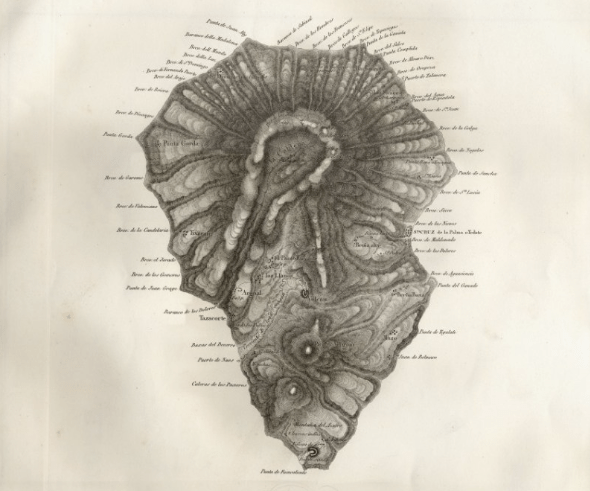
Here’s a photo of the Helena River at the Mundaring Weir, looking very canal-like wth it masonry banks.
O
Another is the Canning Dam and Reservoir, and a major source of freshwater for Perth.
It was said to have been constructed between 1933 and 1940, so that would have been in the time-frame of the Great Depression, which had world-wide impacts, and the early years of World War II, which started in September of 1939, and when Australia entered the war.
What about obelisks in Perth?
Well, like what we saw at the obelisk in Hobart in Tasmania, Perth’s State War Memorial is also an obelisk, and located in King’s Park.
It was said to have been unveiled in 1929 to commemorate those who died in World War I, and later wars were added.
Perth also has an unusual obelisk called the “Ore Obelisk.”
Also known as the “Harmony of Minerals,” it was erected in 1971 in Stirling Gardens.
Not only, we are told, was it meant to be a symbol of the State’s progress, and a symbol of mineral expansion between 1960 and 1970 and the harmony of mining and the environment, it was also a celebration of the “millionth citizen” of Western Australia.
At the end of the day, I really think everything that has taken place in the New World Order has been all about “Mining,” and other resource extraction and exploitation for the maximization of profits and other uses, and the enslavement of humanity, whether physically, or economically, went hand-in-hand with this whole new system.
A cruel and barbaric system was put in place by the colonizers over the top of the original infrastructure, for things like resource extraction.
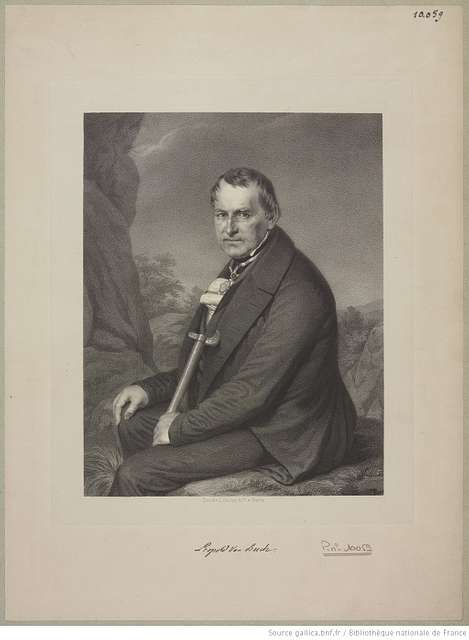
Examples of these practices abound, but another one is a relatively short-distance up the coast of Western Australia from Perth, in Ajana and the Ajana Mining District.

Forty-eight lead and copper mines once operated in the Ajana District.
Sir Augustus Charles Gregory discovered the location of the lead outcroppings of what became the first mine there, the Geraldine Mine, in 1848.
Sir Augustus was an English-born explorer and surveyor of Australia.
The Geraldine mine was in operation by 1849.
These are the ruins of what was called the “Lynton Convict Hiring Depot,” which provided the convict labor used to work the mine…
The buildings here were said to include a store, bakery, depot, well, lock-up, hospital, lime kiln and administration block that were said to have begun in 1853, and that no sooner were they finished in 1856 than the depot closed because of the harsh living conditions and transportation problems.
This is a cobblestone floor found at the Geraldine mine, said to have been where the convict miners broke up the ore…
…to pick out the highest-grade galena, which is the primary ore of lead, and contains silver as well.
There’s one last place in The Kimberley that I want to take a look at before I end this post, in the northern part of Western Australia.
I have long been aware of the King George Falls in the Kimberley and Dry Falls in the “Channeled Scablands” Washington State.
I found them early in my research, probably in 2016 or 2017.
I was struck by how similar they look, with the double-fall configuration and flat landscape at the higher elevation.
In the years since then, I have tracked many cities and places in alignment all over the Earth, and I have consistently found waterfalls all along these alignments.
Not only that, I have seen the same style of waterfall in different places around the world, and it looks like they had a selection of models of waterfalls to choose from, from small to large, and believe them to have a significant function on the Earth’s Grid system.
I am going to say in conclusion, after presenting a great deal of comparative information from a variety of places all over the Earth, that I firmly believe Australia’s ancient people were in fact the builders of Australia’s high civilization, and that they were one and the same as the original, ancient people the world over who were the builders of the same high civilization that existed all over the Earth, that goes by many names – Moorish, Atlantean, Aryan, Egyptian, Israelite, Islamic, Tartarian, to name a few.
All names for the same civilization that existed on Earth from ancient times to relatively modern, and their Moorish Science symbolism was taken over and given different meanings that were not the original meaning.
Then, after what I believe was a relatively recent cataclsym that was deliberately caused by an energy manipulation of the Earth’s grid system, causing worldwide devastation and the formation of swamps, marshes, and deserts, and the sinking of entire landmasses, the elitist European colonizers behind all that has taken place here came into this post-cataclysmic world, and imposed a completely new system and control matrix designed to only benefit the few and not the many.
All of this has directly brought us to the strange world we live in today, where everything is turned upside-down and inverted, and what we are told to believe by the Establishment nowadays makes no sense because they don’t care about Humanity in the slightest except for what they can take from us.
I am bringing forward unlikely pairs of historical figures represented in the National Statuary Hall at the U. S. Capitol who have things in common with each other in this series called “Snapshots from the National Statuary Hall.”
In this post, I am pairing John Winthrop, who is in the National Statuary Hall for Massachusetts, who was a leader in establishing the Massachusetts Bay Colony in 1630, with St. Junipero Serra for California, a notorious Franciscan missionary and Roman Catholic priest who established early missions in California.
So far in this series, I have paired Michigan’s Gerald Ford, a former President of the United States, and Mississippi’s Jefferson Davis, the former President of the Confederate States of America, and both men featured on the cover of the “Knight Templar” Magazine,; Dr. Norman Borlaug, Ph.D, often called the “Father of the Green Revolution; and Colorado’s Dr. Florence R. Sabin, M.D, a pioneer for women in science, both of whom worked for the Rockefeller Foundations; Louisiana’s controversial Socialist Governor, Huey P. Long, and Alabama’s Helen Keller, a deaf-blind woman who gained prominence as an author, lecturer, Socialist activist; Henry Clay, attorney, plantation owner, and statesman from Kentucky, and Lewis Cass, a military officer who was directly behind Native American Removals, politician and statesman from Michigan, contemporaries who were both Freemasons and unsuccessful candidates for U. S. President.; John Gorrie for Florida, a physician and inventor of mechanical refrigeration and William King for Maine, a merchant and Maine’s first governor, both Freemasons; and Dwight D. Eisenhower, Supreme Commander of the Allied Expeditionary Force in Europe during World War II and former President representing the State of Kansas, and Lew Wallace, Union General and former Governor of New Mexico Territory, representing the State of Indiana, both of whom were involved in the entirety of their major wars, and in the events concerning crimes in the aftermath of their wars; and Francis Preston Blair, Jr, representing Missouri, and Edmund Kirby Smith for Florida, both major players in events of the Mexican-American War and the American Civil War.
First, John Winthrop, one of the statues representing Massachusetts in the National Statuary Hall.
John Winthrop was an English Puritan lawyer, and led the first wave of colonists from England in 1630 and a leader in establishing the Massachusetts Bay Colony, the second major British Colony after the founding of Plymouth Colony in 1620.
John Winthrop was born in January of either 1587 or 1588 in Suffolk, England.
His father Adam was a prosperous landowner and lawyer, and his mother Annie came from a well-to-do landowning family as well.
The Winthrop family was granted Groton Manor after the Dissolution of the Monasteries, as the Lord of the Manor had previously been the Abbot of the Bury St. Edmunds Abbey, and John’s parents moved in when he was young.
The Dissolution of the Monasteries took place between 1536 and 1541, in which King Henry VIII disbanded the approximately 850 monasteries, convents and friaries in England, and leaving none.
Their income was taken and assets disposed of, and in many cases, like that of Glastonbury Abbey, the buildings on the property were left in ruins.
The Winthrop Coat of Arms was confirmed to John’s uncle by the College of Arms in 1592.
The College of Arms was said to have been first incorporated as a Royal Corporation in March of 1484 under King Richard III, and then re-incorporated in 1555 under Queen Mary I of England.
Heralds are appointed by the British Monarch and delegated to act on behalf of the Crown on all matters of heraldry, besides the granting of new Coats-of-Arms, including genealogical research and the granting of pedigrees.
During King Henry VIII’s reign, it was said that the College of Arms “…at no time since its establishment, was the college in higher estimation, nor in fuller employment, than in this reign.”
In 1530, King Henry VIII conferred the duty of “heraldic visitation” on the College, that of tours of inspection between 1530 and 1688 around England, Wales, and Ireland to register and regulate the Coats of Arms of Nobility, gentry and boroughs, and to record pedigrees.
During the time of the Dissolution of the Monasteries between 1536 and 1541, this duty gained even more importance as the Monasteries were formerly the repositories of local genealogical records, and from then on, the College was responsible for the recording and maintenance of genealogical records.
The College of Arms has been on Queen Victoria Street in the City of London in the shadow of St. Paul’s Cathedral since 1555.
This is the Coat-of-Arms for the College of Arms, with the motto “Diligent and Secret,” which interestingly the heraldry-wiki doesn’t know the meaning of.
Could it possibly mean exactly what it says – diligent and secret?
Like we don’t want you to know something, but we are sure working hard at what we are doing!
This would explain a question I am often asked – how to explain something like a mud flood event and repopulation effort involving lots of orphans when some people have long genealogies in their families, and I am one of them, with long genealogies on all my family lines, including ancestors on the Mayflower on my paternal grandmother’s side.
Yet my husband’s family got the name Gibson from an orphan ancestor that worked on a cattle drive for a man named Gibson, and he took his name.
Another question that comes to my mind is why does the word “arms” refer both to heraldry devices and weapons?
I have had some major questions about King Henry VIII’s role in the historical narrative.
Many star forts were attributed to having been built during his reign, like the Portland Castle on the Isle of Portland between 1539 and 1541…
…and Sandsfoot Castle in neighboring Weymouth, completed in 1542 and that both were meant to defend the original harbor against French and Spanish invaders.
During this same period of time, the Jesuit Order was formed in 1540 by a papal bull issued by Pope Paul III, under the leadership of Ignatius Loyola, and included a special vow of obedience to the Pope in matters of mission direction and assignment.
In 1542, Pope Paul III also established the Holy Office, also known as the Inquisition and the Congregation for the Doctrine of the Faith.
And in May of 1543, Nicolaus Copernicus published “On the Revolutions of the Heavenly Spheres,” offering mathematical arguments for the heliocentric, or sun-centered universe, and denying the geocentric model of the Earth-centered universe of Ptolemy, and the once widely-accepted geocentric model of the Universe was henceforth no longer considered adequate.
Copernicus’ Universe-changing book was published shortly before his death on May 24th of 1543.
Anyway, back to John Winthrop.
Winthrop entered Trinity College at Cambridge University in 1602.
According to the narrative, Trinity College was founded in 1546 by King Henry VIII.
Interesting to note that this architectural-style found at Trinity College looks just like college architecture found all around the world, with examples shown here at Korea University in Seoul, Korea, on the top left; Sydney University in Sydney, Australia, on the top right; Mainz University on Mainz, Germany on the bottom left; and at the University of Oklahoma in Norman, Oklahoma on the bottom right.
John Winthrop left Trinity College in 1605 to get married to Mary Forth, the daughter of a family friend.
In 1613, Winthrop’s father transferred the family holdings in Groton to him, and he became Lord of the Manor at Groton.
Lord of the Manor referred to the landholder of a rural estate, enjoying manorial rights, which was the right to establish and occupy a residence, and seignory, the right to grant or draw benefit from the estate.
Also sometime around 1613, Winthrop enrolled in Gray’s Inn, where he read law but did not advance to the Bar.
Gray’s Inn is one of the four inns of court in London – along with the Lincoln Inn, Inner Temple, and Middle Temple – that educate and train barristers in order to be able to practice law in England and Wales.
The early records of all four inns of court were lost, and the exact dates of their founding is not known.
The records of Gray’s Inn are lost up until the year of 1569, but was believed to date back to around 1370.
Winthrop’s wife Mary died in 1616, and he was remarried to Thomasine Clopton, who also died in 1616, in childbirth in December of that year.
Through his legal connections, he began courting Margaret Tyndal, the daughter of chancery Judge Sir John Tyndal and Anne Egerton, the sister of Stephen Egerton, a leading Puritan preacher of his time.
John Winthrop and Margaret Tyndal were married in April of 1618.
At some point not long after they were married, John acquired a position at the Court of Wards and Liveries and travelled between London and Groton, where his wife and eldest son John from his first marriage managed the manor when he was away.
The Court of Wards and Liveries was established starting in 1540 during the reign of King Henry VIII by two Acts of Parliament – the Court of Wards Act of 1540 and the Wards and Liveries Act of 1541.
It was established around the issues of practical matters relating to the Crown’s right of wardship and livery of young orphaned heirs where their father had been a Tenant-in-Chief of the Crown, including having rights over the deceased’s estate, including income and land, so this special court also administered a system of levying and collecting feudal dues.
Does this mean that there were so many orphaned heirs that they had to establish a special court to handle them?!
And what is Livery?
Well, if you look up the meaning, livery is an identifying design, such as a uniform, ornament, symbol, or insignia that designates ownership or affiliation.
Most often it would indicate the wearer of the livery was a servant, dependent, follower or friend of the owner of the livery.
Apparently the “Office of Liveries” was joined with the “Court of Wards” in 1542.
I find this information about the “Court of Wards and Liveries” very intriguing, and would love to know more about what was going on here that is not found in the historical record.
Perhaps there was more to it than just a way of replenishing the Royal Treasury and controlling wards and the administration of their lands, which is found in the historical record.
But was there a connection between the English words “livery” and “delivery,” where definitions of delivery include 1) the transfer of something from one place or person to another; 2) the process of giving birth; and in law 3) the formal or symbolic handing over of property to a grantee or third-party.
Our historical narrative tells us the religious atmosphere for Puritans to started to change in England in the mid-to-late 1620s, after King Charles I ascended to the throne in 1625, and had married a Roman Catholic.
There was an atmosphere of intolerance towards Puritans and this state-of-affairs led Puritan leaders to consider emigration to the New World as means to escape persecution.
The establishment of Plymouth Colony on the shores of Cape Cod Bay in 1620 was the first successful religious colonization of the New World.
In 1629, a charter was received by Puritan investors that became known as the “Massachusetts Bay Company” to govern a land grant of territory between what became known as the Charles River in eastern Massachusetts and the Merrimack River, which starts in New Hampshire and flows southward into Massachusetts.
Puritan John Endecott led a small group of settlers to the area around this time to prepare the way for a larger migration, and he became the first Governor of the Massachusetts Bay Colony from 1629 to 1630, and served as governor several more times over the years, for a total of sixteen years all together.
The exact connection by which John Winthrop got involved with the Massachusetts Bay Company is not known, but he had connections with individuals associated with the company.
Also in 1629, King Charles I dissolved Parliament, beginning a historical period known as “11 years of rule” without Parliament.
This worried Massachusetts Bay Company principal investors, and John Winthrop as well, who had lost his position with the Court of Wards and Liveries in the crackdown on Puritans that took place with the dissolution of Parliament.
The Governor of the Massachusetts Bay Company proposed the company reorganize and transport its charter and governance to the colony, and as the months went on, John Winthrop became more involved with the company, and a major supporter of emigration there.
John Winthrop was a signatory on the Cambridge Agreement, which was signed on August 29th of 1629 by company shareholders.
Under its terms, those who wanted to emigrate to the New World could purchase shares from those shareholders who didn’t want to leave home.
The Cambridge Agreement also set forth that the Massachusetts Bay Colony would be under local control, and not governed by a London-based corporate board.
The company shareholders met in August of 1629 to enact the agreement.
At this time, John Winthrop was chosen as the new Governor of the Massachusetts Bay Company, and, along with other company officials, set about making all the necessary arrangements for the venture of settling in the New World.
John Winthrop was on one of four ships of the transport fleet that left the Isle of Wight on April 8th of 1630.
All together, there were eleven ships that carried roughly 700 emigrants to the new colony.
John Winthrop, with the charter for the Massachusetts Bay Colony in hand, and the new colonists arrived in Salem, Massachusetts, in June of 1630, and were welcomed by John Endecott.
Winthrop found the Salem area inadequate for the arrival of all the new colonists, so he and his deputy, Thomas Dudley, surveyed the area, and eventually settled on the Shawmut Peninsula, where they founded what became the city of Boston.
They also established settlements along the coast, and banks of the Charles River, we are told, in order to avoid presenting a single point that hostile forces might attack.
So along with Boston, these settlements were Cambridge, Roxbury, Dorchester, Watertown, Medford, and Charlestown.
This map was the illustration that appeared opposite the title page of William Wood’s book from that time entitled: “New Englands Prospect” and called “A true, lively and experimentall description of that part of America commonly called New England; discovering the state of that Countrie, both as it stands to our new-come English Planters; and to the old native inhabitants. Laying down which that which might enrich the knowledge of the mind-travelling reader, or benefit the future voyager.”
This selection from William Wood’s book was of a map showing the plantations along Massachusetts Bay, and the word or name Sagamore is showing in several places.
The word “Sagamore” or “Sachem” apparently denoted a leader of the Algonquin-speaking peoples.
I just want to say that it is extremely difficult to find information about who the Algonquin people really are because the visuals we see are typically like this.
Here is an historic photograph that I came across of the Algonquin Narragansett people of Rhode Island, circa 1925.
We are told that in its early months, the new colony struggled, losing around 200 people to various diseases.
Winthrop worked alongside the laborers and servants in the work of the colony, setting an example for the other colonists to do all the work that needed to be done on the “plantation.”
Interesting to see the word “plantation” used so much even from the very beginnings of the New World.
In the history of colonialism, plantation was a form of colonization where settlers would establish a permanent or semi-permanent settlement in a new region.
Looks like the colonizers were literally “planting” themselves in a new place.
Not only were settlements and settlers being planted in a new region from somewhere else, this plantation system of the colonizers quickly laid the foundation for slavery on large farms owned by “planters” where cash crop goods were produced.
The word plantation first started appearing in the late 1500s to describe the process of colonization, like the Plantations of Ireland in the 16th- and 17th-centuries, during which time we are told the English Crown confiscated land from Irish Catholics and redistributed the land to Protestant settlers from Great Britain…
…creating all kinds of long-term problems.
The British Plantations of Ireland replaced the Irish language, law and customs with those of the British, created sectarian hatred between Protestants and Catholics, and Northern Ireland is still part of Britain to this day.
Back to John Winthrop.
This plaque memorializes John Winthrop’s first house in Boston, said to have been built nearby.
The marker was placed on the old Boston Stock Exchange Building, located at 53 State Street, by the City of Boston in 1930.
The old Boston Stock Exchange Building was said to have been built between 1889 and 1891 from designs by the architectural firm of Peabody & Stearns, and one of the largest office buildings in America back in the day, and in its hey-day housed banks, corporations, safe-deposit vaults, lawyers, and businessmen.
Governor Winthrop was also granted an estate on the southern bank of the Mystic River in Somerville, Massachusetts, by the Massachusetts Bay Colony in September of 1631 that he called “Ten Hills Farm.”
It was so-named for what were called “ten small knolls” on the property, which included orchards and meadows for grazing cattle.
Ten Hills Farm was inherited by his son, John Winthrop, Jr, in 1649, who was the Governor of the Connecticut Colony between 1659 and 1676.
Today Ten Hills is a neighborhood of Somerville.
On the other side of the Mystic River from Ten Hills Farm was a shipyard owned in absentia by Mathew Cradock, one of the original principal investors of the Massachusetts Bay Company, and it was there that one of the colony’s first ships was said to have been built, the 30-ton “Blessing of the Bay,” and first launched on July 4th of 1631.
It was operated by John Winthrop as a trading and packet ship up and down the coast of New England, but only for a short time as the ship “disappeared from view,” possibly wrecked on the capes in 1633 on a voyage to Virginia with a load of fish and furs.
Winthrop was a big regional landowner.
He also owned the land that became the town of Billerica…
…Governor’s Island in Boston Harbor…
…and Prudence Island in Narragansett Bay in Rhode Island.
Winthrop spent a lot of time writing, including his “The History of New England: 1630 – 1649,” also known as “The Journal of John Winthrop,” which was apparently not published until the late 18th-century.
John Winthrop died of natural causes in March of 1649 and was buried in the King’s Chapel Burying Ground, the oldest cemetery in Boston and a site on the Freedom Trail.
The Freedom Trail is a 2.5-mile, or 4-kilometer, -long path through Boston with sixteen locations significant to the history of the United States that was established in 1951.
Next, St. Junipero Serra.
St. Junipero Serra, a Franciscan missionary and Roman Catholic priest, represents California in the National Statuary Hall.
He was credited with establishing the Franciscan Missions in the Sierra Gorda in Mexico, said to have been built between 1750 and 1760 a UNESCO World Heritage Site…
…as well as the first nine of twenty-one missions in California, from San Diego to San Francisco from 1770 to 1782.
The Tongva people were indigenous to the South Channel Islands and the Los Angeles Basin.
The collapse of Tongva society and culture of the region was initiated with Junipero Serra’s founding of the San Gabriel Mission in Los Angeles County in 1771.
The Spanish initiated forced relocation and enslavement of the native Tongva people under the mission system to secure their labor, and some of the nicknames of the San Gabriel Mission in San Gabriel California is the “Queen of the California Missions,” and “Mother of Agriculture in California.”
Junipero Serra was beatified in 1988 by Pope John Paul II over the denunciations of Native American tribes that accused him of heading a brutal colonial subjugation.
Then in 2015, Pope Francis canonized him, and he became Saint Junipero Serra, the first saint to be canonized on U. S. soil at the National Basilica in Washington, D. C.
Serra was nicknamed the “Apostle of California” for his missionary efforts, but before and after his canonization, his reputation and missionary work was condemned for reasons given like mandatory conversions of the native population to Catholicism and atrocities committed against them.
That’s what they say about him anyway!
I am bringing forward unlikely pairs of historical figures who are represented in the National Statuary Hall who have things in common with each other, as mentioned at the beginning of this post.
I think the main thing that jumps out in this pairing of John Wintrhop and the sainted Junipero Serra is that they were engaged in the same kinds of activities setting up new economic slavery systems and infrastructure, with Winthrop on the East Coast for British and Church of England interests, and Serra on the west coast for the Spanish Empire and the Catholic Church .
The Council of New England and the Church of England were busy colonizing and settling New England starting in 1620, almost exactly 100-years after the Vice-Royalty of New Spain and the Catholic Church did the same thing following the Spanish Conquest of the Aztec Empire in 1521.
Central Mexico became the base of expeditions of exploration and conquest, in what became a huge area that comprised the Spanish colonization of the Americas, including California among many other places, in much the same way that New England became a major starting point for the British colonization and exploration of North America.
Along these lines, the Spanish Mission System of California sounded A LOT like the English plantation system of New England.
Just going to keep putting it out there that what I am finding in the National Statuary Hall at the U. S. Capitol building in Washington, DC, seems more often than not a “Who’s Who” for the New World Order and its Agenda, and in many cases honoring obscure historical figures, like these two men, with their lives and times telling a completely different kind of story than what we normally hear about.
In this series called “Snapshots from the National Statuary Hall,”I am bringing forward unlikely pairs of historical figures represented in the National Statuary Hall at the U. S. Capitol who have things in common with each other.
In this post, I am pairing Francis Preston Blair, Jr, of Missouri, a Union Major General during the Civil War, with Edmund Kirby Smith of Florida, a senior officer of the Confederate States Army.
So far in this series, I have paired Michigan’s Gerald Ford, a former President of the United States, and Mississippi’s Jefferson Davis, the former President of the Confederate States of America, and both men featured on the cover of the “Knight Templar” Magazine,; Dr. Norman Borlaug, Ph.D, often called the “Father of the Green Revolution; and Colorado’s Dr. Florence R. Sabin, M.D, a pioneer for women in science, both of whom worked for the Rockefeller Foundations; Louisiana’s controversial Socialist Governor, Huey P. Long, and Alabama’s Helen Keller, a deaf-blind woman who gained prominence as an author, lecturer, Socialist activist; Henry Clay, attorney and statesman from Kentucky, and Lewis Cass, military officer, politician and statesman from Michigan, contemporaries who were both Freemasons and unsuccessful candidates for U. S. President.; John Gorrie for Florida, a physician and inventor of mechanical refrigeration and William King for Maine, a merchant and Maine’s first governor, both Freemasons; and Dwight D. Eisenhower, Supreme Commander of the Allied Expeditionary Force in Europe during World War II and former President representing the State of Kansas, and Lew Wallace, Union General and former Governor of New Mexico Territory, representing the State of Indiana, both of whom were involved in the entirety of their major wars, and in the events concerning crimes int he aftermath of their wars.
First, Francis Preston Blair, Jr.
He was a U. S. Senator and Congressman for Missouri, and a Union Major General during the Civil War.
Blair was born in Lexington, Kentucky, in February of 1821.
He was the youngest son of politician and newspaper editor Francis Preston Blair, Sr, an early member of the Democrat Party and strong supporter of Andrew Jackson, helping him win Kentucky in the Presidential election of 1828…
…and his brother Montgomery was the Mayor of St. Louis, and Postmaster General under President Lincoln.
Montgomery Blair was also the attorney for Dred Scott.
The Blair House in Washington, DC, is used an official residence, used primarily as a state guest house for visiting dignitaries and other guests of the U. S. President.
Come to think of it there is a high school in Montgomery County, Maryland, where I grew up, and come to find out, it was named in Montgomery Blair’s honor.
Interesting to note the mascot for the school is called “The Blazer,” and not the “Red Devil” that it looks like.
Hmmm, in the past I wouldn’t have thought twice about this not being noteworthy, but now I look at things completely differently as to what it could possibly mean.

Back to Francis Preston Blair Jr.
He received his early education in schools in Washington, DC, then received his higher education at Yale University in New Haven, Connecticut…
…the University of North Carolina in Chapel Hill…
…and he graduated from Princeton University in New Jersey in 1841.
Blair studied law at Transylvania University in Lexington, Kentucky.
Blair was admitted to the bar in Lexington, and first went into law practice in 1842 with his brother Montgomery in St. Louis, and then went to work in the law office of Thomas Hart Benton in St. Louis, between 1842 and 1845.
Blair travelled out west for a buffalo hunt in 1845, and stayed at Bent’s Fort in present-day La Junta on the Santa Fe Trail in eastern Colorado with his cousin, George Bent.
Bent’s Fort was situated in the vicinity of bends in the Arkansas River, in the same manner that Fort Snelling, which we are told was established in Minnesota in 1819, just happens to be situated directly next to the river-bends of the Mississippi River between Minneapolis and St. Paul, and yes I do think there is an energy connection between star forts and river-bends like these.
Blair joined the expedition of Brigadier General Stephen Kearney in Santa Fe after the beginning of the Mexican-American War in April of 1846, which started after the United States annexed Texas in 1845.
Kearney took a force, called the “Army of the West,” consisting of about 2,500 men to Santa Fe, New Mexico, during the Mexican-American War, that was headquartered at Fort Leavenworth, Kansas, the oldest settlement in Kansas, and the second-oldest active army post west of Washington, DC.
After the Mexican-American War, broken up into both the “Department of the Pacific” and the “Department of the West,” both commands of the U. S. Army during the 19th-century.
By the end of June of 1846, Kearney’s “Army of the West” advanced on the Santa Fe Trail.
Kearney and his army moved into present-day New Mexico and seized Santa Fe between August 8th and August 14th of 1846, where he established a military government.
Kearney subsequently appointed Francis P. Blair, Jr, as Attorney-General for the New Mexico Territory, and Blair established an American Code of Law for the region, as well as becoming a judge on a newly-established circuit court.
On September 25th of 1846, Kearney set out from Santa Fe with military forces as part of a concerted military operation involving several units to conquer and take possession of California.
After putting up fierce resistance in a number of battles that took place during this time, the Californians surrendered on January 13th of 1847 to John C. Fremont, and Kearney was the military governor of California in Monterey until May of that year.
Blair returned to St. Louis in the summer of 1847.
He entered the political arena, and served in the Missouri House of Representatives from 1852 to 1856, and was an outspoken “Free Soiler,” a coalition party focused on the issue of opposing the expansion of slavery into the western states.
The Free Soil Party was active from 1848 to 1854, at which time it merged into the Republican Party.
Blair was elected to the U. S. House of Representatives as a Republican in 1856.
Though a slave-owner himself, Blair made major speeches during this time calling slavery as a national problem, proposing to solve it by gradual emancipation, and by acquiring land in Central and South America on which to settle freed slaves.
Over the next few years Blair was in-and-out of the U. S. House of Representatives for a variety of reasons and did not stay put there, including becoming a colonel in the Union Army in July of 1861 after being elected in 1860.
We are told the State of Missouri was a hotly-contested border state during the Civil War years, with a mix of pro-Union and pro-secession.
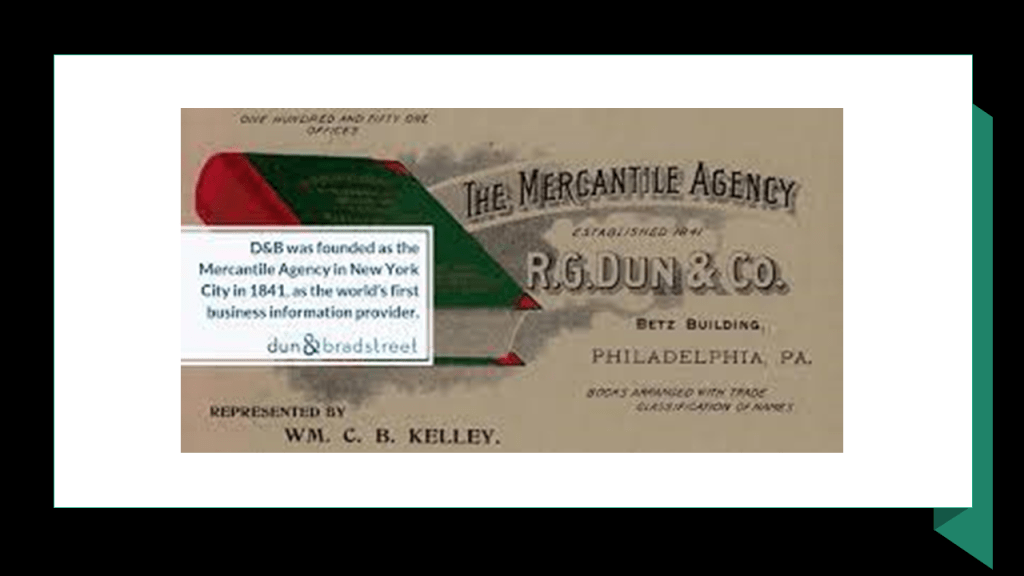
Missouri sent armies, generals and supplies to both sides, maintained two governments, and went through a bloody neighbor-against-neighbor in-state war within the larger national war.
Missouri’s position at the geographic center of the country and at the edge of the American frontier made it divisive battleground, and when the American Civil War started in 1861, the state became a strategic territory in the Trans-Mississippi Theater, with both sides vying for control of the Mississippi River, and the importance of St. Louis as economic hub.
And…apparently Francis P. Blair Jr was in the thick of it in Missouri.
So, for example, right after South Carolina seceded from the Union in December of 1860, Blair anticipated southern leaders trying to lead Missouri into the secession movement, so he personally organized and equipped a Home Guard of several thousand members from a group called the “Wide Awakes,” a paramilitary youth organization cultivated by the Republican Party during the 1860 election year.
By the middle of the 1860 election campaign, Republicans estimated there were “Wide Awake” Chapters in every northern (free) state, and that there were 500,000 members by President Lincoln’s election.
The groups held social events, promoted comic books, and introduced many young people to political participation.
The standard “Wide Awake” uniform was a full robe or cape; a black-glazed cap; and a torch that was six-feet in length, with a whale-oil container mounted to it.
The “Wide Awakes” also adopted a large eyeball as their standard bearer.
Blair also recruited members of the German gymnastic movement in St. Louis for his Missouri Home Guard.
Called “Turners,” they were members of German-American gymnastic clubs called “Turnvereins.”
They promoted German culture, physical culture, and liberal politics.
The Turner Movement in Germany was started was started by nationalist Friedrich Ludwig Jahn in 1811 when Germany was occupied by Napoleon.
The politically-liberal Turner Movement in Germany was suppressed after the Revolutions of 1848, in which many Turners took part, so many Turners left Germany for the United States, in particular the Ohio Valley Region, Missouri, Wisconsin, and Texas.
Several of these “Forty-Eighters” went on to become Union soldiers and Republican politicians.
Turners were also active in public education and labor movements.
All I can say is “What is this?”
What was really going on here?
So anyway, Blair, and Captain Nathaniel Lyon transferred the arms in the U. S. Arsenal in St. Louis to Alton, Illinois, located across the Mississippi River from St. Louis.
Then, on May 10th of 1861, Lyon, Blair’s Home Guard, and a U. S. Army Company, captured hundreds of secessionist state militia at Camp Jackson who had been positioned to take over the arsenal in an event known as the Camp Jackson Affair…or the Camp Jackson Massacre.
The Massacre took place when the captives were marched into town, and hostile secessionist crowds gathered. From a single gunshot, described as accidental, Lyon’s men fired into the crowd, killing 28 civilians and injuring dozens more.
Several days of rioting followed, which was only stopped with the imposition of martial law.
While Lyon’s actions gave the Union control of St. Louis and the rest of Missouri for the remainder of the Civil War, it deepened the ideological divisions in the state.
After this incident, open warfare between Union troops and followers of the pro-Southern Governor of Missouri, Claiborne Jackson, was about to break-out.
On May 21st, the Union General William S. Harney, Commander of the U. S. Army of the West, agreed to the Price-Harney Agreement with the Missouri State Guard Commander Sterling Price to avoid hostilities.
The Agreement left the Union in control of the arsenal and St. Louis, and left the secessionist, Price, in charge of the Missouri State Guard and most of the rest of the state.
Blair objected to the Harney-Price Agreement, and contacted Republican leaders in Washington, DC.
President Lincoln relieved Harney of command, and Nathaniel Lyon became the Commander of the Department of the West on May 30th of 1861, with an order to keep Missouri in the Union.
Lyon drove Sterling Price and Governor Jackson to the southwestern corner of the state, where Lyon was killed near Springfield, Missouri, in the “Battle of Wilson’s Creek,” the first major battle of the Trans-Mississippi Theater of the American Civil War, and resulted in a Confederate victory.
Though the state stayed in the Union for the remainder of the war, the battle gave Confederates control of southwestern Missouri.
Blair helped organize a new pro-Union state government and John C. Fremont took over command of the U. S. Army Western Department.
Fremont’s mission was to organize, equip, and lead the Union Army down the Mississippi River, reopen commerce, and cut-off the western part of the Confederacy, and his main goal as the Commander of the Western Army was to protect Cairo, Illinois, at all costs.
The city of Cairo, Illinois, was located at the southernmost point in Illinois, at the confluence of the Mississippi and Ohio Rivers.
Southern Illinois where Cairo is referred to as “Little Egypt.”
I say was because today, Cairo is empty and deserted, and considered a ghost town.
In its heyday, Cairo was an important city along the steamboat routes and railway lines.
Blair and Fremont, however, clashed over Fremont’s military operations in Missouri, particularly how money was being spent.
Apparently, Fremont was spending money on equipment and supplies, and that Blair expected money to go to his allies in the business community of St. Louis.
Fremont was discredited in part because of Blair’s influence, and replaced as commander in November of 1861.
In July of 1862, Blair was appointed as a colonel of Missouri Volunteers; promoted to Brigadier General of Volunteers in August of 1862; and Major-General in November of 1862.
His military service during the Civil War consisted of: commanding a brigade consisting of companies from Missouri, Illinois, and Ohio; commanding divisions in Vicksburg, Chattanooga, and protecting rear armies of Sherman’s “March to the Sea.”
After the Civil War, not only was Blair financially ruined because he spent so much of his private fortune in support of the Union, he also became disgruntled with the Republican Party and left it, along with his father and brother, because the Blair family did not like the Congressional Reconstruction policy.
By this time, for the remainder of Blair’s life, his political career was pretty much over for all intents and purposes.
He died on July 8th of 1875 from head injuries he sustained after a fall at the age of 54, while serving as Missouri’s State Superintendent of Insurance, and was buried at Bellefontaine Cemetery in St. Louis.
Next, I am going to feature Edmund Kirby Smith, who represents the State of Florida in the National Statuary Hall.
Edmund Kirby Smith was a senior officer of the Confederate States Army who commanded its Trans-Mississippi Department between 1863 and 1865.
The Trans-Mississippi Department of the Confederate States Army was comprised of Arkansas, Texas, Missouri, western Louisiania, Arizona Territory and Indian Territory.
Edmund Kirby Smith was born in St. Augustine, Florida, in 1834, the youngest child of attorney Joseph Lee and his wife Francis.
Both of his parents were natives of Litchfield, Connecticut before moving to St. Augustine in 1821, where his father was appointed as a Superior Court Judge in the new Florida Territory, of which St. Augustine was the capital between 1822 and 1824.
Litchfield, Connecticut was the location of the Litchfield Law School, the first independent law school established in America for reading law, founded by lawyer, educator and judge Tapping Reeve in the 1770s, and it was a proprietary school that was unaffiliated with any college or university.
I looked up meanings for the unusual name of “Tapping Reeve,” and here is what I found as some possibilities:
Tapping – To exploit or draw a supply from a resource.
Reeve – Administrator, attendant; curator; agent; director; foreman; and the list goes on.
Something to think about.
Edmund Kirby Smith entered West Point in 1841 and graduated in 1845, and by August of 1846 was serving in the 7th U. S. Infantry as a Second Lieutenant.
He served in several battles of the Mexican-American War, which took place between 1846 and 1848 after the United States annexed Texas in 1845, and had obtained the rank of captain by the end of it.
After the Mexican-American War and before the American Civil War, Smith taught mathematics at West Point between 1849 and 1852, as well as pursuing his scientific interest in botany, and was credited with collecting and describing species of plants native to Florida and Tennessee.
Then, he returned to leading troops in 1859 in the Southwest.
Smith was promoted to Major in January of 1861 when Texas seceded from the Union, and he refused to surrender his command at Camp Colorado in what is now Coleman to the Texas State Troops.
Within just a few months, Smith had resigned his commission in the United States Army to join the Confederacy.
He had been promoted to the rank of Brigadier-General in June of 1861, and given a command of a brigade in the Army of the Shenandoah, which he led in the First Battle of Bull Run on July 21st of 1861, the first major battle of the civil war, in which he was severely wounded.
Smith recovered from his injuries, and returned to duty in October of 1861 as a Major-General and division commander of the Army of Northern Virginia for awhile, the primary military force of the Confederate States in the Eastern Theater of the Civil War.
Then in February of 1862, he was sent west to command the eastern division of the Army of Mississippi, cooperating with General Braxton Bragg in what was called the “Invasion of Kentucky,” during which time he was victorious in the Battle of Richmond in Kentucky, called one of the most complete confederate victories in the war, and the first major battle in the Kentucky Campaign.
By October of 1862, Smith was promoted to Lieutenant-General, commanding the 3rd Corps, Army of Tennessee.
Then in January of 1863, Edmund Kirby Smith was transferred to command the Trans-Mississippi Department, and for the rest of the Civil War he remained west of the Mississippi River.
His Trans-Mississippi Department never had more than 30,000 men stationed over a large area and he wasn’t able to concentrate his forces enough to challenge the Union Army or Navy.
After the Union forces captured Vicksburg, Mississippi on July 4th of 1863…
…and Port Hudson in Louisiana, on July 9th of 1863…
…Edmund Kirby Smith’s forces were cut off from the Confederate Capital of Richmond, Virginia.
As a result of being cut-off from Richmond, Smith commanded and administered a nearly independent area of the Confederacy, and the whole region became known as “Kirby Smithdom.”
Ultimately, the Confederate General Edmund Kirby Smith surrendered the Trans-Mississippi Department on May 26th of 1865 on board the U. S. S. Fort Jackson on Galveston Bay in Texas to the Union Major General Edward Canby, approximately eight-weeks after General Robert E. Lee’s surrender to General Ulysses S. Grant in Virginia.
Edmund Kirby Smith was active in the telegraph business as the President of the Atlantic and Pacific Telegraph Company following the Civil War, from 1866 to 1868…
…served as the Chancellor of the University of Nashville from 1870 and 1875…
…and taught mathematics and botany at the University of the South in Sewanee, Tennessee…
…in whose cemetery he was buried after his death from pneumonia in 1893.
I am bringing forward unlikely pairs of historical figures who are represented in the National Statuary Hall who have things in common with each other, as mentioned at the beginning of this post.
In this pairing for things in common with each other, both men were out in what became the western United States, after Texas was annexed in 1845, and heavily involved in the events and activities of the Mexican-American War, which lasted from 1846 to 1848.
Both Blair and Kirby Smith served as General-grade officers during the Civil War, with Blair commanding Union troops, and Kirby Smith commanding Confederate troops.
And both men were closely connected with the Trans-Mississippi Department, with Blair’s home state of Missouri being part of it, and from July of 1863 to May of 1865, Kirby Smith was the commander and administrator of this pretty much independent area of the Confederacy.
Shreveport in Louisiana was the location of one of the two headquarters of the Trans-Mississippi Department of the Confederate Army, the other being in Marshall, Texas.
I first learned about the Trans-Mississippi Department when I was doing some research around Albert Pike, an influential 33rd-degree freemason who was a senior officer of the Confederate Army who commanded the District of Indian Territory in the Trans-Mississippi Theater of the American Civil War, otherwise known as Oklahoma.
Around this same time period, Albert Pike was the Sovereign Grand Commander of the Supreme Council of Scottish Rite’s Southern Jurisdiction, a position which he held from 1859 to 1891.
As a matter of fact, there is an interesting similarity between the decoration for the Trans-Mississippi Department, with the motto of the Confederacy – “Deo Vindice” or something along the lines of “With God, our Defender” – and the decoration of the Order of the Sovereign Grand Inspectors General of the Scottish Rite, which has the Masonic Motto of the 33rd-Degree – “Ordo Ab Chao” and “Deus Meumque Jus” – inscribed on it, which translates to “Order out of Chaos” and “God and My Right.”
These sound a lot like the motto for the University of Wisconsin-Madison – “Numen Lumen” – which can be translated from the Latin as “God, Our Light,” and like “Heaven’s Light Our Guide” that was found on the flags of the various Presidencies in India, like that of the “Madras Presidency,” of the British East India Company.
And the University of Wisconsin-Madison seal looks like the standard of Blair’s “Wide Awake” movement seen earlier in this post.
At any rate, we are told that over 200,000 men were engaged in the Trans-Mississippi Theater of War, and there were all together 7 battles in Arkansas, New Mexico, Missouri and Louisiana between 1862 and 1864.
This was also the heart of the ancient Washitaw Empire, with Monroe, Louisiana being the Imperial Seat.
This was the battle flag of the “Army of the West,” another name for the Trans-Mississippi District of the Confederacy’s Army of the Mississippi.
What would stars and a crescent be doing on a Confederate Army’s battle flag?
The star and crescent symbolism has been identified with Islam, and what we are told is that this happened primarily with the emergence of the Ottoman Turks, and for one example of several national flags, are depicted on the modern Turkish flag.
I also read where the Egyptian hieroglyphs of a star and the crescent moon denote the Venus Cycle from morning star to evening star.
And why is theater, defined as a collaborative form of performing art that uses live performers, usually actors or actresses, to present the experience of a real or imagined event before a live audience in a specific place, like a stage, the word choice for an area or place in which important military events occur or are progressing?
A theater can include the entirety of the air space, land and sea area that is or that may potentially become involved in war operations.
As is so often the case, I am left with more questions than answers about the gaps, no…gaping holes, in our historical narrative about what was really going on here during this period of time.
The National Statuary Hall at the U. S. Capitol building consistently provides us with tantalizing clues in the lives of the historical characters chosen to represent their respective states, almost like a “Who’s Who” of the New World Order’s historical reset activities, many of whom are obscure individuals like Francis Preston Blair, Jr, and Edmund Kirby Smith.
The American Red Cross was founded in 1881 by Clara Barton as a non-profit humanitarian organization that provides emergency assistance, as well as disaster relief and disaster preparedness education.
Clara Barton had been a hospital nurse during the American Civil War.
The International Committee of the Red Cross was founded in Geneva, Switzerland in 1863, with the stated purpose of protecting victims of conflicts and providing them with assistance.
Barton learned of the Red Cross in Switzerland, and went to Europe in 1869 and became involved in its work during the Franco-Prussian War between the Second French Empire under Emperor Napoleon III and the North German Confederation under Chancellor Otto von Bismarck.
The Second French Empire ended with the defeat of Napoleon III military forces to the Germans in the Franco-Prussian War.
Interesting side-note about the Franco-Prussian War is that it was said that the German Chancellor Otto von Bismarck manipulated the situation to cause the war by dispatching the Ems Telegram on July 14th of 1870, inciting the Second French Empire to declare war on the Kingdom of Prussia on July 19th of 1870.
Bismarck also annexed Alsace-Lorraine on the border with Germany, which was part of France, as a result of the Franco-Prussian War of 1870 – 1871.
We are told that France’s determination to regain Alsace-Lorraine, and fear of another Franco-German war, as well as British apprehension about the balance-of-power, became factors in the causes of World War I.
At any rate, Clara Barton returned to the United States determined to start the Red Cross in America.
She had connections in upstate New York, and the American Red Cross was established on May 21st of 1881 in Dansville, New York, and the first local chapter was at the English Evangelical Lutheran Church of Dansville.
Other names involved in the establishment of the American Red Cross included Senator Omar D. Conger, who had a home in Dansville where its founders met…
….even though he was one of the Senator’s for Michigan and had lived and worked in Port Huron, in Michigan’s region known as “The Thumb.”
Ohio Representative William Lawrence was also involved, who was noted for attempting to impeach President Andrew Johnson in 1868 and for his role in creating the Department of Justice in 1870.
John D. Rockefeller was amongst several that donated to create a national headquarters near the White House in Washington, DC, said to have been built between 1915 and 1917.
When I found this photo of John D. Rockefeller, I found this excerpt on a website called “Scientific Dictatorship…”
…and the article it was from called “The American Red Double Cross”can’t be found.
Moving right along…nothing to see here, right? Yeah, right!
The first official disaster relief operation of the American Red Cross was responding to the Michigan Thumb Fire, which started on September 5th of 1881,with hurricane-force winds and hot and dry conditions this was less than four months after the establishment of the American Red Cross with the participation of the Michigan Senator Omar D. Conger who had lived and worked in Port Huron in the “The Thumb” as mentioned previously.
As a matter of fact, around 10-years earlier,there was a fire called the Port Huron Fire on October 8th of 1871, which burned a total of 1.2-million-acres, of Michigan’s Thumb region.
This was the exact same day as the Great Chicago Fire and the Peshtigo Fire in Wisconsin, as well as two other fires in Michigan – in Manistee and Holland.
All coincidences?
Interesting to note the following descriptions that accompanied the 1881 Michigan Thumb Fire.
Soot and ash from the fire caused sunlight to be obscured in places on the U. S. East Coast and in New England, the sky had a yellow appearance, and which caused a strange luminosity in and on buildings and vegetation, and Tuesday, September 6th of 1881, became known as “Yellow Tuesday” because of this unsettling event.
Early false flags?
Problem – Reaction – Solution?
Did they actually create the disasters, and then provide the response to the disasters?
Let’s take a close look at the next major disaster the American Red Cross responded to in this light, which was the Johnstown Flood in Pennsylvania that took place on May 31st of 1889.
The Johnstown Flood was caused by the catastrophic failure of the South Fork Dam.
The South Fork Dam was said to have been an earthwork built between 1838 and 1853 as part of a canal system as a reservoir for a canal basin in Johnstown by the Commonwealth of Pennsylvania.
But then after spending 15-years building the dam, it was abandoned by the Commonwealth, and sold to the Pennsylvania Railroad, who turned around and sold it to private interests.
In 1881, speculators had bought the abandoned reservoir and built a clubhouse called the South Fork Fishing and Hunting Club and cottages, turning it into an exlusive retreat for 61 steel and coal financiers from Pittsburgh, including Andrew Carnegie, Andrew Mellon, Philander Knox, John Leishman, Henry Clay Frick and Daniel Johnson Morrell.
The South Fork Fishing and Hunting Club was a Pennsylvania Corporation and owned the South Fork Dam.
What we are told was that the dam failed after after days of unusually heavy rain, and 14.3-million-tons of water from Lake Conemaugh, which devastated the South Fork Valley, including Johnstown which was 12-miles downstream from the dam, killing an estimated 2,209 people and causing $17-million in damages in 1889, which be $490-million in 2020.
Wow, look at all the electric poles and wires in this photo of the aftermath of the flood in Johnstown!
Though the were years of claims and litigation, the elite and wealthy members of the South Fork Fishing and Hunting Club were never found liable for damages.
In 1904, the South Fork Fishing and Hunting Club corporation was disbanded and assets sold at a public auction by the sheriff, and there were permanent exhibits in many places, like Atlantic City, depicting the horrors of the Johnstown Flood experience for public consumption.
Along with exhibits depicting the Johnstown Flood, exhibits about the Galveston Flood were also to be found, like this one at the 1904, St. Louis World’s Fair , said to have resulted from a Hurricane on September 8th of 1900 in our historical narrative, and which has been described as the deadliest natural disaster in United States history.
Clara Barton was forced out as President of the American Red Cross in 1904.
Mabel Thorp Boardman stepped into the leadership role, and we are told worked with senior government officials; military officers; financiers; and social workers.
Professional social workers made the organization a model of Progressive Era scientific reform, which was described as a period of widespread social activism and political reform from the 1890s to the end of World War I in 1918.
The movement had the stated objectives of addressing social problems created by industrialization; urbanization; immigration; and political corruption.
It was the time of anti-trust laws, women’s suffrage, and during which time the U. S. Food and Drug Administration came into existence in 1906.
It was also the period of time during which the RMS Titanic sank, and for which the New York chapter of the American Red Cross, along with the Charity Organization Society, gave money to survivors and dependents of those who died after, we are told, the Titanic sank as a result of striking an iceberg on April 15th of 1912.
It was also the time period when a meeting took place at Jekyll Island off the coast of the State of Georgia to lay the foundations of the Federal Reserve, between November 20th and November 30th, in 1910.
Then the Titanic sank in 1912.
Prominent people opposed to the creation of the Federal Reserve were on board, including John Jacob Astor IV, Benjamin Guggenheim, and Isidor Strauss.
Then on December 23rd, 1913, the Federal Reserve Act Passed Congress, signed into law by Woodrow Wilson.
It created and established the Federal Reserve System, and created the authority to issue Federal Reserve Notes (commonly known as the US dollar) as legal tender.
When I looked at the names of past Chairpersons of the Board of Governors of the Red Cross, one name really jumped out at me, and that was E. Roland Harriman, who occupied that leadership position from 1950 to 1973.
It jumped out at me because when I was doing research on the life of George Peabody, I encountered the merger of the Brown Brothers & Company with the Harriman Brothers & Company to become the “Brown Brothers Harriman & Company,” one of the oldest and largest private investment banks in the United States.
Founding partners of the “Brown Brothers Harriman & Company” included W. Averill Harriman, the son of railroad baron E. H. Harriman, and Secretary of Commerce under President Harry S. Truman, and brother of E. Roland Harriman.
…and Prescott Bush, American banker and politican, and the father of President George H. W. Bush.
Roland, or “Bunny” as he was nicknamed, attended Yale University, where he was a member of the “Skull and Bones” Society with his friend and classmate… Prescott Bush.
Also along with Prescott Bush, Bunny Harriman was one of the seven directors of the Union Banking Corporation, which financed Fritz Thyssen, a donor to the Nazi Party, and whose assets were seized by the United State government during World War II under the “Trading with the Enemy Act.”
Hmmm, wonder what that was really all about!
Brings to mind the Red Cross-marked boxes of cash that made the rounds on social media a couple of years ago that I happened to see.
I am really getting the impression that the Red Cross doesn’t operate as advertised and is, among other things, a really sophisticated money-laundering scheme, only it didn’t start out as dirty money but as charitable donations!
I am sure there is a lot more I can dig up about the Red Cross, but this is more than enough to give you the idea that something ain’t right!
Join me on this trek across the Serpent Leyline, which was identified by Gaiagrapher Peter Champoux, through the grand lost world that has been hidden just beneath the surface of our awareness and the new world control-matrix that was built right on top of it.
I dusted off some old research that I didn’t think would take me very long to put together, but this in-depth trek from the Bermuda Triangle through the Great Serpent Mound in Ohio to Lake Itasca in Minnesota, the headwaters of the Mississippi River, has taken me weeks longer to finish than I expected and contains something of everything – star forts and lighthouses, abandoned railroads, giant trees, hardwood swamps, dunes, mounds with perfect astronomical alignments, giants, fires, floods, extensive resource harvesting, mills, mines, company towns, you name it.
Awhile back, a viewer introduced me to Peter Champoux’s work by identifying the Serpent Lei, of which that and more is found on his website geometryofplace.com.
The viewer who brought him to my attention lives in coastal North Carolina.
He had commented, “I live in a place called Fort Fisher, North Carolina. One of the last battles of the civil war took place right here on my Beach.”
He continued, “Anyways, there’s a lot of energy here. I started researching it about a year ago and found that there is a ley-line (Serpent lei) that harvests magnetic energy from the center of the Bermuda triangle and comes right through my bedroom in Cape Fear up through Pilot Mountain in North Carolina, then continuing up through “Serpent Mound” in Ohio. Anyways, there’s much more. I was just curious if you had ever tapped into this knowledge. Thank you and take care.”
I didn’t know about this particular ley-line, so I thanked him for sharing!
This ley-line/alignment is starting in the southeast, at the Bermuda Triangle, and the pin is marked where Google Earth took me when I searched for it.
The Bermuda Triangle is best known as being a section of the North Atlantic Ocean where people, planes, and ships were said to have disappeared under mysterious circumstances.
Ivan T. Sanderson, a British biologist and researcher of the paranormal, wrote about “vile vortices,” of which the Bermuda Triangle and Devil’s Sea, a region in the Pacific, south of Tokyo, were two of ten regions on the Earth known for such anomalous occurrences.
Now, let’s look at Cape Fear and Fort Fisher, south of the port city of Wilmington, North Carolina, which is located on the Cape Fear River.
Notably, today Wilmington is the home of EUE/Screen Gems, the largest domestic television and movie production outside of California.
EUE/Screen Gems was where Bruce Lee’s son, Brandon, was shot in the abdomen by a gun we are told had defective blank ammunition, and killed, at the Wilmington movie studios on the set of “The Crow” in March of 1993.
Let’s see what else there is to find around Cape Fear and Wilmington.
The location of Cape Fear is described as a prominent headland on Bald Head Island jutting into the Atlantic Ocean, and is predominately an estuary, which is a partially enclosed coastal body of brackish water, with one or more rivers or streams flowing into it, and a connection to the open ocean.
I have been looking at a lot of estuaries recently, and definitely believe them to be submerged and ruined lands that were once part of the ancient Advanced Moorish Civilization, and not naturally-formed or -occurring as we have been led to believe.
We are told that most formed 10,000-12,000 years ago when the sea-level began to rise and flooded river-eroded or glacially-scoured valleys at the end of the last Ice Age.
Sir Charles Lyell, Scottish geologist, was said to have demonstrated the power of known natural causes in explaining Earth’s history.
In his books, “The Principles of Geology,” published in three volumes between 1830 and 1833, he presented the idea that the Earth was shaped by the same natural processes that are still operating today at similar intensities, and as such a proponent of “Uniformitarianism,” a gradualistic view of natural laws and processes occuring at the same rate now as they have always done.
This theory was in contrast to “catastrophism,” or theory that Earth has been shaped by sudden, short-lived violent events of a worldwide nature.
As a result of Lyell’s work, the glacial theory gained acceptance between 1839 and 1846, and we are told during that time, scientists started to recognize the existence of ice ages.
The Cape Fear region, besides Fort Fisher, has a number of what we are told were built as coastal defenses, also known as star forts, at the entrance of Cape Fear,
Star forts are typically found around water, and in pairs or clusters.
First, Fort Fisher.
The first batteries of Fort Fisher were said to have been placed there in 1861, on one of the Cape Fear River’s two outlets to the Atlantic Ocean, to protect the vital port of Wilmington for Confederate supplies, and as the war progressed was overhauled with more powerful artillery to withstand a Union blockade.
With all the work that was done on it, it became the Confederates largest fort.
Even with all of that reinforcement, there were two battles – one at the end of the 1864 and the other at the beginning of 1865, after which Fort Fisher fell, and the Union army came to occupy Wilmington.
Cape Fear is 5- miles, or 8-kilometers, south at Bald Head Island, and Frying Pan Shoals is the location of many historical shipwrecks.
Frying Pan Shoals is described as a labyrinth of sandbars that extend 20-miles, or 32-kilometers, into the Atlantic Ocean, and is known as the “Graveyard of the Atlantic.”
Frying Pan Tower & Light Station is also now a Bed & Breakfast, and popular destination for scuba divers to check out the wrecks and the sharks.
Besides Fort Fisher at the entrance to the Cape Fear Estuary, there was also Fort Caswell on the eastern tip of Oak Island, where the Cape Fear River meets the Atlantic Ocean. From there, two more – Fort Johnston and Fort Anderson – were located further up on the west bank of the Cape Fear River.
We are told that Fort Caswell was completed in 1836, and occupied by various branches of the Armed Forces between 1836 and 1945, where it was used for such activities as running blockades during the Civil War to hunting German submarines in World War II.
Fort Caswell is a retreat center in the present-day for the North Carolina Baptist Assembly, who has owned the property since 1949.
The town of Caswell Beach on Oak Island is next to the historic fort location, and bills itself as the “Best Little Beach Town in America.”
The Oak Island Lighthouse is on Caswell Beach, right next to the Coast Guard Station.
It became operational in 1958.
The Oak Island Coast Guard Station accidently burned down in 2002, and was rebuilt to closely resemble the original.
We are told that the Oak Island Light replaced the Cape Fear Light on Bald Head Island, which was subsequently demolished in 1958.
We are told the Cape Fear Light was built in 1903 to replace the Bald Head Light, and that it was demolished because it was believed that the deactivated lighthouse would confuse mariners if it was left standing.
The first-order fresnel lens of the Cape Fear Light was given to the demolition contractor.
It ended up in an antique store and sold off in pieces.
In 2009, the Old Baldy Foundation acquired what was left of it with plans to restore and display it near the former site of the Cape Fear Light.
“Old Baldy” on Bald Head Island is still standing, and was said to have been constructed in 1817 to replace the original lighthouse there that was activated in 1794, but on eroding land.
It was completely decommissioned in 1958 along with the Cape Fear Light when the Oak Island Light was activated.
“Old Baldy” reminds me of the Sulphur Springs Water Tower in Tampa, Florida. Both of these masonry structures have a similar-looking appearance and both are absolutely massive, dominating their surrounding landscapes.
There’s a feature on this map of Oak Island on the west side of it that jumps out at me. It is called the “Lockwood Folly River.”
It is described as a short, tidal river, where waters from the Green Swamp drain into it near Supply, and flow into the Atlantic Intracoastal Waterway near Sunset Harbor.
The Lockwood Folly River is called a short, tidal river, and a tidal river is defined as one in which the flow and level are determined by tides.
The Green Swamp in Brunswick and Columbus counties was designated as a National Natural Landmark in 1974.
The carnivorous Venus Flytrap plant is found within the Green Swamp.
As a matter of fact, this is the only part in the world where the Venus Flytrap is native, within a 90-mile, or 145 -kilometer, radius around Wilmington, North Carolina.
Supposedly asteroids hit in the specific area where Venus Flytraps are native.
What came to my mind was the “Little Shop of Horrors.”
Apparently the carnivorous Venus Flytrap occupies a special niche in the horror genre, no matter where it came from!
But as I looked further into the Green Swamp, the asteroid plot thickened.
The Green Swamp is the current tribal homeland of the state-recognized Waccamaw Siouan Tribe, situated on the edge of Green Swamp and seven-miles, or 11-kilometers, from Lake Waccamaw.
They are known as the “People of the Falling Star,” and one of eight state-recognized tribes in North Carolina.
Lake Waccamaw is the largest of the Bay Lakes on the Carolina Coastal plain.
The Bay Lakes, also known as the Carolina Bays, are described as elliptical or circular depressions, found along the East Coast of the United States in a northwest-to-southeast orientation.
But apparently they have been found in many other places as well.
Many of these Bay Lakes are found on the southeast North Carolina coastal plain.
Explanations proffered for how they were formed include:
Subsurface limestone deposits that gave way to sinkholes;
Giant schools of fish excavating depressions on the ocean floor for spawning when oceans covered the land;
Meteorite shows striking the surface of the Earth;
And natural circular depressions elongated by prevailing winds and water.
A couple of places come to mind from research on alignments that I have done.
This picture of Bacalar Lake also shows the Cenote Azul Balacar, one of the deepest cenotes in the Yucatan, described as an abyss, believed to be 295-feet, or 90-meters, deep.
A cenote is a deep well that connects to the sea or lake through underground rivers. Cenotes are found all over the Yucatan Peninsula.
And later on the same circle alignment I was tracking from Algiers, I found the Pingualuit Crater on the Ungava Peninsula of Northern Quebec.
The perfect circle in the landscape is being a called a young impact crater of a meteorite.
Pingualuit is one of the deepest lakes in North America, said to be 876 feet, or 267 meters, deep, and holds some of the purest fresh water in the world.
I connected both of these place with Algiers on the world map.
There does appear to be an isosceles triangle relationship, one where two sides are of equal length, between these three points.
Another mysterious place in the world is the Plain of Jars in Laos.
There are thousands of what look like huge jars cut from stone filling the landscape of the Plain of Jars.
Between 1964 and 1973, the Plain of Jars was heavily bombed by the U. S. Air Force operating against the North Vietnamese and Pathet Lao communist forces, and it was said that the Air Force dropped more bombs on the Plain of Jars than it dropped during the entirety of World War II.
These were some unexploded bombs removed from the Plain of Jars from the secret war in Laos.
Why the incessant and excessive bombing of a megalithic archeological site?
Per capita, Laos is the most bombed country in history.
So what is it that we are really seeing here with these mysterious places?
Back to North Carolina.
I found this old map showing Waccamaw Lake with the snaky, s-shaped Waccamaw River flowing away from it, and depicting railroad tracks running through the area.
The Waccamaw River begins below the Waccamaw Lake Dam, which was said to have been built in 1926…
…and flows through wetlands 15-miles, or 24-kilometers, to the Atlantic and is part of the Pee Dee River Country and watershed.
In the 19th-Century, rice was cultivated at plantations on the Lower Waccamaw River.
Today, the Lower Course of the Waccamaw River is part of the Atlantic Intracoastal Waterway, joining it at Bucksport, South Carolina.
The Intracoastal Waterway is a 3,000-mile, or 4,800-kilometer-long, inland waterway along the coasts of the Atlantic Ocean and the Gulf of Mexico, that we are told that it is a navigable water channel that is half-artificial and half-natural.
Plans for it were said ot have begun in 1808, and that the U. S. Army Corps of Engineers had responsibility for waterway improvements and navigation starting in 1824 after Congress passed the General Survey Act authorizing the survey of transportation routes of national importance.
Let’s take a look at some of the definitions of survey.
Perhaps the most commonly used in our modern culture is the definition of survey which involves a brief interview with someone, for example, with a specific set of questions related to a particular topic to get their feedback.
Then there is the perspective of the definition of survey regarding civil engineering and the activities involved in the planning and execution of surveys gathering information related to all aspects of engineering projects.
But what if another definition of survey that might be in play here?
Perhaps, more like some of the definitions shown here – a short descriptive summary; the act of looking or seeing or observing; considering in a comprehensive way; holding a review; and a detailed critical inspection, and not the kind of surveying for civil engineering projects seen in the previous slide as we have been led to believe through historical omission.
What if the surveys authorized under the General Survey Act were undertaken to explore a ruined landscape surveying, as in “looking at and observing,” everything, including pre-existing infrastructure in order to restore it to use once again?
One more thing before I leave Lake Waccamaw that is surrounded by swamp land.
The Lake Waccamaw Depot Museum is housed in what is called a 1904 Atlantic Coast Rail Line Depot.
I don’ t know.
Is it just me, or is there something really strange about a train station and rail-line in the middle of swampy-area?
Apparently not according to our historical narrative, but my working belief is that swamps and the like are the ruined lands of the original civilization that built all the rail and canal infrastructure to begin with, not the ones that claimed credit for building it later.
Next, this map of the Cape Fear region shows three locks and dams on the Cape Fear River, as it flows northwest from Wilmington.
This is what we are told.
All three Locks and Dams were built by the U. S. Army Corps of Engineers
Lock and Dam 1 was completed in 1915, 39-miles, or 63-kilometers, above Wilmington.
This would have been in the same time period as World War I, which took place between 1914 and 1918.
Same thing with Lock and Dam #2 being completed 2-years later, in 1917, 71-miles, or 114-kilometers, above Wilmington, and still within the time frame of World War I.
We are told this is a photo of it being constructed circa 1916.
Not sure what we are actually seeing here, but that was what they told us on the USACE website.
Then Lock and Dam #3, also known as the William O. Huske Lock and Dam, was said to have been completed in 1935 – which would have been during the Great Depression – and located 95-miles, or 153-kilometers, above Wilmington.
It is interesting to note that DuPont, and a company connected to DuPont called Chemours, have operated the “Fayetteville Works Plant” since the 1970s, the grounds of which are adjacent to the William O. Huske Lock and Dam and the Cape Fear River, amidst controversies regarding the subject of environmental chemical contamination.
The DuPonts are one of the 13 Illuminati bloodline families.
One of the negotiators with France for the terms of the Louisiana Purchase in 1803 on behalf of President Jefferson was the minor French nobleman Pierre Samuel Dupont de Nemours, who was living in the United States at the time.
His son Éleuthère Irénée du Pont, a chemist and industrialist, founded the E. I. du Pont de Nemours and Company to manufacture gunpowder and explosives in 1802, with the du Ponts becoming one of America’s richest families, with generations of influential businessmen, and politicians.
Next, we come to Fort Liberty on the alignment.
Fort Liberty was known as Fort Bragg until the name was changed on October 6th of 2022, after a law was passed on January 1st of 2021 that mandated Congress to establish a commission to rename Department of Defense facilities named after Confederate leaders.
Fort Liberty is home to the Army’s 82nd Airborne Division and the U. S. Army Special Operations Command, as well as the U. S. Army and Army Reserve Commands, and two airfields as well.
It is the largest military installation in the United States, and one of the largest military installations in the world.
Pope Army Airfield is located near Fort Liberty.
The Green Ramp Disaster occurred on March 23rd of 1994, when two military aircraft collided in mid-air over Pope Army Airfield.
The Green Ramp, a grassy area at the end of the one of the east-west runway at the Air Force Base, was used by the Army to stage joint-operations with the Air Force.
A little after 2 pm on that fateful day, a fighter-jet conducting a simulated “flame-out,” which is the run-down of a jet engine due to the extinction of the flame in the combustion chamber, collided with a C-130 transport plane.
At an altitude of 300-feet, or 90-meters, above-ground, the nose of the fighter jet severed the right elevator of the C-130, which is what controls the aircraft’s pitch, or angle, of the wing.
The C-130 managed to land safely, but pilots of the fighter jet ended-up having to eject, and the fighter jet ended up hurtling towards the Green Ramp.
Long-story short, the burning wreckage of the fighter jet ended up directly in the area where the mass of Army paratroopers were situated.
Twenty-four members of the U. S. Army’s 82nd-Airborne Division were killed, and around 100 injured.
This was the worst peacetime loss of life suffered by the Division since the end of World War II.
The causes of the fatal accident were attributed to both Air Traffic Control and pilot error.
But I’ve often wondered if tragedies like this are planned to happen on alignments for the specific reason of lowering our collective consciousness through the suffering caused.
Same idea with finding the Fayetteville Works chemical plant on this alignment, with a history of chemically-contaminating the environment.
It was placed there for a reason, and not for our benefit.
Ley-lines are powerful carriers of electromagnetic energy that were once utilized for the benefit of all life everywhere by the original ancient advanced Moorish civilization.
Slightly to the east of the alignment, next we pass close to the region known as the “Research Triangle.”
The “Research Triangle” refers to a metropolitan area in North Carolina which is anchored by three-major research universities:
North Carolina State University in Raleigh; Duke University in Durham; and the University of North Carolina in Chapel Hill; with the Research Triangle Headquarters centrally-located, which is where numerous tech companies and enterprises are located near the research facilities of these Universities.
The Research Triangle name came about in the 1950s when the Research Triangle Park was created between the three anchor points.
It is the largest research park in the United States.
The Research Triangle Park is home to a number of high-tech companies like these.
Of those companies as a whole, there is a high concentration of Agricultural Technology Companies, like Bayer.
Bayer, as an example of one of these Ag-Tech Companies, acquired Monsanto on June 7th of 2018, after gaining United States and EU regulatory approvals, for $66 billion in cash, and the name of Monsanto is no longer used.
The Monsanto Chemical Company was first established in St. Louis, Missouri, in 1901.
The first product the Monsanto Chemical Company manufactured was saccharine, and here is the dirty dozen list of their chemical creations.
So just like the Controllers are trying to seed harm and suffering on the Earth’s grid system, and I can give countless examples of this from tracking ley-lines all over the Earth besides the ones I am finding here, they are also seeking to harness powerful places on the Earth Grid to bioengineer agricultural products.
All of these GMO companies either currently have facilities in, or have in the past, in the Research Triangle .
Asheboro is west of the Research Triangle and situated directly on the alignment.
Asheboro has been the county seat of Randolph County since 1796.
The lumber-baron Page family of Aberdeen, North Carolina, were said to have been behind the construction of what became first-known as the Aberdeen and Asheboro Railroad in 1897 to facilitate their logging activities and the harvesting of naval stores from pine trees of tar, pitch and turpentine, as well as being highly involved in other areas of economic development of the region.
The nickname of “Tar Heels” to refer to North Carolinians was believed to have originated from the turpentine-still workers getting tar on the soles of their shoes.
It is interesting to note that by 1860, one-year before the start of the American Civil War, North Carolina already had a significant railroad presence, which were the locations of many battles in North Carolina during the Civil War.
The Randolph County Courthouse in Asheboro was said to have been designed in the Classical Revival Style by the Charlotte-based architectural firm of Wheeler, Runge and Dickey, and built between 1908 and 1909.
Asheboro became a textile-production center, with the Acme-McCrary Hosiery Mills first opening in 1909, and became the third-largest producer of private-label hosiery in the world…
…and the Asheboro Hosiery Mills starting operations 1917…
…and the Cranford Furniture Company in 1925.
Speaking of furniture, just up the alignment from Asheboro in Thomasville, near High Point, is a tourist attraction that is a gigantic chair.
“The Big Chair” is said to be a large-scale replica of a Duncan Phyfe armchair that was built in 1950 at the Thomasville Furniture Industries.
The original “Big Chair” here was said to have been constructed from pine in 1922, but was torn down in 1936, we are told, because the pine had worn down over time.
The base the chair sits upon is made from Indiana Limestone.
We are told that Indiana Limestone was the limestone used in the construction of much of the nation’s monumental architecturect of the late 19th- and early 20th-centuries.
When I was looking for information on “The Big Chair,” I found “The Big Bureau” tourist attraction in neighboring High Point, the world’s largest chest- of-drawers.
It was said to have been built in 1926 as a “civic counter-punch” to Thomasville’s “Big Chair.”
The original “Big Bureau” was said to have been built here in 1926 as a building to serve as a Welcome Center for the High Point furniture industry.
But, alas, it was also the worse for wear over 70-years, so in 1996, a local designer and craftsman oversaw a complete makeover of it on top of the original bureau.
I encountered another giant chair in my past research.
There is one in Anacostia, an historic neighborhood in Washington, DC, at the corner of Martin Luther King Jr. Avenue and V Street SE.
We are told it was built by the Bassett Furniture Company, and installed there by the Curtis Brothers Furniture Company in 1957.
Could these have been the furniture of actual giants, and not a gimmick as we have been led to believe?
The World’s Largest Frying Pan in Long Beach, Washington was said to be a replica of one in which a woman skated on bacon in the town’s Clam Festival in 1941…
…and there is this giant frying pan that was unearthed in Indonesia on the island of Java in 2016.
More to come on this subject as we move forward on the alignment.
Next, we come to High Point on the alignment.
High Point is one of the three cities that anchor what is called the Piedmont Triad, the other two being Winston-Salem and Greensboro, and which is in relatively close proximity to the Research Triangle.
The Piedmont Triad is one of the primary manufacturing and transportation hubs of the Southeastern United States.
High Point is located at what was the highest point on the 1856 North Carolina Railroad between Charlotte and Goldsboro.
The railroad at High Point was intersected by the 1852 Great Western Plank Road.
Plank road? That’s a new one for me!
Here’s what we are told.
The “Plank Road Boom” lasted in the United States from 1844 to the mid-1850s, with more than 10,000-miles, or 16,000-kilometers, of plank roads built across the country.
Newspapers and Magazines of the time, including the New York Tribune and Scientific American, extolled plank roads as being easy to construct and a way to transform the rural transit trade of the country.
As we see in these photos, plank roads are crossing over landscapes covered in sand and dunes.
Are we looking at the remnants of a mud flood, or whatever it was that took place to wipe out the original civilization?
At any rate, High Point’s central location and transportation infrastructure brought in raw resources like lumber and cotton, and a manufacturing industry sprang up to process them, and it became a major manufacturing center for things like woodworking and textiles.
This is a good place to bring up the subject of mill and factory, and other kinds of company, towns.
Mill towns emerged primarily in Europe and the east coast of the United States starting in the early- to -mid 1800s.
They were typically “company” towns, where one company is 1) the main employer, and 2) owns practically everything in the town – stores, houses, churches, schools, and recreational facilities.
We have entered the region of the United States known as “Appalachia,” shown in white on this map.
Appalachia is named after the Appalachian Mountains, which run in a northeast-to-southwest direction through this entire region.
Including but far from being limited to the furniture and textile mills of High Point; the coal-mines of West Virginia; and the steel mills of Pennsylvania, the natural-resource-rich region of Appalachia was filled with these company-towns.
The people of these towns were pretty-much dependent on the company for everything.
They have had a job for life working for the company but they weren’t paid much, and the company got it all back from them anyway because they owned everything.
Appalachia historically, and even today, is one of the poorest regions in the United States, and it is believed that the cycles of poverty came as a direct result of company-town structure.
Railroad, coal, lumber and banking barons early on controlled the capitalistic economic system came in to form in largely rural Appalachia.
They offered pay, boarding, and subsistence farming in return for a 16-hour work day.
In many places, their pay came in the form of scrip instead of dollars that could only be used in the company’s stores.
Pretty much the definition of wage slavery.
Then to add insult to injury, the companies outsourced their menial, low-paying job model in other countries, leaving American company towns high-and-dry.
One more thing in High Point before I move on.
High Point College was founded by the Methodists in 1924, and became a university in 1991.
There’s a couple more of those giant chairs here!
Next on the alignment we come to Winston-Salem, the home of Wake Forest University.
Wake Forest University is better known for the sports’ championships of its “Demon Deacons” Teams, winning National Championships in five different sports.
In this photo of the Wake Forest Campus, you can see the Wait Chapel building in a direct alignment with Pilot Mountain in the background.
Wait Chapel was said to have been the first building constructed on the Reynolda campus in 1956.
The address for the Wait Chapel is 1834 Wake Forest Road.
Wake Forest University was first established by the Baptist State Convention of North Carolina in 1834.
The Janet Carlile Harris Carillon is housed in the bell-tower of Wait Chapel.
It consists of 48-bronze bells weighing 1,200-tons.
We are told it was donated by the Very Reverend Charles Upchurch Harris, an Episcopal priest and former theological seminary president, in honor of his wife Janet, and was dedicated in November of 1978 during Homecoming Weekend.
Another carillon with a similar story is at Iowa State University, where we find the Ames Campanile.
The Campanile was said to have been constructed in 1897 as a memorial to the first Dean of Women, Margaret MacDonald Stanton.
The Campanile houses the Stanton Memorial Carillon, the first ten bells of which were said to have been donated Margaret’s husband Edgar after her death, and then 26 more and a playing console by the Stanton family after his death, then by 1967, there were 50 bells altogether, weighing upwards of 27-tons.
The carillon plays “Westminster Quarters” every quarter-hour.
There used to be an organ in the Great Hall of the Memorial Union at Iowa State University, which is located close to the Ames Campanile.
The organ and its 1,400 pipes were said to have been installed in 1936.
It was removed from the Great Hall of the Memorial Union Building in 2004.
Unlike the organ at Memorial Hall at Iowa State University, there is still an organ at the Wait Chapel.
The Williams Organ, said to date from 1954, has over 4,600 pipes, and is one of the most revered organs in the world.
Just like what we are seeing with the forts, lighthouses, canals and the railroads, what we are told about when these things came into existence…and left existence…just doesn’t compute.
I don’t buy what they are selling us.
I have come to believe as a result of my research along alignments that the people of the original civilization were brought into resonance and harmony throughout the Earth’s grid system by healing frequencies generated through organs, windows, and bells, among other purposes.
The current musical scale is not tuned into the solfeggio frequencies, and the results of this are believed to negatively affect our thinking skills and emotional states, thereby lowering our consciousess in yet another way.
Next on this alignment is Pilot Mountain, described as one of the most distinctive natural features in the State of North Carolina, with two distinctive features, one named “Big Pinnacle,” and the other “Little Pinnacle.”
Pilot Mountain is described as a “Quartzite Monadnock.”
This translates to a “hard, metamorphic rock that was originally pure quartz sandstone that is an isolated rock hill, knob, ridge, or small mountain that rises abruptly from a gently sloping or virtually level surrounding plain.”
Here are some other examples of places classified as “Monadnocks.”
Besides Pilot Mountain on the top left, Harteigen in Norway is seen on the top right; Devil’s Tower in Wyoming on the bottom left; and Cooroora in Australia on the bottom right.
But what if “Monadnock” is a word used to cover-up gigantic tree stumps?
Here are some examples of giant trees and stumps that are identified as such.
In this comparison, we have the Devil’s Tower from another angle on the left; the Jugurtha Tableland in Tunisia in the middle; and the Harra of Arhab volcano in Yemen looking very tree-stumpish!
The Controllers have worked very hard not only to remove gigantic trees from our awareness, but they have also removed the Earth’s grid system from our collective awareness, upon which giant trees had a significant function.
Huge shout-out and thank you to Chad from the “Deeper Conversations with Chad” YouTube for bringing the existence of these giant trees and their importance directly to my awareness by an engaging conversation we had a couple of months ago.
They were not on my radar before then.
Interestingly, the term “Monad” found in the word “monadnock” has been used in philosophical schools like that of the Pythagorean to represent the Absolute – the Supreme Being, Divinity, and the Totality of All Things.
Pilot Mountain State Park is on the western end of what are called the “Sauratown Mountains,” named after the Saura, or Cheraw People, the Siouan-speaking indigenous people who lived here before the arrival of Europeans.
They are described as an isolated mountain range, sometimes called “the mountains away from the mountains.”
Mount Airy near Pilot Mountain was the hometown of Andy Griffith, and the place the fictional community of Mayberry was based on.
Pilot Mountain was “Mount Pilot” in the popular television series that ran from 1960 to 1968.
This is the Mount Airy Museum of Regional History, with the uneven-looking appearance of the old brick building, with the arrows are pointing to the building’s windows and that are not level with the sloping and steep streets beside it, which is a classic indicator for mud flood evidence.
Here is the same phenomena seen at the Royal Opera House in Valletta, Malta, said to have been designed by the English architect Edward Middleton Barry in 1866.
This occurrence was a worldwide phenomena.
When I was looking up information about the Saura people, I found this Museum of Regional History in Mount Airy, with records mentioning a vanished tribe, and “remnants of their rich cultural heritage recorded in historical journals, still buried in the earth.”
Hmmm.
From Mount Airy, the distance to Galax just across the Virginia State line on the alignment is 21-miles, or 47-kilometers.
The area that became Galax was part of an 800-acre, or 320-hectare, land grant given by the British Crown to a man named James Buchanan (not the American President) in 1756, and became primarily a Quaker community around the time of the American Revolutionary War.
From what I can tell,there were road access issues through this area for many years, with initially one circuitous wagon road when it was settled sometime during the 1770s to a few more wagon routes starting in the 1790s.
Galax town was first platted in 1903, and then chartered in 1906 when we are told the Norfolk and Western Railway Company decided to extend the line to Galax, and businesses and the industry developers set-up shop.
The area was covered with hardwoods, poplar and pine, and timber-related pursuits became the main industry.
For many years, all they had were dirt roads and much of the land was boggy swamp land, also known as “bottom land.”
So like the Green Swamp in the Cape Fear Region of North Carolina, we find more swamp land, and another railroad-line.
As a matter of fact, on the U. S. Environmental Protection Agency website, there is a page on “Bottomland Hardwoods,” which are described as river swamps that are found on the rivers and creeks of the southeast and south-central United States, typically in broad flood-plains.
The EPA website goes onto say that of the original 30-million acres of bottomland hardwood forest that once existed, only about 40% of the region can still support that kind of ecosystem and only a small percentage of these forests remain.
At any rate, by the 1960s in Galax, there were six furniture factories; a mirror factory; at least four textile companies; two large department stores; a lumber company; a Carnation Milk plant; a coca-cola bottling plant; and the Clover Creamery.
From what I have been able to find-out, Galax has managed to maintain its industrial base overall, with a few exceptions due to globalization.
It is also a popular destination for tourists, especially being a center for old-time music and for recreational opportunities.
And what happened to the Railroad in Galax?
Well, what happened is that it was abandoned in 1985, and the former railroad right-of-way became the New River Rail Trail.
More on the New River Railroad to come.
Leaving Galax and heading northwest on the alignment, the next place we come to are the Buck and Byllesby Dams, two of the five dams on the New River, as we enter the southern Appalachian Mountains in Virginia.
The Byllsby-Buck complex consists of two hydroelectric dams located 3-miles, or 5-kilometers, apart.
The engineers behind the dam project were said to be the New York firm of Viele, Blackwell and Buck, and the financier was the investment firm of Henry Marison Byllslby, an associate of Thomas Edison, and a founder of the Westinghouse Electric Company.
Said to have been completed in 1912, both dams can be viewed up close from the the New River Trail State Park, the former railroad right-of-way.
The Fries Mill dam was said to have been built by Col. Francis Henry Fries in 1900.
He was said to have built it for a cotton-spinning mill for cloth, which first opened in 1903 with the most sophisticated technology in the world.
The mill stopped operating for good in 1989 after new owners closed it because it was no longer competive, and this company town of 750 people at the time lost most of its jobs.
By 2021, its population was listed as 451.
Fries is also on the New River Trail State Park, near Galax, and at one time had rail service.
Fields Dam is located at the interestingly-named Mouth of Wilson, Virginia.
Apparently the community got its name from a young surveyor named Wilson, who died in 1749 while he was surveying the line between Virginia and North Carolina, and was buried in a creek subsequently named Wilson Creek, of which the mouth of it empties into the New River where the town was established.
There were several mills established here during its history, and we are told the community built the power dam in 1930 for electricity here.
While there are a lot of old abandoned buildings in the town of Mouth of Wilson…
…there are a lot of recreational opportunities, old private homes and pricey real estate.
Oak Hill Academy, a small, private Baptist secondary boarding school, with its own water and electrical utilities, was first established in 1878 in Mouth of Wilson, and is particularly known for its basketball program, which among other accomplishments, has won the “National High School Championship” nine times since 1993.
The fifth dam along the New River is the Claytor Dam, a gravity dam said to have been built between 1937 and 1939 under the supervision of William Graham Claytor, who was the Vice-President of the Appalachian Power Company.
Claytor Lake, the reservoir created by the dam, is also on the New River Trail State Park where it follows a part of the shoreline, and crosses it on the Hiwassee trestle bridge.
More on the subject of hydroelectric power and railroads to come shortly.
Now back to the alignment where it crosses the Appalachian Mountains.
The southern section of the Appalachian Mountains runs from the New River and consists of the prolongation of the Blue Ridge Mountains, divided in to Eastern and Western Blue Ridge Fronts; the “Ridge-and-Valley Appalachians” and the Cumberland Plateau.
This is a view of Earth from space of this same location of the southern Appalachians in southwestern Virginia on the left, in comparison with what an extensive tree root system looks like on the right.
The “Earth from Space – Image Information” also has this to say about the Appalachians and the Southern Appalachians in Virginia- they roughly parallel the Atlantic coast; they are a narrow system rarely exceeding a width of 100-miles, or 160-kilometers; they have extensive forests of hardwoods and softwoods; some peak elevations exceed 4,000-feet, or 1,200-meters; and the valleys between the linear mountains have good soils for agriculture.
The Cumberland Plateau is part of the southern Appalachian mountains and covers much of eastern Kentucky and Tennessee, and parts of northern Alabama and northwest Georgia.
It is described as a “deeply dissected plateau,” one that has been severely eroded and causing “sharp relief,” with “frequent stone outcroppings and bluffs.”
Anyway, that is what they tell us.
A place called “Lost World Ranch” came up on Google Earth which got my attention.
I was intrigued by the name of it, and come to find out it is in a place called Burkes Garden, Virginia.
The name “Lost World” brings to mind the 1997 movie sequel to “Jurassic Park…”
…and “Lost Horizon,” the 1937 movie about a plane crash-landing in the Kunlun Mountains of Tibet and the passengers finding the Utopian lamasery of Shangri-La, a mysterical, harmonious valley enclosed in the western end.
The “Lost World Ranch” in Burkes Garden is a ranch for Bactrian camels and for llamas, but the name of “Lost World” is definitely evocative of a lost world that our current world is built right on top of, which is why it got my attention.
Then I looked at Burkes Garden itself, and my curiosity about this place was piqued even further.
Burkes Garden, known as “Vanderbilt’s First Choice” for the Grand Biltmore Estate, and as “God’s Thumbprint,” is the highest valley in Virginia and largest rural district.
We are told that the land-owners wouldn’t sell to George Vanderbilt II, and he went to Asheville in North Carolina instead.
Burkes Garden has a population of about 300 people, in a place with fertile soil, but no post office; no cell phone or cable service; cool-to-cold weather; and one paved road to Tazewell, the nearest town about 15-miles, or 23-kilometers away.
Now we are crossing the state line into West Virginia.
I found a lot of intriguing places on the alignment through here on Google Earth, but I am going to narrow it down quite bit and focus on a few places.
The first place I am going to take a look at in West Virginia is the McDowell County Courthouse in Welch.
The McDowell County Courthouse was said to have been designed by Frank Pierce Milburn and constructed between 1893 and 1894, after Welch was named the county seat in 1892.
It is interesting to note that Sid Hatfield and Ed Chambers were murdered on the courthouse steps in 1921 by Baldwin-Felts agents.
Sid Hatfield was the Matewan Chief of Police at the time of the Matewan Massacre in May of 1920, at which time he joined the side of striking coal miners because he sympathized with the unionization efforts.
The Matewan Massacre took place in the Pocahontas Mining District of southwestern West Virginia on May 19th after detectives from the Baldwin-Felts Agency came to evict families that had been living at the Stone Mountain Coal Camp. They served eviction notices, went to eat, and when they left to go to the train station, long story short, they were surrounded by armed miners and two detectives, seven miners, and the towns mayor were killed.
This was during a time when the United Mine Workers of America were trying to unionize the mine, a place where miners worked long hours in unsafe and poor conditions, received a low wage, and were paid in company scrip for the company store.
This massacre marked a turning point for miners rights, and thirteen-years later, with the passage of the National Industrial Recovery Act of 1933, American Labor Unions were recognized by the federal government.
By 1960, McDowell County was ranked #1 in total coal production in the United States, and Welch billed itself as “The Heart of the Nation’s Coal Bin.”
The demand for coal with steel mill closures started to decline in the 1970s, and the need for coal-miners along with it, leading to job loss and reduced income and many people leaving to find work elsewhere.
Welch has an historical railroad presence and is situated on the Norfolk Southern Railway today, formerly the Norfolk and Western.
The next place on the alignment that I am going to talk about is Huntington, West Virginia.
We are told that the modern city of Huntington was established as the western terminus of the Chesapeake and Ohio Railway in 1871 by Collis Potter Huntington, an American industrialist and railway magnate, who along with Leland Stanford, Mark Hopkins, and Charles Crocker, was one of the Big Four of western railroading.
When the C & O Railroad was opened in 1873, it provided a rail-link from the James River at Richmond to the Ohio Valley, and opened a pathway for West Virginia coal to reach the coal piers in the Hampton Roads region in Virginia for export shipping.
Huntington was one of the first American cities to have electric streetcars, with service believed to have started around the end of 1888.
Then, starting in the 1920s, the Ohio Valley Electric Railway had organized a gas-powered bus service, which by November 1937 had completely replaced all of Huntington’s former electric streetcar lines, and is all that remains of Huntington’s historical trolleys.
Also, Camden Park first opened as a trolley park in 1903.
It was said to have been first established as a “picnic spot” by the Camden Interstate Railway Company in 1903, which was a street railway and interurban system that ran between Huntington, West Virginia, and Ashland, Kentucky, and which by 1916 was the Ohio Valley Electric Railway, who became new owners of the park.
Today Camden Park is one of thirteen remaining trolley parks that remain open in the United States, long minus trolleys, and the only operating amusement park in West Virginia.
Huntington is the location of Marshall University, the Old Main Hall on the top left, and which was said to have been completed in 1868.
It reminds me in appearance of the Westcott Building at Florida State University in Tallahassee on the top right, said to have been completed in 1910; the Benedictine Hall at the former St. Gregory’s University in Shawnee, Oklahoma, now the Green Campus of Oklahoma Baptist University, said to have been completed and opened in 1915 on the bottom left; and Trinity College at Cambridge University in England on the bottom right, which we are told was established in 1546 by King Henry VIII.
These are just a few of countless examples of the same kind of university architecture found all over the world.
Now I would like to bring the subject of the railroad line still in operation that runs along right beside the New River through the New River Gorge in West Virginia, along with things found in the gorge like historic coal mines, waterfalls, and hydro projects.
The Amtrak Cardinal still runs through the New River Gorge 3 days/week – on Sundays, Wednesdays and Fridays.
We are told the when the Chesapeake and Ohio Railway was completed through the gorge in 1873, it allowed for the convenient export of coal, and the gorge itself was the location of numerous coal mines, including the Kaymoor Mine, which produced more than 16-million tons of coal while it was in operation between 1900 and 1952.
It was opened in 1900 to supply coal and coke to the Low Moor Iron Company in Low Moor, Virginia, which was first organized in 1873, the same year the Chesapeake and Ohio Railroad opened.
In 1925, the Kay Moor mine, which produced “smokeless,” low-volatile, bituminous coal from the New River Coalfield’s Sewell Seam, was sold to the New River and Pocahontas Consolidated Coal Company.
The Kay Moor Mine was connected to the mining company town of Kay Moor by a single-track, 30-degree incline rail for workers and equipment, and there was a double-track incline used for coal.
All the Kay Moor locations were abandoned for all intents-and-purposes by the early 1960s.
There are waterfalls and hydro projects found on the New River as it winds its way through the gorge.
I was able to find several waterfalls here that are accessible by road, and reference to over 100 others .
The first two waterfalls I found that are accessible by road are the Kanawha Falls and Cathedral Falls.
They are directly across from each other on a river-bend, and they both have hydro projects next to them.
The Glen Ferris Hydroelectric Project next to the Kanawha Falls was said to have been constructed between 1927 and 1932 by a subsidiary of Union Carbide & Carbon Corporation for a remote electro-metallurgical production facility.
There is a dam and two power houses at this location.
The Gauley Bridge Hydropower Project is on the other side of the river-bend from the Glen Ferris Complex, and located below the Cathedral Falls.
The construction of the Hawks Nest Tunnel as part of the Gauley Bridge Hydroelectric project between 1930 and 1935 resulted in a large-scale incident of occupational lung disease called silicosis, and considered to be one of the worst industrial disasters in U. S. history.
It’s important to note that coal mining disasters frequently occurred throughout the region, so some kind of work-related disaster or another like this was quite common.
One more thing before I leave Gauley Bridge is this old railroad trestle bridge just upriver from the hydro facilities where the town of Gauley Bridge is located.
Today it is an abandoned railroad bridge on what had become the New York Central Railroad crossing of the Gauley River.
It was originally said to have been completed in 1893 as part of the Charleston & Gauley Railway as a coal-hauling railway between Charleston, West Virginia and coal mines along the Gauley River.
The next waterfalls we come to that I found accessible by road are the Fayette Station Road Falls.
The old Fayette Station Road winds its way down to the bottom of the gorge in a series of hair-pin turns that pass by hardwood forests and remnants of communities like Fayette, that are long-abandoned.
We are told that after the Chesapeake and Ohio Railway opened up this rugged wilderness in 1873, coal was carried out of the New River Gorge to the ports in Virginia and to cities in the Midwest.
As a result, by 1905, thirteen cities sprang up between Fayette and Thurmond, which was 15-miles, or 24-kilometers, upstream, and provided the West Virginia coal that contributed greatly to the industrialization of the United States until the 1950s.
After the coal seams were exhausted and mines closed, these company towns like Fayette were for the most part completely abandoned, with the possible exception of Thurmond which had a very small population of 5 in 2010.
The New River Gorge Bridge is one of the highest bridges in the world carrying a road, and one of the world’s longest single-span arch bridges, and said to have been designed by the Michael Baker Company, and built by U. S. Steel’s American Bridge Division between 1974 and 1977.
The New River Gorge Bridge replaced the nearby original Fayette Station Road Bridge, known as the “Tunney Hunsaker Bridge” as the main bridge hereabouts, which was said to have said to have first opened in 1889.
Today it serves as a pedestrian walkway.
With regards to the construction date of the New River Gorge Bridge being within living memory, including my own since I was born in 1963, all I can say is that I question everything, and I don’t believe it was built by the people who took credit for this engineering marvel.
If you look, you can find photos of the bridge under construction.
But you can also find photos of laborers that were said to be constructing out of lumber what are described as temporary buildings for the 1904 St. Louis World’s Fair, which pales in comparison to what we see in the photographs of the actual colossal and magnificent buildings and infrastructure of the same world’s fair.
Here’s another example of what we are told not matching what is there, this time at the Royal Gorge in Canon City, Colorado.
George Cole of the Royal Gorge Bridge and Amusement Company was given credit for the design and supervision of the construction of the Royal Gorge Bridge, at the time World’s Highest Suspension Bridge, composed of 2,100 strands of wire that are anchored in granite walls and suspended from four towers rising 75-feet, or 23-meters, above the roadway.
It was said to have been constructed between June and November of 1929 (which would have been the year the Great Depression began).
The bridge is contained within the Royal Gorge Bridge and Park, a theme park on the edge of the gorge around both ends of the bridge, which itself was said to have been built as a park attraction and not for actual use for road transportation.
Like the New River Gorge in West Virginia, there is a rail-line running through the Royal Gorge along the Arkansas River in Colorado, which operates between Canon City and Parkdale, Colorado.
Also like the incline railway that was used at the historic Kay Moor Coal Mine in the New River Gorge, there used to be an incline railway at the Royal Gorge.
George Cole, the same guy that was credited with the design and overseeing the construction of the Royal Gorge Bridge, was also credited with the same for what was called the world’s steepest incline railway in 1931 to transport passengers from the canyon rim to its floor and back.
A wildfire in 2013 damaged the Incline Railway as well as most of the park’s buildings and aerial tram.
The park was rebuilt and reopened in 2015, but the incline railway was among the attractions not restored as it was destroyed beyond repair.
This brings me to why I have taken the time to look at the history of the railroad and hydropower facilities of the New River in Virginia and the New River Gorge in West Virginia.
I did a lot of research recently on both “The Incline Railways of the Past and Present,” where I shared examples of present and past incline railways from around the world, and of the incline railways no longer in existence…which are most of them…they were typically either deemed no longer profitable, unsafe, or destroyed by fire…
…and “Of Railroads and Waterfalls and Other Physical Infrastructure of the Earth’s Grid System,” in which provided examples of identical infrastructure and engineering from all across the country, and my findings that railroads and waterfalls in particular are connected to hydroelectric power in gorges and canyons with dams and reservoirs, and the result of sophisticated, impossible-seeming, engineering feats that are totally integrated across vast distances.
How is this even possible according to the history we are taught?
And then, more often than not, this infrastructure as well was dismantled, abandoned, or destroyed by fire, with an unknown rail history in most places today.
Before I move directly up the alignment into Ohio, I would like to point out that Huntington is geographically close to Point Pleasant in West Virginia.
Point Pleasant was the setting of “The Mothman Prophecies,” the 2002 supernatural horror-mystery film starring Richard Gere as John Klein, a Washington Post columnist who researched the legend of the Mothman, where there had been sightings of an unusual creature and unexplained phenomenon, and said to have been based on a true story from the late 1960s.
I have often wondered if places like this, and even Ivan Sanderson’s “vile vortices” like the Bermuda triangle mentioned at the beginning of this post, are the result of the Earth’s grid being out-of-alignment, perhaps opening interdimensional entry ways for anomalous activity like this.
Back to the alignment.
The Great Serpent Mound is next, and located in Peebles, Ohio.
The Great Serpent Mound is only a distance of 63-miles, or 102-kilometers, from Huntington, and 69-miles, or 110-kilometers, from Point Pleasant.
The Great Serpent Mound in Peebles, Ohio, is described as an effigy mound that is 1,348-feet-, or 411-meters-, long, and 3-feet-, or almost one-meter-, high.
An effigy mound is defined as a raised pile of earth built in the shape of a stylized animal, symbol, religious figure, person, or some other figure.
It is important to note that numerous astronomical alignments have been found in the shape of the Great Serpent Mound…
…and historical giants’ skeletons have been found in the area.
So, let’s revisit the subject of giants here.
This graphic shows the top ten giant discoveries in North America, with the tallest skeleton by far being 18-feet-tall at West Hickory in Pennsylvania.
Of the ten featured on this graphic, three are in the vicinity of where we have been looking at on this alignment, with #10 on this list at Serpent Mound at 7-feet tall; #9 at Cresap Mound in West Virginia at 7-feet, 2-inches; and #6 at Miamisburg, Ohio at 8-feet, 1.5-inches tall.
I found this newspaper clipping from the Newark Advocate in 1902 describing a giant skeleton that was found in Bowling Green in northwestern Ohio that was over 8-feet-tall.
And it is important to note that the Newark Earthworks in Newark, Ohio are also located in the vicinity.
The Newark Earthworks consist of three sections of earthworks – the Great Circle Earthwoorks; the Octagon and Circle Earthworks; and the Wright Earthworks.
This complex contains the largest earthen enclosures in the world at about 3,000-acres, or 1,214-hectares.
We see the same precise geometry and archeoastronomy in earthworks like the Octagon and Circle Earthworks and the Great Serpent Mound in Ohio in North America that we see in other countries, like Great Britain.
Yet, this fact didn’t stop the development of a golf course on the Octagon & Circle Earthworks in the early 20th-century.
These earthworks come into play on eleven of the holes of the Moundbuilders Country Club.
Also like at the ancient sacred sites of Great Britain, this area has crop circles appearing from time-to-time.
This one appeared near the Great Serpent Mound in a soybean field in August of 2003.
Another one appeared in a cornfield in Miamisburg near the Miamisburg Mound, just up the alignment from the Great Serpent Mound, almost exactly a year later, on August 25th of 2004.
The Miamisburg Mound is the largest conical-shaped earthwork of its kind in the United States.
Silbury Hill, located near the Avebury megalithic complex in Wiltshire in England, is similar in appearance to the Miamisburg Mound, and is the largest mound of its kind in Europe…
…and crop circles show up near Silbury Hill quite frequently, like this one on July 5th of 2009, called a “Mayan Mask” design.
Miamisburg is on the alignment, sandwiched between the closer major city of Dayton and Cincinnati a little bit further away located on the Ohio River.
We have been travelling through the Ohio River Basin, or Valley, after we left the Appalachian Mountains and entered West Virginia, and will continue to do so a little while longer.
This region of the United States includes not only West Virginia and Ohio, but Indiana, Kentucky, and western part of Pennsylvania in Pittsburgh, at the “Forks of the Ohio,” where the Ohio River meets the Monongahela and Allegheny Rivers.
Formerly it was home to the indigenous Miami, Shawnee, and Lenni Lenape tribes, whose true identity has been hidden from us, and obscured in so many ways in the creation of this new narrative and history, and whom the people, or beings, or whatever they are behind all that has taken here to hijack the Earth, really don’t want us to know who they really were.
Because, you see, the Controllers stole the legacy of the ancient, original, and advanced Humans.
The Moors, Egyptians, Israelites, Moslems, and Masons were all one and the same, and everything was separated out for power and control, and to divide us by race and religion so we would be responsible for our destruction.
And along these lines, there are a couple of things I want to bring forward about Cincinnati before I take a closer look at Dayton.
One is that Cincinnati has the oldest Jewish community west of the Allegheny Mountains.
In 1854, Isaac Mayer Wise became the rabbi of the B’ne Yeshurun Congregation in Cincinnati, and a leader in establishing what became known as American Reform Judaism.
Formerly the Plum Street Temple, the Isaac M. Wise Temple was said to have been erected in a Byzantine-Moorish synagogue architectural style that originated in Germany during the 19th-century for his congregation in 1865, and that it was dedicated in 1866.
Among the oldest synagogue buildings still standing in the United States, in the historical narrative we are given, the year it was built in 1865 was the last year of the American Civil War.
Rabbi Isaac M. Wise’s brother-in-law, a publisher named Edward Bloch followed him to Cincinnati in 1854, who helped set up the production-side of the oldest Jewish-American Newspaper in America, “The Israelite,” which was first published in 1854.
Edward Bloch then went on to found the Bloch Publishing Company in Cincinnati, at the time the largest Jewish publisher in the country.
His son Charles moved the headquarters of the company to New York City in 1901.
Rabbi Isaac M. Wise established the “Union of American Hebrew Congregations” for Reform Judaism in Cincinnati in 1873.
I learned about all of this when I did an in-depth study awhile back called “German Entrepreneurs and Settlements in the Mississippi and Ohio River Valleys in the 19th-Century, or how Zionism took over America and the World.”
Cincinnati was one of the starting points for what became known as Zionism, as was Pittsburgh, with the formulation of the 1885 Pittsburgh Platform, which defined American Reform Judaism.
Twelve years after the promulgation of the eight principles of the Pittsburgh Platform, the first World Zionist Congress was held in Basel, Switzerland in 1897, which was convened by Theodore Herzl for the small minority of Jewry in agreement with the implementation of the Zionist goals.
The Balfour Declaration was a public statement issued in November of 1917 addressed to Lord Rothschild, the leader of the British Jewish Community, from the British Foreign Secretary Arthur Balfour, announcing support for “the establishment of a national home for the Jewish people.”
Then, the Central Conference of American Rabbis (CCAR) declared in its 1937 Columbus Platform “an affirmation of the obligation of all Jewry to aid in Palestine’s upbuilding as a Jewish homeland…,” and its assertion in the 1976 Centenary Perspective that “we are bound to the newly born State of Israel by innumerable religious and ethnic ties…,” was accepted by the CCAR in the Miami Platform of 1997.
The other thing I wish to mention about Cincinnati is the Cincinnati Union Terminal, which has the largest half dome in the western hemisphere.
The architectural firm of Fellheimer and Wagner were given the credit for the architectural design of the Terminal, and work on it was said to have started in August of 1929 and completed in 1933.
So not at all shabby engineering work to allegedly have taken place during the Great Depression!
It is still in use today as an Amtrak train station, as well as housing different aspects of the Cincinnati Museum Center, which includes three museums, a library, and a theater.
The Rotunda, the building’s main space, has two enormous mosaic murals created by Winhold Reiss from 1931 to 1932, depicting the history of Cincinnati from its settlement to the development of its manufacturing.
I have come to believe that huge murals like these are programming devices to reinforce what we have been told about our history, like the settlement of the west via the early settlers meeting the Native Americans in the vast empty plains and wagon trains depicted in the background…
…and things that we are not told about so much.
We are told lighter-than-air airships existed, but we are not told they likely had a far greater presence in the history of Earth than we have been told.
I am curious about why the artist depicted the airship seen in the background here of the mural depicting skyscraper construction workers.
I mean, doesn’t the main shape of the Cincinnati Union Terminal resemble that of an airplane hangar?
On the backside of the Terminal, what was called “Tower A” is still standing…
…but Tower B and Tower C don’t exist any more.
At the time the Cincinnati Union Terminal opened, it served seven railroads, with 216 trains entering or departing the terminal each day.
These towers controlled the track switches, actuated by electro-pneumatic machines utilizing compressed air through valves which were energized by electric signals from the towers, and were described as being similar to the control towers of airports.
Again, not bad for Great Depression-era technology, right!
On the other side of the Miamisburg Mound is the city of Dayton.
Dayton was founded on April 1st of 1796 by the Thompson Party, which was comprised of 12 settlers who came up the Great Miami River from Cincinnati in a small boat.
Dayton is located in Ohio’s Miami Valley Region.
Thing is, there haven’t been any actual Miami in Ohio since 1818, when the United States forced them to give up their last reservation in Ohio, after they gave up most of their land in Ohio with the signing of the Treaty of Greenville in 1795 after the Northwest Indian War, in what became the new State of Ohio in 1803.
Today, the Miami Tribe of Oklahoma is the only federally-recognized Native American tribe of Miami people, and they are descended from the Miami who were removed from the traditional lands in what became Ohio, Michigan, and Indiana.
The Oklahoma Miami Tribe is partners with Miami University in Oxford, Ohio, which was founded in 1809, and is the second-oldest University in Ohio and the 10th-oldest in the United States.
The Myaamia Center at Miami University is engaged in the work of language and culture revitalization.
The Miami traditionally spoke the Miami-Illinois language, which is an Algonquin language that was well-documented in early French sources, but died out as a spoken language in the mid-20th-century.
With the language revitalization program, it was revived as a spoken language primarily by the Miami Nation of Indiana to keep their traditional language alive by teaching it to young and old.
There is something interesting to note about the Algonquin languages.
The Algonquin languages are largely extinct, with the exception of First Nation speakers in Quebec and Ontario, in spite of the fact that the Algonquin-languages once existed over a broad expanse of North America.
It is extremely hard to find this kind of information because of the hunter-gatherer theme going on with indigenous peoples of North America in the narrative, and other continents as well for that matter, but I found an example in the written language script of the Algonquin Micmac people of eastern Canada and Maine in the United States, and similarities to the Egyptian language script.
But that’s not all.
When I said earlier that the Moors, Egyptians, Israelites, Moslems, and Masons were all one and the same, and their land and legacy stolen, I have found further evidence to support this statement based on what I have found in past research that the same Tribes of Israel not only occupied the same continent in different places, they were also found on other continents, as I started coming across people who identified as lost tribes of Israel all over the world.
Like the Seminole Indians identifying as the Tribe of Reuben, and are considered to be a Native American people originally from Florida, most of whom were forced to the Oklahoma Indian Territory as well, with the exception of six reservations in South Florida.
But the most famous Miami of all is located at the southern tip of the east coast of the Florida peninsula, the traditional land of the Seminole and is the starting point for Highway 41.
This same Highway 41 goes all the way up to the very tip of Michigan’s Keweenaw Peninsula on Lake Superior, and passing through the traditional lands of the Miami in Indiana, and near Ohio, along the way.
I also found the Australian Aborigines identified as the Tribe of Reuben as well, with the same colors of black, red, and yellow in their flag as the Seminoles have in their seal.
Now back to Dayton in Ohio’s Miami Valley.
We are told that construction began on the Dayton-Cincinnati leg of the Miami & Erie Canal in 1827 and completed in 1829 to transport goods between the two places, and that the entire canal between Toledo on Lake Erie and Cincinnati was completed by 1845.
But all that hard work of canal-building soon came to nothing .
By 1860, only fifteen-years after the completion of the canal, almost 3,000-miles, or almost 5,000-kilometers of railroad criss-crossed Ohio, and by the early 1900s the canal was no longer used.
The former canal beds were made available for public roads in 1927 and they became city thoroughfares, like Dayton’s Patterson Boulevard.
In the early 1900s, Dayton became the “Invention Capital of the United States,” with the most patents per capita.
The Wright Brothers, who were credited in our historical narrative with the invention of the airplane, lived and worked in Dayton.
Other inventions included the cash register, and the establishment of National Cash Register by John H. Patterson in 1884.
…the pop-top beverage can by Daytonian Emral Fraze in 1963…
…and the self-starting ignition for cars by Charles F. Kettering, which was first patented in 1915.
The Great Flood of Dayton took place in 1913, when the Great Miami River flooded Dayton and the surrounding area.
We are told it was the greatest natural disaster in Ohio history, resulting in an estimated 360 death;, the displacement of 65,000 people; $100,000,000 in property damage, and the establishment of the Miami conservancy District, one of the first flood control districts in the United States.
M
There are two more places I would like to look at before I leave Dayton and head into Indiana.
The first is the Carillon historical Park.
The idea of the Carillon Historical Park was said to have been conceived of by Colonel Edward Deeds, who was a prominent Dayton Industrialist, engineer and inventor, who was involved with things like the developing National Cash Register; founding the Dayton Engineering Laboratories Company with Charles F. Kettering; and partnering with Orville Wright in early airplane manufacturing.
The Carillon Historical Park consists of sections including settlement, transportation, invention and industry…
…as well as a narrow-gauge rail, mile-long, network that when it is running circles the park, but right now is down for repairs.
The Carillon Park Railroad features a replica of an 1851 locomotive, which was the same year as the Crystal Palace Exhibition in London, which I believe was the official kick-off event for the New World Order timeline.
The Deeds Carillon in the park was named after Colonel Deeds, and his family.
This bell-tower is 151-feet-, or 46-meters-, tall, and said to have been built in 1942 (during World War II); designed in the Art Moderne-style by New York architects Reinhard and Hofmeister; and funded by Deeds’ wife, Edith Walton Deeds, to commemorate the family.
We are told that when the Deeds Carillon was built in the early 1940’s it had 32 bells. The largest weighed 7,000 pounds and the smallest weighed 150 pounds.
It has 57 bells today.
We are told that when the tower, made from Indiana Limestone, was built, each of the bells had the name of a family member inscribed on it, and the largest bell weighed 7,000-pounds, or 3,175-kilograms, and the smallest bell weighed 150-pounds, or 68-kilograms.
So this is exactly the same kind of “the carillon was built as a ‘Memorial'” story that we were told about the Janet Carlile Harris Carillon back in the Wait Chapel at Wake Forest University, and the other example I gave of the Margaret McDonald Stanton Memorial Carillon in the Ames Campanile of Iowa State University.
But I suspect that these magnificent and very tall bell-towers, also musical instruments, had an important purpose on the Earth’s original grid system, which itself was a finely-tuned scientific and musical instrument.
I believe these massive bell-towers reaching up to the sky were musical generators of healing and harmonious frequencies for the benefit and balance of all of Creation.
The second is Wright-Patterson Air Force Base, the second large military installation we have encountered on this leyline.
It includes Wright and Patterson Fields.
Patterson Field is 10-miles, or 16-kilometers, northeast of Dayton, and Wright Field is 5-miles, or 8-kilometers northeast of Dayton.
It is the home of the 88th Air Base Wing, a base support unit, as well as the National Air and Space Intelligence Center.
There are also seven mounds on the Wright-Patterson Air Force Base grounds.
The P Street Mound stands alone on one part of the base, and the remaining mounds are grouped together on the Wright Memorial grounds.
The third-largest mound in the Miami River Valley is on the Wright Memorial grounds.
So what’s interesting is that when I searched for “Wright Memorial Mounds” looking for Wright-Patterson Air Force Base, I found the Wright Memorial at Kill Devil Hill, near Kitty Hawk North Carolina in the Outer Banks, a gigantic obelisk on top of a gigantic mound.
Not only that, the obelisk has three-sides instead of four, and is sitting on top of a star-shaped base.
The funds for building this 60-foot, or 18-meter, -tall granite monument to memorialize the Dayton bicycle-shop-owners-turned-airplane-designers was said to have been authorized by President Calvin College in 1927.
It was then designed by the New York architectural firm of Rodgers and Poor in 1930, and completed and dedicated in November of 1932, all this taking place during the Great Depression.
This location is not far from Cape Fear and Wilmington, on the alignment back at the beginning of this trek.
Okay, so there’s that!
Now I am going to leave Dayton, and move up the alignment into Indiana, where my first stop is the location of the historic Randolph County Asylum in Winchester, which is on the western end of the Miami Valley.
This is what we are told.
Land was purchased in 1851 by Randolph County as a “poor farm” to house those unable to work, for reasons like old age, mental or physical disability, being a single mother, or being an orphan.
The original structures were limited in capacity and wooden, and could house somewhere between 13 and 16 individuals.
Residents of the poor farm were referred to as “inmates.”
Between fires burning down the original wooden structures, and a new 2-story brick building being demolished due to poor conditions, the building standing today was said to have been built between 1898 and 1899.
It had six large wards, some private rooms, facilities for laundry and meals, outbuildings and so forth, along with 350-acres, or 142-hectares, of land that included a cemetery and unmarked graves.
Between 1994 and 2008 it was under new owners as the “Countryside Care Center.”
Then in 2016 it was purchased from the county for use as a paranormal attraction.
The Randolph County Asylum is well-known in the paranormal community for being a place filled with spirits and paranormal activity.
Television shows and movies have been filmed here, with the spirits of young children and older adults roaming around day and night.
It is interesting to note that the Randolph County Fairgrounds are directly across the street from the asylum.
It is the largest community venue in the county, having been first established in 1953.
It hosts things like 4H, Youth Leadership Camps, and weddings & receptions, to name a few.
Next on the alignment, we come to the City of Winchester.
Winchester became the county seat of Randolph County in 1818.
The first white settlers of Randolph County in Indiana were said to be Quakers from Randolph County in North Carolina, for which Asheboro is county seat and right on the alignment earlier in this post.
The Randolph County Courthouse in Winchester was said to have been built between 1875 and 1877 in a grand Second Empire architectural-style and designed by the architect J. C. Johnson.
I am quite certain that the people who took credit for building these places did not actually build them, but they certainly want you to believe they did!
This same kind of story repeats itself over-and-over again!!
The money to build the Civil War Monument next to the Randolph County Courthouse was said to have been willed by a Quaker named James Moorman, and that the Commissioners of Randolph County approved the voter petition to do so, and the monument was erected in 1889 and 1890.
Same idea as the courthouse. See, we built this, and telling us why and when it came into existence, as opposed to it was already there!
Just a few more things before we leave Winchester.
The Winchester Speedway is known as the “World’s Fastest 1/2-Mile,” and has 37-degree banking that is one of the steepest in motorsports, and the steepest that is still active in the United States.
We are told the clay-oval speedway was built between 1914 and 1916 in a corn field by a guy named Frank Funk, and was originally known as “Funk’s Speedway.”
The other place I want to look at is what is called the “Fudge Site,” the largest earthwork in Indiana, is in Randolph County.
So, this is what we are told, and the same story is repeated over-and-over again about these mound sites.
That the mound-builders were hunter-gatherers that lived off the land.
That the mounds were built one basketful of soil at a time.
That somehow these primitive mound-builders knew plane geometry, and not only that, constructed the mounds to precisely line-up with astronomical events…
…and that the site was used for astronomical observations as a calendar.
The “Fudge Site” earthwork also aligned with the constellations of Cygnus and Orion on the Winter Solstice.
So, just like the sites in Ohio like the Newark mounds and the Great Serpent Mound, we see a very-high level of applied geometry and astronomy that is not at all compatible with the hunter-gatherer narrative we have been given about our history.
Next, moving up the alignment from Winchester and Randolph County, it passes close to Fort Wayne and the Black Swamp.
Fort Wayne is located in northeastern Indiana, 18-miles, or 29-kilometers, west of the Ohio border, and 50-miles, or 80-kilometers south of the border with Michigan.
Indiana’s second-largest city after Indianapolis, apparently Fort Wayne is centrally-located between ten major cities as well.
We are told that the original fort at Fort Wayne was built in October of 1794, the last in a series of forts built near Kekionga, after General Anthony Wayne’s defeat of the Miami of the western confederacy at the end of the Northwest Indian War and the beginning of U. S. occupation of the Northwest Territory.
Kekionga was the principal city of the Miami and Shawnee tribes, located at the confluence of the St. Joseph and St. Mary’s Rivers to form the Maumee River.
It is on the edge of the Great Black Swamp in present-day Indiana, and the land once covered by the swamp encompasses northeastern Indiana as well as northwest Ohio in the Maumee and Portage Rivers’ watersheds.
Bowling Green, Ohio – where I showed the 1902 clipping from the Newark newspaper earlier about the discovery of the over 8-foot, or 2.5-meter, -tall skeleton -is in the middle of the Black Swamp.
Since the 1850s, efforts to drain the swamp began in earnest for agricultural and transportation use.
We are told that the vast swamp was a network of forests, wetlands, and grasslands, with deciduous swamp forests of ash, elm, cottonwood, sycamore, beech, maple, basswood, tulip tree, oak and hickory.
Back to Fort Wayne.
We are told the town underwent tremendous growth when the Wabash & Erie Canal was completed in 1853.
Like what we saw with the Miami & Erie Canal back in Dayton, we are told that the Wabash & Erie Canal quickly became obsolete when the Pittsburgh, Fort Wayne & Chicago Railway was completed in 1854.
A museum today, the Old City Hall in Fort Wayne was said to have been built in the early 1890’s, designed by local architects John Wing and Marshall Mahurin in the Richardsonian Romanesque style of architecture
The Allen County Courthouse in Fort Wayne was said to have been built between 1897 and 1902, and a significant example of Beaux-Arts Architecture designed by local architect Brentwood S. Tolan, who we are told had no formal education as an architect but was apprenticed to his father, who was a marble craftsman-turned architect.
Next, on the alignment, we come to the Indiana Dunes and Michigan City, which are northwest of Fort Wayne on the shores of Lake Michigan.
Designated as the nation’s newest National Park in February of 2019, the Indiana Dunes National Park runs 20-miles, or 32-kilometers, along the southern shore of Lake Michigan.
It had been designated as a National Lakeshore by Congress in 1966.
The Indiana Dunes State Park is within the boundaries of the National Park, and was first established in 1925 by Richard Lieber, a German-American businessman/conservationist who was the founder of the Indiana State Park System.
While we are told there is little evidence of permanent Native American communities here, but evidence instead of seasonal hunting camps, there have been five groups of mounds documented in the dunes area.
So the Indiana Dunes are to the northwest between Fort Wayne and Lake Michigan, and the Great Black Swamp is to the northeast between Fort Wayne and Lake Erie.
Imagine that! Ruined land in both directions.
I absolutely believe there is much waiting to be discovered from the original civilization underneath all that sand and all that land!
The Cleveland-Cliffs Steel Plant is located on the west side of the Indiana Dunes National Park.
Operated by Cleveland-Cliffs Inc, it is the world’s largest producer of flat-rolled steel in North America.
The company’s predecessor was the Cleveland Iron Mining Company, which was first founded in 1847 and chartered as a company in Michigan in 1850.
Industrialist Samuel Mather, co-founder of a shipping and mining company, and several of his associates had learned of rich iron-ore deposits in Michigan’s Upper Peninsula and soon afterwards the Soo Locks opened in 1855, allowing for the shipping of iron ore from Lake Superior to Lake Michigan.
There was a mine strike by miners in the Upper Peninsula Iron Ore Mines in July of 1865, after the company announced a wage cut since the American Civil War had just ended.
The miners ended up storming the mines and the town of Marquette, Michigan, looting and burning along the way.
The Cleveland Iron Mining Company requested military intervention to end the strike, and a U. S. Navy gunboat, the Michigan, and troops responded.
They were given 24-hours to go back to work, or the camp was going to be shelled.
They acquiesed, but after the Michigan left, they went back on strike. The Michigan returned and more troops, and the miners’ strike was put down for good.
Seems like a repeat of what we saw with the coal miners back in West Virginia, with the low wages and hazardous working conditions.
Michigan City, Indiana, the northern terminus of what was originally the Michigan Road, is on the other side of the Indiana Dunes on the southern shore of Lake Michigan.
The Michigan Road was Indiana’s first “super-highway,” and said to have been constructed in the 1830s and 1840s between Madison, Indiana, and Michigan City, Indiana, by way of Indianapolis.
We are told that one of the things that made what became the Michigan Road possible was the concession of land by the Potawatomi in the 1826 Treaty, allowing for a ribbon of land that was 100-feet, or 30-meters, wide, stretching between Madison at the Ohio River and Michigan City on Lake Michigan.
The original Michigan Road pre-dated the “Plank Road Boom” that I mentioned back in High Point, North Carolina, by about 10 years or so, since the boom was said to have started around 1844.
I could find references to the original Michigan Road being unpaved, and hard to build because of “swampy land” in places…
…but this is what I was able to find with regards to the Michigan Road in Indiana possibly being a “plank road” in the 1830s.
I also found this paper note guaranty from 1862, which would have been during the American Civil War, for a “plank road” here.
Interesting to see the masonry archway with the herded livestock underneath it in the lower-right-hand corner of the note.
The Michigan City Power Plant is west of the city’s downtown on the Lakeshore next to the dunes, and while it is not a nuclear power plant, it is coal-burning plant that looks like one.
The alignment crosses near Gary, Indiana, which is adjacent to the Indiana Dunes.
This is what we are told about Gary.
Gary was named after Elbert Henry Gary, a founder of U. S. Steel in 1901, along with J. P. Morgan, Andrew Carnegie, and Charles M. Schwab, and he was the second President of U. S. Steel, from 1903 to 1911.
In June of 1906, the location of what became the city of Gary, about 26-miles, or 42-kilometers, east of Chicago, Illinois, was a wasteland of drifting sand and patches of scrub oak.
No one lived there, and there was no agricultural value to the land.
Three or four railroads passed through the area and the Grand Calumet River wound its way around sand dunes to get to Lake Michigan.
It was in June of 1906 that the first shovelful of sand was turned for the creation of the new steel town of Gary.
Laborers were housed in tents and shacks, and were digging trenches as very little work was being done above-ground.
By 1908, lo-and-behold, the city of Gary had taken on its shape and form!
Gary was heralded as a “Magic City,” having been transformed from sand dunes in record time!
Gary was established to be the “company town” for U. S. Steel, and became home to the largest steel mill complex in the world, with its operation starting in June of 1908, only two-years after the first shovelful of sand was turned at this location.
Gary was the site of one of the steel strikes in 1919.
The American Federation of the Labor was attempting to organize a labor union in the leading company in the American steel industry, leading to strikes at U. S. Steel locations across the country.
In Gary, a riot broke out on October 4th of 1919 between steel-workers and strike-breakers brought in from the outside.
Several days later, the Indiana Governor declared martial law and brought in 4,000 federal troops commanded by Major-General Leonard Wood to restore order.
By January of 1920, the stike had collapsed completely, and U. S. Steel having successfully opposed unionization efforts at that time, and it would be many years before unionization efforts in the steel industry resumed.
U. S. Steel is still the largest employer in Gary, and is still a major steel producer, but with a significantly reduced workforce due to the increase in overseas competitiveness in the steel industry over the years.
As a matter of fact, Gary has been in decline for years, with population loss leading to abandonment of much of the city, unemployment and decaying infrastructure.
So a clear pattern continues to emerge along this alignment of available resources, like as we have seen with lumber, coal, and iron ore, being harvested and processed by workers in their local communities who have no choice and/or forced to work as wage slaves in order to have some kind of income just to be able to survive in places owned by the companies who supplied all their other needs as well.
Ever wonder how all the wealth in the world got sucked up by the few?
There’s just a couple of things I want to mention about Chicago since it is close-by before crossing Lake Michigan into Wisconsin.
The Great Chicago Fire was said to have started on October 8th of 1871, and burned 3.3-square-miles, or 9-kilometers-squared, over a 3-day period.
Here is an infographic that nicely summarizes all of the data points surrounding the Great Chicago Fire, right down to who is given the credit for re-building after the fire.
Here is a Currier & Ives print depicting the Chicago fire, from the northeast across the Randolph Street Bridge.
The most enduring reason in popular culture for how the Great Chicago Fire started was that around 9 pm on October 8th, a cow kicked over a lantern when it was being milked in a small barn belonging to the O’Leary family, and that the shed next to the barn was the first building consumed before it spread to consume a large percentage of the city.
The predominance of wood buildings was one of the explanations given for creating the flammable conditions that fueled the fire.
Yet, here are some photographs taken after the Chicago fire showing what remained. This first one is shows a ruined, yet still beautiful stone aqueduct, on the left, compared with the famous aqueduct in Segovia, Spain, on the right, said to have been built by the Romans in the 1st-Century AD.
Here’s another one, with shells of stone masonry, and piles of various types of masonry.
There were three other major fires on the same day in history as the Great Chicago Fire, and one the next day.
The Peshtigo Fire was described as a large forest fire that took place primarily in northeastern Wisconsin.
Peshtigo was the largest community in the affected area.
It was the deadliest wildfire in American History, with estimated deaths of 1,500 to 2,500 people, though it is largely forgotten in our collective memory, unlike the Great Chicago Fire of the same day.
The Great Michigan Fire of October 8th of 1871 was comprised of three separate fires: the Port Huron Fire; the Manistee Fire, and the Holland Fire.
Lastly, south of Chicago, in Urbana, Illinois, there was a fire on the very next day, October 9th, 1871, destroying part of its downtown area.
The “World’s Columbian Exhibition,” also known as the Chicago World’s Fair, was held in 1893 to celebrate the 400th-anniversary of Christopher Columbus’ arrival in the New World in 1492, and said to have been designed by many prominent architects of the day.
We are told the Fair also served to show the world that Chicago had risen from the ashes of the Great Chicago Fire.
Then we are told that after the World’s Columbian Exhibition ended, all of the structures built for the Exhibition were destroyed except for the Palace of Fine Arts, now Chicago’s Museum of Science and Industry.
The Statue of the Republic in Jackson Park today is described as a gilded, and smaller, replica of the statue of the 1893 Exhibition.
The original statue of the Exhibition was said to have been destroyed by fire in 1896 on the order of the park commissioners, and the new statue sculpted by the same artist.
It was erected in 1918 to commemorate both the 25th-anniversary of the World’s Columbian Exhibition and the centennial-anniversary of the statehood of Illinois.
Next, the alignment enters Wisconsin across southern Lake Michigan between Waukegan, Illinois, and Kenosha, Wisconsin.
First, Waukegan.
The name of Waukegan was first known as “Little Fort,” and we are told was started as a French trading settlement some time in the 1700s with the Potawatomie Tribe, who had taken it from the Miami tribe, and the Mascouten tribe, an Algonquin-speaking tribe historically from this region.
Then, in 1829, the United Nations of the Potawatomi, Chippewa, and Ottawa ceded their claim to their land in northwestern Illinois and southwestern Wisconsin to the United States in the Second Treaty of Prairie du Chien.
When the Erie Canal first opened in the 1820s, a direct passage was opened between New York and the Great Lakes, what became Waukegan quickly became a destination for immigrants for settlement and investment for business interests.
The town was incorporated as Waukegan in 1849.
Waukegan quickly became an important industrial hub in the mid-19th-century, including ship- and wagon-building; flour-milling; dairying; and beer-brewing.
The Chicago and Milwaukee Railroad had arrived in 1855, stimulating the growth of the economy even more.
This is a plat-map of Waukegan from 1861, showing an already well-developed cityscape in a very short period of time.
The block highlighted in red on the lower, left-hand-side was the original “Little Fort” the city was named for.
Before I move over to look at Kenosha, Waukegan’s neighbor on the alignment to the north in Wisconsin, it is important to note that Waukegan has three Superfund sites on the “National Priorities List” for removal of hazardous substances.
PCBs were first found in Waukegan Harbor sediments in 1975 from the manufacturing at the Outboard Marine Corporation (OMC), and in the clean-up process soil contaminants wre found at the Waukegan Manufactured Gas & Coke Plant co-located with OMC.
The Johns-Manville Site just to the north was found to have asbestos contamination, and the Yeoman Landfill to the west of the Johns-Manville Site was found to have groundwater contaminated with volatile chemicals and PCBs.
This is the same kind of situation we saw back at Fayetteville Chemical Works Plant earlier on the same alignment in North Carolina, also with a history of chemically-contaminating the environment.
Kenosha in Wisconsin is located half-way between Chicago and Milwaukee on Interstate 94 which connects all three cities, and Kenosha is the fourth-largest city in Wisconsin.
Like Waukegan, Kenosha has also been a center of industrial activity, and for many years was home to a large automotive industry, which went away in the 1980s.
The Snap-On tool company was founded in Milwaukee in 1920, and the company’s headquarters moved to Kenosha in 1930, where it still is headquartered today.
Jockey International, which started out in 1876, as the Cooper Underwear Company in St. Joseph Michigan, has been headquartered in Kenosha at least since the early 1900s from what I can find out.
What became known as Kenosha was settled in 1835 as “Pike Creek” by a group of European settlers from the Western Emigrating Company by way of Hannibal and Troy, New York, led by a man named John Bullen, Jr, who was considered the founder of Kenosha.
Kenosha was incorporated in 1850, a year after Waukegan, as seen on the city seal of Kenosha, as well as some other interesting imagery.
Unlike most places, Kenosha still has an operational electric streetcar line.
Originally, electric streetcars operated in Kenosha between February 3rd of 1903 through February 14th of 1932, when the streetcars were replaced with trolley buses.
Kenosha was once part of a larger interurban system, The Milwaukee Electric Railway and Light Company (TMER & L), that operated as such in and around Milwaukee between 1896 and 1938, and eventually went away completely for public use in 1958 with the closure of the last line on Wells Street in Milwaukee.
Why go through the time, energy and effort to construct a sophisticated interurban electric streetcar system, for example, only to use it for such a short period of time.
What if it was actually already there, and in-service just restarted long enough until it could be replaced by something else, like gas-powered vehicles.
Then, electric streetcar transportation simply wasn’t needed anymore for the general public.
One electric streetcar line was revived in Kenosha, and has been in operation since June of 2000.
One last thing about Kenosha before I move on from here.
Kenosha was the location of rioting, looting, vandalizing and arson in the summer of 2020, with damages estimated to exceed $50-million.
Two thoughts about this being a location for rioting.
One is that the world’s globalist controllers’ have been hell-bent on destroying this ancient civilization, and civilization as we know it, and it is still under attack and being destroyed to this day.
When there is not an actual war going on, they come up with another way to accomplish the same end-goal, and instigate and manipulate people to do it for them.
The second thing is, from what I have found tracking cities and place in alignment around the world on the Earth’s grid system, I continually encounter destruction of infrastructure from the history of warfare, and I believe certain locations on the grid are targeted for a reason, and not for our benefit.
As I mentioned earlier, these grid-lines, or ley-lines, are powerful carriers of electromagnetic energy that were once utilized for the benefit of all life everywhere, which we are all connected to, but instead this was turned into a way of manipulating us and lowering our collective consciousness, creating trauma instead of joy and well-being.
Next on the alignment, we come to Aztalan State Park and Lake Mills.
Aztalan State Park is a National Historic Landmark of what is called by historians part of the Mississippian culture of moundbuilders, and was part of a widespread culture throughout the Mississippi and its tributaries, with a vast trading network extending from the Great Lakes Region, to the Gulf Coast, to the Southeast.
The largest mound at Aztalan State Park on the left is very similar in appearance to Monk’s Mound on the right at Cahokia State Historic Site in Collinsville, Illinois, which was considered to be a chief center of the Middle Mississippian culture.
I was able to find a graphic showing astronomical alignments of Monk’s Mound…
…but the closest thing I could find for the Aztalan Mounds are the results of this remote sensing project using a gradiometer of Aztalan from December of 2018.
One more thing to note related to Cahokia.
Prior to European settlement, St. Louis was a hub of the original Mississippian Civilization, with Cahokia Mounds in the area being a major regional center just across the Mississippi River from St. Louis.
For purposes of comparison on the right, this is a photo of a tree- and soil-covered mound at Teotihuacan, outside of Mexico City, that was taken in 1832.
These two photos were taken of Teotihuacan in 1905, a few years prior to the beginning of the first major excavations of the site.
Here’s a comparison on the left of Monk’s Mound at Cahokia and the Pyramid of the Sun at Teotihuacan on the right with all of the ground cover removed, with similar stairways and directional orientation.
Makes you wonder what you would find if North American mounds were “allowed” to be excavated like Central and South American mounds.
There were numerous major earthworks inside the St. Louis City boundaries, which was nicknamed “The Mound City,” that were mostly destroyed during the city’s development.
These photos documented the destruction what was called “Big Mound” in St. Louis in 1869.
In an 1819 land survey, Army engineers counted twenty-five mounds from Biddle Street north to Mound Street, east of Broadway, and north of LaClede’s Landing.
In another comparison with Teotihuacan on the right, there was an extensive pyramid-temple complex there.
Teotihuacan was known as the place “Where Men Become Gods.”
Next, Lake Mills is slightly to the northwest of Aztalan.
Lake Mills is the location of Rock Lake, described as a fishing hole east of Madison.
It can loosely be described as having the shape of a figure-8.
There is a persistent legend there are ancient pyramids at the bottom of Rock Lake, on land that was flooded in the 19th-century, and researchers have investigated for evidence, but critics claim the legend is nothing more than fable.
Bean Lake is just to the south of Rock Lake, and is classified as a natural area and is a protected marsh.
Hmmm…wondering about those moundy-looking shapes on the lakeshore.
We have been so conditioned to see everything as natural that it doesn’t even cross our minds that they might anything else.
I was looking at the Upper Mississippi River National Wildlife and Fish Refuge in researching “America’s Driftless Region” awhile back, which is one of only two in the United States the spans parts of four states – Minnesota, Wisconsin, Illinois, and Iowa.
The Driftless Region was supposedly called that because it was by-passed by the last glacier on the continent and lacks glacial drift.
I found these suspicious-looking shapes at the Upper Mississippi River National Wildlife and Fish Refuge.
Not like they are trying to hide anything from us, right?!
One more thing that I would like to mention that is found at Rock Lake.
The “Glacial Drumlin State Trail runs across an old railroad bridge at the southern end of the lake, separating it from the marshy-area of Bean Lake.
As a matter of fact, the “Glacial Drumlin State Trail” is another rail-trail, like the one we saw back along the New River in Virginia.
The story goes that this was a challenging landscape for the builders of the Chicago and North Western Railway between Madison and Milwaukee in the 1880s, and that the wooden pilings supporting the trains sank in the wetlands muck. It was no longer used as an active train-line by 1983 and was turned into a rail-trail in 1986.
Madison is just to the east of the boundary of the “Driftless Area” in Wisconsin.
So here, we are told this landscape was formed when glaciers bore-down on southeastern Wisconsin during the last Ice Age, creating the wetlands, ponds, rivers, and drumlins, hundreds of low-cigar-shaped hills.
Madison, the state capital of Wisconsin, is the short-distance of 24-miles, or 38-kilometers, west of Lake Mills.
Madison is situated on an isthmus, which is defined as a narrow strip of land that connects two larger areas across an expanse of water that would otherwise separate them, and is surrounded by five lakes.
Madison’s current State Capitol building was said to have been completed in 1917 (which would have been during World War I), and is located on the southeastern end of the Madison Isthmus.
This building was said to have been the third capitol building at the same location.
The State Capitol Building sits at the center of a geometric street grid on the Madison Isthmus…
…surrounded by such places as the University of Wisconsin-Madison, which was first established in 1848.
The seal of the University of Wisconsin-Madison has the same single eye that we saw back on the city seal of Kenosha.
And, the University motto “Numen Lumen” can be translated from the Latin as “God, Our Light,” which sounds a lot like the “Heaven’s Light Our Guide” that was found on the flags of the various Presidencies, like that of the “Madras Presidency,” of the British East India Company.
We are told the modern origins of Madison began in 1829, when a former federal judge named James Duane Doty purchased over a thousand-acres, or 4 -kilometers-squared, of swamp and forest land on the isthmus between Lakes Mendota and Monona, with the intention of building a city there.
Something tells me we are looking at the same sunken or ruined land phenomenon that we have been seeing all along this alignment.
You’d think swampy land would be a strange place to all that heavy masonry and infrastructure!
Horicon Marsh is to the northeast of Madison, Lake Mills, and Aztalan across the alignment.
Horicon Marsh is described as a silted-up glacial lake that is a national and state wildlife refuge, with silt, clay, and peat that accumulated with the retreating glaciers of the Green Bay Lobe of the Wisconsin Glaciation during the Pleistocene Era, which was said to have ended roughly 11,700-years ago.
On the left is a picture of what is classified as a drumlin from the Green Bay Lobe, and on the right is a picture of Glastonbury Tor in England.
A “tor” is defined as a landform created by the erosion and weathering of rock.
Yet Glastonbury is well-known for its perfect astronomical alignments at times like the summer solstice each year…
…like the other earthworks we have seen on this alignment with the same kind of astronomical alignments happening each year, that are very precisely mapped out within the earth work, like in body of the Great Serpent Mound back in Ohio.
Back at the Horicon Marsh in Wisconsin, you can see straight channels in this aerial photo of it…
…just like the straight channels you see in the Mississippi River Delta south of New Orleans.
Horicon Marsh is said to have the highest concentration of drumlins in the world, as well as dozens of effigy mounds in the low-lying ridges.
Europeans moving into the area called it the “Great Marsh of the Winnebagos,” indigenous people who historically lived in this region.
The Winnebago, also called the “Ho-Chunk,” were removed from their ancestral land eleven times between 1836 and 1874.
After each removal, they found a way home until finally, between 1873 and 1874, the government used military force to remove 900 Winnebago to the Nebraska Reservation, even though many still legally owned land in Wisconsin.
The city of Horicon is situated at the southern tip of Horicon Marsh, at what are called the headwaters of the Rock River, which travels 320-miles, or 515-kilometers, to the Mississippi at the Quad-Cities of Illinois & Iowa.
Here is an aerial view of the city of Horicon on the top left showing what is called the Rock River, the shape of which immediately brought to mind the Connecticut River between Connecticut and Vermont on the top right, and the Cetina River at Omis Beach in Croatia on the bottom right.
And in a close-up shot in Horicon from the outdoor deck the Rock River Tap Bar and Grill, the masonry banks of a canal can be seen.
Here’s another view of the canal called the Rock River in Janesville, Wisconsin.
I know there is a lot more to find here, but now I am going to continue to look at what we find on the alignment heading from Wisconsin into Minnesota, where our final destination at Lake Itasca is located.
And heading northwest across the alignment from here through the rest of Wisconsin and into Minnesota, come to find out that there are almost 27,000 lakes between the two.
Wisconsin is listed as having 15,074 and Minnesota having 11,842, with Wisconsin counting ponds as small as a half-acre, or .2-hectares, and Minnesota only counting lakes that are 10-acres, or 4-hectares, or more.
I bring this up because lakes have become the most noticeable feature as I look at the alignment through this region.
Next on the alignment we come to Petenwell Lake, Castle Rock Lake, and the Yellow River State Wildlife Area.
This is a great place to talk about lakes that are actually called artificial versus marshes and wetlands said to be natural features.
We are told that Petenwell Lake is an artificial lake that was created in 1948 by the Wisconsin River Power Company with the construction of a dam across the Wisconsin River near Necedah, to create a hydroelectric power station.
The Wisconsin River begins near the state’s border with the Upper Peninsula of Michigan, and flows 430-miles, or 692-kilometers through Wisconsin into the Mississippi River.
There are 25 operating hydroelectric power plants altogether along the Wisconsin River.
The lumber industry was the first major industry here along the Wisconsin River, when a sawmill started operating in 1840 at Stevens Point, and it is still a major industry in Wisconsin today.
This is the Wisconsin River in Wausau as seen with with a masonry bank.
Of course there is more to find here, including the railroad history, but I want to make a point about Petenwell Lake and Castle Rock Lake as artificial lakes on the Wisconsin River that were created by damming the river.
I will provide more evidence to support this assertion, but I think what didn’t get sunk and ruined, got flooded by the intentional misuse of the pre-existing hydroelectric technology, killing two birds with one stone so to speak, on one hand creating power and water supplies, and on the other hand covering-up the original civilization, and that was probably the case with “Great Floods,” which occurred all over the world as well.
Castle Rock Lake was said to have been created between 1947 and 1951, also as a project of the Wisconsin River Power Company, and is the fourth-largest lake in Wisconsin.
Its name comes from “Castle Rock,” described as a “sea-stack,” or a geological landform of steep, vertical columns of rock formed by wave erosion.
This is a photo of a “beach” at Castle Rock Lake on the left, and on the right is the same kind of scene at Lake Arcadia in Edmond, Oklahoma.
I was living in Oklahoma City between 2012 and 2016 when I started to wake up to the ancient civilization in the landscape all around me, and artificial lakes were one of the first places I started to have the realization that they were covering up ancient infrastructure.
In Oklahoma alone, there are more than 200 lakes created by dams, which is the largest number in any state in the U. S.
Here are some more examples of what you see at lakes in Oklahoma.
The Yellow River Wildlife Area along side Castle Rock Lake is one of several wildlife areas and state parks found around this location.
The Yellow River Wildlife Area contains a floodplain forest of different kinds of maple, ash, oak, birch, cottonwood, elder, hickory, elm, basswood, cherry, pine and dogwood trees.
With regards to the Yellow River watershed, the river meanders and turns frequently creating oxbow lakes, cut-off and running sloughs and small ponds within the floodplain.
An oxbow lake is defined as a former “oxbow,” where the main stream of the river has cut across the narrow end, and no longer flows around the loop of the bend.
These “oxbows” are found in rivers and creeks the world over the world over.
Here are just a few of countless examples, like the Thames River in London on the top left, the Yangtze River in China on the top right; the Brisbane River in Australia on the bottom left; and the Red River in Winnipeg, Manitoba on the bottom right.
In case you are wondering if there is a geological explanation for this finding, let’s take a look at the Thames in London, where you see a masonry bank under the Elizabeth Tower where the Houses of Parliament are located on the top left image; on the top right is the masonry bank of the Thames where the Cleopatra’s Needle obelisk is located; and then on the bottom right is a Google Earth screenshot showing the oxbows of the Thames with these locations, and others like the “Isle of Dogs,” the Royal Observatory of Greenwich and the town of Greenwich, all on or near an oxbow.
Moving along the alignment continuing northwest from Petenwell Lake and Castle Rock Lake, we cross over much the same kind of lake-filled landscape, and start running roughly parallel with the Mississippi River as we head towards its headwaters at Lake Itasca.
The Minnesota cities of Winona,Wabasha, Minneapolis-St. Paul, St. Cloud, and Brainerd are all situated along the Mississippi River.
Let’s take a quick look at them.
First, Winona in Minnesota is in what is called the “Mississippi Bluff Country.”
Europeans arrived to settle Winona in 1851, laying out the town in lots in 1852 and 1853.
The first settlers were said to have been Yankees from New England, and then in 1856 German immigrants arrived to settle the area, and later immigrants from Poland, with the construction of the Winona-St. Peter Railroad from Winona to Stockton, Minnesota, being completed in 1862, which would have been during the American Civil War.
Next, Wabasha, Minnesota.
It was founded in 1830, and apparently wants the world to know, and only know, it was the setting for the 1993 movie “Grumpy Old Men.”
So, what else comes up for Wabasha?
This is what we are told.
Wabasha was first settled by Europeans in 1826, and is Minnesota’s oldest city and longest continually inhabited River town.
It was recognized as a city in 1830, when Chief Wabasha II of the Mdewakanton Dakota Sioux tribe, and representatives of other tribes of the region, signed the 1830 Treaty of Prairie du Chien, ceding territory to the United States.
Then Chief Wabasha III, signed the 1851 and 1858 treaties that ceded the southern half of what is now the State of Minnesota to the United States, beginning the removal of his tribe to several reservations further and further away from Minnesota, ending up at the Santee Reservation in Nebraska, where Chief Wabasha III died.
In the 1830s, Augustin Rocque established a fur trading post there, and the community grew around his trading post, with the city being platted in 1854 and incorporated in 1858.
Wabasha became a bustling town, with industries like trading, clamming, factories, shipping, and flour-milling, and it became a rail transportation hub in 1857, with three railroads intersecting here – the Minneapolis, St. Paul & Chicago Railroad; the Minnesota Midland Railroad; and the Lake Superior & Chippewa Valley Railroad.
Here are some historic photos of Wabasha, with nice masonry buildings, dirt-covered streets, not very many people, and possibly a pyramidal-shape in the background in the lower-left photo.
And here is downtown Wabasha today.
Menomonie is in Wisconsin, closer to the alignment, between Wabasha and Minneapolis – St. Paul.
The ancestral lands of the Menominee Nation of Wisconsin, an Algonquin-speaking people, were in Wisconsin Upper Peninsula of Michigan.
Today their land base is the Menominee Indian Reservation in northeast Wisconsin, which is 361-square-miles, or 935-kilometers-squared, in size, compared to the 10-million-acres, or 40,000-kilometers-squared, of their original lands.
The reservation was created in 1854 after the Menominee had ceded their other land in seven treaties with the U. S. Government between 1821 and 1848.
It is interesting to note that this whole area where the reservation is located was very close to, if not part of, the location of the Peshtigo Fire of October 8th of 1871 mentioned previously, which has been the called the deadliest wildfire in United States history.
The Menominee Nation lost federal recognition in the 1960s, we are told due to a policy of assimilation, but they had federal recognition restored by an Act of Congress in 1972.
We are taught that the indigenous people of this land were uncivilized tribes of hunter-gatherers.
This is a painting by an artist named Paul Kane, who died in 1871, called “Fishing by Torchlight,” of the Menominee spearfishing at night by torchlight and canoe on the Fox River.
So let’s take a look at the architecture of this city near the alignment with the same name of Menomonie, though with a slightly different spelling from the tribal name.
Who were they, really?
This is the Mabel Tainter Memorial Theater in Menomonie, said to have been built in 1889 by Andrew and Bertha Tainter as a memorial for their daughter Mabel who passed away from a ruptured appendix in 1886.
This is what the Mabel Tainter Theater looks like inside on the left, compared with the Alhambra in Granada, Spain, on the right, considered one of the finest examples of Moorish architecture in the world.
This is a tower in the city of Menomonie, in the center, compared with the tower of the Signoria in Florence, Italy on the left, and the tower of the Great Mosque of El Obeid in Sudan.
For being on completely different continents, these three towers are remarkably similar in design.
The famous “Twin Cities” of Minneapolis and St. Paul, the state capital of Minnesota, are situated right next to each other across two bends of the Mississippi River.
Minneapolis is the largest city in Minnesota, and in the 19th-century, was the lumber and flour-milling capital of the world.
We are told Fort Snelling was established in 1819, and just happens to be situated directly next to the river-bends.
Here are photos of Fort Tigne in Valletta, Malta on the left, which was said to have been built by the Order of the Knights Hospitallers of St. John between 1793 and 1795, with Fort Snelling in Minnesota on the right, said to have been constructed in the 1820s.
Fort Snelling served as the main center for U. S. Government forces during the Dakota War of 1862, also known as the Sioux Uprising, an armed conflict between the United States and several tribes of the Eastern Dakota known as the Santee Sioux.
Today what is called the Unorganized Territory of Fort Snelling includes not only the historic fort, but the Coldwater Spring Park, Minneapolis-Saint Paul International Airport, parts of the Mississippi National River and Recreation Area, a National Guard base, a National Cemetery, the Minneapolis VA Medical Center, and several other state government facilities as well.
Over in St. Paul, we find the Cathedral of St. Paul in close proximity to the Minnesota State Capitol building.
The Cathedral of St. Paul was said to have been built between 1906 and 1915.
It is considered to be one of the most distinctive cathedrals in the United States.
The Cathedral of St. Paul was said to have been designed by French Beaux-Arts architect Emmanuel Louis Masqueray, who was also credited with being the Chief Architect of the 1904 St. Louis World’s Fair.
The Minnesota State Capitol building was said to have been designed by architect Cass Gilbert, and completed in 1905.
Gilbert’s Beaux-Arts/American Renaissance Design was said to have been influenced by by 1893 Chicago World’s Fair, and by the Rhode Island State Capitol Building, said to have been designed by the architectural firm of…McKim, Mead & White.
And yes, we find masonry banks on the Mississippi River here too!
Like Kenosha, the Minneapolis – St. Paul Metroplitan area also had a riot problem in 2020, causing an estimated $500-million in damages.
I am going to make a quick stop at St. Cloud next on the Mississippi River.
St. Cloud is one of many locations in Minnesota that has a prison.
It was said to have been built by inmates, who also quarried the stone to build it with.
Construction was said to have started in 1887, and the first cell-block completed in 1889, when it first opened.
The greystone of the prison on the left at St. Cloud, Minnesota, immediately brought to mind the greystone of Georgetown University in Washington, DC, on the right.
It makes me wonder how they decided which of the original civilization’s buildings became prisons, and which became institutions of higher education.
Another quick look at Brainerd, which comes next.
What first comes to mind is that I knew some Brainerds from Brainerd in the early 2000’s.
Brainerd was established by the Northern Pacific Railroad President John Gregory Smith, who named it after his wife’s family, and it was organized as a city in 1873.
Brainerd was an important location for the Northern Pacific Railroad, where it had a machine and car shop, and round house.
Today the Northern Pacific Center is a 47-acre, or 19-hectare, site that has among other things, wedding venues, a convention center, businesses, offices and a restaurant.
So, finally we have made it to Lake Itasca, the headwaters of the Mississippi River, not far from Lake Superior, and the Great Lakes Region of North America.
The Itasca State Park was established in 1891, we are told, to preserve remnant stands of virgin pine and to protect the basin around the Mississippi’s source.
In 1832, Henry Schoolcraft, a geographer, geologist, and ethnologist, was part of an expedition that determined the source of that Lake Itasca was the source of the Mississippi River.
He also would appear to have been a Freemason as well.
Congress commissioned Schoolcraft to do a comprehensive reference work on the history, culture, and social mores of Indian tribes throughout North America in 1847, and which was published in six-volumes between 1851 and 1857.
This is an interesting finding.
Not only did Henry Schoolcraft find the source of the Mississippi River, he himself was likely the source of the new narrative about the indigenous people as well.
Now I am going to compare the Mississippi River and the Nile River in Egypt, and wondering if there is an inverse, mirrored relationship between the Mississippi River region and the Nile River region in Africa.
First, there is a straight, west-to-east, linear relationship between the location of the Mississippi River Delta, and that of the Nile River Delta.
The Mississippi River, also known as the “Father of Waters,” flows southward from Lake Itasca near the Great Lakes for 2,552-miles, or 4,107-kilometers…
…to the Mississippi Delta in southeastern Louisiana.
The Nile River, also known as the “Father of African Rivers,” with its two major tributaries, the White Nile and the Blue Nile, is 4,130 miles, or 6,650 kilometers, long.
The source of the White Nile is Lake Victoria, in what is called the Great Lakes Region of Central Africa.
The source of the Blue Nile is Lake Tana, a sacred lake in Ethiopia, and it joins the White Nile to become the Nile at Khartoum, the capital of Sudan.
From Khartoum, the Nile flows northward to the Nile Delta.
This is an aerial view of the Mississippi Delta, which is on the southeastern coast of Louisiana, on the left, showing many geometric and straight channels, and the same type of straight, geometric channels are also found in the Nile Delta.
In summary, I am seeing that the ancient advanced global civilization was the Moorish Civilization, with its roots in ancient Mu, or Lemuria, and Atlantis, and were the builders of civilization all over the Earth, which existed until relatively recent times, much more recently than we can imagine, instead of those attributed in the false historical narrative we have been taught about who built the world’s infrastructure.
There were many different empires within one unified, integrated, and harmonious worldwide civilization.
I think there was a hostile takeover of the Earth by negative beings after a deliberately-caused cataclysm involving the Earth’s grid system, that resulted in what has come to be known to us as the mud flood, and that those who created the New World were shovel-ready to dig out enough of the original infrastructure to restart civilization.
The original order of society was turned upside-down, and we have been the subjects of a vast human and social engineering project, not for our best interest but that of other beings.
A sudden cataclysmic event, creating swamps, deserts, and even submerging entire landmasses around the Earth, would account for how a highly advanced worldwide civilization of giants…
…could be wiped from the face of the Earth and erased from our collective memory.
Shovel-ready to dig out enough of the original infrastructure to restart civilization, you say?
I first encountered the Ames Shovel Shop and the Ames Brothers when tracking a long-distance alignment starting and ending in Washington, DC, through Easton, Massachusetts.
In 1803, the Ames Shovel Works was established in Easton by Oliver Ames Sr.
For point of reference, the year of 1803 was also the same year as the Louisiana Purchase.
By the way I can’t help but notice the map of the Washitaw Empire on the left, roughly correspondin to the map of the Louisiana Purchase on the right.
But…who are the Washitaw?
The Washitaw Mu’urs, also known as the Ancient Ones and the Mound-Builders, still exist to this day, and have been recognized by the UN as the oldest indigenous civilization on Earth.
But for some reason the general public has never heard of them.
Washitaw Proper, the ancient Imperial seat, is in Northern Louisiana, in and around Monroe.
How come we’ve never heard anything about the Washitaw? Quite simply, they don’t want us to know.
Back to why I think those behind the New World Order were shovel-ready to dig things out after their cataclysm.
The Ames Shovel Works in Easton became nationally known for providing the shovels for the Union Pacific Railroad, which opened the west. It was said to have been the world’s largest supplier of shovels in the 19th-century.
Why would shovels have been so important for constructing the railroad tracks to open the west?
What if…the tracks were already there and just needed to be dug out?
In 1844, Oliver Sr. transferred the shovel business to his sons, Oliver Jr. and Oakes.
The Ames Brothers were an were an interesting pair.
Oliver Ames, Jr, was also the President of the Union Pacific Railroad from when it met the Central Pacific Railroad in Utah for the completion of the first Transcontinental Railroad in North America.
Oakes was a member of the U. S. Congress House of Representatives from Massachusetts 2nd District from 1863-1873. He is credited by many as being the most important influence in building the Union Pacific portion of the first Transcontinental Railroad.
Oakes was also involved in the Credit-Mobilier Scandal of 1867, regarding the improper sale of stock of the railroad’s construction company.
He was formally censured by Congress in 1873 for this involvement, and he died in the same year.
He was exonerated by the Massachusetts State Legislature on May 10th, 1883, the 10th-Anniversary of the completion of the Transcontinental Railroad.
I go into depth as to what I think the “deliberately-caused cataclysm” was in my recent conversation with Chad and Adam on “The Destruction, Exploitation & Reverse Engineering of the Earth’s Grid System.”
But in a nutshell, it came to my awareness years ago in one of the books that I read by Peter Moon…
…that on the day of the Philadelphia Experiment on July 22nd of 1942, Aleister Crowley in an act of ceremonial black magic passed his baby son through the circular megalith at Men-an-Toll in Morvah, Cornwall, that sent a line of energy from there across the ocean that went through Montauk Point, at the far-eastern tip of Long Island.
Not only is there a linear relationship of the Pine Barrens in Southeastern Massachusetts, Central Long Island, and New Jersey in close proximity to the Philadelphia and the Naval Yard there…
…that same line can be extended from Morvah in Cornwall where Men-an-Tol is, all the way to the swamps of Louisiana.
There are abandoned trains in Assumption Parish of Louisiana and in the New Jersey Pine Barrens, out in the middle of nowhere, and these and other ruined landscapes along the way.
Not only did we see many swamp-lands along the Serpent Ley, with a history of railroad…
…we saw places like the Indiana Dunes, and the city of Gary, Indiana magically-transformed from the dunes of the southern shore of Lake Michigan.
I am to end this post with this historic portrait of David Pharaoh, the last King of the Montauk, in a setting of sand-dunes.
David Pharaoh lived between 1835 and died on July 18th of 1878.
He was buried in the Indian Field Cemetery on the old reservation lands on Montauk Point, next to what today is Montauk State Park and Camp Hero State Park.
In 1910, a Judge ruled that the Montauks no longer existed as a tribe and were disenfranchised from their ancestral lands, though today the Montauk are actively working towards the reversal of this decision, as well as the revitalization of their language and culture.
Camp Hero on Montauk Point is alleged to be the location of the Montauk Project, a series of U. S. Government projects with the purpose of developing things like psychological warfare techniques, like MK Ultra, and time-travel research, among others.
If all this sounds crazy, remember the old saying “Truth is Stranger than Fiction.”
We have been taught and told egregious lies from cradle to grave to get us to the upside-down world we live in today.