Moorish Architecture from Around the World

In this post, I am going to review Moorish architecture that is found around the world, of both examples that are still standing and in us today, and examples that are no longer in existence.

Most of the information presented in this post comes research that I have already done.

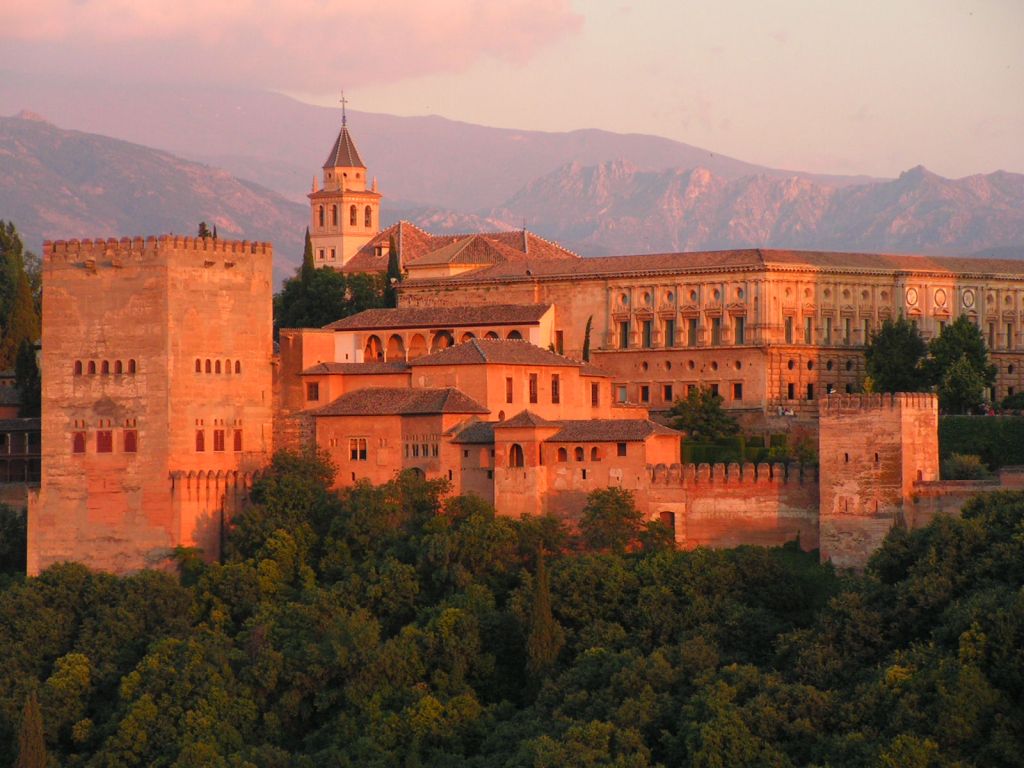
I am going to start at the Alhambra in Granada, Spain, considered to be one of the finest examples of Moorish architecture in Europe.

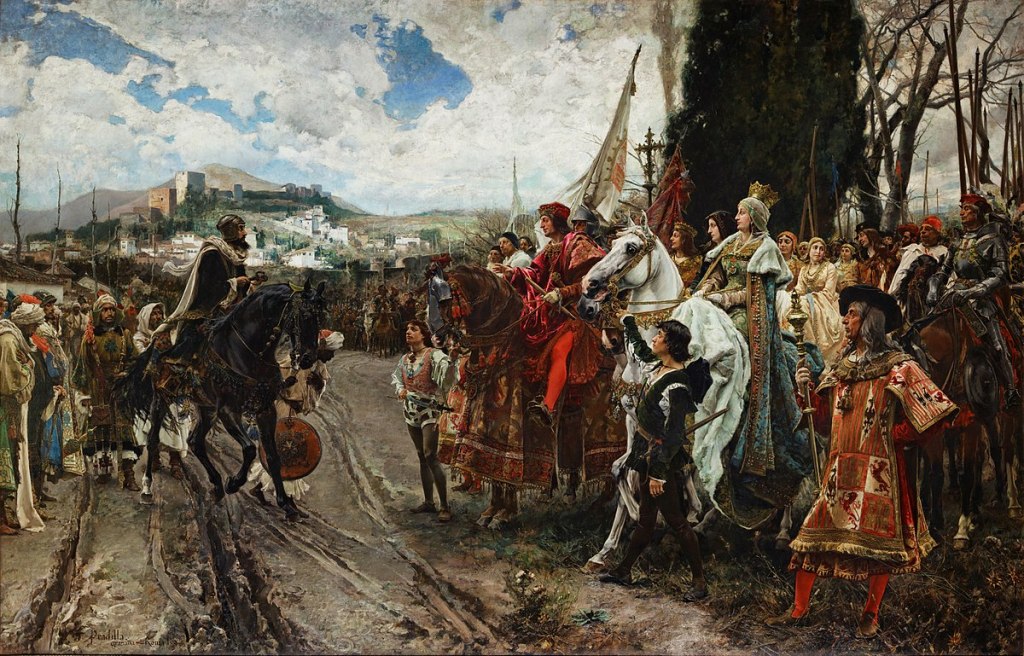
The Alhambra in Granada, Spain, is a palace and fortress complex, the construction of which was said to have begun in 1238 by Muhammad I Ibn al-Ahmar, the first Nasrid emir, and the last Muslim dynasty in Spain, ending with the Fall of Granada under the last Nasrid emir, Muhammad XII, surrendering all lands to Queen Isabella I of Castile and King Ferdinand of Aragon.

In our historical narrative, the Moors ruled Spain from 711 AD to 1492 AD, and is the only time period that the Moors were acknowledged to have an historical presence.

The Alhambra’s name is derived from Arabic words meaning the “Red One” or the “Red Fortress,” in reference to the reddish hue of its walls.

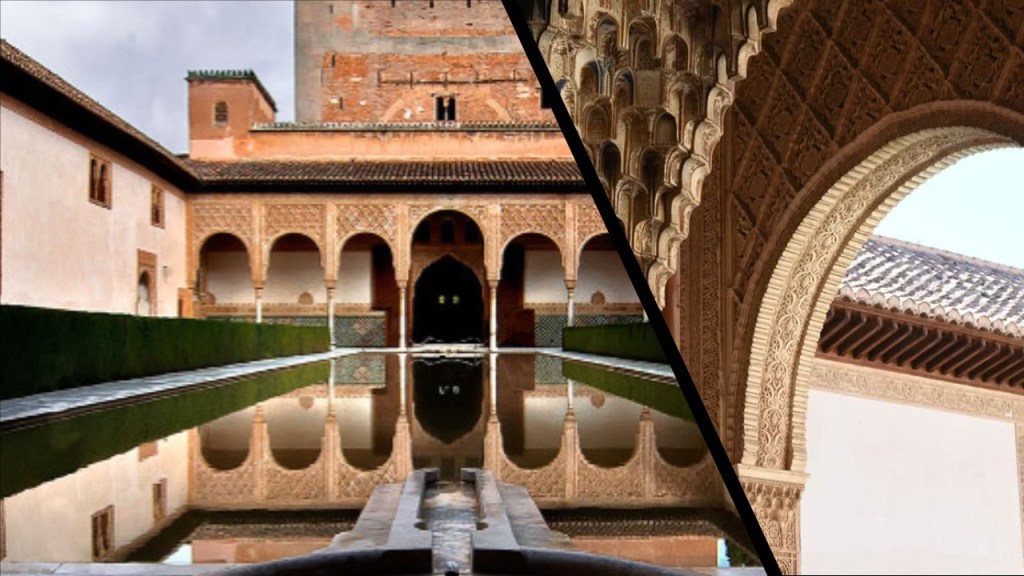
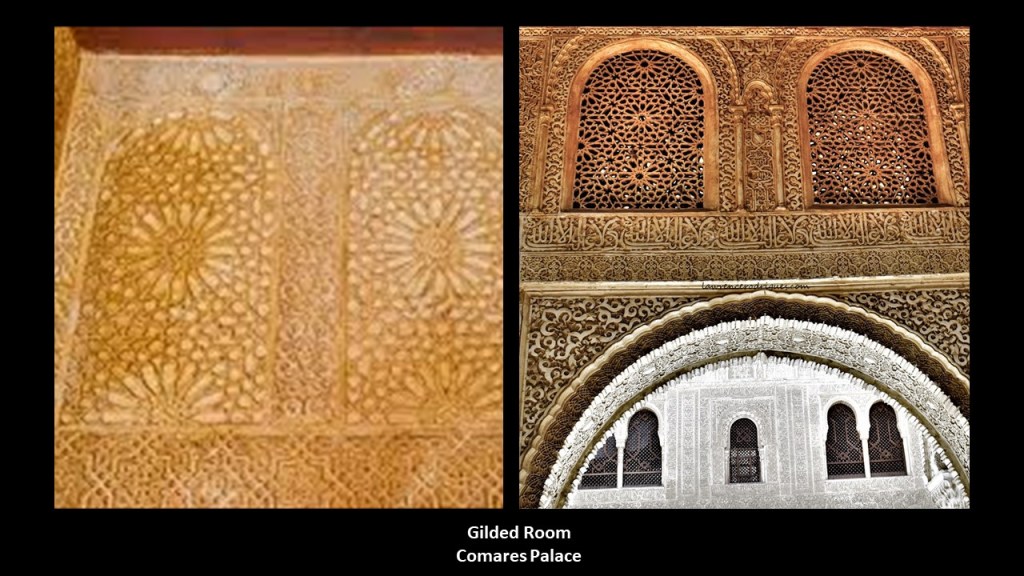
The Comares Palace is the most important palace of the Alhambra, and was the residence of the ruler.

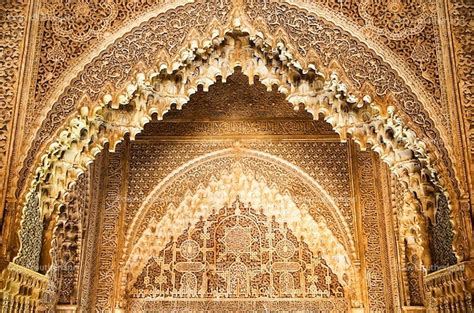
These two photos show the decor of what is called the “Gilded Room” in the Comares Palace…

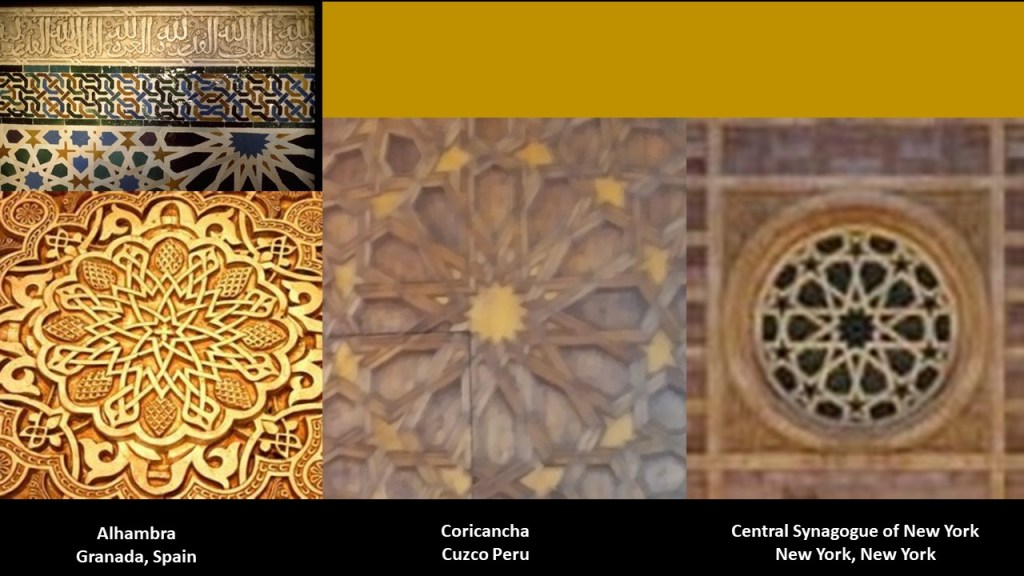
…and here is a comparison of examples of the same design pattern found in Alhambra Art on the left; a carved wooden relief in the Coricancha in Cusco, Peru, in the middle; and in the central window in the front of the Central Synagogue of New York  on the right.

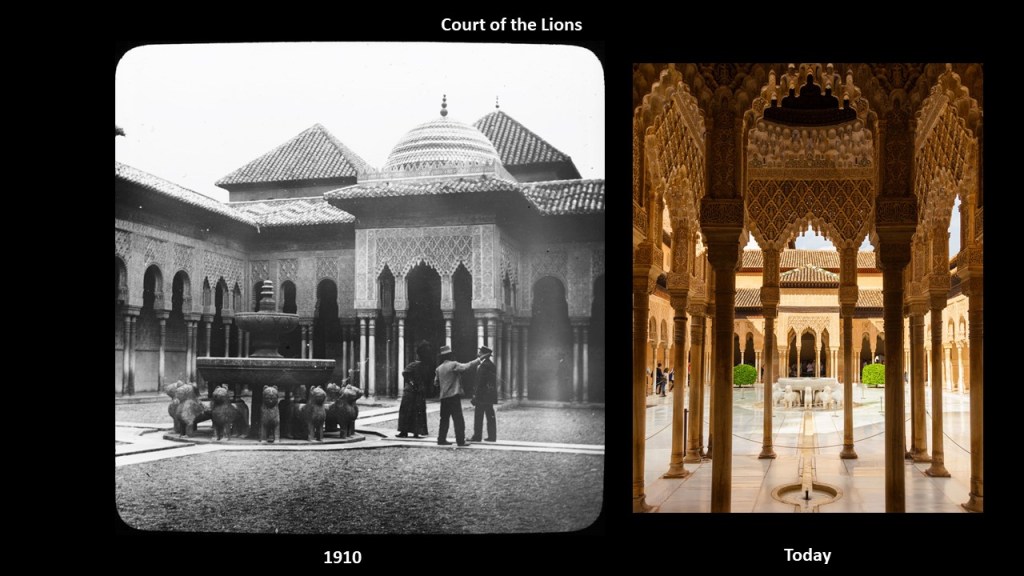
This is the Court of the Lions, the main courtyard of the Alhambra’s Palace of the Lions, with a 1910 photo and what it looks like today.
It certainly appears that there used to be a dome here that is no more.
Okay, so with Spain’s acknowledged Moorish past, let’s take a look at other places around the world with similar architecture.

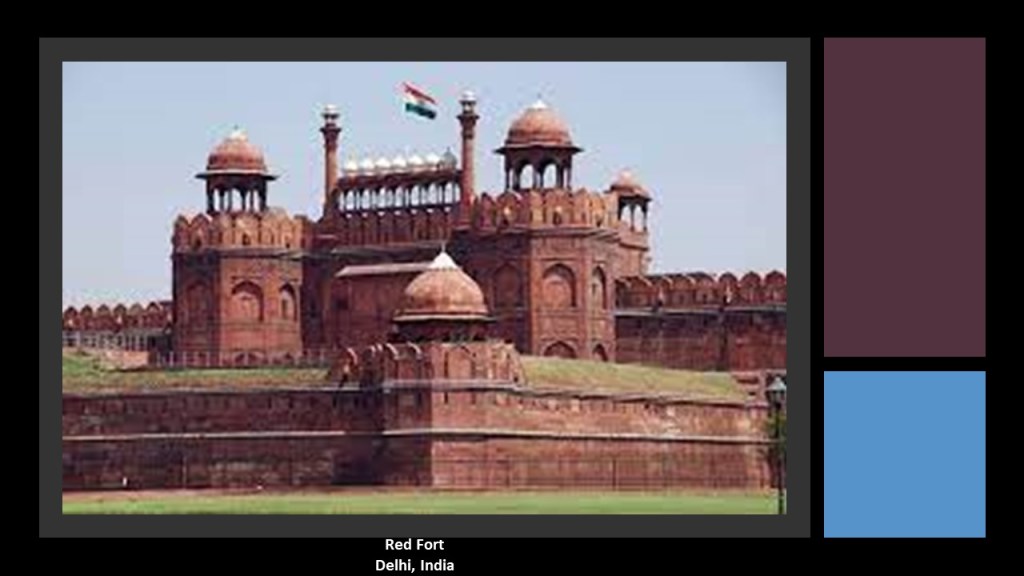
Delhi, India, also has a “Red Fort.”

It served as the main residence of the Mughal Emperors.

It’s construction was said to have been commissioned by the Mughal Emperor Shah Jahan in 1638, and its design was credited to architect Ustad Ahmad Lahori…

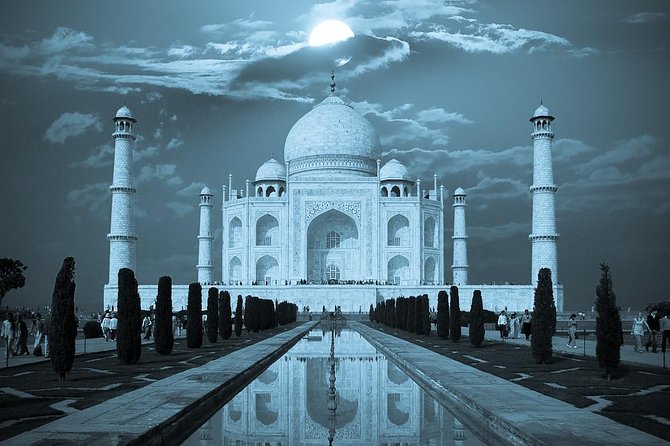
…the architect who also got the credit for the Taj Mahal, which has a nice alignment every full moon, also said to have been commissioned by Shah Jahan.

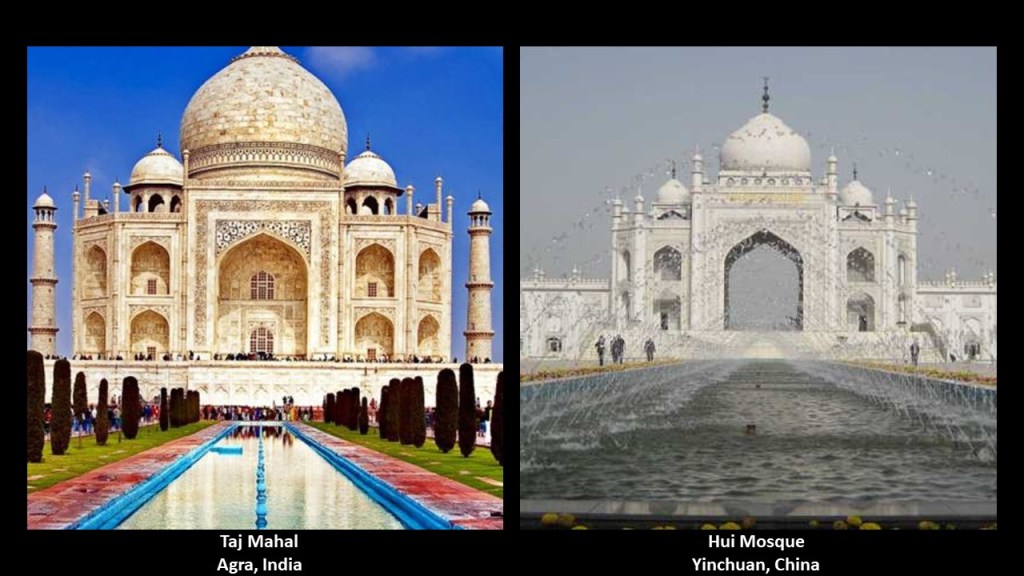
I am struck by the similar appearance of the Taj Mahal in Agra, India, and the Hui Mosque, in Yinchuan, China.

We are told the Scots Baronial and Moorish Revival styles had been introduced on the Crimean Peninsula in the Black Sea region in the 1820s by British architect Edward Blore.

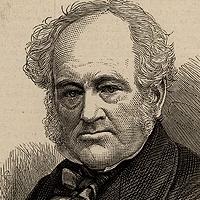
Blore was also said to not have any formal training in architecture – his training was in “Antiquarian Draftsmanship.” 

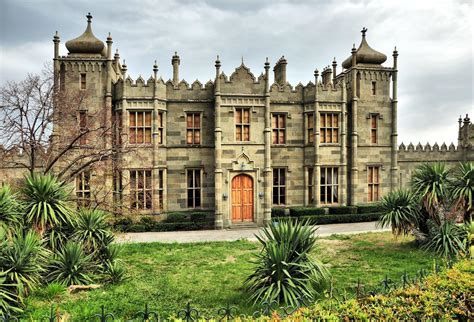
Blore was credited with the design of the Vorontsov Palace in Alupka, Crimea, said to have been built between 1828 and 1846.

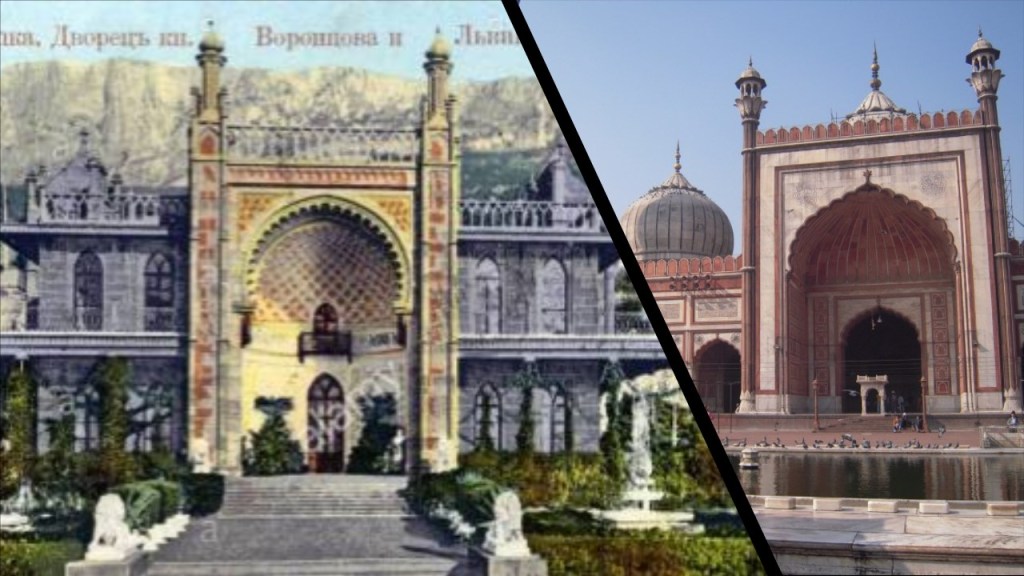
Here is a comparison of more architecture on the grounds of the Vorontsov Palace in the Crimea on the left, and the Jama Masyid Mosque in Delhi, India, on the right, also said to have been built by the Mughal Emperor Shah Jahan between 1650 and 1656.

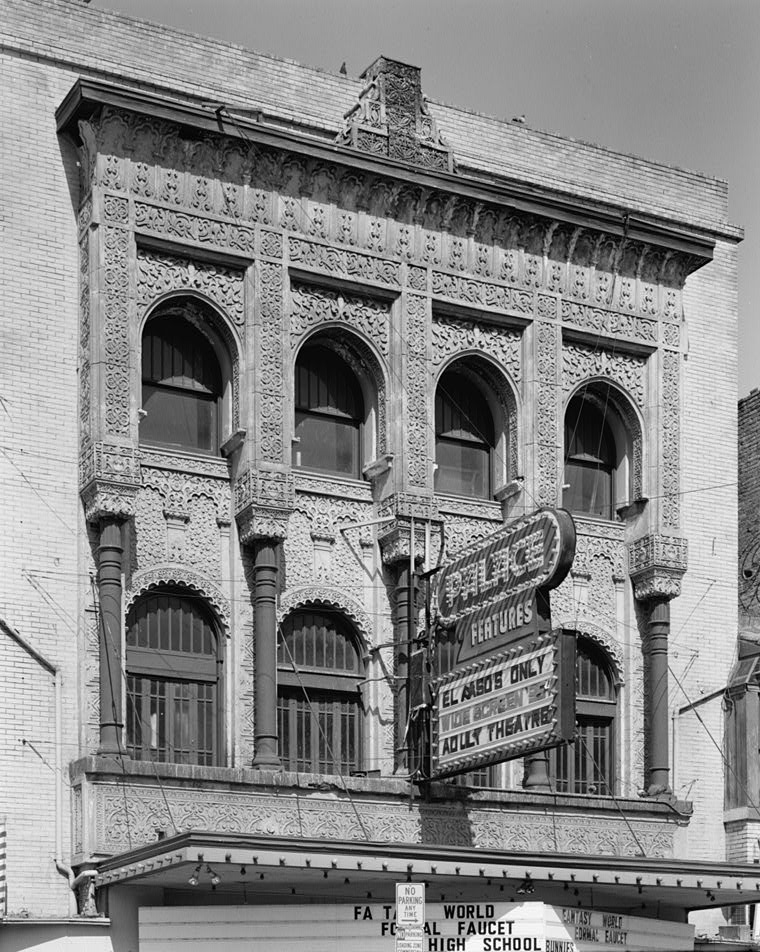
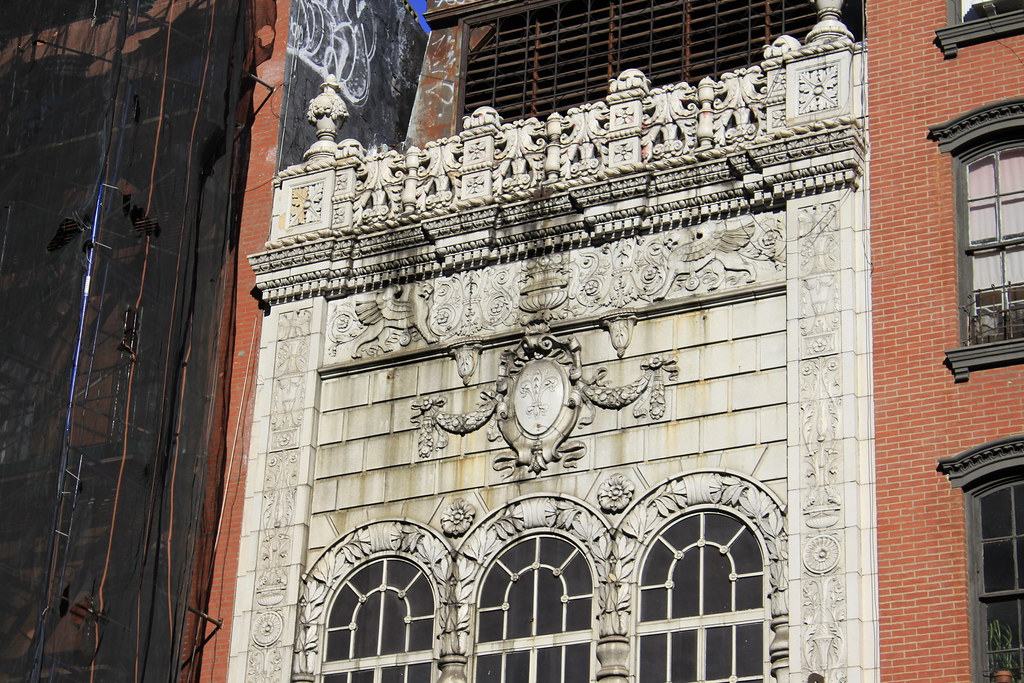
This is photo of the historical Alhambra Theater in El Paso, with its ornate and intricately-designed  facade…

El_Paso,_Texas - Alhambra_Palace_Theater,_

…just like what we see at the Alhambra in Spain.

Alhambra, Grenada Spain

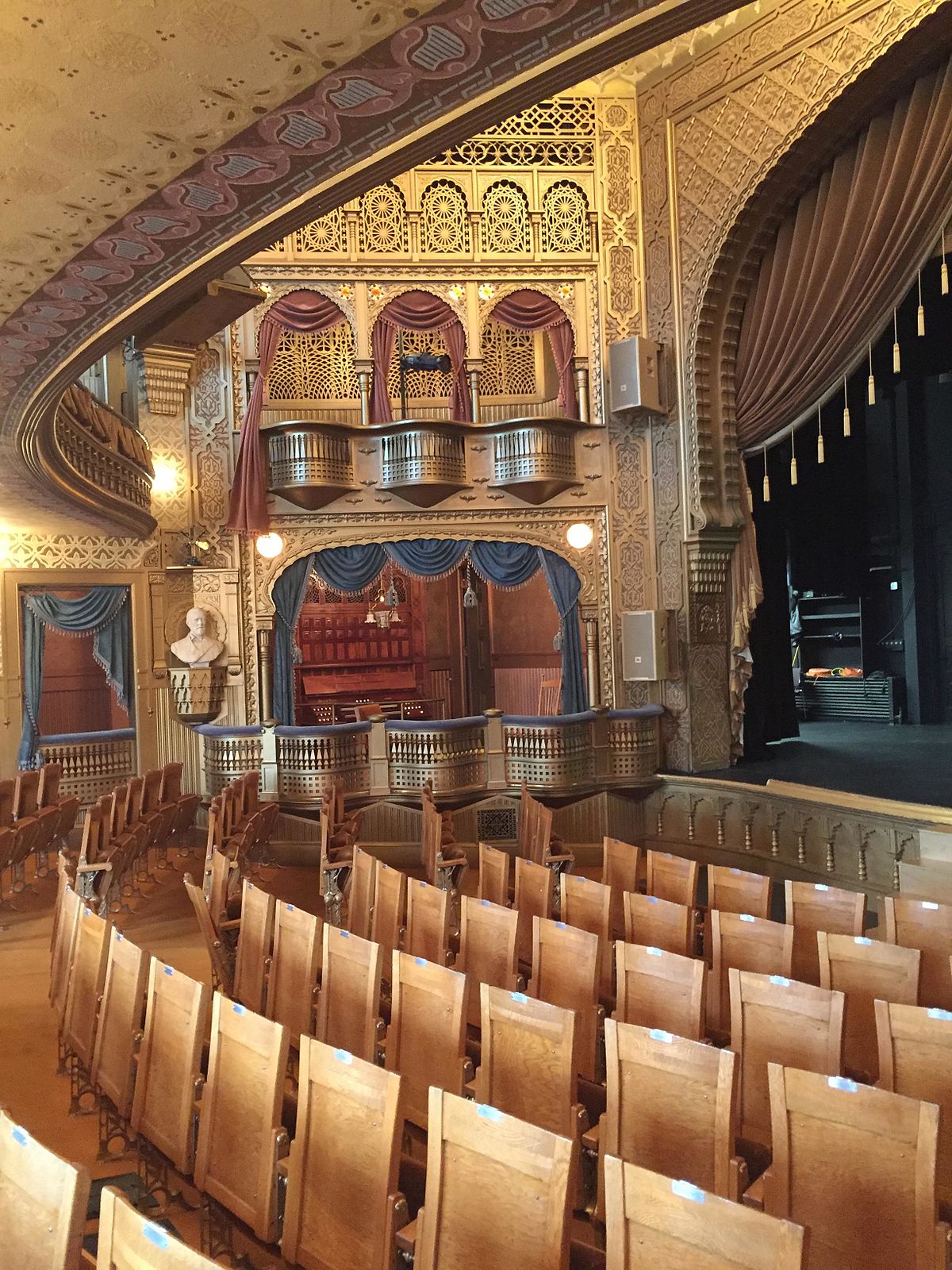
This is the inside of the Mabel Tainter Memorial Theater in Menomonie, Wisconsin, said to have been built in 1889 by Andrew and Bertha Tainter as a memorial for their daughter Mabel who passed away from a ruptured appendix in 1886.

It has the same kind of intricate design patterns.

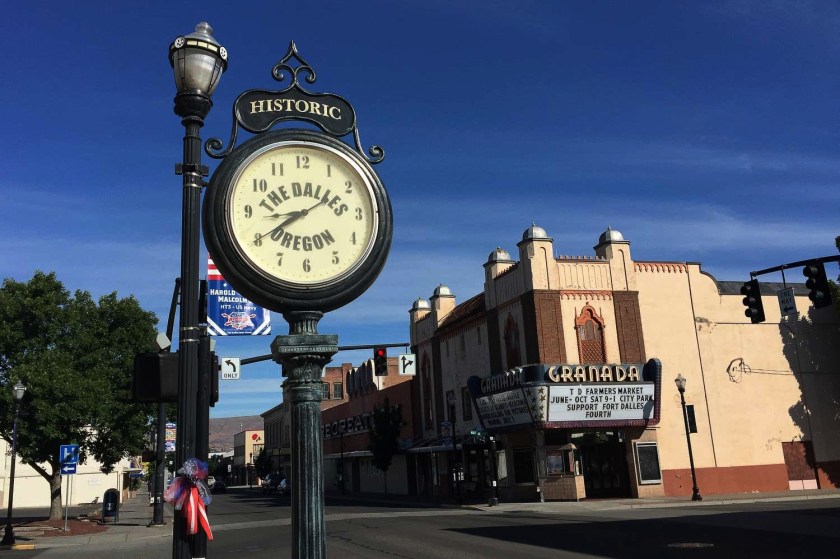
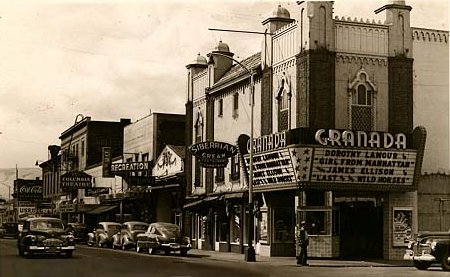
 The historic Granada Theater in downtown The Dalles, Oregon, is still in use as a theater today.
It was said to have been built in the Moorish Revival style, between 1929 and its opening in 1930, and is famous for having been the first theater west of the Mississippi to show a “talkie.”

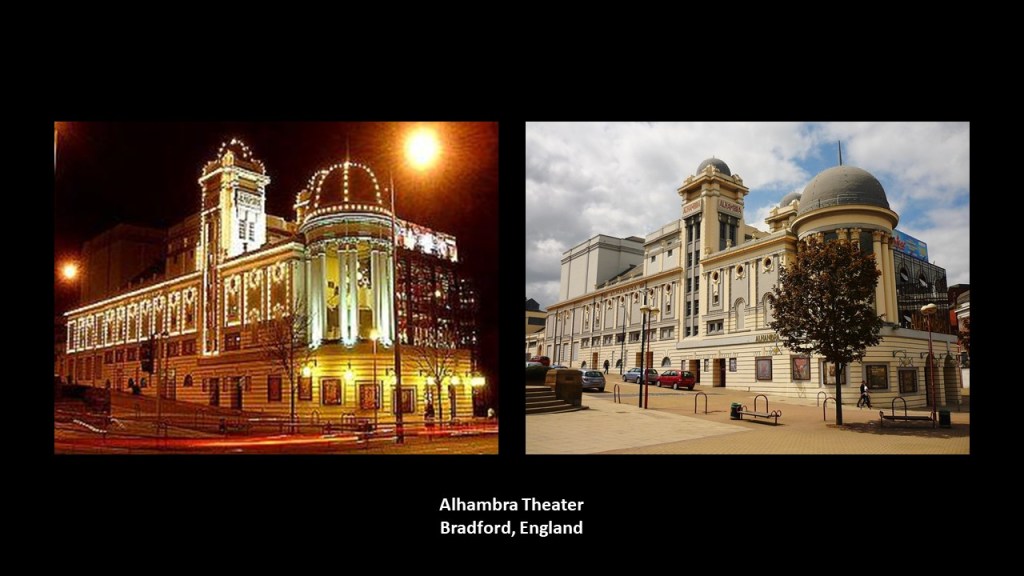
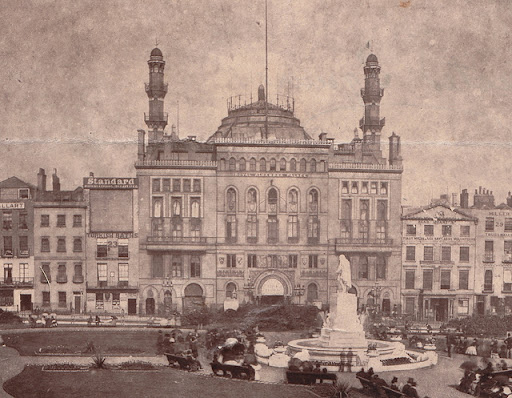
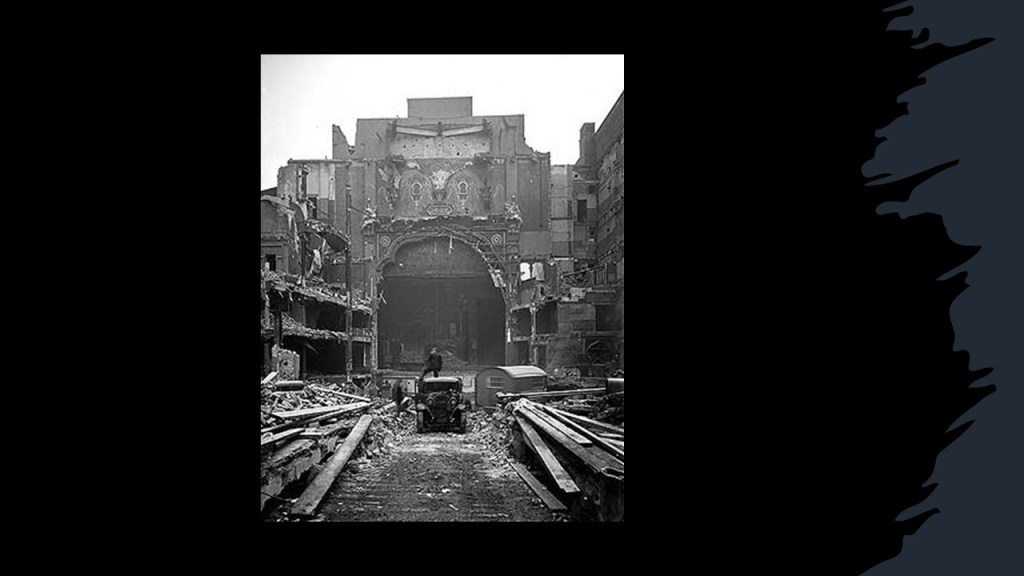
This is the Alhambra Theater in Bradford, England, said to have been built starting in 1913 and opening in 1914 .
The architects credited with it, Chadwick and Watson, were said to have described it as “English Renaissance of the Georgian period.”

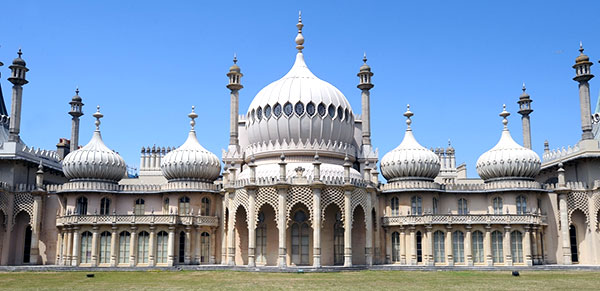
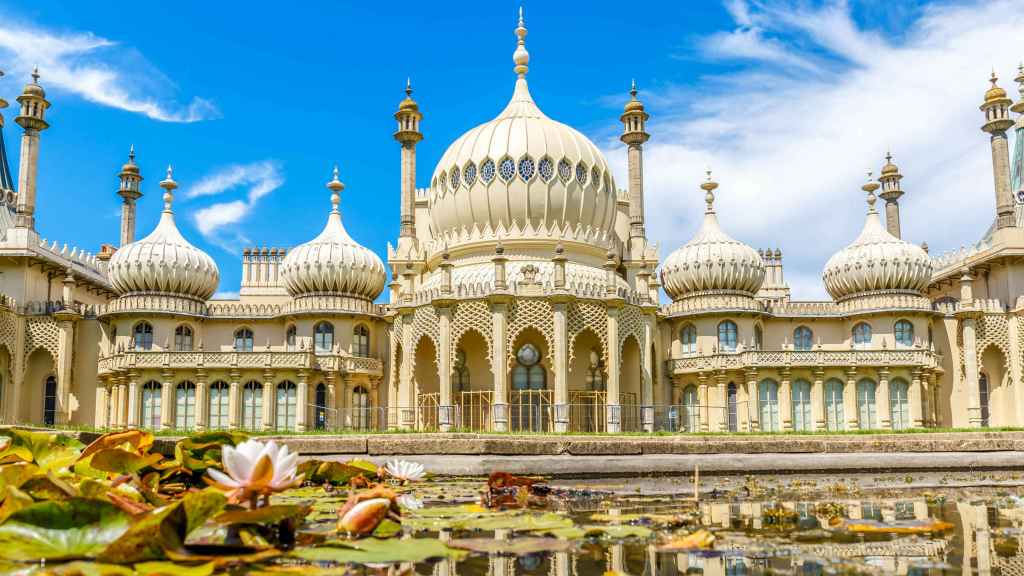
Speaking of the Georgian period, architect John Nash was given credit for the design of the Royal Pavilion at Brighton Beach.

It was said to have been commissioned by the Prince Regent George as a seaside resort, with construction starting in 1787 and completed in 1823.

The style is described as “Indo-Saracenic.”

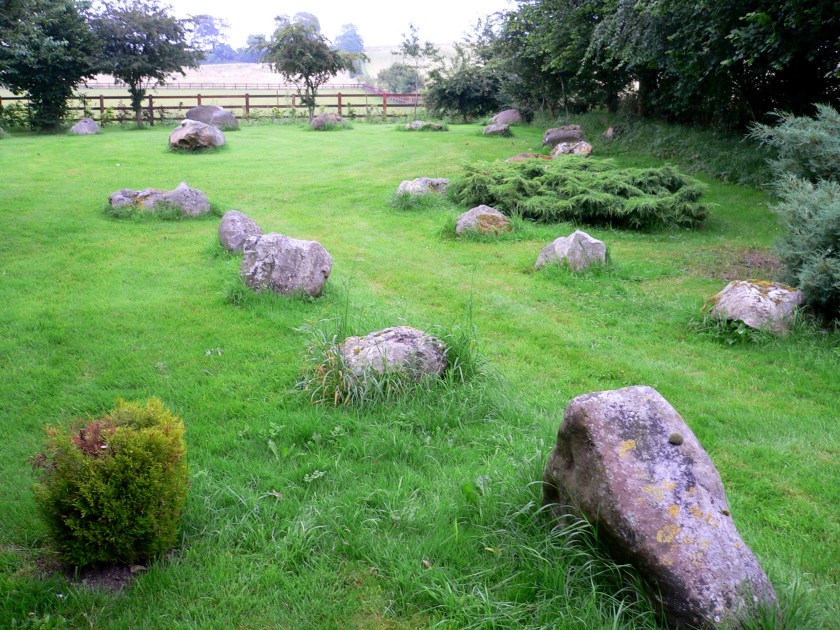
Saracen is an older term in England referring to Arabs or Muslims…as well as megalithic stones. These are Saracen, or Sarsen, stones.

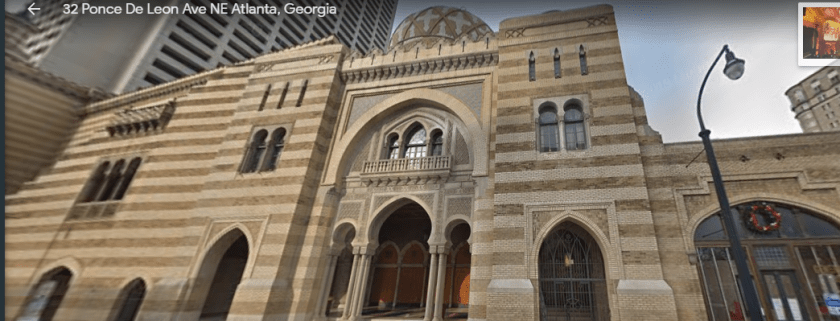
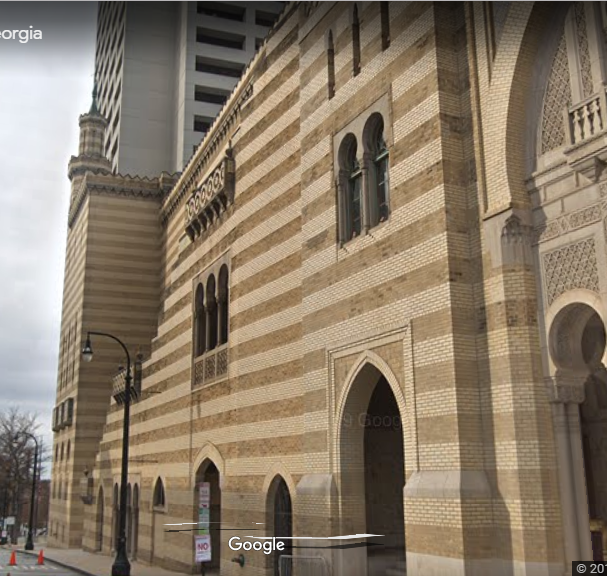
This is the Fox Theater in Atlanta.

It was said to have been built originally to become a large Shrine Temple, but the 2.75 million dollar project exceeded their budget…

…so the project was said to have been leased to movie mogul William Fox. The Fox Theater opened in 1929, two months after the stock market crash and the beginning of the Great Depression. The Theater closed 125-weeks after it opened. New owners acquired it, Paramount Pictures and Georgia-based Lucas & Jenkins, after the mortgage was foreclosed in 1932.

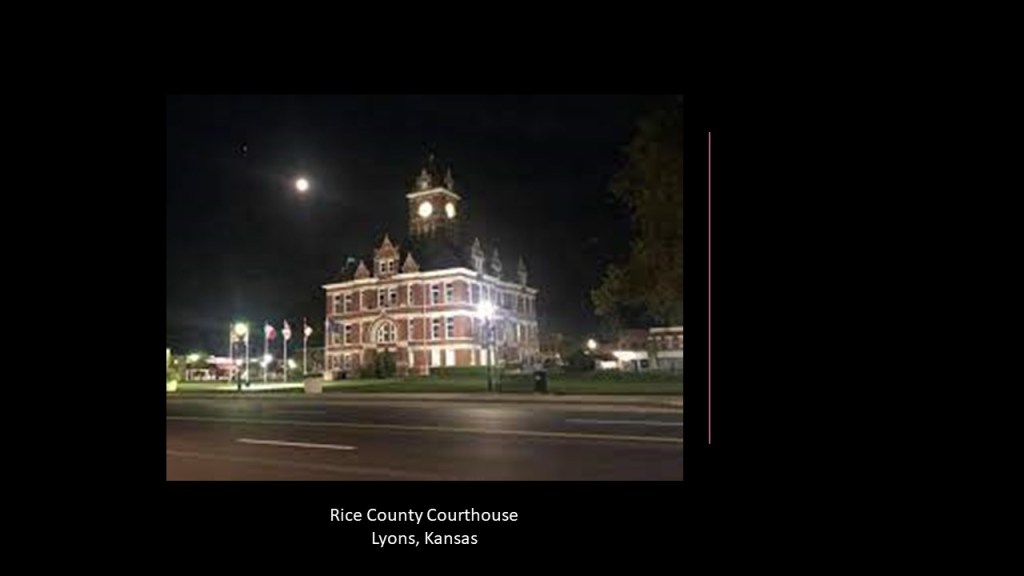
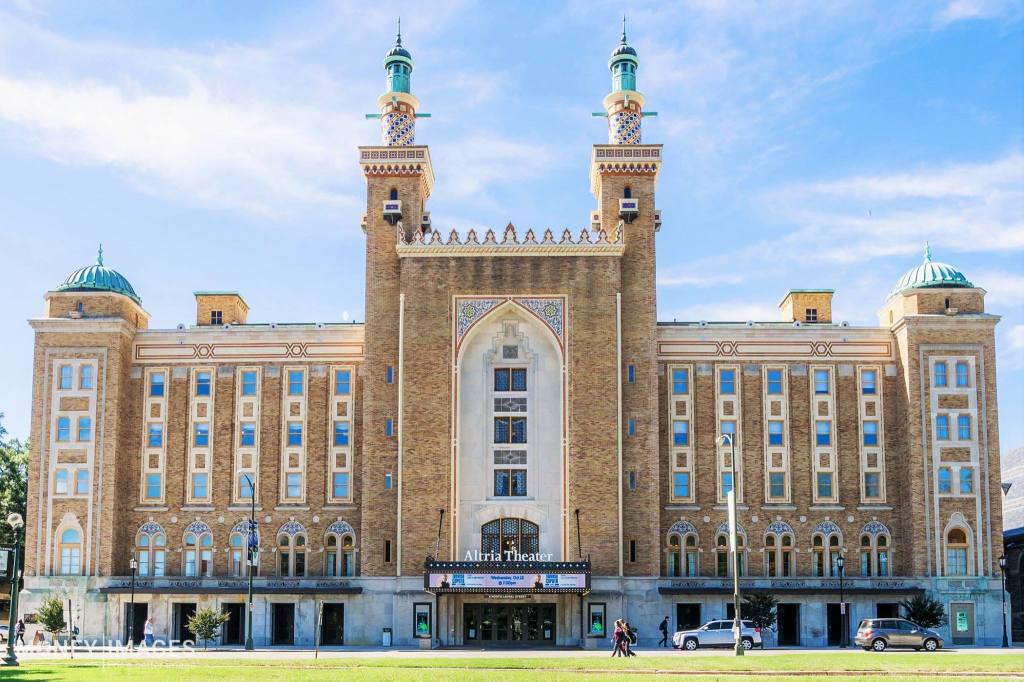
The Altria Theater is located at the southwest corner of Monroe Park in Richmond, Virginia.

We are told that it was built between 1925 and 1927.

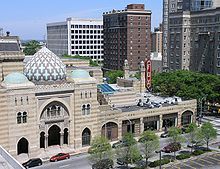
Formerly known as The Mosque, and the Landmark Theater, it was said to have been built for the Shriners of the Acca Temple Shrine.

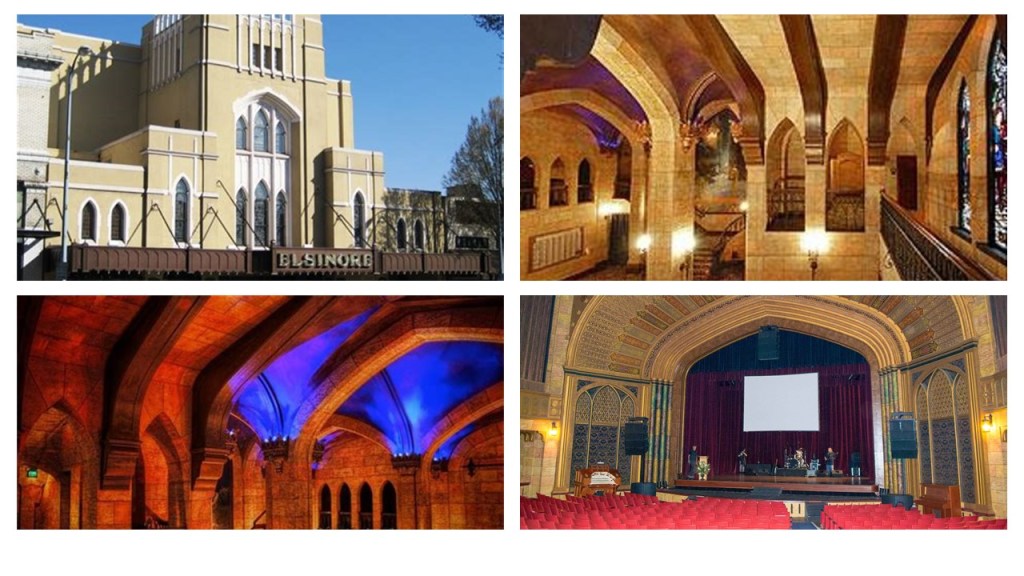
The Elsinore Theater first opened in Salem, Oregon in 1926, with the owner George Guthrie enlisted, we are told, the architectural firm of Lawrence and Holford to design the building in the Tudor Gothic style meant to resemble the city of Elsinore from Shakespeare’s play “Hamlet.”

Said to have originally been designed for live performances and silent films, in 1929, the owner leased the theater to Fox West Coast Theaters, and then a year later to Warner Brothers Theaters, which ran it as a movie theater until 1951.

It began a general decline starting in the 1950s into a second-run movie theater, and was set to be demolished in 1980, but was saved by a grass-roots effort, and, over time, massive restoration was undertaken to restore the Elsinore to its former grandeur.

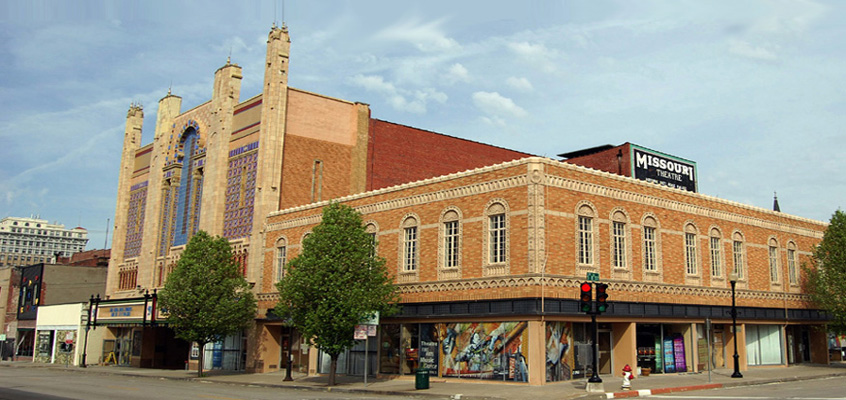
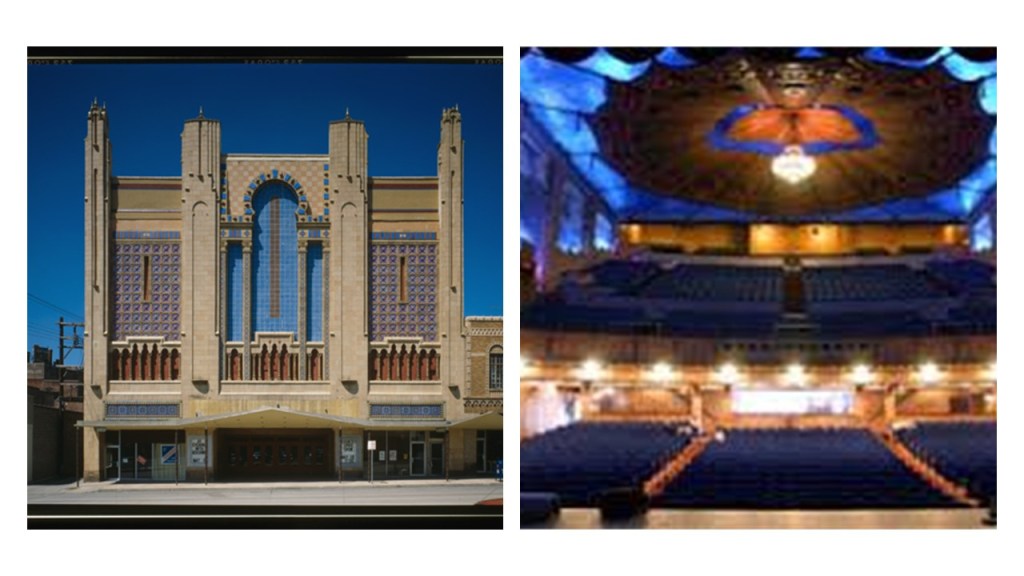
The Missouri Theater building in St. Joseph were said to have been designed by the Boller Brothers of Kansas City, Missouri, in the Atmospheric style, using a combination of Art Deco and Moorish detailing, and completed in 1927.

The Boller Brothers, Carl Heinrich and Robert Otto, were credited with the design of almost 100 classic theaters in the midwestern United States in the first-half of the 20th-century.

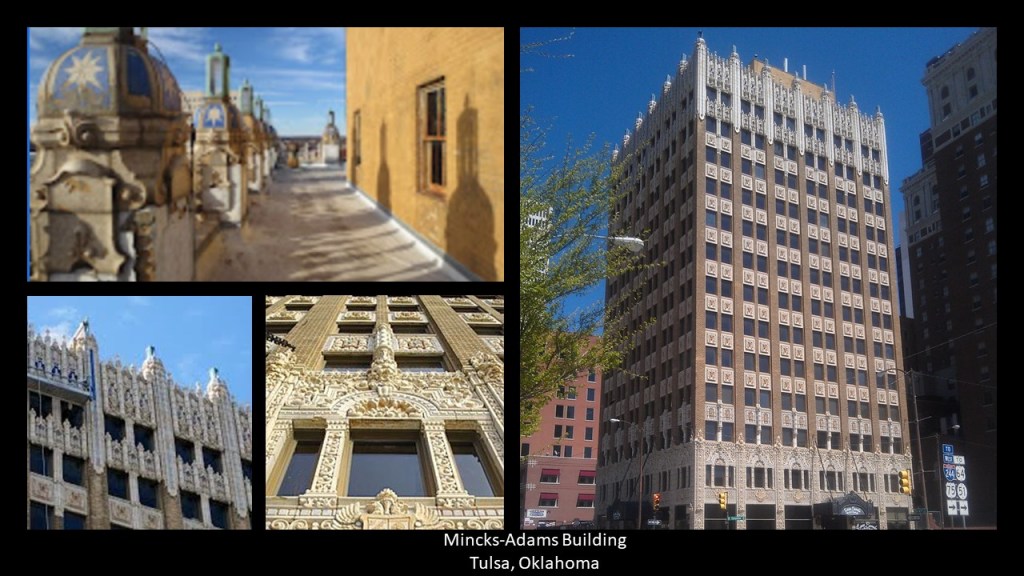
This next building is in Tulsa, Oklahoma.

Originally called the Mincks-Adams Building, it still stands today as the “Adams Apartments.”

It was said to have been built between 1927 and 1928 as a hotel intended to attract businessmen for the burdgeoning Oklahoma Oil Industry.

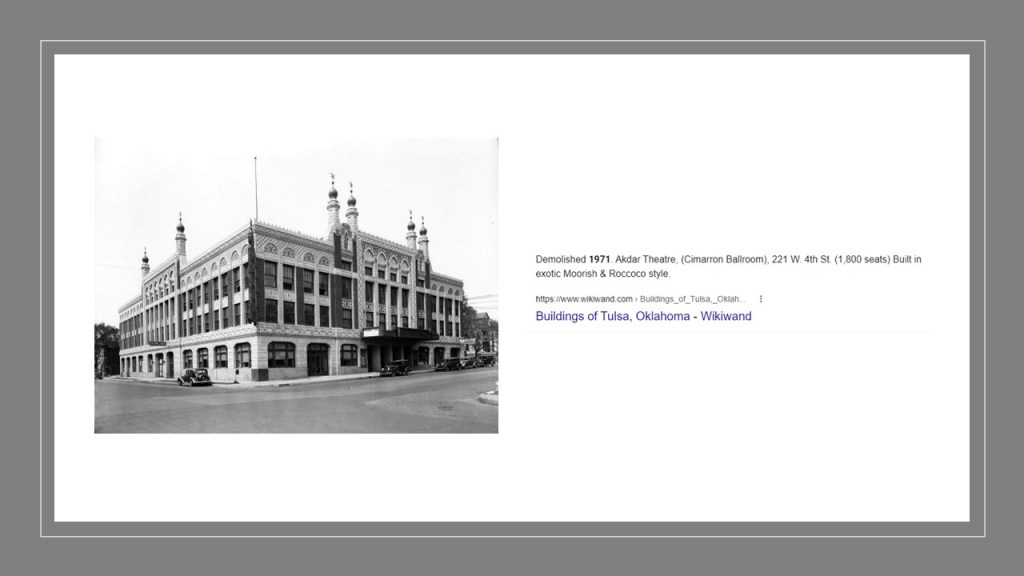
The old Akdar Temple Movie Theater in Tulsa was said to have been built around 1922 and demolished in 1971.

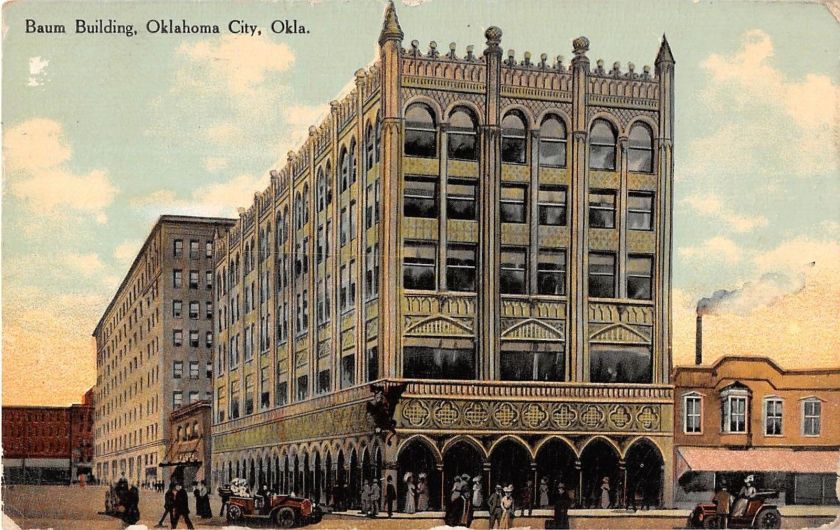
Here is an old postcard depicting The Baum Building in Oklahoma City.  It was razed in 1973, supposedly as part of an Urban Renewal project.

OKC - Baum Building

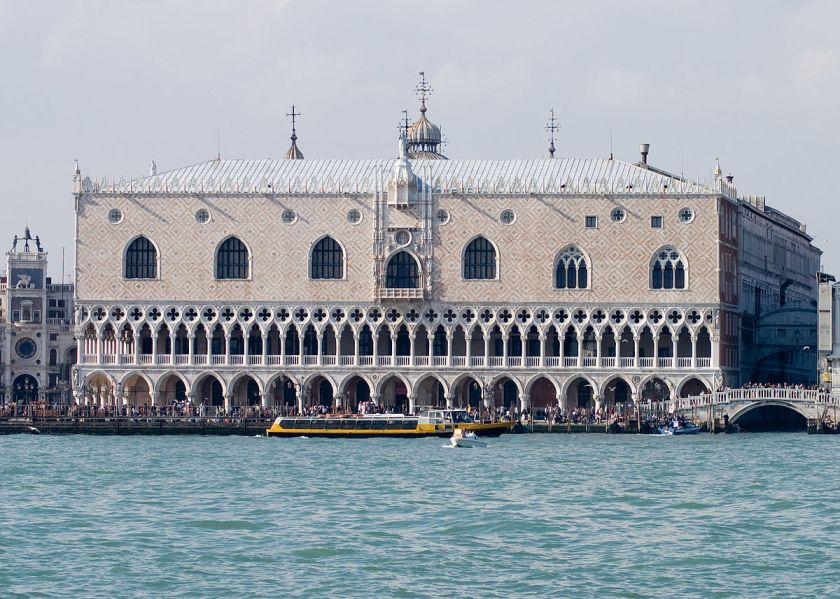
In its day, the Baum Building was compared to the Doge’s Palace in Venice, shown here.

Venice - Doge's Palace

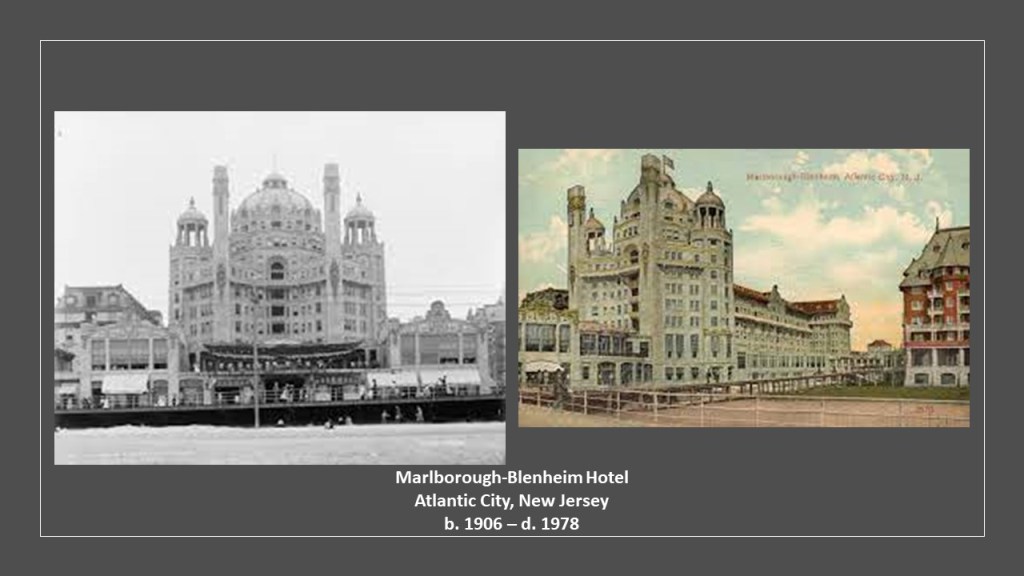
Here are two Moorish-looking old hotels that used to be in Atlantic City – the Marlborough-Blenheim Hotel, which was said to have been built between 1902 and 1906, and demolished in October of 1978…

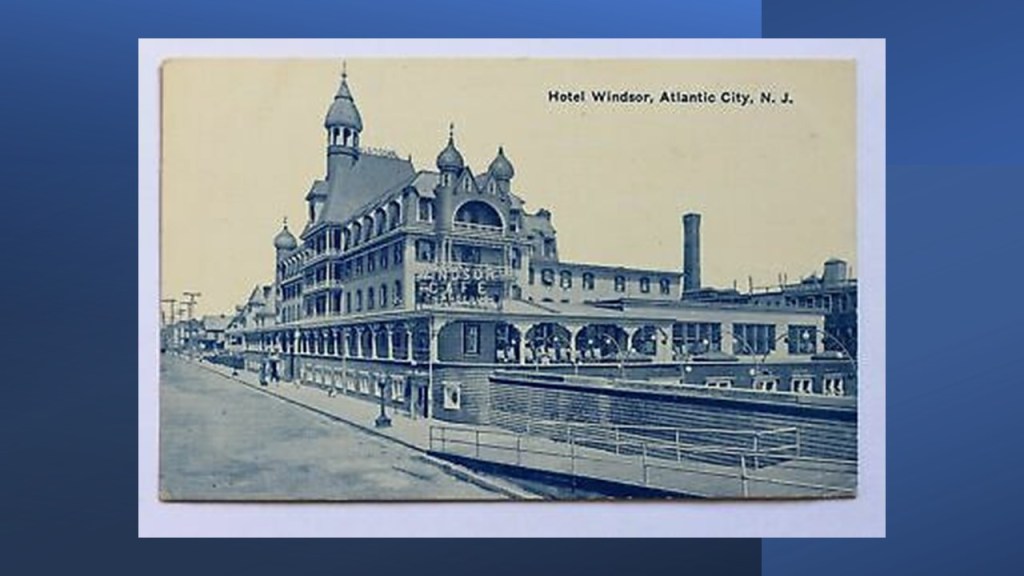
…and the Windsor Hotel, about which I can’t find any information to speak of, but presumably long gone like the others.

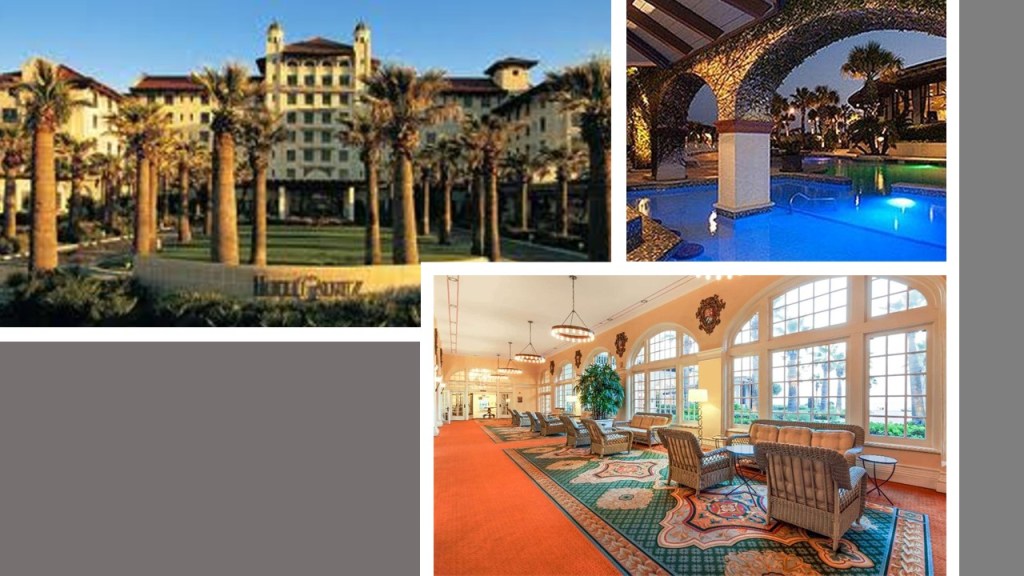
The Hotel Galvez, a luxury hotel and spa, remains standing as the only historic beachfront hotel on the Gulf Coast of Texas, said to have been built starting in 1910 by the architectural firm of Mauran and Russell in Mission/Spanish Revival Style, and first opened for business in 1911.

Like, for example, Galveston’s historic Beach Hotel, said to have been built in 1882 by Nicholas J. Clayton, a prominent Victorian-era architect in Galveston.

The historic Beach Hotel didn’t even make it to the 1900 hurricane, as it was destroyed by a mysterious fire in 1898.

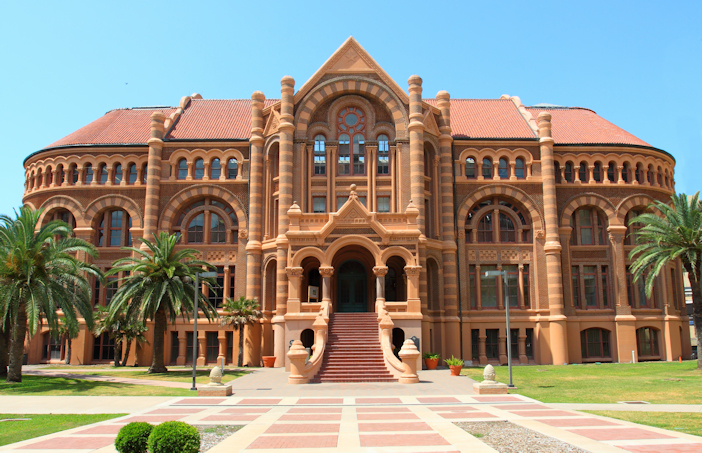
The Ashbel Smith Building in Galveston, also known as “Old Red,” was also said to have been credited to architect Nicholas J. Clayton, and was built in 1891.

It was the first University of Texas Medical System building.

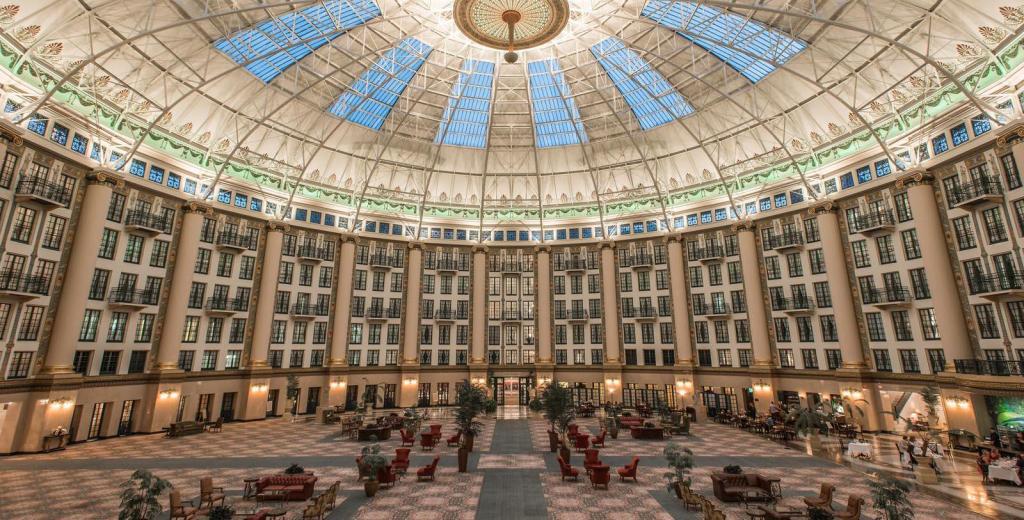
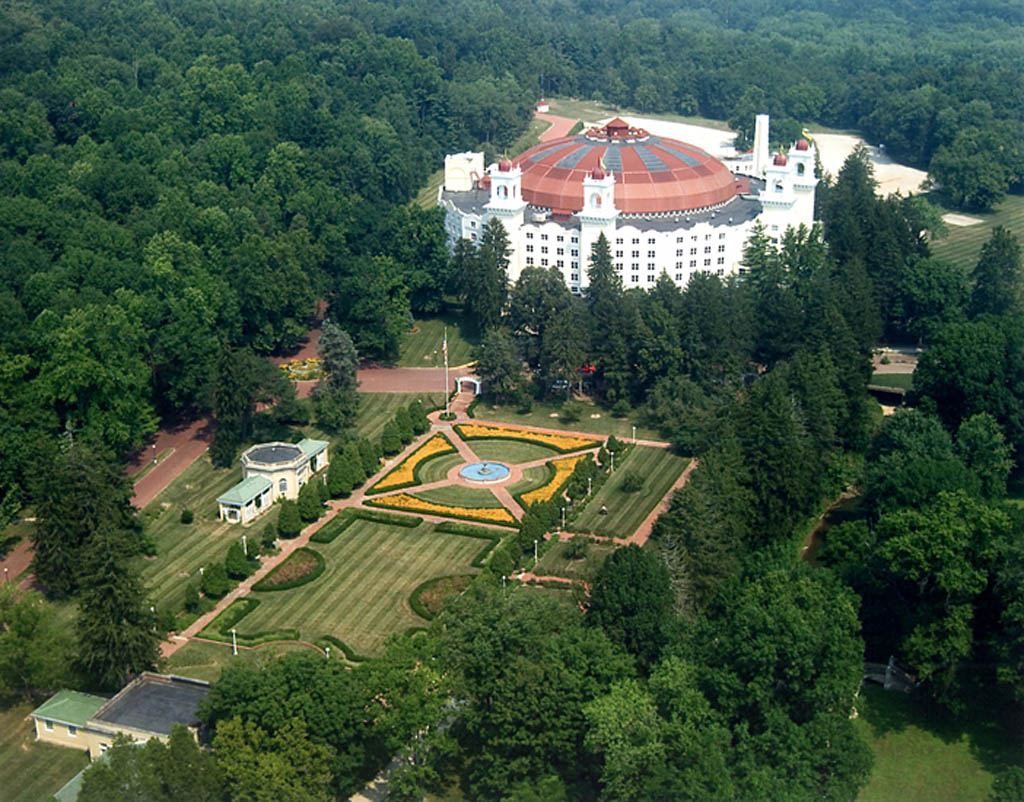
The West Baden Springs Hotel in French Lick, Indiana, at one time called the “Eighth Wonder of the World,” has a dome and atrium that spans 200-feet, or 61-meters…

…and was said to have been built in 1901 in the Moorish architectural style, and until 1955, had the largest free-standing dome in the World.

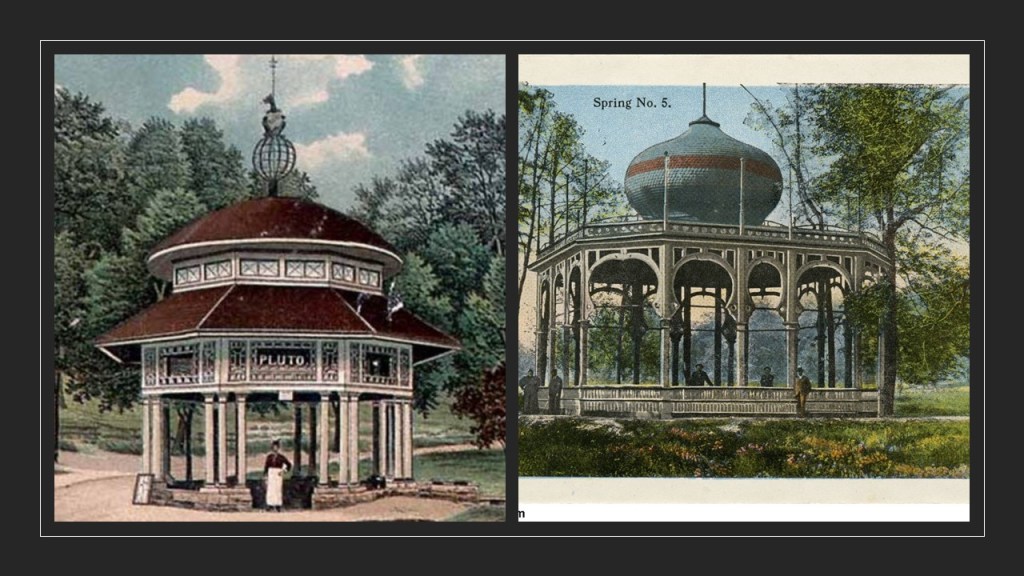
West Baden Springs at one time had these beautiful Moorish kiosks over mineral springs there.

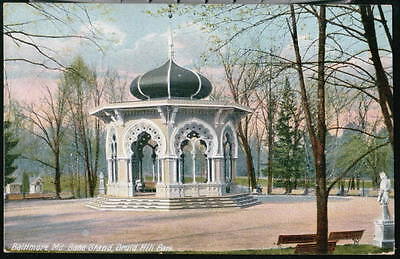
This postcard circa 1910 shows the Moorish-looking band stand at Druid Hill Park in Baltimore, with its unique arches and columns, which was demolished in the 1950s…

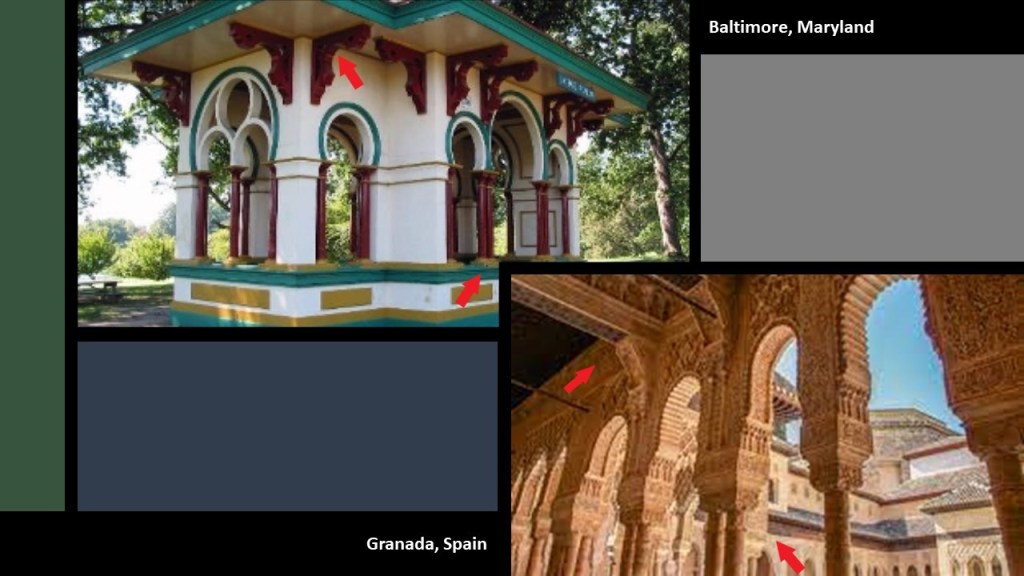
…and this is the Latrobe Pavillion in Druid Hill Park still-standing today on the left, with its arches, double-columns, and braces, just like what you see at the Alhambra in Spain on the right.

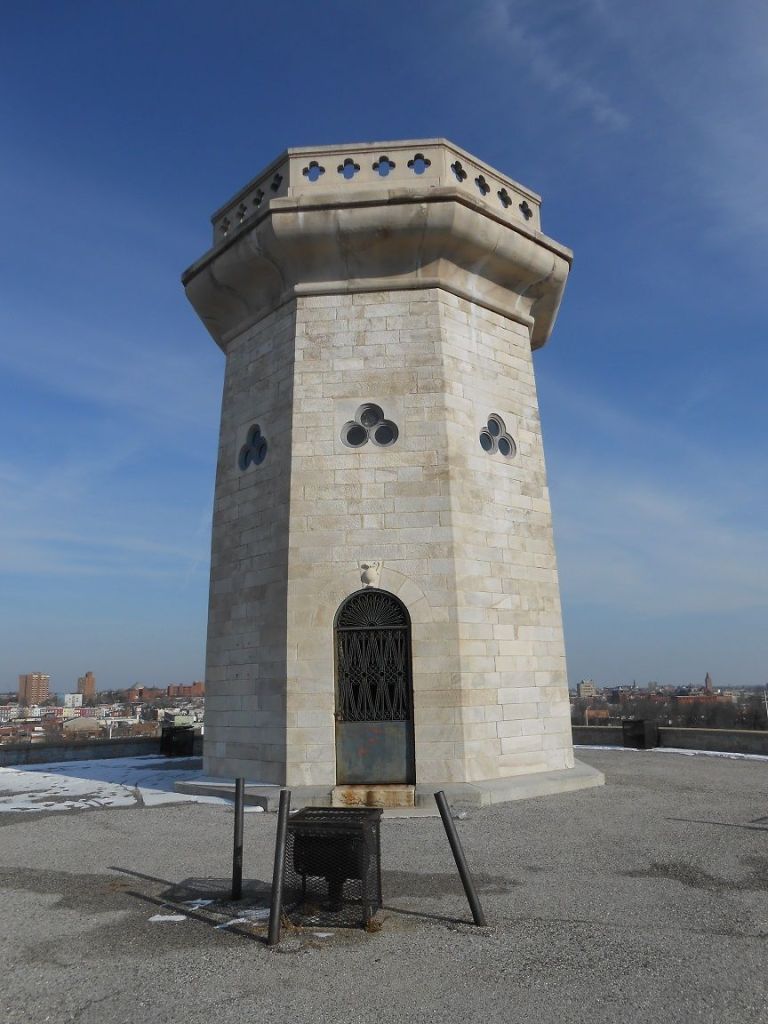
This structure is located at the southeast corner of Druid Lake in Baltimore, and is called the Moorish Tower, but said to have been designed and built by George Frederick in 1870.

The tower itself is 30-feet high, and said to have 18-inch wide marble walls. The entrance was sealed at some point in the 1900s, so entry is no longer possible.

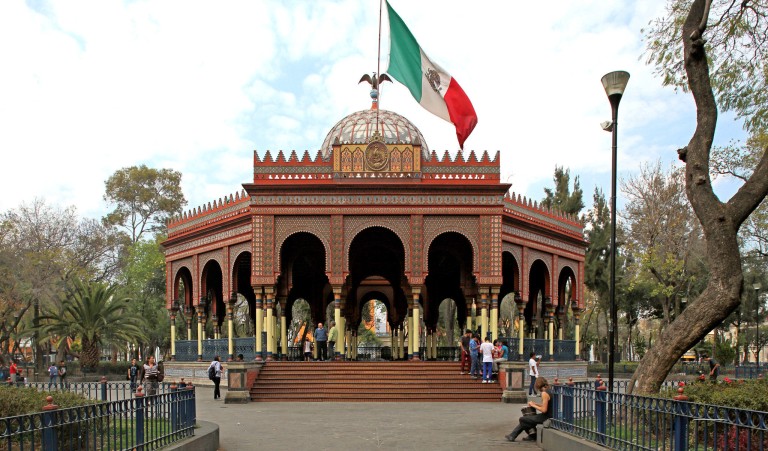
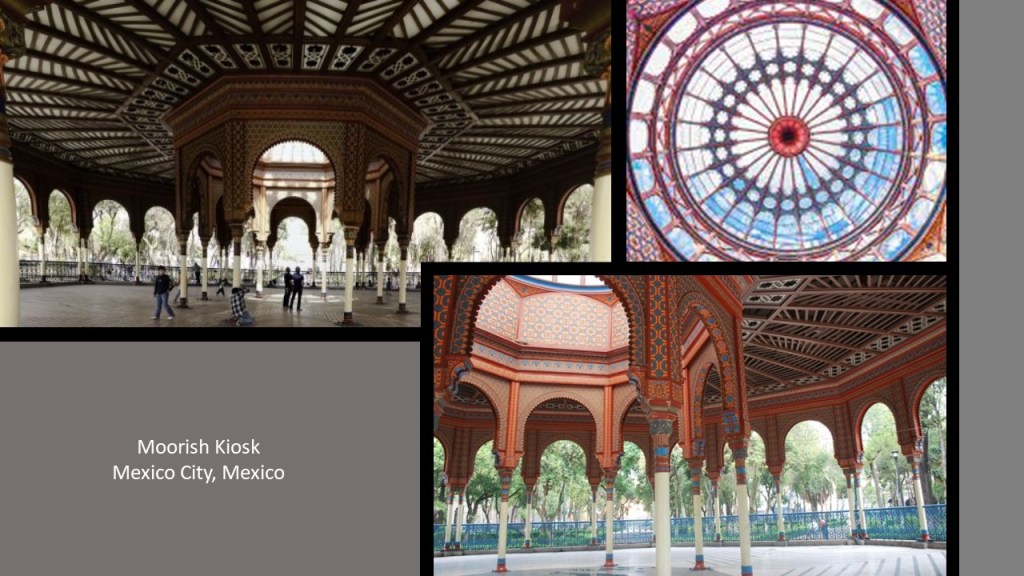
The Moorish Kiosk in Mexico City has an interesting story.

The person who gets the credit for its existence was a Mexican engineer named Jose Ramon Ibarrola.  

He was said to have designed it to represent Mexico in the New Orleans International Expo in 1884 -1885. 

We are told it was transported there, as well as to the St. Louis Missouri Fair in 1904, and then subsequently came back to Mexico. 

How is my question?!

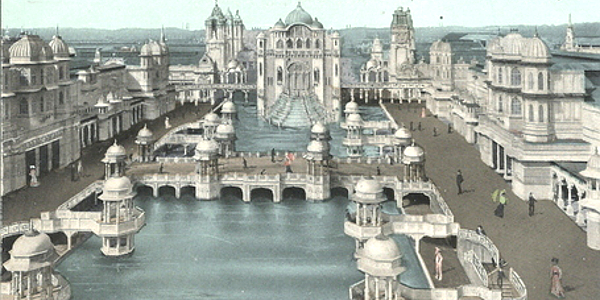
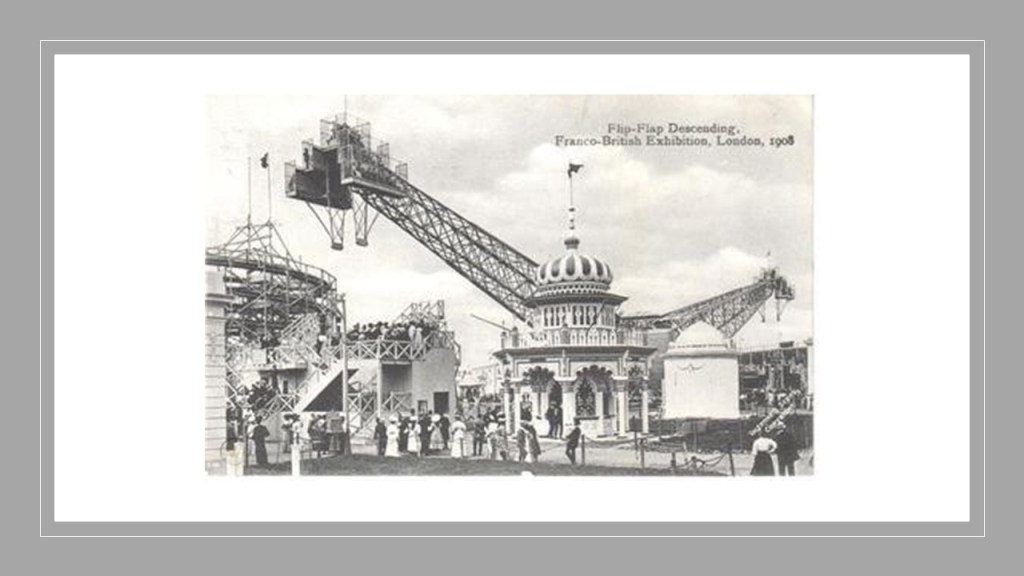
This is an illustration of the buildings with Moorish design features that were said to have been built specifically for the 1908 Franco-British Exhibition in London’s White City.

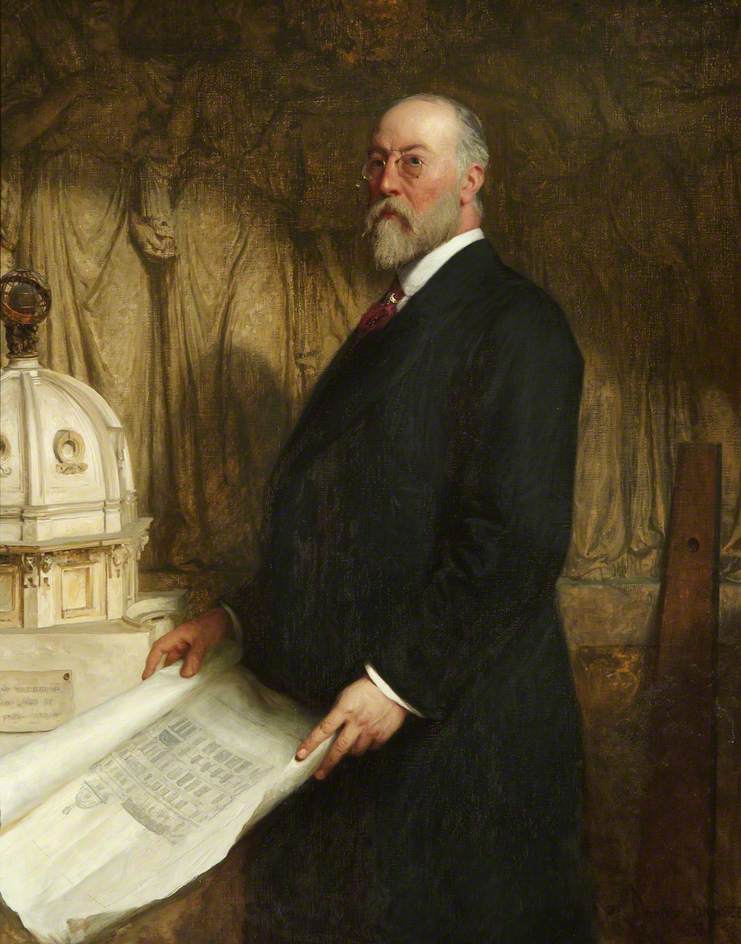
The chief architect for the 1908 Franco-British Exhibition was said to be John Belcher, who was President of the Royal Institute of Architects from 1904 to 1906.

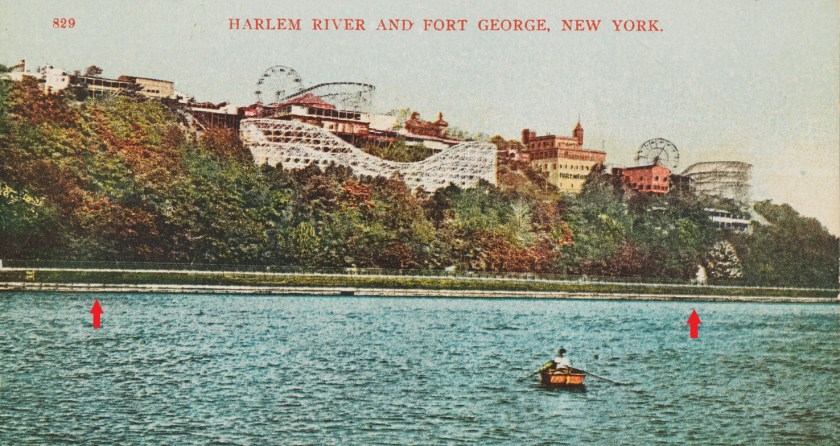
In addition to the twenty palaces and eight exhibition halls that were said to have been built expressly for the 1908 Exhibition, there were a number of amusement attractions featured, including the Moorish-looking Flip-Flap in the Elite Gardens.

Altogether, there were six major world exhibitions at White City, from 1908 to 1914.

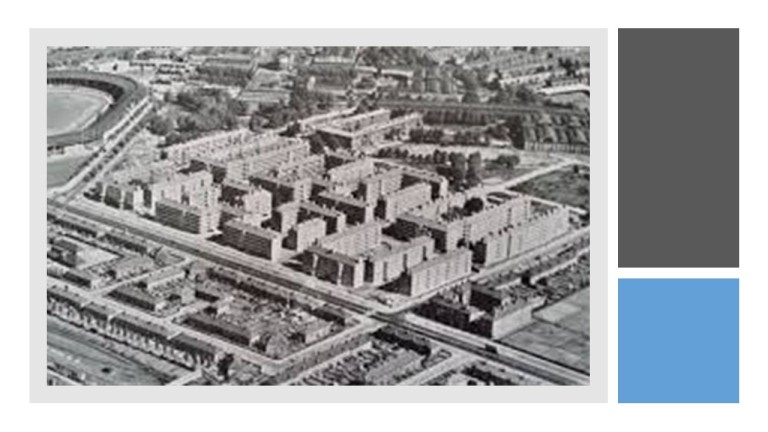
After the last exhibition, London’s once-grand White City was said to have fallen into disuse and disrepair, and demolished in 1937 to make way for a housing estate.

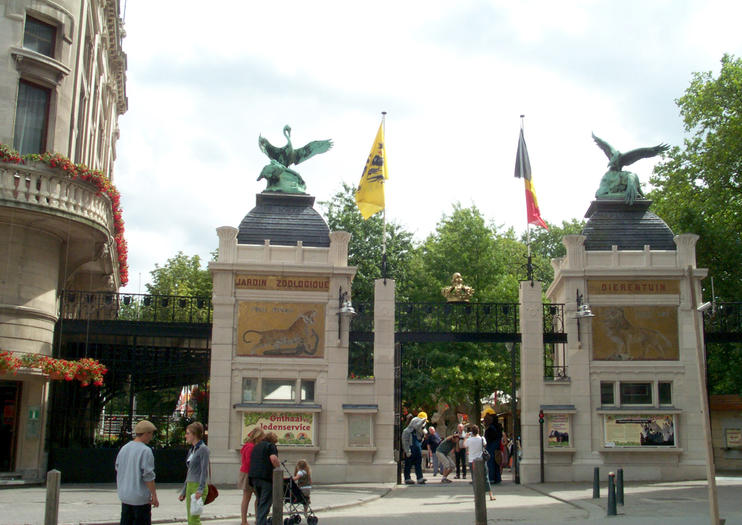
The Antwerp Zoo in Belgium is one of the oldest in the world. as it was established on July 21st of 1842.

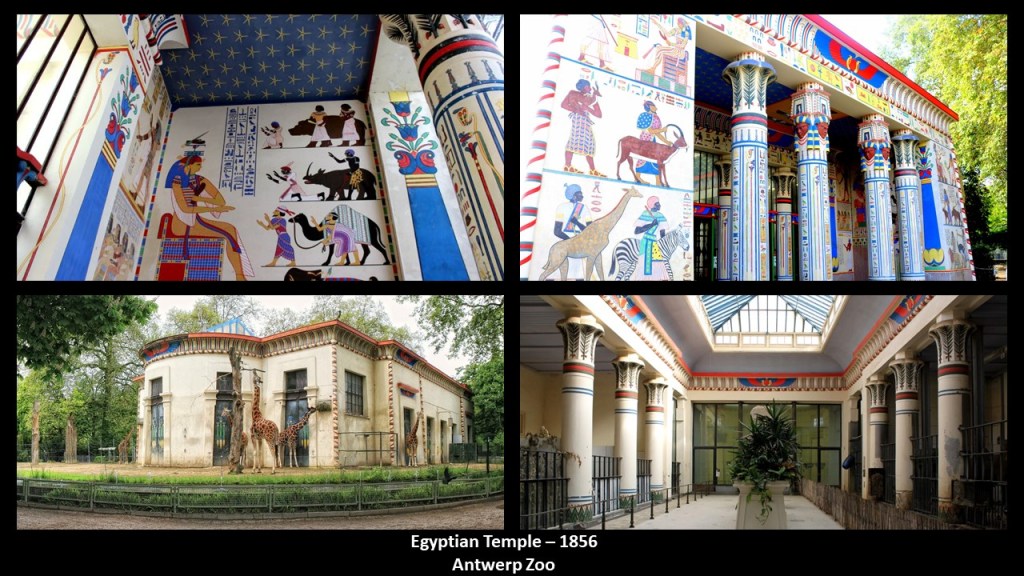
The following are some of the architectural features of the Antwerp Zoo:

The Egyptian Temple, said to date from 1856, which houses the giraffes…

…and the Moor Temple, said to date from 1885, which houses okapis, known as forest giraffes and the world’s first zoo with okapis starting in 1918.

Next are some places in Dubbo in the Australian State of New South Wales.

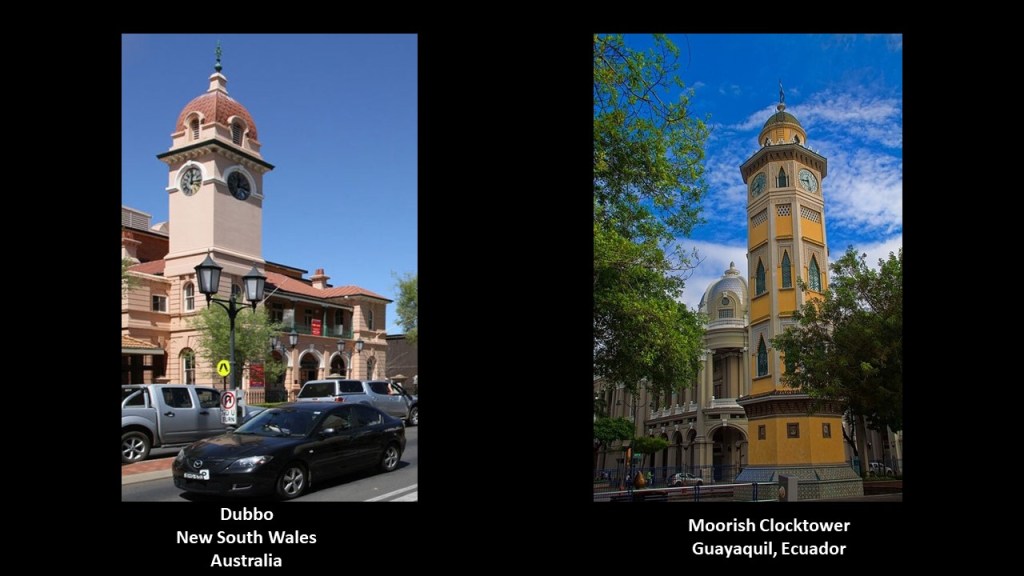
This is the Old Dubbo Post Office on the left, said to have been built in 1887, compared with the Moorish Clocktower, in Guayaquil, Ecuador, said to have been built starting in 1930…

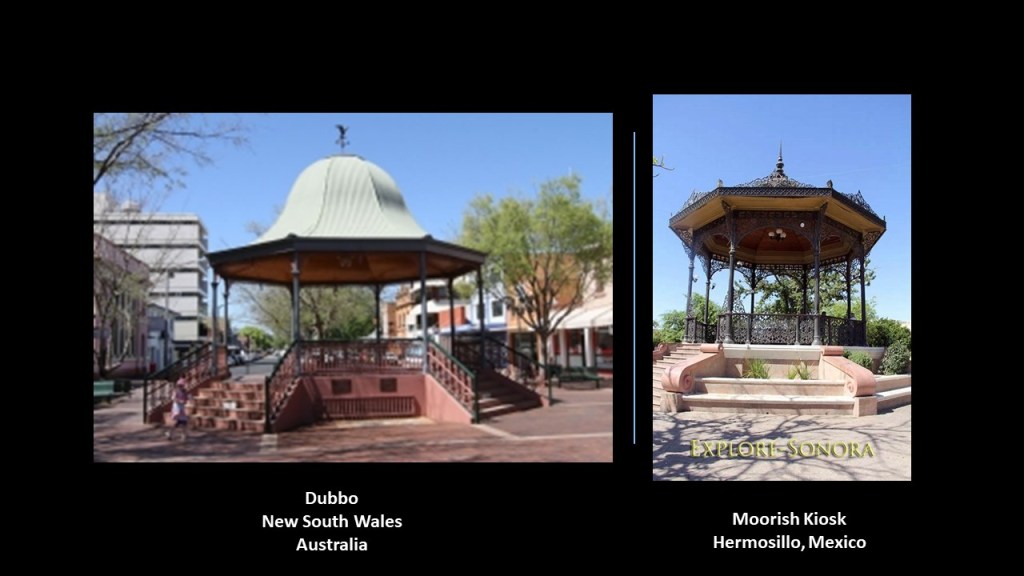
…and the Band Rotunda in Dubbo on the left is compared with what is called the Moorish Kiosk in Hermosillo, Mexico, on the right.

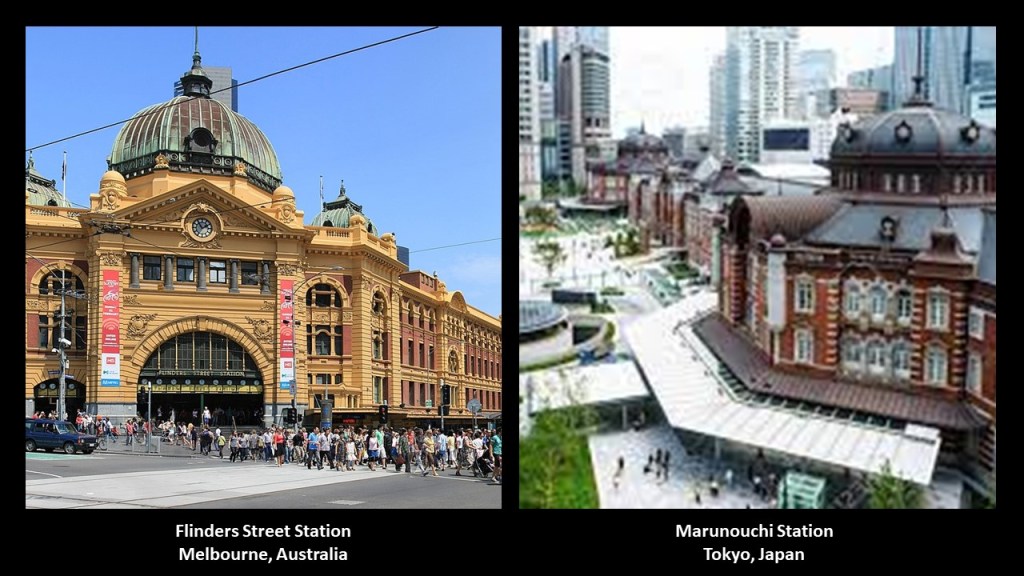
The massive Flinders Street Station in Melbourne, Australia, on the left shares a Moorish-looking appearance with the massive Marunouchi Station in Tokyo on the right.

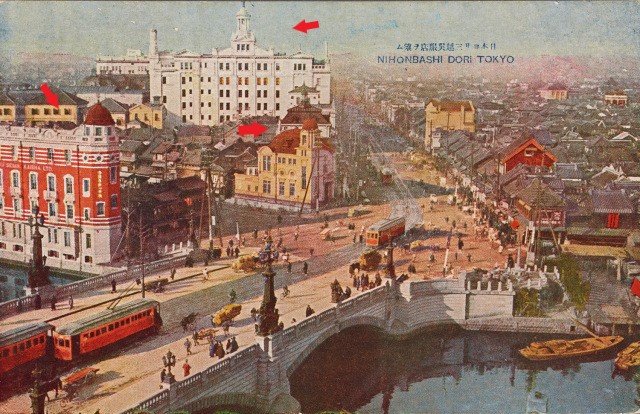
This image is of a 1922 post card featuring Tokyo’s Nihonbashi, or Japan Bridge, in the foreground, with more gigantic onion-domed, Moorish-looking buildings in the background.

This bridge survived the Great Kanto Earthquake of 1923, but didn’t survive urban development when it was buried underneath a massive expressway that was built in the 1960s.

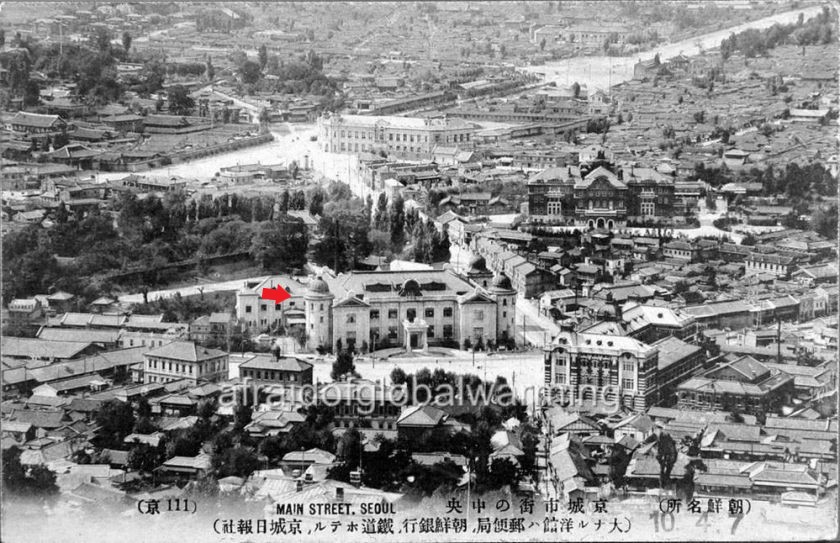
You see the same kind of thing going on with the architecture in this historic photo of Seoul, taken in 1919.  Notice in addition to the huge, heavy masonry pictured throughout Seoul, in the center of the photo you see onion domes here as well.

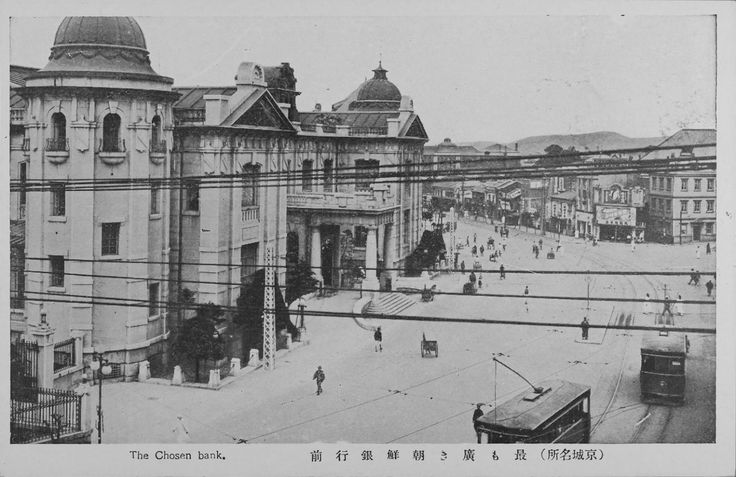
Here is a close-up of that center building.  It is the Bank of Korea, circa 1920.  Check out how huge that building is, relative to the size of the people in the street!

Seoul, South Korea - Bank of Korea, circa 1920

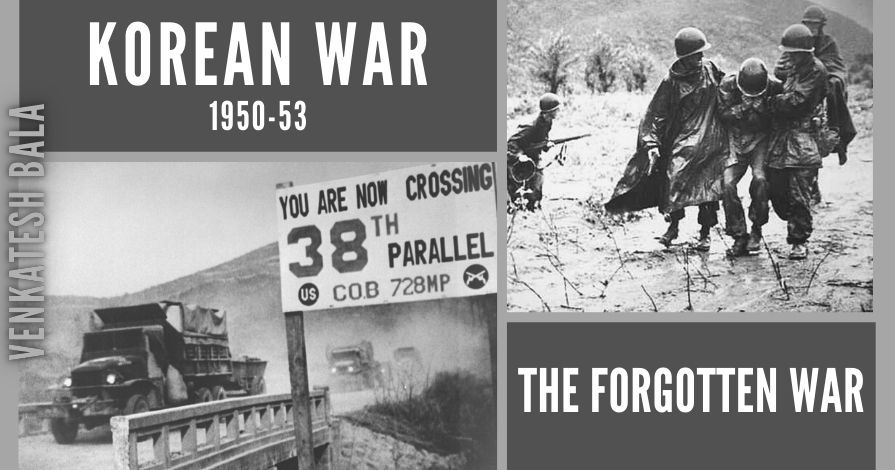
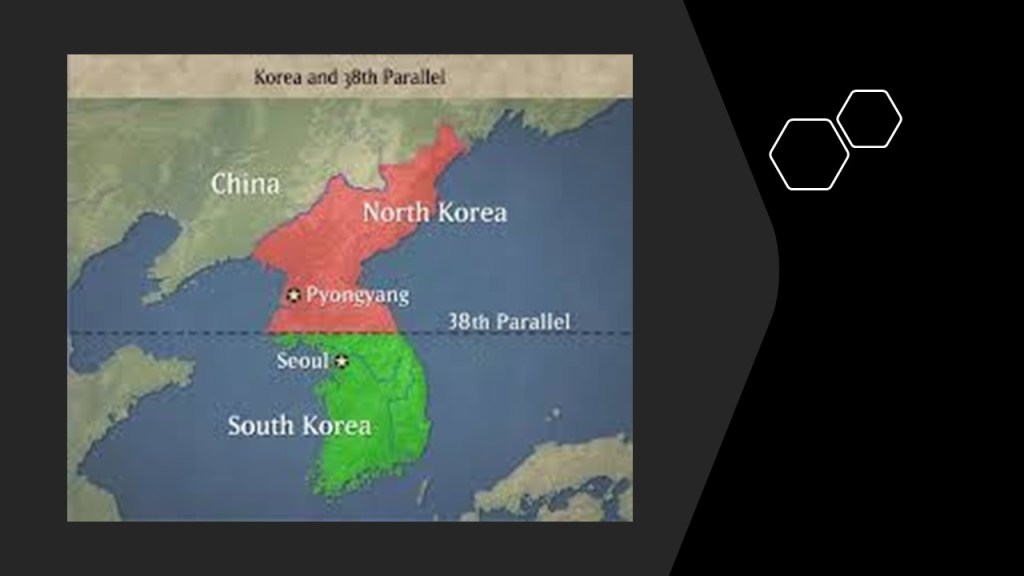
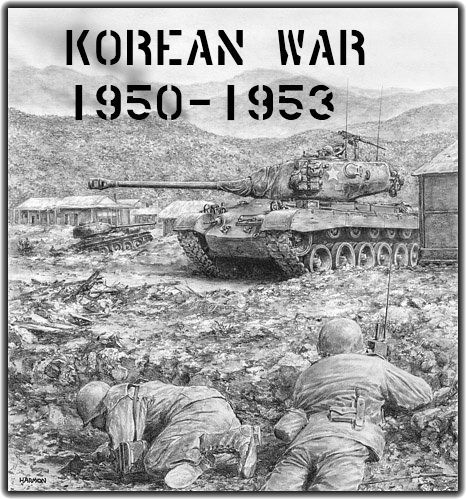
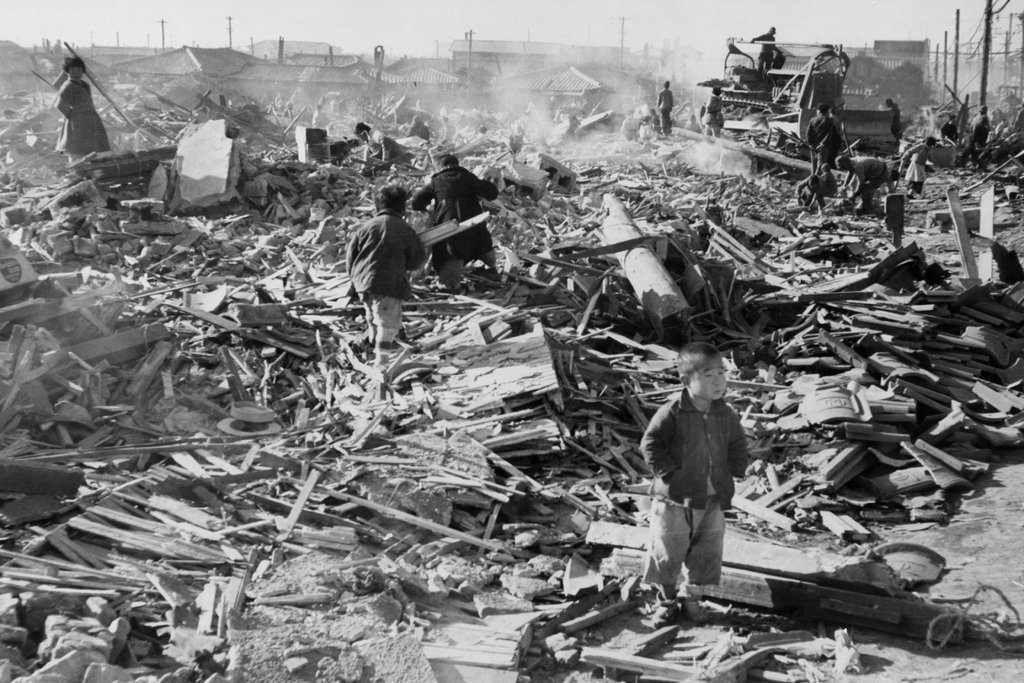
The Korean War started in 1950, when North Korea invaded South Korea on June 25th following clashes along the border and insurrections in the South.

North Korea was supported by China and the Soviet Union, and South Korea by the United Nations, principally from the United States.

The Korean War was one of the most destructive conflicts of modern times, with around 3,000,000 deaths due to the war, and proportionally, a larger civilian death toll than either World War II or the Viet Nam War; caused the destruction of nearly all of Korea’s major cities; and there were thousands of massacres on both sides.

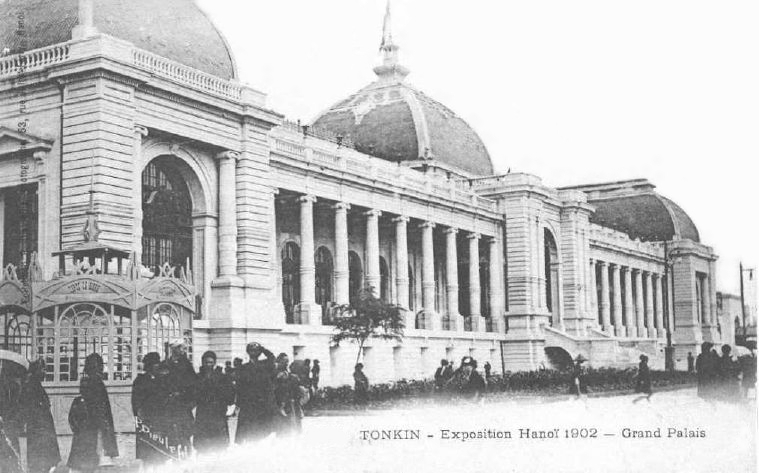
In Hanoi in Viet Nam, the Grand Palais was said to have been built specifically for the Hanoi Exposition in 1902, andwas completely destroyed by American airstrikes at the end of World War II because when the Japanese took over Viet Nam in 1940, we are told, they based their military and supplies in the palace.

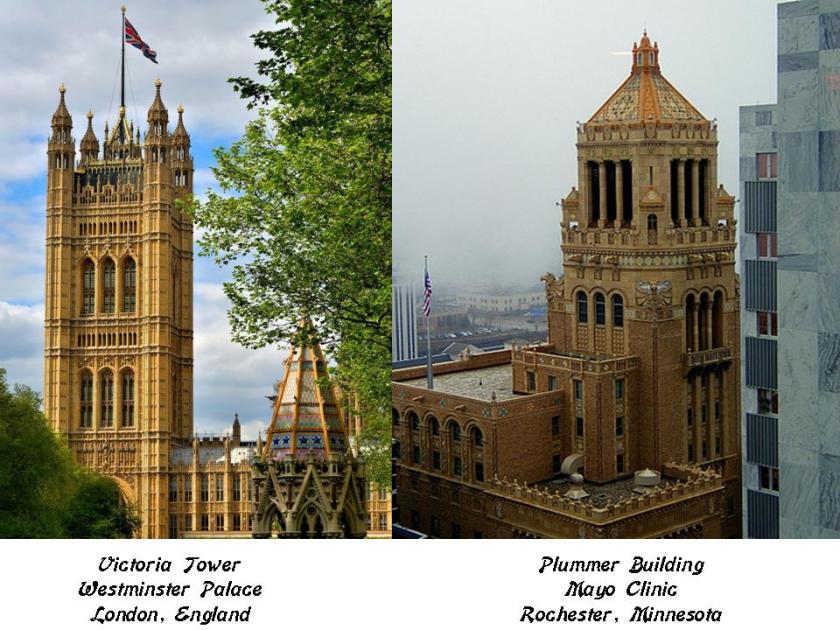
The Victoria Tower in the Westminster Palace complex in London, which houses Parliament, is on the left, the building of which is said to have been completed in 1860, and on the right is the Plummer Building of the Mayo Clinic in Rochester, Minnesota, said to have opened in 1928.

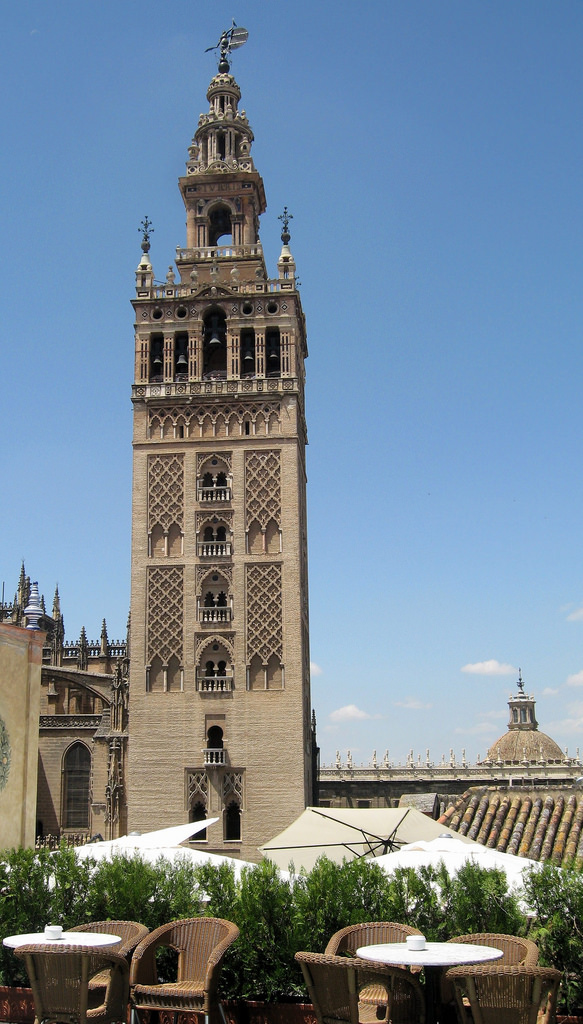
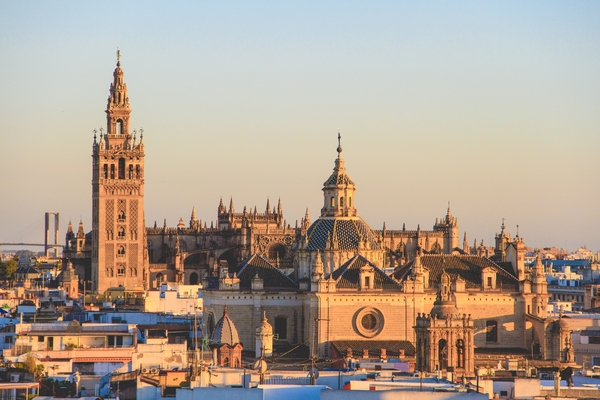
This is the Giralda Bell Tower, said to have been completed in 1198 in Seville, one of the capitals of Moorish Spain.

The Giralda Bell Tower is co-located with the Cathedral of Seville.

Seville was a capital of Moorish Spain.

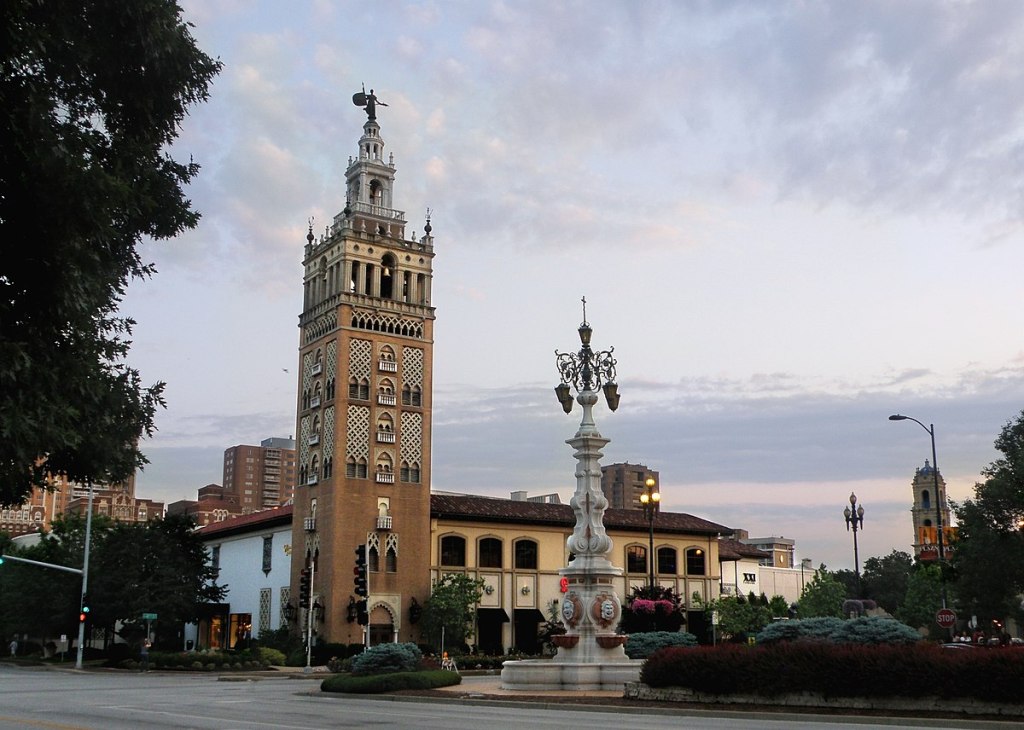
The Giralda is also the name of a landmark tower in Kansas City, Missouri.

We are told that after urban developer J. C. Nichols visited Seville, Spain, in the 1920s, he was inspired to build a half-scale replica in Country Club Plaza.

The Giralda Tower in Kansas City was officially christened by the Mayor of Seville in 1967, the same year Kansas City and Seville became sister cities.

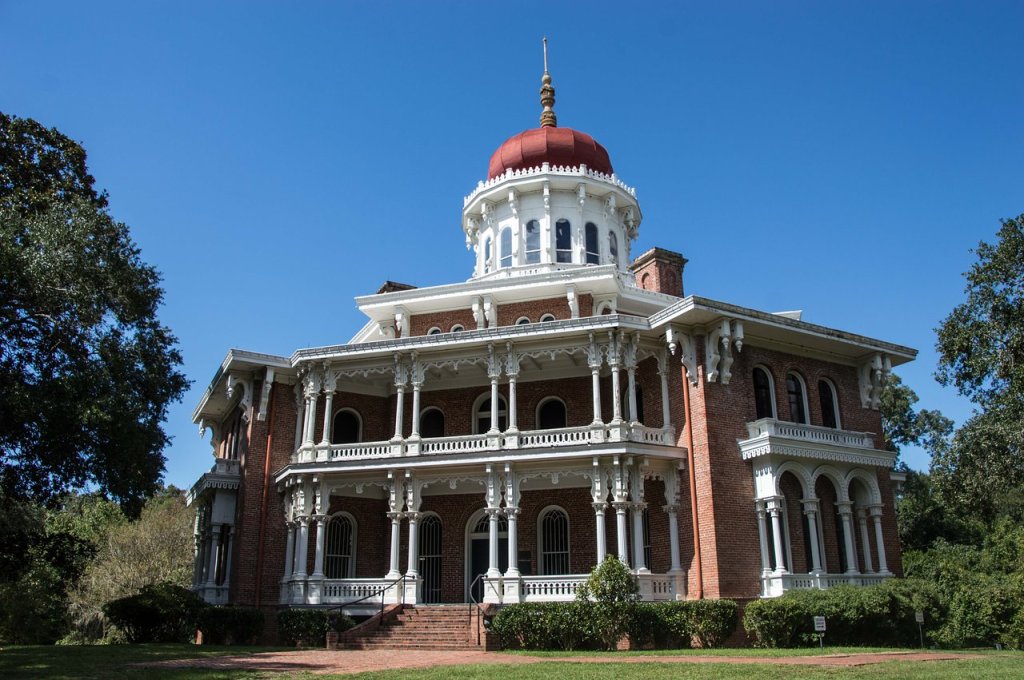
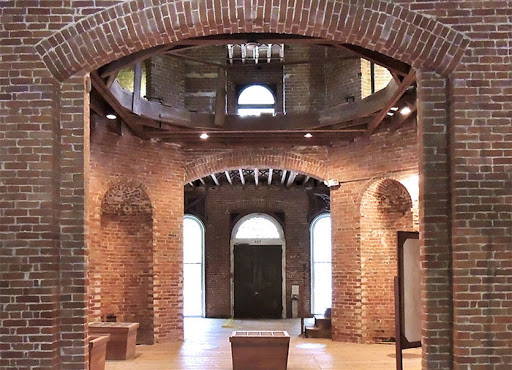
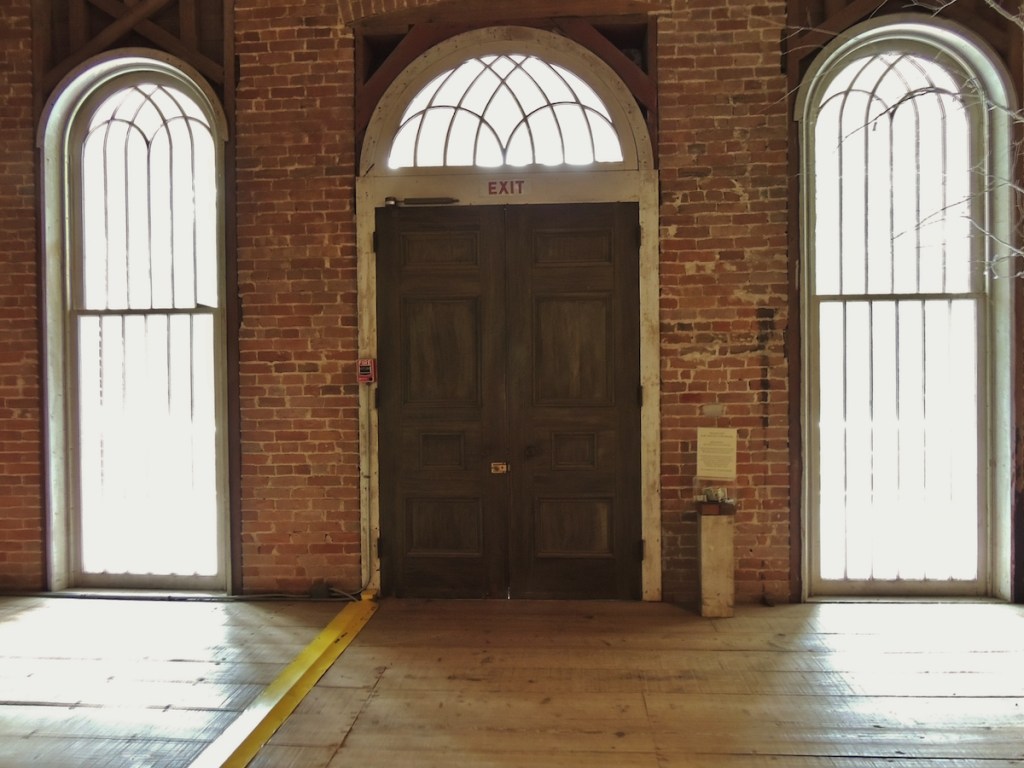
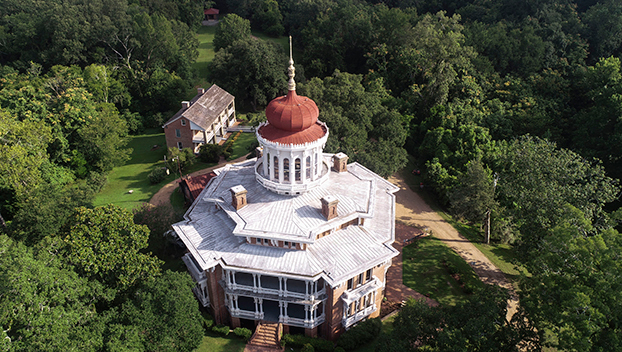
The Longwood Mansion, also known as “Nutt’s Folly,” in Natchez, Mississippi, is the largest octagonal house in the United States at 30,000-square-feet, or almost 2,800-square-meters, and has six floors.

This is what we are told about it.

It was built by local cotton-planter Haller Nutt, who was said to have wanted something unusual for his family home and was intrigued by octagonal homes.

He decided to build it in 1860 to replace his first home and started construction shortly after.

Estimates of as many as one million bricks were made for this house.

Then the Civil War started and construction was halted after only the first floor was completed.

The family moved in with the intention that they would return to complete the house after the war was over.

Work halted in 1861 with only nine rooms on the basement floor completed.

Then Haller died at the age of only 48 from pneumonia.

His wife was Julia was left to raise their eleven children in poverty in the lower level of the home.

After the last child who lived here passed away, the home was sold to Kelly MacAdams in 1968 for $200,000.

She repaired the home for two years, leaving the upper levels unfinished to show what war can do.

She gave the home to a local association, the Pilgrimage Garden Club, with the agreement that the home would never be finished.

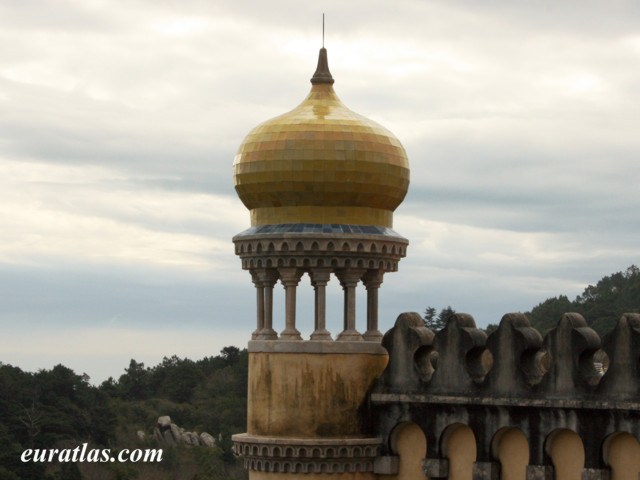
The colonnaded onion dome of Longwood Mansion…

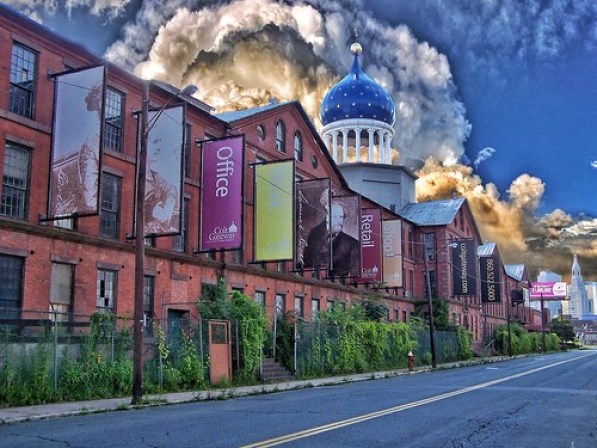
…reminds me of the one at the Colt Armory in Hartford, Connecticut…

…and the one at the Pena National Palace in Sintra, Portugal.

Next are examples of Moorish architecture in Florida, of which there are countless examples to choose from.

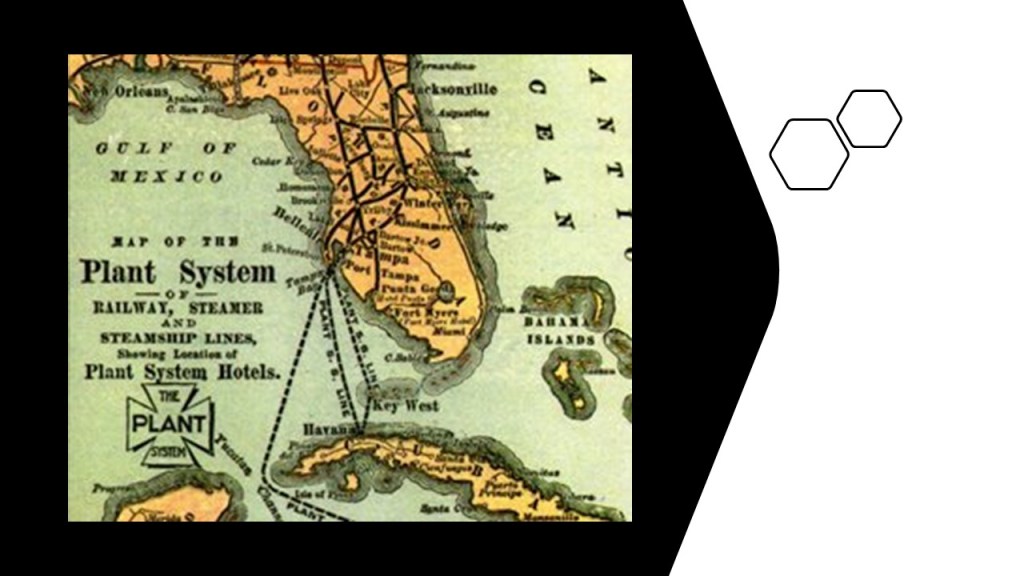
Henry B. Plant was said to have laid the first railroad tracks in the Tampa area in the 1880s, which was said to have brought in the cigar and phosphate industries.

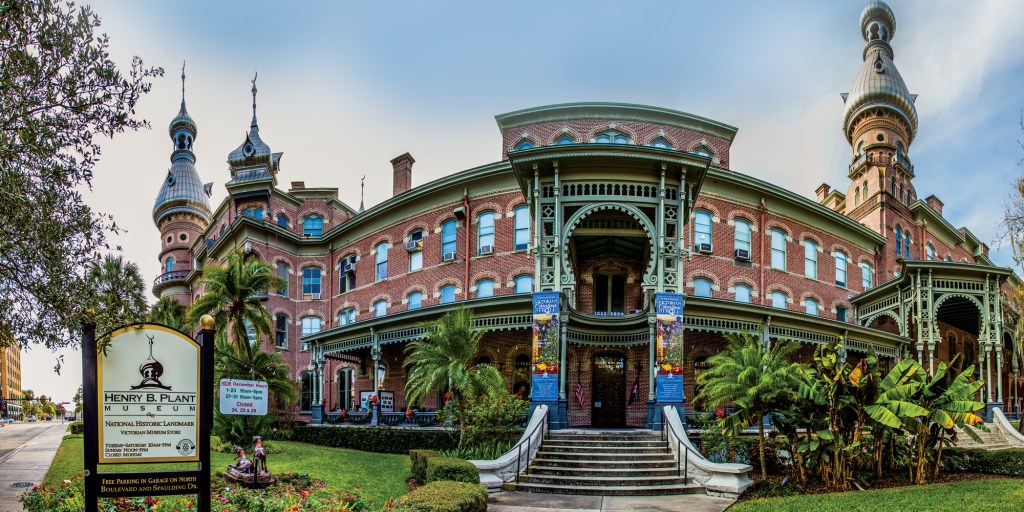
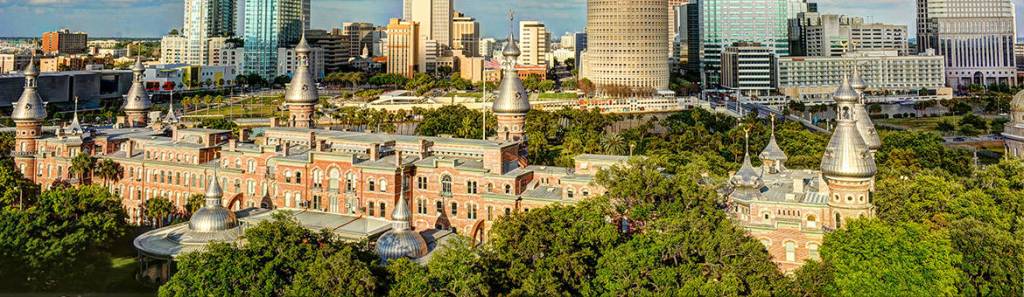
What became the University of Tampa in 1933 was said to have been built between 1888 and 1891 as the Tampa Bay Hotel to serve as a Victorian-era winter resort for the railroady built by Henry Plant.

Today Plant Hall houses the Henry B. Plant Museum, as well as the main administrative and academic building for the University.

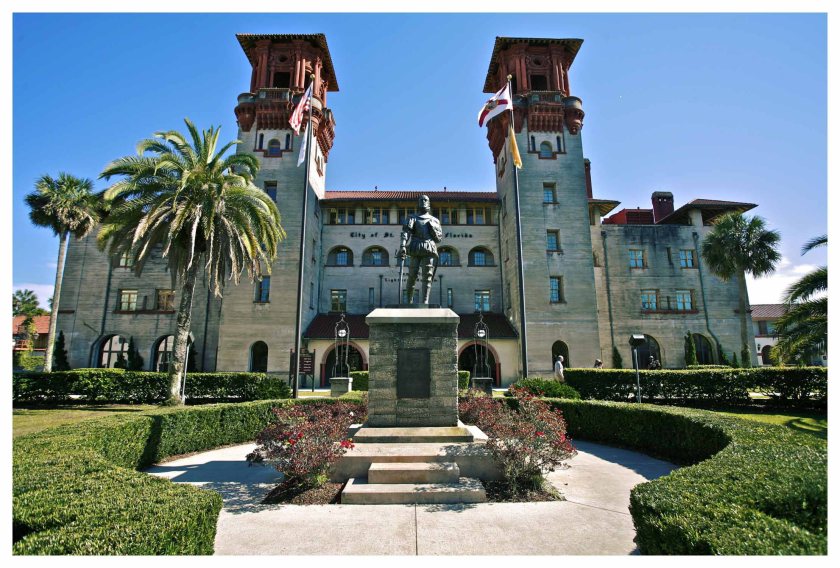
This building is what was the Alcazar Hotel, and is now the St. Augustine City Hall and Lightner Museum, and is called Moorish Revival architecture.

It is important to note that Alcazar was the name given to a type of Moorish castle or palace built in Spain and Portugal during Moorish rule there.

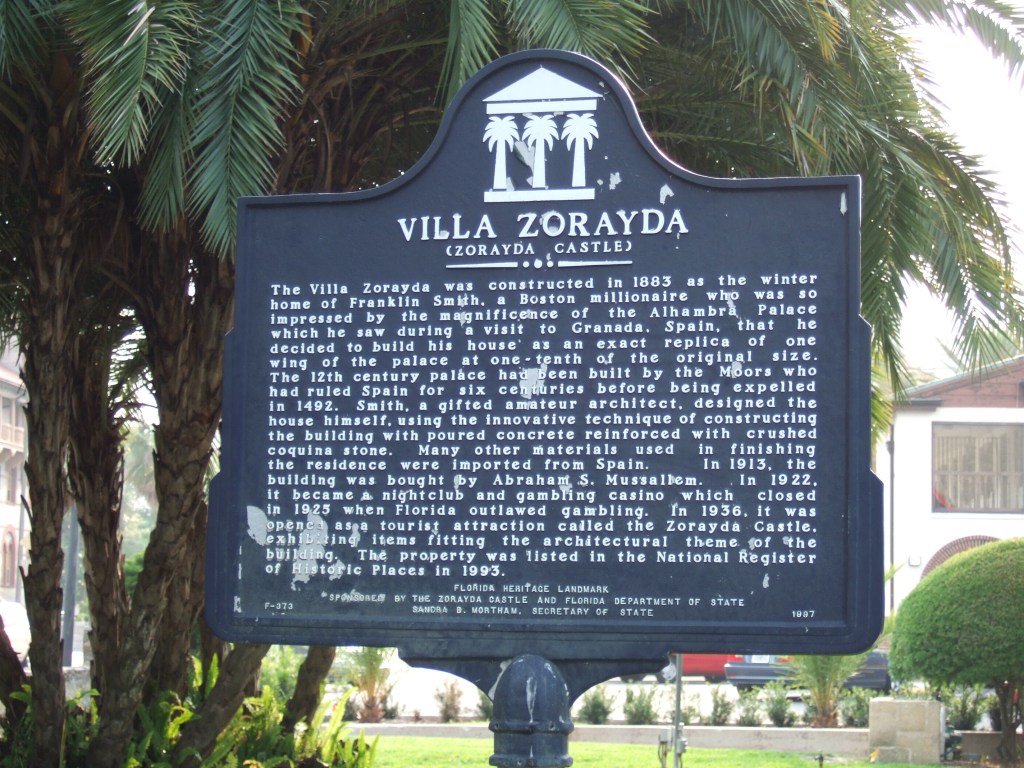
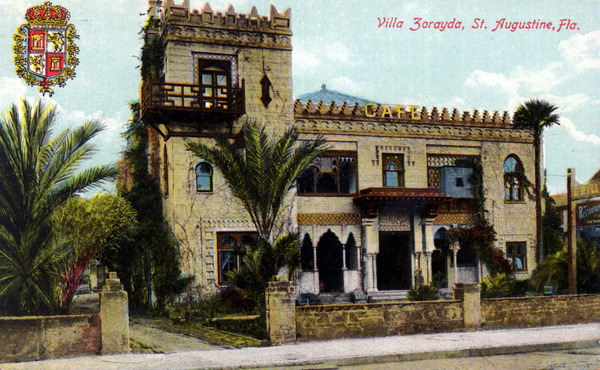
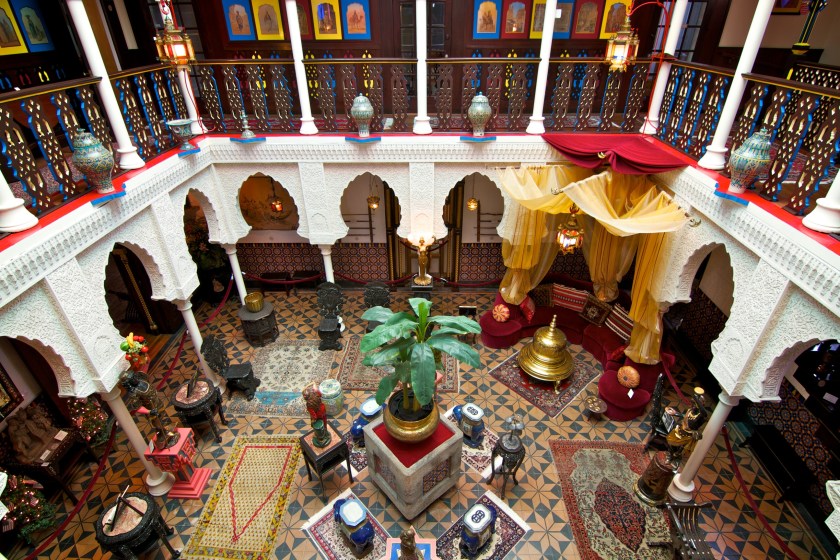
The Villa Zorayda in St. Augustine was said to have been built in 1883 by the eccentric millionaire Frederick W. Smith…

…and was said to be inspired by the 12th-century Moorish Alhambra Palace in Granada, Spain, and also called Moorish Revival architecture.

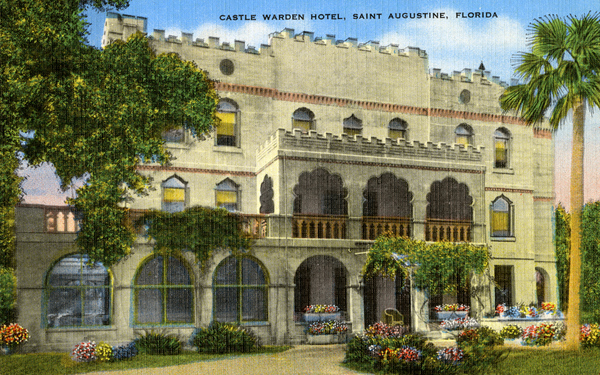
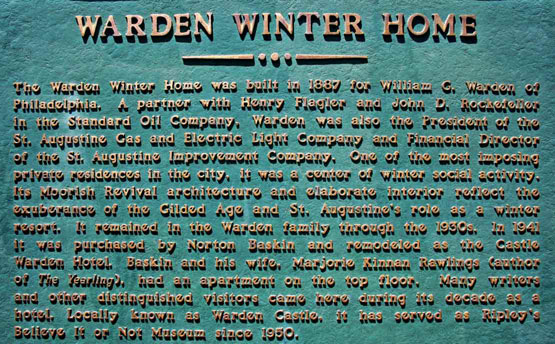
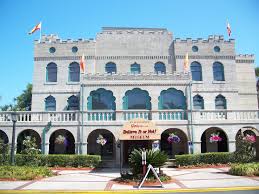
The Castle Warden Hotel in St. Augustine was said to have been built in 1887…

…as a winter home for William H. Warden of Philadelphia, Pennsylvania, a partner with Henry Flagler and John D. Rockefeller in the Standard Oil Company; President of the St. Augustine Gas and Electric Light Company; and the Finanical Director of the St. Augustine Improvement Company.

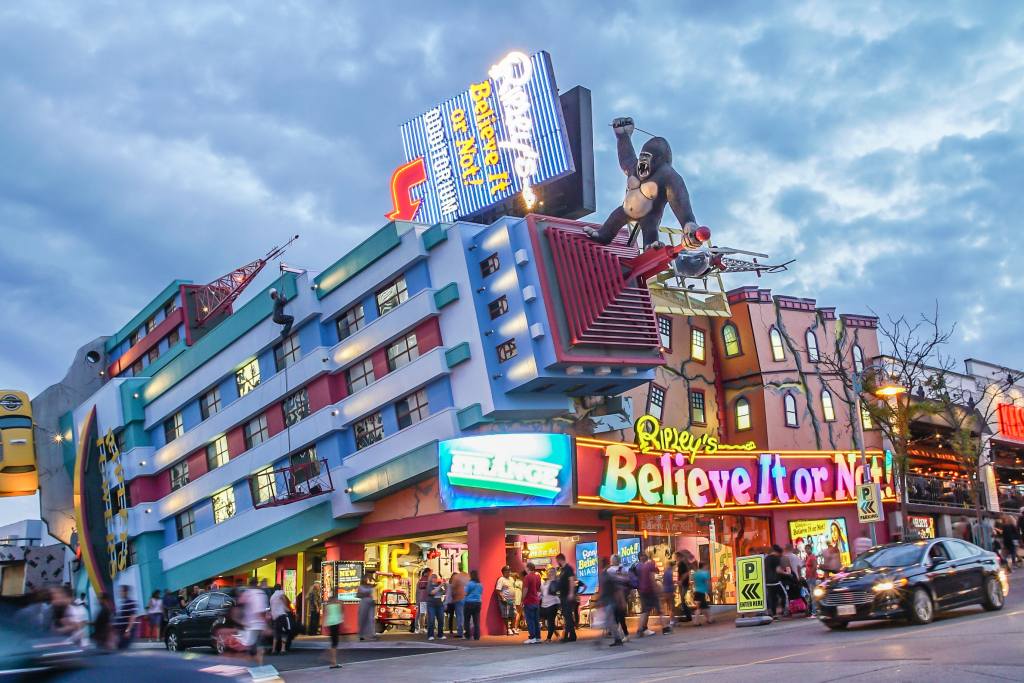
It has served as Ripley’s Believe It or Not Museum since 1950.

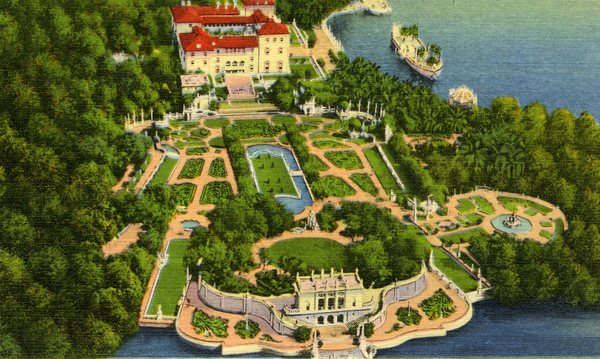
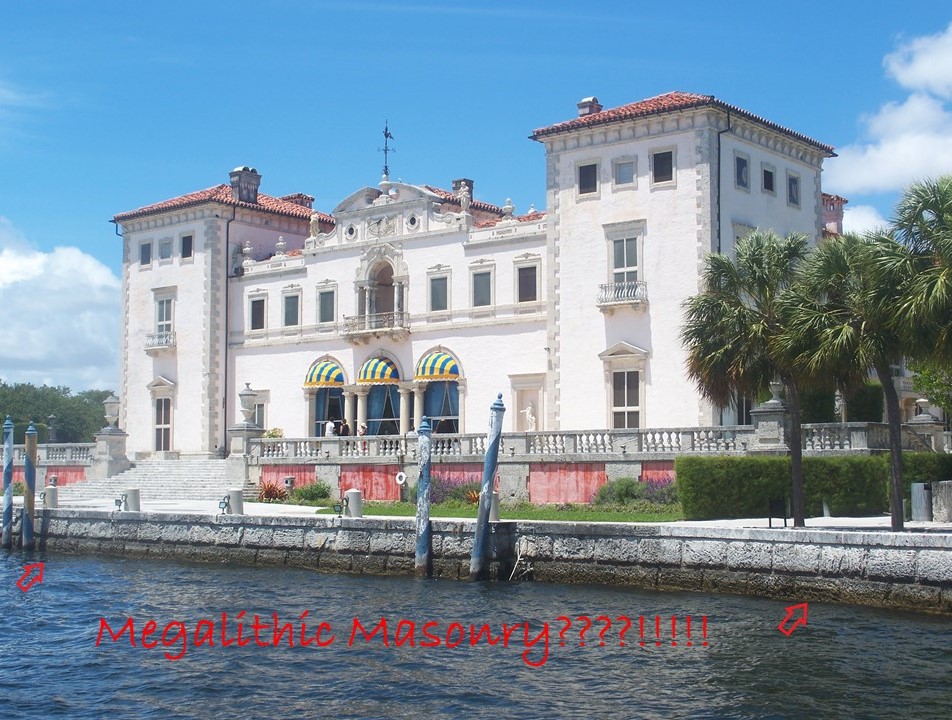
William Deering’s son James, connected with the Deering-McCormick International Harvester fortune, was said to have built the Villa Vizcaya between 1914 and 1922 on Biscayne Bay in the Coconut Grove neighborhood of Miami, Florida.

Now here’s the thing.  The Moors do not even get credit for their own architecture because they weren’t supposed to be there. 

They were removed from our collective memory. 

They get credit for 700 years in Spain in the historical narrative we have been given, and that is it, and their amazing accomplishments are falsely attributed all over the world.

There is a story given to explain the existence for every building and other infrastructure, and what hasn’t been put to use, or left abandoned, has been demolished in the name of progress and urban renewal, or destroyed in so-called modern warfare.

I have given examples specifically of what is considered to be Moorish architecture because it can be connected to Moorish Spain, but the Moors were the builders of other classical architecture as well…

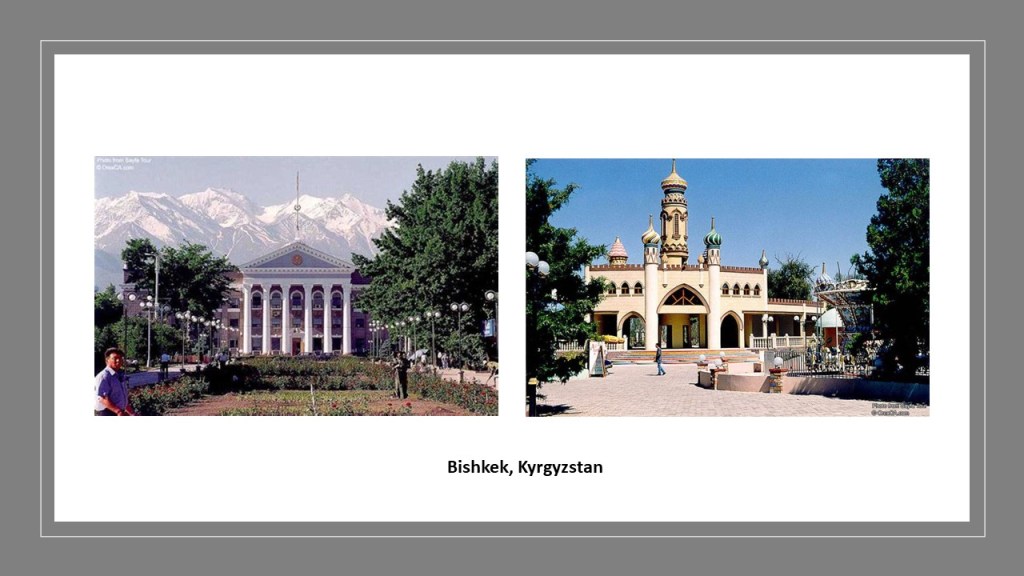
…where you see examples of both classical and Moorish architecture existing together in places like Bishkek, the capital of the of Kyrgyzstan in Central Asia.

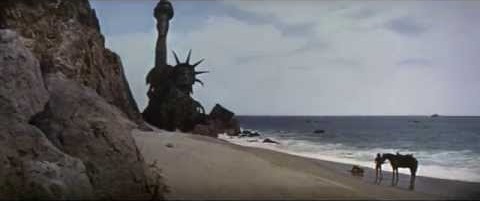
I am reminded of the last scene from the original “Planet of the Apes” movie, when Charlton Heston realized for the first time in the movie where he actually was the whole time, only in the sense that we do not know where we really are because it has been deliberately removed from our awareness.

We are living and working in, and on top of, the infrastructure of an advanced, ancient civilization, without even knowing it.

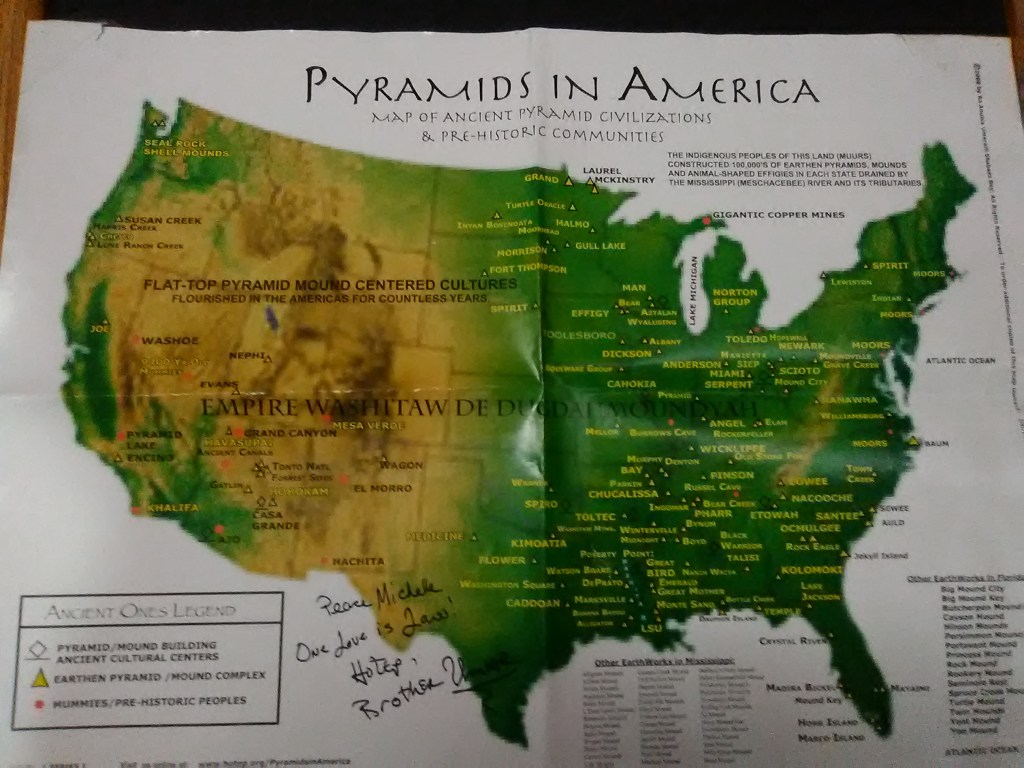
The wisdom keepers of this ancient civilization that was not only the Washitaw Empire in North America, but around the world…

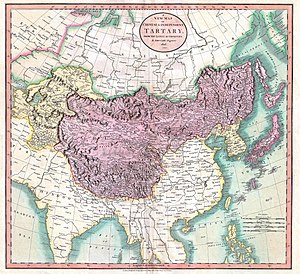
…like Tartaria in Asia…

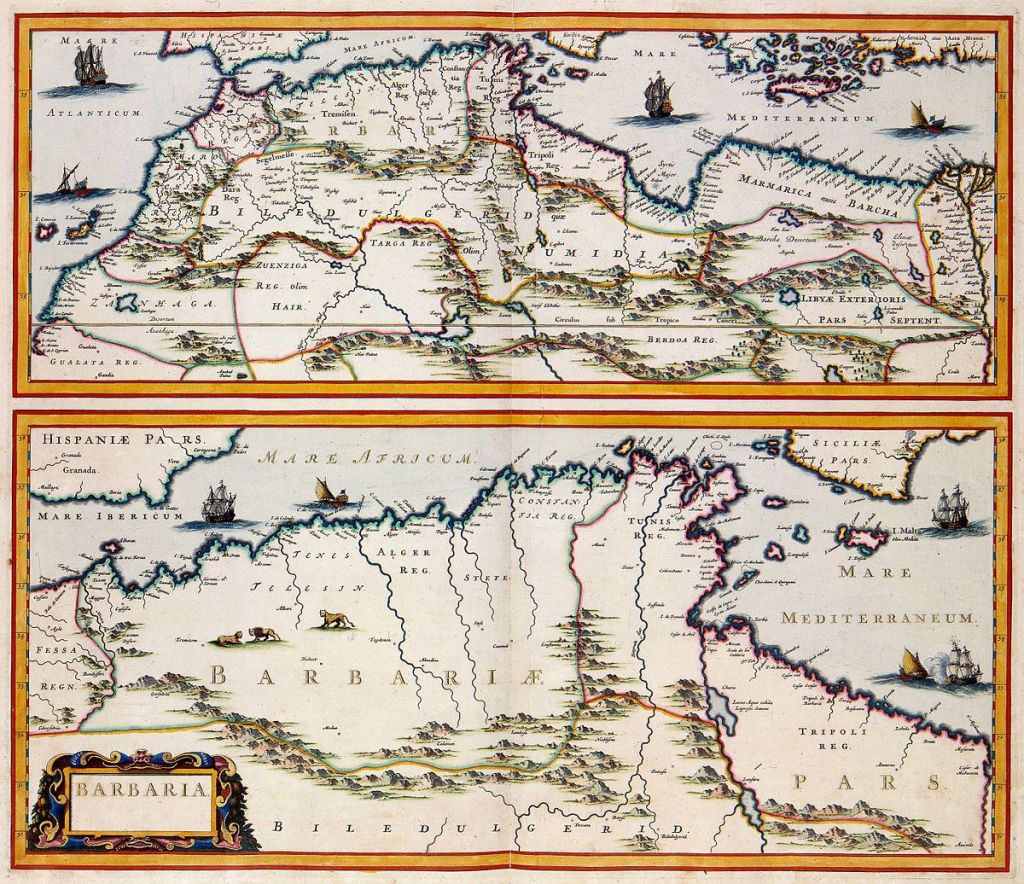
…Barbaria in North Africa…

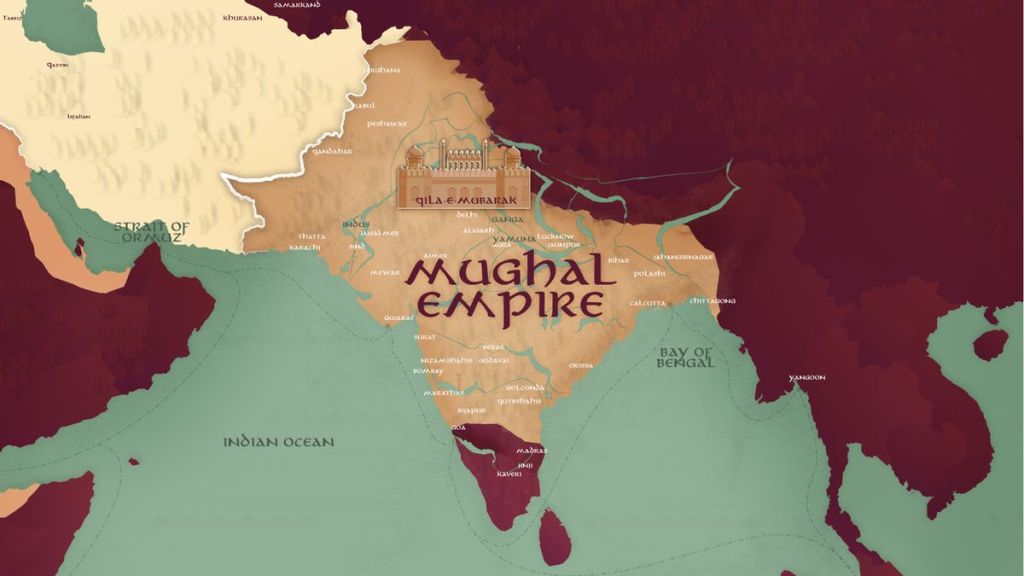
…and the Mughal Empire in India, just to name a few.

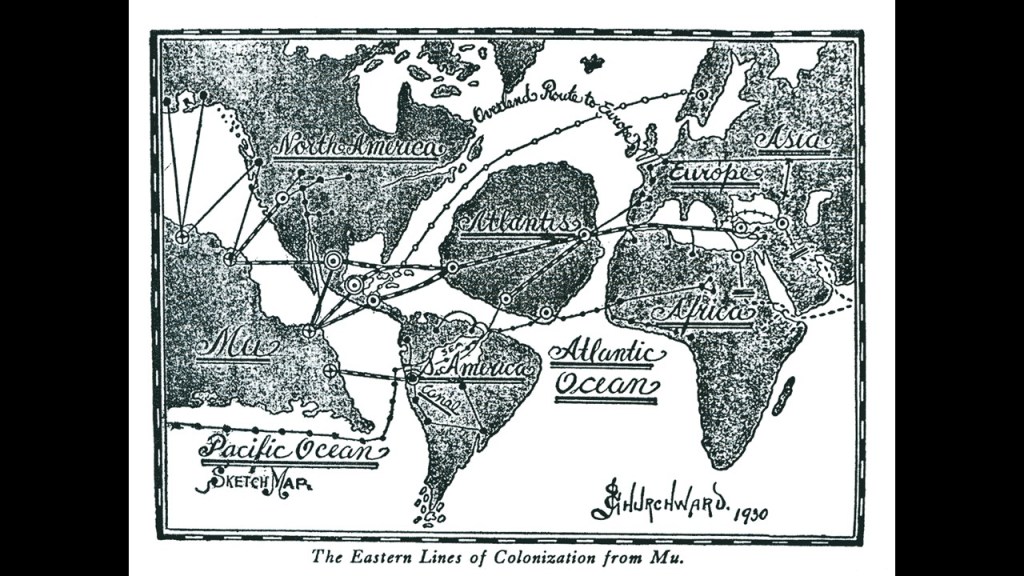
Wealthy empires within the ancient Moorish civilization, dating back to the time of ancient Mu.

Not at odds with each other, but co-creating a beautiful civilization that provided free energy with the highly integrated infrastructure energy-grid.

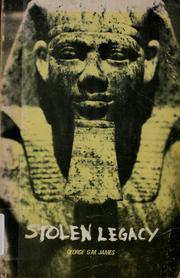
According to George G. M. James in his book “Stolen Legacy,” the Moors are the custodians of the Ancient Egyptian mysteries.

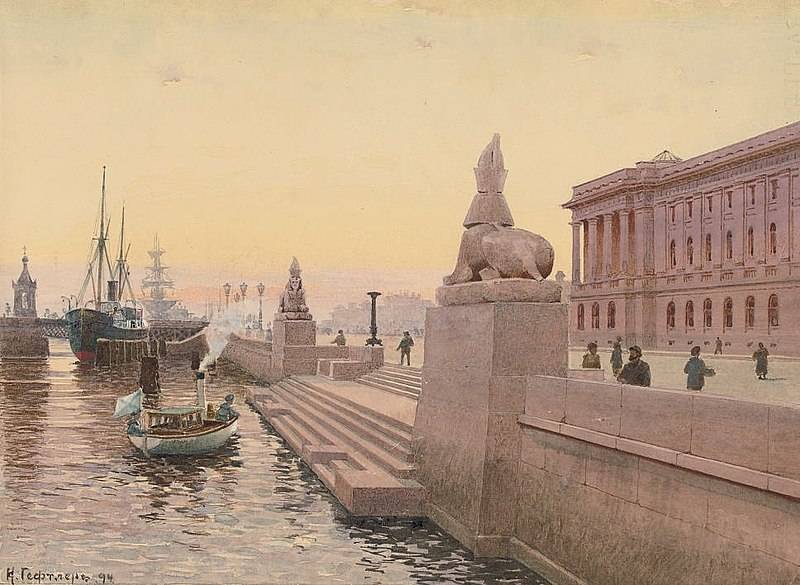
In St. Petersburg Russia, there are two ancient sphinxes at a quay in front of the Academy of Arts, said to have been brought to Russia from Egypt at the height of Egyptomania in 1832…

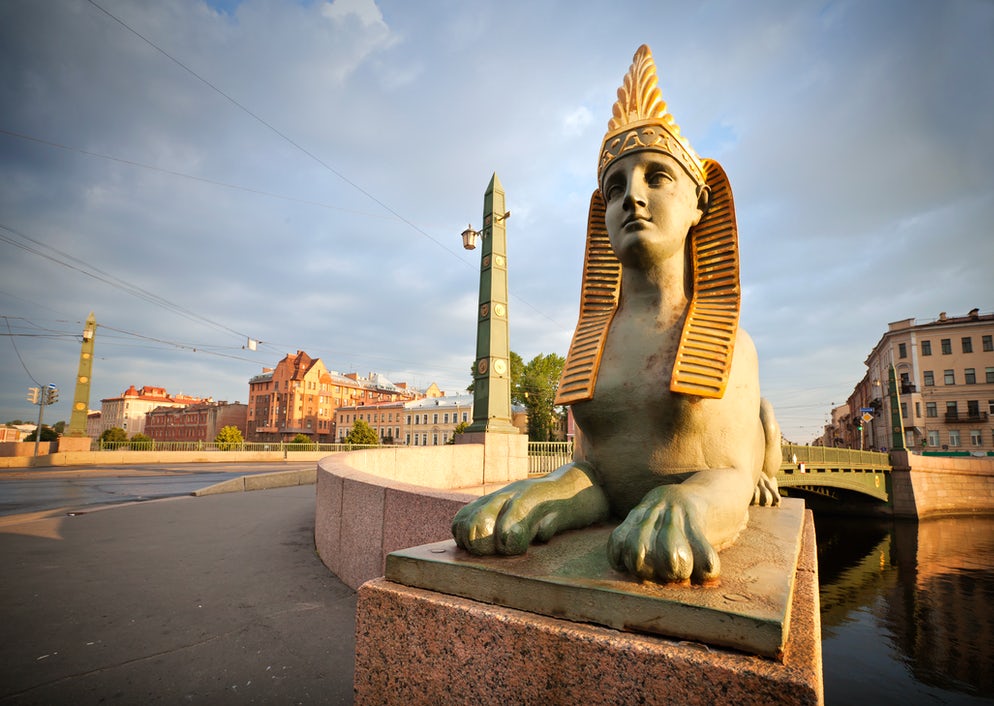
…two more on the Egyptian bridge crossing the Fontanka River…

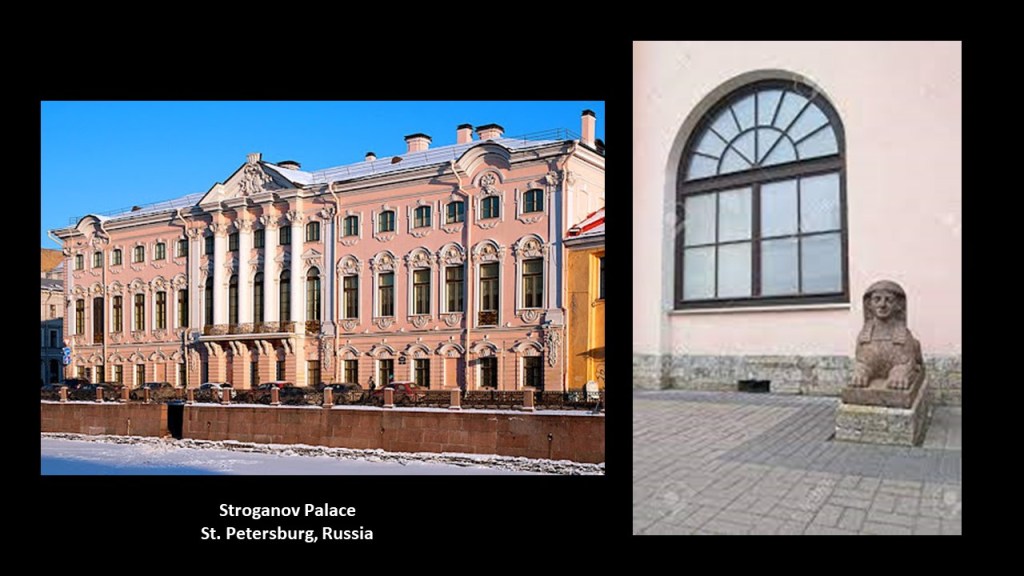
…and two sphinxes in the back courtyard of the Stroganov Palace, all in St. Petersburg.

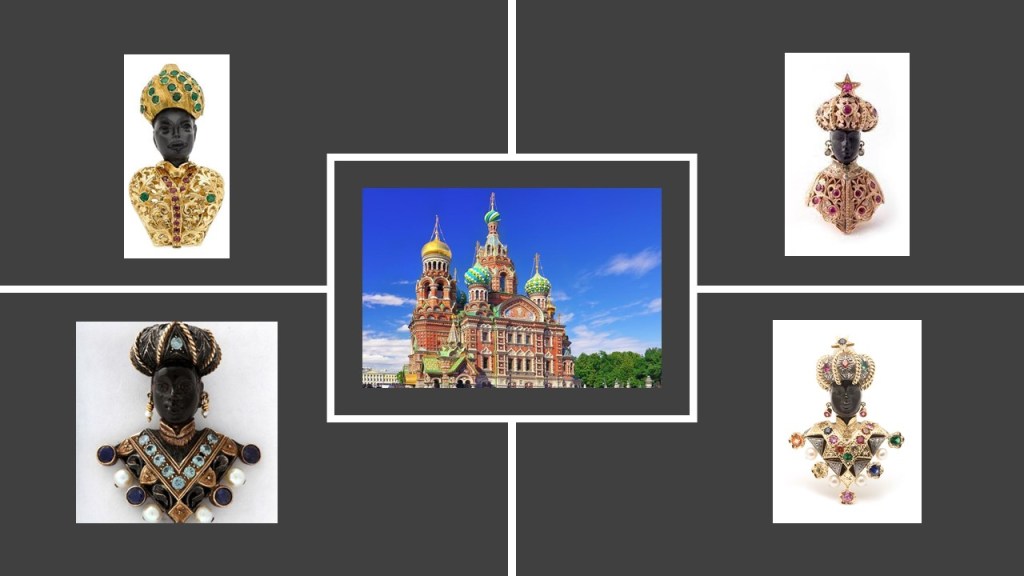
And when I see the colorful, ornate onion domes of the Russian Orthodox Church of the Savior on Blood in St. Petersburg, I am reminded of the turbans of antique Moors’ head jewelry I have seen.

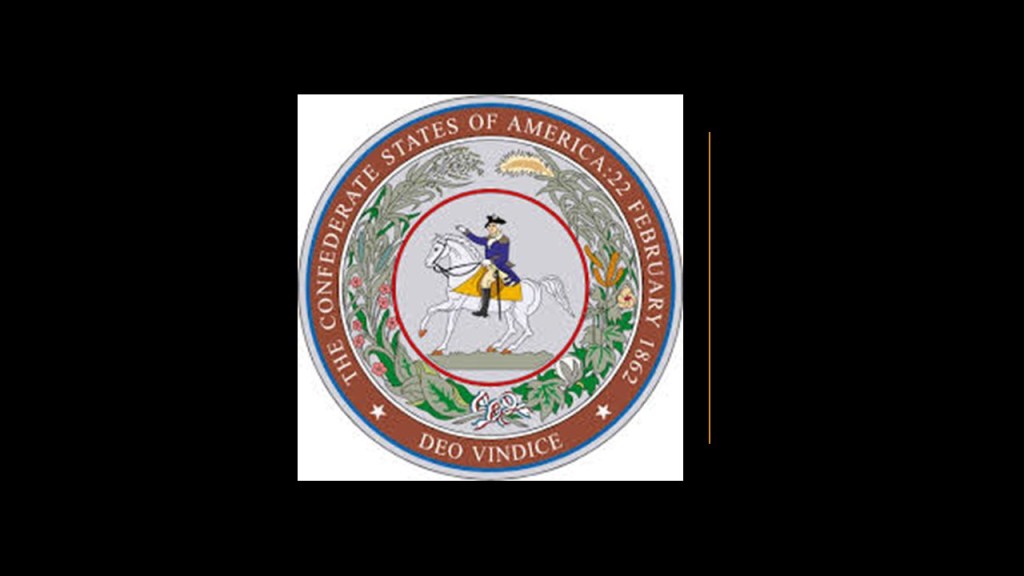
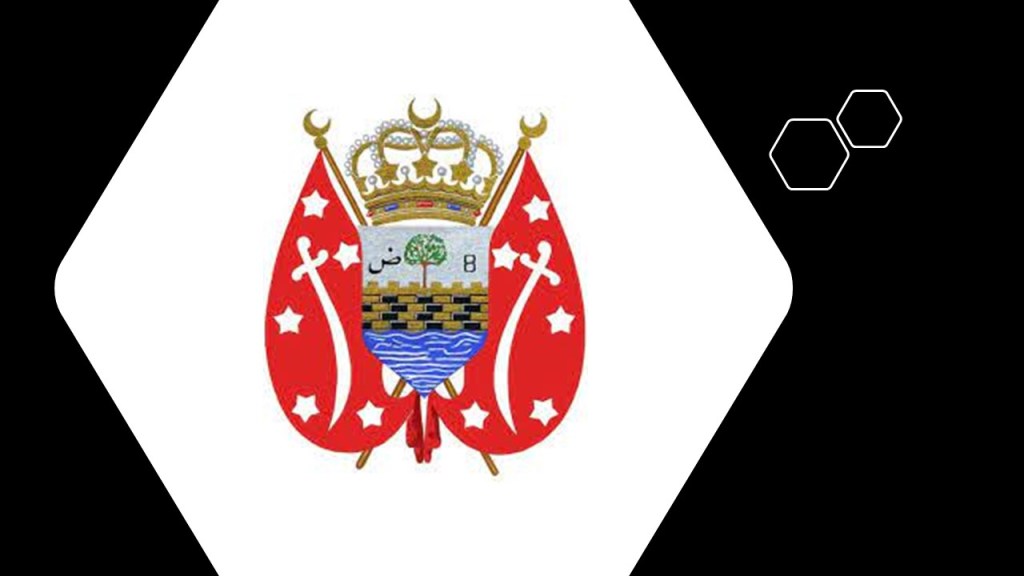
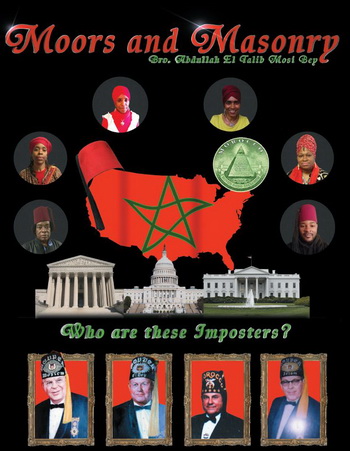
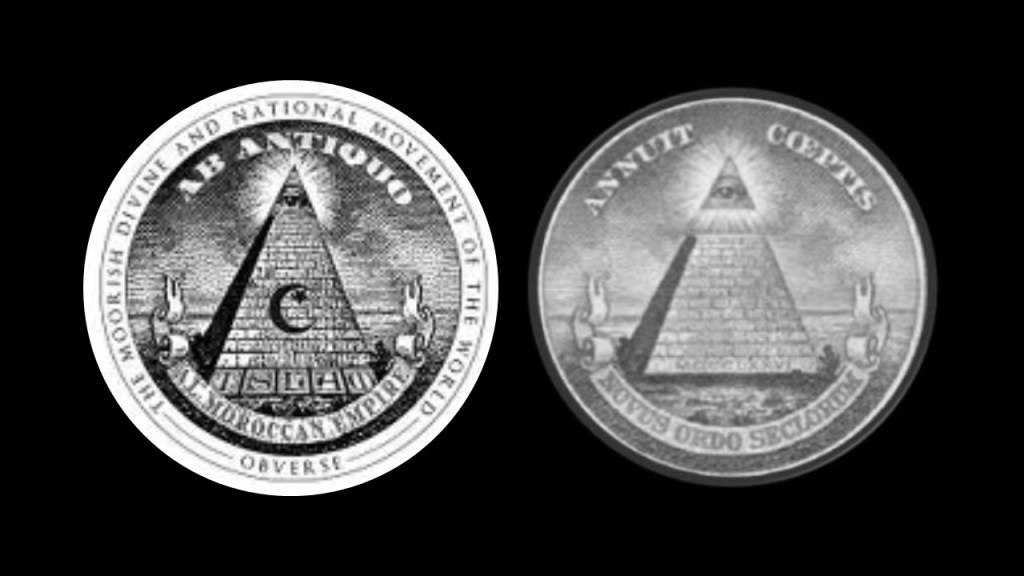
This is the Great Seal of the Moors on the left.

Sure looks familiar, doesn’t it?

The beauty, harmony, and balance of the global Moorish Civilization, from Antiquity, was replaced by a parasitic system, deliberately engineered to cause human suffering and environmental degradation for the purposes of power and control.

I believe the cause of the wiping of this civilization from the face of the earth was a deliberately caused liquefaction event that covered the earth in mud.

Like I said in my last “Short & Sweet #17,” this is all very confusing based on what we have been taught because it was meant to confuse and manipulate us so we would instead fight each other based on things like race and relgion and never know our true history by the Controllers who created the New World Order for their benefit, and not ours.

I think all the pieces of the original civilization that have been separated out as different from each other were once one in the same.

The controllers didn’t rewrite history from scratch – they rewrote the historical narrative to fit their agenda.

But now we are living in the long-prophesied time of the Great Awakening that the Controllers have literally done everything in their power to prevent because it is what they have feared, and of reclaiming the higher timeline for a positive future for Humanity.

Shapers of the New Narrative – Part 4 Computers and Video Games & the Like

I am going to be taking a close look at computers and video games, and related subjects and devices in this fourth and last part of the “Shapers of the New Narrative” series.

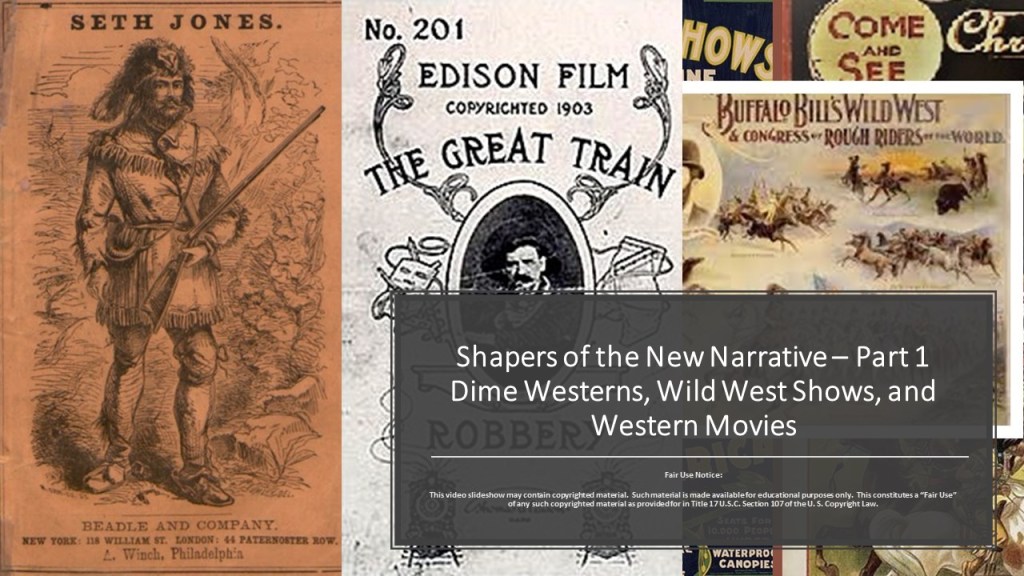
In the first part of the “Shapers of the New Narrative” series, I focused on the subjects of dime westerns, wild west shows, and western movies.

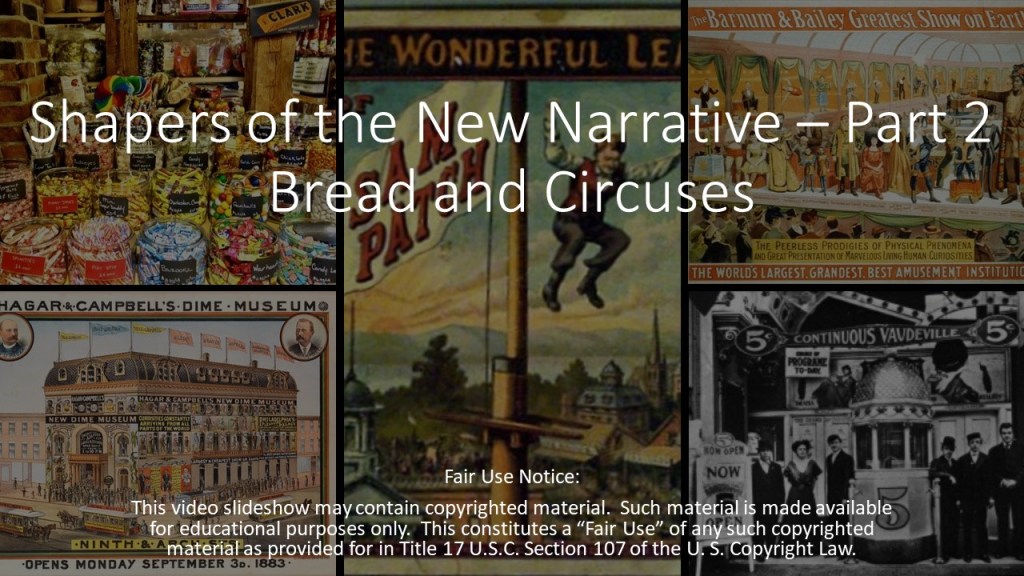
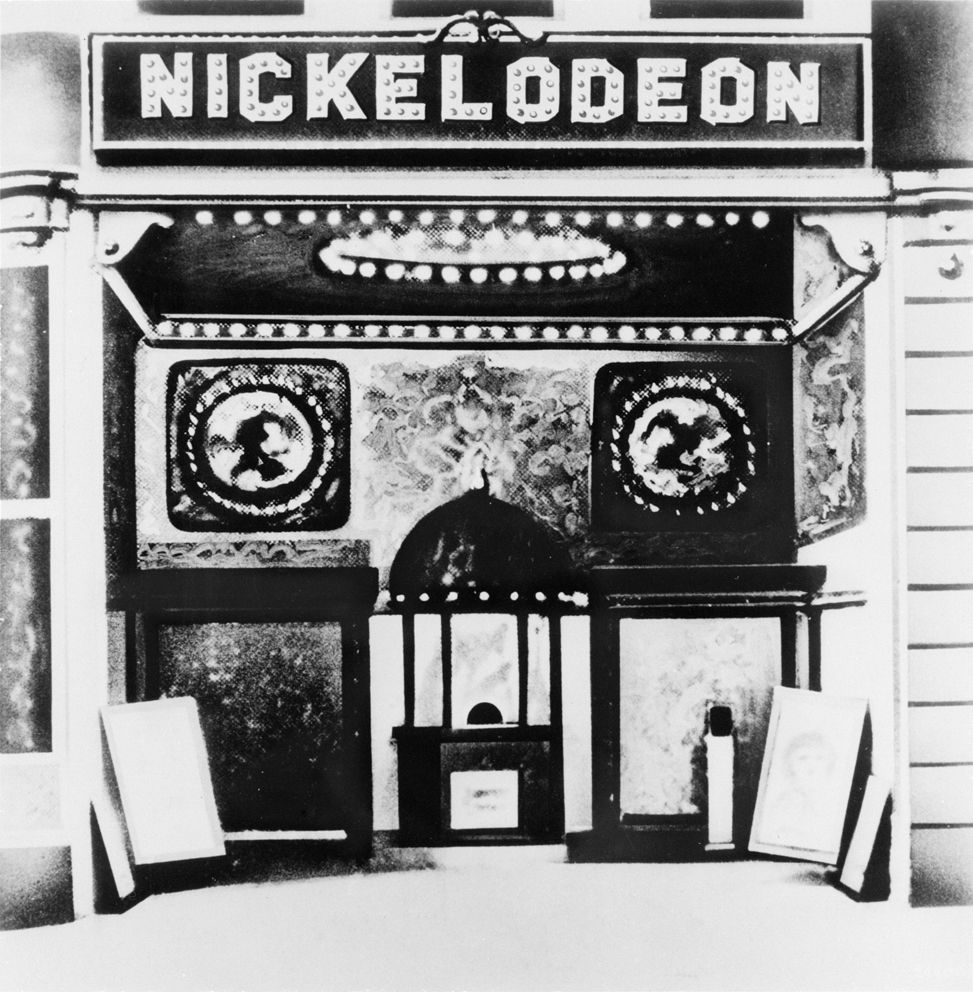
The second part of this series was about the role played by such things as penny candy; dime museums; circuses; nickelodeons & the early movie industry; and daredevils…

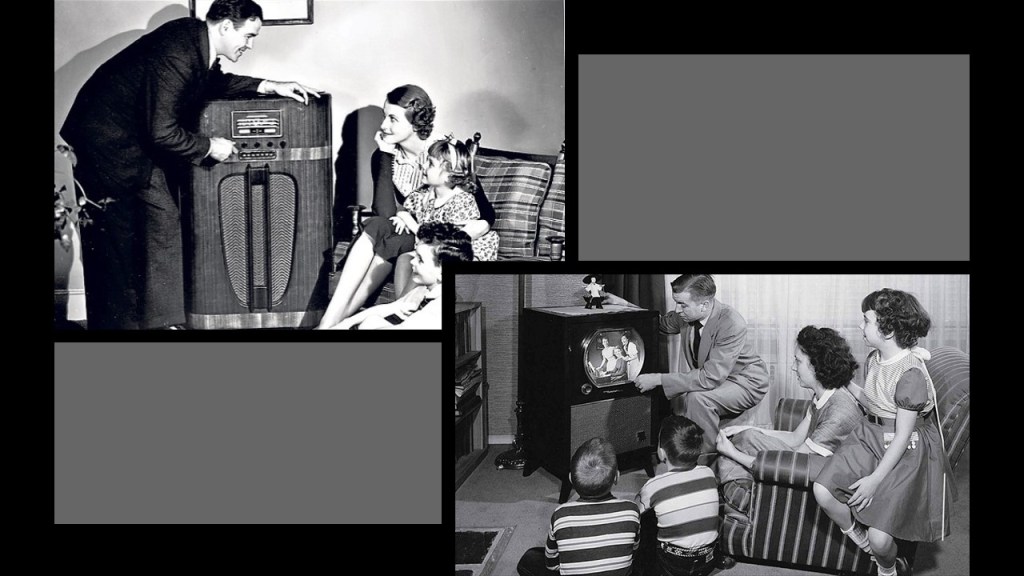
…and I looked into the origins of radio and television in the third-part of this series.

Where is all of this leading to?

Are these random events unfolding, or is there an outcome-based, long-term plan driving everything that has been happening in our lives?

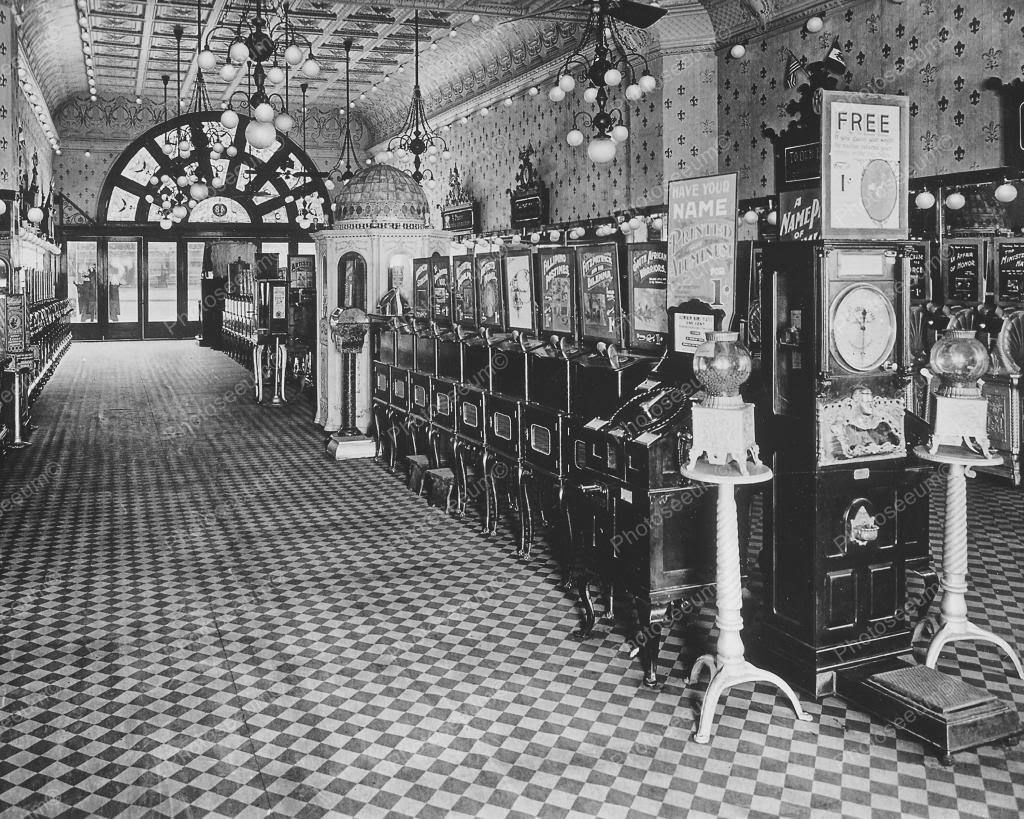
In Part 2 this series, I touched on the relationship between the development of penny arcades in the early 1900s and the coin-operated interactive entertainment industry of today, which had long-established and well-developed manufacturing and distribution channels around the world.

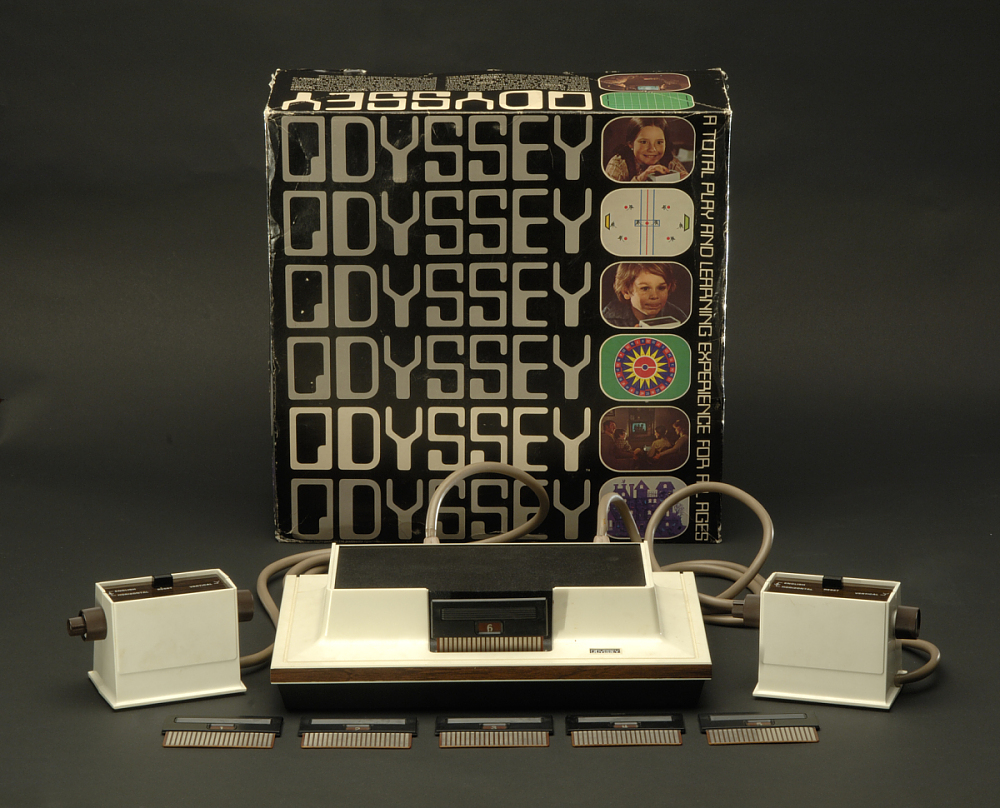
Existing computer technology had become cheap enough to incorporate into mass market entertainment products, and in 1972, Magnavox released the world’s first home video game console, the Magnavox Odyssey…

…and while there were other less well-known video arcade games released around 1972, the first block-buster video arcade game was “Space Invaders” in 1978, responsible for starting what is called the “Golden Age of Video Arcade Games.”

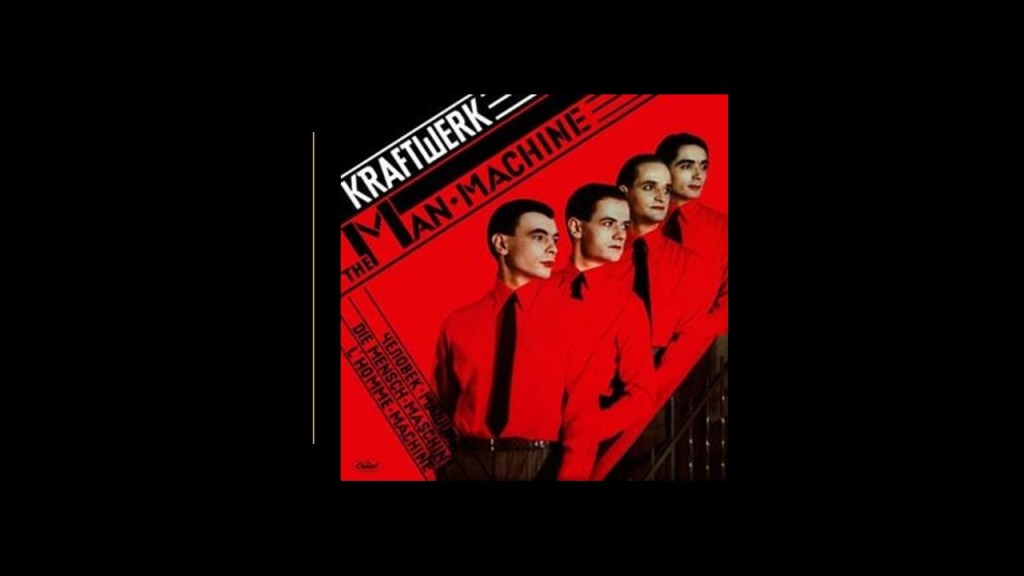
Also happening along with “Space Invaders” in 1978 was the release the album called “The Man-Machine” by the German band Kraftwerk.

These are the lyrics to its title song:

[Verse]
Man Machine
Pseudo-human being
Man Machine
Superhuman being

[Chorus]
The man machine, machine
Machine, machine, machine
Machine, machine, machine (machine)
The man machine, machine
Machine, machine, machine
Machine, machine, machine (machine)

The other albums of Kraftwerk, a German electronic music band characterized by a “robot-pop-style” from that same time period included:

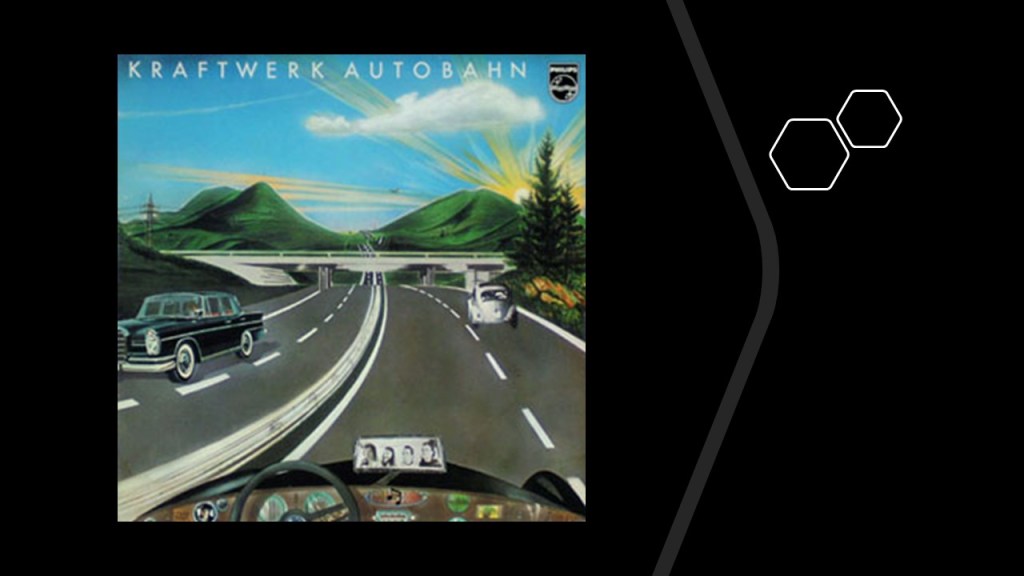
Autobahn, which was released in 1974…

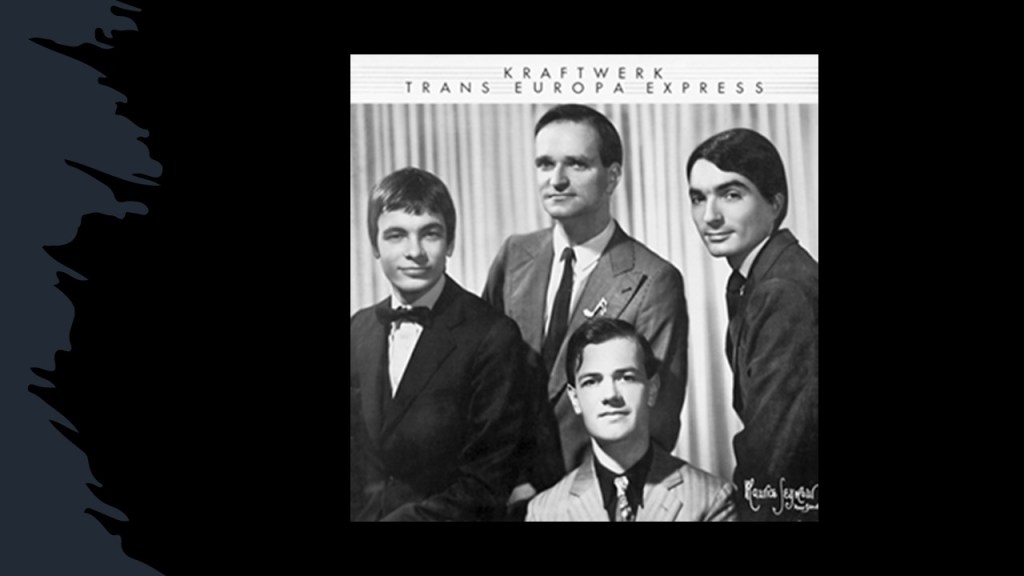
…Trans-Europa Express, released in 1977…

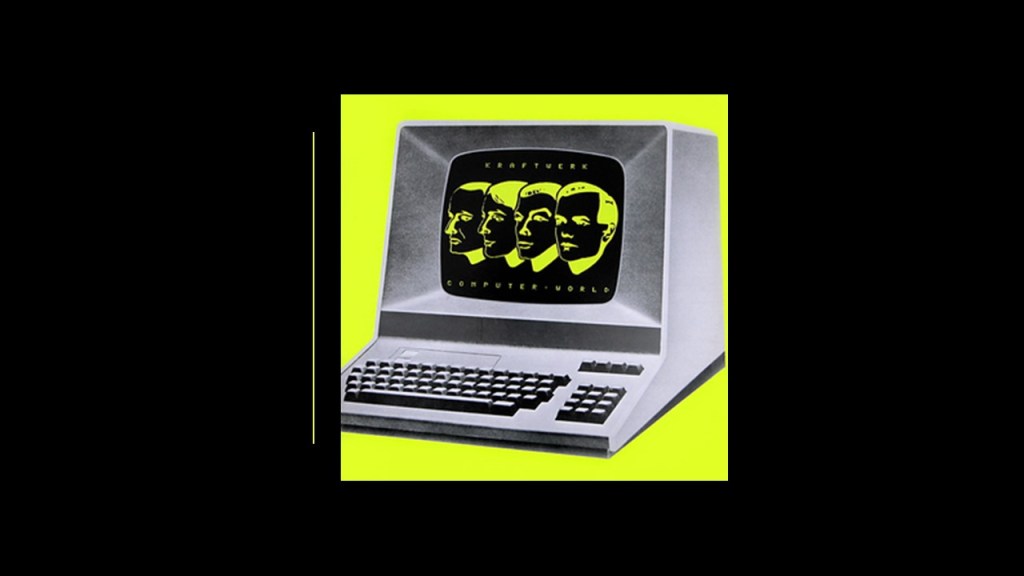
…and Computer World was released in 1981.

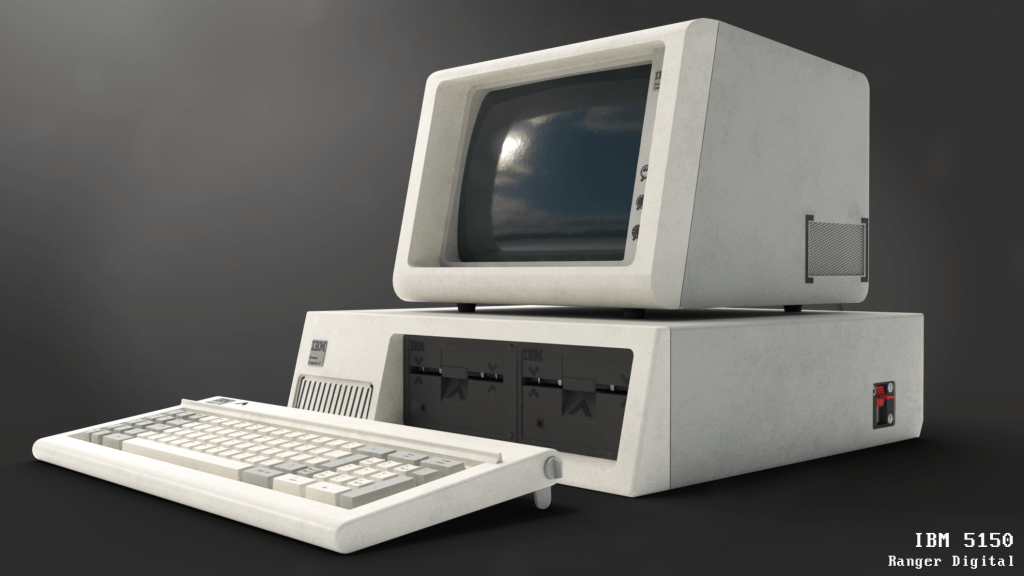
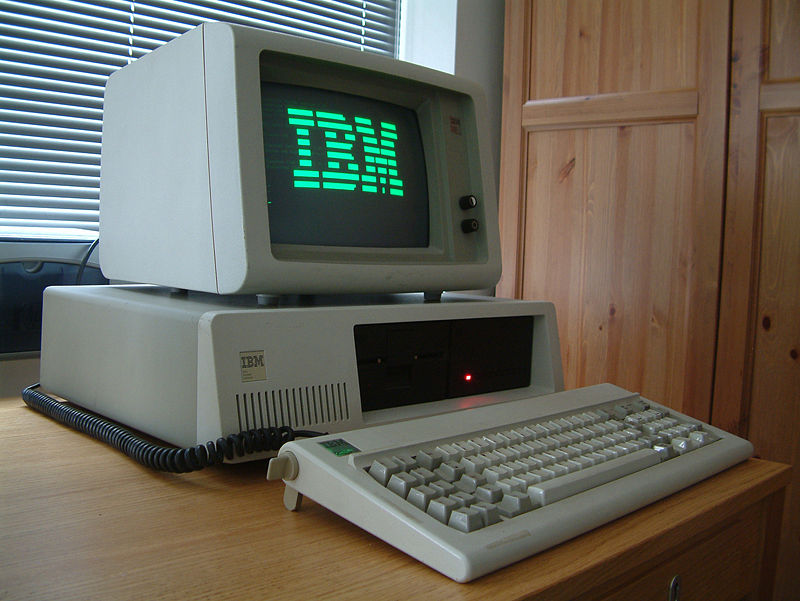
Is this life imitating art, or art imitating life, since 1981 was the same year that IBM released the original 5150 IBM PC in the United States, on August 12th, the first of the IBM PC, which had a substantial influence on the personal computer market.

This image has an empty alt attribute; its file name is f9243-5150-ibm-pc.png

I am going to go back into the history of computers here before I go forward in time.

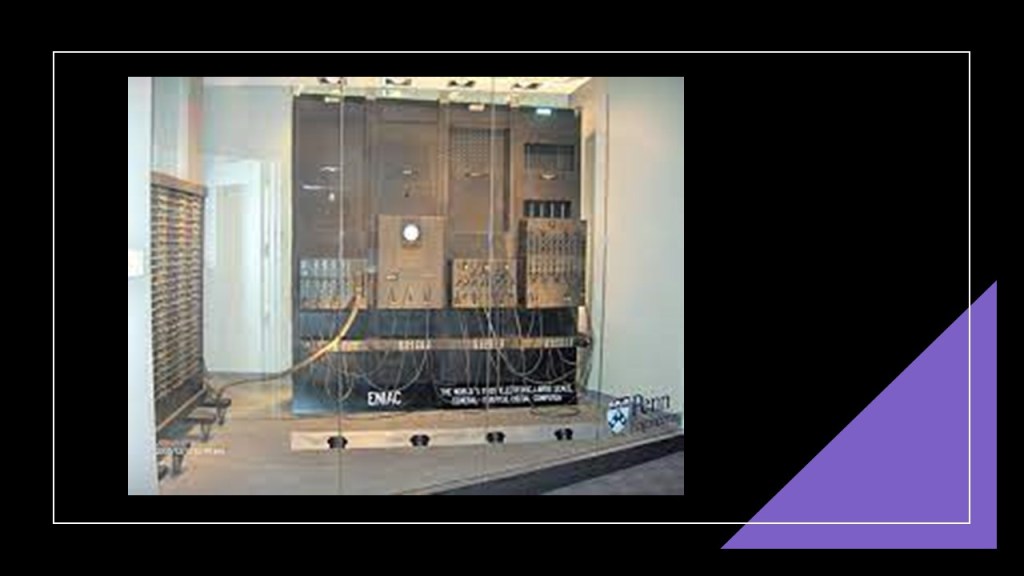
The Electrical Numerical Integrator and Calculator (ENIAC) machine was introduced in 1945 by John W. Mauchly and J. Prosper Eckert at the University of Pennsylvania, and was the world’s first substantial computer.

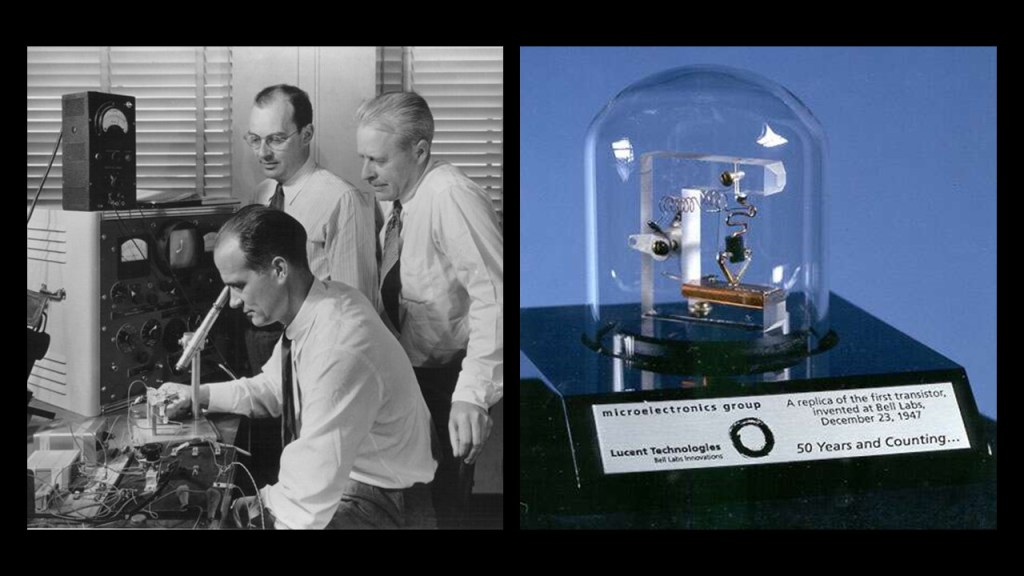
Shortly after the introduction of ENIAC, William Shockley, John Bardeen, and William Brattain of Bell Labs invented the transistor in 1947, which subsequently replaced vacuum tubes in electronic devices…

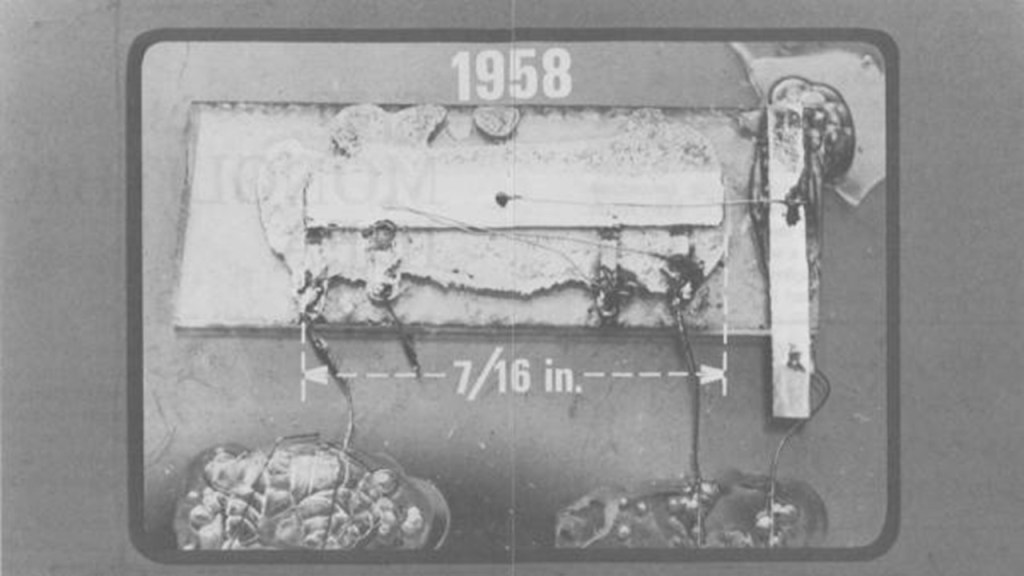
…and in 1958, Jack St. Clair Kilby of Texas Instruments manufactured the first integrated circuit.

These two improvements in the computer field marked the beginning of the computer revolution.

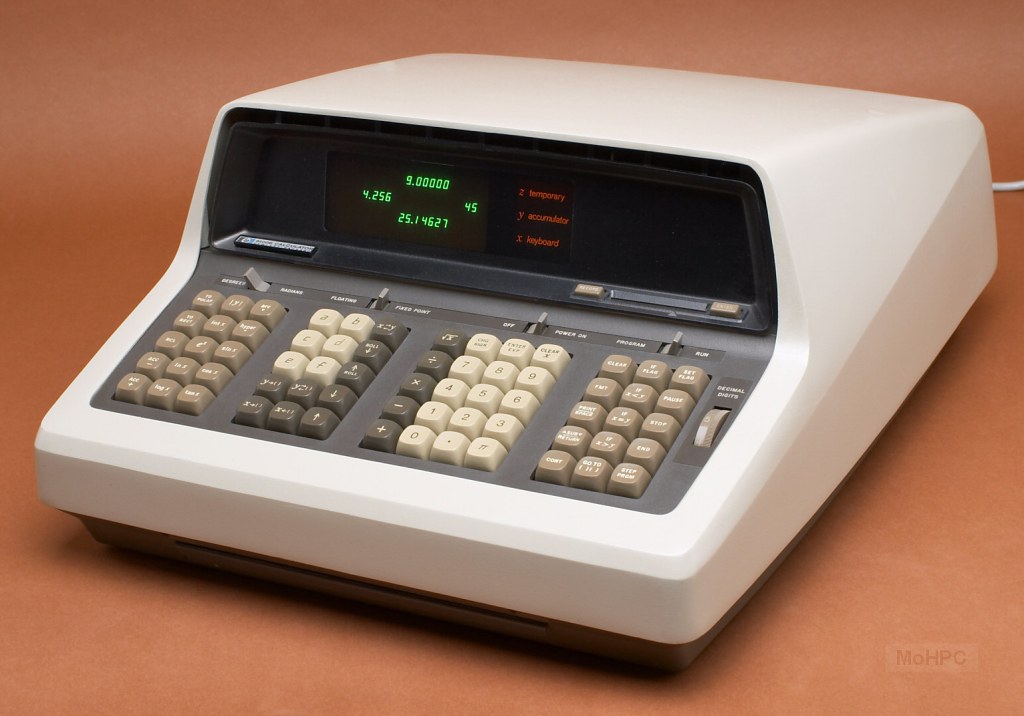
Hewlett-Packard introduced the 9100A in 1968.

It was an early programmable calculator.

Microcomputers came onto the mass market in the 1970s as personal computers.

Microcomputers were small, relatively inexpensive computers with a microprocesser as its central processing unit (CPU).

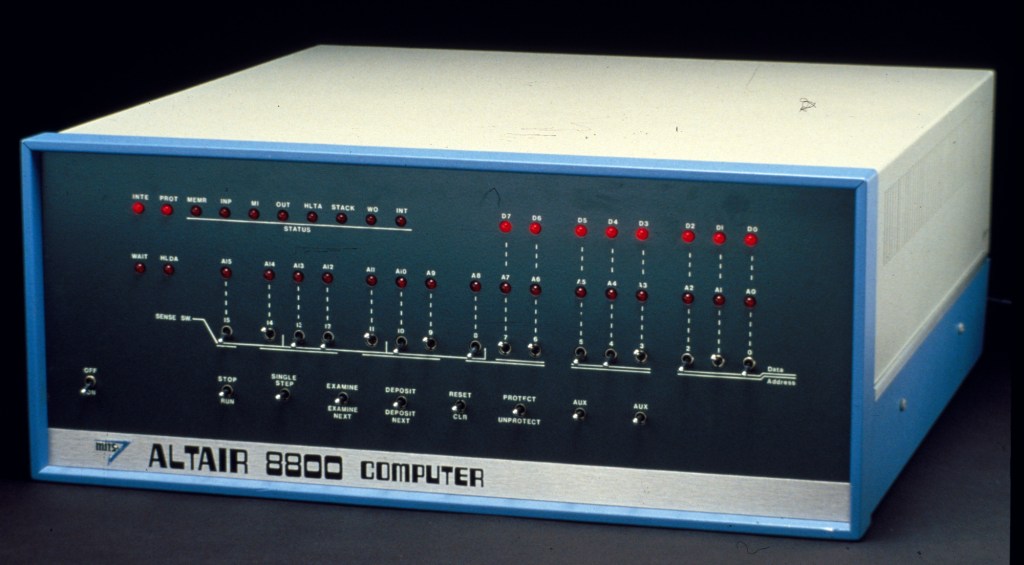
The Altair 8800 microcomputer was released in 1974 by a company called Micro Instrumentation and Telemetry System (MITS)…

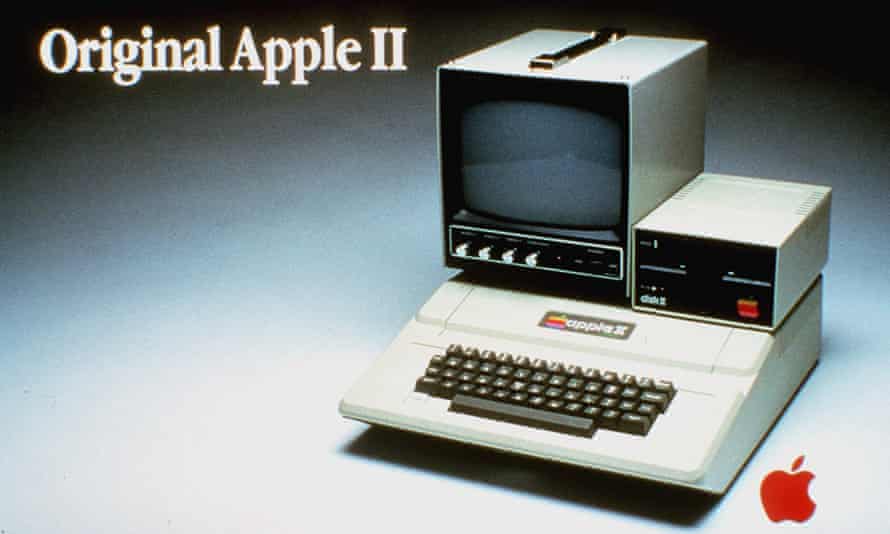
…and the Apple II microcomputer was released in 1977 by Steve Wozniak and Steve Jobs.

This was Apple’s first launch of a computer aimed for household use, and was one of the first, highly successful microprocessors.

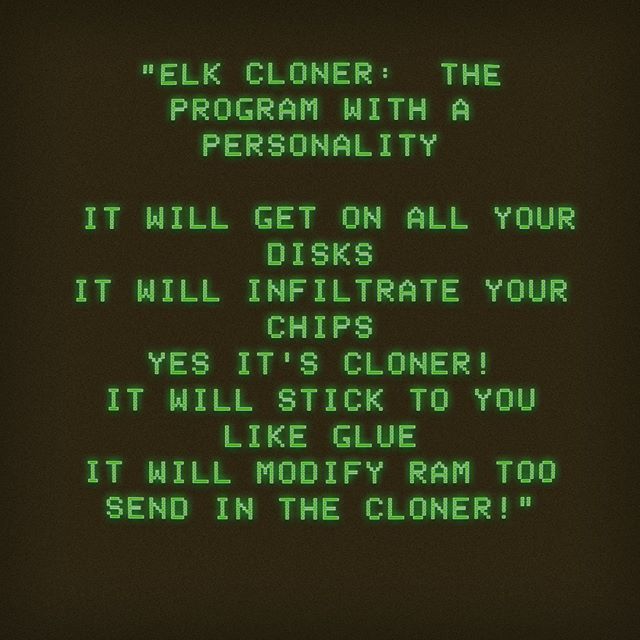
The first computer virus, called the Elk Cloner, which infected Apple II computers via floppy disk, was found on January 30th of 1982. It was written by Rich Skrenta, who was 15-years-old at the time.

This image has an empty alt attribute; its file name is 071d2-elk-cloner-virus.jpg

Skrenta is currently a computer programmer and Silicon Valley entrepreneur.

This image has an empty alt attribute; its file name is 4be92-rich-skrenta.jpg

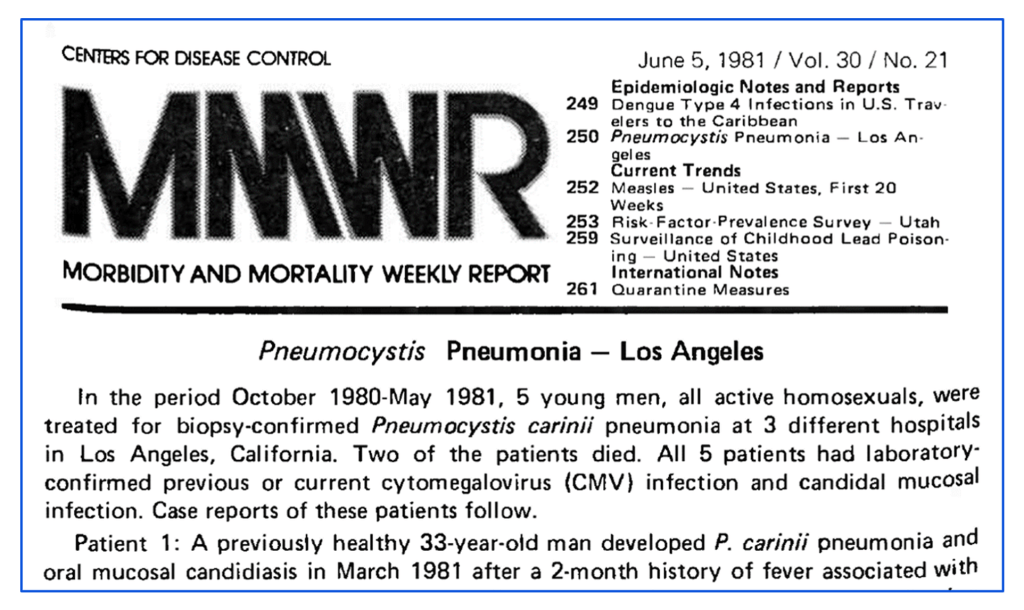
Just for point-of-reference, the AIDS virus came onto the world scene for the first time on June 5th of 1981, at which time the first cases of AIDS were recognized by the CDC just seven-months prior to the first computer virus.

This image has an empty alt attribute; its file name is ad843-first-cases-of-aids.png

January 1st of 1983 marked the beginning of the true internet when ARPANET, or the Advanced Research Projects Agency Network, migrated to TCP/IP, the Internet Protocol Suite.

This image has an empty alt attribute; its file name is 39afb-arpanet-to-internet-1.png

On March 8th of 1983, IBM released the Personal Computer XT, model 5160, similar to the model 5150 except that it had a hard-drive built-in and extra expansion slots.

This image has an empty alt attribute; its file name is 7c427-pc-xt.jpg

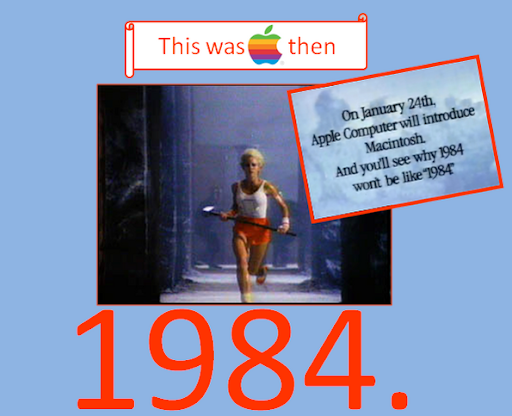
Apple placed the Macintosh personal computer for sale in the United States on January 24th, after introducing it in the “1984” commercial during the Super Bowl 18 on January 22nd.

This image has an empty alt attribute; its file name is c2b6e-1984-commercial.png

Cisco Systems was founded in California on December 10th, an American multinational conglomerate that develops, manufactures, and sells networking hardware, software, telecommunications equipment, and other high-tech services and products.

The internet Domain Name System was created on January 1st, and the first mobile phone network was launched in the UK by Vodaphone in 1985

This image has an empty alt attribute; its file name is c5ebb-dns-vodaphone.jpg

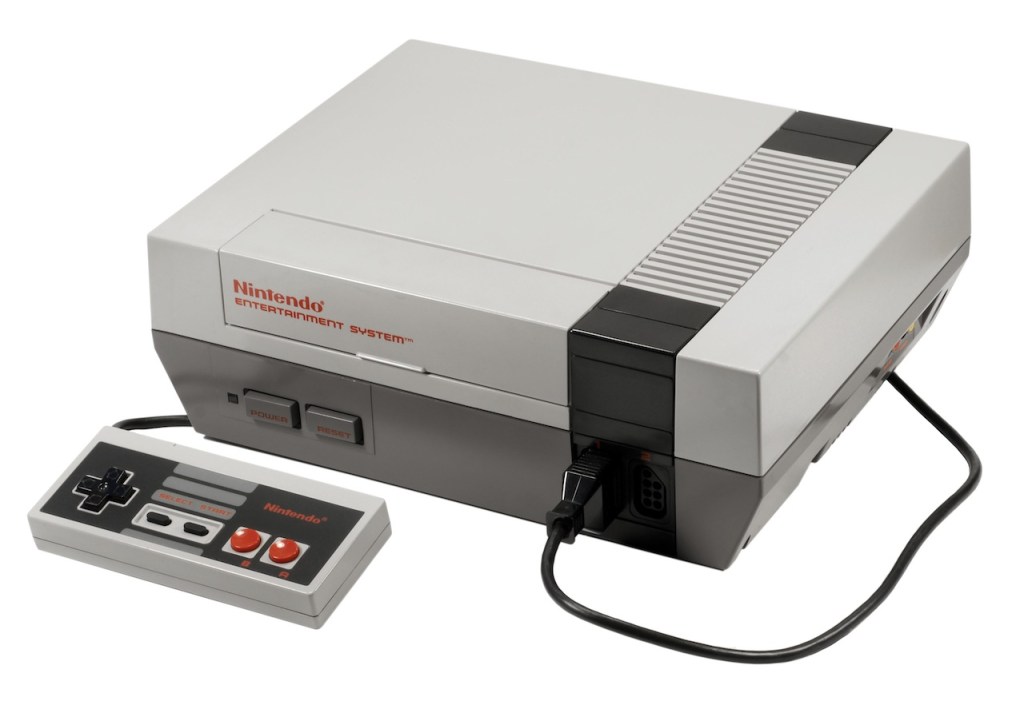
The first Nintendo home video game console in the U. S. is released on October 18th as the Nintendo Entertainment System.

This image has an empty alt attribute; its file name is a3b19-nintendo.jpg

On November 20th, Microsoft Corporation released the first version of the Windows operating software, which was Windows 1.0.

Microsoft was founded by Bill Gates and Paul Allen in April of 1975 in order to develop and sell BASIC Interpreters, which allowed users to enter and run programs in the BASIC language, for the Altair 8800.

This image has an empty alt attribute; its file name is c8ec5-windows-1.0.jpg

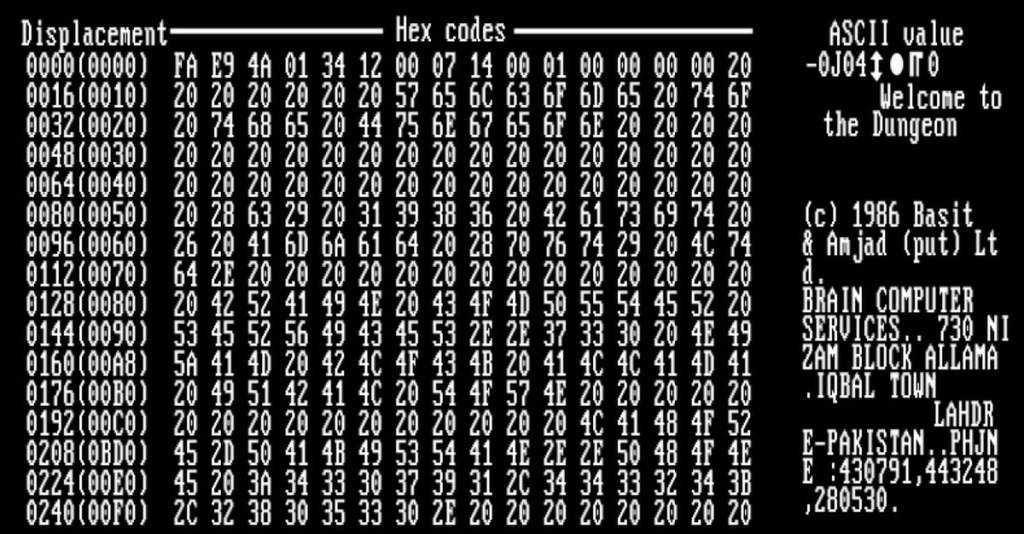
In January of 1986, the first PC virus, called “Brain,” started to quickly spread globally. It was developed by two brothers in Pakistan, allegedly to protect their medical software from illegal copying, and was supposed to only target copyright infringment.

On June 23rd, LISTSERV was released, the first email list management software developed by Eric Thomas.

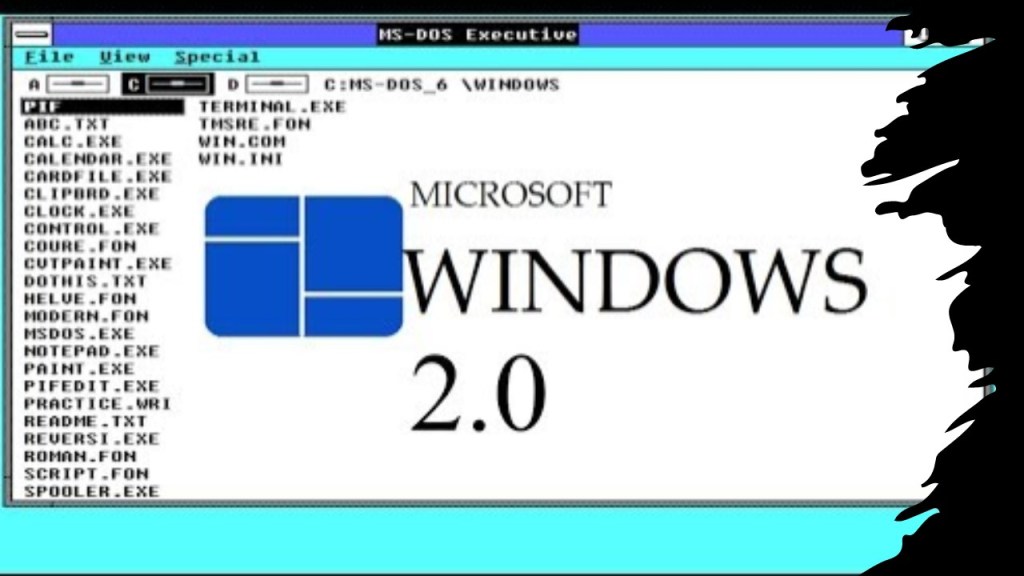
Microsoft released Windows 2.0 on December 9th, of 1987…

…and in 1989, Tim Berners Lee produced the proposal document that would become the blueprint for the World Wide Web on March 13th.

This image has an empty alt attribute; its file name is c229f-sir_tim_berners-lee.jpg

On January 1st of 1990, two internet companies began selling internet service to commercial customers in the United States and the Netherlands.

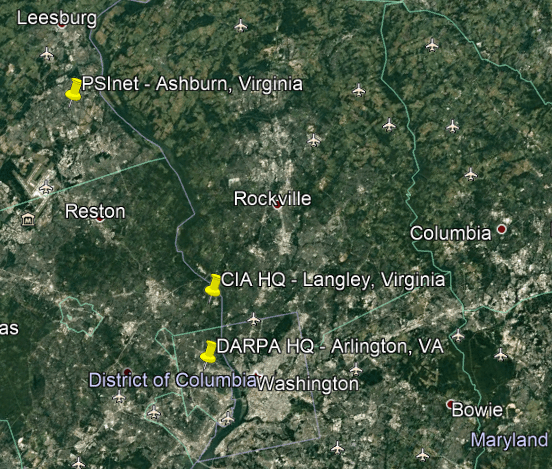
One was PSInet, which was founded on December 5th of 1989.

PSInet was based in Ashburn in northern Virginia.

This image has an empty alt attribute; its file name is psinet.jpg

What else has its base in northern Virginia?

Well, the Central Intelligence Agency (CIA) Headquarters in Langley, Virginia, and the Defense Advanced Research Projects Agency (DARPA) is based in Arlington.

This image has an empty alt attribute; its file name is northern-va-hqs.png

The roots of EUnet, the other internet company that was selling internet connectivity to commercial users, go back to 1982 and the European UNIX Network.

FNET was the French branch of EUnet.

Starting in 1988, EUnet played a decisive role in Europe’s adoption of the internet protocol suite known as Transmission Control Protocol (TCP) and Internet Protocol (IP), of which versions of it were known as the Department of Defense Model because the development of its networking method was funded by the U. S. Department of Defense through DARPA.

Once TCP/IP was in place, EUnet was able to connect with FNET and CERN’s TCP/IP connections, and a connection to the U. S. was also established.

On January 1st of 1990, EUnet started selling internet access to non-academic customers in The Netherlands.

This image has an empty alt attribute; its file name is eunet.jpg

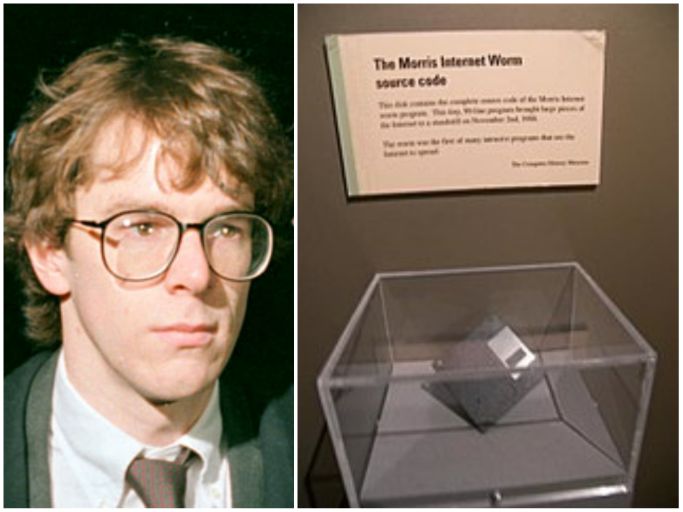
On January 22nd of 1990, Robert Tappan Morris was convicted of releasing the Morris Worm, one of the first computer internet worms.

I found some interesting things when looking up information on Mr. Morris.

He developed his computer worm when he was a graduate student at Cornell University, though he released the worm from MIT.

The Morris Worm was designed to exploit existing vulnerabilities within target systems in order to gain entry, and was programmed to copy itself 14% of the time

This image has an empty alt attribute; its file name is robert-tappan-morris.jpg

He was the first person convicted under the “Computer Fraud and Abuse Act (CFAA) in the United State vs. Morris, and received a sentence of three-years probation, 400-hours of community service, and a fine of $10,500, and additionally the costs of his supervision.

After he completed his the terms of his sentence, he completed his Ph.D at Harvard 1999 and was appointed Assistant Professor at MIT.

In 1995, he co-founded Viaweb with Paul Graham, a company that made software for building online stores, and which, three-years later, sold for $49-million to Yahoo.

This image has an empty alt attribute; its file name is viaweblandingpage-.png

He also co-founded Y Combinator with Paul Graham, Jessica Livingston and Trevor Blackwell in 2005.

Y Combinator is an American seed money start-up accelerator that was used to launch such companies as Stripe, Airbnb, DoorDash, Coinbase, Dropbox, Twitch, and Reddit, to name a few.

Not bad for a convicted criminal!

This image has an empty alt attribute; its file name is y-combinator-logo-vector.png

In South Africa, on February 2nd, South African President F. W. de Clerk announced the unbanning of the African National Congress and promised to release Nelson Mandela, which happened several days later on February 11th, from prison near Cape Town.

This image has an empty alt attribute; its file name is nelson-mandela-release-frm-prison.jpg

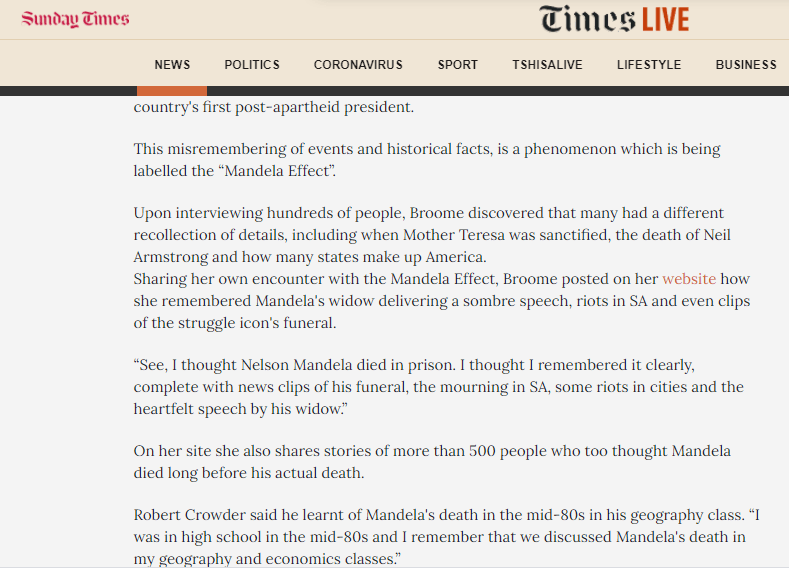
This is a great place to mention what is called “The Mandela Effect.”

The Mandela Effect is typically defined as occurring when a large mass of people believe an event it occurred when it did not, with most sources of information referring to it as a “collective false memory.”

This image has an empty alt attribute; its file name is alternate-memories-the-mandela-effect.jpg

This effect gets its name from many people having memories that Nelson Mandela died when he was in prison in the 1980s, instead of dying in 2013 in our historical narrative, after having been released from prison in 1990 after serving 27 years, and serving as President of South Africa from 1994-99.

This image has an empty alt attribute; its file name is mandela-effect-death-in-prison.png

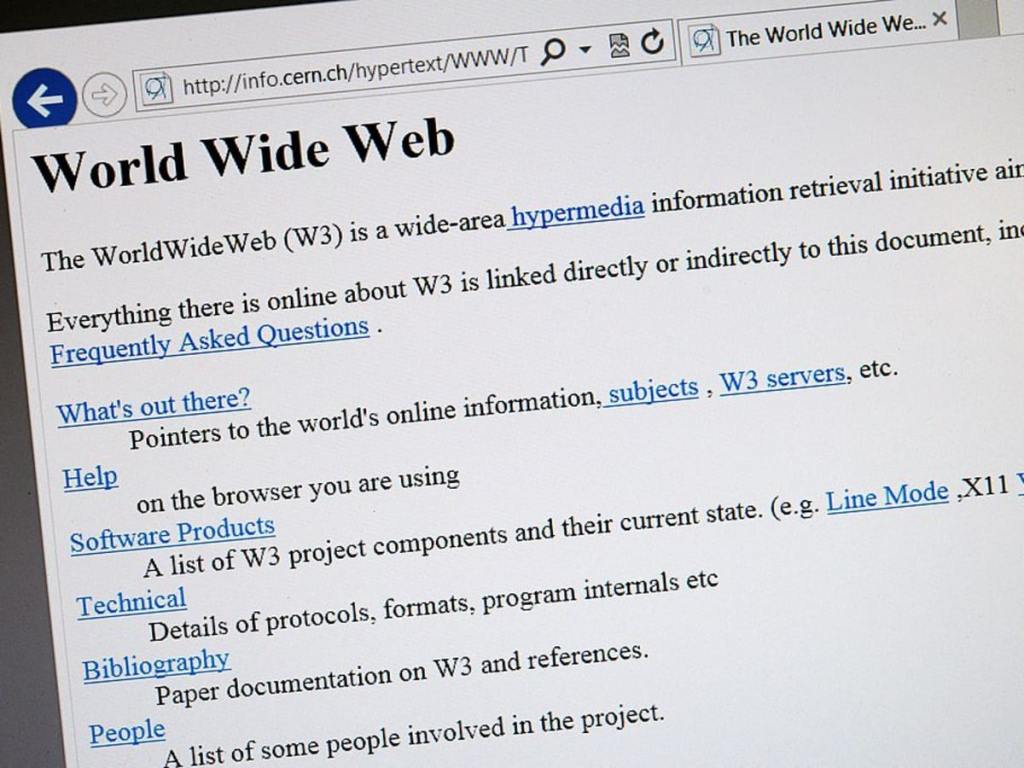
Tim Berners-Lee began his work on the World Wide Web, while working at CERN, on October 1st of 1990, 19-months after his beginning outline of it in 1989, and by November 12th, he and Belgian computer scientist Robert Cailliau, had submitted the first formal proposal to build the first “hypertext project” called the “WorldWideWeb.”

By December of 1990, Berners-Lee had built all the tools necessary for a working web, and the first website.

This image has an empty alt attribute; its file name is www.jpg

The World Wide Web was invented by someone working at CERN?

This image has an empty alt attribute; its file name is cern.jpg

I have to ask before I go on to 1991 is whether or not there is a connection between CERN, the Internet, and the Mandela Effect?

I am curious because EUnet showed up on January 1st of 1990 selling internet access to commercial interests after having been instrumental in connecting with FNET and CERN’s TCP/IP connections, as well as to the United States, once TCP/IP was in place around this time; on February 2nd, Nelson Mandela was freed from prison in South Africa; and by the end of the year, Tim Berners-Lee, who worked at CERN, had built all the tools necessary for a working worldwide web, and the first website.

Were all of these occurrences in the same year just coincidental, or was there either a planned aspect, or residual time-altering effect, resulting from this?

I do not know the answer to this.

I am just asking the question because this is a very interesting finding for me.

I have heard in the past (and I do not remember when, or where) that CERN had something to do with the Mandela Effect.

This image has an empty alt attribute; its file name is cern-mandela-www.jpg

On August 6th of 1991, Tim Berners-Lee announced the World Wide Web project and software on the alt.hypertext news group…

This image has an empty alt attribute; its file name is www-1.jpg

…and the first website “info.cern.ch” was created.

This image has an empty alt attribute; its file name is www-2.jpg

The Test Engineer for the SEMA group used a PC to send the world’s first text message via the Vodaphone network on December 3rd of 1992 to the phone of a colleague.

This image has an empty alt attribute; its file name is first-text-message.jpg

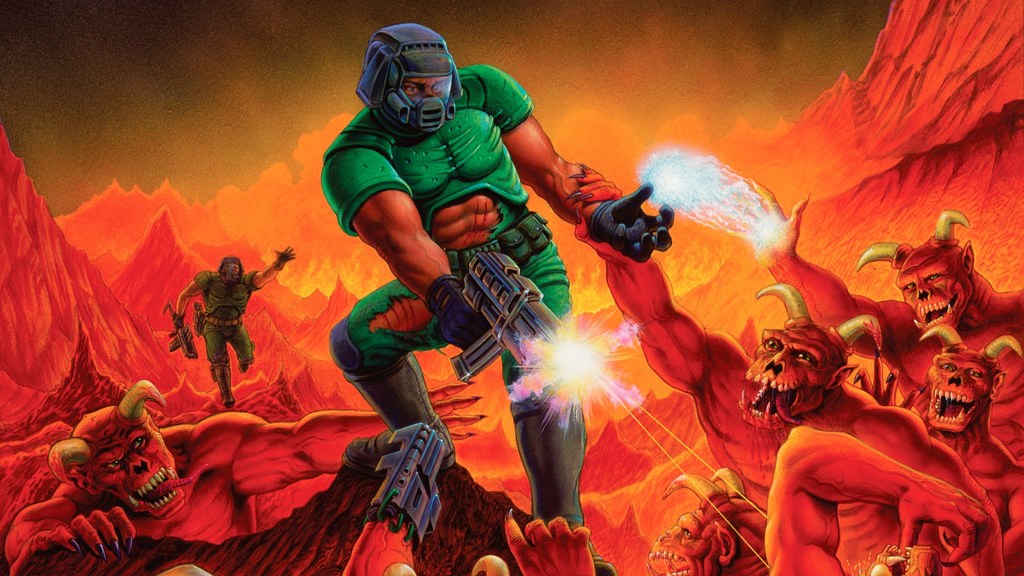
On December 10th of 1993, id Software’s Doom was released, becoming a landmark title in first-person shooter video games for MS-DOS.

This image has an empty alt attribute; its file name is doom-1.jpg

Players assumed the role of a space marine, named Doomguy, fighting his way through hordes of invading demons from hell.

This image has an empty alt attribute; its file name is doom-2.jpg

On March 14th of 1994, Apple released Power Macintosh, ten-years after the release of the first Macintosh computer.

It was the first Macintosh to use the new PowerPC Microprocessors, a Reduced Instruction Set Computer (RISC) Instruction Set Architecture (ISA), created by the 1991 Apple – IBM – Motorola Alliance.

This image has an empty alt attribute; its file name is power-macintosh-risc.jpg

On the same day of March 14th of 1994, the Linux Kernel version 1.0.0 was released after two-years of development by Finnish software engineer Linus Torvalds.

A kernel is a computer program that has complete control over everything in the system, and is in the core of the operating system.

The Linux Kernel software is a Free and Open Source Software (FOSS) that anyone is freely-licensed to use, copy, study, and change the software in any way.

It is deployed on a wide-variety of computing systems, such as embedded devices, mobile devices, personal computers, servers, mainframes, and supercomputers.

This image has an empty alt attribute; its file name is linux-kernel-version-1-0-0.png

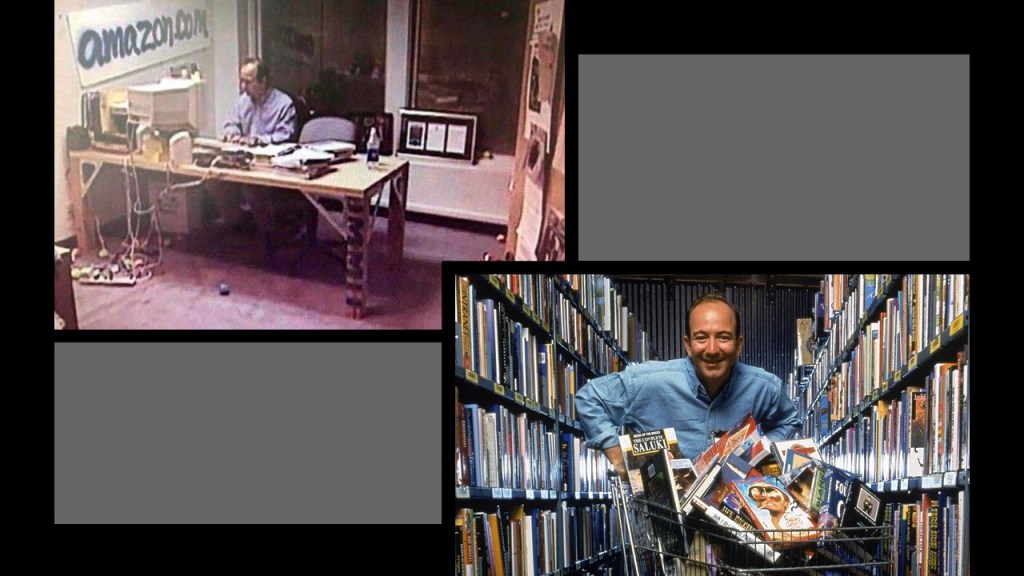
Jeff Bezos founded Amazon on July 5th, which started out as an on-line bookstore, when he was on a cross-country road trip from New York City to Seattle.

This image has an empty alt attribute; its file name is amazon.jpg

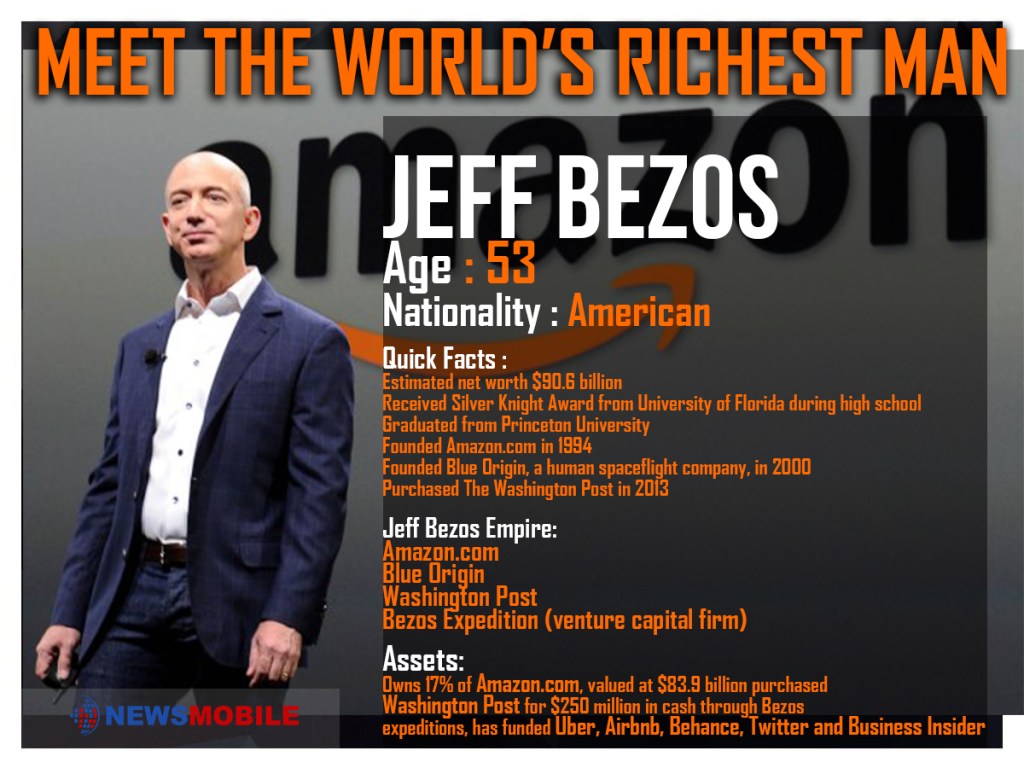
Bezos was named the wealthiest man in modern history when his net-worth increased to $150-billion in 2018,and he was the world’s first centribillionaire on the “Forbes Wealth Index,” in which he has a net-worth of 1-billion units in any given currency.

This image has an empty alt attribute; its file name is worlds-richest-man.jpg

The release of the IBM Simon Smartphone took place on August 16th of 1994, and was the first commercially available smartphone and distributed by BellSouth Cellular Corporation.

It was a Personal Digital Assistant (PDA), or hand-held PC that functioned as a personal information manager, and had a battery that lasted only an hour.

This image has an empty alt attribute; its file name is ibm_simon_personal_communicator.png

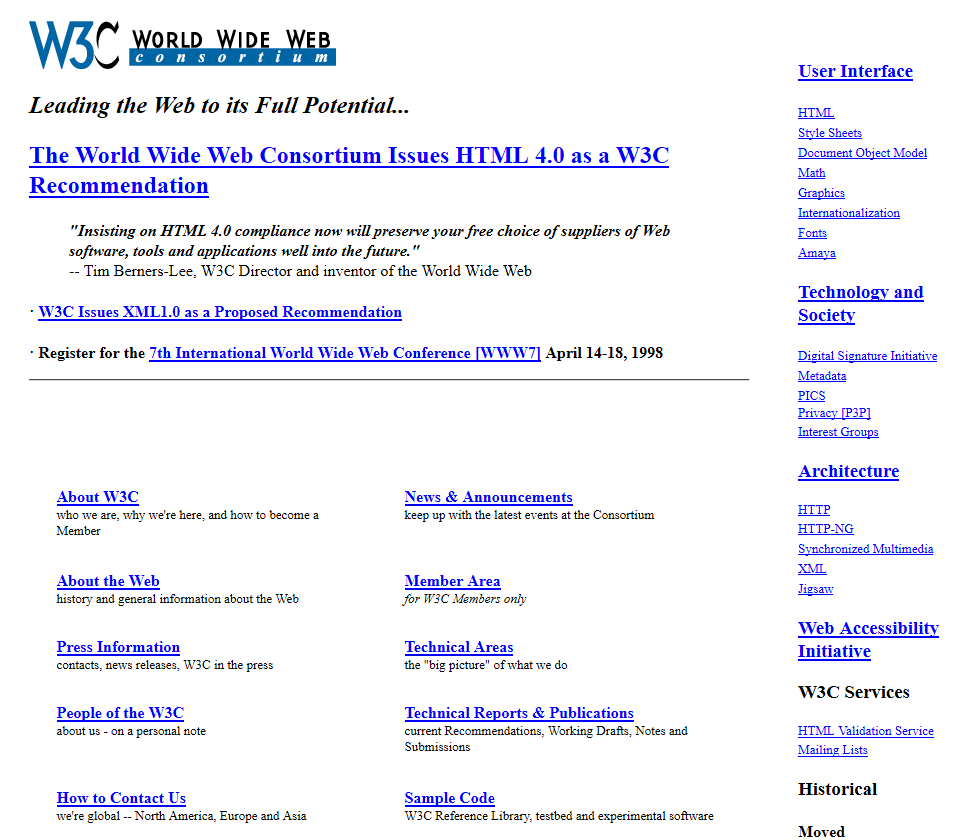
World Wide Web Consortium founded and led by Tim Berners Lee became the main international standards organization for the WWW on October 1st.

It was founded at the Massachusetts Institute of Technology (MIT) Lab, with funding from the European Commission and DARPA.

The consortium is comprised of member organizations that maintain full-time staff to work together in the development of World Wide Web standards.

This image has an empty alt attribute; its file name is w3c-org.png

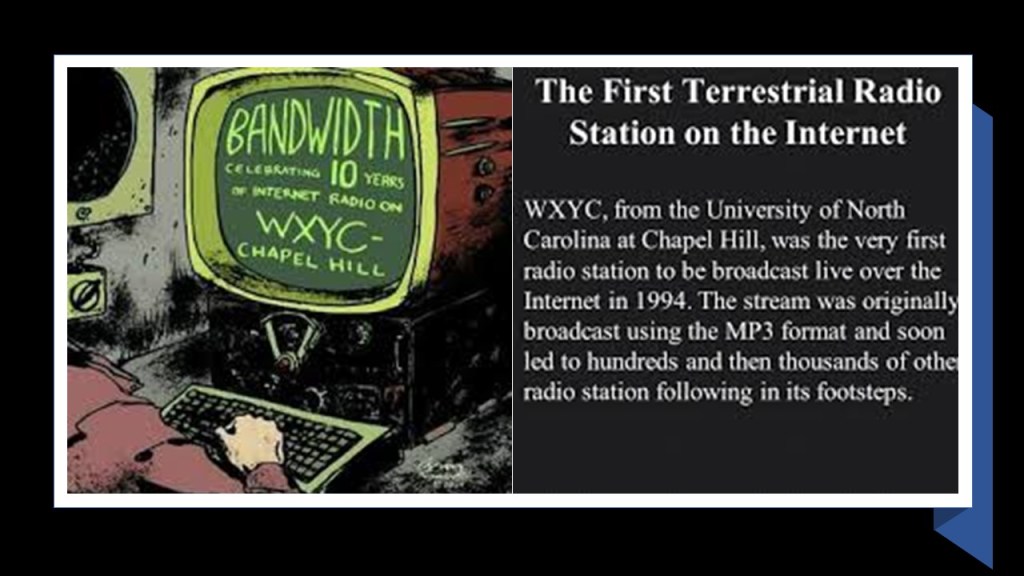
Also on November 7th, the WXYC student radio station at the University of North Carolina in Chapel Hill provided the world’s first internet radio broadcast.

This image has an empty alt attribute; its file name is wxyc.jpg

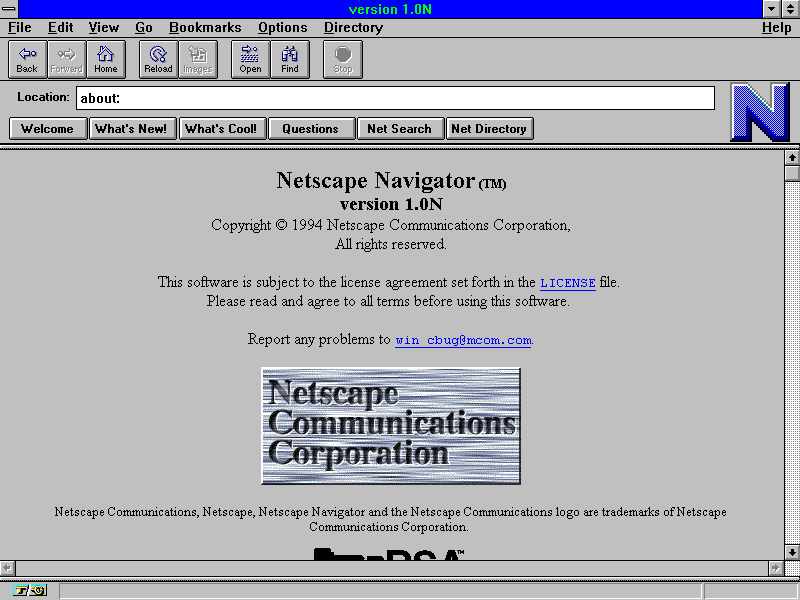
The initial release of the Netscape Navigator 1.0 web-browser by Netscape Communications Corporation was on December 15th.

It was the world’s first commercially-developed web browser.

This image has an empty alt attribute; its file name is 1994-netscape-navigator.png

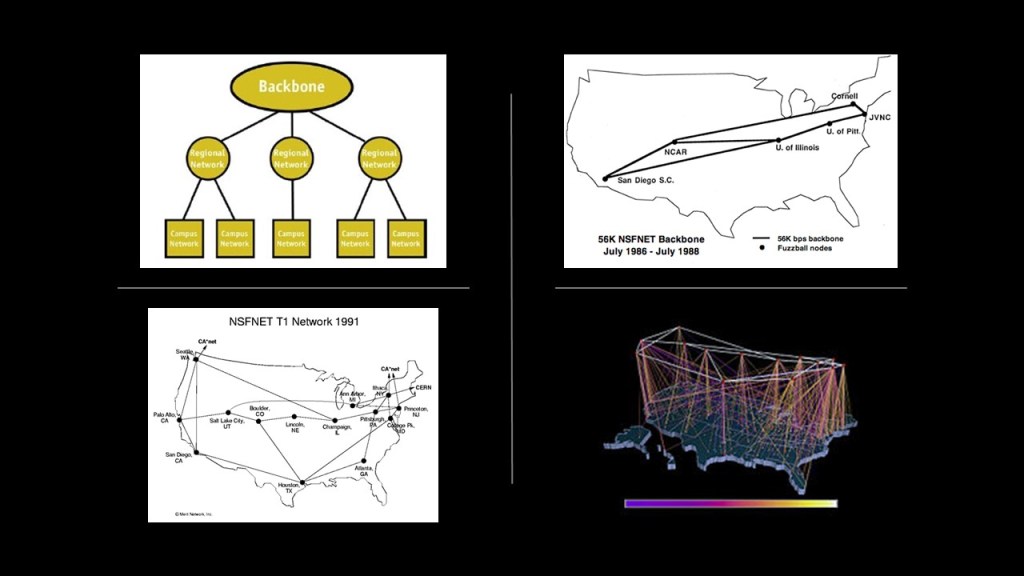
Established in 1985, the funding for the National Science Foundation Network, or NSFNET, was stopped by the U. S. Government on April 30th, making the internet totally privatized.

This image has an empty alt attribute; its file name is nsfnet-backbone.jpg

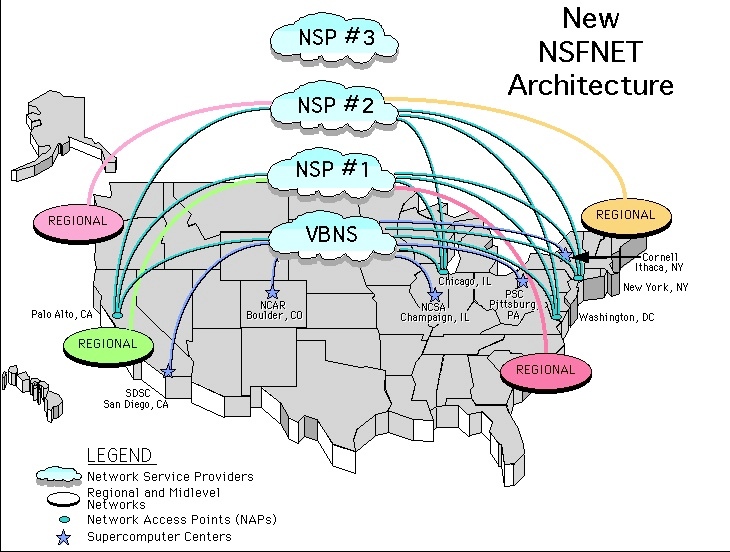
The NSFNET backbone service was no longer central, but still remained central to the infrastructure of the expanding internet.

This image has an empty alt attribute; its file name is nsfnet-backbone-4-new.jpg

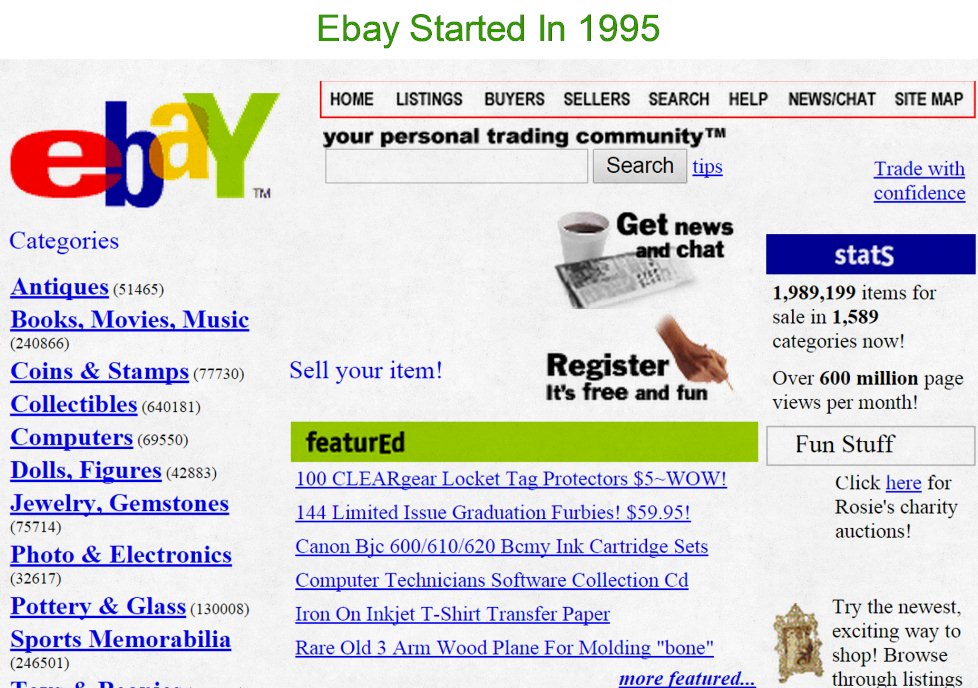
On September 3rd, eBay, the multinational e-commerce corporation, was founded as AuctionWeb in California by French-born, Iranian-American computer programmer Pierre Omidyar, and it soon became the first online auction site allowing person-to-person transactions…

This image has an empty alt attribute; its file name is ebay-started-1995.jpg

…and on September 9th, SONY entered the video game market with the release of Playstation.

This image has an empty alt attribute; its file name is playstation.jpg

Interestingly, Sony, the name of a multinational conglomerate corporation headquartered in Tokyo, Japan…

This image has an empty alt attribute; its file name is sony-1.jpg

…was also the acronym for Standard Oil of New York, founded by John D. Rockefeller in 1870.

This image has an empty alt attribute; its file name is sony-2-1.png

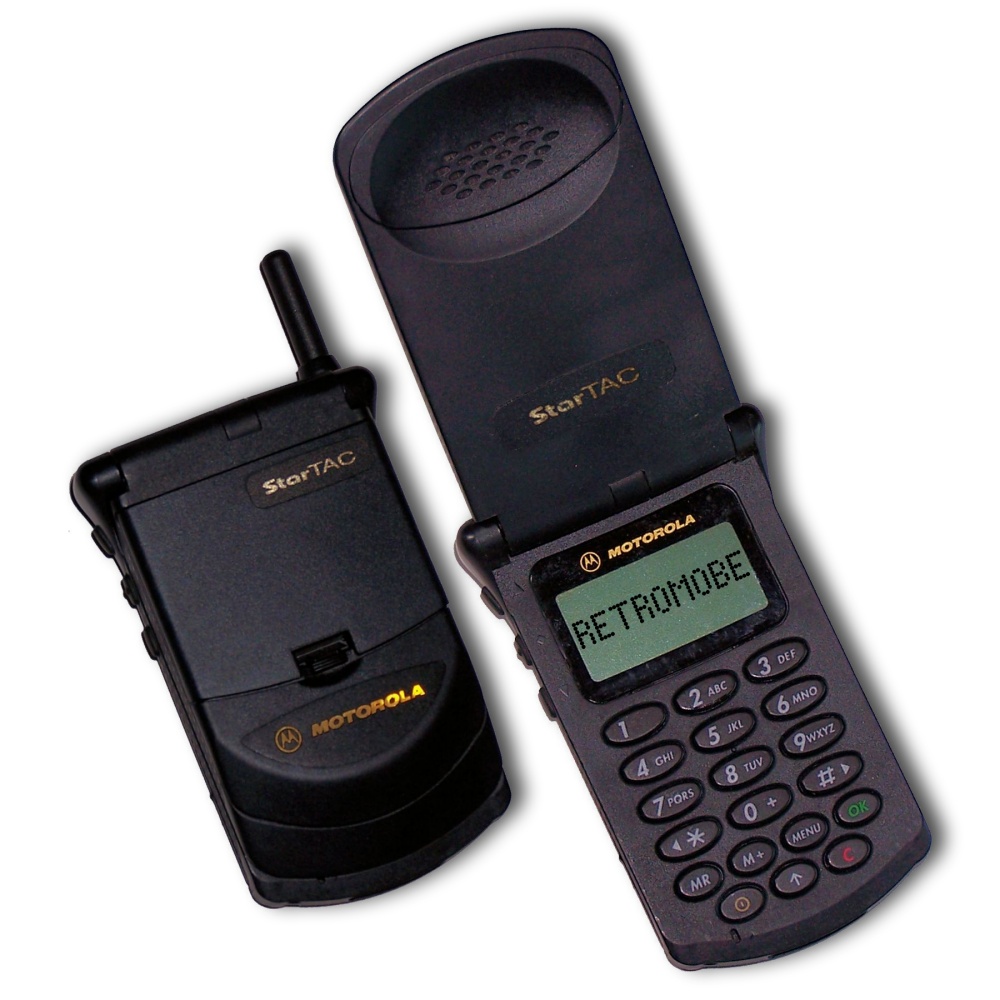
On January 3rd of 1996, Motorola introduced the Motorola StarTAC Wearable Cellular phone, the first clam-shell mobile phone.

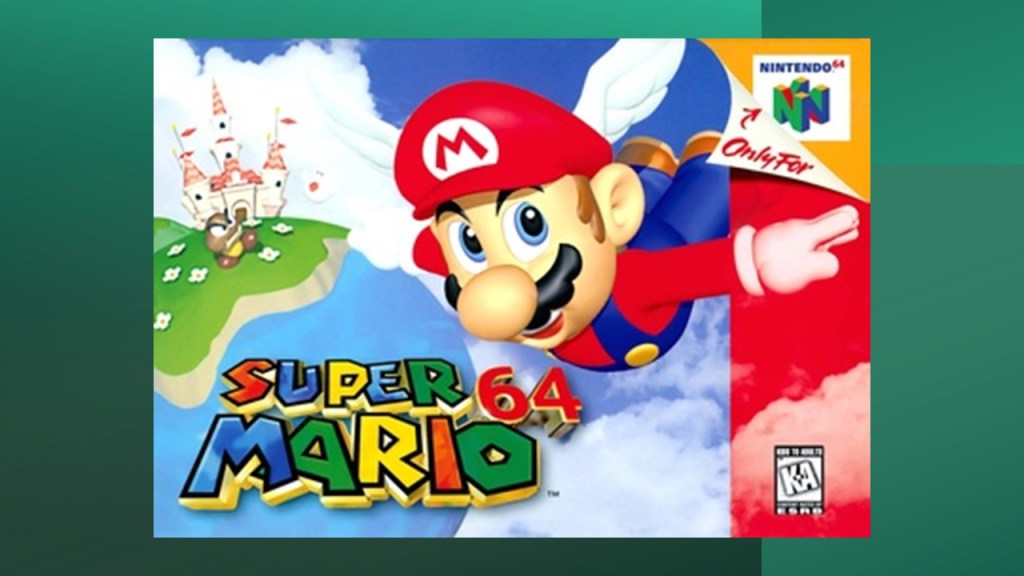
The Nintendo 64 game console was released in 1996…

…and its Super Mario 64 was the first Super Mario game to feature 3D-gameplay.

The Tamagotchi was also created in Japan in 1996.

A hand-held digital pet/video game, it was one of the biggest fads of the late 1990s and early 2000s, and is still available for purchase today.

The premise of the video game is that it is up to the player to raise the egg of the Tamagotchi, a small alien species. into an adult creature.

The Pokemon media franchise was also created in Japan in 1996.

It was managed by the Pokemon Company, which was founded by the Japanese companies of Nintendo, Game Freak, and Creatures, and came to Nintendo’s Game Boy system in 1996.

It is centered on fictional creatures called Pokemon, and their human trainers catch them and train them to battle other Pokemon for sport, and there are currently 901 Pokemon species.

Google was founded on September 4th of 1998 by Stanford University Ph.D students Larry Page and Sergey Brin, with a specialization in internet-related services and products.

The personal fortune of Bill Gates made him the wealthiest man in the world in 1999 due to the increased value of Microsoft stock .

The Japanese Company Sega introduced the Dreamcast game console in 1999.

It was the first in the sixth-generation of game consoles, released shortly before Sony’s Play Station 2, Nintendo’s GameCube, and Microsoft’s XBox, though it had a short life-span of only three-years in the video game world.

It is interesting to note that in April of 2000, Microsoft was ruled to have violated anti-trust laws in the case of United States v. Microsoft Corp.

Then, on September 6th of 2001, the U. S. Department of Justice announced that it would go for a lesser antitrust penalty and not break-up Microsoft.

Hmmmm. That was just a few days before 9-11, and all hell broke loose!

Was that jusa coincidence…or not….

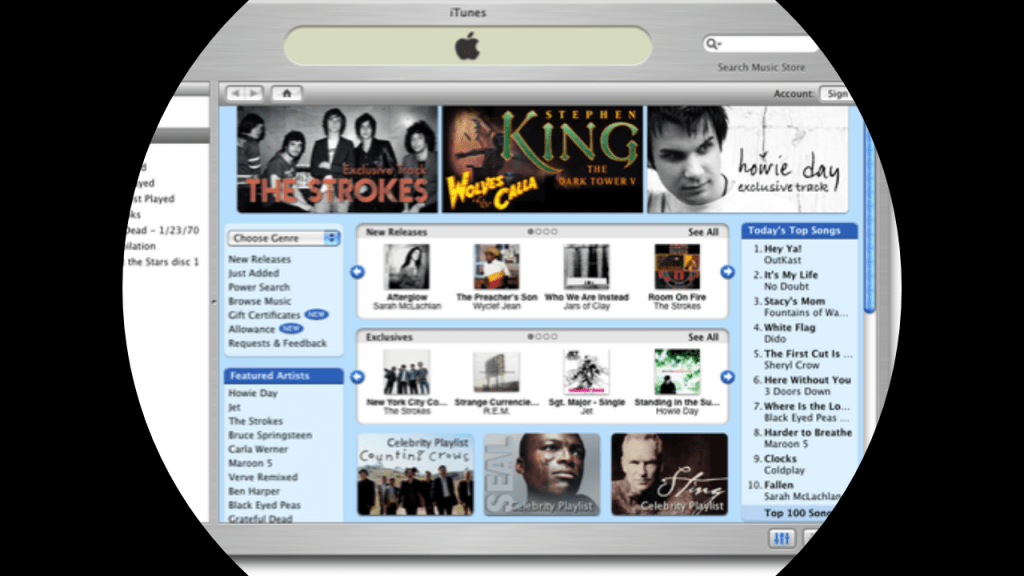
Apple iTunes launched on January 1st of 2001…

…and launched the iPod in October of the same year.

We are told that a group of Harvard college students including Mark Zuckerberg established Facebook on February 4th of 2004.

Initially for Harvard students, it first expanded to other North American university students, and since 2006, to anyone over 13.

As of October 28th of 2021, Meta became the parent company of Facebook, Instagram, and WhatsApp, among others.

Meta Platforms, Inc, is one of the world’s most valuable companies and, along with Microsoft, Apple, Google, and Amazon, is considered one of the “Big Tech” companies.

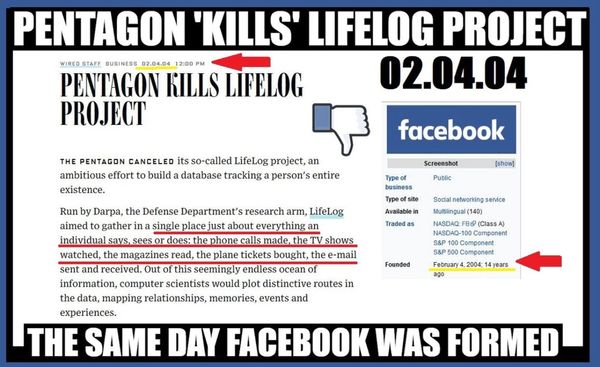
It is interesting to note that Lifelog, a project of the Defense Advanced Research Projects Agency (DARPA), was cancelled on the same day of February 4th of 2004 that Facebook was founded.

The Lifelog project was basically designed to track everything a person does, and the given reason for its cancellation was over privacy concerns.

Another coincidence?

YouTube, an on-line video-sharing and social media platform, was launched in February of 2005 by Steve Chen, Chad Hurley, and Jawed Karim. It has been owned by Google since October of 2006.

The first YouTube video, “Me at the Zoo,” was uploaded in April of 2005.

I could go on and on with the history part, but I am sure you already get the idea from what I have shared thus far.

There are a couple of more things I would like bring forward for your consideration.

One is quantum computing, which utilizes the properties of quantum states. While the development of quantum computers started in 1980, the world’s first company to actually sell computers that exploit quantum effects in their operation was D-Wave Systems starting in 1999.

One of their earliest customers Google/NASA.

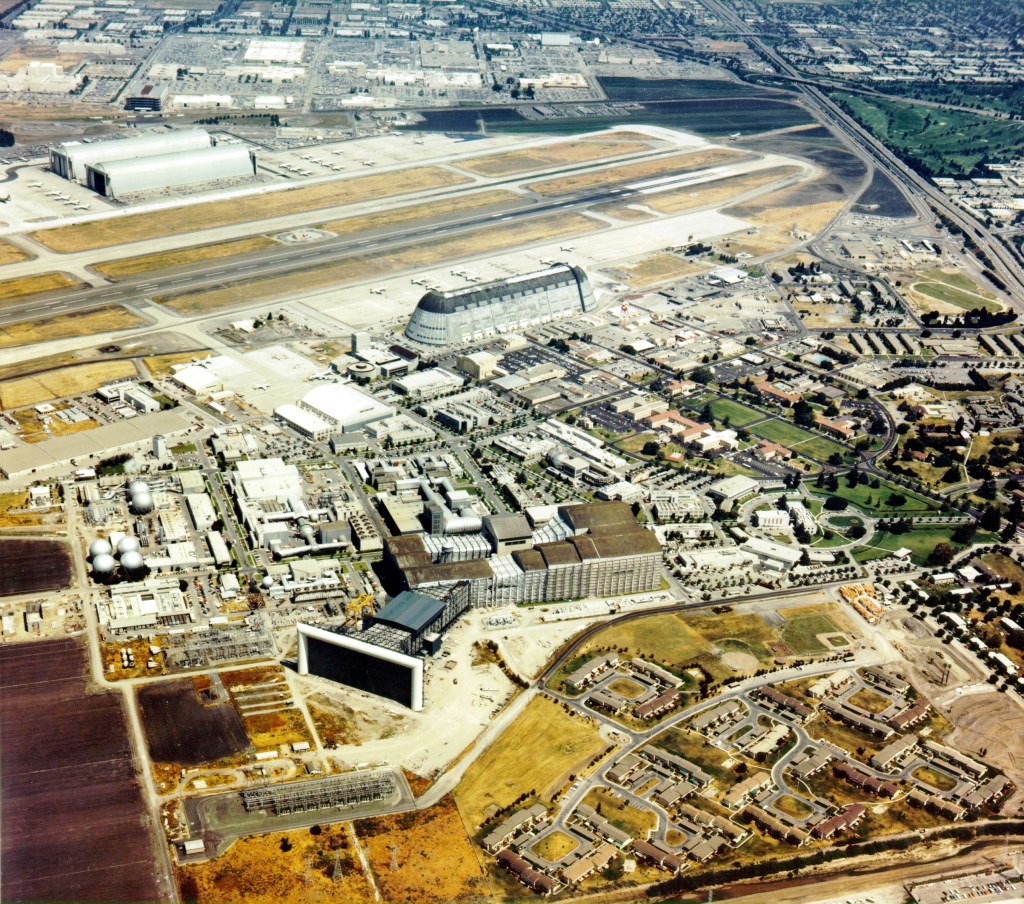
In 2015, the D-Wave 2X Quantum Computer was installed at the Quantum Artificial Intelligence Lab at the NASA Ames Research Center at Moffett Federal Airfield in California’s Silicon Valley…

…and Google AI was announced in 2017 as a division of Google dedicated to artificial intelligence.

Artificial Intelligence is defined as intelligence demonstrated by machines as opposed to the natural intelligence of living beings.

And then there’s Neuralink.

Neuralink is a neurotechnology company that develops implantable brain-machine interfaces (BMIs) that was founded in July of 2016 by Elon Musk and a group of what are described as group of experts in neuroscience, biochemistry and robotics.

Neuralink announced in April of 2017 that in the short-term the plan was to treat serious brain diseases, but in the long-term, it’s goal was “human enhancement,” which is another term for “transhumanism.”

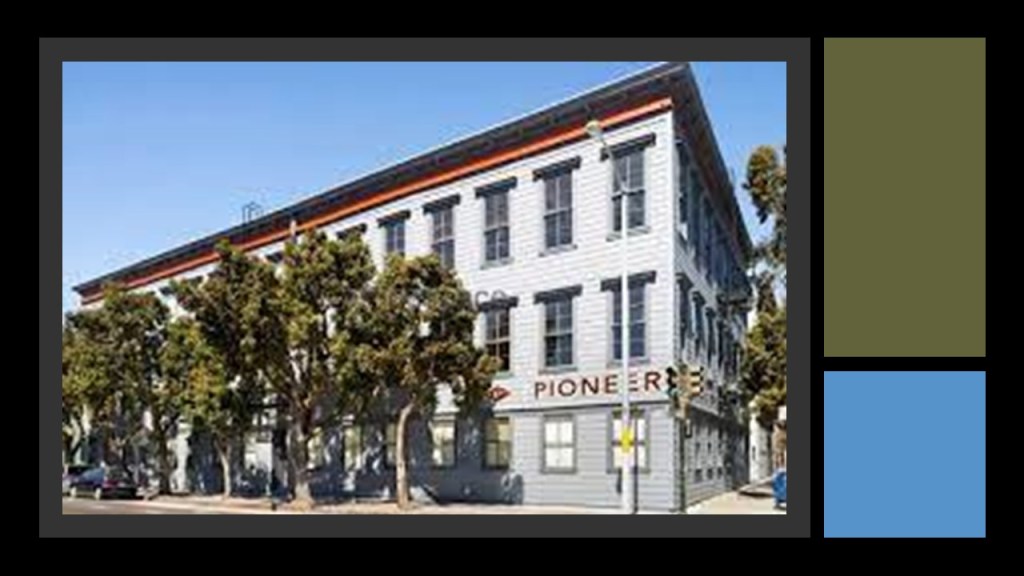
The offices of Neuralink and the artificial intelligence research laboratory OpenAI are co-located at the PioneerBuilding in San Francisco.

Why have the Big Tech companies gone out of their way to give us so many opportunities to live in a virtual, cartoon-like world and take us away from connecting to real-life and the real world?

Why is a tech guy involved in this stuff to begin with?

I think what we are seeing is an existential threat to Humanity as we know it that is the result of an outcome-based, long-term plan driving everything that has been happening in our lives to this day.

I am not trying to scare you if you don’t know these things already.

I want to make you aware of a real threat to all of us that has been in the makings for years without our knowledge or consent.

And to say that while it certainly appears that the personal computer and internet were developed with them being control mechanisms in mind, their development has been the single biggest factor in Humanity’s Awakening and connecting us to each other all over the world. Long story short, the Controllers lost control of the narrative!

Lastly, the owners of the UnGuru Private Membership Association have worked incredibly hard for a number years to make this new platform a viable reality with the purpose of things like educating and empowering people with life-skills and information to take control of their lives in a vetted, safe, and private space. UnGuru is absolutely not a “gotcha” or a gimmick. It has been designed to be a “low-dose and high-vibe” platform where we can help and support one another in today’s world.

Please check out unguruyourlife.com for more information.

It may not be for you, but it is there as a resource if you are interested in what UnGuru has to offer.

Evidence for Plane vs. Planet and Other Findings of Interest

I am going to share the evidence that I have found in my research ways of the ways that our perception of plane vs. planet has been manipulated, and other findings of interest, in this post.

One viewer suggested I do this for a “Short & Sweet,” and another wanted to know my views specifically about this subject.

I have already done most of the research that follows, and does not take me long to put together when that is the case, so I can get it out more quickly compared to brand new research, which takes a lot more time to produce.

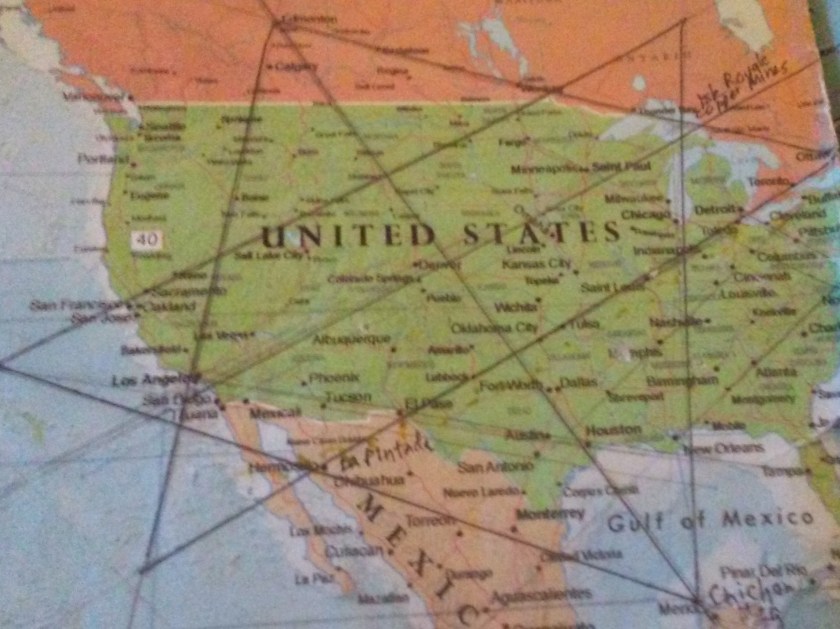
A lot of what I have discovered about this subject was primarily in my research of cities and places in long-distance alignments, based on and emanating from my finding of the North American Star Tetrahedron in 2016, which is where my original research on this subject began almost six years ago.

My own journey into researching the whole of this started with the data points I have on spreadsheets in the form of cities and places in alignment with each other, and for which I have come to believe Earth’s original ancient civilization was laid out according to Sacred Geometry, also aligning Heaven and Earth.

It is helpful to define some terms used to described how the Earth has been measured and mapped in the present-day, and in the past.

The study of geodesy is defined as the science of accurately measuring and understanding the Earth’s shape, orientation in space, and gravitational field.

A  geodetic system is a coordinate system, and a set of reference points, used for locating places on the Earth.

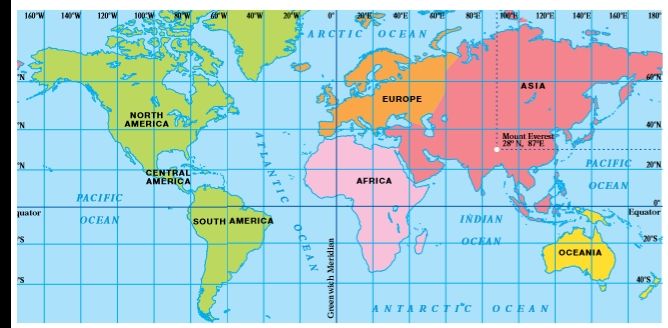
A geographic coordinate system enables every location on Earth to be specified by a set of numbers, letters and symbols.

The coordinates are such that one of the numbers represents a vertical position, which would derive from the North-South lines of latitude, and the horizontal position, from the East-West lines of longitude.

Longitude fixes the location of a place on Earth east or west of a North-South zero-line of longitude called the Prime Meridian, given as an angular measurement that ranges from 0-degrees at the Prime Meridian to +180-degrees westward and -180-degrees eastward.

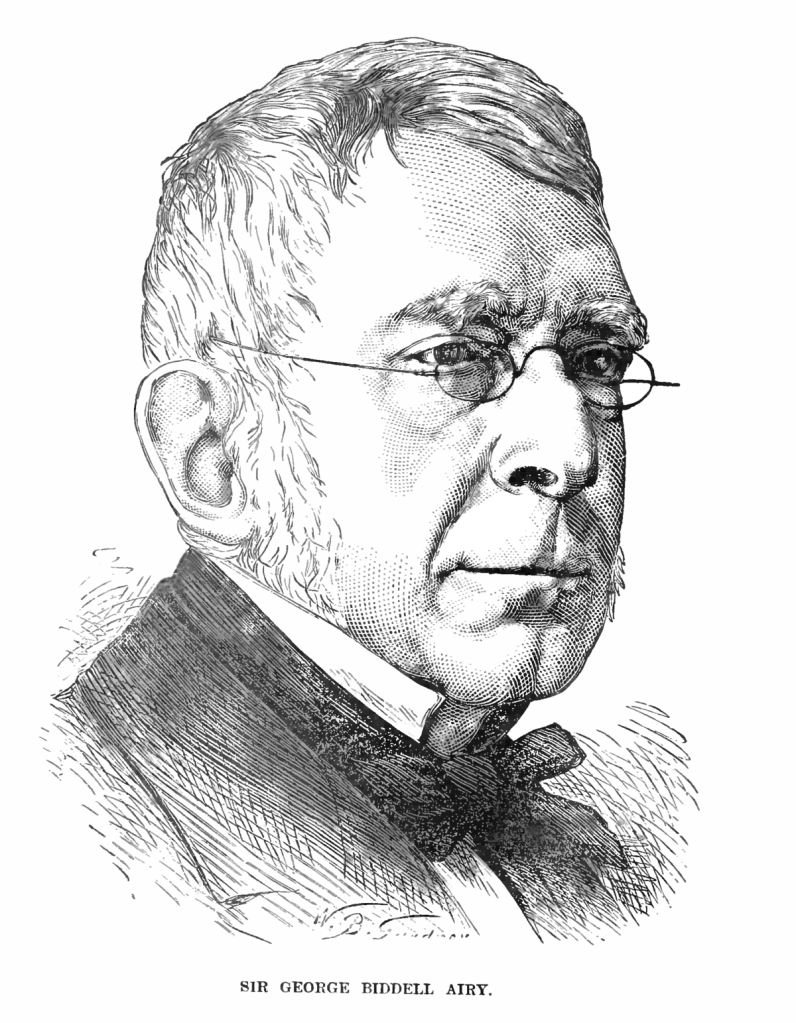
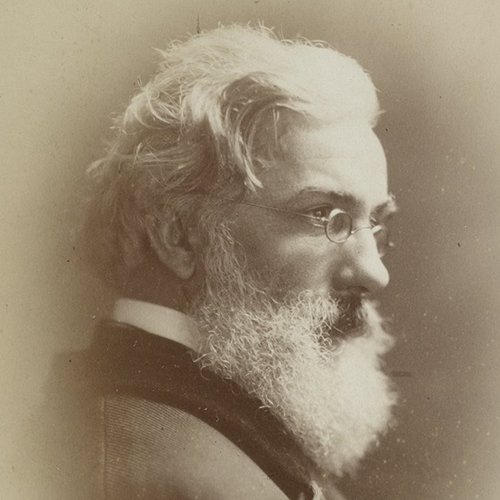
Sir George Biddell Airy, an English mathematician and astronomer, was the seventh Astronomer Royal from 1835 to 1881.

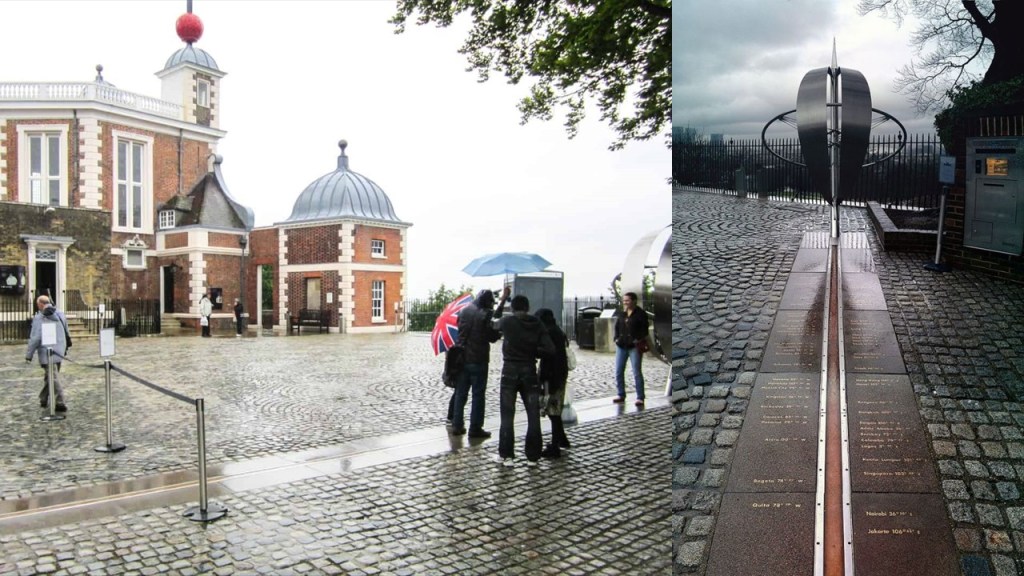
He established the new prime meridian of the Earth in 1851, a geographical reference line, at the Royal Observatory of Greenwich in London, and by 1884, over two-thirds of all ships and tonnage used it as the reference meridian on their charts and maps.

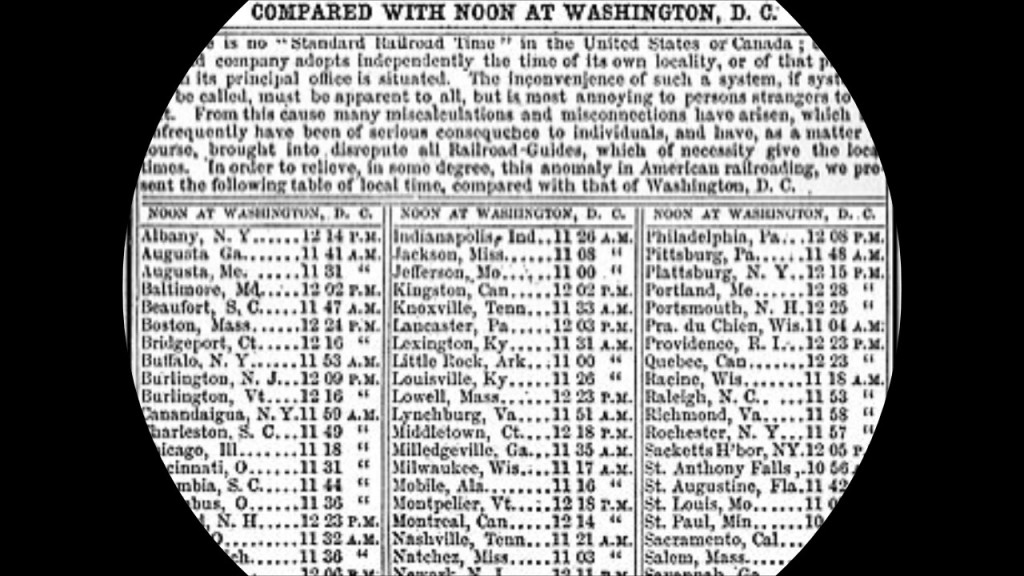
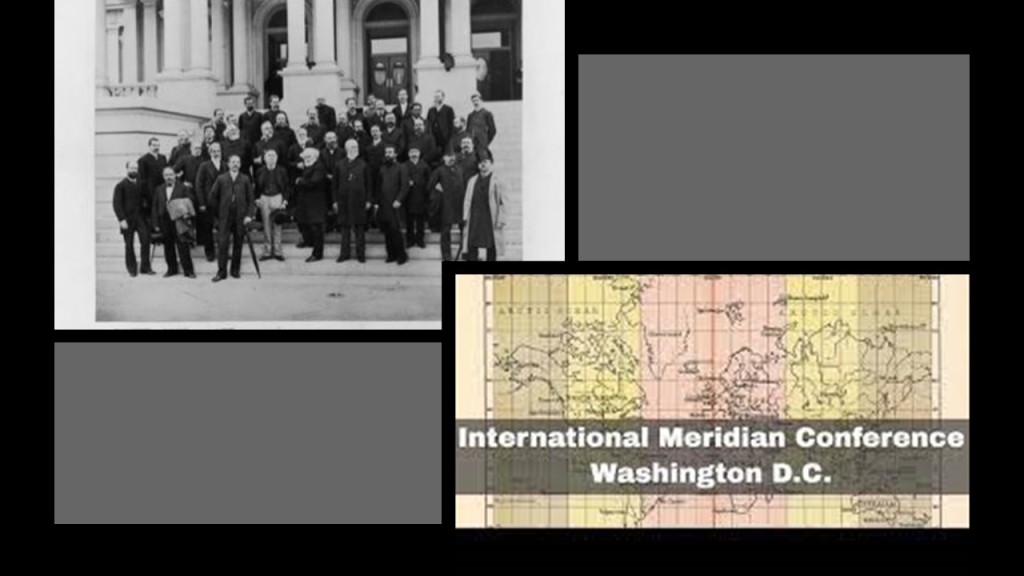
In October of 1884, the United States hosted the International Meridian Conference, attended by twenty-five countries, in order to determine the Prime Meridian for international use after worldwide pressure had been applied to establish a prime meridian for worldwide navigation purposes and to unify local times for railway time-tables, with Sir George Airy’s Greenwich Meridian already being the favored one for use.

Twenty-two of the twenty-five countries in attendance voted to adopt the longitude of the Royal Observatory in Greenwich as the zero-reference line.

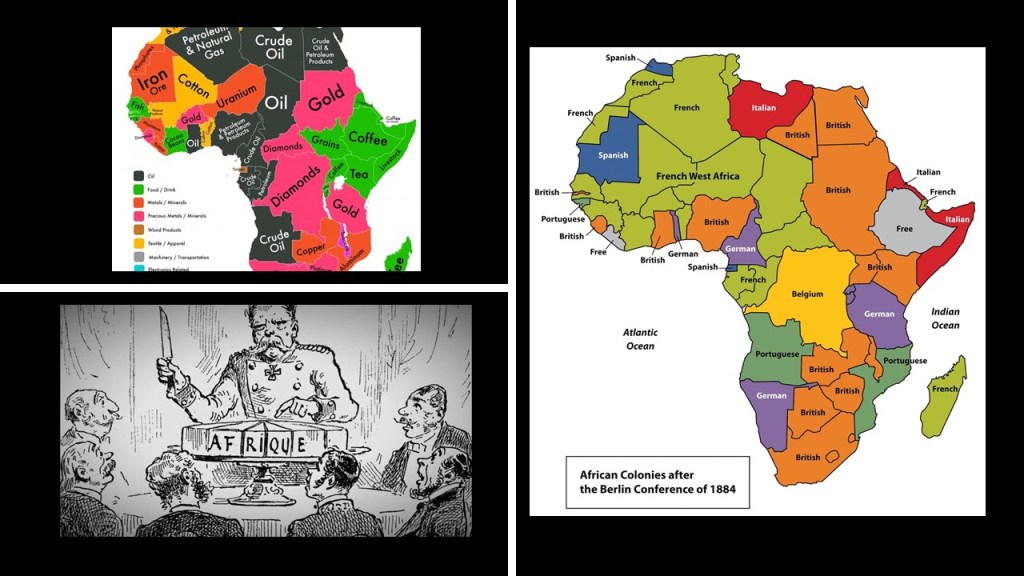
Interesting to note, the International Meridian Conference was held right before the German chancellor Otto von Bismarck-organized Berlin Conference, which was convened in November of 1884 and lasted until February of 1885, during which almost all of Africa was carved up between the European powers.

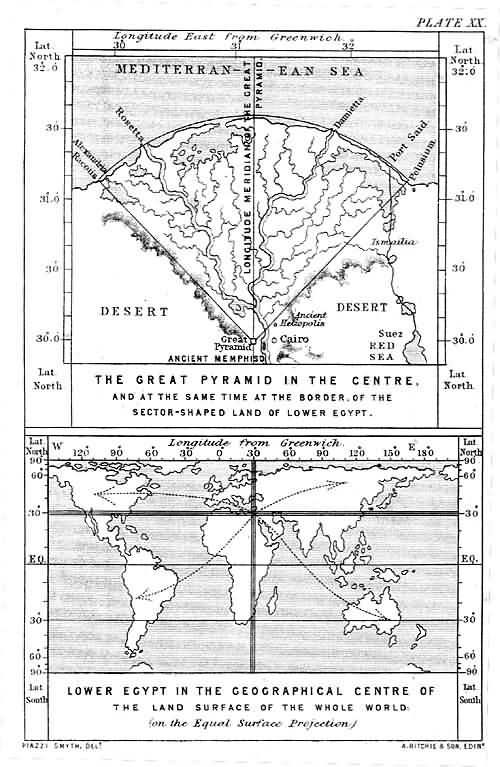
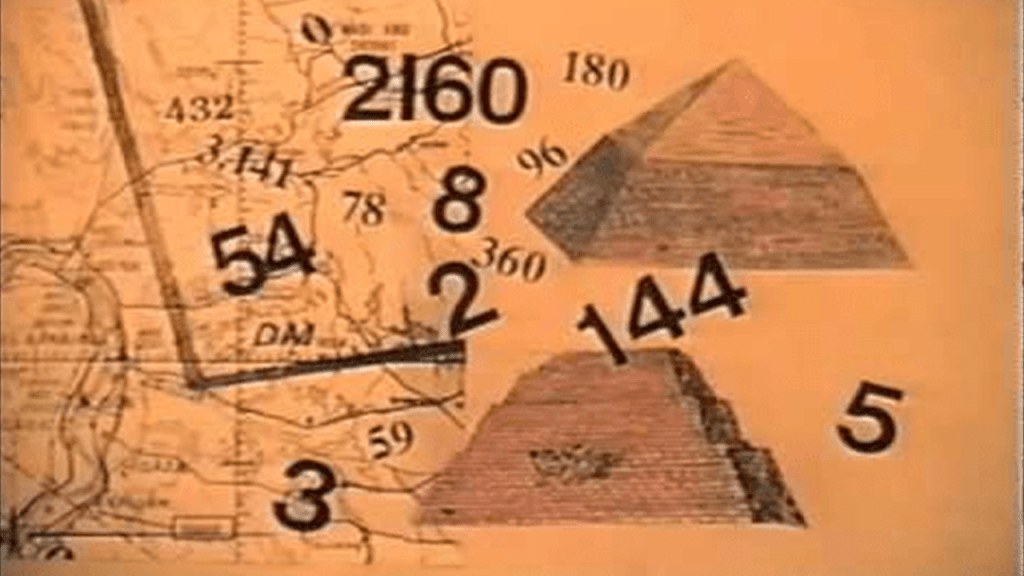
The Prime Meridian of the Earth previous to the Royal Observatory of Greenwich was the great pyramid of Giza, located at the exact center of the Earth’s landmass.

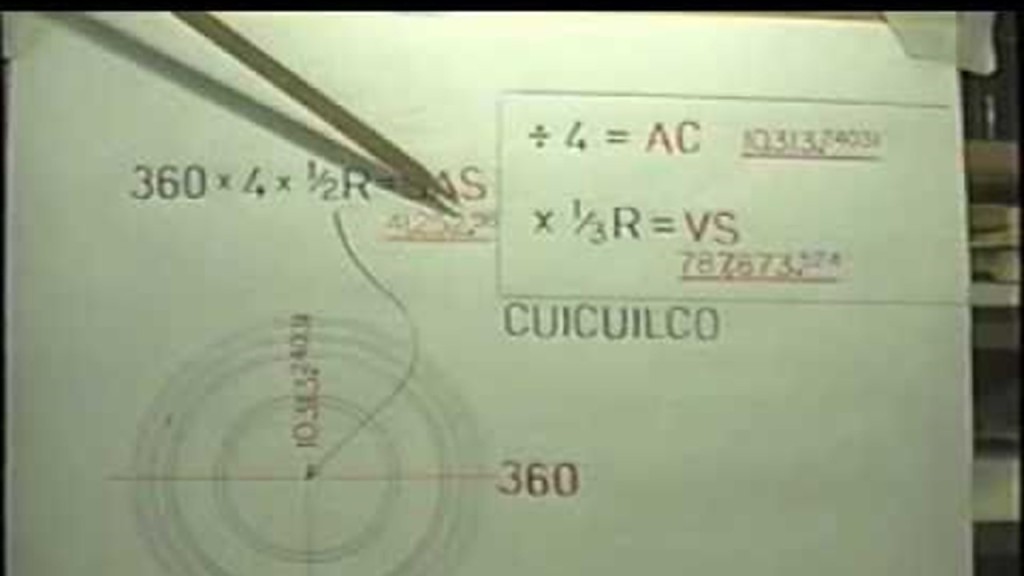
Carl Munck deciphers a shared mathematical code in his book “The Code,” related to the Great Pyramid, in the dimensions of the architecture of sacred sites all over the Earth, one which encodes longitude & latitude of each that cross-reference other sites. 

He shows that this pyramid code is clearly sophisticated and intentional, and perfectly aligned over long-distances.

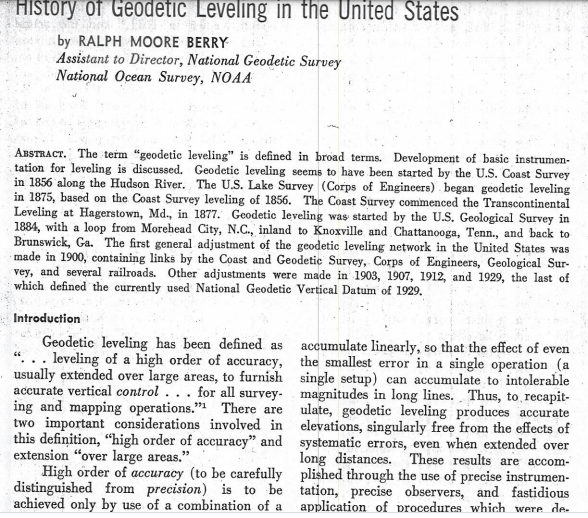
I just recently learned about the National Geodetic Survey (NGS) and its Transcontinental Levelling program that started in 1887, in the research for my last “Short & Sweet” post.

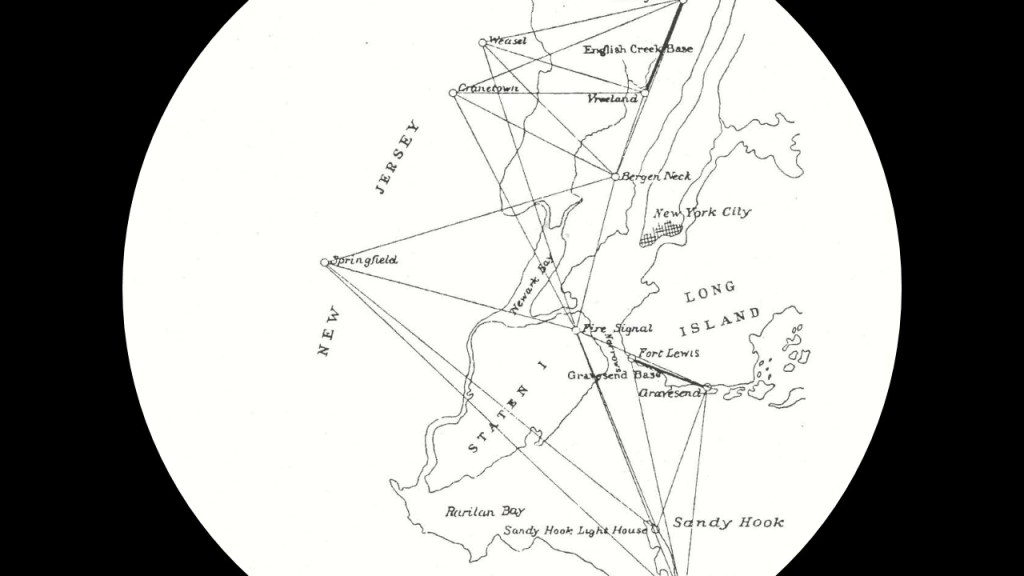
The National Geodetic Survey was the first civilian scientific agency, established in 1807 by President Thomas Jefferson as the “Survey of the Coast,” with a stated mission to survey the U. S. Coastline and create a survey network, establish coastal water depths, and nautical charts to help increase maritime safety.

This was a sketch of the New York Harbor showing the first field work of the “Survey of the Coast” in 1816 and 1817.

Today the survey network first established in the early 19th-century is called the National Spatial Reference System (NSRS) for surveying and engineering projects requiring precise spatial information and has been administered by the National Oceanic and Atmospheric Administration of the U. S. Department of Commerce since 1970.

 The National Geodetic Survey started a trans-continental levelling program in 1887, with levelling defined as “…a high order of accuracy usually extended over large areas to furnish accurate vertical control…for all surveying and mapping operations.”

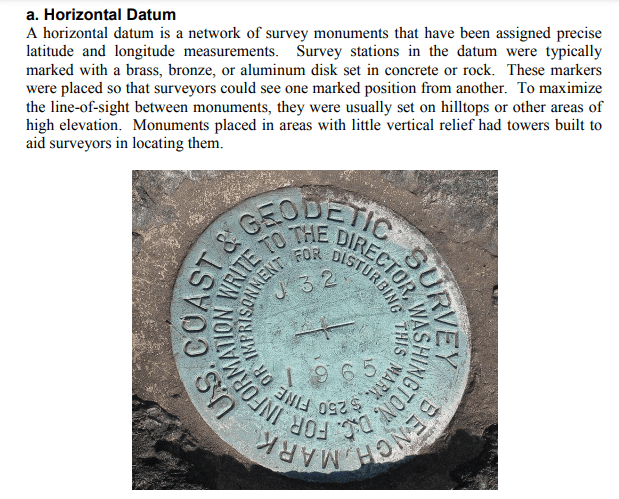
They utilized “horizontal datum,” benchmarks made typical of brass, bronze, or an aluminum disk set in concrete or rock assigned precise latitude and longitude measurements within the survey network.

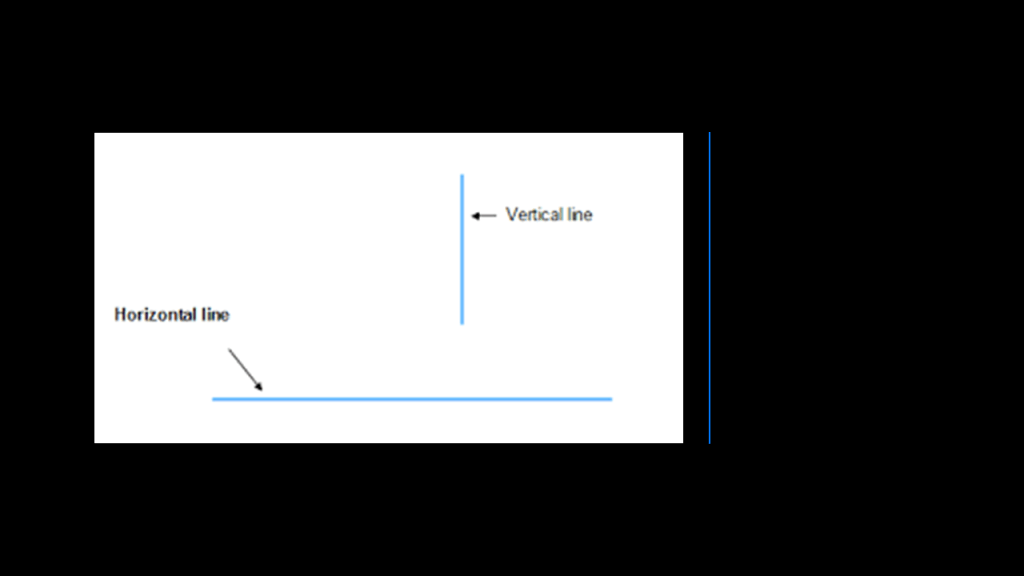
I know there is a lot more to unpack here, but I find this very interesting in light of what horizontal and vertical mean and the implications in relationship to the shape of the Earth’s surface.

Daylight Savings Time apparently was first proposed by George Hudson, an astronomer and entomologist (studier of insects) from New Zealand.

In 1895 he presented a paper to the Wellington Philosophical Society proposing a 2-hour daylight-saving shift because he wanted more daylight hours in the summer to pursue his collecting of insects.

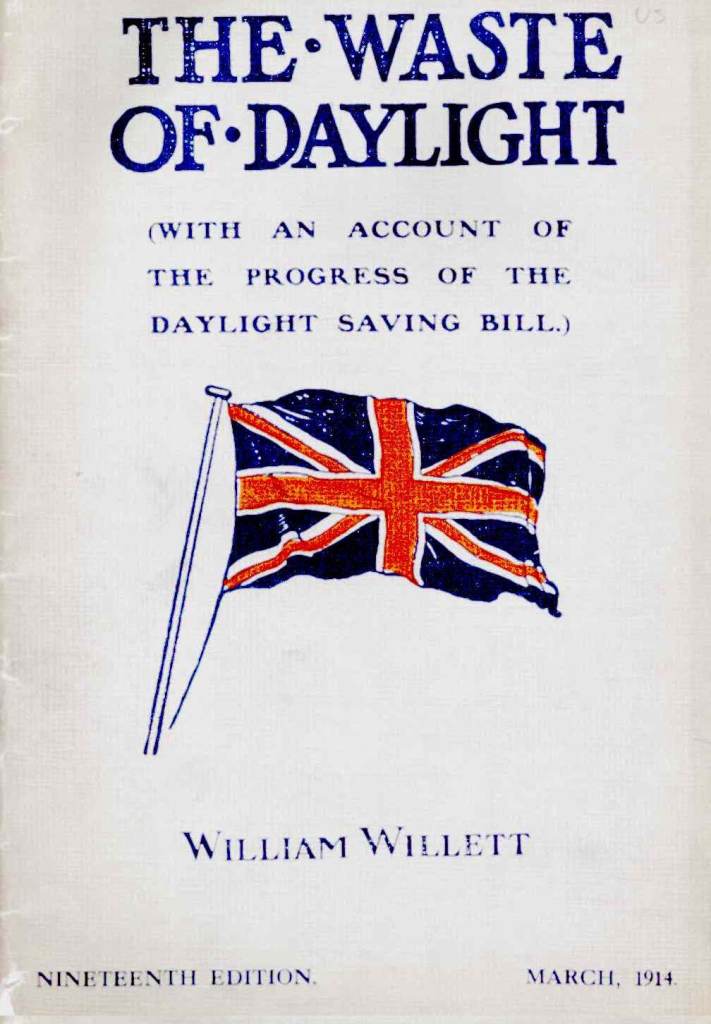
The other person who was credited with independently coming up with the Daylight Savings Time concept was English builder and outdoorsman William Willett, who apparently wanted things like more daylight in which to play golf, proposed the idea to Parliament in 1908, though the bill failed to pass after multiple attempts until 1916.

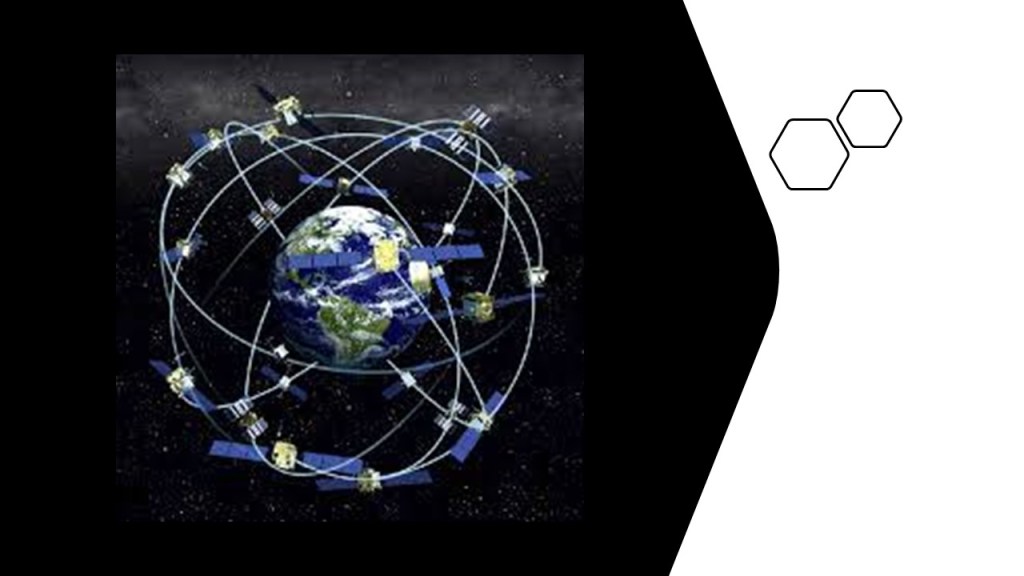
Also of interest to note, the Global Positioning System (GPS) was developed by the United States Department of Defense and launched for military use in 1973 and became fully operational in 1995.

Civilian use was allowed starting in the 1980s.

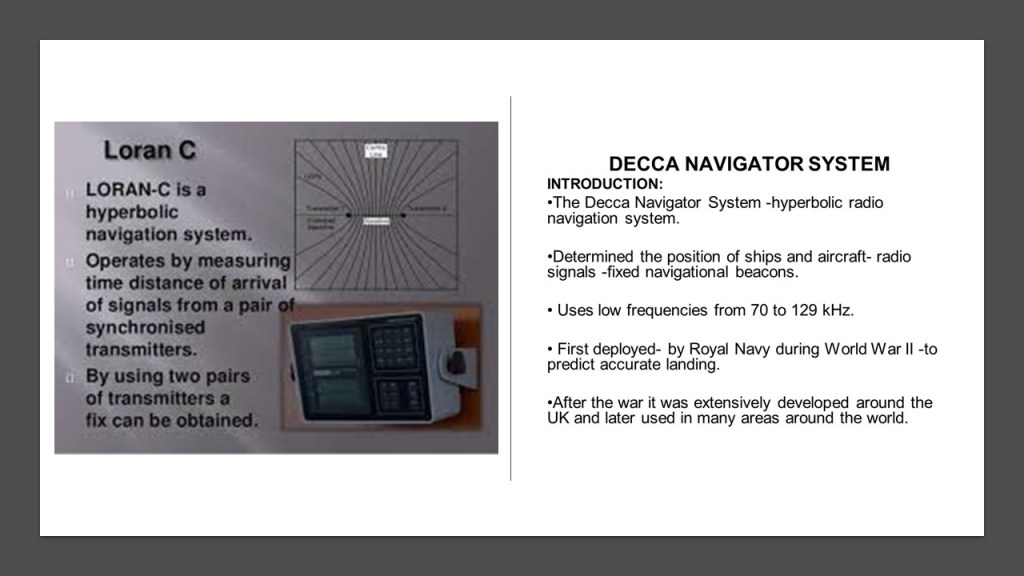
It was based on ground-based radio-navigation systems that were developed in the early 1940s, like LORAN and Decca Navigator.

For point of information, this is the image found on the NASA Space Place – Science for Kids – about “How does GPS work?” and typical of the visual imagery that is available to us on this subject.

Now onto the subject of early maps and globes.

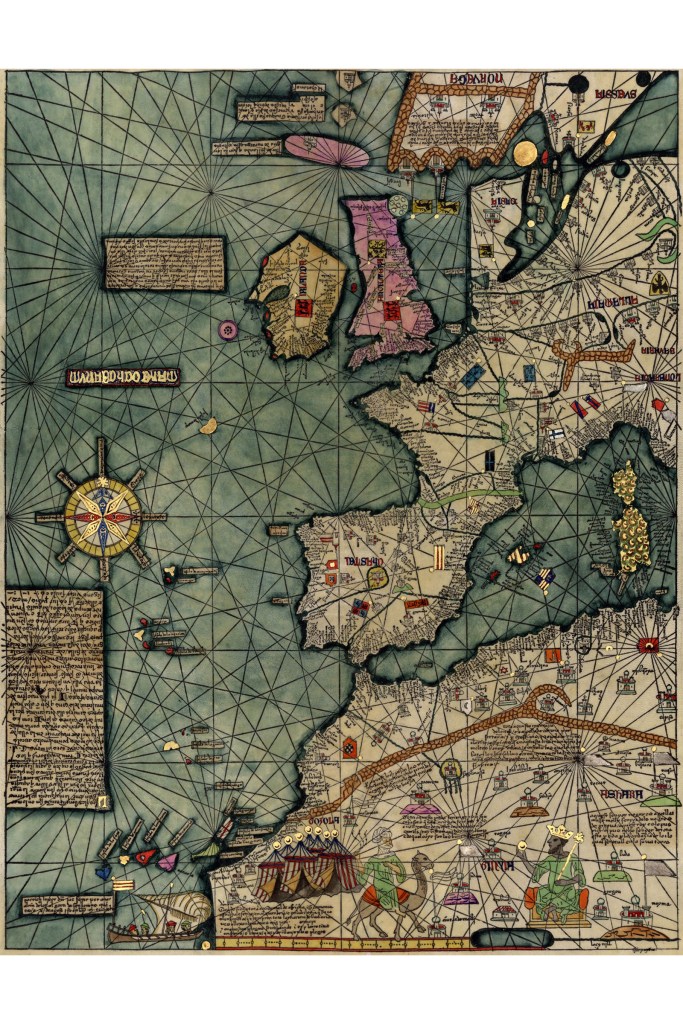
in earlier maps, ley-lines were depicted on land and sea, a like on the Catalan Atlas of the Majorcan Cartographic School, considered the most important map of the Medieval period in the Catalan language, dated to 1375.

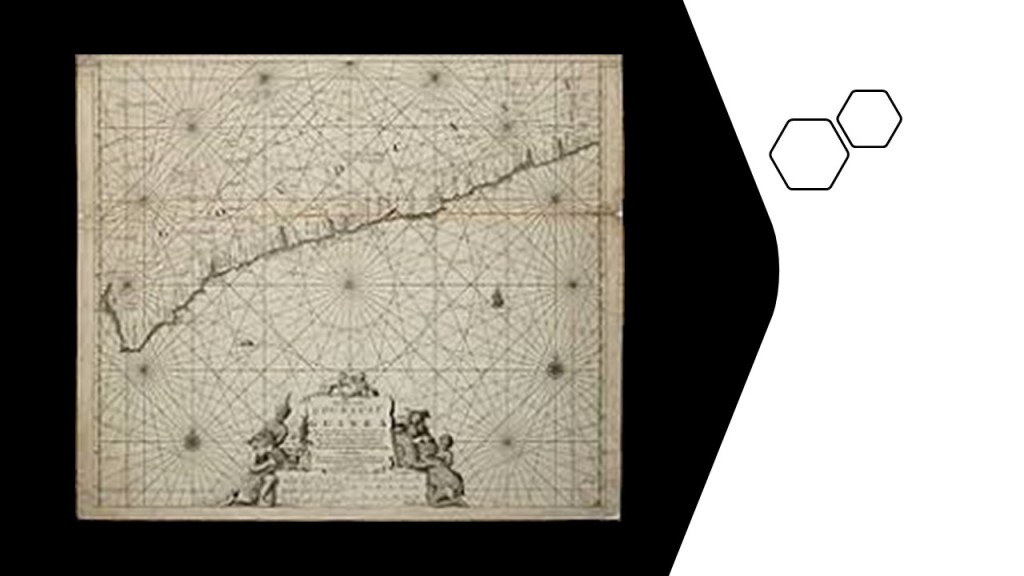
Here’s a map of Africa’s Gold Coast showing ley-lines as well…

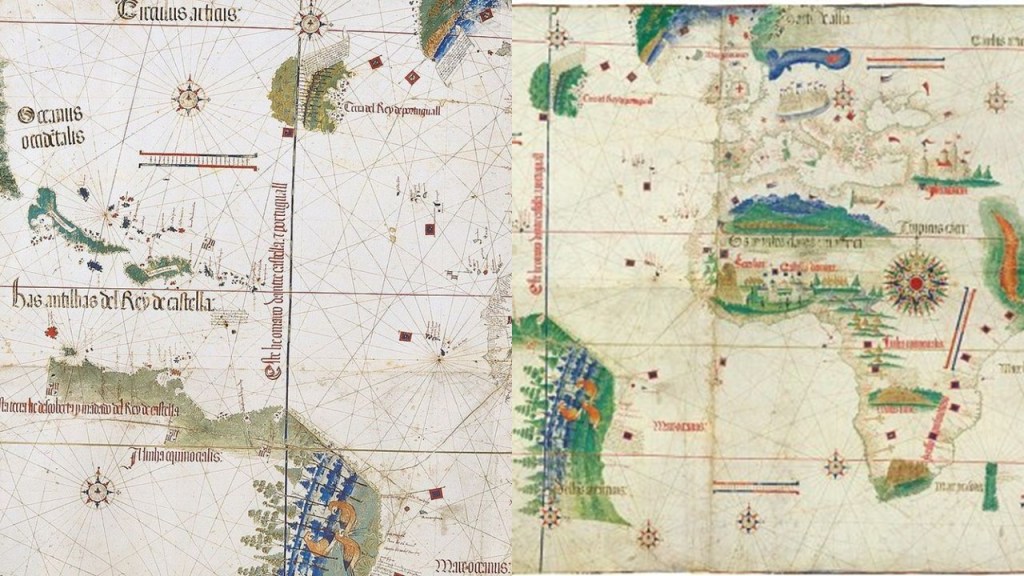
…and another early map was the Cantino Planisphere, said to have been completed by an anonymous Portuguese cartographer some time before 1502.

A planisphere is defined as a map formed by the projection of a sphere or part of a sphere on a plane.

What we are told is that in cartography, the science of map-making, a map projection is the way of flattening the globe’s surface into a plane in order to make it into a map, which requires a systematic transformation of the latitudes and longitudes of locations from the surface of the globe into locations on a plane.

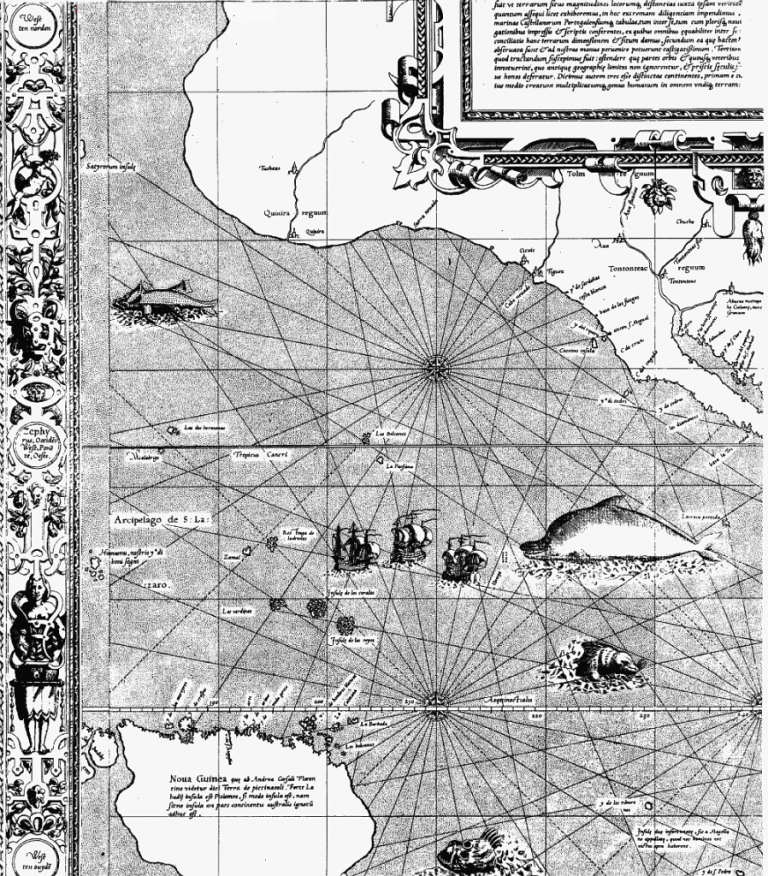
It would seem that the Earth’s ley-lines started to disappear from maps in the 1500s, when Gerardus Mercator, a Flemish geographer, cartographer and cosmographer, published a world map in 1569 that is considered to be the first where sailing courses on the sphere were mapped to the plane map, allowing for a “correction of the chart to be more useful for sailors.”

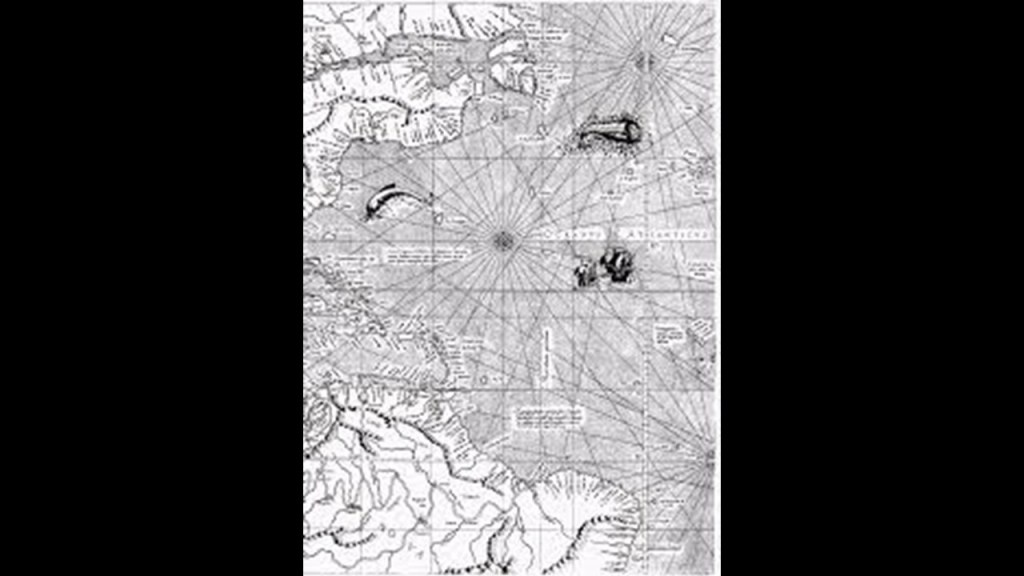
His 1569 map showed the depiction of straight ley-lines in the seas, but not on land and sea as were present on the flat projections of the Cantino Planisphere and the Catalan Atlas.

Here is a close-up section of the 1569 map showing the depiction of straight ley-lines in the seas but not on land and sea as were present on the flat projections of the Cantino Planisphere, the Catalan Atlas, and the African Gold Coast map.

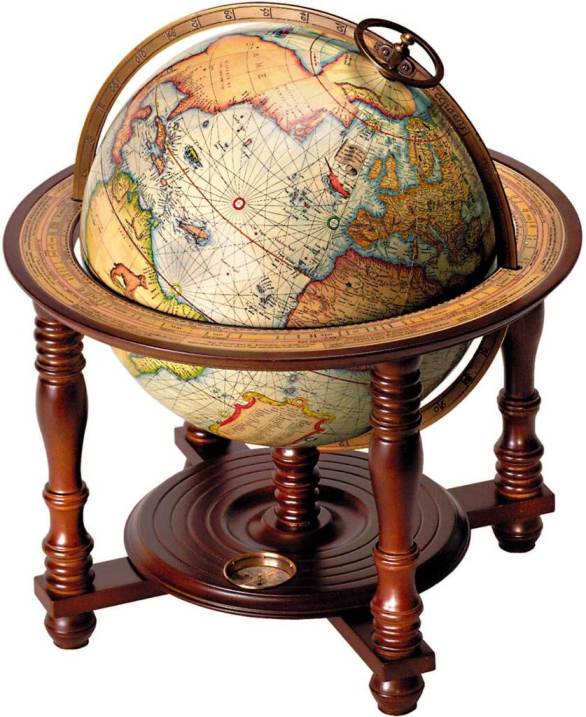
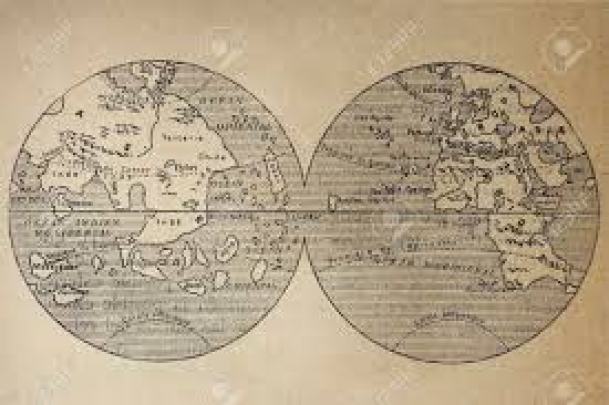
Not only that, Mercator was also a globe-maker, like this one from 1541.

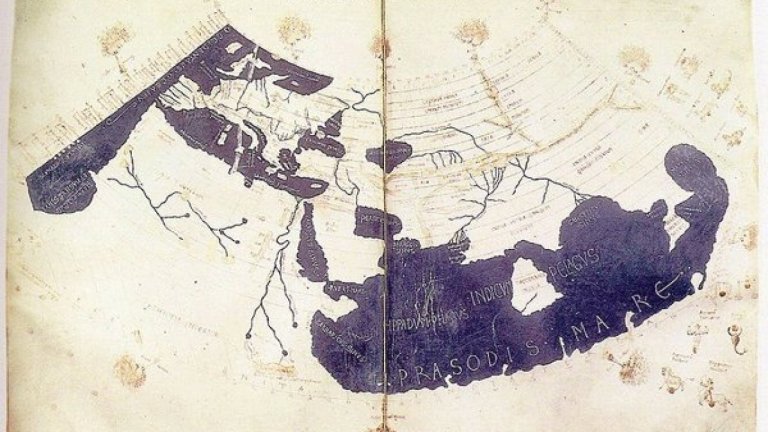
Ptolemy’s “Geography” was an atlas and treatise of geography from 150 AD said to compile the geographical knowledge of the 2nd-century Roman Empire, and a revision of the now-lost atlas of Marinus of Tyre, a Phoenician cartographer and mathematician who was said to have founded mathematical geography, and who introduced improvements to the construction of maps and developed a system of nautical charts.

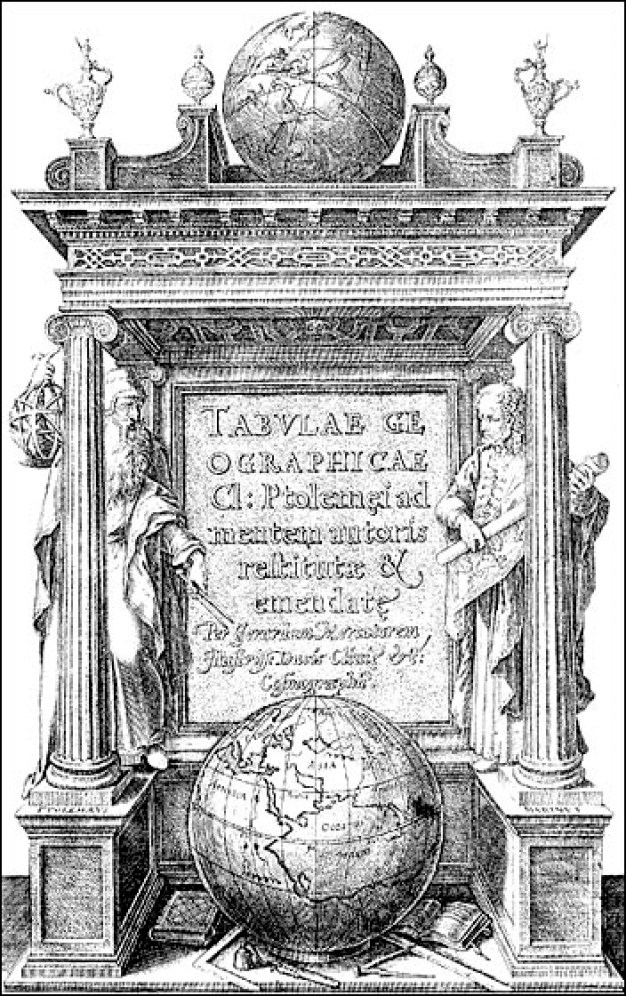
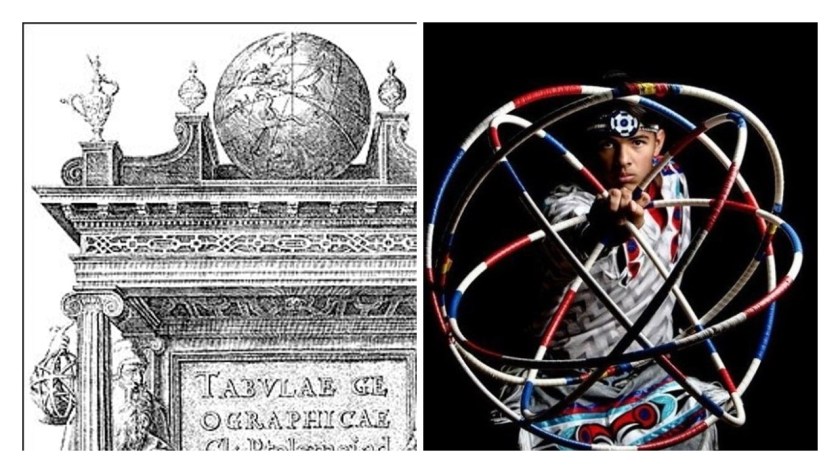
This is the cover of Mercator’s 1578 publication of “Tabulae Geographicae,” along with the globe, and Ptolemy said to depicted on the left, and Marinus of Tyre on the right.

Notice the difference between the lines on the globe at the top of the engraving, and the globe at the bottom, and while Ptolemy is pointing down to the globe at the bottom…

…he is holding up a geometric shape in his right hand that looks like the lines on the globe at the top on the left, which looks remarkably like the shape the sacred hoops formed in the Native American Hoop Dance on the right.

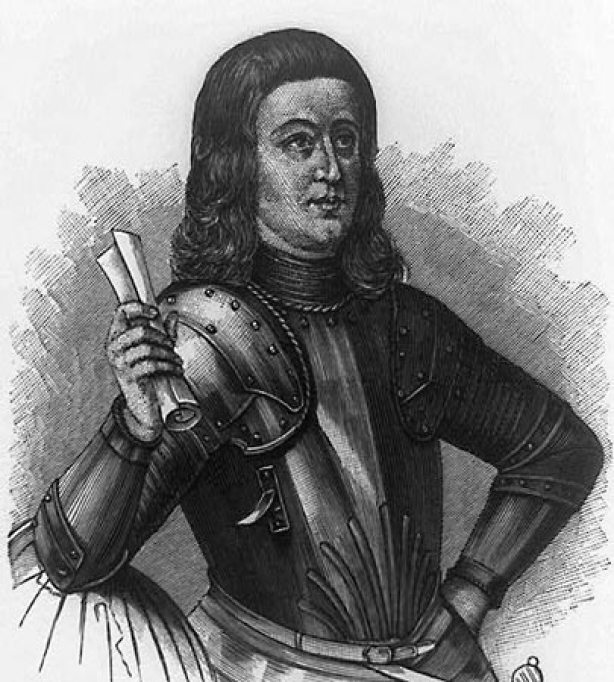
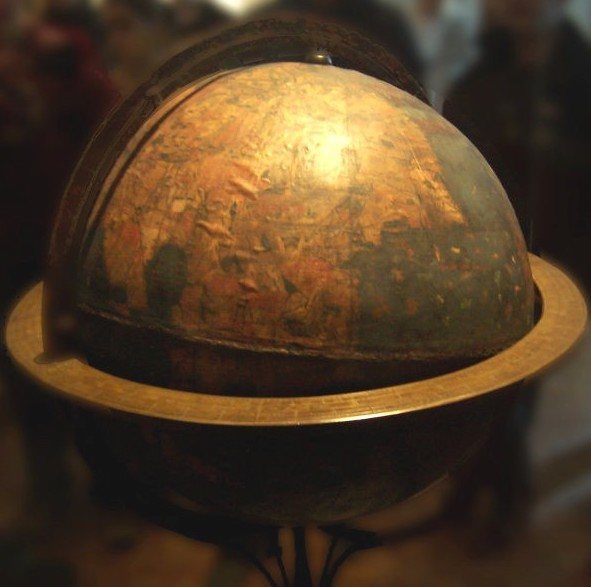
We are told the first globe in existence was called the Erdapfel, which translates from the German as “potato,” a terrestrial globe said to have been produced by Martin Behaim, a German textile merchant and cartographer, between 1490 and 1492.

This engraving of him was said to have been done in 1886.

It was a laminated linen ball, constructed in two-halves, reinforced with wood…

…and overlaid by a map painted by Georg Glockendon, pasted on a layer of parchment around the globe.

The German-English geographer and cartographer, Ernst Georg Ravenstein, who was born in Germany in 1834 but spent most of his adult life in England, wrote a book about Martin Behaim and his Erdapfel in 1908.

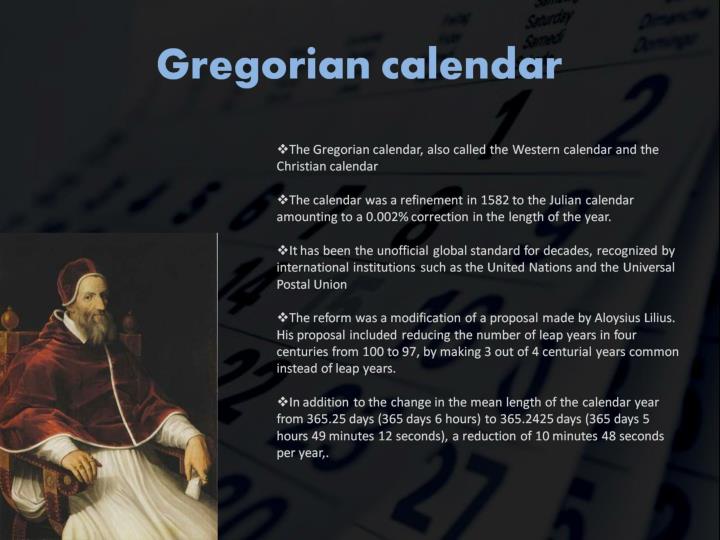
Only 13-years after Mercator was said to have published his world map in 1569, the Gregorian Calendar was introduced by Pope Gregory XIII in October of 1582, for the given reason of correcting the Julian calendar on stopping the drift of the calendar with respect to the equinoxes, and included the addition of leap years. 

It took 300 years to implement the calendar in the west, and nowadays used in non-western countries for civil purposes.

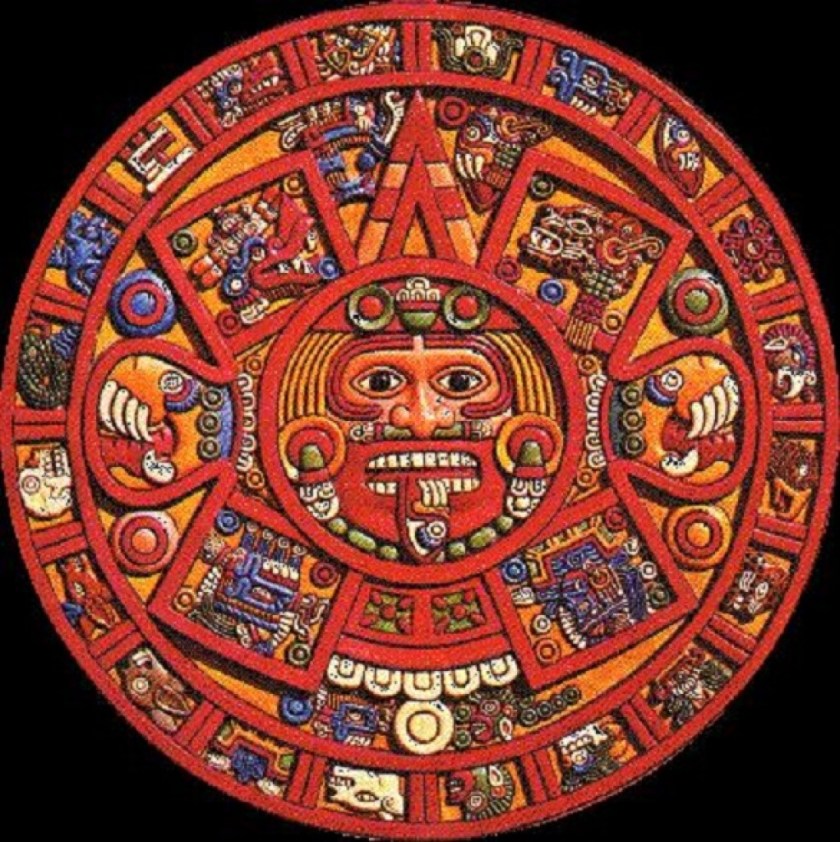
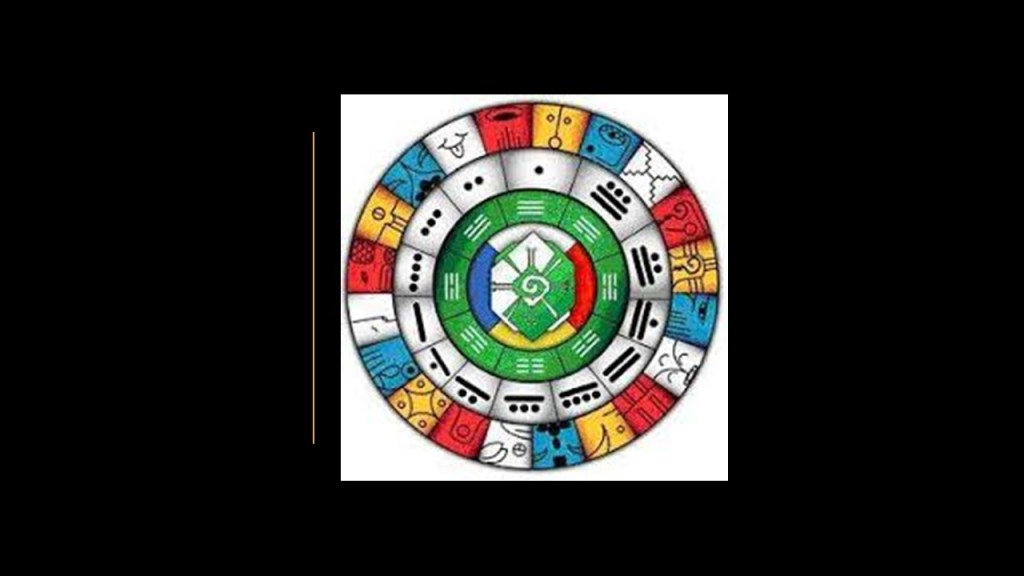
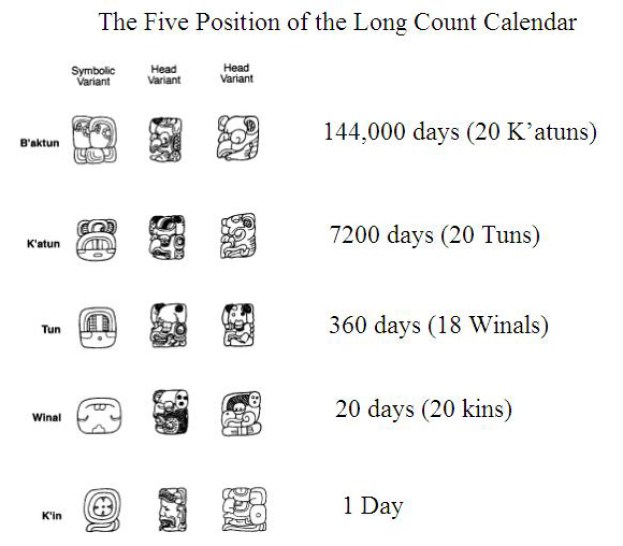
The Mayan calendar was involved with the harmonization and synchronization of Human Beings and the development of Human Consciousness with natural cycles of time.

The Mayan calendar consisted of several cycles, or counts, of different lengths.

The 260-day count, or Tzolkin, was combined with a 365-day solar year known as the Haab’, to form a synchronized cycle lasting for 52 Haab’, called the Calendar Round, still in use today by many Mayan groups in the highlands of Guatemala.

Mayan Calendar

The Tzolkin calendar combines twenty day-names and symbols, with thirteen day numbers, which represent different-sounding tones, to produce 260 unique days.

The Mayan Long Count calendar was used to track longer periods of time.

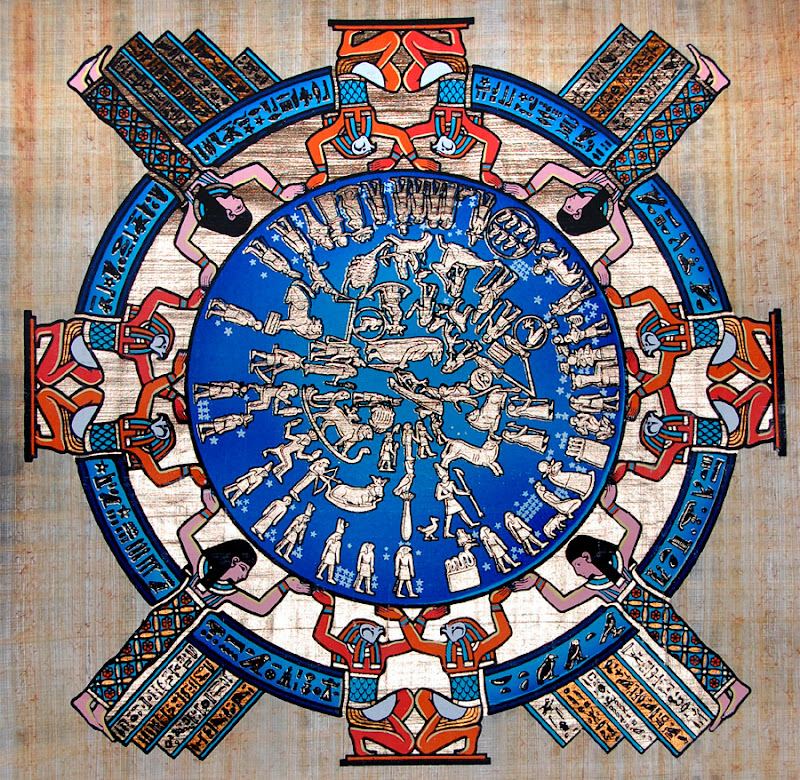
The ancient Egyptian calendar was a solar calendar with a 365-day-year, with three seasons of 120-days each, and 5-6 epagomenal days, also known as an intercalary month, transitional days that were treated as outside of the year proper to make the calendar follow the seasons or moon phases in common years and leap years.

Chronology is the next subject I would like to address.

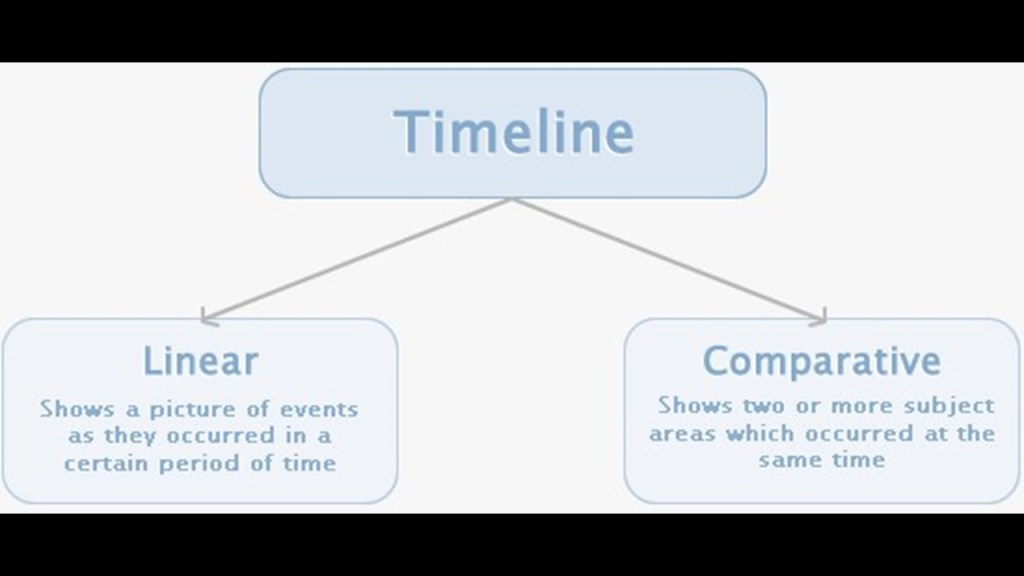
Chronology is defined as: 1) the arrangement of events or dates in the order of their occurrence; 2) a document displaying an arrangement of events in order of their occurrence; 3) the study of historical records to establish the dates of past events.

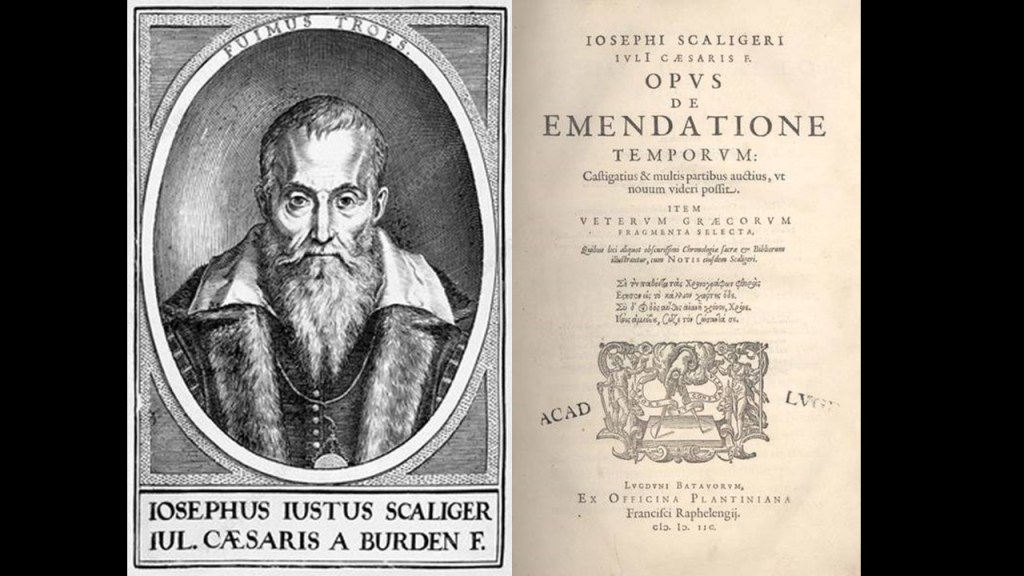
In 1583, just one year after the introduction of the Gregorian calendar, Joseph Justus Scaliger published the “Opus de Emendatione Temporum” or “Work on the Amendment of Time.”

Scaliger was said to revolutionize perceived ideas of ancient chronology to show that ancient history was not confined to that of the Greeks and Romans, but also comprises that of the Persians, the Babylonians, the Egyptians, and the Jews.

In this work, we are told Scaliger investigated ancient systems of determining epochs, calendars and computations of time.

We are told the publication of his “Work on the Amendment of Time” placed him at the head of all the living representatives of ancient learning.

Scaliger synchronized all of ancient history in his two major works, De Emendatione Temporum (1583) and Thesaurus Temporum (1606). Much of modern historical datings and chronology of the ancient world ultimately derived from these two works.

Interestingly, when I was looking for information on Scaliger’s Thesaurus Temporum, I found the “Excerpta Latini Barbari,” a Latin translation of a 5th- or early 6th-century Greek chronicle composed in Alexandria, Egypt.

The “Excerpta Latini Barbari,” was said to be a variation of the Alexandrian World Chronicle, an anonymous Greek Chronicle compiled in Alexandria, said to have covered recorded history from Creation until the year 392 AD. 

We are told “Excerpta Latini Barbari,” translates to “Excerpts in Bad Latin.”

Scaliger was said to have taken the first scholarly interest in the “Excerpta Latini Barbari,” and first named the chronicle “Barbarus Scaligeri.”

The chronicle contains two main sections: (a) the history of the world from the creation to Cleopatra and (b) a list of kings or rulers from Assyria to the consuls of Rome, including the Ptolemaic dynasty, a list entitled “high priests and kings of the Jews” and an entry for Macedonian kings. 

Here is the problem I have with this translation of “Excerpta Latini Barbari.”

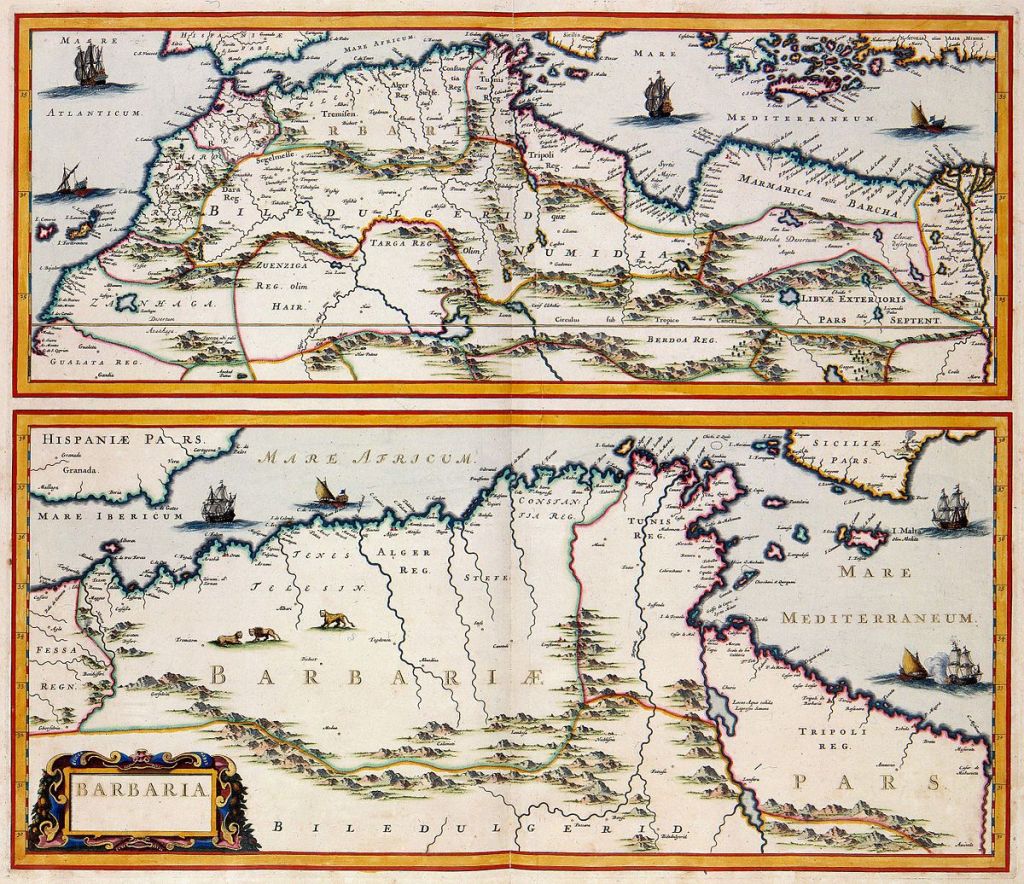
Barbaria, or Barbary, was the name given to a vast region stretching from the Nile River Delta, across Northern Africa, which would have included Alexandria, Egypt, and the location of ancient Carthage in present-day Tunis, Tunisia, to the Canary Islands.

The coast of North Africa is still called the Barbary Coast to this day.

What if “Excerpta Latini Barbari” translates to something along the lines of Excerpts from Barbarian Latin?”

Yet we are taught that “barbarian” means a person from an alien land, culture, or group believed to be inferior, uncivilized, or violent.

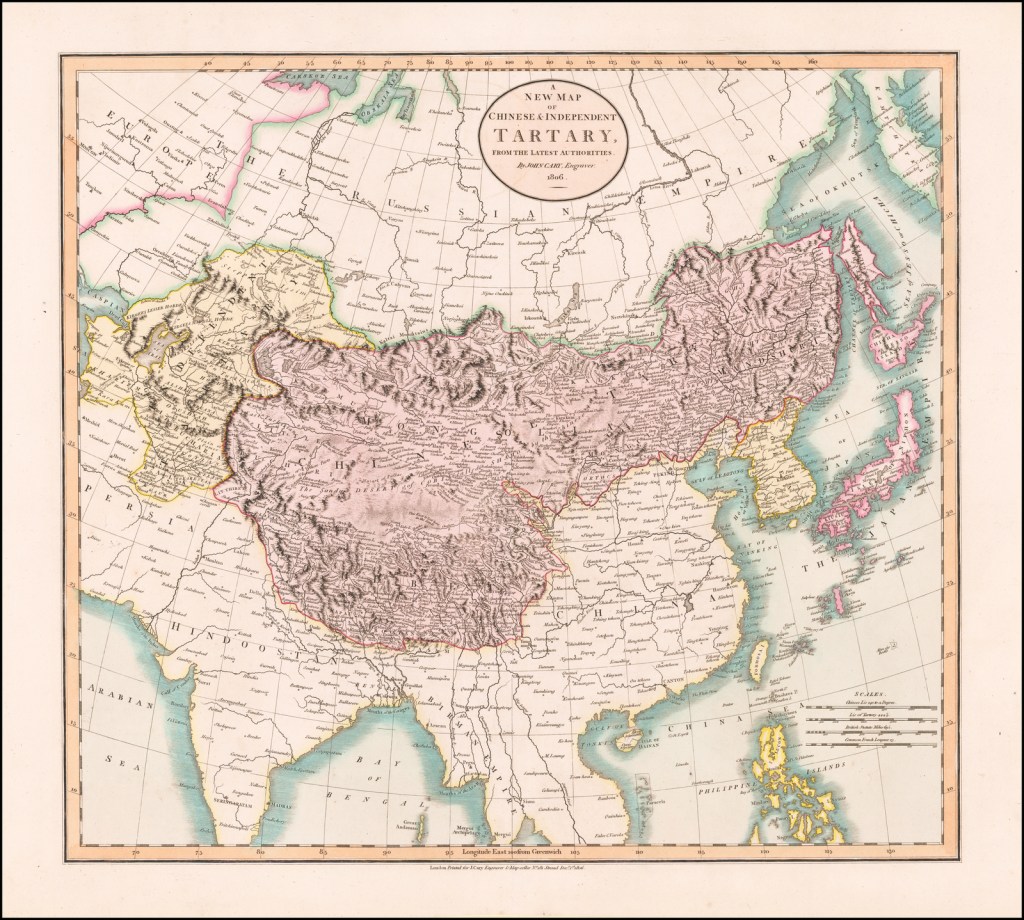
I believe that Barbaria was one of the many empires of the original Moorish civilization, with its origins in ancient Mu, also known as Lemuria, as was Tartaria, or Tartary, in Asia, the name of much of which was changed to Manchuria in the mid-1850s.

In a similar fashion to “barbarian,” the word “tartarus” or “tartary” has come down to us meaning a deep abyss in hades that is used as a dungeon of torment and suffering for the wicked.

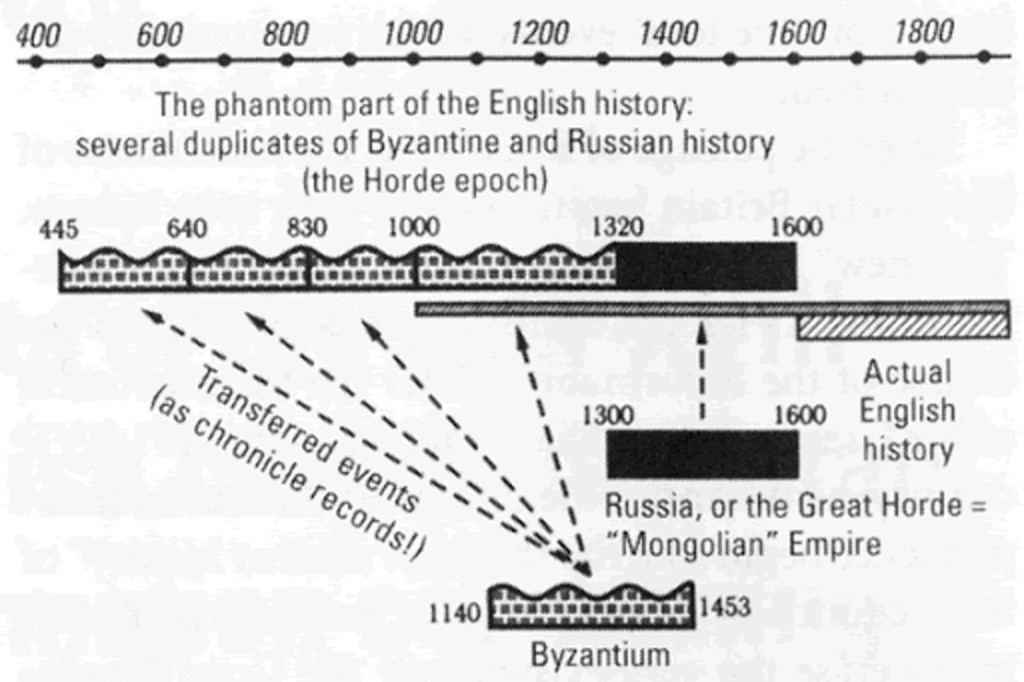
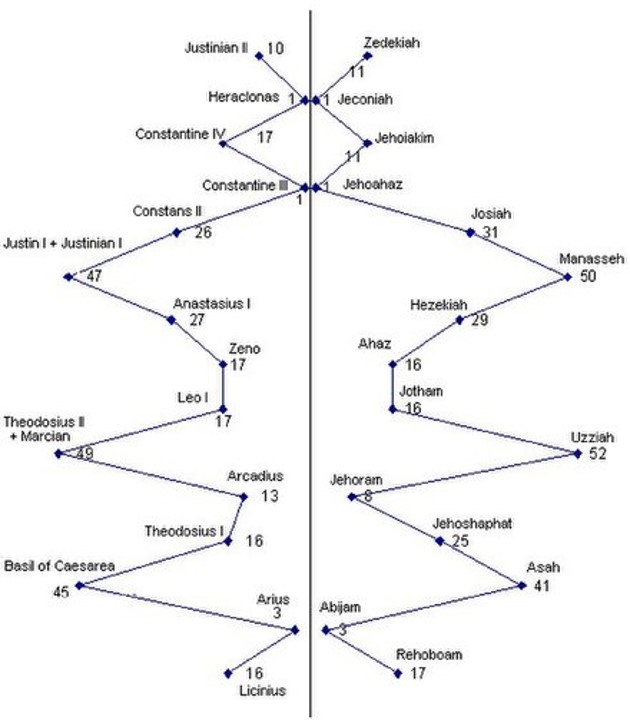
Anatoly Fomenko is a Russian mathematician who has proposed a new chronology, along with Russian mathematician Gleb Novosky and Bulgarian mathematician Yordan Tabov, in which they argue that events of antiquity generally attributed to the civilizations of the Roman Empire, Ancient Greece and Ancient Egypt, actually occurred during the Middle Ages, more than a thousand years later.

The concept is most fully explained in “History: Fiction or Science?” originally published in Russian.

The theory further proposes that world history prior to 1600 AD has been widely falsified to suit the interests of a number of different conspirators including the Vatican, the Holy Roman Empire, and the Russian House of Romanov.

Academic interest in the theory stems mainly from its popularity which has compelled historians and other scientists to argue against its methods and proposed world history.

Some of the central concepts of new chronology asserted by Fomenko and colleagues are:

Up to the 17th-century, historians and translators often “assigned” different dates and locations to different accounts of the same historical events, creating multiple “phantom copies” of these events.

This chronology was largely manufactured by Joseph Justus Scaliger in Opus Novum de emendatione temporum (1583) and Thesaurum temporum (1606), and represents a vast array of dates produced without any justification whatsoever, containing the repeating sequences of dates with shifts equal to multiples of the major cabbalistic numbers 333 and 360.

Fomenko’s methods included the statistical correlation of texts, dynasties, and astronomical evidence.

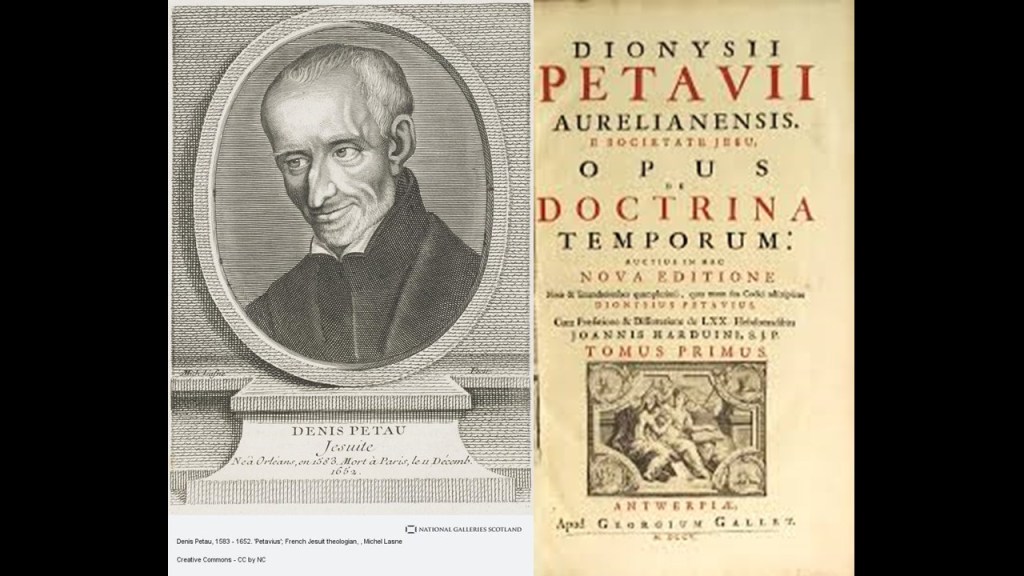
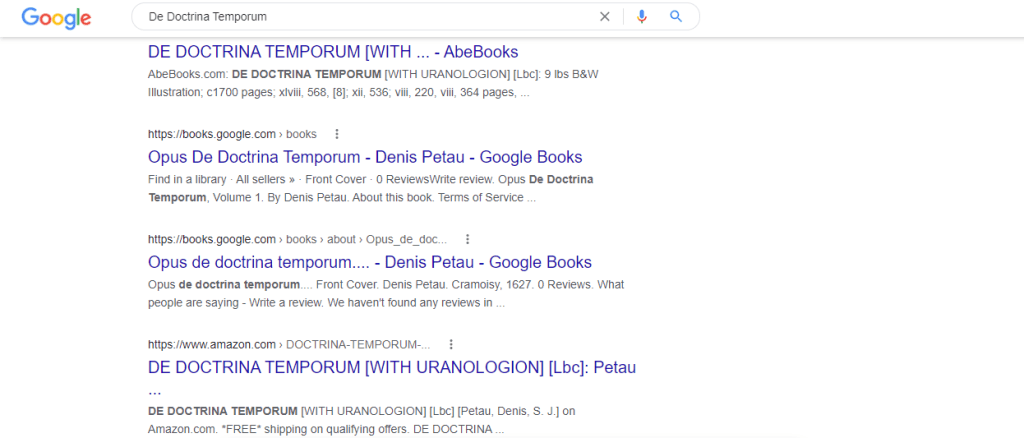
The Jesuit Dionysius Petavius completed this chronology in De Doctrina Temporum, 1627 (v.1) and 1632 (v.2).

Also known as Denis Petau, I can’t find any information about the contents of his chronology in an internet search.

I can only find copies of it on-line, not a summary of what is in it.

There are many, many reasons I am skeptical of the truthfulness of the historical narrative we have been taught.

And how did the new historical narrative get inside our heads, anyway?

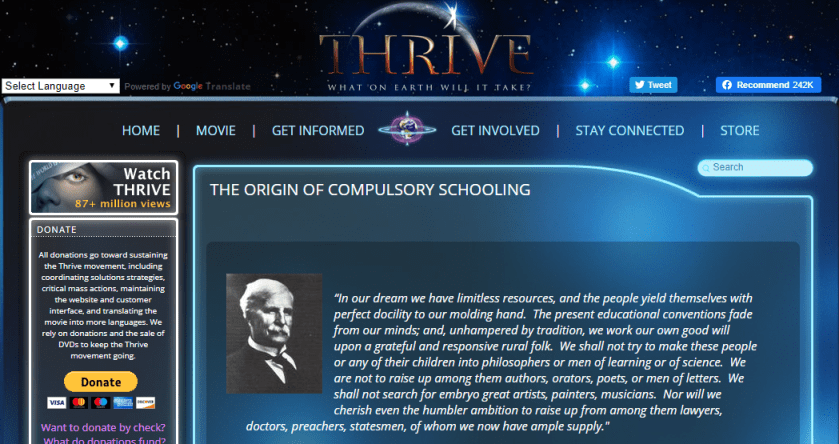
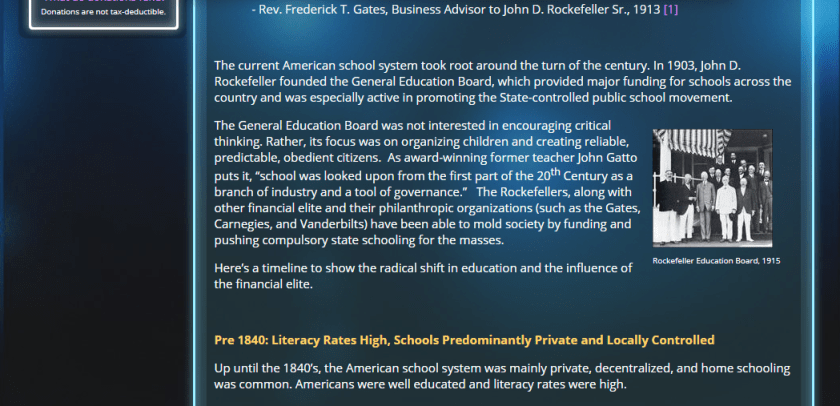
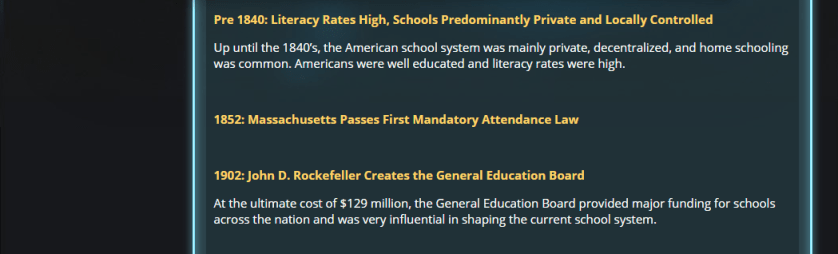
The following screenshots are from a page entitled “The Origin of Compulsory Education” on Foster Gamble’s Thrive website. As I recall, it was from his movie “Thrive” that I first learned that the Rockefellers were the originators of the American Educational System.

When John D. Rockefeller established the General Education Board, it says the interest was in organizing children, and creating reliable, predictable, and obedient citizens, and not in producing critical thinkers.

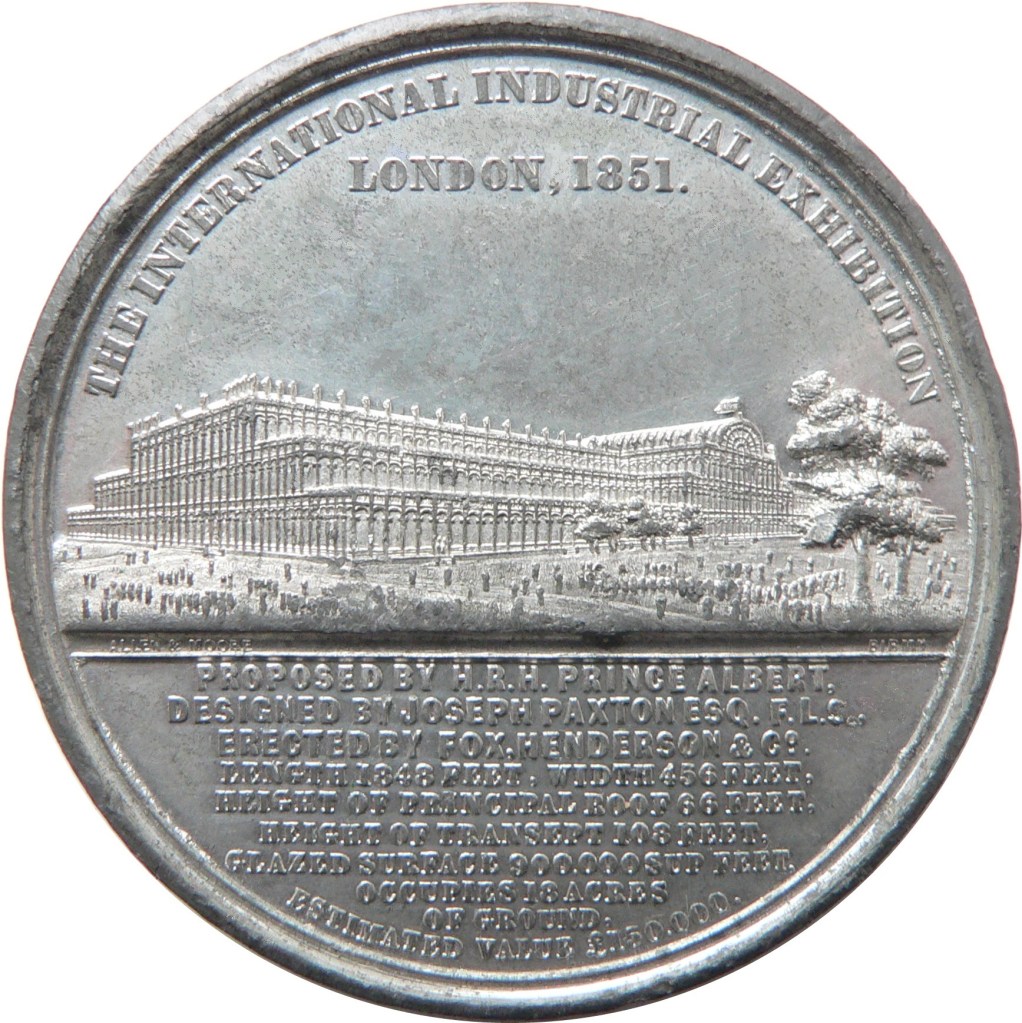
Massachussetts passed the First Mandatory Attendance Law in 1852, which lines up with what I believe was the official kick-off of the new historical timeline, which I believe was the 1851 Crystal Palace Exhibition in London.

What I have shared in this post reflects what I have found so far in the course of several years of research that provides evidence supporting that we live on a plane versus planet, and many other ways in which our perception of place, time, and space has been manipulated.

I am very happy to share my findings and evidence with you for what sure appears to have happened here with regards to shifting our whole perception of everything about the world we live in.

My primary motivation and passion in doing this work is to bring back awareness of the Earth’s lost advanced worldwide civilization (the Old World Order) and to bring forth awareness that the New World Order is a real thing, how it came to be that way, and how we got to the point where we are today facing down the very grave threat to our existence that has been carefully and methodically planned for quite some time.

What is our future?

Sure looks uncertain right now, but I am putting my energy into the Great Awakening and into the belief that good triumphes over evil, and that they will not get away with what they have done to Humanity, the Creator, the Earth, and the Universe.

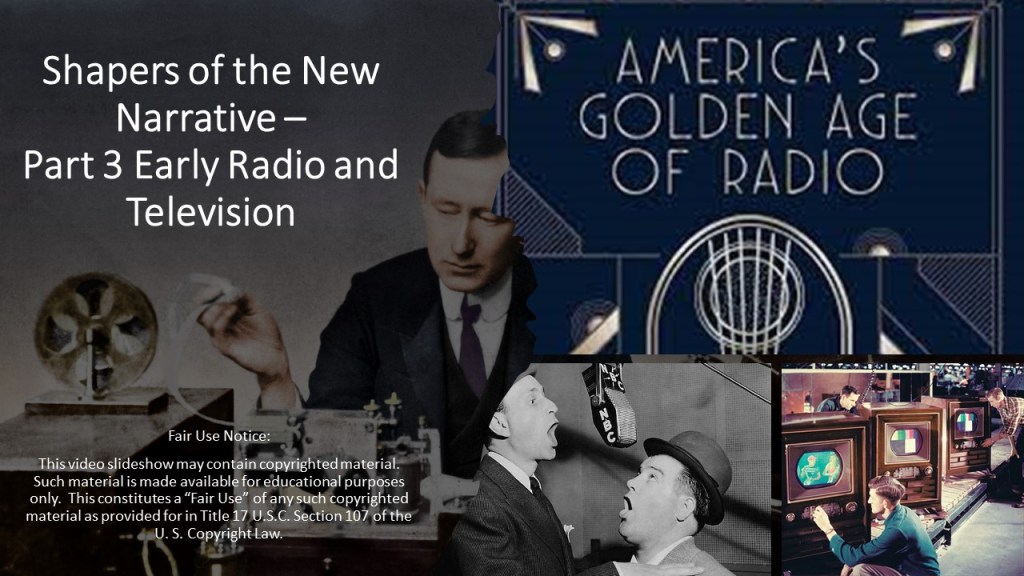
Shapers of the New Narrative – Part 3 Early Radio and Television

This is the third-part about early radio and television of what now is going to be a four-part series focusing on how we came to the place where we are today related to the origins and development of a new culture and a new narrative about our history.

I have already looked into the role of dime westerns, old west shows, and western movies in shaping the new narrative in the first part of the series; and in the second part I looked at the role of candy, dime museums, circuses, the early movie industry, and daredevils.

In the fourth part, and probably last part, of the series, I will be looking into the rise of computers and video games.

Before I go into the main feature of Early Radio and Television, I want to pass along a piece of information concerning an individual in our historical narrative about which I had no knowledge of.

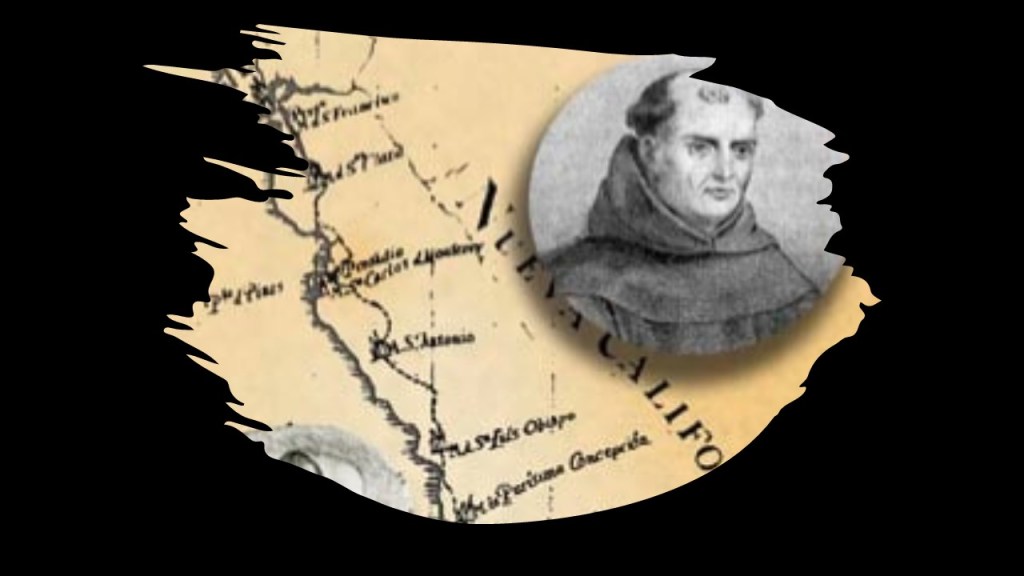
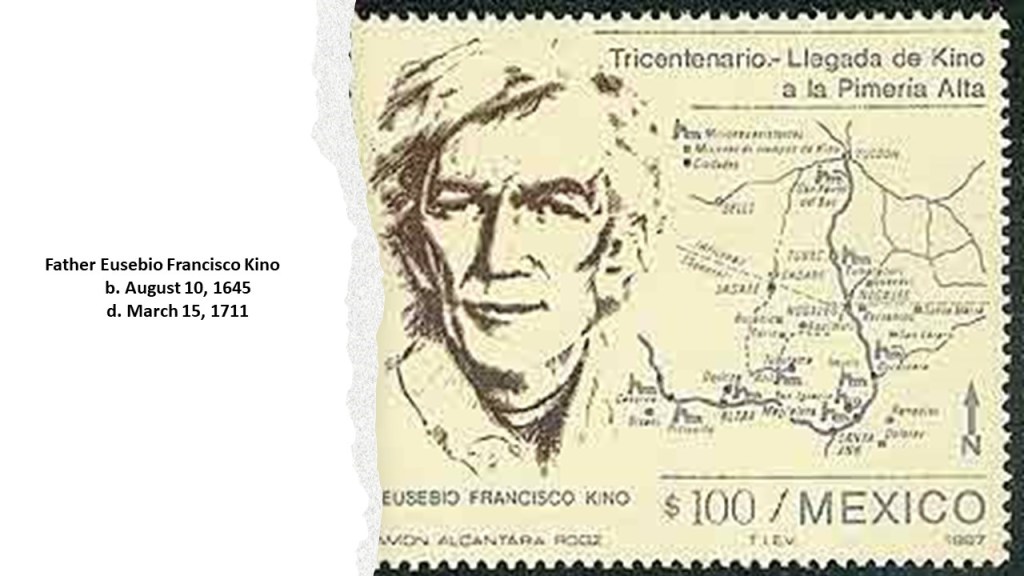
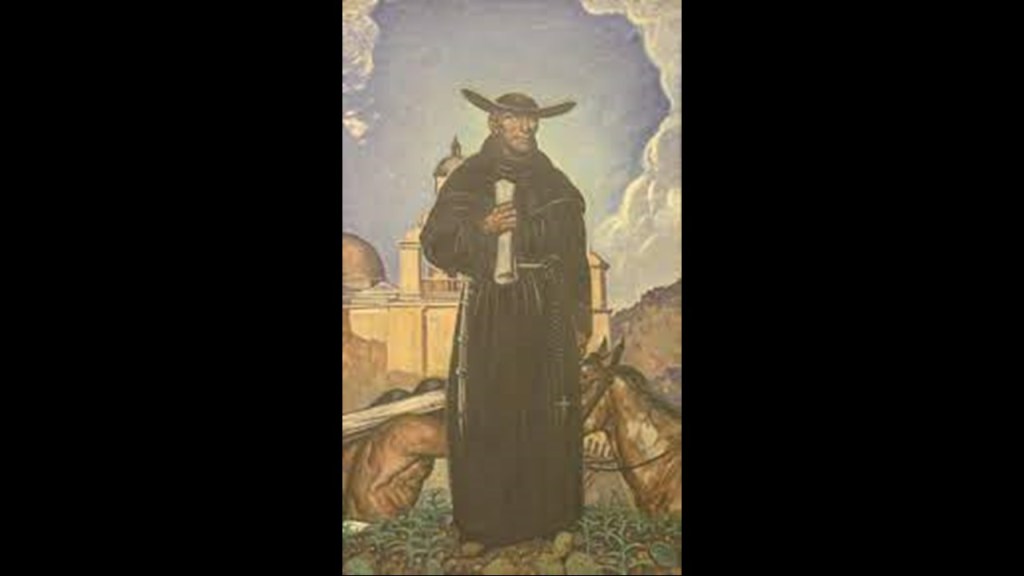
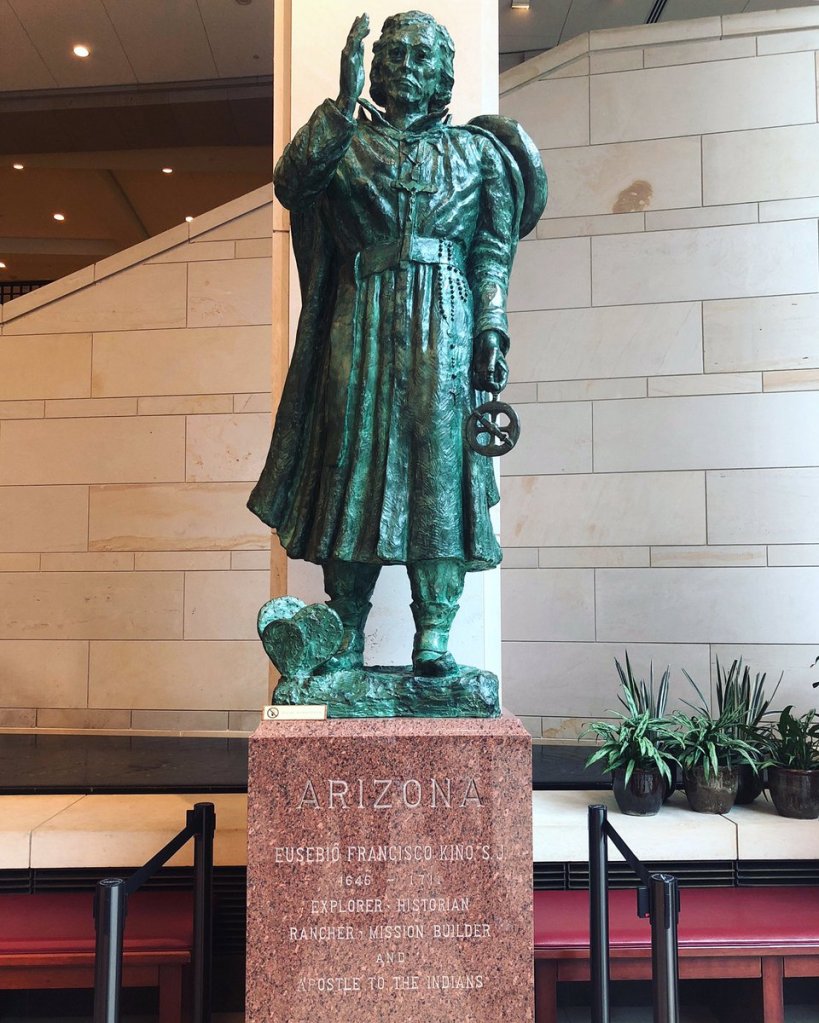
I received a comment about Father Eusebio Kino, who has been referred to as Arizona’s first rancher.

We are told that Father Kino was a Jesuit, missionary, geographer, explorer, cartographer, and astronomer, who was born in northern Italy, and spent the last 24-years of his life in modern-day Sonora in Mexico and southern Arizona in the United States…

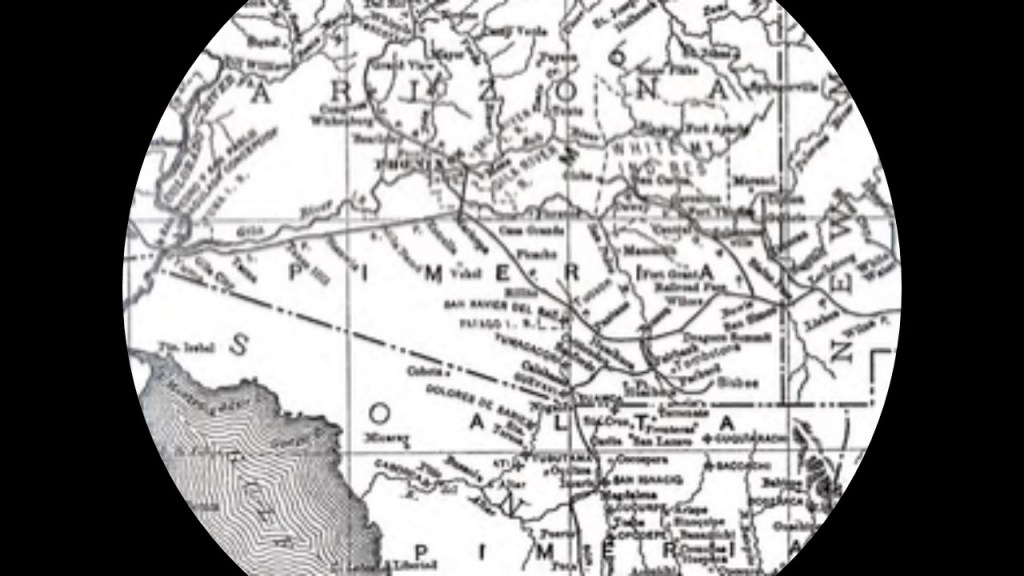
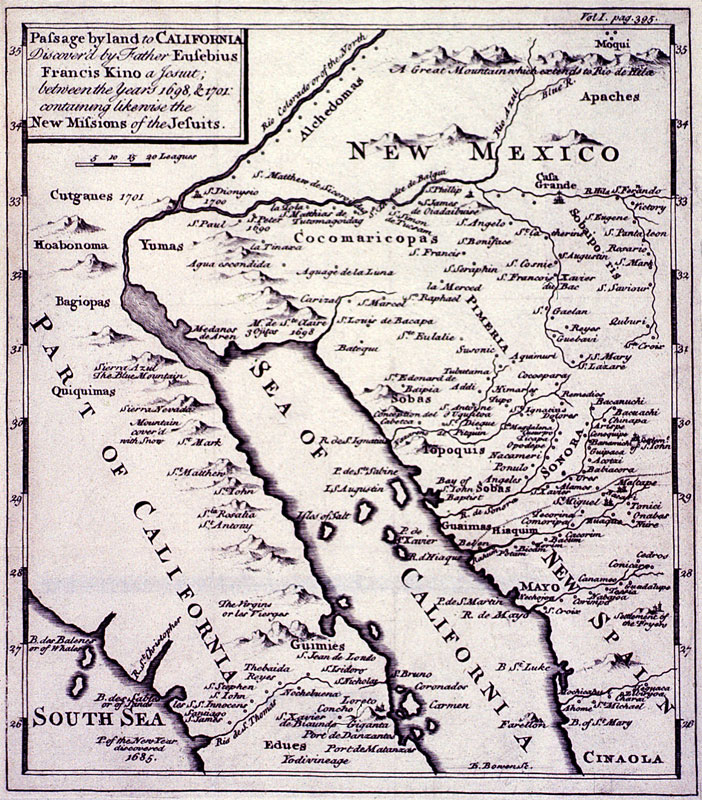
…in what was then part of the Viceroyalty of New Spain known as the Pimeria Alta, or “Upper Pima Land.”

From the moment he arrived in Pimeria Alta, he started to lead expeditions across northern Mexico, California and Arizona, following ancient trade routes, establishing missions and making maps of the region along the way.

We are told that Father Kino was important to the economic growth of the area, teaching the natives of the area to farm and raise cattle, sheep, and goats, and this his initial mission herd of 20 imported cattle grew to 70,000.

The Kino Heritage Society in Tucson is currently working on the process of getting him canonized as a saint.

Tributes to Father Kino include, besides various towns, streets, schools, monuments and geographic features being named after him:

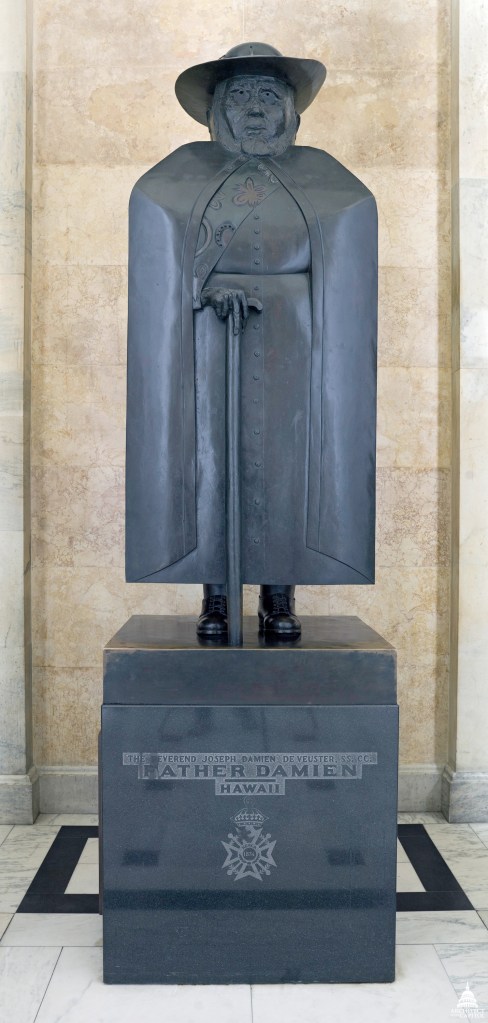
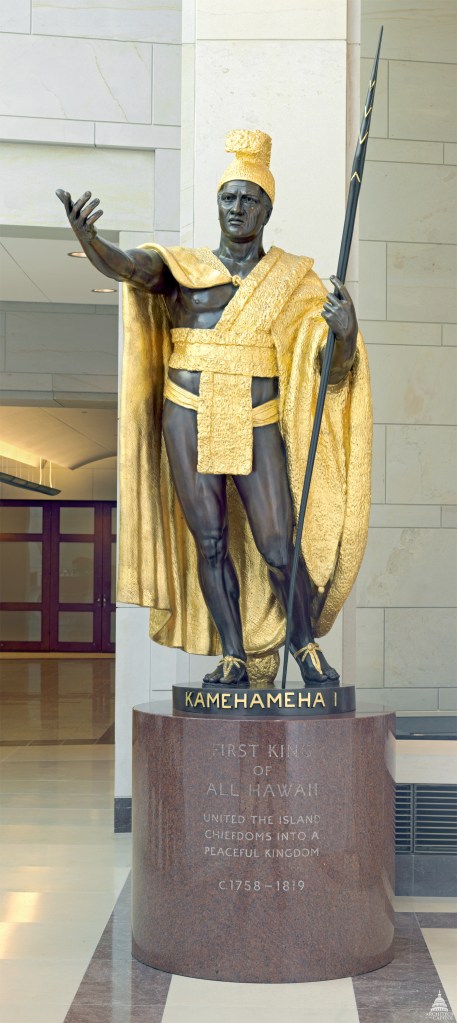
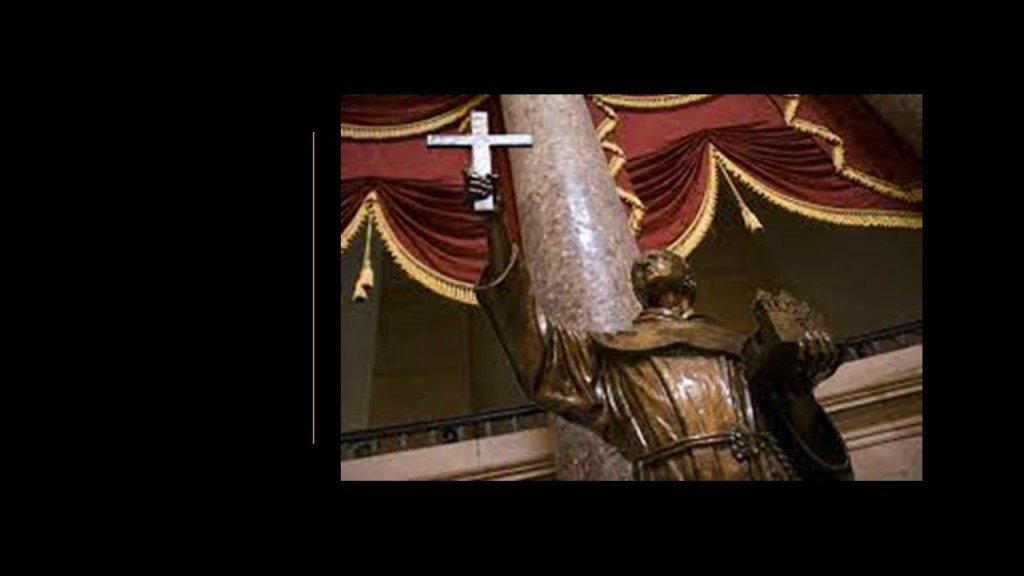
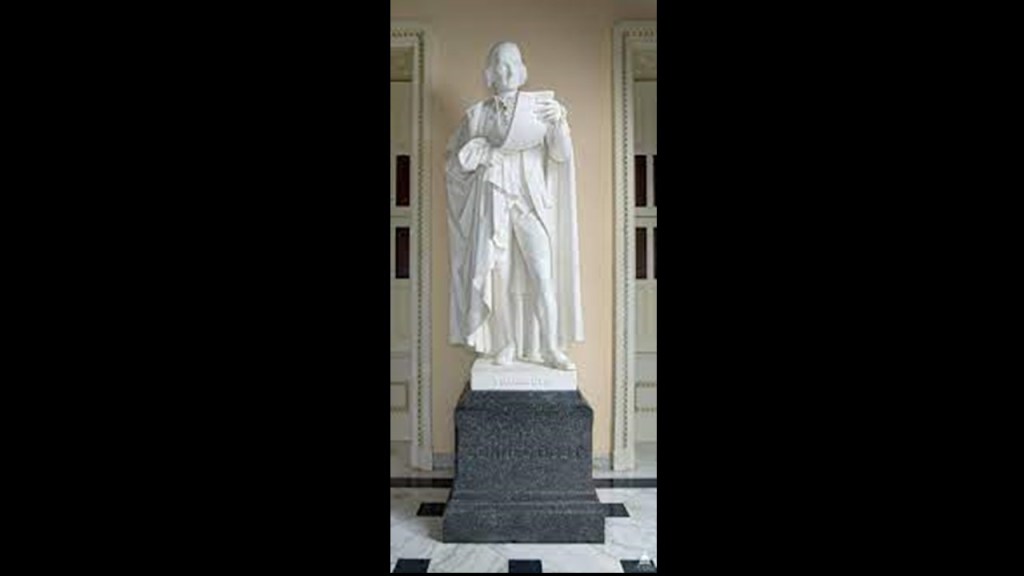
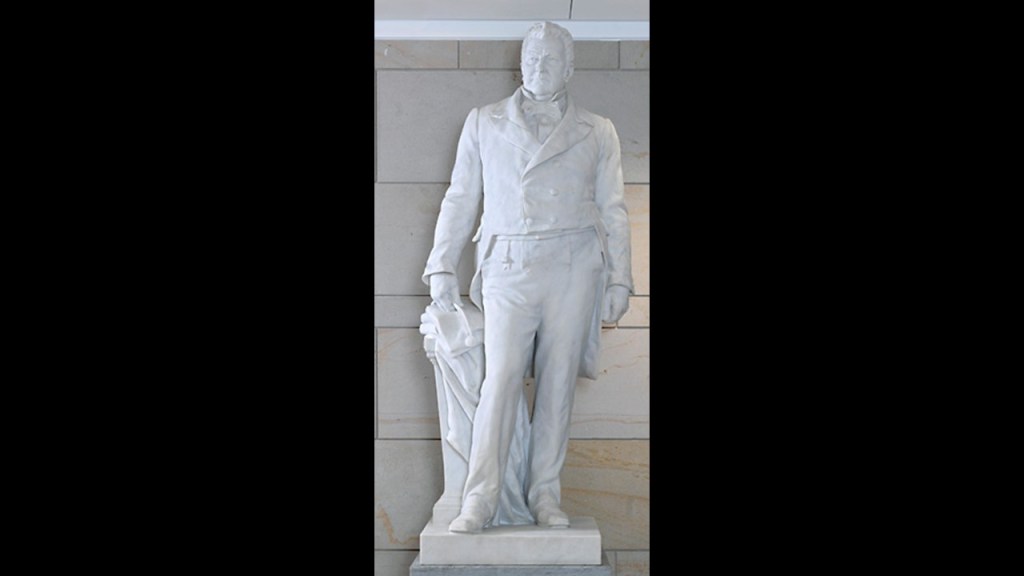
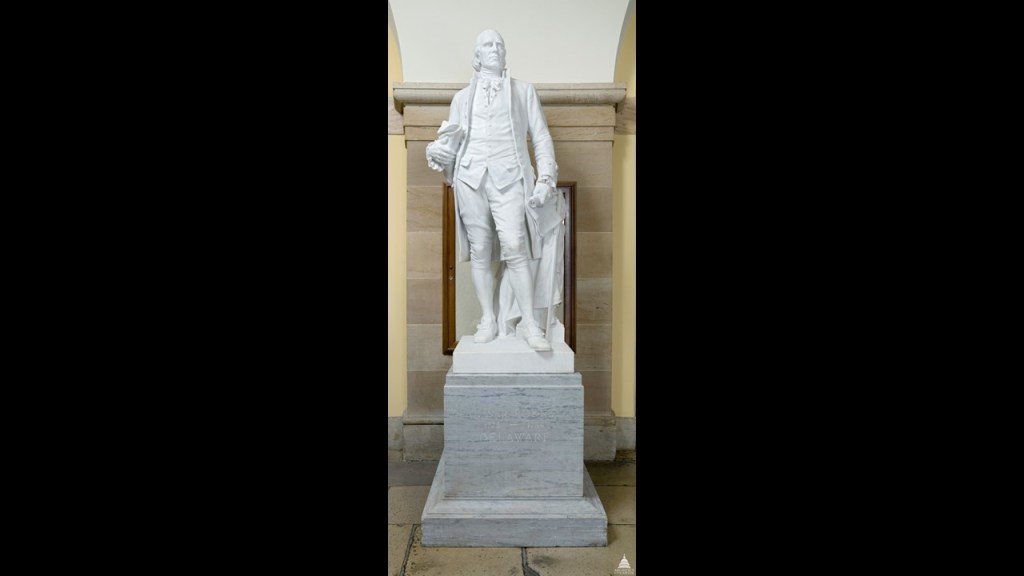
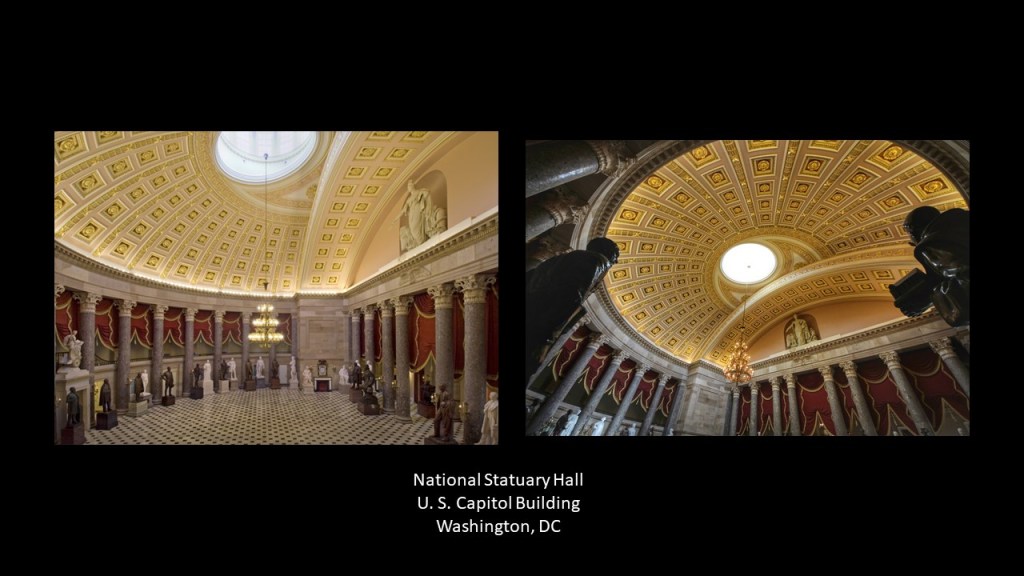
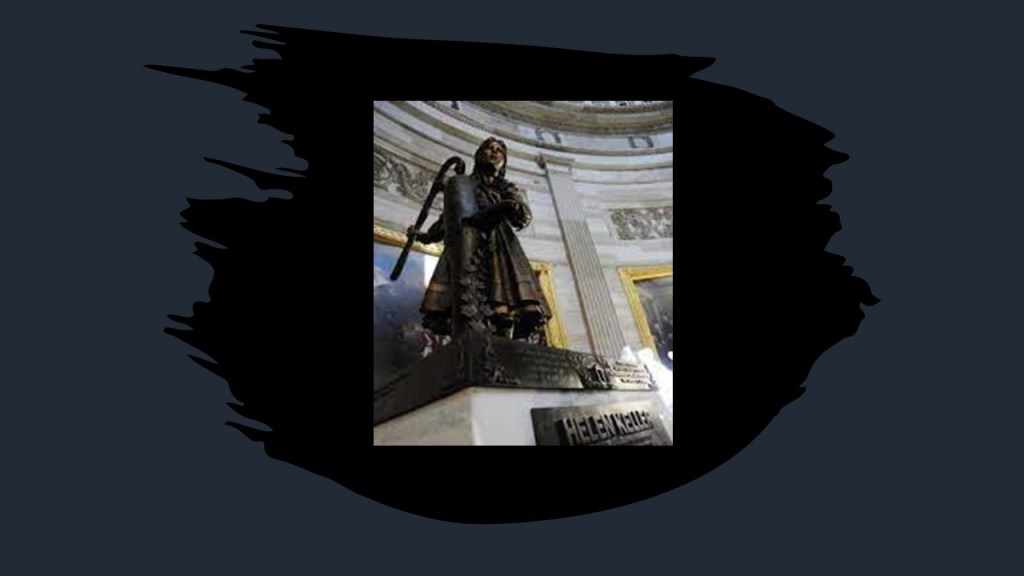
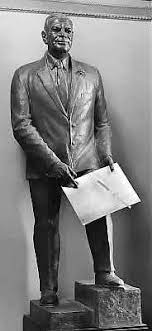
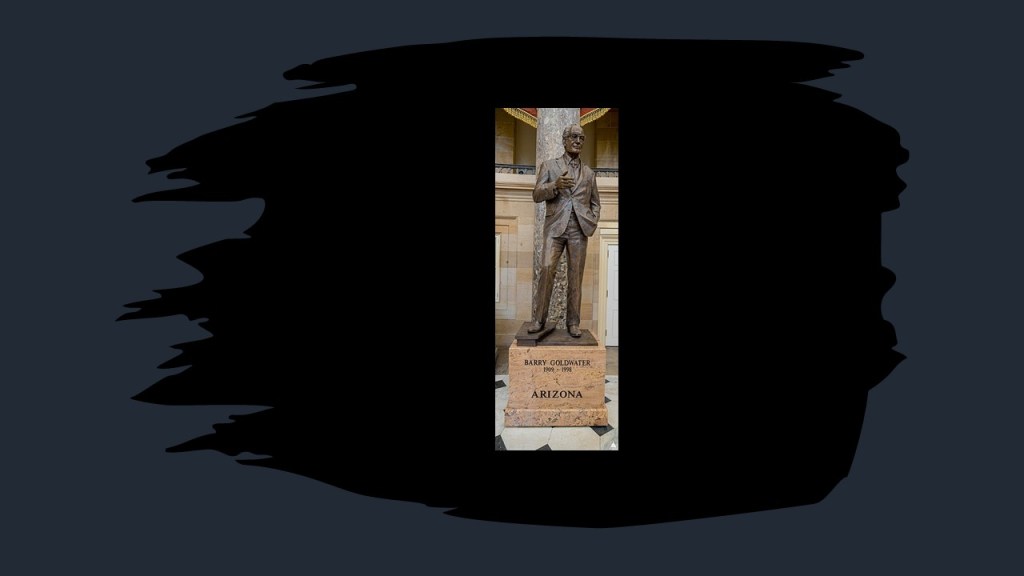
A statue in the U. S. Capitol Building’s Statuary Hall Collection…

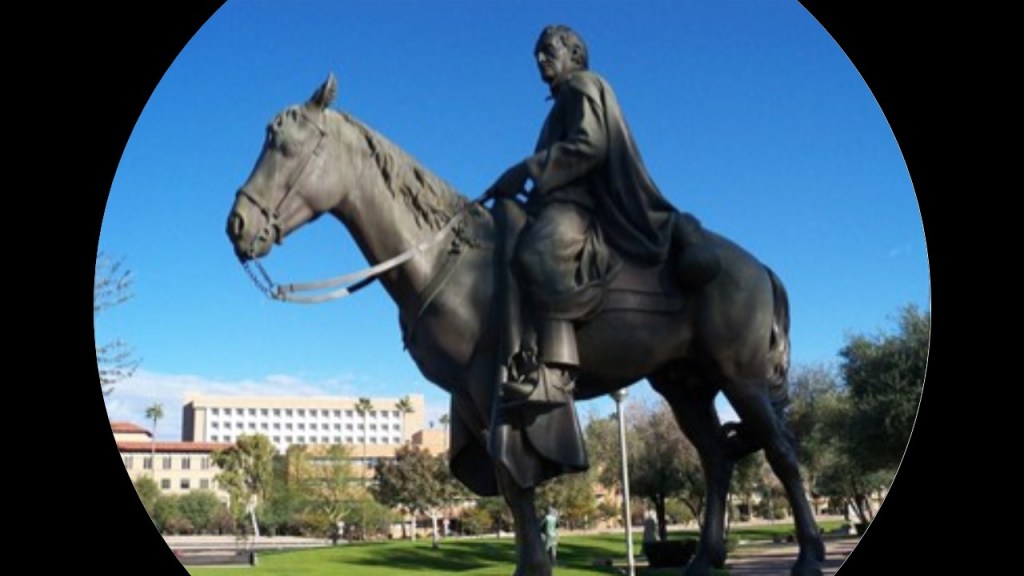
…the Wesley Bolin Memorial Plaza across from the Arizona State Capital building in Phoenix…

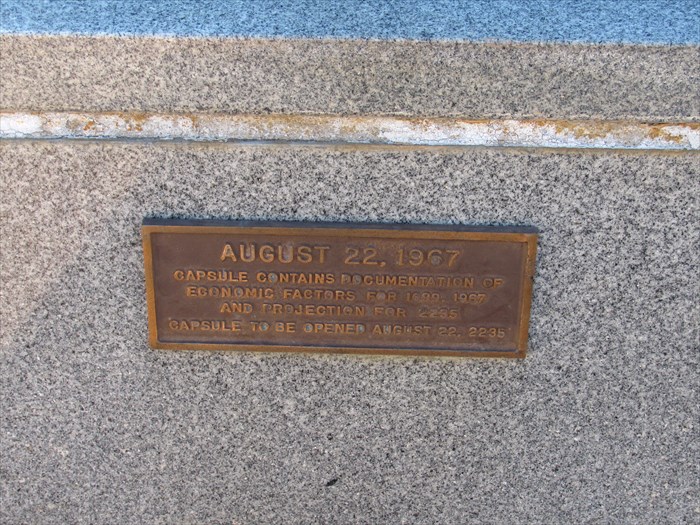
…which has a time capsule in the base placed there in 1967, and to be opened in the year 2235…

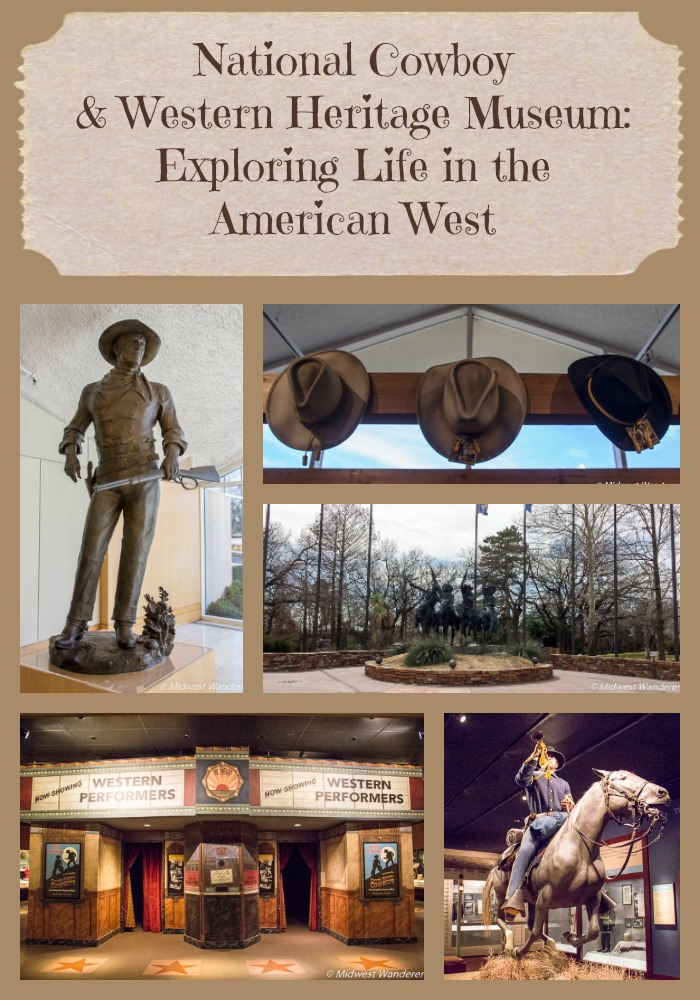
…and in 1963, Father Kino was inducted into the Hall of Great Westerners at the National Cowboy & Western Heritage Museum in Oklahoma City.

Also, interesting to note I know of at least one language, German, where the word “kino” means “movie theater.”

Now on to the main features of this post – early radio and television as “Shapers of the New Narrative.”

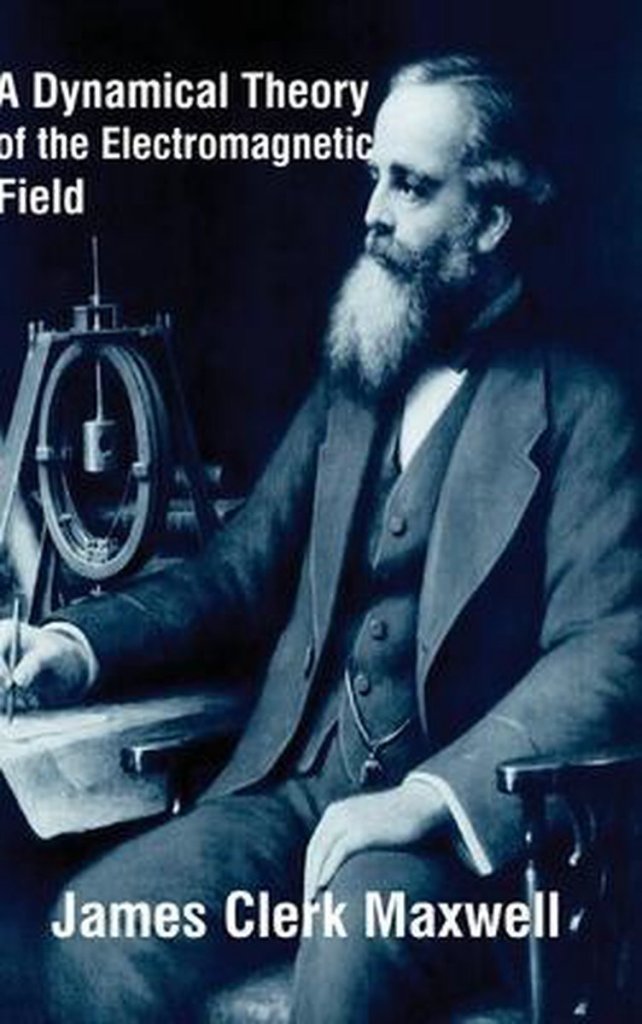
James Clerk Maxwell was the Scottish mathematician and scientist credited with the classical theory of electromagnetic radiation, and in 1865 published a book called “A Dynamical Theory of the Electromagnetic Field,” in which he demonstrated that electric and magnetic fields travel through space as waves moving at the speed of light, and his work predicted the existence of radio waves.

Maxwell was regarded as a founder of the modern field of electrical engineering.

Radio as we know it started to come into being in the late 1880s to 1920, during which time the technology of transmitting sound was developed (or recovered depending upon how you look at it).

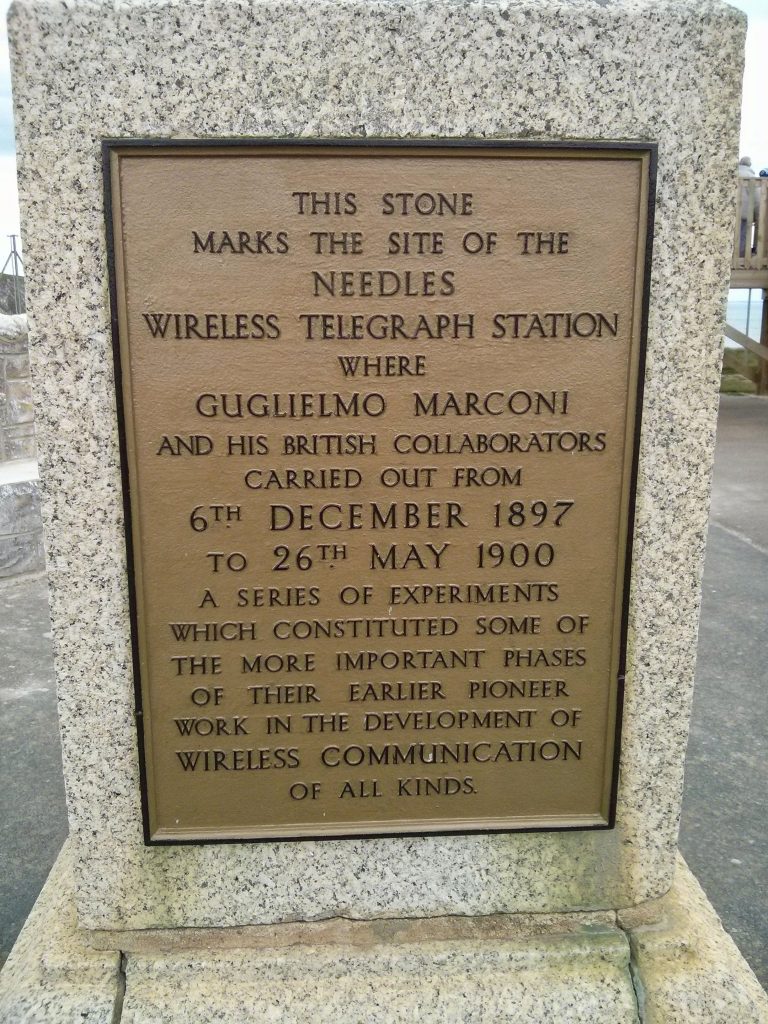
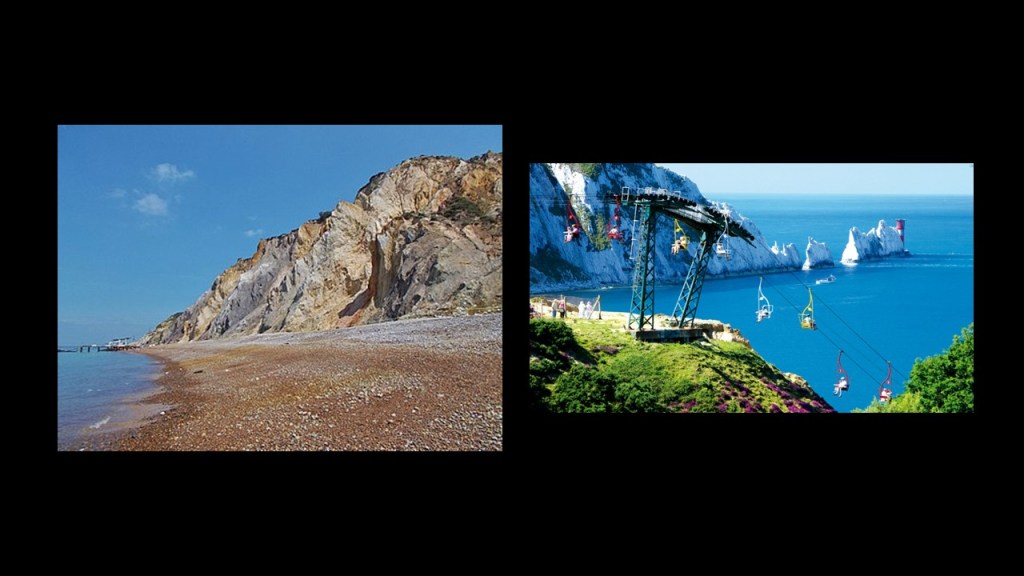
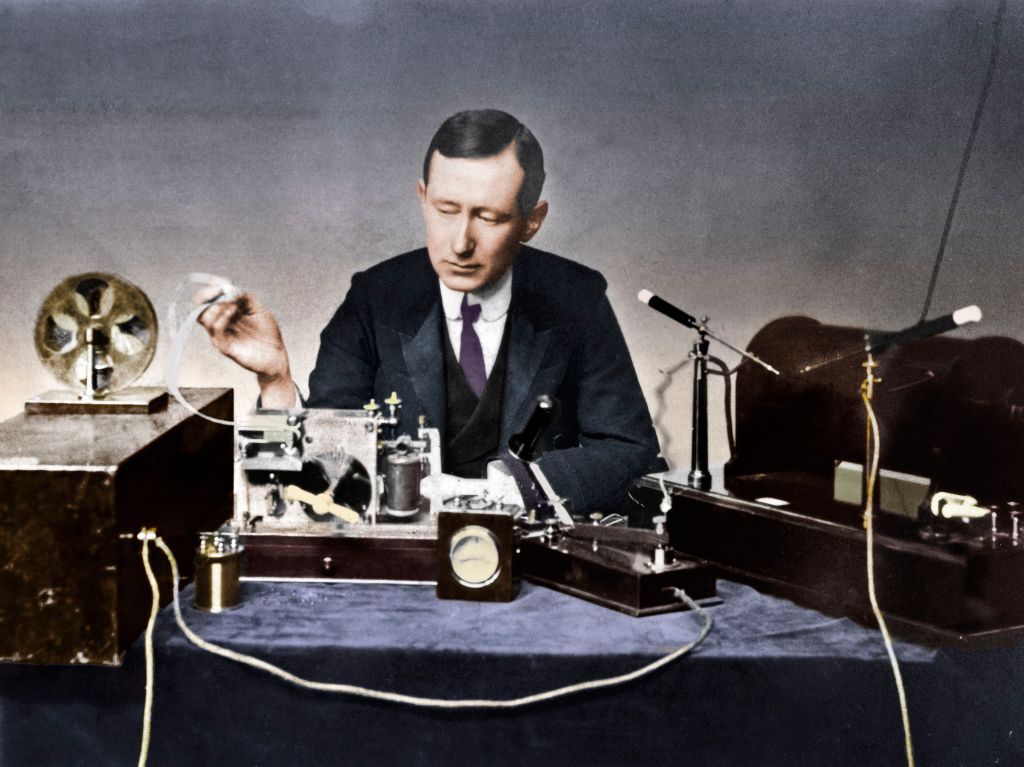
The world’s first long-distance radio signal was sent by Gugliemo Marconi from Alum Bay near The Needles on the Isle of Wight in the year 1897.

Alum Bay sand includes extremely pure white silica, an important component for enhancing radio frequency transmission.

Marconi gets the credit for the creation of the first radio wave-based wireless telegraph system that was practical, which led him to being credited as the inventor of radio, and Marconi shared a Nobel prize in Physics in 1909 with Karl Ferdinand Braun for their contributions to the development of wireless telegraphy.

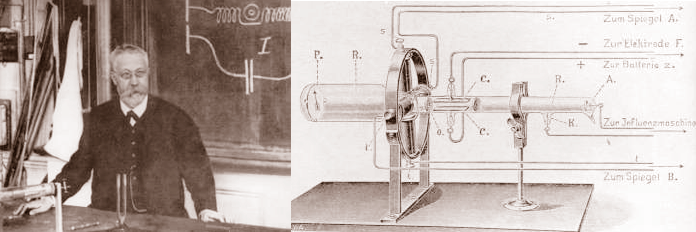
Karl Ferdinand Braun was a German electrical engineer and physicist who contributed significantly to the development of radio and television technology, including the first Cathode Ray Tube (CRT), also in 1897 like Marconi’s first long-distance radio signal.

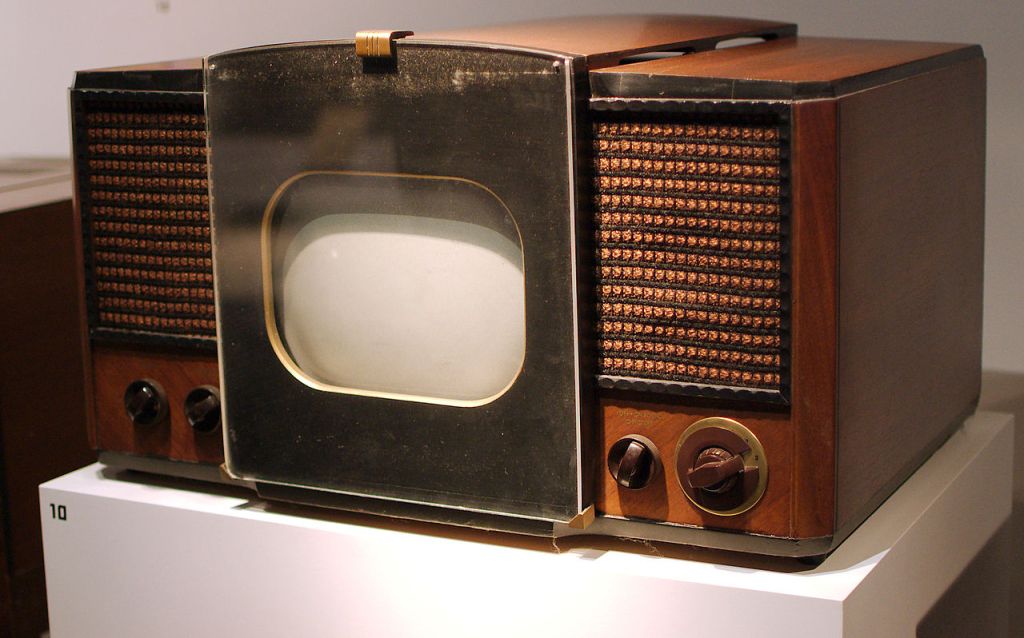
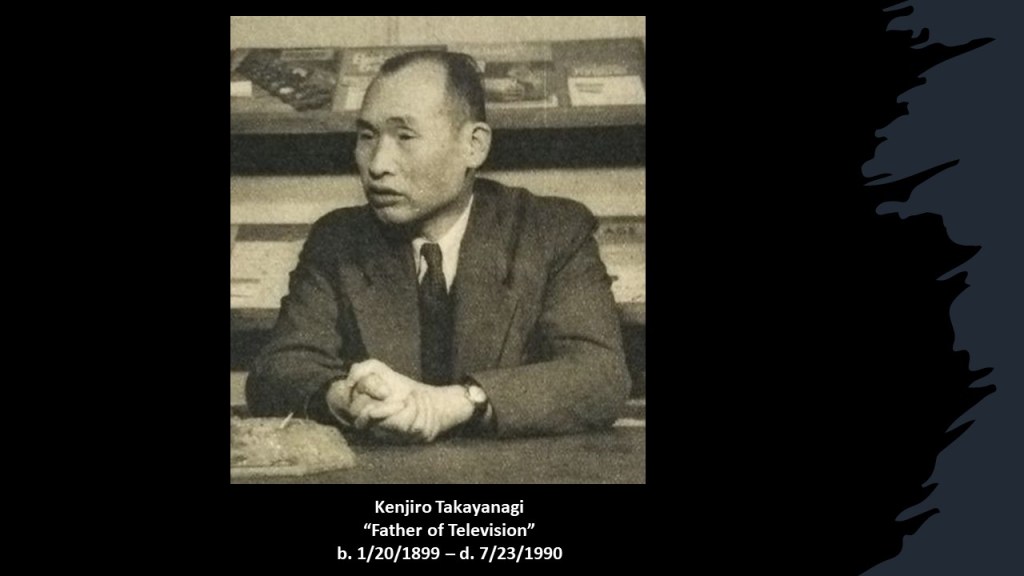
The Cathode Ray Tube was fundamental in developing the first fully-electronic television, of which the first demonstration of a television that employed a Cathode Ray Tube display was in 1926 in Japan at the Hamamatsu High School by Kenjiro Takayanagi.

Kenjiro Takayanagi, a Japanese electrical engineer, is referred to as the “Father of Television” for developing the world’s first all-electronic television receiver, though his research on creating a production model was halted by the United States after Japan’s loss in World War II.

He went on to play a role in the development of television at the Japanese Broadcasting Corporation and at JVC, or the Victor Company of Japan, and was involved in the development of color television and video tape recorders.

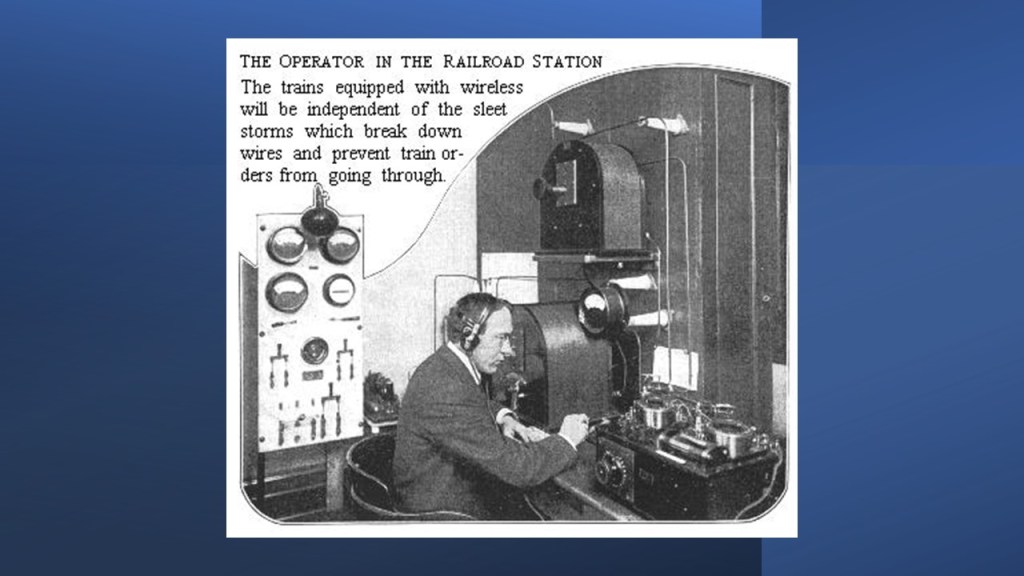
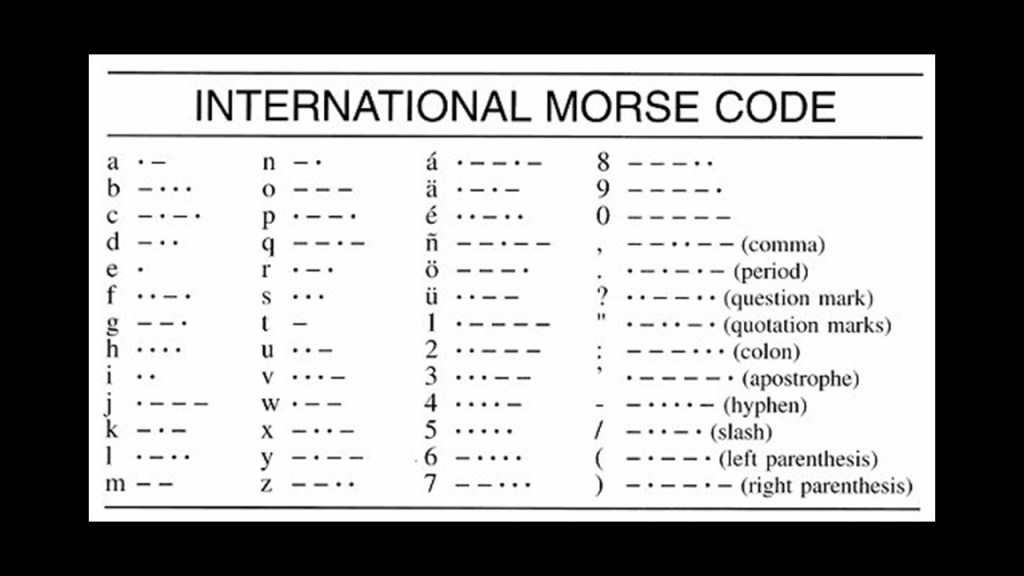
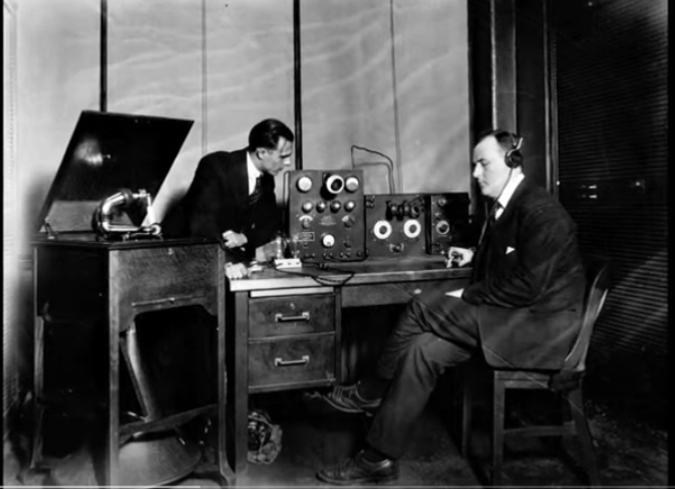
The early days of radio technology included communication by wireless telegraph, in which an operator tapped on a switch which caused the radio transmitter to produce a series of pulses of radio waves which spelled out messages in Morse Code.

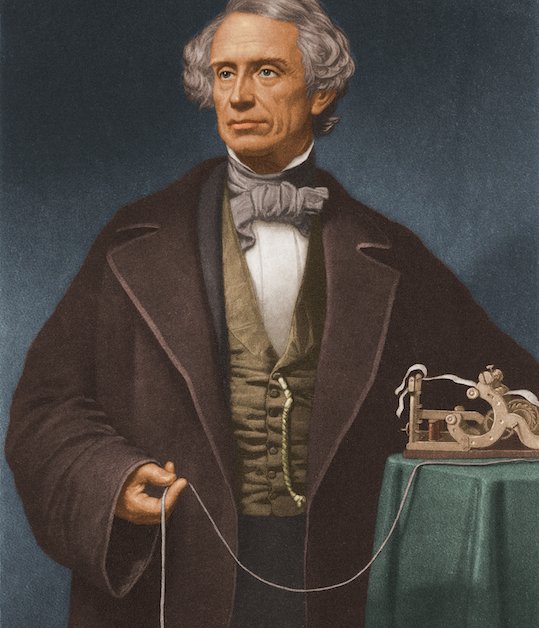
Samuel F. B. Morse was an American painter and inventor of the 19th-century…

…who contributed to the development of the telegraphic code which bears his name.

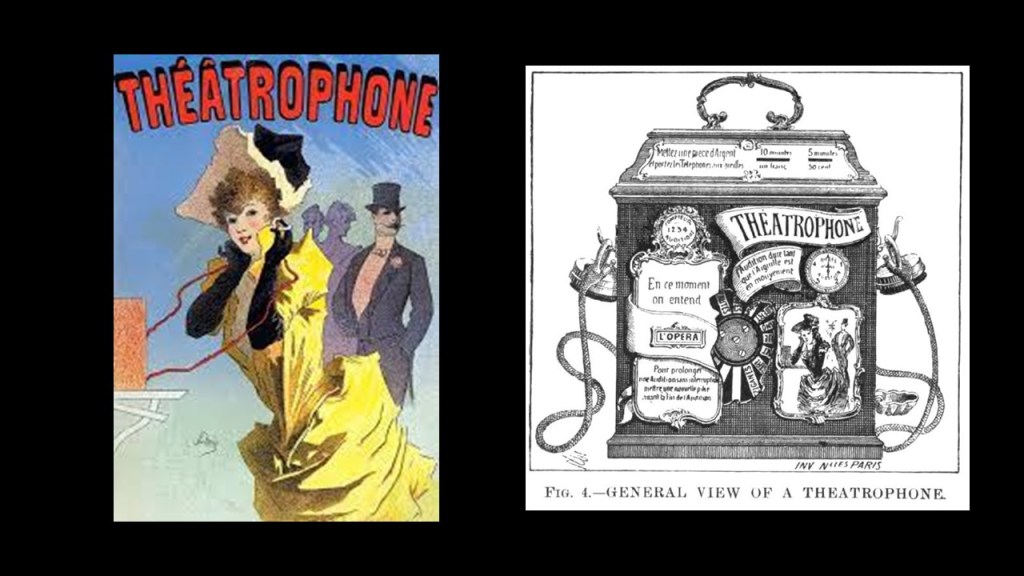
The precedent before the radio for broadcasts of live drama, comedy, music and news were called “Theatrophones” which were commercially introduced in Paris in 1890 and available through the early 1930’s.

It was developed as a subscriber service in Europe that allowed people to listen to such things as opera and theater performances over the telephone lines.

————-

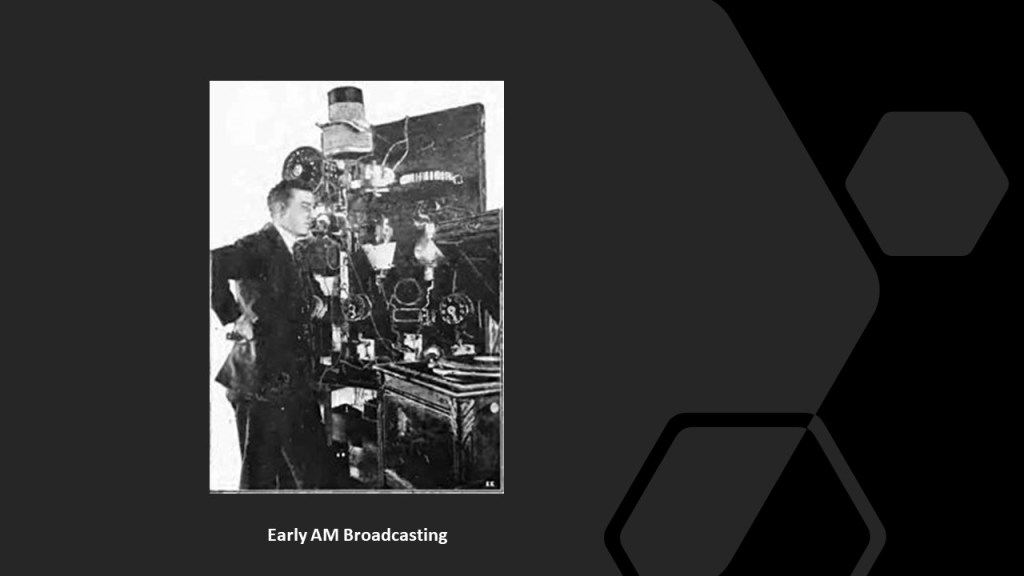
Between 1900 and 1920, the first technology for transmitting sound by radio that was developed, Amplitude Modulation (AM), was used for radio broadcasts.

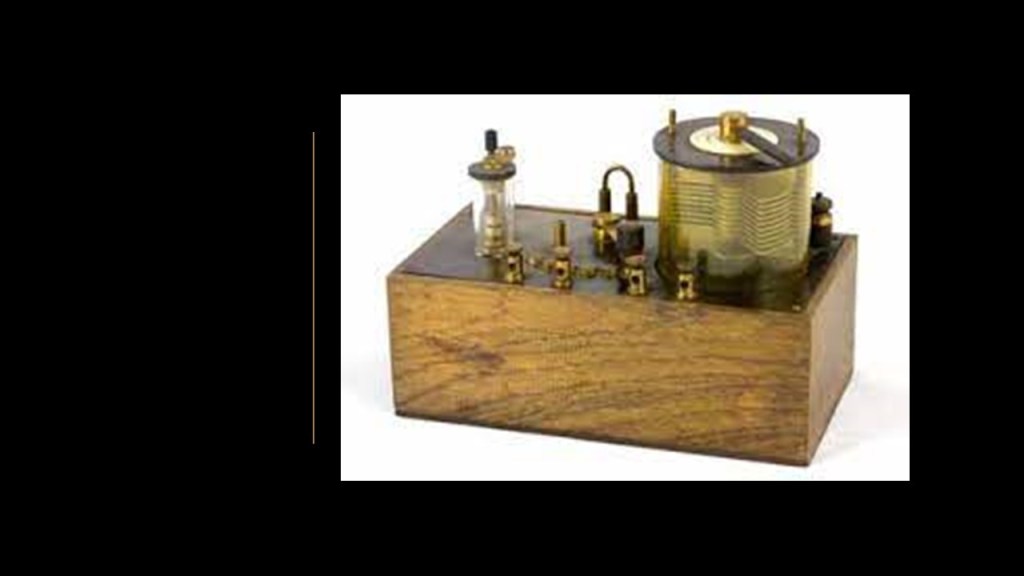
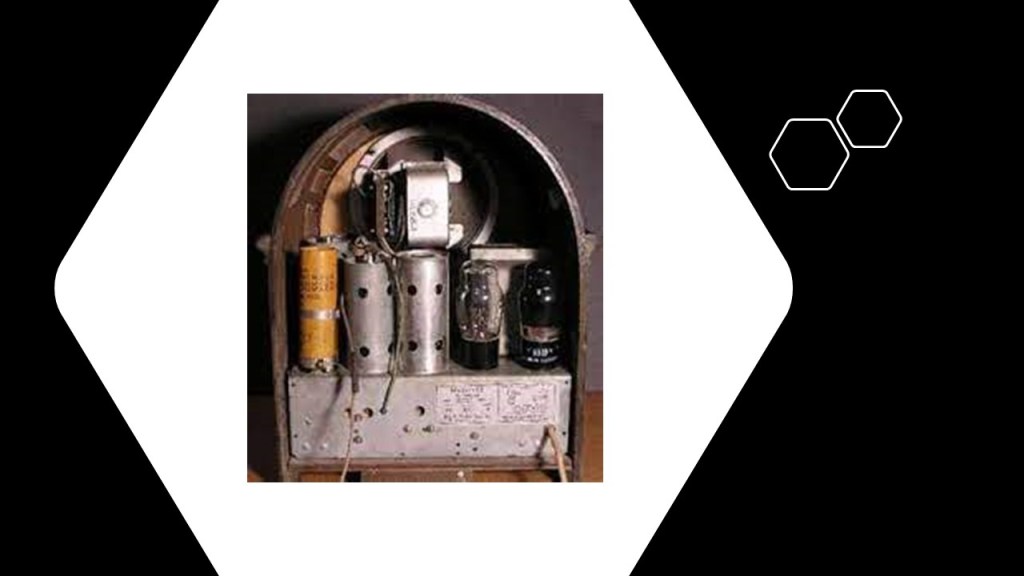
Crystal radios were the first widely-used type of radio receiver, and the main type used during the wireless telegraphy era.

Not needing external power, crystal radios use the power of the radio signal to produce sound using a component called a “crystal detector,” made from a piece of crystalline mineral like galena, and could be made with a few inexpensive parts.

Said to have been sold and homemade in the millions, the crystal radio was a major driving force in the introduction of radio to the public and contributed to the development of radio as an entertainment medium with the beginning of radio broadcasting in 1920.

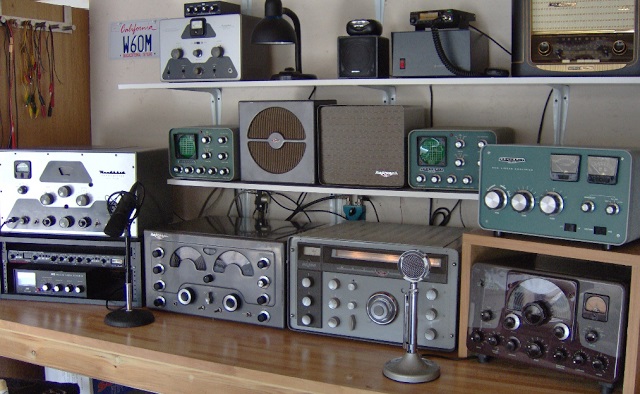
Mass radio communication came into fashion after the sinking of the Titanic on April 15th of 1912, inspired by the work of amateur, also known as “ham,” radio operators, which used radio for the non-commercial exchange of messages, including emergency communications.

Then World War I brought big developments in radio, which took place between July 28th of 1914 and November 11th of 1918, as it was critical for wartime communications.

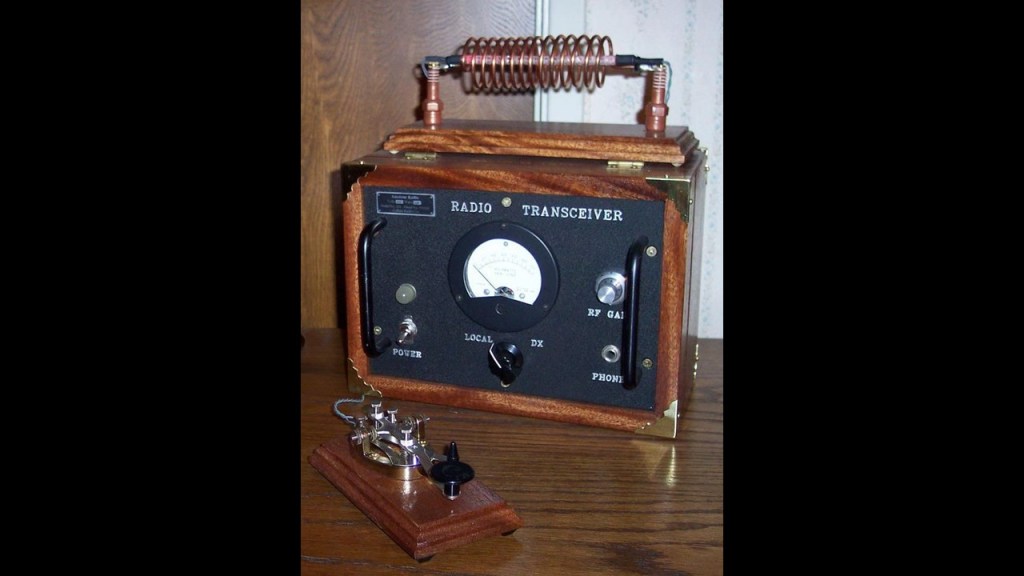
Developments like the introduction of the transceiver…

…and vacuum tube technology.

On August 31st of 1920, the first radio news program was broadcast on local election results in Detroit on the station 8MK, which came to be known as WWJ.

It was owned and operated by the Detroit News, the first newspaper to have a radio station.

8MK?

Like MKUltra?

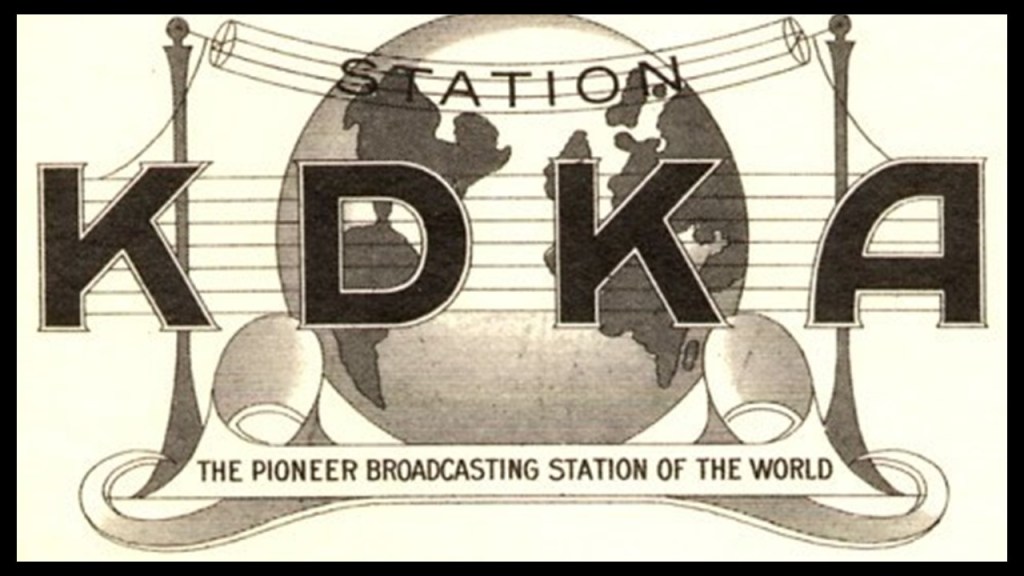
In the same year of 1920, on November 2nd, the first commercial radio station, KDKA, was established in Pittsburgh, Pennsylvania, in time to broadcast the results of the 1920 Warren G. Harding-James M. Cox Presidential election race before they could read it in the newspaper.

The “Golden Age of Radio” was the time period when radio, the first electronic mass media technology, was dominant in home entertainment, beginning with the birth of commercial radio broadcasting in the early 1920s, and lasting through the 1950s, when television replaced radio as the preferred choice for scripted programming, variety, and dramatic shows.

The ability for multiple radio stations to simultaneously broadcast the same content came about with the development of radio networks, and by early 1922, AT & T announced plans for the development of the first radio network using its telephone lines to transmit content, and for the development of advertisement-supported broadcasting on the radio stations it owned, with WEAF becoming the first commercially-licensed radio station in New York City on March 2nd of 1922.

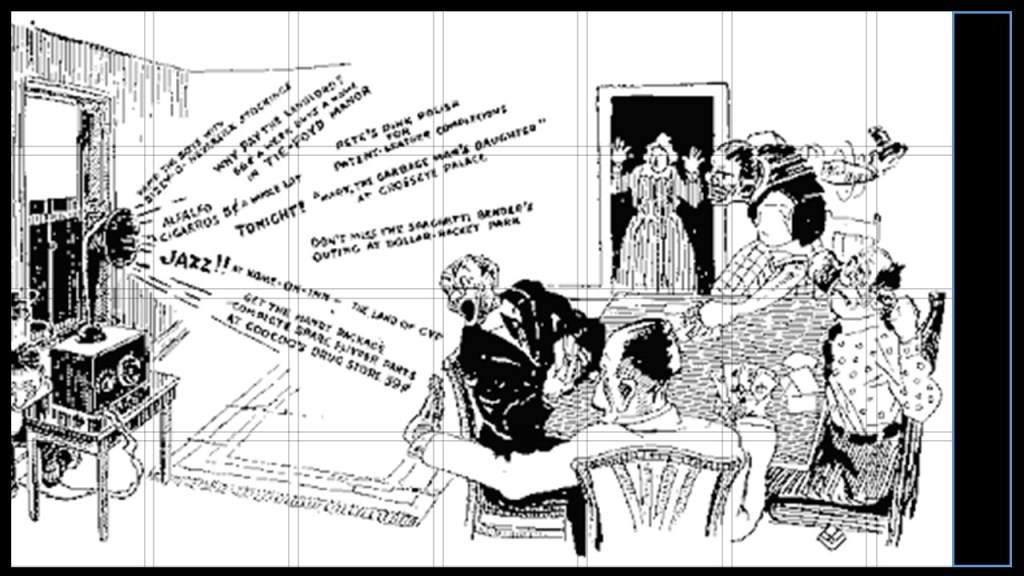
WEAF began selling time for “Toll Broadcasting,” which allowed anyone to use a licensed AT & T radio station to broadcast any message of their choosing for a fee based on time-of-day and duration, and the idea of selling blocks of times to advertisers to fund broadcasts came from here.

In 1926, AT & T decided to leave the broadcasting field, we are told, and sold its entire network organization to a group headed by the Radio Corporation of America (RCA), which in turn used the assets to form the National Broadcasting Company, and WEAF eventually became WNBC in 1946, which was on the air until October of 1988.

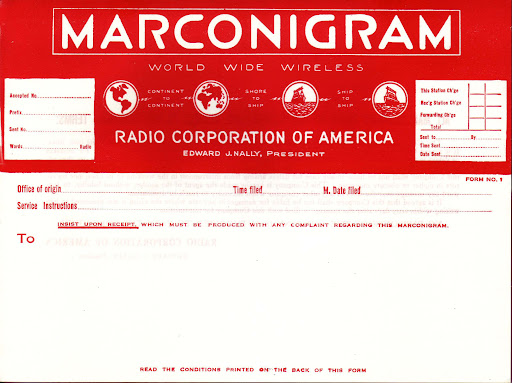
Long story short, RCA was founded as a patent trust in 1919 as a reorganization of the Marconi Wireless Telegraph Company of America, and was owned in partnership by General Electric; Westinghouse; AT & T; and the United Fruit Company.

RCA became an independent company after the partners were required to divest their ownership as part of a government antitrust suit, and became the dominant electronics and communications firm in the United States for over 50-years.

The Federal Radio Commission (FRC) was formed as an oversight body after the U. S. Congress passed the Radio Act of 1927, which increased the government’s regulatory powers over radio communication, and functioned as such…

…until it was replaced by the Federal Communications Commission (FCC) in 1934.

The capacity of radio to get information to people created the new formats like radio news; headlines; remote reporting; sidewalk interviews; panel discussions; and weather and farm reports.

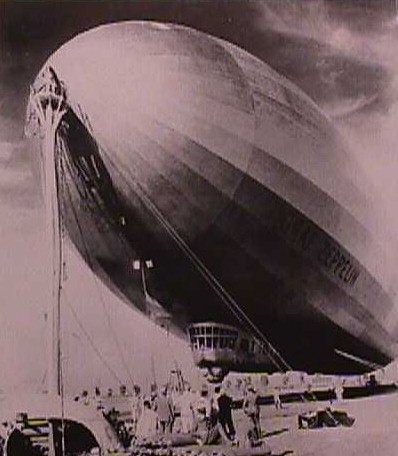
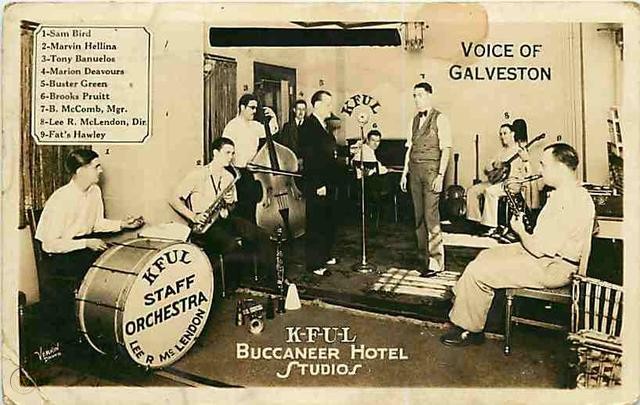
News programs included things like the radio station KFUL in Galveston, Texas, doing a special broadcast in August of 1929 about the world flight of the German Airship Graf Zeppelin, said to have been the only airship to fly around the world, and which was funded by the multimillionaire newspaper publisher, William Randolph Hearst, who known in history for yellow journalism, sensationalism, and emotional human-interest stories.

A local concert orchestra would play “appropriate” music, and an announcer would give details about each of the countries being traversed.

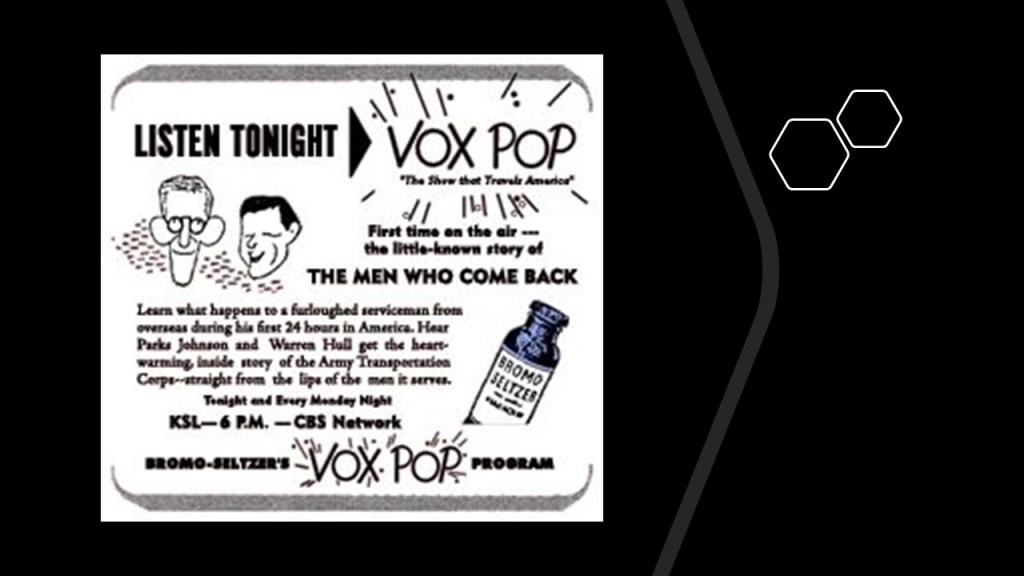
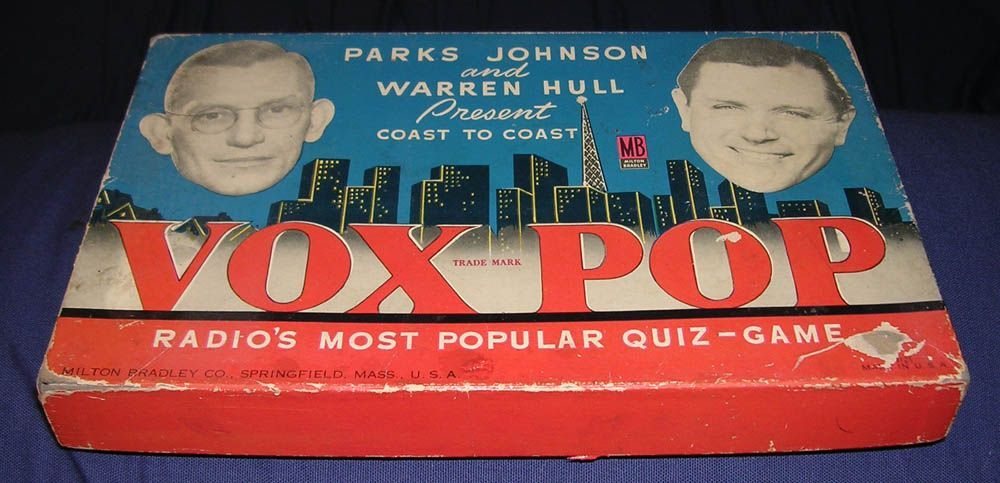
The Vox Pop radio program, also called “Sidewalk Interviews” and “Voice of the People,” broadcast “man in the street” interviews, quizzes, and human interest features from the early 1930s to the late 1940s…

…and was turned into a board game by Milton Bradley in 1938.

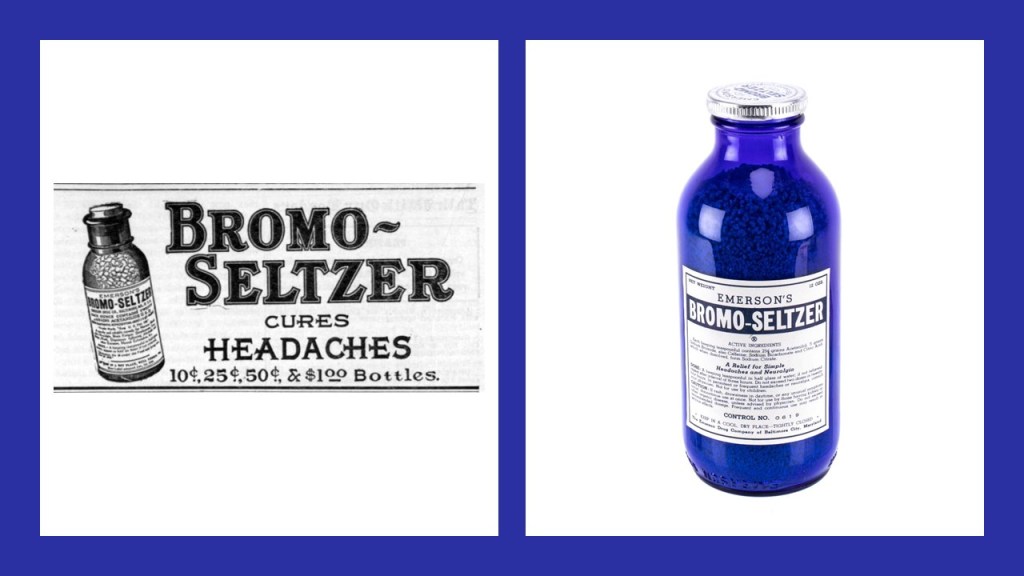
A major advertising sponsor of the Vox Pop radio program was Bromo-Seltzer, an early brand of antacid that was used to relieve the pain of heartburn, upset stomach, indigestion, and had a sedative effect that helped relieve hangovers.

The product took its name from a component of the original formula called sodium bromide.

Bromides are a class of tranquilizers that were withdrawn from the U. S. market in 1975 because of their toxicity.

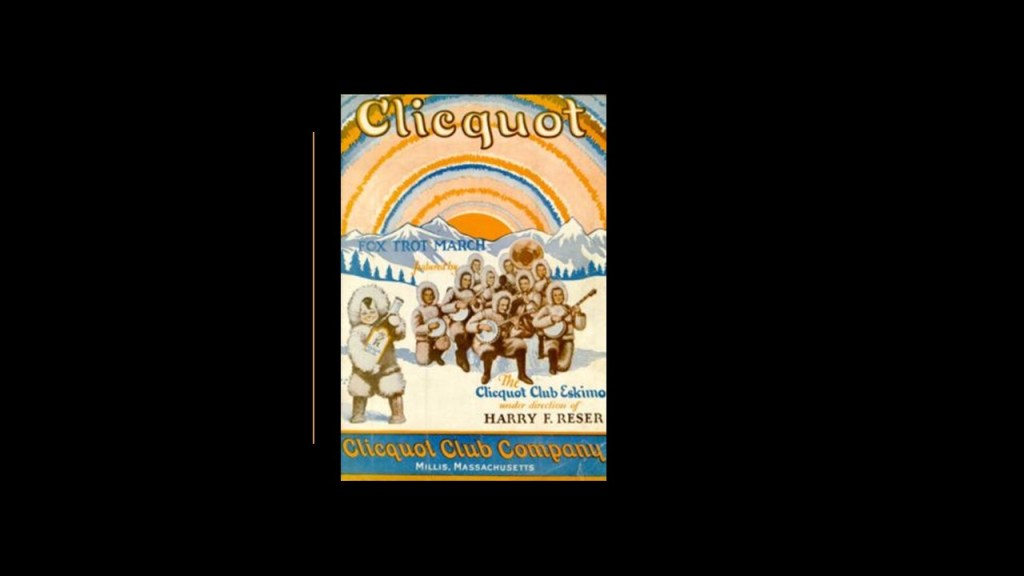
Most early radio sponsorships involved the selling of the naming rights to the program.

More examples of this advertising practice included:

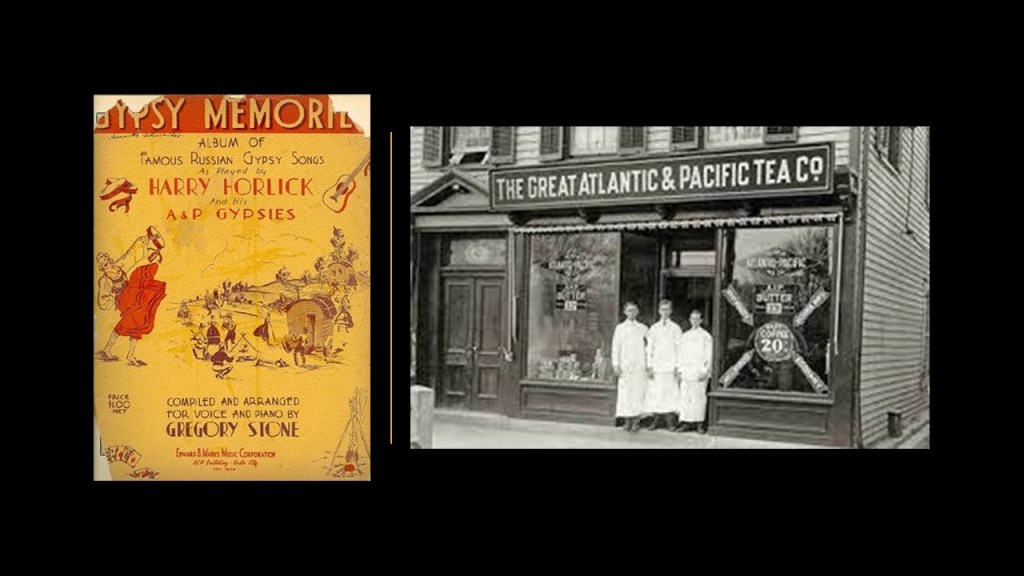
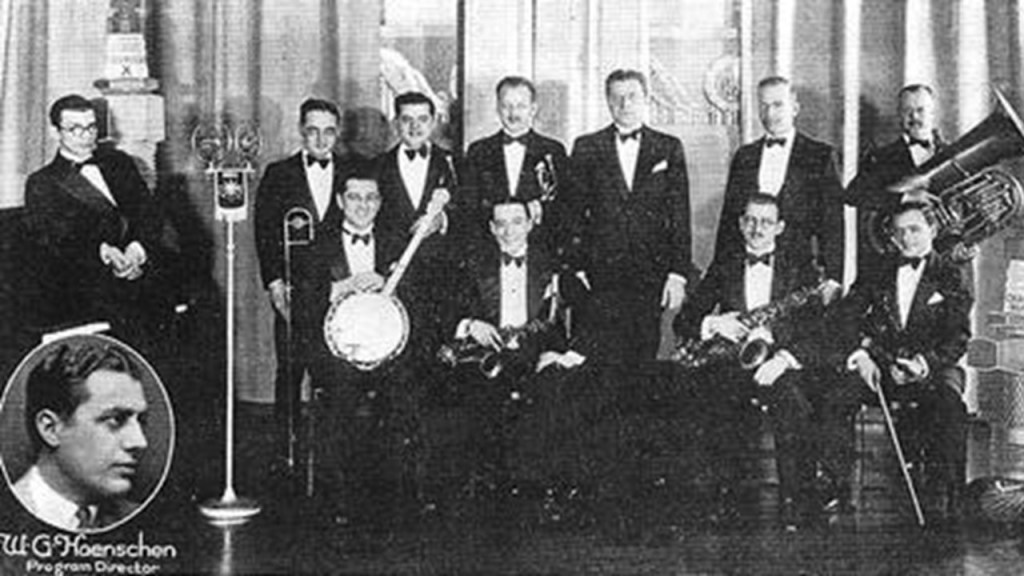
The “A & P Gypsies,” a musical series on radio featuring gypsy folk music that began in 1924…

…the “Champion Spark Plug Hour” music program, broadcast on New York’s WJZ and WGY during the late 1920s and early 1930s…

…and the “Cliquot Club Eskimos,” a popular musical variety show that started in 1923, which featured a banjo orchestra directed by Harry Reser.

“Cliquot Club” was a popular ginger ale that was “Canada Dry’s” main rival, until the Cliquot Club Company was bought by Cott Beverage Company in 1965 and dissolved in 1980.

Country music was popular, and in 1924, the “National Barn Dance” radio program began in Chicago on the WLS radio station and was picked up by NBC Radio in 1933.

The National Barn Dance radio program had such sponsors as “Alka-Seltzer” -remember “plop-plop-fizz-fizz-oh what a relief it is…”

…another antacid and mild pain reliever available on the market, which still exists today, and has been owned by Bayer Pharmaceuticals since 1978…

…the very same company which acquired Monsanto in 2018 for $66-billion in cash.

The National Barn Dance went on-the-air in Nashville, Tennessee, in 1925, and was renamed the “Grand Ole Opry” in 1927, and NBC carried portions of the program from 1944 to 1956, and which apparently had the Prince Albert in a can cigarette and pipe tobacco as one of its early sponsors.

The Ryman Auditorium in downtown Nashville was the home of the Grand Ole Opry from 31-years.

Known as the “Mother Church of Country Music…”

…the Ryman Auditorium became the home of the “Grand Ole Opry” show from 1943 until March 15th of 1974.

This is a good place to mention Radio City Music Hall from this same era.

It was said to have been built in the late 1920’s and opened in 1932 as part of Rockefeller Center in New York City, with what was at the time the world’s largest auditorium…

…and is well-known for the “Rockettes,” the world-famous precision-dance company.

The theater was said to have been conceived of by John D. Rockefeller Jr as the cornerstone of the Rockefeller Complex he was building, and was built in partnership with the Radio Corporation of America (RCA), which planned a mass media complex called “Radio City” on the west side of Rockefeller Center.

Radio attracted top comedians from Hollywood and Vaudeville, ranging in style from burlesque acts like Abbott & Costello…

…to the understated comedy of Jack Benny…

…to the satirical southern humor of Minnie Pearl…

…to the voice characterizations of Mel Blanc, known as the “Man of a Thousand Voices,” which included Bugs Bunny, Daffy Duck, and Porky Pig.

Interesting to note that Mel Blanc was also a Shriner, like John Wayne and Roy Rogers, and many other famous entertainers of the day.

Other radio shows were adapted from popular comic strips, like Dick Tracy…

…Little Orphan Annie starting in 1930, based on comic strip inspired by the 1885 poem “Little Orphant Annie” by James Whitcomb Riley…

…and Popeye the Sailor.

Soap Operas also got their start in the early days of radio.

The first daytime drama-installment series, was widely regarded to be a show called “Painted Dreams,” which got its start in October of 1930 on the Chicago radio station WGN, and ran for thirteen-years, through July of 1943, and was about the relationship of Irish-American widow Mother Moynihan and her unmarried daughter.

The first nationally-broadcast daytime serial drama about three women and their families who lived in a small-town duplex was “Clara, Lu, ‘n Em,” which started on February 15th of 1932, and “Super Suds” was their first program sponsor.

As daytime serial programs were becoming popular in the 1930s, they soon became known as “soap operas” because many of them were sponsored by soap products and detergents.

That was for the moms.

For the kids, programming included a late afternoon line-up of adventural serial programs like “Bobby Benson and the B-Bar-B Riders,” about the adventures of an orphaned 12-year-old who inherited his parents’ ranch after they died…”

…and “Jack Armstrong, the All-American Boy,” created by General Mills to promote Wheaties, about a fictitious “everyboy” whom listeners would emulate.

Radio plays were presented on such programs as Orson Welle’s Mercury Theater, where the infamous Halloween broadcast on October 30th of 1938 of “The War of the Worlds,”an adaptation of H. G. Wells’ 1898 novel, was formatted to sound like a breaking-news broadcast about a hostile alien invasion, creating mass panic within the listening public, and cited as resulting in at least seven deaths.

Game shows also saw their beginnings in radio.

“Information Please” was one of the first, starting in 1938…

…and “Dr. I. Q.” in 1939 was one of the first major game show successes.

Radio was the most popular medium during World War II.

It helped entertain and inform the public, and encouraged citizens to join in the war effort.

The accessibility and availability of radio meant it fueled propaganda and could reach large numbers of people.

The World War II radio show You Can’t Do Business with Hitler with John Flynn and Virginia Moore was a series of programs that was broadcast at least once/week by more than 790 radio stations in the United States.

It was written and produced by the radio section of the Office of War Information (OWI).

Edward R. Murrow first gained prominence as a news reporter covering the nightly bombing raids of London on the radio.

By 1947, according to a C. E. Hooper Survey, which measured radio ratings during the “Golden Age of Radio,” 82-out-of-100 families were found to be radio listeners.

Television gradually superseded radio as the preferred choice for programming, variety, and dramatic shows in the 1950s.

The world’s first television stations started showing up in America in the late 1920s and early 1930s.

The first mechanical television station was W3XK, and it was operated by the Charles Jenkins Laboratories in Wheaton, Maryland, which was granted the first commercial television license in the United States.

Its first broadcast to the general public was aired on July 2nd of 1928.

The way to view television at the time was through mechanical television sets.

Mechanical television relied on a mechanical scanning device, such as a rotating device with holes in it, to scan and generate the video signal, and a similar mechanical device at the receiver to display the picture.

It would take until 1938 before the American television sets were produced and released commercially, after which time they were an instant hit.

The first television commercial was broadcast before a baseball game in New York on July 1st of 1941 on NBC for a Bulova watch, and lasted ten-seconds.

A “watch?” Like to “watch” TV?

Hmmmm.

Color television systems first began to be seriously considered after World War II, as Black & White television was considered old and it was time to do something new, even though the concepts for color television had received attention in 1904 and 1925.

The industry giants CBS and RCA engaged in a color television war at this time to be the first to market a successful color television.

In 1951, CBS came out with its version of a color television first.

It was a mechanical television, and not compatible with Black & White television sets already in use across the country.

Regardless, the FCC at first declared the CBS model to be the national standard for color television.

RCA continued to develop their own color television system that would be compatible with already existing RCA Black & White television sets.

The FCC acknowledged the RCA system was better than the CBS system in 1953, and starting at the beginning of 1954, color RCA systems were sold across America, though few people owned color television sets between 1954 and 1965.

Starting in the 1950s, television turned into the major form of communication that it still is today.

Notable dates in the history of modern television include:

The sit-com “I Love Lucy Show” was born in 1951, and became the number one show in America for four of its six seasons.

It was sponsored by Philip Morris cigarettes.

Bob Hope took his comedy from radio to television when “The Bob Hope Show,” sponsored by the Timex “watch” company this time, and it debuted in October of 1952.

By the end of 1952, there were an estimated 20-million television sets in American homes, an increase of 33% from the previous year.

NBC television launched “The Tonight Show” in 1954, with comedian Steve Allen.

In 1958, 525 cable television systems across the United States served almost a half-a-million customers, and in 1964, the FCC regulated cable television for the first time.

Four debates between John F. Kennedy and Richard Nixon were broadcast in 1960, and forever changed the way presidents would campaign.

Astronaut Neil Armstrong in the Apollo 11 Mission walked on the moon for the first time in 1969 as millions of viewers watched live on network television.

Ted Turner launched CNN in 1980, a channel devoted to showcasing the news 24-hours/day.

Digital satellite dishes hit the market in 1996…

…and the first DVD was introduced in 2000.

Flat screen and HD Televisions were introduced in 2005, and became affordable for the general public in 2006 to have bigger television screens displaying clearer and crisper pictures.

You get the idea. Bigger and more of is better for the buyer. Right?

But the Latin phrase “Caveat Emptor,” or in English “Let the Buyer Beware,” is well-known to us in our culture.

That being said, how big of a stretch is it to believe that the all the technology needed for radio and television was fast-tracked in order to program Humanity into, among other things, accepting a virtual reality existence as a normal life through these very powerful “programming” mechanisms from the very beginning?

The reason why is now becoming clear and is literally at our doorstep, ringing the door-bell, and waiting to be let in the house.

Choose what you want your future to be wisely.

Do you want your future to be a virtual reality world like Facebook-turned-Metaverse that has been planned for us by beings that do not have our best interests at heart, and which we have been programmed to accept for a very long time…

…or do you want to live a full-life as a true human being with a full range of emotions, experiences, blessings and gifts, and to grow as the powerful spiritual being that you are as the master of your fate and the captain of your soul?

Shapers of the New Narrative – Part 2 Bread and Circuses

This is the second part of what is now going to be a 3-part series because there is alway more to find out about how we came to the place where we are now in time related to how the new narrative was shaped.

I have chosen the title for this part of the series based on the remarks attributed in our historical narrative to the first-century Roman poet Juvenal, who said in one of his poems a phrase that is commonly interpreted as: “Two things only the people anxiously desire: bread and circuses.”

The phrase “bread and circuses” has come down to us as meaning the cultural and political practice of providing “superficial appeasement” to people in the form of cheap food and entertainment to keep them happy, and diverting their emotional energy into the absurd and the trivial and the spectacle in order to keep them distracted for the purpose of maintaining power and control over the masses.

I will be demonstrating the relevance of this control mechanism being practiced on us in more modern times through looking into the origins of things like penny candy; dime museums; circuses; some notable events in the founding of the movie industry; and those death-defying stunt performers, and will be looking at these in the context of the United States.

Here are some of the things that I found out about the history of penny candy.

As with everything else, there is much, much more to find out about this subject, so that if I followed every lead, I would never get finished!

Hard stick Candy as we know it has at least been around since 1837, when it at was at the Exhibition of the Massachusetts Charitable Mechanics Association (MCMA) that year in Boston, Massachusetts.

Is it just a coincidence that the MCMA logo is pretty much identical to the “Arm and Hammer” logo?

At any rate, stick candy became a popular type of hard candy for both children and adults in the United States by the 1860s, and their nostalgia effect is memorialized in this 1909 poem, “The Land of Candy” attributed to Kentucky poet Madison Julius Cawein.

The first place they came to me, why.
Was a wood that reached the sky;
Forest of stick candy. My!
How the little boy made it fly!
Why, the tree trunks were as great,
Big around as our gate
Are the sycamores; the whole
Striped like a barber’s pole.

This brings to mind the game, “Candyland,” which I distinctly remember playing as a child.

This classic board game was first published in December of 1949 by the Milton Bradley Company, and was suitable for young children because there was no reading or strategy involved, and only minimal counting skills.

All you have to do to play the game is follow the directions.

To this day, this popular board game still sells an estimated 1-million copies per year.

Stick candy is made by mixing things like granulated sugar and sometimes corn syrup with water and a small amount of Cream of Tartar,though white vinegar can be used in place of Cream of Tartar.

The chemical name for Cream of Tartar is potassium bitartrate, and in addition to its uses in cooking, when it is combined with other substances like lemon juice, vinegar, and hydrogen peroxide, it is used as a cleaning agent.

A recipe for candy canes, typically a type of peppermint-flavored stick candy, was published in 1844, and the first ones made in 1847.

In 1874, “The Nursery,” a 19th-century magazine “for the Youngest Readers,” made note of candy canes in connection with Christmas…

…and in 1882, an edition of a similar kind of magazine entitled “Babyland,” called “the Babies Own Magazine,” mentioned candy canes being hung on Christmas trees.

In 1957, Father Gregory Keller, a priest of the Diocese of Little Rock in Arkansas, patented his “Keller Machine,” which automated the process of bending candy cane sticks.

Father Keller was the brother-in-law of Robert McCormack, who began making candy canes for local children in 1919 in his Famous Candy Company, and became one of the world’s leading candy cane producers, and the company he started became known as “Bobs Candies.”

Today’s Cotton Candy was first created in 1897…

…by a dentist, named William Morrison, who developed the cotton candy machine…

…and a confectioner named John C. Wharton, and together they created a product they called “Fairy Floss” by heating sugar through a screen that made its debut at the 1904 World’s Fair in St. Louis…

…where it won an award for “Novelty of Invention.”

It received the name “cotton candy” from yet another dentist, Josef Lascaux, who marketed his version of the same treat starting in 1921, and named it after the cotton of his home state of Louisiana and sold it to his dental patients, and which apparently had saccharine in it, according to this reference to it that I found.

Here are some interesting points of information related to the artificial sweetener saccharin that I came across in past reserach.

Saccharin was the first product produced by the Monsanto Chemical Company, starting in 1901.

Monsanto was acquired by the German multinational Bayer Pharmaceutics and Life Sciences Company after gaining United States and EU regulatory approvals on June 7th of 2018 for $66-billion in cash, and Monsanto’s name is no longer used.

Around the same time that cotton candy was first made, the Tootsie Roll entered the scene as the first penny candy that was individually wrapped and sold, starting in 1896.

An Austrian immigrant by the name of Leo Hirshfield invented the candy, which we are told was named after his daughter Clara, who was nicknamed “Tootsie.”

Hirshfield’s first invention was Bromangelon Jelly Powder.

It was the first instant, flavored gelatin powder, and initially came in four flavors – lemon, orange, raspberry, and strawberry.

It was also the first commercially-successful gelatin dessert powder, and was eventually driven off the market by Jell-O.

The invention of Bromangelon Jelly Powder set the stage for both Tootsie Rolls and Jell-O.

Interesting to note is that there are two different possible meanings attributed to the name.

One was what the manufacturer, the Stern and Saalberg Company, said it was, which was “Angel’s Food.

And the other is what the break-down of the Greek etymology is said to mean, which is “a foul spirit,” with bromos meaning stench and “angellus,” a messenger, angel, or spirit.

Or the possibility that it has no meaning at all.

The ingredients of Tootsie Rolls, at least today, are as follows: sugar; corn syrup; palm oil; condensed skim milk; cocoa; whey; soy lecithin; and artificial and natural flavors.

The sugar and corn syrup alone have a bad effect on the body, spiking insulin and sending the body on a roller coaster ride.

All of the sugar and other additives there were introduced into our diets from all of this candy brings the prevalence of Type 2 Diabetes to mind, which is an impairment in the way the body regulates and uses sugar (or glucose) as a fuel, and affects a lot of people, who either have it, or are at risk to develop it as a health condition.

Tootsie Rolls represented a break-through in the candy industry, a chocolate-flavored caramel and taffy but not any one of the three; they didn’t stick together in the bulk containers at the store; didn’t melt and they stayed fresh.

From that modest start, Tootsie Roll Industries has brought us Charms Blow Pops; Mason Dots; Andes; Sugar Daddy; Charleston Chew; Dubble Bubble; Razzles; Caramel Apple Pops; Junior Mints; Cella’s Chocolate Covered Cherries; and Nik-L-Nip, and sold all over in places like: grocery stores; warehouse and membership stores like Sam’s Club and Costco; vending machines; dollar stores; drug stores and convenience stores.

Makes me wonder if we would even need dentists, and doctors for that matter, if we did not have all this junk food at our disposal!

Next I will be looking into historical Dime Museums.

Dime museums were most popular in the United States at the end of the 19th-century and beginning of the 20th-century as institutions which provided cheap entertainment for working-class people, and reached their peak in popularity in the time-period between 1890 and 1920, declining in popularity with the rise of Vaudeville and the film industry.

Phineas T. Barnum purchased Scudder’s Dime Museum in 1841, and turned it into Barnum’s American Museum.

Known more commonly as P. T. Barnum, he was a showman, businessman, and politician.

From its opening at a location in what is now the Financial District of Manhattan in 1841, Barnum’s American Museum was known for its strange attractions and performances.

The attractions were a combination of zoo, museum, lecture hall, wax museum, theater, and freak show.

Apparently it became a central location in the development of American popular culture.

Barnum’s American Museum was filled with things like dioramas; scientific instruments; modern appliances; a flea circus; the “feejee” mermaid; Siamese twins, and other human curiosities…

…which included Charles Sherwood Stratton, better known as “General Tom Thumb,” who was 2-feet, 11-inches, or 89-cm-tall at his full-grown height as an adult.

Stratton was taken under Barnum’s wing as a child, and he started performing for him as an entertainer starting at the age of 5, and this continued throughout his life.

His considerable talent as a performer changed the public perception of “human curiosities” that were part of the freak shows of the era, into something more positive that was previously deemed dishonorable.

On July 13th of 1865, the building which housed Barnum’s American Museum caught fire and burned to the ground.

Apparently there were not any human deaths, but a number of the live animal exhibits, including two whales imported from the coast of Labrador, were burned alive.

This was the second of five major fires connected to P. T. Barnum.

The first major fire associated with P. T. Barnum was the mansion he was said to have had built as his residence in Bridgeport, Connecticut, in 1848, and named “Iranistan.”

It was said to have been set on fire by workmen in 1857 when Barnum had been away for several months.

We are told Barnum had hired architect Leopold Eidlitz to design Iranistan as his own version of the Royal Pavilion in Brighton, said to have been constructed in England between 1787 and 1815.

The architecture of these places looks distinctly like Moorish architecture, though instead of the Brighton Pavilion being called Moorish, it is called Indo-Saracenic Revival-style instead.

The third fire involved the second Barnum’s American Museum that he started after the first one burned down, this time in 1868, at which time a faulty chimney flue was said to have burned down this building as well.

The fourth fire associated with P. T. Barnum was what was called the “Hippotheatron” in New York, which was said to have taken place in 1872 shortly after Barnum purchased it for winter quarters for his travelling show; and a combined circus building and a smaller version, including a menagerie, of his American Museum.

And the last fire that was associated P. T. Barnum took place in 1887 at his winter quarters in Bridgeport, Connecticut, which caused the mass destruction of property and of many animals.

And was P. T. Barnum a Freemason?

I could find no reference to Barnum himself being a Freemason.

I did find two interesting freemasonic connections to him though.

One was a reference to his magnificent “Iranistan” residence and the masonic presence in Bridgeport, Connecticut, in an article in an 1851 issue of “The Freemason’s Monthly Magazine…”

…and the other was General Tom Thumb.

Charles Sherwood Stratton became a Master Mason in the same lodge in Bridgeport mentioned in the referenced 1851 Freemasonry Magazine article, St. John’s Lodge No. 3, and he received the Commandery degrees of Masonic Knight Templar in the Hamilton Commandery No. 5 in Bridgeport in 1863.

He was buried with masonic honors in Bridgeport’s Mountain Grove Cemetery when he died of a stroke at the age of 45 in 1883.

Other famous dime museums included:

Kimball’s Boston Museum opened in 1841, the same year P. T. Barnum opened his first one in New York.

Moses Kimball was known as the “Barnum of Boston,” and had exactly the same kind of exhibits as his contemporary in the Dime Museum business…

…including the “Feejee Mermaid” – it was owned by Kimball who in turn leased it to Barnum.

By the way, the original “Feejee Mermaid” is still on display to this day at Harvard’s Peabody Museum of Archeology and Ethnology.

Hagar & Campbell’s Dime Museum opened in Philadelphia in September of 1883, and billed itself as an “…exhibition intended expressly to please the ladies and Children…”

…and had such attractions as the Living Skeleton; Barnum’s original Aztecs; the “Che-mah Chinese Dwarf;” and the “White Moor.

Peale’s Museum in Baltimore, which was first opened by Charles Willson Peale in 1814…

…exhibited the skeleton of a mastodon, along with other natural history exhibits…

…and the artwork of the Peale family of painters.

And apparently Charles Willson Peale was a freemason.

Dime Museums were not only established in large cities, but were even found in smaller communities, like Harper’s Ferry in West Virginia…

…and Harper’s Ferry has a wax museum that opened in 1963 to tell the story of John Brown and his infamous 1859 raid on the federal armory in Harper’s Ferry.

Oh yeah, I almost forgot to include the most famous example in recent history of this venue of all -Ripley’s Believe It or Not!

This is the Ripley’s Believe It or Not! Museum that is located in Niagara Falls in Ontario, Canada.

This is the only one I am personally familiar with, as a I well remember the “Ripley’s Believe It or Not” strip in the Sunday comics section of the Washington Post from my childhood, and is in print today, holding the title of the “World’s Longest Running Syndicated Cartoon, which runs in newspapers around the world in many different languages.

Robert Ripley was an American cartoonist, entrepreneur and amateur anthropologist who created the world-famous newspaper series; television show and radio show which featured odd facts from around the world, starting in the 1920s until his death in 1949.

My great uncle and great aunt went to the Believe It or Not! Redwood tree house on the left for their honeymoon back in the early 1940s, when they were both in the Navy during World War II, which is how I knew to look for it.

My grandfather’s brother, my great-Uncle Carl, spent the entirety of the War in the Pacific during World War II as a bombadier in the belly of a navy plane…and survived.

He died in his early 90s in 2008, and my Aunt Margie followed him in 2018.

They were the main reason my husband and I moved to Alaska.

They were both hardy souls who lived in Delta Junction, Alaska from 1964 until their deaths.

I was quite close to them.

And no, I am not the girl on the left. My aunt Margie was a schoolteacher who spent extra time with her students, especially those who really needed it.

And yes, my aunt and uncle could run circles around my husband and I when we moved there in 1994, when I was 30 going on 31.

I can’t find any reference to Robert Ripley being a freemason, but it is interesting to note that his final resting place is the Oddfellows Lawn Cemetery in Santa Rosa, California, and I do believe at this point that the Oddfellows and Freemasons had similar agendas.

Now on to the American Circus.

The Golden Age of the American Circus began in 1870, and ended around 1950.

For almost a century, the circus was the most popular entertainment in America.

At its peak, the day the circus came to town was a reason to close schools and businesses and watch the circus performers parade down main street.

There were acts like trapeze artists, and tight-rope walkers…

…equestrians and lion-tamers….

…and elephant tricks and clowns.

The modern American circus as we know it really got underway in 1869, when Dan Castello took his circus – including two elephants and two camels – from Omaha, Nebraska, to California on the new transcontinental railroad just weeks after its completion.

P. T. Barnum entered the circus business in 1871, when he staged a 100-wagon “Grand Traveling Museum, Menagerie, Caravan, and Circus,” and the following year, his travelling circus started to travel by railroad, and was when it was billed as “The Greatest Show on Earth.”

In 1880, once rivals P. T. Barnum and James A. Bailey joined forces to become the Barnum and Bailey Circus.

Barnum and Bailey’s Circus grew to accommodate three-rings; two stages; an outer track for horse races; and seating capacity for 10,000 people.

In 1897, the Barnum and Bailey Circus, by now a gigantic three-ring circus, travelled by ship to Europe for a 5-year tour, around the same time that the United States was becoming an industrial powerhouse and exporter of mass culture.

We are told that in Germany, the Kaiser’s army followed the circus to learn its efficient methods for moving thousands of people, animals, and supplies.

The Ringling Brothers and Barnum and Bailey Circuses merged in 1919, and operated until 2017, and return in 2023 is in the works.

Next, I would like to focus on Marcus Loew since he was involved in everything, from Penny Arcades; to Nickelodeons and Vaudeville; to trolley parks; to theater chains; and to a major Hollywood movie studio.

Marcus Loew was an American business magnate who was born in 1870 and died in 1927.

He was a pioneer of the motion picture industry, founding Loew’s Theaters in 1904, the oldest theater chain operating in the United States until it merged with AMC Theaters in 2006, and he was the founder Metro-Goldwyn-Mayer Studios in 1924.

A poor young man made good, he was born into a poor Jewish family in New York City.

His parents were immigrants from Austria and Germany. He had to work from a young age and had little formal education.

We are told he was able to save enough money from menial jobs to buy into the penny arcade business as his first business investment.

Interesting side-note that the birth of the viable interactive entertainment industry in 1972 resulted from a coin-operated entertainment business with well-developed manufacturing and distribution channels around the world, and computer technology that had become cheap enough to incorporate into mass market entertainment products.

Magnavox released the world’s first home video game console, the Magnovox Odyssey, in 1972…

…and while there were other less well-known video arcade games released around 1972, the first block-buster video arcade game was “Space Invaders” in 1978, responsible for starting what is called the “Golden Age of Video Arcade Games.”

Thus, there was a direct connection through time between the early penny arcade games and today’s video arcade games.

Not long after buying into the penny arcade business, Loew purchased a nickelodeon in partnership with Adolph Zukor.

A Nickelodeon was a type of indoor exhibition space dedicated to showing projected motion pictures.

Many Nickelodeon’s were set-up in converted storefronts, and charged a nickel for admission.

They flourished between 1905 and 1915, and featured short films and illustrated songs.

Loew’s first nickelodeon partner, Adolph Zukor, was one of the founders of Paramount Pictures, which was formed in 1912.

Marcus Loew formed the People’s Vaudeville Company in 1904, which showcased one-reel films and live variety shows.

Vaudeville was a type of entertainment popular chiefly in the United States early in the 20th-century, featuring a mix of specialty acts such as burlesque comedy, song, and dance.

Burlesque is a style in literature and drama that mocks or imitates a subject by representing it in an ironic or ludicrous way.

In 1910, Marcus Loew expanded to become Loew’s Consolidated Enterprises with Adolph Zukor, Joseph Schenk, and Nicholas Schenk.

In addition to theaters, Marcus Loew and the Schenk brothers expanded the Fort George Amusement Park in Upper Manhattan.

Fort George was located at the end of the Third Avenue Trolley Line, and was said to have been developed as a trolley park around 1894.

Joseph and Nicholas Schenk were said to have been Russian immigrants who opened a beer hall at Fort George Amusement Park in 1905, and they formed a partnership with Marcus Loew to expand rides and vaudeville shows there. The red arrows are pointing to the masonry banks of the Harlem River.

This trolley park suffered extensive damage from a fire in 1913, reportedly from arson. It was not rebuilt, and in 1914, many of the remaining amusements were destroyed, with a few concessionaires still able to hold onto their stands for awhile longer.

By 1913, Marcus Loew operated a large number of theaters in diverse places. Not only in New York, but New Jersey, Washington, D. C., Boston, and Philadelphia.

I first came across Marcus Loew in Jersey City, New Jersey, in the form of the Landmark Loew’s Jersey Theater, said to have opened in 1929. A fully-preserved theater, it is as lavish on the outside…

…as it is on the inside.

Preservationists succeeded in saving the building from demolition after it closed in 1986.

It is used for special events, and is the primary venue of the annual Golden Door Film Festival since 2011.

Here’s the thing.

Most of the historic Loew’s theaters did not survive very long.

Like Loew’s Theater on the far eastern end of Canal Street in Manhattan, said to date from 1927…

…had the fate of abandonment. 

It was only in operation as one of Loew’s Theaters until the 1960s. 

It became an “indie” film theater until it closed for good by 1980 and was abandoned. An “indie” is a feature film or short film produced outside of a major film studio.

Metro-Goldwyn-Mayer, also known as MGM, was founded in 1924, when Marcus Loew gained control of Metro Pictures, Goldwyn Pictures, and Louis B. Mayer Pictures.

It was the dominant motion picture studio in Hollywood from the end of the silent film era in the late 1920s to the 1950s, and was one of the first studios to experiment filming in technicolor.

Besides having big name stars of the day for more sophisticated feature films, like Greta Garbo, Joan Crawford, Spencer Tracy, and Clark Gable, MGM Studios also released the shorts and features produced by the Hal Roach Company, like Laurel and Hardy…

…and Our Gang, a series of short films following a group of poor neighborhood children and their adventures.

I remember watching re-runs of “Our Gang” and “Little Rascals” a lot as a kid in the 1960s and 1970s when I stayed home from church on Sundays, when it was the only thing to watch on television besides televangelists.

So instead of movie studios using the powerful medium of film for the upliftment and improvement of Humanity, generations of adults and children had their brains filled with things like slapstick and burlesque-style comedy.

My last area of focus for this post is the subject of daredevil stuntmen.

Sam Patch was the first American daredevil.

Nicknamed among other things the “Jersey Jumper,” he got his start in the jumping business in New Jersey, where he jumped from such places as bridges, factory walls, and ships’ masts.

Then, on October 17th of 1829, he successfully jumped from a raised platform into the Niagara River near the base of the Niagara Falls.

Buoyed by his success, his next stunt was to jump into the Genesee River at High Falls in Rochester, New York, on November 6th of 1829, and this jump was successful as well.

Unfortunately for Sam, his luck ran out, and he did not survive his second jump into the Genessee River at High Falls, and was killed by his famed leaping act.

Harry Houdini was the most famous death-defying daredevil of his era.

A Hungarian-born immigrant by the name of Eric Weisz, Harry Houdini who was a magician particularly well-known for his escape acts.

His career started in Dime Museums in the 1890s, where he performed your typical magician- and card-tricks, something which he was good at but not great.

So he began experimenting with escape acts.

He became known as Handcuff Harry Houdini for his expertise in escaping from handcuffs…lots of handcuffs…and he was soon booked on the Orpheum Vaudeville circuit.

Within months of this happening, he was performing at the top Vaudeville houses in the country.

In 1900, he went to Europe for a tour, and stayed in London for six-months performing his act at the Alhambra Theater after he was said to successfully escape from Scotland Yard’s handcuffs in a demonstration with them.

The Alhambra Theater opened in London in 1854…

…and was demolished in 1936.

Houdini’s reputation and fame continued to grow, as he toured Europe and the United States, as in particular, he challenged local police to restrain him with handcuffs and shackles, and lock him in their jails.

He eventually graduated, if you will, to escaping from strait-jackets while hanging upside-down from a great height in sight of street audiences…

…to escaping from locked, water-filled milk cans.

In the end, it wasn’t Harry Houdini’s proclivity for escaping from the most restrictive circumstances that could be devised for him that killed him.

What we are told is that his legendary life was cut short by peritonitis secondary to a ruptured appendix, when he was punched in the gut by an inquisitive student.

There are many more examples.

Our history is packed with dozens of death-defying daredevils, out-doing themselves with ever more outlandish stunts, and keeping the eyes on the ground glued upwards.

Distraction, distraction, distraction?!

I am going to end “Shapers of the New Narrative – Part 2 Bread and Circuses” here, and in the next part of this series will be taking a look into “Shapers of the New Narrative – Part 3 Early Radio and Television Shows.”

Before I do that, however, I will be working on the research for “Short & Sweet #13,” and in addition to places in New England, that include, but are not limited to, Fall River in Massachusetts; Newport in Rhode Island; Candlewood Lake and Meriden in Connecticut; and Atlantic City in New Jersey (and many thanks to everyone who has sent photos of several of these places for me), I am going to do some follow-up on cemeteries based on comments and information I received from you all.

Shapers of the New Narrative – Part 1 Dime Westerns, Wild West Shows, and Western Movies

I have already encountered quite a bit of information in past research about wild west shows; the origins of moving pictures and movie houses; affiliation of well-known actors, entertainers, and authors with freemasonry; thought-provoking evidence of an already existing civilization in North America and of a mud flood; and all of this is drawing me in to do a deep dive on the subject of “Old Wild West Shows and Western Movies as Shapers of the New Narrative.”

I am going to begin this post with my own experience with westerns, which is actually quite minimal.

One of my earliest memories is seeing the John Wayne movie “True Grit” in the movie theater with my cousins. The movie first premiered in theaters in June of 1969, so I would have been around the age of six, as my birthday is in July.

There are only two things that I remember from the movie – one was the hanging scene at the very beginning of the movie, before my older cousin Sam covered my eyes with his hands so I wouldn’t see that part

…and the other was the really suspenseful rattlesnake pit scene during which I got as far down in my seat as I could so as not to watch, and to this day I have never liked scary or suspenseful movies. I simply don’t watch them.

I grew up on the East Coast in Maryland, and neither of my southern parents were into westerns, so my exposure to them was what happened to be on television when I wanted to watch something, but not programs I followed on a regular basis.

This included Clayton Moore and Jay Silverheels as the Lone Ranger and Tonto…

…and “Gunsmoke” occasionally with James Arness, which I do remember enjoying.

Other than that, I wasn’t interested in the old western TV shows, like Bonanza, because they were boring to me.

Oh yeah, I did faithfully watch and enjoy “Little House on the Prairie” when I was growing up, but the nature of this show was a tad different from the others I will be talking about here, even if the intention of shaping the new historical narrative was the same, which I will be getting into shortly.

Then, after marrying my husband in 1989, who was a Texan almost 20-years-older than myself who grew up watching westerns during its hey-day, I got introduced to more John Wayne movies, and the movies of a few other western stars, but again, something that I only happened to watch when I happened to be around when he was watching them. We were living in New Mexico, in the southwestern United States at the time.

Through him, I got a little bit better understanding of why they were so popular with his generation, but I still wasn’t really interested in the genre.

Then, my husband and I moved to Fairbanks, Alaska, and lived there from 1994 to 1999, where I worked in the Activities Department at a nursing home there, that serves all of northern Alaska, an area bigger than the State of Texas, which is the largest state in what Alaskans call the “Lower 48.”

I was the only person in the Activities Department that worked on Sundays, and every Sunday night we had a movie on the calendar.

And even though I tried to show a variety of movies, the only movies that would draw a crowd were John Wayne, actors like Hopalong Cassidy, and a few other old stars.

Movies like “You’ve got Mail,” that came out in 1998, never cut it with that crowd.

I bring up these western stars and movies up because they made a very powerful impact on their generations, and continually imprinted in all our minds the picture of the “Old West” of the United States as empty land free for the taking by whoever could subdue the wild indians that lived there.

So, I am going to first delve into what I call the John Wayne version of history, that false historical narrative that we have been indoctrinated in from cradle-to-grave, and then move into providing evidence for the True History.

I am going to start by looking at the history of how we came to know about the “Wild West.”

What actually came before the old “Wild West Shows” were Dime Westerns, or western-themed dime novels, which became available starting in 1860, which would have been right before the beginning of the American Civil War in our historical narrative.

The dime novels were written on pulp paper – from which the term “Pulp Fiction was derived – and contained pictures, and were introduced by the publishing house of Beadle and Company, operated primarily by brothers Irwin & Erastus Beadle, which provided a cheaper form of reading material than what existed previously, and were targeted towards young boys with stories about wild west adventures, and which were the largest demographic of dime novel western readers.

The New York Tribune advertised the first dime novel of Beadle and Company –Malaeska: The Indian Wife of the White Hunter – on June 7th of 1860, by saying, “Books for the Millions! A dollar book for the dime. 128-pages complete, only ten-cents. Beadle’s dime novels No. 1 Malaeska.”

Hard to come by today, dime western novels were popular until around 1900, at which time they were slowly replaced in popular culture by “Pulp Magazines,” inexpensive magazines also printed on pulp paper, characterized by lurid, exploitative, and/or sensational subject matter.

Charles Dickens was born in February of 1812, and died in June of 1870, at the relatively young age of 58. He created some of the world’s best known fictional characters, and is regarded by many as the greatest novelist of the Victorian-era.

In spite of having no formal education after having left school to work in a factory because his father was in Debtors’ Prison, he edited a weekly journal for 20-years; wrote 15 novels; 5 novellas; and hundreds of short stories and articles.

This image has an empty alt attribute; its file name is 1e64a-charles-dickens-1.jpg

Amongst his earliest efforts, “Sketches by Boz ~ Illustrative of Every Day Life and Every Day People” became a collection of short pieces Dickens published between 1833 and 1836 in different newspapers and periodicals.

This image has an empty alt attribute; its file name is 25c7c-sketches-by-boz-1.jpg

The first completed volume came along in 1839. George Cruikshank was involved with the illustrations.

The work is divided into four sections: “Our Parish,” “Scenes,” “Characters,” and “Tales.”

This image has an empty alt attribute; its file name is charles-dickens-3.jpg

So, Charles Dickens’ first published works also involved illustrations of visual imagery that formed our perceptions of what life was like at that time.

This image has an empty alt attribute; its file name is 45f1d-sketches-by-boz-3.jpg

This concept was further evolved when he agreed to a commission in 1836 to supply the description necessary for the “Cockney sporting plates” of illustrator Robert Seymour for a graphic novel made up of comics content, for serial publication.

This was how the “Pickwick Papers” came about, first published in serial form, and called his first literary success.

This image has an empty alt attribute; its file name is 5dc2d-pickwick-papers-1.jpg

It sure would appear like younger readers were the target audience Charles Dickens was appealing to with at least his early books, just like the Beadles’ dime western novels almost 30-years later, targeting young boys.

This image has an empty alt attribute; its file name is charles-dickens-7.jpg

In both the case of the Dime Westerns and Charles Dickens, it makes me wonder about the size of the youth population compared with the rest of the population, and the need to imprint a new narrative on impressionable young minds..

Especially orphans.

After all, Dickens wrote about A LOT about orphans.

And was there a connection to freemasonry here, either with the Beadles or Charles Dickens?

Well, it took me a minute to find it, but Erastus Beadle was listed as a member in this book about the Otsego Lodge No. 138 in Cooperstown, New York…

…and Charles Dickens, while references I found said that he was distinctly not a freemason, though he was said to have brothers, sons, and friends who were freemasons, he did have a masonic lodge in England named after himself, the Charles Dickens Lodge No 2757 that formed in 1899, and met in a pub made famous in the 1841 Dickens’ novel Barnaby Rudge, King’s Head in Chigwell…

…and a number of other lodges in England founded in the 1890s in honor of his characters, like the Cheerybles Lodge in named after two brothers in Nicholas Nickleby…

…and the Pickwick Lodge No 2467, where there is a tradition of members giving themselves names of characters from “The Pickwick Papers.”

So there would seem to be some kind of connection between Charles Dickens and the Freemasons of his day, whether or not he was actually a member himself.

Next, I want to look at the Wild West Shows.

The Old Wild West Shows were described as travelling vaudeville shows in the United States and Europe that took place between 1870 and 1920.

Vaudeville originated in France in the 19th-century, we are told, as a theatrical genre of variety entertainment, and became one of the most popular forms of entertainment in North America for several decades.

While not in every case, it was typically characterized by travelling companies touring through cities and towns.

Enter U. S. Army scout and guide William F. “Buffalo Bill” Cody.

Frontiersman “Buffalo Bill” Cody at the age of 23 met writer Ned Buntline, who published a story called “Buffalo Bill, King of the Bordermen” about Cody’s adventures that was serialized on the front page of the “Chicago Tribune” newspaper on December 15th of 1869, and which was apparently admitted to be largely invented by the writer.

Other stories about Buffalo Bill by Buntline and other western writers followed from the 1870s through the early-part of the 20th-century.

Then, Buffalo Bill went on stage as an actor starting in 1872 in Chicago in a play written by Ned Buntline called “The Scouts of the Prairie.”

He became internationally known for his touring show, called “Buffalo Bill’s Wild West,” which travelled across the United States, Great Britain, and Continental Europe, which he founded in 1883.

In the years following the formation of his travelling Wild West show, Buffalo Bill Cody had earned enough from it’s performances by 1886 to purchase an 18-room mansion named the “Scout’s Rest Ranch,” now part of the Buffalo Bill State Historical Park, near North Platte, Nebraska…

…and had taken his Wild West show to London for the celebration of Queen Victoria’s Jubilee year in 1887, and they subsequently stayed on for another 5-months touring several big cities in England.

In 1889, Buffalo Bill’s Wild West returned to Europe to be part of the 1889 Paris World’s Fair, which was said to commemorate the 100th-Anniversary of the Storming of the Bastille during the French Revolution, and was also known to history as when the Eiffel Tower made its debut…

…and during the tour of Europe they did afterwards, Buffalo Bill and some of his performers apparently put on a show during an audience with Pope Leo XIII in 1890 when they were travelling through Italy.

All together, Buffalo Bill’s Wild West Show toured Europe eight times between 1887 and 1906.

In 1893, the name was changed to “Buffalo Bill’s Wild West and Congress of Rough Riders of the World” from horse-cultures the world over.

Apparently Buffalo Bill set-up his Wild West show independently at the Chicago World’s Fair in 1893 after they refused his request to participate, and this increased his popularity in the United States.

Headliners in the Buffalo Bill Wild West show included sharpshooter Annie Oakley…

…and storyteller and sharpshooter Calamity Jane…

…who also made an appearance in Buffalo, New York, at the 1901 Pan-American Exposition.

Performances at Buffalo Bill’s Wild West shows, among others included: re-enactments of the riding of the Pony Express; indian attacks on wagon trains; and stagecoach robberies.

I even saw a book about him called “Presenting Buffalo Bill – the Man who Invented the Wild West.”

And was William F. “Buffalo Bill” Cody a freemason?

Unlike the other people I have looked at thus far, I didn’t have to look far at all to find Buffalo Bill’s connection to freemasonry – it was right out there in the open!

While there were a number of Wild West Shows during that era…

…the other one I want to highlight for this post was the Miller Brothers 101 Ranch Wild West Show, from northeastern Oklahoma near Ponca City…

…which went national in 1907 at the Ter-Centennial Jamestown Exposition at Hampton Roads in Norfolk, Virginia, which commemorated the 300th-anniversary of the founding of the Jamestown Colony, the first permanent English settlement in the Americas.

Here’s what the historical narrative tells us about Jamestown.

We are told that Jamestown became the first permanent English settlement in the Americas when it was established on the northeast banks of the James River by the Virginia Company of London as “James Fort” on May 4th of 1607.

The official narrative promotes this appearance for Jamestown when it began…

…and yes, star forts are known to be in triangular shapes, and have rounded-bastions as well…

…and that the obelisk and the ruins of old red brick buildings and stone foundations at the Jamestown settlement came after the colony was established.

The Jamestown Obelisk was said to have been erected by the United States government in 1907 to commemorate the settlement, which is the same reason given for the Ter-Centennial Jamestown Exposition at Hampton Roads in Norfolk, Virginia.

The story goes that the Jamestown Exposition Committee purchased 340-acres at rural Sewell’s Point in Norfolk county that was equally distant from all of its member cities, and then the committee began making plans for developing an exposition that would draw national and international attention to America’s growing naval might and the economic potential of the region…

…and that work began on the exposition grounds starting in 1904, and by the end of 1905, the exposition grounds had miles of graded streets; a water and sewer system fed by a reservoir; and great basins…

…and that by the time it opened in 1907, it had all kinds of exciting sights to see!

After the 1907 Exposition, we are told, many of the buildings which had been built especially for it were used as part of the infrastructure of the new Naval Station Norfolk.

The Miller Brothers 101 Ranch Wild West Show received its first national exposure at the 1907 Jamestown Exposition.

Some of the biggest crowds of the exposition were lured by the Miller Brothers 101 Ranch Wild West Show on their way to the “War Path,” the name given to the Midway fairgrounds of the Exposition, where there were panoramic moving screen productions of the 1906 San Francisco Earthquake, and the Civil War battles of Hampton Roads, Manassas, and Gettysburg…

…among other sideshow attractions of the day, like an infantorium, in which premature babies were displayed to the public in incubators.

Later that same year, the show began the tour circuit in Brighton Beach, a neighborhood in Brooklyn, New York, with equestrian displays; trick-roping; indian dancers; and shooting; an in the history of the show, included famous people of the day like western actor Tom Mix and the Apache prisoner Geronimo.

The Miller Brothers 101 Ranch was a 100,000 acre, or 45,000 hectare, cattle ranch founded in 1893 by Colonel George Washington Miller, a Confederate Army veteran.

The Miller Brothers 101 Ranch Western Show started in 1905.

Brother Joe, a rancher who was an expert in grains and plants, started the show; brother George was a “cowman;” and brother Zack was a financial wizard.

I can’t find out anything about whether or not they were Freemasons.

Coincidentally…or not…the Miller 101 Ranch was also the birthplace of Marland Oil Company, which later merged with Continental Oil, better known as Conoco, in a successful take-over bid by J. P. Morgan in 1929.

E. W. Marland was a lawyer and oil-man who moved to Ponca City in 1908 from Pennsylvania…

…at which time he founded the “101 Ranch Oil Company” when he entered into a leasing arrangement with the Miller Brothers 101 Ranch in Ponca City.

Then in 1917, E. W. Marland founded the Marland Oil Company, which by 1920 controlled 10% of the world’s oil reserves.

Before moving on to movies and the Old West, this is a good place to bring up the meaning of the word “exposition.”

There are two definitions of the word exposition.

One is a device used to give background information to the audience about the setting and characters of the story.

Exposition is used in television programs, movies, literature, plays and even music.

What better way to tell your audience the story you want them to believe than the other definition of exposition, a large exhibition of art or trade goods.

These wild west shows were expositions themselves, and in many cases they were showcased as we have seen as part of much larger international expositions, where the audience was given the background, setting, and characters of the new narrative, or new “story.”

Now on to western movies.

The breakthrough of projected cinematography, meaning pertaining to the art or technique of motion picture photography, is regarded as the public screening of ten of the Lumiere brothers short films in Paris on December 28th of 1895. Interestingly, the French word “lumiere” means “light.”

Shortly thereafter, film production companies and studios were established all over the world.

One of the first cinemas was said to have opened in Petropolis, Brazil, in 1897, showing the Lumiere Brothers first films.

Petropolis is the name of a German-colonized mountain town 42-miles, or 68-kilometers, north of Rio de Janeiro.

Interesting-looking edifice, and intriguing blue glow of this steeple, in Petropolis.

The first commercially-successful western film is considered to be Edwin S. Porter’s silent western “The Great Train Robbery” which was released in 1903, and set the pattern for many more to come.

The story-line was as follows: outlaw gang holds up and robs a steam locomotive; flee across mountainous terrain; and defeated by a posse of locals.

Porter filmed it for the “Edison Manufacturing Company” at locations in New York and New Jersey…

…and the Edison company began selling it to Vaudeville houses and other venues the following month.

The first silent western film was an unprecedented commercial success, and the close-up of the actor Justus Barnes emptying his gun directly into the camera became iconic in American Culture.

A competitor to Edison in the early film-production business was a company founded by William Kennedy Dickson, a former inventor for Edison, in 1895 called “The American Mutoscope and Biograph Company.”

The firm got its start in the “mutoscope” business, which made “flip-card” movies…

…and was in competition to Edison’s “Kinetoscope” for individual peep-shows.

The “American Mutoscope and Biograph Company,” or “Biograph,” was the first company in the U. S. to devote itself to film production and exhibition, in the course of two decades, released over 3,000 short-films and 12 feature-films, and was the most prominent film studio during the silent film era.

D. W. Griffith, best known for his production of the 1915 film “The Birth of a Nation,” based on a book entitled “The Clansman,” considered both the most controversial film ever made, and the most racist film in Hollywood history…

…made silent westerns at the Biograph studios between 1908 and 1913, including “In Old California,” in 1910, which was the first movie shot in Hollywood.

Hollywood, a neighborhood in Los Angeles, California, became the center of the American Film Industry from New York.

Apparently, in the early 1900s, when the film industry was getting its start, most motion picture patents were held by the Edison Motion Picture Patents Company in New Jersey, and independent filmmakers were often sued or threatened to stop their productions, so they moved out west to Los Angeles, where Edison’s patents could not be enforced.

The film industries of Europe were devastated during World War I, and the film-makers of Hollywood became the most popular in the world by replacing the French and Italian firms that were devastated by the war.

The first feature-length motion picture to be entirely filmed in Hollywood was Cecil B. DeMille’s 1914 directorial debut, a silent western film called “The Squaw Man,” starring Dustin Farnum as James and Monroe Salisbury as his cousin Henry.

Interesting to note these two characters were upper-class Englishmen who were trustees of an orphans’ fund, who embezzled money from it to pay off gambling debts, and James escaped to Wyoming to escape from the authorities on their trail about it, forming the basis for the plot of him falling in love with an indian chief’s daughter.

Orphans’ fund? Why is there such an emphasis on orphans?

Come to think of it, my husband’s Gibson ancestor was an orphan who came to western Oklahoma from Alabama after the Civil War by way of a Texas cattle drive, and his great-grandfather took the name of the man he worked for.

From a young age, my husband Dave had dreams of becoming a mountain man, and if he could have found a way, he would have have!

Back to Hollywood.

Born in November of 1880, silent film producer, director, screenwriter and actor Thomas Ince was known as the “Father of the Western,” and made over 800 films.

Ince established his first movie studio, Bison Film Company, in 1909 in Edendale, a once historic district in Los Angeles that was the home of most major studios on the West Coast in the silent film era that was located where Echo Park and Silver Lake are today and doesn’t exist anymore.

Edendale’s hey-day as the center of the motion picture industry was in the decade between 1910 and 1920, and was home to famous early silent film characters like the Keystone Kops when Mack Sennett established his Keystone Studios there as well.

I have the red arrow pointing to the disappearing-window-act going on here at the Keystone studio building…

…which goes along with the Pacific Electric streetcars in the vicinity , like these on Douglas Street, that were used as sets for the Keystone Kops which are no longer with us today, and haven’t been for a long time.

They were already here.

Where’d they all go?

More importantly, why did they go away in the first place?

Within a few years of arriving in California, Thomas Ince established his first major movie studio on land in the Santa Monica Mountains and the Palisades Highlands in Santa Ynez Canyon, where the Miller Brothers owned land.

So what started out as the “Miller Brothers 101 Bison Ranch Studio,” soon became known as “Inceville,” the first full-service movie studio of its kind, and Ince was credited with revolutionizing the movie industry by creating the first major Hollywood studio.

Ince even leased the “101 Ranch and Wild West Show” from the Miller Brothers, bringing the whole troupe by train to California from Oklahoma, and as the “The Bison-101 Ranch Company,” they specialized in making westerns released under the name “World Famous Features.”

In 1911, Ince introduced the system of “assembly line” film-making, and reorganized how films were outputted, with weekly output increasing from one- to -three reels per week, which were written, produced, cut, assembled, and finished all within a week.

Inceville became the prototype for Hollywood film studios of the future.

In 1915, real estate mogul Harry Culver convinced Thomas Ince to come to what became Culver City, and form a partnership with D. W. Griffith and Mack Sennett in what became known as “The Triangle Motion Picture Company.”

We are told that the studio for the Triangle Company was newly built for it at the time.

Though the Triangle Company was already defunct after only seven years, by 1922, it was one of the first vertically-integrated film companies.

Production, distribution, and theater operations were combined under one roof, and it became the most dynamic studio in Hollywood, attracting stars and directors of the day, including Mary Pickford, Lillian Gish, Fatty Arbuckle, and Douglas Fairbanks, Sr.

In 1924, the Triangle Studio location became Lot 1 of the Metro-Goldwyn-Mayer studios…

…and is the location of the Sony Pictures Studio today.

So, how exactly did the 1% get so rich and powerful?

Here are some examples I have encountered in my research of one way they accomplished this feat, which is vertical integration.

First, vertical integration is where the supply chain of a company is owned by the company. It secures the supplies needed by the company to produce its product, and the market needed to sell it. It is also a way to consolidate control over production and increase profits for the company. It was a common practice during this era.

Here are some examples of the practice in action.

Adolphus Busch became the President of the Anheuser-Busch Brewing Company, headquartered in St. Louis, Missouri, in 1880 upon the death of his father-in-law, Eberhard Anheuser

In addition to refrigeration and pasteurization, Busch adopted vertical integration as a business practice, in which he bought all the components of his business, from bottling factories to ice-manufacturing plants to buying the rights from Rudolf Diesel to manufacture all diesel engines in America.

A text-book case of how to accumulate immense wealth, at the time of his death in 1913, the net worth of Adolphus Busch was $60 million.

The Busch Entertainment Corporation, which was founded in 1959, became SeaWorld Parks & Entertainment in 2009 with its sale to the Blackstone Group, an American multinational private equity, asset management, and financial services firm based in New York City.

See how that works??

I mean, all of this is how they got so entrenched in our lives and our culture!!!

Then there was Mr. Henry Ford.

The Ford Motor Company was financed by twelve investors in 1903…

…and started producing a few cars a day in its newly converted factory in Detroit on Mack Street.

It was where Ford’s first automobile, the Model A, was built.

In 1904, the Ford Motor company moved to a new factory on Piquette Avenue in Detroit.

This is where the first Model Ts were built.

In the next ten years, the Ford Motor Company would lead the world in the expansion and refinement of the assembly line concept.

Henry Ford also brought part production in-house, thereby bringing vertical integration into his company.

Ford moved operations into the Highland Park factory in 1910…

…and introduced the first moving assembly line there in 1913.

The introduction and refinement of the assembly line facilitated the mass production of new cars, which in turn made the purchase of a new car affordable for most people.

The mass production of gasoline-powered private and public transportation provided another form of transportation for people, eventually replacing electric streetcar systems in most places around the world, and providing a highly lucrative means of generating wealth for the numerous companies involved in the transportation industry. Non-polluting and low-fare streetcars were simply no longer wanted.

A great example of what started to take place with streetcars was the “Lightning Route,”which we are told only operated in Montgomery, Alabama, for 50 years, from 1886 to 1936, when the streetcars were retired in a big ceremony and replaced by buses.

Well, this answers my earlier question about what happened to streetcars and why!!!

It is definitely interesting to note that Thomas Ince and Henry Ford were both pioneers of assembly line production and vertical integration in their respective industries during the very same time period.

And…I don’t know…is this similarity just a coincidence, or is there a deeper connection contained within the symbology in these triangle logos?

It is also interesting to note that Thomas Ince got sick, and died suddenly at the age of 40, at the height of his career, after having been a private party guest on-board the yacht of William Randolph Hearst, with his cause of death attributed to acute indigestion.

I am going to do a freemason check of people I have recently mentioned before I move on, and I am doing this because it is a very important part of the puzzle to understanding what has taken place here.

I was able to find out that famous inventor Thomas Edison was a freemason…

…and so was famous movie director Cecil B. DeMille…

…famous automobile manufacturer Henry Ford…

…and famous actor Douglas Fairbanks Sr.

The silent film era continued on through the 1920s, with feature-length movies like director James Cruze’s 1923 feature-length silent film “The Covered Wagon,” which made $4-million at the box office after costing $800,000 to make…

…and John Ford’s 1924 railroad silent film classic “The Iron Horse,” about the construction of the Union Pacific and Central Pacific Railroads.

The first western with sound for a major studio was Fox-Movietone’s “In Old Arizona,” which was released in December of 1928, with actor Warner Baxter playing the Cisco Kid, a charming Mexican Robin Hood-type character.

Starting in the 1930s, until the late 1940s, B-western movies that were not expensive to make were churned-out by the hundreds for kiddie audiences at matinees.

Some were multiple-chapter serials that were cliffhangers, and others were series westerns with familiar characters, or “singing cowboys,” including Gene Autry, and his successor Roy Rogers.

“Singing Cowboys” highlighted musical and singing talents along with gunslinging talents.

Gene Autry became the top money-maker of the “Singing Cowboy” formula during this era, with movies like “Old Santa Fe” in 1934…

…and “Tumbling Tumbleweeds” in 1935.

The Alabama Hills in the Owens Valley of the Sierra Nevada Mountains, near Lone Pine, California, in Inyo County…

…which reminds me very much in appearance of the Granite Dells in Prescott, Arizona, about an hour south of where I live in Arizona…

…was the filming location of many westerns, including “Blue Steel” (1934) with John Wayne…

…”Oh, Susanna!” (1936) with Gene Autry…

…the western musical “Rhythm on the Range” (1936) with Bing Crosby…

…more thoughts along the lines of this finding to come shortly…

…and “Under the Western Stars” (1938) with Roy Rogers.

John Wayne went from being a B-Western leading actor in the 1930s, starting with Raoul Walsh’s “The Big Trail” in 1930…

…and was well on his way to becoming a top box office draw for decades when he starred in John Ford’s “Stagecoach” in 1939 and became a mainstream star.

In 1999, the American Film Institute selected him as one of the greatest male stars of classic American Cinema.

The entertainment career of Roy Rogers got its start when he co-founded the “Sons of the Pioneers,” one of the earliest singing western groups.

Then he went into acting, and became one of the most popular western stars of his era.

Roy Rogers was nicknamed “King of the Cowboys,”and appeared in over 100 films.

Also, for a period in total of 15-years, Roy Rogers first was on radio nine-years, and then on television from 1951 to 1957 in “The Roy Rogers Show,” where Roy appeared with his wife, Dale Evans; his horse “Trigger;” his german shepherd “Bullet;” and his jeep “Nellybelle.”

I am too young for the generation that grew up watching “The Roy Rogers Show,” as I was born in 1963, bu not for the Roy Rogers Restaurant franchises, known for great roast beef sandwiches, burgers, and fried chicken, and which are primarily found in the Mid-Atlantic and Northeastern United States, and where I got my first job at the age of 16 in 1979.

And yes, I had to wear the cowgirl uniform.

Probably one of several reasons I only lasted six-months working there.

That, and tired feet, and ‘faster, faster, faster,” and smelling like french-fries when I got home from work.

It was the first and last time in my life that I worked in a restaurant.

Both John Wayne and Roy Rogers were Shriners, an organization comprised of 32nd- and 33rd-degree freemasons, the highest degrees of western freemasonry.

The name “Shriners” is derived from the “Ancient Arabic Order of the Nobles of the Mystic Shrine.”

More on this shortly.

I think it is accurate to say that the freemasonic Shriners are best known to the general public for their hospitals…

…and parade antics in little cars.

Okay, so here is a good place to start tying loose ends together, so you can see where I am going with all of this.

Let’s return to Lone Pine, California for a moment, which became a home away from Hollywood for many-a-star-and-film-shoot.

What really sticks out in my mind about the name “Lone Pine” comes from the 1985 smash-hit movie “Back to the Future.”

In the course of the story, Marty McFly is transported back to the year of 1955 in his small California home town by the time-travel experiment of his eccentric scientist friend; when there, runs over one of the pines at the Twin Pines Mall; and when he needs has to go back to the future to fix what got messed up about his life when he returned to the past, where there was the “Twin Pines Mall,” he now finds the “Lone Pine Mall.”

And if you turn the time that showing on the “Twin Pines Mall” sign upside-down, it is “91:1” or “911.”

“Back to the Future” is a classic example of predictive programming about “9/11” happening in the future, and there is more than one example about this in the movie.

Predictive programming is defined as:  storylines, or even subtle images, that in retrospect seem to hint at events that actually end up happening in the real world.

Researcher Jay Dyer has done excellent work on uncovering predictive programming in Hollywood movies, and I think it was watching a presentation from him a couple of years ago that I learned about the “9/11” predictive programming in “Back to the Future,” but as with everything else, there are many more examples to be found.

Director and producer Jay Weidner is another good resource for similar information, as he has done a lot to expose this kind of hidden information in our “programming.”

Jay Weidner did a documentary series called “Kubrick’s Odyssey: Secrets Hidden in the Films of Stanley Kubrick.”

Stanley Kubrick died on March 7th of 1999, six-days after screening a final cut of his movie “Eyes Wide Shut,” which was released in the United States on July 16th of 1999.

His cause of death was ruled to be a heart attack.

The “Controllers” behind what has taken place here love their rituals, and we are told the wood of the Holly tree was used by the Druids to make magic wands for spell-casting – hence the name “Hollywood.”

What have I come to believe happened here?

These are Prince Hall Shriners of the Ancient Egyptian Arabic Order of the Nobles of the Mystic Shrine.

Ancient Moorish Masonry has 360-degrees of initiation…327 more than western freemasonry.

Prince Hall, and fourteen other Moorish men were initiated into the British Army Lodge 441 of the Irish Registry, after having been declined admittance into the Boston St. John’s Lodge, at Fort Independence in Boston Harbor.

He was the founder of Prince Hall Freemasonry on September 29th of 1784, and the African Grand Lodge of North America.

Until Prince Hall found a way in, Moorish Masons were denied admittance into Freemasonry.

Moorish Masonry is based on Moorish Science, which also includes the study of natural and spiritual laws, natal and judicial astrology, and zodiac masonry.

This is where the perfect alignments of infrastructure on earth with the sky comes from – the consummate alignment of earth with heaven that is seen around the world – like the lunar roll along the top of this recumbant stone in Crowthie Muir near Forres, Scotland.

What I am seeing is that Humanity was on a completely different and positive timeline from what we are experiencing today.

This civilization, with different empires around the world, but all part of the same civilization, built all of the infrastructure on the earth in alignment with sacred geometry and Universal Law to create Harmony and balance between Heaven and Earth.

But then what happened?

And how did we get here from where we were?

It sure looks like the negative beings who became the “Controllers” wiped out this civilization by creating a worldwide liquefaction event, causing mud floods, and that then the powerful, life-enhancing infrastructure of the earth’s grid system built by the original civilization was dug out, and was reverse-engineered to become a control-system for Humanity.

I have come to believe that the freemasons in particular were leaders in the shaping of the “New World Order’s” infrastructure and narrative…

…and stole the legacy for themselves of the original Moorish Masons, the custodians of the Egyptian mysteries, according to George G. M. James in his 1954 book “Stolen Legacy.”

By the mid-1800s, enough infrastructure had been dug out of the mud flows to officially re-start the “New World Order” civilization at the Crystal Palace Exposition of 1851.

The negative beings behind the hijack of the timeline based much in the new historical narrative on the Moorish Legacy, but twisted and subverted from its original meaning.

Things like, for example, what Moorish Islam really means.

Back to where I started at the beginning of this post with John Wayne and “True Grit.”

One of the filming locations for the movie was in eastern Oklahoma’s Winding Stair mountains, a ridge that is part of what is called the Ouachita Mountains of western Arkansas and southeastern Oklahoma.

I found a few revealing photos taken on hiking trails in the Winding Stair Mountain National Recreation Area…

…and as I was researching this, I realized that Heavener, Oklahoma, and the Heavener Runestone State Park, is in the vicinity of the Winding Stair Mountains, where I have visited and had some of my earliest realizations about this ancient, advanced civilization all around us when I visited the Heavener Runestone Park, starting in 2015.

I took these pictures further up from the Runestone  in a different location on the state park grounds, and there is no attention drawn to these ancient walls whatsoever.

All the attention is drawn to the Runestone.

The Ouachita Mountains of western Arkansas and southeastern Oklahoma have a frenchified spelling of the name Washitaw, the Ancient Mu’urs of this land, and recognized by the United Nations as the most ancient civilization on Earth.

Known as the Ancient Ones, and the Mound-Builders, they are an ancient people living in the present-day, and the ancient seat of this empire is Monroe, Louisiana, which is also called “Washitaw Proper” and the Washitaw Mu’urs have a matriarchal culture, and ruled by an Empress.

The hiding of this ancient advanced civilization in plain sight was accomplished by shaping the false narrative, educating us in it, and reinforcing it with images coming from Hollywood, literature, art – it is not supposed to be there, so we don’t see it.  We don’t even think it.

And we have been kept addicted and distracted so we wouldn’t see what was right in front of our eyes!

This leads me into the Part 2 that I discovered while researching part 1 of “Shapers of the New Narrative” and realized there is too much information about this subject to put here.

After I do my next segment of “Short & Sweet,” In Part 2 of “Shapers of the New Narrative,” I will be looking into penny candy; dime museums; circuses; other notable things in the founding of the movie industry ; and those death-defying stunt performers that kept people looking up all the time!

Interesting Comments and Suggestions I have Received from Viewers – Volume 3

I am highlighting places, concepts, and historical events that people have suggested that I research in a new multi-volume series that is a compilation of work I have previously done.  

This is the third volume of what will be a lengthy new series.

My starting point for this video is from a viewer who lives in coastal North Carolina.

He commented, “I live in a place called Fort Fisher, North Carolina. One of the last battles of the civil war took place right here on my Beach.”

He continued, “Anyways, there’s a lot of energy here. I started researching it about a year ago and found that there is a ley-line (Serpent lei) that harvest magnetic energy from the center the Bermuda triangle and comes right through my bedroom (Cape Fear) up through Pilot Mountain in North Carolina, then continuing up through “Serpent Mound” in Ohio. Anyways, there’s much more. I was just curious if you had ever tapped into this knowledge. Thank you and take care.”

I didn’t know about this particular ley-line, so thank you for sharing!

This ley-line/alignment is starting in the southeast, at the Bermuda Triangle, and the pin is marked where Google Earth took me when I searched for it.

The Bermuda Triangle is best known as being a section of the North Atlantic Ocean where people, planes, and ships were said to have disappeared under mysterious circumstances.

Ivan T. Sanderson, a British biologist and researcher of the paranormal, wrote about “vile vortices,” of which the Bermuda Triangle and Devil’s Sea, a region in the Pacific, south of Tokyo, were two of ten regions on the Earth known for such anomalous occurrences.

Cape Fear and Fort Fisher are south of the port city of Wilmington, North Carolina, which is located on the Cape Fear River.

Notably, today Wilmington is the home of EUE/Screen Gems, the largest domestic television and movie production outside of California.

Now, that’s interesting. I wonder why Wilmington was the preferred choice for this location….

Cape Fear is described as a prominent headland on Bald Head Island jutting into the Atlantic Ocean, and is predominately an estuary, which is a partially enclosed coastal body of brackish water, with one or more rivers or streams flowing into it, and a connection to the open ocean.

And the Cape Fear region, besides Fort Fisher, had a whole bunch of coastal defenses, AKA star forts, which I typically find around water, in pairs or clusters.

I promise to keep these short, so I am going to look specifically at Fort Fisher.

The first batteries of Fort Fisher were said to have been placed there in 1861, on one the Cape Fear River’s two outlets to the Atlantic Ocean, to protect the vital port of Wilmingon for Confederate supplies, and as the war progressed was overhauled with more powerful artillery to withstand a Union blockade.

With all the work that was done on it, it became the Confederates largest fort.

Even with all of that reinforcement, there were two battles – one at the end of the 1864 and the other at the beginning of 1865, after which Fort Fisher fell, and the Union army came to occupy Wilmington.

Next on this alignment is Pilot Mountain, described as one of the most distinctive natural features in the State of North Carolina…

…with two distinctive features, one named “Big Pinnacle…”

…and the other “Little Pinnacle.”

And the last place mentioned by the viewer on this alignment is the Great Serpent Mound in Peebles, Ohio, described as an effigy mound that is 1,348-feet-, or 411-meters-, long, and 3-feet-, or almost one-meter-, high.

Two points of information I am going to bring forward about the Great Serpent Mound, before I move on to the next commenter’s suggestion, are the following:

One is the many astronomical alignments of the Great Serpent Mound…

…and the other is the historical giants’ skeletons that have been found in the area.

Next, Stephen H. commented:

“…turn your mind to the North West of England.

In particular Liverpool…

…Chester…

…and the Wirral, the name of the Peninsula and Borough in this part of North West England…

…with the River Mersey, separating the Wirral Peninsula and Liverpool…

…with Liverpool and Birkenhead on the Wirral connected by the “Queensway” Tunnel running underneath the River Mersey, said to have opened in 1934…

…and the River Dee estuary is between the Wirral Peninsula and Wales, a place where comparatively little water occupies such a large basin.

On the Wirral Peninsula, Birkenhead expanded greatly, we are told, as a result of the Industrial Revolution…

…and was the location of the first street tramway in Great Britain in 1860, and trams in Birkenhead ran until 1937.

When I was looking for pictures of Birkenhead, I saw this one, which I have seen before.

Birkenhead Park, said to have been designed by Joseph Paxton, a gardener and greenhouse builder by trade, opened in April of 1847 and was said to be the first publicly funded civic park in the world, and visited by Frederick Law Olmsted in 1850, who was a journalist at the time, and later was credited, with no formal education, as being the “Father of American Landscape Architecture,” starting with his design, along with Calvert Vaux, of Central Park in Manhattan, of which Birkenhead Park was said to have been an inspiration for it.

Joseph Paxton was also credited with being the designer of the Crystal Palace for the 1851 Exhibition.

I firmly believe Paxton and Olmsted were both credited with feats way beyond their actual abilities as part of the new re-set historical timeline.

Other places on the Wirral Peninsula Stephen mentioned included Port Sunlight, a model village said to have been founded by a Victorian Era entrepreneur to house his factory workers…

…Eastham Woods, and Eastham Country Park, next to the River Mersey, in a location where two ferries used to operate…

…and where there used to be a zoo during the Victorian era.

This circular stone structure in the Eastham Country Park is called the Bear Pit because it was where the zoo’s bears were held…

…and here is an old stone wall at the Park where an old tree used to grow!

He mentioned the New Brighton Tower, in the seaside resort of New Brighton in the town of Wallasey in Merseyside on the Wirral Peninsula, said to have been built between 1898 and 1900, and demolished in 1919, with its metal being sold for scrap.

The building at the base of the tower is where the “Tower Ballroom” was located, which continued to be used until it was damaged by fire in 1969.

He also mentioned the very-similar-looking Blackpool Tower, said to have been inspired by the Eiffel Tower in Paris, and built starting in 1891, opening in 1894, and still remains standing in Blackpool …

…which also has a ballroom associated with it, that was fortunate enough to be restored after it was damaged by fire in 1956…

…and stands in relatively close proximity to New Brighton and the location of the other tower.

He believes that irrefutable evidence for the mudflood is available to be found in North West England, and the area is very well-documented.

A viewer suggestion the song “Stranger in Moscow” from Michael Jackson’s “HIStory” album.

D. C. sent me an email suggesting I look at this song released in the mid-1990s on Michael Jackson’s 9th album.

He said he came across my work about a year ago, and has been aware of the Moorish Paradigm for about 5 years now.

While he said the music video for “Stranger in Moscow” says much more, and has an ominous vibe to it, he told me about the images at several points in the video to look at.

Here are the lyrics to “Stranger in Moscow,” with the images he points out inserted at the lyric referenced.

I was wandering in the rain
Mask of life, feelin’ insane
Swift and sudden fall from grace
Sunny days seem far away

Kremlin’s shadow belittlin’ me
Stalin’s tomb won’t let me be
On and on and on it came
Wish the rain would just let me be

How does it feel? (How does it feel?)
How does it feel?
How does it feel?
When you’re alone
And you’re cold inside

Here abandoned in my fame
Armageddon of the brain
KGB was doggin’ me
Take my name and just let me be

The quarter flipping to the backside (displaying the Tartarian eagle or TURKey) shown during choice lyrics being sung.

Then a begger boy called my name
Happy days will drown the pain
On and on and on it came
And again, and again, and again…
Take my name and just let me be.

The coffee (also known as “mud”) spills.

How does it feel? (How does it feel?)
How does it feel?
How does it feel?
How does it feel?

How does it feel? (How does it feel now?)
How does it feel?
How does it feel?
When you’re alone
And you’re cold inside

The glass breaks (firmament reference) before the downpour of rain.

How does it feel? (How does it feel?)
How does it feel?
How does it feel?
How does it feel?

How does it feel? (How does it feel now?)
How does it feel?
How does it feel?
When you’re alone
And you’re cold inside

Like a stranger in Moscow
Lord have mercy
Like a stranger in Moscow

Lord have mercy
We’re talkin’ danger
We’re talkin’ danger baby
Like a stranger in Moscow

We’re talkin’ danger
We’re talkin’ danger baby
Like a stranger in Moscow
I’m livin’ lonely

I’m livin’ lonely baby
A stranger in Moscow

The viewer D.C. said he had never heard another mention of this anywhere (on the internet or otherwise) and it crossed his eyes and consciousness at least 3 years ago, and wanted to share, and that Michael Jackson made many references to the Moorish Paradigm in his body of work.

Curious that the name of this particular album of Michael Jackson’s was “HIStory,” with the “HIS” emphasized in all caps.

I share it with you to raise the very real possibility that Truth about our world and its history is frequently shared in music, movies, television, visual arts, etc, and in a form which the real meanings are obscured so we are not aware, at least on a conscious level, that something hidden is being communicated with us.

Peter Champoux, the author of the “serpent lei” that a viewer mentioned between the middle of the Bermuda Triangle in the western part of the North Atlantic Ocean and the Great Serpent Mound in Peebles, Ohio, left a comment that it continues on to Lake Itasca in Minnesota, which is the headwater of the Mississippi River…

…and he also mentioned there were meteor strikes on this ley-line, and you can visit his website, http://www.geometryofplace.com, for more information about the meteor strikes, and many other things…

…and he also has a YouTube Channel for those who are interested in learning more about Peter’s work.

SF replied to the comment with Peter’s information that he worked on a pipeline project over the winter that went right through this specific area of Minnesota…

…and he observed in the years he’s done this kind of work that there is a common thread of Indian Reservations and land formations beyond a coincidence in relation to oil and gas exploration.

Another viewer commented that the ley line leading to the Great Serpent mound also passes through Huntington, West Virginia, near the location of the Mothman Prophecies.

Huntington is geographically close to Point Pleasant, at a straight-line distance of 34-miles, or 54-kilometers, apart, which was the setting of “The Mothman Prophecies,” the 2002 supernatural horror-mystery film starring Richard Gere as John Klein, a Washington Post columnist who researched the legend of the Mothman, where there had been sightings of an unusual creature and unexplained phenomenon, and said to have been based on a true story from the late 1960s.

It is important to note that the Great Serpent Mound in Peebles, Ohio is only a straight-line distance of 63-miles, or 102-kilometers, from Huntington, and 69-miles, or 110-kilometers, from Point Pleasant.

There are two other things that come to my mind from past research regarding Huntington, West Virginia.

One is that Huntington is the location of Marshall University, the Old Main Hall on the top of which was said to have been completed in 1868; which reminds me in appearance of the Westcott Building at Florida State University in Tallahassee, said to have been completed in 1910; the Benedictine Hall at the former St. Gregory’s University in Shawnee, Oklahoma, now the Green Campus of Oklahoma Baptist University, said to have been completed and opened in 1915 on the bottom left; and Trinity College at Cambridge University in England on the bottom right, which was established in 1546 by King Henry VIII.

The other is that there is only one, Camden Park, of thirteen remaining trolley parks that remain open in the United States in Huntington.

It was said to have been established as a “picnic spot” by the Camden Interstate Railway Company in 1903, which was a street railway and interurban system that ran between Huntington, West Virginia, and Ashland, Kentucky, and which by 1916 was the Ohio Valley Electric Railway, who became new owners of the park.

Where did all the trolleys go?  And why did they leave?

Today, Camden Park is in the 4th-generation of family-ownership, and the only operating amusement park in West Virginia.

Next, going back down the alignment, from northwest to southeast, was a comment from Sarah saying that Pilot Mountain in North Carolina was nearby Mt. Airy, which was the hometown of Andy Griffith.

Basically, it’s “Mayberry.”

And someone replied to her comment: “Yes! Was looking for this comment!! ‘Goin’ over to Mount Pilot’ or something to that effect – said on the show all the time.

Pilot Mountain was the inspiration for the fictional Mt. Pilot in “The Andy Griffith Show,” for all of those old enough to remember Andy, the lovable, widowed Sheriff of Mayberry, his kooky deputy Barney Fife, his matronly Aunt Bea, his young son Opie, and his girlfriend Miss Ellie.

Hey, I named all of those characters from memory!

So back-tracking down the alignment from the original video, we come to Wilmington, North Carolina.

I had mentioned that Wilmington is the home of EUE/Screen Gems, the largest domestic television and movie production facility outside of California, and a viewer pointed out that Bruce Lee’s son, Brandon, died after being shot in the abdomen by a gun with defective blank ammunition at the Wilmington movie studios on the set of “The Crow” in March of 1993.

Another viewer, Josh, lived in Wilmington for ten years, where he used to surf right in front of Ft. Fisher in the cove, and a spot next to it that was a coquina rock reef at the southside of Kure Beach where Ft. Fisher is located…

He said he would observe shells and different fossilized corals and rocks that still have color and wonder how could that be millions of years old.

He said that Cape Fear is 5- miles, or 8-kilometers, south at Bald Head Island, and Frying Pan Shoals there is a hot-spot for megalodon teeth.

He also mentioned the Airlie Gardens in Wilmington,next to the intercoastal waterway.

The Airlie Gardens were said to have been created starting in 1886 by the Pembroke Jones family, and named after their family home in Scotland, and designed by German landscape architect Rudolf Topel as a lush flowing Southern garden with azaleas, camellias, magnolias, palms, and wisteria.

The Airlie Oak is on the garden grounds is believed to be 500-years-old, and in 2007 was designated the largest live oak in North Carolina at the time.

Now, back on over to the Wirral Peninsula.

LL, a viewer who lives on Park Road South in Birkenhead…

…just a short-walk from the Swiss bridge in Birkenhead Park…

…said that Merseyside and the Wirral peninsula is special place.

He said the river Dee to the west of tbe peninsula subsides to reveal sinking mud stretching miles and walkable sand…

…and the Tobacco building, formally known as the Stanley Dock Tobacco Warehouse, in the North Liverpool docks was said to be the largest bricked building in terms of area on earth, built 130 years ago, in 1901, with over 1 million bricks and was said to have been built in 1 year, with 27-million bricks, 30,000 panes of glass, and 8,000 tons of steel used in its construction.

The warehouse fell into disuse and disrepair in the 1980s, with trade declining through Liverpool.

The tobacco building has been transformed into luxury apartments in the present-day.

The viewer from Birkenhead also mentioned the Williamson tunnels, in the Edge Hill area of Liverpool, have been a mystery to him, as the narrative of why they were built doesn’t make sense.

The Williamson Tunnels were said to have been built under the direction of tobacco merchant Joseph Williamson between 1810 and 1840, and to this day the purpose of the work remains unclear.

The majority of what are called “tunnels” are comprised of brick or stone vaulting over excavations in the underlying sandstone, as the tunnels were said to have gradually become in-filled with rubble in the late 19th- and early 20th-centuries, with excavations starting in 1995.

The excavations revealed a large network of tunnels, chambers and voids.

Another viewer, JC, mentioned Ormskirk, which translates to “Serpent – Dragon Church,” which is near Liverpool, on what is described as the sloping ground of a ridge in the center of the West Lancashire Ridge, and said to be a planned community dating back to the 13th-century.

…and the oldest building in Ormskirk is said to be the Parish Church of St. Peter and St. Paul, with an unknown exact age.

There were other topics JC said to look into are:

One was the Watkins Tower at Wembley Park, also known as Watkins Folly, was described as a partly-completed iron-lattice tower that was designed to surpass the height of the Eiffel Tower in Paris.

Never completed, and demolished in 1907, its location became the site Wembley Stadium, the English National Football ground.

The old Wembley Stadium opened in 1923…

…only to be demolished in 2002, to make way for the new Wembley Stadium, which opened in 2007.

The other topic he mentioned was a single called “Justified and Ancient” by the British band The KLF that was featured on their 1991 album “The White Room.”

The original name of “The KLF” band was “The Justified Ancients of Mu Mu” or “JAM.”

The original name of the band was taken from “The Illuminatus! Trilogy,” a series of three novels by American authors Robert Shea and Robert Anton Wilson published in 1975.

Kind of a weird name choice not to have any meaning!

Skip commented that Aztalan State Park in Wisconsin is on the same Serpent Lei line identified by Peter Champoux.

Aztalan State Park is a National Historic Landmark of what is called by historians as part of the Mississippian culture of moundbuilders, and was part of a widespread culture throughout the Mississippi and its tributaries, with a vast trading network extending from the Great Lakes Region, to the Gulf Coast, to the Southeast.

This is described as the largest platform mound at Aztalan…

…which is very similar in appearance to Monk’s Mound at Cahokia State Historic Site in Collinsville, Illinois, which was considered to be a chief center of the Middle Mississippian culture.

Aztalan is near Lake Mills and Madison.

Lake Mills is the location of Rock Lake, described as a fishing hole east of Madison.

There is a legend there are ancient pyramids at the bottom of Rock Lake, on land that was flooded in the 19th-century, and researchers have investigated for evidence, but critics claim the legend is nothing more than fable.

The nearby city of Madison is Wisconsin’s state capital.

Here is an engraving of downtown Madison and the Capitol building attributed to the year of 1865, which would have been the year the Civil War ended.

There sure is a lot of classical-looking architecture in the background of this engraving!

Another viewer commented that Fort Bragg is on Peter’s Serpent Lei alignment as well.

Fort Bragg is home to the Army’s 18th Airborne Corps and the U. S. Army Special Operations Command, as well as the U. S. Army and Army Reserve Commands, and two airfields as well.

It is the largest military installation in the United States, and one of the largest military installations in the world.

JA made a reference to the research universities in North Carolina, which is a good place to bring in the region known as the “Research Triangle,” which is midway between, and east, of Pilot Mountain and Fort Bragg on this leyline.

The “Research Triangle” refers to a metropolitan area in North Carolina which is anchored by three-major research universities:

North Carolina State University in Raleigh; Duke University in Durham; and the University of North Carolina in Chapel Hill; with the Research Triangle Headquarters centrally-located, which is where numerous tech companies and enterprises are located near the research facilities of these Universities.

It is interesting to note that Wake Forest University in Winston-Salem is more directly on the alignment than the three major research universities…

…and better known for the sports’ championships of its “Demon Deacons” Teams, winning National Championships in five different sports…

…and in this photo of the Wake Forest Campus, you can see Pilot Mountain, also on this alignment, in the background.

JA also left a comment connecting Venus Flytraps and Wilmington, North Carolina, saying that the Venus Flytrap is Native to Wilmington.

And sure enough, the only place in the world the carnivorous Venus Flytrap is native to is a 90-mile, or 145 -kilometer, radius around Wilmington, North Carolina…

…and which includes part of South Carolina in its radius as well.

JA said supposedly asteroids hit in the specific area where Venus Flytraps are native.

So my reply to JA was that the first thing that came to my mind was the “Little Shop of Horrors.”

Apparently the carnivorous Venus Flytrap occupies a special niche in the horror genre, no matter where it came from!

With regards to what I mentioned about the band “The KLF,” known prior as “The Justified Ancients of Mu Mu,” I got quite a bit of feedback. Here are some examples:

Joe P. said that KLF burned £1 million on August 23rd of 1994, on the Isle of Jura, in the early hours of the morning.

BH said they were silent from that time until August 23rd of 2017, 23-years to the day after they burned the million pounds, when they returned as JAM, launched a novel called “2023: A Trilogy,” and staged a three-day event called “Welcome to the Dark Ages.”

The JAMS were also known as the Timelords.

On a similar note, a comment from another viewer, LL, said that it was very interesting what Bill Drummond, a founding member of JAMS, said about Mathew Street in Liverpool.

The commenter related that Bill Drummond said it was on the interstellar ley line, which comes careening in from outer space, hits the Earth in Iceland, bounces back up, writhing about like a conger eel, then down Mathew Street in Liverpool, where the Cavern Club is, and from there it goes back up, twisting, turning, and wriggling across the face of the earth until it reaches the uncharted mountains of New Guinea, where it shoots back into Deep Space, and that this interstellar ley line is a mega-powered one, with too much power coming down it for it not to writhe about, and that the only three-fixed points on earth it travels through are Iceland, Mathew Street in Liverpool and New Guinea. Wherever something creatively or spiritually-mega happens anywhere else on earth, it is because this interstellar ley line is momentarily powering through the territory.

The world-famous Cavern Club on Mathew Street is where the Beatles got their start in 1961, becoming the center of Liverpool’s rock and roll scene in the 1960s.

The Beatles are regarded as the most influential band of all time, and were integral to the development of the counterculture of the 1960s, and pop music’s recognition as an art form.

In light of Bill Drummond’s belief that a powerful interstellar leyline travels down Mathew Street, it is interesting to note that a similar-looking club was featured in the opening sequence of the 2007 musical romantic drama movie “Across the Universe…”

…in homage to the Beatles’ beginnings, where the filming for the scene actually took place at the Cavern Club.

In my journey of learning about the earth grid and leylines over the years, I encountered the work of Bethe Hagens, in a presentation she gave at the 2011 Megalithomania Conference in Glastonbury, Connecticut.

In this fascinating lecture that I encountered very early in my journey down this road, Bethe talks about not only earth grids, but celestial grids as well.

We have literally been kept in the dark about so many things.

This is just the tip of the iceberg.

And what are leylines?

Leylines are energy lines of places in alignment with each other composed of natural energies that link and connect distant places and sacred sites, which many believe in a way that is metaphysical, as well as physical.

I really think the Earth’s Controllers, of the last couple of hundred years, have reverse-engineered the Earth’s grids from a positive, life-enhancing system, into a control system to support their goals of power and control, and to lower our collective consciousness at the same time, to keep us in fear, and not in our higher states of consciousness of love, joy, and Unity!

It seems like whatever happens on the Earth’s grid-lines, for positive benefit or negative outcome, has an enhanced effect.

Now I will move on to comments about other places I have received.

Another viewer, MP, who grew up in North Wales near the Wirral Peninsula, remembers a place he went to as a child called “The Cup and Saucer” and said it was a diverted bit of the river.

It went along what looked like a stone-cut, or concrete canal about 6-feet in width, but long…

…and which ran into a round pool with a hole in the centre where the water dropped around 8-feet, or about 2.5-meters.

He said you could access a tunnel to get underneath and he used to play in there with other kids, then run a few miles to a water mill, then go back the the river.

It belongs to the National Trust Site of Erddig, in Wrexham in North Wales, and Erddig Hall is considered one of Great Britain’s finest stately homes.

A different commenter asked me look at the tidal pool at Powfoot Beach in Scotland.

Powfoot Beach is a stretch of coastline along the Solway Firth consisting of mud flats and a salt marsh.

The Powfoot Beach pool is described as an “old Victorian tidal pool,” where Scots could learn to swim, enjoy family days out, and relax in seawater pools “penned in by rocky boundaries.”

Problem is this idyllic beach scenario is complicated by the unpredictably bad Scottish weather, and sinking mud at low tide.

The Powfoot Beach tidal pool was said to have been built, from what I could find, in 1903, split in half to divide one side for men, and the other side for women.

Other “Victorian- and Edwardian-era tidal swimming pools” on the coast of Scotland include:

The North Baths in Wick, Scotland…

…and in the vicinity of Fife, the Cellardyke tidal swimming pool in East Fife, Scotland…

…the Pittenweem Tidal Swimming Pool in Fife…

…and the Step Rock Tidal Swimming Pool in St. Andrews, near Fife, to name a few.

Another viewer suggested that I look into the Infomart Building in Dallas, Texas.

The Infomart is the one of the largest buildings in Dallas, and is the world’s first, and only, information processing marketing center.

It is home to more than 110 technology and communications companies.

It opened in 1985, and was developed by Trammell Crow, with the design based on the 1851 Crystal Palace in London.

The Infomart building itself has hospital-grade electrical power, which is supplied by five-independent electrical feeds to three separate electric substations, resulting in a very reliable electric source that hasn’t ever experienced a 100% outage.

There is a miniature Sphinx statue in front of the Infomart…

…and it is served by the Dallas Area Rapid Transit (DART) System’s “Market Center Station,” so there is a light-rail presence nearby as well.

Trammell Crow developed the Dallas Market Center as well, a 5-million-square-foot, or 460,000-meters-squared, wholesale trade center, that is closed to the general public, with showrooms for all manner of consumer products.

It is the most complete wholesale trade resource in the world.

At the time known as the Dallas Trade Mart, it was the destination of President John F. Kennedy’s motorcade when he was assassinated in Dallas’ Dealey Plaza, on November 22nd, of 1963.

It is also interesting to note that some scenes from the 1976 film “Logan’s Run” were filmed in the Dallas Market Center’s Apparel Mart.

This caught my attention because I remember this movie well.

I would have been 13 in 1976 when the movie came out, and saw it at the theater with a same-age friend.

It was one of those movies where we both left the theater asking “What did we just watch?”

The basic plot is about a pleasure-filled world…

…where its inhabitants live their entire lives inside a sealed city of geodesic domes, with every pleasure imaginable available.

That is, at least, until you reach the age of 30, at which time you are required to undergo a group ritual called “Carousel” that ended in your death.

Those who chose to “run” to freedom, which was outside of the sealed, domed, world, and not go through the ritual, were immediately targeted to be terminated by what were known as “Sandmen.”

Logan’s Run was about a Sandman who chose to run, who eventually made it to the world outside the domes with another runner…

…and the end of the movie culminated with the destruction of the sealed city and escape of its citizens, who see the “old man” and realize they can live much longer than 30.

I saw “Logan’s Run” 45-years-ago.

Just interesting the kind of dystopian subject matter about our future that Hollywood has been filling our brains with for quite awhile now.

And is Dallas situated on a leyline?

I do know of one big ley-line that the Dallas – Fort Worth area is situated near, on my own finding of the North American Star Tetrahedron, which I found back in 2016, when I noticed major cities lining up in lines in North America, and which the original research I have done is based on.

At any rate, there is certainly a lot that has gone on in Dallas over the years!

I received a comment from SC, who said:

“My mum used to live in the valley below a “folly” called ‘White Nancy’ in Cheshire NW England.”

“It’s bizarre and looks like the top of a building and is on top of a weird grass sloped hill.”

“The narrative is it was built by a family who owned a nearby Hall (Ingersley)…”

“…to commemorate the Battle of Waterloo.”

“I’ve walked up to it as an adult. it’s a a bit steep and knowing what I do now I definitely think there is more there than meets the eye.”

“My dad as a kid told me about follys & white Nancy etc. as there were so many about & explained it as “people do strange things“ which didn’t make much sense even as an 8 year old.”

Another viewer asked that I look into Antrim Lough.

The Antrim Lough Shore Park is located in Antrim…

…on the shore of Lough Neagh, a large, freshwater lake in Northern Ireland, and the largest lake by area in the British Isles.

The remains of what was called the Lough Neagh Torpedo Test Platform are in the Lake, where the best view is from the Antrim Lough Shore Park.

This is where Mk Torpedoes were tested during World War II, which has been a nesting site for migratory birds, like cormorants and terns, since then.

There used to be a torpedo factory on Randlestown Road in Antrim.

Apparently these “torpedo test facilities” were a thing for both sides during World War II, as there is another abandoned and derelict one that the Germans used for their torpedo tests that stands just off the coast of Poland in the Bay of Puck.

Known locally as “Torpedownia…”

…the Germans fired their “test torpedoes” at Jastarnia and Jurata on the Polish Hel Peninsula between 1942 and 1945.

The Polish Hel Peninsula is a popular tourist destination in the present-day, with a road and railroad, and one-busline, number 666, running along the peninsula from the mainland to to the town of Hel at the furthest point.

Boy-oh-boy, LOTS of rabbit-holes to go down around here!

Not going there now, but look up the World War II “Battle of Hel” in 1939 if you would like to learn more about this place of interest.

There is one more torpedo test site to look at in Europe before I head back to Antrim Lough.

There is yet another abandoned torpedo launch factory in Rijeka, Croatia.

And this one was the location of the world’s first torpedo factory, where the first torpedoes were assembled and tested back in the 1860s, allowing Rijeka to become a major spot for torpedo manufacture and testing for 100-years, with the factory closing in 1966, and…then…left to rot.

This is where Robert Whitehead, an English engineer, developed the first effective, self-propelled, naval torpedo, based on the prototypes of Giovanni Luppis (Ivan Lupis), an Austro-Hungarian naval officer who was born in Rijeka.

I really wonder if these three “torpedo test” platforms in very different places were re-purposed from their unknown original use, and all abandoned to the same fate, still standing but rotting in place.

The Antrim Lough Shore Park is located around the mouth of, and along, what is called the Sixmilewater River…

…with its shaped- and canal-looking appearance on the top-left, like what I found in Venice, Florida, on the top right; the Grand Lucayan Waterway on Grand Bahama Island on the bottom left; and at Port Mansfield on the bottom right, on the Gulf of Mexico in South Texas.

The Antrim Castle, also known as the Massareene Castle after the Anglo-Irish nobility, the Clotworthys, said to have built it and live there, was located on the banks of the Sixmilewater River, said to have been built first in the 1600s, and rebuilt in 1831, with the design by Dublin architect John Bowden.

Alas, it was destroyed by fire that took place during a grand ball in 1922, and the burnt-out structure demolished in 1970, and all that remains of it is the “Italianate Tower,” said to have been built in 1887, and part of the ruins that can be seen in the Antrim Castle Gardens today…

…along with the Barbican Gatehouse of the Antrim Castle, said to have been built in 1818.

It is interesting to note, that within the Antrim Castle Gardens, you can find canals…

…and Clotworthy House, a stable block and coach house said to have been built by the 10th-Viscount Massareene in 1843, with the creation of “Her Ladyship’s Pleasure Gardens.”

One more thing about Lough Neagh and this part of Northern Ireland before I look elsewhere.

The River Bann is one of the main inflows of Lough Neagh, winding its way from the southeast coast to the northwest coast of Northern Ireland, and we are told that the River Bann “pauses in the middle to widen into the enormous Lough Neagh.”

So, let’s see how big Lough Neagh widens between the Lower and the upper River Bann.

Again, keep in the mind this is the largest lake by area in the British Isles, with a surface area of 151-square-miles, or 392-square-kilometers.

Lough Neagh also supplies 40% of Northern Ireland’s drinking water.

Now, I can’t speak from personal experience for this part of the world, but I have long believed that man-made lakes serve at least two purposes:  1)  creating a water supply; and 2) covering up ancient infrastructure.

Where I do have personal experience is my own field research in the State of Oklahoma, where I first started waking up to all of this.

In Oklahoma alone, there are more than 200 lakes created by dams, which is the largest number in any state in the U. S.

The first place I went to test my idea that man-made lakes covered up ancient infrastructure was Lake Thunderbird outside of Norman. 

I knew what to look for, so was not surprised when I found it.

Same thing at Lake Arcadia, in Edmond Oklahoma.

Both of these lakes are located near Oklahoma City that I visited when I lived there.

And Lake Arcadia reminded me in appearance of what I saw in pictures of the Gulf of Bothnia, which is between Sweden and Norway, that I found on an alignment I was tracking.

There aren’t many examples saying this on the internet, but you can find the same idea regarding Lough Neagh if you look for it.

This is a great lead-in to the request of another commenter, DD.

He asked if I could into the cities buried under lakes in the United States such as Lake Lanier, in Georgia, and many many more?

Lake Lanier is a reservoir in northern Georgia…

…and was created primarily by the Buford Dam on the Chattahoochee River, which was completed in 1956, and is maintained by the U. S. Army Corps of Engineers for flood control and water supplies.

Buford Dam also provides 250-million KWH of hydroelectric power to the area surrounding Atlanta every year.

We are told the land the lake now occupies was predominantly forest and farmland prior to its creation.

One landmark under the lake was the former Gainesville Speedway, also known as the Looper Speedway.

Sometimes the grandstands of the speedway are visible in Laurel Park when the waters are low.

So, what else might the lake-waters be covering?

Let’s take a look around and see what is there.

This is the Abbotts Bridge Boat, Canoe, and Raft Launch in the Chattahoochee River National Recreation Area.

Until we pay attention to them, we don’t even notice that the stones in the water are cut-and-shaped, with angles and straight-edges, and assume they are natural, and just “there.”

I didn’t start noticing them until about 2014 or 2015, and after I started noticing them, I started seeing them literally everywhere!

Here at the Settles Bridge Canoe and Raft Launch, there are more of the cut-and-shaped stones to the side, and some really nicely-made large-brick steps leading down to the water.

Then, there is the Jones Bridge Boat, Canal, and Raft Launch, with beautifully-made stonework and ironwork, that goes straight down into the Chattahoochee…

…and the Whitewater Creek Canoe and Raft Launch as well has some interesting stonework going on.

There are all kinds of parks dotted around the shores of Lake Lanier.

I am going to take a look at one of them – Sawnee Mountain Preserve.

The Sawnee Mountain Preserve in Cummings, Georgia, is almost 1,000 acres, or 405-hectares, of hiking trails, and picnic areas…

…and other sites to see, including rock formations…

…with names like the “Indian Seats…”

…and the old fire tower.

The remnant of the Barker House, a futuristic, UFO-shaped house said to have been built in the 1960s by architect Jim Barker for his family, was demolished in 2017. 

It appears to have been built on top of a megalithic-stone entryway.

Abandoned gold mines like this one dot Sawnee Mountain.

The Georgia Gold Rush was the second-significant gold rush in U. S. history, after the first North Carolina Gold Rush that started in 1799.

It started in the present-day Lumpkin County in the late 1820s, of which Lake Lanier is a small part, and quickly spread through the North Georgia Mountains, following the Georgia gold belt from eastern Alabama to northeast Georgia, which was said to have had close to 24-karat, or 100%, purity.

By the early 1840s, gold was becoming harder to find, and many Georgia miners…

…headed west when gold was found in California’s Sierra Nevada mountains, so the story goes.

The hilly area in the northwestern corner of South Carolina, near the state’s border with North Carolina and Georgia, is known as the gateway to the Blue Ridge Mountains.

Lake Keowee and Keowee-Toxaway State Park is found here, east of Salem, South Carolina.

This image has an empty alt attribute; its file name is 01a14-salem-sc-map.jpg

Lake Keowee is a man-made reservoir formed in 1971…

This image has an empty alt attribute; its file name is c38a4-lake-keowee.jpg

…that we are told was constructed for the needs of Duke Energy, which it uses for things like cooling three nuclear reactors at the Oconee Nuclear Generating Station…

This image has an empty alt attribute; its file name is 8f9b0-oconee-nuclear-generating-station.jpeg

…and for public recreational purposes.

The historic Cherokee Keowee Town had been located on the bank of the Keowee River and was part of what was known as the Lower Town Regions, all of which were inundated by the formation of Lake Keowee, its artifacts and history lost.

Keowee-Toxaway State Park on Lake Keowee was created from lands previously owned by Duke Power, all part of the historical lands of the Cherokee.

This image has an empty alt attribute; its file name is 1d4dd-keoweetoxaway-state-park.jpg

There is a feature called Natural Bridge in Keowee-Toxaway State Park.

This image has an empty alt attribute; its file name is aa4df-keoweetoxaway-state-park-natural-bridge.jpg

Lake Jocassee is also a man-made lake northeast of Salem, South Carolina.

This image has an empty alt attribute; its file name is 01485-lake-jocassee-aerial.png

It was formed in 1973 in a partnership between the state and Duke Power, and also flooded areas where there was pre-existing infrastructure, like the Mt. Carmel Baptist Church Cemetery, which was the setting for a scene in the movie “Deliverance,” which had been filmed there in 1972, and the following year was covered by 130-feet, or 39-meters, of water.

This feature at Lake Jocassee is called “The Wall,” which is only accessible by boat.

All of these lakes I have mentioned were part of the historical territory of the Cherokee.

The Cherokee, one of the “Five Civilized Tribes…”

……were, along with the other four civilized tribes, forced to move west…

…in what were multiple “Trails of Tears.”

So the question begs to be asked ~ what was really going on here?

Perhaps something different than what we have been told?

Next, TL and JM wanted me to look into the Pony Express.

The Pony Express was the first fast mail-line across the North American continent, between St. Joseph, Missouri, and Sacramento, California.

The Pony Express only operated for 18-months, from April of 1860 to October of 1861.

Its parent company was the Central Overland and Pike’s Peak Express Company, which was a stagecoach company that operated in the American West starting in 1859.

The owners of the parent stagecoach company, the freight business partners of Russell, Majors, and Waddell, were said to have spared no expense in obtaining and equipping new stations for the Pony Express.

The Pony Express Home Station in Marysville, Kansas, was the first station the riders came to after leaving St. Joseph, said to have been leased by its 1859 builder, Joseph Cottrell, to the Pony Express in 1860.

The mail service utilized relays of horse-mounted riders.

I came across this ad seeking Pony Express riders…interestingly worded!!

Wanted: Young, skinny, wiry fellows not over eighteen. Must be expert riders, willing to risk death daily. Orphans preferred!

Orphans preferred?

This image has an empty alt attribute; its file name is c7953-pony-express-flyer.jpg

The headquarters of the Pony Express in St. Joseph were housed in the Patee House, built by John Patee, the construction of which we are told was completed in 1858, and was a 140-room, luxury hotel.

The Patee House was said to have been built as development around the Hannibal and St. Joseph Railroad, the first railroad to cross Missouri, and the construction of the railroad was said to have been started in 1851 and completed in 1859, and the railroad carried the first letter to the Pony Express on April 3rd of 1860.

This image has an empty alt attribute; its file name is c19a9-1860-hannibal_and_st._joseph_railroad.jpg

In spite of all the money and effort spent on the Pony Express, between its operating expense, and the new transcontinental telegraph service, it ended on October 26th of 1861.

It did prove, we are told, that a year-round transcontinental communication system could be established and work.

This was important with the need for mail and other communications to get west faster after the 1848 discovery of gold in California, since thousands of businessmen, investors, and prospectors went to live there…

…and, by 1850, California was admitted to the Union as a State.

I am going to end “Places & Topics Suggested by Viewers – Volume 3” here.

Lots more to come!

Who was George Peabody, the “Father of Modern Philanthropy?”

Just who was George Peabody, the “Father of Modern Philanthropy?”

George Peabody came to my attention in the interview “Secrets of the Wormholt – the Wormhole in West London.”

James Connolly mentioned philanthropist George Peabody early in our interview, and Peabody Estates very close to where he grew up in the Wormholt Estate at 37 Steventon Road in the Wormholt, a neighborhood in the Shepherd’s Bush District of West London.

What he said about the Peabody Estates piqued my curiosity, so I decided to do a deep dive and find out more about exactly who George Peabody was.

It is interesting to note that the Cleverly Estate, a Peabody Housing Trust Estate in Shepherd’s Bush that was said to have been completed in 1928, with the most elaborate features of any of their other pre-war estates and the first Peabody estate built with a bathroom in every flat…

…suffered a direct hit by a V Rocket during World War II, less than 20-years later, in 1945, killing thirty residents.

Widely regarded as the “Father of Modern Philanthropy,” George Peabody was said to have been born into a poor family in Massachusetts.

There were other major historical figures who became wealthy said to have been born into poverty or difficult circumstances.

Ones off the top of my head include:

John Molson, who was born in England in 1763.

He was said to have been orphaned at the age of 8, when first his father died, then his mother two years later. He lived with various guardians until he left England for Montreal, Quebec in 1782 at the age of 18.

This is a 1761 map of the “Isle of Montreal.”

After his arrival in Montreal, he moved in with a brewer, Thomas Loyd, and shortly thereafter became a partner of the brewery. At the age of 21, he took over the brewery completely.

He became a brewer and entrepreneur in colonial Quebec and Lower Canada.

In addition to being given the credit for financing the first public railway in Canada, the Champlain & St. Lawrence Railway, chartered in 1832 and built in 1835…

…he founded Molson Brewery in 1786 in Montreal…

…financed the first steamship built in North America in 1809, “The Accommodation…”

…and was President of the Bank of Montreal.

He was also appointed the Provincial Grand Master of the District Freemasonic Lodge of Montreal by the Duke of Sussex in 1826, a position he held for five years before resigning in 1831.

Another poor boy made good story that comes to mind is another Canadian, distiller Joseph E. Seagram.

Born in 1841 in what is now Cambridge, Ontario, his parents died when he was a child and he and his brothers were said to have been raised by clergy.

He received education at a business college and eventually learned about the distilling process at Waterloo Distillery, and ultimately bought out other owners to become the full owner, and renamed it Seagram’s. His 1907 Creation of “VO Whiskey” became the largest-selling Canadian whiskey in the world.

Seagram, like Molson, was also a freemason, and at one time Senior Warden of the Grand River Lodge, Number 151, in what is now Kitchener, Ontario, which was previously known as Berlin.

Jack Daniel, same idea.

Jasper Newton “Jack” Daniel was born sometime in the mid-1800s. The birth date of 1850 was on his tombstone, however, his birthdate was said to be listed as September 5th, 1846 in Tennessee state records from the time.

He was the youngest of ten children, and his mother died shortly after he was born.

When his father died in the Civil War, he ran away from home because he didn’t get along with his stepmother.

He was taken in by the local lay-preacher and distiller, Dan Call, and began to learn the distilling trade.

He was said to have received an inheritance from his father estate’s after a long dispute with his siblings was resolved, and he founded a legally-registered distilling business with Call in 1875.

Shortly afterwards, Call was said to have quit for “religious reasons.”

Jack Daniel purchased the hollow and land the distillery was located on in Lynchburg, Tennessee, after taking over the distillery in 1884.

Jack Daniel’s is a brand of Tennessee Whiskey, and the top-selling American whiskey in the world.

I couldn’t find anything about Jack Daniel being a Freemason, but I did find some interesting connections Freemasons and his whiskey.

One was a limited edition commemorative bottle of “Jack Daniel’s Single Barrel Whiskey,” bottled exclusively for American Freemasons…

…and the other thing I found was a rare “Jack Daniel Whiskey Freemasonic Masonic Watch,” complete with skull and bones in between the compass and the square underneath the cover of it, that the information is no longer available for on the website where one was auctioned off.

This biographical information about these four men, including George Peabody, would be otherwise unremarkable, but isn’t it curious they all share a similar theme in childhood and how they all came into fame and fortune.

And, in addition to the connections I have found to freemasonry with Molson, Seagram, and Daniel, can I find one for George Peabody?

Well, first I found this one referring to the British Freemasonic Banker, George Peabody, on page 175, and there is a lot more on this page and others that I am going to delve into in the course of this post…

…of the book “The Secret Founding of America, the Real Story of Freemasons, Puritans & the Battle for the New World,” by Nicholas Hagger.

Peabody and J. S. Morgan Sr. became business partners in 1854, and after Peabody retired in 1864, their joint-business became known as J. S. Morgan and Company in 1864, which later became known as J. P. Morgan.

…and there are the other names I am finding on this same page in the book that are ringing bells from my past research, which I will tying in as I go.

All of this information bears a much closer look!

However, before I go any further down this Freemasonic rabbit hole, about which this book is a treasure trove of information, I am going to continue researching what we are told about George Peabody’s life, and then return to this subject because there is quite a bit that can be tied together using “The Secret Founding of America” as a guide about what has actually taken place here as opposed to what we have been told.

I didn’t know about this book’s existence until I did an internet search for “Was George Peabody a freemason?”

Here is another connection of George Peabody, where he is striking the Freemasonic “hidden hand” pose in this portrait, signifying “Master of the Second Veil.”

This is what we are told about his life.

George Peabody was born on February 18th of 1795 in South Danvers, Massachusetts, near Salem, as one of seven or eight children in a poor family, as the number of siblings varied from reference to reference.

South Danvers was re-named Peabody in his honor in 1868…

…and it became a major center of New England’s leather industry until the loss of its tanneries in the second-half of the 20th-century.

Only attending school for a few years, George left school at the age of 11 to work in his brother’s shop in Newburyport, Massachusetts, to help support his mother and siblings when his father died, and the poverty of his early years was said to have influenced his philanthropy in later years.

The George Peabody House Museum in Peabody, Massachusetts, is touted as his birthplace.

When his brother’s Newburyport, Massachusetts, dry goods business burned down, Peabody went to Georgetown in Washington, DC, in 1811, to work in a wholesale dry goods’ warehouse.

The owner of the warehouse, Elisha Riggs. hired George Peabody as his office boy, and by 1814, Riggs provided the financing for the wholesale dry goods firm of Riggs, Peabody & Company, specializing in importing dry goods from Great Britain.

When Riggs retired in 1829, the firm became Peabody, Riggs & Company, as George became the Senior Partner.

Elisha Riggs also financed the founding of Riggs National Bank, which was organized by his son George Washington Riggs.

This building on Pennsylvania Avneue in Washington, DC, said to have been completed in 1902, served as the headquarters for Riggs National Bank until 2005, when Riggs was dissolved, and acquired by PNC Financial Services.

The reason for the change in ownership of the bank was the investigation of Riggs Bank for several money-laundering scandals, including “unknowingly” allowing the hijackers involved in 9/11 to transfer money “due to lax controls” at the bank…

…allowing the former Chilean dictator Augusto Pinochet to hide his fortune after his accounts were frozen.


It is interesting to note that as a “National Bank,” Riggs was authorized to print currency at one time in its history.

It is also interesting to note that one of the many definitions of “to rig” is to “manage or conduct something fraudulently to produce the result or situation that is advantageous to a particular person or party.”

Coincidence that a bank named after the last name of “Riggs” was implicated in money-laundering for other parties?

Are they telling us without telling us they are telling us?

Lots of rabbit holes on this trail, once I started looking for information on this particular bank!

At any rate, as a result of his partnership with George Peabody went to live Baltimore in 1816, where he established his office and residence in the Henry Fite House, which was famous for where the Second Continental Congress met from December 20th of 1776 to February 22nd of 1777, becoming the nation’s seat of government for a brief period of time during the Revolutionary War.

The Henry Fite House burned to the ground in the Great Baltimore Fire of 1904.

The 1904 fire started at the John E. Hurst building near where the Henry Fite House was located in Baltimore…

…and after burning for two days, left approximately 2,500 buildings either completely destroyed or severely damaged, and $100 million in property loss.

This is a good place to mention that there have been lots and lots of “Great Fires of ______” in our historical narrative, wreaking great destruction in cities the world over. Here is only a partial list from the mid-19th-century, as the list of fires truly goes on and on:

The Baltimore Civic Center was built where the Fite House and Hurst building once stood, which officially opened in October of 1962…

…and which has been known as the Royal Farms Arena since 2014, and is used primarily for sporting events and concerts.

Back to George Peabody.

During the years he lived in Baltimore, he established his career as a businessman and financier.

Here are some of the things I am finding about his business career.

He first travelled to England in 1827 to purchase wares, and negotiate the sale of American cotton in Lancashire.

This is interesting because by 1825, cotton was Britain’s biggest import, primarily from American cotton fields, and Lancashire was dominant force in the British economy with its cotton industry, where the raw cotton was turned into thread and fabrics in a factory-based production line with the advent of the Industrial Revolution in this industry, and marked the birth of the British-working class.

George Peabody opened an office in Liverpool, with British business playing a more and more important role in his business affairs.

The bankers who helped establish him in Liverpool included the son of the Irish-born banker in America, Alexander Brown, Sir William Brown, 1st Baronet of Richmond Hill, who managed his father’s Liverpool office.

Alexander Brown, an Irish linen merchant who immigrated to America, established the first investment banking firm in the United States in 1800.

He was joined in business by his sons William, George, John, and James, and the firm became “Alex. Brown & Sons” in 1810.

So his son William established the Liverpool office of the family business; George and John founded “Brown Bros. & Company” in Philadelphia, Pennsylvania; and James opened a branch in New York City and Boston.

This is what we are told about Brown Brothers & Company, that during the first 100-years of its existence, it helped make paper money standard currency in the United States; underwrote the first railroad and trans-Atlantic steamship companies; and essentially created the first foreign exchange system between the American dollar and the British pound.

In 1931, the Brown Brothers merged with the Harriman Brothers & Company, a private bank started with railway money, in 1931 to become known as the “Brown Brothers Harriman & Company,” one of the oldest and largest private investment banks in the United States.

Founding partners of the “Brown Brothers Harriman & Company” included W. Averill Harriman, the son of railroad baron E. H. Harriman, and Secretary of Commerce under President Harry S. Truman…

…and Prescott Bush, American banker and politican, and the father of President George H. W. Bush.

Alexander’s son George stayed in Baltimore and took a leading role in the founding of the Baltimore & Ohio Railroad in 1827, and became the head of the business branch upon Alexander’s death in 1834.

The “Alex. Brown & Sons” company proclaimed itself “America’s Foremost International banking enterprise in the 19th-century.”

This bank building for “Alex. Brown & Sons” was said to have been built in in 1901, and survived the 1904 Great Fire of Baltimore, having the least amount of damage of any building within the “Burnt District.”

Since then, the building has served as a “Capitol One” Branch, and in 2019 became the “Alex Brown Restaurant,” only to be permanently closed in 2020 because of the pandemic.

The company “Alex. Brown & Sons” was purchased by the Bankers Trust in 1997, absorbed into Deutsche Bank in 1999, and Alex Brown Wealth Management was sold to Raymond James in 2016.

This man was Alex. Brown’s Chairman in 1998…

“Alex. Brown & Sons” sure sounds like the American-Irish version of the Rothschild International Banking family dynasty, started by Mayer Amschel Rothschild in Frankurt in the 1760s, who established an international banking family through his five sons:

His oldest son, also Amschel Mayer Rothschild, succeeded his father as the head of the Frankfurt bank.

Nathan Mayer Rothschild settled in Manchester, England in 1798, and established a business in textile trading and finance, and made a fortune in a banking enterprise he began in London in 1805 that dealt in foreign bills and government securities.

Nathan had become a freemason in London of the “Emulation Lodge, No. 12, of the Premier Grand Lodge of England” in October of 1802.

By the time of his death in 1836, Nathan Mayer Rothschild had secured the position of the Rothschilds as the preeminent investment bankers in Britain and Europe, and his own personal net worth was over 60% of the British national income.

Mayer Amschel’s son Salomon Mayer von Rothschild went to Austria, and established the “S M von Rothschild” banking enterprise in Vienna in 1820, and was raised to the Austrian nobility as a baron in 1822, with the offer extended to all of his brothers, and which Nathan turned down.

Among other major funding projects in Austria, his banking enterprise financed the Nordbahn Rail Transport Network, Austria’s first steam railway.

Mayer Amschel’s son Carl Mayer von Rothschild went to live in the “Kingdom of Sicilies,” located in Southern Italy between 1816 and 1860, in 1821.

He set up C M de Rothschild & Figli, which became the dominant financial house in Naples and operated as a satellite office to the main Rothschild bank in Frankfurt.

Clients of the Naples Rothschild bank included the Vatican, the Dukes of Parma and the Dukes of Tuscany.

James Mayer de Rothschild was the founder of the French branch of the Rothschild family, moving to Paris in 1812 to coordinate the purchase of specie (money in the form of coins rather than notes) and bullion (gold and silver in bulk before coining, valued in weight) for his brother Nathan back in London, and in 1817, opened the De Rothschilds Freres (The Rothschild Brothers) bank in Paris, and by 1823, was firmly established as the banker to the French government.

Just looking at parallels in the historical record between the Irish-American Brown business history, the German-Jewish Rothschild business history, and the born-into-poverty George Peabody’s business history, all which included links to textile merchants, banking and railroads.

With all of his great connections, George Peabody branched out.

He took up residence in London permanently in 1837, and went from being a wholesale dry-goods and cotton merchant, to a merchant-banker offering securities in American railroad and canal enterprises to British and European investors.

He started a banking business trading on his own account a year after he moved to London, and by 1851, he established the banking firm of “George Peabody & Company” to meet the increasing demand for securities issued by American railroads, and his company specialized in financing governments and large companies.

Apparently railroad and canal developers in the early 19th-century in the United States needed investment capital, and turned to European money markets for the funding to complete their projects.

George Peabody’s bank quickly rose to become the premier American banking house in London, and this is a statue of him that is located near the Royal Exchange in London.

The same year that George Peabody formally established his banking company, 1851, was the same year that the Great Exhibition of All Nations took place, better known as the Crystal Palace Exhibition, and was something he was really keen about!

The purpose of the first Great Exhibition in 1851 was said to be making clear to the world Britain’s role as industrial leader, while at the same time it provided a platform on which other countries from around the world could display their achievements.

The reference to the Crystal Palace Exhibition was the allegedly temporary structure in which it was held…

…which had a high-level railway station…

…and an underground station.

The ornate pillars of the Crystal Palace Underground Station reminded me of ones, in the middle, of the Old Portuguese Fort on Hormuz Island in the Strait of Hormuz, located between the United Arab Emirates and southern Iran, and part of the Iran’s Hormozgan Province, and the underground pillars of the Upper Roxborough Reservoir in Philadelphia, Pennsylvania, on the right.

This is important information because of what I think was really going on here.

I think that Exhibitions, Expositions, and World Fairs, starting with the Crystal Palace Exhibition in 1851, were actually showcasing the technology and architectural wonders of the original advanced Human civilization before the wonders were hidden away or forever destroyed, and that “building” going on in large part was actually digging-out the original infrastructure from the mud flows of a deliberately-caused cataclysm that covered the Earth in mud.

I believe the 1851 Crystal Palace Exhibition was the official kick-off of the New World Order timeline, and the history we learn about regarding the Victorian-era in the 19th-century and very early 20th-century, was actually telling us about when the largest-part of the new historical reset narrative was being put into place

We are told that it took only 9-months to develop the first Great Exhibition in London, from plans and organization to the Grand Opening with Queen Victoria.

It was organized by Sir Henry Cole, British civil servant and inventor, and Prince Albert, the husband of Queen Victoria.

The Crystal Palace was said to have been designed by Sir Joseph Paxton, a gardener and greenhouse builder, and built in Hyde Park to house the Exhibition.

Sir Joseph Paxton was also said to have been commissioned by Nathan Mayer Rothschild’s son, Baron Mayer de Rothschild, in 1850 to design the Mentmore Towers in Buckinghamshire, said to be one of the greatest country houses constructed during the Victorian era, and built between 1852 and 1854.

The Crystal Palace was described as a massive glass house that was 1,848-feet, or 563-meters, long, by 454-feet, or 138-meters, wide, and constructed from cast-iron frame components and glass. There were statues on the inside, and trees – said to demonstrate man’s triumph over nature.

Between May 1st and October 15th of 1851, six-million people were said to visit the Exhibition, including famous people of the time like Charles Darwin, Samuel Colt, Charlotte Bronte, Charles Dickens, and Alfred Lord Tennyson.

The proceeds generated by the Great Exhibition of 1851 were then said to be used to found the Victoria and Albert Museum in 1852 on the left, which happens to look very similar to the Natural History Museum in Milan, Italy, which was said to have been founded in 1838, on the right.

Proceeds from the Great Exhibition were also said to have been used to found the Science Museum in London in 1857…

…and the Natural History Museum in London in 1881.

What was the fate of the Crystal Palace itself?

We are told the Crystal Palace was moved and re-erected in 1854 to Sydenham Hill in South London.

How did they manage to move a massive building of plate-glass and cast-iron, said to be three times larger than St. Paul’s Cathedral in London?

It was later destroyed by fire in 1936.

Where does George Peabody come into the story of the Crystal Palace Exhibition?

George Peabody, who was passionate about the Exhibition, made an offer of a loan of $3,000, about $15,000 in today’s value, to the American Ambassador to the Court of St. James, the royal court for the sovereign of Great Britain, Abbott Lawrence, that made it possible for the American Pavilion to be suitably prepared and decorated for the Exhibition since the United States Congress did not provide funds for it.

Peabody’s funding made possible the displays of the following American inventions: Robert Newell’s unpickable Parautoptic Lock…

…Samuel Colt’s revolvers, like this rare, cased, special-engraved, Colt “Baby Dragoon,” made for the 1851 Crystal Palace Exhibition…

…the statue of the American neoclassical sculptor Hiram Powers called “The Greek Slave”…

…which was placed in a central location at the Crystal Palace Exhibition…

…and about which Elizabeth Barrett Browning had already written a sonnet.

Cyrus McCormick’s reaper was also exhibited at the American Pavilion in the 1851 Exhibition…

…as well as Richard Hoe’s rotary printing press.

This was the menu for a banquet, concert, and ball that George Peabody hosted after the start of the Crystal Palace Exhibition, on July 4th of 1851, in honor of the visiting Ambassador Lawrence and his wife.

This elegant affair also signified George Peabody’s social emergence, and was attended by members of the British aristocracy, including the 82-year-old Duke of Wellington, the hero of the Battle of Waterloo, the battle in 1815 that marked the end of the Napoleonic Wars.

I don’t know if Charles Dickens based his famous miserly character, Ebenezer Scrooge, on George Peabody, but Dickens and Peabody were contemporaries of each other, but Peabody was known to be very thrifty…and miserly with his employees and relatives…and Dickens’ novella “A Christmas Carol,” featuring Scrooge, first came out in 1843, which would have been five-years after George Peabody moved to London.

And, like Scrooge, George Peabody never married.

Just pure speculation on my part, but it was very interesting to discover in my research his personal thriftiness with money, even though he soon became famous for his philanthropic giving to charitable causes.

We are told that George Peabody’s interests began to turn to philanthropy in the early 1850s.

In the United States, George Peabody’s philanthropy was largely centered around education, and in Great Britain, his philanthropy took the form of providing housing for the poor.

We are told he donated $50,000 for the construction of a library sometime in the early 1850s in his birthplace, South Danvers, Massachusetts, and the location of the current library building, called the Peabody Institute, was said to have been built in 1891, after the first building for it, constructed between 1868 and 1869 was destroyed by fire in 1890.

In 1857, he established the Peabody Institute in Baltimore with a bequest of at least $800,000, and it is the oldest conservatory in the United States.

By the time it was completed and opened in 1866, one year after the official end of American Civil War, it was dedicated by George Peabody himself,and included a music academy, library and art gallery.

The Peabody Institute is located directly across from the Washington Monument in Baltimore…

…the first major monument said to have been erected, between 1815 and 1829, to honor George Washington.

In Great Britain in April of 1862, George Peabody established the “Peabody Donation Fund,” which is known as the “Peabody Trust” today, with the stated goal of “providing housing of a decent quality for “the artisans and labouring poor of London.”

The first Peabody dwellings in London were “Spitalfields,” a district in London’s East End located on Commercial Street on the top left, which looks like what are known as “Flatiron” buildings, across the pond, examples of which are in San Francisco on the top right; New York City on the bottom left; and Seattle, Washington, on the bottom right.

There were a number of strict rules for the new tenants to follow, but it immediately had more applicants than rooms available.

An interesting side-note about Spitalfields district in London that it was the location of the several of the notorious “Jack-the-Ripper” murders, which took place during the Victorian-era, in 1888.

The historical serial killer “Jack-the-Ripper” was never apprehended.

The Peabody Trust today has around 55,000 properties across London and the South East.

For his generosity and philanthropic work, George Peabody was awarded the Congressional Gold medal in the United States…

…and was a receipient of the “Freedom of the City of London,” or a “Freeman,” one word.

Sounds like “Free Man,” two words.

Why would there be a special designation of someone becoming a “Freeman,”if we are all born free?

We are told that medieval term “freeman” meant someone who was not the property of a feudal lord, but enjoyed privileges, such as the right to earn money and own land.

So, seriously, what is up with that?

Why do you have to have a special honor bestowed upon you to become a “free man?”

I don’t know the answer to this question, but I am just asking about the meaning behind what it sounds like.

Not only that, George Peabody was given a funeral and temporary grave in Westminster Abbey when he died in 1869, until his remains could be transported to his birthplace in Massachusetts.

Now I am going to go back and dissect information that I stumbled across about George Peabody being a Freemason in “The Secret Founding of America” book by Nicholas Hagger, and tie in some if it in with other research I have done.

This type of information is very hard to find, but it dovetails with other information I have been finding about this period in history.

There is a lot more information contained in the pages of this book, but I am going to concentrate primarily on some things I have uncovered in my research that are 1) either hard to find in writing; or 2) hard to substantiate when found in writing.

This paragraph called “Rothschilds Plan an American Central Bank” from page 73 of “The Secret Founding of America” talks about Mayer Amschel Rothschld funding Adam Weishaupt’s Order of the Illuminati in the 1770s; his five sons controlling banks in the major cities of Europe; the Rothschilds’ wanting to start a central bank in America; and several of the Rothschilds being behind the funding of both North and South “in the planned division.”

In the “planned” division?

We have already seen Mayer Amschel Rothschild and his five sons establish their International banking family dynasty throughout major cities of Europe.

And this is the saying that has been attributed to more than one prominent member of the Rothschild family, starting with the first London family banker, Nathan Mayer Rothschild.

Adam Weishaupt established the Bavarian Order of the Illuminati on May 1st of 1776.

Born in Ingolstadt, Germany, He was educated by Jesuits starting at the age of 7, and was initiated into Freemasonry in Munich in 1777.

He died in Gotha in Germany, under the protection of Duke Ernest II, of Saxe-Gotha-Altenburg in 1830.

The lineage of the Duchy of Saxe-Gotha-Altenburg eventually became the House of Saxe-Coburg & Gotha, to which first-cousins Queen Victoria & Prince-Consort Albert both belonged, which became known to us as the House of Windsor in 1917.

On page 174, we find the name of “Giuseppe Mazzini,” taking over the Illuminati in 1834.

Apparently Giuseppe Mazzini, an Italian politician, journalist, and activist, had links with Henry John Temple, 3rd Viscount Palmerston, who served as Great Britain’s Prime Minister between 1855 and 1865, which was both the year of his death, and the year the American Civil War came down an end.

According to this book, Giuseppe Mazzini, who had founded a political movement for Italian youth (under age 40) in 1831, sent his right-hand man, Adriano Lemmi, and Louis Kossuth, head of the radical-democratic wing of the Hungarian-nationalists during the Uprisings of 1848, to the United States to organize “Young America” Lodges based on the same ideas.

The Revolutions of 1848 were a series of political upheavals throughout Europe that year.

The Revolutions had the aim of removing the old monarchical structures and creating independent nation-states, and was the most widespread revolutionary wave in Europe’s history, with 50 countries being affected.

So, the goal was to remove the original ruling families, and ultimately replace them with a new form of government, which was ultimately controllable.

When I looked for information on the topic of Mazzini, Lemmo and Kossuth, this is what I found.

We will see some of these same names, and others, at the February 21st of 1854 meeting coming up in just a moment on page 175.

Before we get to the names at the February 21st, 1854, meeting on the same page, we also find references to U. S. Attorney General Caleb Cushing; British Freemasonic banker George Peabody; and J. S. Morgan, on page 175.

This passage says that he was affiliated with the Northern Jurisdiction of Freemasonry, and became the architect of the Civil War.

The architect of the Civil War?

More from “The Secret Founding of America” in just a moment.

I have not heard of Caleb Cushing before this, so let me see what else I can find about him in a search.

Caleb Cushing was an American Democratic politician who served as a Congressman from Massachusetts and Attorney General during the administration of the 14th-President of the United States, Franklin Pierce.

Here are a couple of other things about Caleb Cushing that I find interesting.

Caleb Cushing’s hometown in Massachusetts, from when his family moved there when he was ten, which would have been 1810, was Newburyport, which was the same town where George Peabody worked in his brother’s shop until Peabody moved to Baltimore in 1811.

No indication they knew each other, but an interesting connection nonetheless.

But an even more interesting find about Caleb Cushing was his connection to China.

Caleb Cushing was appointed by President John Tyler, the 10th-President of the United States, as Ambassador to China in 1843, a position which he held until March 4th of 1845.

The Cushing Mission to China arriving in Macau consisted of four American Warships, which were loaded with gifts, and devices like telescopes and revolvers, in the hopes of impressing the Royal Chinese Court.

When the Chinese were not inclined to receive Cushing as an envoy, Cushing threatening with the U. S. Warships in his entourage, to go directly to the Chinese Emperor.

This tactic resulted in the Chinese Emperor negotiating with Cushing, and the Treaty of Wanghia, also known as the Treaty of Peace, Amity, and Commerce between the United States and the Chinese Empire in 1844.

This sounds like exactly the same tactic that was used on the Japanese by the U. S. Navy’s Commodore Peary – warships visiting Tokyo and threats – resulting in the Treaty of Kanagawa, also known as a “Treaty of Peace and Amity” in 1854.

Within six years of the signing of the Treaty of Wanghia, China was enmeshed in the Taiping Rebellion, a civil war between 1850 and 1864.

It was a civil war between the established Qing Dynasty, the last imperial dynasty of China, and Taiping Heavenly Kingdom, an unrecognized oppositional state in China supporting the overthrow of the Qing Dynasty.

Though, we are told, the Qing Dynasty ultimately defeated the opposing forces with the eventual help of British and French forces, the Taiping Rebellion left the economic heartland of China in the central and lower Yangzi River basins in ruins, and millions of people lost their lives as a result of it, as well as that in western eyes, China was marked as poor and backwards.

Okay, so that’s little bit more about Caleb Cushing.

Been talking about George Peabody this whole time, so what about Junius Spencer Morgan, the man the books says George Peabody hired in 1854 to handle the funds Cushing had transferred from Peabody’s bank to the United States for the Southern insurrections who were calling for the dissolution of the Union.

Junius Spencer Morgan was the founder of the company that would become J. S. Morgan & Company in 1864, that was the successor company to George Peabody & Company, of which he became the Junior Partner in October of 1854.

In 1854, Morgan was put in charge of the firm’s iron portfolio, which included the marketing of railroad bonds in London and New York.

By the time J. S. Morgan died in 1890, the Morgan banks were the dominant forces in government and railroad finance, and his son John Pierpont Morgan had taken the helm of the company, becoming known as. J. P. Morgan & Company in 1895.

J. P. Morgan, an American financier and banker who dominated corporate finance on Wall Street throughout this period of time, also known as the “Gilded Age,” between the years of 1870 and 1900.

He was a driving force behind the wave of industrial consolidation in the United States in the late 18th- and early 19th-centuries…

…including the creation of U. S. Steel in 1901 by merging three companies into one, and creating the world’s first billion-dollar corporation!

So, anyway, what about the others who were at that February 21st of 1854 meeting at the house of George Sanders, American Consul, and the person who was said to have handled the Peabody funds in London, according to the “Secret Founding of America” book.

These two different sources information name many of the same names at being at this meeting.

The over-lapping names between the two lists are: Sanders, Mazzini, Kossuth, Ruge, Herzen, and the future American President James Buchanan, the 15th-President, who served in the years immediately preceding the Civil War.

George Sanders was appointed as the Consul in London during the administration of President Franklin Pierce.

He was involved in the “Young America” movement, which had become a faction in the Democratic Party in the 1850s.

Sanders was believed to have been involved in the plot to assassinate Abraham Lincoln, though he escaped being taken into custody after it took place.

Arnold Ruge was a member of the “Young Hegelians” and expressed his belief that history is a progressive advance towards the realization of freedom, and that freedom is expressed in the State, the creation of a rational general will, which is the will of the people as a whole.

A believer in a unified Germany, and also involved in the Revolutions of 1848, Ruge organized the extreme left in the Frankfurt Parliament.

He was forced to take refuge in London in 1849, where he met up with Giuseppe Mazzini, and formed the “European Democratic Party.”

He was considered a leader in religious and political liberalism in his time.

As mentioned in this paragraph from “The Secret Founding of America,” Ruge was co-editor of a revolutionary magazine for “Young Germany” with Karl Marx, who also happened to be living in London during this same time-frame, where he had moved in 1850, and was to have his home base in London for the rest of his life.

As a matter of fact, another German-born revolutionary socialist, Friederich Engles, and Russian revolutionary socialist, Vladimir Lenin, along with Karl Marx, all lived in London at some point in time!

The name Herzen at the February 1854 meeting was Alexander Herzen, a Russian writer and thinker known as the “Father of Russian Socialism” and one of the main fathers of “Agrarian Populism.”

Herzen was born out of wedlock to a rich Russian landowner in April of 1812, right before Napoleon’s invasion of Russia.

He left Russia for good in 1847, landing first in Paris, where he supported the Revolutions of 1848, but was disillusioned with the failure of associated European Socialist movements.

He had assets from his inheritance that were frozen after the emigrated from Russia, but because of a business relationship of his family with Baron James de Rothschild in Paris, who negotiated the release of Herzen’s assets which were nominally transferred to Rothschild.

He ended up in London in 1852, where he started his own printing company, the “Free Russian Press” in 1853, with a view to becoming the “uncensored voice of free Russia.”

The “Free Russian Press” was launched on shortly before the beginning of the Crimean War, which started in October of 1853, and ended in February of 1856, and which the Russian Empire lost to an alliance comprised of France, the Ottoman Empire, the United Kingdom, and Sardinia.

This is a painting depicting the “Charge of the Light Brigade at the Battle of Balaklava,” which took place during the Crimean War in the Ukraine on October 25th of 1854, which resulted in a failed attack by a British Light Cavalry unit led by Lord Cardigan against Russian forces.

Alfred Lord Tennyson, the Poet Laureate during much of Queen Victoria’s long reign, made the battle famous in his poem “The Charge of the Light Brigade,” which was published only six-weeks after the event, in which he emphasized the valor of the brave cavalry carrying out its orders, regardless of well-prepared artillery units and high casualties until it was forced to retreat.

The Russian Empire lost the Crimean War in the end, resulting in a weaker Imperial Army, a drained treasury, and its influence undermined in Europe.

The future U. S. President James Buchanan was named as President Franklin Pierce’s Ambassador, or Minister to the United Kingdom, a position he held from August 23rd of 1853 to March 15th of 1856.

So he would have also been in London at the time of the aforementioned meeting on February 21st of 1854.

James Buchanan was nominated to be the Democratic Party’s Presidential nominee in 1856, and said to have benefited from being out of the country when he was living in London and not associated with slavery issues, and won the 1856 election with his running mate John C. Breckinridge.

As President, he was said to have intervened in the Supreme Court’s Dred Scott case to gather majority support for a pro-slavery decision, in which a majority of the Supreme Court ruled in March of 1857 that the United States Constitution was not meant to include citizenship for people of what was called African-descent (who were in actuality the indigenous Moorish people of North America), so that the rights and privileges of the Constitution could not be conferred on them…

…and Buchanan attempted to engineer Kansas entering the Union as a slave state, by sending a message to Congress urging the acceptance of Kansas as a slave state, which it rejected and set the admission for Kansas as a free state in June of 1861.

This was several years after the Kansas-Nebraska Act became law on May 30th of 1854, creating the two new Territories and allowing for popular sovereignty.

It also produced a violent uprising known as “Bleeding Kansas” when pro-slavery and anti-slavery activists flooded into the new territories seeking to sway the vote.

Ultimately the cause of eleven states to secede from the Union in 1860 was in support of states’ rights in the context of slavery to support the South’s agricultural economy, and the federal government not overturning abolitionist policies in the North and in new territories

As a matter of fact, James Buchanan went down in history as the worst President of the United States.

I wonder if he took a hit to his reputation for the team?

More on this possibility from “The Secret Founding of America” book in just a moment.

The last named person at the meeting in London that I haven’t touched upon being in London yet was Louis Kossuth, the Hungarian Revolutionary.

Louis Kossuth, a member of the Hungarian lower nobility through his family origins, was a leader of the 1848 Revolution in Europe, and he inspired the people in speeches to rise up against the Austrian Empire, which was created by proclamation in 1804 out of the realms of the Habsburg Empire, and included Hungary.

The Hungarian Declaration of Independence declared the Independence of Hungary from the Habsburg Monarchy during the Hungarian Revolution of 1848, issued by Louis Kossuth from the Protestant Great Church of Debrecen, said to have been built between 1805 and 1824, and which passed the National Assembly on April 13th of 1849.

Subsequently, Kossuth was the first, and only, Governor-President of the short-lived Hungarian State in 1849 from April 14th to August 11th.

In the meantime, an alliance was formed in May between the Austrian Empire and the Russian Empire, and by August of 1849, the Hungarian Army had been defeated, and the new State of Hungary ended.

Louis Kossuth left Hungary, and as things went, ended up in Great Britain, touring and speaking for a couple of weeks, in 1851, and then left for a trip to the United States, and in the 1851 – 1852 time-frame toured the country, during which time he gave a speech to a meeting of the joint-houses of the U. S. Congress, where a bust of him in the U. S. Capitol building can be found today.

He applied for admission to the Freemasonic Grand Lodge #133 of Cincinnati…

…which was the same Cincinnati lodge used by Kossuth and Lemmi as headquarters for their “Young America” lodges mentioned previously in the book, which also referenced the steps taken to “begin the process of bringing about a civil war by forming revolutionary groups throughout the United States to intensify the debate on slavery.”

Kossuth returned to London from America in July of 1852, where he lived for the next eight-years.

So, based on a review of what is in the written historical narrative about the men listed that were said to have been at the February 21st of 1854 meeting in London were actually living in London at the time of the meeting, and most of the men at the meeting were known revolutionaries.

What else did “The Secret Founding of America” have to say?

I was really interested in this section because I have come across Albert Pike on several occasions in my research.

According to the earlier paragraph shown, Caleb Cushing had ties to the Northern Jurisdiction of Freemasonry and became the architect of the Civil War…

…and in the next paragraph, it says that Caleb Cushing tapped Albert Pike to take the steps necessary to become the Sovereign Grand Commander of the Supreme Council of the Southern Jurisdiction of Scottish rite Freemasonry.

It is not hard to find Albert Pike’s connection to Freemasonry in the historical record.

Not hard at all.

What is hard to find is Albert Pike’s and Freemasonry’s connection to historical events, and that is why I was so glad to find this, because there are other very interesting pieces of information that I have come across that point to a deep involvement in major events of the 20th-century that are hard to substantiate.

I will explain what I mean by this shortly.

A couple more things before I leave this informative book.

One was the mention Caleb Cushing’s role in encouraging the previously mentioned 1854 Kansas-Nebraska Act.

According to this paragraph, Caleb Cushing used former Master Mason John Brown to cause the Civil War.

And indeed John Brown was very involved in what happened in “Bleeding Kansas.”

John Brown was best known for the Harper’s Ferry raid on October 16th of 1859 in West Virginia.

There was a federal arsenal located there, and while the plan was to raid the arsenal and instigate a major slave rebellion in the South, he had no rations or escape route.

In 36-hours, troops under the command of then Lt. Col. Robert E. Lee had arrested him and his cohorts, who had withdrawn to the engine house after they had been surrounded by local citizens and militia.

So while his plan was doomed from the start, it did serve to deepen the divide between the North and South.

John Brown was hung on December 2nd of 1859, less than two months after the onset of the Harper’s Ferry Raid.

Did John Brown take one for the team, too?

Or did he not see that one coming?

Another involves several of Albert Pike’s roles during the Civil War.

One is that when he became the most powerful Mason in the World when he became the Sovereign Grand Commander of the Southern Jurisdiction; he secretly organized the rebellion in the Southern States using this jurisdiction as a cover; and that most of the leadership of the Confederacy, both political and military, were Freemasons under Pike’s secret command.

One of the first times in my research that I came across Albert Pike’s name in connection with the Civil War was finding out that he was a senior officer in the Confederate Army who commanded the District of Indian Territory, what later became known as Oklahoma, in the Trans-Mississippi Theater of the American Civil War.

The Trans-Mississippi Theater of the Civil War covered everything west of the Mississippi River as pictured here.

We are told that over 200,000 men were engaged in the Trans-Mississippi Theater of War, and there were all together 7 battles in Arkansas, New Mexico, Missouri and Louisiana between 1862 and 1864.

This region was also the heart of the ancient Washitaw Empire, with Monroe, Louisiana being the Imperial Seat, in what was known as “Washitaw Proper.”

I think what was really going on here was very different from what we are told, and it has everything to do with what actually happened to the advanced, ancient Empire that was originally here.

And the word theater, defined as a collaborative form of performing art that uses live performers, usually actors or actresses, to present the experience of a real or imagined event before a live audience in a specific place, like a stage, is an intriguing word choice for an area or place in which important military events occur or are progressing.

A theater can include the entirety of the air space, land and sea area that is or that may potentially become involved in war operations.  

For the purposes of this blog post, I am going to end with the subject of what kinds of things happened in the year of 1871, a very eventful year it would seem.

First, I encountered in my research the short-lived Paris Commune, established on March 28th of 1871, which was a radical socialist, anti-religious and revolutionary government that ruled Paris until it was suppressed by the French army in May of 1871.

What happened in the Paris Commune was closely followed by London resident Karl Marx, who published a pamphlet in June of 1871, called “The Civil War in France,” about the significance of the struggle of the Communards in the Paris Commune.

What we know of as Commune-ism is also known as Marx-ism, and still very much with us today.

Why is that?

The second subject are these graphics I have encountered displaying alleged quotes of Albert Pike’s about World Wars I, II, and III.

The following three quotes that appear to be the military blueprint for three world wars were said to have been contained a letter written Albert Pike to Giuseppe Mazzini in 1871.

I have encountered the quotes and the information about them being from Pike’s letter to Mazzini before, but this is the first time I have encountered a real-life Mazzini, and others, with which to connect the information.

For the First World War, he was talking about the Illuminati overthrowing the Czars and making Russia a fortress of atheistic communism in the same year Karl Marx first wrote about Communism with regards to the Paris Commune. 

Coincidence?

For the Second World, he talked about taking advantage of the differences between Fascists and Zionists; destroying Nazism; Zionism creating Israel, and Communism being strong enough to control Christendom.

And for the Third World War, the Illuminati taking advantage of the differences between Zionist and Islamic leaders so they mutually destroy each other.

Any of this sound familiar to what we know in the present-day?

It does to me.

Could all of these conflicts, at least since the American Civil War, and maybe even the Crimean War and other wars of the 19th-century, been planned, even scripted out, for the Controller’s desired outcome, which was world control and domination?

Also, 1871 was the year the U. S. Congress passed the “District of Columbia Organic Act,” which repealed the charters of the cities of Washington and Georgetown, and established a new territorial government for the District of Columbia.

This created a single municipal government for the federal district, which was incorporated, defined as the process of “constituting a company, city, or other organization as a legal corporation.”

Thus the 1871 U. S. Corporation was born, which opened the door for ownership by foreign interests.

I really did not think this was going to be a long post when I first started doing the research on the life and works of George Peabody.

The lines of research kept growing because of all of the interconnected threads of the 19th-century that he was connected to in one way or another.

Since I am not doing this research for a Master’s or Doctoral thesis, I am not going to even try to get to the bottom of all these rabbit holes I found here, and those waiting to be found.

I am passionate about trying to find out how we got to the craziness of the world we live in today from what was originally a very advanced, integrated, and harmonious world civilization…when it was the Old World Order and not the New World Order.

Hopefully I have been able to shine some light on this vast subject of what might have taken place here that is available to find in a search, that in some way, shape, and form provides a plausible explanation for how we might have gotten to this point.

Did you know…

…that the famous American author, Jack London, was also a Socialist?

And that he published a book in 1908 called “The Iron Heel,” about the rise of an oligarchic tyranny in the United States.

An oligarchy is a form of power structure in which power rests with a small number of people.

The story-line emphasized future changes in society and politics, and not technological changes. It is called a dystopian novel, meaning characterized by mass poverty, public mistrust and suspicion, a police state or oppression.

They have actually been telling us in a disguised way all along because they are required to tell us what they are doing in order to gain our consent because of our Free Will…

…so they have to managed to convince us that handing over our freedom is our own idea.

See how that works?!!

They have been working on getting us to this place for a very long time, but they have lost control of the narrative, no matter how hard they try to get it back!

Sanitary Fairs and Other Anomalies of the Civil War

Caroline from California sent me information about what were called “Sanitary Fairs,” a subject I had not heard of before.

She said they were held by northerners during the American Civil War as a fundraiser for the many needs of Union Soldiers, including health.

She found out about them not to long ago when poking around old medical journals on google books, and came across this phenomenon called “Sanitary Fairs.”

She said the “Sanitary Fairs” had everything, including majestic “temporary” buildings said to have been built for the fairs, to be torn down after, and while not as elaborate as the big expositions such as in Chicago, they were still something in and of themselves.

She mentioned that there was an agency, called the the United States Sanitary Commission, formed to raise money, and that these fairs were fundraising events held to support this agency.

The United States Sanitary Commission will be my starting point for this post.

I will delve into the little-known history of Sanitary Fairs, and many thanks to Caroline for bringing this to my attention.

After which, I will bring forward other anomalies of the Civil War that I have encountered in my own research.

The United States Sanitary Commission, a private relief agency with the mission of supporting the sick and wounded soldiers of the Union Army, was created by federal legislation on June 18th of 1861.

We are told the United States Sanitary Commission was modelled after the British Sanitary Commission, which had been set-up for the Crimean War between 1853 and 1856, during which time Florence Nightingale and a team of 38 volunteer nurses came to the Crimea in 1854 to care for British soldiers who were wounded and dying in horribly unsanitary conditions.

Florence Nightingale came to be widely revered as the founder of modern nursing.

It is also interesting to note the she came from a wealthy family connected to elite circles.

The planner of the United States Sanitary Commission, and its only president from 1861 to 1878, was Henry Whitney Bellows, an American Unitarian Clergyman.

He was the Pastor of the First Congregational Unitarian Church of New York City at the time of the American Civil War, also known as the All Souls Unitarian Church.

This building for Henry Whitney Bellows’ congregation, also known as the “Church of the Holy Zebra,” was said to have been built between 1853 and 1855, and in use only until 1929, at which time they moved uptown,

This church building was destroyed by fire on August 23rd of 1931.

Here is a description of the organs that were once housed in this beautiful building destroyed by fire.

I have come to understand such architecture and instruments as powerful frequency resonators and generators that were once part of a much larger integrated system within the original civilization for the healing and enhancement of All Life.

In addition to planning and organizing the United States Sanitary Commission, Henry Whitney Bellows was an organizer of the Union League Club of New York, along with Frederick Law Olmsted, George Templeton Strong, and Wolcott Gibbs.

It was a private social club for wealthy men that opened in New York City in 1863 for pro-Union men could come together “to cultivate a profound national devotion” and “strengthen a love and respect for the Union.”

It became the most exclusive mens’ club in Manhattan, and perhaps in the nation.

This location for the Union League Club was said to have been built on the northeast corner of 5th Avenue and 39th Street between 1879 and 1881.

This Union League Clubhouse closed its doors permanently on January 24th of 1931, after a new clubhouse was built on Park Avenue and 37th Street starting in 1929.

A little over a year later, on January 26th of 1932, a fire was said to have started in the basement, and engulfed the whole building in a short-period of time.

Henry Whitney Bellows was also involved in the organizing of the Century Association in New York City, founded in 1847 and incorporated in 1857.

The Century Association was a private social, arts and dining club, and named after the first 100 people proposed as members.

The Century Association Building at 42 E. 15th Street was in-use by the association starting in 1857, and which served as one of the headquarters of the United States Sanitary Commission.

Members of the Century Association have included artists and writers like: poet and journalist William Cullen Bryant; landscape painter Frederick Edwin Church; landscape painter Winslow Homer; and best-known for stained-glass-work, Louis Comfort Tiffany.

Architect members have included: landscape-architects Calvert Vaux and Frederick Law Olmsted; Beaux-Arts architects Carrere and Hastings, as well as York and Sawyer; and architects McKim, Meade and White, who were said to have defined the ideals of the American Renaissance in end-of-the-century New York.

Other members were said to have included: Eight U. S. Presidents; ten U. S. Supreme Court Justices; forty-three Members of the Presidential Cabinet; twenty-nine Nobel Prize Laureates; members of the Rockefeller, Vanderbilt, Roosevelt, and Astor families; as well as financier J. P. Morgan and morse code inventor Samuel P. Morse.

Ever hear the George Carlin quote “It’s one big club, and you ain’t in it?” and wonder where that idea might have come from?

The first executive secretary of the United States Sanitary Commission was Frederick Law Olmsted.

Among other things, during the antebellum time-period, Olmsted was commissioned by the New York Daily Times to start on an extensive research journey in the American South and Texas between 1852 and 1857.

The dispatches he sent to the Times were collected into three books, and considered vivid, first-person accounts of the antebellum South: “A Journey in the Seaboard Slave States,” first published in 1856…

…”A Journey through Texas,” published in 1857…

…and “A Journey in the Back Country in the Winter of 1853 – 1854,” published in 1860.

All three of these books were published in one book, called “Journeys and Explorations in the Cotton Kingdom,” in 1861 during the first six months of the American Civil War at the suggestion of his publisher in England.

All of these books by Frederick Law Olmsted, a journalist before he became a landscape architect with Calvert Vaux, starting with what we are told was Central Park, raised red flags for me as I have come to believe from my research that publications like these are indicative of some kind of setting the stage in seeding the new historical narrative into our consciousness by those responsible for the hijack of the original positive civilization that built all of Earth’s infrastructure, and, as we will see, ultimately what this post is all about.

I have the same question about another founder of the United States Sanitary Commission, and the Union League Club of New York, and that was George Templeton Strong, a New York lawyer and diarist.

His 2,250-page diary was said to have been found in the 1930s, and containing his striking personal account of life in the 19th-century, between 1835 and 1875, including the events of the American Civil War between 1861 and 1865.

The central office of the federally-authorized private relief agency of the United States Sanitary Commission was set-up inside the federal U. S. Treasury Building in June of 1861…

…and by October of 1861, was receiving detailed reports, along with the U. S. War Department, from Sanitary inspectors about the conditions from around 400 regimental camp inspections.

The need for more frequent decision-making resulted in a standing committee of the United States Sanitary Commission that was formed in New York, with its main members throughout the Civil War consisting of: Henry Whitney Bellows; George Templeton Strong; and surgeons Dr. William H. Van Buren, Dr. Cornelius R. Agnew, and Dr. Wolcott Gibbs, who, as mentioned previously, was a founder of the Union League Club, along with Henry Whitney Bellows, George Templeton Strong, and Frederick Law Olmsted.

The United States Sanitary Commission operated 30 soldiers’ homes, lodges and rest houses for Union soldiers that were travelling or wounded, most of which closed right after the war, as well as setting -up and staffing hospitals during the war.

Caroline in California provided me with the following links.

The first is what looks to be the mudflooded building of Camp Nelson, one of the Sanitary Commission’s Soldiers’ camps, from the National Park Service website, with the dirt-covered road in the foreground, and workcrew in the back-ground.

This image has an empty alt attribute; its file name is us-sanitary-commission-soldiers-home.jpg

She also provided this image she found at Camp Nelson of what appears to be an intentionally-made rock structure.

We are told the federal government in 1887 constructed the “Pension Building,” now the National Building Museum, in Washington, DC, to process and administer all of the pension requests from veterans.

Dorothea Dix was the Union Army’s Superintendent of Army Nurses and as such worked in conjunction with the United States Sanitary Commission’s mission.

In her work as an advocate for the indigent mentally ill, Dorothea Dix was credited with creating the first generation of mental asylums through lobbying state legislatures and the U. S. Congress.

With regards to the occurrence of Sanitary Fairs themselves, they were said to have started out as local fund-raising events to benefit the United States Sanitary Commission, and grew more and more elaborate.

The fairs were expositions and bazaars organized and run by civilians to raise funds for the United States Sanitary Commission for food, clothing, bandages, and other supplies for both military hospitals and soldiers in the field.

The first Sanitary Fair was the two-day “Mammoth Fair,” which took place in Lowell, Massachusetts in February of 1863, and the largest of the Sanitary Fairs, the Northwestern Soldiers’ Fair, was held in Chicago from October 27th of 1863 to November 7th of 1863, and raising close to $100,000 for the cause.

I couldn’t find any illustrations or photos of it, but I did find this reference in the “New York Times” to the Northwestern Soldiers’ Fair opening parade on October 27th of 1863.

It was said to be a three-mile, or 5-kilometer-, long parade of militiamen, bands, political leaders, representatives of local organizations, and a contingent of farmers with carts full of crops.

Sanitary Fairs typically held large-scale exhibitions, and the 1863 Northwestern Soldiers Fair in Chicago featured a “Curiosity Shop” of war souvenirs, with weapons and other artifacts said to have been designed to contrast the barbaric southern enemy with the civilized North.

These were the Civil War Battles said to have taken place during the same period of time as the Northwestern Soldiers Fair:

The Great Central Fair in June of 1864 took place in the entirety of Philadelphia’s Logan Square.

The structures for the Great Central Fair were said to have been built in in 40-working days by volunteer craftsmen…all 6 of them?…in this could-be-staged photograph…

…because when it was completed, the 200,000-square-foot, or 18,581-square-meter complex looked like this, featuring Union Avenue, a 540-foot-, or 165-meter-, long Central Hall…

…over flag-festooned, soaring gothic arches.

Come to think of it, both of these photographs look staged, with the few people shown in both photos facing the photographer.

And are the dimensions of the interior the same?

And even if they are photos of the same structure, with the one photo on the right looking wider and higher to me than the photo on the left, could the photo on the left be a “de-construction” photo instead of a “construction” photo as it was said to be?

This was an illustration of what the whole Great Central Fair complex looked like, with the long Union Avenue hall flanked on both sides by rotundas and interconnected exhibit corridors.

Said to have raised more than $1,000,000 for the United States Sanitary Commission in its 3-week run from June 7th to June 28th of 1864, in its final form, the fair was said to have around 100 departments, including Arms and Trophies; children’s clothing; homemade fancy articles; Fine Arts; brewers; wax fruit; trimmings and lingerie; umbrellas and canes; curiosities and relics; a steam glass blower; an Art Gallery; and a horticulture exhibit.

These were the Civil War Battles said to have taken place during the same period of time as the Great Central Fair:

Other notable Sanitary Fairs included:

The first Metropolitan Fair, planned for March but ended up being held in New York between April 4th and April 23rd of 1864, also raising over $1,000,000 for the cause, and the largest Sanitary Fair ever.

Metropolitan Fair-goers could purchase souvenirs like “The Book of Bubbles…”

…a book of nonsense verses with illustrations authored by members of the United States Sanitary Commission.

This photo of one of the exhibit halls at the Metropolitan Fair has the same staged look as ones from the Great Central Fair in Philadelphia seen previously in this post, with everyone in the room turned towards the camera in various poses.

There was even a moving civil war battlefield diorama exhibit at the Metropolitan Fair to tell people about the Civil War!

Don’t know for sure, but it looks like it was accompanied by band music!

It is important to note that prior to the organizing of the 1864 Metropolitan Fair in New York City, Henry Whitney Bellows wrote a paper called “Rough Notes” in November of 1863 on the main principles that needed to be applied to hold a Sanitary Fair in New York, and his suggestions were accepted in a meeting of approximately 50 – 60 ladies at a meeting at the Union League Club House later that month, on November 21st of 1863, who then proceed to commence work on the Metropolitan Fair project.

We are told this United States Sanitary Commission print called “Our Heroines” paid homage to the women who nursed the sick and wounded soldiers, and who organized and staffed the Sanitary Fairs.

These were the Civil War Battles said to have taken place during the same period of time as the Metropolitan Fair:

Among other Sanitary Fairs, the Great Western Sanitary Fair was held in Cincinnati at the Opera House, opening on December 21st of 1863 and running through January 4th of 1864…

…and the one battle during the time the fair was happening (though plenty of battles on either side of the dates of the fair)…

…the Brooklyn and Long Island Fair held, starting on February 22nd of 1864 and lasting for two weeks, where women volunteers sold thousands of dollars worth of books, flowers and fancy goods in the Brooklyn Academy of Music…

…and the battles that took place during that time period…

…and the Grand Mississippi Valley Sanitary Fair was held in St. Louis, Missouri, from May 17th to June 18th of 1864, raising $550,000 to assist Union troops…

…and the battles that took place during the period of time the St. Louis Sanitary Fair was going on:

From October 27th to November 7th of 1865, there was a second Sanitary Fair held in Chicago, this one called the Great Northwestern Sanitary Fair.

It was the last Sanitary Fair of the War, and was said to have raised $270,000 for sick and wounded soldiers.

Speakers at this last Sanitary Fair included Generals Ulysses S. Grant, William T. Sherman, and Joseph Hooker.

Exhibits at the fair were said to include: the bell from Jefferson Davis’ plantation (he was the President of the Confederacy); the clothing both men were wearing at the 1858 Abraham Lincoln – Stephen Douglas debates about slavery and the extension of slavery into new territories; and General Grant’s horse was raffled off as a fundraiser.

This Great Northwestern Fair in Chicago took place after the assassination of President Abraham Lincoln, which happened on April 15th of 1865.

This medallion commemorating Lincoln and the Great Northwestern Sanitary Fair was minted for the 1865 fair.

By the time of the Great Northwestern Sanitary Fair in late 1865, the American Civil War had already officially ended on April 9th of 1865 with the meeting of of the Union General Ulysses S. Grant and the Confederate General Robert E. Lee at the Appomattox Courthouse in Virginia, which took place a week before President Lincoln’s assassination.

So, did the U. S. Sanitary Commission and its volunteers really have the wherewithal to both construct the buildings for and pull off these extraordinarily lavish and festive undertakings against the backdrop of national war and suffering?

Or was it a private front comprised of the very same people who organized and were prominent members of the private membership clubs of the day, like the previously mentioned Union League and the Century Association, to set up the new historical narrative for the reset to explain, among other things, how infrastructure came into, and left, existence.

The template for the Sanitary Fairs was the same as that for the World Fairs, Expositions and Exhibitions – infrastructure said to have been built specifically for these events out of “temporary” materials, and then, for the most part, demolished at some point afterwards, like the Trans-Mississippi International Exposition, held in 1898 in Omaha, Nebraska, from June to November of that year, one of countless examples of this story.

This question about the United States Sanitary Commission and the Sanitary Fairs leads to the larger question of what was really going on during the American Civil War, historically described as a civil war between the northern and Pacific states, known as the “Union,” or “North,” and the southern states, known as the “Confederacy,” or South, over the status of slavery and its expansion into newly acquired land after the Mexican-American War.

Before I go further with the American Civil War, I would like to bring forward three examples of a 20th-century pattern used to create division, discord, violence and war using the same North-South dichotomy, which is a division or contrast between two things that are represented as being opposed or entirely different.

Ireland was partitioned on May 3rd of 1921, when the government of the United Kingdom of Great Britain and Ireland divided Ireland into two home rule territories – Northern Ireland and Southern Ireland – with the stated goal of remaining within the United Kingdom and eventually reunifying.

This image has an empty alt attribute; its file name is d4b0b-partition-of-ireland.jpeg

Northern Ireland remained part of the United Kingdom, but after the Anglo-Irish Treaty of December of 1921, Southern Ireland dropped out of the United Kingdom and became the Irish Free State.

The partition of Ireland took place during the Irish War of Independence, a guerilla conflict between the Irish Republican Army and British Army forces.

Between 1920 and 1922, during which time the Partition occurred, there was violence in Northern Ireland in defense or opposition to the new settlement, and its capital Belfast saw savage and unprecedented violent riots between Protestant and Catholic civilians, a form of violence in which the violent parties feel solidarity for their respective groups and victims of violence are chosen based on their group membership.

All of this led directly to the”Troubles” a period of unrest and violence that escalated across Northern Ireland between the Irish Catholic Nationalists and Irish Protestant Unionists between 1969 and 1998.

Next, the example of North and South Korea.

After the August 15th surrender of Japan in 1945, the Korean peninsula was divided at the 38th-parallel into two zones of occupation, with the Soviets administering the northern half, and Americans the southern half.

In 1948, as a result of Cold War tensions, the occupation zones became two sovereign states – socialist North Korea and capitalist South Korea.

The governments of the two new Korean states both claimed to be the only legitimate Korean government, and neither accepted the border as permanent.

The Korean War started in 1950, when North Korea invaded South Korea on June 25th following clashes along the border and insurrections in the South.

North Korea was supported by China and the Soviet Union, and South Korea by the United Nations, principally from the United States.

This image has an empty alt attribute; its file name is 65c6f-korean-war.jpg

The Korean War was one of the most destructive conflicts of modern times, with around 3,000,000 deaths due to the war, and proportionally, a larger civilian death toll than either World War II or the Viet Nam War; caused the destruction of nearly all of Korea’s major cities; and there were thousands of massacres on both sides.

This image has an empty alt attribute; its file name is ad041-korean-war-destruction.jpg

Lastly, the example of North and South Viet Nam.

The Geneva Conference was convened in 1954 in Geneva, Switzerland, to settle unresolved issues from the Korean War and the First Indochina War in Viet Nam, and attended by representatives from the United States, France, the United Kingdom, the Soviet Union, and the People’s Republic of China, as well as from Korea and Viet Nam.

While no declarations or proposals were adopted with regards to Korean situation, the Geneva Accords that dealt with the dismantling of French Indochina in Southeast Asia would have major ramifications.

This image has an empty alt attribute; its file name is e5244-1954-geneva-conference-1.jpg

The Geneva Accords established North and South Vietnam with the 17th parallel as the dividing line, with North Viet Nam being Communist and South Viet Nam being Capitalist.

This image has an empty alt attribute; its file name is 4d01a-1954-geneva-accords.jpg

The agreement also stipulates that elections are to be held within two years to unify Vietnam under a single democratic government.

These elections never happen.

The non-Communist puppet government set up by the French in South Viet Nam refused to sign.

The United States also refused to sign on, with the belief that national elections would result in an overwhelming victory for the communist Ho Chi Minh who had so decisively defeated the French colonialists.

Within a year, the United States helped establish a new, anti-Communist government in South Viet Nam, and began giving it financial and military assistance.

A mass migration took place after Viet Nam was divided.

Estimates of upwards of 3 million people left communist North Viet Nam for South Vietnam, going into refugee status in their own country, and many were assisted by the United States Navy during Operation Passage to Freedom.

This image has an empty alt attribute; its file name is d1a4e-passage-to-freedom.jpg

An estimated 52,000 people moved from South to North Viet Nam, mostly Viet Minh members and their families.

In Viet Nam by the time of John F. Kennedy’s death in November of 1963, there were 16,000 American military personnel, and the Gulf of Tonkin incident took place in 1964, an international confrontation after which the United States engaged more directly in the Viet Nam War.

The first Gulf of Tonkin incident took place on August 2nd of 1964 between ships of North Viet Nam and the United States.

The description of what took place is as follows:

Three North Vietnamese torpedo boats approached the naval destroyer U. S. S. Maddox and attacked it with torpedos and machine gun fire.

Damages said to have come about as a result of the ensuing battle were: one U. S. aircraft; all three North Vietnamese torpedo boats and 4 North Vietnamese deaths; and one bullet hole on the naval destroyer, and no American deaths.

This image has an empty alt attribute; its file name is 68b98-gulf-of-tonkin-warfare.jpg

There was initially allegedly a second incident on August 4th of 1964, this second occurrence has long been said not to have taken place.

And then there are the people who believe the first Gulf of Tonkin incident never happened either.

Whether or not the Gulf of Tonkin incidents actually happened, they were used as an excuse for the Gulf of Tonkin Resolution passed by Congress on August 7th of 1964, giving President Lyndon B. Johnson authority to help any Southeast Asian country whose government was considered to be in jeopardy of Communist aggression, and was considered the legal justification for the beginning of open warfare with North Viet Nam and the deployment of American troops to Southeast Asia, of which, with the institution of the draft, there were over 500,000 troops sent by 1966.

This image has an empty alt attribute; its file name is 77863-gulf-of-tonkin-resolution.jpg

The Viet Nam War ended with the Fall of Saigon on April 30th of 1975, when the capital of South Viet Nam was captured by North Vietnamese troops…

…and the beginning of the re-unification of Viet Nam into the Socialist Republic of Viet Nam.

It is interesting to note that the terms North and South are also applied to the poles of magnets.

A magnet is any object that produces its own magnetic field that interacts with other magnetic fields.

The magnetic field is represented by what are called field lines that start at a magnet’s north pole and end at the south pole.

As shown in the top diagram, if you put the north pole of one magnet against the south pole of another, the field lines go straight from the north pole of the first magnet to the south pole of the other, creating an attractive force between the two magnets.

If you have two magnets next to each other, and either their north poles or south poles are facing each as shown in the bottom diagram, the field lines move away from each other, creating a repelling force between the two magnets.

Electricity runs within us, where our cells are specialized to conduct electrical currents, which is required for the nervous system to send signals throughout the body and to the brain, making it possible for us to move, think, and feel.

…and we each generate our own magnetic fields as does the Earth, as well as the other life on Earth.

There is so much more to us than our physical forms.

Electromagnetism is an integral part of existence on Earth and throughout the Universe, which is the physical interaction that occurs between electrically-charged particles, the force of which is carried by electromagnetic fields composed of electrical fields and magnetic fields.

I bring this subject of magnetism and electromagnetism up because of how they appear to have been applied negatively by the controllers to create the conditions necessary for war, destruction and suffering in this realm, by dividing countries into north and south, and then by instilling different belief systems in each pole of this magnet, which created an “attraction,” or perhaps “action” is a better word, to facilitate destruction on each other.

There are more examples of this practice of dividing a country into north and south than the ones I gave, especially in Africa.

One example is the country of Sudan.

When Sudan was granted independence from its British colonizers in 1956, it was immediately divided into north and south, with each region characterized by different belief systems and loyalties, and Sudan promptly descended into violent civil war that lasted for decades.

The history of Sudan goes back to the Pharaonic period of ancient Egypt, with the Kingdom of Kerma in ancient Nubia (dated from 2500 to 1500 BC)…

This image has an empty alt attribute; its file name is 2abb0-kingdom-of-kerma.jpg

…the Egyptian New Kingdom dated between 1500 BC and 1070 BC…

…and the Kingdom of Kush, dated from 785 BC to 350 AD, with its royal capital at Meroe, located on the Nile River where it flows through northeast Sudan in northeastern Africa.

This image has an empty alt attribute; its file name is f3341-meroe-sudan-1.jpeg

Now back to the American Civil War.

I am going to use the remainder of this post to present information I have found in the course of my research in what we are told in our historical narrative, and my questions about them, that I am calling “Anomalies of the Civil War.”

During the entire course of the American Civil War, between 1861 and 1865, there were an estimated 10,500 battles, engagements, and other military actions fought in 23 states, with over 650,000 casualties.

We are told there were three theaters of war during those years: Eastern, Western, and Trans-Mississippi.

I have often thought that theater, defined as a collaborative form of performing art that uses live performers, usually actors or actresses, to present the experience of a real or imagined event before a live audience in a specific place, like a stage, is a thought-provoking word choice for an area or place in which important military events occur or are progressing.

The official beginning of the American Civil War was said to be the Battle of Fort Sumter between April 12th and 13th of 1861, in South Carolina’s Charleston Harbor, with victory going to the Confederate forces under the command of General P. G. T. Beauregard.

These are Currier and Ives prints depicting the bombardment of Fort Sumter.

Nathaniel Currier got his start in the lithography business in 1835, and he was joined by bookkeeper and marketer James Ives in 1850, and the firm became known as Currier and Ives in 1857.

Over the years, they produced about 7,500 images depicting illustrations of current events…

…including other civil war illustrations, like the Burning of Richmond in 1865.

Is it possible these lithographic prints were used to imprint vivid visual historical images in peoples’ minds?

This is Fort Sumter today.

It is described as a sea fort that was said to have been built starting in 1829 as one of a series of fortifications on the southern coast of the United States to protect American harbors from foreign invaders, and said to have never been fully completed.

To build up the artificial island the fort is situated on, we are told that 70,000 tons of granite were transported to South Carolina from New England.

70,000 tons of granite? Which is 63,500 metric tons?

How did they manage to accomplish transporting that weight of stone according to the history we have been taught?

Oh…okay…apparently on schooners.

That makes perfect sense, right?!

When I pulled up a map looking for Fort Sumter, I found this one showing at least 9 references to forts, batteries, castles in Charleston Harbor.

The “Star of the West” Battery is at the head of the Main Channel leading into Charleston Harbor.

Apparently the battery received its name from a civilian steamship that was built in 1852 for Cornelius Vanderbilt.

The “Star of the West” was used in an effort to re-supply Union troops at Fort Sumter on January 9th of 1861, several weeks after South Carolina had become the first state to secede from the Union on December 20th of 1860, and was fired upon by an artillery battery situated on Morris Island.

The “Star of the West” steamship ended up having a storied career during the Civil War, and ended up at the bottom of the Tallahatchie Channel near Yazoo City in Mississippi, where she was deliberately scuttled and sunk by Confederate forces before the Battle of Fort Pemberton, an earthen fort said to have been built hurriedly by Confederate forces, which resulted in a victory for them which took place on April 12th of 1863, two years exactly after the Battle of Fort Sumter.

The Cummings Point Battery was located on a promontory of Morris Island, and was directly across the harbor from Fort Sumter.

The battery on Cummings Point was said to be an earthwork in a belt of waterfront fortifications, and to have originally been built in February of 1780, during the American Revolutionary War, under the direction of Colonel William Moultrie when it became clear that the British were going to attack Charleston from the south and west.

By the time of the American Civil War, it had been faced with bars of railroad iron placed side-by-side, and became known to history as the “ironclad battery.”

A story about the ironclad battery at Cummings Point appeared in Harper’s Weekly Magazine, on March 2nd of 1861, along with the 21st Chapter of Charles Dickens novel “Great Expectations,” which was first released in a serial format in his weekly periodical “All the Year Round,” starting December 1st of 1860, and apparently it appeared in other magazines as well.

Interesting.

I believe most famous novelists including, but not limited to, Charles Dickens, Victor Hugo, Mark Twain, Jack London, and John Steinbeck, were all involved in delivering the brand-new historical narrative right into our collective minds.

When looking for information on the Cummings Point battery, I found the historical Fort Wagner on Morris Island, which would have been located between the “Star of the West” battery to the south and the Cummings Point battery to the north of it.

The Battle of Fort Wagner took place on July 18th of 1863, where the 54th Massachusetts, known to history as the first African-American regiment in the Union Army, unsuccessfully assaulted Fort Wagner as depicted in the 1989 movie “Glory.”

Nothing remains of the physical infrastructure of Fort Wagner today…

…as apparently it was somehow lost to the sea in the late-1800s.

On the same side of the Charleston Harbor as Fort Wagner, and the two batteries I just mentioned, Fort Johnson was located further up towards the city of Charleston, on the coast of James Island, where the first shot of the Civil War was said to have been fired at Fort Sumter by Confederate soldiers…

…of which its only remains today are only two cisterns…

…and the old magazine, said to have been built in 1765, buried by Confederate soldiers during the Civil War, and uncovered in 1931.

Fort Sumter was located in Charleston Harbor almost directly in-between where Fort Johnson was located on James Island, and Fort Moultrie, which is still standing on Sullivan Island on the other side of the Harbor from Fort Sumter.

The first fort built on this location, Fort Sullivan, was said to have been built from Palmetto logs, giving the inspiration for the flag of South Carolina and its nickname “The Palmetto State,” and said to have been still incomplete when it was attacked by the British during the American Revolutionary War in 1776, and named after the commander, Colonel William Moultrie.

This is the fort standing on Sullivan Island today.

What is called the Moultrie flag on the left was flown during the defense of Fort Sullivan in 1776.

The Palmetto was added in 1861, and it was adopted as the state flag.

Another battle commander’s flag with the crescent symbol in the upper-left-hand corner was the flag of Confederate Army Major General Earl van Dorn, the great-nephew of Andrew Jackson, who led the Confederate forces at the Battle of Pea Ridge in Arkansas in March of 1862.

This was the battle flag of General Van Dorn.

Why are there crescent images on these battle flags?

The star and crescent symbolism has been identified with Islam, and what we are told is that this happened primarily with the emergence of the Ottoman Turks, and for one example of several national flags, are depicted on the modern Turkish flag.

I also read where the Egyptian hieroglyphs of a star and the crescent moon denote the Venus Cycle from morning star to evening star.

The Floating Battery was said to be located at the northern tip of Sullivan Island, above the location of Fort Moultrie.

We are told it was an ironclad vessel constructed by the Confederacy early in 1861 before the start of the war, and as a strategic naval platform, it was utilized in the April 12th and 13th bombardment of Fort Sumter.

The last three things I am going to look at on the map of the Charleston Harbor Defenses are the Mt. Pleasant Batteries; the Castle Pinckney; and the tip of Charleston known as “the Battery.

Along the coast of Mt. Pleasant which includes Hog Island, there were three Confederate batteries said to have been constructed over the course of the war to defend Charleston Harbor.

Battery Gary was said to be the first one constructed, and utilized in the bombardment of Fort Sumter in April of 1861.

Interesting side-note…Charleston’s professional soccer team is called the “Charleston Battery” and their stadium is located at Patriots Point in Mt. Pleasant.

…and where the Patriots Point Naval and Maritime Museum, also known as the U. S. S. Yorktown, is permanently moored.

Next up for scrutiny is Castle Pinckney.

Castle Pinckney is located on what is called Shute’s Folly in Charleston Harbor between Patriot’s Point and “The Battery” of Charleston.

We are told that Castle Pinckney was a small masonry fortification built by the United States government in 1810, and was used as an artillery position during the Civil War, garrisoned by the Charleston Zouave Cadets, a light infantry regiment of the French Army, after the attack on Fort Sumter.

Zouave units were said to have been used on both sides of the conflict.

Castle Pinckney was declared a National Monument in 1924, and then in 1951, Congress passed a bill to abolish its status as a National Monument.

Since then, primarily under state ownership, it has undergone some limited restoration efforts, but is in the process of being reclaimed by nature.

Lastly, I am going to take a look at “The Battery,” described as a defensive seawall and promenade in Charleston, and said to have been named for a civil war coastal defense battery at the site.

The Battery is famous for its antebellum homes…

…and its great view of Fort Sumter!

Interestingly, this is called the “Crisp Map of Charleston” from 1711, named after its English publisher Edward Crisp based on a 1704 survey he did, showing Charleston as a walled, bastioned star city.

I found one reference that called this map a “flawed, 19th-century fake.”

Well, that may be, but this is said to be the 1721 Herbert Map, showing the same idea.

And if anyone lives in or near Charleston, or is planning a visit there, please consider going on an Old Walled City Tour of Charleston.

I would love to know what you find out about it!

Now I am going to take a look at the Civil War Defenses of Washington, D.C.

According to what we are told, Washington was protected from Confederate invasion by a large group of Union Army fortifications, consisting of 68 major enclosed fortifications, as well as 93 batteries for artillery and 7 blockhouses; most never came under enemy fire; and the Confederacy never captured anything in Washington.

The sites of some of these forts are located in a collection of National Park Service properties that is identified as Fort Circle Park, where there is a 7-mile, or 11-kilometer, hiker-biker trail around the remnants of what are called Civil War-era forts…

…with end-points at Fort Stanton, which was described at one time as a massive earthwork.

Fort Ricketts was near Fort Stanton…

…and the other end-point of the Fort Circle Trail is where Fort Mahan was located.

This is an historic photo of Benning, the residential neighborhood in Washington where Fort Mahan Park is located now. Note the massive size and style of the architecture.

There were four other historic forts on the Fort Circle Park Trail, and there is only signage to mark their one-time existence:

Fort Dupont, which was turned into a recreational park area by the Civilian Conservation Corps between 1933 and 1942…

Fort Chaplin, where you now find the Fort Chaplin Park Townhomes…

…and the former location of Fort Davis is also on the Fort Circle Parks Trail, also the name of a residential neighborhood in southeast Washington.

This is Fort Reno, where it sits on top of an earthwork, AKA mound. It is located on the highest point in Washington, and said to be the site of the only Civil War battle fought in Washington, the Battle of Fort Stevens, which took place on July 11th and 12th of 1864, and was said to be watched by President Lincoln.

It was said to have been built in the winter of 1861, after the defeat of the Union Army at the Battle of Manassas.

Does this look like a structure that was hastily built, in the middle of winter?

What is very interesting to me is that if you look at Fort Reno on Google Earth, you can see where the top layer of the Earthwork Fort Reno is built upon is being peeled off, and dumped to the side.

I think there is some kind of ancient energy technology is being harvested here, and I have seen this practice in other places as well with earthworks.

Now I am going to take a look at a line of fort pairs and clusters along the Gulf of Mexico coastline running from southern Louisiana below New Orleans to Pensacola, Florida, called part of the U. S. Seacoast Defense System.

Fort Jackson and Fort St. Philip were situated across from each other on the Mississippi River, and both located 40-miles, or 64-kilometers, upriver from the mouth of the river

Fort Jackson was an historic masonry fort said to have been constructed as a coastal defense of New Orleans between 1822 and 1832.

It is marked “Battery Millar” on some maps.

Fort Jackson was attacked and damaged by Union mortar and gunboats during the American Civil War from April 18th to April 24th of 1862.

Today, Fort Jackson is a National Historic Landmark and museum.

Fort St. Philip was said to have been constructed in the 18th-century when the Spanish governed Louisiana, and is a privately-owned National Historic Landmark in a bad state of deterioration.

It was also said to have been attacked by Union forces at the same time as Fort Jackson, in April of 1862, during the Civil War.

Next, still in Louisiana, we find Fort Macomb and Fort Pike across from each other and situated between Lake Borgne and Lake Pontchartrain, northeast of New Orleans.

Fort Macomb, formerly known as Fort Wood, is situated on what is called the Chef Menteur Pass, a water route which connects the Gulf of Mexico to Lake Pontchartrain.

These waterways really start to clearly look man-made when you see what appears to be a straight canal running from Fort Macomb to the adjacent community of Venetian Isles.

More on this subject in a moment.

Fort Macomb was said to have been built around 1820, seven years after the British invasion of New Orleans towards the end of the War of 1812.

It was said to have been occupied at different times by both Confederate troops and Union troops during the Civil War, and then decommissioned in 1871.

An effort was made by the State of Louisiana to open it to the public in the late 20th-century, but its deteriorated condition was deemed too hazardous for tourism.

Fort Pike is a short-distance northeast of Fort Macomb, and was said to have been built in 1819, after the War of 1812 like Fort Macomb, to provide a defense against invasion of the United States, and to guard the Rigolets Pass between Lake Borgne and Lake Pontchartrain.

The Rigolets Pass, from the French word “rigole” meaning “trench” or “gutter,” is bounded by bridges on either end – the US Route 90 bridge adjacent to Fort Pike, and the CSX Railroad bridge on the other end, and about which the CSX Railroad tracks are right next to Fort Macomb.

I bring this point forward because I believe the star forts and railroads were connected to each other as integral parts of the circuitry for the Earth’s original worldwide grid system.

In the case of star forts, what I believe originally functioned as actual batteries, defined as a combination of two or more cells electrically connected to work together to produce electric energy, were repurposed as military fortifications, and as such, they became military targets for destruction in the various wars and conflicts of our modern history.

Though railroads were too important to developing economiesin most cases to destroy the infrastructure for, they didn’t go completely unscathed during wartime either.

But that’s not what we are told, now is it!!!

So, like Fort Macomb, Fort Pike was said to have been occupied at different times by both Confederate troops and Union troops during the Civil War, and Fort Pike was decommissioned in 1890.

If you look at the location of Fort Pike on Google Earth, you see clearly man-made channels all around it…and this brings me to the subject of canals.

Fort Pike is located quite close to Eden Isle, which is on Lake Pontchartrain, just south of Slidell.

I encountered Eden Isle in past research on an alignment, and the point that I want to make now is that the original civilization was also a canal-building civilization, and there similar-looking canal systems all over the earth.

In this part of the world alone, including Eden Isles…

…there are the canals in Venice, Florida…

…Las Olas Isles on Florida’s Atlantic Coast in Fort Lauderdale…

…Port Isabel on the Texas Gulf Coast…

…and all the way over in Australia in the South Pacific near Brisbane in eastern Australia is the Gold Coast ~ same thing!

I know this is off-topic, but I couldn’t help myself with finding man-made channels around Fort Pike, and its proximity to the canals of Eden Isle.

Now back to the Gulf Coast “forts,” and the next pairs of the Forts Massachusetts and Maurepas along the State of Mississippi Gulf Coast region.

Fort Massachusetts is on West Ship Island near Gulfport, Mississippi.

The City of Gulfport was founded by William H. Hardy, and incorporated in 1898. He was the President of the Gulf & Ship Island Railroad that connected inland lumber mills to the coast.

Another railroad connection to the location of a star fort.

Let’s see if I can find more as we go along the coast.

Ship Island refers to a barrier island off the Gulf Coast of Mississippi, part of the Gulf Islands National Seashore.

It was split into West Ship Island and East Ship Island by Hurricane Camille in 1969.

We are told the construction of Fort Massachusetts was said to have started in June of 1859, with the U. S. Army Corps of Engineers supervising around 100 men, primarily civilians who were stonecutters, stonemasons, carpenters and blacksmiths, but that it was never completely finished.

It was involved in different capacities by both sides during the Civil War.

Then, only one-year after the end of the Civil war, it was for all intents and purposes not in use as a military installation as of 1866.

I found a close match in my previous research for Fort Massachusetts in the form of Fort Quesnard on Alderney Island in the Channel Islands.

Fort Quesnard was said to have been built and completed in 1855 as a defense against an attack from France.

Next in this line of star fort pairs is Fort Maurepas is across the Gulf in Old Biloxi, and was located at present-day Ocean Springs, approximately 2-miles, or 3.2-kilometers, east of Biloxi.

It was said to have been developed by the French in 1699, and we are told it burned down around 1722.

This is Fort Maurepas City Park and Nature Preserve today, which has a pavilion, large green space, playground equipment, and a splash pad.

The next pair of forts we come moving from west to east along the Gulf of Mexico coast, are Fort Gaines and Fort Morgan in the State of Alabama.

Huge thanks to sisters Rebecca and Jane P. in Texas for bringing these two forts to my attention.

I was not aware of them before last week, and their sending me photographs they had taken at the two forts provided another link in the chain.

I knew about the forts in Louisiana, Mississippi, and west Florida in this stretch of coast-line, but not these two particular Alabama forts.

Both Fort Gaines and Fort Morgan were said to play significant roles in the Civil War Battle of Mobile Bay, where the Union naval fleet under the command of Rear Admiral David Farragut victoriously attacked a smaller confederate fleet, as well as the three forts that guarded Mobile Bay, with the other one being Fort Powell, the remains of which are now under water.

Fort Gaines is located on the eastern end of Alabama’s Dauphin Island, and was said to have been built in 1821.

Fort Gaines is considered to be one of the nation’s best-preserved Civil-War-era masonry forts.

Here are some of the photos of Fort Gaines from Rebecca and Jane, showing its impressive brickwork, with low to the water slot windows…

…impressive archways…

…and spiral staircase.

Fort Morgan is located across from Fort Gaines on Mobile Point on what is called the Fort Morgan Peninsula.

It was said to have been built between 1819 and 1833, and addition to its use during the Civil War, it saw intermittent use during the Spanish-American War, World Wars I and II.

It was turned over to the State of Alabama as an historic site in 1946.

Here are some of Rebecca and Jane’s photos of Fort Morgan:

Next are the numerous star forts in Pensacola in western Florida.

I had already learned about several of the star forts of Pensacola from previous research.

Our historical narrative says that the Siege of Pensacola was fought in 1781, and was the culmination of Spain’s conquest of British West Florida during the Gulf Coast campaign.

Here is one of the clusters of star forts I found when I first looked into Pensacola.

Fort Pickens is on the western end of the Santa Rosa Island…

…where it sits on one side of the channel entering Pensacola Bay from the Gulf of Mexico.

Fort Barrancas is directly across from Fort Pickens on the other side of this channel, and located physically within the Pensacola Naval Air Station…

…and what is called the Advanced Redoubt of Fort Barrancas as well.

This is how the relationship between these three star forts looks from above.

Then when I started looking into the same area as part of the research for this post, and the historical Fort McRee showed up on Google Earth on the eastern end of Perdido Key, and was situated directly across from Fort Pickens on Santa Rosa Island, and was not far from Fort Barrancas either.

Fort McRee was said to have been constructed between 1834 and 1839 in a strange boomerang shape because of its position on the end of this narrow barrier island.

All three of these forts saw action during the Civil War.

While we are told Fort Pickens and Fort Barrancas remained preserved due to their continued use and later as historic sites, Fort McRee was left to the elements because it was not as accessible, and very little of Fort McRee remains to be seen today.

Other forts that I know of in Pensacola included:

Fort George, of which this is what is left:

…and there is nothing left of what was the Fort of Pensacola, also known as the Presidio Santa Maria de Galvez.

This was its previous location…

…which I found through the coordinates of the former fort on this map.

I find it interesting to note the head of the CSX Railyards was just one-block due south of where the Fort of Pensacola was located.

But the finding of star forts is not limited to coastal areas, as I consistently find them along the rivers of the world.

Let’s look at Vicksburg n Mississippi as an example of a star fort location and the site of a major Civil War battle in our historical narrative.

Vicksburg is located roughly half-way between Memphis and New Orleans at the confluence of the Mississippi and Yazoo Rivers.

We are told French colonists were the first Europeans to settle the area, which was part of the historical territory of the Natchez people, and that it was the French who built Fort St. Pierre in 1719…

…on the high-bluffs at Redwood on the Yazoo River.

Perhaps Vicksburg is best-known for the Vicksburg Campaign and Siege during the American Civil War, which took place between 1862 and 1863, and at the end of which the Union forces under General Ulysses S. Grant captured the Confederate stronghold of the port of Vicksburg and divided the Confederacy.

This image has an empty alt attribute; its file name is 9f04c-vicksburg-civil-war-map.jpg

Along with the Battle of Gettysburg in July of 1863, it was considered a turning-point in the American Civil War.

We are told that after the Vicksburg National Military Park was established in 1899, the nation’s leading architects and sculptors were commissioned to honor the soldiers and sailors from their respective states that fought in the Vicksburg campaign, leading it to be called the “Art Park of the World” with more than 1,400 monuments found throughout the park.

Like the Mississippi Memorial…

This image has an empty alt attribute; its file name is mississippi-memorial.jpg

…the Michigan Memorial…

This image has an empty alt attribute; its file name is 7f2d8-michigan-memorial-1.jpg

…and the Illinois State Memorial.

This image has an empty alt attribute; its file name is illinois-state-memorial-pantheon.jpg

The Shirley House is said to be the only-surviving wartime structure inside the Vicksburg National Military Park.

This image has an empty alt attribute; its file name is e6202-shirley-house-today.jpg

This is a wartime picture of the Shirley House circa 1863, with what is described as the camp of the 45th Illinois Infantry behind it.

But there are things going on in this photo that don’t make sense to me.

Why all the digging and entrances?

This image has an empty alt attribute; its file name is a0d40-shirley-house-1.jpg

Apparently during the Siege of Vicksburg, the people of the city dug caves into the sides of hills to get out of harm’s way from the hail of iron that was coming their way from Union forces.

This image has an empty alt attribute; its file name is cave.jpg

A possible explanation…but is it plausible?

This photo was notated as Union soldiers on the lawn of the Warren County Courthouse after the siege.

It was said to have been constructed between 1858 and 1860.

Interesting to note the contrast between the size of the soldiers and that of the courthouse.

This image has an empty alt attribute; its file name is 4a184-union-soldiers-on-the-lawn-of-the-warren-county-courthouse-after-the-siege.jpg

Considered to be Vicksburg’s most historic structure, a museum is operated within the old courthouse today.

This image has an empty alt attribute; its file name is a26d0-old-warren-county-courthouse-1.jpg

The mud-flooded-looking Washington Hotel in Vicksburg was said to have been used as a military hospital during the Civil War.

This image has an empty alt attribute; its file name is 2f2ed-1876-china-street-washington-hotel.jpg

There was a castle in Vicksburg which was said to have been built in the 1850s, including a moat, but it was destroyed by the Union Army and the site turned into an artillery battery.

This image has an empty alt attribute; its file name is afcba-vicksburg-castle.jpg

The last subject I am going to look at with regards to Civil War Anomalies is that of the role of two secret societies during this time.

First, the Knights of Pythias.

I first encountered the Knights of Pythias at the Pythian Castle of Springfield, Missouri, when I was tracking a circle alignment that begins and ends in Algiers, Algeria.

This image has an empty alt attribute; its file name is 39be6-springfield-circle-alignment.jpg

What jumped out at me on learning about the Knights of Pythias is that it was a secret society founded in Washington, D.C in February of 1864, and the Civil War didn’t end until 1865.

It was the first fraternal order to receive a charter by an Act of Congress.

For what purpose would Congress charter a fraternal secret society in wartime?

I will just leave this National Fire Protection Association Hazard Diamond signage here for comparison on the left, as I thought of it when I saw the Knights of Pythias logo on the right. Coincidence…or is there some kind of connection?

I don’t discount any possibility with the amount of secret society symbolism that goes on without our awareness.

I will start at the Pythian Home of Missouri where I first encountered the Knights of Pythias in Springfield, Missouri, then give other examples Pythian orphanages.

This image has an empty alt attribute; its file name is 3f4ed-pythian-castle.jpg

We are told that this Pythian Home was constructed by the order in 1913 as a home for needy members of their order, and their widows and orphans.

The original main floor features things like a grand foyer…

This image has an empty alt attribute; its file name is 90551-pythian-castle-foyer.jpg

…ballroom…

This image has an empty alt attribute; its file name is 365ac-pythian-castle-ballroom.jpg

…and sitting parlors.

This image has an empty alt attribute; its file name is 4c9b9-pythian-castle-sitting-room.jpg

In addition to this home, the Knights of Pythias built orphanages in places like Clayton, North Carolina, near Raleigh.

This image has an empty alt attribute; its file name is da51a-kop-clayton-nc.jpg

The construction of this orphanage was said to have started in 1910, and it is reported as no longer standing.

The Pythian Home in Weatherford, Texas, opened in 1909 for widows and orphans in Knights of Pythias members.

It is in operation as a children’s home to this day.

The Pythian Home in Springfield, Ohio, was said to be the first constructed by the order in 1894.

Same idea with the Odd Fellows.

The American lodges formed a governing system separate from the English Order in 1842, and assumed the name Independent Order of Odd Fellows in 1843.

The Independent Order of the Odd Fellows became the first fraternity in the United States to include both men and women in 1851, with its establishment of the “Beautiful Rebekah Degree.”

The command of the Odd Fellows is to “visit the sick, relieve the distressed, bury the dead and educate the orphan.”

Here are some examples of Odd Fellows Institutions along these lines:

The Odd Fellows Home in Liberty, Missouri, was said to have been built in the late 19th-century, and had an orphanage, school, nursing home, and cemetery, and is in ruins today…

…and like the Pythians, the Odd Fellows also built a Home for Orphans, Indigent, and Aged in Springfield, Ohio, said to have been built in 1898…

…and the Oklahoma Odd Fellows Home at Checotah for Widows and Orphans, said to have been built starting in 1902.

What’s up with the castle-looking appearance of these charitable institutions?

It would be interesting to know what was really going on here with all this focus on helping the sick, distressed, aged, dead and orphans in combination with the elaborate architecture.

The information I received from Caroline in California opened up a new area of research for me that dove-tailed well with other research I have already done seen throughout this post, and was able to pull examples of it together in one-place to share the anomalies that I have serious questions about.

What might have actually been taking place here?

Could the cover of warfare have been used to destroy the infrastructure of the original civilization and create the new narrative?

I could go on with anomalies I have found in my research connected with the Civil War, but I am going to end this post here because they are more of the same idea, and I have provided numerous examples to show why I have many questions about the truth of the historical narrative that we have been taught from cradle-to-grave to accept as absolute fact.

Circuit Board Earth

I think we are being told in our everyday language what the function was of specific infrastructure on the Earth, which was arranged as a circuit board for the once, free-energy-generating electromagnetic grid system of the Ancient Advanced Civilization all over the surface of the Earth, and which I believe existed up until recent times.

We are still using much of the enduring and sophisticated infrastructure of this advanced civilization in the present-day.

What is a circuit board?

A circuit board is a physical piece of technology that allows for the assembly of electrical circuits or data circuits on a horizontal layer of material.

I think the existence of the original civilization was destroyed by a deliberately-caused cataclysm within the last couple of hundred years, and most of this incredible infrastructure it constructed has been deliberately destroyed ever since then, into the present-day.

Here are a few of many examples of demolished monumental architecture in New York City alone:

The Gillender Building, said to have been completed in 1897, and destroyed in 1910, only thirteen-years later…

…a version of Madison Square Garden without a completion date that was demolished in 1926…

…the historic Hotel Astor in our historical narrative stood for only 63-years, between 1904 and 1967, before it was demolished and replaced by a high-rise…

All three of these buildings in Manhattan were demolished, with the Singer Building, the headquarters of the Singer Manufacturing Company, said to have been completed in 1908, and demolished in 1968, along with the City Investing Tower the same year, and the Hudson Terminal Rail Station demolished at some point after closing in 1971.

…as well as the Brooklyn Savings Bank, said to have been completed in 1894, and demolished in 1964.

By the way, what do banks deal in?

Currency.

What is currency defined as?

A system of money in general use in a particular country.

What is a river current?

A river current is defined as the water moving in a river.

What is a river bank?

It is defined as the land at either edge of a river.

What is a river defined as?

A large natural stream of water flowing in a channel to the sea, a lake…or another such stream.

What is an electric current defined as?

A stream of charged particles, such as electrons or ions, moving through an electrical conductor or space.

What does electrical “charge” mean?

It is the physical property of matter that causes it to experience a force, strength or energy as an attribute of physical action or movement, when placed in an electromagnetic field.

The word force also has meanings in English of coercion or compulsion, or making someone do something against their will.

In our everyday language, the definition of “charge” applies to a price for goods or services…

…and making a charge on a credit card allow us to have the charges for goods and services billed in the next credit card statement to the cardholder, giving the cardholder the option of making a full payment with no interest, or carrying a finance charge determined by interest rate established by the credit card company to borrow the money, sometimes fixed, and sometimes variable, with the penalty of being denied future credit based on one’s credit score and history.

Why all of these connections between terms used in the financial industry and terms used in electrical engineering?

Is there some kind of energy-harvesting going on between us and the financial system we have been operating under for the last 100- to 200-years?

And are rivers actually natural?

I think they are man-made, considering that I consistently find the exact same snaky-S shaped of rivers all over the world, including but not limited to these rivers in Australia, Manitoba, Honduras, Louisiana, and Nova Scotia…

…and I find the same similarity going on with river confluences.

So to begin with making the connection of the physical infrastructure of the original civilization to a circuit board, I am going to start with identifying the infrastructure found worldwide known as star forts as batteries.

 I can make a case that there were four pairs of star forts, with each pair situated along various points of the Lower and Upper New York Bays, even though the physical structure of what was called Fort Gibson on Ellis Island is long buried and gone.

There was Fort Hancock on Sandy Hook at the Atlantic Ocean entrance to the Lower New York Bay was a star fort at one time…

…and Fort Tilden on the Rockaway Peninsula in the Lower New York Bay, north of Fort Hancock and Sandy Hook.

Fort Wadsworth, also known as Battery Weed, located next to the Staten Island side of the Verrazzano-Narrows Bridge…

…located at The Narrows between the Lower and Upper New York Bays…

…and Fort Hamilton is at the base of the Brooklyn-side of the Verrazzano-Narrows Bridge.

Fort Wood in the Upper New York Bay is underneath the Statue of Liberty…

…across from Ellis Island…

…upon which there used to be what was called Fort Gibson.

Fort Jay is on Governors Island at the convergence of the Hudson and East Rivers…

…across from Fort Amsterdam, which was located on…

…on what is now called The Battery.

One definition of a battery is a device that produces electricity that may have several primary or secondary cells arranged in parallel or series, as well as a battery source of energy which provides a push, or a voltage, of energy to get the current flowing in a circuit. 

The answer to the mystery of star forts lies in this definition – that these star forts, and other infrastructure I have shared with you that don’t feature the classic look of a star fort, functioned as circuitry and batteries for the purpose of producing electricity on the planetary grid system for the advanced civilization.

I consistently find star forts all over the Earth that are paired together in the same location, or found in clusters of more than two.

Lighthouses played some kind of function in concert with star forts.

For all we know, star forts have a connection to star energy and lighthouses are actual “Houses of Light,” because there is way more going on with the function of lighthouses than “a tower or other structure containing a beacon light to warn or guide ships at sea.”

Were they in actuality drawing down the cosmic energy to “charge” the star-fort batteries?

Here are examples of New York Bay Lighthouses.

The Sandy Hook Lighthouse, is located at the northern end of Sandy Hook at Fort Hancock, said to be the oldest working lighthouse in the United States, as we are told it was built in 1764.

Other Lighthouses of New York Bay include:

The Old Orchard Lighthouse is said to have been built in 1883, and is three-miles south of the center of Staten Island…

…the West Bank Lighthouse, which serves as the front-range light for the Ambrose Channel, which is used in navigation to indicate safe passage, or position fixing. It was said to have been built in 1901…

…the Staten Island Lighthouse is on Richmond Hill is the rear-range light for the Ambrose Channel, a 90-ft-high, or 27-meter, tower said to have been built in 1912, and is 141-feet, or 43-meters, above sea-level…

…the Coney Island Lighthouse on the western end of Coney Island, in Seagate, and situated east of the Ambrose Channel of New York Harbor. It was said to have been built in 1890…

…the Fort Wadsworth Lighthouse, said to have been built on top of Battery Weed in 1903…

…and the Statue of Liberty on top of Fort Wood even served as an operational lighthouse starting on November 22nd of 1886, a month after it was officially opened, until March 1st of 1902, when we are told it was discontinued as a navigational aid.

I found the same kind of star fort/lighthouse patterns occurring on the other side of the continent in San Francisco Bay.

There is a star fort and lighthouse on the south-end of the Golden Gate Bridge…

…with the Battery Boutelle nearby on the Presidio Grounds beside the bridge.

On the other side of the Golden Gate Bridge, we find Battery Spencer on the other side of the bay right next to the bridge…

…and underneath the base of the Golden Gate Bridge, is the Lime Point Lighthouse, said to have been built in 1883 and automated since 1961.

Alcatraz Island, 1.25-miles, or 2.01-kilometers off-shore from San Francisco in San Francisco Bay. It is best known as an infamous federal penintentiary for troublesome prisoners.

There is a lighthouse on Alcatraz Island.

To put the lighthouse into the context of the historical narrative we have been given, the island of Alcatraz was said to have been given by the Mexican Governor Pio Pico to Julian Workman in 1846 to build a lighthouse on it.

Workman was a member of the Workman and Temple families prominent in the history of the Los Angeles area.

Another thing to point out is the location of this lighthouse and Alcatraz with respect to the Golden Gate bridge, and the two lighthouses on either end of the bridge.

There appears to be a triangulated relationship between the lighthouse on Alcatraz Island, the Fort Point Light on the Presidio side of the Golden Gate Bridge, and the Lime Point Light on the other side of the bridge.

More on this in a moment.

There is a whole series of lighthouses running throughout the San Francisco Bay.

I also consistently find lighthouses with astronomical alignments, like these examples:

On the Isle of Alderney, one of the Channel Islands off the coast of France, there’s a triangulated relationship between the Alderney Lighthouse, Fort Quesnard, and the ruins of Fort Les Hommeaux Florains.

There is also a triangulated relationship between the islands of Bermuda and Fernando de Noronha in the Atlantic Ocean, and the Channel Islands in the English Channel, three places with a high-concentration of star forts for their small sizes.

There are other places/regions with a high-concentration of them, like they are some kind of energy nodal points on the Earth’s grid system.

I just want to demonstrate that there are clear relationships existing between all of this infrastructure.

The Isle of Wight, just off the coast of southern England in the English channel, has a number of star forts and lighthouses.

One of them, the Needles Lighthouse, stands 109-feet, or 33-meters, tall on the outermost of the Chalk Pillars, was said to have been built out of granite blocks in 1859 for Trinity House, the official authority for lighthouses England, Wales, the Channel Islands, and Gibraltar.

I find it interesting that the description in this photo says that the lighthouse “is now flat-topped for helicopters to land.”

It’s an active lighthouse, and apparently needed under-pinning work in 2010 to keep it from falling into the sea.

What is described as the world’s first long-distance radio signal was sent by Marconi from Alum Bay beside the Needles in the year 1897.

I wonder what it was about this location that influenced his decision to do his work on wireless communication here.

I am sure one of the things is that the sand of the bay here includes extremely pure white silica, an important component for enhancing radio frequency transmission.

The Old Needles Battery is situated on a chalk cliff located right above the chalk pillars.

It was said to have been built between 1861 and 1863 as a coastal defense against French Invasion.

The Old Needles Battery has a tunnel leading to…

…its searchlight emplacement…

…in linear alignment with the Needles Lighthouse.

The Needles New Battery was said to have been completed in 1895, higher up on the same cliff, and said to have been constructed because of concerns about subsidence problems with the old battery and concussion from firing the batteries guns causing the cliffs to crumble.

The next components of Circuit Board Earth that I am going to look at are…well…circuits.

In one of the series that I did on researching places viewers made in comments, I discovered airports having racing tracks in angular relationships short distances away.

I first noticed this when I was doing research on the Shepherd’s Bush District of West London based on a commenter’s suggestion.

In the process of doing that, I realized I had seen the same angular relationship between London’s Heathrow Airport, and Shepherd’s Bush on the top left, where there had been a huge track at one time in White City, that had been used for Greyhound racing; and in my own research of the Tampa, Florida, neighborhood of Sulphur Springs last summer, when I had noticed that the Tampa International Airport, and the Sulphur Springs neighborhood in Tampa, Florida, where there was a greyhound racing track, had the same angular relationship.

After I made that initial connection, commenters left other examples of the same kind of relationship between airports and racing tracks, past and present, including, but not limited to, places like Montreal, Quebec, Canada, on the top right; Philadelphia, Pennsylvania on the middle left; Toronto, Ontario, Canada, in the middle ; Los Angeles, California on the middle right; and Sydney, Australia, on the bottom.

In addition to airports and racetracks, I am also finding things like railroad yards, professional sports complexes, star forts and even amusement parks with the similar characteristics and relationships to each other that I am finding in different cities around the world.

In these Google Earth screenshots, all the lines drawn go through or to professional sports complexes, and railyards in Toronto, Philadelphia, and Baltimore.

I have long-wondered about a connection between athletic fields to the Earth’s grid system since finding ball-fields sandwiched between a star fort in called Fort Negley and the railroad yards in Nashville…

…and the connection of railroads to star forts when I found the former location of the Fort of Pensacola on the bottom right..

…and this map shows its previous location with railyards just below the former location of the Fort of Pensacola, the lay-out of which immediately reminded me of circuit board diagrams.

More upcoming on rail-lines of all kinds.

I think ellipses being used as racing-tracks were once omponents of the circuitry of the Earth’s electro-magnetic grid system.

The sport of racing uses the word “circuit” in the following ways:

The course over which races are won…

…the number of times the racers go around the track…

…an established itinerary of racing events involving public performance…

…and in bicyle racing, a circuit race is a mass-start road-cycle race that consists of several laps of a closed-circuit, where the length of the lap is slightly longer each time.

Electrical Circuit definitions Include:

A closed path in which electrons from a voltage or current source flow, and includes devices that give energy to the charged particles the current is comprised of, such as batteries and generators…

…devices that use current, like lamps, electric motors, and computers…

…and the connecting wires or transmission lines.

An electronic circuit is a complete course of conductors through which current can travel, and provide a path for current to flow. 

The Indianapolis Motor Speedway is the largest sports’ venue in the world, and said to have been constructed in 1909.

Check this out: Vatican City, the Wimbledon Campus, the Roman Colosseum, the Rose Bowl, Yankee Stadium, and the Kentucky Derby all fit inside the automobile racing CIRCUIT.

Wouldn’t it stand to reason that those behind the reset when setting up the New World would take advantage of the super science of the different types of circuits in the Earth’s grid system in order to harness their inherent power to enhance performance at sporting events, to make lots of money at highly-charged, prestigious gaming and betting venues?

In regards to similar configurations found in different cities, in Cincinnati, Ohio, the city’s professional sports stadiums are downtown next to the Ohio River, and interestingly, they are situated on the river exactly like they are in Pittsburgh, Pennsylvania.

The Paul Brown Stadium, home of the NFL Bengals, is on the left riverfront; the Great American Ball Park, home of the MLB Reds on the right riverfront.

There is a park directly in front of the Paul Brown Stadium, known as the Cincinnati Riverfront Park, just like in Pittsburgh, where the Roberto Clemente Park in front of the Heinz Field Stadium of the Pittsburgh Steelers, which is located next to the PNC Park home of the Pittsburgh Pirates; and a bridge located between both sporting venues.

Is the identical configuration only a coincidence, or part of a much larger configuration?

What else is similar between Pittsburgh and Cincinnati?

There’s the geographic landmark and residential neighborhood of Mt. Adams, a flat-topped-looking earthwork that at one time had an incline Railway…

…just like Pittsburgh, which has two remaining incline railways, out of what was originally seventeen in Pittsburgh, on the flat-topped Mount Washington, named the Duquesne and Monongahela Inclines.

The Mount Adams Incline operated from 1872 until 1948. Long since demolished, it was the longest running incline of Cincinnati’s historic five incline railways.

…and the Immaculata church and Holy Cross Monastery, said to have been built in 1895 and 1901 respectively…

…are close to the edge of Mt. Adams overlooking the river, like St. Mary of the Mount on top of Mount Washington back in Pittsburgh.

For examples of similarities in other places, this is a Google Earth screenshot showing the angular relationships between the Saratoga Race Course, and just a portion of the large number of airparks, airfields, and airstrips in this part of New York State.

The Saratoga Race Course is a thoroughbred horse racing track in Saratoga Springs, New York. It is one of the oldest sporting venues in the United States, having opened on August 3rd of 1863 (which would have been in the middle of the American Civil War).

The Saratoga Race Course has been in use pretty much continuously since it first opened.

The name of Saratoga Springs reflects mineral springs that are in the area, and the High Rock Spring in this location is believed to have medicinal properties, making it a popular resort destination for over 200 years.

Saratoga Springs has a history of railroad service…and trolley cars until 1938.

I have also looked into West Baden Springs in French Lick, Indiana.

The hotel for the resort was said to have been built in 1901 in the Moorish architectural style, and from 1902 to 1913, was said to have the largest dome in the World.

It had a trolley system…

…and the largest bicycle track in the country, a covered double decker.

The double-decker bicycle track, however, was said to have been nearly demolished by a windstorm that blew through the area on July 25th of 1925…

…and when the owner received an insurance check for $100,000, he tore the rest of the structure down, and it was gone by the fall of 1925.

Similar relationships exist in Hot Springs, Arkansas, where the Oaklawn Racing Casino Resort, a thoroughbred horse-racing track that first opened in February of 1905, is near, and in an angular relationship to, the Memorial Field Airport.

Oaklawn was ranked 5th in 2017 by the Horseplayers Association of North America.

 Hot Springs also had electric rail cars at some point in time…

…and the Hot Springs Street Railroad ran around Hot Springs to and from the Oaklawn Race Track.

So there definitely seems to be some kind of connection to different kinds of mineral springs with regards to all of this infrastructure.

Definitions of the word spring include:

I don’t know exactly what the function of mineral springs would be on the circuit board for this free-energy-generating system, but it could very well be contained within one or all of the non-water definitions.

When I was doing research on the “Correlations between the Physical Infrastructure of Railroads, Canals & Star Forts and Other Interesting Things” almost two years ago…

…I ended with this photo, which had the caption of “Electric trains operating in the Gare d’Orsay, circa 1900.”

“Electric” trains. Hmmm.

The Gare d’Orsay railroad “terminal” was said to have opened in Paris in 1900.

This finding led me to look up the definition of the word terminal for the first time.

There are two definitions of terminal.

One is: “The end of a railroad or other transport route, or a station at such a point.”

The other is: “A point of connection for closing an electric circuit.”

There’s that electrical engineering terminology again.

And old railroad stations around the world are architectural creations of great beauty and grandeur.

These magnificent old creations are still in use:

This is the Cincinnati Union Terminal, which has the largest half dome in the western hemisphere…

…the Antwerp Central Railway Station in Belgium, which first opened in 1905…

…the Madrid Station in Spain…

…and what used to be called the Victoria Terminus Station, and is now called the Chhatrapati Shivaji Terminus in Mumbai, India.

These magnificent train terminals are long gone:

Pennsylvania Station in Manhattan, said to have been built between 1905 and 1910…and demolished in 1963.

The Atlanta Terminal Station in Atlanta, Georgia, which opened in 1905, and was demolished in 1972…

…and the Birmingham Terminal Station in Birmingham, Alabama, said to have been completed in 1909, and demolished in 1969.

The Baltimore and Potomac Railroad Station on Pennsylvania Avenue in Washington, DC, was said to have been built in 1873 and demolished in 1907.

It was the location of President James Garfield’s assassination in 1881.

Here is a list of demolished railway stations in the United States alone:

Then there is the subject of electric streetcar systems, also known as “trams” and “trolleys”….and which look the same all over the world…

…and showed up historically in the most unlikely places, like Manaus, in the heart of the Amazon Rainforest in Brazil.

No road connection to Manaus existed until 1973, with the completion of the BR-319, connecting Manaus to Porto Velho, Brazil. It is 540 miles long, or 870 kilometers, going through the rainforest, and is impassable when it rains. It is known as Brazil’s worst highway.

There is no such tram system operating in Manaus today.

The history we have been taught does not provide a reasonable explanation for what was really going on here. This is a photo of undeveloped Amazon rainforest near Manaus. How are they supposed to have built all of this in the mid-to-late 1800’s under these conditions?

The same streetcar systems were found from Edinburgh Scotland, which as Edinburgh Corporation Tramways were said to have operated between 1871 and 1956…

…to Hong Kong, where they began operating in 1904…

…to Alexandria in Egypt, where streetcars began operating in 1863…

…to Hobart in Tasmania, where streetcars were in operation from 1893 to 1960.

Then there is the noteworthy subject of trolley parks.

Palisades Park in Fort Lee, New Jersey,was the first trolley park I ever stumbled across when I was doing research here in May of 2019 following cities and places in a circular alignment from Washington, DC…

…and where I first learned that trolley parks were said to have started out in the United States in the 19th-century as picnic and recreation areas at the ends of street-car lines, and that by the 1920s, these trolley/amusement parks started to suffer a steep decline for a variety of reasons, including destruction by fire more often than not.

Palisades Park was in operation from 1898 until its closure in 1971, at which time it was demolished, and four luxury, high-rise apartments were built in its place.

 Electric Park in Kansas City, Missouri, was said to have provided the inspiration for a young Walt Disney for his theme parks.

Electric Park was said to have been built in 1907 and was closed in 1925…

…at which time most of it burned to the ground.

Trolley Parks in the United States were not an isolated occurrence.

While some of the original trolley parks remain in operation…

…that list is short compared to the ones that are no longer in existence.

Since Trolley amusement parks were typically located at the end of streetcar lines, I think they provided some kind of enhanced energy-generation going in the earth’s free-energy-generating system, and provided the local communities of the original advanced civilization with an opportunity to have fun at the same time.

Then, there were Interurbans, a type of electric railway with self-propelled rail-cars running between cities or towns in North America and Europe.

They were prevalent in North America starting in 1900, and by 1915, interurban railways in the United States were operating along, 15,500-miles, or 24,900-kilometers of track.

By 1930, however, most of the interurbans were gone, with a few surviving into the 1950s.

Why build a sophisticated electric street-car systems, only to use them for a short-period of time, and replace them with cars and trucks?

Well, the most obvious answer is that the mass production of gasoline-powered private and public transportation provided another form of transportation for people and provided a highly lucrative means of generating wealth for the big corporations involved in the transportation industry.

Non-polluting and low-fare electric-streetcar-systems were simply no longer needed or wanted.

I mentioned the history of incline railways in Pittsburgh and Cincinnati previously, and like all the other rail infrastructure, they have had a tendency to be made to go away.

Also, known as funiculars, incline railways are a transportation system that uses cable-driven cars to connect points along a steep incline, using two counterbalanced cars connected to opposite ends of the same cable.

Besides the two in Pittsburgh, operational funiculars today include:

The Look-out Mountain Incline Railway in Chattanooga Tennessee, said to have been constructed in 1895…

…the Budapest Castle Hill Funicular in Hungary, said to have opened in 1870…

…and the East Hill Cliff Railway in Hastings, England, said to have opened in 1902.

But in many places, I am sure, like Incline Road on the Isle of Portland in southern England, the memory of an incline railway was retained in the name of what is today a road.

Then there is the underground rail infrastructure, which is also the same all over the world.

The London Underground is said to be the oldest underground railway system in the world.

We are told the idea of an underground railroad linking the City of London with the urban center came up in the 1830’s, and in 1854, the Metropolitan Underground Railway was granted permission to build it.

Underground operations were said to have started in January of 1863 between Paddington and Farringdon, using gas-lit wooden carriages hauled by steam locomotives.

Does that sound plausible? And gas-lit carriages underground? What about ventilation? Would this need have been accounted for in the mid-1800’s according to the history we have been taught?

As time went on, the Lots Road Power Station was said to have been built between 1902 and 1904 to power the newly created Great Northern, Piccadilly, and Brompton Lines.

It was claimed to be the largest power station ever built, and eventually powered most of the railways and tramways in the Underground Group.

So we aren’t even out of the horse-and-buggy era when it was said to have been opened in 1904, with the mass production of automobiles not starting until 1908 with the Model T Ford, and yet we have the technology to build sophisticated electrical machinery generation like this?

This is a map of the London Underground presented by Harry Beck, an engineering draftsman, in 1931.

His design is based on the principle of electrical circuit diagrams.

Power circuits transfer and control large amounts of electricity.

Could the builders of the London Underground have possibly created gigantic power circuitry, starting in a haphazard way in 1854 onward, with the creation of the Metropolitan Underground Railway?

Not only that, the different-colored lines or routes found in the underground systems of the world – red, blue, green, yellow, orange, etc – also denote different meanings in electrical circuitry, which each color has a different function.

Do these electric transportation systems and networks somehow function as electrical circuits in their own right in the original physical lay-out of the earth’s grid system, and do not just pertain to the sophisticated electrical circuitry it takes to run them efficiently, day-in and day-out.

There are numerous abandoned underground tunnels and stations, not only in London, but in major cities around the world.

Of countless examples, this is one of London’s many abandoned subway tunnels…

…and this one is in Budapest, Hungary…

…and this one in Glasgow, Scotland.

We are told that Glasgow in Scotland has the third-oldest underground rail system in the world, opening on December 14th, 1896.

The fifteen stations of the subway are distributed over a 10-kilometer, or 6-mile, circuit of the West End and City Center of Glasgow, with eight stations to the north of the River Clyde, and seven to the south. There are two lines: an outer circle running clockwise, and an inner circle running counter-clockwise.

This graphic came up when I searched for “particle accelerator diagram,” showing counter-rotating beams in a circular accelerator, in comparison with the Glasgow subway’s outer and inner circle running in opposite directions from each other.

I definitely think there is more going on with these underground rail systems than anything we have ever been told about them.

The last type of electrical circuit infrastructure I am going to talk about in this post is the function of Cathedrals as “diodes.”

A diode is a semi-conductor device with two terminals that conducts current in primarily one direction.

An electrode is an electrical conductor used to make contact with a non-metallic part of a circuit.

The cathode of the electrode is where a conventional current departs a polarized electrical device and the anode electrode is where a conventional current enters the polarized electrical device.

Electrical polarity refers to the two types of poles – positive and negative, representing the electric potentials at the ends of a circuit.

Conventional current describes the direction in which positive charges move, from the positive pole to the negative pole.

Electrons flow from negative to positive.

In a direct current (DC) circuit, current flows in one direction only.

In an alternating current (AC) circuit, the two poles alternate between negative and positive, and the current reverses periodically.

The Greek words “kathados” or “kata” mean “descent” or “down.”

“Hedral” refers to a 3D geometric solid.

Cathedrals function as acoustic/frequency/energy resonators.

Resonators are used to either generate waves of specific frequencies or to select specific frequencies from a signal.

Let’s look at several aspects of the function of cathedrals as frequency-generators and transmitters.

When I was reading an article about “Elliptical Polarization,” I encountered the diagram on the left showing the efficiency in decibels of the axial ratio of two antenna, and the shapes formed in the graph immediately brought this common shape of windows in cathedrals on the right.

Were these windows actually functioning as antennae?

Then there is this Walter Russell diagram on the left and cathedral door n the right showing what looks to be a relationship between cathedral doors and octaves, which are the intervals between one musical pitch and another with double its frequency.

This image has an empty alt attribute; its file name is Octave-Chart-Church-Door.png

This shape of doors is found at cathedrals and churches said to have been built all over the world in different centuries, with the Noumea Cathedral in New Caledonia in the South Pacific said to have been built between 1887 and 1897; the  St. Nicholas of Myra Russian Orthodox Church in Manhattan, New York, said to have been built in 1883; the Church of St. George in Norwich, England, said to have been built in the 1100s; and the Turku Cathedral in Turku, Finland, said to have been consecrated in 1300.

Not only that, Cathedral Rose windows look like the cymatic patterns of musical notes.

With the massive organ pipes surrounding the cathedral rose window, it appears as though this was a musical system designed to generate waves of specific frequencies, like Solfeggio frequencies, through this type of window.

Solfeggio frequencies make-up the ancient six-tone scale used in sacred music, like, for example, Gregorian chants and Tibetan singing bowls.

Each solfeggio tone is a frequency that can be used to balance one’s energy and keep one’s body, mind, and spirit in harmony.

This is the St. Mary of the Mount Church on the edge of Mount Washington in Pittsburgh, Pennsylvania.

The windows at the front of the church here also resemble in appearance the patterns of some hydrogen wave functions.

Could this type of window be connected to atomic wave functions?

Then, there is the pipe organ found in cathedrals, a musical instrument that produces sound by driving pressurized air through organ pipes selected from a keyboard.

In biology, what is called an organ is a collection of tissues that structurally form a functional unit specialized to perform a particular function, from the Latin “organum,” meaning an instrument or tool.

Human man people anatomy internal organs system banner poster scheme. Medicine education concept. Vector flat cartoon isolated graphic design

A pipe organ has one or more keyboards played by the hands…

…and a pedal keyboard played by the feet, like this 30-note keyboard…

…and each keyboard contains its own division, or group of stops.

I have to wonder if pipe organs produced specific frequencies at specific times for specific reasons that had to do with the enhancement of the greater collective.

Cathedrals also have bells, like these at the National Cathedral in Washington, DC, the purpose of which, we are told, was to signify the time for worshippers to gather for a church service.

I have an interest in bell-towers, also known as carillons, and believe they were an integral part of an interconnected, functional system of a civilization that knew exactly how to utilize frequency and vibration in fundamental and harmonious ways.

There are a number of them in Florida.

This is the Bok Tower in the Bok Gardens at Lake Wales.

It is located on what is called Iron Mountain, one of the highest points on the Florida Peninsula.

The Bok Tower is also known as the “Singing” Tower.

It was said to have been commissioned by Dutch immigrant and “Ladies Home Journal” magazine editor at one time, Edward Bok, and said to have been built between 1927 and 1929, when it was dedicated by President Calvin Coolidge.

Edward Bok died in 1930, the year after the completion of the bell-tower that carries his name.

The Citrus Tower in Clermont, Florida, near Orlando, was said to have opened in 1956, and was a big, pre-Disney World, tourist attraction in its hey-day.

…and is also a bell-tower like the Bok Tower.

These two bell-towers line-up with each other in Central Florida. I will have to do some more research on this subject in the future and see what more I can find out about alignments of these bell-towers with each other.

What was the purpose of these massive bell-towers reaching up to the clouds for the original civilization?

Were these tall generators of healing and harmonious frequencies for the benefit and balance of all of Creation?

Other infrastructure like old railroad terminals have the same characteristics as cathedrals.

This is the old Union Station in Louisville, Kentucky, that looks like a cathedral complete with a rose window.

And how many small towns have this story?

Information about this church was forwarded to me from Francois in Quebec, about the big church in his small town.

The town of Ste. Thecle in Central Quebec has a massive and ornate church built between 1903 and 1905 under the direction of the Catholic priest Maxime Masson, who was called the main architect of the religious buildings in what has always been a small community.

The 2011 population of Ste. Thecle was listed as just under 2,500 people.

The destruction of the Earth for profit, as well as destruction for its own sake, and the eradication of Humanity through genocide has been going on hand-in-hand for quite some time now.

Humankind has been given plenty of distractions and things to argue about to keep us focused on them instead of a real problem – malevolent beings that found a way to incarnate in human form, and take over all the wealth and power of the Earth for themselves, and seek to do away with Humanity as we know it and replace us with man-machine interface vessels.

The majority of Humanity doesn’t realize this is the direction we have been led in by these malevolent forces who have absolutely no regard for Human life except for how we can benefit them.

Trans-Humanism is a very real goal of theirs.

First they devised a way to hijack the positive timeline of Humanity, after which time they have been scheming to hijack our souls.

While we have been asleep, pure evil has been having its way with us.

If they couldn’t control us, they didn’t want us to be.

Welcome to the Great Awakening!