
I am going to be bringing forward a variety of research I have done in the past in this post related to Kansas, the geographic center of the continental United States, to shine a light on what has been hidden from us about the original civilization from ancient times, as well as what our modern historical narrative tells through the lens of the history of Kansas about the people and events responsible for bringing us the world we lived in today.
The more research I do, the more connections I find that show this ancient civilization was advanced, interconnected and worldwide, and when I go back and look at research I have done in the past, I can see these connections even more clearly than before.
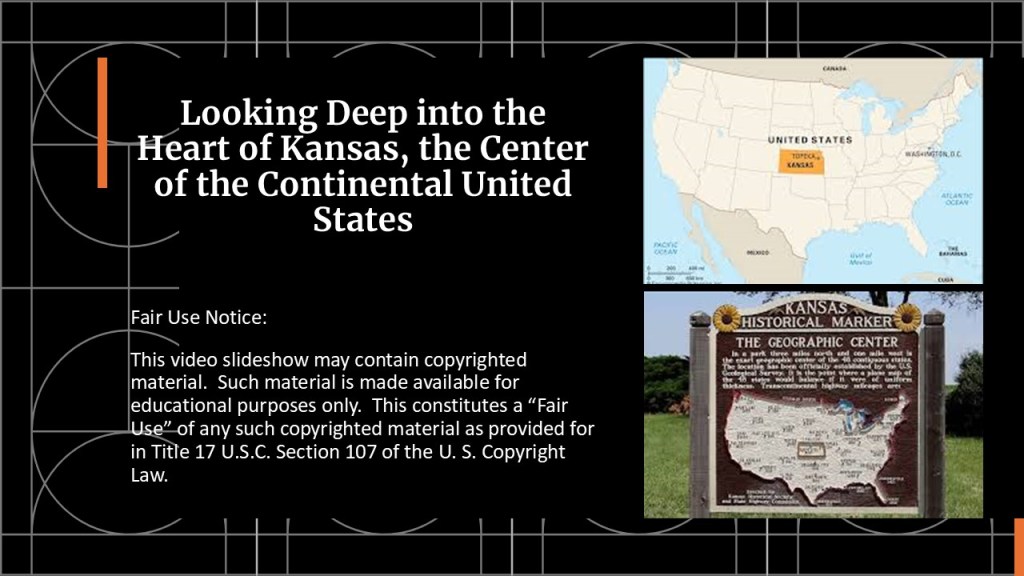
The geographic center of the continental United States is found in Lebanon, Kansas, and what we are told about it is that it was established by the U. S. Geological Survey as early as 1918 as “the point where a plane map of the 48 states would balance if it were of uniform thickness.”
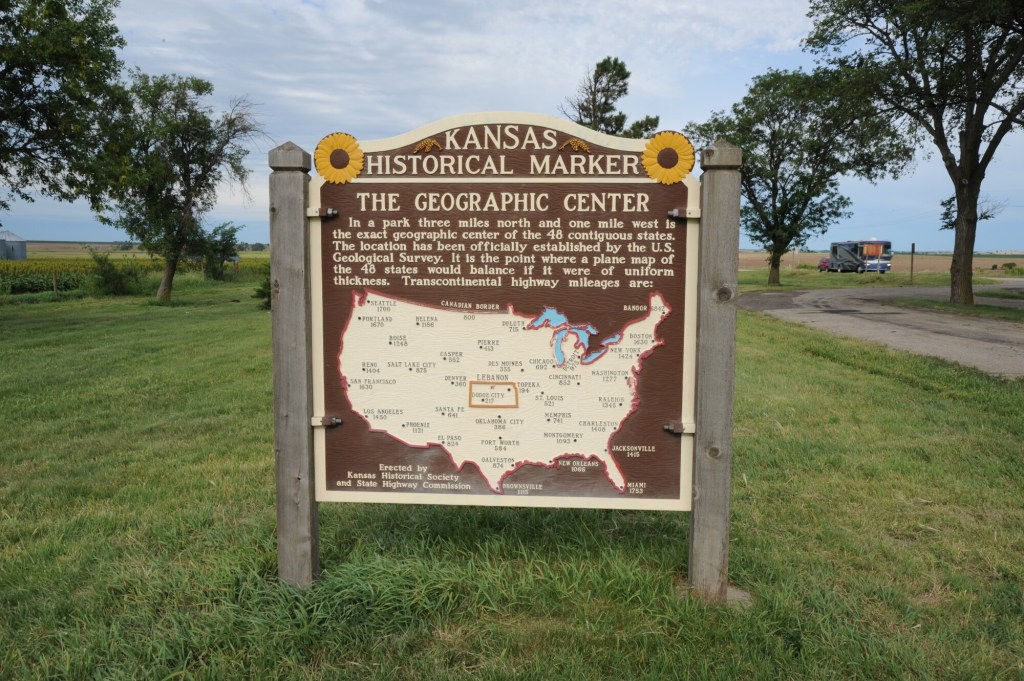
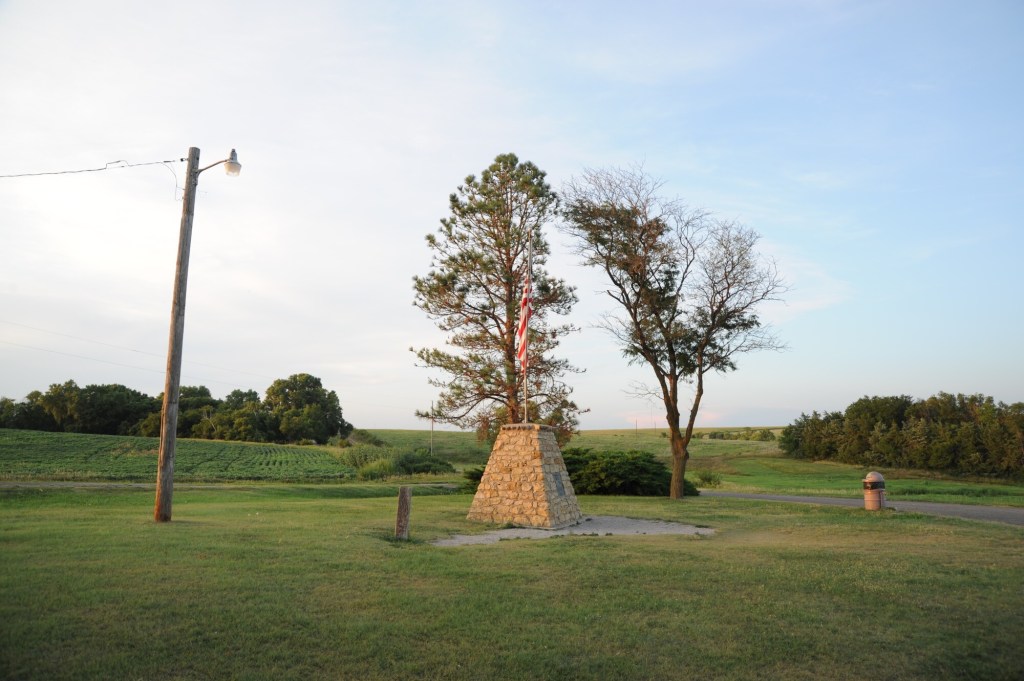
In June of 1941, an official monument was dedicated in Lebanon to recognize it as such.
This center point of the continental United States is my starting point for a deep dive into Kansas, from its ancient past on through to what we are told about its history in more recent times.
First, Kansas in the ancient past, starting with the Flint Hills.
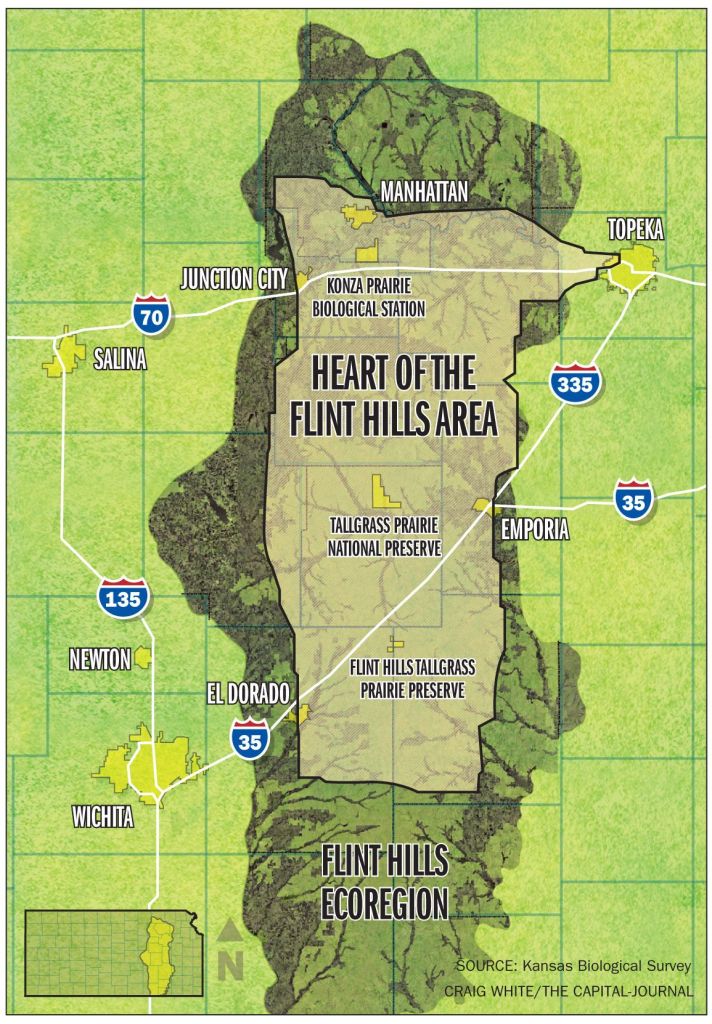
The Flint Hills are described as a region in eastern Kansas and northcentral Oklahoma named for the abundant residual flint eroded from bedrock that lies near or at the surface, and also has the densest coverage of intact tallgrass prairie in North America.
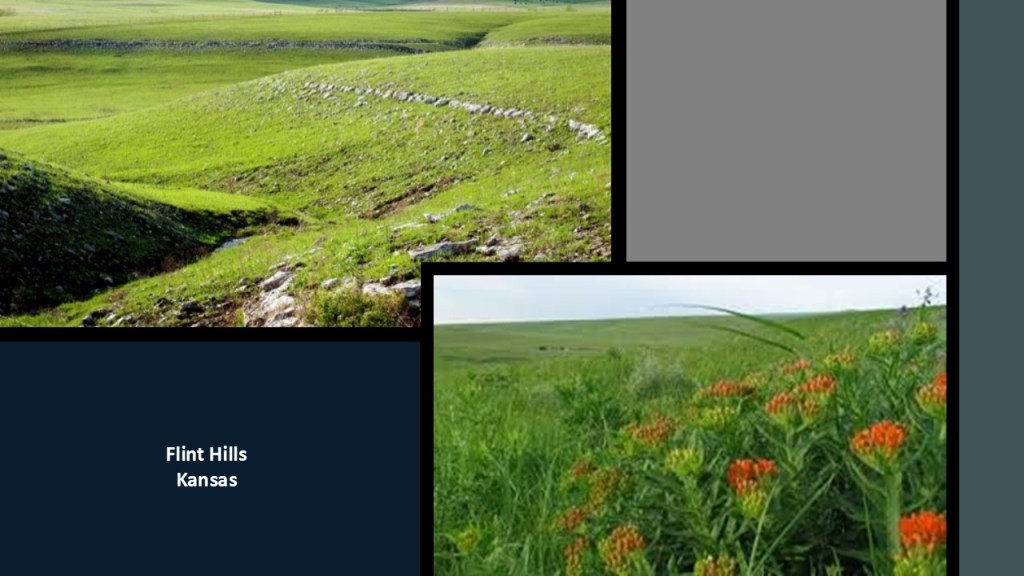
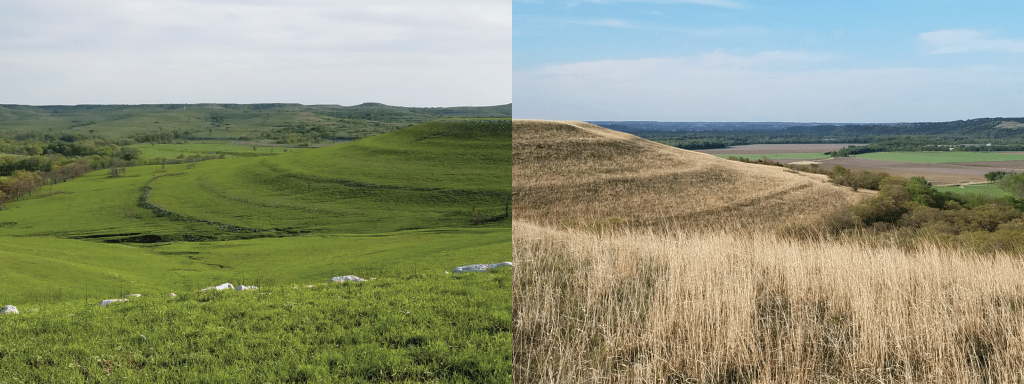
What I find extremely interesting about the landscape of the Flint Hills is the striking similarity to what is found in the landscape of Neolithic Britain, the beginning of which is dated back to 4,000 BC.
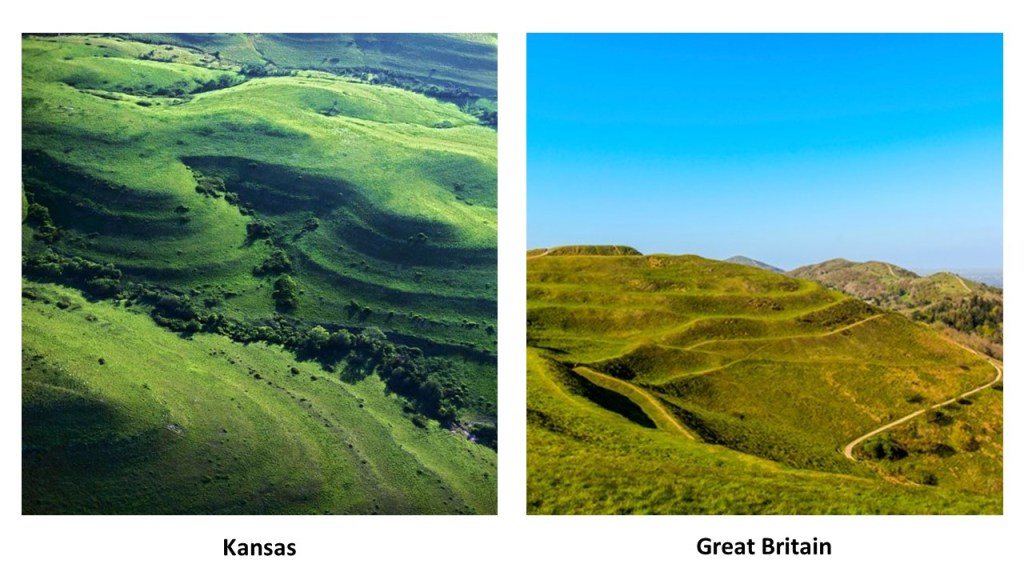
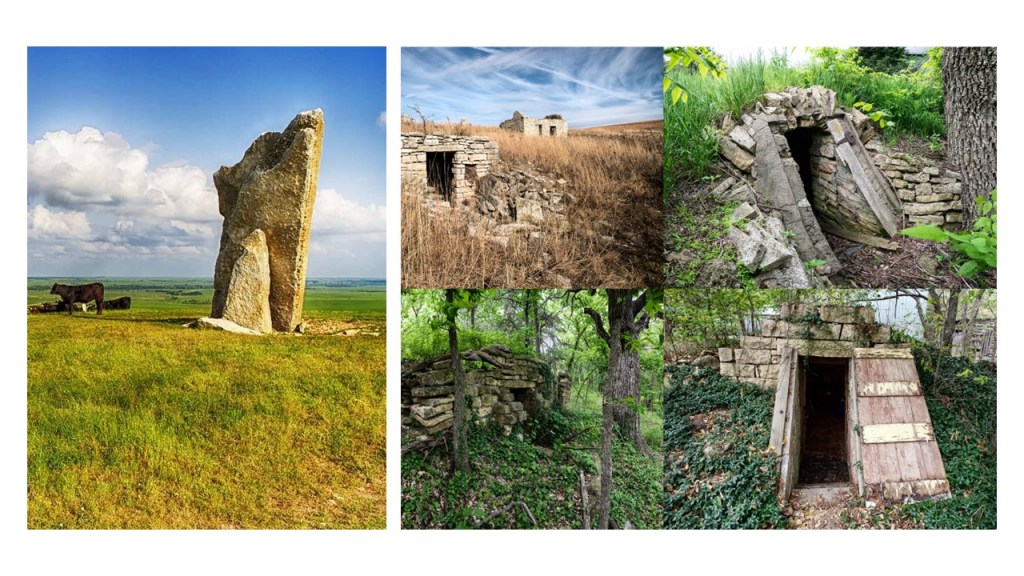
And not only is the landscape between the Flint Hills and Neolithic Britain similar.
On the left is a photo of Teter Rock, said to be a monument erected for James Teter the landowner located near the former Teterville and Teter Oil Fields in southeast Kansas, and on the right are four examples of the more than 270 such structures that have been located and documented here, mostly on private property, and of which the Flint Hills region is considered to have the largest concentration of this type of construction in the world.
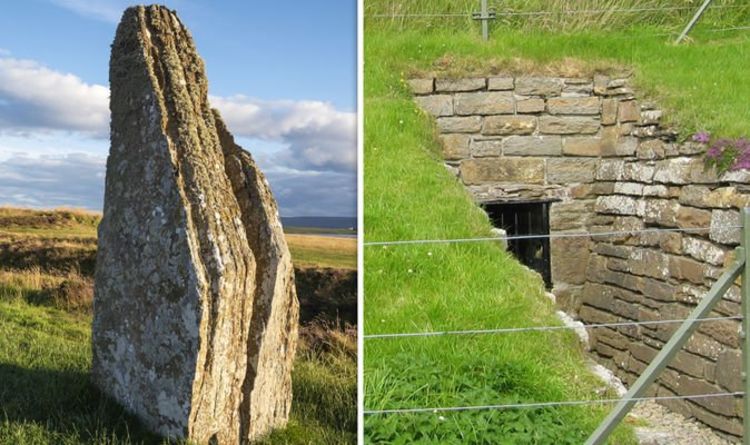
For comparison is this standing stone and the underground passageway to Maes Howe in the Orkney Islands off the northern coast of Scotland.
The entrance is aligned to the setting sun of the winter solstice, the darkest point of winter.
This is Grime’s Graves in Norfolk in England, a neolithic site that is the only flint mine that is open to the public, where visitors over ten years of age can enter the mine to see the jet-black flint.
We are told it was a large neolithic mining complex dating back to 2,600 BC.
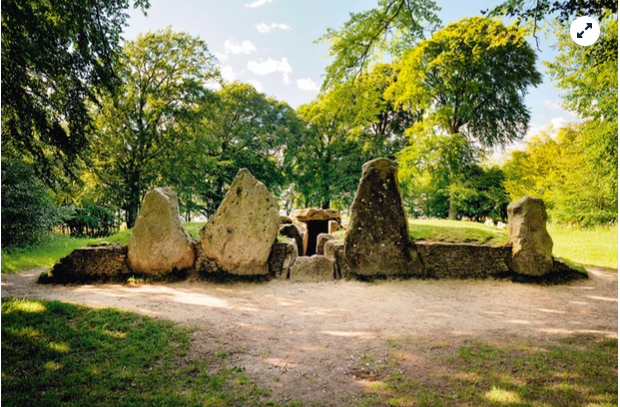
Are the Flint Hills in Kansas an important, yet completely unacknowledged, neolithic landscape?
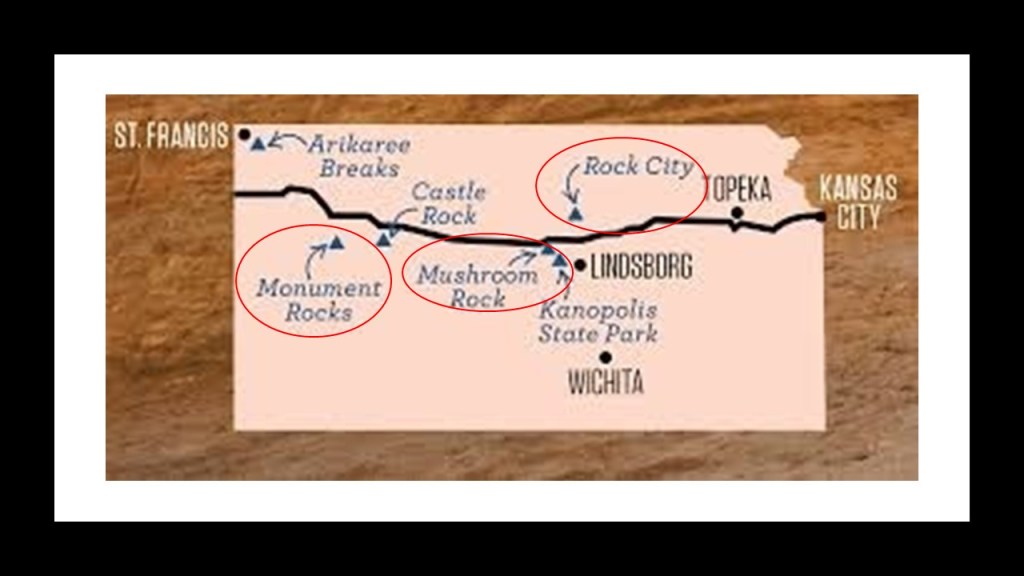
I’ve picked a few places to look at on Interstate 70 starting just to the west of the Flint Hills region between Wichita and Topeka.
Let’s take a quick look at Rock City, Mushroom Rock, and Monument Rocks.
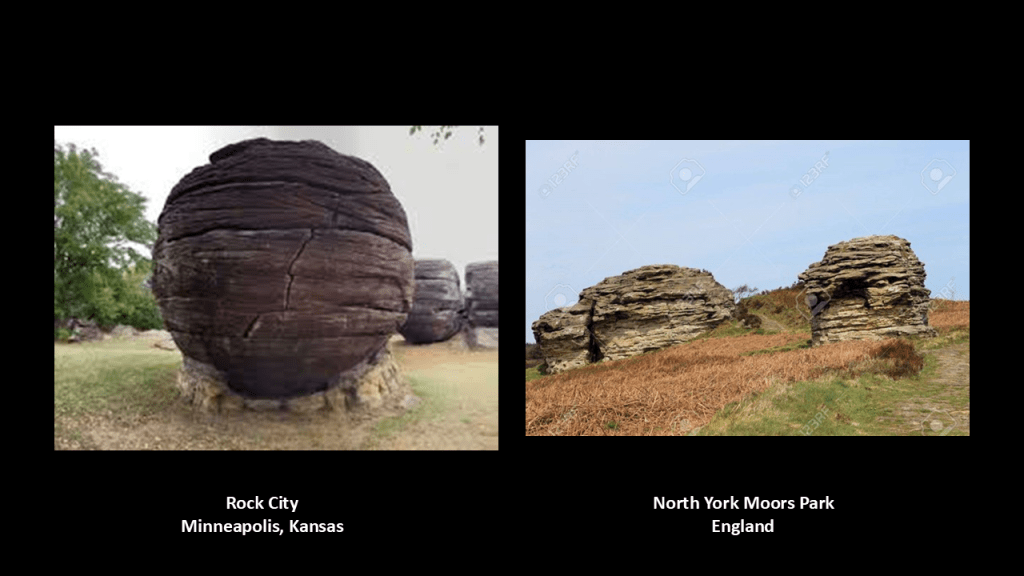
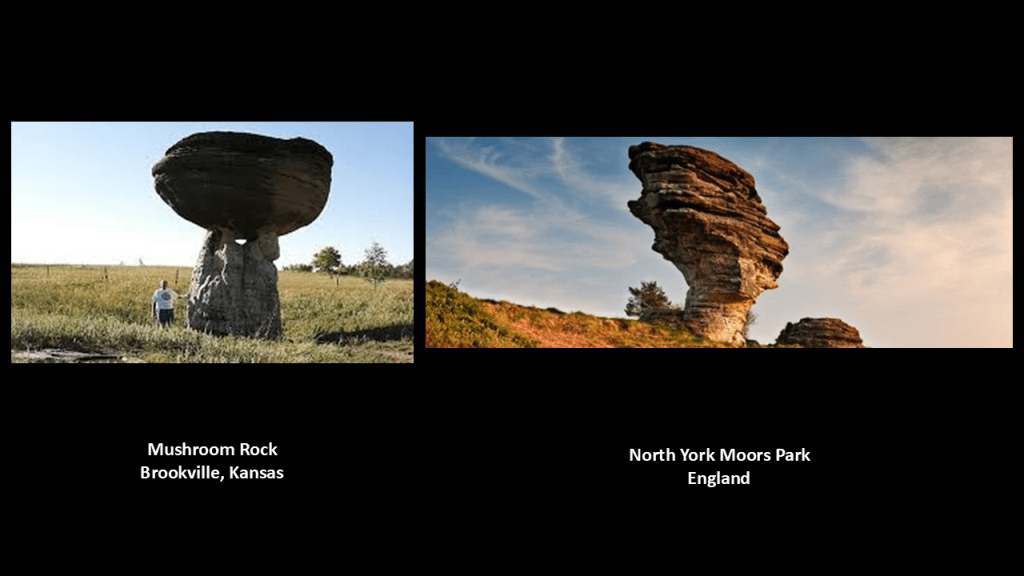
The formations found at Rock City in Minneapolis, Kansas look similar to those found at the North York Moors Park in England.
Same thing can be said for what is found at Mushroom Rock at Mushroom Rock State Park in Brookville, Kansas, and again at the North York Moors Park in England.
Monument Rocks, also referred to as the Chalk Pyramids, are designated a “National Natural Landmark.”

The amazing thing for a National Natural Landmark are the solar and lunar alignments found here.

Next, a look at Kansas closer in time to the present-day, starting with the Lewis and Clark Expedition.
Kansas City in Kansas is situated at Kaw Point, a junction of the Missouri and Kansas Rivers, and one of the places where Lewis and Clark stopped and camped in 1804 in their 1804 to 1806 Corps of Discovery Expedition in their exploration of the lands of the 1803 Louisiana Purchase.
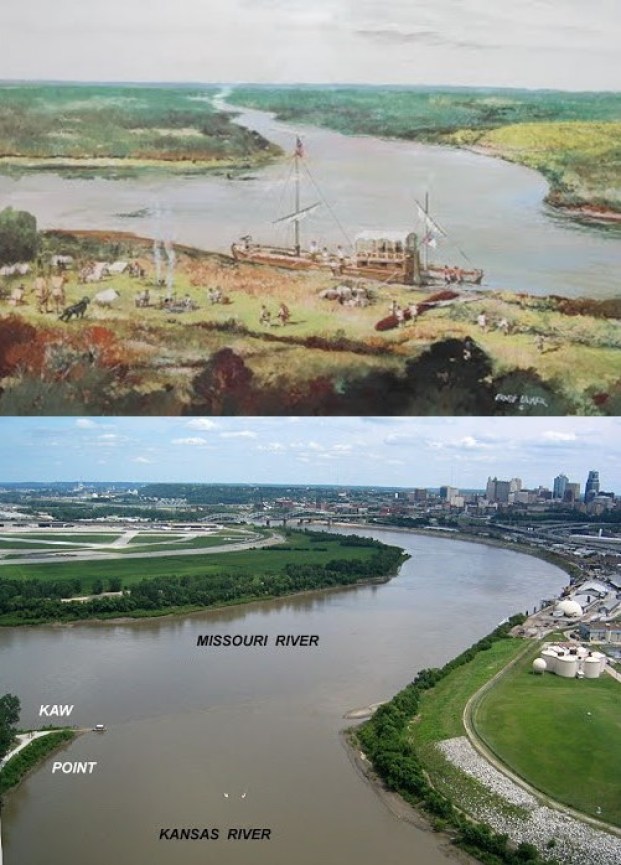
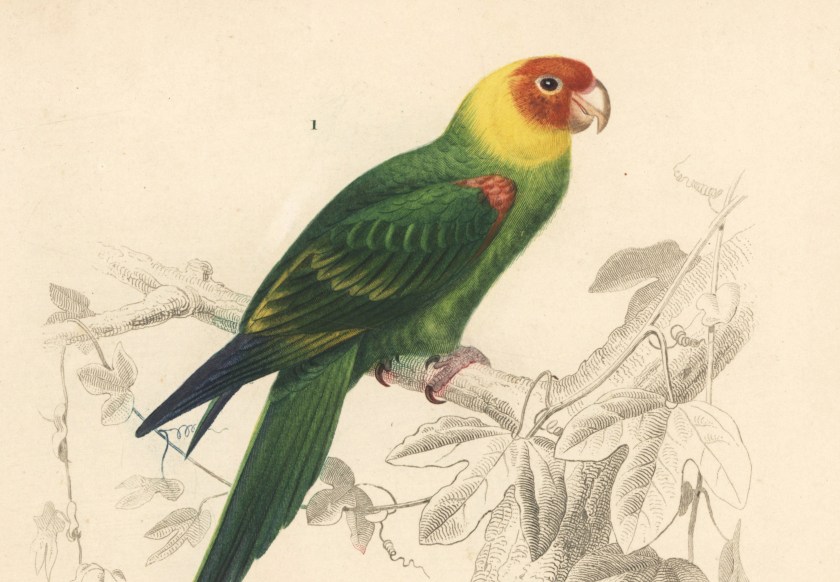
It was here that Clark reported encountering a great number of “parrot queets.”
The now-extinct Carolina parakeet inhabited much of what became the United States at that time.
The last-known Carolina parakeet died in captivity at the Cincinnati Zoo in 1918, and the species was declared extinct in 1939.
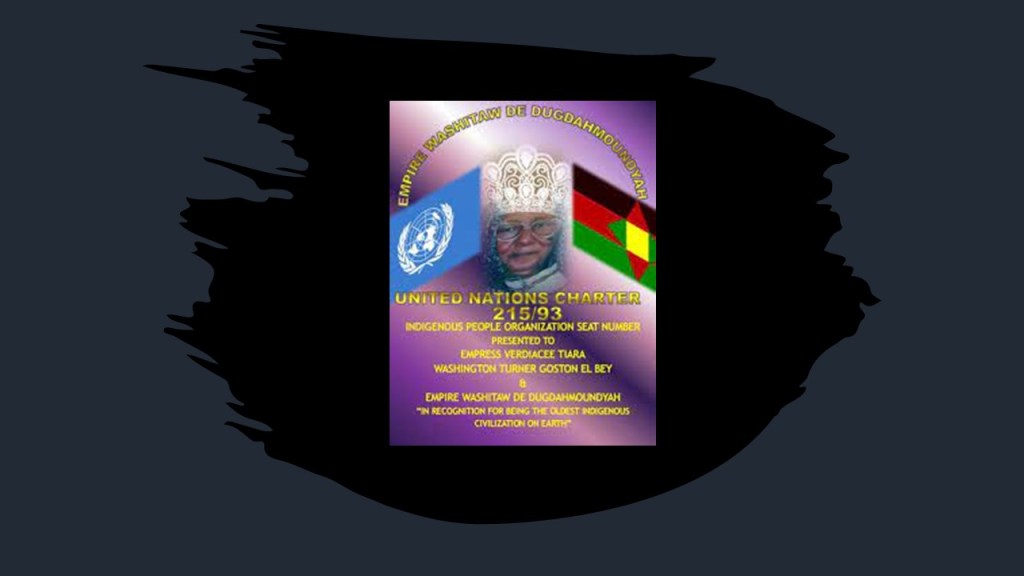
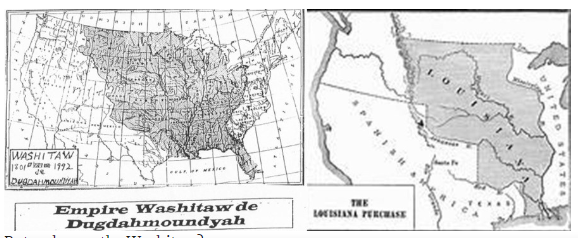
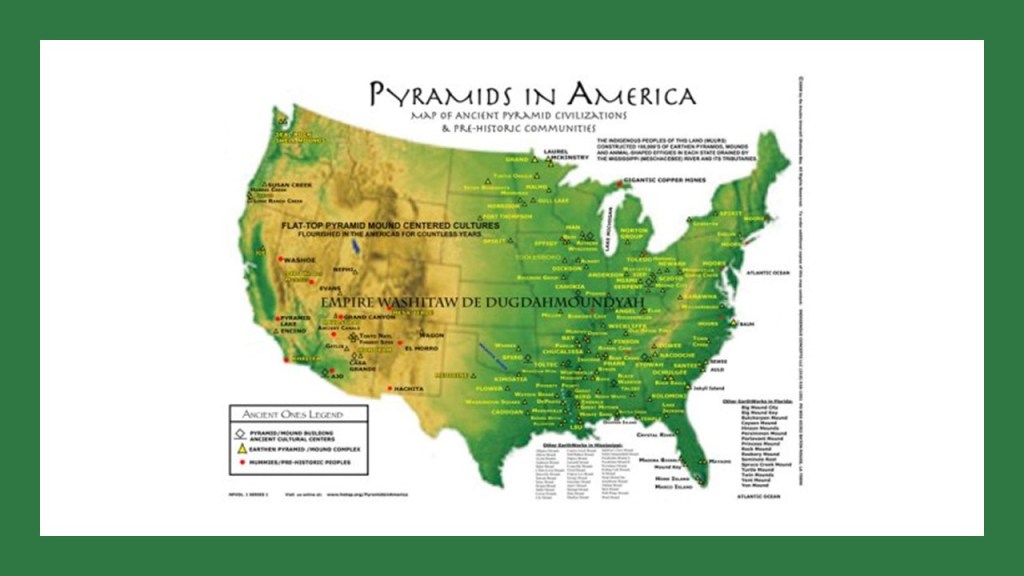
This region in the central part of what was to become the United States was the heart of the ancient Washitaw Empire.
Monroe in Louisiana was the Imperial Seat, and the ancient Washitaw Mu’urs are matriarchal and matrilineal with an Empress to this day.
How come we’ve never heard anything about them?
Quite simply, they don’t want us to know.
I can’t help but notice that the map of the ancient Washitaw Empire of North America that has been removed from our collective awarenessroughly corresponds to the map of the Louisiana Purchase.
Kansas was also at the heart of what we know of as the beginning of the American Civil War.
it is important to note that in our historical narrative, the tensions between free states and slave states is what directly led to the American Civil War.
What we are told is that that Kansas-Nebraska Act became law on May 30th of 1854, creating the two new Territories and allowing for popular sovereignty to determine whether or not they were free states or slave states.
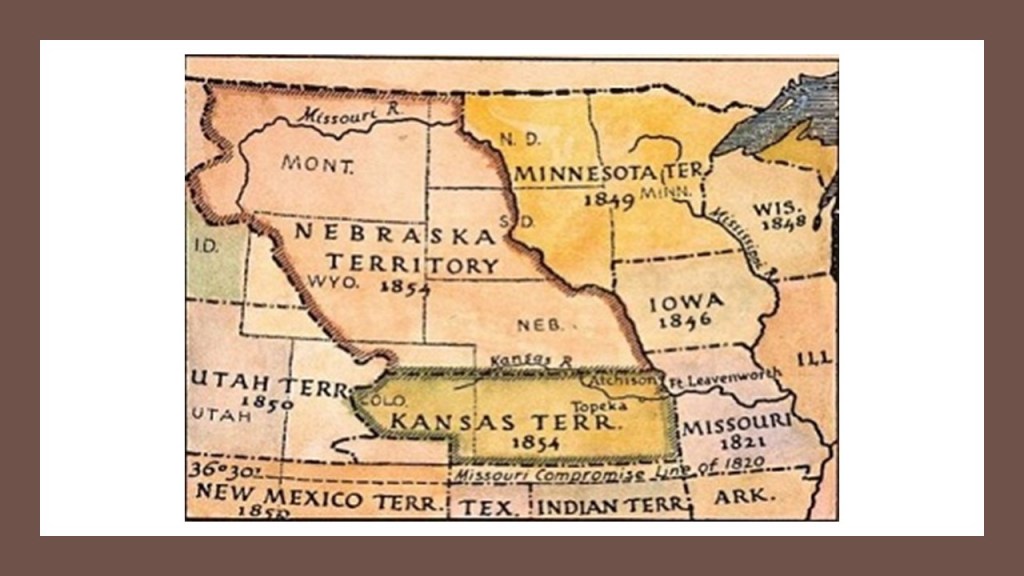
For several years, Kansas had two governments, in two different cities – Lecompton and Lawrence – with two constitutions, one of which was pro-slavery, and the other anti-slavery, and each one claiming to be the legitimate government of the Kansas Territory.
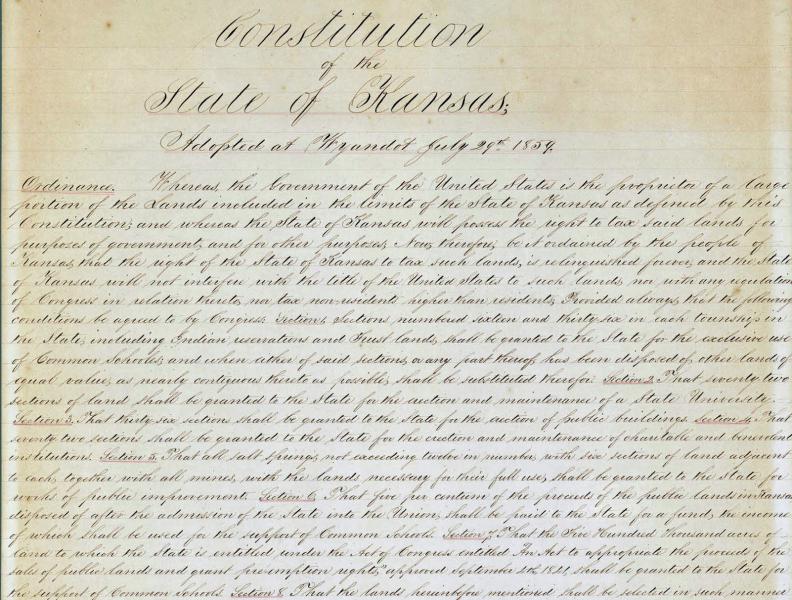
By the time of the Wyandotte Constitutional Convention held between July 5th and July 29th of 1859, there were three other constitutions for Kansas citizens to vote on – the Topeka Constitution, the Leavenworth Constitution, and the Lecompton Constitution, which was drafted by pro-slavery advocates.
Initially, the Lecompton Constitution won the popular vote, but there was a climate of intimidation and violence around the voting, and it was overruled.
The Wyandotte Constitution, which admitted Kansas to the Union as a Free State, won the second round of popular voting, and was the Constitution which was approved for the admission of the State of Kansas in the U. S. Congress, which took place on January 29th of 1861.
It also produced a violent uprising known as “Bleeding Kansas” when pro-slavery and anti-slavery activists flooded into the new territories seeking to sway the vote.
Here were some of the key players in the events that led up to the Civil War.
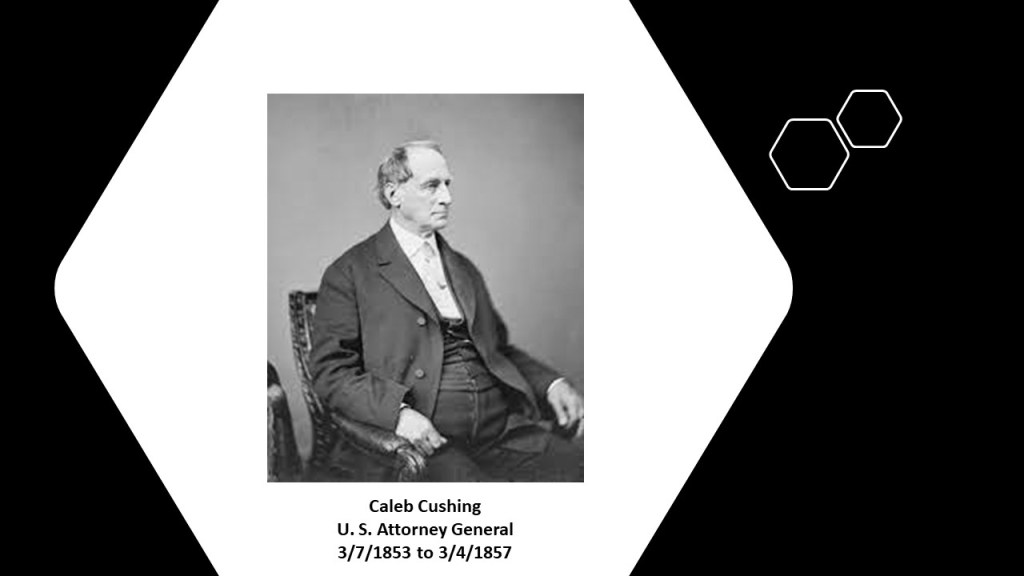
Caleb Cushing was an American Democratic politician who served as a Congressman from Massachusetts and Attorney General during the administration of the 14th-President of the United States, Franklin Pierce.
The future U. S. President James Buchanan was named as President Franklin Pierce’s Ambassador, or Minister to the United Kingdom, a position he held from August 23rd of 1853 to March 15th of 1856.

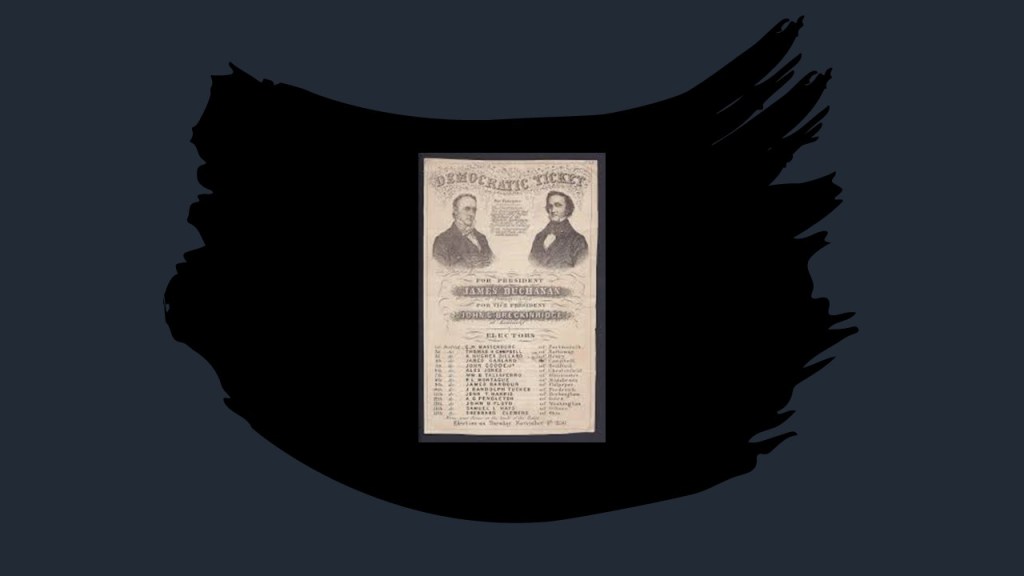
.James Buchanan was nominated to be the Democratic Party’s Presidential nominee in 1856, and said to have benefited from being out of the country when he was living in London and not associated with slavery issues, and won the 1856 election with his running mate John C. Breckinridge.
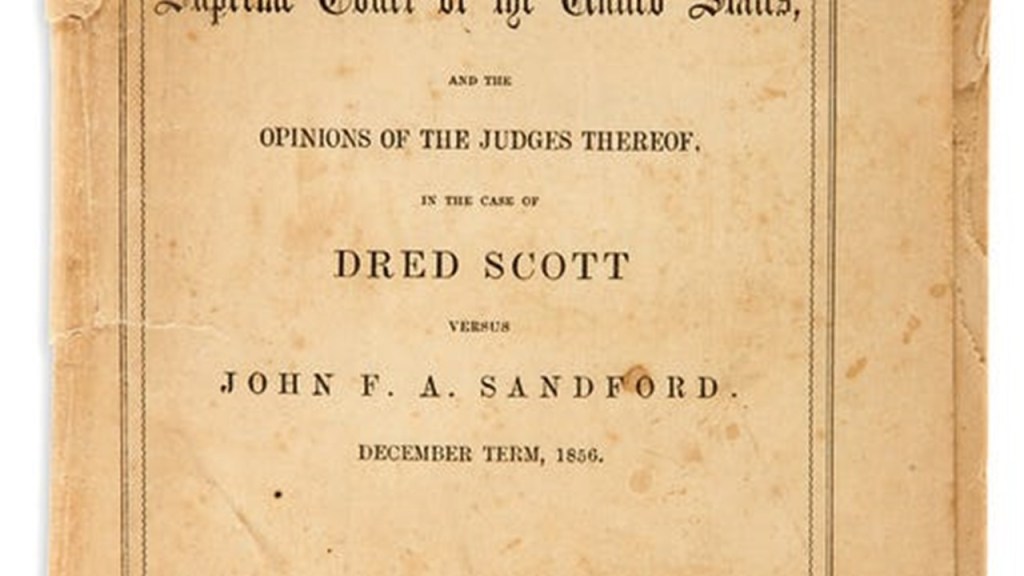
As President, he was said to have intervened in the Supreme Court’s Dred Scott case to gather majority support for a pro-slavery decision, in which a majority of the Supreme Court ruled in March of 1857 that the United States Constitution was not meant to include citizenship for people of so-called African-descent,so that the rights and privileges of the Constitution could not be conferred on them.
President Buchanan attempted to engineer Kansas entering the Union as a slave state, by sending a message to Congress urging the acceptance of Kansas as a slave state, which it rejected and set the admission for Kansas as a free state in June of 1861.
Ultimately in our historical narrative, the cause of eleven states to secede from the Union in 1860 was in support of states’ rights in the context of slavery to support the South’s agricultural economy, and the federal government not overturning abolitionist policies in the North and in new territories.
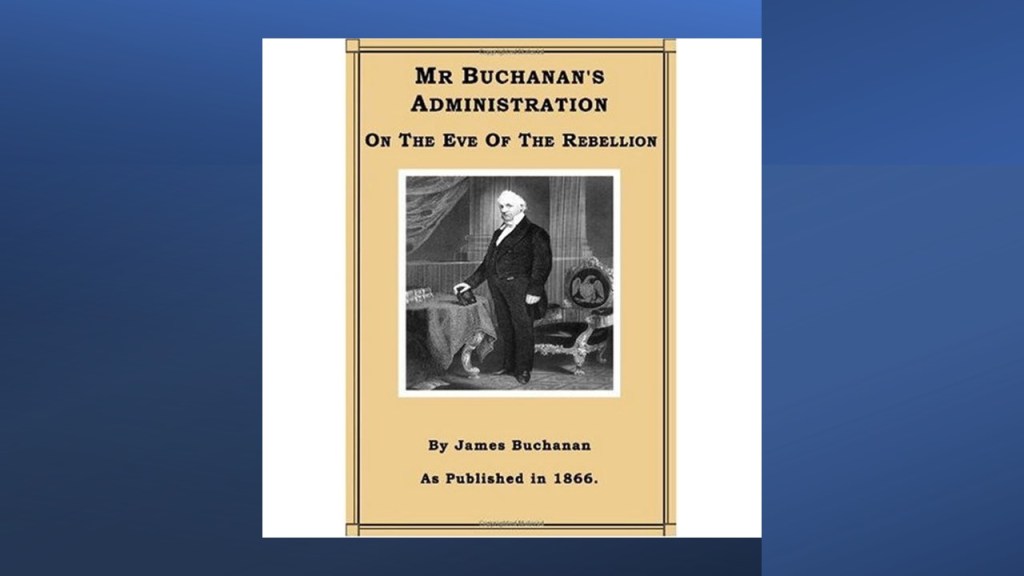
According to Nicholas Hagger in “The Secret Founding of America” book…

…the Attorney General Caleb Cushing used former Master Mason John Brown to cause the Civil War.
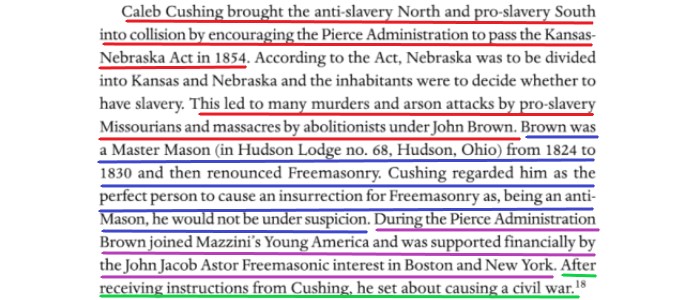
And indeed John Brown was very involved in what happened in “Bleeding Kansas.”
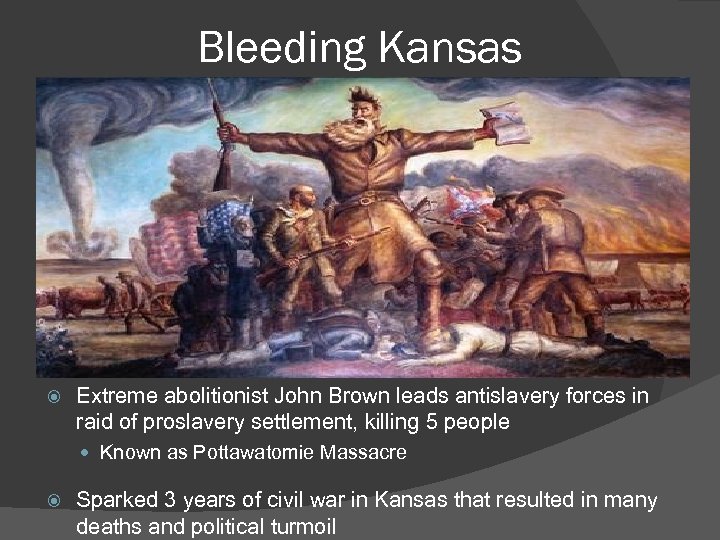
John Brown was best known in history for the Harper’s Ferry raid on October 16th of 1859 in West Virginia.
There was a federal arsenal located there, and while the plan was to raid the arsenal and instigate a major slave rebellion in the South, he had no rations or escape route.
In 36-hours, troops under the command of then Lt. Col. Robert E. Lee had arrested him and his cohorts, who had withdrawn to the engine house after they had been surrounded by local citizens and militia.

So while John Brown’s plan was doomed from the start, it did serve to deepen the divide between the North and South.
John Brown was hung on December 2nd of 1859, less than two months after the onset of the Harper’s Ferry Raid.
Did John Brown take one for the team?
Or did he not see that one coming?
Or was it something else entirely, because who knows if any of this ever even happened and it’s all just freemasonic theater.


Speaking of theaters, the Trans-Mississippi Theater of the Civil War covered everything west of the Mississippi River as pictured here.
We are told that there were all together 7 battles in Arkansas, New Mexico, Missouri and Louisiana between 1862 and 1864 in the Trans-Mississippi Theater of War.
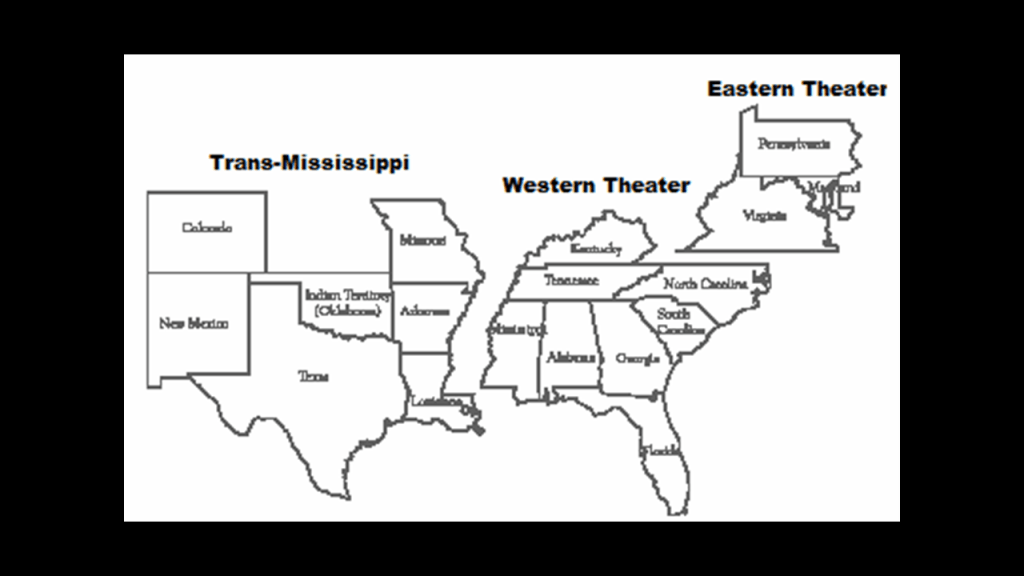
As a matter of fact, the Trans-Mississippi Department was a geographical subdivision of the Confederate Army.
When Union forces under General Ulysses S. Grant captured the Confederate stronghold of the port of Vicksburg on July 4th of 1863 and divided the Confederacy, Confederate General Edmund Kirby Smith’s forces were cut off from the Confederate Capital of Richmond, Virginia.
At the time, Edmund Kirby Smith was the Commander of the Trans-Mississippi Department, and for the rest of the Civil War, he remained west of the Mississippi River.
As a result of being cut-off from Richmond, Kirby Smith had free reign in a nearly independent area of the Confederacy, and the whole region became known as “Kirby Smithdom” and nobody really knows what was going on there during that time.
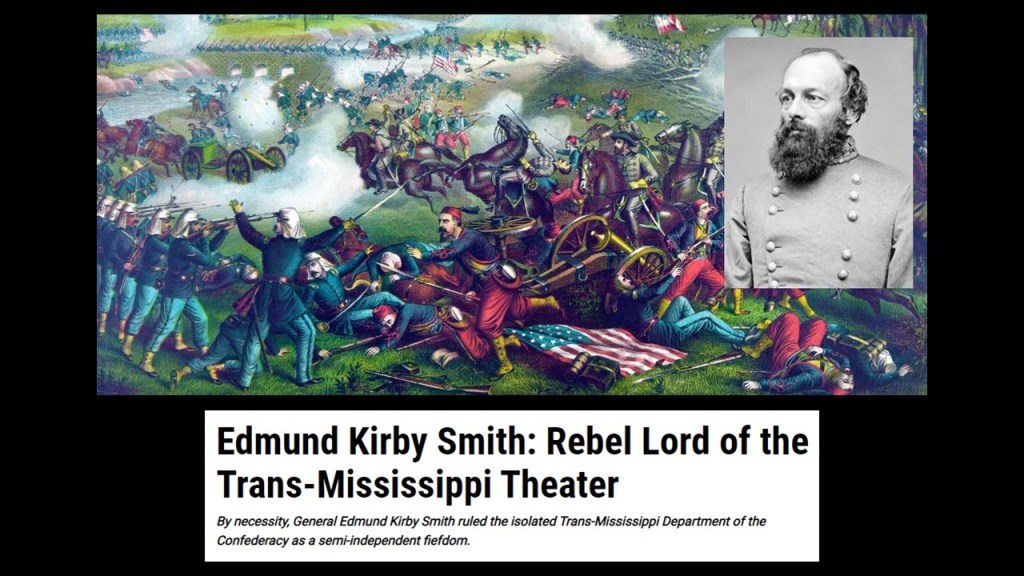
I first learned about the Trans-Mississippi Department when I was doing some research around Albert Pike, an influential 33rd-degree Freemason who was a senior officer of the Confederate Army who commanded the District of Indian Territory otherwise known as Oklahoma.
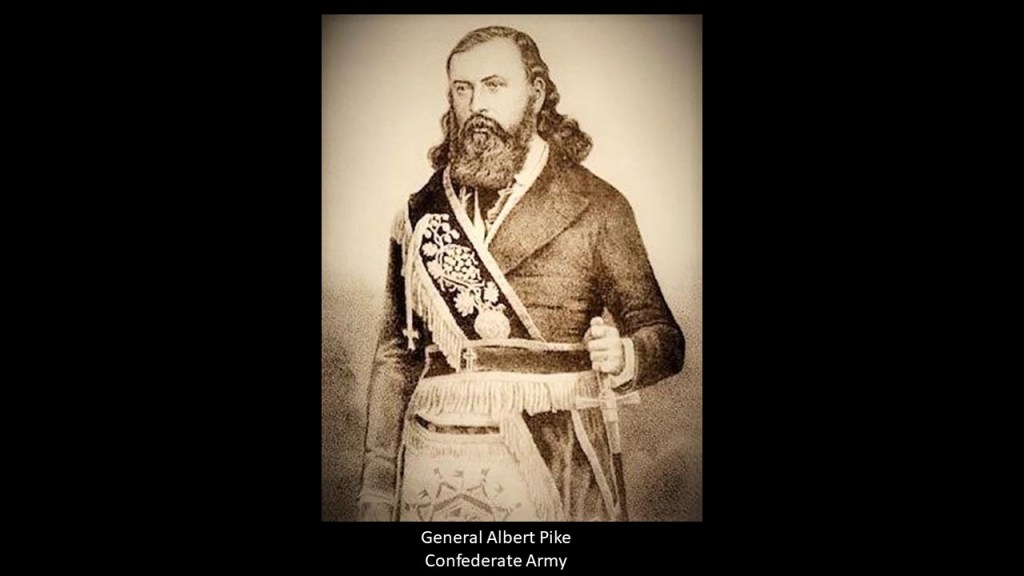
I think what was really going on here in the center of the country during the historical event known as the American Civil War was very different from what we are told was going on, and it has everything to do with the reset of our history after a deliberately-caused cataclysmic event destroyed the surface of the Earth in order to bring in the New World Order.
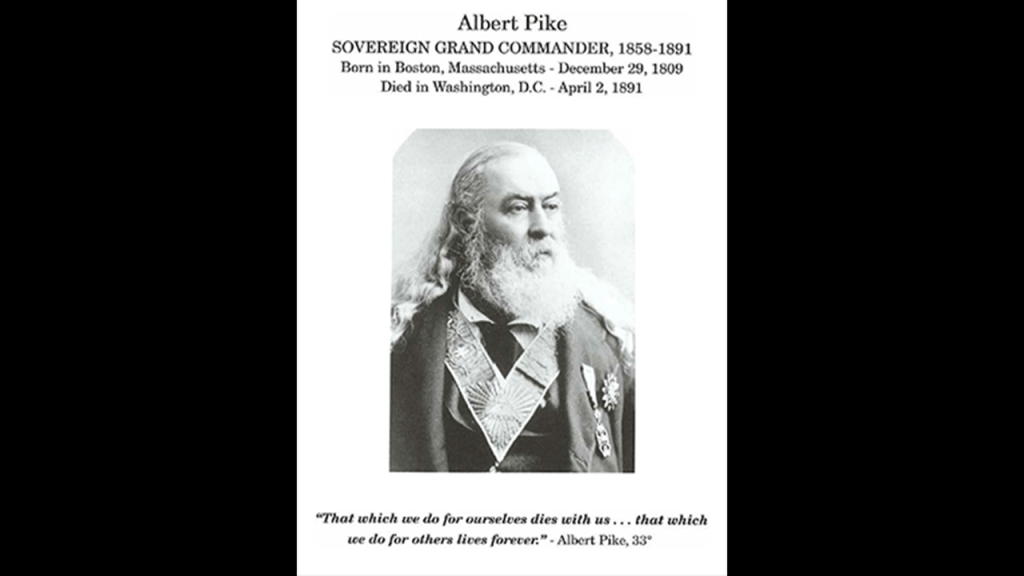
Albert Pike in his day was the most powerful Freemason in the world when he became the Sovereign Grand Commander of the Southern Jurisdiction in 1858, a position he held until his death in 1891.
Along with holding the position of Sovereign Grand Commander of the Southern Jurisdiction, he held the position of Grand Master of the Central Directory in Washington, DC, and Sovereign Pontiff of Universal Freemasonry.
And Albert Pike, the most powerful Freemason in the world for 33-years, and Giuseppe Mazzini, the leader of the Bavarian Order of the Illuminati after the death of its founder Adam Weishaupt in 1830, were co-conspirators in plotting the direction they wanted the New World to go in, and were in correspondence with each other.
The following cities in Kansas were founded in the years prior to the start of the Civil War.
Atchison was founded in 1854, the same year the Kansas-Nebraska Act became law.
It is the county seat of Atchison County.
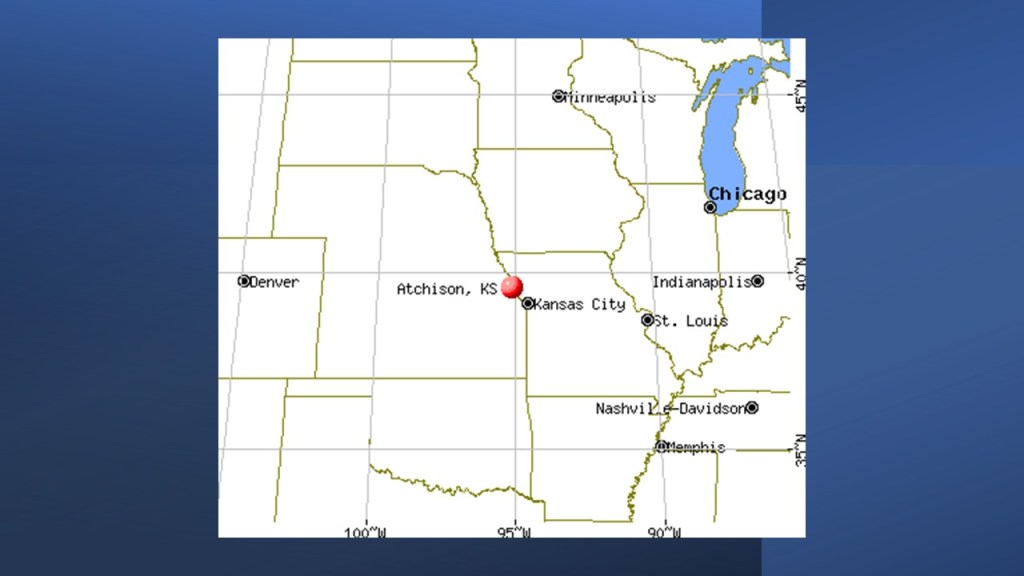
It was named after the United States Senator from Missouri, David Rice Atchison, who had interested some of his friends in forming a city when Kansas was opened for settlement.
This portrait of Senator Atchison was credited to the Civil-War-era photographer Matthew Brady in 1849.

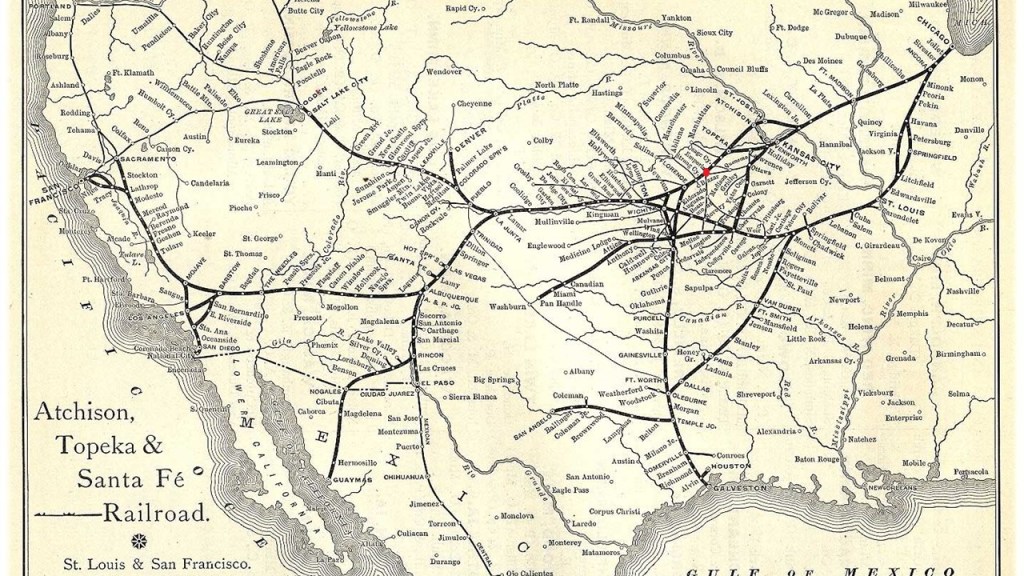
Atchison was the original eastern terminus of the Atchison, Topeka and Santa Fe Railway.
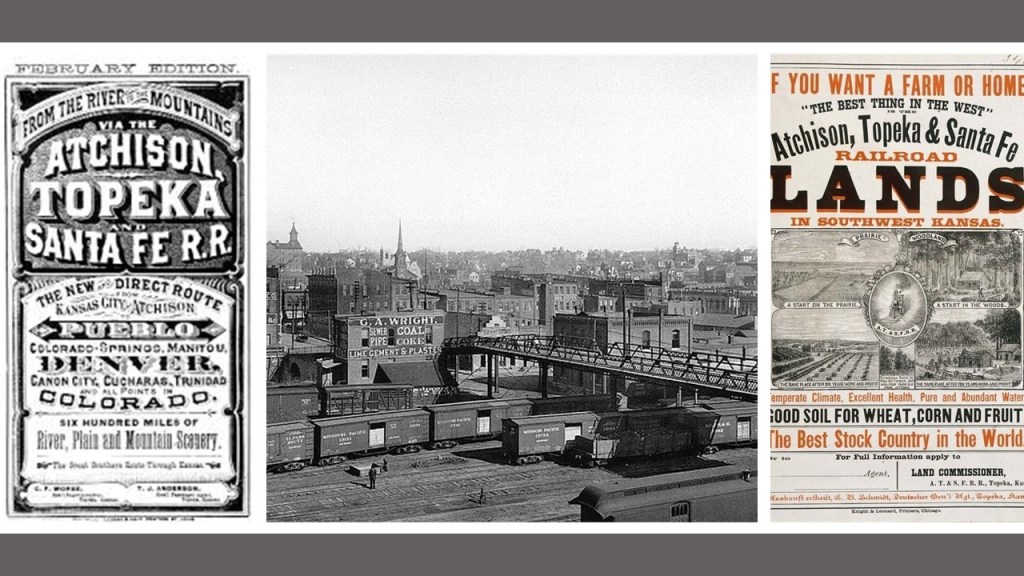
The railroad was chartered in February of 1859 to serve the cities of Atchison and Topeka in Kansas, and Santa Fe, New Mexico.
Despite being chartered to serve the city, the railroad was said to have chosen to bypass Santa Fe, because of the engineering challenges of the mountainous terrain, and eventually a branch line from Lamy, New Mexico brought the Santa Fe railroad to its namesake city.
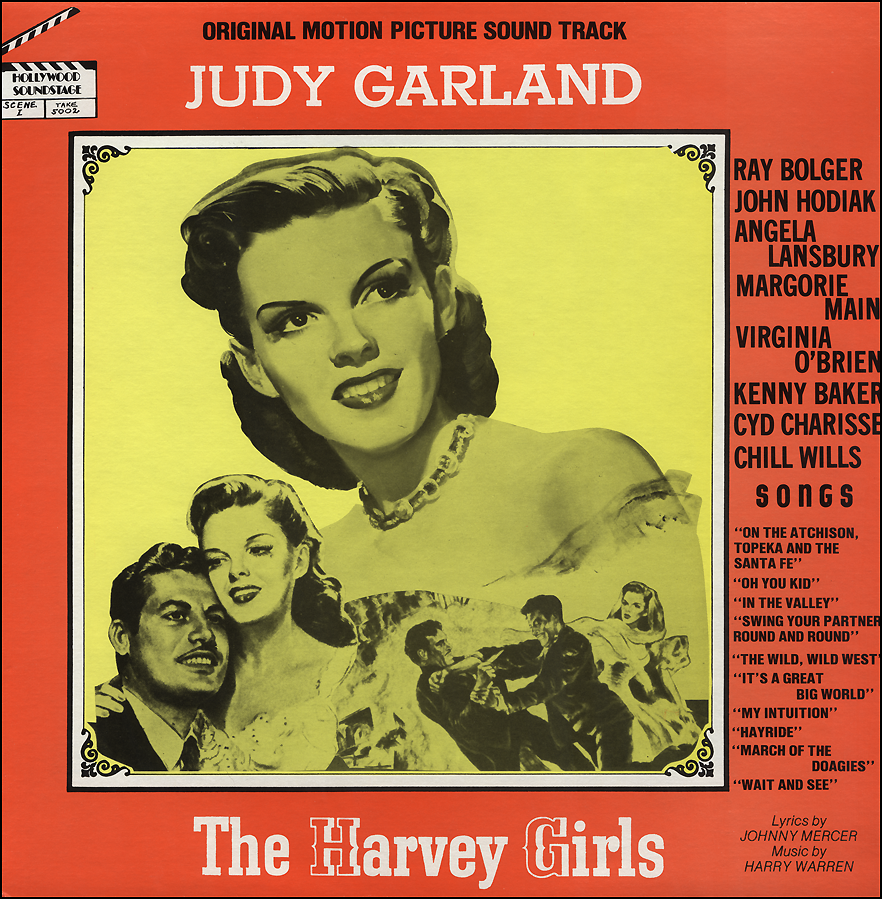
The railroad was the subject of a popular song written by Harry Warren and Johnny Mercer for the 1946 film “The Harvey Girls.”
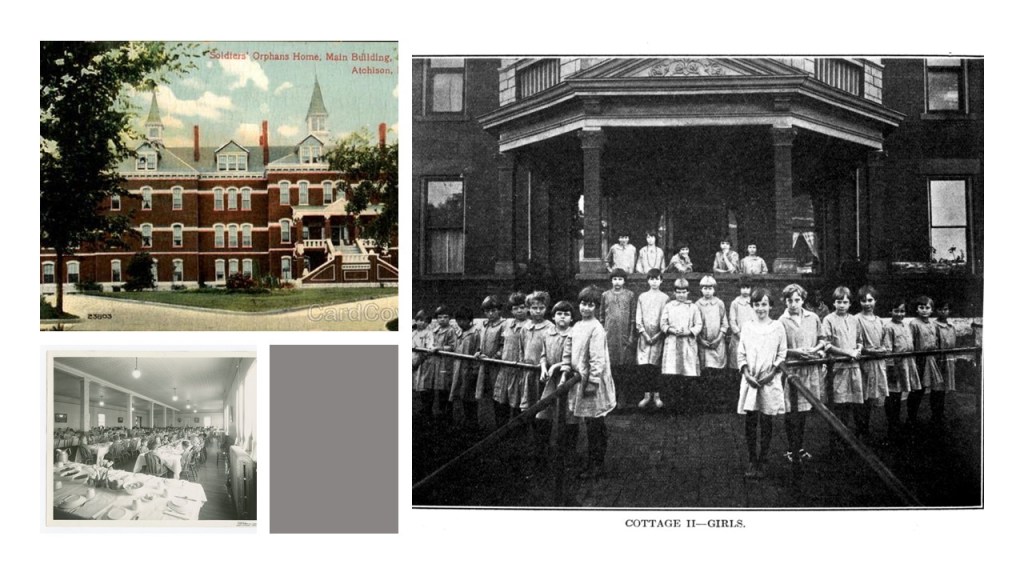
The Soldiers’ Orphans Home was said to have been founded in Atchison sometime around 1887 for the nurture, education and maintenance of indigent children of soldiers and sailors who served in the Union during the Civil War, and eventually changed to the State Orphans Home, which was in operation until 1962.
The construction of the current Atchison Post Office was said to have been authorized by the United State Congress in 1890, with construction of the Romanesque-style limestone building starting in 1892.
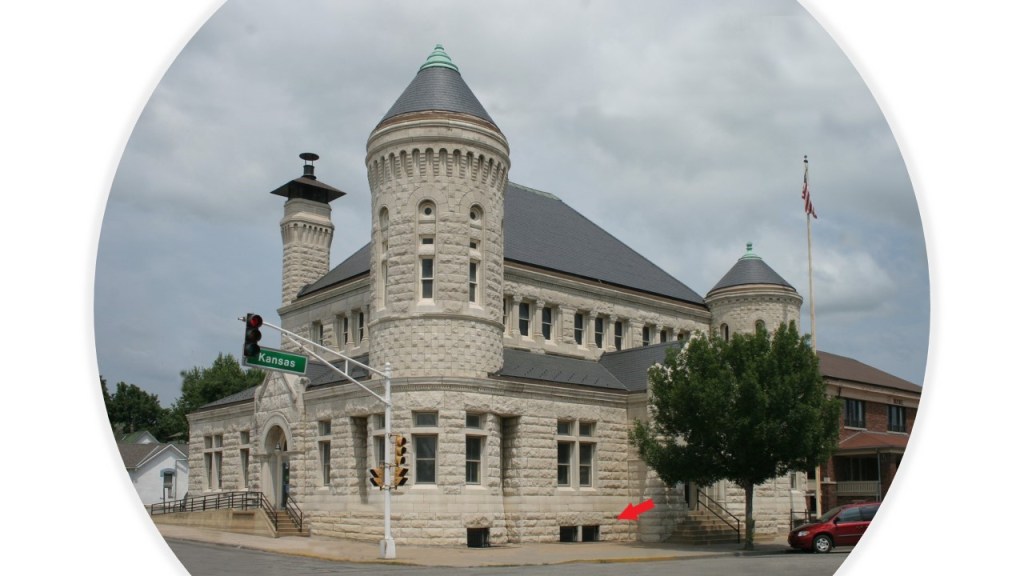
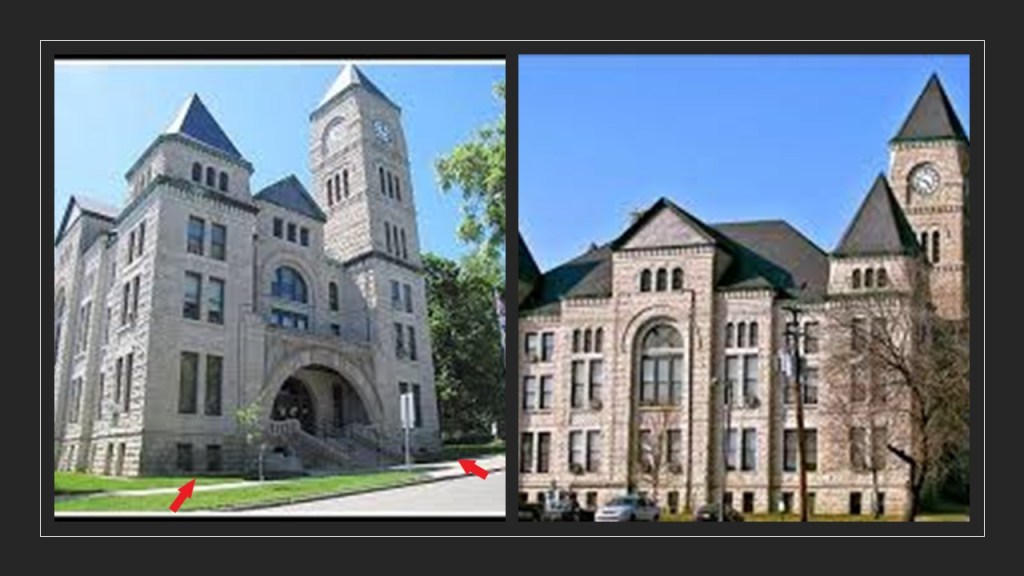
The Atchison County Courthouse was said to have been built between 1896 and 1897 to replace the first courthouse which had been built in 1859.
I will be noting with red arrows ground-level windows as possible mud flood evidence, like there’s more building going on down below the ground-level.
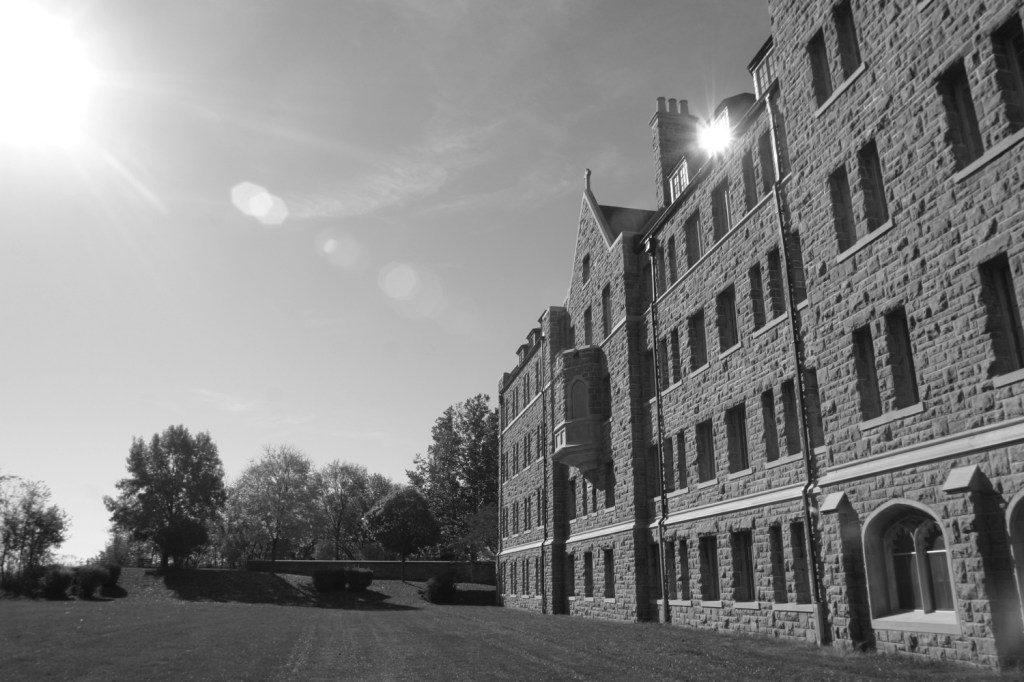
Then there is St. Benedict’s Abbey in Atchison, which was established in 1857 in order to provide education for the sons of German settlers in the Kansas Territory.
The German Benedictines were quite active in establishing institutions in America during the 1840s and 1850s, said to have been pursuing their religious calling in peace, as well as providing guidance to the German immigrants to America during that period.
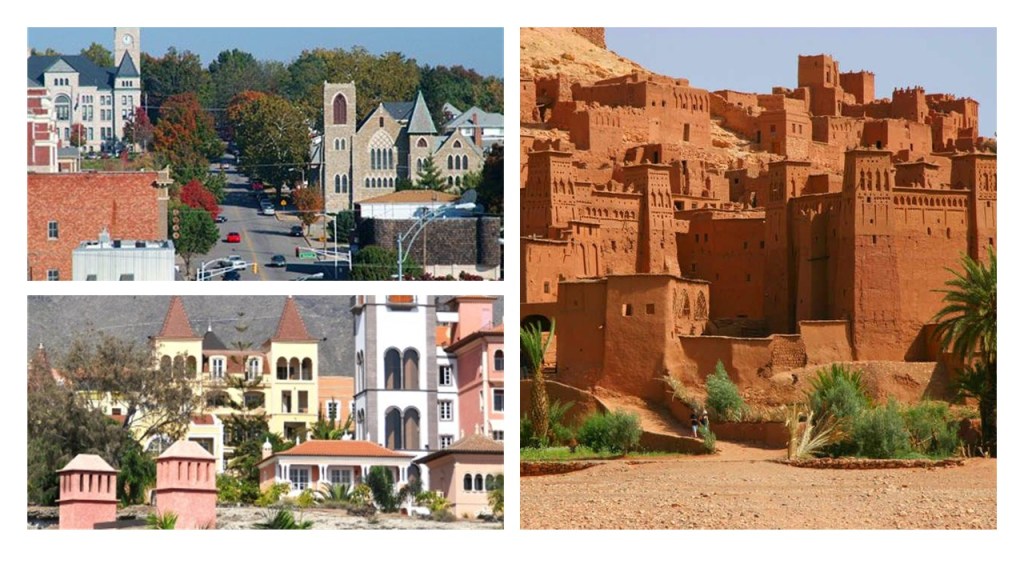
When I saw the view of Atchison, Kansas in the top left photo, I was immediately reminded of the view of the city of Santa Cruz de Tenerife on the island of Tenerife in the Canary islands, which are located off the coast of Morocco, on the bottom left.
Then on the right is a picture of the city of Ouarzazate, Morocco, which I had encountered in my research, and its appearance also reminded me of Santa Cruz de Tenerife and Atchison, especially with regards to the orientation of the buildings, and the placement of the windows.
Next, the city of Emporia was founded in 1857, and is the county seat of Lyon County.

We are told its name was taken from ancient Carthage.
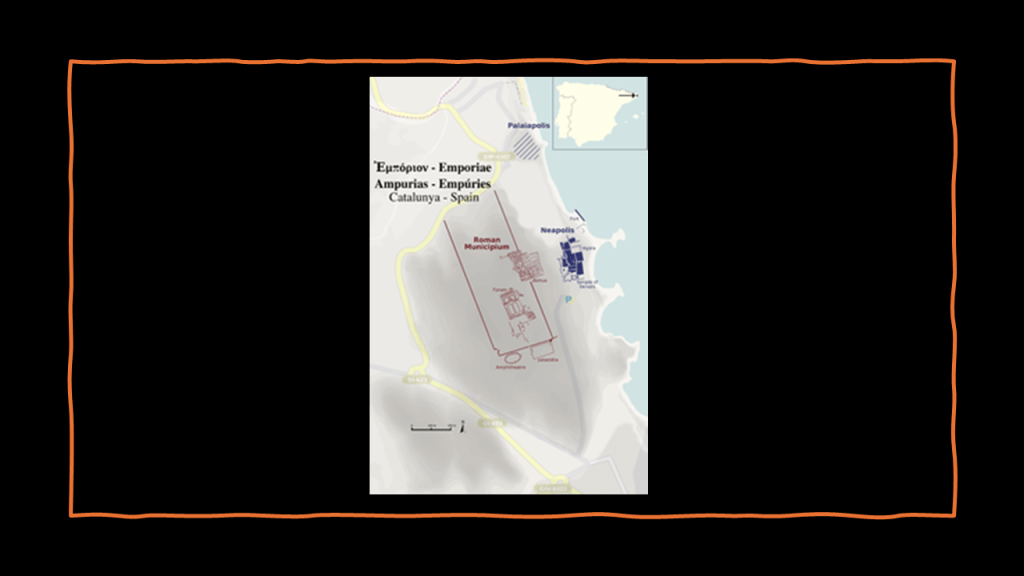
An “emporia” was a place where the traders of one nation had reserved to their business interests within the territory of another nation, and in ancient Greek, it referred to the Phoenician city-states and trade outposts of North Africa, including Carthage and Lepcis Magna, as well as others in Spain, Britain, and Arabia.
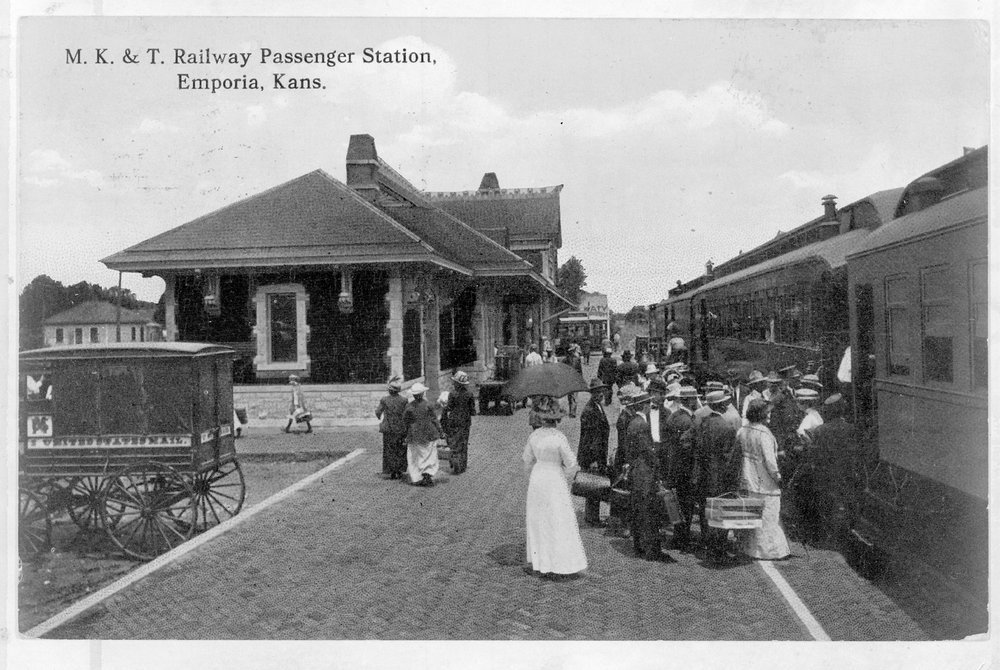
By December of 1860, the Missouri-Kansas-Texas Railroad had reached Emporia, setting the stage for it to become a major railroad hub.
Emporia State University was established here in 1863, two years after Kansas became a state in 1861 (and both of these years were during the American Civil War, which took place between 1861 and 1865).

Emporia was chosen as the county seat of Lyon County in 1860, and this courthouse was said to have been built between 1901 and 1903…for a community at that time which was said to have a population of approximately 8,200 people.
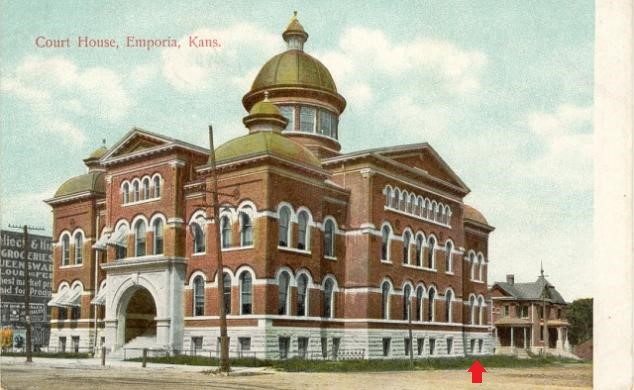
By the early years of the 20th-century, Emporia had become an important railroad center, as not only the junction of the Missouri-Kansas-Texas Railroad, but also as the main-line of the Atchison, Topeka & Santa Fe Railroad.
By 1910, less than 60-years after its founding, Emporia was said to have the following:
Waterworks; electricity for lighting and power; police and fire departments; well-paved streets; a public library; woolen and flour mills; foundries; machine shops; carriage and wagon works; an ice plant; broom factories; a planing mill; a creamery; brick-and-tile works; a corrugated culvert factory; and marble works. All, we are told, with a population of a little over 9,000 people
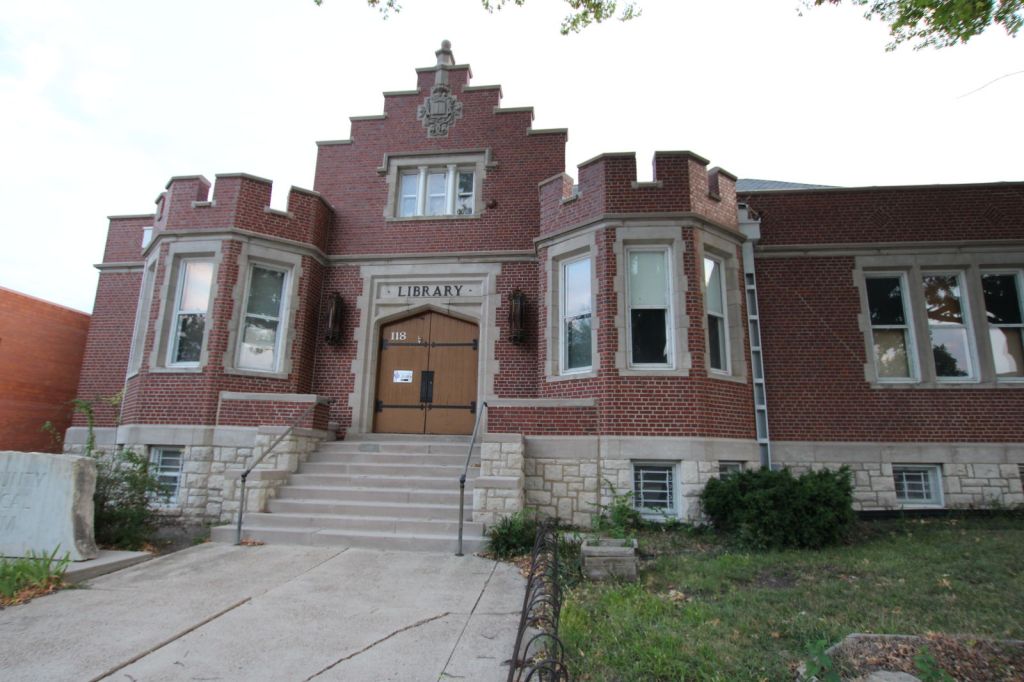
The Emporia Public Library has been in operation since 1869, and is the oldest in the State of Kansas to remain in operation.
This photograph of Commercial Street is said to date between 1910 and 1919.

The historic Granada Theater in Emporia is located on Commercial Street, and was said to have been designed in the Spanish Colonial Revival Style by the Boller Brothers of Kansas City.
It opened in 1929.
It was closed in 1982 due to damage and neglect, but local preservationists saved it from demolition in 1994, and it was reopened for public use.

The next city I am going to look at is Wichita, the largest city in Kansas, and the county seat of Sedgwick County.

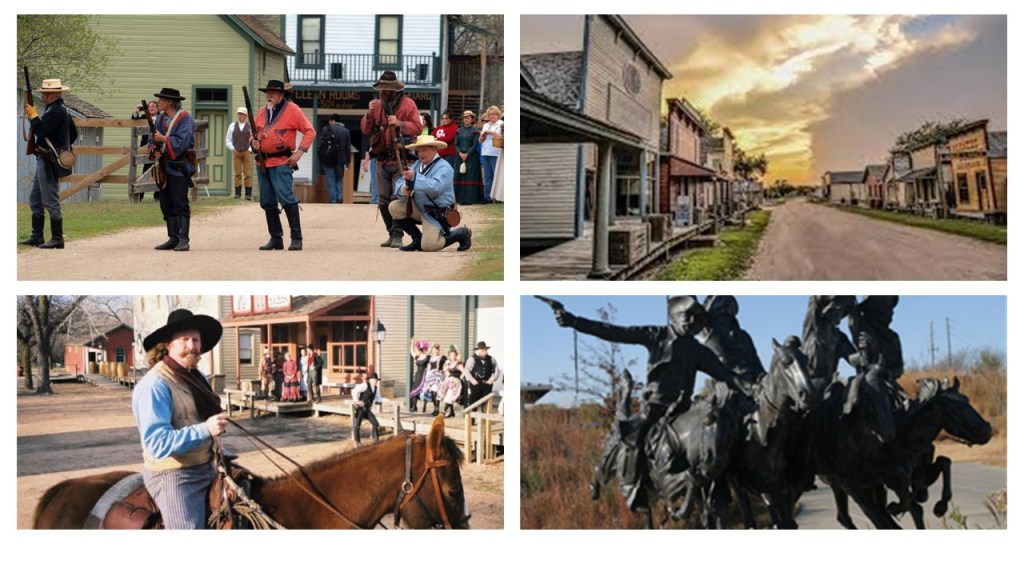
We are told the city of Wichita started out life as a trading post on the Chisholm Trail in the 1860s, which was established to drive cattle from ranches in Texas to Kansas railhead and was incorporated as a city in 1870.

The Old Cowtown Museum is located next to the Arkansas River in central Wichita.
Established in 1952, it is one of the oldest open-air history museums in the central United States, with 54 historic and re-created buildings on 23-acres of land on the original Chisholm Trail.
I am going to call this the John Wayne version of history, the false historical narrative that we have been indoctrinated in from cradle-to-grave.
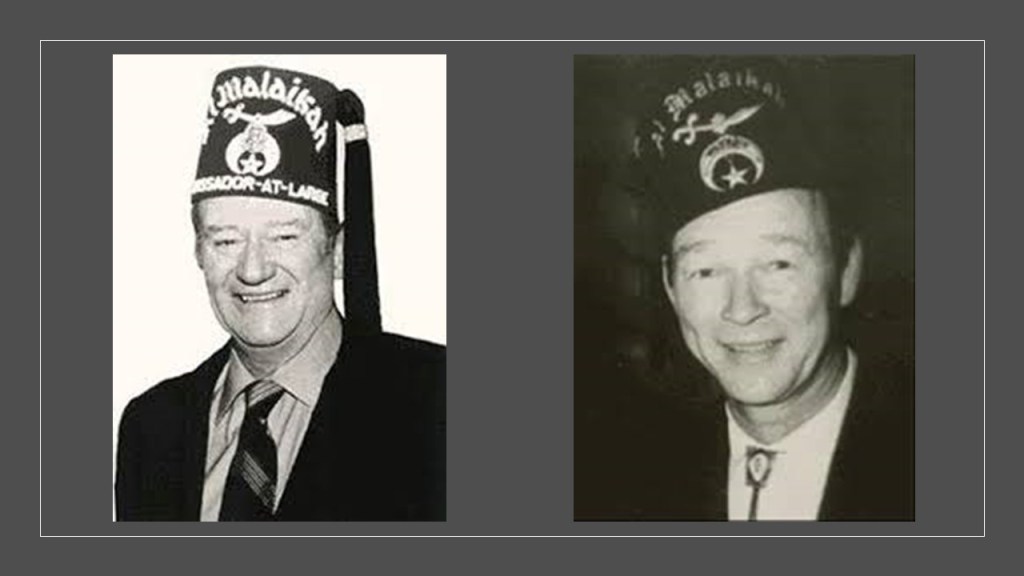
Among many other examples from Hollywood the entertainment industry, famous western movie actors John Wayne and Roy Rogers were Freemasonic Shriners, who shaped the narrative for countless generations of young and old who believe western movies are real history.
For that matter, so were Franklin Delano Roosevelt and Harry S. Truman, as well as other U. S. Presidents.
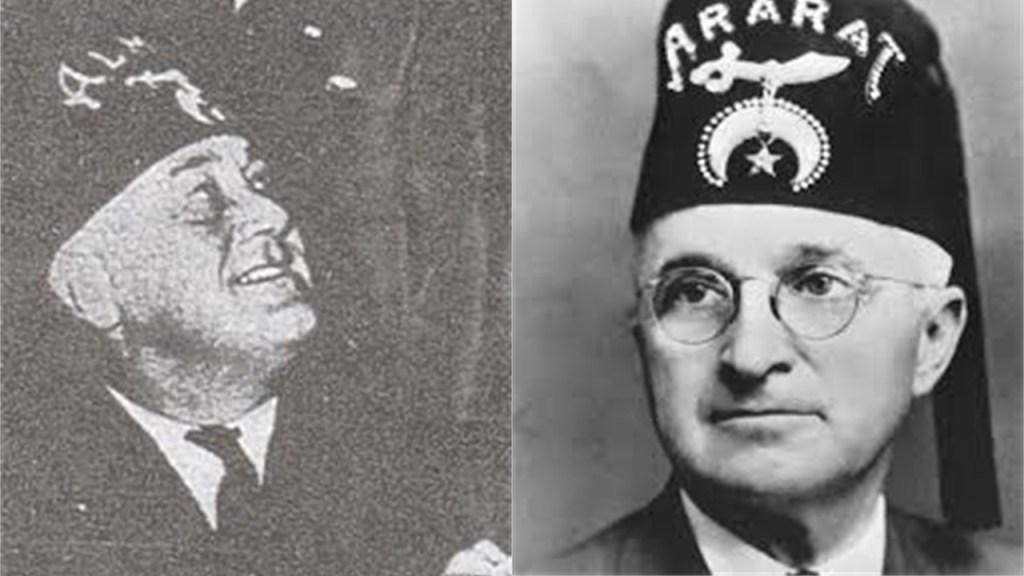
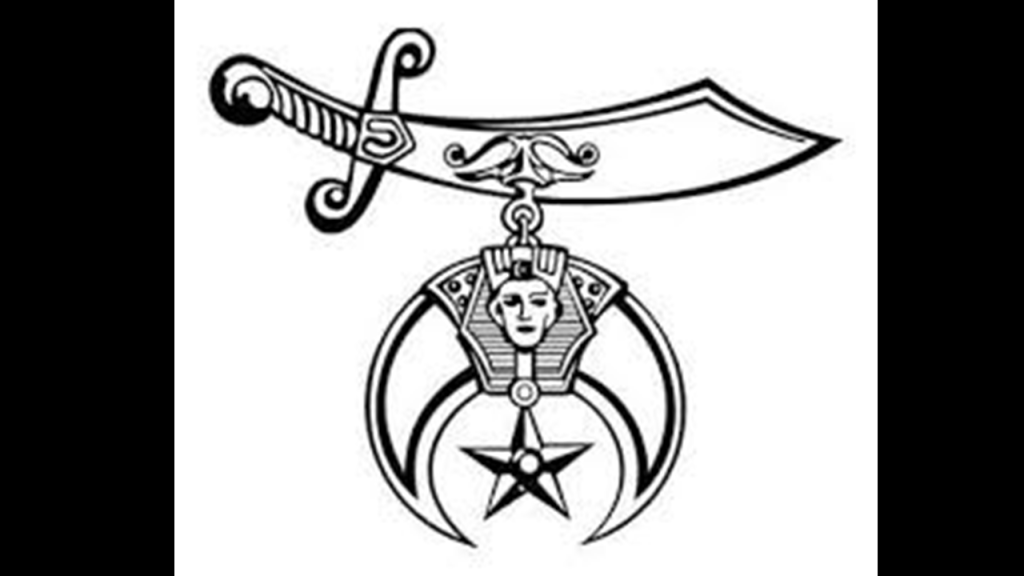
Shriners are comprised of 32nd- and 33rd-degree freemasons, the highest degrees of western freemasonry, also known as the Ancient Arabic Order of the Nobles of the Mystic Shrine, with a logo that appears to be depicting the menacing image of a sword over the head of a Pharaoh.
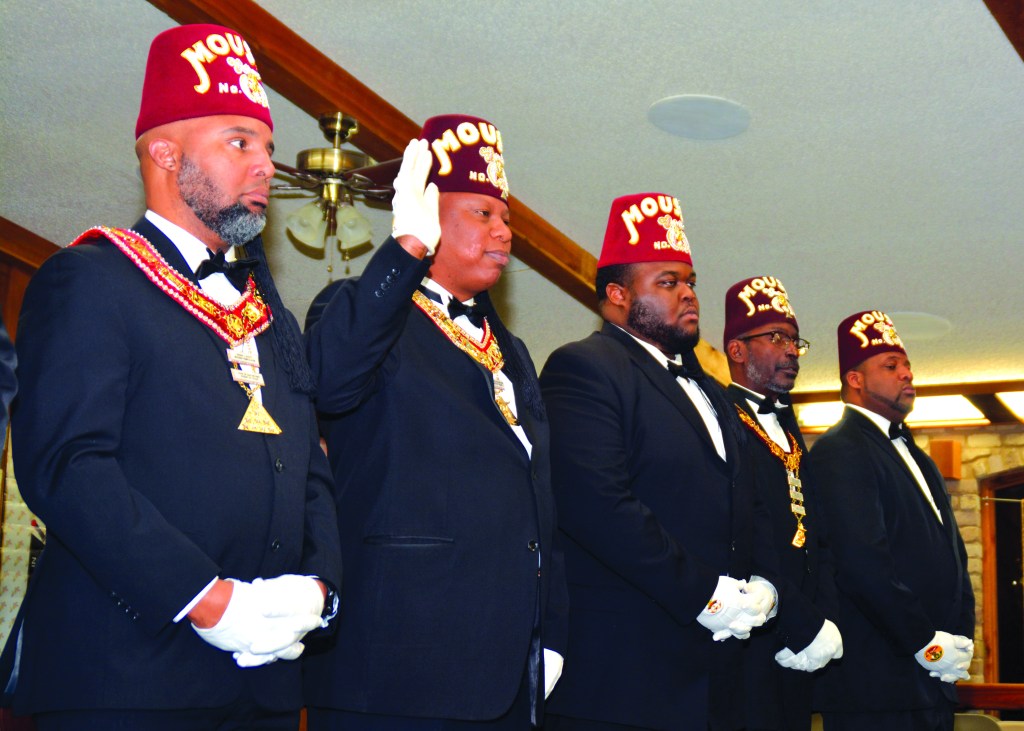
These are Prince Hall Shriners of the Ancient Egyptian Arabic Order of the Nobles of the Mystic Shrine.
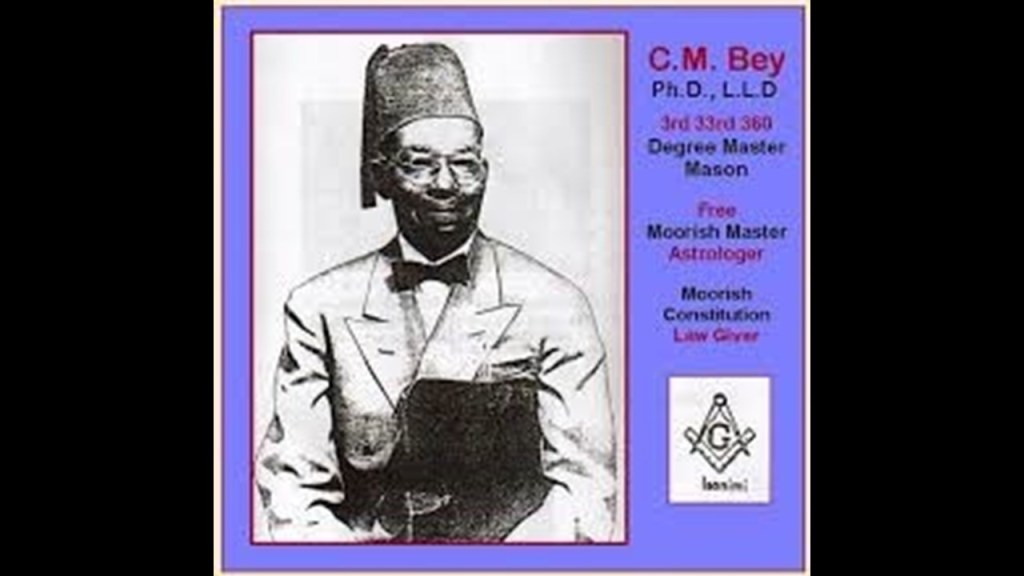
Ancient Moorish Masonry has 360-degrees of initiation…327 more than freemasonry.
Fort Independence in Boston Harbor was the location where Prince Hall, and fourteen other Moorish men were initiated into the British Army Lodge 441 of the Irish Registry, after having been declined admittance into the Boston St. John’s Lodge.

He was the founder of Prince Hall Freemasonry on September 29th of 1784, and the African Grand Lodge of North America.

Until Prince Hall found a way in, Moorish Americans were denied admittance into Freemasonry.
Moorish Masonry is based on Moorish Science, which also includes the study of natural and spiritual laws, natal and judicial astrology, and zodiac masonry.
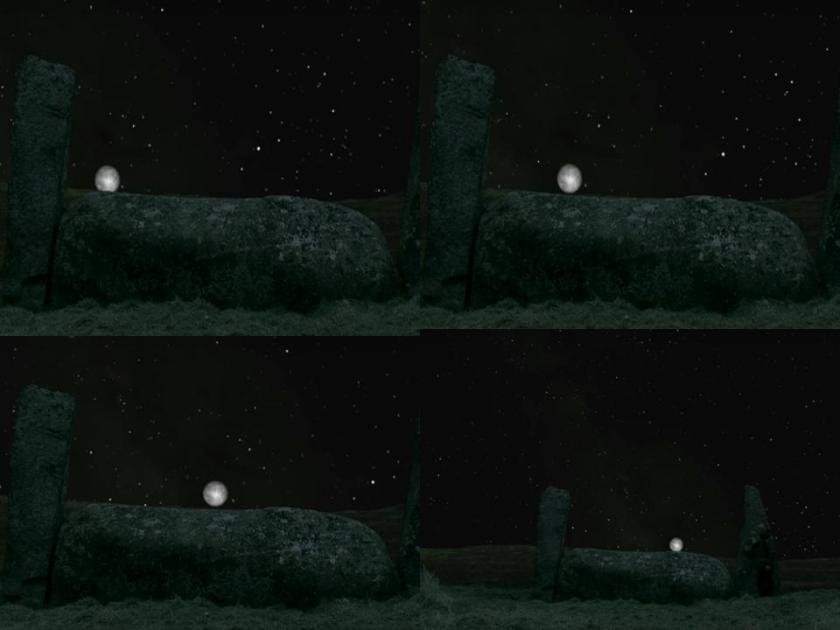
This is where the perfect alignments of infrastructure on earth with the sky comes from – the consummate alignment of earth with heaven that is seen around the world – like the lunar roll along the top of this multi-ton recumbant stone in Crowthie Muir in Forres, Scotland.
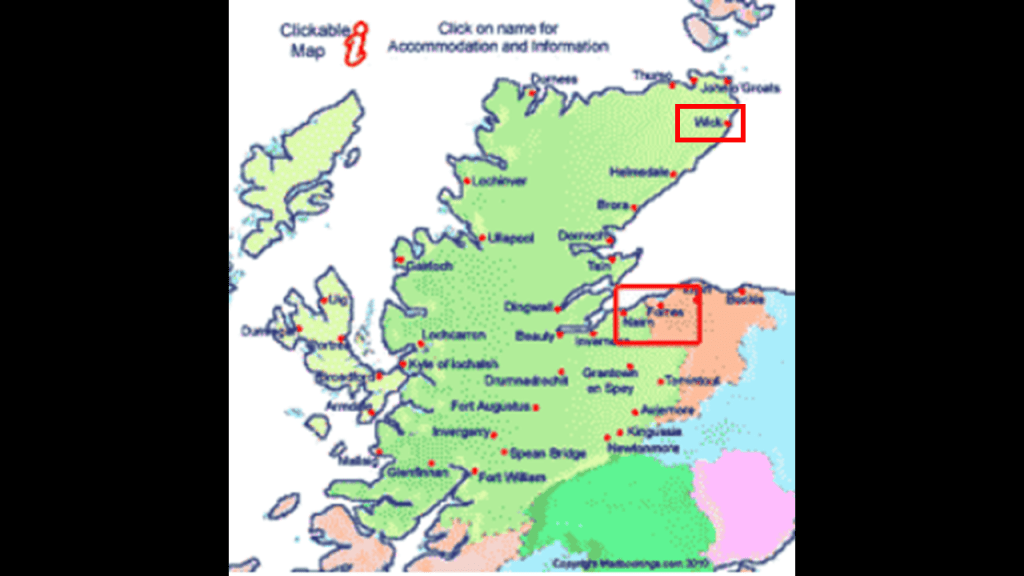
Further north of Crowthie Muir in Forres, near Wick on the northeast tip of Scotland…
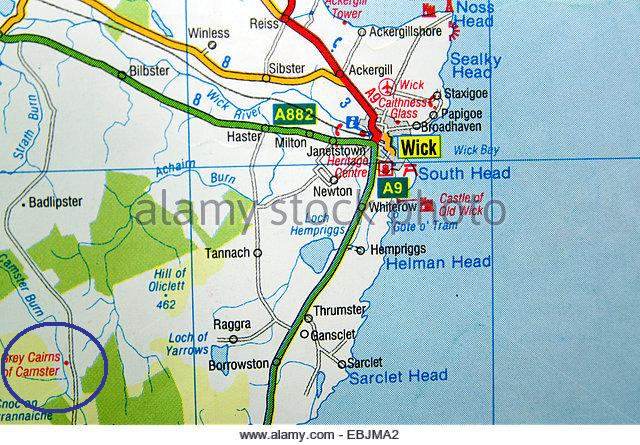
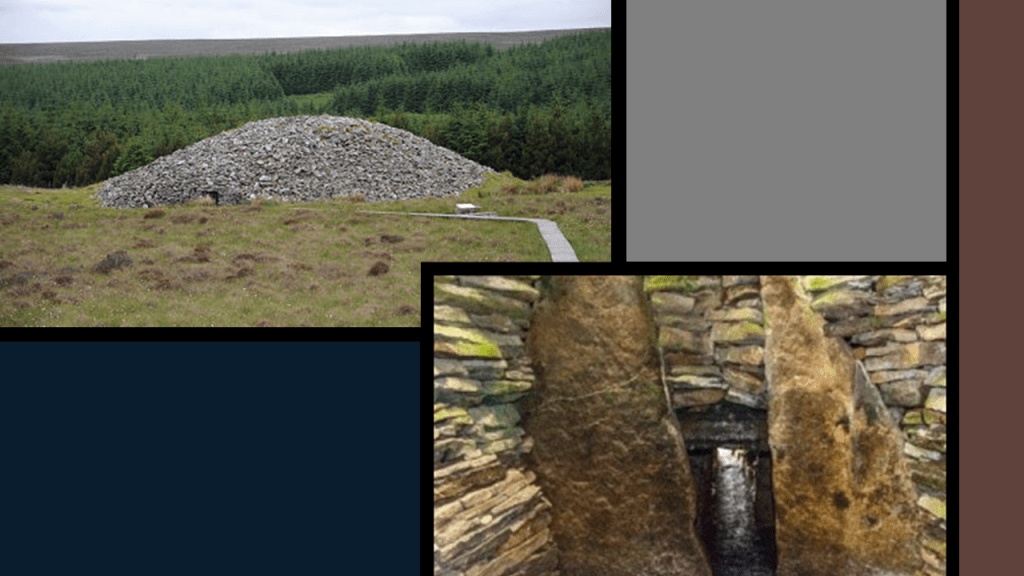
…there is a place called the Grey Cairns of Camster.
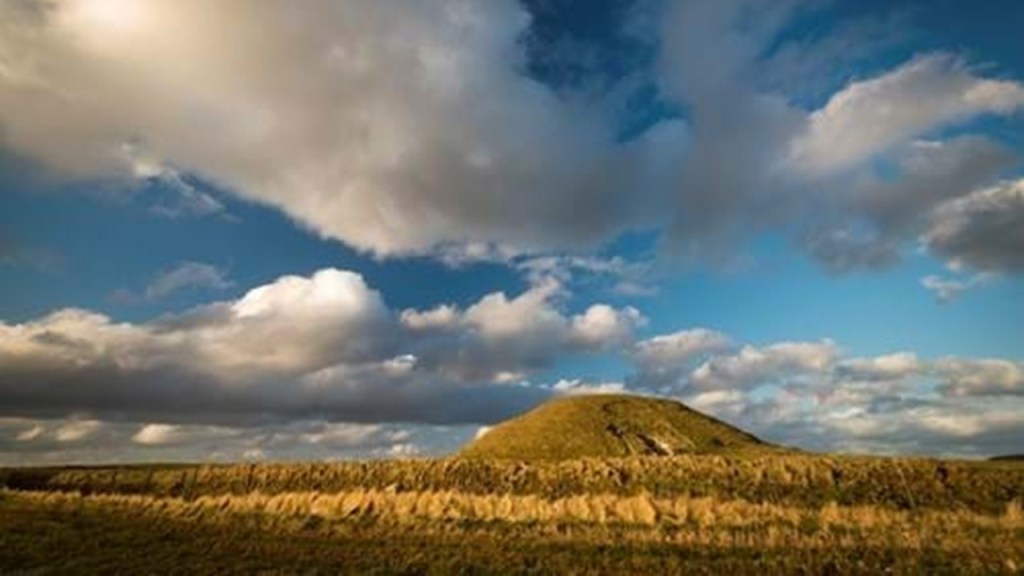
This site has two of Scotland’s oldest, and best-preserved, Neolithic chambered cairns, dating back 5,000 years ago, in addition to this big mound.
This is Camster Round on the outside and inside, said to have been discovered in 1850, and excavated in 1865.
It is unique as a chambered cairn in Caithness because its main chamber roofing was found intact.
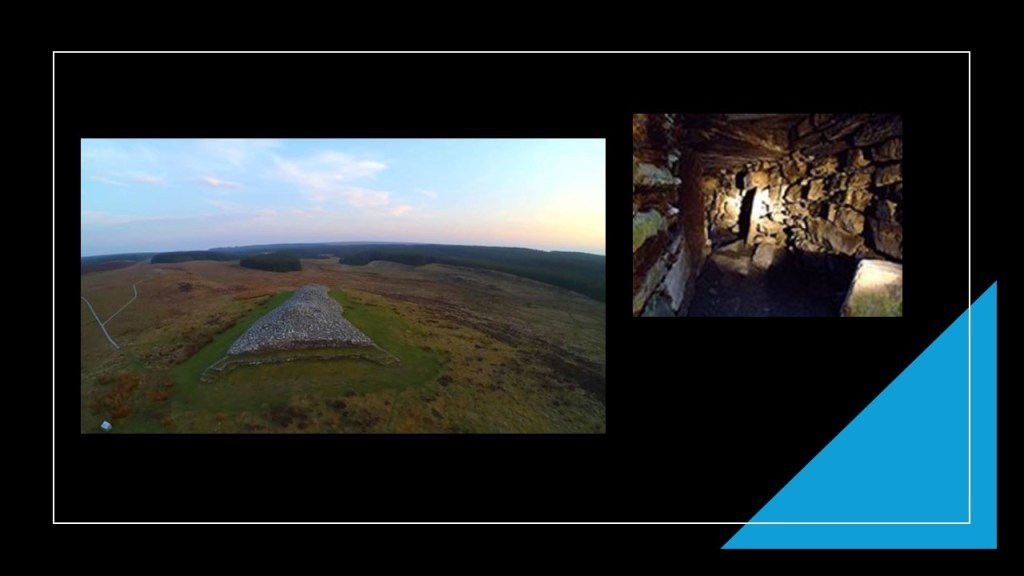
The other chambered cairn is called Camster Long, and depicted on the inside with sunlight shining on the stone at the end of the Chamber.
These two cairns are described as burial chambers, but I believe Neolithic constructions like these chambered cairns have predominantly astronomical functions, and not burial ones.
Like, among other things, being markers of the heavens on earth at the solstices or equinoxes, providing a perfectly aligned avenue in the enclosure for the light to stream into at those times.
Another example of this is found in the Neolithic Complex of Avebury in Southern England…
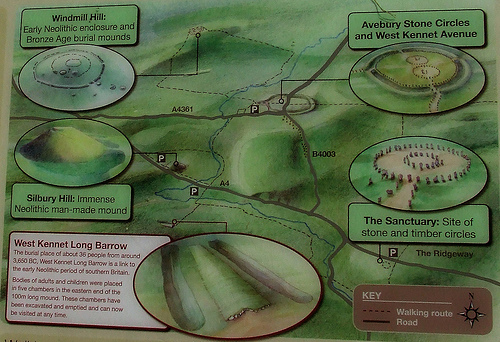
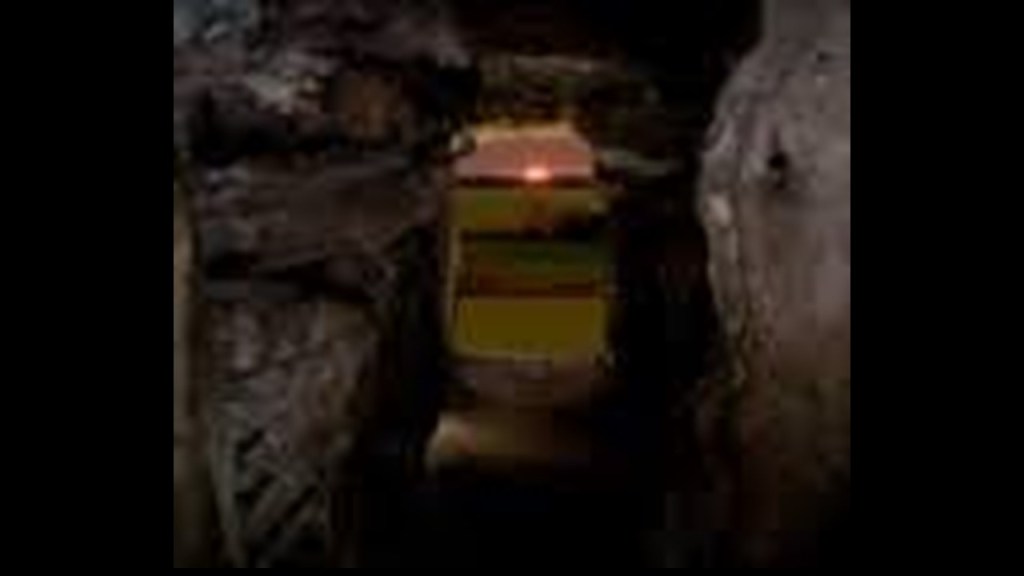
…at the West Kennet Long Barrow. While also called a tomb, it is known to be a solar marker at the equinoxes, as depicted in this photograph of the sun aligned at the entrance of this long barrow.
It is also over 5,000 years old, like the Grey Cairns of Camster.
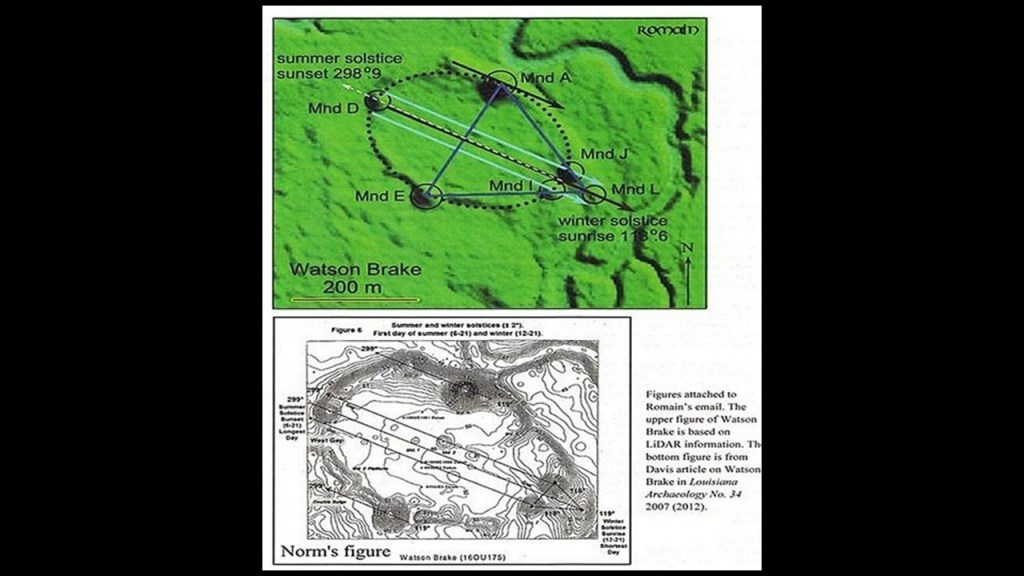
Both the Grey Cairns of Camster and the West Kennet Long Barrow are contemporaries in time with the Watson Brake Mounds, in Richwood, Louisiana, near Monroe and Poverty Point, which you can’t visit because it is on private property.
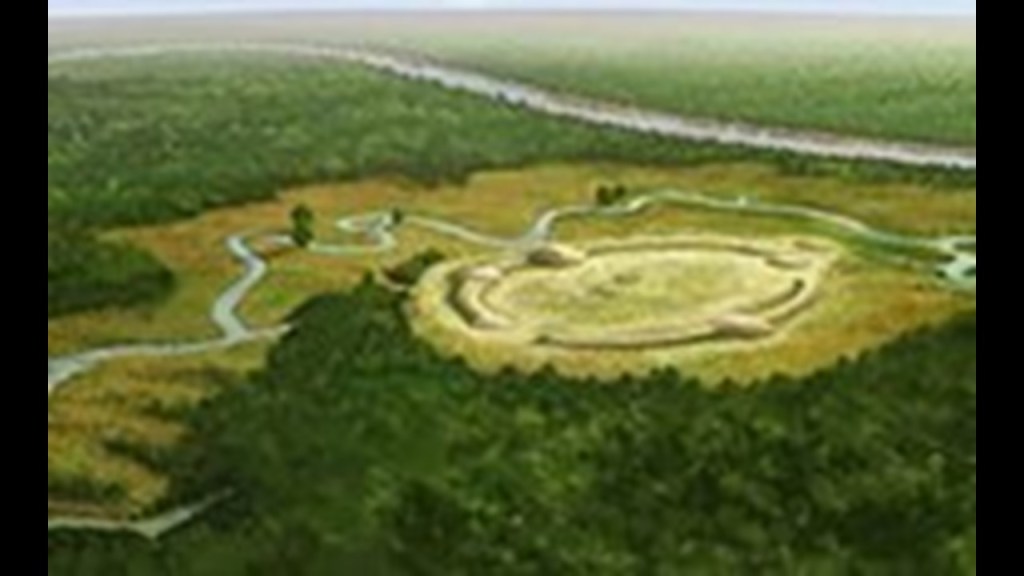
Watson Brake is dated to 5,400 years ago, and is considered the oldest earthwork mound complex in North America. Note the summer and winter solstice alignments depicted here in this diagram of Watson Brake.
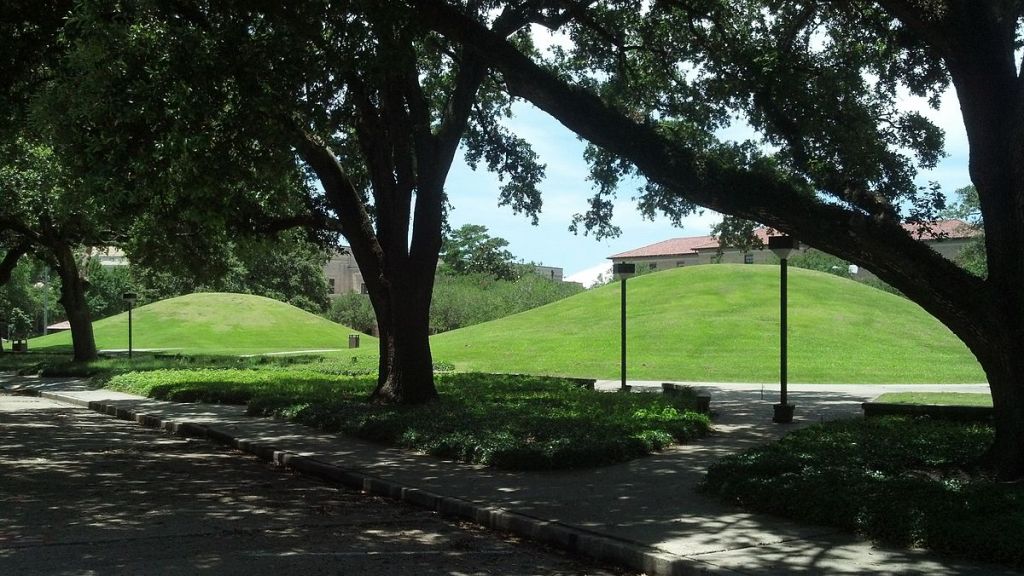
There are two ancient mounds at Louisiana State University in Baton Rouge, believed to be more than 5,000 years old, and considered to be part of the oldest mound system in North America, and also an acknowledged part of the Louisiana mound system.
They are on the U. S. National Register of Historic Places.
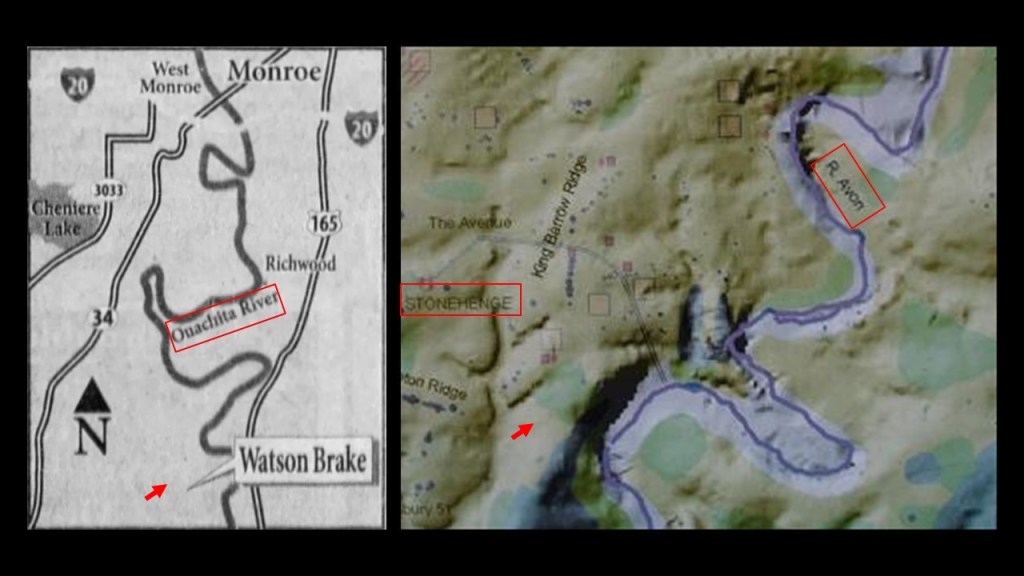
Stonehenge, located not far from the neolithic complex at Avebury in Southern England, is also believed to date to about 5,100 years ago, and has a similar earthwork to what is seen at Watson Brake in Louisiana encircling the big stones.
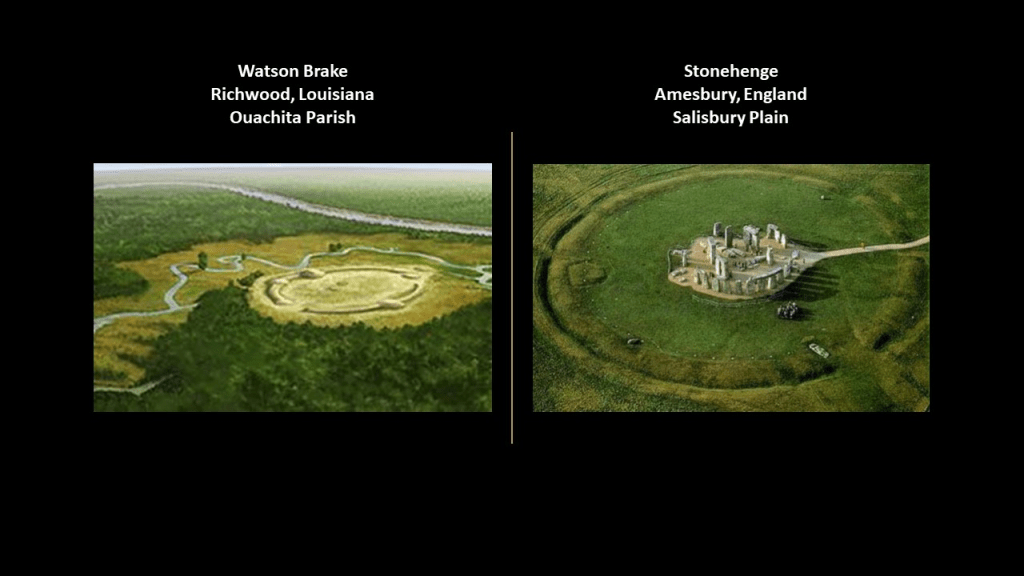
Not only that, the rivers next to both of these places, the Ouachita River at Watson Brake, and the River Avon next to Stonehenge, appear to have what are identically-shaped bends right next to the sites.
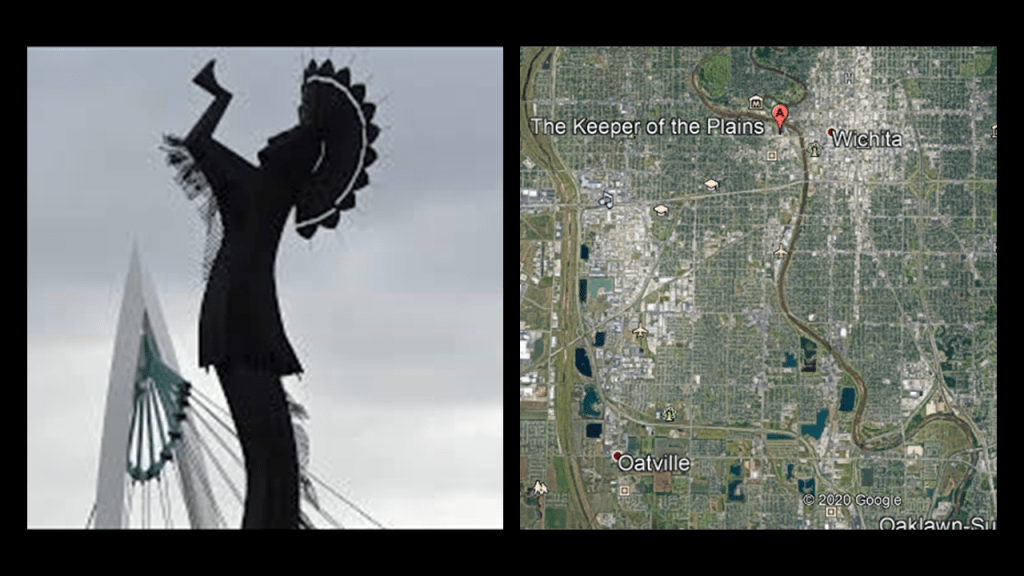
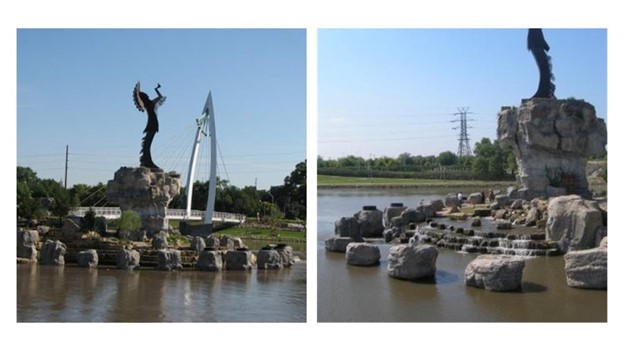
So to get back to the cover-up of the Earth’s True History by the John Wayne version of history, I am going to take a look at the “Keeper of the Plains,” a 44-foot, or 13 1/2 meter, high statue, situated where the Big and Little Arkansas Rivers join together in downtown Wichita, where we see more of the snaky, s-shaped river bends.
It strikes me that the statue is erected on top of what looks like ancient megalithic masonry to me!
You see the same kind of masonry blocks at Wichita Falls in Texas, even though what we are told was that a flood in 1886 destroyed the original Wichita Falls for which the city was named, and that 100-years later, the city built a 54-foot, or 16-meter, high multi-cascade artificial waterfall to replace the original 5-foot, or 1.5-meter, high waterfall at a bend in the Wichita River where Lucy Park is today.
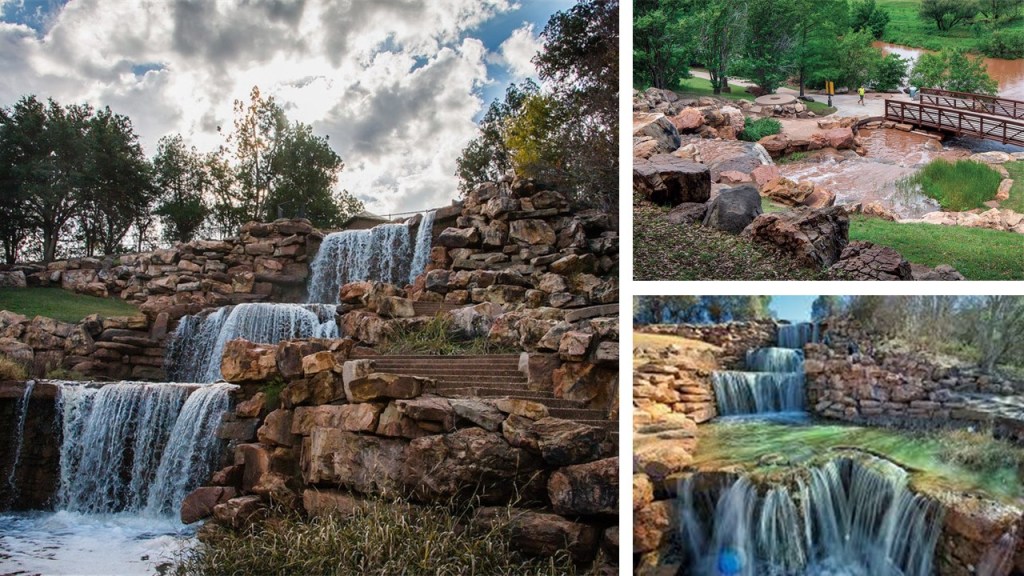
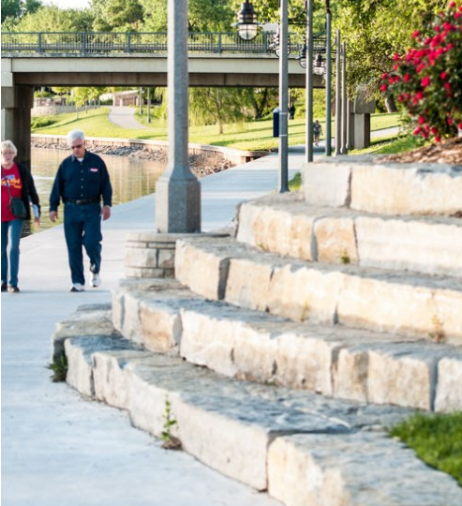
This is a riverwalk along the Arkansas River in downtown Wichita, with megalithic masonry that people walk on by every day without even noticing it for what it is.
I know I didn’t notice it until I tuned it to it, and that was just 10-years ago in my early 50s.
Then I started seeing it everywhere!
I still do!
The Scottish Rite Temple in Wichita was said to have been originally constructed in the Romanesque architectural style for the YMCA in 1887 – 1888, and that it was sold to Scottish Rite Freemasons in 1889.
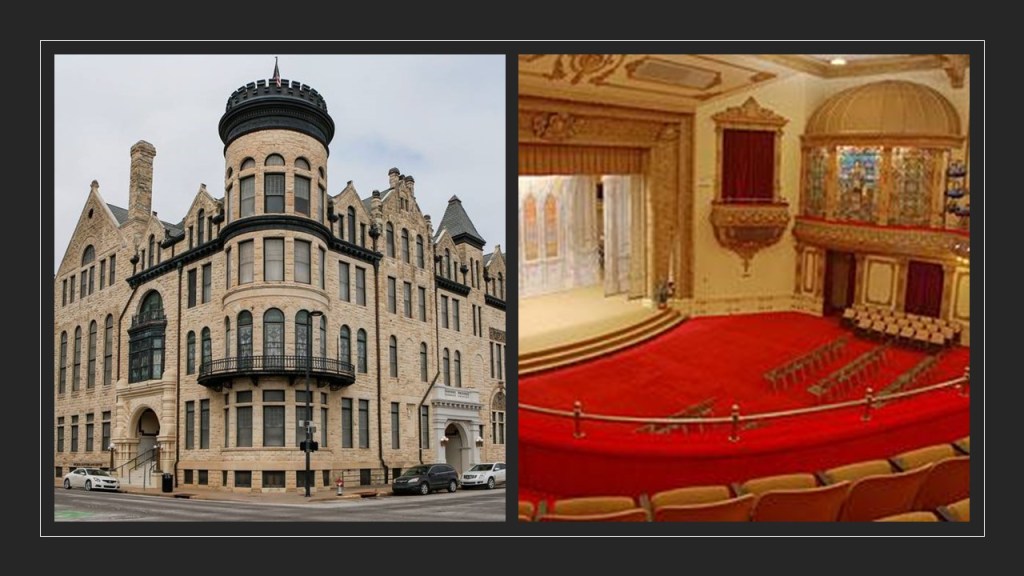
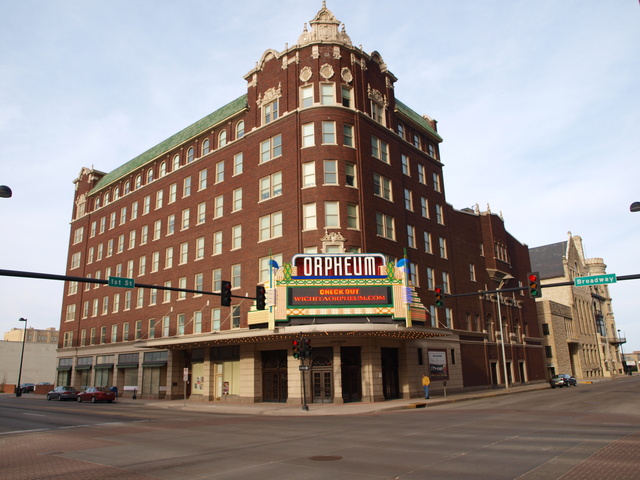
Wichita’s Orpheum Theater, which is still in use today, opened on September 4th of 1922, and was part of the Vaudevillian “Orpheum Circuit,” with well-known vaudeville stars performing there, like Harry Houdini, Eddie Cantor and Fannie Brice.
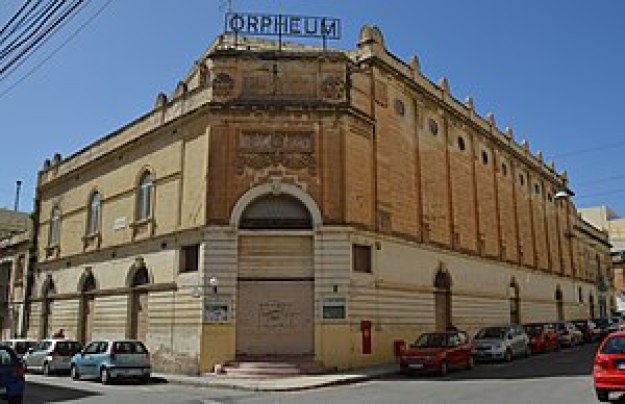
There are Orpheum Theaters still in existence all across the United States, and I even found one on the island Republic of Malta in the town of Gzira near the capital of Valletta.
Orpheus was a musician and poet in Ancient Greek legend, said to have had the ability to charm all living things, and even stones, with his music.

What, exactly, caused us to go to sleep, and forget who we are, and what we were?
How has the false information we have been taught all our lives been reinforced?
Why would this be important to whoever was responsible for removing the ancient advanced civilization from our collective awareness to begin with?
We are told that the Wichita lived here historically.
Was the memory of Ancient Washitaw Mu’urs in North America retained in the naming of this place as Wichita, like that of the Moors in Great Britain?

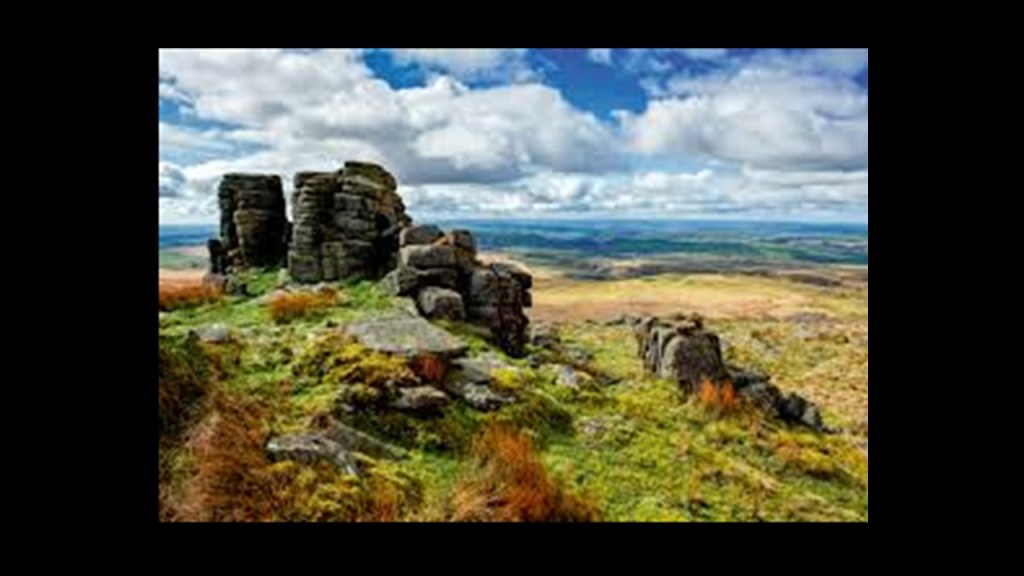
The Moors in Great Britain are defined as “tracts of open, peaty, wasteland, often overgrown with heath, common in high latitudes and altitudes where drainage is poor.”
Yet, they typically contain with the ruins of megalithic stone structures, like what is shown here.
Next, I am going to take a look at Kansas City, the third-largest city in Kansas and otherwise known as KCK.
It is the seat of Wyandotte County.
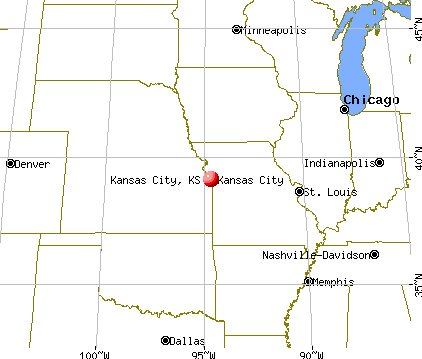
KCK was first incorporated in 1872, and then again 1886 when the “New” KCK was formed through the consolidation of five municipalities.
KCK was said to have seen explosive growth as a streetcar suburb of Kansas City, Missouri, located right across the Missouri River, and the largest city in Missouri.
Kansas City, Missouri, we are told once had one of the most extensive streetcar systems in North America.
More to come on the Missouri-side of Kansas City.
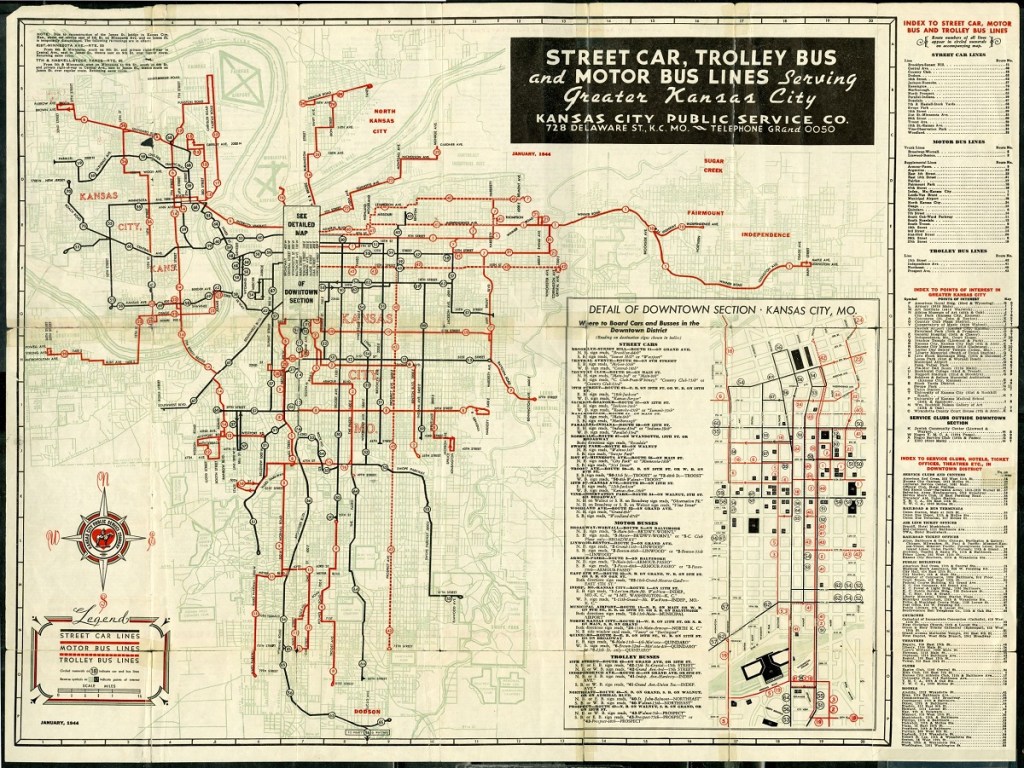
We are told that horse-powered streetcars were introduced in 1870, and that some early routes were powered by underground cables, like those of San Francisco.
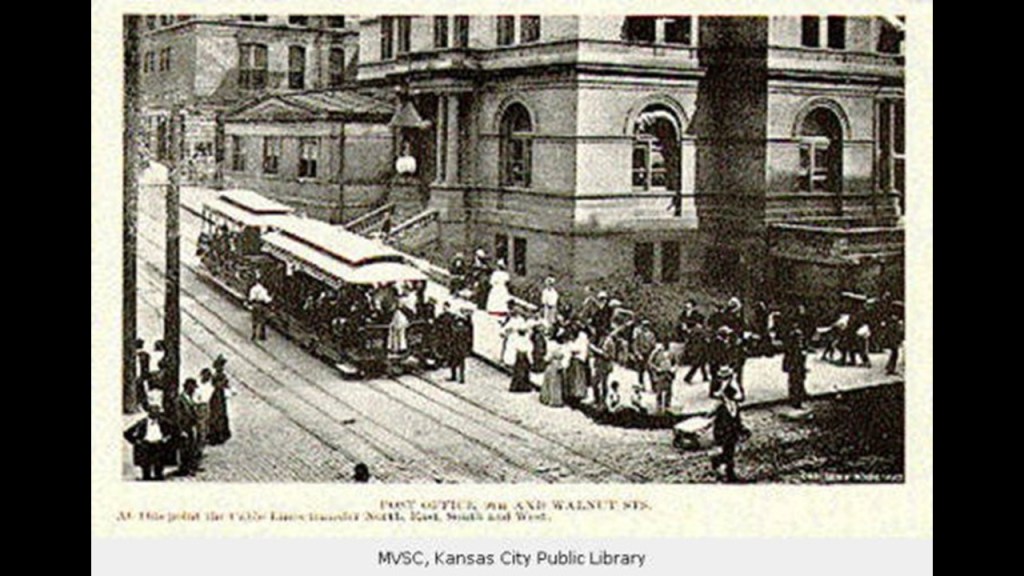
By 1908, all of Kansas City’s streetcar lines except for one was powered by electricity.

The last of its 25 streetcar routes was shut-down in 1957, to be replaced by buses.
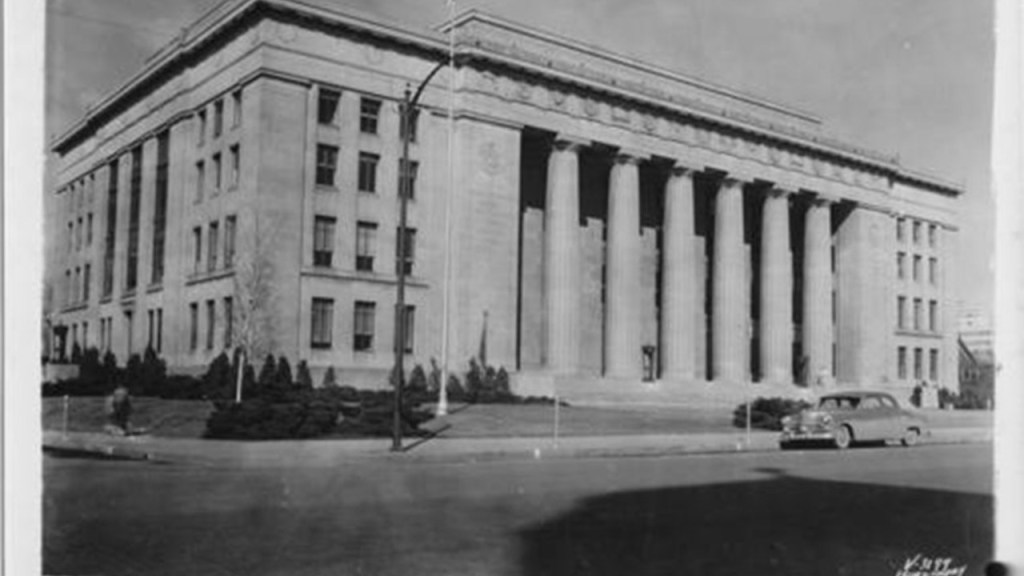
The current Wyandotte County Courthouse in KCK was said to have been built in Neoclassical style between 1925 and 1927 by the Kansas City architectural firm of Wight and Wight…
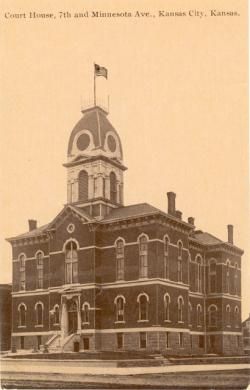
…to replace the county courthouse that was said to have been built in 1882.
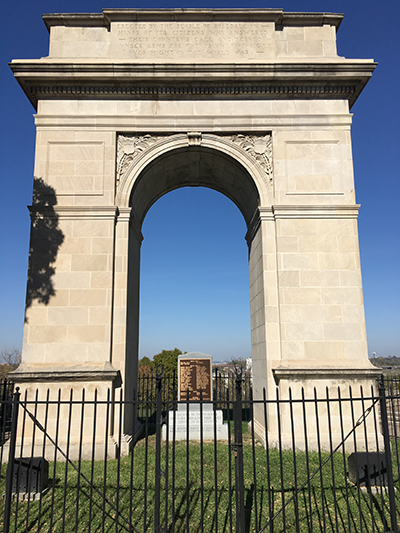
We are told the Rosedale Arch, dedicated in 1924, and said to have been inspired by the Arc de Triomphe in Paris, was erected as a memorial to honor the men of the Rosedale neighborhood of Kansas City who had served in World War I.
The Wyandotte High School, still in use today, was said to have been built in the 1936 – 1937 time-frame by the New Deal Works Progress Administration and the KCK Board of Education.
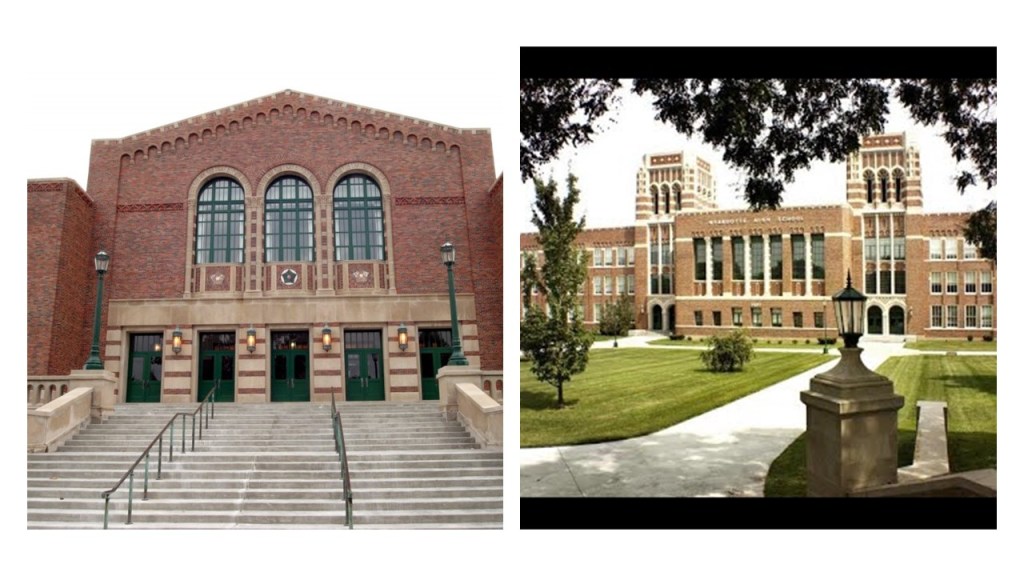
Next, I am going to take a look at Liberal, Kansas.
Liberal was incorporated in 1888, and is the county seat of Seward County.
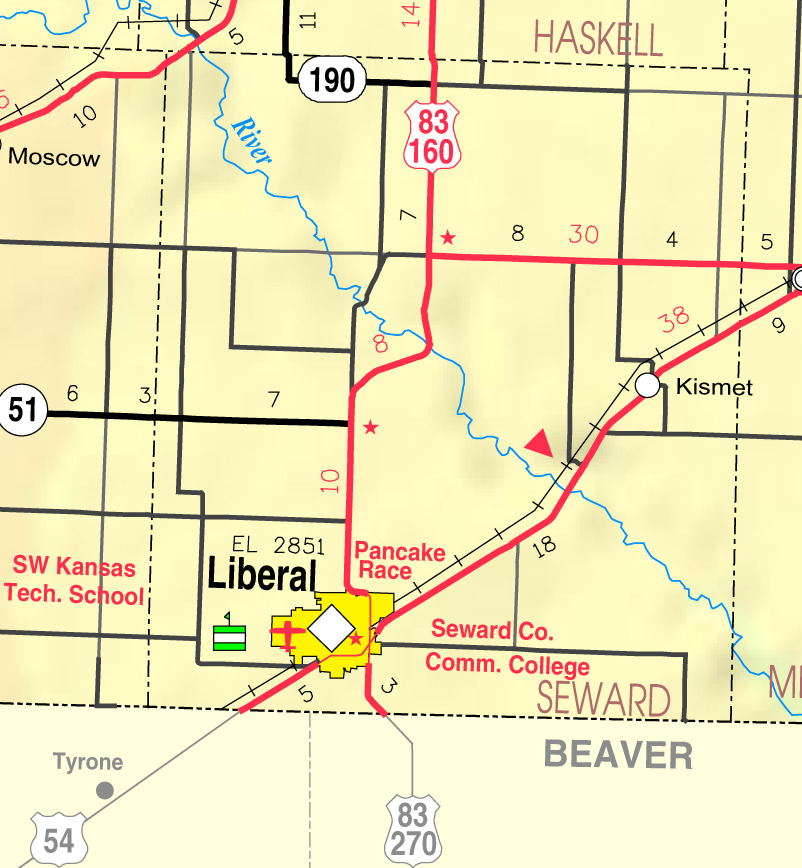
We are told it was incorporated after the railroad came by this small settlement near the Oklahoma state line where S. S. Rogers had built the first house in 1872, and where he built a general store and post office in 1885.

From the arrival of the railroad, so the story goes, the town’s growth began.
The plot on the townsite of Liberal opened on April 13th of 1888.
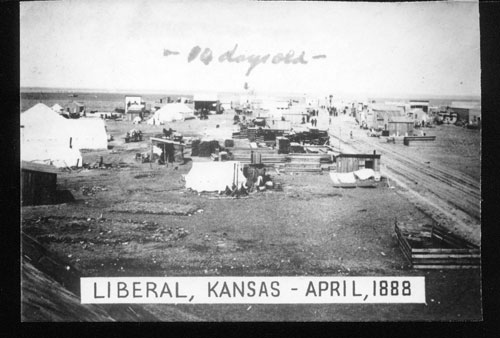
The sale of lots in the next twenty-four hours, we are told, totalled $180,000, and within a week, there were 83 constructed wooden houses, and within a year there was a boom, at which time Liberal was incorporated as a city.
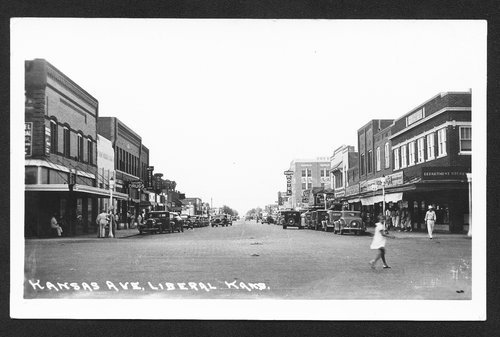
This is a picture of Kansas Avenue in Liberal taken sometime in the years between 1928 and 1938.
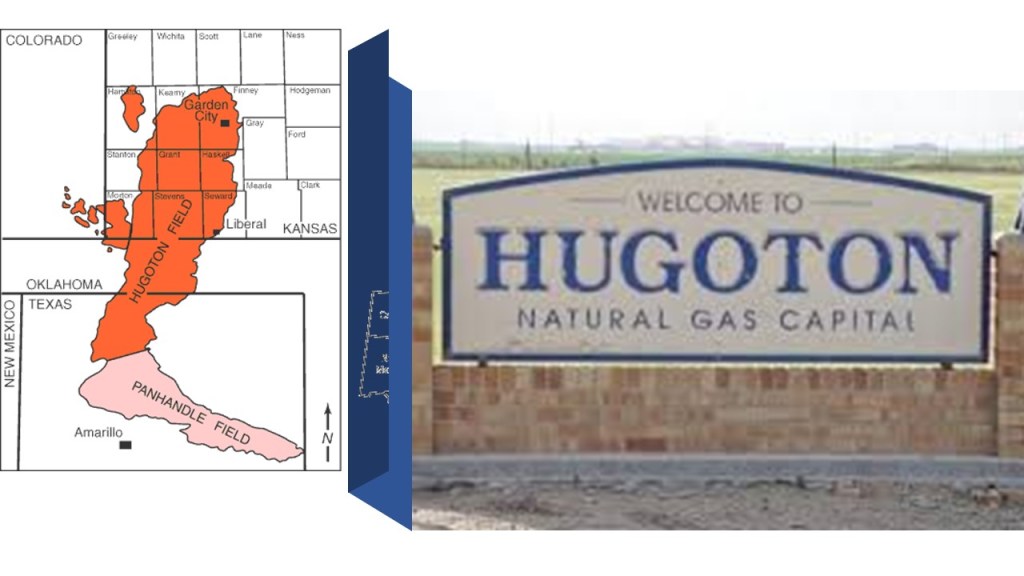
In 1920, natural gas was discovered west of Liberal in what became the huge Panhandle-Hugoton gas field, which contains one of the world’s largest known natural gas fields…
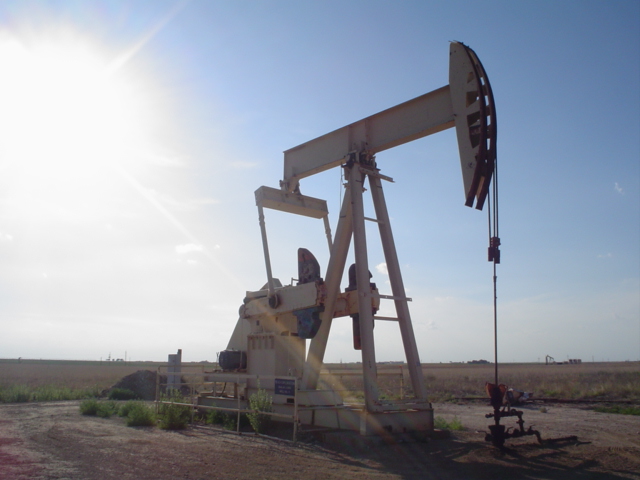
…oil was discovered southwest of town in 1951…
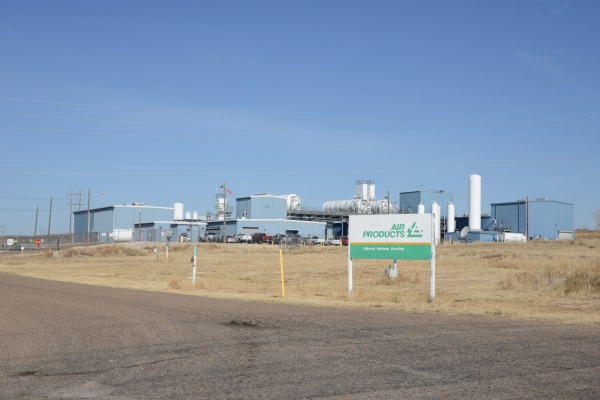
…and in 1963, National Helium opened there, the largest helium plant in the world.
The last place I am going to look at here in the heart of the continental United States is Kansas City, Missouri, or KCMO, because there is a whole lot to unpack here.
When I was looking around for information on the early history of KCMO, the following information and photos stood out.
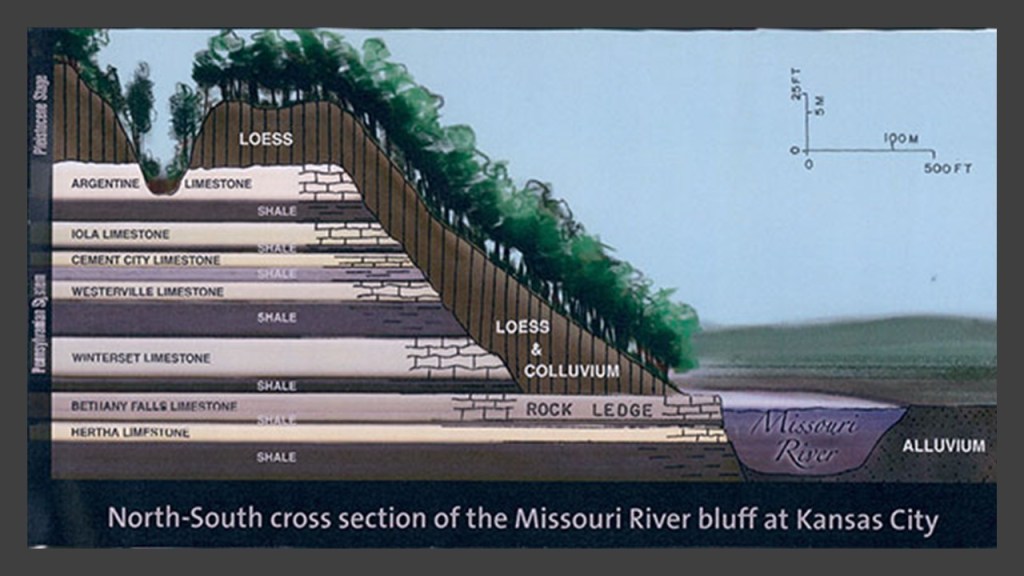
A Rock Ledge became the landing place for riverboats and wagon trains starting in 1833, on the southside of the Missouri River at what became KCMO.
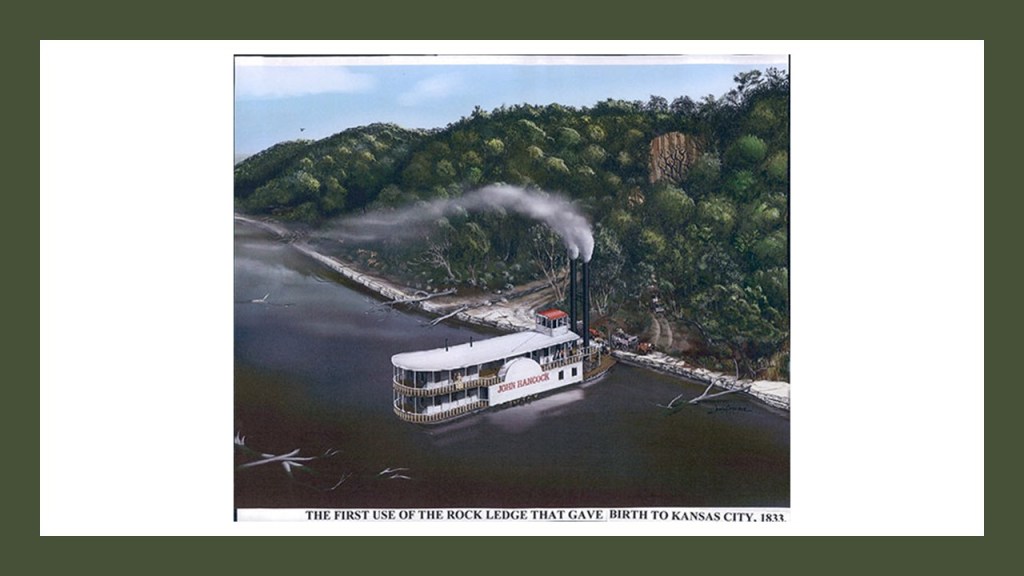
And all of these strata of limestone are underneath the surface where the rock ledge was located.
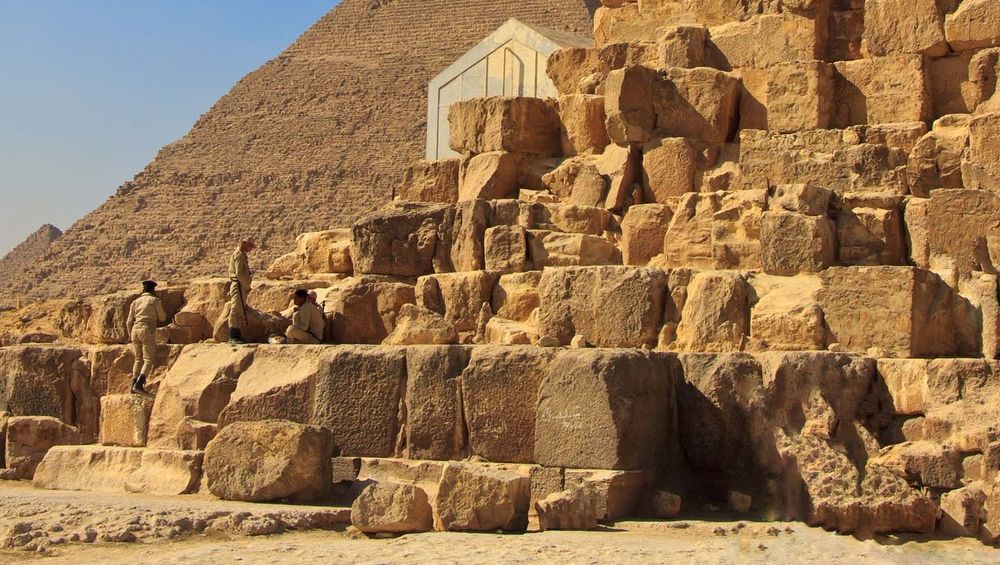
I just want to point out that limestone was a common building material in the ancient world, and used in constructions like the Pyramids of Giza…
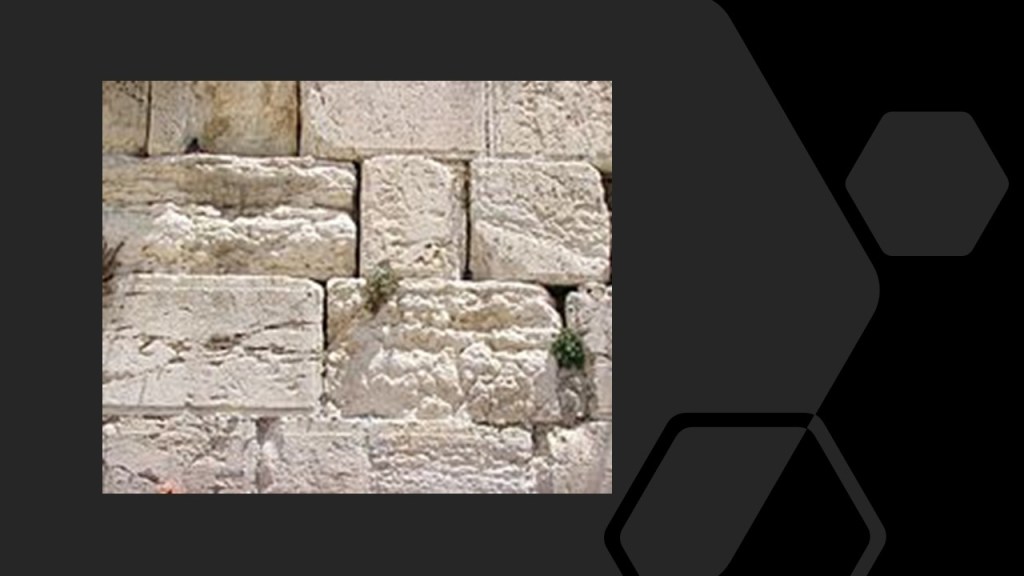
…and the Western Wall, also known as the “Wailing Wall,” an ancient limestone wall in the old city of Jerusalem.
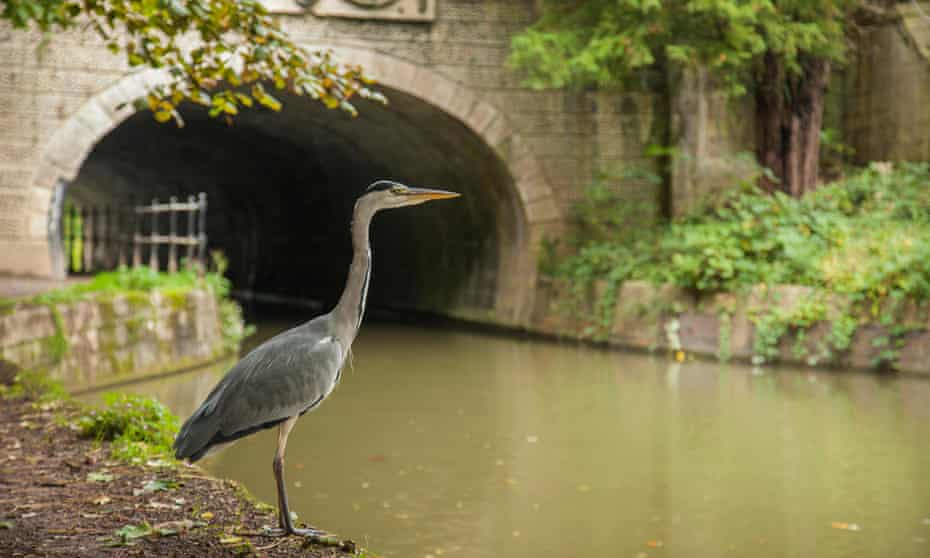
And places that are officially identified as canals have rock ledges.
KCMO was incorporated as a town on June 1st of 1850, and as a city on March 28th of 1853.
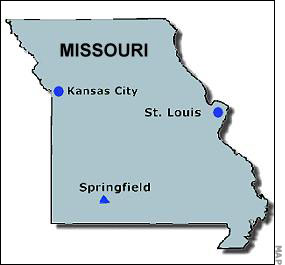
The territory around the confluence of the Missouri and Kansas Rivers was deemed by the founders as a “good place to build settlements.”
Noteworthy architecture on the Missouri of Kansas City side includes:
The Liberty Memorial, the National World War I Memorial and Museum, said to have been built in 1926, after a group of 40 prominent Kansas businessmen decided to form an association to create a memorial to those who had served in the war.

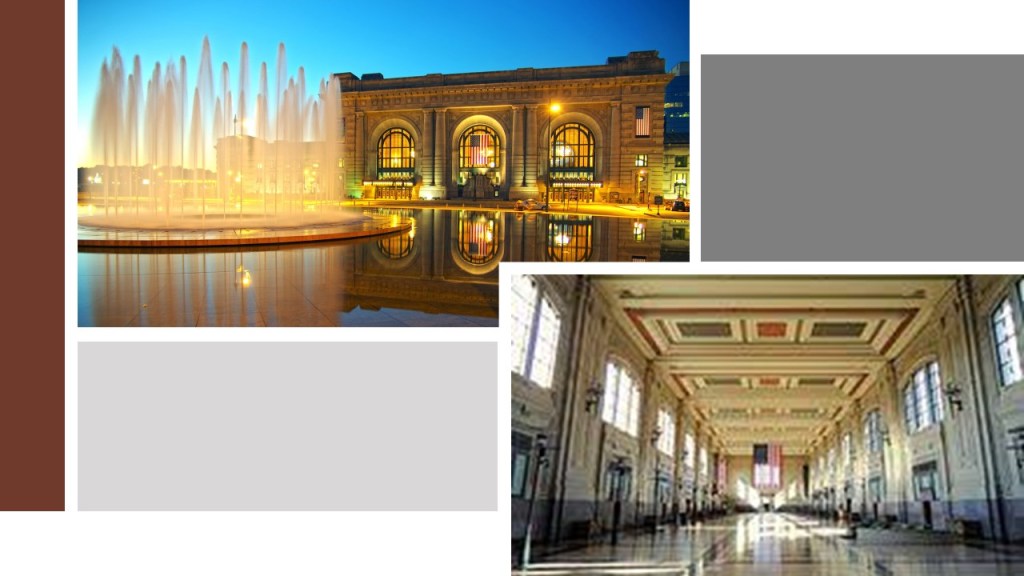
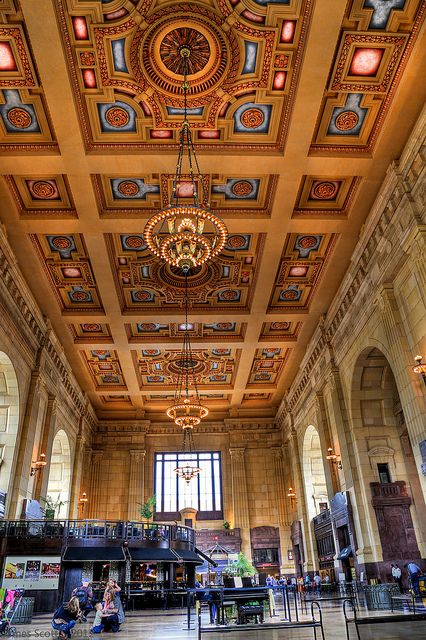
Construction on the Union Station in KCMO was said to have started in the early 1900s, and that it opened in 1914, operating as a train station until 1985.
Today it features exhibits, movies, restaurants, and a science center.
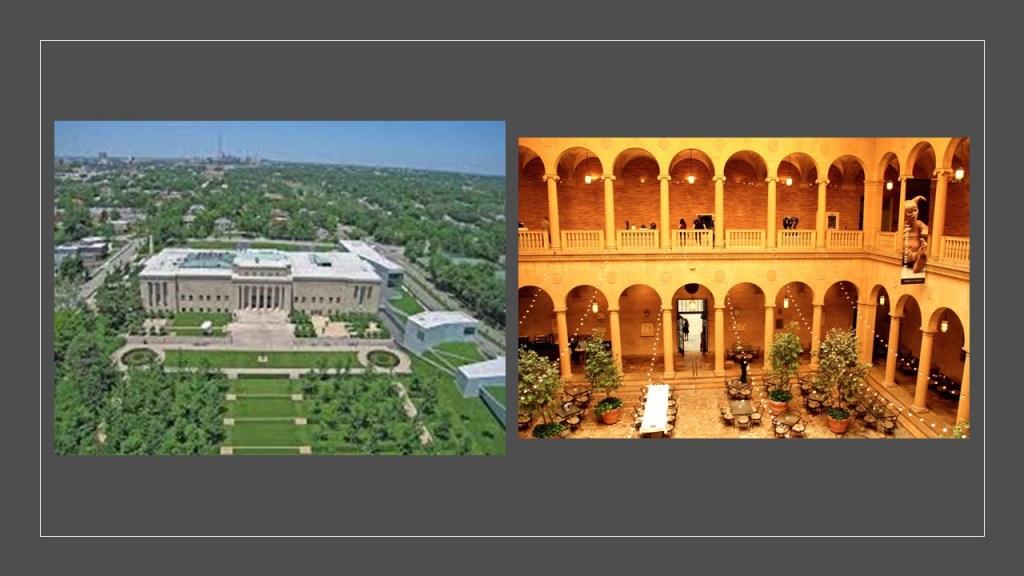
Like the current Wyandotte County Courthouse in KCK, the Nelson-Atkins Museum of Art was said to have been designed by the architectural firm of Wight and Wight, with groundbreaking for the building occurring in July of 1930, and the museum opening to the public in December of 1933, in the middle of the Great Depression.
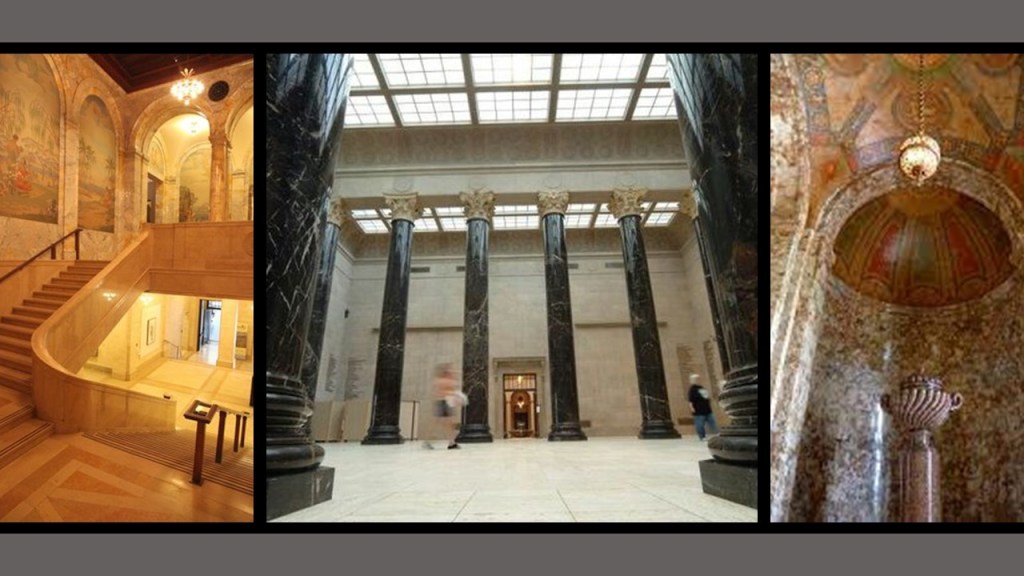
Inside this magnificent building, there are marble floors, staircases, columns, and ornate marble alcoves and hallways.
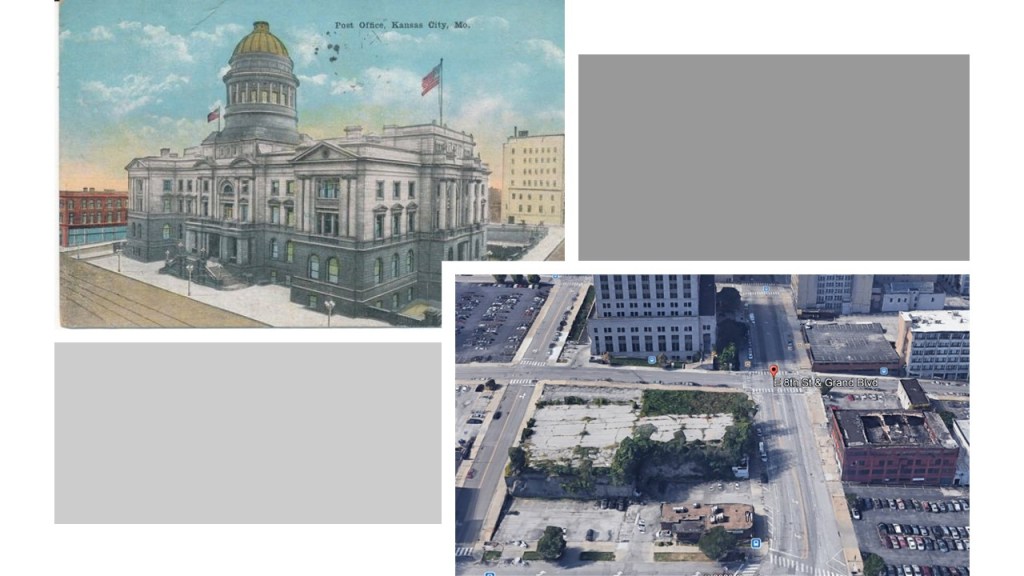
The United States Courthouse and post office, still standing today, was said to have been built in the late 1930s as one of the last of Franklin Roosevelt’s New Deal programs.

What we are told was the new courthouse replaced the Old Post Office and Customhouse, on the top left, that once stood at 8th and Grand Boulevard on the bottom right in Kansas City, Missouri.
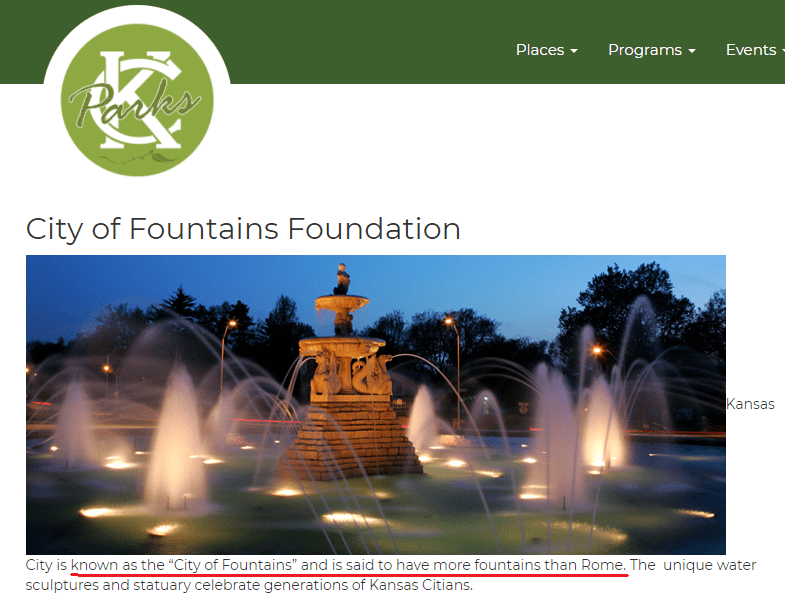
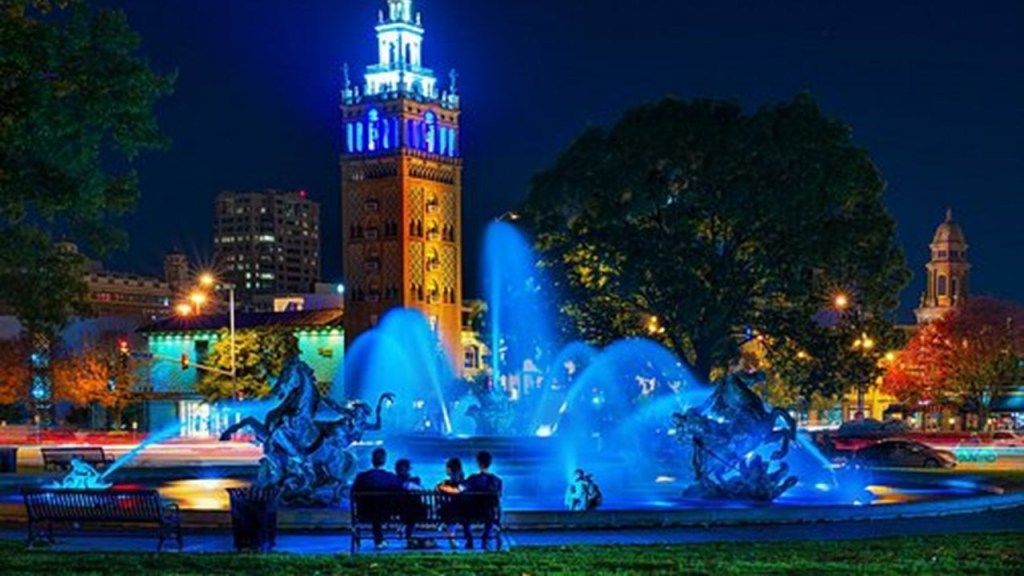
KCMO is called the City of Fountains, and is reputed to have more fountains than Rome!
There are 200 officially-registered fountains in the Greater Kansas City Metro area.
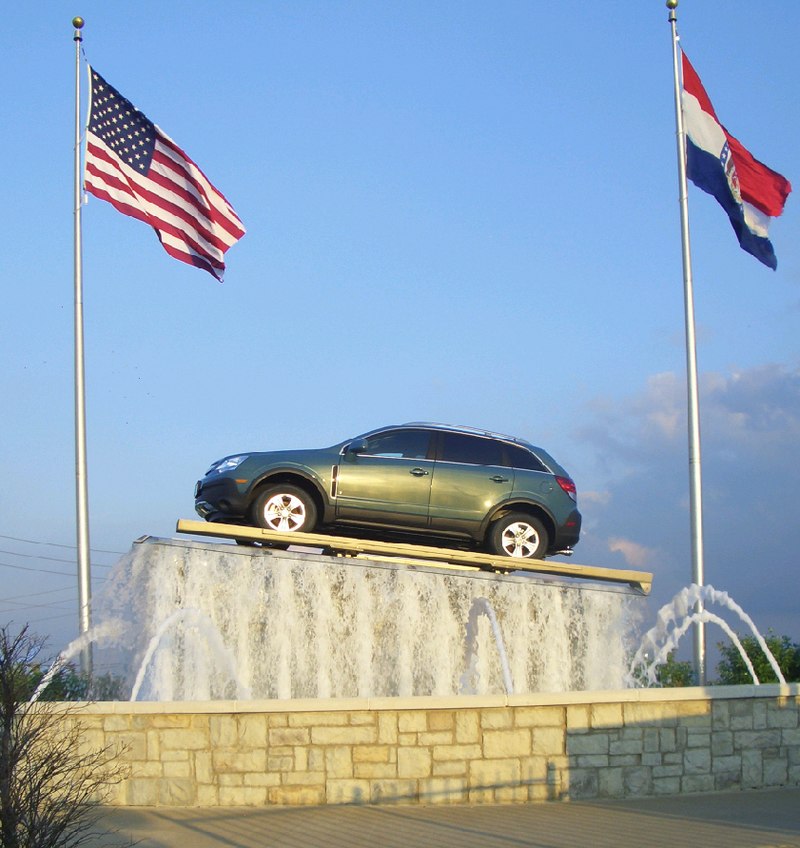
That number does not include fountains at corporation and sub-division entrances; office atriums; and private gardens and homes; or like this one at a Kansas City Auto Dealership.
The first fountain built was said to have been designed by George Kessler and built in Kansas City in 1898 at 15th (now Truman Road) and the Paseo, though it was destroyed in 1941, with no reason given.
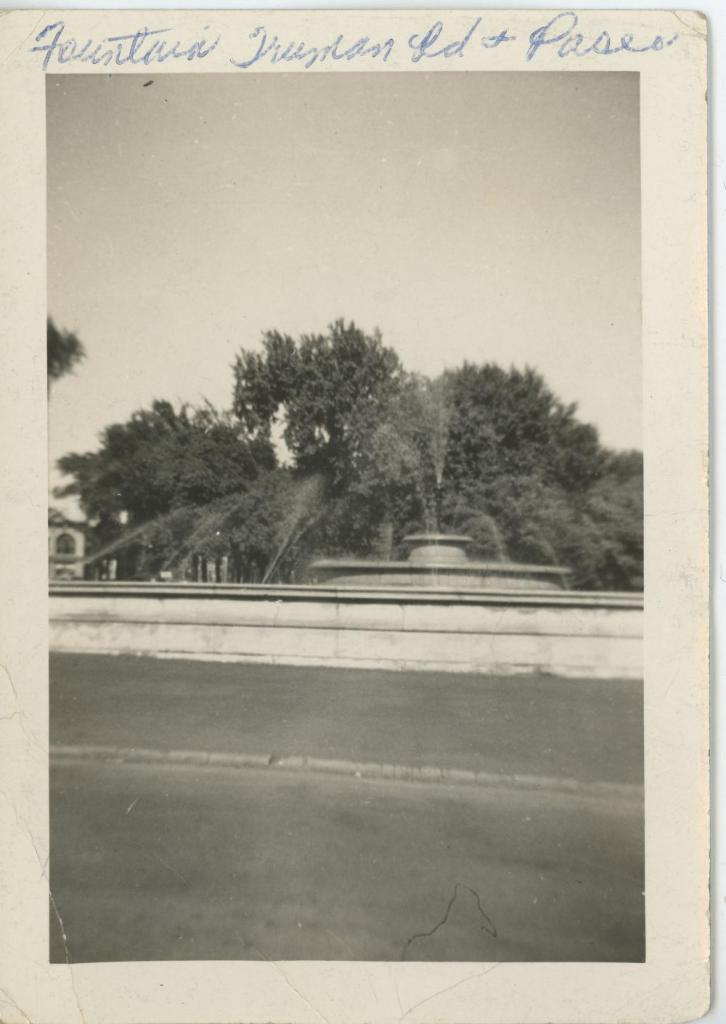
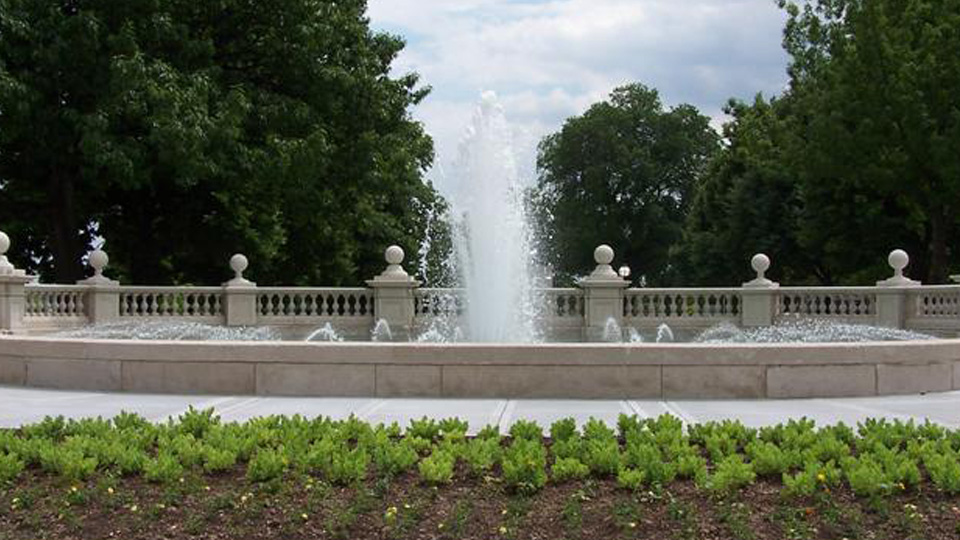
But the second-fountain said to have been designed and built originally in Kansas City in 1899 by George Kessler, along with John Van Brunt, is still in operation today, and known as the “Women’s Leadership Fountain.”
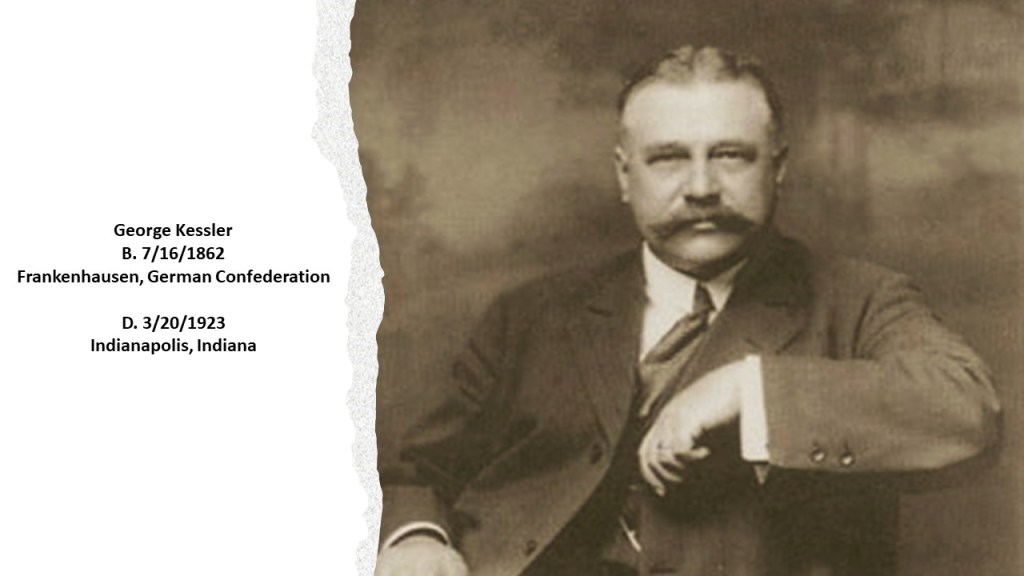
George Kessler was a German-born American city-planner and landscape architect, and in the course of his 41-year-career, was said to have completed over 200 projects, and prepared plans for 26 communities; 26 park and boulevard systems; 49 parks; 46 estates and residences; and 26 schools, which can be found in 23 states; and 100 cities, including Shanghai, New York, and Mexico City.
Interesting to note that George Kessler was also mentioned as being a 32nd-degree Freemason.
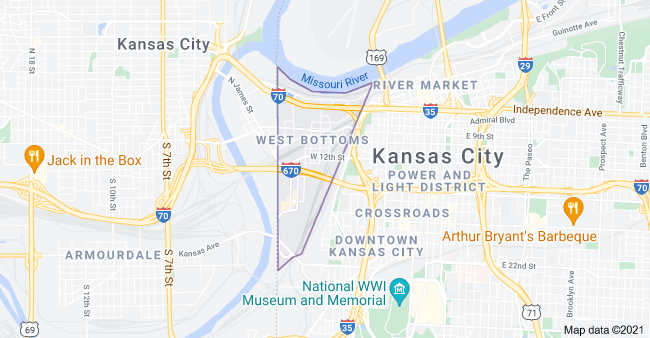
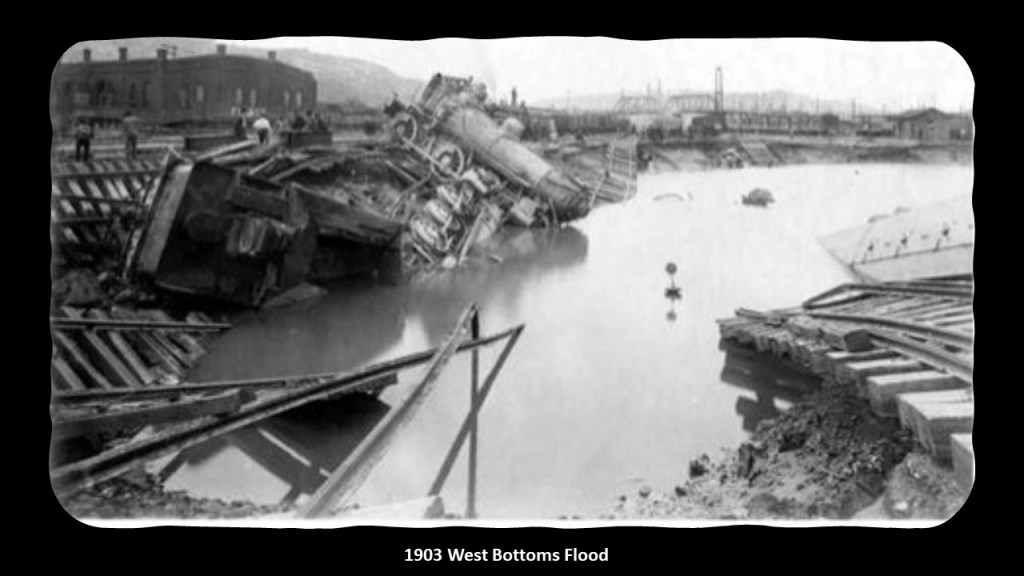
KCMO has an area called West Bottoms that is always hit harder when it floods there than other parts of the city.
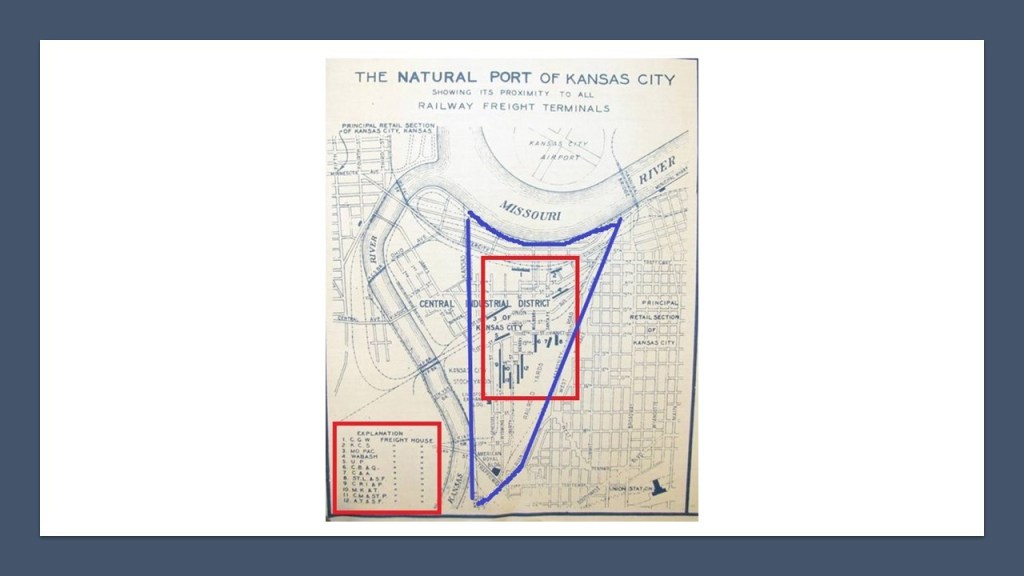
And no wonder, considering that West Bottoms is located on land that is situated between the confluence of the Missouri and Kansas Rivers, and was also the original Central Industrial District of Kansas City, and is one of the oldest areas of the city.
The first Hannibal Bridge, the oldest bridge crossing the Missouri River, was said to have been completed in 1869, after its construction started in 1867, two-years after the end of the American Civil War, and was the first permanent rail crossing of the Missouri River.
It established Kansas City as a major city and rail center.
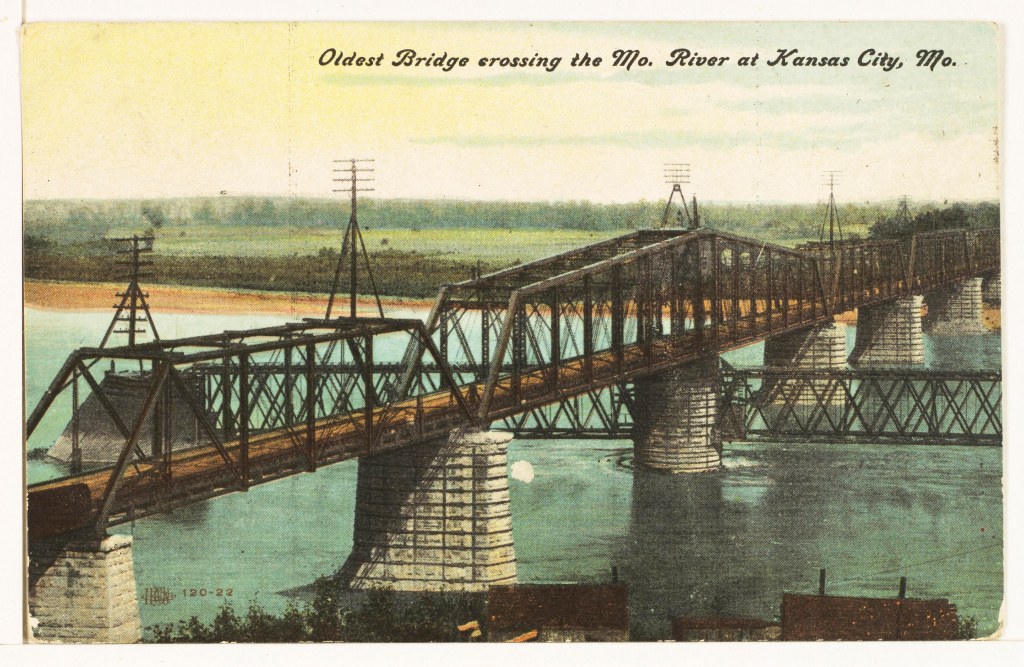
After the completion of the Hannibal Bridge, we are told the need for the Kansas City Union Depot arose.
After all, soon after the Hannibal Bridge opened, it carried eight railroads shipping freight to major trade centers in the east, like St. Louis, Chicago, and New York.
This is a historical map of what was called the “Natural Port of Kansas City,” with the West Bottoms District highlighted in blue, and the freight houses of 12 different railroads are listed by number in the red square on the left-hand-side, and the locations by number of each freight house in the red square that is contained completely within the West Bottoms District.
The first Kansas City Union Depot opened in 1878, and said to be the largest building west of New York of the time, and located near the stockyards.
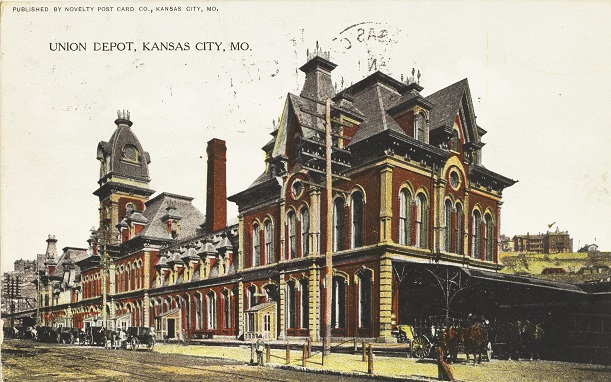
The first Union Depot train station was razed to the ground in 1915, after only 32-years of use, after the Kansas City’s second main train station, Union Station opened in 1914, the same year that World War I began.
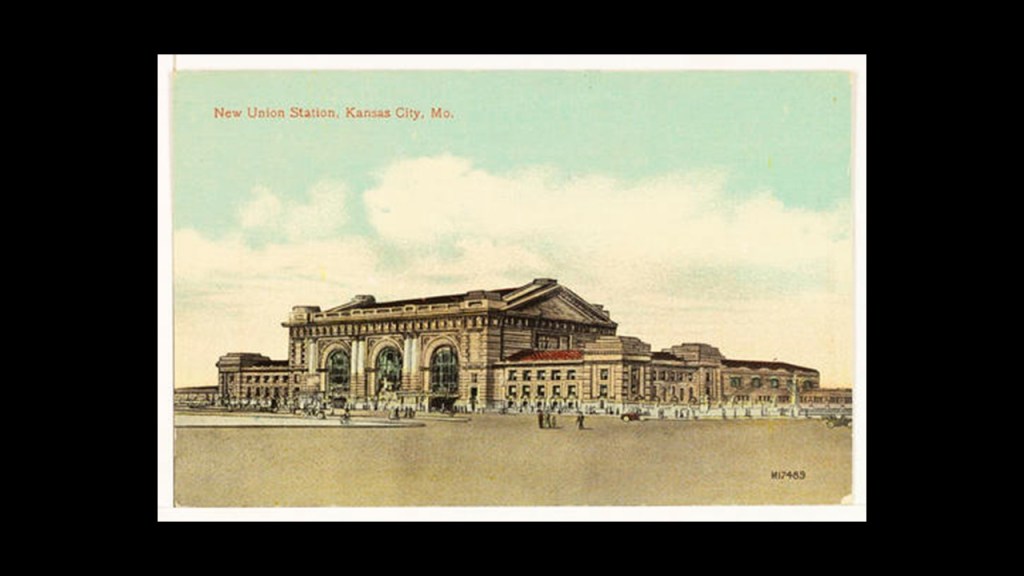
The New Union Station is still in use by Amtrak as a train station today, in addition to housing museums, theaters, restaurants and shops.
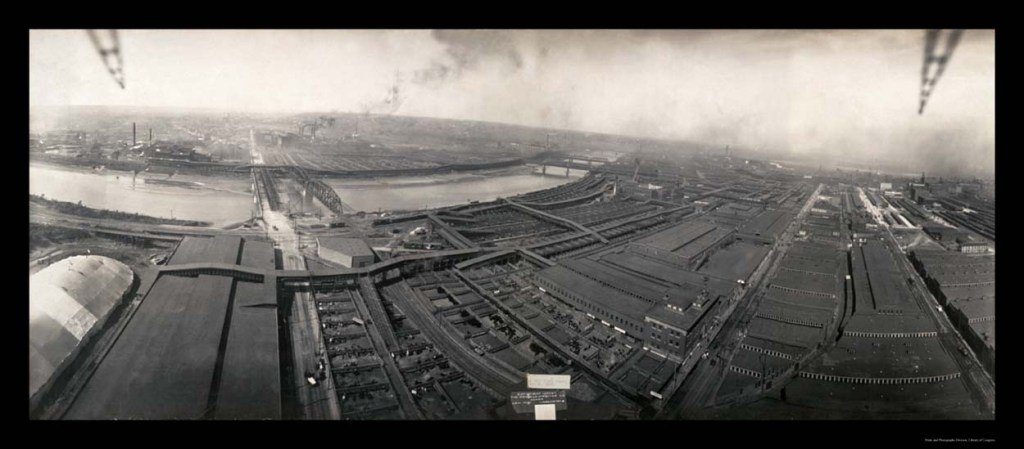
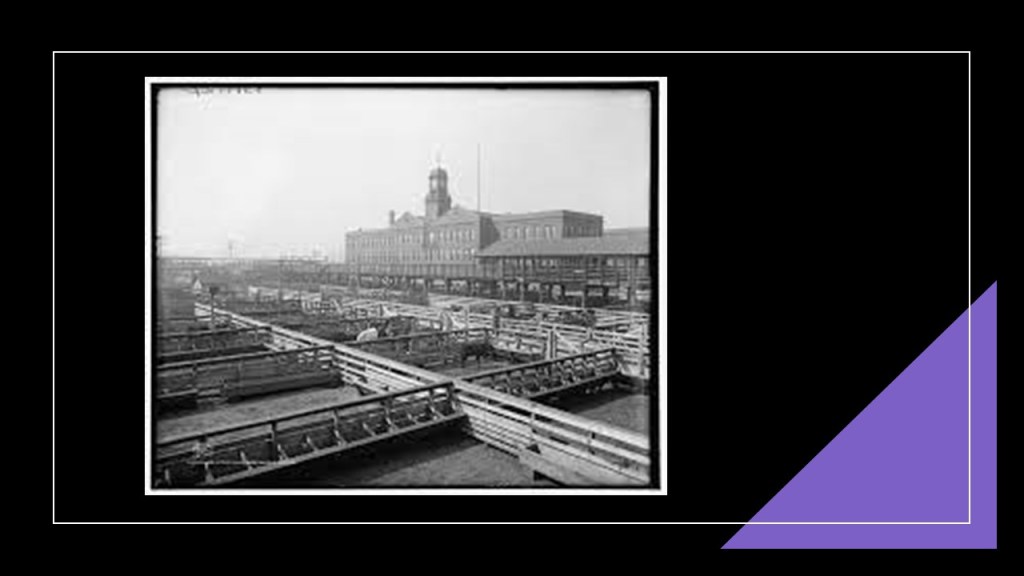
The Kansas City Livestock Exchange and Stockyards in West Bottoms were established in 1871, and at its peak, only the stockyards in Chicago were larger, of which this is a photo circa 1909.
We are told the Kansas City Livestock Exchange and Stockyards was built around the facilities of the Central Overland California and Pike’s Peak Express Company.
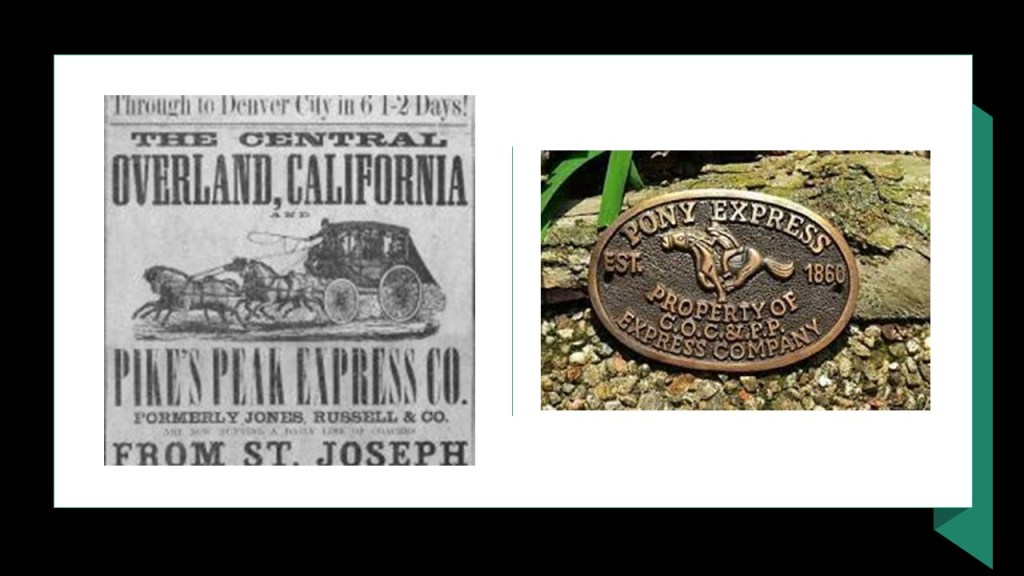
The Central Overland California and Pike’s Peak Express Company was a subsidiary of a freighting company that operated as a stagecoach line starting in 1859, and was the parent company of the Pony Express that ran from April of 1860 to October of 1861.
The stagecoach line went out of business in 1862.
The Kansas City Livestock Exchange and Stockyards, along with the whole of West Bottoms, has had major floods over the years, like in 1903…
…in 1908…
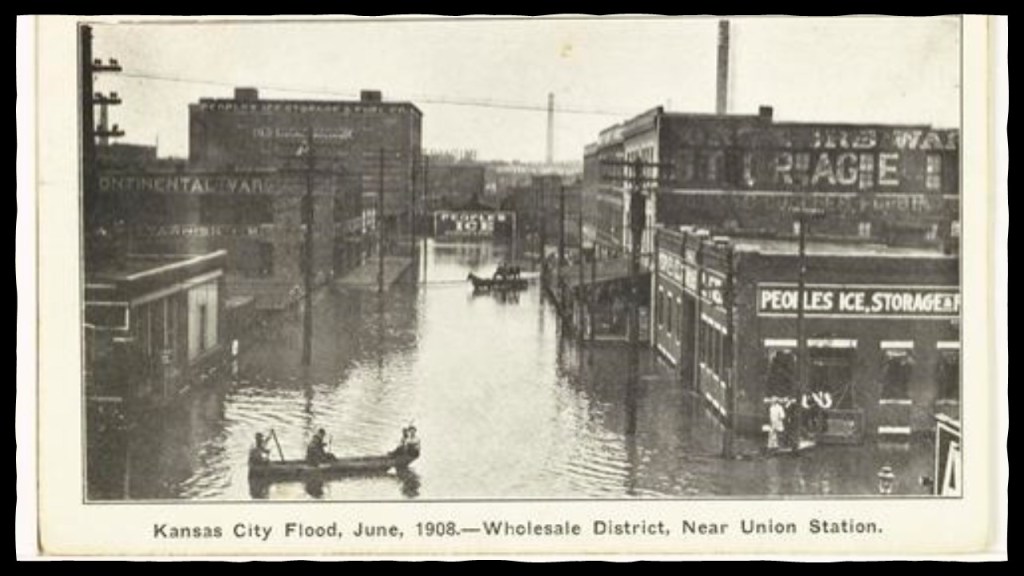
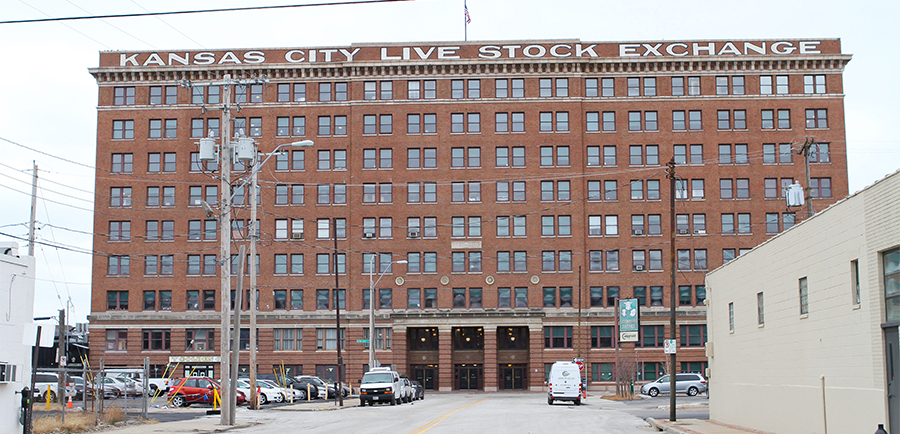
…and after the 1951 flood, the Kansas City Livestock Exchange and Stockyards and associated businesses were devastated, and it closed its doors for good in 1991.
The Livestock Exchange building, said to have been completed in 1911, was renovated and today is commercial business space…
…as are many of the old buildings in West Bottoms, known for its art galleries, restaurants, antique stores…
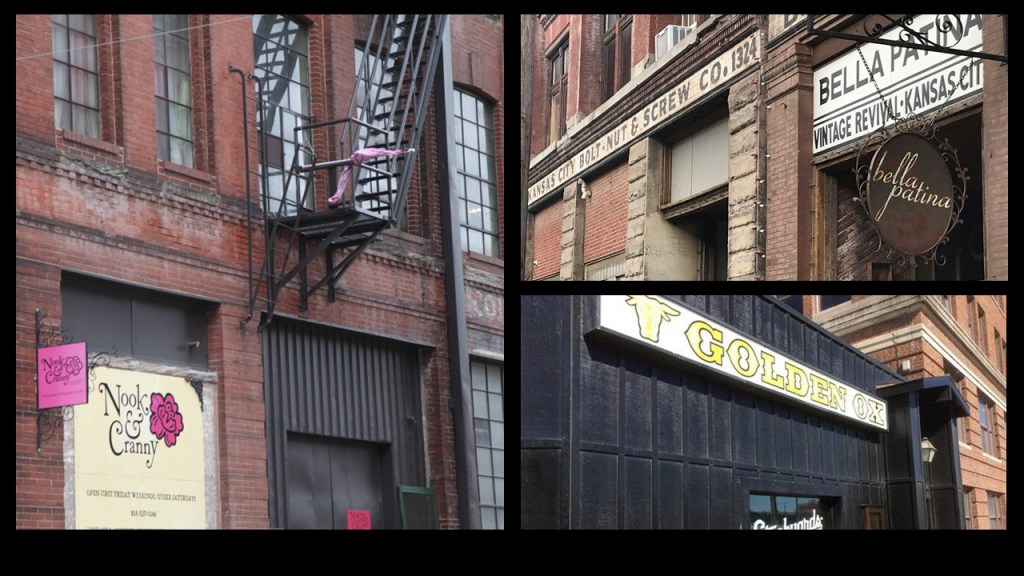
…and haunted houses.
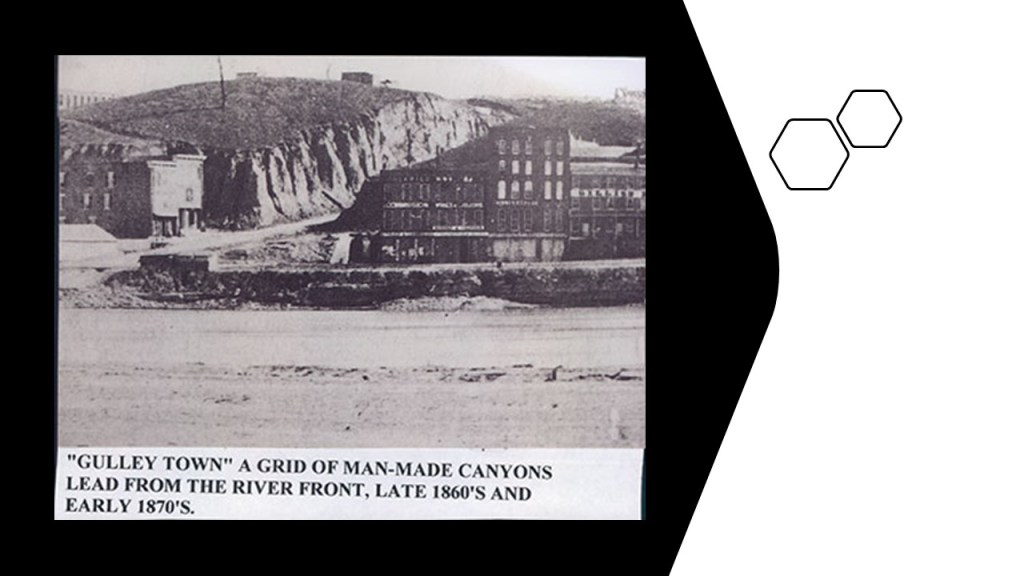
Other historic pictures that I would like to include of KCMO that are very interesting, and tell a completely different story than what our historical narrative tellus about this time period in our history include this one of when it was called “Gulley Town” in the 1860s and 1870s, where it looks like it was buried and needed to be dug out.
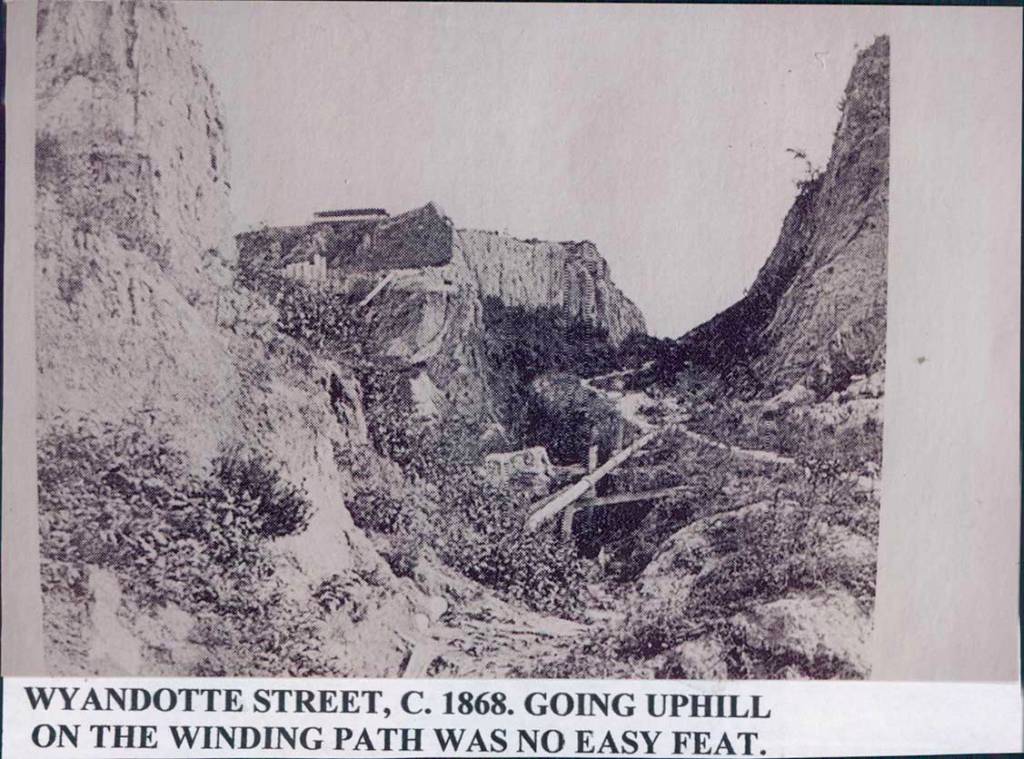
I also found these views of Wyandotte Street as it looked in 1868…
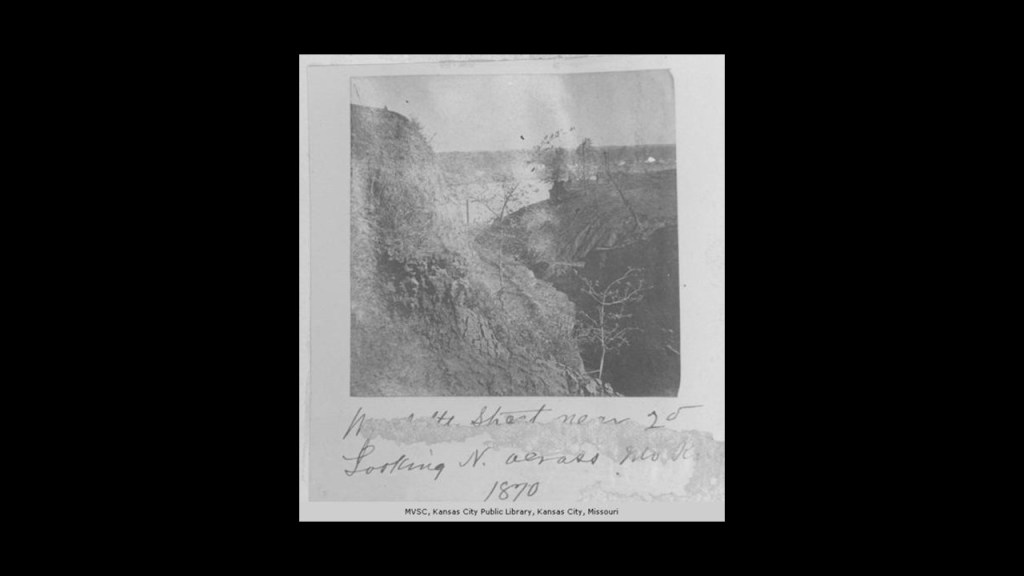
…in 1870…
…in 1871…
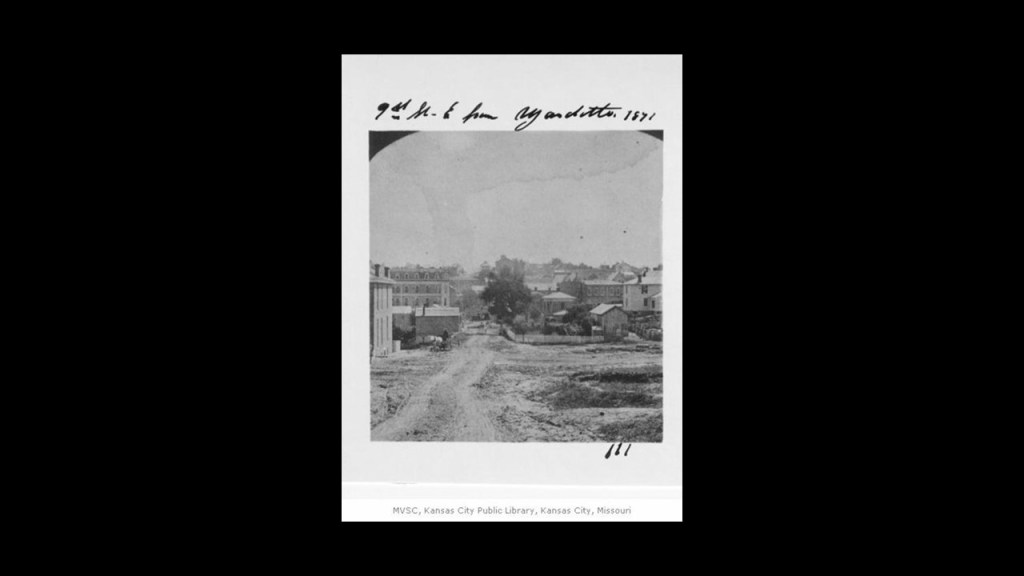
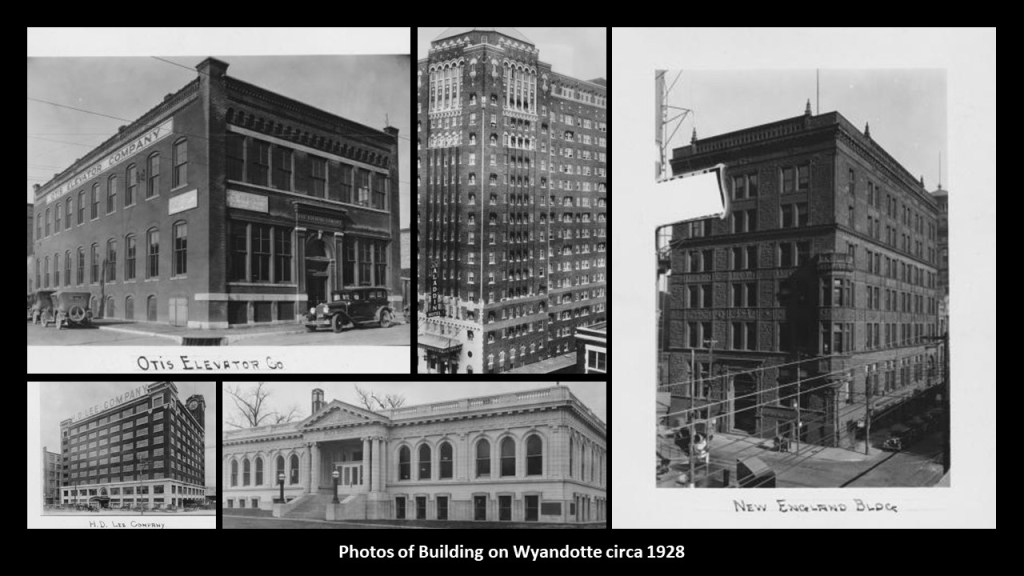
…and here are historic photos of some of the buildings on Wyandotte Street circa 1928.
I will end this post with these words.
I am passionate about trying to find out how we got to the craziness of the world we live in today from what was originally a very advanced, integrated, and harmonious world civilization…when it was the Old World Order and not the New World Order.
Hopefully I have been able to shine some light on this vast subject of what might have taken place here through these historical examples, people and events in and around Kansas, the geographic center of the continental United States, that in some way, shape, and form provides us with more information about not only what came before, but how this advanced civilization was destroyed and covered up right in front of our eyes, and also how we came to be in the Orwellian World we find ourselves living in today, and that it did not happen randomly but has been planned for us in great detail by those who have their best interests at heart and not ours.

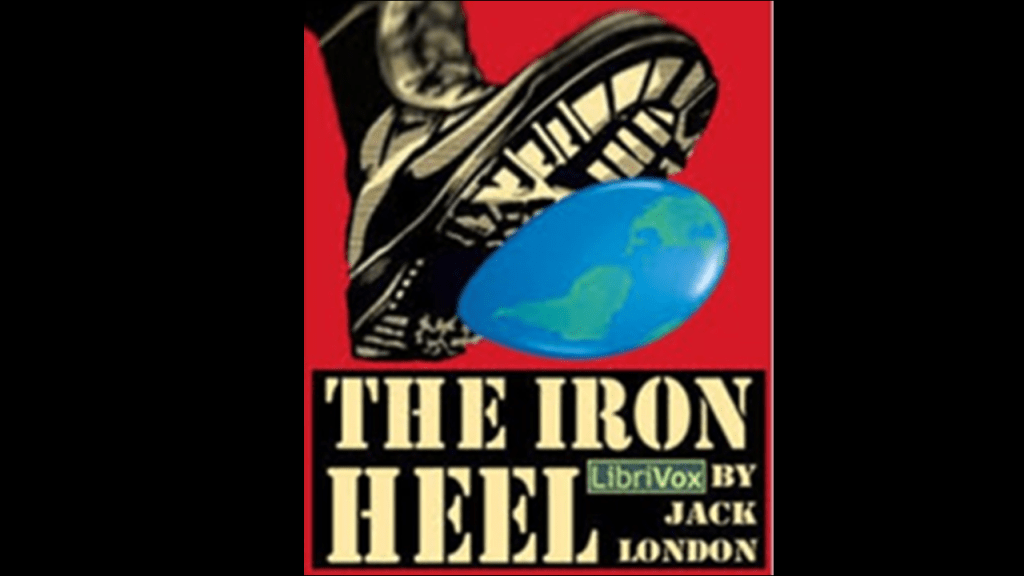
The famous American author, Jack London, one of the major writers who shaped our narrative as required reading in school, was also a Socialist.

He published a book in 1908 called “The Iron Heel,” about the rise of an oligarchic tyranny in the United States.
An oligarchy is a form of power structure in which power rests with a small number of people.
The story-line emphasized future changes in society and politics, and not technological changes.
It is called a dystopian novel, meaning characterized by mass poverty, public mistrust and suspicion, a police state or oppression.
They have actually been telling us their plans in a disguised way all along because they are required to tell us what they are doing so they always lie to us, and tell us without telling us they are telling us in order to gain our consent because of our Free Will…

…so they had to managed to convince us that handing over our freedom was our own idea.

They have been working on getting us to this place for a very long time, but they have lost control of the narrative, no matter how hard they try to get it back!
 Revealing What Has Been Hidden in Front of Our Eyes