Poking into Historical Fires – Part 3 The Years Between 1851 and 1871

I am going to be taking a close look at historical fires in different countries in this post, recorded in the historical narrative as having occurred between 1851 and 1871.

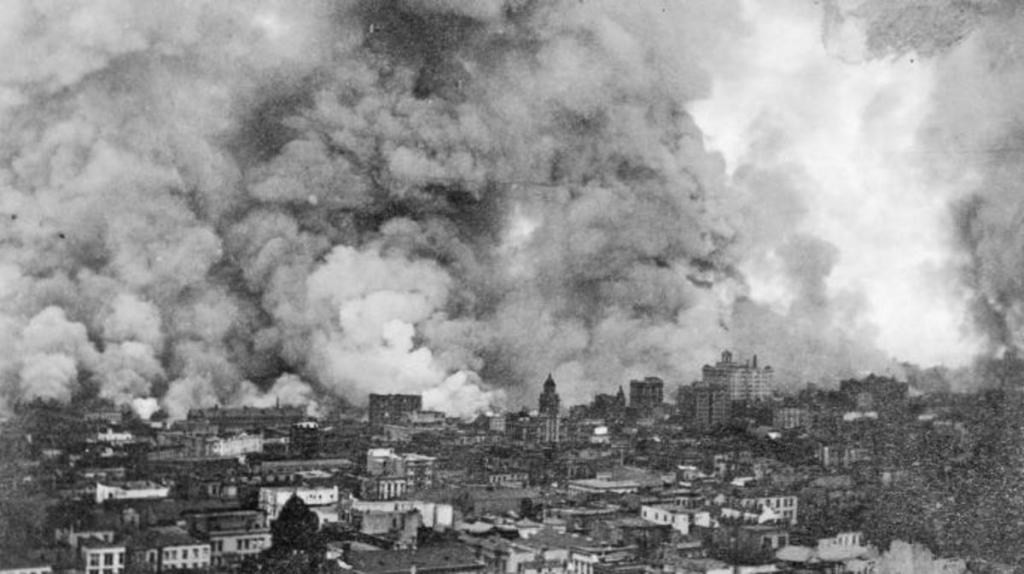
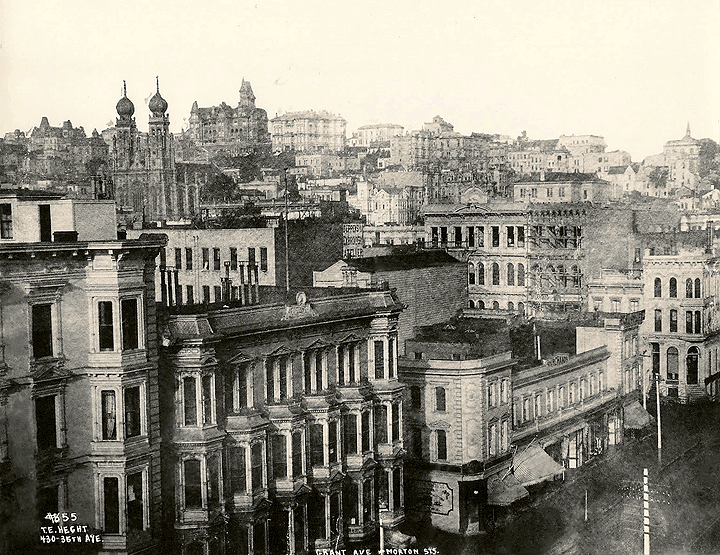
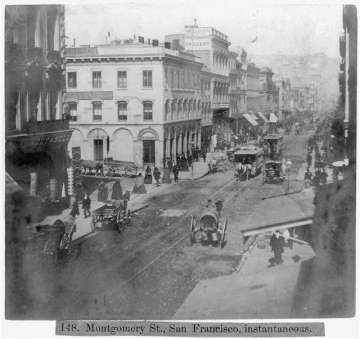
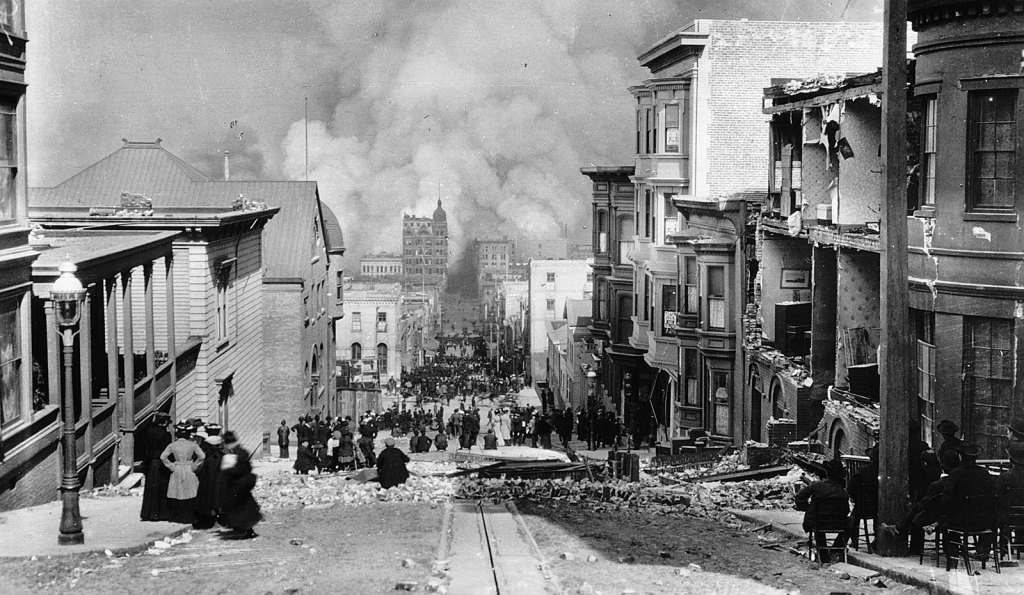
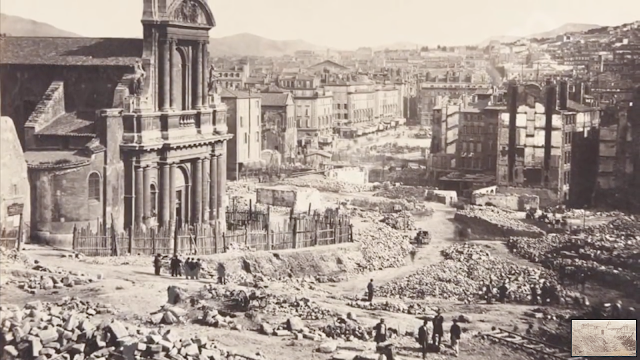
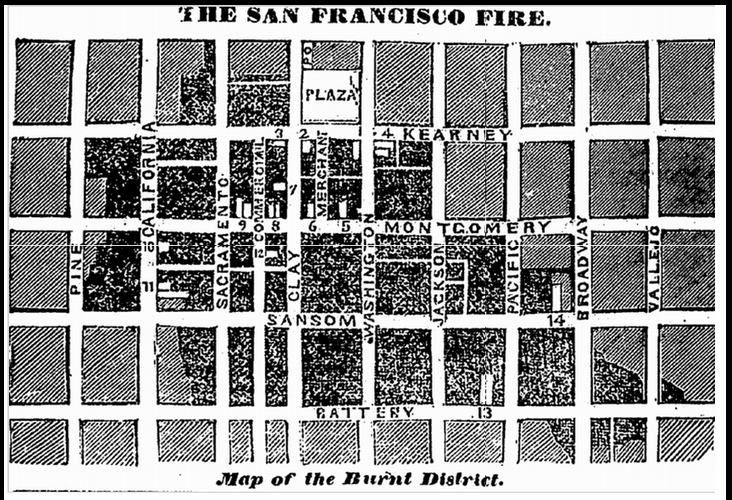
There was a two-day fire in San Francisco in early May of 1851 that was said to have destroyed as much as three-quarters of San Francisco.

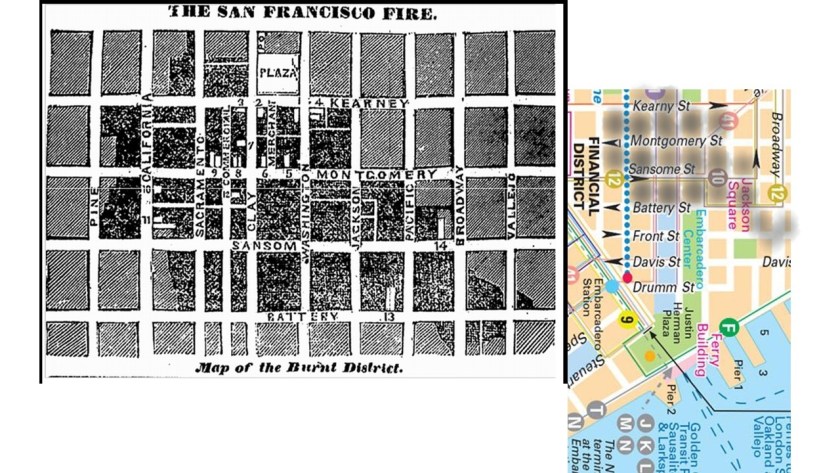
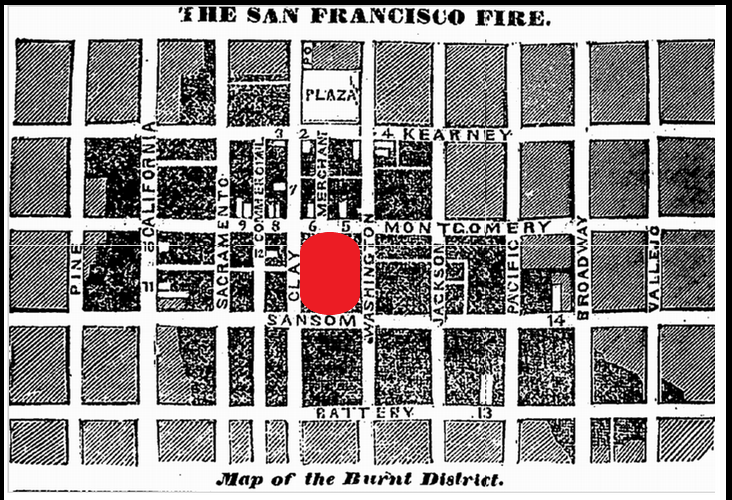
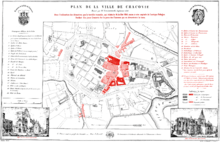
Here is the map of the Burnt District of the 1851 San Francisco Fire and a map of its exact location in the city today.

I was able to pinpoint it right away by searching for a map of San Francisco’s Financial District, and then greyed in the affected city blocks for this comparison graphic.

This is the historical narrative surrounding the fire.

It was said to have occurred during the height of the California Gold Rush between December of 1849 and June of 1851.

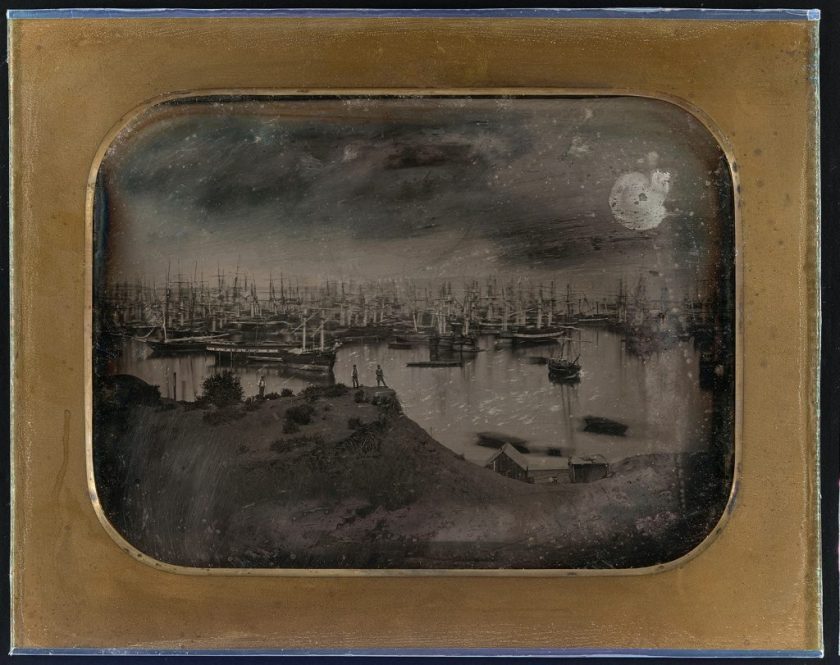
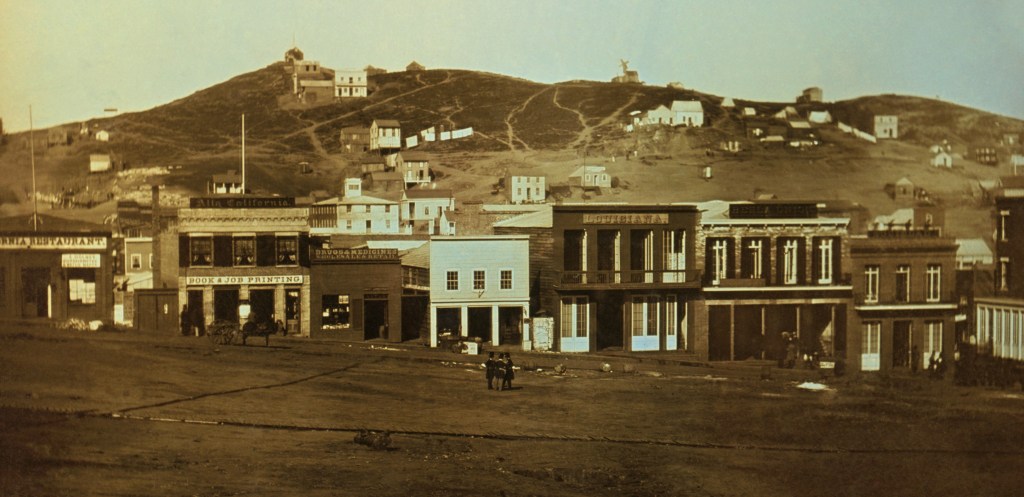
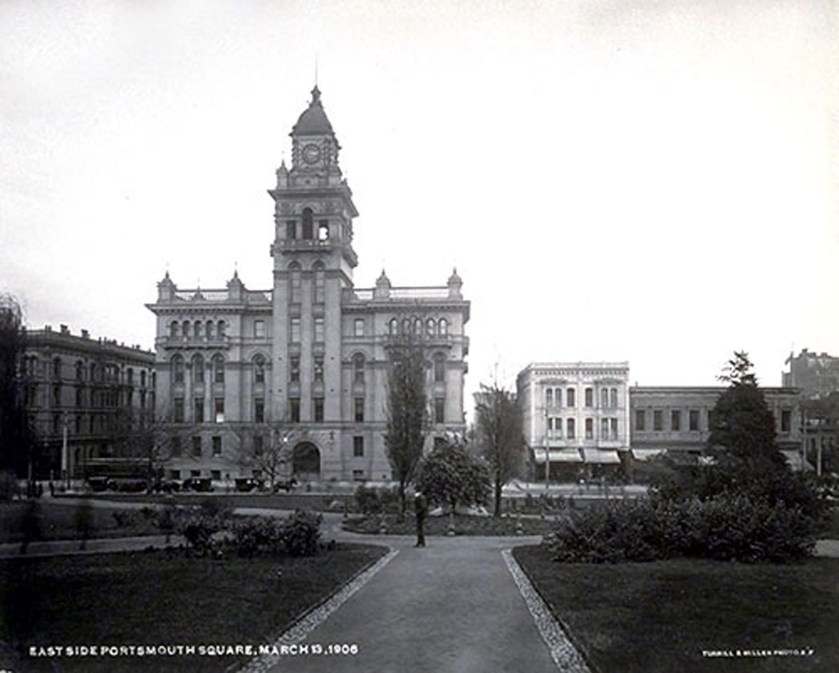
This was said to be an early daguerrotype, an early form of photography, of Portsmouth Square in San Francisco from 1851, some time before June of 1851.

Besides the fact that it looks like a mud flood scene, the fire was said to have started in Portsmouth Square in a paint and upholstery store on the night of May 3rd, 1851.

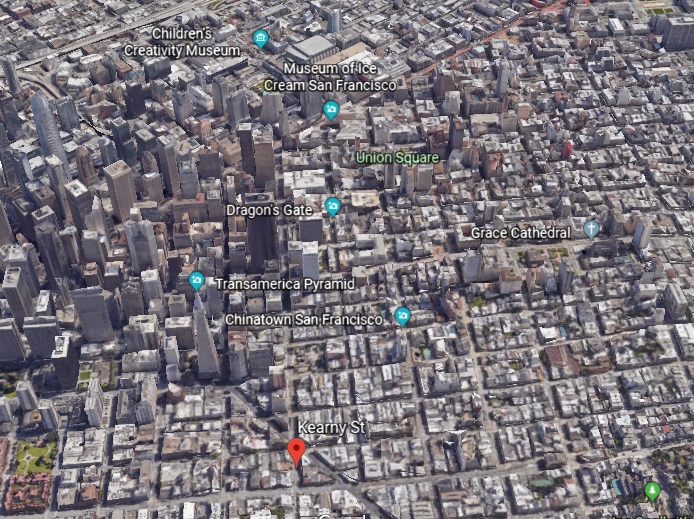
High winds were said to carry the fire down Kearny Street, which runs north from Market Street to the Embarcadero, and on its south end separates the Financial District from Union Square and China Town.

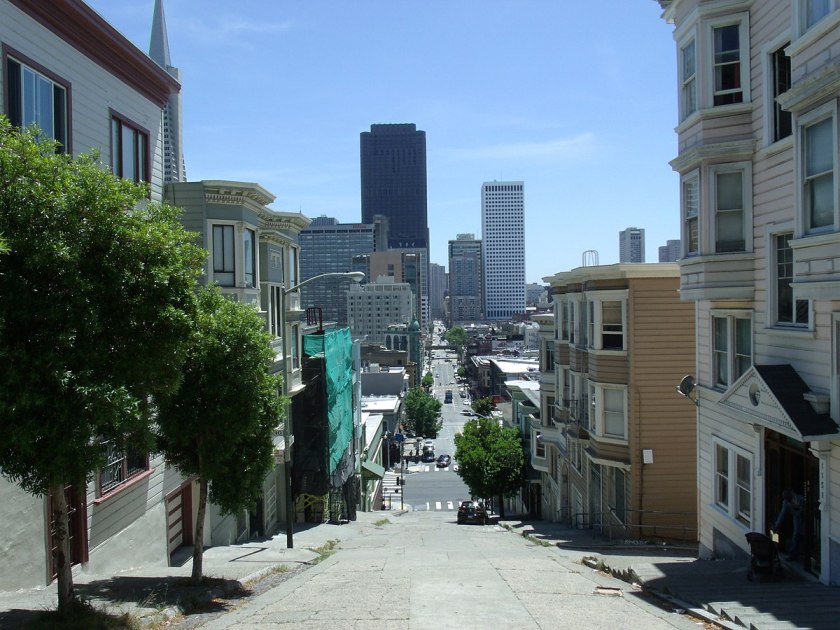
Here is a view down Kearny Street, and its perfectly smooth, and angled, steep slope…

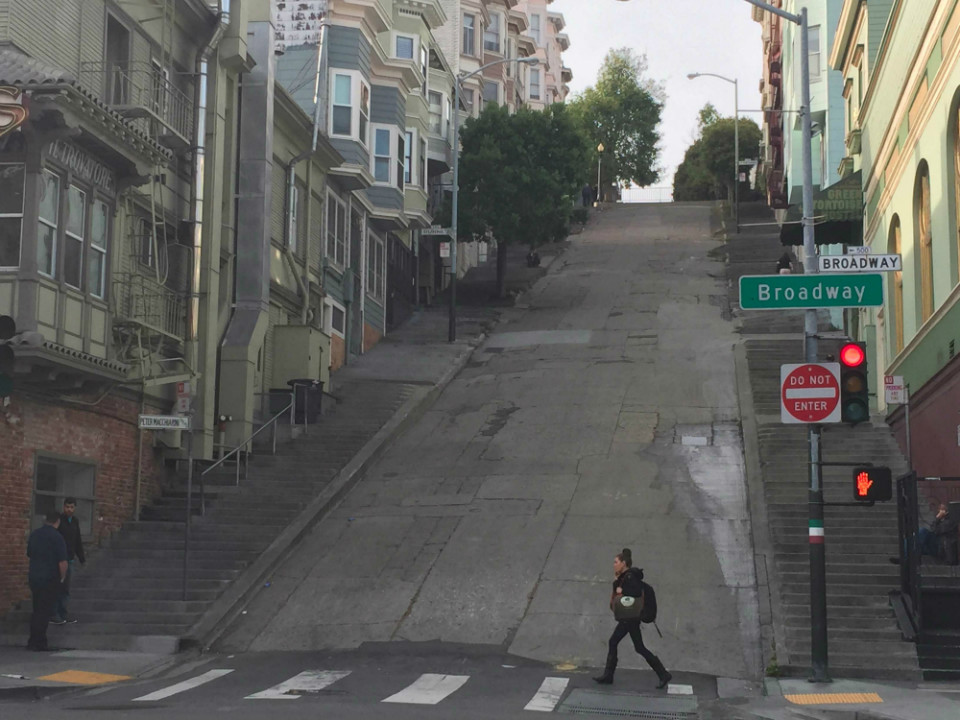
…and here it is from another direction, showing the Kearny Street steps on either side of it, also known as the Peter Macchiarini steps, said to be named to commemorate an Italian-American modernist sculptor and jeweler of San Francisco.

Here is an historic photo of the First Kearny Street Hall of Justice, a jail that was called a book and intake facility, and said to have been built in 1912; rehabilitated by FDR’s New Deal’s Works Project Administration in the 1930s; and then demolished in 1968.

It was mighty grand building for a temporary jail that only existed for 56-years.

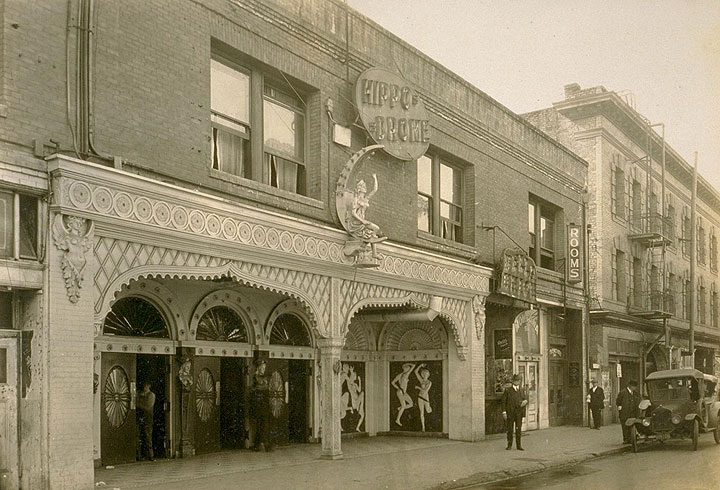
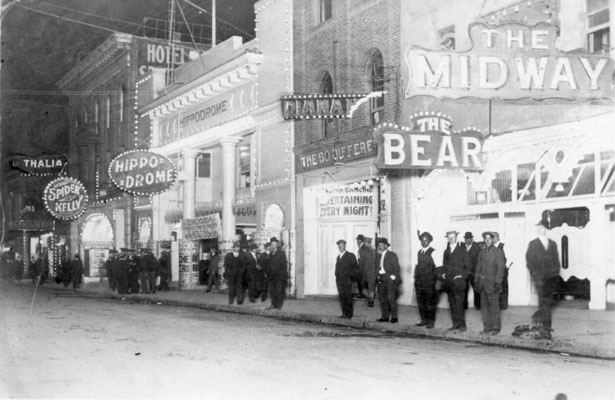
This picture is said to be from 1925 of the Old Hippodrome and Bella Union Dance Halls was located between Kearny & Montgomery Streets…

…located in what was called the Barbary Coast, which was the red-light district of San Francisco.

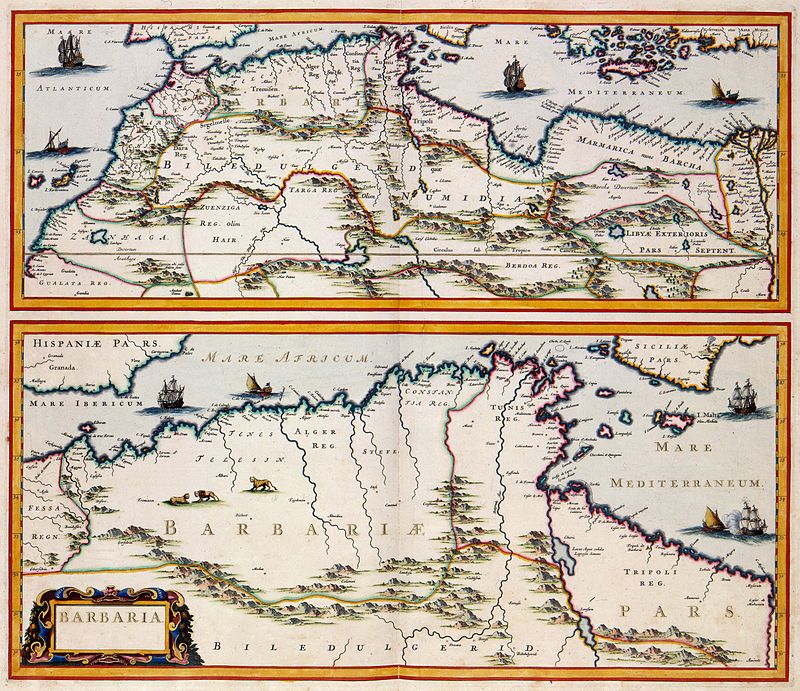
The Barbary Coast, or Barbaria, was also the name given to a vast region stretching from the Nile River Delta, across Northern Africa, to the Canary Islands.

This region stopped being referred to as the Barbary Coast, or Barbaria, in the early-1800s.

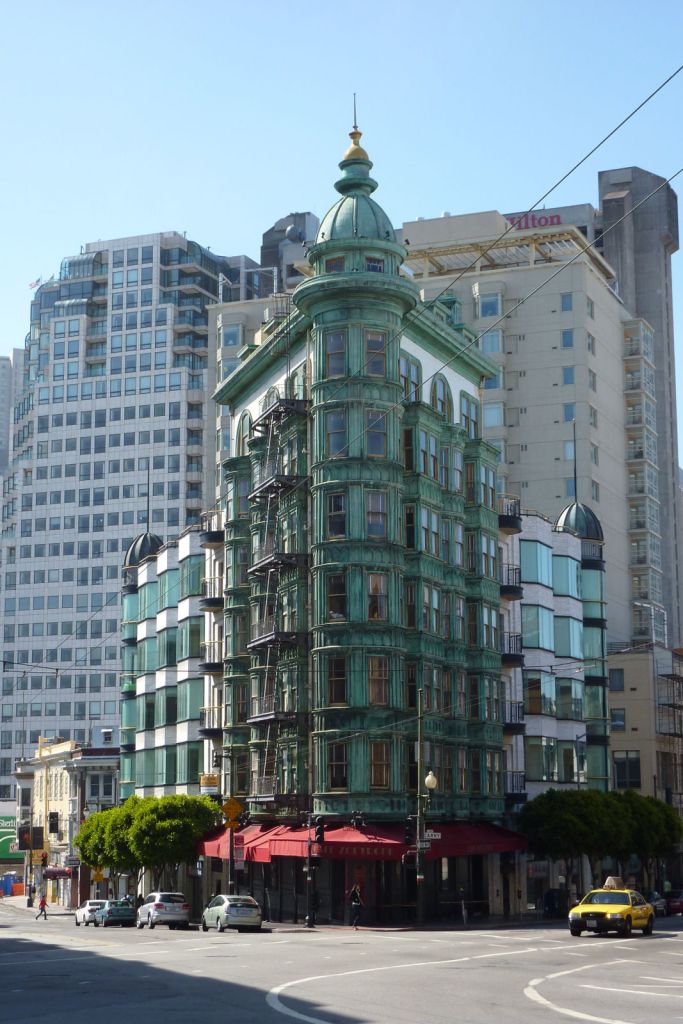
This is the Columbus Tower, also known as the Sentinel Building, on Kearny Street, with its copper and white-tile exterior. Construction of it was said to have been begun before the 1906 fire, which it purportedly survived.

It is now primarily occupied by Francis Ford Coppola’s production studio.

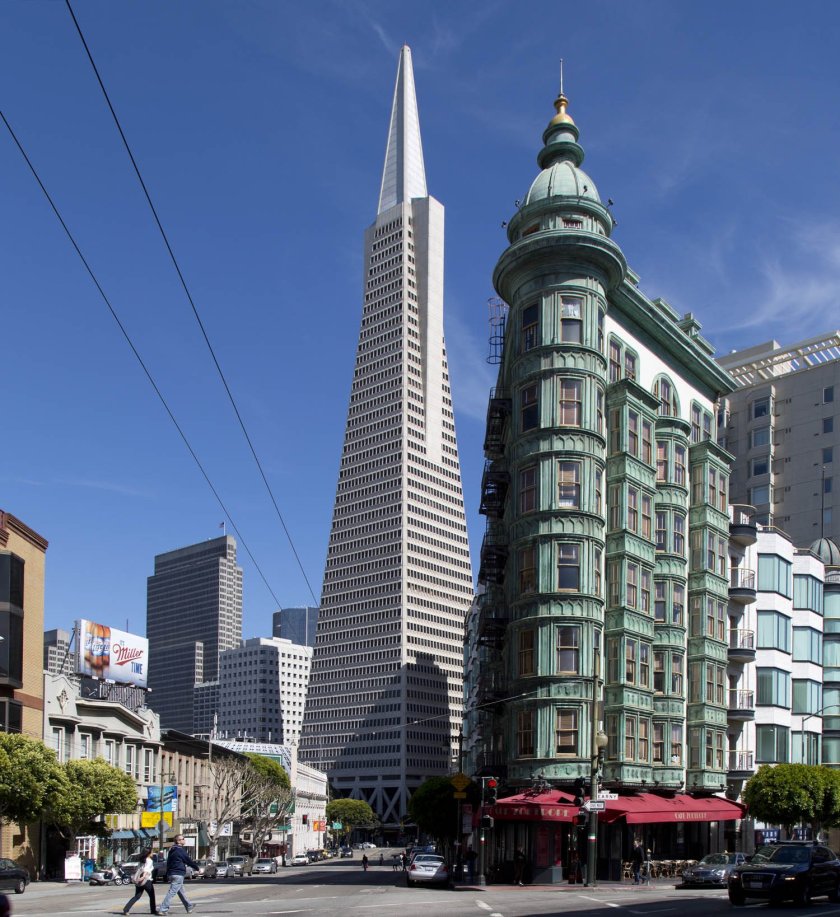
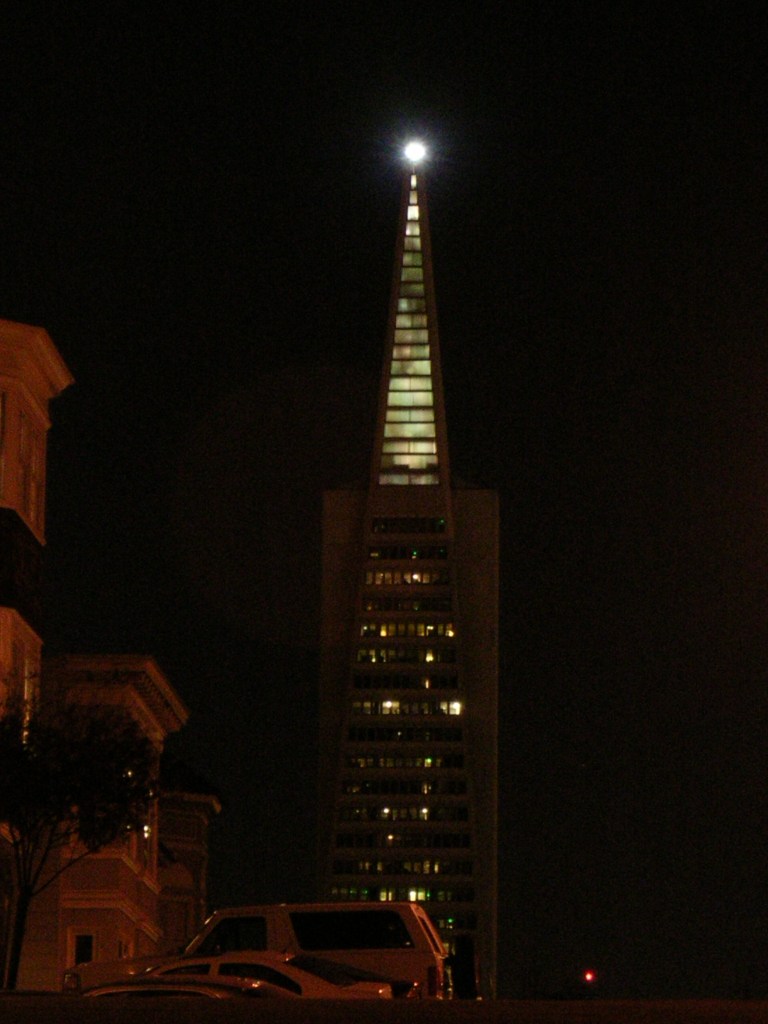
From Kearny Street, the fire was said to shift south into the downtown area. Well, the Columbus Tower is very close to the Transamerica Pyramid…

…and the place where the Transamerica Pyramid is located interestingly in what appears to be in the center of what was called the Burnt District.

Construction of the Transamerica Pyramid was said to have in December of 1969, and completed in 1972.

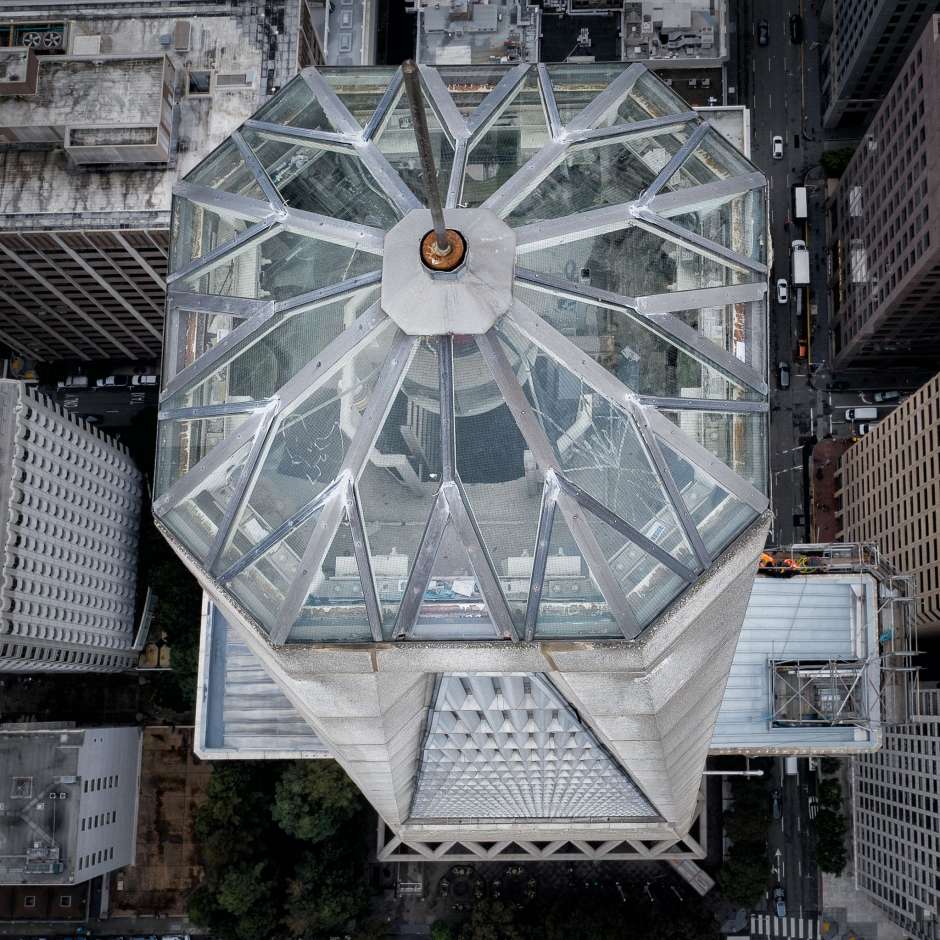
Special things about the Transamerica Pyramid include a 32-pane, cathedral-style glass top…

…which contains a 6,000-watt beacon light.

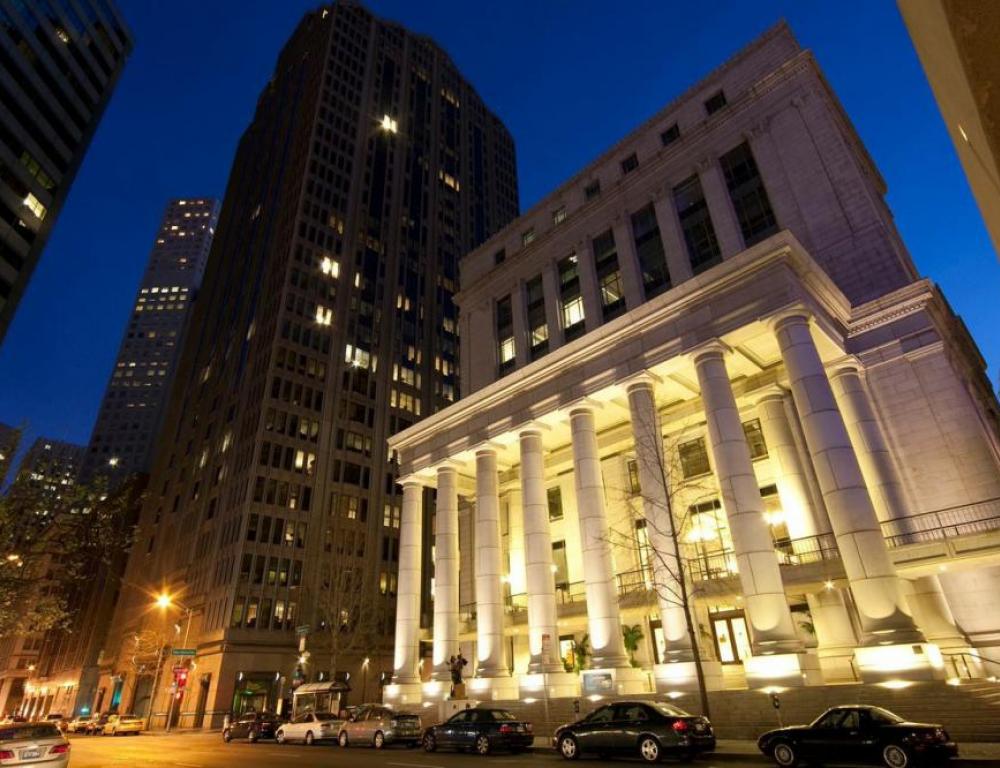
This is the Bently Reserve Building, formerly the Federal Reserve Bank of San Francisco and now a conference center.

What if…the California Gold Rush starting in 1849 was a cover story for a massive influx of workers into the Bay area needed to dig San Francisco out of mud?

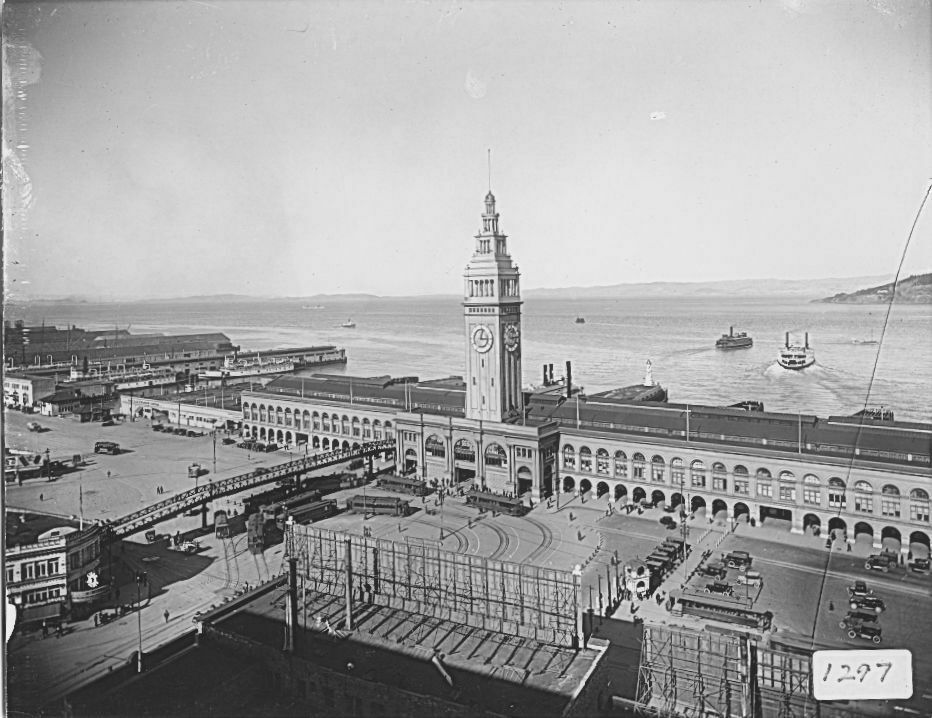
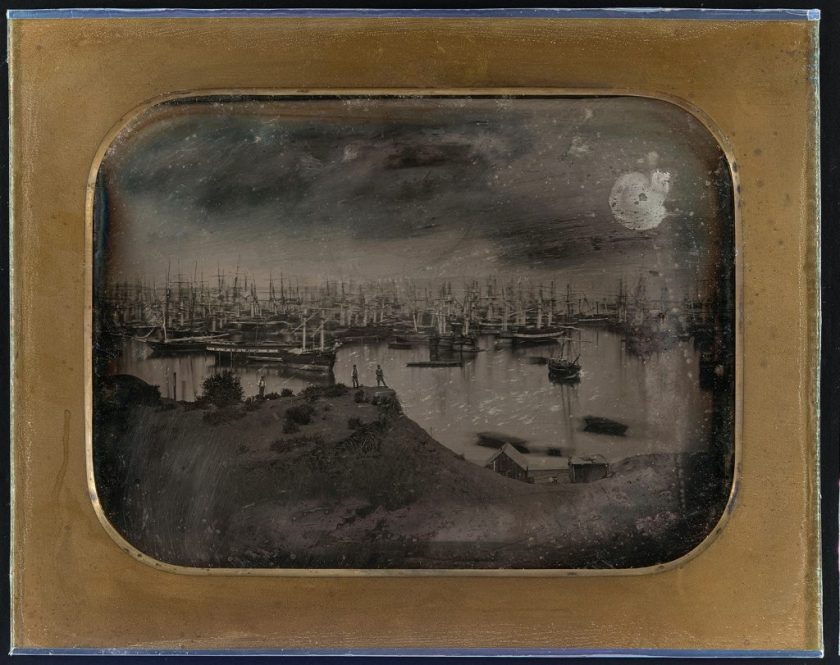
This is said to be a daguerrotype showing a panorama of San Francisco Harbor in 1851.

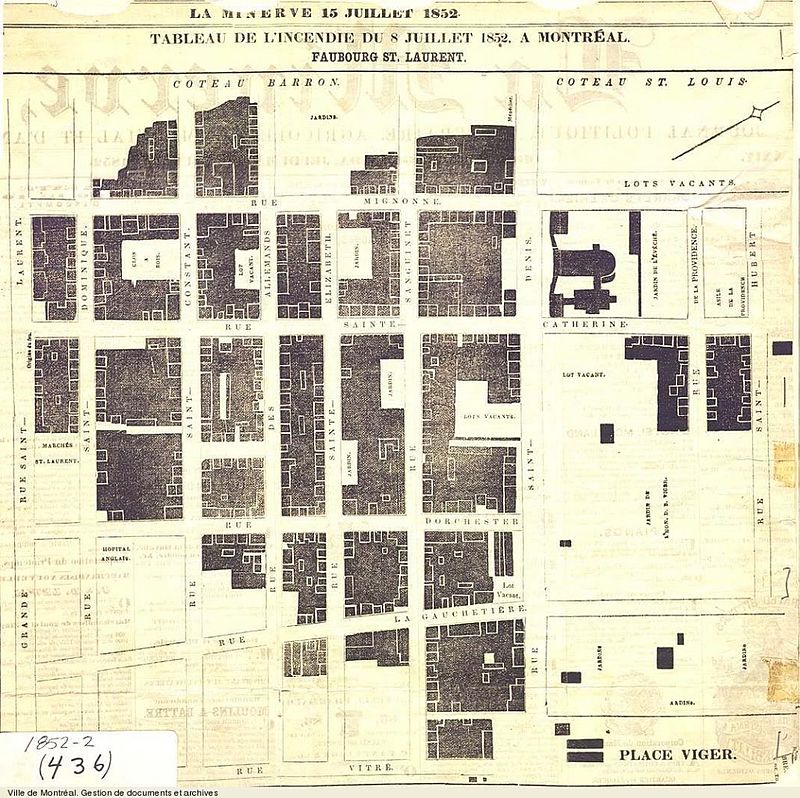
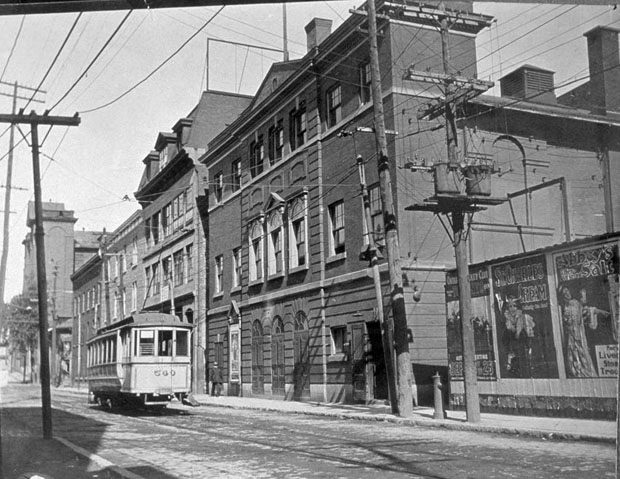
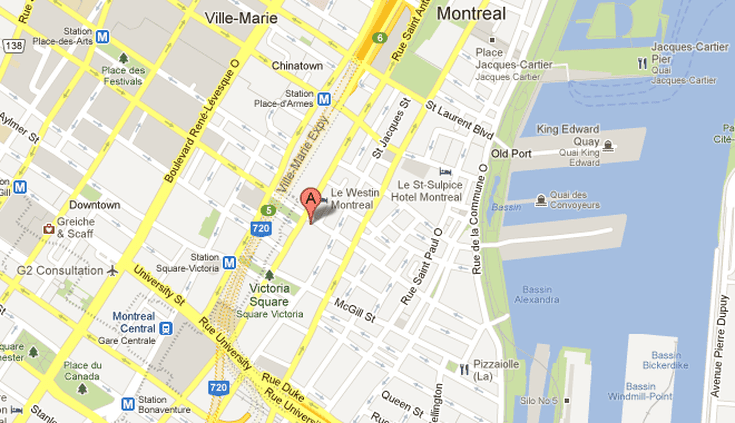
In the Province of Quebec in Canada, stating that wood was the typical construction material of the time, the Great Montreal Fire took place in July of 1852, and said to have started at a tavern on St. Lawrence Boulevard, and quickly spread because of high winds and hot summer weather.

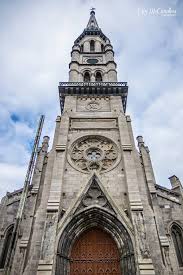
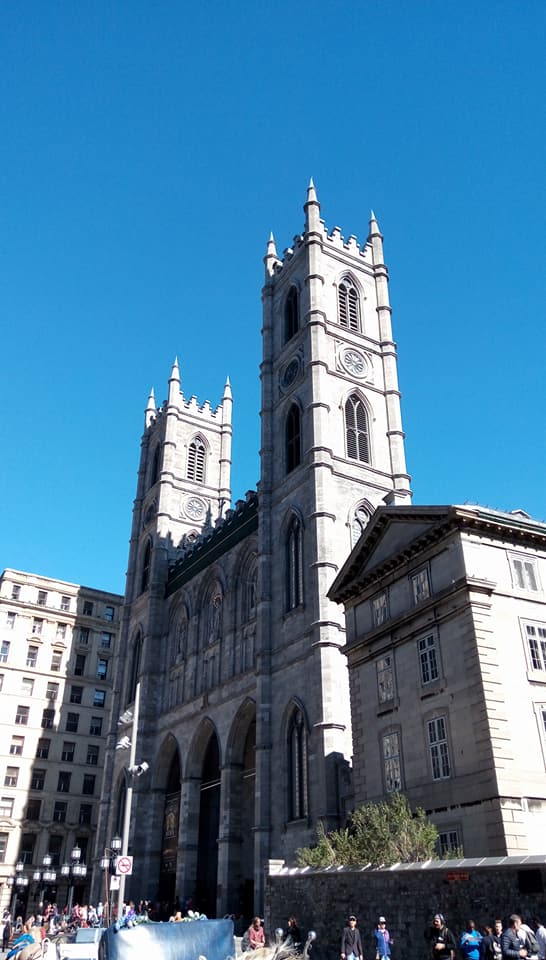
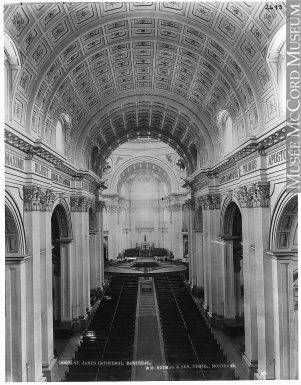
From the tavern, it spread to the block between St. Denis Street and Craig Street (now Saint Antoine Street), engulfing the St. Jacques (or St. James in English) Cathedral, said to have been rebuilt by 1857; burned down again in 1858, and rebuilt by 1860; and burned out again in 1933. It was purchased in 1973 by the University of Quebec at Montreal, and demolished except for the spire and transept. They were then incorporated into the University’s infrastructure.

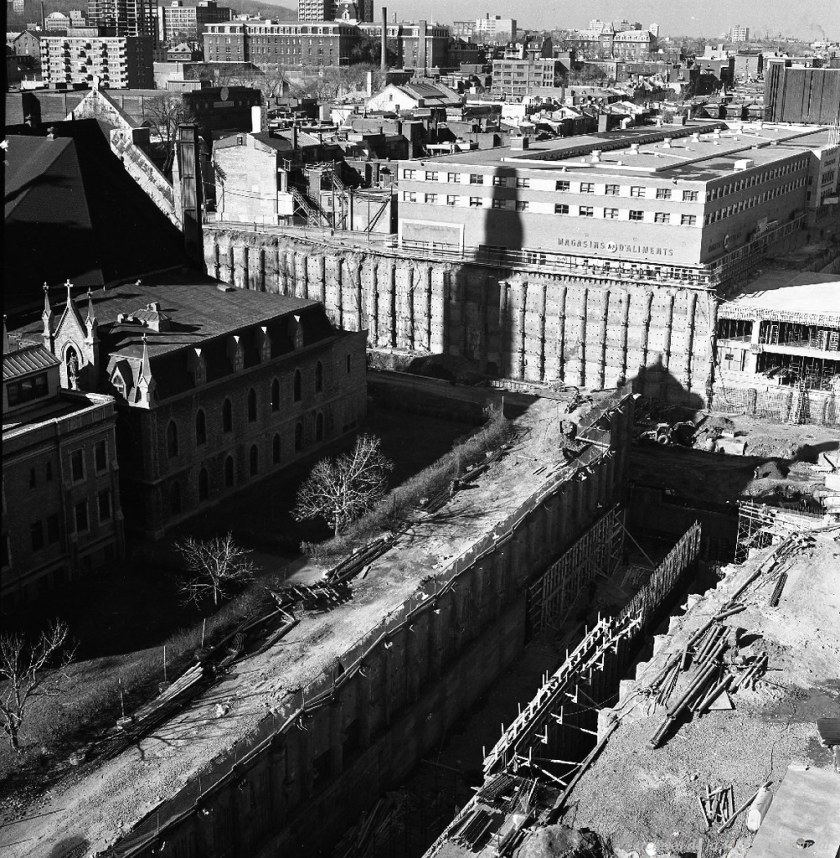
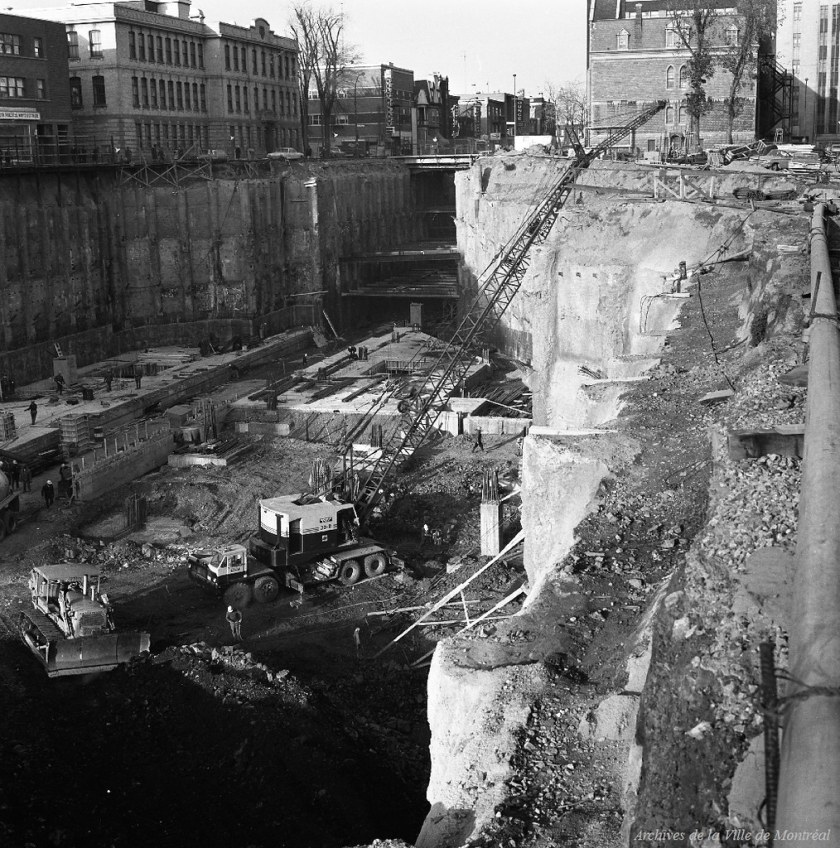
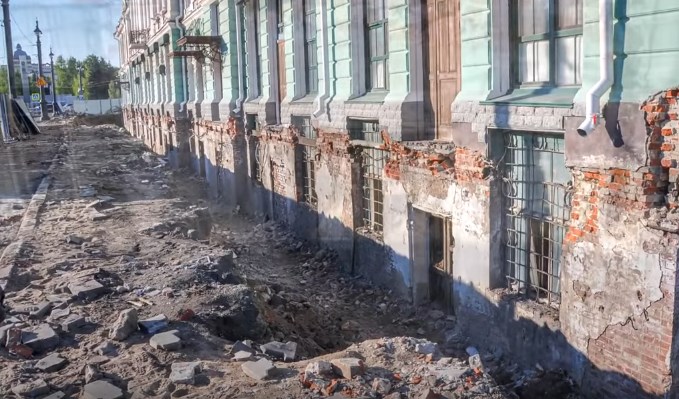
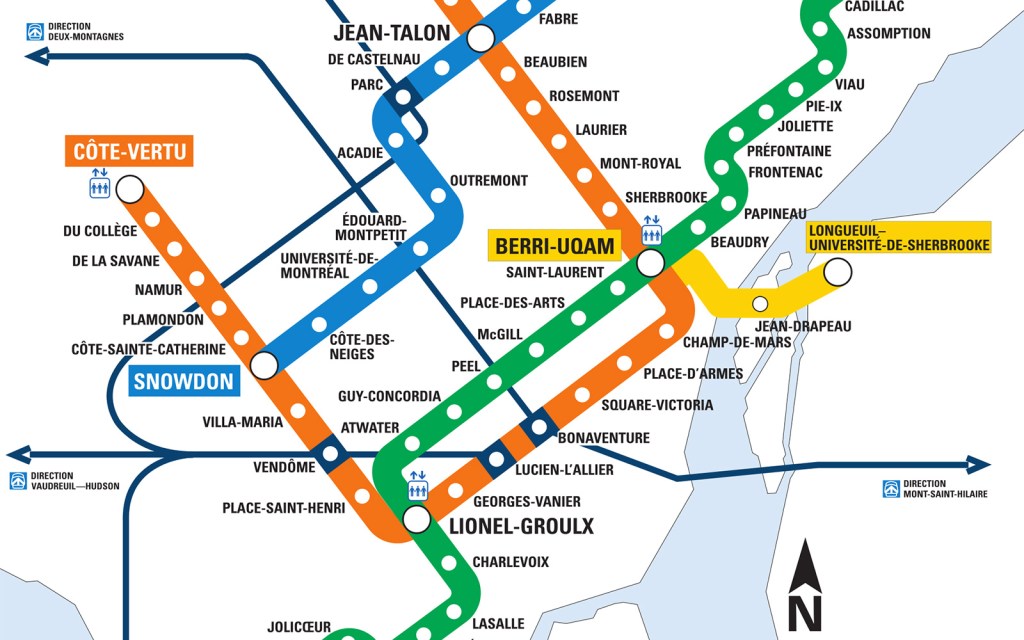
St. Jacques Cathedral was directly connected to the Berri-de Montigny Metro Station. Here are some historical photos of what is described as the construction of this metro station in 1964. Is this new construction going on here…or excavation?

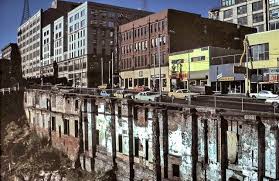
Here are similar-looking photos showing evidence for the mud flood in comparison for appearance:

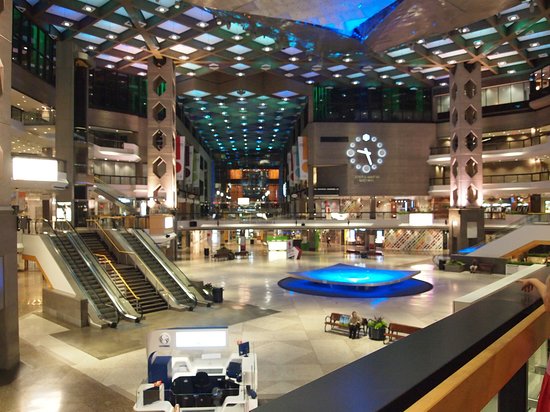
St. Jacques Cathedral was also connected to Montreal’s underground city – a series of office towers; hotels; shopping centers; residential and commercial complexes; convention halls; universities and performing arts venues that are connected underground in the heart of downtown Montreal…

…all of which is completely integrated with Montreal’s Metro System.

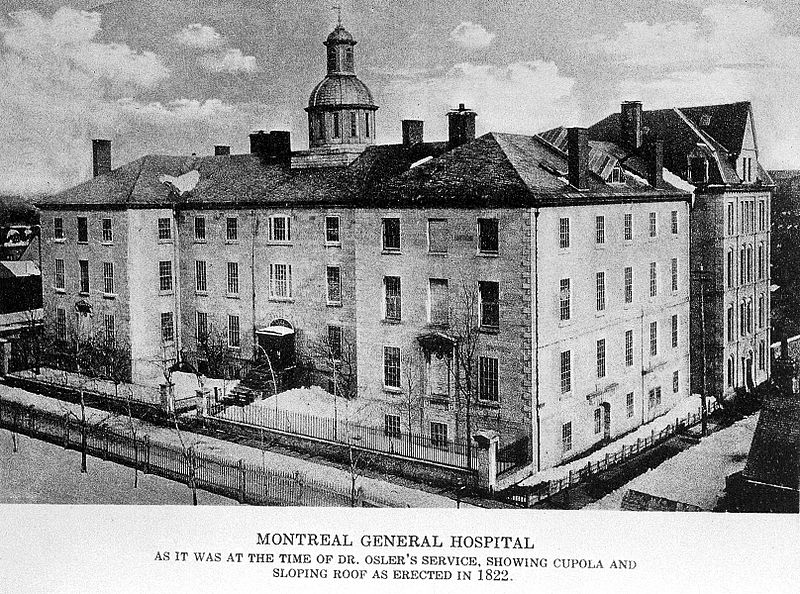
The fire spread to the Montreal General Hospital on Dorchester Street on Mont Royal, said to have been built in 1822…

…and the Theater Royal.

We are told within hours, one-quarter of Montreal, the oldest part of Montreal was destroyed, in Vieux-Montreal.

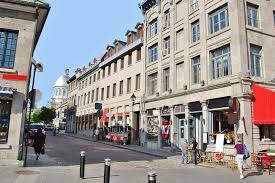
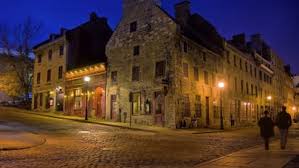
Here are some of the sights of Old Montreal today, with its masonry buildings and slanted streets.

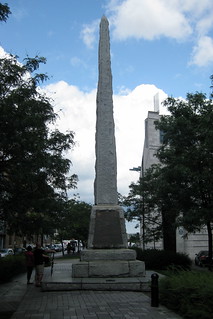
One more thing before leaving Old Montreal that I would like to share is the presence of an obelisk there.

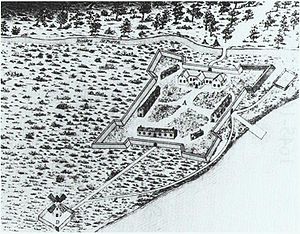
It was said to have been made from a block of granite that stands 41-feet, or 12.5-meters, above its base, and commemorates the establishment of the settlement and fort of Fort Ville-Marie in May of 1642.

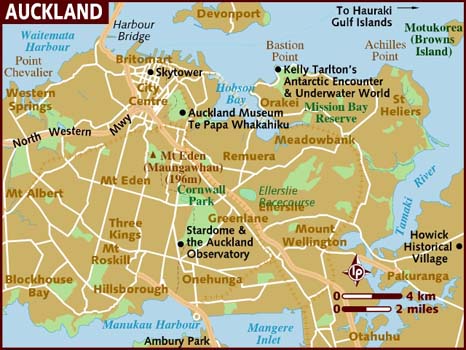
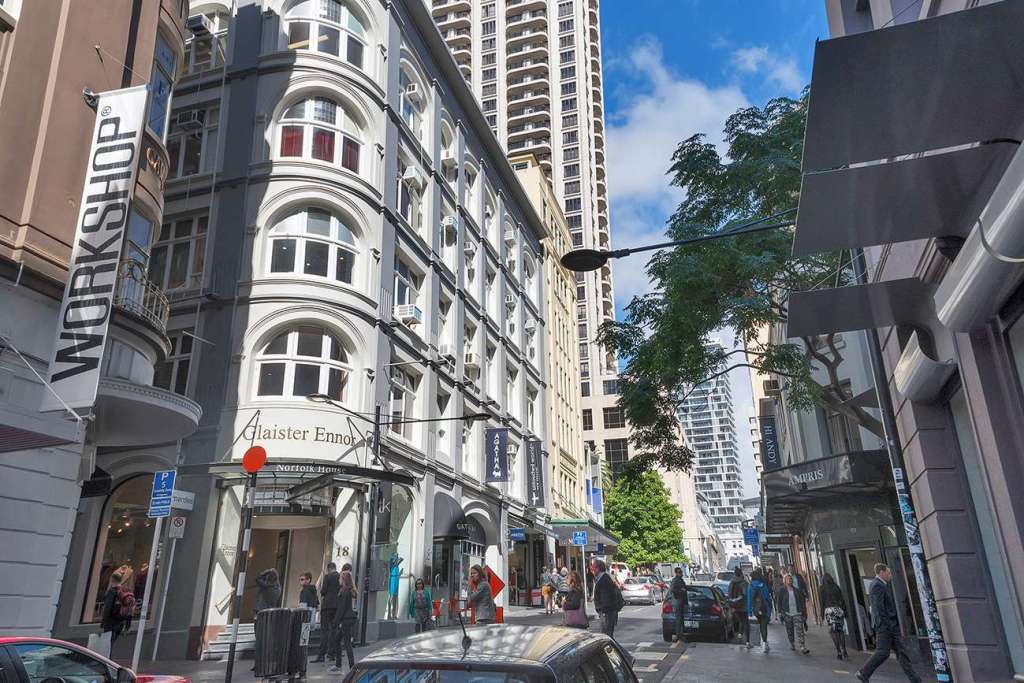
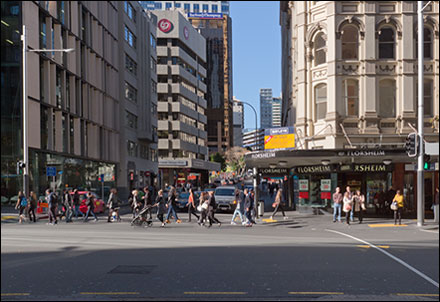
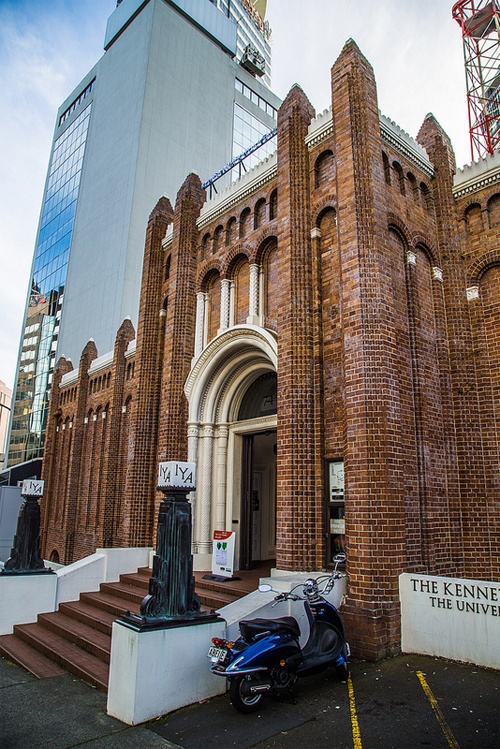
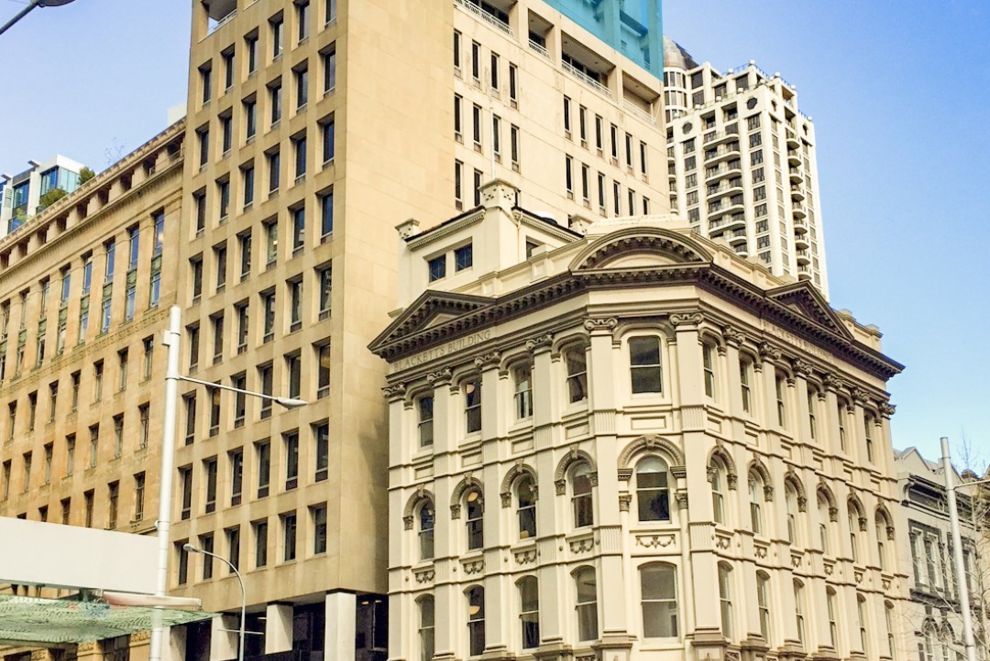
In New Zealand, there was a fire in Auckland in 1858. Auckland is located in the northern part of the North Island, and is New Zealand’s largest city.

It was said to have been founded in 1840.

The 1858 fire was said to have destroyed about 50 buildings on High Street…

…and Shortland Street.

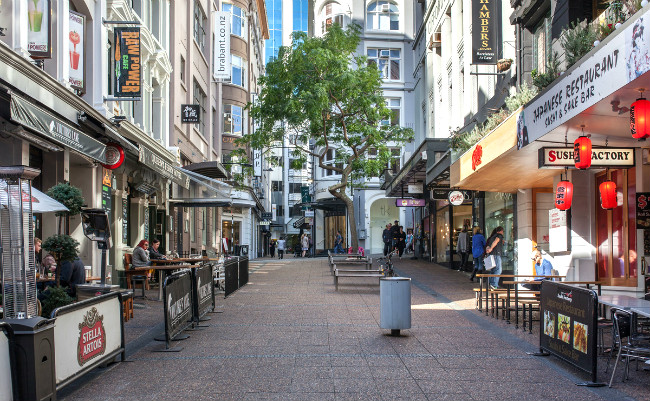
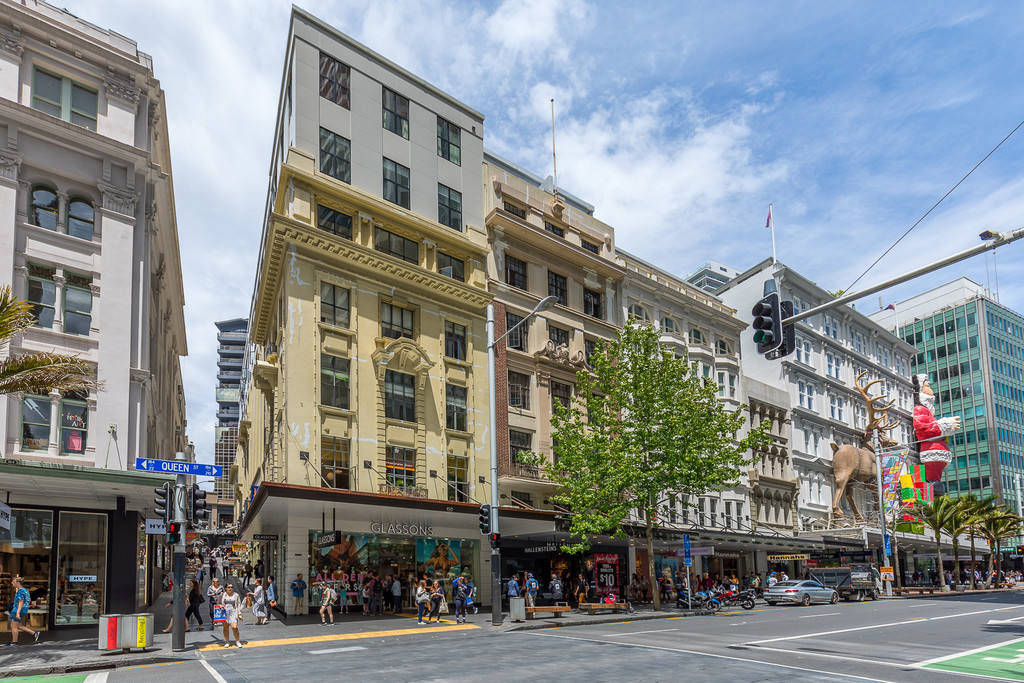
After this fire, we are told the commercial district of Auckland began to shift towards Queen Street, named after Queen Victoria.

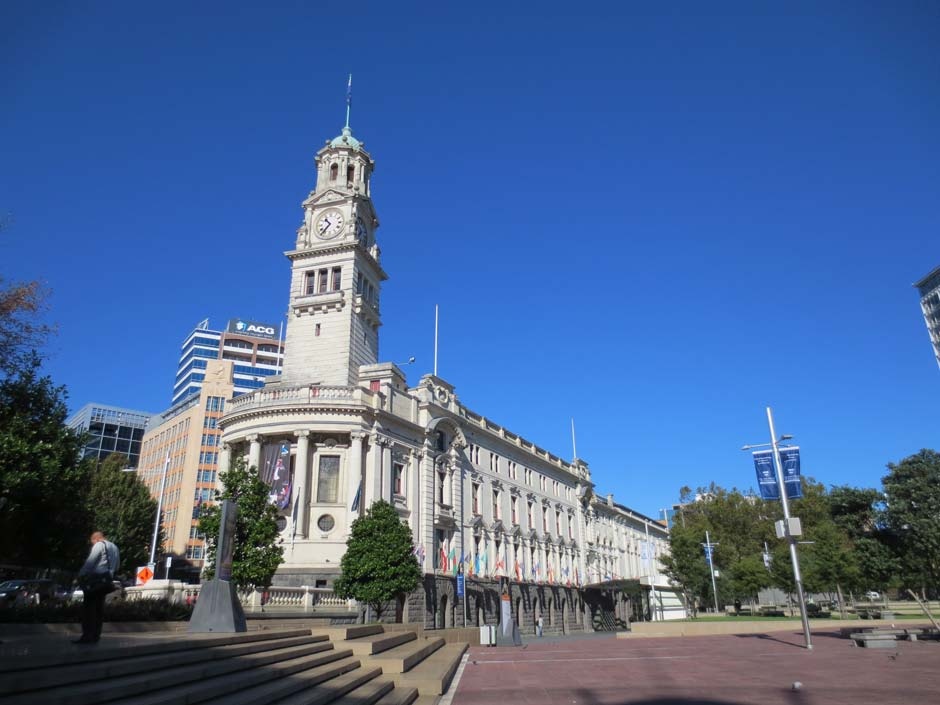
This is the Auckland Town Hall on Queen Street, with construction of it said to have started in 1909…

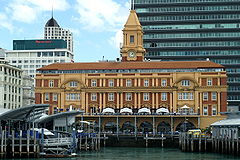
…the Auckland Ferry Building, said to have been built between 1909 and 1912…

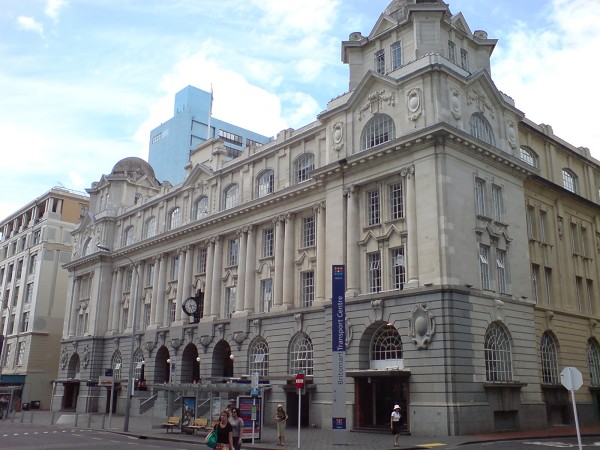
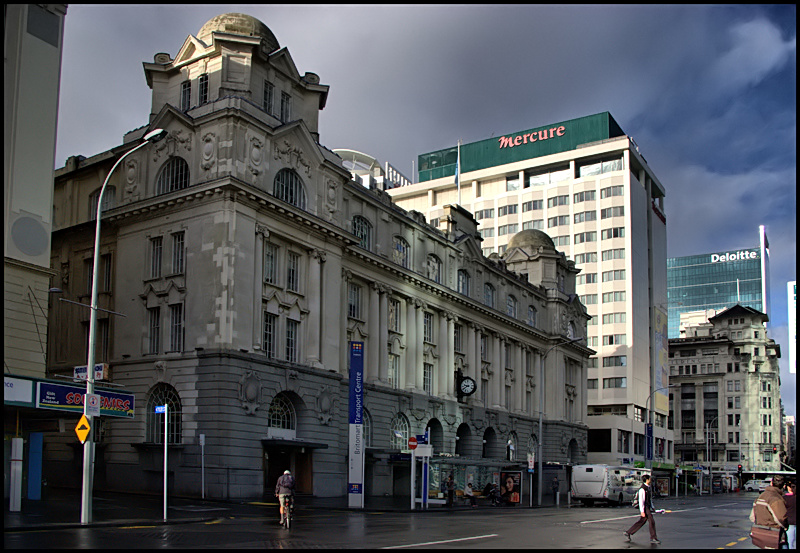
…and the Britomart Transport Center at the foot of Queen Street.

The Britomart Transport Center is the public transport hub in the Auckland’s Central Business District and the northern terminus of the North Island Main Trunk Railway Line.

The building was said to have originally been an Edwardian-era Post Office, built in 1911.

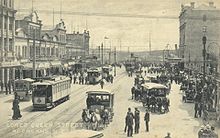
We are told the electric tram system arrived on Queen Street in Auckland in 1900, and use of this system was discontinued in 1956.

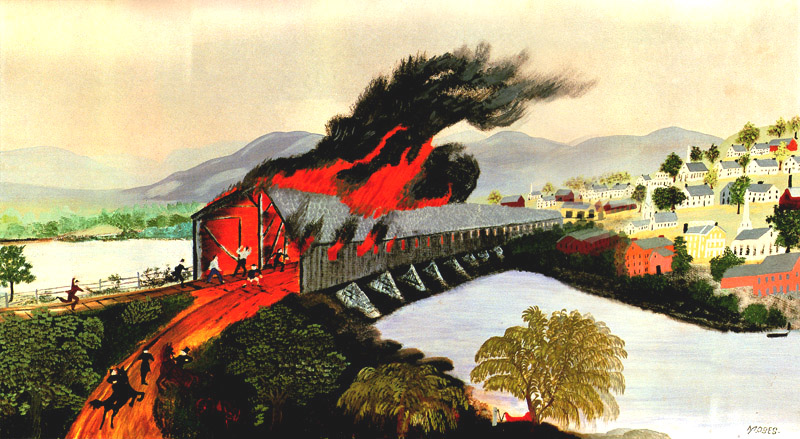
The Great Fire of Troy, in eastern New York State, near Albany and Schenectady, was said to have taken place in 1862. This would have happened during the time-frame of the American Civil War, and caused by a spark from the engine of a train that caused the Green Island Bridge to catch on fire, and which quickly spread from gale force winds. Here is the bridge depicted as a wooden structure.

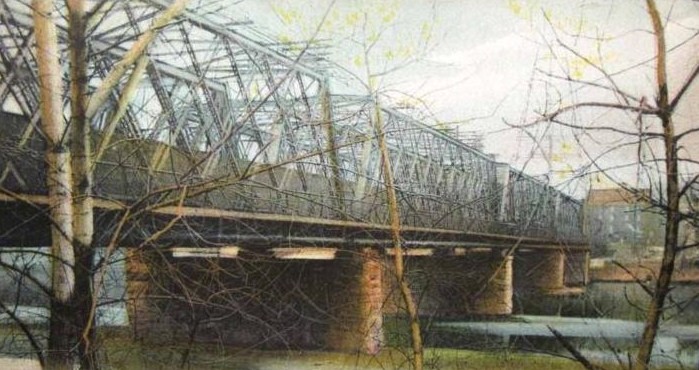
But wait ~Here’s a post card showing the Green Island Bridge as a steel-truss bridge!

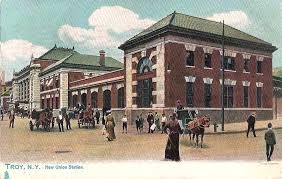
Troy’s Union Station, or Depot, was said to have burned down, and rebuilt in this form by 1900…

…only to be torn down in 1958.

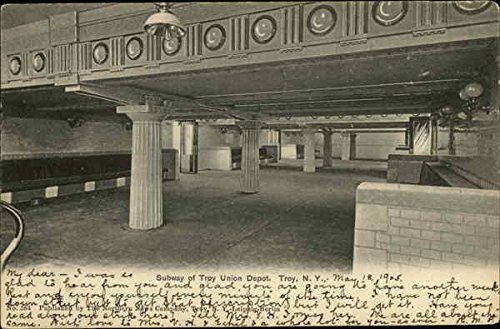
There was even a subway station there!

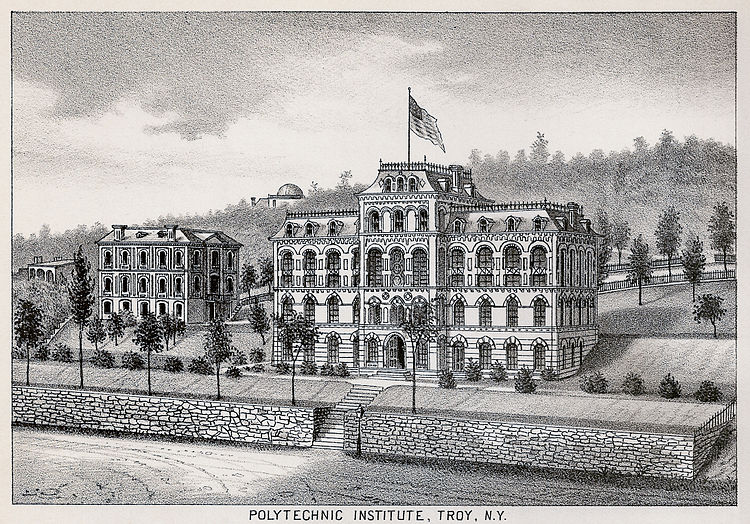
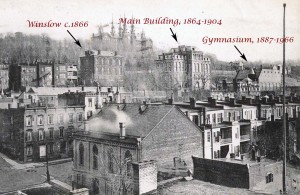
The Rensselaer Polytechnic Institute in Troy was said to have been founded in 1824, and the oldest, continuously operating technological university in the English-speaking world and the Americas.

The physical plant of the university was said to have been completely destroyed by this fire…

…and that when it was rebuilt, all of the buildings steadily moved east, up the hill overlooking Troy and the Hudson River.

Next, I would like to look at three fires that have come to us in history as Acts of War during the American Civil War.

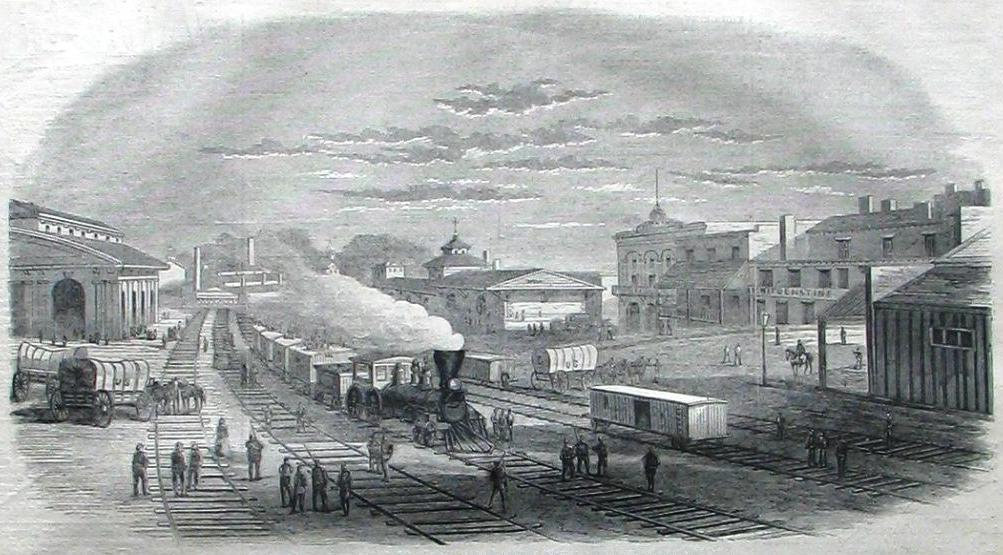
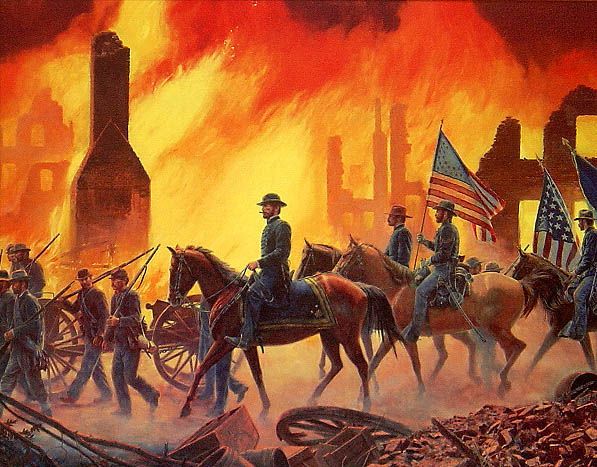
The first was the Burning of Atlanta, which we are told took place in 1864.

Atlanta was an important rail and commercial center at the time of the Civil War.

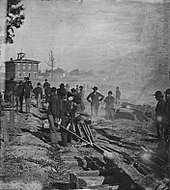
General Sherman and his Union Forces, we are taught, captured the city of Atlanta in September 2nd of 1864, and occupied from then until November of 1864.

He gave orders to destroy Atlanta as a transportation hub and as a war material manufacturing center, and in particular the railroad system and everything connected to it.

His orders were carried out destroying physical infrastructure, and on November 15th, everything that had been destroyed was set on-fire.

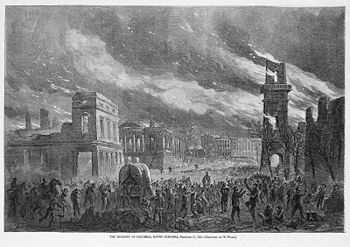
Columbia, the capital of South Carolina, was said to be an important political and supply center for the Confederacy.

Rail-lines were said to have reached the city in the 1840s, and the railroad lines going through there were primarily concerned with transporting cotton bales.

Columbia was said to have surrendered to General Sherman on February 17th, 1865, after the Battle of Rivers’ Bridge.

On the same day, the fires started, burning much of Columbia, though there is disagreement between historian regarding whether or not the fires on that day were accidental or intentional.

However, the next day General Sherman’s forces destroyed anything of military value, including railroad depots, warehouses, arsenals, and machine shops.

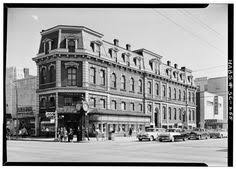
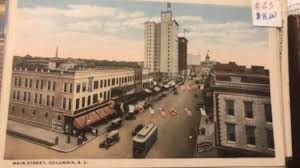
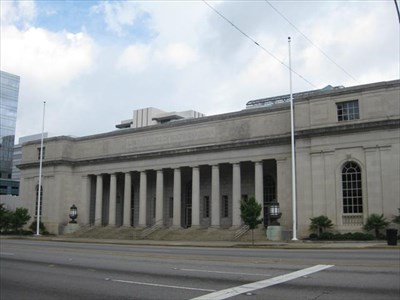
Here are some photos of Columbia’s historic infrastructure:

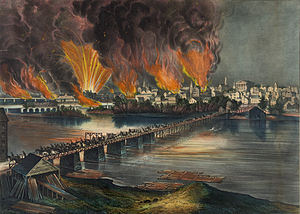
The third major Civil War fire was the April of 1865 Burning of Richmond, the capital of Virginia, and of the Confederate States of America.

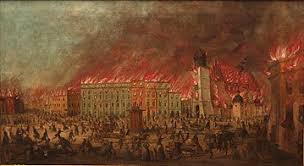
In this case, the fire was said to have been started by Confederate forces evacuating Richmond. It was also known as the Evacuation Fire. This is a lithograph depicting it by Currier & Ives.

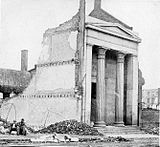
This huge classical temple-like building was the Exchange Bank of Richmond, said to have been damaged by the fire.

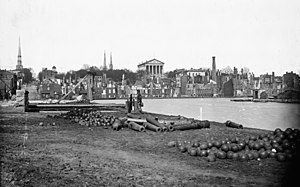
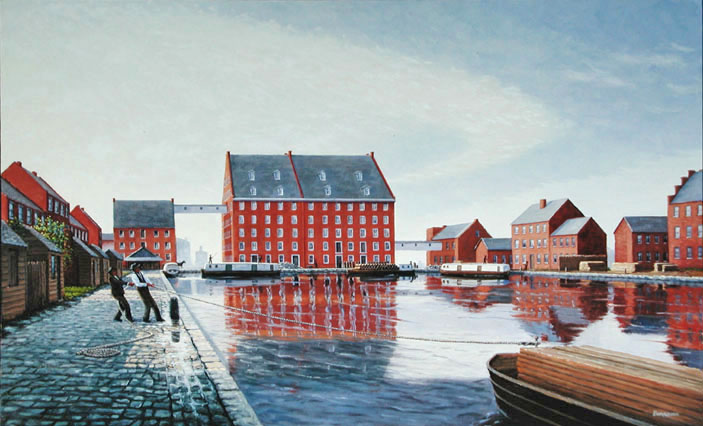
Here is another view of Richmond and its State Capitol Building in the middle of the picture, as seen from above the Canal Basin after the 1865 fire.

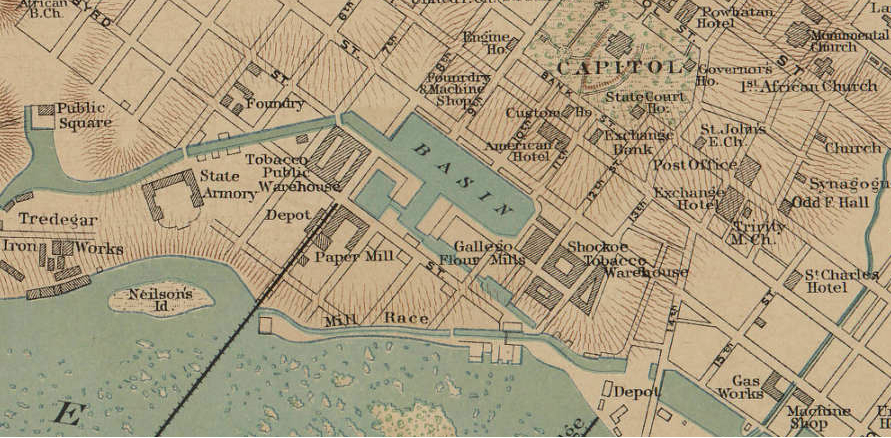
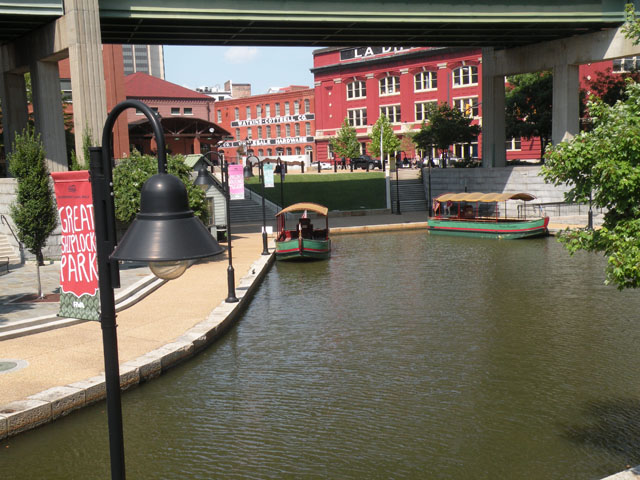
This is the location of the Canal Basin in Richmond…

…and here is what the canal basin it looks like.

So I just learned Richmond, Virginia, is a city of canals!

I was not aware that Richmond had that distinction!  But then again, I am finding a lot of places that do have it in my research.

Richmond was also a transportation hub, and the terminus of five railroad lines.

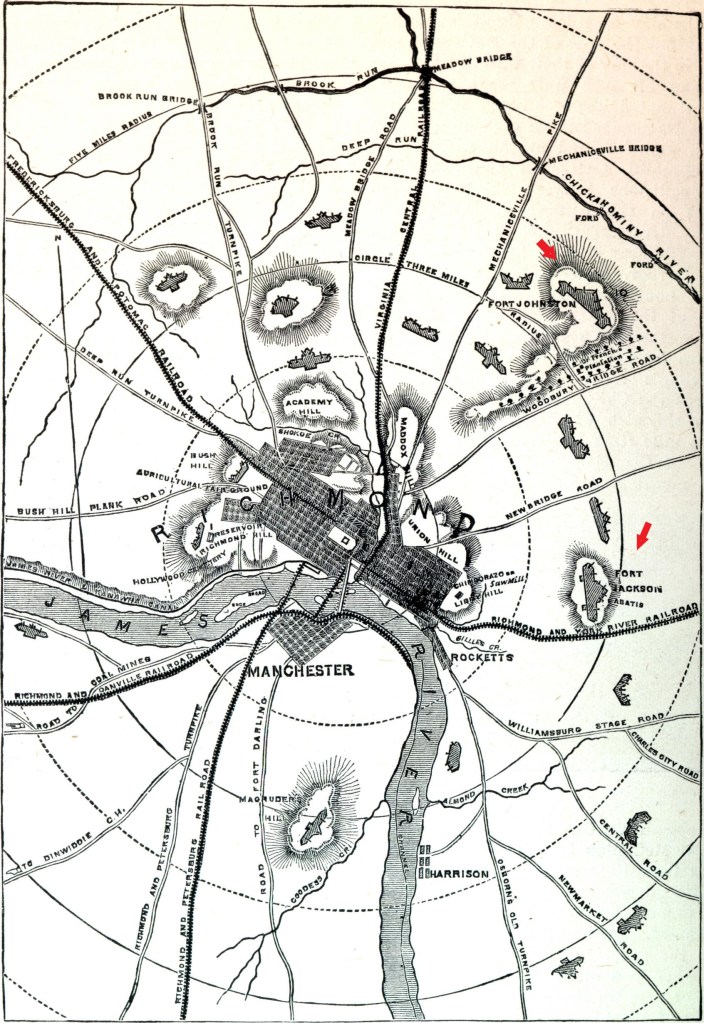
It looks like there were two named star forts on this map of Richmond and the surrounding areas – Fort Johnston and Fort Jackson – and possibly many more that don’t have names that are depicted as various shapes in the landscape.

There are suspicious elements going on in these three Civil War fires – intentional destruction of infrastructure of these transportation hubs, especially rail-lines, but so much more than that. What was really going on here?

I don’t think the answer to this question is to be found in the books of the history we have been taught.

I am going to finish up by highlighting four fires that took place on the exact same day in 1871, and one fire that took place on the following day.

The Great Chicago Fire was said to have started on October 8th of 1871, and burned 3.3-square-miles, or 9-kilometers-squared, over a 3-day period.

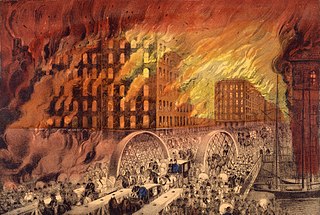
Here is another Currier & Ives print, this one depicting the Chicago fire, from northeast across the Randolph Street Bridge.

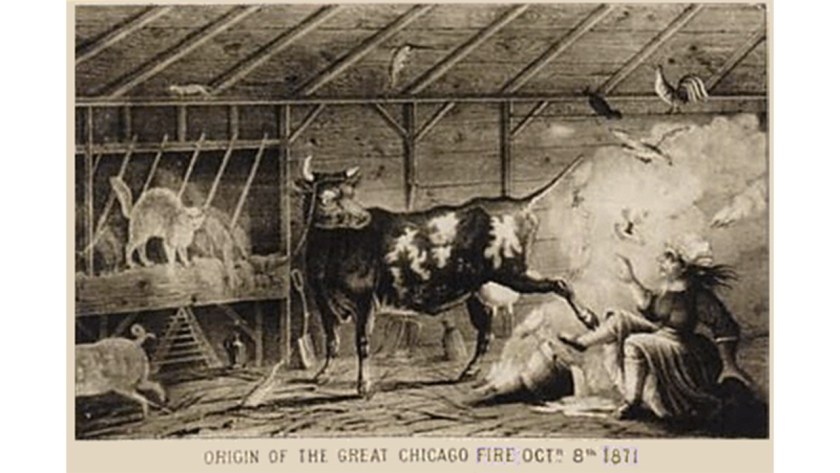
The fire was claimed to have started around 9 pm on October 8th in a small barn belonging to the O’Leary family, and that the shed next to the barn was the first building consumed.

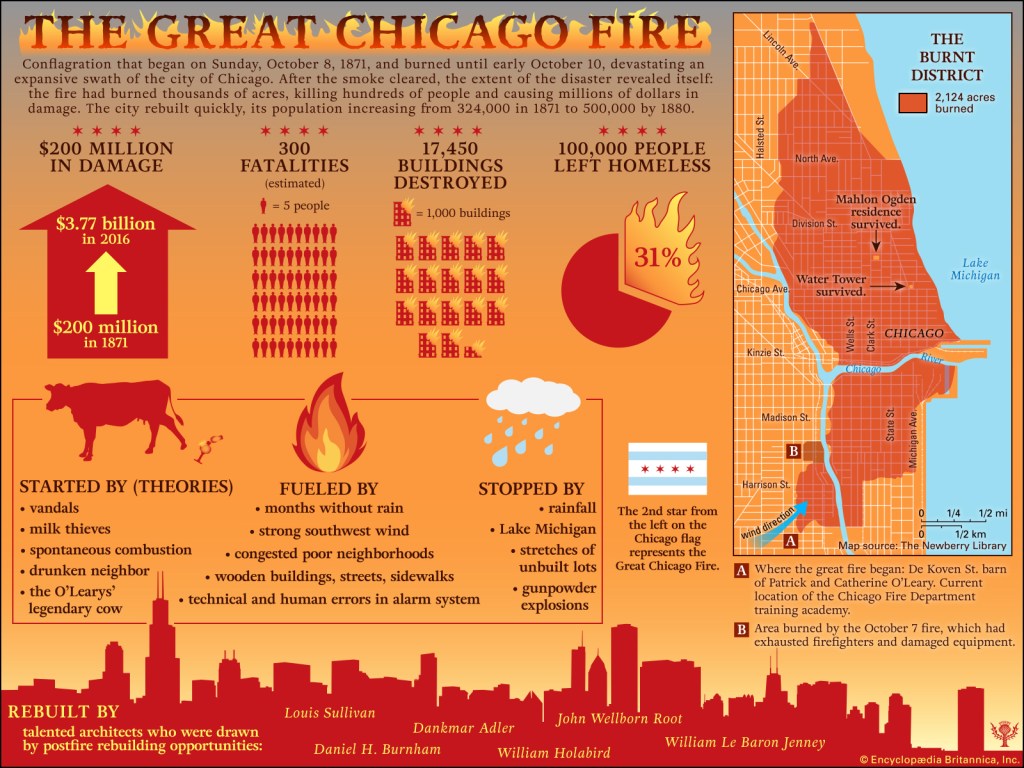
Here is an infographic that nicely summarizes all of the data points surrounding the Great Chicago Fire, right down to who is given the credit for re-building after the fire.

The predominance of wood buildings was one of the explanations given for creating the flammable conditions that fueled the fire.

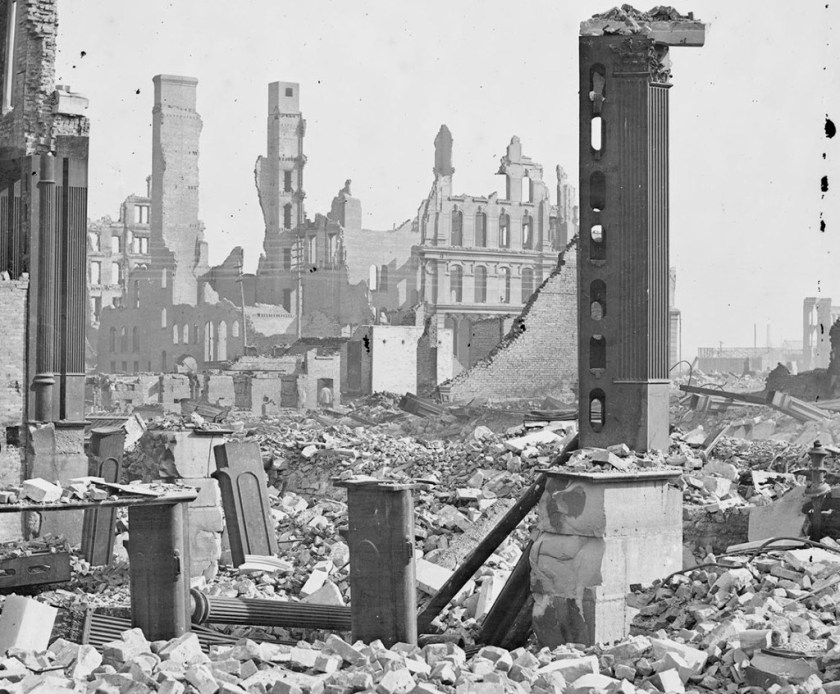
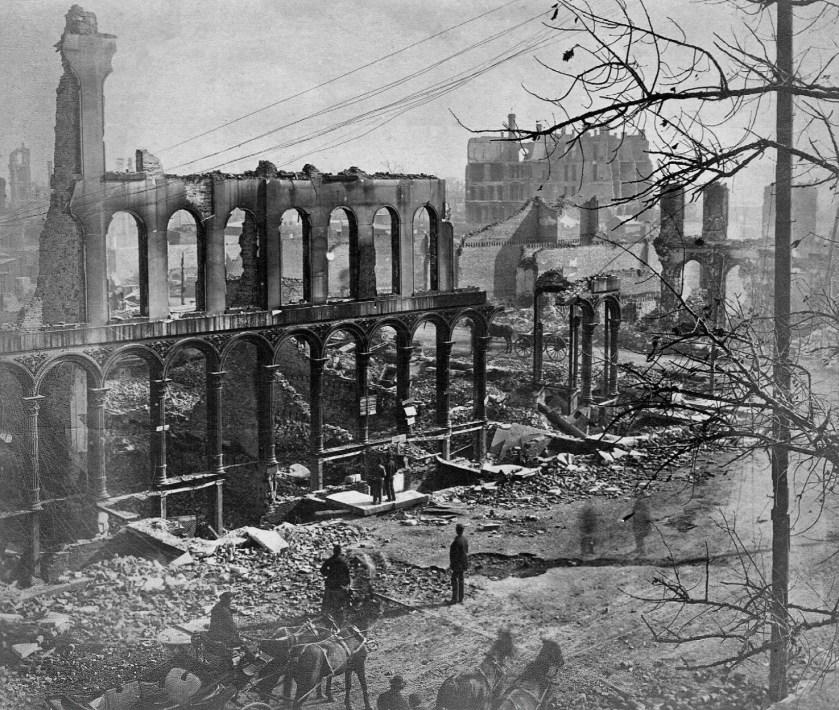
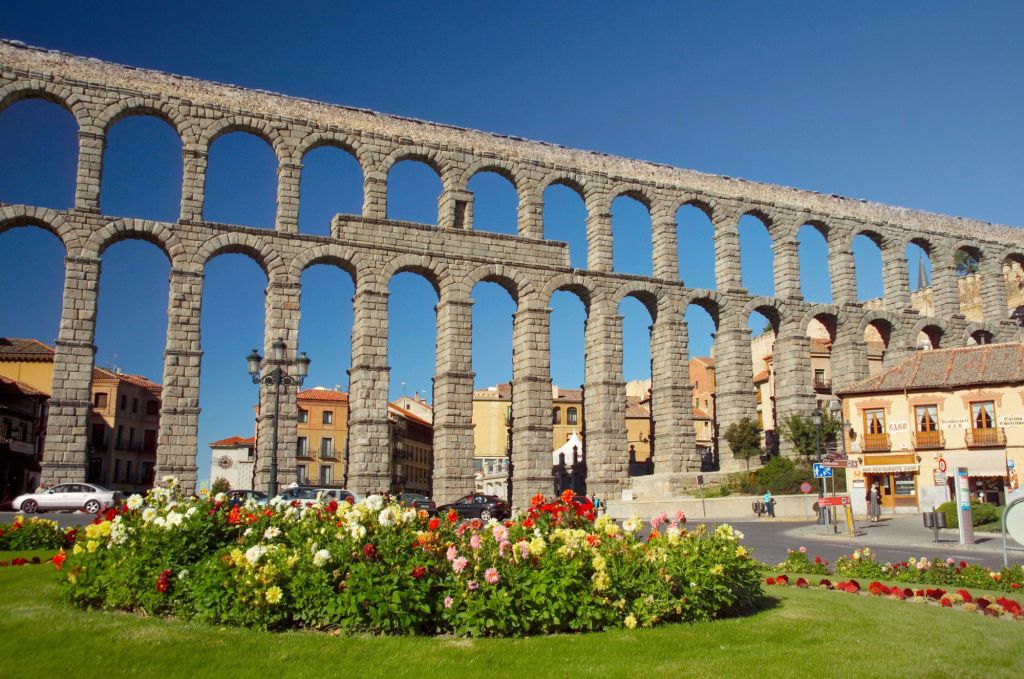
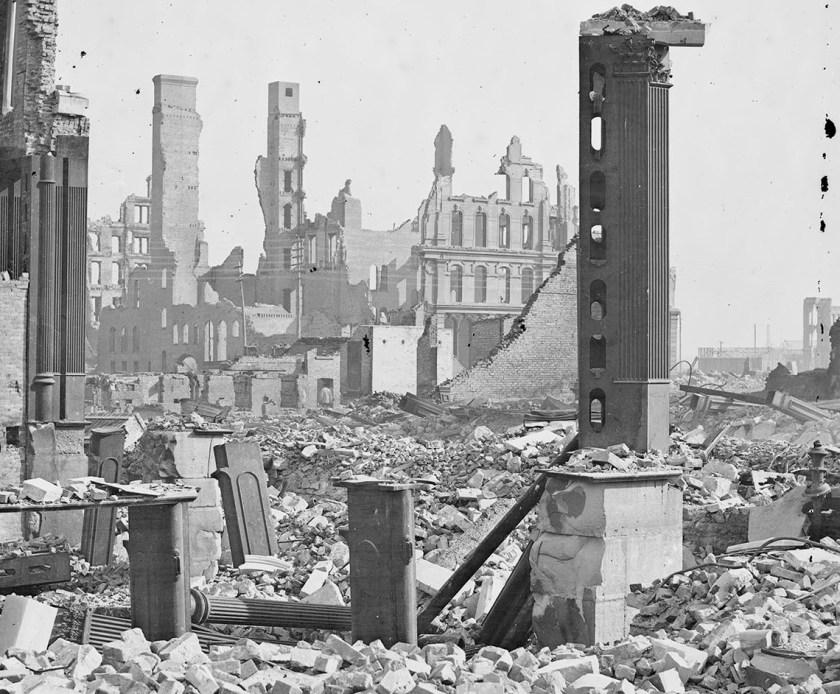
Yet, here are some photographs taken after the Chicago fire showing what remained. This one is showing a ruined, yet still beautiful stone aqueduct…

…like the famous one in Segovia, Spain.

Here’s another one, with shells of stone masonry, and piles of various types of masonry.

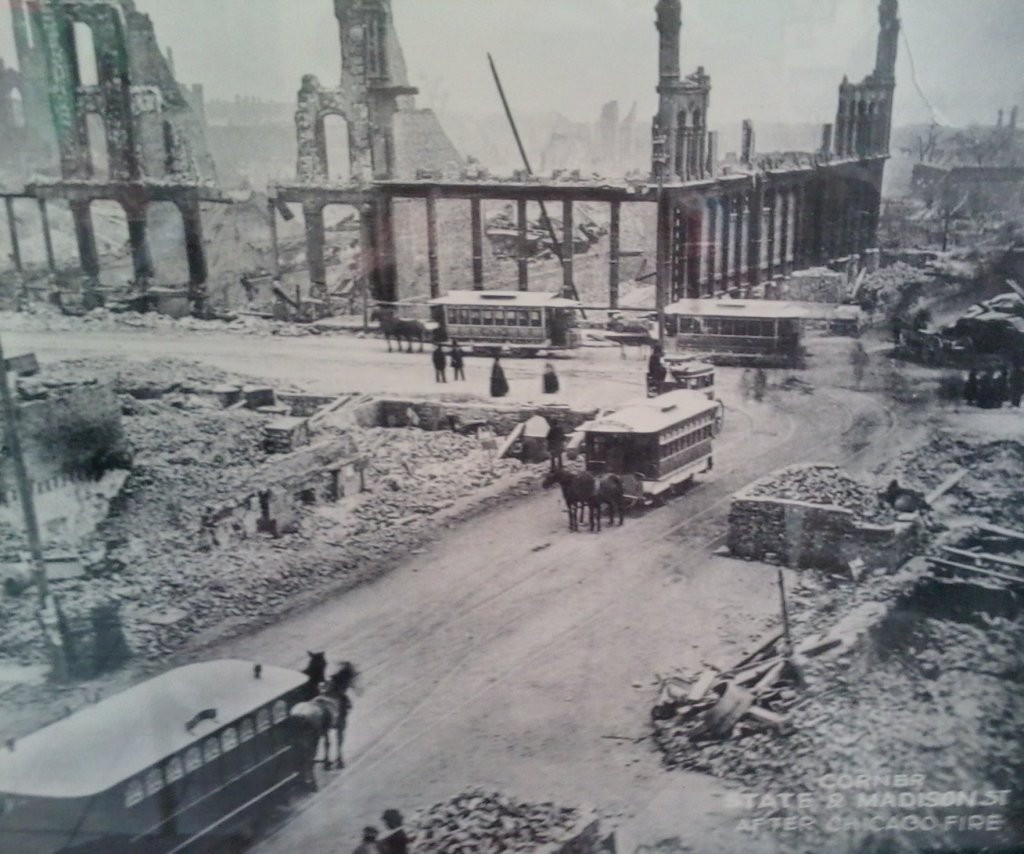
This photo is interesting. What exactly are the mule-drawn trams there for in this photo? Trying to carry on as usual, or serving some kind of other purpose after the fire’s destruction?

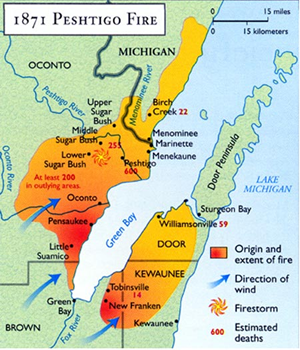
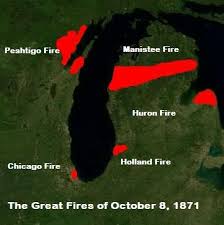
The Peshtigo Fire was described as a large forest fire that took place primarily in northeastern Wisconsin. Peshtigo was the largest community in the affected area.

It was the deadliest wildfire in American History, with estimated deaths of 1,500 to 2,500 people, though it is largely forgotten in our collective memory, unlike the Great Chicago Fire of the same day.

The Great Michigan Fire of 1871 was comprised of three separate fires: The Port Huron Fire; the Manistee Fire, and the Holland Fire.

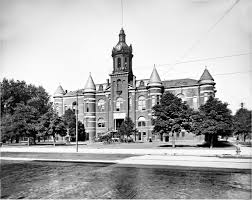
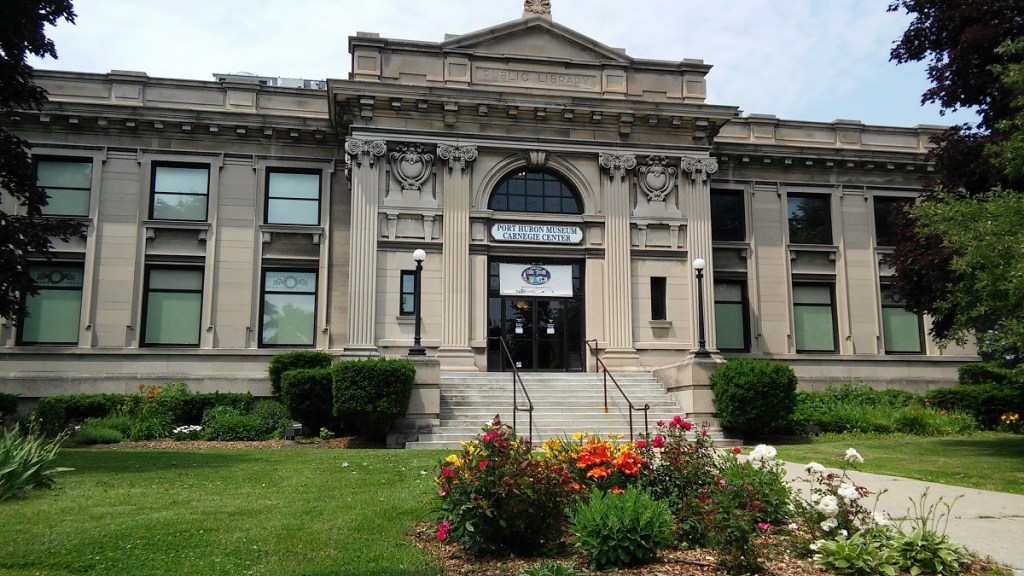
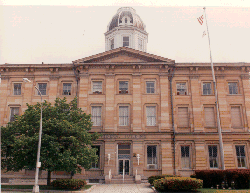
The Port Huron Fire burned a number f cities including Port Huron and White Rock, as well as much of the countryside of the “Thumb” Region Michigan.

This is an historic picture of the Port Huron City Hall…

…what started out as a library and is now a museum in Port Huron…

HDR Bracket = R FaceNum=0 FocusArea=111111111

…and the Federal Building and U. S. Courthouse in Port Huron.

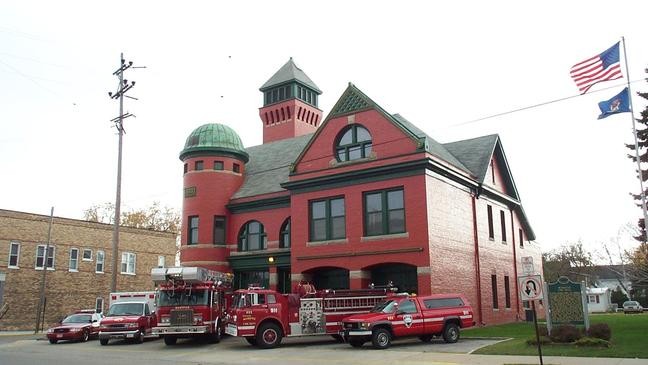
This is the Manistee Fire Department, said to be the oldest continuously manned fire station in the world.

Interesting to note that this fire station was said to have been built in 1888, seventeen years at the Manistee fire of 1871.

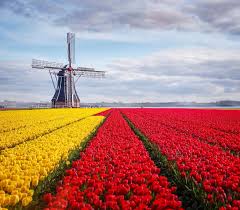
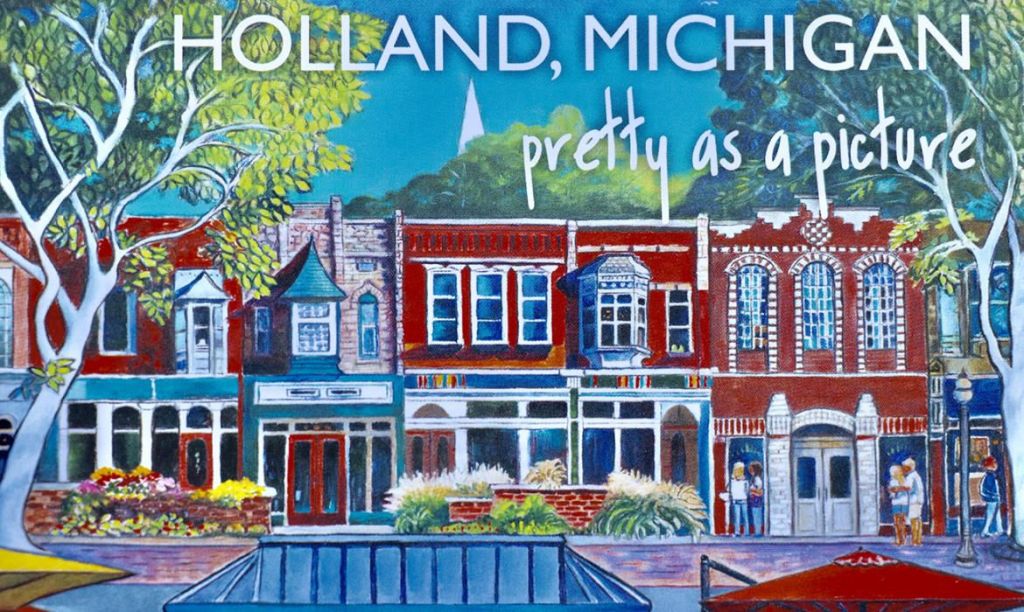
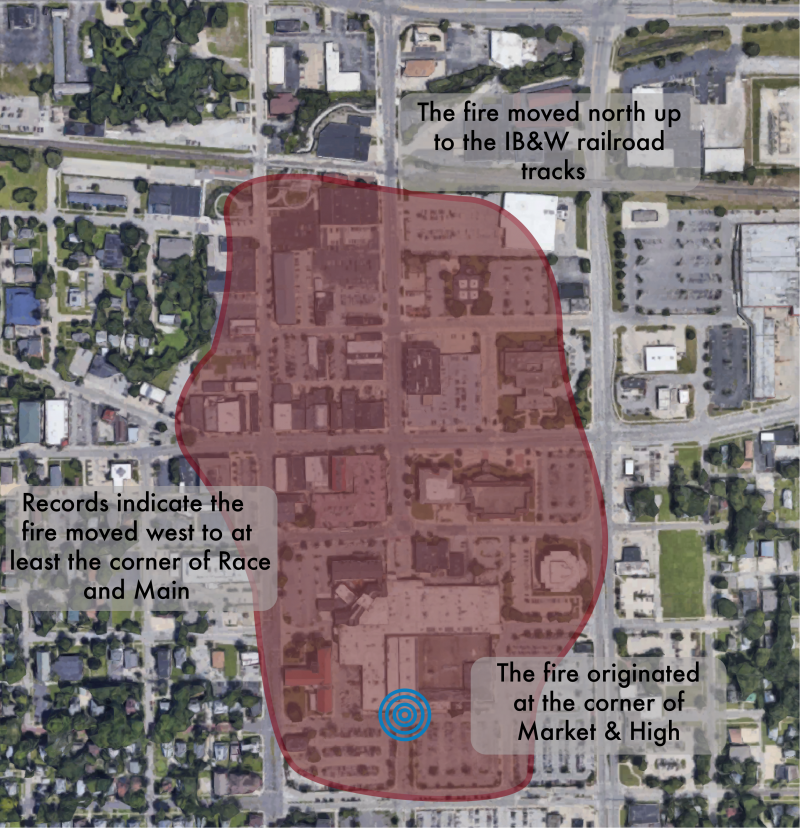
Then there was the Holland, Michigan fire on the same day. Holland, Michigan looks like…well, Holland in Europe. This photo of a windmill and tulip fields was taken in Holland, Michigan

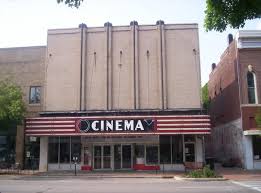
Lastly, south of Chicago, in Urbana, Illinois, there was a fire on the very next day, October 9th, 1871, destroying part of its downtown area.

The two buildings said to have survived the fire in downtown Urbana are the what is now called the Cinema Gallery…

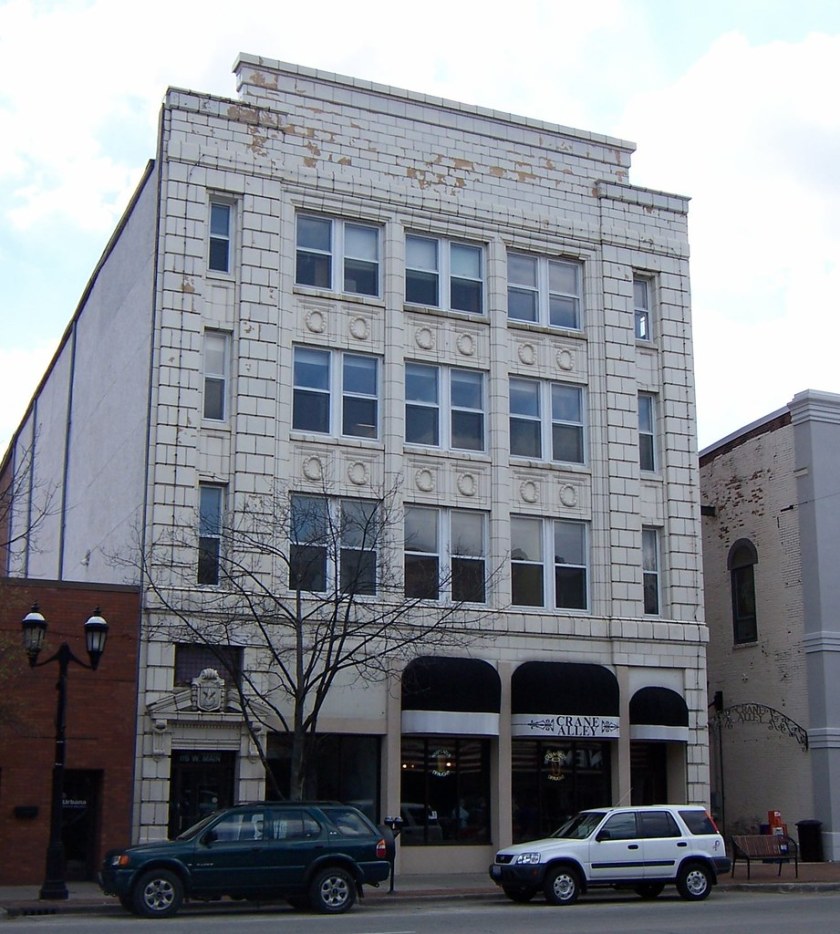
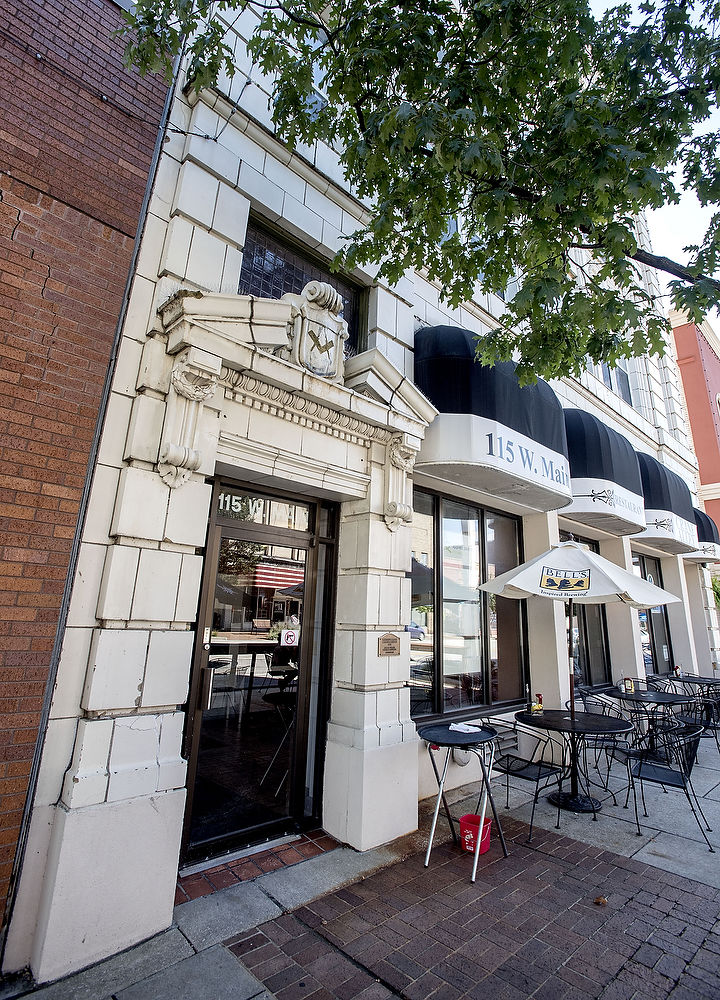
…and the Tiernan Building.

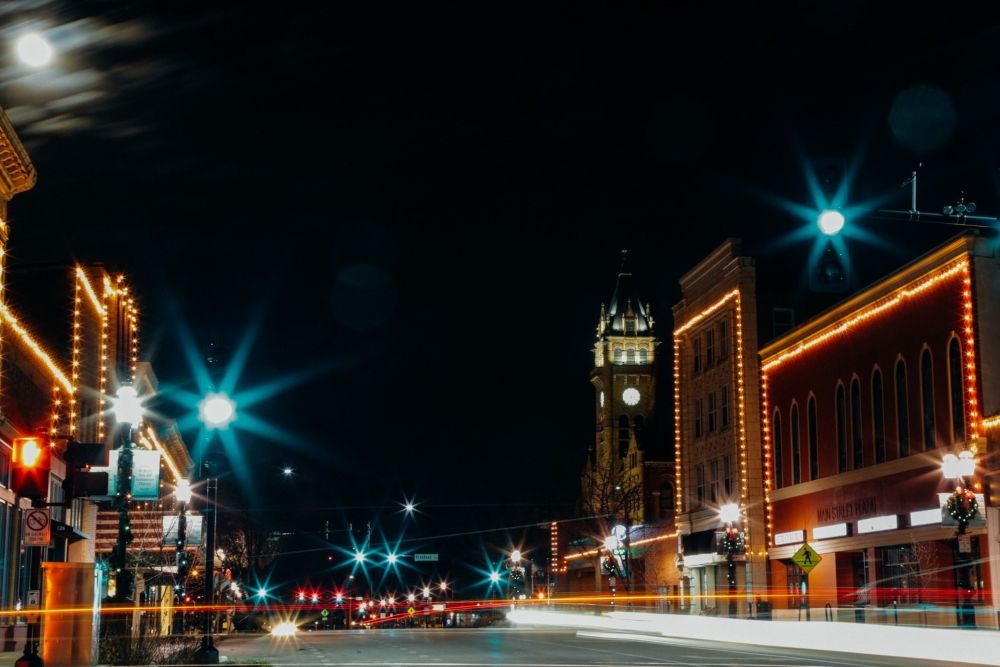
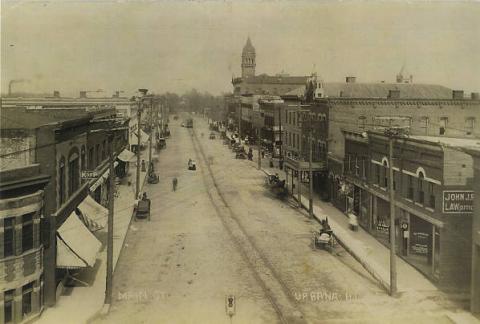
Here is a picture of Main Street in Urbana’s downtown today…

…and an historical picture of the same place, with what look to be very similar buildings.

I am not sure exactly where this location is in relationship to where the fire was, but the fire was said to consume much of Main Street.

I am going to finish up this series in my next post with a sole focus on the San Francisco Fire of 1906, and give my conclusions as to what I think the information surrounding great fires in the historical narrative is actually all about.

Poking into Historical Fires – Part 2 The Years Between 1840 and 1850

In this post, I am going to examine the fires listed as having occurred in the years between 1840 and 1850.

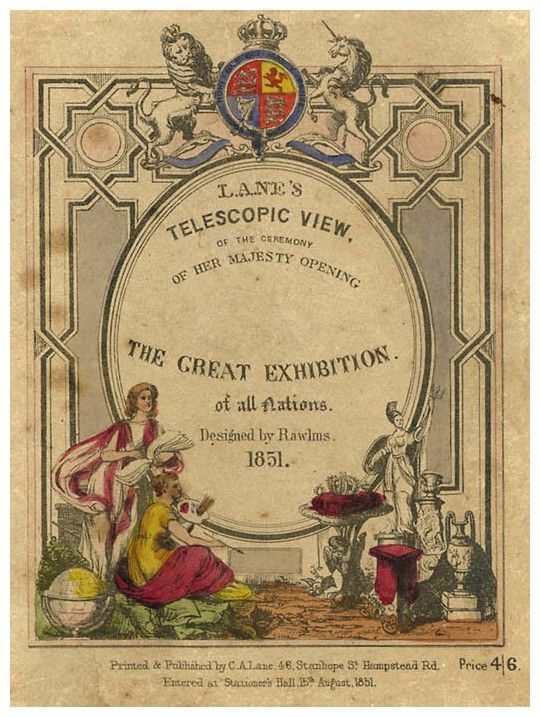
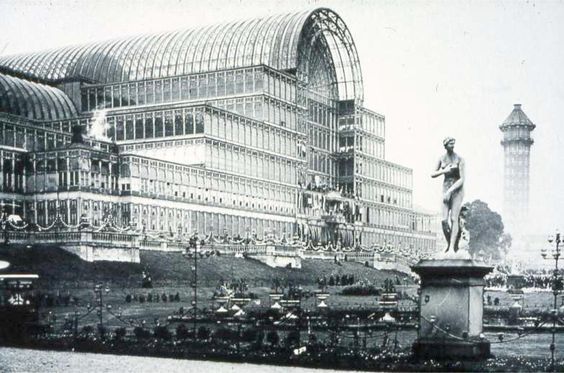
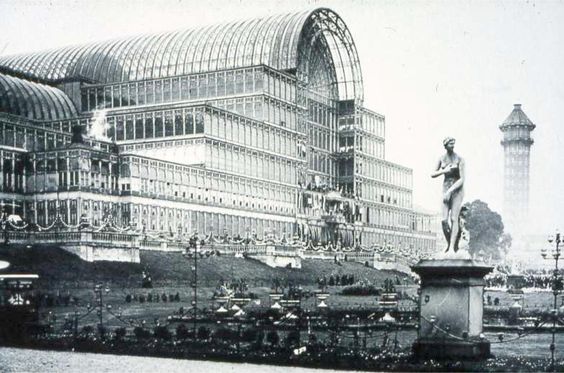
I believe that a new historical timeline, grafted onto the existing physical infrastructure, was officially kicked off by Exposition in London’s Crystal Palace in 1851…

…after taking approximately 110-years to dig enough infrastructure out of a global mudflow to re-start civilization.

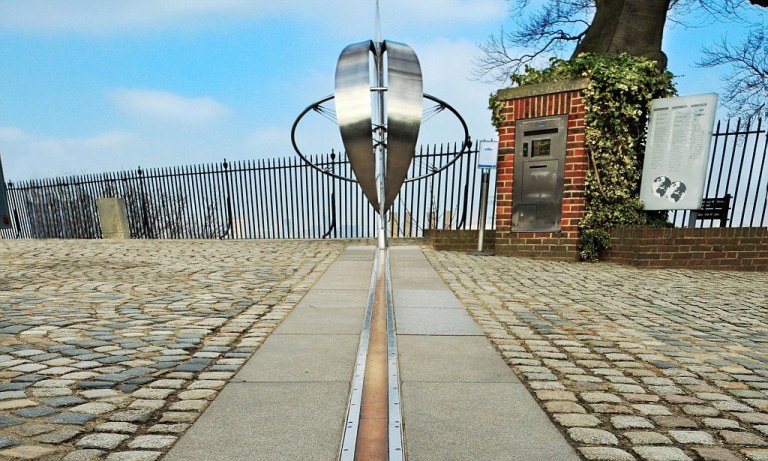
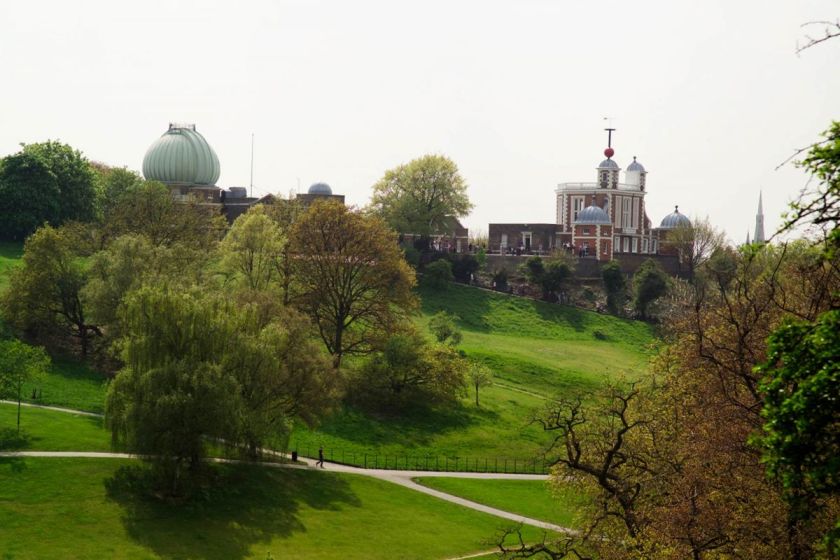
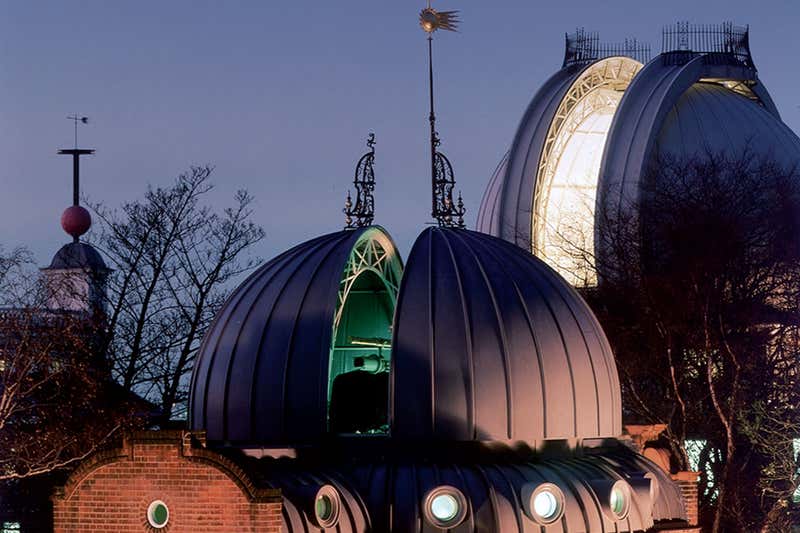
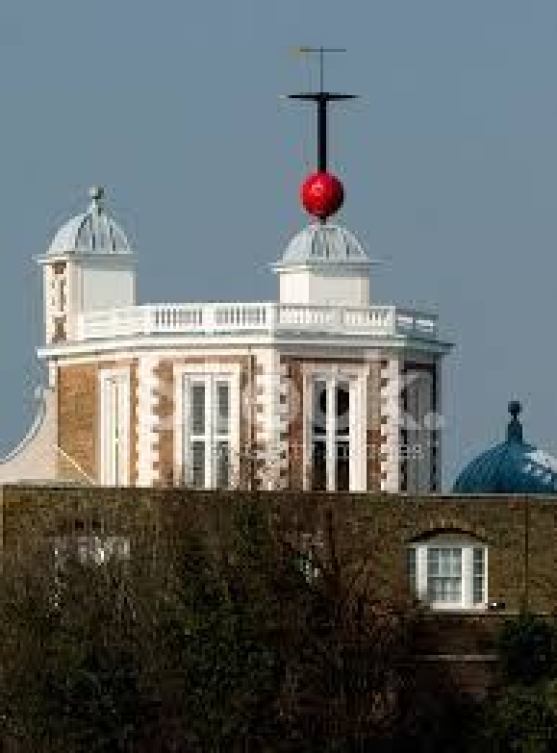
The Royal Observatory at Greenwich became the world’s Prime Meridian in 1851.

Prior to the time of moving it to Greenwich in England, the Great Pyramid of Egypt was the ancient prime meridian of the Earth.

Someone left me a comment that the Trivium was removed in 1850. I have been unable to find an internet source to confirm the date, but the Trivium was the lower division of the seven liberal arts of classical education comprising grammar, logic, and rhetoric – subjects leading to the development and refinement of critical thinking and speaking skills.

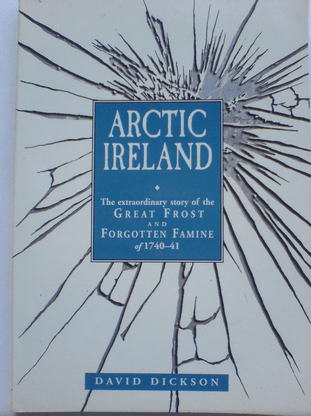
My research has led me to the conclusion that the Great Frost of Ireland, which took place between 1740 – 1741, was somehow connected to the mud flood cataclysm, and that these events was deliberately caused in order to take control of the planetary grid system and Humanity.

The free energy electrical system in place around the world prior to this event either was no longer used, or desired to be used in the form it was in previously.

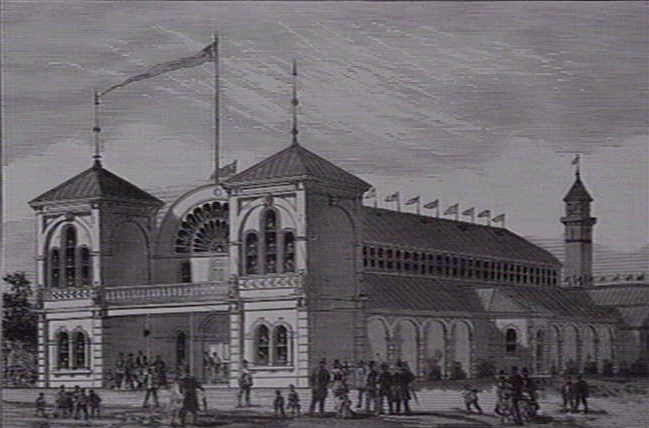
This was the Exhibition Building and Market Square Clocktower in Geelong, Australia, with its incredible design features, and what look like lightning rods and flag poles perhaps originally in place for receiving and transmitting energy.

The Clock Tower was demolished in 1923, and the remaining buildings were demolished in the early 1980s to make room for a new shopping center.

The free energy system was ultimately replaced with other forms of energy that could be monetized and controlled.

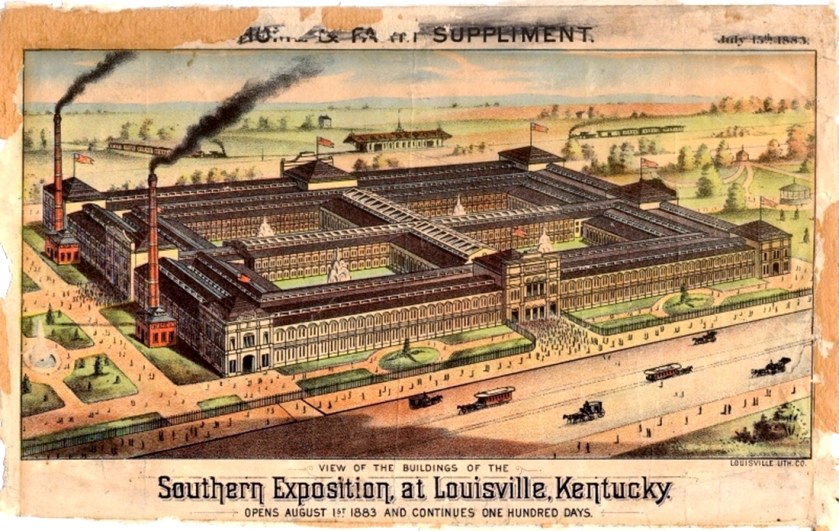
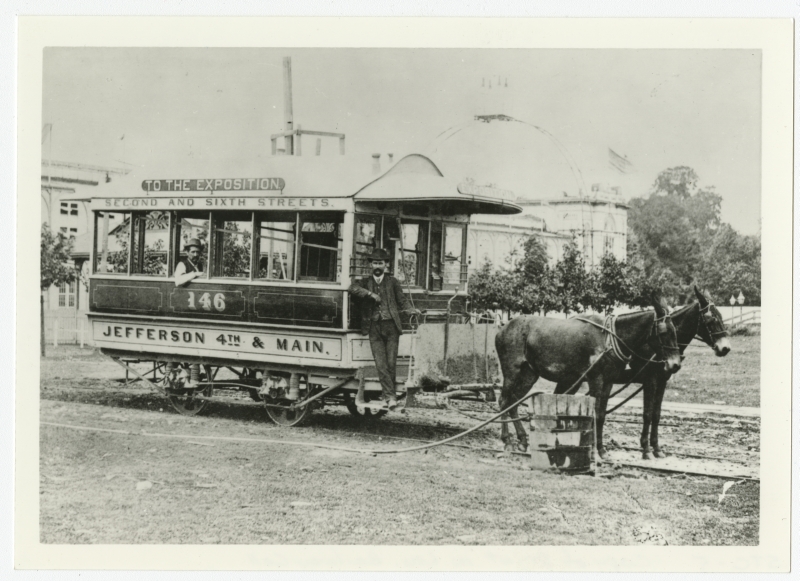
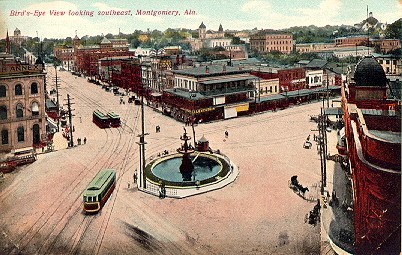
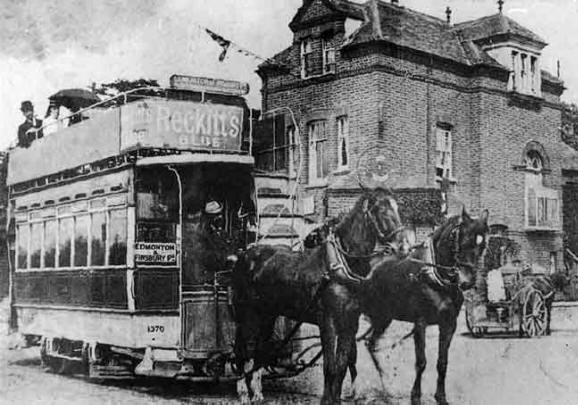
Trams around the world, which had been powered by electricity, were pulled by mules until perhaps the time the electrical system was figured out, like what you see in the foreground of this photo from the Southern Exposition of Louisville that wenton from 1883 to 1887…

…and when powering once again by electricity was figured out, within a few decades largely replaced by cars and buses in most of the cities they were in, like Montgomery, Alabama.

Montgomery is one of three places that I know of said to have had the first city-wide system of electric streetcars in 1886, which was known as the “Lightning Route.”

The streetcars were retired in a big ceremony and replaced by buses in 1936.

So, they are going to put in all the time, energy, money, and effort to develop an efficient mass transportation system like this, and then only use it for 50-years?

I am going to start by looking at the Great Hamburg Fire of 1842.

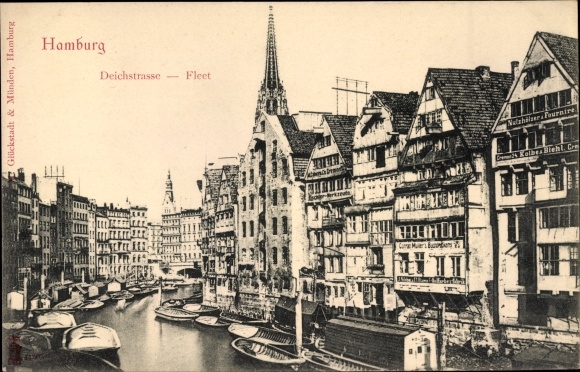
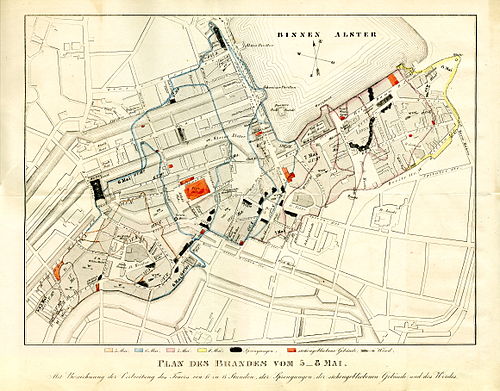
It is noteworthy that the fire took place in the Hamburg Altstadt, and started on May 5th on the Deichstrasse, or Dyke Street, which is the oldest remaining street in the Old City of Hamburg.

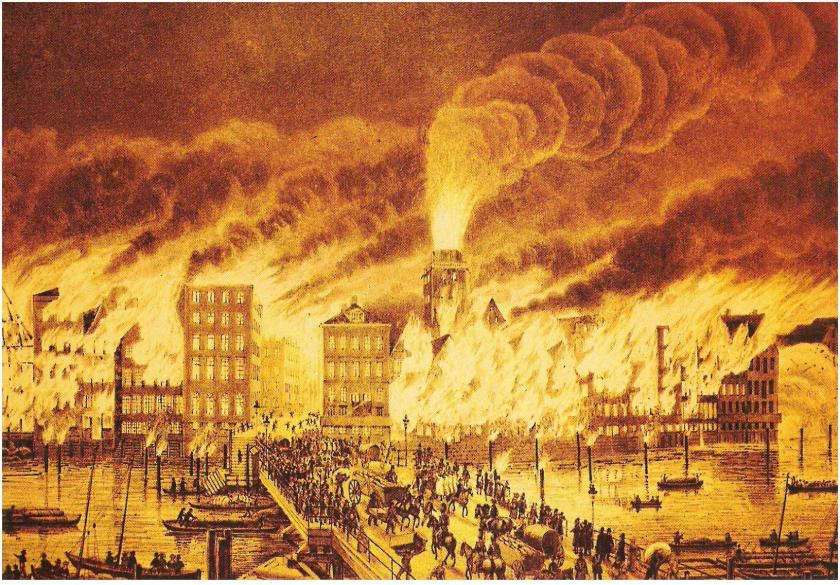
It was said to burn for 3-days before being extinguished, destroying about 1/3rd of the buildings in the Altstadt, and killing 51 people.

Interesting to note that there was a heavy demand on insurance companies that led to the establishment of reinsurance, or insurance for insurance companies to insulate them from major claims events. I wonder how this factors into the fire…

The fire was said to have begun in Eduard Cohen’s cigar factory, and that it quickly spread through wooden, half-timbered houses of Hamburg.

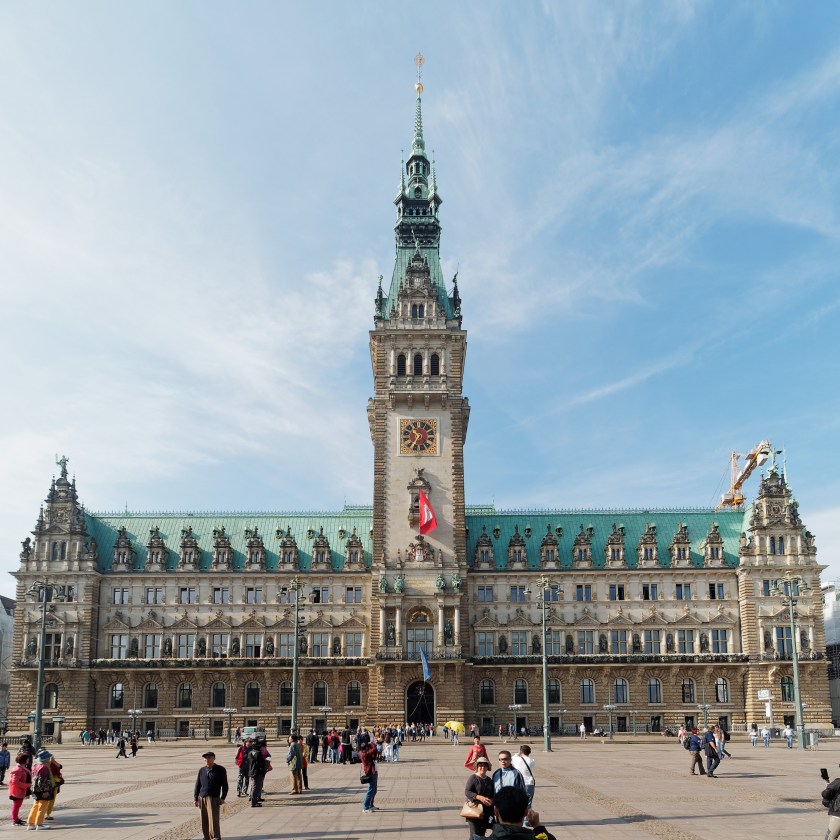
The great fire was also said to have destroyed the city’s Town Hall, which was said to have been rebuilt, starting in 1886 and opening in 1897…

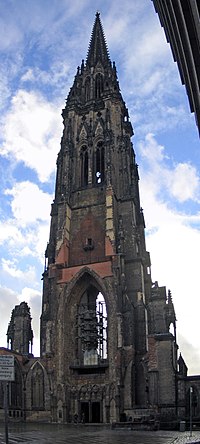
…and the Nikolaikirche, or Church of St. Nicholas, which was said to have been rebuilt by 1874.

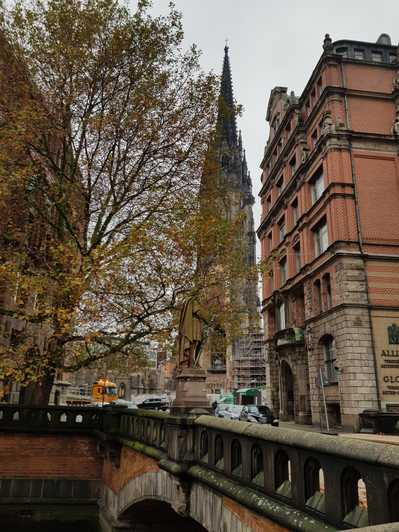
Here’s another view of the Nikolaikirche in the Hamburg Altstadt, with a beautiful stone- and brick-masonry bridge, as well as other beautiful infrastructure combining stone and brick.

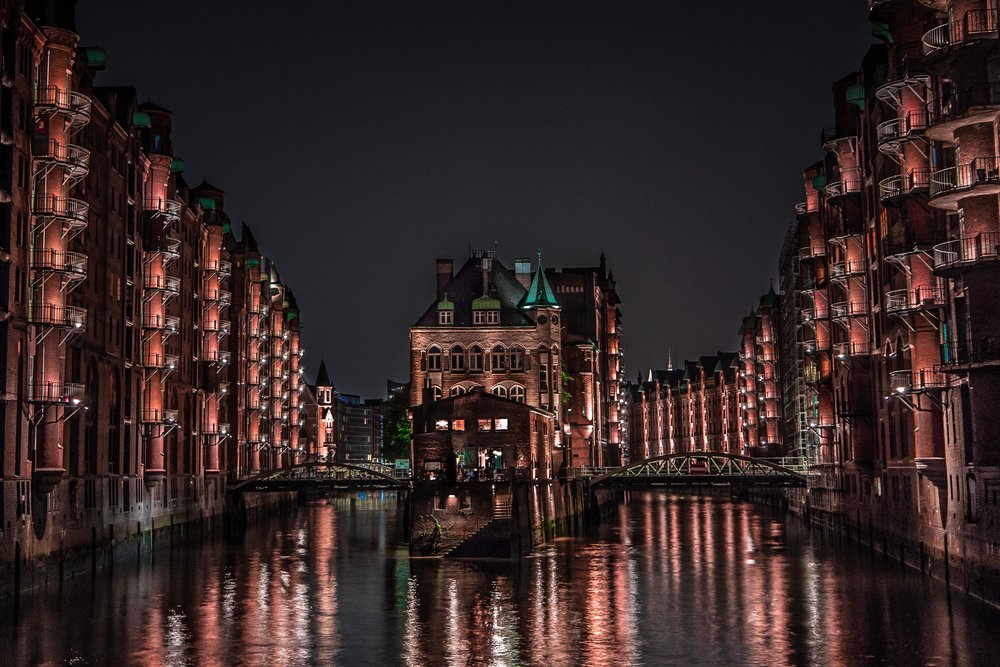
Other interesting architecture of Hamburg includes this location with buildings on what looks like an artificial island, situated in the middle of a canal, connected by bridges to the towering buildings on both sides of it…

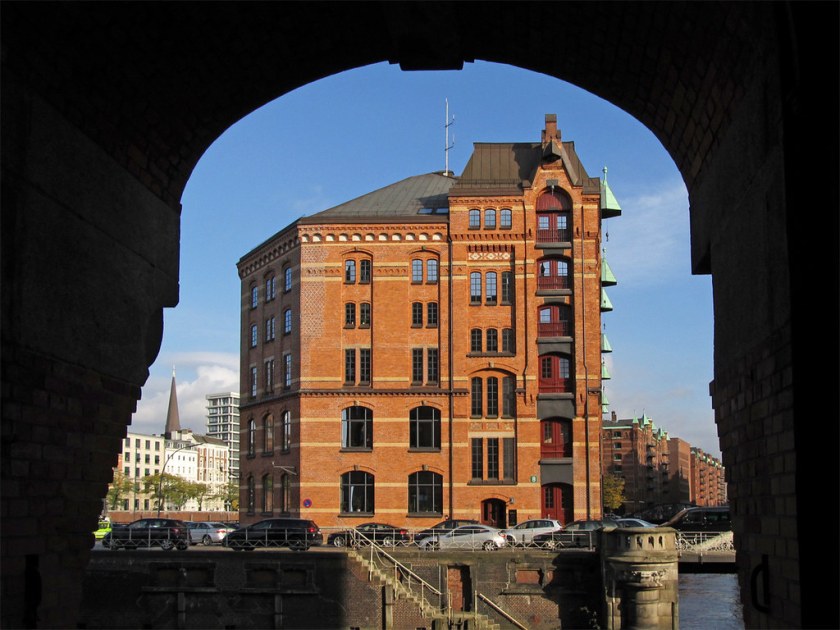
…and this massive building in Hamburg perfectly framed by an archway…

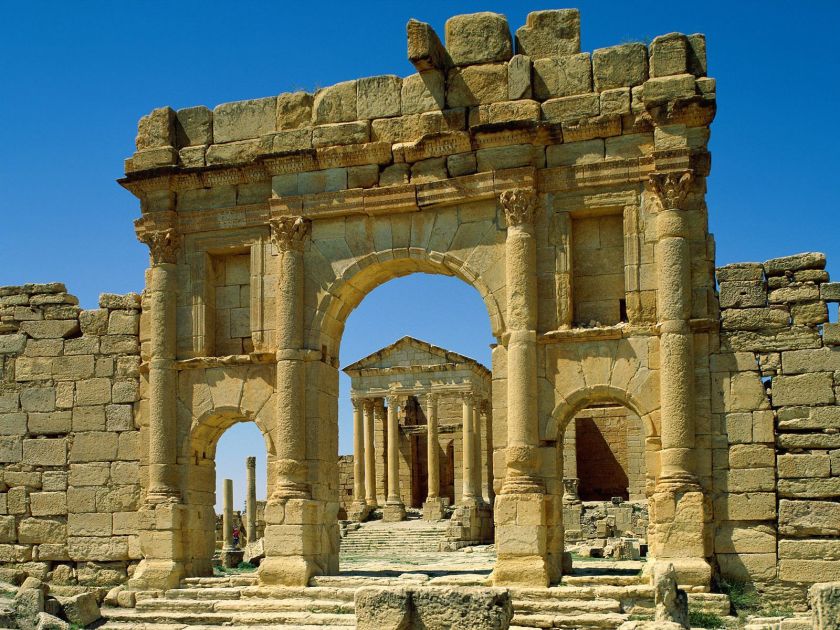
…just like the ancient temple in Carthage perfectly framed by the archway shown in the last post.

On an interesting side note, the first railway line in Hamburg, between Hamburg and Bergedorf, was opened on May 5th, 1842, on the the exact same day the Great Fire started.

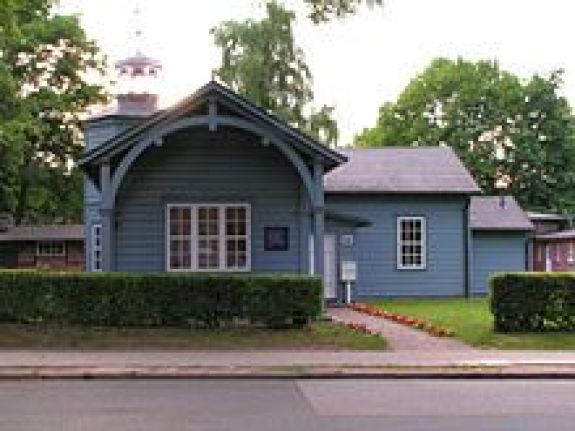
This was the Bergedorf Station in Hamburg, used only for 4-years, between 1842 and 1846.

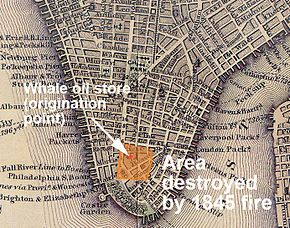
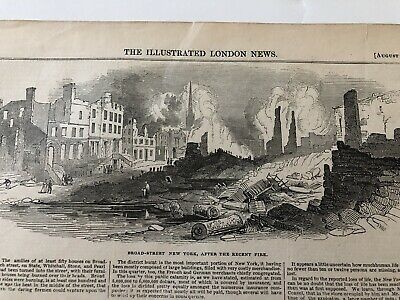
In July of 1845, a great fire was said to break-out in New York City.

It was said to have started in a whale-oil and candle-manufacturing establishment, and quickly spread to other wooden structures in Lower Manhattan.

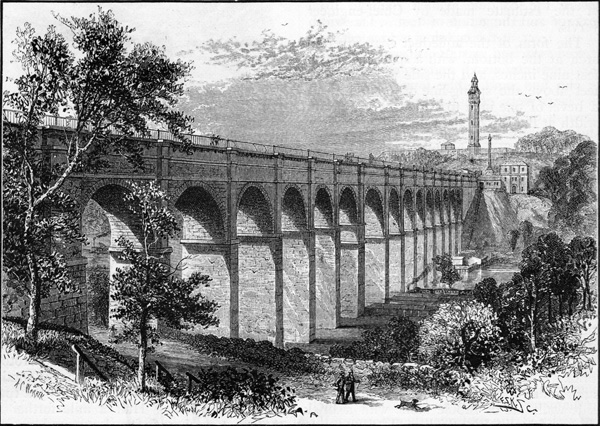
Firemen battling the blaze were said to have been aided by water flowing from the Croton Aqueduct, said to have been completed in 1842 (the same year as the Hamburg fire).

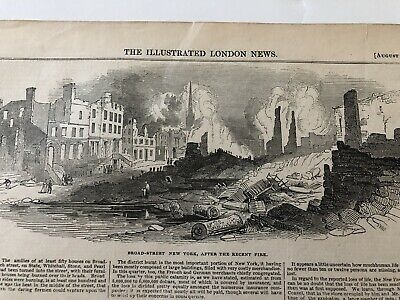
We are told the 1845 Great Fire of New York destroyed 345 buildings in the southern part of the Financial District. This fire was said to confirm the effectiveness of restricting the building of wood-frame structures as areas which were rebuilt after the 1835 Great Fire of New York were of stone, masonry, iron roofs and iron shutters.

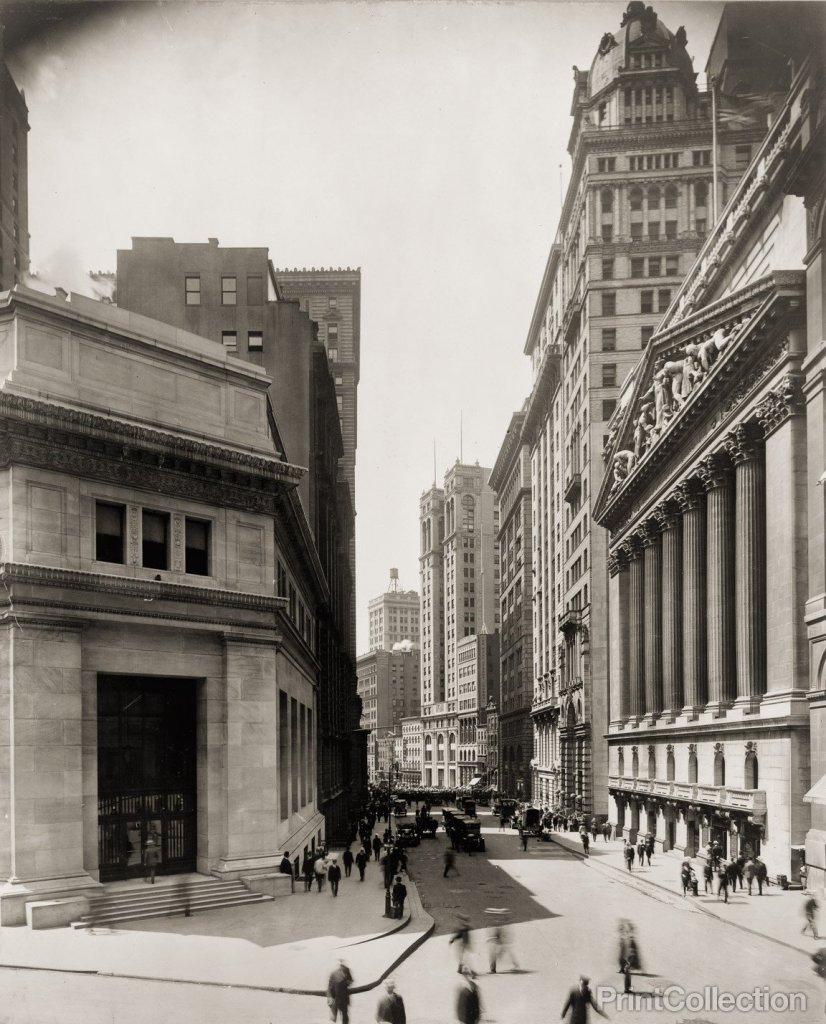
The 1845 fire was said to have destroyed buildings from below Wall Street on Broad Street…

…to Stone Street…

…up Whitehall Street to Bowling Green…

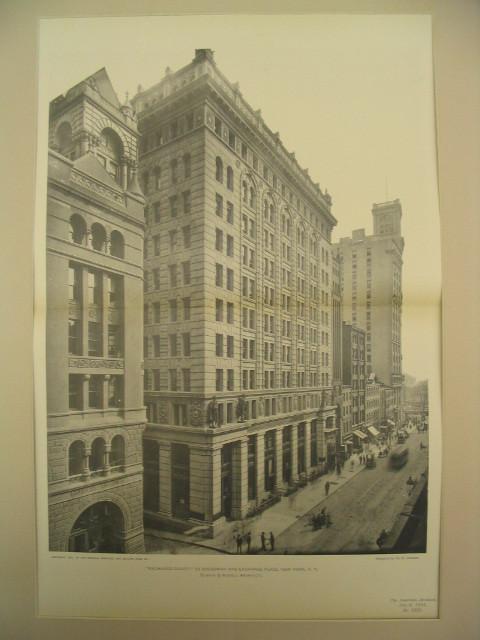
…and up Broadway to Exchange Place.

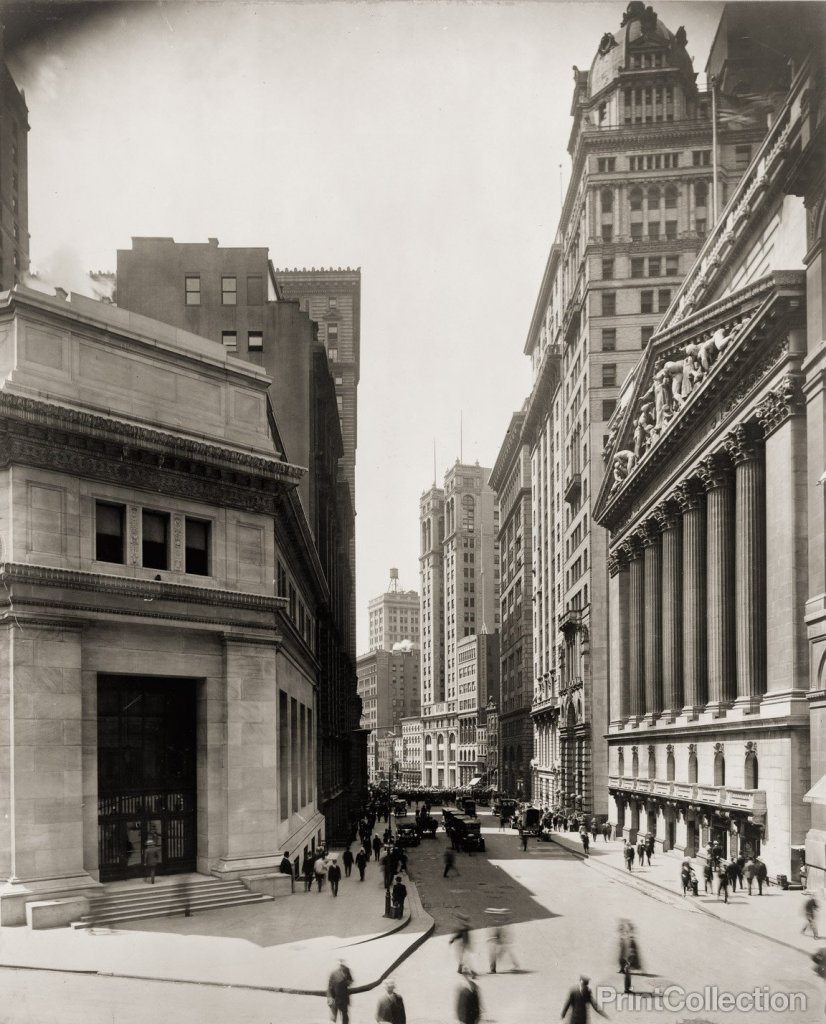
Yet these places pictured in New York City have incredibly large buildings of heavy masonry or bricks. When were these built?

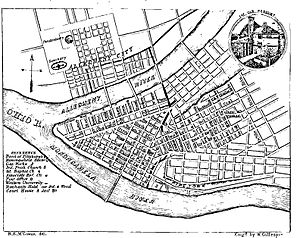
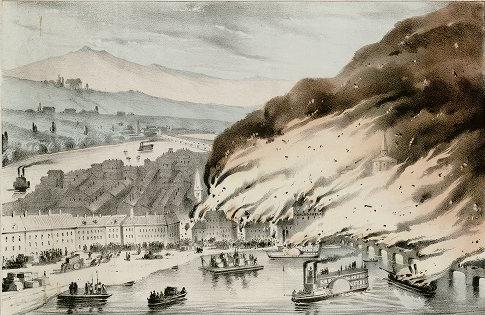
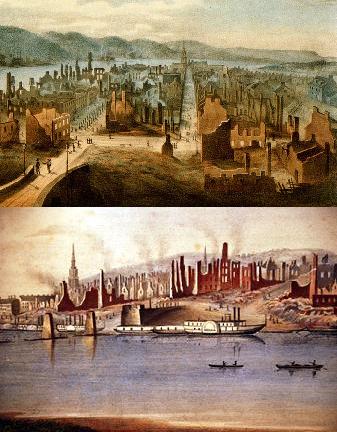
The Great Pittsburgh Fire was said to have happened in the same year, on April 11th of 1845.

The Great Pittsburgh Fire was said to have been started by a woman who worked for Colonel Diehl on Ferry Street, who had just stoked a fire to heat wash water. This is a detail from a Nathaniel Currier print.

This is a good place to insert that famous artists and authors were part of creating how the new historical narrative that was being imprinted in our consciousness, and taking our attention away from questioning what is actually in the environment around us.

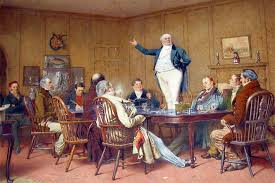
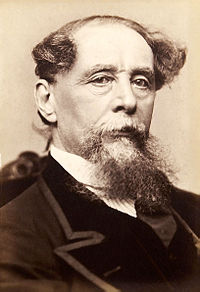
Charles Dickens was said to have described Pittsburgh in 1842 that the city had a great quantity of smoke hanging over it.

In spite of having no formal education after having left school to work in a factory because his father was in Debtors’ Prison, he edited a weekly journal for 20-years; wrote 15 novels; 5 novellas; and hundreds of short stories and articles. He’s one of many famous and incredibly accomplished people I have come across in my research said to have little or no training in their respective fields, including art and architecture.

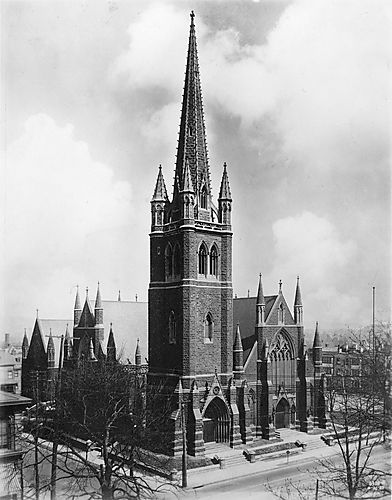
The Third Presbyterian Church in Pittsburgh was said to have stopped the progress of the fire in its direction, only losing a wooden cornice…

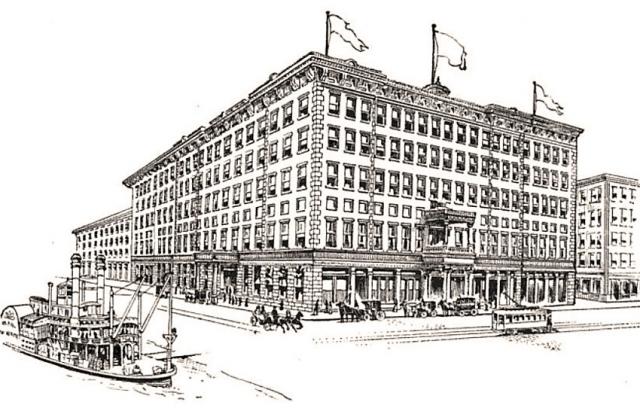
The Monongahela House, said to be Pittsburgh’s first hotel, was said to have first been built in 1840; destroyed by the 1845 fire; and subsequently rebuilt by 1847.

Notice the electric streetcar side-by-side with the horse-drawn carriages.

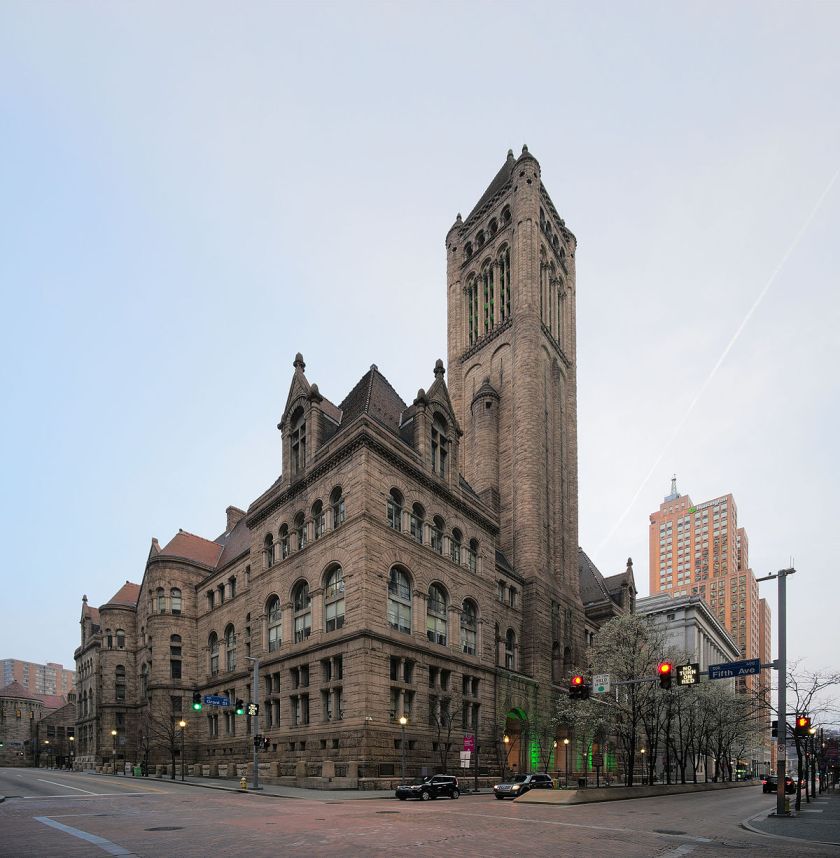
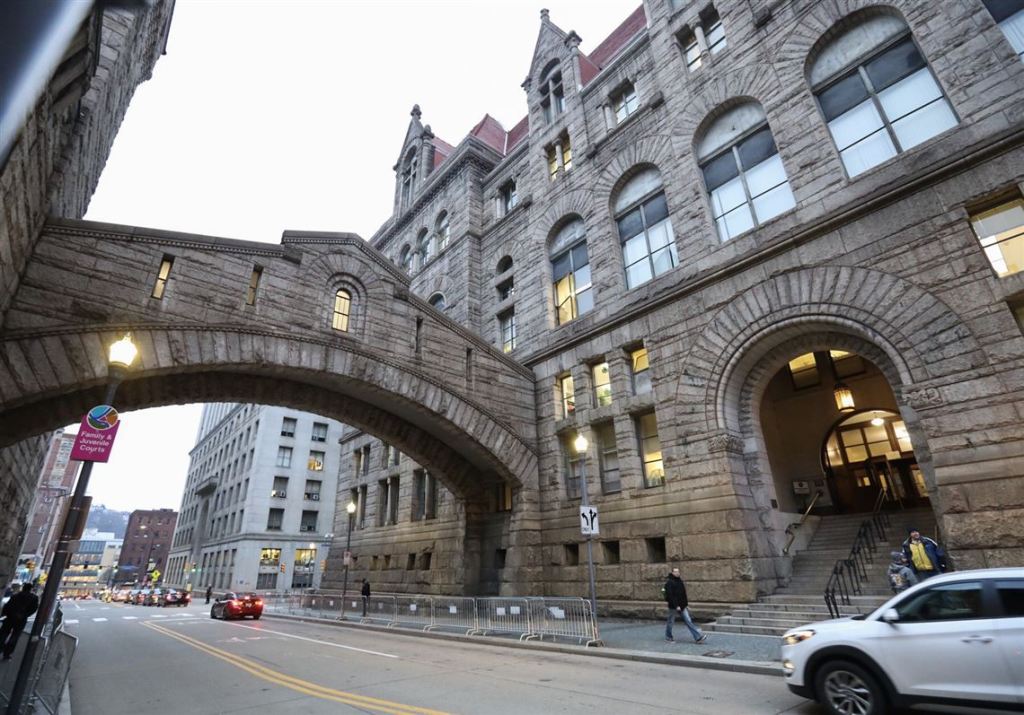
The flames were said to move slowly, giving people time to remove themselves and their belongings, and going to places like the Hill District, said to be undeveloped except for the newly built Allegheny Courthouse…

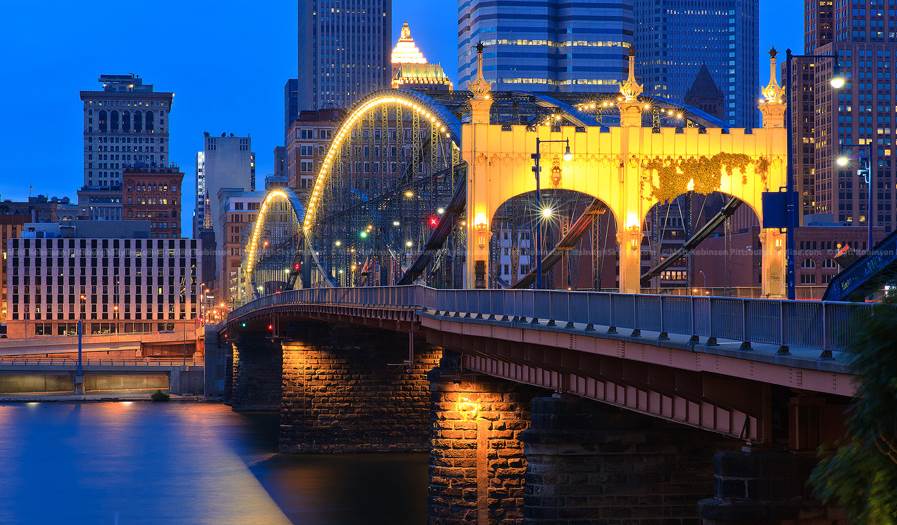
…crossing the Monongahela River at the bridge there – which is now called the Smithfield Street Bridge.

When it ended the next day, it was said to have destroyed 1/3rd of the city, leaving scattered chimneys and walls in the ruins, and it was said, inexplicably, there were occasional buildings left untouched amidst the destruction.

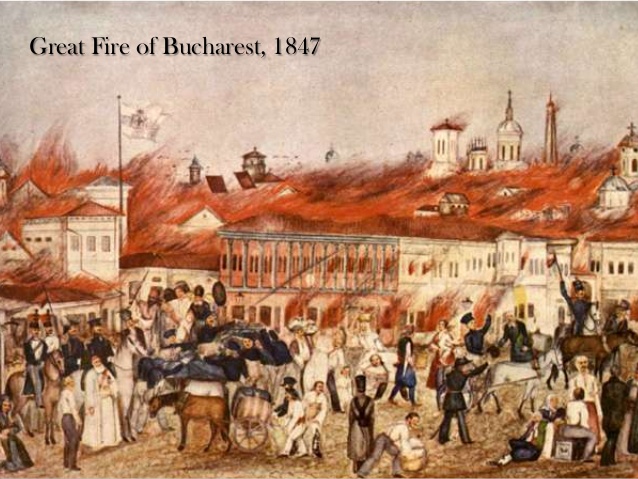
The Great Fire of Bucharest in what is now Romania took place in March of 1847…and was said to be the largest conflagration ever in Bucharest, destroying 1,850 buildings, and 1/3rd of the city in its richest and most populated part. 1850 buildings. Hmmm…there is a weird number synchronicity embedded in this data point.

At the time, Bucharest was the capital of the principality of Wallachia, which in 1417 became a tributary state of the Ottomon Empire. Wallachia united with Moldavia in 1859, leading to the formation of the Kingdom of Romania in 1881.

So far, all of these fires except the 1845 Great Fire of New York City were said to have destroyed 1/3rd of their respective cities.

The fire was said to have destroyed the central commercial part of the city. We are told that much was constructed out of wood, which together with narrow crowded streets, made them prone to fire.

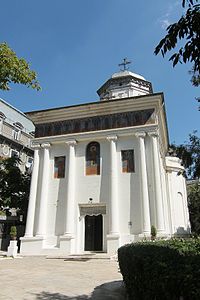
It was said to have started near the St. Demetrius Church, burning the mahala, or neighborhood, of St. Demetrius. The word mahala is said to be Arabic in origin…in Eastern Europe?

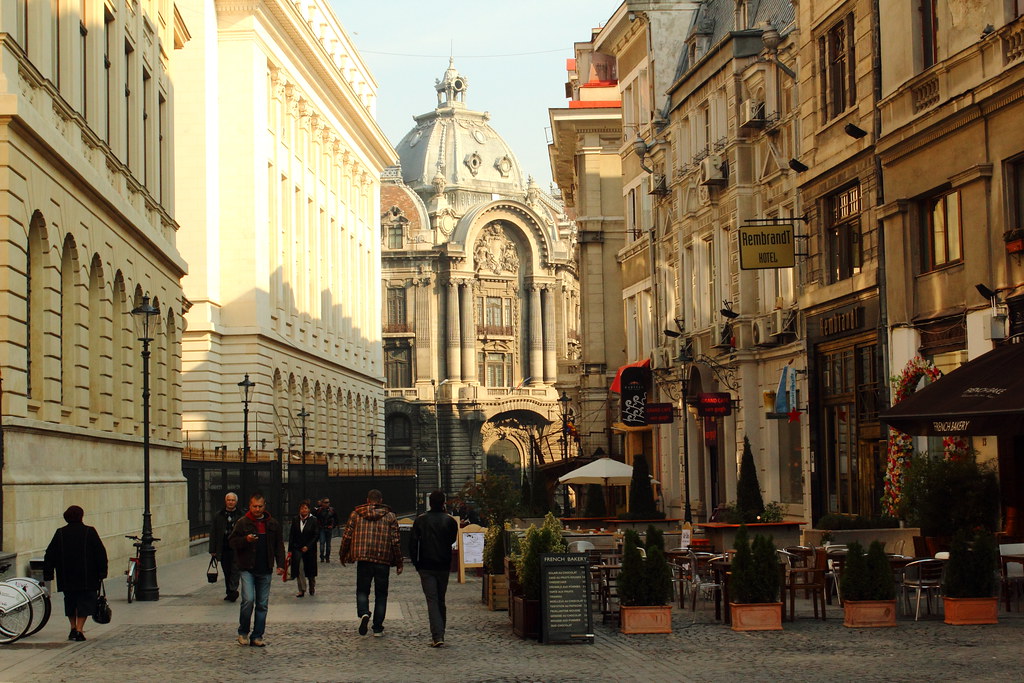
…and burned the commercial streets of what is now called the Strada Franceza…

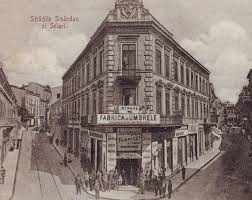
…the Strada Smardan…

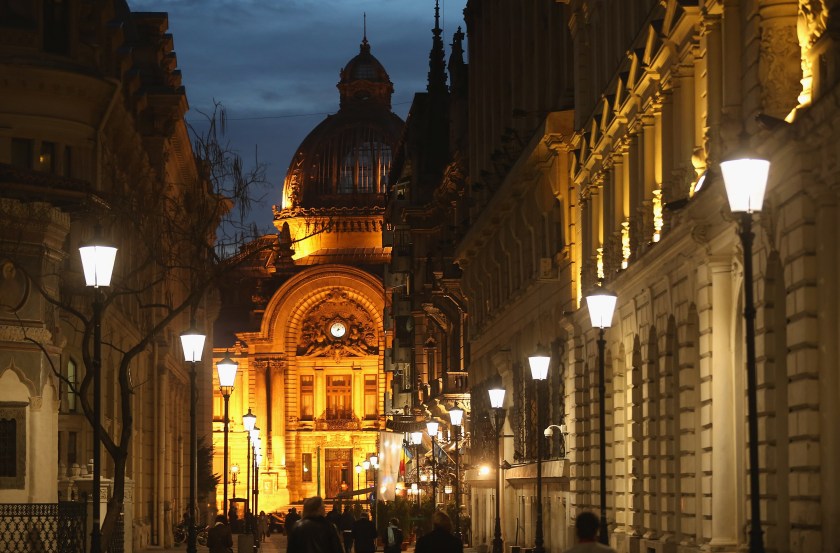
…the Lipscani…

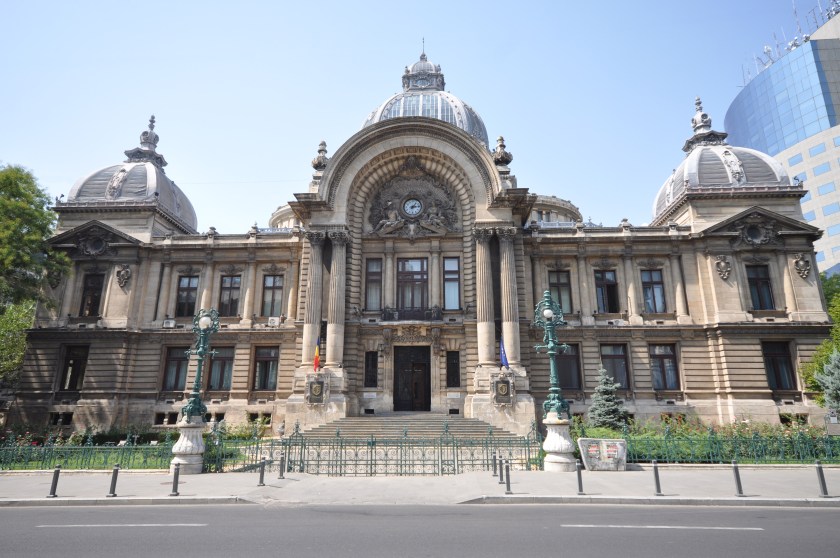
…where the CEC Palace, or Savings Bank Palace, is located, and sold to host a museum in 2006.

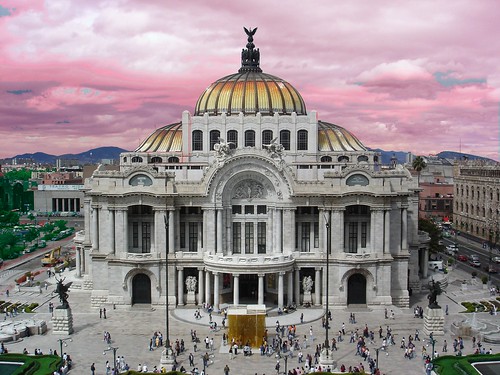
…and here is the Palace of Fine Arts in Mexico City compared with the CEC Palace…

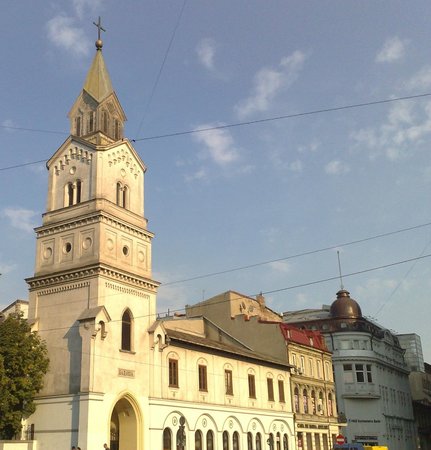
…and the Baratia church, said to have burned down in the fire and reconstructed by 1848, and the big bell for it cast in 1855, paid for by Emperor Franz Josef I of Austria…

…among other places in the old Bucharest.

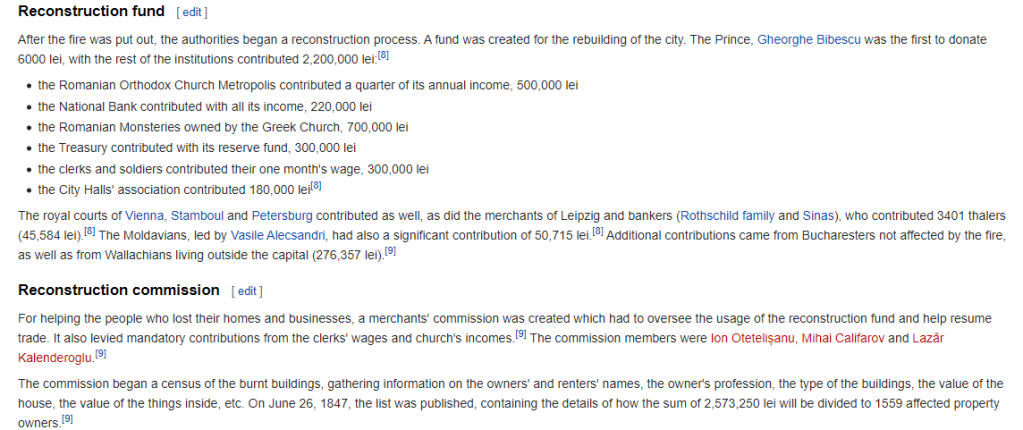
A reconstruction fund was said to have been started after the fire was put out, with contributions from the Prince of Wallachia; banks; churches; monasteries; the Treasury; clerks and soldiers; the City Halls’ Association; and outside contributors. A reconstruction commission was formed, and so on and so forth.

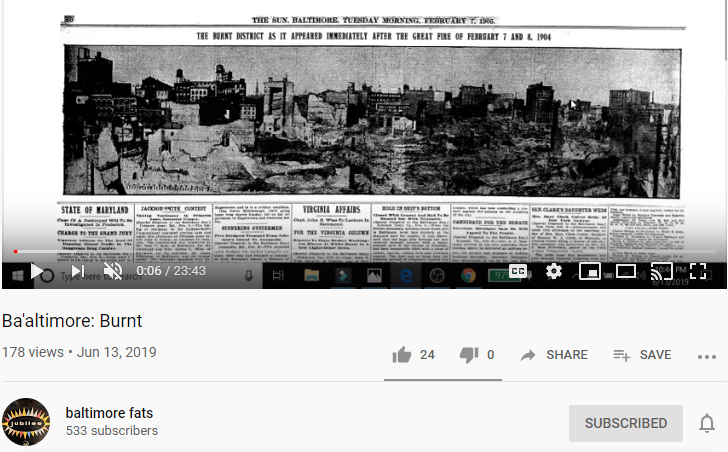
For an in-depth expose of the modus operandi surrounding great fires, very similar to what I just shared about the Bucharest fire and its aftermath, I highly recommend that you look into Baltimore Fats YouTube Channel, and view his stellar analysis of the chain of events surrounding the Great Fire of Baltimore of 1904, and its aftermath. He has been producing a series of videos about it, and more yet to come ~ great stuff!

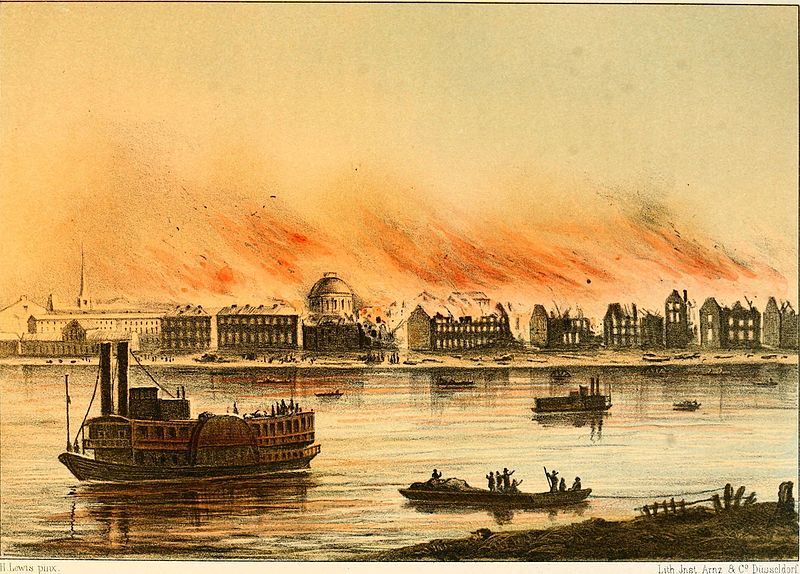
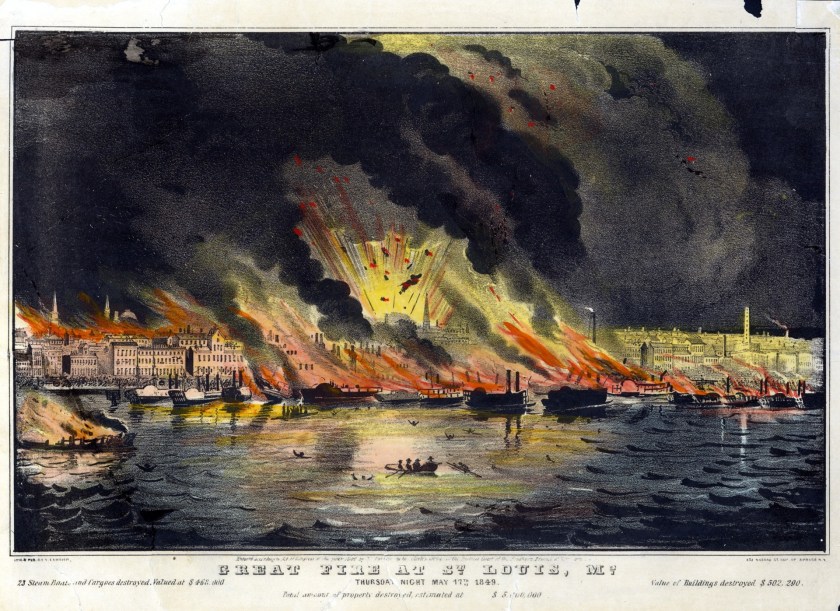
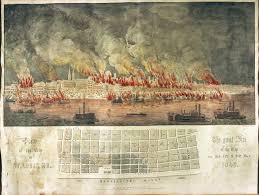
The St. Louis Fire of 1849 was said to have destroyed a significant part of St. Louis, Missouri…

…and many of the steamboats using the Mississippi and Missouri Rivers.

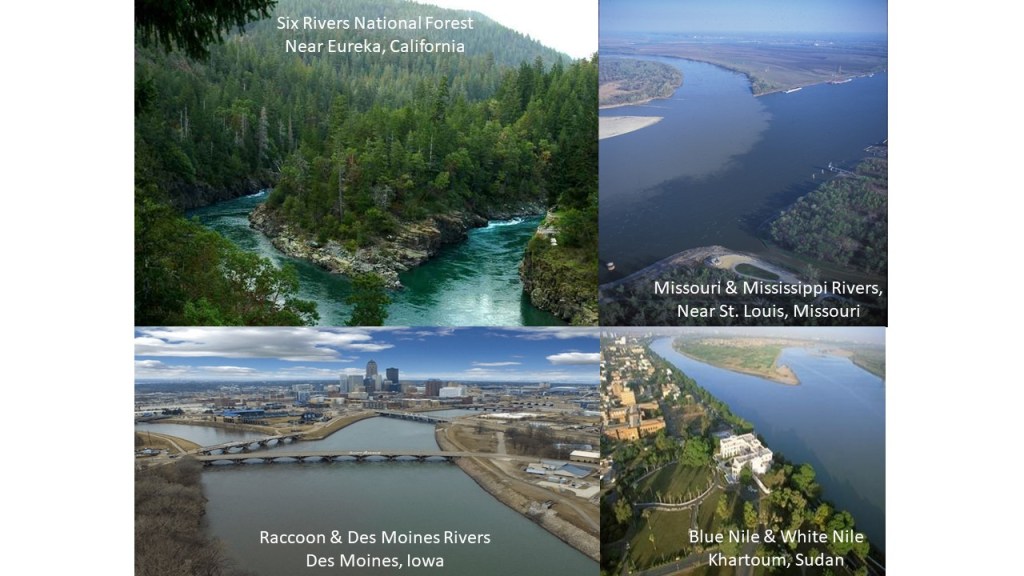
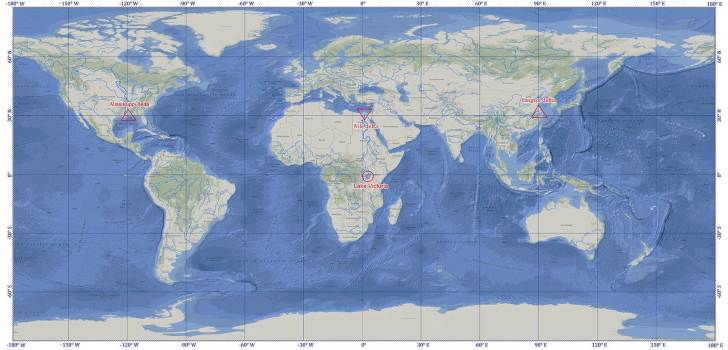
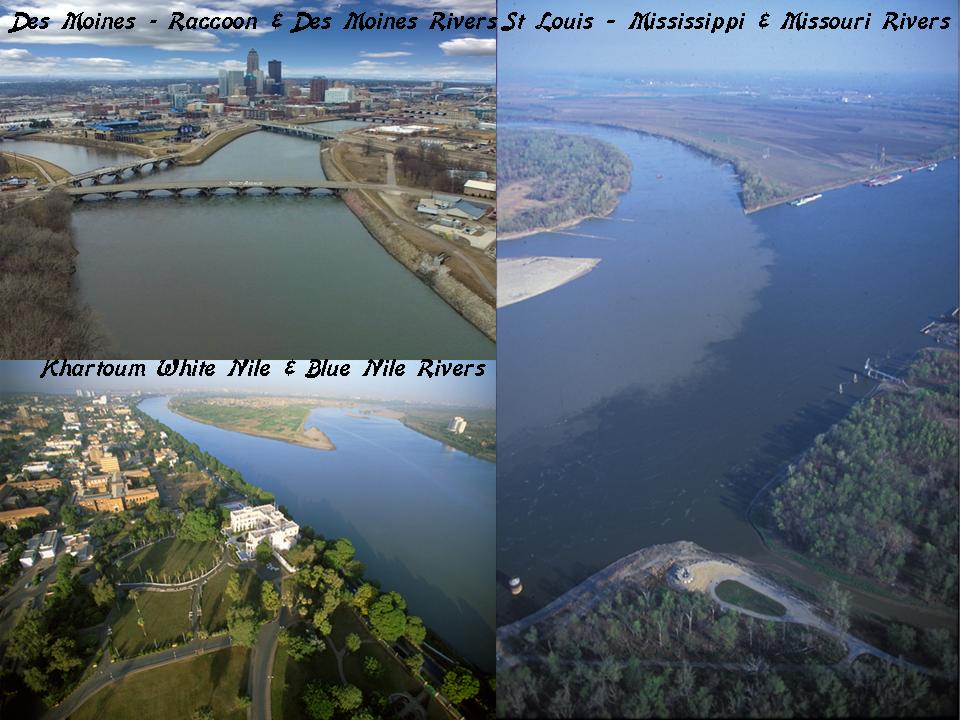
These two rivers converge near St. Louis, pictured on the right, and I believe they are actually canals, in comparison with the Raccoon and Des Moines Rivers in Iowa on the top left; and the Blue Nile and White Nile in Khartoum in Sudan on the bottom left.

The fire was said to have started on the paddle-wheeled steamboat White Cloud, which was at the foot of Cherry Street, on May 17th, 1849.

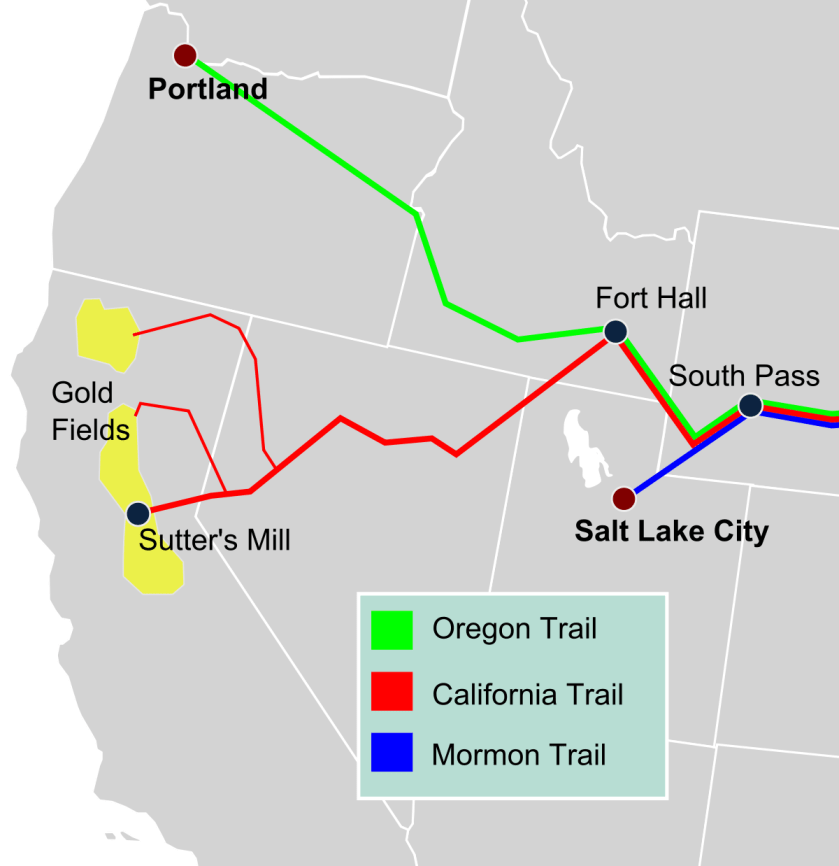
This same year also coincided with the beginning of the California Gold Rush, which started in 1849. St. Louis was said to be the last major city where travellers could get supplies before heading west for the California and Oregon trails.

At any rate, the burning White Cloud was said to have been set adrift by the fire, and ended up burning 22 other different types of ships along the way, which soon leapt to buildings on the shore, burning everything on the waterfront levee for 4-blocks to Main Street and Olive Street.

It was said that as a result of these fires, a new building required new structures to be built of stone or brick.

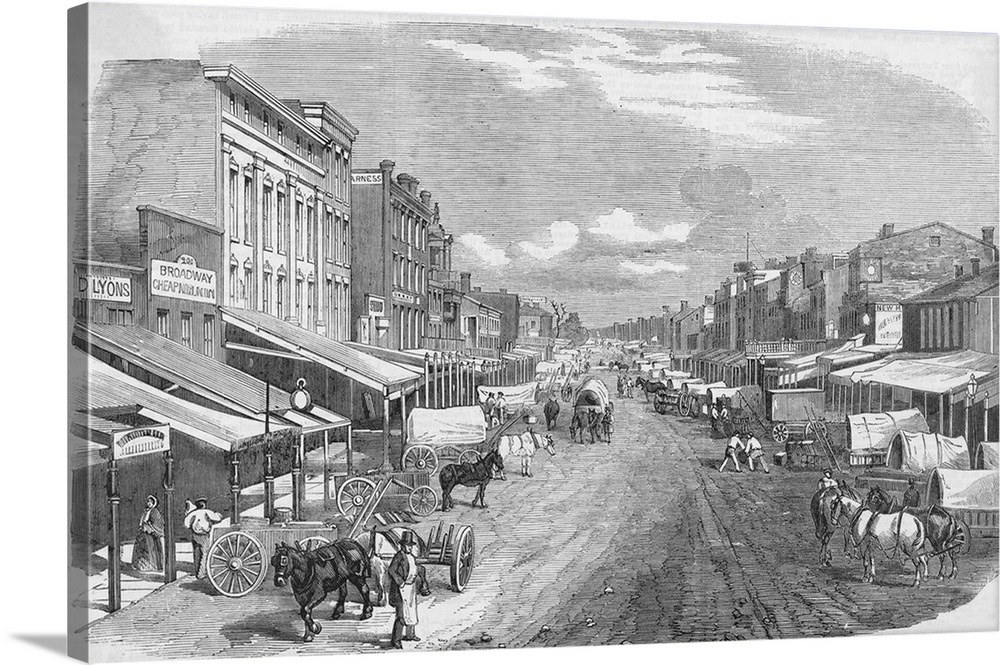
So here you have an engraving from 1858 of Main Street in St. Louis, with its nice masonry…and horse-drawn wagons and dirt-covered street…

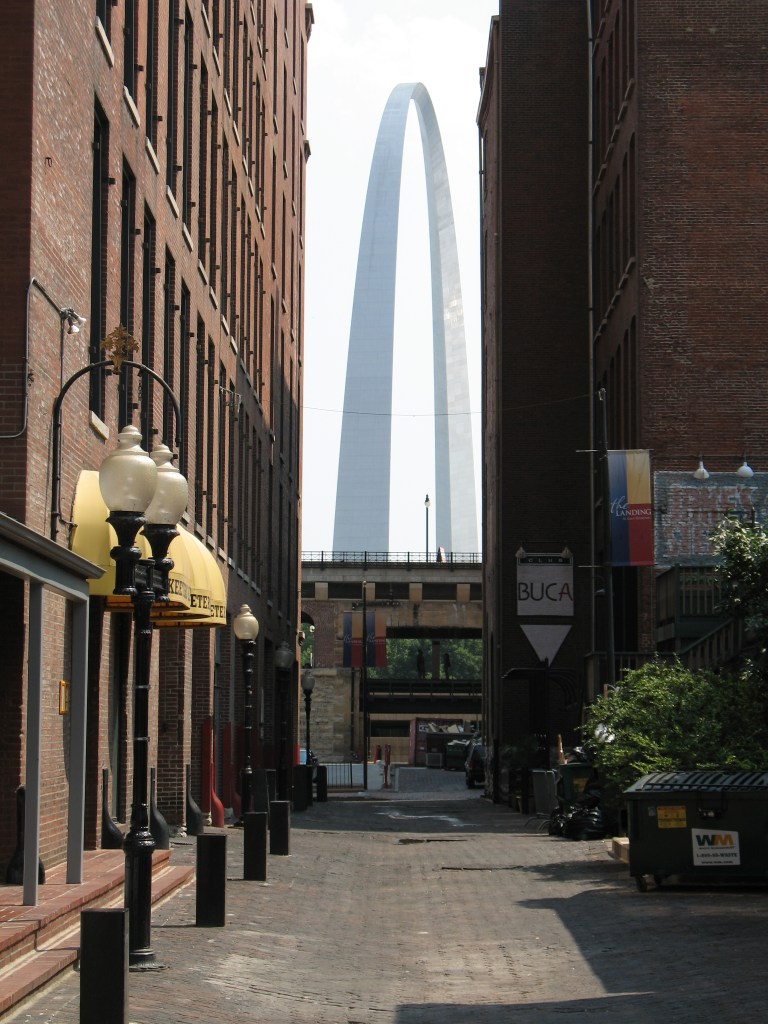
…and here is another example of perfect framing of the famous St. Louis Arch between buildings from Laclede’s landing.

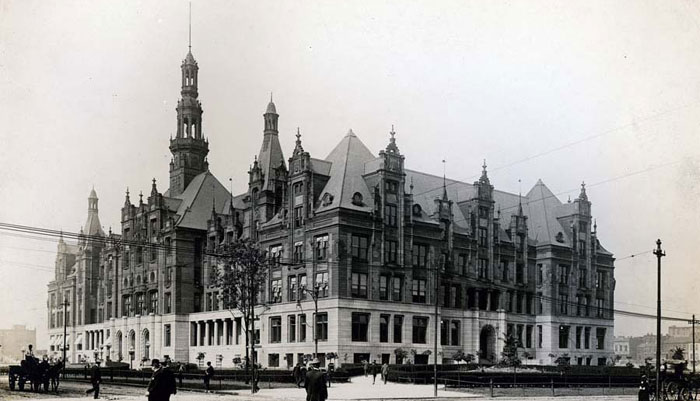
This is the St. Louis City Hall circa 1900, said to have been built in 1890…

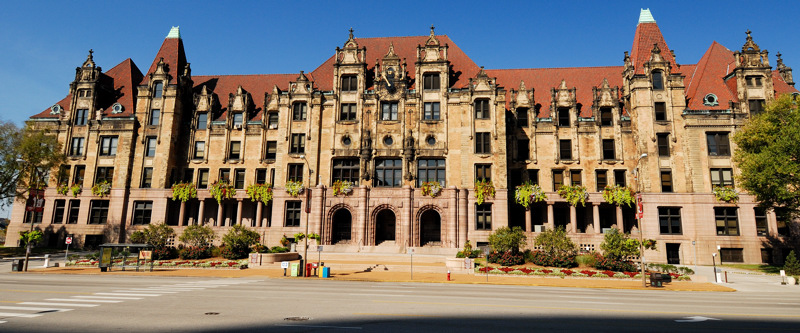
…and here it is today, missing some things from the original.

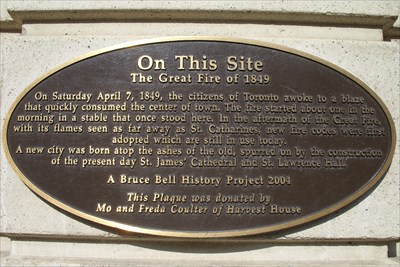
The first Great Toronto Fire was said to have occurred in 1849.

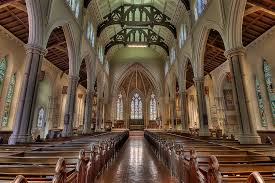
Also known as the Cathedral Fire, it was the first major fire in the history of Toronto, with much of the business core of the city being wiped out, we are told, including the predecessor of the St. James Cathedral, home of the oldest congregation in the city.

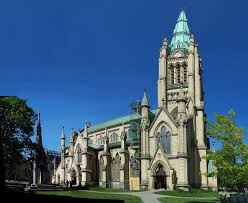
The St. James Cathedral was said to have been rebuilt starting in 1850, and opening to the public in 1853, and I have serious doubts about the veracity of that information….

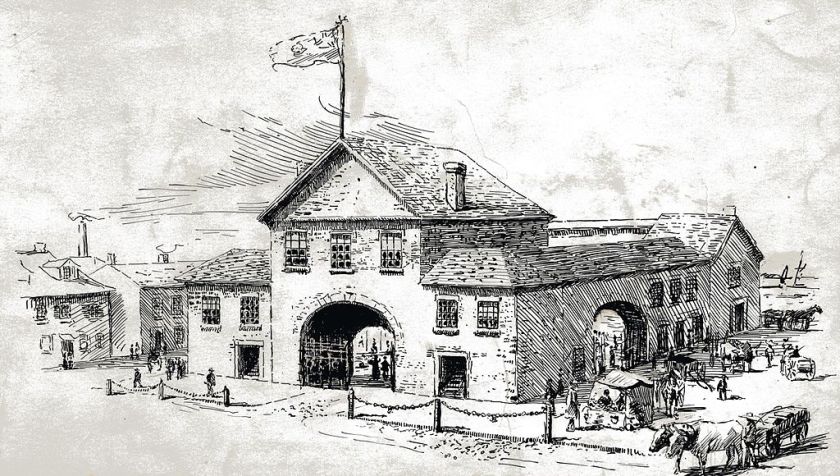
This is a depiction of the 1831 City Hall and Market building at King and Front Street (now Nelson Street), said to have been destroyed and torn down in the 1849 Toronto Fire…

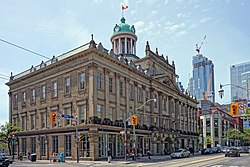
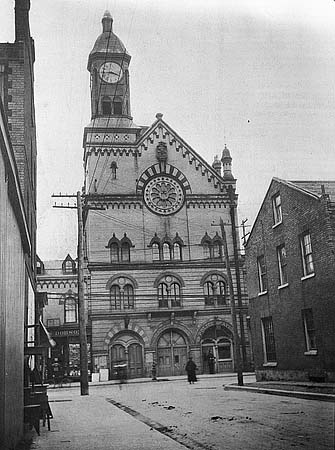
…and was said to have been rebuilt in 1850, and called St. Lawrence Hall, a meeting hall in a north-south orientation, and the first to be known as the St. Lawrence Market.

The railways were said to arrive in Toronto in 1850, and street rail-lines were said to have been operating from the Yorkville Town Hall in 1861…

…to the St. Lawrence market.

The Krakow Fire of 1850 in Poland was said to have started in July of that year, and lasted several days, destroying about 10-percent of Krakow.

It was said that in 1850, Krakow was still reliant on wood as a construction material, and that most of the 1,700 buildings in the city were wooden, and that the masonry ones had wooden elements.

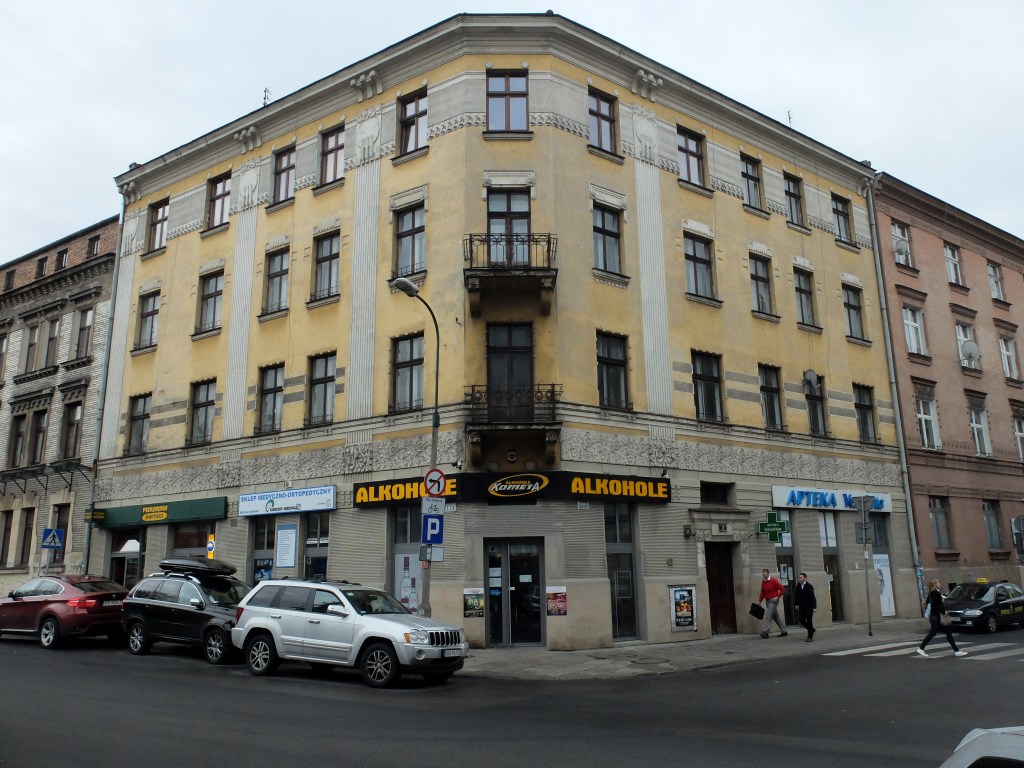
This is a photo of Krupnicza Street, on which the fire in Krakow was said to have started in the grain mill area…

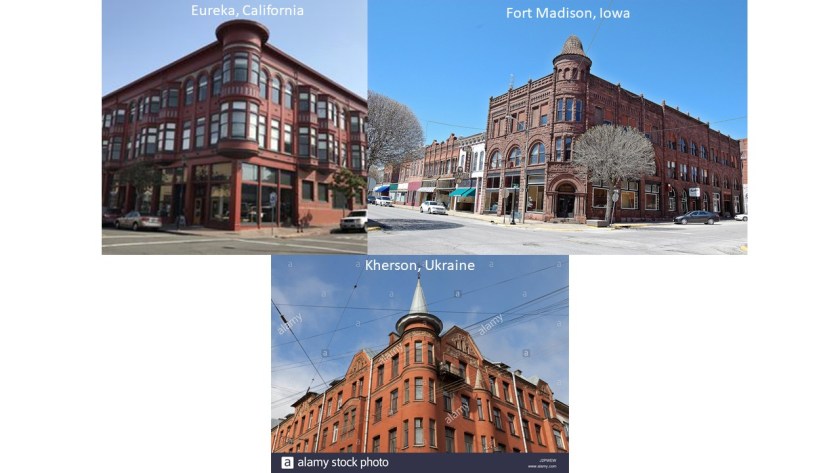
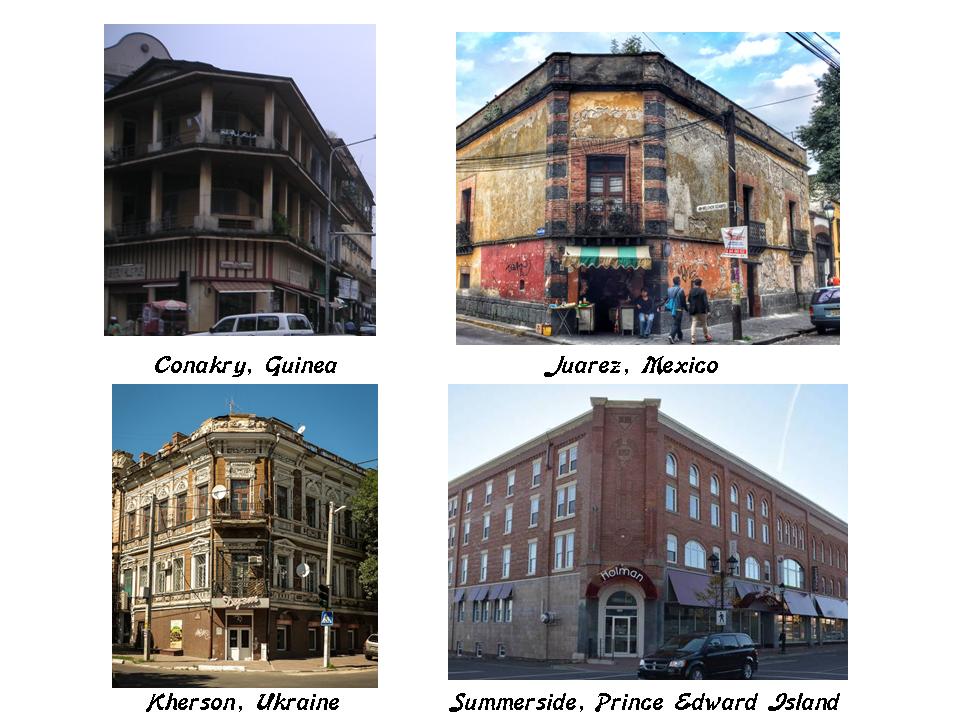
…and I can show you the same street corner lay-out in Conakry, Guinea in Africa on the top left; in Juarez, Mexico on the top right; Kherson, Ukraine on the bottom left; and Summerside on Prince Edward Island in Canada on the bottom right.

The accident is attributed to a miller and a smith who were trying to fix some equipment, and ended up starting a fire which spiraled out of control. Subsequently the fire was said to have grown, affecting the city center.

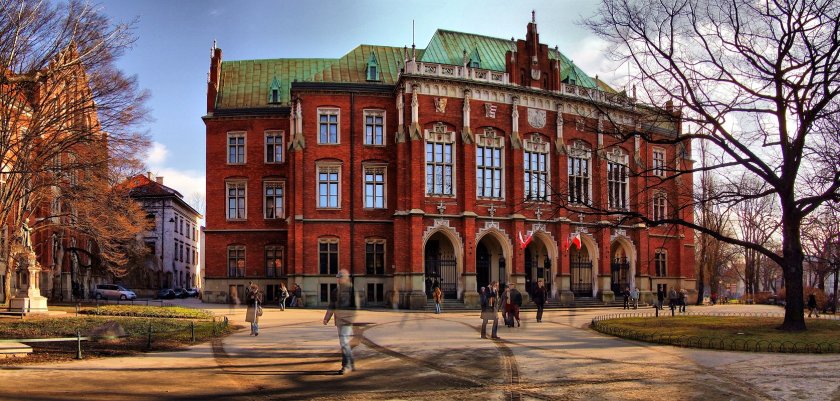
Students from the University of Krakow, also known as the Jagiellonian University…

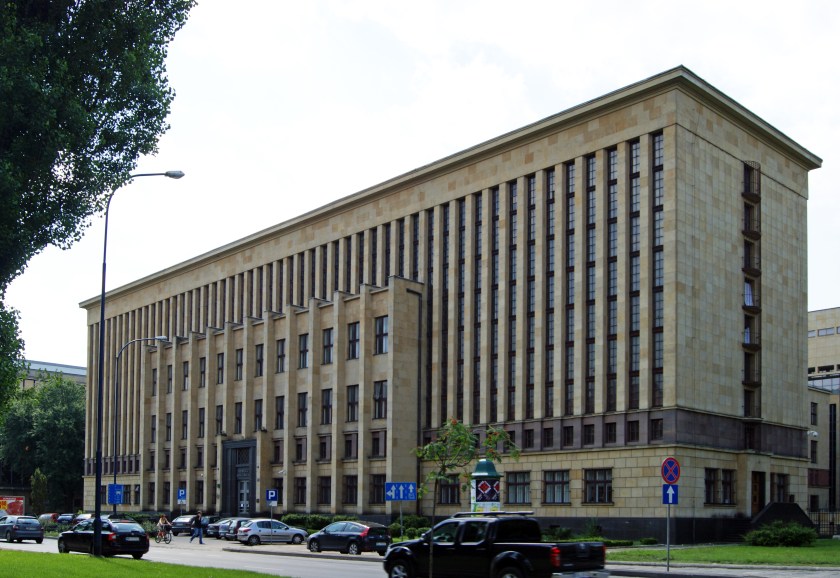
…were said to have prevented the fire from causing more than superficial damage to the University’s library.

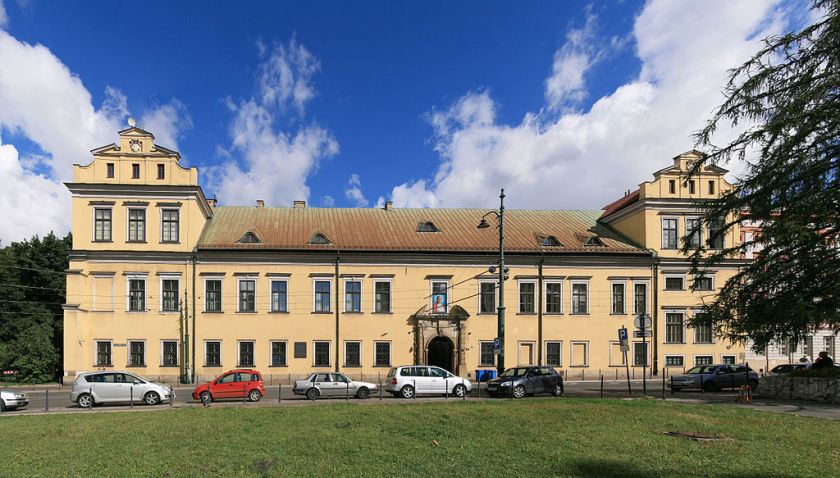
Buildings said to be damaged or destroyed by this fire were the Krakow Bishop’s Palace…

…the Wielopolski Palace…

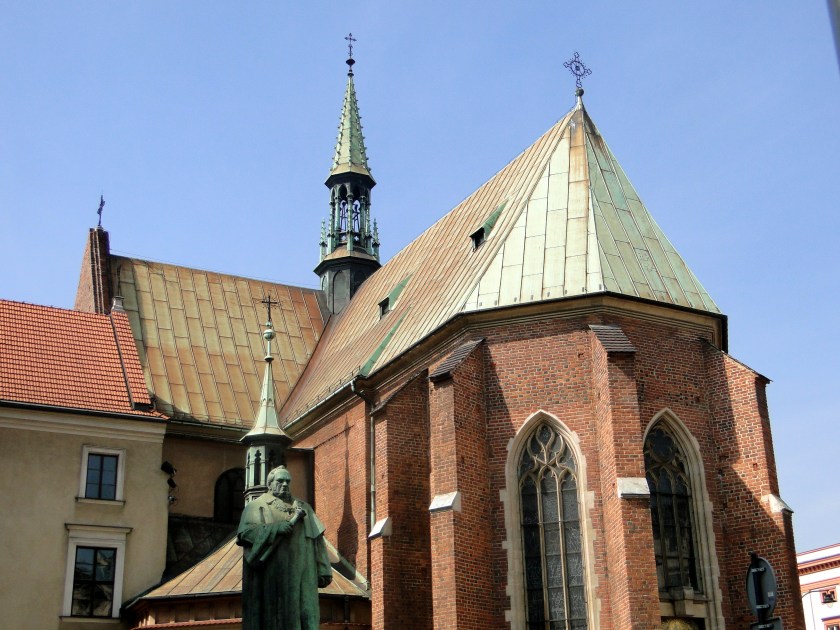
…the Church of St. Francis of Assisi in Krakow….

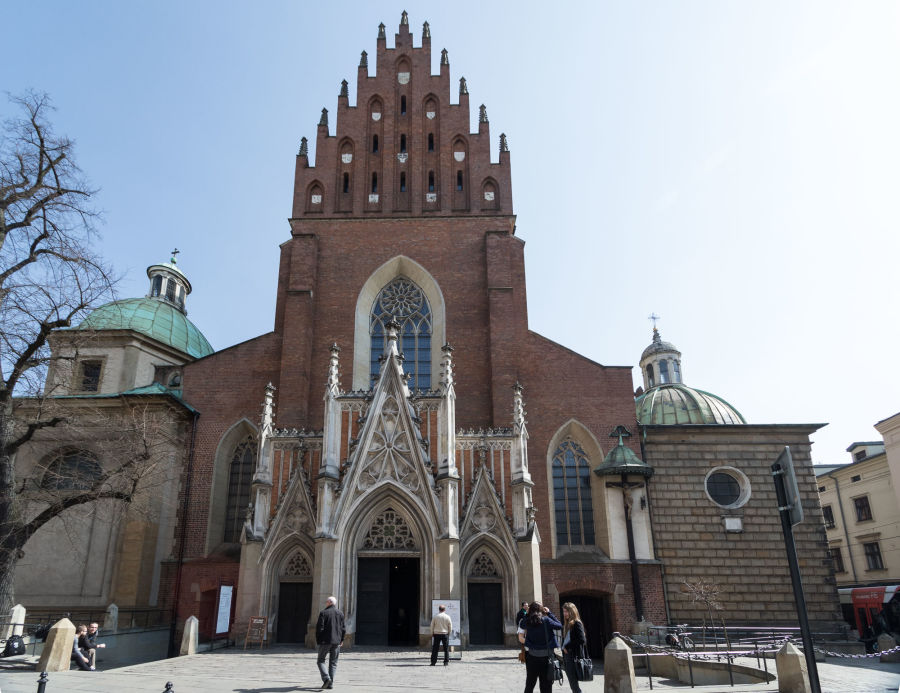
…and the Basilica of Holy Trinity in Krakow.

The fire was said to have cause economic stagnation in Krakow, the final establishment of fire-fighting service in 1865; and final restoration of affected buildings finishing in 1912.

In my next post, I will be finishing this series by looking at historical fires that took place in the historical record between 1851 and 1871.

Poking into Historical Fires – Part 1 Starting with Antiquity

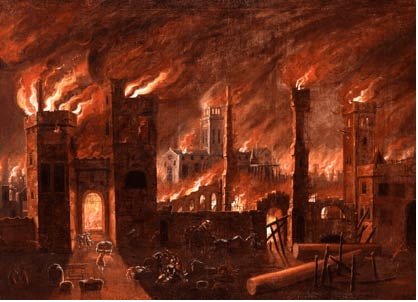
I am coming across a lot of big historical fires in my research, and really question the stories we are told about them, from Nero fiddling while Rome burned, to Mrs. O’Leary’s cow knocking over a lantern and starting the Great Chicago Fire of 1871.

I am seeing the role of great fires in our historical narrative more and more as a smokescreen, which is defined as 1) a cloud of smoke created to conceal military operations…

…and 2) a ruse designed to disguise someone’s real intentions or activities.

Did all of these fires really take place?

Did some fires actually take place, and others not?

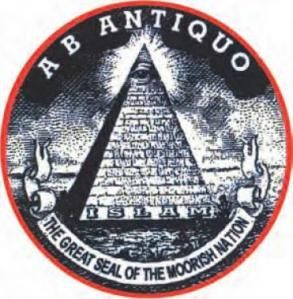
Did fires get started to intentionally for the purposes of the destruction of the architecture of the original Moorish civilization and the physical infrastructure of the planetary grid?

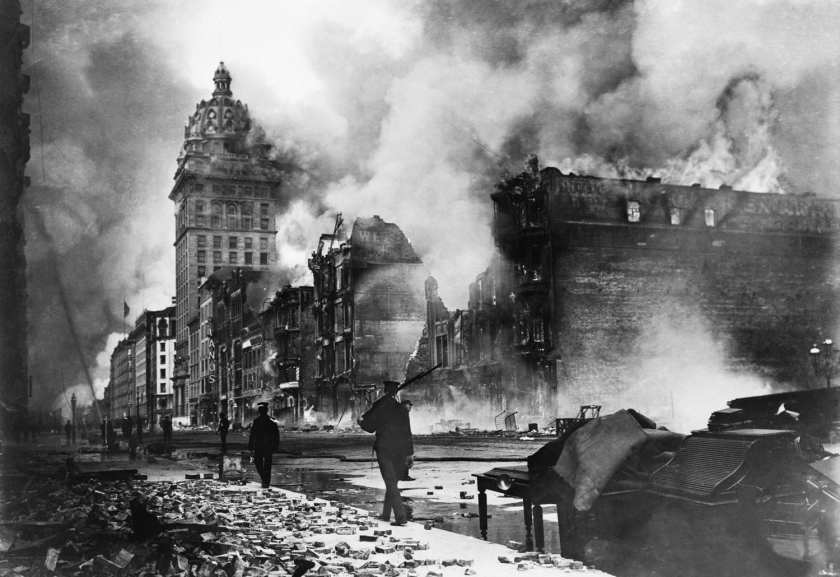
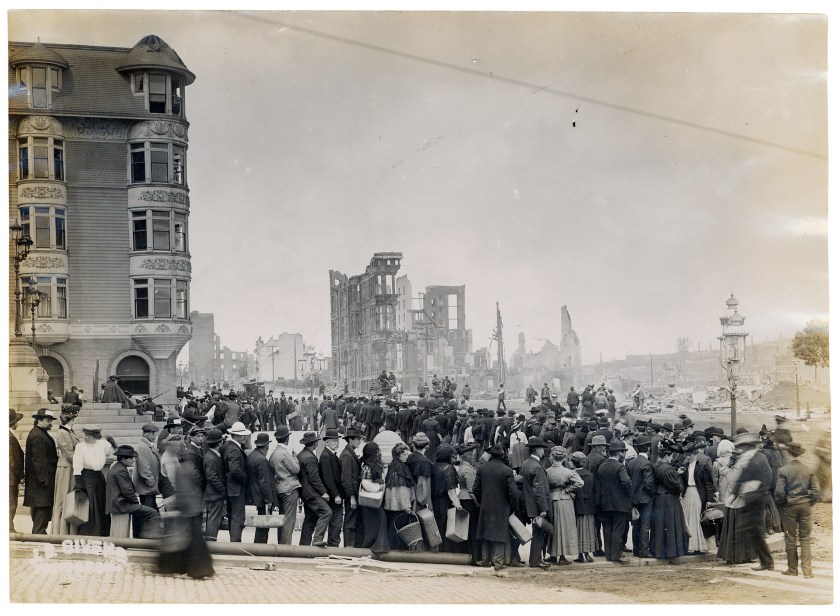
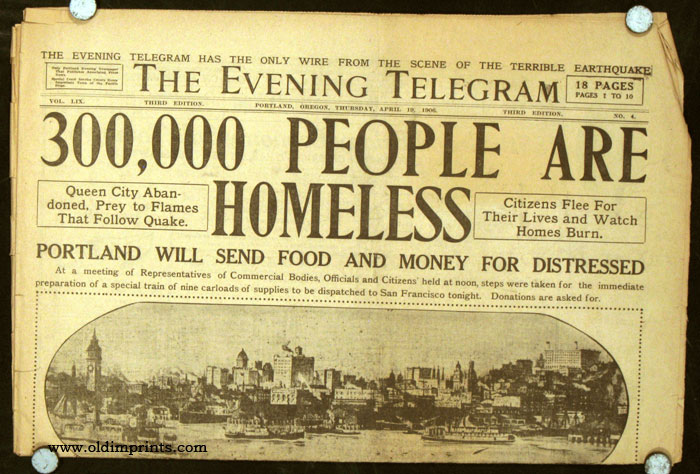
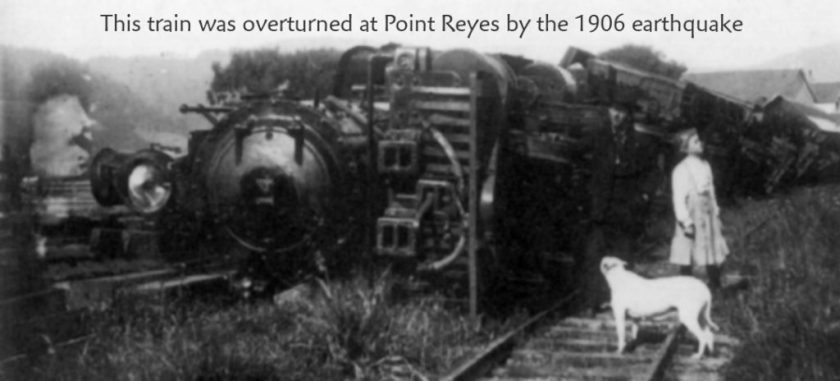
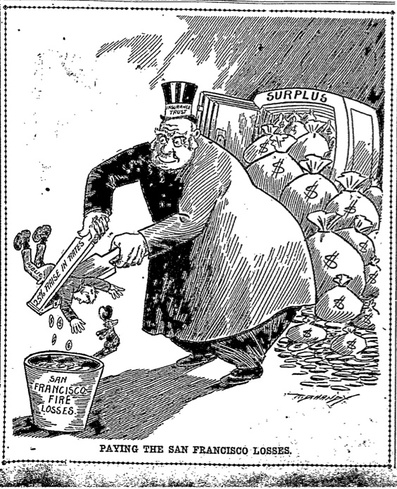
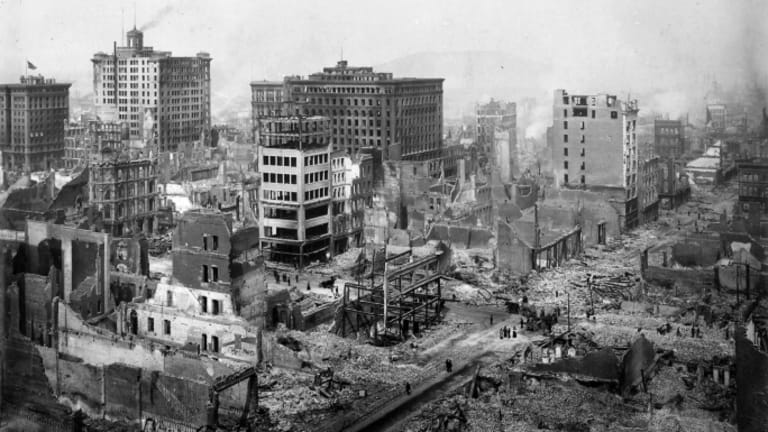
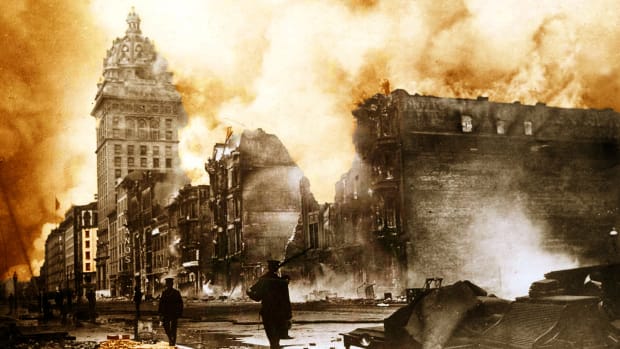
The San Francisco Fire of 1906 was said to have been caused by an earthquake. Was it?

Looking at the list, I have picked just a handful of early fires in history to look into, as there are well over 200 recorded fires of cities and towns throughout history to choose from.

I decided to start with the destruction of Carthage.

In 146 BC, the ancient and powerful city of Carthage was systematically burned down over 17 days by the Romans at the end of the Third Punic War between Carthage and Rome.

After which time, it was said to have been re-developed as Roman Carthage.

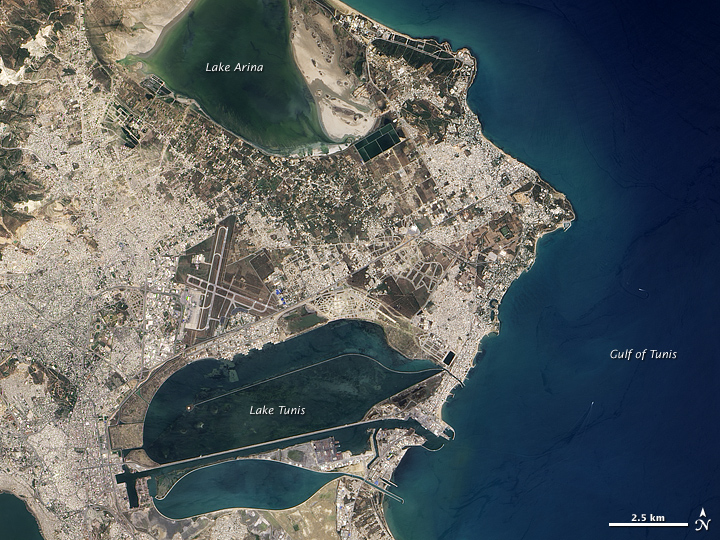
Carthage was the capital city of the ancient Carthiginian civilization, on the eastern side of Lake Tunis…

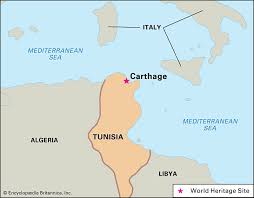
…located in what is now Tunisia.

Carthage was a state of Phoenicia,which was a maritime and Mediterranean Civilization said to have originated in what is now Lebanon.

The ruins of Ancient Carthage are located in the northern suburbs of Tunis, the capital of Tunisia.

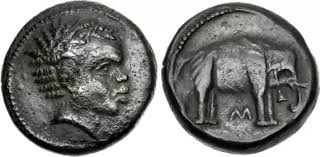
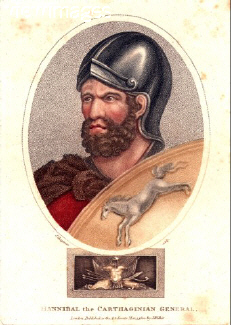
The most famous general of Carthage was Hannibal Barca, widely considered one of the greatest military commanders in history. He was perhaps best-known for leading an invasion into Italy across the alps in the Second Punic War, and with taking elephants along with him. This coin is said to bear his image…

…and yet this is the typical portrayal of him.

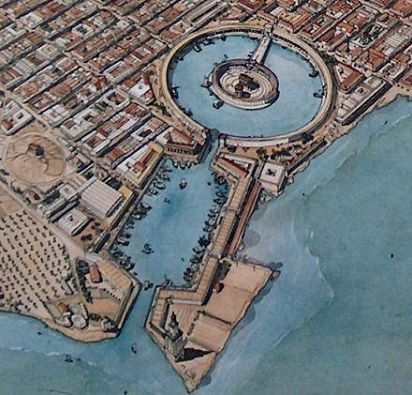
Carthage was famed for its double-harbor, known as a cothon, which was divided into a rectangular merchant harbor followed by an inner protected harbor reserved for military use.

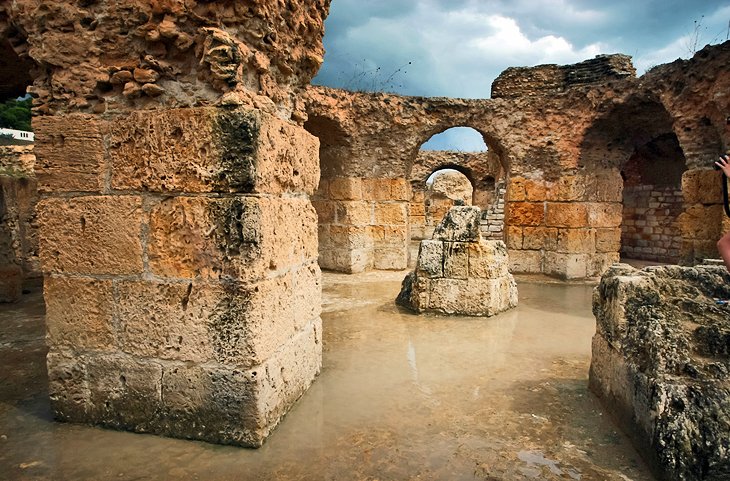
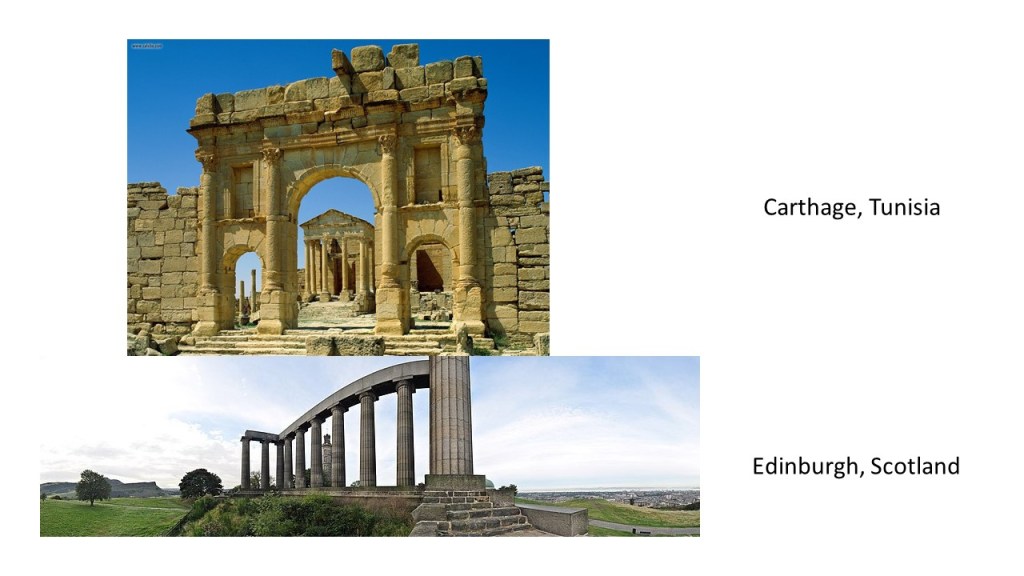
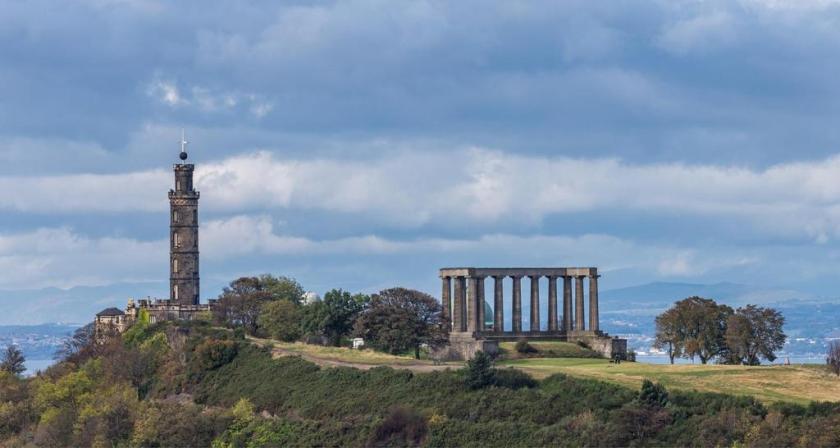
You find the same type of architectural proportion, symmetry, and alignment in the perfect framing of the temple by the archway in Ancient Carthage on the top, that is seen in the perfecting framing of the Nelson Monument in the middle of the colonnade of the National Monument of Scotland in Edinburgh on the bottom.

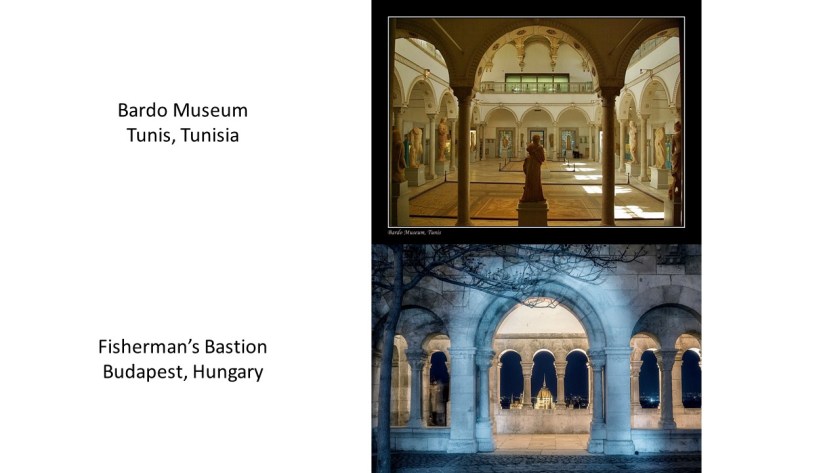
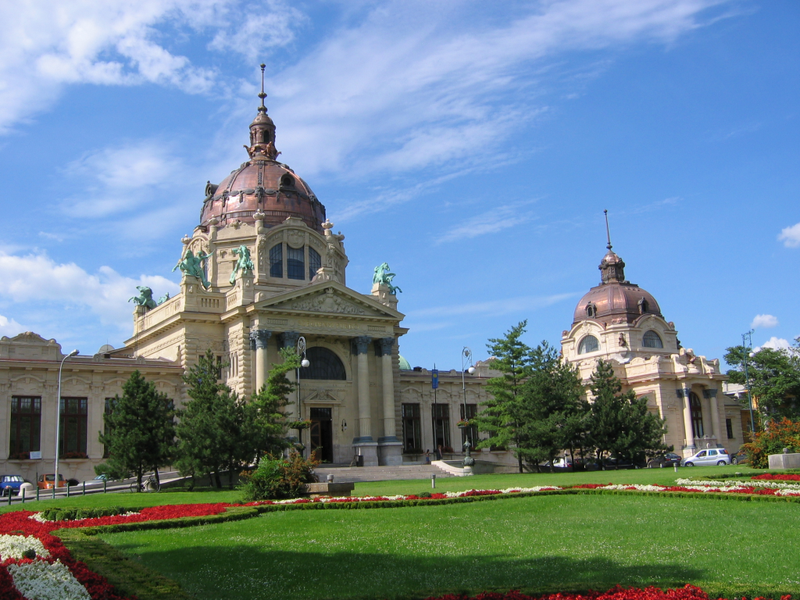
The architectural design pattern seen with the archways of the Bardo Museum in Tunis on the top, is similar to that of these archways at the Fisherman’s Bastion in Budapest, Hungary, on the bottom.

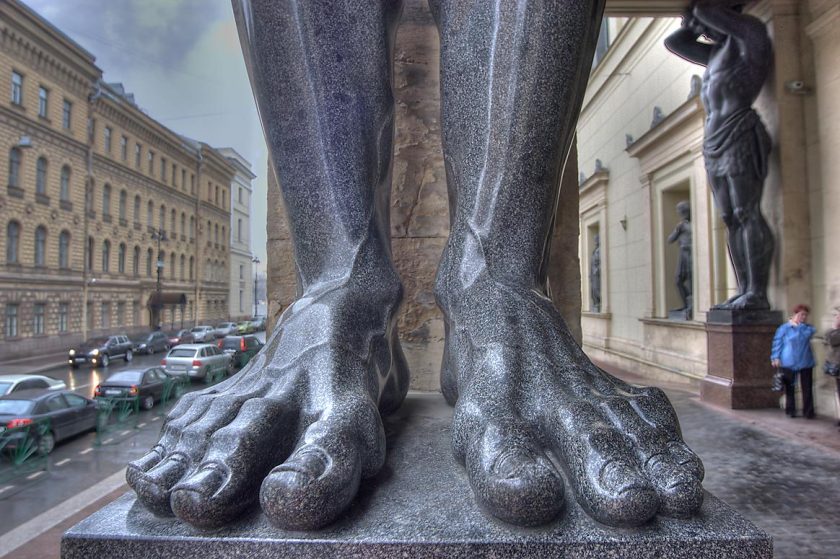
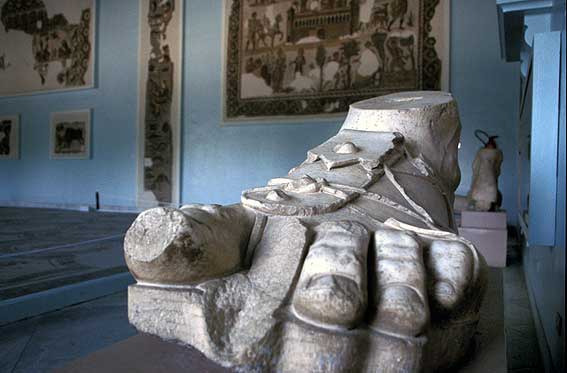
This giant foot measuring 6-feet, or 1.8-meters, is on display at the Bardo Museum, believed to have been part of a colossal statue estimated to have been at least 50-feet, or 15-meters, high. Hmmmm…makes me wonder to what that foot was originally attached, with details of the foot right down to realistic-looking toenails, joints, and the leather sandal!

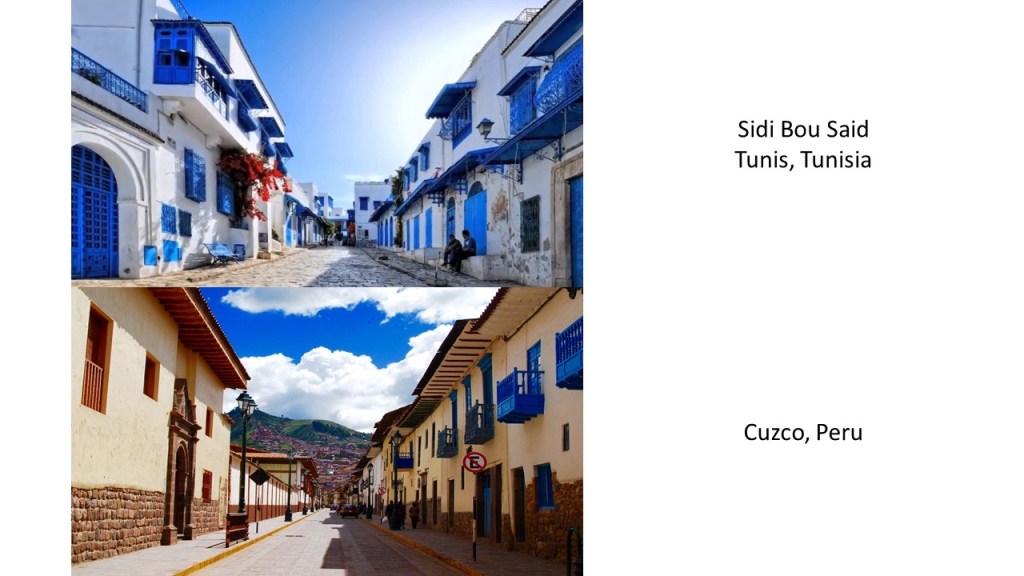
One last comparison for similarity before leaving this part of the world. On the top is a view of a street in the town of Sidi Bou Said, located 12-miles, or 20-kilometers, from Tunis in North Africa. On the bottom is a view of a street in Cuzco, Peru, located on the western side of South America at an altitude of 11,152-feet, or 3,399-meters.

All coincidences? Or all built by the same civilization using the same templates….

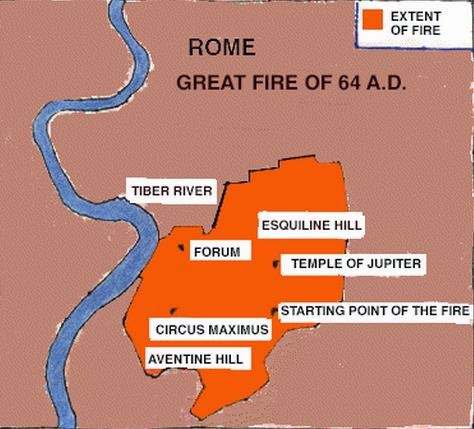
The Great Fire of Rome in 64 A.D. was the one with the legend that the Emperor Nero played the fiddle while Rome burned.

It was said to have started at the Circus Maximus in July of 64 AD. All together, it was said to have burned for nine-days, destroying two-thirds of Rome.

Let’s take a look at the importance of this place to Ancient Rome.

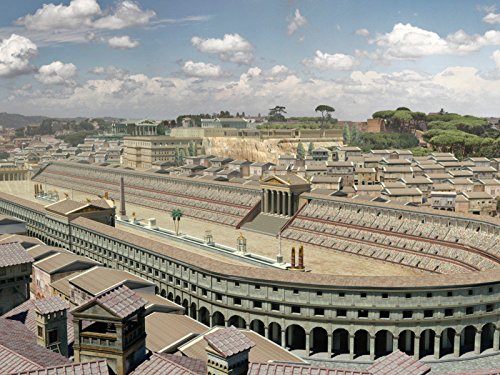
The Circus Maximus was Rome’s largest stadium. It was said to have had an obelisk placed in it around 10 BC from Heliopolis in Egypt, and then a second obelisk from the Temple of Amun at Karnak, and was installed somewhere around 400 AD.

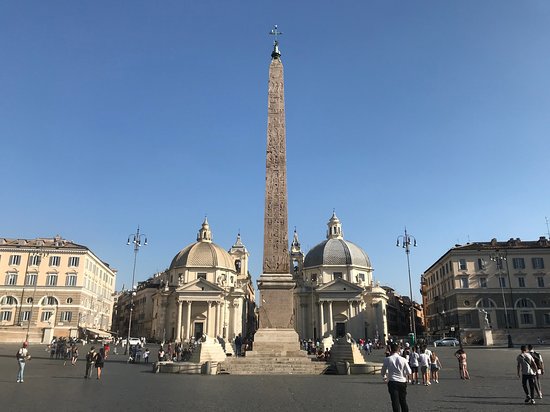
We are told the same obelisk from Heliopolis has been in the center of the Piazza del Popolo in Rome since 1589…

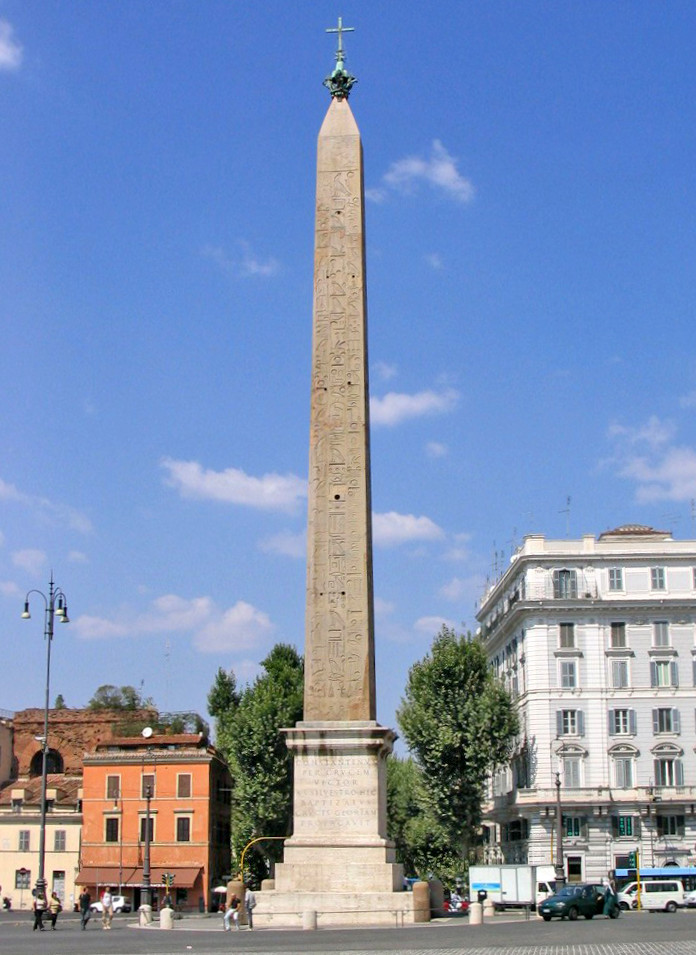
…and the obelisk from Karnak in the square next to the St. John Lateran Archbasilica since 1588.

For comparison, from my research I know that the obelisks referred to as Cleopatra’s Needle located in London, Paris, and New York weigh well over 200-tons, or 10-metric-tons. How were they transporting and lifting extremely heavy obelisks around like this at that time, according to the history we have been taught?

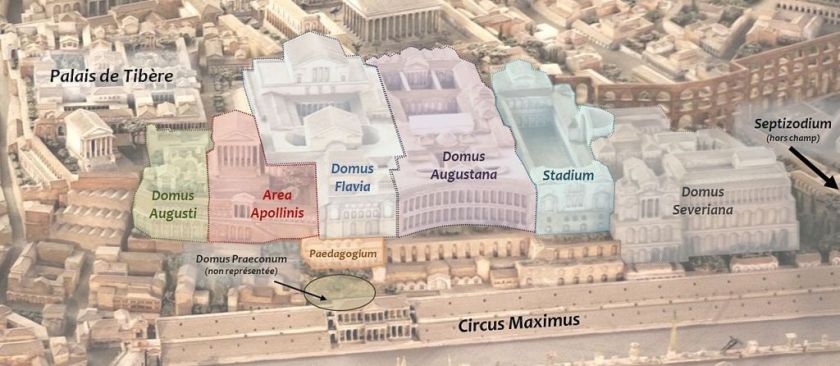
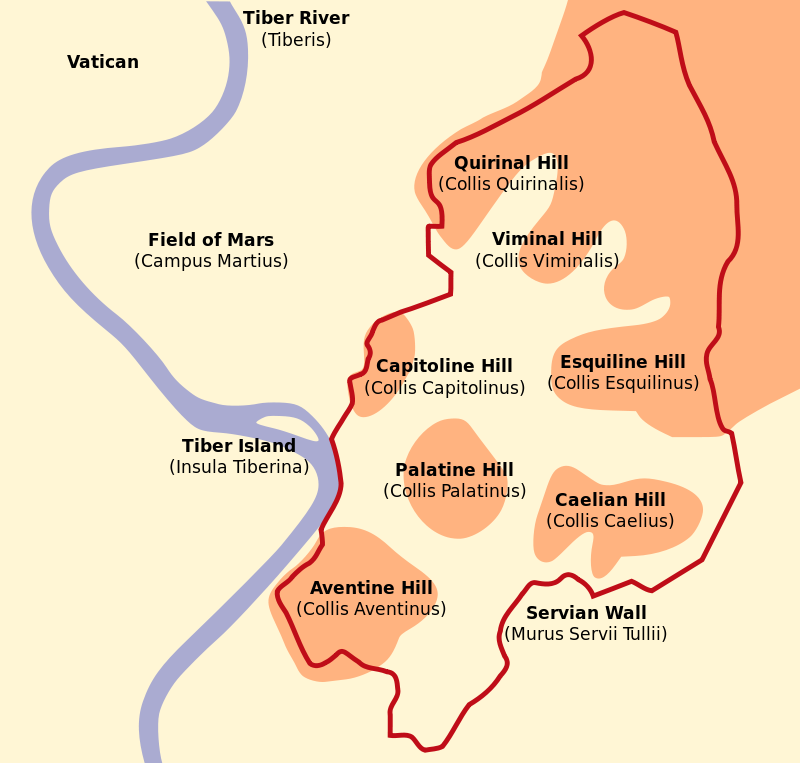
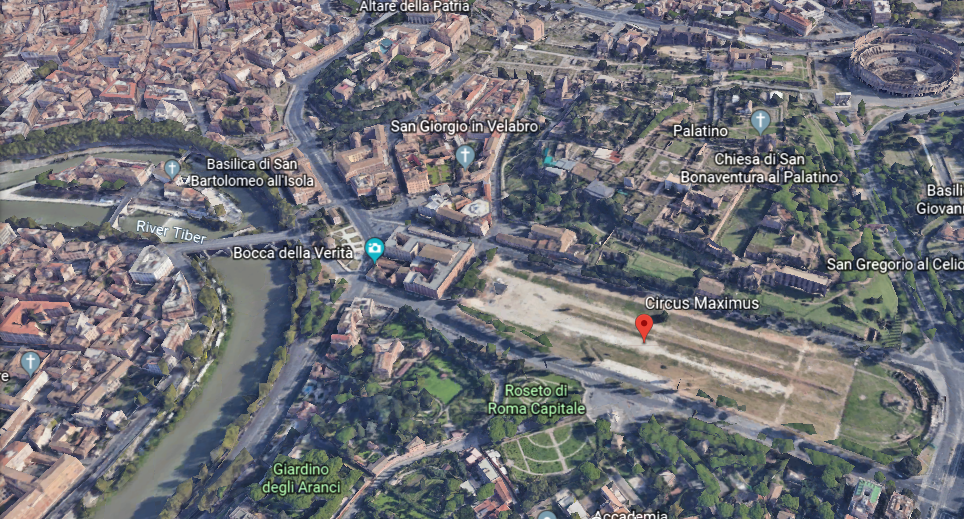
The Circus Maximus was located in what is called the valley between Aventine and Palatine Hills, two of the seven hills of Rome.

The Circus Maximus is right next to the place in the Tiber River where Tiber Island is located.

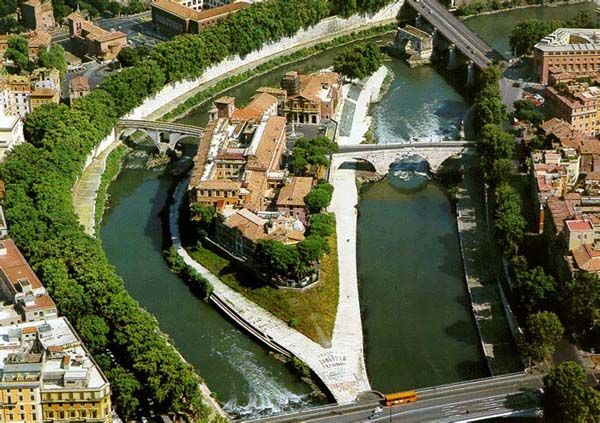
Tiber Island is the only island in Rome on the Tiber River. It is described as a boat-shaped island connected by bridges to both sides of the river since antiquity.

It definitely looks like an artificial island.

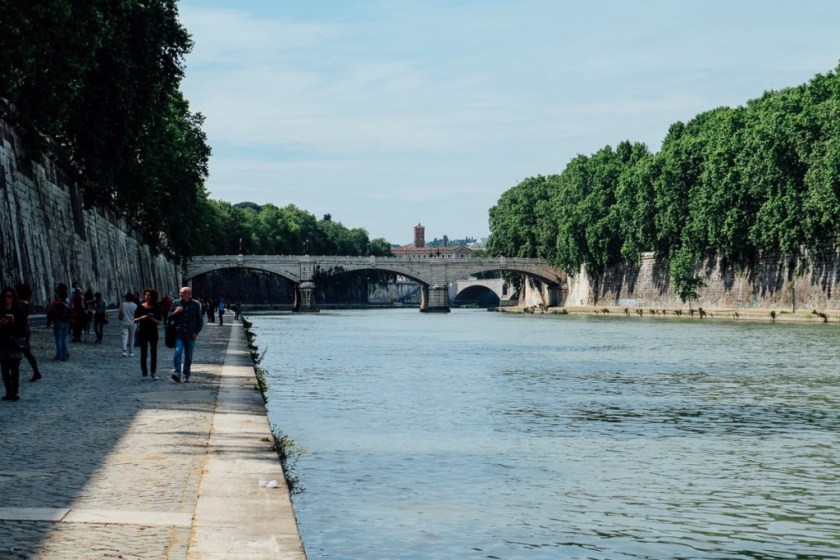
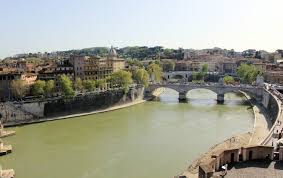
And is the Tiber River actually a canal?

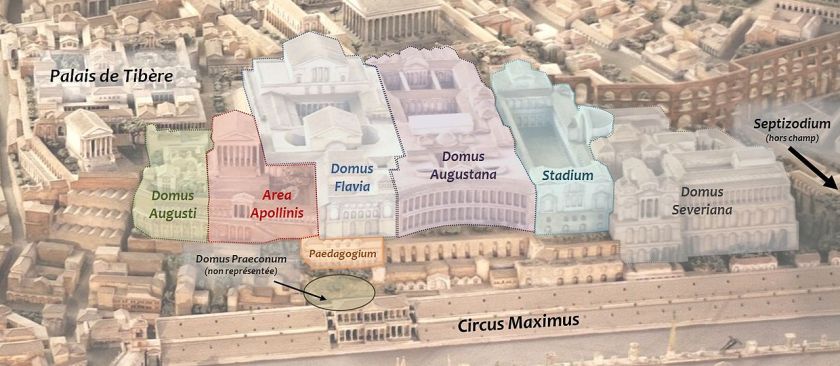
Circus Maximus is on one side of Palatine Hill, the centermost of the seven hills of Rome, and one of the most ancient parts of the city. The Roman Forum is on the other side of Palatine Hill.

Palatine Hill became the location of imperial palaces since the time of the Emperor Augustus, who reigned from 27 BC until his death in 14 AD.

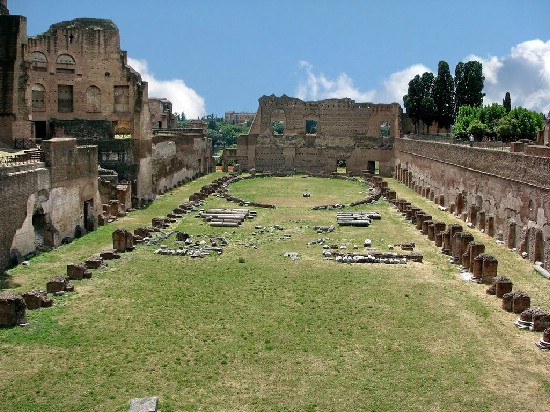
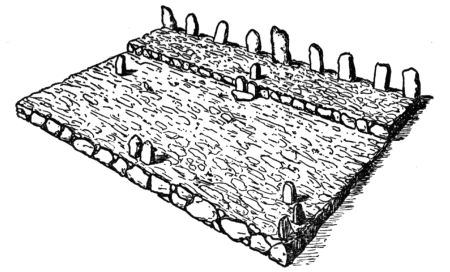
This is what remains of the Stadium of Domitian on Palatine Hill, which reminds me of megalithic stone circles and rows…

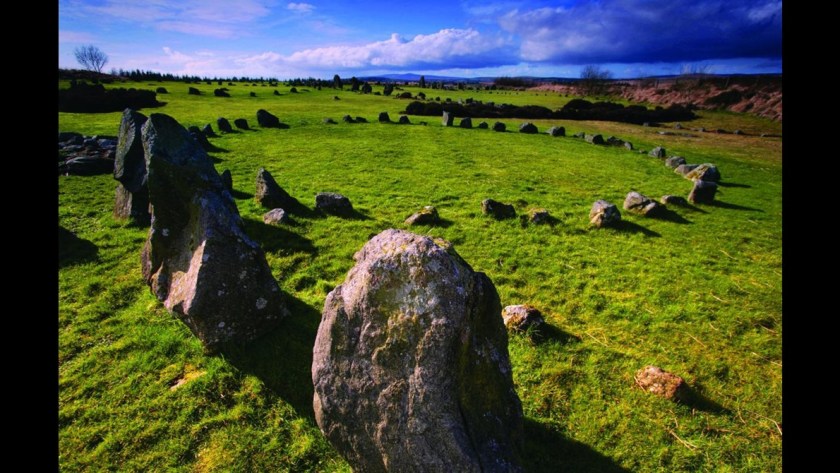
…like the Beaghmore Stone Circles in County Tyrone in Ireland, which consistes of a collection of circles, rows and cairns…

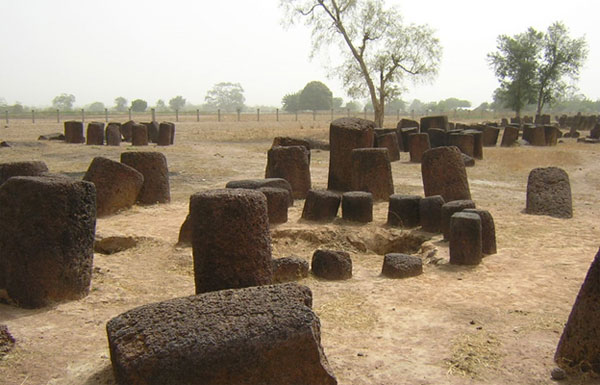
…and the Wassu Stone Circles in Gambia near its border with Senegal in Africa.

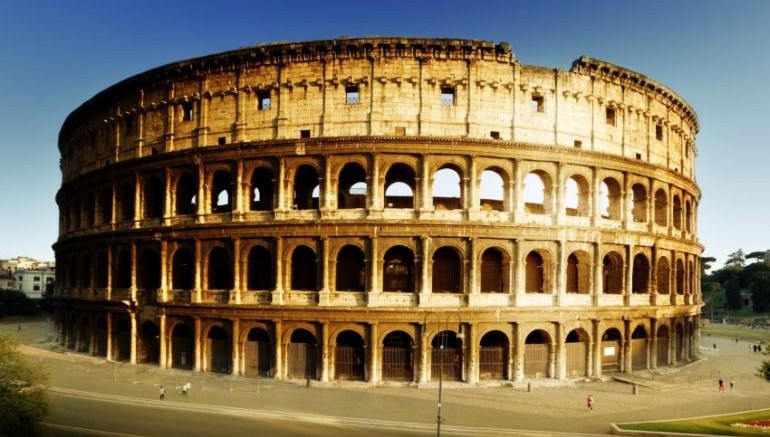
There’s much more of historical importance to Rome in the vicinity of the Circus Maximus, including the Colosseum.

What we are told in the narrative is that the fire started near the Circus Maximus in the shops where flammable goods were stored, and the fire expanded through narrow twisted streets and closely located apartment blocks. Looters and arsonists were reported to have acted to spread the fire, or to prevent measures from being taken to put out the fire.

Yet, it certainly looks like this part of Rome around the Circus Maximus was a very special place held in high regard, and the home of its Emperors. It does not fit the description of a residential neighborhood for the masses of its citizenry that is described in the narrative.

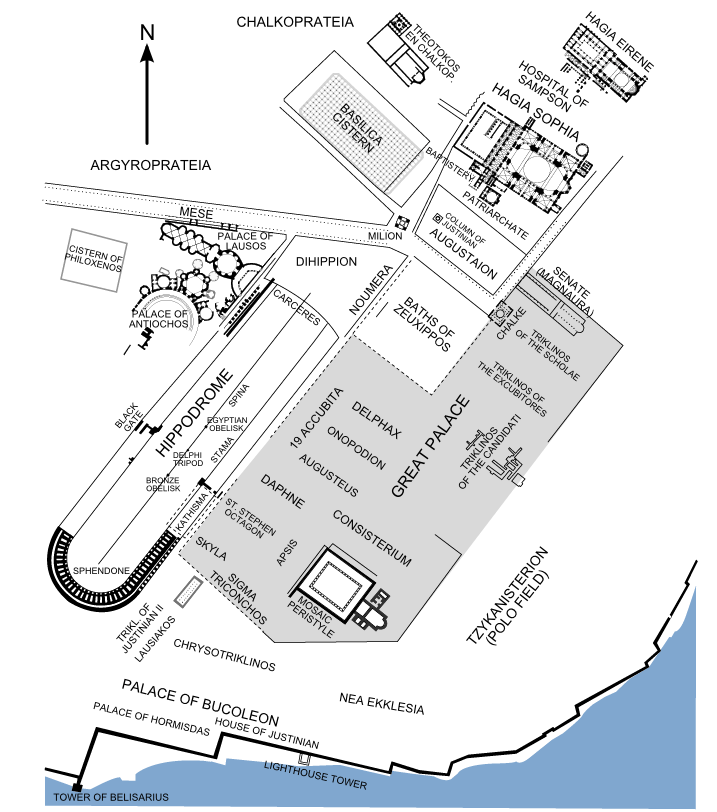
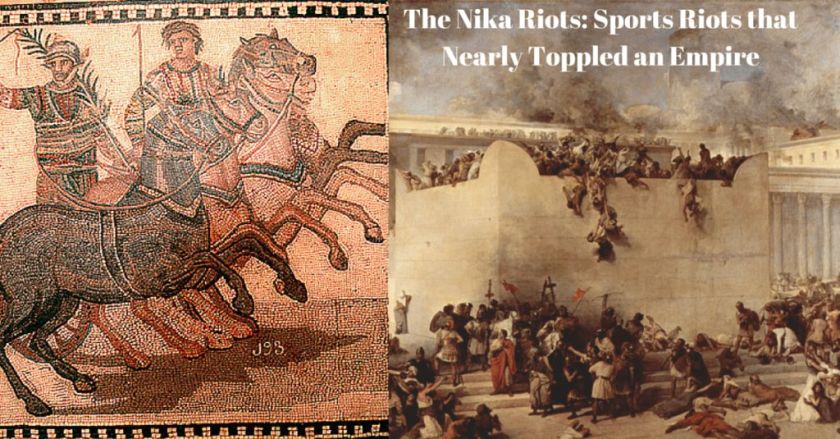
In 532 AD, we are told that the Nika Riots that took place in Constantinople, now Istanbul in Turkey, started as a conflict over chariot racing, and ended up as violent riots against the Emperor Justinian. As a result, we are told, half of Constantinople was burned or destroyed, and tens of thousands of people were killed.

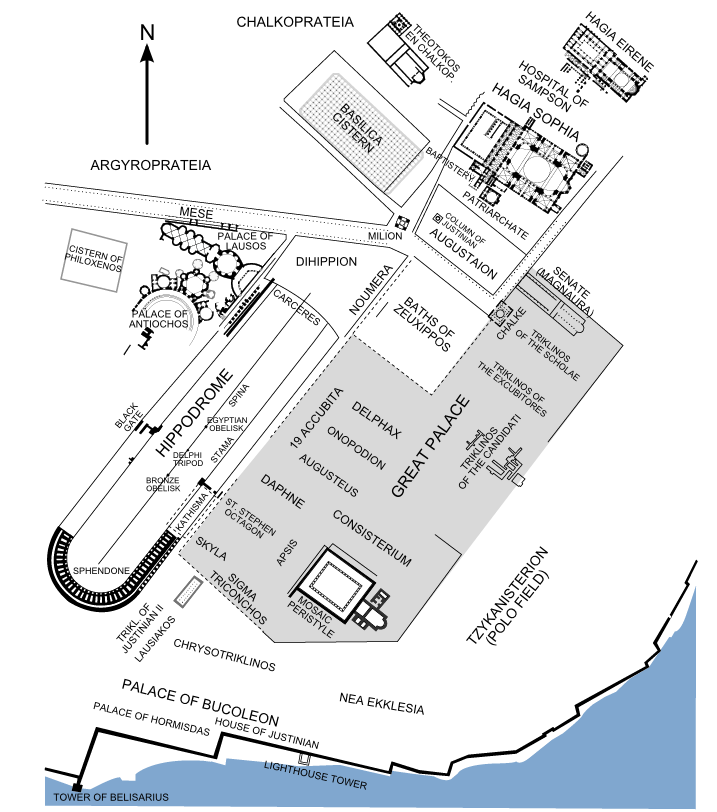
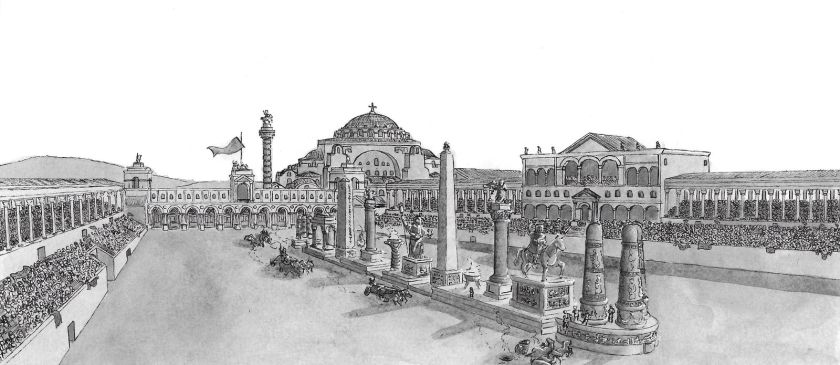
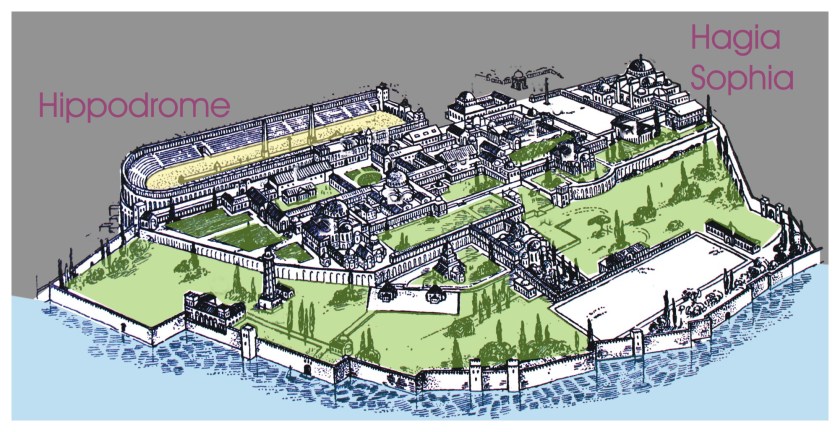
The rioting started at the Hippodrome, shown in the lower left side of this diagram.

The Hippodrome of Constantinople just happens to look like the Circus Maximus in Rome, including the presence of obelisks.

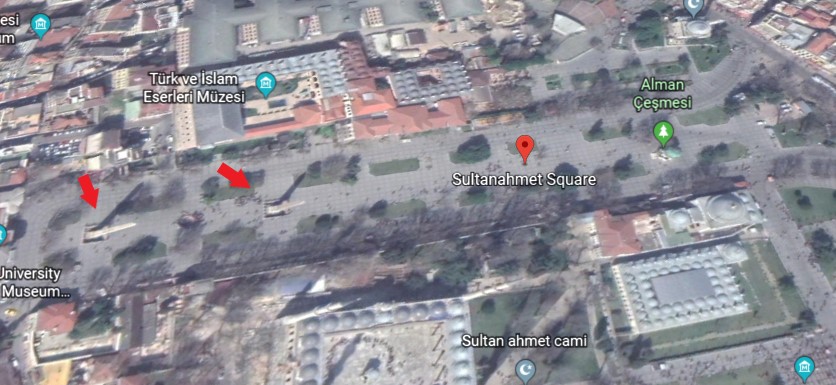
Unlike Rome, however, two obelisks remain in the original location of the Hippodrome in Istanbul, which is now called the Sultanahmet Square.

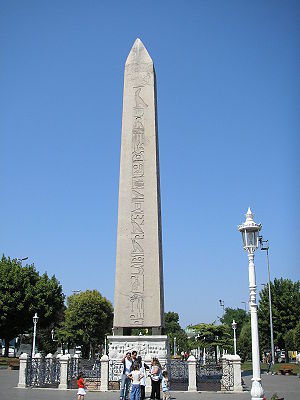
One is the Obelisk of Theodosius I, actually an ancient Egyptian obelisk of Thutmose III. It was said to have been transported from Egypt and re-erected in the Hippodrome in around 390 AD.

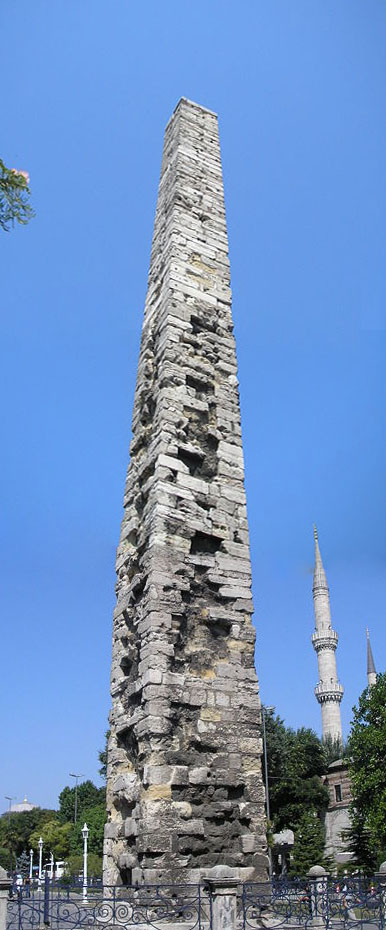
The other is called the Walled Obelisk, or Masonry Obelisk, said to have been of an unknown construction date, but reconstructed by the Emperor Constantine VII in the tenth-century.

Also like the Imperial Palaces on Palatine Hill next to the Circus Maximus in Rome, the Great Palace of Constantinople was located next to the Hippodrome. It was also known as the Sacred Place.

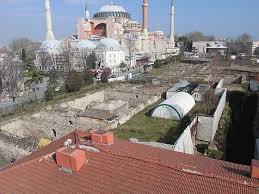
Only a few remnants of its foundations have survived into the present-day.

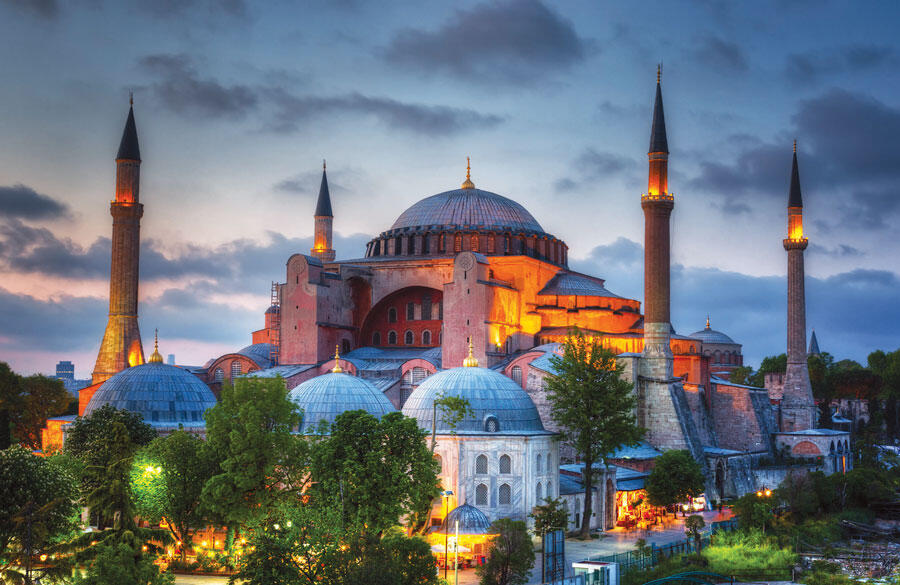
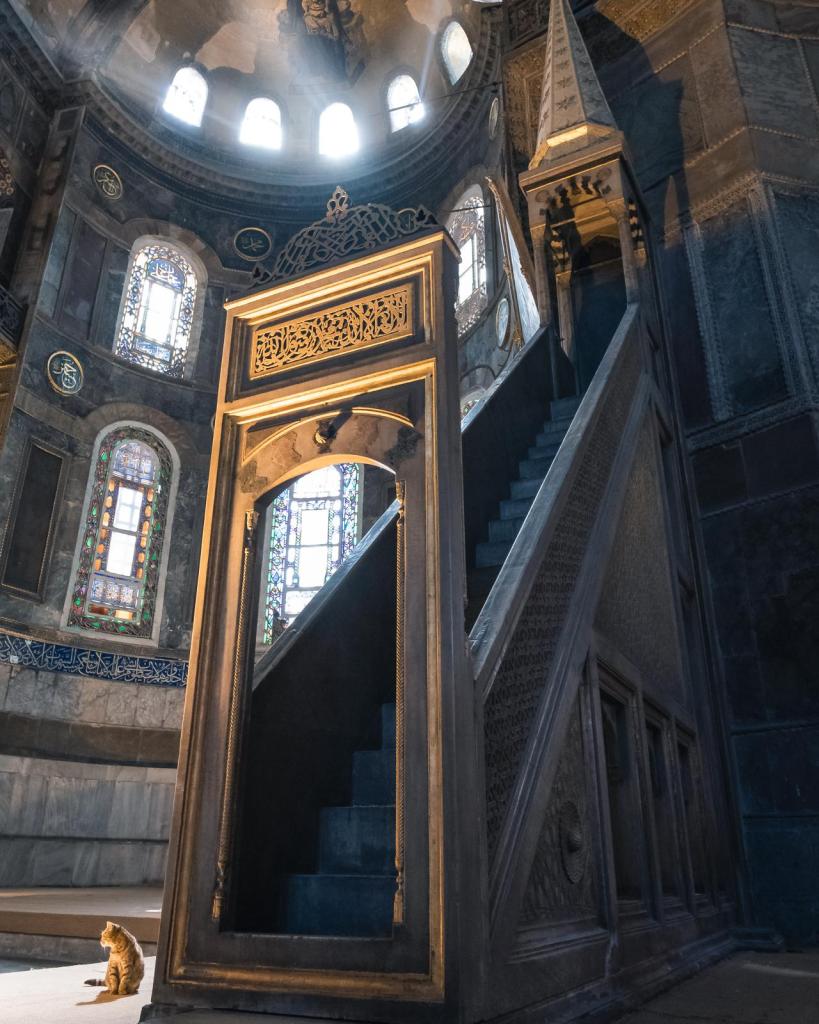
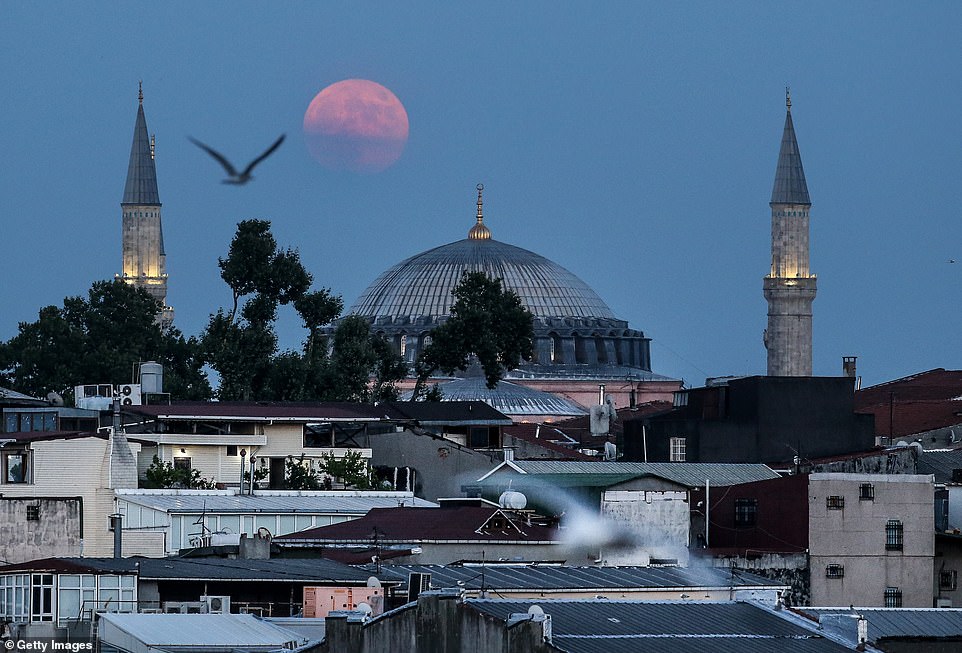
The Hagia Sophia, or Holy Wisdom, is in the same complex. It was said to have been built in 537 as a Greek Orthodox Cathedral…and later became an Ottoman Imperial Mosque in the year 1453.

It has been a museum since 1935.

It has the largest masonry dome in the world.

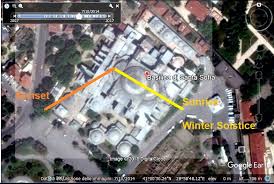
It is important to note the Hagia Sophia in Istanbul is oriented to the sunrise on the winter solstice…

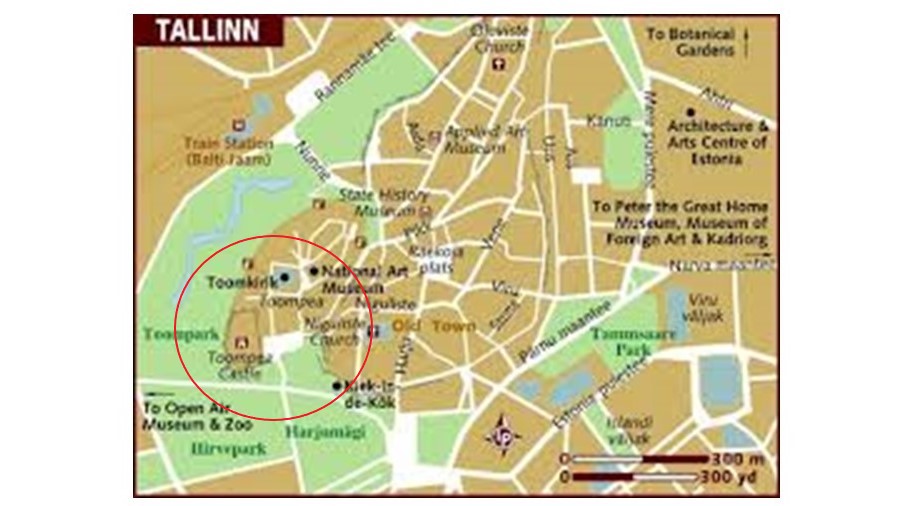
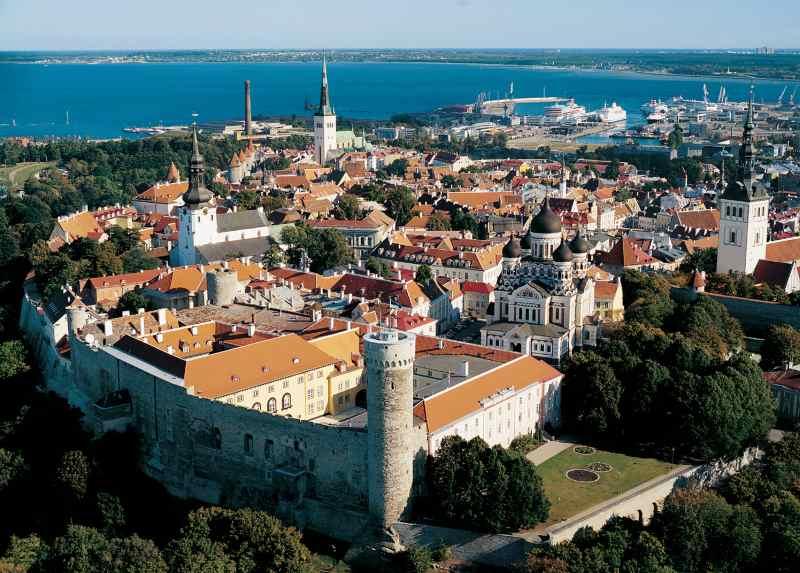
I am going to end this post with a close look at the 1684 Toompea fire in Talinn, Estonia. There are interesting tidbits tucked within the information available about Toompea that aligns it in importance with the locations of the fires in Carthage, Rome and Constantinople. At the same time, there are inconsistencies about the details of the fire that was said to take place here.

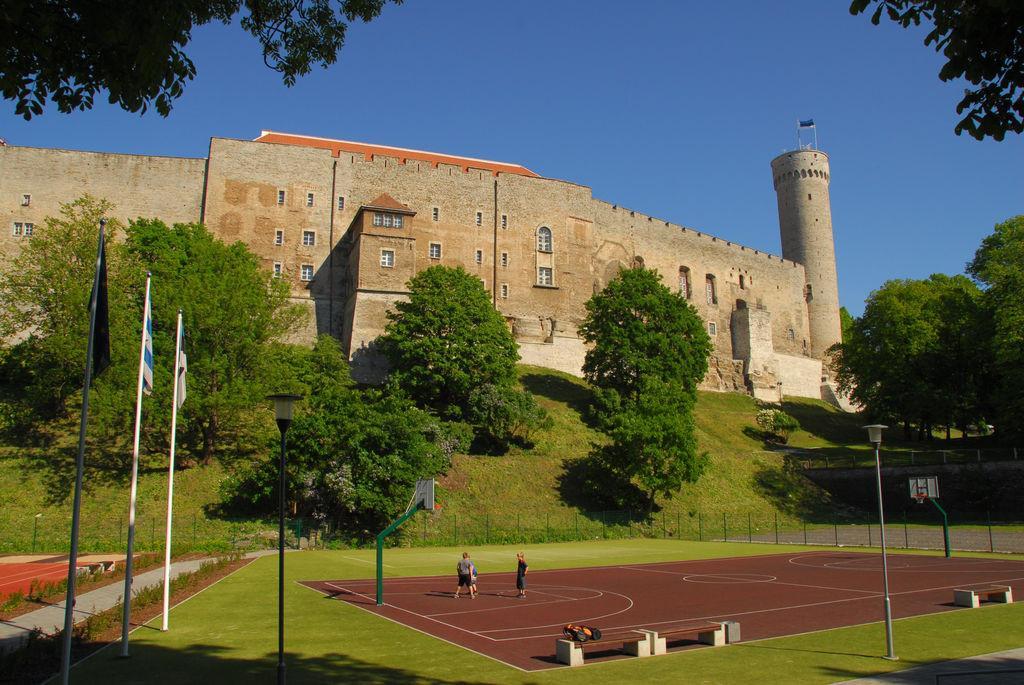
Toompea, which means “Cathedral Hill,” is described as being on a limestone hill that is an oblong tableland in the center of Talinn in the oldest part of the city. This is Toompea Castle, where it appears to be sitting on top of a massive earthwork.

Toompea Castle is said to be an ancient stronghold, in use since the 9th-Century. In the present-day, it houses the Government of Estonia, and is said to have always been the seat of power for Estonia.

Check out those massive walls!

The fire of 1684 was said to be the most devastating fire of its history, destroying most of the buildings.

Yet this place looks to have sophisticated buildings of very solid and heavy masonry!

Toompea appears to be a very important place in Estonia, and looks to be in pretty good shape to have had such a huge, destructive fire!

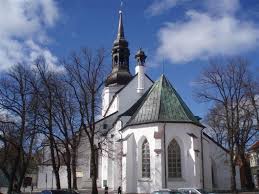
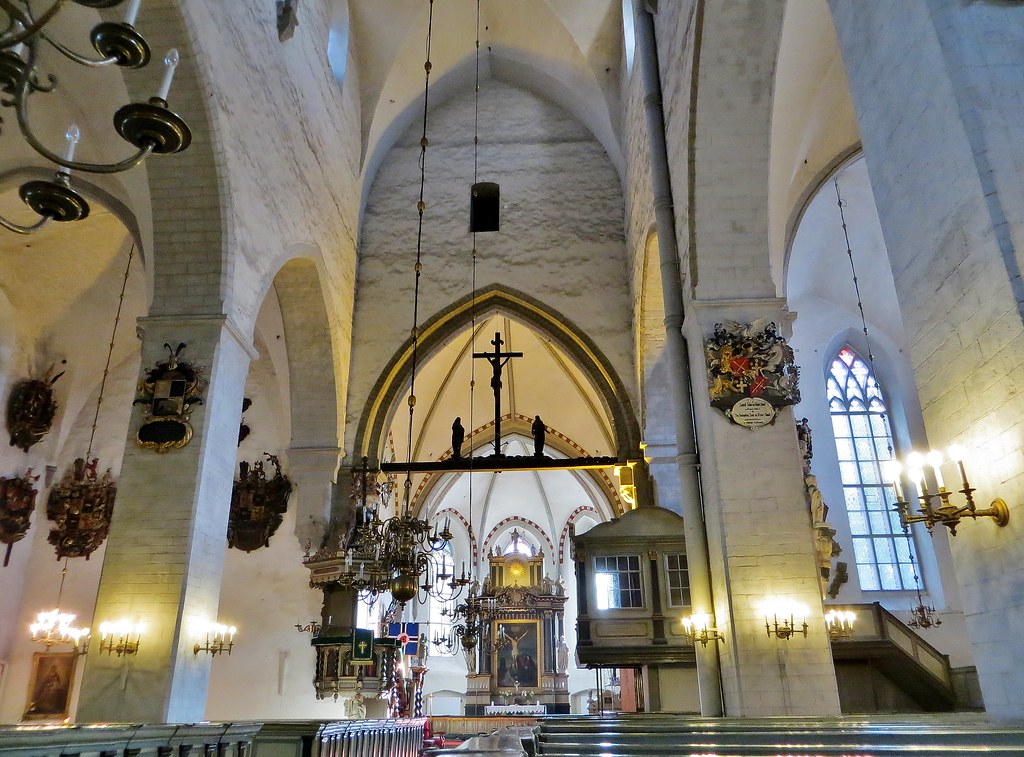
The Toomkirik, or St. Mary’s Cathedral, in which one information source I found said it was the only building to survive the 1684 fire, and that it was established by the Danes in the 13th-century. Yet I found nothing to indicated that buildings like the Toompea Castle, had been destroyed in this same fire.

The Toomkirik is said to be the oldest church in mainland Estonia.

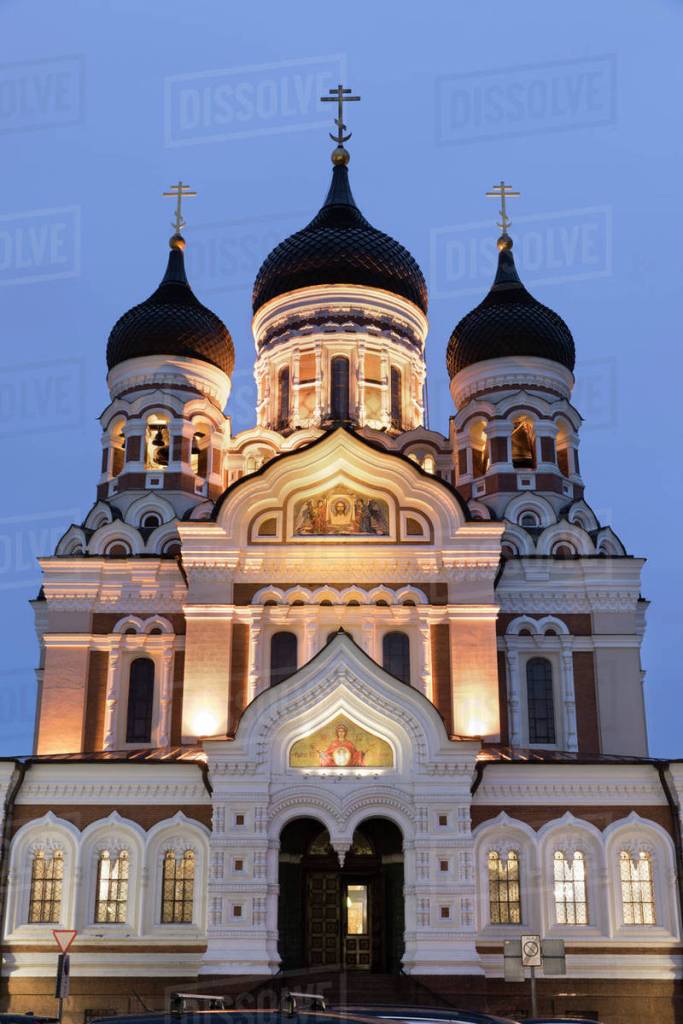
The Russian Orthodox Nevsky Cathedral is right next to Toompea Castle. It was said to have been built in Russian Revival style between 1894 and 1900.

There is already a pattern developing in just four examples of historical fires that took place at seats of power in their respective parts of the world, and which I selected to look at in a random fashion.

I did not know this when I started to research. I only remember Carthage having been completely destroyed by Rome from history in school, and the legendary connection with the 64 AD Rome fire to Nero. I didn’t know about the Constantinople riots, and had never even heard of Toompea before. All of these places piqued my interest when I started looking at where fires were said to have taken place, so I decided to focus on them for this post.

As a result of all my research thus far, I believe that 1851 was the official start date of the new, historical narrative that was superimposed over the existing advanced infrastructure, with the opening of the Great Exhibition of the Works of Industry of All Nations in London’s Crystal Palace kicking it off in 1851.

In my next post, I will be focusing on fires that occurred in the 1840s, 1850s, and 1860s.

Shining a Light on the Historical and Cultural Importance of Inner City Neighborhoods

I started noticing an important pattern in big cities when I was doing the research for the “Circle Alignments on the Planet Washington, DC” series, which is that the oldest and most historic neighborhoods of major cities of this country are what would be described as today’s inner cities.

For the sake of keeping this post shorter rather than longer, I am only going to focus on four places – Anacostia in Washington, DC; Harlem in Upper Manhattan in New York City; the Jackson Ward in Richmond, Virginia; and the oldest parts of Atlanta, Georgia.

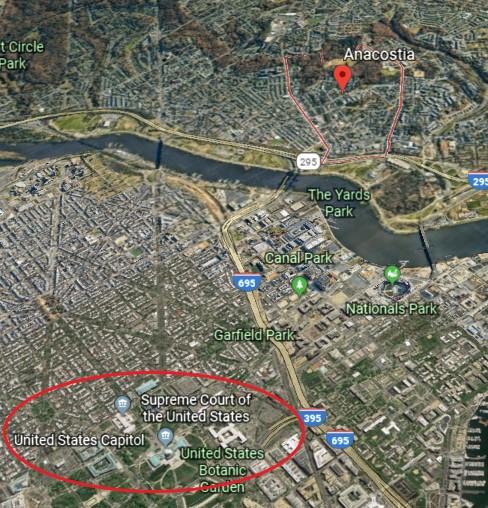
Anacostia is an historic neighborhood in Washington, DC. This is where Anacostia is situated relative to the United States Capitol and Supreme Court Buildings.

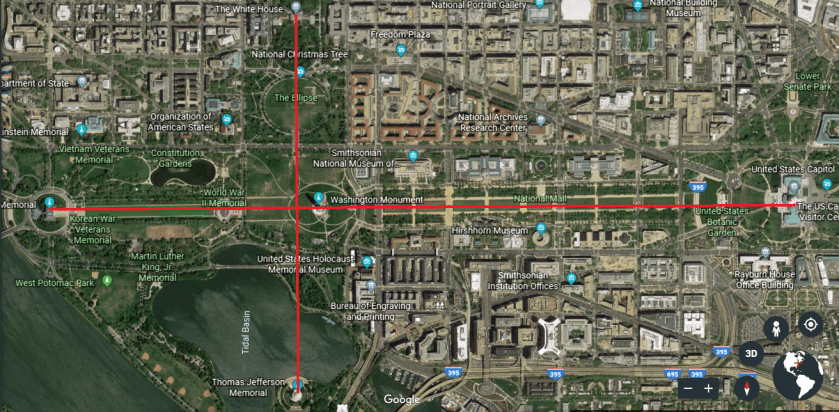
And, from another angle, the U. S. Capitol Building is on the east-end of horizontal line that connects it geometrically to the Lincoln Memorial and the Washington Monument to the west.

The North-South line depicted here runs from the White House, through the Ellipse, to the Jefferson Memorial.

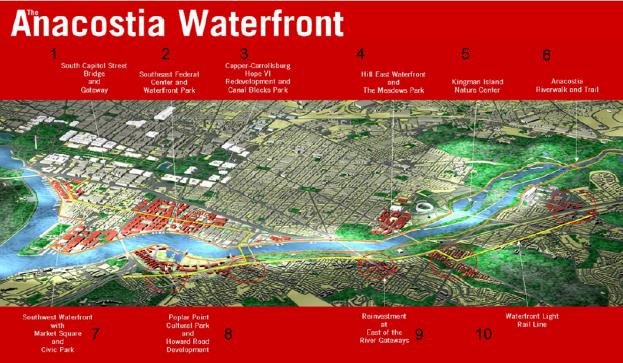
Currently the waterfront area of Anacostia is undergoing a massive redevelopment project…

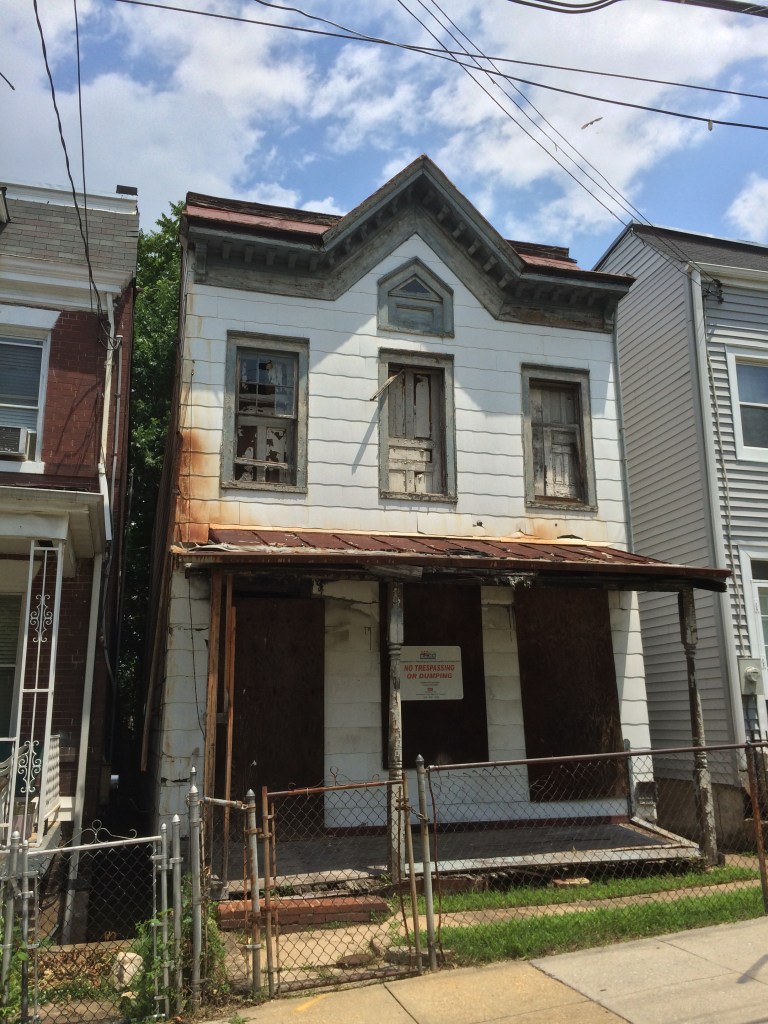
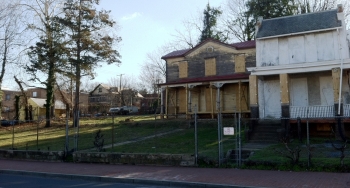
…and there are a large number of abandoned and seriously deteriorating historic real estate properties in Anascostia that are in state of limbo because of disagreement regarding whether or not to restore them in a community sorely in need of affordable housing…

…or to sell the properties for redevelopment purposes.

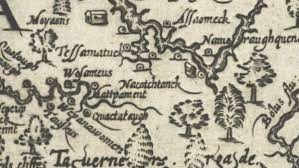
The name anglicized name Anacostia is said to come from a settlement of Nacochtank, an extinct Algonquin people living around what became Washington, DC.

They were said to be associated with the larger Algonquin-speaking Piscataway people of southern Maryland and the Chesapeake Bay.

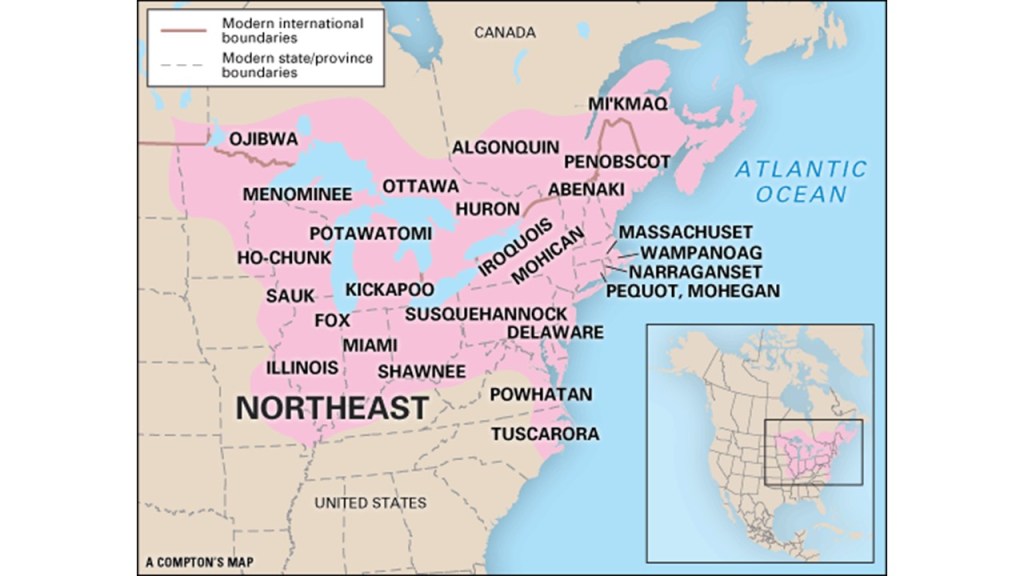
Look at all of these Algonquin-language tribes with lands spread out everywhere in northeastern North America.

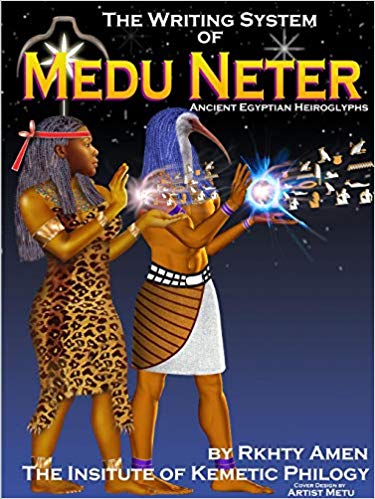
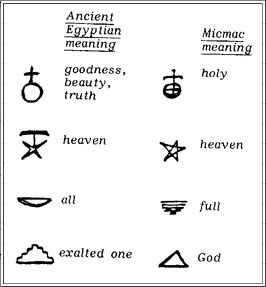
What if I told you the Algonquin language is related to Metu Neter, the the language of the Egyptian hieroglyphs?

This is totally hidden information, so the best I can do right now in support of this assertion is to show you a comparison of the similar meanings of some Egyptian Hieroglyphs compared with that of the Micmac, or Mi’kmaq, an Algonquin-speaking nation of what is now eastern Canada and the State of Maine.

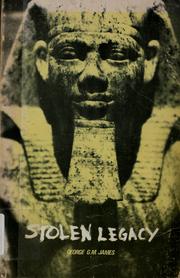
Those behind all of this suppression don’t want us to know about the Stolen Legacy of the Moors in North America and around the world…

…who were the Keepers of the Egyptian Mysteries.

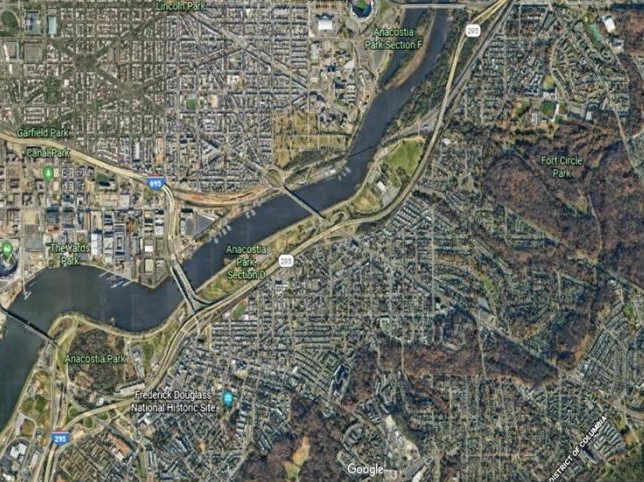
This is a Google Earth image of the Anacostia River.

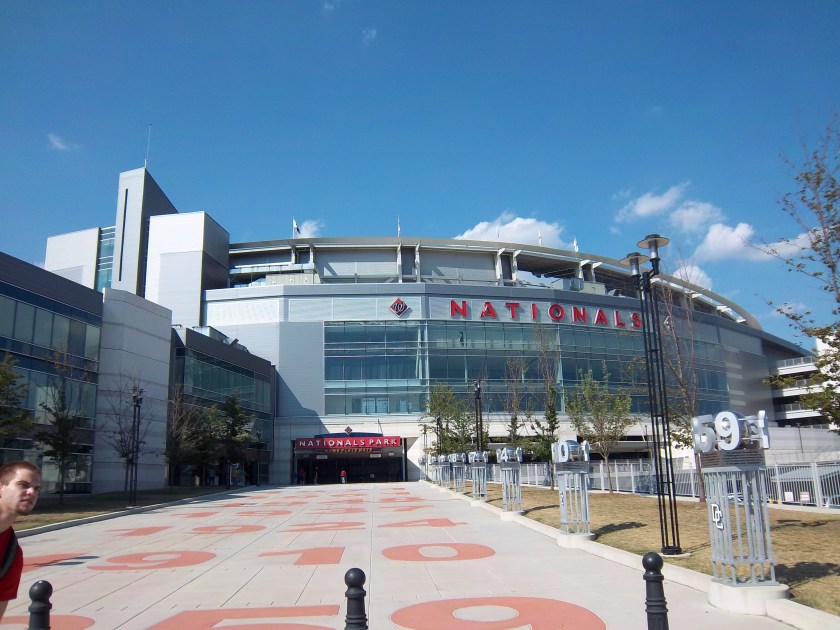
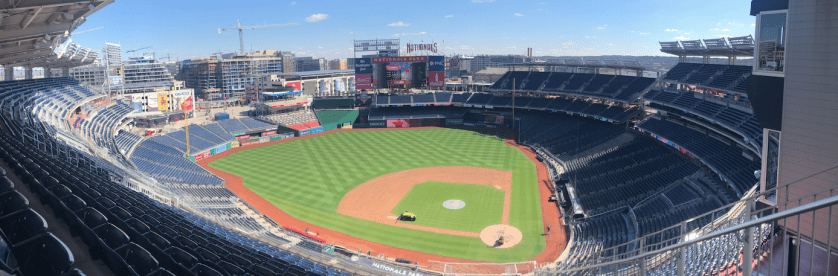
I am amazed at all the things in close vicinity of Historic Anacostia – Nationals Park, the stadium for the Washington Nationals baseball team…

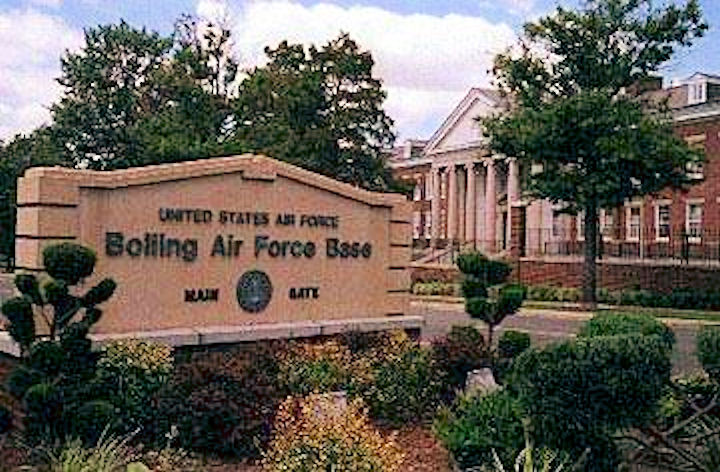
…as well as what is known as Bolling Air Force Base, or Joint Base Anacostia-Bolling, which merged with Naval Support Facility Anacostia…

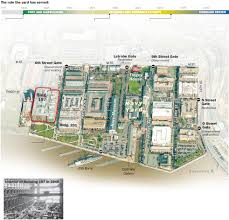
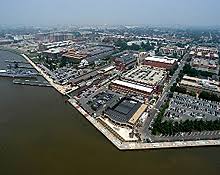
…the Washington Navy Yard…

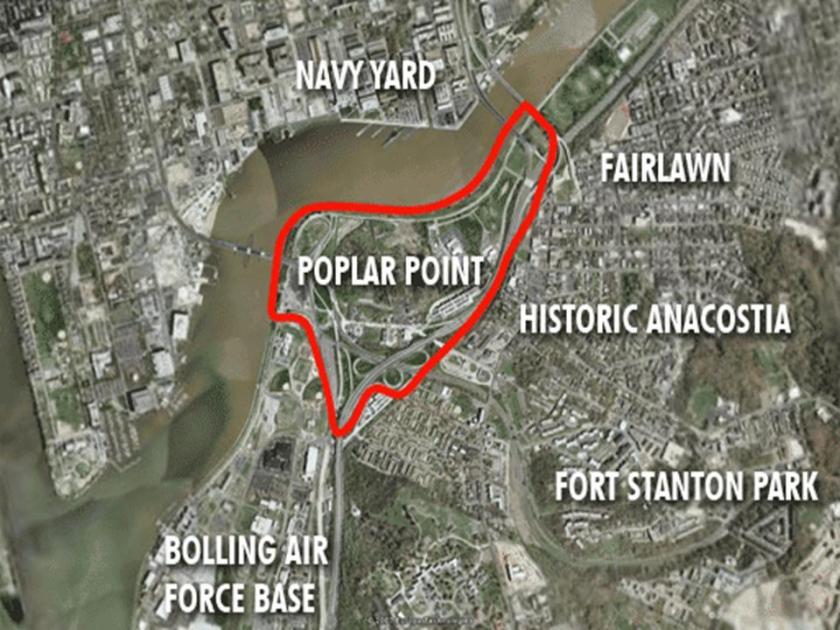
…and where Poplar Point is circled on this aerial map…

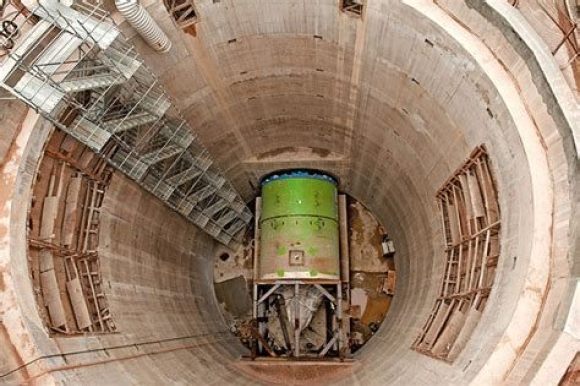
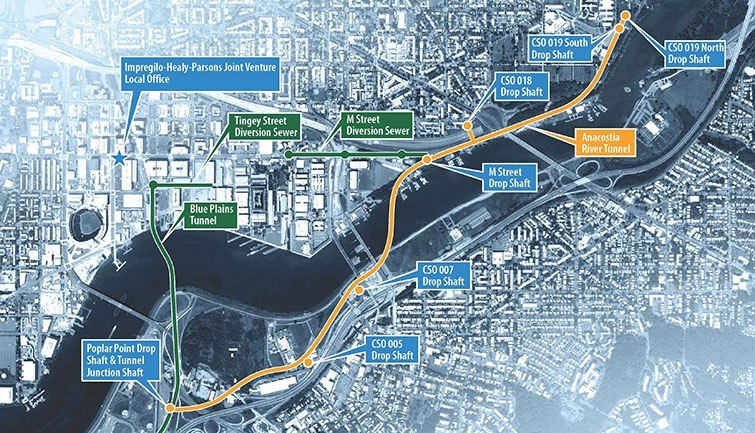
…there is a Deep Shaft and Tunnel Junction Shaft owned by the DC Water and Sewer System. …

…that is on the map showing the locations of shafts for the tunnel system of the Anacostia River Tunnel System.

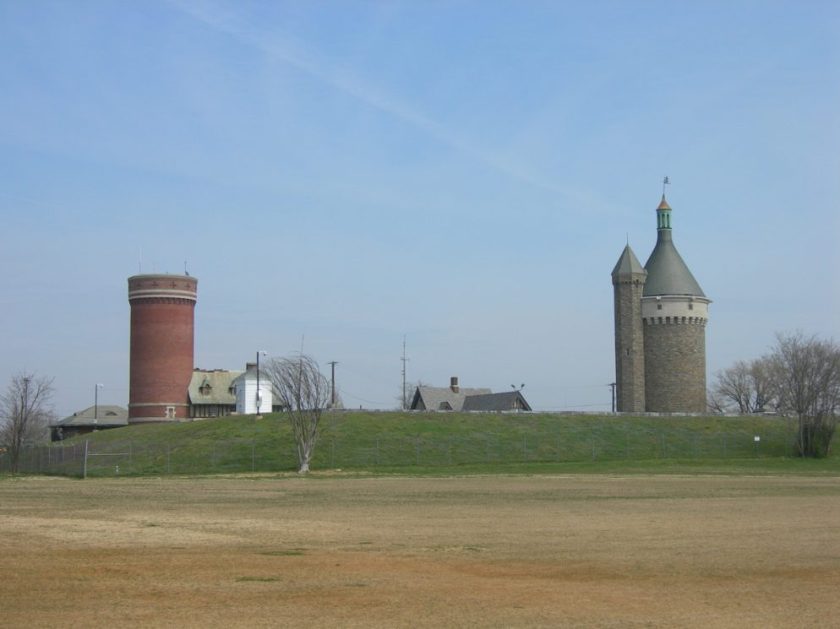
Fort Circle Park, where there is a 7-mile hiker-biker trail around the remains of what are called Civil War-era forts, has an end-point at Fort Stanton Park next to Anacostia, which was described at one time as a massive earthwork.

There were six other so-called civil war era forts in what is now the Fort Circle Park, part of sixty-eight major forts of what was called the Civil War Defenses of Washington said to have been built in 1861. There is hardly anything left to show for this infrastructure here adjacent to Anacostia.

While not in Anacostia in DC, I can show you a place said to have been built during this same time frame that is still standing.

This is Fort Reno, situated on top of an earthwork. It is located on the highest point in Washington, and said to be the site of the only Civil War battle fought in Washington, during the Battle of Fort Stevens in 1864.

It was said to have been built in the winter of 1861, after the defeat of the Union Army at the Battle of Manassas. Does this look like a temporary structure, hastily built in the middle of winter?

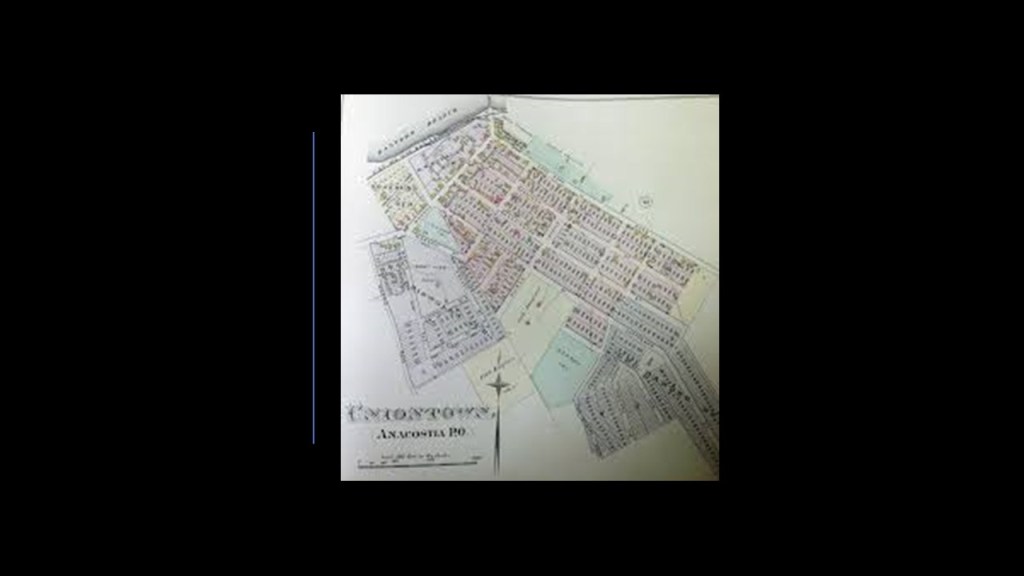
The core of what is now the Anacostia Historic District was incorporated in 1854 as Uniontown. It was said to have been designed to be affordable for Washington’s working class.

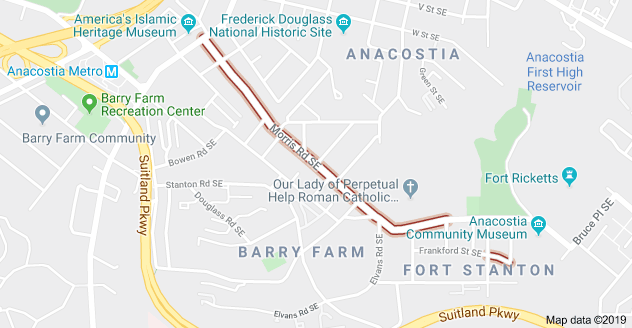
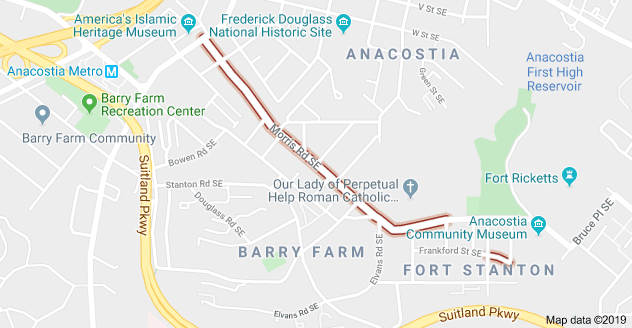
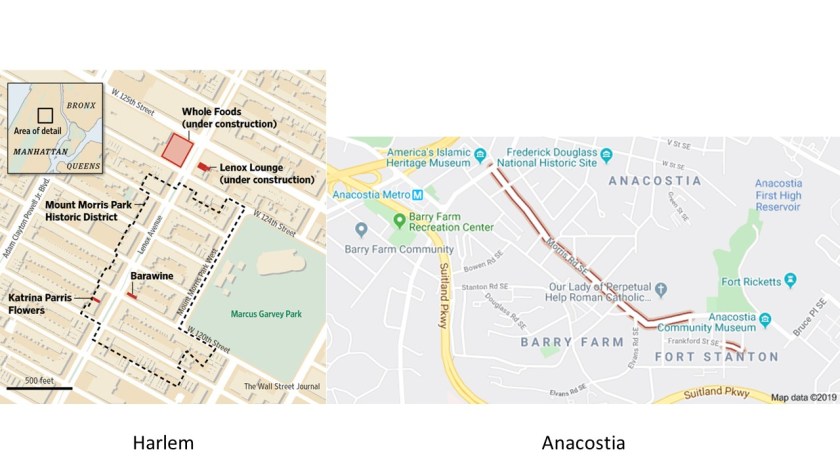
Morris Road SE is one of the boundaries of historic Anacostia…

…which is known for its extensive collection of late 18th-century and early 19th-century small-scale, frame-and-brick, working class housing, like shown here on Morris Street.

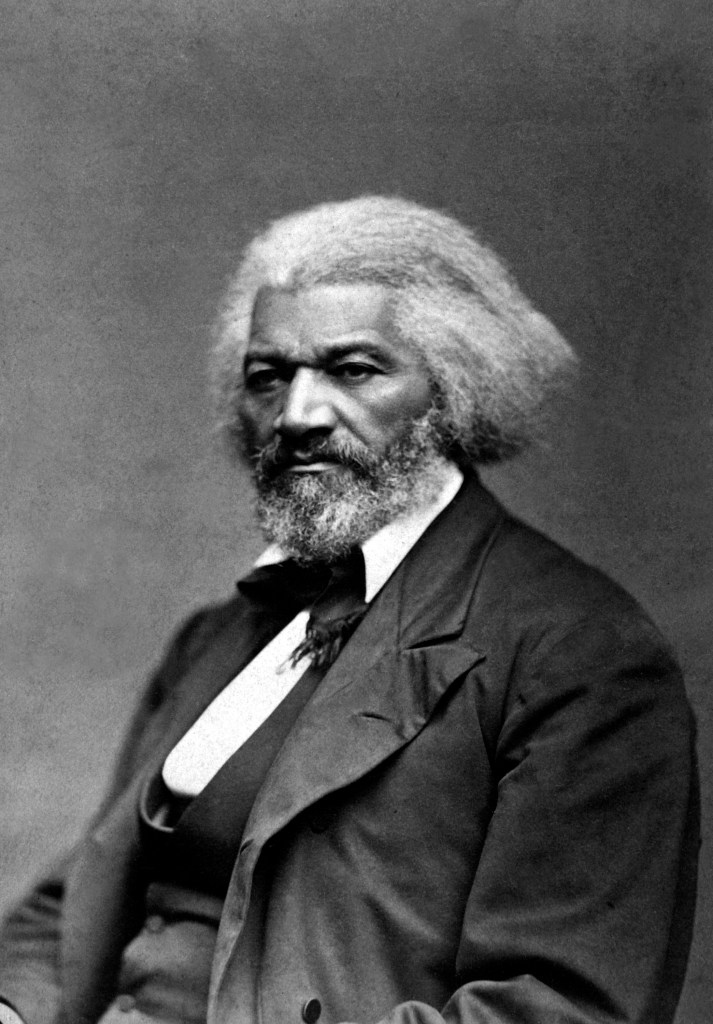
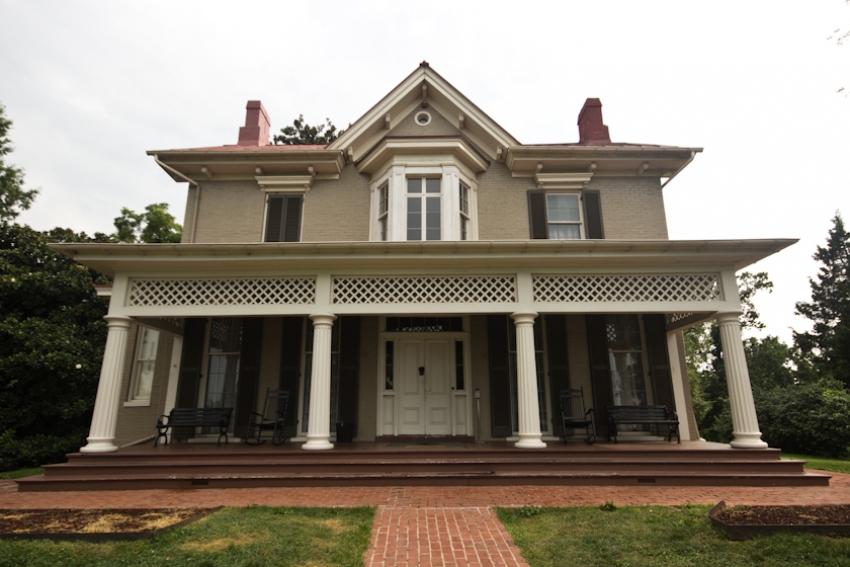
Frederick Douglass, also known as “The Sage of Anacostia,” purchased an estate known as Cedar Hill in 1877, and lived there until his death in 1895.

It is still maintained as the “Frederick Douglass National Historic Site.”

I will leave Anacostia with this photo here of the landmark giant chair that is found at the corner of Martin Luther King Jr. Avenue and V Street SE. Wait a minute ~ a giant chair? We are told it was built by the Bassett Furniture Company, and installed there by the Curtis Brothers Furniture Company in 1957. But what a strange landmark!

Are they telling us something without telling us they are telling us?

Could it have been an actual giant’s chair, and not a furniture company gimmick?

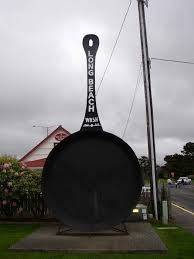
Along the same lines as attractions like the World’s Largest Frying Pan in Long Beach, Washington, said to be a replica of one in which a woman skated on bacon in the town’s Clam Festival in 1941…

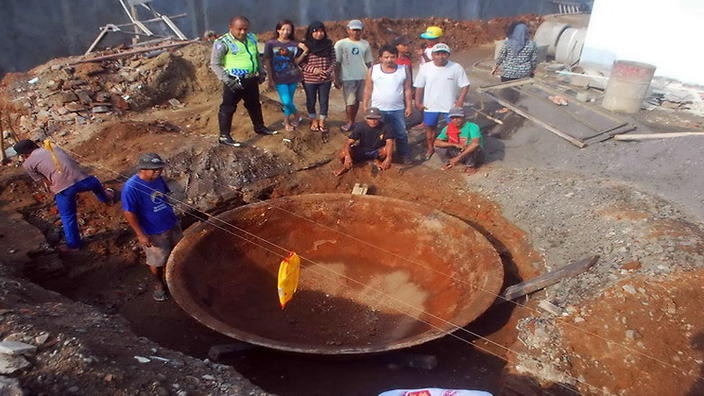
…and there is this giant frying pan that was unearthed in Indonesia on the island of Java in 2016.

Just saying not everything…actually quite a lot… is what we are told it is.

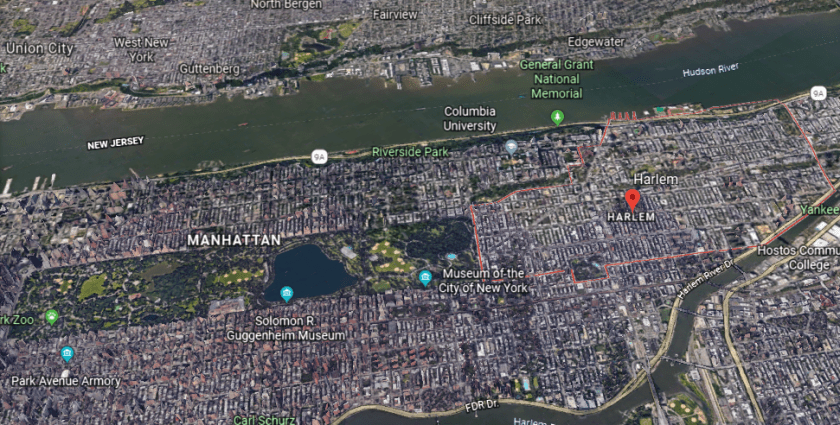
Harlem is a neighborhood in the northern section of Manhattan in New York City.

First, let’s see what the neighborhood of Harlem is close to, but not within its boundaries.

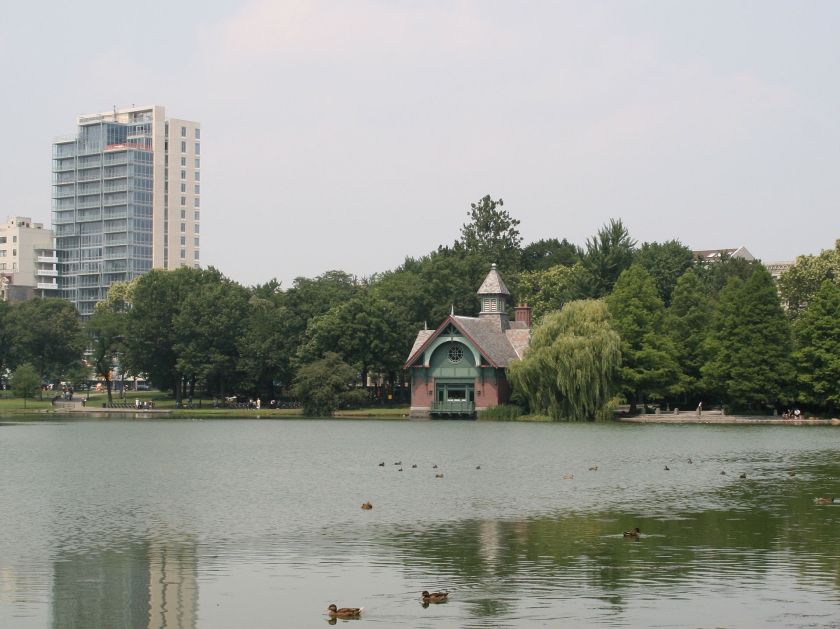
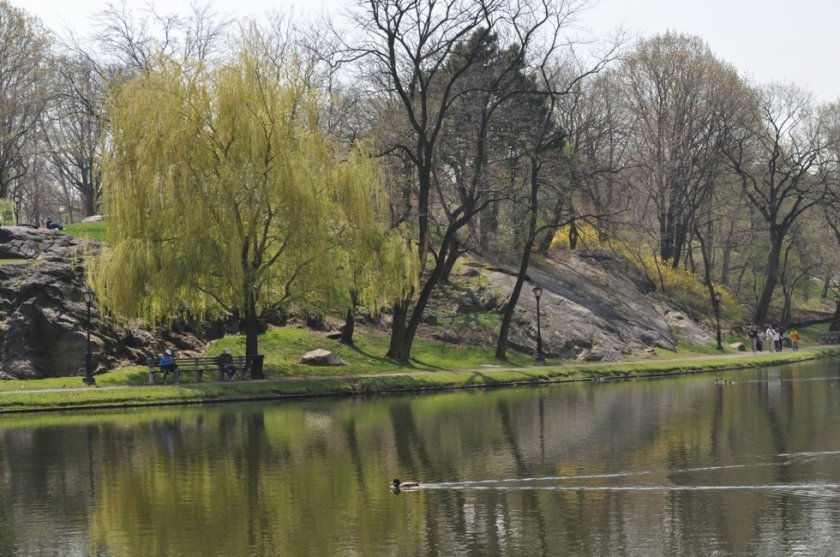
It is bounded by Central Park, where it is right next to the Harlem Meer, or Harlem Lake, section of the Park.

I don’t see much difference etymologically (having to do with the origin of words and how their meanings change) between the word Moor, which pertains to people who were Masters of the Sea, and the one-letter difference between the word meer which means lake in Dutch, and sea in German. In French, the word mer means sea.

This rocky formation at Harlem Meer is called a bluff, which is one of the code-words used to cover up ancient infrastructure.

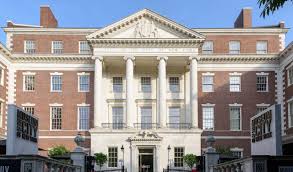
The Museum of the City of New York is close to Harlem, said to have been built in 1929 and 1930 by Joseph H. Freedlander…

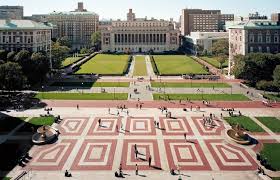
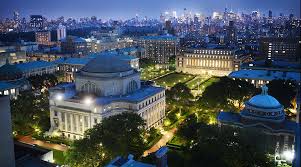
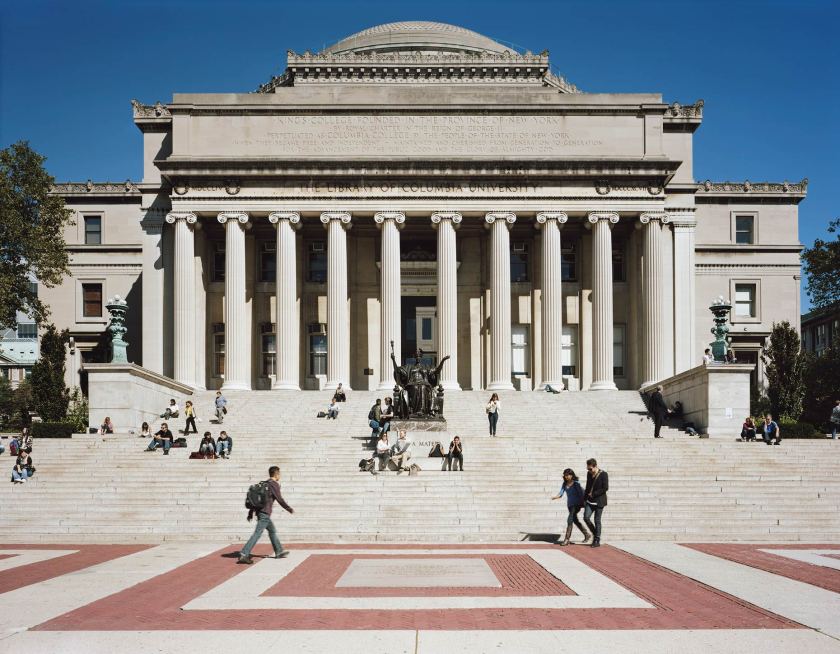
…and Columbia University is close to Harlem…

…said to have been established in 1754, and the oldest institution of higher education in New York.

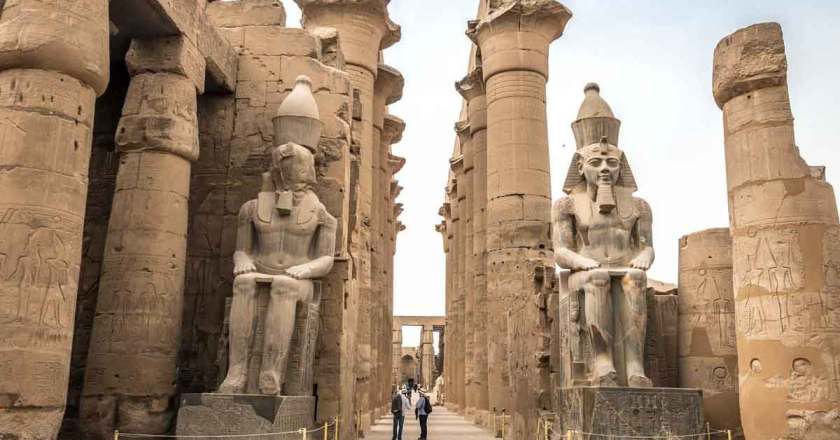
Does this look like architecture built by short people for short people?

For comparison of size and scale to people in the present-day, here is the ancient Temple of Luxor of Egypt.

The General Grant National Memorial, also known as Grant’s Tomb, is located near Harlem, said to have been built in 1897…

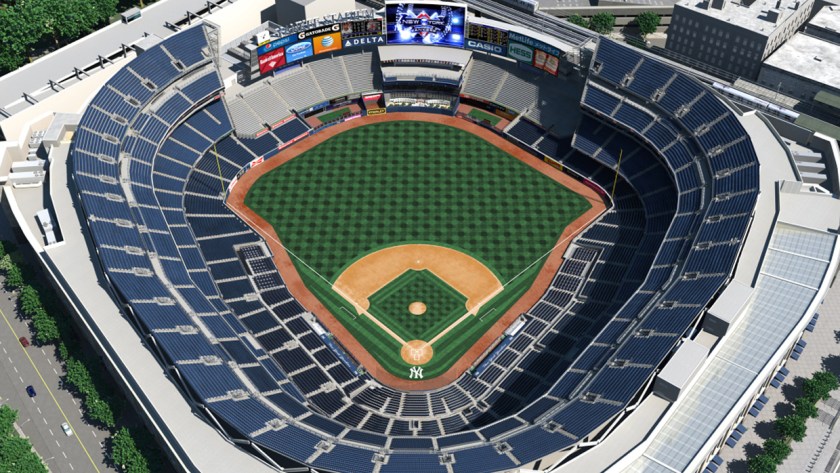
…and Yankee Stadium, just across the Harlem River from Harlem, in the Bronx, said to have originally been built in 1923.

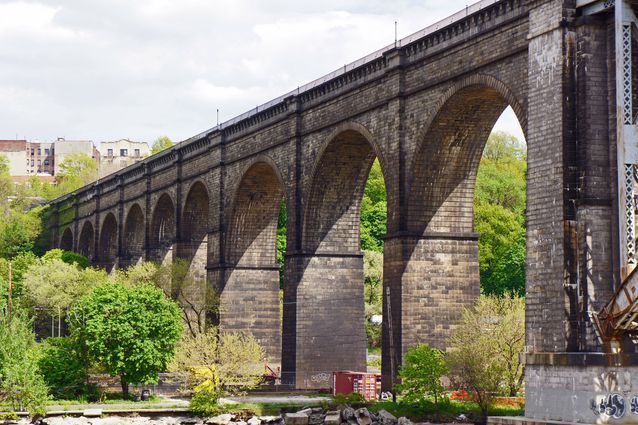
Up the Harlem River a short distance from Harlem proper is the High Bridge, built we are told for the Croton Aqueduct on its way to the reservoir at Central Park, the called the oldest bridge in New York City, with construction having started in 1839…

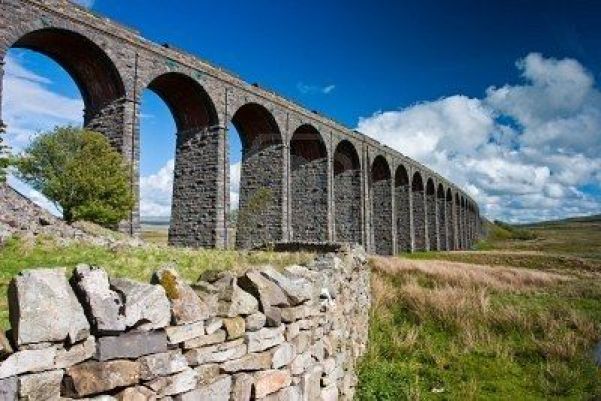
…which reminded me of the Ribblehead Viaduct in the Yorkshire Dales National Park in northern England, said to have been built for the railroad between 1869 and 1874.

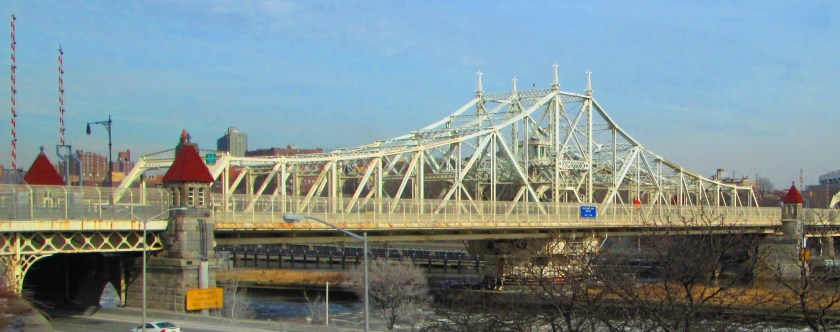
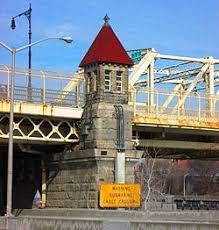
Let’s take a look at what is found in Harlem itself, starting at the Macombs Dam bridge, which crosses the Harlem River between Yankee Stadium in the Bronx and Harlem, said to have opened in 1895, and the third-oldest bridge in New York City.

Look at the beautiful, old, and distinctive masonry found on the each of the four stone end piers!

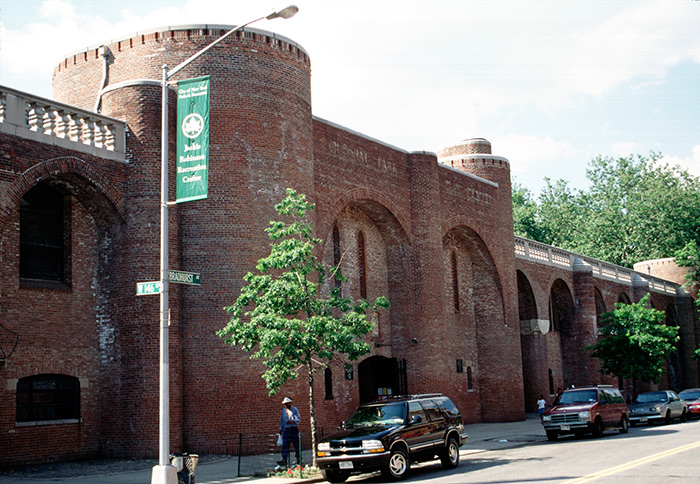
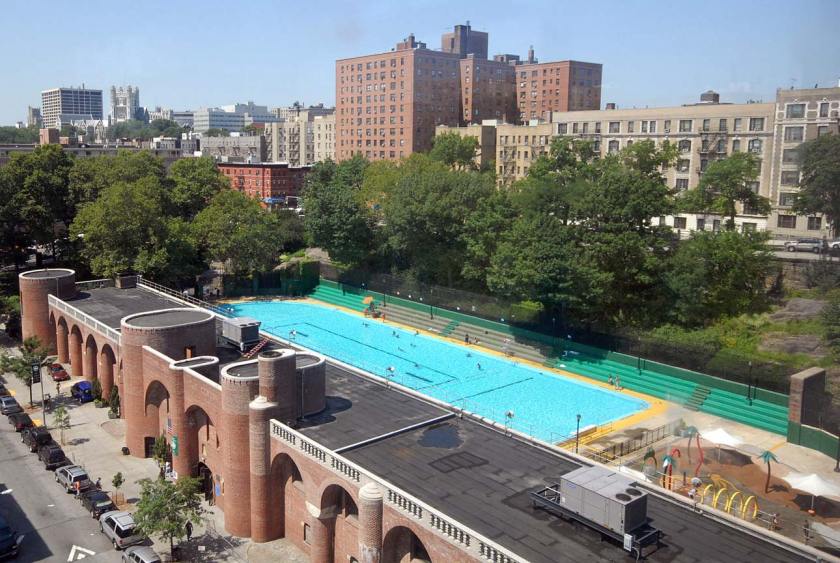
Jackie Robinson Park in Harlem was said to have originally been part of the Samuel Bradhurst estate in the late 18th to early 19th-centuries.

This estate was said to have brick buildings on it, which are now part of the impressive-looking Jackie Robinson Recreational Park facilities…

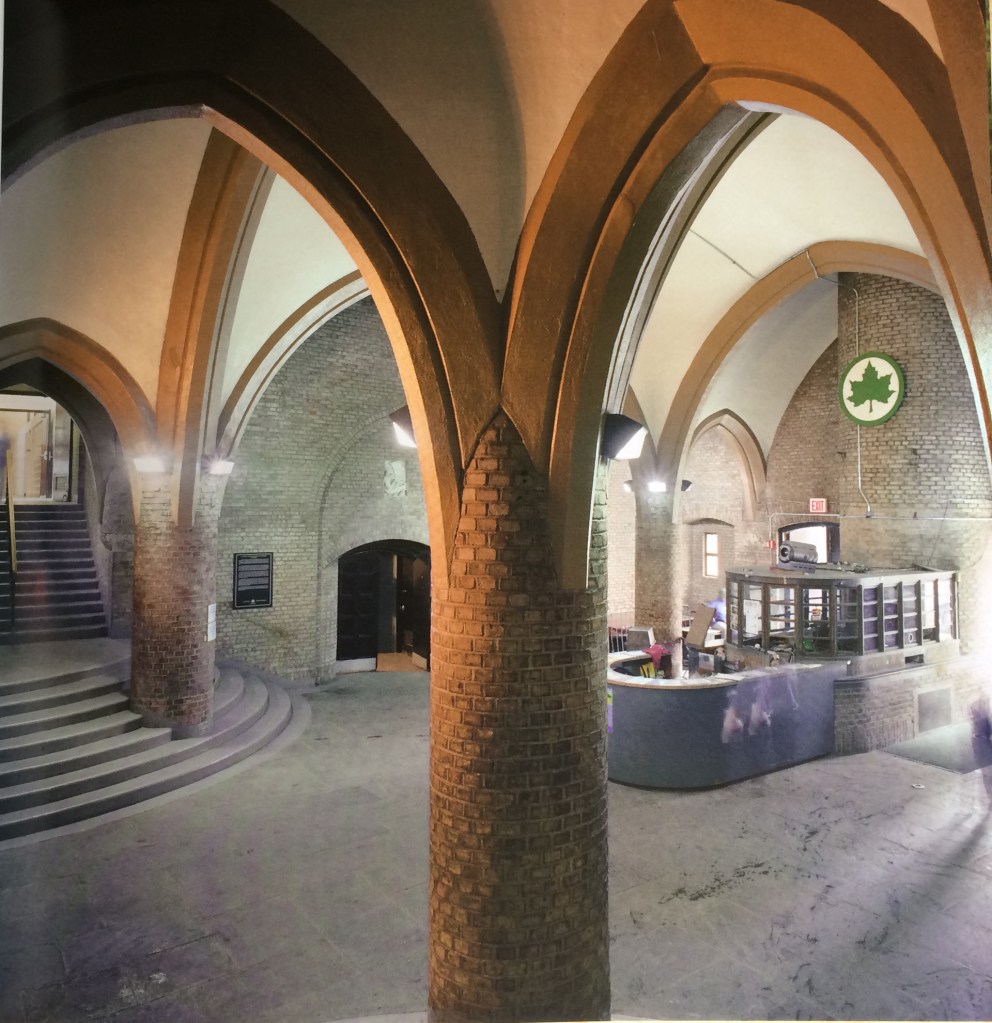
…including these beautiful vaulted ceilings inside the park’s recreational facilities…

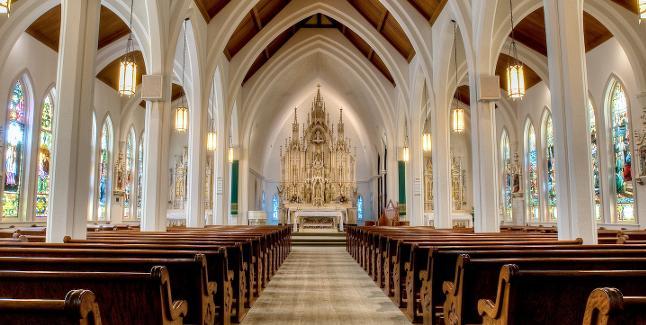
…which is the same kind of vaulted ceiling that we find in cathedrals. Hmmmm.

Convent Garden, with its beautiful gazebo and landscaping, is called an oasis in Harlem…

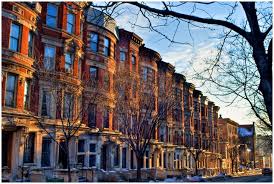
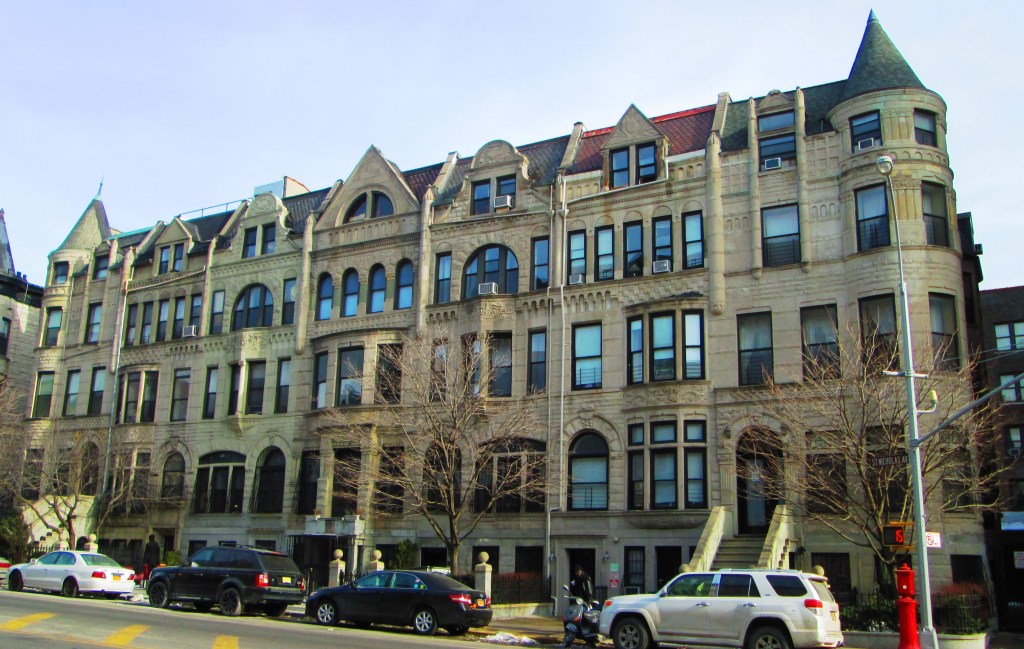
…and is a 13-acre haven amidst the Sugar Hill brownstones, called a once-glamorous enclave of Harlem.

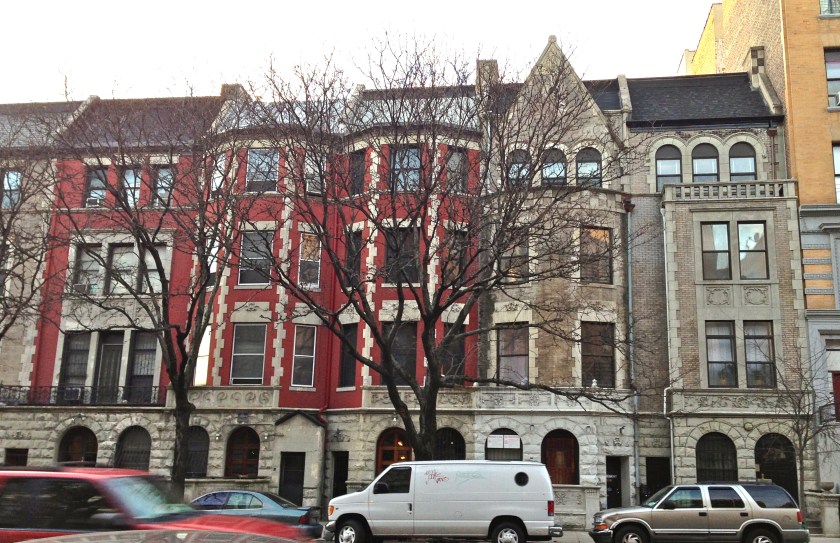
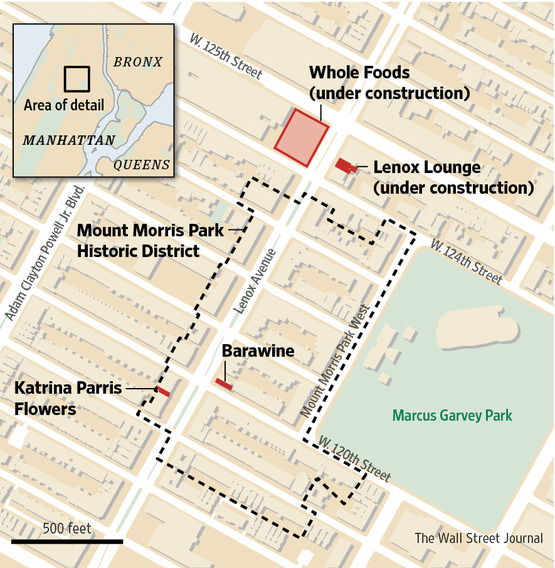
The Mount Morris Park Historic District is in west-central Harlem.

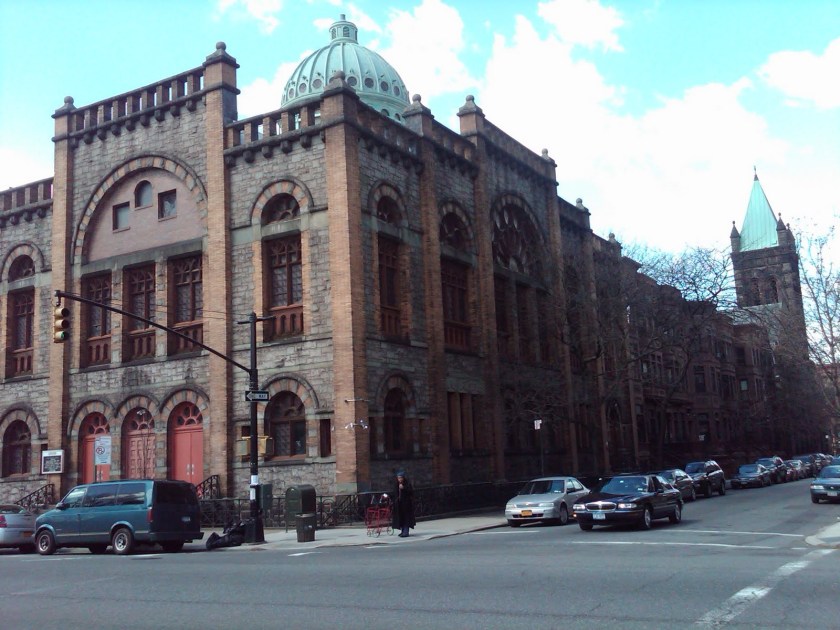
This is the Ascension Presbyterian Church in the Mount Morris Park Historic District in East Harlem, with its impressive masonry architecture and dome…

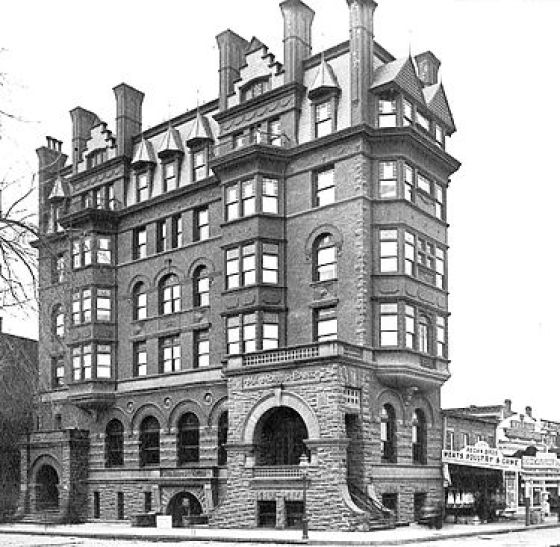
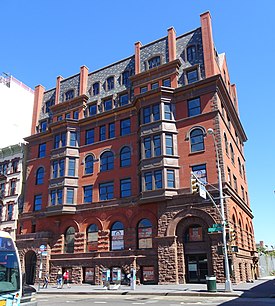
…and a historic photo of the Mount Morris Bank Building, said to have been built in 1883.

This is the Mount Morris Bank building as it looks today, after having been renovated and re-opened in 2015, after the building withstood decades of neglect, deterioration, and a fire.

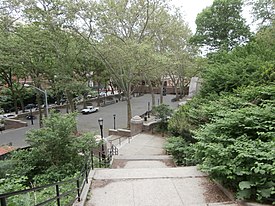
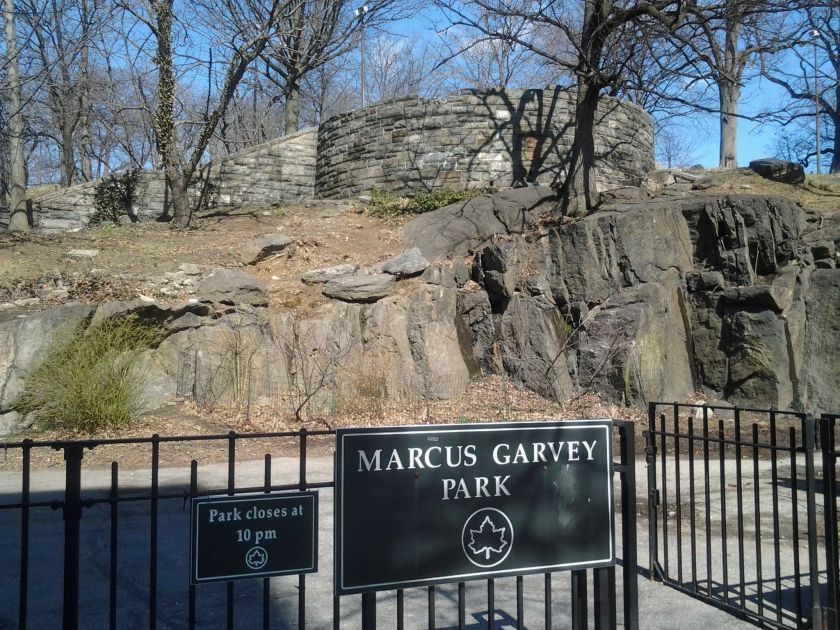
Mount Morris Square, the core of the district, is now called Marcus Garvey Park, and is centered on a massive and steep outcropping of stone, and surrounded by flat lawns and playing fields.

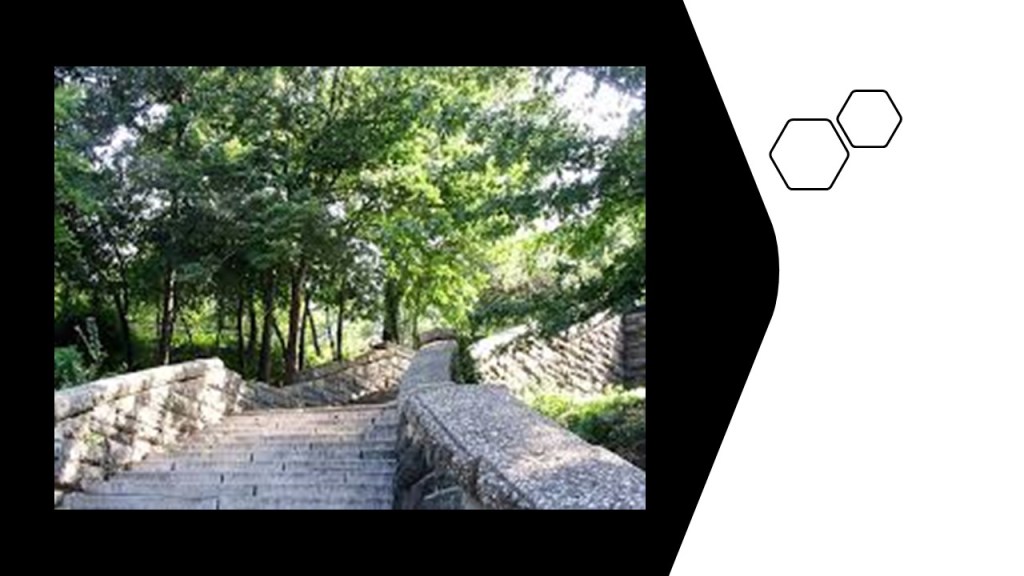
These beautiful stone steps lead up the acropolis in the park…

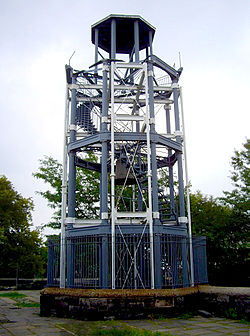
…where what was called the cast-iron Harlem Fire Watchtower once-stood, said to have been installed there in 1857 …

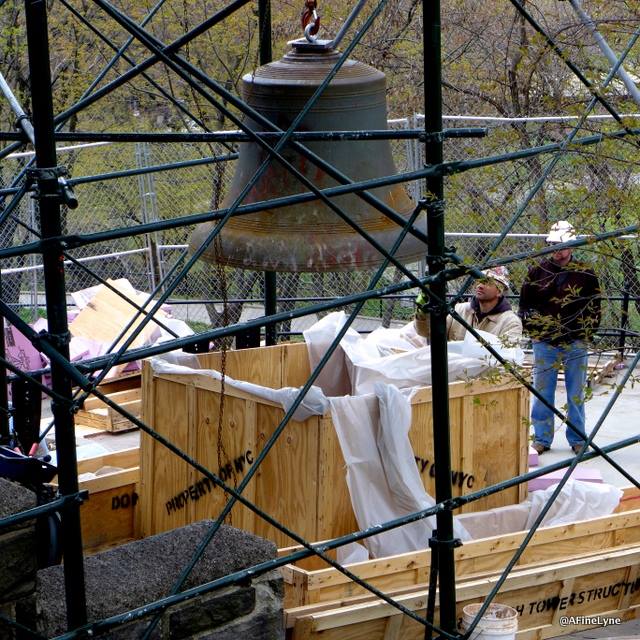
… until it was dismantled in 2015, the reason given being to restore the structure for stability and soundness before it is reconstructed.

This is the 10,000-lb, or 4,536-kilogram, bell of the watchtower before it was crated. It was said to have been used to ring the time twice a day long after the watchtower was no longer being used as part of the city-wide fire warning system.

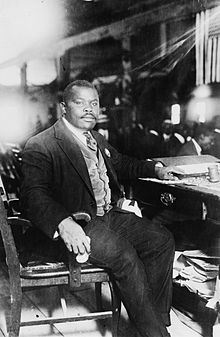
Marcus Garvey (b. 1877 – d. 1940) was a Jamaican-born political activist, publisher, journalist, entrepreneur and orator. This picture of him was taken in 1924.

So far, Harlem has a Mt. Morris district, and Anacostia has a Morris Street. What is it with the name of Morris in these places?

Could it have something to do with telling us who was really here?

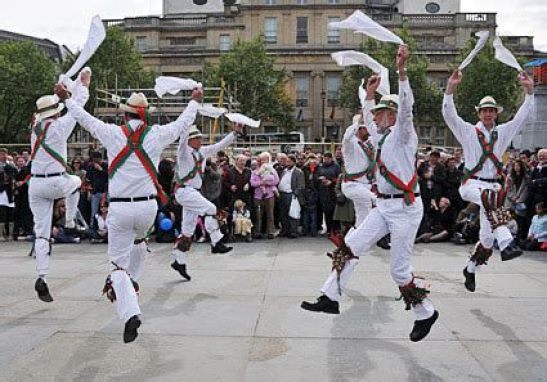
These are Morris Dancers in England, who practice a group dance form of choreographed steps, with bells on the knees, and wielding sticks, swords, or handkerchiefs.

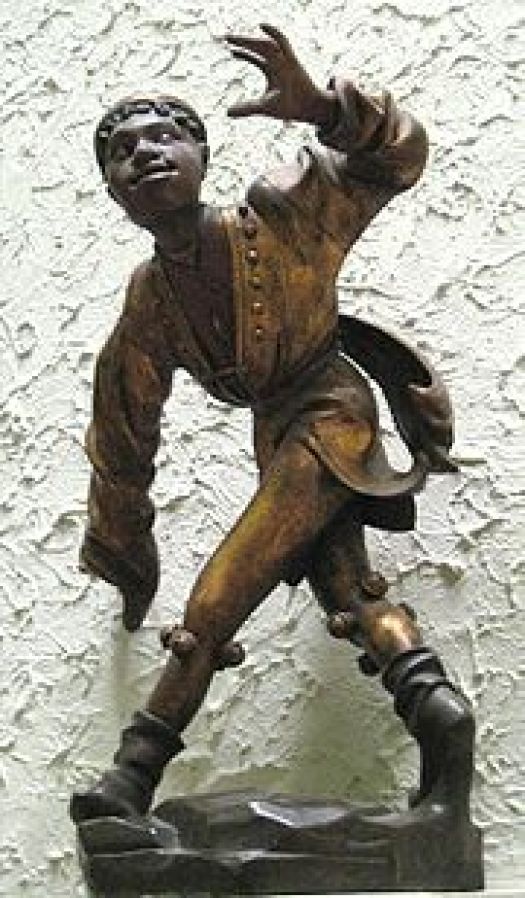
It is said the name of Morris Dance is first recorded in the 15th-century as Moorish Dance. Here is a 1480 statue of a Moorish Dancer at the Old Townhall in Munich…

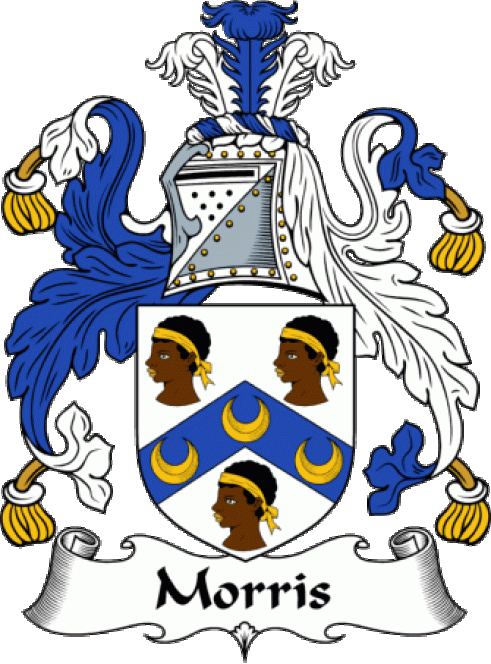
…and this is one of the depictions of the Morris Coat-of-Arms and Morris Family Crest.

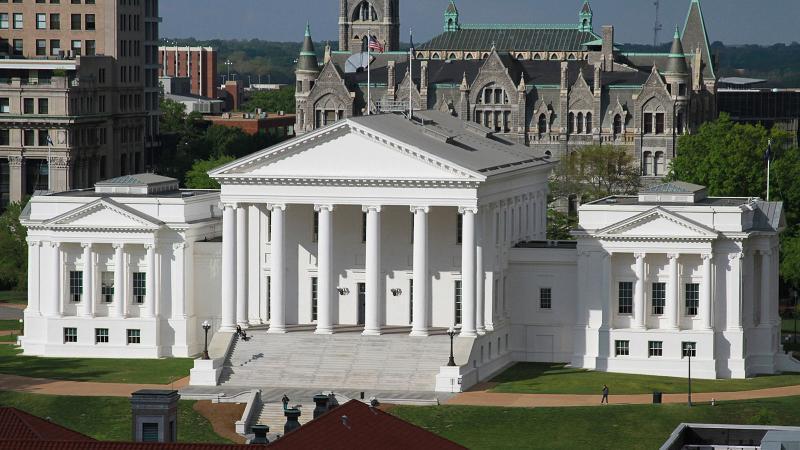
In Virginia, Richmond became the capital of Virginia in 1780, when it was moved from Williamsburg. This is the Virginia State Capitol Building.

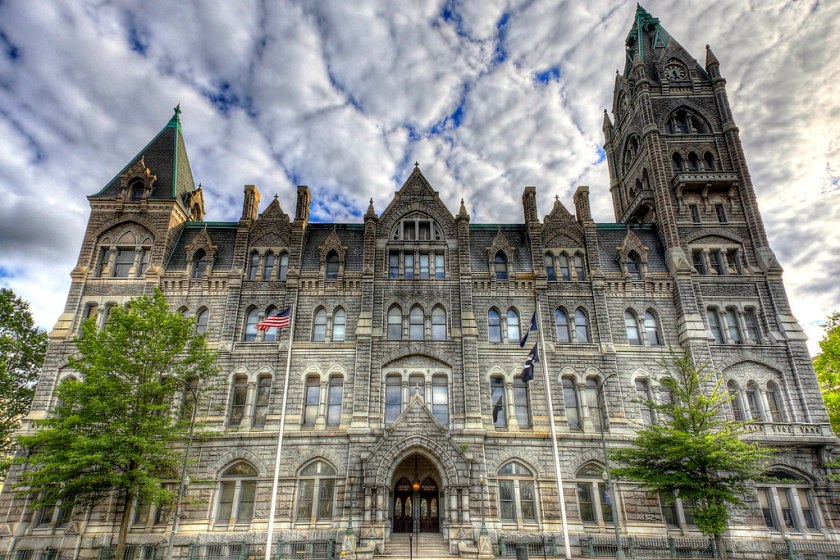
Directly to the north of the Virginia State Capitol building is the Old Richmond City Hall…

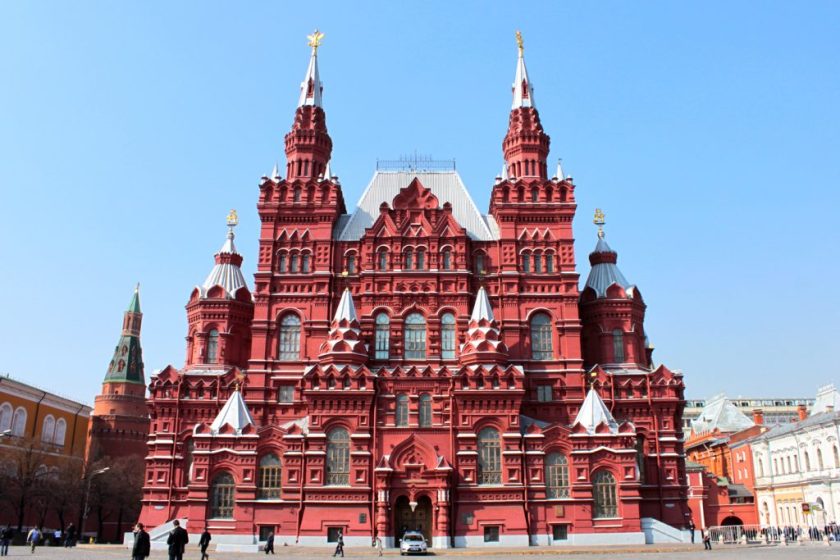
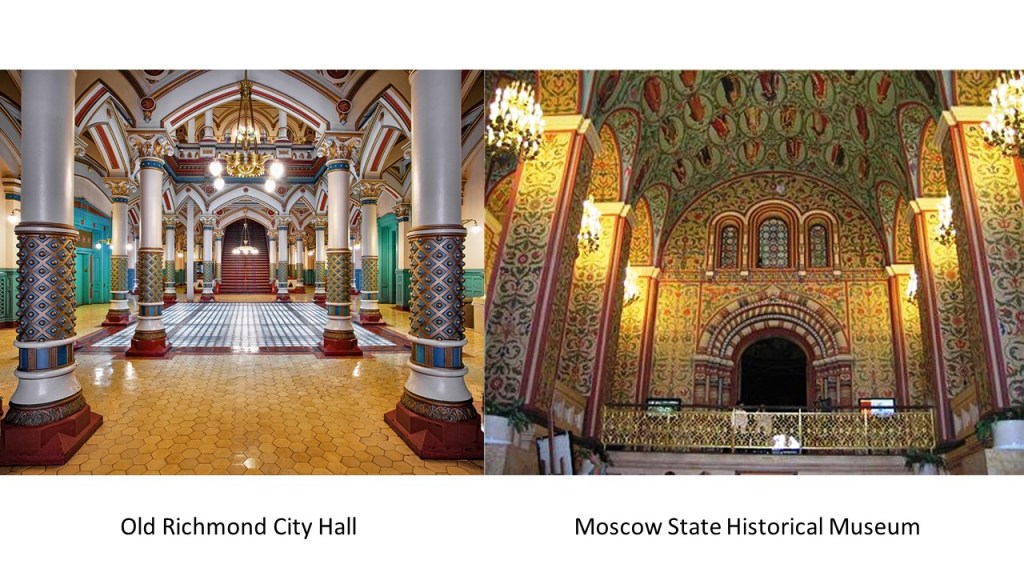
…and I am comparing it for similarity with the Moscow State Historical Museum in Russia.

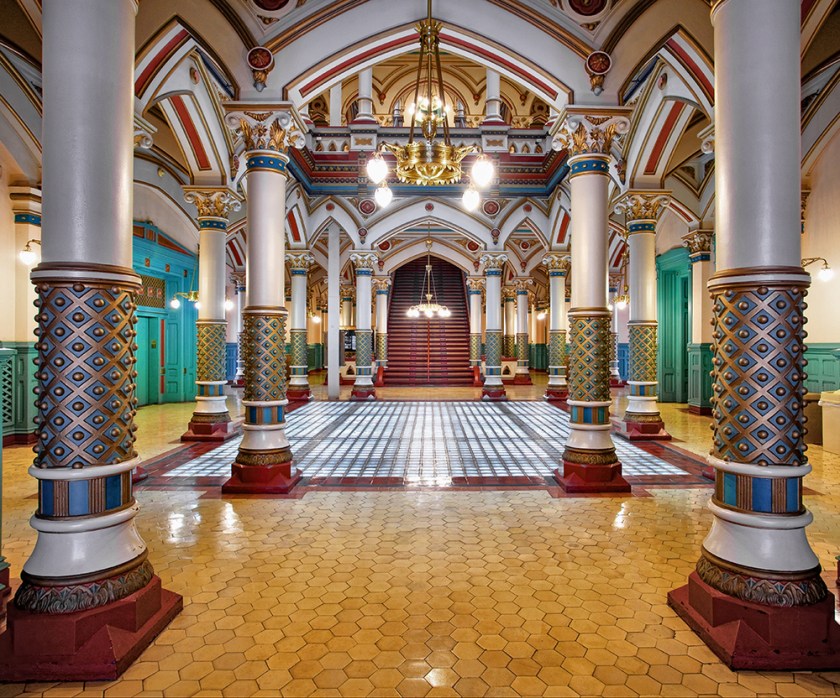
This is inside the Old Richmond City Hall…

…and this is inside the Moscow State Historical Museum.

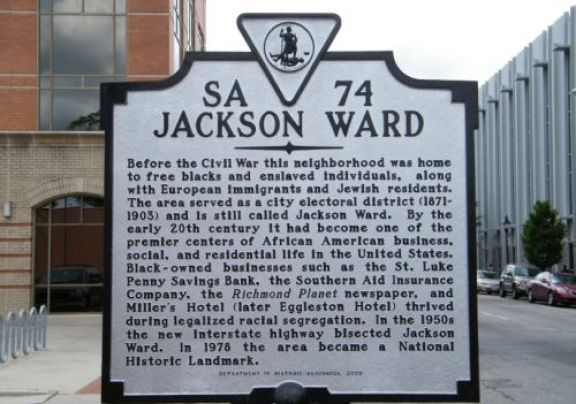
The old and historic Jackson Ward neighborhood is located less than a mile from the Virginia State Capitol building.

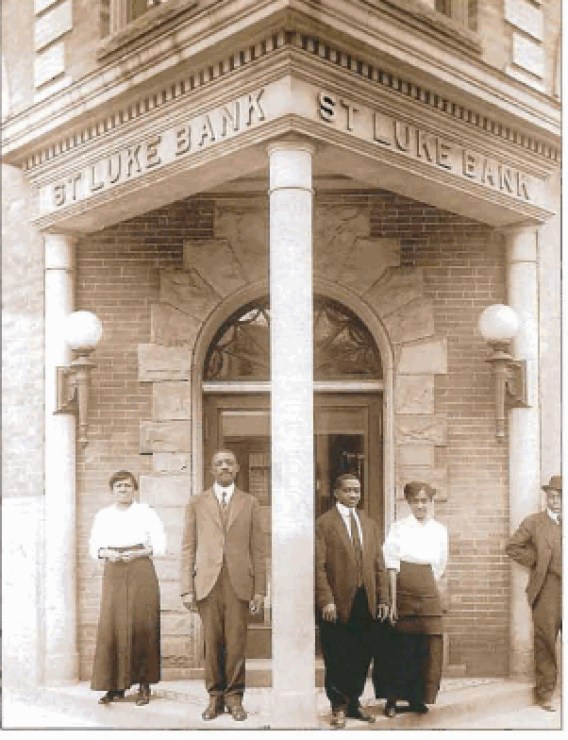
The sign references businesses there, such as the St. Luke Penny Savings Bank, which survived the Great Depression when many banks went under, which became Consolidated Bank and Trust, and is still here today.

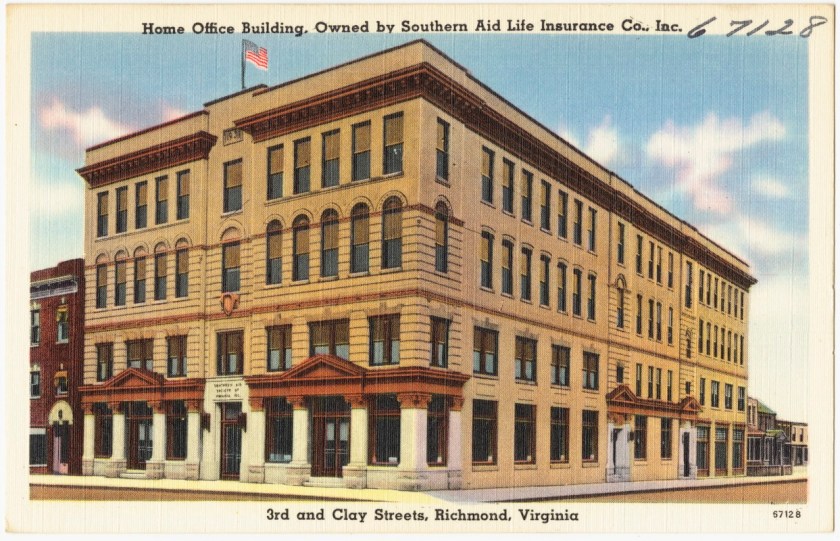
The sign about Jackson Ward also references the Southern Aid Insurance Company, where it was founded in 1893.

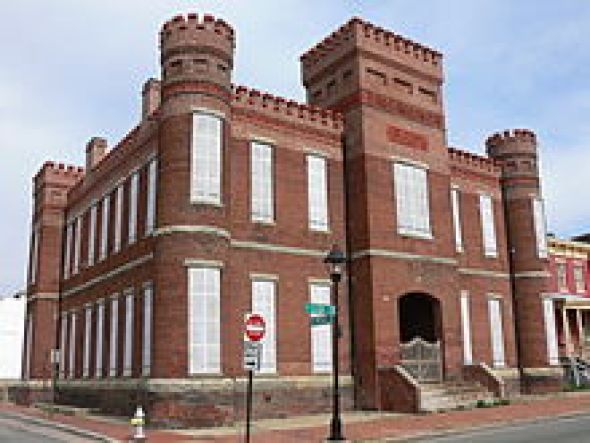
This is the Leigh Street Armory in Jackson Ward, which is now the Black History Museum & Cultural Center of Virginia.

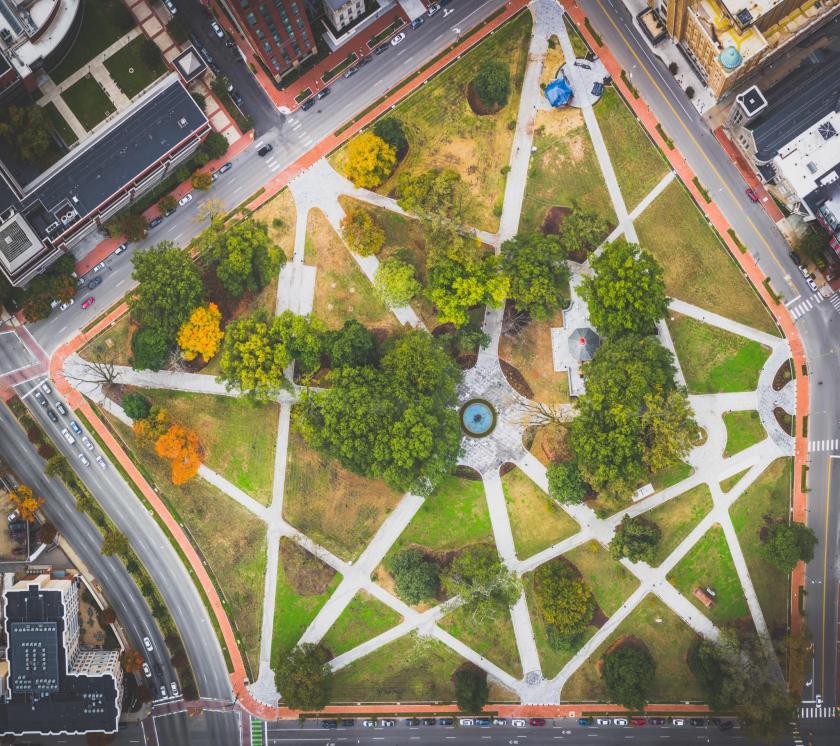
Monroe Park is a 7.5-acre, or 3-hectare, park that is 1-mile, or 1.6-kilometers, northwest of the Virginia State Capitol building. It is pentagonal in shape, and considered to be Richmond’s oldest park.

It is the eastern point of the Fan District, because of the fan shape of the array of the streets that extend west from Belvedere Street on the eastern edge of Monroe Park, westward to the Boulevard.

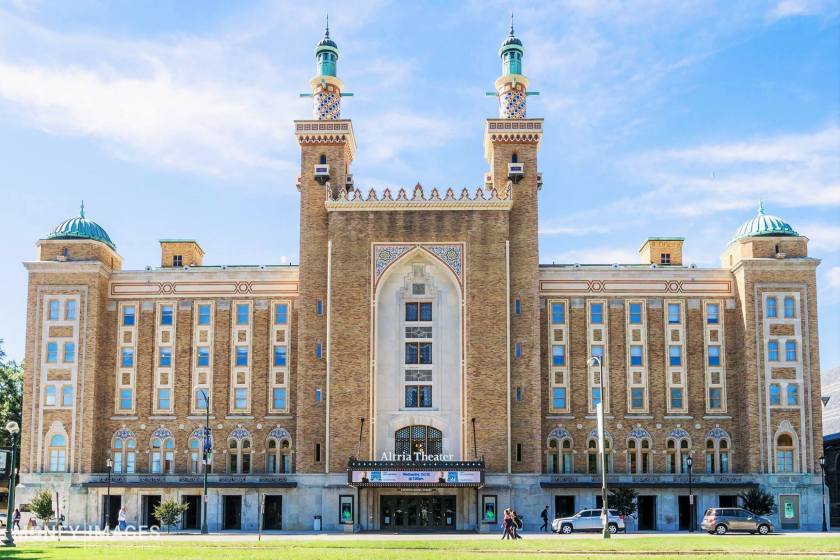
The Altria Theater is located at the southwest corner of Monroe Park.

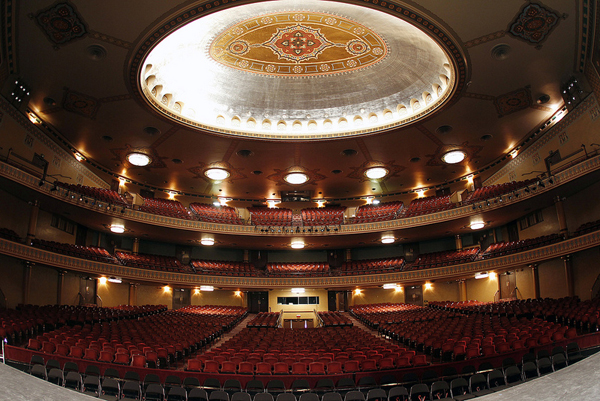
We are told that it was built between 1925 and 1927. This is the interior of the Altria Theater.

Formerly known as The Mosque, and the Landmark Theater, it was said to have been built for the Shriners of the Acca Temple Shrine. More about this later in this post.

Now onwards to Atlanta, Georgia.

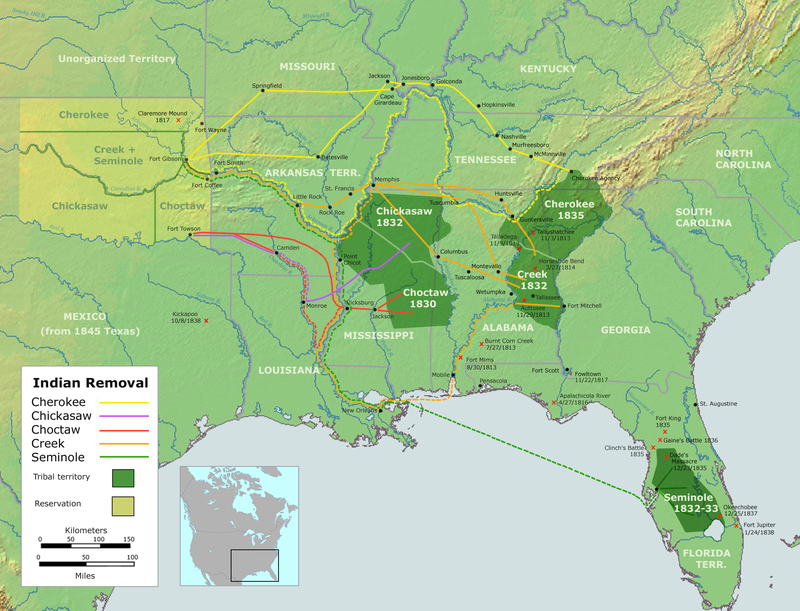
We are told that indigenous Creek people and their ancestors inhabited the area, one of the Five Civilized Tribes, along with the Cherokee, Chickasaw, Choctaw, and Seminole.

Through the early 19th-century, so-called European Americans systematically encroached on the Creek of North Georgia, and forcing their relocation in 1820s and 1830s under “Indian Removal” to lands west of the Mississippi River. We know of this today as the “Trail of Tears.”

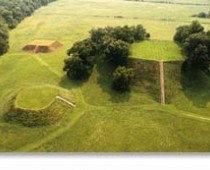
The ancient Etowah Mounds are in North Georgia, near Cartersville in northwest Georgia.

Etowah is said to be a Creek word meaning town/people/tribe, and is a place name found in many states in the U. S.

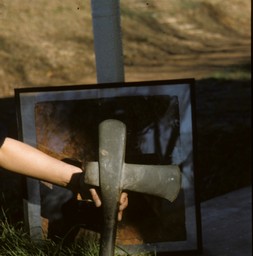
This is a monolithic (made from one stone) axe found in the Etowah, Georgia area…

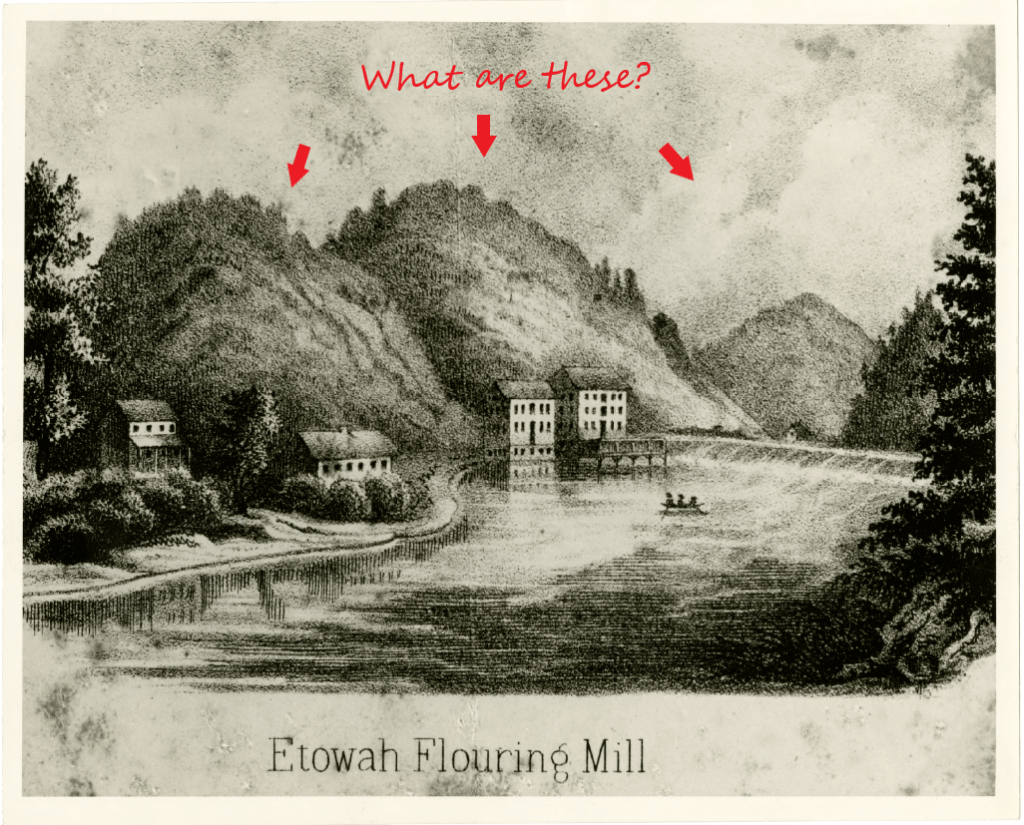
…and at one time there was what was called a flour mill in Etowah, at the base of three pyramidal-looking mountains.

At any rate, this is important, because turning infrastructure built by the indigenous people of this land into some kind of mill, or calling ruins mills, is how this information has been kept hidden from us.

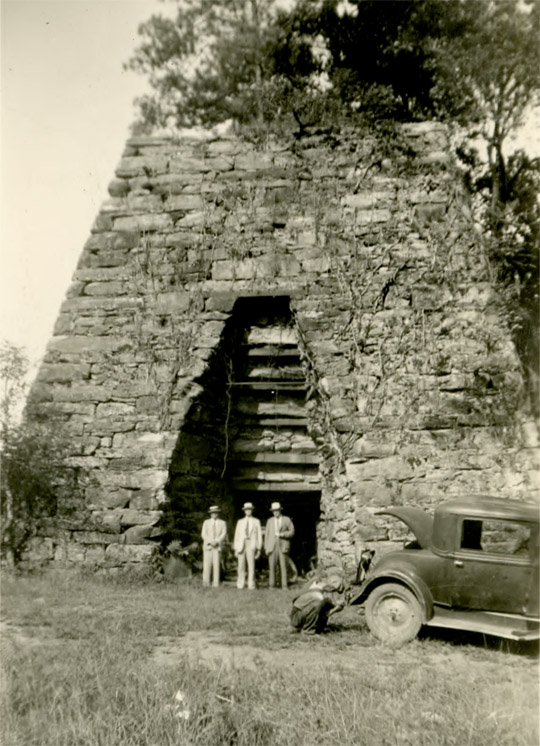
Look at the size of what is called Cooper’s Furnace in Cartersville, Georgia, called the only remains of the bustling industrial town of Etowah…

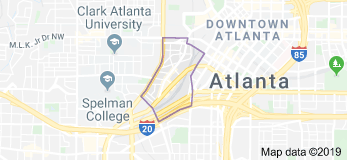
The area in the city limits of Atlanta known as Castleberry Hill is adjacent to, and southwest, of Downtown Atlanta, with Daniel Castleberry becoming an established businessman here when he was said to have won the land in a Georgia land lottery in 1921.

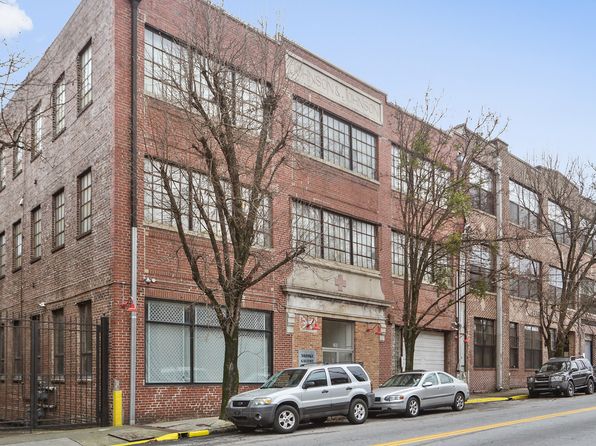
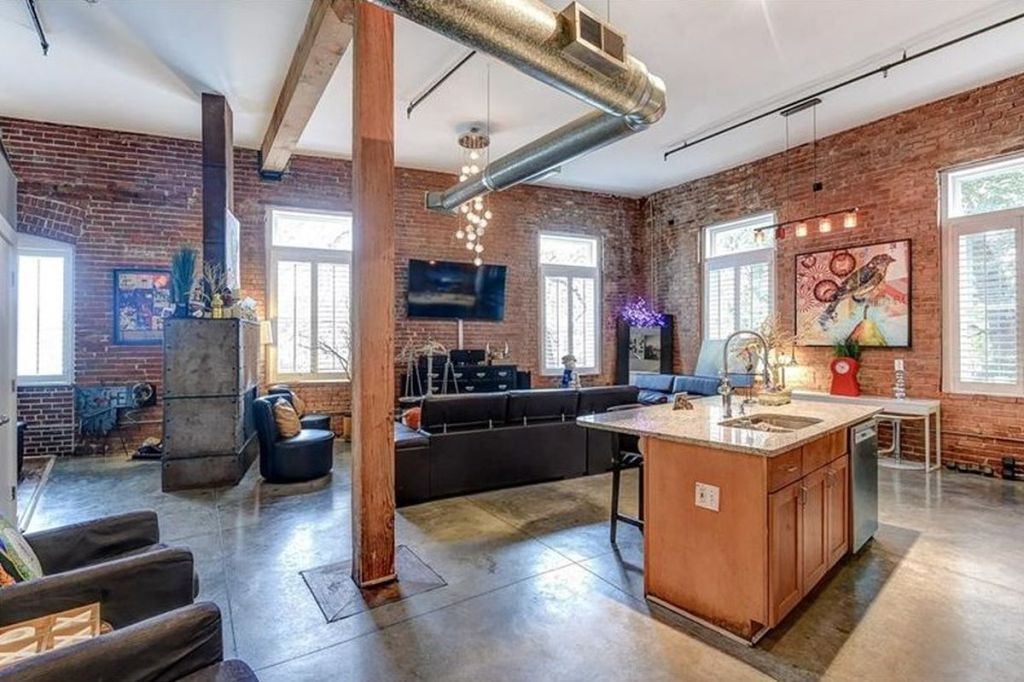
It has become a booming urban renaissance area since the early 1980s, with loft conversions of what are called former industrial areas beginning around that time, and turning them into residences.

Like this brick residential block in Castleberry Hill…

…in another in Castleberry Hill, the renovation inside.

Things like this, and the Castleberry Hill Art Stroll, turning Castleberry Hill into a trendy part of town.

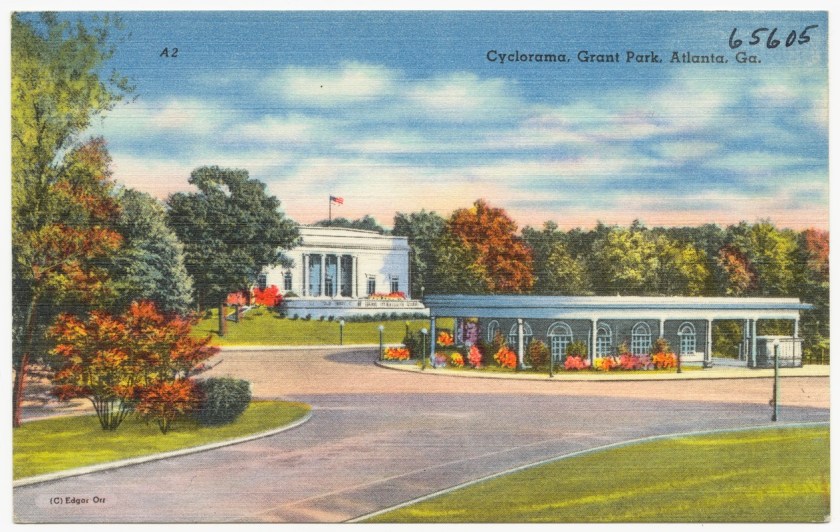
Grant Park refers to the oldest city park in Atlanta, as well as what is called the Victorian neighborhood surrounding it.

It is a 131-acre green-space and recreational area.

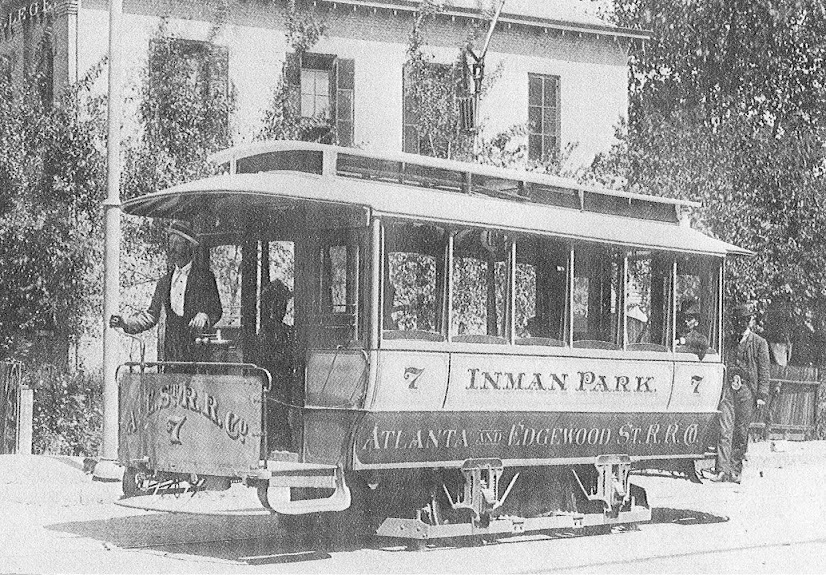
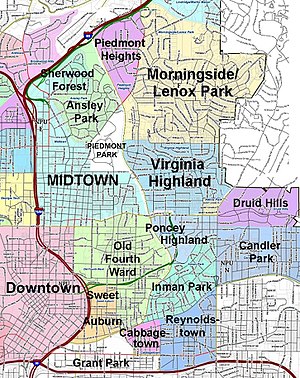
Inman Park in Atlanta has been around, we are told, since the 1880s, and was Atlanta’s first planned suburb, complete with its own electric streetcar shuttling commuters to Downtown Atlanta a few miles to the west.

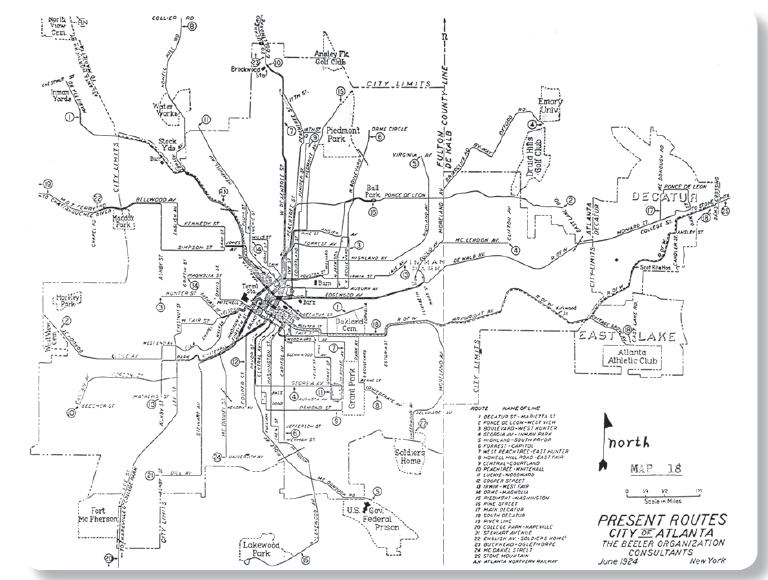
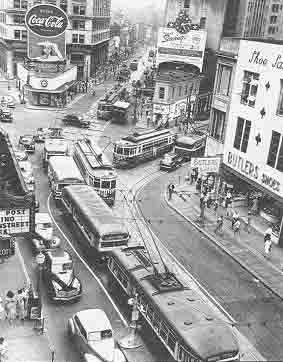
This is a map showing Atlanta’s streetcar system in 1924, and the last streetcar from the original system went out of service in 1949.

The reason given for the decline of streetcars is the popularity of the automobile, but why completely scuttle an efficient and affordable mass transportation system, and replace it with a polluting and expensive one?

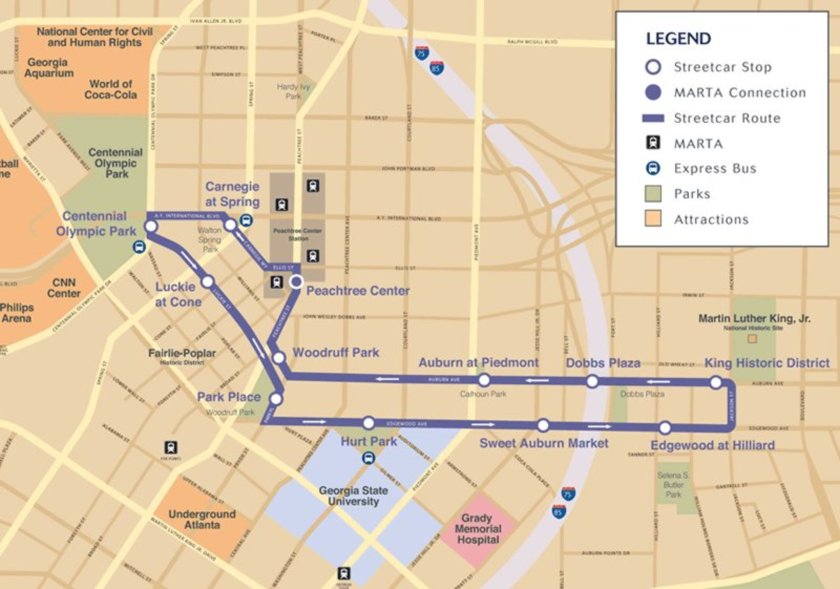
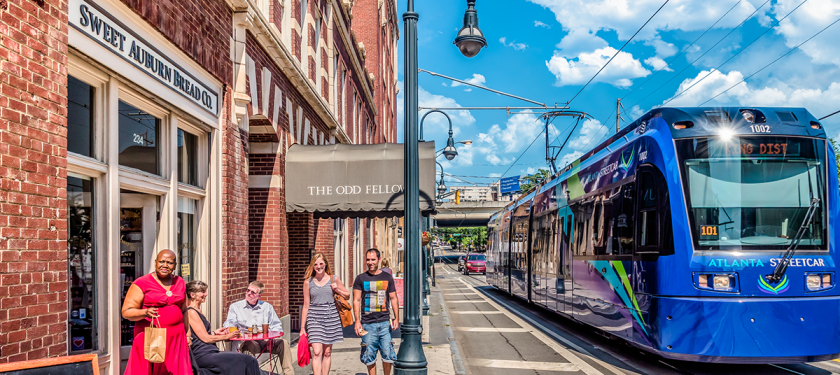
As a matter of fact, one of the streetcar lines has returned to Atlanta. A 2.7-mile, or 4.3-kilometer, streetcar line opened in Atlanta in December of 2014 between Centennial Park, going east along Edgewood Avenue to the Martin Luther King, Jr. National Historic Site, and west along Auburn Avenue.

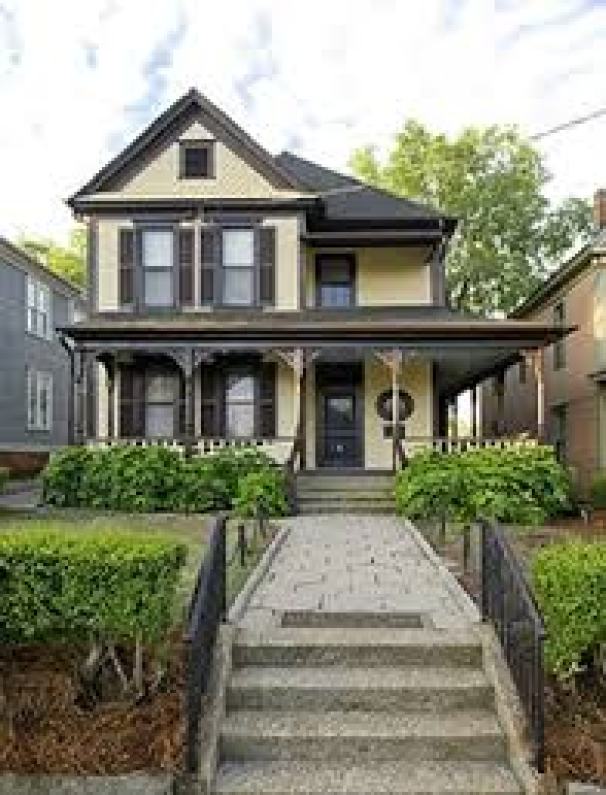
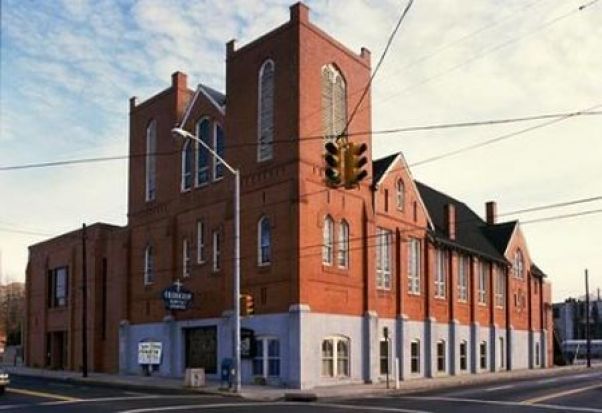
The Martin Luther King Jr Historic Site in the Sweet Auburn residential district adjacent to the Old Fourth Ward…

…which includes his boyhood home…

…and the Ebenezer Baptist Church, where he was baptized, and both he and his father preached.

Sweet Auburn is described as a historic African-American neighborhood with one of the largest concentrations of African-American businesses in the United States, and where there were more financial institutions, professionals, educators, entertainers and politicians on this one-mile of street than any other African-American street in the South.

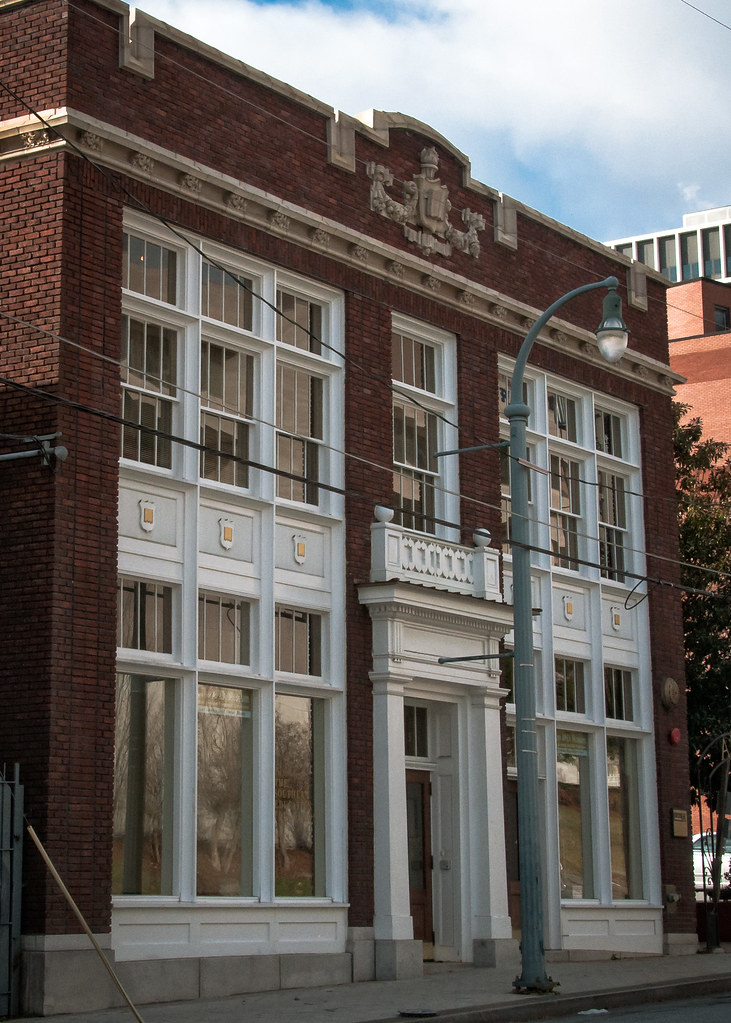
This is the John Wesley Dobbs building, said to have been built in 1910 as the Atlanta School Book Depository, and is now the African-American Panoramic Experience, or APEX, Museum.

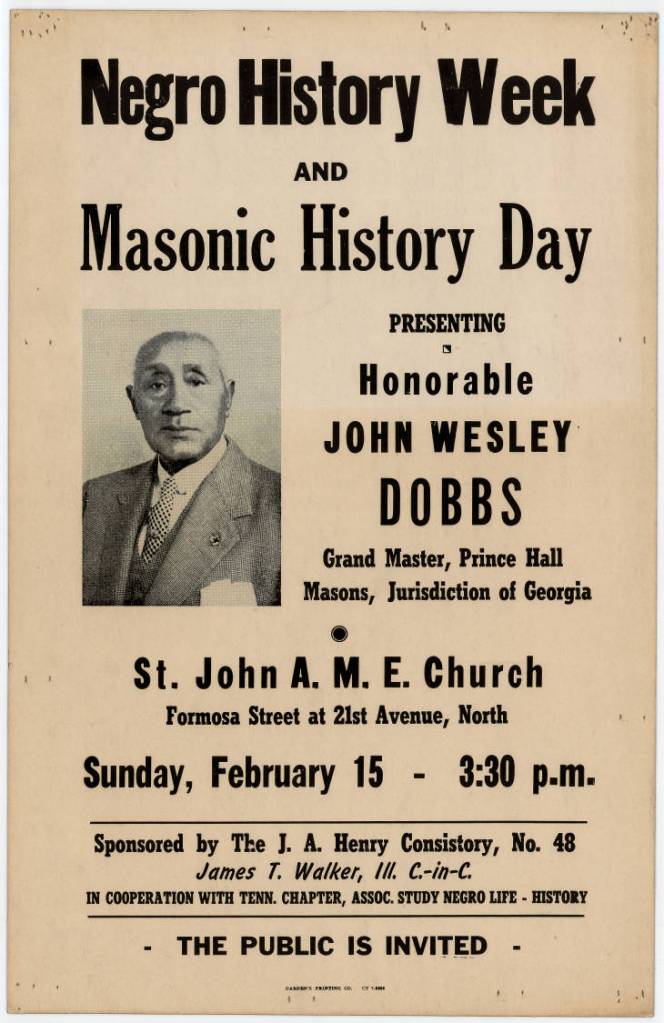
John Wesley Dobbs was a civil and political leader in Atlanta. He became a member of the Prince Hall Masons in 1911, and in 1932, he was elected Grand Master of the Prince Hall Masons of the Jurisdiction of Georgia, a post he held for the rest of his life.

This is a 1940 historic photo of streetcars on Auburn Avenue and Peachtree Street…

…and the streetcar line running again in Sweet Auburn today.

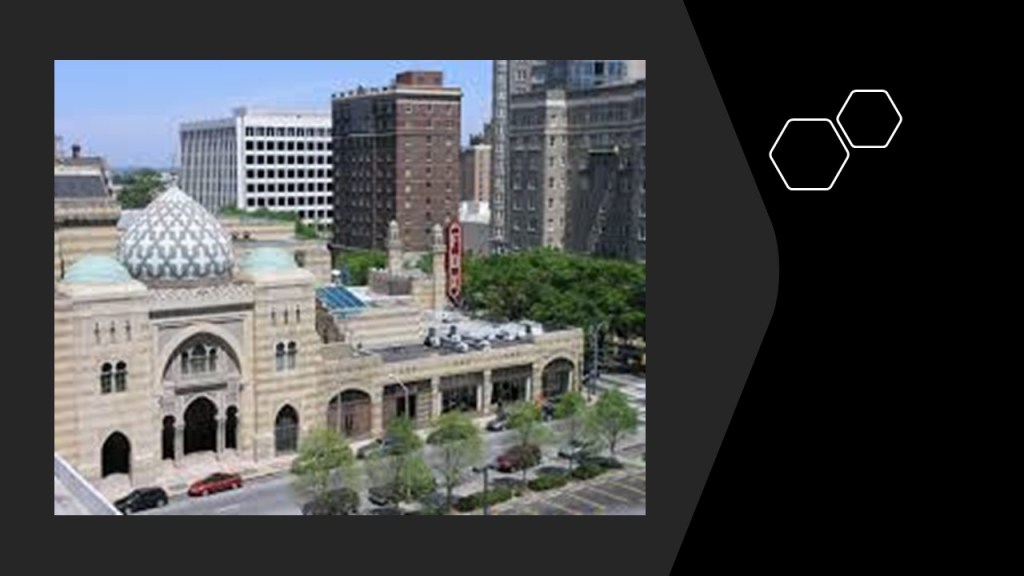
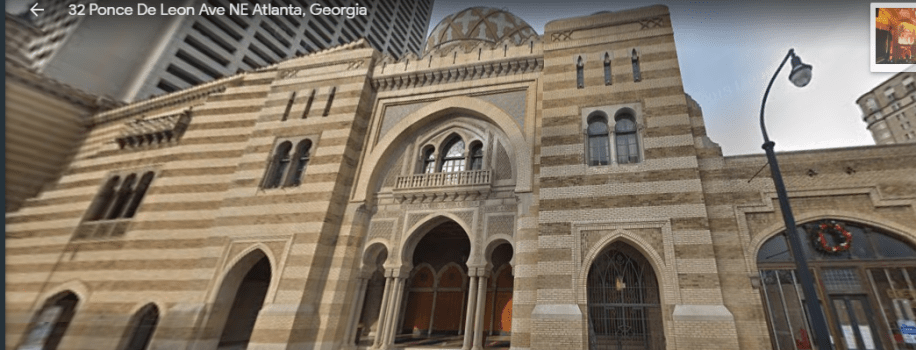
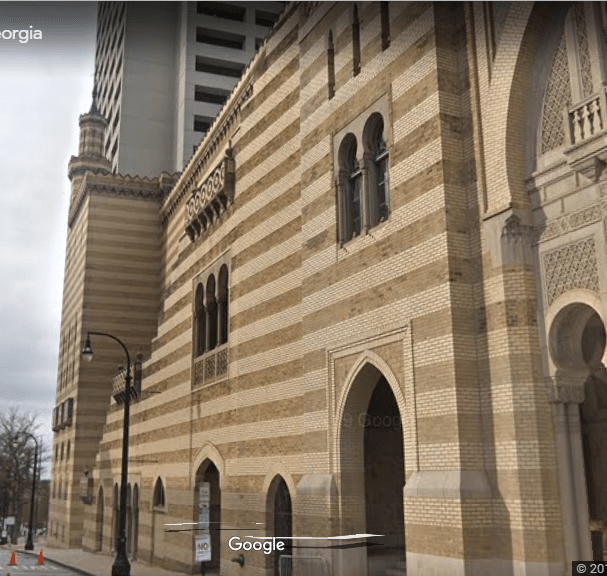
There is one more place in Atlanta I would like to look at before ending this post. This is the Fox Theater is in Midtown Atlanta.

It was said to have been built originally to become a large Shrine Temple, but the 2.75 million dollar project exceeded their budget…

…so the project was said to have been leased to movie mogul William Fox. The Fox Theater opened in 1929, two months after the stock market crash and the beginning of the Great Depression. The Theater closed 125-weeks after it opened. New owners acquired it, Paramount Pictures and Georgia-based Lucas & Jenkins, after the mortgage was foreclosed in 1932.

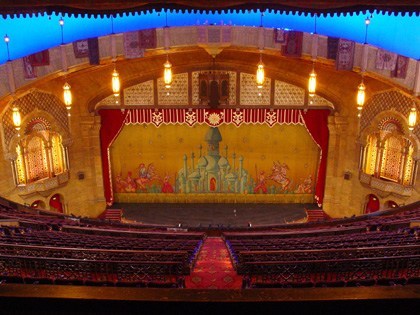
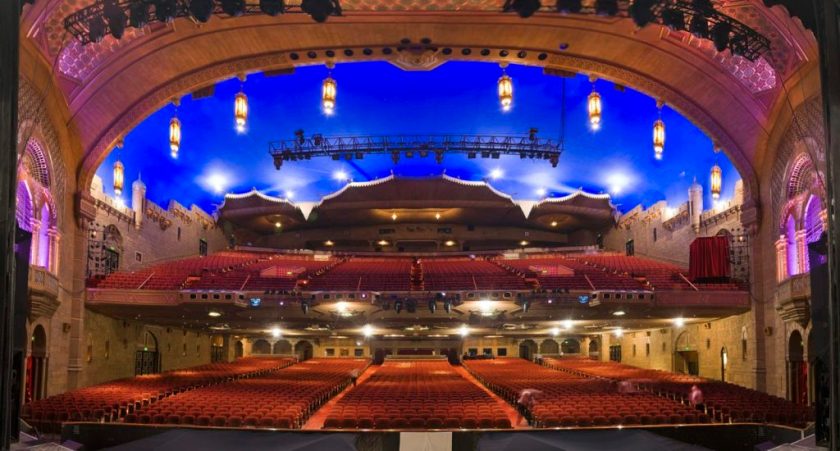
This is the interior of the Fox Theater …

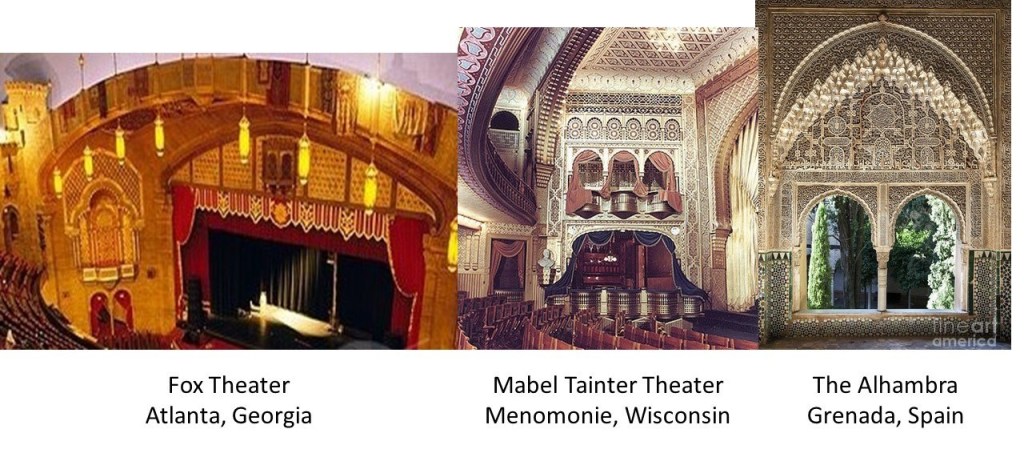
This is a detail of the Fox Theater stage in Atlanta on the left; the Mabel Tainter Memorial Theater stage in Menomonie, Wisconsin in the middle; and a detail on the right at The Alhambra in Grenada, Spain, the only place acknowledged to have had a Moorish civilization.

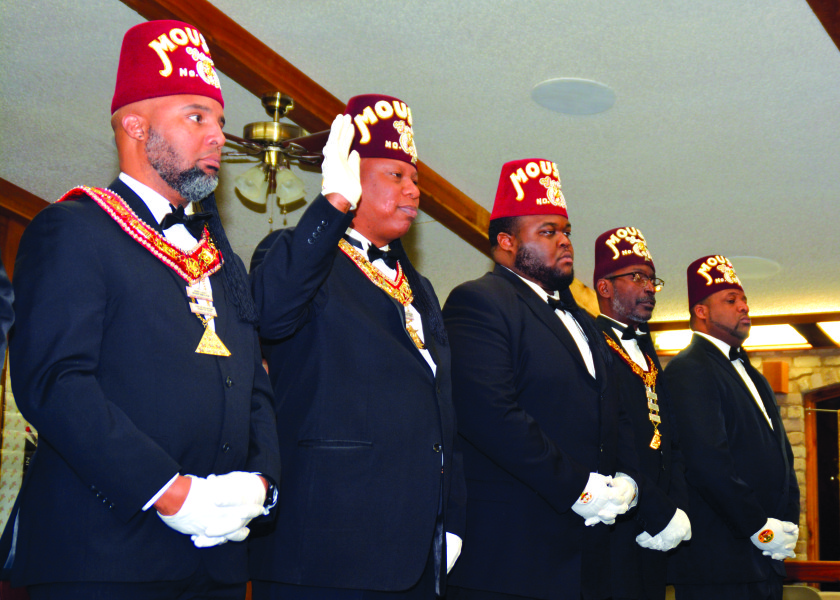
So, like the Altria Theater in Richmond, the Fox Theater in Atlanta was said to have been built for the Shriners.

Which Shriners, though? These…

…or these?

Because, you see, this is what all of this, every bit of what has taken place in Earth’s modern history, is really all about. A stolen legacy that everything we are taught today has been grafted on top of, and has been hidden away from the general public.

In my next post, I am going to be looking at famous castles and mansions in the United States.

What is it Exactly About the World’s Disputed Islands?

In my journey tracking cities and places in aligment with each other around the world, I kept coming across obscure, seemingly insignificant islands and island groups that are the subjects of territorial disputes between countries, many of which are still on-going in the present day.

I first published this post in October of 2019.

So I have been wondering about this for a very long time.

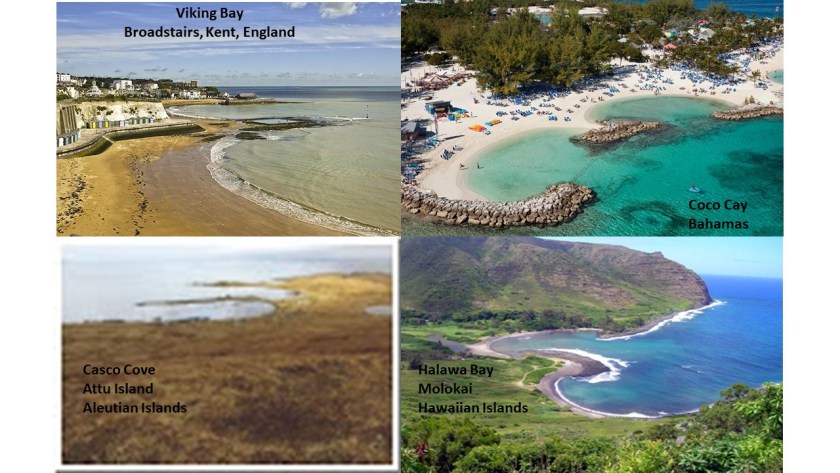
Now that I understand about the existence of Giant Trees with the help of Chad Williams of the “Deeper Conversations with Chad” YouTube channel, and their importance on the Earth’s grid system, this goes a long way to answer the question posed in the title of this post…”What is it Exactly About the World’s Disputed Islands!”

Now I know!

In my latest conversation with Chad, “Giant Trees, the Earth’s Grid, and the New World Order,” among many other things, we talked about how the European Colonizers were going after tiny remote islands to claim for their countries.
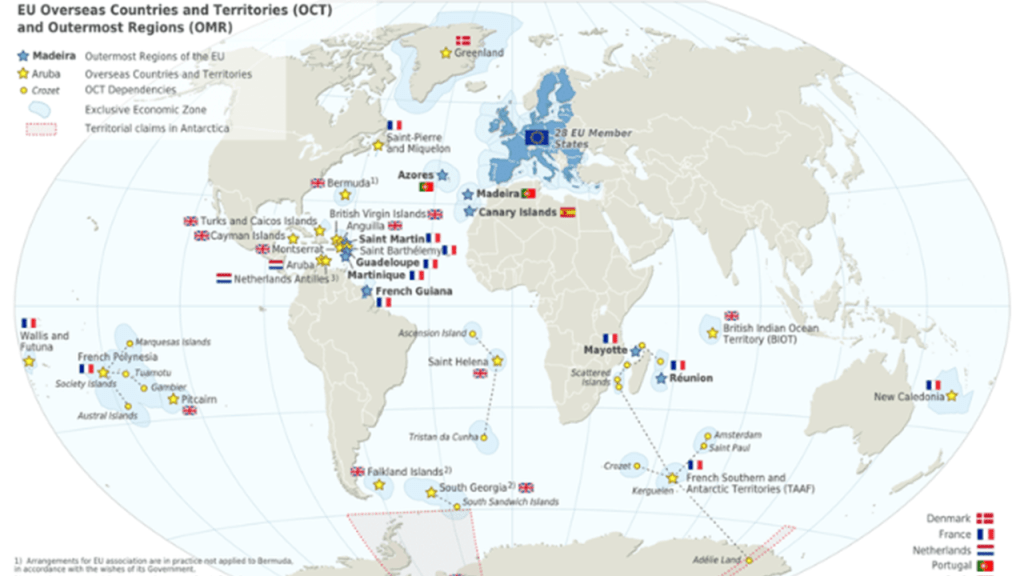
We discussed a number of these remote islands from the perspective that they were former giant tree locations, as I had come across many of these islands when tracking alignments that were claimed by different European Countries as “Overseas Countries, Territories and Outermost Regions.”

As I said at the beginning of this post, I also kept coming across obscure, seemingly insignificant islands and island groups that are the subjects of territorial disputes between countries, many of which are still on-going in the present day. in my journey tracking cities and places in alignment with each other around the world, and in many cases, the odd stories associated with these disputed islands.
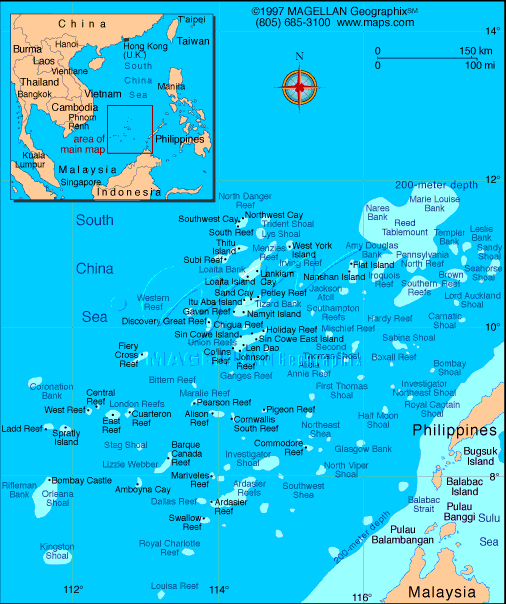
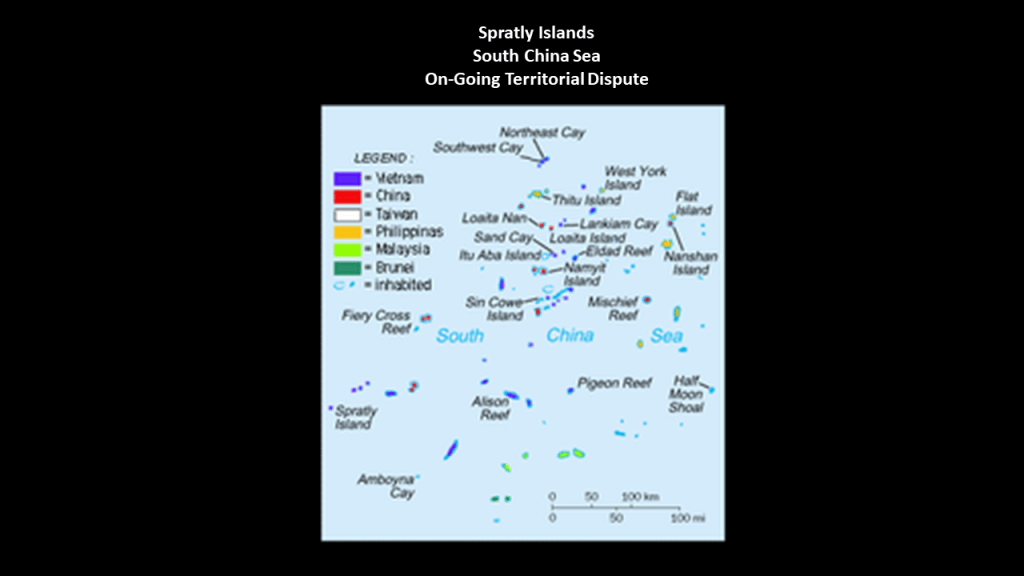
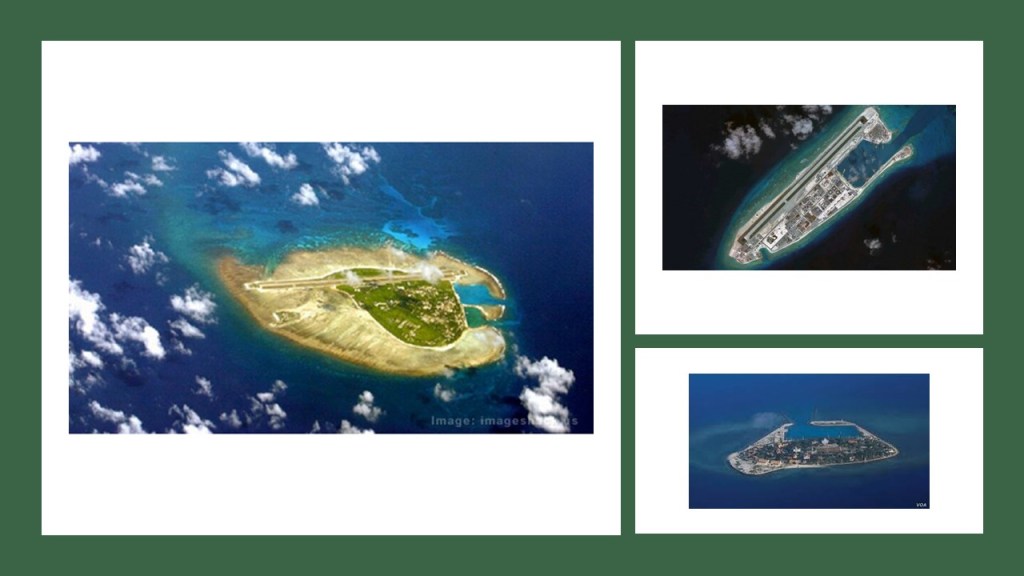
I will start with the Spratley Islands.

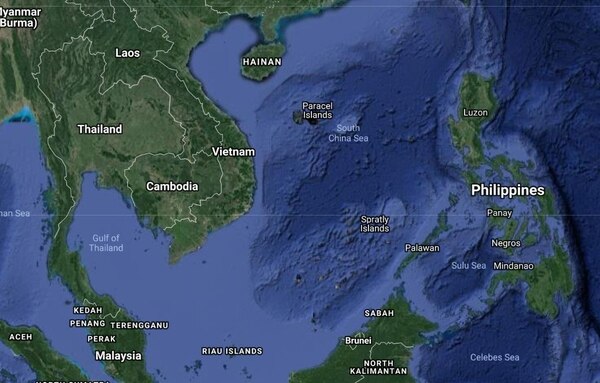
I found the Spratley Islands in the South China Sea when I was following one of the alignments that emanate off of the North American Star Tetrahedron at Merida, Mexico.

They consist of 14 islands or islets; 6 banks; 113 submerged reefs; 35 underwater banks; and 21 underwater shoals.

The northeast part of the Spratlys known as dangerous ground due to low islands; sunken reefs; and degraded sunken atolls.

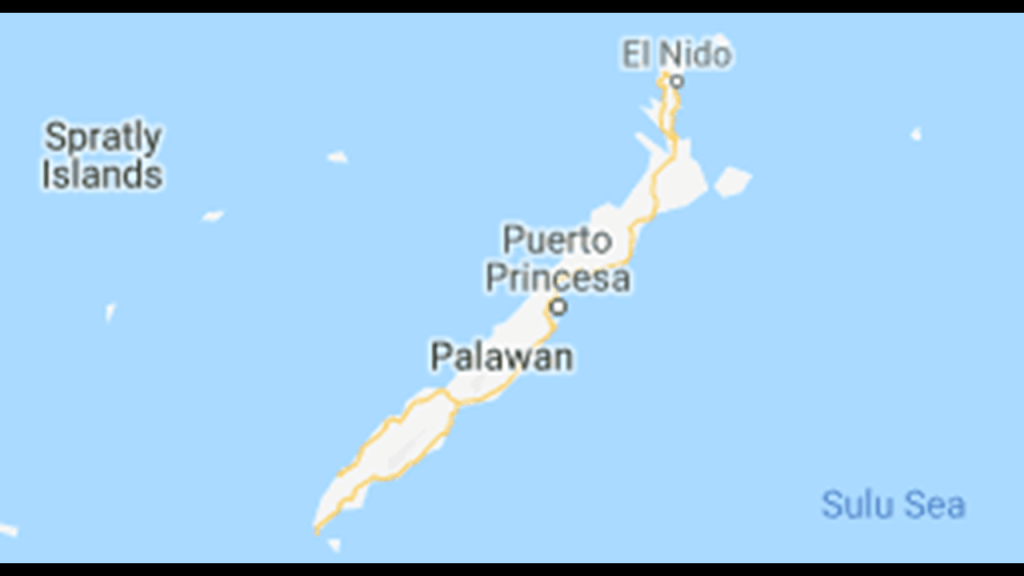
They are located on the alignment just northwest of Palawan Island…

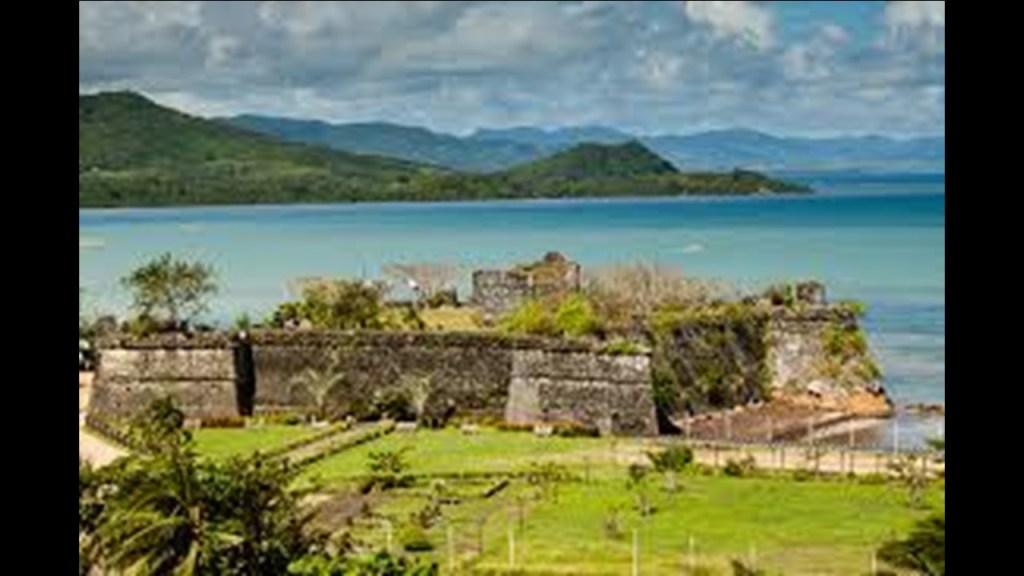
…and Palawan, in the Phillipines, is considered by many to be the most beautiful island in the world.

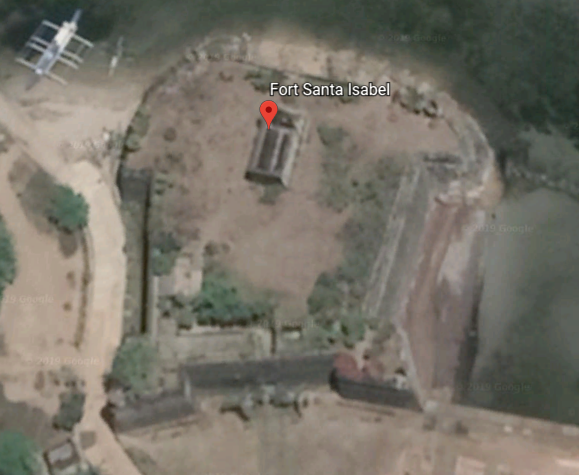
There is a star fort located in Taytay on the island of Palawan called the Fuerza de Santa Isabel.

From my extensive research on the physical lay-out of earth-grid alignments, and the frequent occurrence of star forts situated along the Earth grid system worldwide, I believe that star forts functioned as batteries on the Earth’s grid system, and were not originally military in nature as we have been led to believe in our historical narrative.

Back to the Spratley Islands.

The Spratly Islands dispute is an on-going territorial dispute between China, Taiwan, Malaysia, the Philippines, Brunei and Viet Nam concerning “ownership” of the Spratly Islands.

What is it about these islands?

Well, we are told they are of economic and strategic importance; hold reserves of natural gas and oil; productive fisheries; and is a busy area for commercial shipping traffic.

At the time I originally did the research for this post, I speculated that there is a powerful energy component here–whether placement, production, or something else–related to these planetary grid lines, and it is becoming clearer and clearer that the giant trees of the Earth were powerful components of the Earth’s grid system.

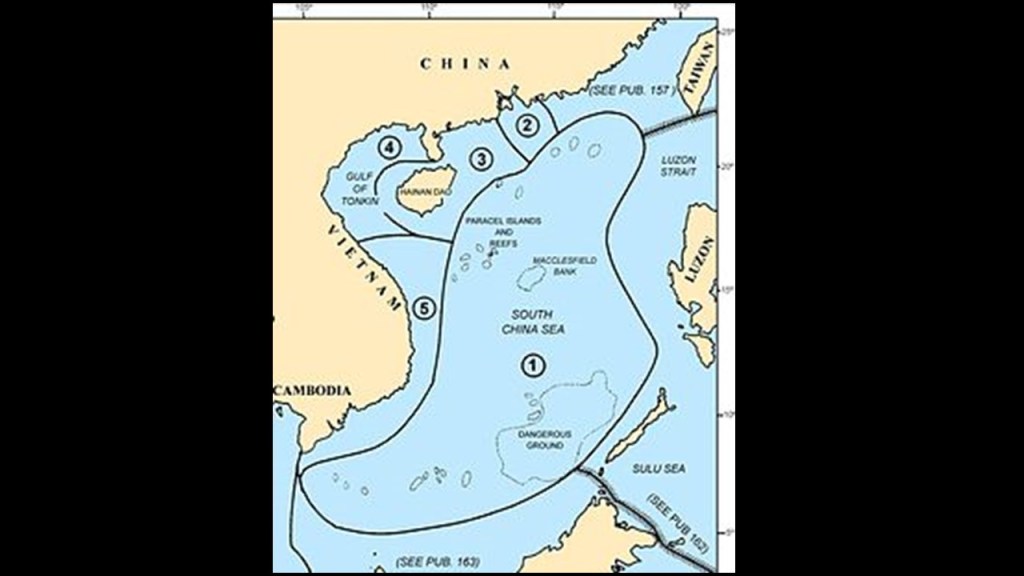
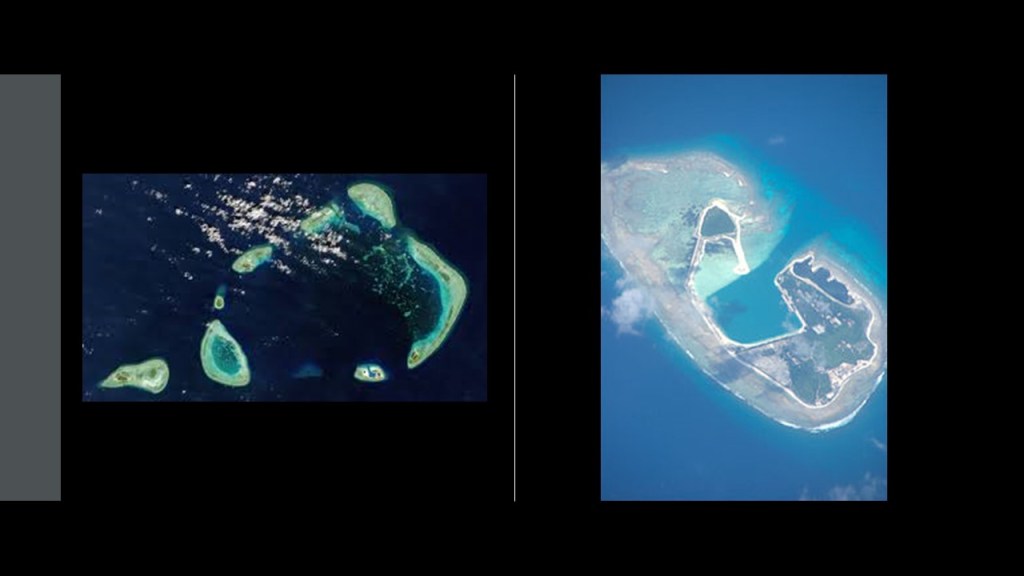
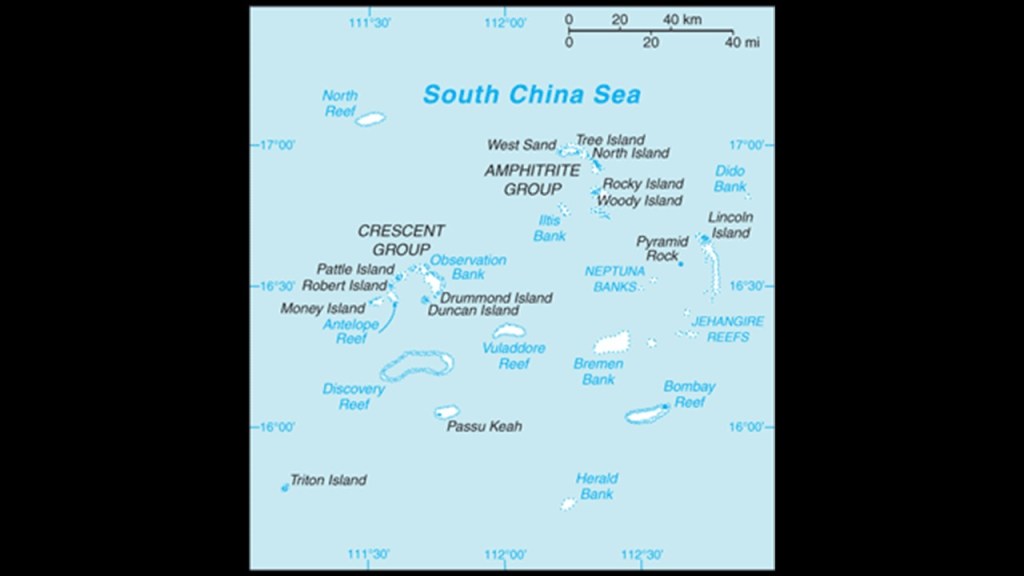
So, for another example of this in the South China Sea, just northwest of the Spratly Islands on the same alignment’s way through Hainan in China, the Paracel Islands are a similar group of islands, reefs, and banks that are strategically located; productive fishing grounds; and which also hold reserves of natural gas and oil.

While they are controlled and operated by China, they are also claimed by Taiwan and Viet Nam.

The archipelago consists of 130 small coral islands and reefs, most grouped into the northeast Amphitrite Group or the western Crescent Group.

Island names suggestively include: Tree Island; Woody Island; Pyramid Rock; and Money Island.

In ancient Greek mythology, Amphitrite was a sea goddess; the wife of Poseidon; and the Queen of the Sea.

The Paracel Islands are also the location of the Dragon Hole, or Sasha Yongle Blue Hole, the world’s deepest known blue hole at 987-feet, or 301-meters, deep.

Former giant tree location perhaps?

Dragon Hole is called the “Eye of the South China Sea,” and is where the Monkey King found his golden cudgel in the 16th-century Chinese classic of Literature “Journey to the West,” with authorship attributed to Wu Cheng’en.

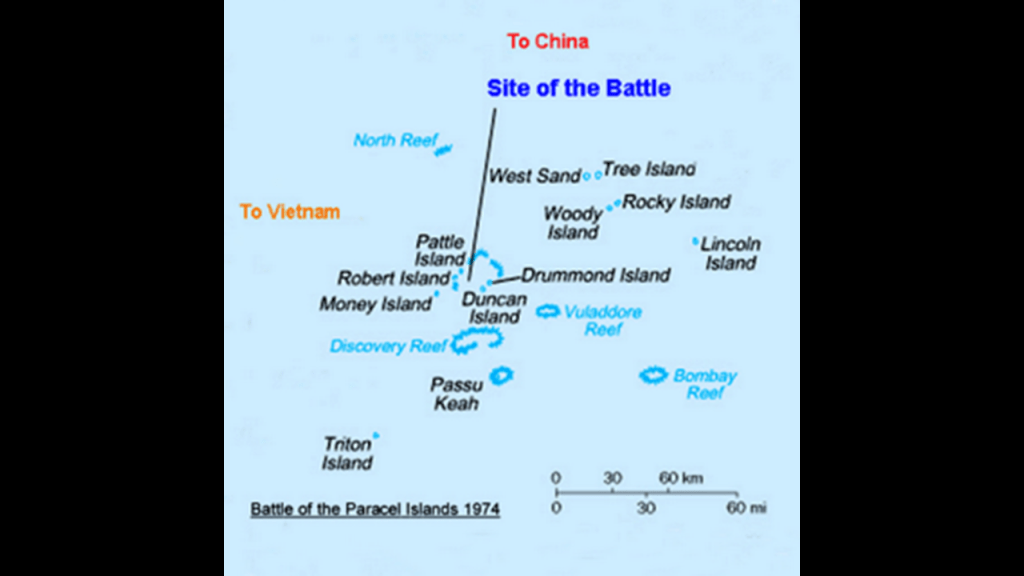
The Battle of the Paracel Islands was a military engagement between the naval forces of South Vietnam and China in 1974, and was an attempt by the South Vietnamese navy to expel the Chinese navy from the vicinity.

As a result of the battle, China established de facto control over the Paracel Islands.

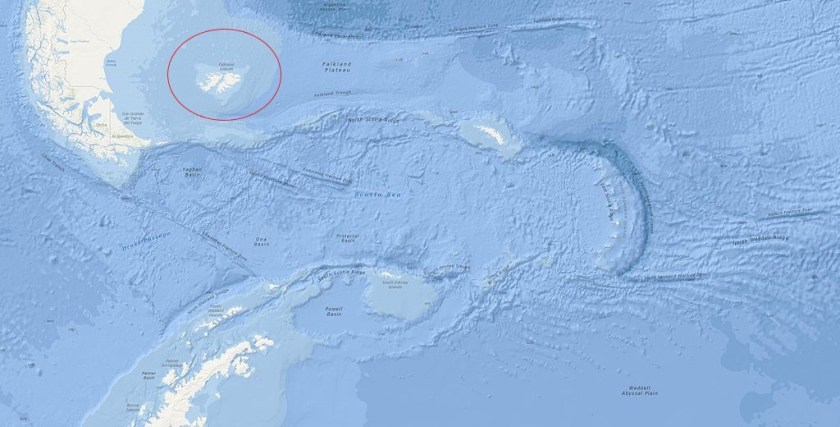
The next place that I am going to look at are the Falkland Islands, an archipelago in the South Atlantic Ocean on the Patagonian Shelf.

They are 300-miles, or 483-kilometers, east of South America’s southern Patagonian coast, and 752-miles, or 1,210-kilometers, from the northern tip of the Antarctic Peninsula, at a latitude of 52-degrees south.

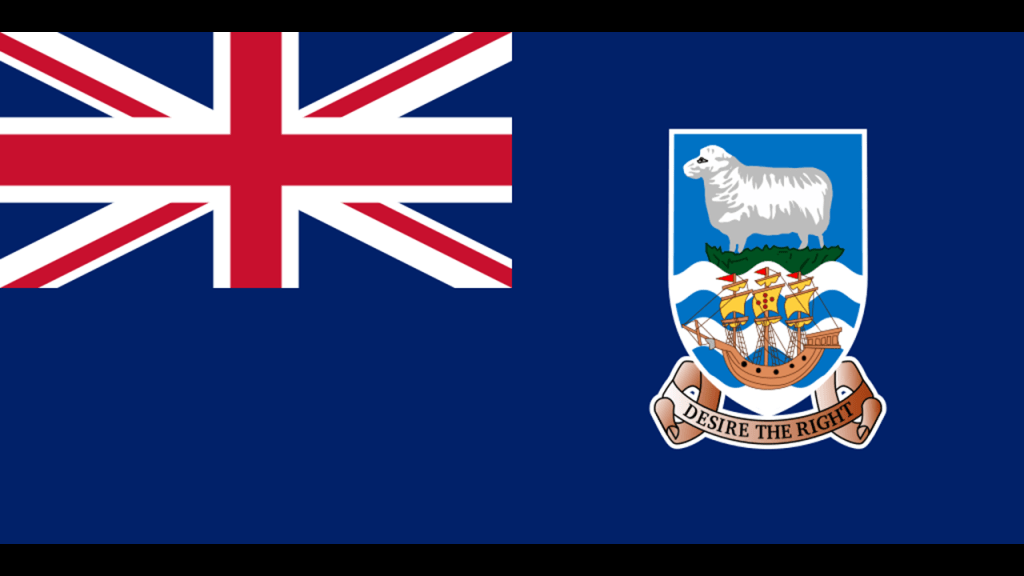
It is a British overseas territory, and consists of two large islands – East Falkland and West Falkland – and 776 smaller islands.

The population of less than 4,000 people are British citizens.

Britain reasserted its rule over the Falklands in 1833, with a colonial presence also including French, Spanish, and Argentine settlements.

Argentina maintains its claim to the islands.

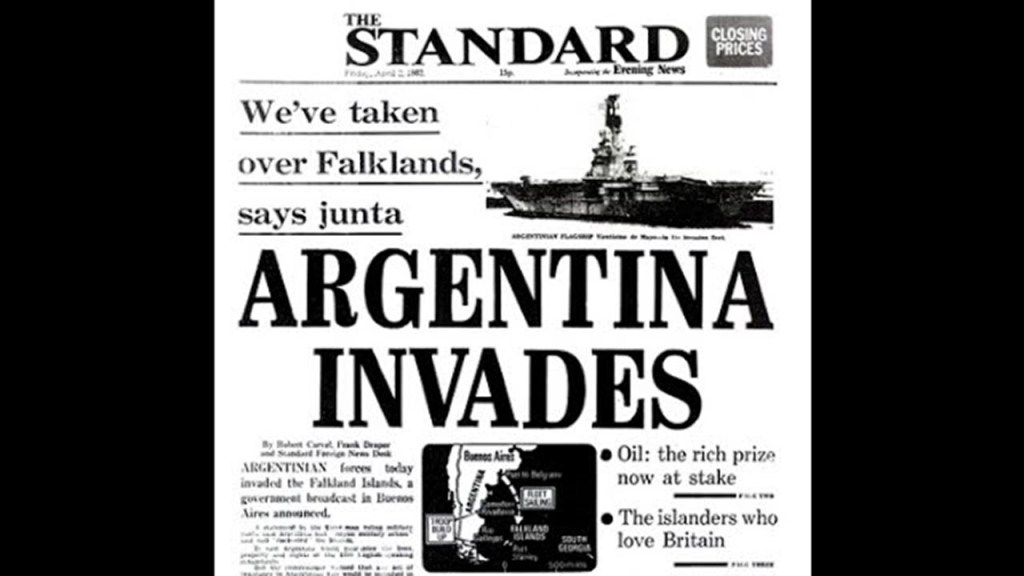
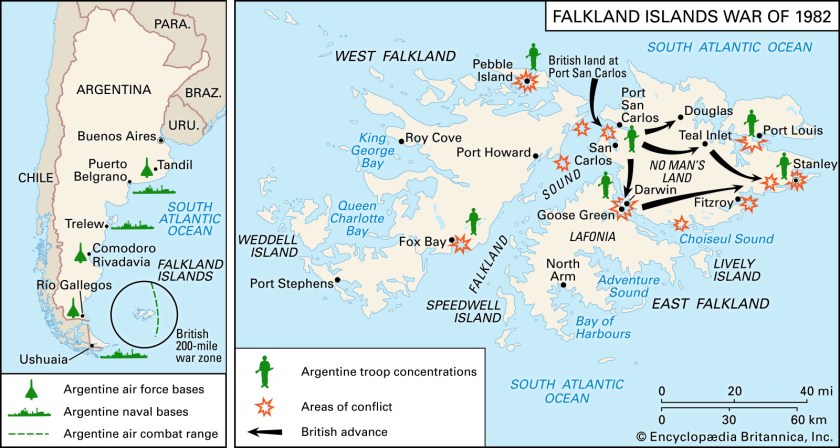
On April 2nd, 1982, Argentine forces occupied the Falkland islands.

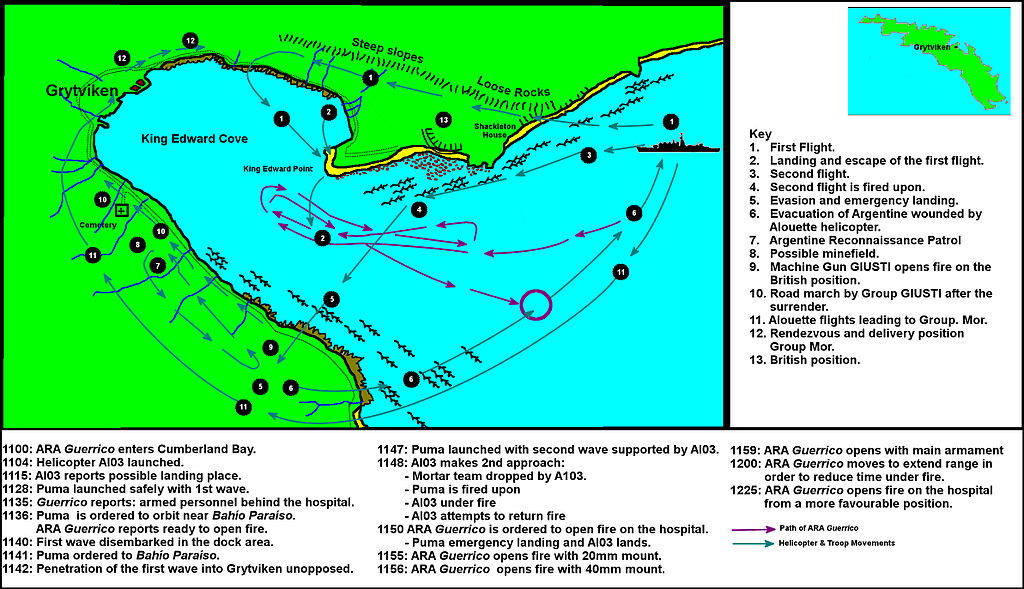
On April 3rd, 1982, Argentine forces seized control of the east coast of South Georgia Island in the Battle of Grytviken, part of the South Sandwich Islands, and another British Overseas Territory near the Falkland Islands that is claimed by Argentina.

On April 5th, 1982, the Falklands War between Argentina and Great Britain started. While not officially declared a war, it was declared a war-zone.

The conflict lasted 74-days, and ended with Argentina’s surrender on June 14th, 1982, returning the islands to British control.

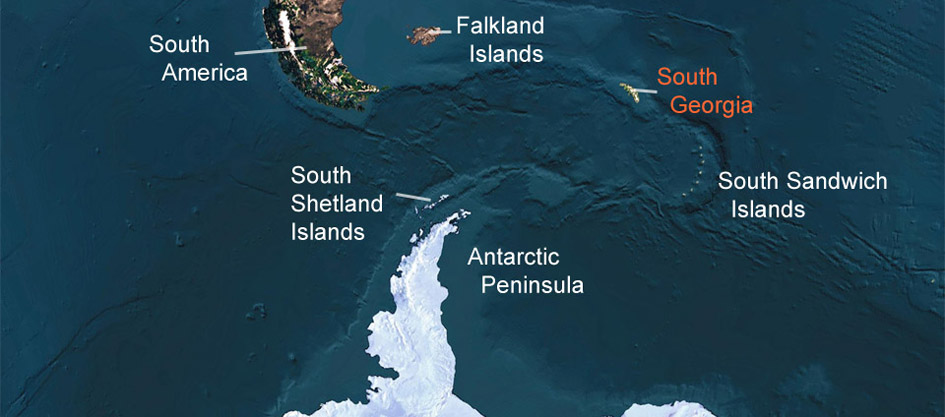
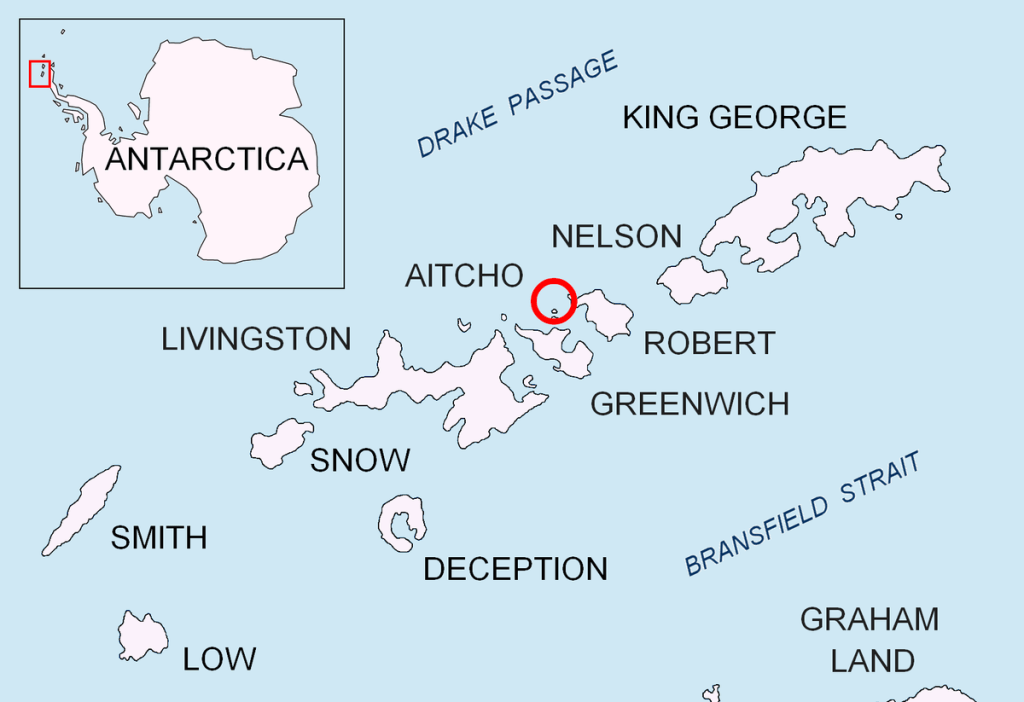
The South Shetland Islands shown here in this map are in the neighborhood of all these little island groups off the southernmost tip of South America, and are a group of Antarctic islands with a total area of 1,424 square-miles, or 3,687 square-kilometers.

By the Antarctic Treaty of December 1st, 1959, the islands’ sovereignty is neither recognized nor disputed by the treaty’s 12 signatories – Argentina, Australia, Belgium, Chile, France, Japan, New Zealand, Norway, South Africa, the Soviet Union, the United Kingdom, and the United States – and they are free for use by any signatory for non-military purposes.

However, the islands have been claimed by Great Britain since 1908, and as part of the British Antarctic Territory since 1962.

They have also been claimed by Chile and Argentina since the 1940s.

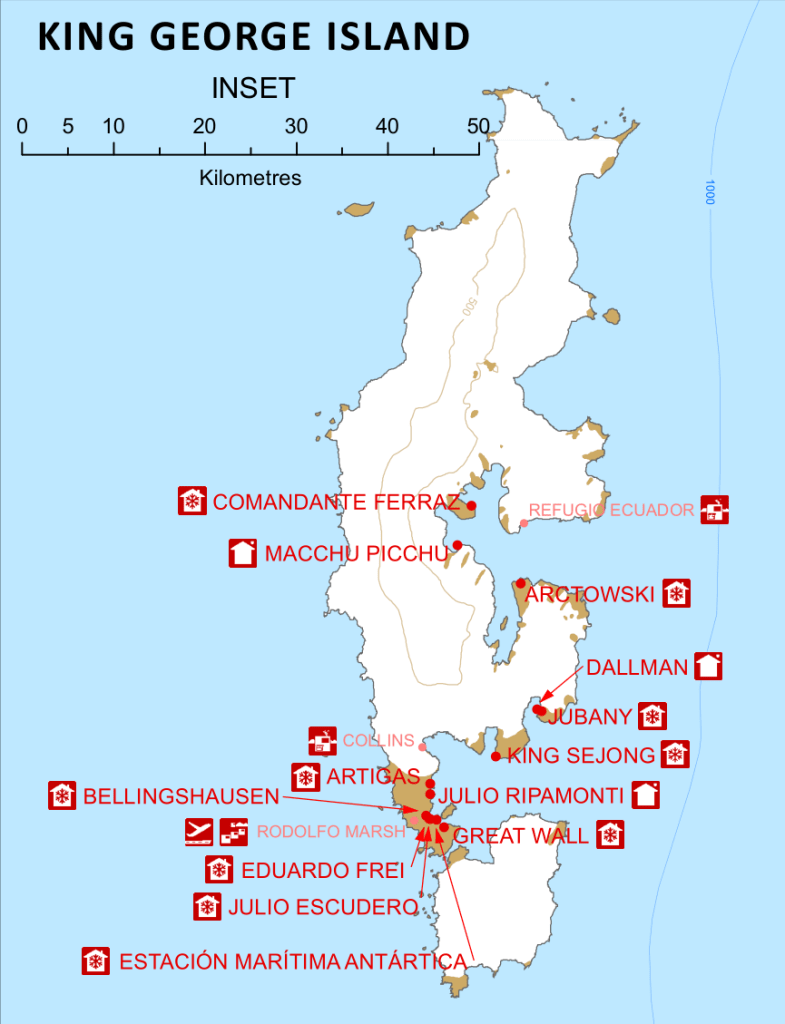
The Chileans have the largest number of research stations on the islands, as well have having the Eduardo Frei airbase on King George Island, where the largest number of international research stations are located.

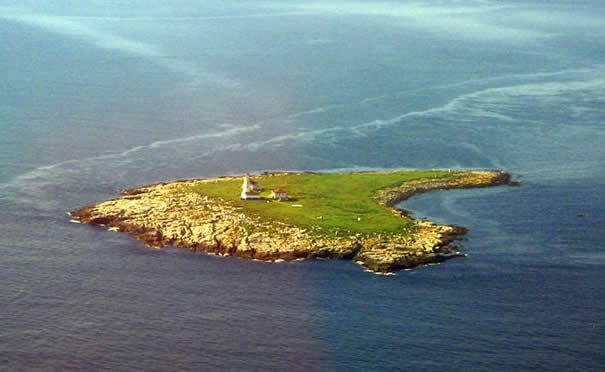
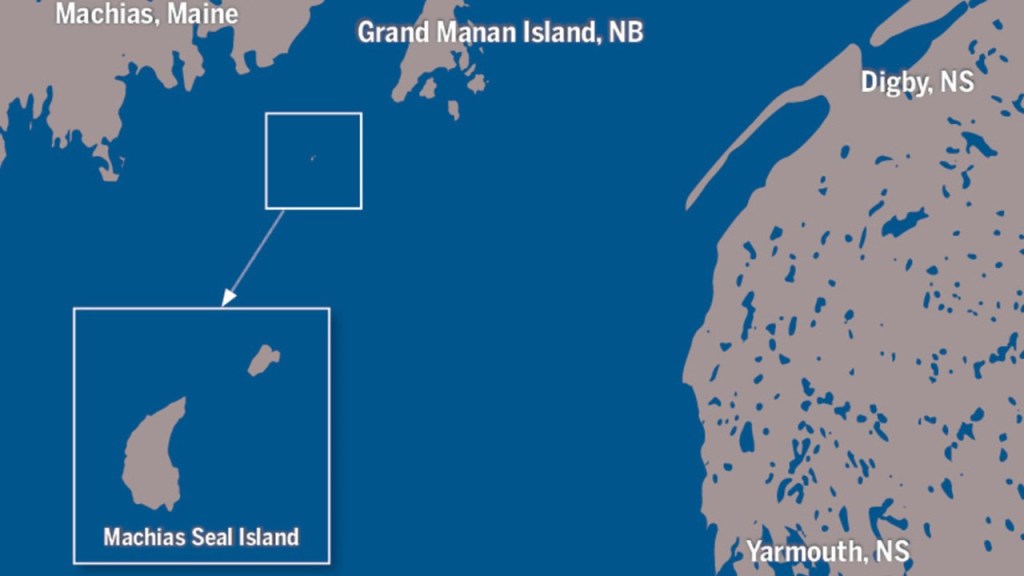
Moving to North America in the northern hemisphere, Machias Seal Island, which has a lighthouse in the center of it manned by the Canadian Coast Guard, is part of an on-going territorial boundary dispute between the United States and Canada.

Machias Seal Island is located on the border of the Gulf of Maine in the United States, and the Bay of Fundy in Canada.

Other boundary disputes, not limited to islands, between the United States and Canada include:

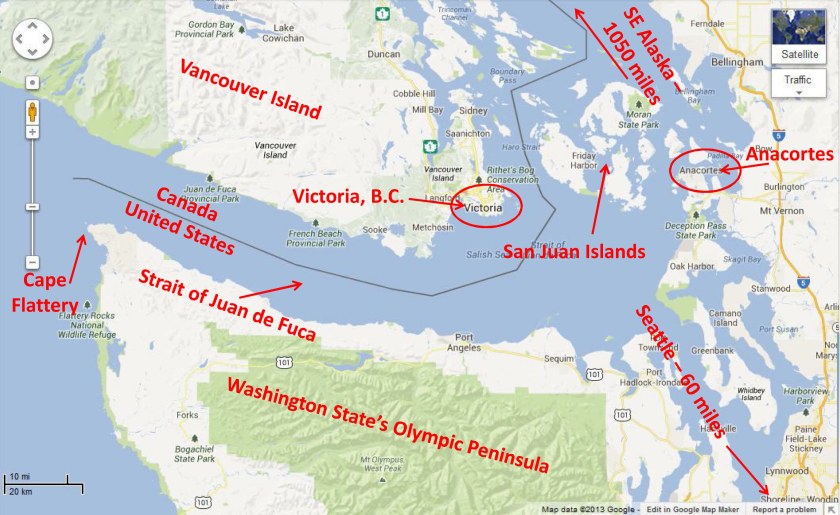
A fishing zone dispute at the mouth of the Juan de Fuca Strait between Washington State and British Columbia, and within which the International boundary between the two countries lies in the middle of the strait.

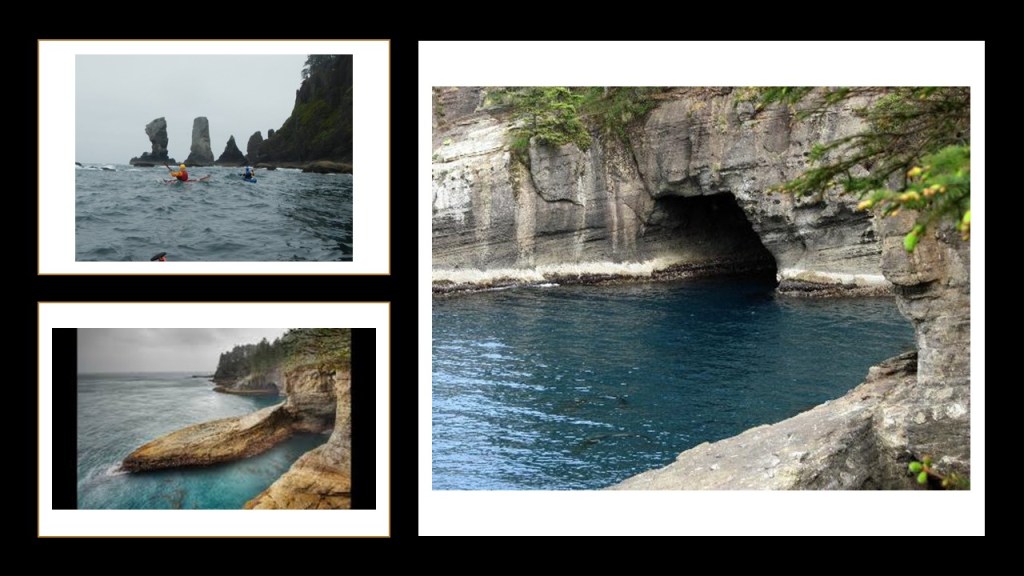
Here are photographs of what Cape Flattery looks like at the mouth of the Juan de Fuca Strait on Washington’s Olympic Peninsula.

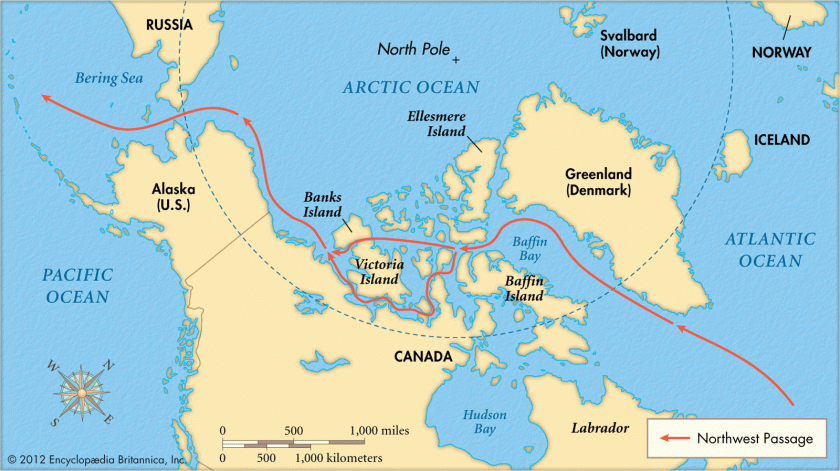
Another area of dispute between the two countries is the Northwest Passage, which Canada claims as part of its internal waters, and the United States regards as an international strait, open to international traffic.

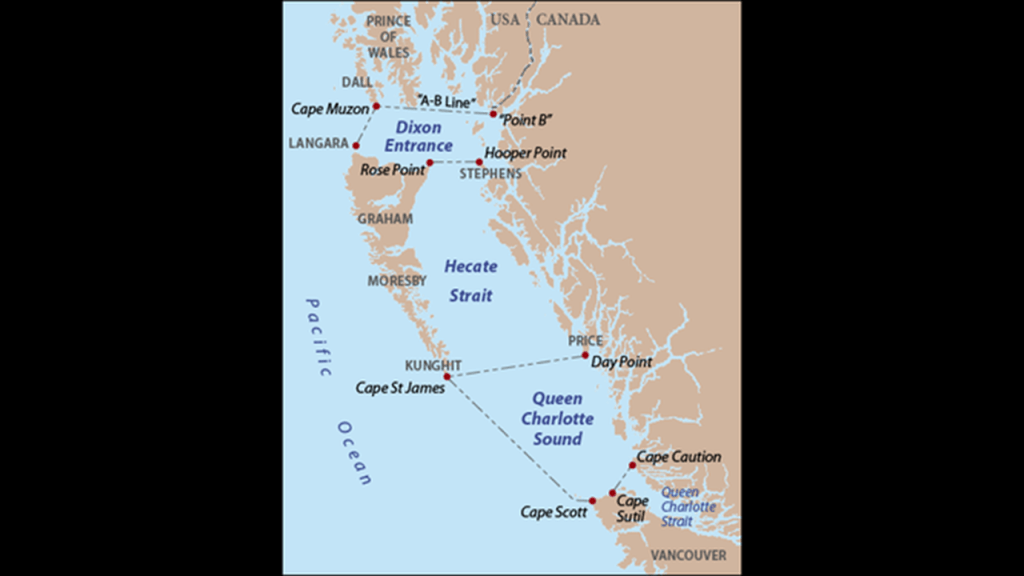
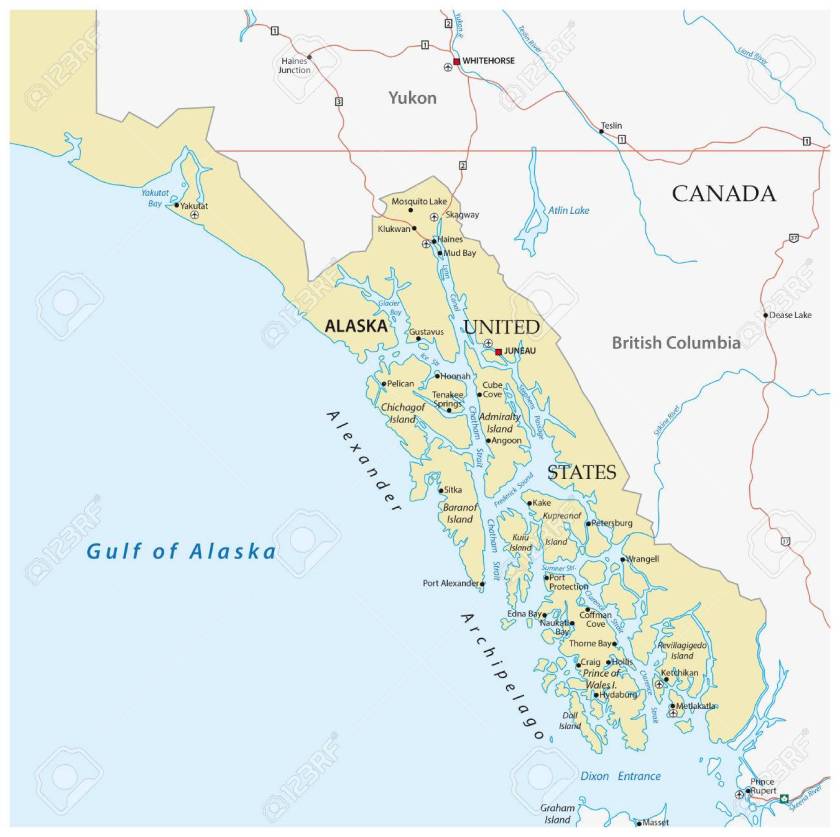
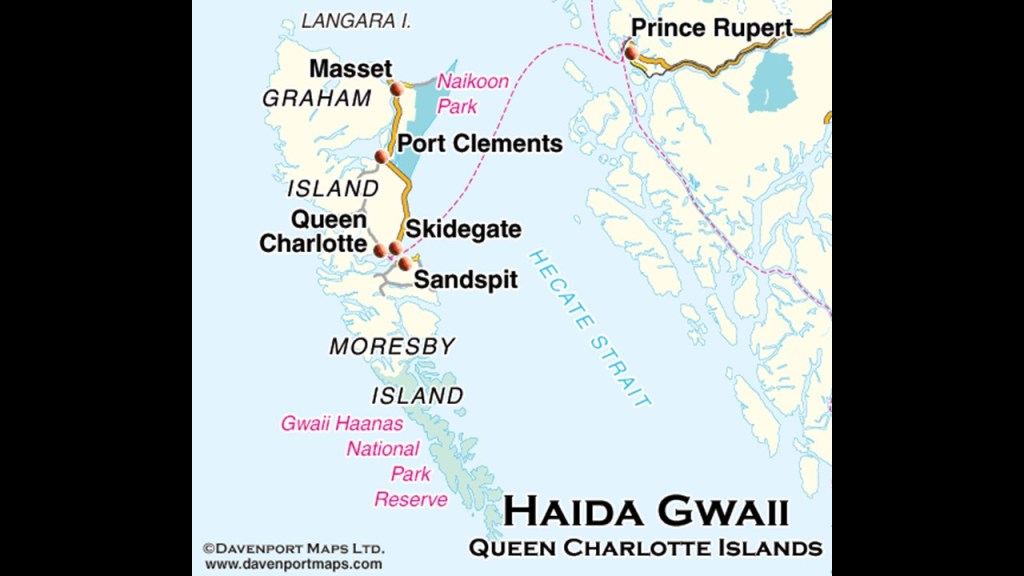
The Dixon Entrance, a strait about 50-miles, or 80-kilometers, long, between Alaska in the United States and British Columbia in Canada is also mutually claimed by both countries.

It is part of the Inside Passage shipping route.

It lies between the Clarence Strait in the Alexander Archipelago, a 300-mile, or 480-kilometer, long group of islands in Alaska to the North…

____________________________________

…and the Hecate Strait and the islands known as the Haida Gwaii (or Queen Charlotte Islands) in British Columbia to the South.

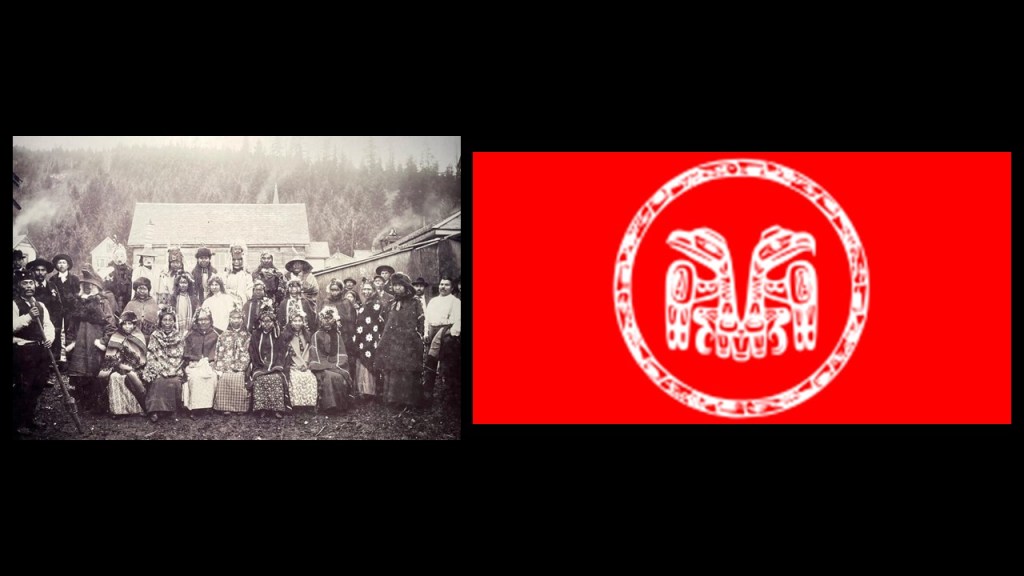
Members of the Haida Nation maintain free access across the strait, in the Haida Gwaii and islands in the Alaskan Panhandle where they have said to have lived for 14,000 years.

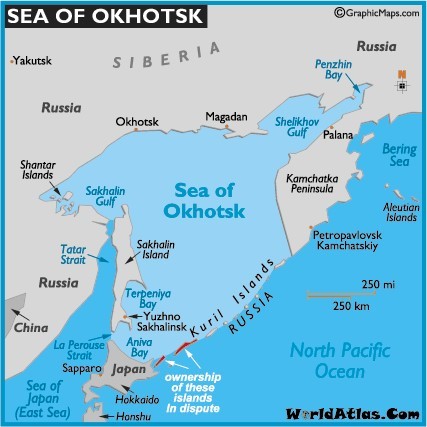
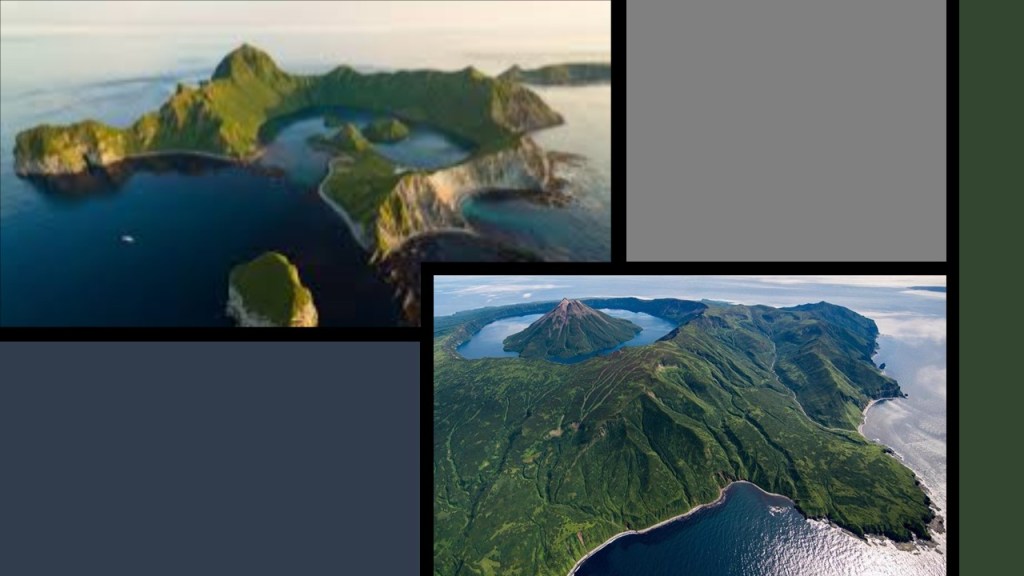
The Kuril Islands dispute is a disagreement between Japan and Russia over the sovereignty of the four southernmost Kuril Islands.

They are a chain of islands stretching between the Japanese Island of Hokkaido at the southern end, and the Kamchatka Peninsula at the northern end.

While the San Francisco Peace Treaty of 1951, signed between the Allies and Japan in 1951, stated that it must give up all right, title and claim to the Kuril Islands, Japan does not recognize Russia’s sovereignty over them, and this territorial dispute has not been resolved.

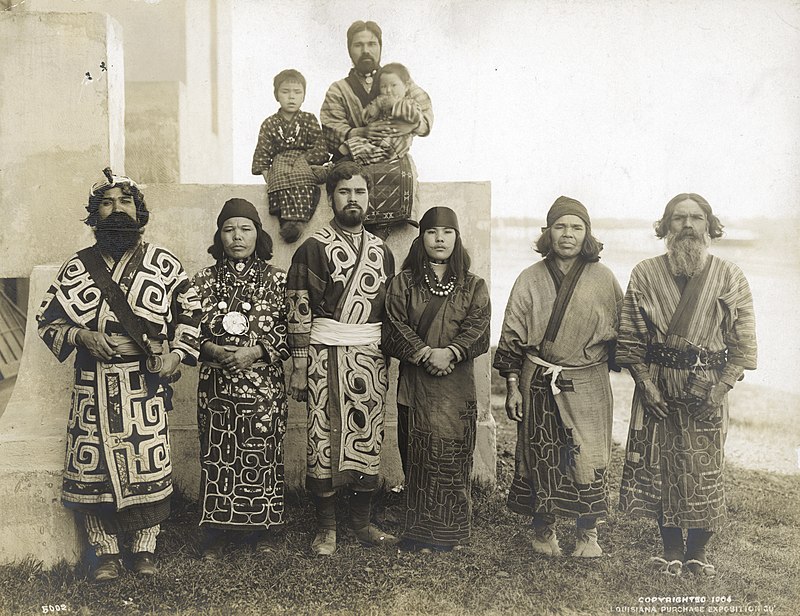
The original inhabitants of the Kuril Islands, and northern Japan for that matter, are the Ainu, as seen here in 1904…

…and today.

Other disputed islands around the world include:

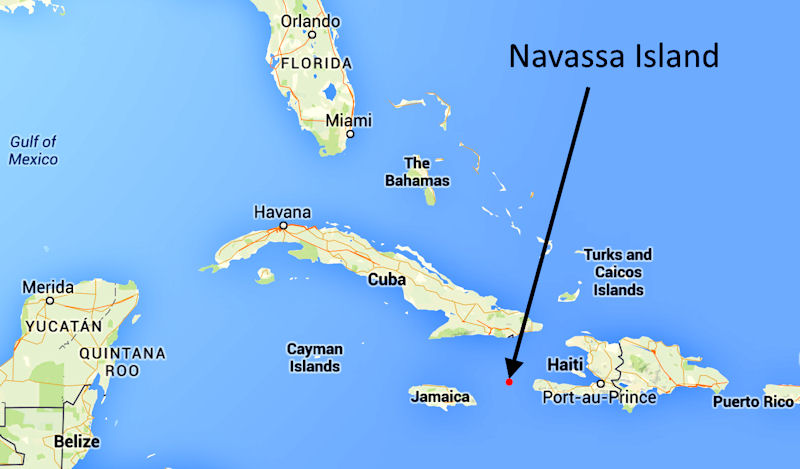
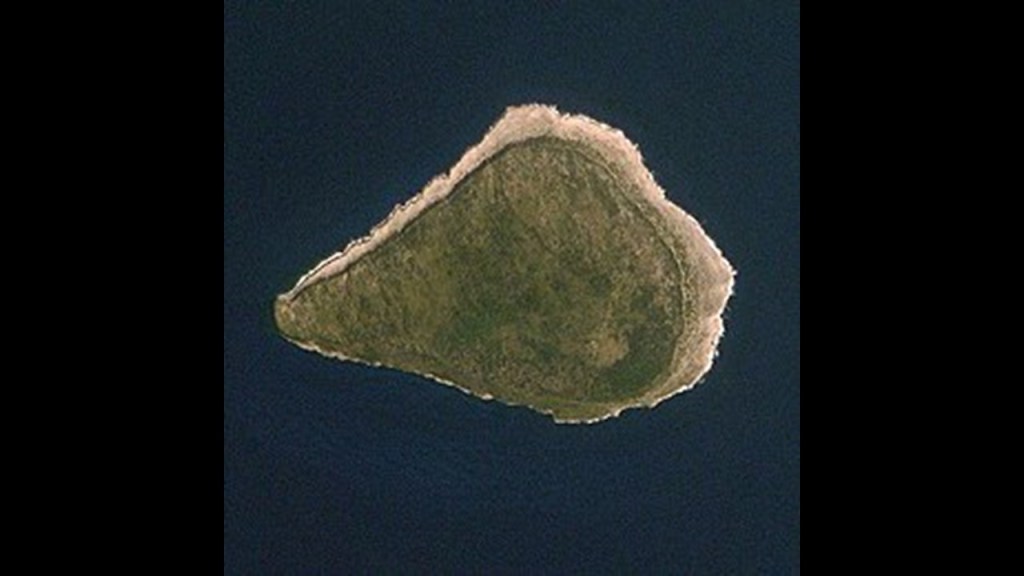
Navassa Island, an uninhabited island in the Caribbean Sea.

This small island is subject to an on-going territorial dispute between the United States and Haiti.

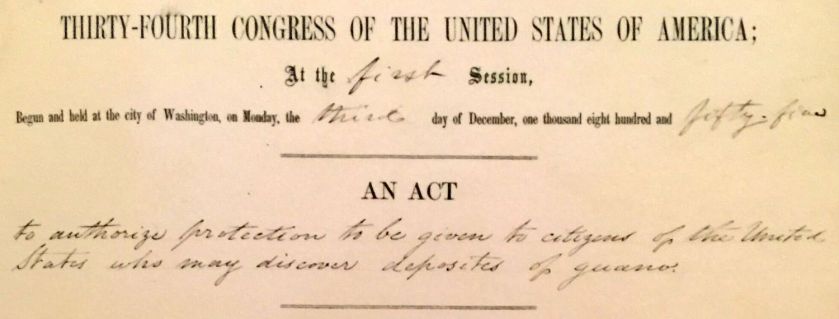
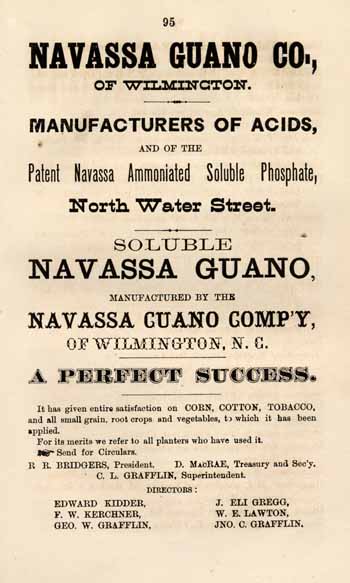
The United States claimed the island since 1857, based on the Guano Islands Act of 1856.

The legislation essentially said that an American could claim an uninhabited, unclaimed island, it it contained guano, or bird droppings, which was an effective early fertilizer.

Haiti’s claims over Navassa go back to the Treaty of Ryswick in 1697, which established French possessions in mainland Hispaniola that were transferred from Spain by the treaty.

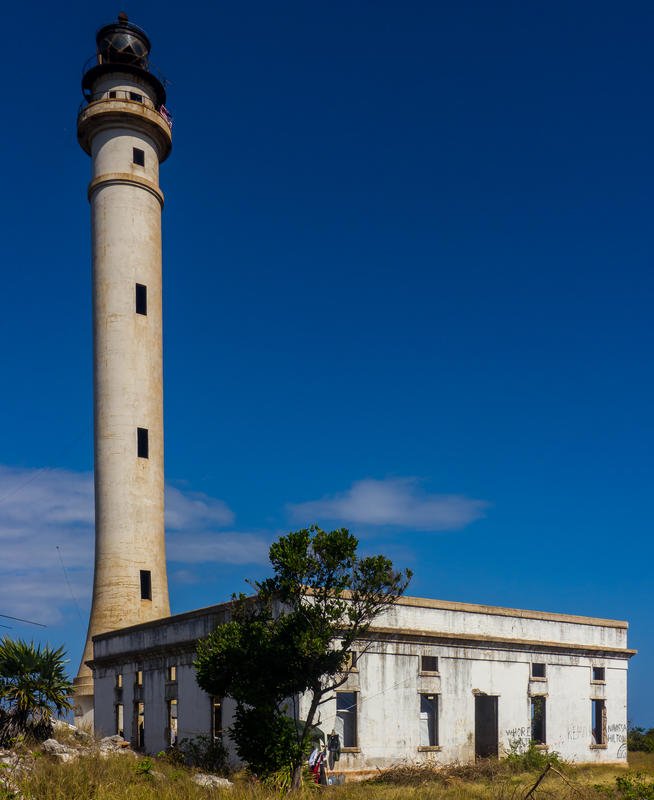
This is the deactivated lighthouse on Navassa. This is the only building left of what was previously on Navassa Island…

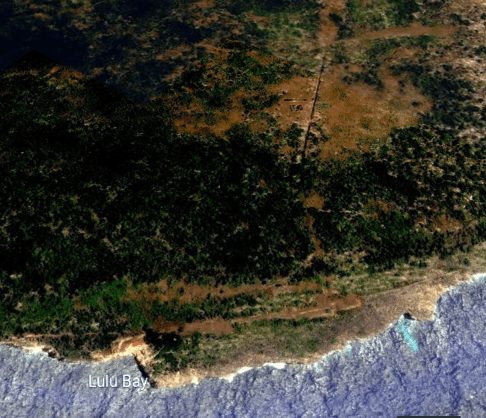
…possibly including this star fort identified as being in Lulu Town on Navassa, but I can’t confirm this finding because whatever was there isn’t there any more.

Lulu Town was previously situated around Lulu Bay on Navassa Island.

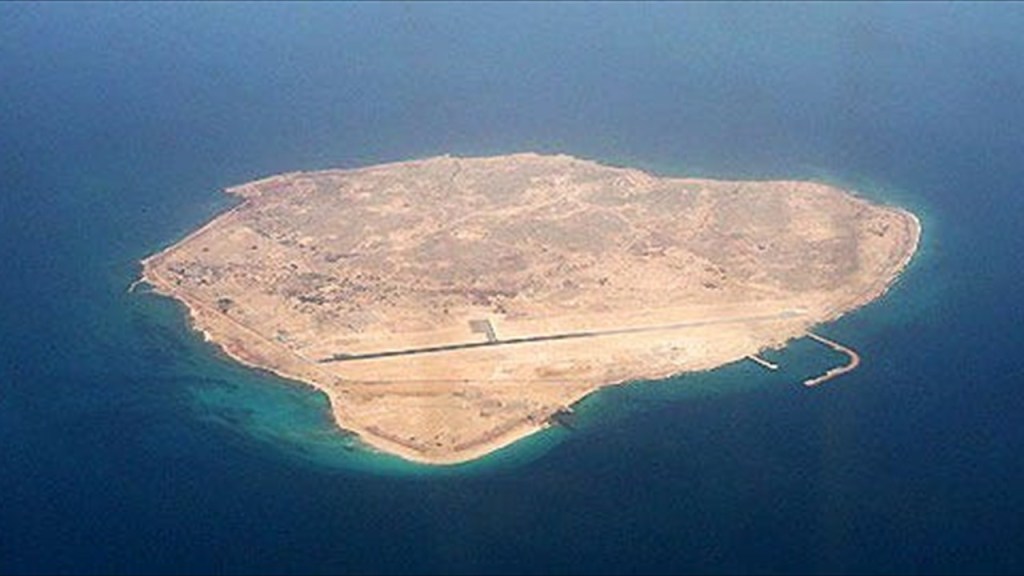
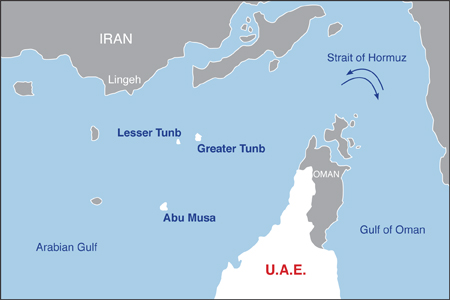
Abu Musa is a 5-square-mile, or 13-square-kilometer, island in the eastern Persian Gulf near the entrance to the Strait of Hormuz.

Abu Musa is administered by Iran as a part of its Hormozgan Province, but it is also claimed by the United Arab Emirates as a territory of the Emirate of Sharjah.

I found the island of Abu Musa, one of the islands of the Strait of Hormuz, when I was tracking the Amsterdam Island Circle Alignment.

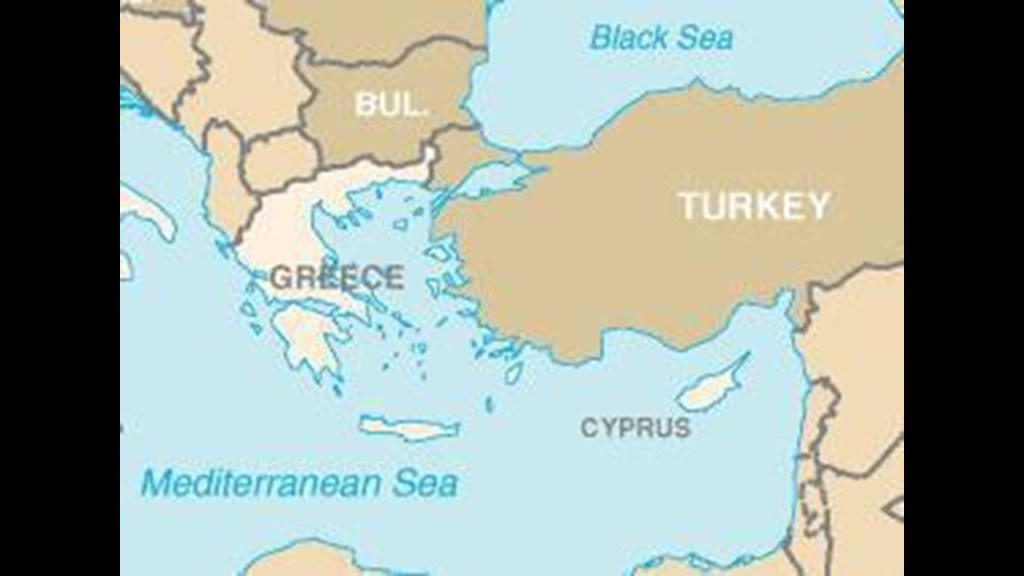
On to Cyprus, an island country in the eastern Mediterranean, located south of Turkey, and west of Syria and Lebanon, northwest of Israel and Palestine, north of Egypt, and southeast of Greece.

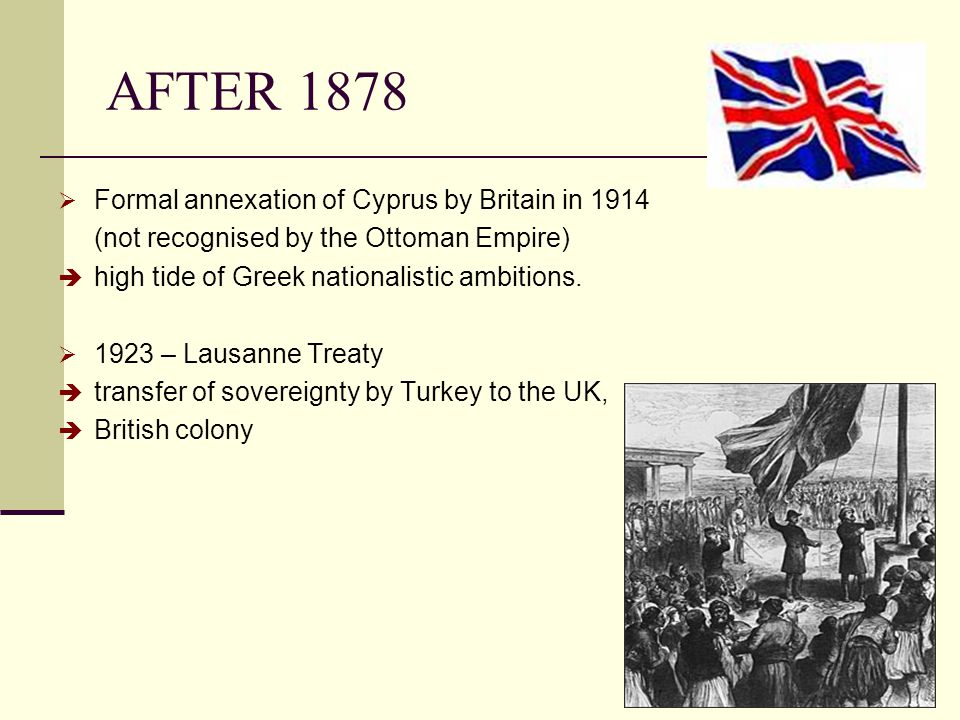
Based on the Cyprus Convention in 1878, Cyprus was placed under the United Kingdom’s administration, and formally annexed by the United Kingdom in 1914 (which would have been around the time of the start of World War 1).

While Turkish Cypriots made up 18% of the population, the partition of Cyprus and creation of a Turkish state in the north became a policy of Turkish Cypriot leaders and Turkey in the 1950s.

Turkish leaders for a period advocated the annexation of Cyprus to Turkey as Cyprus was considered an “extension of Anatolia” by them; while, since the 19th century, the majority population of Greeks on Cyprus and its Orthodox Church had been pursuing union with Greece, which became a Greek national policy in the 1950s.

After nationalist violence in the 1950s, Cyprus was granted independence in 1960 via the London and Zurich Agreements of 1959.

At any rate, conflict in one form or another between Greeks and Turks has existed on the island for awhile, with the island partitioned between the two.

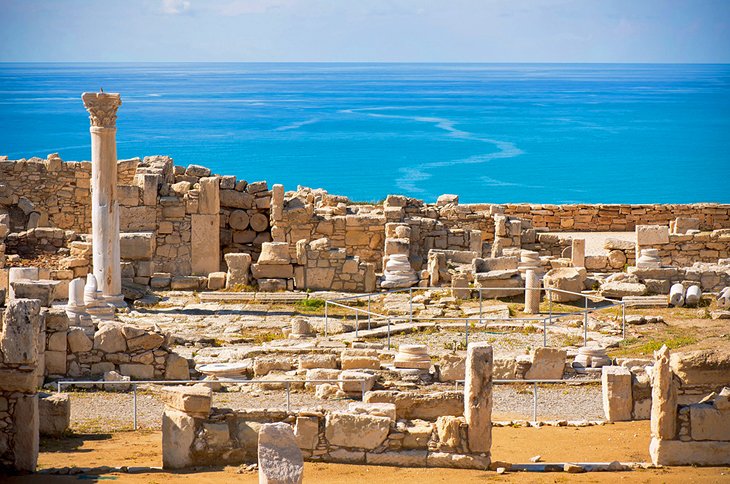
Regardless, Cyprus is a major tourist destination in the Mediterranean today.

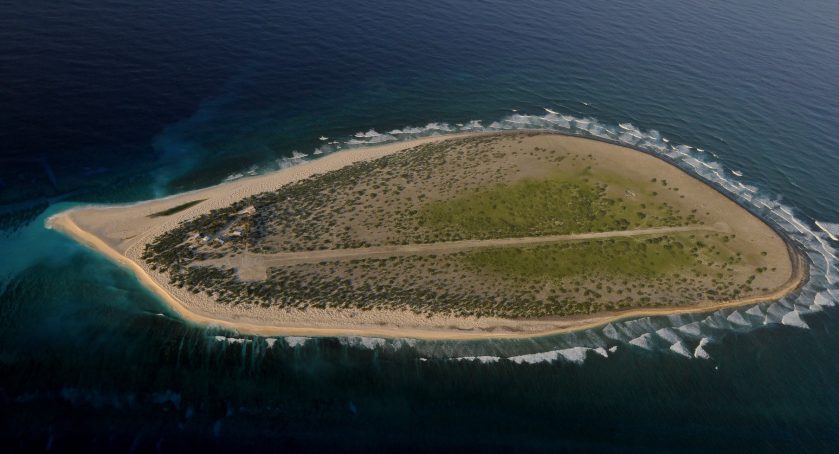
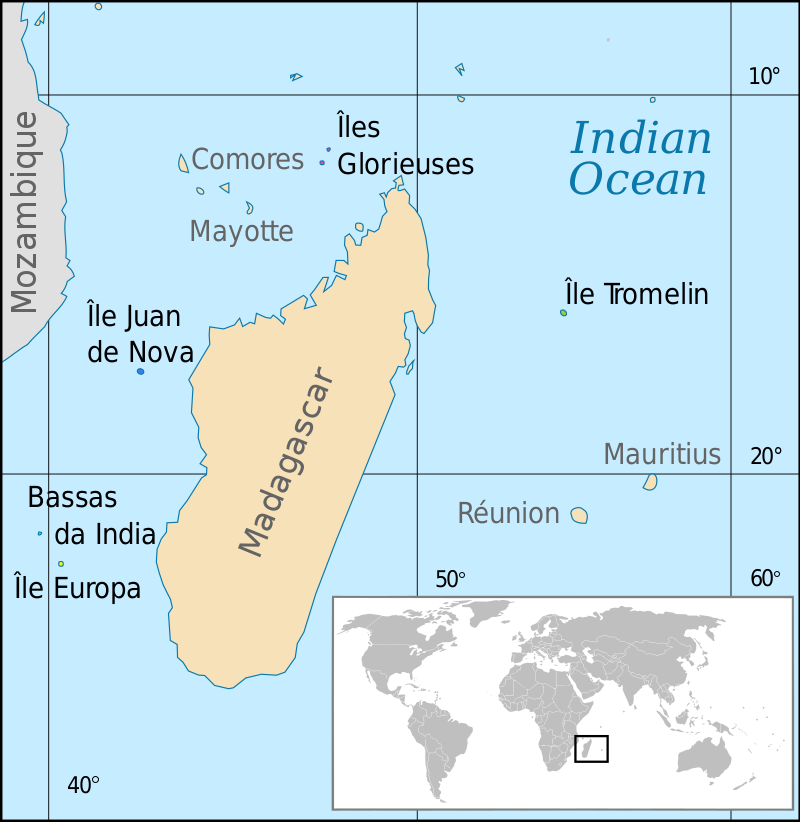
Tromelin Island is a low, flat island in the Indian Ocean.

It is located 310-miles north, or 500-kilometers, north of Reunion Island, and 280-miles, or 450-kilometers, east of Madagascar.

It is administered as part of the French Southern and Antarctic Lands as a French overseas territory, however, the island nation of Mauritius claims sovereignty over the island.

I found both Mauritius and Tromelin Island on earth-grid alignments.

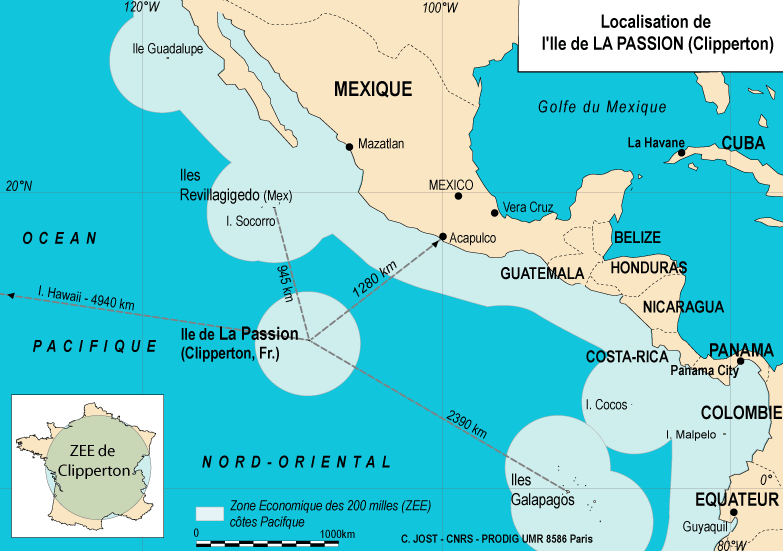
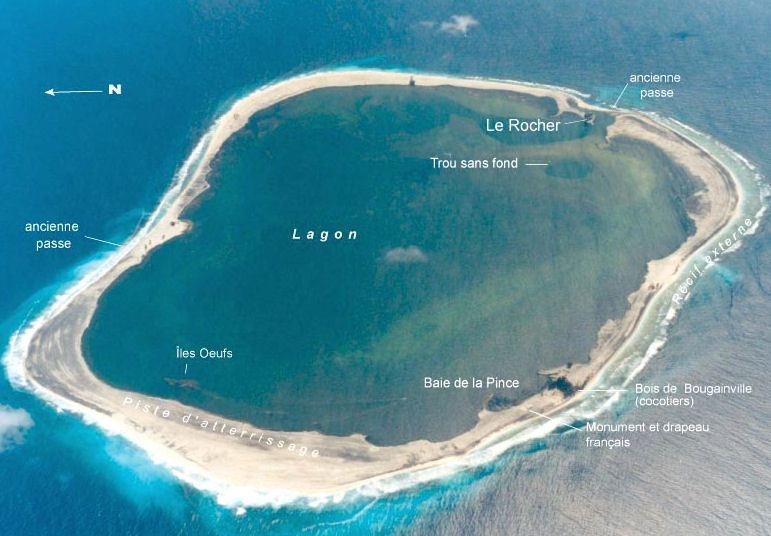
I will end this post with Clipperton Island, an uninhabitated 2-square-mile, or 6 kilometer-squared island, in the eastern Pacific Ocean off the coast of Central America.

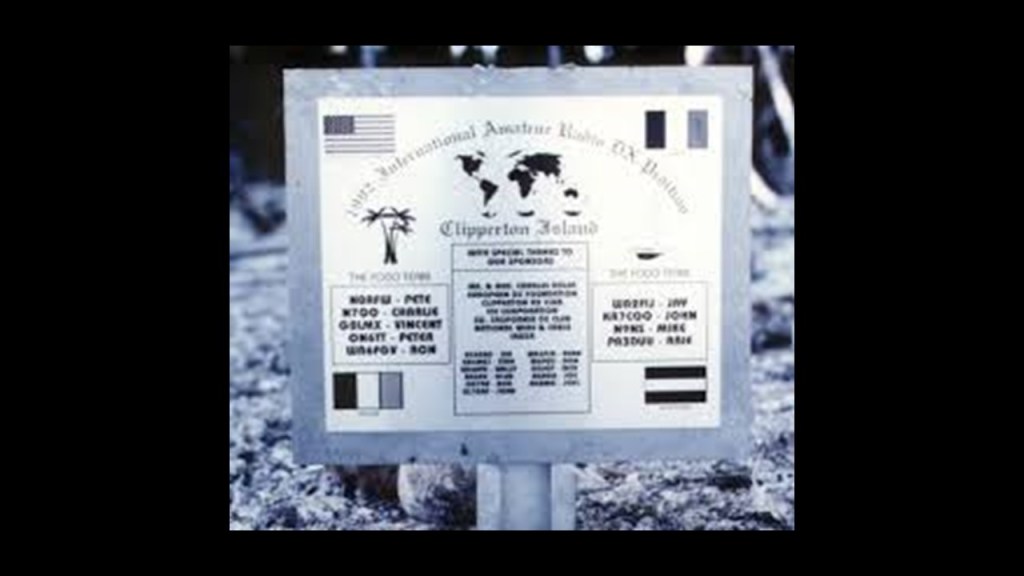
It is an overseas minor territory of France, and administered under the direct authority of the Minister of Overseas France. It has not been inhabited since 1945, though it is occasionally visited by fisherman, French Navy patrols, scientific researchers, films crews, and ham radio operators.

It is low-lying, and largely barren.

The surrounding reef is exposed at low tide.

This shows that Clipperton Island is technically an aligned with a barrier reef, and not an atoll.

While it is not disputed now, it has been in the past.

Two Frenchmen first claimed the island for France in 1711, and named it “Ile de la Passion.”

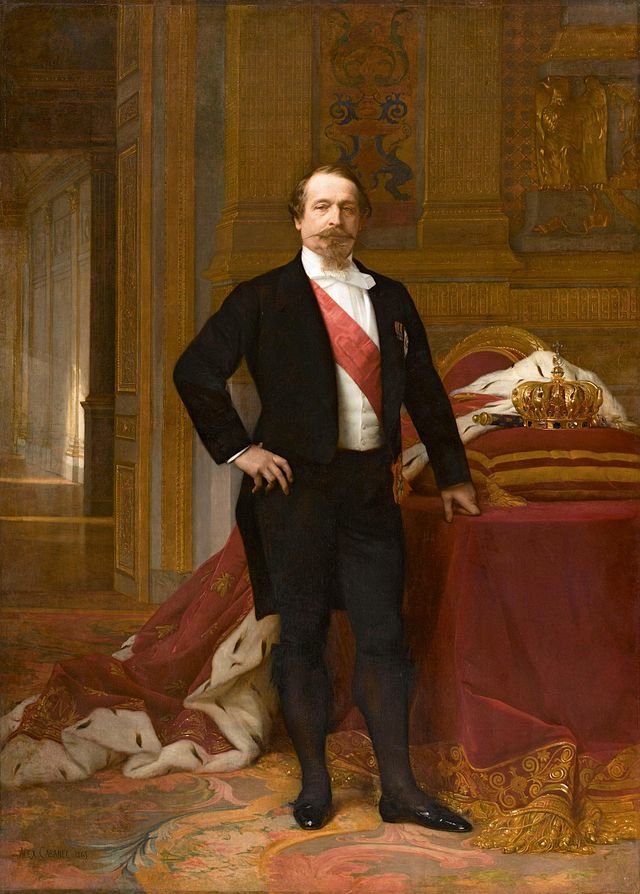
In 1858, during France’s Second Empire, Emperor Napoleon III annexed Clipperton island as part of the French colony of Tahiti, even though it is the considerable distance of 3,400 miles, or 5,400 kilometers, from Tahiti.

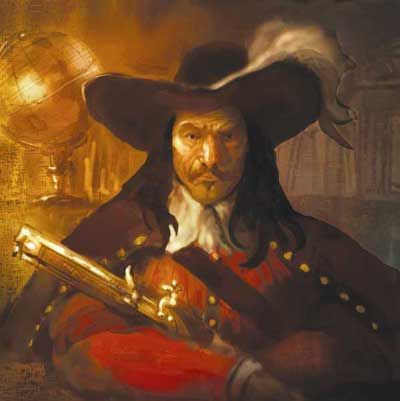
It was named Clipperton for English pirate and privateer John Clipperton who fought for the Spanish in the early 18th-century who may have used it as a base for his raids on shipping.

Other claimants included the United States, whose American Guano Company claimed it under the Guano Islands Act of 1856…

…and Mexico due to its activities there as early as 1848 and 1849.

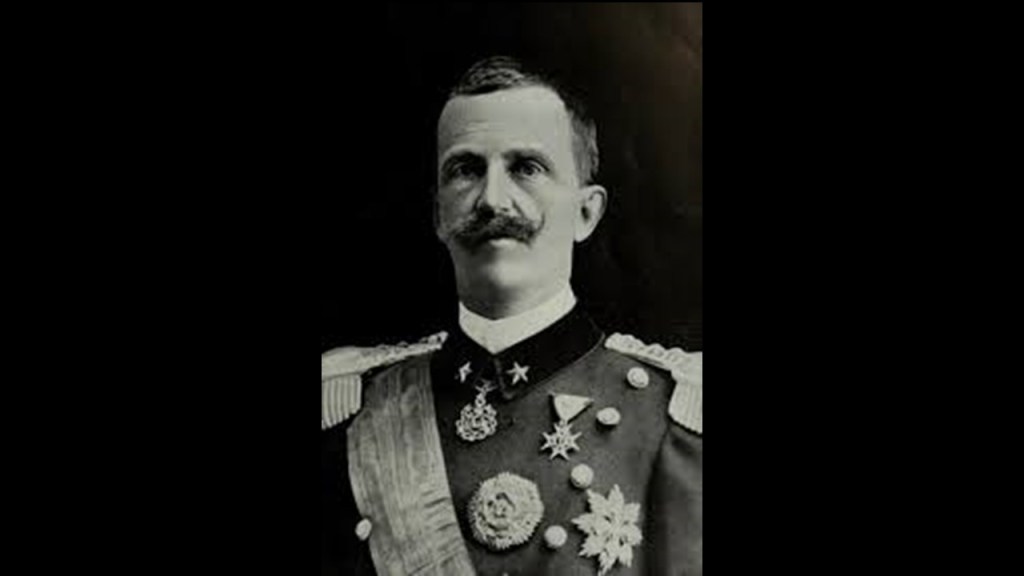
In 1909, France and Mexico agreed to submit the dispute over sovereignty to binding international arbitration, and 22-years later, in 1931, the King of Italy, Victor Emmanuel III, issued the final decision, declaring Clipperton Island to be a French possession.

However, after all of this territorial interest, Clipperton Island has been more or less abandoned since the end of World War II.

So, as expressed in the title of this post, what is it exactly about the world’s disputed islands?

For one, they figure prominently on the earth’s planetary gridlines, and I think the placement of the islands within the energy system of the planetary grid is important.

Another is that they are highly prized for their resources.
And are the resources, like oil and gas reserves, actually derived from the high technology of the advanced Ancient Civilization, and not the result of the continuous break-down of fossils over millions of years as we are taught to believe?

Also, I wouldn’t rule out the possibility that guano – which has a high content of nitrogen, phosphate, and potassium – is the result of much more than bird droppings. It would take a whole lot of birds a very long time to create a valuable commodity used as a pretext for claiming an island for a country.

This is an 1860 photo of a guano mine on Peru’s Chincha Islands.

For reasons like these, and others I am sure, all of these islands are viewed as highly-coveted prizes, and critical part to nation-building plans.

An Analysis of Archeoastronomy and Observatories Throughout Time

We are taught that humans went from being hunter-gatherers, and “peopling the earth,” prior to 8,000 BC, to developing settled agriculture and raising livestock during neolithic times, the period of Earth’s history beginning around 8,000 BC and lasting until around 600 BC. This in turn, we are told, led to permanent settlements and the rise of civilizations.

The problem with this description of human evolution is what our Ancestors were actually accomplishing during early neolithic times, and it went far, far beyond what we are told Humanity was capable of. It has to do with the consummate aligning of Heaven and Earth worldwide, with the perfect implementation of sacred geometry and astronomical alignments in the landscape, as well as with the measurement of astronomical and cyclical time through careful observations of the heavens over a very long period of time.

We are explicitly taught that indians wearing loincloths were responsible for building the perfectly geometrically- and astronomically-aligned mounds and earthworks, one basketful of dirt at a time, especially where mounds in North America are concerned.

I will show you exactly why this assertion does not hold up under scrutiny in this post.

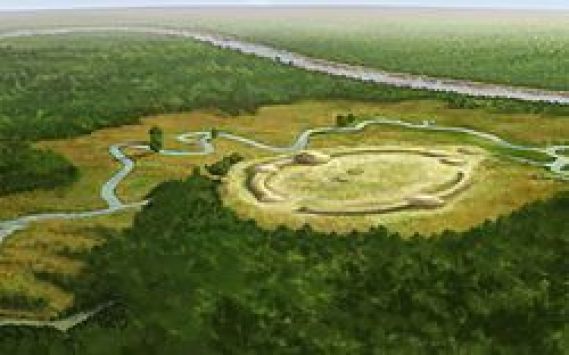
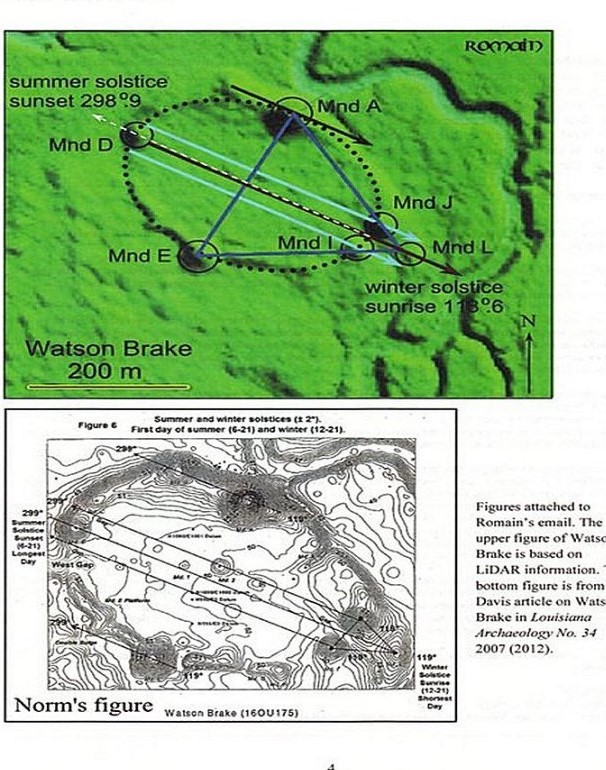
Watson Brake in Richwood, Louisiana, near Monroe, is dated to 5,400 years ago, and is considered is the oldest earthwork mound complex in North America.

It is located on private property, and is not open for public viewing.

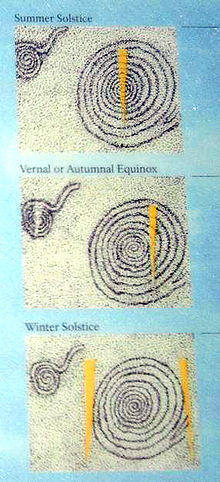
Note the summer and winter solstice alignments depicted here in this diagram of Watson Brake.

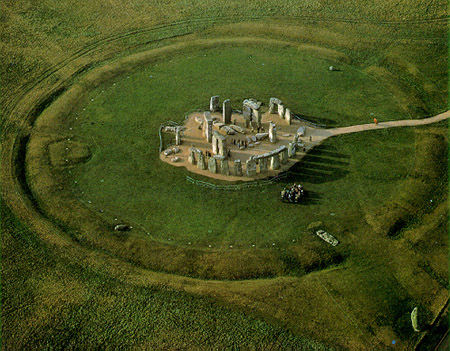
This is the famous Stonehenge in Southern England, believed to date to about 5,100 years ago, and has a similar earthwork to what is seen at Watson Brake in Louisiana encircling the big stones.
…which is well-known for its solstice alignments.
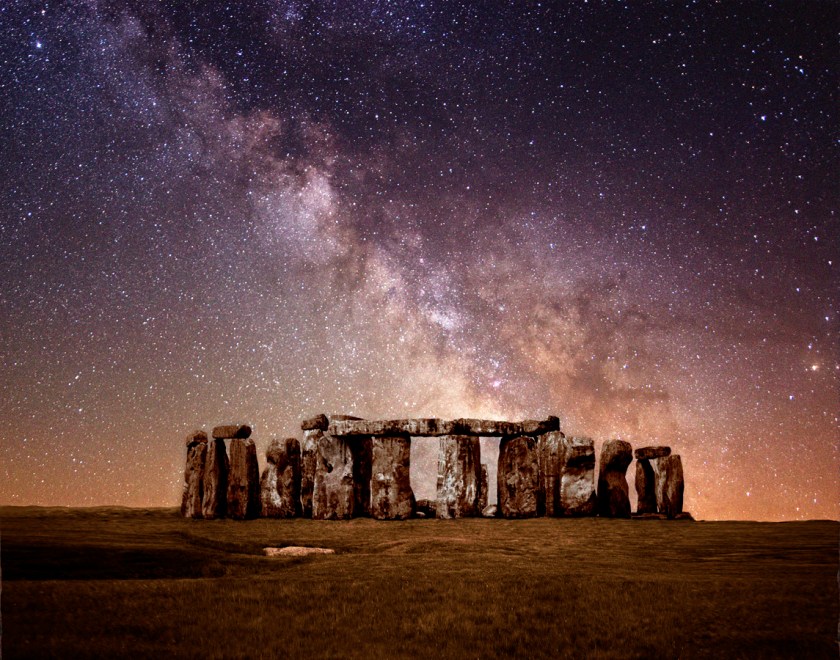
Stonehenge has a really nice alignment with the Milky Way as well.
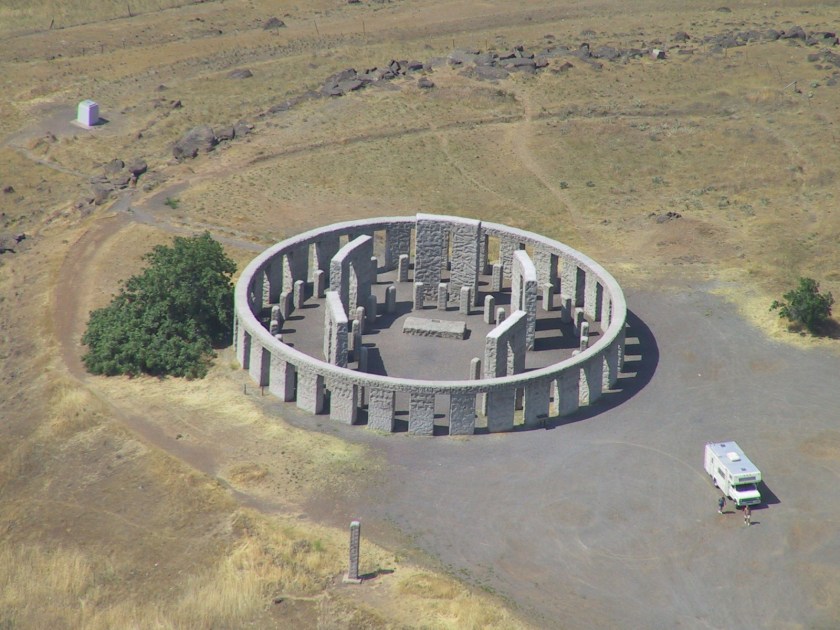
For those of you who may not be aware of it, there is a so-called modern replica of Stonehenge in Maryhill, Washington, said to have been commissioned in the early 20th-century by the wealthy entrepreneur Sam Hall, and dedicated on July 4th, 1918, as a memorial to the people who died in World War I.

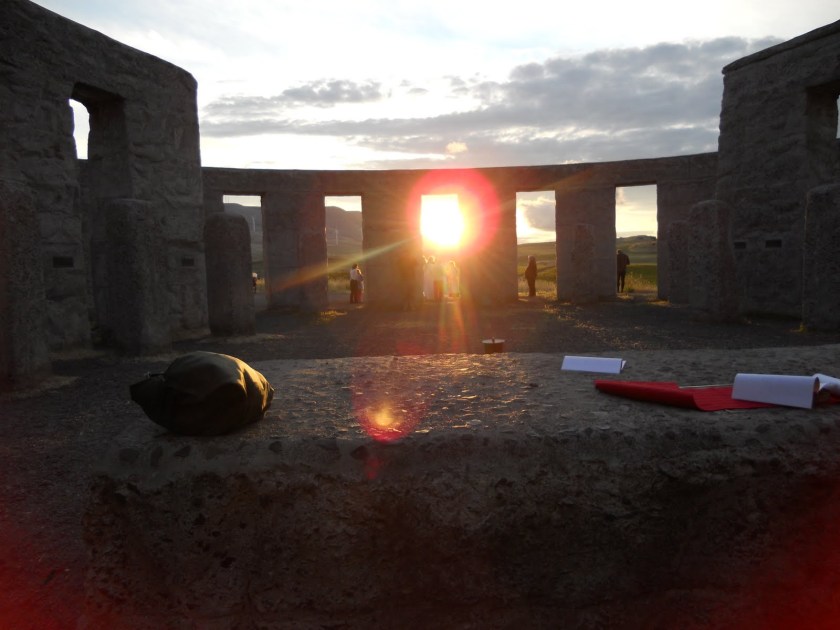
In addition to having a solstice alignment…

…it also has a nice alignment going on with the Milky Way, just like Stonehenge in England!

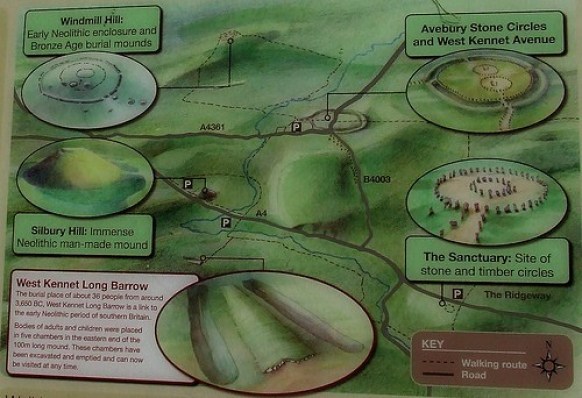
The Avebury Neolithic complex is located near Stonehenge, and it dated to the same time frame as Stonehenge and Watson Brake.

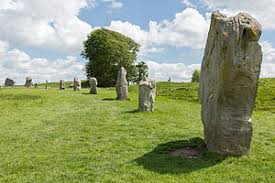
Today this is what is left of the standing stones…

…of what was an ancient serpent temple.

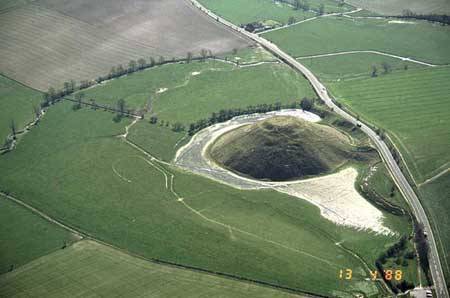
Silbury Hill is located near Avebury, and is called the tallest prehistoric, man-made mound in Europe, and one of the largest in the world.

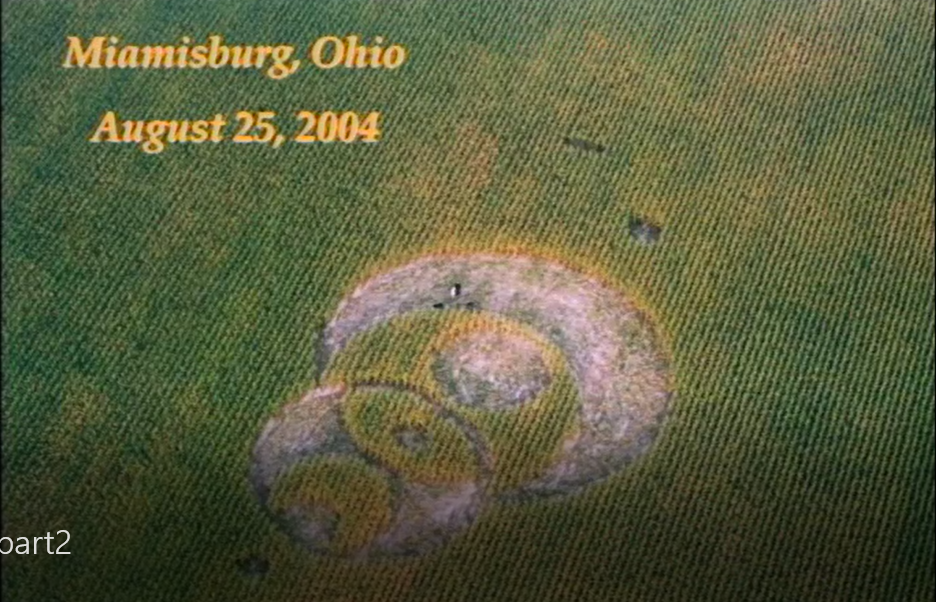
Crop Circles frequently form in these locations in England.

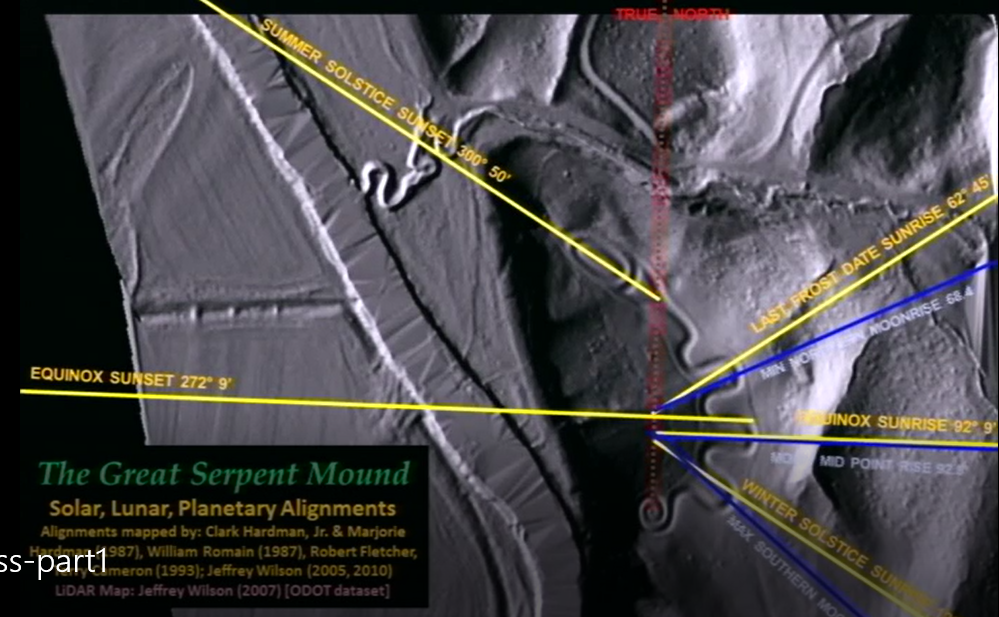
Serpent Mound in Peebles, Ohio, is the largest serpent effigy in the world.

It was first reported from surveys included in a book called “Ancient Monuments of the Mississippi Valley, published in 1848 by the Smithsonian Institution, and to this day has not been given a definite date of construction.

Serpent Mound has many astronomical alignments contained within its shape…

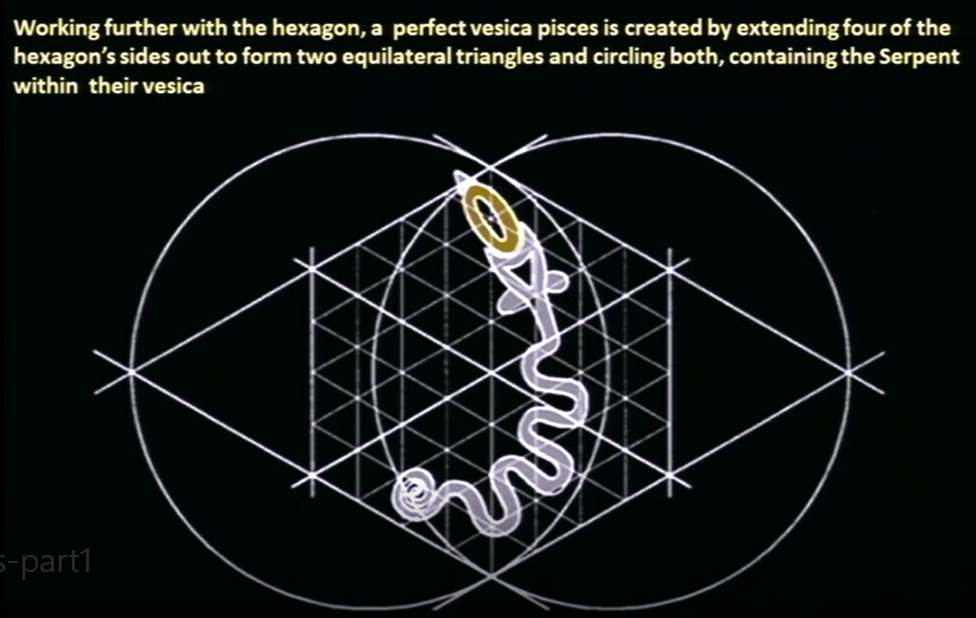
…as well as Sacred Geometry.

As with Silbury Hill near Avebury, the Miamisburg Mound in Miamisburg, Ohio, is located relatively close to the Serpent Mound…

…and crop circles in North America are found frequently in this part of Ohio.

In Newark, Ohio, the Octagon and Great Circle Earthworks are located on a Golden Ratio Longitude, along with Poverty Point in Louisiana. Newark is 94-miles, or 150-kilometers, from Peebles, Ohio, where the Serpent Mound is located.

This diagram shows the lunar alignments marked by these earthworks in Ohio.

By the way, the Octagon and Great Circle of Newark…

… are now part of the golf course of the Moundbuilders Country Club.

Another striking example of this practice by the Ancient Ones, of the consummate aligning of heaven and earth, is found near Forres, in Scotland.

Forres is in the Grampian Mountains, which are said to have the highest concentration of stone circles found anywhere, and include what are called Recumbent Stone Circles, found only in this part of Scotland and in the far southwest of Ireland.

This is the Recumbent Stone Circle of Crowthie Muir near Forres. The center stone, weighing upwards of 50-tons, is perfectly placed in the landscape…

… for lunar events like this one, as the moon is seen rolling along the top of the recumbent stone on the same night.

While the stone circles of Great Britain and Ireland are the best-known, there stone circles in many places, including in Africa, like the Bagnold Stone Circle in the Libyan Desert…

…the Mzora Stone Circle in Morocco…

…and Nabta Playa, depicted with astronomical alignments, in southern Egypt, situated on the Tropic of Cancer.

Also on the Tropic of Cancer, Necker Island, part of the Northwestern Hawaiian Islands in the Pacific Ocean, is a relatively small island with over 30 stone temples and shrines.

These have been studied by archeoastronomy experts for astronomical alignments.  This is a shrine on Necker Island…

…and a sketch of a temple platform there.

Famous early astronomical observatories include El Caracol, which is located in the Mayan archeological complex of Chichen Itza, located in Mexico’s Yucatan Peninsula.

It is dated to around 906 AD.

The Maya had a spectacular knowledge of astronomy; were skilled engineers; and had a mathematics which could calculate dates billions of years in the past and in the future.

When this observatory was being excavated, advanced design features were discovered that incorporated sophisticated knowledge about how to align the central observatory with the cosmos.

For example, designed into the outer terrace are two slots that follow the curvature of the tower, and which could have supported a viewing apparatus of some sort.

In China, the Gaocheng Astronomical Observatory is located in Dengfeng, in Henan Province.

The great observatory was said to have been built in 1276 to observe the movement of the sun, the stars, and to record time.

It has been listed as a UNESCO World Heritage Site since 2010 as the “Dengfeng Historic Monuments in the Center of Heaven and Earth.”

Dengfeng is due east of Xi’an, China, where…

…where a significant number of pyramids are located in China.

The Torreon, or Observatory, at Macchu Picchu in Peru is called a rare example of curved Inca architecture, incorporating natural features into its design.

It was said to have been built in 1450 AD.

It was placed inside the Temple of the Sun at the highest altitude of Macchu Picchu.

The tower is built around a stone with a curved groove that is illuminated as the rising sun shines through one window on the June solstice.

Around this same time, this window frames the Pleiades star cluster…which we are told was used by the Incas to determine when to plant potatoes. Sounds like incredibly sophisticated astronomical engineering to only serve as an almanac in stone!!!

The ancient observatory in Chankillo, Peru, said to date back to 300 BC…

…has thirteen regularly-spaced towers…

…where you can see the sun rise and set in gaps between the towers, with the sunrise moving back and forth across the whole structure in a year.

Now on to what would be considered more modern observatories.

We are told The Royal Observatory in Greenwich, England, was commissioned in 1675 by King Charles II, and the site on Greenwich Hill chosen by architect and astronomer Sir Christopher Wren.

The building of the observatory was then completed in the summer of 1676.

It has been the location of the world’s Prime Meridian since 1851.

The time-ball at the Royal Observatory at Greenwich is said to have been in use since 1833.

Every day, the ball rises half-way up the mast at 12:55 pm Greenwich Mean Time, up to the top at 12:58 pm…

…and drops exactly at 1 pm.

We are told this practice was established in order to have a standardized way to mark time for naval ships and the citizenry.

The United States Naval Observatory, located in Washington, DC, is said to be one of the oldest scientific agencies in the United States.

The Naval Observatory maintains the Master Clock for the United States.

There is also a time-ball here, said to have been installed in 1845, and dropped every day, enabling the inhabitants of Washington to set their time-pieces.

Since I believe that all of these observatories were built by the advanced, ancient civilization, I don’t believe the their original purpose was to synchronize the time in this manner.

My speculation as to what their actual function would be goes in the direction of an astronomical function, like the function of sun daggers, since this civilization completely revolved around the perfect alignment of Heaven and Earth.

There is an example of a sun dagger at Fajada Butte in Chaco Canyon in New Mexico.

There are three large stone slabs there leaning against the cliff which channel light and shadow markings on to two spiral petroglyphs in the cliff wall that form daggers of light at solstices and equinoxes.

What if instead of measuring linear time, time-balls were a way to measure astronomical time, and instead of dropping quickly in mere minutes, were dropped very slowly to measure astronomical time?

Other places with time-balls include the Sydney Observatory in Australia…

…the Nelson Monument on the highest point of Calton Hill in Edinburgh, Scotland, which is right next to…

…the City Observatory of Edinburgh…

…the Cincinnati Observatory at one point in time had a time-ball…

…but apparently not anymore…

…and the time-ball in Times Square, which gets dropped once a year to usher in the New Year.

In an interesting aside, the United States Naval Observatory also has a station in Flagstaff, Arizona, for national dark-sky observation.


The Lowell Observatory is also in Flagstaff…

…and as well, the Atmospheric Research Observatory on the campus of Northern Arizona University in Flagstaff.

In taking this tour through time, I wanted to share with you the absolutely stunning accomplishments of Our Ancestors, impeccably aligning the physical infrastructure of the earth with heavenly bodies and astronomical events, and accurately keeping track of everything going on up above via observatories, watching, recording, and predicting larger cycles of time to keep Humanity in synchronization with each other and the Heavens.

In my next post, I will be looking at disputed islands around the world.

Going Deep into Underground Railway Systems

I decided to look deeply into the subject of underground railway systems when I kept coming across the fact that the railway stations of major cities are transportation hubs for all ground-based mass transit systems, including not only trains, but trams, underground rail systems, and buses.

All of these transportation inter-connections are part of an incredibly complex topic, of which I can only scratch the surface. As I read through the history of rail-lines, it is hard to process and digest all of the information because there is so much there. Beginnings, and then consolidation, and first it was called this, and then it was called that, and then it was taken over, and more consolidation, and so on. It is hard for me to even describe it. Look into it some time, and you will quickly see what I mean. Rapid-fire data points!

I will start in London, at the address of 55 Broadway, where the headquarters of the London Underground, and called London’s first skyscraper, said to have been built between 1927 and 1929.

It is interesting to note its location in London is just blocks away from the seat of British government ~the Palace of Westminster which houses the British Parliament; 10 Downing Street, the residence of the Prime Minister; and near Westminster Abbey, the traditional place of coronation, marriage, and burial for British monarchs.

Here you see what looks like old masonry at the 55 Broadway location.

The building is said to be faced with limestone from the quarries of the Isle of Portland, just off the coast of England…

…where we find megalithic-looking stone blocks lying all around.

The cruciform-, or cross-, shaped building at 55 Broadway was said to have been designed by Charles Henry Holden, and his Underground station designs were said to have become the London Underground Corporation’s standard design in the 1930’s.

In 1902, Holden was said to have won the architectural competition to design the Bristol Central Library, which opened in 1906…

…in 1906, he won the competition to design a new Headquarters for the British Medical Association on the Strand in London, said to have been built in 1907 and 1908…

…which is now the Zimbabwe House, the Embassy for Zimbabwe.

…and in 1909, we are told he won the competition for designing an extension to the British Royal Infirmary, said to have been built in 1911 and 1912.

The London Underground Headquarters he was given the credit for designing sits on top of the St. James Underground Station, said to have opened on December 24th, 1868.

The London Underground is said to be the oldest underground railway system in the world.

We are told the idea of an underground railroad linking the City of London with the urban center came up in the 1830’s, and in 1854, the Metropolitan Underground Railway was granted permission to build it.

Operations were said to have started in January of 1863 between Paddington and Farringdon, using gas-lit wooden carriages hauled by steam locomotives.

Does that sound plausible? And gas-lit carriages underground? What about ventilation? Would this need have been accounted for in the mid-1800’s according to the history we have been taught?

Fast forward to the establishment of the Underground Electric Railways Company of London (UERL) in 1902 in order to finance and operate three tube lines – the Baker Street and Waterloo Railway…

…the Charing Cross, Euston, and Hampstead Railway…

…and the Great Northern, Piccadilly and Brompton Railway.

This was the Lots Road Power Station, said to have been built between 1902 and 1904 to power the newly created Great Northern, Piccadilly, and Brompton Line.

It was claimed to be the largest power station ever built, and eventually powered most of the railways and tramways in the Underground Group.

So we aren’t even out of the horse-and-buggy era when it was said to have been opened in 1904, with the mass production of automobiles not starting until 1908 with the Model T Ford, and yet we have the technology to build sophisticated electrical machinery generation like this?

And there are still places in the early 1900’s that use horses to pull rail cars along their tracks? What is going on here?

Not only that, there are a lot of abandoned underground tunnels and stations in London, not in use for a very long time. Why build them to then not use them?

This is an abandoned tunnel at Down Station…

…at Highgate Station…

…and Clapham South Station.

These are just a few examples, and London is not the only place with abandoned tunnels.

I also found a listing of former stations served by a London Underground line showing that around 50 have been permanently closed, and either demolished, or re-purposed, starting as early as 1871. The original Westbourne Park Underground Station was said to have been built in 1866 and demolished in 1871, replaced the next day by the current station shown here, to the east of the original.

Compare the similarity of the arches of the Underground Station in Westbourne with the arches of the Mezquita in Cordoba, the capital of Moorish Spain.

This is a map of the London Underground presented by Harry Beck, an engineering draftsman, in 1931.

His design is based on the principle of electrical circuit diagrams.

Power circuits transfer and control large amounts of electricity.

Could the builders of the London Underground have possibly created gigantic power circuitry, starting in a haphazard way in 1854 onward, with the creation of the Metropolitan Underground Railway?

In Hungary, Budapest is said to have the second-oldest underground railway system in the world, and the oldest electrified railway system, with the M-1, or the Millenium Underground Railway, said to have been in operation since May 2nd, 1896.

We are told the original purpose of the first metro line was to facilitate transport to the Budapest City Park along Andrassy Avenue without building surface transport affecting the streetscape…

…running from Vorosmarty Square, the city center…

… to Budapest’s City Park.

The Szechenyi Medicinal Bath is in an extensive City Park Complex, and is the largest medicinal bath in Europe. Its construction was said to have started in 1909, and opened in 1913.

The M-1 underground line was said to have taken two years to build, between 1894 and 1896, by the German engineering firm Siemens and Halske AG, founded in 1847 by Werner von Siemens and Johann Georg Halske.

Just as a side-note, the Siemens and Halske AG company was also given the credit for the world’s first electric tram line, the Gross-Lichterfelde Tramway, in a suburb of Berlin.

This brings the total to three of places that I have found in my research claiming that distinction, the other two being Montgomery, Alabama, and Sestroretsk, in Russia near St. Petersburg.

Altogether, there are four lines in Budapest, each denoted by a different color.

I am going to put this here for consideration as a possibility. When I looked into electric circuitry, I found the same colors, with each having a different function in circuitry. We will see more examples of this correlation in other systems. They feature exactly the same colors.

I am postulating that these electric transportation systems and networks somehow functioned as electrical circuits in their own right in the original physical lay-out of the planetary grid system, and do not just pertain to the sophisticated electrical circuitry it takes to run them efficiently, day-in and day-out.

Before I leave Budapest, I want to bring to your attention that it is called the capital city of underground wonders.

Besides abandoned rail tunnels…

…there’s what is known as the Kobanya Cellar System…

…and the underground labyrinth of Buda Castle.

This half-head is found in the labyrinth. I find it to be extremely odd…and noteworthy. It looks more like a petrified head, covered up to the nose and ears by mud, than an intentional work of art.

We are told that Glasgow in Scotland has the third-oldest underground rail system in the world, opening on December 14th, 1896.

The fifteen stations of the subway are distributed over a 10-kilometer, or 6-mile, circuit of the West End and City Center of Glasgow, with eight stations to the north of the River Clyde, and seven to the south. There are two lines: an outer circle running clockwise, and an inner circle running counter-clockwise.

Circuit is a word in the English language that means: 1) a roughly circular line, route, or movement that starts and finishes at the same place; and 2) a path in which electrons from a voltage or current source flow. The point where those electrons enter an electrical circuit is called the source of the electrons.

This came up when I searched for “particle accelerator diagram,” showing counter-rotating beams in a circular accelerator, contrasted with the Glasgow subway’s outer and inner circle running in opposite directions from each other.

There are also abandoned rail-line stations in Glasgow, like the Botanic Gardens Station, said to have been built in 1896, and closed to passenger transport in 1939…

…and the abandoned tunnel at the Botanic Gardens in Glasgow as well.

Again, why build heavy infrastructure like this to close it after only 45-years of use?

Next, here are maps underground systems of places throughout the world.

Berlin, Germany…

…Hamburg, Germany…

…Helsinki, Finland…

…St. Petersburg, Russia…

…Sydney, Australia…

…Beijing, China…

…Tokyo, Japan…

…New York City…

…Los Angeles, California…

…and Washington, DC, to name a very few.

While not identical lay-outs in all these places, there are definite similarities across countries and continents in how rail-lines are laid out, right down to color-coding all of them.

And they all look remarkably like an electrical circuit diagram.

I am going to end this post here. I have only scratched the surface of the earth’s subterranean infrastructure. When there is an overwhelming amount of information, I try to hit highlights.

In my next post, I am going to be looking at the topic of astronomical observatories, from ancient to modern.

The Incredible Similarity of Electric Tram Systems Worldwide

In my research, historical tram systems, also known as streetcars, keep cropping up.

I started to notice a close connection between not only trams, trains, canals, and star forts, but the incredible similarity between these systems all over the world.

I will start with one of the first one I came across in my research, which is in a seemingly unlikely place based on what we have been taught, and go from there. There are so many examples that I will select notable ones for the purposes of this post. There are too many to include them all.

In South America, Manaus is a remote city in the heart of the Amazon Rainforest in Brazil, and is, for all intents and purposes, accessible only by boat or plane.

We are told the city was founded in 1669 by the Portuguese as the “Fort of São José do Rio Negro,” and was renamed Manaus, after the indigenous Manaos people, in 1848 when it was established legally as a city. This is a depiction of the star fort that used to be there.

It became the capital of Brazil’s Amazonas Province in 1850.

The historical narrative we are given says that rubber made Manaus the wealthiest city in South America in the late 1800s, and wealthy European families are said to have settled in Manaus, bringing their European art, architecture, and culture with them. It was a city at that time with electric trams and streetlights.

Electric trams and streetlights?

In the middle of the Amazon rainforest?

No road connection to Manaus existed until 1973, with the completion of the BR-319, connecting Manaus to Porto Velho, Brazil. It is 540 miles long, or 870 kilometers, going through the rainforest, and is impassable when it rains. It is known as Brazil’s worst highway.

There is no such tram system operating in Manaus today.

The history we have been taught does not provide an adequate explanation for what was really going on here. This is a photo of undeveloped Amazon rainforest near Manaus. How are they supposed to have built all of this in the mid-to-late 1800’s under these conditions?

In North America, Montgomery, Alabama, is one of the places we are told was the first place in the world said to have had a city-wide system of electric trams established in 1886, known as the “Lightning Route.”

The technology for this was said to have been developed by Belgian-American inventor Charles Joseph Van DePoele, who was born in 1846, and died in 1892.

He was credited with the development of electric railways, with his first being established in Chicago in 1883.

Prior to this time, rail-lines were said to have been in existence since the earlier in the 1800s with locomotion provided by either steam-engine or horse.

For some reason, the “Lightening Route” in Montgomery only operated for 50 years, when in 1936, the streetcars were retired in a big ceremony and replaced by buses.

We are also told that the world’s first electric tram system was developed in 1880 by Fyodor Pirotsky, born in 1845 and died in 1898…

…and tested in Sestroretsk, near St. Petersburg, Russia, in 1880.

I have consistently found forts, castles, and other significant and ancient sites in the vicinity of railways and tramways.

This is Fort Negley in Nashville, Tennessee, with rail-lines close to it, on the other side of the baseball field.

I am really curious about why a baseball field is located right next to the star Fort Negley, and perhaps someday will research the real possibility of a connection of ball-fields, and other athletic fields, to the ancient advanced civilization.

The extensive electric tram system in Nashville ran from 1889 to 1941.

Some cities kept their electrically-power mass transit tram systems in operation. But many did not. Why build the sophisticated infrastructure, and then only use it for fifty or so years?

In Indiana, the Terre Haute, Indianapolis, and Eastern Traction Company was formed in 1907, and the second-largest interurban in Indiana, a type of electric railway with over 400 miles of track.

It was incorporated into the Indiana Railroad in 1931.

I looked to see what was in this area in the way of forts, and found Fort Harrison near Terre Haute. It is typically depicted as a wooden structure like this.

I found this post card, however, showing the Pavilion Entrance to Fort Harrison as having a masonry structure.

And here’s what is left of it on the grounds of Fort Harrison State Park.

In Europe, this is the Petrin Funicular in Prague in the Czech Republic.

It links the Mala Strana District with the top of Petrin Hill, which overlooks the old city of Prague…

…where there is a look-out tower that looks a lot like the Eiffel Tower in Paris, and said to have been built in 1891 for the Jubilee Exhibition held in Prague – also known as the General Land Centennial Exhibition.

This was the same year the Prague’s electric tram system was said to have been established.

Stefanik Observatory is also on Petrin Hill…

…as well as Strahof Monastery.

The Prague Castle is a castle complex said to have been built starting in 870 AD, and a seat of power for the kings of Bohemia, Holy Roman Emperors, and the presidents of Czechoslovakia since 1918.

The crown jewels of Bohemia are also kept in Prague Castle.

These are power objects in their own right. But that’s another story that I don’t know much about. I just know royal objects such as these are specific power instruments for the ruler.

The Prague Castle complex is close to both Petrin Hill area…

…and the Great Strahov stadium can be accessed by the funicular or several of the tram-lines.

It is the largest stadium in the world, with a capacity to have 250,000 spectators. It is a UNESCO Cultural Heritage site.

When I was researching Edinburgh for “How Monuments and Memorials Hide the Advanced Ancient Civilization,” I noticed railroad tracks at the base of Calton Hill.

There is a great deal to see on Calton Hill, the seat of Scottish Government, and among other things, it is the location of the Edinburgh City Observatory, like the Stefanik Observatory on Petrin Hill in Prague.

Edinburgh Waverley Train Station is at the base of Calton Hill…

…and this is what it looks like on the inside.

There are actually railroad tunnels going right through Calton Hill.

I noticed a pentagonal shape in a neighborhood on top of Calton Hill…

…which turns out to be the Carlton Terrace Mews, a residential neighborhood said to have been designed by the Greek Revival architect William Henry Playfair in the 1820s.

Here is the pentagon formed by the Carlton Terrace Mews on the left, compared with Fort Cunningham on the island of Bermuda on the right.

Edinburgh Corporation Tramways were said to have operated between 1871 and 1956, using double-decker trams.

In Asia, Hong Kong Tramways began operating in 1904, and owns the world’s largest operational double-decker tram fleet, and the system there is in use in the present day.

I looked into whether or not there were any star forts in Hong Kong.

There is a Fortress Hill in Hong Kong, on the North Shore of Hong Kong Island, served by the Hong Kong Tramways, and the rapid transit railway of Hong Kong, the MTR.

The North Point Power Station was located near Fortress Hill, and was severely damaged during the World War II Battle of Hong Kong just prior to the Japanese occupation of Hong Kong, which started on December 25th, 1941. Check out the big, megalithic-looking stones in this picture of North Point in 1941.

Beijing was said to have had the first tram system in China, opening in 1899.

I found Wanping Castle in Beijing, located right next to railroad tracks.

Also called Wanping Fortress, and Wanping Ancient Town, it is called a Ming Dynasty walled city that was built between 1638 and 1640.

Now I am going to show you other tram systems around the world without going into detail.

In Africa, in Alexandria, Egypt…

…Melbourne in Australia…

…Hobart in Tasmania…

…in Pyongyang, North Korea…

…in Seoul, South Korea…

…in Hanoi, North Viet Nam…

…in Saigon, South Viet Nam…

…in Moscow, Russia…

…in Augsburg, Germany…

…in Leeds, England…

…in Montreal, Quebec, Canada…

…in Rio de Janeiro, Brazil…

…and back in the United States, in New Orleans, Louisiana…

…in Charlotte, North Carolina…

…and here’s another one in a quiet residential neighborhood in Charlotte…

…and in Denver, Colorado, to name just a few.

One more thing before I end this post is to touch base on the cultural phenomenon of “Trolley Parks,” which were said to have been started in the United States in the 19th-century at the ends of street car lines in most of the larger cities, and said to be the precursor of amusement parks.

I feel I would be re-miss if I didn’t include trolley parks in this post. Look closely at the style of the architecture in the following pictures.

Coney Island in New York was one of them.

I learned about trolley parks when I was doing research on Palisades Park in New Jersey.

This is a view of the roller coasters at Palisades Park from the trolley terminal at Edgewater, New Jersey, with the photo taken in the early 1900’s.

Some other historical trolley parks were the Idora Park in Oakland, California…

…and Ramona Park in Grand Rapids, Michigan.

The people who said they built all of this weren’t the people who built it. The collective memory of the ancient and advanced Moorish Civilization is almost completely gone from our historical narrative, with the exception of Moorish Spain. Look at the incredible infrastructure of the Electric Park in Kansas City, Missouri…

…and said to have been built and closed between 1907 and 1925.

In my next post, I will be finishing up the subject of worldwide transportation systems by looking at underground rail systems.

Correlations Between the Physical Infrastructure of Railroads, Canals & Star Forts and Other Interesting Things

I am finding many interconnections in my research with regards to what I am sharing about the ancient and advanced Moorish Civilization that is missing from our historical record.

There are definitely correlations and relationships between railroad systems, canal systems, and star forts as you will see.

Pay close attention to the dates when they are telling us this infrastructure was built, and compare those dates with what we are taught in the historical narrative we have been given, i.e. were we really capable of accomplishing these massive engineering feats such as these during the time period they were said to have been built?

This is just a dip in the pool of information on this topic, as there is such an overwhelming amount of data concerning even just railroads and their associated infrastructure that I find myself having to focus the scope of this post, and not include much of what I originally envisioned. There is just too much information to choose from!

The history of rail transportation in North America was said to have started with the construction of wooden railroads, called wagonways, starting in the 1720s.

The French were said to have used a railroad in its construction in 1720 of the Fortress of Louisbourg on Nova Scotia’s Cape Breton Island.

Between 1762 and 1764, an efficient gravity-railroad called Montresor’s Tramway was said to have been designed and built by British engineers at the close of the French and Indian War (1756 – 1763) to haul goods up the steep slope at the Niagara River near the Niagara Falls escarpment at Lewiston, New York.


As an interesting aside, compare the Niagara Escarpment in appearance with…

…the Endless Wall at New River Gorge State Park in West Virginia.

In 1810, the Scottish-American quarry-owner Thomas Leiper was said to have built the animal-powered Leiper Railroad connecting Crum Creek to Ridley Creek in Delaware County, Pennsylvania, to carry his quarried stone to tide-water. It was said to have been a horse-drawn, 3/4-mile, railroad. It became the Crum Creek Branch of the Baltimore and Philadelphia (later part of the Baltimore & Ohio) Railroad in 1887. More on the Baltimore & Ohio Railroad shortly.

Then, Thomas Leiper’s son was credited with building the 3-mile long Leiper Canal to replace the Leiper Railroad in 1828 and 1829…

…in the middle of what was called the American Canal Age between 1790 and 1855, when the Lehigh Canal was built between Easton, Pennsylvania and Mauck Chunk, now known as Jim Thorpe, Pennsylvania, said to have been started in 1818, and completed in 1838…

…during which time the Schuylkill Canal, also known as the Schulkill Navigation, was said to have been built in Pennsylvania between 1815 and 1825…

…as well as the 82-mile, or 132-kilometer, Union Canal in southeastern Pennsylvania between Middletown, Pennsylvania to Reading, Pennsylvania, said to have been built between 1792 and 1828, and closed in the 1880s. This is the Union Canal Tunnel in Lebanon, Pennsylvania…

…and what remains of the Union Canal at Swatara State Park near Lickdale, Pennsylvania…

…the 14-mile, or 22.5-kilometer, long Chesapeake and Delaware Canal, connecting the Delaware River in the State of Delaware, and the Chesapeake Bay in Maryland, with its construction said to have been started in 1804 and completed in 1829…

…as well as the 363-mile, or 584-kilometer, long Erie Canal, connecting the Hudson River in Albany, New York, with Lake Erie in Buffalo, New York, with construction beginning on, and first used on May 17th, 1821.

The construction of the Erie Canal was said to have started on July 4th, 1817, in Rome, New York, where Fort Stanwix, said to have been built in 1758 by the British, was located.

The New York Central Railroad, primarily operating in the Great Lakes and Mid-Atlantic Regions, had a train station in Rome.

The New York Central Railroad was said to have begun operating in 1853 with the consolidation of earlier independent companies running between Albany and Buffalo. This graphic depicts the New York Central rail system as of 1918.

We are told extensive trackage existed in the states of New York, Pennsylvania, Ohio, Michigan, Indiana, Illinois, Massachusetts, and West Virginia, plus additional trackage in Ontario and Quebec, and by 1925 operated 26,395-miles, or 42,479-kilometers, of track.

Now, back to railroads circa 1826.

In 1826, the State of Massachusetts incorporated the Granite Railway in Quincy, Massachusetts…

…as a common freight carrier to transport Granite for the construction of the Bunker Hill monument, which was said to have commenced in the same year of 1826, which just happens to be a huge obelisk on the scale of the Washington Monument.

Other railroads authorized by states in 1826 included the Delaware and Hudson Canal Company’s gravity railroad…

…the Mohawk and Hudson Railroad, to carry freight and passengers, and linking the Mohawk River in Schenectady, with the Hudson River at Albany…

…and said to have been the first railroad chartered in the country, incorporated in 1826 and opened in 1831.

In 1827, the State of Maryland chartered the Baltimore and Ohio (B & O) Railroad, the first common carrier, and the oldest, railroad in the United States.

The first section of the B & O Railroad was said to have opened in 1830, and it was said to have reached the Ohio River in 1852, the first eastern seaboard railroad to do so.

We are told there was an intense rivalry between the B & O Railroad, and the Chesapeake & Ohio (C & O) Canal, with each project choosing the same day to break ground – on July 4th, 1828.

Both projects were said to be vying for the narrow right-of-way where the Potomac River cuts through a mountain ridge at Point of Rocks, Maryland, which ended up in court. Even though after four-years the case was said to have been ruled in favor of the canal, we are told the C & O had to allow the
B & O to go through there, so this is a place where the canal and the railroad run side-by-side…

…just like the picture I showed earlier of the railroad right next to the Lehigh Canal in Bethlehem, Pennsylvania.

Similar to the B & O Railroad, the South Carolina Canal and Railroad Company was also chartered in 1827 to connect Charleston, South Carolina, to the Savannah River, and its first six-mile, or 10-kilometer, rail line was said to have been in operation by 1830…

…and ran scheduled steam service over its 136-mile, or 219-mile, line from Charleston to Hamburg, South Carolina, beginning in 1833.

This was the historic Camden Depot in Charleston, said to have been built by the South Carolina Railroad in 1849 and 1850 by architect Edward C. Jones.

In my research of the South Carolina Canal and Railroad Company, I am seeing all railroad-related information, and no canal-related information.

So I looked up canals in South Carolina, and this is what I found, so obviously there were canals in South Carolina, but hardly any clarity on who actually built them, nor is there much information available about them.

This is one of several star forts that were located in the Pensacola, Florida area.

This is the former location of what was called the fort of Pensacola…

…where the CSX Railyards are just a few blocks south of where the fort was located.

At one time, this was part of the Pensacola Railroad System that was completed in 1860.

By the year of 1850, there were 9,000-miles, or 14,000-kilometers, of railroad lines said to have been built in the United States.

We are told that the federal government operated a land-grant system between 1855 and 1871, where new railway companies in what we are told was the uninhabited west were given millions of acres they could sell or pledge to bondholders.

The establishment of a land-grant system at this time is a good place to insert once again the story of the Ames Brothers of Easton, Massachusetts, co-owners of the Ames Shovel Shop, nationally known for providing the shovels for the Union Pacific Railroad, which we are told opened the west. It was said to have been the world’s largest supplier of shovels in the 19th-century.

Not only that, one brother, Oliver Ames, Jr, (b. 1807 – d. 1877) was the President of the Union Pacific Railroad from when it met the Central Pacific Railroad in Utah for the completion of the first Transcontinental Railroad in North America.

The other brother, Oakes Ames, was a member of the U. S. Congress House of Representatives from Massachusetts 2nd District from 1863-1873. He was credited by many as being the most important influence in building the Union Pacific portion of the first Transcontinental Railroad.

Oakes Ames was also noted for his involvement in the Credit-Mobilier Scandal of 1867, regarding the improper sale of stock of the railroad’s construction company.

He was formally censured by Congress in 1873 for this involvement, and he died in the same year.

Ten-years later, he was posthumously exonerated by the Massachusetts State Legislature on May 10th, 1883.

This is the Ames Monument near Laramie in Wyoming, said to have been built between 1880 and 1882. It was dedicated to the Ames brothers for their role in financing the Union Pacific Railroad. Hmmm…serious conflicts-of-interest and graft much, but no real consequences to their memory?

There is one more U. S. railroad that I would like to take a look it before moving on, which is the Gulf and Ship Island Railroad in Mississippi, with the reason given for its construction being the opening a vast expanse of southern yellow pine forests for commercial harvest.

It was said to have been developed under three charters provided by the Mississippi State Legislature, with the first charter being granted in 1850, a second one in 1856, and the last one in 1887, and the Gulf and Ship Island Railroad was opened in 1882, with Gulfport, Mississippi being the railroad terminal and headquarters.

What is really interesting to me that while there is a deep-water harbor protected by Ship Island, in the Gulf of Mexico just off the coast of Mississippi, there is also a star fort – called Fort Massachusetts, said to have been built following the War of 1812.

Onward to Canada.

The Champlain & St. Lawrence Railway was the first Canadian railway, chartered in 1832 and built in 1835. It was said to have been financed by Montreal businessman & brewery owner John Molson.

It ran for a distance of just over 14-miles, or 23 km, starting operation on 21 July 1836, and linking Laprairie, a city across the St. Lawrence River from Montreal, to St. John on the Richelieu River, to cut time from the trip between Montreal and New York.

A Stephenson Samson steam locomotive pulled two coaches on a round-trip from Laprairie.  In 1851 an extension was added to this rail line to Rouses Point in New York.

Canada’s Grand Railway Hotels were said to have been built by the Canadian Railway companies, with the development of the railways said to have acted as the catalyst for their construction. The use of towers and turrets were said to be a signature style for Canada’s majestic hotels. It is important to note that towers and turrets are a signatures of Moorish architecture.

Right next to the main train station of Montreal, the Windsor station, said to have been built between 1887 and 1889…

…was the Windsor Hotel in Montreal, the first Grand Railway Hotel , said to have been built in 1878.

Compare the appearance of the Windsor Hotel in Montreal with that of the Westin Palace Hotel in Madrid, Spain, where the Moors do have an historical presence.

Other Canadian Grand Railway Hotels include:

The Second Hotel Vancouver, said to have been built by the Canadian Pacific Railway between 1912 and 1916 (keeping in mind World War I was between 1914 and 1918)…

…and the Chateau Frontenac in Quebec City, said to have been built by the Canadian Pacific Railway between 1892 and 1893…

…which reminds me of the Ksiaz Castle in Poland, said to have been built between 1288 and 1292.

Now, other historic train stations around the world include:

The Tokyo Station in the Marunouchi District of Tokyo, Japan, which was said to have opened in 1914…

…and here it is today, with a fair amount of the original buildings still intact..

Here is the Amsterdam Central Railway Station, said to have been built starting in 1882 and opened in 1889…

…and the Gare d’Orsay in Paris, said to have opened in 1900…

…and the caption of this photo of inside this railroad terminal reads “Electric trains operating in the Gare d’Orsay, circa 1900.”

This leads me to look up the definition of terminal, for which there are two nouns:

  1. The end of a railroad or other transportation route, or a station at such a point
  2. A point of connection for closing an electric circuit

I believe we are talking about a sophisticated electrical circuitry system that the Master Builders of the Ancient & Advanced Civilization built into the physical infrastructure of the planetary grid system, and accessed free energy to provide electrical power for this civilization worldwide, including all transportation systems.

One more thought in closing. I came across this a picture of this painting called “The Excavation of Pennsylvania Station,” painted by George Wesley Bellows in 1909, in New York City.

While it could certainly mean the act or process of digging in and of itself, it has a subtler meaning associated in archaeology with removing something specific from the ground to find artifacts. So, what kind of excavation are we seeing here? There are some interesting things going on here, to include what looks like tracks of some kind in the left mid-ground.

This is the original Pennsylvania Station in New York, said to have been built between 1905 and 1910…and demolished in 1963. Why build a massive building of heavy masonry and demolish it after only 53 years of use? This makes no sense, and was the fate of many of these original railroad terminals.

I personally think all of this infrastructure was being dug out of the mud created by a world-wide liquefaction event that took place around 1740 – 1741, and that Humanity’s new historical narrative was kicked-off in 1851 with the Great Exhibition held in the Crystal Palace in London. I didn’t start from this perspective. I have come to this conclusion from my research. Even in this post, there are a lot of things happening in the time-frame around the date of 1850.

In my next post, I am going to look closely at the related subject of streetcar systems around the world.

Sault Ste. Marie – A Microcosm of the Advanced & Global Moorish Civilization

When I was researching “The Manner in which a Global Canal System has been Kept from Our Awareness,” I searched for the Sault Ste. Marie Locks. I already knew they were impressive from earlier research into what is the hidden history of not only North America, but of the World.

When this photo with detailed information popped up of what are called the “Soo Locks,” I knew I was looking at a significant complex with respect to the hidden Advanced Ancient Civilization, and was instantly interested in taking a closer look at the area. I got a “Ding, ding, ding, Jackpot!” vibe in my head. Even in my initial foray into research here for this post, I found much to reveal. It seems to have everything Moorish rolled into one place!

The Soo Locks, the largest waterway traffic system on Earth, are called the “Linchpin of the Great Lakes,” allowing ships to travel between Lake Superior and the lower Great Lakes. Lake Superior meets Lake Huron with a 21-foot drop in elevation.

I am usually not interested in what the historical narrative says, except for the purpose of finding specific physical locations and landmarks for my research, but I think it is important in this case to share a few things about what we are taught in our historical narrative about this location.

The city of Sault Ste. Marie was said to have been founded by the French Jesuit missionary, Father Jacques Marquette, in 1668. It was said to be named for both the “Sault,” the name given to the St. Mary’s River rapids, and the Virgin Mary, and called the first European city in the Great Lakes Region.

We are told that before the coming of Father Marquette, and “civilization,” this land was inhabited by the Anishinabeg, or Anishinaabe, a name the Ojibwe and Algonquin people use for themselves in their own language, meaning “original people.”

When I searched for a map of where the Algonquin peoples lived in North America, and this is what comes up.

I will be bringing together different strands of this fabric by showing you what is actually here as we go along to weave a different picture of history based on physical evidence, and the inconsistencies in what we are told about it.

Sault Ste. Marie was one city until the border between the United States and Canada was established at the St. Mary’s River in a treaty after the War of 1812, creating Sault Ste. Marie, Michigan, and Sault Ste. Marie Ontario, and on both sides of the river, the area is referred to as the “The Sault” or even “The Soo.”

Sault Ste. Marie is the oldest city in Michigan, and said to be the third-oldest city in the United States.

The main course of the St. Mary’s River, starts at Whitefish Bay at the eastern end of Lake Superior, and flows 74.5-miles, or 119.9-kilometers, southeast around Sugar Island into Lake Huron.

At the River of History Museum in downtown Sault Ste. Marie, Michigan, where we find out that St. Mary’s River is 8,000-years-old, and “born out of the trauma of this land as it buckled and ruptured, and gave way amidst thunderous sound and gigantic force – carved and formed by nature’s relentless sculptor – the glacier. So, let’s take a look like what this violently-formed, nature-carved river looks like.

Before the St. Mary’s River even comes to the Lock Systems, from the direction of Lake Superior, this is what the shore-line looks like on the Ontario-side, with points and straight-edges…

…and even another canal going up into the city as pointed out by the arrows, with the last arrow showing where it looks like the canal was cut-off and drained.

The St. Mary’s River also has a so-called branch going into what is called Lake Nicolet on the other side of Sugar Island. Here is a close-up of what it looks like heading in that direction.

I am going to use the same graphic that I showed at the beginning as a means for organizing the information about this physical location.

I am going to start looking first around Sault Ste. Marie, Michigan on the right side, and work my way across the various features to Sault Ste. Marie, Ontario on the left side.

Brady Park is situated to the east of the Soo Locks on the St. Mary’s River waterfront…

…and were the grounds of the Old Fort Brady. Here we find an obelisk said to have been designed by Charles McKim, of what is called the renowned New York architecture firm McKim, Mead, and White, to commemorate the 50th-Anniversary of the Soo Locks.

This obelisk is situated on top of a triangular-looking earthwork, as seen here from Google Earth.

Here is what it looks like from the street-view.

This colossal stone is on the earthwork as well, near the obelisk, said to commemorate the location of what we are told was the French Fort Repentigny, said to have been established in 1750, and captured by the British in 1760 during the French and Indian War, and burned down and abandoned in 1762.

Old Fort Brady was said to have been built in 1822 to guard against incursions from the British in Canada.

In my research, I have found that words like fort and fortress are code words that covers up infrastructure that had a specific energy function on the planetary grid, called star forts in the present-day, that were re-purposed to appear to have had a solely military function.

I have also consistently found pairs, and even groups, of star forts in my research, like in Lower and Upper New York Bay…

…and Pensacola, Florida, to name a very few.

So I looked to see what was across the River in Ontario, and found the area around the John Rowswell Park looking quite pointed.

I think I can make at least a circumstantial case that there was at least one pair of star forts in Sault Ste. Marie in the area’s history.

In 1893, Fort Brady was moved to higher ground. More on the New Fort Brady’s present-day use shortly.

The building now serving as the City Hall for Sault Ste. Marie, Michigan, is the old Federal Building, and is located in the block right across the street from Brady Park.

The Federal Building was said to have been designed by James Knox Taylor, the Supervising Architect of the United States Treasury between 1897 and 1912, and constructed between 1909 and 1910 of limestone from a Bedford, Indiana quarry.

An interesting aside, Bedford, Indiana, was known as the “Limestone Capital of the World” with its large limestone quarries, and said to have also provided the limestone for such noteworthy places as the Empire State Building and the Pentagon. Ever heard of this place before? And…how’d they transport it?

The large stone with the plaque said to be marking the original location of St. Mary’s Church, begun by the Jesuits in 1668, is shown here on the Northwest corner of the City Hall grounds, with the current St. Mary’s Church in the background to the left.

It is now called the St. Mary Proto-Cathedral, and this building was said to have been erected in 1881. This is the third-oldest Roman Catholic parish in the United States after St. Augustine, Florida, and Santa Fe, New Mexico.

An Irish-Canadian architect by the name of Joseph Connelly is given the credit in our historical narrative for the design of it.

The Tower of History towers over the St. Mary Proto-Cathedral to which it is adjacent. It is 210-feet, or 64-meter, high, with an observation deck at the top, and was said to have been built in 1968 by the Catholic Church as a Shrine of the Missionaries.

Okay. That’s mighty big, for whatever reason it was built.

On the left, the Tower of History reminded me of the Tour Perret in Amiens, France in the middle, and the Tour de Guet in Calais, France, on the right.

The New Fort Brady site, said to have been established in 1893 to replace Old Fort Brady, and was abandoned in 1944. Today, it is on the campus of Lake Superior State University, with 14 of the original fort buildings re-purposed and in-use.

These include the Officers’ Row houses…

…the now-mens’ dormitory Brady Hall…

…said to have been Fort Brady’s barracks previously…

…the Child Care Center was previously the Fort’s Guard House circa 1893…

…and this was the Commanding Officer’s Quarters.

The ancient advanced civilization most certainly built with bricks like this, and in many cases the camera will pick up magnetic energy signatures from these structures. For example, this is Fort Des Moines in Des Moines, Iowa.

Edison Sault Electric Company Canal, also known as the Edison Sault Power Canal, supplies the St. Mary’s Falls Hydropower Plant, an 18-MW, with capacity up to 30-MW, hydroelectric generating plant.

Made from sandstone masonry, it was said to have been built under the supervision of the U. S. Army Corps of Engineers, starting in 1898, with operation starting in 1902, and is one of the oldest, continuously-operating power plants in North America. Just want to point out the doors in the middle of the building, above ground level. Seems to be an odd location for a full-size set of doors.

The water velocity of the power canal varies at times but can be up to 7-mph, or 11-kph, with the entrance being controlled by four steel headgates.

Moving across the graphic, the next place at which to look are the Soo Locks.

The Soo Locks are considered a wonder of engineering and human ingenuity.

They by-pass the rapids of St. Mary’s River, the river drops 21-feet, or about 6.4-meters, over hard red sandstone in a short 3/4-mile, or 1.2-kilometer, stretch.

The first locks were said to have been built here in 1855, and operated by the State of Michigan until transferred to the U. S. Army Corps of Engineers in 1881, who owns and maintains and operates the St. Mary’s Falls Canal, within which the locks are located.

In the South Canal, the smaller MacArthur Lock was said to have been built in 1942, and the wider Poe Lock in 1896.

The two buildings seen here, the larger one beside the MacArthur Lock, and the smaller one beside the Poe lock…

… have all the hallmark features of the heavy masonry architecture of the advanced, ancient Moorish civilization.

In the North Canal, the Davis Lock, said to have been built in 1919, is used infrequently for light freighters, tour boats, and small craft when the traffic warrants, and the Sabin Lock, said to have been built in 1914, is no longer in use.

There are two hydroelectric powerhouses next to the Soo Locks, together generating 18.4-MW for the Soo Locks complex.

In the next place in the graphic, I will start at the Sault Ste. Marie International Bridge…

…between the United States and Canada, which permits vehicular traffic to pass over the locks.

It is the northern terminus of I-75, which goes all the way to Miami, Florida.

The Sault Ste. Marie International Railroad bridge runs adjacent to the International Bridge, and was said to have been built in 1887. It has a vertical lift bridge and swing bridge features as well. Really sophisticated engineering feats!

Next are the St. Mary’s Falls, of which the International boundary goes through the middle.

In the right foreground of those photo, in front of the International Bridges, is what are known as the Compensating Works.

They consist of 17 piers and concrete aprons bearing on sandstone bedrock. Piers 1 – 9 are in Canada, and Piers 10 – 17 are in the United States. These were said to have been constructed between 1913 and 1919 (with World War I occurring between 1914 and 1918), and has an extremely sophisticated sluice gate and gate machinery system.

The Sault Ste. Marie Canal is in Canada, on the other side of the St. Mary’s Falls and Compensating Works. It is a National Historic Site, and part of the National Park System of Canada. The date of a lock here is said to go back to 1798, with its destruction in 1814 in an attack by U. S. forces in the War of 1812, and what is here presently was said to have been constructed in 1895.

This is said to be depicting the upper entrance to the Sault Ste. Marie canal in 1857.

Next on the graphic is the Great Lakes Power Canal and the Ontario side of Sault Ste. Marie.

Great Lakes Power was established in the early 1900s by Francis H. Clergue.

Francis H. Clergue was an American businessman from who became the leading industrialist of Sault Ste. Marie, Canada, in the late 1800s and early 1900s.

In addition to Great Lakes Power, he was also credited with establishing other industrial companies, like the Sault Ste. Marie Pulp and Paper Company in 1895.

This photo of the Pulp and Paper Mill is interesting. What is it really showing us? A recently built canal and building as they want us to believe? Or far older infrastructure, perhaps after a cataclysm?

We are told Francis Clergue was being the establishment and construction of the Algoma Steel Factory. This February 1901 photo is actually titled “Algoma is Born.” Great contrast of the rudimentary horse-and-buggy shown here, parked right next to rail tracks of some kind…

…with the Algoma Steel Factory, which is said to have opened in 1902, at which time the factory was said to have produced its first rail-tracks, and where it specialized in rails for Canadian Railways as its primary product for the next twenty-years.

The blast furnaces for pig iron manufacture were not said to have been completed until 1904.

This is incredibly high building and industrial technology and expertise for what we are taught we were capable of at the time. Ford’s Model T wasn’t even in production yet ~ it entered the transportation scene in the fall of 1908.

Clergue was also credited with the development of the Algoma Central Railway, connecting it to the Transcontinental artery of Canada. He was said to have initially owned it, and needed a way to transport logs from the Algoma District in northeastern Ontario for his pulp mill, and iron ore for the steel factory, and that it was chartered on August 11th, 1899. It was said to have been completed, in Hearst, Ontario, in 1914. Never made it all the way to Hudson Bay as was planned, we are told.

The details are really sketchy about where the steel for the rails came from since we are told the Algoma Steel Factory didn’t start producing them until 1902.

This is the Algoma Central & Hudson Bay Railway Terminal Station in Sault Ste. Marie, Ontario, said to have been built in 1912.

Other things we find in Sault Ste. Marie, Ontario, include:

The Algonquin Hotel, circa 1919…

…and the Algonquin Hotel today.

…the International Hotel…

…the Old Post Office…

…and the first Town Hall and Public Library.

Whitefish Island is located between the St. Mary’s Falls and the Sault Ste. Marie Canal in Ontario.

This is a closer view of sights we see on Whitefish Island. This view is facing Sault Ste. Marie, Ontario.

There is plenty more to see here, and I could spend a long time looking around the area. I feel the same way about New York City. There is just a ton of information to be found in places like these.

I am going to end this post with a few words about semantics.

Semantics is the branch of linguistics and logic concerned with meaning, and the relationship between signifiers – like words, phrases, signs, and symbols – and what they stand for in reality.

The pronunciation of the words Sault, Soo, and Sioux are identical.

In the same way, the pronunciation of Washitaw, regarding the ancient, aboriginal Empire Washitaw of North America, and Ouachita, a name given to a variety of places and businesses, is the same as well.

The lands of the Sioux that we are taught about aren’t this far east.

These are the Sioux Falls located in Sioux Falls, South Dakota, where we are taught their lands were.

They are located right next to what we are told are the ruins of the Queen Bee Flour Mill, which was said to have been built between 1879 and 1881, where it had access to all of the city’s five rail-lines…and was destroyed by fire in 1956?

Who were the Sioux, really? I would lay money they were not primarily hunter-gatherers as we have been taught. This fragmentation of the ancient and advanced civilization into a myriad of different tribal nations was done for misdirection about, and deconstruction of, it.

For example, the Menonimee are a federally-recognized tribal nation, with historic territory in Wisconsin, and the Upper Peninsula of Michigan, which is the location of Sault St. Marie.

Images like these come down to us from early painters. This painting is by an artist named Paul Kane, who died in 1871, called “Fishing by Torchlight,” of the Menominee spearfishing at night by torchlight and canoe on the Fox River.

Yet we find architecture of heavy masonry like the Mabel Tainter Memorial Theater in Menomonie, Wisconsin, said to have been built in 1889…

…that looks like the Alhambra in Grenada, Spain, on the inside.

In closing, Sault Ste. Marie is an amazing place, with all of the ancient technologies on display in place up until what we would consider relatively modern times.

It must have been very important as one of the first places the Jesuits came to in North America, after St. Augustine, Florida, and Sante Fe, New Mexico.

I may have to do a study of these two places in the future, but in my next post I think I will be looking at trains. So many subjects to choose from, and I have plenty of material yet to share with you moving forward!