
I am going to focus primarily on the historic trolley amusement parks of Brooklyn’s Coney Island in this post because there’s quite a bit of hidden history related to the historical reset to be found in this location.
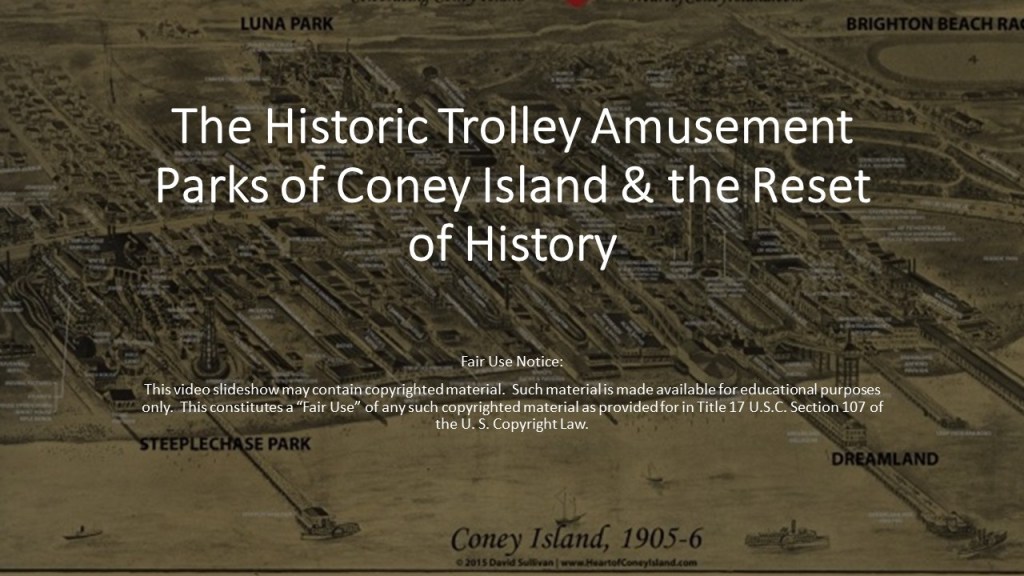
This represents just a small fraction of the historic trolley parks, star forts and lighthouses once found in the Upper and Lower New York Bays and the Hudson River Valley, which I detailed in a previous post called “Star Forts, Gone-Bye Trolley Parks, and Light Houses of New York’s Hudson River Valley & New York Bays.”
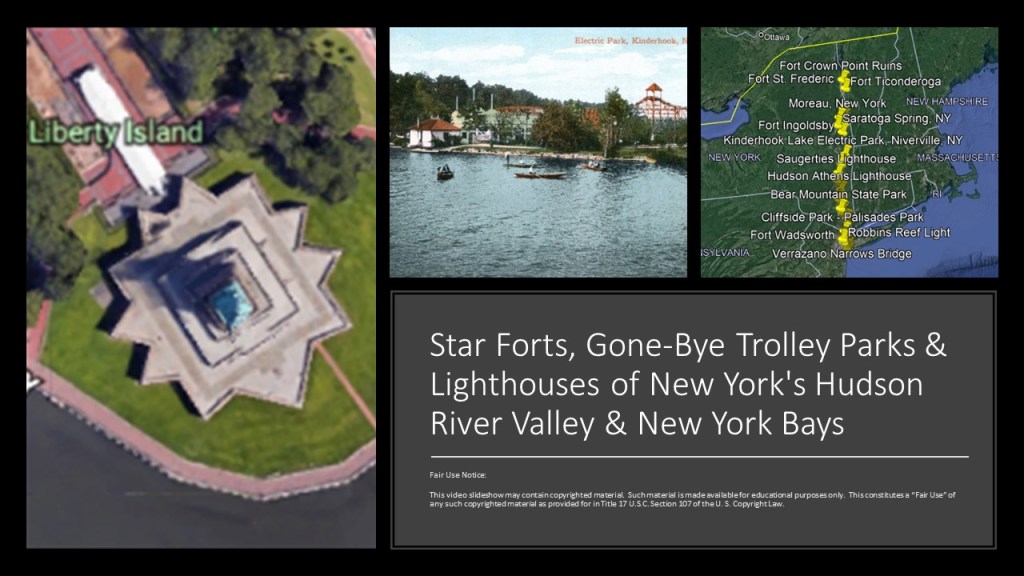
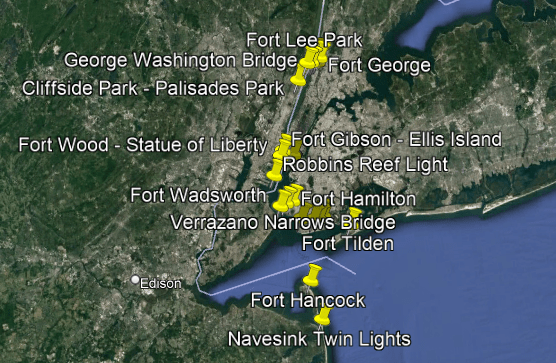
Just in the distance ALONE between the entrance to the lower New York Bay at the Atlantic Ocean to the locations around the George Washington Bridge, I found: eleven star forts that are in pairs and/or clusters; five major historic trolley amusement parks; and eleven lighthouses.
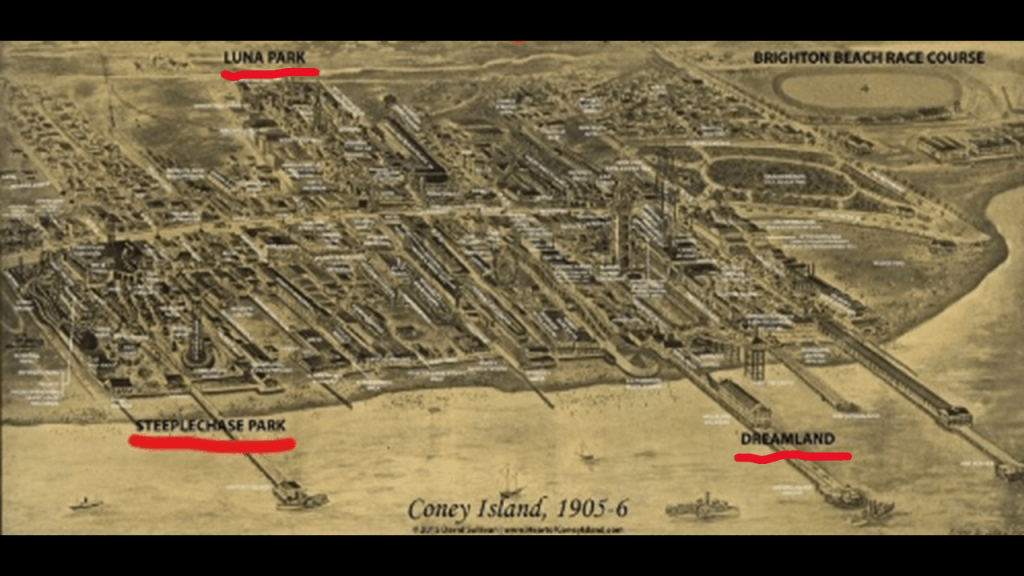
There were three historic trolley amusement parks on Coney Island in the New York City Borough of Brooklyn, located right next to each other – Steeplechase Park, Luna Park and Dreamland.
For informational purposes, the other two of the five historic trolley amusement parks in the Upper New York Bay were Palisades Park near Fort Lee, New Jersey, on the Hudson River, and Fort George in Upper Manhattan on the Harlem River.
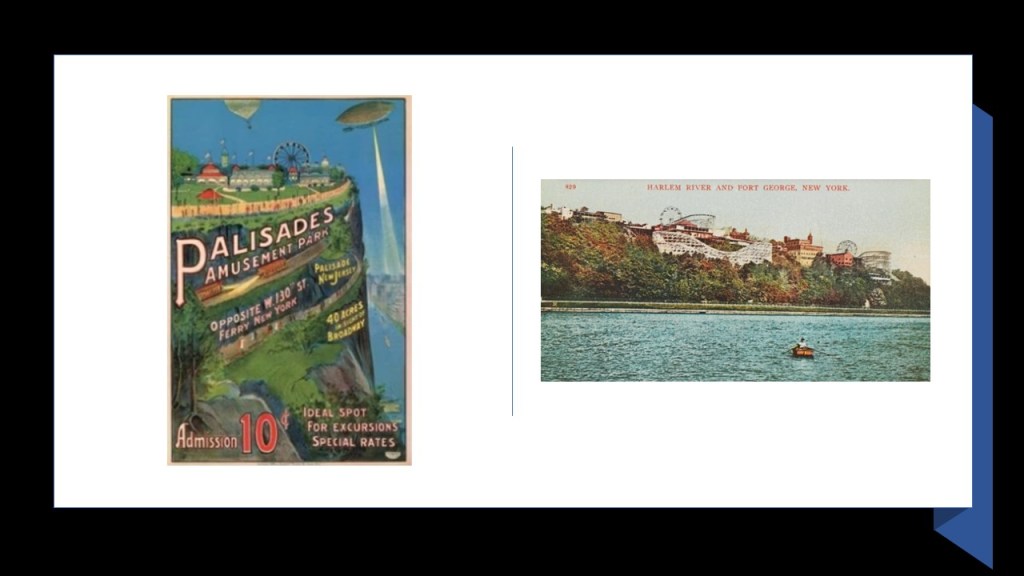
This is what we are told about the historic trolley amusement parks of Brooklyn’s Coney Island.
First, Steeplechase Park.
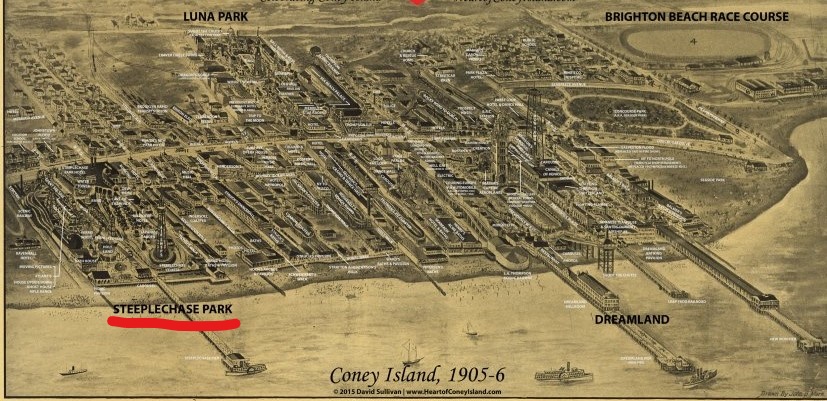
We are told that Steeplechase Park was created by entrepreneur George Tilyou in 1897.
He bought and improved the Steeplechase Horses attraction, which featured mechanical horses pulled along metal tracks.
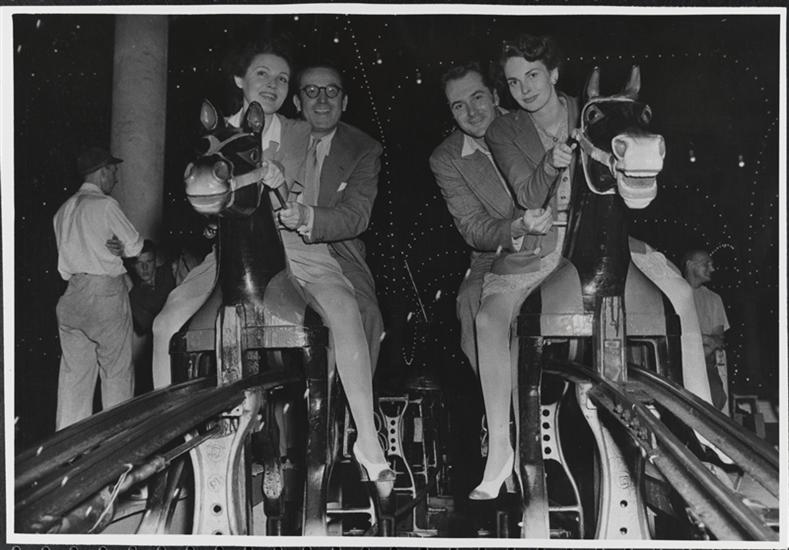
The owner George Tilyou adopted a “Funny Face” mascot depicting a smiling man with several dozen teeth, nicknamed “the Tilly,” as the icon for his park.

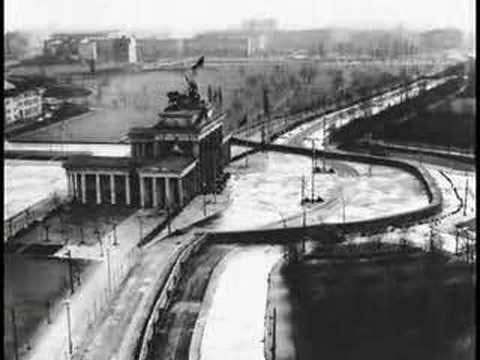
The entrance to Steeplechase Park had a grand archway, on top of which were the statues of four horses.

Interestingly, the famous Brandenburg Gate in Berlin was also topped by four-horses.
Hmmm.

The Brandenburg Gate was said to have been designed by Carl Gotthard Langhans the Elder, who was inspired by the Propylaea of the Acropolis in Athens, and built between 1788 and 1791.
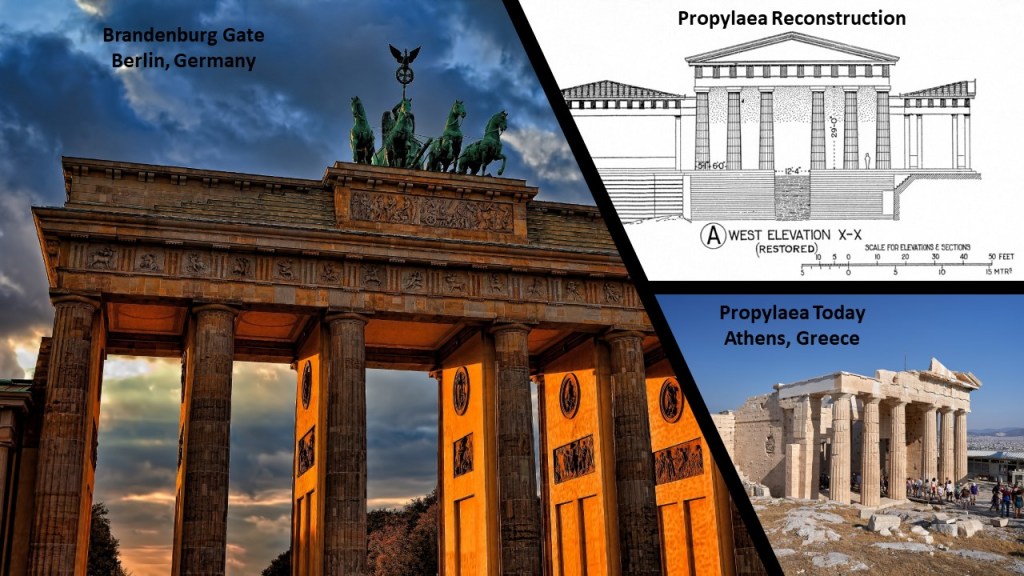
Carl Gotthard Langhans comes down to us in the historical narrative as a Prussian Master Builder and Royal architect in the Neoclassical-style, who was actually not trained as an architect, but instead educated primarily as a lawyer and mathematician.
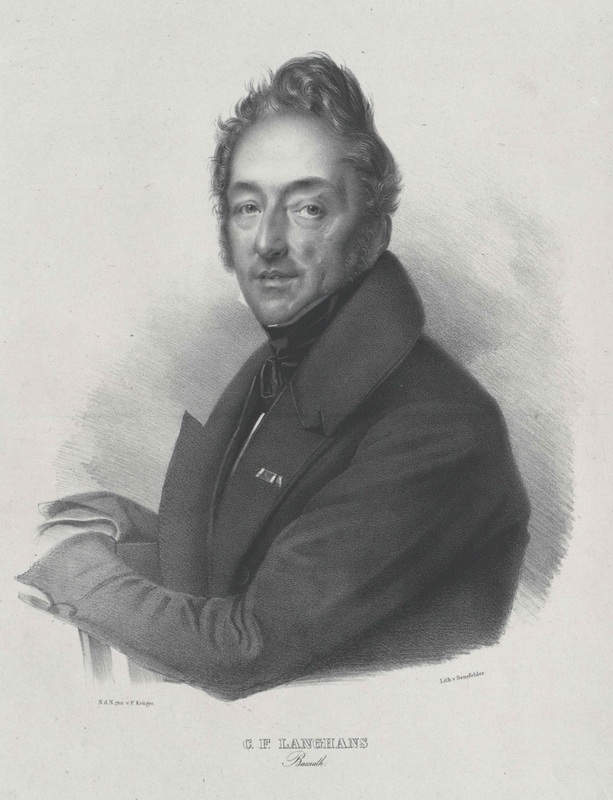
His best-known work was said to be the Brandenburg Gate, but he was also credited with many churches, palaces, grand houses, interiors, city gates, and theaters.
We are told Carl Gotthard Langhans gained his architectural prowess from studying things like the ancient texts of the Roman architect Vitruvius.
Back to Steeplechase Park on Coney Island.
The park included at one time over 50 attractions on its midway alone…
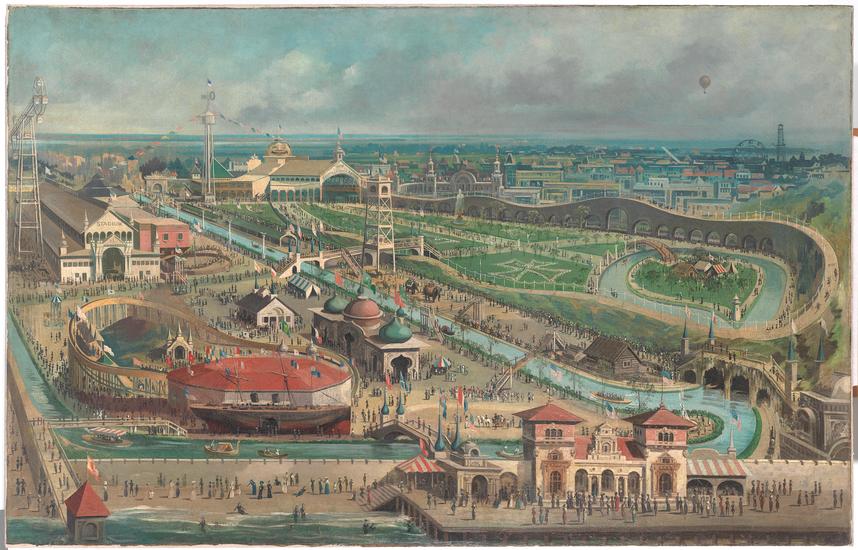
…and Tilyou was said to have been inspired to build a Ferris Wheel after having seen the one at the 1893 Chicago World’s Fair on his honeymoon.
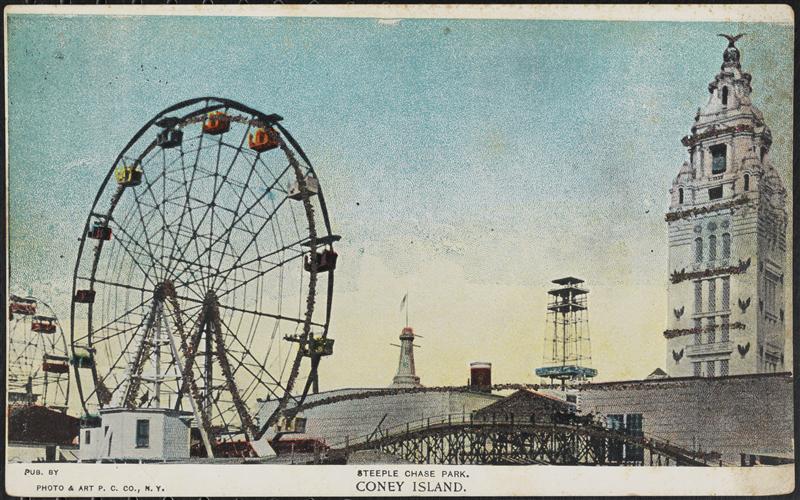
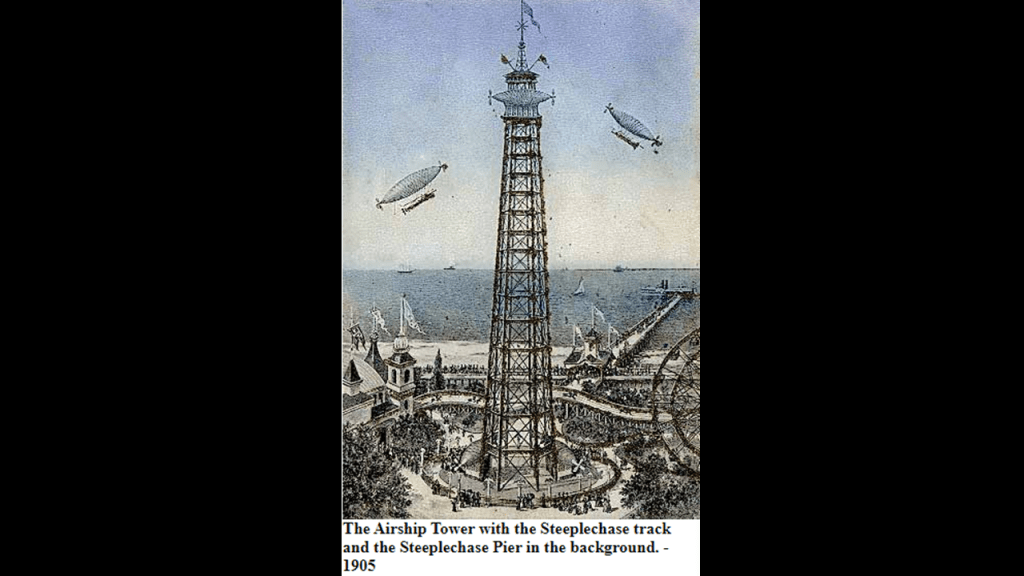
Other early noteworthy Steeplechase Park rides included the revolving Airship Tower, pictured here circa 1905…
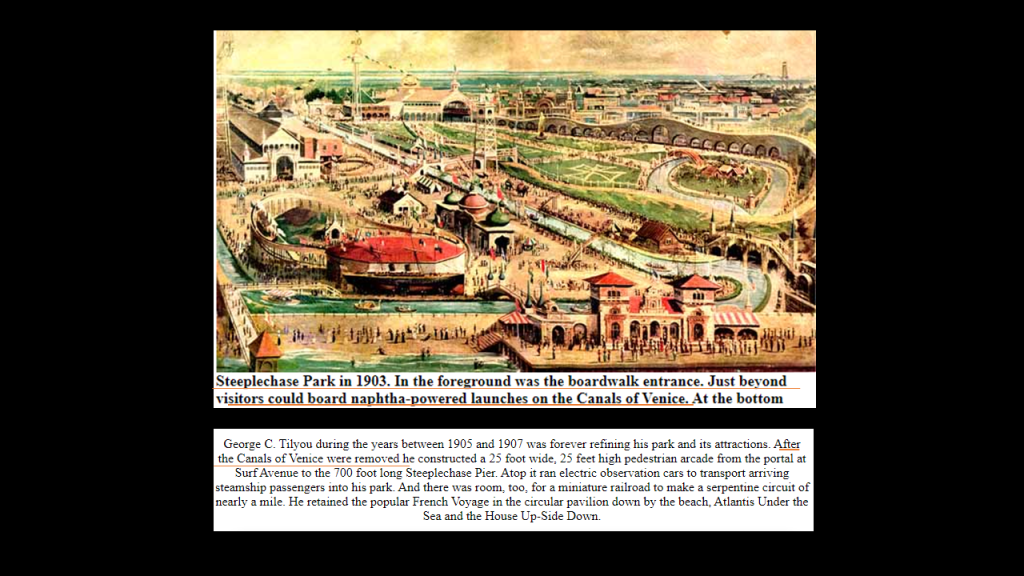
…boats powered by naphtha, a liquid petroleum-product used as a fuel, cruising the “Canals of Venice,” a ride which he had removed sometime between 1905 and 1907…
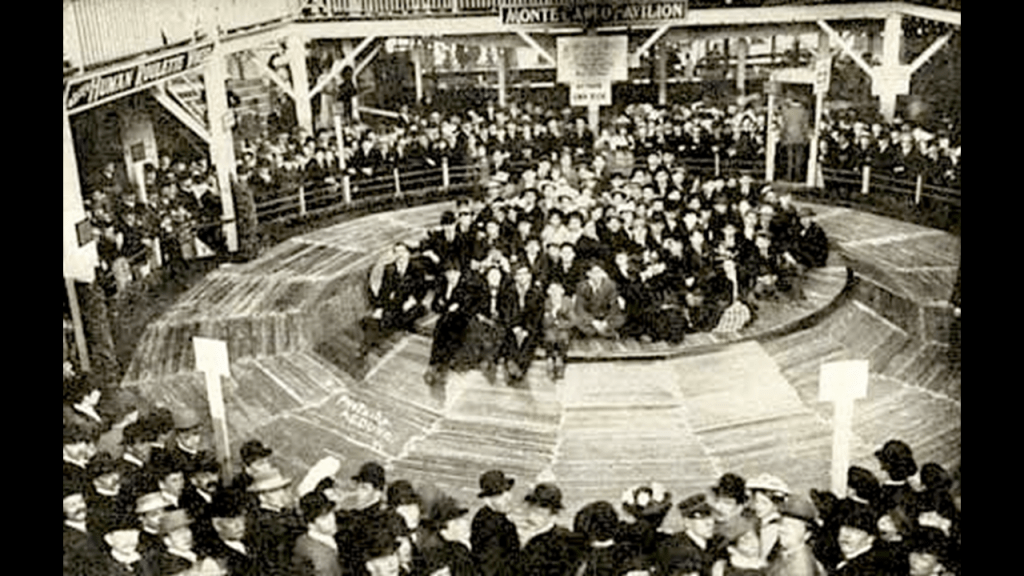
…and the “Human Roulette Wheel,” which featured a giant , polished spinning disc that riders would sit in the middle of and slam into each other as it spun faster-and-faster.
In Steeplechase Park’s history, from its opening in 1897 and its closing in 1964, there were things like fires, rebuilding, rides added, and so on.
Like, for example, the 1907 fire.
This quick-spreading fire was alleged to ahve started from a carelessly-thrown, still-lit cigarrette into a garbage can at the “Cave of the Winds” attraction, and was finally extinguished two-hours later after having destroyed nearly everything within Steeplechase Park.
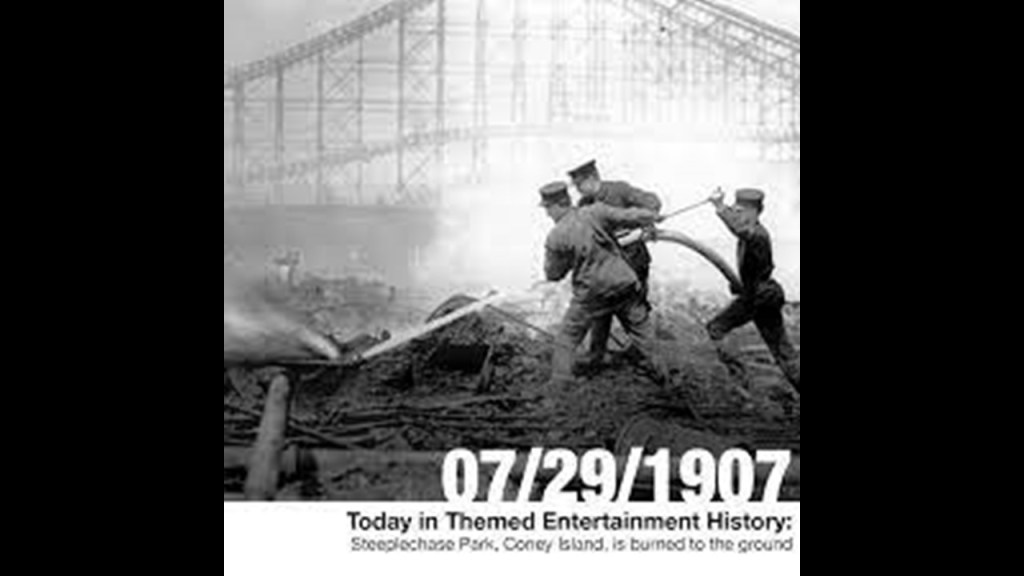
Remarkably, George Tilyou’s home at the corner of Steeplechase Park was spared due to the extra effort of fire-fighters on the scene.
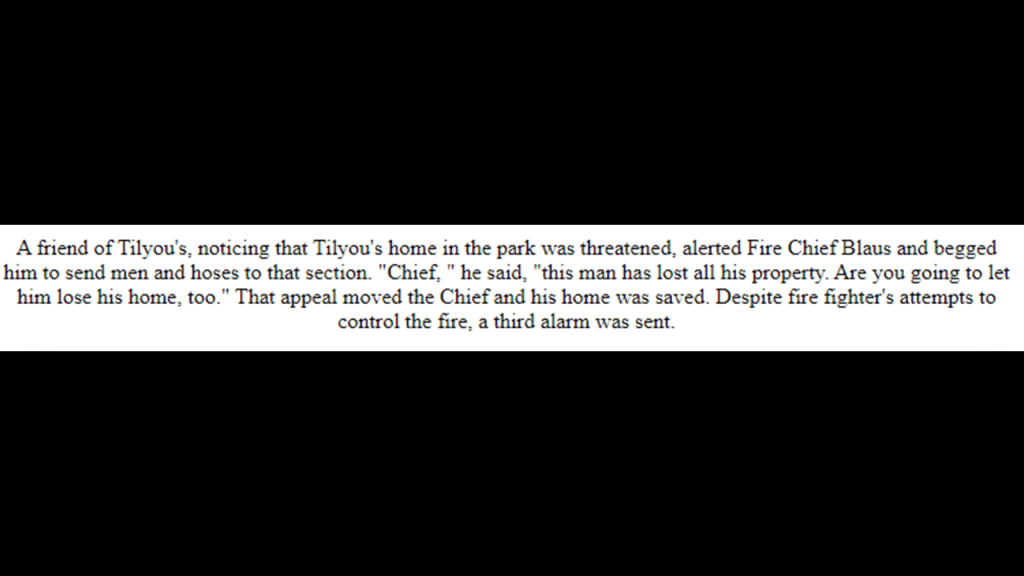
Undaunted, George Tilyou vowed to rebuild Steeplechase Park, and to raise the funds needed to do this, sold 400,000 shares at $5-each, and threw in a season pass for each purchaser on top of that!
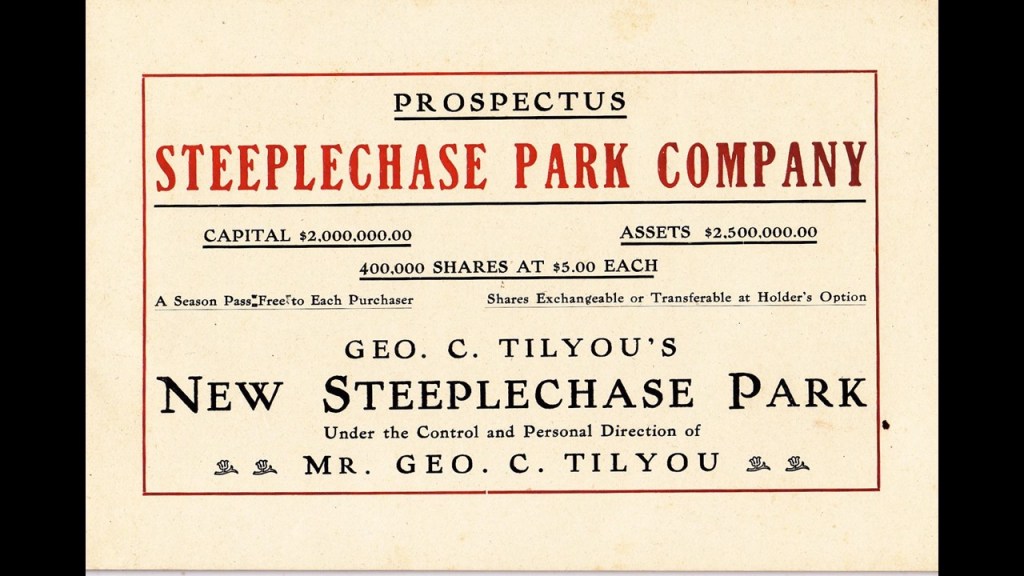
We are told the park partially reopened in April of 1908, and the reconstruction was said to be finished by 1909.
Here is a 1912 photo of Steeplechase Park, with the swimming pool front-and-center.
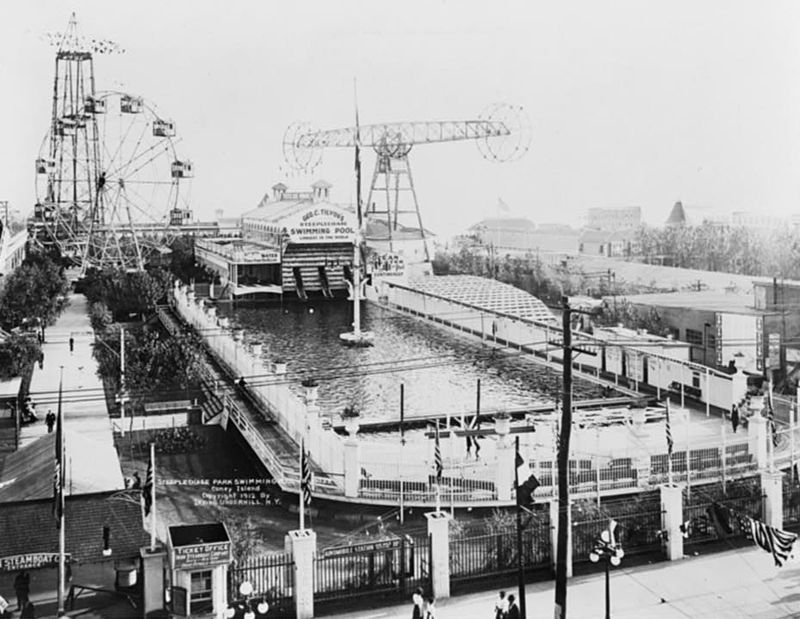
George Tilyou died in 1914, and Steeplechase Park remained in the Tilyou family until its closure in 1964, and over the years started to go into decline at different times for different reasons, but especially so with the onset of the Great Depression, which started in 1929 and resulted in a significant decline in park attendance.
The land of the former amusement park today is Maimonades Park, the location of a minor league baseball stadium.

The only remaining structure from Steeplechase Park is the defunct, but brightly-lit-up at night even today, Parachute Jump.

Next, I am going to take a look at Luna Park.
Luna Park at Coney Island opened in 1903.

It was said to have replaced Sea Lion Park that was operated by a man named Paul Boyton between 1895 and 1902, the first enclosed and permanent amusement park in North America.
Boyton was credited with being the first person to charge an admission fee to a large enclosed area containing multiple amusement rides and activities.
The so-named Captain Paul Boyton was a world-famous back-in-the-day aquatic daredevil and showman who travelled the world’s rivers in an inflatable rubber suit for “P. T. Barnum & Company’s Greatest Show on Earth & the Great London Circus.”
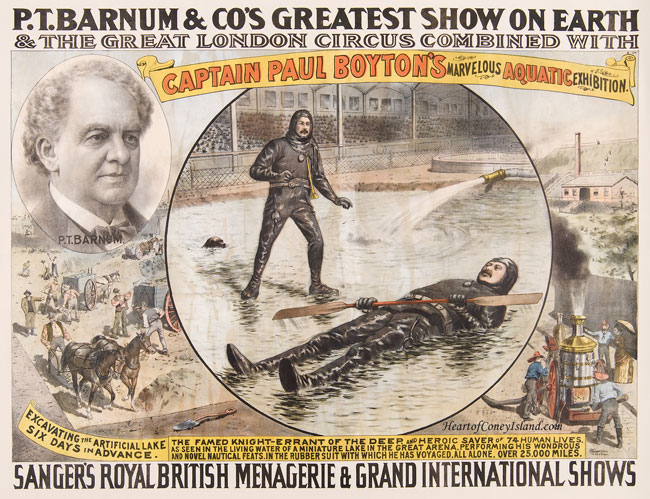
Here are some noteworthy historical side-notes about P. T. Barnum.
He was an early showman, businessman, and politician.
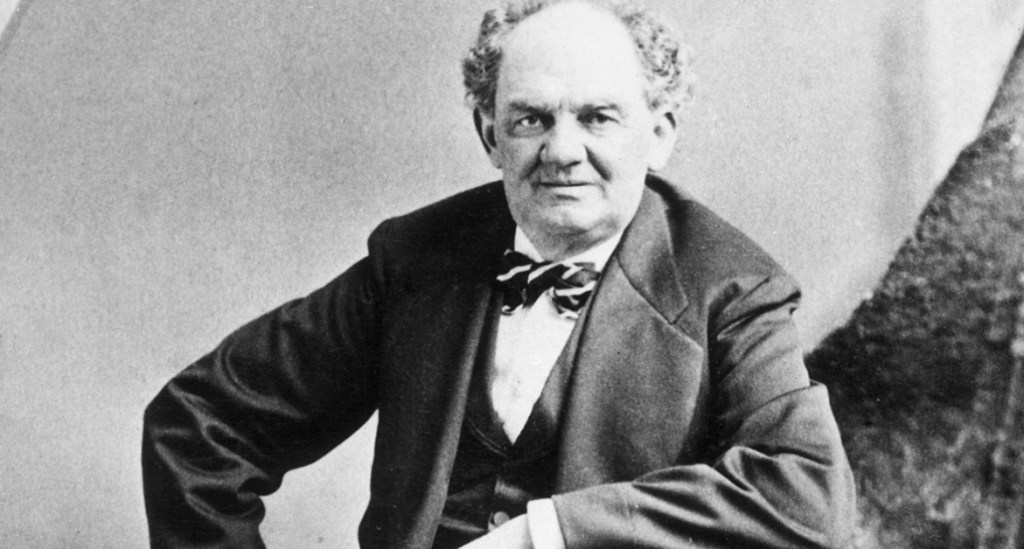
P. T. Barnum got his start in what is now the Financial District of Manhattan in 1841, with “Barnum’s American Museum,” which was known for its strange attractions and performances.
The attractions were a combination of zoo, museum, lecture hall, wax museum, theater, and freak show.
Apparently it became a central location in the development of American popular culture.
Barnum’s American Museum was filled with things like dioramas; scientific instruments; modern appliances; a flea circus; the “feejee” mermaid; Siamese twins, and other human curiosities.
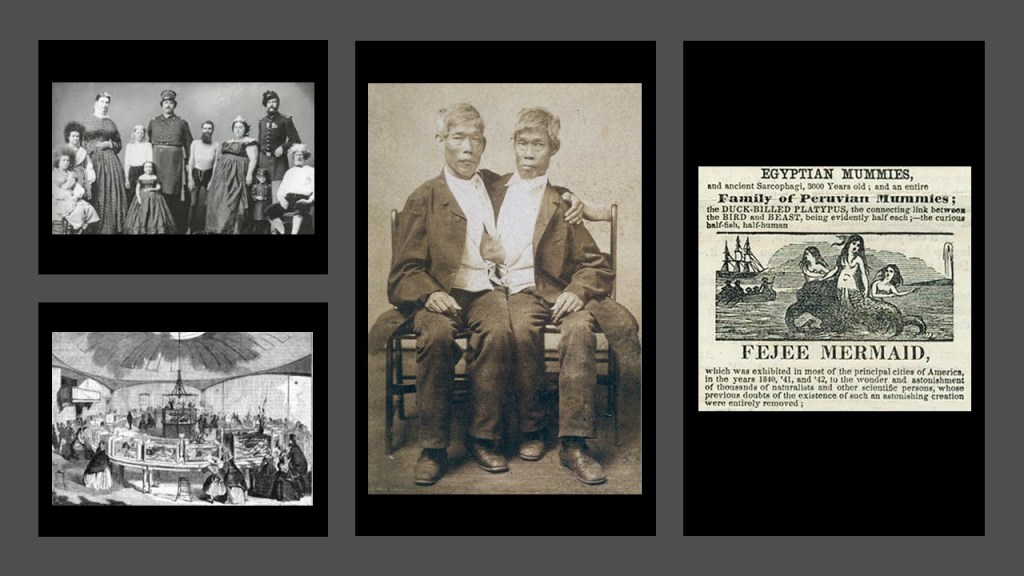
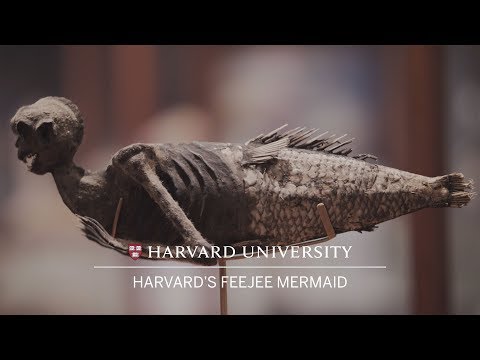
The same “Feejee Mermaid” is still on display today at Harvard’s Peabody Museum.
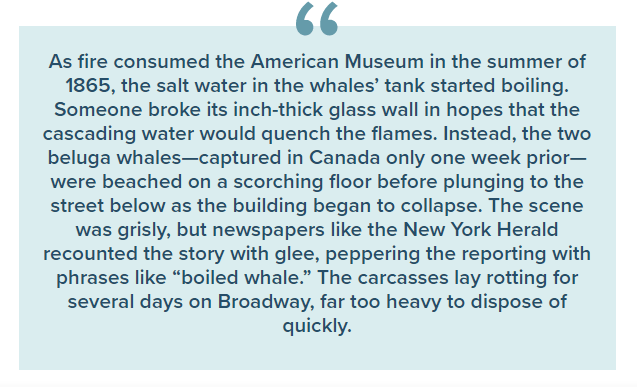
On July 13th of 1865, the building which housed Barnum’s American Museum caught fire and burned to the ground.
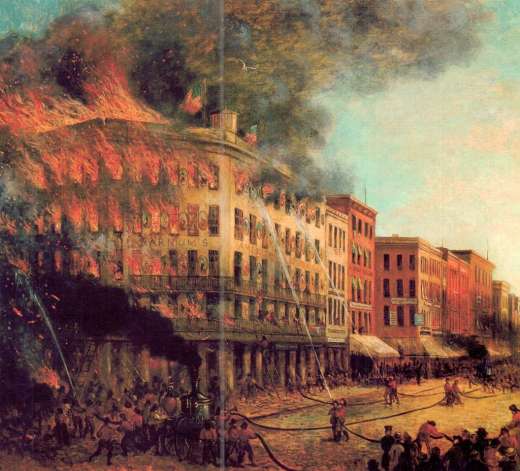
Apparently there were not any human deaths, but a number of the live animal exhibits, including two whales imported from the coast of Labrador, were burned alive.
This was the second of five major fires connected to P. T. Barnum.
The first major fire associated with P. T. Barnum was the mansion he was said to have had built as his residence in Bridgeport, Connecticut, in 1848, and named “Iranistan.”
It was said to have been set on fire by workmen in 1857 when Barnum had been away for several months.
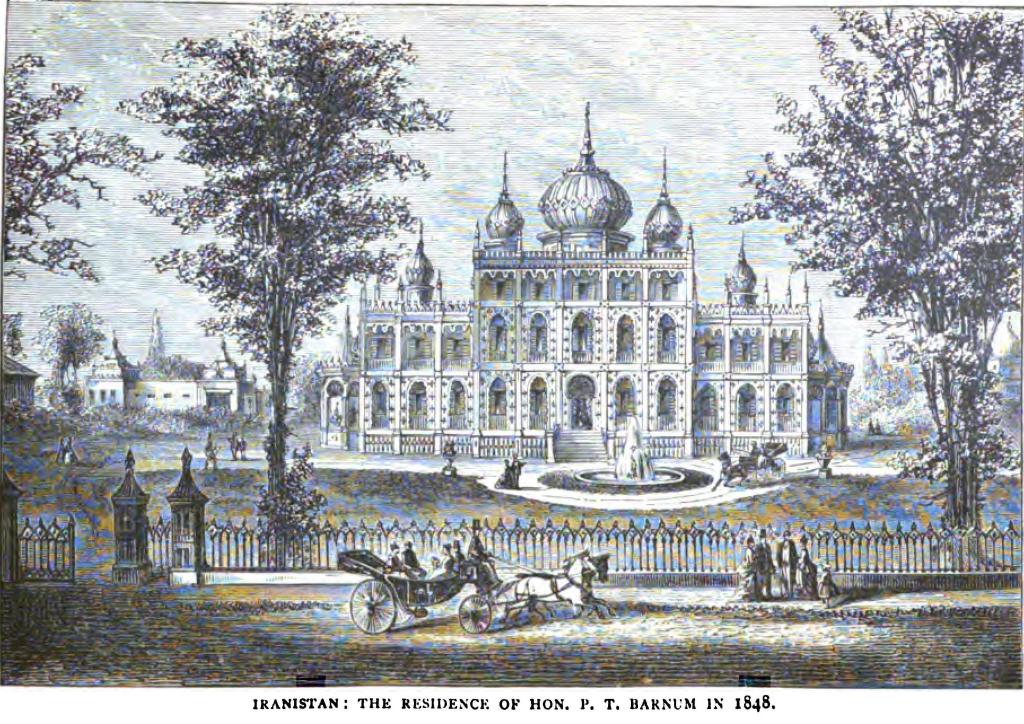
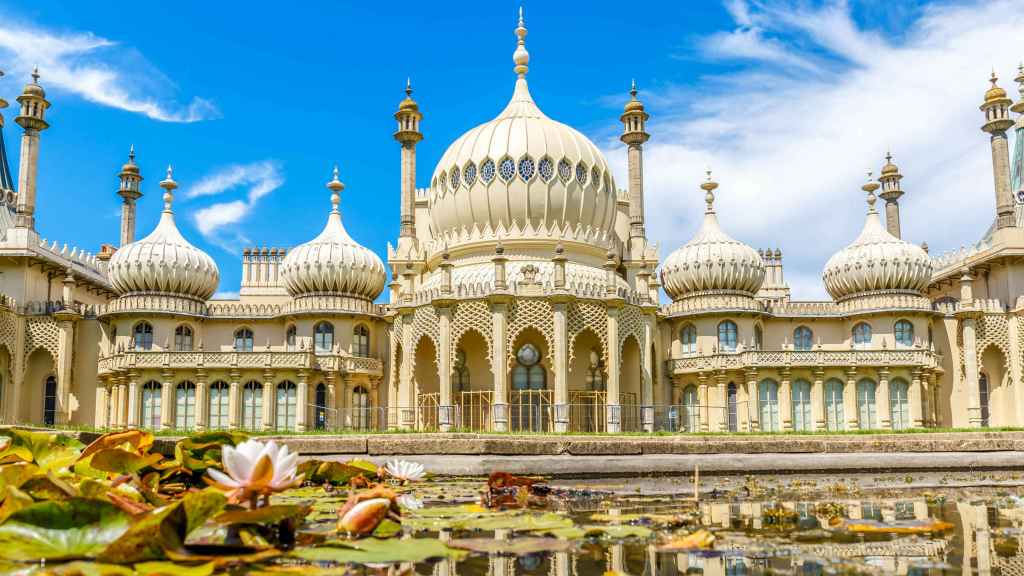
We are told Barnum had hired architect Leopold Eidlitz to design Iranistan as his own version of the Royal Pavilion in Brighton, said to have been constructed in England between 1787 and 1815.
The Royal Pavilion in Brighton was said to have been designed in the architectural-style of “Indo-Saracenic Revival,” as a seaside resort for the Prince Regent George, by British architect John Nash, who was called one of the foremost architects of the neoclassical-style of the “Georgian” and “Regency” eras.
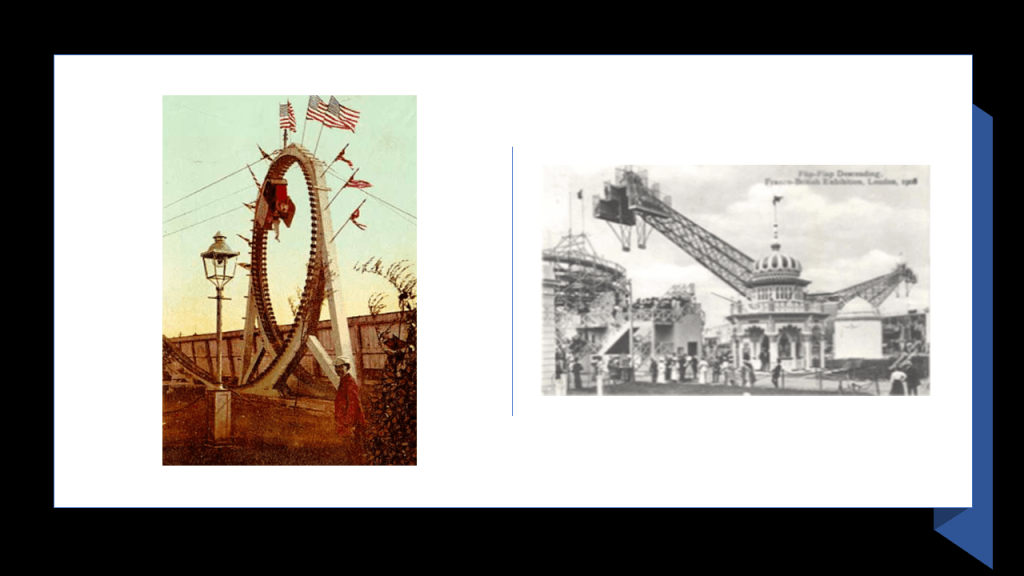
The Flip Flap Railroad mentioned at the bottom of this image of Paul Boyton’s Sea Lion Park…
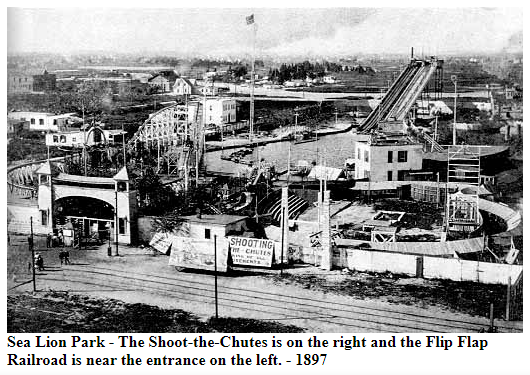
…was said to be the first looping roller coaster, on the left, and another historic Flip-Flap ride that comes to mind was the one at White City in London in what was called the Elite Gardens at the 1908 Franco-British Exhibition, on the right.
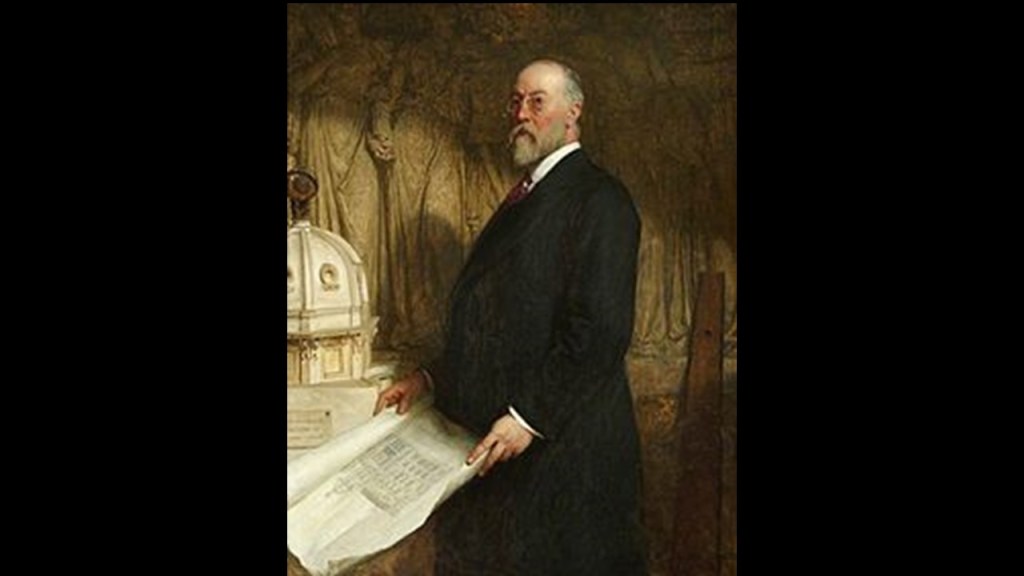
John Belcher was credited with the design of buildings here as the Chief Architect of the 1908 Franco-British Exhibition .
He was an English architect and President of the royal Institute of British Architects.
Paul Boyton’s remaining long-term lease on Coney Island’s Sea Lion Park was bought out starting on October 1st of 1902 by Frederic Thompson and Elmer “Skip” Dundy.
Thompson and Dundy were invited to the Steeplechase Park by George Tilyou for the 1902 Season.
They were known for their ride called “A Trip to the Moon” that was at the 1901 Pan-American Exposition that was held in Buffalo, New York.

The name of the fanciful airship that was the main part of the “A Trip to the Moon” ride was “Luna,” the Latin word for “moon’ for which, we are told, Luna Park in Coney Island was built around.
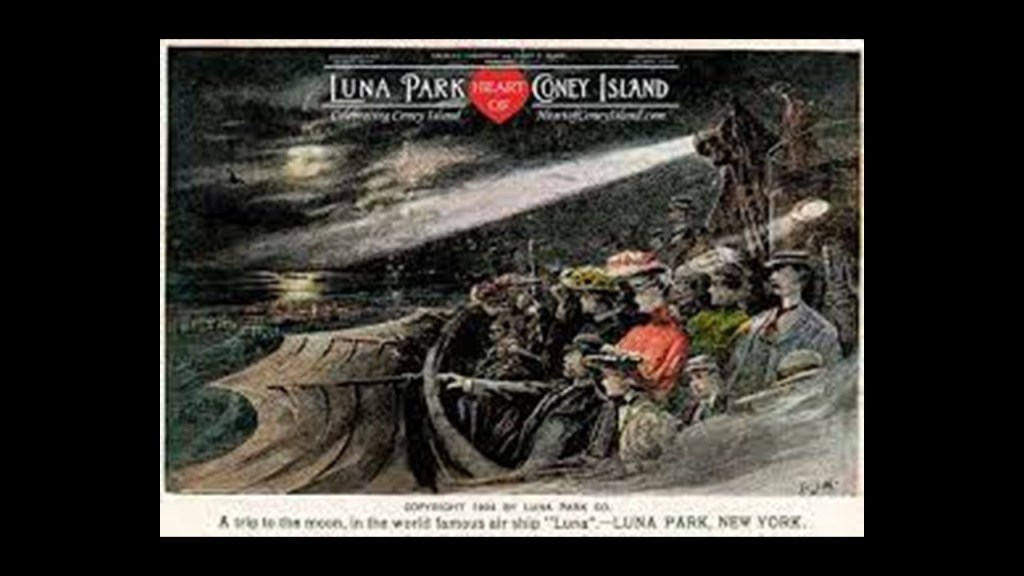
Well, for one thing, the problem with that story is that there were, and still are, Luna Amusement Parks all over the world, including, but not limited to, Mashhad, Iran, and Ankara, Turkey.

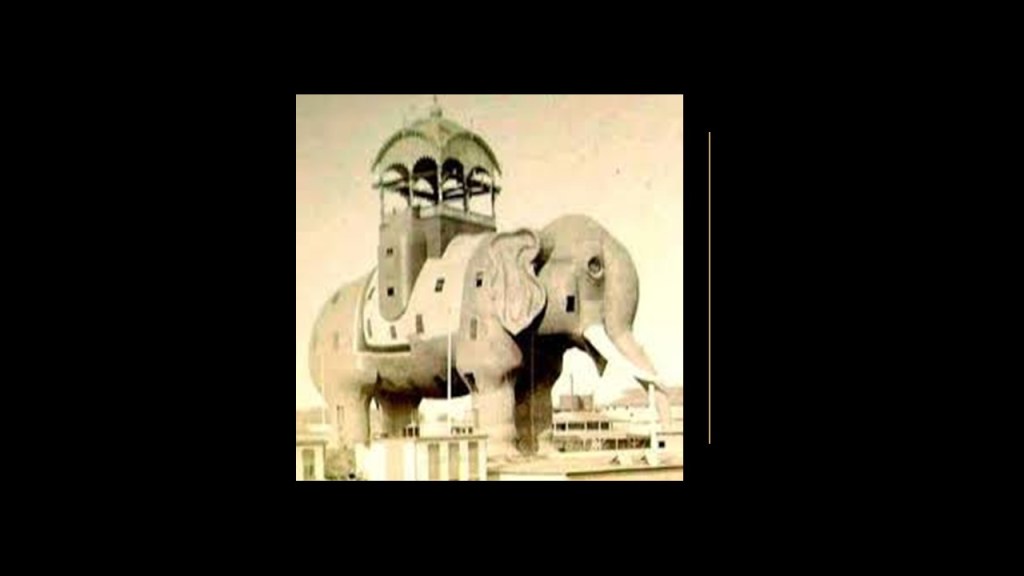
The land Luna Park was on was located next to where the Elephantine Colossus Hotel had been located.
We are told this hotel was a tourist attraction on Coney Island that was an example of novelty architecture, designed by Irish-American inventor James V. Lafferty.
The massive elephantine structure stood above Surf Avenue and West 12th Street from 1885 to 1896, at which time it burned down, giving Thompson and Dundy more land upon which to build Luna Park.
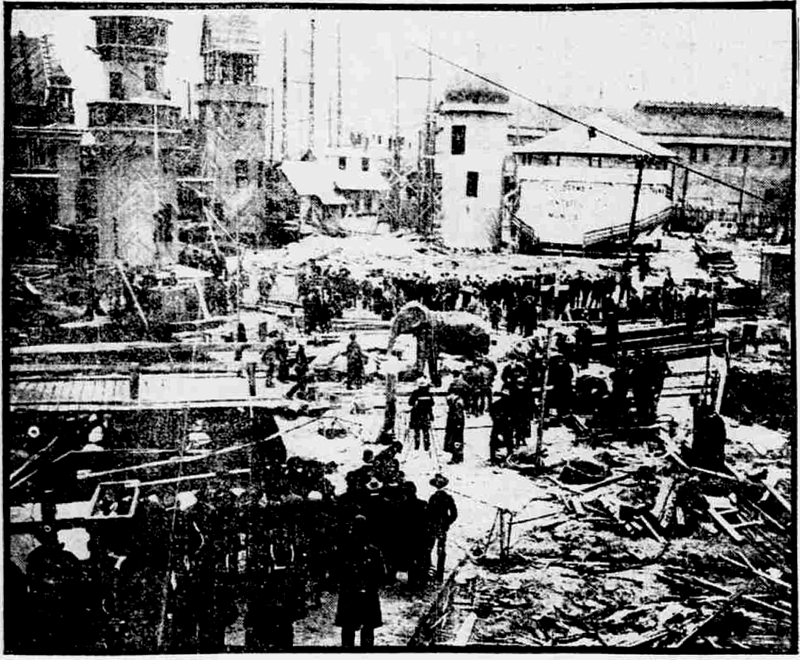
Speaking of elephants, this picture was taken in January of 1903, when Luna Park was said to have been under construction.
It shows Topsy the Elephant before she was executed by electrocution for being a “bad” elephant by Thompson and Dundy as a publicity stunt to advertise the opening of their new park.
This seems hauntingly reminiscent of the building fire associated with showman P. T. Barnum that resulted in the tragic deaths of the large, helpless whales, and other animals, trapped inside.
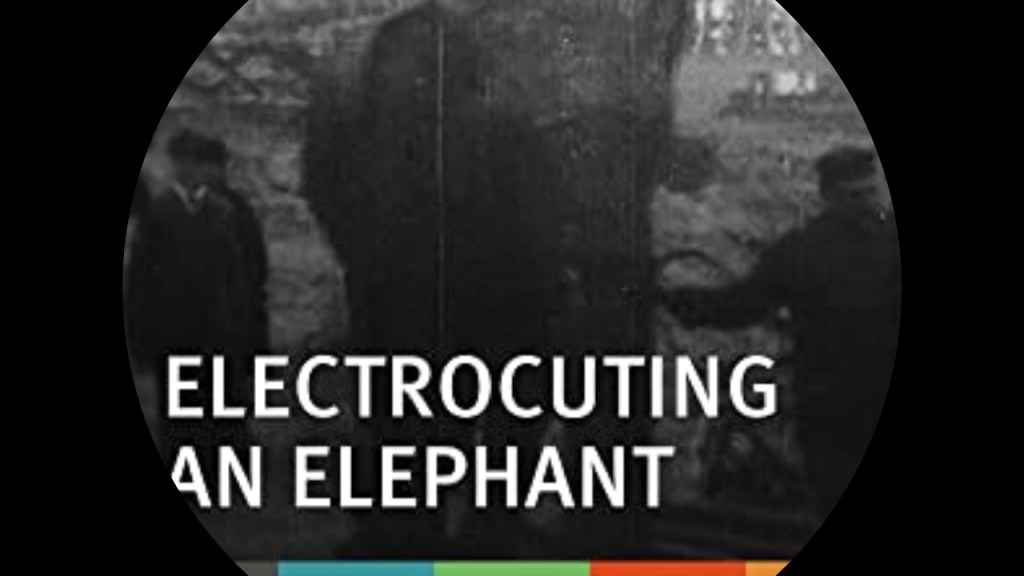
The invited press that day included the Edison Movie Manufacturing Company, who filmed the event.
It was released to be viewed in coin-operated kinetoscopes under the title of “Electrocuting an Elephant.”
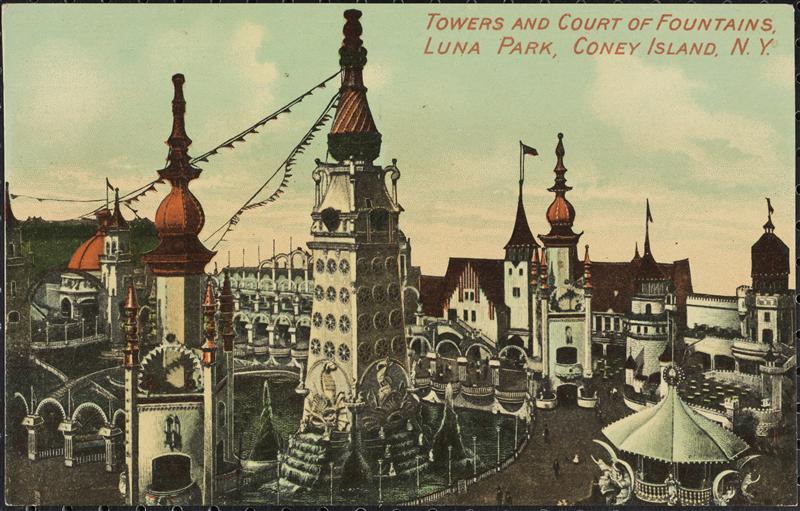
We are told the Luna Park’s architectural style was an oriental theme, with over 1,000 red and white painted spires, minarets, and domes on buildings constructed on a grand scale.
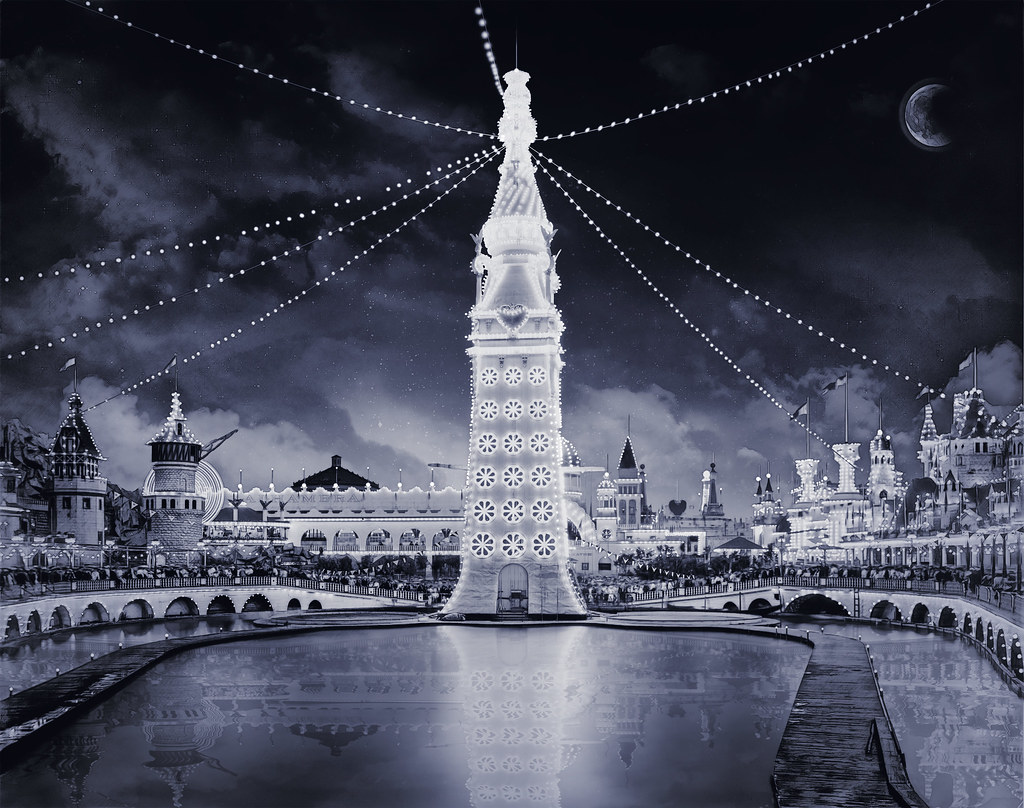
All the domes, spires, and towers were lit-up at night with several 100,000 incandescent lights.

In the middle of the lake at the center of the park was a 200-foot, or 61-meter, tall Electric Tower that was decorated with 20,000 incandescent lamps, said to be a smaller version of the Electric Tower featured in the 1901 Pan American Exposition in Buffalo.
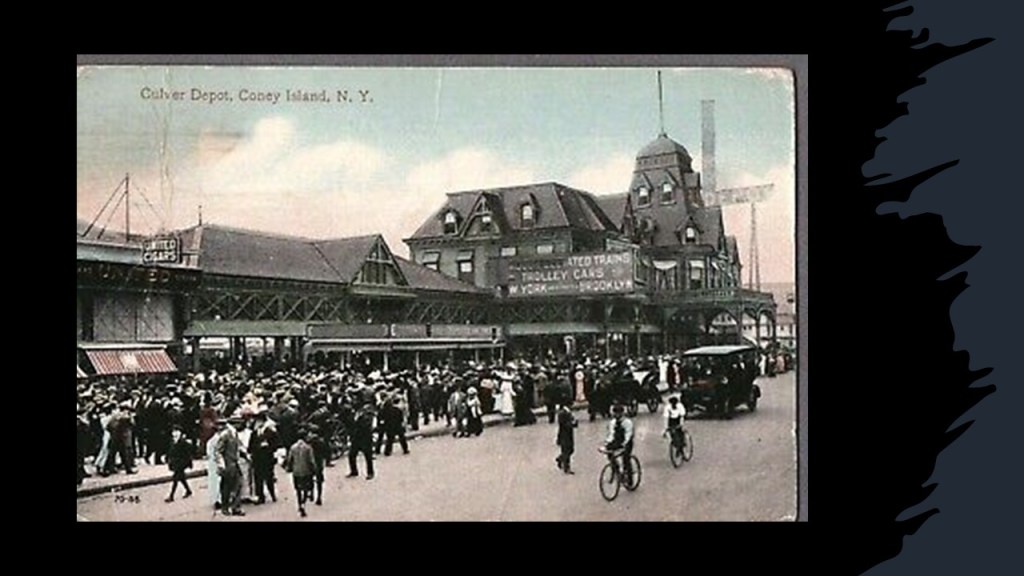
Luna Park was accessible from Culver Depot, the terminals of the West End and Sea Beach Streetcar and Railroad lines.
Besides a multitude of rides, attractions at Luna Park included infant incubators, described as a new type of infant care where infant incubators containing premature babies were displayed in shows called “Infantoriums.
They were touted as “neonatal healthcare,” helping newborn babies with compromised immune systems by providing a sanitary environment to reduce the possibility of getting an infection.
infant incubators for premature babies became widely available at fairs and amusement parks across America, rather than hospitals, which we are told, had nothing to help them.
What we are told is that many parents of premature, at-risk babies pretty much had to bring their infants to a side-show infantorium at an amusement park or fair, and that these infant shows were the main source of healthcare for premature babies for over forty years.
Say what??!!
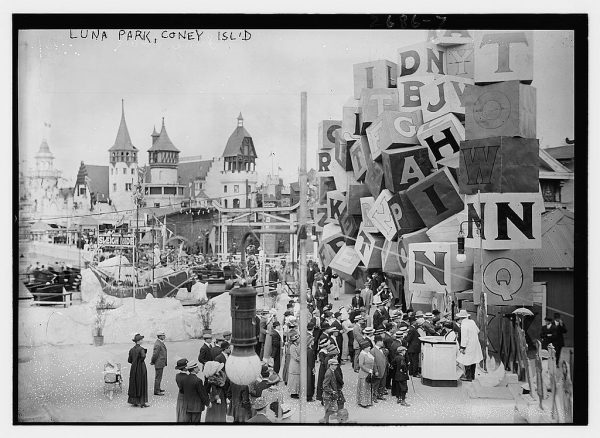
Over the years, Luna Park would continue under different management, with constant changes.
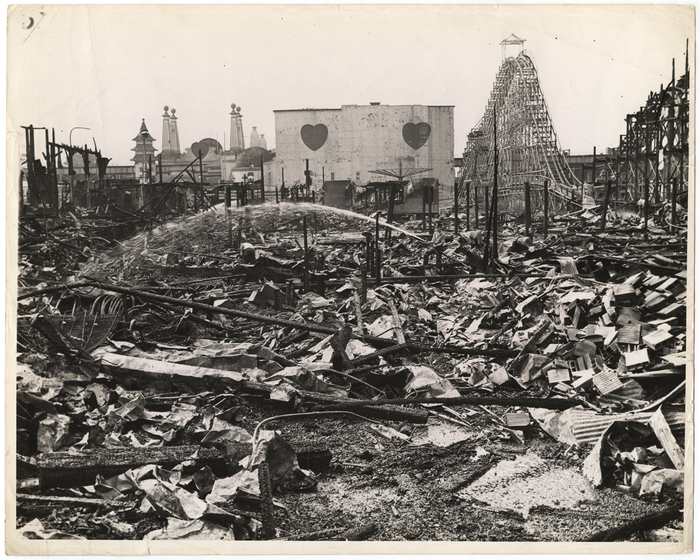
The end of Luna Park came with two fires in 1944, one in August and one in October, which destroyed the park, and in 1946, the whole park was demolished.
There has been a Luna Park operating near the original location since 2010 that has no connection to the 1903 park.

Dreamland was the third and last of the three original parks said to have been built on Coney Island in the early 19th-century.

Dreamland was said to have been founded by successful Brooklyn real estate developer and former State Senator William H. Reynolds as a refined and elegant competitor to the chaotic noise of Luna Park, and opened in May of 1904.
The location of Dreamland was near the West Eighth Street subway station opposite Culver Depot.

Everything at Dreamland was touted to be bigger than Luna Park, including the larger Electric Tower, and four times as many incandescent lights than Luna Park.

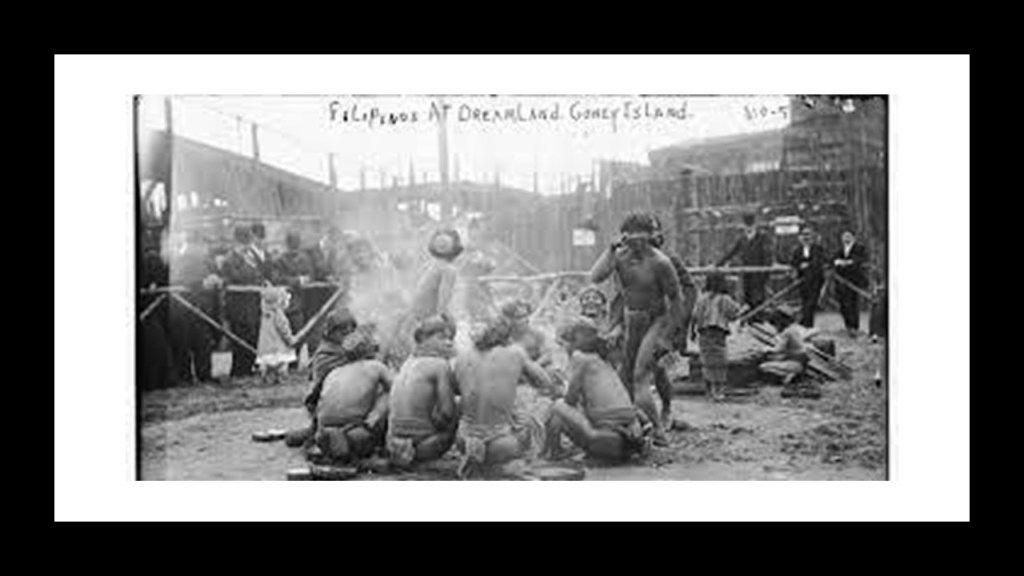
Besides having high-class entertainment, morality plays, and rides, Dreamland had human zoos featuring dwarf inhabitants in what was called “Midget City…”

…a Somali Village…

…and a Filipino Village.
And, like Luna Park, Dreamland also had an infant incubator sideshow attraction.

It was typical for these historic permanent amusement parks and temporary exhibitions like World Fairs to have these infantoriums and human zoos as visitor attractions.
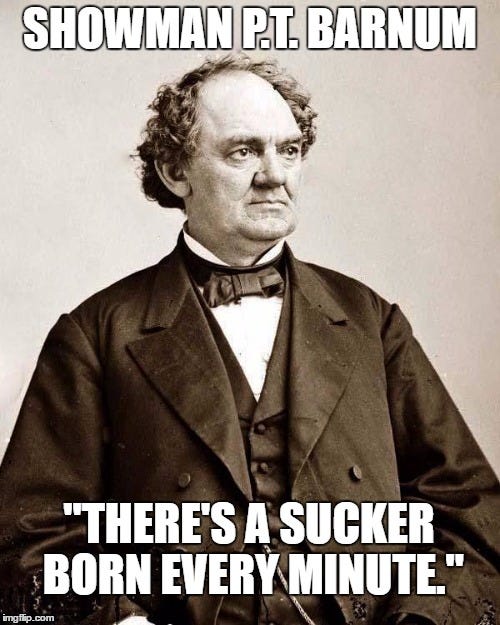
So, as we saw with callous disregard for the lives of the animals in their care, these showmen and entrepreneurs had no regard for the sanctity and dignity of Human life either, except for how it benefited them. A famous saying attributed to P. T. Barnum was “There’s a sucker born every minute!”
Another thing to mention is this, especially with respect to the existence of Human zoos during this time.
Exposition, the name frequently given to these large public exhibits, is a device used to give background information to the audience about the setting and characters of the story.
Exposition is used in television programs, movies, literature, plays and even music.
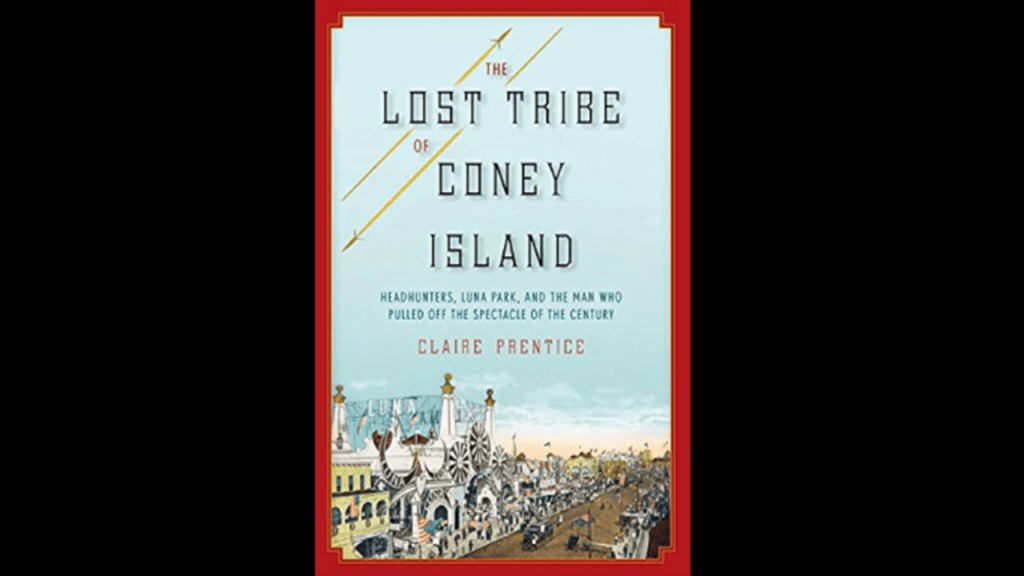
They were telling the general public the hunter-gatherer, or even head-hunter, narrative through these large expositions and exhibitions that they wanted people to believe and remember about these original people of the world, and not what they actually were as the builders of the original civilization.

Instead, they took credit for their accomplishments and legacy, and kicked the original advanced humans back to the Stone Age by their systemic practices of brutality, inhumane treatment, and marginalization, among many other things including large-scale genocide.
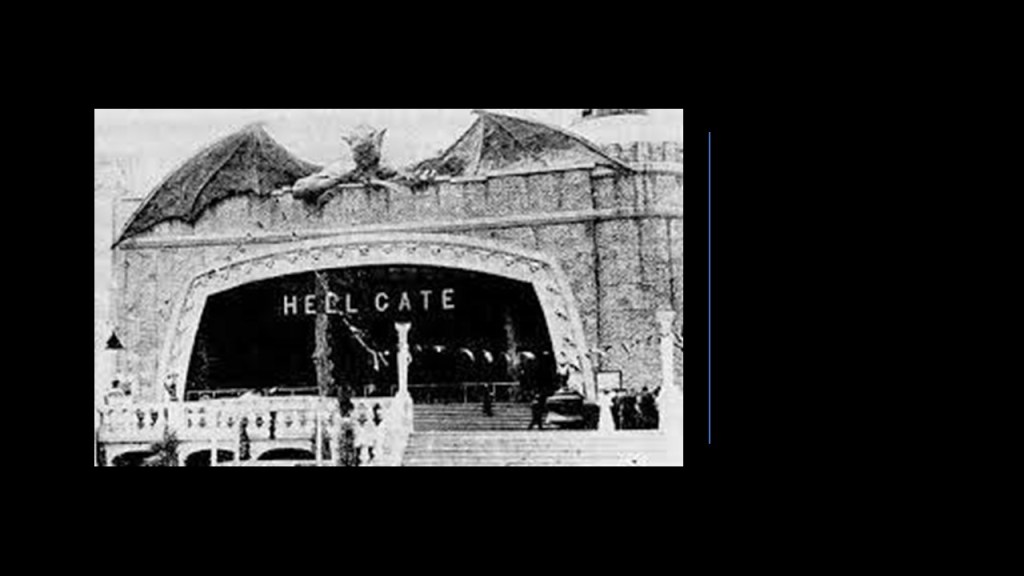
Dreamland’s life on Coney Island was ended only 7-years after opening.
On May 27th of 1911, a fire started at the Hell Gate attraction the night before the season’s opening day, and spread quickly, completely destroying the park by morning.
Brighton Beach is adjacent to the three major historic Coney Island amusement park locations, and shares the same name with the location of the Royal Pavilion of Brighton mentioned previously in this post. If there was an actual connection between these two places in the original civilization, it is long-lost.
The Brighton Beach Race Course was an American thoroughbred horseracing facility shown here opened on June 28th of 1879.
It was instantly successful and drew wealthy patrons from New York City.
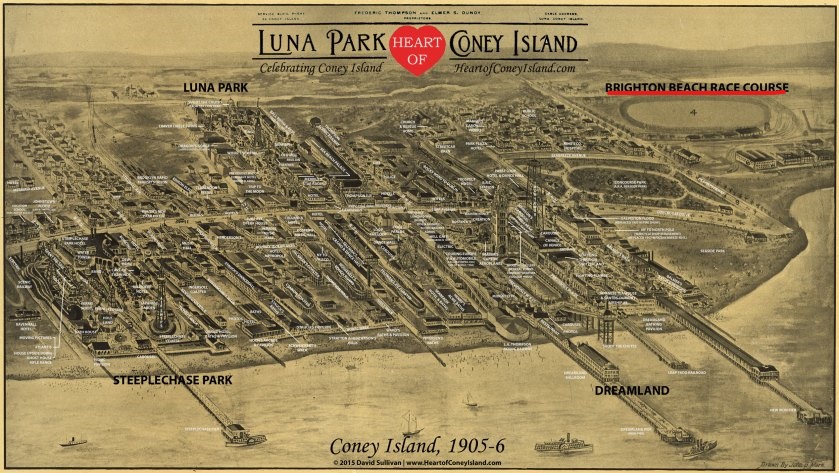
The track prospered in 1908, when the New York State Legislature passed the Hart-Agnew Law, banning gambling.
The Brighton Beach Race Track was eventually torn down, and by the 1920s, replaced by residential housing.

Back around 2015, about three-years before I started blogging and doing my own research in 2018, I remember seeing a video on the New Earth YouTube Channel about megalithic stones strewn about on Coney Island’s Brighton Beach, so I searched for images like this one of Brighton Beach on the left.
What force could possibly cause huge megalithic stone blocks like this to be tossed around like children’s wooden blocks?
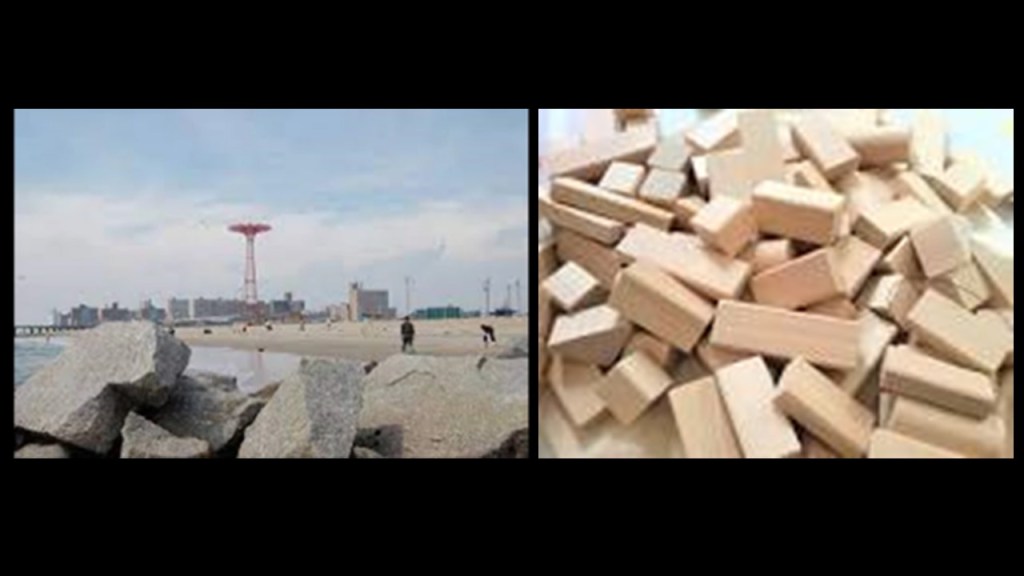
And the explanation we are given for faces amongst the rocks was that there was a mystery artist in the 1970s who carved them.

It is important to point out that the landscape looks absolutely ruined here, and Jamaica Bay just to the east of Coney is called a partially man-made and partially-natural estuary, and contains numerous marshy islands.
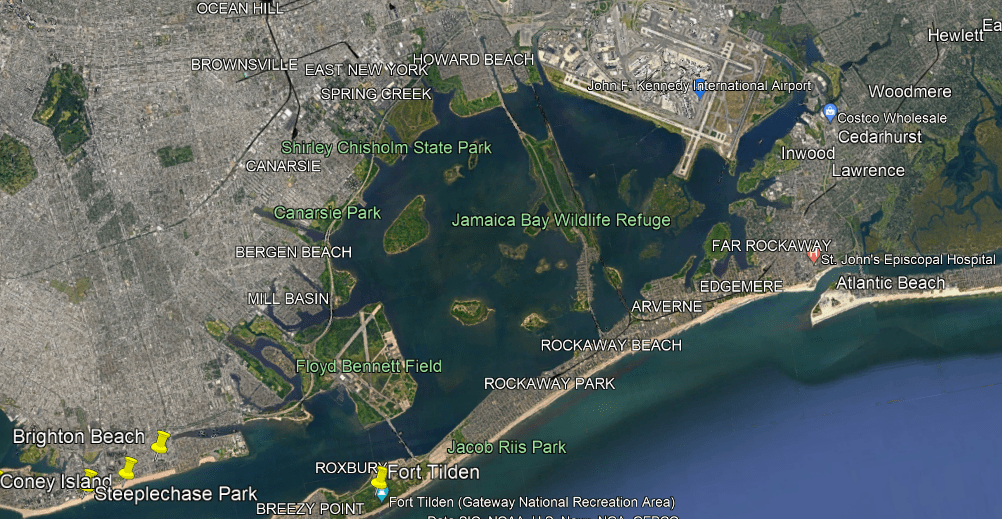
John F. Kennedy International Airport is on the northeast side of Jamaica Bay, and would have been in a short-distance, straight-line alignment with the former Brighton Beach Race Course.
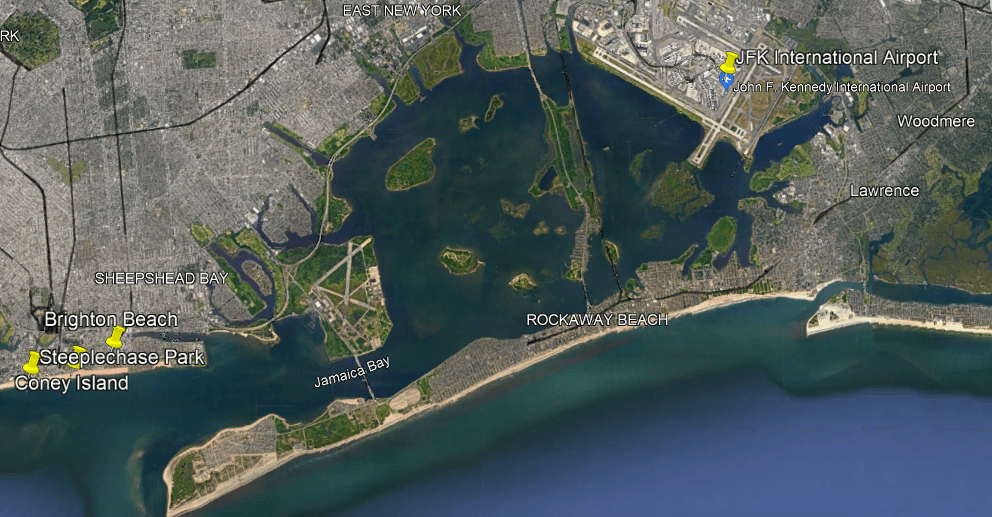
There is a rapid transit line of the New York subway system that operates through the middle of the marshy Jamaica Bay estuary, the IND Rockaway Line that runs between the Aqueduct Racetrack Station terminal, another racetrack a short-distance, straight-line alignment with JFK Airport, and Rockaway Beach.

The long and narrow Great South Bay is east of Jamaica Bay on Long Island’s South Shore.
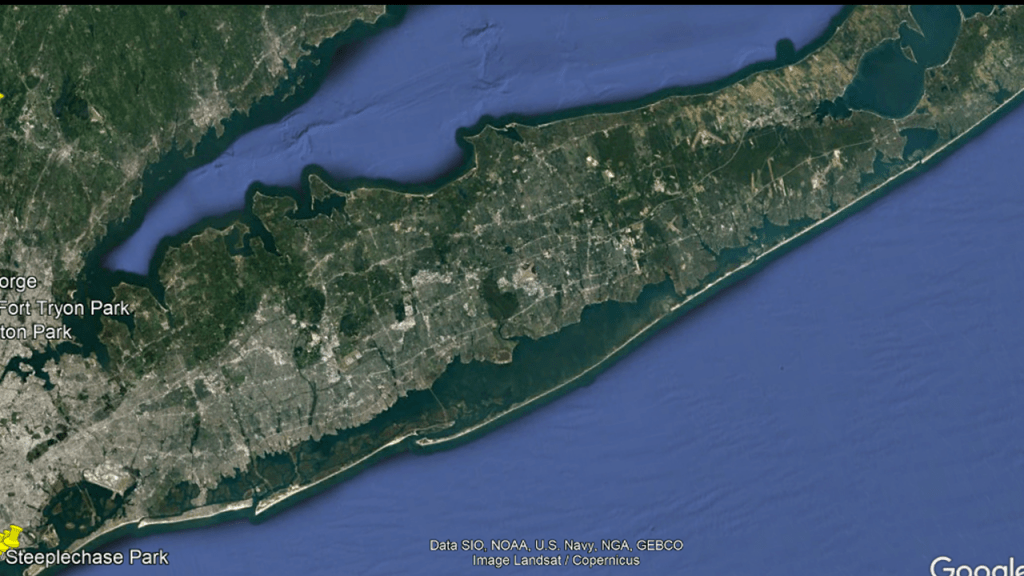
The Great South Bay is described as a lagoon that is 45-miles, or 72-kilometers-, long, and has an average depth of a little over 4-feet, or 1.2-meters, and is 20-feet, or 6-meters, at its deepest.

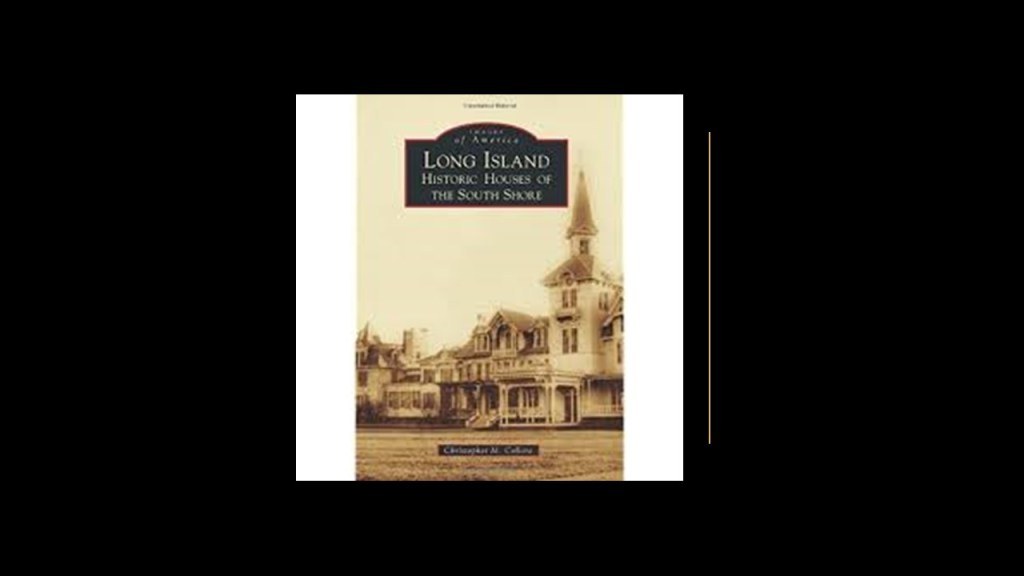
During the so-called Gilded Age, the Vanderbilts, Roosevelts, Whitneys, Morgans, and Woolworths were said to have built summer mansions on Long Island’ South Shore, and country estates on the North Shore of Long Island.
One definition that I found of “Gilded Age” is that it was a period of gross materialism and blatant political corruption in the United States from the 1870s to 1900.
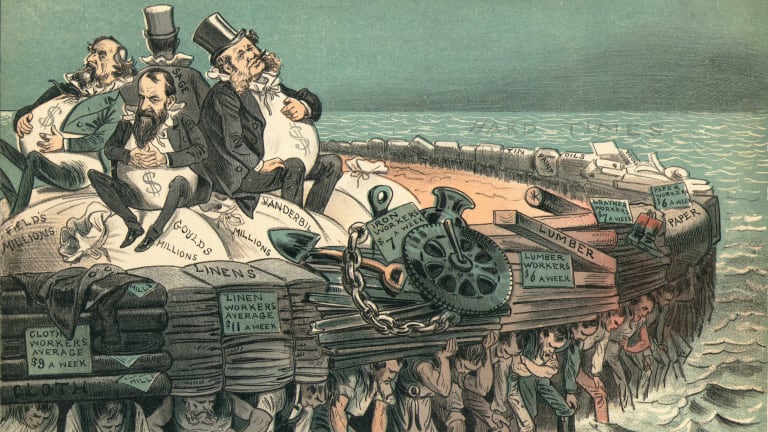
Why were these wealthy families so interested in this marshy, ruined landscape on Long Island?
Just as one of many examples, the land on the Westhampton Dunes of Long Island’s South Shore is considered prime real estate.
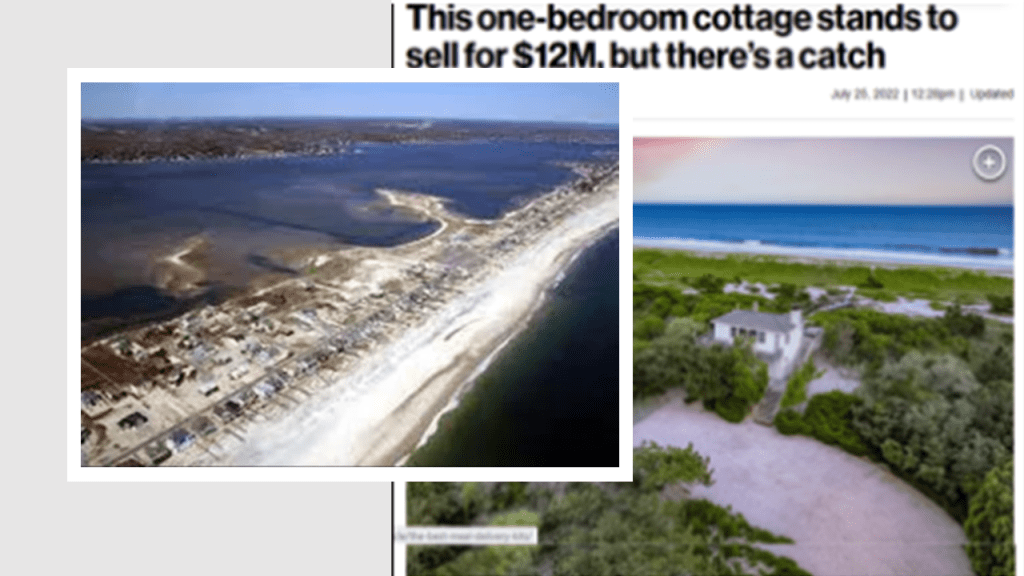
But it wasn’t only on Long Island.
The Elites claimed the ruined land along the northeast Atlantic coast throughout the New York- New Jersey Estuary system for their special enclaves.
Why?
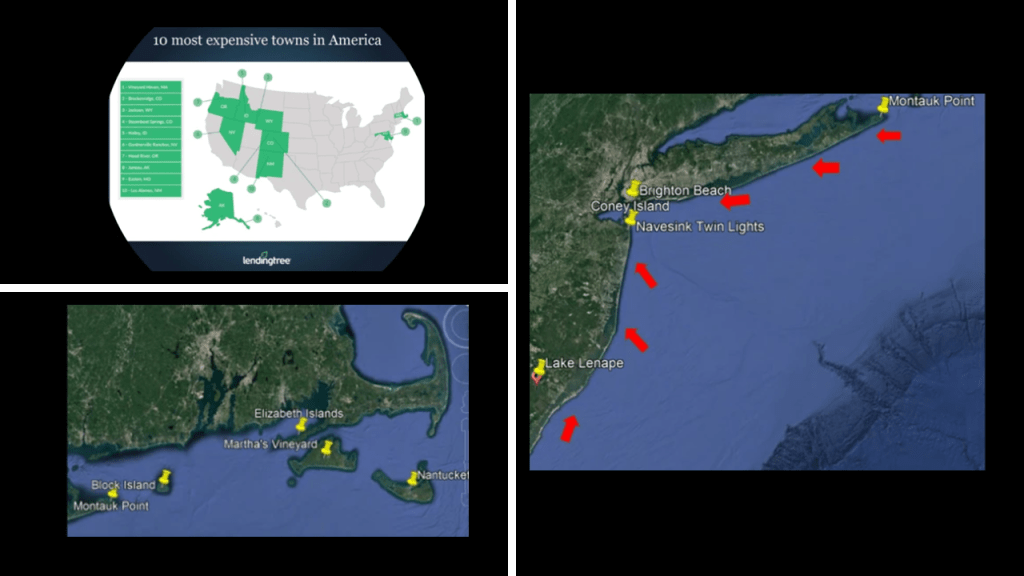
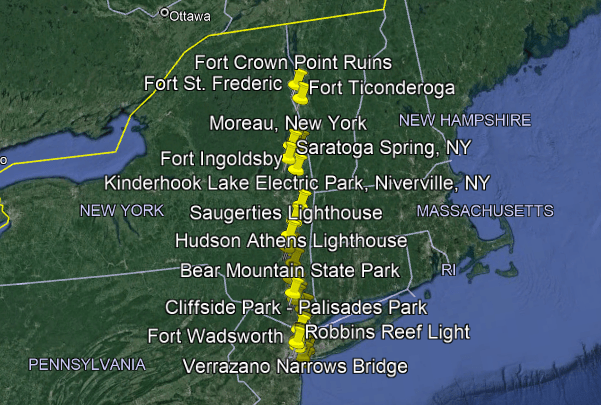
Clearly this was a very powerful place on the Earth’s grid system with all of the historic star forts, lighthouses, and historic amusement parks all along the Hudson River and New York Bays.
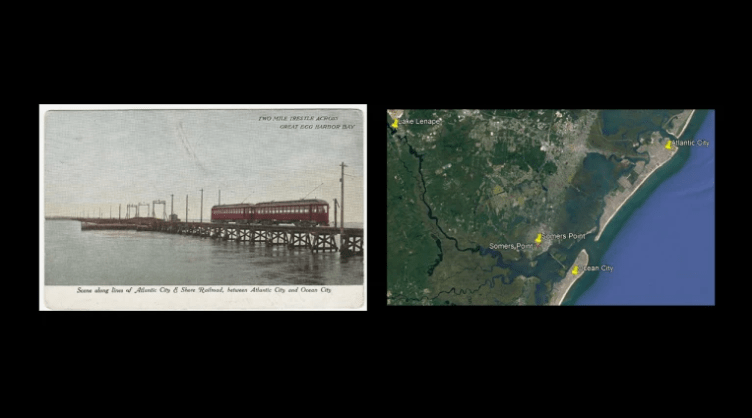
Similar to the still-existing IND Rockaway rapid transit line that runs through the Jamaica Bay Estuary, this is an old postcard showing the Atlantic City and Shore Railroad crossing a two-mile, or 3-kilometer, -long trestle bridge in the Great Egg Harbor Bay estuary, and was part of an interurban trolley system in New Jersey that served Somers Point and several other cities between Atlantic City and Ocean City in the years between 1907 and 1948.
The reason given for the end of its operation was a hurricane damaging the viaduct in 1948, and fixing it was cost prohibitive because of the decline in trolley use.
So those behind the narrative we are educated in, perhaps “indoctrinated” is a better word, definitely want us to believe these rail-lines were built by wealthy railroad barons, who in-turn were responsible for everything we know in our world coming into existence.
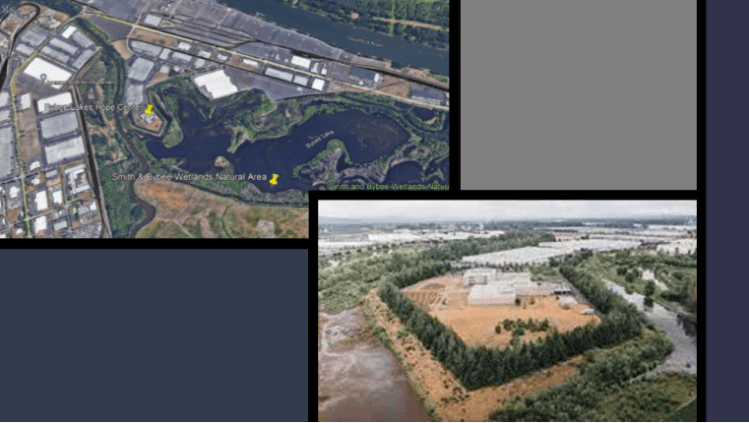
But what really flies in the face of this explanation are the countless examples of rail-lines, or historic rail-lines co-located with sunken, swampy, marshy, and also desert, lands, around the world, like in Portland, Oregon where there is a visible star fort point at the Smith & Bybee Wetlands Natural Area, which is now the location of the Bybee Lakes Hope Center for the Homeless.
This urban wetlands area in Portland is located right next to the still-operating BNSF Ford Railyard.
The chain of low islands and reefs called Adam’s Bridge, also known as Rama’s Bridge, or Ramsethu, which separates the southern tip of India from Sri Lanka…
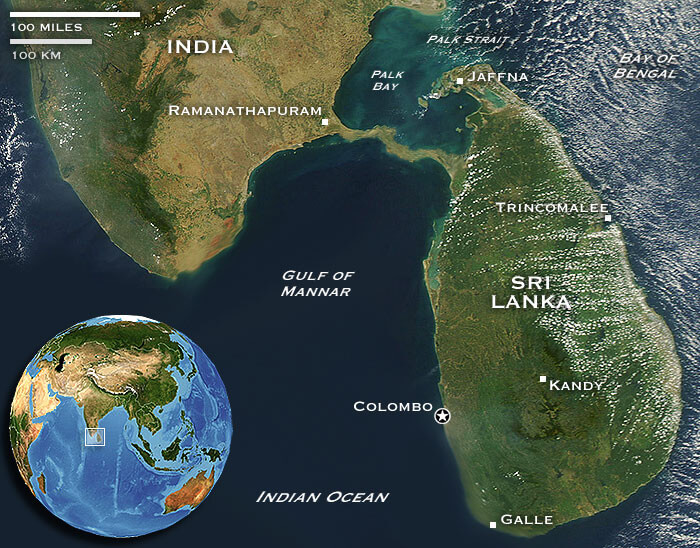
…has a rail-line today that still operates from the town of Mandapam in Tamil Nadu to the Indian side of Adam’s Bridge.
The Pamban Bridge crossing through here is described as a masterpiece of engineering, with a movable section midway that is raised to allow ship and barge traffic to pass through.
Over a mile-long, at 6,776-feet, or 2,065-meters, It was said to have been constructed between 1911 and 1914, which was the year World War I started.
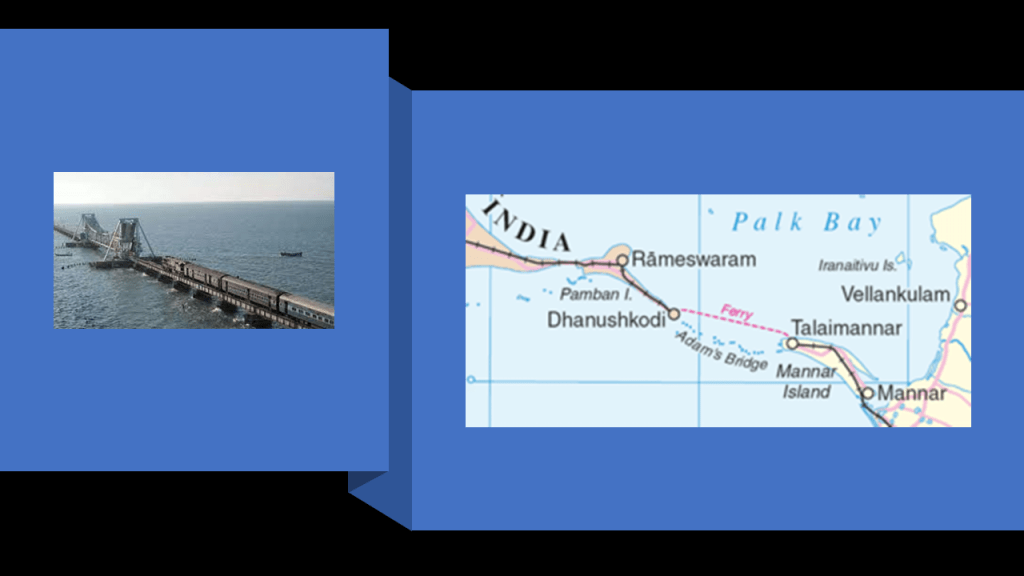
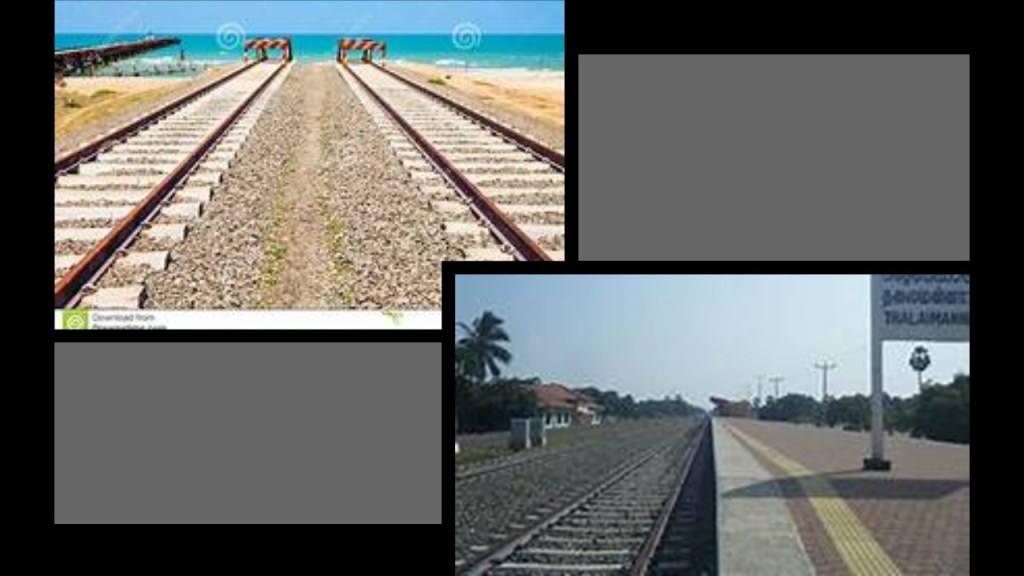
You can take a ferry across, in the same general location as the sunken parts of Adam’s Bridge, to Talaimannar, on Sri Lanka’s Mannar Island, and catch the train on to anywhere you want to go in Sri Lanka.
Sure looks like this part of the world was all-connected together at one time, and not that long ago.
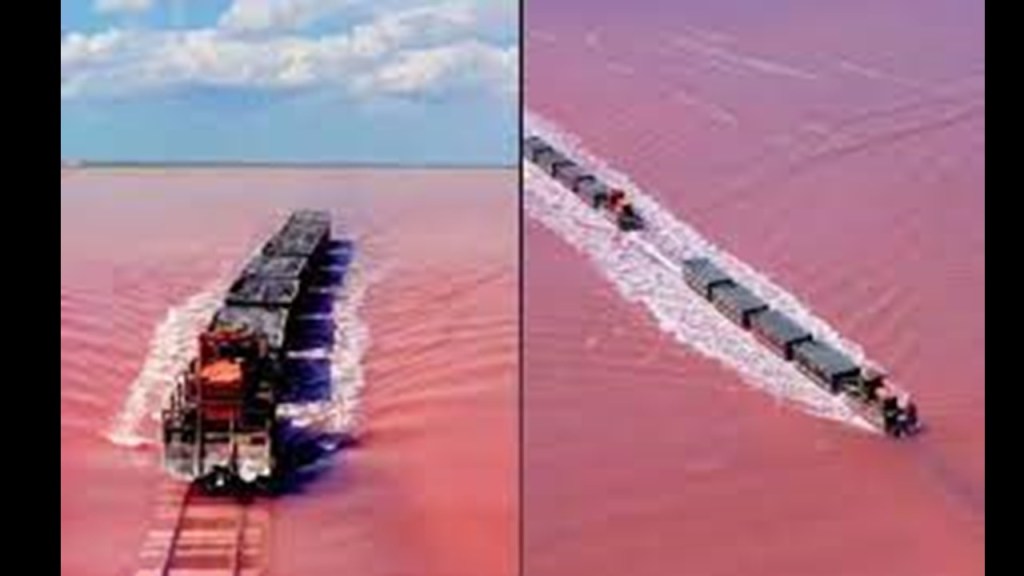
Another example of a rail-line in an anomalous place is at the pink-colored Lake Burlinskoye in Siberia, where the rail-line still operates right through the water.
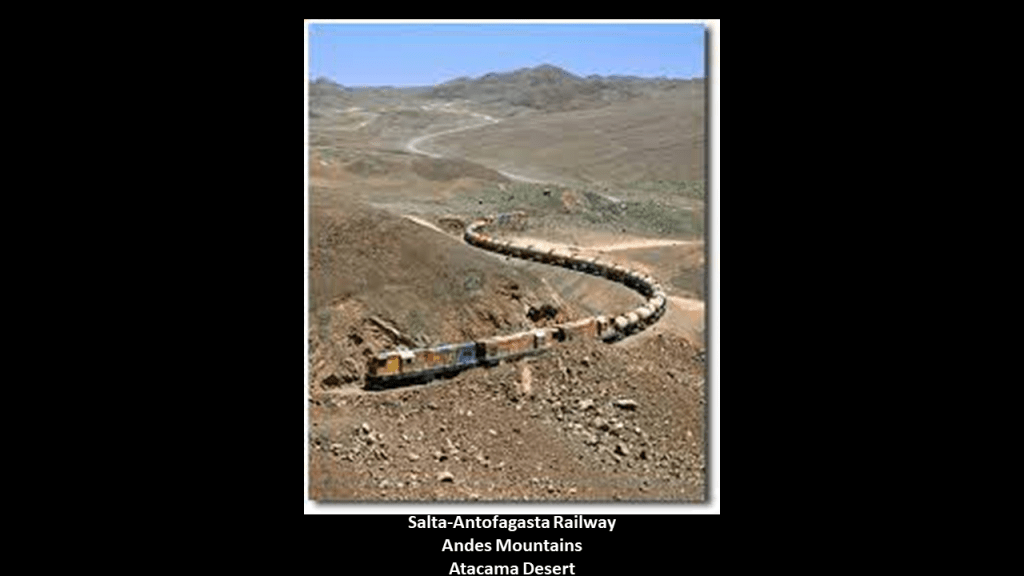
And the Salta-Antofagasta railway links Argentina and Chile through the Atacama Desert across the Andes Mountains.
These are just a few of many examples of railroads in anomalous places, and there are many more rail-lines that have been abandoned or removed all over the world.
I have come to believe through research findings like these, and others, that what has been characterized as the mud-flood was caused primarily by a deliberately-caused act performed by Aleister Crowley, known as the “Wickedest Man in the World,” on the day of the Philadelphia Experiment, that sent a massive energy surge through the Earth’s grid system by way of Montauk Point and Long Island, sending a ripple of energy across the entire surface of the Earth, causing the land itself to ripple, and in some places turn it into swamp, desert, or sink completely into the ocean.
I think the sinking of Atlantis took place much more recently than we have been led to believe in our historical narrative.
There are still abandoned railcars to this day in the Pine Barrens of New Jersey and the swamps of Louisiana.
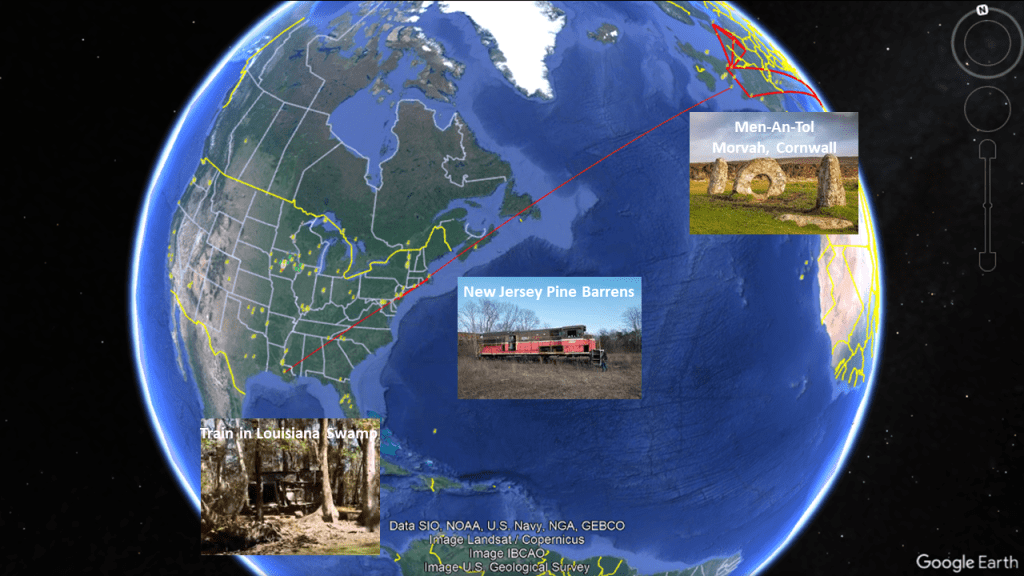
There is a full explanation of this theory, with evidence that supports it, in a “Deeper Conversation with Chad” I had recently with Chad Williams and Adam Szecowka, called “The Destruction, Exploitation & Reverse Engineering Of The Earth’s Grid System,” in which we talk in-depth about this, and many other things.

Whatever caused the mud flood is being called a “reset” event, and photographic evidence exists demonstrating that buildings, canals, rail-lines, tunnels, among other things, were purposefully dug out after the event to the point where they could be used.
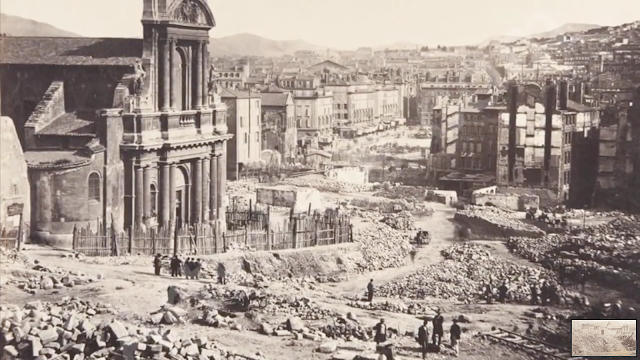
A sudden cataclysmic event accounts for how a highly advanced worldwide civilization of giants…
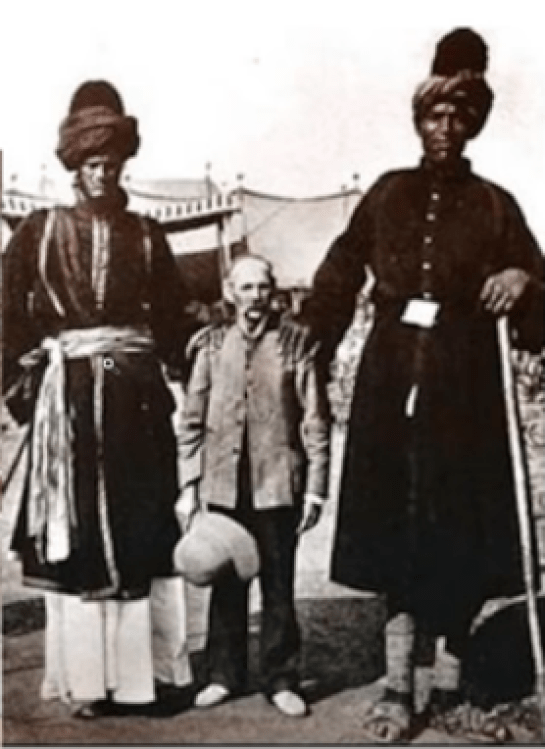
…could be wiped from the face of the Earth and erased from our collective memory.
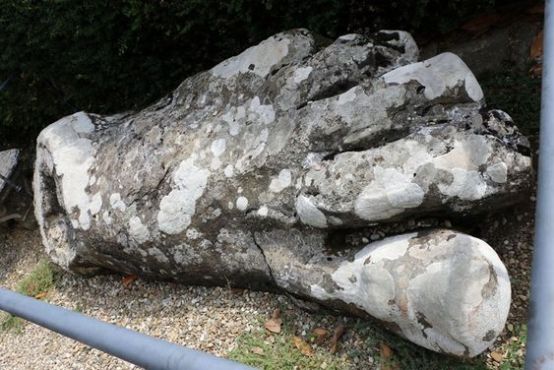
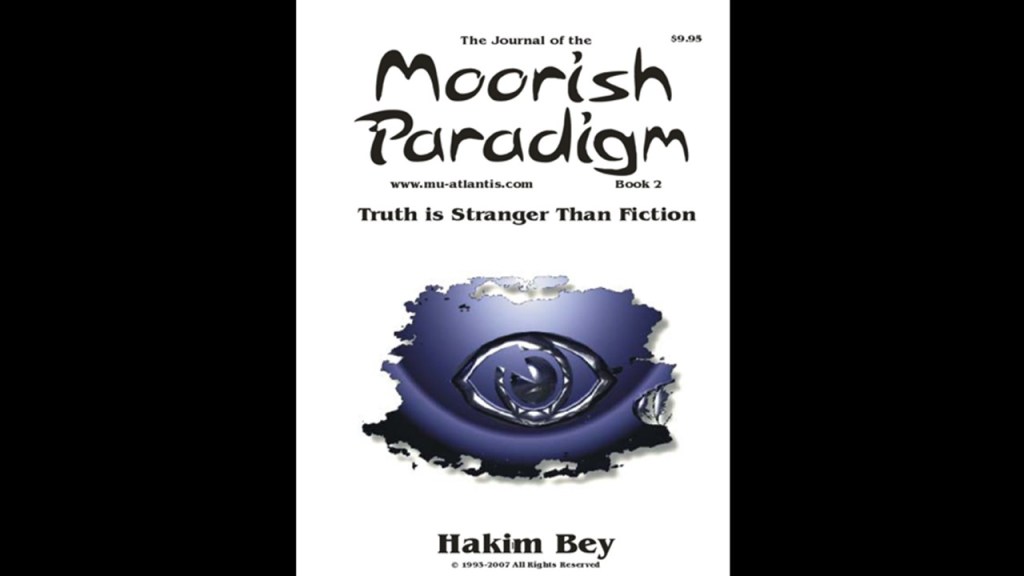
If all this sounds crazy, remember the old saying “Truth is Stranger than Fiction.”
And even if still seems too hard to believe in, the reality of the world we are living in today is pretty strange and crazy, and how did we even get to this upside-down world??
Well, one thing that has gotten us to this place is that we have been taught and told egregious lies by the Establishment from cradle to grave, and we have not been told about an advanced civilization that existed on Earth from the ancient time of Mu, through Atlantis, to relatively recent times.
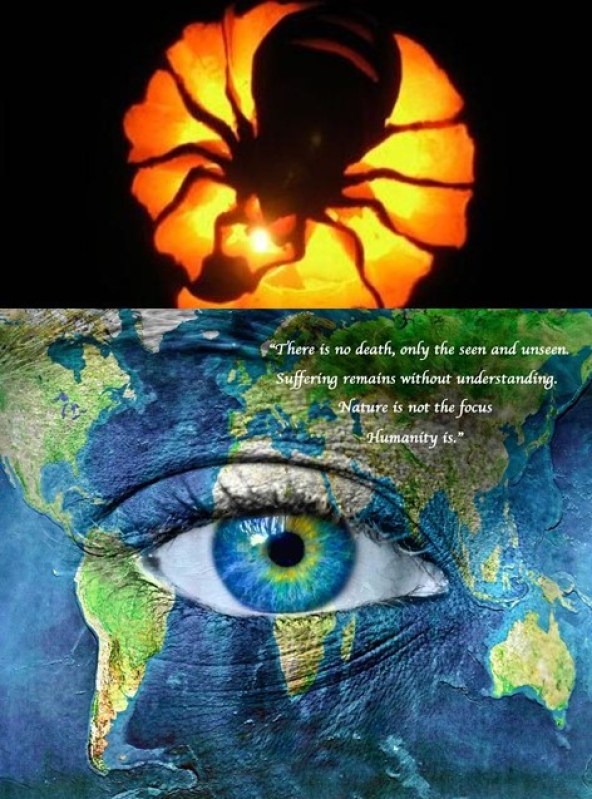
The parasitic and multi-dimensionally aware beings behind all of this want us to believe that suffering, sickness, misery, destruction, division, and death was and is our normal state of being, and not question what we have been taught about who we are.
They are the only ones who benefit because they energetically feed on Humanity’s negative emotional states, at the same time they have sucked up all the wealth of the Earth for themselves.

 Revealing What Has Been Hidden in Front of Our Eyes