
A Non-Governmental Organization, also known as “NGO,” is defined as one that was formed independently from government, and perceived by the general public as benevolent and philanthropic organizations with a stated purpose of helping Humanity in a particular area or time of need.
But when you delve into specific Non-Governmental Organizations, invariably there are more questions than answers.
In this post I am going to take a closer look at the origins of the YMCA.
The “Young Men’s Christian Association,” or YMCA, the world’s the oldest and largest youth charity with a stated mission of supporting young people to belong, contribute, and thrive in their communities, started in 1844.
The history of the YMCA goes like this:
George Williams, in seeking to create a supportive community to help young men facing social challenges during England’s Industrial Revolution, founded the Young Men’s Christian Association in 1844.
This is George’s background from our historical narrative:
He was the seventh-, and last-, surviving son of farmers in Dulverton, Somerset, England, and that he started working on the family farm at the age of 13.
Then, he left the family farm in 1841 to become an apprentice to a draper.
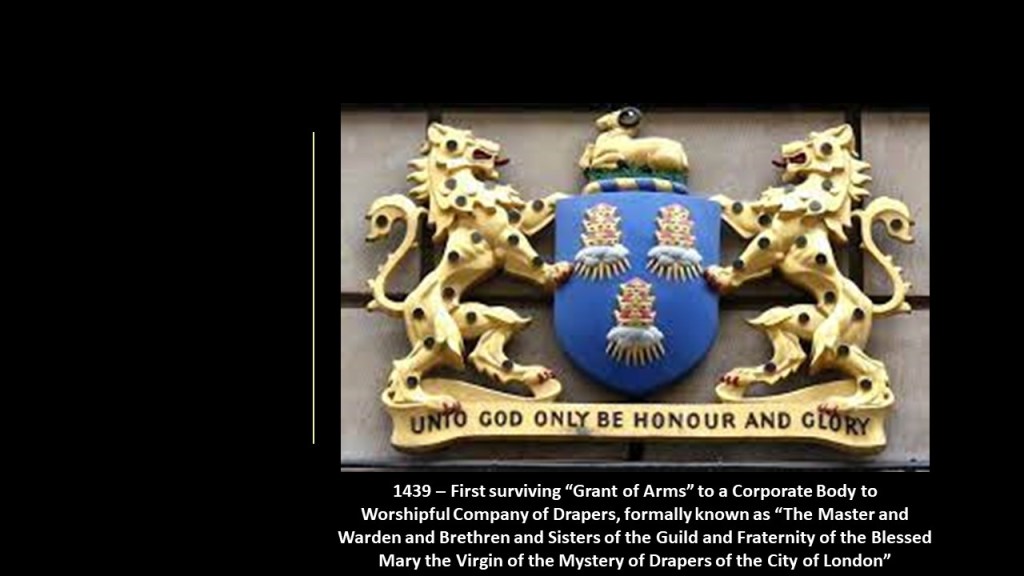
The use of Arms went from individuals to corporate bodies starting in 1438 with a Royal Charter of incorporation, and the earliest surviving grant of arms was for the “Worshipful Company of Drapers,” formally known as “The Master and Warden and Brethren and Sisters of the Guild and Fraternity of the Blessed Mary the Virgin of the Mystery of Drapers of the City of London,” and since then have been made continously including, but not limited to, companies & civic bodies.
When I think of the word “draper,” curtains come to mind, I guess because of the word “drapery,” which pertains to curtains.
Come to find out, the word “draper” is defined as a retailer or wholesaler of cloth that was mainly for clothing.
Why all the fanfare and fancy titles for cloth merchants?
Was that the “Mystery of Drapers” referenced in the formal title of the company?
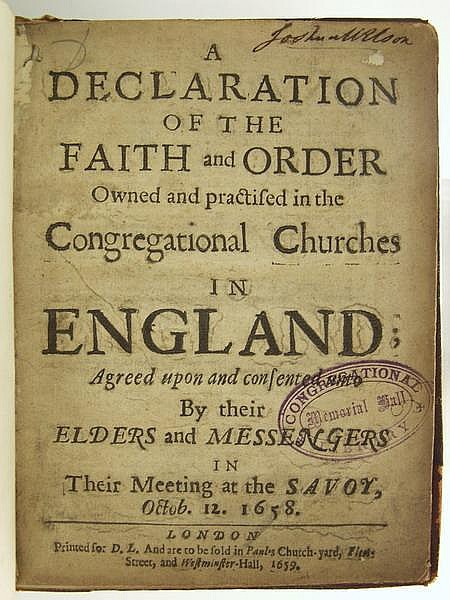
He became a Congregationalist in 1837 from Anglicanism, and at that time joined the Zion Congregational Church.
Congregationalists follow a Calvinist Protestant tradition, and each congregation is independent and autonomous from the others.
He worked as a draper at the Hitchcock-Williams store, where became a department manager in 1844.
In the same year of 1844, George gathered a group of fellow drapers together in the store where he worked, concerned about the appalling conditions in London for working young men, and determined to do something about it by forming the YMCA.
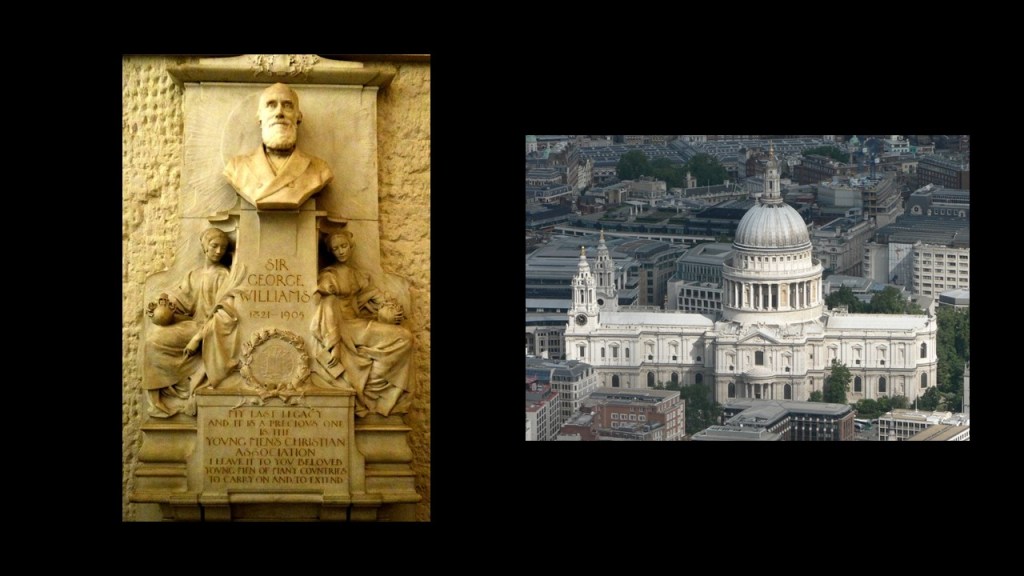
At Queen Victoria’s birthday honors in 1894, he was knighted and became Sir George Williams, and upon his death in 1905, he was buried in a crypt in London’s St. Paul’s Cathedral.
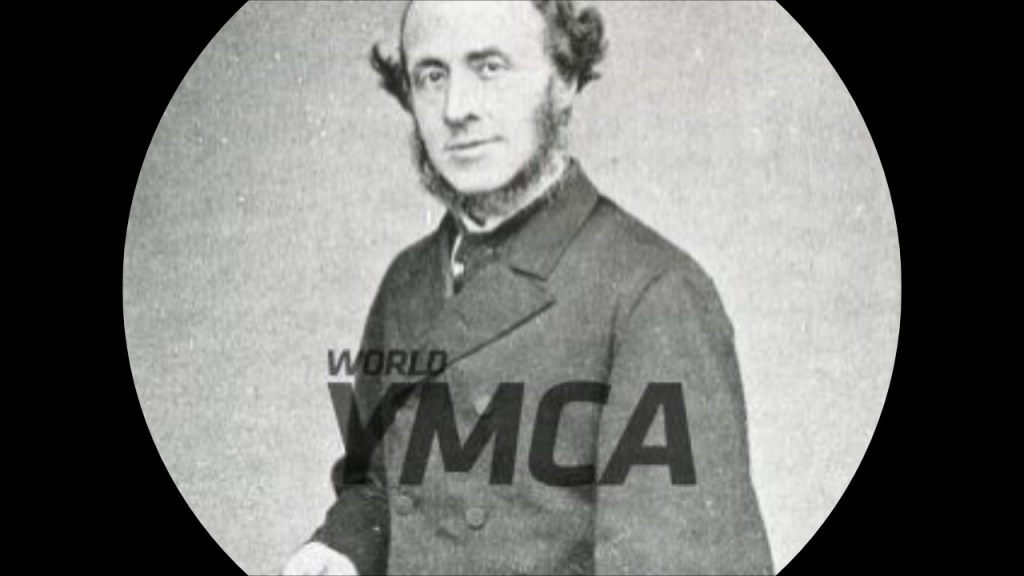
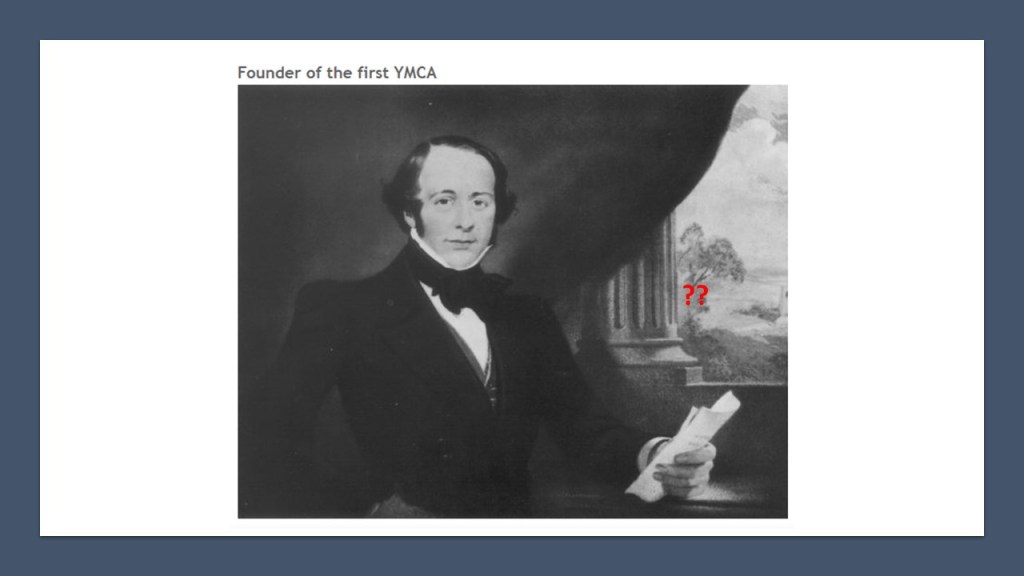
This portrait came up for young George Williams on the World YMCA website.
I find the column slightly showing in the portrait to be significant because it is quite common in portraits of prominent historical figures of this era to have features of classical architecture included in it as well…
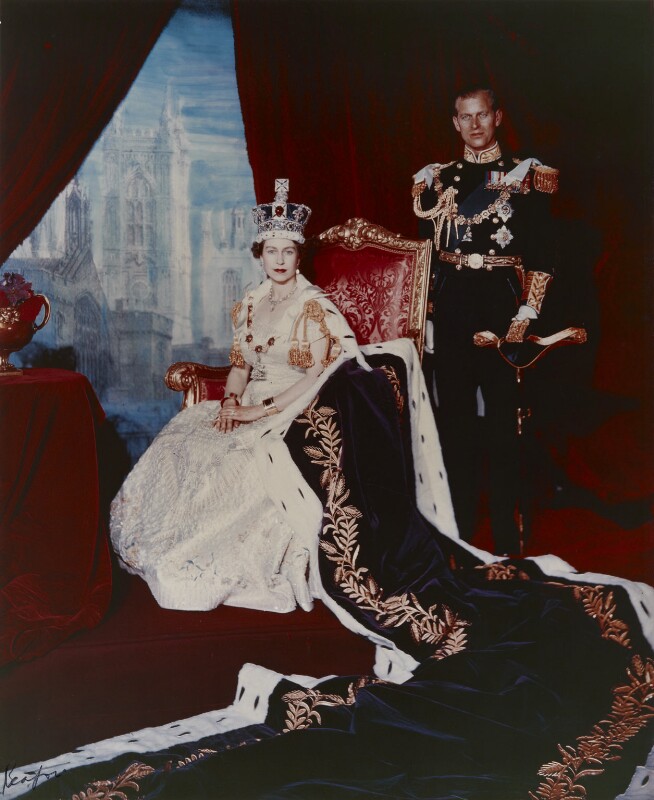
…and you even see this example of a beautiful masonry city-scape included in this official portrait from the 1950s of Queen Elizabeth II and Prince-Consort Philip.
This was the very first logo of the YMCA, starting in 1881.
It is described as a round stamp consisting of 5 segments located on a wide strip, representing the five continents of America, Asia, Europe, Oceania and Africa.
The symbols in-between the continents are said to be miniature YMCA monograms made in different languages.
The middle of the logo contains an ancient symbol called the “Chi Rho.”
The Book of John, Chapter 7, Verse 21, referenced in the open bible in the middle of the logo is the organization’s motto: “That they may be one.”

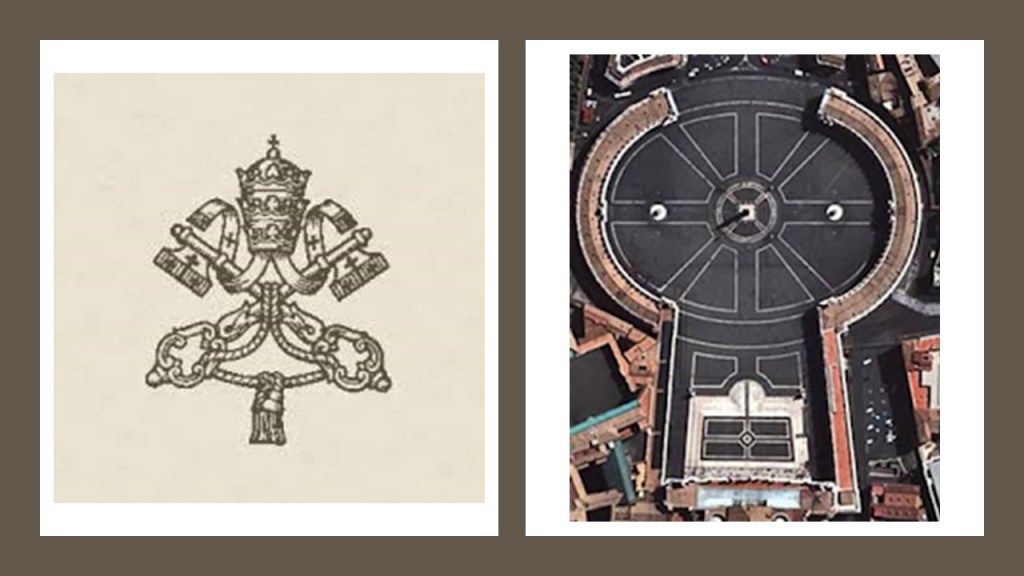
With just a little bit of imagination, you can see the same “Chi Rho” symbol that is in the YMCA logo on the left in the Papal seal on the right…

…and if you at what is called St. Peter’s Square at the Vatican from above, you can find the shape of the “Chi-Rho” in the plaza.

Interesting that the Papal Seal would depict the crossed line in the symbol as keys, and the shape of St. Peter’s Square looks more like a keyhole than a square!
What door does the papacy hold the keys to unlock?
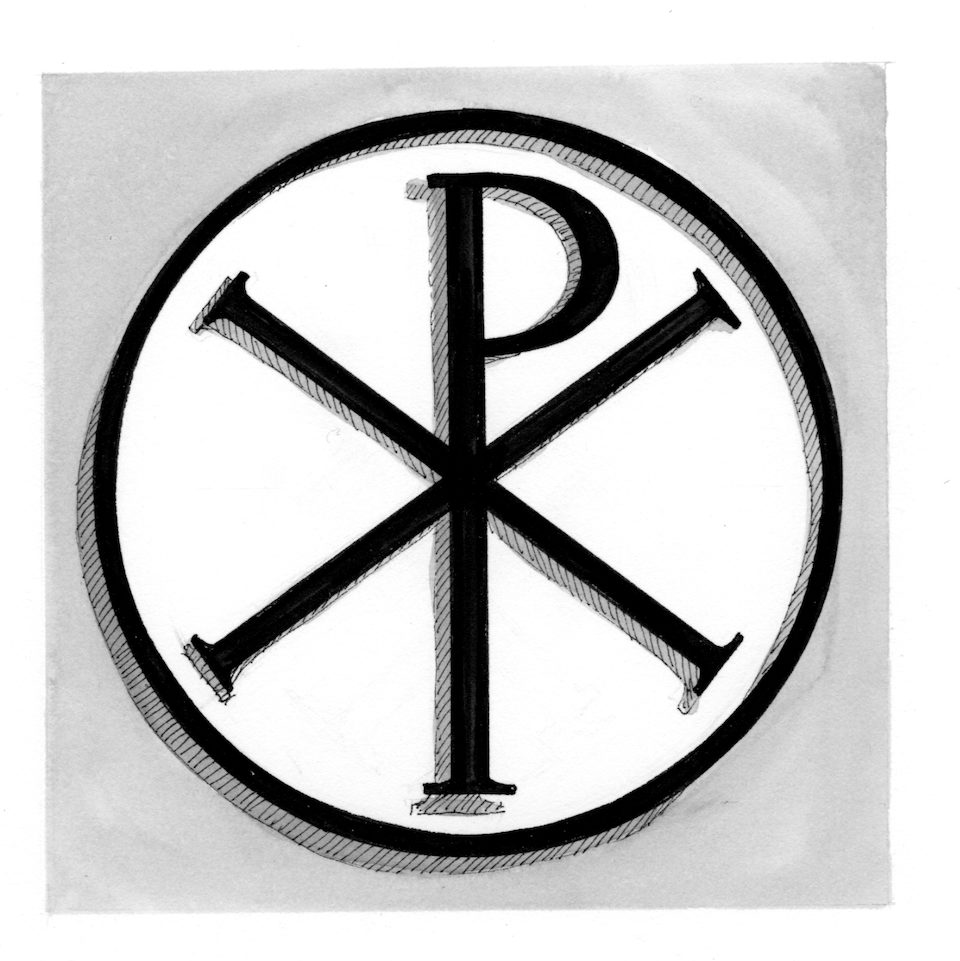
The mainstream accounts of the origins of the Chi-Rho say that it is one of the earliest forms of “Christogram,” forming the name of Jesus Christ, and traditionally used as a symbol in the Christian Church.
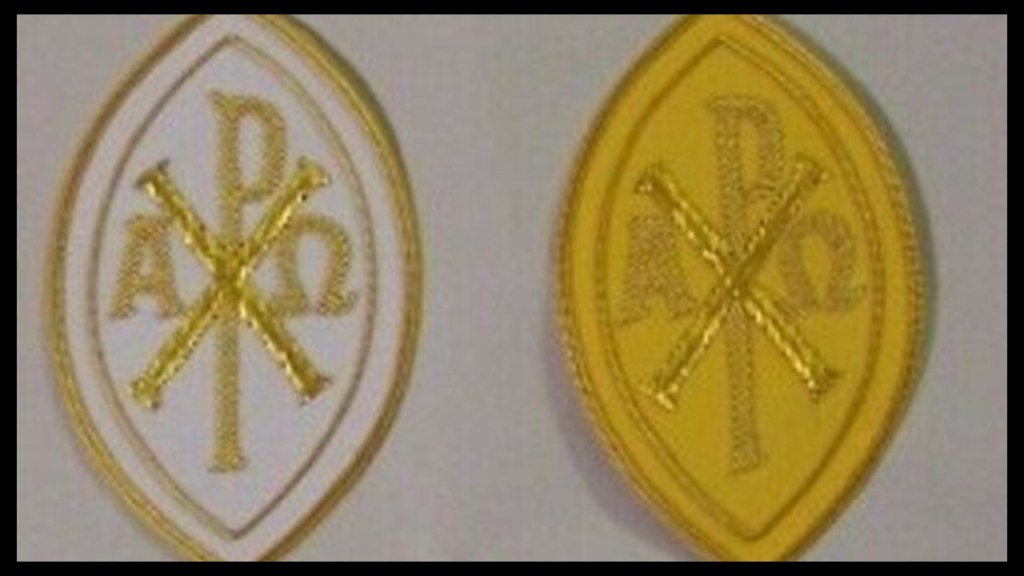
The symbol is commonly found on the vestments of Catholic priests.
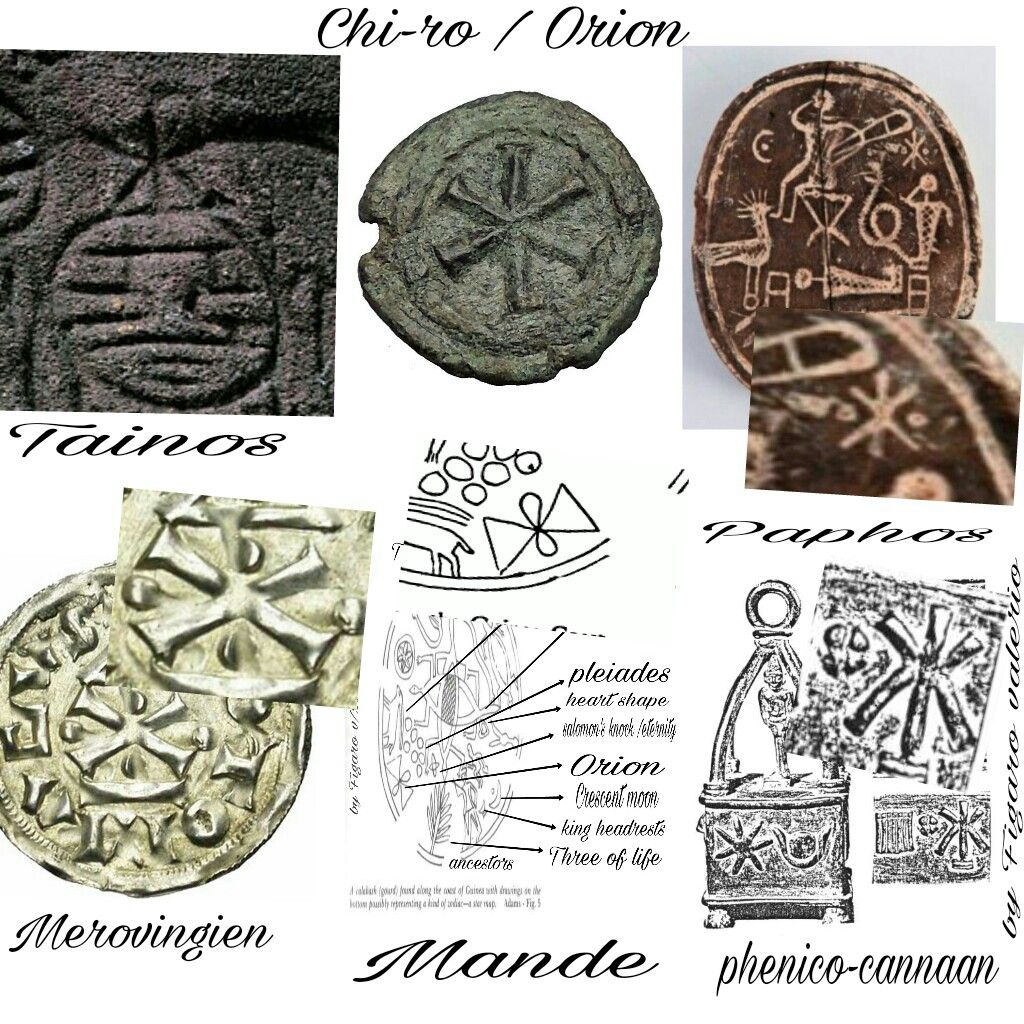
But, the Chi Rho symbol is found across cultures, and believed have symbolized the body of Osiris, as well as the Constellation of Orion as a depiction in the night sky of Osiris…
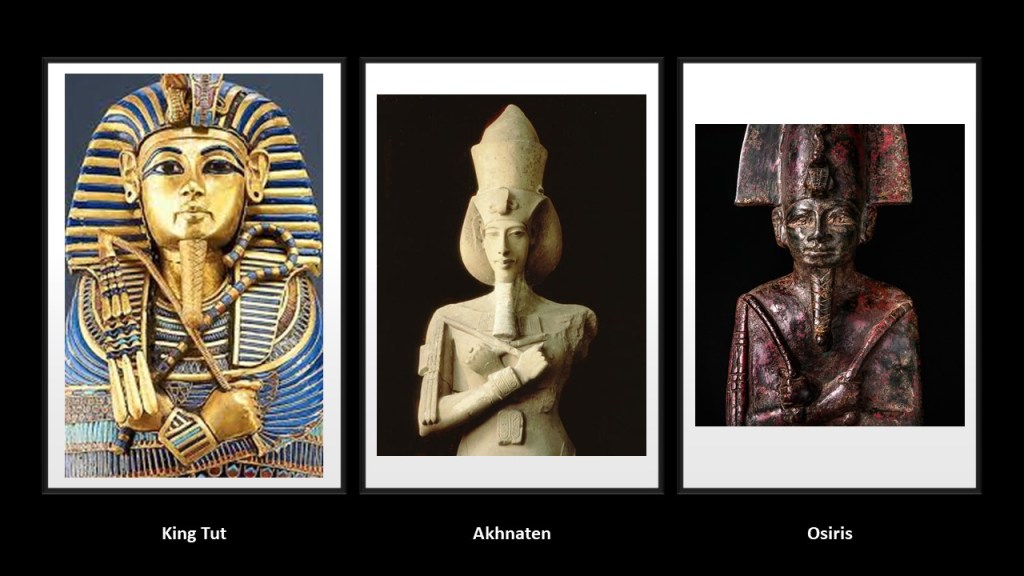
…and in Egyptian art, frequently you will find important personages depicted with crossed-arms and/or arms and crook & flail, as seen with King Tut on the left; Akhnaten in the middle; and a bronze statue of Osiris on the right.
Osiris represented the “Third-Eye” in ancient Egyptian spiritual schools, also called “The Eye of Osiris.”
The “Awakening of Osiris” refers to the process of awakening and becoming consciousness itself, which is the full activation of the pineal gland and super-consciousness mind, a process all Human Beings have access to if they know about it and desire to attain it.
The two serpents in this illustration of the “Staff of Osiris” with the pineal gland at the top depict kundalini energy, which represents our life-force energy.

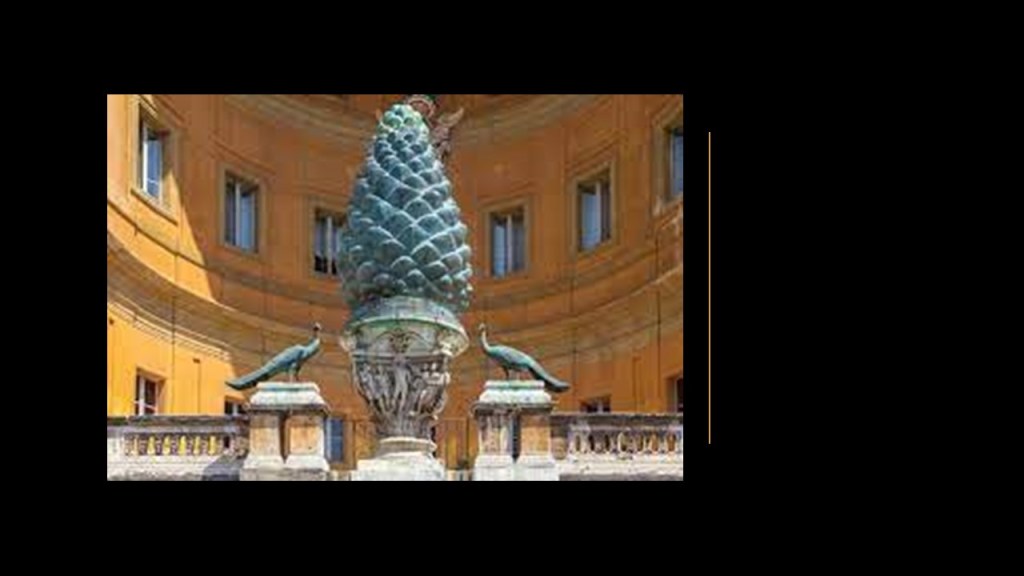
The human pineal gland looks just like a pine cone, so that is what this statue at the Vatican is called – the “pine cone.”
To me, all of this relates to the theft of human life force energy, and our connection to our Divine Selves and to the Heavens by such vehicles as organized religions.
George Williams was called the “Father of the Red Triangle” in reference to his founding of the YMCA.

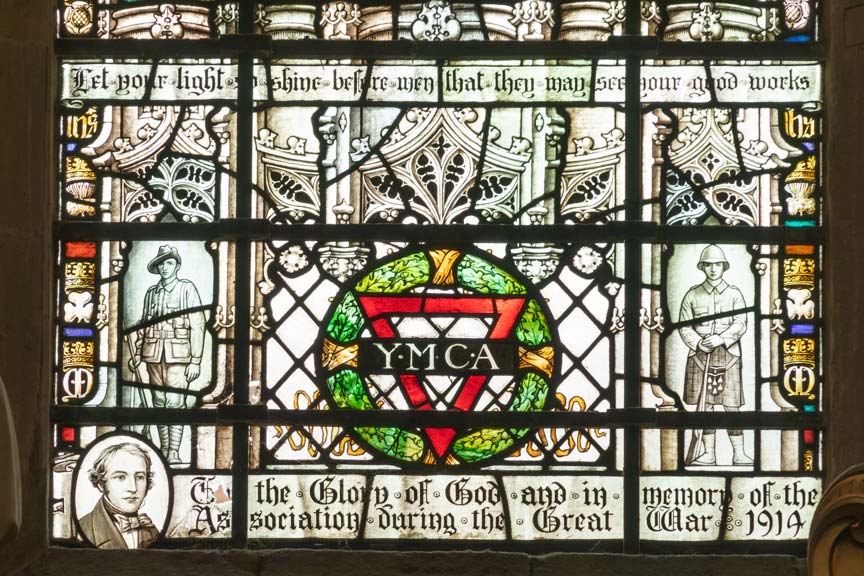
There is even a stained-glass window honoring Sir George Williams and the YMCA as a World War I memorial in Westminster Abbey, the same place where major events concerning the British royal family take place, including coronations, weddings, and funerals, as well as the burial site of over 3,000 prominent persons in British history.
Here are some more of the versions of the red triangle in YMCA logos through the years, and it is interesting to note that the same red triangle design was also used by the Marland Oil Company which was founded in Ponca City, Oklahoma in 1917 by E. W. Marland, which merged with Continental Oil in 1929 to become Conoco, which has the same logo.
The story is that E. W. Marland, who controlled 10% of the world’s at the height of his company’s success in the 1920s, donated generously to the YMCA, and in return, was allowed to use the same inverted-triangular-shaped logo as payback.
Then, the same logo continued-on after the creation of Conoco, which financer J. P. Morgan was involved with.

I would love to know the hidden occult meaning of the inverted red triangle. I know there is more to the story, I just don’t know what it is.
When I looked to see if I could find out, these things came up.
An inverted red triangle was used by the Nazis to identify political prisoners in concentration camps…

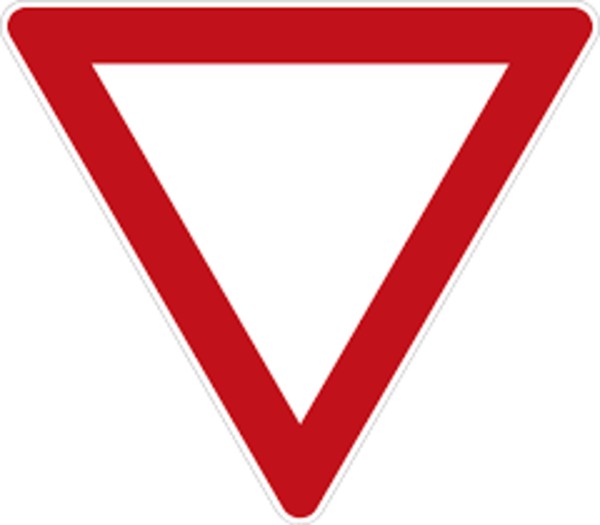
…and in the traffic-signage department, the inverted red triangle is used to signify “dangerous” to notifying drivers there has been an accident…

…and for drivers to yield to other traffic.
So just to be clear. Having personally been a community volunteer and believer in the non-profit community for many years, I continue believe much good is accomplished through organizations like the YMCA that helps the youth they serve, and many good people are involved in their administration and implementation.
That being said, I have come to question many things I used to accept without question, that these kinds of organizations come from a completely benevolent and philanthropic place.
There seems to be a hidden agenda in the YMCA’s own history with honors and symbols that do not fit with the narrative. Like, there are hidden meanings we are not aware of just beneath the surface.


 Revealing What Has Been Hidden in Front of Our Eyes