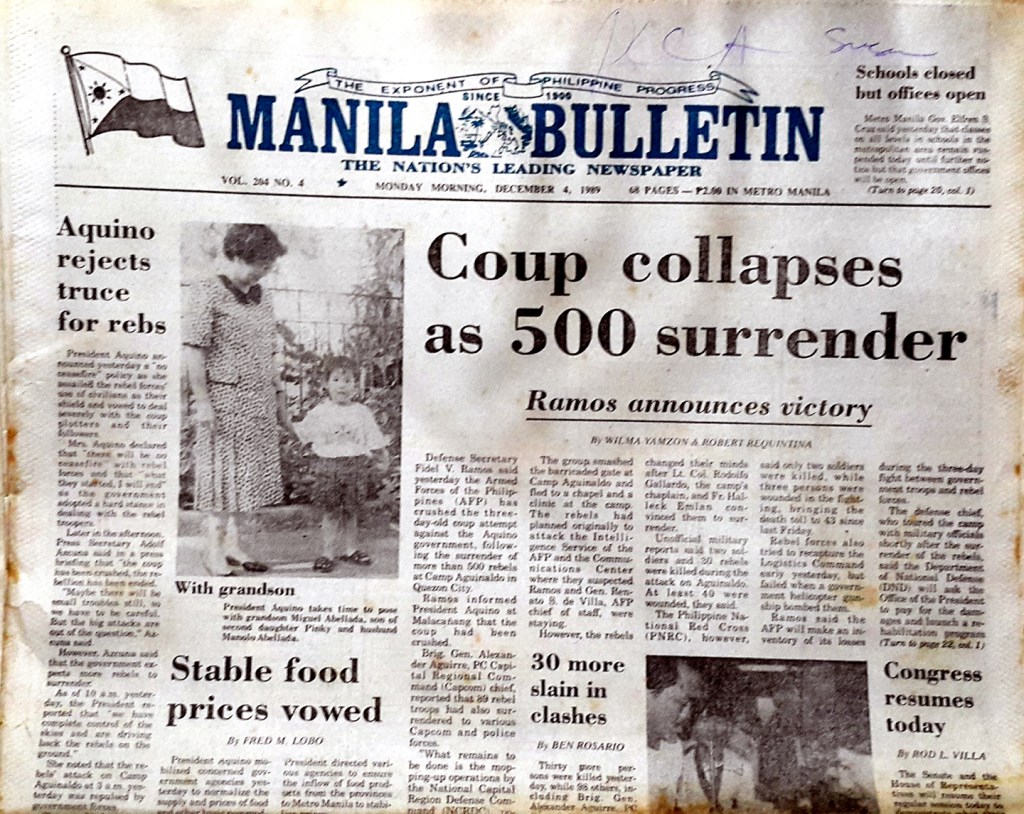
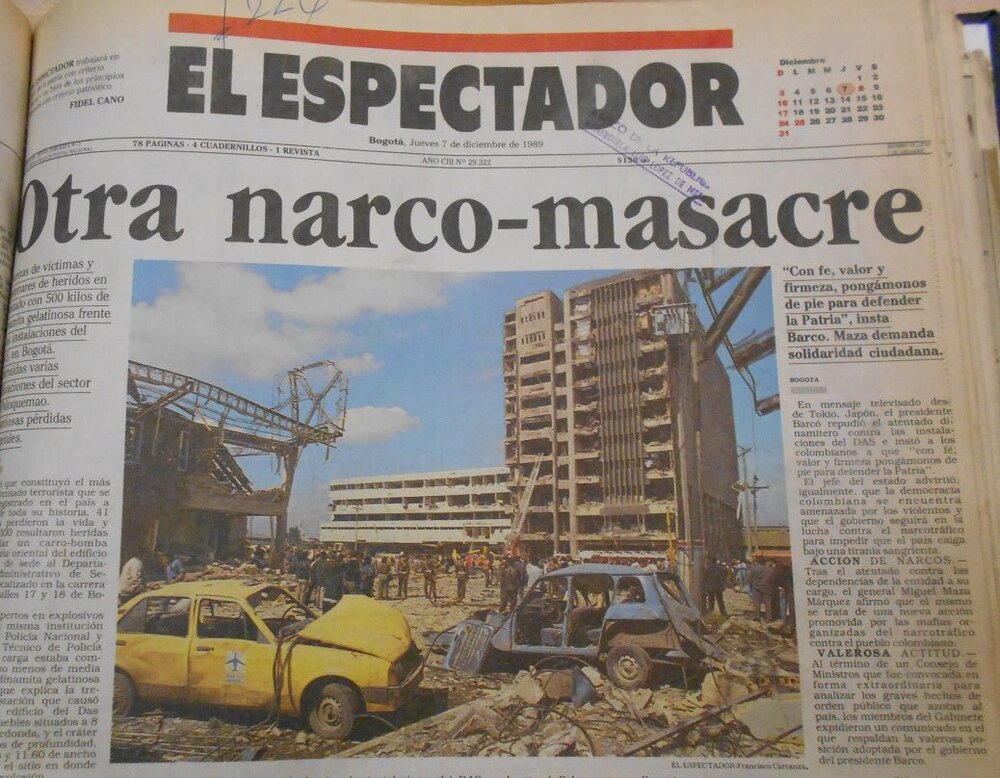
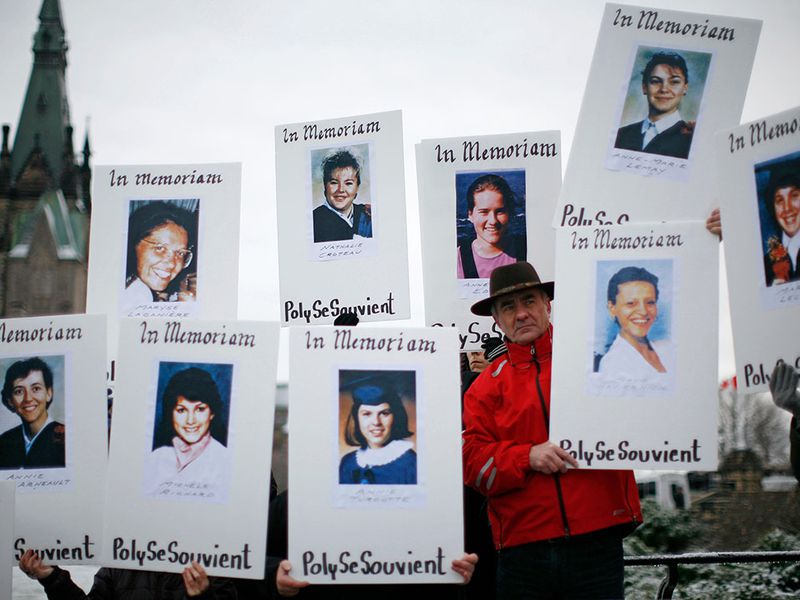
Seeing World History with New Eyes – 1990 to 1992

I am giving an overview of history since 1945 with an eye towards uncovering the patterns that give insight into the world we live in today, and in this part of the series will be focusing on events that took place between 1990 and 1992.

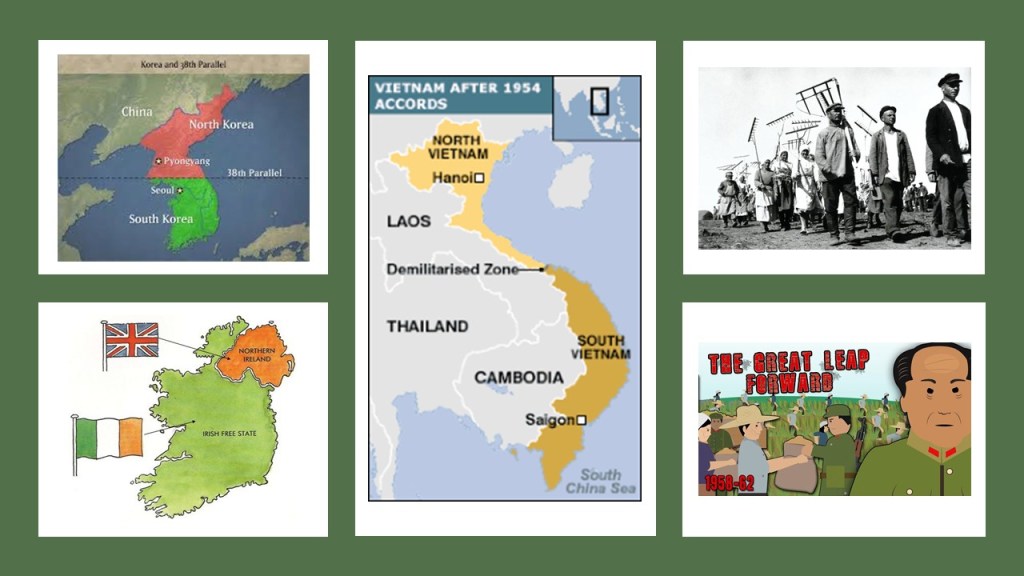
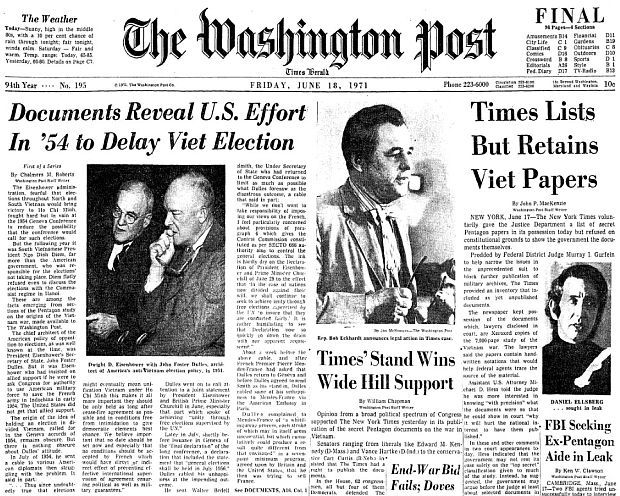
So far, the patterns between 1945 and 1960 show events and people being manipulated for particular outcomes, deceiving us about what was really going on to gain our consent, like the examples in the first part of the series of Korea and Viet Nam, partitioning one country into two, setting up two different political systems, and then instigating them to fight each other…
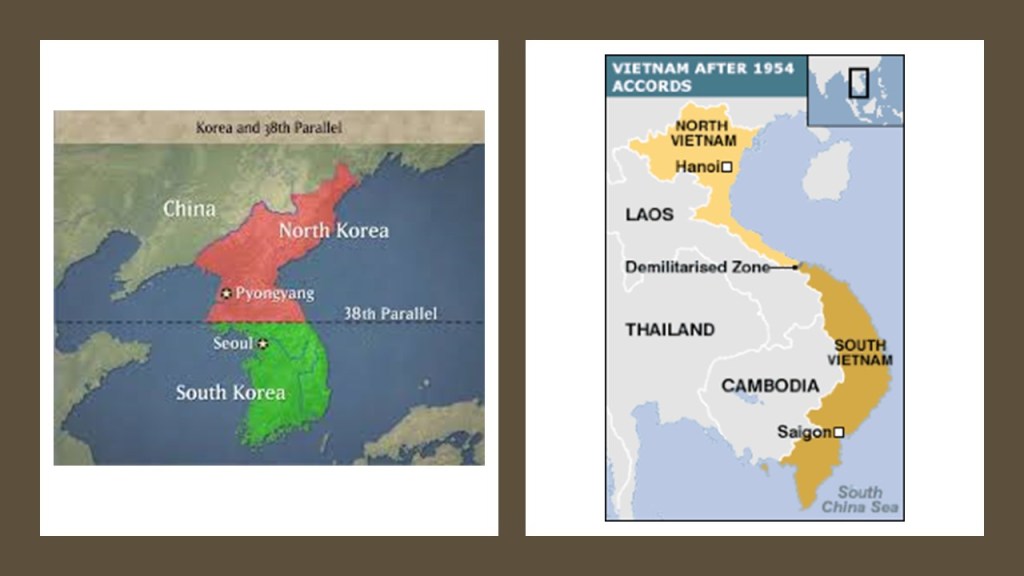
This image has an empty alt attribute; its file name is 7e3aa-korea-viet-nam.jpg

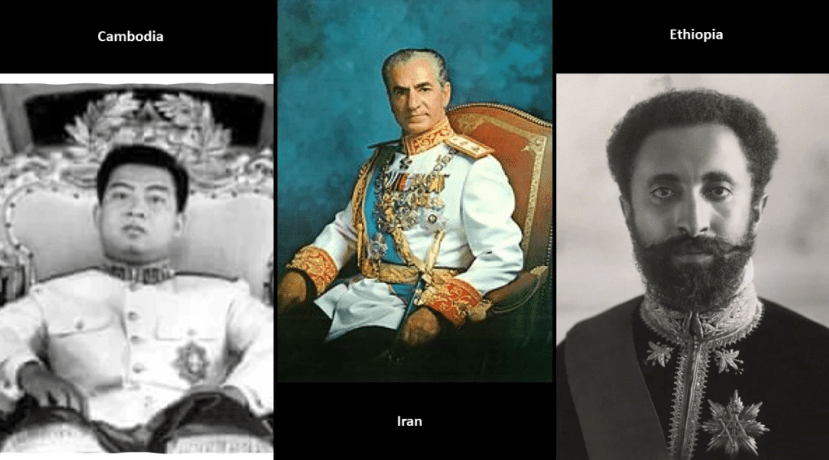
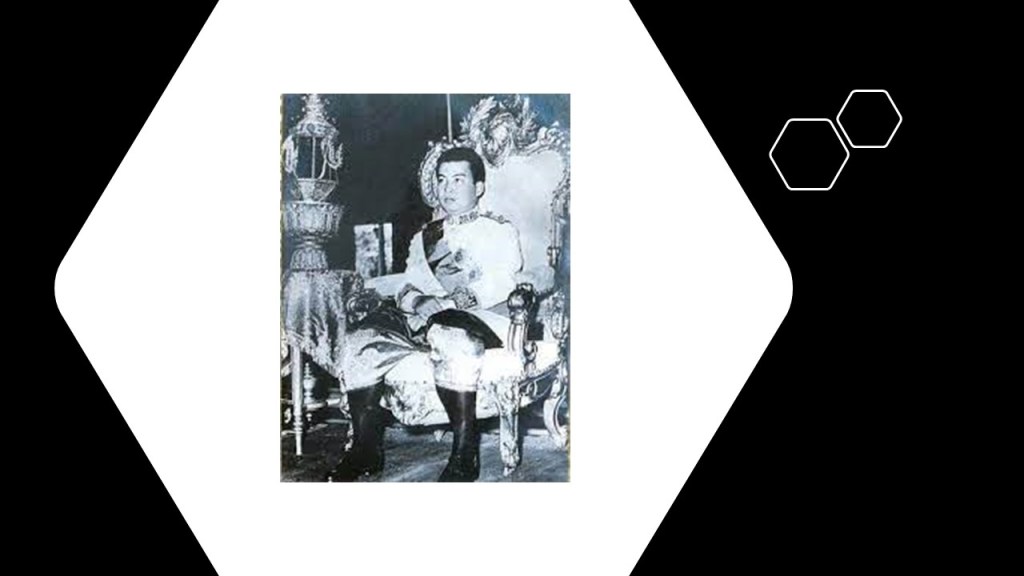
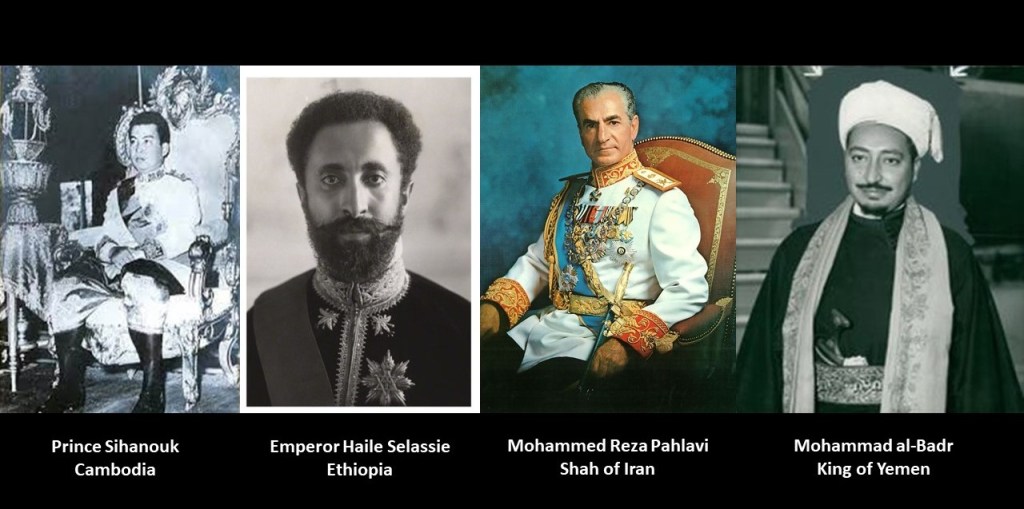
…and in looking at what was happening in the years between 1961 and 1980, seeing things like the Communists taking down hereditary rulers like Prince Norodom Sihanouk in Cambodia…
…and in Ethiopia with the overthrow of Haile Selassie, the last Emperor of Ethiopia from 1930 to 1974.
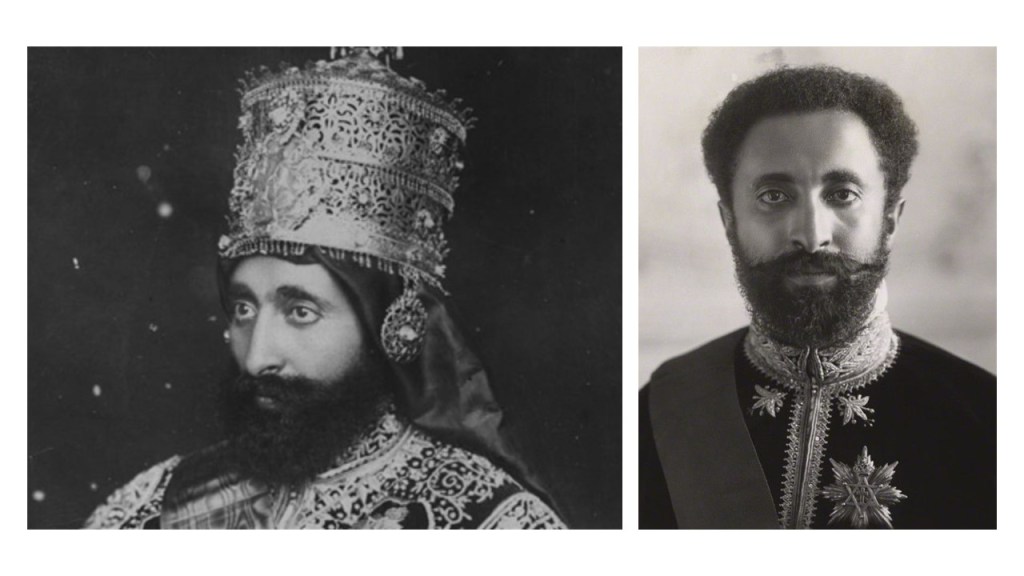
This image has an empty alt attribute; its file name is 97051-haile-selassie.jpg

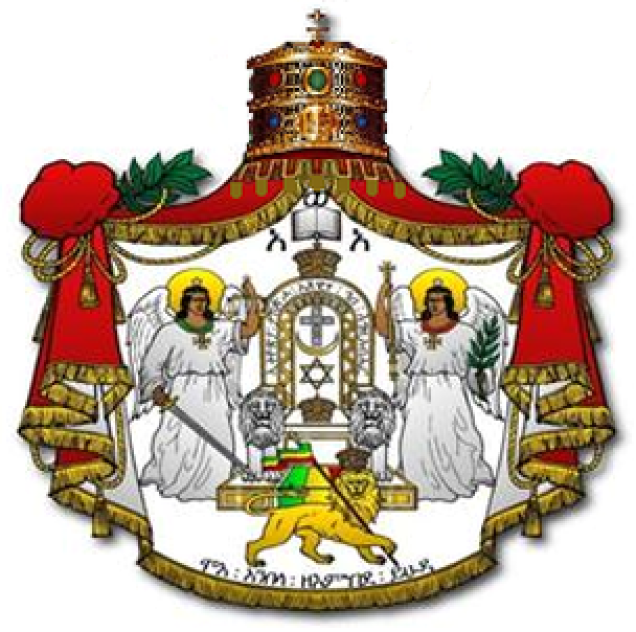
The full title traditionally of the Emperors of Ethiopia was: “Elect of God, Conquering Lion of the Tribe of Judah and King of Kings of Ethiopia,” and were of the Solomonic dynasty, also known as the House of Solomon, was the former ruling dynasty of the Ethiopian Empire.

Its members were lineal descendents of King Solomon and the Queen of Sheba through their son Menelik I, the first Emperor of Ethiopia.
This image has an empty alt attribute; its file name is 9bfdb-solomonic-dynasty-1.png

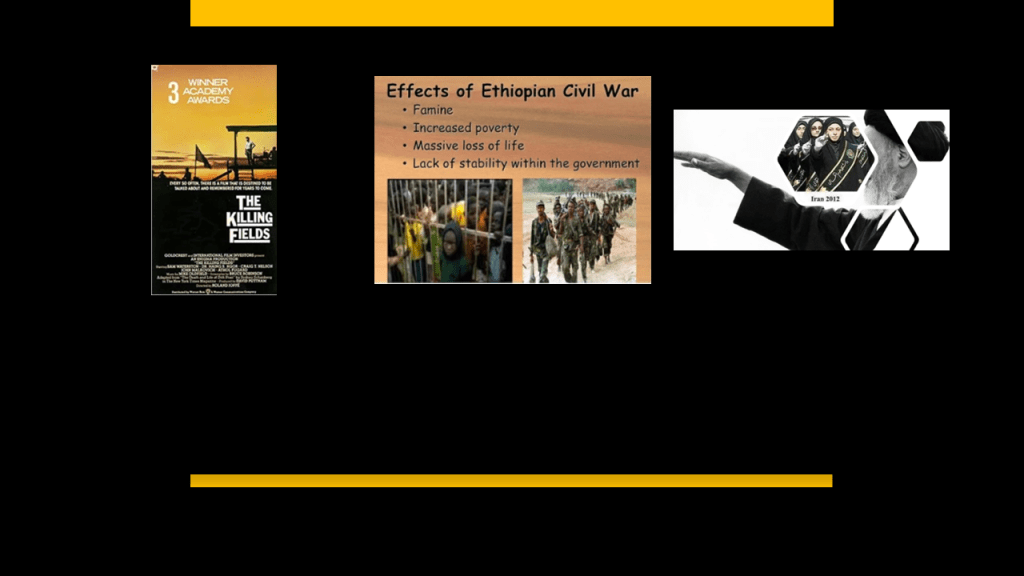
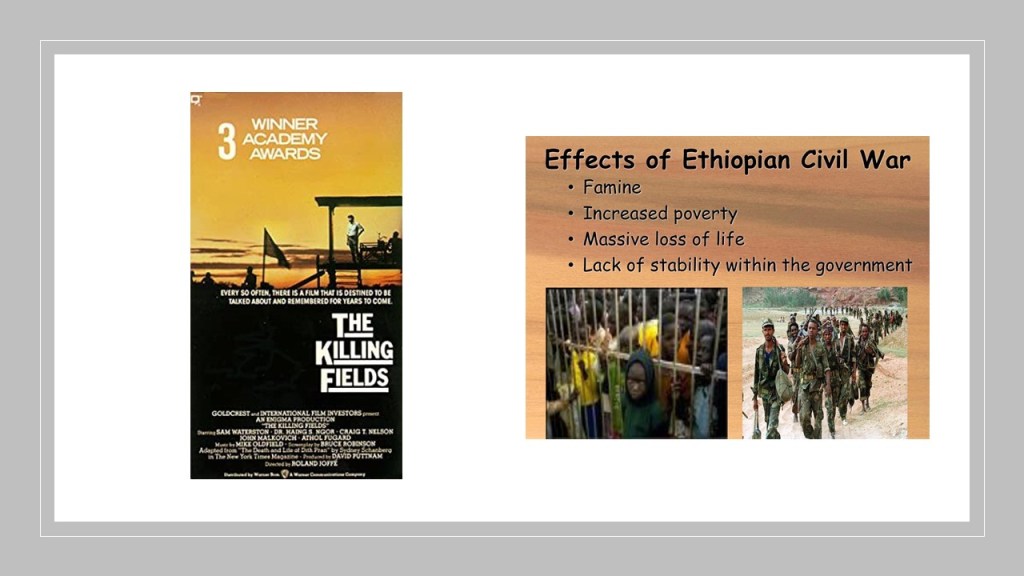
The resulting new communist systems in both Cambodia and Ethiopia led to great suffering and death of the civilian population in both countries in no time, with the genocide of the Cambodian people in the killing fields of Pol Pot amd the Khmer Rouge starting in 1975 and lasting until 1979, and the government of the Derg, another name for the Provisional Military Government of Socialist Ethiopia taking over with the overthrow of Haile Selassie in September of 1974, resulting immediately in the Ethiopian Civil War, leading to famine and massive loss of life.
Just a few years later, the Islamic Revolution took down the hereditary Shah of Iran as well, Mohammad Reza Pahlavi, in 1979…
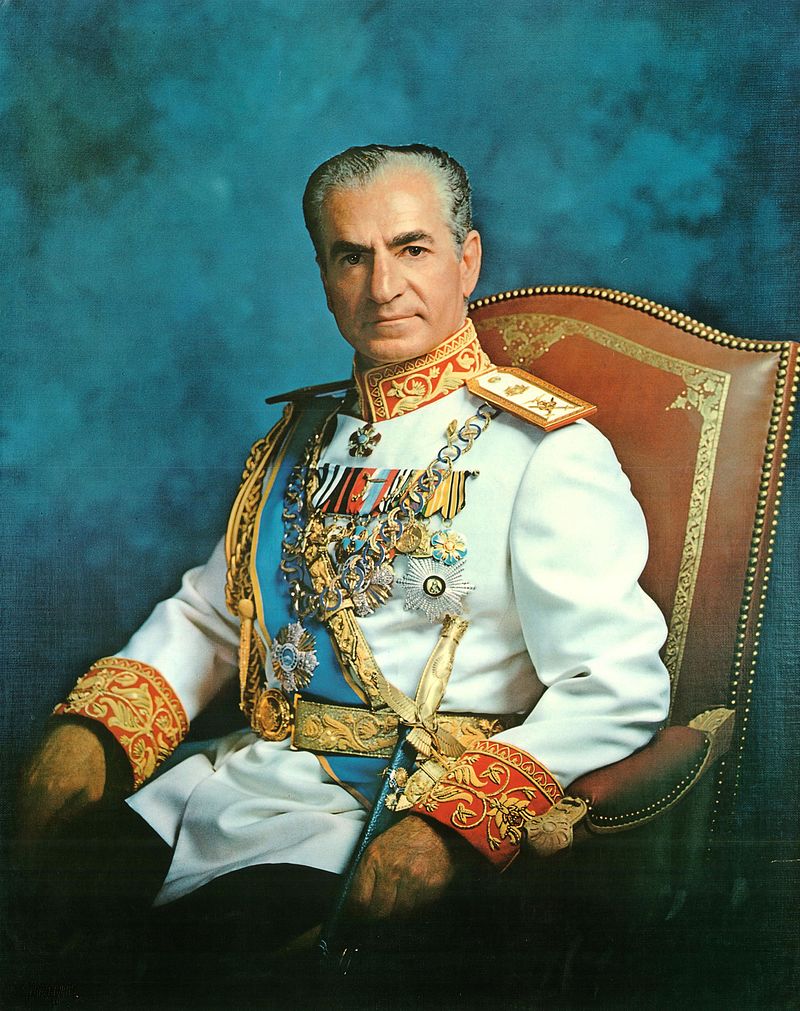
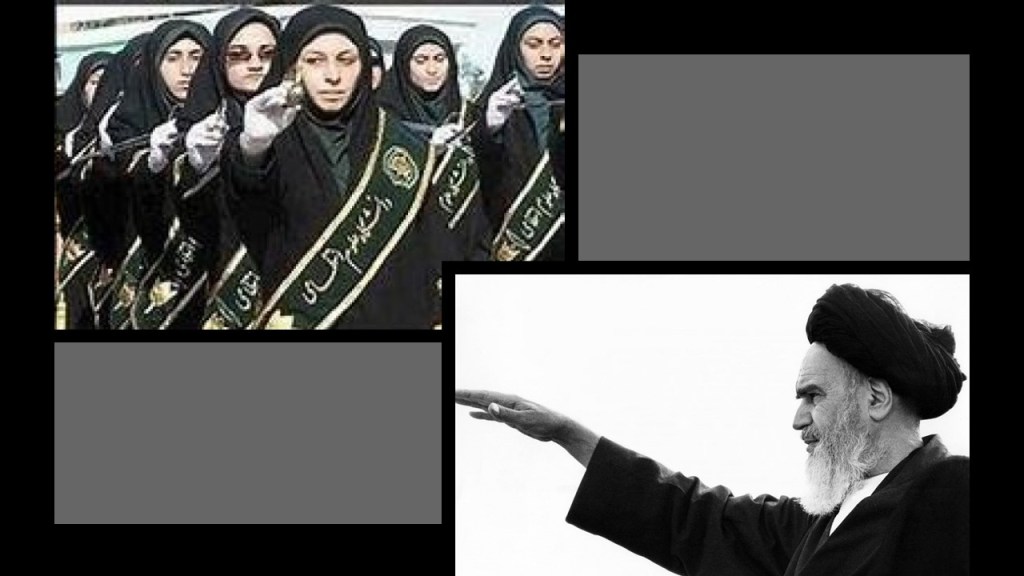
…to replace the ruling Imperial House of Pahlavi with the autocratic theocracy of the Islamic Republic of Iran, leading to the severe repression of the civilian population in all ways.
Next, I looked at what was happening from 1981 to 1989. I graduated high school in 1981 and this was the decade that began my adulthood.

What I found when I started doing the research in January of 1981 was that all hell broke loose all over the Earth starting in 1981, with multiple assassination attempts and assassinations; AIDS came; explosions in mines; frequent plane crashes and planes blown out of the air by bombs; many massacres and atrocities against innocent civilian populations; regular people being blown up in discos and restaurants; and traumatically dying at theaters and sporting events; terrorist hijackings and suicide bombings; a multitude sinking ships and trainwrecks; single-shooter mass shooting events; and on and on and on through the decade, and that somehow all of this was normal.

And that was just the 1980s.
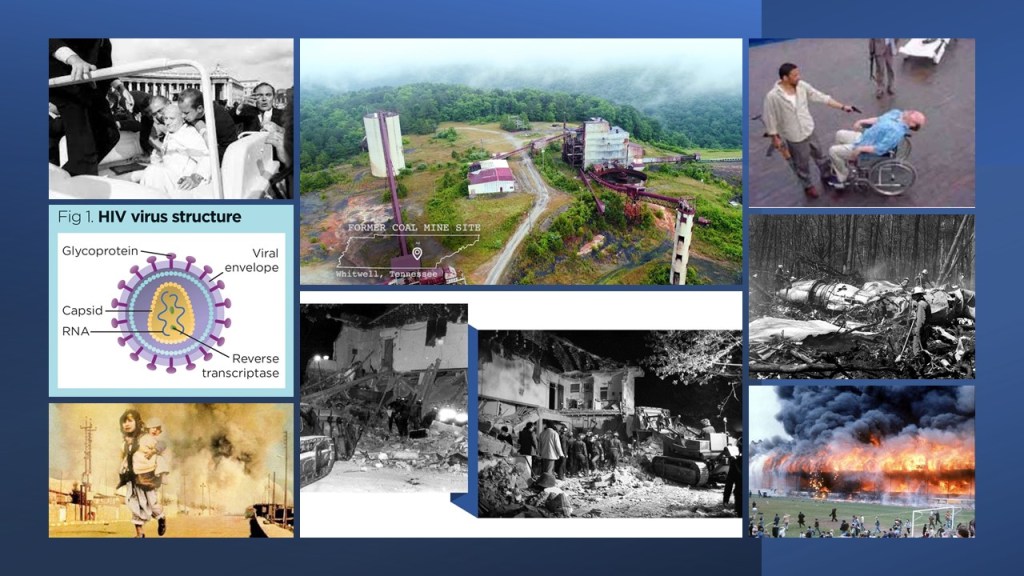
This image has an empty alt attribute; its file name is 4d680-1980s-terrorism.jpg

It is also interesting from the beginning of the 1980s forward was when the personal computer and internet came into being in our lives, ultimately allowing us to instantneously connect with each other all over the world and by-pass Mainstream Media for news and information.

This image has an empty alt attribute; its file name is cdbb5-internet-development.jpg

So, what happened in our history in the decade of the ’90s, beginning in 1990.

On January 1st, two internet companies began selling internet service to commercial customers in the United States and the Netherlands.

One was PSInet, which was founded on December 5th of 1989.

PSInet was based in Ashburn in northern Virginia.

What else has its base in northern Virginia?

Well, the Central Intelligence Agency (CIA) Headquarters in Langley, Virginia, and the Defense Advanced Research Projects Agency (DARPA) is based in Arlington.
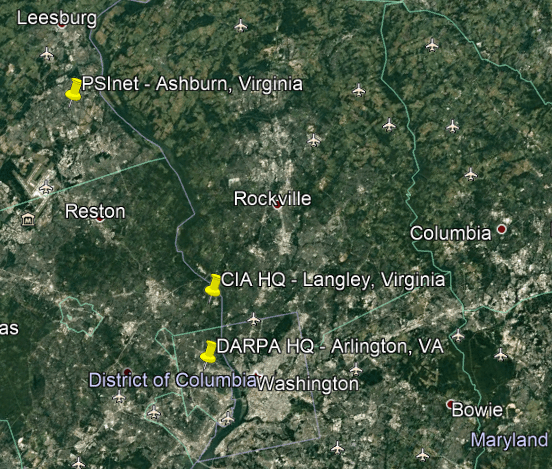
The roots of EUnet, the other internet company that was selling internet connectivity to commercial users, go back to 1982 and the European UNIX Network.

FNET was the French branch of EUnet.

Starting in 1988, EUnet played a decisive role in Europe’s adoption of the internet protocol suite known as Transmission Control Protocol (TCP) and Internet Protocol (IP), of which versions of it were known as the Department of Defense Model because the development of its networking method was funded by the U. S. Department of Defense through DARPA.

Once TCP/IP was in places, EUnet was able to connect with FNET and CERN’s TCP/IP connections, and a connection to the U. S. was also established.

On January 1st of 1990, EUnet started selling internet access to non-academic customers in The Netherlands.

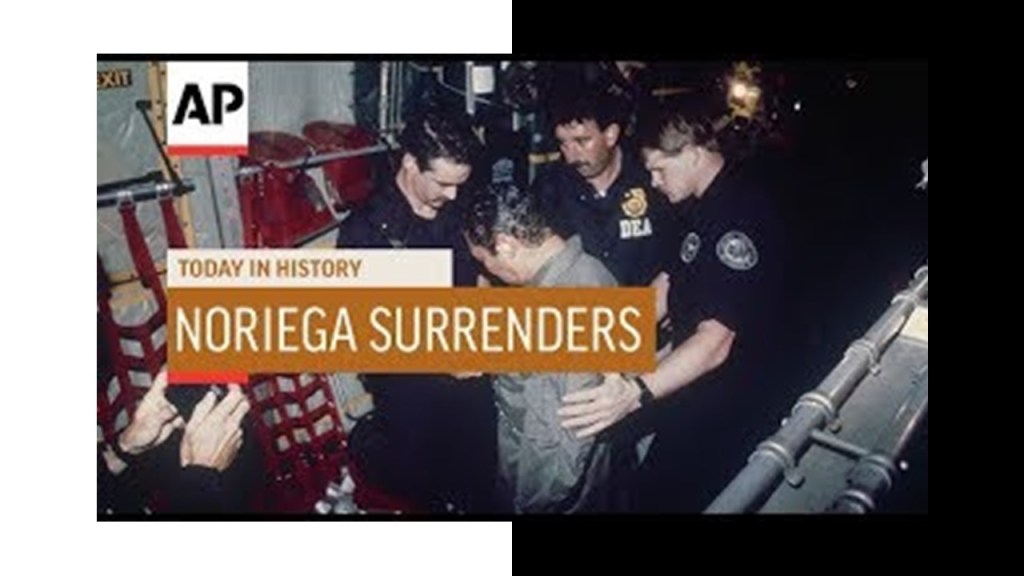
On January 3rd of 1990, General Manuel Noriega was deposed as leader of Panama, and surrendered to U. S. forces, who had invaded Panama in mid-December of 1989, code-named Operation Just Cause during the administration of President George H. W. Bush.

The primary aim of Operation Just Cause was to depose Noriega as the de facto leader of Panama

He had long-standing ties with U. S. Intelligence agencies dating back to the 1950s, and was said to have been one of the CIAs most-valued intelligence sources at one time.

Interesting to note the George H. W. Bush was also CIA Director from January 30th of 1976 to January 20th of 1977.

Noriega was also said to have amassed a personal fortune through drug-trafficking operations.
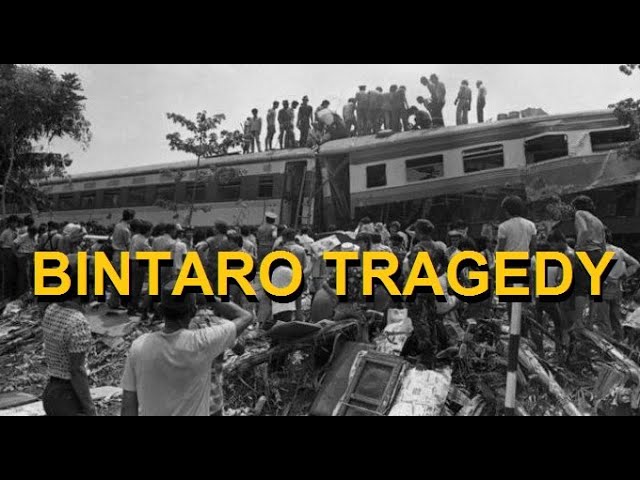
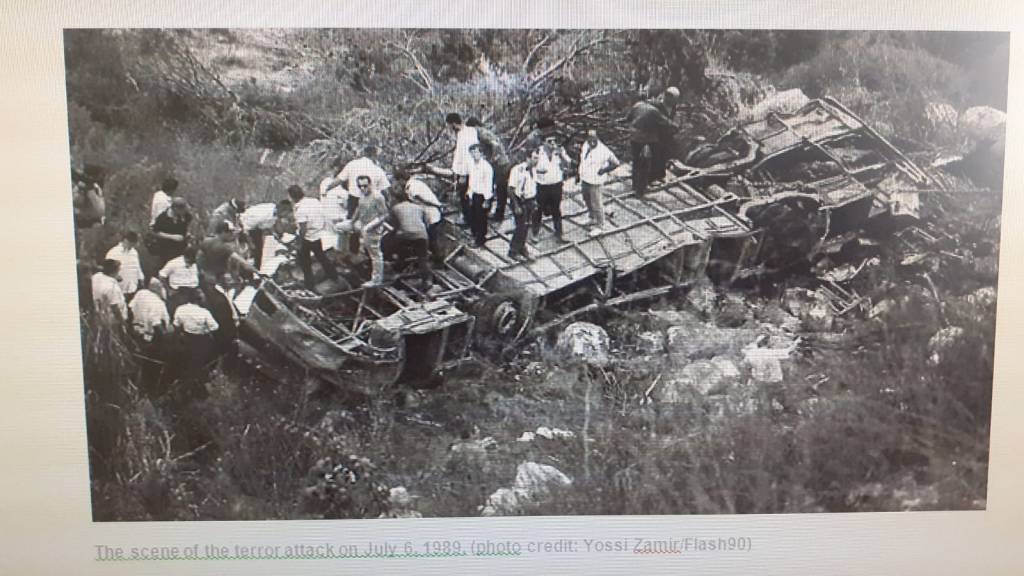
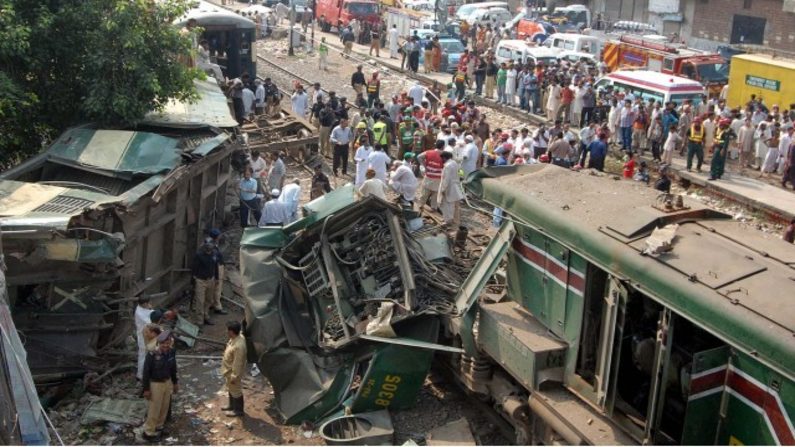
The Sukkur Rail Disaster took place on January 4th, in which two trains collide in Sangi, Pakistan, with the cause of the accident being listed as an improperly set railroad switch.

Pakistan’s worst rail disaster to date, it killed between 200 and 300 people, and injured an estimated 700 more.

Three staff members on duty at the time were charged with manslaughter.
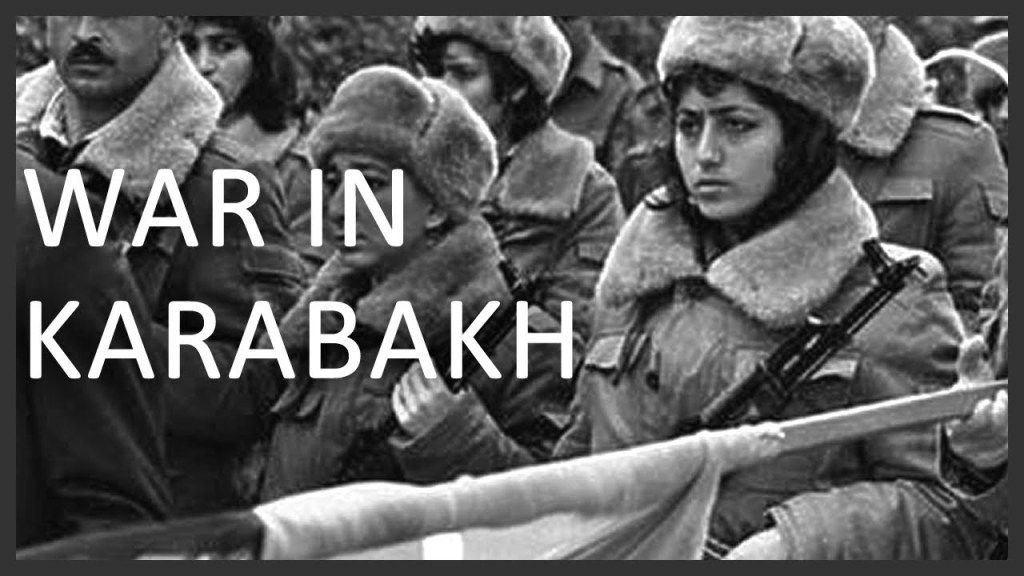
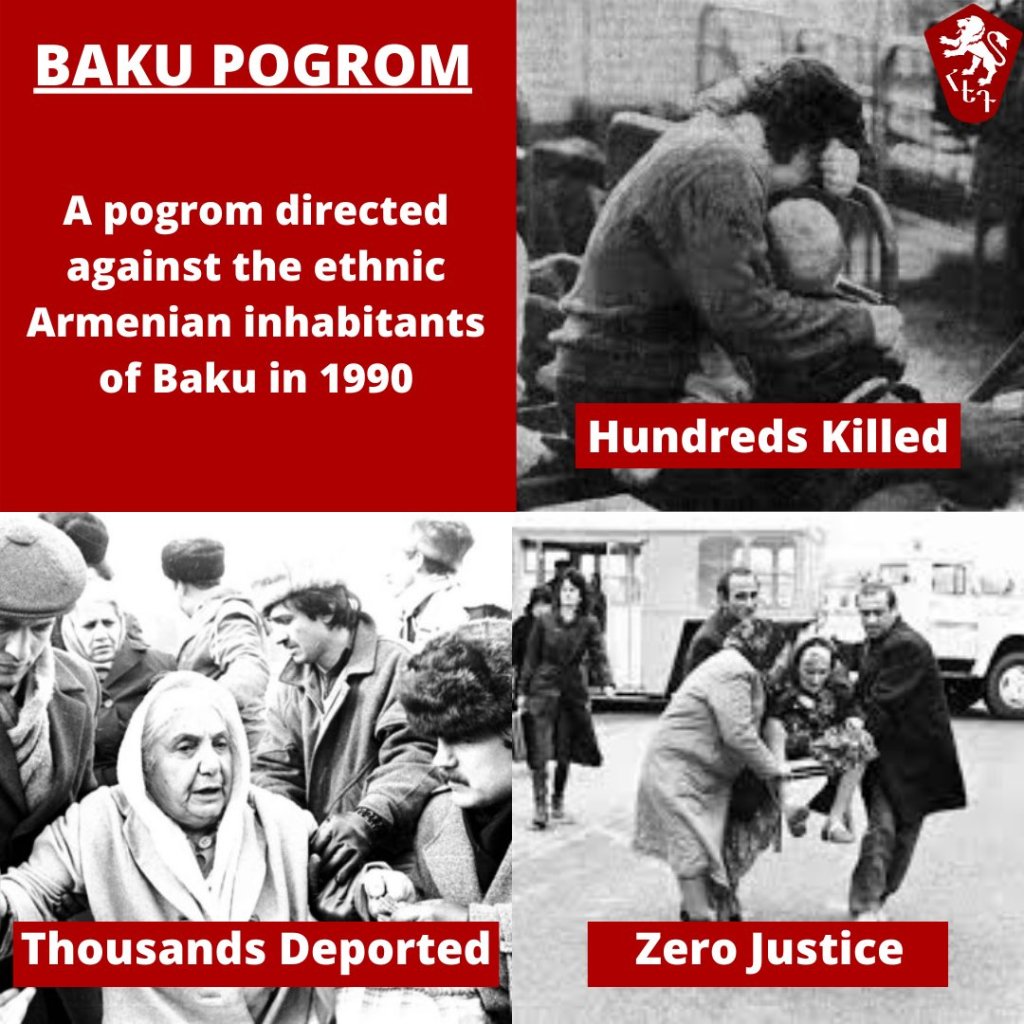
Between January 12th and January 19th, an estimated 50,000 ethnic Armenians were driven out of Baku in Azerbaijan during what was called the Baku Pogrom in response to a formal effort to reunify the region of Nagorno-Karabakh in Azerbaijan with Armenia.

During this 7-day-period, Armenians were beaten, murdered and/or expelled from the city of Baku, as well as raids on apartments, robberies and arson conducted on Armenian citizens.
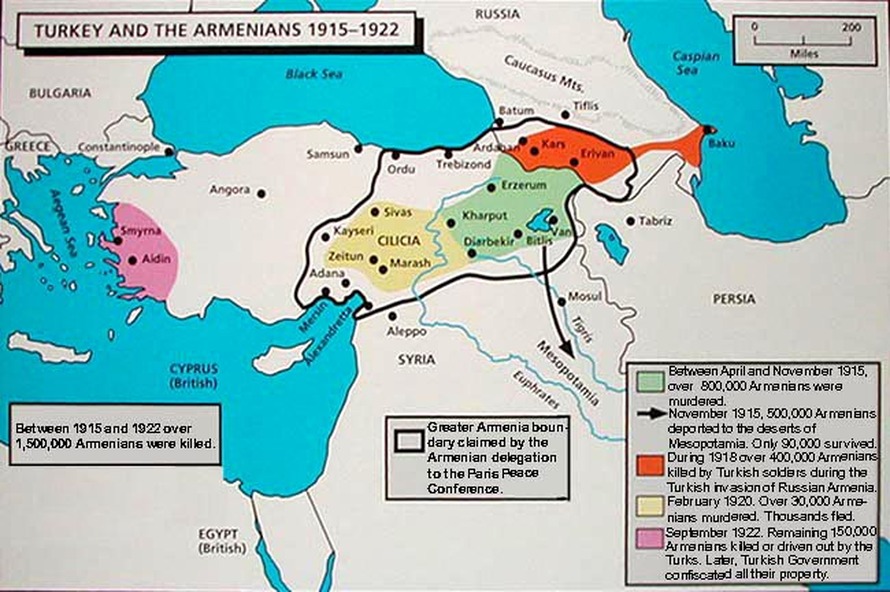
The Armenian people have a history of being genocided in the region.

Between 1915 and 1922, there are figures of at least 1.5-million Armenians having been killed.
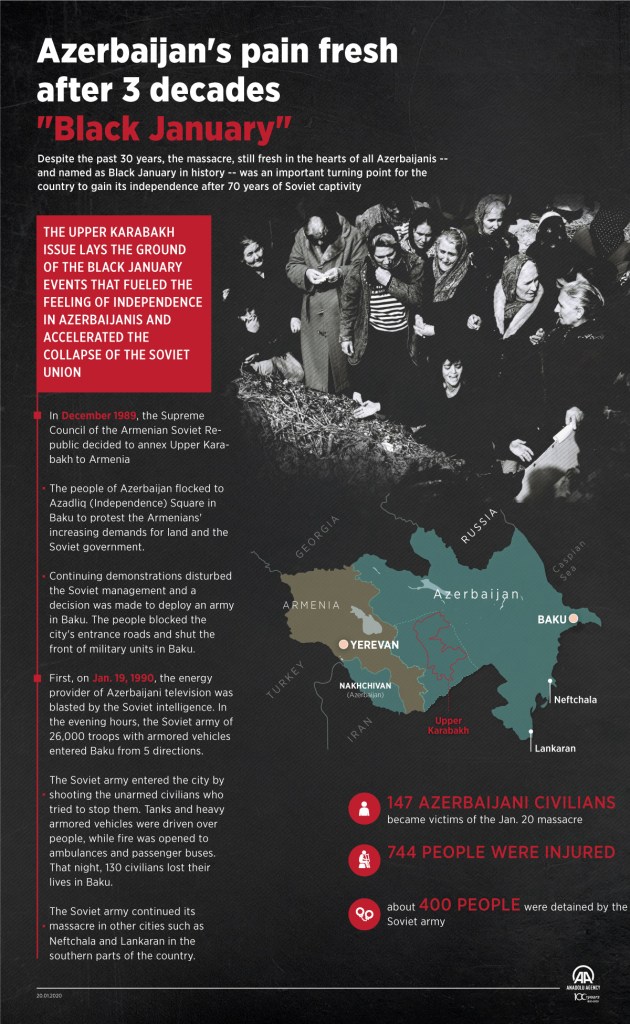
Then at the end of the Baku Pogrom, on January 19th and 20th, also known as “Black January” or the “January Massacre,” Soviet Troops occupied Baku as a result of a State of Emergency declared by the Supreme Soviet of the Soviet Union and the General Secretary of the Communist Party, Mikhail Gorbachev, and killed over 130 Azerbaijanis demonstrating for independence of Azerbaijan from the Soviet Union.
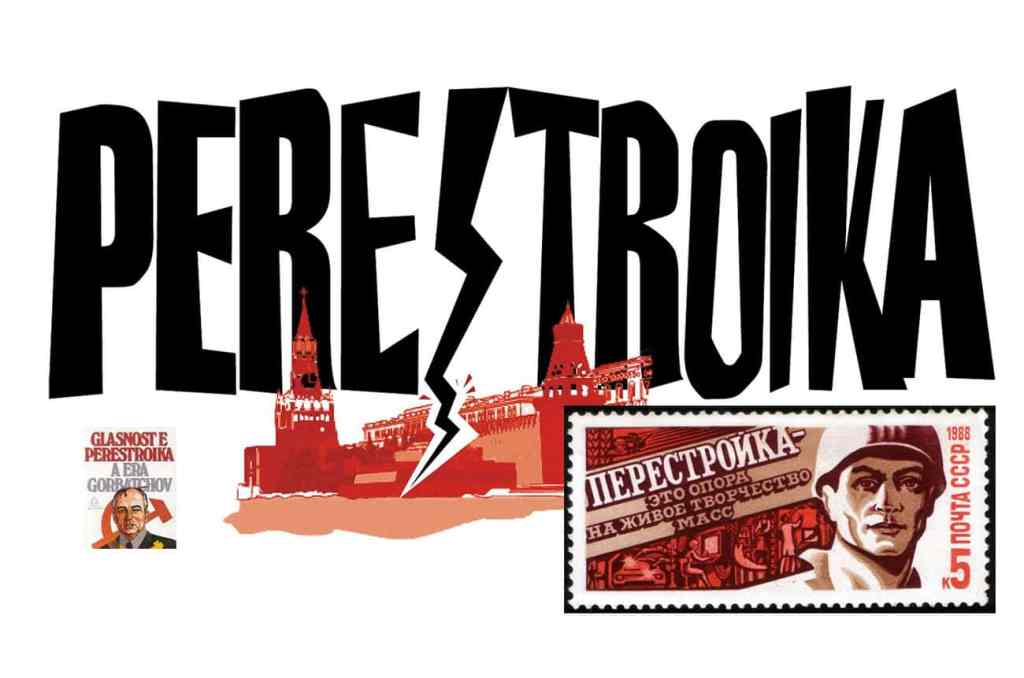
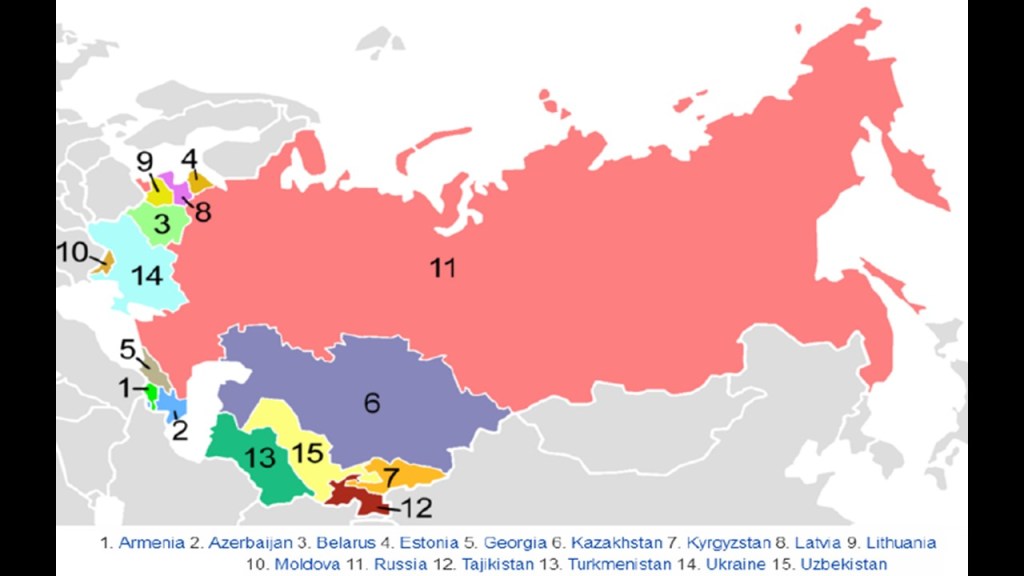
These events took place during the period of time between 1988 and 1991 which is when the “Dissolution of the Soviet Union,” unfolded.
Almost immediately following the Baku Pogrom and “Black January” in Azerbaijan, on January 22nd, the League of Communists of Yugoslavia voted to dissolve itself, and its place…
…the former Republics of Yugoslavia formed their own local branches: the Socialist Party of Serbia…

…the Party of Democratic Changes of Croatia, which merged with the Social Democrats of Croatia to become the Social Democratic Party of Croatia…

…the Social Democratic Union of Macedonia…

…the Party of Democratic Reforms of Slovenia, which was renamed to Social Democrats in 2005…

…the Social Democratic Party of Bosnia and Herzegovina…

…and the Democratic Party of Socialists of Montenegro.

We shall soon see what this led to with respect to the relationships between the former Republics of Yugoslavia.

On the same day the League of Communists of Yugoslavia voted to dissolve itself, January 22nd, Robert Tappan Morris was convicted of releasing the Morris Worm, one of the first computer internet worms.

I found some interesting things when looking up information on Mr. Morris.

He developed his computer worm when he was a graduate student at Cornell University, though he released the worm from MIT.

The Morris Worm was designed to exploit existing vulnerabilities within target systems in order to gain entry, and was programmed to copy itself 14% of the time

He was the first person convicted under the “Computer Fraud and Abuse Act (CFAA) in the United State vs. Morris, and received a sentence of three-years probation, 400-hours of community service, and a fine of $10,500, and additionally the costs of his supervision.
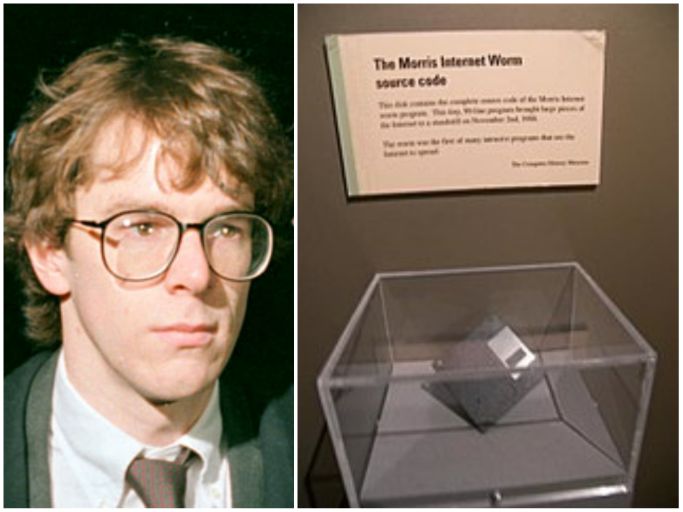
After he completed his the terms of his sentence, he completed his Ph.D at Harvard 1999 and was appointed Assistant Professor at MIT.

In 1995, he co-founded Viaweb with Paul Graham, a company that made software for building online stores, and which, three-years later, sold for $49-million to Yahoo.

He also co-founded Y Combinator with Paul Graham, Jessica Livingston and Trevor Blackwell in 2005.

Y Combinator is an American seed money start-up accelerator that was used to launch such companies as Stripe, Airbnb, DoorDash, Coinbase, Dropbox, Twitch, and Reddit, to name a few.

Not bad for a convicted criminal!

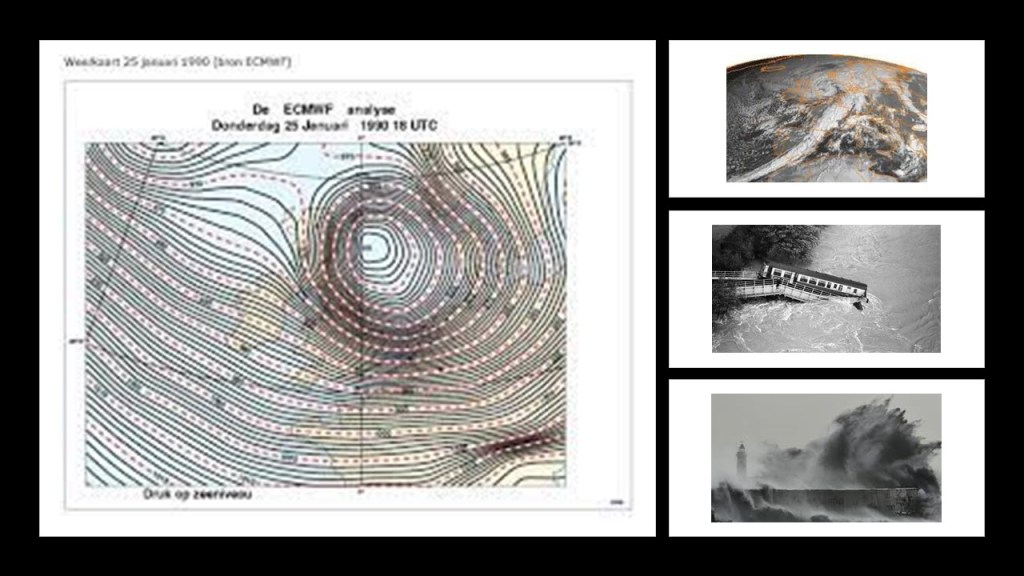
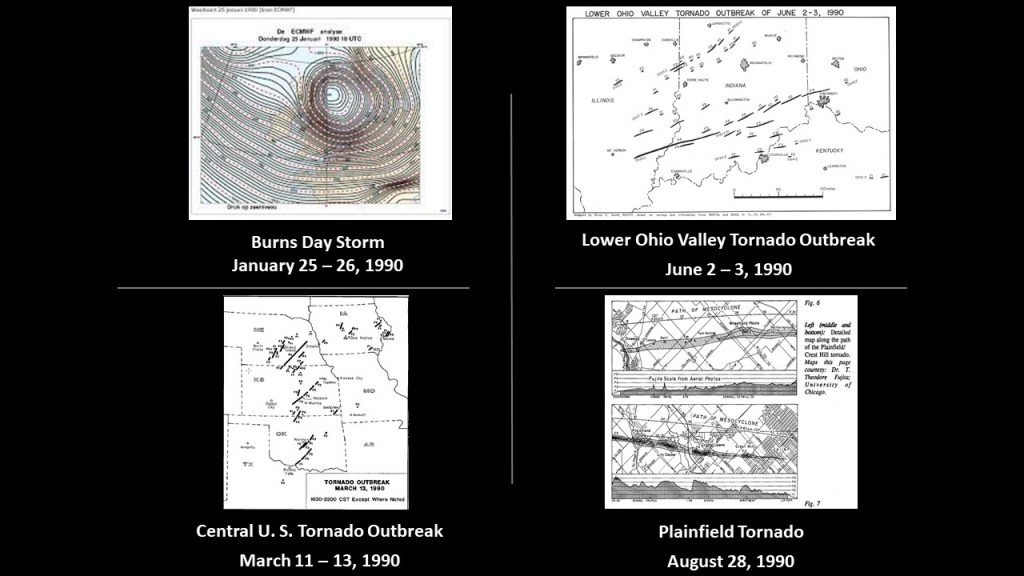
The Burns’ Day Storm, also known as Cyclone Daria, took place between January 25th and January 26th in northwestern Europe.

It was nicknamed after the Scottish-poet Robert Burns because it took place on his birthday.

It was one of the strongest European windstorms on record, killing estimated around 100 people across Europe.

Starting out as a cold front over the North Atlantic Ocean, it began to undergo what is called explosive cyclogenesis, the rapid deepening of an extratropical low pressure area, also known as a “weather bomb.”

It made landfall at Ireland on January 25th, and then tracked over to Ayrshire in Scotland, where its lowest pressure was recorded around Edinburgh at 4 pm on the same day.

From there, the storm headed across to Denmark, then caused major damage in The Netherlands, and Belgium.
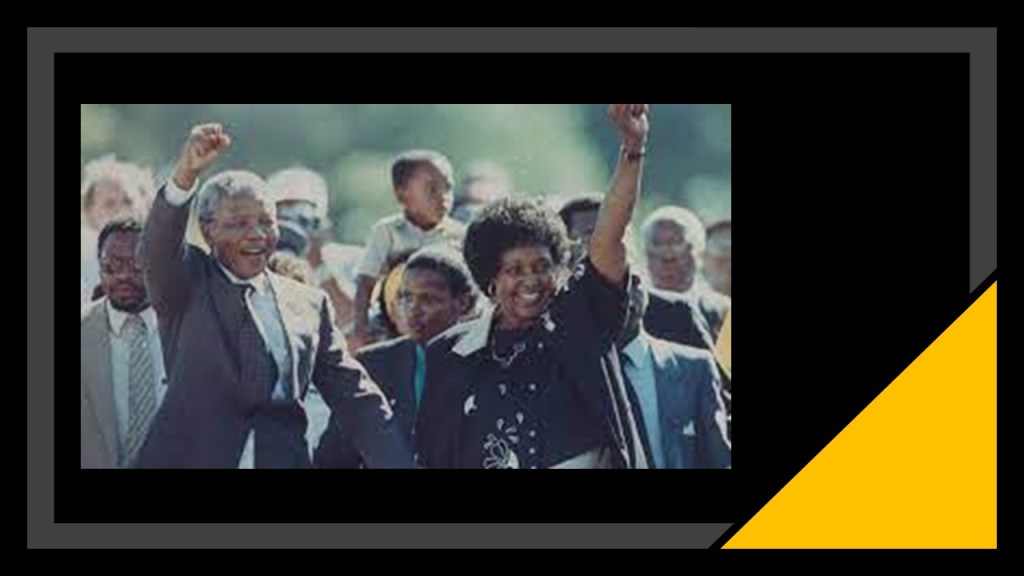
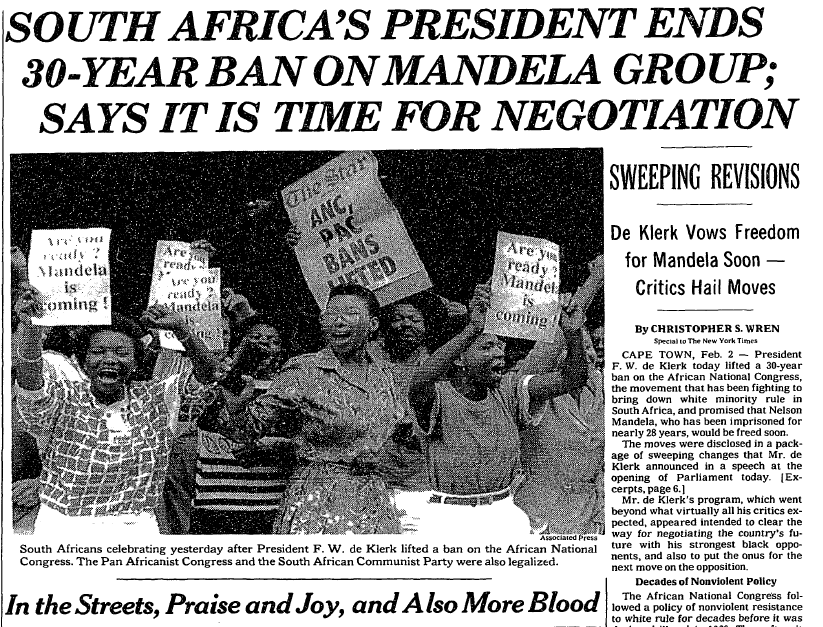
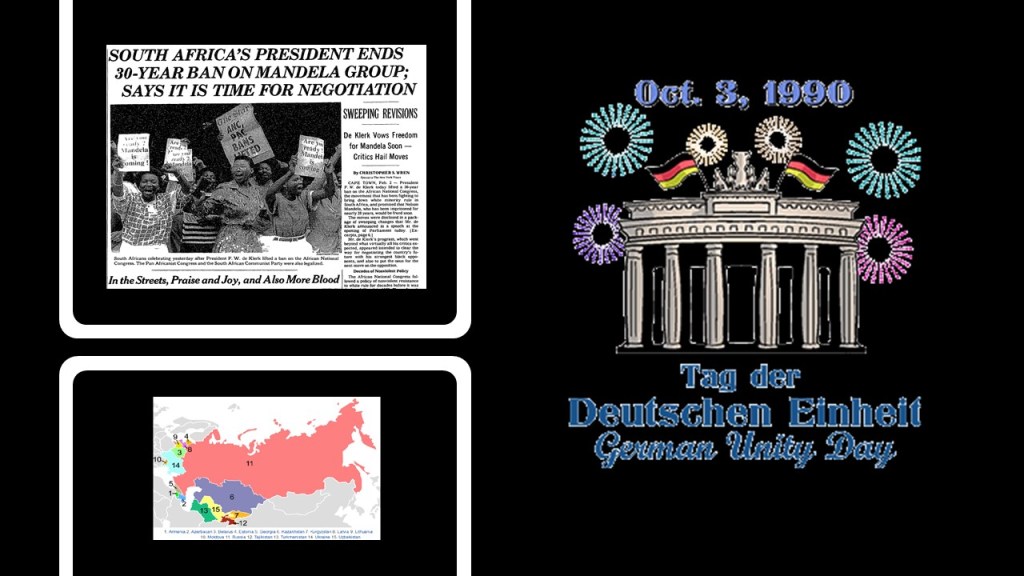
In South Africa, on February 2nd, South African President F. W. de Clerk announced the unbanning of the African National Congress and promised to release Nelson Mandela, which happened several days later on February 11th, from prison near Cape Town.
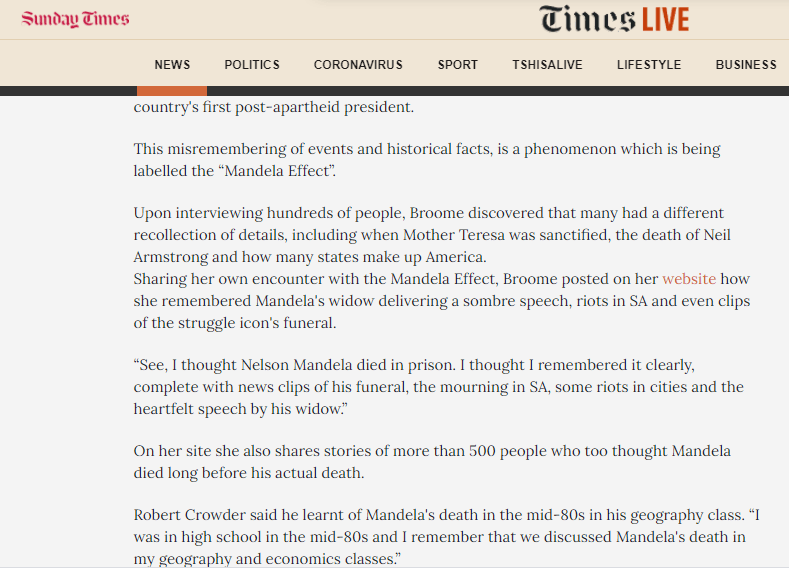
This is a great place to mention what is called “The Mandela Effect.”

The Mandela Effect is typically defined as occurring when a large mass of people believe an event it occurred when it did not, with most sources of information referring to it as a “collective false memory.”
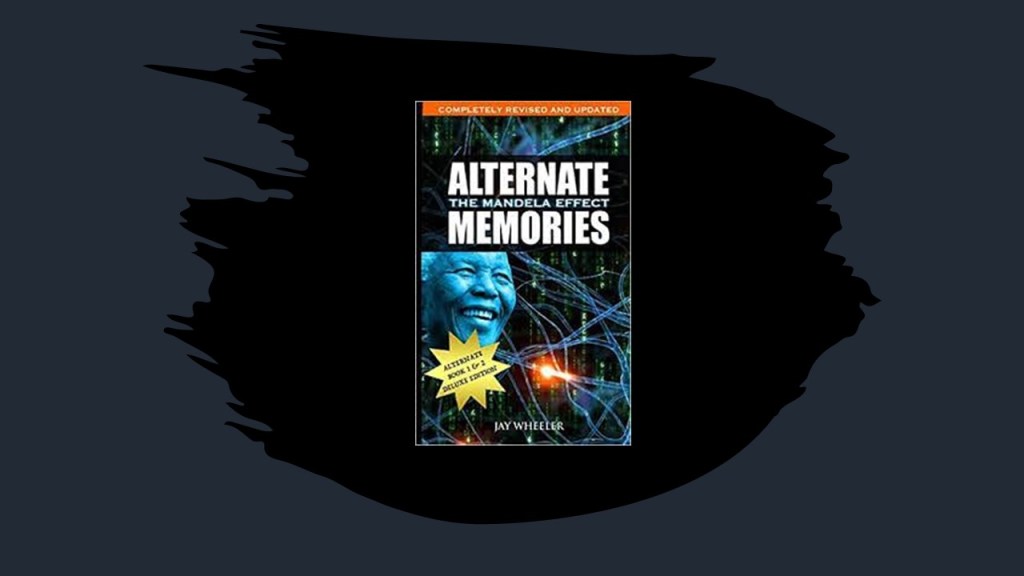
This effect gets its name from many people having memories that Nelson Mandela died when he was in prison in the 1980s, instead of dying in 2013 in our historical narrative, after having been released from prison in 1990 after serving 27 years, and serving as President of South Africa from 1994-99.
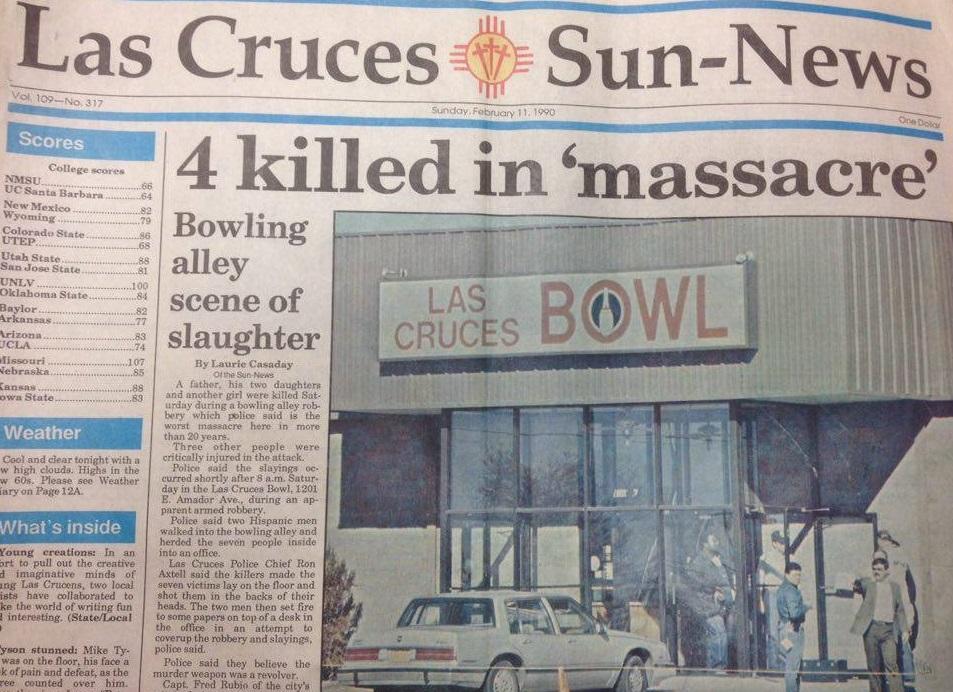
The Las Cruces Bowling Alley Massacre took place in New Mexico on February 10th, where a total of seven people were shot, and out of that number, four killed, by two unidentified gunmen, who shot the victims in an office, set one of the desks in the office on-fire, and left the scene.

The case remains unsolved to this day.
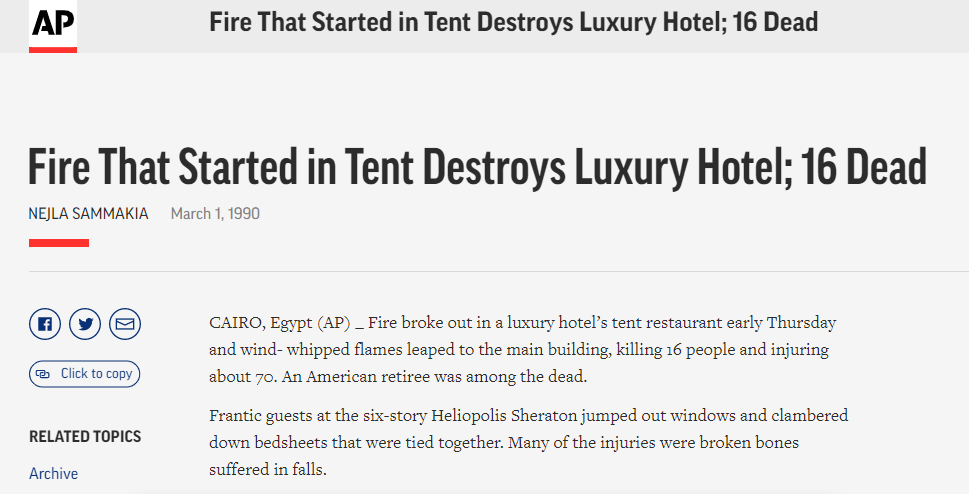
On March 1st, the fire at the Heliopolis Sheraton Hotel in Cairo killed 16 people and injured 70.

The fire was said to have started in the luxury hotel’s tent restaurant, literally a cotton-canvas tent that was attached to one of three blocks of the T-shaped hotel.

It was the only one of Cairo’s six Sheraton Hotels that did not have an alarm- system or sprinklers, which were not required under Egyptian law.

The fire, fueled by 25-mph-winds destroyed most of the 630-room hotel and its restaurants and elaborate lobby, which featured tropical trees, plants, and live birds.
Between March 11th and March 13th, there was a tornado outbreak in the central United States which produced 64 tornadoes across 6 states.

It was one of the most violent outbreaks ever documented in March.
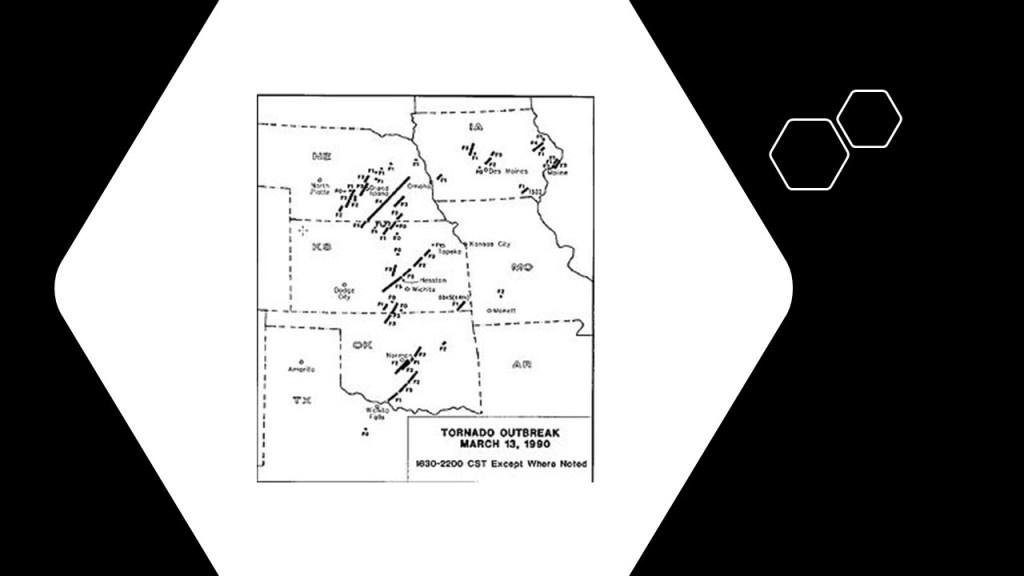
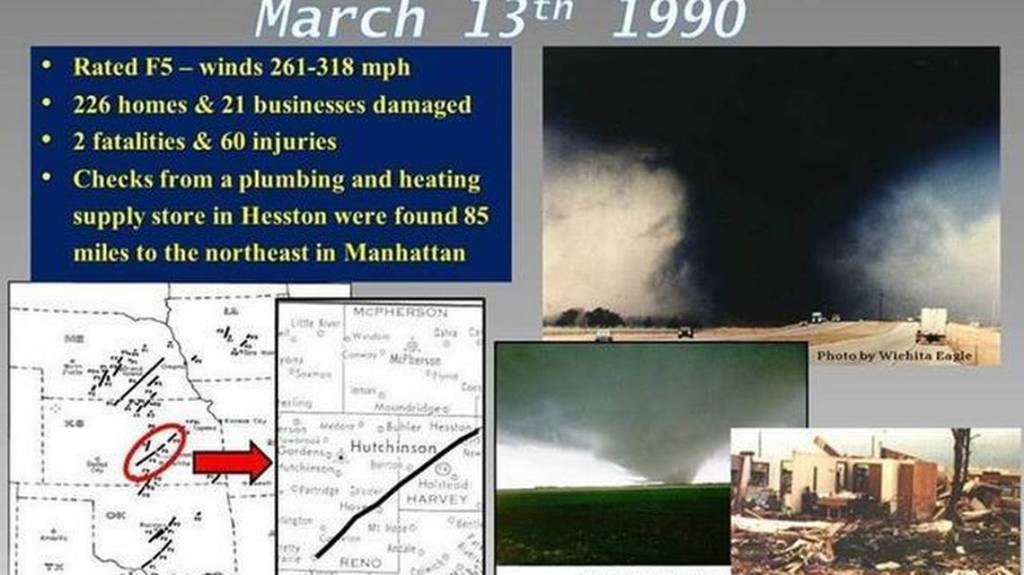
One of the thunderstorms, on March 13th, produced an F4 tornado in Nebraska that was on the ground for over 100-miles, or 160-kilometers.

Another thunderstorm produced two F5 tornados. The first of these struck the town of Hesston, Kansas, and was one of the most photographed and documented violent tornades in history.
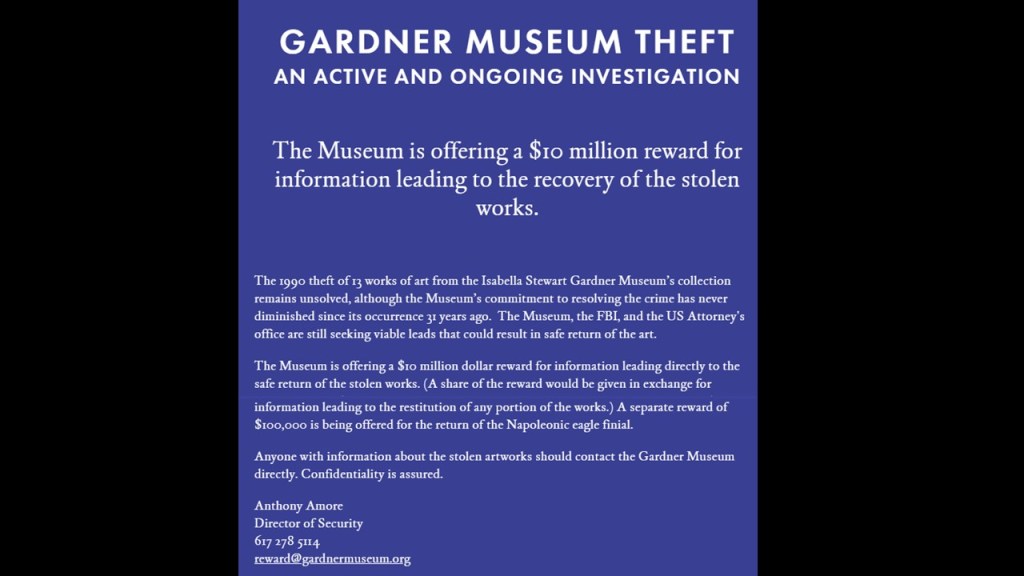
The largest art theft in U. S. history took place on March 18th, at which time twelve paintings and a Chinese Shang Dynasty vase, all together worth $100 to $300 million, were stolen from Boston’s Isabella Stewart Gardner Art Museum.

There is still a $10 million reward in place today for information leading to the recovery of the art work.
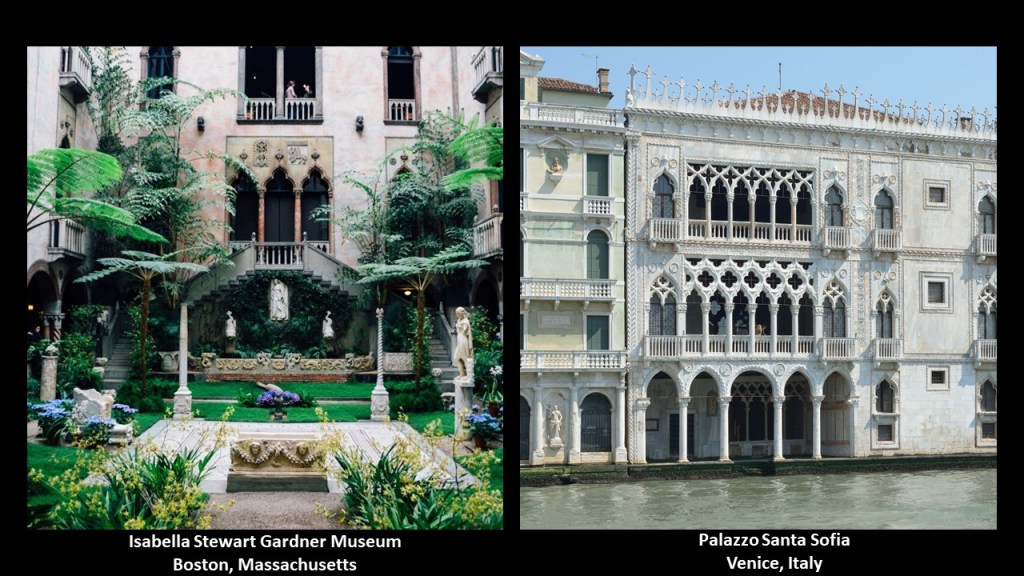
The museum was said to have been built between 1898 and 1901, with the design heavily influenced by art-collector and philanthropist Isabella Stewart Gardner herself on the left, in the style of a 15th-century Venetian Palace, of which the 15th-century Palazzo Santa Sofia in Venice on the right is an example of this type of architecture.
It is important to note that when I first looked at the pictures of the Isabella Stewart Gardner Museum in Boston on the left, I was immediately reminded of the Royal Alcazar in Seville, Spain, on the right, said to have been built over a period of 5-centuries, starting in the 1300s.
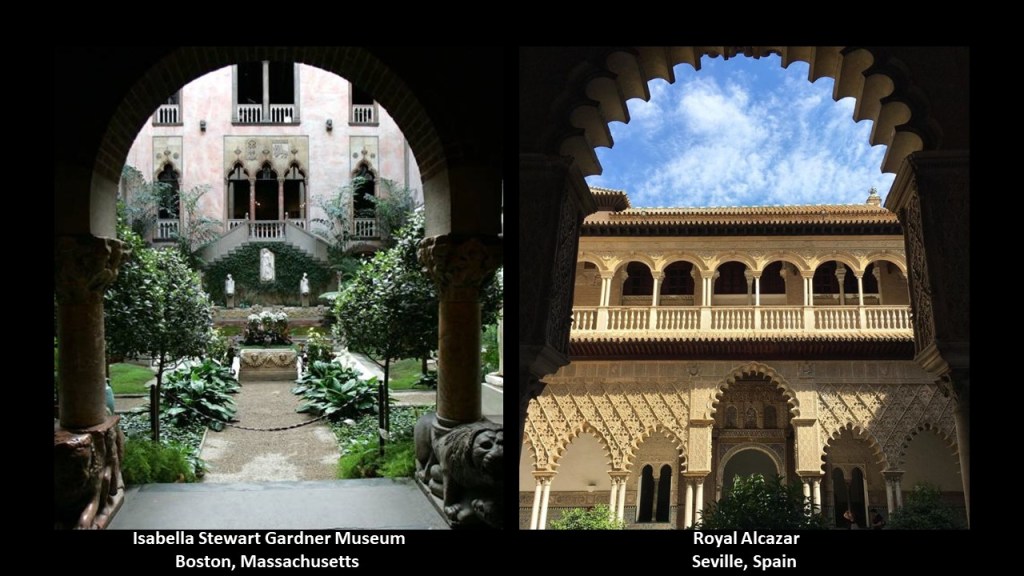
…which is located near the Back Bey Fens, said to have been designed by Frederick Law Olmsted as part of Boston’s Emerald Necklace system of parks.
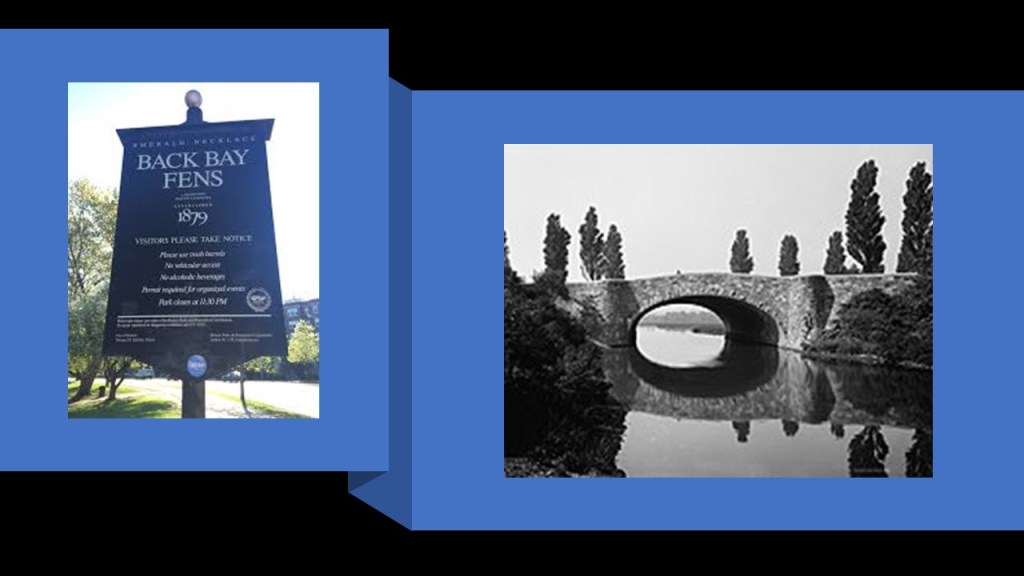
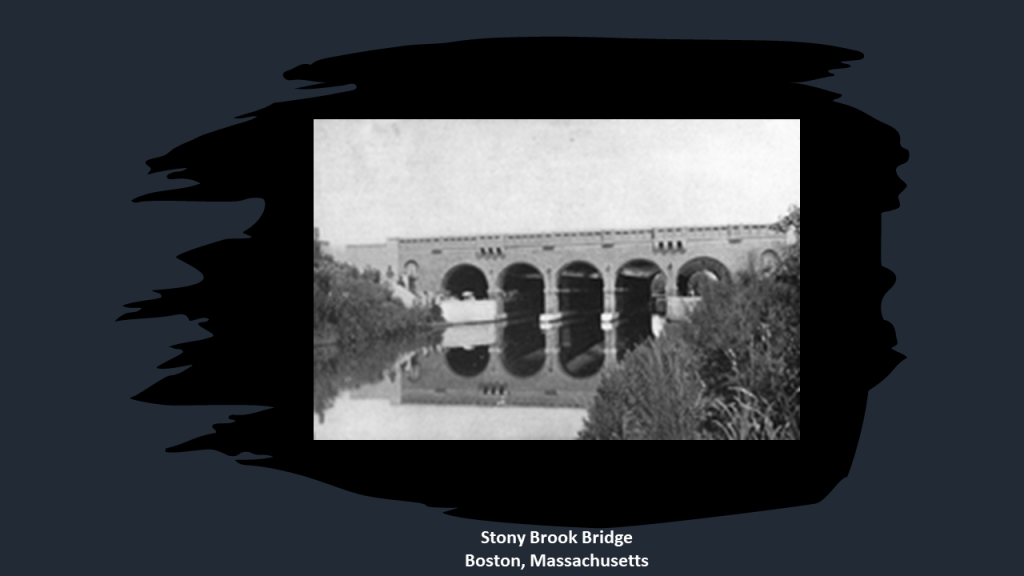
This was the Stony Brook Bridge circa 1898 in Boston’s Back Bay Fens.

It and one other bridge crossing the Stony Brook Canal were demolished when the canal was filled-in.
On March 25th, an arson fire at an unlicensed Puerto Rican social club named Happy Land in New York City killed 87, and injured 28.

It was said to have been caused by a Cuban refugee who had a fight with his ex-girlfriend, and was kicked out of the club.

Filling a container with $1 worth of gas, he returned to the club and set fire to the only known exit in the venue.
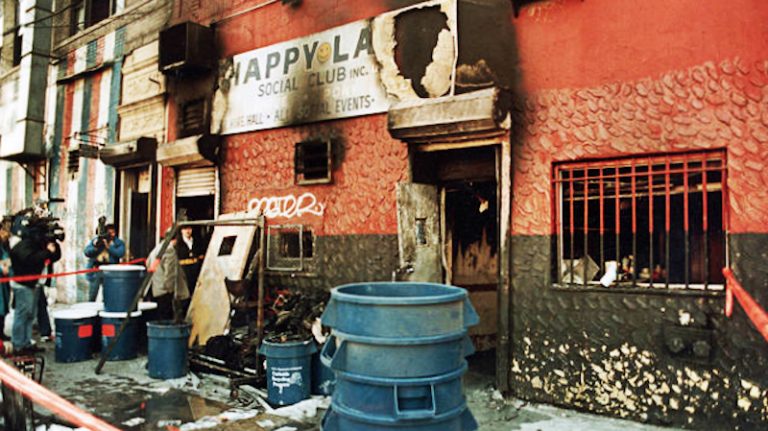
I found a reference saying that the New York City Fire Department requested the assistance of the Center for Fire Research (CFR) who came and did a study using physical measurements on the site, floor plan drawings and newspaper accounts, but did not take material samples or do testing.
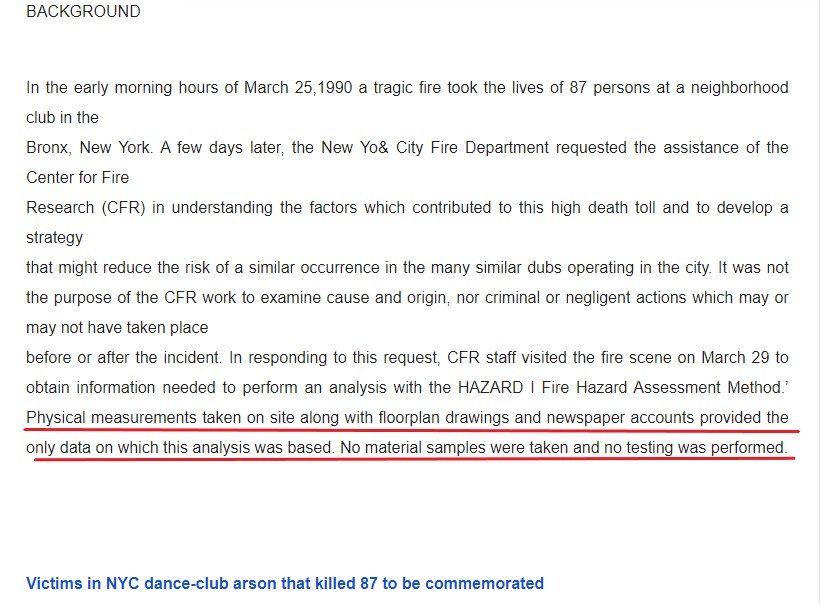
The Manchester Prison Riot, also known as Strangeways Prison, in Manchester, England, started on April 1st, and lasted for over three weeks, ending on April 25th.

The riot started when prisoners took control of the prison chapel, and the riot spread quickly through the rest of the prison, including protestors on the roof top.
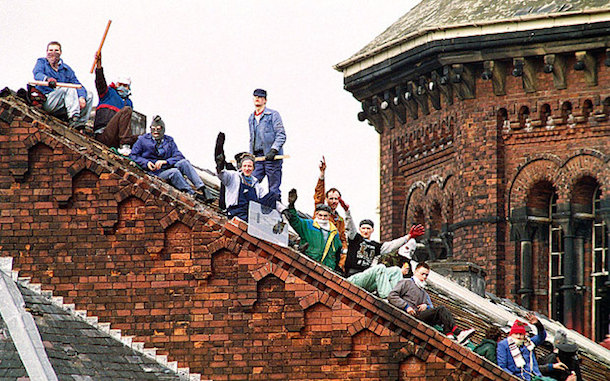
By the end of it, one prisoner was killed; 47 prisoners & 147 prison officers wounded, and much of the prison damaged or destroyed at a cost of 55-million-pounds to repair.
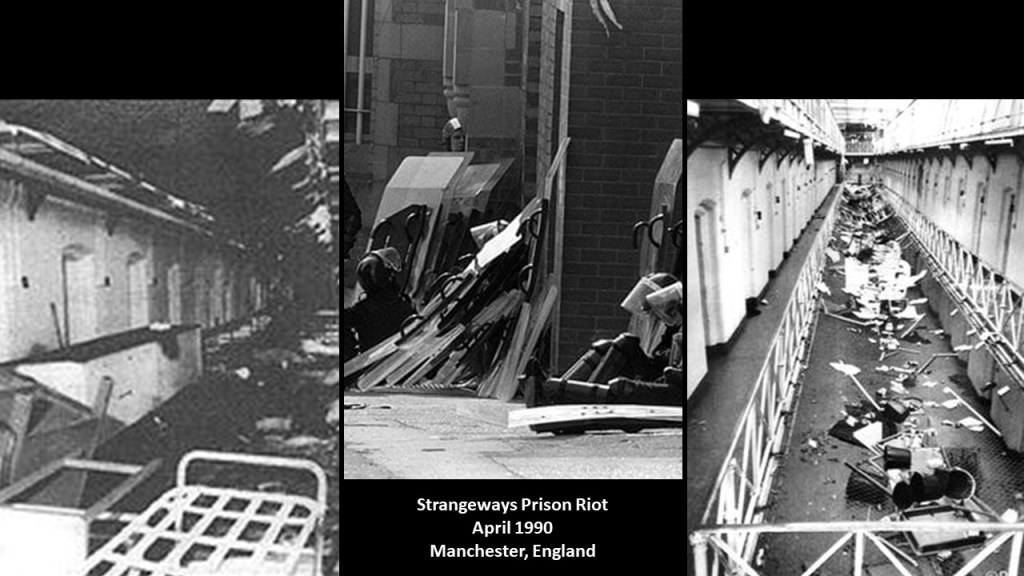
Strangeways Prison in Manchester was said to have been designed by Alfred Waterhouse, an architect known primarily for work done in the Victorian Gothic architectural-style, and said to have opened in 1868, with its slanted-looking features…
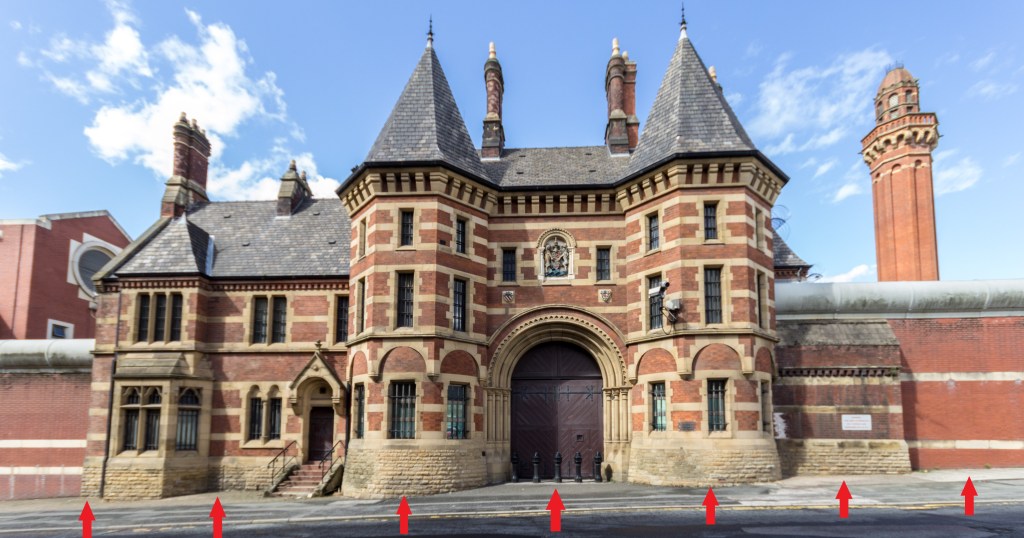
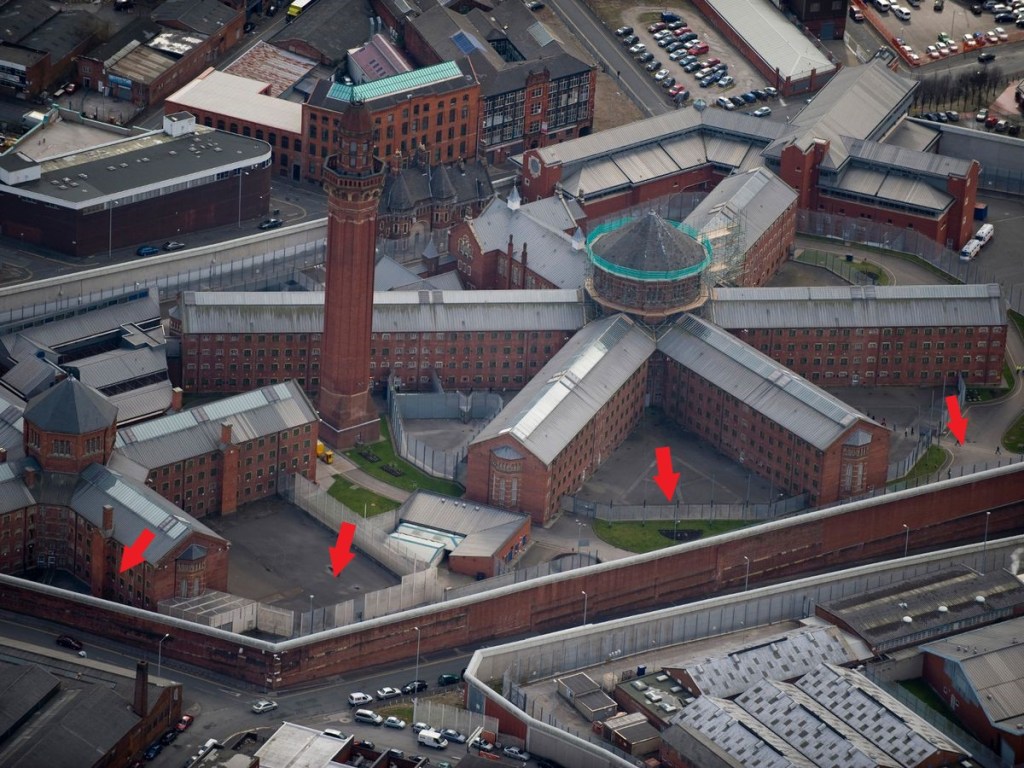
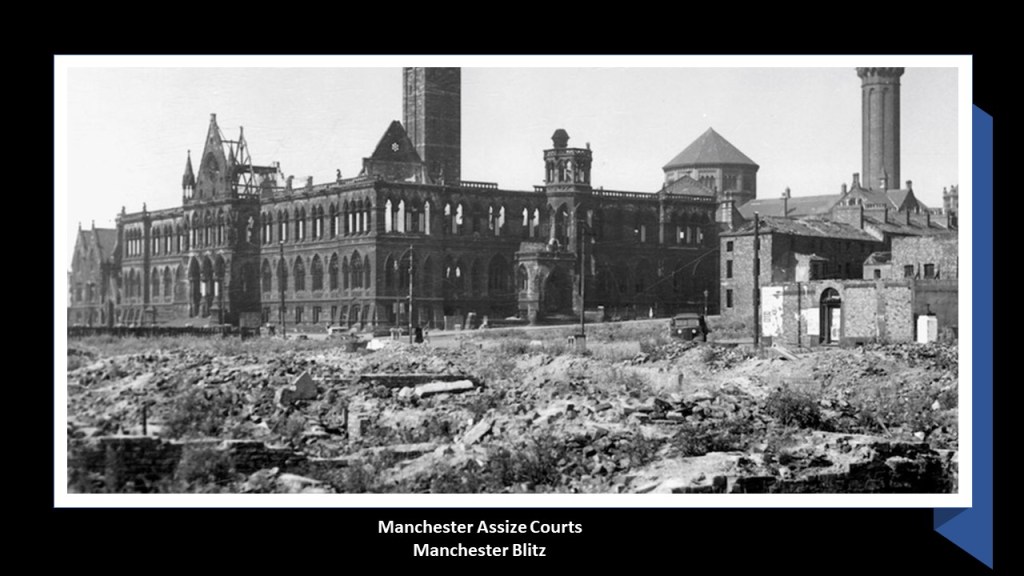
…right next to the Manchester Assize Courts building, also attributed to Waterhouse and built between 1859 and 1864…
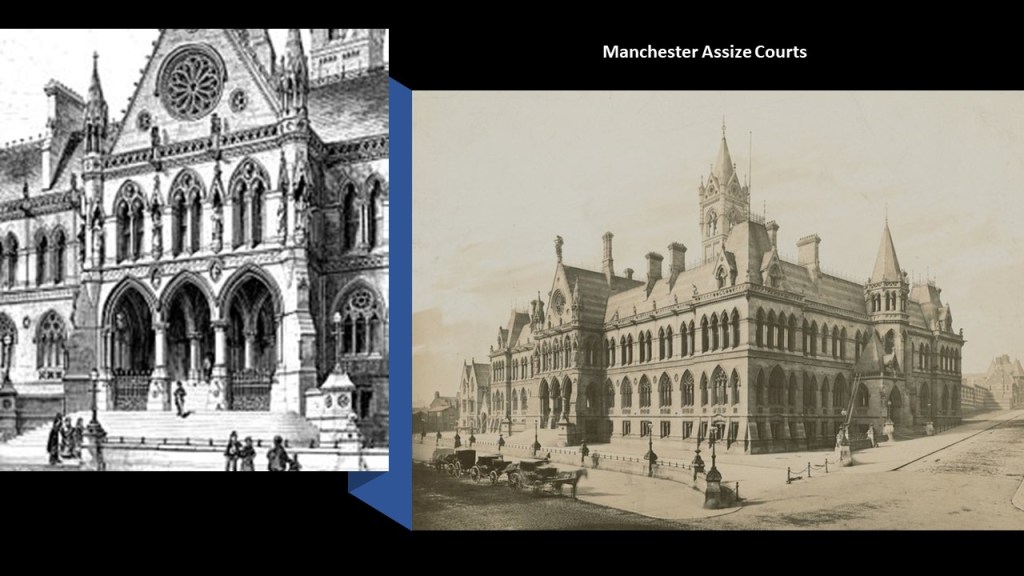
…and which was demolished completely in 1957 after having been severely damaged in the Manchester Blitz during World War II between 1940 and 1941.
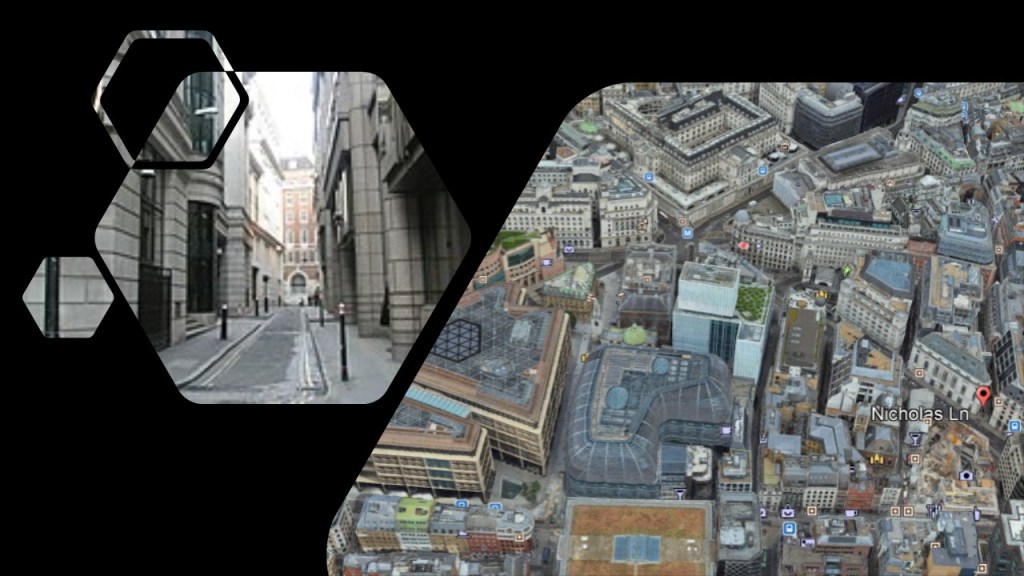
The City Bonds Robbery occurred on May 2nd, one of the largest robbery’s in world history.

A courier was robbed at knife-point of 301 bearer bonds worth 292-million pounds that were Treasury Notes from bank and building societies.
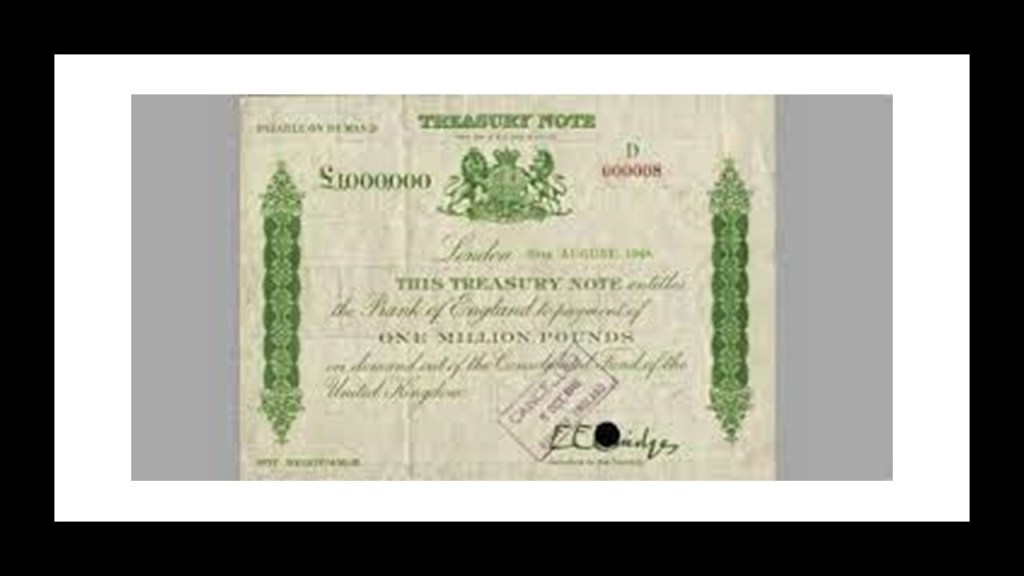
The robbery took place on Nicholas Lane, an alleyway in the City of London.

In a broad investigation, police found 299 of the original 301 certificates, in places such as Glasgow, Miami, and Zurich.
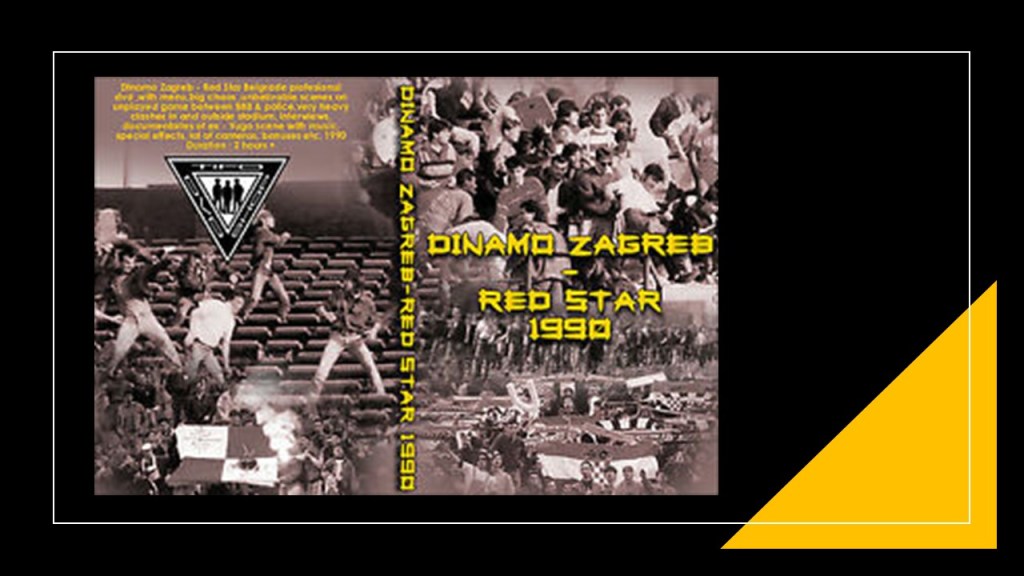
On May 13th, the Dinamo Zagreb – Red Star Belgrade Riot took place at the Maksimir Stadium in Zagreb, Croatia.

Both teams of the Croatian Dinamo team and the Red Star Belgrade of Communist Serbia consistently placed at the top of the Yugoslav First League.

This football riot took place just a few weeks after Croatia’s first multi-party elections in 50-years had taken place, with a majority favoring Croatian independence, with the communists being ousted in favor of more nationalist parties.

The people wounded during the riot were stabbed, shot, or poisoned by tear gas.

The Dinamo – Red Star riot was believed by some to have sparked the Croatian War of Independence, which started at the end of March in 1991. More about this later.
On March 22nd, leaders of the Yemen Arab Republic (North) and People’s Democratic Republic (South) of Yemen announce unification as the Republic of Yemen.

The history behind this, which is important to understanding what has taken place in Yemen since then, is that following the collapse of the Ottoman Empire in 1918, at the end of World War I, when the former Ottoman Empire was divided between the countries on the “winning” side of the war…
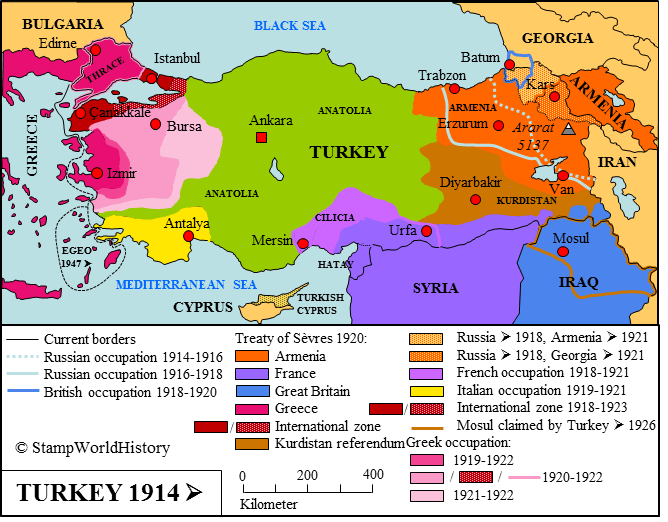
…northern Yemen became an independent state known as the Kingdom of Yemen.
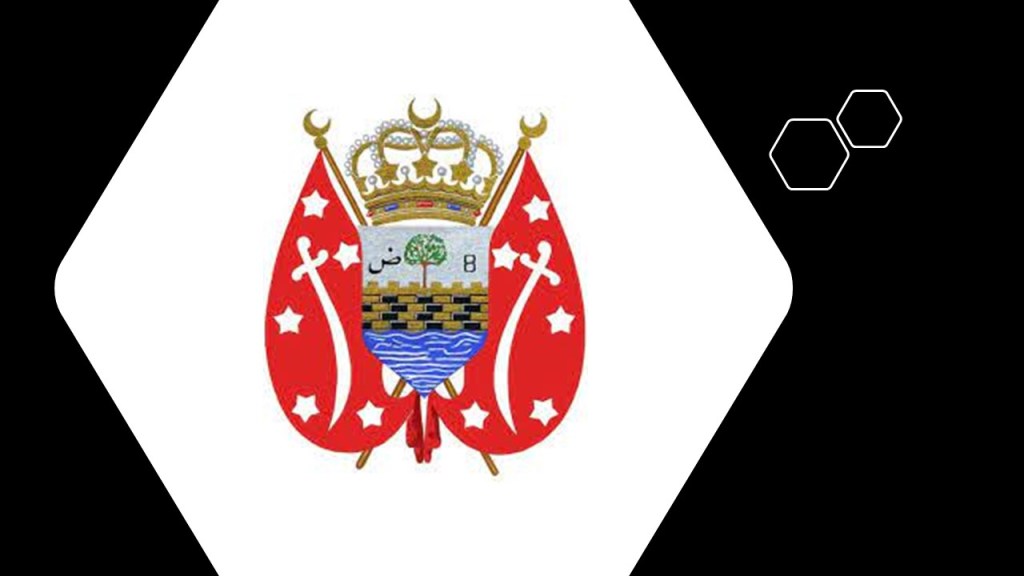
Then on September 27th of 1962, revolutionaries deposed the newly-installed, last King of Yemen, Muhammad al-Badr, and formed the Yemen Arab Republic, which was said to have been inspired by the Arab Nationalist Ideology of Nasser’s Egyptian United Arab Republic…
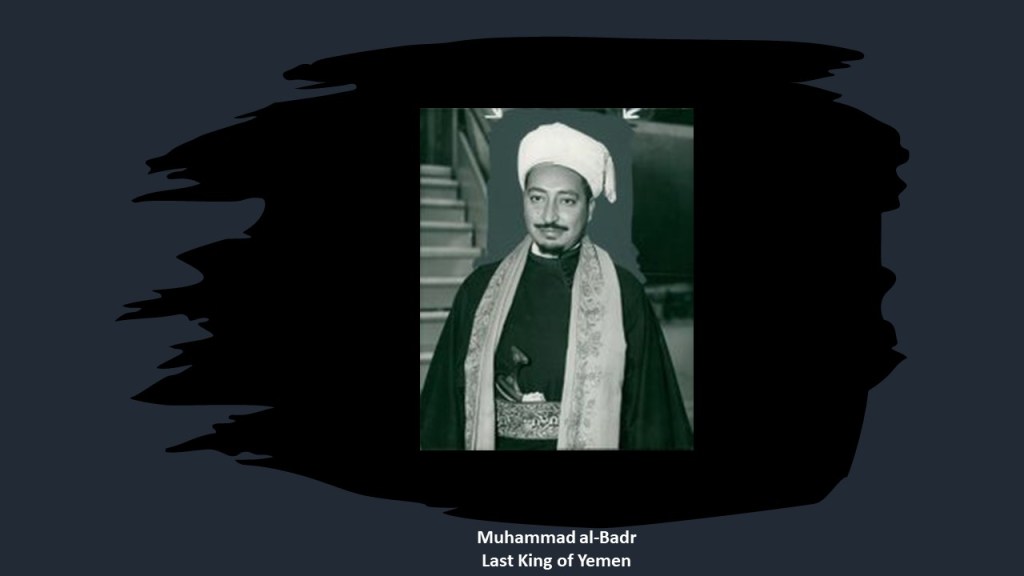
…and this action started the North Yemen Civil War from 1962 to 1970 between supporters of the Kingdom, which included Saudi Arabia and Jordan, and supporters of the Yemen Arab Republic, which included Egypt.
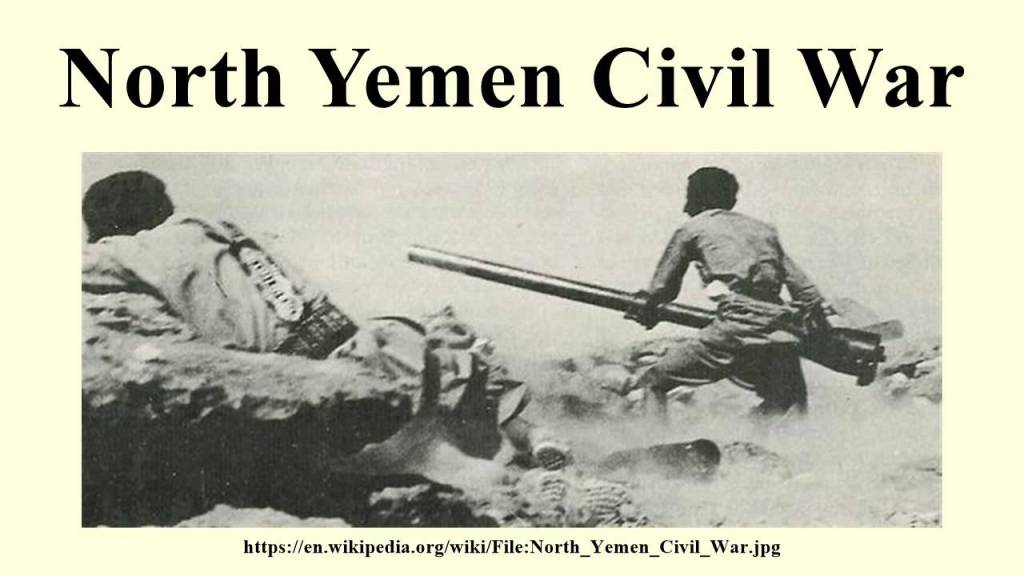
By the end of the North Yemen Civil War, the supporters of the Kingdom were defeated, and the Yemen Arab Republic was recognized by Saudi Arabia in 1970.

The People’s Democratic Republic of Yemen was known as the Aden Protectorate in 1918, which it had been known as since 1874 with the creation of the British Colony of Aden and the Aden Protectorate, which consisted of 2/3rds of present-day Yemen.
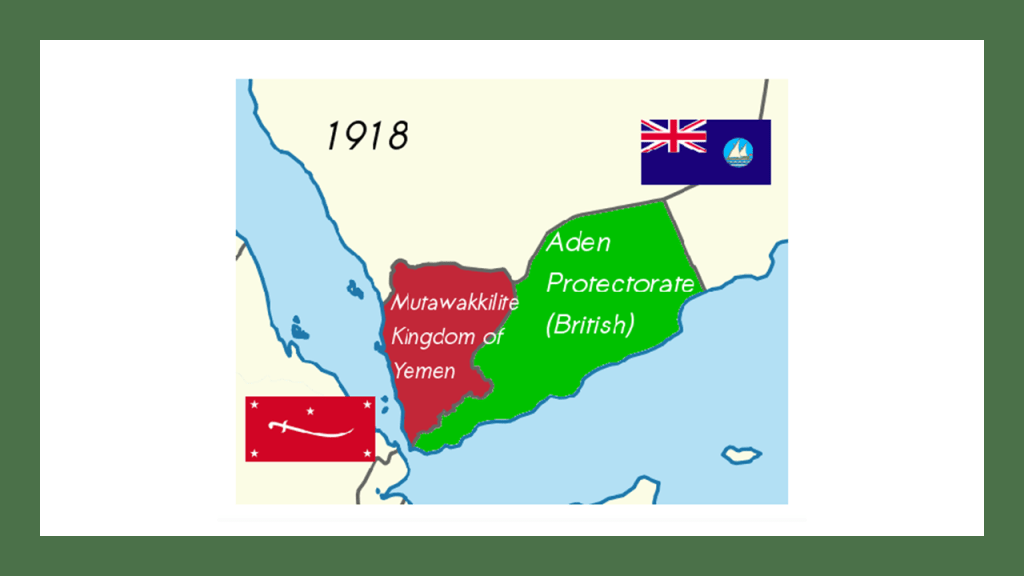
The Aden Protectorate existed until 1963, when it was merged with the new Federation of South Arabia.
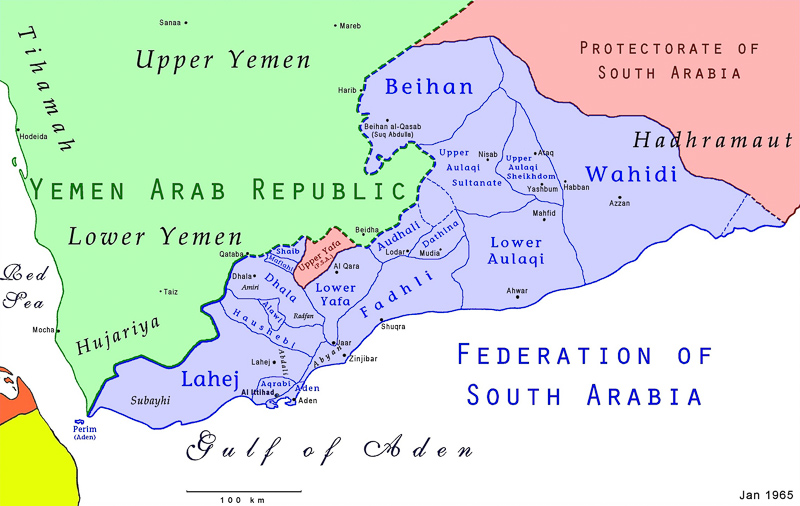
By 1967, the Federation of South Arabia had merged with the Protectorate of South Arabia, and later changed its named to the People’s Republic of Southern Yemen, becoming a Marxist-Leninist state in 1969, the only Communist state to be established in the Arab World.
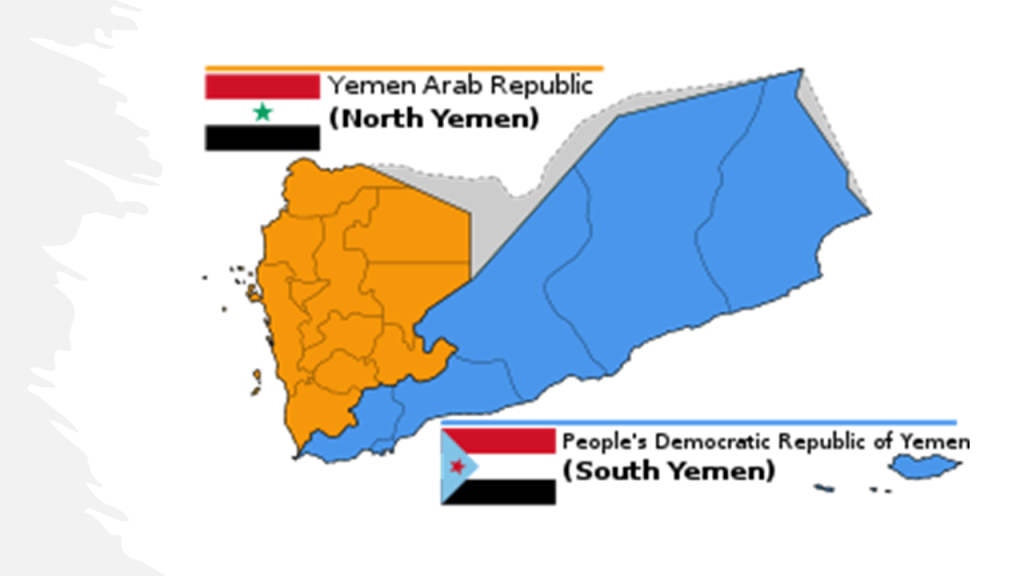
With the 1990 reunification of Yemen into the Republic of Yemen, the new government was comprised of officials from both sides, with a de facto form of collaborative governance, until the country into Civil War in 1994.
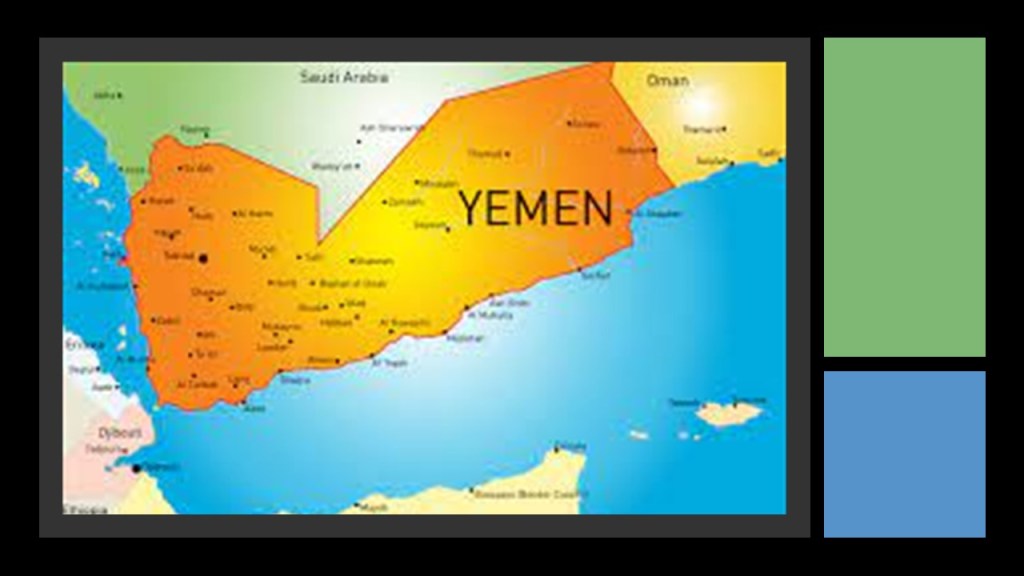
So Yemen is yet another example of the practice of “divide and conquer,” with not only partitioning one country/people into north and south with different political ideologies and histories, and, as was the case with North Yemen, creating the civil war between the original monarchy and the new Arab Nationalists, after deposing the hereditary King, which reflects the pattern I mentioned at the beginning of this post regarding some of the other hereditary rulers taken down by the Communists in the 60s and 70s.
Not only that, but what is the same emblem doing on the uniforms of hereditary rulers from diverse places, like Emperor Haile Selassie of Ethiopia, Shah Mohammed Reza Pahlavi, and the Kings Lunalilo and Kalakaua of Hawaii?
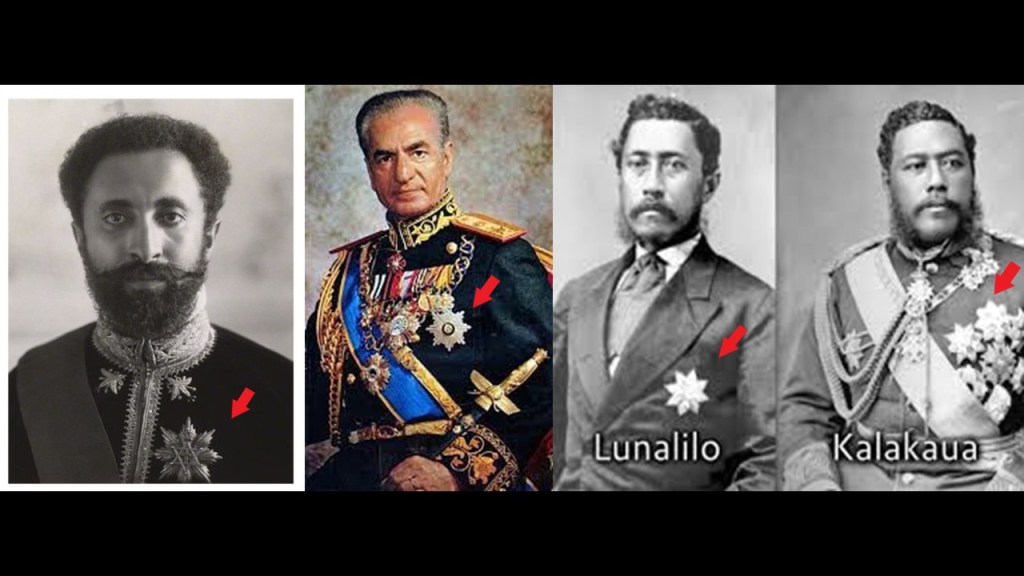
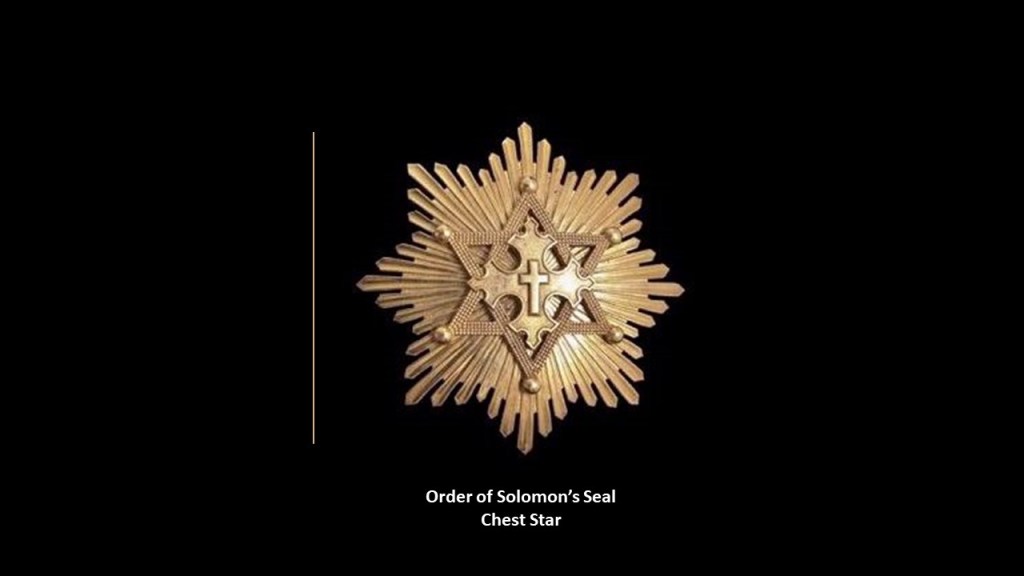
So, I looked around to find a match for the stars on the uniforms of these monarchs, and I found the chest star of the Order of Solomon’s Seal, the oldest order of the Ethiopian Empire, said to have been given to the Emperor and Empress, and the male members of the Imperial family.

The Ethiopian Order of Solomon’s Seal was also said to have been given to Christian Heads-of-State around the world, so that could explain…possibly…these other rulers having the chest star of the Order of Solomon’s Seal…or does it possibly mean something else altogether?

Like perhaps all of these hereditary rulers were connected to King Solomon and the Tribe of Judah, and not just in Ethiopia?
Back to 1990.

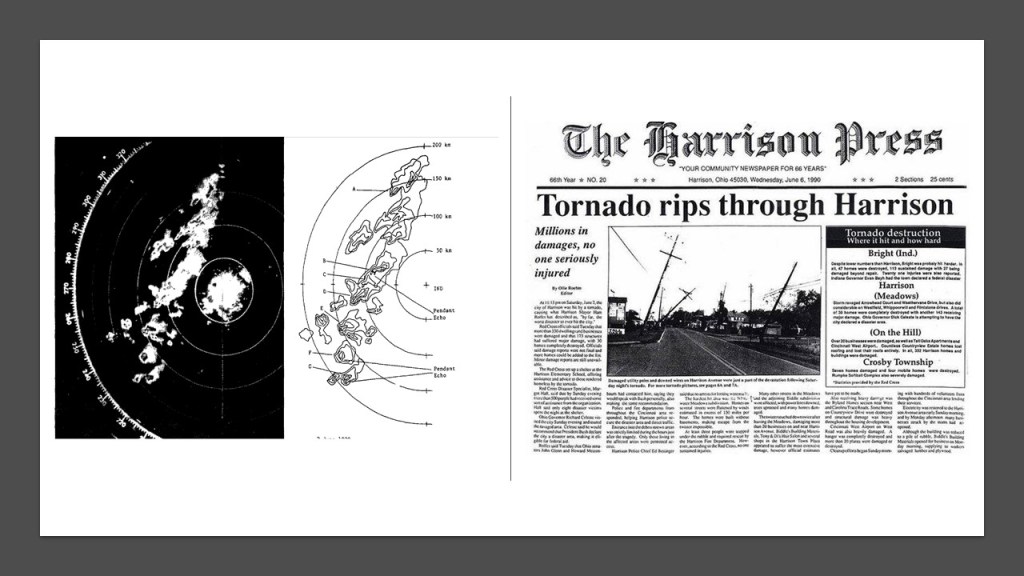
On 2nd and 3rd of June, the Lower Ohio Valley Tornado Outbreak spawned 66 confirmed tornadoes in Illinois, Indiana, Kentucky, and Ohio, less than three months after the Central United States Tornado Outbreak.
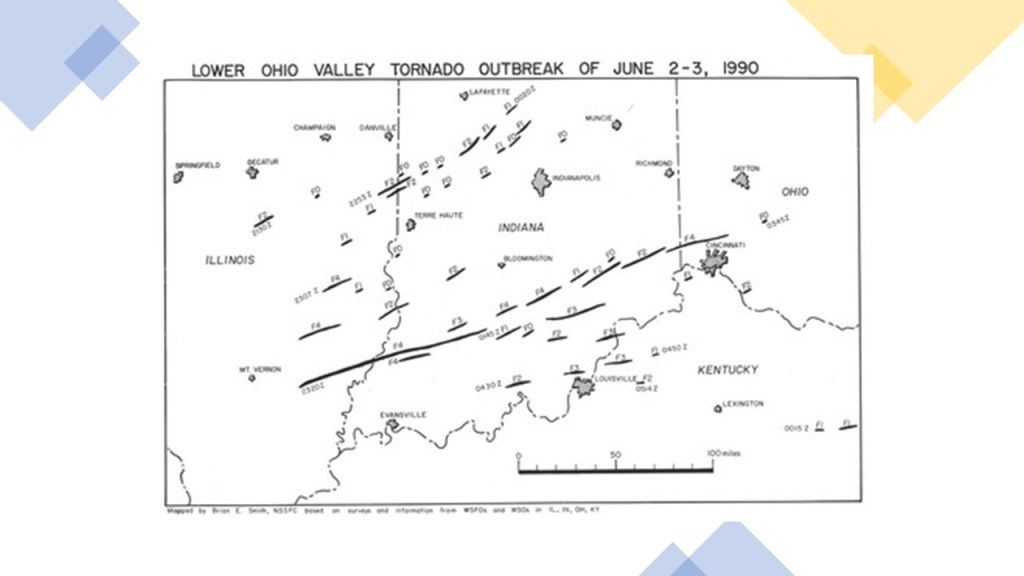
Of the confirmed tornadoes, seven were of F4 intensity in southern Illinois; central and southern Indiana; southwestern Ohio; and northern Kentucky.
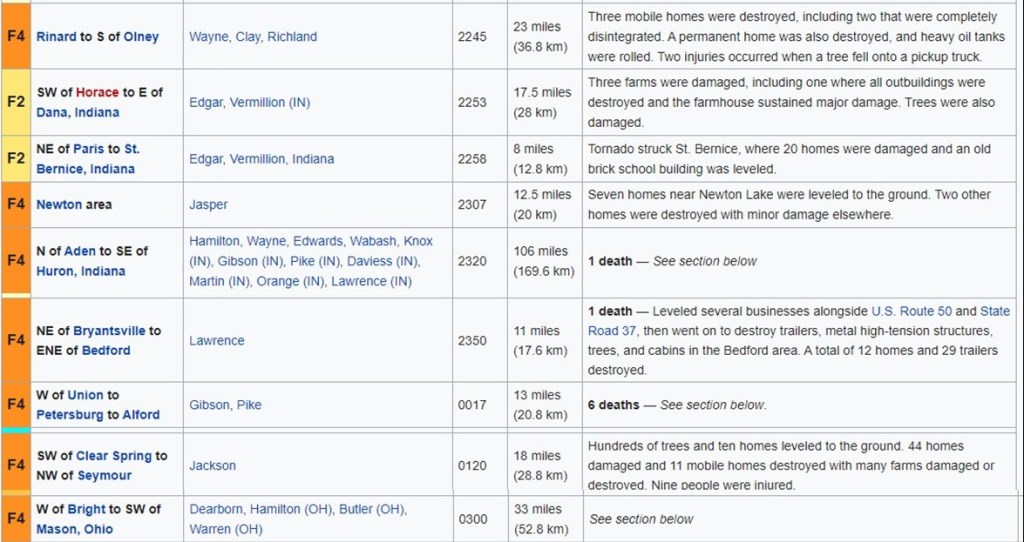
In Indiana, thirty-seven tornadoes started forming on June 2nd, breaking the previous single-day record of twenty-one set previously on April 3rd of 1974.
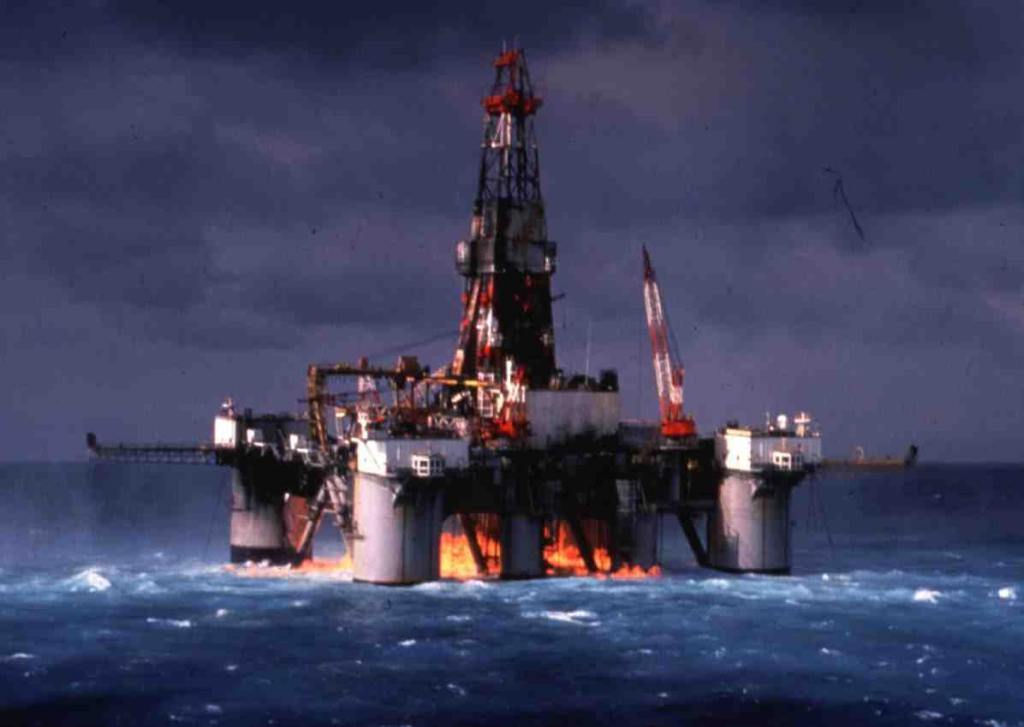
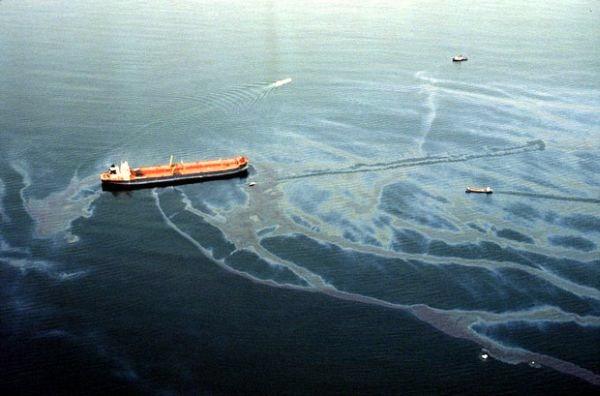
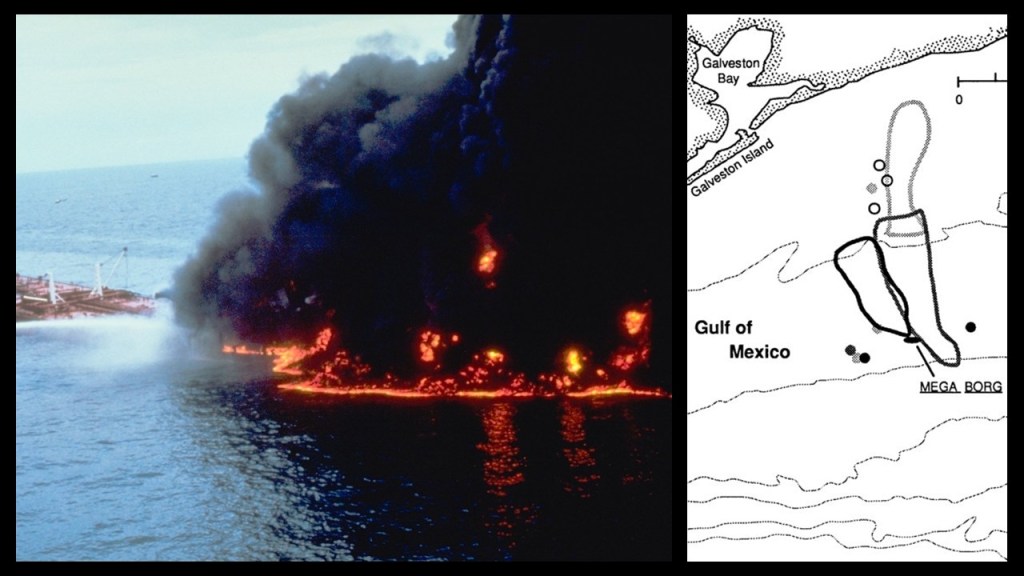
The Mega Borg Oil tanker caught fire and exploded, causing an oil spill in the Gulf of Mexico, near Galveston, Texas, on June 8th.

The weather for the initial explosion was calm, and the tanker had passed Coast Guard safety inspections earlier that year.

At that time, the oil tanker was transferring oil to a smaller tanker to transport to Houston because it was too big to dock.

Then, two-days later, there were five more explosions in a 10-minute window, which increased the oil spill into the Gulf waters.

It took the fire 8 days to burn-out, and the incident was not without controversy for how it was all handled.
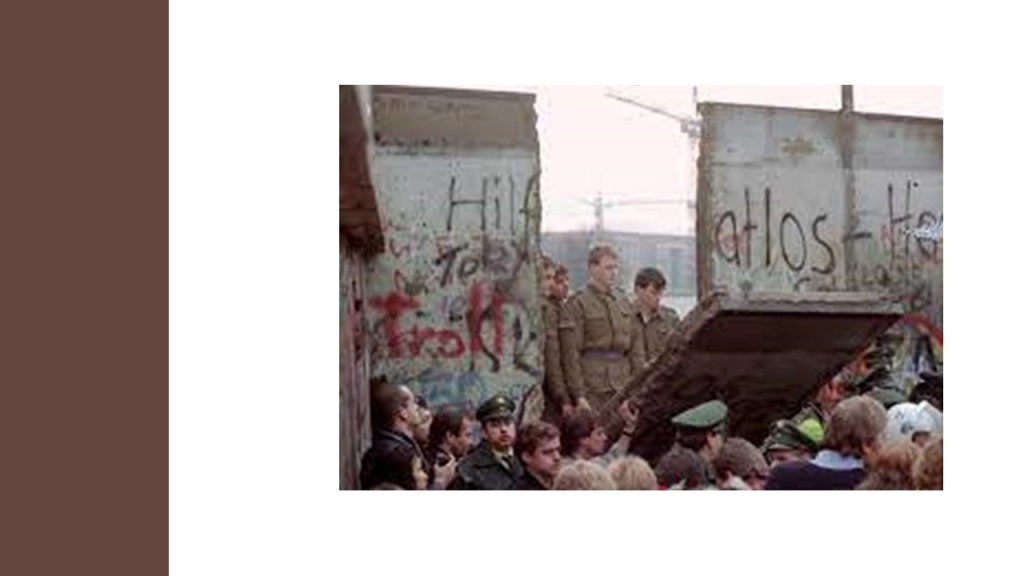
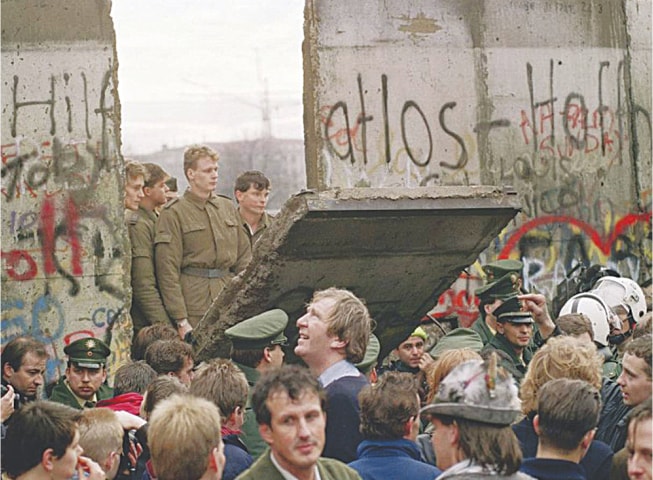
On June 13th, the official start of the destruction of the Berlin Wall by the East German Border Troops began, and ended in December.

It had been opened for passage through seven-months before it was officially taken down.
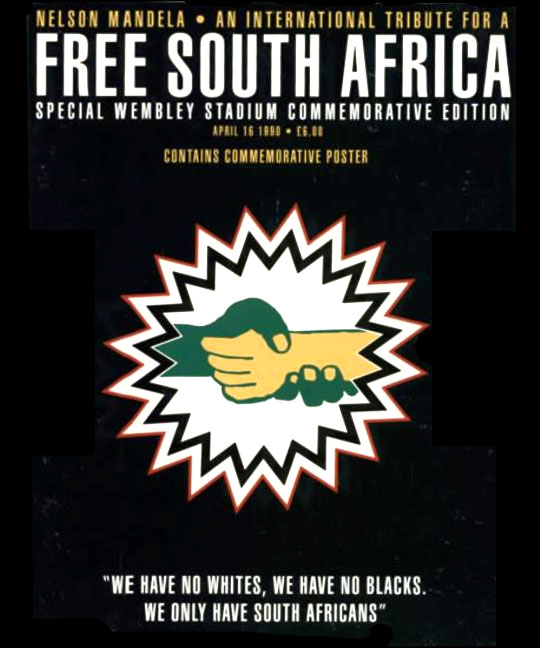
Nelson Mandela toured the United States and Canada between June 17th and June 30th..
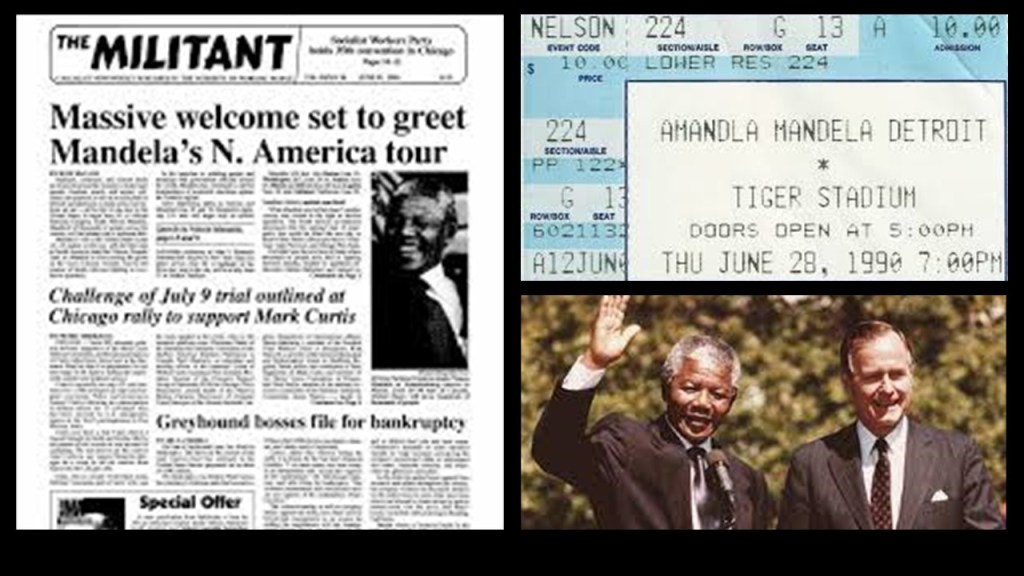
…which was part of a bigger world tour that year in which he visited the United Kingdom, the Vatican, Cuba, India, Indonesia, Malaysia, Australia and Japan.
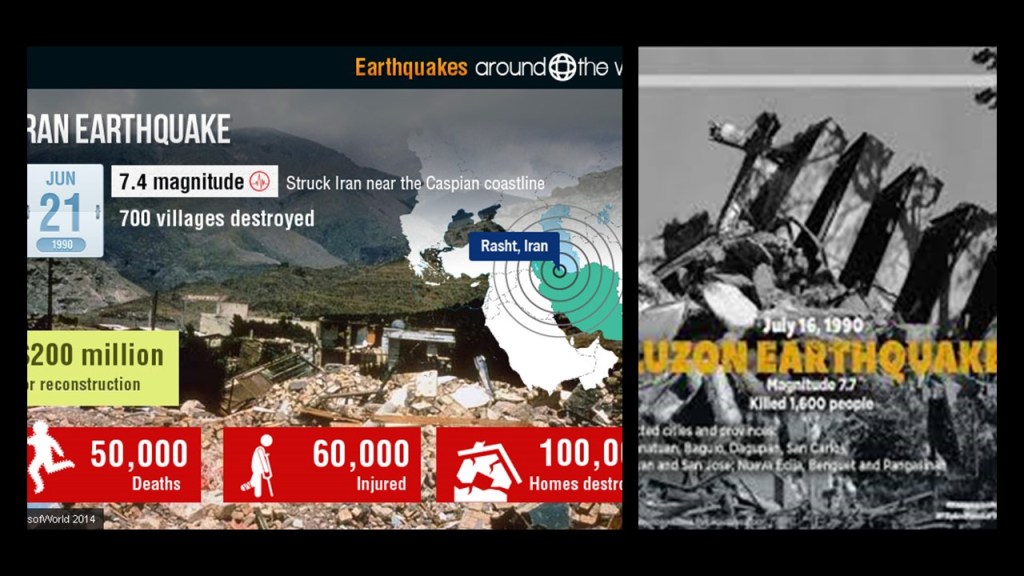
The Manjil-Rudbar earthquake affected northern Iran on June 21st, killing between 35,000 – 50,000, injuring between 60,000 – 105,000.

In addition to the cities of Manjil and Rudbar, widespread damage occurred in Tehran as well.
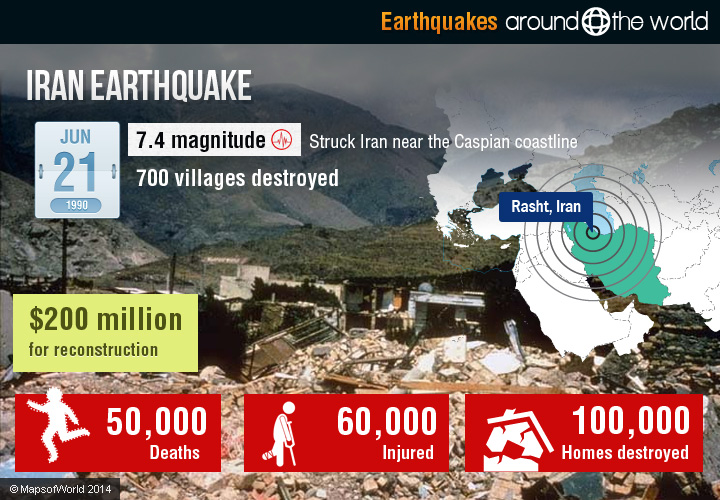
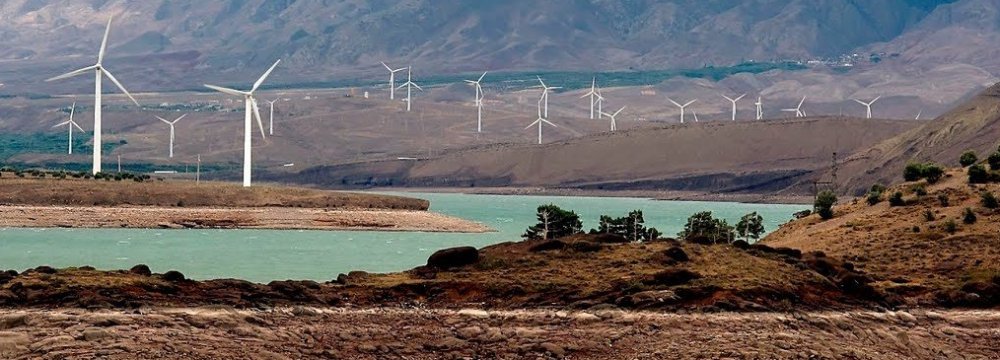
Things that the region of Manjil and Rudbar is known for today are as follows:

It is the location of Iran’s largest wind farm, and I suspect the world’s wind turbines and farms to be harvesting an unknown energy technology and not wind…
…of the Manjil Dam, construction of which was said to have started in 1956, and that it opened in 1962…

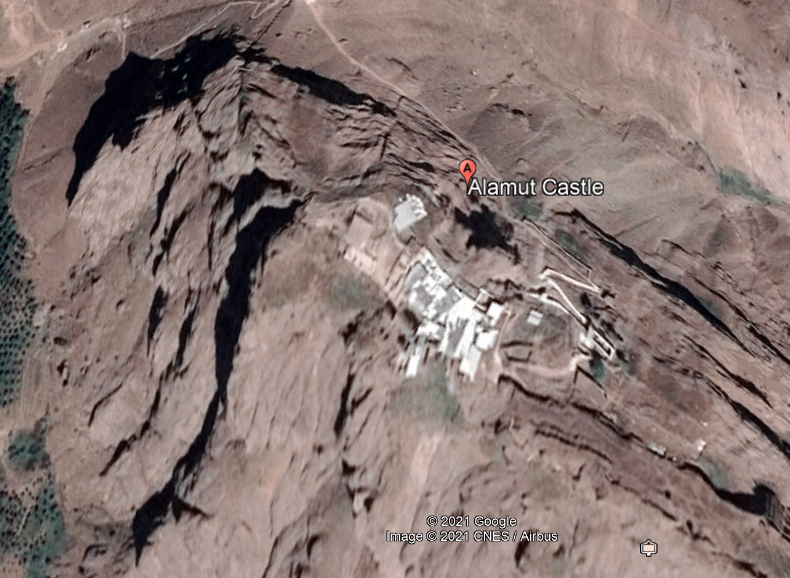
…and the ruins of the legendary Alamut Castle high in the Alborz mountains of northern Iran, said to have been the home-base of the legendary hashish-eaters known as “hashishin,” the origin of the word “assassin.”
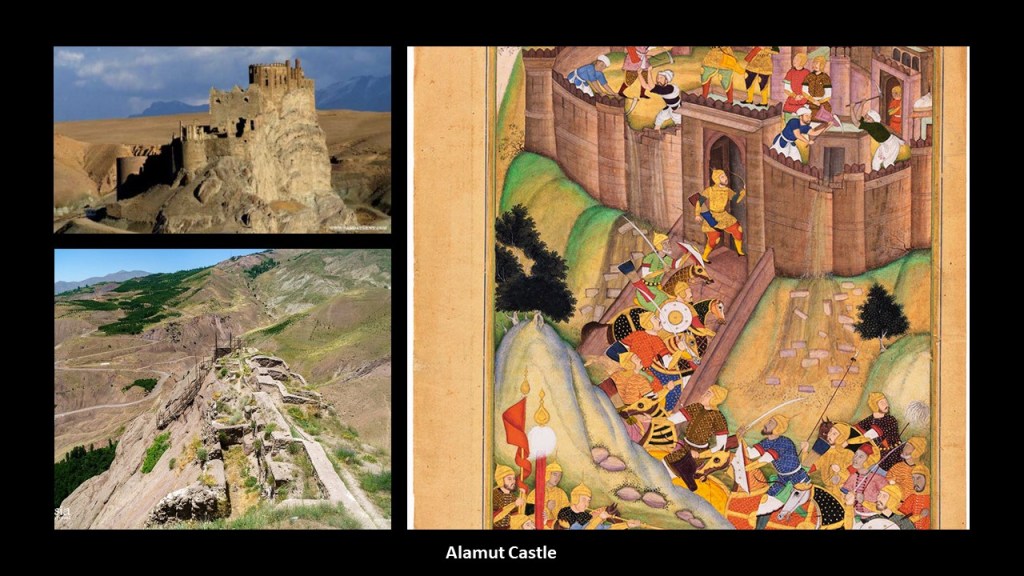
And I have to wonder if the Alamut Castle was actually a star fort, because I have found the words “castle,” “citadel,” and “fortress” being used in the as names for what were actually star forts, and yes, high on rocky promontories like this one.
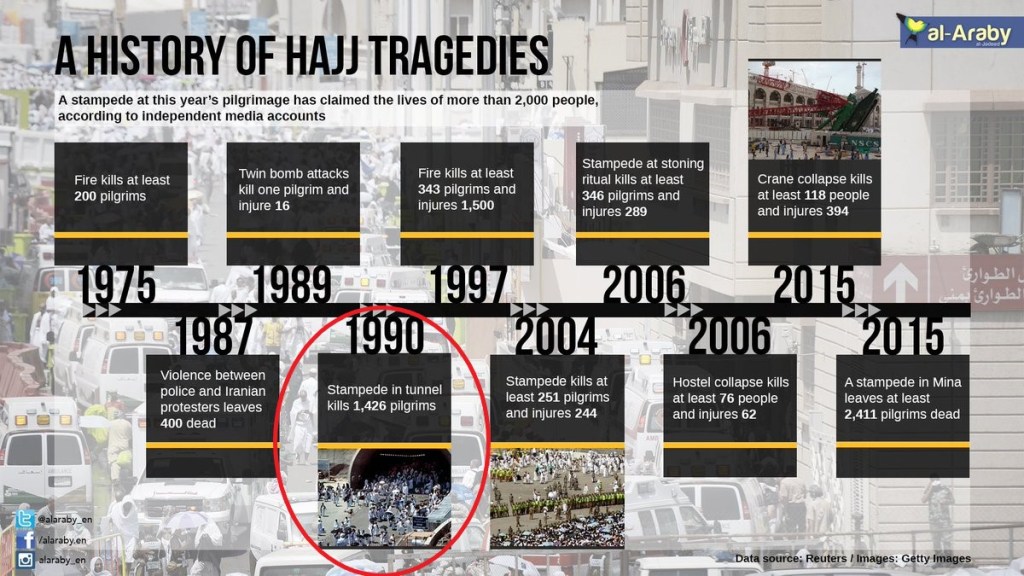
On July 3rd, the Mecca Tunnel Tragedy occurred during the Hajj, a pilgrimage to Mecca that takes place every year.

The disaster was said to have started when a pedestrian bridge railing bent, causing 7 people to fall onto people exiting the tunnel, which soon filled with 5,000 people in a space with a capacity for 1,000 people.

It was surmised that the cause of the tragedy, which resulted in the suffocation and trampling deaths of 1,462 people was caused by crowd hysteria from the people falling and the failure of the tunnel’s ventilation system.

Saudi Arabia’s King at the time, King Fahd, declared that the tragedy was God’s will, and even though other countries’ complained, calls for an international investigation were rejected by the Saudis.
The Luzon Earthquake killed more than 1,600 people in the Philippines on July 16th, less than a month after the Manjil-Rudbar Earthquake in Iran, with a 7.7 magnitude on the Richter Scale.
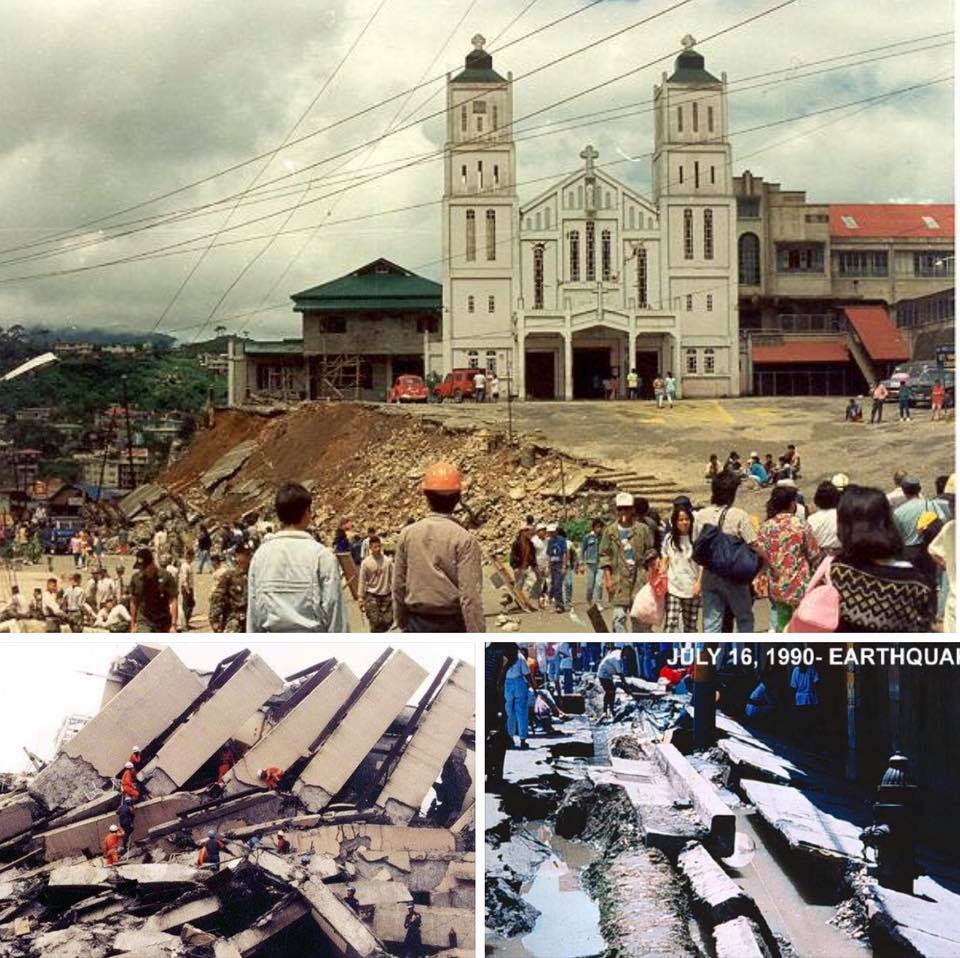
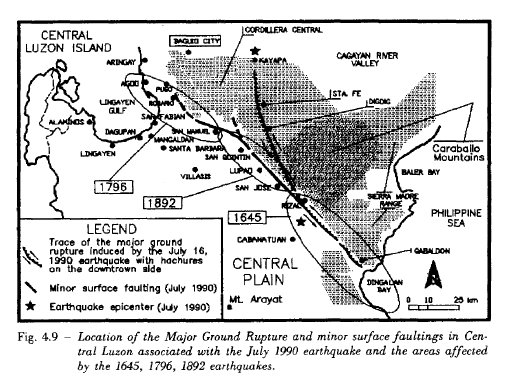
It produced a 78-mile, or 125-kilometer-long rupture on the island of Luzon.
RELCOM was launched on August 1st in the Soviet Union by combining several computer networks, in the Kurchatov Institute, Russia’s leading research and development institution in the field of nuclear energy, in collaboration with DEMOS, a UNIX-like operating system developed in the Soviet Union, leading to its first connection to the internet.
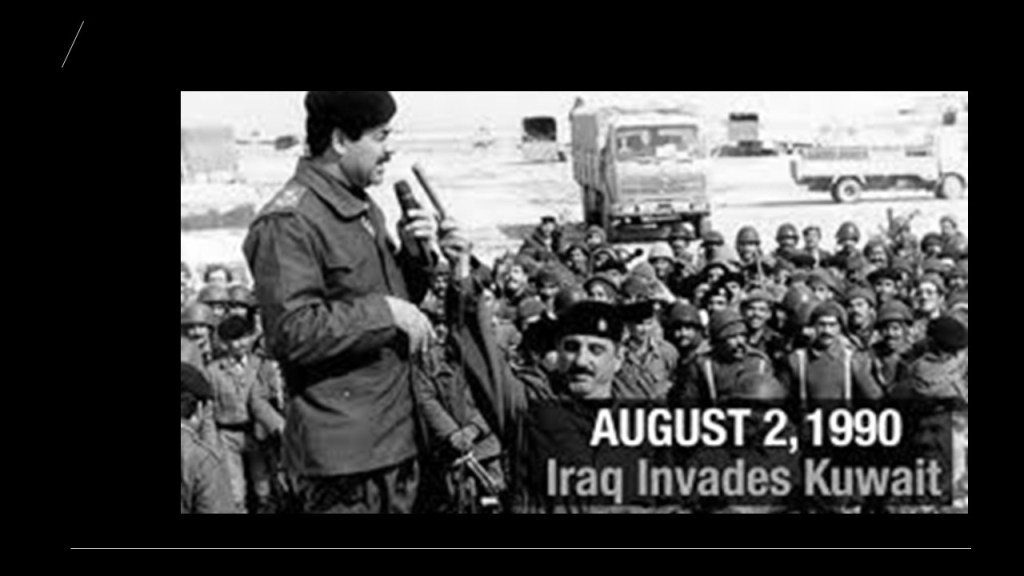
Iraq invaded Kuwait on August 2nd, and within two-days most of the Kuwaiti military was either overrun by the Iraqi Republican Guard or retreated to the neighboring countries of Saudi Arabia and Bahrain.
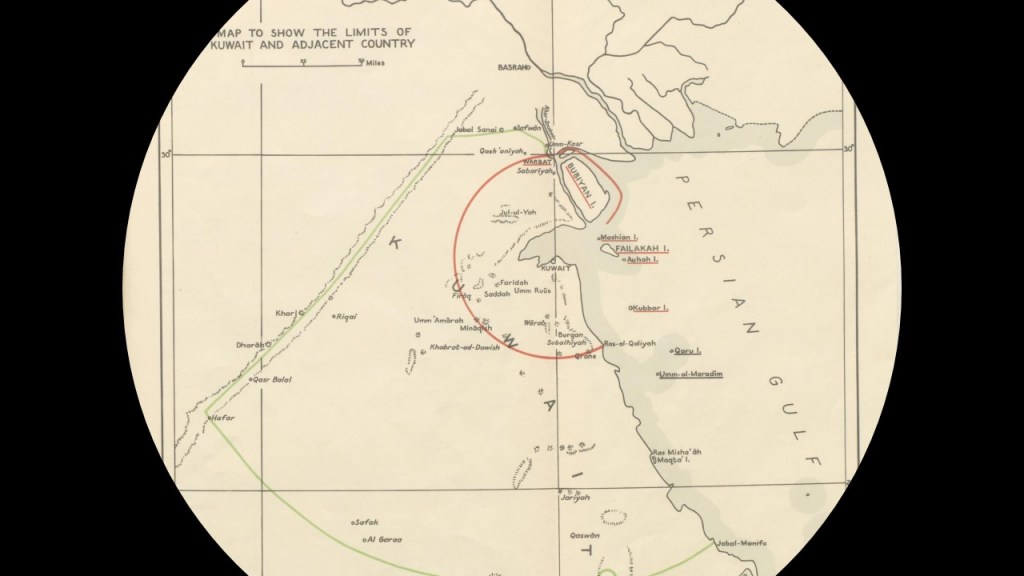
Then the Iraqi government set-up a puppet government known as the “Republic of Kuwait,” annexing the country as the 19th province of Kuwait, and saying that it had always been an integral part of Iraq and only became an independent nation due to the interference of the British government as a result of the Anglo-Ottoman Convention of 1913.
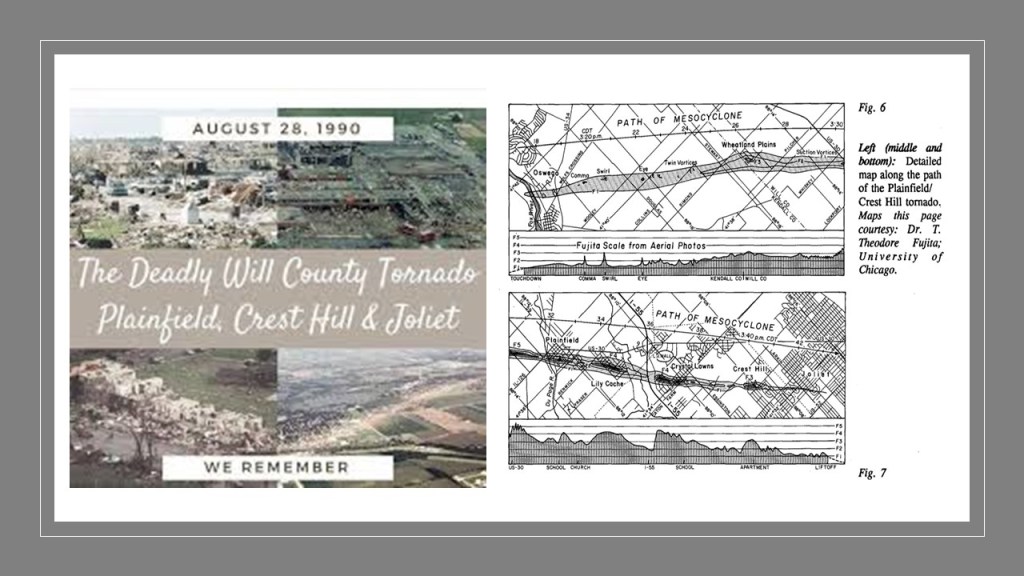
The Plainfield Tornado struck Plainfield, Crest Hill and Joliet in Illinois on August 28th, killing 29 people, and injuring 353, with $165-million in damages.

It was the only F5/EF5 tornado ever recorded in the United States, in whch the Enhanced Fujita Scale puts no wind speeds for EF5, the highest level.
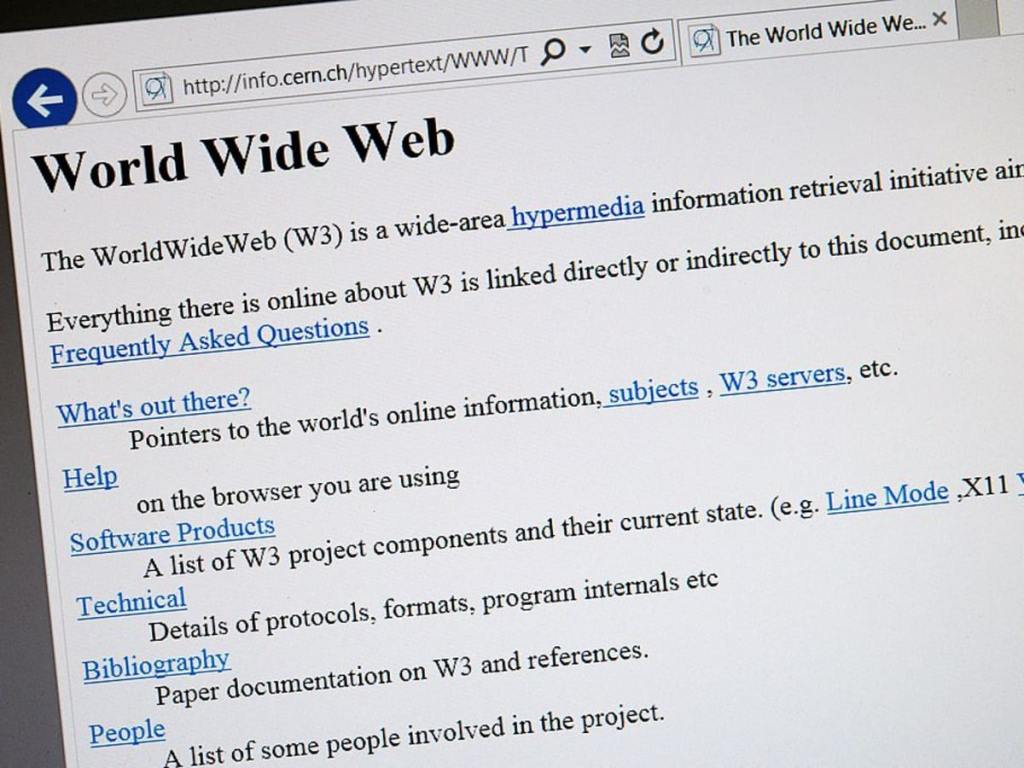
Tim Berners-Lee began his work on the World Wide Web, while working at CERN, on October 1st, 19-months after his beginning outline of it in 1989, and by November 12th, he and Belgian computer scientist Robert Cailliau, had submitted the first formal proposal to build the first “hypertext project” called the “WorldWideWeb.”

By December of 1990, Berners-Lee had built all the tools necessary for a working web, and the first website.

The World Wide Web was invented by someone working at CERN?

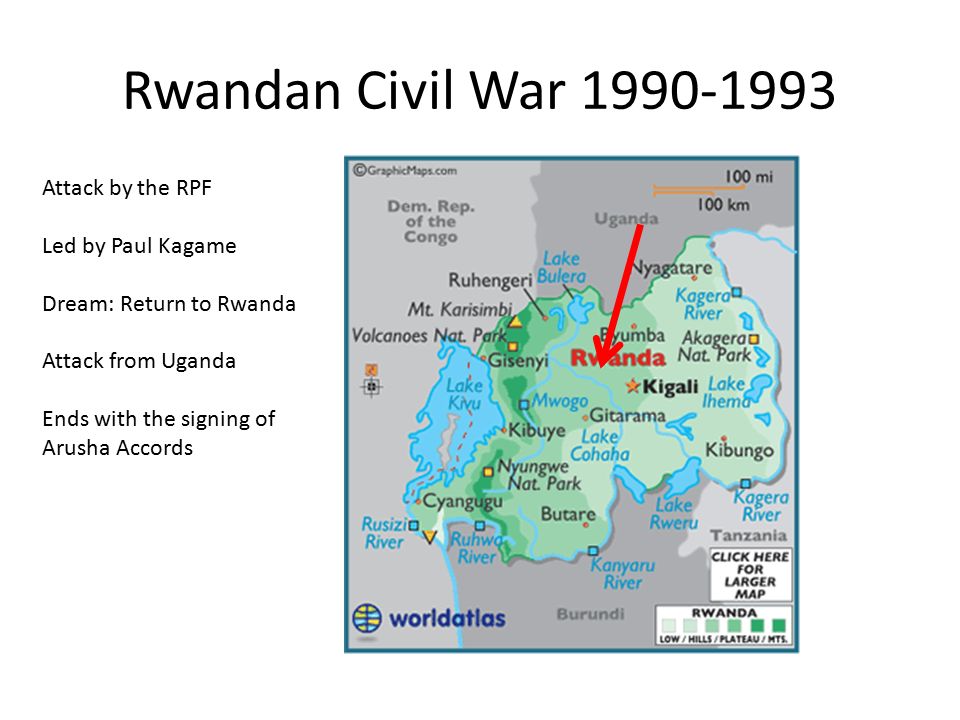
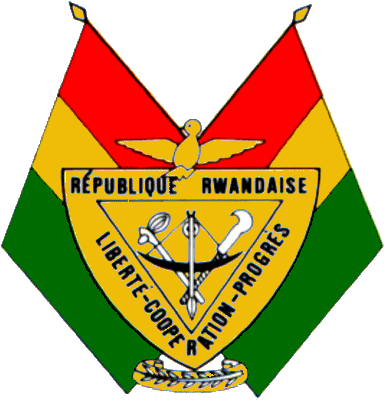
The Rwandan Patriotic Front invaded Rwanda from Uganda on October 1st, marking the start of the Rwandan Civil War.
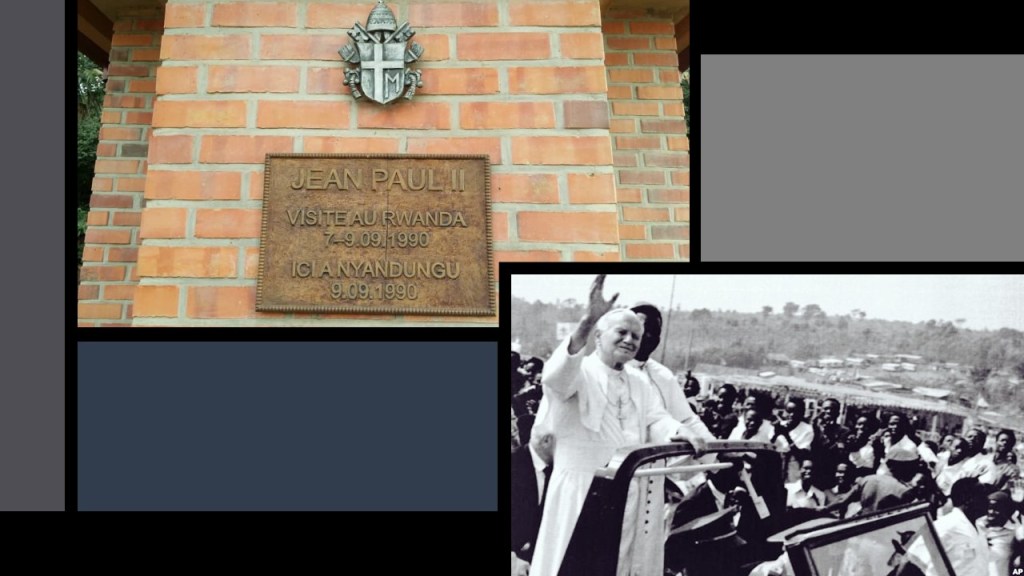
This took place less than a month after Pope John Paul II visited Rwanda on September 7th, as well as Tanzania, Burundi, and the Ivory Coast from September 1st through the 10th.

The Pope spoke to the Rwandans about his sorrow at the famine which was devastating Rwanda at the time.
Then, the onset of the Rwandan Civil War pitted the Rwandan Armed Forces against the Rwandan Patriotic Front in a guerrilla war, and which was said to have arisen from a long-running dispute between the Hutu and Tutsi tribes within the Rwandan population.

Rwanda had existed as a Kingdom ruled by the Tutsis until 1962, though it was considered a colony of German East Africa from 1885 to 1916, and Belgium from 1916 to 1962, with both European nations ruling through the kings and perpetuating a pro-Tutsi policy.
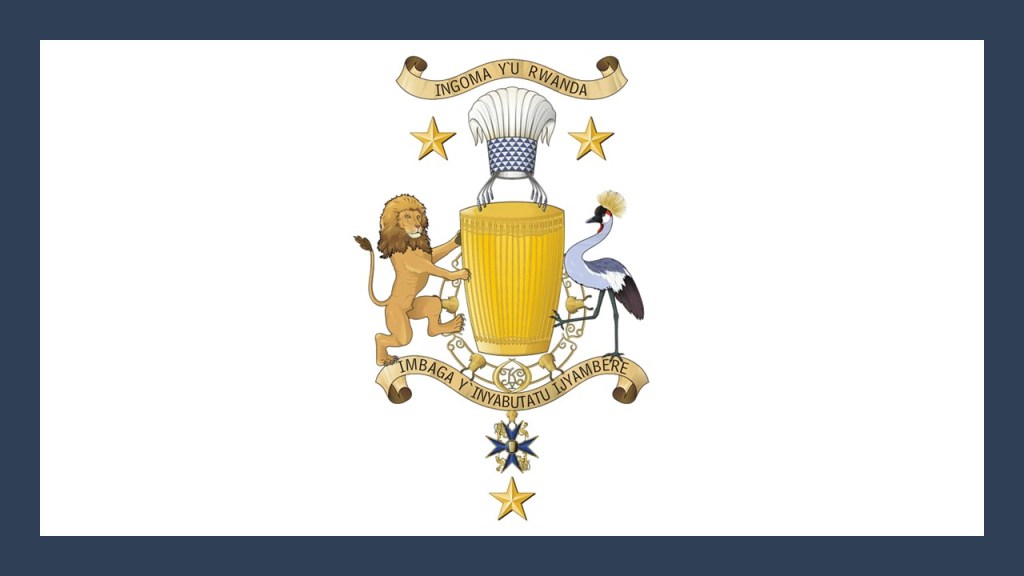
After 1945, a Hutu counter-elite formed, and this led to a deterioration in the relations between Tutsis and Hutus, with the Hutus calling for a transfer of power to them, which was also supported by the Catholic Church and the Belgian Colonial government.

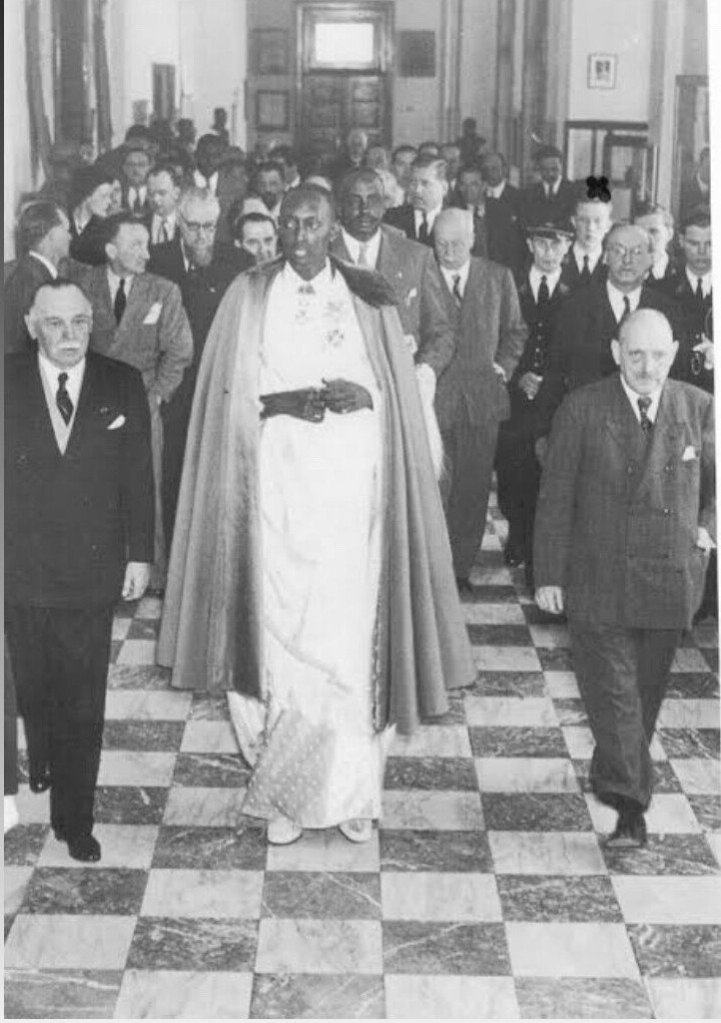
This is a photo of King Mwami Mutara III Rudahigwa of Rwanda.

His rule started in 1931, and he died unexpectedly in 1959 after visiting a Belgian doctor in Burundi, where he had gone for a meeting with Catholic missionaries.
As a result of the Rwandan Revolution between 1959 and 1961, the kingdom was abolished and replaced by the independent Republic of Rwanda, which was now dominated by the Hutus, and this situation forced almost 500,000 Tutsi to flee to neighboring countries, including Uganda where the Rwandan Patriotic Front was formed and trained for the warfare which started towards the end of 1990.

Sounds like another example of “Divide and Conquer,” and as well, more on the genocide that resulted from this conflict in Rwanda as we go through the history of the 1990s.
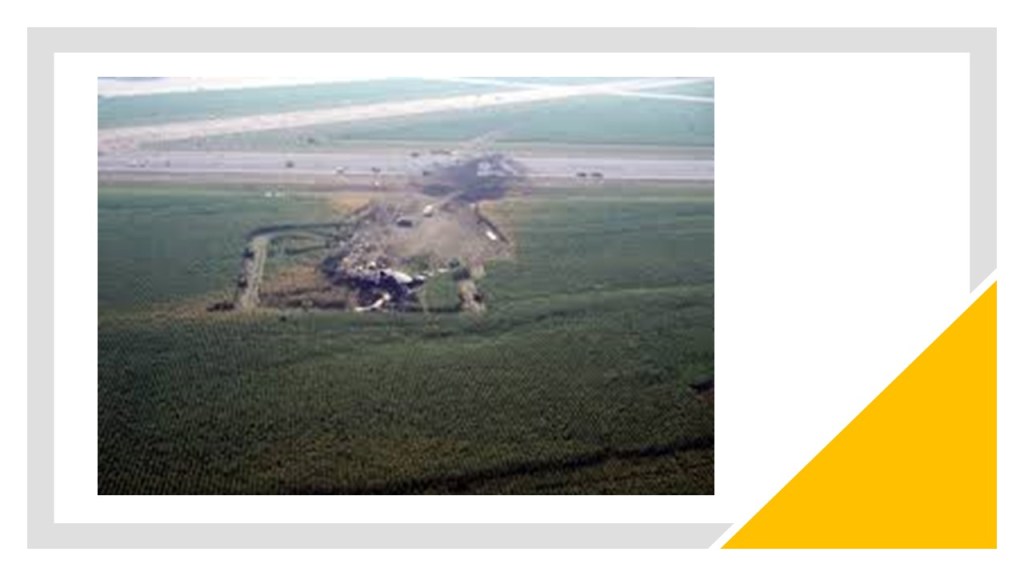
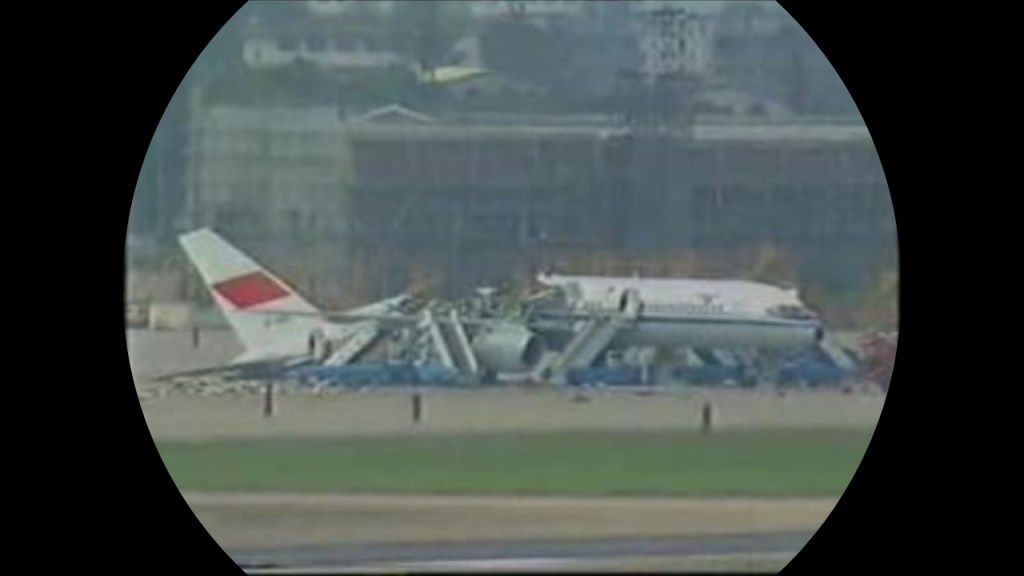
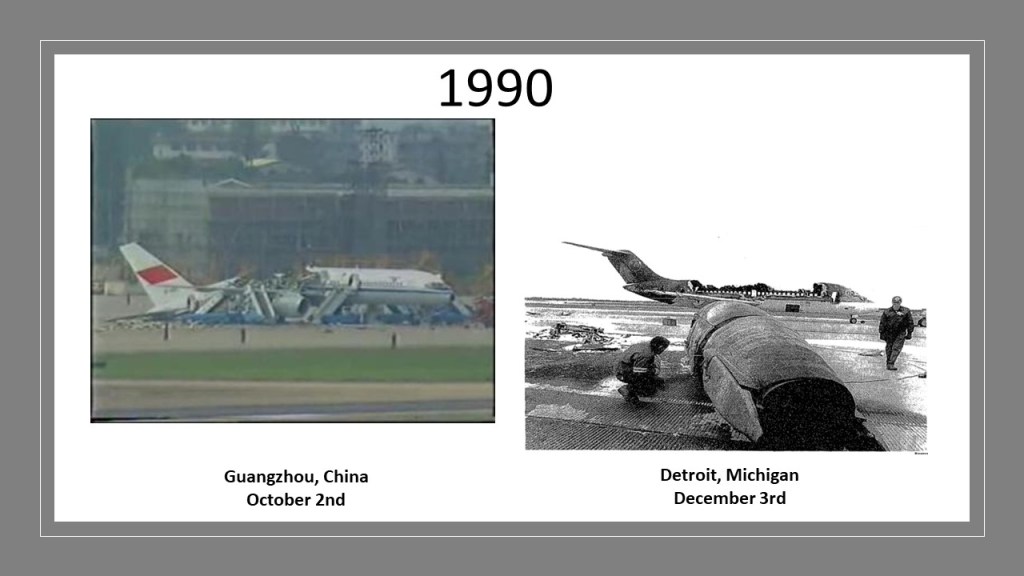
On October 2nd, there was a collision between a hijacked airplane that was attempting to land and two other airplanes on runways of Guangzhou’s Baiyan Airport in China, resulting in 128 deaths and 53 injuries.
The official day of the reunification of West and East Germany was October 3rd, and is celebrated as such as a National Holiday every year.

South Africa ended segregation of libraries, trains, buses, toilets, swimming pools, and other public facilities, on October 15th, as part of the on-going negotiation process between the government of South Africa and the African National Congress that started in 1990 to end apartheid.
On November 13th, the Aramoana Massacre in New Zealand took place, in which thirteen people were killed by mass shooter David Gray after a verbal dispute between him and a neighbor.

Gray was shot after a manhunt and died in the ambulance on the way to the hospital.

It was the deadliest mass shooting in New Zealand’s history at the time, and led to major changes in New Zealand’s firearms legislation in 1992, which included 10-year photographic licenses and a restriction on military-style semi-automatic firearms.
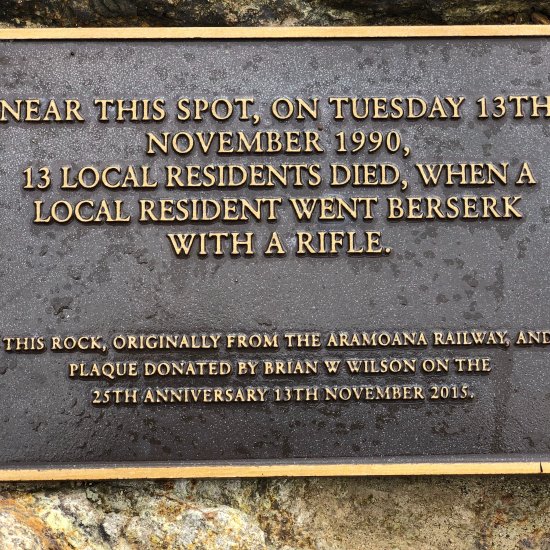
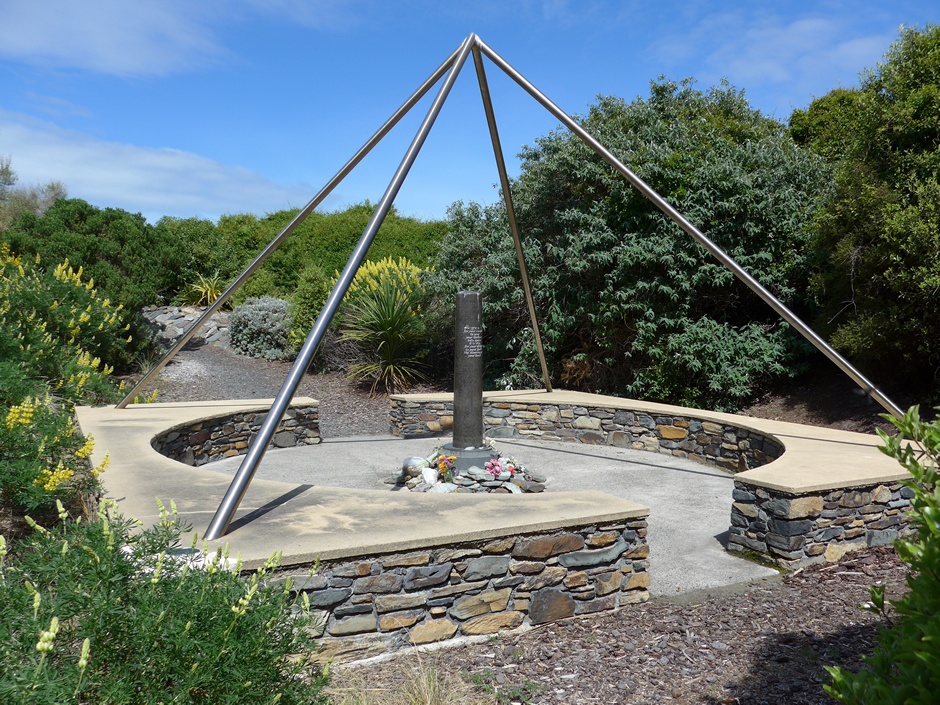
And this is the interesting-looking Aramoana Massacre Memorial which sits in a small hollow near the town, and consisting of a granite column sitting on a granite base in the middle of a squared-circle formed by low stone walls and surmounted by a pyramid made by galvanized steel poles.
On November 21st, two things happened with regards to Europe and the end of the Cold War.

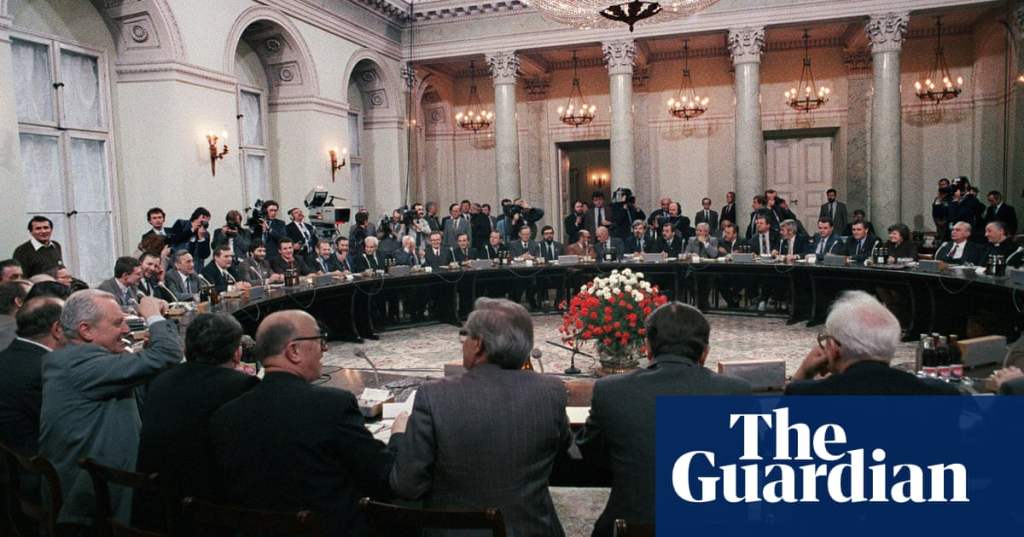
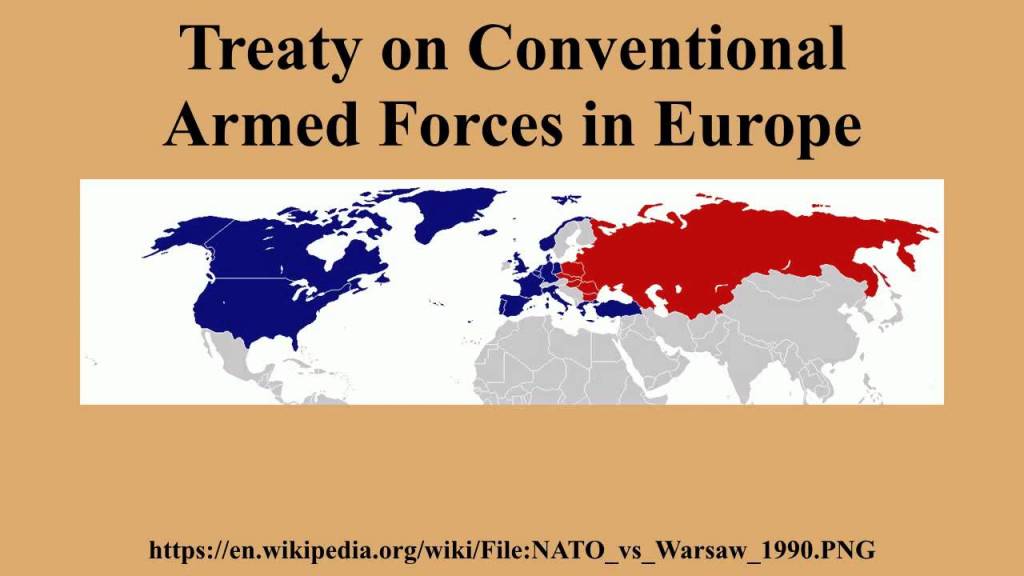
The newly formed Conference on Security and Cooperation in Europe signed a Conventional Forces Treaty in Europe, reducing the conventional forces of NATO and Warsaw Pact countires…
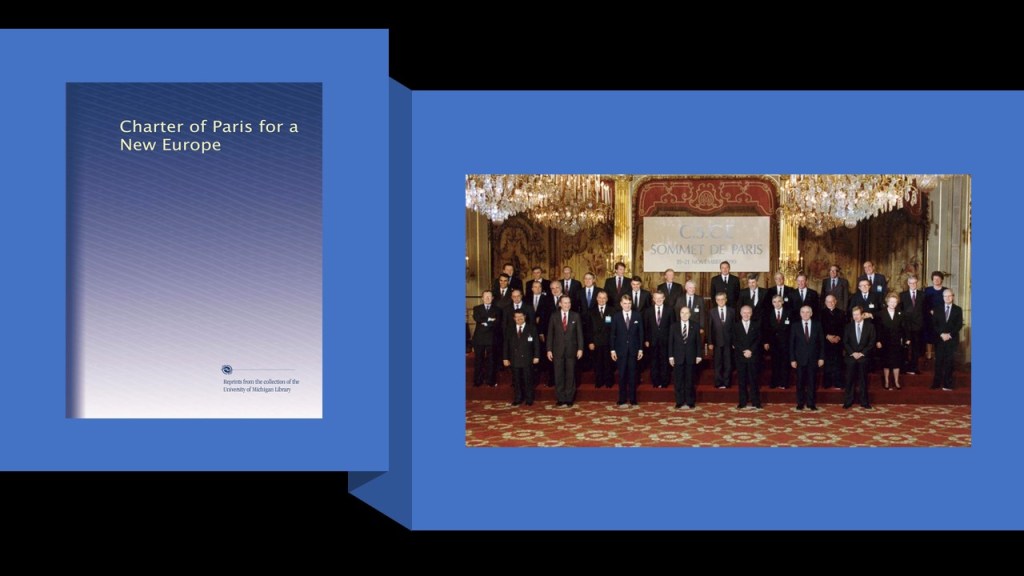
…and the Charter of Paris for a New Europe was signed on the same day at the end of a summit meeting with most European nations, and the United States, Canada and the Soviet Union.

The Paris Charter was one way of bringing in the former eastern-bloc countries into the ideological framework of the west, and, among other things, established an “Office for Free Elections” in Warsaw, and a “Conflict Prevention Center in Vienna.”
On November 29th, the UN Security Council passed Resolution 678, authorizing military intervention against Iraq if it did not withdraw its forces from Kuwait, and free foreign hostages, by January 15th of 1991.

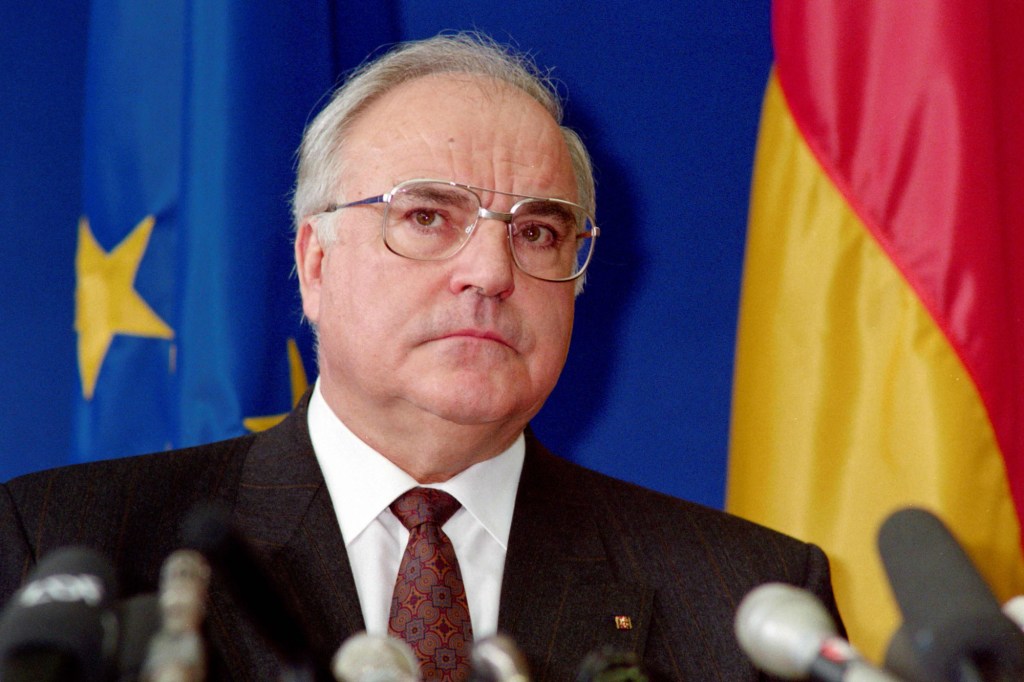
The first German federal election held since reunification won by Helmut Kohl on December 2nd, who becomes the first Chancellor of the newly reunified Germany.

During his 16-years as the German Chancellor, he participated in the ending of the Cold War; the process of German reunification; and the creation of the European Union.
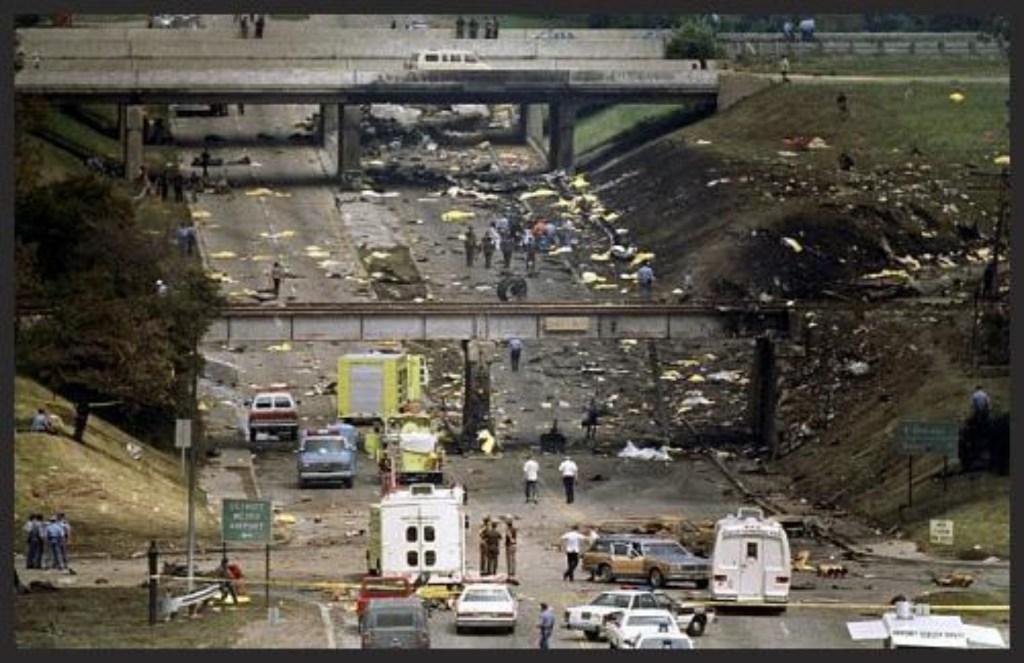
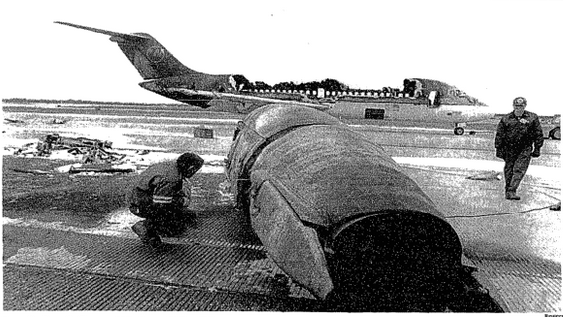
On December 3rd, there was a plane collision on the runway at Detroit Metropolitan Wayne County Airport attributed to pilot error involving one plane taxi-ing onto an active runway in a dense fog, and being hit by a departing plane and resulting in 8 deaths and 10 serious injuries and 23 minor injuries.
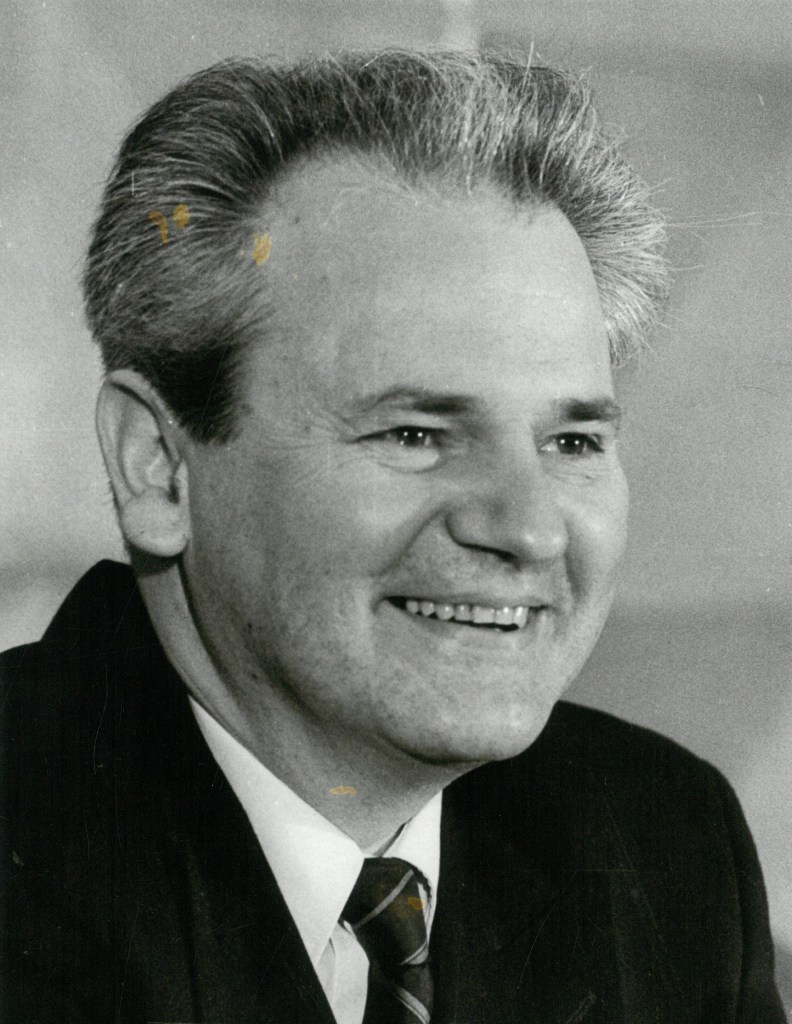
Socialist Slobodan Milosevic won the general election on December 9th, to become President of Serbia…
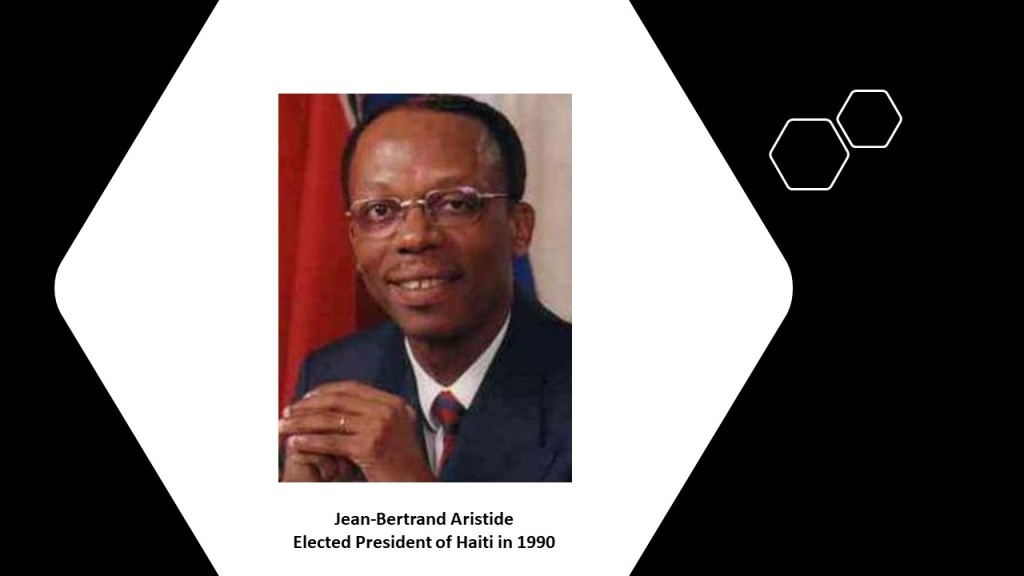
…and on December 16th, Jean-Bertrand Aristide, a former Catholic priest, was elected president of Haiti, ending three-decades of military rule.
I have to ask before I go on to 1991 is whether or not there is a connection between CERN, the Internet, and the Mandela Effect?

I am curious because EUnet showed up on January 1st of 1990 selling internet access to commercial interests after having been instrumental in connecting with FNET and CERN’s TCP/IP connections, as well as to the United States, once TCP/IP was in place around this time; on February 2nd, Nelson Mandela was freed from prison in South Africa; and by the end of the year, Tim Berners-Lee, who worked at CERN, had built all the tools necessary for a working worldwide web, and the first website.

Were all of these occurrences in the same year just coincidental, or was there either a planned aspect, or residual time-altering effect, resulting from this?

I do not know the answer to this.

I am just asking the question because this is a very interesting finding for me.

I have heard in the past (and I do not remember when, or where) that CERN had something to do with the Mandela Effect.
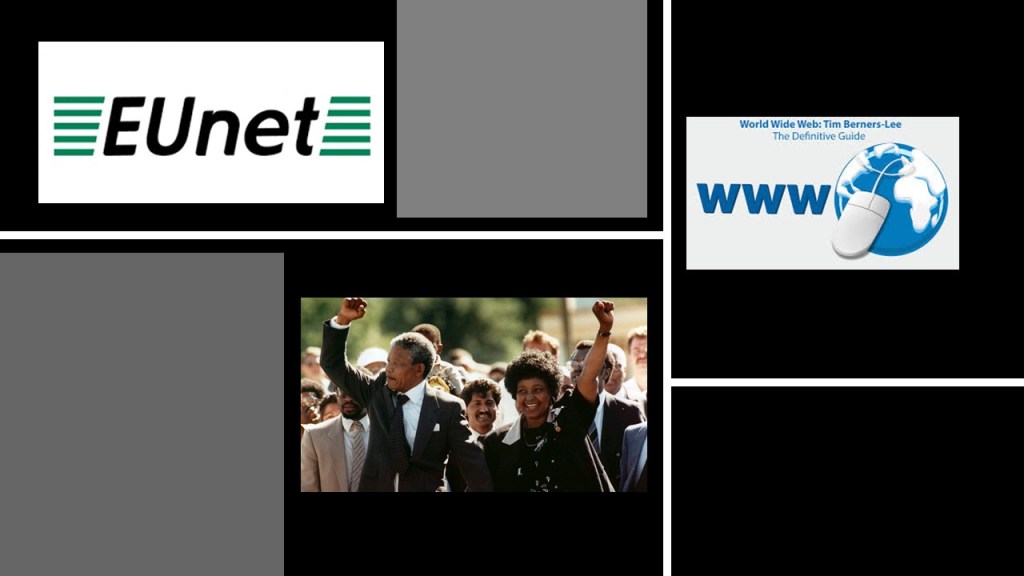
Also, 1990 in many ways seems to have been a year on one level that would herald real peace, freedom and reconciliation, with what was going on in South Africa, the reunification of Germany, the steps taken to end the Cold War and the beginning of the dissolution of the Soviet Union.

But is that what was really happening, or was it all part of a scripted plan for how to subjugate and control Humanity all along?
I will also be tracking weather…
…earthquakes…
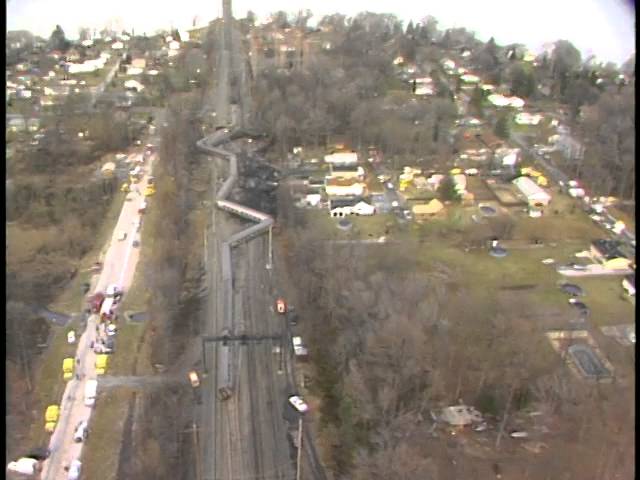
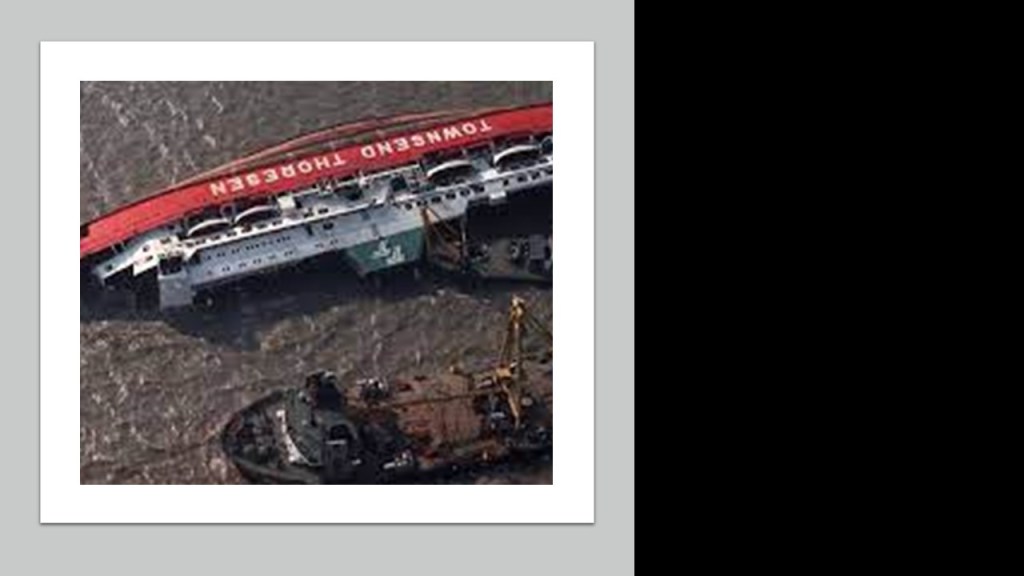
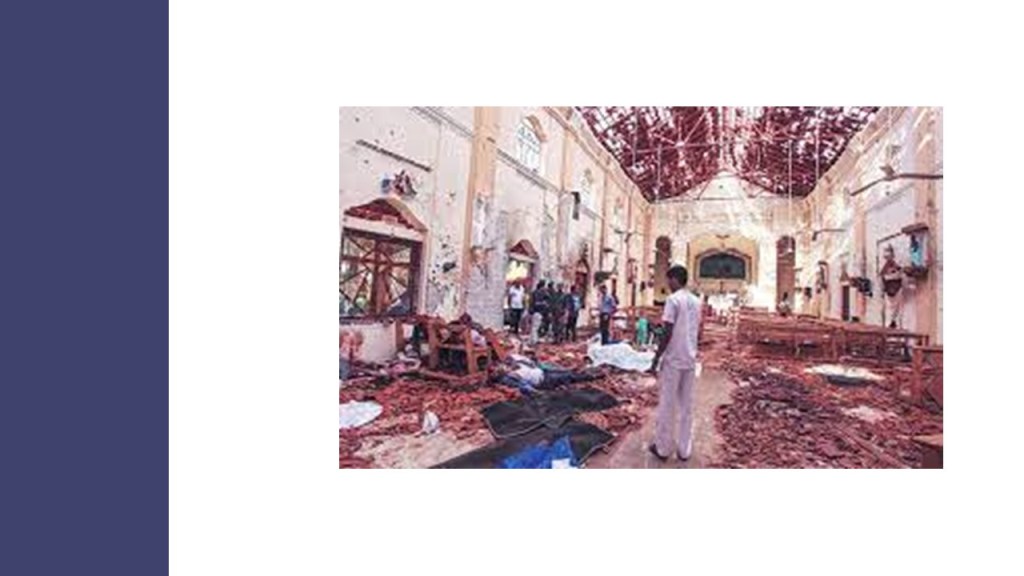
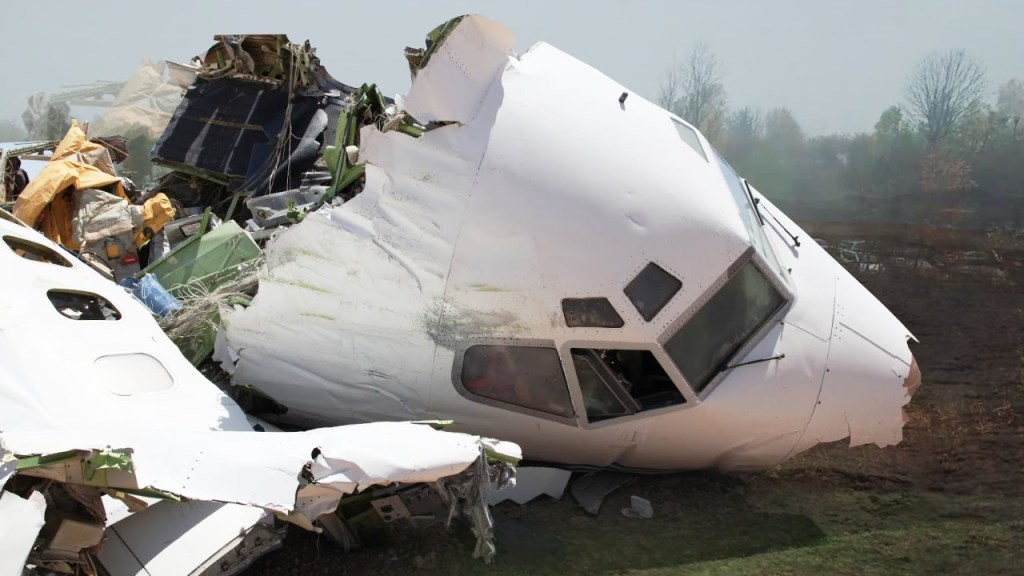
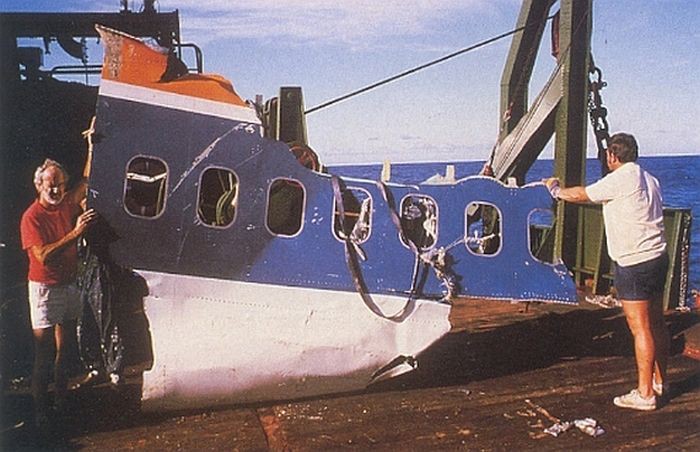
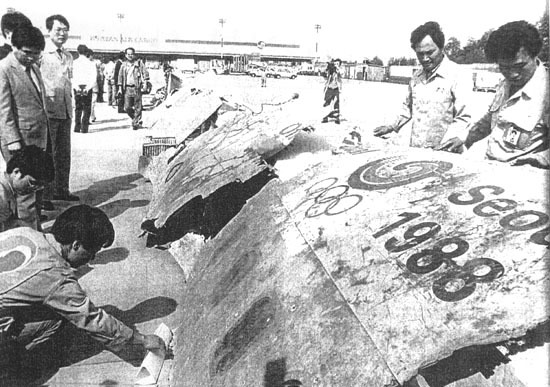
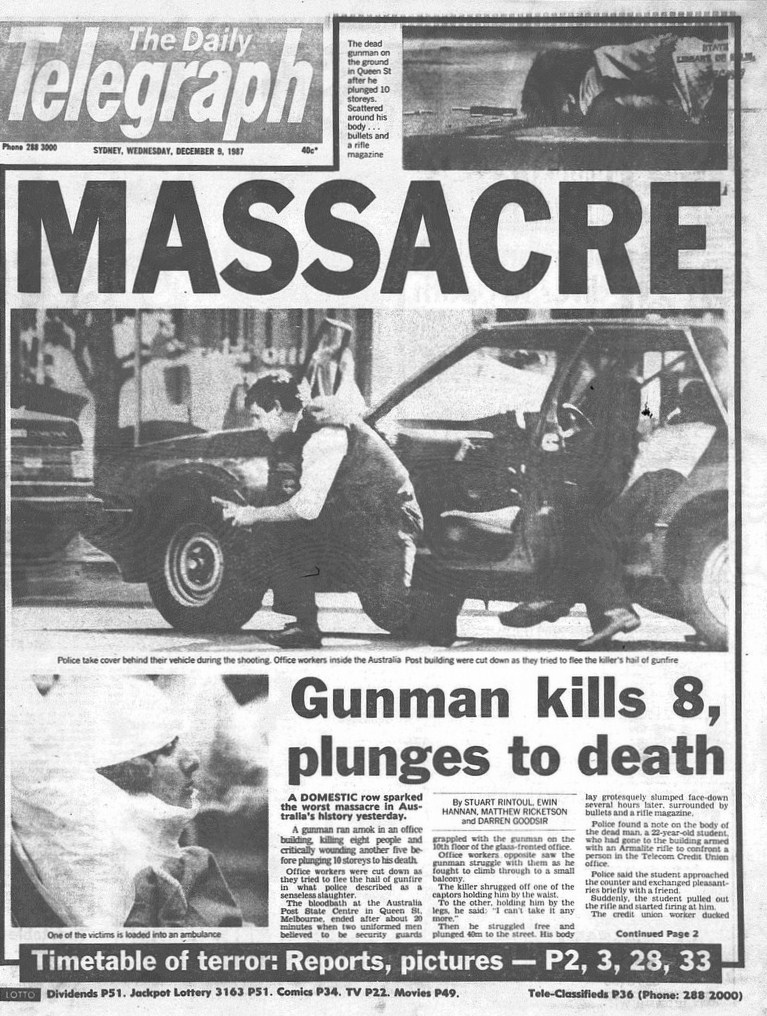
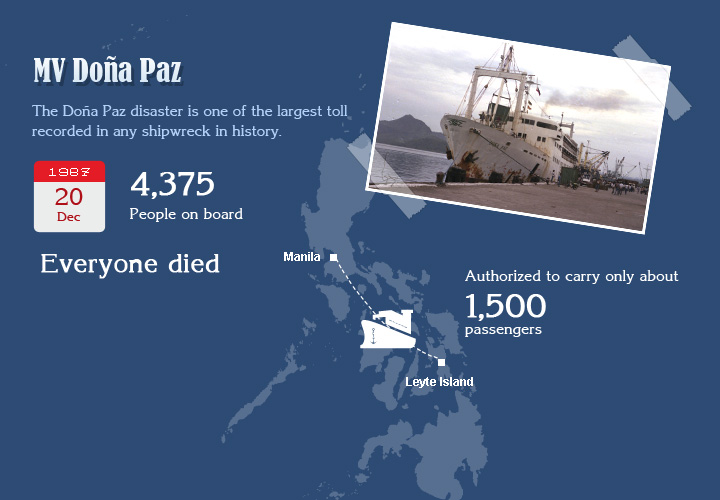
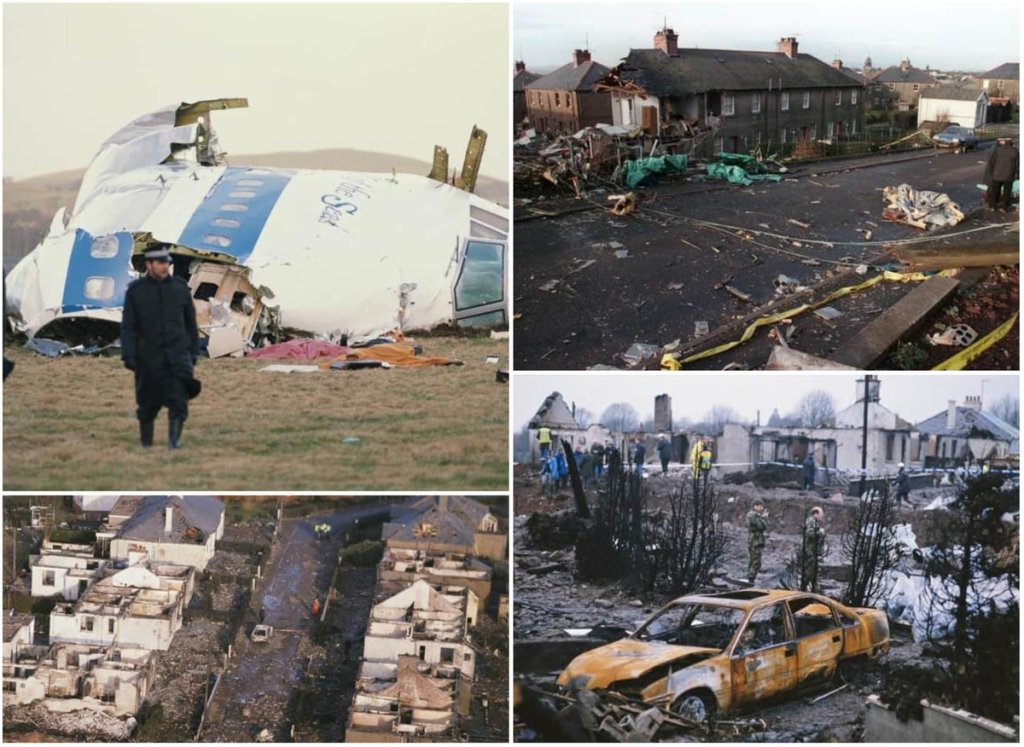
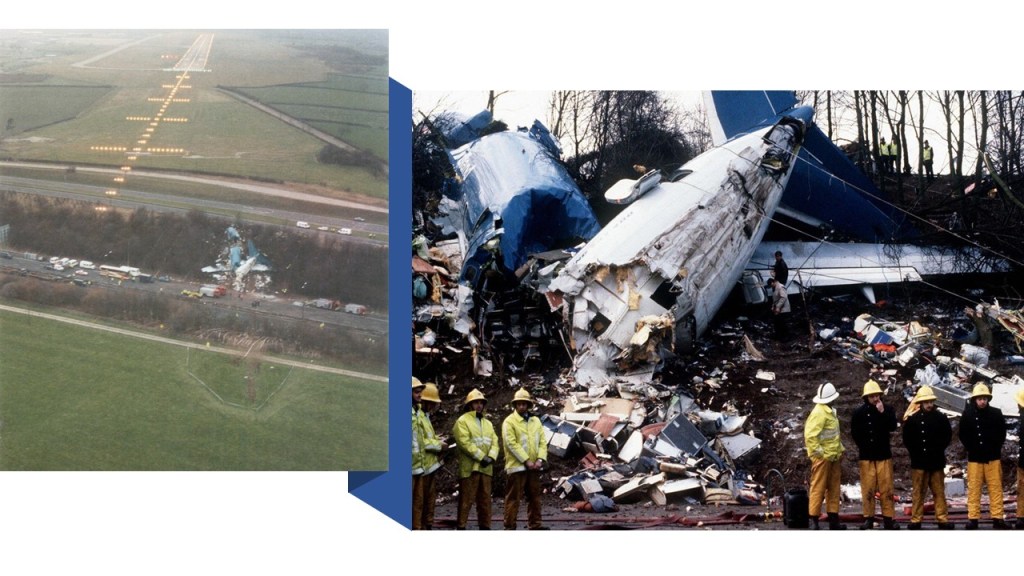
…airplane, and other- disasters as they have been occurring quite frequently from what I have been finding in the historical record in both the 1990s so far, and also in the decade of the 1980s that I looked at in the last part of the series.

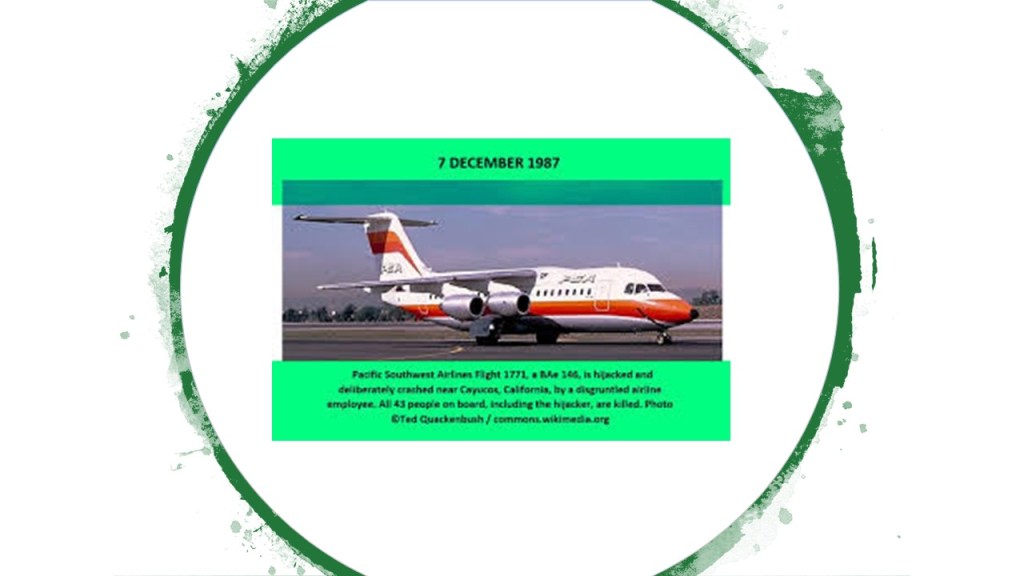
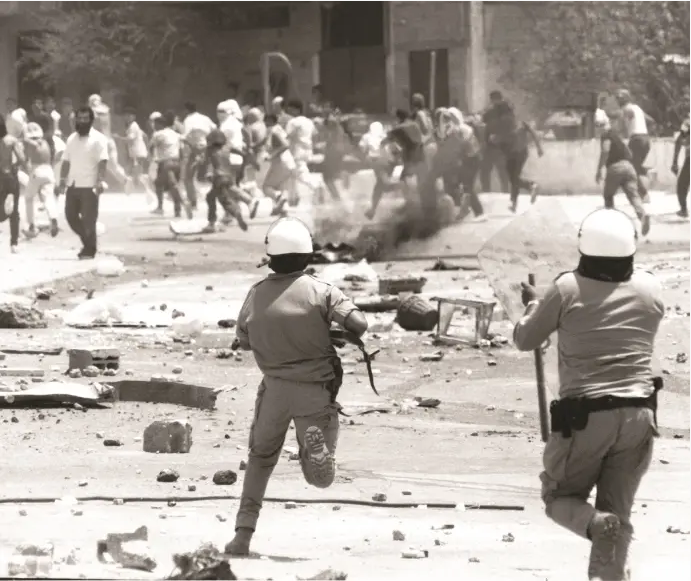
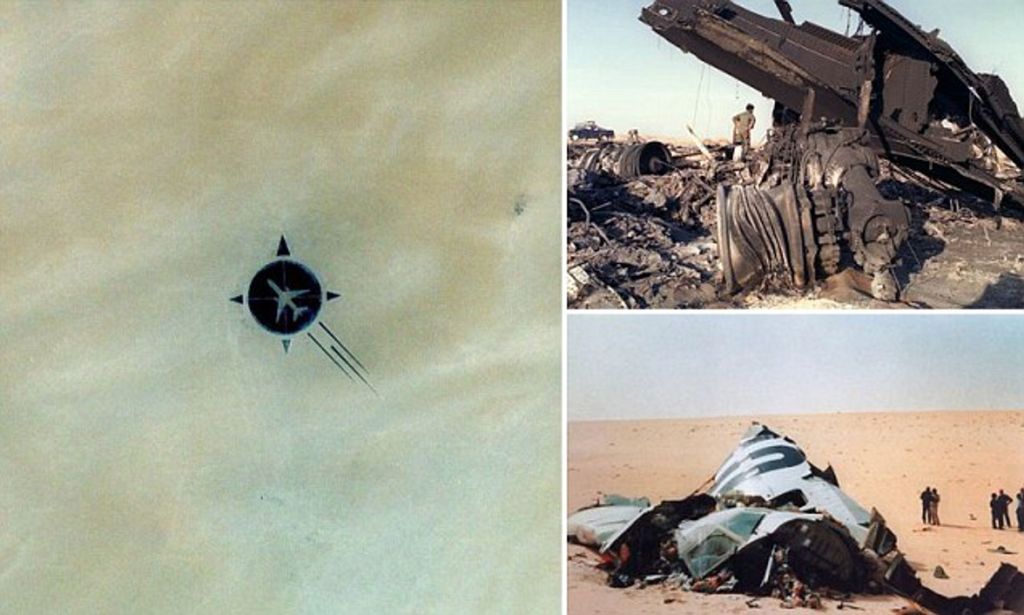
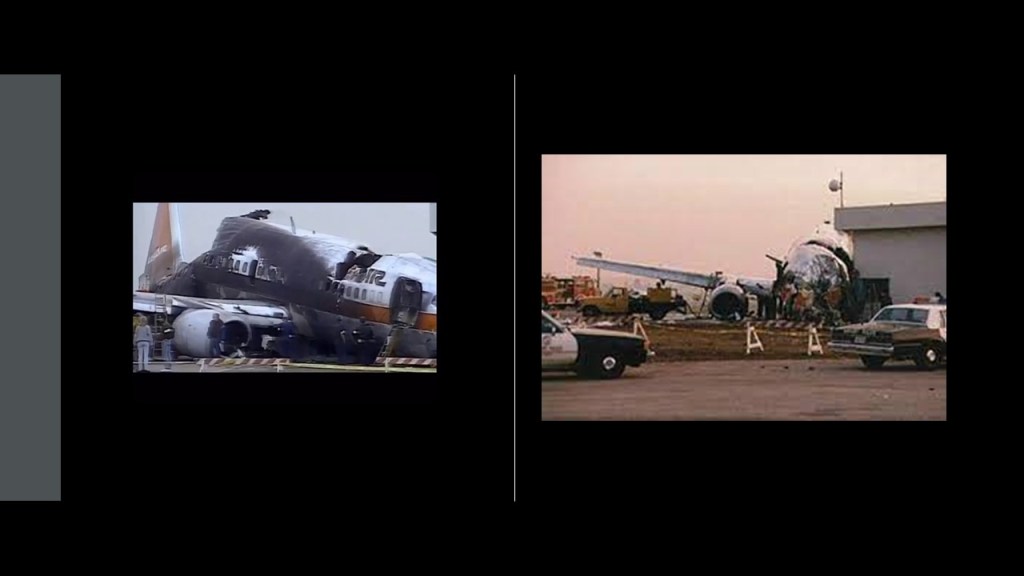
And even these two plane crashes in the fall and winter of 1990 in different places were attributed to different causes, the effect looked very much the same!
Now let’s take a closer look at what happened in 1991.
The capital of South Ossetia, Tskhinvali, was attacked by military forces of Georgia, in the Caucasus Mountain region of Europe and Asia, on January 5th, which started the 1991 – 1992 South Ossetian War.

South Ossetians wanted to secede from Georgia and become and independent state.
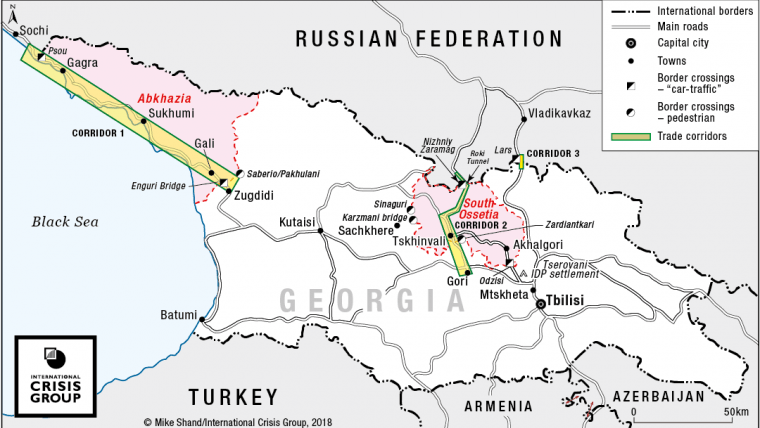
By the end of this war, the South Ossetians became a de facto independent republic in the middle of Georgia, but for the most part internationally recognized as part of Georgia, and remains so to this day.

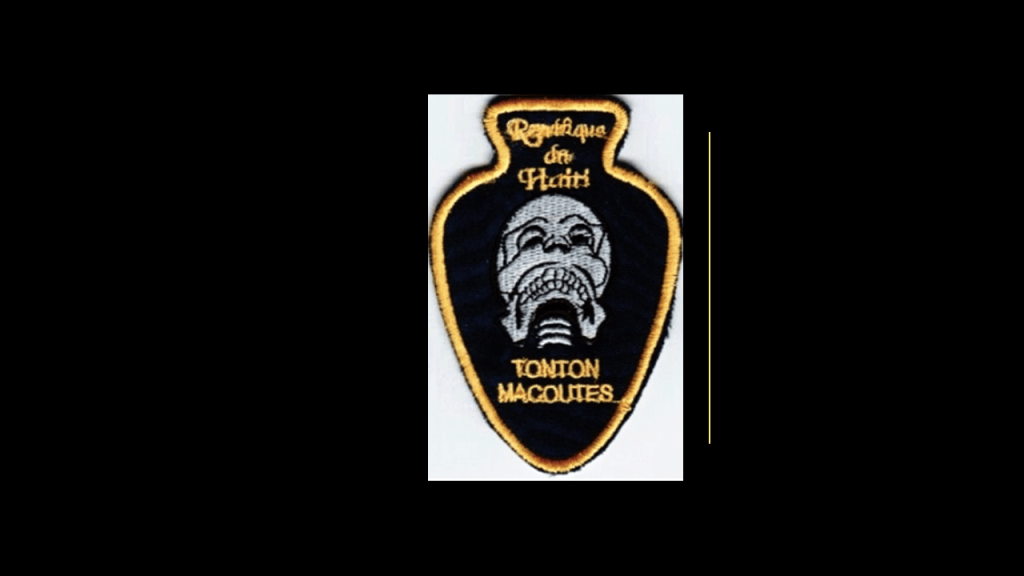
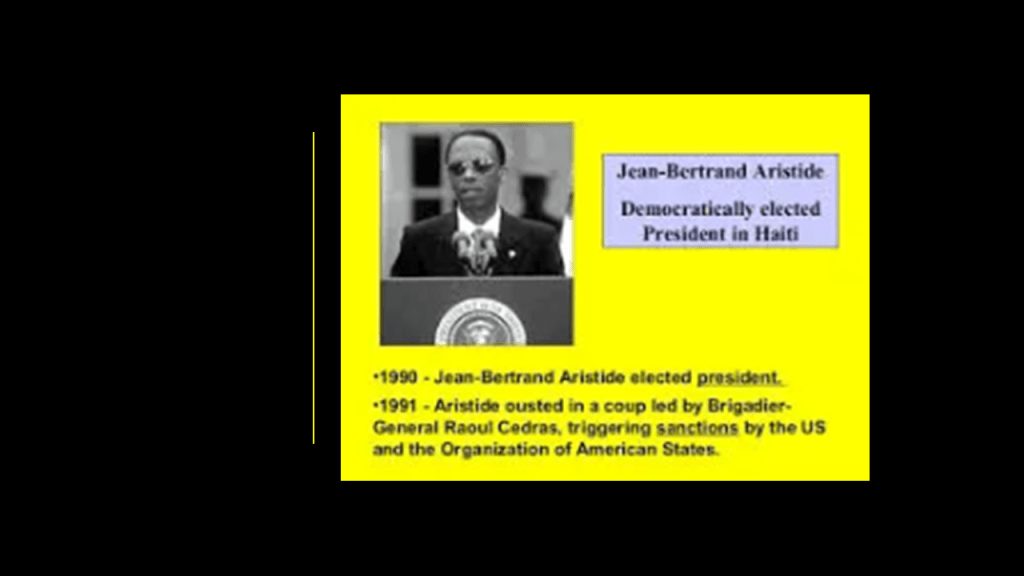
On January 7th, there was an initial coup attempt to oust the newly, democratically-elected President of Haiti, Jean-Bertrand Aristide, by Roger Lafontant, a leader of the Tonton Macoute, a paramilitary force under former dictator Jean-Claude Duvalier, but he was thwarted and failed.

“Tonton Macoute” was also the name given to what is called a Haitian mythological bogeyman, meaning “Uncle Gunnysack,” who kidnapped and punished children by snaring them in a gunny sack, and carrying them off in a gunny sack to be consumed at breakfast.
The second coup attempt, on September 29th of this same year, was successful, and Aristide deposed by the Armed Forces of Haiti, and exiled to France.
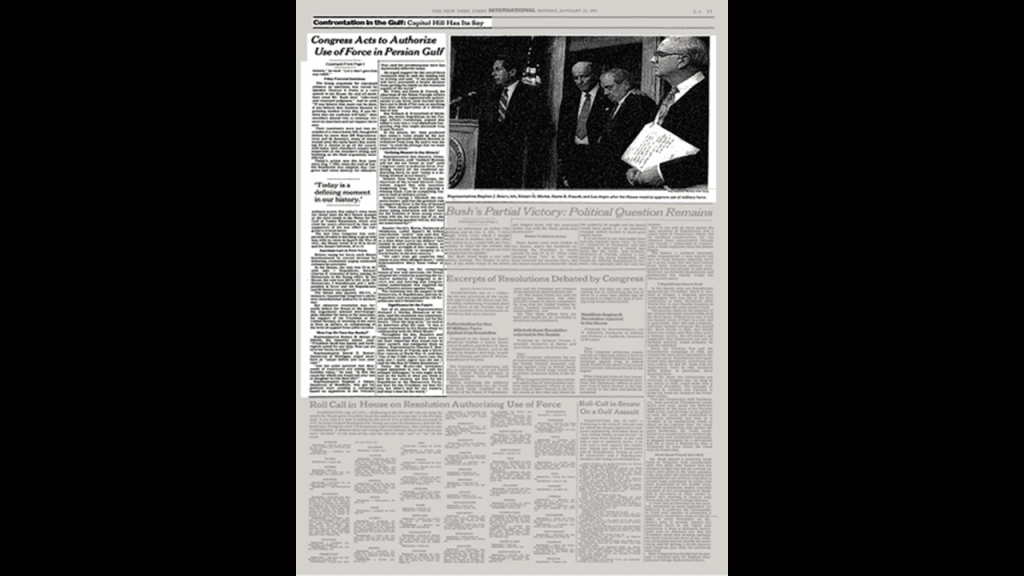
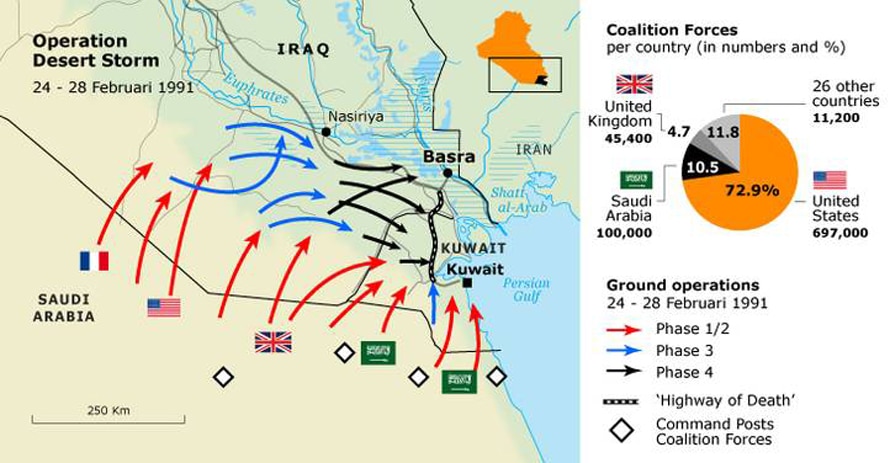
The U. S. Congress passed a resolution on January 12th authorizing the use of military force to expel Iraqi military forces from Kuwait, after President George H. W. Bush requested it on January 8th, one-week before the January 15th UN deadline for withdrawal of Iraqi forces, which expired and prepared the way for Operation Desert Storm.
Operation Desert Storm began on the following day, January 16th, with airstrikes against Iraq, as the first fighter aircraft were launched from Saudi Arabia and U. S. and British naval carriers in the Persian Gulf.
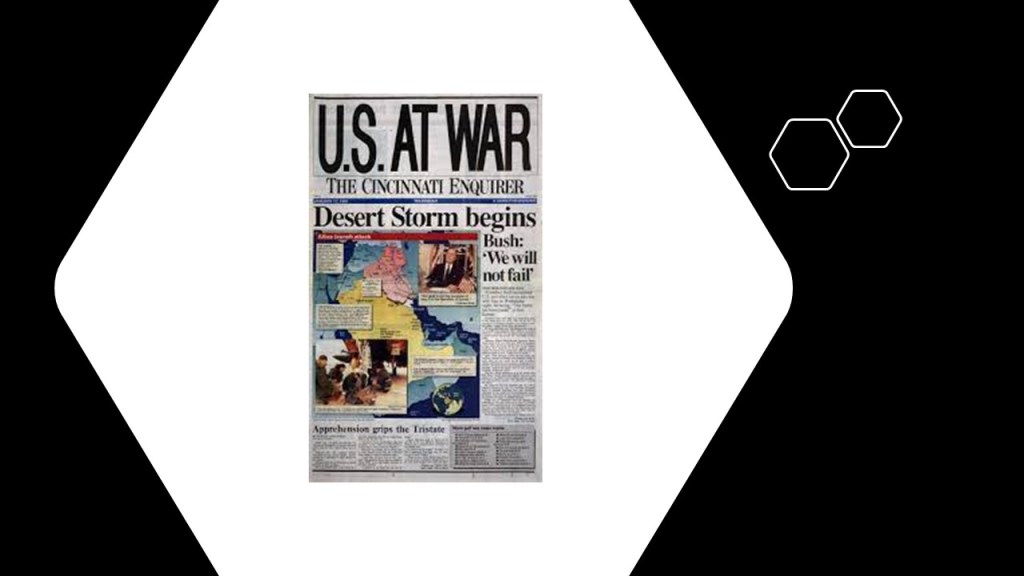
The first major ground engagement of the Gulf War, the Battle of Khafji in Saudi Arabia, took place between Iraqi and Coalition forces on January 29th, and lasted until February 1st, with a Coalition victory.
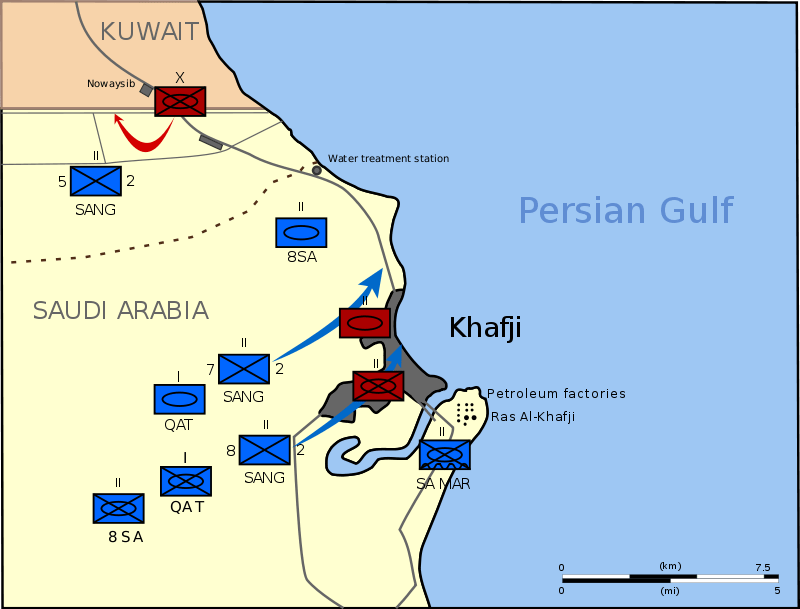
Other events on February 1st included USAir Flight 1493 colliding with a Skywest Airlines metroliner on the runway at Los Angeles International Airport, killing 34 people.

The accident was attributed to the Control Tower for the given reasons of a series of distractions: a misplaced flight progress strip, and an aircraft that had inadvertantly switched off the tower frequency; and the Skywest flight was told to taxi onto the runway that the USAir Flight was landing on.
For what it is worth, David Koch was one of the survivors of the crash, who along with his brother Charles, was one of the billionaire Koch brothers, worth more than $100 billion combined at the time of David’s death from cancer in 2019.

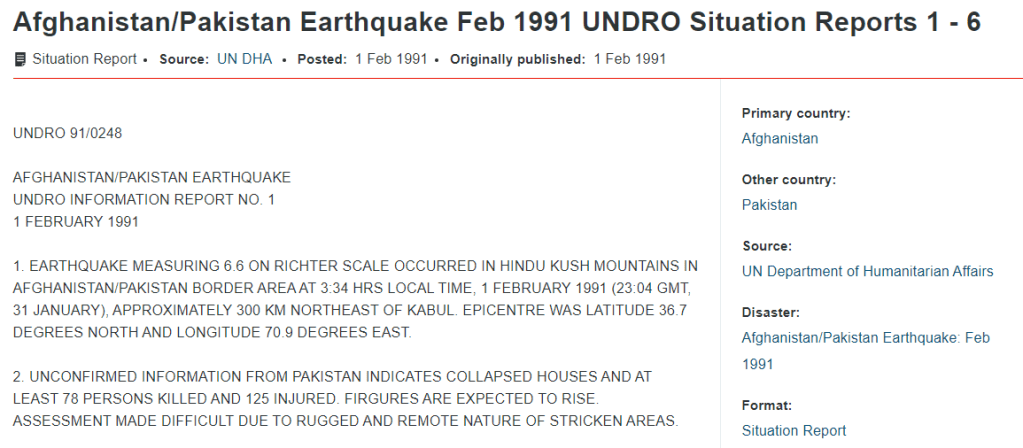
…and also on February 1st, a Hindu Kush 6.6 magnitude earthquake caused severe damage in northeastern Afghanistan in its border area with Pakistan, causin landslides, and destroying power and transmission lines.
On February 7th, ground troops enter Kuwait through Saudi Arabia, which was the beginning of the ground phase of the war.
On the same day of February 7th, the Provisional Irish Republican Army launched a mortar attack on 10 Downing Street, the Prime Minister’s residence and headquarters of the British government, during a cabinet meeting discussing the Gulf War.
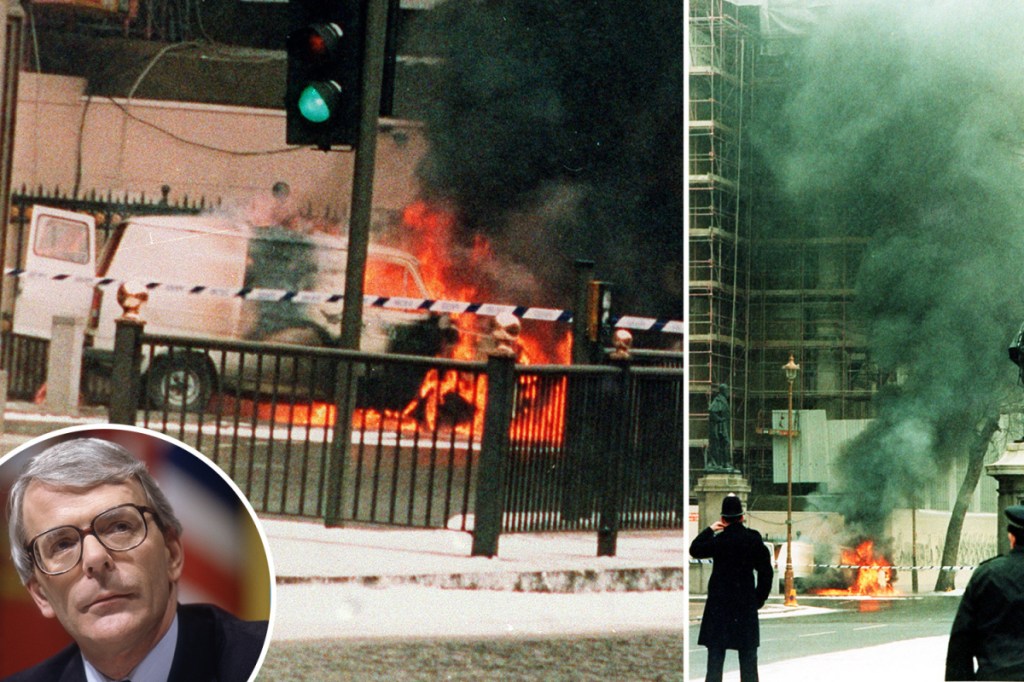
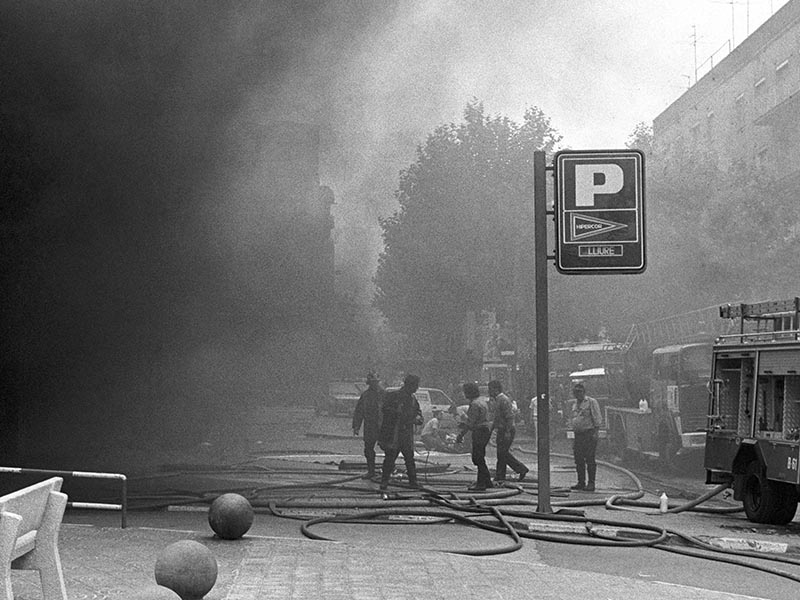
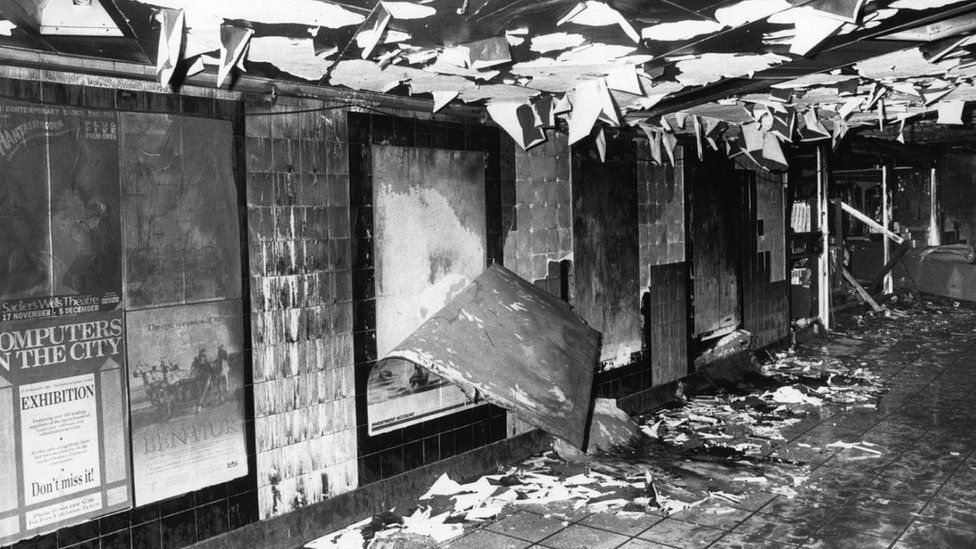
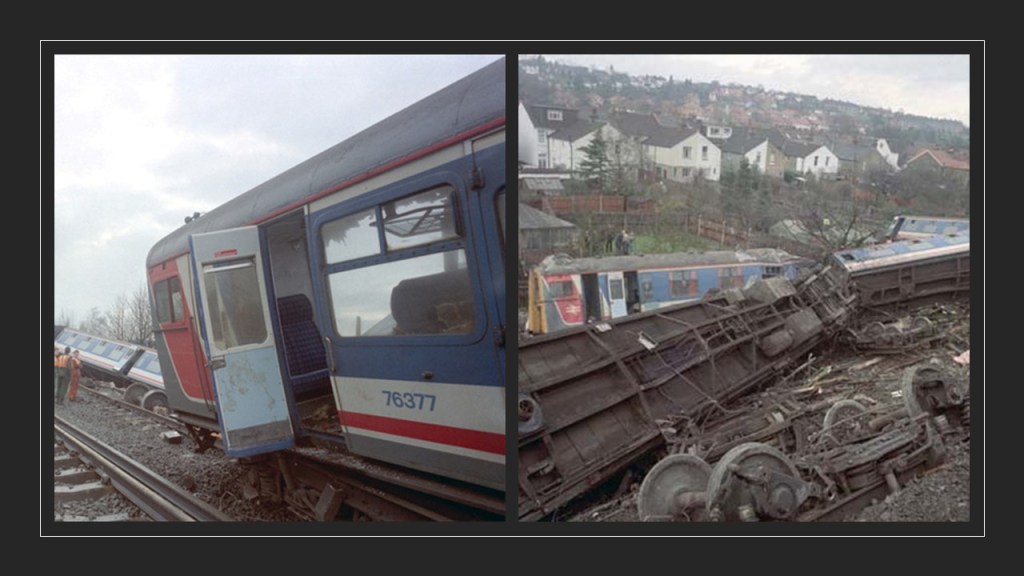
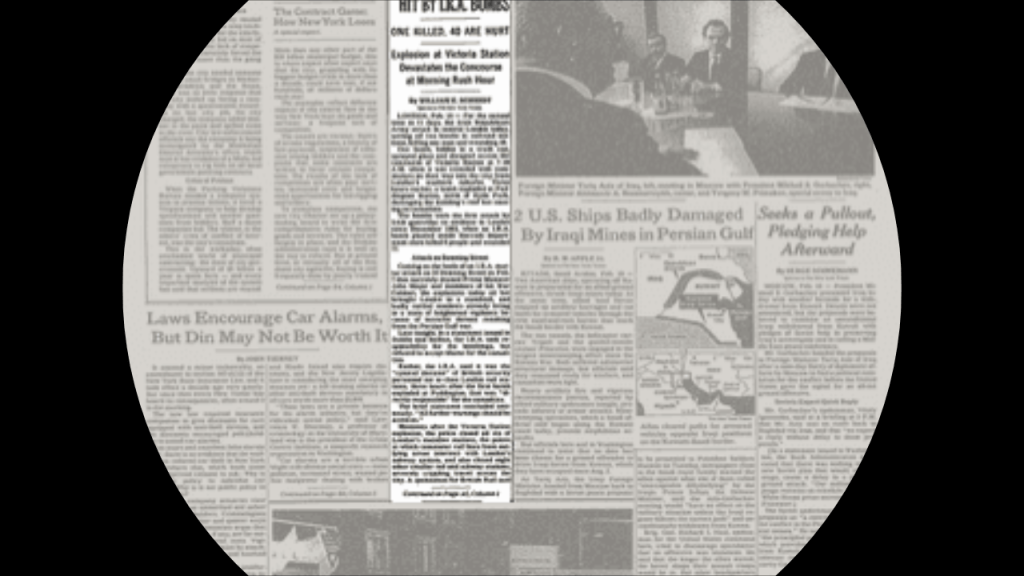
…and then on February 18th, the Provisional Irish Republican Army struck again, exploding bombs at the mainline London stations of Paddington and Victoria in the wee hours of the morning, with one death and around 40 injuries occurring at the Victoria Station.

Interesting that I can find very few images relating to it.

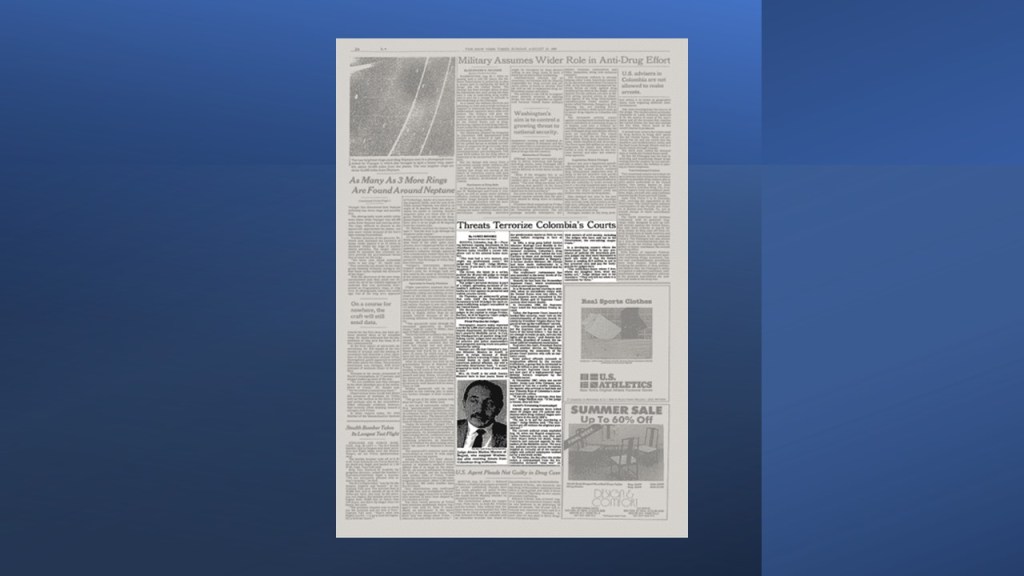
I found this NYT article regarding the incident…
…and several pictures of basically the same scene like this one.

Iraq accepted a Soviet-backed cease fire on February 22nd, which the U. S. rejected, however instead said retreating Iraqi forces would not be attacked if they left in 24-hours.
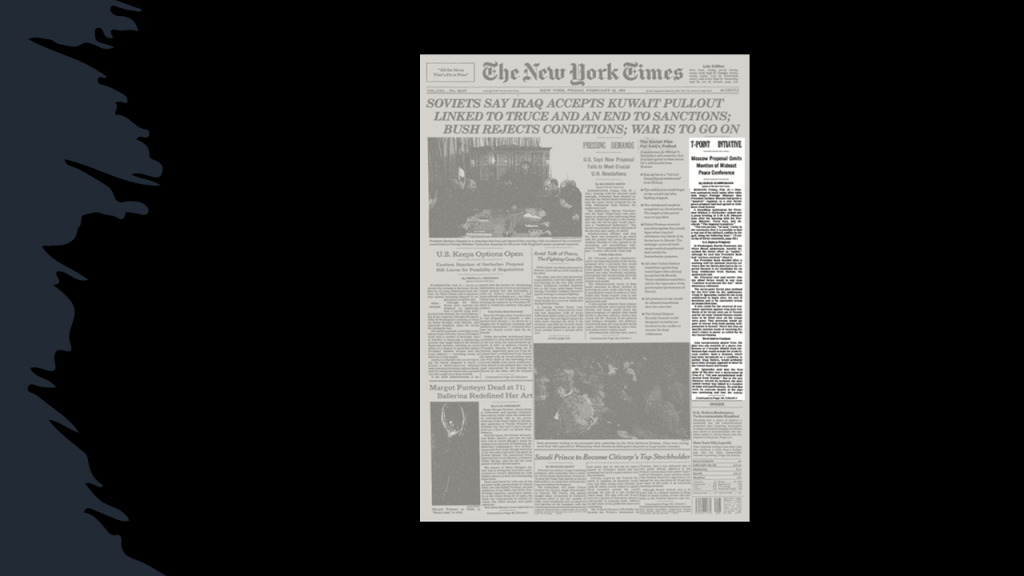
Saddam Hussein announced the withdrawal of Iraqi troops on February 26th, at which time, along with other subversive activity against the Kuwaitis as they were leaving, they set fire to Kuwaiti oil fields as they left, and the fires lasted until November of 1991…
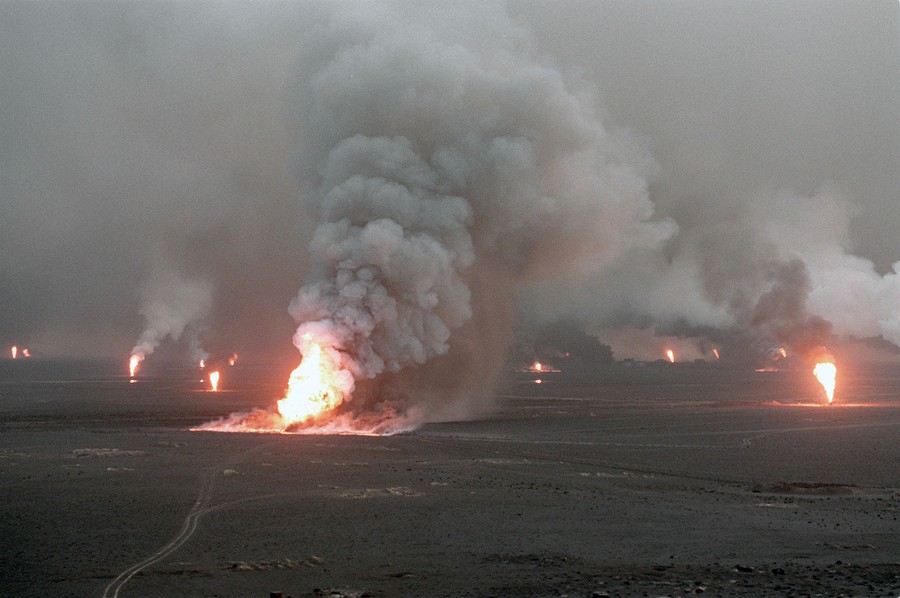
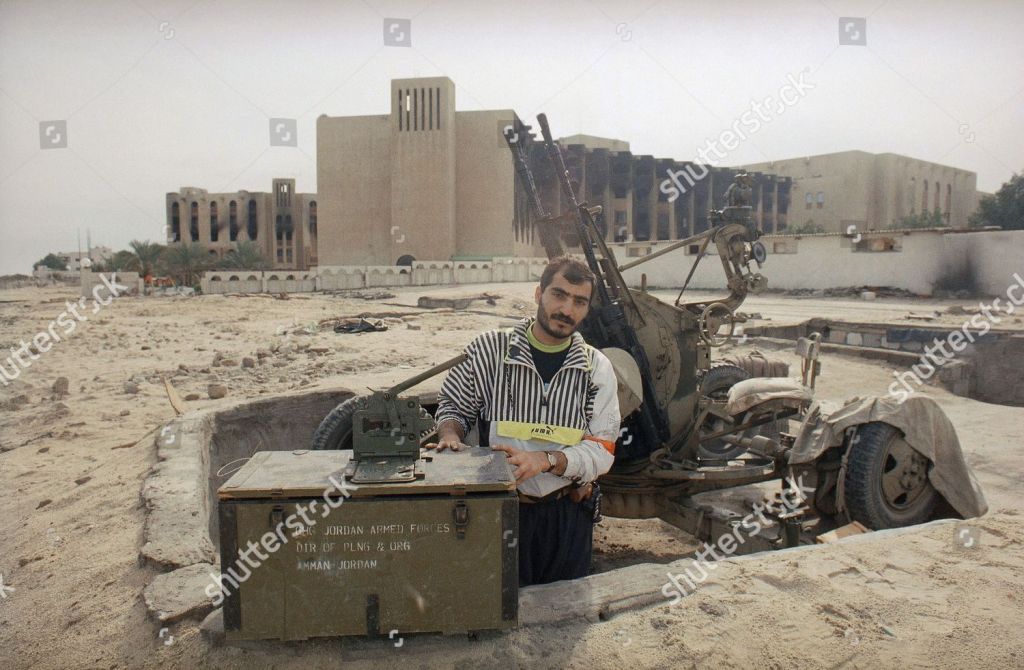
…and Kuwait City was devastated by the end of Operation Desert Storm.
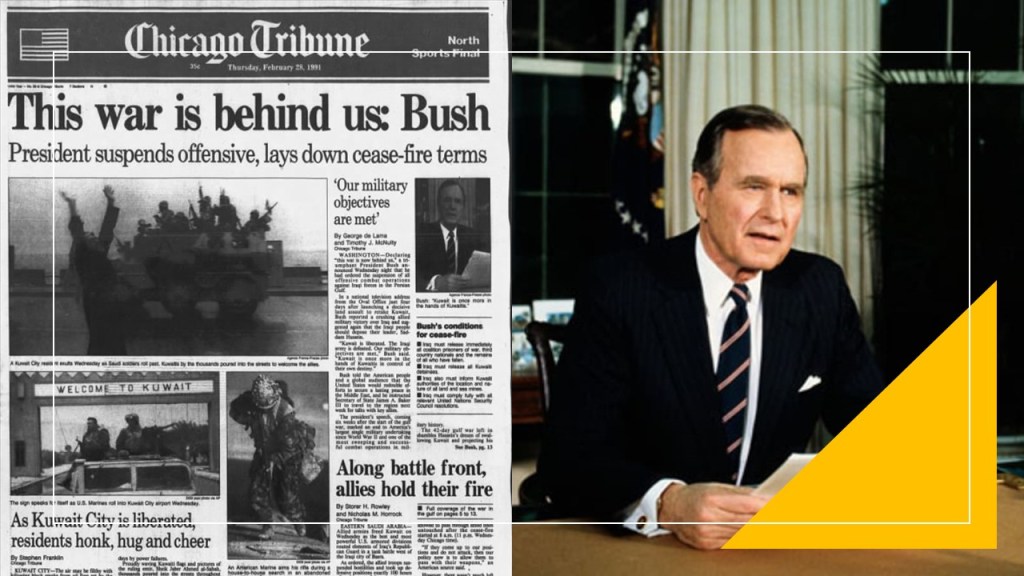
On February 27th, President Bush declared victory over Iraq and ordered a cease-fire, with us troops starting to leave on March 10th…
…and on the same day, in the Bangladeshi General Election, the Bangladesh Nationalist Party won 140 of 300 seats in the supreme legislative body of Bangladesh known as the Jatiyo Sangshad, and made Khaleda Zia as Prime Minister, the first woman Prime Minister of Bangladesh.

The Bangladesh Nationalist Party was founded on September 1st of 1978 with a view of uniting the people with a nationalist ideology for the country.
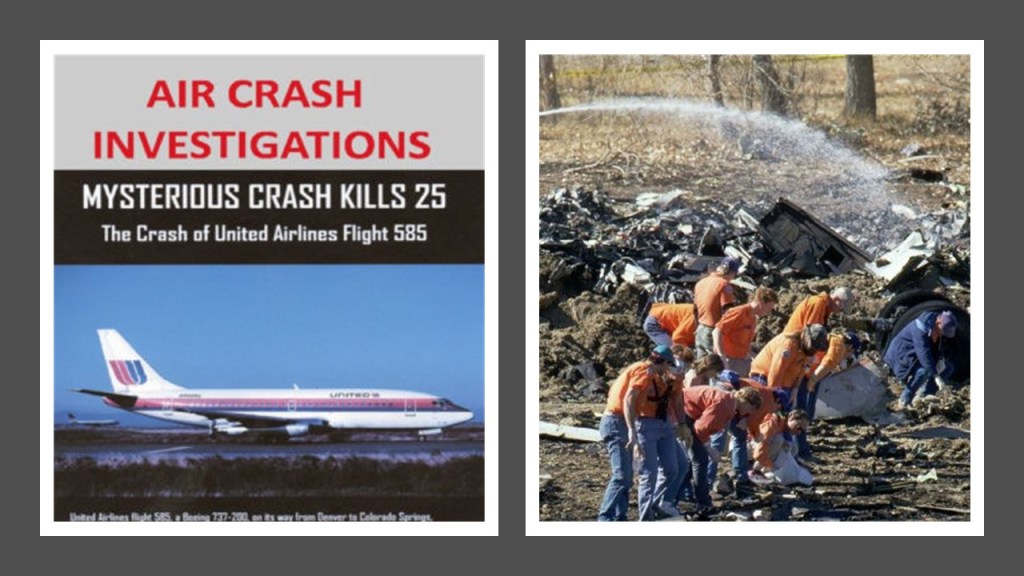
United Airlines Flight 585 from Denver crashed in Colorado Springs on March 3rd, killing all 25 on board.

The crash was attributed to a rudder hardover, causing the plane to rollover and go into an uncontrolled dive, and ultimately to a defect in the design in the Boeing-737’s rudder power control unit after similar accidents and incidents involving Boeing 737 aircraft.
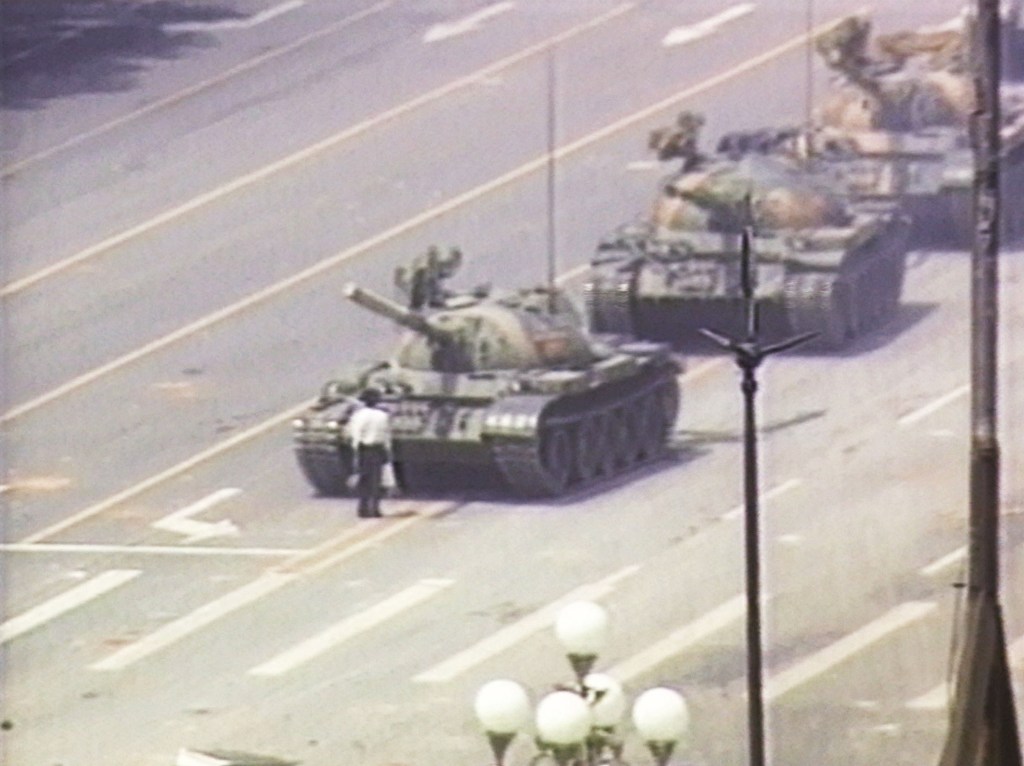
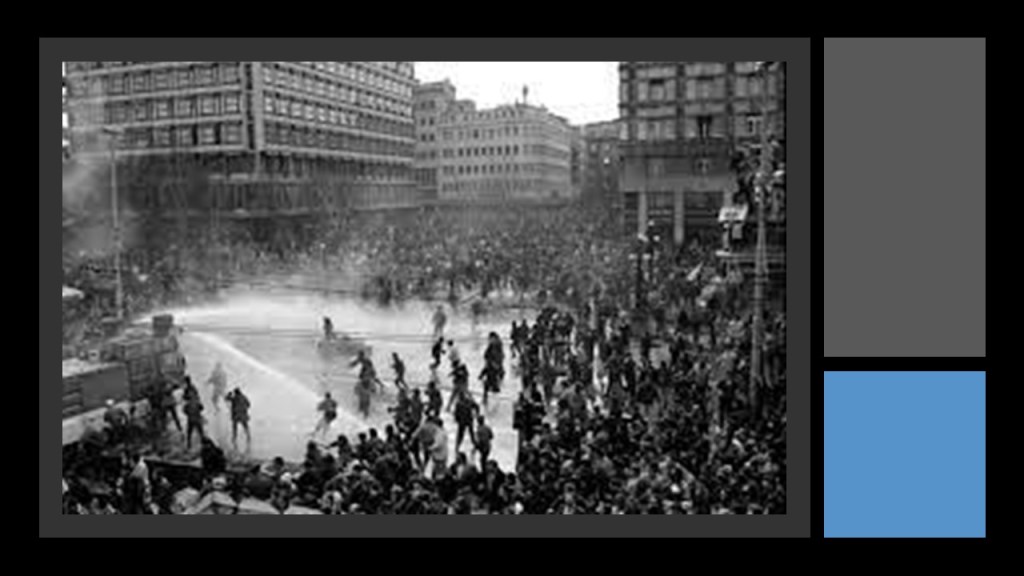
On March 9th, two people were killed and tanks deployed in the streets when massive demonstrations took place in opposition to the newly-elected President of the Socialist Republic of Serbia, Slobodan Milosevic, and his Socialist Party.
The Sierra Leone Civil War began on March 23rd.

It started when the Revolutionary United Front attempted to overthrow the government of Joseph Momoh.

It is important to note that the southern and eastern parts of Sierra Leone are rich in easily-accessible alluvial diamonds, which was considered to be a factor in the Civil War.
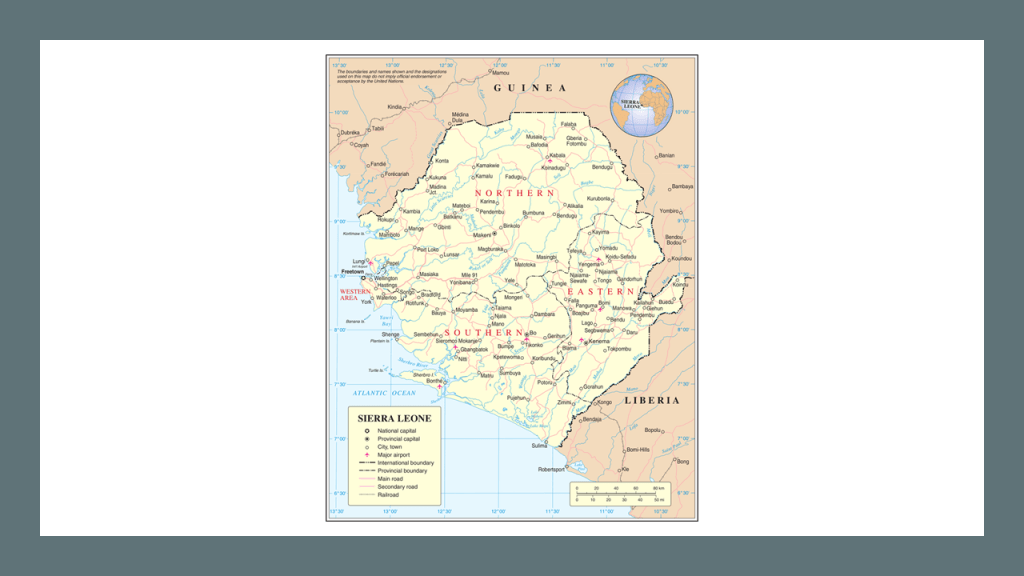
The Civil War lasted 11 years, left an estimated 50,000 dead, and made extensive use of child soldiers, with an estimated 10,000 to 40,000 fighting during the war.
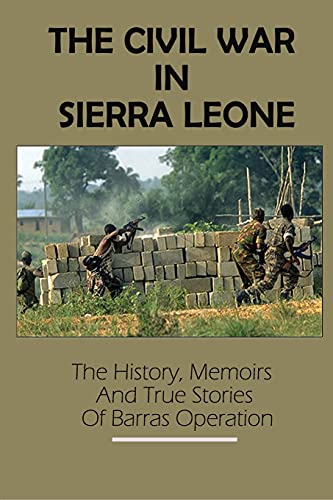
The term “blood diamond” is typically used to refer to diamonds that are mined in a war zone and sold at the same time to fund aspects of the war, and has been used to label the war in Sierra Leone, as well as other 20th & 21st-century African civil wars that took place in Angola, the Ivory Coast, Liberia, Guinea and Guinea-Bissau.

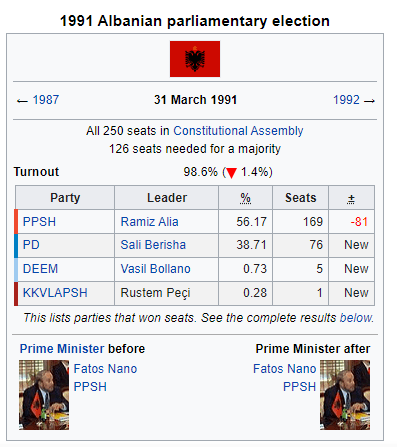
On March 31st, the ruling Socialist Party of Labor of Albania won by a landslide in parliament in the first multi-party elections since 1923, though it had advantages while campaigning, including influence over the news and access to more resources than its opponents, and it was widely believed that the Albanian election was neither free nor fair.

While the Socialist Party of Labor lost seats, it won more than the number of seats needed to maintain the majority quite handily.
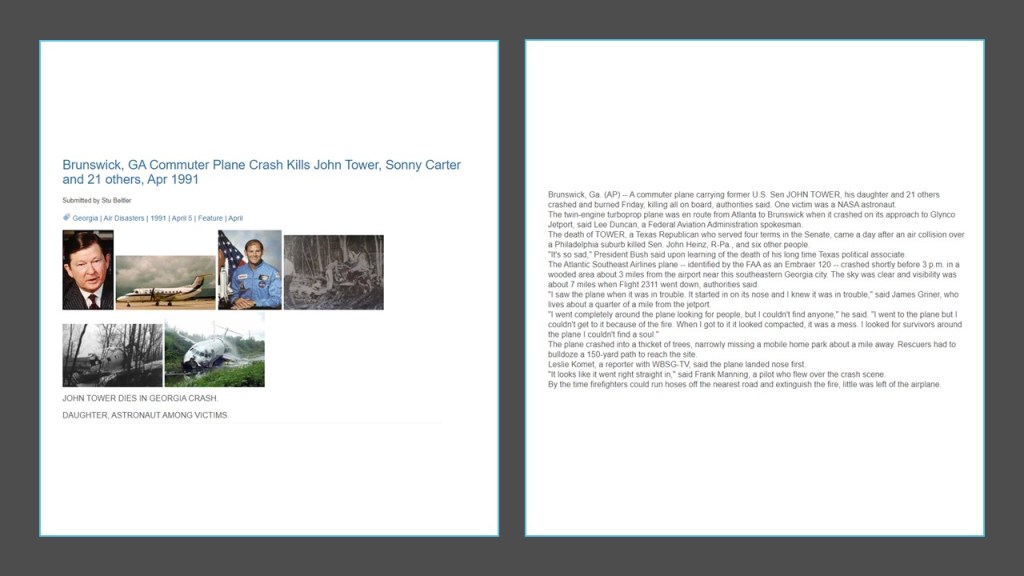
On April 5th, former U. S. Republican Senator John Tower and 22 others were killed in an airplane crash in Brunswick, Georgia.

The reason given for the crash was a propeller malfunction due to a design flaw with the Embraer EMB 120 Brasilia twin-turboprop airplane.

The aircraft did not have a flight data recorder or cockpit voice-recorder because they were not required at the time.
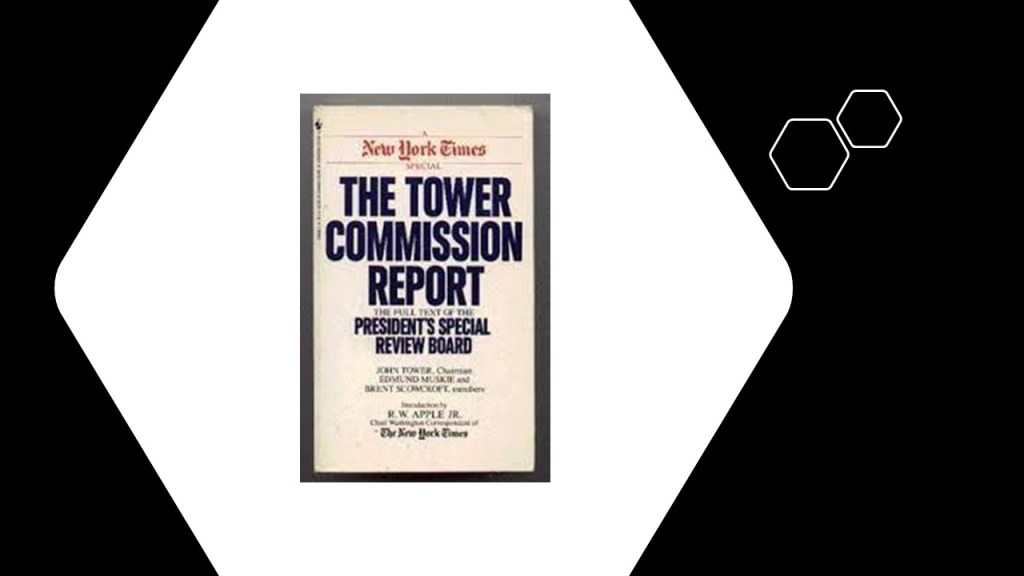
Sen. Tower had led the Tower Commission, which investigated the Iran-Contra Affair from December 1st of 1986 to February 27th of 1987, when a report was published with the conclusion that the CIA director at the time, William Casey, should have taken over the Iran-Contra operation and made the President aware of the risks and notified Congress legally as required.

Also in the report, Marine Lt. Col. Oliver North, National Security Advisor John Poindexter and Secretary of Defense Caspar Weingberger were implicated in the operation.
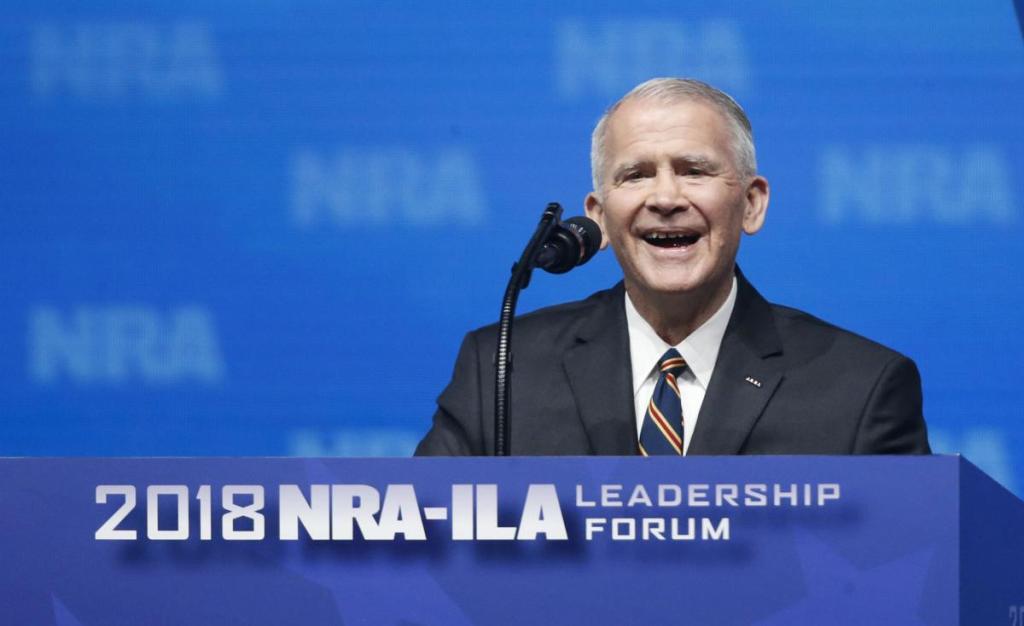
Lt. Gen. Oliver North was initially convicted on three felony charges…
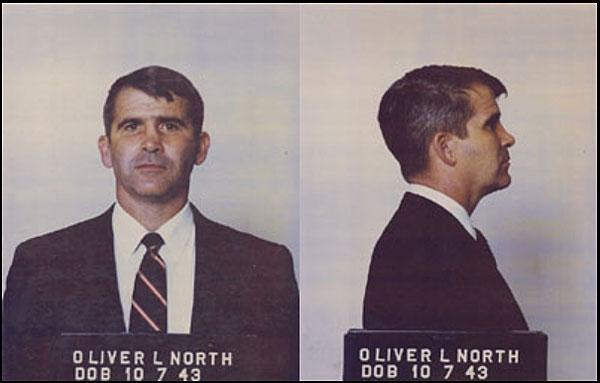
…but the charges against him were vacated and reversed, and all charges against him were dropped by a judge on September 16th of 1991, and he later became a television host, political commentator, and NRA president.
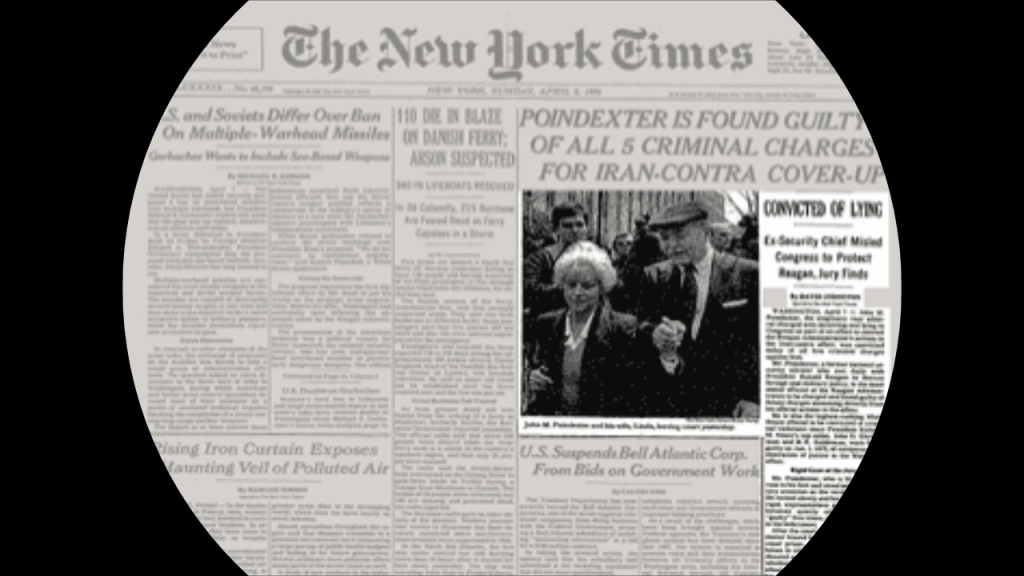
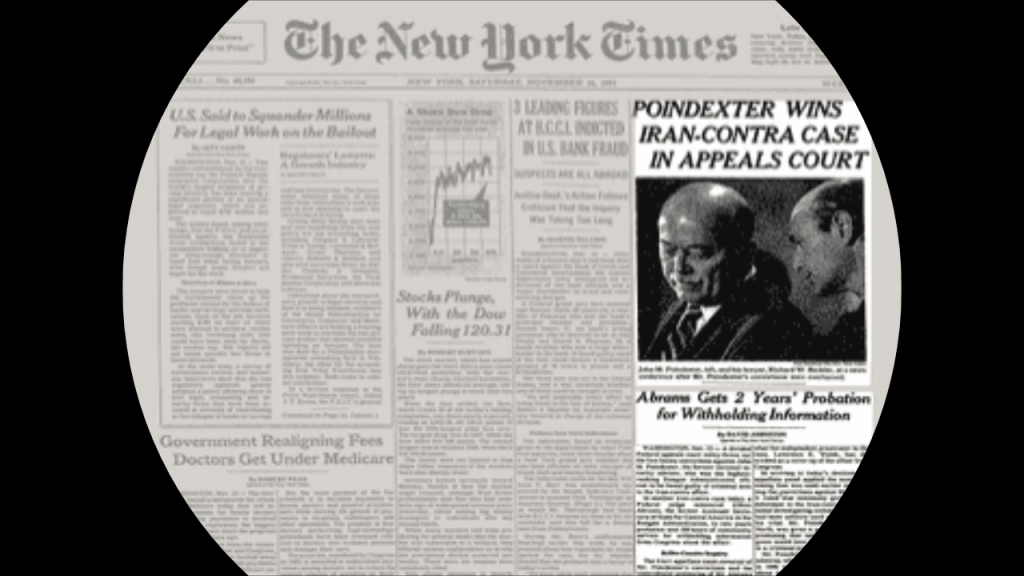
National Security Advisor John Poindexter was convicted on April 7th of 1990 of lying to Congress and obstructing the Congressional committees investigating the Iran-Contra Affair…
…but these convictions were reversed November 16th of 1991 on appeal.
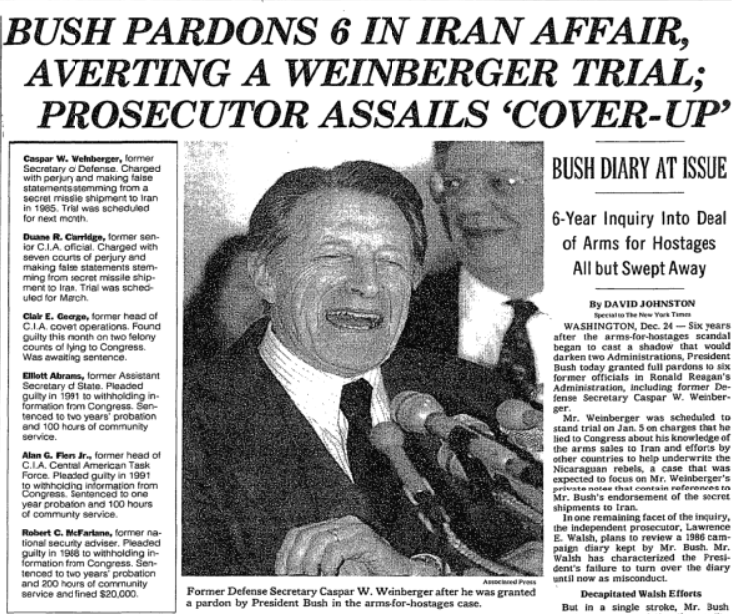
Former Secretary of Defense Caspar Weinberger was indicted on felony charges.

He received a pardon on December 24th of 1992 from President George H. W. Bush before he left office before Weinberger could be tried on these charges.
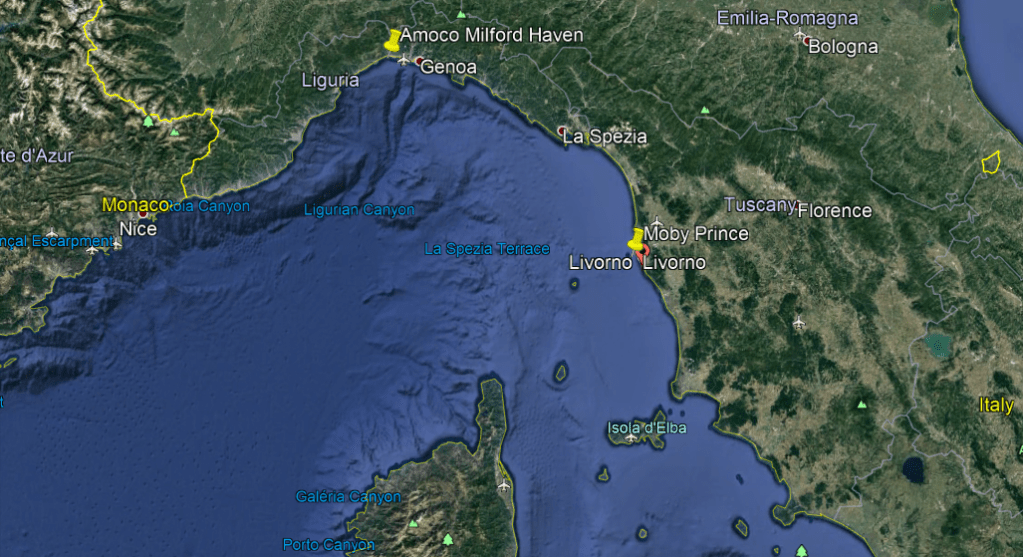
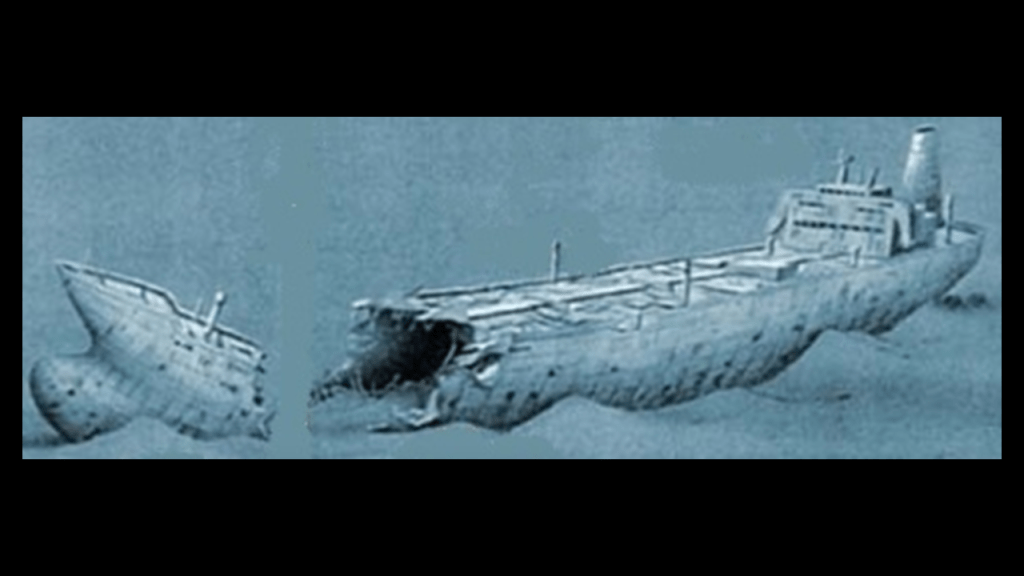
On April 10th of 1991, the Italian ferry Moby Prince collided with an oil tanker off the coast of Livorno, Italy, resulting in 140 deaths and only one survivor, and considered one of the two worst environmental disasters in Italian history…
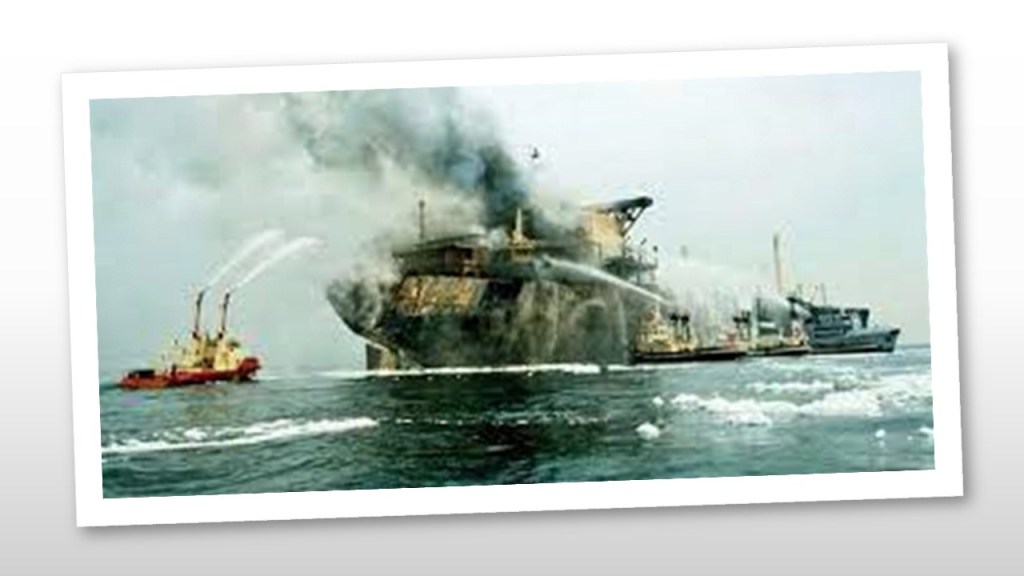
…along with the explosion and loss of the oil tanker Amoco Milford Haven the very next day near Genoa.
The Amoco Milford Haven was loaded with 144,000 tons of crude oil, equivalent to one million barrels, when it exploded on April 11th, and caught fire, flooding the Mediterranean Sea with 50,000 tons of crude oil.
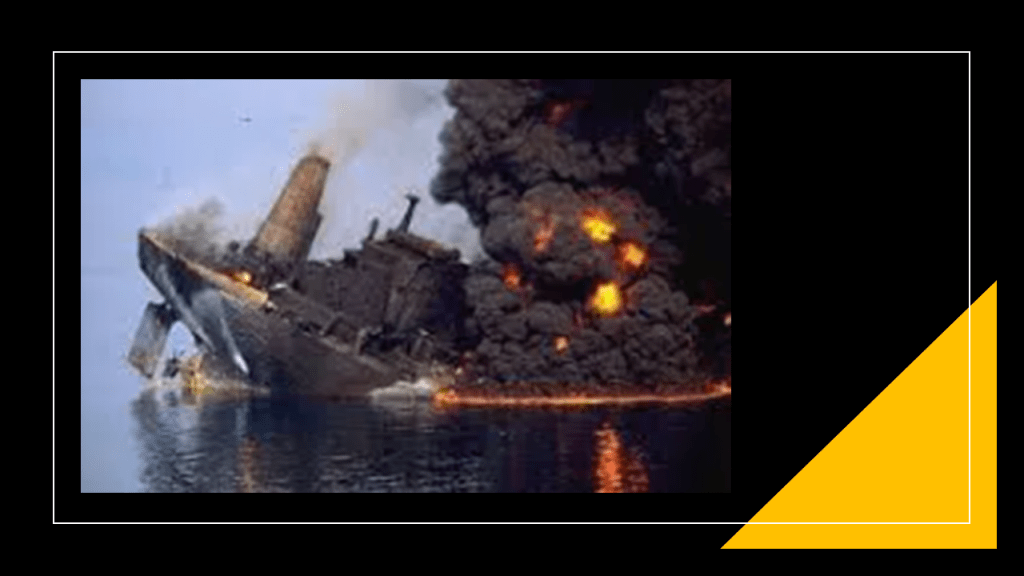
After burning for three days, the vessel broke in two and sank.
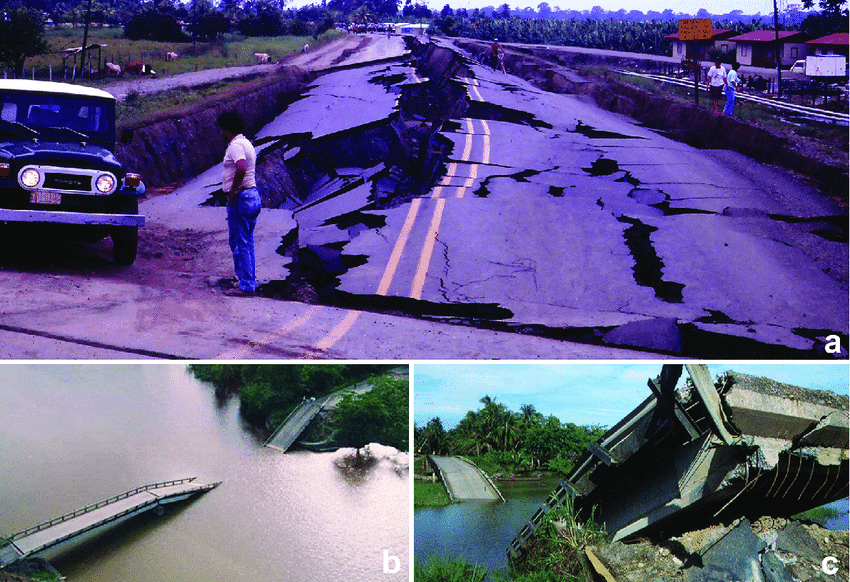
On April 22nd, the 7.7 magnitude Limon Earthquake struck Costa Rica and Panama, causing an estimated 47 to 87 deaths and over 700 injuries, and displacing between 7,500 to 11,000 people.

It was the strongest recorded earthquake in Costa Rica’s history.
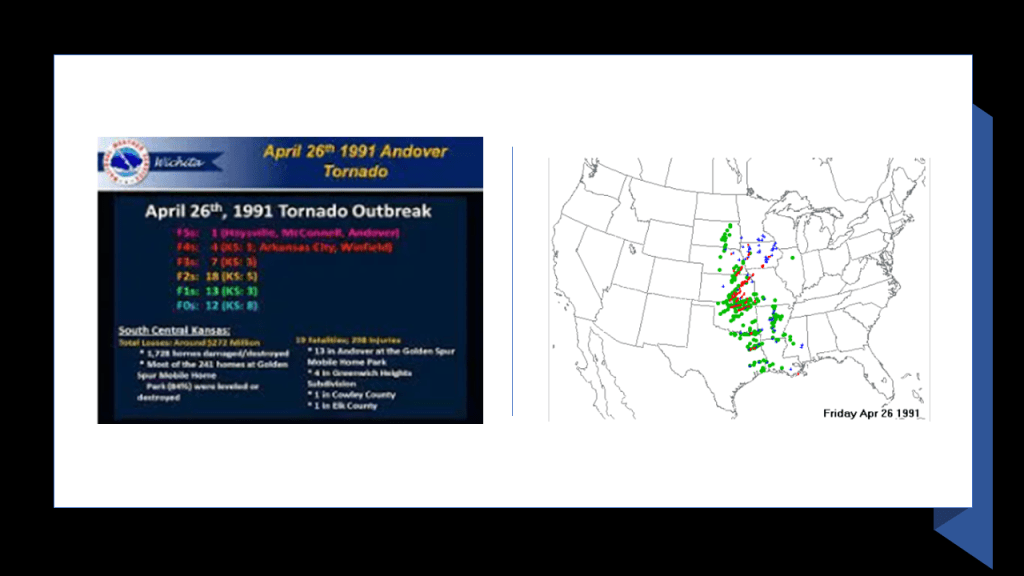
A series of 55 tornadoes broke-out in the Central United States on April 26th, killing 21 people, named the Andover Tornado Outbreak after an F5 tornado that hit the town of Andover, Kansas…
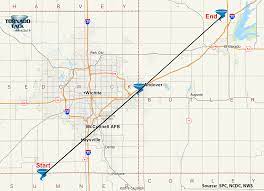
…but it also spawned severe tornadic outbreak, in addition to Kansas, in the states of Oklahoma, Nebraska, Texas, Iowa, and Missouri.
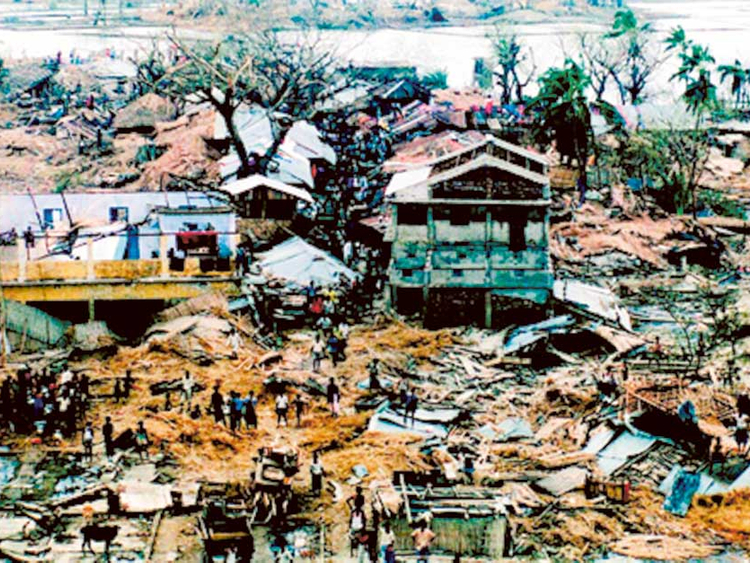
On April 29th, around two-months to the day after the general election in Bangladesh where the Bangladesh Nationalist Party won the majority of seats in Parliament, a tropical cyclone hit Bangladesh, killing 138,000 people, and causing an estimated $1.5 billion in damage.
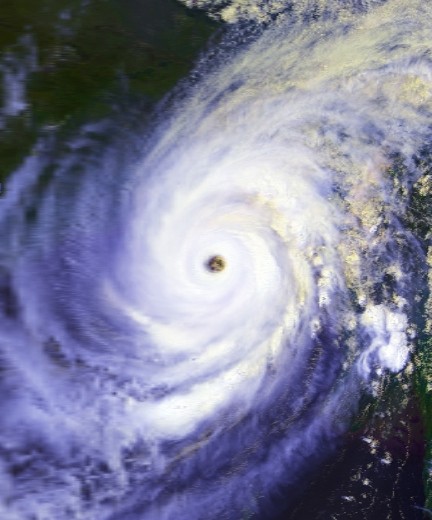
The storm hit at high tide, and the 20-foot, or 6.1-meter, storm surge wiped away whole villages.
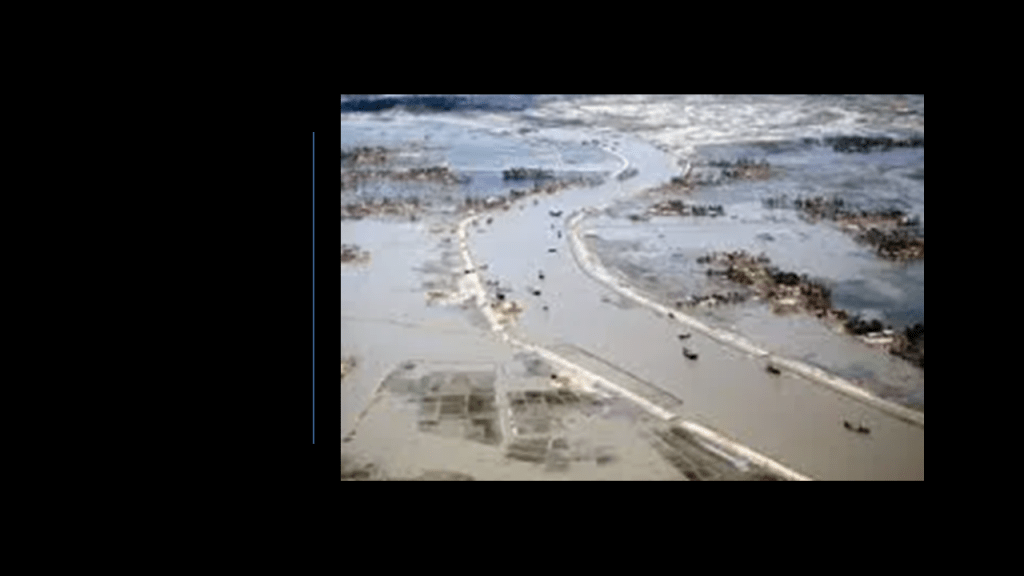
There were 13.4 million people affected by the storm, with one million homes destroyed, leaving 10 million people homeless.

It was one of the deadliest cyclones on record.
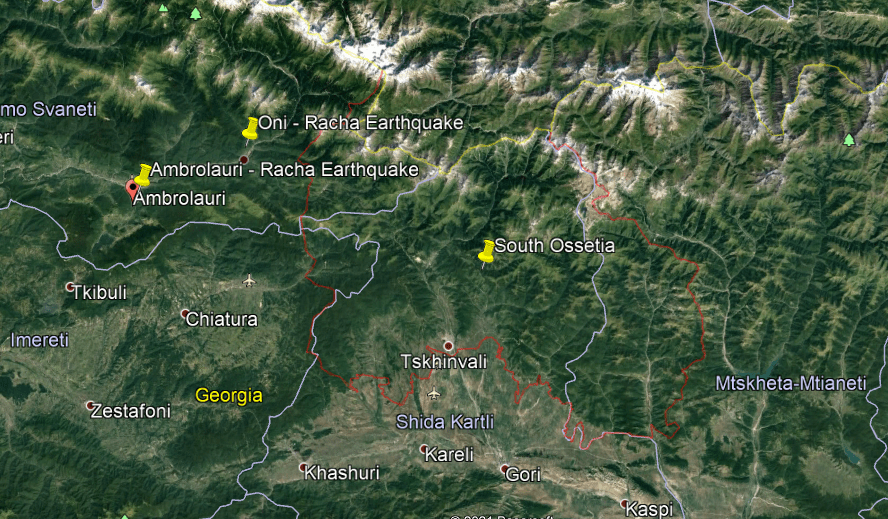
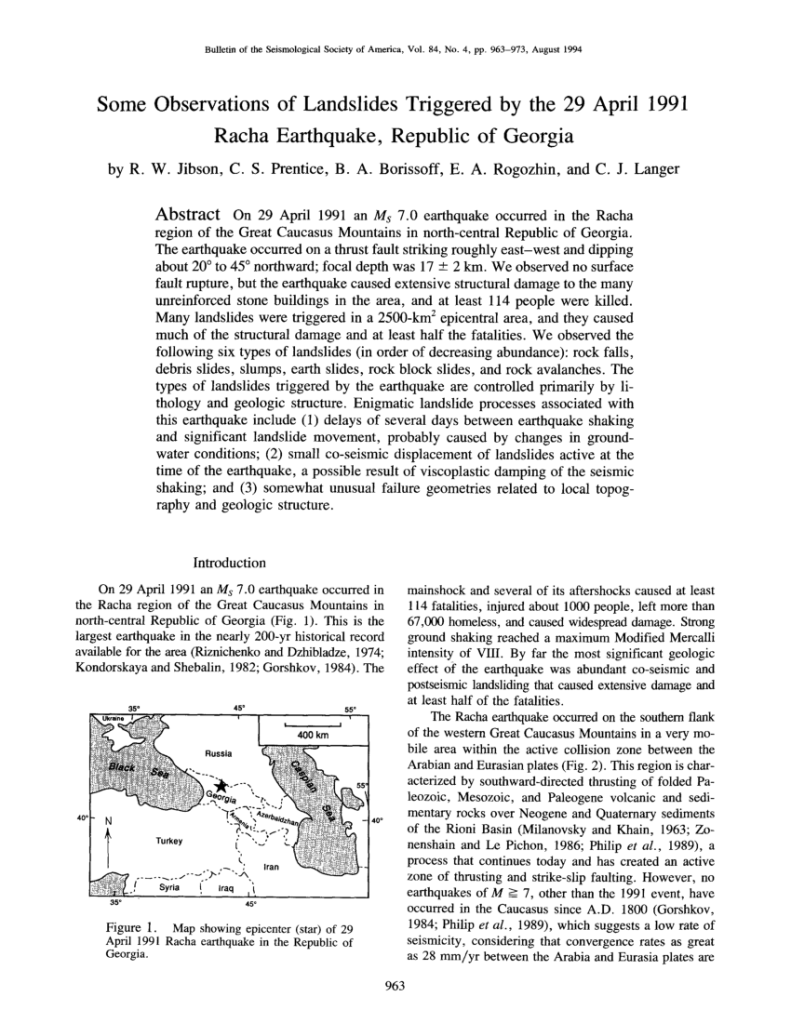
Also on April 29th, a 7.0 magnitude earthquake hit Racha, Georgia, killing 270, and leaving 100,000 homeless.

The earthquake struck almost five months after the onset of the South Ossetian War in the same region.

As a matter of fact, the Racha region, and the districts of Oni and Ambrolauri that the earthquake was centered on in the southern foothills of the Caucasus mountains, are right next to the borders of South Ossetia, outlined in red in this Google Earth screenshot.
It was the most powerful earthquake ever recorded in the Caucasus Mountains.
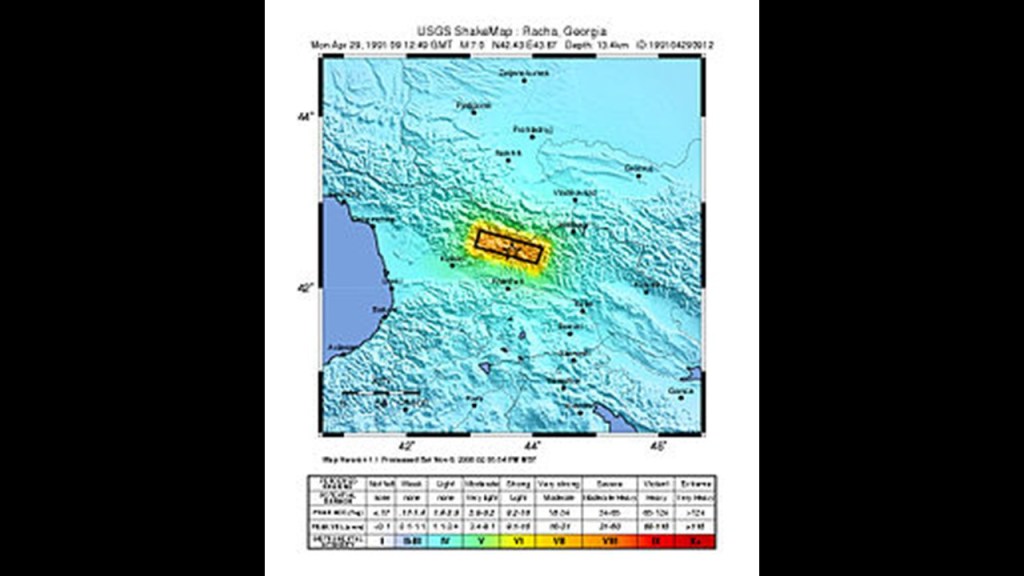
Landslides caused a lot of damage from the earthquake.
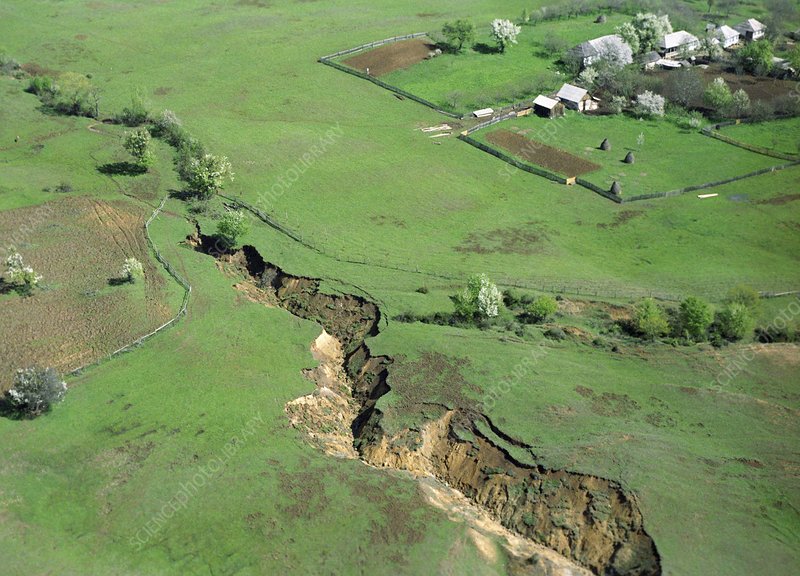
…and caused at least one chasm in the landscape of the region.

With the Bangladeshi Cyclone and the Georgian Earthquake hitting in different parts of the world with nationalist aspirations on the very same day seriously makes me wonder.

What are odds of these events happening randomly, all in the same year, and even on the same day?
On May 21st, Mengistu Haile Mariam, President of the Communist state of the People’s Democratic Republic of Ethiopia, fled Ethiopia to Zimbabwe, after the Soviet Union had pretty much ended the support for his regime, marking the official end of the Ethiopian Civil War.
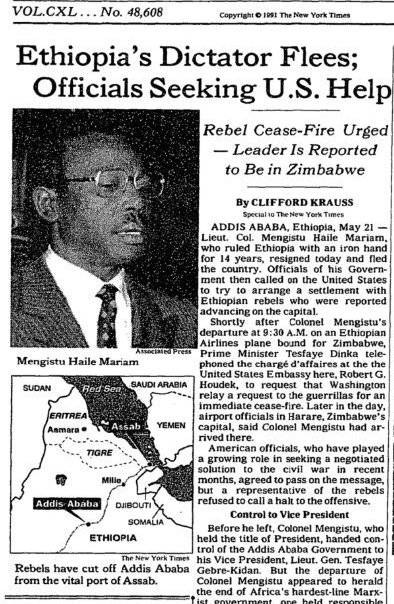
Mengistu had been highly involved in the Derg, the Provisional Military Government of Socialist Ethiopia that had overthrown the Ethiopian Emperor Haile Selassie in September of 1974, and he was the General Secretary of the Communist Worker’s Party of Ethiopia from 1984 to 1991, concurrently with being President between 1987 and 1991.
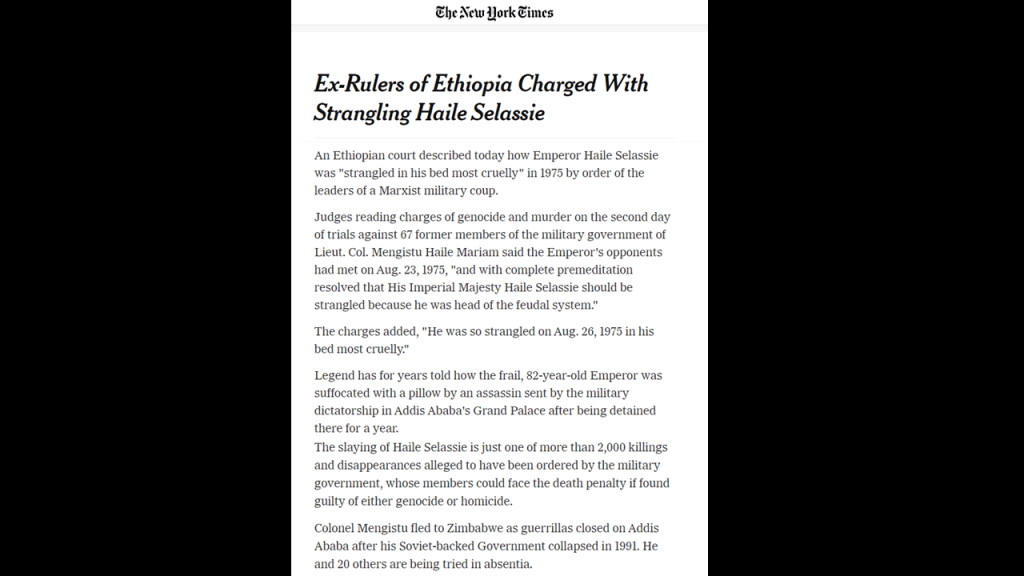
It is also important to note that I found this article saying that Haile Selassie was strangled to death in 1975, after his overthrow in 1974, and that Mengistu’s government was responsible for it.
On May 28th, the forces of the Ethiopian People’s Revolutionary Democratic Front (EPRDF), said to be a coalition of ethnic federalist political groups in Ethiopia, seized the country’s capital, Addis Ababa.
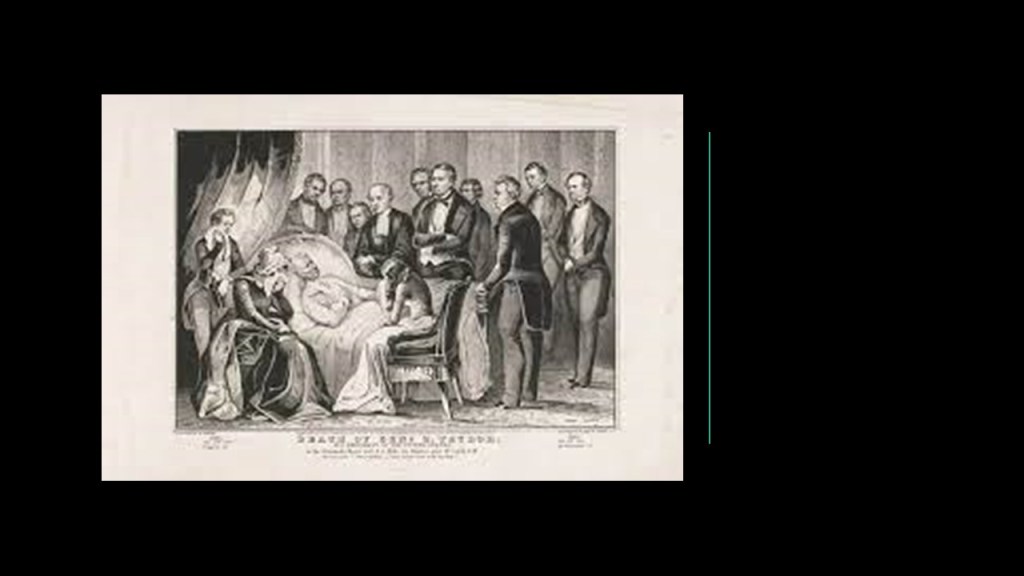
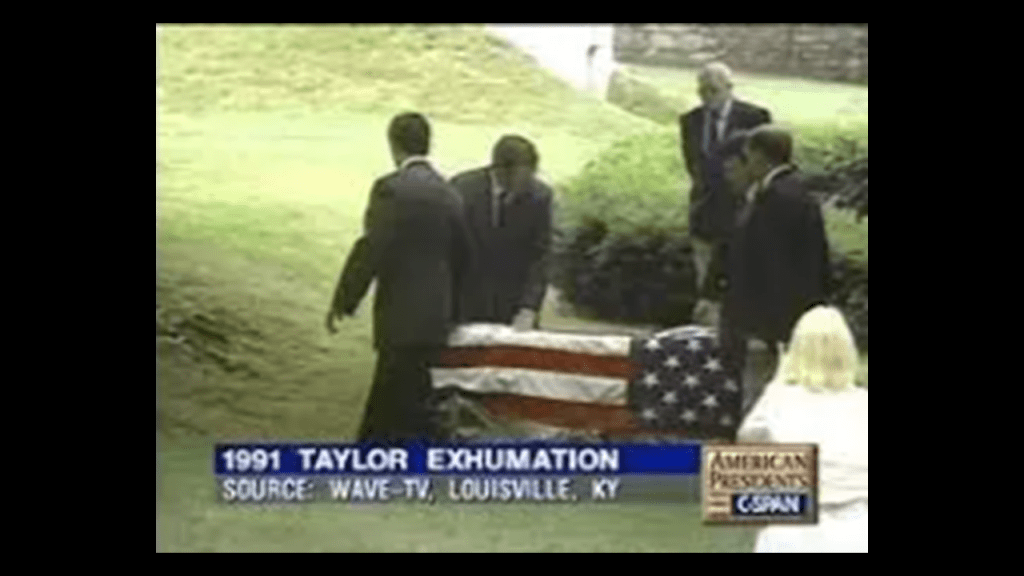
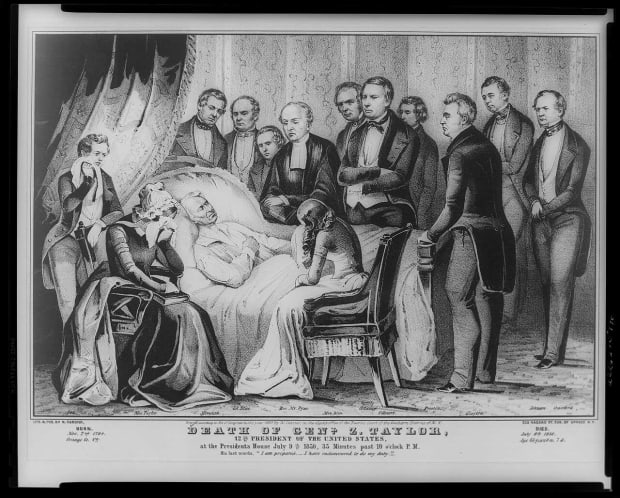
On June 17th, the body of former U. S. President Zachary Taylor was exhumed to determine of arsenic poisoning instead of acute gastrointestinal illness had caused his death, but no trace of arsenic was found in his remains.
General Zachary Taylor, a hero of the Mexican-American War, was elected President in 1848.

After only 16-months of serving his presidential term, he died in July of 1850, allegedly after consuming copious amounts of raw fruit and iced milk at a July 4th fundraising event at the Washington Monument, becoming severely ill with a digestive ailment, and dying several days later, on July 9th, with Millard Fillmore becoming President upon Taylor’s death.
The Warsaw Pact was officially dissolved in Prague, Czechoslovakia, on July 1st.
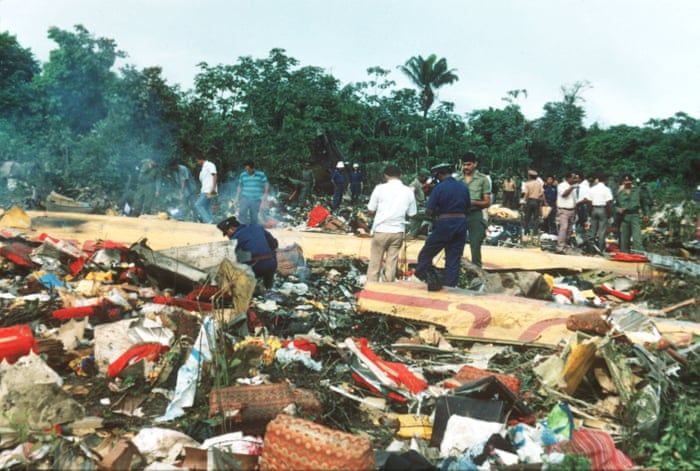
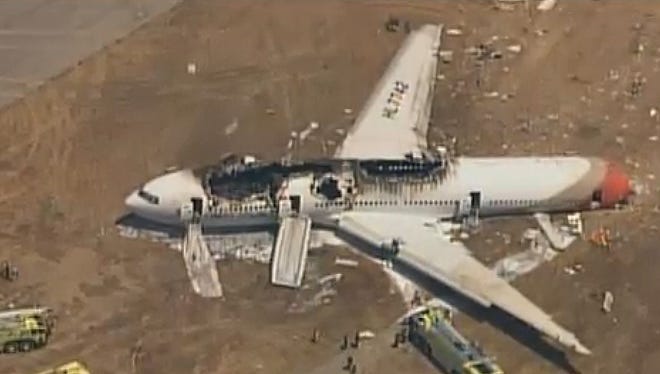
Nigerian flight 2120 caught fire after take-off in Jeddah, Saudi Arabia, on July 11th, and crashed while attempting an emergency landing there, killing all 261 people on-board.

It was a Nationair Canada DC-8 airplane that was sub-leased Nigerian Airways to transport pilgrims to-and-from Mecca, and it remains the deadliest airplane accident involving both a DC-8, and a Canadian airline.

The cause for the fire was said attributed to the over-heating of an under-inflated tire, leading to an in-flight fire.
On August 6th, Tim Berners-Lee announced the World Wide Web project and software on the alt.hypertext news group…
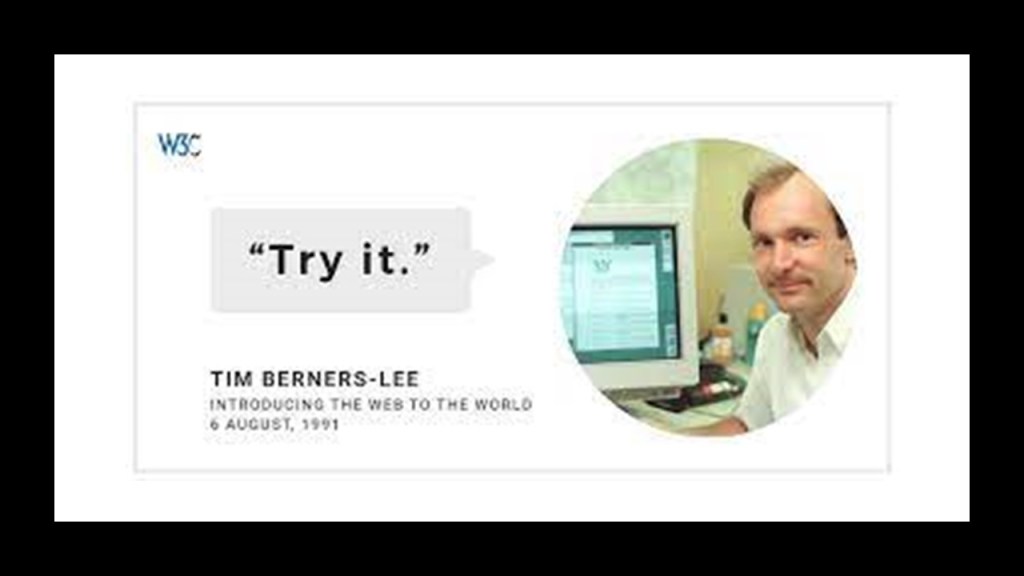
….and the first website “info.cern.ch” was created.
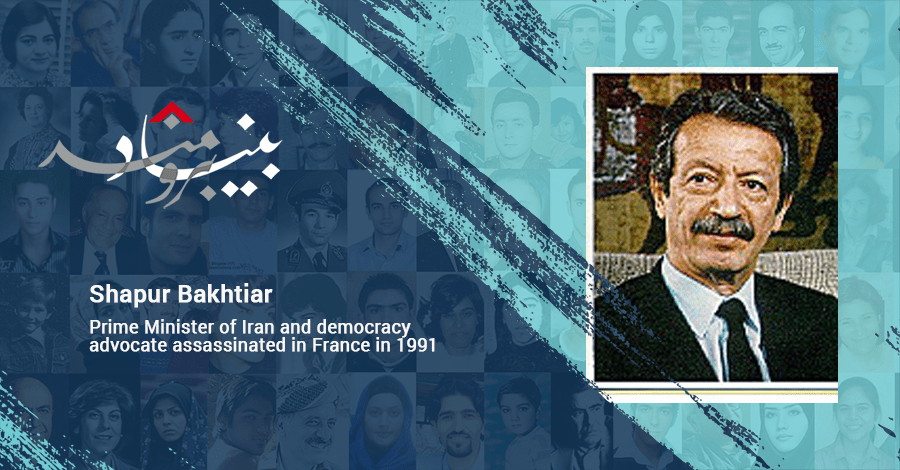
The former Iranian Prime Minister under Shah Mohammad Reza Pahlavi, Shapour Bakhtiar, was murdered in Paris by agents of the Islamic Republic on August 7th, along with his secretary.
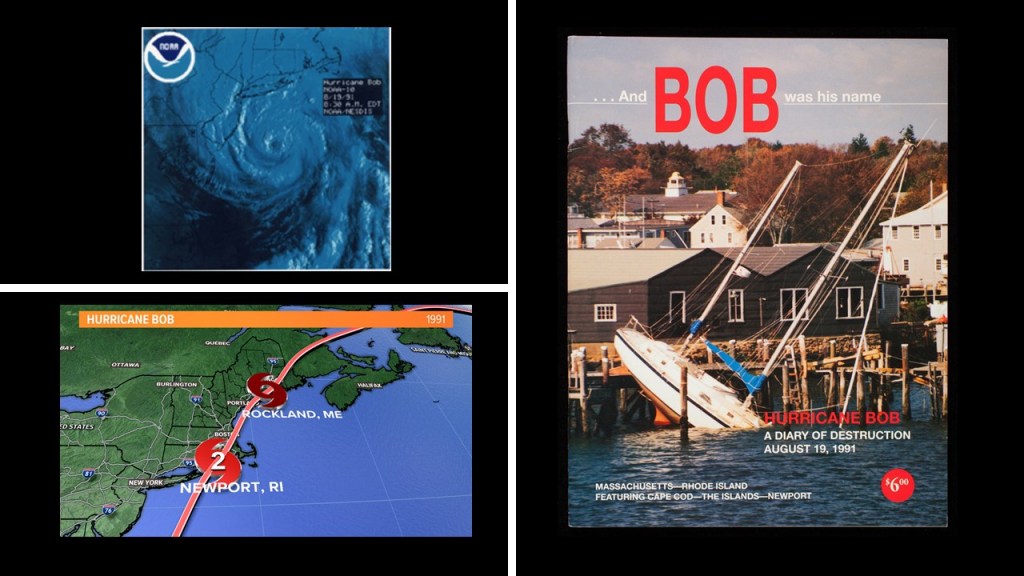
Hurricane Bob brushed the Outer Banks of North Carolina on August 18th and 19th, and then approached the coast of New England on the 19th, hitting the coast of Rhode Island twice as a Category 2 hurricane, then it went into Maine and New Brunswick and Newfoundland in Atlantic Canada, leaving extensive damage in the northeast, killing 18 people, and causing at least $1.5 billion in damages.
On August 25th, Serbia attacked Vukovar in Croatia, launching the Battle of Vukovar, and 87-day siege of Vukovar in eastern Croatia.

It pitted under 2,000 Croatian National Guard soldiers and civilian volunteers, against the 36,000 soldiers of the Yugoslav National Army and Serbian paramilitaries equipped with heavy armor and artillery.
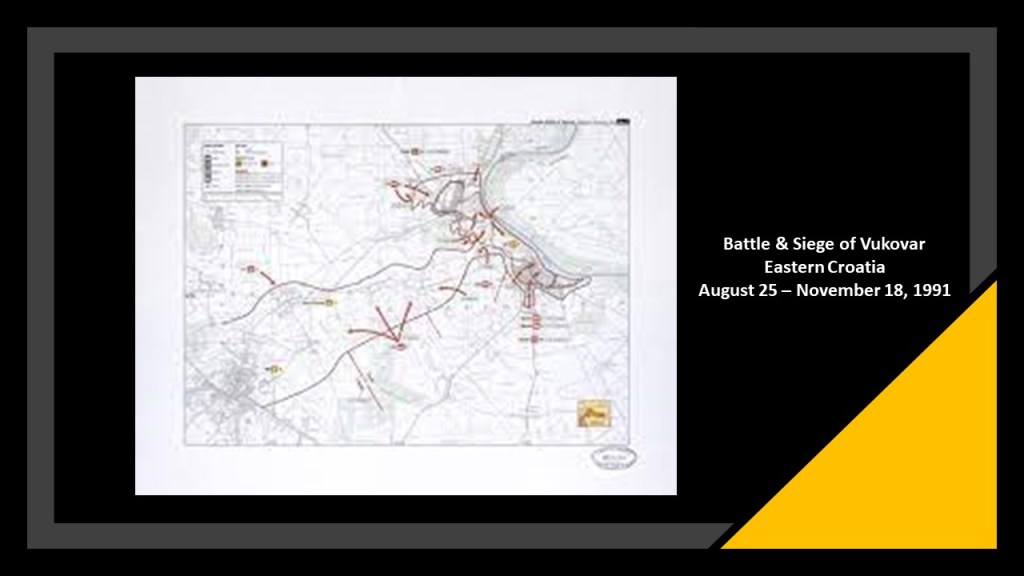
During this time, it was the first European town to be entirely destroyed since the end of World War II, and the fiercest battle in Europe since then as well.
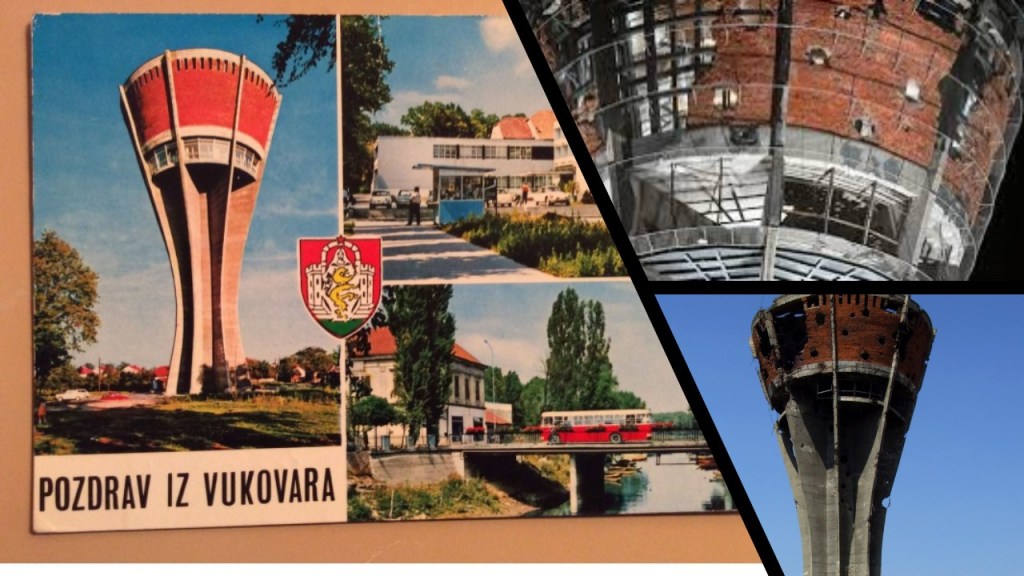
When it ended in November of 1991, over 20,000 of its inhabitants were forced to leave, and hundreds of soldiers and civilians were killed, with most of its population being “ethnically-cleansed” of its non-Serb population.

The term “ethnic cleansing” came into use in the 20th-century to mean “the systematic forced removal or exterminatin of ethnic, racial, and/or religious groups from a given area, frequently with the intent of making the area ethnically homogenous.

The then newly-elected Socialist President of Serbia, Slobodan Milosevic, and other Serb military and political officers, were later indicted, and in some cases jailed, for war crimes.
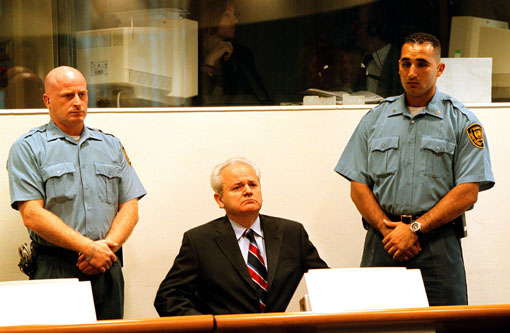
…and he was found dead in his cell in March of 2006 in the UN War Crimes Tribunal’s Detention Center.

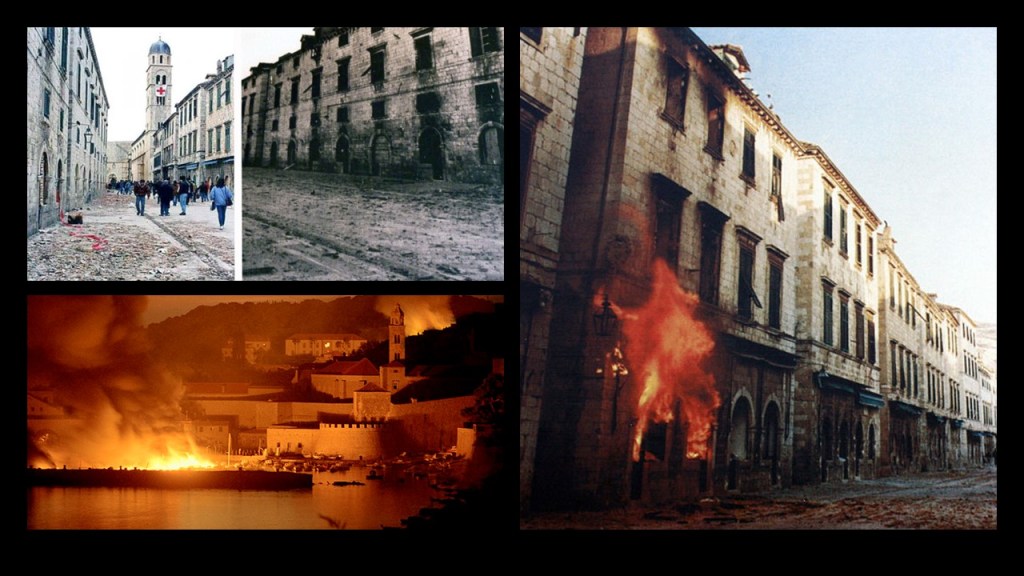
The beginning of the Siege of Dubrovnik was on October 1st, which was a military engagement between the Yugoslav People’s Army, the military of the Socialist Federal Republic of Yugoslavia, and Croatian forces defending the city of Dubrovnik during the Croatian War of Independence, when the Croatian government had declared independence from Socialist Federal Republic of Yugoslavia.
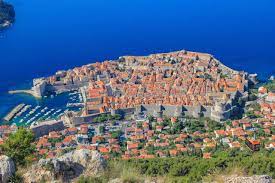
While it ended at the end of May in 1992 with a Croatian Victory, during the course of the Siege of Dubrovnik, the Yugoslav People’s Army had bombarded the city, including the old town, and UNESCO World Heritage Site.
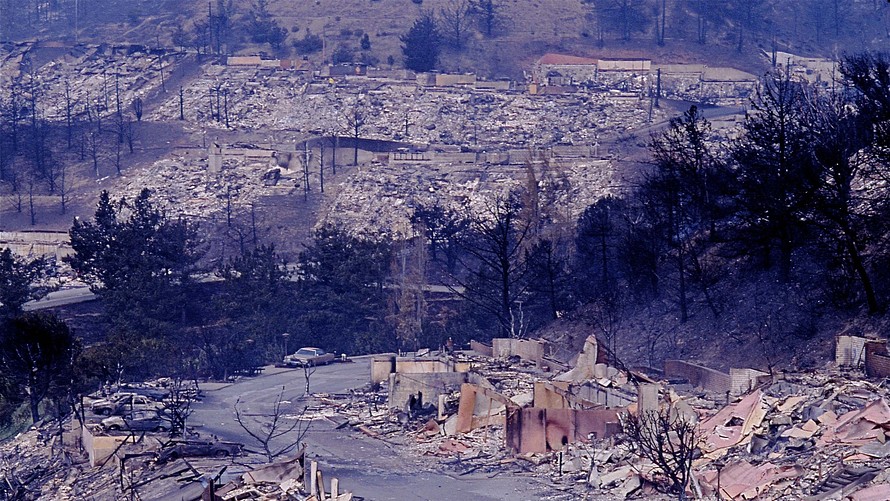
Over the weekend of October 19th and 20th, a large suburban firestorm occurred on the hillsides of northern Oakland and southeastern Berkeley in California.
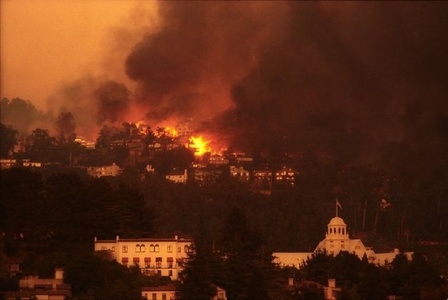
By the time it was brought completely under control on October 23rd, the fire had killed 25 people, injured 150, and caused $1.5 billion in damages, destroying almost 3,000 single-family dwellings and 437 apartment and condo units.

It was the third-most deadly wildfire in California history.
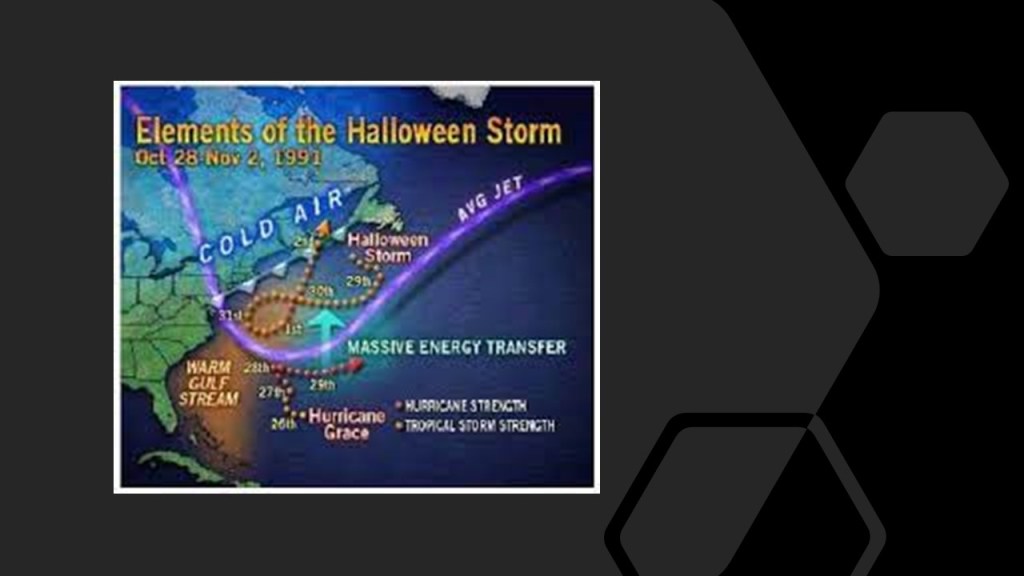
Between October 28th and November 3rd, what became known as the “Perfect Storm” or the “Halloween Storm” struck the northeastern U. S. Coast and Atlantic Canada, causing over $200 million in damages and 12 deaths.

Interesting how the path of the storm as it was building-up before it made land-fall looked like an almost-perfect figure-8.
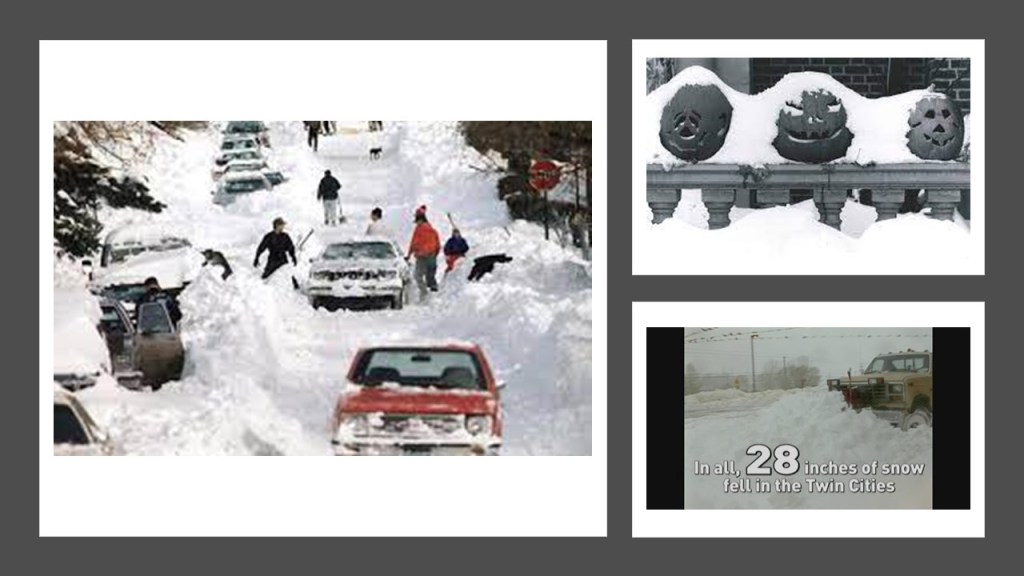
During almost the same dates at the Halloween Storm, the Halloween Blizzard hit the U. S. Upper Midwest, killing 22 people and causing $100 million in damages, between October 31st and November 3rd.
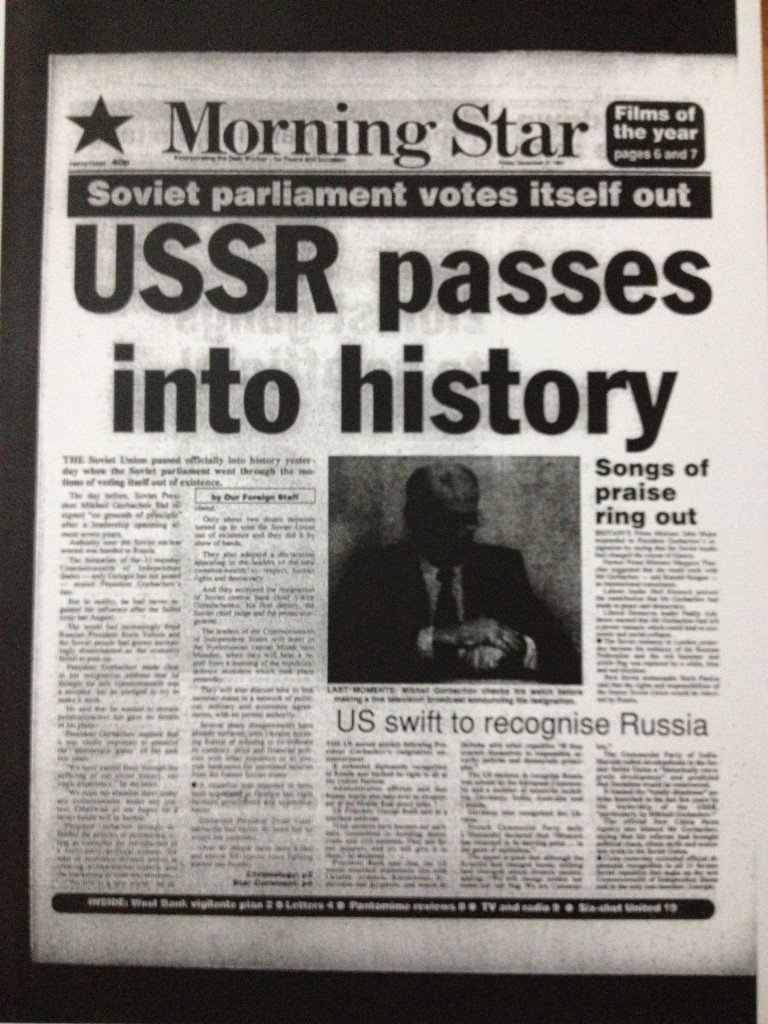
On December 8th, the leaders of Russia, Belarus and the Ukraine signed the Belovezha Accords in Belarus, officially ending the Soviet Union and establishing the Commonwealth of Independent States in its place…
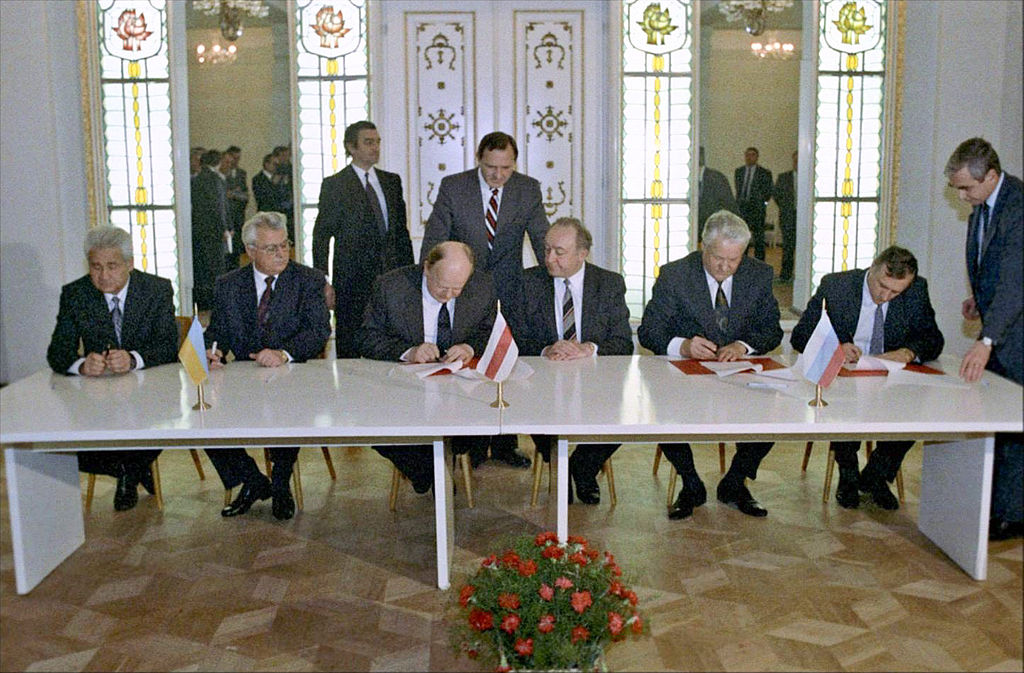
…and on December 26th, the Supreme Soviet met for the last time, formally dissolving the Soviet Union , and ending the cold war.

All remaining soviet institutions ended on December 31st.
Now let’s take a peek at what happened in 1992.
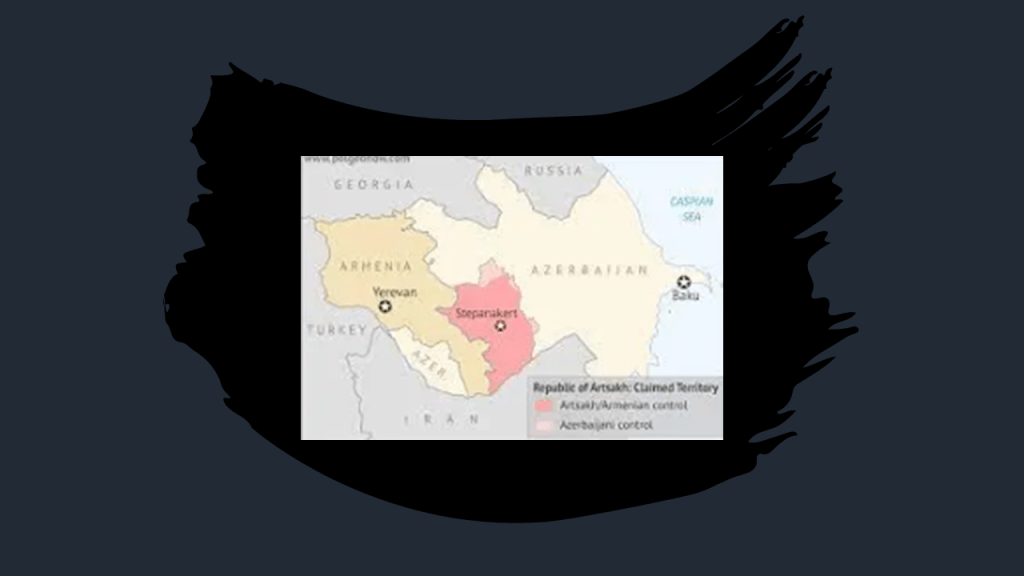
On January 6th, shortly after the dissolution of the Soviet Union at the end of December, the Nagorno-Karabakh Republic known as Artsakh, was proclaimed by the Armenians within Azerbaijan.

The Republic of Artsakh exists to this day, and is closely reliant on Armenia, to which it is connected by one overland road known as the “Lachin Corridor.”
On February 1st, President George H. W. Bush of the United States, and President Yeltin of Russia met at Camp David and formally declared the cold war over, after both leaders had issued statements on January 26th, announcing that neither side would target each other and their allies with nuclear weapons any more.
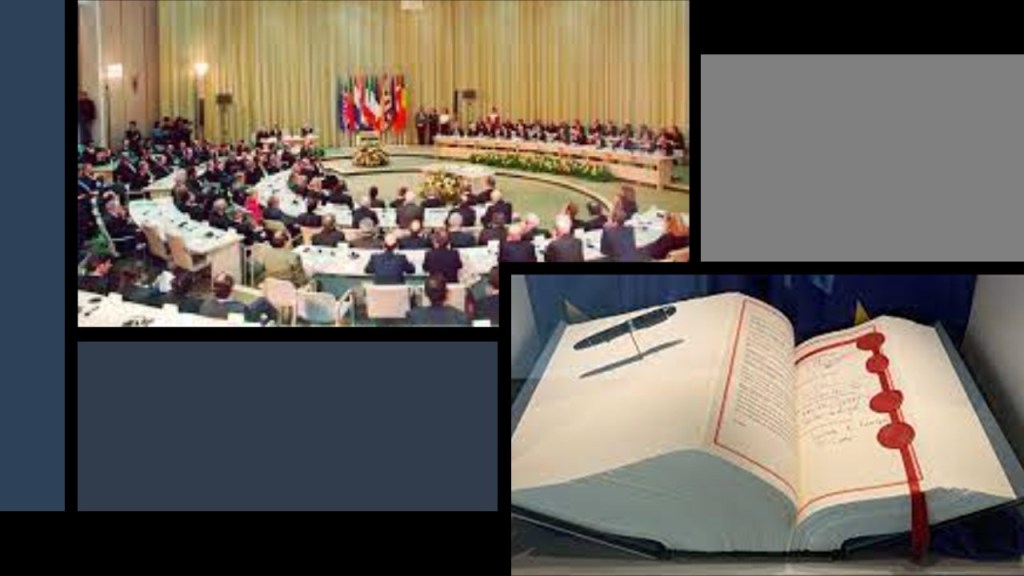
The Maastricht Treaty is signed between the twelve members states of the European Communities on February 7th, which was the foundation treaty of the European Union.

Announcing a new stage of European integration, it had provisions for a shared European citizenship; the eventual introduction of a single currency; and for common foreign and security policies.
The United Nations Resolution 743 was passed on February 21st, to send UN Peace-keeping force to Yugoslavia.
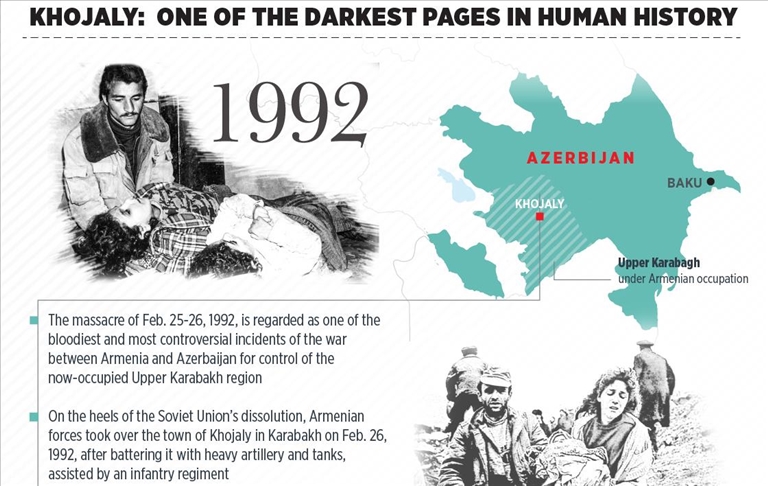
The Khojaly Massacre took place on February 25th and 26th in Nagorn0-Karabakh, involving the massacre of around 200 Azerbaijani citizens by local Armenian forces.
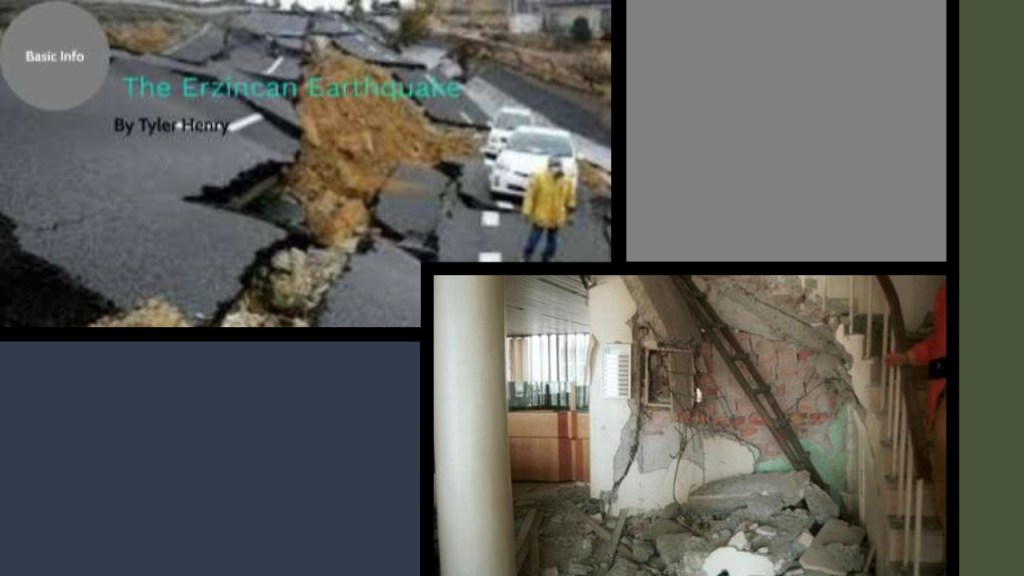
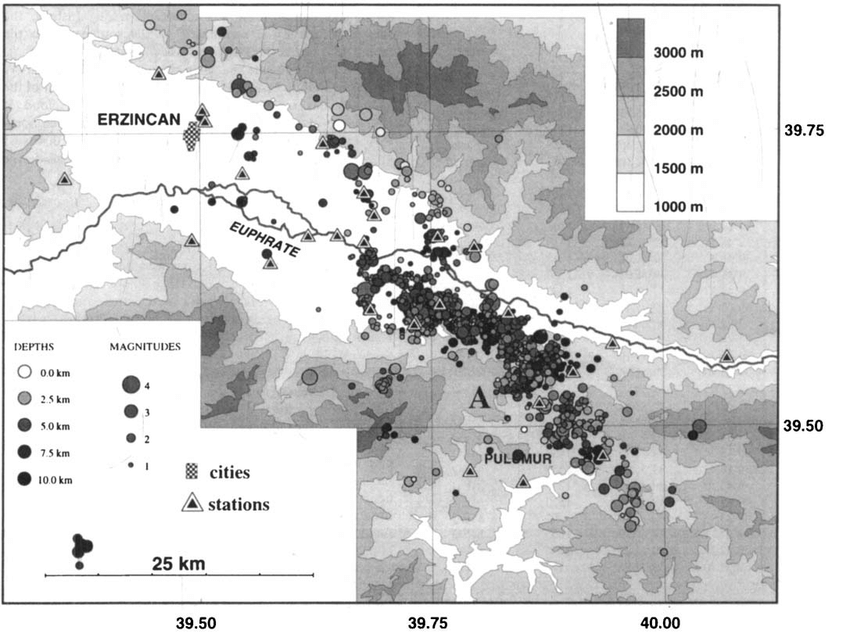
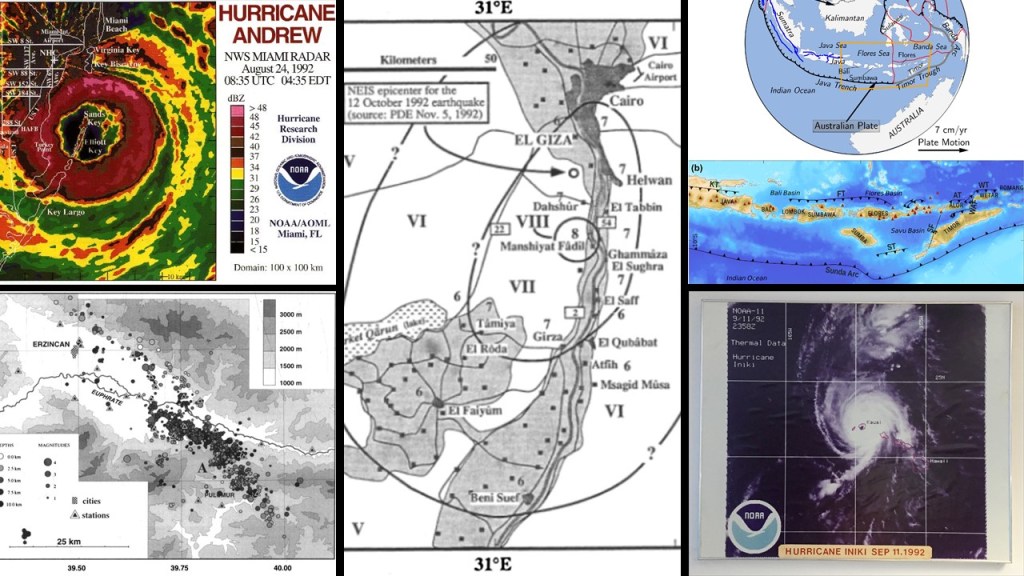
On March 13th, the 6.7 magnitude Erzincan earthquake in eastern Turkey left between 500 and 652 dead, and injured 2,000 with total financial losses amounting in US dollars to $13.5 million.

There were over 3,000 aftershocks after the initial earthquake.
The Erzincan basin is on the northern side of the North Anatolian Fault.
The Assembly of Bosnia and Herzegovina, without the presence of the Serb political delegates, proclaimed independence from the Socialist Federal Republic of Yugoslavia on April 5th.
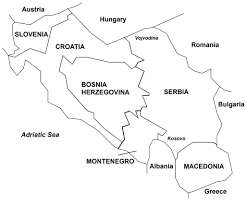
On the same day, 13,000 Serb troops besieged the city of Sarajevo following a mass rebellion of Serbs in Bosnia and Herzegovina, we are told, against the Bosnian declaration of Independence from Yugoslavia.

The stated goal of the Bosnian Serbs was the creation of a new Bosnian Serb state called the Republic of Srpska.
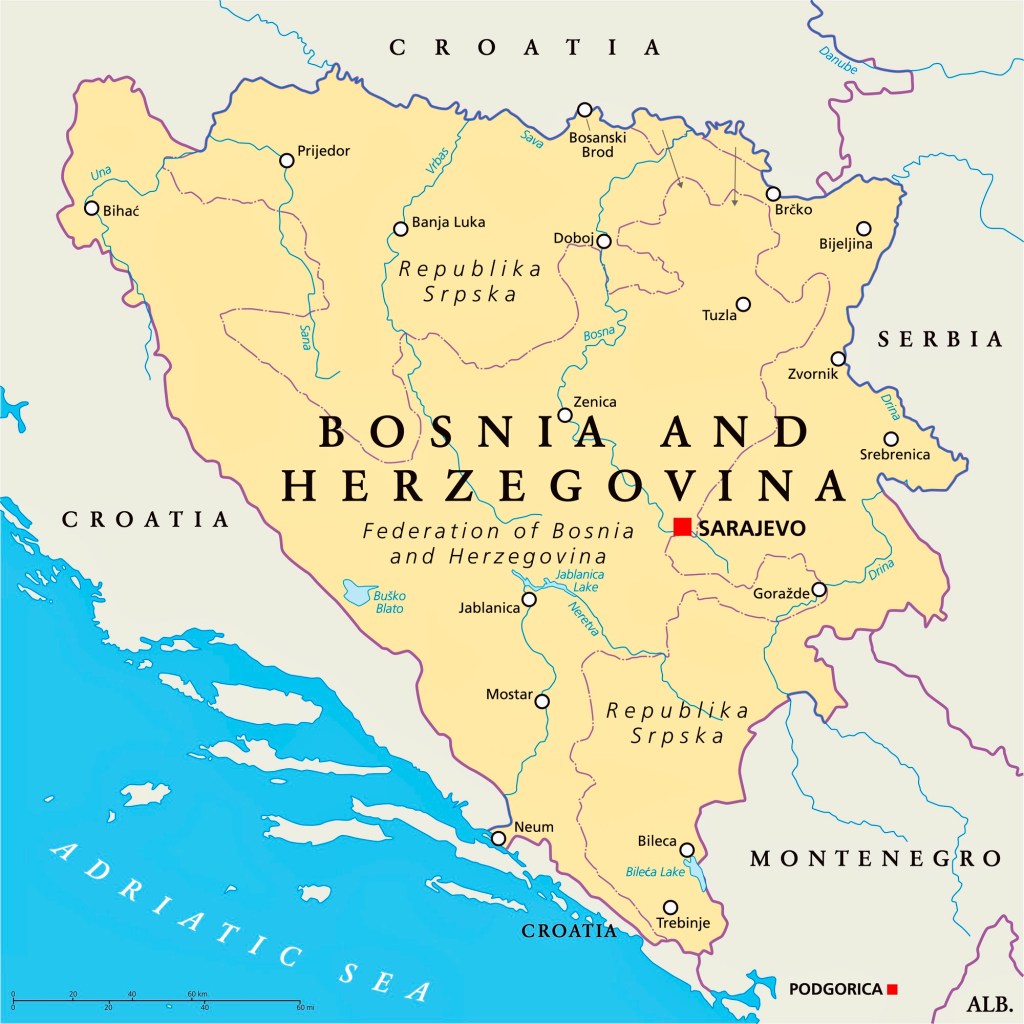
It was the longest siege of a capital city in the history of modern warfare, lasting 3 years, 10 months, 3 weeks, and 3 days, it was beseiged by the Bosnian Serb Army from April 5th of 1992 to February 29th of 1996, which took place after the official end of the Bosnian War with the signing of the Dayton Agreement on December 14th of 1995.
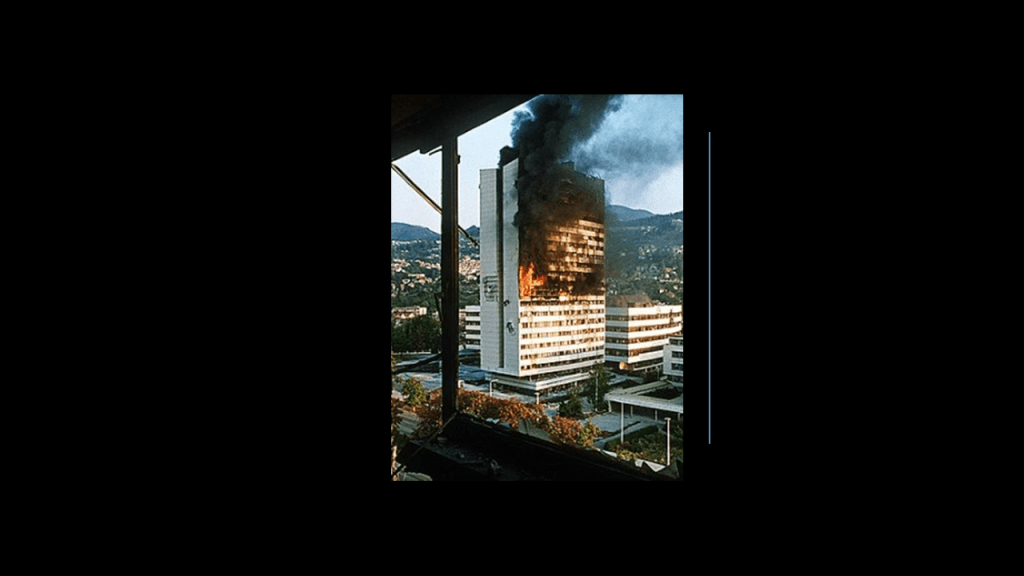
Of the almost 14,000 people killed during the siege, approximately 5,500 were civilians.
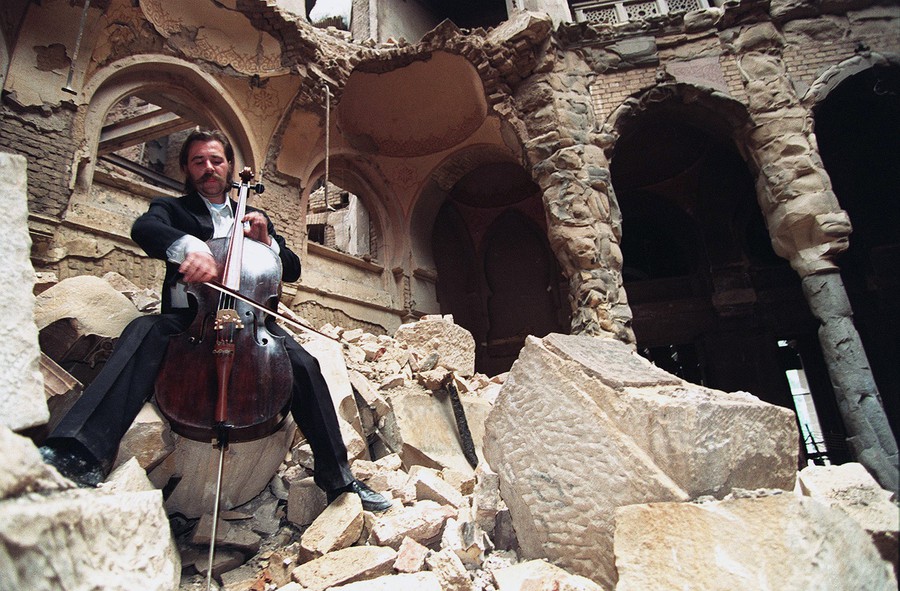
An International Tribunal at the Hague in the Netherlands after the Bosnian War convicted four Bosnian Serb officials of War Crimes and Crimes against Humanity.

Also on April 5th, Alberto Fujimori, the President of Peru, isued a decree that dissolved the Congress and Judiciary of the Republic of Peru, and had opposition politicians arrested and imposed censorship, which set off the 1992 Peruvian Constitutional Crisis, as he assumed full legislative and judicial powers.
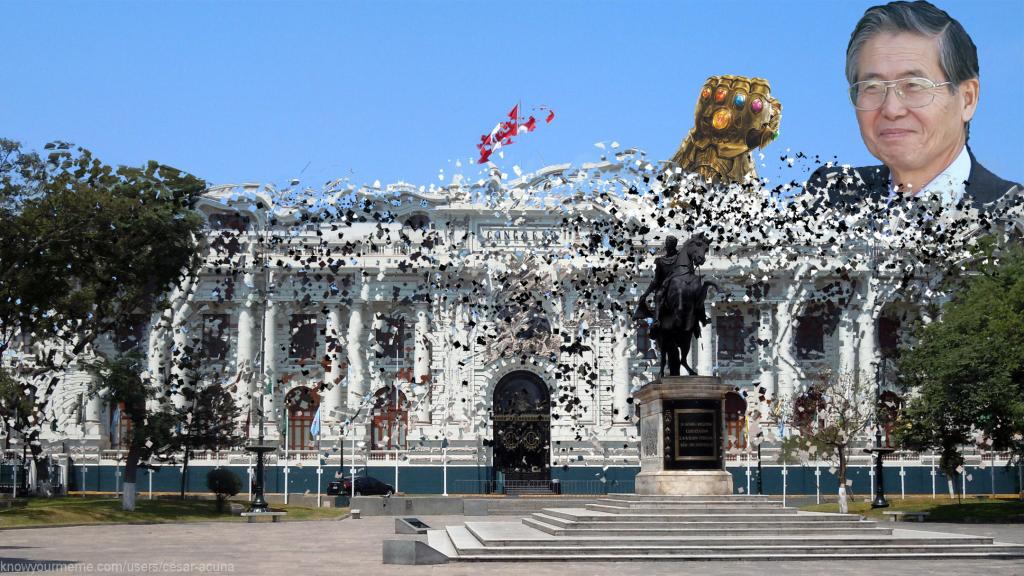
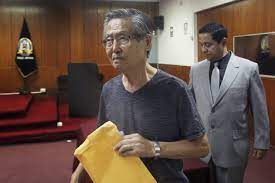
Fujimori was later convicted of Human Rights Violations, Crimes against Humanity, and embezzlement, for which he is still serving time in prison after a presidential pardon for him in 2017 was annulled in 2019.
On April 10th, forty-three Armenian civilians were killed in the Maraga Massacre when their village was captured by the Azerbaijani Armed Forces during the Nagorno-Karabakh War.

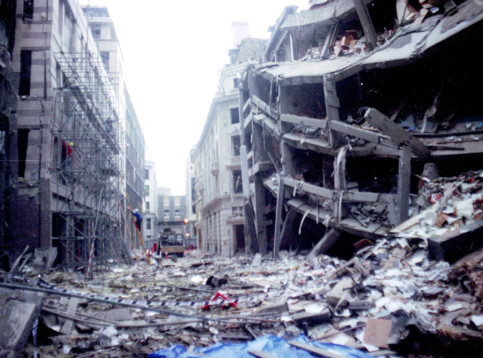
On the same day as the Maraga Massacre, on April 10, a Provisional Irish Republican Army bomb exploded in the Baltic Exchange in the City of London the day after the general election which re-elected John Major as Prime Minister, killing 3 and injuring 91.

The one-ton bomb was concealed in a large white truck, consisting of a fertilizer device wrapped with a detonation cord made from 100 lbs of semtex, a general purpose plastic explosive, was the biggest bomb detonated on mainland Britain since World War II.

It severely damaged the Baltic Exchanged and its surroundings.
The Roermond earthquake took place on April 13th, with a 5.3 magnitude, and affected the Netherlands, Germany, and Belgium.
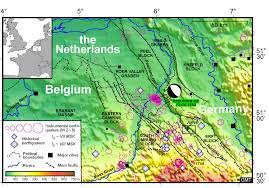
Striking on the Peel Boundary Fault near Roermond, it was the strongest earthquake to hit The Netherlands and northwestern Europe on record.
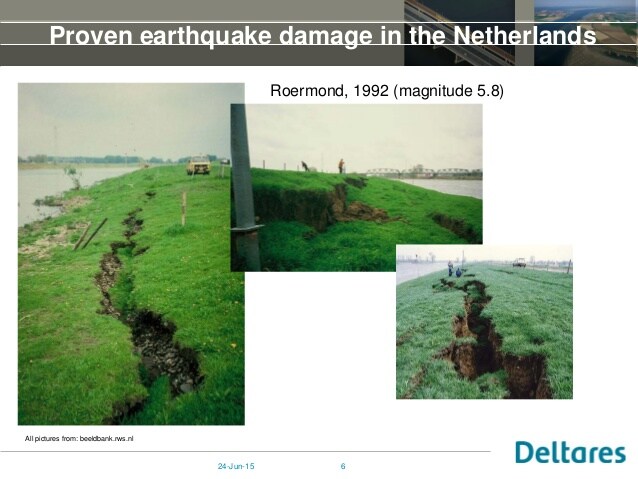
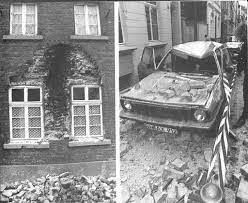
It caused substantial damage to older buildings in the Netherlands, Belgium and Germany.
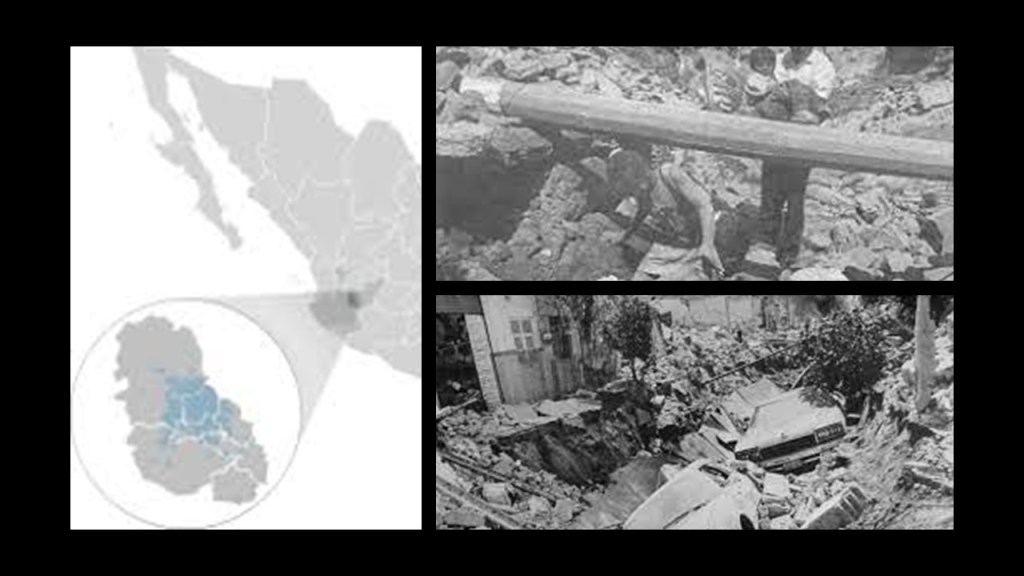
On April 22nd, there was a series of ten explosions caused from gasoline leaking into the sewer system in the district of Analco Colonia Atlas in Guadalajara, Mexico, and exploded, with an official death toll of around 250 people, but it is estimated that the death toll alone was 1,000, with around 500 people missing, 500 injuries, and 15,000 people made homeless, with damage estimates ranging between $300 million and $3 billion.
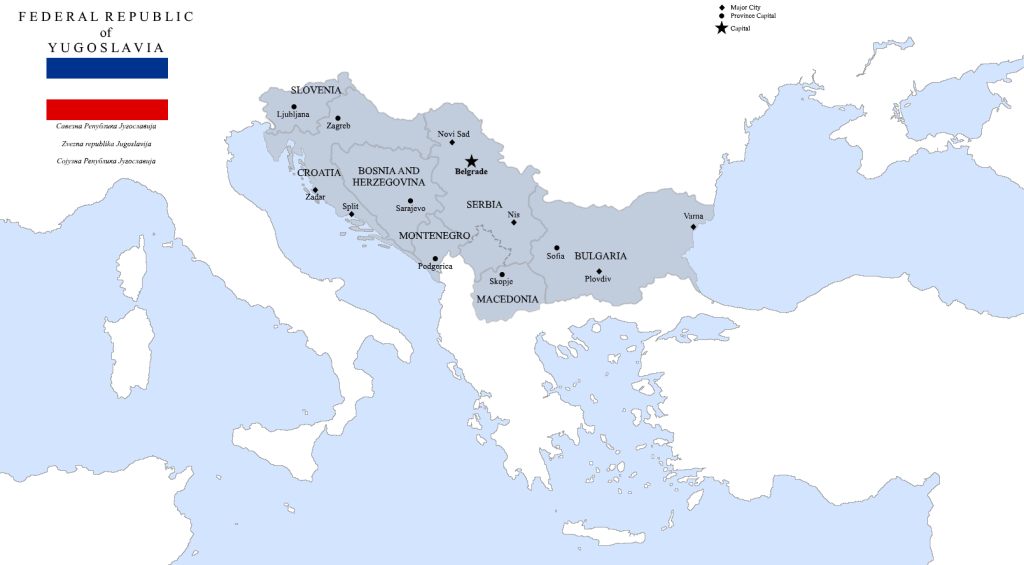
The last two republics of the former Socialist Yugoslavia, Serbia and Montenegro formed a new state, called the Federal Republic of Yugoslavia, on April 28th. This brought to an end the official states union of the former countries Yugoslavia that had existed pretty much since 1918, and existed until 2003.
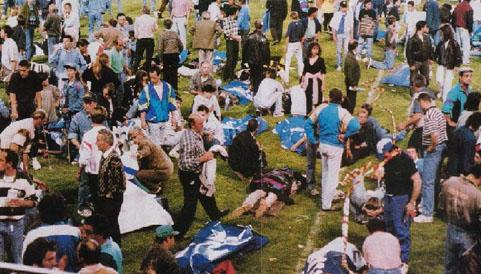
On May 5th, one of the terraces of the Armand Cesari Stadium collapsed in Bastia, Corsica during a big football match, resulting in the deaths of 18 people and injuring 2,300.
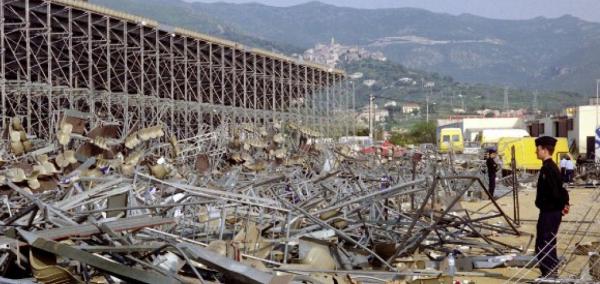
The terrace had been added, without restrictions, to increase the seating capacity by 50% specifically for the game between the Sporting Club Bastia and the Olympique du Marseille, which was the best team in France at the time.

The structure collapsed before the start of the match, and the game was never played.
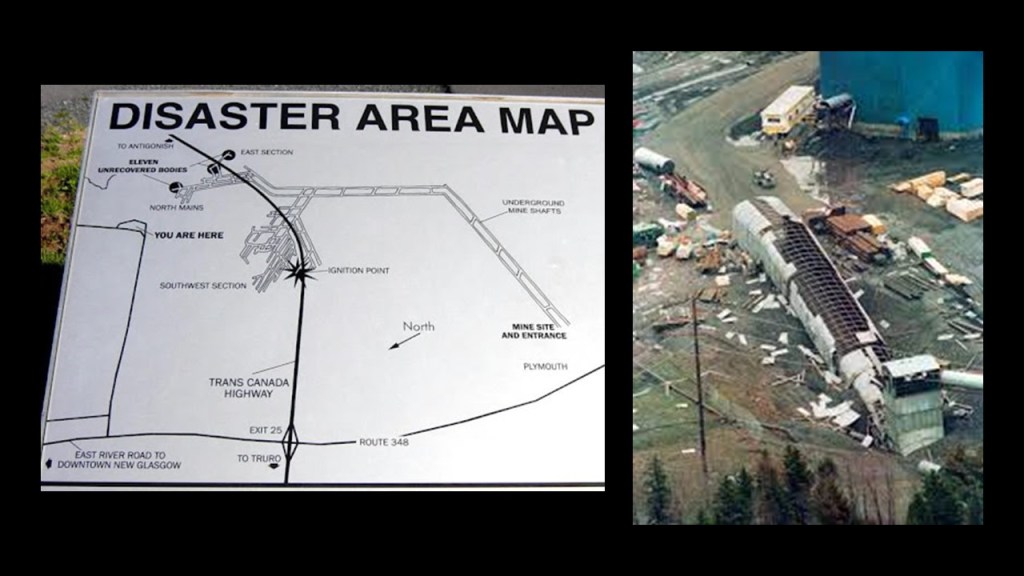
The Westray mine disaster occurred on May 9th in Nova Scotia, when an explosion caused by a methane-leak killed all 26 workers on the night shift.

It had only been open for 8-months before the disaster took place, and was closed afterwards, and was permanently sealed in 1998.
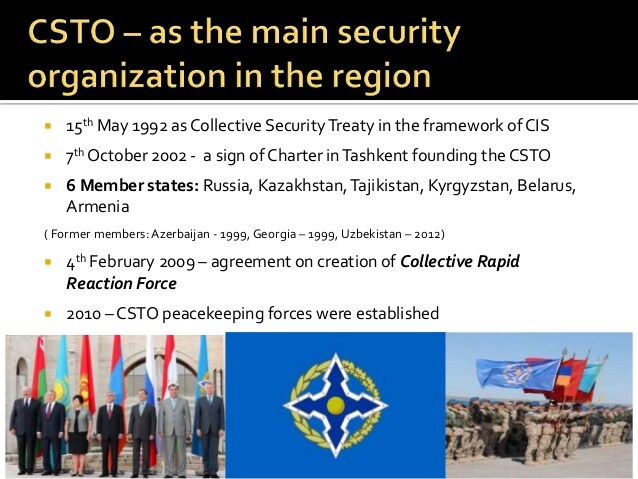
The Treaty of the Commonwealth of Independent States Collective Security Treaty (CST) was signed on May 15th.
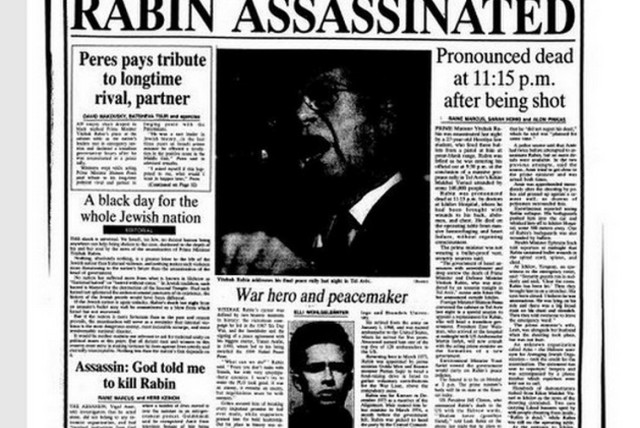
On June 23rd, the Israeli Labor Party won the Israeli legislative election under the leadership of Yitzhak Rabin, and he became Prime Minister for the second-time on July 13th.

Rabin was the Prime Minister during the Oslo Peace Process, during which time the Palestine Liberation Organization (PLO) recognized the State of Israel, and Israel recognized the PLO as the representative of the Palestinian people, accepting each other as negotiation partners.

He was assassinated on November 4th, 1995, we are told by an extremist gunman, and was the only Israeli Prime Minister to have been assassinated.
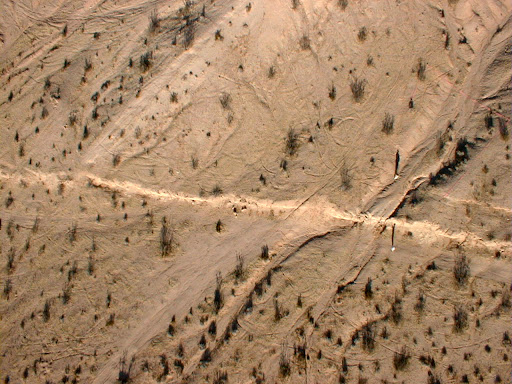
The 7.3-magnitude Landers Earthquake took place on June 28th near Landers in California’s San Bernadino County.
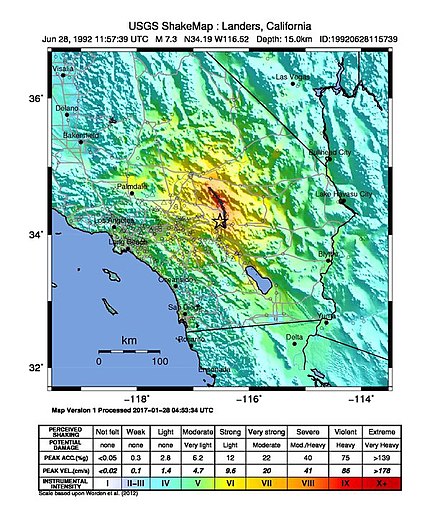
There was especially severe damage to the area around the epicenter, including buckled roads, and collapsed buildings and chimneys.
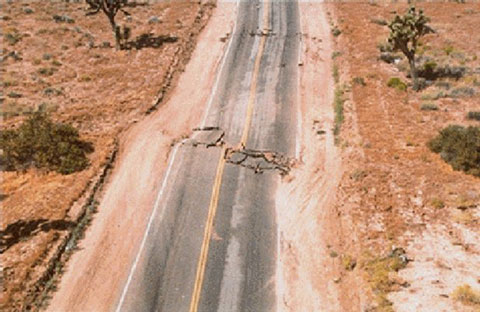
The earthquake caused a 43-mile, or 70-kilometer, long, surface-rupture.

Loss of life was minimal as it struck in an relatively unpopulated part of the state, but the earthquake caused $92-million in damages.
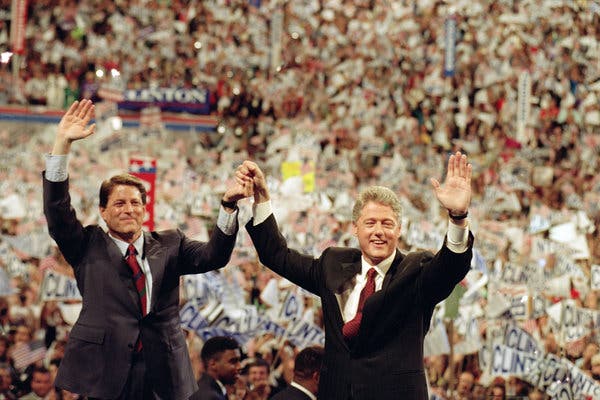
On July 16th, Arkansas Governor Bill Clinton, who long with his running mate Al Gore, accepted the Democratic party nomination for President and Vice-President on behalf of the “forgotten middle class.”
The Slovak National Council declared Slovakia an independent country on July 17th, which was the beginning of the end of the country of Czechoslovakia, which had existed since 1918, with the break-up of Austria-Hungary.

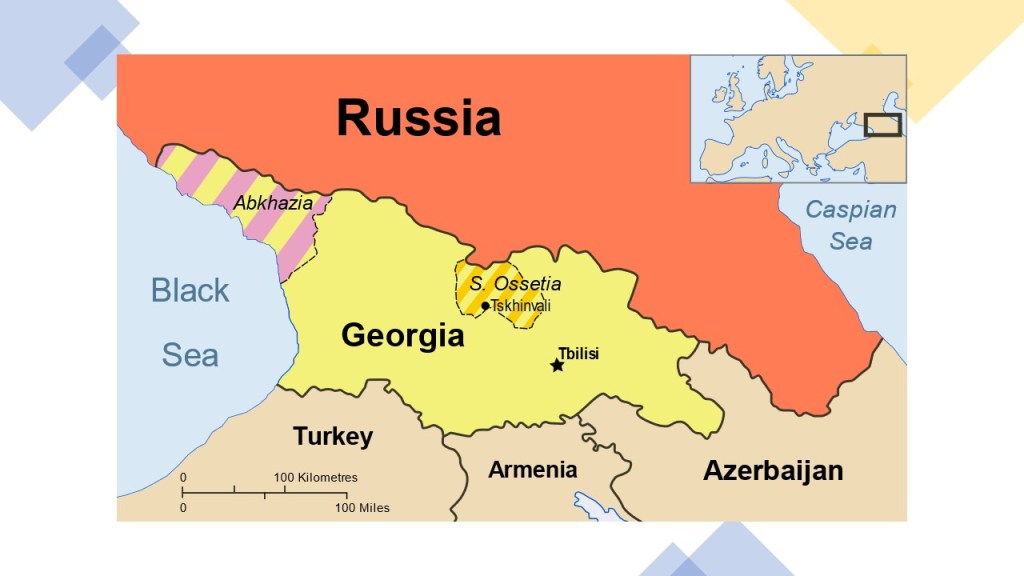
On July 23rd, Abkhazia declared independence from Georgia.

War started between Abkhazia and Georgia started in August of 1992.

During the war, the Abkhaz separatist side carried out ethnic cleansing of expelling up to 250,000 Georgians, and killing more than 5,000 ethnic Georgians.

War between the two-sides has flared intermittently since then.

While Georgia doesn’t have control of Abkhazia, the Georgian government and most UN member states consider Abkhazia legally part of Georgia.
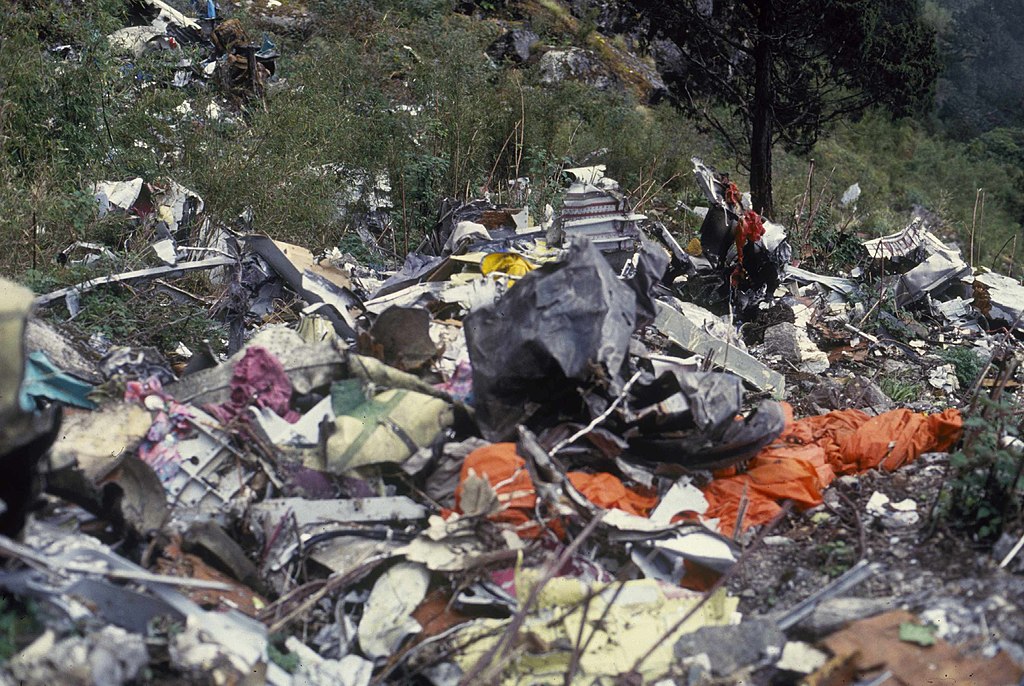
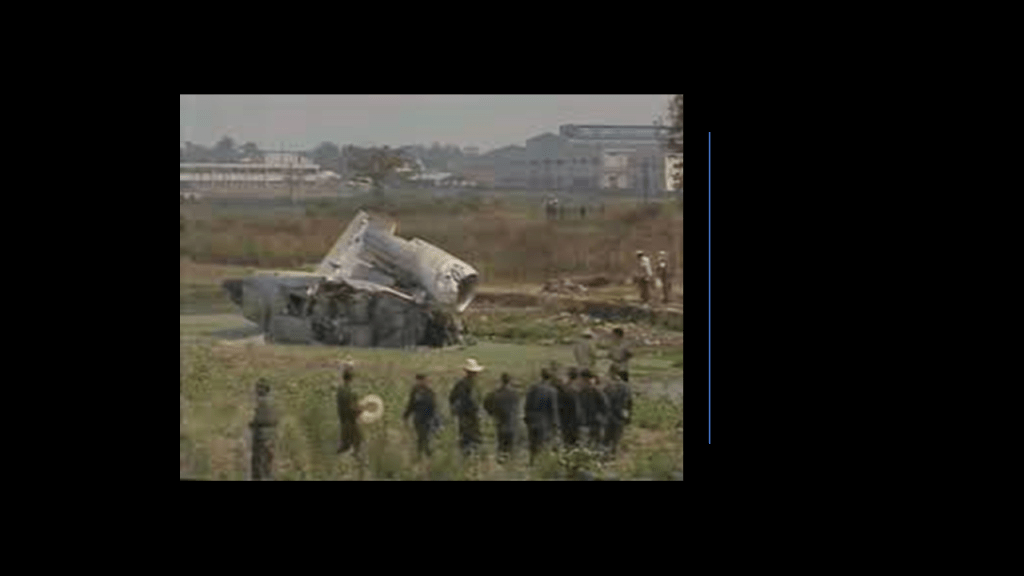
There were two plane crashes on July 31st.

Thai Airways International Flight 311 crashed into a mountain north of Kathmandu in Nepal, killing all 113 people on board…
…and China General Aviation flight 7552 crashed during take-off from Nanjing airport, never leaving the ground, killing all but 19 of the 126 on-board.
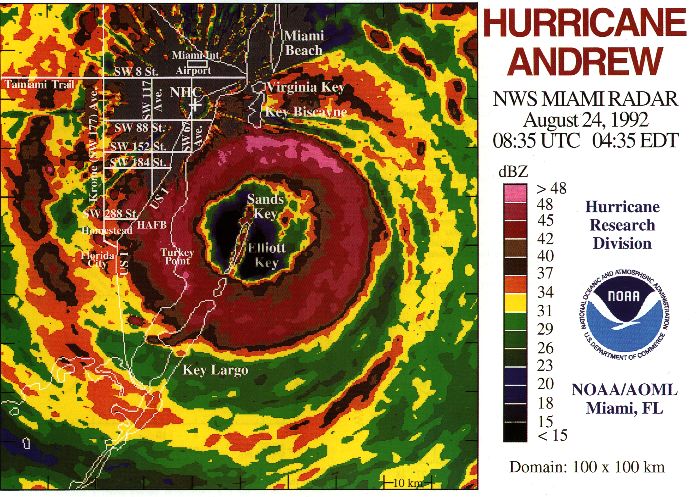
Hurricane Andrew hit South Florida on August 24th.

It was the most destructive hurricane to ever hit Florida for structures damaged or destroyed, and was only one of four hurricanes to make landfall, which it did in South Florida as a Category 5 hurricane, along with the 1935 Labor Day Hurricane, the 1969 Hurricane Camille, and the 2018 Hurricane Michael.

Andrew also caused extensive damage in the Bahamas before reaching South Florida, and had Louisiana in its destructive sights as well.
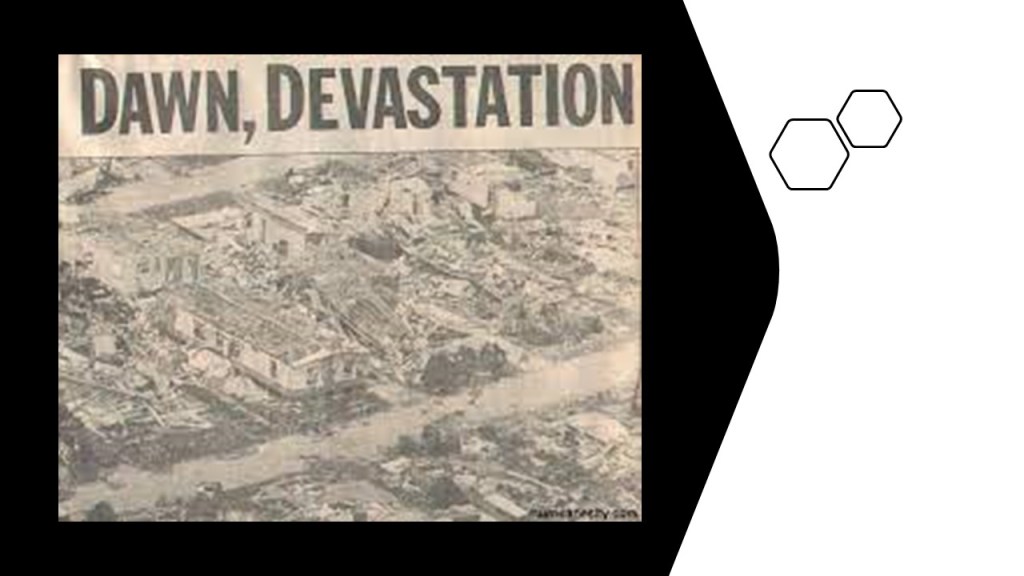
By the time Hurricane Andrew had dissipated over the Tennessee Valley, it had destroyed more than 63,500 homes, and caused $27.3 billion in damages, and was the costliest hurricane financially in U. S. history until Hurricane Irma in 2017.
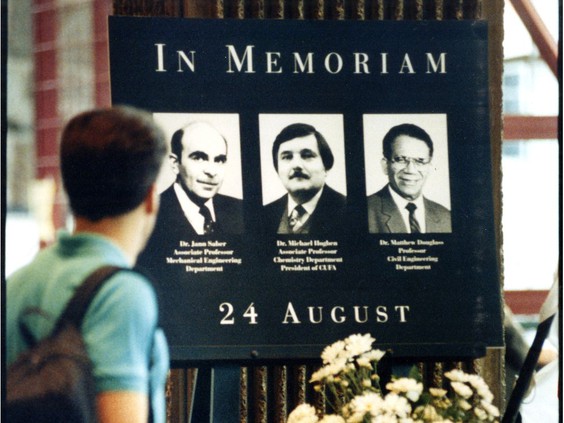
Also on August 24th, the Concordia University Massacre took place in Montreal, Quebec.

The perpetrator of the violent weapons assault on campus resulted in the murders of four of his colleagues was Associate Professor of Mechanical Engineering Valery I. Fabrikant, who for some reason had been allowed to work at the University for thirteen years, with a history of disruptive behavior described as “undesirable to intolerable” during that whole time to students, staff members, and other academics.
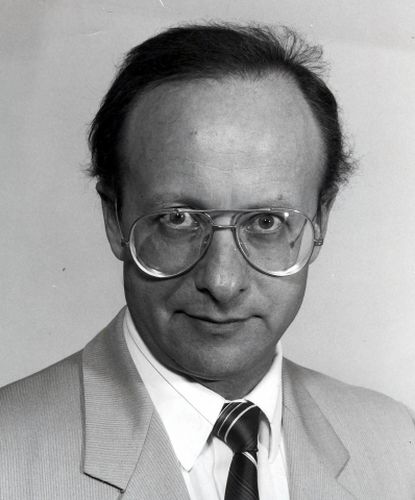
He was convicted and sentenced to life in prison.
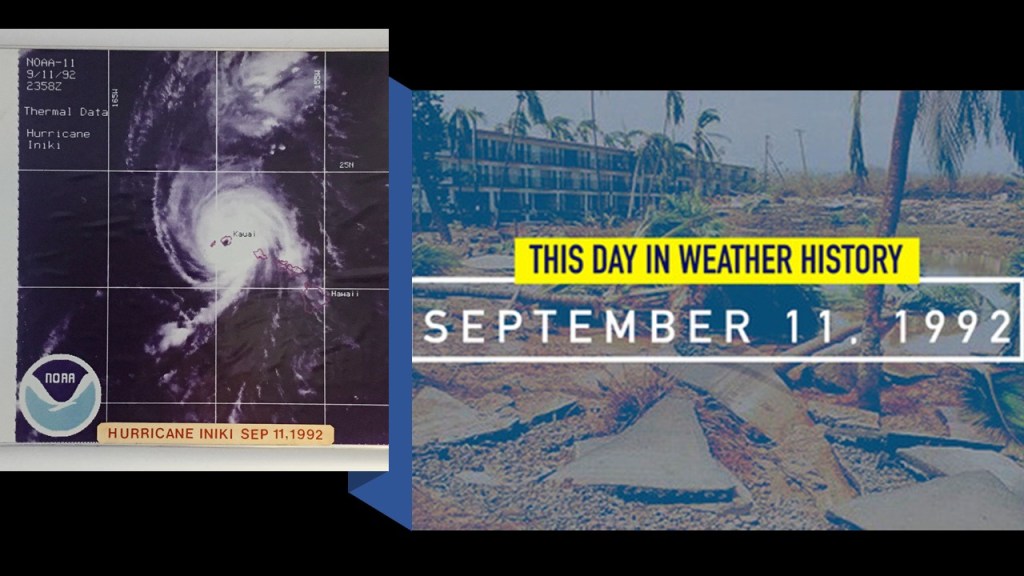
On September 11th, Hurricane Iniki hit the Hawaiian Islands. It was the costliest hurricane to strike Hawaii, resulting in $3.1 billion in damages, and the third-costliest in the United States history at the time, taking place less than a month after Hurricane Andrew, the costliest hurricane it the time.
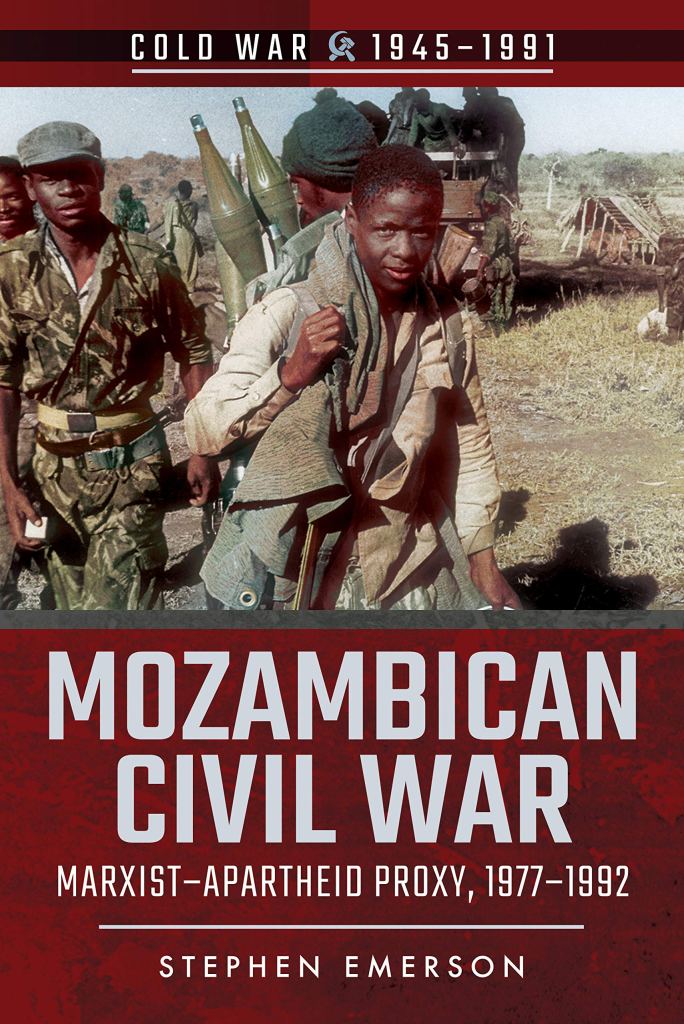
The 16-year-old Mozambican Civil war came to an end on October 4th with the signing of the Rome General Peace Accords.

The Mozambican Civil War was exacerbated by polarizing Cold War politics, and was fought primarily between the ruling Marxist Front for the Liberation of Mozambique (FRELIMO) and the anti-Communist Mozambican National Resistance (RENAMO).
There was a 5.8 magnitude earthquake in Cairo on October 12th, leaving 545 dead, injuring 6,512, and making 65,000 homeless.

The number of buildings completely destroyed in the Cairo-area was 350, and another 9,000 severely damaged.
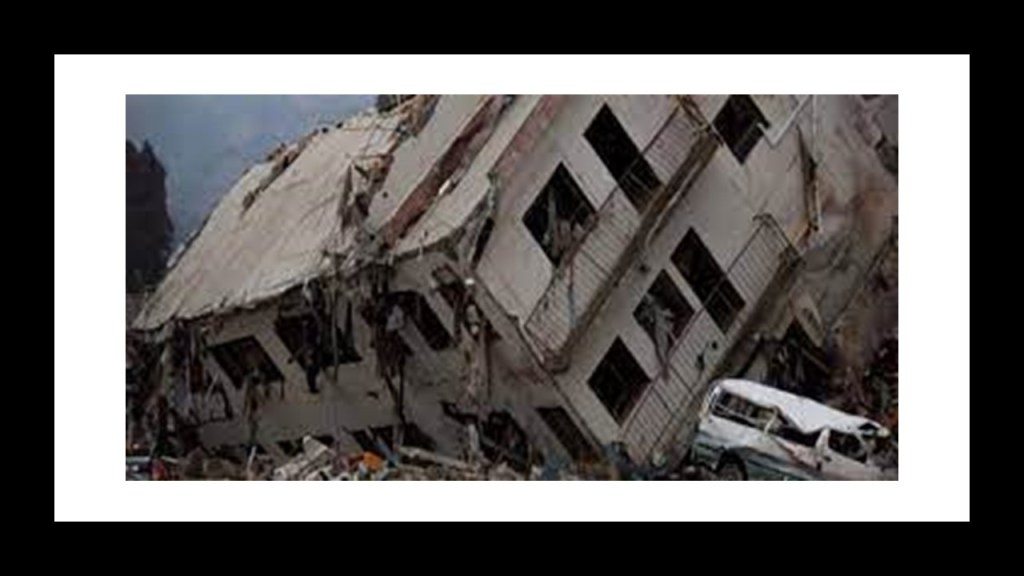
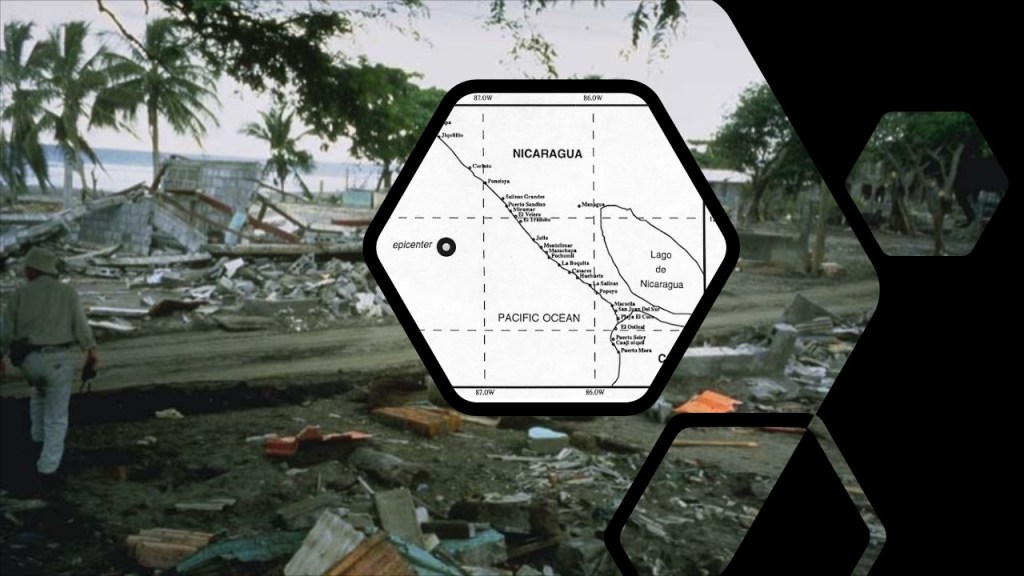
There was a 7.7-magnitude earthquake in Nicaragua on November 2nd.

It triggered a tsunami, which does most of the damage and casualties, and killed at least 116 people, with 68 people missing, and over 13,500 left homeless.

Damage in Nicaragua was estimated at between USD $20- and $30-million.
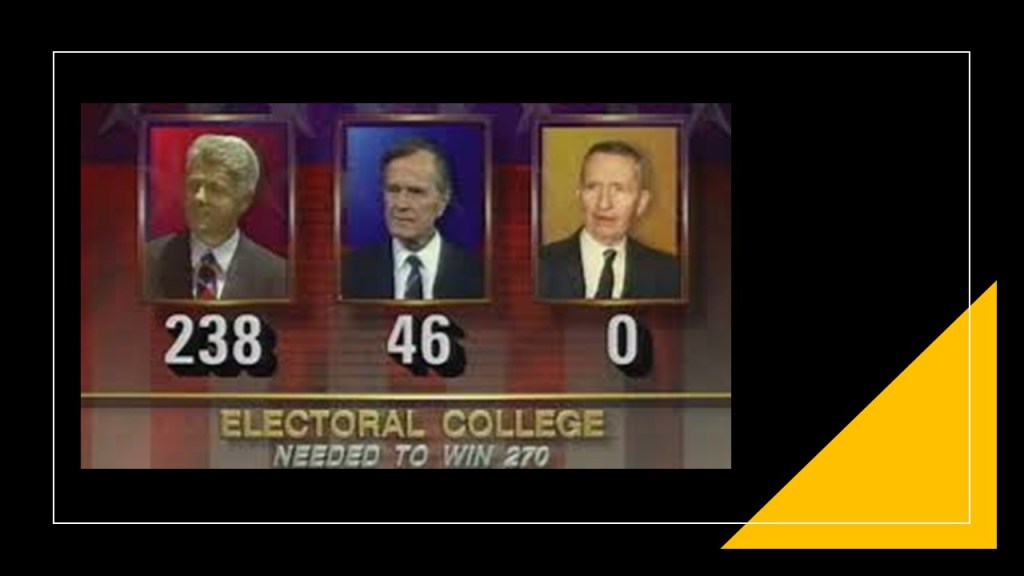
In the U. S. General Election, Bill Clinton was elected president on November 3rd.
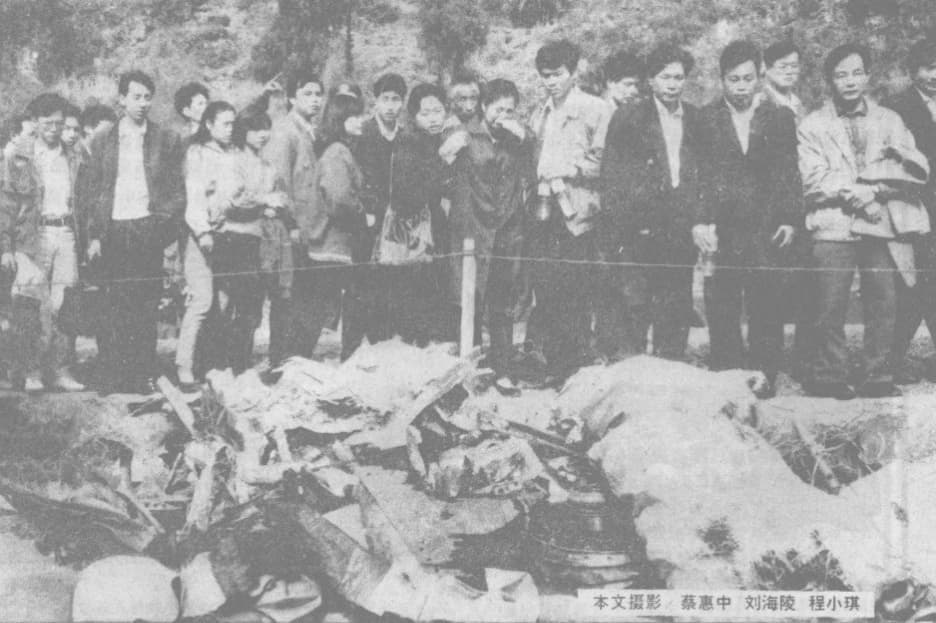
On November 24th, China Southern Airlines Domestic Flight 3943 crashed on descent to Guilin Airport, and killed all 141 on-board.

The cause of the crash was attributed to the pilot losing control of the aircraft.
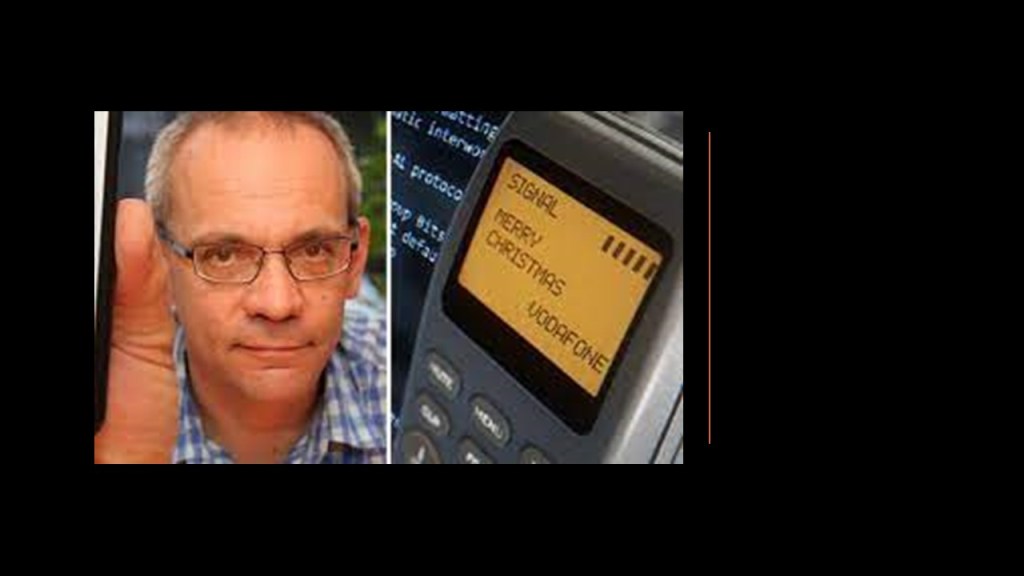
The Test Engineer for the SEMA group used a PC to send the world’s first text message via the Vodaphone network on December 3rd to the phone of a colleague.
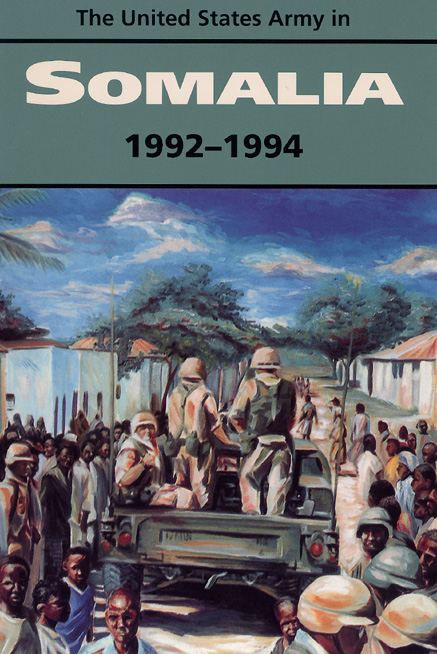
On the very next day, December 4th, the U.S. Military landed in Somalia after the still-President George H. W. Bush ordered 28,000 troops to Somalia in what was described as an effort to restore order to a conflict-ridden country, and a humanitarian mission to distribute food to the Somali people that was being prevented by Somalia’s warring factions.
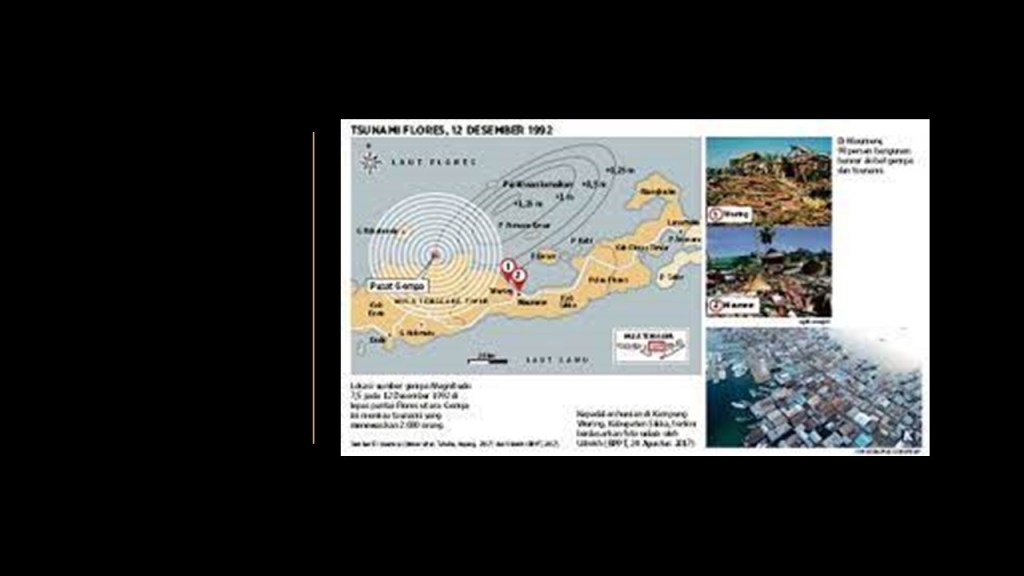
On December 12th, there was another major earthquake, this time the Flores earthquake in Indonesia with a 7.8 magnitude, which also caused a tsunami which reached the shore in 5 minutes.

It ended up being the largest and deadliest earthquake of 1992, that year of earthquakes.

At least 2,500 were killed or missing near Flores, more than 500 injured, and 90,000 left homeless.
So, among many other things in 1992, after the celebrated-end of the Soviet Union in December of 1991, we already see civil wars, genocide and ethnic-cleansing occurring within former Republics of the Soviet Union, as well as civil wars, ethnic cleansing and genocide in the countries of the former Yugoslavia.

This is not progress the one would expect from our historical narrative, and is instead the reverse of it.

It would appear to be the immediate descent into chaos and violence from the departure of a centralized system of government, as well as chaos from communal violence in other parts of the world as well.
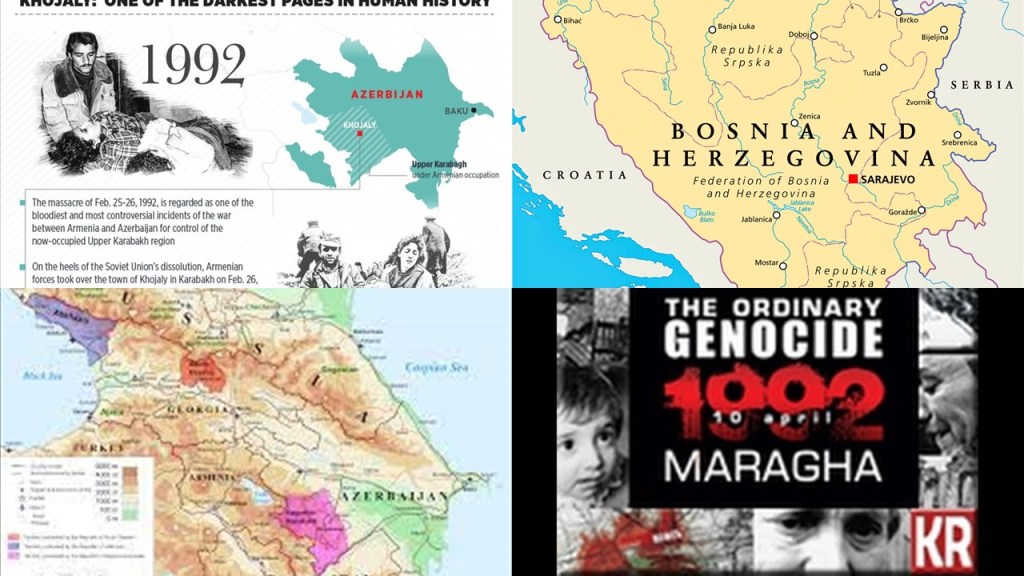
There was not only the prevalence of Civil Wars in 1992, but also numerous earthquakes and hurricanes of major intensity around the world.
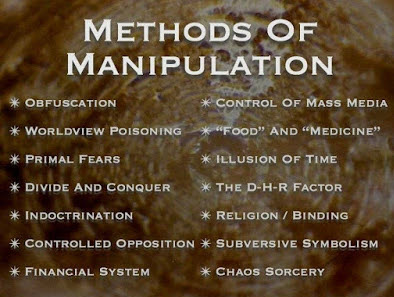
It seems like we have been living in real-life simulations and applications of things like the Hegelian Dialect of Problem-Reaction-Solution and Saul Alinsky’s Rules for Radicals.

The Controllers create the problem, get the reaction they desire, and then they provide the solution, which frequently involves taking away our freedoms for our own “protection” then they lie to us and gaslight us about what was really taking place, deflecting blame from themselves and projecting it on others.

The D-H-R Factor listed in the methods of manipulation is undetectable mind control.

I didn’t know that, so I looked it up.
It is interesting what comes up to the surface when digging back through our relatively recent history, and looking at it with new eyes.

It’s not hidden.

They tell us without telling us that they are telling us, and have been continuing on with the planning and implementation of their dark plans for all Humanity right in front of our eyes.

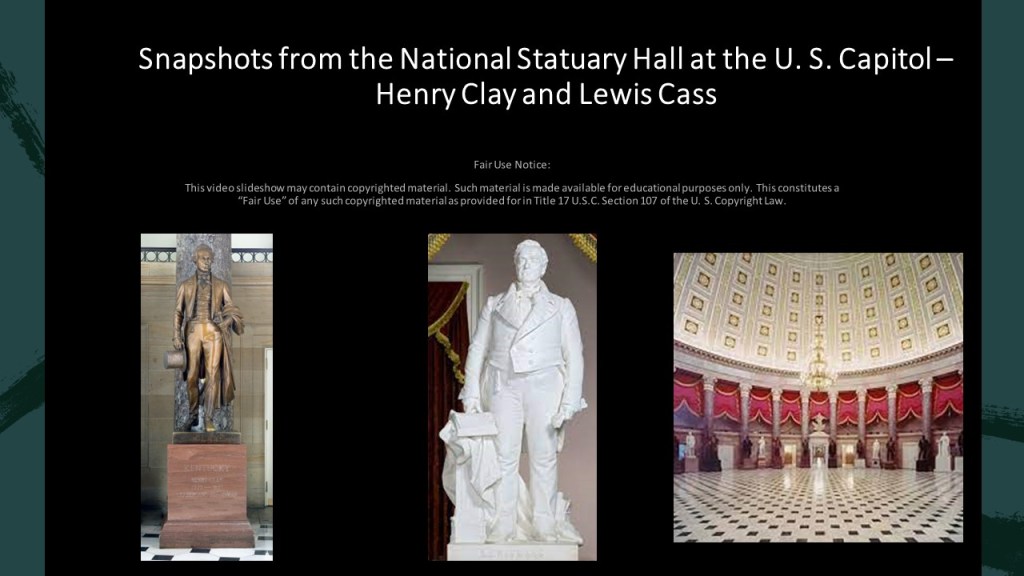
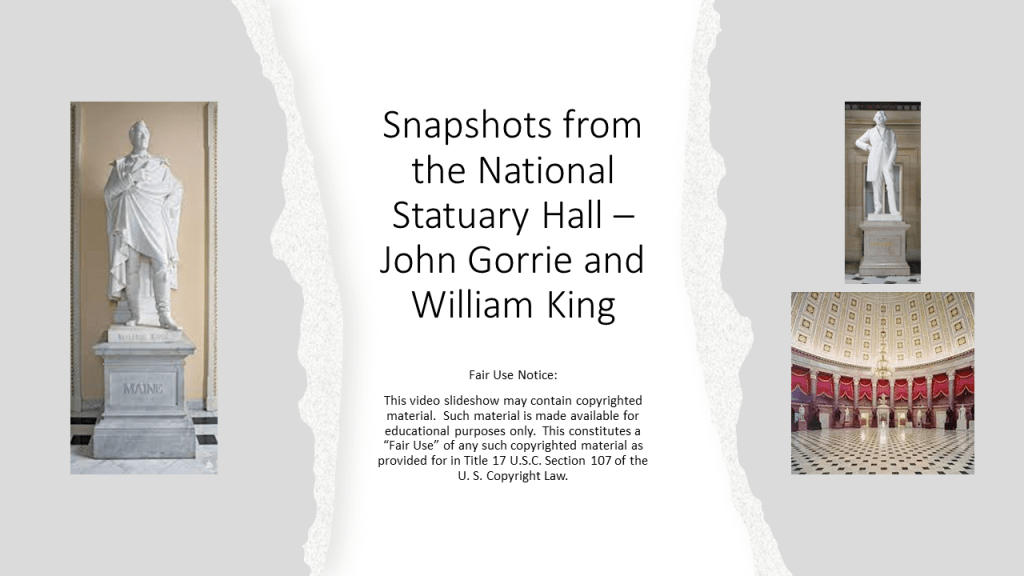
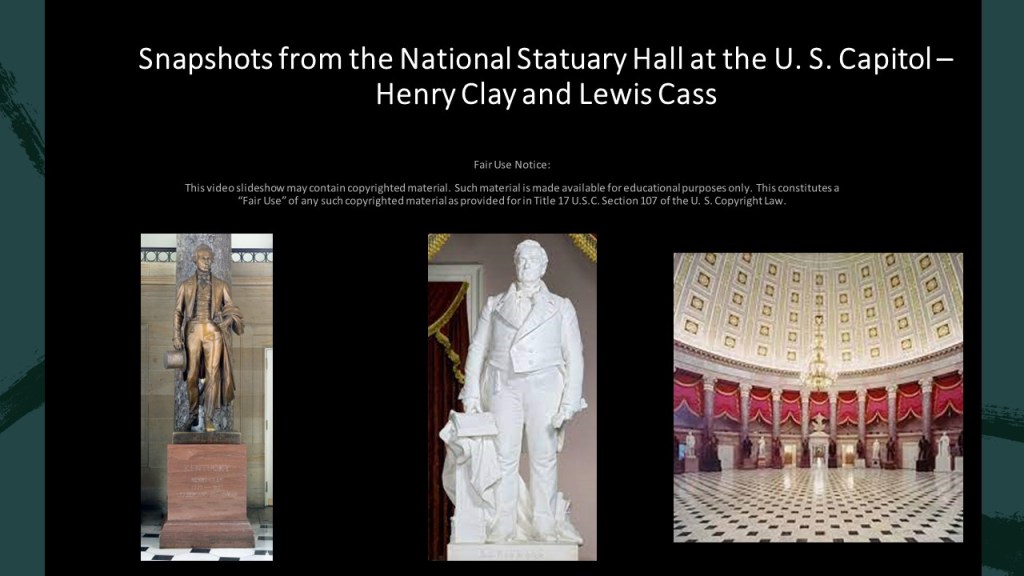
Snapshots from the National Statuary Hall – Henry Clay and Lewis Cass

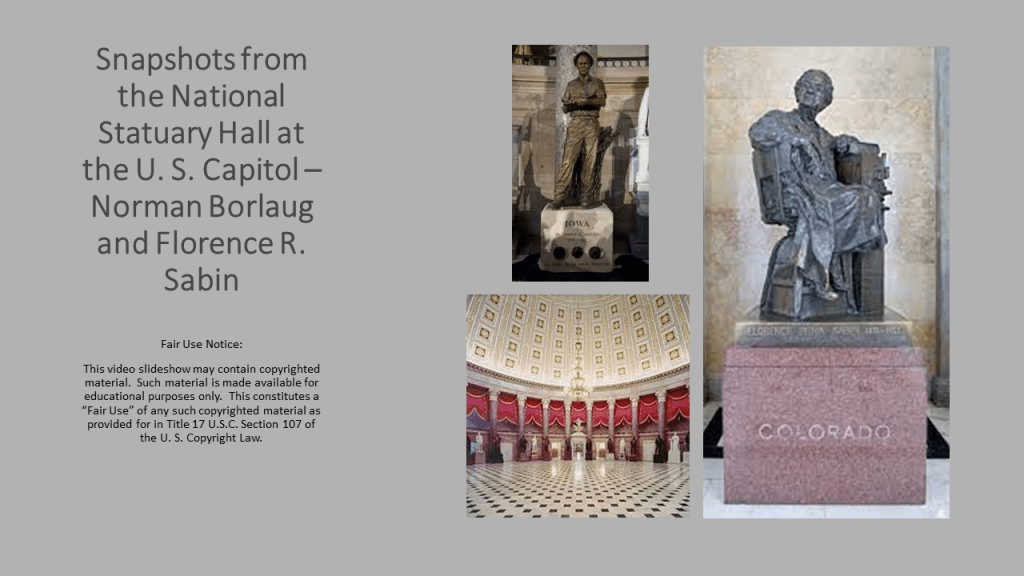
I am showcasing unlikely pairs of historical figures in the National Statuary Hall who have things in common with each other in this new series called “Snapshots from the National Statuary Hall at the U. S. Capitol.”

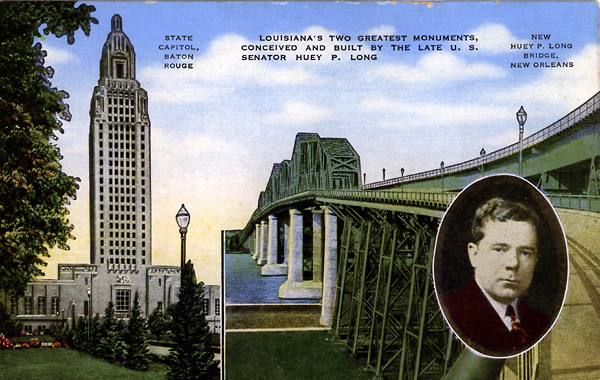
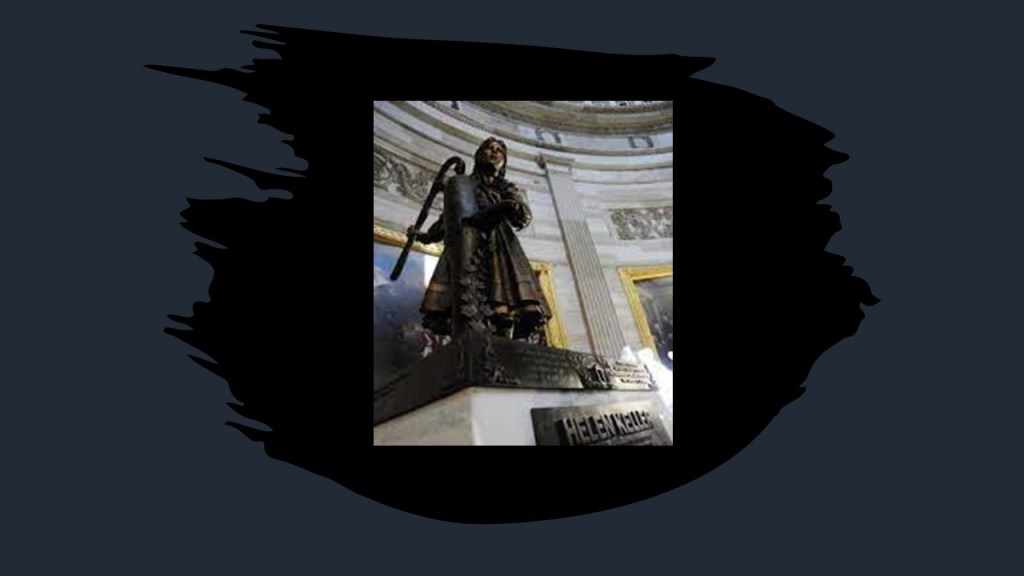
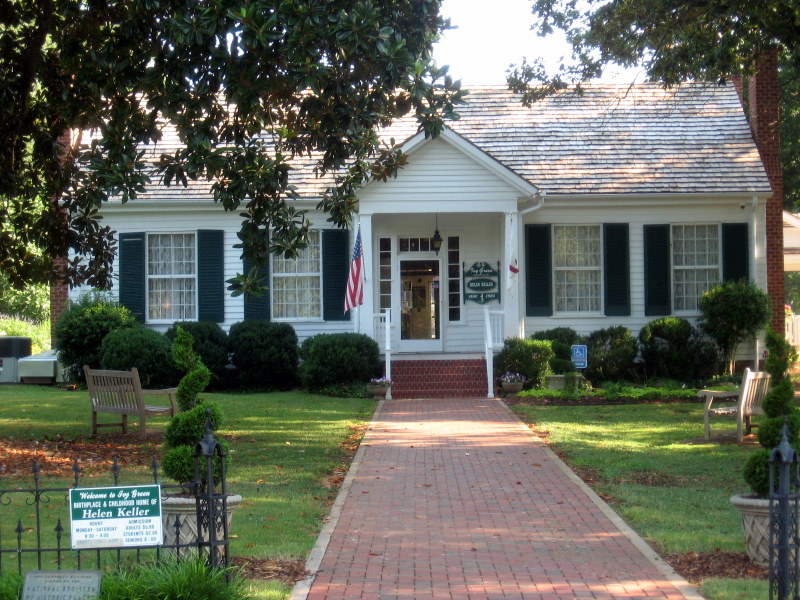
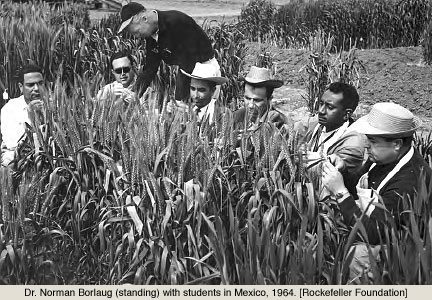
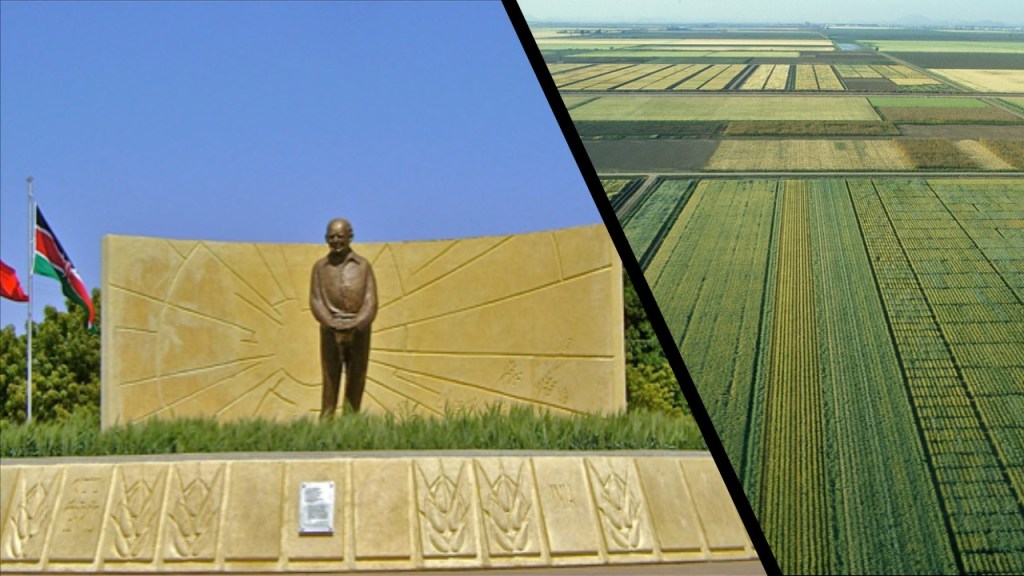
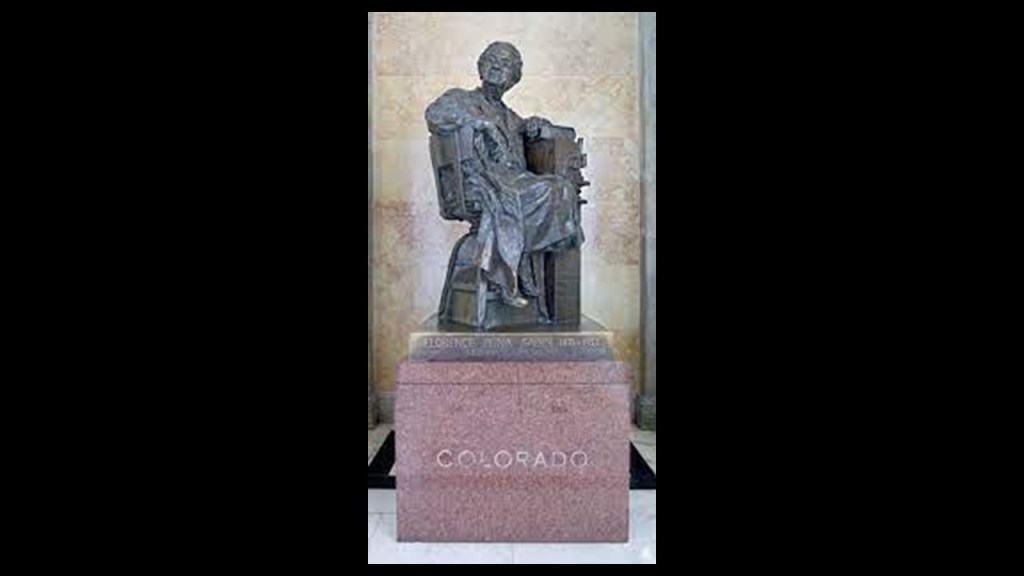
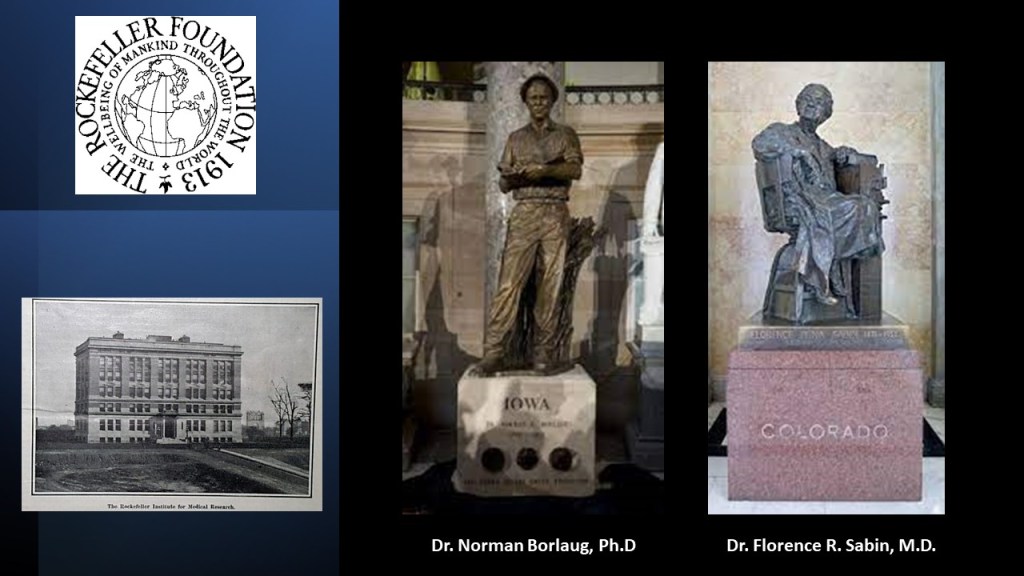
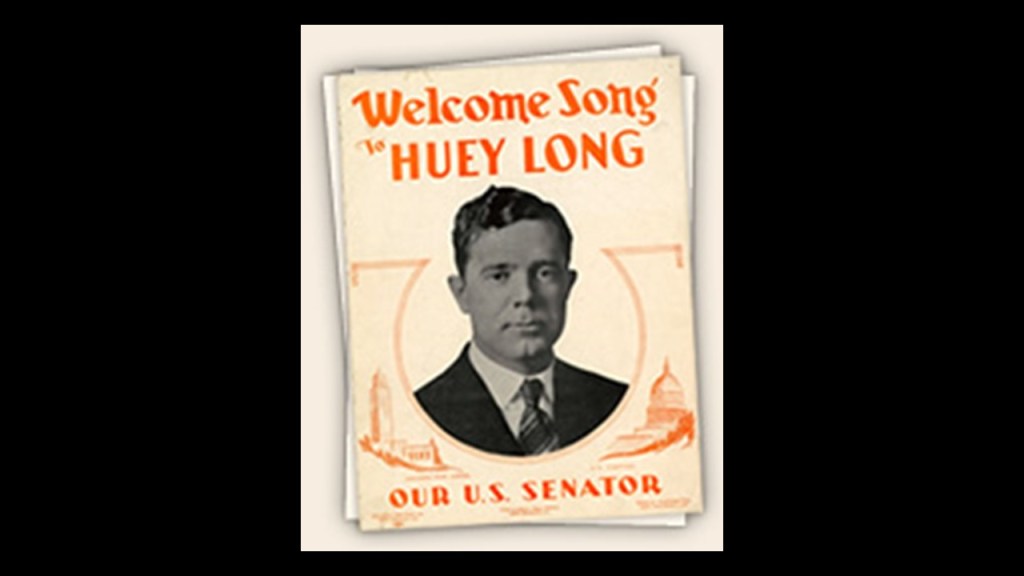
In the first segment of this series, I paired Michigan’s Gerald Ford, a former President of the United States, and Mississippi’s Jefferson Davis, the former President of the Confederate States of America; and in the second segment, I paired Dr. Norman Borlaug, Ph.D, often called the “Father of the Green Revolution; and Colorado’s Dr. Florence R. Sabin, M.D, remembered as a pioneer for women in science; and in the last segment I paired Louisiana’s controversial Governor, Huey P. Long, and Alabama’s Helen Keller, a deaf-blind woman who gain prominence as an American author, lecturer, political activist, and disability rights activist.

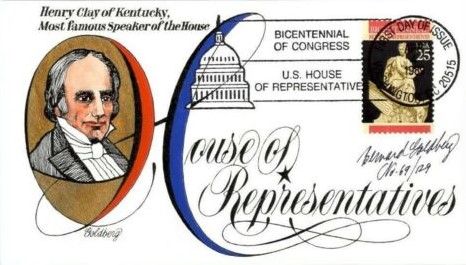
In this segment, I am pairing Henry Clay, described as an attorney and statesman from Kentucky, and Lewis Cass, described as an American military officer, politician and statesman from Michigan.

They were both contemporaries and major players in historical events during the time period in American history between Henry Clay’s birth in 1777 and death in 1852; a; and the birth of Lewis Cass in 1782 and his death in 1866.

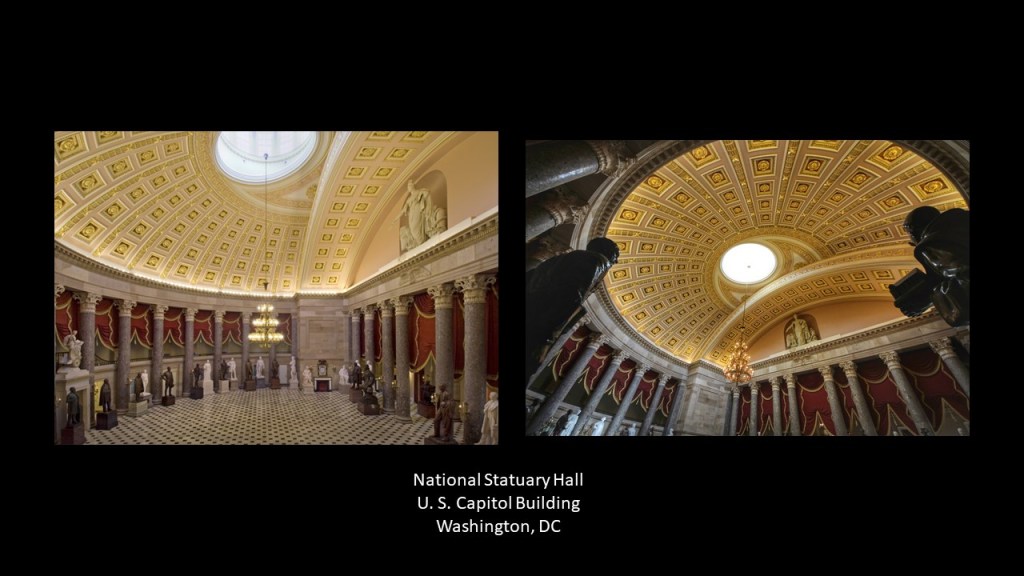
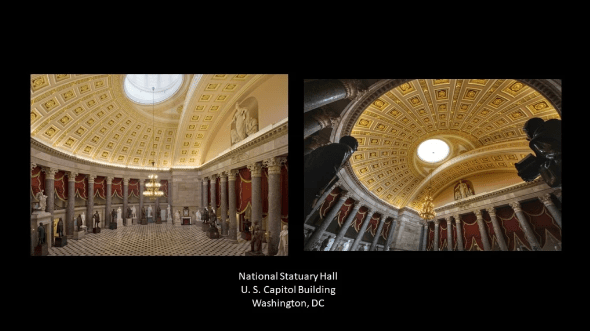
I am taking an in-depth look at who is represented in that National Statuary Hall in the U. S. Capitol building in Washington, DC, in a series which I am approximately halfway through in which sculptures of prominent American historical figures are housed, two for each state.

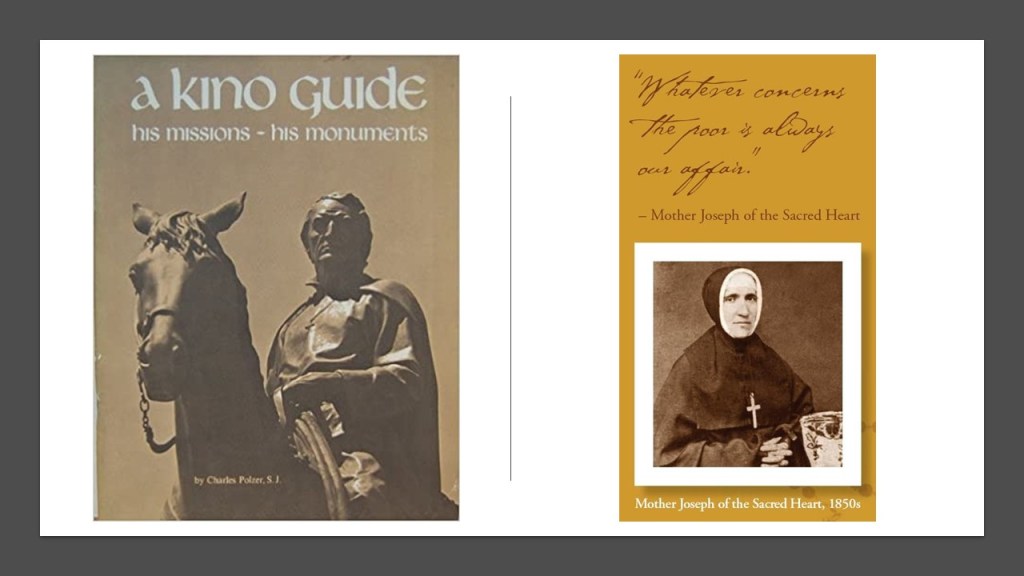
My attention was drawn to it as worth investigating because I encountered two historical figures in my research who are represented in the National Statuary hall – Father Eusebio Kino, a Jesuit Missionary and Cattle rancher, for Arizona, and Mother Joseph Pariseau, who we are told was a Catholic sister and self-taught architect, for Washington State.

The appearance of these two historical characters in the National Statuary Hall made wonder who else was chosen to be represented there and what could possibly be going on here.

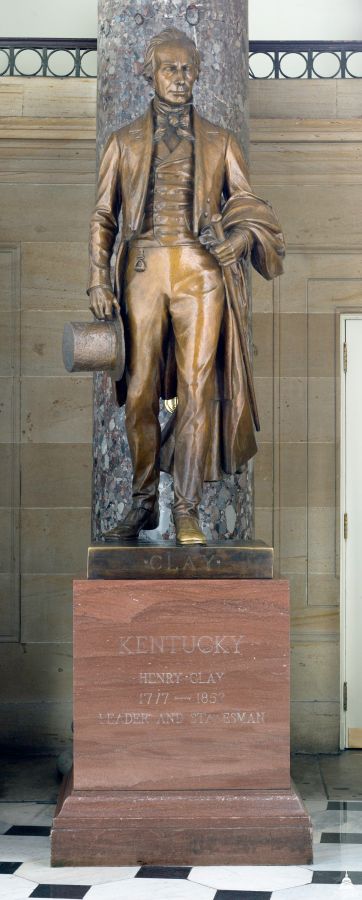
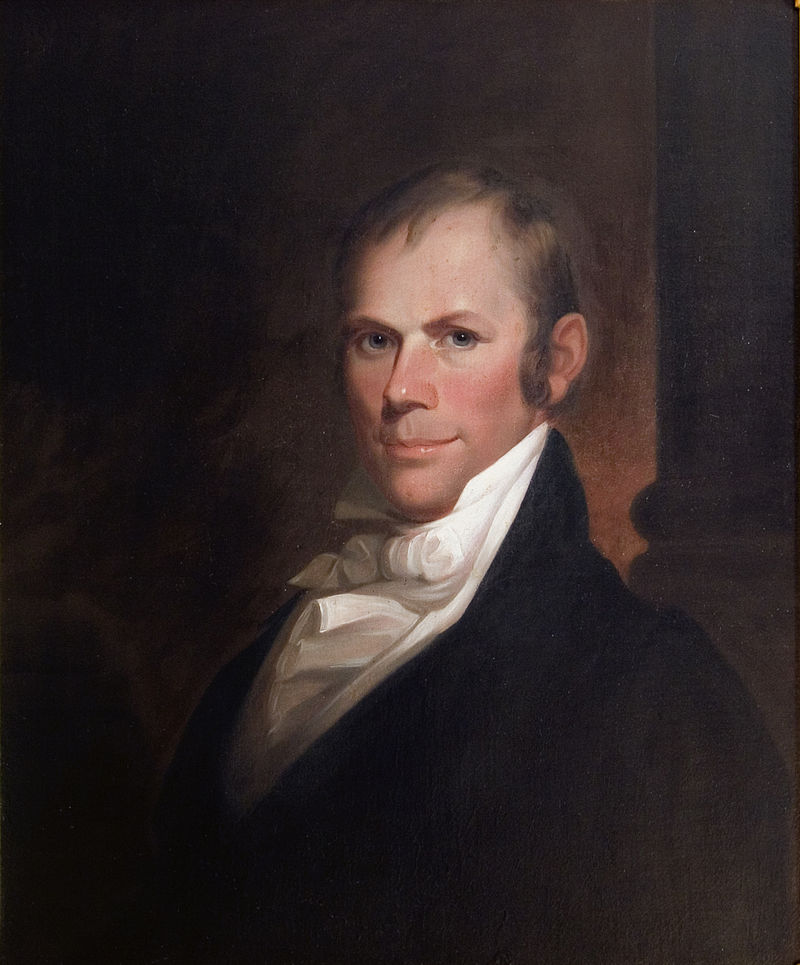
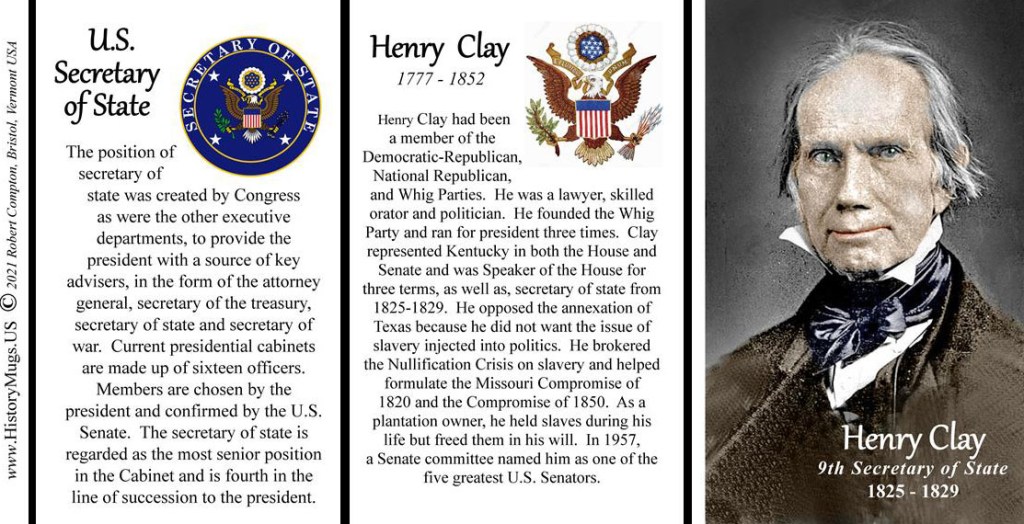
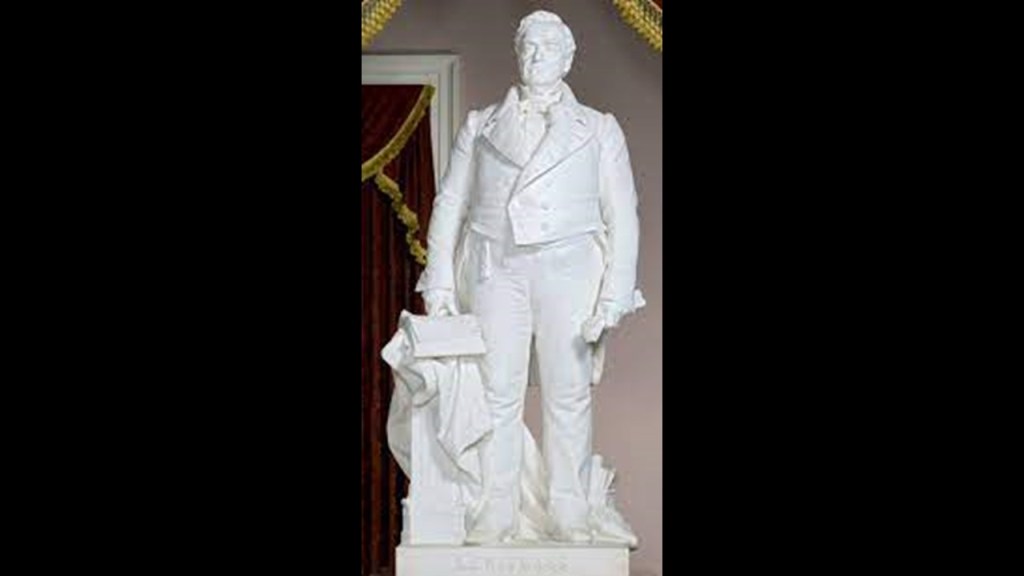
Henry Clay represents the State of Kentucky in the National Statuary Hall.

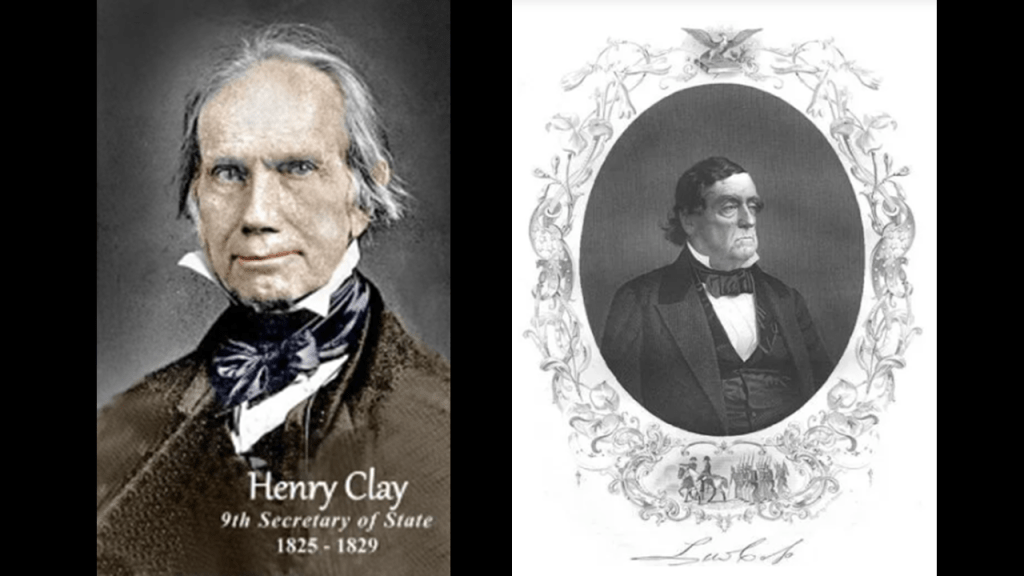
Henry Clay was an attorney and statesman, who served in both houses of Congress; as the ninth U. S. Secretary of State; ran for U. S. President three times; and helped establish both the Whig Party and the Republican Party.

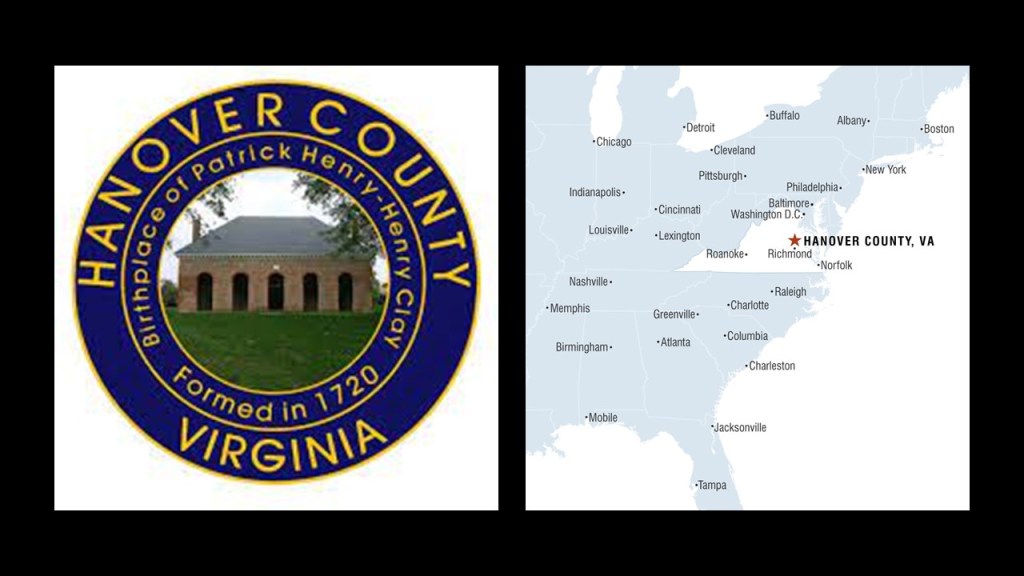
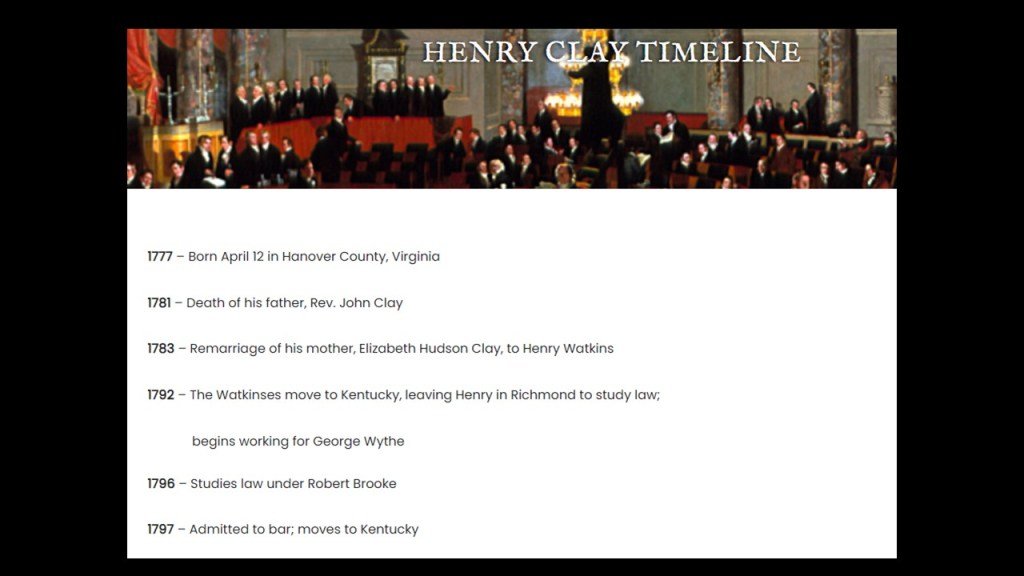
Henry Clay was born in April of 1777 at the Clay Homestead in Hanover County, Virginia, the 7th of 9 children born to the Baptist minister John Clay and his wife Elizabeth.

His father died in 1781, and his mother subsequently remarried, to Captain Henry Watkins, a successful planter.

When Watkins moved the family to Kentucky in 1791, Henry Clay remained in Virginia.

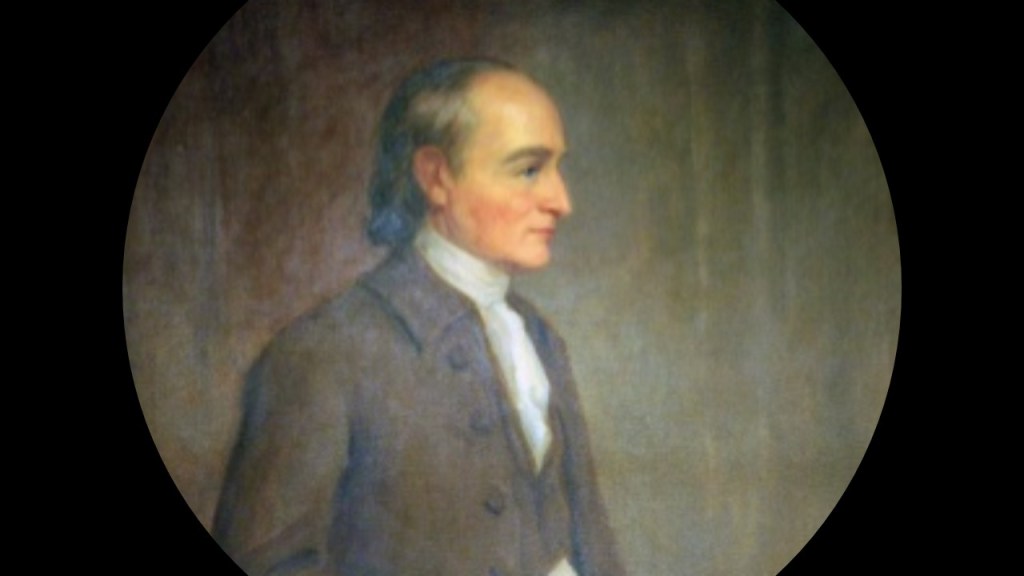
He ended up becoming a clerk at the Virginia Court of Chancery, where he got the attention of George Wythe, a professor at William and Mary College in Williamsburg, signer of the Declaration of Independence, mentor of Thomas Jefferson, and judge on Virginia’s High Court of Chancery.

Wythe chose Clay to be his secretary, a position he held for four years.

During this time, Wythe influenced Clay’s view that the United States could help spread freedom around the world.

Clay finished his legal studies with Virginia Attorney General Robert Brooke; was admitted to the Virginia Bar in 1797; and moved to Lexington, Kentucky, where he set up his law practice.

Henry Clay married Lucretia Hart in April of 1799, the daughter of Colonel Thomas Hart, a prominent businessman and early settler of Kentucky, and they lived at first in downtown Lexington.

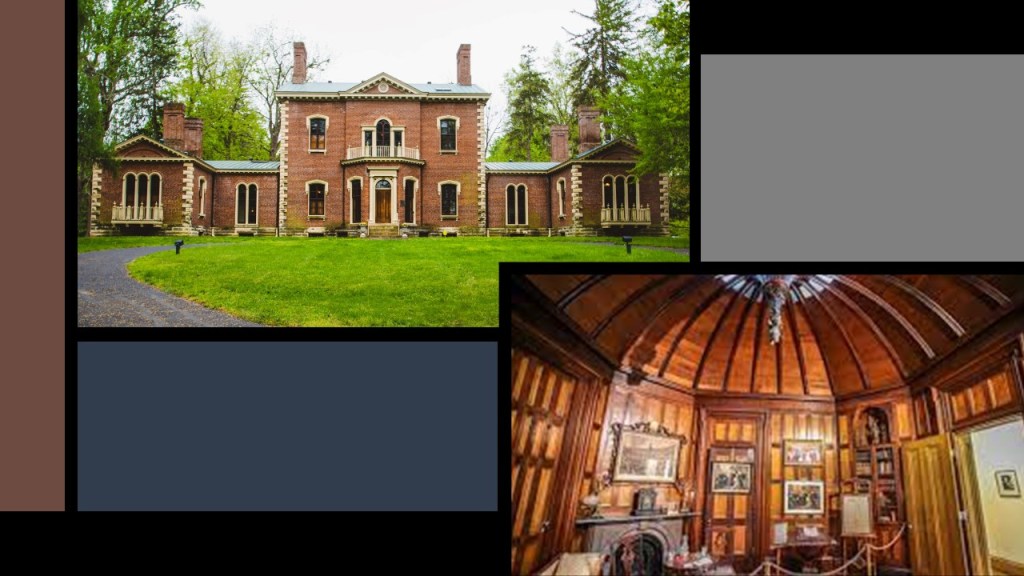
We are told the Clays started building Ashland, a plantation outside of Lexington, in 1804.

Ashland encompassed over 500 acres (or 200 hectares), on which Henry Clay’s slaves planted crops of corn, wheat, rye, and hemp, the chief crop of Kentucky’s Bluegrass region.

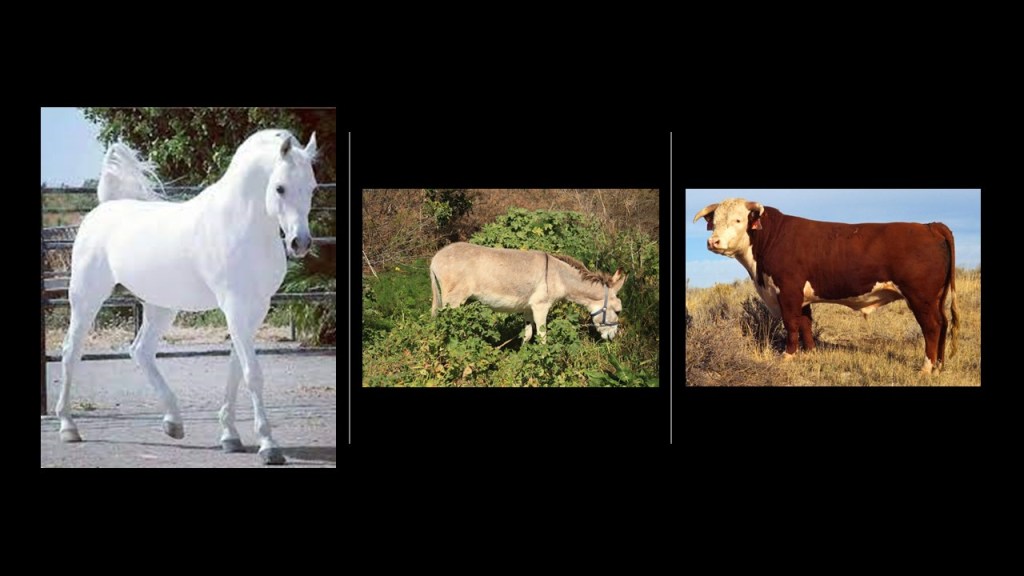
He also imported Arabian horses, Maltese Donkeys, and Hereford Cattle as livestock.

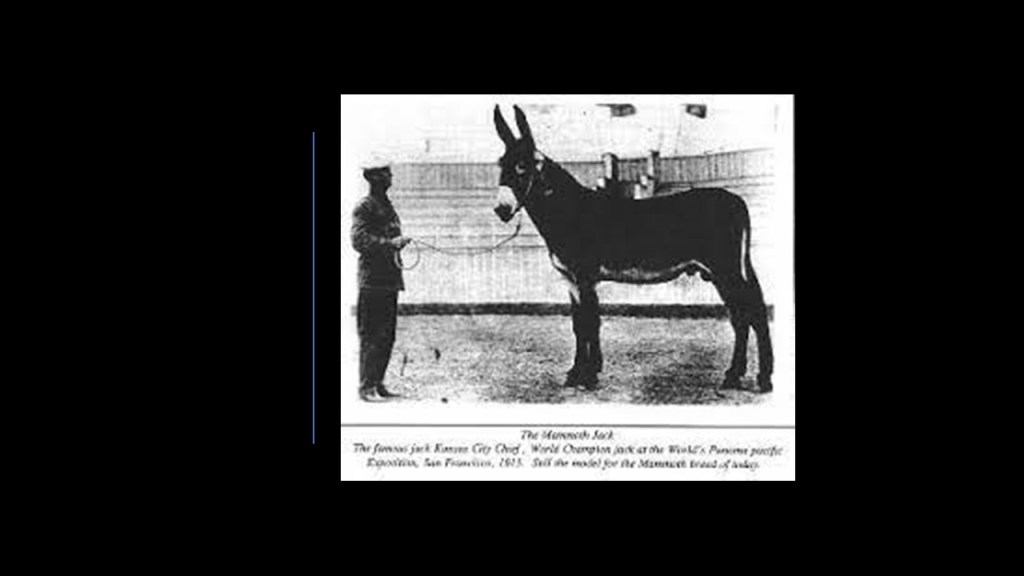
The Maltese donkeys were one of the large breeds of donkeys bred by Henry Clay, and George Washington among others, to produce the American Mammoth Jackstock to be used as work animals.

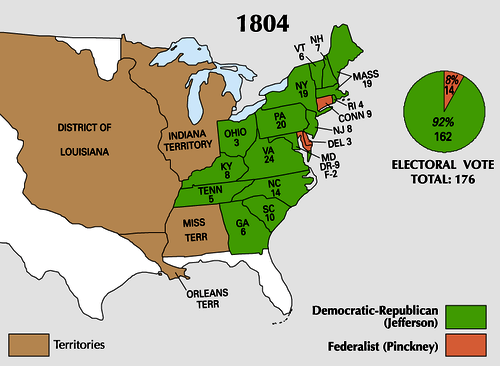
Shortly after arriving in Kentucky, Henry Clay entered politics, and was a member of the what was called the “Democratic-Republican Party,” also known as the “Jeffersonian Republican Party,” that championed republicanism, agrarianism, political equality, and expansionism.

He clashed with state “Democratic-Republican Party” leaders over a state constitutional convention.

Clay was an advocate for direct election of public officials and the gradual emancipation of slavery in Kentucky.

The 1799 Kentucky Constitution included direct election of public officials, but not Clay’s plan for gradual emancipation, and instead retained the pro-slavery provisions of the original Kentucky Constitution of 1792, under which Kentucky was accepted as the 15th State admitted to the Union by the U. S. Congress.

Clay won election to the Kentucky House of Representatives in 1803, where he was quite active, among other things initiating the partisan gerrymander of Kentucky’s electoral college districts, which insured that Kentucky’s electors voted for Thomas Jefferson in the 1804 presidential election.

Clay’s influence in Kentucky politics was such that the Kentucky Legislature elected him to the U. S. Senate in 1806, which he served in for two-months before returning to Kentucky, at which time he was elected as Speaker of the Kentucky House of Representatives.
In 1810, Henry Clay was selected by the Kentucky Legislature to fill the U. S. Senate seat left vacant by the resignation of Buckner Thruston to become a federal judge.

Clay quickly became a “War Hawk,” favoring expansionist policies.
He was a fierce critic of British attacks on American shipping and supported going to war against Great Britain…

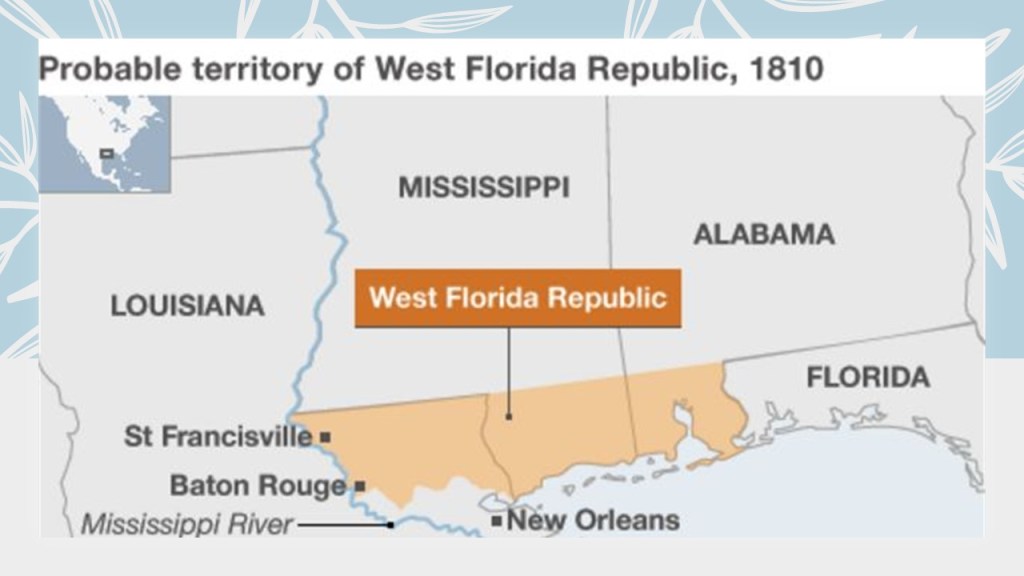
…and advocated for the annexation of Spanish West Florida.
Henry Clay was elected as Speaker of the U. S. House of Representatives for the 12th Congress, held between March 4th of 1811 and March 4th of 1813.

Both Houses of Congress had a Democratic-Republican Majority in the 12th Congress.

Historical events that took place during the 12th Congress included:

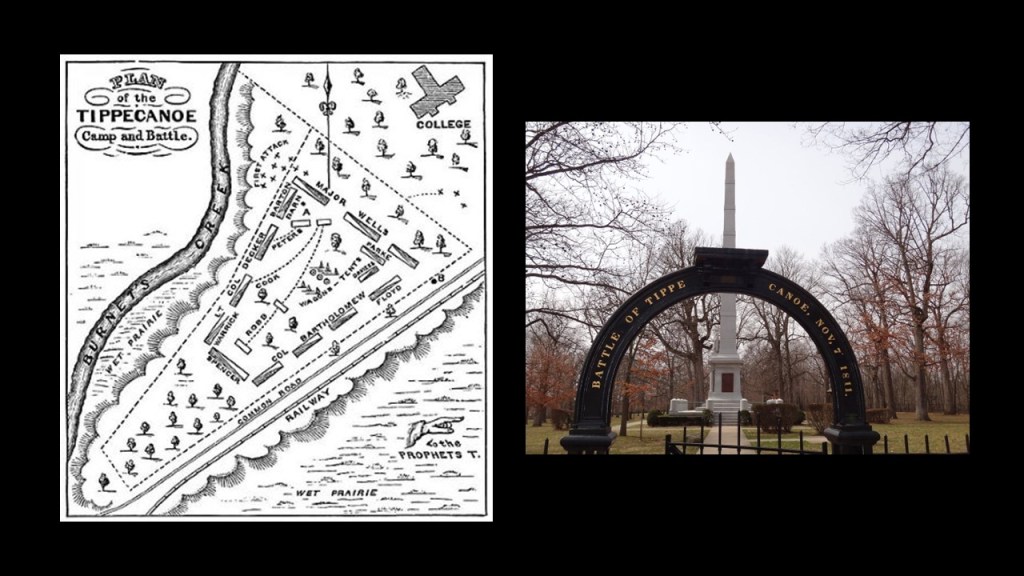
The Battle of Tippecanoe fought on November 7th of 1811 in Battle Ground, Indiana, where William Henry Harrison defeated Tecumseh’s forces of a confederacy of tribes opposed to European-American settlement of the American Frontier…

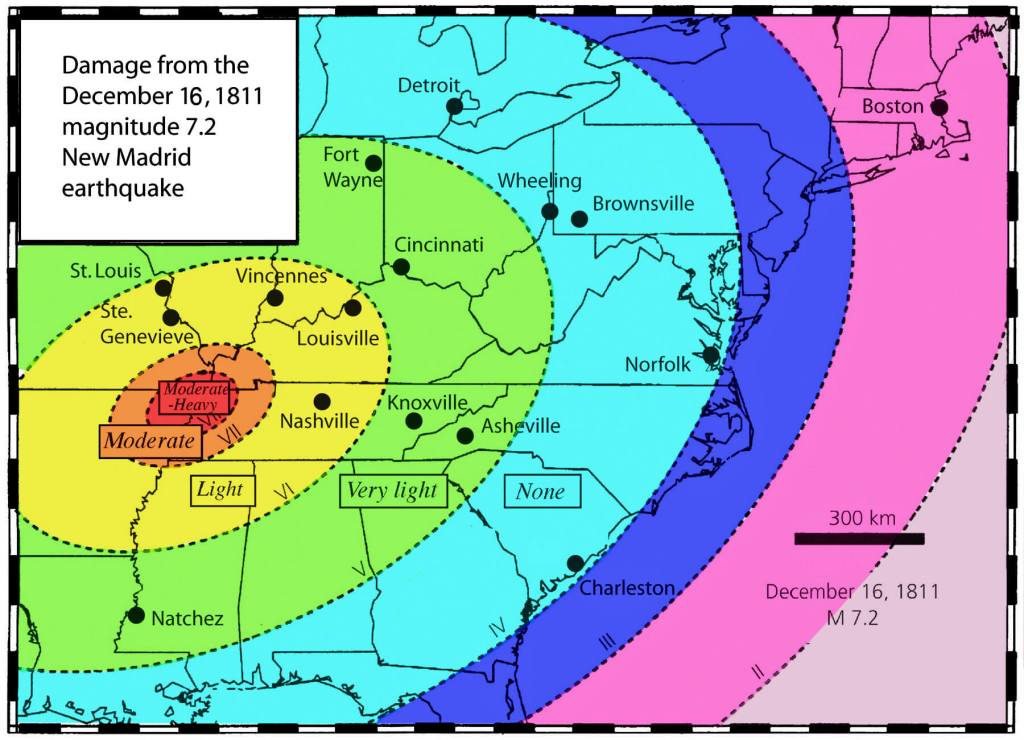
…the New Madrid Earthquake on December 16th of 1811…

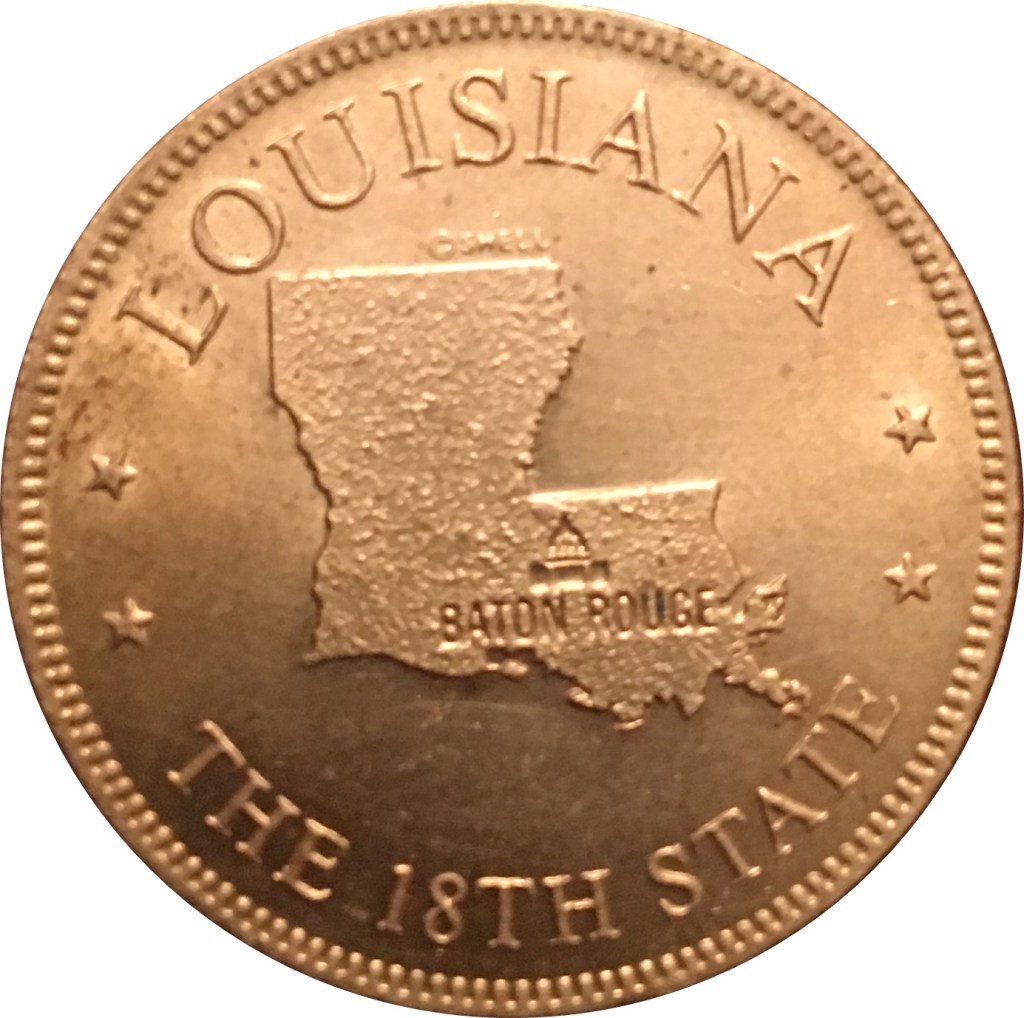
…Louisiana was admitted to the Union as the 18th state on April 30th of 1812…

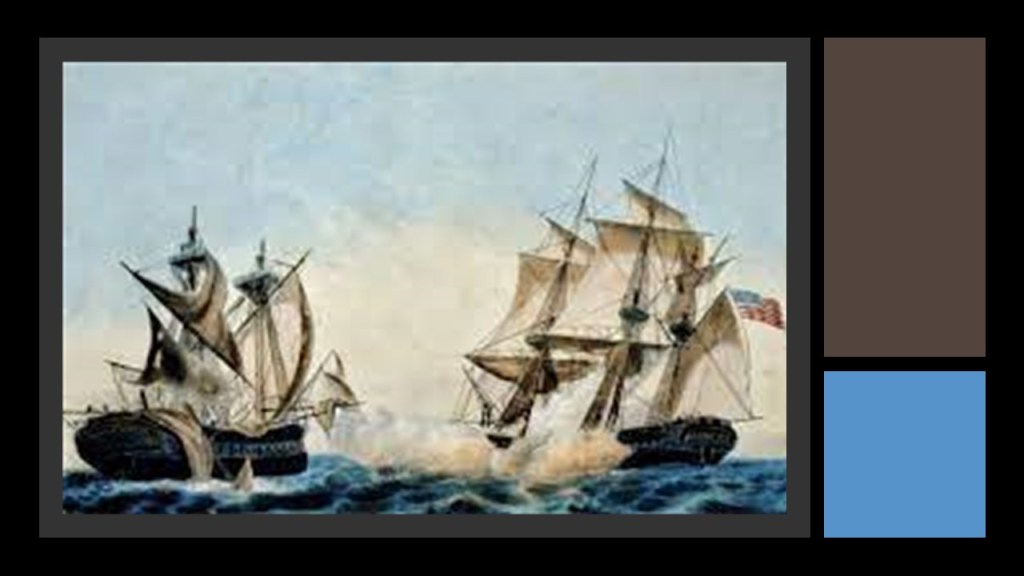
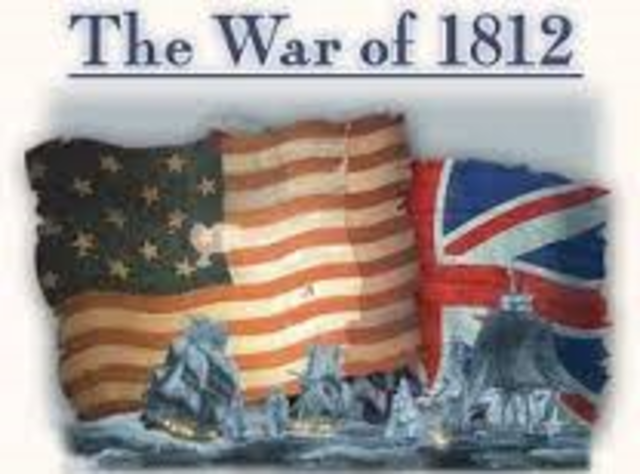
…the War of 1812 began when the United States declared war on Great Britain on June 18th of 1812…

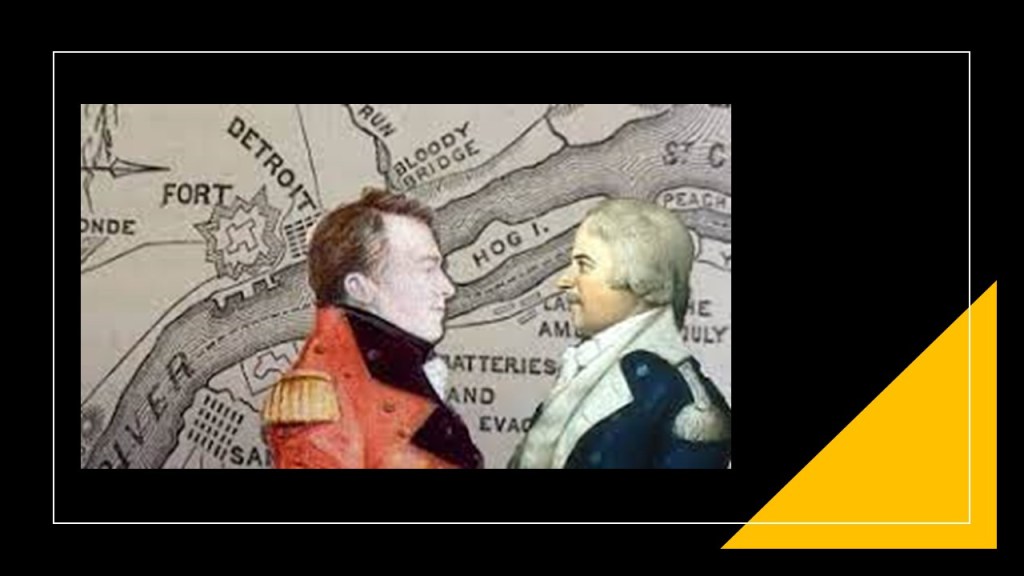
…Detroit surrendered to the British on August 16th of 1812…

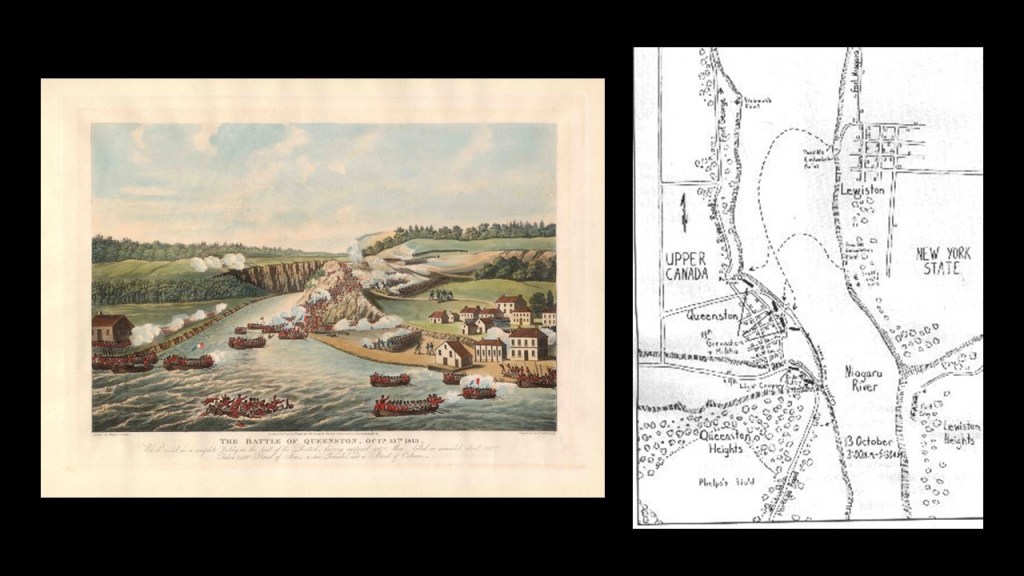
…and the Battle of Queenston Heights in Upper Canada took place on October 13th of 1812, the first major battle in the War of 1812, resulting in a British victory.

Altogether, Henry Clay was elected to seven terms in the House of Representatives, and was elected Speaker of the House six times.
Henry Clay’s first run for the Presidency of the United States was in the 1824 election.

There were five candidates representing the Democratic-Republican Party, including Clay, John Quincy Adams, and Andrew Jackson.

Clay fell behind in state electoral votes, effectively knocking him out of the race, and he threw his support behind John Quincy Adams, who was elected President by the House of Representatives, and Henry Clay became Adams’ Secretary of State.

Followers of John Quincy Adams became known as National Republicans, and followers of Andrew Jackson became known as Democrats, and Andrew Jackson won the 1928 Presidential election.

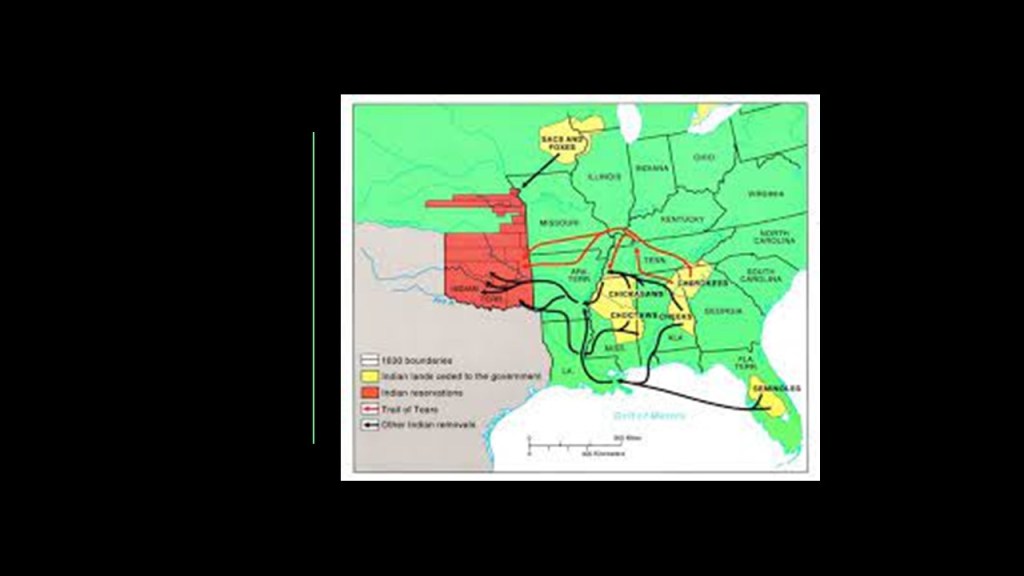
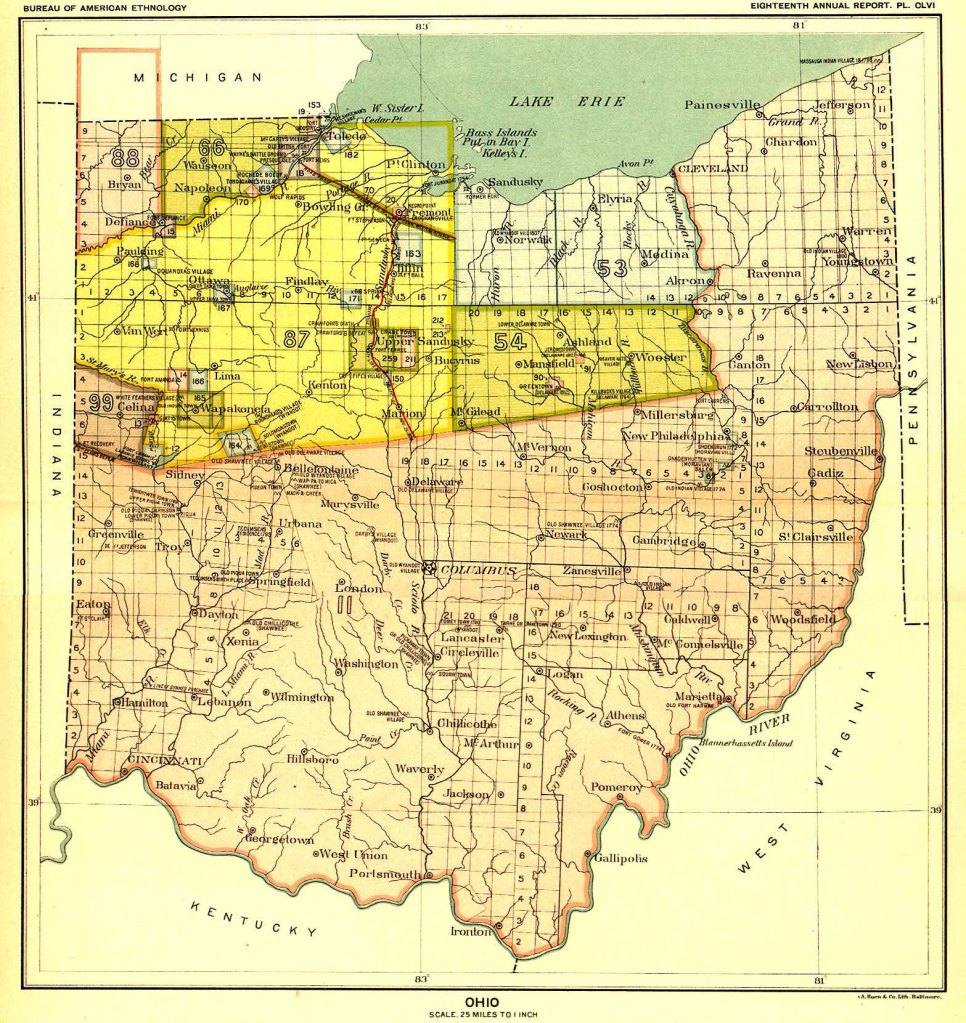
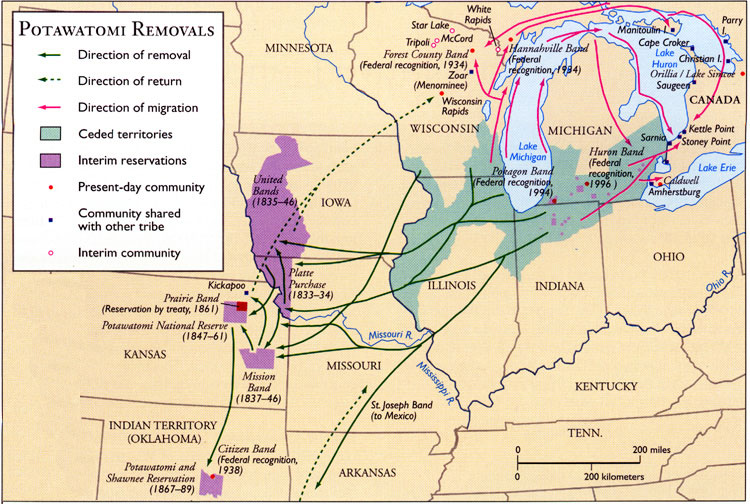
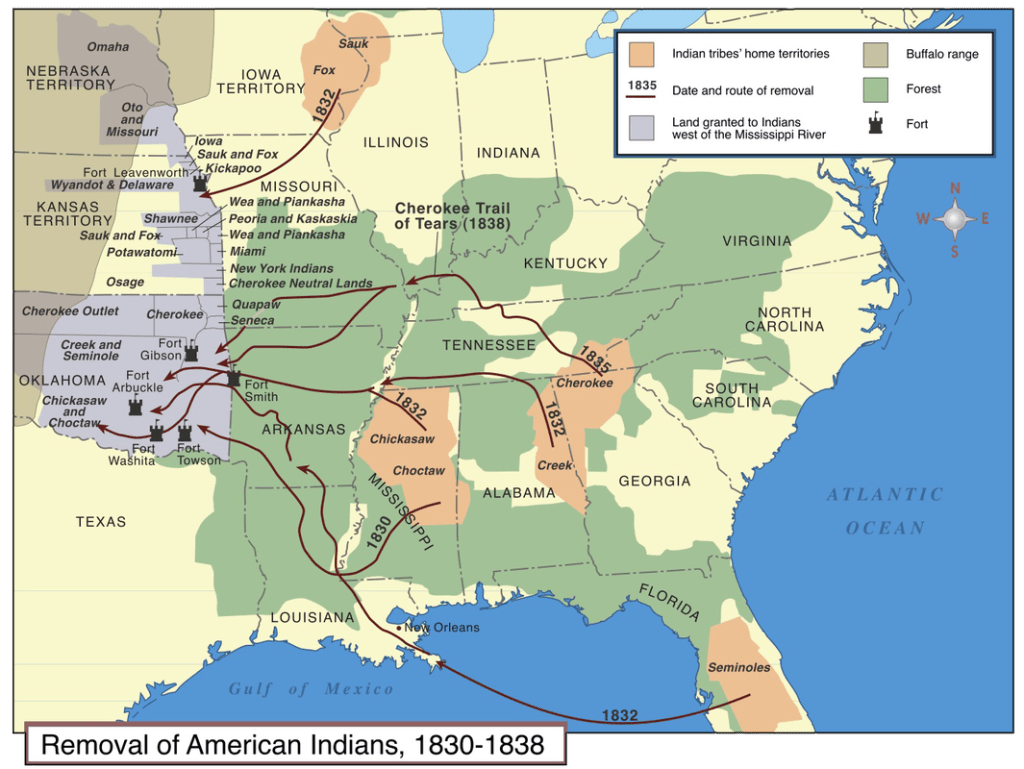
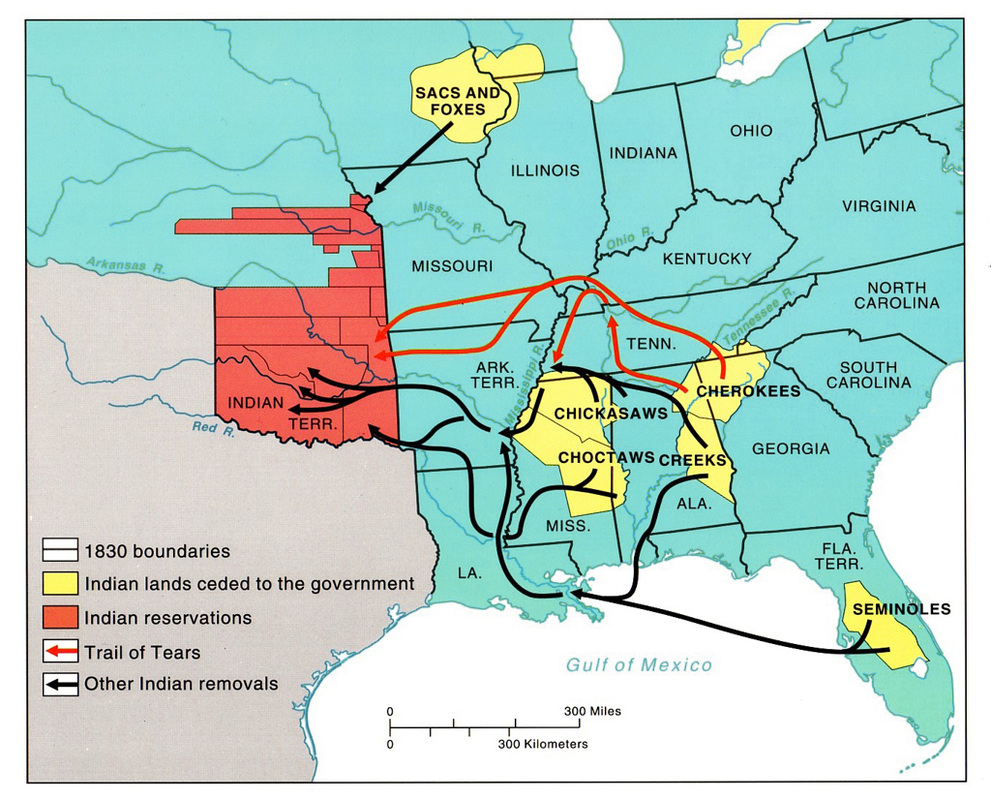
It was during the Jackson Administration that the U. S. Congress authorized, and the President signed into law, the Indian Removal Act of 1831, which authorized the administration to relocate Native Americans to land west of the Mississippi River, something which Henry Clay was opposed to.

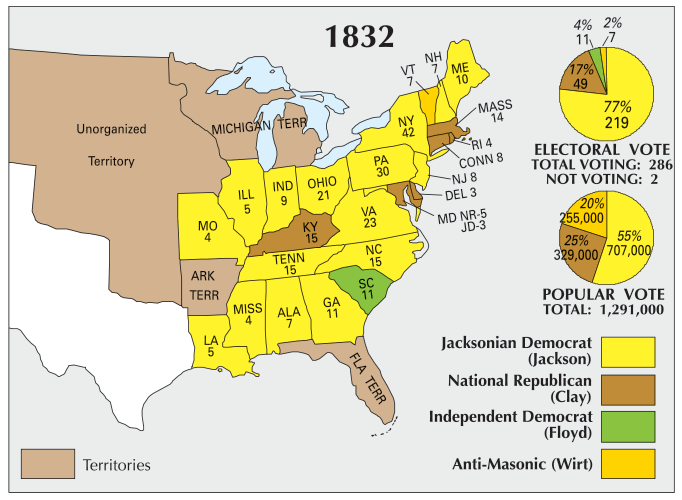
Henry Clay returned to Federal office in 1831, when he won election in the Kentucky Legislature to the U. S. Senate, and with Adams’ defeat in the 1928, Clay became the leader of the National Republicans, who nominated Clay for President in the 1832 election.

Jackson, a popular sitting President, won re-election.

Several of the things that happened during the second Jackson Administration revolved around banking and financial matters.
One of the policies pursued by President Jackson and has Secretary of the Treasury, Roger Taney, involved removing all federal deposits from the national bank and placing them in state-chartered banks, a policy seen as illegal by many since federal law required the president to deposit federal revenue in the national bank so long as it was stable.
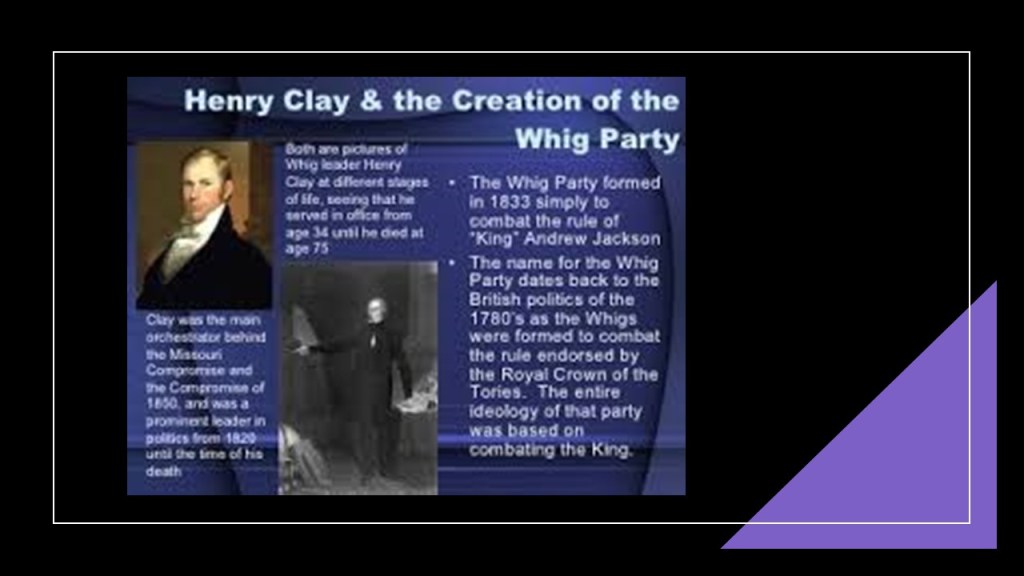
This policy of removing deposits united Jackson’s opponents into one political party, which became known as the Whig Party, which had been the name of an earlier British political party opposed to absolute monarchy.

The American Whig Party base consisted of wealthy businessmen, professionals, and large planters.

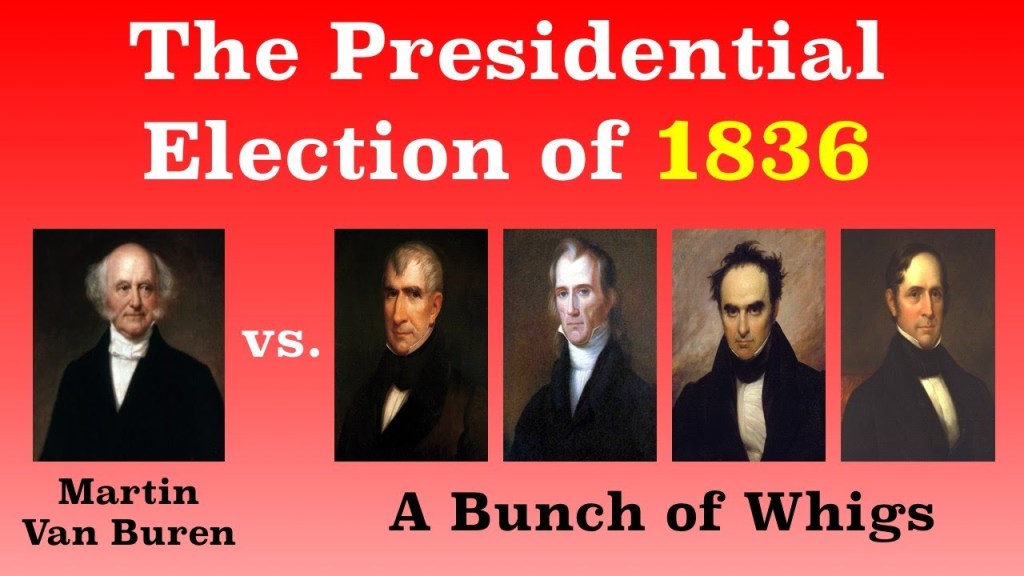
Clay chose not to run in the 1836 election because of the death of one of his daughters, and the Whigs were not organized enough to nominate a single candidate.

Despite the presence of multiple Whig candidates, Martin Van Buren, a Democrat, won the 1836 presidential election.

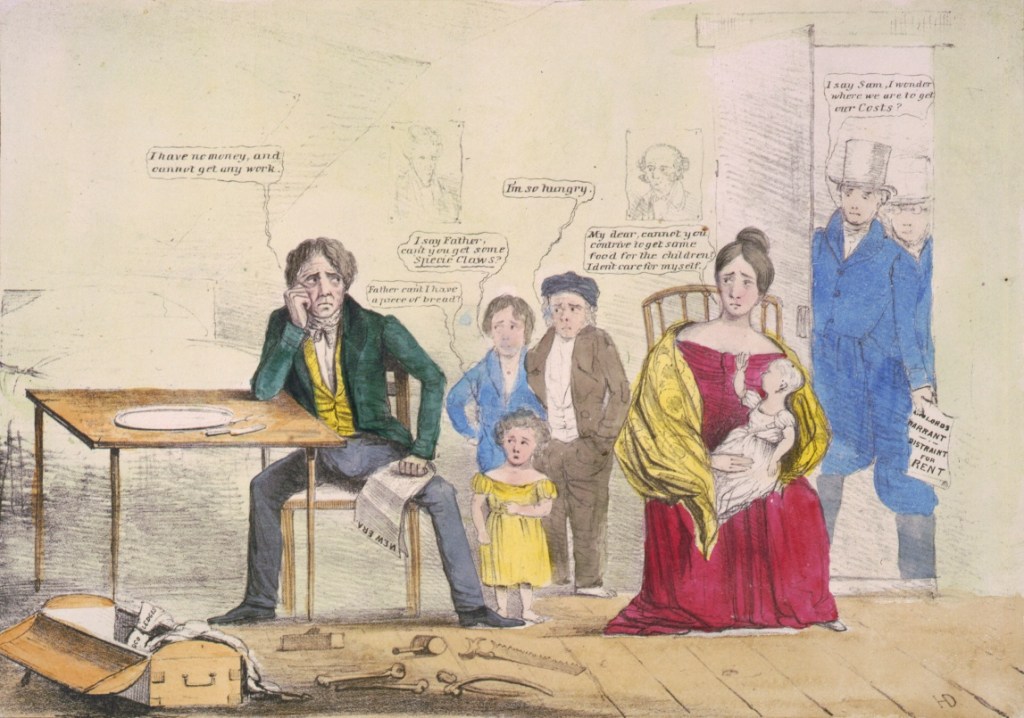
Van Buren’s Presidency was negatively impacted by the Panic of 1837, a financial crisis that touched off a depression until the mid-1840s.

Clay and other Whigs argued that Jackson’s policies had encouraged speculation and caused the panic.

As the 1840 Presidential election came closer, many thought the Whigs would gain the presidency because of the economic crisis.

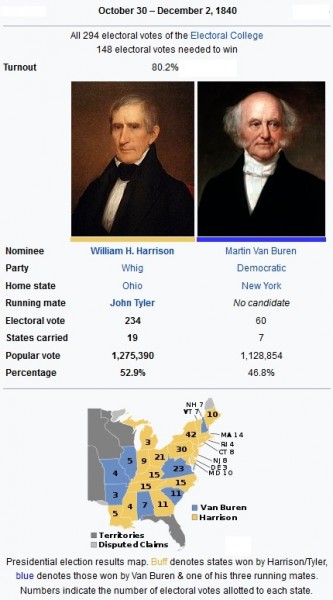
Though Henry Clay ran in this election, he faced a number of issues facing his electability, and the Whig party member William Henry Harrison was elected that year.

Harrison had the shortest presidency in U. S. history, dying from pneumonia 31-days after his inauguration in 1841.

Harrison was succeeded by his Vice-President, John Tyler, another Whig.

Tyler disappointed his fellow Whigs by not signing a bill to reestablish the National Bank, an important part of the Whig Party platform, and they ended up voting to expel him from the party.

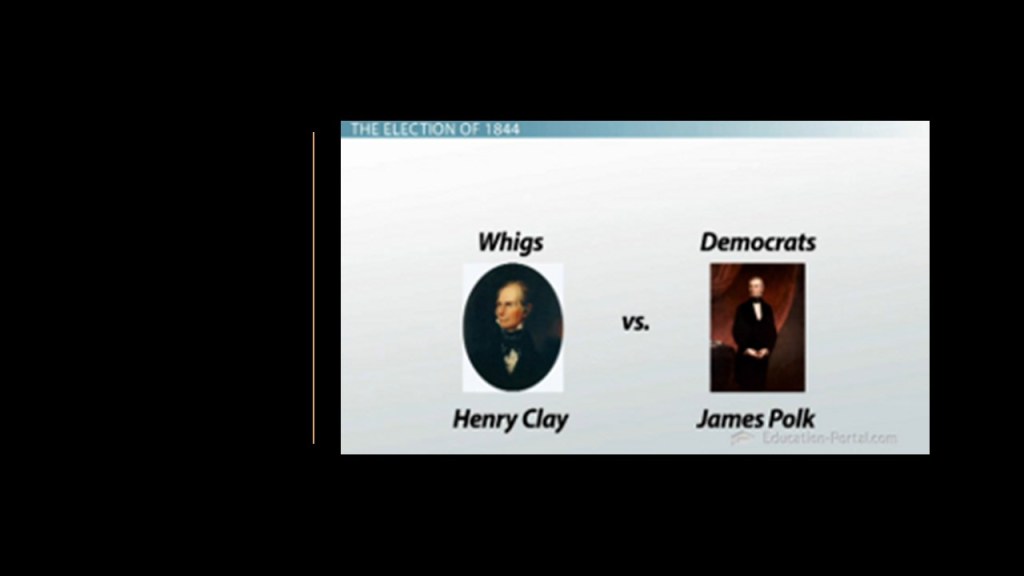
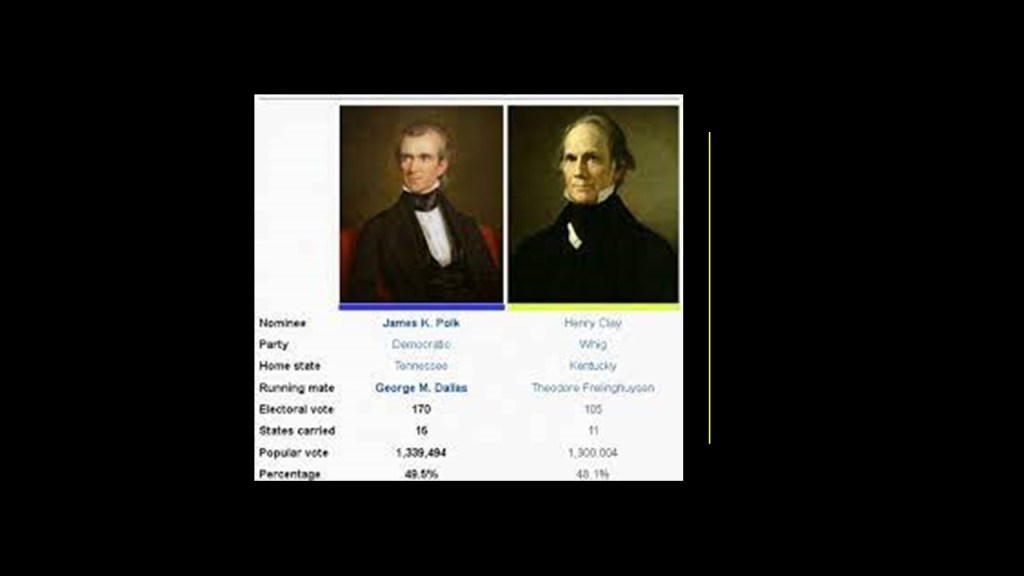
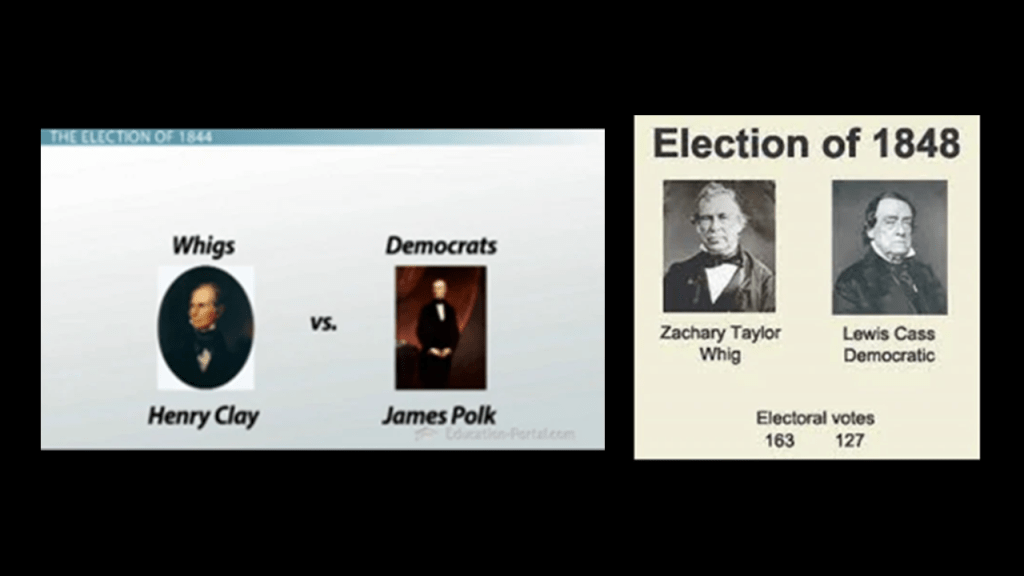
Clay won the Whig presidential nomination in 1844, and faced Democrat candidate James Polk, who won the election that year.

Henry Clay returned to his career as an attorney after the election of 1844.

The Mexican-American War started in 1846 over the disputed border region between Mexico and Texas.

Clay gave a speech in November of 1847 in which he was highly critical of the war and attacked President Polk for fomenting the conflict with Mexico.

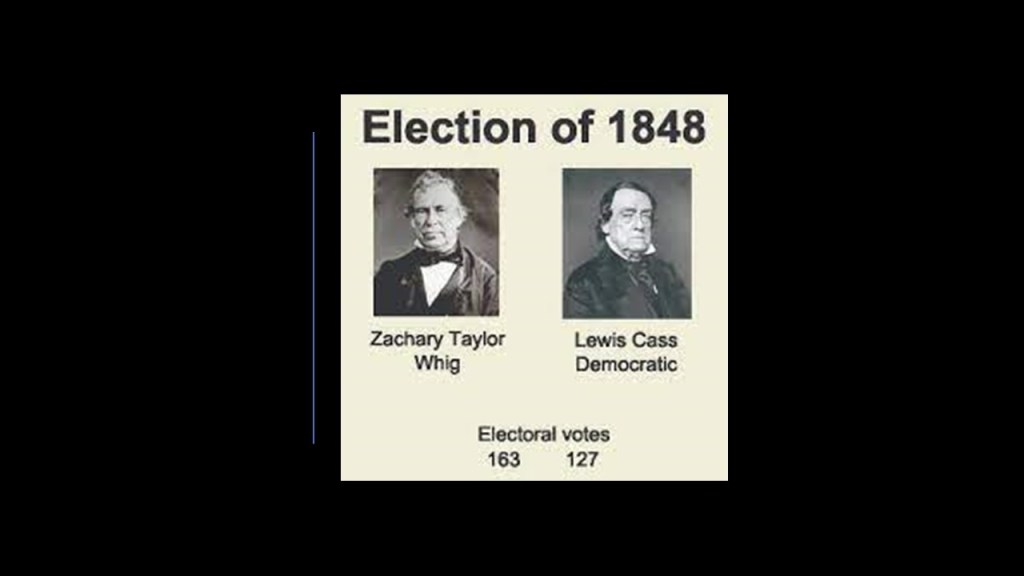
Also, by 1847 General Zachary Taylor, who commanded American forces during the war, emerged as one of the Whig candidates for the Presidency.

Henry Clay announced his candidacy for the nomination in April of 1848.

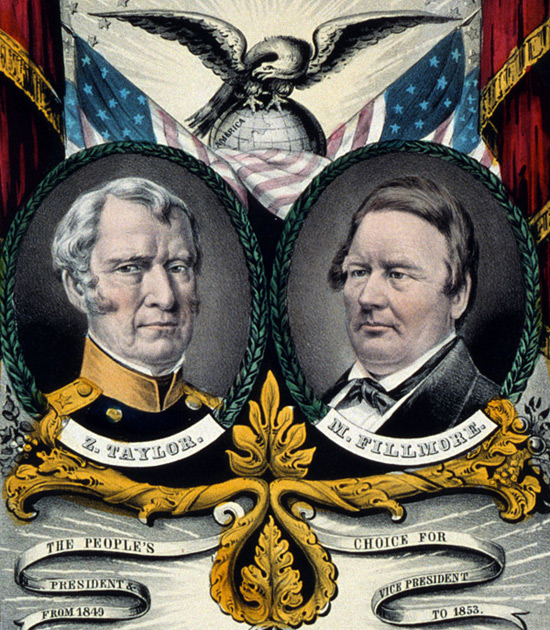
Taylor ended up winning the Whig nomination at the 1848 Whig National Convention, and the ultimately the Presidency that year, with Millard Fillmore as his running mate.

Interesting to note that Zachary Taylor died in July of 1850, allegedly after consuming copious amounts of raw fruit and iced milk at a July 4th fundraising event at the Washington Monument, became severely ill with a digestive ailment, dying several days later, and Millard Fillmore became president.

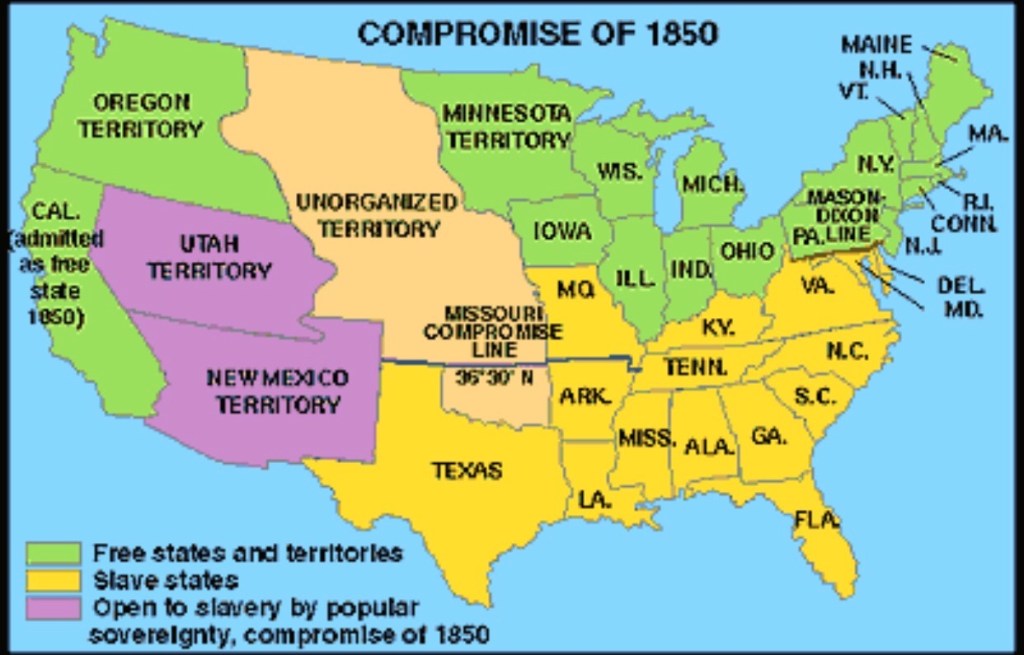
Henry Clay accepted re-election to the U. S. Senate in 1849, and was directly involved in formulating the Compromise of 1850, a package of bills that defused a political confrontation between slave and free states on the status of U. S. territories gained as a result of the Mexican-American War.

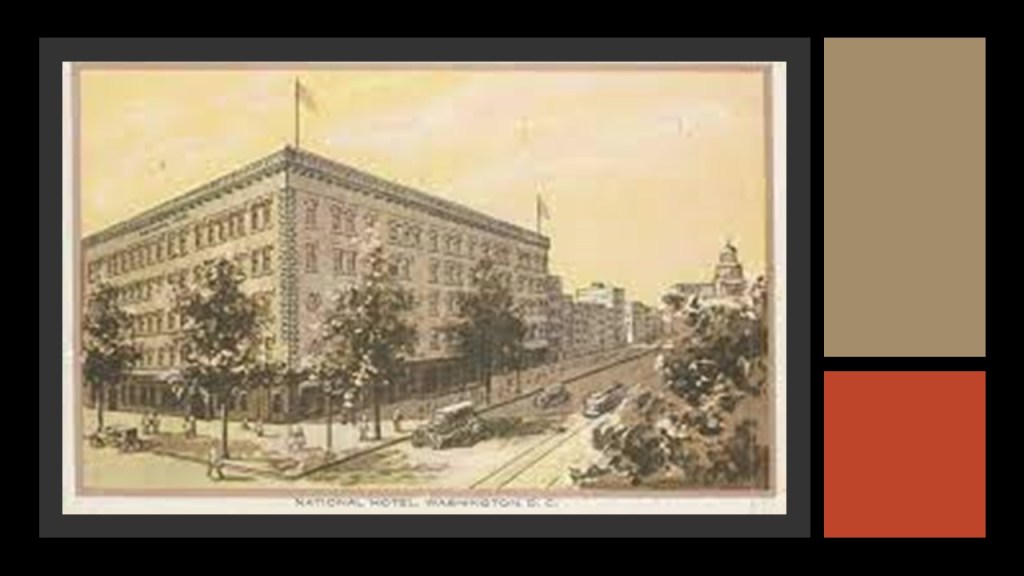
Henry Clay died from tuberculosis in June of 1852 in his room at the National Hotel in Washington, DC.

The National Hotel building was demolished in 1942.

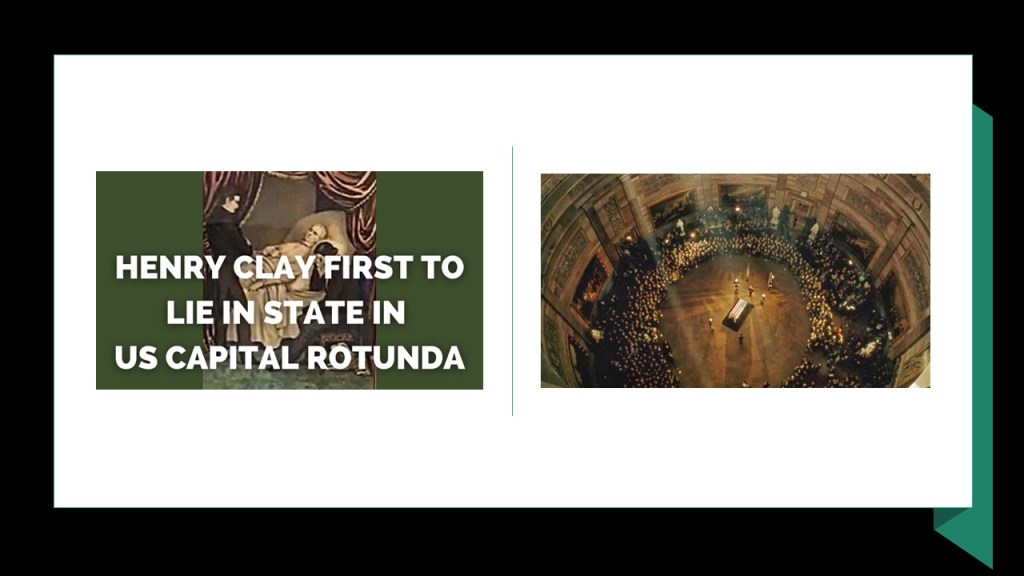
Henry Clay was the first person to lie in-state in the U. S. Capitol Rotunda.

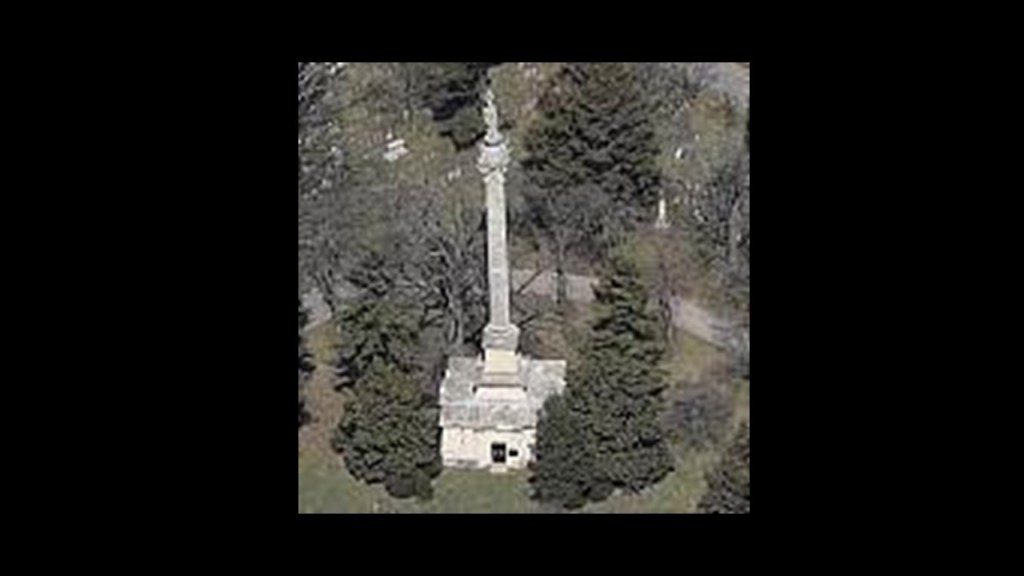
The remains of Henry Clay and his wife Lucretia are encased in marble in the mausoleum in the center of the Lexington Cemetery, with the 120-foot, or the 37-meter, -high Henry Clay Memorial towering above the mausoleum.

Some interesting points of information I found in researching Henry Clay.

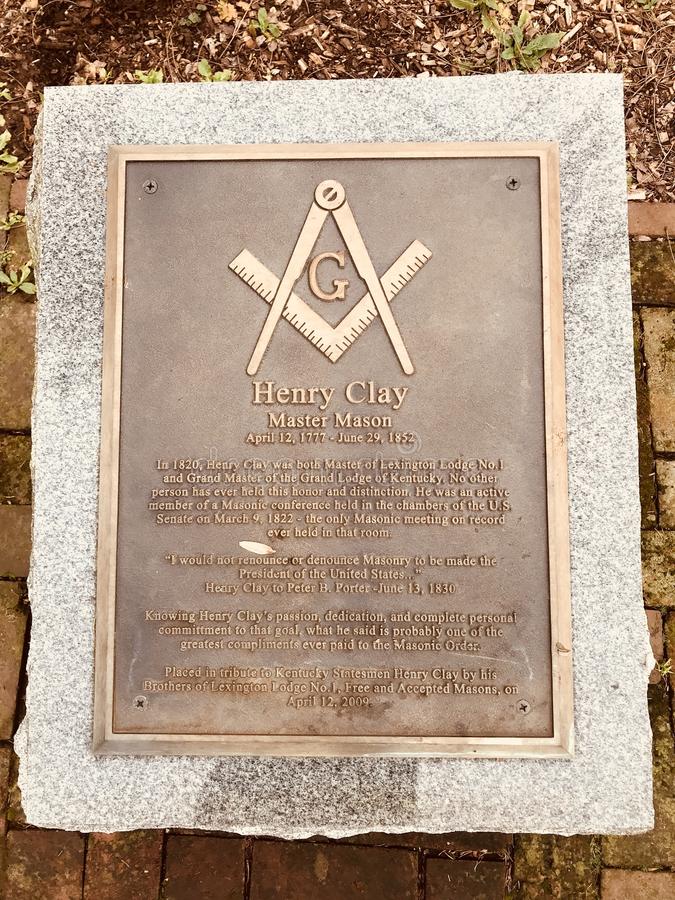
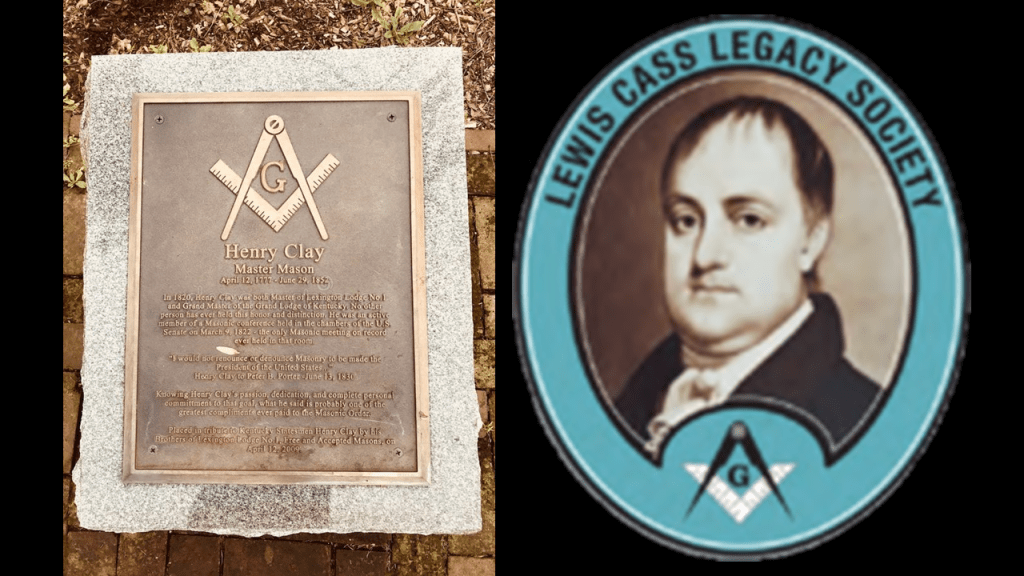
One was that he was a Master Mason.

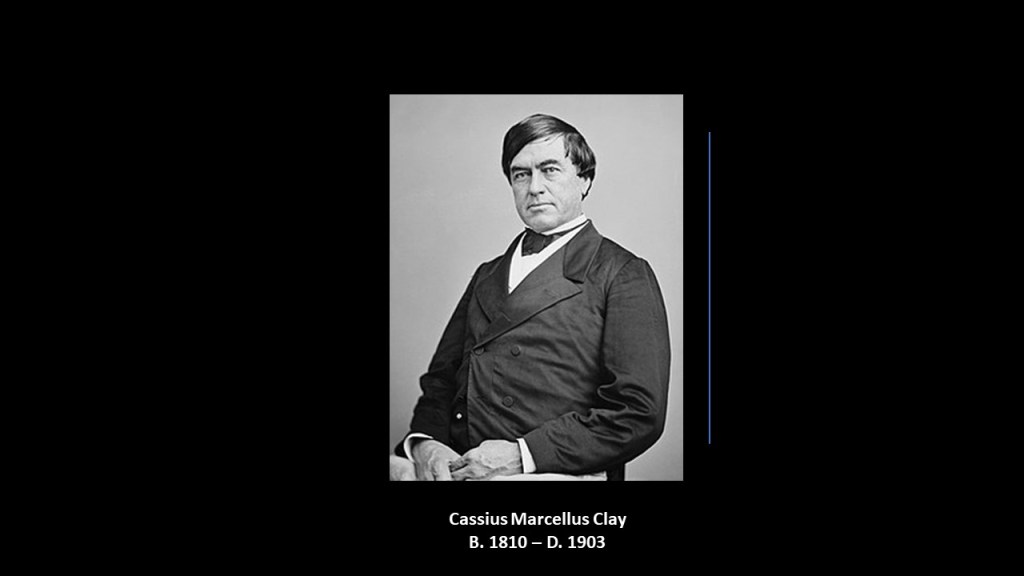
Another was that Henry Clay’s cousin was another influential 19th-Century Kentucky politician Cassius Marcellus Clay…

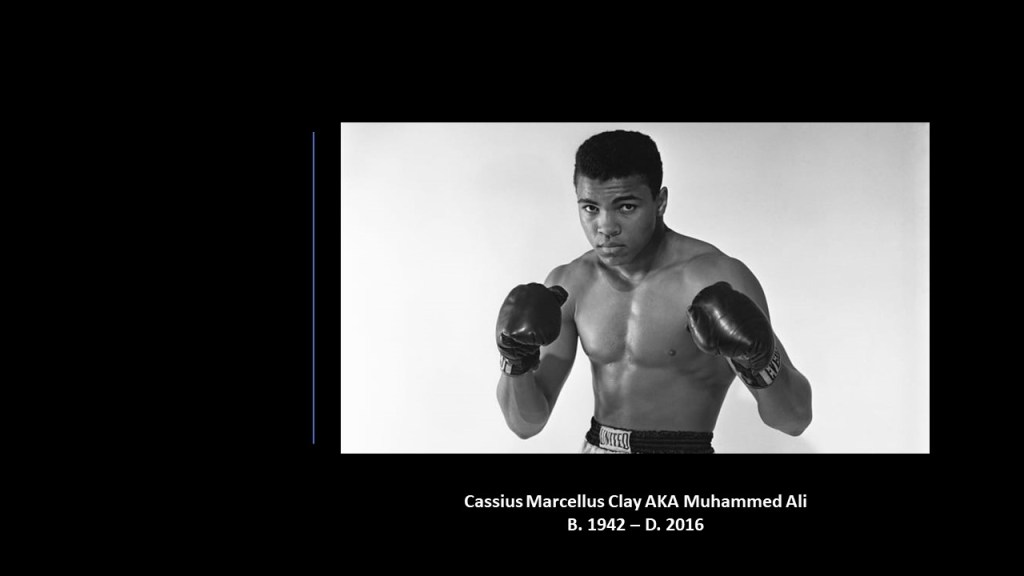
…the namesake of Cassius Marcellus Clay, better known to history as the famous 20th-century boxer Muhammed Ali, who was born and raised in Louisville, Kentucky.

No indication there was a direct connection, just that the more recent Cassius Marcellus Clay was named after the famous 19th-century Kentuckian, but definitely find this to be interesting nonetheless.

Lewis Cass represents the State of Michigan in the Statuary Hall.

Lewis Cass, an American military officer, politician and statesman, was a U. S. Senator for Michigan and served in the cabinets of two Presidents, Andrew Jackson and James Buchanan.

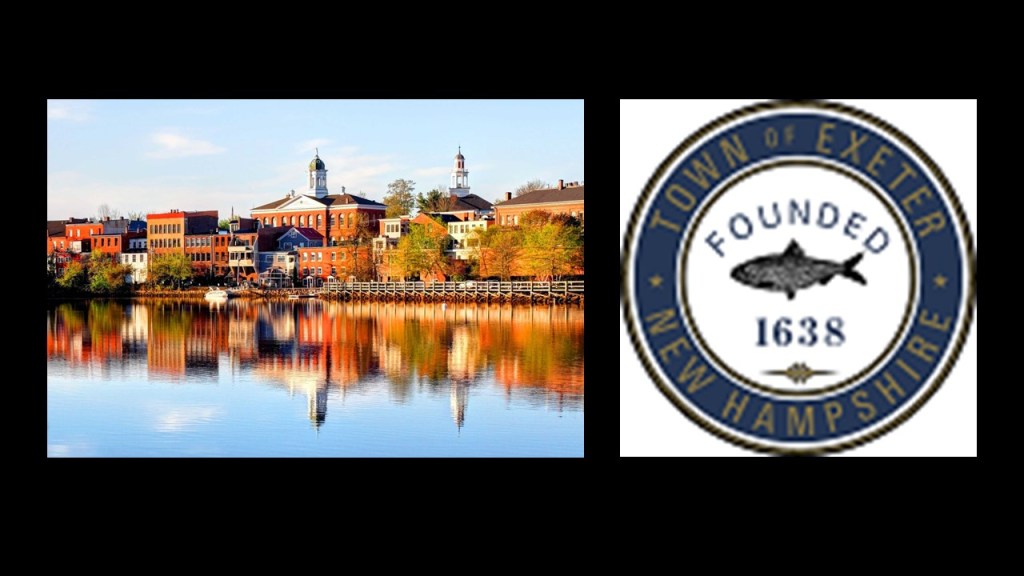
Cass was born in October of 1782 in Exeter, New Hampshire, near the end of the Revolutionary War.

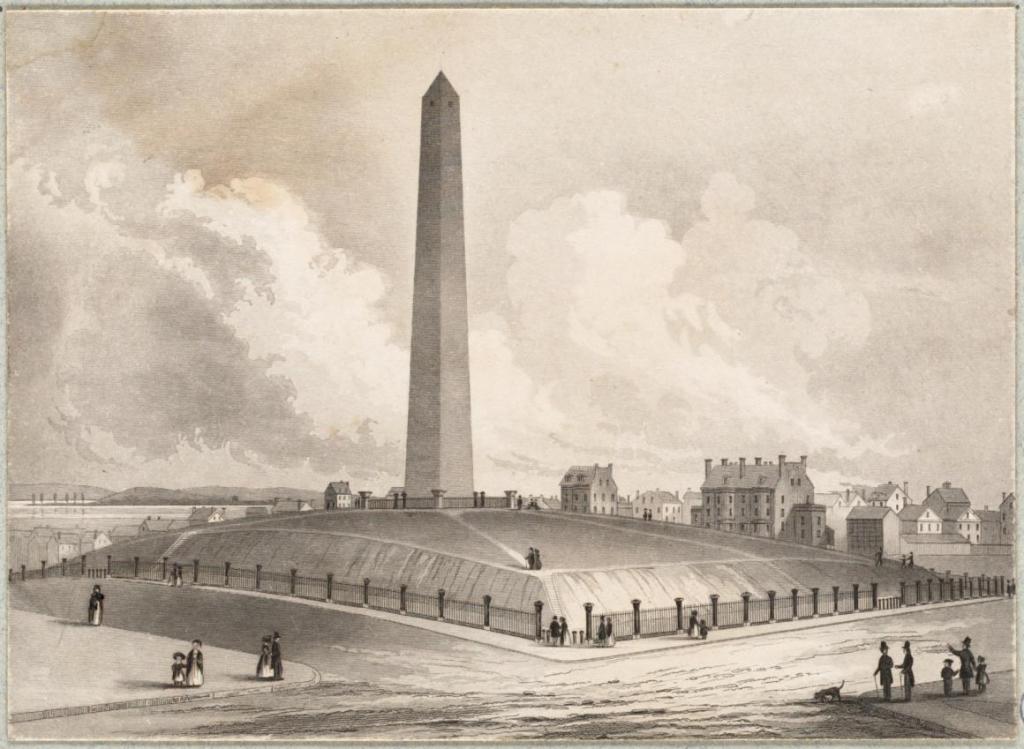
His father Jonathan was an officer who had fought under George Washington at the Battle of Bunker Hill which took place in June of 1775.

This illustrated view of the Bunker Hill Monument was circa 1848, and said to have been built between 1824 and 1843, and credited to the architect Solomon Willard as the first monumental obelisk erected in the United States.

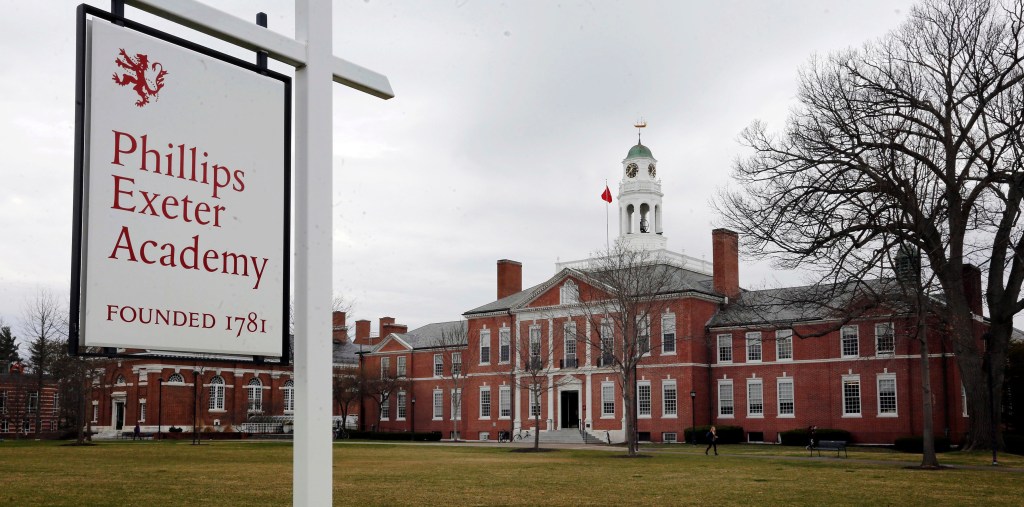
Cass attended the Phillips-Exeter Academy, established in 1781 by Elizabeth and John Phillips, a wealthy merchant and banker of the time.

His nephew, Samuel Phillips Jr, had established the Phillips Academy in Andover, Massachusetts in 1778, making it the oldest incorporated school in the United States.

These two schools have educated several generations of the Establishment and prominent American politicians.

The Cass family moved to Marietta, Ohio, in 1800.

Marietta was the first permanent U. S. settlement in the newly established Northwest Territory, which was created in 1787, and the nation’s first post-colonial organized incorporated territory.

The Northwest Indian War took place in this region between 1786 and 1795 between the United States and the Northwestern Confederacy, consisting of Native Americans of the Great Lakes area.

The Territory had been granted to the United States by Great Britain as part of the Treaty of Paris at the end of the Revolutionary War.

The area had previously been prohibited to new settlements, and was inhabited by numerous Native American peoples.

The British maintained a military presence and supported the Native American military campaign.

While the Northwestern Confederacy had some early victories, they were ultimately defeated, with the final battle being the “Battle of Fallen Timbers” in August of 1794 in Maumee, Ohio, which took place after General Anthony Wayne’s Army had destroyed every Native American settlement on its way to the battle.

Outcomes were the 1794 Jay Treaty, named for Supreme Court Chief Justice John Jay, the main negotiator with Great Britain.

As a result, the British withdrew from the Northwest Territory, but it laid the groundwork for later conflicts, not only with Great Britain, but also angering France and bitterly dividing Americans into pro-Treaty Federalists and anti-Treaty Jeffersonian Republicans.

The 1795 Greenville Treaty that followed forced the displacement of Native Americans from most of Ohio, in return for cash and promises fair treatment, and the land was opened for white American settlement.

Lewis Cass studied law in Marietta under Return Meigs, Jr, who among other accomplishments, became the first Chief Justice of the Ohio Supreme Court in 1803, and Cass started his law practice in Zanesville, Ohio.

Cass was elected to the Ohio House of Representatives in 1806, and the following year, President Thomas Jefferson appointed him as the U. S. Marshal for Ohio, the oldest U. S. Federal Law Enforcement Agency having been established by the Judiciary Act of 1789 during President George Washington’s administration to assist federal courts in their law enforcement functions.

Cass joined the Freemasons as an Entered Apprentice, the first degree of Freemasonry, at a lodge in Marietta in 1803 , and by May of 1804, he achieved the Master Mason degree, the third-degree of Freemasonry.

He was a charter member of the Lodge of Amity No. 5 in Zanesville, admitted in June of 1805…

…and was one of the founders of the Grand Lodge of Ohio in January of 1808, serving as its Grand Master multiple years.

During the War of 1812, Cass rose through the officer ranks to become a Brigadier General in the U. S. Army in March of 1813.

He took part in the Battle of the Thames, also known as the Battle of Moraviantown near Chatham, Ontario, and today’s Moravian on the Thames First Nation reserve, a branch of the Lenape who were converted to Christianity by Moravian missionaries from Pennsylvania, one of the oldest Protestant denominations.

At the time of the battle, the community of this First Nation, known as the Christian Munsee, was burned to the ground and rebuilt at its current location.

The Battle of the Thames in Ontario was an American victory in the War of 1812 against Tecumseh’s Confederacy, a confederation of Native people’s from the Great Lakes region, and their British allies.

As a result of the battle, Tecumseh was killed, his confederacy fell apart, and the British lost control of southwestern Ontario.

Cass was appointed as the Governor of the Michigan Territory by President James Madison in October of 1813, a position in which he served until 1831.

During this time, he travelled frequently to negotiate treaties with Native American tribes in Michigan, in which they ceded substantial amounts of land.

Cass was one of two commissioners who negotiated the Treaty of Fort Meigs, also called the Treaty of the Maumee Rapids, resulting the ceding of nearly all the remaining lands in northwestern Ohio, and parts of Indiana and Michigan, of the Wyandot, Seneca, Delaware, Shawnee, Potawatomi, Ottawa, and Chippewa, helping to open up Michigan to settlement by white Americans.

In return, land was allocated for reservations and financial compensation via annuities of various amounts for different lengths of time.

Other examples of the involvement of Lewis Cass with these land-acquiring treaties included, the 1819 Treaty of Saginaw with the chiefs and members of the Chippewa, Ottawa, and Potawatomi Tribes, in which they ceded 6-million acres of land, for which they were promised up to $1,000/year forever, and hunting and fishing rights on the land.

Cass was also involved with the 1821 Treaty of Chicago, in which he travelled to Chicago to try and get more land from tribal nations in Michigan.

As a result of this treaty, more Potawatomi, Chippewa and Ottawa tribes ceded land – this time nearly 5-million acres of the Lower Peninsula .

In return, they were promised about $10,000 in trade goods, $6,500 in coins, and a 20-year payment valued at about $150,000.

And where did all these treaties land them, like the Potawatomi?

A very long way from home!!!

Cass resigned as the Governor of Michigan in 1831 to become President Andrew Jackson’s Secretary of War, a position he would hold for the next 5-years.

As President Jackson’s Secretary of War, Cass was central in implementing the Indian Removal policy of the Jackson administration after Congress passed the Indian Removal Act in 1830.

The Indian Removal Act was directed specifically at the Five Civilized Tribes of the Southeastern United States – the Cherokee, Creeks, Seminole, Chickasaw and Choctaw – though it also affected tribes in Ohio, Illinois and other areas east of the Mississippi River.

Most were forced to Indian Territory in present-day Oklahoma, Kansas, and Nebraska.

Cass was appointed as the U. S. Minister to France by President Jackson, starting in 1836, and he held this position until 1842.

Then in 1844, Cass stood as a Democratic candidate for the Presidential nomination, but lost the nomination that year to James Polk, who defeated the Whig candidate Henry Clay to became the 11th President of the United States, serving from 1845 to 1849.

Cass was then elected by the Michigan State Legislature in 1845 to serve as its United States Senator, a position he held until 1848 when he resigned in order to pursue an unsuccessful run for President that year.

He was a leading supporter of the Popular Sovereignty doctrine, which held that the American citizens of a territory should decide whether or not to permit slavery there as a middle position on the slavery issue.

Popular sovereignty was applied in the Kansas-Nebraska Act, which passed Congress in 1854, but was most notable for stoking national tensions over slavery on the road to the American Civil War and leading to “Bleeding Kansas,” a series of violent confrontations between 1854 and 1859 over a political and ideological debate over the legality of slavery in the Proposed state of Kansas.

After his loss to Zachary Taylor in the 1848 election, Cass was returned to the
U. S. Senate by the Michigan State Legislature, serving from 1849 to 1857.

He ran and lost for President a third-time in 1852, losing the Democratic nomination that year to Franklin Pierce, who became the 14th U. S. President.

A few years later, in March of 1857, President James Buchanan appointed an elderly Lewis Cass to serve as the Secretary of State in his administration around the same time he was retiring from the Senate.

During his term of service as Secretary of State, Cass delegated most of his responsibilities either to an Assistant Secretary of State or to the President, though he was involved in negotiating a final settlement to the 1850 Clayton-Bulwer Treaty, which limited U. S. and British control of Latin American Countries.

Cass died in June of 1866 in Detroit, and was buried in the Elmwood Cemetery in Detroit, Michigan’s oldest continuously operating non-denominational cemetery, having been dedicated in October of 1846.

Interesting to see so many classical-looking stone masonry tombs in Elmwood that are entombed in the earth surrounding them.

Descendents of Lewis Cass included great-grandson Augustus Cass Canfield, long-time President and Chairman of the Harper & Brothers Publishing Company (later known as Harper & Row)…

…and grandson Lewis Cass Ledyard, a New York City lawyer, personal counsel to financier J. P. Morgan, and a President of the New York Bar Association.

I am showcasing unlikely pairs of historical figures who are represented in the National Statuary Hall who have things in common with each other, as mentioned at the beginning of this post.

In this pairing, Henry Clay and Lewis Cass were both acknowledged Freemasons…

…both men served as Secretary of State, Henry Clay during the administration of President John Quincy Adams, and Lewis Cass during the administration of President James Buchanan…

…and both men unsuccessfully ran for President three times, Henry Clay in 1824, 1832, and 1844; and Lewis Cass in 1844, 1848, and 1852.

The next unlikely pairing from the National Statuary Hall that I am going to showcase for things in common is Dr. John Gorrie for Florida and William King for Maine.

Snapshots from the National Statuary Hall at the U. S. Capitol – Huey P. Long and Helen Keller

In this new series called “Snapshots from the National Statuary Hall at the U. S. Capitol,” I am showcasing unlikely pairs of historical figures in the National Statuary Hall who have things in common with each other.

I am pairing Louisiana’s controversial Governor, Huey P. Long, and Alabama’s Helen Keller, a deaf-blind woman who gain prominence as an American author, lecturer, political activist, and disability rights activist, in this segment.

In the first segment of this series, I paired Michigan’s Gerald Ford, a former President of the United States, and Mississippi’s Jefferson Davis, the former President of the Confederate States of America; and in the second segment, I paired Dr. Norman Borlaug, Ph.D, often called the “Father of the Green Revolution; and Colorado’s Dr. Florence R. Sabin, M.D, remembered as a pioneer for women in science.

A statue of Huey Pierce Long is in the National Statuary Hall representing the State of Louisiana.

Huey Pierce Long, Jr, was an American politician, serving as Louisiana’s Governor and as United States Senator. 

He was  assassinated in 1935.

Nicknamed “the Kingfish,” he rose to prominence during the Great Depression as a left-wing populist in the Democratic party who was critical of President Franklin Roosevelt and his New Deal, which Long didn’t think was radical enough.

Huey Long was born in August of 1893 near Winnfield, Louisiana, the seat of Winn Parish.

His family lived in a comfortable farmhouse, and were well-off compared to others in Winnfield.

In the 1890s, Winn Parish was a bastion of the Populist Party, a left-wing political party that emphasized the idea of “the People” versus “the Establishment.”

In the 1912 election, citizens of Winn Parish voted more for Socialist candidate for President Eugene V. Debs than any other candidate.

When Long was in high school, he and his friends formed a secret society, with a mission to “run things, laying down certain rules the students would have to follow.”

Cautioned by his teachers to obey the school’s rules, some of the rebellious things Long did included distributing a flyer that criticized his teachers and the necessity of a recently-mandated fourth year of secondary education, and successfully petitioning to fire the principal, though he never finished high school.

And even though he won a full academic scholarship to Louisiana State University, his family couldn’t afford to cover his books or living expenses, so he became a travelling salesman instead.

In 1911, at the urging of his mother, he attended seminary classes Oklahoma Baptist University, but only for one semester because it didn’t suit him.

Then, in 1912, he attended the University of Oklahoma College of Law in for a semester, where apparently his grades were poor because he was distracted by the gambling houses when he was attending classes there.

While working as a salesman, Long met his future wife Rose McConnell, who he married in 1913, at a baking contest he promoted to sell Cottolene Shortening, a brand of shortening made of beef suet and cottonseed oil that was produced in the U. S. from 1868 until the early 20th-century, the first mass-produced and mass-marketed alternative to lard, a natural cooking fat derived from rendered pig fat.

Long enrolled in the Tulane Law School in 1914, concentrating on the courses necessary for the bar exam.

He passed the bar, and received his license to practice law in 1915.

Long established his private law practice in Winnfield in 1915, where he represented poor plaintiff’s, mostly in Workers’ Compensation cases.

In 1918, he entered the race to serve on one of the three-seats on the Louisiana Railroad Commission.

His message to the voters throughout his career as an elected official, in a nutshell, was that he was a warrior from and for the people, battling the giants of Wall Street, with too much of America’s wealth being concentrated in too few hands.

He won by just over 600 votes.

While serving on the commission, he forced utilities to lower rates; ordered railroads to service to small towns; and demanded Standard Oil to stop importing Mexican crude oil and use more oil from Louisiana.

Long became chairman of the commission in 1922, known by then as the “Public Service Commission.”

Huey Long announced his candidacy for Louisiana governor in August of 1923.

He campaigned throughout the state, as well as in rural areas disenfranchised by the Louisiana political establishment, known as the “Old Regulars.”

He did not make it past the primary that year, even though received 31% of the vote from the electorate and carried 28 parishes, more than his opponents.

It was the only election Long ever lost.

Long spent the next four years building his political organization and reputation.

Also, Government mismanagement as a result of the Great Mississippi Flood of 1927 from the people affected by it aided Huey Long.

The most destructive river flood in U. S. history, it was estimated to cost upwards of $1 billion in damages, and caused the displacement of hundreds of thousands of people, many of whom joined the “Great Migration,” also known as the “Black Migration,” from the rural south to the industrial cities of the North and Midwest, that took place roughly between 1910 and 1970.

He launched his second campaign for governor in 1927, using the slogan “Every man a king, but no one wears a crown.”

Among other things, he used trucks with loudspeakers and radio commercials in his campaign.

He won the 1928 election for governor with 96.1% of the vote in the general election, and was the youngest governor elected in state history at the age of 35.

Upon entering office on May 21st of 1928, Long fired hundreds of opponents in the state bureaucracy at all levels, and replaced them with patronage appointments of his political supporters, who were expected to pay a portion of their salary into his campaign fund.

This was his office in the Old Louisiana Governor’s Mansion in Baton Rouge, said to have been built under his supervision in 1930, and inspired to resemble the White House in Washington, DC.

It is now an historic house museum under the stewardship of an organization called “Preserve Louisiana.

The previous Governor’s Mansion in Baton Rouge, the Knox Mansion said to have been built in 1857, was demolished by convicts from the State Penitentiary under the direction of Huey Long.

After Long had strengthened his control over the state political apparatus, he proceeded to push bills through the state legislature to fulfill campaign promises using aggressive tactics to ensure their passage.

Long met considerable resistance from legislators after calling the legislature into special session in 1929 in order to enact a 5-cent per barrel tax on refined oil production, and his opponents introduced an impeachment resolution against him with nineteen charges listed.

He was ultimately impeached on eight-of-the-nineteen charges in the Louisiana House but avoided conviction in the Senate, in which conviction required a two-thirds majority, particularly when fifteen Senators signed a statement pledging to vote not-guilty regardless of the evidence.

In March of 1930, Long established his own newspaper, called the “Louisiana Progress,” which promoted his political aims and attacked his opponents.

The newspaper was renamed “The American Progress” in 1935, and went national to promote Long’s “Share Our Wealth” program and his ambitions for running for President in 1936.

Not long after his impeachment proceedings, Long announced his candidacy for the U. S. Senate in the 1930 Democratic Primary.

By this time, Huey Long was known as “the Kingfish,” a name he bestowed upon himself after an “Amos ‘n’ Andy” character from the radio show which first aired in 1928, and was later turned into a television series from 1951 to 1953.

The Kingfish in “Amos ‘n’ Andy” was a man whose life revolved around his lodge, the Mystic Knights of the Sea.

The radio show had black characters, but was created, written, and voiced by two white actors, Freeman Gosden and Charles Correll, who also happened to be Freemasons and Shriners.

Long won the Senate seat for a term that started while he was still Governor of Louisiana.

This led to a showdown between Long, and his Lieutenant-Governor Paul Cyr, who declared himself the State’s legitimate Governor in October of 1931, and who threatened to undo Long’s reforms.

Using a combination of the Louisiana National Guard and the Louisiana Supreme Court, Long successfully prevented Cyr from claiming the Governorship because he had vacated the Lieutenant-Governorship and had the court eject Cyr, making Long both Governor and Senator-elect.

He was able to concentrate his power into a political machine, and continued his practice of a patronage system placing his supporters into positions of influence and power.

Long’s opponents argued that he became the dictator of Louisiana.

Long’s legacy as Governor of Louisiana was said to be his creation of an unprecedented public works program resulting in the construction of roads, bridges, hospitals, schools and state buildings, which would have taken place during the Great Depression.

Infrastructure attributed to Huey Long includes:

The Huey P. Long Bridge, a cantilevered, steel through-truss bridge carrying six-lanes of U.S. 90 and two-tracks of the New Orleans Public Belt Railroad across the Mississippi River, said to have been constructed between January of 1933 and December of 1935…

…the Field House at Louisiana State University, said to have been constructed in 1932 with a post office, ballroom, gymnasium, and the largest swimming pool in the United States at the time…

…the swimming pool of which was abandoned after the Natatorium for the LSU swim teams was completed in 1985…

…and the new Louisiana State Capitol building in Baton Rouge, said to have been constructed between 1930 and 1931, and inaugurated in May of 1932.

The Louisiana State Capitol Building in the middle brings to mind Moscow State University on the left, said to have been built in the Stalinist Architectural style between 1947 and 1953, and on the right, the George Washington Masonic National Memorial in Alexandria, Virginia, said to have been built starting in 1922, and opening in 1932.

Long continued to effectively maintain control of Louisiana as Senator, and by 1935, his consolidation of power led to those in opposition to him forming what was called the “Square Deal Association” in January of 1935, which included two former governors and the Mayor of New Orleans.

On January 25th of 1935, armed “Square Dealers” seized the East Baton Rouge Parish Courthouse.

In response, Long had the Governor, his long-time friend and supporter, Oscar Allen, call in the National Guard and declare Martial Law, banning public gatherings of more than two people and forbidding criticism of state officials.

The Square Dealers left the courthouse, and the only resulting incident was a brief armed skirmish at the airport, leaving one person wounded but no fatalities.

In the summer of 1935, Long called for two special legislative sessions, which passed laws further centralizing Long’s control over the state, and which stripped away the remaining powers of the Mayor of New Orleans.

On September 8th of 1935, Long was at the State Capitol to pass a bill that would gerrymander the district of an opponent, Judge Benjamin Pavy.

After the bill passed, Long was shot in the torso at close range, according to the official narrative, by a lone gunman, Baton Rouge physician Dr. Carl Weiss, the son-in-law of Judge Pavy.

Dr. Weiss was immediately shot by Long’s body-guards, with his autopsy findings showing that he was shot over 60 times.

Long’s funeral was held in Baton Rouge on September 12th, with an estimated 200,000 people in attendance, and he was buried on the grounds of the Louisiana State Capitol complex and memorialized by a statue of him directly facing the State Capitol building on his gravesite.

So, here we have a man who was beloved by the People for his anti-establishment rhetoric, and hated by his enemies, whose ambition for power was dictatorial in nature and whose platform was radical socialism, even though he was called a “Populist member of the Democratic Party,” and was also credited with monumental building projects as part of his legacy.

Something seems very fishy about this man and his whole story, leading to more questions than answers.

Who was this guy?

Travelling salesman, turned attorney, turned politician, turned virtual dictator?

What was really going on here?

I mean, doesn’t he even loo like he is telling a fish story in this photo of him?

Telling a “fish story” is slang for an improbable, boastful tale after the tendency of fishermen to exaggerate the size of the fish they have either caught or lost.

Helen Keller is one of the two statues representing the State of Alabama.

Helen Keller lost her sight and hearing after becoming ill at the age of 19-months.

Helen Keller was born in West Tuscumbia, Alabama, in 1880 at a home still standing today called “Ivy Green.”

Tuscumbia is the county seat of Colbert County.

Tuscumbia was the traditional territory of the Chickasaw people, one of the Five Civilized Tribes of the southeastern United States that were relocated by the U. S. Government to the Oklahoma Territory during the 1830s.

Until the age of 7, Helen communicated by home signs.

Her mother sent her and her father to Baltimore in 1886 to see an ENT specialist, who referred them to Alexander Graham Bell, who referred them to the Perkins Institute for the Blind in South Boston, who sent Anne Sullivan to work with Helen at her home in Alabama, and who became her teacher and life-long companion Ann Sullivan, and taught her how to speak, read, and write.

Helen physically attended the Perkins Institute for the Blind in Boston, starting in 1888…

…and the Horace Mann School for the Deaf in Boston in 1890, founded in 1869 and the oldest public day-school for the deaf and hard-of-hearing in the United States…

…and the Wright-Humason School for the Deaf in New York from 1894 to 1896.

Helen Keller gained admittance to Harvard’s Radcliffe College in 1900, and graduated in 1904 as the first blind-and-deaf woman to receive a Bachelor of Arts Degree.

It was during the time that Helen Keller was attending Radcliffe College that she met the Standard Oil magnate, industrialist, and financier Henry Huttleston Rogers through her admirer Mark Twain, and Rogers and his wife paid for Helen’s education there.

She also corresponded with the Austrian Jewish philosopher Wilhelm Jerusalem, who was credited with discovering her literary talent.

Wilhelm Jerusalem wrote a psychological study in 1890 on Laura Bridgman, the first deaf-blind American child to gain an education in the English language, and who gained celebrity status after meeting Charles Dickens in 1842, and he wrote about her in “American Notes.”

It is important to note that the famous American author who admired Helen Keller, Mark Twain, was a member of the Bohemian Club of Bohemian Grove fame…

…and the famous British author Charles Dickens wrote a lot of books about orphans and workhouses.

Helen Keller learned to speak, and for the rest her life gave speeches and lectures, becoming a world famous speaker and author.

She travelled to twenty-five different countries, and gave motivational speeches, in particular about deaf people’s conditions.

In 1909, Helen Keller became a member of the Socialist Party, and in 1912 she joined the IWW.

She supported Eugene V. Debs, five-time Socialist candidate for President of the United States, in his presidential campaigns.

The Industrial Workers of the World, or IWW, was founded in 1905 in Chicago by people like Eugene V. Debs, and Bill Haywood, an active Socialist and Marxist.

The IWW was founded at a convention in Chicago of 200 Socialists, Marxists, and Anarchists

The IWW contends that all workers should be united as a social class to supplant capitalism with industrial democracy.

In 1915, the Helen Keller International organization for research in vision, health, and nutrition, was founded by her and George A. Kessler, a businessman known as the “Champagne King,” who owned a wine import company.

Notably, George A. Kessler was one of the 761 survivors of the 1,960 people on-board the RMS Lusitania when it sank during World War I in May of 1915 after having been torpedoed by a German U-Boat.

Helen Keller was awarded the Presidential Medal of Freedom by President Lyndon B. Johnson in 1964.

Helen Keller died in her sleep on June 1st of 1968 at her home in Bridgeport, Connecticut.

Her funeral service was held at the National Cathedral in Washington, DC, and her ashes said to be buried next to her constant companion Anne Sullivan in a crypt in the Chapel of St. Joseph of Arimathea at the National Cathedral.

As mentioned previously, I am showcasing unlikely pairs of historical figures who are represented in the National Statuary Hall who have things in common with each other.

In this pairing, Huey P. Long and Helen Keller both had far left-learning political views.

Huey P. Long’s ambition for power was dictatorial in nature and his platform was radical socialism, even though he was called a “Populist member of the Democratic Party,” and Helen Keller was an active member of the Socialist Party.

Huey Long’s home parish of Winn Parish was a Populist Bastion that strongly supported the Socialist candidate of Eugene V. Debs in the 1912 election, and Helen Keller was also a strong supporter of his presidential candidacy as well.

And both Huey P. Long and Helen Keller had a connection to Standard Oil, albeit Huey Long’s connection was adversarial with his demand to Standard Oil to stop importing Mexican crude oil and use more oil from Louisiana when he was on the Louisiana Railroad Commission, and Helen Keller was the beneficiary of Henry Huttleston Rogers, the Standard Oil Magnate, paying for her college education.

The next unlikely pairing from the National Statuary Hall that I am going to showcase for things in common is Henry Clay for Kentucky and Lewis Cass for Michigan.

Seeing World History with New Eyes – 1987 to 1989

In this series “Seeing World History with New Eyes,” I have looked at events that have taken place in our historical narrative in the years between 1945 and 1986.

I am giving an overview of modern history with an eye towards uncovering the patterns that give insight into the world we live in today.

I am going to look at what took place between 1987 and 1989 in this post.

Now let’s see what happened in the year of 1987.

On January 4th, an Amtrak train en route from Washington to Boston crashed into a set of locomotives without freight cars that weren’t supposed to be on that line at Chase, Maryland, in eastern Baltimore County, killing 16.

At the time of the collision the Amtrak train was travelling at a speed of 108 mph, or 174 kmh.

The roll-on/roll-off cross channel ferry MS Herald of Free Enterprise capsized off Zeebrugge Harbor in Belgium on March 6th, killing 193.

The 8-deck car and passenger ferry was designed for rapid loading and unloading, and had no watertight compartments.

The ship left the harbor with her bow door open, and the sea immediately flooded the decks.

Within minutes, the vessel was lying on its side in the water.

The cause was attributed to a boatswain that was sleeping when he should have been closing the bow door.

On April 21st, the Central Bus Station bombing took place in Colombo, Sri Lanka, and killed 113 civilians.

It was a terrorist act attributed to the Tamil Tigers.

LOT Polish Airlines Flight 5055 crashed into a forest just outside Warsaw on May 9th, killing all 183 people on-board.

It was the deadliest aviation disaster in Polish history, and the cause was determined to be the disintegration of the engine shaft due to faulty bearings, leading to an uncontained engine failure and on-board fire.

On May 17th, the USS Stark was hit by two Iraqi-owned Exocet air-to-surface missiles, killing 37 sailors, and injuring 21.

The naval vessel was part of a Middle East Task Force patrolling off the coast of Saudi Arabia near the Iran-Iraq Exclusion Zone during the war between those two countries.

The Hashimpura Massacre occurred on May 22nd in Meerut India.

It involved 19 members of the Provincial Armed Constabulary rounding up 42 Muslim youths from the Hasimpura village in Meerut, taking them to the outskirts of the city, shooting them, and leaving their bodies in an irrigation canal.

On March 21st of 2015, the men accused of committing the massacre were acquitted on the basis of insufficient evidence.

But then on October 31st of 2018, a higher court overturned that decision, and the men were sentenced to life imprisonment.

During a visit to West Berlin in a speech in front of the Brandenburg Gate, President Reagan challenged Soviet Premier Mikhail Gorbachev to tear down the Berlin Wall on June 12th.

The Hipercor bombing took place on June 19th, in which the Basque Terrorist Group ETA perpetrated a car-bomb attack at Hipercor market in Barcelona, killing 21, and injuring 45.

It was the deadliest act in the history of ETA.

The damage at the scene was so extensive that several of the bodies could not be located until hours later and some burned so severely that they could not be identified.

On June 27th, Philippines Airlines Flight 206 crashed into a mountaintop near Baguio, Philippines, killing all 50 people on board.

The cause of the crash was attributed to bad weather at the time.

The Single European Act came into effect on July 1st, with European Economic Communities committing themselves to removing all remaining barriers to a common market by 1992.

On August 9th, the Hoddle Street Massacre in Clifton Hill, Victoria State, Australia, took place when a 19-year-old went on a shooting rampage in this suburb of Melbourne, killing 7 and injuring 19.

Then ten-days later, the Hungerford Massacre took place on August 19th, in which 27 people died in Britain’s first mass shooting, carried out by 27-year-old antiques dealer and handyman Michael Ryan.

Northwest Airlines flight 225 crashed shortly after take-off from Detroit Metropolitan airport on August 16th, killing all but one of the 156 people on board, a four-year-old girl who sustained serious injuries.

The cause of the crash was attributed to pilot error, mismanagement of aircraft and confusion.

On September 13th, the Goiania accident took place, in which metal scrappers removed an old radiation source from an abandoned hospital in Goiania, Brazil, and caused the worst radiation incident ever in an urban area.

It was subsequently handled by many people, and resulted in four deaths.

Of the 112,000 people tested for radioactive contamination, 249 were found to be contaminated.

Top-soil had to be removed from several sites in the clean-up, and several houses were demolished.

All objects from within those houses were seized and incinerated.

Black Monday Stock market levels fell sharply on October 19th in all of the 23 major world markets. Worldwide losses were estimated at USD $1.71 trillion.

Despite fears of a repeat of the Great Depression, the market rallied immediately after the crash, gaining 102.27 points the next day, and 186.64 on October 22nd. It took two years for the market to recover completely.

On October 19th, two commuter trains collided head-on in what was known as the Bintaro train crash in West Java, Indonesia, killing 102.

The cause was attributed to human error.

The King’s Cross Fire in the London Underground at the King’s Cross St. Pancras tube station killed 31 people and injured 100 on November 18th.

The fire started under a wooden escalator serving the Piccadilly Line and erupted in a flash-over into the Underground ticket hall.

Investigators determined that the cause of the fire was a lit match that had been dropped from the escalator that intensified suddenly what was called the previously unknown”trench effect,” a combination of circumstances that can rush a fire up inclined surfaces.

On November 28th, South African Airways Flight 295 crashed into the Indian Ocean off the coast of the Island Republic of Mauritius due breaking-up in mid-air because of a fire in the cargo hold, killing all 159 people on the plane. The cause of the fire was never determined.

The next day, on November 29th, Korean Air Flight 858 was blown-up over the Andaman Sea, killing all 115 people on-board with North Korean agents taking responsibility for the bombing.

Then on December 7th, Pacific Southwest Airlines Flight 1771 crashed near Paso Robles, California, after a disgruntled employee shot his former supervisor on the flight, and then he proceeded to shoot both of the pilots.

The First Intifada began in the Gaza Strip and West Bank between Palestine and Israel on December 8th.

The first intifada was a sustained series of Palestinian protests and violent riots against the Israeli occupation of Gaza and the West Bank since 1967.

On the same day of December 8th, the Queen Street Massacre took place in Melbourne, Australia, involving a 22-year-old shooter who killed 8, injured 5, in a post office, then committed suicide by jumping from the 11th-floor.

Microsoft released Windows 2.0 on December 9th.

In the world’s worst peacetime sea disaster on December 20th, the passenger ferry MV Dona Paz sank after colliding with the Oil Tanker Vector 1 in the Philippines, believed to have killed an estimated 4,375 people.

So what happened in 1988?

On January 2nd, the Soviet Union began its program of economic restructuring known as Perestroika, a political movement for reformation within the Communist Party, and Glasnost, meaning “openness.”

The Nagarno-Karabakh Autonomous Oblast voted to secede from the Azerbaijan Soviet Socialist Republic on February 20th and join the Armenian Soviet Socialist Republic, marking the beginning of the First Nagarno-Karabakh War.

This was significant because it marked the start of the collapse of the Soviet Union, and its process of internal disintegration with growing unrest in its constituent republics.

The Halabja Chemical Attack was carried out on March 16th by Iraqi government forces towards the end of the Iran-Iraq War, the largest chemical weapon attack against a civilian-populated area in history, resulting in the massacre of up to 5,000 Kurdish people, and injuring up to 10,000.

It took place 48-hours after the town was captured by the Iranian Army in Iraqi Kurdistan.

On April 5th, Kuwait Airways Flight 422 was hijacked while en route for Bangkok, Thailand to Kuwait, with the hijackers demanding the release of 17 Shiite Muslim prisoners held by Kuwait, and Kuwait refused to do so.

This led to a 16-day siege across three continents, and the death of two passengers.

After eight years of fighting, the Soviet Army began its withdrawal from Afghanistan on May 15th.

Iran Air Flight 655 was shot-down by a missile launched from the USS Vicinnes on July 3rd, killing 290 people on-board.

The reason for the downing of the plane has been disputed by the governments of the two countries.

According to the United States, the Vicinnes crew had identified the airbus as an Iranian Air Force jet fighter.

According to Iran, the plane was negligently shot down. in 1996, the two governments reached a settlement in the International Court of Justice, in which the United States recognized the incident as a terrible human tragedy, and expressed deep regret over the loss of lives, but did not admit to legal liability or formally apologize to Iran, and instead agreed to pay $61.8 million on a voluntary basis in compensation to the families of the Iranian victims.

On July 6th, the Piper Alpha oil production platform in the North Sea northeast of Aberdeen, Scotland, was destroyed by explosions, killing 167 people.

The accident was the worst offshore oil disaster in terms of lives lost and industry impact.

The first reported medical waste on beaches in the Greater New York area washed ashore on Long Island on July 6th.

Known as the “Syringe Tide,” it included hypodermic needles and syringes possibly infected with the AIDS virus, with subsequent discoveries of the same medical waste on Coney Island, Brooklyn, and Monmouth, New Jersey.

Al-Qaeda was founded by Osama Bin Laden on August 11th, a network of Islamic extremists and jihadists with the long-term goal of creating a unified and global caliphate.

On August 20th, a cease-fire ended the Iran-Iraq War, with an estimated million lives lost.

Just a little over two-months after the Piper Alpha disaster, on September 22nd, a second oil production platform in the North Sea, the Ocean Odyssey, suffered a blow-out and a fire, resulting in 1 death and 66 survivors rescued.

The Jericho Bus fire-bombing took place on October 30th, with 5 Israelis killed and 5 wounded, in a Palestinian attack in the West Bank.

On December 21st, Pan Am Flight 103 was blown-up in mid-air, with wreckage falling onto a residential street in Lockerbie, Scotland, killing 270 people, including 11 people on the ground.

After a three-year investigation by Scottish and American authorities, arrest warrants were issued for two Libyan Nationals in November of 1991.

Muammar Qaddafi handed over the two suspects after protracted negotiations and UN sanctions.

Only one of the two men was sentenced for the bombing, to a life sentence, after being found guilty of 270 counts of murder in connection for the bombing.

 He was released from prison on compassionate grounds in 2009 because he was diagnosed with prostate cancer, and died in 2012.

The last year in this part of the series is 1989, a significant year in my life – college graduation, marriage, and a major move from the East Coast to the Southwest of the United States.

On January 8th, British Midlands Flight 92 crashed on the motorway embankment between the M1 motorway and A435 Road near Kegworth while attempting to make an emergency landing at East Midlands Airport, leaving 47 dead and 74 with serious injuries.

The cause of the crash was identified as the failure of one engine followed by the erroneous shut-down of the other engine by the pilot.

The Stockton Schoolyard Shooting occurred at the Grover Cleveland Elementary School in Stockton, California on January 17th, in which 5 children were killed, 30 wounded.

The gunman, Patrick Purdy, committed suicide as first responders were arriving on the scene.

This shooting took place almost ten years to the day after a school shooting in San Diego, also at an elementary school named after Grover Cleveland, which happened on January 29th of 1979.

The Soviet-Afghan War ended on February 2nd after nine years of conflict.

The conflict was a Cold War-era proxy war, in which the Soviet Union and the unpopular & repressive government of the Democratic Republic of Afghanistan, which was Soviet-backed, fought in a guerilla-style war against insurgent groups like the Muhajadeen and smaller Maoist groups backed by Pakistan, Iran, Saudi Arabia, China, the United Kingdom and the United States.

Between 500,000 and 2,000,000 civilians were killed and millions of Afghans fled the country as refugees as a result of the Soviet-Afghan War.

On March 4th, a rail collision between two trains occurred just to the north of the Purley Railway Station in the London Borough of Croydon, leaving 5 dead and 88 injured.

As one of the trains left the station, it crossed from the slow lane to the fast lane as scheduled, and was struck from behind.

The train driver responsible for the collision “passed a signal at danger,” which was the equivalent of running a red light.

He pled guilty to manslaughter, and served four months of a 12-month sentence with six-months suspended.

Tim Berners Lee produced the proposal document that would become the blueprint for the World Wide Web on March 13th.

The Exxon Valdez Oil spill took place in Alaska on March 24th.

The Exxon Shipping Company-owned oil tanker bound for Long Beach, California, struck Bligh Reef in the Prince William Sound and spilled 10.8-million gallons of crude oil over the next few days.

It was considered the world’s worst environmental disaster.

The oil spill eventually affected 1,300-miles, or 2,100-km, of coastline, of which 200-miles, or 320-kilometers, were heavily-, or moderately-oiled.

A cause I remember being cited at the time of the disaster was that the tanker’s captain had been drinking heavily that night, but he accused Exxon of trying to make him a scapegoat, and he was cleared at his 1990 trial after witnesses testified he was sober around the time of the accident.

On April 5th, the Polish Government and the Solidarity trade union signed an agreement restoring Solidarity to legal status as a result of the Polish Round Table Talks, and to hold democratic elections on June 4th, which initiated the 1989 revolution and the overthrow of Communism in Central Europe.

The death of former Communist Party General Secretary and economic reformer Hu Yaobang in China on April 15th after a fatal heart attack sparked the beginning of the Tiananmen Square protests, when more than 100,000 students took to the streets of Beijing to mourn him and called for a more transparent system and an end to corruption.

The Hillsborough Disaster also took place on April 15th, one of the biggest tragedies in European football.

It was a fatal human crush that took place during a football match between Liverpool and Nottingham Forest at Hillsborough Stadium at Sheffield, South Yorkshire in England.

Apparently in an attempt to ease overcrowding at the entrance turnstiles before the kick-off, the police match commissioner ordered the exit gate “C” opened, leading to an influx of even more supporters into the two standing-only pens allocated for the Liverpool Football club supporters.

This led to a crowding in the pens and the crush, which resulted in 96 deaths and 766 injuries.

While the Taylor Report of 1990 found the main cause of the disaster was failure of control by the South Yorkshire Police, the Director of Public Prosecutions ruled there was no evidence to justify prosecutions of any individuals or institutions.

The main future safety outcome was the elimination of fenced standing terraces in favor of all-seater stadiums in the top two tiers of English football.

The San Bernadino train disaster was a combination of two separate but related incidents that occurred in San Bernadino, California. The first was a runaway Southern Pacific freight locomotive derailment on an elevated curve and plowed into into a residential area on Duffy Street. The conductor, head-end brakeman, and two residents were killed in the crash.

The second-related incident was the failure of the Calnev pipeline that was damaged during the rail-crash clean-up, causing it to explode on May 25th, killing two more people and destroying 11 more houses and 21 cars.

More than 1,000,000 Chinese protestors marched through Beijing between May 14th and 17th demanding greater democracy, leading to a crack-down.

The Chinese government declared martial law in Beijing on May 20th.

I graduated from the University of Maryland Baltimore County on June 3rd with a Bachelor’s Degree in Social Work and Psychology, with an emphasis on Geriatric Social Work, and I was a Geriatric Social Worker and Activities Professional for 13 years, primarily in a long-term-care and skilled nursing facility setting.

I got out of this field permanently in 2003.

On June 4th, a crackdown took place in Beijing as the army approached the square, and the final stand-off was covered on live TV.

In Poland on June 4th, Solidarity’s victory in the elections was the first of many anti-communist revolutions in 1989 in Central and Eastern Europe.

An unknown Chinese protestor stood in front of a column of military tanks in Tiananmen Square on June 5th, temporarily halting the tanks.

The incident took place on the morning after Chinese troops fired upon pro-democracy students who had been protesting in the square since April 15, 1989.

On June 7th, Surinam Airways Flight 764 originating from the Netherlands crashed in Paramaribo, Surinam, killing 178 of the 187 people on board, and the deadliest aviation disaster in Surinam’s history.

We are told that the accident was the result of pilot error stemming from significant deficiencies in the crew’s training and judgment.

Some members of the Surinamese football team playing professionally in the Netherlands known as the “Colorful 11” were among the dead.

I married U. S. Army Retired Sergeant Dave Gibson on June 10th of 1989 in front of all my family and friends, and forever changed the course of my life and ultimately getting me to the place of awareness where I am today.

The following day, I moved from the Baltimore-Washington area forever to Clovis, New Mexico, with my new husband, the nearest place to his family in Hereford, Texas, with a military installation at Cannon Air Force Base.

The Tel Aviv Jerusalem Bus 405 suicide attack, the first Palestinian suicide attack on Israel, took place on July 6th by a member of the Palestinian Islamic Jihad.

The attacker seized control of the steering wheel of the bus, and drove it off a steep ravine.

Ironically, the suicide attacker survived, along with 27 others, but sixteen people did not.

On July 19th, United Airlines Flight 232 crashed as a result of uncontrolled engine failure and loss of flight controls in Sioux City, Iowa, killing 122 of the 296 crew and passeners on-board, with 184 survivors.

The accident was considered a prime example of successful crew resource management because of how the flight was landed, the high number of survivors, and how the crew handled the emergency.

The Alice Springs Hot Air Balloon crash killed 13 people on August 13th.

Two hot air balloons collided near Alice Springs in Australia’s Northern Territory, causing the lower one of them to crash to the ground.

The Northern Territory Supreme Court sentenced Michael Sanby, the pilot of the upper balloon to 2-years in jail with an 3-month non-parole period, after being found guilty of committing a dangerous act, but not guilty on 13 charges of manslaughter.

Sanby’s conviction was subsequently overturned on appeal.

On August 20th, fifty-one people died after a pleasure boat was hit twice by the dredger Bowbelle in the River Thames between the Cannon Street Railway Bridge and the Southwark Bridge in London in what was known as the Marchioness Disaster, after the name of the pleasure boat.

The investigation after the disaster considered it likely that the dredger struck the pleasure boat from the rear, causing the pleasure boat to turn to the left, where it was hit again, pushed along and turned over, going under the Bowbelle’s bow.

It took under a minute for the Marchioness to completely sink, and 24 bodies were found within the ship when it was raised.

The captain of the Bowbelle was charged with failing to have an effective lookout on the vessel, but two cases against him ended with a hung jury.

Colombia’s cocaine traffickers declared war against the government on August 24th, and unleashed a wave of bombings, arson and terror, in retaliation for official efforts to extradite drug kingpins to the United States for trial. A commando group financed by the cocaine cartels blew up the headquarters of two political parties; torched the homes of two prominent politicians and issued a statement threatening government officials, business leaders, and judges.

On September 14th, the Standard Gravure shooting took place in Louisville, Kentucky.

Shooter Joseph Wesbecker, a pressman, entered his former work place at the printing company Standard Gravure, killing 8 and injuring 12 before killing himself, resulting in the deadliest mass shooting in Kentucky’s history.

Wesbecker had a long history of psychiatric illness and was treated for it in hospitals at least three times between 1978 and 1987.

The murders resulted in a high-profile lawsuit against Eli Lilly and Company, manufacturers of the antidepressant drug Prozac, which Wesbecker had begun taking during the month prior to his shooting rampage.

The case was resolved by settlement rather than jury verdict.

The French airline UTA flight 772 was a scheduled passenger flight that exploded and crashed near Bilma in Niger after a bomb exploded in flight, killing all 171 on-board, and debris from the aircraft’s explosion was spread all over hundreds of square miles of desert.

The deadliest aviation incident to occur in Niger, the Islamic Jihad Organization claimed responsibility, and 6 Libyan terrorists were tried in absentia since Muammar Qaddafi did not allow them to be extradited.

The motive for the bombing was said to be revenge against France for supporting Chad against the expansionist policies of Libya toward Chad.

The Bhagalpur Violence, a major incidence of religious violence between Hindus and Muslims, started in the Bhagalpur District of Bihar State in India on October 24th, killing an estimated 1,000 people, and displacing an estimated 50,000.

The killing, arson, and looting lasted for another two months.

Prior to the outbreak of the riots, two rumors about the killing of Hindu students started circulating: one rumor stated that nearly 200 Hindu university students had been killed by the Muslims, while another rumor stated that 31 Hindu boys had been murdered with their bodies dumped in a well at the Sanskrit College.

Apart from these, the political and criminal rivalries in the area also played a role in inciting the riots.

East Germany opened check-points in the Berlin Wall on November 9th, allowing its citizens to travel freely to West Germany for the first time in decades.

On December 1st, a military coup was attempted in the Philippines against the government of Philippine President Corazon Aquino that was crushed by U. S. government intervention, ending on December 12th.

The DAS, or Administrative Department of Security, building was truck-bombed in Bogota Colombia, on December 6th, killing 57 and injuring 2,248, in an attempt to assassinate General Miguel Maya Marquez, Director of the DAS, who escaped unharmed.

The Medellin Drug Cartel led by Pablo Escobar was believed to be behind the bombing.

The DAS bombing was the last in the long series of attacks that targeted Colombian politicians, officials, and journalists in 1989.

The Montreal Massacre took place on the same day as the DAS building bombing, where a gunman killed fourteen women at the Polytechnical School in Montreal, and 10 other women and 4 men were injured.

The gunman, Marc Lepine, targeted women, stating that he was “fighting Feminism.” After 20-minutes of a shooting spree through the building, he killed himself.

It was the deadliest mass shooting in modern Canadian history. The incident led to more stringent gun control laws in Canada.

The U. S. Invasion of Panama, code-named Operation Just Cause, was launched on December 20th in an attempt to overthrow Panamanian President Manuel Noriega, and lasted until late January of 1990.

As a result of the operation, Noriega surrendered the to the U. S. Military, and President-elect Guillermo Endara was sworn into office.

Here is what I am seeing thus far in “Seeing History with New Eyes since 1945,” with an eye towards uncovering the patterns that give us insight into the world we live in today.

Between 1945 and 1960, I uncovered things like how events and people have been manipulated for particular outcomes benefiting the world powers at the expense of other countries and their people, and at the same time, deceiving us about what was really going on to gain our consent, like with the examples of partitioning one country into two, setting up two different political systems, and then instigating them to fight each other, in the case of Korea and Viet Nam, and the inherent brutality against Humanity of communism, with Russia and China forcing citizens onto collectivized farms and subsequent famine resulting in the deaths of millions in both countries…

… and the beginning of the Cold War from around the formation of the Truman Doctrine in 1947, an American foreign policy which had the stated purpose of containing Soviet geopolitical expansion, until the dissolution of the Soviet Union in 1991, it was called “cold” because there was no direct fighting between the United States and the Soviet Union, but engaged instead in proxy wars by supporting different sides of major regional conflicts.

This translated to the “Capitalist” United States, and the “Communist” Soviet Union funding and providing all manner of support to the opposing sides of all of these proxy wars that happened, making all of the death & destruction possible in the first place.

Between 1961 and 1980, Communists took down hereditary rulers in Cambodia and Ethiopia, as well as the Islamic Revolution taking down the hereditary Shah of Iran in 1979, to replace him with the Islamic Republic of Iran…

…leading to massive suffering, death, and repression in these three countries.

Every bit of all of this information signifies to me that who or whatever is behind all of this does not value any human life, and instead has sought to violently destroy it.

I was born in July of 1963, and grew up in suburban Maryland outside of Washington, D. C., several months before the assassination of John F. Kennedy.

My vivid memories of events from the late-1960s & early 1970s include: making sit-upons when I was a Brownie at the ages of 7 and 8 stuffed with the Washington Post or Star containing articles about the Viet Nam War…

… the 1972 Munich Olympics and the attack in which 8 terrorists took nine members of the Israeli Olympic team hostage…

…the gas crisis that started in October of 1973 as a result of an OPEC oil embargo…

…the Vietnamese Refugee crisis, because a lot of them came to the Washington, D. C. area and lived with people I knew, so I got to know some of them…

…and the Watergate hearings, which opened in May of 1973, and dominated the television programming for the next two-weeks, which was really annoying for a 10-year-old looking for something else to watch instead.

And then fast forward my life to doing this research now, and really realizing that ALL HELL BROKE LOOSE ALL OVER THE EARTH STARTING IN 1981 in a way that I did not back then, the year I graduated in high school, and the decade that began my adulthood.

Multiple Assassination attempts and assassinations; AIDS; explosions in mines; frequent plane crashes and planes blown out of the air by bombs; many massacres and atrocities against innocent civilian populations; regular people being blown up in discos and restaurants; and traumatically dying at theaters and sporting events; terrorist hijackings and suicide bombings; a multitude sinking ships and trainwrecks; single-shooter mass shooting events; and on and on and on. And that is just the 1980s so far.

Certainly, some of the incidents attributed to accident could have actually been accidents, but back then, we didn’t even think about the possibilty they could have been intentionally caused for maximum psychological effect. Our collective human consciousness has been continuously seeded from 1981 on with the notion we could meet a violent, horrible death, randomly, at any given moment, by forces beyond our control, and genocide was committed on large numbers of people in populations where there was armed conflict around the world, and that somehow all of this is normal. Over the years, our collectiveconsciousess has been raised about false flags, defined operations committed with the intent of disguising the actual source of responsibility and pinning blame on a second party.

It is also interesting from the beginning of the 1980s forward was when the personal computer and internet came into being in our lives, ultimately allowing us to instantneously connect with each other all over the world and by-pass Mainstream Media for news and information. Definitely a very important development for our mass awakening and a way out of tyranny and dystopian nightmare that was planned for us.

All of this leads me to ask this question:

Has the Earth’s population been experiencing a very calculated and undeclared Psychological War based on terror and trauma against all of Humanity for the last 40-years to bring us to what is going on against Humanity in the world in which we live in today?

Snapshots from the Statuary Hall at the U. S. Capitol – Norman Borlaug and Florence R. Sabin

I have decided to showcase unlikely pairs of historical figures who have things in common with each other in the National Statuary Hall in this new series, “Snapshots from the National Statuary Hall at the U. S. Capitol.”

In this segment, I am pairing Iowa’s Dr. Norman Borlaug, Ph.D, often called the “Father of the Green Revolution; and Colorado’s Dr. Florence R. Sabin, M.D, remembered as a pioneer for women in science.

In the first segment, I paired Michigan’s Gerald Ford, a former President of the United States, and Mississippi’s Jefferson Davis, the former President of the Confederate States of America.

I am currently approximately half-way through a series in which I am taking an in-depth look at who is represented in the National Statuary Hall in Washington, DC, in which sculptures of prominent American historical figures are housed, two for each state.

First, Norman Borlaug, one of the two statues representing the State of Iowa in the National Statuary Hall.

The other was Iowa’s Civil War Governor, Samuel J. Kirkwood.

Dr. Norman Borlaug was an American Agriculturalist who led initiatives around the world that lead to significant increases in agricultural production, we are told, known as “The Green Revolution.”

Norman Borlaug was born in March of 1914 on his Norwegian great-grandparents’ farm in the Norwegian-American community of Saude, Iowa, in Chickasaw County.

Borlaug worked on the family farm west of Protivin, Iowa, from the ages of 7 to 19, raising things like corn, oats and livestock.

He attended the one-room New Oregon #8 rural school in Howard County, Iowa, through the 8th-grade, a building that is owned by the Norman Borlaug Heritage Foundation as part of his legacy.

For the remainder of his secondary-education he attended Cresco High School, excelling in athletics.

He received his higher education at the University of Minnesota, where he received a Bachelor of Science Degree in Forestry in 1937, a Master of Science degree in 1940, and a Ph.D in plant pathology and genetics in 1942.

Borlaug was employed as a microbiologist by DuPont in Wilmington, Delaware, between 1942 and 1944, where it was planned he would lead research in agricultural bacteriocides, fungicides and preservatives.

With the entry of the U. S. into World War II after the attack on Pearl Harbor on December 7th of 1941, his lab instead was converted to conduct research for the U. S. Military, like the development of glue that resisted corrosion in the warm salt water of the Pacific; camouflage; canteen disinfectants; DDT to control Malaria; and insulation for small electronics.

The Mexican President Avila Camacho, elected in 1940, wanted to augment Mexico’s industrialization and economic growth, and the U. S. Vice-President Henry Wallace, who saw this as beneficial to the interests of the United States, persuaded the Rockefeller Foundation to work with the Mexican government in agricultural development.

They in turn contacted leading agronomists who proposed the Office of Special Studies within the Mexican Government to be directed by the Rockefeller Foundation, and staffed by Mexican and American scientists focusing on soil development; maize and wheat production and plant pathology.

Borlaug was tapped to be the head of the newly established Cooperative Wheat Research and Production Program in Mexico, a position which he took over as a geneticist and plant pathologist after he finished his wartime service with DuPont in 1944.

In 1964, he was made the Director of the International Wheat Improvement Program at El Batan on the outskirts of Mexico City, as part of the Consultative Group on International Agricultural Research’s International Maize and Wheat Improvement Center (or CIMMYT), the funding for which was provided by the Rockefeller and Ford Foundations, and the Mexican Government.

Interesting to note that Borlaug felt that pesticides, like DDT, had more benefits than drawbacks, and advocated for their continued use.

Borlaug retired as Director of the CIMMYT in 1979, though stayed on as a Senior Consultant and continued to be involved in research in plant research.

He started teaching and doing research at Texas A & M University in 1984, and was the holder of the Eugene Butler Endowed Chair in Agricultural Biotechnology, for which he advocated the use of as he had for the use of pesticides, in spite of heavy criticism.

Norman Borlaug died at the age of 95 in September of 2009 in Dallas.

There is a memorial to him outside of the city of Obregon, at CIMMYT’s Experiment Station in Mexico’s Sonora State, where there are miles and miles of cultivated land, where tractors plow the land, airplanes spray pesticides on the crops; mechanical harvesters reap the wheat; trucks carry the crops to town from where they are shipped around the world.

Among other awards in recognition for his achievements, Borlaug received the Nobel Peace Prize in 1970; the Presidential Medal of Freedom in 1977; and the Congressional Gold Medal in 2006.

It is interesting to note that the old Des Moines Public Library Building has been the Norman E. Borlaug/World Food Prize Hall of Laureates for the World Food Prize since 1973, an international award recognizing the achievements of individuals who have advanced human development by improving the quality, quantity, or availability of food in the world.

The old Des Moines Public Library Building was said to have been constructed in 1903, was listed on the National Register of Historic Places in 1977.

The World Food Prize is awarded here in October of every year and the World Food Prize Foundation is endowed by the Rockefeller Foundation.

It is also interesting to note that in Norman Borlaug’s home state of Iowa, Power Pollen is located in Ankeny.

Power Pollen’s mission statement is to preserve and enhance crop productivity by enabling superior pollination systems.

Well, that sounds great, but when I was looking for information on Power Pollen, I encountered the information that in 2021, Power Pollen announced a commercial license agreement with Bayer Pharmaceuticals designed to help corn seed production.

And what’s wrong with that picture?

Monsanto was acquired by the German multinational Bayer Pharmaceutics and Life Sciences Company after gaining United States and EU regulatory approvals on June 7th of 2018 for $66-billion in cash, and Monsanto’s name is no longer used.

Next, Dr. Florence R. Sabin is one of the two statues representing the State of Colorado.

The other is NASA astronaut Jack Swigert.

Dr. Florence R. Sabin was an American medical scientist.

As a pioneer for women in science, she was the first woman to become a professor at a medical college in the Department of Anatomy at the Johns Hopkins School of Medicine in 1902…

…the first woman elected to the National Academy of Sciences in 1925…

…and the first woman to head a department at the Rockefeller Institute for Medical Research in 1925, when she became head of the Department of Cellular Studies and where her research focused on the lymphatic system; blood vessels & cells; and tuberculosis.

The Rockefeller University was founded in 1901 by John D. Rockefeller, and was America’s first biomedical institute.

Florence R. Sabin was born in Central City, Colorado, in 1871, to a mining engineer father and schoolteacher mother.

Her mother died in 1878, and she and her sister went to live with their uncle in Chicago, before moving to live with their grandparents in Vermont.

In 1885, she enrolled in the Vermont Academy at Saxton River, where she was able to develop her interest in science.

She attended Smith College in Massachusetts, and graduated in 1893 with her Bachelor’s degree.

In 1896, Sabin enrolled in the Johns Hopkins School of Medicine, which had opened in 1893, and she graduated in 1900.

Her two major projects were on producing a 3D model of a newborn’s brain stem, which became the focus of the 1901 textbook “An Atlas of the Medulla and Midbrain,” and the second was on the development of the lymphatic system in the embryo.

In her retirement, she became involved in Public Health in the State of Colorado at the invitation of the Governor at the time.

Among other things, as a result of her work, the “Sabin Health Laws” were passed, modernizing public health care in Colorado by providing more beds to treat Tuberculosis, which led to a reduction in the number of cases.

Florence R. Sabin died at the age of 81 in October of 1953, and her remains were interred in the Fairmount Mausoleum at the Fairmount Cemetery in Denver.

As I mentioned at the beginning of this video, I am showcasing unlikely pairs of historical figures who are represented in the National Statuary Hall who have things in common with each other in this “Snapshots from the Statuary Hall” series.

In this pairing, Dr. Norman Borlaug and Dr. Florence R. Sabin both worked under the auspices of the Rockefellers in their careers, and both researched and taught in their respective academic fields at the University Level.

The next unlikely pairing from the National Statuary Hall that I am going to showcase for things in common is Huey P. Long for Louisiana and Helen Keller for Alabama.