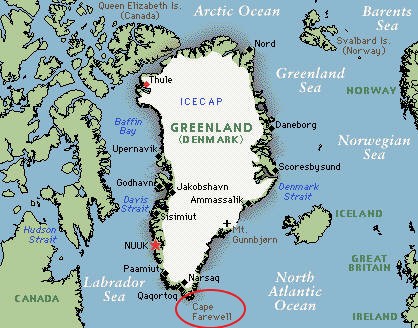
Bonanza! The Correlation of Mines & Minerals to the Earth’s Grid System – Part 2 Cape Farewell, Greenland to the Maldives

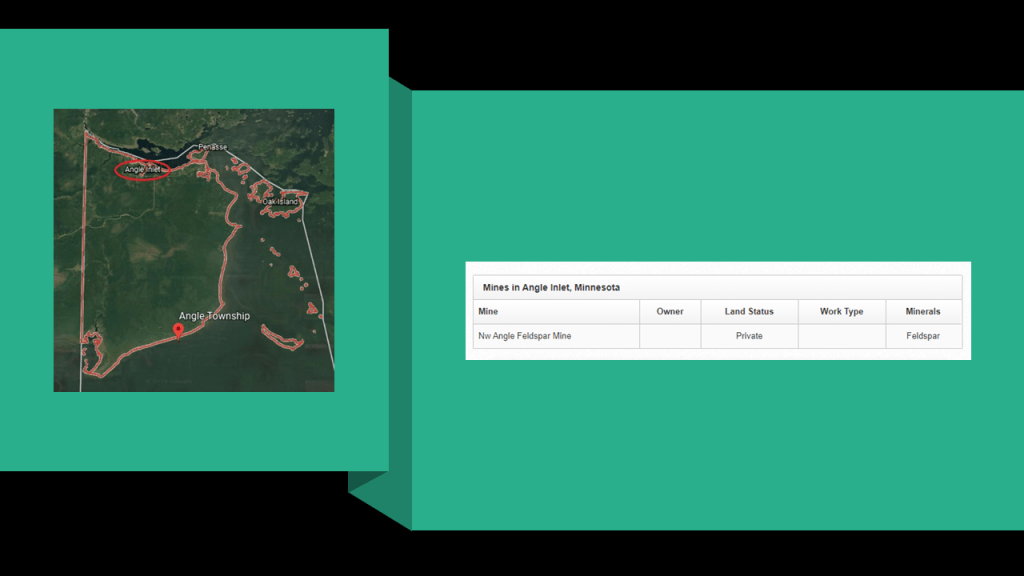
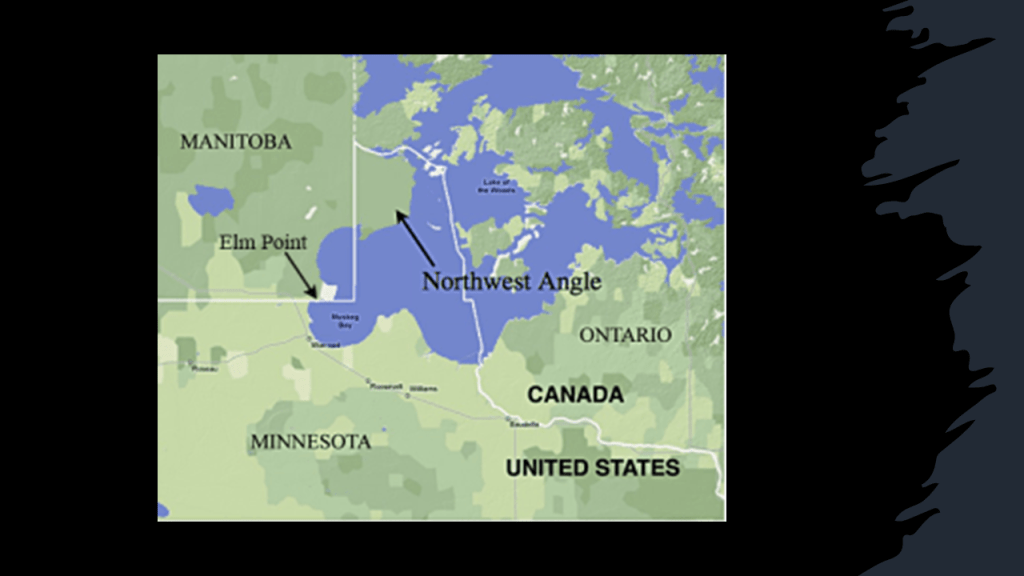
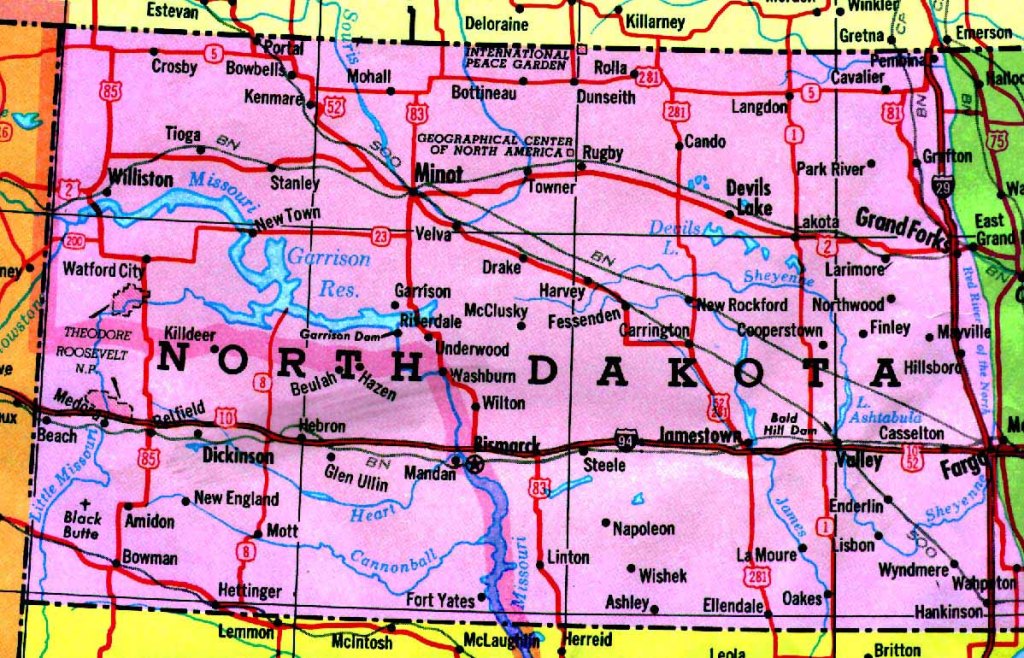
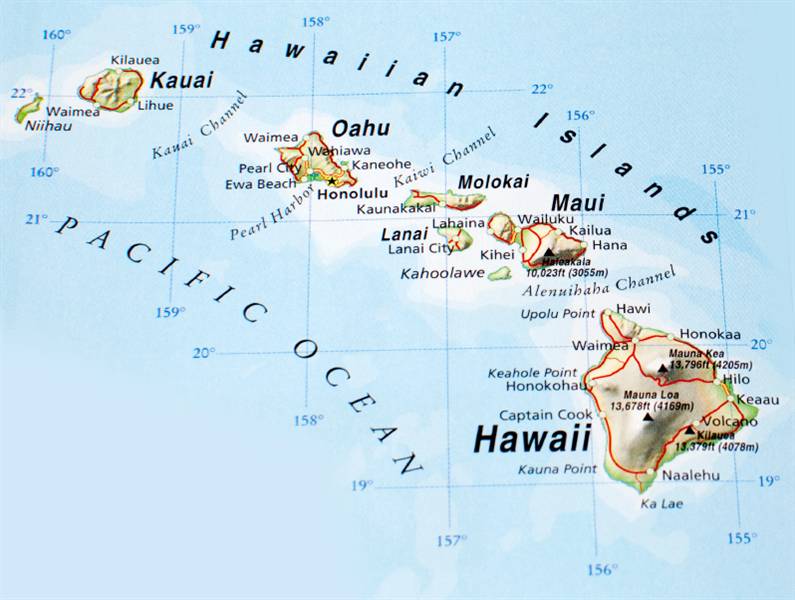
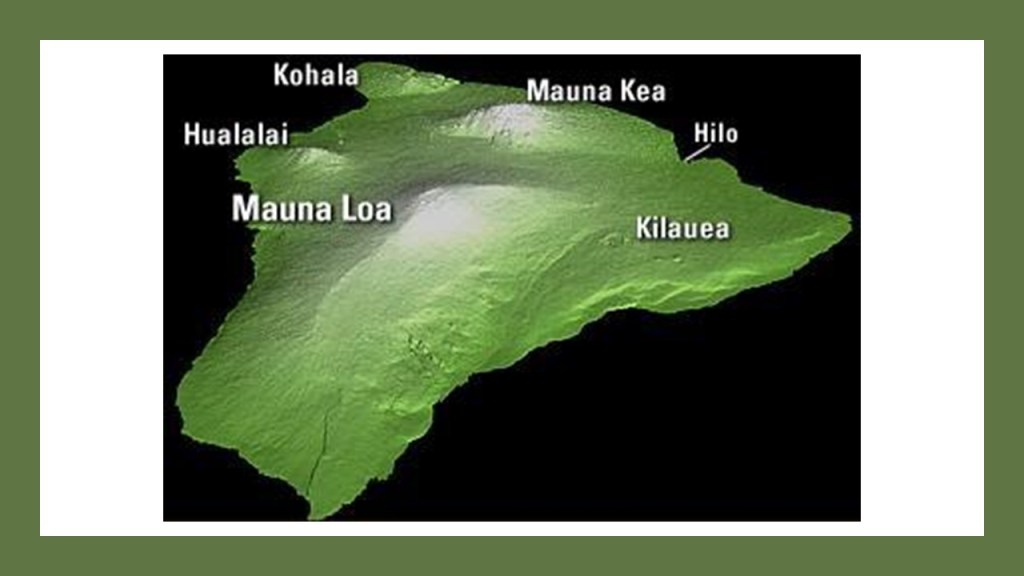
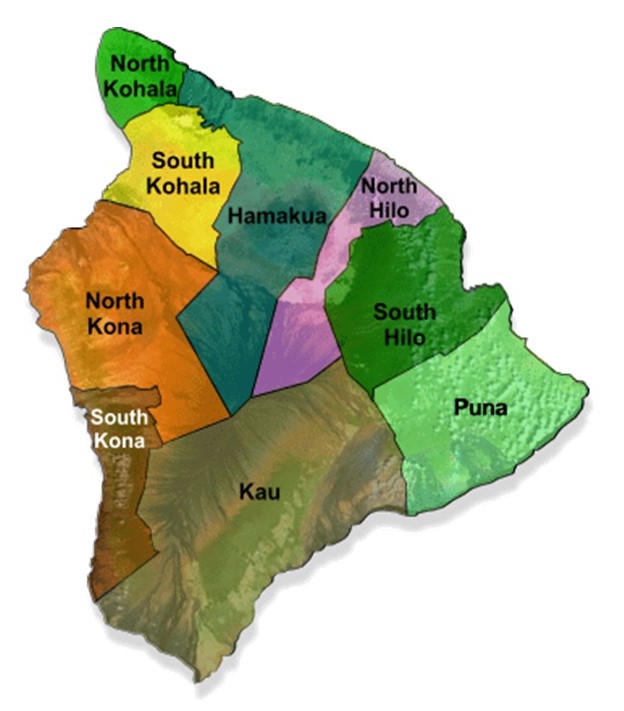
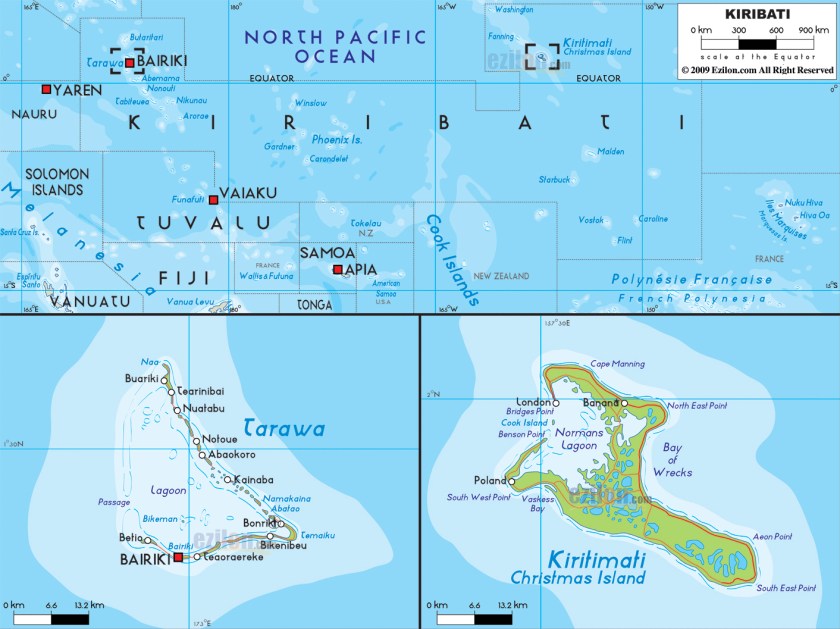
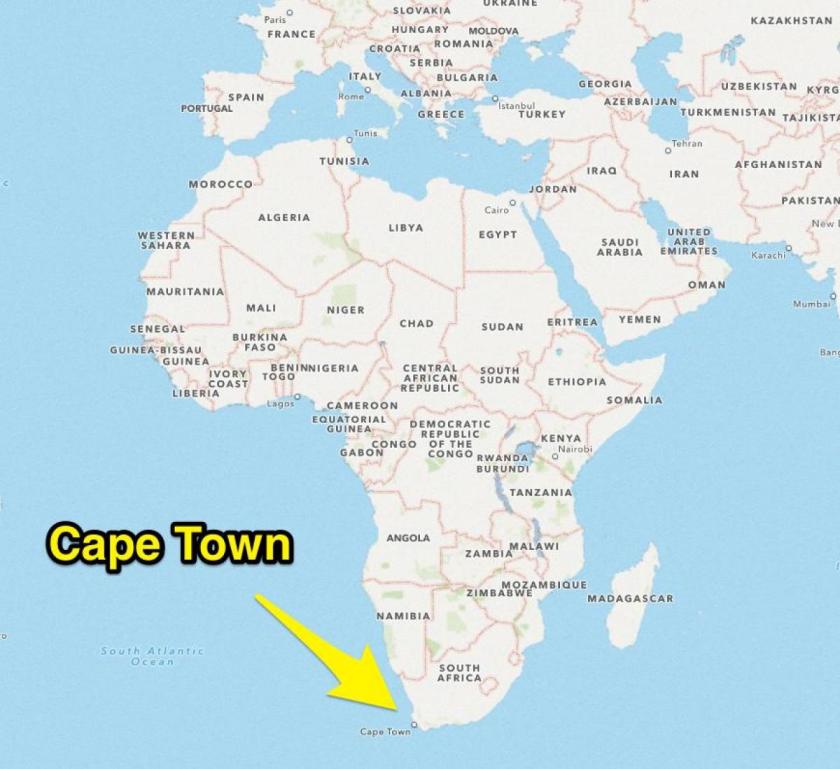
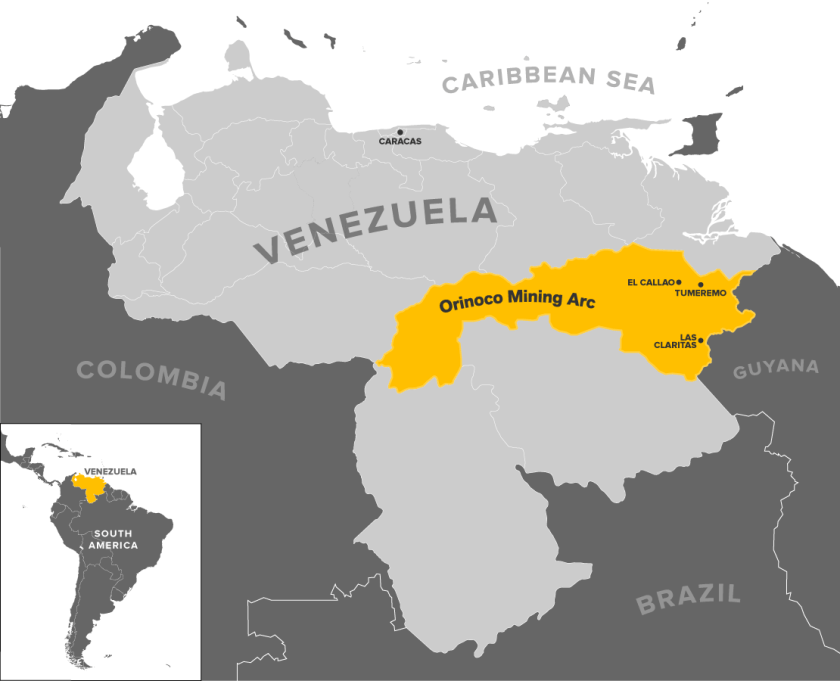
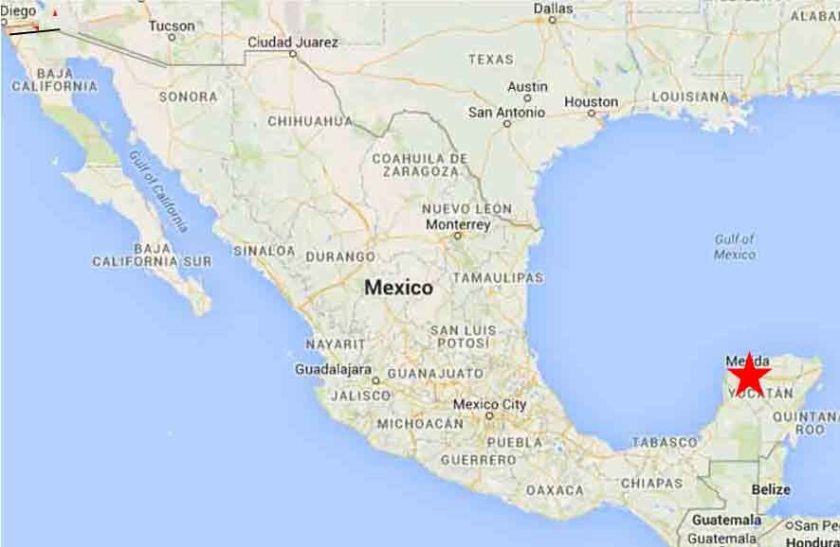
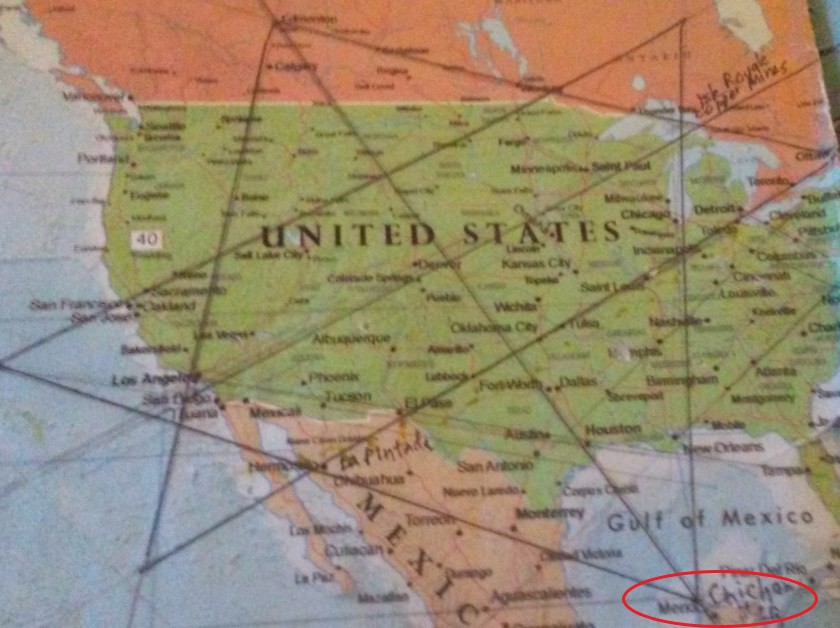
In the first part of the series, I tracked an alignment looking for mines and mineral occurrences starting at Cape Farewell in Greenland; through northern Labrador and northern Quebec; the Belcher Islands and the James Bay region of the Hudson Bay; southwestern Ontario; the Northwest Angle of Minnesota; North Dakota; Montana; Idaho; Nevada; the Sierra Nevadas and San Francisco in California; in the Pacific through the Big Island of Hawaii, the Republic of Kiribati and the Solomon Islands; Australia; Cape Town in South Africa; Brazil; Venezuela; Colombia; Panama; Nicaragua; Honduras; Belize, and Mexico, ending at Merida, the southern apex of the star tetrahedron, which I believe is the terminus of the Earth’s grid system.

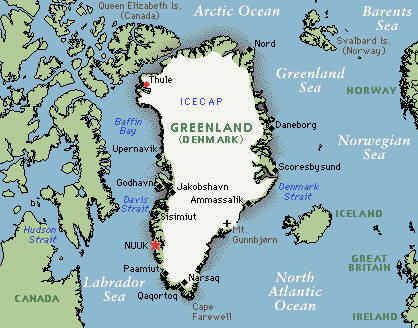
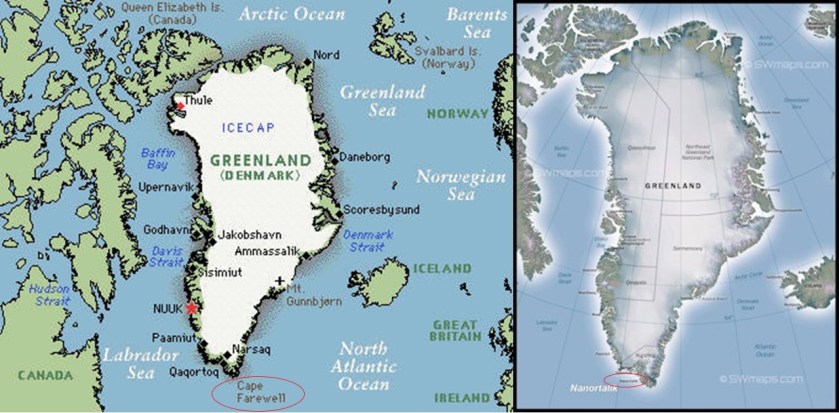
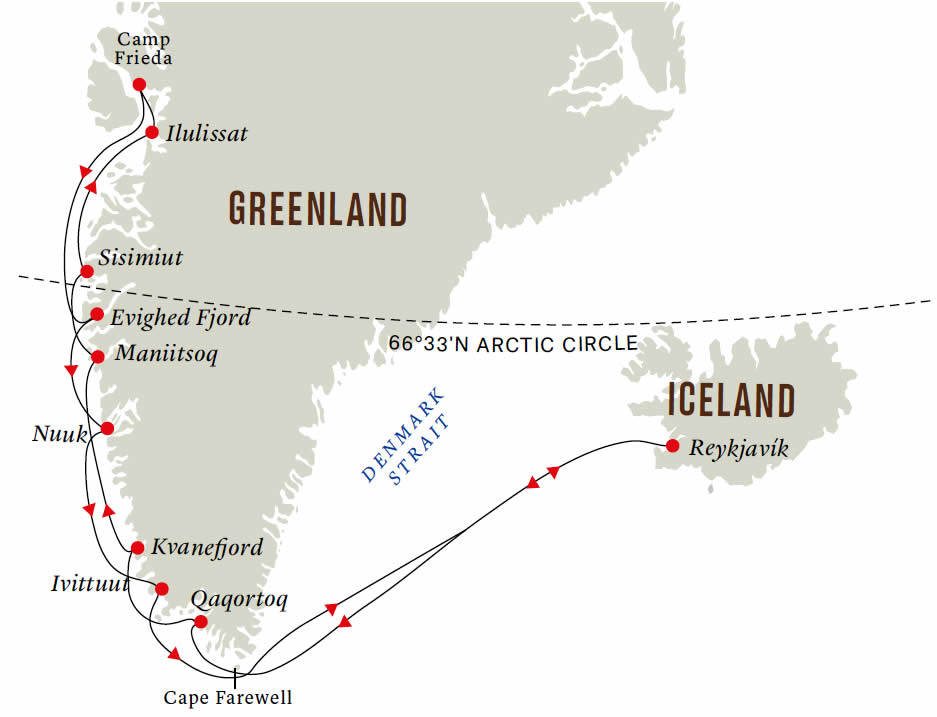
I chose Cape Farewell at the southern tip of Greenland as my starting point for this two-part series because it sits on an alignment that globally connects with two different sides of the North American Star Tetrahedron.

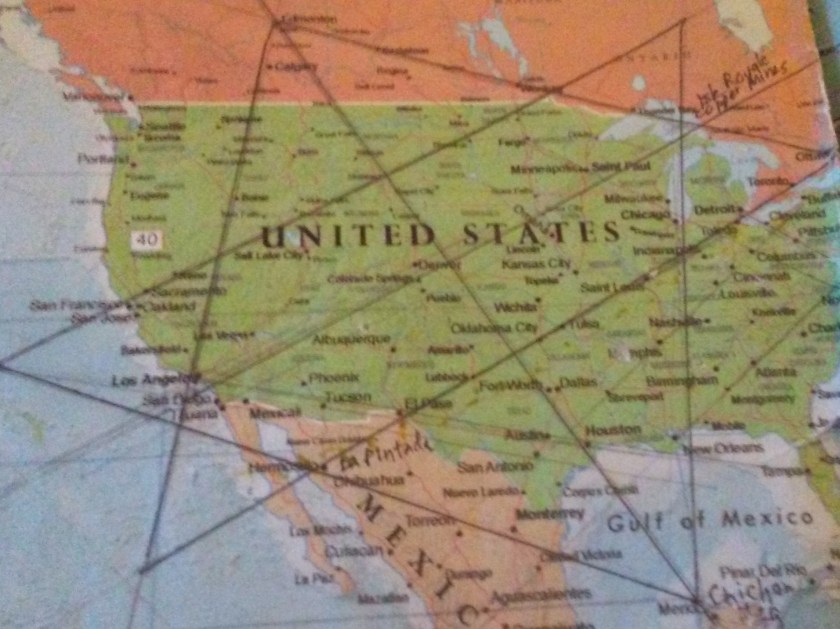
I found it early in 2016 by connecting the dots when I noticed major cities in North America that were lining up in straight lines.

I extended the lines out, wrote down the cities and places that were in linear or circular alignment in spreadsheets, and got an amazing tour of the world of places I had never heard of after looking at countless images, and hours and hours of drone videos,  and seeing the same signature and hand of design, from ancient to modern, all over the Earth.  
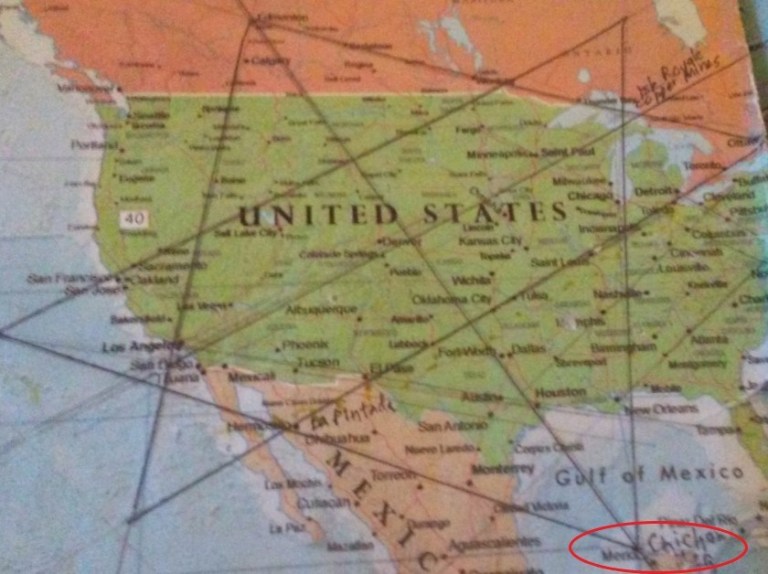
In this post, I am going to cover mining and mineral findings along an alignment going in the other direction from Cape Farewell.

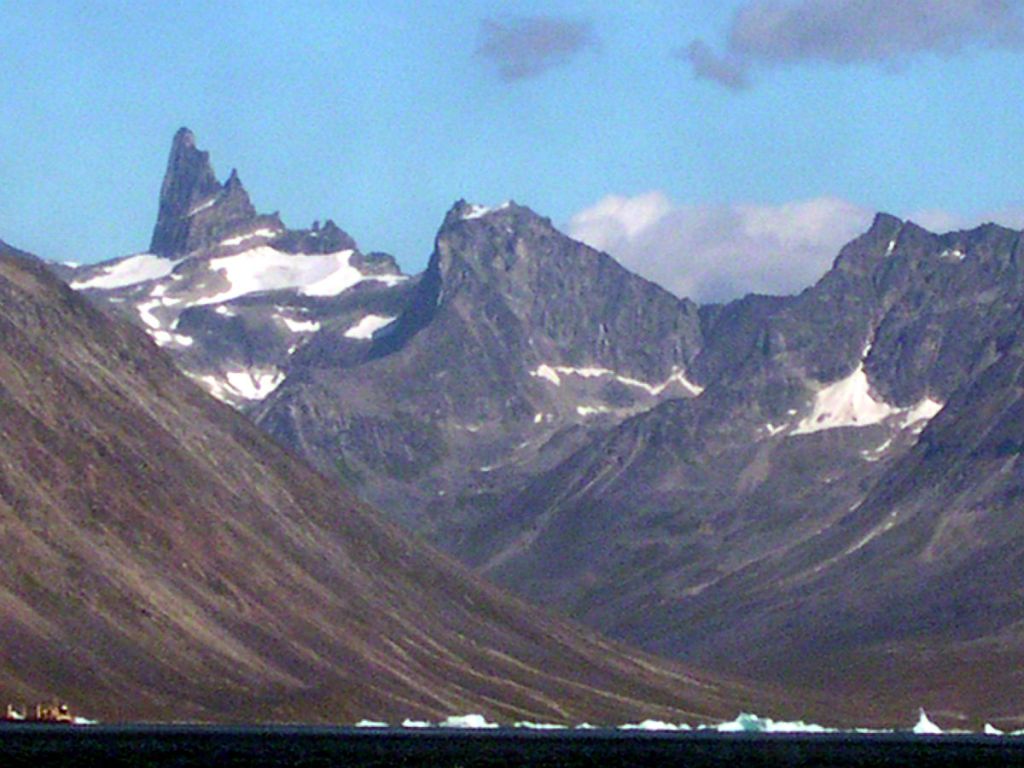
Cape Farewell is the southernmost point of Greenland.

Greenland is an autonomous territory within the Kingdom of Denmark.
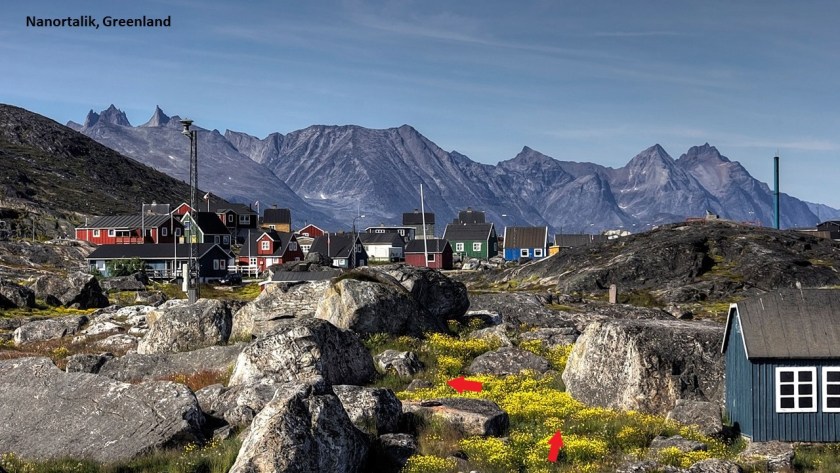
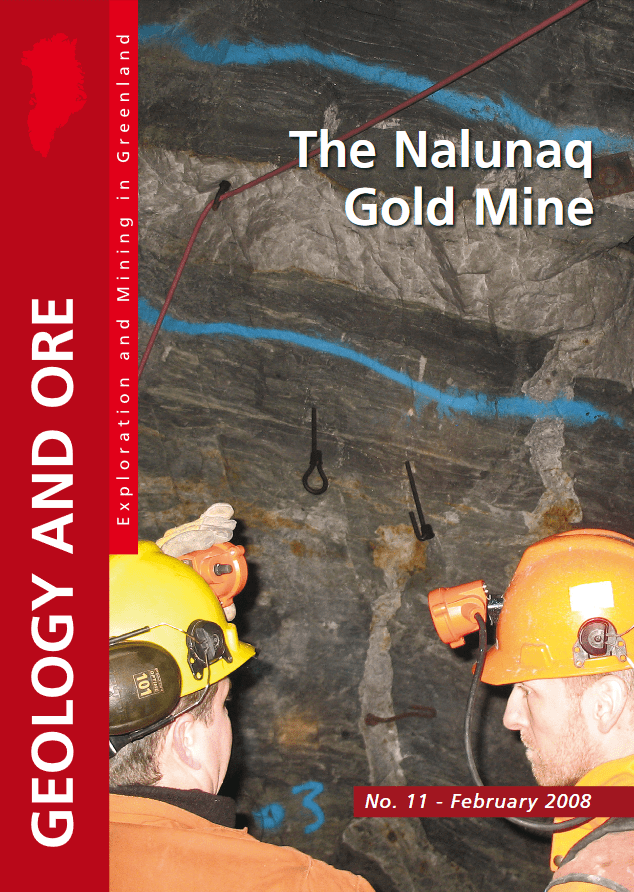
As I mentioned in the first part of this series, the Nalunaq Gold Mine, Greenland’s first gold mine, opened in 2004 at the Inuit community of Nanortalik and the first mine developed in Greenland in over 30-years.

A narrow-vein, high-grade gold deposit, the Crew Gold Exploration company was the first to mine it for approximately 4-years, producing 308,000 ounces of gold.
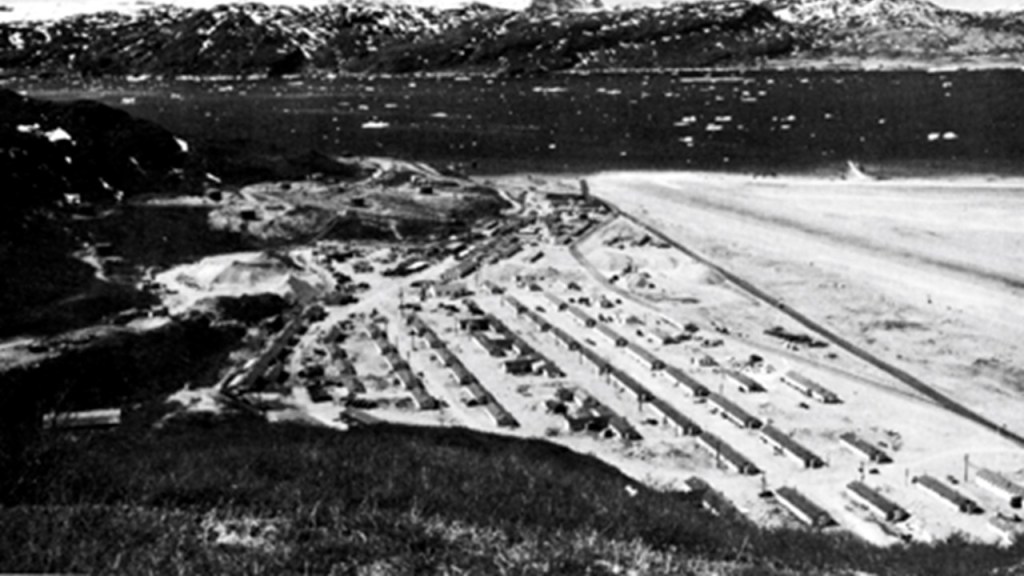
Before World War II, Greenland was a tightly controlled colony of Denmark, otherwise closed off to the world.

After Denmark fell to the Germans in April of 1940, the United States established numerous and extensive facilities for air and sea traffic in Greenland, among other things.
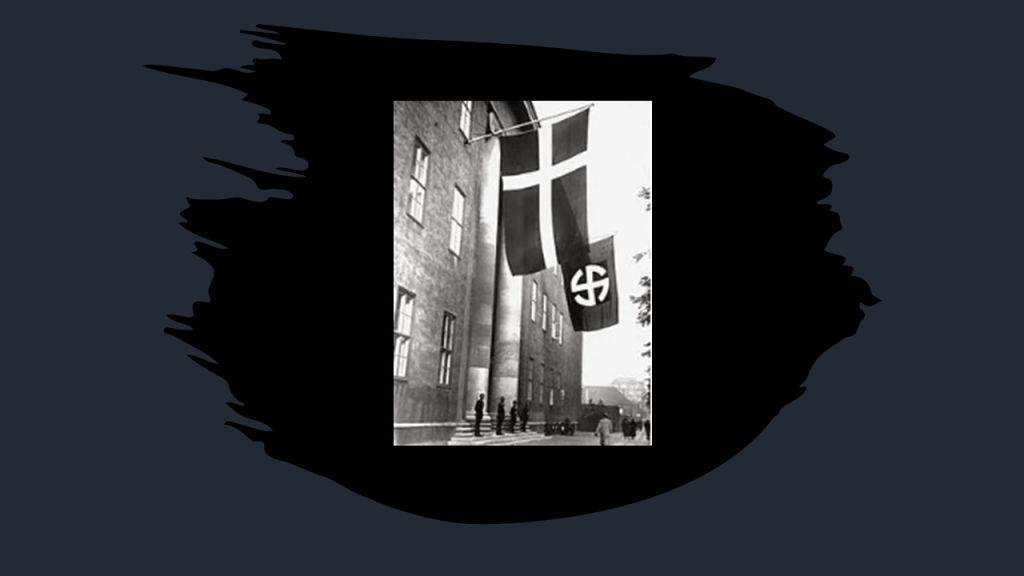
Denmark was occupied by the Nazi Germans from 1940 to 1945. The headquarters of the Danish SS Unit was the massive Danish Freemasonic Lodge.
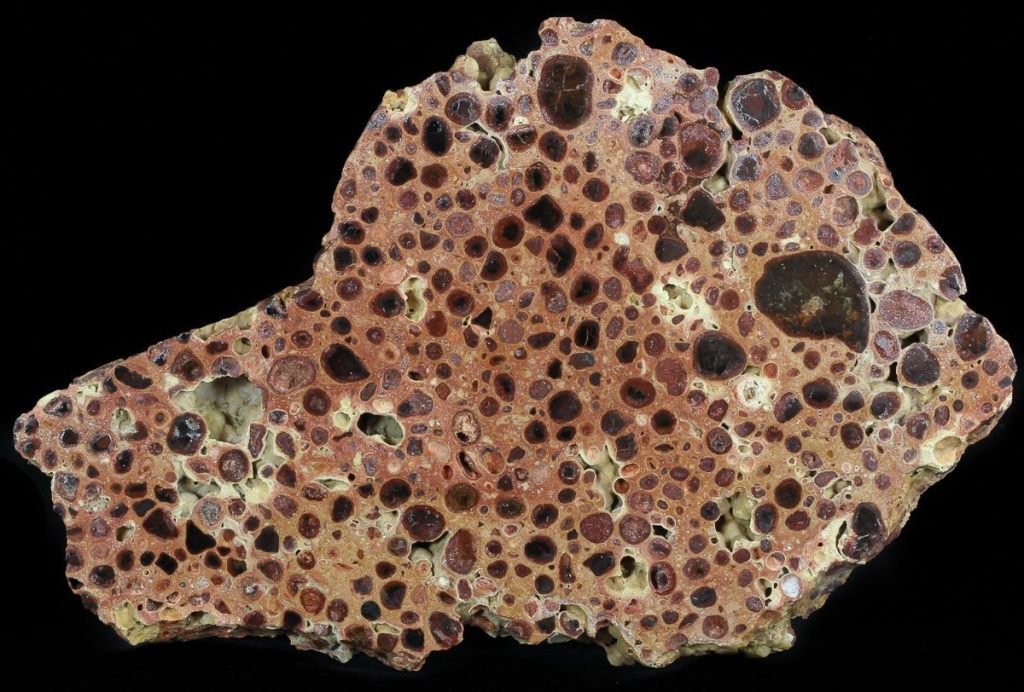
Apparently the chief concern by the United States and other interested parties in 1940 was to secure the strategically important supply of cryolite at Ivittuit, also at the southern tip of Greenland.

Ivittuut was one of the few places in the world so far discovered to have what is called naturally-occurring cryolite, which is an important agent in modern aluminum extraction.
Cryolite was discovered here in 1794, and it was mined until production was stopped in 1987 after synthetic cryolite was developed and reserves depleted.

The town of Ivittuut was abandoned soon afterwards.

Cryolite is an aluminum oxide mineral used in the electrolytic processing of Bauxite, an aluminum-rich oxide ore.
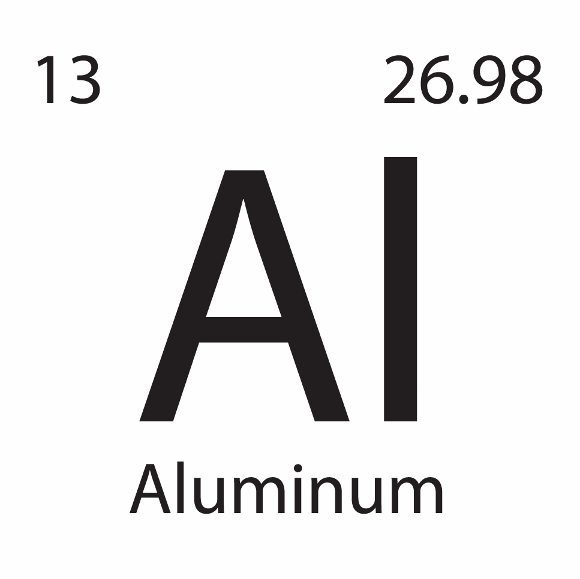
Aluminum is a chemical element with the symbol “Al” and the atomic number of 13.
It is a silvery-white, soft, non-magnetic and ductile metal in the boron group, and the Earth’s most abundant metal.
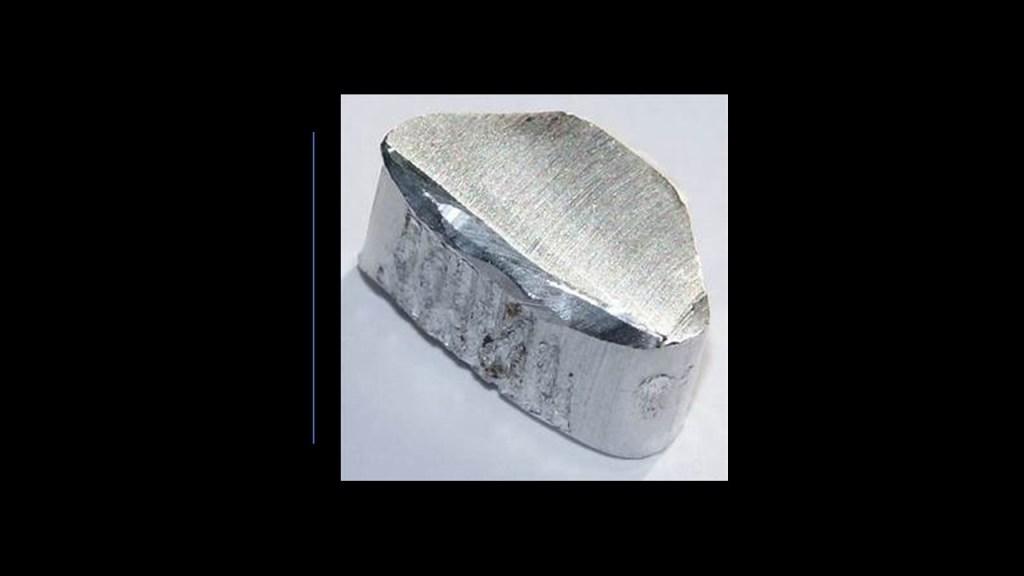
Due to its low density and ability to resist corrosion, aluminum and its alloys are vital to the aerospace industry, as well as other transportation and building industries.
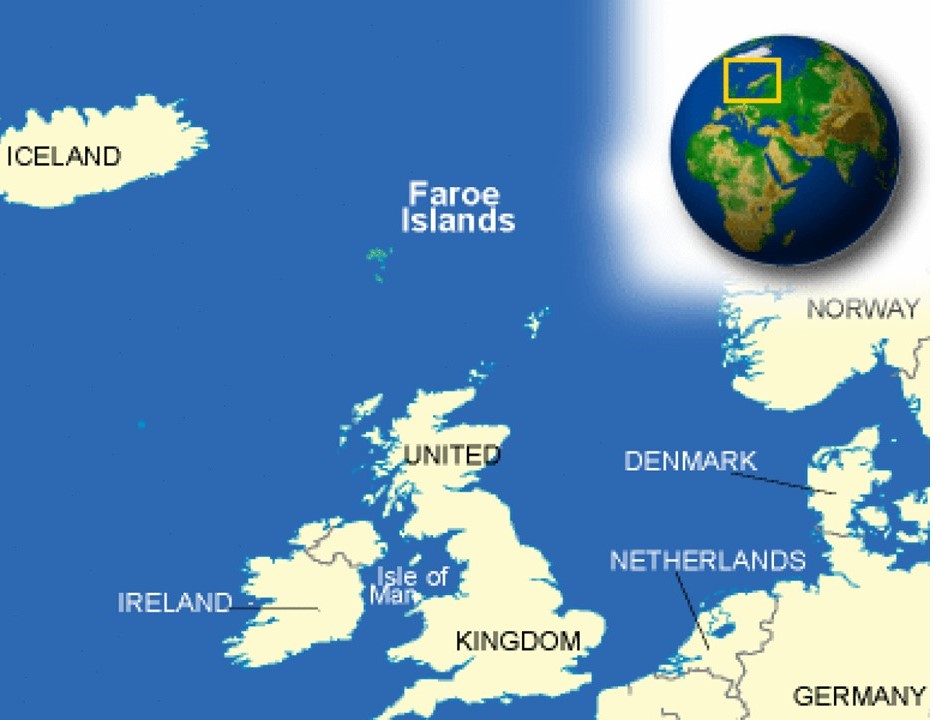
From Cape Farewell, the next place we come to are the Faroe Islands are a North Atlantic archipelago located 200-miles, or 320-kilometers, north of Scotland, and about half-way between Iceland and Norway.

Like Greenland, the Faroe Islands are an autonomous territory within the Kingdom of Denmark.
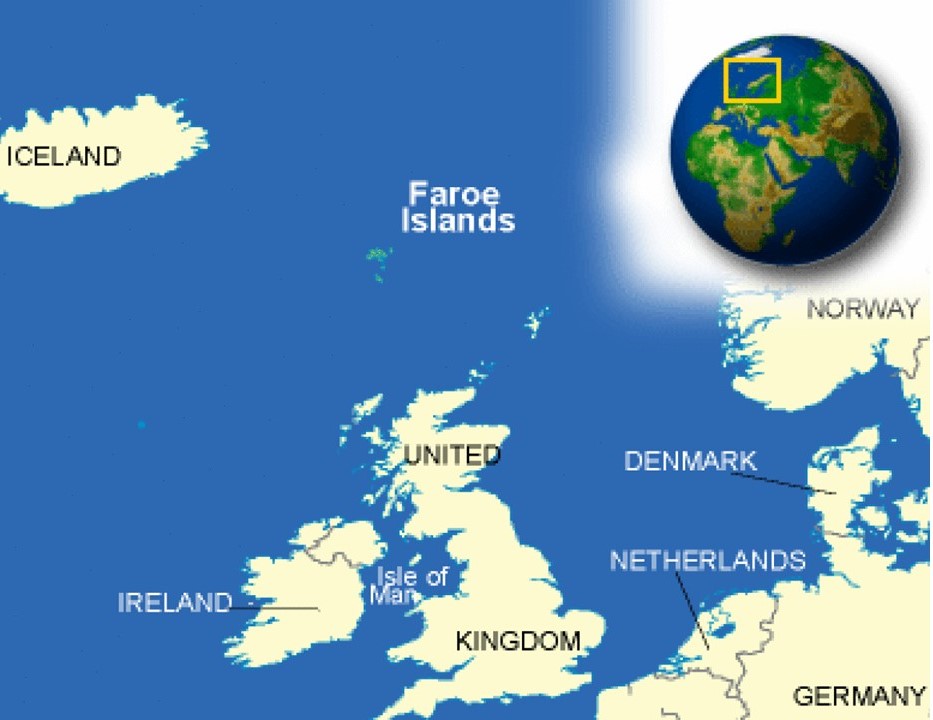
In our historical narrative, we are told that between 1450 AD and 1814 AD, The Faroe Islands were part of the Union of the Kingdom of Denmark-Norway, also known as the Oldenburg Monarchy.

We are told the Oldenburg Monarchy had long-remained neutral in the Napoleonic Wars.
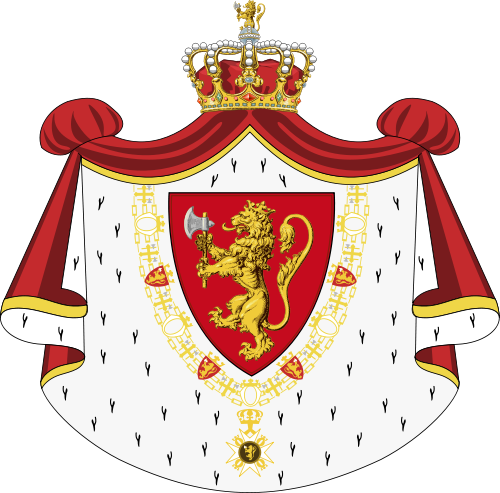
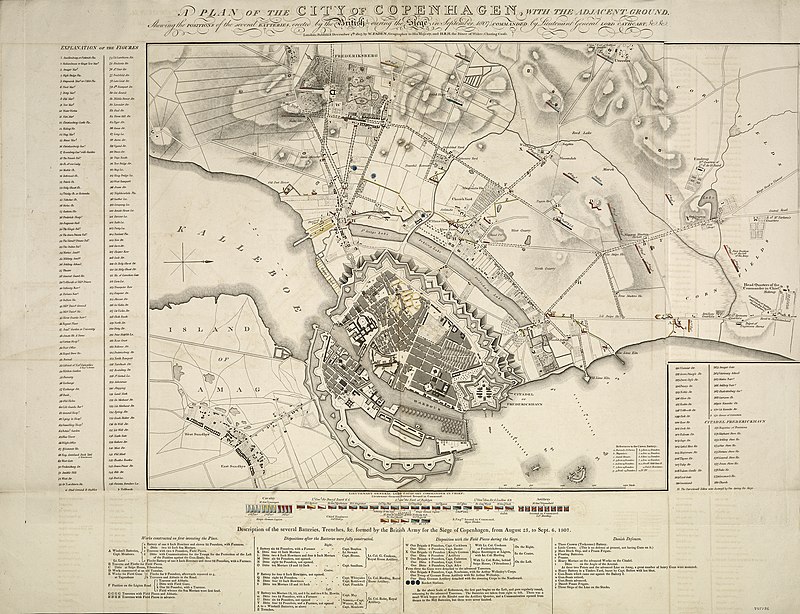
Britain was said to have feared that Napoleon would attempt to conquer the Danish-Norwegian naval fleet, and used that as a pretext to attack Copenhagen in what became known as the Seige of Copenhagen in August of 1807, and Britain seized the naval fleet in September of 1807.

This also assured the use of the sea lanes in the North Sea and Baltic Sea for the British merchant fleet.
Then in 1814, during the Napoleonic Wars, the Treaty of Kiel, between the United Kingdom and Sweden on the anti-French-side, and Norway and Denmark on the French-side, dissolved the Oldenburg Monarchy by transferring Norway to the King of Sweden.

The King of Denmark retained the Faroe Islands, Greenland, and Iceland.

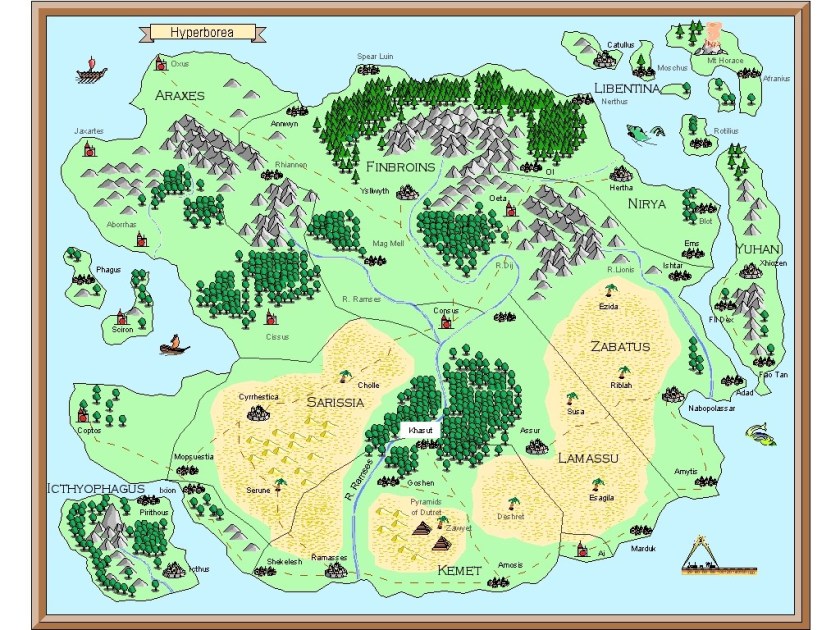
I find it interesting to notice the word “Hyperboreus” in this map associated with the 1814 Treaty of Kiel.
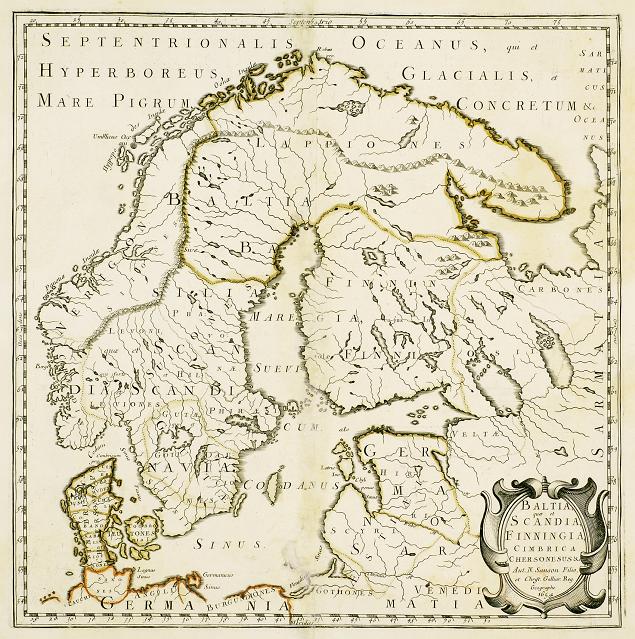
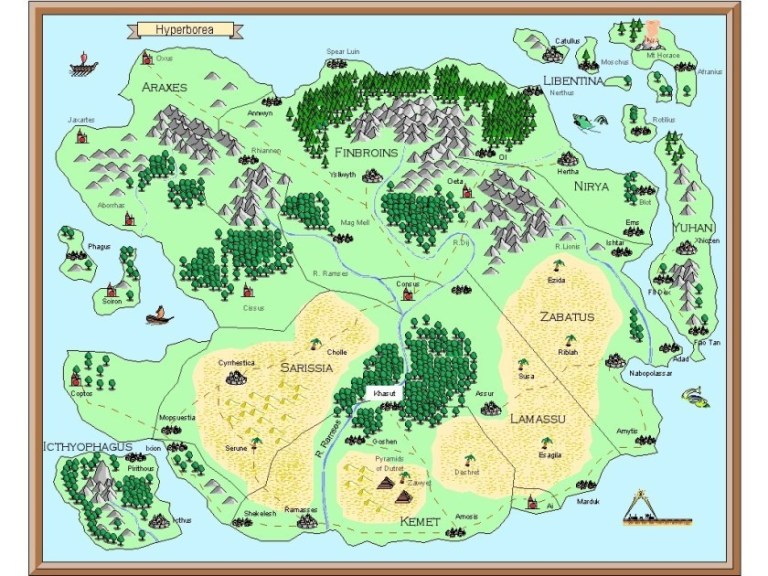
Legendary Hyperborea, a lost ancient land and fabulous world of eternal spring, was said to be located in the Far North, and Tthe Nazis believed there was a connection to the origins of the Aryan race with Hyperborea. 
At any rate, the Faroe Islands are one of the classic zeolite localities of the world.

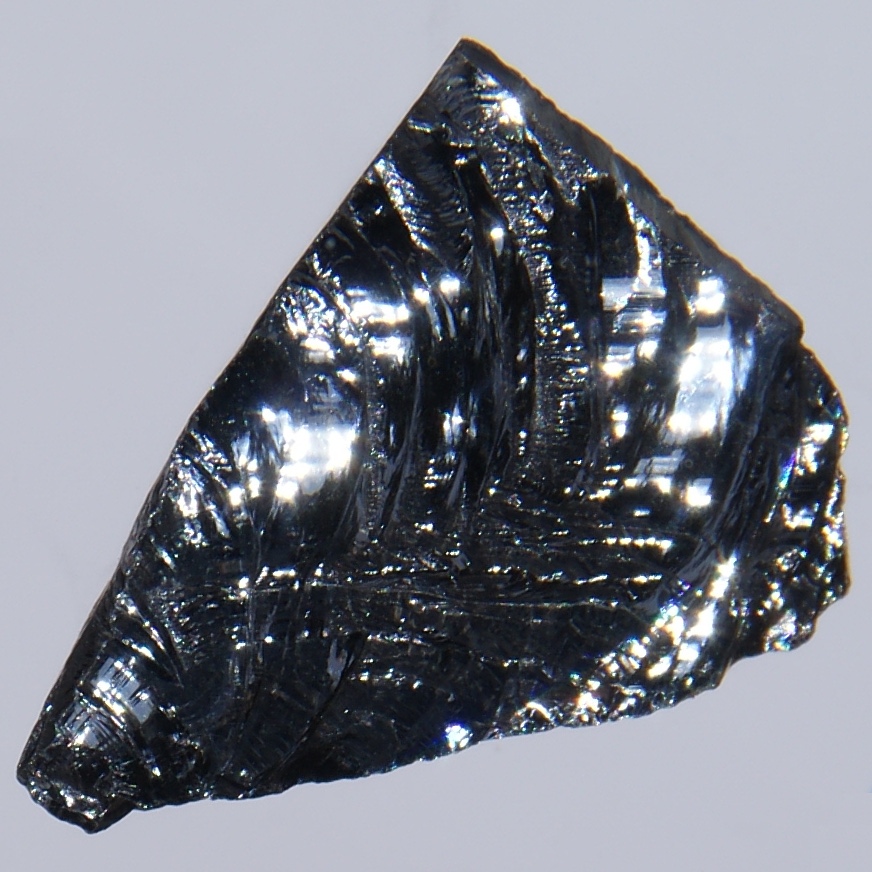
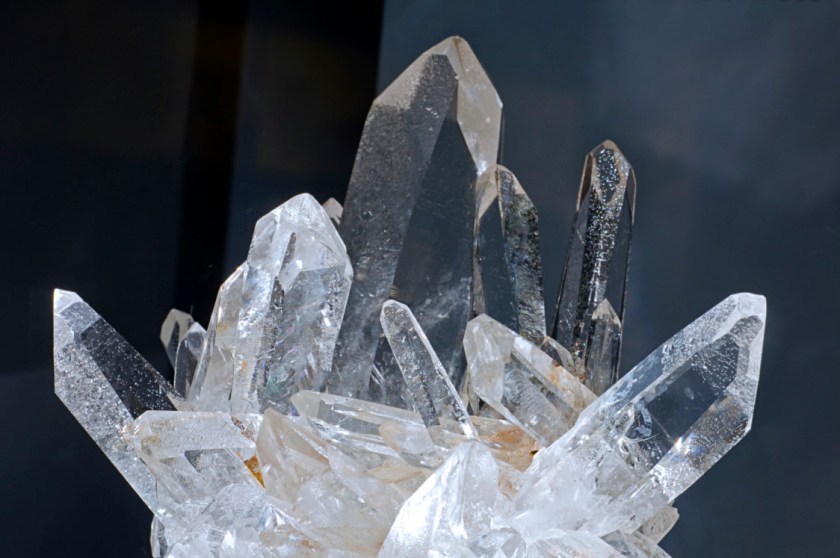
Zeolites are minerals with very small pores, composed primarily of aluminum, silicon, and oxygen, and used commercially as absorbents and catalysts.

Zeolites found on the Faroe Islands include, but are not limited to, different varieties of Stilbites…
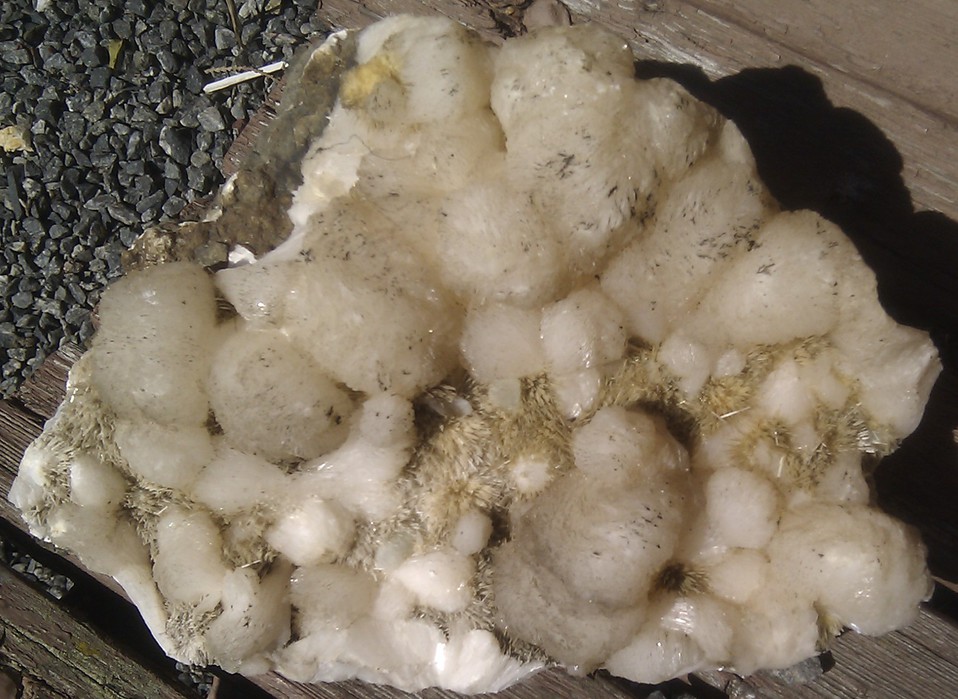
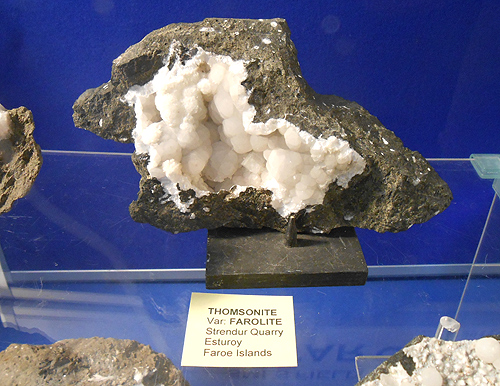
…as well as a zeolite called Thomsonite, a silicate material, which are rock-forming minerals made up of silicate groups.

This example of Thomsonite is called Farolite.
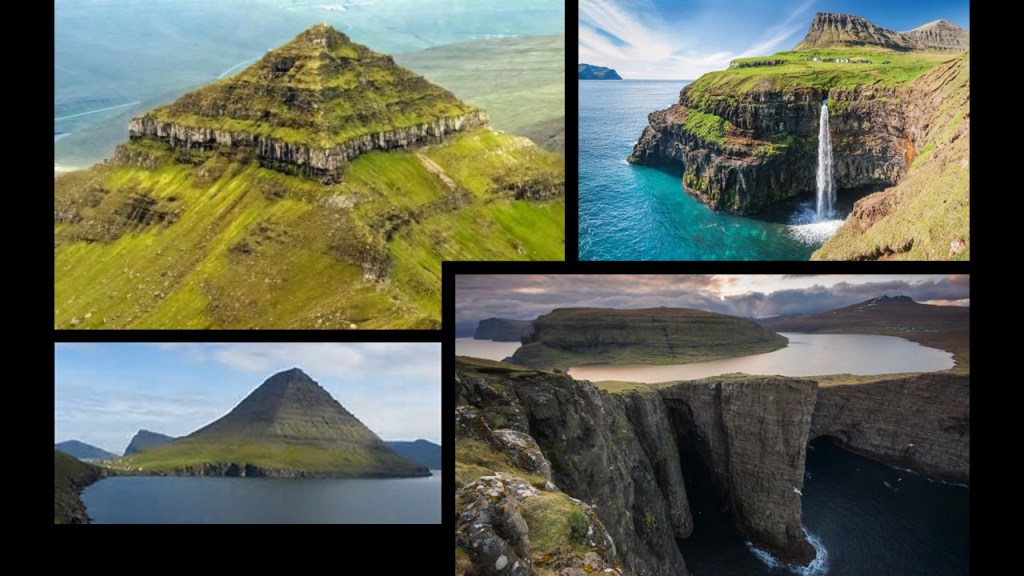
Here are some of the sights found on the Faroe Islands.
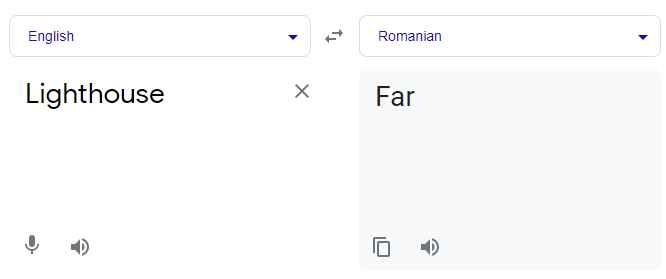
While we are told the etymology of the name of these islands came from possibly an Old Norse word for “sheep” or the Swedish verb “fara,” meaning to travel, it is interesting to note that at least in the Romance languages, the word for lighthouse includes the root sound of “Far”:

Italian – Faro…
…Spanish – Faro…
…French – Phare…
…Portuguese – Farol…
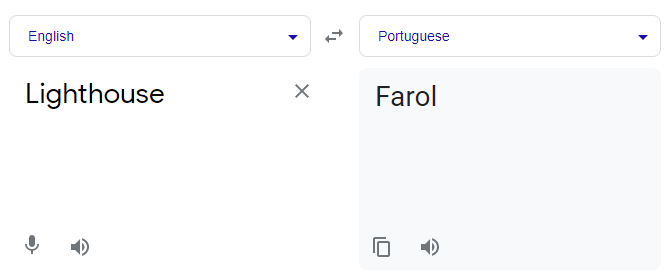
…and Romanian – Far.
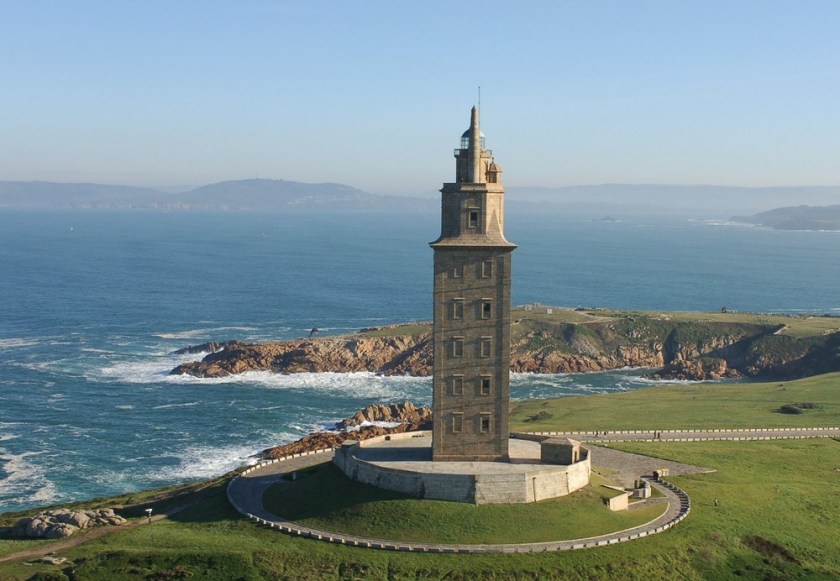
This is the Tower of Hercules, a lighthouse on Faro Island in A Coruna, Spain, which is located on the northwest coast of Spain in Galicia.
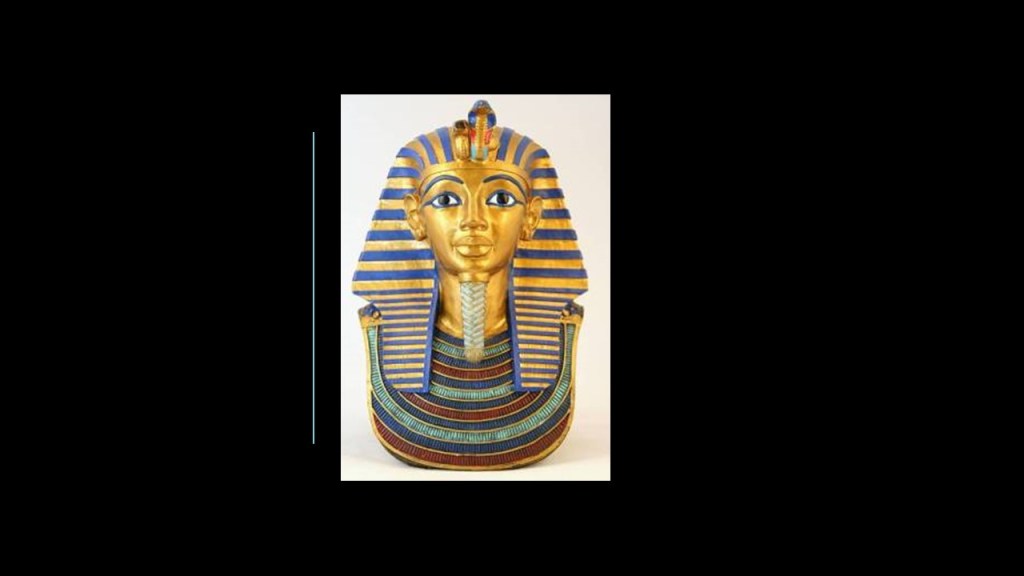
And phonetically, “Faro” sounds like the word “Pharaoh,” which we are told was the common title for monarchs of ancient Egypt from the First Dynasty, starting in 3,150 BC, up to the annexation of Egypt by the Roman Empire in 30 BC.

Are they telling us something without telling us they are telling us?
From the Faroe Islands, we cross the Norwegian Sea to Trondheim, Norway’s third most populous urban area, and fourth most populous municipality.
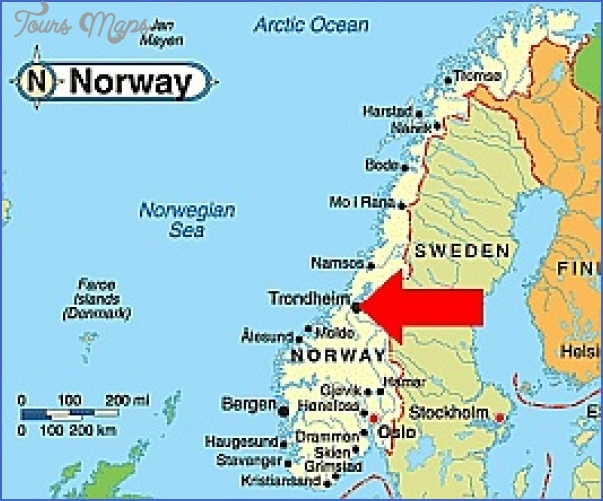
One of the historical name of Trondheim is Nidaros, with the city of Trondheim having been established in 1838.

It is located at the mouth of what is called the River Nidelva…
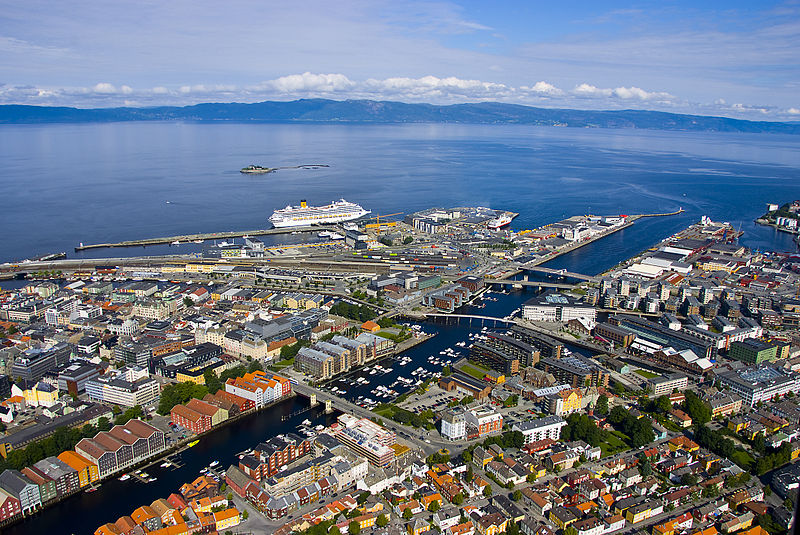
…but which looks distinctly canal-like to me.
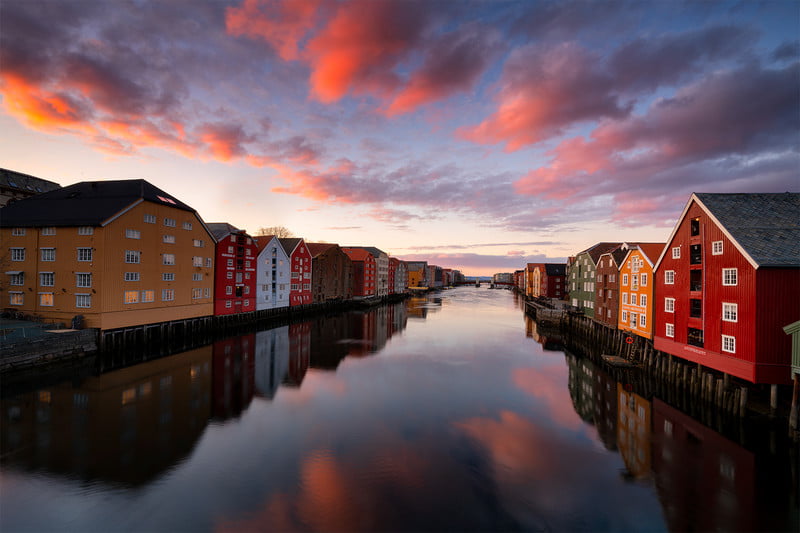
Trondheim is the seat of the Lutheran Diocese of Nidaros, and the Nidaros Cathedral is the national sanctuary of Norway and is the traditional location of the consecration of new kings of Norway, and is considered the northernmost medieval cathedral in the world.
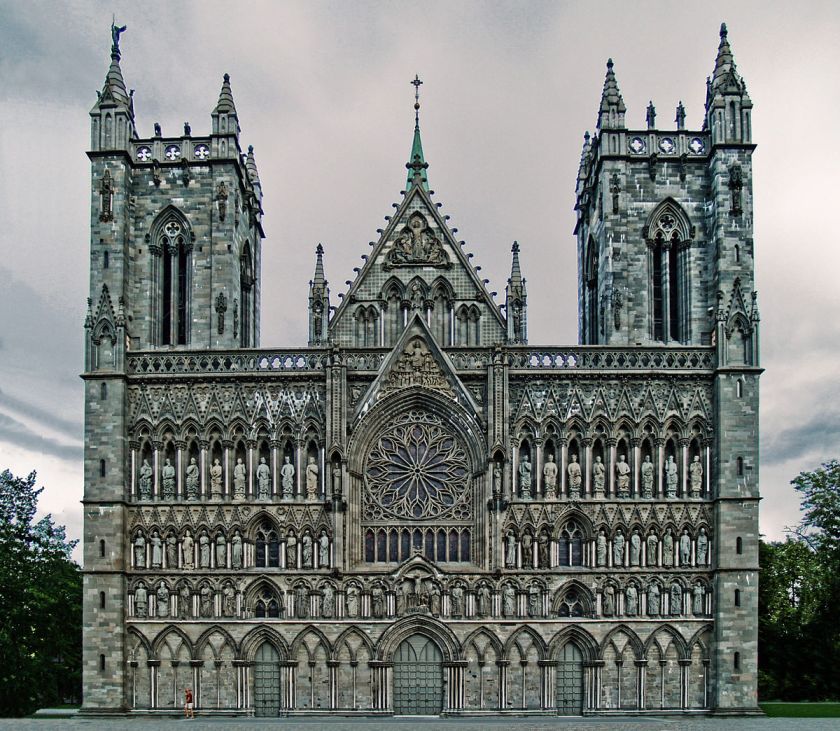
It was said to have been built in the years between 1070 and 1300.
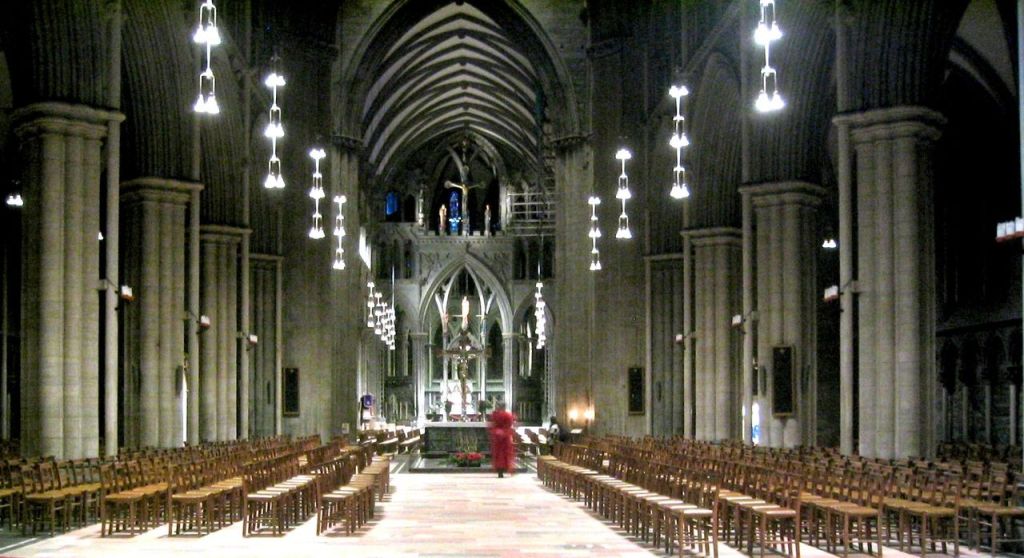
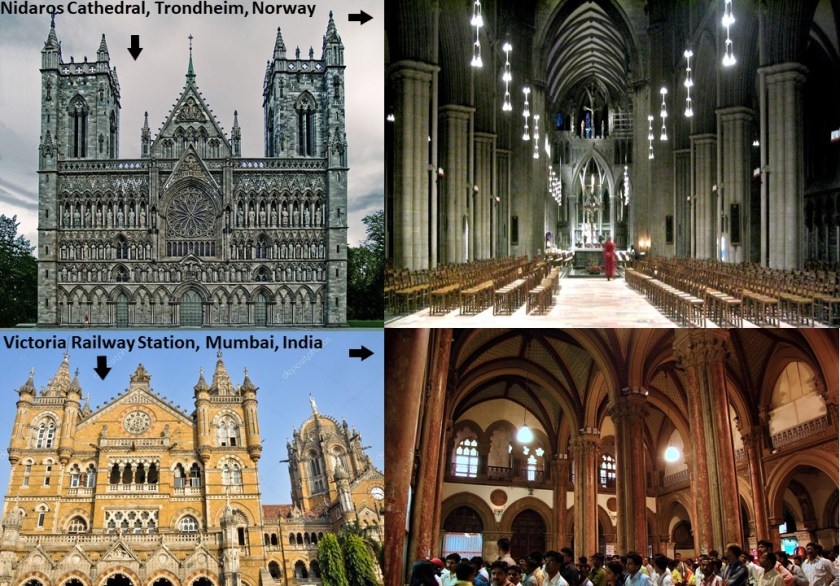
Just for similarity of appearances, here are the Nidaros Catheral in Trondheim in the top pictures, and the Victoria Terminus Railway Station in Mumbai, which used to be Bombay, India, pictured in the bottom photos, and said to have been built by the British in India between 1878 and 1888.
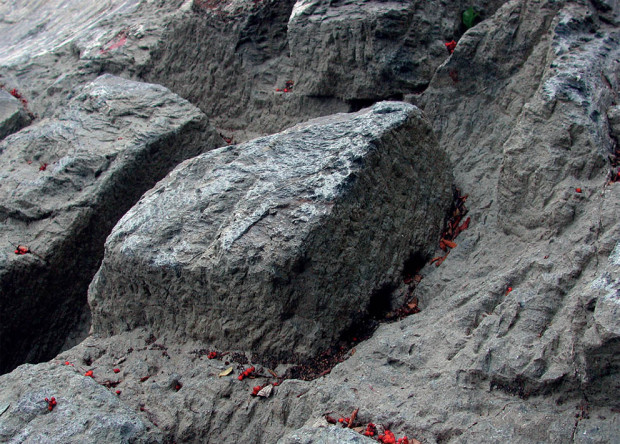
Nidaros Cathedral was said to have been constructed with the soapstone from a medieval soapstone underground quarry called Bakkaunet, close to the city center of old Trondheim, much of which has been destroyed by modern development.
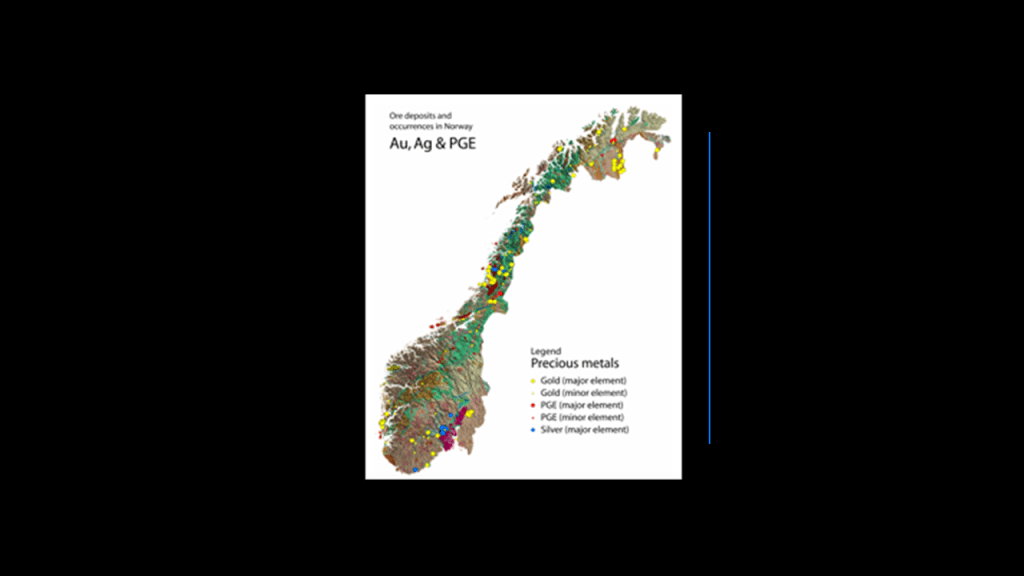
There is considerable mining activity today in Norway, including but not limited to, the precious metals gold, silver, and platinum group elements.
The Headquarters of the Norwegian Directorate of Mining with the Commissioner of Mines at Svalbard is located in Trondheim.
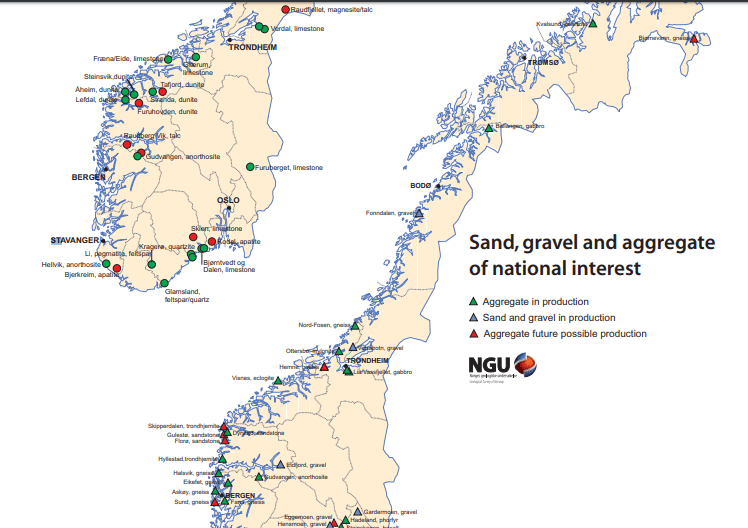
In the area surrounding Trondheim today, the active mining is primarily for limestone and aggregate, which is a broad category of coarse- to medium-grained particulate matter used in construction in the form of sand, gravel, and crushed stone.
Nickel deposits are located northeast of Trondheim…
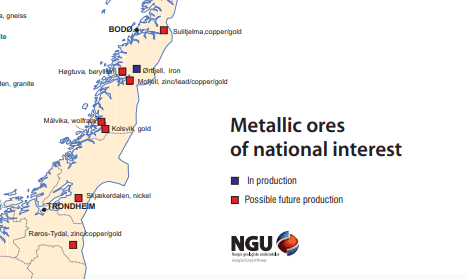
…and copper/zinc/gold deposits are located southeast of Trondheim at Roros-Tydal.

As a matter of fact, Roros has long been known for its copper mining industry, with the Roros Copper Works said to date back to 1646.
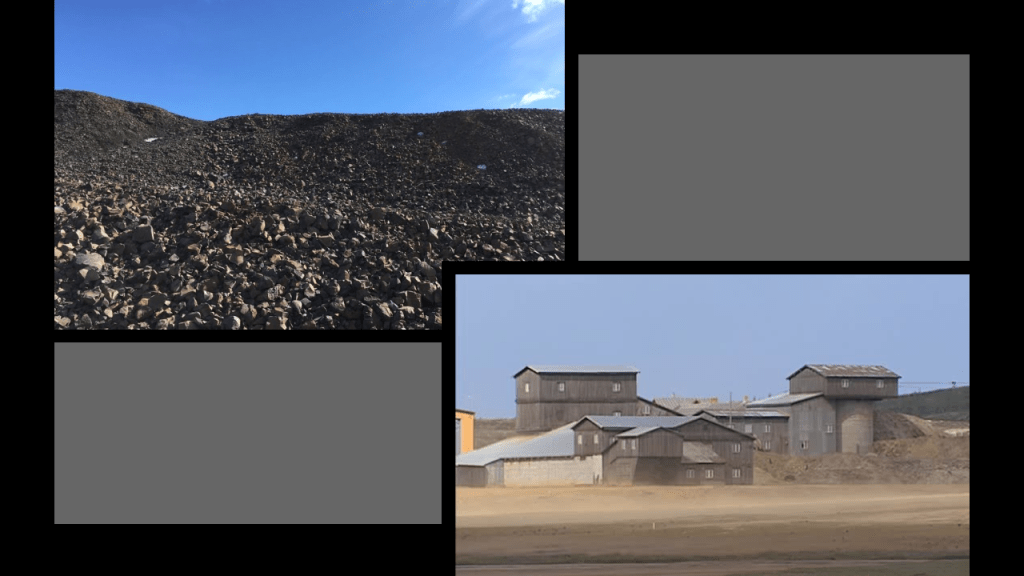
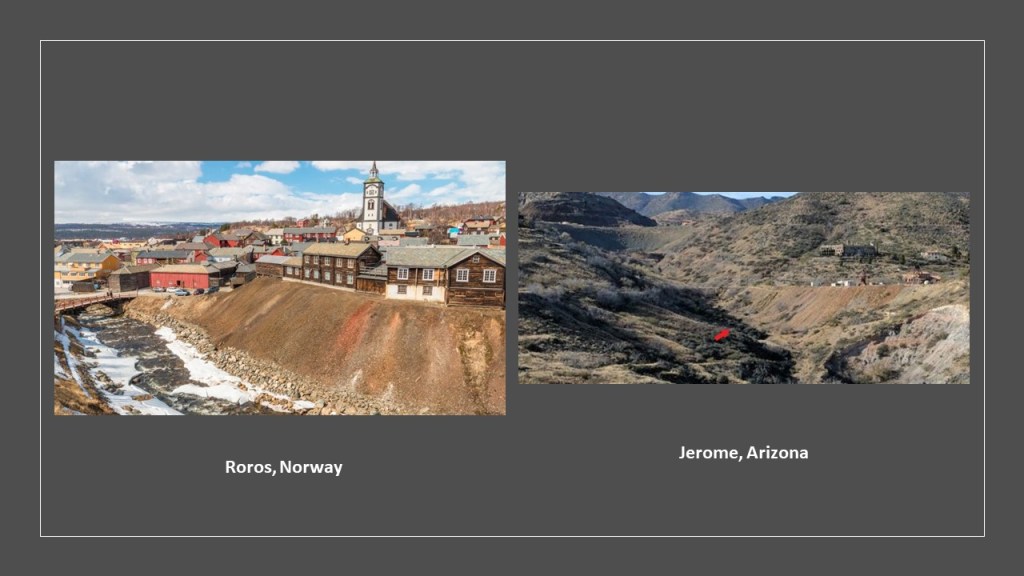
Rich deposits of copper ore were discovered here, which was said to have led to a golden age for the community in the 18th-century on the left, compared for similarity in appearance on the right with Jerome, an old copper mining town in Arizona.
In World War II in Norway, Germany invaded neutral Norway in 1940 on the pretext that Norway needed protection from British and French interference, and like Denmark, the Nazis occupied Norway for 5-years, until 1945.
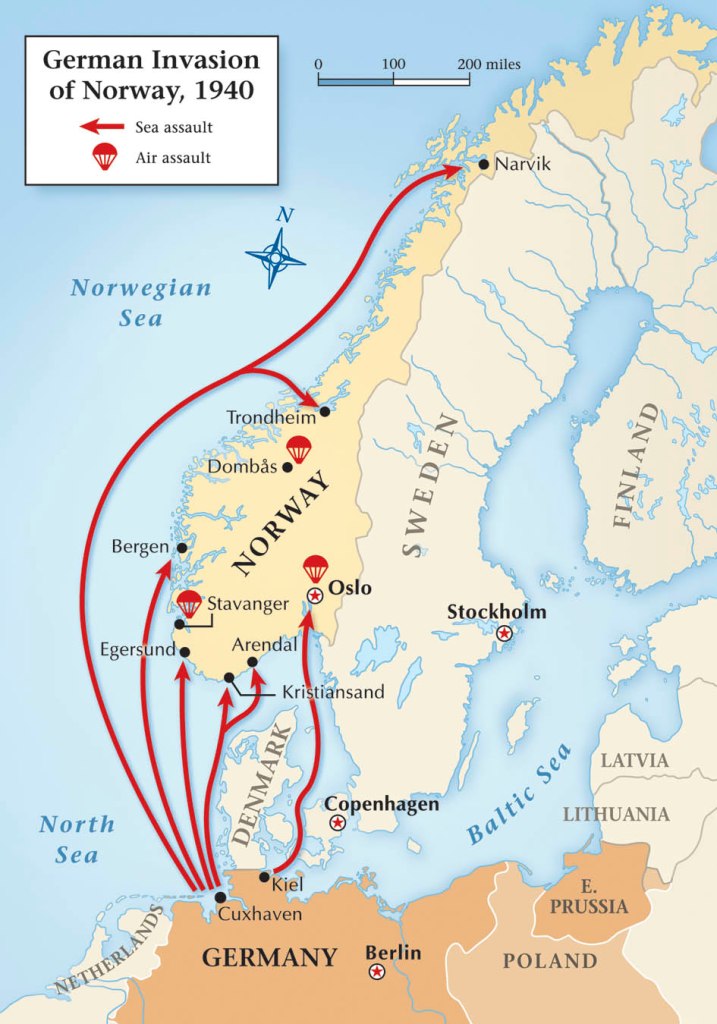
These were other reasons given for Germany’s invasion of Norway: strategically, to secure ice-free harbors from which its naval forces could seek to control the North Atlantic; to secure the availability of iron ore from mines Sweden through the ice-free port of Narvik; to pre-empt a British and French invasion with the same purpose; and to reinforce the propaganda of a “Germanic empire.”

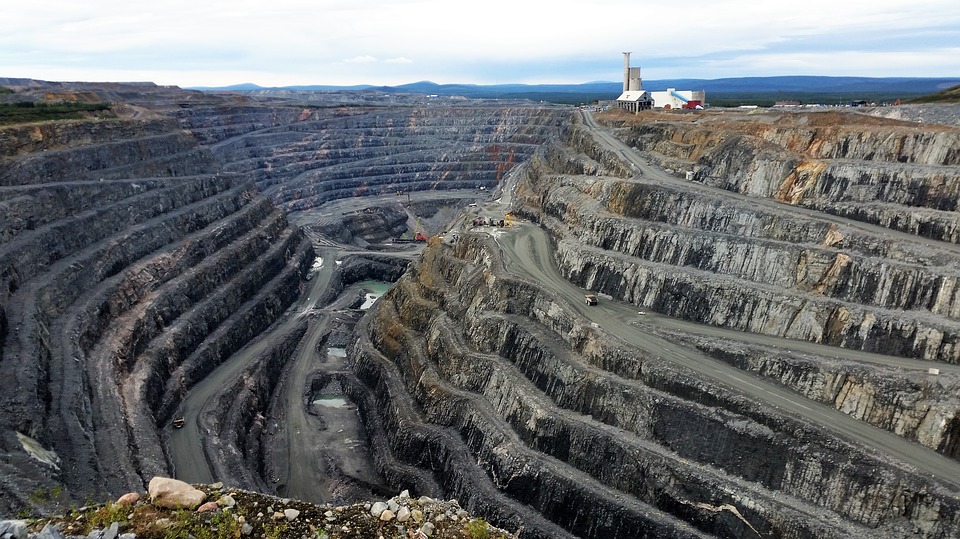
There are two iron ore mines in Lapland, in northern Sweden.

One is Kiruna, the largest and most modern underground iron ore mine in the world.
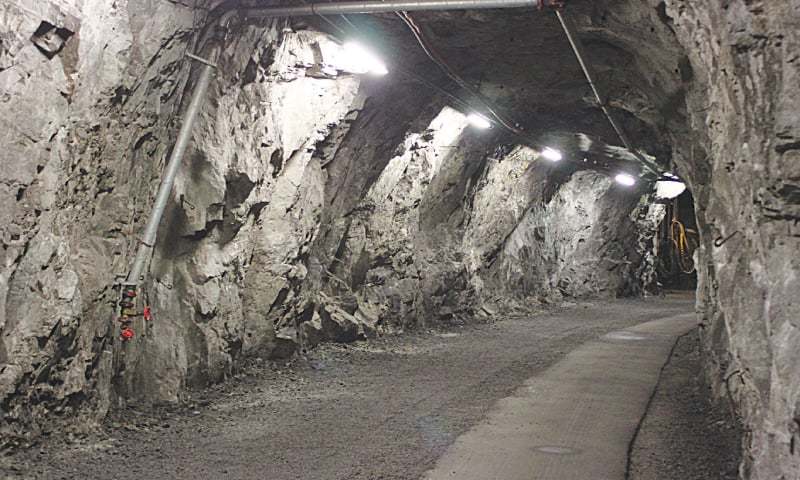
Kiruna first opened in 1898.
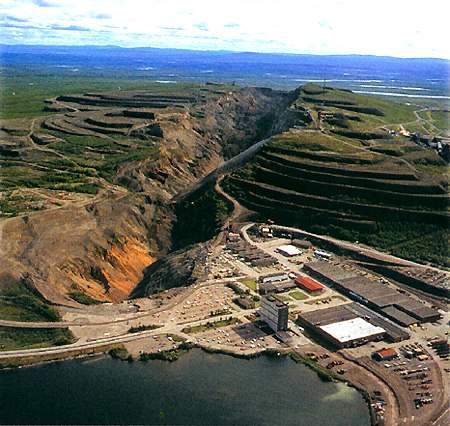
Iron ore is also mined at Gallivare.
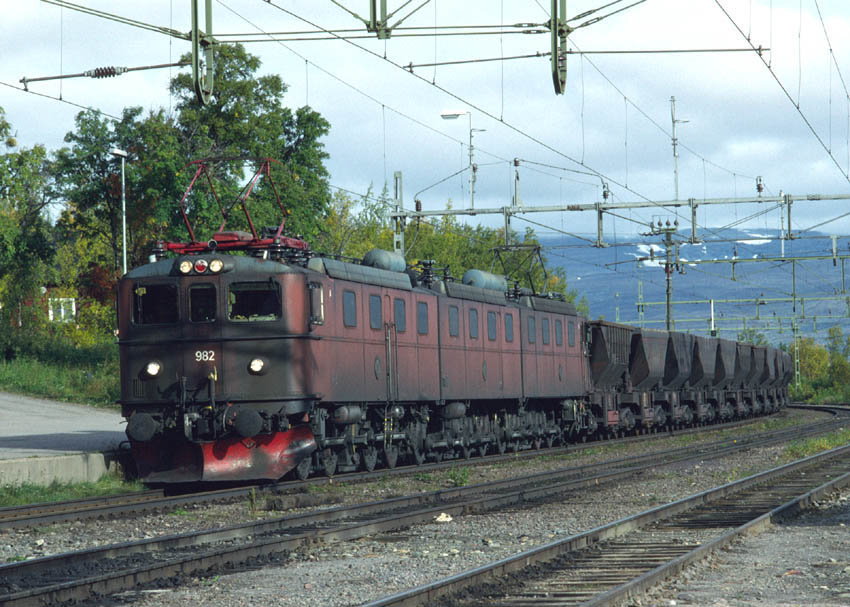
The Iron Ore Line, a 247-mile, or 398-kilometer, long railway connects Kiruna and Gallivare to Narvik.

The Iron Ore Line was said to have opened in 1888.
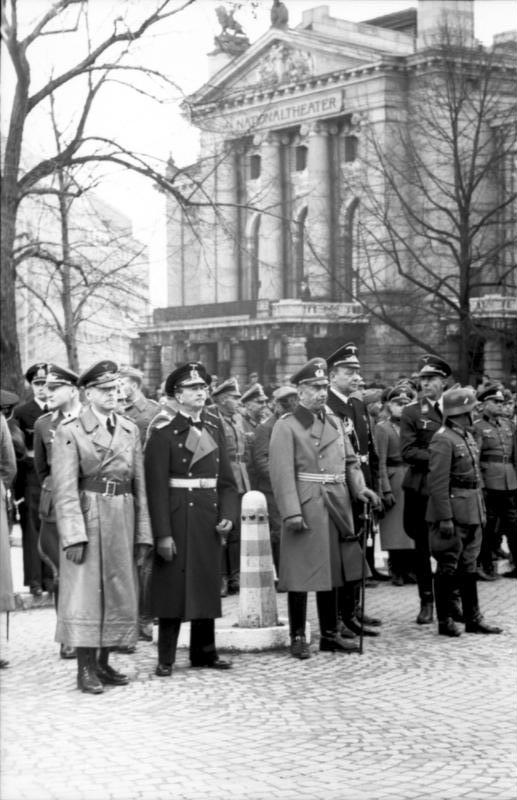
I am quite sure there were other reasons the Nazis were there related to the original advanced civilization, but our true history has been completely removed from the historical record.

It is only available in what is not written, in architecture like Norway’s National Theater in the background of this photo.

Who were the Nazis, really? Certainly not friends of Humanity.

Were they defeated in World War II as we have been taught?

Or did they continue on to this day without our knowledge in a hidden form?
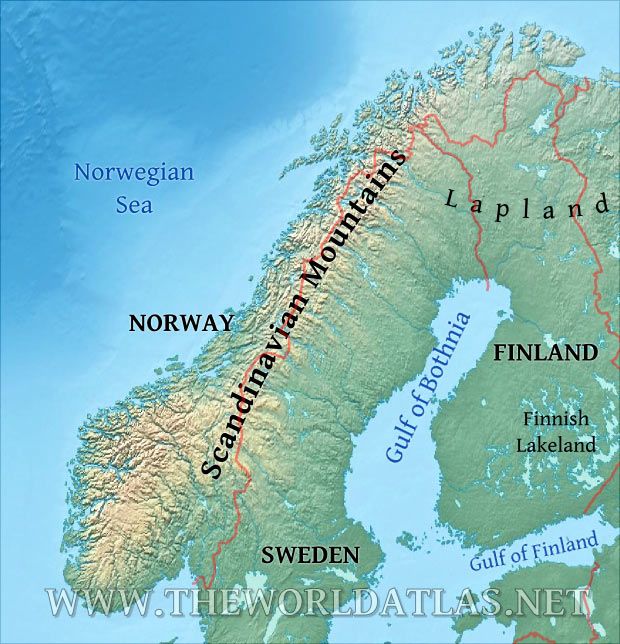
From Trondheim, the alignment next crosses the Scandinavian Mountains, also known as the Kjolen Mountains, which run through the Scandinavian Peninsula.
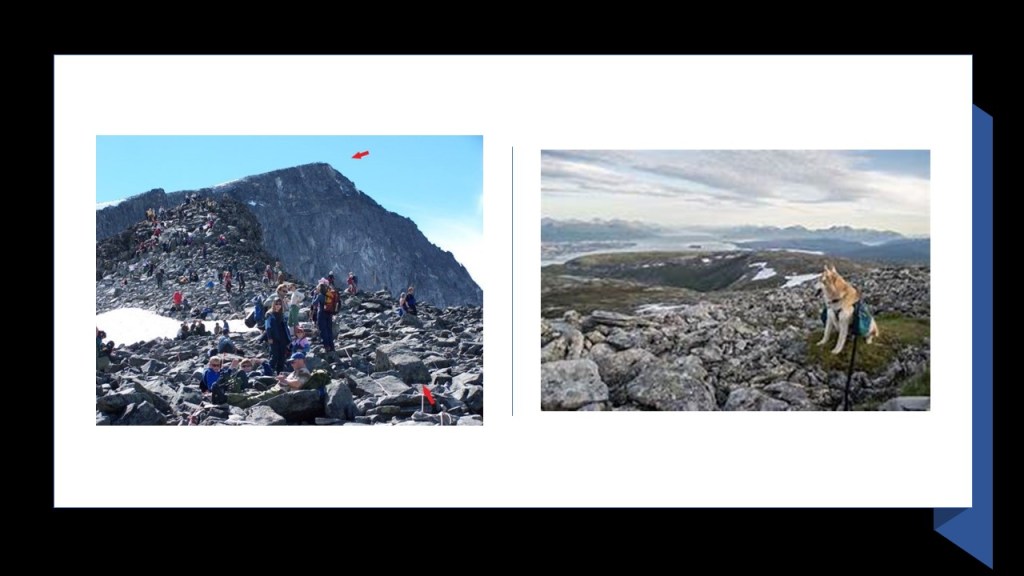
The highest peak in Norway is Galdhopiggen, southwest of Trondheim.
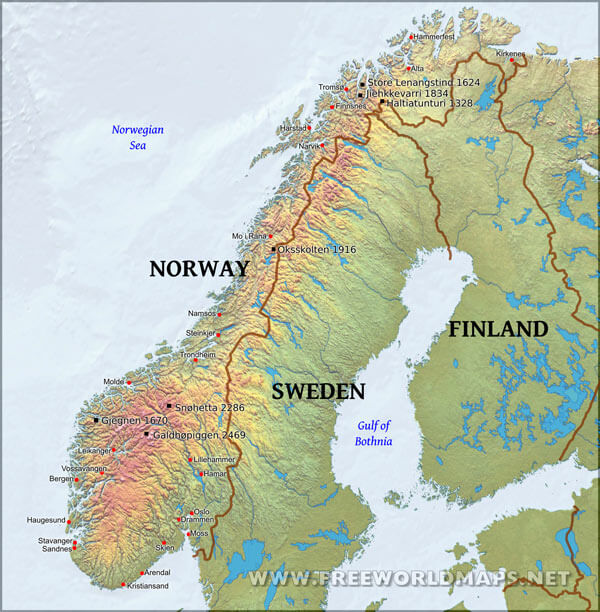
It’s name is said to mean “Home of the Giants.”

We have never been given any other information that would provide another explanation, so we accept that its natural as the only possible explanation.
Next on the alignment from Trondheim across these mountains is Sundsvall, a port by the Gulf of Bothnia between Sweden and Finland.
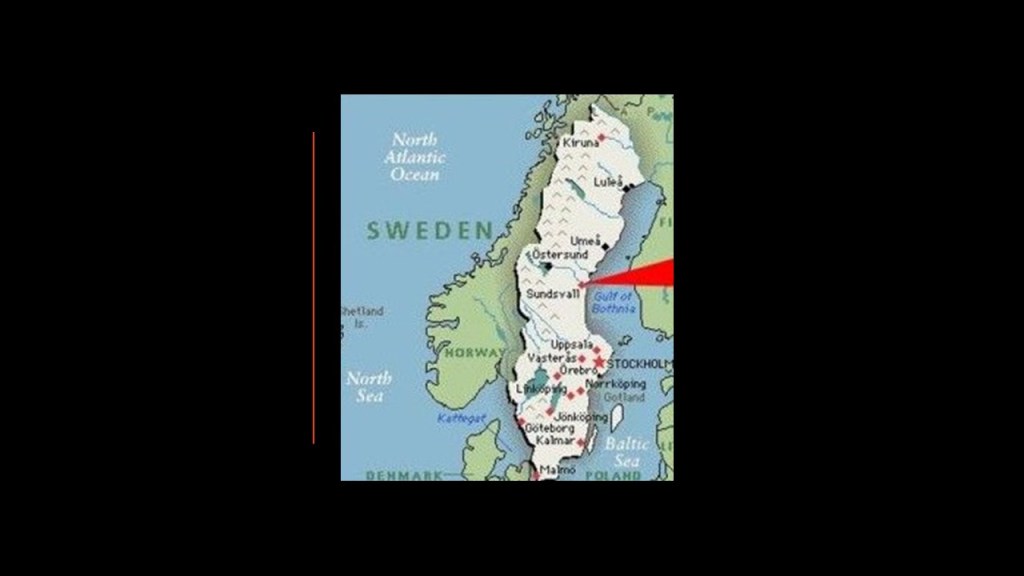
It is the seat of Sundsvall Municipality in Vasternorrland County.
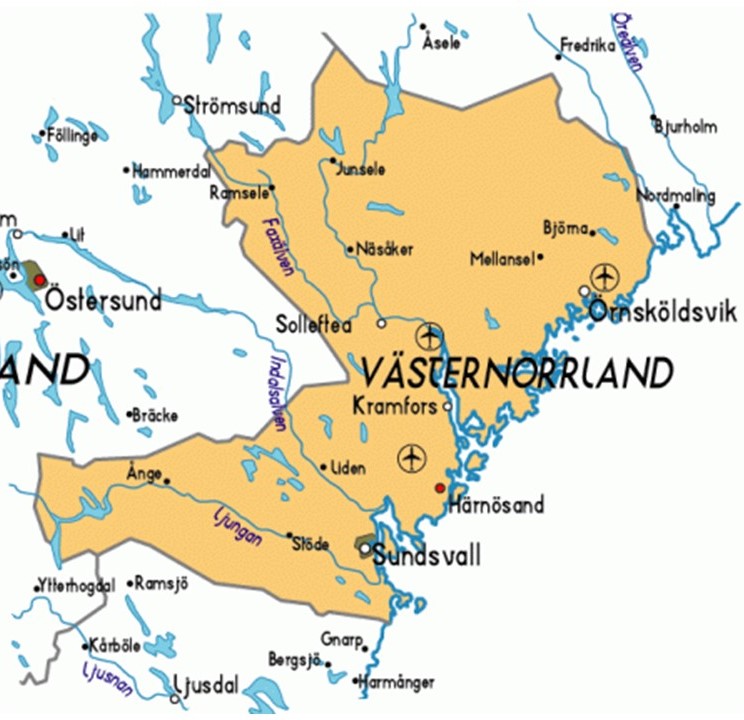
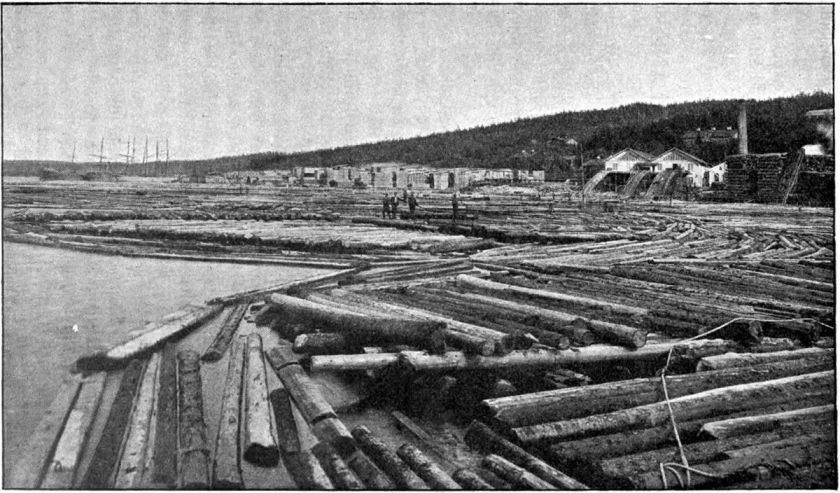
Sundsvall was said to have been chartered in 1621, and that Swedish industrialism started there in 1849 when the Tunadal Sawmill brought a steam-engine-driven saw.

It is still a center of the Swedish forestry industry.
We are told that Sundsvall has burned down and been rebuilt four times.

The last time it burned down was on June 25th of 1888, allegedly due to a spark from a steamship.

Two other Swedish cities were said to have burned the same day – Umea and Lilla Edet – from what we are told were unusually windy conditions.
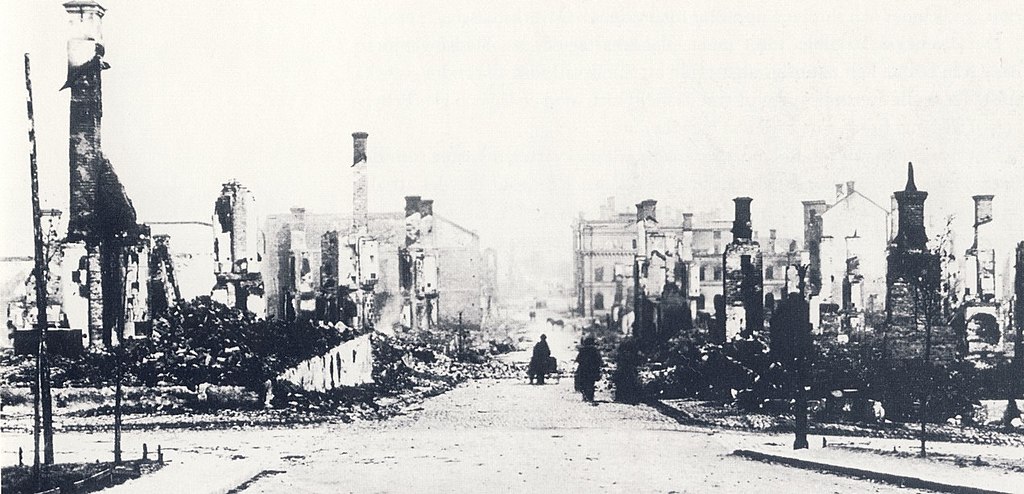
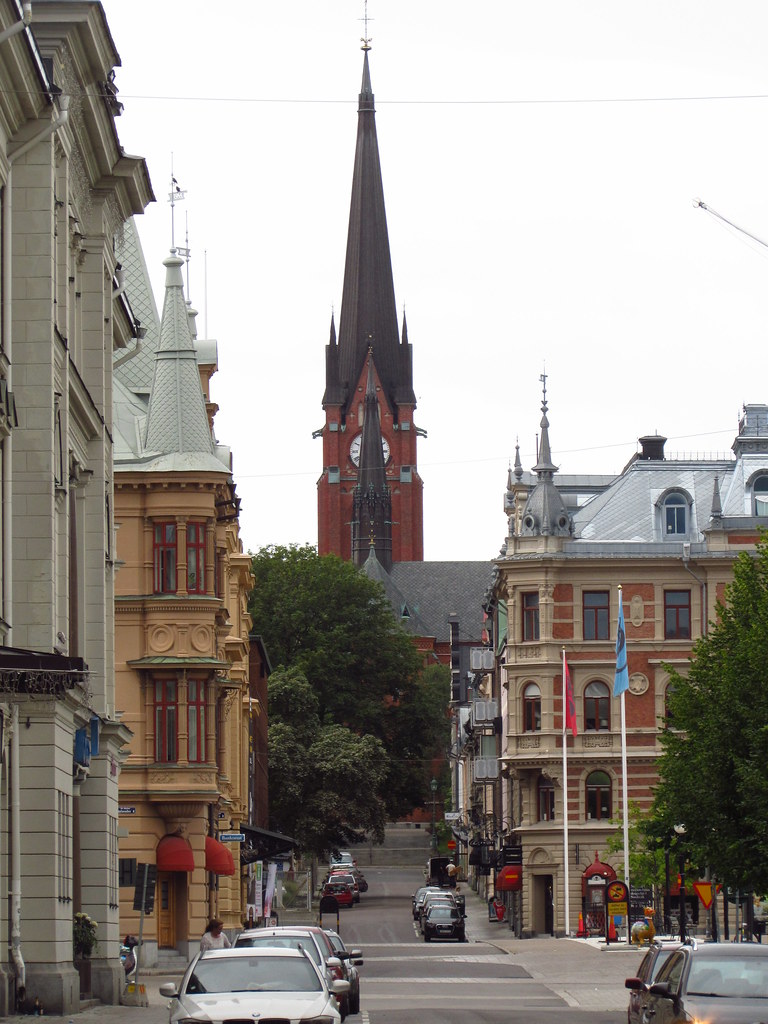
Then we are told, after the fire, the decision was made to rebuild Sundsvall using stone.

Sundsvall’s city center was nicknamed the Stenstaden, or the “Stone City.”
At any rate, on the subject of mining and minerals, the Saxberget Mine is one of the mines in the Vasternorrland County of which Sundsvall is a part, in which not only copper, lead, silver, and zinc is mined…
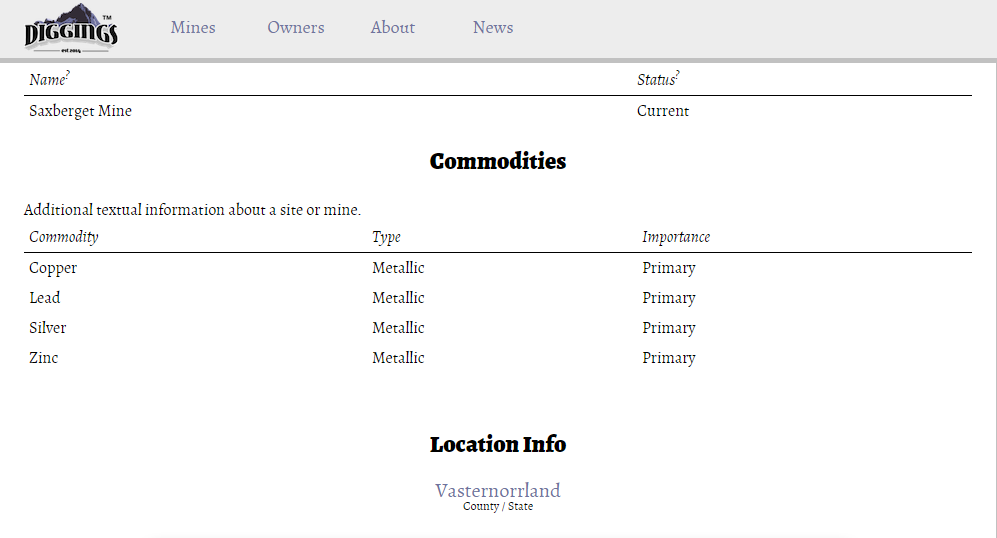
…these minerals are as well.
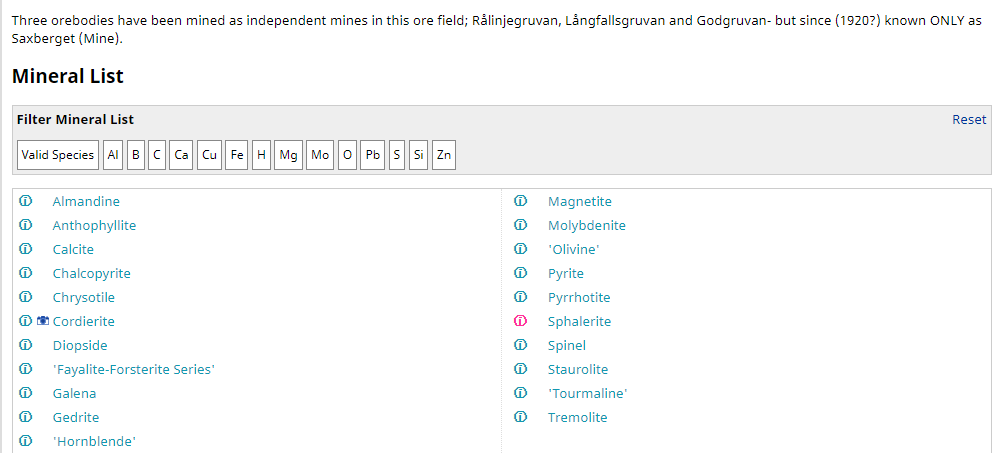
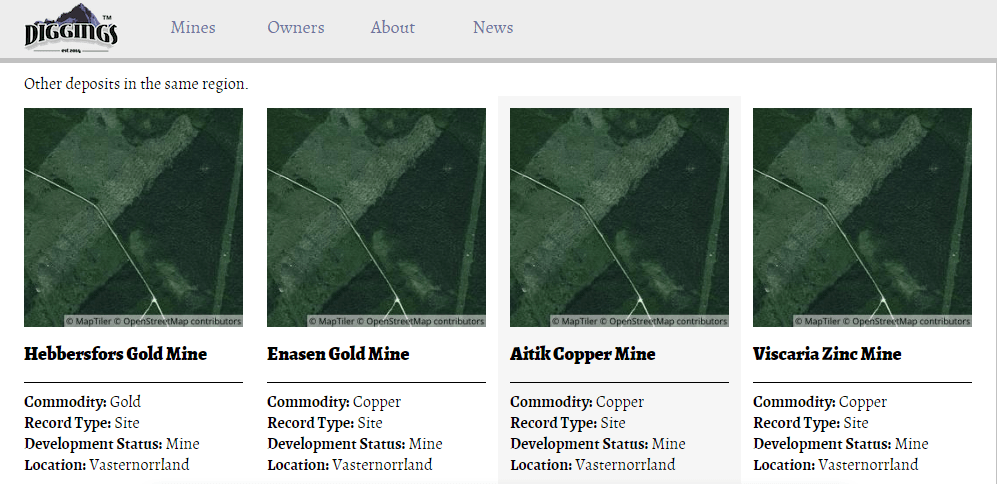
There are also four other active mines in Vasternorrland County, including mines for gold, copper, and zinc.
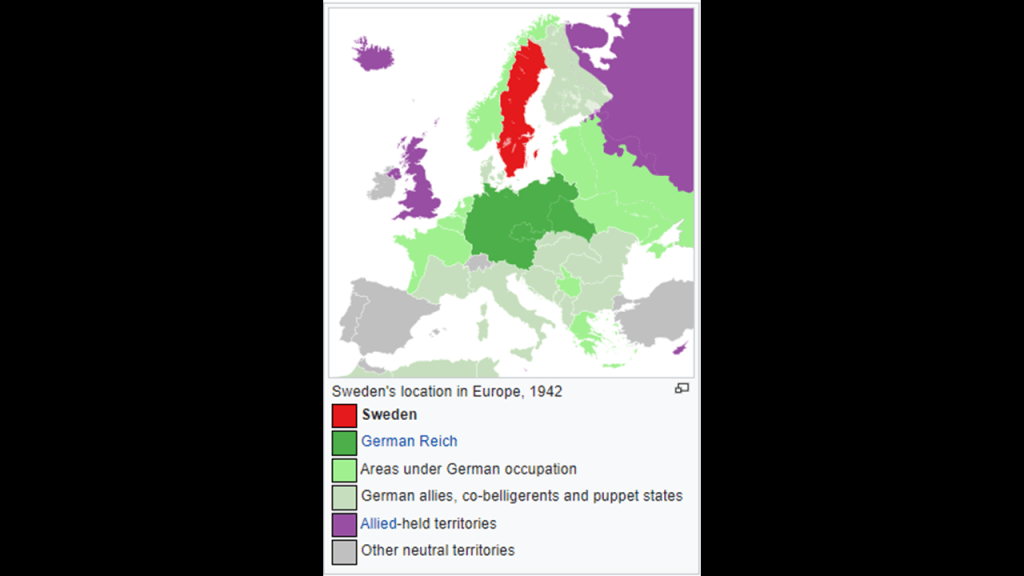
Sweden had a different experience from Norway and Denmark during World War II.

We are told Sweden was successfully able to maintain its policy of neutrality during the entirety of World War II.

Keeping its neutrality translated to allowing the Germans to transport the 163rd Infantry Division in 1941, along with heavy weapons, from Norway to Finland; allowing German soldiers to use the railway when on leave between these two countries; and selling iron ore to Germany throughout the war.

For the Allies, Sweden shared military intelligence, and helped to train soldiers from Norway and Denmark, to enable them to be used for the liberation of their home countries; and allowed the Allies to use Swedish air bases between 1944 and 1945.

It sounds like Sweden’s definition of neutrality was having no problem working for both sides.
From Sundsvall, we cross the Gulf of Bothnia between Sweden & Finland, and is the northernmost arm of the Baltic Sea.
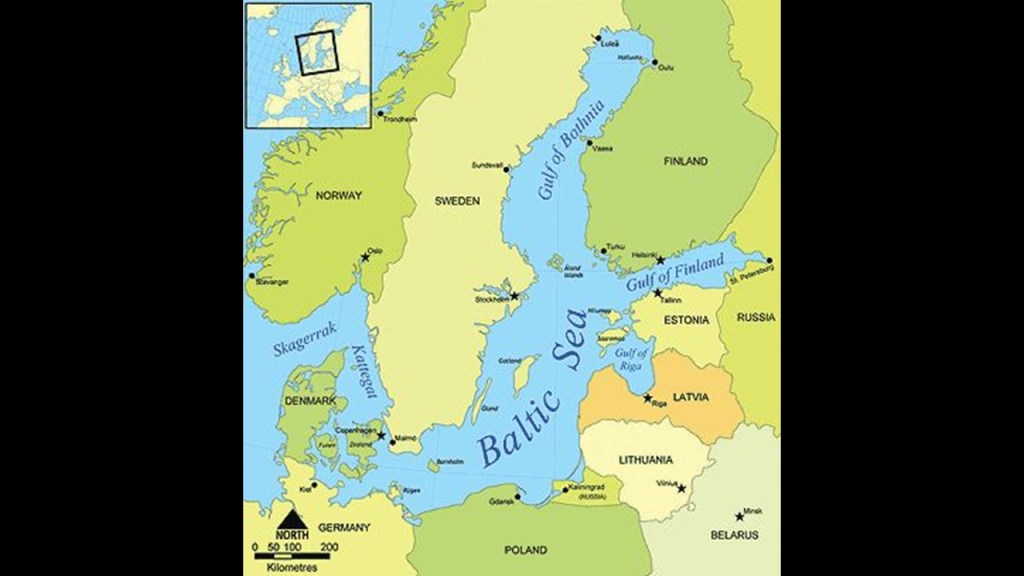
The land surrounding the Gulf of Bothnia is heavily-forested, which are logged and transported for milling.
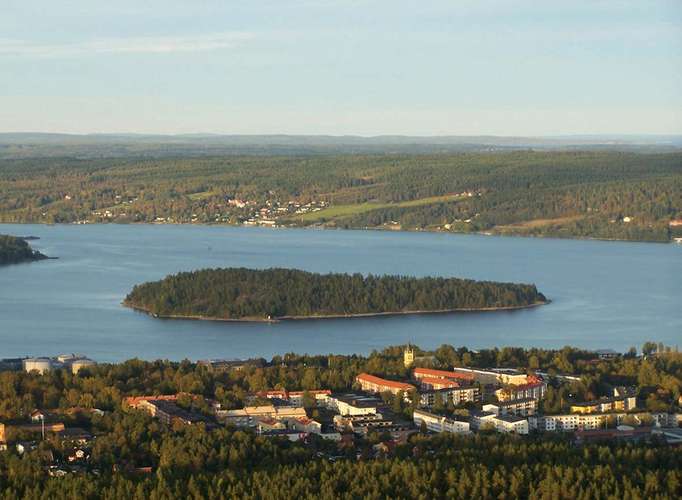
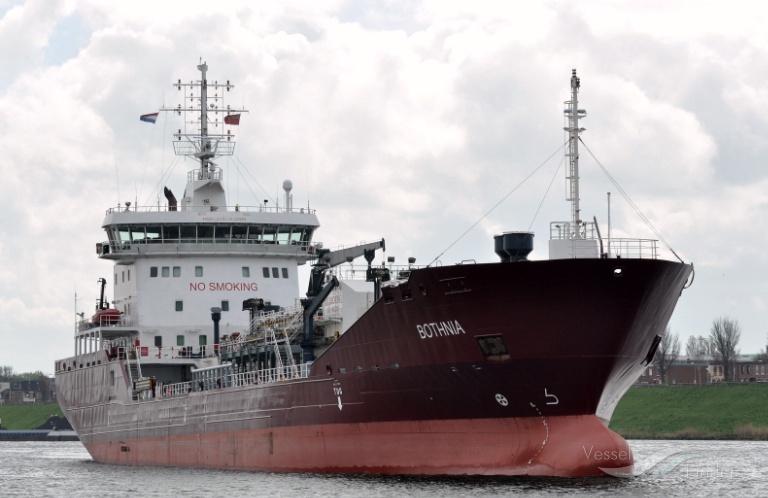
This gulf is also important for the shipping of oil to the coastal cities and ores to steel mills.
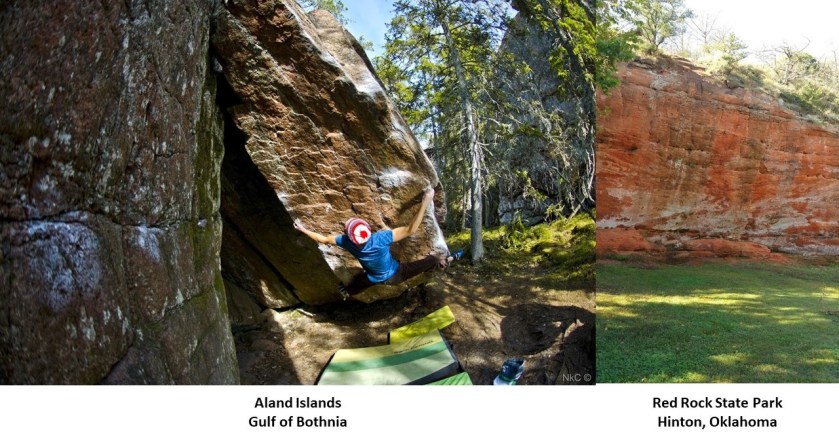
The Aland Islands are a group of approximately 500 islands located at the entrance of the Gulf of Bothnia.
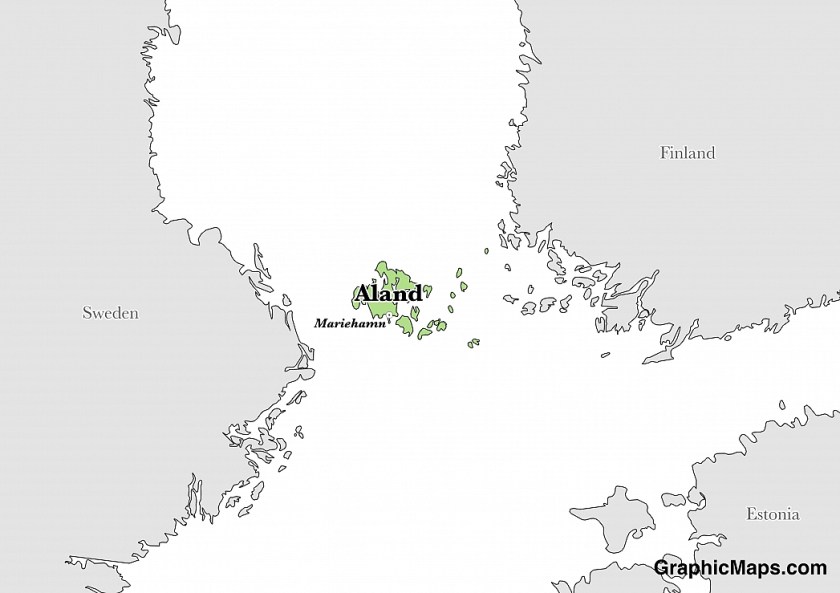
The islands are an autonomous, Swedish-speaking, province of Finland.
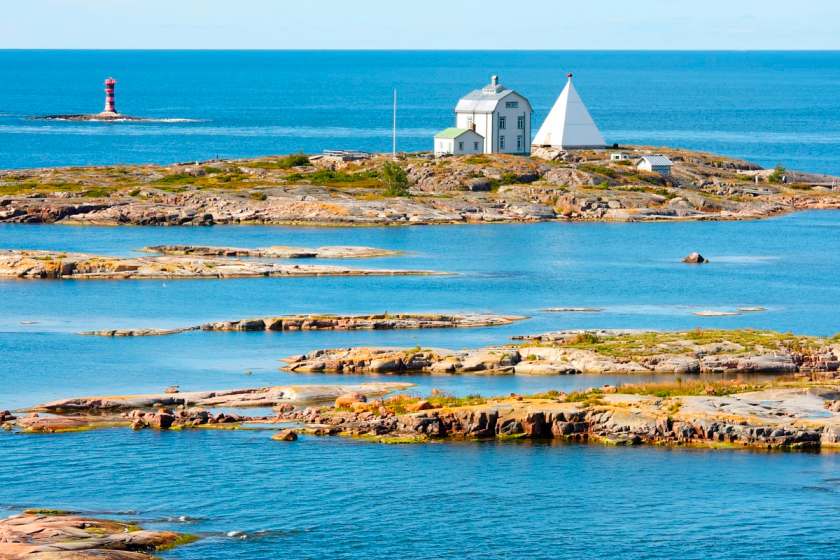
It is a favorite destination of people who like to climb boulders.

When I see these “boulders” on the left, I see ancient masonry, which also reminds me of Red Rock Canyon in Hinton, Oklahoma, just west of Oklahoma City and south of I-40, on the right.
The alignment next enters Vaasa, a city on the west coast of Finland, and the capital of the Ostrobothnia region of Finland.

Both Finnish and Swedish are spoken here.
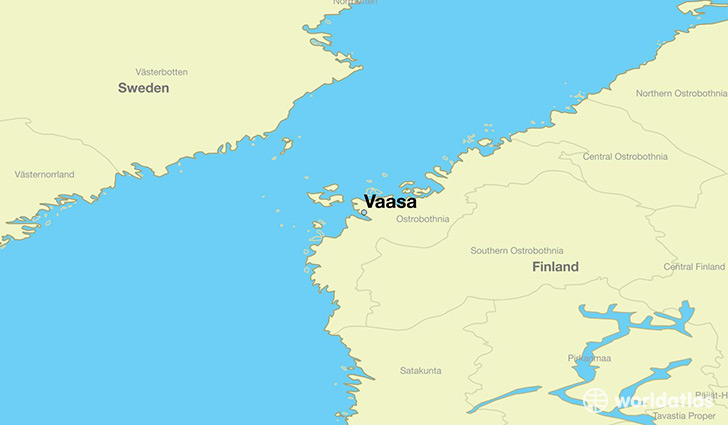
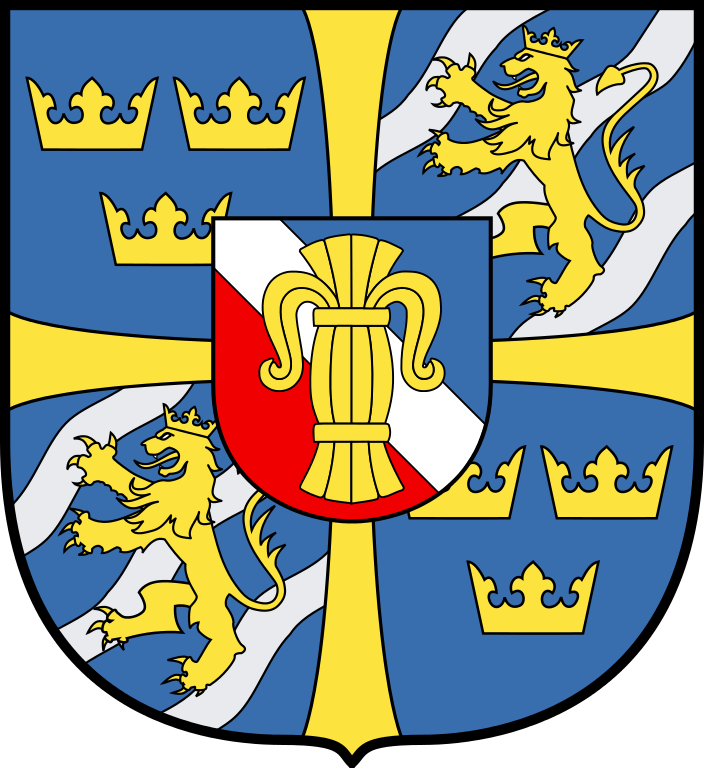
It was said to have been founded in 1606, and named after the House of Vasa, an early modern royal house founded in 1523 in Sweden.
We are told the mainly wooden and densely built town was almost completely destroyed by fire in 1852, and that out of 379 buildings only 24 privately-owned buildings survived, including what was the Court of Appeals, said to have been built in 1775 and now the Church of Korsholm…
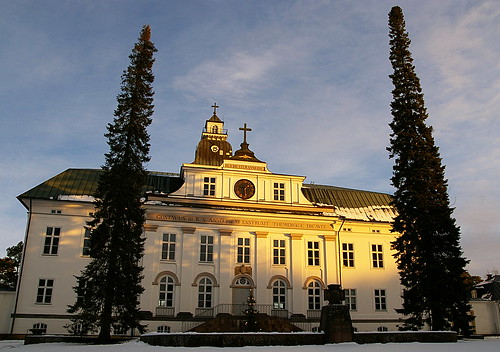
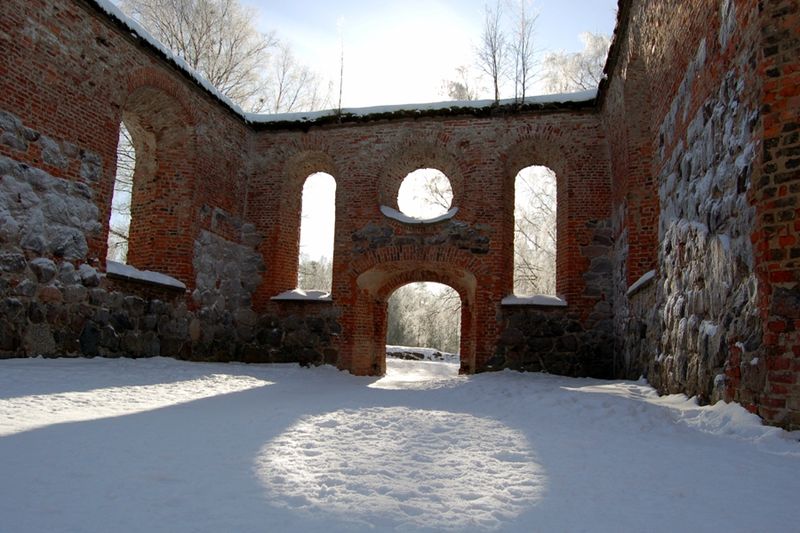
…and these stone ruins are said to be of St. Mary’s church where the fire was in Old Vaasa.
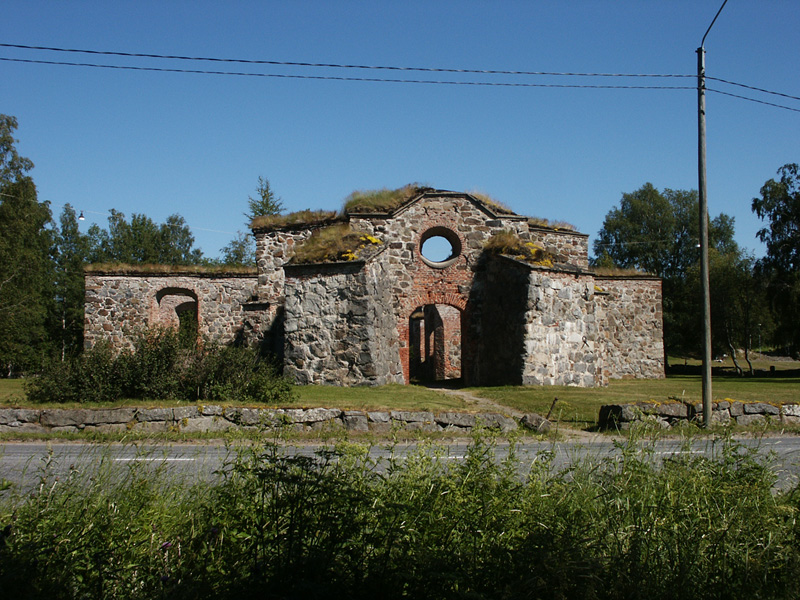
The fire was said to have started in a barn owned by a district court judge by a visitor who fell asleep in the barn and dropped his pipe in the dry hay.
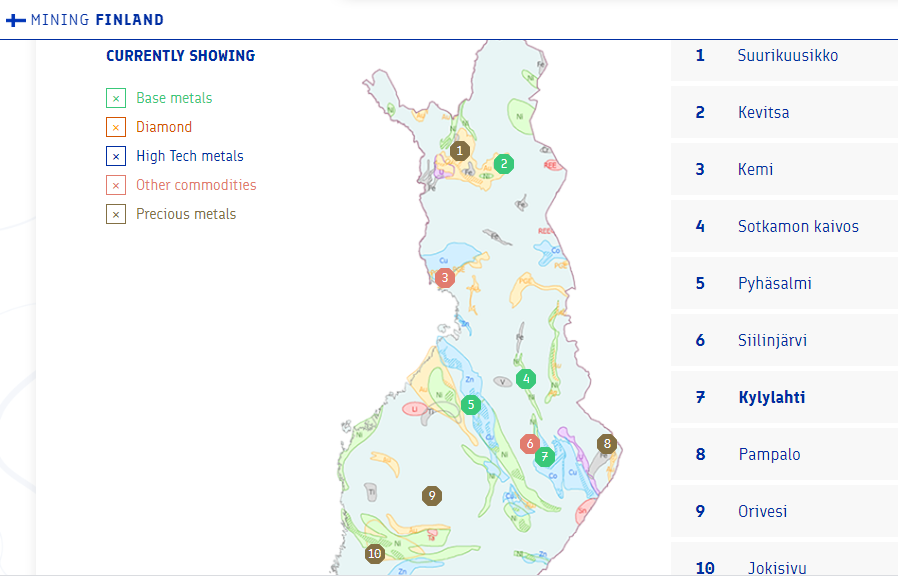
Finland is one of the leading mining countries in Europe, and the mining industry plays a very important role in Finland, along with its future growth potential.

On this map, there are four mines around the alignment as it leaves Vaasa.

One is #5, which is mined for zinc, sulphur, copper, silver, gold and iron.

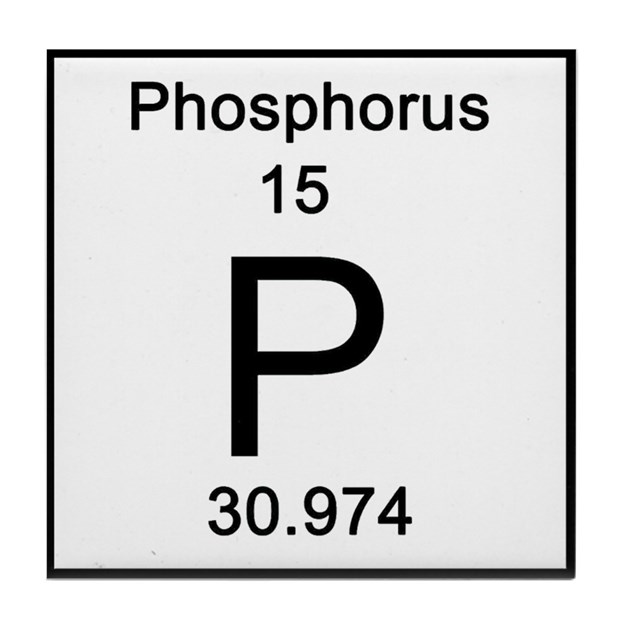
The next is #6, mined primarily for phosphorus and mica.

Also # 7, mined for copper, zinc, gold, silver, nickel and cobalt.

And #8 is mined for gold.
Finland’s role in World War II was similar to Sweden, but slightly different.

It openly participated in the war initially as an Axis power between 1939 and 1944, allied with Germany, Japan and Italy, and then switched sides until the end of the war to the Allies, the grouping of the victorious countries of World War II, against the Axis Powers.
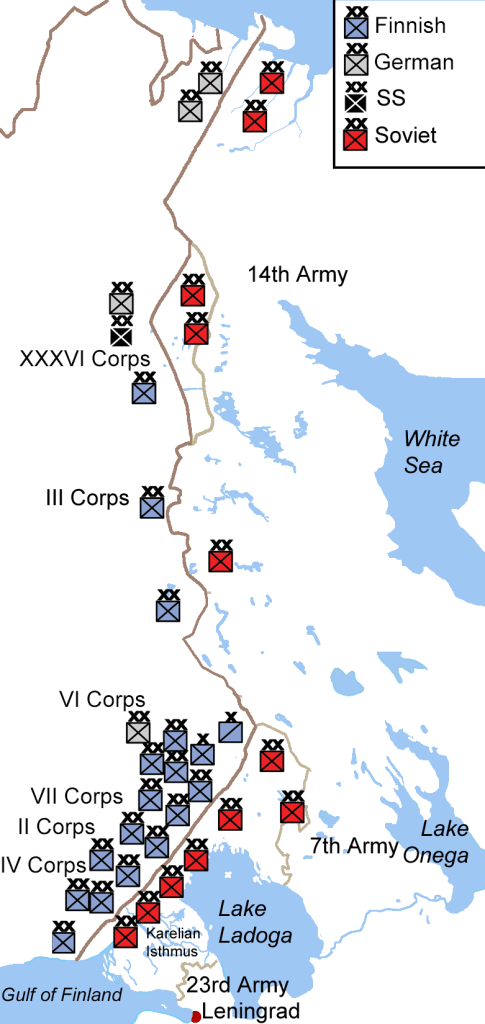
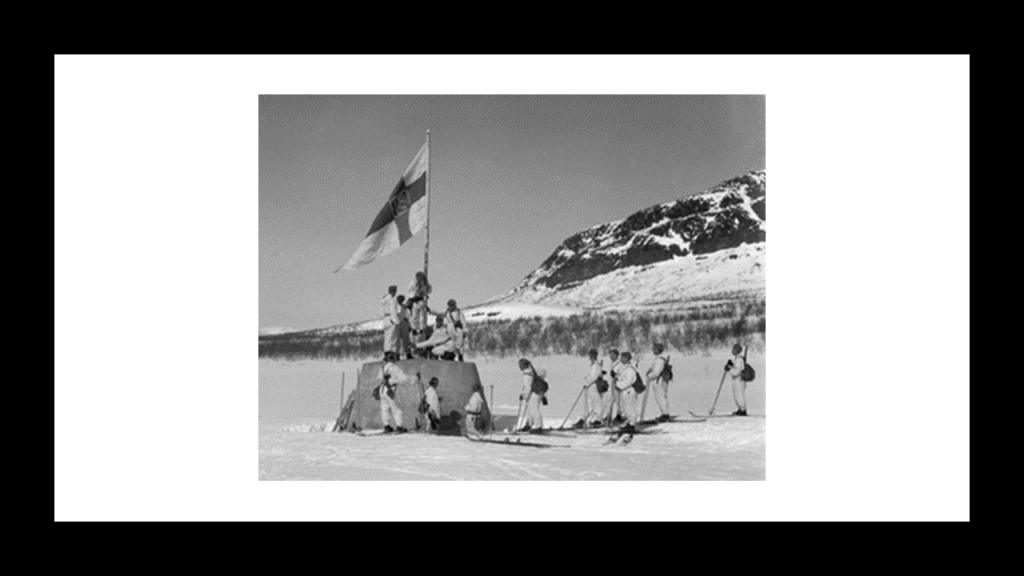
This is a photo of Finnish soldiers raising their flag at the war’s end at the Three-Country Cairn, which marks where the international borders of Finland, Sweden, and Norway meet.
By the end of the war, Finland had ceded nearly 10% of its territory, including its fourth-largest city, Vyborg, to the Soviet Union, as well as pay a large amount of war reparations to them.

As a result of the territorial loss, we are told all of the East Karelians abandoned their homes, and relocated to areas that remained within the borders of Finland.
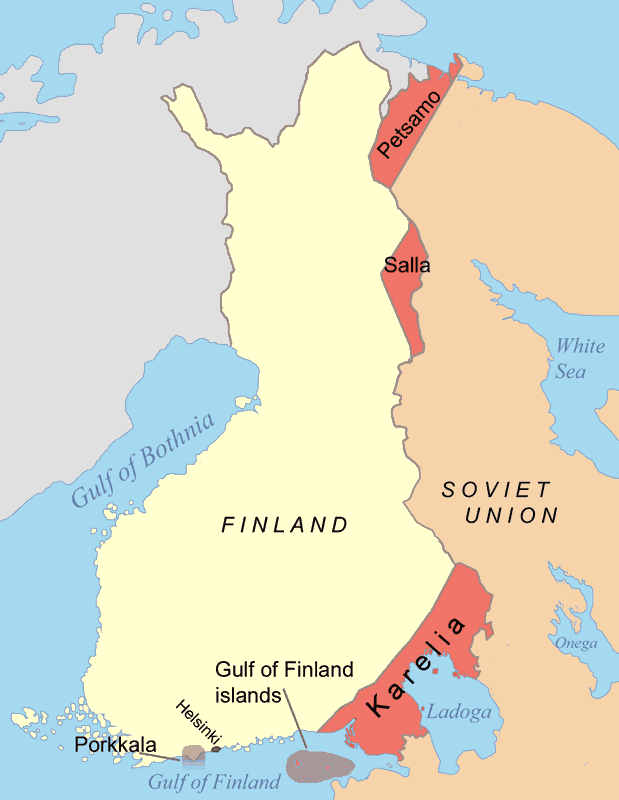
Karelia is described as an area of historical significance for Finland, Russia, the former Soviet Union, and Sweden, and since 1945 divided between Finland and the Northwestern Russian Federation…
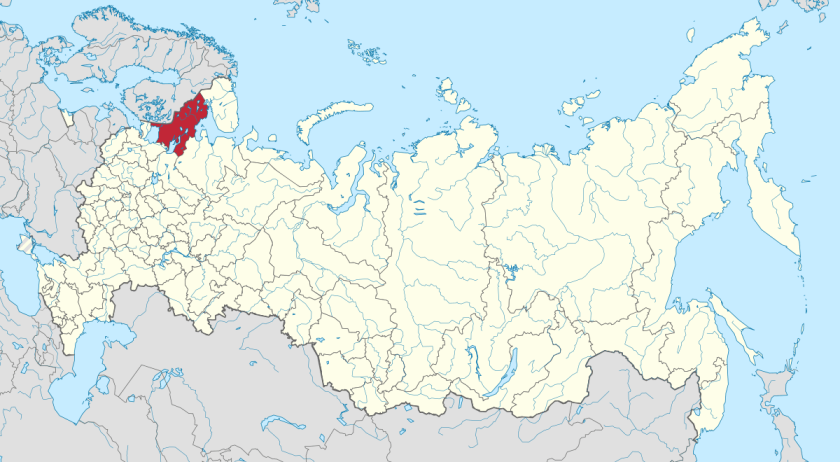
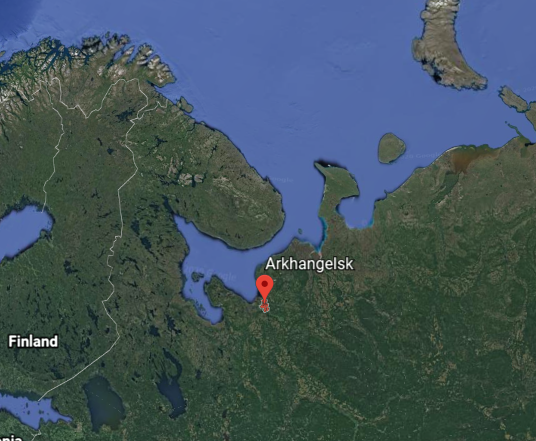
Next we arrive at Archangelsk, in the north of European Russia, or Archangel in English.
The city’s coat-of-arms display Archangel Michael defeating the devil, and the legend states that the victory took place near where the city stands, and that Michael still stands watch over the city.
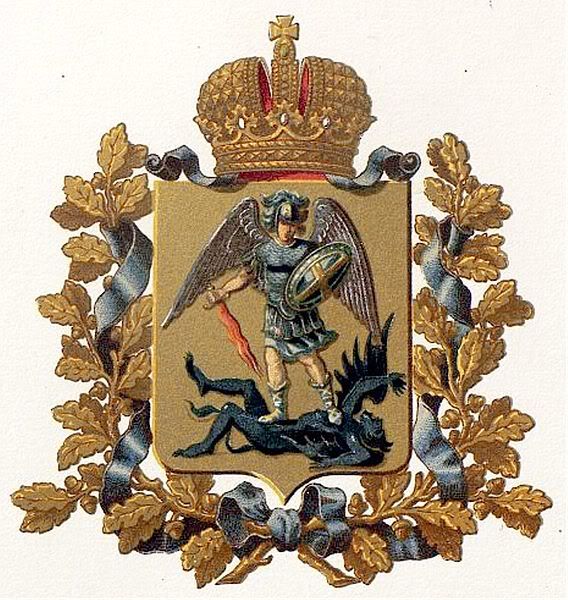
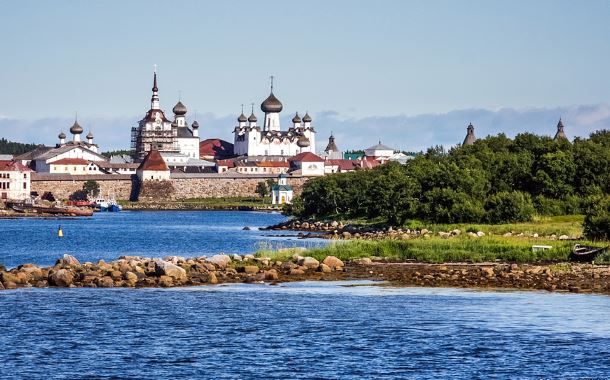
Archangelsk was the chief seaport of medieval and early modern Russia, until 1703, when it was replaced by Saint Petersburg.
This is a portrait I found of Tsar Ivan III, also known to history as Ivan the Great.

He was said to have brought the Archangelsk area back into the Grand Duchy of Moscow in 1478.

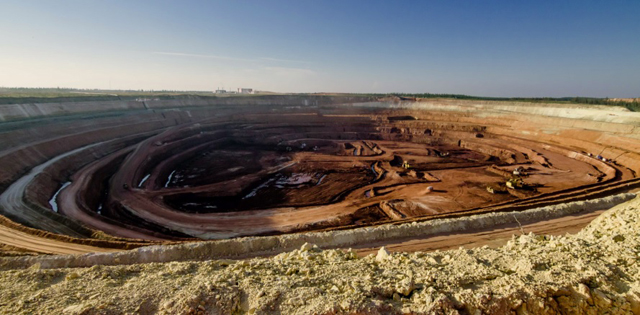
As far as mining goes, I found the Grib Diamond Mine in Archangelsk Oblast, one of the largest diamond mines in Russia and in the world.

It has estimated reserves of 98.5 million carats of diamonds, and annual production capacity of 3.62 million carats.
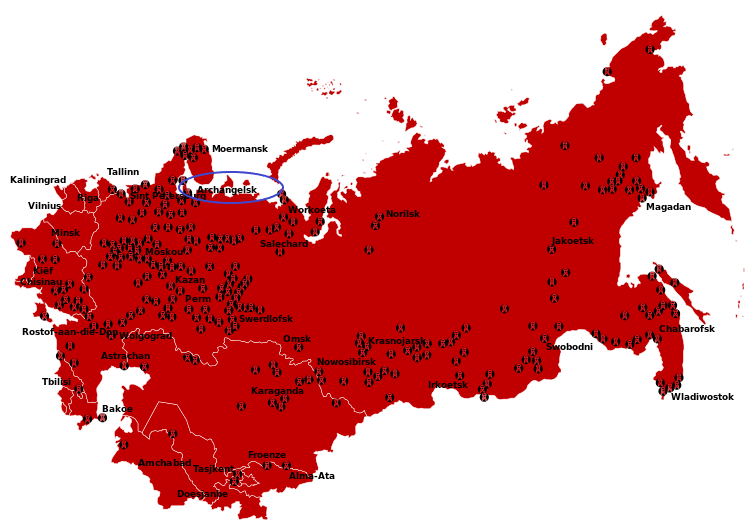
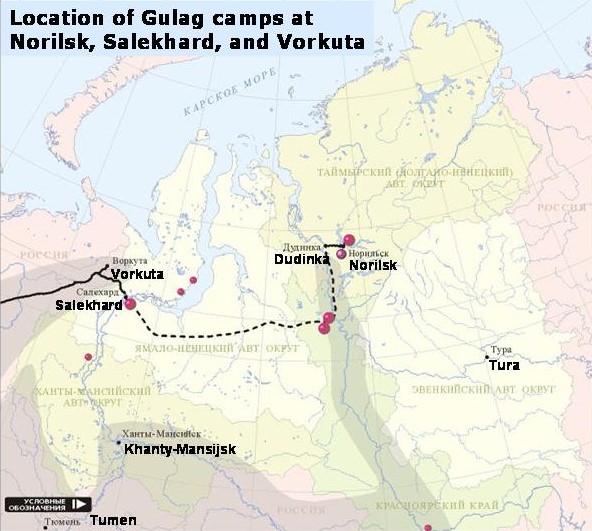
This map shows the locations of Soviet forced labor camps of the Gulag.

Most of them served mining, timber and construction works.
From Archangelsk, the alignment crosses the Yamal Peninsula, located in northwest Siberia.

The Yamal Peninsula holds Russia’s biggest gas reserves… 
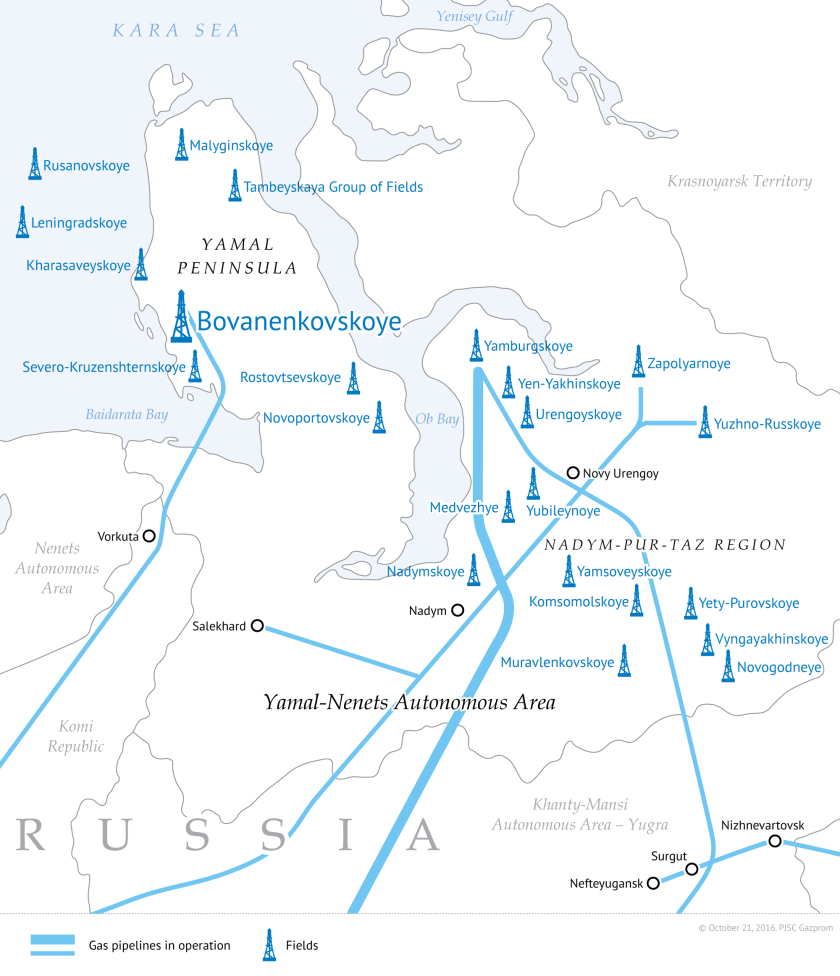
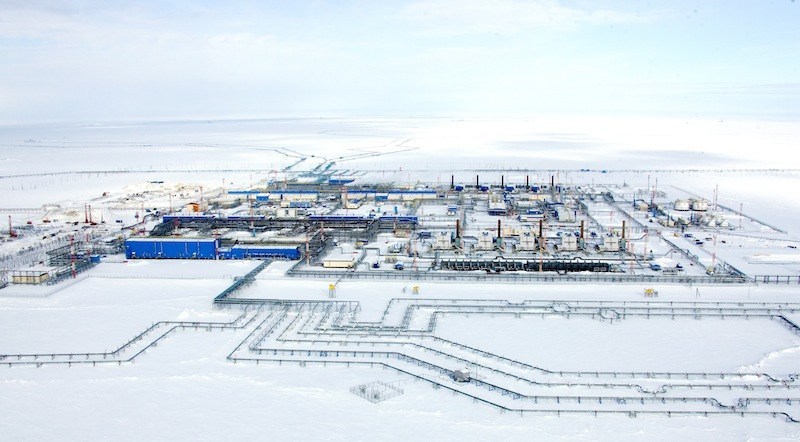
…and gas production facilities are actively evolving there, as well as infrastructure such as gas-pipeline and bridges.
Natural gas is a hydrocarbon, a compound which consists of hydrogen and carbon.

It is used as a fuel source for heating and cooking, and electricity generation, as well as for vehicles, and used in the manufacture of plastics, and other commercially important chemicals.
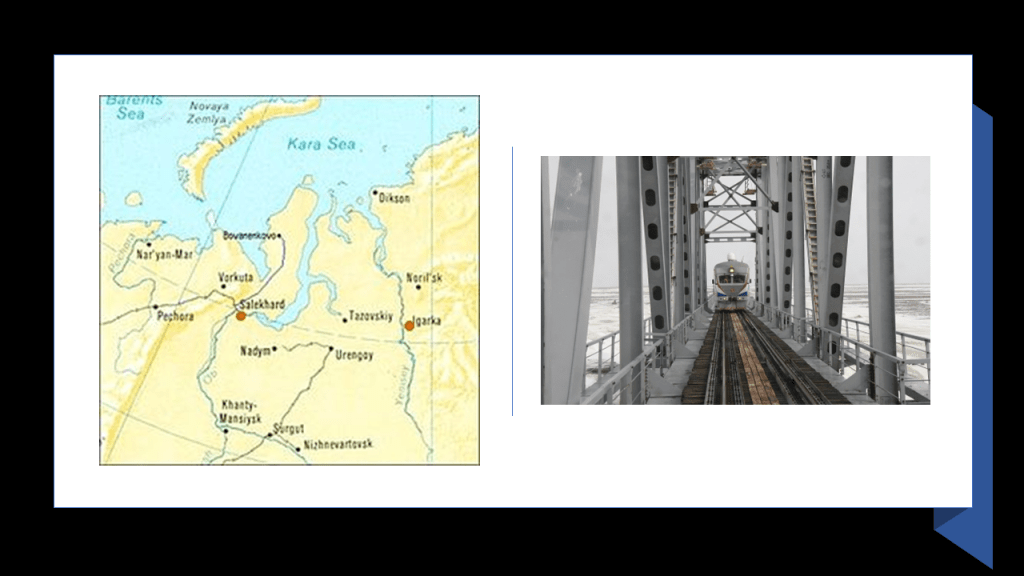
The Obskaya-Bovanenkovo Railway there, owned and operated by the Russian gas corporation Gazprom, is the world’s northernmost railway.
The Yamal Peninsula has been in the news in recent years because of the appearance of huge sinkholes, starting with one that appeared in 2014.  By 2015, five more had developed.

Hearing about the appearance of sink holes here several years ago is where I first heard about this place.

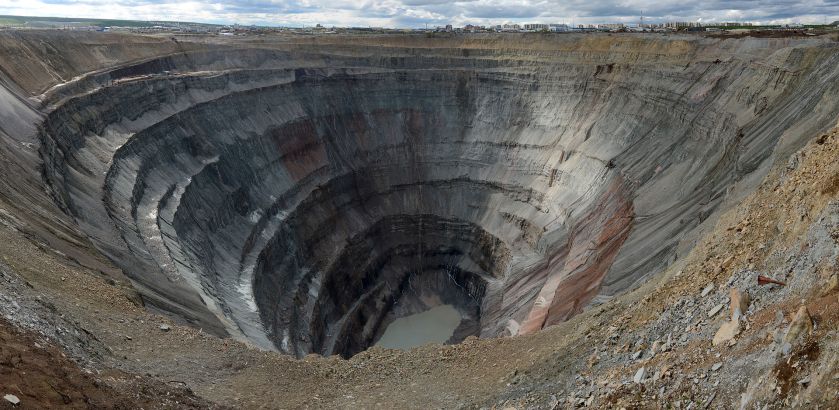
I Wonder if the ground underneath it had been mined?
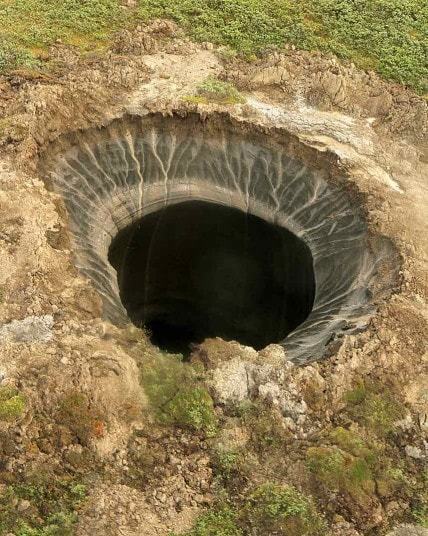
It’s appearance looks somewhat similar to an open-pit mine.
The next places we come to on the alignment are Dudinka and Norilsk in Krasnodar Krai, which is a federal subject of Russia within the Siberian Federal District.
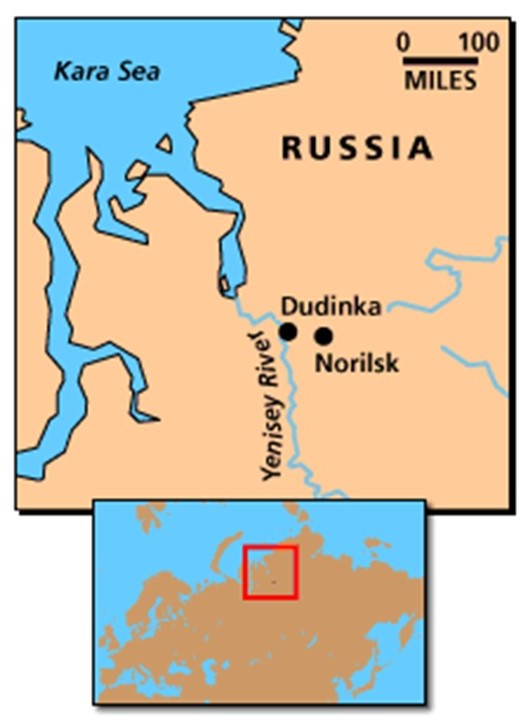
Dudinka processes and sends cargo via Norilsk Railway to the Norilsk Mining and Shipping Factory, as well as shipping non-ferrous metals, coal and ore.

Non-ferrous refers to metals other than iron or steel.
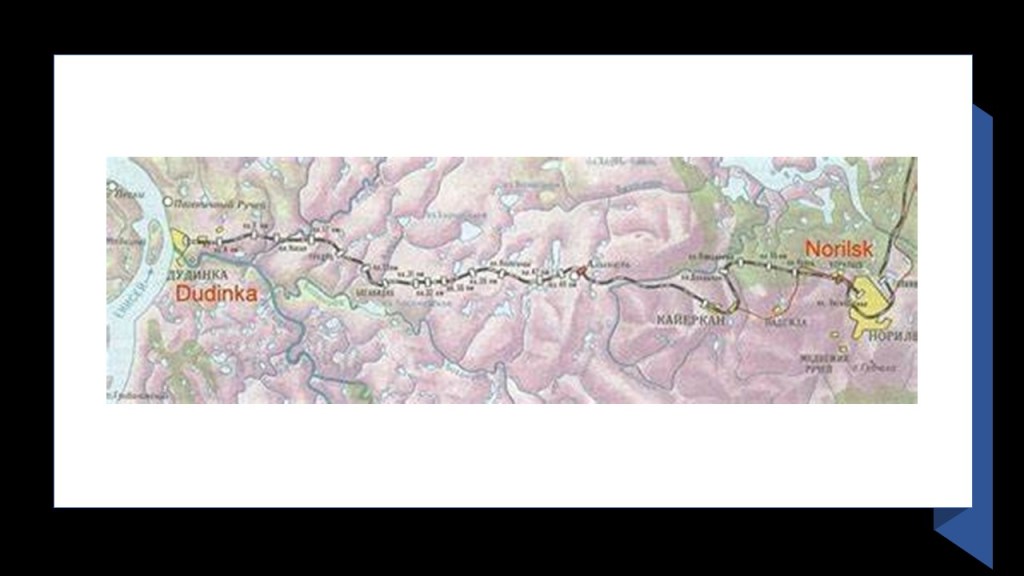
Norilsk and the surrounding area is heavily engaged in the mining industry.

Norilsk is the world’s northernmost city with a population of more than 100,000, with permanent inhabitants at 175,000, and the second-largest city inside the Arctic Circle.
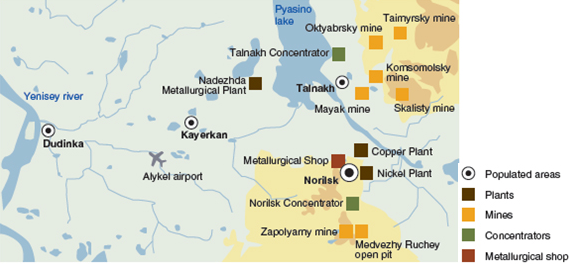
The official founding date of Norilsk is 1935, and then it was expanded as a settlement for the Norilsk mining-metallurgic complex, and then subsequently became the center of the Norillag system of Gulag forced-labor camps, which existed from June of 1935 to August of 1956.
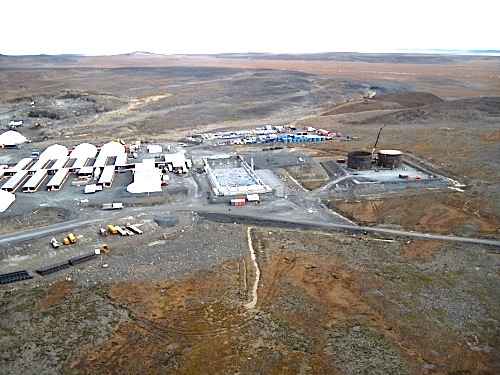
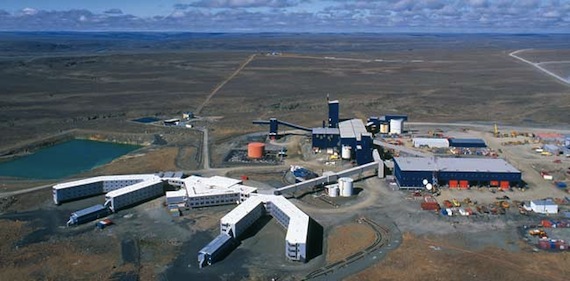
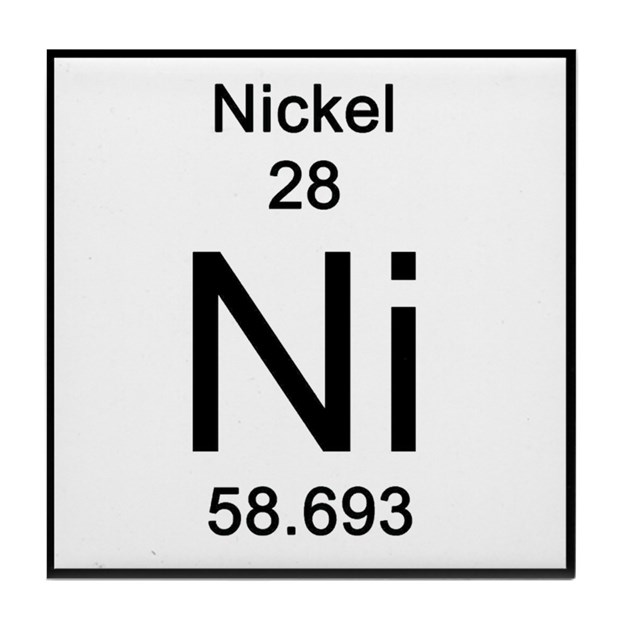
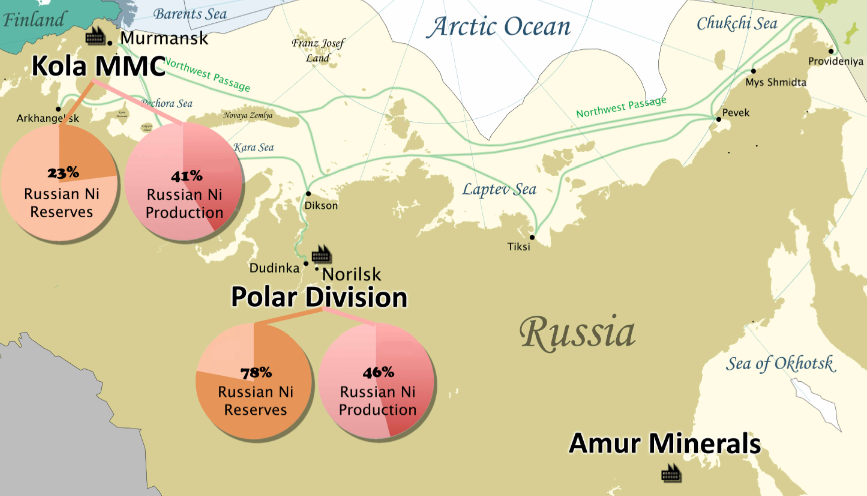
The nickel deposits of Norilsk-Talnakh are the largest known nickel-copper-palladium deposits in the world.
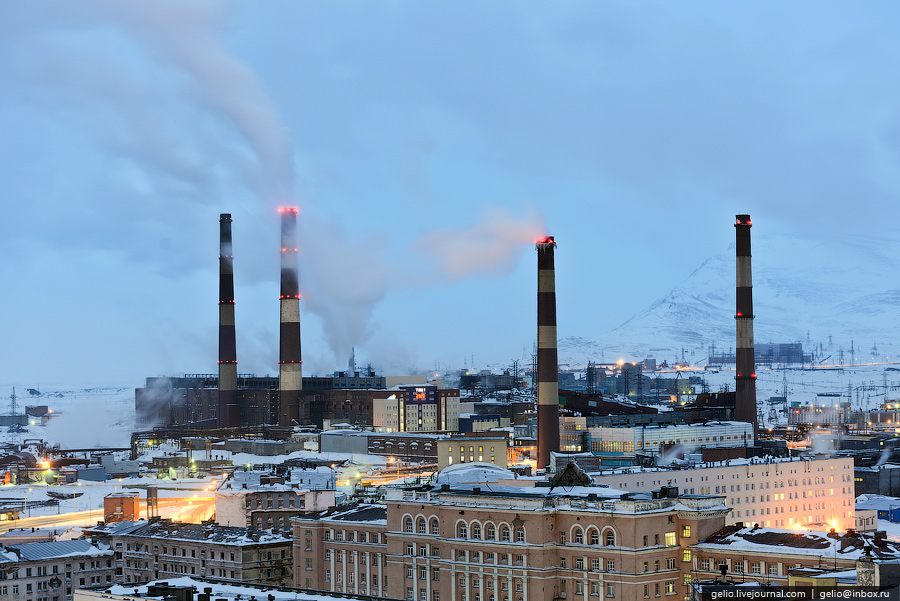
The smelting of the nickel ore is directly responsible for severe pollution, typically coming in the form of acid rain or smog, and some estimate the 1% of the world’s sulphur dioxide emission comes from Norilsk’s nickel mines.
The next place we come to is Tiksi, an urban locality in the Sakha Republic on the shore of the Buor-Khaya Gulf of the Laptev Sea, southeast of the delta of the Lena River.
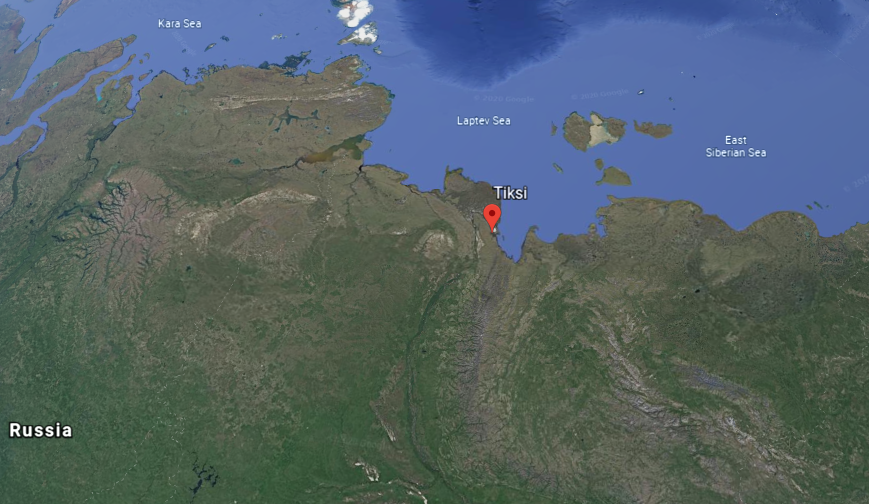
When I first tracked this alignment several years ago, I came across information about the Lena River Pillars, so they have been in my awareness for awhile.
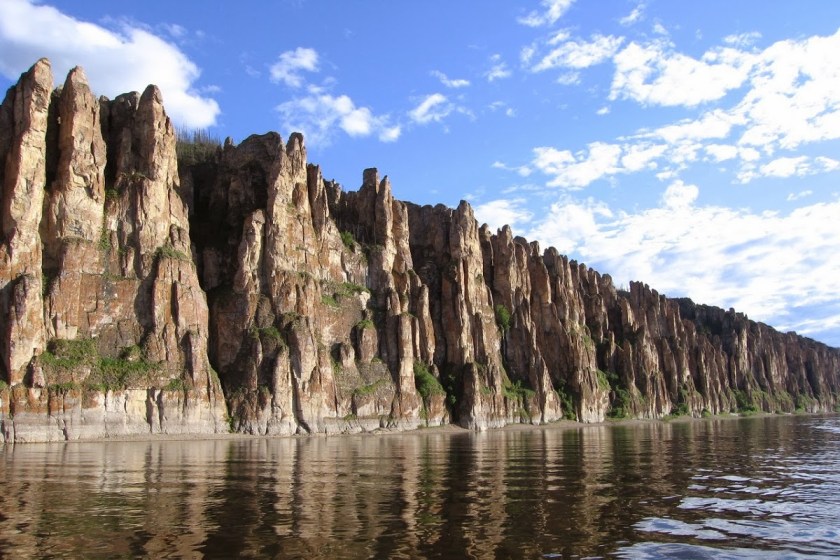
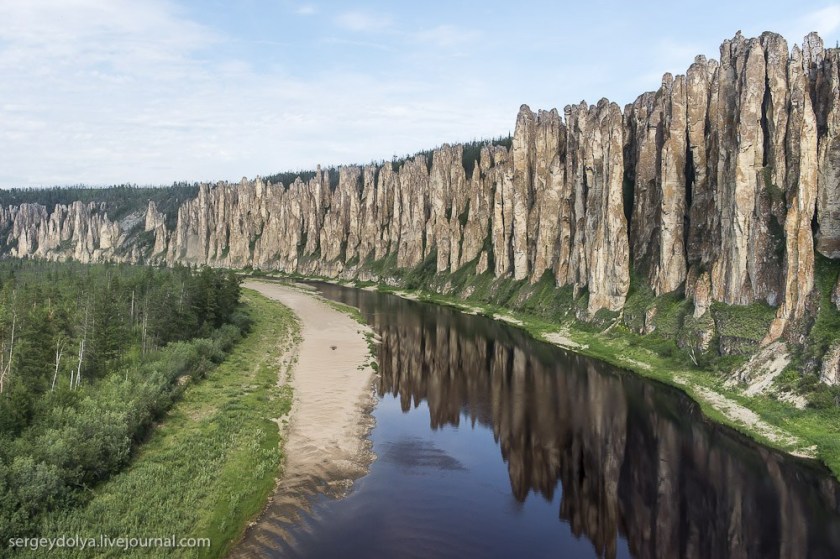
They are called a natural rock formation, with alternating layers of limestone, marlstone, dolomite, and slate.
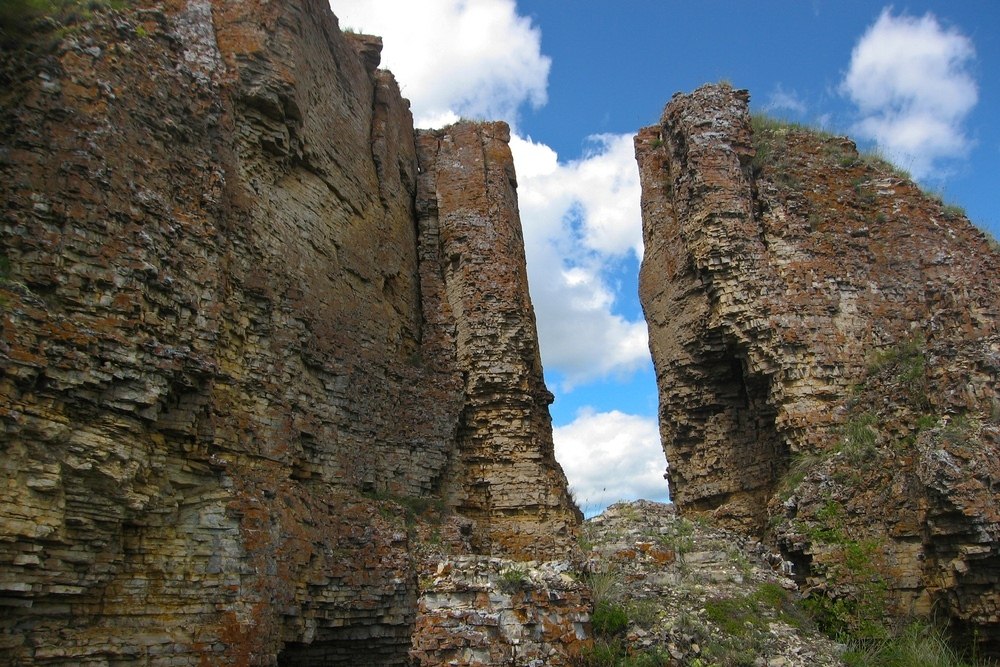
The Lena Pillars Nature Park was inscribed as a UNESCO World Heritage site in 2012.

Keep the Lena Pillars in mind when we come to some places further down on the alignment.
Tiksi serves as one of the principal ports for access to the Laptev Sea.
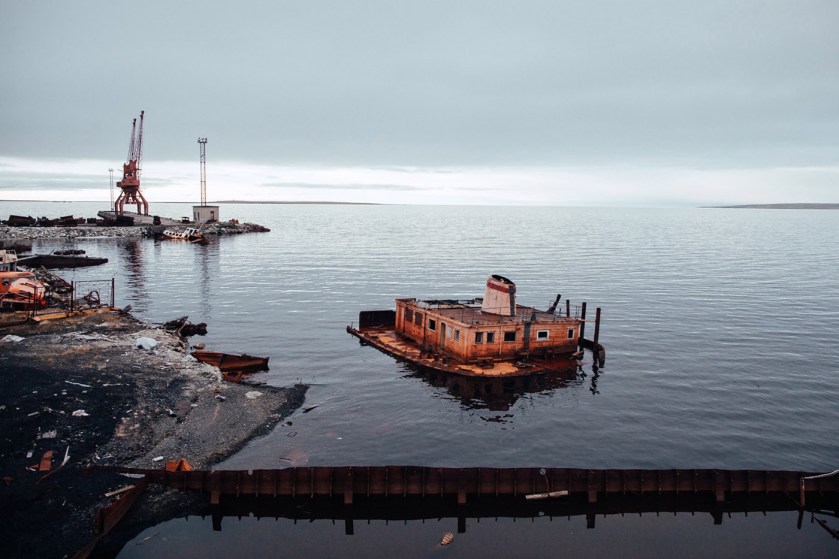
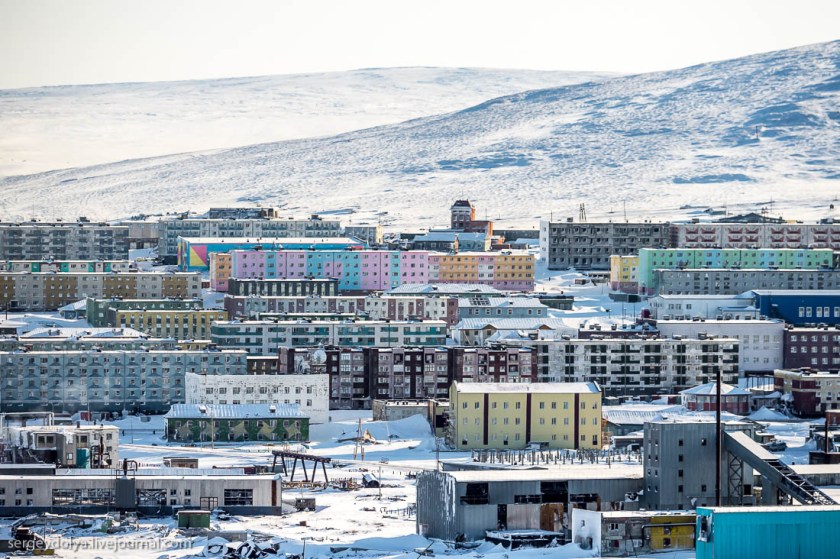
Modern Tiksi was said to have been founded in 1933, and since the dissolution of the Soviet Union, its population has considerably declined, and many of its apartment blocks are abandoned.
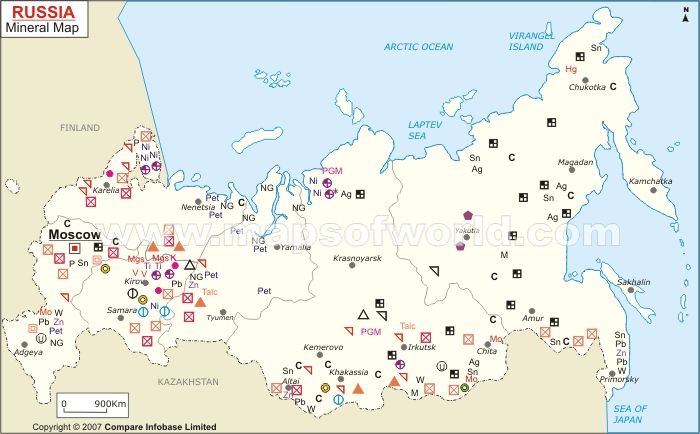
Silver and tin are listed on this map as being in the region surrounding Tiksi.
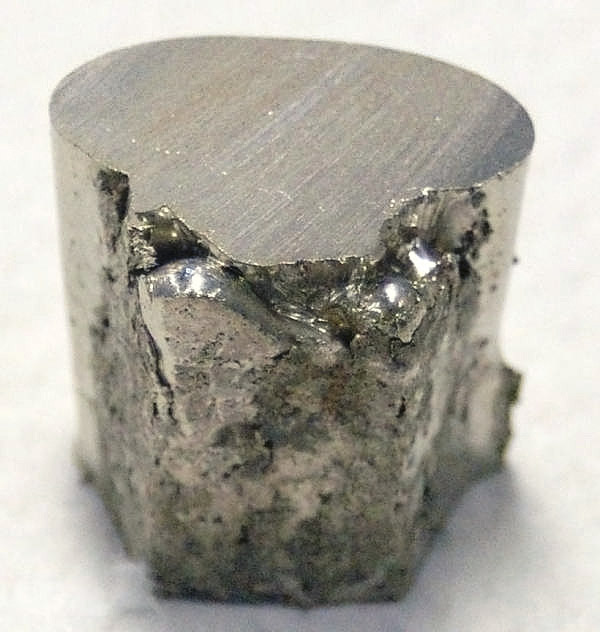
Tin is a chemical element with the symbol “Sn” and the atomic number of 50.
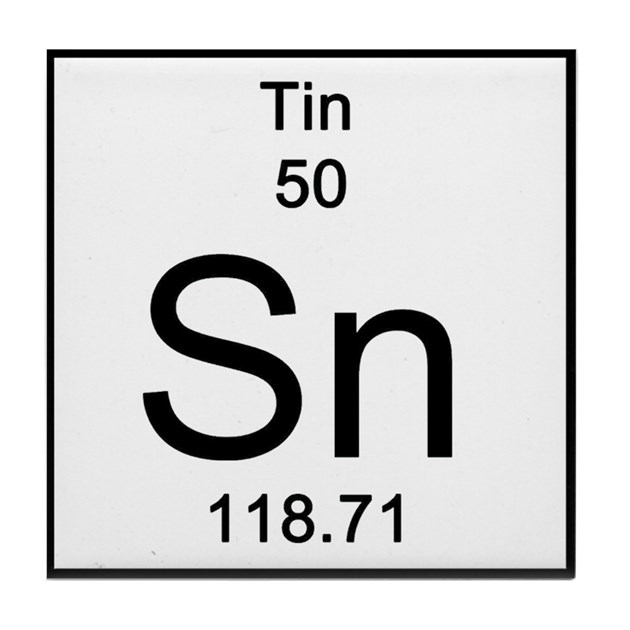
It is a silvery metal that characteristically has a faint yellow hue, and is soft enough to be cut without much force.
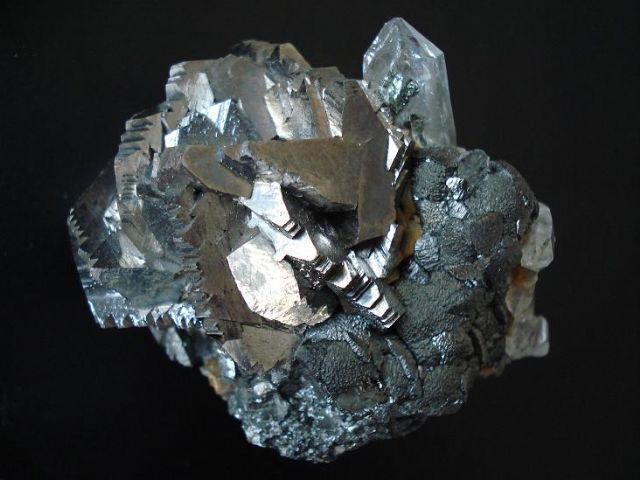
In modern times, tin is used for tin/lead soft solders, which are 60% tin…

…and in the manufacture of electrically conducting films of indium tin oxide in optoelectronics, which is the study of and application of electronic devices having to do with lighting.

Other uses are corrosion-resistant tin-plating in steel…
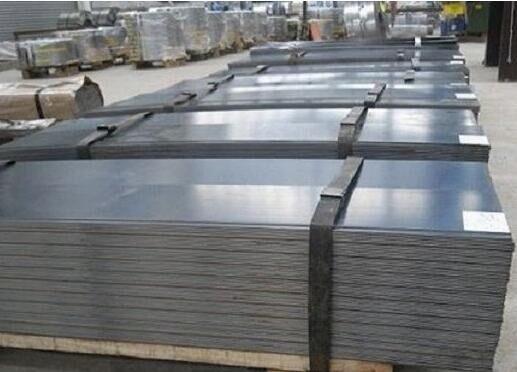
…and it is widely used for food-packaging.

Next, the alignment crosses into the Chukchi, also known as Chukotka, Peninsula, the easternmost peninsula of Asia, where I found the Kupol Gold mine.

The mine is situated over the Kayemraveem ore belt, which contains both high-quality gold and silver.

The mineral deposits are estimated to hold 4.4 million ounces of gold and 54.2 million ounces of silver, on top of 1.72 million inferred ounces of gold, and 22.2 million inferred ounces of silver.

Inferred deposits mean that the ore is not necessarily accessible due to geological obstacles.
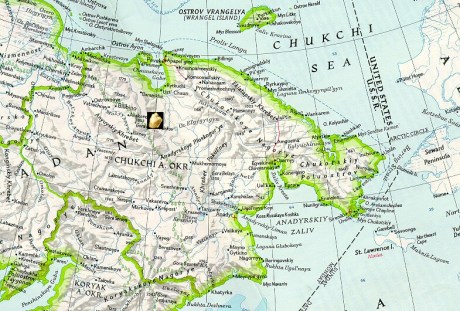
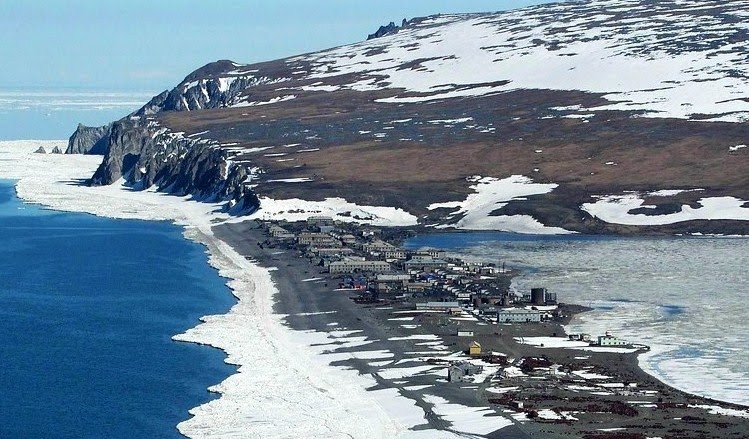
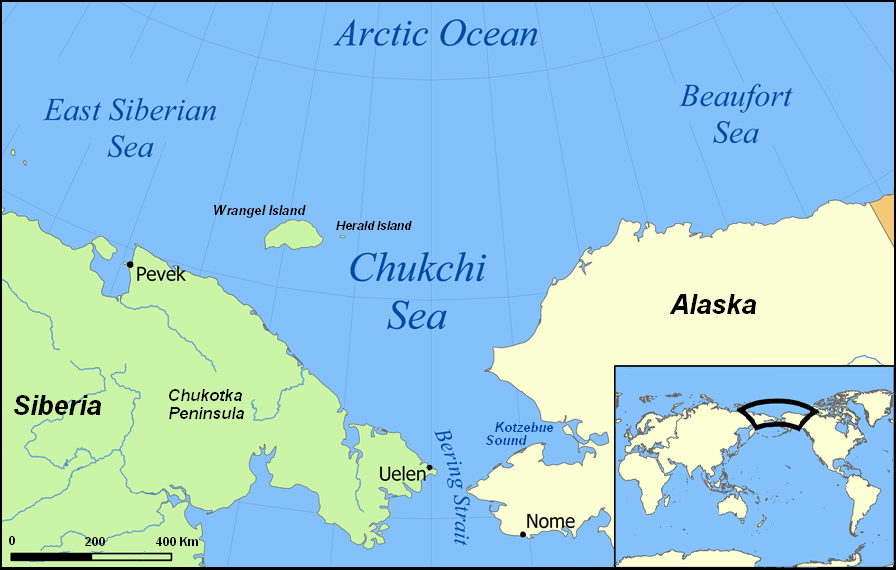
The alignment exits Russia at Uelen, a small settlement just south of the Arctic Circle in the Chukotka Autonomous Okrug in the Russian Far East.

Located near Cape Dezhnev, where the Bering Sea meets the Chukchi Sea, it is the easternmost settlement in Russia…and all of Eurasia.
The Chukchi Sea forms part of the Arctic Ocean, bordered in the east by northwestern Alaska and in the west by northeastern Siberia.
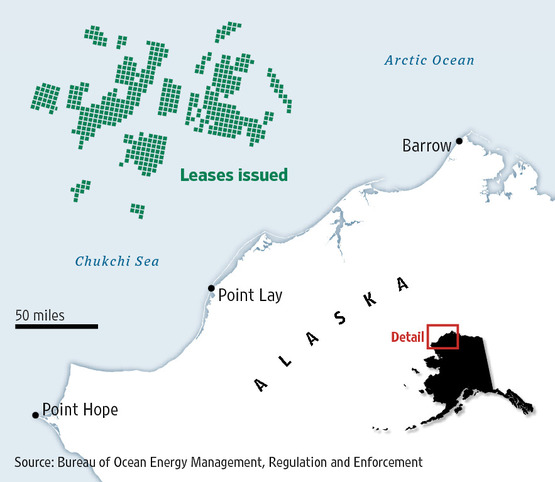
Estimates of oil and gas reserves on the U. S. portion of the Continental Shelf, including both the Chukchi and the neighboring Beaufort Sea, range up to 30 billion barrels of oil equivalent.

The U. S. government began offering oil and gas leases in the Chukchi Sea in the 1980s, but little exploration and no development occurred on them, and all the older leases expired.

There is significant opposition to exploration and drilling here.
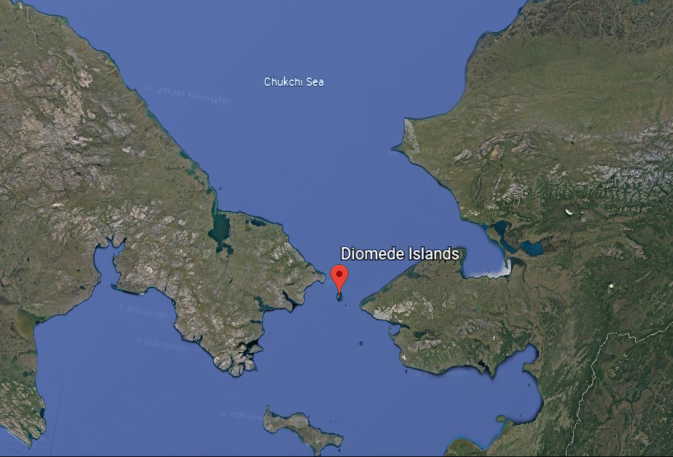
The Diomede Islands are located in the middle of the Bering Strait between Russia and Alaska.
The island of Big Diomede belongs to Russia, and Little Diomede to the United States.
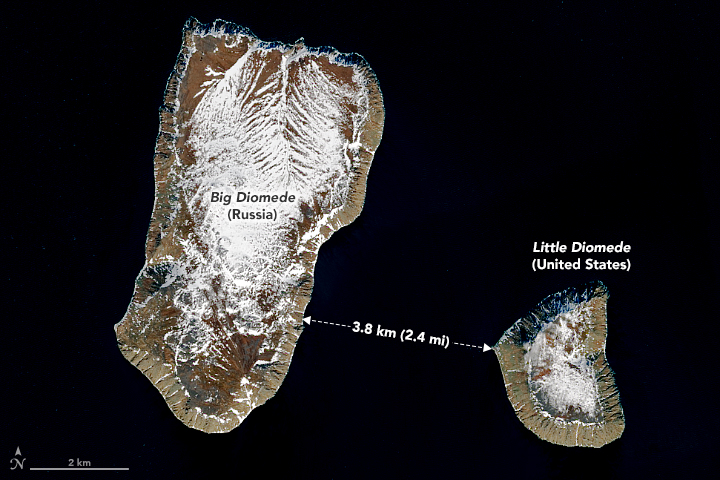
In spite of their proximity to each other, they are separated by the International Date Line, and Big Diomede is 21 hours ahead of Little Diomede, almost a day.
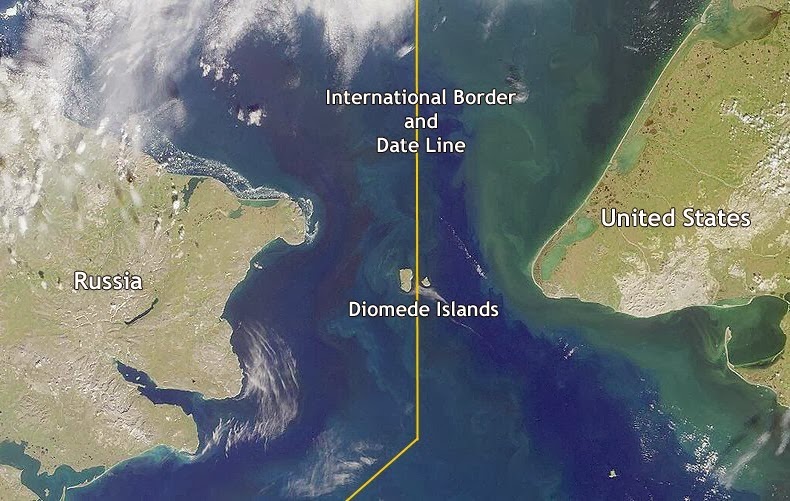
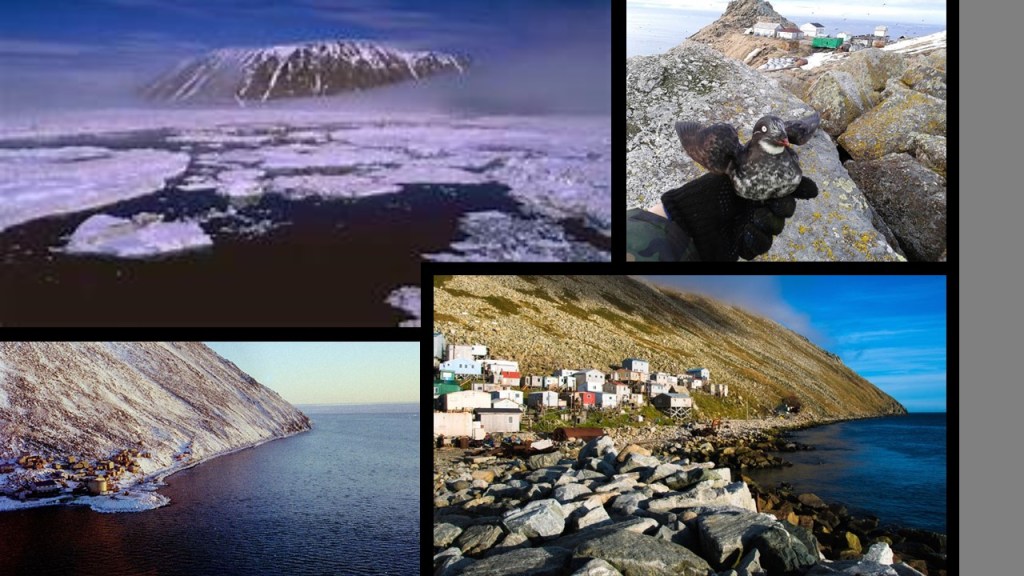
They are described as rocky, mesa-like islands.
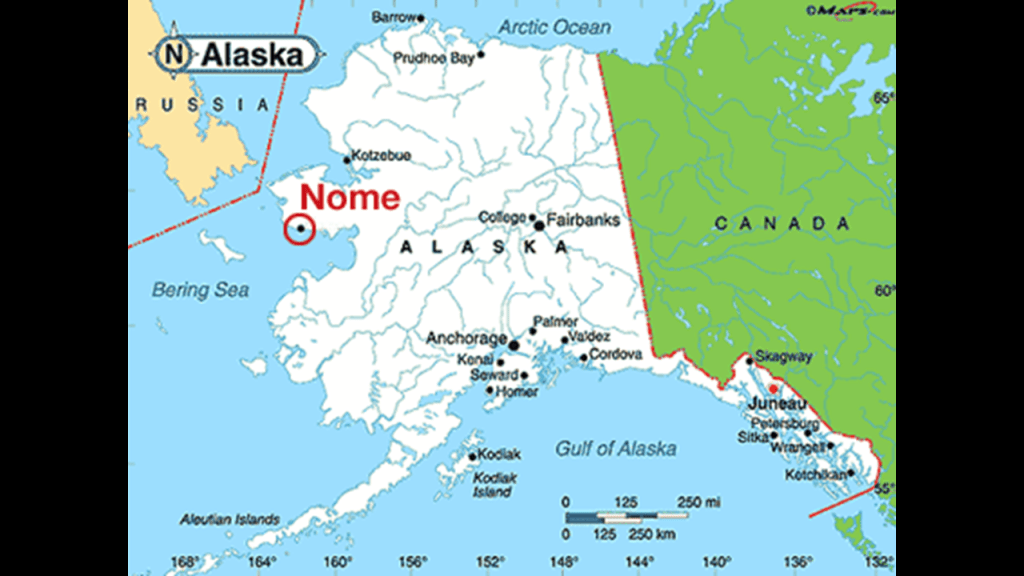
Next we come to Nome, located on the southern Seward Peninsula coast of Alaska on the Norton Sound of the Bering Sea.
The most populous city in Alaska at one time, Nome was incorporated in April of 1901, shortly after gold was discovered on Anvil Creek there in 1898 by “three lucky Swedes.”
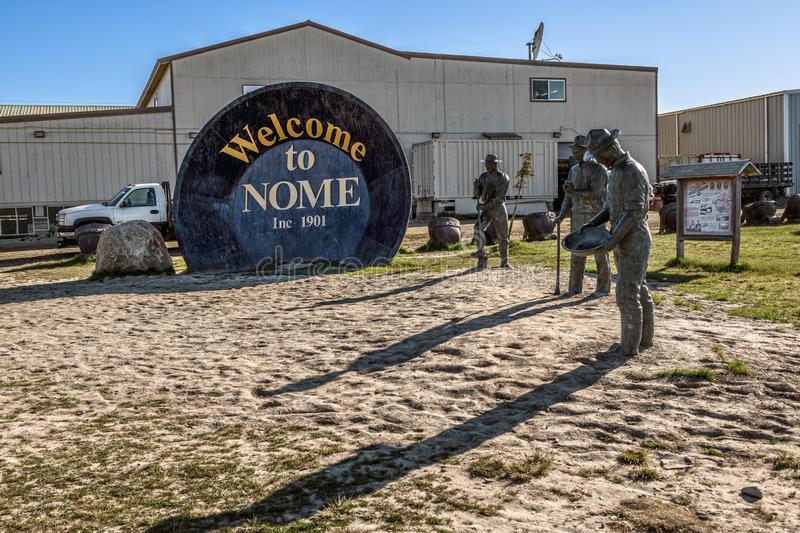
News of the discovery was said to have reached the outside world that winter, and that by 1899, had a population of 10,000 people.

The area was first organized as the “Nome Mining District.”
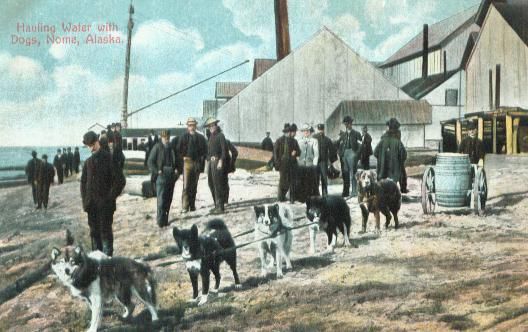
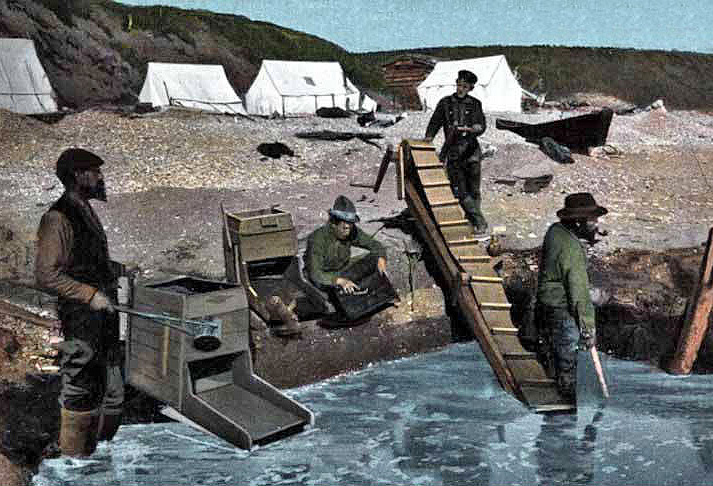
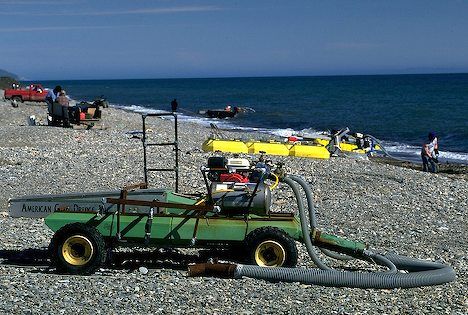
Also in 1899, gold was found in the beach sands for dozens of miles along the coast at Nome, spurring the stampede to new heights.
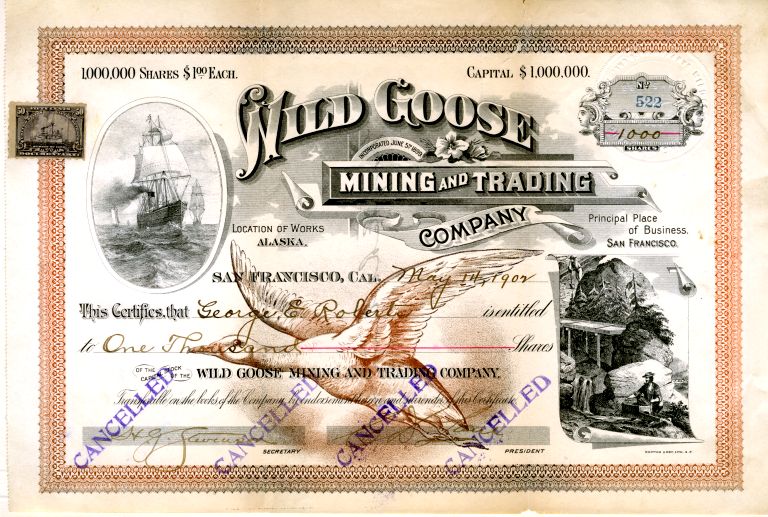
In 1899, Charles D. Lane founded the Wild Goose Mining and Trading Company…
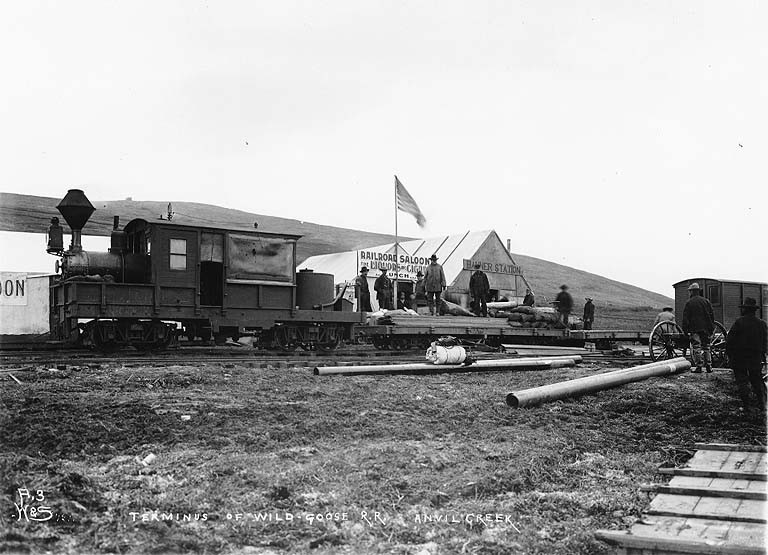
…for which he was said to have built the Wild Goose Railroad, which ran from Nome to Dexter Discovery, and by 1908 to the village of Shelton.
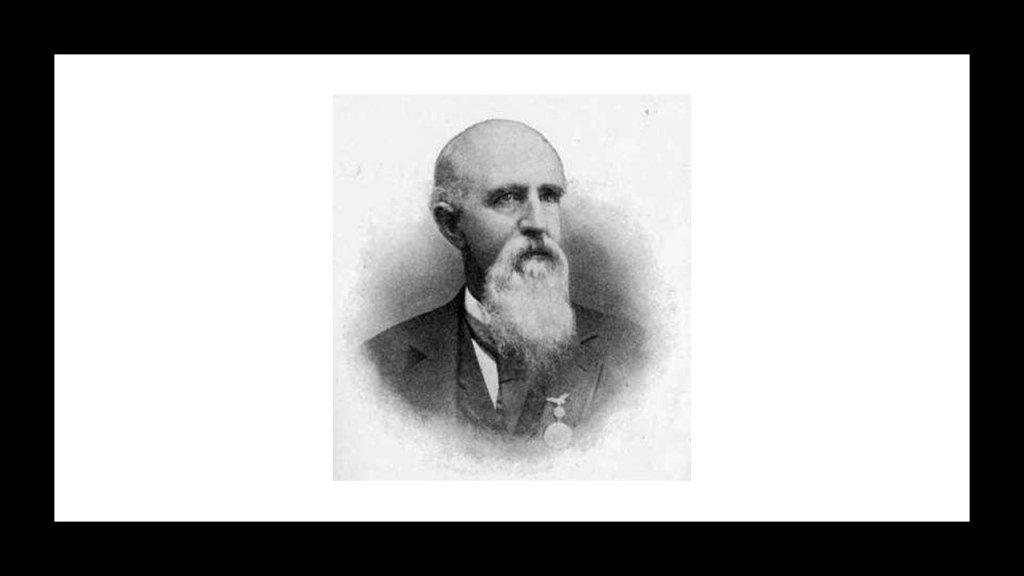
Charles D. Lane, a millionaire mine owner, was recognized as a founder of Nome.

He was born in Palmyra, Missouri, in 1840, and moved to California with his father in 1852.

He got involved in the mining industry, developing successful mines in Idaho, California, and Arizona, before hearing of the first gold strike in Nome in 1898.
Gold mining has been a major source of employment and revenue for Nome through to the present day.
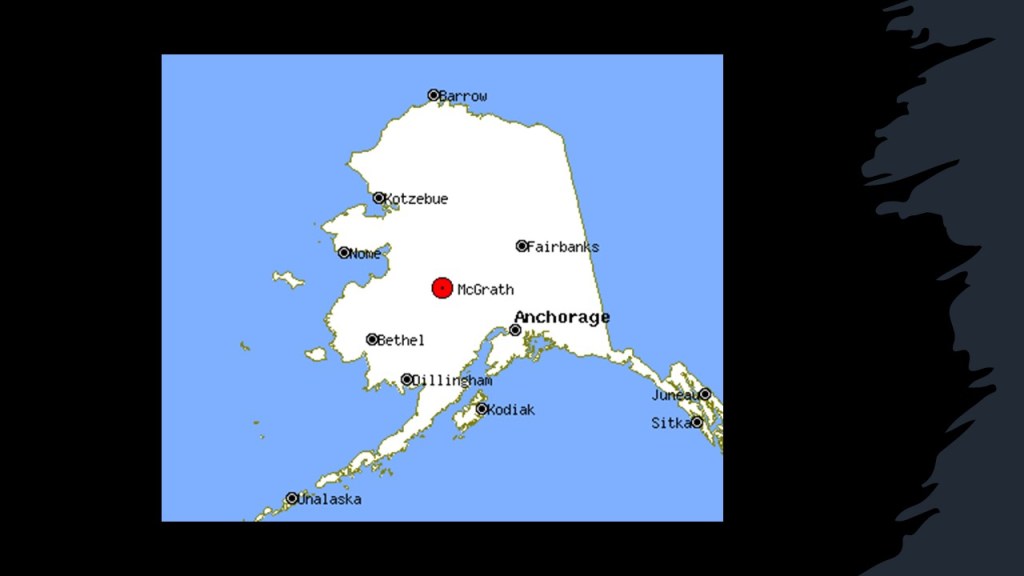
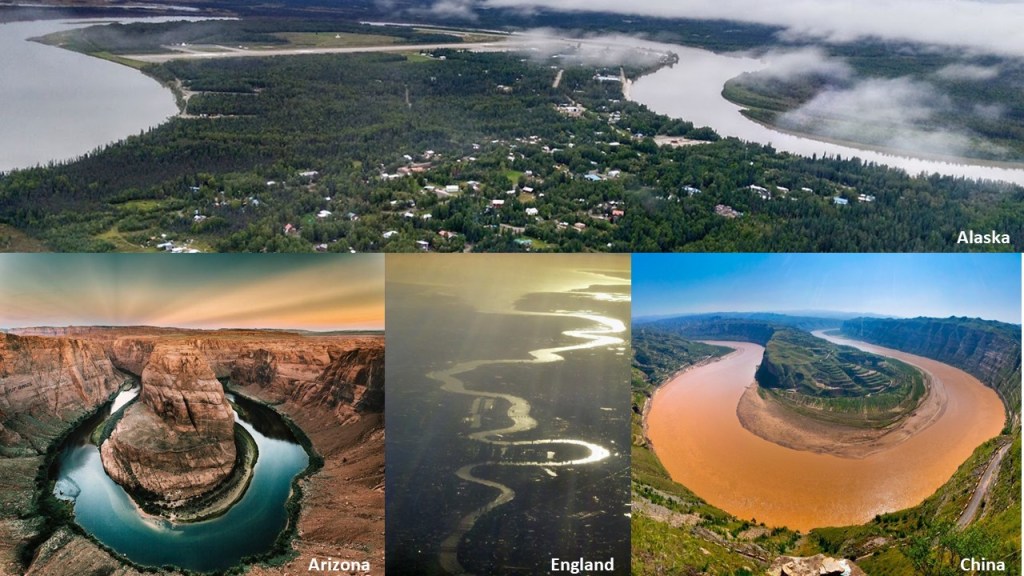
We come to McGrath next…
…which sits in the middle of a snaky, s-shaped river bend of the Kuskokwim River shown in the top photo, the same shape that I find in rivers all over the world, like the Horseshoe Bend of the Colorado River near Page, Arizona on the bottom left; the River Thames in London, England in the bottom middle; and the Yellow River in China on the bottom right.
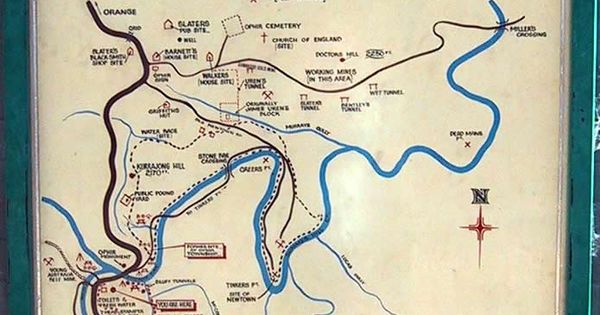
In 1906, gold was discovered in what became the Ophir Creek Mines in the Innoko Mining District, the first of many mining claims and sites throughout this region, besides what became known as Ophir.
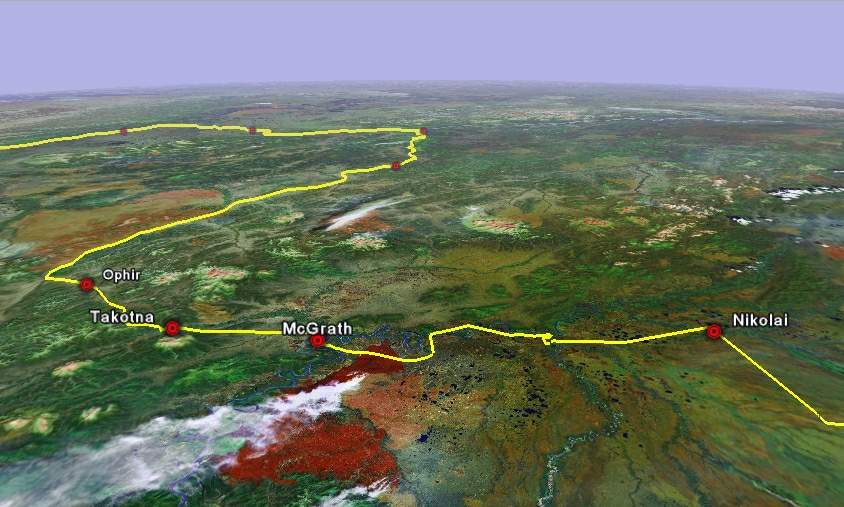
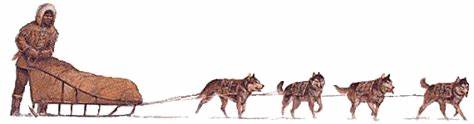
Since McGrath was the northernmost point on the Kuskokwim River accessible by large riverboats, it became a regional supply center, and from 1911 to 1920, hundreds of people went to the Ophir Gold District by way of dog sled, or on foot.
We next come to Anchorage, Alaska’s largest city, located in Southcentral Alaska…
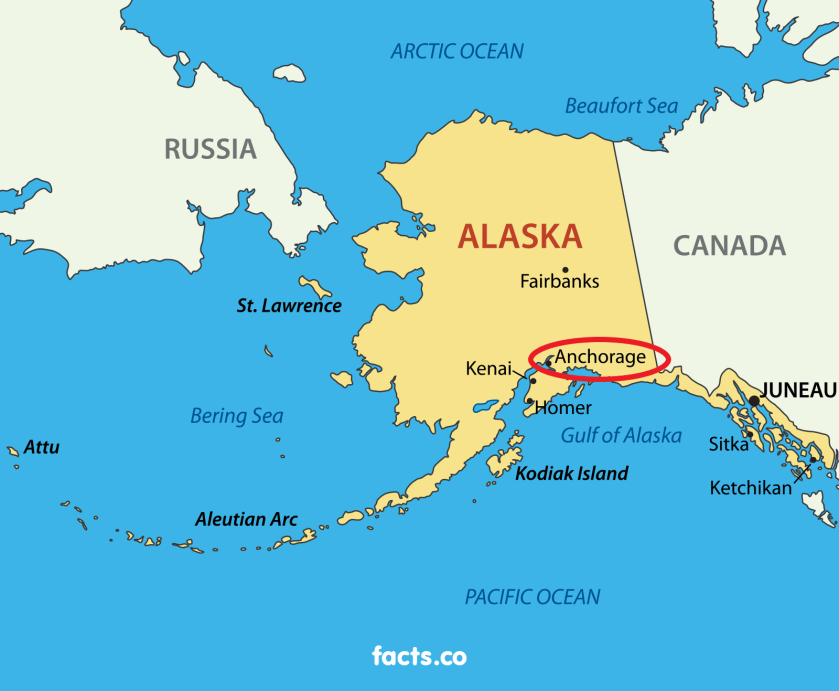
…at the terminus of the Cook Inlet, between the Knik Arm to the North and Turnagain Arm to the South.
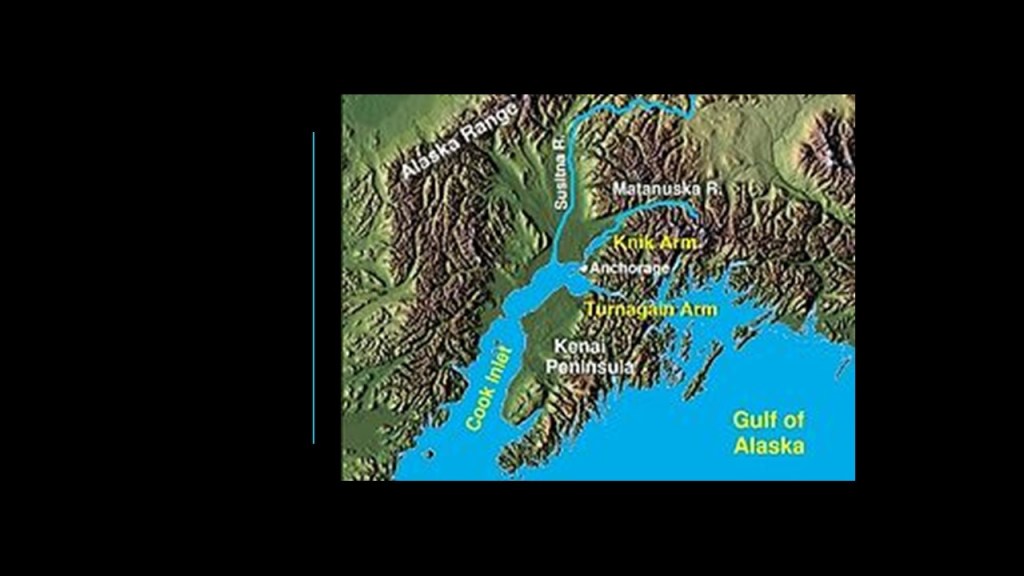
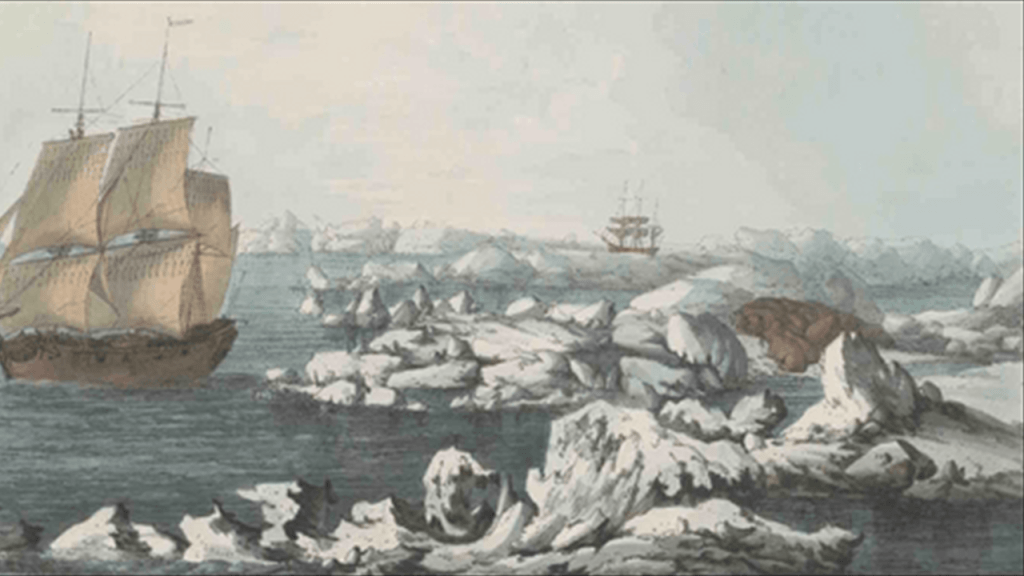
The Cook Inlet was named for the English explorer, Captain James Cook…
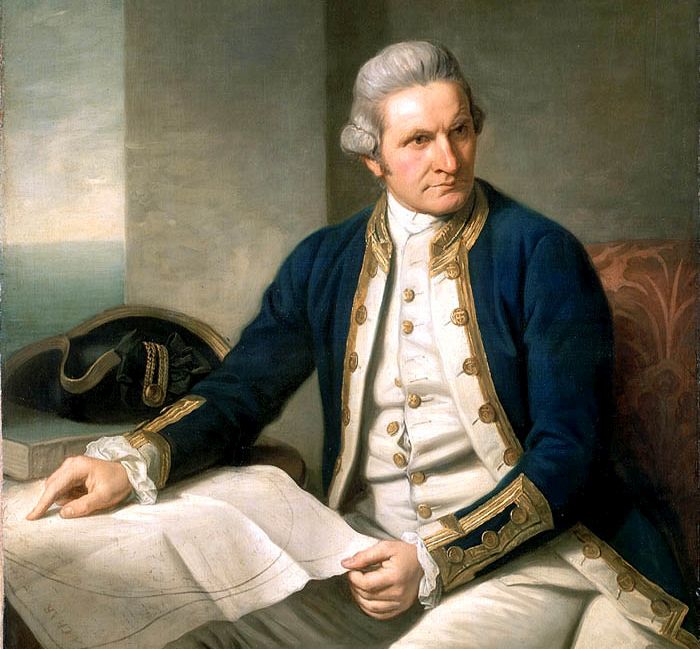
…who sailed into it in 1778 when he was looking for the Northwest Passage.
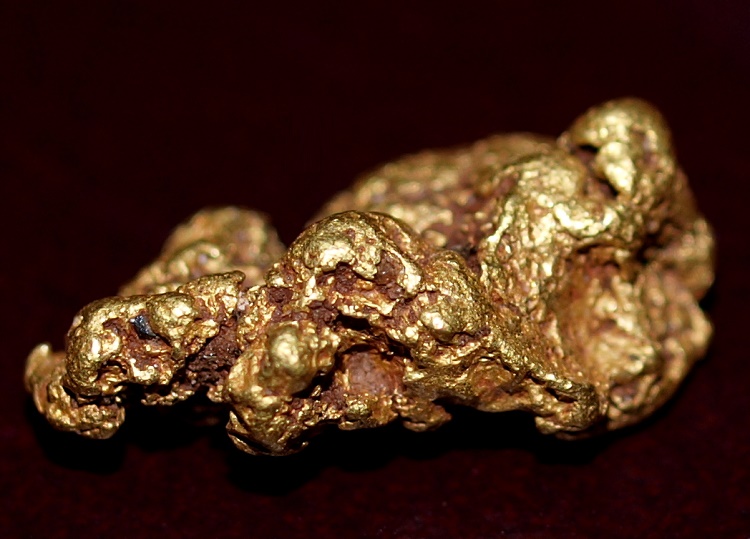
Gold was discovered in Anchorage in the 1880s, and was said to have turned the region into a mining area overnight.

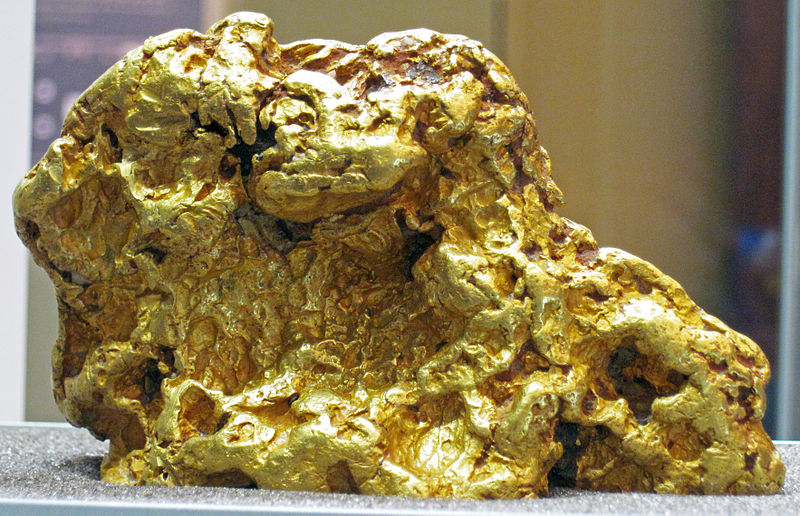
This is an Alaskan gold nugget.
Over the following years, several mines were established in the area producing hundreds of thousands of ounces of gold, with Anchorage becoming an active gold mining center.
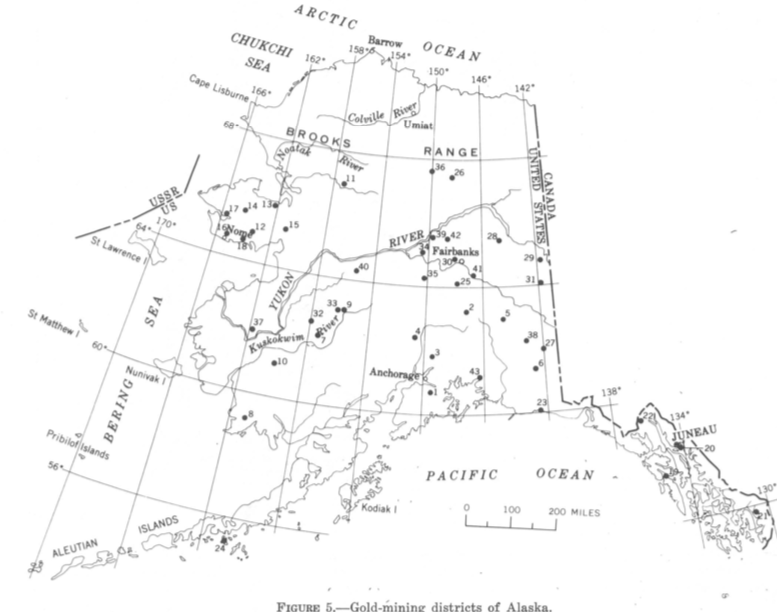
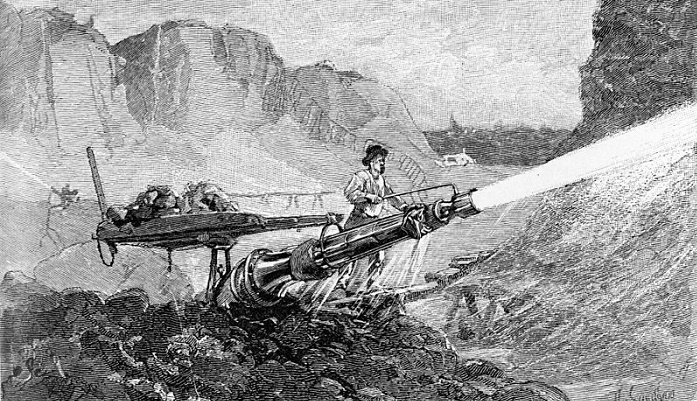
The Crow Creek Mine, in the Girdwood section of Anchorage, is one of the best known hydraulic gold mines in Alaska.
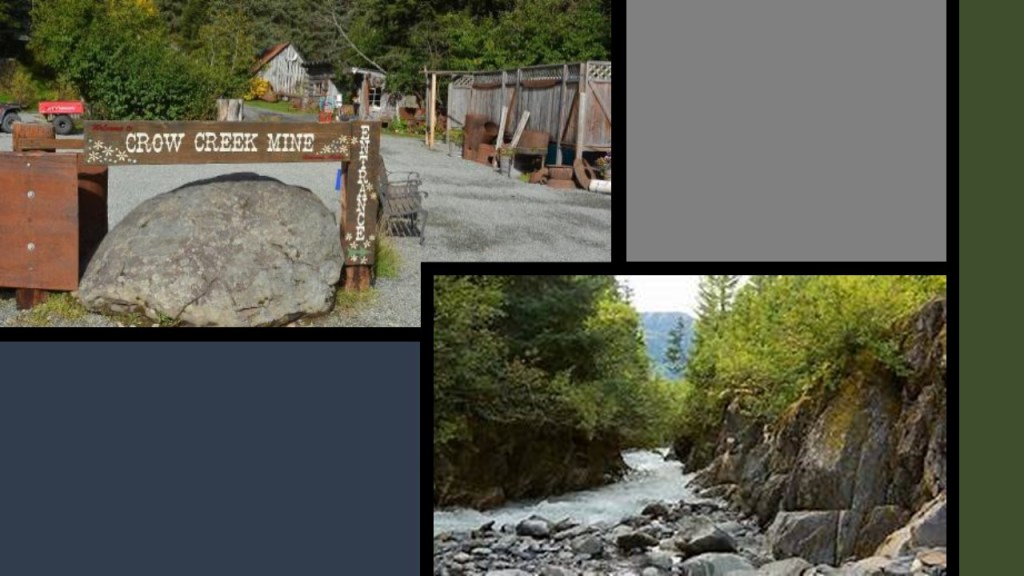
Hydraulic mining involves delivering water through a nozzle at high-pressure against the gravel deposits.

These deposits, or slurries, were then passed on to large sluice boxes, which separated all the gold from the deposits.
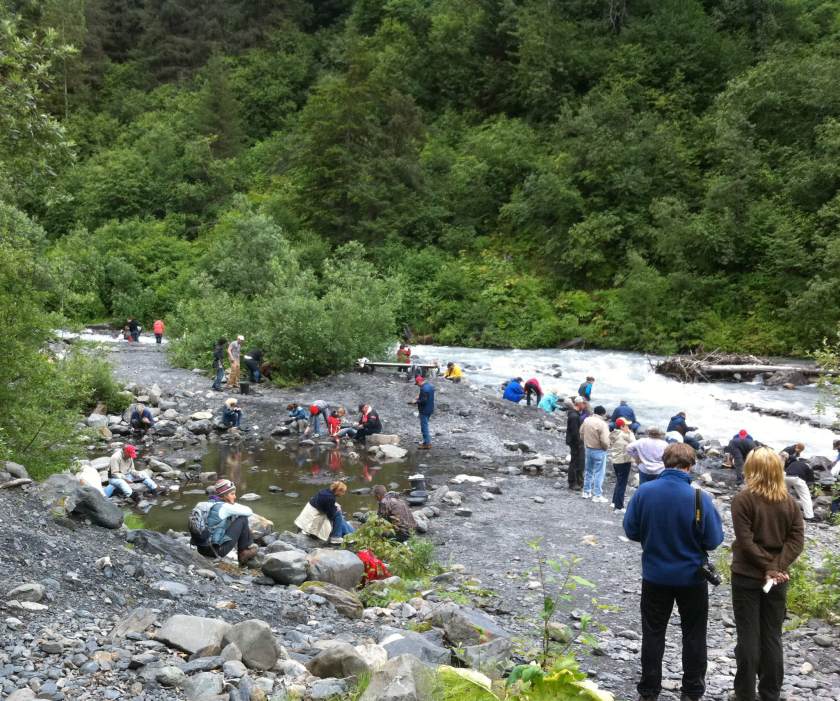
The Crow Creek Mine is family-owned; still in production; and allows visitors to pan for gold.
The next place we come to is Juneau, the capital city of Alaska.
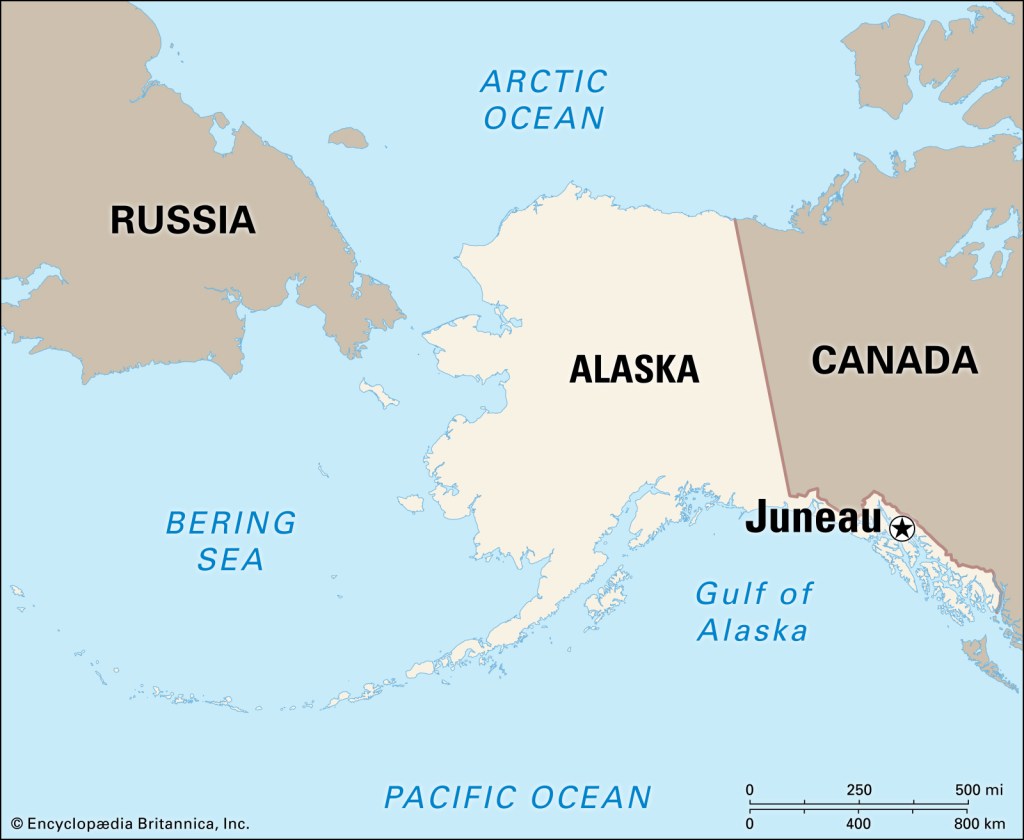
It is located in the Gastineau Channel…
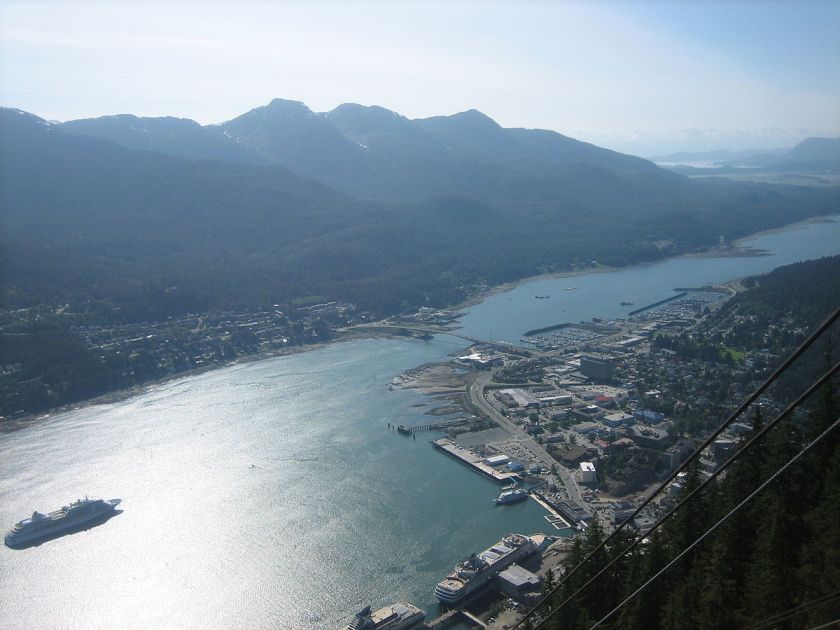
…and the Alaskan Panhandle, the southeastern portion of Alaska, bordered to the east by the northern part of British Columbia.

Juneau is unique as a state capital for not having roads connecting it to the rest of the state. All transportation-related activities are by air and sea only.
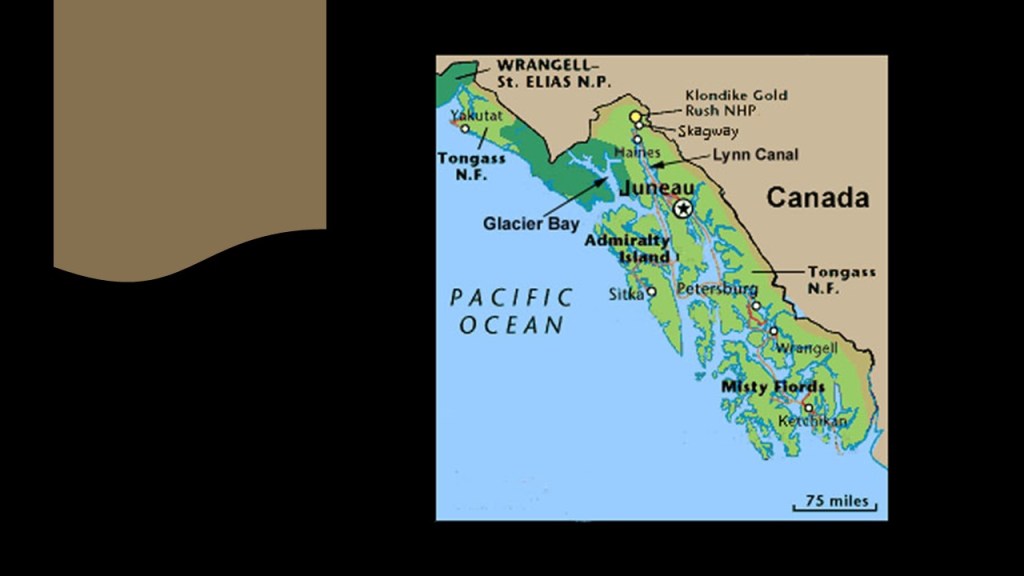
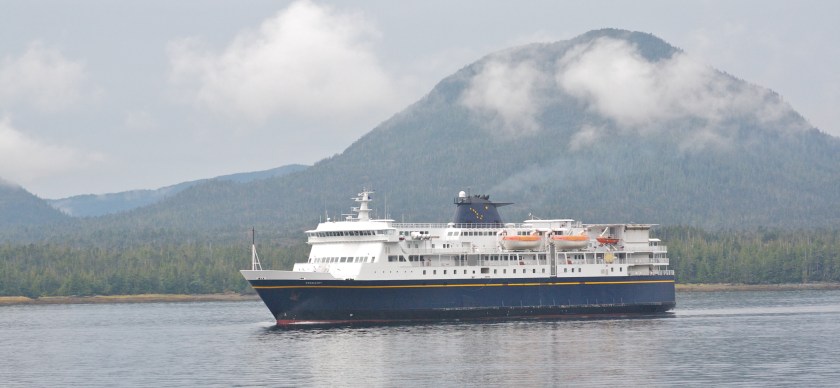
Vehicles are transported to Juneau by barge or the Alaska Marine Highway Ferry System, which serves communities in Southeast Alaska with no road access, and also transport people and freight.
The city is said to be named after a gold prospector from Quebec named Joe Juneau.
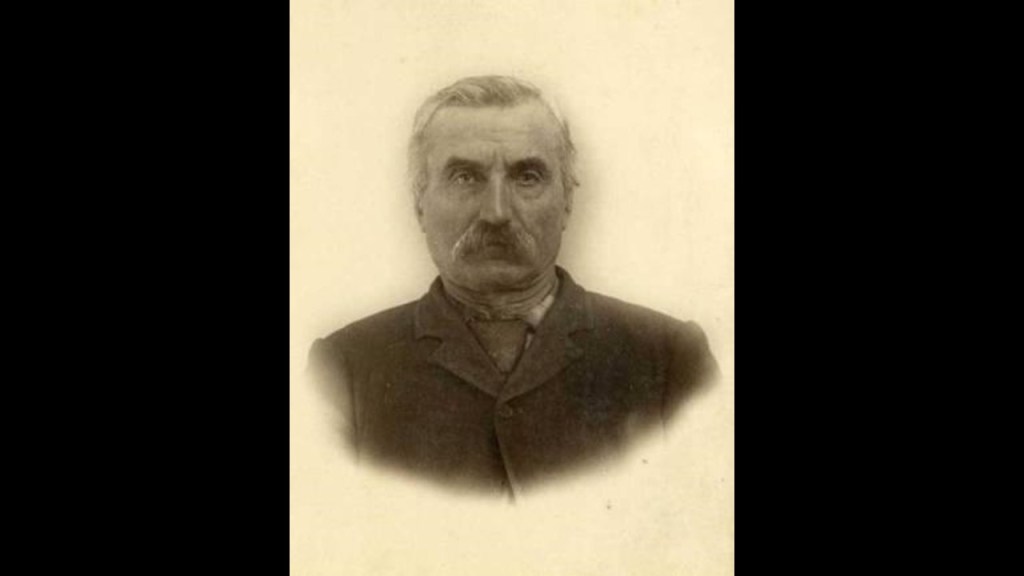
What we are told is that after the California Gold Rush, miners migrated up the Pacific coast in search of other gold deposits.
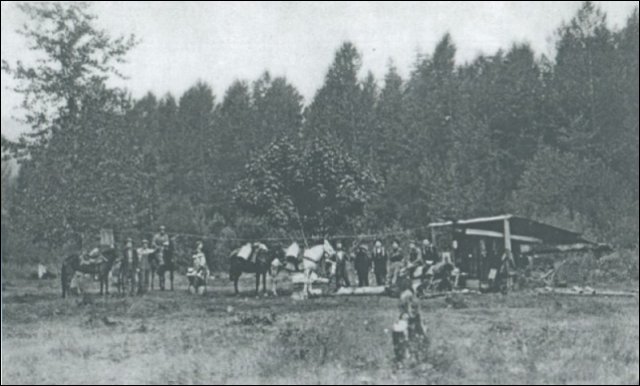
In 1880, mining engineer George Pilz from Sitka, which was formerly under Russian rule, offered a reward to any local native Alaskan who could lead him to gold-bearing ore.
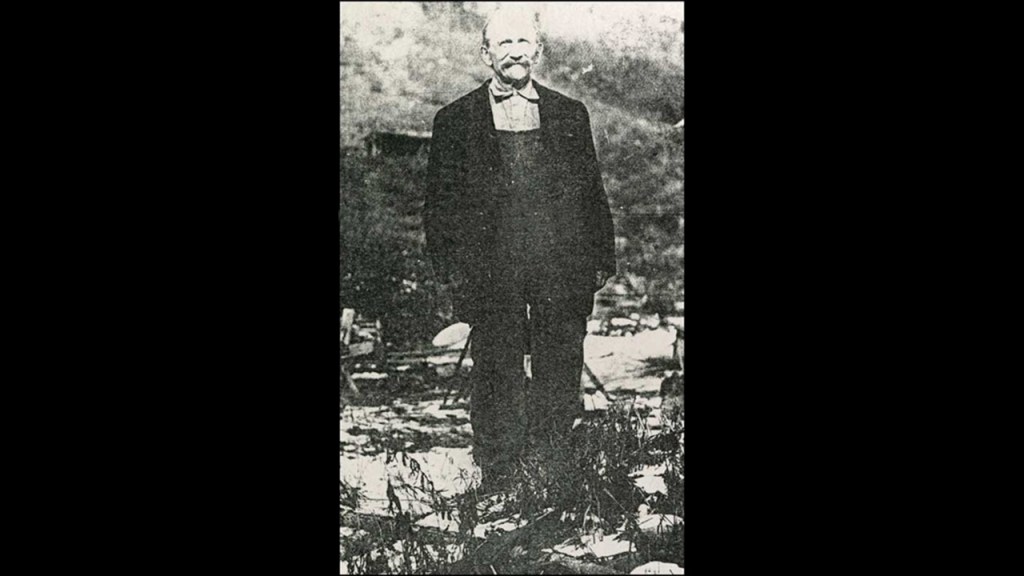
Pilz received information that prompted him to direct prospectors Joe Juneau and Richard Harris to the Gastineau Channel to Snow Slide Gulch at the head of Gold Creek, where they found nuggets as big as “peas and beans.”
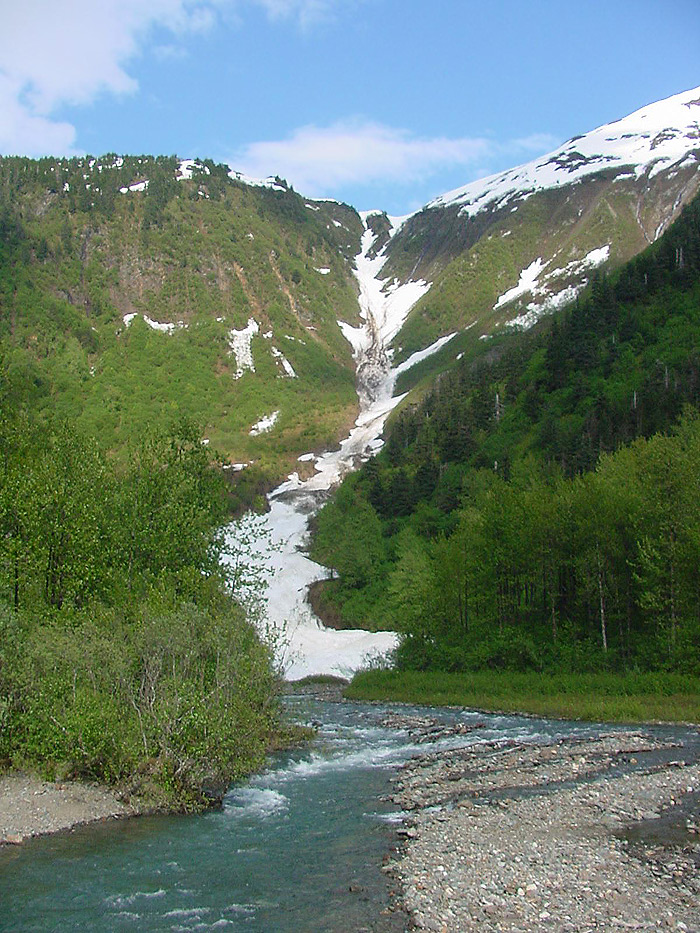
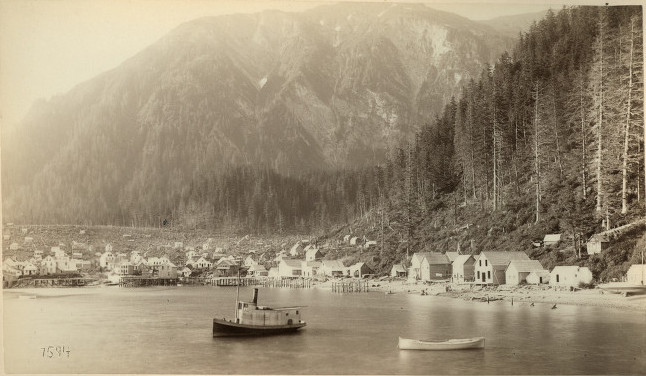
Shortly thereafter a mining camp sprang up, and shortly after that, so many people came looking for gold, that the camp became a village.

This is said to be a photo of Juneau in 1887.
Major mining operations in the Juneau Mining District prior to World War II included the Treadwell Mine, owned and operated by a man named John Treadwell, southeast of Juneau on Douglas Island.

In its time, it was the largest hard-rock gold mine in the world, employing 2,000 people, and producing over 3-million Troy ounces of gold between 1881 and 1922.
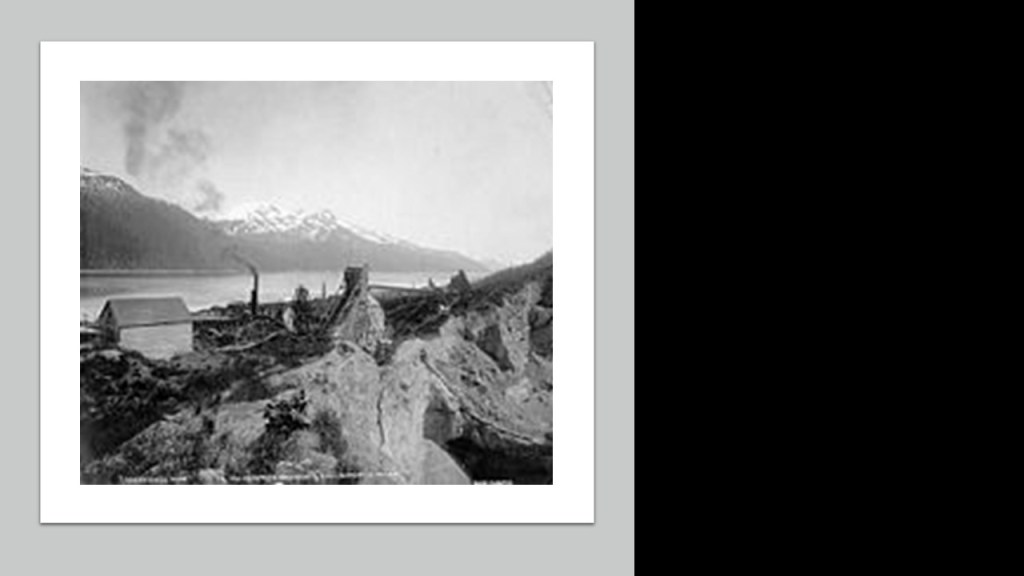
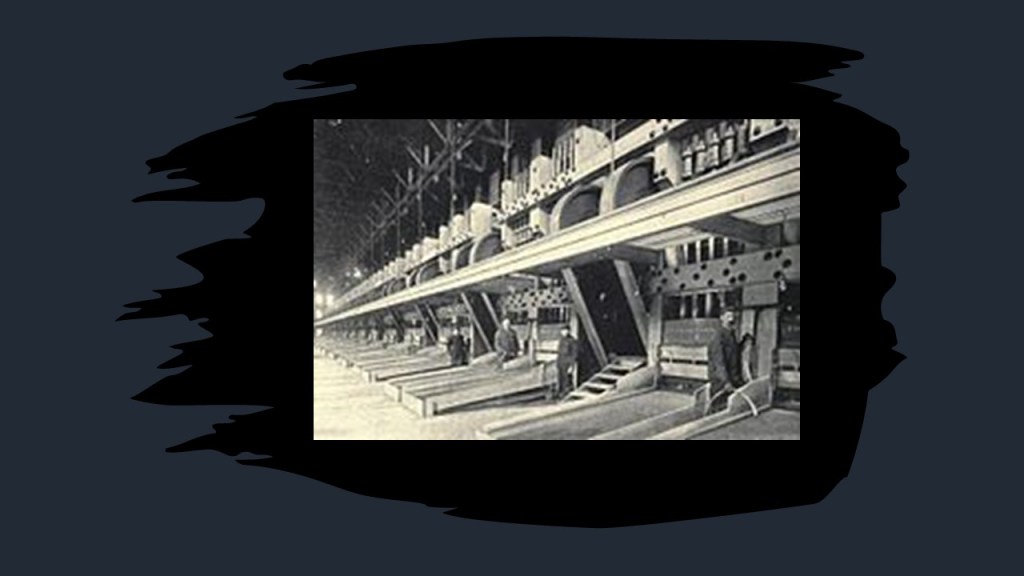
He operated a stamp mill, pictured here circa 1908, which mined gold by way of a mill machine that crushed ore by pounding rather than grinding for either further processing or extraction of metallic ores.
The next place we come to on the alignment is Whitehorse, the capital of Canada’s Yukon Territory.
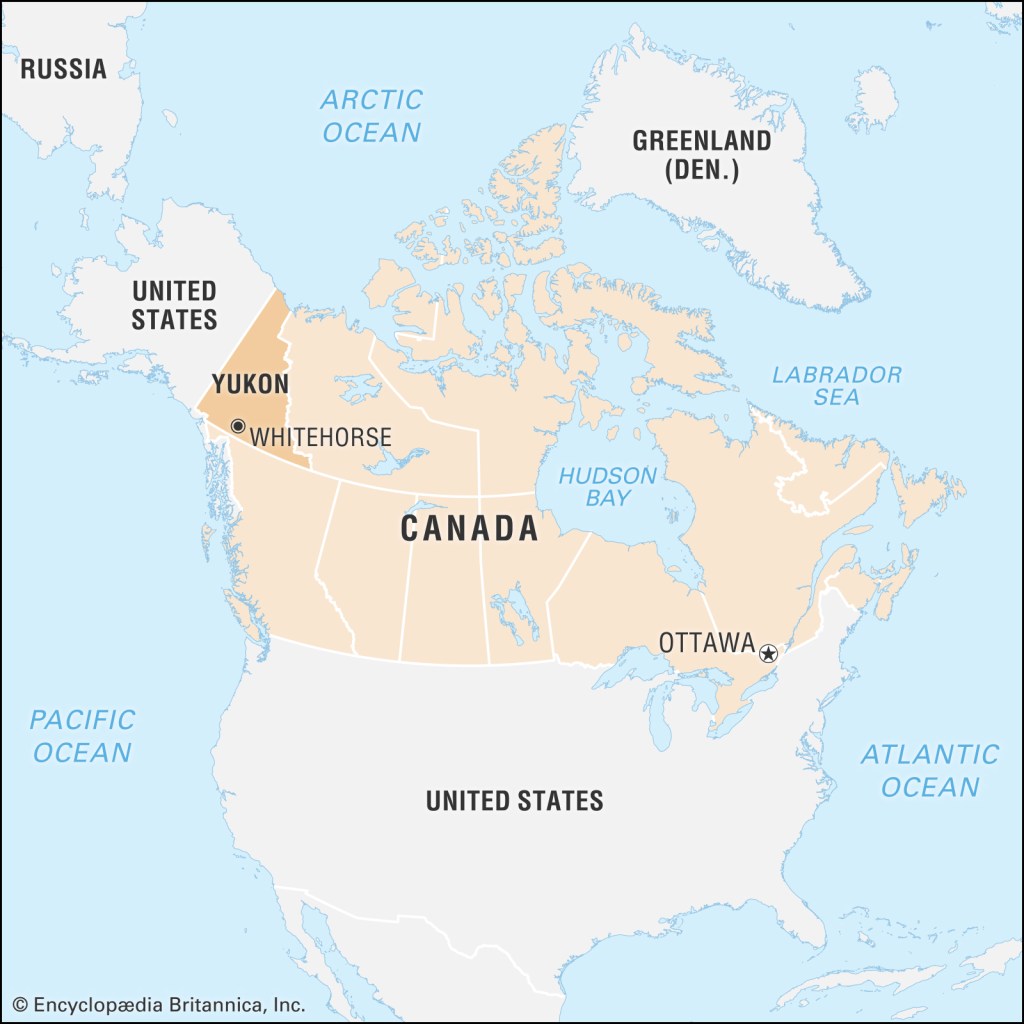
It was named after the White Horse Rapids, near Miles Canyon.

These rapids, and the Miles Canyon, provided a significant challenge to gold-seekers heading to the Klondike gold rush.

The Klondike Gold Rush was a migration by an estimated 100,000 prospectors to the Klondike region of northern Yukon between 1896 and 1899.
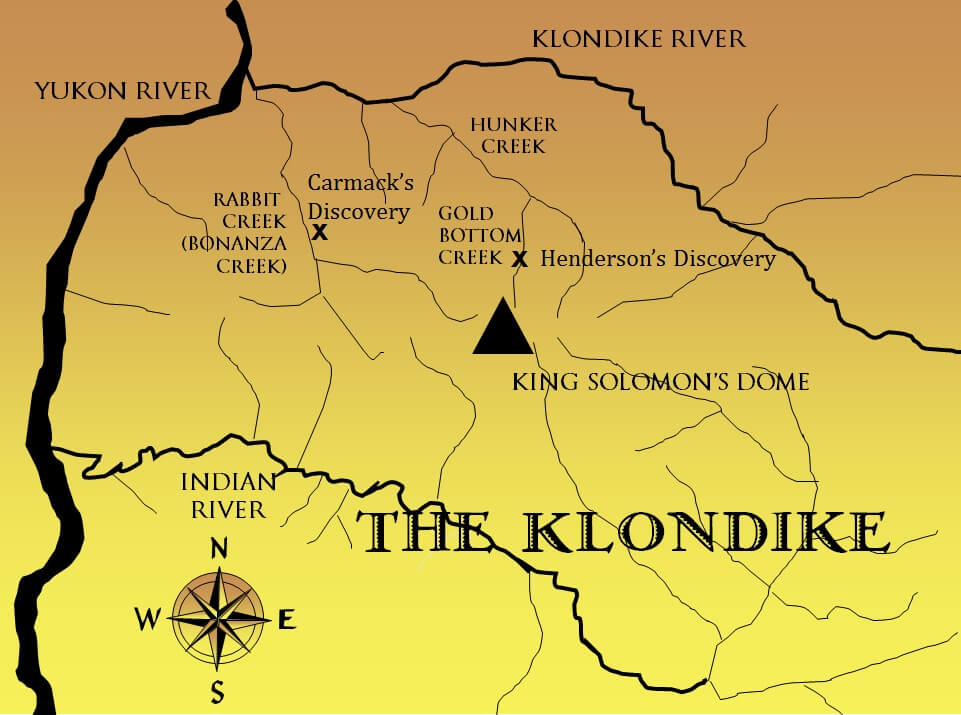
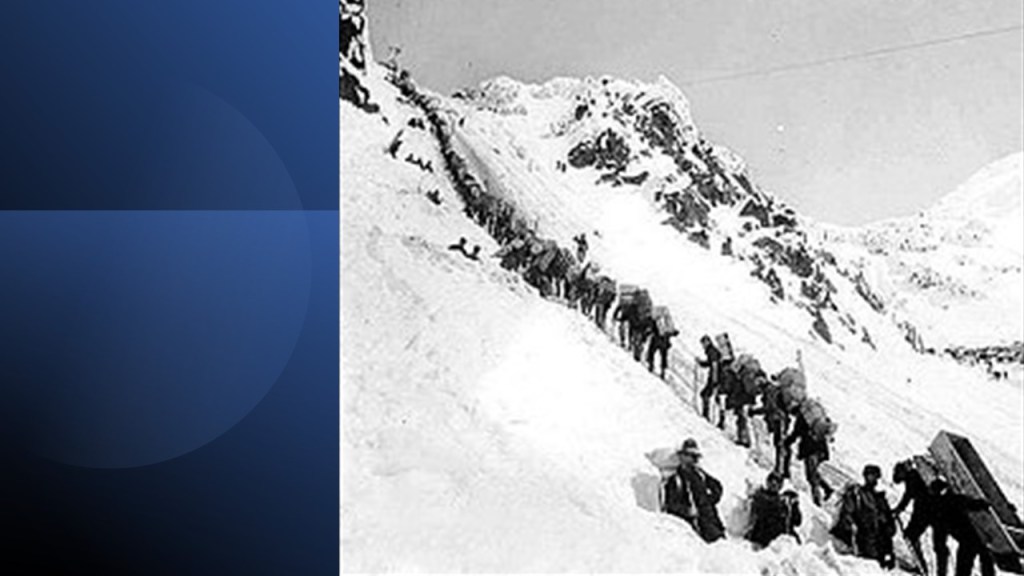
Same kind of story as the other places I have mentioned – as soon as word about the discovery of gold in the Klondike reached Seattle and San Francisco, it triggered a stampede of prospectors, immortalized in photos like this of the long-line waiting to cross the Chilkoot Pass, a high-mountain pass between the Boundary Ranges of the Coast Mountains between Alaska and British Columbia.
Miles Canyon is also one of the places I had in mind when I shared the pictures of the Lena River Pillars previously in this post.

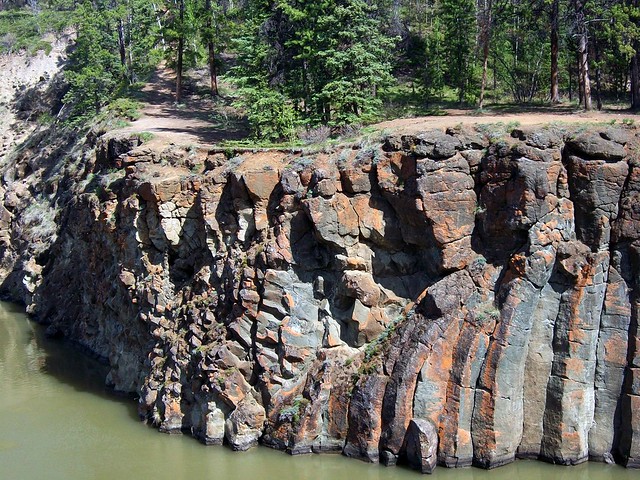
These are called the Miles Canyon Basalts.
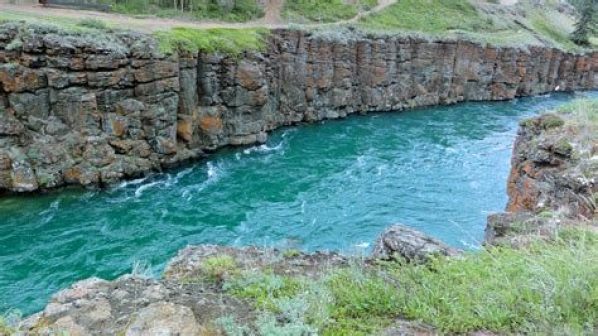
We are told they are a package of rocks that include various exposures of basaltic lava flows and cones that erupted and flowed across an ancient, pre-glacial landscape in south-central Yukon.

Again, because we are given no other possible explanation as to how they came into existence, we accept this information as the only explanation.
The Minto Mine is an open-pit copper and gold mine located 149-miles, or 240-kilometers, north of Whitehorse, beginning production in 2007…
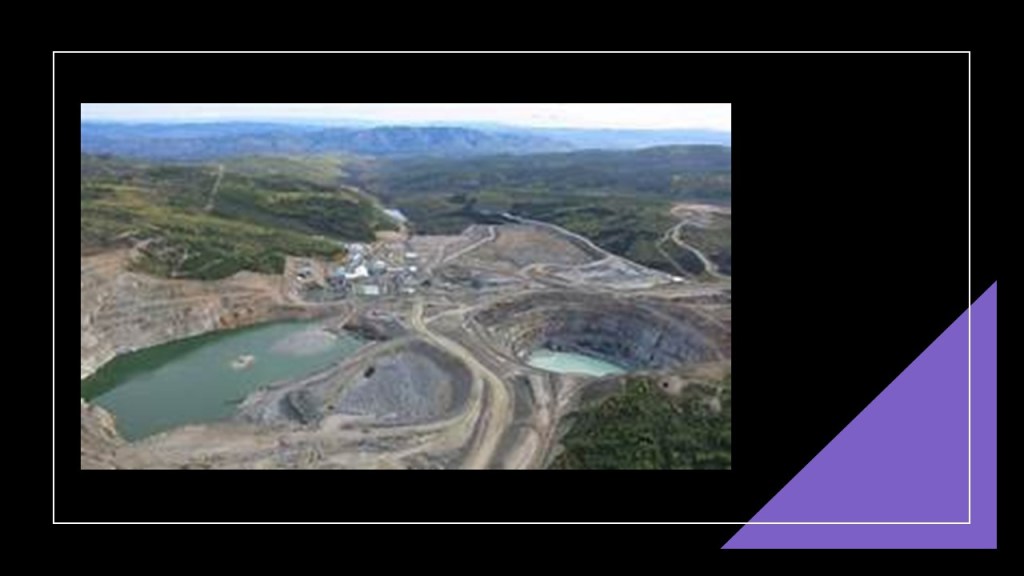
…and there are numerous mining claims in the Yukon Territory as well.
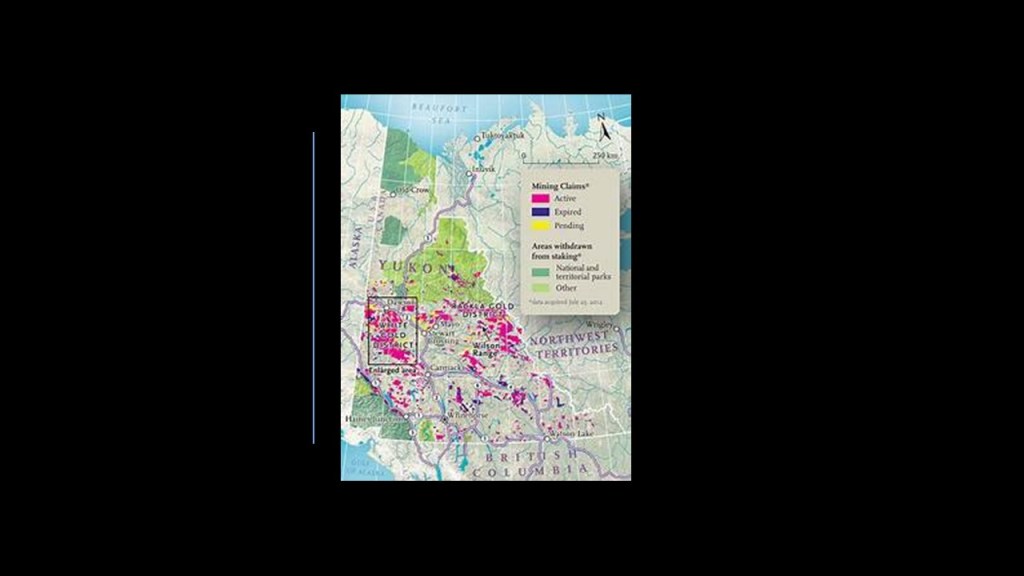
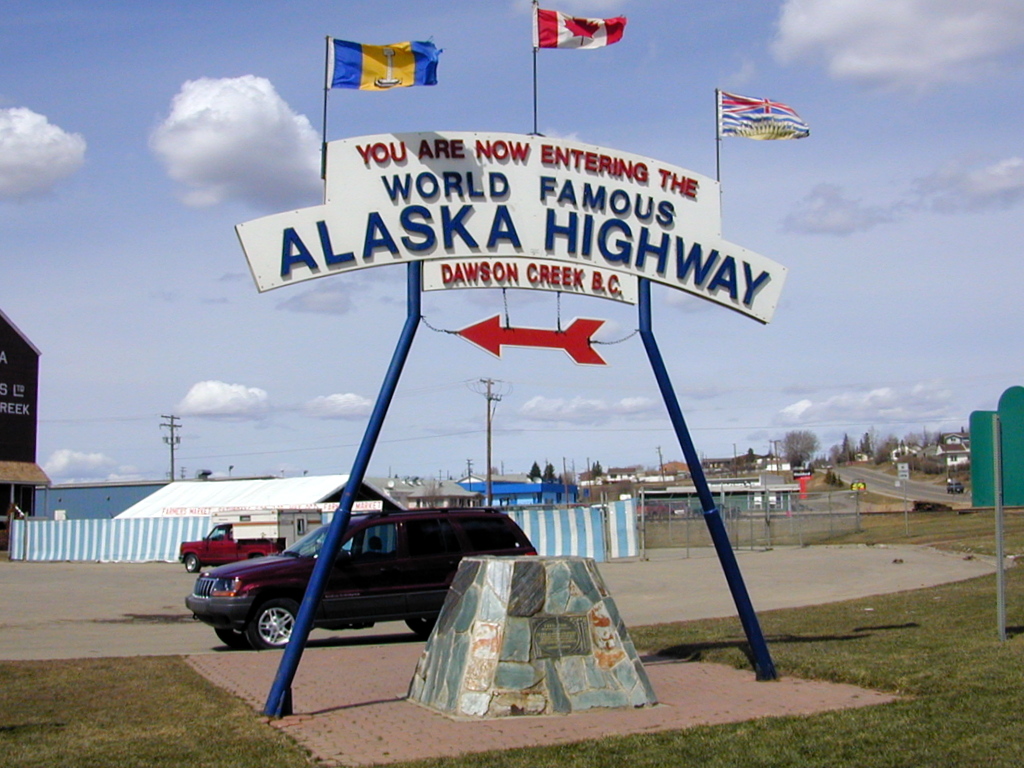
The next place we come to on the alignment is Dawson Creek, a city near the eastern edge of the Peace River Regional District of British Columbia.
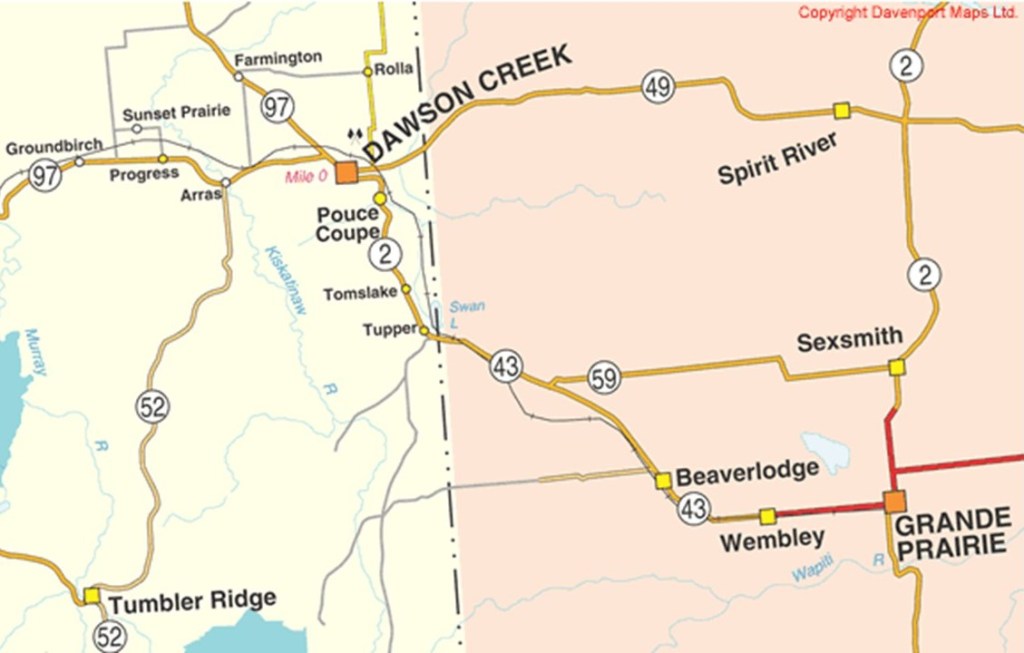
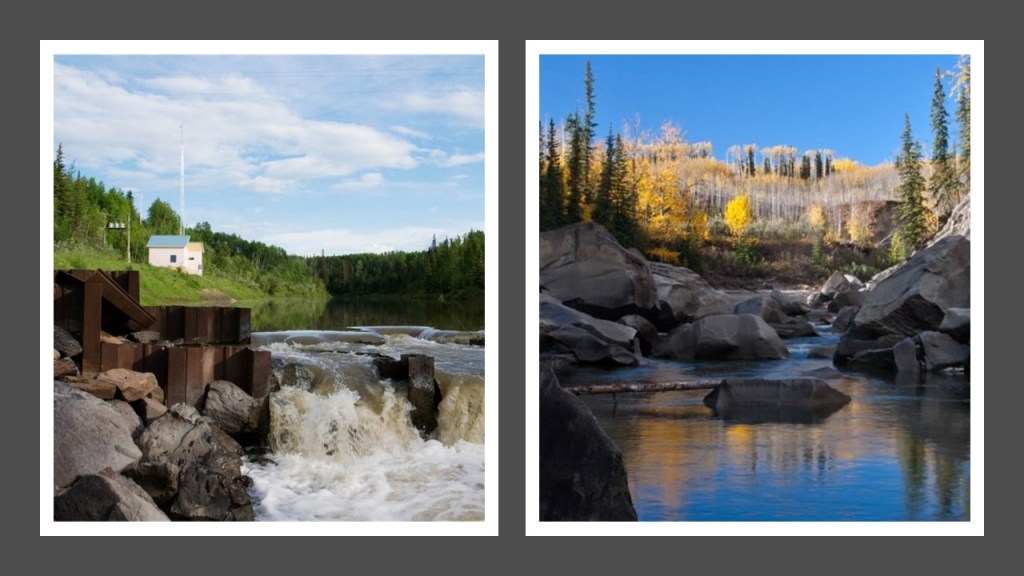
The city of Dawson Creek received its name from the Dawson Creek that flows through here, which was named after the surveyor George Mercer Dawson, when he and his team came through in 1879.
Dawson Creek became a regional center after the western terminus of the Northern Alberta Railways was extended there in 1932.
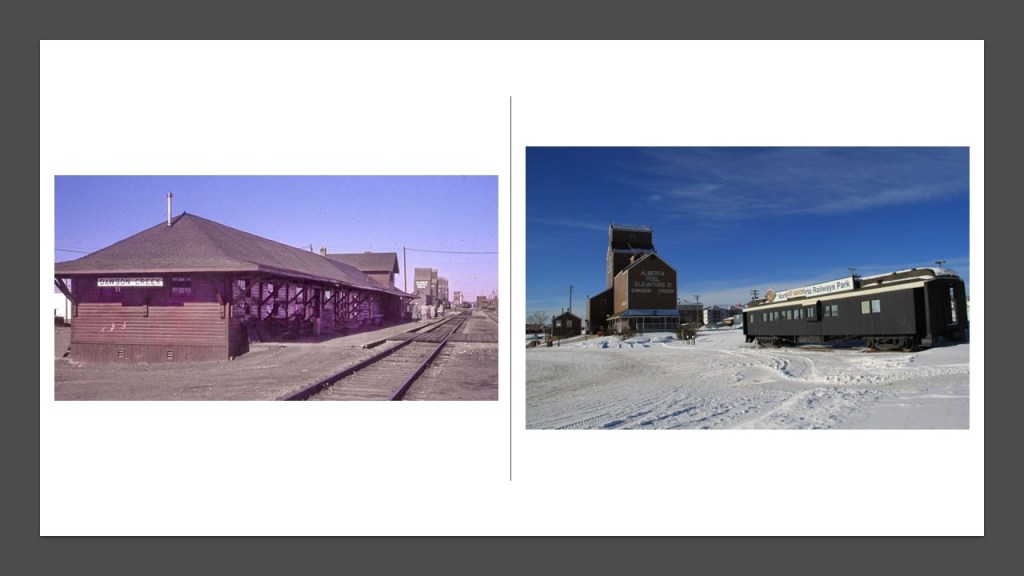
The community grew rapidly in 1942, when the U. S. Army used the rail terminus as a shipment point during the construction of the Alaska Highway, and it is the starting point of the Alaska Highway.
The Peace River Region of which Dawson Creek is a part has an extensive coal-mining industry, centered in the municipality of Tumbler Ridge.

There are at least five major mining projects here, with the Murray River Mine developed starting in 2017 as an underground metallurgical coal mine.
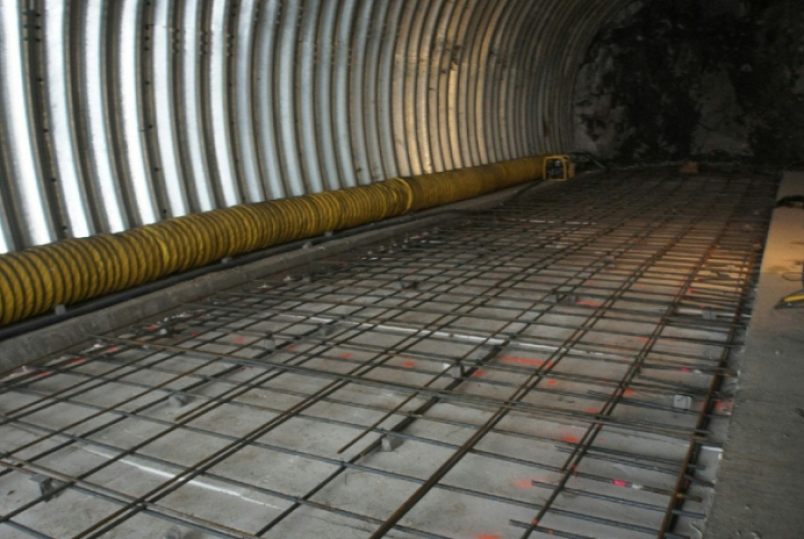
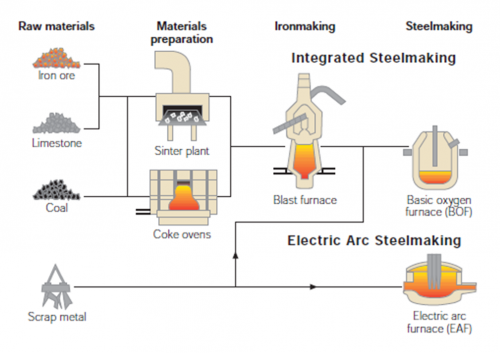
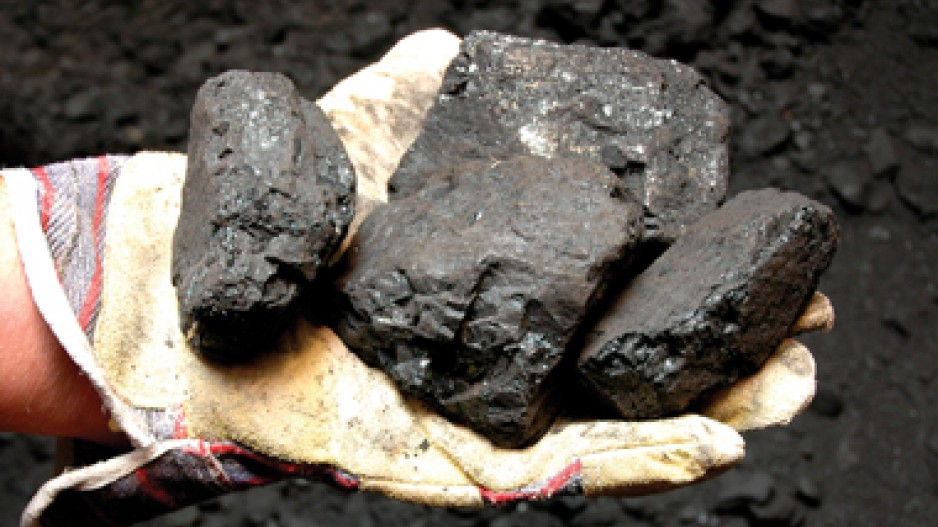
Metallurgical coal, or coking coal, is a grade of coal that can be used to produce good-quality-coke, which is used as an essential fuel and reactant in the blast furnace process for primary steel-making.
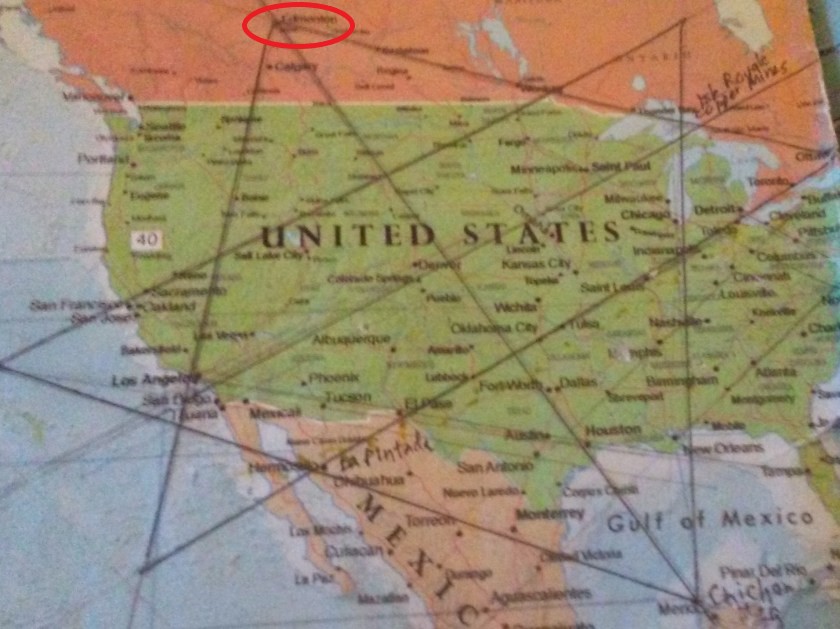
Next we come to Edmonton, the capital city of the Province of Alberta.

Edmonton is North America’s northernmost metropolitan area, with a population of over 1-million.
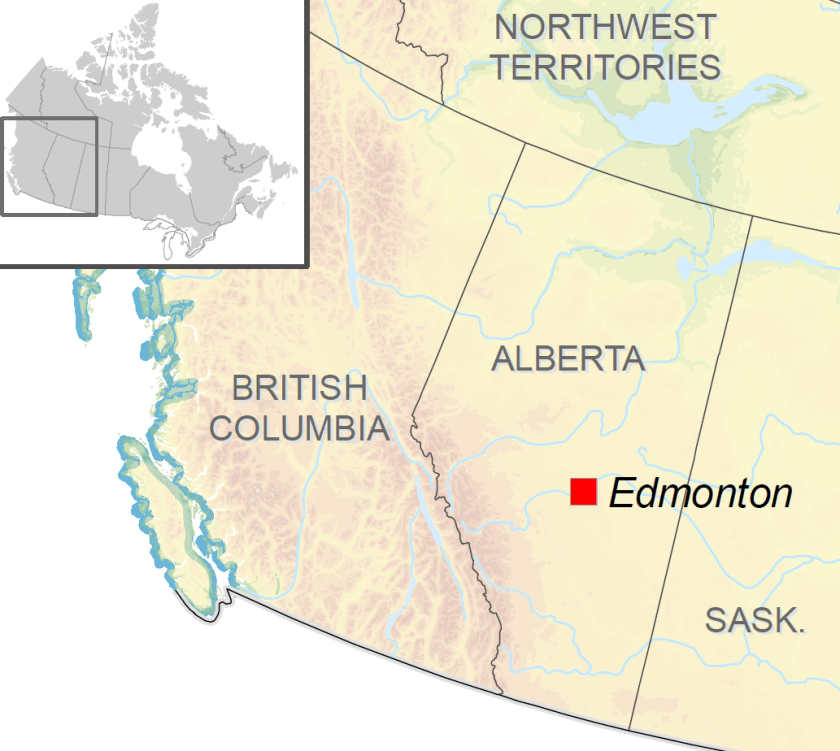
Edmonton is also the northern apex of the North American Star Tetrahedron that I found in 2016, which was the starting point of all of my research work.
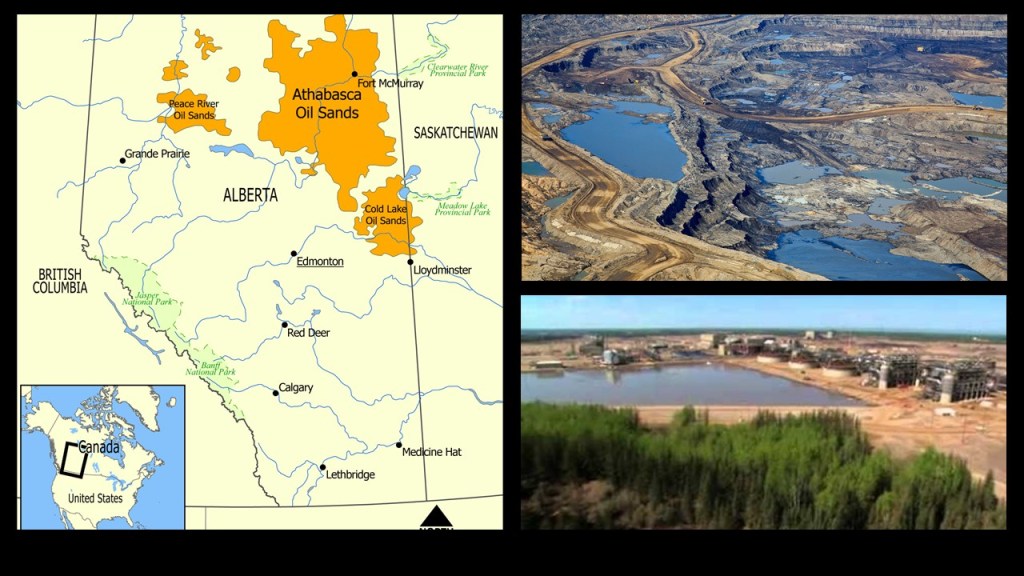
Known as the “Gateway to the North,” Edmonton is the staging area for large-scale oil sands projects in northern Alberta…
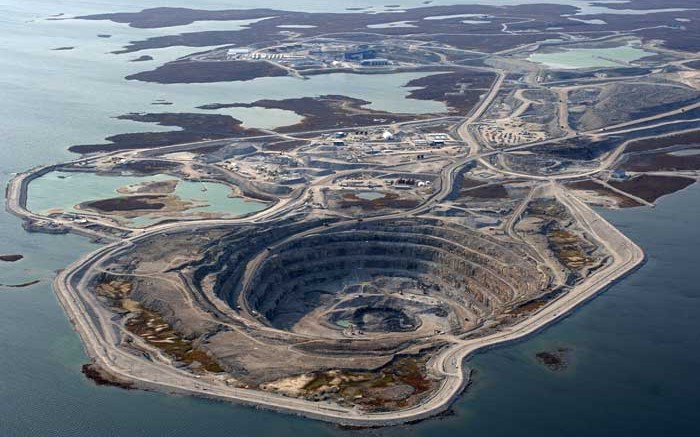
…and large-scale diamond-mining operations in the Northwest Territories.
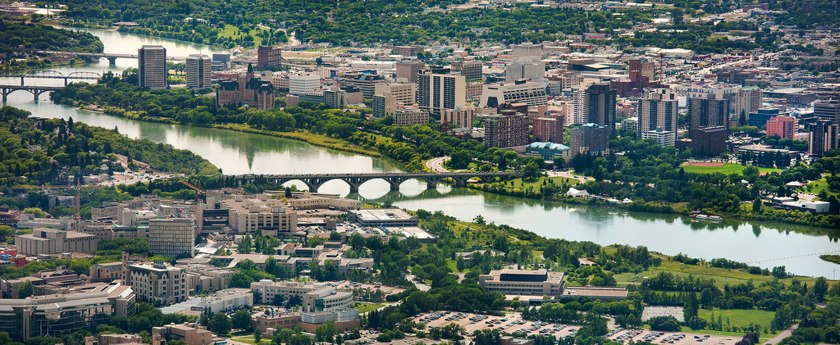
The next place on the alignment is Saskatoon on the South Saskatchewan River, and the largest city in the Province of Saskatchewan.
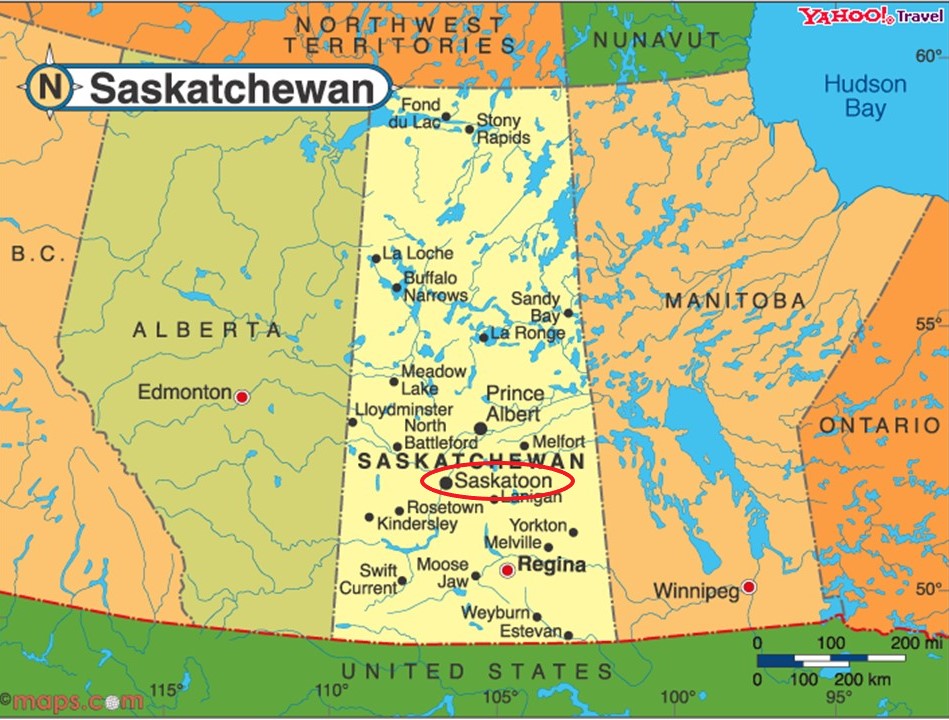
The city has nine river crossings, and is nicknamed “Paris of the Prairie”…
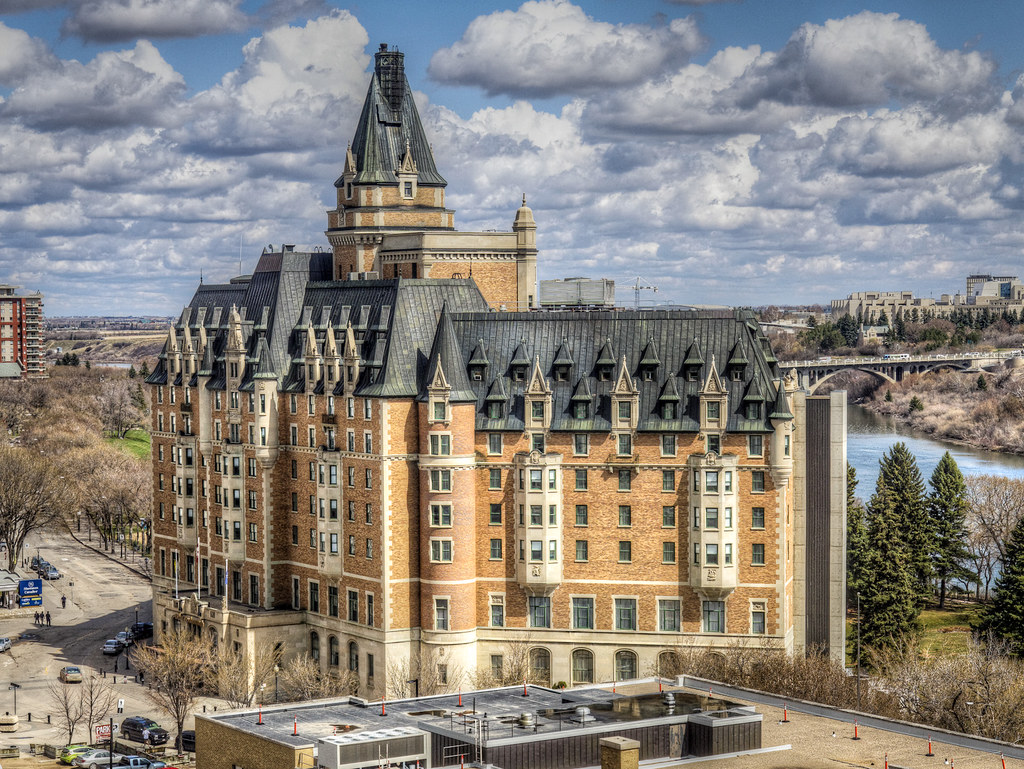
…and notable architecture like the Delta Bessborough Hotel, also known as the “Castle on the River,” said to have been built for and opened in 1935 for Canadian National Hotels, a division of Canadian National Railway.
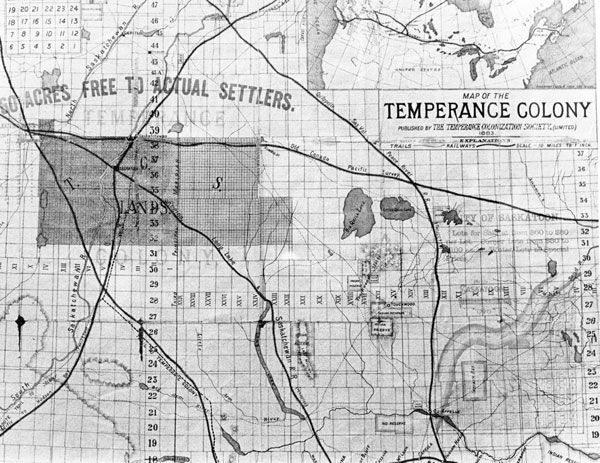
We are told that the founding of Saskatoon started with the purchase of 21-sections of land straddling the South Saskatchewan River by the Toronto-based Temperance Colonization Society in 1882, for the purposes of setting-up a dry community in the prairie.
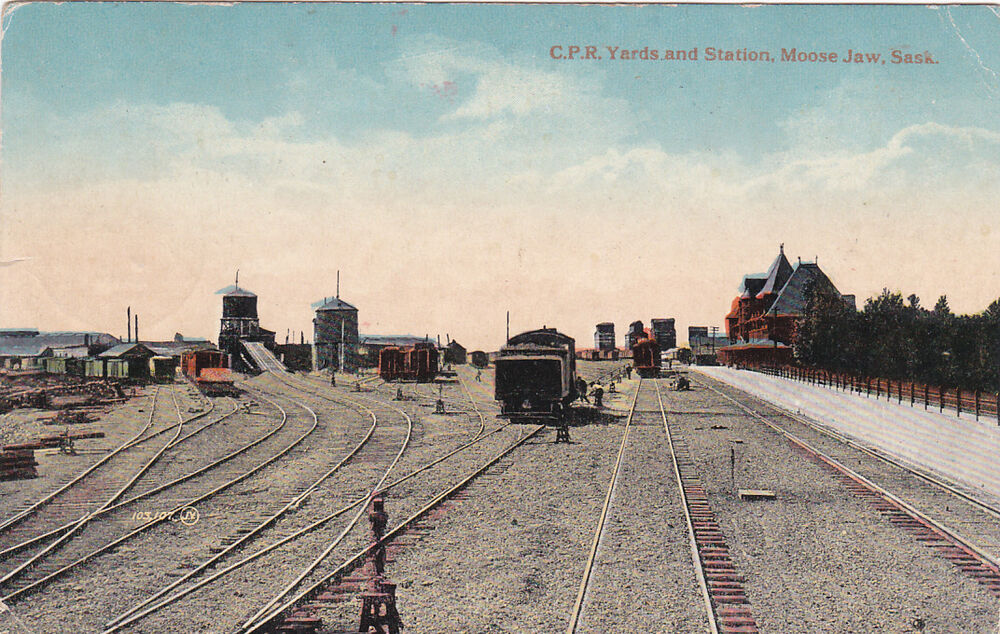
The first settlers were said to have arrived by railway from Ontario to Moose Jaw in Saskatchewan, then complete the final leg to what became Saskatoon by horse-drawn cart, as the railway had yet to be completed to Saskatoon.
Saskatoon lies on a long, rich belt of rich potassic chernozem, which is a rich, black-colored soil containing a high-percentage of humus, or amorphous organic soil material, and high-percentages of phosphoric acids, phosphorus, and ammonia.

It is very fertile, and can produce high agricultural yields.
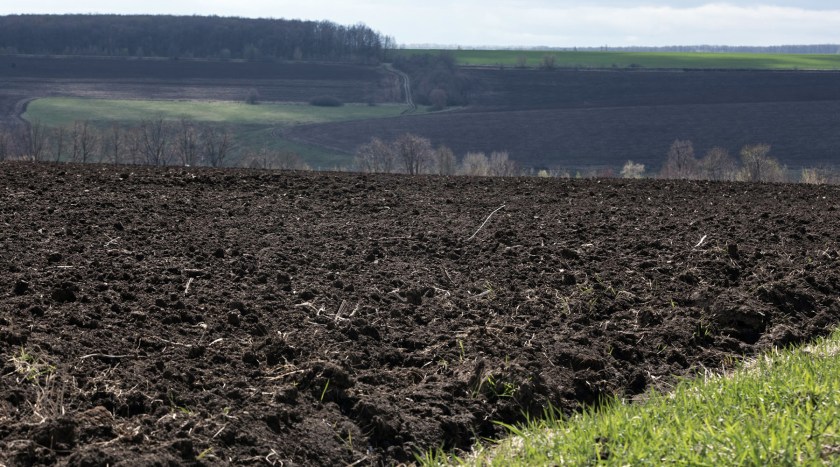
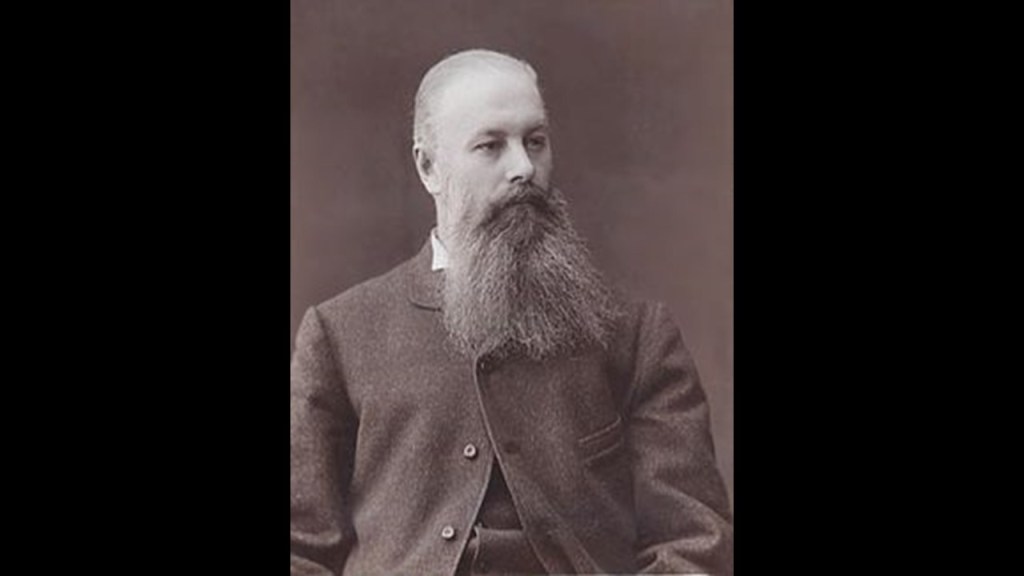
It was said to have been first identified and named by Russian geologist and soil scientist Vasily Dokuchaev in 1883, when he was studying the tall-grass steppe, or prairie, of European Russia.
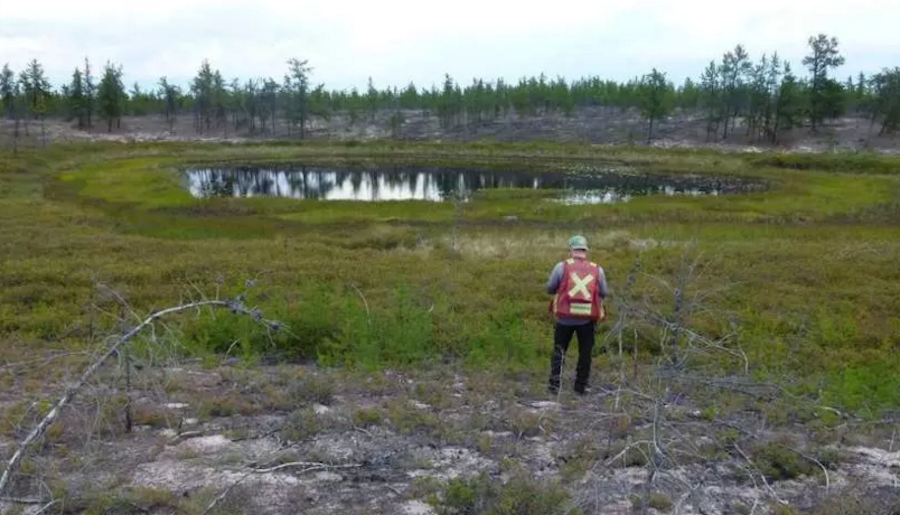
Kimberlite, a rare, blue-tinged, coarse-ground intrusive igneous rock sometimes containing diamonds…
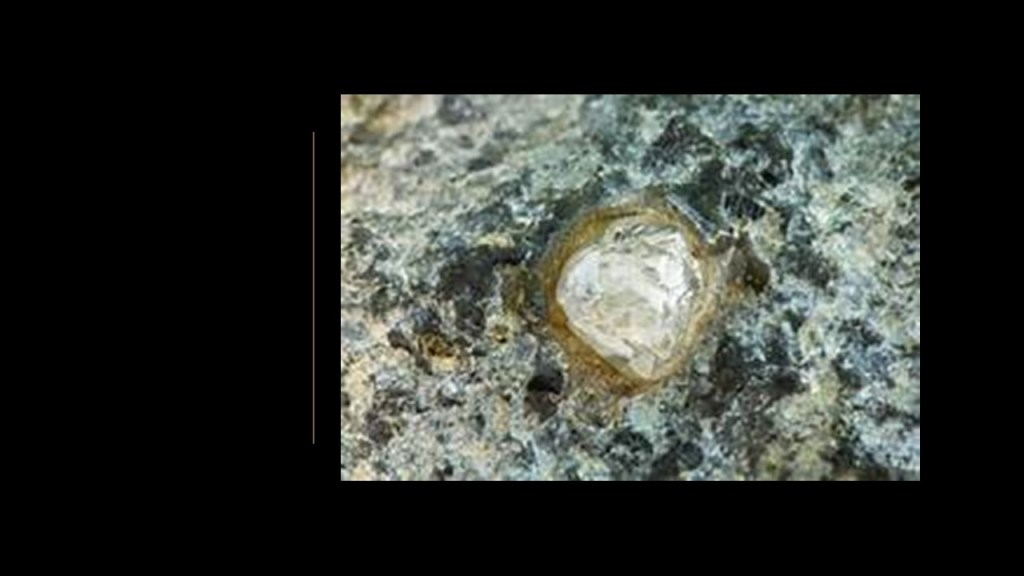
…was first discovered in the Sturgeon Lake area of northwestern Saskatchewan in 1988.
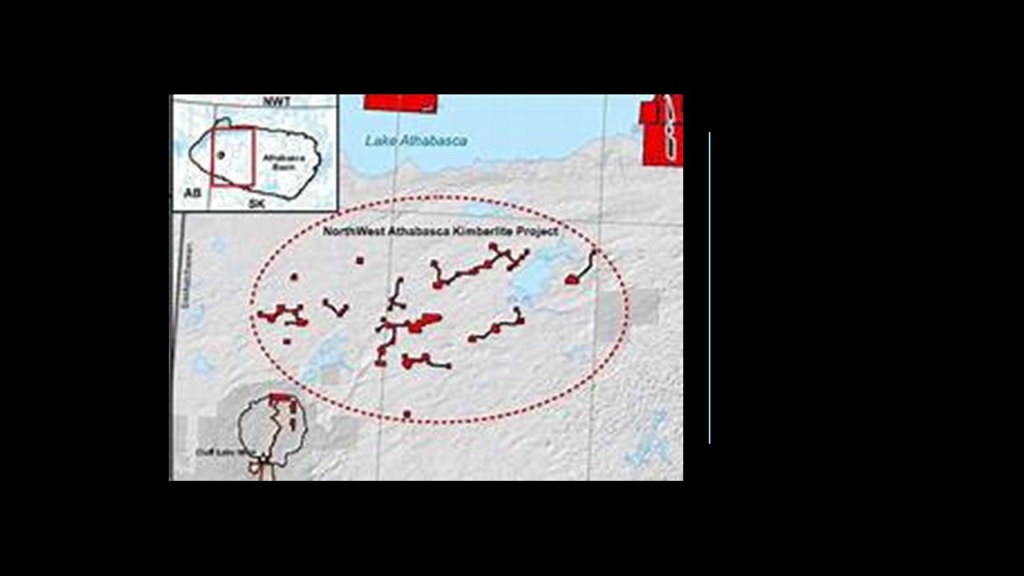
In 2016, DeBeers tested for kimberlite targets in the Northwest Athabaska Kimberlite Project, but ended its search when drill-test results from several targets did not yield expected results.
The DeBeers Group, an international corporation that specializes in all aspects of the diamond industry, was founded in 1888 by British businessman, Cecil Rhodes.
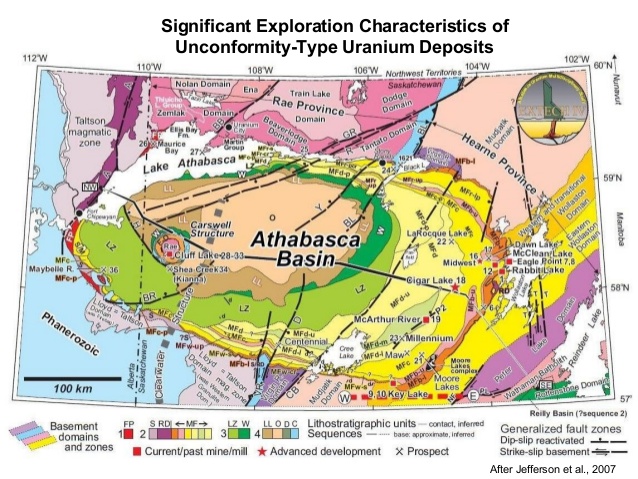
The Athabasca Basin is best known for its substantial uranium deposits.
Next, the alignment crosses Winnipeg, the capital and largest city of the Province of Manitoba, located on the confluence of the Red and Assiniboine Rivers.
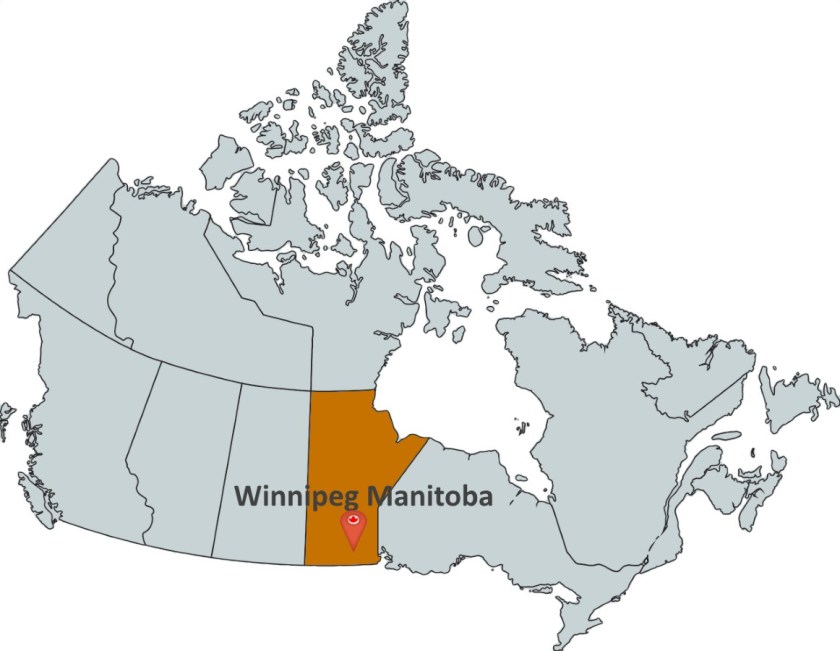
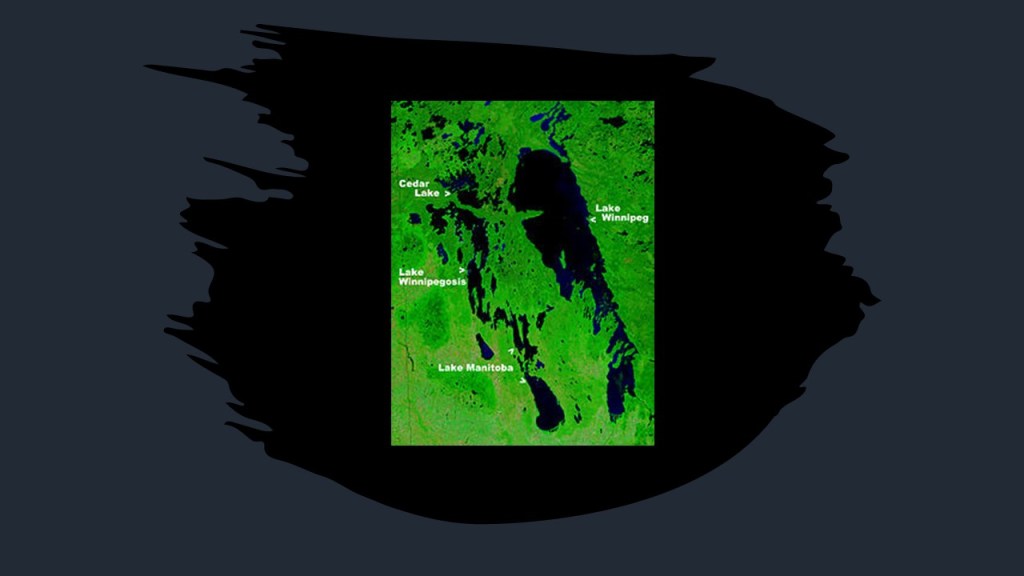
The city is named for the nearby Lake Winnipeg…
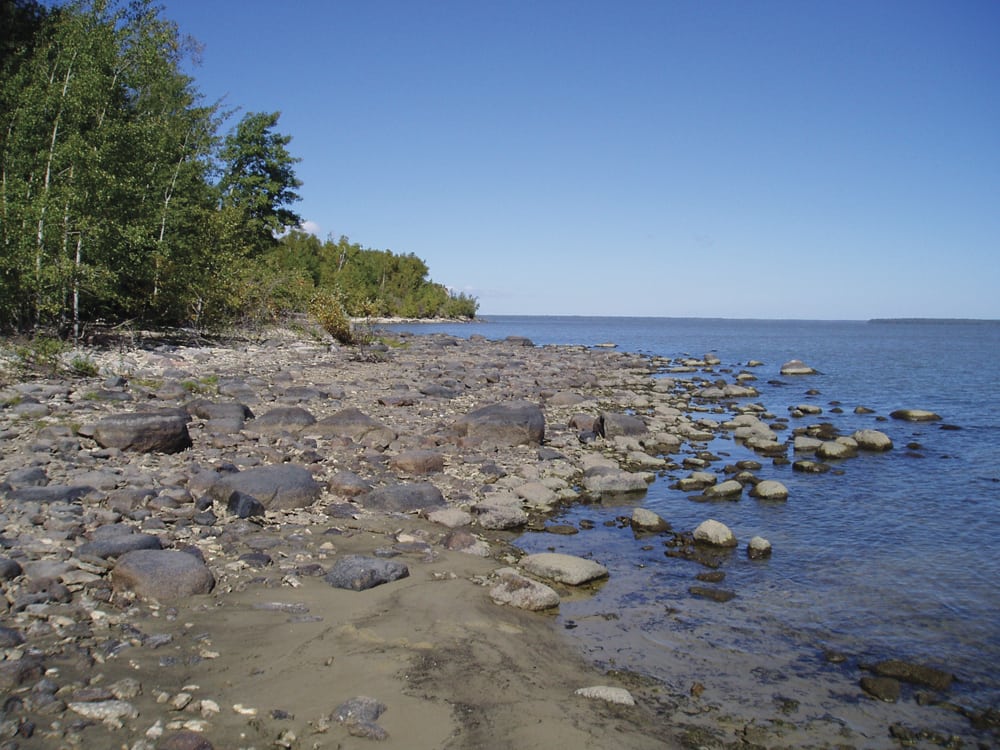
…which has the largest watershed of any lake in Canada, receiving water from four U. S. states, and four Canadian provinces.
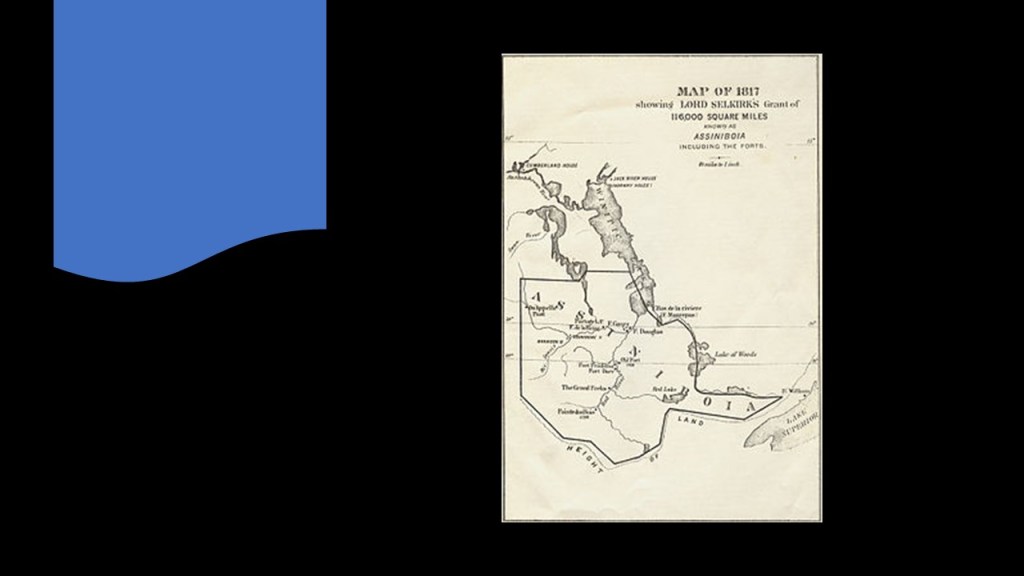
Lord Selkirk, a Scottish philanthropist, was involved with the first permanent settlement by sponsoring immigrant settlements in Canada starting in 1811 at what was known as the Red River Colony.

He purchased the land from the Hudson Bay Company, and surveyed the river lots for immigrant settlement.
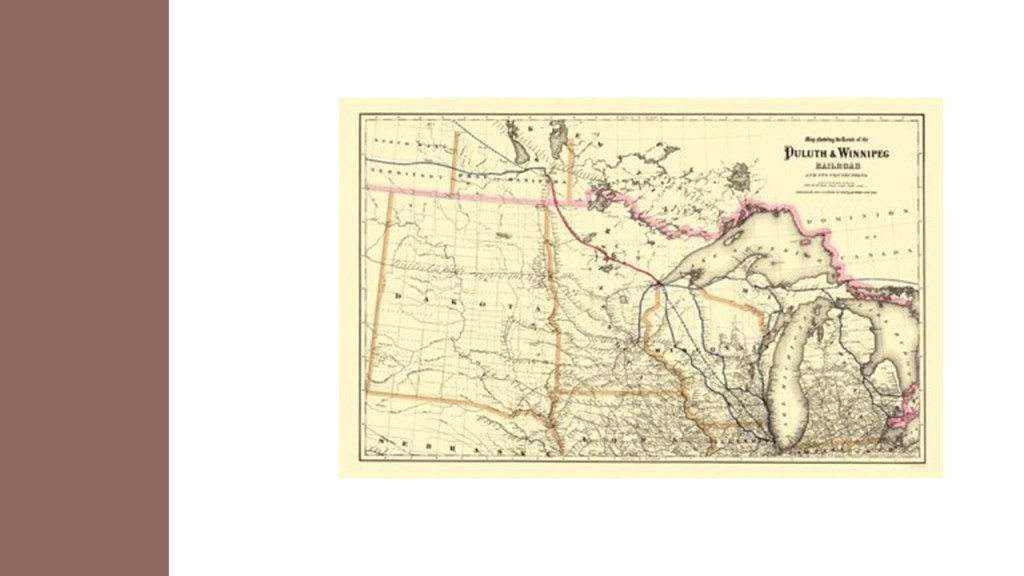
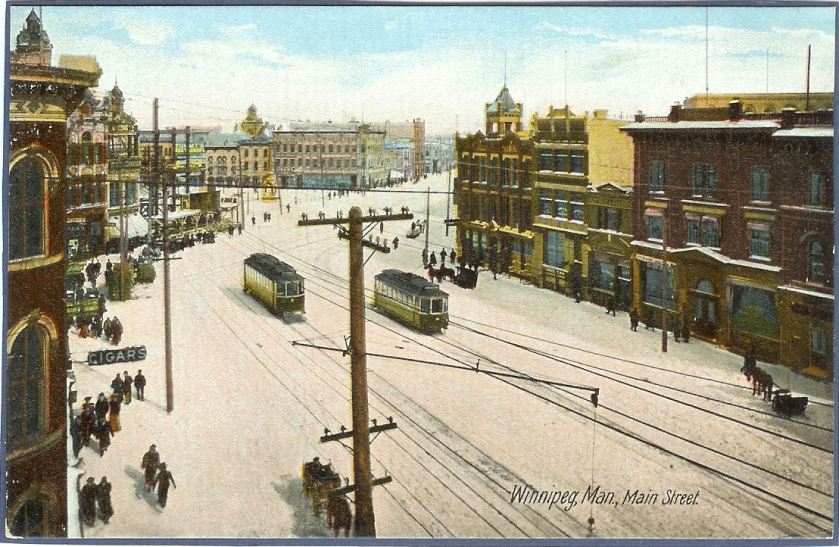
We are told Winnipeg developed rapidly after the coming of the Canadian Pacific Railway in 1881…
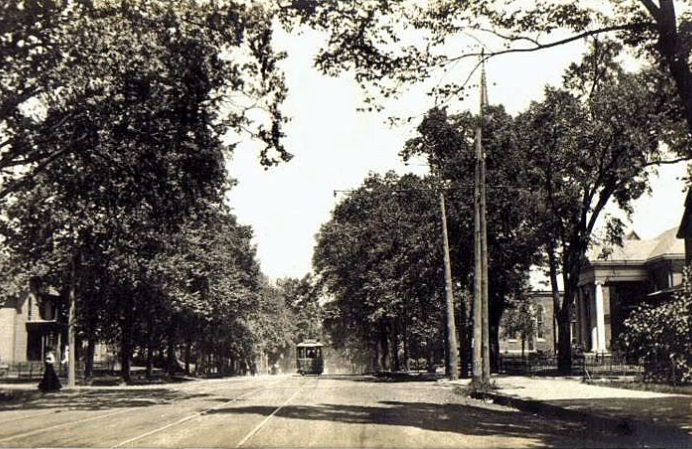
…and became a transportation hub, including having electric streetcars at one time, according to this historical postcard, among other things.
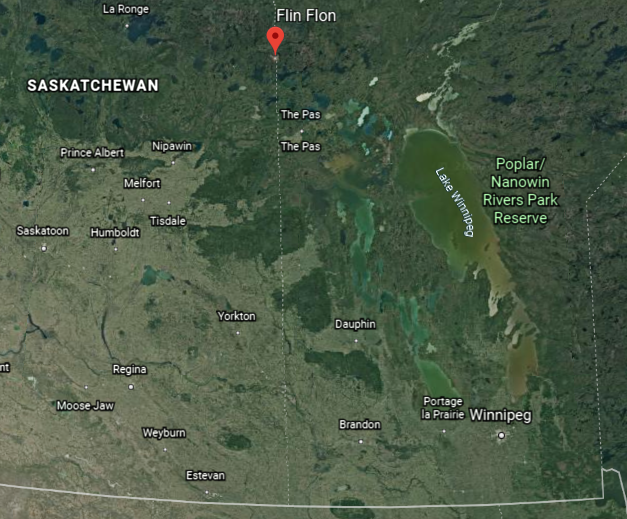
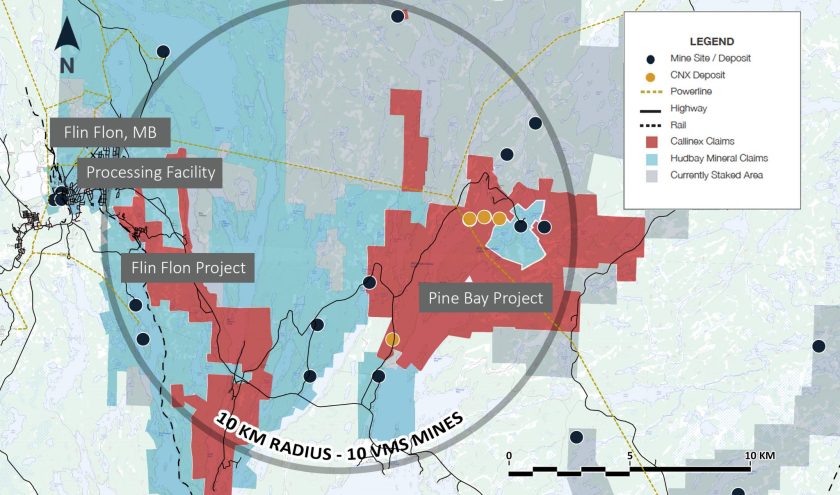
Manitoba is home to several active mines, one of which is in Flin Flon, Manitoba, on the provincial border with Saskatchewan.
It has high-grade zinc and copper deposits in what is called a VMS, or “Volcanogenic Massive Sulphide” deposit.
Manitoba also produces 100% of Canada’s cesium, lithium, and tantalum, minerals used in such things as electronics, specialized batteries, and jet engine components.

Cesium is a chemical element with the symbol “Cs” and atomic number of 55.
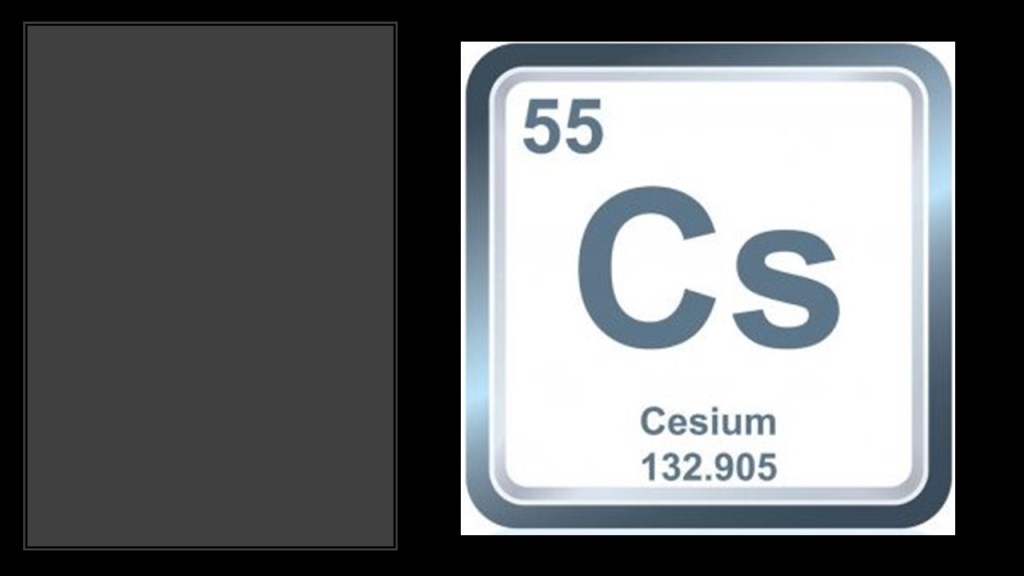
It is a silvery-golden alkali metal with a melting point of 83.3-degrees Fahrenheit, or 28.5-degrees Celsius, one of only five elemental metals that are liquid at near room temperature.

It has a wide range of applications in the production of electricity, in electronics, and in chemistry.
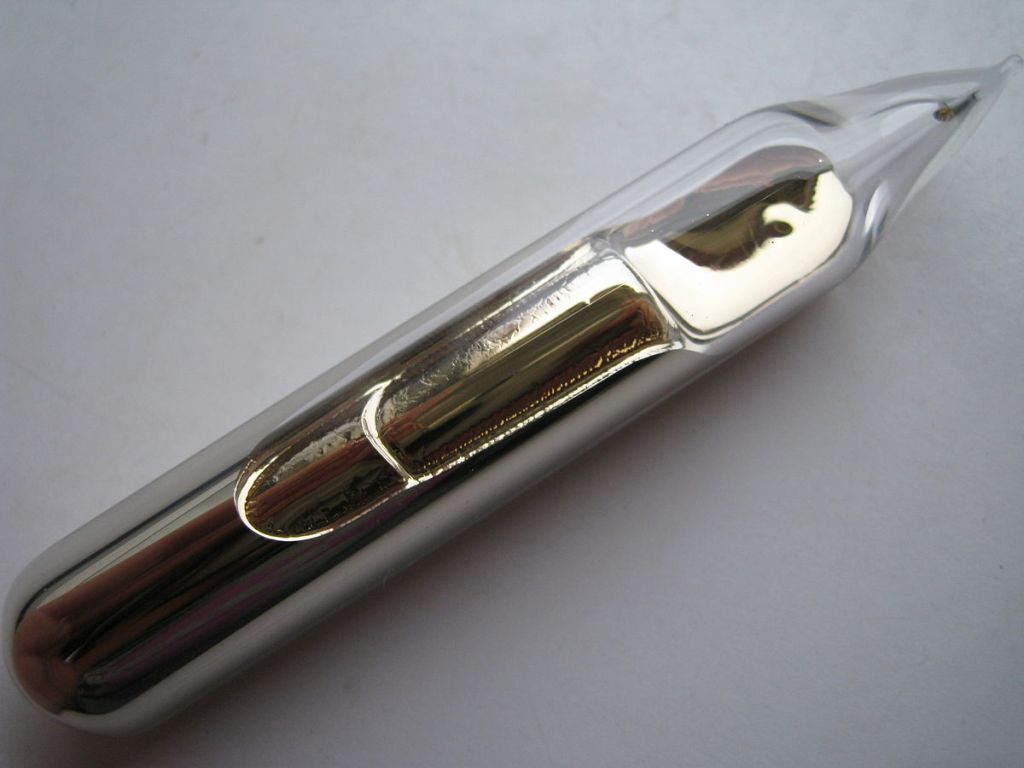
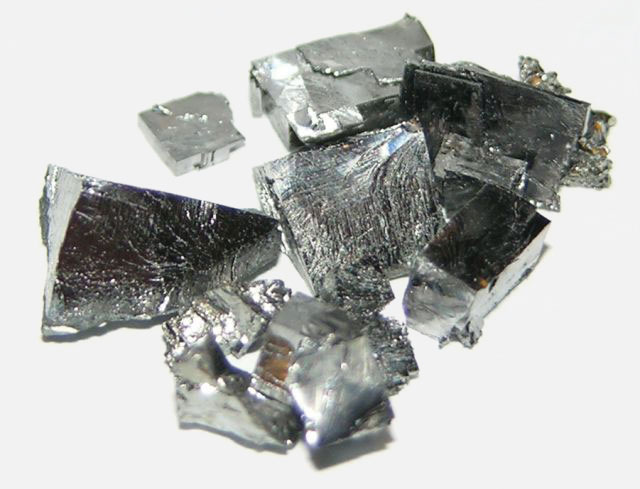
Tantalum is a chemical element with the symbol “Ta” and the atomic number of 73.
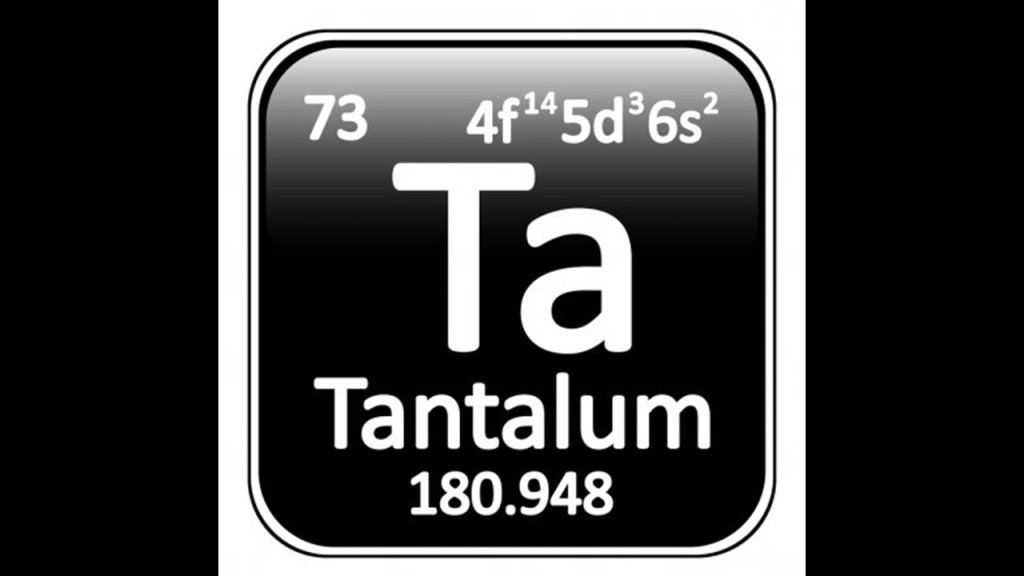
It is a rare, hard, blue-gray lustrous metal that is highly resistant to corrosion.

The chemical inertness of tantalum makes it a valuable substance for laboratory and electronic equipment and as a substitute for platinum.
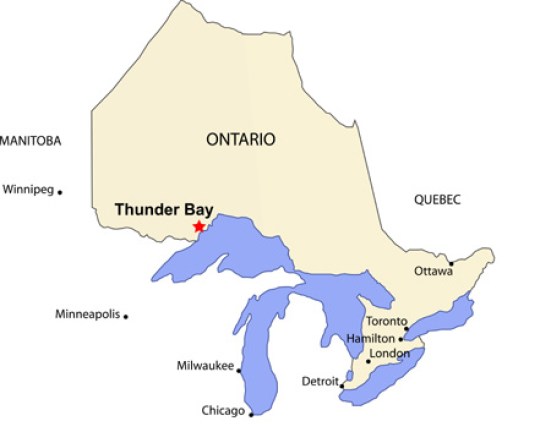
We come now to Thunder Bay, Ontario, on this alignment.

Thunder Bay is the seat of the Thunder Bay District in Ontario and is located at the head of Lake Superior. 
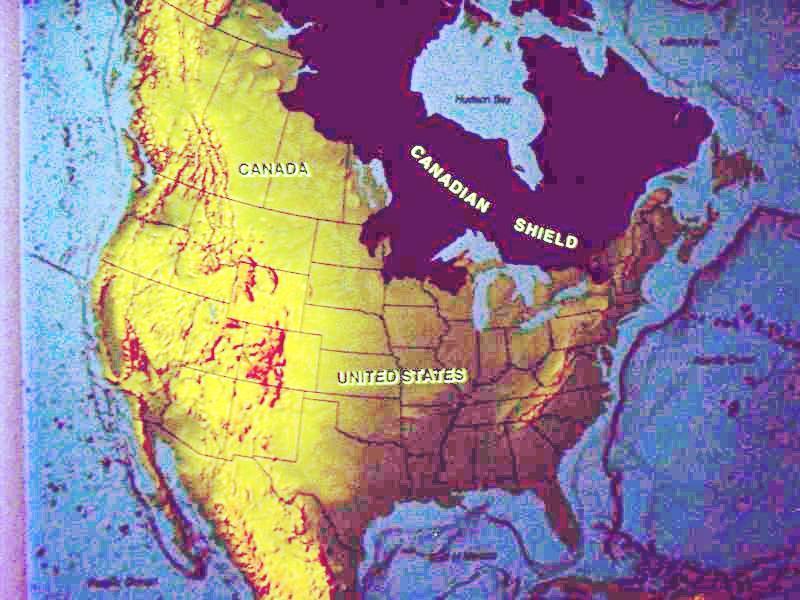
We have crossed into the southern edge of the Canadian Shield, also known as the Laurentian Plateau.

It is called one of the world’s largest geologic continental shelves, of exposed precambrian igneous and high-grade metamorphic rock that forms the ancient geological core of North America. 
So I want to share some photos with you of what it looks like with all those nice straight edges, angles, and flat stone surfaces.
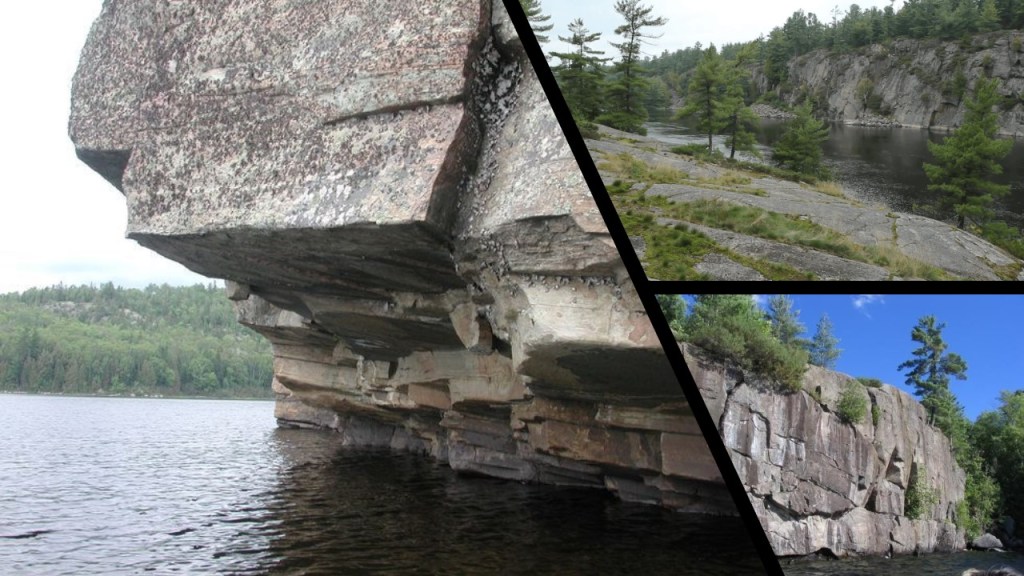
This picture was taken at Sleeping Giant Provincial Park near Thunder Bay.
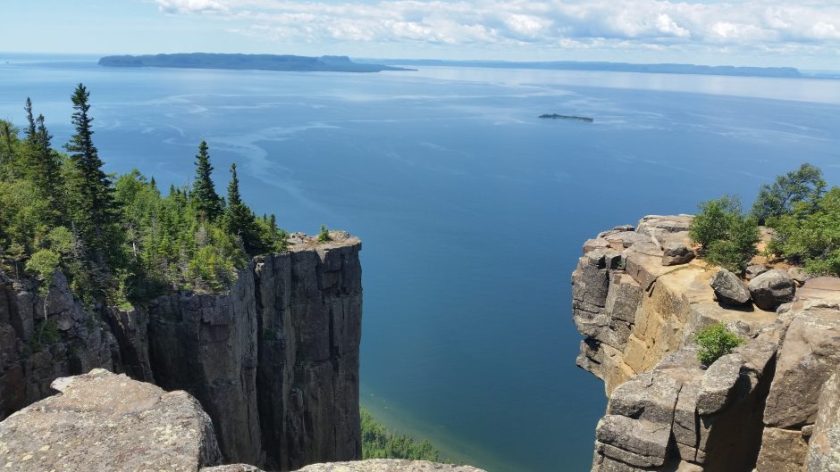
There are several places of interest in the vicinity of Thunder Bay.

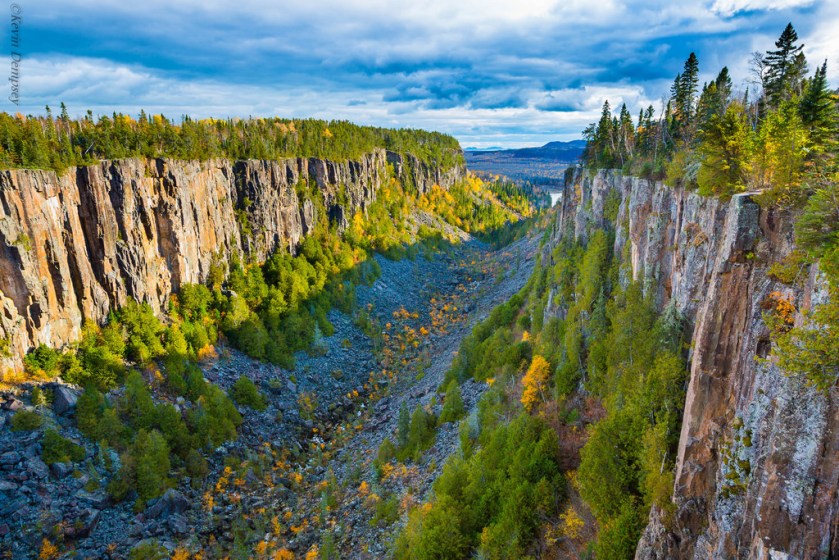
One is Ouimet Canyon is thirty-seven miles, or sixty kilometers, northeast of the city of Thunder Bay.

This is another place I would like to bring to your attention for its similarity to the Lena River Pillars and Miles Canyon Basalts.
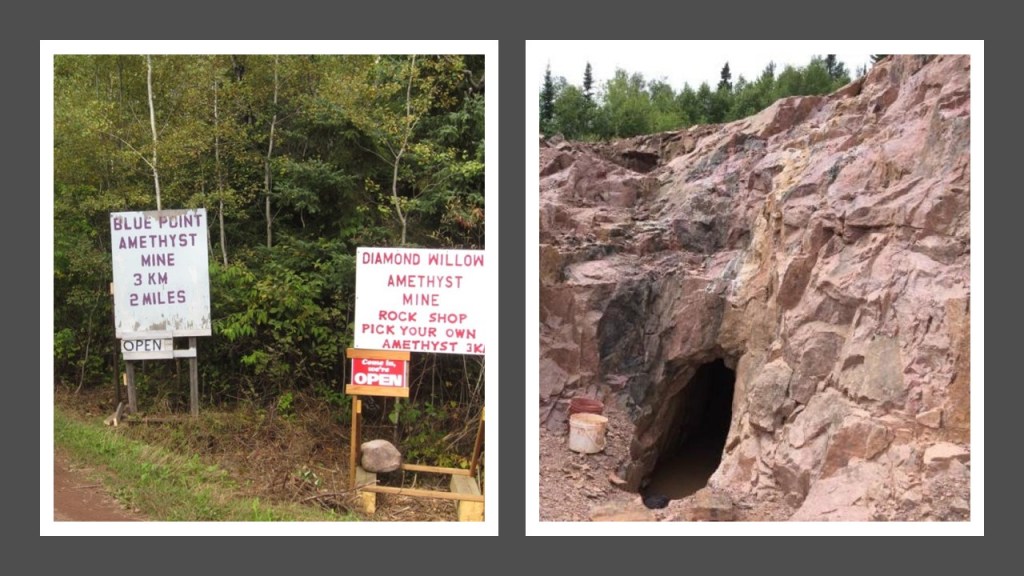
There are also Amethyst Mines close to the alignment as it goes through the Thunder Bay District.
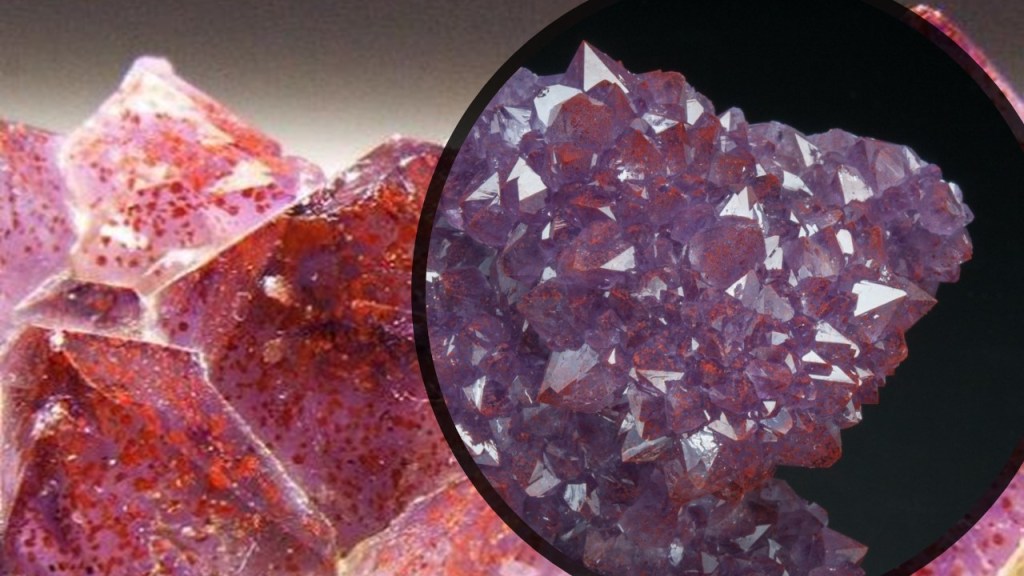
These are Thunder Bay amethysts, with hematite inclusions showing up as the red colorations in the amethyst points.
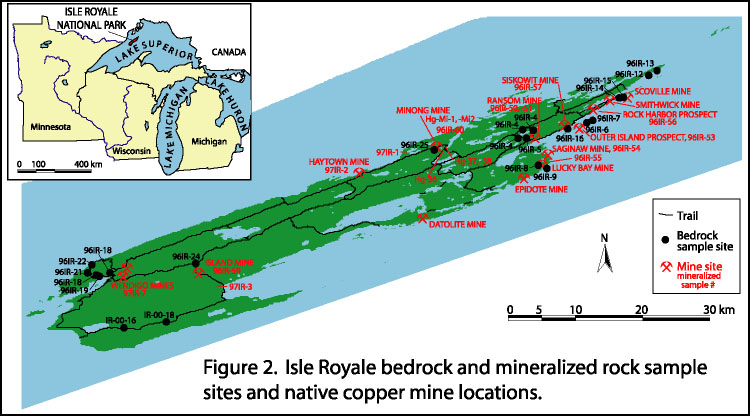
Next we come to Isle Royale in Lake Superior.
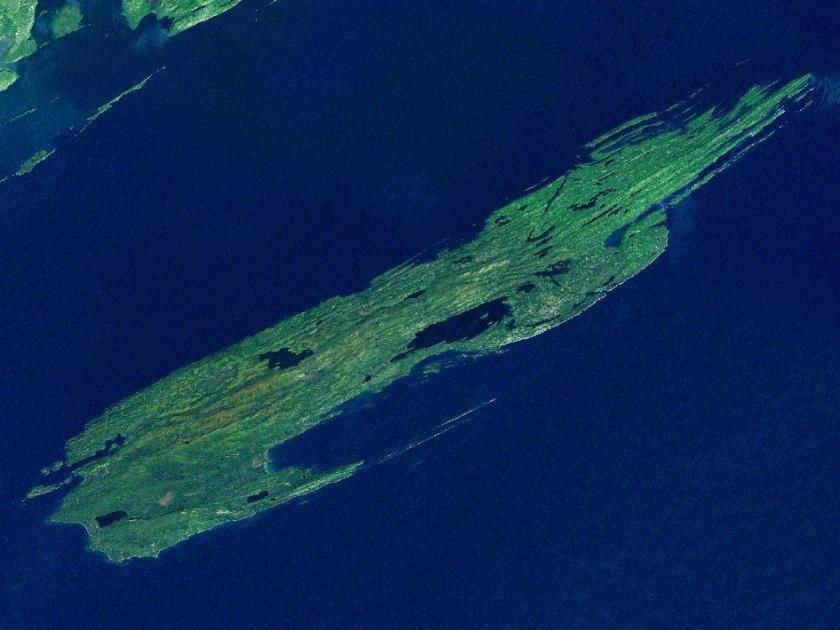
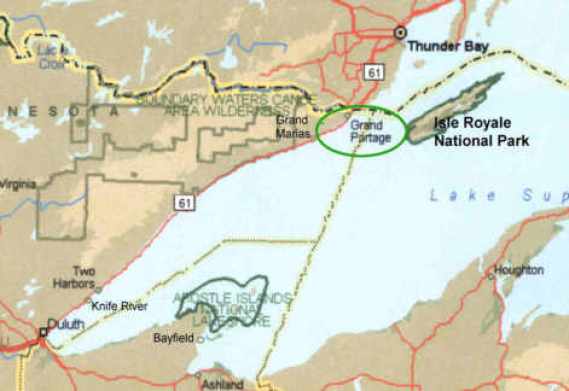
While geographically it is very close to Grand Portage in Minnesota, it is part of the State of Michigan.

It is the only national park in Michigan, and the only island national park in the United States.
Isle Royale was known for its ancient copper mines dating at least back to the Bronze Age, and considered the purest copper in the world.
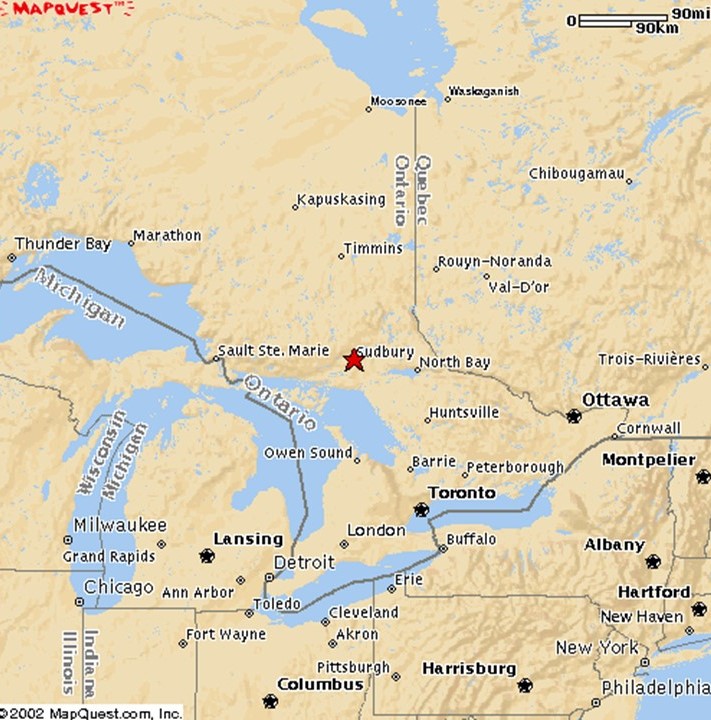
Next we come to Sudbury, officially Greater Sudbury, the largest city in Northern Ontario, a geographic and administrative region of Ontario, but is administered as a Unitary authority, and not part of any district, county or regional municipality.
We are told the Sudbury region was inhabited by the Ojibwe, an Anishanaabe people of the Algonquin Group, for 9,000-years.
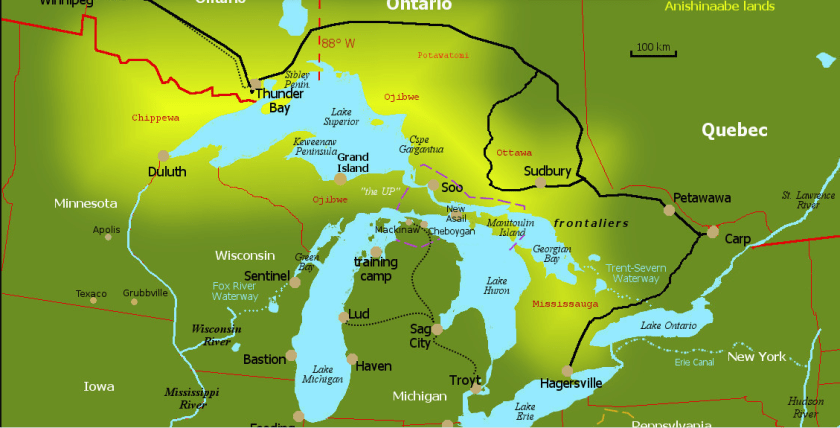
We are told a large tract of land, including what is now Sudbury, was signed over to the British Crown in 1850, by the local chiefs, as part of the Robinson-Huron Treaty.
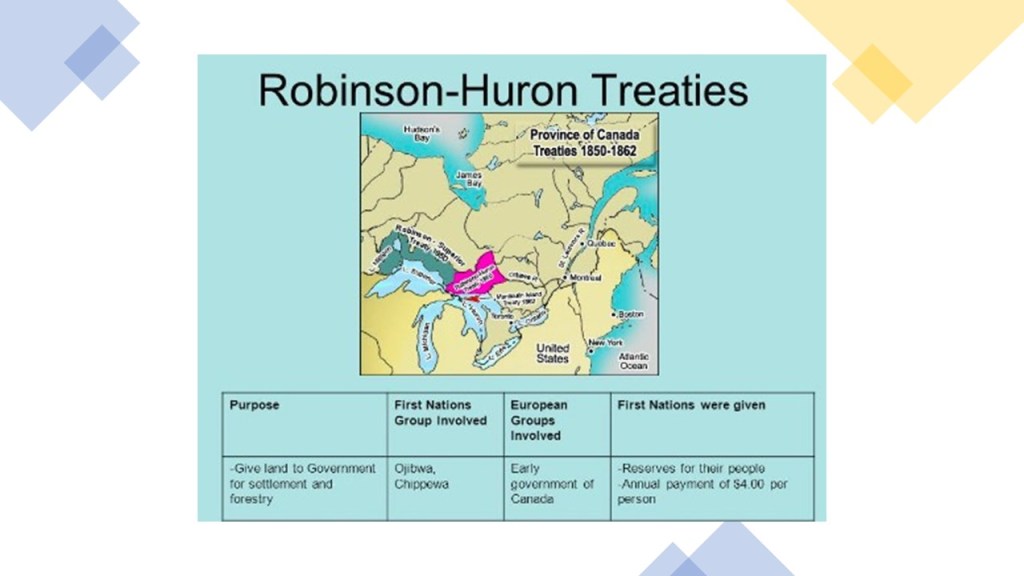
In return, the Crown pledged to pay an annuity to these First Nations people, originally set at $1.60 per treaty member, and it was last increased to $4 in 1874, where it is fixed to this day.

Reservations were also established as result of this Treaty.
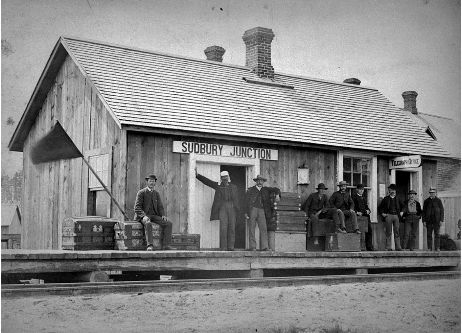
We are told nickel, and copper, ore was discovered in Sudbury in 1883, the same year as its founding, during the construction of the transcontinental railway.
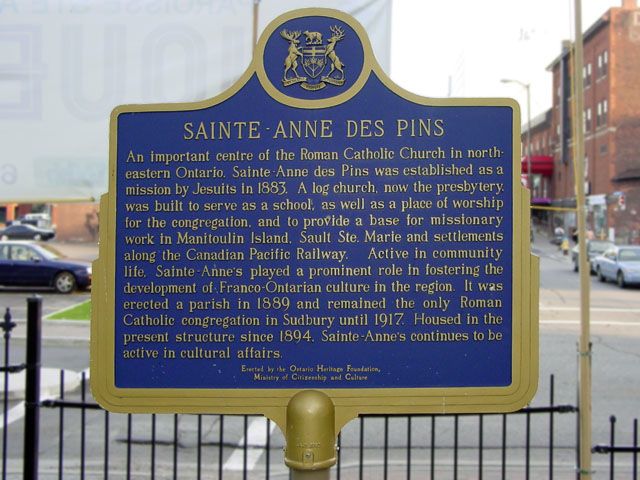
The Jesuits arrived here in 1883, the same year the railroad was coming through, and established the Sainte-Ann-des-Pins Mission.
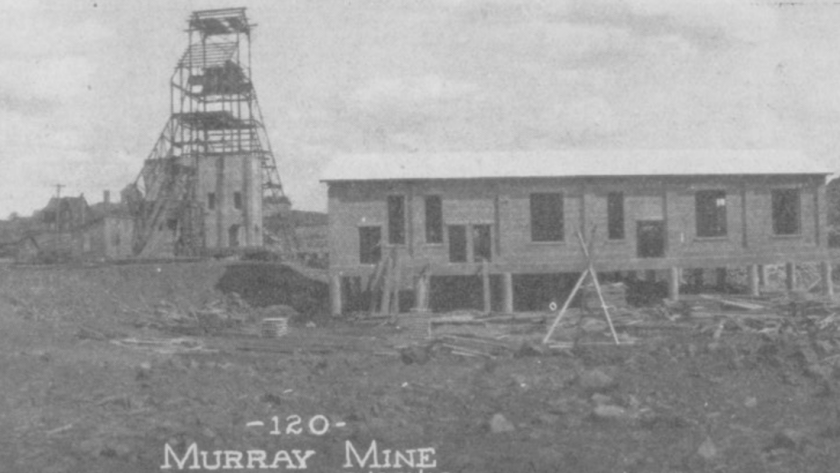
The Murray Mine, where there was a high concentration of nickel-copper ore, was said to have been the first mine established in 1883, apparently “discovered” by a blacksmith in the railway construction gang.

It was mined during different periods of time between 1883 and 1971.
The people who live in Greater Sudbury live in an urban core, with many smaller communities scattered around 330 lakes…
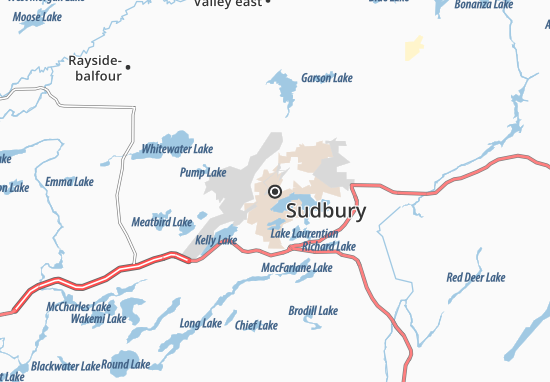
… and among rock-hills said to have been blackened by the historical smelting that took place here.
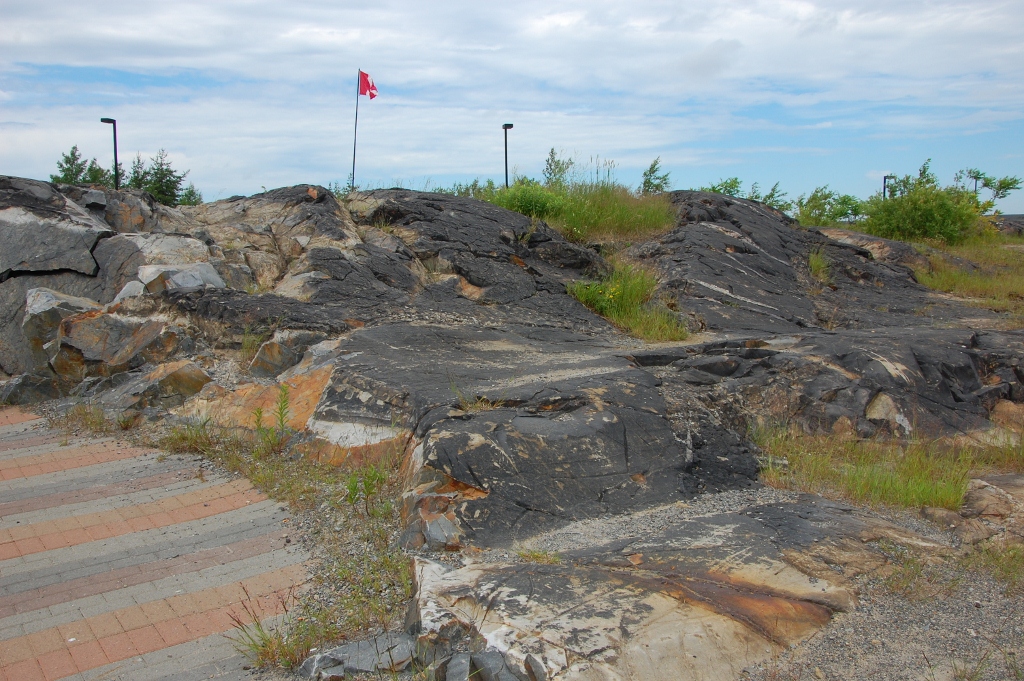
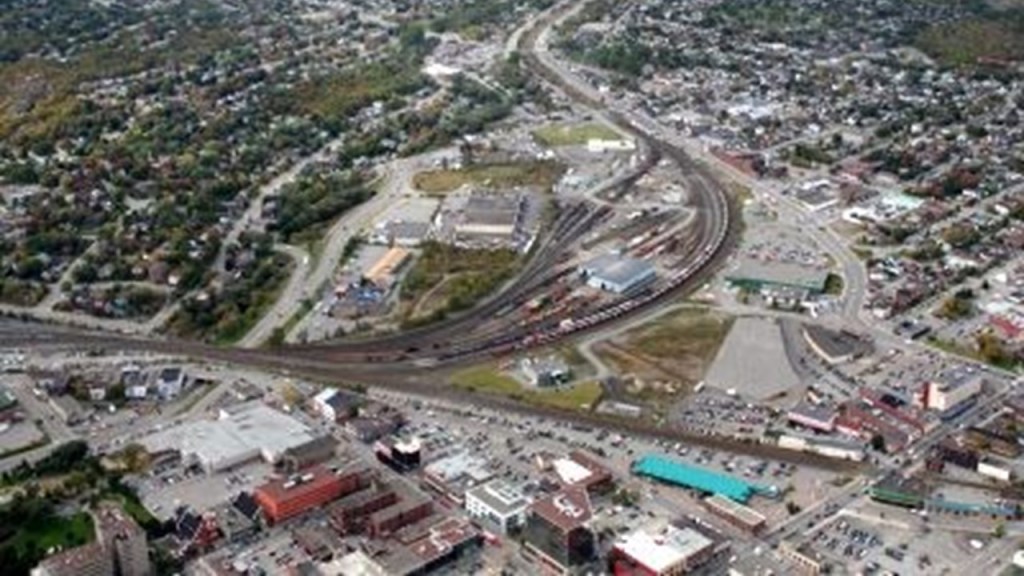
In its history, Sudbury has been a major world leader in nickel mining.

Mining and mining-related industries dominated the economy here for much of the 20th-century, and has expanded to emerge as the major retail, economic, health, and educational center for northeastern Ontario.
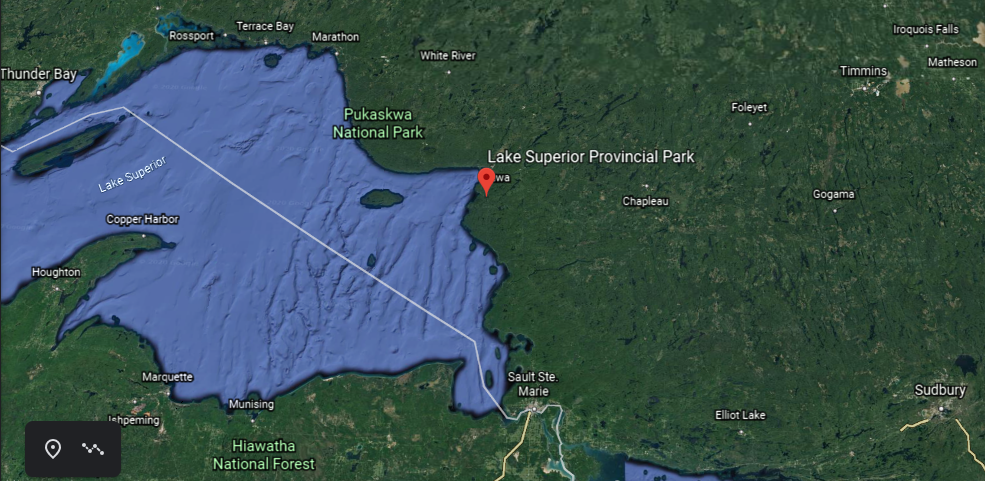
The Lake Superior Provincial Park is northwest of Sudbury, and one of the largest provincial parks in Ontario.
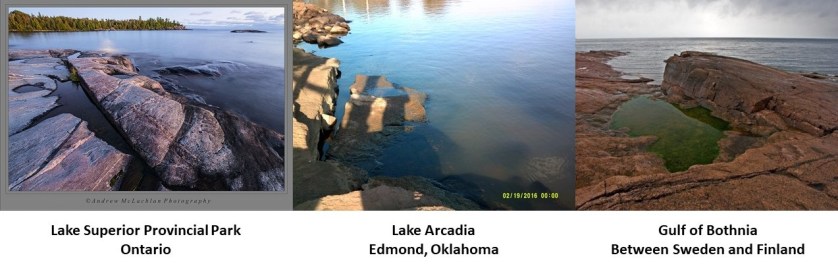
On the left is a photo of Katherine Cove at Lake Superior Provincial Park, compared for similarity of appearance with Lake Arcadia in Edmond, Oklahoma, in the middle, and the Gulf of Bothnia on the right, on the alignment earlier in this post, between Sweden and Finland.
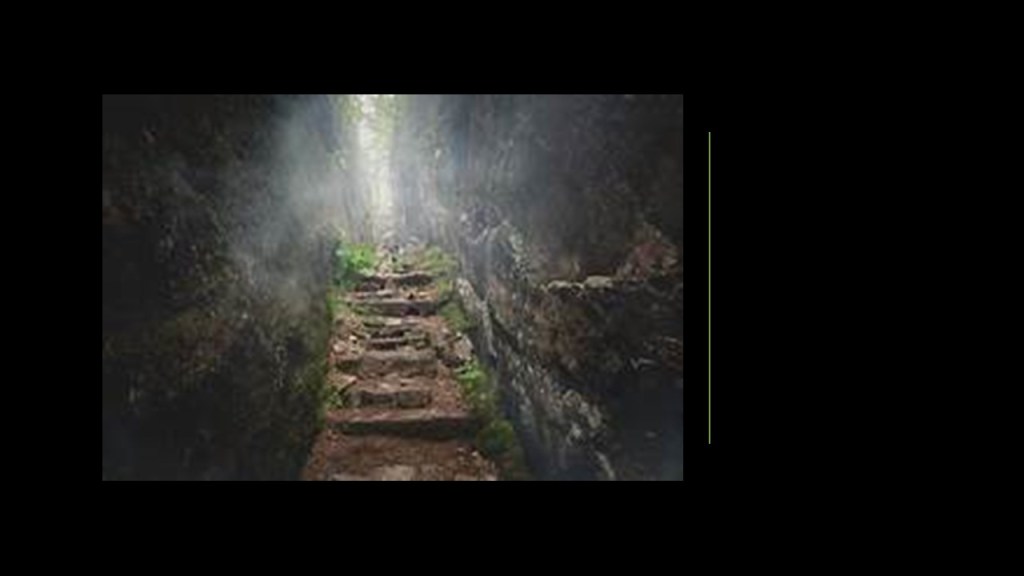
The stone steps and walls pictured here are also at Lake Superior Provincial Park.
Not too far from the northern end of Lake Superior Provincial Park, and the Township of Wawa, there are numerous mining concerns, including gold…
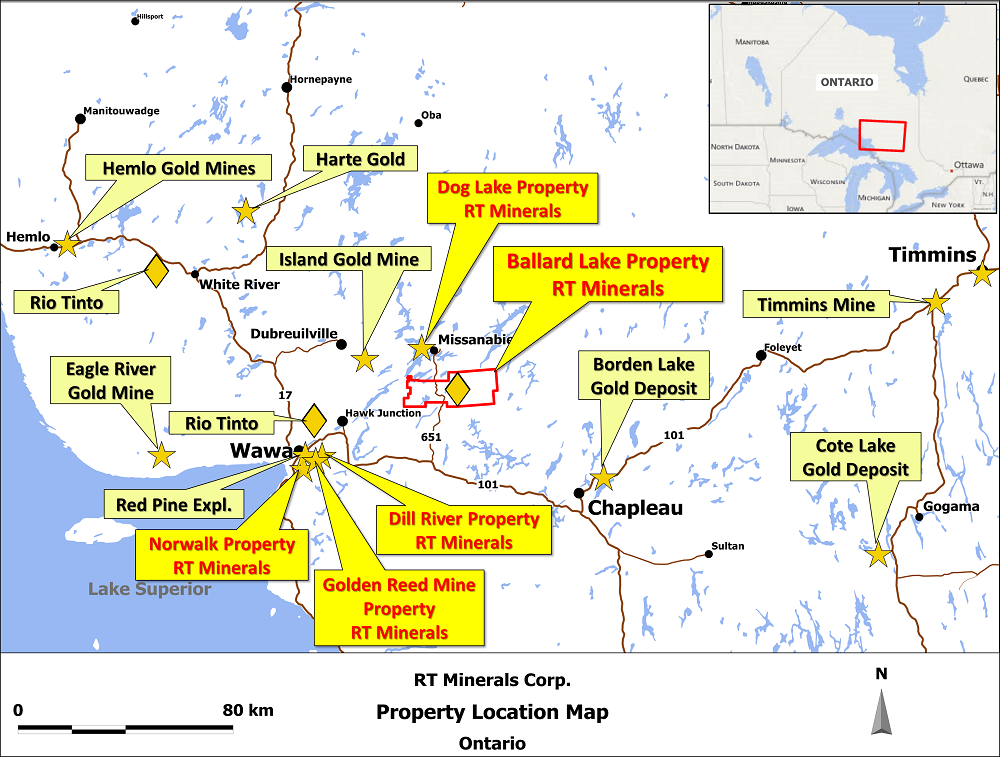
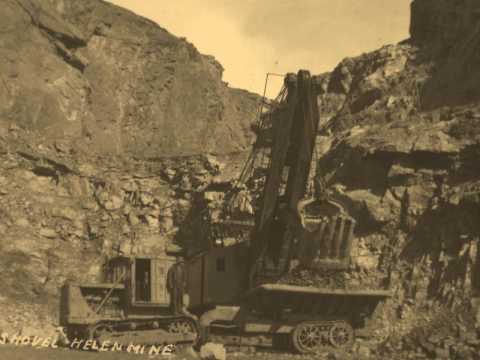
…and historical mining for iron ore at the defunct Helen Mine and Magpie Mine.
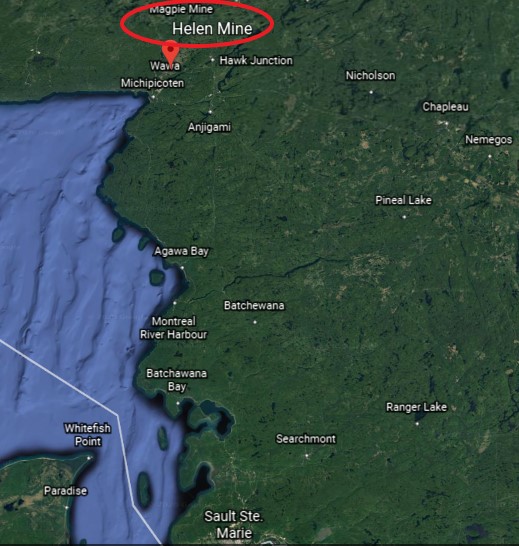
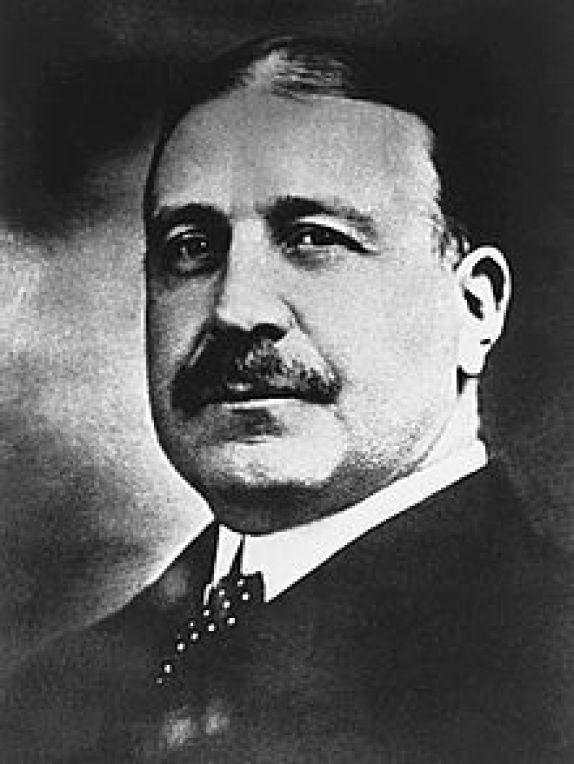
Starting in 1900, the Helen Mine was owned and mined by…
…Francis Clergue, an American businessman who became the leading industrialist of Sault Ste. Marie, Ontario, who was said to have been responsible for…
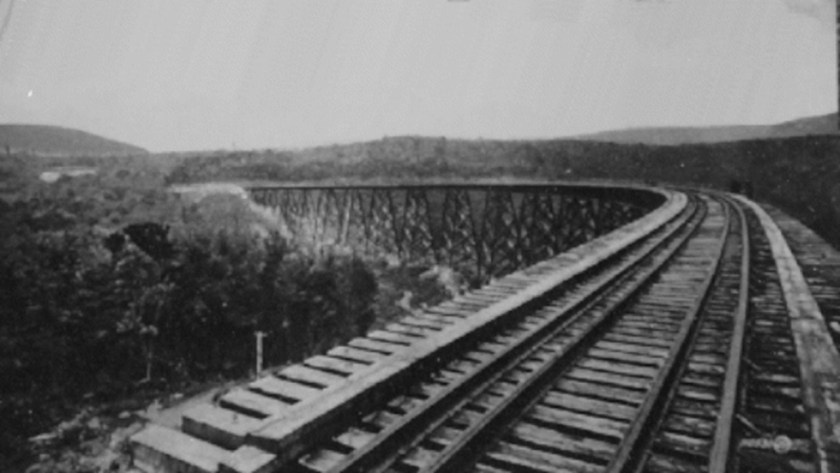
…the building of the Algoma Central Railway, which was chartered in 1899…
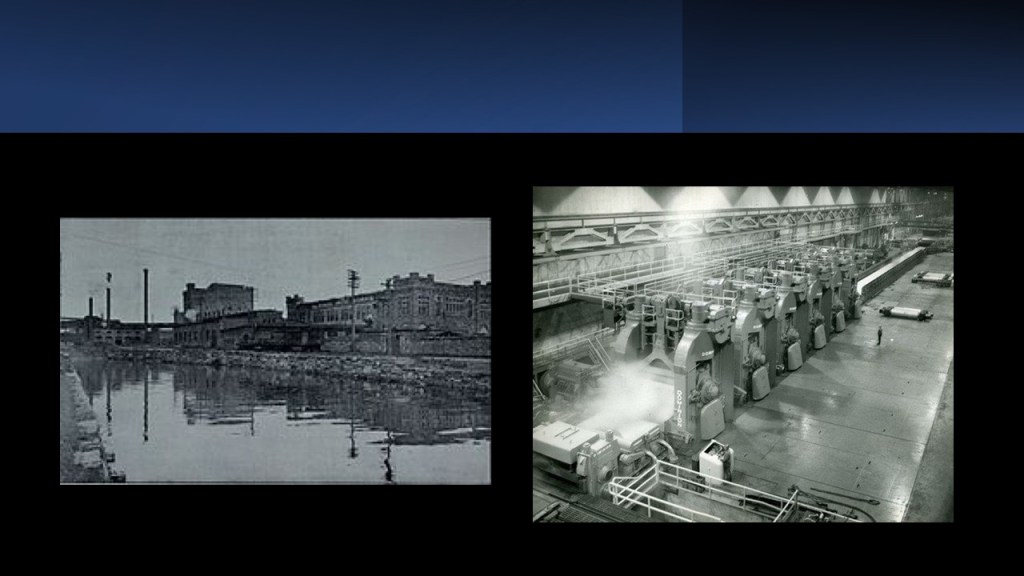
…and starting in 1902, was said to have built a large refinery and steel mill in Sault Ste. Marie, where the ore was shipped after it opened in 1904.
We are told that a large iron deposit was discovered north of the Helen Mine in 1909.

The land was purchased by the Algoma Steel Company, and the Magpie Mine was commercially developed, in production between 1914 and 1926.
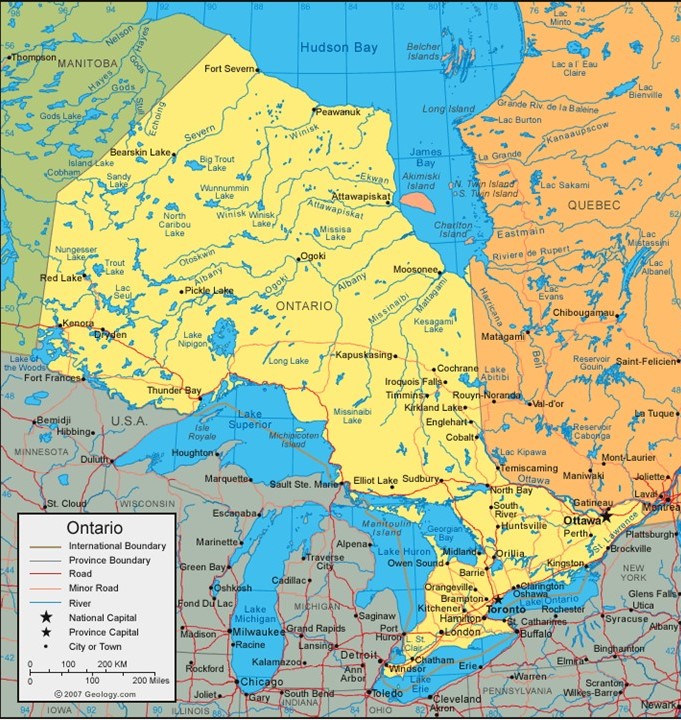
Ottawa, the capital city of Canada, is on the south bank of the Ottawa River on Ontario’s border with Quebec, with Gatineau on the other side of the river in Quebec.
We are told that it was founded as Bytown in 1826, which was marked by a sod-turning, and a letter from Governor-General Dalhousie which authorized Lt. Col. John By to divide up the town into lots.

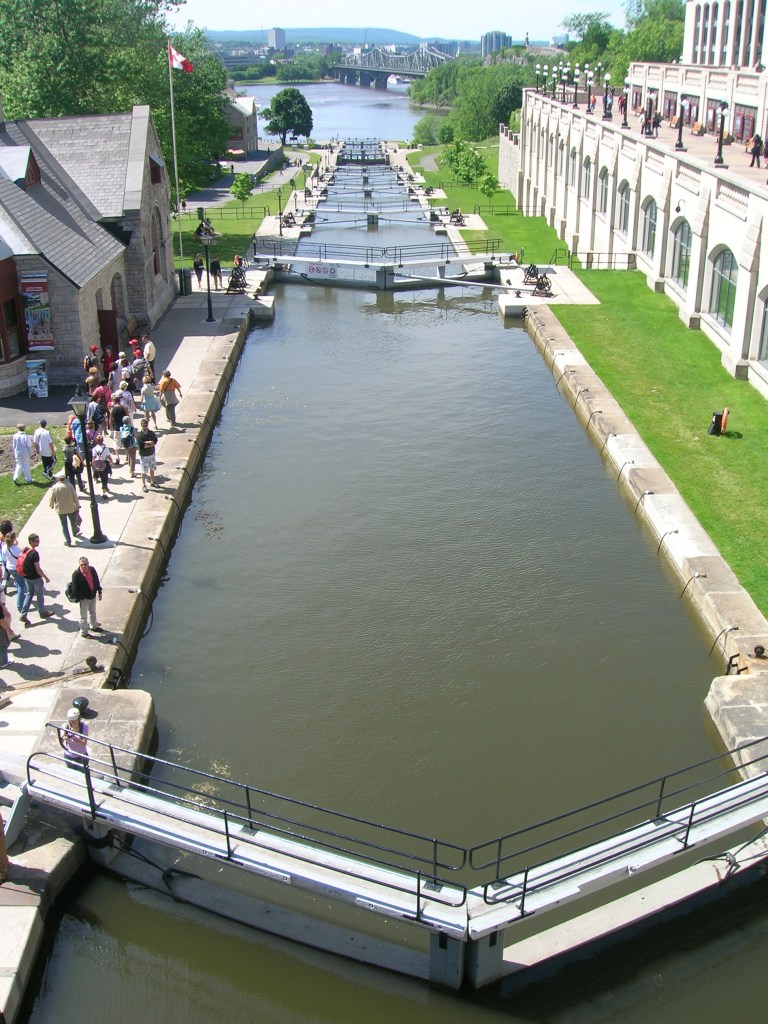
We are told Bytown came about as a direct result of the construction of the Rideau Canal, which was said to have been built by Lt. Col. By, and opened in 1832…
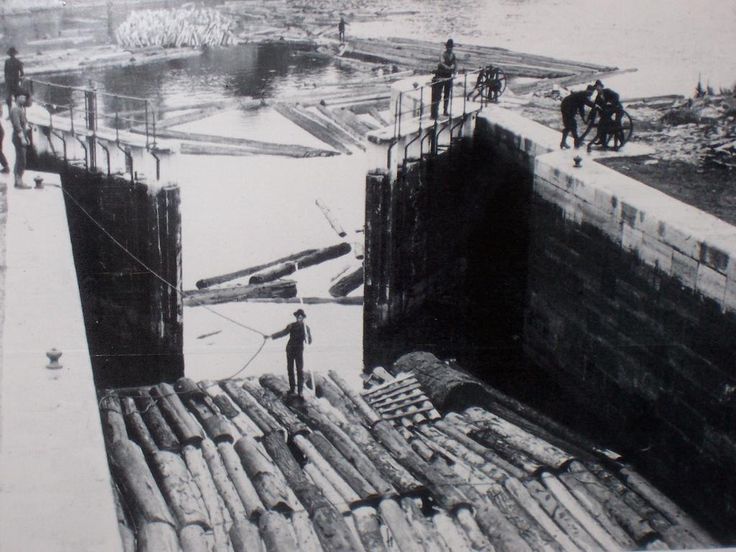
…and Bytown was said to have grown because of the Ottawa River timber trade.
Bytown was incorporated as a town on January 1st of 1850, and this was superseded by the incorporation of the city of Ottawa on January 1st of 1855.

This is a depiction of Lower Town in Ottawa in 1855.

Lower Town is said to be the oldest part of the city.
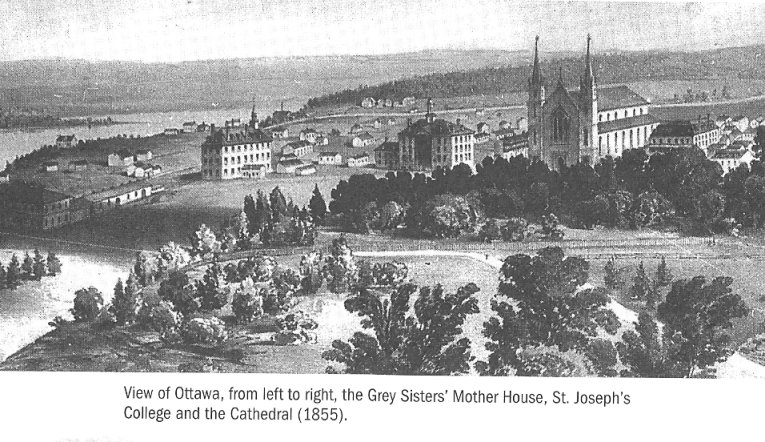
Our history tells us that on New Year’s Eve of 1857, Queen Victoria was presented with the responsibility of choosing the location for the permanent capital of Canada, with Ottawa being described as a small, frontier town.

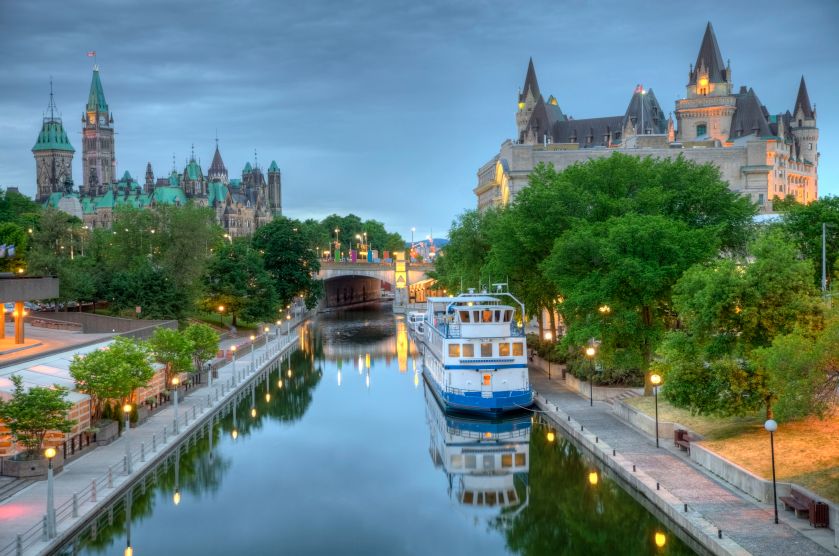
The Parliament buildings were said to have been constructed between 1859 and 1866, in an architectural style called Gothic Revival.

This a view of Parliament Hill from the Rideau Canal.
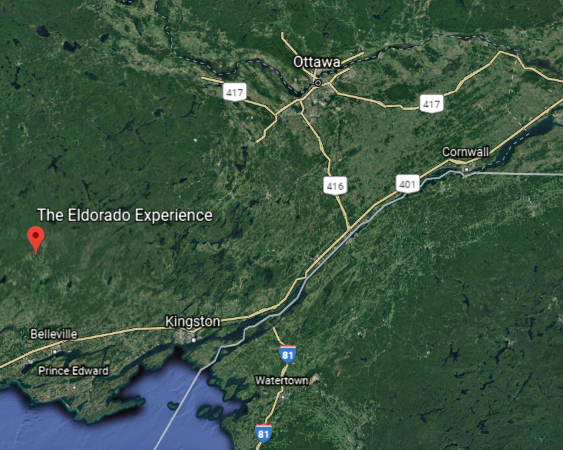
We are told the first gold was discovered at Eldorado in 1866, southwest of Ottawa.
That year, we are told that prospector Marcus Powell was in a 15-foot, or 5-meter, deep hole on a hill, whacking away at a seam of copper with a pick-axe and shovel, when he broke into a cave.
Years later, he described the cave as being “12-feet-long, six-feet-wide and six-feet-high,” or “4-meters-long, 2-meters-wide and 2-meters-high.”
The rush was on when he said the largest nugget was the size of a butternut…
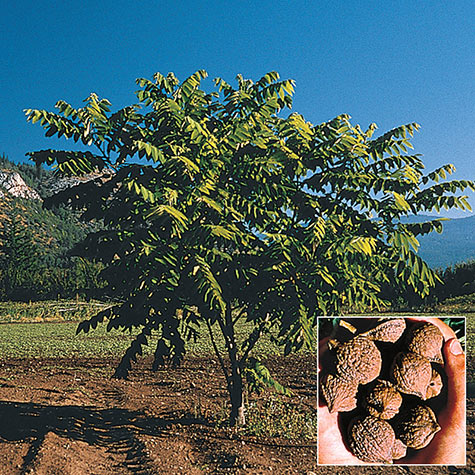
…and the cave walls as dripping with golden leaves.

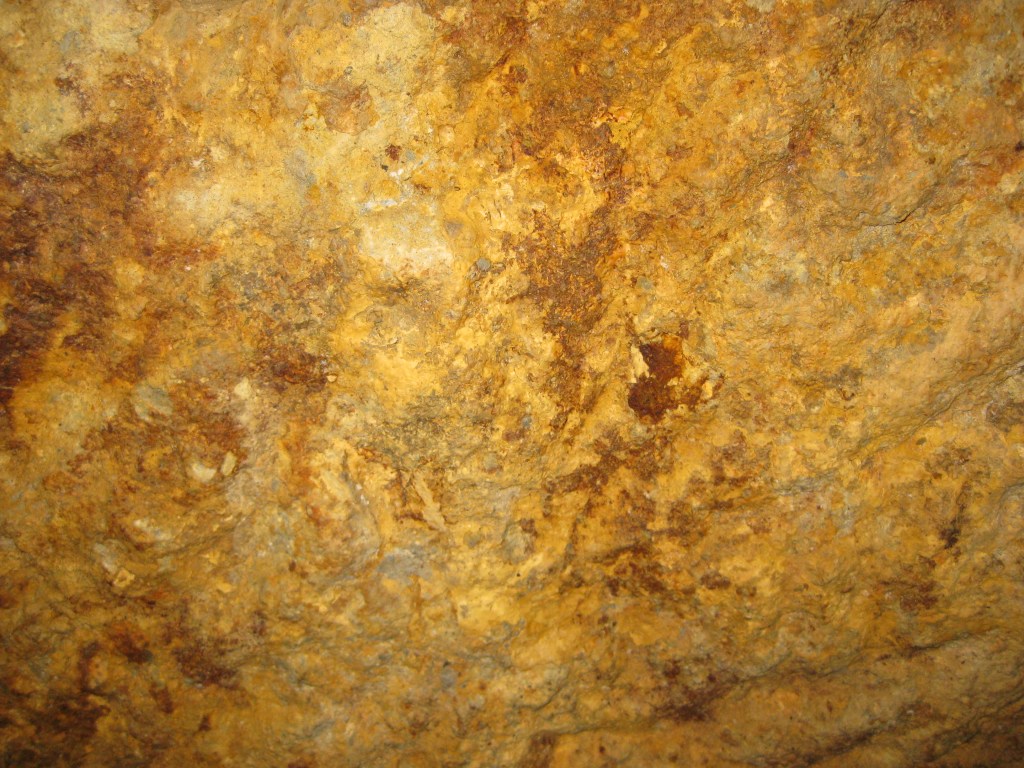
Pictured here is a wall at the Rosia Montana Gold Mines in western Transylvania in Romania, located in a region known as the “Golden Quadrilateral”…
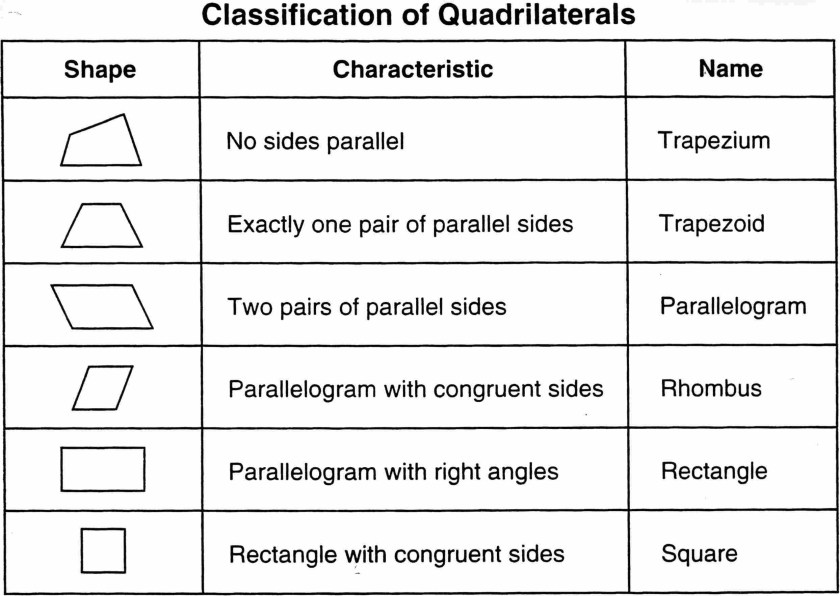
A quadrilateral is a geometric 4-sided figure.
Next we come to Burlington, the largest city in the state of Vermont, and located 45-miles, or 72-kilometers, south of Vermont’s border with the Canadian province of Quebec.
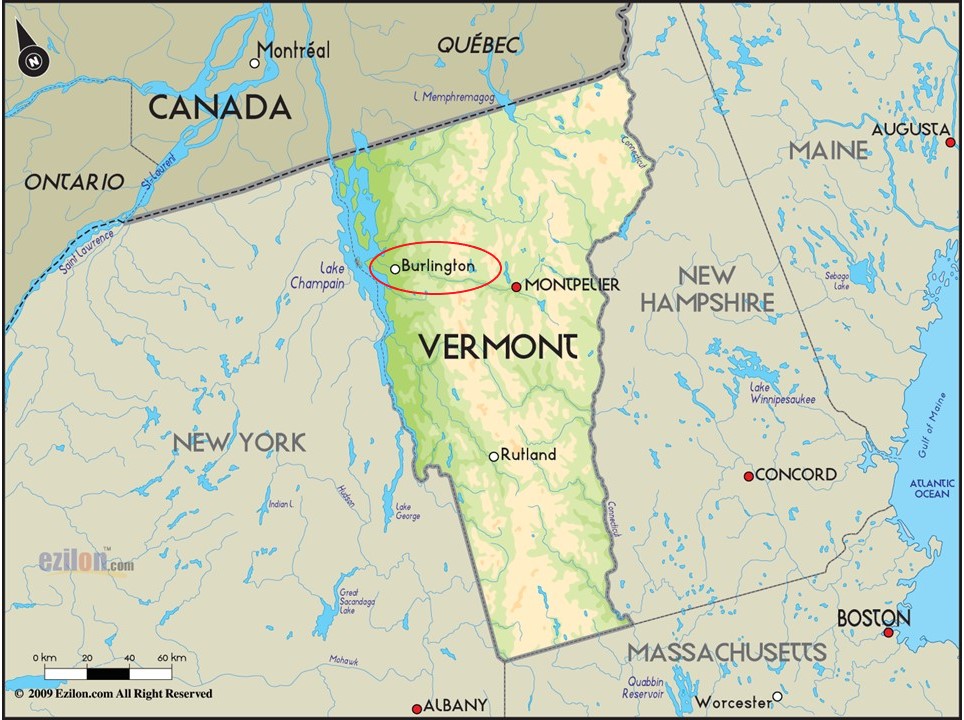
We are told the town’s position on Lake Champlain helped it develop into a Port of Entry and center for trade…
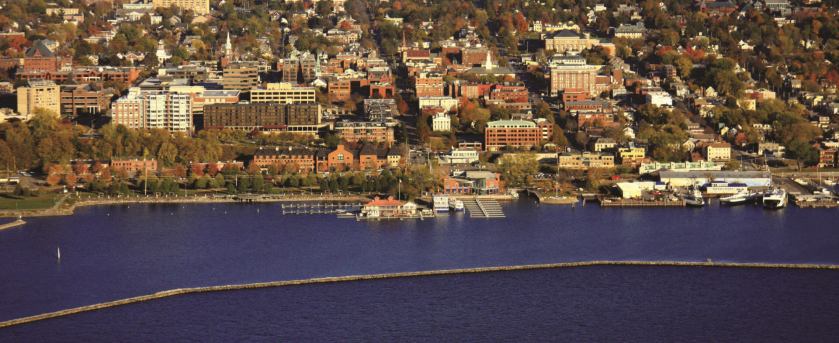
…after the completion of the Champlain Canal in 1823, which connects Lake Champlain with the Hudson River system…
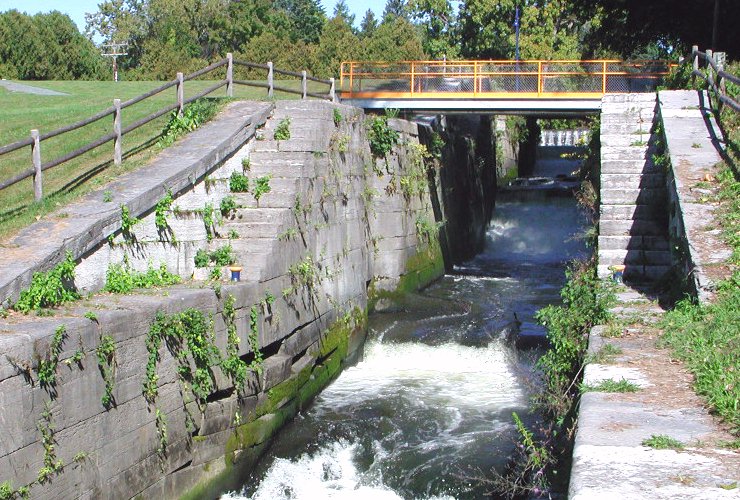
…New York’s Erie Canal in 1825…
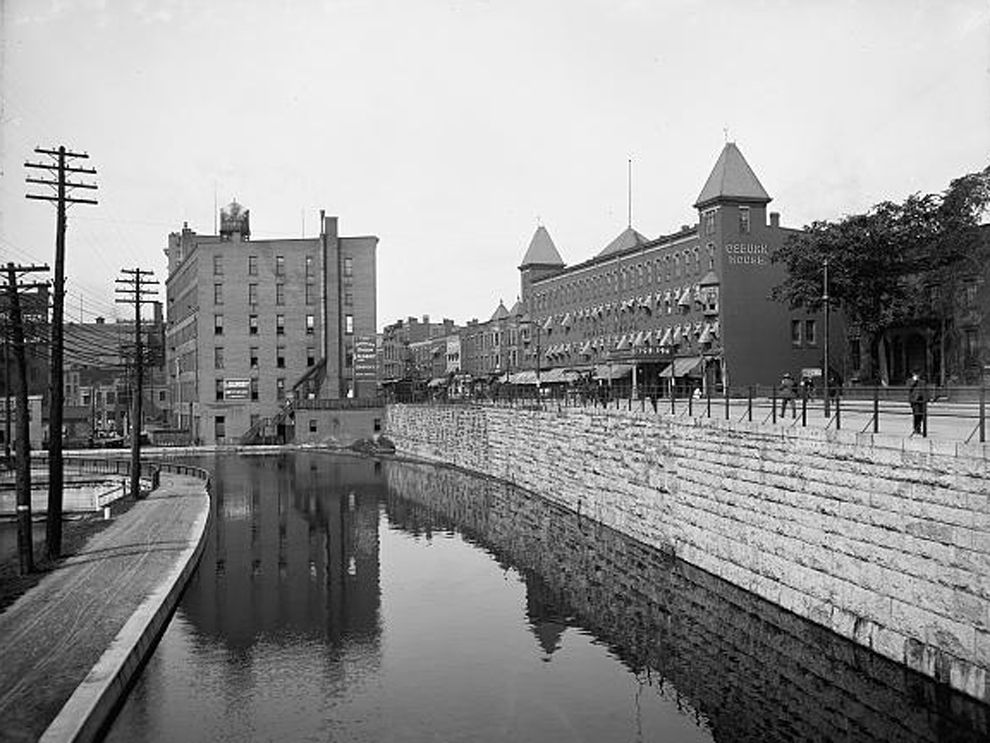
…and the Chambly Canal along the Richelieu River in Quebec in 1843, part of a waterway that connects the St. Lawrence River with the Hudson River in New York.
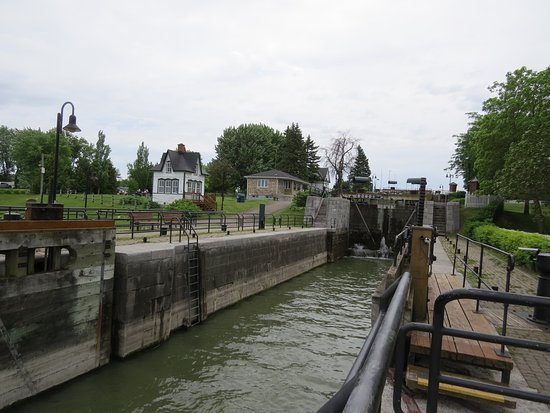
Steamboats connected freight and passengers with the Rutland and Burlington Railroad, which was said to have been chartered to build in 1843…
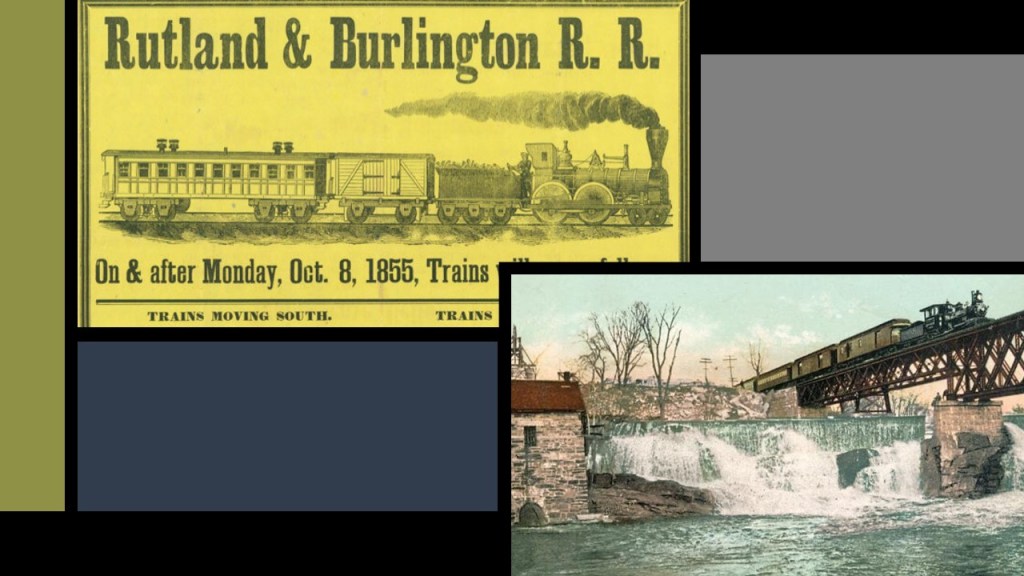
… and the Vermont Central Railroad, also said to have been chartered in 1843.

Again, the historical narrative we have been given in no way explains the existence of all of these massive long-distance engineering projects, which then seeks to inform us, after putting forth all that effort to build them, that in most cases, canals became obsolete as transportation arteries because the railways were so much more efficient.
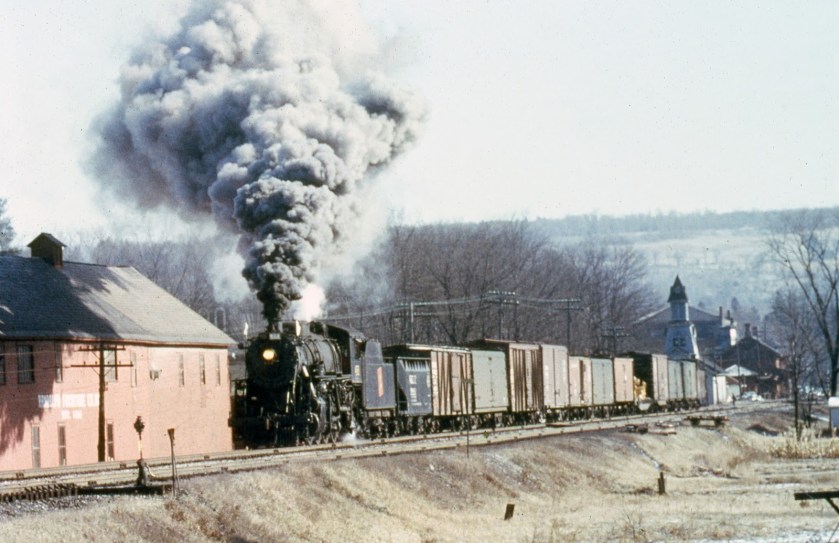
At any rate, Burlington became a transportation hub and manufacturing center for the region, and it was incorporated in 1865, which was the same year the American Civil War ended.

This brings me to mining in Vermont.

For one, gold prospecting has been happening in Vermont since the “Vermont Gold Rush” of the 19th-century.

Apparently a San Francisco 49er-miner named Matthew Kennedy discovered gold at Buffalo Creek in Plymouth, Vermont, and by 1855, a gold rush was underway in Plymouth and nearby Bridgewater, both of which are close to Rutland, of the Rutland and Burlington Railroad.
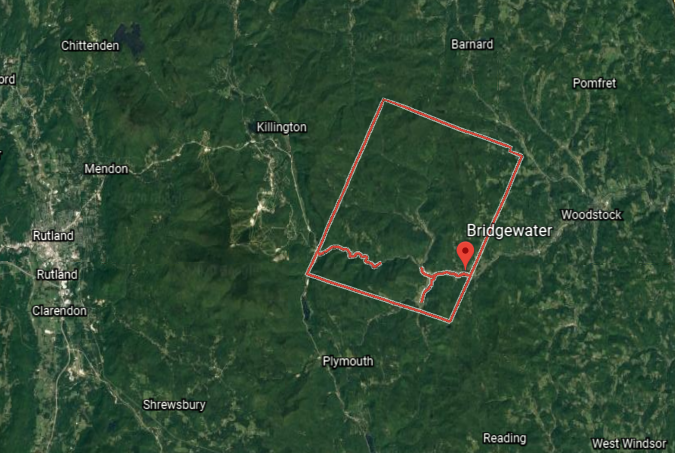
We are told the exact same thing happened in Vermont that we are told about the other gold rushes: one person found gold, then another, and soon people were swarming to the brooks and rivers of Vermont with dreams of getting rich.

Apparently each year, more gold is revealed from erosion all over the state, with the most well-known site still being Buffalo Creek near Plymouth, where the whole thing was said to have started.
Starting in the early 19th-century, high-quality marble deposits were found in Rutland, and in the 1830s, a large-deposit of nearly solid marble was found in West Rutland.
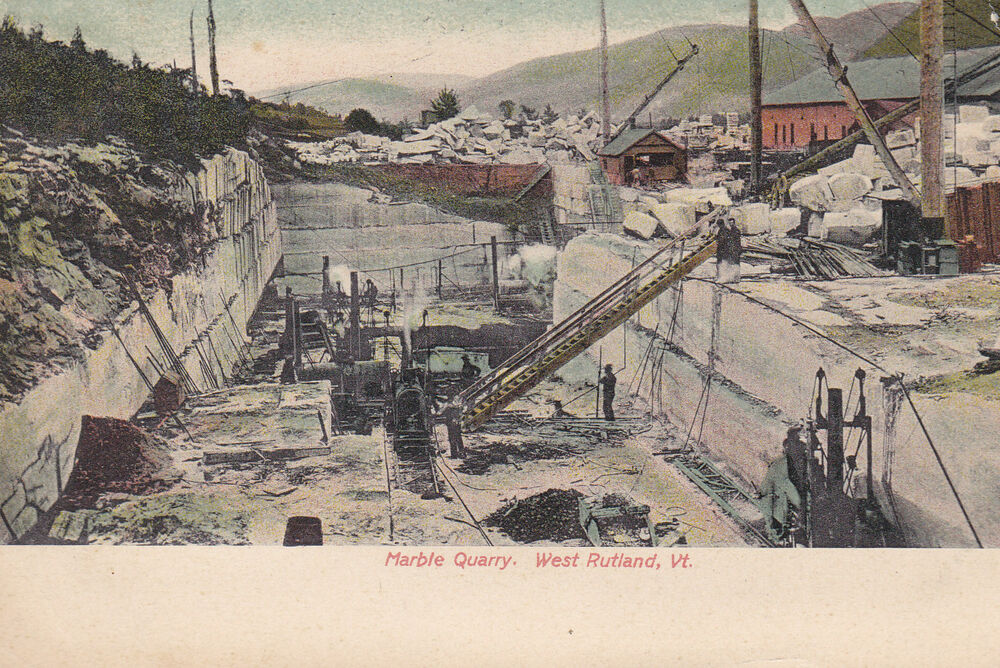
We are told that by the 1840s, small firms had begun excavations, but that marble quarries proved profitable only after the arrival of the railroad in 1851.

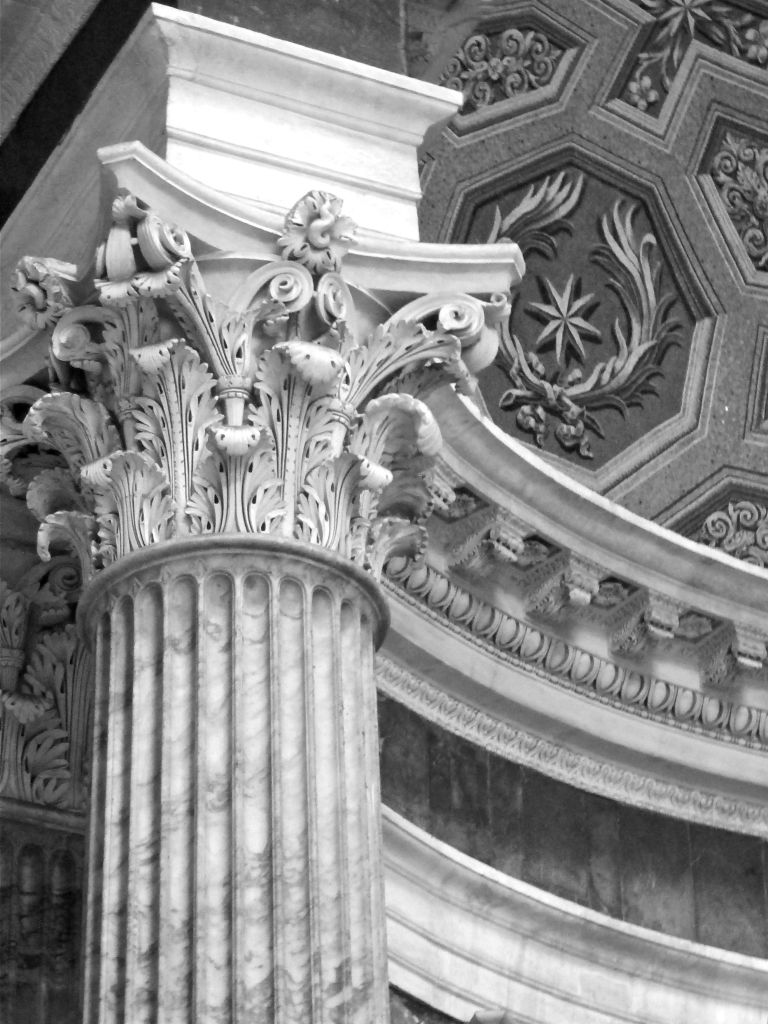
Marble is a type of limestone used as a stone building material since antiquity, like in the Pantheon in Rome pictured here.

The Pantheon was said to have been built as a Roman Temple between 113 AD and 125 AD.
Rutland went on to become one of the world’s leading marble producers when, we are told, the marble quarries of Carrara in Italy became largely unworkable because of their extreme depth.

Inside Proctor Mountain in Danby, Vermont, which is south of Rutland, in Rutland County…
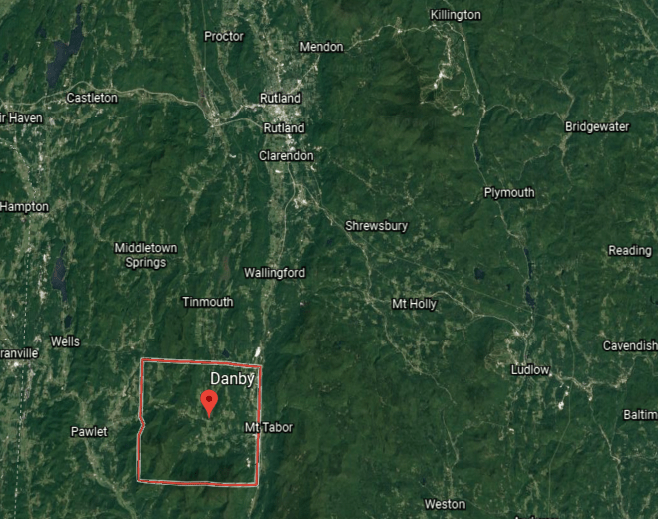
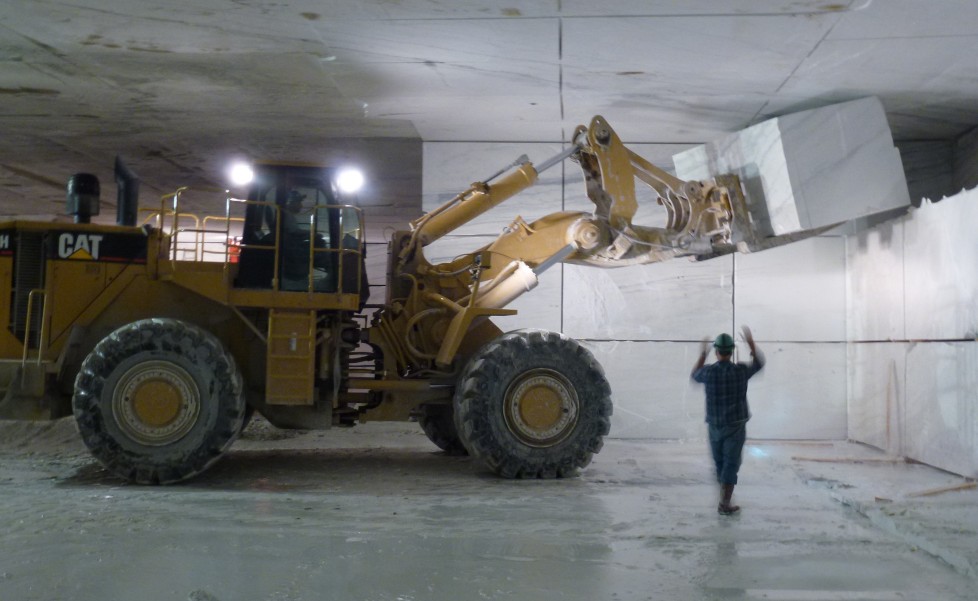
…is the Vermont Danby Quarry, the world’s largest underground marble quarry, from where ten different types of marble are extracted.

This is what the Vermont Danby Quarry looks like:
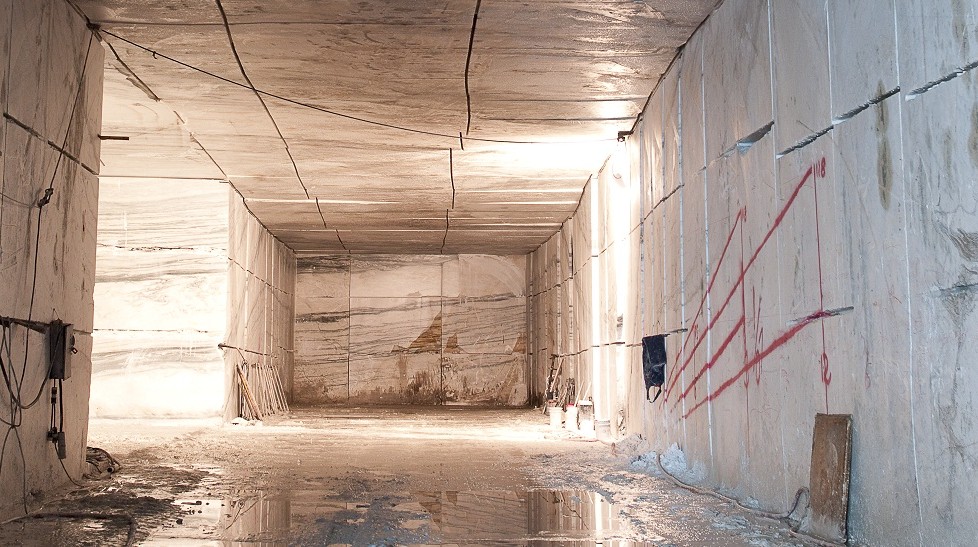
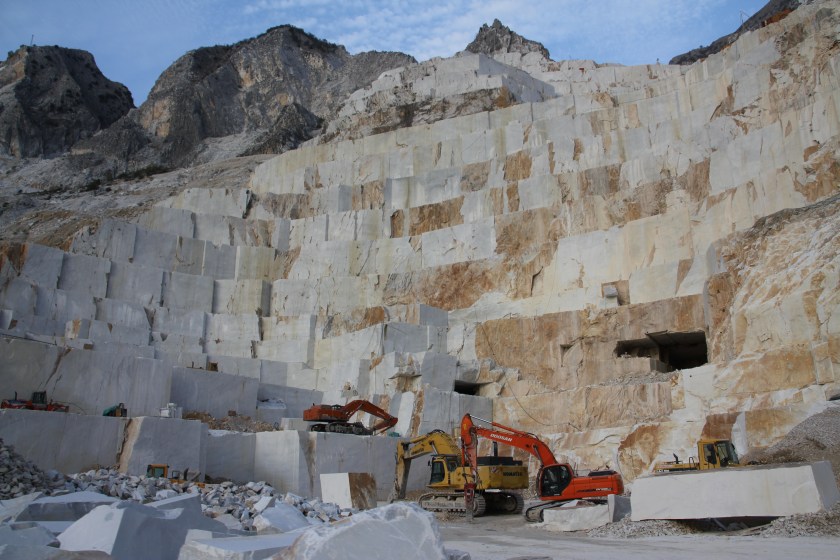
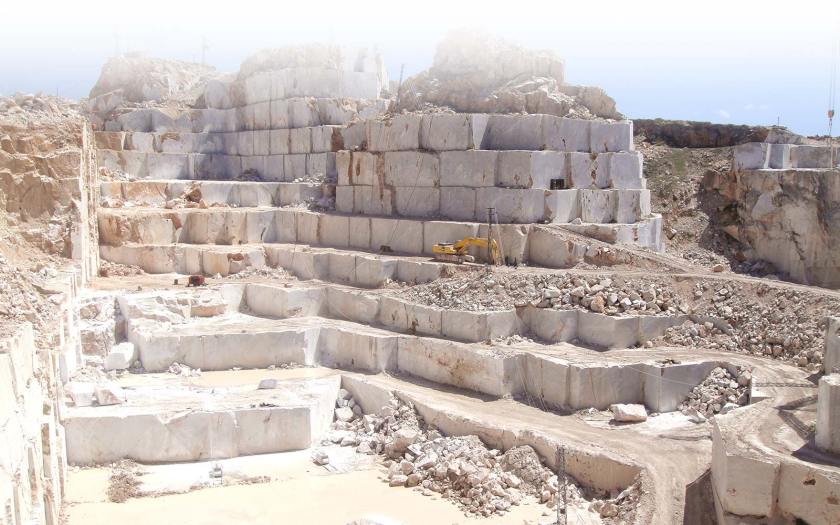
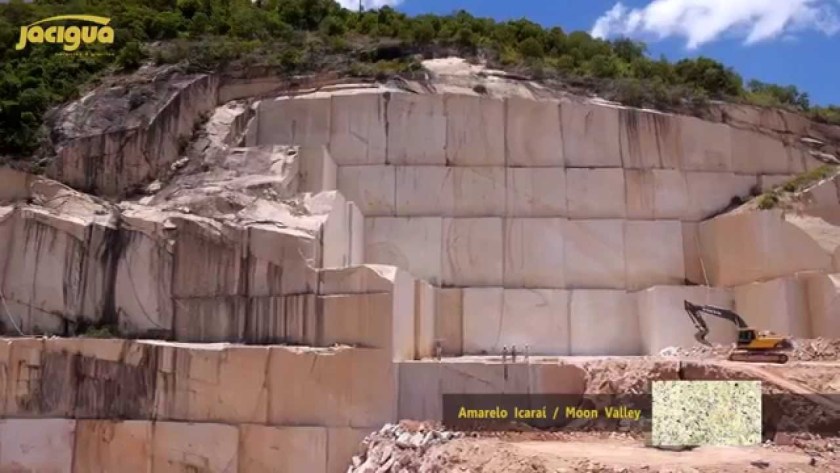
The stone in marble quarries like this one already has the appearance of being pre-existing huge stone rectangular blocks.
Other examples showing this are the marble quarries of Carrara in Italy…
…at this marble quarry in Afyon, Turkey…
…and this one in Victoria Brazil.
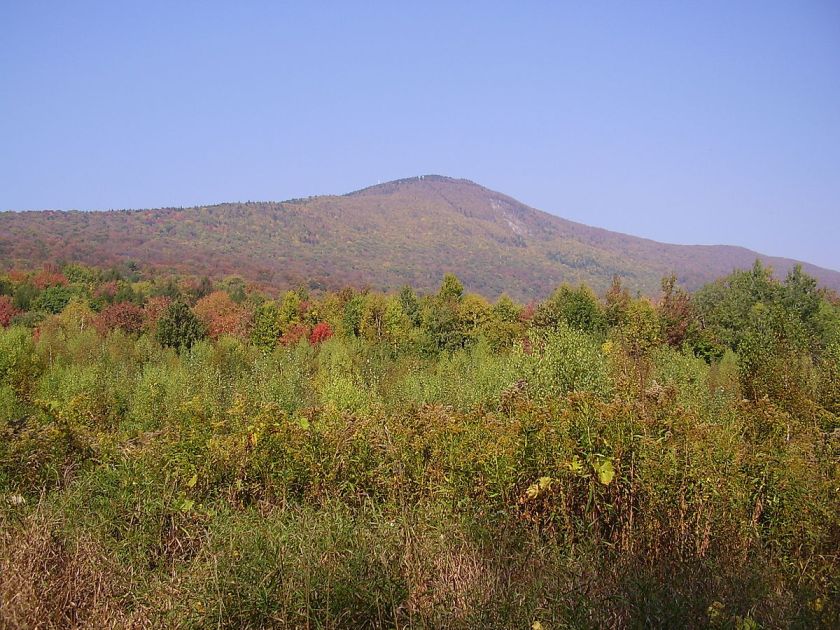
Dorset Mountain is part of the Taconic Mountains, a major range of peaks running along the eastern border of New York State, northwest Connecticut, western Massachusetts, north to central-western Vermont.
These are pictures of the Taconic Ramble State Park…
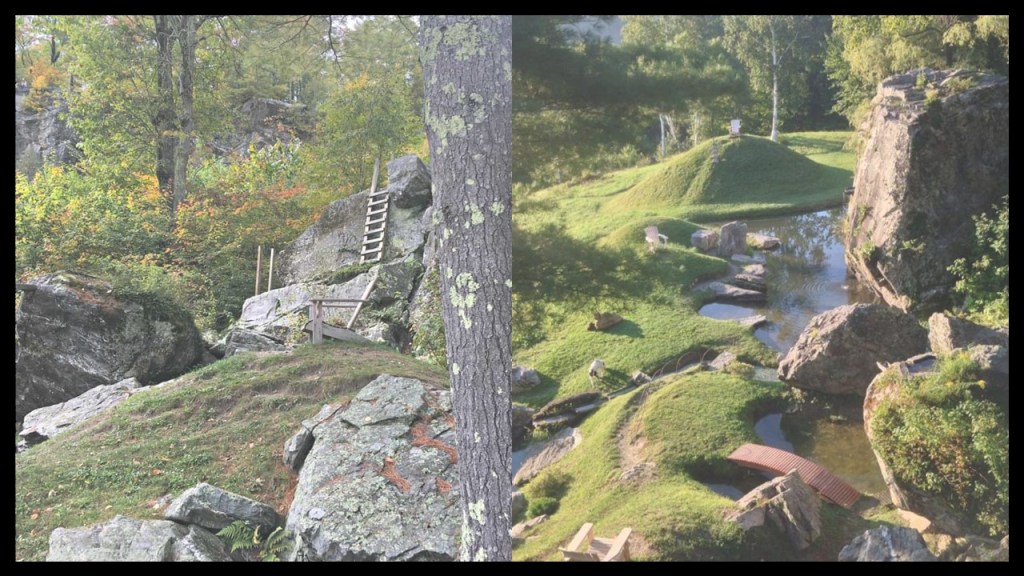
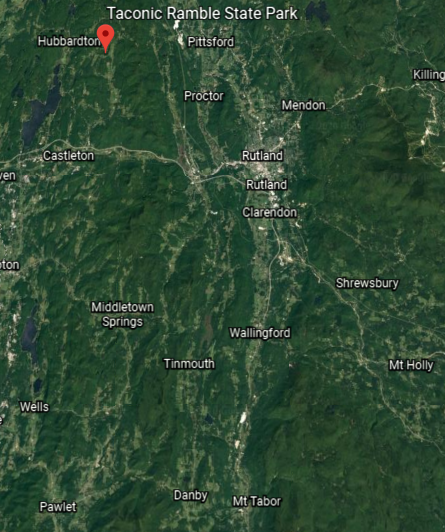
…in Hubbardton, Vermont, northwest of Rutland.
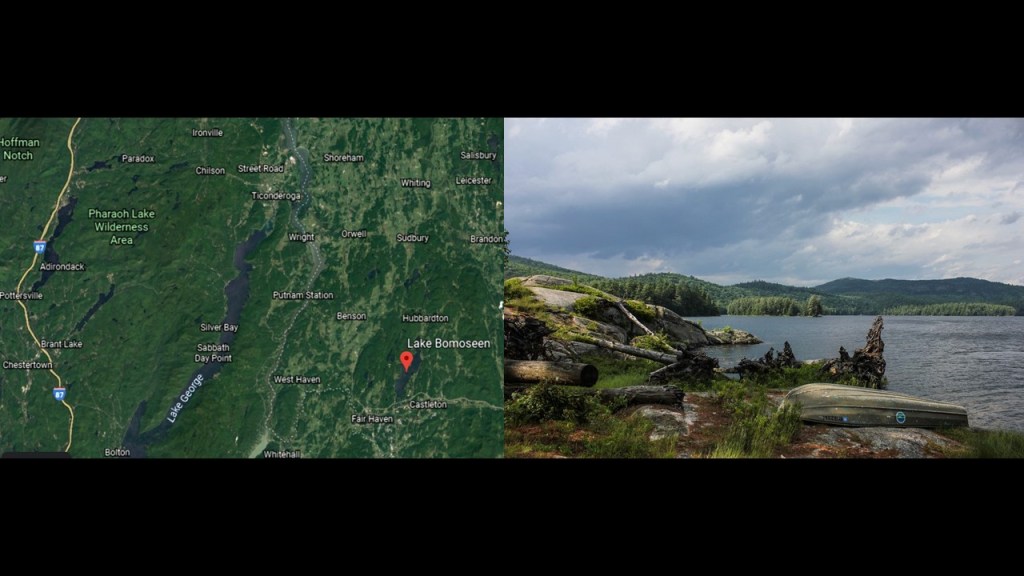
There is also slate mining in the Taconic Mountains, notably in the Lake Bomoseen Region, notable for extensive slate-quarrying operations.
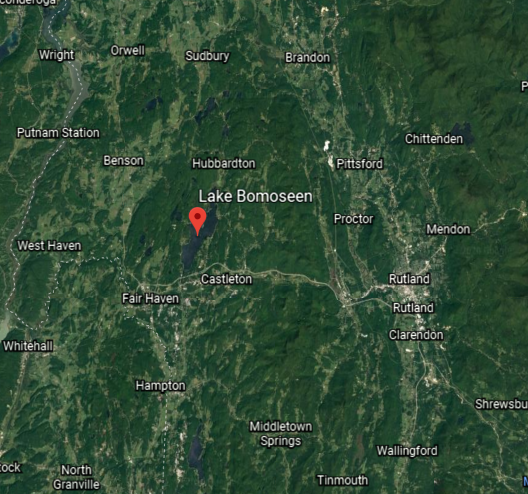
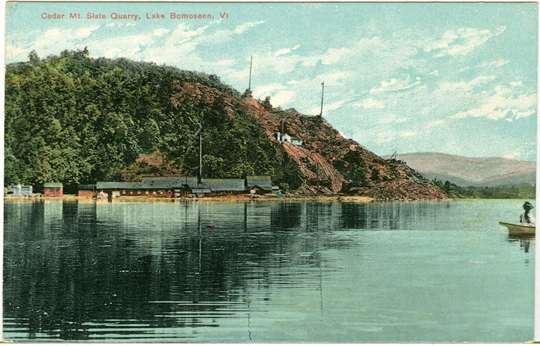
Located within Bomoseen State Park are the remnants of slate quarries, like the operation at Cedar Mountain pictured here in this historical post card.
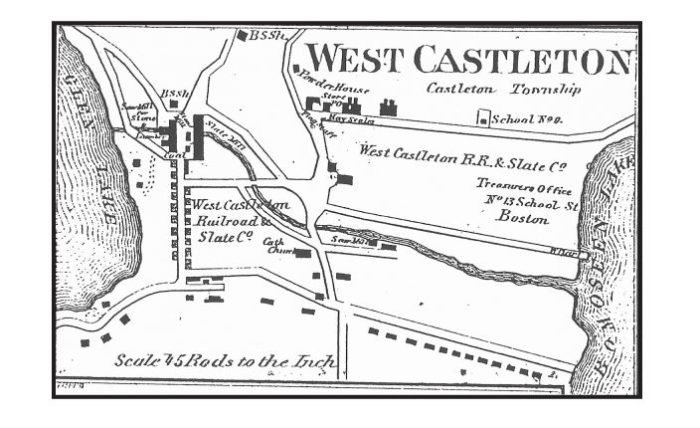
The slate quarries here provided slate to the West Castleton Railroad and Slate Company, which started operations in the 1850s.
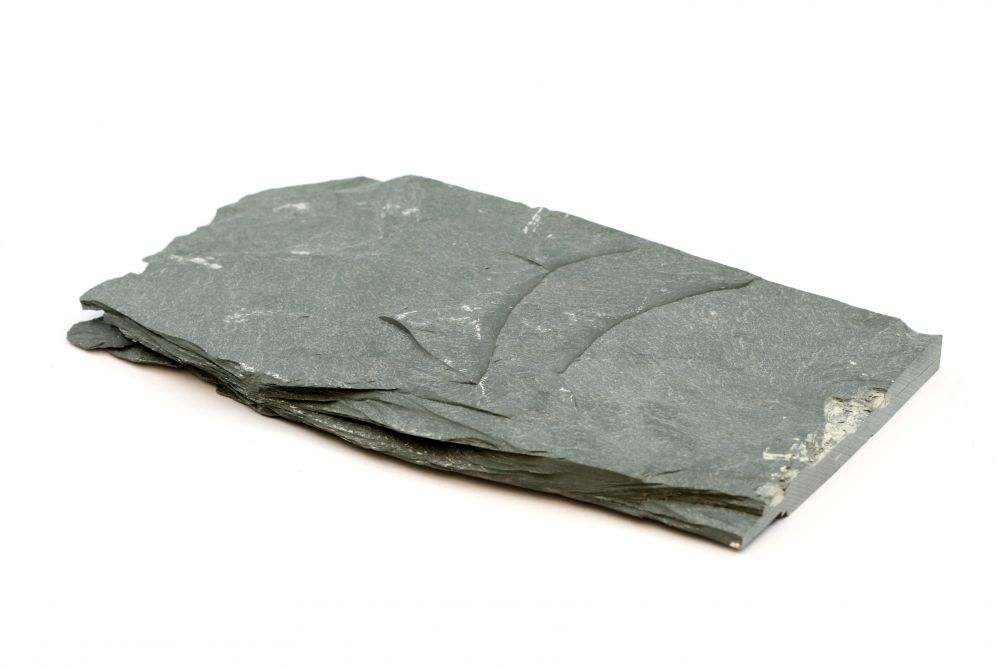
Slate is a fine-grained rock formed by the metamorphosis of clay and shale that tends to split along parallel cleavage planes, usually at an angle to the planes of stratification, and used for things like roofing material and writing surfaces.
The “Pharaoh Lake Wilderness Area” is near Lake Bomoseen.
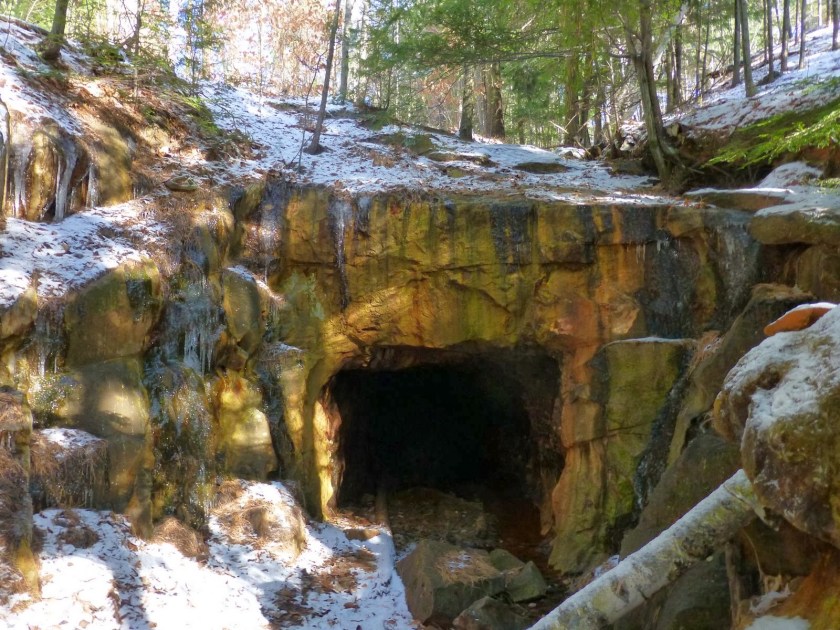
This is the Rock Pond Mine at Pharaoh Lake, at some point in time a graphite mine.
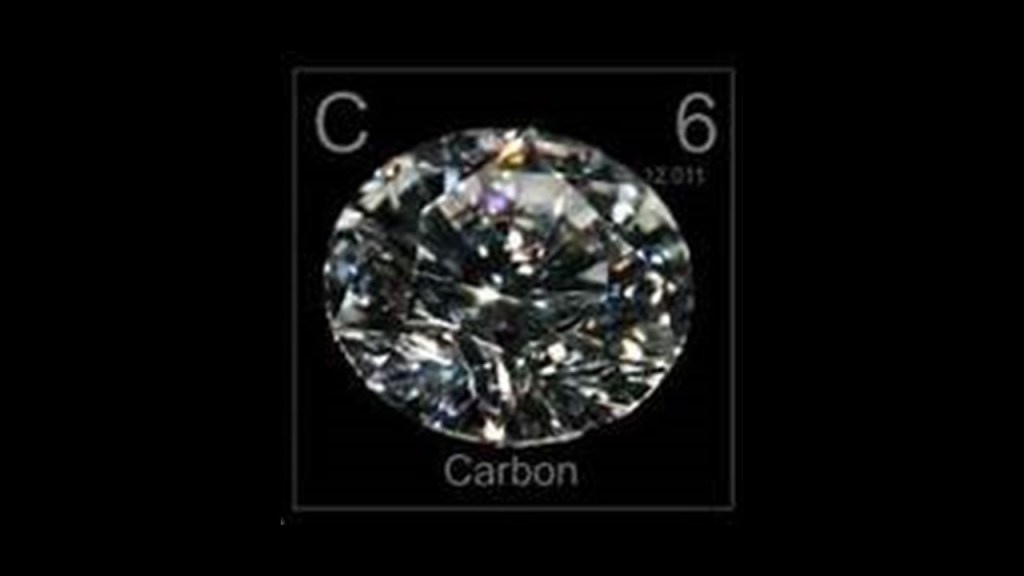
Graphite is a crystalline form of the element carbon, with atoms arranged in a hexagonal structure.
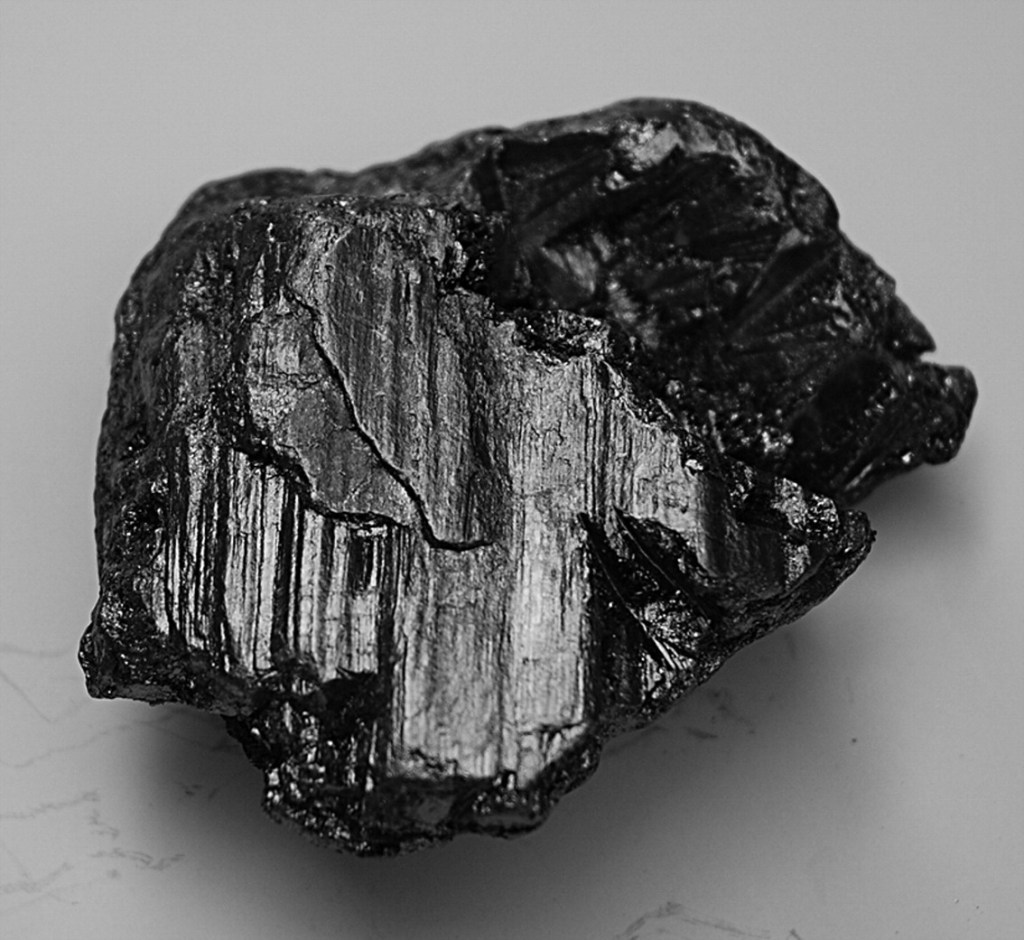
It is used in steel production, pencils, lubricants, and electronics, and converts to diamond under high temperatures and pressures.

Montpelier, the capital of Vermont, is next on the alignment.

It is the least populous state capital in the United States.
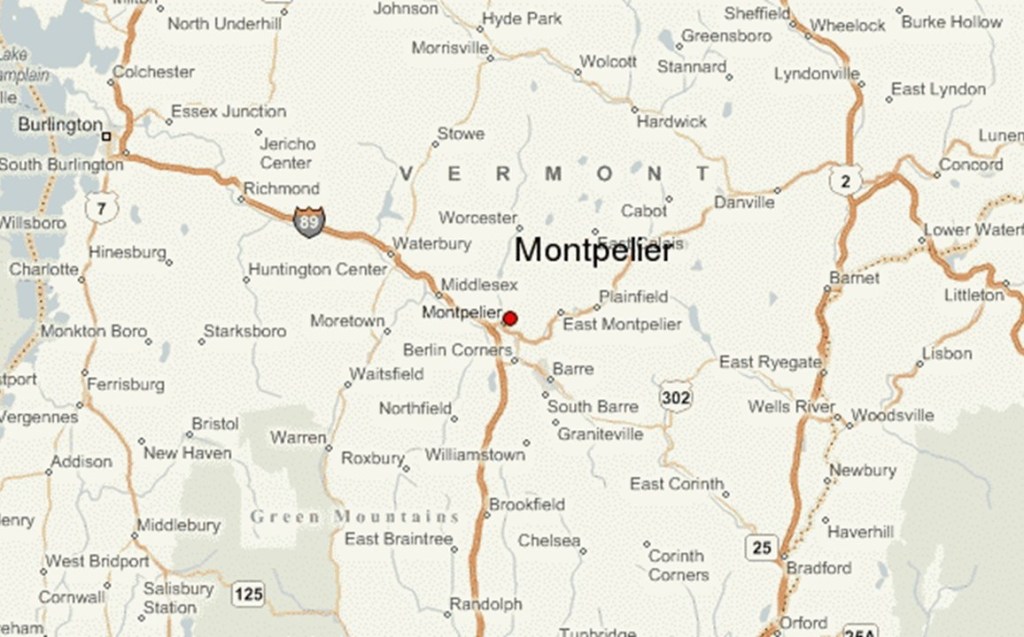
The city center of Montpelier is described as being in a flat clay zone, surrounded by hills and granite ledges, with the Winooski River flowing along the south edge of downtown Montpelier.
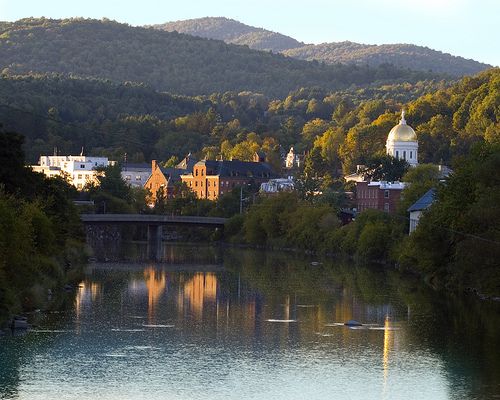
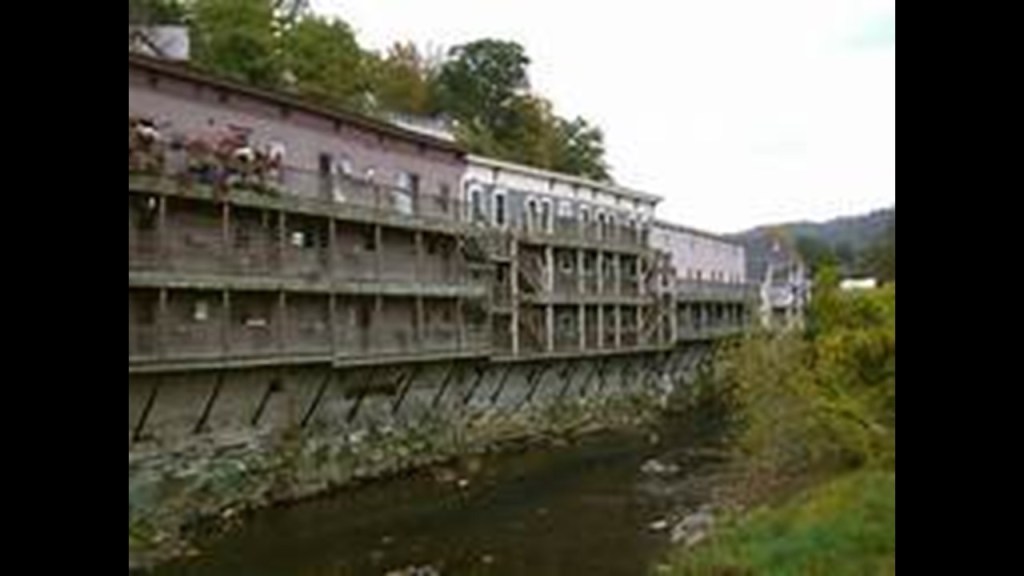
Here are the Winooski River Houses in Montpelier, built right on top of old stonemasonry.
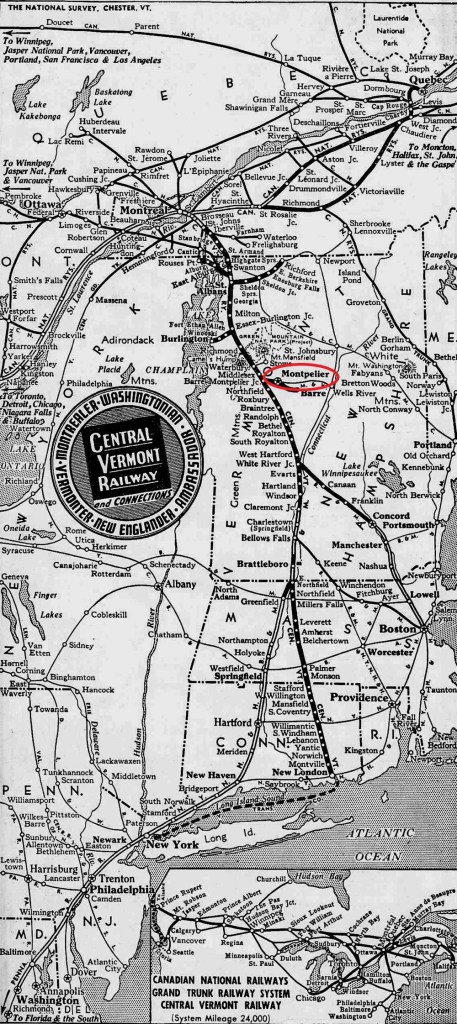
Montpelier was incorporated as a village in 1818, and the town developed into a center for manufacturing, especially after the Central Vermont Railway opened in Montpelier on June 20, 1849.
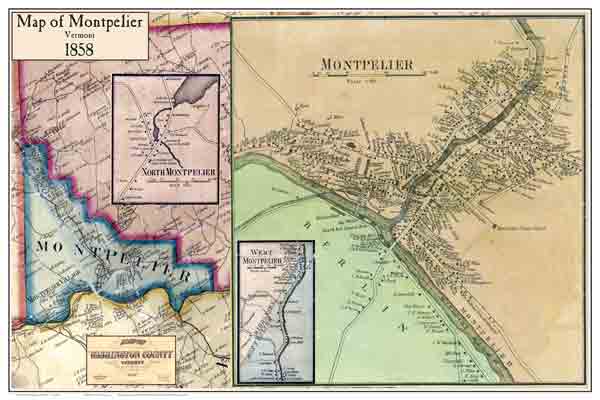
We are told the layout of the main streets paralleling the rivers was in place by 1858, and that the downtown street pattern has changed very little since that time.

In 1895, Montpelier was incorporated as a city.
In Graniteville, southeast of Montpelier…
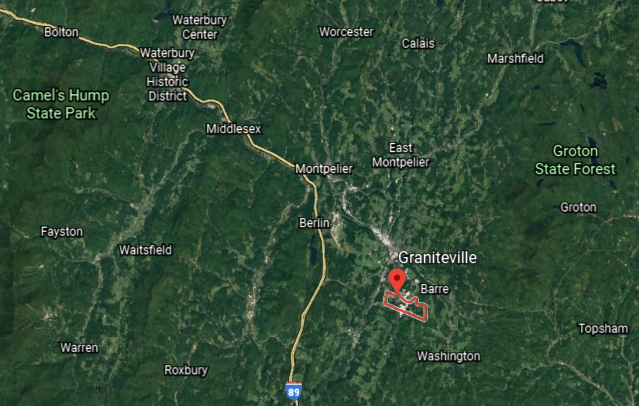
…we find the Rock of Ages Quarry, with the same big blocks of stone going on.

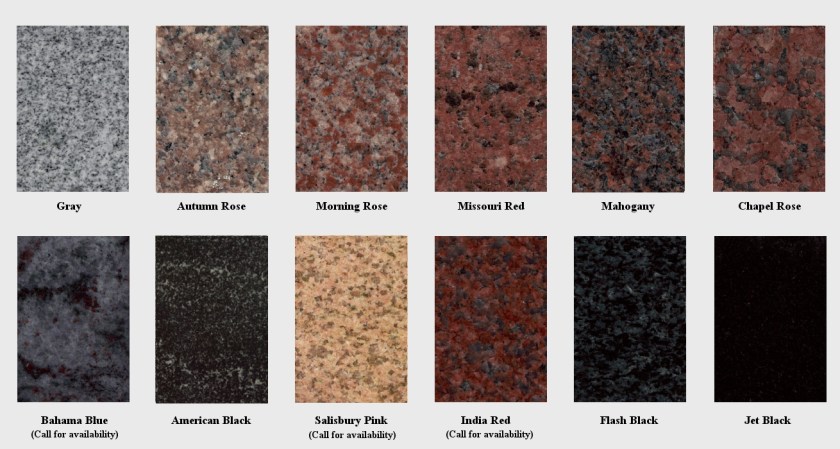
It is the world’s largest, deep-hole dimension granite quarry, and provides memorials of all kinds, as well as granite for precision machine bases.

Granite is an igneous rock with 20% – 60% quartz by volume, as well as other crystalline minerals, and can be a variety of different colors, depending on their mineralogy.

Like marble, granite has been used as a stone building material since antiquity.
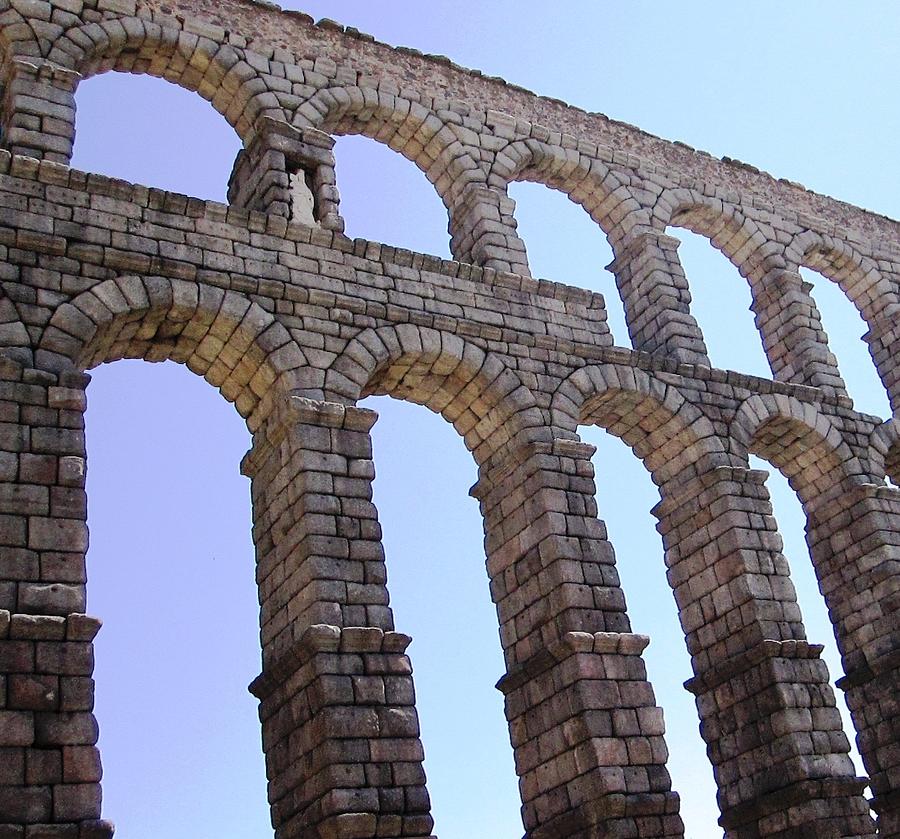
The famous aqueduct of Segovia in Spain was made from granite.
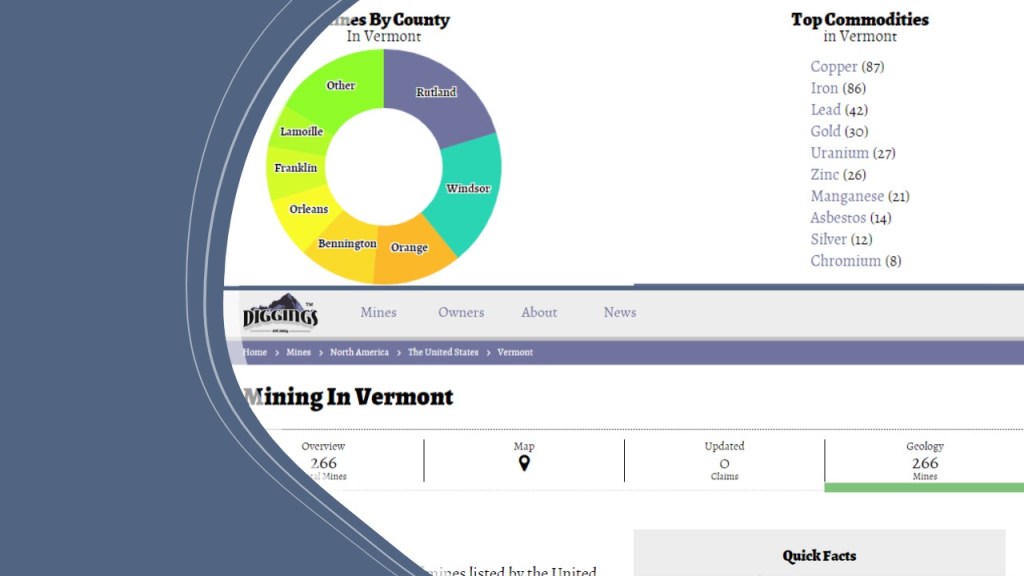
Besides the massive stone quarry industry, there are 266 mines of different types listed in Vermont.
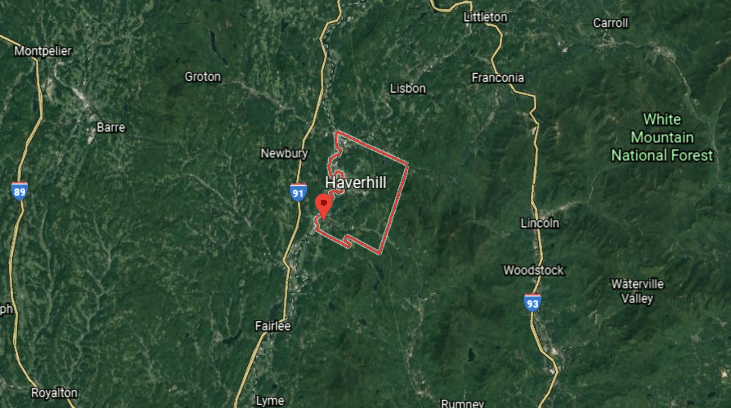
The next place we come to on the alignment is Haverhill in New Hampshire, and the county seat of Grafton County.

It includes the villages of Woodsville, Pike, and North Haverhill, Haverhill Corner, and the district of Mountain Lakes.
It was said to have been incorporated in 1763, and that by 1859, had 2,405 inhabitants…and three grist-mills; twelve saw-mills; a paper mill; a large tannery; a carriage manufacturer; an iron foundary; seven shoe factories; a printing office; and several mechanic shops.

Here is an historic depiction of Woodsville in Haverhill…
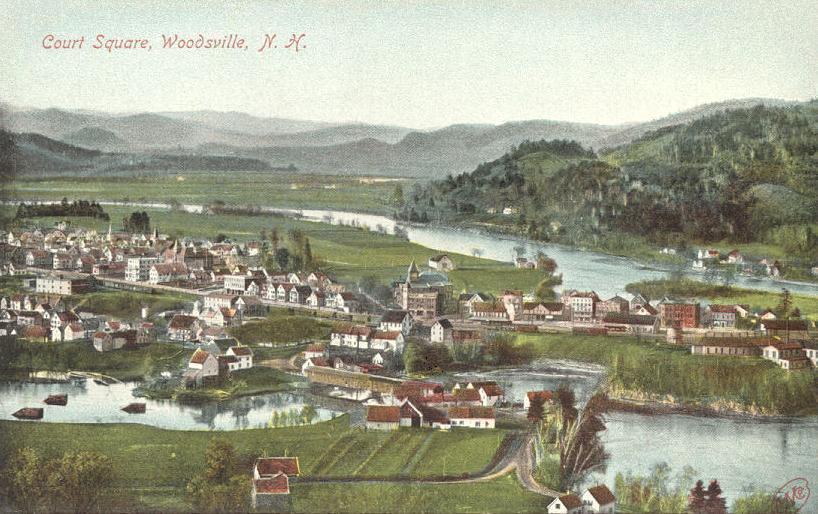
…and, as well, Woodsville was once an important railroad center.
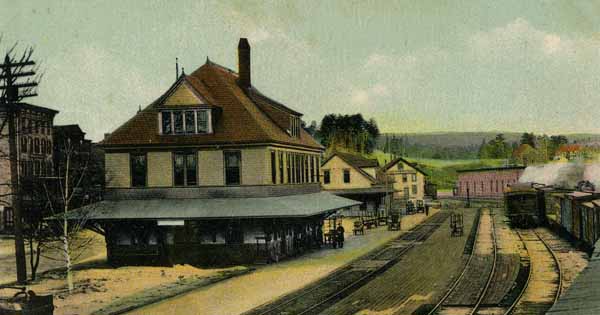
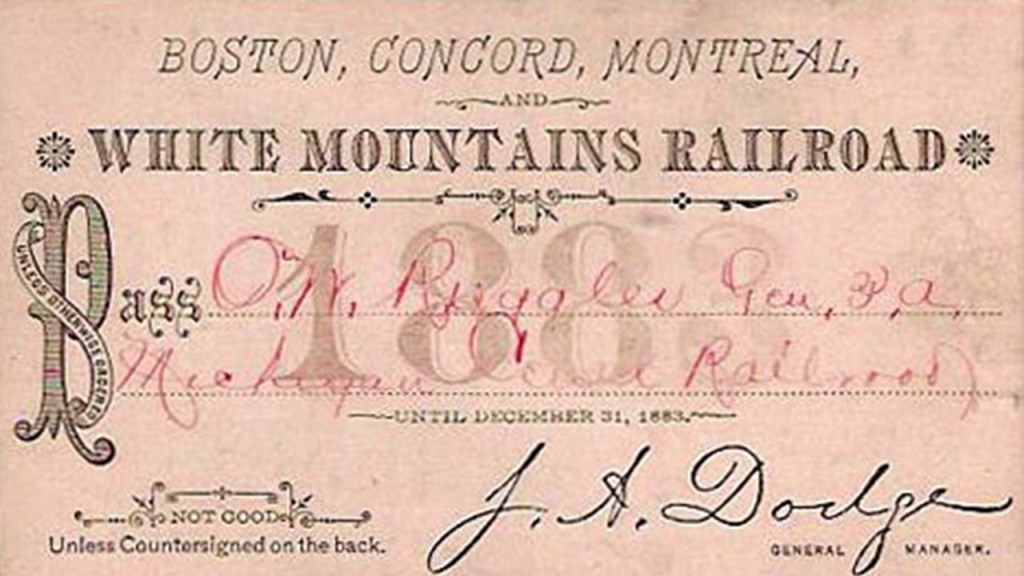
A railway supply enterprise was said to have been developed there by saw-mill operator John Woods, after the establishment of the Boston, Concord & Montreal Railroad, which was said to have opened in Woodsville in 1853, and was where the railroad established its division offices and a branch repair shop.
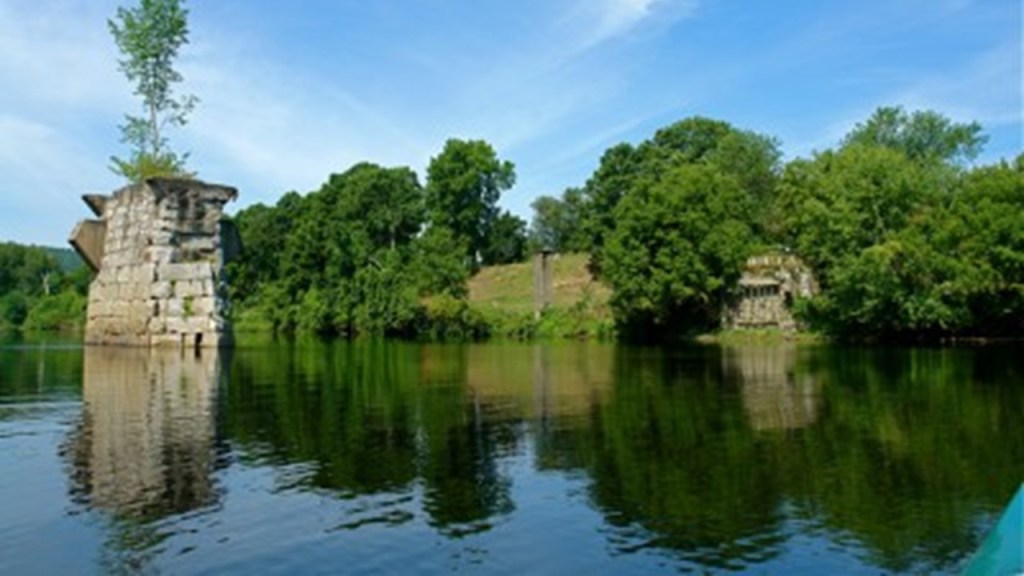
Haverhill is the location of the Bedell Bridge State Historic Site, which was the location of the second-longest covered bridge in the country, and which was unfortunately, we are told, destroyed by wind in 1979.

All that remains are the stone piers of the bridge in the Connecticut River.
There are 76 mines in Grafton County, out of the 260 listed for New Hampshire as a whole.
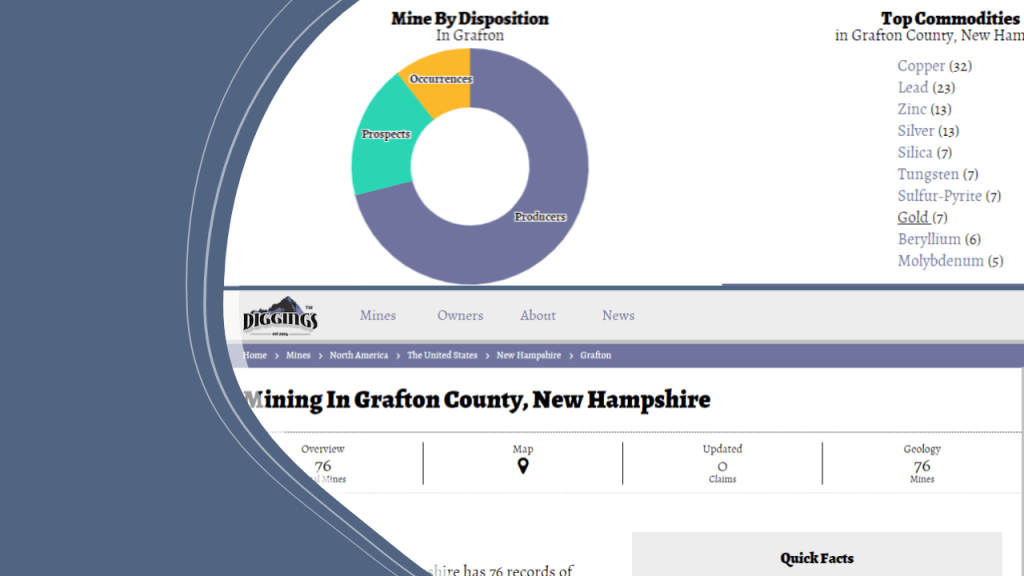
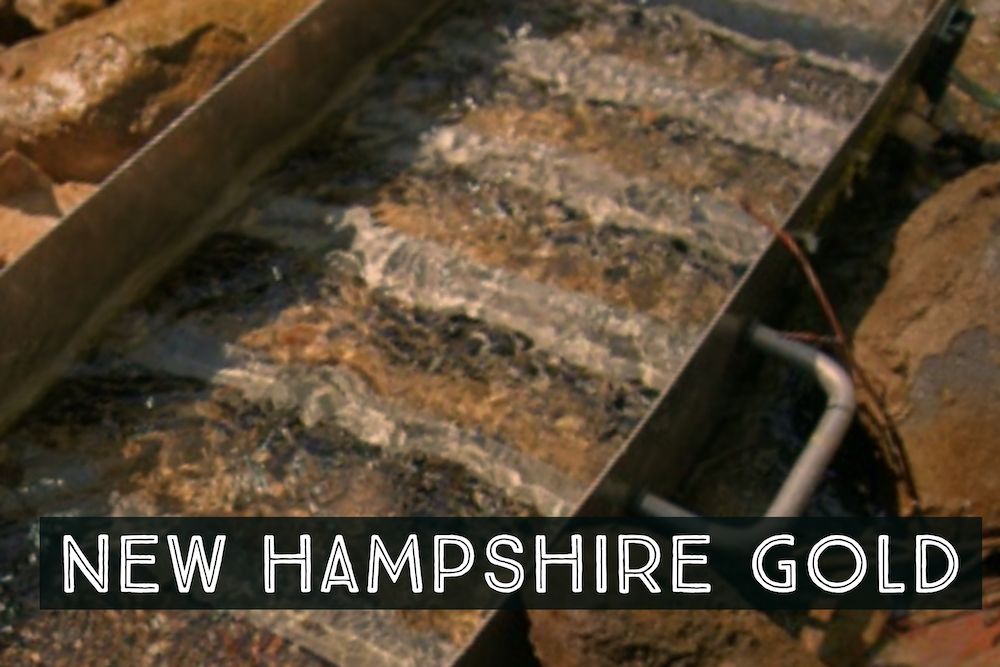
Most of the gold-bearing water in New Hampshire is found in the northern and western parts of the state, although scattered gold deposits have been found across the state in limited quantities.

As a matter of fact, gold fever never really took off here after a gold rush in the 1860s because the discoveries here paled in comparison to all of the other gold- rush places.
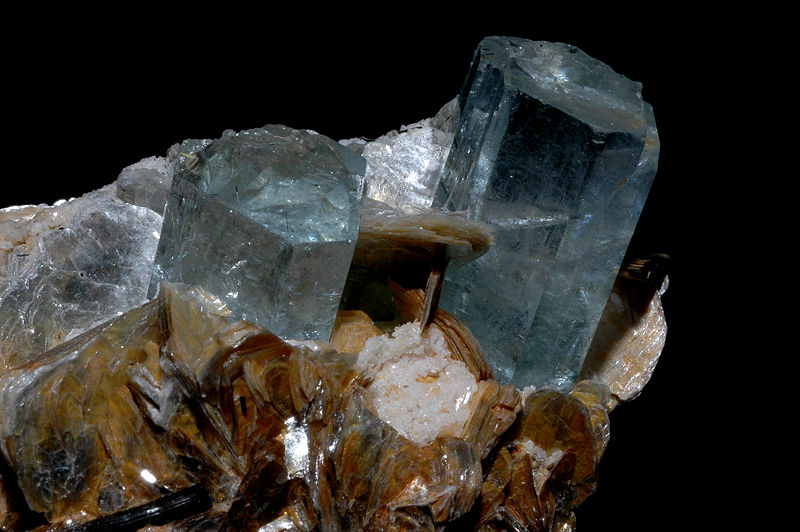
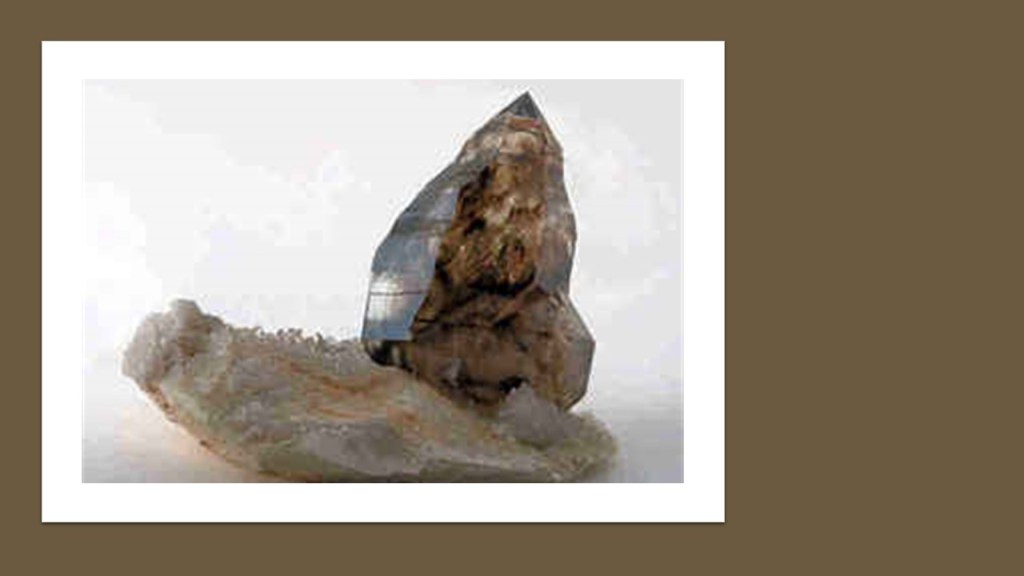
New Hampshire is known, however, as a fantastic state for rock hounds, with an abundance of valuable gems and minerals, including, but not limited to amethyst…
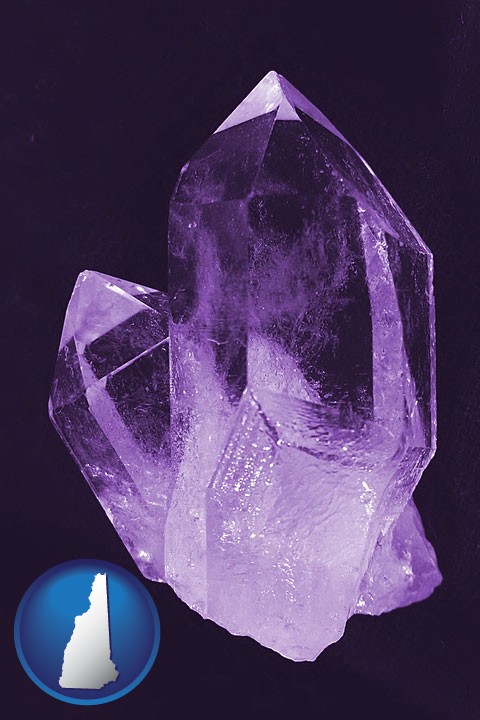
…aquamarine…
…and the state gemstone, smoky quartz.
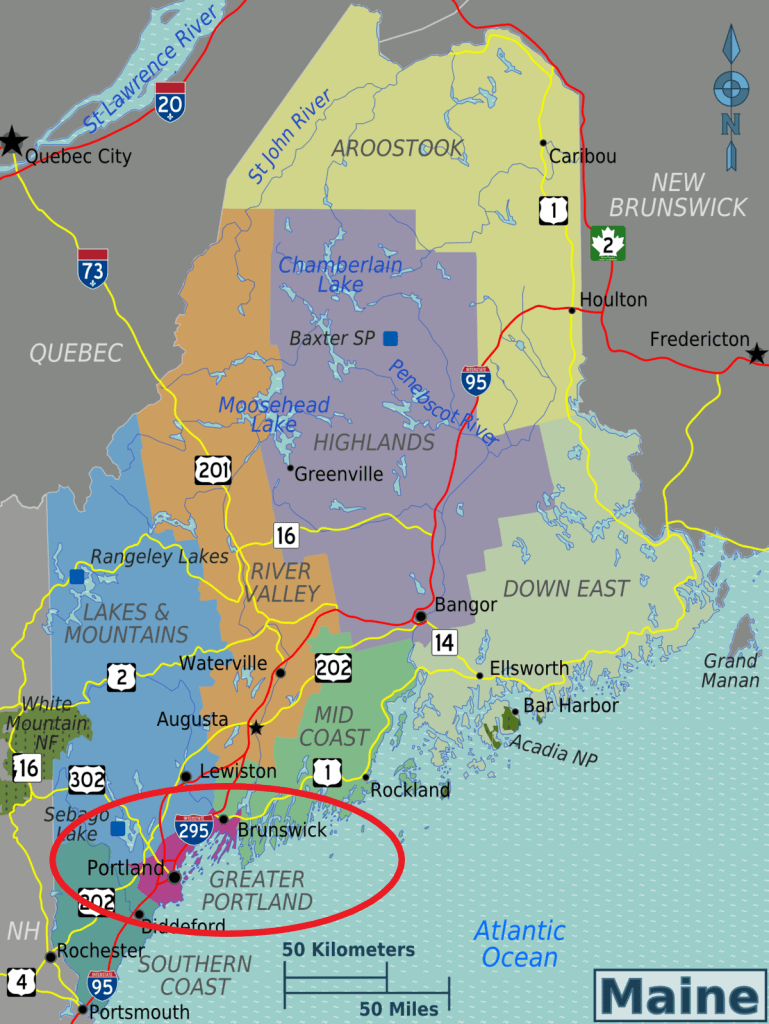
Next we come to Portland, the largest city in the state of Maine, and the seat of Cumberland County.

It is the largest metropolitan area in northern New England, with the Greater Portland metro area having over a 500,000 people, which is one-third of Maine’s total population.
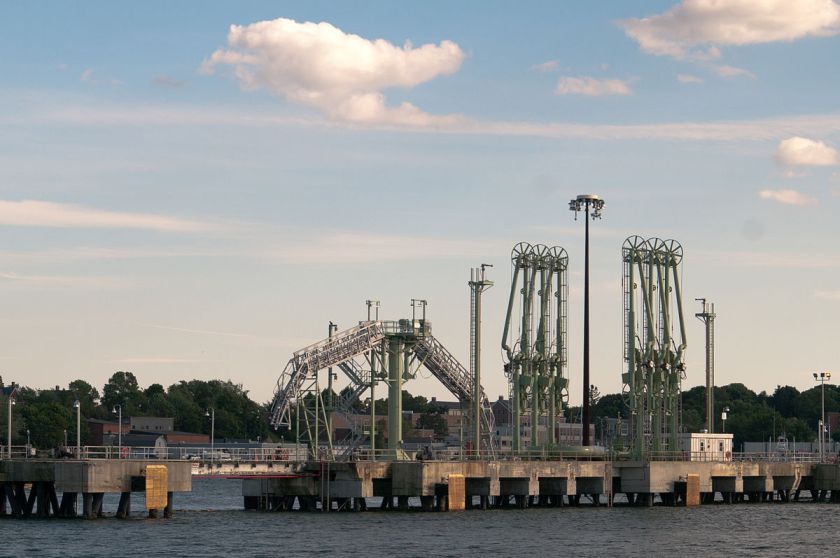
The Port of Portland is the largest tonnage seaport in New England.
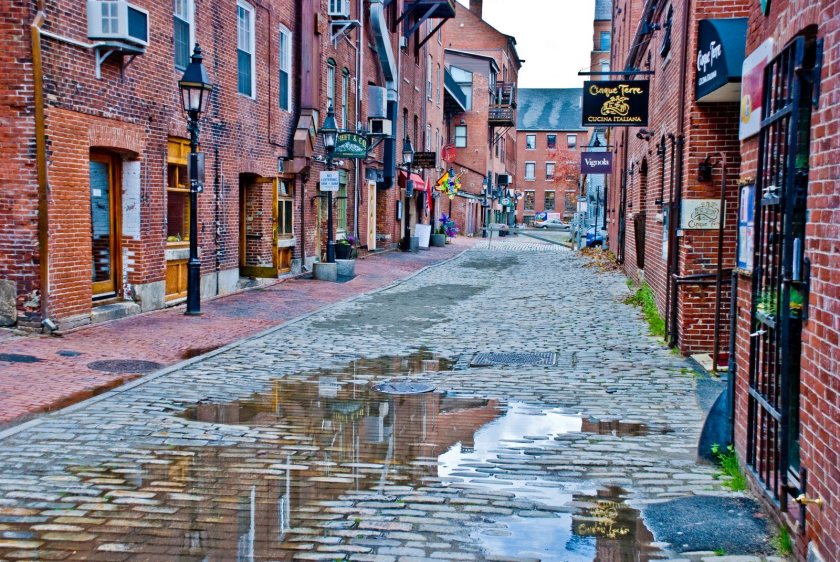
The Old Port is a district of Portland, known for its cobblestone streets, 19th-century brick buildings…
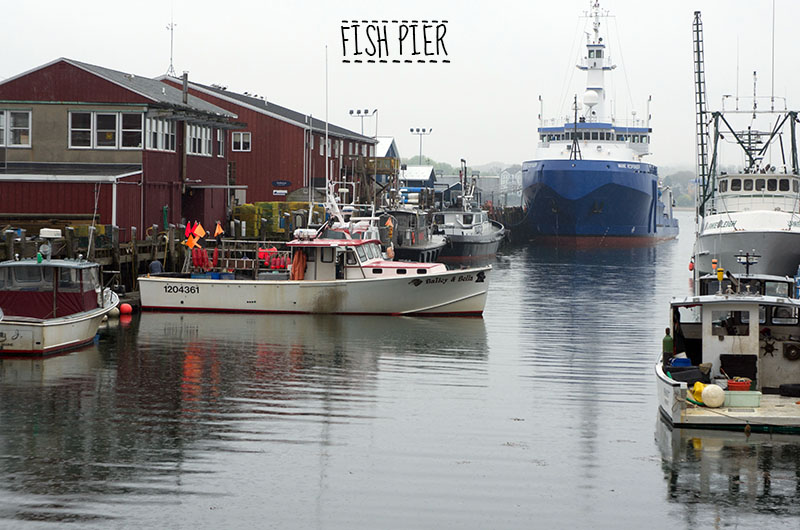
…and its fishing piers.
So…when did Portland first come into being?

We are told there was an attempt to establish a colony there in 1623 by English naval captain, writer, and explorer Christopher Levett, when he was granted 6,000 acres, or 2,400 hectares, to establish a settlement at what was known as Casco Bay.

He was said to have built a stone house, left a company of ten men, and departed for England to write a book in order to bolster the settlement, but the settlement failed within a year, and the fate of the men unknown.
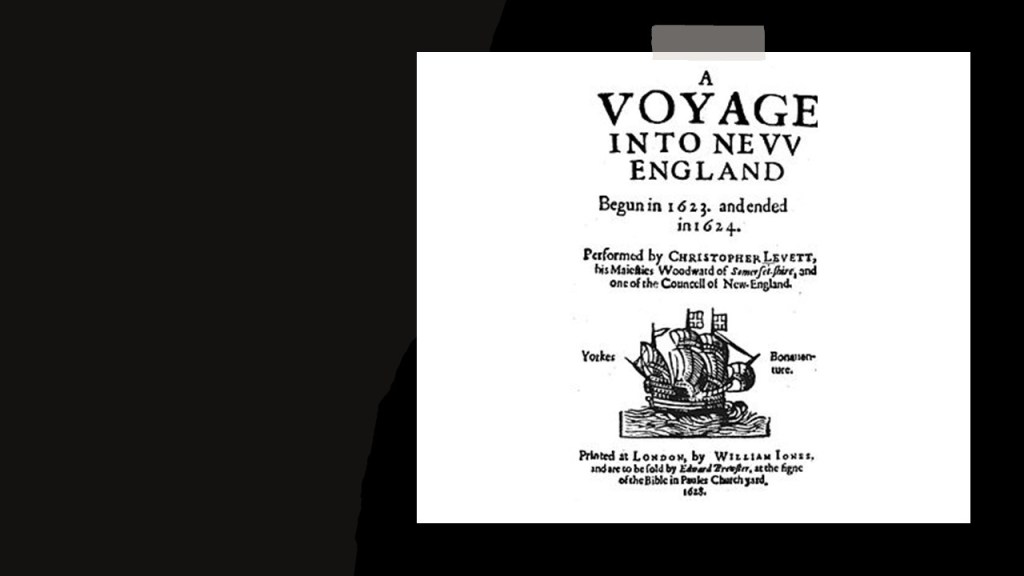
Fort Levett on Cushing Island in Casco Bay was named for him, a U. S. Army fort said to have been built beginning in 1898.
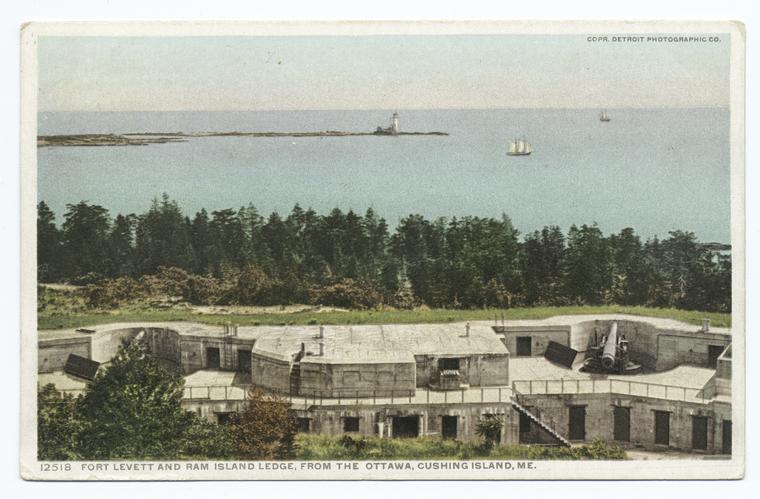
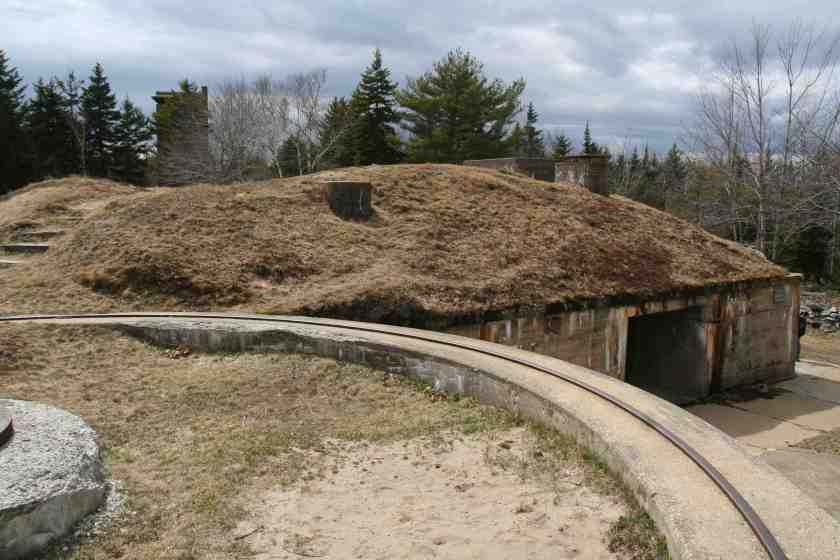
Fort Levett was part of the Harbor Defenses of Portland, a U. S. Army Coast Artillery Corps Harbor Defense Command, active between 1895 and 1950, and which also included Fort Baldwin, said to have been constructed between 1905 and 1912…
…Fort Popham, said to have been commissioned in 1857, and built starting in 1861…
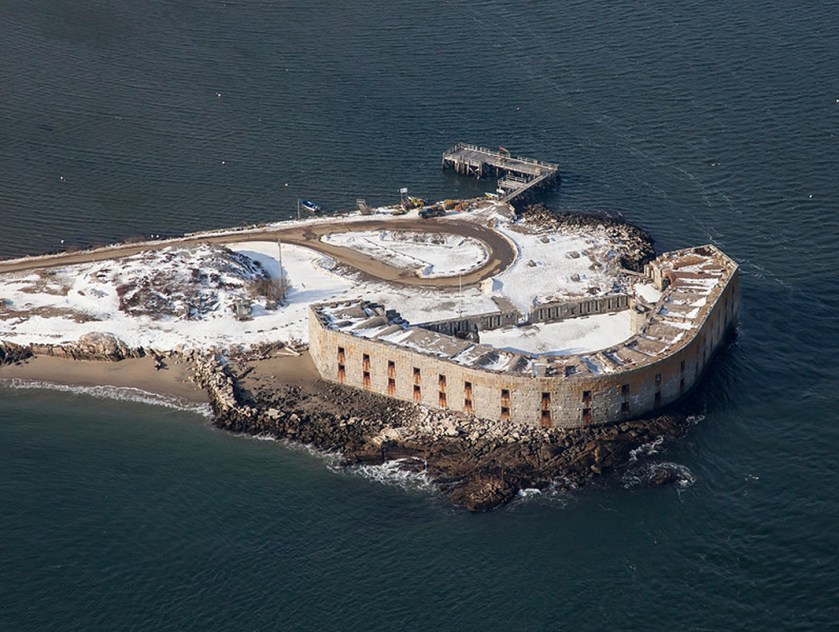
…Fort Scammel, which was said to have been built in 1808…
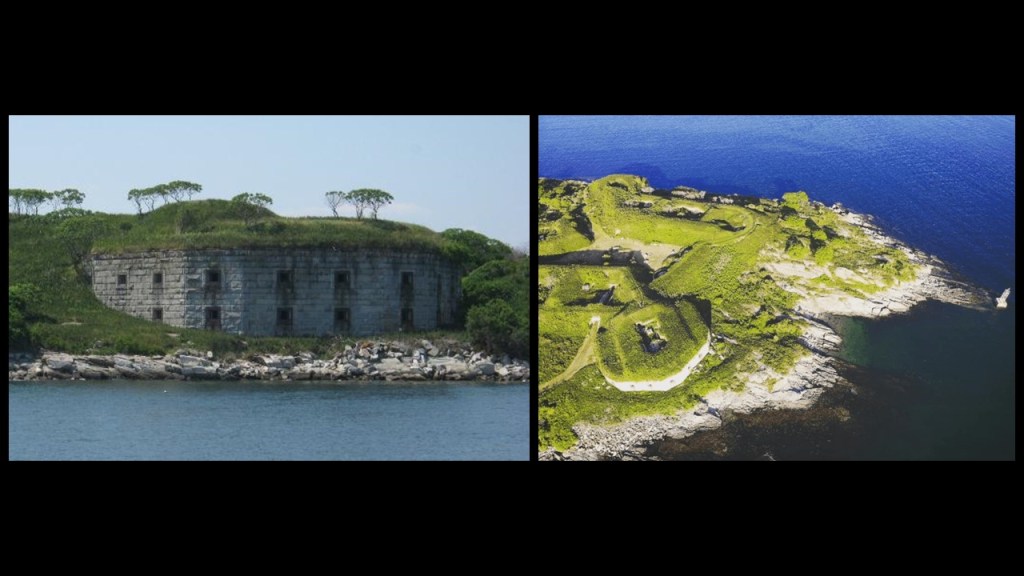
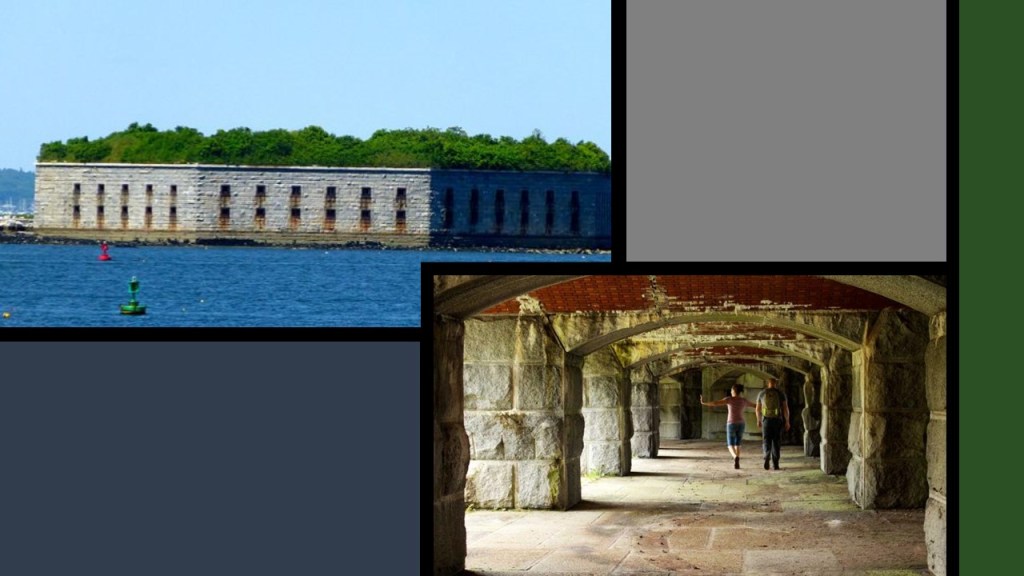
…and Fort Gorges, among others.

Fort Gorges was said to have been built between 1858 and 1864.
Like Vermont, there is a great deal of rock-quarrying in Maine.

The granite which was used to build Fort Popham, for example, was said to have come from quarries on the nearby Fox Islands in Casco Bay.
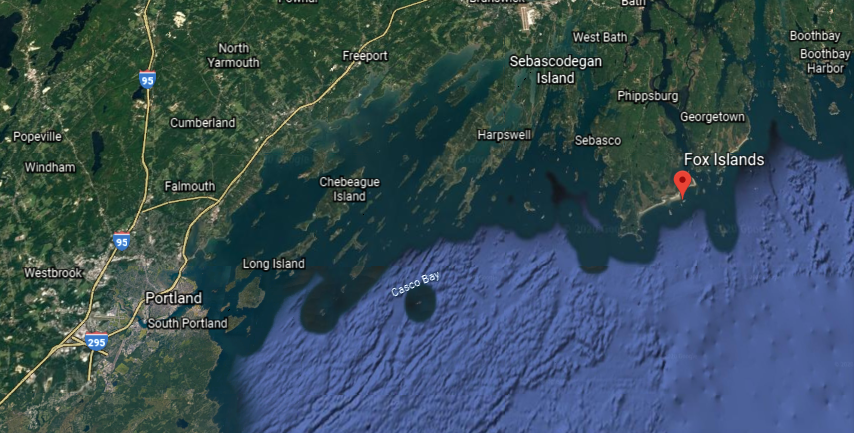
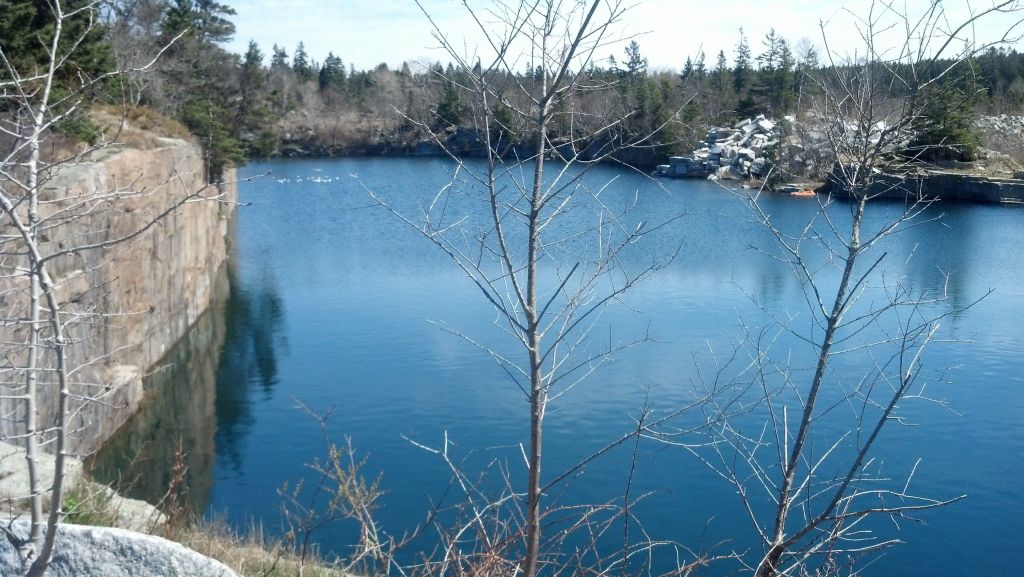
This is the old granite quarry at Vinalhaven, a small town on the larger of the two Fox Islands.
The Millennium Granite Quarry and Stoneworks is just south of Portland, in Wells, Maine.
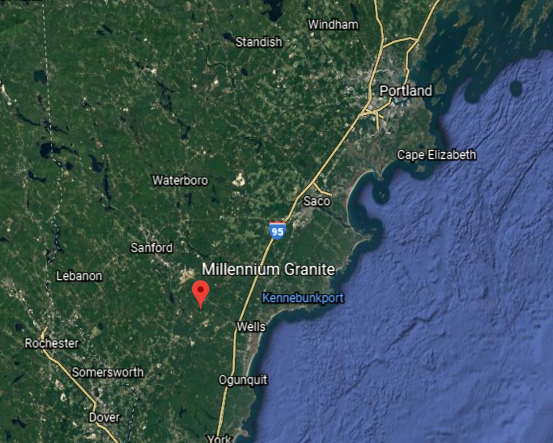
It has been mined for centuries…
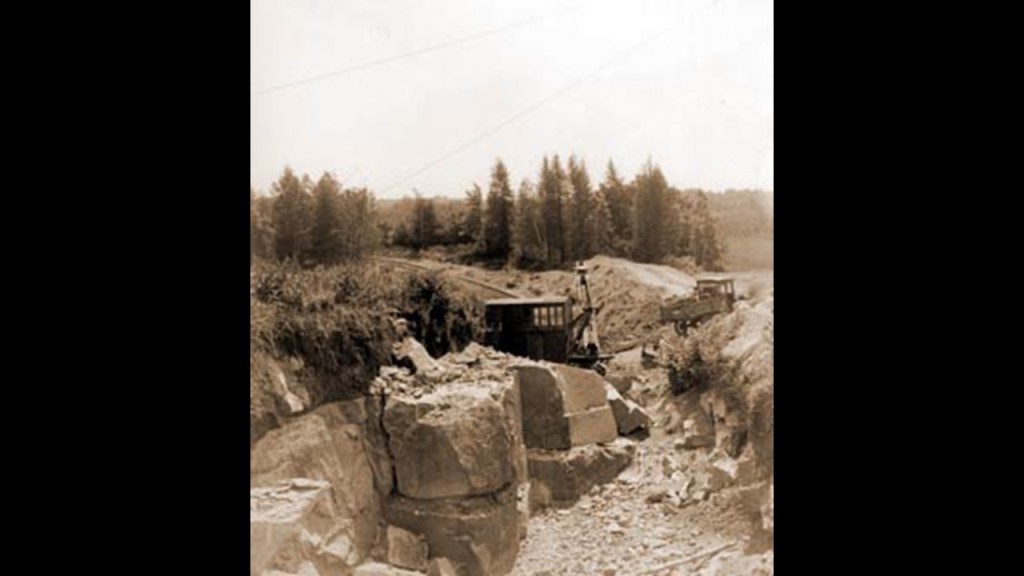
…and provides superior, soft-pink granite.
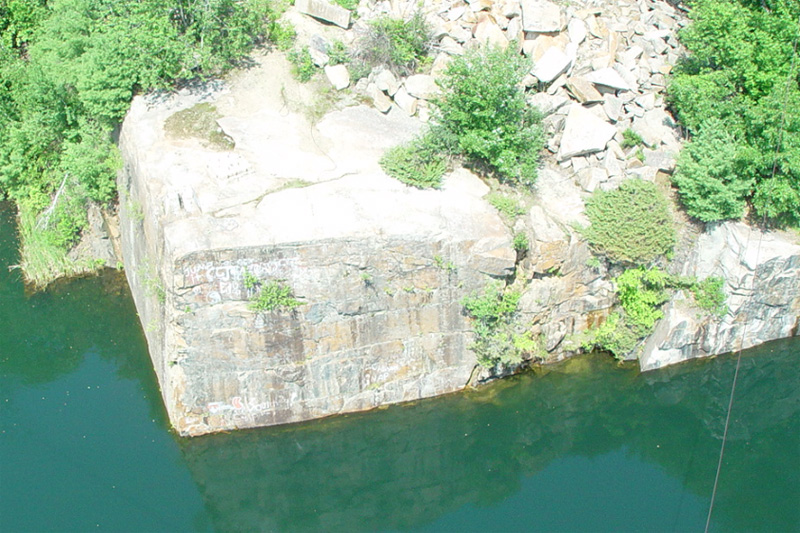
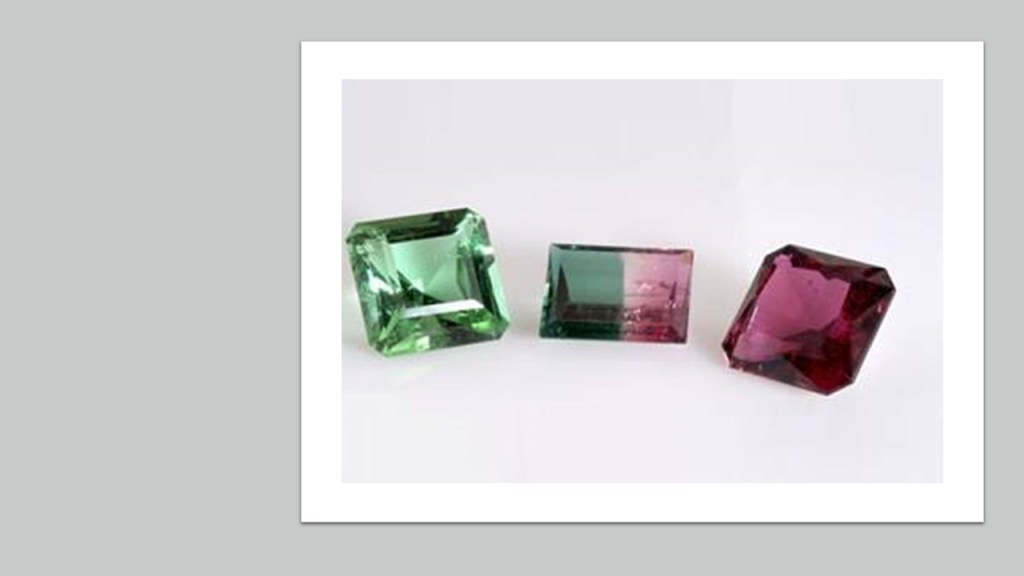
The first commercial gemstone mine was discovered in 1821 near Paris, Maine, when two young men found tourmalines that were lying on the ground, and then later the same year, gem-quality red and green tourmalines were found in a nearby rock ledge.

Many world-class tourmalines have been mined here, and is the official state gemstone.
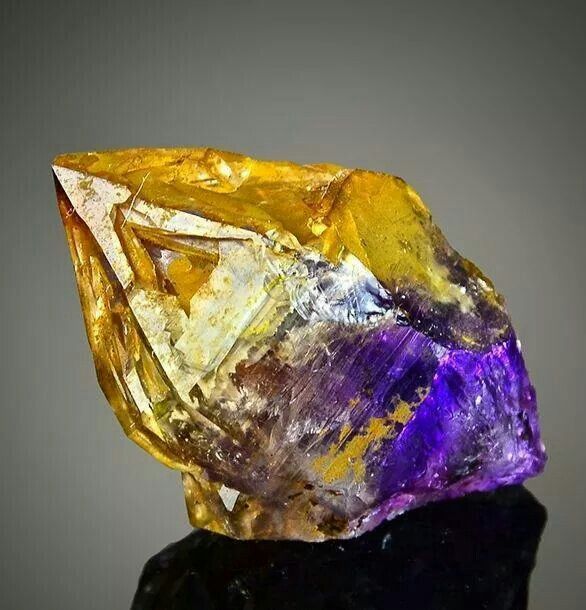
…but there are other gemstone found in Maine as well, like citrine…
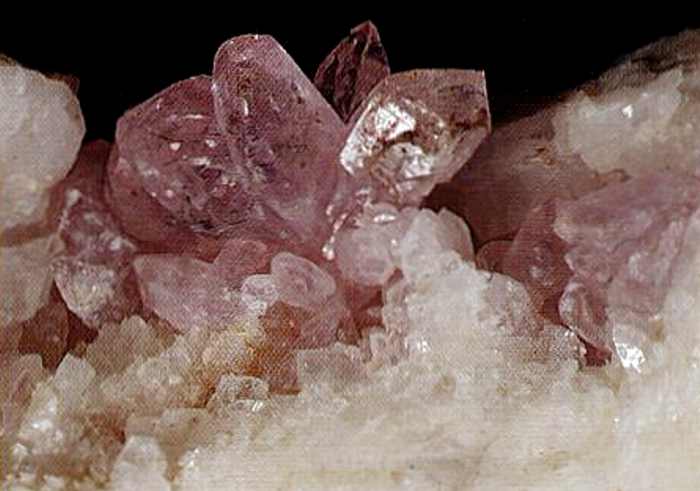
…and rose quartz, among others.
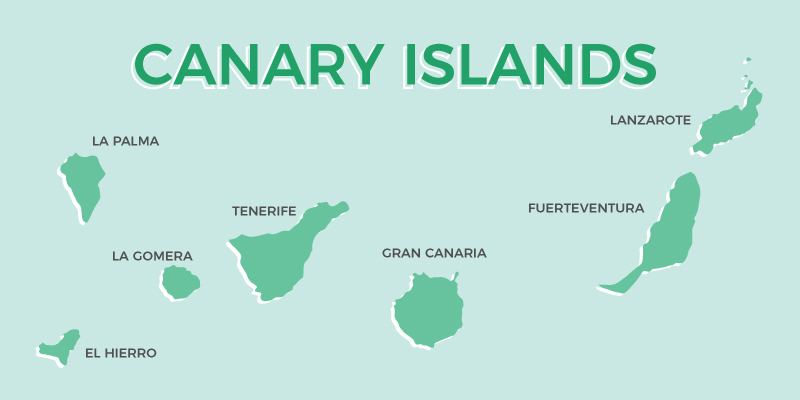
Next, we come to the Canary Islands, an island group and the southernmost autonomous community of Spain in the Atlantic Ocean.

Historically, the Canary Islands have been considered a bridge between Africa, North America, South America, and Europe.
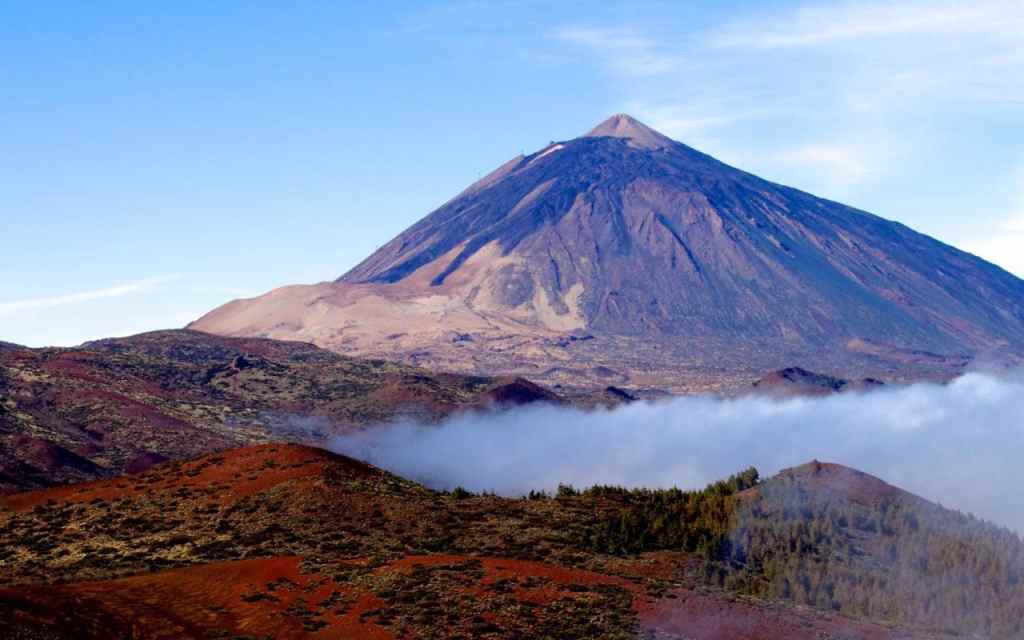
Mount Teide, a volcano on the island of Tenerife, is the highest point in Spain, and the highest point above sea-level in the islands of the Atlantic.
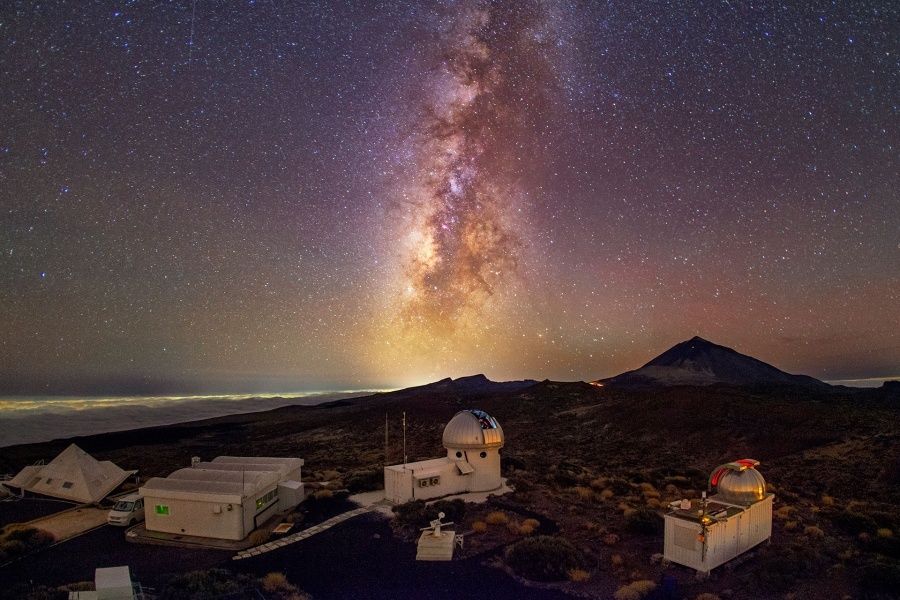
Teide Observatory , a major international astronomical observatory, is located on the slopes of the mountain.
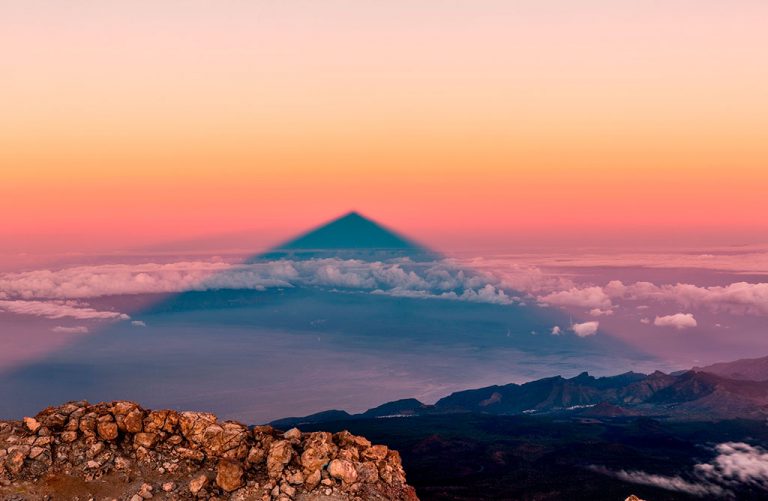
Although the peak of Teide seems to not have a completely regular shape, this is the projection of its shadow.
With regards to mining and mineral occurrences in the Canary Islands, this is what I found.

On the island of La Gomera in the Valle Gran Rey, a place where this interesting terracing is going on…
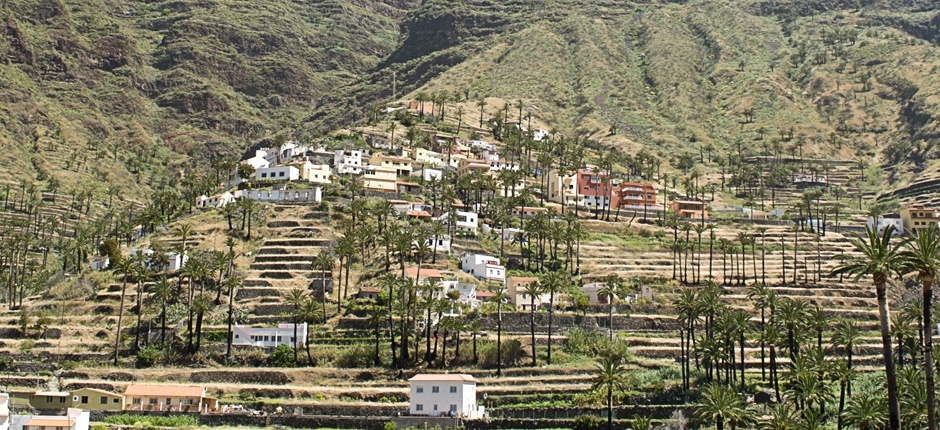
…there was a gold mine in a mountain being worked secretly…
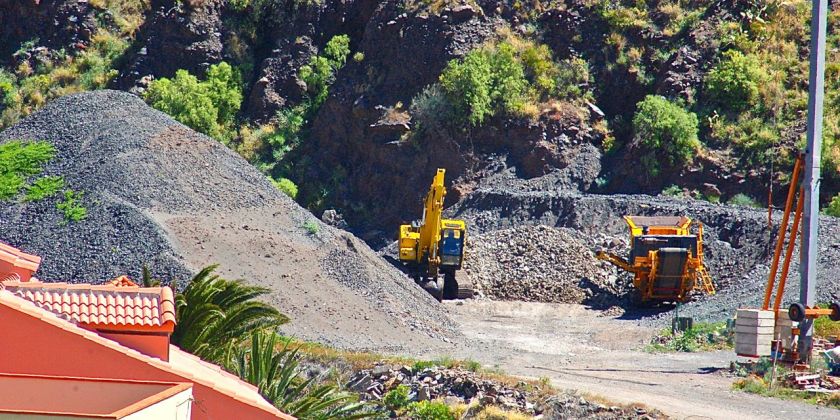
…and where there was high-quality gold to be found, with the potential for more to be discovered throughout the area.
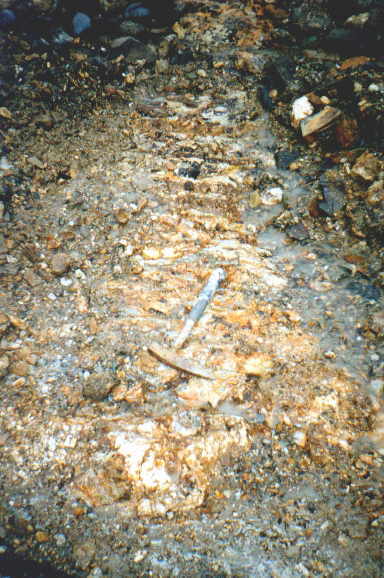
Like in the Faroe Islands in the North Atlantic between the tip of Greenland and Norway, zeolites are found in the Canary Islands.
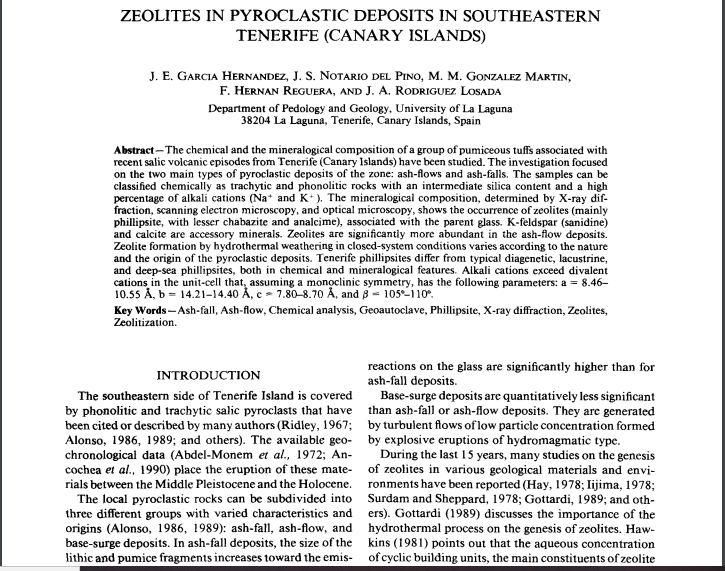
Again, zeolites are microporous, aluminosilicate minerals commonly used industrially as commercial absorbents and catalysts.
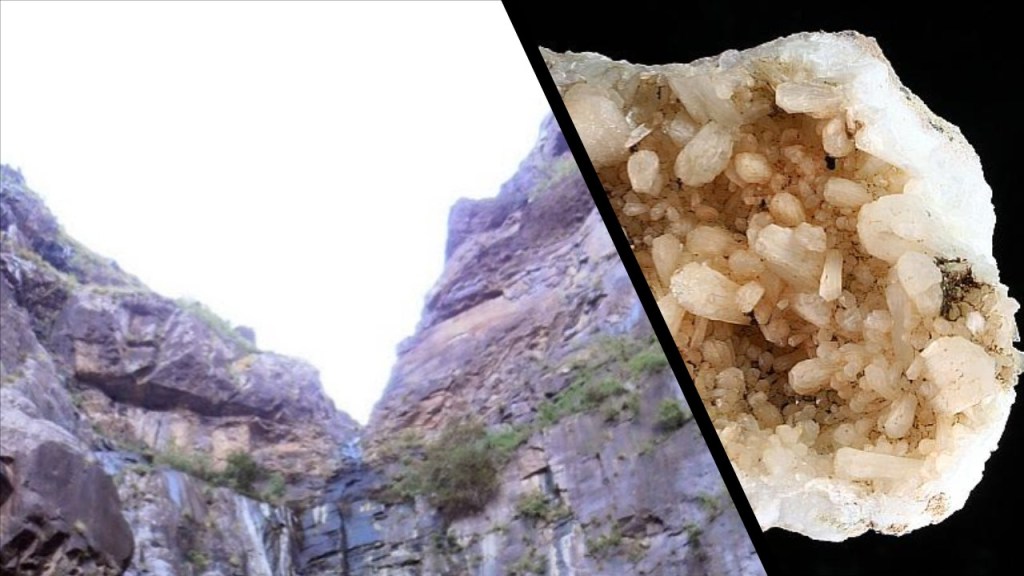
Here is an example of a Stilbite zeolite that was found on the island of Gran Canaria at the Barranco de Agaete, said to have steep walls lined with stilbite.
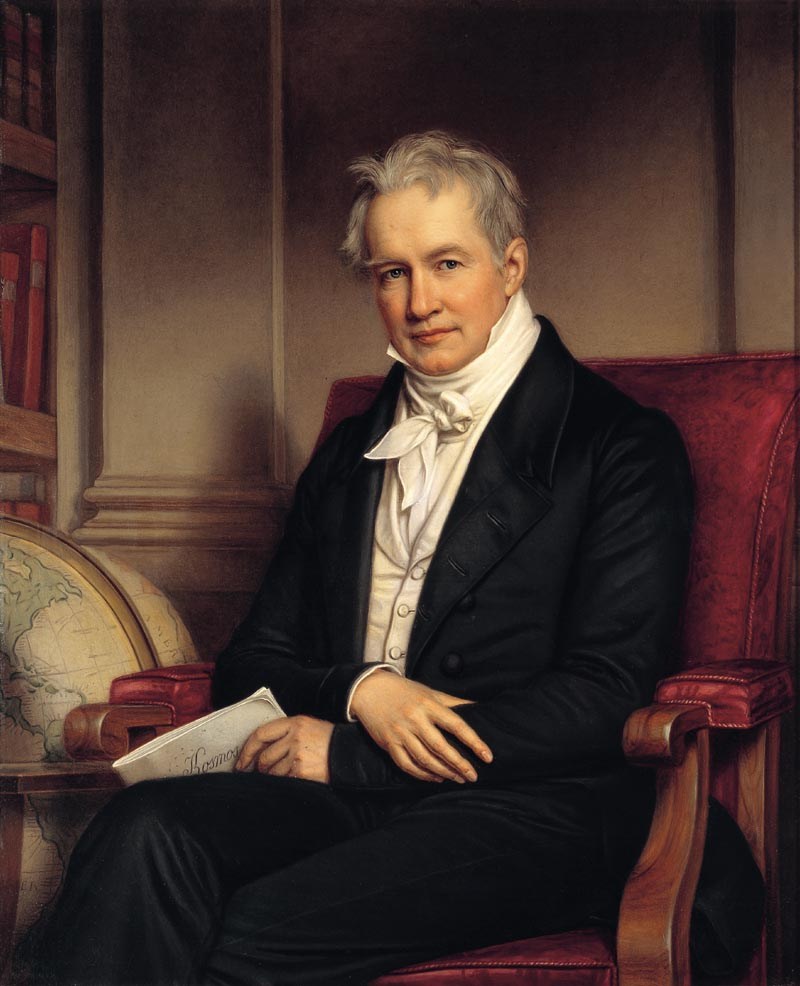
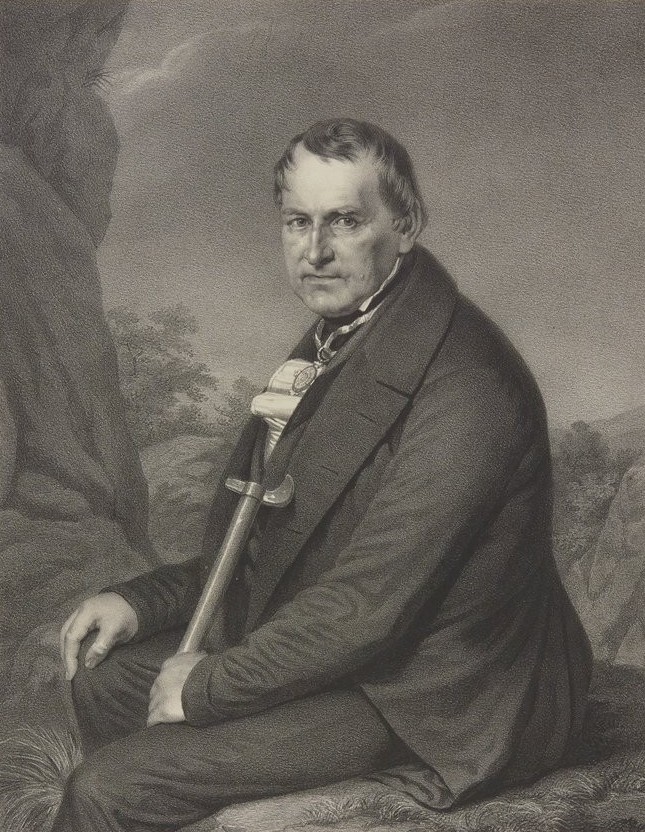
The Canary Islands are said to be of volcanic origin, and have been visited by researchers from the very beginning of the 19th-century, including Alexander von Humboldt in 1799, a Prussian naturalist and explorer, who was said to have climbed the Teide volcano, before heading off to study Venezuela…
…and in 1815, the German geologist and paleontologist Leopold von Buch visited the Canary Islands, where he primarily studied the production and activities of volcanoes.
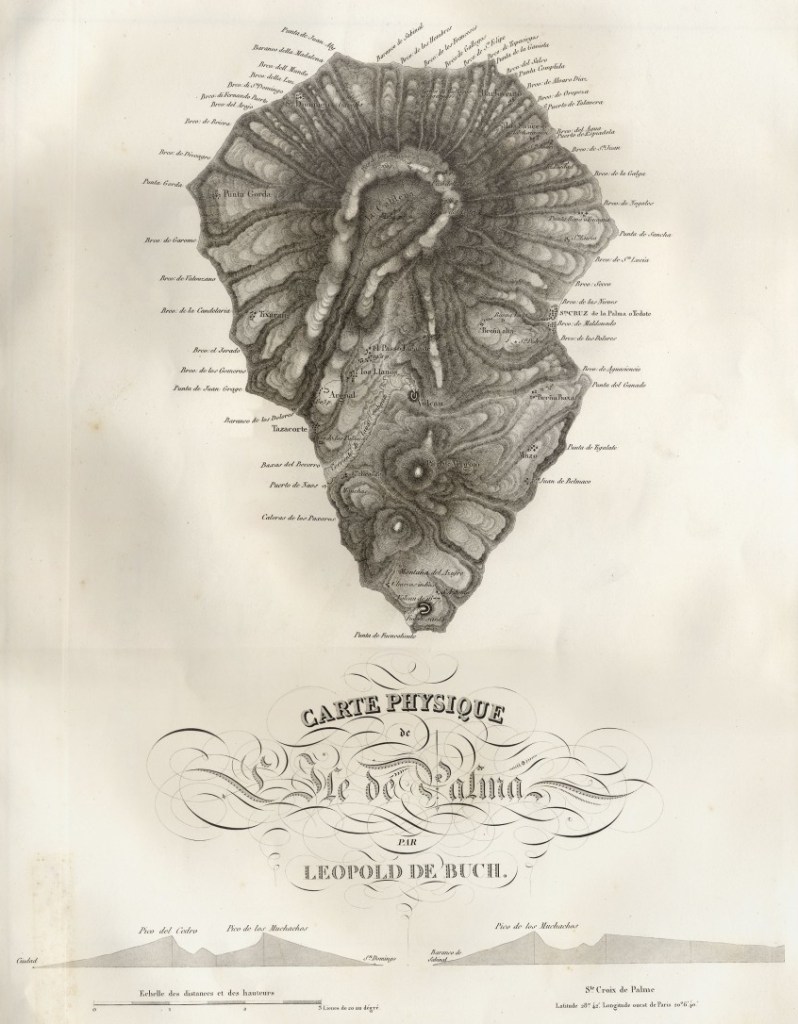
Von Buch studied with Alexander von Humboldt at the Freiburg School of Mining, and was considered a founder of modern geology.
The next place on the alignment we come to is Laayoune, the capital of Western Sahara.

Western Sahara is a disputed territory, and classified as a non-self-governing territory by the U.N.
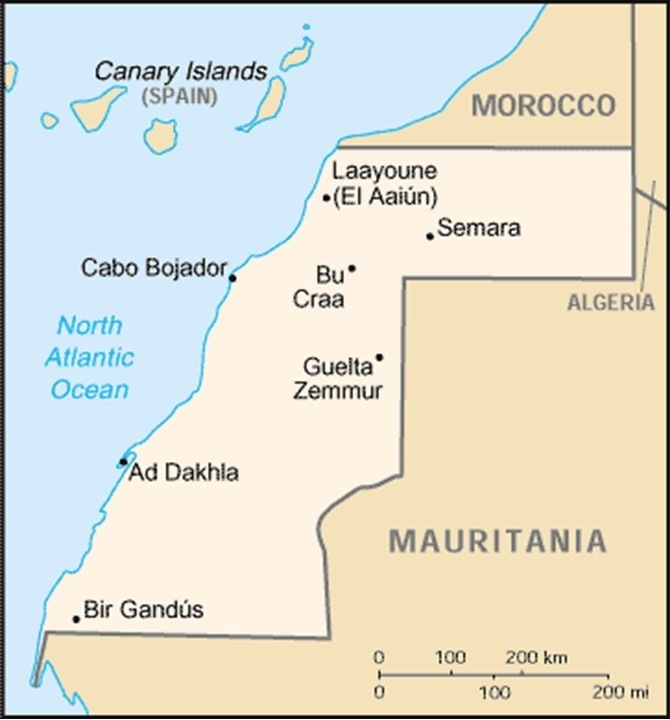
It is claimed by, and de facto administered by Morocco, in on-going dispute with the native inhabitants, the Sahrawis, who want self-governance.
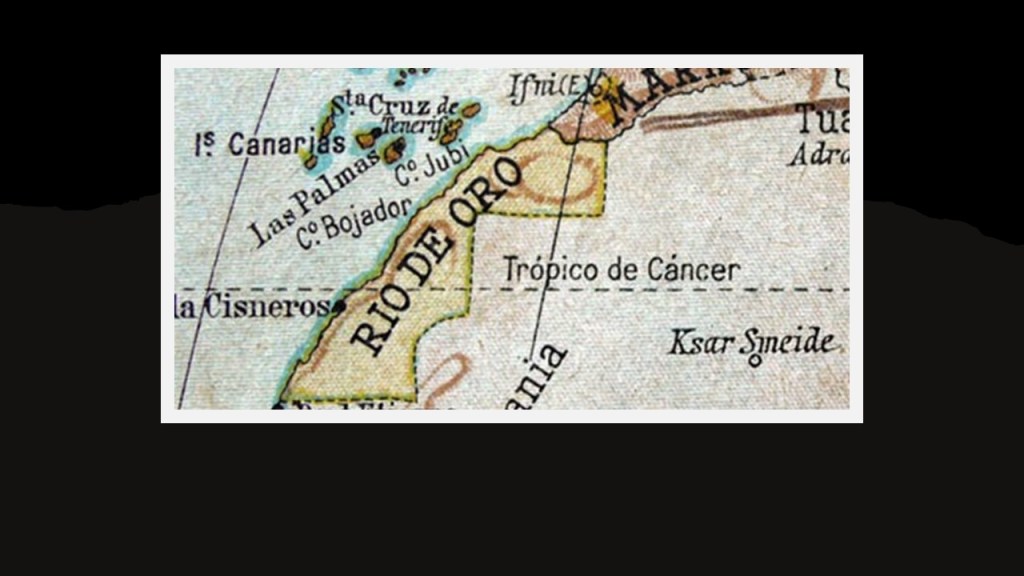
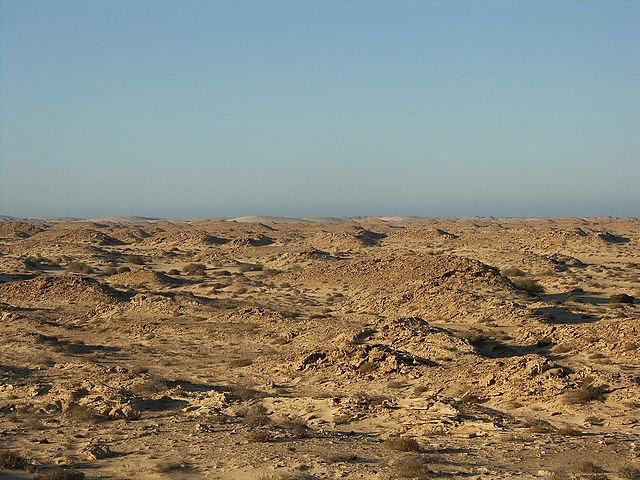
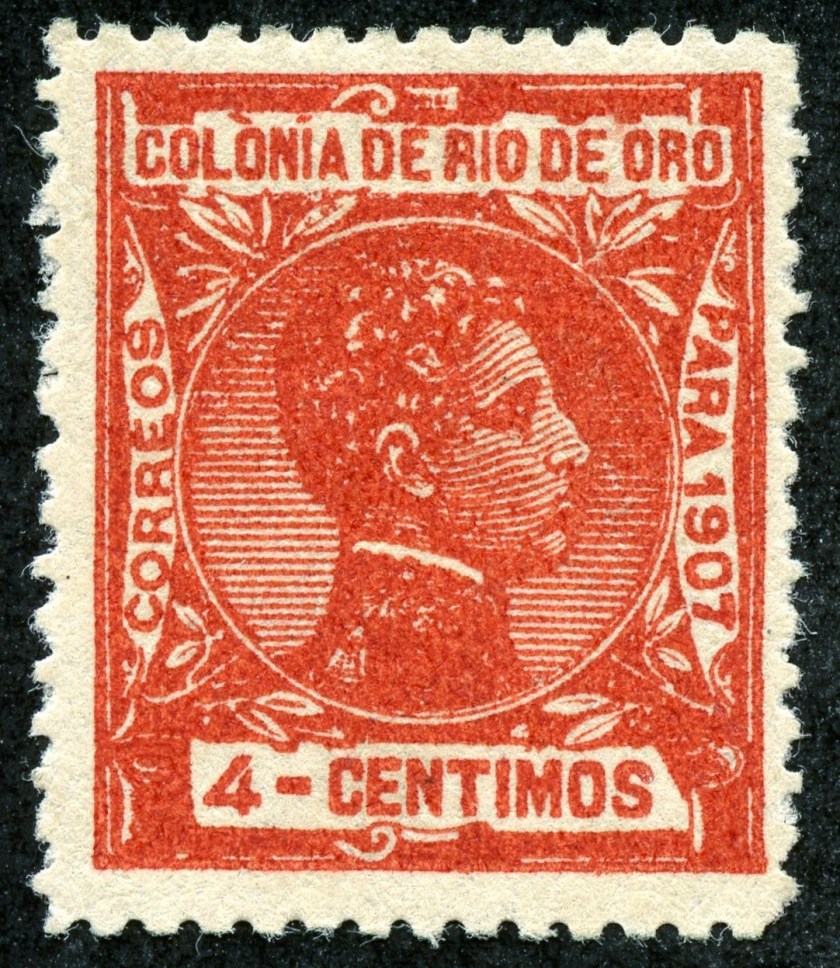
The Western Sahara is composed of the geographic regions that include Rio de Oro (meaning “River of Gold” in Spanish).
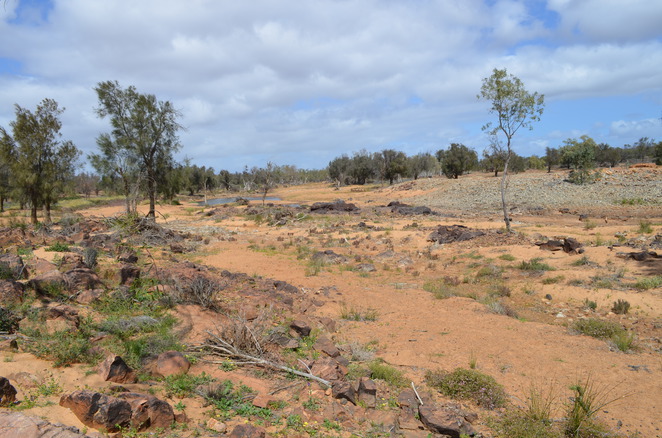
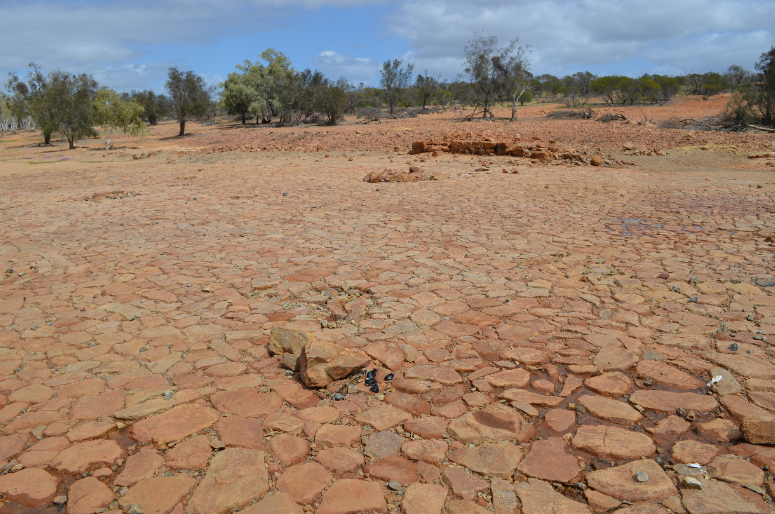
This is what the landscape there looks like today.
We are told that Rio de Oro became a Spanish protectorate in 1884 as a result of the Berlin Conference.
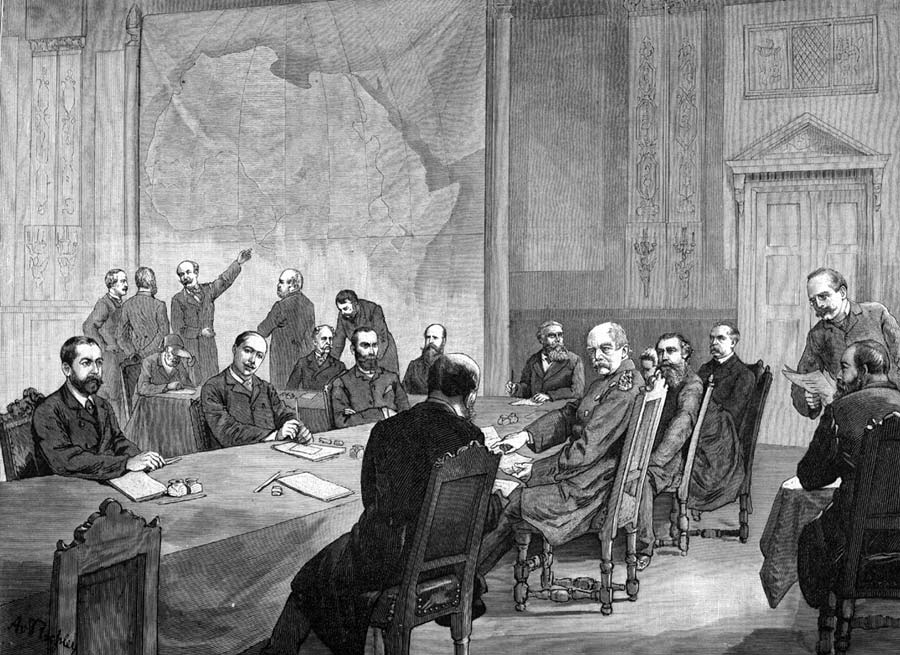
The Berlin Conference of 1884 – 1885 was organized by the German Chancellor Otto von Bismarck, and regulated European colonization and trade in Africa during the New Imperialism period, and coincided with Germany’s sudden appearance as an imperial power.
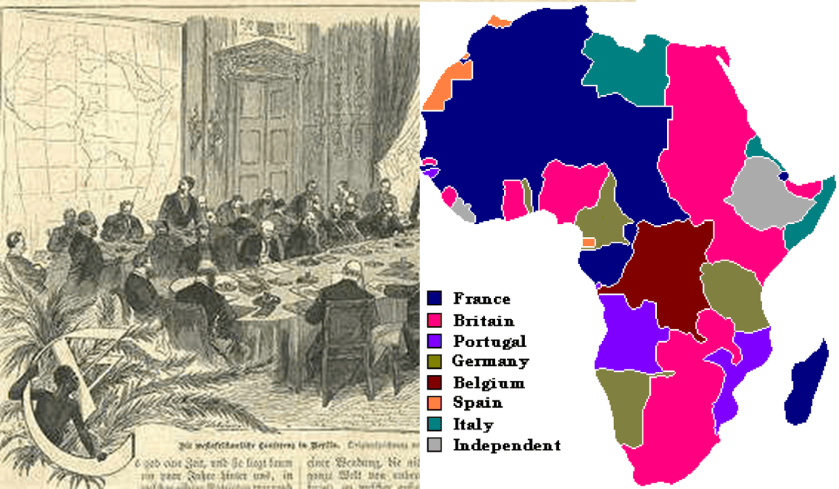
The outcome of the “General Act of the Berlin Conference” can be seen as the formalization of the “Scramble for Africa,” also known as the “Partition of Africa” or the “Conquest of Africa,” was the invasion, occupation, and division of African territory by European powers during the New Imperialism period between 1884 and 1914, the year in which World War I started.
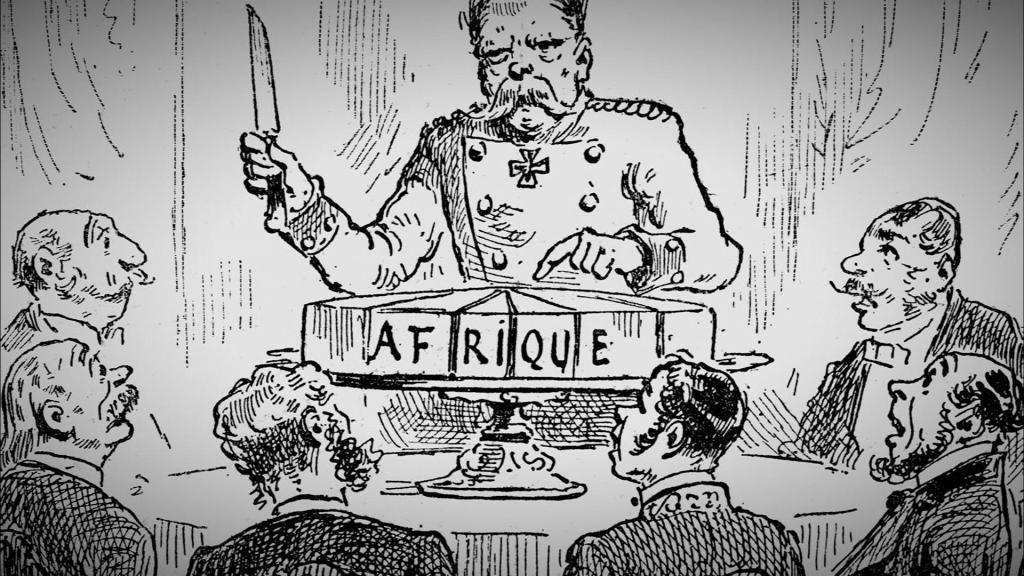
The period of history known as New Imperialism is characterized as a period of colonial expansion by European powers, the United States, and Japan during the late 1800s and early 1900s.
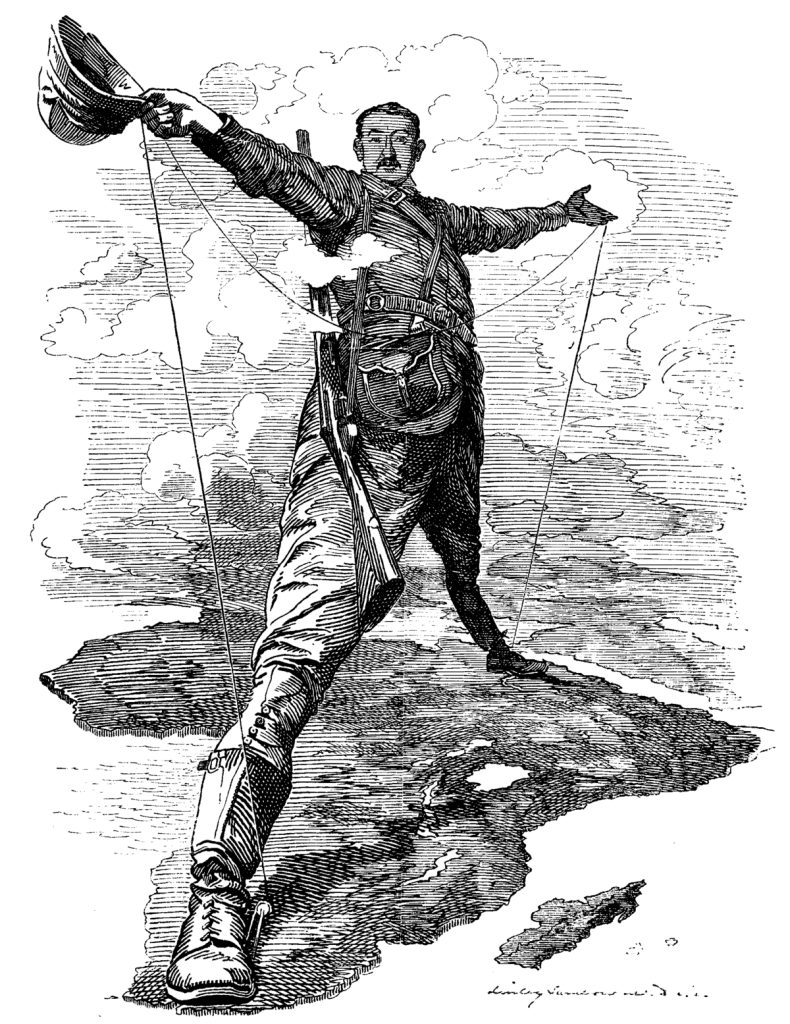
I am sure this was a motive…
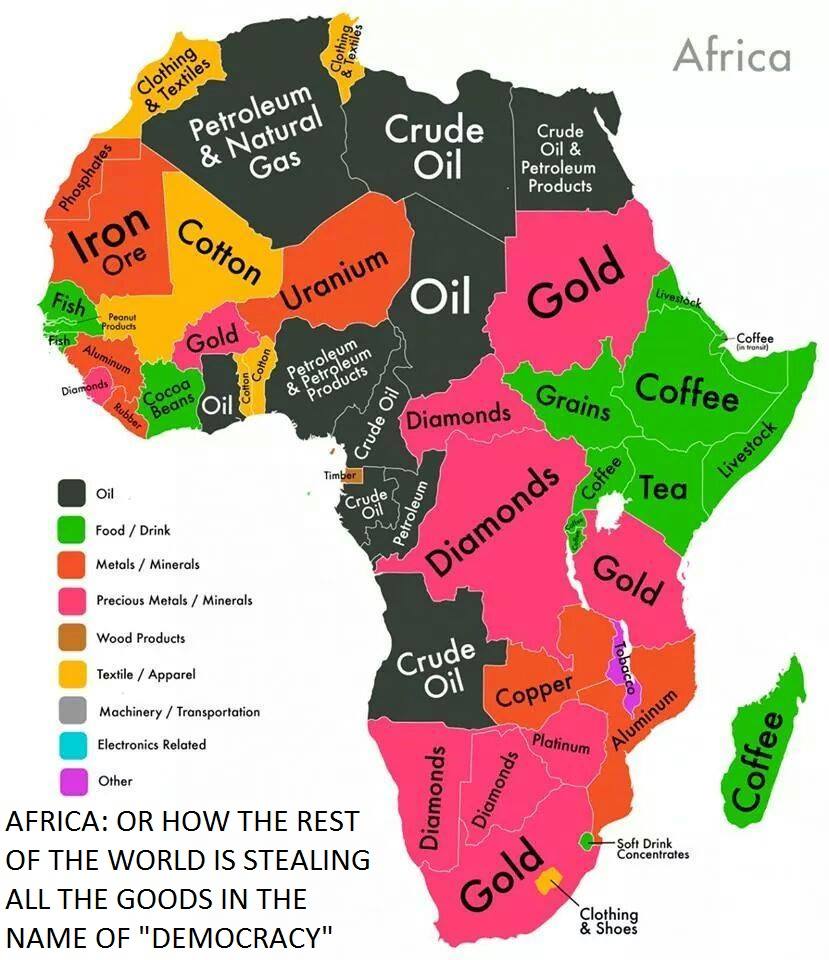
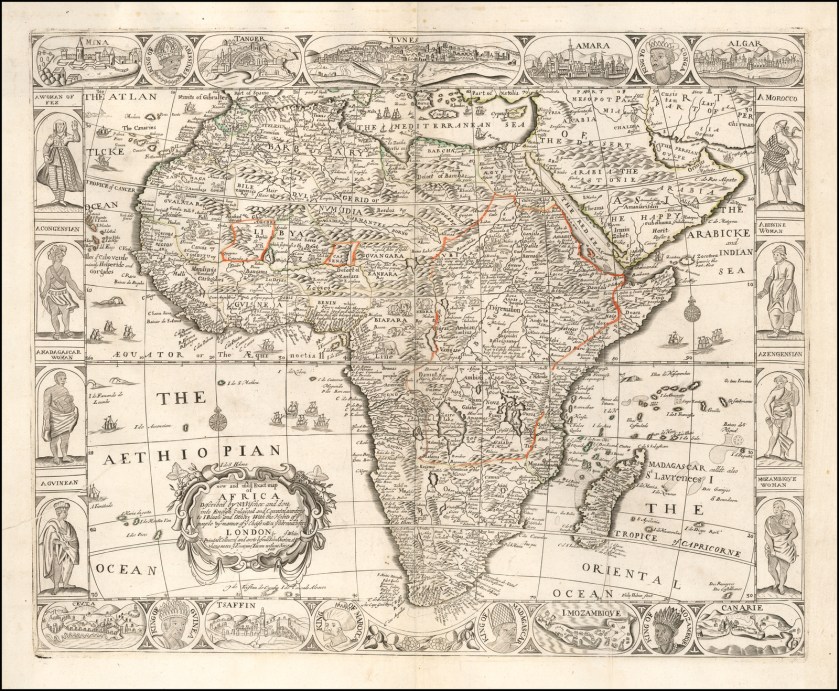
…but there was also a rich and proud heritage of Africa and its people that has been removed from the collective awareness that was replaced with something quite different from what it originally was.
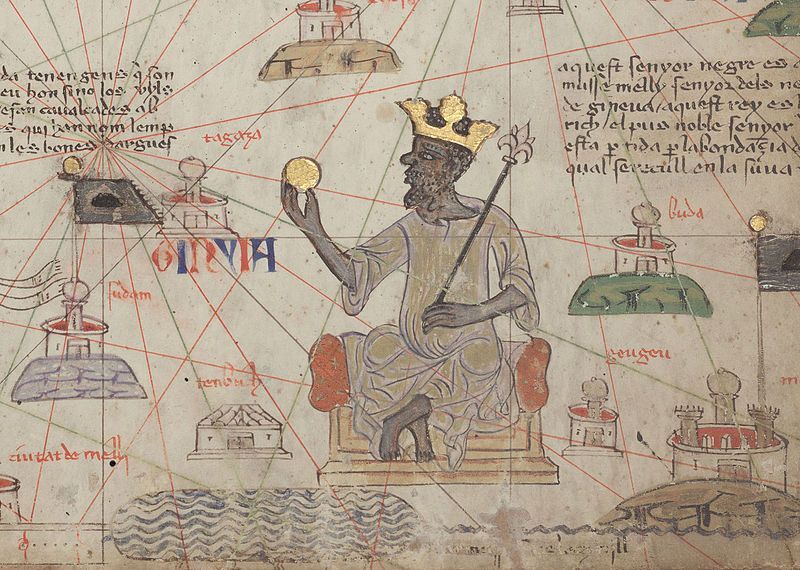
Mansa Musa, the King of Mali between 1312 and 1337….but has the general population ever heard of him?

Mansa Musa was one of the richest men in World history, if not the richest. One of his titles was “Lord of the Mines of Wangara.”

During his reign, Mali may have been the largest producer in the world of gold.

Does this immense wealth fit the historical narrative we have been given about this part of the world?
At any rate, Laayoune is said to have been founded in 1938, and is a hub for phosphate mining in the region.
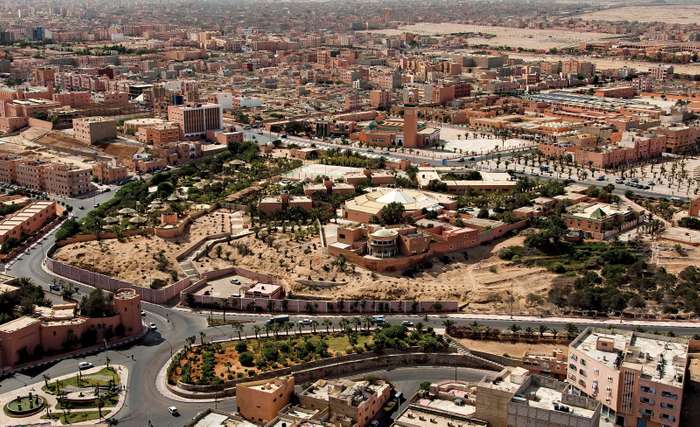
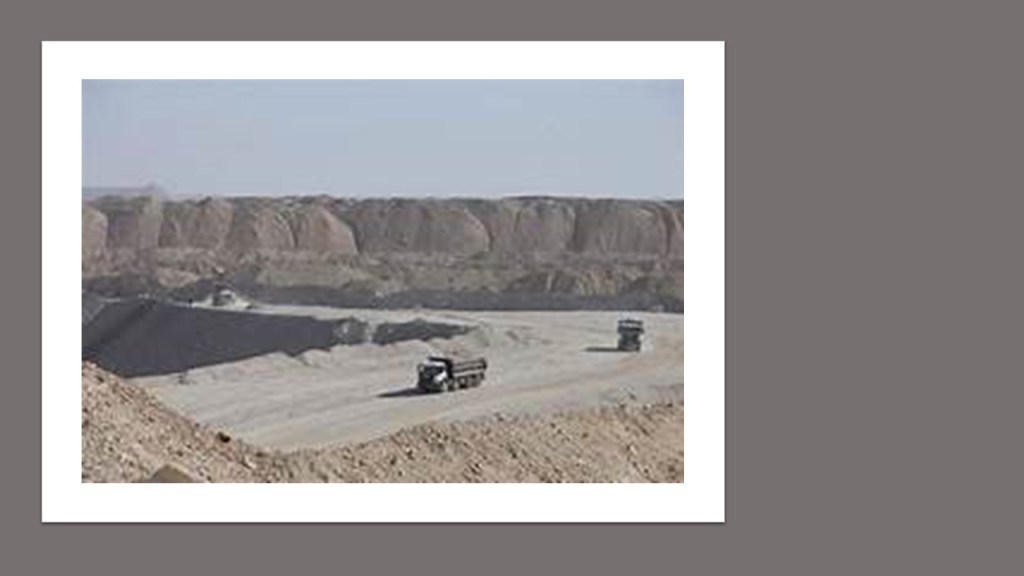
Vast phosphate deposits are mined at Bu Craa, southeast of Laayoune, where abundant, pure phosphate deposits lie near the surface.
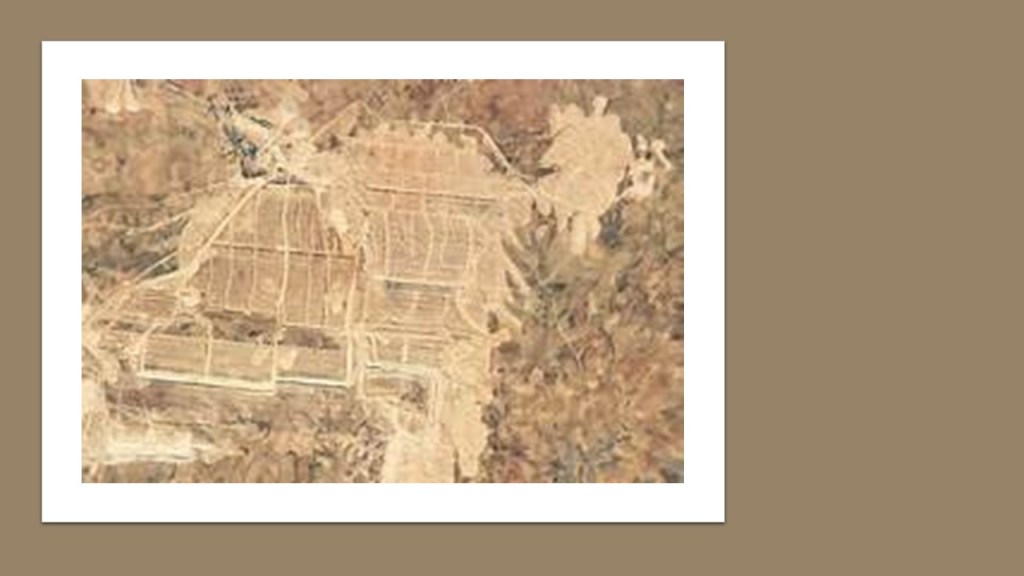
It produces about 2.5 million tons of phosphates each year.
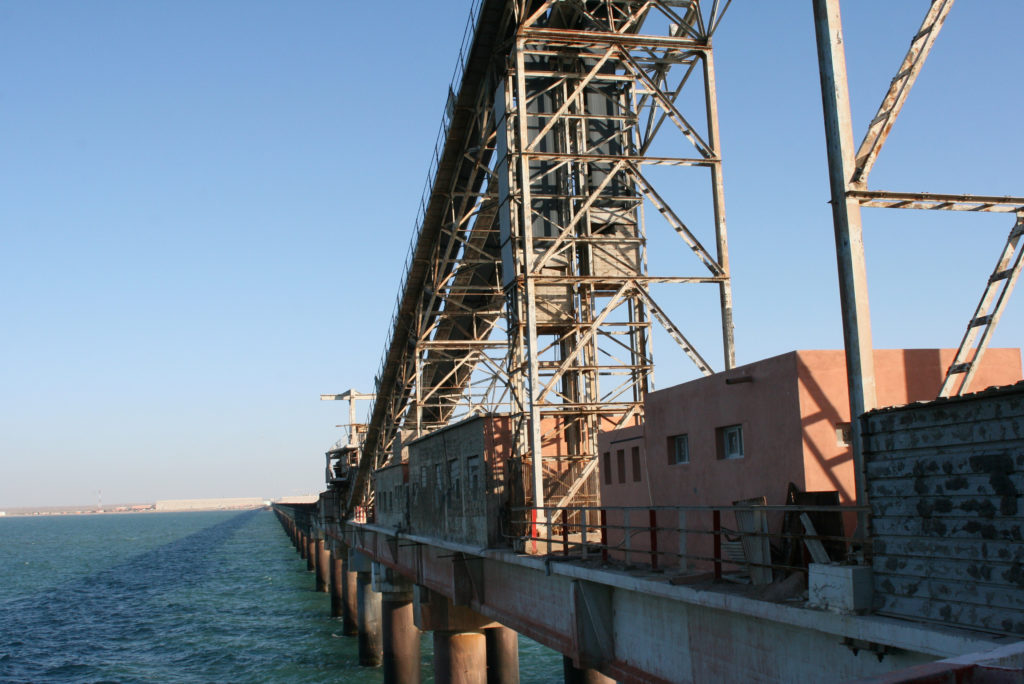
Aided by the longest conveyor belt in the world, which travels 61-miles, or 98-kilometers, phosphates are shipped from Bu Craa to Laayoune…
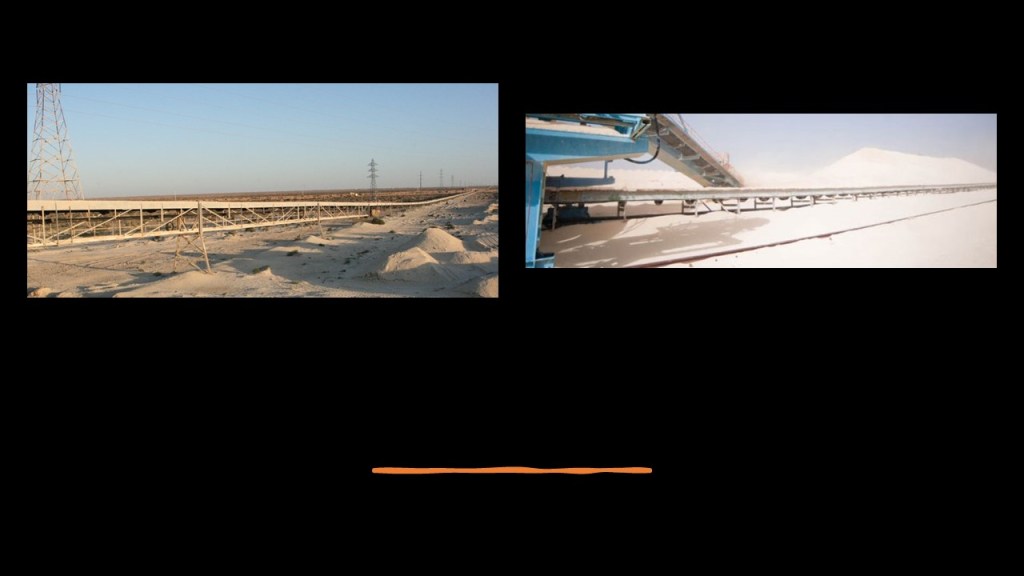
…where ships transport it around the world.

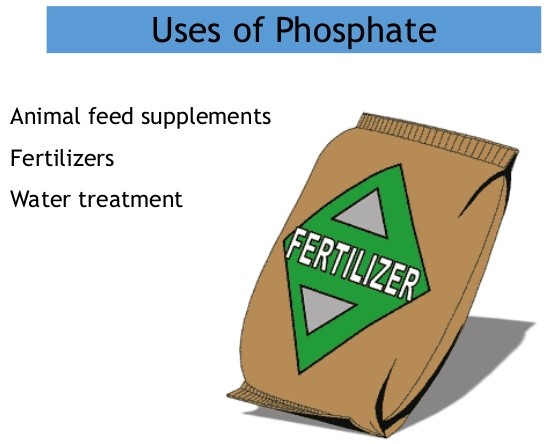
Phosphate, a form of the chemical element of phosphorus, and along with nitrogen, is a necessary component of the synthetic fertilizer needed for the world’s agricultural sector.
Abalessa, in Algeria’s Tamanrasset Province in southern Algeria, is the next place we come to on this alignment.
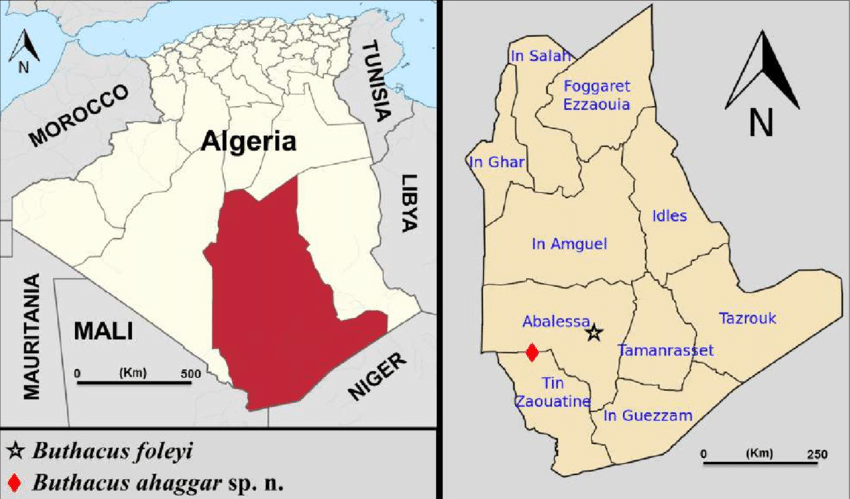
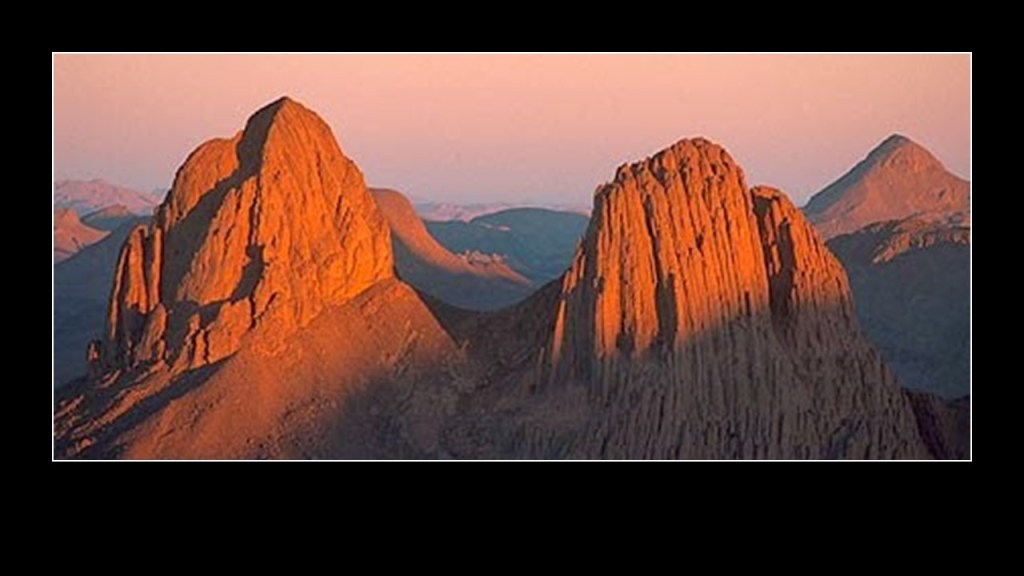
It is the former capital of the Ahaggar, or Hoggar, Mountains, a highland region in the central Sahara, along the Tropic of Cancer.
Abalessa is famous for the Tin Hinan Tomb, the 1,500-year-old monumental grave, we are told, built for the Tuareg matriarch, Tin Hinan.
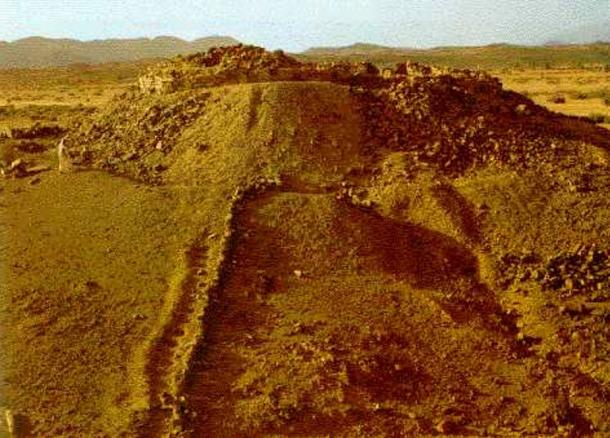
She was believed to have lived between the 4th and 5th centuries A.D.
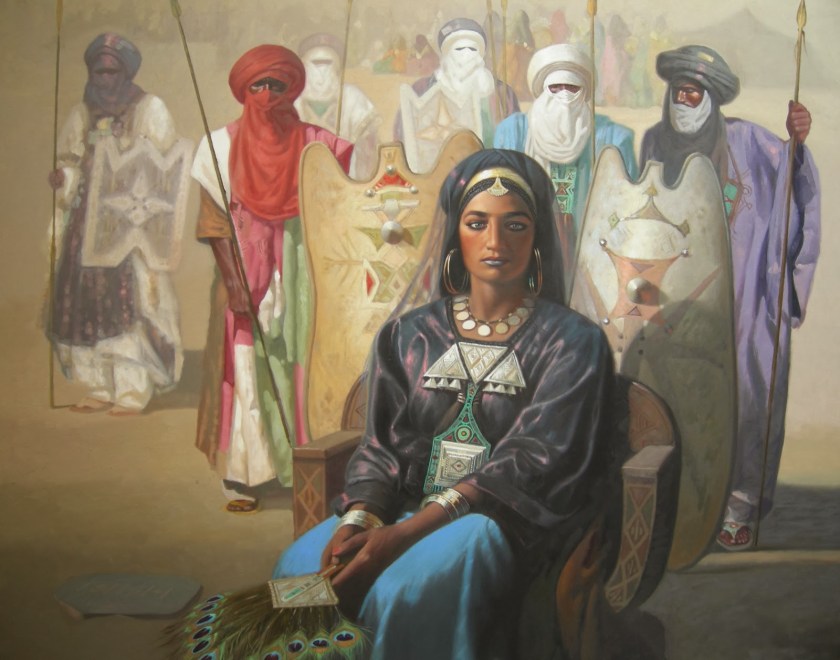
Women have a high status in the matriarchal and ancient Tuareg society. Among other things, primarily women own livestock, and other movable property, while personal property can be inherited by both women and men.

The Tuareg Shield, from which are told the Ahaggar Mountains were formed, is a host for world-class gold deposits, with at least 600 gold occurrences having been identified…
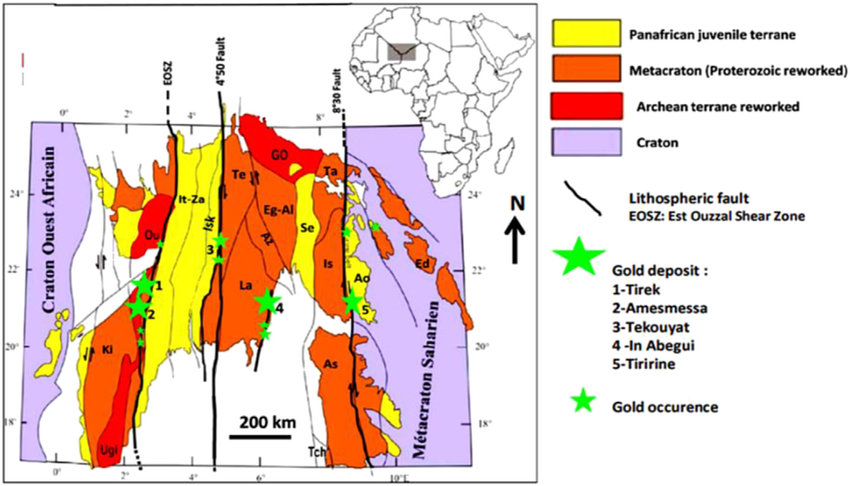
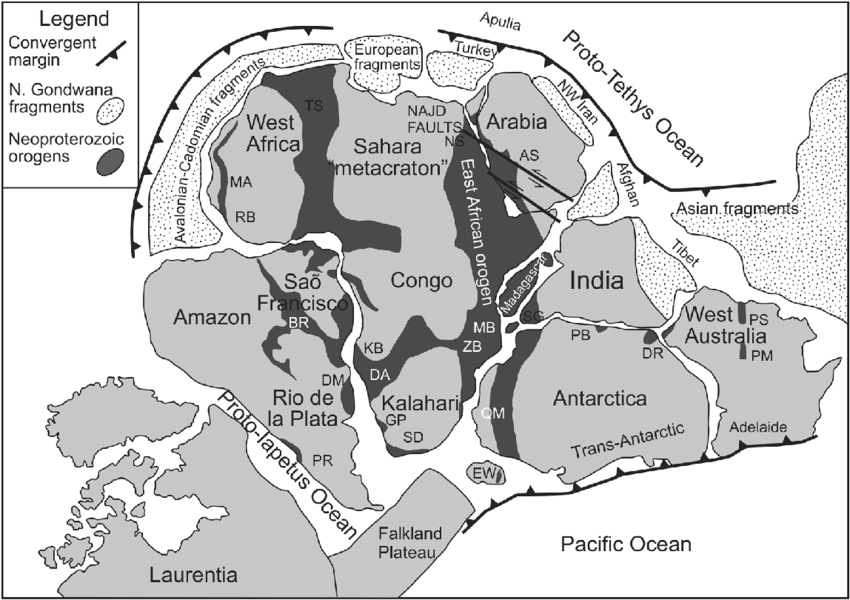
…and is part of the 3,000-kilometer, or 1864-mile, long Pan-African, Trans-Saharan belt that was believed by some geologists to have been one of the most important orogenic systems leading to the formation of the Gondwana Supercontinent.

Orogenic means events that cause distinctive structural phenomena related to tectonic activity, affecting rocks and crusts in particular region, happening within a specific period, in this case said to have been during the end of the Neoproterozoic era, the unit of geological time said to have been between 1,000-million years ago, and 541-million years ago.
Next we come to Bilma, an oasis town in east Niger…
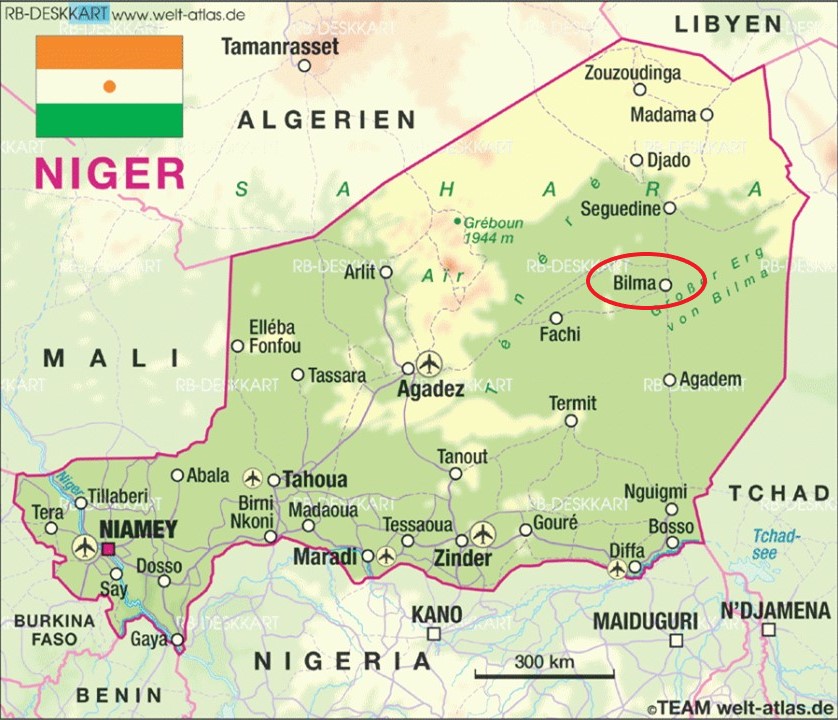
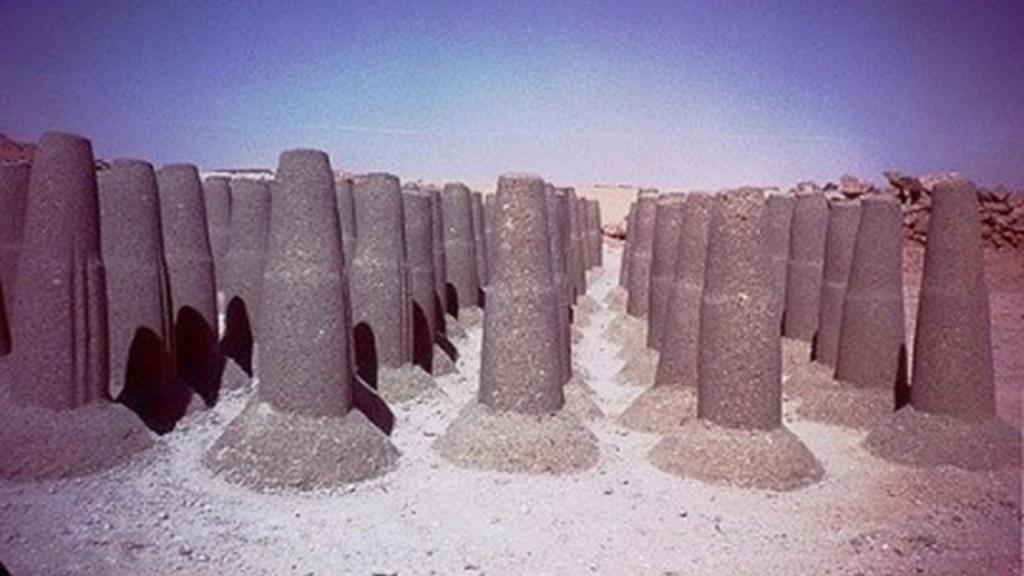
…known for its salt and natron production through the salt pans there…
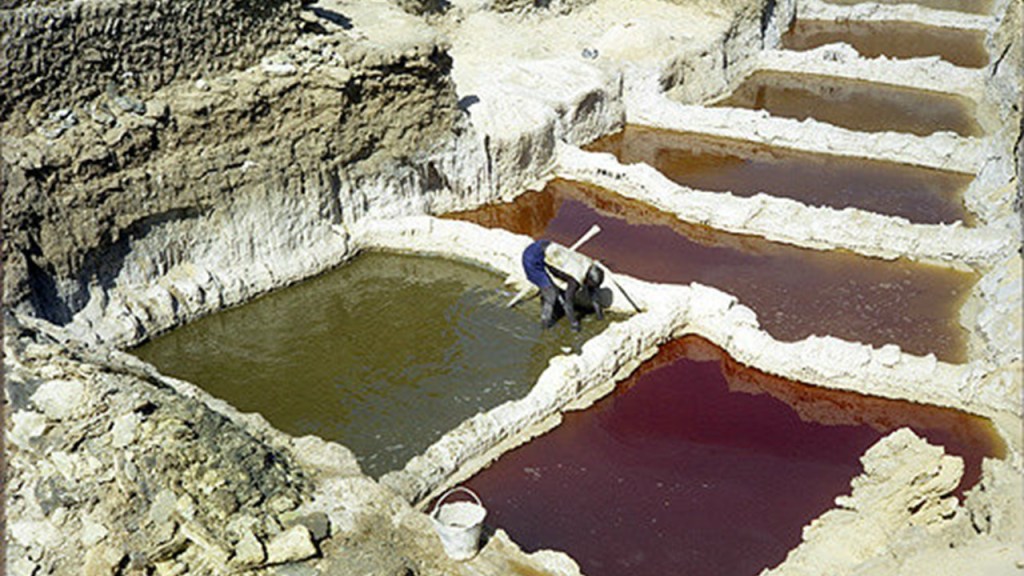
…and from which salt cones are made, sold for livestock use throughout western Africa.
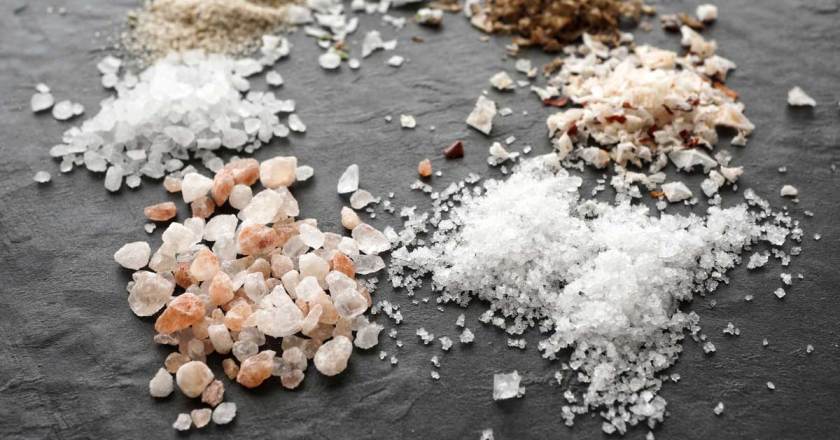
Salt is a crystalline compound of sodium chloride and widely used, for example, for seasoning food and in food preservation…
…and natron, a sodium bicarbonate component of salt, and historically used as well as a cleaning product for home and body.
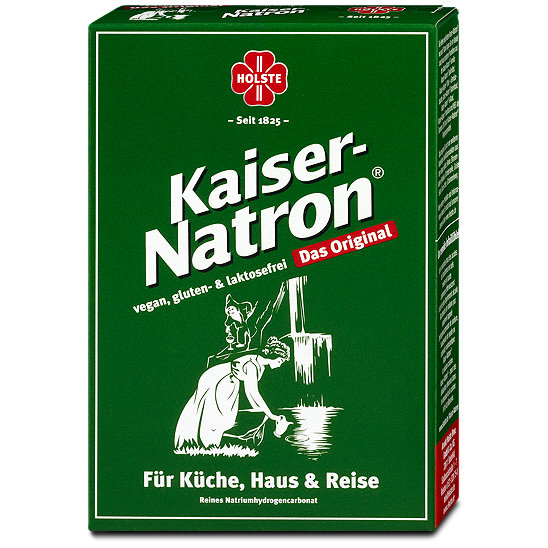
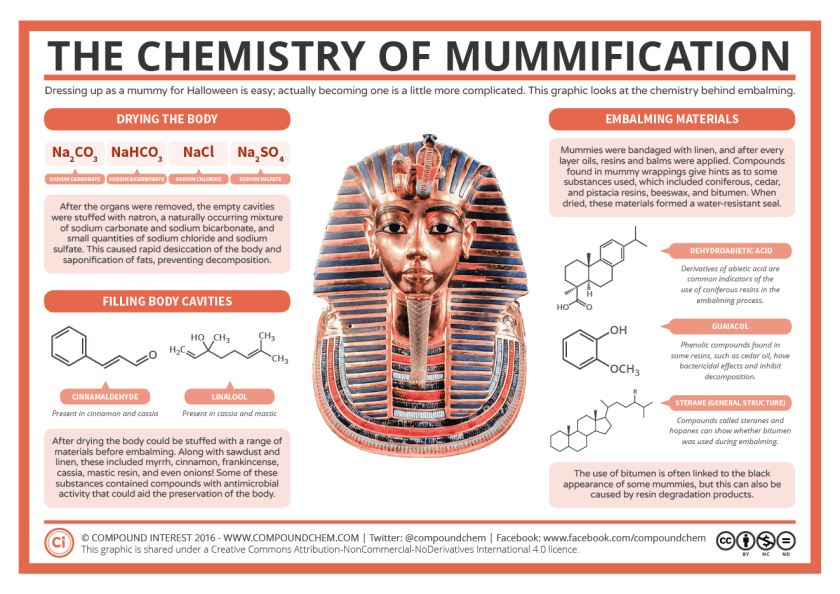
Natron refers to Wadi el Natrun, or Natron Valley, in Egypt, from which natron was mined by the ancient Egyptians…
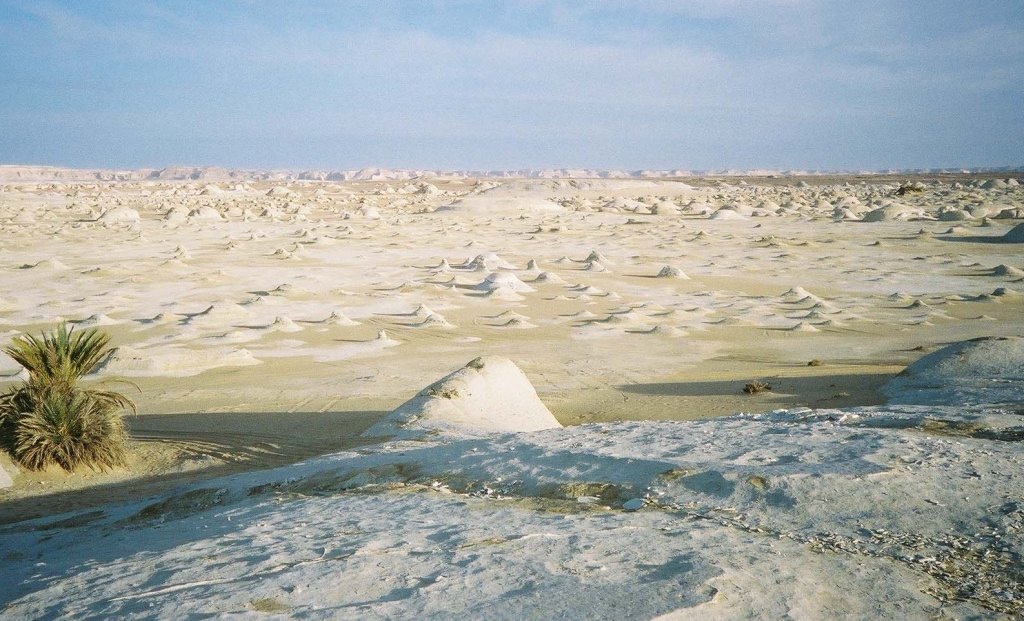
…for the burial rites of mummification.
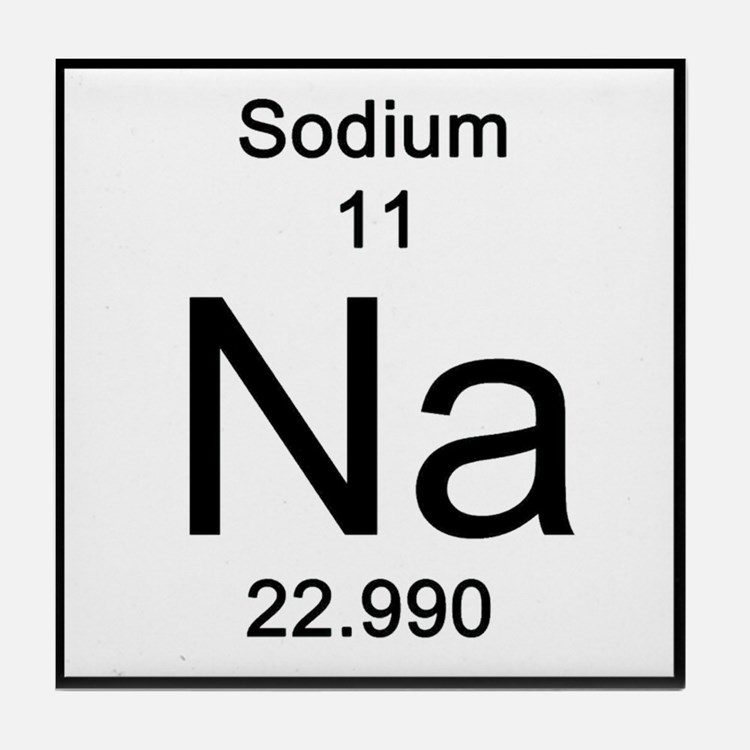
The symbol for the chemical element sodium is “Na” was derived from natron, and its atomic number is 11.
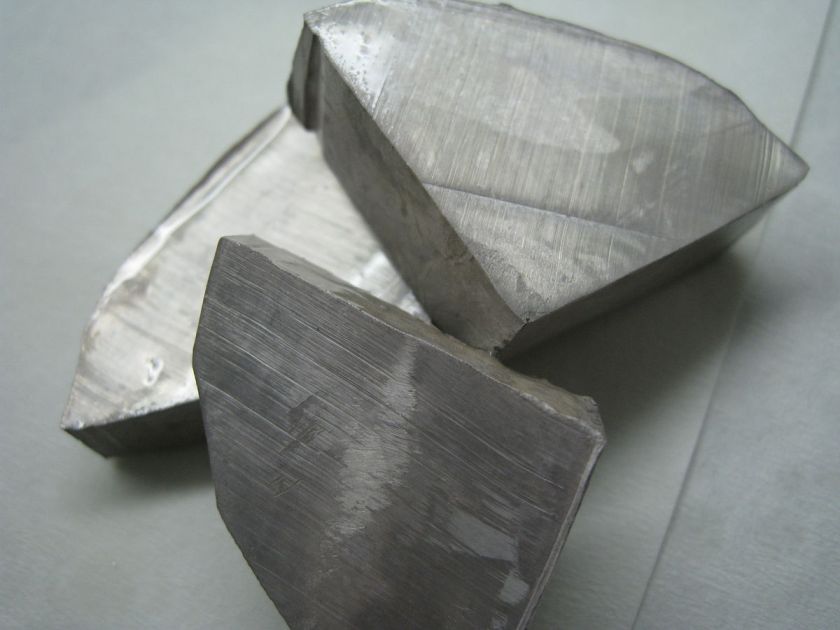
Sodium is a soft, silvery-white, highly-reactive metal, however, the free metal does not occur in nature and must be prepared from compounds.
Sodium is an essential element for all animals and some plants.

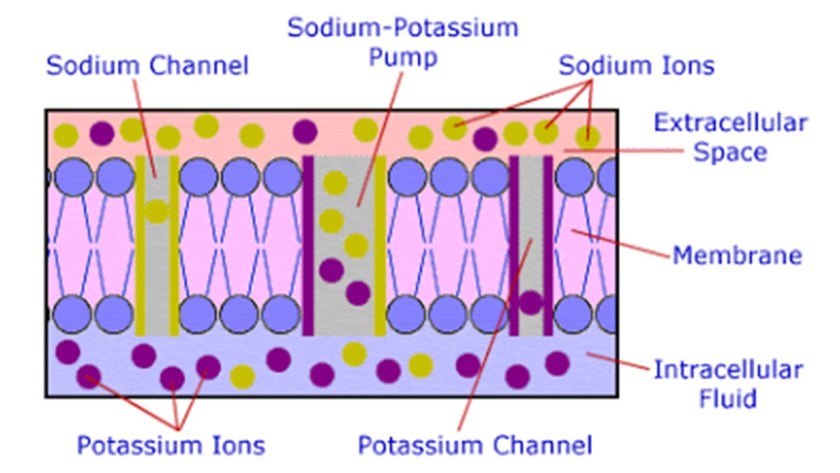
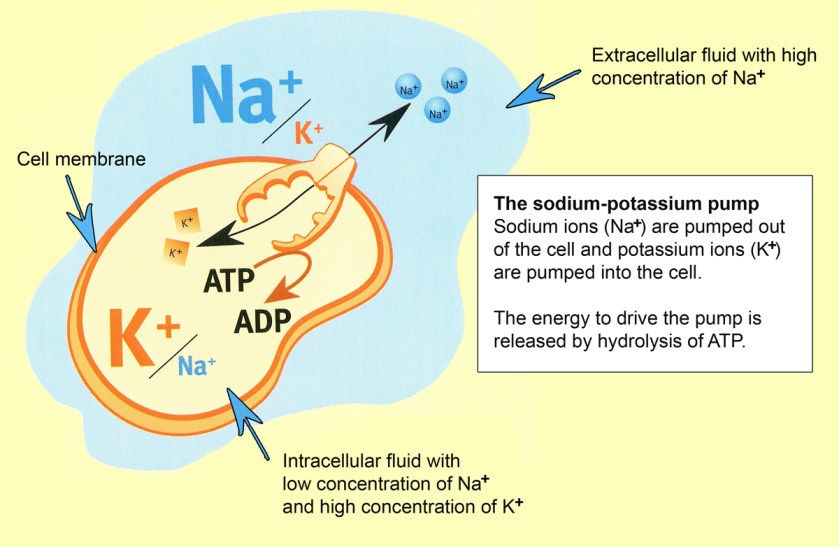
By means of the sodium-potassium pump, living human cells pump three sodium ions out of the cell in exchange for two potassium ions pumped in.

In nerve cells, the electrical charge across the cell membrane enables transmission of the nerve impulse – an action process – when the charge dissipates, and sodium plays a key role in this.
One more thing before moving from here is that Bilma is primarily inhabited by the Kanuri people.
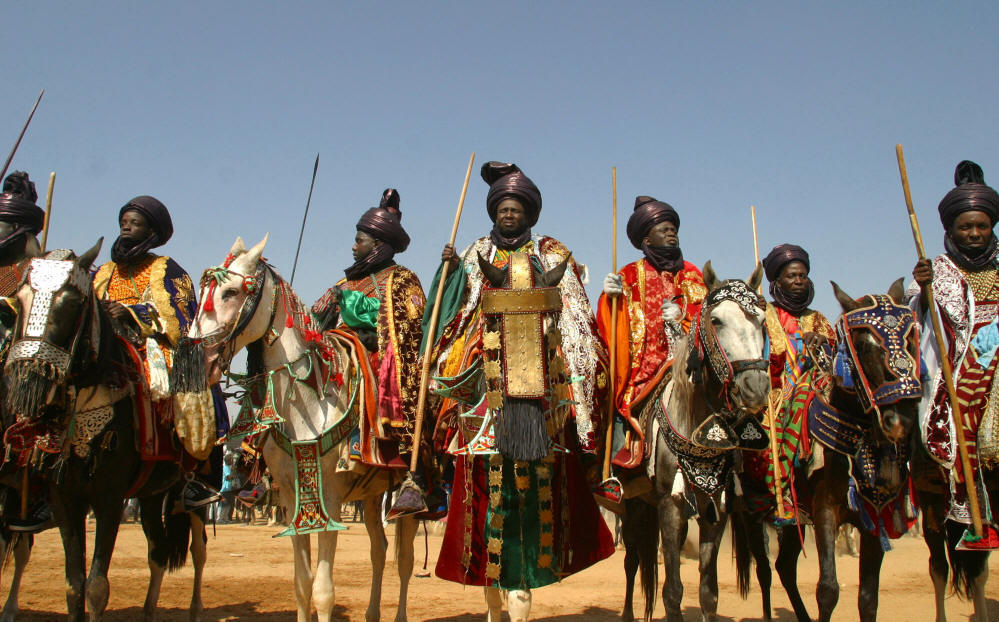
The Kanuri people are described as the  African people that founded the powerful pre-colonial Kanem-Borno Empire.
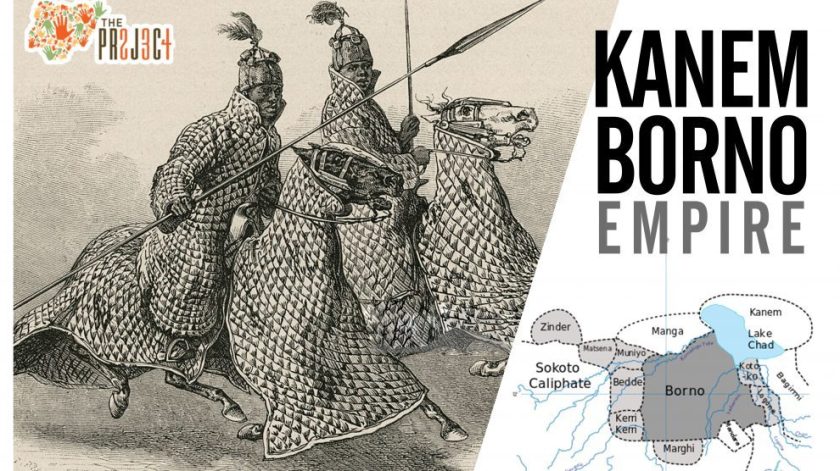
The Kanem Empire was said to have existed from 730 AD to 1380 AD…
…and then continued as the Bornu Empire until 1900.

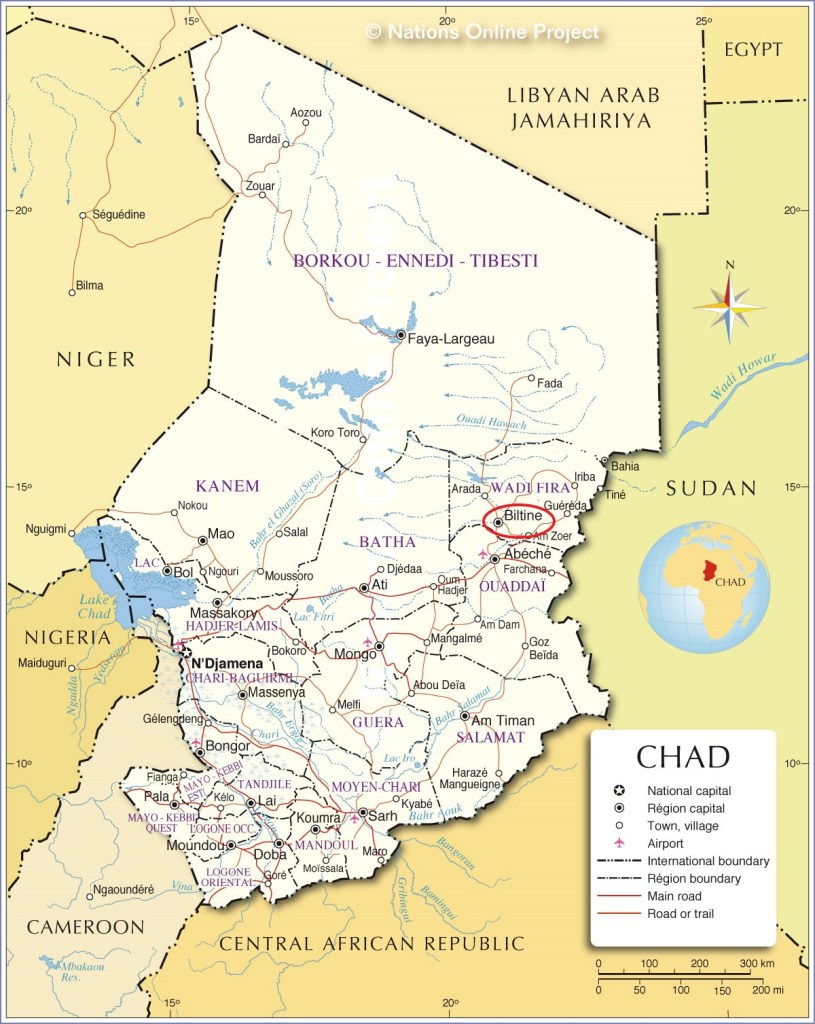
The next place on the alignment is Biltine, the capital of the Wadi Fira region of Chad, formerly known as the Biltine Prefecture.

Chad is a land-locked country in north-central Africa.
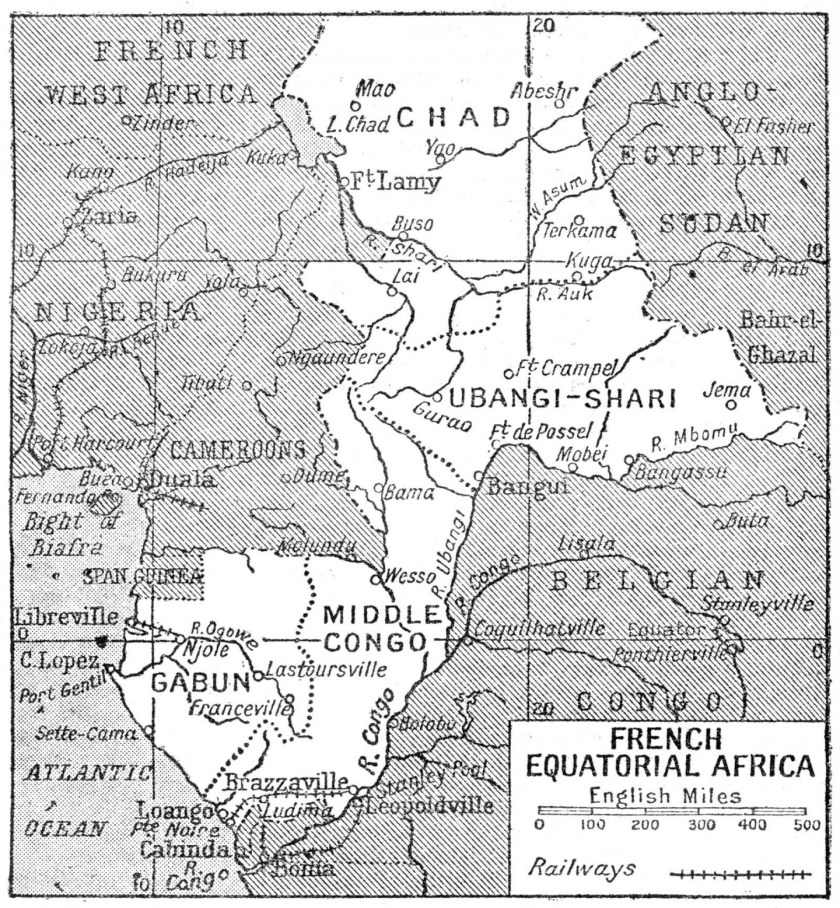
France conquered the territory in 1920, and incorporated it as part of French Equatorial Africa, a French colonial empire that lasted from 1900 until 1960.
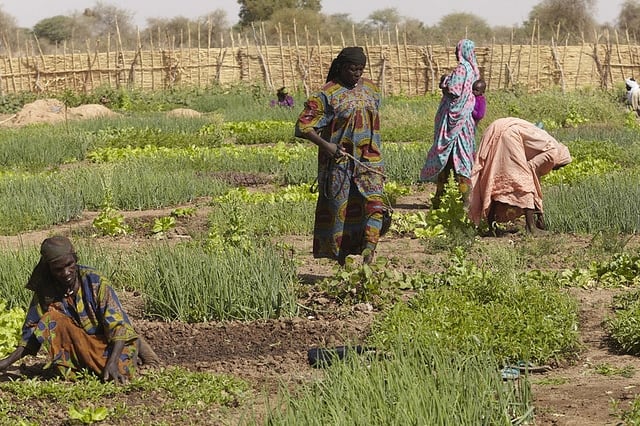
Since its independence in 1960, Chad has been plagued by political violence, and is one of the poorest countries in the world, with most of its inhabitants living in poverty as subsistence herders and farmers.
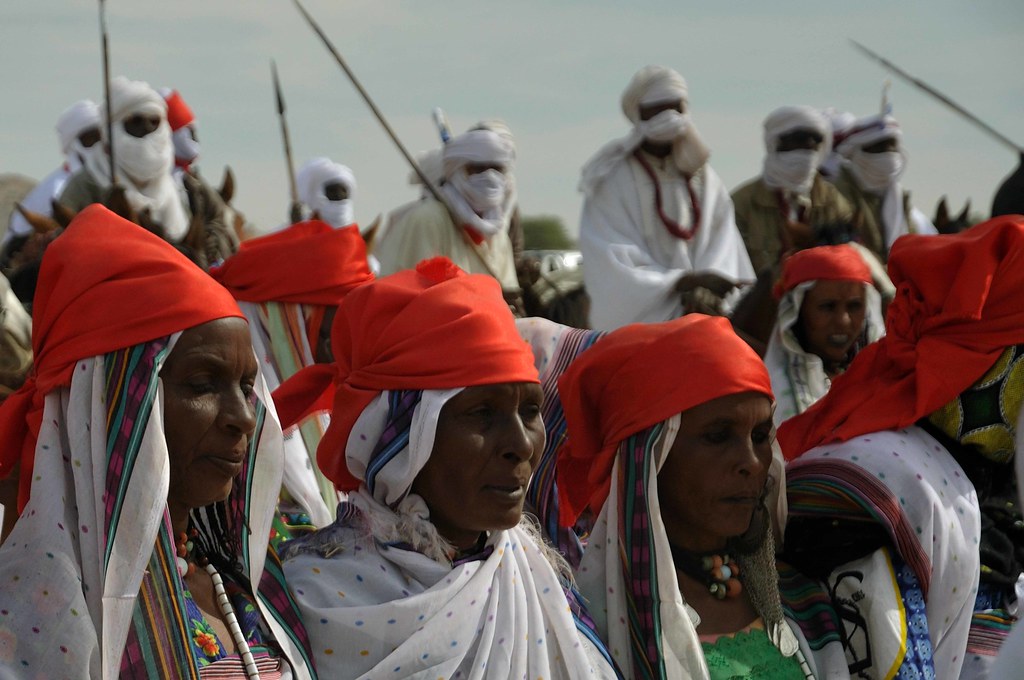
The Zaghawa people are described as a central African Muslim ethnic group of eastern Chad and western Sudan, and as nomads who obtain their livelihood through herding cattle, camels and sheep and harvesting wild grains.
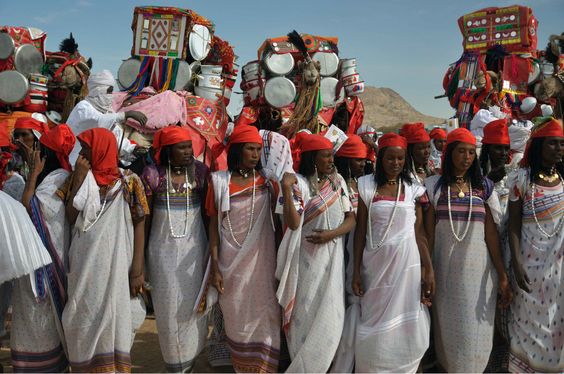
Interestingly, it is said that in the Girgam, the royal history of the Kanem-Bornu Empire I mentioned previously, refers to the Zaghawa people as the Duguwa, the line of kings of the Kanem Empire prior to the rise of the Islamic Seyfawa dynasty in 1086 AD.
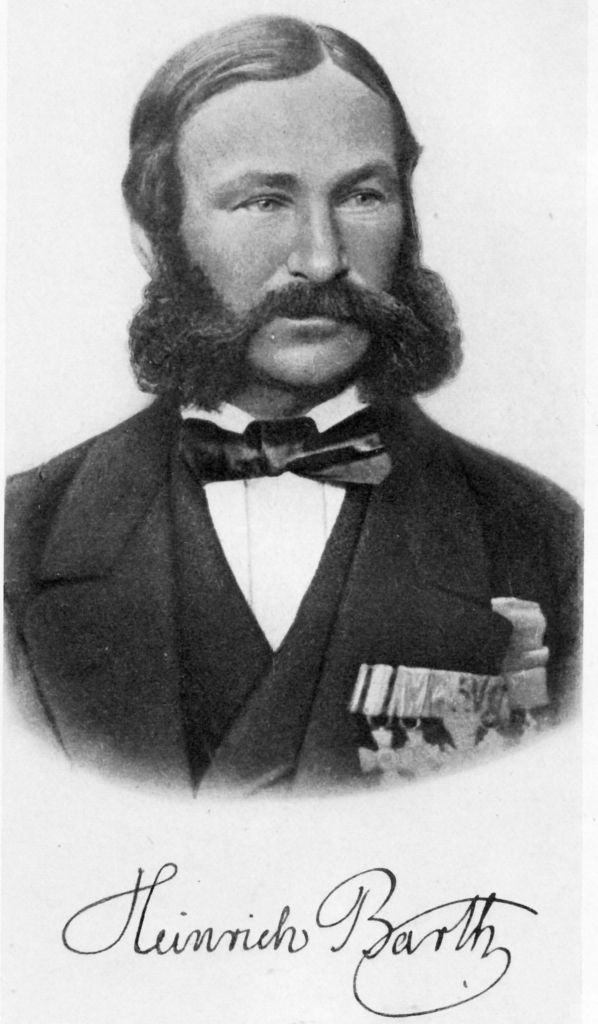
In 1851, a copy of the Girgam was given by a local associated with the Seyfawa Dynasty of the Kanem-Bornu Empire to Heinrich Barth, an Arabic-speaking German explorer of Africa, and he published a translation of it in 1852.

He travelled throughout Africa between 1850 and 1855, establishing friendships with rulers ands scholars, and carefully documenting the details of the cultures he visited.
And it was the Germans who organized the Berlin Conference in 1884 that carved up the continent of Africa between the European colonial powers?

Could there possibly be a connection between these occurrences?
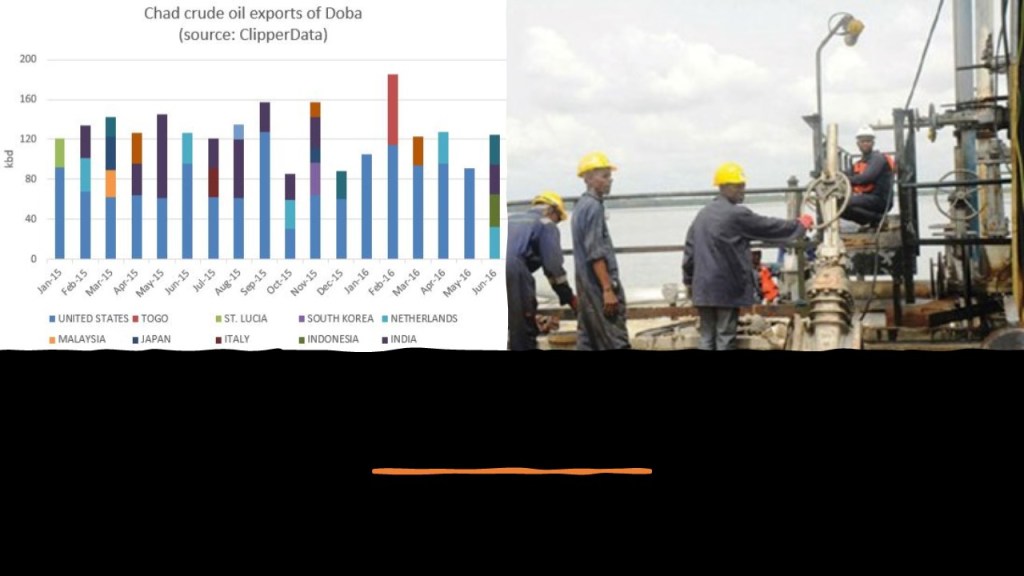
Important to note that Chad has sizeable reserves of crude oil, which is the country’s primary source of export earnings.
Also, Wadi Fira region of which Biltine is the capital is reported to have large deposits of gold-bearing quartz, as well as deposits of natron, uranium, silver and diamonds.

Most of the mining in Chad is small-scale due to the lack of foreign investment because of political and cultural instability.
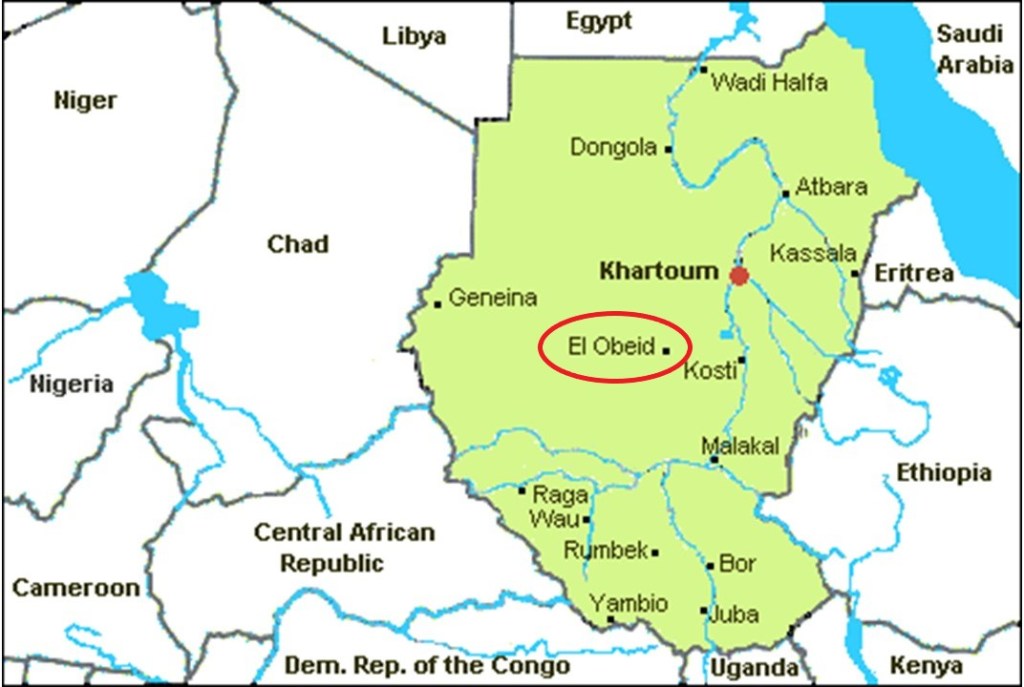
The next place we come to on the alignment is El Obeid, the capital of the state of North Kurdufan in Sudan.
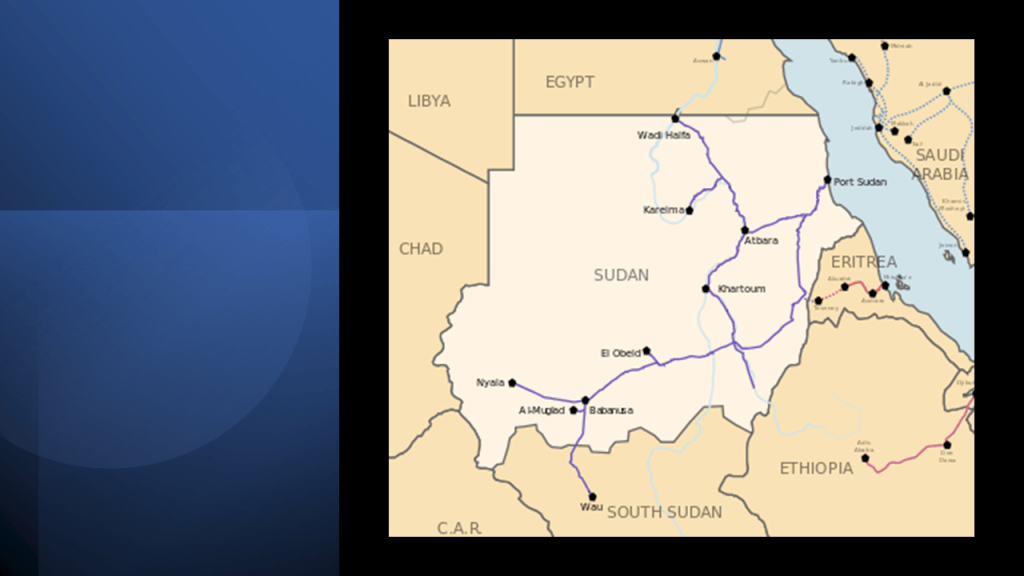
El Obeid is a terminus of Sudan Railways.
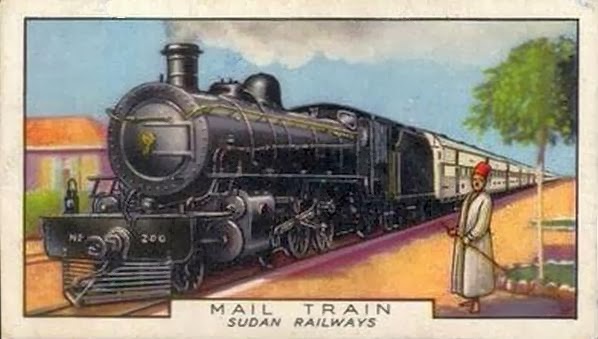
Sudan has 2,935-miles, or 4,725-kilometers, of narrow-gauge, single-track railways that serve the northern and central part of the country, with construction of the railroad said to have first started in 1878.
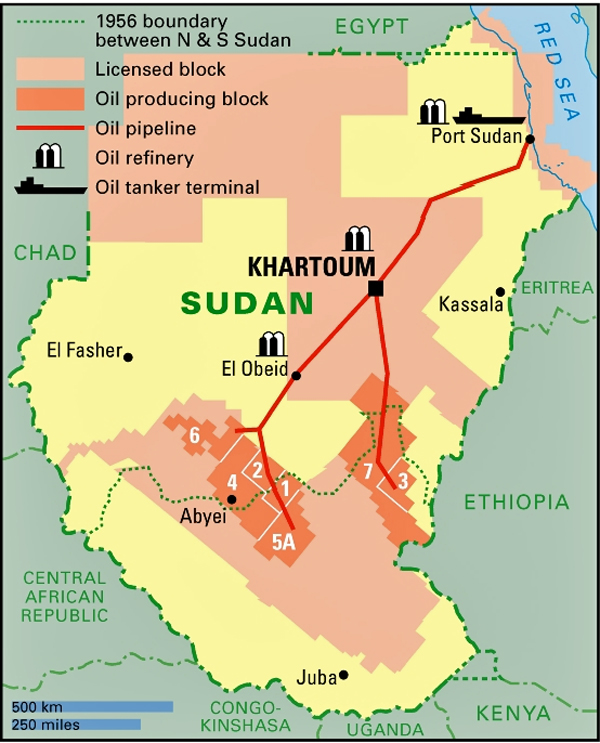
There is an oil refinery in El Obeid…
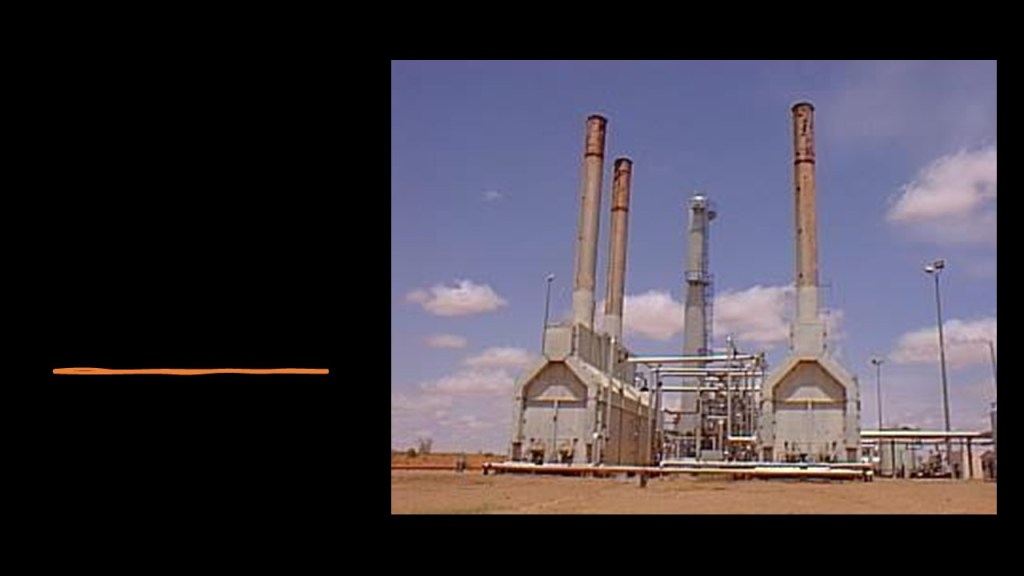
…that is part of Sudan’s oil industry.

As of 2016, Sudan held 5-billion barrels of proven oil reserves, ranking 23rd in the world.
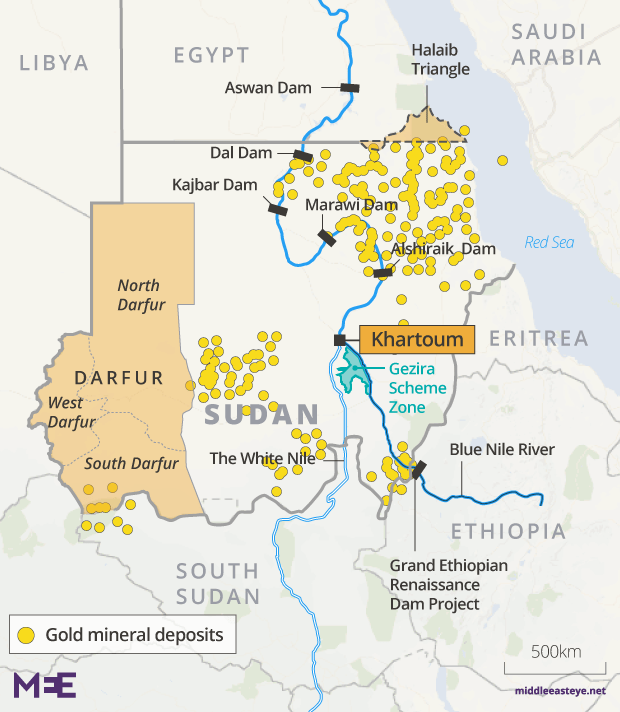
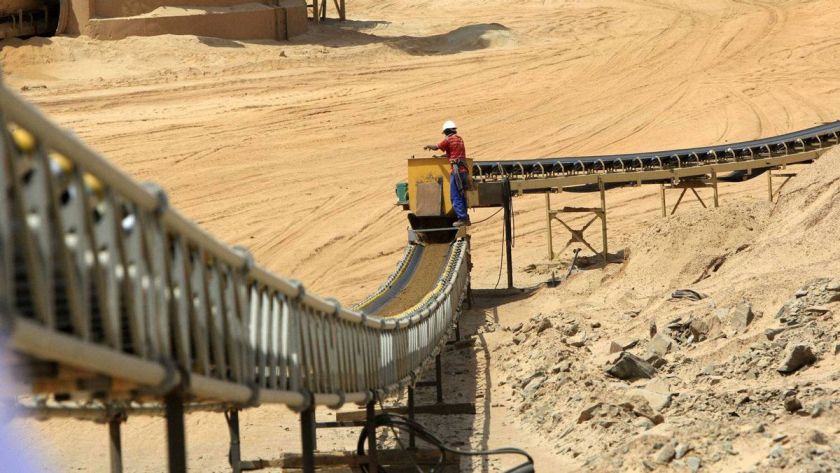
Also, there are more than 40,000 gold-mining sites, and about 60 gold-processing companies operating in Sudan.
It looks like Sudan’s resources have been developed in a way that Chad’s has not, in spite of both countries having the same issue of political and cultural instability since independence from Britain in 1956.
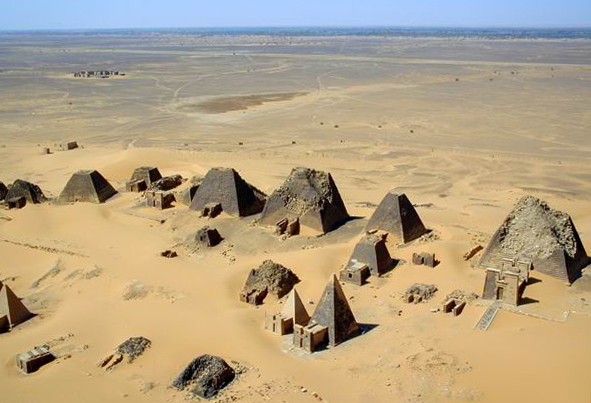
Sudan was the historical location of the Kingdom of Kush…
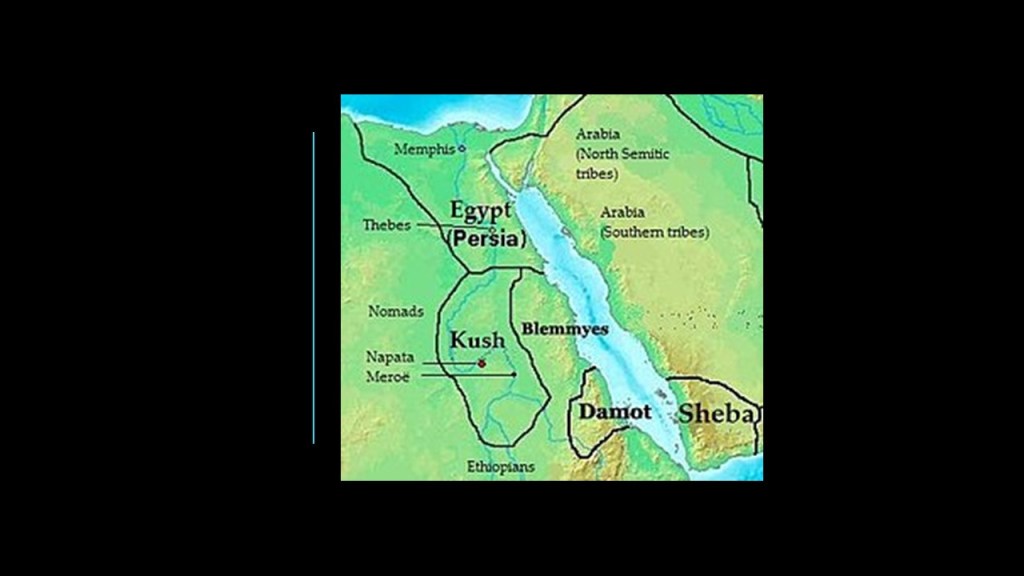
…with its capital being Meroe, situated on the east bank of the Nile River in Sudan.
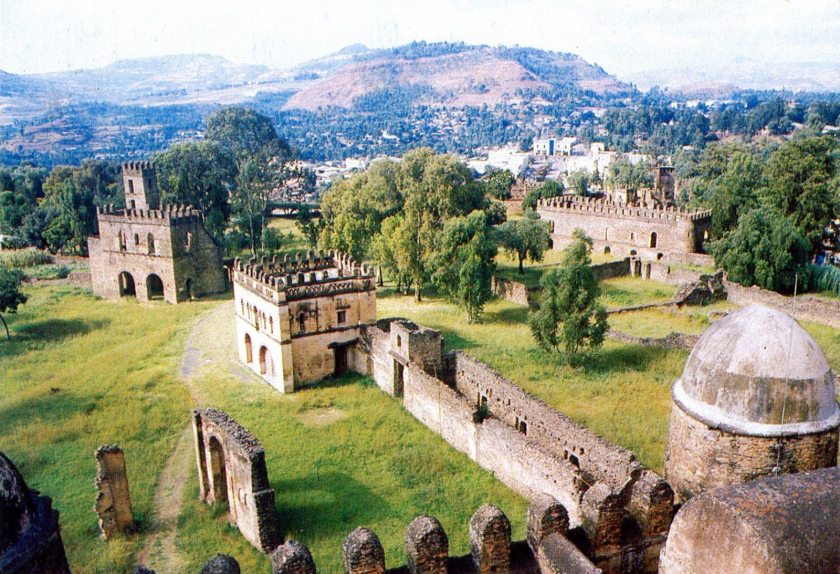
Now we come to Gonder, a city and district in Ethiopia.
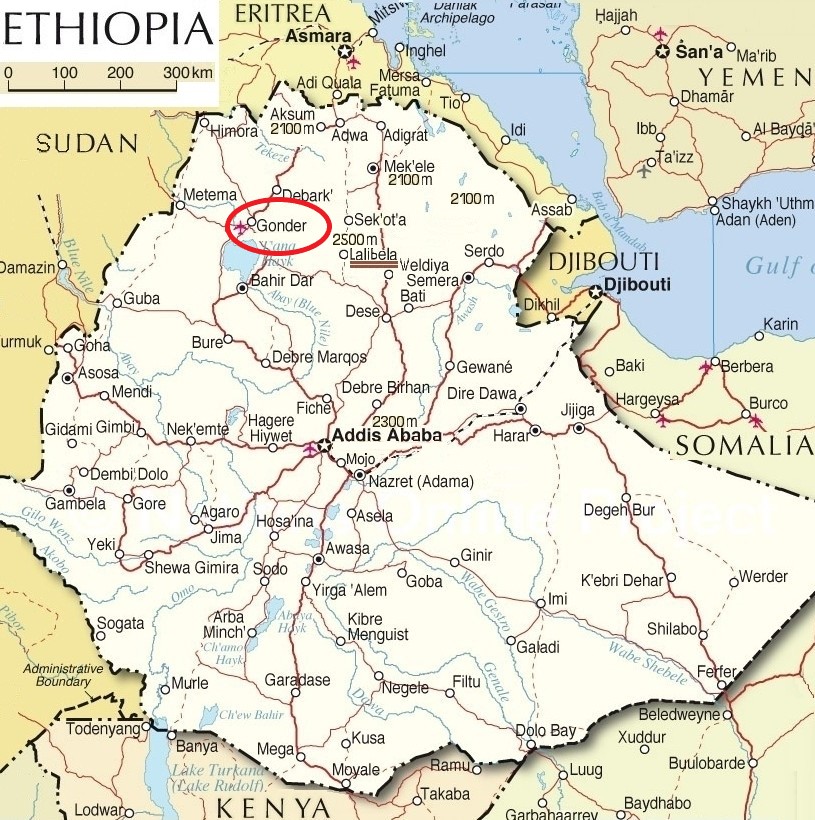
It previously served as the capital of the Ethiopian Empire, and holds the remains of numerous royal castles, including those of the Fasil Ghebbi, the home of the Ethiopian emperors.
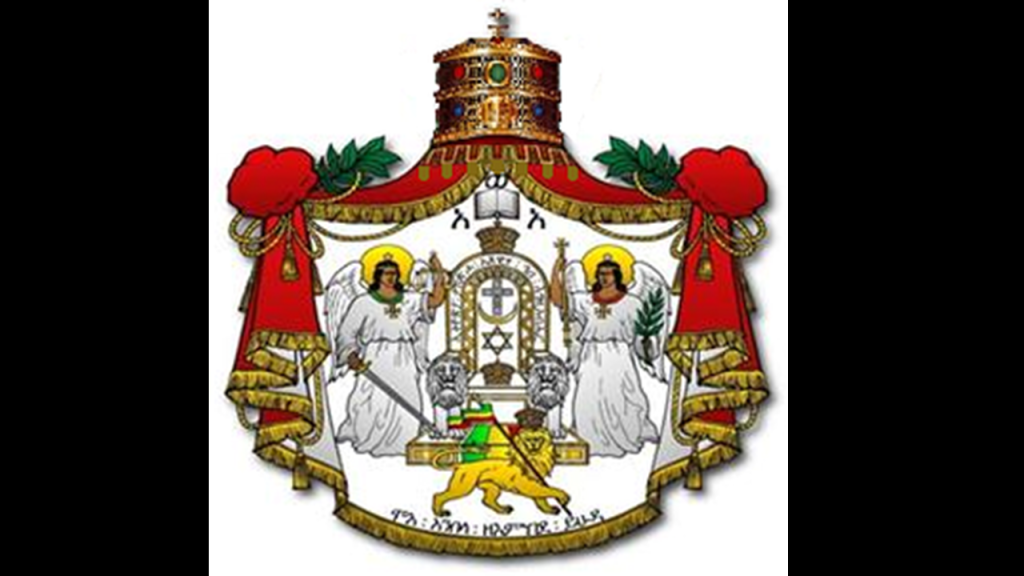
The Solomonic dynasty, also known as the House of Solomon, is the former ruling dynasty of the Ethiopian Empire.

Its members were lineal descendents of King Solomon and the Queen of Sheba through their son Menelik I, the first Emperor of Ethiopia.
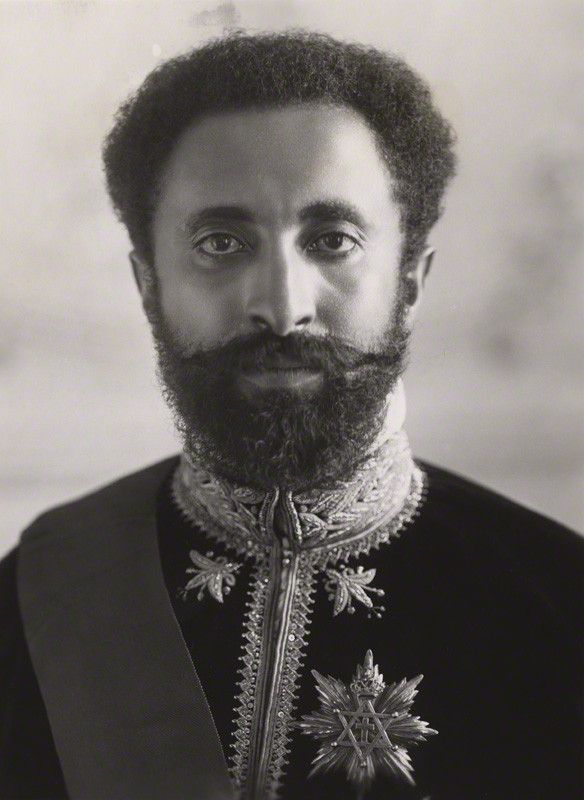
Haile Selassie was the last Emperor of Ethiopia from 1930 to 1974…
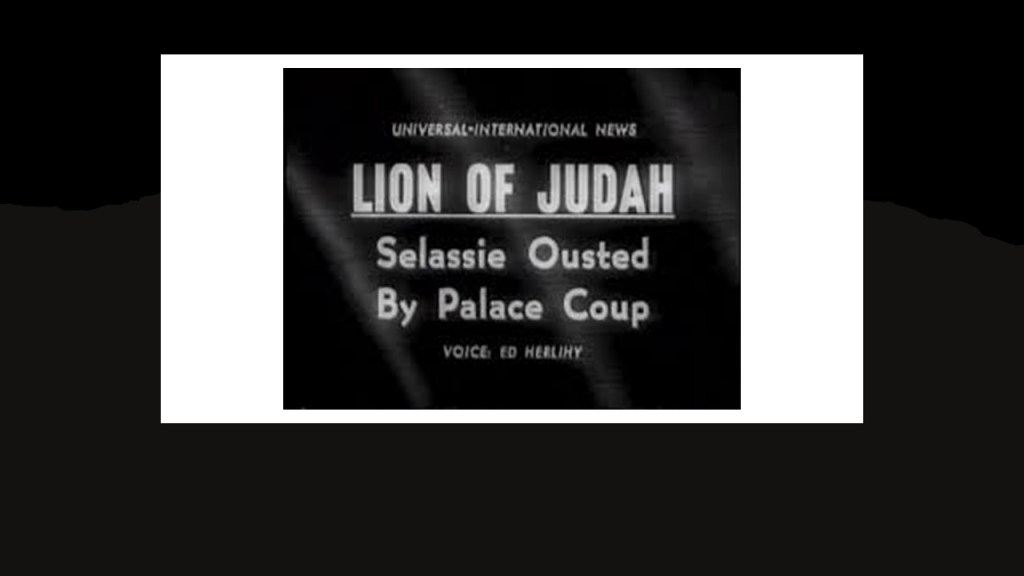
…at which time he was deposed in a coup, and a one-party communist state was established in Ethiopia in March of 1975.
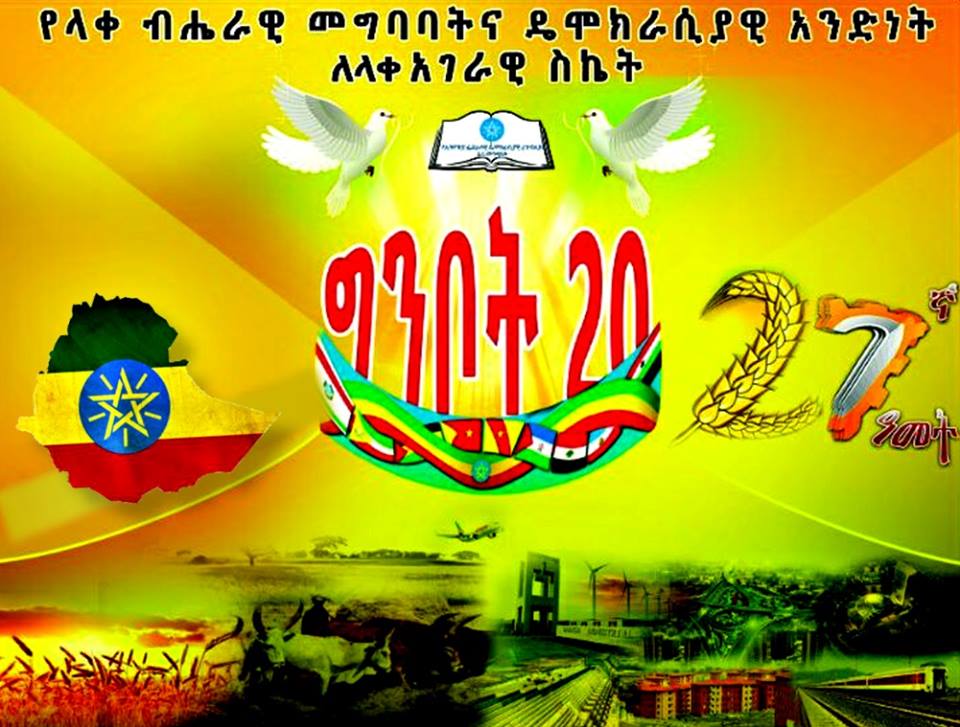
Ethiopia became a Federal Democratic Republic in 1991.

Ethiopia uses the ancient Ge’ez script, one of the oldest alphabets still in use in the world, and when I saw the script pictured here, it immediately brought to mind a few others.
This is Ge’ez script on the top left, compared with the Armenian alphabet on the top right, Norse runes on the bottom left, and Vril on the bottom right.
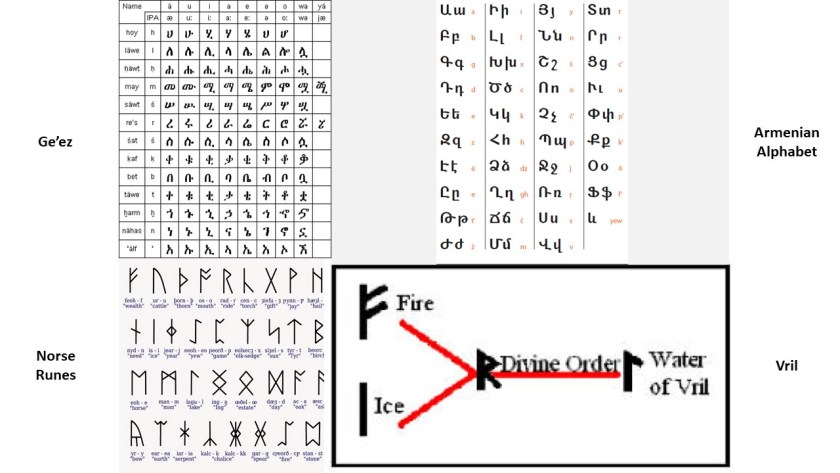
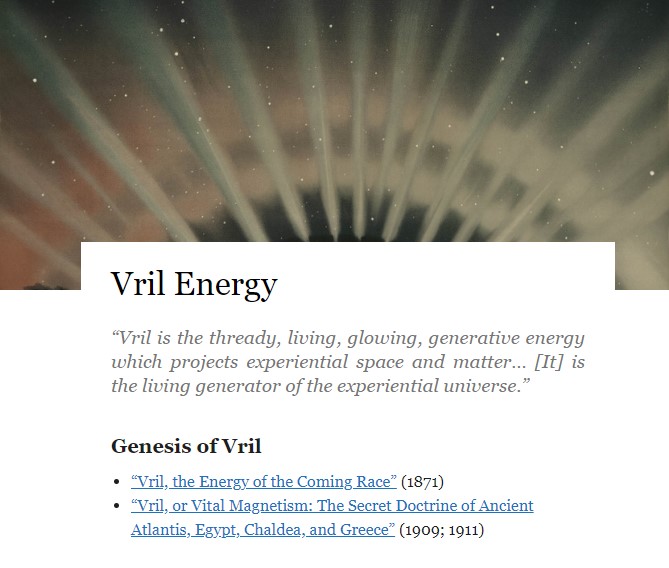
It would not surprise me to learn that these are scripts of the original language, Vril, which was connected to the Ancients and their mastery of how to harness natural energy to create amazing things.
And…yes…there is mining in Ethiopia, including but not limited to gemstones like diamond and sapphire, industrial minerals, gold and tantalum.
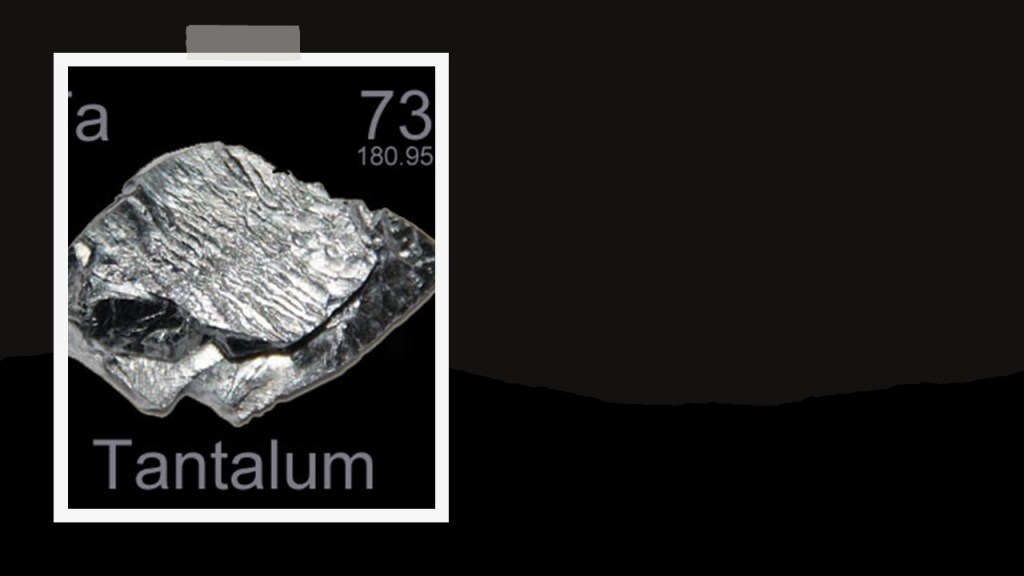
Tantulum is a chemical element with the symbol “Ta,” and atomic number of 73.

It is a rare, hard, blue-gray metal that is highly-corrosion resistant, and is considered a technology-critical element.
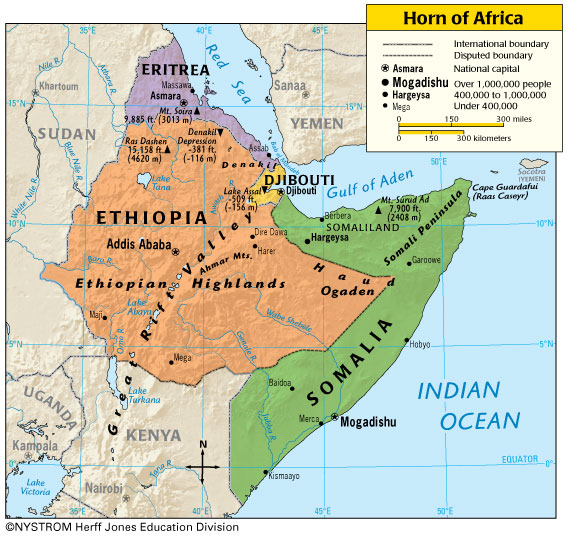
Next we come to Hargeysa, Somalia, in Somaliland in the Horn of Africa.
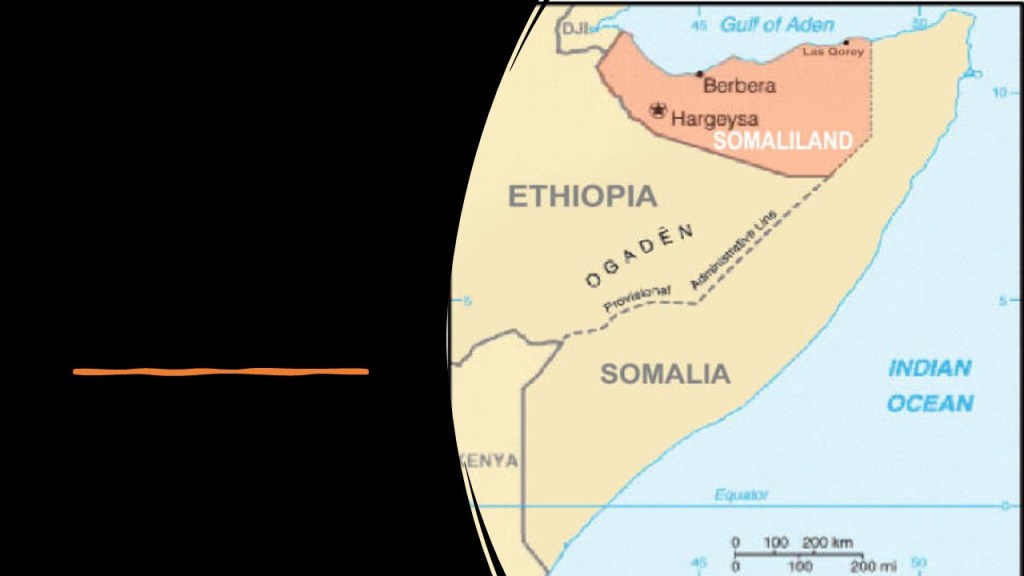
The Horn of Africa is the peninsula that is the easternmost projection of the continent, and referred to in ancient and medieval times as Barbara, and denotes the region containing Somaliland, Djibouti, Eritrea, Ethiopia, and Somalia.
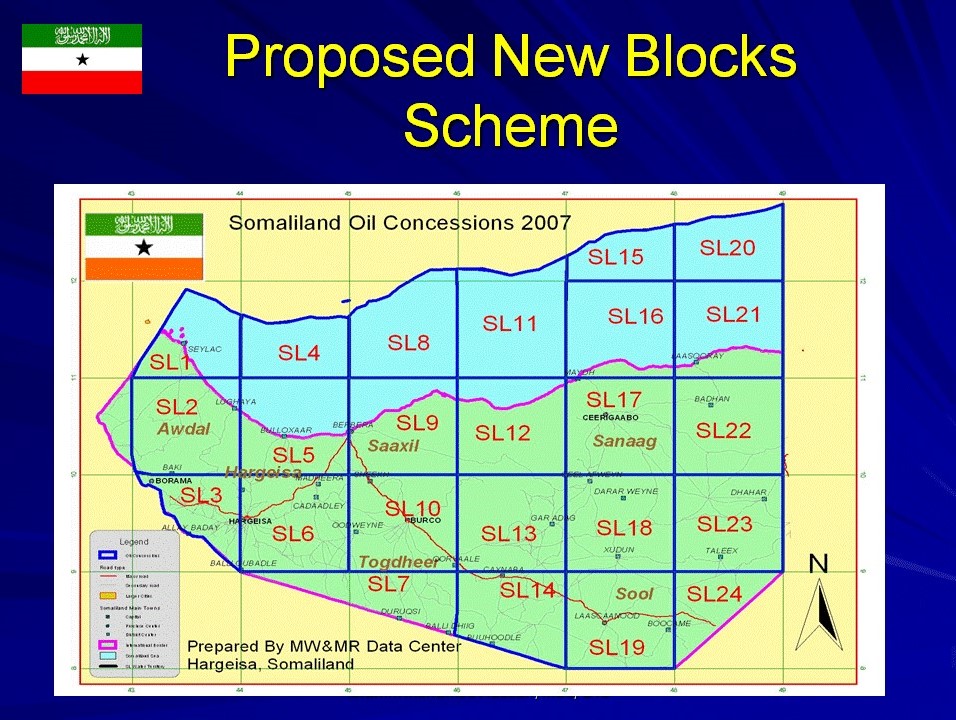
This is a map showing oil concessions in Somaliland circa 2007.

There have been exploratory geological surveys done here, but the mining industry is new and looking for developers.
Around Hargeysa, the mineral resources include sodium, copper, tin and gypsum in the region as well.
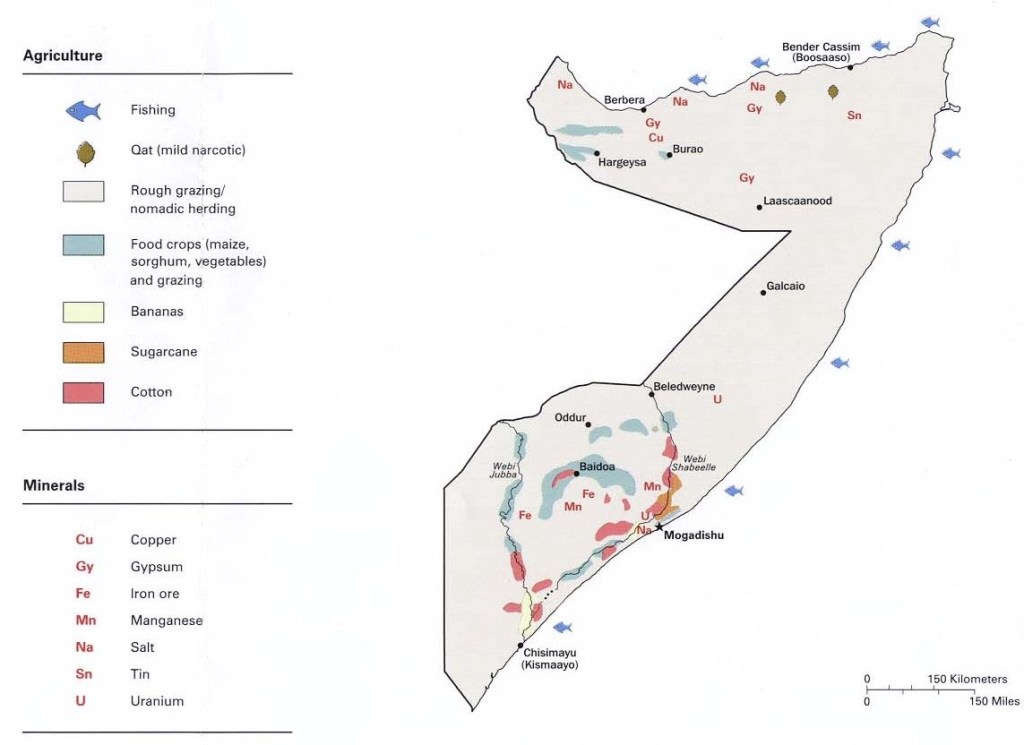
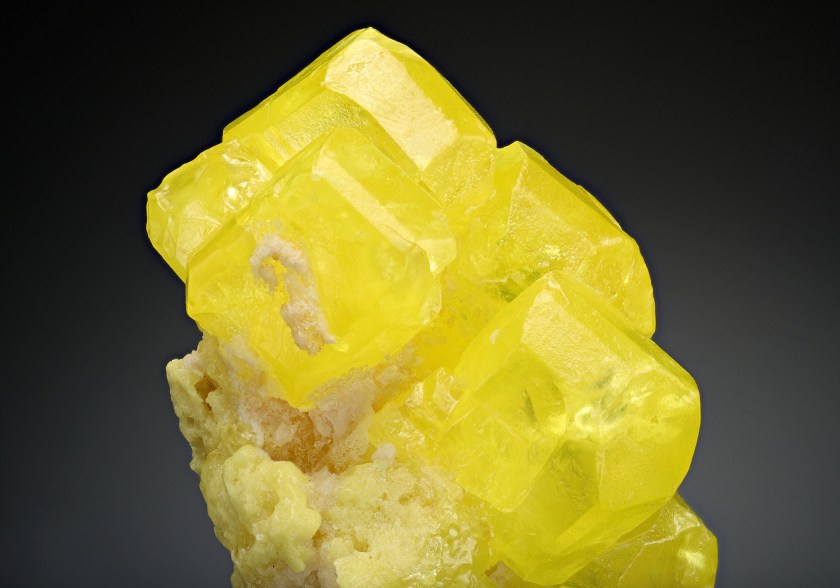
Gypsum is a soft, sulphate mineral…
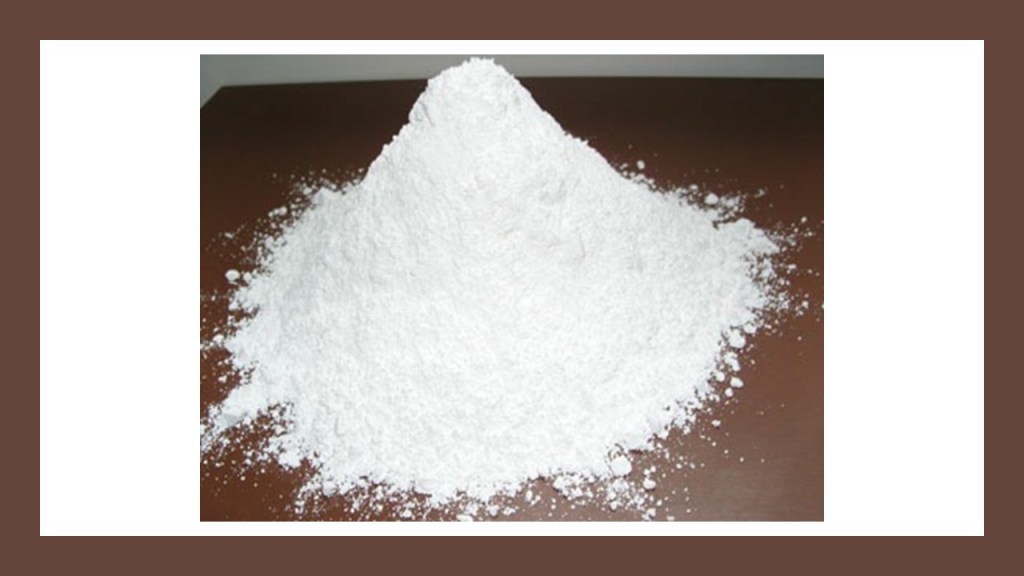
…and is the main component of many forms of plaster, drywall, and blackboard chalk, but has many other uses as well.
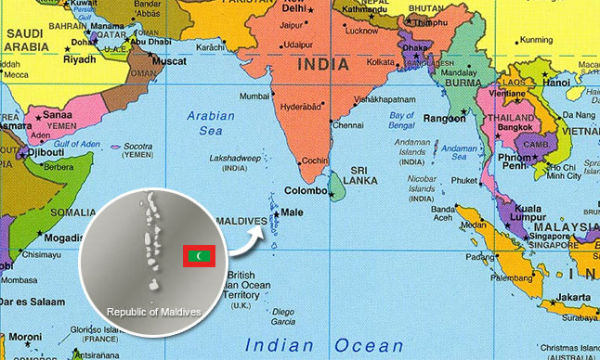
The last place I want to look at on this alignment are the Maldives, an island republic in the Indian Ocean, southwest of the Indian subcontinent.
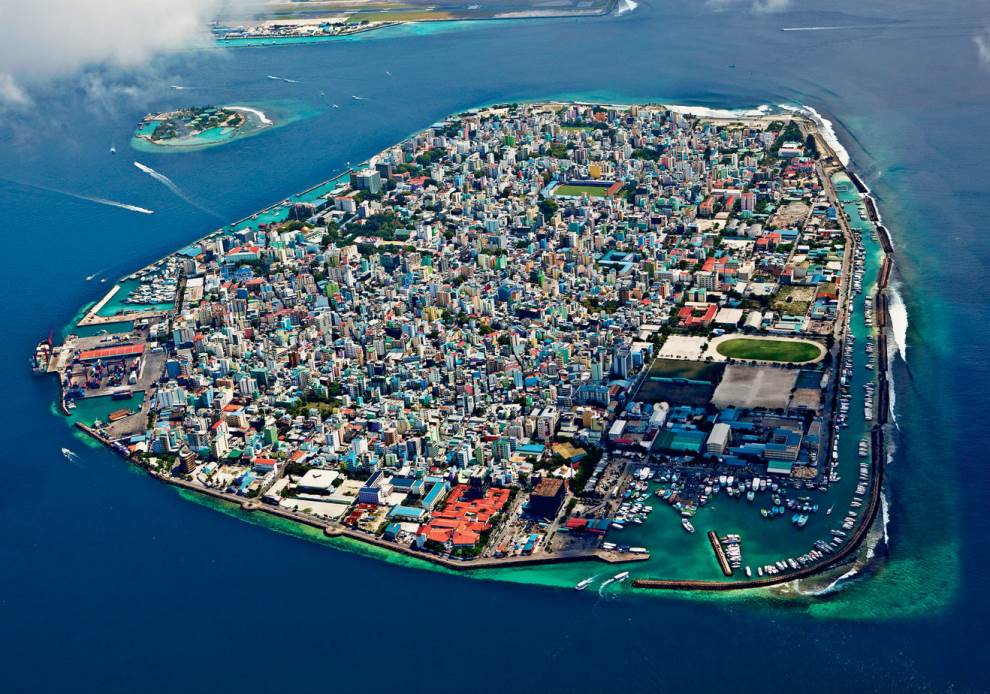
Now at first glance, you wouldn’t associate mining with a place that looks like this.

This is the capital of the island nation of the Maldives, Male, on Male Atoll.
But I did find mining activity ~ coral mining!

Coral mining can take place anywhere coral is available in a convenient location, usually occurring at low tide, and is done by either using dynamite…or iron bars to manually to retrieve the coral by breaking-up the larger corals into smaller pieces that can easily be carried to shore.
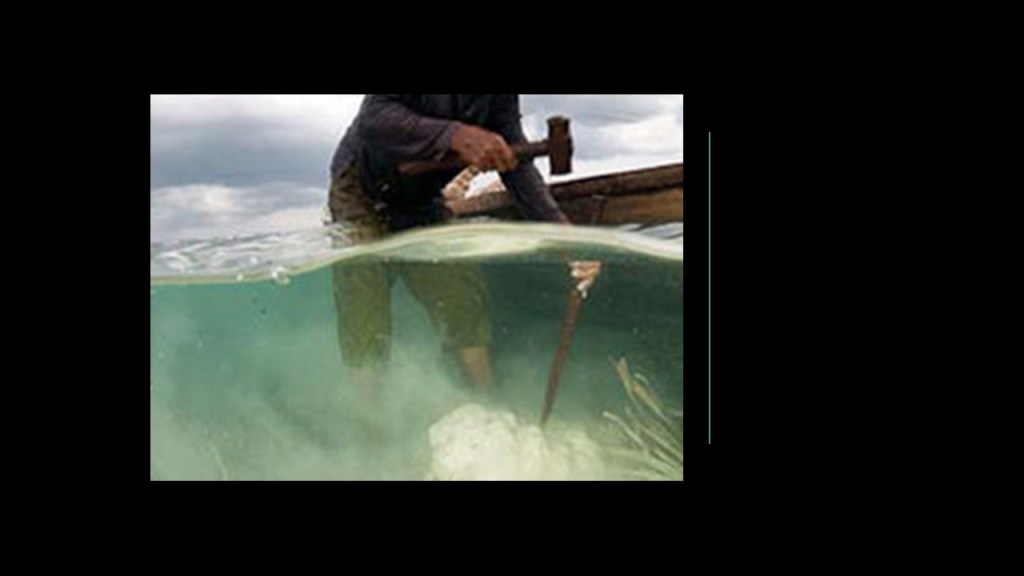
However it is extracted, the results are loss of biodiversity, and erosion and land retreat.
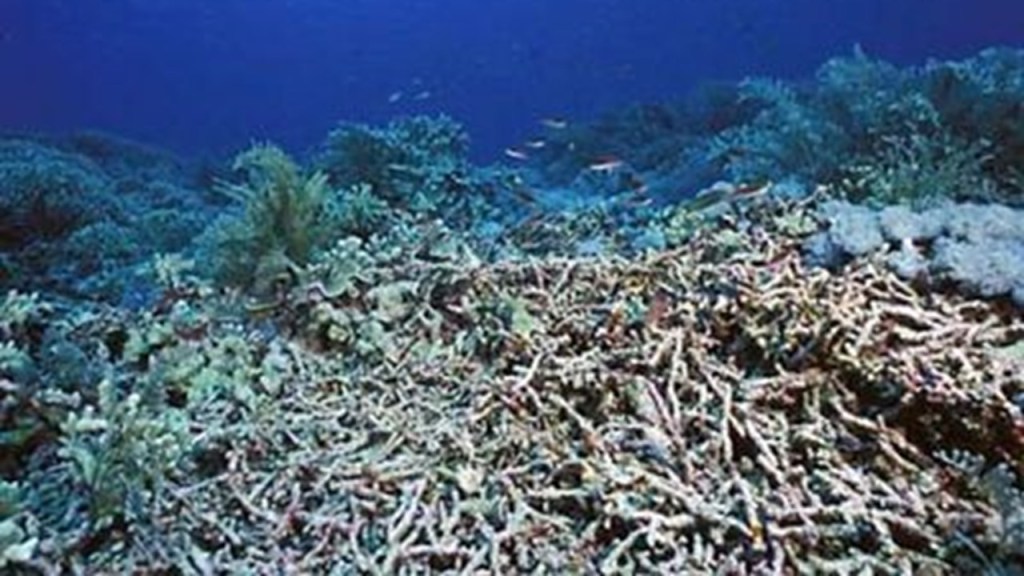
The most common use of coral is to turn it into limestone or a cement substitute for use as a building material…
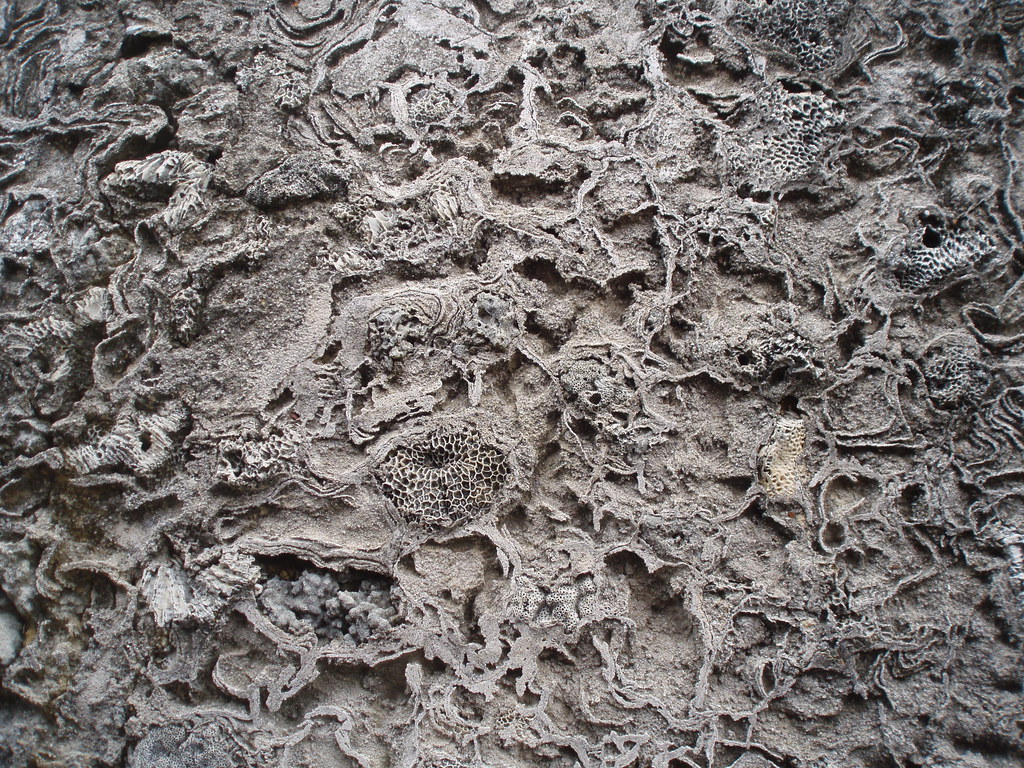
…but it can also be used to make calcium substitutes, which are then used to produce lime…
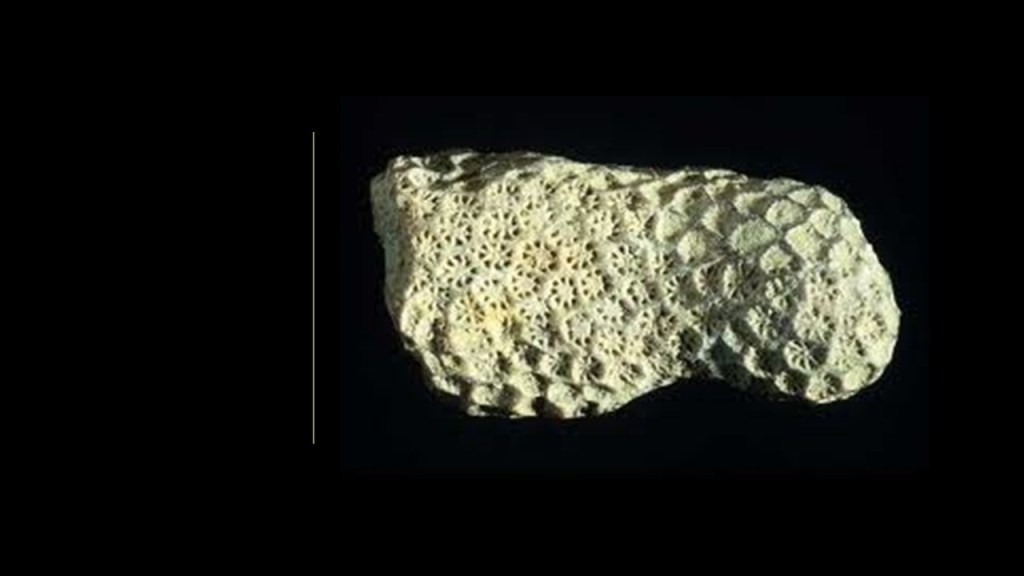
…and coral calcium is also marketed as a nutritional supplement.

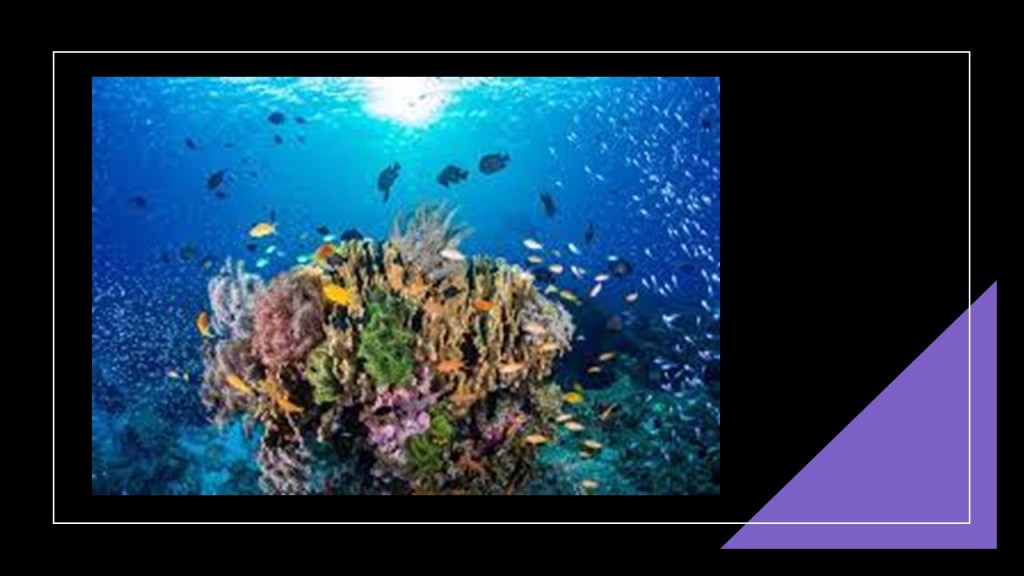
Coral reefs are formed by colonies of coral polyps held together by calcium carbonate, a chemical compound which includes calcium, carbon, and oxygen.
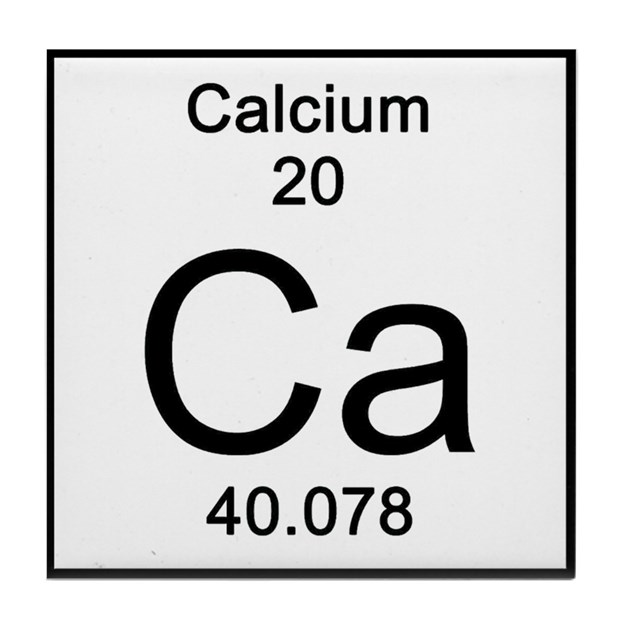
Calcium is a chemical element with the symbol “Ca” and the atomic number of 20.
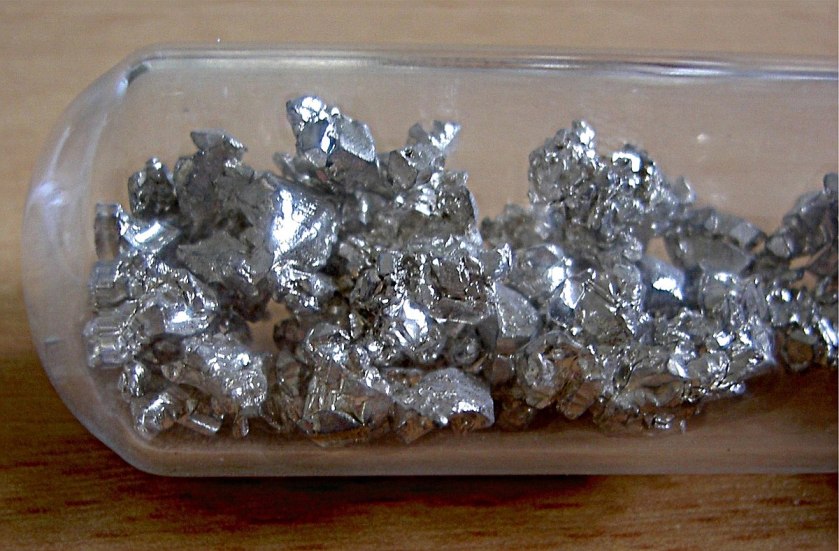
It is an alkaline earth metal, and the fifth most abundant element in Earth’s crust, and the third most abundant metal after iron and aluminum.
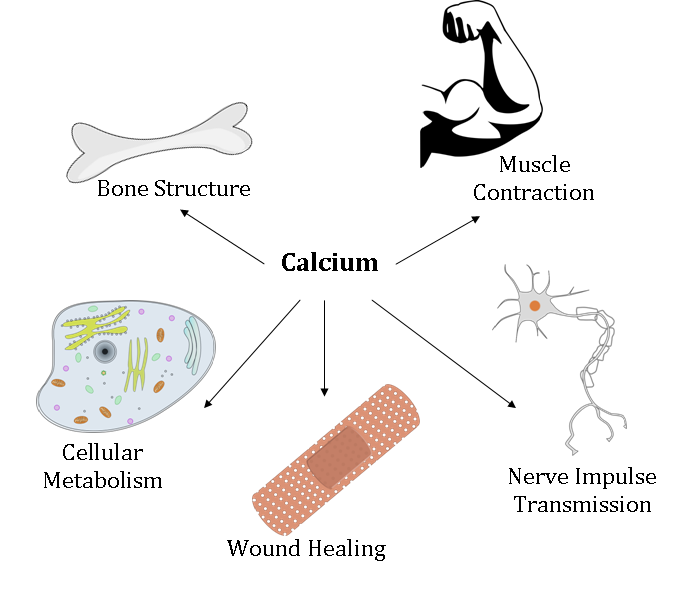
In addition to many industrial uses, calcium is the most abundant metal, and the 5th-most abundant element, in the human body.
I could continue on looking into places on this alignment, but I am going to stop here because I have more than made my point about the correlation of mining and minerals on this long-distance alignment, along which I have found something related at every data point that I had on my spreadsheet.

I do want to share my thoughts on my findings and tie them into related topics.

Chemical elements form the basis of all life and the processes of creation.
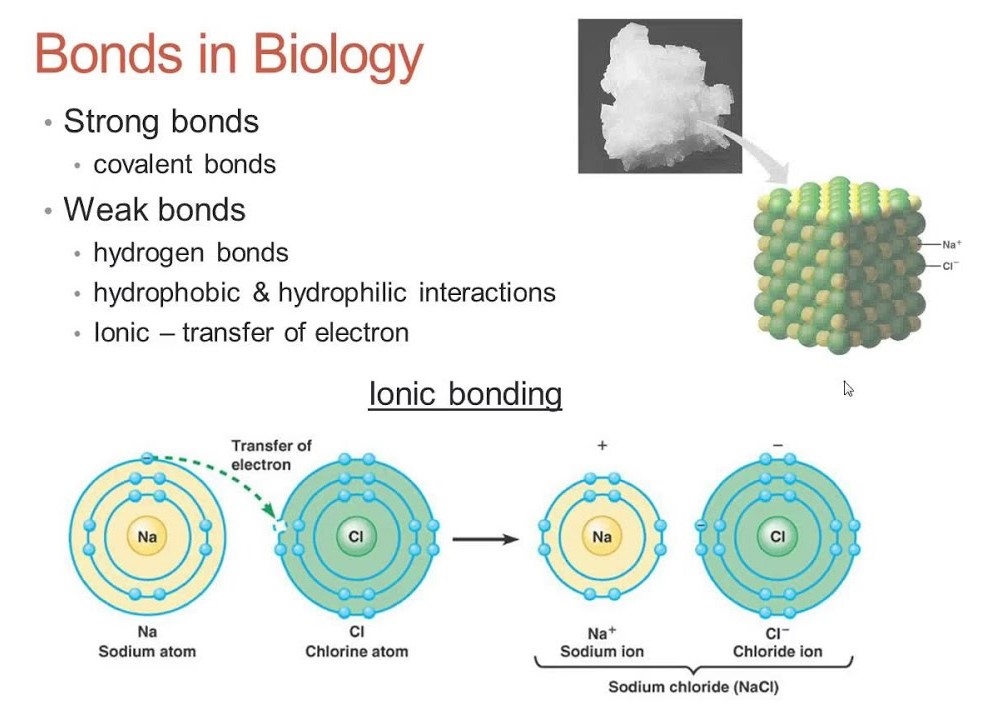
Chemical elements are essential minerals for the processes of the cells of our body and making sure everything works and stays in balance, critical parts of us and everything in physical form existence.
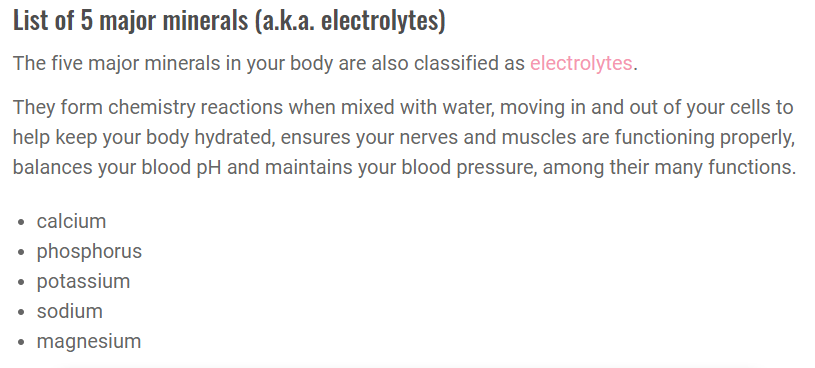
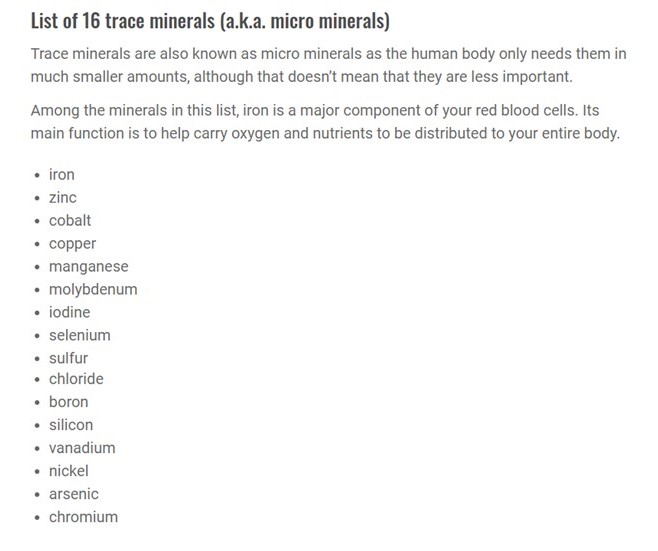
Which brings up the question – so how exactly does Spirit become Matter?

Chemistry is currently defined as the branch of science that deals with the identification of the substances of which matter is composed; the investigation of their properties and the ways in which they interact, combine, and change; and the use of these processes to form new substances.
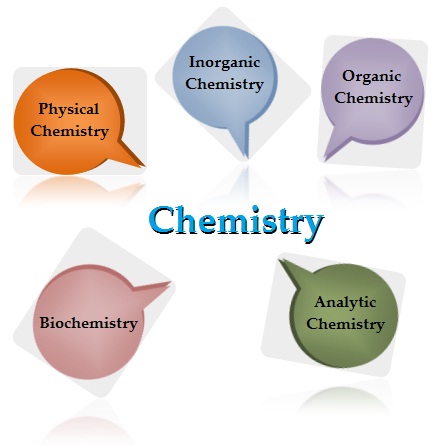
Alchemy is currently defined as the medieval forerunner of chemistry, based on the supposed transformation of matter, and concerned particularly with converting base metals into gold.
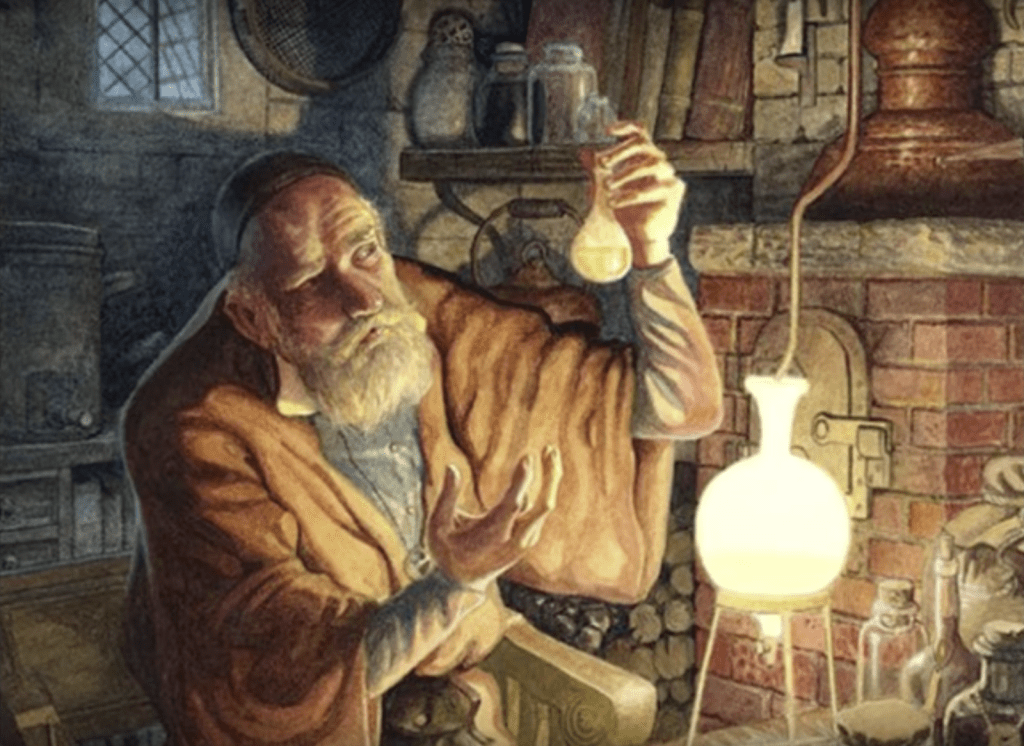
Khem was the ancient name of Egypt.
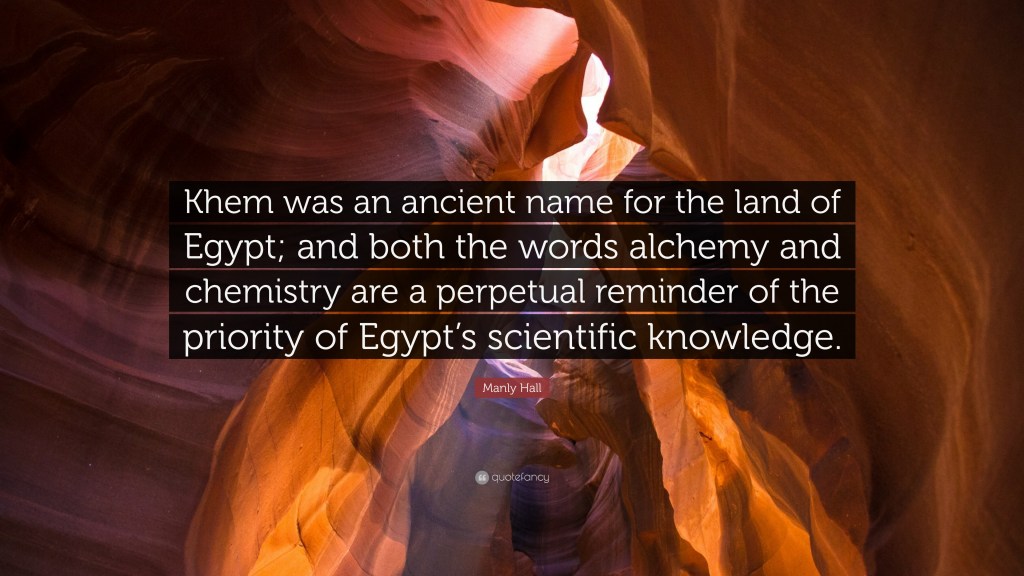
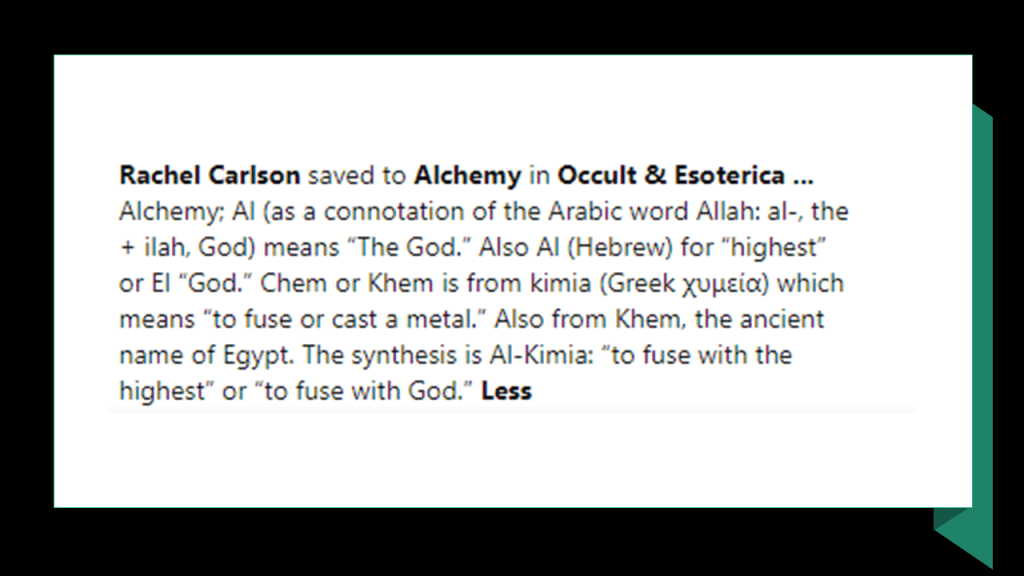
What if Egypt means much more than what we have come to know as one geographical location on the Earth?

Just leaving this concept I found in my research here for consideration as well.
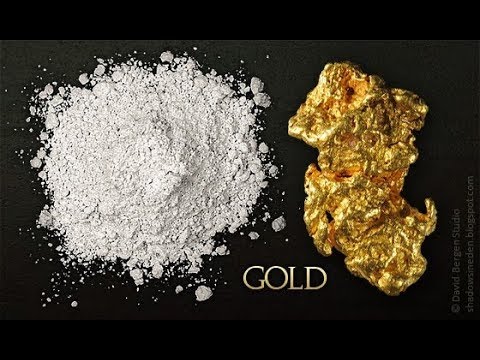
This is a good place to mention monoatomic gold and red mercury.

Monoatomic gold is known to strengthen one’s immune system through the boosting of red blood cells, and an overall vast increase to the speed of cell regeneration.

It is a superconductor, and when ingested into the body, it influences cellular structure to become superconductive as well.
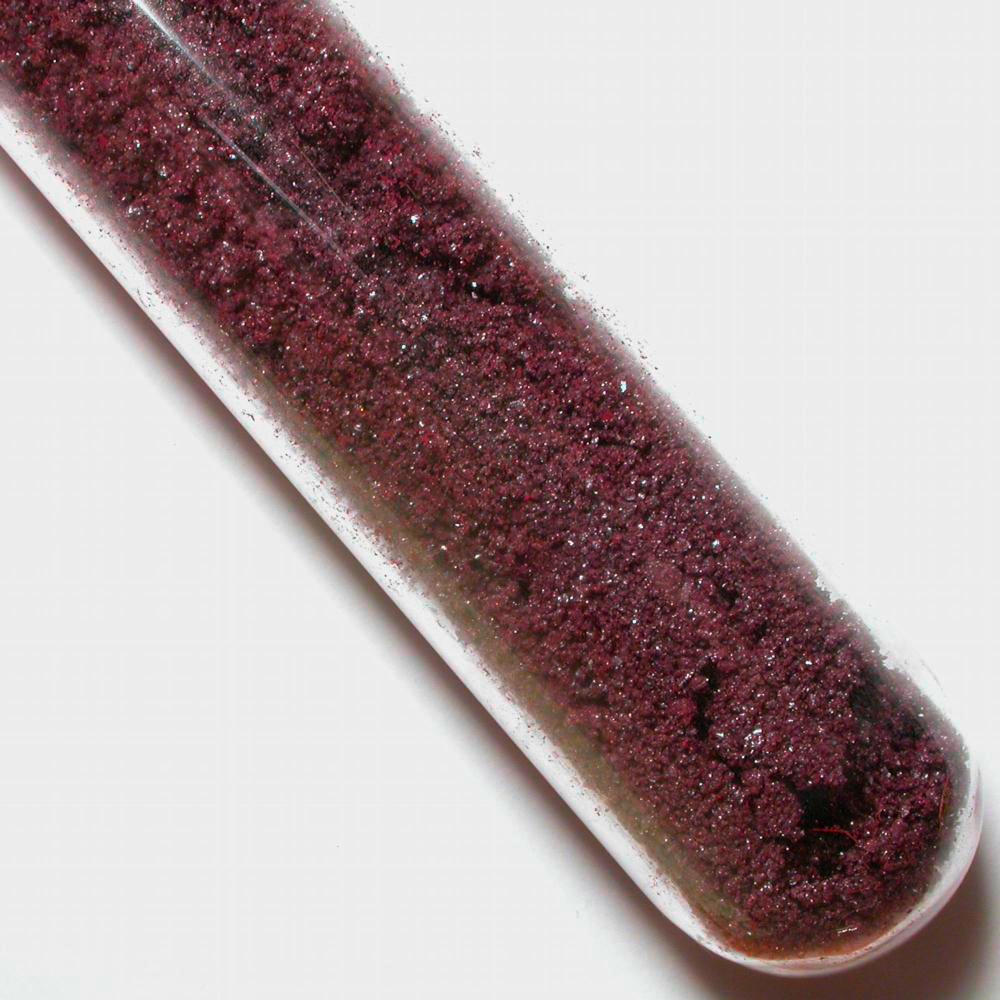
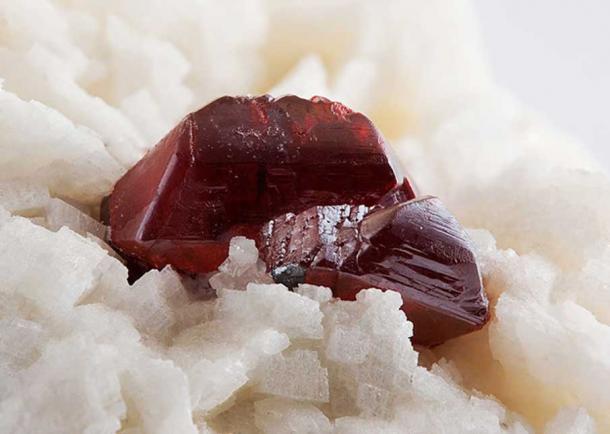
In looking up red mercury, I came across Cinnabar.

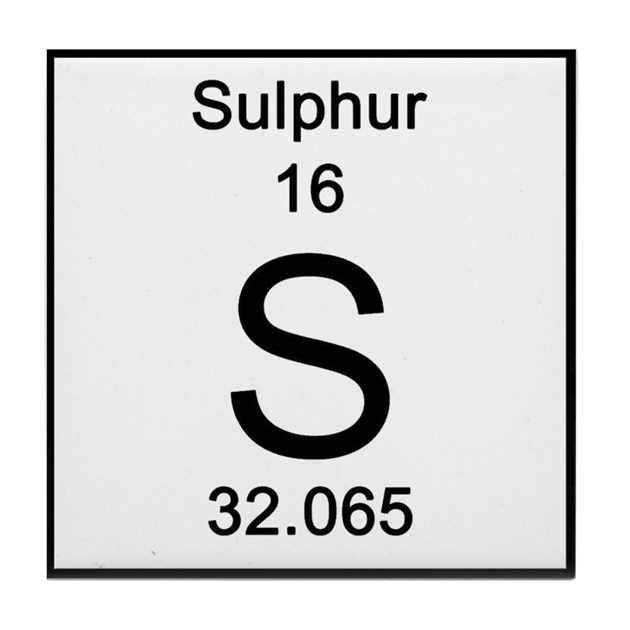
Cinnabar is a compound of mercury, sulphur, and salt, or otherwise known as a salt of mercury sulfide.
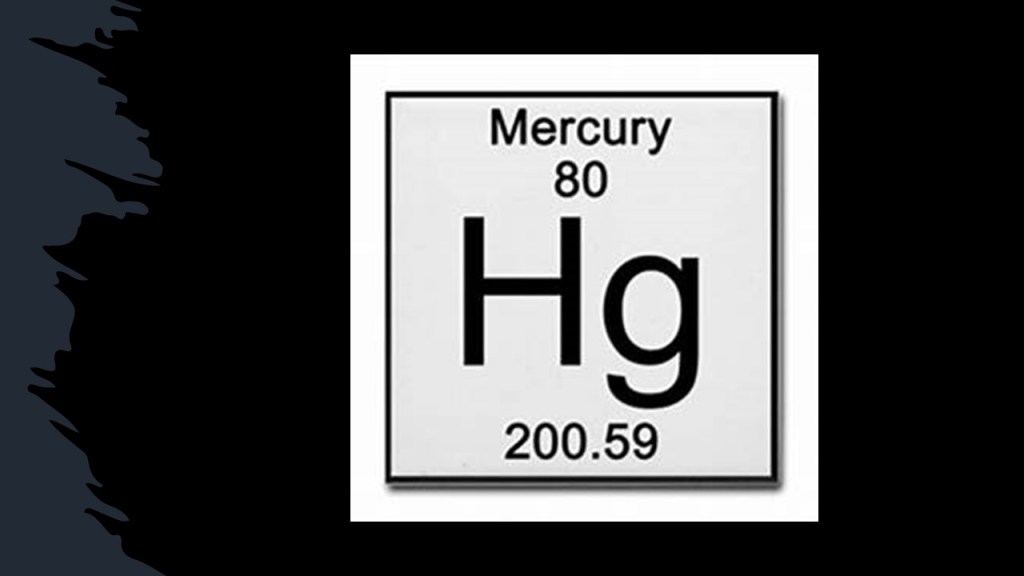
The symbol for the chemical element mercury is “Hg” from the Greek word meaning “liquid silver,” with the atomic number of 80.
The Ancients used cinnabar and mercury as a sacred substance, an elixir of life, and as a medicine…even though mercury in any form is poisonous.

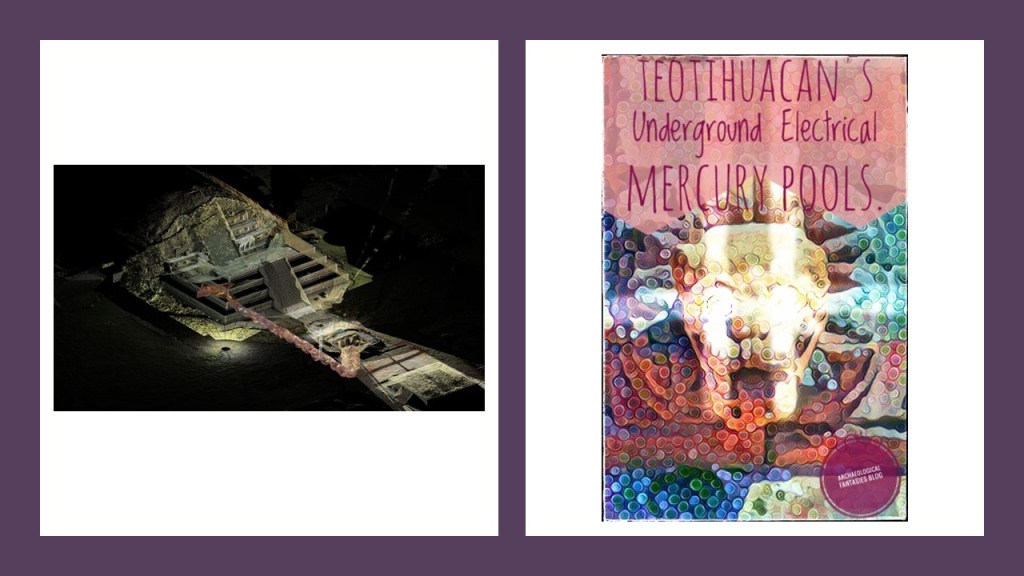
There are also questions about why large quantities of mercury were in three chambers underneath the Quetzelcoatl – Feathered Serpent pyramid at Teotihuacan in Mexico.
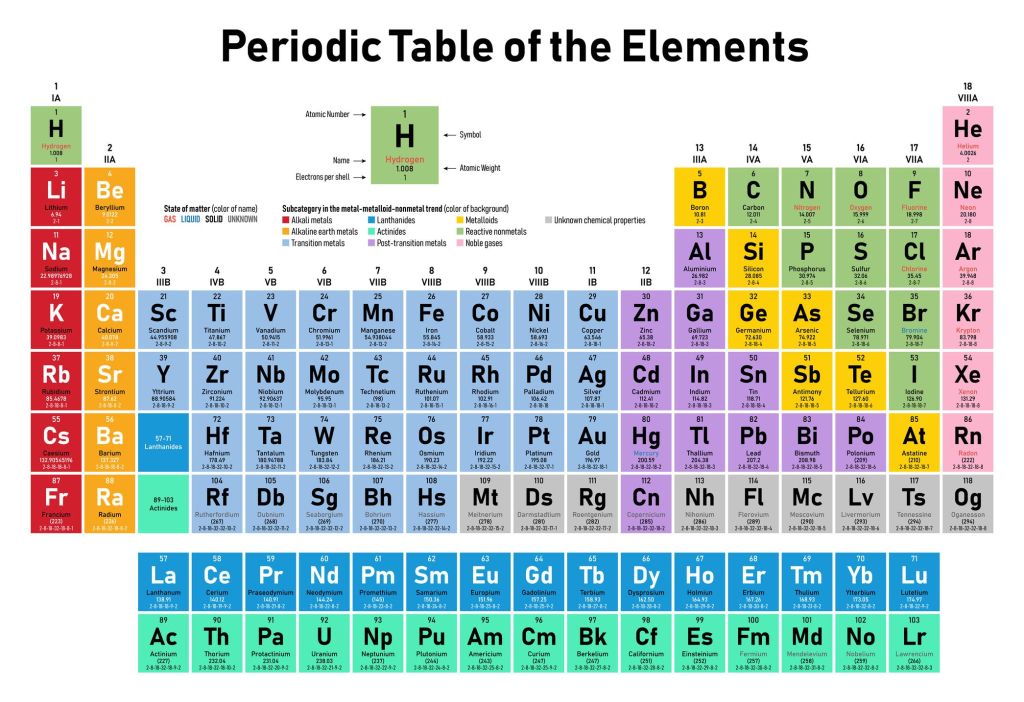
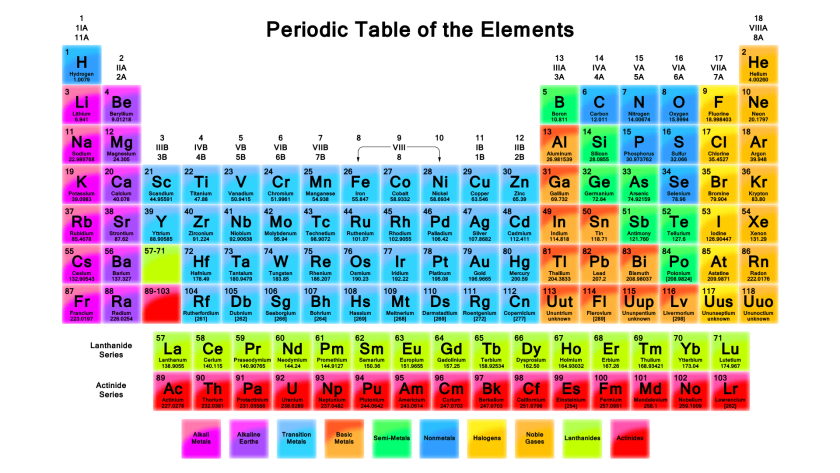
I have been referring to the Periodic Table of the Elements that I remember learning about in high school through this series, the current form of which was first published in 1923, and circulated to schools at that time.
I didn’t know about the Russell Periodic Chart of the Elements, published in 1926, until quite recently.

In this periodic chart, elements are standing waves over a period of time.
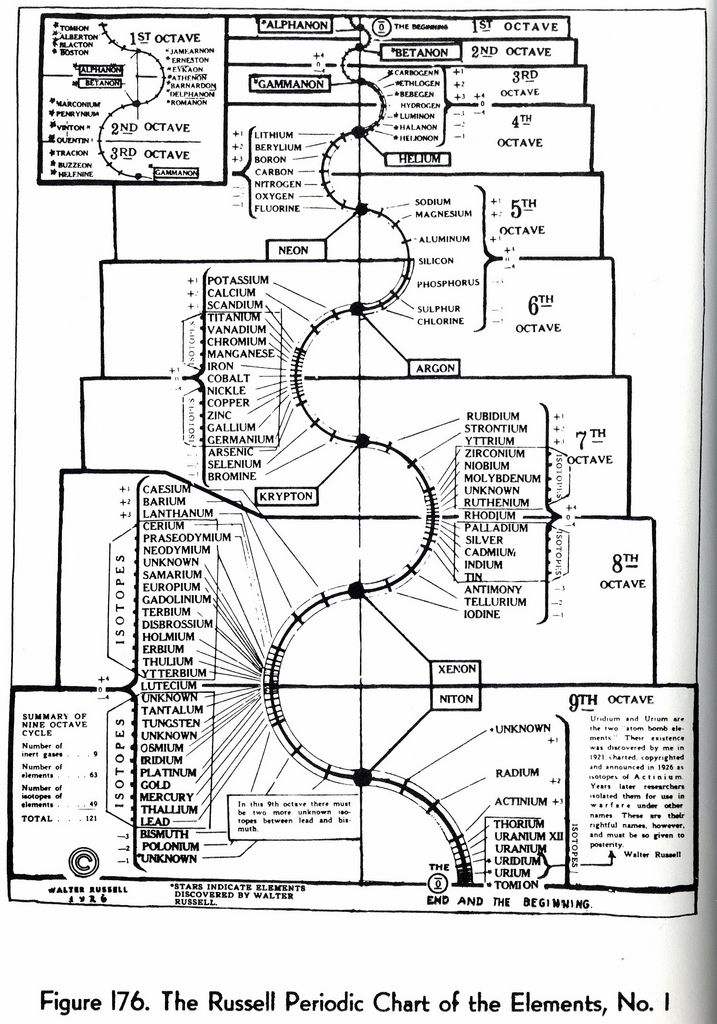
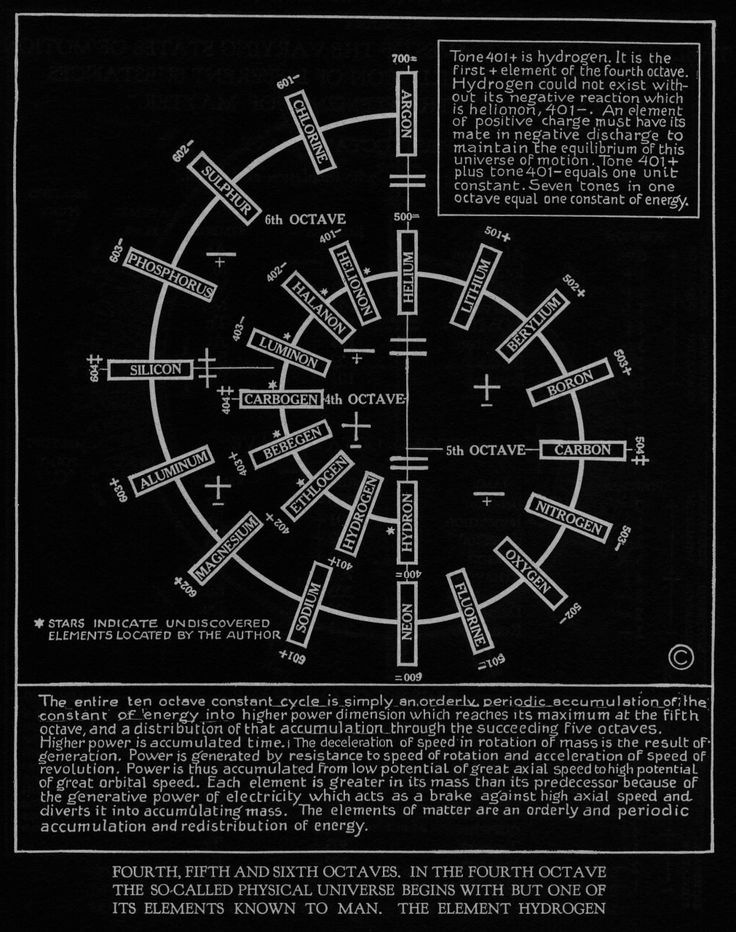
The concept that it is based on is that time is continuously being formed by the spontaneous absorption and emission of electromagnetic radiation (EMR), forming a universal process of spherical symmetry, forming spiral patterns, with each element of the periodic table having a set position forming the curvature of these spirals…
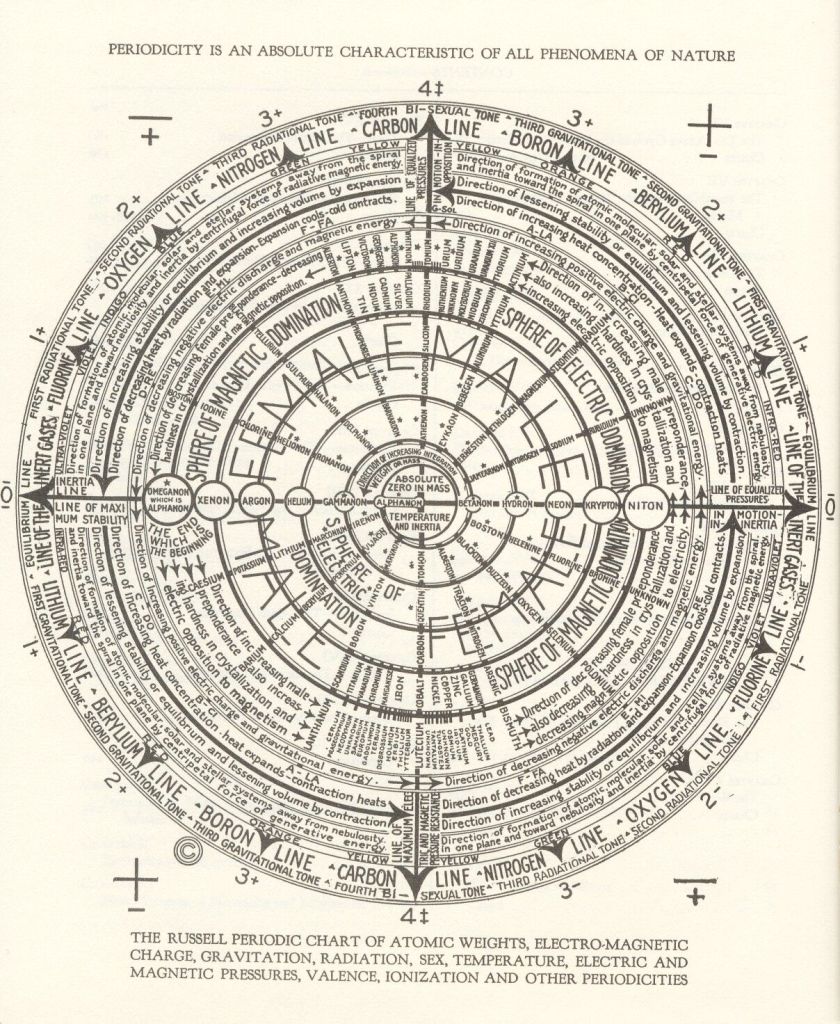
…and are organized in octaves.
There is one more concept that I would like to tie into this subject for consideration.

Several years ago, I read a book by Gregg Braden entitled “The God Code.”
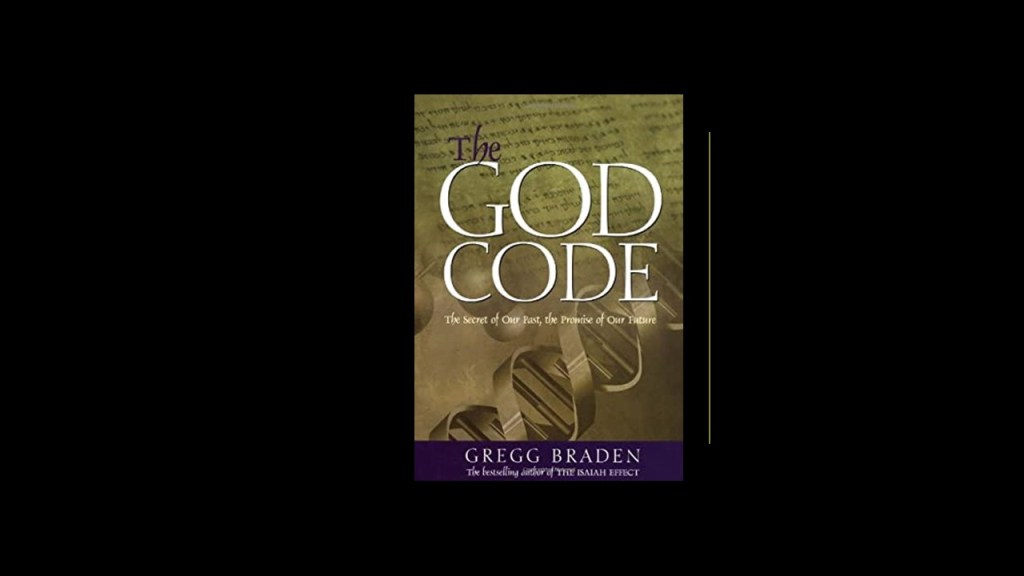
On the book’s back cover he writes “A coded message has been found within the molecules of life, deep within the DNA in each cell of our bodies. Though a remarkable discoverlinking biblical alphabets to our genetic code, the ‘language of life’ may now be read as the ancient letters of a timeless message.”

In Ancient Hebrew, God’s sacred name is reveal as 4 letters – Yod (Y) He (H) Vau (V) He (H), and is referred to as the Tetragrammaton.

What Gregg Braden found preserved through his deep study of ancient records were instructions that allows us to substitute the elements that form our DNA with the letters of the Hebrew alphabet, and in so doing, we are able to translate the language of life and read a message.

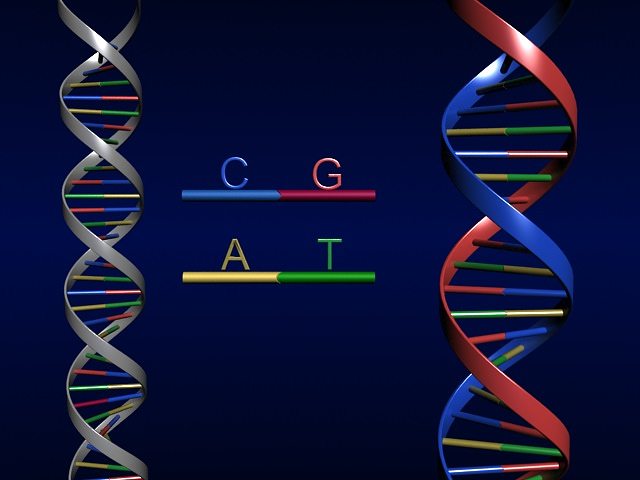
All life is formed as combinations of four DNA bases – Adenine (A); Thymine (T), Guanine (G); and Cytosine (C) – which arrange themselves into precise pairs (G – C) and (A – T) to produce the blue print of life.
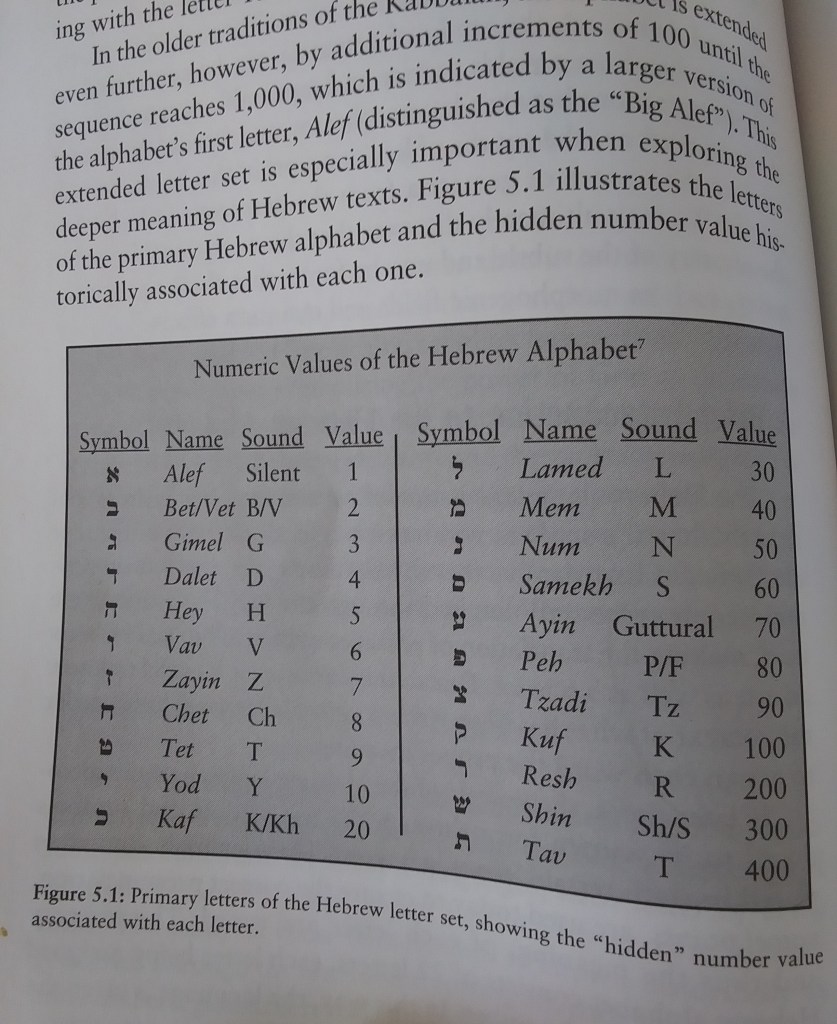
Each letter of the Hebrew alphabet is linked with a very specific number value.

The study of these relationships is known as gematria.
He explains that the key to translating the code of DNA into a meaningful language is to apply the discovery that converts elements to letters.

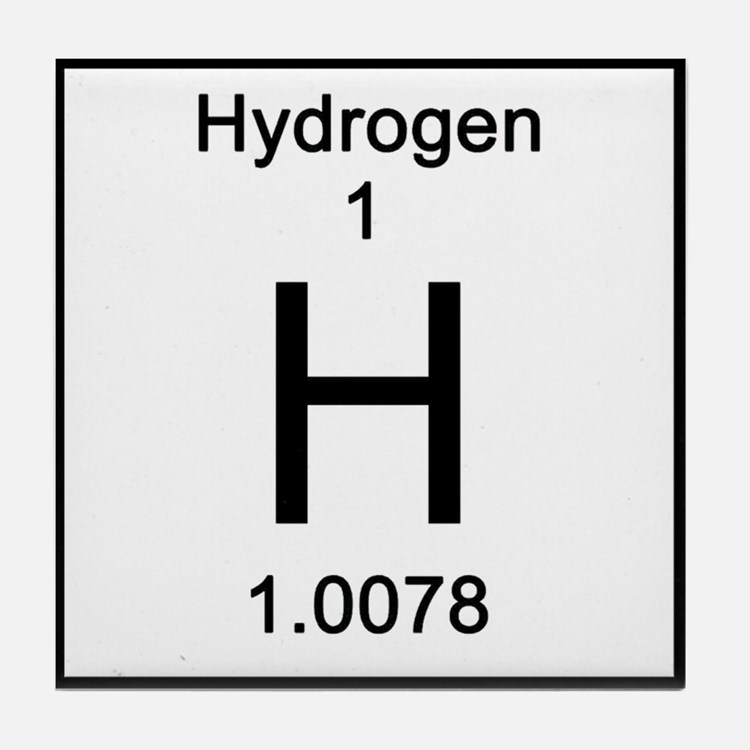
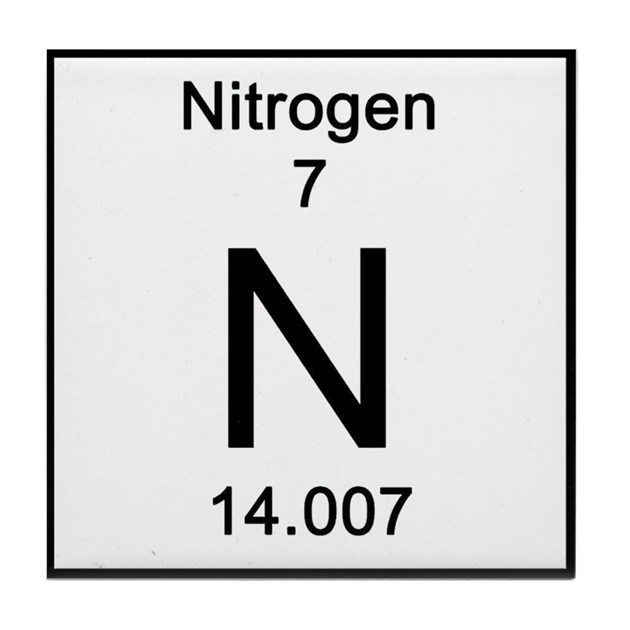
Based upon their matching values, hydrogen becomes the Hebrew letter Yod; nitrogen becomes the letter He; oxygen becomes the letter Vau; and carbon becomes the letter Gimel.
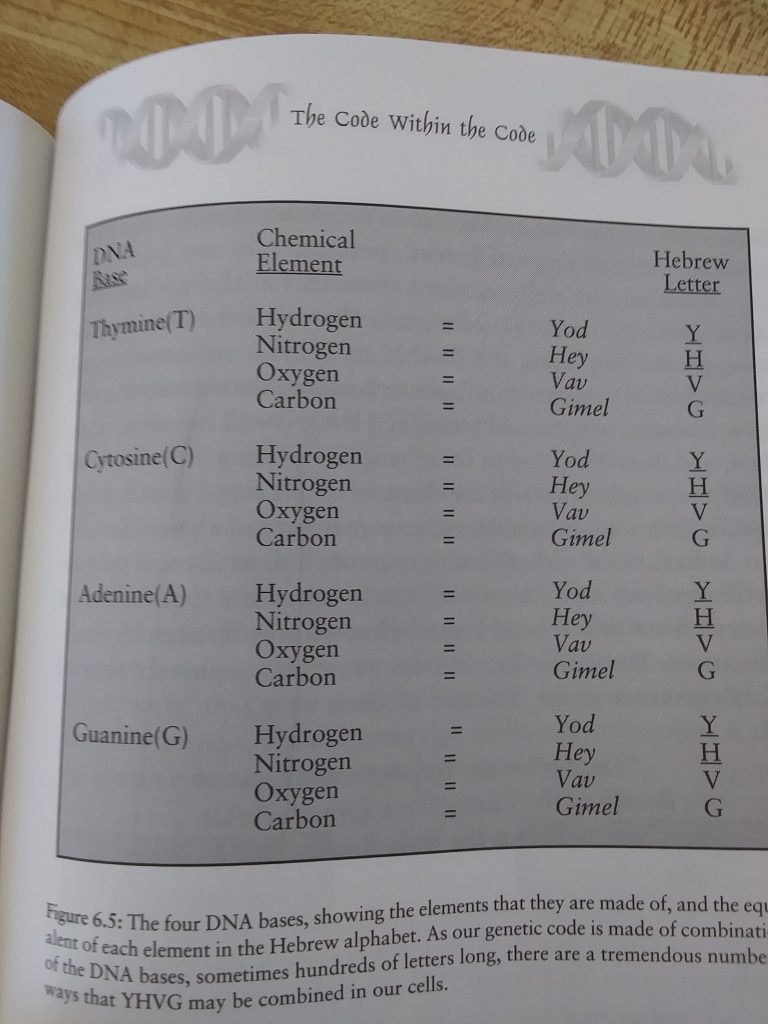
He further explains that by substituting modern elements for the ancient letters, although we share the first three leters of our Creator’s name, the fourth letter of our chemical name – “carbon” – sets us apart from God and makes us “real” in our world.

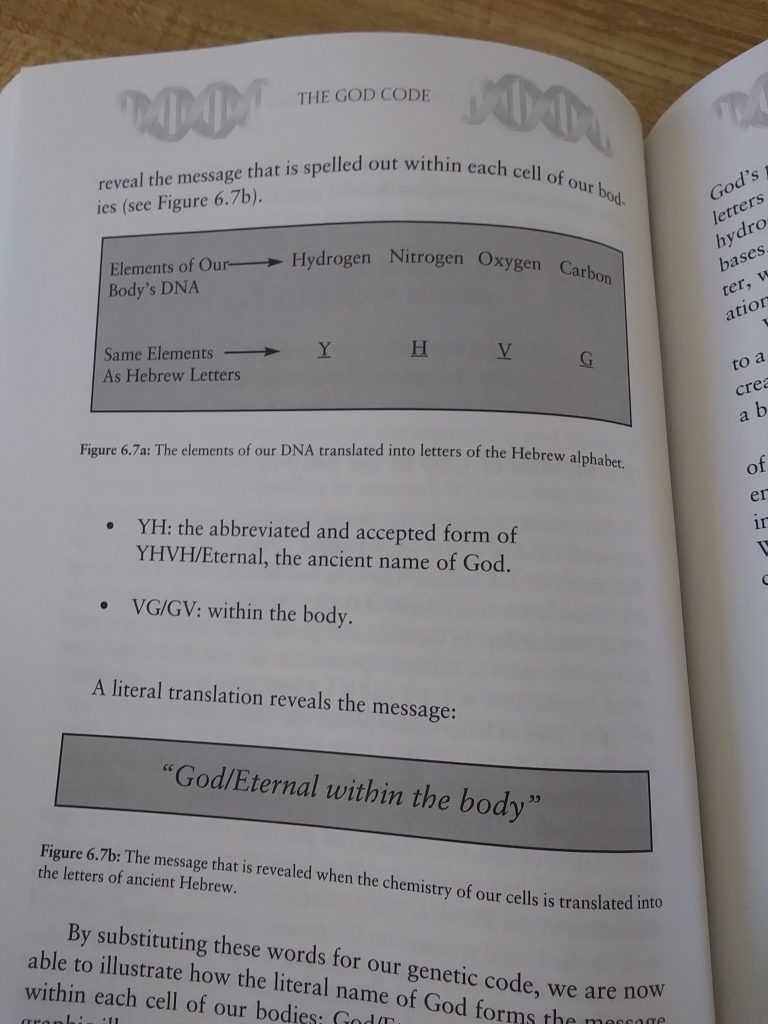
He says as “YH” forms one-half of God’s name and the name coded into our cells, and that by substituting these words into our genetic code, we are now able to illustrate how the literal name of God forms the message “God/Eternal within the Body” in our DNA.
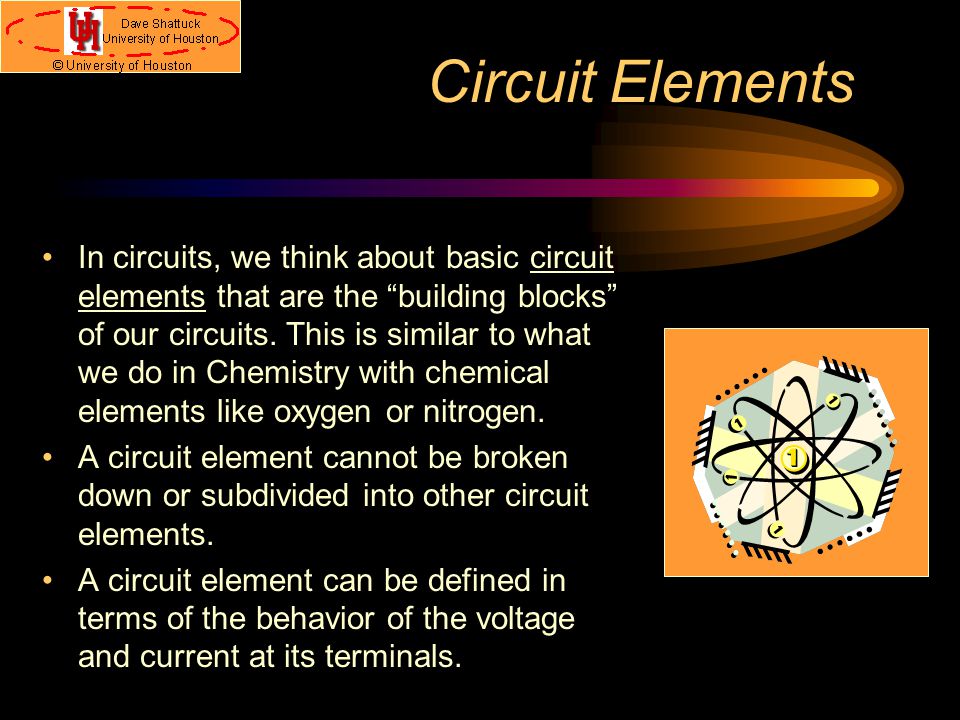
With regards to the correlation of the mines & minerals that I have consistently found all along this long distance alignment, I have come to believe that when the ancient Master Builders constructed the Earth’s Grid System, everything on that grid system was precisely placed for a specific reason and/or function, such as chemical elements being placed in certain places and relationships to each other as circuit elements.
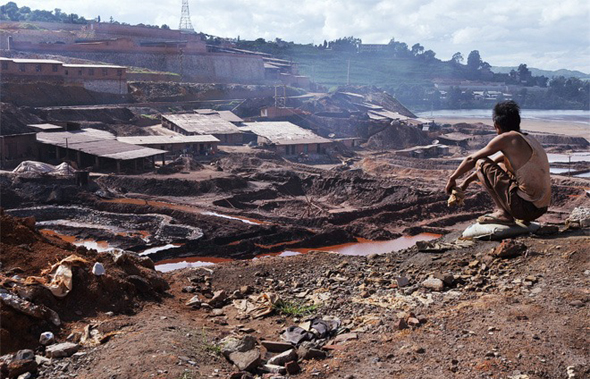
Through travelling this long-distance alignment, I am seeing a hidden pattern of widespread environmental, and in many places cultural, devastation around mining activity, with little or no accountability on the part of the mining companies for the damage they cause to the environment and the local communities.
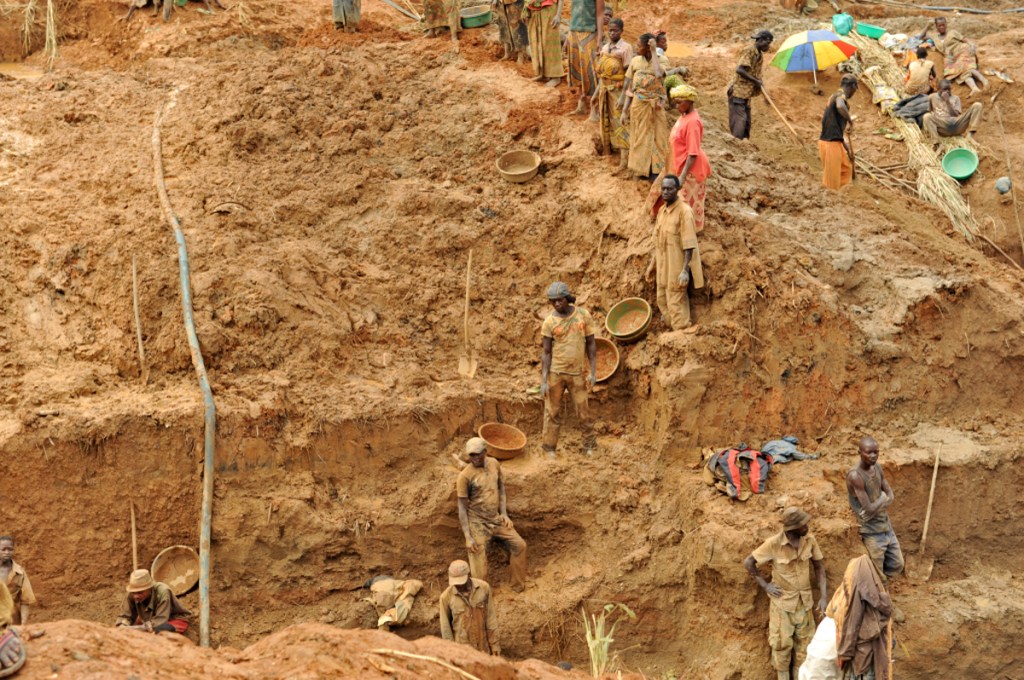
They provide jobs in many cases for only a short time, and then leave the people with nothing, and the people that have nothing destroy their environment to get the little bit they can mine to sell in order to make some money.

The Ancient Ones mined, but they mined for what they needed, and not for profit, and not until mineral resources were completely depleted.
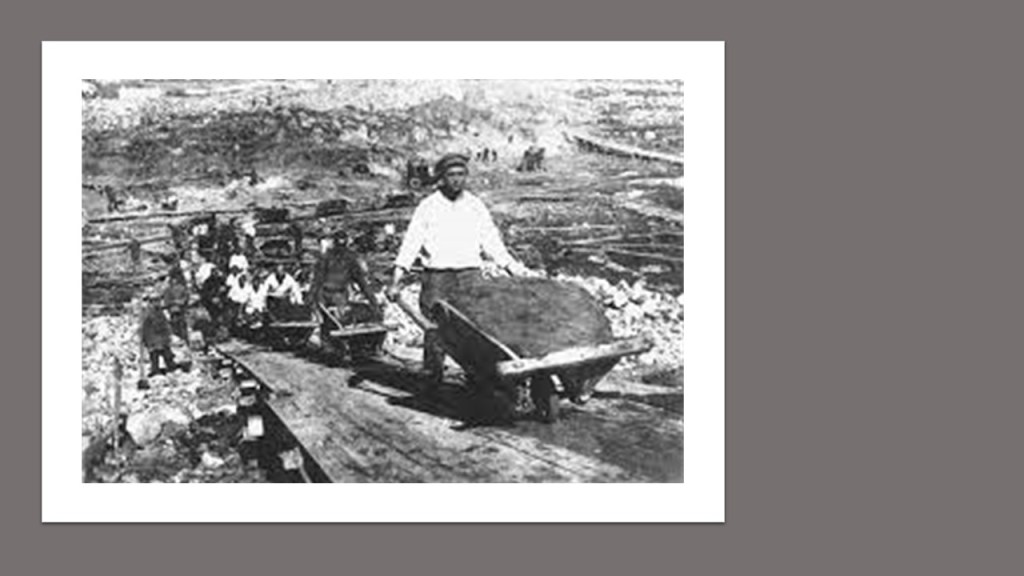
Not only that, the examples of the cruelty and inhumanity of forced labor in mines in places like the Gulag, by far not the only example.
Those responsible for wiping out the memory of the original advanced Human civilization knew about the earth’s grid system, and capitalized on it, at the same time removing the existence of this civilization and grid system from collective awareness.

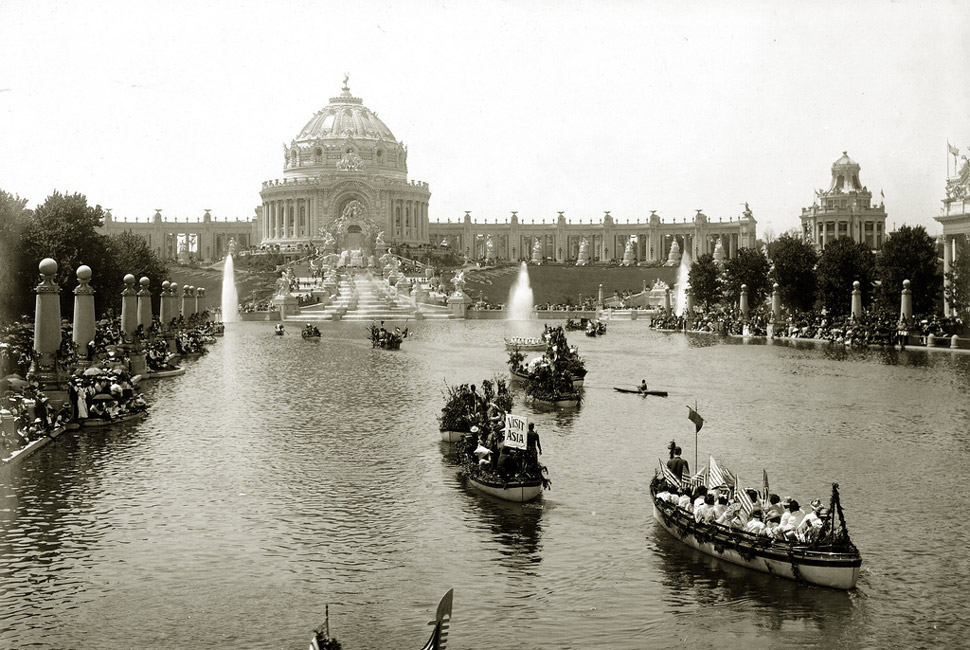
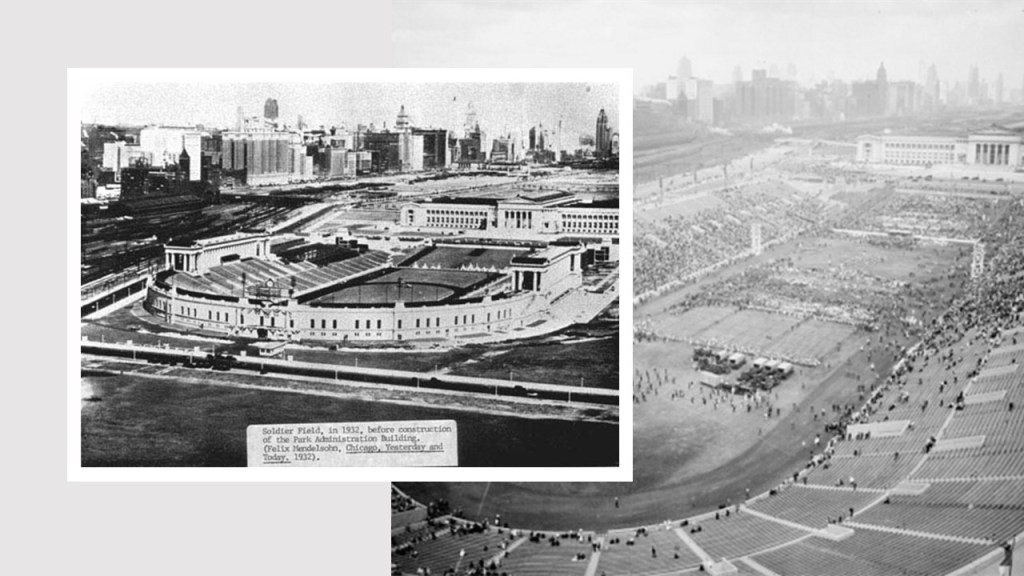
This is a picture of the 1893 Chicago World’s Fair.
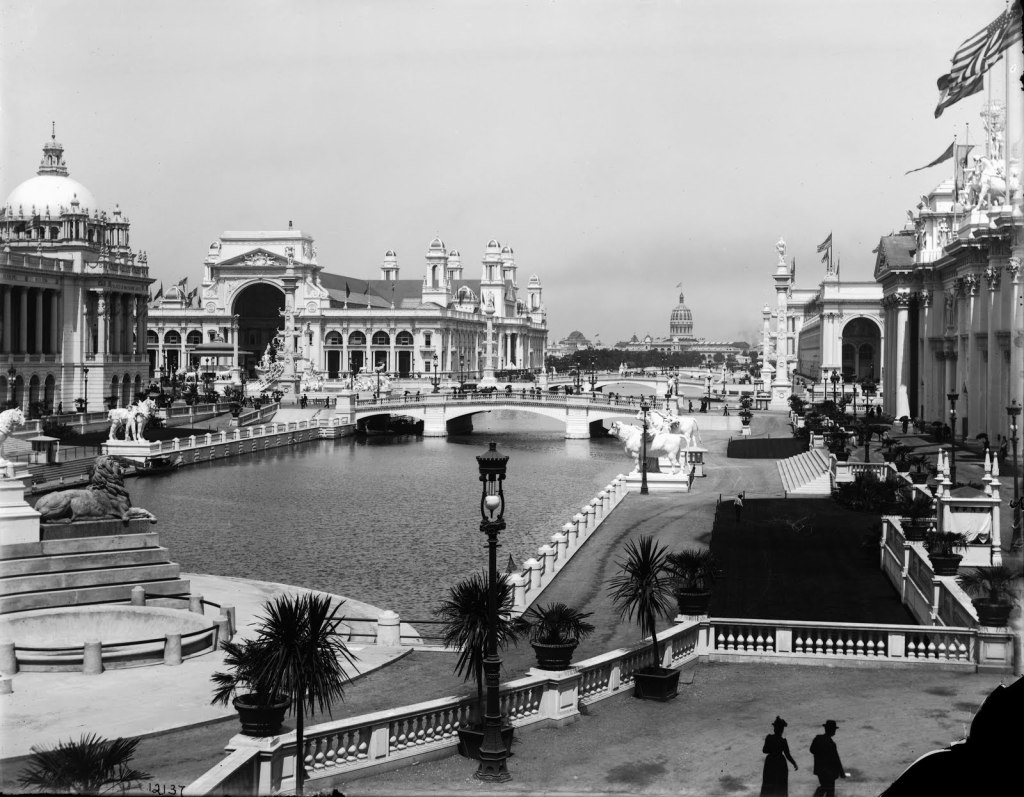
I look forward to digging deeper into this subject as there is much more to bring to light as this series only scratches the surface of what there is to find about Earth’s Hidden History, Ancient Advanced Civilization, and what has been taking place here without our awareness.

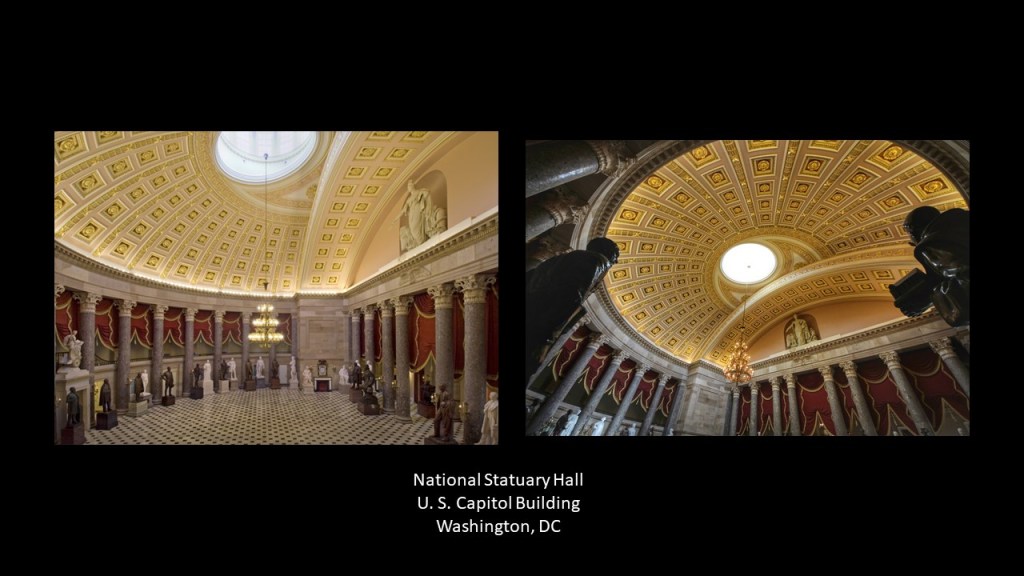
Snapshots from the National Statuary Hall at the U. S. Capitol – Gerald Ford and Jefferson Davis

I am currently approximately half-way through a series in which I am taking an in-depth look at who is represented in that National Statuary Hall in the U. S. Capitol building in Washington, DC, in which sculptures of prominent American historical figures are housed, two for each state.

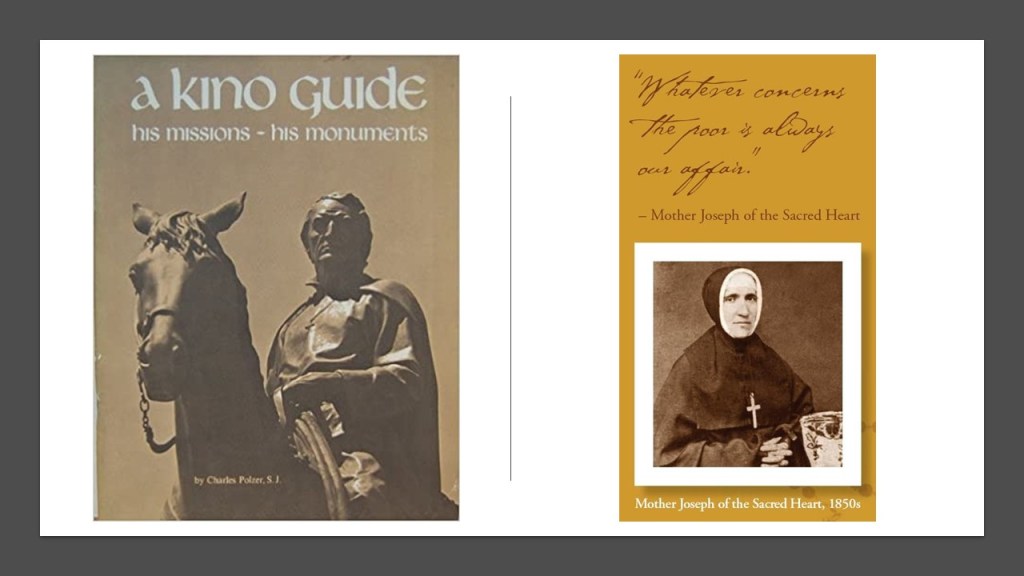
My attention was drawn to it as worth investigating because I encountered two historical figures in my research who are represented in the National Statuary hall – Father Eusebio Kino, a Jesuit Missionary and Cattle rancher, for Arizona, and Mother Joseph Pariseau, who we are told was a Catholic sister and self-taught architect, for Washington State.

The appearance of these two in the National Statuary Hall made me go “Hmmm,” and I wondered who else was chosen to be represented there and what could possibly be going on here.

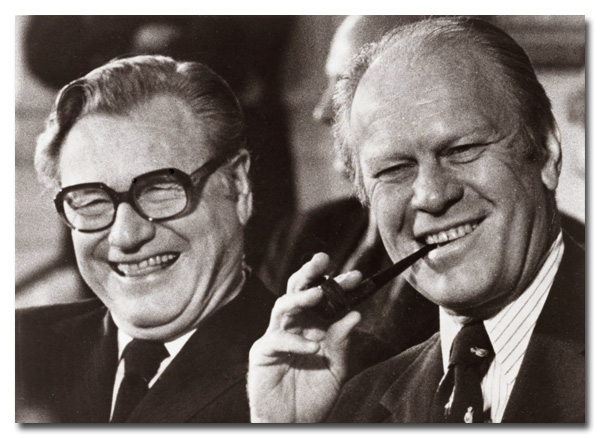
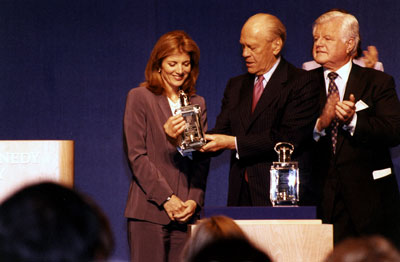
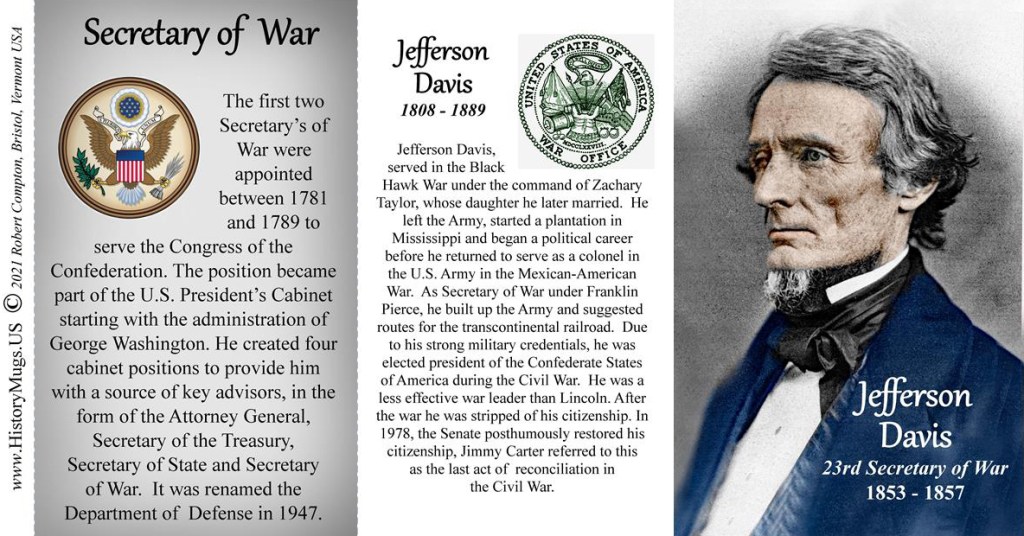
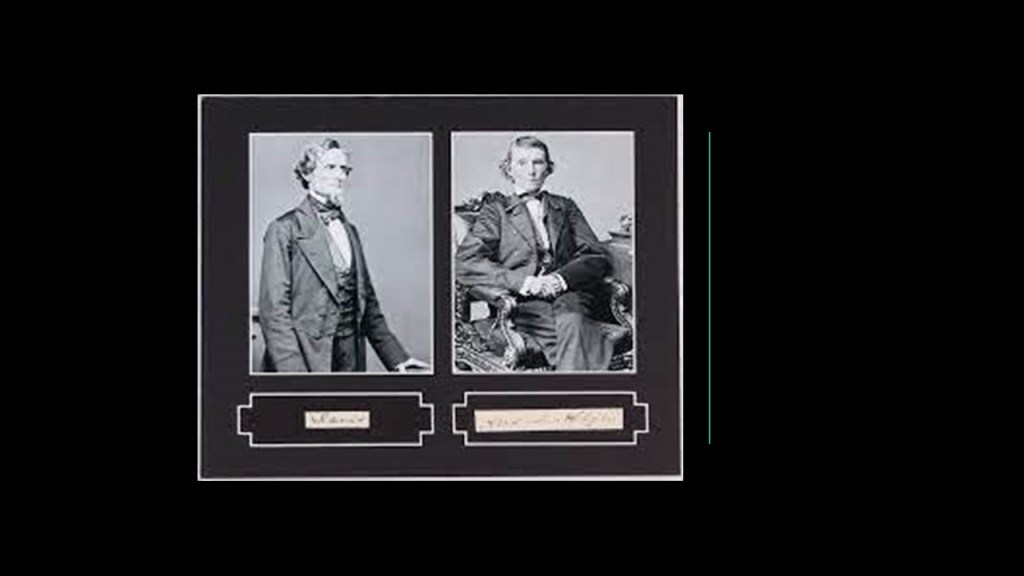
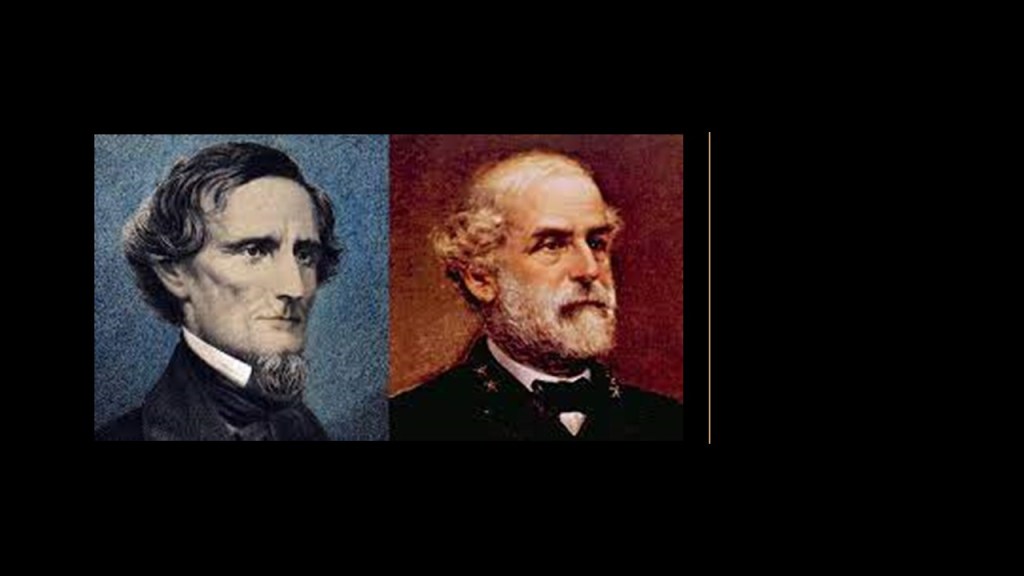
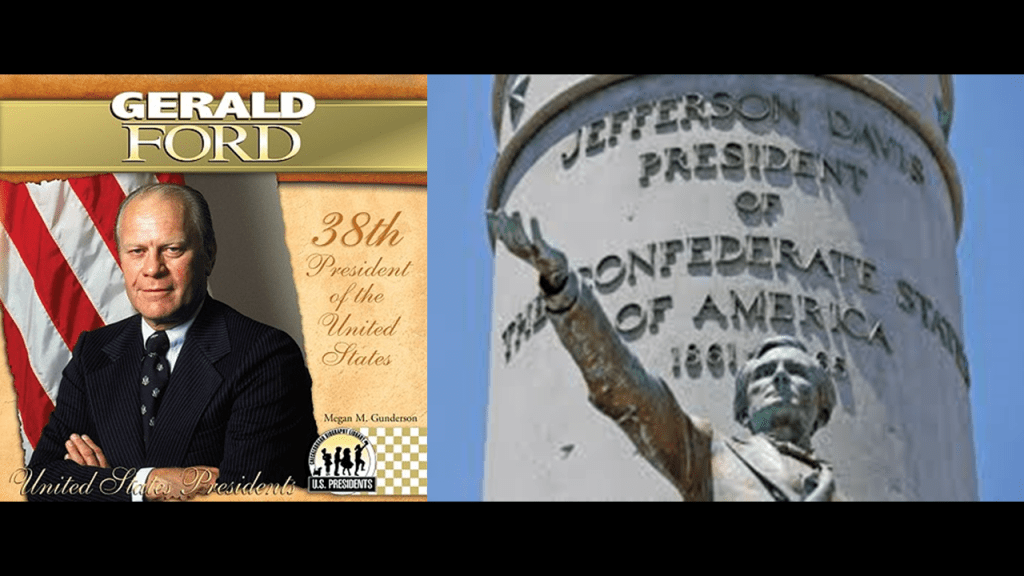
I have decided to showcase unlikely pairs of historical figures in the statuary hall who have things in common with each other in this new “Snapshots from the National Statuary Hall at the U. S. Capitol,” series, and I am starting with U.S. President Gerald Ford, and President of the Confederacy, Jefferson Davis.

First, Gerald Ford.

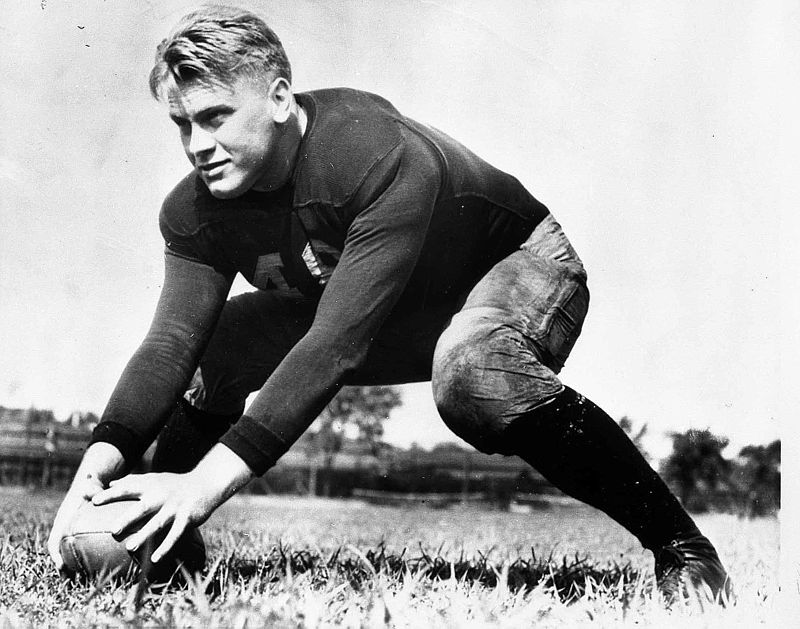
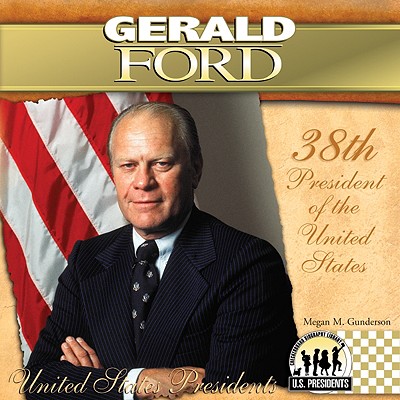
Gerald Ford was the only U. S. President from Michigan, and represents the State of Michigan in the National Statuary Hall, along with Lewis Cass.

Ford was never elected to the office of President or Vice-President.

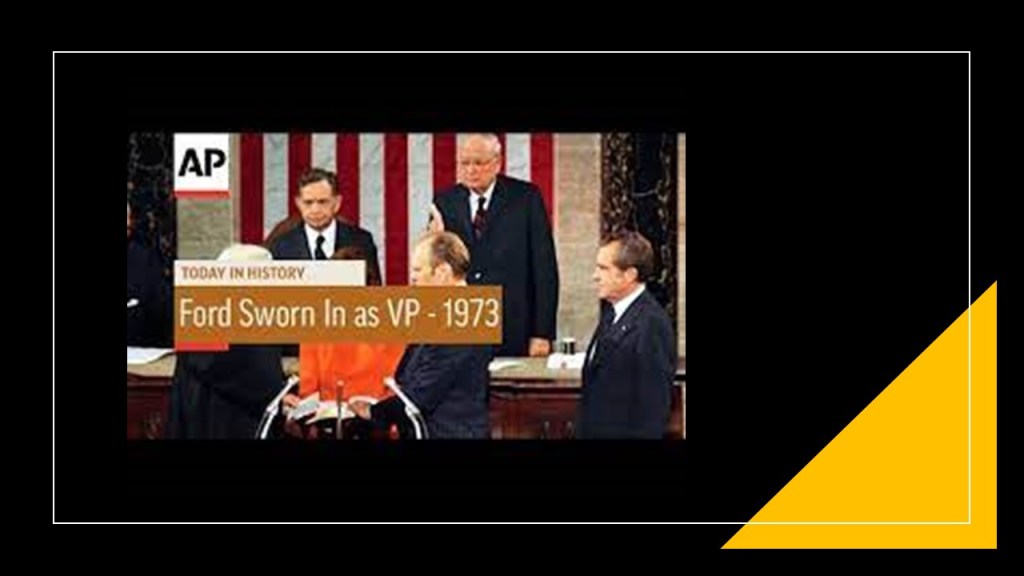
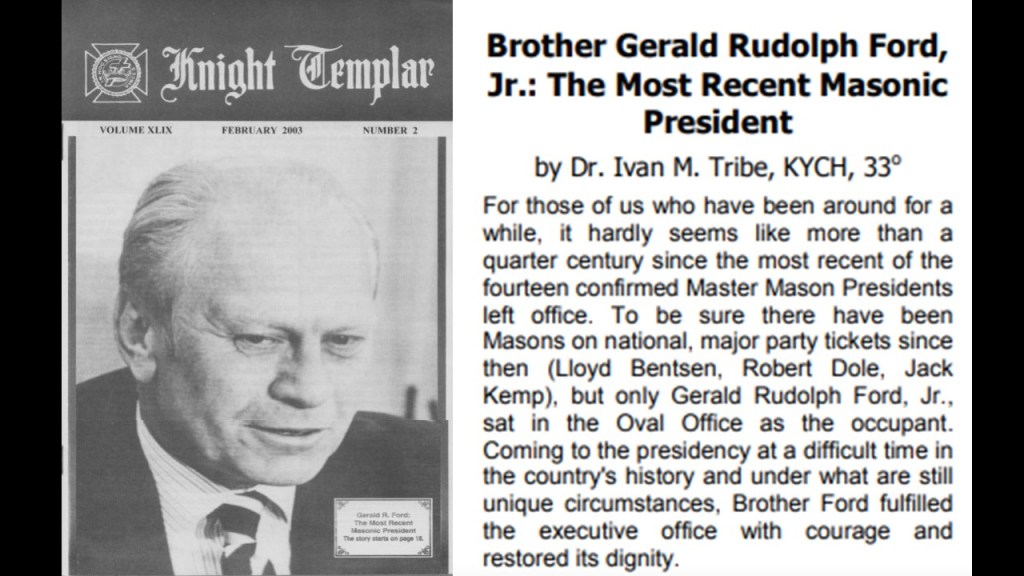
He was the leader of the Republicans in the House of Representatives when he was nominated to be President of the United States after the resignation of Richard Nixon in 1974.

He was defeated for a full-term by Jimmy Carter in 1976.

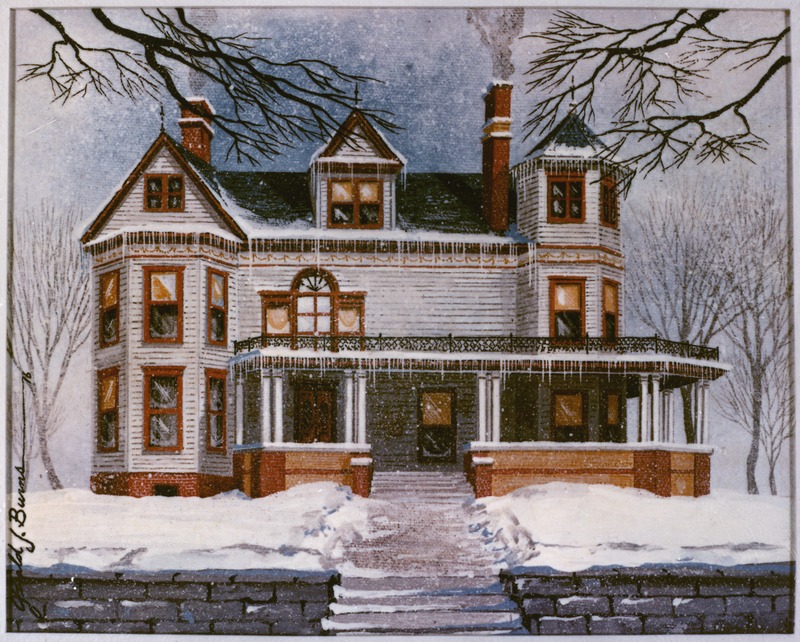
He was born Leslie Lynch King Jr in July of 1913 in Omaha, Nebraska, where his parents lived in the home of his paternal grandparents on Woolworth Avenue.

His mother separated from his father shortly after his birth due to domestic abuse.

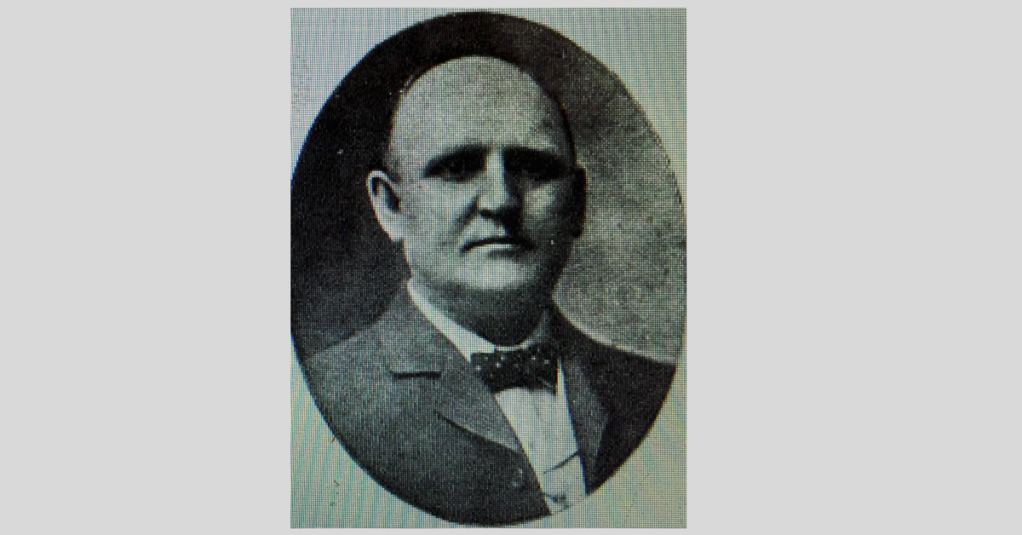
His paternal grandfather, Charles Henry King, a prominent businessman and banker in Omaha, also founded several cities in Wyoming and Nebraska, building up related businesses, banks, and freight operations with the westward expansion of the railroad.

King’s wealth was estimated to have been up to $20 million, and he was known as the wealthiest man in Wyoming.

The future President’s mother moved in with her parents in Grand Rapids, Michigan, and two-and-a-half years later married Gerald Rudolff Ford, a salesman in a family-owned paint and varnish company.

Though not formally adopted, Gerald Ford’s name change was formalized in 1935.

He attended Grand Rapids High School, where he was captain of the football team.

He went on to become a star player for the University of Michigan football team.

After graduating from the University of Michigan in 1935 with a bachelor’s degree in Economics, Ford turned down several offers to play professional football to become a boxing coach and assistant football coach at Yale University, and applied to the law school there.

Initially Ford was denied admission to the Yale Law School because of his full-time coaching responsibilities, but was admitted in the spring of 1938.

At the same time he was attending the Yale Law School, he was became the head coach of Yale’s Junior Varsity football team and worked as a male model for a couple of modelling agencies.

Ford graduated from the Yale Law School in 1948, and was admitted to the Michigan Bar.

He opened his law practice in Grand Rapids Michigan in May of 1941, with his friend Philip W. Buchen, who later became White House Counsel during the Ford Administration.

Ford enlisted in the Navy after the Japanese attack on Pearl Harbor on December 7th of 1941.

In April of 1942, he received a commission as a 2nd-Lieutenant in the U. S. Naval Reserve.

He was initially sent for instruction to the V-5 Flight Instructors School at the Naval Academy in Annapolis, Maryland, and then assigned to instruct at the Navy Preflight School in Chapel Hill, North Carolina, and coached all nine sports that were offered there.

While in Chapel Hill, he was promoted to Lieutenant, and by the end of World War II, had attained the rank of Lieutenant Commander, and had served on-board the carrier USS Monterey in the Pacific Theater.

He was honorably discharged from the Navy in February of 1946.

Ford returned to Grand Rapids in 1946, and became active in Republican politics, successfully running for the U. S. Congress for the first time in 1948, and subsequently serving as a member of the U. S. Congress holding Michigan’s 5th Congressional District seat from 1949 to 1973.

His time in Congress was known for its modesty, and he saw himself as a negotiator and reconciler.

President Johnson appointed Gerald Ford to the Warren Commission, which was set-up on November 29th of 1963 to investigate the assassination of President Kennedy.

The Warren Commission concluded in its final report presented to President Johnson on September 24th of 1964 that President Kennedy was assassinated by Lee Harvey Oswald, and that Oswald acted alone.

Gerald Ford became the House Minority Leader in 1965, after the Democrat President Lyndon B. Johnson was elected President in 1964.

He was encouraged to run for the position by a Republican Caucus known as the “Young Turks,” which included Donald Rumsfeld, who was the Congressman from Illinois’ 13th Congressional District at the time.

Rumsfeld later became Secretary of Defense in both the Ford and George W. Bush Administrations.

The Johnson Administration was able to pass a series of social programs in 1964 and 1965 known as the “Great Society” with a Democratic majority in the House and Senate.

These included programs that addressed things like education, medical care, urban problems, rural poverty, and transportation.

With criticism of the Johnson Administration’s handling of the Vietnam War growing, the mid-term elections in 1966 brought about a 47-seat swing to the Republicans in Congress.

This was not enough to give Republicans the majority, but it did give Ford at the Minority Leader the opportunity to prevent the passage of further Great Society programs, and Ford was openly critical of the Vietnam War.

Ford was nominated, and became Vice-President in 1973 after his nomination passed the House and Senate, after the sitting Vice-President, Spiro Agnew, resigned after pleading no-contest to a count of tax evasion stemming from his time as Governor of Maryland.

The Watergate Scandal was unfolding as Ford became Richard Nixon’s Vice-President, and after Nixon’s resignation from the Office of President on August 9th of 1974, Gerald Ford automatically became the 38th President of the United States.

And President Gerald Ford nominated Nelson Rockefeller, John D. Rockefeller’s grandson, to be his Vice-President, and Rockefeller’s nomination passed the House and the Senate.

President Ford issued Proclamation 4311 on September 8th of 1974, in which he fully and unconditionally pardoned Richard Nixon for any crimes he might have committed while President of the United States.

While many believe Ford lost the 1976 Presidential Election because of the controversial pardon, in 2001, Gerald Ford received the John F. Kennedy Profile in Courage Award from the John F. Kennedy Library Foundation for his pardon of Nixon.

Ford inherited Nixon’s Cabinet when he first took office.

He replaced all of Nixon’s cabinet members except for Secretary of State, Henry Kissinger and Secretary of the Treasury, William E. Simon.

Ford selected George H. W. Bush as the Chief of the U. S. Liaison Office to the People’s Republic of China in 1974 and then Director of the CIA in late 1975.

Ford’s first Chief of Staff was Donald Rumsfeld, and Dick Cheney became Ford’s Chief of Staff after Rumsfeld became the youngest Secretary of Defense in 1975.

During the years of Gerald Ford’s Presidency between August 9th of 1974 and January 20th of 1977, here are some of the things that happened:

The Economic Policy Board was created by Executive Order on September 30th of 1974 in response to concern about the economy and rising inflation.

The Economic Policy Board was created to oversee the formulation, coordination and implementation of all economic policies to combat rising grocery prices, eroding purchasing power, rising cost of doing business and unemployment.

A month later, in October of 1974, President Ford went to the American public with his WIN, or Whip Inflation Now, Program, encouraging people to wear WIN buttons, and to curb their spending and consumption.

Controlling public spending was seen as a way to rein in inflation.

It is interesting to note that the U. S. sank into the worst recession since the Great Depression during this time, and unemployment had reached 9% by May of 1975.

Special Education was established in the United States when Ford signed the “Education for All Handicapped Children Act” in 1975.

In November of 1975, President Ford attended the first meeting of the Group of Seven Industrialized Nations, also known as G7, where he secured membership for Canada.

Also in November of 1975, Ford adopted the global human population control recommendations of National Security Study Memorandum 200, also known as the Kissinger Report, a National Security Directive completed on December 10th of 1974 by the United States Security Council under the direction of Henry Kissinger, on the initial order of President Nixon.

The Memorandum and policies developed from it were seen as a way the U. S. could use population control to: 1) Limit the political power of undeveloped nations; 2) ensure the easy extraction of foreign natural resources; 3) prevent young anti-establishment individuals from being born; and 4) protect American businesses from interference from nations seeking to support their growing populations.

President Ford had announced the end of the Vietnam War for the United States in a speech he gave at Tulane University on April 23rd of 1975, after Congress voted against his request for a $722 million aid package for South Vietnam, though money was given for evacuation.

The Fall of Saigon took place on April 30th of 1975, with entry of North Vietnamese forces into the city, and right after the helicopters of Operation Frequent Wind evacuated Americans, at-risk South Vietnamese and third-country nationals from the capital of South Vietnam.

Swine Flu showed up in February of 1976, when an Army recruit at Fort Dix mysteriously died, and four other soldiers were hospitalized.

Soon after, Public Health officials in the Ford Administration urged that every person in the United States be vaccinated for swine flu, but the program was cancelled in December of 1976 after approximately 25% of the population had been vaccinated.

After Ford lost the 1976 Presidential Election to Jimmy Carter, he stayed active in public life in a variety of ways.

He died on December 26th of 2006 at home in Rancho Mirage, California, from end-stage Coronary Artery Disease.

After lying in-state in the Rotunda on December 30th of 2006, and a funeral for him held at the National Cathedral in Washington, DC, he was interred at his Presidential Museum in Grand Rapids, Michigan.

Hmmm.

The unelected President Gerald Ford was known for his unassuming and conciliatory manner.

But could “Unassuming Jerry” have been selected for the Presidency with another agenda hidden from view, while the Nation and the World was distracted with the Watergate Scandal and Hearings?

Did in fact the short-lived Ford Administration bring together the major players of the New World Order under the auspices of the U. S. Presidency in order to solidify and advance the New World Order Agenda for its future progression?

I did a Freemason search on President Ford, and sure enough, it came back positive.

Not only was he a 33rd-Degree Freemason in the Scottish Rite, while he was in the Oval Office, he received the degrees of York Rite Freemasonry

The highest order of the York Rite is the Knights Templar.

 I couldn’t confirm that Ford was a Knight Templar, but I did find him in their February 2003 magazine.

The other historical figure I am going to be showcasing in this particular pairing is Jefferson Davis.

Jefferson Davis represents the State of Mississippi in the Statuary Hall, along with James Z. George.

Davis represented Mississippi as a Democrat in the United States Senate and House of Representatives before the American Civil War, and he was President of the Confederate States during the Civil War, between 1861 and 1865.

He had served as Secretary of War from 1853 to 1857 during the Administration of President Franklin Pierce.

Jefferson Davis was born in Fairview, Kentucky, on the family homestead in June of 1808, and was the youngest of ten children. He was named after the President at the time, Thomas Jefferson.

The Jefferson Davis State Historic Site is a Kentucky State Park that commemorates his birthplace.

It is very interesting to note that a 351-foot, or 107-meter, – tall obelisk commemorating Davis is located there.

This obelisk is the fourth-tallest monument in the United States; the tallest, unreinforced concrete structure in the world, and the world’s tallest concrete obelisk.

We are told the idea of a monument for Davis was said to have been proposed by former Confederate General Simon Bolivar Buckner, Sr, at a reunion in 1907 of the First Kentucky Brigade, also known to history as the “Orphan Brigade.”

Its nickname of “Orphan Brigade” was said to have come from one of its Commander, General Hanson Breckinridge, riding among the survivors after the 1862 Battle of Stones River in Middle Tennessee, where the Brigade suffered heavy casualties, saying repeatedly, “My poor orphans! My poor orphans!”

The Brigade saw fighting during the entirety of the American Civil War, including being Confederate combatants against the Union Army General Sherman’s March to the Sea, which took place from Sherman’s capture of Atlanta in November 15th of 1864 to his capture of Savannah, Georgia, on December 21st of 1864.

General Sherman’s forces followed a scorched earth policy of destroying not only military targets, but also industry, infrastructure, and civilian property.

Well, well, well…what do we have here?

It sure looks like General Sherman was a Freemason!

The construction of the massive obelisk monument to Davis was said to have started in 1917 and completed in 1924.

Jefferson’s father, Samuel Davis, served in the American Revolutionary War, and received a land grant near Washington, Georgia, for his service.

Interesting to note that Washington, Georgia, is where the Confederacy voted to dissolve itself, bringing the American Civil War to an end. More on this later.

The family moved from the family homestead in Georgia when Jefferson was two-years-old, ending up near Woodville, Mississippi, where his father operated a small cotton plantation called Rosemont, and was President Davis’ family home until 1895.

In 1816, when Davis was 8-years-old, his father sent him to a Catholic Preparatory School in Springfield, Kentucky run by the Dominicans called Saint Thomas College.

Today called the St. Rose Priory Church, this religious house was first founded by Dominican friars as a college around 1808, and was the first Catholic educational institution west of the Allegheny Mountains.

Davis returned to Mississippi in 1818, where he studied first at Jefferson College in Washington, Mississippi…

…and then after attending the Wilkinson Academy near Woodville, Mississippi for 5 years, he attended Transylvania University in Lexington, Kentucky, starting in 1823.

His father Samuel died while he was here, who had already sold the Rosemont Plantation to his eldest son Joseph because of debt.

Joseph E. Davis already owned land on the Mississippi River in what became known as Davis Bend, Mississippi, and is now called Davis Island.

Joseph had established the Hurricane Plantation there between 1824 and 1827 as a “model cooperative slave community” after studying utopian socialist ideas of Robert Owen, a Welsh textile manufacturer, philanthropist and social reformer, with Joseph’s stated goal being the achievement of a higher-functioning and profitable slave community by provision of decent care and opportunties for self-governance.

More on the Davis Bend Plantations of Joseph and Jefferson Davis shortly.

Davis Bend, known today as Davis Island, is 50-miles, or 81-kilometers south of Vicksburg on the Mississippi River.

Joseph E. Davis was 23-years older than Jefferson, and took on being the role of a surrogate father to him after their father Samuel’s death.

In 1824, Joseph secured an appointment for Jefferson at the United States Military Academy in West Point, New York.

Jefferson Davis was continually getting into disciplinary trouble there for drunk and disorderly conduct while he was there, but managed to graduate 23rd in a class of 33.

The newly-commissioned Second-Lieutenant Jefferson was assigned to the 1st Infantry Regiment, and his duty stations were at Fort Crawford in Prairie du Chien, Wisconsin, and Fort Winnebago, the middle of three fortifications along the Fox-Wisconsin Waterway that included Fort Crawford and Fort Howard in Green Bay, Wisconsin.

Forts Crawford and Howard were said to have been built during the War of 1812 to protect the important trade route of the Fox-Wisconsin Waterway between Lake Michigan and the Mississippi River from British invasion.

Fort Winnebago was said to have been built in 1828 in an effort to keep peace between white settlers and the regions Native American tribes following the 1827 Winnebago War, which ended quickly after a portion of the Winnebago had risen up in reaction to a wave of lead miners trespassing on their land.

As a result of the war, the Winnebago, also known as the Ho-Chunk, were compelled to cede the lead mining region to the United States.

It is interesting to note that the Fox-Wisconsin Waterway is a lock, dam and canal system that was said to have been built in the mid-19th-century, and used for transportation until the coming of the railroad made it obsolete.

We are told use of the waterway was never substantial, and it slowly died out, and the lock system on the Lower Fox River between Lake Winnebago and Green Bay was closed in 1983 to prevent the upstream spread of invasive species like lamprey.

Jefferson Davis was ill with pneumonia during the Black Hawk War in March of 1832, in which the Sauk leader Black Hawk and a group of Sauk, Fox, and Kickapoo were attempting to reclaim land sold to the United States in the disputed 1804 Treaty of St. Louis.

They were defeated at the Battle of Wisconsin Heights on July 21st of 1832…

…and the Battle of Bad Axe near present-day Victory, Wisconsin, on August 1st and 2nd of 1832, which has been called a massacre since the 1850s.

Black Hawk was soon taken prisoner, and the end of the Black Hawk War opened up much of Illinois and Wisconsin for further settlement.

It also gave impetus to the United States policy of Indian Removal, where Native American tribes were pressured to sell their lands and move to reservations west of the Mississippi River.

Though absent on furlough for the Black Hawk War, Jefferson Davis was said to have had the duty of escorting Black Hawk for detention at the Jefferson Barracks near St. Louis.

Davis returned to Ft. Crawford in January of 1833, from which he was reassigned by his commanding officer Colonel and future U. S. President Zachary Taylor that spring after Davis wanted to marry Taylor’s daughter, and Taylor said no.

He was assigned to the United States Regiment of Dragoons, which was formed by an Act of Congress on March 2nd of 1833 to patrol the frontier as a result of the Black Hawk War.

He was promoted to First Lieutenant, and assigned to Fort Gibson in the Arkansas Territory, the furthest west military post at the time in the United States.

It was here that Davis was court-martialed in February of 1835 for insubordination.

Though acquitted, he requested a furlough, and resigned from the U. S. Army at the age of 26 in June of 1835.

Upon returning to Mississippi after Davis resigned from the Army, he decided to become a planter.

His brother Joseph provided him with 800 acres, or 320 hectares of land at Davis Bend, and he started cultivating cotton at what became known as Brierfield Plantation.

Davis had kept in touch with Sarah Taylor, Zachary Taylor’s daughter, and he finally gave his consent to their marriage.

They were married  at Beechland, a home said to have been built in 1812, near Jeffersontown, Kentucky, in June of 1835.

In August of 1835, the newlyweds travelled to the Locust Grove Plantation of his sister Anna Smith in West Feliciana Parish, Louisiana, where they both contracted severe cases of malaria.

Sarah subsequently died on September 15th of 1835 at the age of 21, and was buried at the Locust Grove Cemetery.

Jefferson Davis gradually improved.

Interesting to note the presence of the River Bend Nuclear Power Plant and Louisiana State Penitentiary in West Feliciana Parish.

The Louisiana State Penitentiary, also known as Angola and the Alcatraz of the South, it is the largest maximum-security prison in the United States.

Also, one of the south’s earliest railroads ran from St. Francisville, the Parish Seat, to Woodville, Mississippi, where the Davis Family Homestead Rosemont was located.

All these findings pique my interest, and I wonder if this area was a power node of some sort on the Earth’s original energy grid system.

In the years following Sarah’s death, Jefferson developed the Brierfield Plantation and with the help of his brother, Joseph, became increasingly involved in politics, with their particular concern about national efforts to limit slavery in new territories.

His political career started in 1840, when he attended a Democratic Party meeting in Vicksburg, and served as a delegate to the state party convention in Jackson, and he served again as a delegate in 1842.

He lost the election for the State House of Representatives for Warren County in November of 1843.

In 1844, he was chosen to be a convention delegate again, and he was selected as one of Mississippi’s six Presidential electors for the 1844 Presidential Election.

At the same time this was happening, he met 18-year-old Varina Banks Howell, the daughter of New Jersey Governor Richard Howell, to whom he delivered the invitation from his brother Joseph to stay at the Hurricane Plantation for the Christmas Season.

They were married in February of 1845.

Davis ran for election to the U. S. House of Representatives in 1845, and won the election.

He was a strong advocate, among other things for States’ rights, political powers which are held for state governments rather than the federal government.

The Mexican-American War started on April 25th of 1846 during Davis’ Congressional term.

The State of Mississippi raised the First Mississippi Regiment, a volunteer unit, for the U. S. Army, and Davis was interested in joining it if he could be its commanding officer.

He was ultimately elected as its colonel, and while not resigning his seat in the House, he left a resignation letter with his brother to be used at the appropriate time.

Davis was able to get new percussion rifles for his unit as a favor returned by President James Polk for Davis’ support of Polk’s Walker Tariff, a decision which was not supported by the Commanding General of the U. S. forces, Winfield Scott because the new rifle had not been sufficiently tested.

The percussion rifle became known to history as the “Mississippi Rifle,” and his unit as the “Mississippi Rifles.”

Davis distinguished himself during the Mexican-American War during the Battle of Monterrey, where he led a charge that took the Fort Teneria.

Davis took a leave of two-months to return to Mississippi, and learned that his brother Joseph had submitted his letter of resignation from Congress.

He returned to the Mexican-American War, and fought in the Battle of Buena Vista, which took place in February of 1847.

While his tactics stopped a flanking attack by Mexican forces before they could collapse the American line, he was wounded in the heel.

Upon his return to the States, Davis declined a federal commission as a Brigadier General from President Polk, but accepted an appointment by Mississippi Governor Albert G. Brown to fill a vacancy in the U. S. Senate.

Davis took his seat in the Senate in December of 1847, and he established himself right away as an advocate of the South and its expansion into the territories of the West.

Davis was against the Wilmot Proviso, which was an 1846 proposal in the U. S. Congress to ban slavery in territory acquired from Mexico as a result of the Mexican-American War.

He asserted that only states had sovereignty and not territories, arguing that territories were the common property of the United States and that Americans who owned slaves had a right to move into territories with their slaves.

The conflict over the Wilmot Proviso was one of the major events leading to the American Civil War.

Davis was reelected to the Senate in 1849, where he became the spokesman for the South.

He was opposed to the Compromise of 1850, which was a package of five separate bills passed by Congress which defused a political confrontation between slave and free states on the status of territories acquired in the Mexican-American War.

The compromise was designed by Whig Senator Henry Clay and Democratic Senator Stephen Douglas, with the support of President Millard Fillmore, who had taken office with the sudden death of President Zachary Taylor from an unknown digestive ailment in July of 1850 after serving only 16-months in office.

Jefferson Davis, who opposed the Compromise of 1850, resigned from his Senate seat in the fall of 1851 to run for Mississippi Governor on a States’ Rights platform.

He lost the election and though he no longer held political office, he turned down the reappointment to his Senate seat by the outgoing Governor.

He remained politically active by attending the 1852 Democratic Convention and campaigning that year for both Franklin Pierce and William R. King, with Franklin Pierce becoming the 14th President of the United States.

Jefferson Davis became Secretary of War in the Pierce Administration in March of 1853.

We are told that as Secretary of War, Davis advocated for a transcontinental railroad was needed for national defense, and he was given the task of overseeing the Pacific Railroad Surveys to determine the best of four possible routes after the U. S. Congress appropriated $150,000 on March 3rd of 1853, and authorized Davis to find the most practical and economical route for a railroad from the Mississippi River to the Pacific Ocean.

The Pacific Railroad Surveys, a series of explorations of the American West between 1853 and 1857 with the stated purpose of finding and documenting possible routes for a transcontinental railroad across North America.

There were five surveys conducted: the Northern Pacific Survey between the 47th-parallel north and the 49th-parallel north from St. Paul, Minnesota, to Puget Sound; the Central Pacific Survey between the 37th-parallel North and the 39th-parallel North from St. Louis, Missouri, to San Francisco, California; the Southern Pacific Survey along the 35th parallel north from Oklahoma to Los Angeles, California; the Southern Pacific Survey across Texas to San Diego, California; and along the Pacific Coast from San Diego, California, to Seattle, Washington.

All were carried out under the direction of Secretary of War Jefferson Davis, the future President of the Confederacy.

We are told the volumes of information that were produced from these surveys were considered to constitute the singlemost important contemporary source of knowledge on western geography and history, and that there value was greatly enhanced by beautifully-illustrated color plates showing the scenery, native inhabitants & fauna and flora of the West.

Let’s take a look at some of the definitions of survey.

Perhaps the most commonly used in our modern culture is the definition of survey which involves a brief interview with someone, for example, with a specific set of questions related to a particular topic to get their feedback.

Then there is the perspective of the definition of survey regarding civil engineering and the activities involved in the planning and execution of surveys gathering information related to all aspects of engineering projects, which is the definition implied in the driving force behind the Pacific Railroad Surveys.

But what about other definitions of survey that might be in play here?

Perhaps, more like some of the definitions shown here – a short descriptive summary; the act of looking or seeing or observing; considering in a comprehensive way; holding a review; and a detailed critical inspection, and not the kind of surveying for civil engineering projects seen in the previous slide as we have been led to believe through historical omission.

What if the Pacific Railroad Surveys were undertaken to explore a ruined landscape surveying, as in “looking at and observing,” everything, including pre-existing rail infrastructure in order to restore it to use once again?

What if the deserts in North America weren’t always deserts?

Other things that Jefferson Davis was credited with during his tenure as Secretary of War:

He promoted the Gadsden Purchase in December of 1853, in which the United States purchased what became southern Arizona and southwestern New Mexico from Mexico…

…overseeing the building of public works infrastructure in Washington, DC, including, but not limited to the Washington Aqueduct, construction of which was said to have started in 1853 under the supervision of Montgomery Meigs and the U. S. Army Corps of Engineers…

…and Davis was involved in getting the Kansas-Nebraska Act passed in 1854 by allowing President Pierce to endorse it before it came up for a vote.

This Act created the Kansas and Nebraska Territories, and repealed the limits on slavery that had been placed on the expansion of slavery in the Missouri Compromise of 1820, and allowed for popular sovereignty, with the citizens of the new territory deciding its slaveholding status.

The passage of this bill led directly to violence in the Kansas Territory, producing a violent uprising known as “Bleeding Kansas” when pro-slavery and anti-slavery activists flooded into the new territories seeking to sway the vote.

Master Mason John Brown, best known for his 1859 ill-fated raid in Harper’s Ferry, West Virginia was involved in events of “Bleeding Kansas.”

The same month that Davis was re-elected for the Senate after his term as Secretary of War was over, in March of 1857, the Supreme Court Ruled in the Dred Scott Case that slavery could not be barred in any territory.

When Jefferson Davis returned to the Senate, which reconvened in November of 1857, the session opened with a debate on the Lecompton Constitution, the second of four constitutions proposed by Kansas, that would have allowed Kansas to have been admitted to the Union as a slave state.

It did not pass because a leading Democratic Senator in the North, Stephen Douglas, believed it did not represent the true will of the people of Kansas, and further undermined the alliance between northern and southern Democrats.

In early 1858, Davis had a severe illness involving the inflammation of his left eye which threatened the loss of his eye.

After spending seven weeks in bed, he went up to Portland, Maine, to recover his health in the summer of 1858.

While Davis was there, he received an honorary Doctor of Law degree from Bowdoin College in Brunswick, Maine, for his contributions as an army officer, Secretary of War, and as a U. S. Representative and Senator.

Davis also felt well enough to give speeches in Maine, Boston, and New York.

These speeches emphasized the common heritage of Americans and the importance of supporting the U. S. Constitution.

His speeches angered some states’ rights supporters in the South, so he clarified his comments when he returned to Mississippi that he felt positive about the benefits of the Union, but also that he felt the Union could be dissolved if states’ rights were violated by one section of the country imposing its will on the other.

Davis presented a series of resolutions in the Senate in February of 1860 defining the relationship between the states under the Constitution, and he included what he called the Constitutional right of Americans bringing slaves into territories, and these resolutions were seen as setting the Democratic platform for the election that year.

The Democratic Convention vote was split between the Democratic nominee from the North, Stephen Douglas, and from the South, John Breckinridge, and Abraham Lincoln won the 1860 presidential election.

On December 20th of 1860, the State of South Carolina seceded from the Union, and Mississippi followed with the same course of action on January 9th of 1861.

Davis resigned from the Senate on January 21st of 1861, after delivering a speech to the Senate calling it the saddest day of his life, and returned to Mississippi.

Davis notified the Mississippi Governor John C. Pettus that he was available to serve the State, and he was appointed a Major-General in the Army of Mississippi on January 27th of 1861.

Shortly thereafter, however, on February 10th, he received word that he had been unanimously elected to the provisional Presidency of the Confederacy by a constitutional convention in Montgomery, Alabama, with Alexander H. Stephens as his Vice-President. I learned about Stephens because his statue is one of the two representing Georgia in the National Statuary Hall.

They were provisionally inaugurated on February 18th, and the Confederate Administration was housed in Montgomery’s Exchange Hotel.

We are told that as the southern states seceded, all but four forts had been taken over by state authorities.

Those exceptions were Fort Sumter in Charleston, South Carolina, on the top left; Fort Pickens in Pensacola, Florida, on the top right; and on the bottom left and right in Key West, Fort Zachary Taylor and Fort Jefferson, which is the largest brick masonry structure in the Americas.

All four of these forts were said to have been built after the War of 1812 as a coastal protection from naval invasion…

…in the same way the historical narrative tells us that the Palmerston Forts on the Isle of Wight were a group of forts and associated structures that were built during the Victorian Era in response to a perceived threat of French invasion.

They are called the Palmerston Forts due to their association with Lord Palmerston, the British Prime Minister from 1859 to 1865 who was said to have promoted the idea.

There were approximately 20 of these Palmerston structures along the west and east coast of the Isle of Wight, like Fort Victoria.

The Confederate Congress advised Davis in February of 1861 to send a commission to the U. S. Congress to negotiate the settlement of the disagreements between the Confederate States and the federal government of the United States, including the federal evacuation of these forts.

President Lincoln refused to meet with the Confederate Commission, but they were able to informally meet with Secretary of State William Seward and Supreme Court Justice John Campbell, with Seward hinting without assurance that Fort Sumter would be evacuated.

During this time, President Davis appointed General Beauregard to command the Confederate troops in Charleston.

When Davis was informed that President Lincoln had ordered the resupply of Fort Sumter, he gave the order to General Beauregard to demand the immediate surrender of the fort or destroy it.

In the early morning of April 12th of 1861,when the commanding officer of Fort Sumter refused to surrender, the bombardment of the fort by Confederate forces began.

The fort surrendered on April 14th, with no deaths having resulted from the bombardment according to what we are told, and the American Civil war had begun, with President Lincoln calling for 75,000 volunteer troops, and four more states joined the Confederacy – Virginia, North Carolina, Tennessee, and Arkansas.

Jefferson Davis was the Commander-in-Chief of the Confederate Army, and his military leadership reported directly to him.

In 1861, the major fighting in the East began after a Union Army advanced into Northern Virginia in July, and was defeated at Manassas in the Battle of Bull Run by two Confederate forces, one under the leadership of General Beauregard and the other under General Johnston.

Also in 1861, the Confederacy lost the State of Kentucky, which had wanted to remain neutral until a Confederate Army occupied Columbus, Kentucky, which was supported by President Davis, and Kentucky requested aid from the Union.

Interesting to note that Columbus Kentucky is located at the confluence of the Mississippi and Ohio Rivers, very close to Cairo, Illinois, in a part of the country nicknamed “Little Egypt.”

The Confederate Army was said to have constructed a fort in Columbus, which it is interesting to note will be in the path of totality for the 2024 total solar eclipse as it is close to Carbondale, Illinois, the crossing point of both the 2017 & 2024 solar eclipses…

…and is also close to the Giant City State Park in Makanda, Illinois, just south of Carbondale, and also on the solar eclipse path of totality.

It is also interesting to note that a primary attraction at the Columbus-Belmont State Park, the historical location of the fort, are the remains of a mile-long giant chain and its anchor estimated to weigh between 4- to- 6-tons that was constructed under the direction of Confederate General Leonidas Polk, we are told, in 1861 that stretched across the Mississippi River between the fortification in Columbus, and Camp Johnson in Belmont, Missouri.

This defensive strategy didn’t work too well, as by March 3rd of 1862, Union troops under then Brigadier-General Ulysses S. Grant occupied the area and took down most of the chain.

This was after Forts Donelson and Henry in Tennessee were captured by Union Forces in February of 1862.

All of this led to the collapse of Confederate defenses, and in the Spring of 1862, not only Kentucky, but also Memphis and Nashville were lost to the Confederacy, as well as control of the Tennessee and Cumberland Rivers.

Jefferson Davis was formally inaugurated as President of the Confederacy on February 22nd of 1862.

Davis vetoed a bill in March of 1862 to create a Commander-in-Chief for the Confederate Army, though he selected General Robert E. Lee to be his military advisor.

In March of 1862, the Union Army began a major attack on the Virginia Peninsula, where Hampton Roads is located, and 75-miles, or 121-miles, from Richmond.

General Albert S. Johnston commanded the Confederate Army near Richmond and did not follow the command to take a stand at Yorktown, Virginia, and instead withdrew from the Peninula to engage in battle with the Union Army under the command of General George McClellan at what became known as the “Battle of Seven Pines” or the “Battle of Fair Oaks Station on May 31st and June 1st of 1862.

Johnston had the men in his army protecting the defensive works of Richmond.

McClellan’s Army of the Potomac had used the Richmond and York River Railroad to bring in heavy siege artillery to the outskirts of Richmond just prior to the battle.

We are told the result of the battle was inconclusive, and the closest advance of Union forces to Richmond in this offensive.

It was the largest battle in the Eastern Theater of the Civil War up until that time.

It also resulted in injury to General Albert S. Johnston, leading to his replacement by General Robert E. Lee as the Confederate Commander

General Robert E. Lee led what was known as the Seven Days Battles, called a Confederate Victory, from June 25th to July 1st of 1862, near Richmond which drove General McClellan’s Union Army away from Richmond and into a retreat down the Virginia Peninsula ending the Peninsula Campaign, though McClellan’s troops landed at Harrison’s Landing in Virginia on the James River, protected by Union gunboats.

In August of 1862, Lee’s troops triumphed over a Union Army trying to move into Manassas, Virginia, at the Second Battle of Bull Run…

…but Lee withdrew from Maryland after a stalemate at the Battle of Antietam in September of 1862, though a major turning point in the Union’s favor.

In 1863, the Emancipation Proclamation was issued by President Lincoln on January 1st, in which he changed by executive order the legal status of the slaves in Confederate States to free.

Jefferson Davis saw this as the desire of the North to destroy the South, and as an incitement to rebellion of the enslaved people of the South.

Davis addressed the Confederate Congress, saying the emancipation proclamation was a crime against humanity that would be reviled throughout history.

General Lee had broken up a Union invasion into Virginia in May of 1863 at the Battle of Chancellorsville…

…but lost a big one at the Battle of Gettysburg between July 1st and July 3rd of 1863, when General Lee’s troops invaded Pennsylvania.

The Battle of Gettysburg had the largest number of casualties during the war, and described as the Civil War’s turning point along with the Union victory following the Siege of Vicksburg in Mississippi, which took place between May 18th and July 4th of 1863.

I mentioned previously that Vicksburg was a short distance north of the Davis plantations just north of Davis Bend.

Vicksburg was the last major Confederate stronghold on the Mississippi River, and cut-off the Confederacy’s Trans-Mississippi Department from the rest of the Confederate States.

In past research, I have already found a lot of anomalies here.

First, the Siege of Vicksburg and its aftermath.

We are told that after the Vicksburg National Military Park was established in 1899, the nation’s leading architects and sculptors were commissioned to honor the soldiers and sailors from their respective states that fought in the Vicksburg campaign, leading it to be called the “Art Park of the World” with more than 1,400 monuments found throughout the park.

Like the Mississippi Memorial…

…the Michigan Memorial…

…and the Illinois State Memorial.

The Shirley House is said to be the only-surviving wartime structure inside the Vicksburg National Military Park.

This is a wartime picture of the Shirley House circa 1863, with what is described as the camp of the 45th Illinois Infantry behind it.

But there are things going on in this photo that don’t make sense to me.

Why all the digging and entrances?

Apparently during the Siege of Vicksburg, the people of the city dug caves into the sides of hills to get out of harm’s way from the hail of iron that was coming their way from Union forces.

But why do the caves in Vicksburg look like the 49er gold-mines in California’s Gold Rush country?

This photo was notated as Union soldiers on the lawn of the Warren County Courthouse after the siege.

It was said to have been constructed between 1858 and 1860.

Interesting to note the contrast between the size of the soldiers and that of the courthouse.

Considered to be Vicksburg’s most historic structure, a museum is operated within the old courthouse today.

The mud-flooded-looking Washington Hotel in Vicksburg was said to have been used as a military hospital during the Civil War.

There was a castle in Vicksburg which was said to have been built in the 1850s, including a moat, but it was destroyed by the Union Army and the site turned into an artillery battery.

Then there is the Trans-Mississippi Department.

Edmund Kirby Smith was a senior officer of the Confederate States Army who commanded its Trans-Mississippi Department between 1863 and 1865, and represents the State of Florida in the National Statuary Hall in the U. S. Congress.

The Trans-Mississippi Department of the Confederate States Army was comprised of Arkansas, Texas, Missouri, western Louisiania, Arizona Territory and Indian Territory.

After the Union forces captured Vicksburg, Mississippi and Port Hudson in Louisiana…

…Edmund Kirby Smith’s forces were cut off from the Confederate Capital of Richmond, Virginia.

As a result of being cut-off from Richmond, Smith commanded and administered a nearly independent area of the Confederacy, and the whole region became known as “Kirby Smithdom.”

What was really going on here during that time?

After all, this was the heart of the ancient Washitaw Empire of North America, that most people have never heard of it because it was removed from our collective awareness.
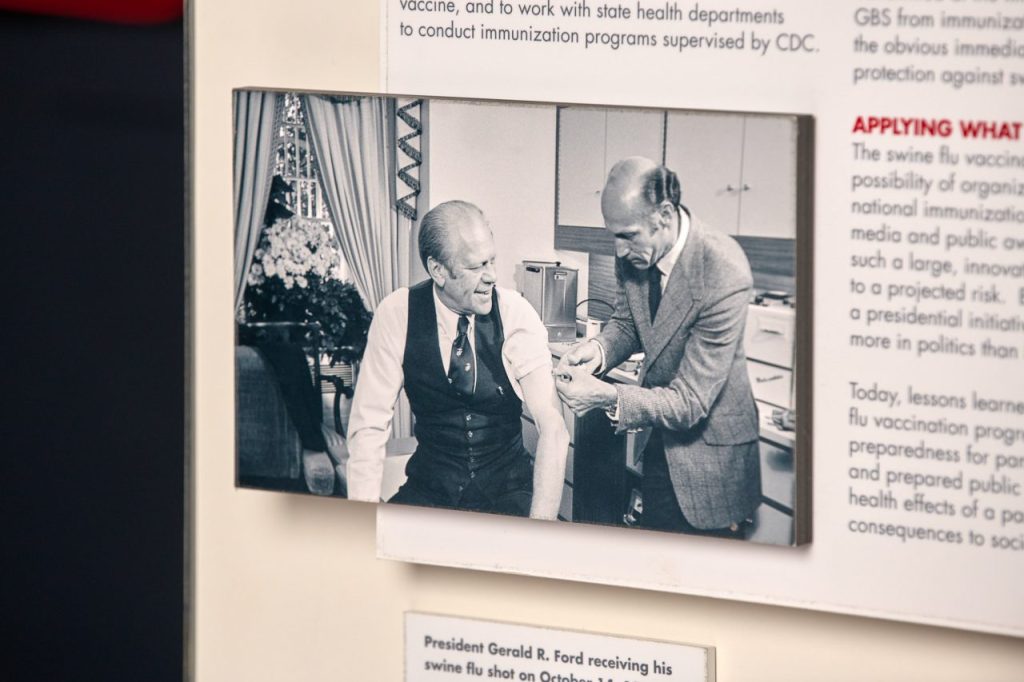
At any rate, in our historical narrative, the Confederate General Edmund Kirby Smith surrendered the Trans-Mississippi Department on May 26th of 1865 on board the U. S. S. Fort Jackson on Galveston Bay in Texas to the Union Major General Edward Canby, approximately eight-weeks after General Robert E. Lee’s surrender to General Ulysses S. Grant in Virginia.

Though Davis tried to find ways to continue fighting, the Confederate Government was officially dissolved on May 5th of 1865 in Washington, Georgia.

Davis was captured by Union soldiers where he was camped out near Irwinville, Georgia, four-days later.

Jefferson Davis was imprisoned at Fort Monroe on the southern tip of the Virginia Peninsula at Hampton Roads.

Davis was released on bail posted by wealthy friends like Cornelius Vanderbilt after two-years, and he and his family relocated to Lennoxville, Quebec.

President Andrew Johnson issued a proclamation at Christmas in 1868 granting amnesty and pardon to Davis, and all participants in the rebellion.

Jefferson Davis died on December 6th of 1889 in New Orleans, where his body lay in-state at the New Orleans City Hall.

The funeral held for him in New Orleans was said to have been one of the largest funerals held in the South, and the procession attended by an estimated 200,000 people.

His remains were ultimately interred at the Hollywood Cemetery in Richmond, Virginia.

I tried to find out if Jefferson Davis was a Freemason, and received some results in my initial search, from others and Davis himself, saying that he himself was not a mason.

But I did find this picture of Jefferson Davis with his right hand fully-tucked into his jacket in an internet search, which is the masonic hand sign signifying “Master of the Second Veil…”

…and, like President Gerald Ford, President of the Confederacy Jefferson Davis was prominently featured in the “Knight Templar” Magazine.

There were Freemasons on both sides of the conflict, like this illustration signifying masonic brotherhood between Confederate Brigadier General Lewis Armistead and Union Captain Winfield Hancock at Gettysburg.

I found the same thing when I was researching Samuel Adams for Massachusetts in the National Statuary Hal.

He was called the “Father of the American Revolution,” and there were Masonic brethren on boths sides of the conflict and also involved at a high level.

I found Samuel Adams mentioned as a Freemason in an article from June of 2009 on the antiquesandhearts.com website about the Grand Lodge of Masons in Massachusetts celebrating 275 years of brotherhood.

The article mentioned things like the Green Dragon Tavern in Boston being the unofficial Headquarters of the American Revolution…

…as well as being the meeting place for the Grand Lodge of Massachusetts, which had purchased the Green Dragon Tavern in 1764, and used it as a meeting place until 1818.

Also mentioned in this article is that it was the origin point for the Boston Tea Party participants and Paul Revere’s midnight Ride, as well as mentioning that there were Freemasons among the British soldiers occupying Boston, which are called “Brethren.”

So, who’s their loyalty really to?

Are the Freemasons actually playing both ends against the middle in a massive deception to bring in the New World Order agenda…

…using the stolen legacy of the real Master Masons?

I definitely think so ~ there is absolutely no doubt in my mind!

As I mentioned at the beginning of this post, in this “Snapshots from the Statuary Hall” series, I am going to be showcasing unlikely pairs of historical figures who are represented in the National Statuary Hall who have things in common with each other.

In this pairing, Gerald Ford and Jefferson Davis were both featured on the cover of the “Knight Templar” Magazine, with Gerald Ford being a known Freemason and Jefferson Davis being a covert Freemason…

…Gerald Ford unconditionally pardoned Richard Nixon and Jefferson Davis was unconditionally pardoned by President Andrew Johnson…

…and both men were President, albeit one of the United States, and one of the Confederate States.

The next unlikely pairing that I am going to showcase for things in common in “Snapshots from the National Statuary Hall at the U. S. Capitol” is Norman Borlaug for Iowa and Florence R. Sabin for Colorado.

Bonanza! The Correlation of Mines & Minerals to the Earth’s Grid System – Part 1 Cape Farewell, Greenland to Merida, Mexico

This is the first part of a two-part series on the consistent finding of mining and mineral occurrences directly on the Earth’s alignments and leylines.

I will summarize my findings and interpretations of this material at the end of the second-part of this series.

This first part will take us on an alignment from Cape Farewell to Merida, Mexico. The second part will take us on an alignment from Cape Farewell to the Maldives off the east coast of Africa in the Indian Ocean.

In the course of doing the research for these two posts, I found mines and/or mineral occurrences at every single place I had listed on my spreadsheet when I first wrote down cities and places in alignment with each other back in 2016.

While I already knew I was finding mines along the alignments I have been tracking, I was prompted to focus on mining and mineral occurrences with respect to the world alignments that I uncovered in 2016 after I found the North American Star Tetrahedron by connecting the dots of cities in North America that I noticed lining up in lines, then extending all of the lines coming off of it around the world in linear and circular fashion.

This finding of what I am calling the North American Star Tetrahedron and the alignments I found resulting from this discovery form the basis for my research and work.

I have chosen Cape Farewell at the southern tip of Greenland as my starting point.

I initially found Cape Farewell when tracking alignments, and it sits on an alignment that globally connects with two different sides of the North American Star Tetrahedron, and this two-part series will cover my findings going in both directions from Cape Farewell.

Cape Farewell is the southernmost point of Greenland, located on the southern shore of Egger Island, part of what is called the Cape Farewell archipelago.

Greenland is an autonomous territory within the Kingdom of Denmark.

When I searched for Cape Farewell mines, the Nalunaq Gold mine at Nanortalik showed up, approximately 60-miles, or 97-kilometers from Cape Farewell.

Nanortalik is an Inuit community…

…part of a group of culturally-similar indigenous people inhabiting the Arctic regions of Greenland, Canada, Alaska, and the Russian Federation – more commonly known as eskimos.

As we travel through their northern lands on this alignment, keep in mind the type of imagery we are taught to associate with eskimos, like igloos…

…whale hunting…

…seal-hunting…

…dog sledding…

…and eating muktuk, which is whale blubber.

The Nalunaq Goldmine is located in the nearby Kirkespirdalen, or Church Steeple Valley.

Greenland’s first gold mine, it opened in 2004, and was the first mine developed there in over 30-years.

A narrow-vein, high-grade gold deposit, the Crew Gold Exploration company was the first to mine it for approximately 4-years, producing 308,000 ounces of gold.

This was Greenland’s gift to Queen Margrethe’s Regent Anniversary in 2012, a bouquet of 18 gold flowers in natural-size that were made from Nalunaq gold.

Denmark’s National Bank issued three thematic coins with motifs from the polar regions on the occasion of the 2007 – 2009 International Polar Year that were made from Nalunaq gold.

Gold is a chemical element with the symbol “Au”and atomic number 79 or the number of protons found in the nucleus of every atom of that element…

…in the Periodic Table of Elements, a tabular arrangement of the chemical elements organized in order of increasing atomic number.

There is a recurring pattern called the “periodic law” in their properties, in which elements in the same column (group) have similar properties.

Gold is also a precious metal, a rare, what we are told naturally-occurring, metallic chemical element of high economic value.

In addition to having been used for coinage, jewelry, and other arts throughout history…

…it has also been used as a neutron reflector in nuclear weapons.

The next place on this alignment is Saglek Bay…

…located in the Torngat Mountains in northern Labrador.

Labrador Inuit have historically occupied most of the Atlantic coast of northern Labrador, and are said to be descendants of the pre-historic Thule people.

Here are some interesting points to ponder on who the Thule people might have actually been.

Ultima Thule is the northernmost region of the habitable world as thought of by ancient geographers. 

Legendary Hyperborea, a lost ancient land and fabulous world of eternal spring, was said to be located in the Far North.

Its people were said to be giants, with long and blessed lives untouched by war, hard work, old age and disease.

The Nazi Germans were obsessed with Thule.

The Thule Society was a German Occult Secret Society founded initially as a study group in Munich after World War I.  It was the organization that sponsored the German Workers Party, which became the Nazi Party under Hitler.  The Nazis believed there was a connection to the origins of the Aryan race with Hyperborea. 

Geological studies done on the Saglek block, which is the northern part of the Nain Province of Labrador, confirm different kinds of gneiss, a high-grade metamorphic rock in which mineral grains recrystallized under intense heat and pressure.

Although gneiss is said to not be defined by its composition, most specimens have bands of feldspar, a silicate mineral which has characteristics that includes silicon and oxygen atoms, and of which labradorite is considered a phenomenal feldspar mineral, like this specimen found in Labrador’s Nain Province…

…and this is what labradorite looks like all polished up.

Silicon is a chemical element with the symbol “Si” and atomic number 14.

Silicon is a hard, brittle solid with a blue-gray metallic luster.

It is also a semiconductor, a material that has electrical conductivity intermediate to that of a conductor and an insulator.

Semiconductors are essential components of most electric circuits.

A semiconductor can conduct electricity, and its conductance can vary depending upon the current or voltage applied to a control electrode, whose voltage with respect to the voltage of the cathode – the electrode from which a conventional current leaves a polarized electrical device – determines the electron flow to the anode, or the positively charged electrode by which the electrons leave a device.

Oxygen is a chemical element with the symbol “O” and atomic number 8.

It is a colorless, odorless reactive gas, and as a member of the chalcogen group on the periodic table, a highly reactive nonmetal, and an oxidizing agent that readily forms oxides with most elements as well as with other compounds.

Gneiss also typically contains bands of quartz.

Quartz is a chemical compound consisting of one-part silicon and two-parts oxygen, and is the most abundant mineral found on the Earth’s surface. It is the dominant mineral of mountaintops, and the primary constituent of beach, river, and desert sand.

Quartz is highly resistant to mechanical and chemical weathering; chemically inert in contact with most substances; and has electrical properties and heat resistance that make it valuable in electronic products.

Quartz crystals, of which there are many varieties, have the ability to vibrate at precise frequencies, and can be used to make extremely accurate time-keeping instruments…

…and equipment that can transmit radio and television signals with precise and stable frequencies.

The next place on this alignment is Kuujjuaq, in the Nunavik region of Quebec, Canada.

Nunavik is the homeland of the Inuit in Quebec.

It is a former Hudson’s Bay company outpost, at the mouth of the Koksoak River of Ungava Bay, and the largest northern village in Nunavik.

We are told that on May 2nd, 1670, the Hudson’s Bay Company was granted a permanent charter by King Charles II of England.  It conferred two things on a group of French explorers:  1)  A trading monopoly with London merchants over the lucrative North American fur trade; and 2)  Gave them effective control over the vast region surrounding the Hudson Bay in Canada.

Hudson’s Bay Company is still in operation today as a Canadian retail business group operating department stores in several countries.

The language of the Inuit is called Inuktitut, the written form of which is a pictographic script.

Egyptian hieroglyphs are also an example of a pictographic script.

The Cape Smith nickel belt of the region hosts high-grade, polymetallic nickel deposits, including two operating mines.

The Nunavik Nickel Mine produces nickel and copper…

…and Glencore’s Raglan nickel mining operations, considered one of the richest base-metal mines in the world, producing 1.1 million tonnes of ore annually from three underground mines and two open pit operations.

Nickel is a chemical element, with the symbol “Ni” and an atomic number of 28.

It is a silvery-white, lustrous metal with a slight golden tinge.

Mostly an alloy metal, its chief uses are in nickel steels and nickel cast irons, which typically increases the tensile strength, toughness, and elastic limit.

Copper is a chemical element with the symbol “Cu” and atomic number 29.

It is a soft, malleable, and ductile metal with very high thermal and electrical conductivity.

So copper is used as a conductor of heat and electricity…

…and as a building material.

In addition to nickel and copper, various mining companies are doing exploratory work for gold and platinum in the region around Kuujjuaq.

In what has been named the Ashram Deposit, located 80-miles, or 128-kilometers, south of Kuujjuak, has been explored and found to have the Rare Earth Elements primarily of monazite, bastnaesite, and xenotime.

Rare Earth Elements are a set of 17 metallic elements, including 15 lanthanides, plus scandium and yttrium, and are an essential part of many high-tech devices.

All Rare Earth Elements are radioactive to some degree, with radioactive being defined as “emitting or relating to the emission of ionizing radiation or particles.

It wasn’t listed as being at the Ashram Deposit, but the name of one of the Rare Earth Elements is “Thulium.”

The etymology of the name of “Thulium” is listed as “named after the mythological northern land of Thule.”

Next on this alignment we come to the Belcher Islands, located in the southeast part of Hudson Bay, and part of the Territory of Nunavut, both of which are predominantly inhabited by Inuit people.

Here is a satellite view of the abstract-art-looking Belcher Islands.

The Belcher Islands were named after Royal Navy Admiral Sir Edward Belcher, a hydrographer and explorer who led the last and largest admiralty expedition of 5 ships to the Arctic some time around the year of 1852, with the stated purpose of rescuing missing British naval officers who were in the Arctic looking for the Northwest Passage.

Rather infamously, he ended up having to abandon four of the five ships in the ice in May of 1854.

Here is an interesting aside. One of Belcher’s ships, the HMS Resolute, broke free of the ice and was ultimately picked up by an American whaling ship, and was returned by the American government to Great Britain.

We are told that many years later, when the HMS Resolute was broken-up, its timbers used to make a desk for the American president as a thank you from Great Britain.

What is known as the Resolute Desk is still in the Oval Office.

Now back to the Belcher Islands.

Large deposits of iron ore underly the Belcher Islands.

In 2011, Canadian Orebodies, Inc, conducted an exploratory drill program in its Haig Inlet project in the Belcher islands, an iron ore property the company acquired in the same year.

As a result of its test-drilling, the company estimated there could be up to 230 million tonnes of high-grade iron ore, with samples showing more than 35% iron content.

Iron is a chemical element with the symbol “Fe” and the atomic number 26.

It is a metal, and by mass, the most common element on Earth, forming much of the inner and outer core, and is the fourth most common element in the Earth’s crust.

Iron ores are among the most abundant in the Earth’s crust, although extracting usable metal from them requires kilns or furnaces capable of reaching 2700-degrees Fahrenheit, or 1500-degrees Celsius, or higher.

Iron is the most widely used of all metals, accounting for over 90% of worldwide metal production. It is the material of choice to withstand stress or transmit forces, such as the construction of machinery and machine tools, rails, automobiles, ship hulls, concrete reinforcing bars, and the load-carrying framework of buildings.

It is most commonly combined with alloying elements to make steel.

Next on this alignment we come to James Bay, on the southern end of the Hudson Bay.

There are different kinds of mining going on in this region.

For one, the James Bay region has numerous lithium mines.

Lithium is a chemical element with the symbol “Li” and the atomic number of 3.

It is the lightest metal, and the lightest solid element.

Lithium is seen floating in mineral oil in this picture, in which it must be stored because it is highly reactive and flammable.

Lithium has important uses in nuclear physics.

The transmutation of lithium atoms to helium in 1932 was the first fully manmade nuclear reaction in our historical narrative, and lithium deuteride serves as a fusion fuel in staged thermonuclear weapons.

As well, lithium and its compounds have several industrial uses, including things like heat-resistant glass and ceramics; lithium grease lubricants; flux additives for iron, steel, and aluminum production; lithium batteries; lithium-ion batteries; and lithium salts have been used as a mood-stabilizing drug in the treatment of bipolar disorder.

The James Bay region also has gold mining projects in Quebec…

…as well as a diamond mining concern on the other side of James Bay in Ontario called the Victor Mine.

It is owned by DeBeers Canada, and is the first Canadian diamond mine located in Ontario, and the second diamond mine of DeBeers located in Canada.

Diamonds are a solid form of the element carbon, with its atoms arranged in a crystal structure called diamond cubic.

This is an example of a diamond from the Victor mine.

Carbon is a nonmetallic chemical element with the symbol “C” and an atomic number of 6.

Diamond has the highest hardness and thermal conductivity of any natural material, properties that are used in major industrial applications such as tools used in cutting and polishing…

…as well as the large-market trade in gem-grade diamonds.

Next on the alignment we come to Red Lake in Ontario, a municipality with town status in Ontario.

Red Lake just happens to be the location of one of the largest gold mines in Canada and the world with its Red Lake mine, which has estimated reserves of 3.23 million ounces of gold…

…and the Red Lake gold district has some of the richest deposits of gold in the world and has produced 30 million ounces of gold from high-grade zones.

Next we come to Kenora, Ontario, a small city situated on the Lake of the Woods, close to the provincial border with Manitoba.

Kenora is located in the heart of the mineral rich Canadian shield, and there are mines in close proximity to Kenora, including mining for lithium…

…and the Kenora Gold Project, which represents four separate properties made up of mining claim blocks.

I found an historical feldspar mine on the Angle Inlet of the Northwest Angle of the Lake of the Woods.

The Northwest Angle looks like it should be in Canada, but it is actually part of Minnesota as a result of American treaties negotiated with Great Britain regarding the northern border.

Feldspar is a group of minerals used in things like glass-making; ceramics; a filler and extender in paint, plastics, and rubber.

______________________________________________

The next place we come to is Minot, the fourth-largest city in North Dakota and a trading hub for a large portion of northern North Dakota, southwestern Manitoba, and southeastern Saskatchewan.

It is located approximately 43-miles, or 69-kilometers from Rugby, North Dakota, which until 2017 was considered the geographic center of North America.

In 2017, the geographic center of North America was officially moved to Center, North Dakota.

A quick look at the written history of Minot indicates that it was founded in 1886 during the construction of James J. Hill’s Great Northern Railway.

James J. Hill was said to be a Canadian-American railroad executive who came from an impoverished childhood…

…to eventually become the founder and driving force of the Great Northern Railway Company.

Minot is also known as the “Magic City” for what was called its remarkable growth over a short period of time.

In the United States, North Dakota is one of the top-ten coal-producing states, mining approximately 30 million tons every year since 1988.

Coal is described as a combustible black, or brownish-black, sedimentary rock composed of mostly carbon, but also with other elements like hydrogen, sulfur, nitrogen, and oxygen.

Hydrogen is a chemical element with the symbol “H” and the atomic number of 1.

It is the lightest substance in the periodic table, and the most abundant chemical substance in the Universe.

Nitrogen is the chemical element with the symbol “N” and the atomic number of 7.

Nitrogen occurs in all living organisms, and is a constituent element of amino acids, and therefore of proteins and the nucleic acids of DNA and RNA, as well as being found in the chemical structure of almost all neurotransmitters.

Sulphur is a chemical element with the symbol of “S” and the atomic number of 16.

Also known as brimstone, it is abundant and non-metallic, with a bright yellow color.

Sulphur is the tenth-most common element in the Universe by mass, and the fifth-most common on Earth, and is an essential element for all life as one of the core chemical elements needed for biochemical functioning.

Industrial applications of sulphur include things like matches; insecticides and fungicides; fireworks; gunpowder; and anti-bacterial ingredients in soap, among other things.

We come to Miles City next on the alignment, in the State of Montana.

Miles City was incorporated in 1887.

With livestock speculation bringing thousands of cattle from Texas to Montana in the 1880s, we are told Miles City quickly became a hub for the railroad’s transportation of cattle fattened on Montana range grass to their final destination in Chicago stockyards.

While there are quite a few mining locations in Montana…

…in Miles City specifically there was historically the Miles City Mine for gold and Platinum-group-elements…and mining for silver at the Yellowstone Hill Pit and Plant.

Platinum Group elements are six noble, precious metallic elements clustered together in the periodic table.

They have similar physical and chemical properties, and tend to occur together in the same mineral deposits.

They are highly resistant to wear and tarnish, making platinum metals well-suited for fine jewelry.

Platinum metals are also used in things like the manufacture of catalytic converters for cars and in the making of dental and medical instruments.

Silver is a chemical element with the symbol “Ag” and atomic number of 47.

It is a soft, white, and lustrous metal, exhibiting the highest electrical conductivity, and reflectivity of any metal.

Silver has long been valued as a precious metal, and used in many bullion coins.

Silver is one of the seven metals of antiquity, along with gold, copper, tin, lead, iron, and mercury.

Other than currency, silver is used in things like solar panels, water filtration; jewelry; high value silverware; electrical contacts and conductors; and many other uses.

Next, we come to Billings, the largest city in Montana.

Like Minot, Billings was nicknamed the “Magic City,” also for its rapid growth in a short period of time after having been founded as a railroad town in 1882.

We are told the city of Billings went from three buildings to over 2,000 within months of its founding!

Billings was named after the Northern Pacific Railway president Frederick H. Billings, and we are told the railroad formed the city as a western railhead for its further westward expansion.

I found the Stillwater Igneous complex in southcentral Montana in the general region of Billings, on the north flank of the Beartooth Mountain Range.

The complex has extensive reserves of Chromium ore, which it was historically mined for.

Chromium is a chemical element with the symbol “Cr” and atomic number of 24.

It is a steely-grey, lustrous, hard and brittle metal.

It is the main additive in stainless steel.

Palladium is currently mined at the Stillwater Igneous Complex.

Palladium is a chemical element with the symbol “Pd” and atomic number of 46.

One of the Platinum Group Elements I mentioned previously, Palladium has the lowest melting point, and is the least dense, of them.

Ore deposits of Palladium are rare, and the Stillwater Igneous Complex is one of a handful of extensive deposits that have been found in the world.

More than half the supply of palladium, as well as platinum, is used in catalytic converters, which convert as much as 90% of harmful gases in automobile exhaust into less noxious substances.

The next place I am going to look at on this alignment is Pocatello, the fifth-largest city in Idaho.

It is the home of Idaho State University, where we find these ancient Greco-Roman-looking columns on the campus on top of Red Hill…

…overlooking the “I” on Red Hill which seems to get more attention than the columns do…

…and Pocatello is the home of one of the manufacturing facilities of ON Semiconductor, a Fortune 500 semiconductors suppliers company.

In a nutshell, the Pocatello area has approximately 547 claims, and 29 mines, which include mines for gold, silver, copper, lead, silica, and phosphorus.

Phosphorus is a chemical element with the symbol “P” and atomic number of 15.

Elemental phosphorus exists in two major forms: white phosphorus, which is used in smoke, tracer, illumination and incendiary munitions…

…and red phosphorus, which is known to be an effective flame retardant.

The next place on the alignment is Elko, and, as the largest city in over 130-miles, or 210-kilometers, in all directions, it is called the “Heart of Northeast Nevada.”

Elko’s economy is based largely on gold mining, and is considered the capital of Nevada’s gold belt.

Here is an interesting aside.

Metropolis is called a “ghost town” in Elko County that was planned by the Pacific Reclamation Company out of New York, starting in 1909, to be the center of a huge farming district, but ended up being pretty much abandoned between 1920 and the 1940s, after water distribution issues were said to cause the farming community to fail.

This is a picture of the Lincoln School of Metropolis before it was demolished after the creation of a new dam in 1911…

…and here is what remains today of what is called the Lincoln School in what was Metropolis.

Next on the alignment we come to Reno in Nevada, known primarily for its casino and tourism industry.

It is located at the foot of the Sierra Nevada Mountains in a high-desert river valley that is called “Truckee Meadows,” a new major technology hub in the United States due to large-scale investments from Amazon, Tesla, Panasonic, Microsoft, Apple, and Google.

Besides Reno being centrally located between the goldfields of northern Nevada, and California’s Motherlode Country, one of the world’s richest Lithium deposits has been identifed in this part of the world, in the Clayton Valley.

It is the largest known lithium deposit in the United States, where it is found in high-grade, highly-concentrated form.

There is lithium mining here via brines…

…and mines.

Lithium is a key component in the manufacturing of batteries for electric cars.

From Reno, we cross the Sierra Nevada Mountains.

It is here we find California’s mother-lode country, an historic region in northern part California, on the western slope of the Sierra Nevadas.

It is about 150-miles, or 240-kilometers, long, from the vicinity of Mariposa, through Tuolumne, Calaveras, Amador, El Dorado, Placer, and Nevada Counties.

It was famed for mineral deposits and gold mines said to have attracted waves of immigrants starting in 1849, known to history as 49ers.

We are told that California’s gold rush was sparked by James Marshall’s discovery in 1848 of placer gold at Sutter’s Mill near Coloma.

We are also told San Francisco, which is also on this alignment, grew from a small settlement of about 200 residents to a boom town of about 36,000 by 1852, the year this map was said to have been made…

…and the state’s constitution written in 1849.

Next, I am heading across the Pacific Ocean after leaving San Francisco, where we next come to the big island of Hawaii.

The alignment crosses over Mauna Kea, a dormant volcano and the highest point in the state…

…and Hawaiian Volcanoes National Park, which encompasses the summits of two of the world’s most active volcanoes, Mauna Loa and Kilauea.

Most of this national park, which is contained in the Kau District, one of the six original districts, known as “moku,” of ancient Hawaii on the island.

There are nine districts on the island of Hawaii today.

Mauna Loa is described as one of the single, largest mountain masses in the world, constituting half of the island’s area, and is the home to the Mauna Loa Observatory on its north flank, a premier atmospheric research facility…

…and Kilauea is the island’s most active volcano.

All of the eastern flank of Kilauea lies within the neighboring Puna District of Hawaii, with a small portion of Mauna Loa running along the northern part of it.

There are two beaches of particular interest in the Kau District.

One is Punalu’u Black Sand Beach.

It is considered one of the finest examples of a true black sands beach in the world, made of basalt and said to be created by lava flowing into the ocean, which explodes as it reaches the ocean and cools.

Basalt is a volcanic rock that is low in silica content, and comparatively rich in iron and magnesium.

The magnesium in basalt is a chemical element with the symbol “Mg” and atomic number of 12.

It is a shiny gray solid that occurs in combination with other elements, and the fourth most common element on Earth, after iron, oxygen, and silicon.

It is the eleventh-most abundant element by mass in the human body, and is essential to all cells and over 300 enzymes.

I also found Mahana, also known as “Green Sands,” Beach on the southern tip of the island, also located in the Kau District.

It is known for its green-colored sands, which are comprised of a form of peridot called olivine.

Olivine is a semi-precious translucent stone that is a complex silicate of magnesium and iron.

It is commonly used in refactories for any material which has an unusually high melting point and that maintains its structural properties at very high temperatures.

Next we come to the Republic of Kiribati, an island country in the Pacific Ocean, which includes the island of Tarawa, where more than half of the country’s population lives.

Exploratory activities have taken place to exploit the deep sea mining of polymetallic nodules and cobalt rich crusts that have been identified there in Kiribati.

Historically, Kiribati was rich in phosphates, but commercially viable phosphate deposits have long-been depleted through mining.

This, for example, is an historical picture of what the island of Banaba there looked like before, and after, it was mined for phosphates.

This image has an empty alt attribute; its file name is Banaba-before-and-after.jpg

Phosphates are derived from phosphorus, and are used in agriculture and industry…

This image has an empty alt attribute; its file name is uses-of-phosphates-1.jpg

…and are components as structural materials of bones and teeth, which are made of crystalline calcium phosphate, as well as other biological processes.

Now we come to the Solomon Islands, a British-protectorate until independence in 1978, yet to this day it is a unitary parliamentary constitutional monarchy, with the British monarch as head-of-state.

We are told the islands were named after the wealthy King Solomon by the Spanish navigator Alvaro de Mendana, who in 1568 came to the islands looking for the source of King Solomon’s wealth, and also that they were the biblically-mentioned land of Ophir, famous for its wealth and fine gold.

Wonder why he thought that?!

At any rate, de Mendana was said to have found gold at a location where the Gold ridge Mine on Guadalcanal was developed and mined in the late 1990s, with production on and off since then.

Next, we come to Cloncurry, in the state of Queensland in Australia.

Both Cloncurry, and neighboring Mount Isa, have significant mining activities going on for copper, zinc, and uranium.

Zinc is a chemical element with the symbol “Zn” and atomic number of 30.

Zinc is a slightly brittle metal at room temperature…

…and, along with copper, is an alloy of brass.

It is used in the zinc-plating of iron, which produces a protective zinc-coating to prevent rust, and is the major industrial application of zinc.

Zinc is also an essential mineral for our good health, aiding in metabolism, digestion, nerve function, liver function, among many other things.

Uranium is a chemical element with the symbol “U” and the atomic number of 92.

It is a radioactive, silvery-gray metal, with the highest atomic weight of primordially-occurring elements, which are elements that have existed in their present form since before the earth was formed.

We are told that Uranium is widely used in nuclear power plants and nuclear weapons.

The alignment crosses over Uluru, also known as Ayers Rock, in the Northern Territory…

…a major sacred site to the Australian Aborigines, and to others around the world, considered to be one of the twelve primary nodal points of the Earth’s grid system.

Uluru is composed of arkose, a type of sandstone rich in the mineral feldspar.

Next we come to the West MacDonnell Ranges, also in the Northern Territory.

They are quartzite and sandstone parallel ridges that rise from a plateau about 2,000-feet, or 600-meters above sea-level.

The Malbunka Copper Mine is located in the Gardiner Range of the West MacDonnells.

Besides copper, it is known for its azurites, called azurite “suns.”

Next we come to Lake Carnegie, in the Goldfields-Esperance region of Western Australia…

…just north of the main goldfields region of Western Australia.

Next we come to Lake Barlee, also in Western Australia…

…where potash and lithium brine mining has been explored in this salt lake.

Potash is a salt mixture that contains potassium in a water-soluble form.

Potassium is a chemical element with the symbol “K” and atomic number of 19…

…and is a silvery metal that is soft enough to be easily cut by a knife.

Uses of potassium include potassium soaps, fertilizers, detecting fungal infections on the skin, and removing hair from animal hide.

Potassium ions are vital for the functioning of all living cells, with the transfer of potassium ions across nerve cell membraines being necessary for normal nerve transmission.

The alignment goes through the Ajana District in Western Australia.

Forty-eight lead and copper mines once operated in the Ajana District.

Sir Augustus Charles Gregory discovered the location of the lead outcroppings of what became the first mine there, the Geraldine Mine, in 1848.

The Geraldine mine was in operation by 1849.

Sir Augustus was an English-born explorer and surveyor of Australia.

These are the ruins of what was called the “Lynton Convict Hiring Depot,” which provided the convict labor used to work the mine.

The buildings here were said to include a store, bakery, depot, well, lock-up, hospital, lime kiln and administration block that were said to have begun in 1853, and that no sooner were they finished in 1856 than the depot closed because of the harsh living conditions and transportation problems.

This is a cobblestone floor found at the Geraldine mine, said to have been where the convict miners broke up the ore…

…to pick out the highest-grade galena, which is the primary ore of lead, and contains silver as well.

Lead is a chemical element with the symbol “Pb” and atomic number of 82.

Lead is a heavy metal that is denser than most common materials.

As well, it is soft and malleable, and has a relatively low melting point.

Lead’s high density, low melting-point, ductility, and relative inertness to oxidation, make it useful.

The alignment leaves Australia and next lands at Cape Town at the tip of South Africa, across the South Indian Ocean.

Mining is South Africa’s third-largest business sector, after agriculture and manufacturing, and is the world’s leading producer of copper, platinum, uranium, and vanadium.

Vanadium is a chemical element with the symbol “V” and atomic number of 23.

It is a hard, silvery-grey, and malleable metal.

It is mainly used to produce specialty steel alloys, such as high-speed tool-steels…

…and the vanadium redox flow battery system for storage may be an important application for the future.

From Cape Town, the alignment crosses the South Atlantic Ocean, and enters Brazil at Salvador, the capital of the Brazilian State of Bahia.

Salvador was said to have been founded by the Portuguese in 1549 as the first capital of Brazil, and is called one of the oldest colonial cities in the Americas.

The Jesuits arrived in 1552, and worked on converting the indigenous people of the region to Roman Catholicism.

I wonder exactly what went down when they arrived!

Interesting to note, a sharp escarpment divides Salvador’s Lower Town from its Upper Town by 279-feet, or 85-meters.

We are told Brazil’s first urban elevator, the Elevador Lacerda, has connected the two towns since 1873.

Emeralds are mined in Bahia State, and since the 1970s, Brazil has served as a consistent source of commercial quality emeralds.

As a matter of fact, the Bahia Emerald, unearthed at the Carnaiba mine in Bahia State in 2001, is one of the largest emeralds ever found.

It weighs approximately 752-lbs, or 349-kg, and has been valued at as much as $400-million.

Emerald is a gemstone, and a variety of the mineral beryl, and colored green by trace amounts of chromium and sometimes vanadium.

It is a cyclosilicate, meaning a rock-forming mineral made up of silicate groups.

Moving west along the alignment from Salvador, we come to the Chapada Diamantina National Park in the center of Bahia State, and considered one of the ten best national parks in the world.

We are told this region was deserted until the discovery of gold and diamonds here in 1844, which then was said to have triggered a rush of gold and diamond seekers wanting to make their fortunes.

This was 5-years before the San Francisco gold rush started in 1849.

There sure was a lot of “gold-rushing” going on during this time period!

The Chapada Diamantina National Park is known for its numerous rivers, which form impressive waterfalls, and pools of crystalline water.

Next we come to Almeirim, a city on the Amazon River…

…and a municipality in Brazil’s Para State.

The municipality is crossed by the equator.

The Ipitina Mining District is in Almeirim, located near the border with Amapa State.

All nine of the deposits listed are being mined for gold…

…with the first listed, the Carara deposit, also being mined for…

…muscovite, the most common form of mica and a silicate material of aluminum and potassium,which has industrial applications in the manufacture of fireproofing and insulating materials, and to some extent as a lubricant…

…the mineral pyrite, also known as fool’s gold, which is an iron sulfide, and used commercially in the production of sulphur dioxide…

…quartz, a crystalline mineral composed of silicon and oxygen atoms, which has the ability to vibrate at precise frequencies…

…and tourmaline, a crystalline boron silicate material that is found in a wide variety of colors, with both electrical and magnetic properties.

Next on the alignment, we come to Boa Vista in Roraima State.

One of the most striking things I found out about Boa Vista right away is that we are told it was a planned city with a radial plan, designed by civil engineer Darci Aleixo Derenusson, who was said to have based his design on that of Paris, France.

Boa Vista was founded in 1890.

Derenusson wasn’t born until 1916, and he died in 2002.

In 1943, Boa Vista became the capital of the recently created Federal Territory of Rio Branco, which was later re-named Roraima.

The Territory was said to have grown from mining operations there.

The main source of employment here once upon a time was machine-based mining, which was prohibited at some point because of the damage it was causing to the environment.

While I am not able to find out anything about what was being mined here through an internet search, those look like diamonds, or some kind of gemstones, in the city’s coat-of-arms….

Derenusson was said to have designed Boa Vista between 1944 and 1946.

Keep in mind this is not the most accessible place in the world, with limited long-distance road system access.

There was also a star fort, São Joaquim do Rio Branco Fort, located at one time approximately 19-miles, or 32-kilometers, from Boa Vista.

Apparently the full fort no longer exists, but if you go there, you can see a model of what it used to look like!

Next the alignment goes through Venezuala, where it crosses over the Orinoco Mining Arc.

The Orinoco Mining Arc and other areas in Venezuela have the 2nd-highest gold reserves in the world, and 32 certified gold fields.

From Venezuala, the alignment enters Colombia.

There is a considerable amount of gold-mining in and around Zaragoza, Colombia.

For one, the El Limon Mine near Zaragoza is a high-grade gold mine and mill, but the area surrounding Zaragoza has four other gold mines, three of which are active.

The El Silencio mine was in production for over 150-years, and is no longer being mined.

Colombia has the largest coal-resource-base in South America, and is a major coal player globally.

With reserve estimates ranging between twelve and 60-billion tons, Colombia exports more than 90% of its production annually, making it the world’s 5th-largest coal exporter.

The next place we come to on this alignment is Colon, a city and seaport in Panama located beside the Caribbean Sea, near the Atlantic entrance to the Panama Canal.

Here are two examples of mining operations in this part of Panama.

The Cerro Petaquilla Mill in Colon is a surface-mining operation, with copper as its primary commodity, and gold, molybdenum and silver as secondary outputs.

Molybdenum is a chemical element with the symbol “Mo” and the atomic number of 42.

It is a brittle silver-gray metal, used in steel alloys.

The Molejon Gold Project was west of Colon, located close to the Caribbean coast.

It was said to have produced 100,000 ounces of high-grade gold annually from 2010 until its closure in 2015.

Next the alignment enters Nicaragua at Bluefields, and heads towards Tegucigulpa in Honduras, where it passes numerous gold mines and projects.

All together there are 65 mines in Nicaragua.

Next we are travelling along the alignment in Honduras from Tegucigalpa through San Pedro Sula, where there is considerably more mining activity than Nicaragua.

There are 230 active mines in Honduras.

Now we are heading into Belize, and going through Belmopan, the capital city of Belize, and the smallest capital city in the Americas by population.

In 2010, the population was 16, 451.

Like Boa Vista in Brazil, we are told that Belmopan was founded as “planned community” in 1970, after Hurricane Hattie destroyed 75% of Belize City in 1961, Belize’s former capital.

Belize was still a British Colony at that time, and didn’t gain its independence from Britain until 1981.

There is placer gold mining in Belize, in rivers, creeks, gravel beds, and other sediments in the southern Belize Alps Maya Mountain chain, with prospectors using things like portable dredges…

…sluice boxes…

…and gold pans.

There are also eight active mines in Belize, listed for Barium/Barite, lead and zinc, silver and copper.

Barium is a chemical element with the symbol “Ba” and atomic number of 56.

Barite is the primary ore of barium.

Barium compounds are used for things like x-ray shielding because it has the ability to block x-ray and gamma-ray emissions.

From Belize, we enter Mexico, heading towards Merida, the capital and largest city of Yucatan State in Mexico.

Merida is also the southern apex of the North American Star Tetrahedron.

While this part of Mexico has less mining activity compared to other parts of Mexico, currently almost 19% of Mexico’s landmass is parceled out to over 33,000 mining titles, and has the fourth-largest mining industry in the world, with 888 active mining projects, and I have found several long-distance alignments like this going through Mexico.

I am going to end this post at Merida.

I chose Cape Farewell at the southern tip of Greenland as my starting point for this series because it sits on an alignment that globally connects with two different sides of the North American Star Tetrahedron.

In the next post, I am going to cover my findings along an alignment going in the other direction from Cape Farewell all the way to the Maldives in the Indian Ocean.

I will summarize my findings and interpretations of this material at the end of the second part of this two-part series.

Seeing World History with New Eyes – 1984 to 1986

I am giving an overview of modern history with an eye towards uncovering the patterns that give insight into the world we live in today.

In this series, I have looked at the events in our historical narrative in the years between 1945 and 1983.

I am going to look at what took place between 1984 and 1986 in this post.

So far, there are patterns showing events and people being manipulated for particular outcomes, seeing things like the partition of Korea into North and South in 1945 and Viet Nam into North and South in 1954; setting up two different political and economic systems between them; and then provoking them into war…

…and more recently, looking at the years between 1981 and 1983, the historical narrative shows a litany of assassination attempts and assassinations of prominent figures; AIDS; explosions in mines; frequent plane crashes and planes blown out of the air by bombs; many massacres and atrocities against innocent civilian populations; regular people traumatically dying at theaters and night clubs, and fires of all kinds; suicide bombings; and on and on and on.

What was going on in 1984, the year identified in George Orwell’s dystopian futuristic novel “1984?”

Apple placed the Macintosh personal computer for sale in the United States on January 24th, after introducing it in the “1984” commercial during the Super Bowl 18 on January 22nd.

In President Reagan’s State of the Union address the next day, on January 25th, he announced the United States was beginning the development of a permanently-crewed space station called Space Station Freedom.

While Space Station Freedom never came fruition, the International Space Station was said to have developed out of it and launched in 1998.

Teachers at the McMartin Pre-school in Manhattan Beach, California, were charged with Satanic Ritual Abuse on March 22nd, and the charges were later dropped as unfounded.

On April 12th, four armed Palestinians took the Egged Bus Number 300 hostage, ending when Israeli Special Forces stormed the bus and freed the hostages.

One hostage and all four hijackers were killed by the time it was over.

India launched Operation Meghdoot on April 13th, bringing most of the disputed Siachen glacier region of Kashmir under Indian control, triggering conflict with Pakistan in the region until 2003.

American researchers announced their discovery of the AIDS virus on April 23rd.

On May 8th, Denis Lortie, a former Canadian forces corporal, stormed the National Assembly of Quebec, with several firearms, and opened fire, killing three government employees and wounding 13 others.

After a 1985 conviction of first-degree murder was overturned by the Quebec Court of Appeal, Lortie pleaded guilty to reduced charges of second-degree murder in 1987, for which he was sentenced to life in prison.

He was granted day-parole in 1995, and full parole in 1996, and the one-time mass shooter worked as a convenience store clerk after his release.

The Severomorsk Disaster took place on May 13th at the Soviet Severomorsk Naval Base.

It was an explosion that destroyed two-thirds of all this missiles stockpiled for the Soviet Northern Fleet, as well as workshops for the missles, and missile technicians.

On May 17th, Michael Silka killed 9 people near Manley Hot Springs, Alaska.

The killing spree culminated in a shoot-out with Alaska State Troopers in the Alaskan Wilderness in which Silka was shot and killed.

The Indian Government began Operation Blue Star on June 5th, the planned attack on the Golden Temple in Amritsar to capture the Sikh leader Jamail Singh Bhindranwale and his followers who were hiding there.

At the end of the attack ten days later, the official casualty count was listed as 554 Sikh militants and civilians dead, and for the government forces, 83 killed and 236 wounded.

Independent casualty estimates were much higher at 18,000 to 20,000 civilians.

The Indian military actions in the temple complex was criticized by Sikhs worldwide, who saw it as an assault on the Sikh religion.

The Indian Prime Minister at the time, Indira Gandhi was assassinated five months later by her two Sikh bodyguards.

On July 18th in San Ysidro, California, 41-year-old James Oliver Huberty sprayed a McDonald’s with gunfire, killing 21 people before he was shot and killed.

In Sydney, Australia on September 2nd, seven people were killed and 12 wounded in the Milperra Massacre in a shoot-out between two rival motorcycle gangs.

A suicide-bomber under the direction of Hezbollah car-bombed the U. S. Embassy in Beirut on September 20th, killing 24 people.

The attacker sped his van laden with 3,000 lbs, or 1,360 kg, of explosives towards the six-story embassy.

He was shot before he reached the entrance of the embassy, and lost control of the vehicle, which detonated when it hit a parked van.

The explosion ripped off the front of the embassy.

On October 12th, the Provisional Irish Republican Army attempted to assassinate Prime Minister Margaret Thatcher and her cabinet during the Conservative Conference in the Brighton Hotel Bombing.

Although Margaret Thatcher narrowly escaped, five people connected with the Conservative Party were killed, including a sitting MP.

The world first learned of the famine in Ethiopia, where thousands had already died of starvation and millions more were at risk, in a BBC report from Michael Buerk on October 23rd.

Between November 1st and November 4th, the Anti-Sikh mass murder took place in Delhi, India, following the assassination of Indira Gandhi.

It was a series of organized pogroms where government estimates projected that 2,800 Sikhs were killed in Delhi, and 3,350 nationwide, and independent sources projected the number of deaths to range somewhere between 8,000 and 17,000.

Bhopal in India was the location the Union Carbide pesticide plant that leaked highly toxic methyl isocyanate gas on December 3rd, which made its way into the surrounding areas, one of the world’s worst industrial disasters.

The official death toll at the time was 2,259, and this major gas leak caused over half-a-million injuries, with on-going effects over time.

Cisco Systems was founded in California on December 10th, an American multinational conglomerate that develops, manufactures, and sells networking hardware, software, telecommunications equipment, and other high-tech services and products.

The Sino-British Joint Declaration on Hong Kong was signed on December 9th, a treaty in which Hong Kong would revert to Chinese sovereignty from Britain after July 1st of 1997…

…and Crack cocaine, a smokable form of the drug, was introduced in Los Angeles in 1984.

Now let’s look and see what happened in 1985.

The internet Domain Name System was created on January 1st, and the first mobile phone network was launched in the UK by Vodaphone.

Nine bombs exploded on January 21st at the sacred site of Borobudur on the island of Java in Indonesia.

While there were no human casualties, nine of the stupas were badly damaged.

A UNESCO World Heritage Site, it is the largest Buddhist Temple in the world.

The ideology of Hezbollah, which was originally founded in 1982, declared in a program issued in Beirut on February 16th. Hezbollah was summarized as “Shiite radicalism,” formed with the aid of Ayatollah Khomeini’s followers in the 1980s to spread the Islamic Revolution.

On February 28th, the Provisional Irish Republican Army carried out a heavy mortar attack on a police station in Newry in Northern Ireland, killing 9 officers.

A car bomb exploded outside of an apartment building in Beirut on March 8th, killing 80 people and injuring 200. It was an assassination attempt said to be linked to the CIA on the life of an Islamic cleric. It involved 440 lbs, or 200 kg, of dynamite.

Mikhail Gorbachev became General Secretary of the Soviet Communist Party and de facto leader of the Soviet Union on March 11th.

On April 12th, terrorists bombed the El Decanso Restaurant in Madrid, Spain, causing the three-story building to collapse on top of 200 diners, killing 18, and injuring 82.

Four different terrorist groups were said to have claimed responsibility for the bombing.

The Bradford City Stadium Fire occurred during an English League Third Division Match between the Bradford City and Lincoln City football teams at the Wooden Valley Parade Stadium on May 11th. At 3:40 pm, the TV commenter noted a small fire in the main span, and in less than 5 minutes with the windy conditions, the fire had engulfed the whole stand, trapping some people in their seats. In the panic that ensued, people escaped onto the pitch, and those at the back of the stand had were forced to break-down locked exit doors to escape, and those that tried to escape through the turnstiles found those locked too, where many were burned to death. The death count as a result of the fire was 56, and the injured numbered 265.

TWA Flight 847 carrying 153 passengers from Athens to Rome was hijacked shortly after take-off in Athens by a Hezbollah fringe group on June 14th, resulting in the death of a one passenger.

My husband was on the same flight the week before this took place on his way home to the States following his retirement from the U. S. Army.

Air India Flight 182, a Boeing 747, was blown-up by a bomb at 31,000-feet, or 9,500-meters, above the Atlantic Ocean, south of Ireland, on June 23rd, killing all 329 on-board.

The bomb was said to have been planted by Canadian Sikh extremists, and resulted in the largest mass killing in Canadian history; the deadliest aviation incident in the history of Air India; and the deadliest act of aviation terrorism until the 9/11 attacks.

On July 3rd, “Back to the Future” opened in American movie theaters. The highest-grossing film of 1985, it was known known later for its predictive programming about 9-11 in 2001.

In August of 1985, there were four airplane incidents:

Delta Airlines flight 191 crashed near Dallas after it encountered a microburst on August 2nd, killing 137 people.

Japan Airlines Flight 123 crashed on August 12th in Japan, killing 520, and the worst single aircraft disaster in history. The given cause of the crash was a wrongly repaired pressure bulkhead…

…but I found a reference saying that repair at fault had been made seven years previously…So…everything was fine for seven-years, and then all of a sudden the repair failed? Okay….

The aircraft engine of British Airtours Flight 123 caught on fire before take-off at Manchester Airport in England on August 22nd, and 55 people were killed while trying to evacuate…

…and on August 25th, the Bar Harbor Airlines flight 1808 crashed, killing all 8 on-board.

Then on September 6th, Midwest Express Airlines Flight 105 crashed after take-off in Milwaukee, killing all 31 on-board. Eyewitnesses reported the plane was on-fire shortly after take-off. The fire was ultimately attributed to pilot error for loss of control of the aircraft.

The cruise ship “Achille Lauro” was hijacked in the Mediterranean by four heavily armed Palestinian terrorists on October 7th, and one Jewish-American passenger in a wheelchair was killed. The motive of the terrorists was said to be publicity of Palestinian issues and the release of Palestinian prisoners.

The first Nintendo home video game console in the U. S. was released on October 18h as the Nintendo Entertainment System.

On November 20th, Microsoft Corporation released the first version of the Windows operating software, which was Windows 1.0.

EgyptAir flight 648 was hijacked by the Abu Nidal group and flown to Malta on November 23rd, where Egyptian commandoes stormed the plane, and 60 people were killed by gunfire and explosions.

On December 12th, Arrow Air flight 1285 crashed after take-off from Gander Newfoundland, killing 256 people. It was a U. S. Army personnel chartered flight carrying all members of the 101st Airborne Division back to their base at Fort Campbell in Kentucky. Cause was attributed to icing conditions and pilot error.

Twin attacks were carried out at airports in Rome and Vienna by the Abu Nidal group on December 27th, in which terrorists first attacked the shared El Al & TWA ticket counters at an airport outside of Rome with assault rifles and hand-grenades, killing 16 and injuring 99…

…and then in Vienna, hand-grenades were thrown into crowds of passengers lining-up for checking-in to a flight to Tel Aviv, killing three and injuring 39.

Now we are coming into the year 1986.

In January of 1986, the first PC virus, called “Brain,” starts to quickly spread globally. It was developed by two brothers in Pakistan, allegedly to protect their medical software from illegal copying, and was supposed to only target copyright infringement.

The Space Shuttle Challenger exploded immediately after lift-off on January 28th. The spacecraft disintegrated over the Atlantic Ocean, off the coast of Cape Canaveral in Florida. after a joint in its right solid rocket booster was believed to have failed after take-off. The disaster resulted in a 32-month hiatus in the space shuttle program, and the forming of the Rogers Commission to investigate the accident.

On February 8th, the Hinton Train Collision occurred in Hinton, Alberta, killing 23 and injuring 71, in a collision between a Canadian National Railway freight train, and a Via Rail passenger train. After 56 days of testimony at a public inquiry, a commission found that the cause of the accident was because the freight train crew failed to stop their train because of incapacitation or other unknown factors.

The Single European Act was signed on February 17th, the first major revision of the 1957 Treaty of Rome, which established the European Community, and setting the object of the European Community to create a single market by 1992.

On February 25th, Ferdinand Marcos went into exile in Hawaii, and Corazon Aquino, the widow of the assassinated opposition leader Benigno Aquino, became President of the Philippines.

The Hotel New World in Singapore collapsed in less than a minute on March 15th, trapping 50 people in the rubble, of which 17 were rescued and 33 died. Authorities ruled out a bomb, and attributed it to a gas explosion instead.

On April 2nd, a bomb exploded on TWA flight 840 from Rome to Athens. While the pilots were successfully able to land the plane after the explosion caused a hole on the right-side of the plane, four passengers were killed, including an infant, and 7 injured.

A West Berlin Discotheque known as the Roxy Palast was bombed on April 5th, killing 3 and injuring 230, in a venue frequented by U. S. soldiers.

Libya was accused by the U. S. government of responsibility for the bombing, and ten-days later, on April 15th in Operation El Dorado Canyon, U. S. planes bombed targets in Libya in Tripoli and Benghazi.

The Chernobyl Disaster took place in Pripyat, Ukraine on April 26th, called one of the worst nuclear accidents in history in terms of costs and casualties. It forced the relocation of at least 350,000, and radioactive fall-out was concentrated in the Ukraine, Belarus, and Russia, and traces of radioactive deposits from Chernobyl in almost every country in the northern hemisphere.

The Beginning of the Somali Civil War was on May 23rd after President Siad Barre was injured in a car accident in Mogadishu and taken to Saudi Arabia for treatment, and opposition groups there see this as an opportunity to remove Barre.

The Somali Civil War is on-going.  It is estimated that at least 500,000 people have been killed as a result of it.

Somali Civil War

This is a historic photo of Mogadishu.  When the Somali Republic became independent from Italy in 1960, it was known as the “White Pearl of the Indian Ocean.”

This is an historic picture of Mogadishu Cathedral.

This is what remains of Mogadishu Cathedral today.

On June 23rd, LISTSERV was released, the first email list management software developed by Eric Thomas

The bulk carrier ship Pyotr Vasev rammed the Soviet Passenger Liner SS Admiral Nakhimov at a 110-degree-angle in the Black Sea on August 31st, and the passenger liner was completely submerged 8 minutes later. minutes. and sinks almost immediately, killing somewhere around 400 people.

On the same day, the cargo ship Khian Sea departed from Philadelphia, carrying 14,000 tons of incinerator ash waste and wandered the sea for 16 months looking for a place to dump it but was never allowed.

The toxic waste was finally dumped surreptitiously in Haitian waters in 1988.

Four Abu Nidal group terrorists hijacked Pan Am Flight 73 with 360 people on board at the airport in Karachi, Pakistan, on September 5th. Over the course of the hijacking incident somewhere around 50 people were killed or injured, and the hijackers were arrested and sentenced to death in Pakistan, though their sentences were later commuted to life in prison.

The following day, on September 6th, two Abu Nidal terrorists killed 22 and wounded 6 in Istanbul’s Neve Shalom Synagogue during Shabbat services.

The Sandoz Chemical Spill occurred on November 1st, a major environmental disaster caused by a fire near Basel, Switzerland, polluting the Rhine River, and causing a massive mortality of wildlife downstream.

On December 31st, the Dupont Plaza Hotel caught fire in San Juan, Puerto Rico, as a result of arson said to be caused by three disgruntled employees who were involved in a labor dispute with the owners. It claimed the lives of 98 people and injured 140. The three men were subsequently convicted of murder with two sentenced to 99-years in prison, and one to 75-years in prison.

Does history repeat itself for randomly occurring reasons?

Or does history repeat itself because it is being planned to bring in specific outcomes?

Like, for example, plans to bring in 15-minute cities, an urban planning concept in cities where necessities and services can be reached in a 15-minute walk or bike ride, ostensibly to reduce car dependency and promote healthy and sustainable living. Sounds good, but what is the real reason behind this concept?

Is it about the betterment of Humanity…or control over Humanity?

We tend to imagine that times in the past were somehow better than in the present.

While our current present is certainly very different, and backward, from what older generations remember, the past wasn’t necessarily better.

It was just easier to live what would have been considered a normal life back then.

And yes, some things seem to be repeating occurrences from the past in current events, like toxic chemical releases.

Today’s present seems a lot like George Orwell’s novel “1984,” doesn’t it?

Following the Money – The Ways We Were Kept Asleep

My work and research is leading me down the path of uncovering how the new historical narrative was created and implemented, and the process of how the original history was deconstructed and reconstructed into a new narrative.

By following money and influence, the true picture of what has taken place here emerges.

Up until relatively recently, we were on the very positive and advanced Human timeline of the ancient Moorish Civilization, and the True History of Earth and Humanity was nothing like what we have been taught.

The hiding of this ancient advanced civilization in plain sight was accomplished by shaping the false narrative, educating us in it, and reinforcing it with images coming from Hollywood, literature, art – it is not supposed to be there, so we don’t see it.  We don’t even think it.

Yet the existing infrastructure on the Earth was incredibly similar in diverse places.

Here are a few of countless examples of massive and perfectly-geometrically-aligned masonry infrastructure:

The Fort de la Bastille at Grenoble, in Southern France…

…Fort Jefferson on Dry Tortugas State Park west of Key West in the Florida Keys, only accessible by ferry or boat, and the largest brick masonry structure with 16 million bricks in the United States, said to have been built between 1845 and 1861…

…the Cisternerne, or The Cisterns, in Copenhagen, Denmark…

…and the Basilica Cistern, the largest of several hundred ancient cisterns that lie beneath Istanbul.

So how were we put, and kept, asleep?

Since this is such a big, multi-layered subject, I am going to primarily focus on who was behind intentional creation and promotion of addictions & distractions, and on the origins of companies and corporations.

Why on earth would we be kept addicted and distracted?

There are several reasons, but the main reason is the negative beings don’t want us to know who we really are, and why we are here.

Each Human Being is a Living Hologram of the Universe, and our sole purpose of existence is to ultimately re-unite spiritually with our Higher Self , which is what the Moors were doing here before the hijack.

The parasitic and multi-dimensionally aware beings behind all of this want us to believe that suffering, sickness, misery, destruction, death was and is our normal state of being, and not question what we have been taught about who we are.

They are the only ones who benefit because they energetically feed on Humanity’s negative emotional states.

Additionally, they have manipulated Human beings to become the perpetrators of negativity and depravity against fellow Human beings

Horrific crimes against, and abuse of, Humanity has taken place at unimaginable levels because it has been deeply hidden by those behind it, who fear the Great Awakening of Humanity.

I am going to begin with addictions.

An addiction is a compulsive, chronic, physiological or psychological need for a habit-forming substance, behavior, or activity having harmful effects.

My starting point will be John Molson. I came across him a while back when I was researching railroads.

John Molson was born in England in 1763. He became a brewer and entrepreneur in colonial Quebec and Lower Canada.

In addition to being given the credit for financing the first public railway in Canada, the Champlain & St. Lawrence Railway, chartered in 1832 and built in 1835…

…he founded Molson Brewery in 1786 in Montreal…

…financed the first steamship built in North America in 1809, “The Accommodation…”

…and was President of the Bank of Montreal.

John Molson was said to have been orphaned at the age of 8, when first his father died, then his mother two years later. He lived with various guardians until he left England for Montreal, Quebec in 1782 at the age of 18. This is a 1761 map of the “Isles of Montreal.”

After his arrival in Montreal, he moved in with a brewer, Thomas Loyd, and shortly thereafter became a partner of the brewery. At the age of 21, he took over the brewery completely.

Soon Molson’s beer was in high demand, which was said to have appealed to different classes of Montreal Society, with customers increasing every day.

Between 1788 and 1800, his business quickly grew into one of the larger ones in Lower Canada, having sold 30,000 gallons, or 113,500-liters, of beer by 1791.

As his wealth grew, he started branching out into financing other interests, like the railroad and the steamship.

He was appointed the Provincial Grand Master of the District Freemasonic Lodge of Montreal by the Duke of Sussex in 1826, a position he held for five years before resigning in 1831.

He died in 1836, and was interred in the Molson Mausoleum…

…in Montreal’s Mount Royal Cemetery.

Next, I am going to take a look at Anheuser-Busch.

The Anheuser-Busch Brewing Company is headquartered in St. Louis, Missouri. This is a post card of it from the 1930s.

Today the company employs over 30,000 people, and operates twelve breweries in the United States.

The Busch Entertainment Corporation, which was founded in 1959, became SeaWorld Parks & Entertainment in 2009 with its sale to the Blackstone Group, an American multinational private equity, asset management, and financial services firm based in New York City.

It was founded as the Bavarian Brewery in 1852 by George Schneider, but financial problems forced him to sell the brewery to various owners during the late 1850s, one of which Eberhard Anheuser, a prosperous German-American soap and candle-maker. The name became E. Anheuser & Company in 1860.

A wholesaler who had immigrated from Germany to St. Louis in 1857, Adolphus Busch, became Eberhard Anheuser’s son-in-law in 1861.

He was the twenty-first of twenty-two children in a family that did well financially selling winery and brewery supplies in Mainz-Kastel in Wiesbaden, in Germany’s State of Hesse.

We are told that after serving in the Union Army during the American Civil War for six months, Adolphus Busch returned to St. Louis and began working for the brewery.

Soon he became a partner, and served as company secretary until his father-in-law died in 1880, at which time he became president of the business.

During the 1870s, Adolphus Busch had toured Europe to study changes in brewing methods at the time. In particular he was interested in the pilsner beer of the town of Budweis, located in what is now the Czech Republic.

In 1876, he introduced Budweiser…

…and 1876 was the same year he introduced refrigerated railroad cars to transport beer.

By 1877, the company owned a fleet of 40 refrigerated railroad cars.

Expanding the company’s distribution range led to increased demand for their products, and the company expanded its facilities in St. Louis during the 1870s.

Busch implemented pasteurization in 1878 as a way to keep beer fresh for a longer period of time, and also established the St. Louis Refrigerator Car Company in 1878, and by 1888, the company owned 850 cars.

In addition to refrigeration and pasteurization, Busch adopted vertical integration as a business practice, in which he bought all the components of his business, from bottling factories to ice-manufacturing plants to buying the rights from Rudolf Diesel to manufacture all diesel engines in America.

This illustration was of the Bevo Bottling Facility in St. Louis.

He also founded the Manufacturers Railway Company in 1887, which operated until 2011.

Adolphus Busch died in 1913, with a net worth $60 million in US dollars at the time of his death.

I couldn’t find any information showing that Adolphus Busch was a Freemason like I did John Molson, but I did find this G.O.A.T. mug that was made in 1994 by Anheuser-Busch for the Freemasons of Rio Negrinho in Brazil, featuring a life-like goat-head, and the Brazilian words for “Liberty, Equality, and Fraternity” in the base.

What about the founding of distilleries during the same time period?

Let’s take a look at Jack Daniel’s.

Jack Daniel’s is a brand of Tennessee Whiskey, and the top-selling American whiskey in the world.

Jasper Newton “Jack” Daniel was born sometime in the mid-1800s. The birth date of 1850 was on his tombstone, however, his birthdate was said to be listed as September 5th, 1846 in Tennessee state records from the time.

He was the youngest of ten children, and his mother died shortly after he was born.

When his father died in the Civil War, he ran away from home because he didn’t get along with his stepmother.

He was taken in by the local lay-preacher and distiller, Dan Call, and began to learn the distilling trade.

Daniel was said to have received an inheritance from his father estate’s after a long dispute with his siblings was resolved, and he founded a legally-registered distilling business with Call in 1875.

Shortly afterwards, Call was said to have quit for religious reasons, and Daniel purchased the hollow and land the distillery is on in Lynchburg, Tennessee after taking over the distillery in 1884.

Alcohol is classified as a Central Nervous System depressant, meaning that it slows down brain function and neural activity. Alcohol proof is the measure of the percentage of content of ethanol in an alcoholic beverage.

We’re talking 70-proof and over for the hard liquor products made by the Jack Daniel’s Distillery.

Jack Daniel’s Tennessee Whiskey was said to have had a surge in popularity after receiving the gold medal for the finest whiskey at the 1904 St. Louis World’s Fair, also known as the Louisiana Purchase Exposition to celebrate the centennial of the Louisiana Purchase in 1803.

Interesting to note that Adolphus Busch was on the Board of Directors for the 1904 Exposition in St. Louis.

Like with Adolphus Busch, when I looked, I couldn’t find anything about Jack Daniel being a Freemason, but I did find some interesting connections Freemasons and his whiskey.

One was a limited-edition commemorative bottle of “Jack Daniel’s Single Barrel Whiskey,” bottled exclusively for American Freemasons…

…and the other thing I found was a rare “Jack Daniel Whiskey Freemasonic Watch,” complete with skull and bones in between the compass and the square underneath the cover of it, that the information is no longer available for on the website where one was auctioned off.

But another Canadian poor-orphan-boy-made-good, distiller Joseph E. Seagram, was a confirmed Freemason.

Born in 1841 in what is now Cambridge, Ontario, his parents died when he was a child and he and his brothers were said to have been raised by clergy.

He received education at a business college and eventually learned about the distilling process at Waterloo Distillery, and ultimately bought out other owners to become the full owner, and renamed it Seagram’s. His 1907 Creation of “VO Whiskey” became the largest-selling Canadian whiskey in the world.

Seagram was at one time Senior Warden of the Grand River Lodge, Number 151, in what is now Kitchener, Ontario, which was previously known as Berlin.

What are some other profitable addictions?

One would be cigarettes.

R. J. Reynolds Tobacco Company was founded in 1875 by R. J. Reynolds, born in 1850, and the son of a tobacco farmer in Virginia.

Reynolds sold his shares in his father’s tobacco company, and went to Winston-Salem in North Carolina to start his own company, the closest town with a railroad connection.

The first year he produced 150,000 pounds, or 68,000 kilograms, of tobacco, and by the 1890s, he was producing several millions of pounds and kilograms.

We are told the company’s buildings were the largest in Winston-Salem, and had the new technologies of steam power and electric lights.

Interesting to contrast the brick factory building on the previous illustration of the R. J. Reynolds Tobacco Company’s physical plant on the top with the depiction of what looks like a wooden, log-cabin style building in this coin commemorating the company’s first hundred years on the bottom, as well as the mud-flooded appearance of the top depiction, with the slanted street and ground-level windows.

Prince Albert Smoking Tobacco became the company’s national showcase product in 1907, which led to high-profile advertising in Union Square in New York City.

R. J. Reynolds’ Camel cigarette became the most popular cigarette in the country.

Five of the company’s brands are in the top-ten of the best-selling brands in the United States, and it is estimated that every one-out-of-three cigarette brands sold in the United States is a product of R. J. Reynolds.

Yet another way to profit from addictions would be gambling.

What in the world could make people from all walks of life willfully throw money away by playing the odds, with nothing guaranteed in return?

A great case study of this phenomenon is Las Vegas, Nevada.

Between the late 1800s and early 1900s, gambling was brought to the area now known as Las Vegas, which was founded in 1905 as a stopover for Union Pacific trains travelling between Los Angeles and Salt Lake City.

The oldest casino in Las Vegas was the Hotel Nevada on Fremont Street. It opened in 1906, and then in 1909 had to be closed as a casino due to a gambling ban that was introduced in Nevada. The casino was reopened in 1931 when the ban was lifted.

Fremont Street was named after John C. Fremont, an American explorer who led five expeditions to explore the West in the 1840s, and he came through the Las Vegas area in 1844.

The Hotel Nevada became the Golden Gate Hotel & Casino in 1955. It was renovated over the years, and operates to this day.

The El Cortez Hotel & Casino was built in 1941, and was the first major resort in downtown Las Vegas, also located on Fremont Street.

The El Rancho Vegas was also built in 1941, and was the first casino hotel in the area that came to be known as the Vegas Strip.

The main buildings of El Rancho Vegas, including the casino and restaurants, were destroyed by fire in 1960. The El Rancho Motor Inn operated as a non-gaming hotel until the remaining buildings were completely demolished by 1979.

The Golden Nugget opened in 1946, and was the first stand-alone casino in Las Vegas.

At that time, it was the flashiest and biggest casino in the world.

The Flamingo opened in Las Vegas the day after Christmas in 1946, and is the oldest hotel on the Vegas Strip still standing.

The man behind the idea of the Flamingo was Billy Wilkerson, founder of “The Hollywood Reporter” magazine.

Along with mobster Bugsy Siegel, Wilkerson wanted to build a casino that “trap” gamblers, and keep them playing for hours. For example, having no clocks or windows in the casino to facilitate people losing track of time.

To this day, Las Vegas is nicknamed “The City that Never Sleeps.”

So how else were we put, and kept, asleep?

Another way was by distractions.

A distraction is a thing that prevents someone from giving full attention to something else.

I am going to start-off on the subject of this post with the distraction of movies.

The breakthrough of projected cinematography, meaning pertaining to the art or technique of motion picture photography, was regarded as the public screening of ten of the Lumiere brothers short films in Paris on December 28th, 1895. Interestingly, the French word “lumiere” means “light.”

Shortly thereafter, film production companies and studios were established all over the world.

One of the first cinemas was said to have opened in Petropolis, Brazil, in 1897, showing the Lumiere Brothers first films.

Petropolis is the name of a German-colonized mountain town 42-miles, or 68-kilometers, north of Rio de Janeiro.

Interesting-looking edifice, and intriguing blue glow of this steeple, in Petropolis.

“The American Mutoscope and Biograph Company,” also known as “Biograph,” was founded by William Kennedy Dickson in 1895.

The firm got its start in the “mutoscope” business, which made “flip-card” movies.

Biograph was in competition to Edison’s “Kinetoscope” for individual peep-shows.

“Biograph,” was the first company in the U. S. to devote itself to film production and exhibition, in the course of two decades, released over 3,000 short-films and 12 feature-films, and was the most prominent film studio during the silent film era.

Hollywood, a neighborhood in Los Angeles, California, became the center of the American Film Industry from New York.

Apparently, in the early 1900s, when the film industry was getting its start, most motion picture patents were held by the Edison Motion Picture Patents Company in New Jersey, and independent filmmakers were often sued or threatened to stop their productions, so they moved out west to Los Angeles, where Edison’s patents could not be enforced.

The film industries of Europe were devastated during World War I, and the film-makers of Hollywood became the most popular in the world by replacing the French and Italian firms that were devastated by the war.

Silent film producer, director, screenwriter and actor Thomas Ince was known as the “Father of the Western,” and made over 800 films.

Ince established his first movie studio, Bison Film Company, in 1909 in Edendale, a once historic district in Los Angeles that was the home of most major studios on the West Coast in the silent film era that was located where Echo Park and Silver Lake are today and doesn’t exist anymore.

Within a few years of arriving in California, Thomas Ince established his first major movie studio on land in the Santa Monica Mountains and the Palisades Highland.

Known as “Inceville,” it was the first full-service movie studio of its kind, and Ince was credited with revolutionizing the movie industry by creating the first major Hollywood studio.

In 1911, Ince introduced the system of “assembly line” film-making, and reorganized how films were outputted, with weekly output increasing from one- to -three reels per week, which were written, produced, cut, assembled, and finished all within a week.

Inceville became the prototype for Hollywood film studios of the future.

In 1915, real estate mogul Harry Culver convinced Thomas Ince to come to what became Culver City, and form a partnership with D. W. Griffith and Mack Sennett in what became known as “The Triangle Motion Picture Company.”

Though the Triangle Company was already defunct after only seven years, by 1922, it was one of the first vertically-integrated film companies.

Production, distribution, and theater operations were combined under one roof, and it became the most dynamic studio in Hollywood, attracting stars and directors of the day, including Mary Pickford, Lillian Gish, Fatty Arbuckle, and Douglas Fairbanks, Sr.

In 1924, the Triangle Studio location became Lot 1 of the Metro-Goldwyn-Mayer studios…

…and is the location of the Sony Pictures Studio today.

Thomas Ince died suddenly, at the height of his career, after having been a private party guest on-board the yacht of William Randolph Hearst, with his cause of death attributed to acute indigestion.

Another pioneer of the motion picture industry was Marcus Loew.

He founded Loew’s Theaters in 1904, the oldest theater chain operating in the United States until it merged with AMC Theaters in 2006, and he was the founder Metro-Goldwyn-Mayer Studios in 1924.

Another poor young man made good, he was born into a poor Jewish family in New York City. His parents were immigrants from Austria and Germany. He had to work from a young age and had little formal education. We are told he was able to save enough money from menial jobs to buy into the penny arcade business as his first business investment.

Important to note that the birth of the viable interactive entertainment industry in 1972 resulted from the coin-operated entertainment business, which had well-developed manufacturing and distribution channels around the world, and computer technology that had become cheap enough to incorporate into mass market entertainment products. The year of 1972 that Magnavox released the world’s first home video game console, the Magnavox Odyssey…

…and while there were other less well-known video arcade games released around 1972, the first block-buster video arcade game was “Space Invaders,” responsible in 1978 for starting what is called the “Golden Age of Video Arcade Games.”

So there is a direct connection through time between penny arcade games and video arcade games – another distraction, addiction, and big money-maker, usually found in theaters no less.

Not long after buying into the penny arcade business, Loew purchased a nickelodeon in partnership with Adolph Zukor.

A Nickelodeon was a type of indoor exhibition space dedicated to showing projected motion pictures.

His first nickelodeon partner, Adolph Zukor, was one of the founders of Paramount Pictures, which was formed in 1912.

Marcus Loew formed the People’s Vaudeville Company in 1904, which showcased one-reel films and live variety shows.

Vaudeville was a type of entertainment popular chiefly in the United States early in the 20th-century, featuring a mix of speciality acts such as burlesque comedy, song, and dance.

Burlesque is a style in literature and drama that mocks or imitates a subject by representing it in an ironic or ludicrous way.

Human degradation was going on here, as opposed to learning ways to expand into self-awareness and Higher Consciousness.
In 1910, Marcus Loew expanded to become Loew’s Consolidated Enterprises with Adolph Zukor, Joseph Schenk, and Nicholas Schenk.

In addition to theaters, Marcus Loew and the Schenk brothers expanded the Fort George Amusement Park in Upper Manhattan.

Fort George was located at the end of the Third Avenue Trolley Line, and was said to have been developed as a trolley park around 1894.

Joseph and Nicholas Schenk were said to have been Russian immigrants who opened a beer hall at Fort George Amusement Park in 1905, and they formed a partnership with Marcus Loew to expand rides and vaudeville shows there. The red arrows are pointing to the masonry banks of the Harlem River.

This trolley park suffered extensive damage from a fire in 1913, reportedly from arson. It was not rebuilt, and in 1914, many of the remaining amusements were destroyed, albeit with some concessionaires continuing to hold onto their stands for awhile.

By 1913, Marcus Loew operated a large number of the theaters in diverse places. Not only in New York, but New Jersey, Washington, D. C., Boston, and Philadelphia.
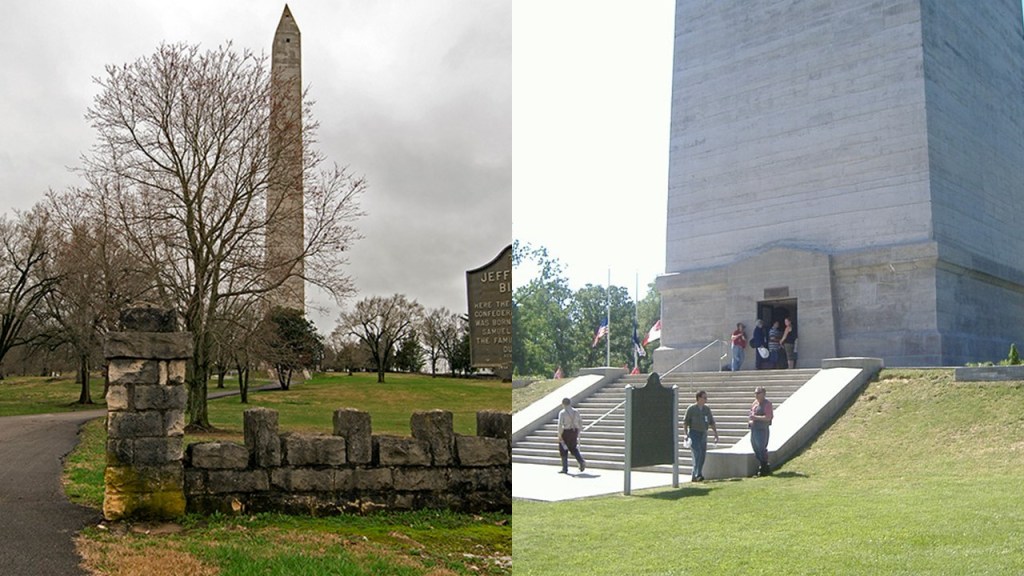
I first came across Marcus Loew in Jersey City, New Jersey, in the form of the Landmark Loew’s Jersey Theater, said to have opened in 1929. A fully-preserved theater, it is as lavish on the outside…

…as it is on the inside.

Preservationists succeeded in saving the building from demolition after it closed in 1986.

It is used for special events, and is the primary venue of the annual Golden Door Film Festival since 2011.

Here’s the thing.

Most of the historic Loew’s theaters did not survive very long.

Loew’s Theater on the far eastern end of Canal Street in Manhattan, said to date from 1927…

…had the fate of abandonment.  It was only in operation as one of Loew’s Theaters until the 1960s.  It became an “indie” film theater until it closed for good by 1980 and was abandoned. An “indie” is a feature film or short film produced outside of a major film studio.
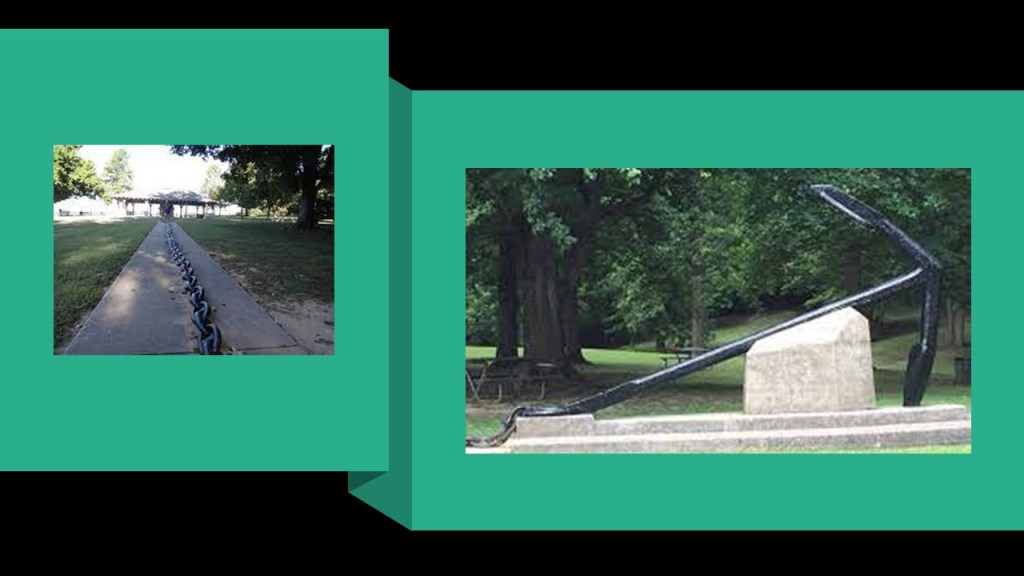
There has been an effort to restore some parts of the Loew’s Canal Street Theater since 2010. But why let a beautiful structure like this go to ruin in the first place?

Another example is Loew’s 46th Street Theater in Brooklyn, said to have been taken over by Loew’s Company in 1928, operating until 1966.

It was taken over by Brandt Theaters, and operated by this company from 1966 to 1969.

It re-opened as the 46th Street Rock Palace in 1969 presenting concerts, and closed as a theater and concert hall for good in 1973.

It was converted into retail space as a furniture store until 2015, at which time the furniture store moved, and this former theater was converted into apartments.

There are many more examples. These was not the exception ~ these examples were the rule for these beautiful old theaters.

Metro-Goldwyn-Mayer, also known as MGM, was founded in 1924, when Marcus Loew gained control of Metro Pictures, Goldwyn Pictures, and Louis B. Mayer Pictures.

It was the dominant motion picture studio in Hollywood from the end of the silent film era in the late 1920s to the 1950s, and was one of the first studios to experiment filming in technicolor.

Besides having big name stars of the day for more sophisticated feature films, like Greta Garbo, Joan Crawford, Spencer Tracy, and Clark Gable, MGM Studios also released the shorts and features produced by the Hal Roach Company, like Laurel and Hardy…

…and Our Gang, a series of short films following a group of poor neighborhood children and their adventures.

So instead of movies studios using the powerful medium of film for the upliftment and improvement of Humanity, generations of adults and children had their brains filled with things like slapstick comedy.

In 1973, MGM Resorts International was formed, a hotel and casino company based in Las Vegas. It was a division of Metro-Goldwyn-Mayer Studios until 1986. So this movie studio was tied into the lucrative gambling addiction industry a well.

Movies, gambling, and alcohol became the centerpieces of entertainment in modern culture, and industries like these are making millions upon millions off of an unaware public that has been immersed in the intentional promotion of consumerism, a social and economic order that encourages an acquistion of goods and services in ever-increasing amounts.

This made me think of the introduction of the credit card to facilitate consumerism. Diners Club was the first, issuing its charge card in 1950, and American Express and the Bank of America followed in 1958.

Yet another way to make money off of the public by charging interest, and enabling impulse gratification, and instead of encouraging prudent and responsible living within one’s means.

Another spin-off from the movie industry, and another way to immerse the general public in the idolatry of Hollywood, was the development of action figures, and other collectibles, related to popular movies and characters.

The first movie action figure was produced by AC Gilbert in 1964, and was based on the James Bond movie “Goldfinger.”

And, of course there is Walt Disney’s ubiquitous Mickey Mouse.

There are two subjects I would like to bring up before I move on to other distractions.

The first is Midtown Atlanta’s Fox Theater.

This is definitely Moorish architecture.

Construction of it as a large Shrine Temple was said to have started in 1928, but the 2.75 million dollar project soon exceeded their budget, so the project was said to have been leased to movie mogul William Fox.

The Fox Theater opened in 1929, two months after the stock market crash and the beginning of the Great Depression. The Theater closed 125-weeks after it opened. New owners acquired it, Paramount Pictures and Georgia-based Lucas & Jenkins, after the mortgage was foreclosed in 1932.

This is the interior of the Fox Theater…

…and on the left is a detail of the Fox Theater stage in Atlanta; of the Mabel Tainter Memorial Theater stage in Menomonie, Wisconsin in the middle; and a detail on the right of The Alhambra in Grenada, Spain, the only place acknowledged to have had a Moorish civilization.

Everywhere else, the Moors and their ancient, advanced and worldwide civilization has been removed from the historical record.

The other subject I would like to bring up are famous actors who were Shriners, an order established within freemasonry in 1870, and comprised of 32nd and 33rd degree freemasons, the two highest degrees in freemasonry.

This is not by any means an all-inclusive list of famous actors and entertainers who were also Shriners:

Clark Gable…

…Ernest Borgnine…

…Glenn Ford…

…John Wayne…

…the voice of Bugs Bunny, Mel Blanc…

…Red Skelton…

…and Roy Rogers.

Moorish Masonry has 360-degrees.

Because, you see, this is what all of this, every bit of what has taken place here, is really all about.

The other distraction I am going to bring up is organized sports, like American football, with a history going back to the first college football game between Rutgers and Princeton on November 6th, 1869…

…and having a ball shaped like the vesica piscis.

The vesica piscis is the first sacred geometric figure to emerge in the process of creating the Flower of Life pattern.

Football everywhere else in the world, except for the United States where it is called soccer, had its first ever match on December 19th, 1863, at Mortlake, London, England between the Barnes Football Club and the Richmond Football Club…

…and in which the football, or soccer ball, is shaped like the sacred geometric shape of the dodecahedron…

…found within the Flower of Life pattern.

The first public basketball game was played in Springfield, Massachusetts, on March 11th, 1892…

…which brings to mind a comparison of the ball of the sport of “hoops,” compared with the hoop configuration of the Sacred Hoop Dance of Native Americans…

…which is also connected to depicting the Flower of Life, the creation pattern of the Universe.

Basketball also provides a great cover for the human giants living amongst us.

The last organized sport I would like to bring forward is baseball.

The first officially recorded baseball game in the United States took place on the Elysian Fields of Hoboken, New Jersey, on June 19th, 1846, between the “New York Nine” and the New York Knickerbockers.

When you look up the meaning of Elysian Fields, it says that it refers to the final resting place of souls of the heroic and the virtuous in Greek mythology and religion. I don’t know what this means in the context, but I find it interesting to note.

For one thing, you have the baseball diamond, and the shape of a diamond, which looks like a square turned side-ways.

A square is the face of a cube, which is also found within the Flower of Life pattern.

I am bringing in this information about the sacred geometric shapes contained within elements of all of these sports because I believe sacred geometry is being deliberately misused against Humanity here.

Sporting events serve as a distraction and an addiction in and of themselves, and then you add in the sports’ fan culture of drinking alcohol at sporting events…

…and in places like sports’ bars, you have extra added addictions being promoted and normalized.

And as well you have the promotion of unhealthy, long-called junk, foods in the concession stands of stadiums…

…and movie theaters.

I also suspect that baseball fields, and stadiums for that matter, represent far more on the Earth’s grid system than what we are taught about them.

I really started thinking about this when I was taking a look in Nashville, Tennessee at Fort Negley, and noticed there was a baseball field sandwiched between the star fort and railroad yards in Nashville.

And as far as stadiums go, these are historic photos of Soldier Field in Chicago, Illinois, looking very much like what is called classical Greco-Roman architecture and stadiums of ancient times…

…like the Circus Maximus in Ancient Rome.

This is Soldier Field today, with some of the original colonnaded architecture incorporated into the new stadium.

Next, with regards to the subject of how were we put, and kept, asleep, I am now going to look at the origins of companies and corporations.

I would like to start this subject with the concept of two kinds of takeover bids in the business world because I think it is a really important concept to understand with regards to what has taken place here.

The first is called a friendly takeover bid, and occurs when the Board of Directors from both companies (target & acquirer) negotiate and approve the bid.

Then there is the hostile takeover bid, which occurs when an acquiring company seeks to acquire another company – the target company – but the board of directors from the target company has no desire to be acquired by, or merged with, another company.

The two most common strategies used by acquirers in a hostile takeover are a tender offer or a proxy vote.

The tender offer is an offer to purchase shares at a premium to the market price.

The proxy offer is persuading shareholders of the target company to vote out the existing management.

So we have Team Light on one side who, along with the ancient advanced Human civilization of Earth, were co-creating the fullest expression of Human Potential there ever was on earth.

Then we have Team Dark on the other side, comprised of fallen angels, and other beings with a negative agenda towards Humanity who have been interfering egregiously on Earth.

What was Team Dark to do?

They were jealous of Humanity…greedy…and hungry for power.

They wanted to rule over it all, take the wealth for themselves, and control the destiny of Humanity for their own benefit.

But the problem is in a Free Will Zone like Earth, the Human Beings who live here have to give their consent to choose whether the follow the Light or the Dark.

The negative beings behind all of this wanted to set up a new god as lord of this world – Lucifer – and wanted a proxy vote for their hostile takeover.

They wanted to persuade enough of Humanity to voluntarily accept Lucifer over the Creator of the Universe.

The only way they can accomplish this acceptance, however, is by outright lies, deception and duplicity because if people knew the true agenda of these controllers, the majority of Humanity would never, ever accept this.

I believe that these beings with a negative agenda devised a complicated plan to knock Humanity off the positive Moorish Timeline of Higher Consciousness…

…in an interdimensional war in order to control Humanity, using Humans as their tools against the Creator and Creation. 

I see “Paradise Lost,” the epic poem by John Milton, as historical non-fiction.

This poem has a publication date of 1667.

As related in the poem, newly banished Fallen Angels organize, and Satan volunteers to corrupt the newly created Earth and God’s new and most favored creation, Mankind.

He goes to the Garden of Eden, and basically convinces Eve, by duplicity, to eat of the fruit of the tree of knowledge of good and evil, and making it their fault they were kicked out of the Garden of Eden.

Team Dark definitely doesn’t want us to know about what they have been doing without our knowledge or consent, so they tell us without telling us they are telling us.

This particular statue briefly made an appearance at the Arkansas State Capitol building in 2018 to protest the Ten Commandments monument on the Capitol grounds.

I bring all this up is because it is important to know this is what has been going on here.

Humans are inherently sovereign beings.

They have gone to all of this trouble because, by Universal Law, they can’t lay a finger on us.

They have tricked us into accepting their sovereignty over our own.

I will begin this look behind the curtain into corporations and companies with the origins of the petroleum industry.

Samuel Kier established America’s first oil refinery for making lamp oil in Pittsburgh in 1854.

The petroleum industry in the United States began in earnest in 1859 when Edwin Drake found oil on a piece of leased-land near Titusville, Pennsylvania, in what is now called Oil Creek State Park.

For this reason, Titusville is called the Birthplace of the Oil Industry, and for a number of years this part of Pennsylvania was the leading oil-producing region in the world.

In 1839, John D. Rockefeller, Sr. was born in the United States, the progenitor of the wealthy Rockefeller family and considered to be the wealthiest American of all time.

Along with Henry Flagler, an American Industrialist and major developer in the state of Florida, Rockefeller founded the Standard Oil Company in 1870.

The Standard Oil Company was an American oil producing, transporting, refining, marketing company…and monopoly, which exists when a specific person or enterprise is the only supplier of a particular commodity.

In 1911, the United States Supreme Court ruled that Standard Oil was an illegal monopoly, ending its history as one of the world’s first and largest multinational corporations.

This was the former Standard Oil Company building in Lower Manhattan in New York City, said to have been constructed between 1921 and 1928 atop an original building of 1884 – 1885, and was the headquarters of Standard Oil Trust and successor companies until 1956.

The pyramid at the top of the Standard Oil Headquarter on the left was said to have been modeled after the Mausoleum of Halicarnassus on the right, built for Mausolus, ruler of Caria in Turkey around 350 BC, and called one of the seven wonders of the ancient world.

Rockefeller’s wealth soared as kerosene and gasoline grew in importance.

At his peak, he controlled 90% of all oil.

Oil was used in the form of Kerosene was used throughout the country as a light source…

…and heat source until the introduction of electricity.

Then, as a fuel source after the invention of the automobile.

There is mounting evidence that there had already been a worldwide free energy system in existence from the original civilization, including electric streetcar systems, which included residential routes like this historic photograph in a Charlotte, North Carolina neighborhood.

Electric streetcar systems at one time were in existence everywhere, and not just limited to a few places here and there. Most of them no longer exist.

It appears like the petroleum industry was developed in the 1850s in order to provide an energy technology to replace the free energy transportation system of the original civilization and to make money from the control of non-renewable resources.

The General Electric Company, or GE, is an American multinational conglomerate that operates through the following segments: aviation, healthcare, power, renewable energy, digital industry, additive manufacturing, venture capital and finance, and lighting.

GE was founded in Schenectady, New York, on April 15th, 1892, by Thomas Edison, Elihu Thomson, Edwin Houston, Charles Coffin, and J. P. Morgan with the merger of the Edison General Electric Company and Thomson-Houston Electric.

Edison General had been founded as the Edison Electric Light Company in 1878 by Thomas Edison to market his incandescent lightbulb, which he was given the credit for inventing in our historical narrative.

Thomson-Houston Electric was formed in 1882, when Charles Coffin led a group of Lynn, Massachusetts investors that bought out Elihu Thomson’s and Edwin Houston’s American Electric Company from their New Britain, Connecticut investors in 1882.

The Thomson-Houston Electric Company moved their operations to a building on Western Street in Lynn, Massachusetts.

We are told that in 1888, Thomson-Houston Electric implemented the electrification of streetcars in Lynn…

…which was part of the Lynn and Boston Street Railway, in service since 1854, when it had been powered by mules.

The merger of the Edison General Electric Company and the Thomson-Houston Electric Company was arranged by J. P. Morgan, an American financier and banker who dominated corporate finance on Wall Street throughout the period of time called the “Gilded Age,” between the years of 1870 and 1900.

He was a driving force behind the wave of industrial consolidation in the United States in the late 18th- and early 19th-centuries.

Besides his involvement in the formation of General Electric, he was also behind the formation of the U. S. Steel Corporation and International Harvester, among many other mergers.

With regards to U. S. Steel, J. P. Morgan financed the merger of Andrew Carnegie’s Carnegie Steel Company, Elbert Gary’s Federal Steel Company, and William Henry Moore’s National Steel Company in 1901. The new U. S. Steel Company established its headquarters in the Empire Building on Broadway in New York City, said to have been built between 1895 and 1898…

…and Charles Schwab became the first president of the U. S. Steel Corporation, a position he held for two years before becoming president of the Bethlehem Shipbuilding and Steel Company in 1903.

International Harvester goes back to the 1830s, when Virginia inventor Cyrus McCormick patented his finalized version of a horse-drawn reaper in 1834.

He and his brother subsequently started the McCormick Harvesting Machine Company in Chicago in 1847.

We are told their products came onto the market just as the development of railroads offered wide distribution to distant market areas…and the McCormick Factory just happened to be right next to railroad tracks.

In 1902, the McCormick Harvesting Machine Company merged with the Deering Harvester Company, forming International Harvester.

The business lines of the company included primarily agricultural equipment, automobiles, commercial trucks, lawn and garden products, and household equipment.

The Deering Harvester Company had been founded in 1874 by William Deering, and he moved the company to Chicago in 1880.

William Deering’s son James, connected with the Deering-McCormick International Harvester fortune, was said to have built the Villa Vizcaya between 1914 and 1922 on Biscayne Bay in the Coconut Grove neighborhood of Miami, Florida.

The German inventor Karl Benz created the first gasoline-powered automobile in 1885, the Benz Patent-Motorwagen.

It was propelled by an internal combustion engine. About twenty-five of them were built between 1886 and 1893.

Henry Ford’s first automobile company was the Henry Ford Company, which he started in 1901, and left after less than a year after a dispute with investors with the rights to his name. This first company subsequently became known as the Cadillac Motor Company under new ownership.

The Ford Motor Company was financed by twelve investors in 1903…

…and started producing a few cars a day in its newly converted factory in Detroit on Mack Street.

It was where Ford’s first automobile, the Model A, was built.

In 1904, the Ford Motor company moved to a new factory on Piquette Avenue in Detroit. This is where the first Model Ts were built.

In the next ten years, the Ford Motor Company would lead the world in the expansion and refinement of the assembly line concept.

Henry Ford also brought part production in-house, thereby bringing vertical integration into his company, where the supply chain of a company is owned by the company.

Ford moved operations into the Highland Park factory in 1910…

…and introduced the first moving assembly line there in 1913.

The introduction and refinement of the assembly line facilitated the mass production of new cars, which in turn made the purchase of a new car affordable for most people.

It is interesting to note that pioneer film-maker Thomas Ince and Henry Ford were both pioneers of assembly line production and vertical integration in their respective industries during the very same time period of the early 1900s.

In summary, I am seeing great wealth and power being consolidated into the hands of a few in a hostile takeover of the earth’s grid system and Humanity, and a whole new culture being created to control us through addictions, distractions, and money, and that they do not have Humanity’s best interest at heart.

Those that heretofore have been in control of the world in which we live deviously figured out a way to keep us asleep by this new culture they created, and they have been getting filthy rich at our expense because we have been paying for our own poisoning with our addictions; paying for our own mind control programming with distractions; and keeping us in consumerism mode to enrich corporate interests; and ultimately financing our own destruction.

They have always feared the Great Awakening of Humanity, and thus threw everything they could at us to prevent it from happening and keep us asleep so we would never know what hit us.

But no matter what they do, they can’t keep it from happening. Among many other things, they lost control of the narrative no matter how hard they try to get it back.