
I am going to be bringing forward research I have done in the past, as well as new research, in this series on the Great Lakes region of North America,
So far I have looked in-depth at cities and places all around the shores of Lake Superior, Lake Michigan, and the Michigan-side of Lake Huron, paying particular attention to lighthouses; railroad and streetcar history; waterfalls, wetlands and dunes; interstates and highways; major corporate players; mines and mining; labor relations; and many other things.
I am going to be taking a close look at the Ontario-side of Lake Huron in the fourth-part of this series, and where I expect to see more of the same kinds of things I have been looking at thus far, and I will be adding a few more things to the list, like golf courses, airports, and race tracks, and bring in my findings about Circuit Board Earth, which I have seen along the way but haven’t been focusing on.
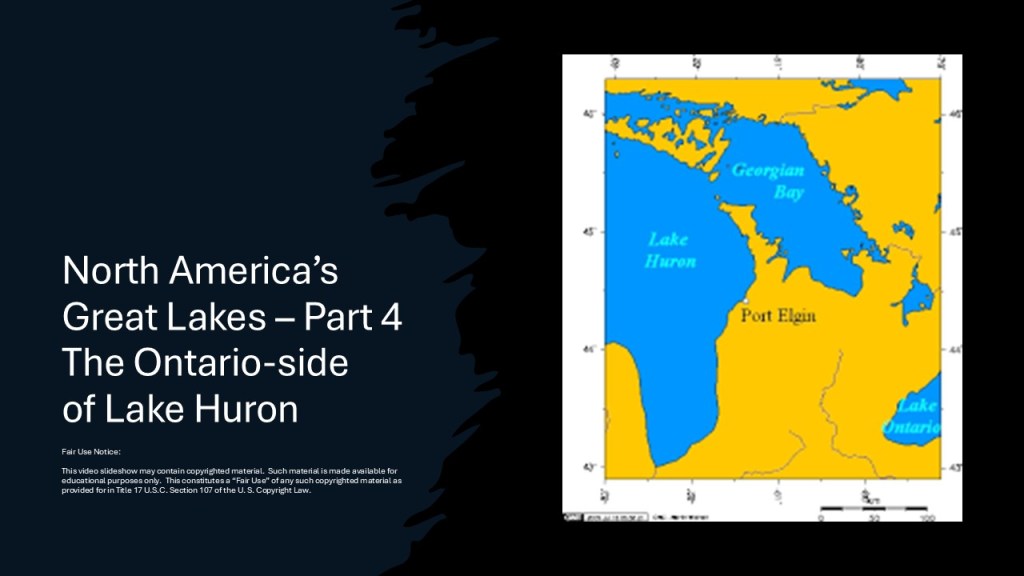
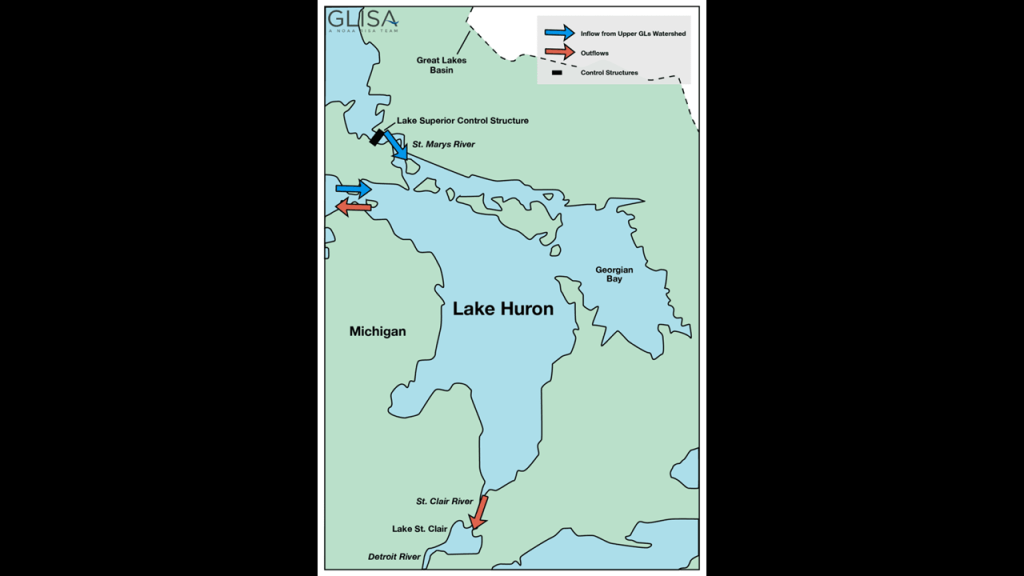
As I mentioned in the last post, Lake Huron is connected to Lake Michigan by the Straits of Mackinac; to Lake Superior by the St. Mary’s River; and to Lake Erie via the St. Clair River, Lake St. Clair and the Detroit River, where the city of Detroit is located on land situated between Lake Huron and Lake Erie the two lakes.
It is shared on the north and east by the Province of Ontario and to the south and west by the State of Michigan.
We are told that Lake Huron is considered to be hydrologically a single lake with Lake Michigan because the flow of water between the Straits of Mackinac keeps their water levels in overall equilibrium.
Lake Huron has the greatest shoreline length of the Great Lakes, at 3,827-miles, or 6,157-kilometers, including 30,000 islands.
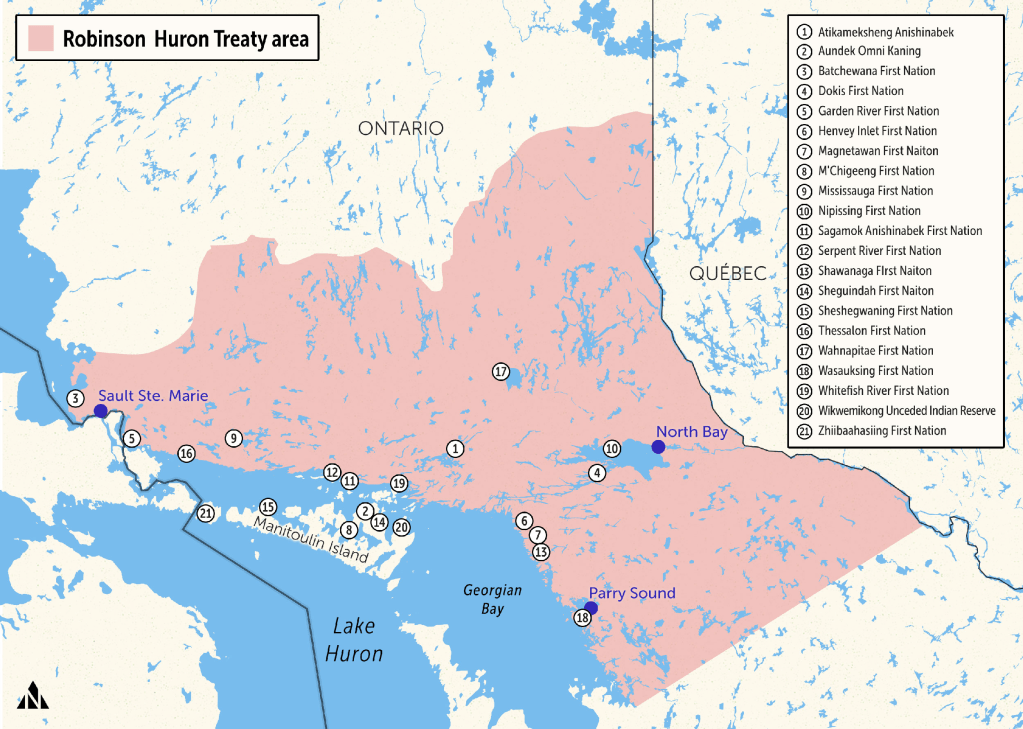
The name of the lake is derived from the indigenous Huron people of the region, also known as the Wyandot.
Their traditional lands extended to Lake Huron’s Georgian Bay and Lake Simcoe in Ontario.
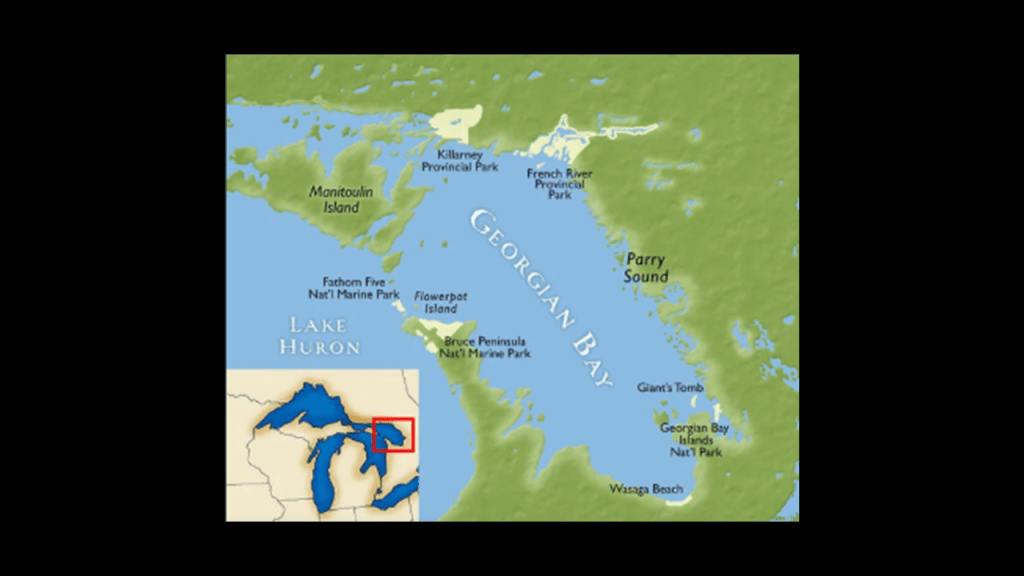
Georgian Bay is a large bay of Lake Huron, and sometimes called “the sixth Great Lake” because of it’s size and distinctiveness.
It is 5,792-square-miles, or 15,000-kilometers-squared, in size.
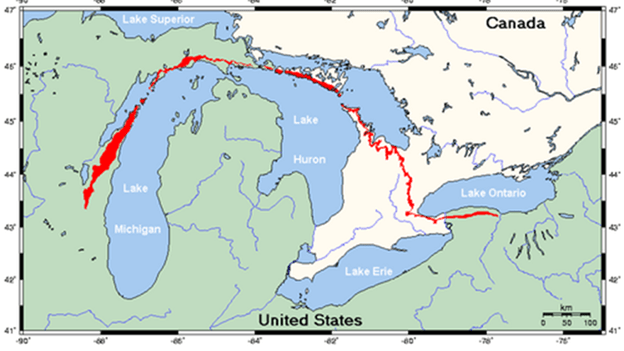
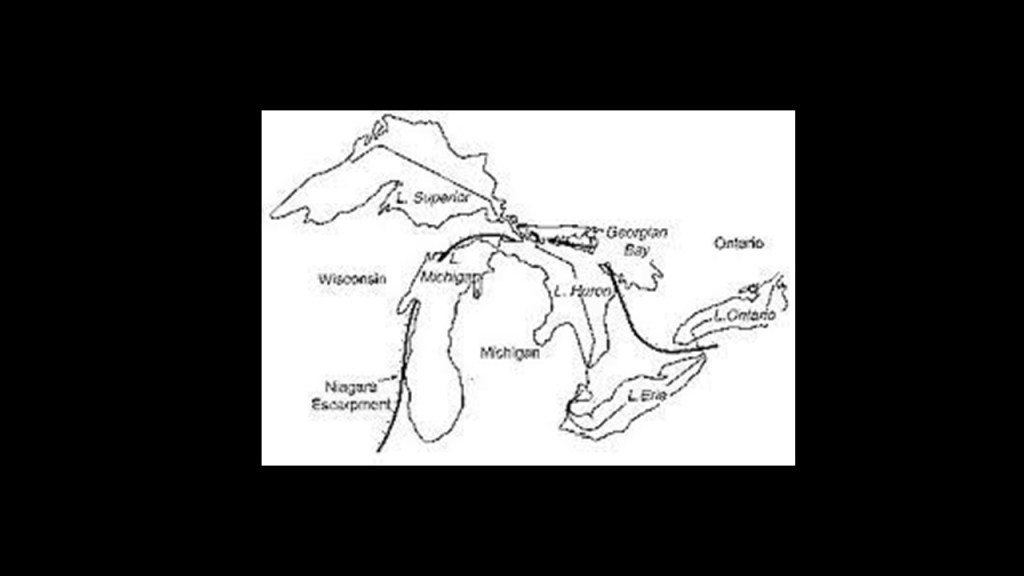
In the course of doing the research for this series on the Great Lakes, I have come to understand deeply that the Georgian Bay of Lake Huron is formed by the Niagara Escarpment.
The Niagara Escarpment runs predominantly east-to-west, from New York, through Ontario, Michigan, Illinois, and Wisconsin, with a nice, half-circle shape, attached to a straight-line, when drawn on a map.
As I continue to go through the exploration of the Ontario-side of Lake Huron, I will show why I believe this is a significant finding with regards to the Great Lakes of the region that we see today that we have been taught to believe have always been there but which I now believe are a relatively recent occurrence and weren’t there before.
A finding that I am particularly interested in is the presence of numerous waterfalls along the Niagara Escarpment, which I believe were very much a part of the original energy grid.
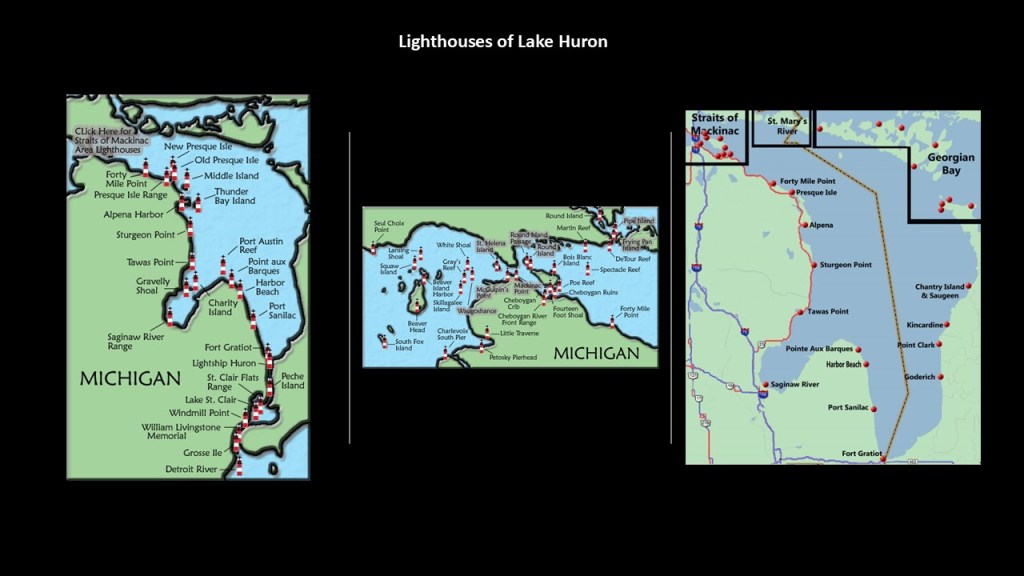
From what I could find out in a search, the Great Lakes have been home to approximately 379 lighthouses, with 200 of them still active, and that Lake Huron has seventy lighthouses around its shores.
I find this noteworthy because I have come to believe that along with waterfalls, lighthouses, rail infrastructure, and what we know of “forts,” were also part of the energy grid, and that when the energy grid was deliberately destroyed, it resulted in the destruction of the land around this key infrastructure, turning it into dunes, deserts, swamps, bogs, or causing the land to shear off and become submerged.
I will be looking at more evidence for this last point here on the Ontario-side of Lake Huron in particular with what is found along the Niagara Escarpment.
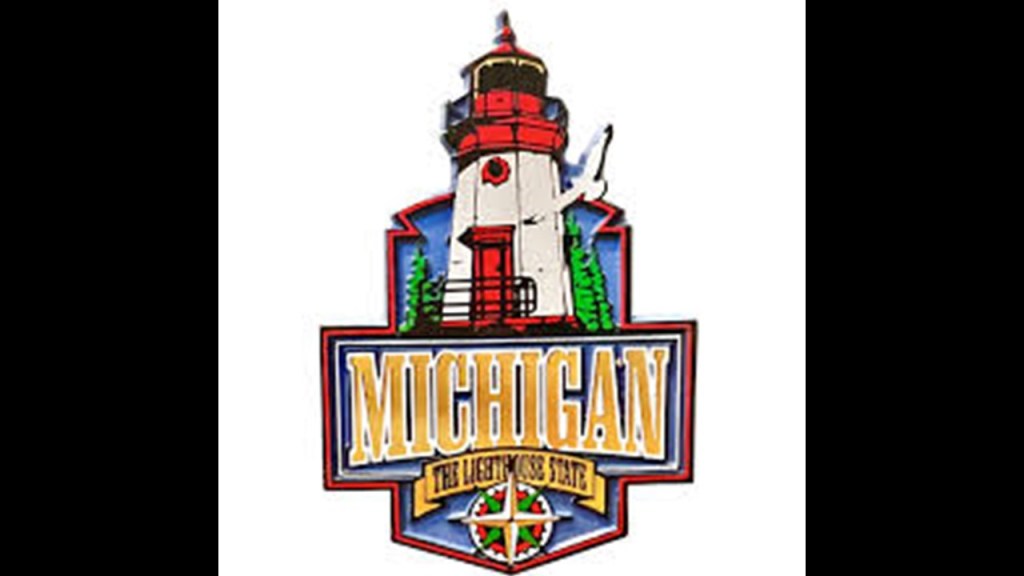
For point of information, along with approximately 88 lighthouses along the shore of Lake Michigan, which has more lighthouses than any of the Great Lakes and approximately 78 lighthouses around Lake Superior, with 42 of them being in Michigan, one of Michigan’s nicknames is “The Lighthouse State,” as it has more lighthouses than any other state.
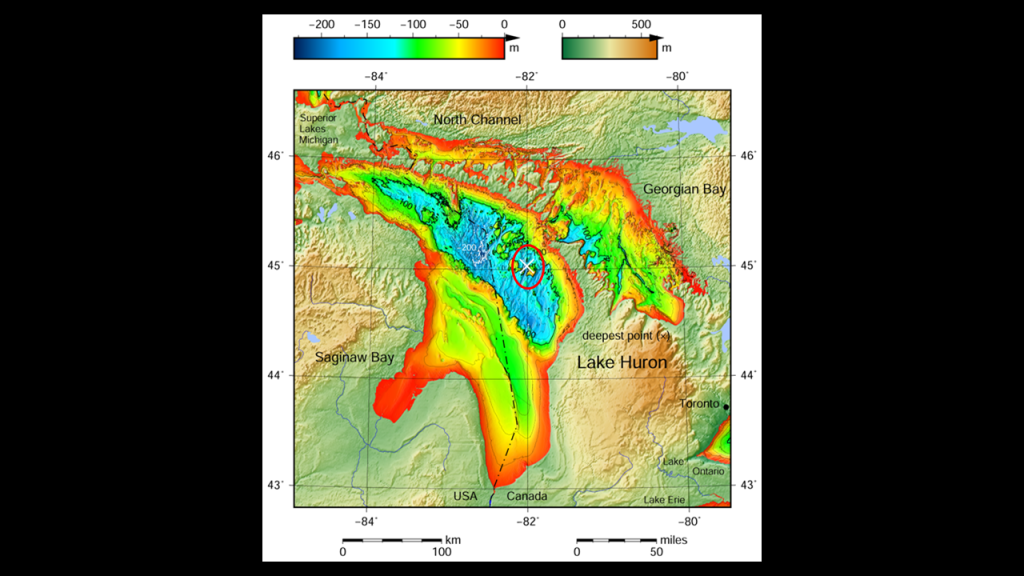
With regards to the bathymetry of Lake Huron and its Georgian Bay, the water- depth ranges from 0 to 100-meters, or 328-feet, for the most part throughout both of them, with the deepest part of Lake Huron being in the middle at 229-meters, or 750-feet in depth where the “x” is circled in red.
The average depth of what constitutes Lake Huron is 59-meters, or 195-feet.
The Great Lakes Region is notorious for its shipwrecks, with an estimated somewhere between 6,000 to 10,000 ships and somewhere around 30,000 lives lost.
The reasons given for the high number of shipwrecks consist of things like severe weather, heavy cargo and navigational challenges.
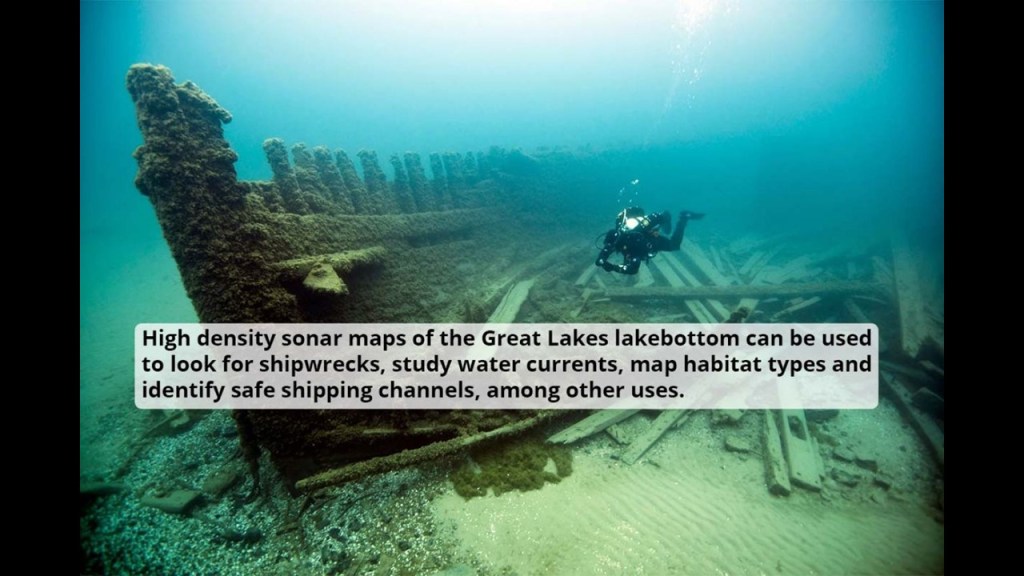
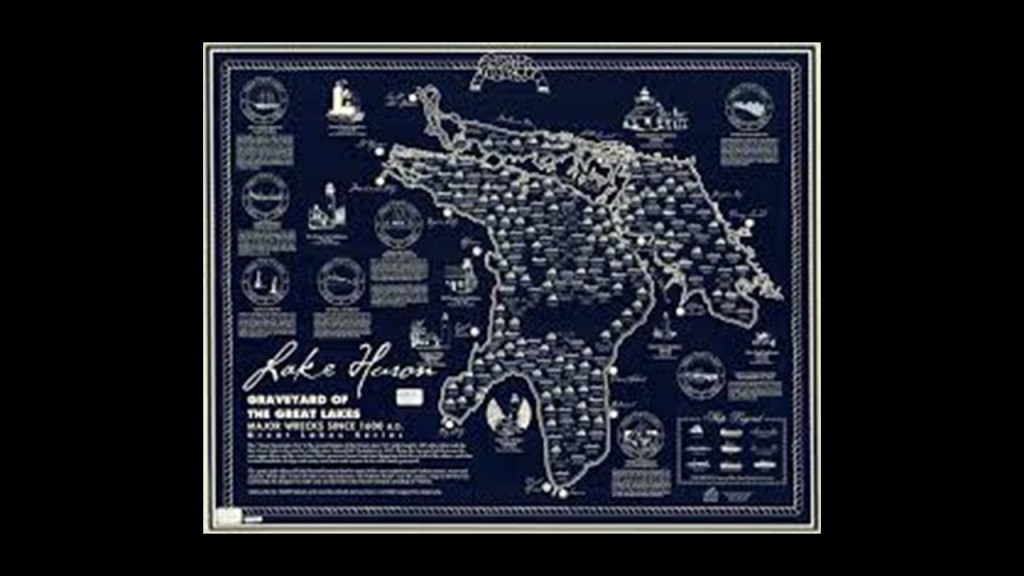
There are estimates of over 1,000 shipwrecks in Lake Huron alone.
I am going to make my way back up to Point Edward where the St. Clair River meets Lake Huron by way of Windsor in Ontario, which is directly across from Detroit, Michigan and also on the Detroit River, where I left off on the Michigan-side of Lake Huron in the third part of this series on the Great Lakes region of North America.
But before I head up to follow the shores of Lake Huron, I would like to explore what is found in Windsor and the surrounding area.
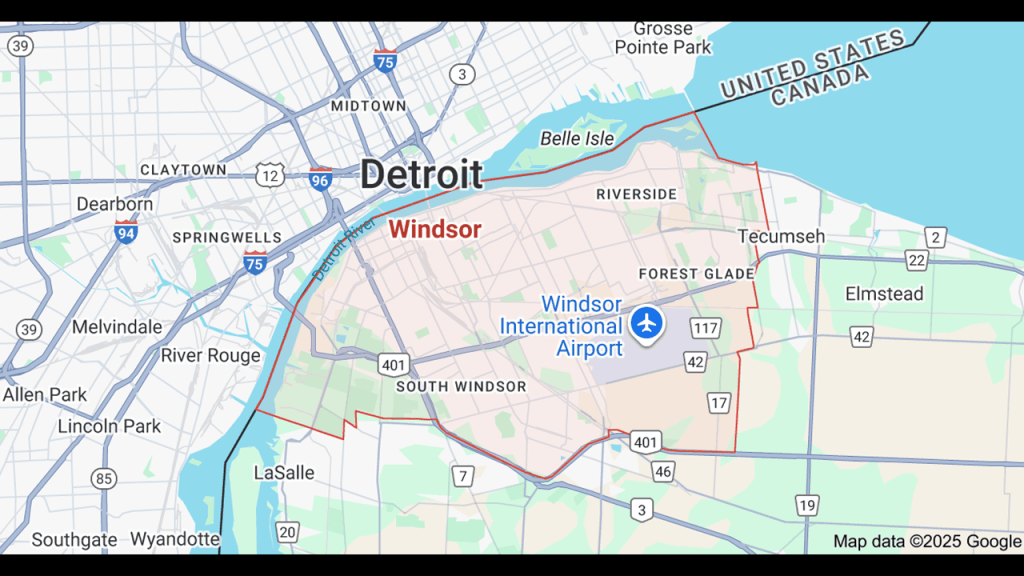
First, a few general things about Windsor.
It is the southernmost city in Canada, and at the southwestern-end of what is called the “Quebec City-Windsor Corridor,” the most densely-populated and industrialized region of Canada.
With more than 18-million people, it contains roughly half the country’s population and and seven of Canada’s twelve largest metropolitan areas.
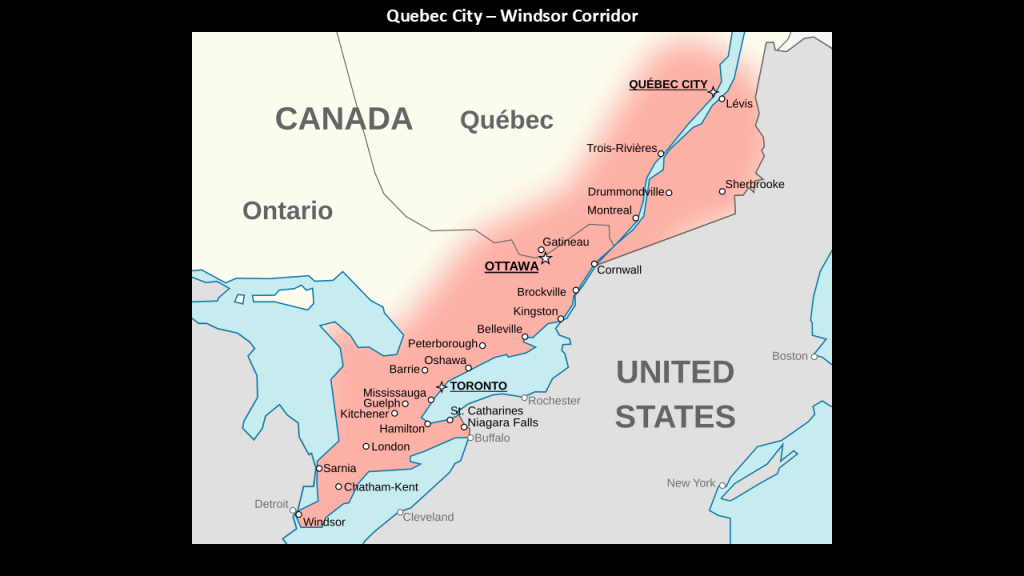
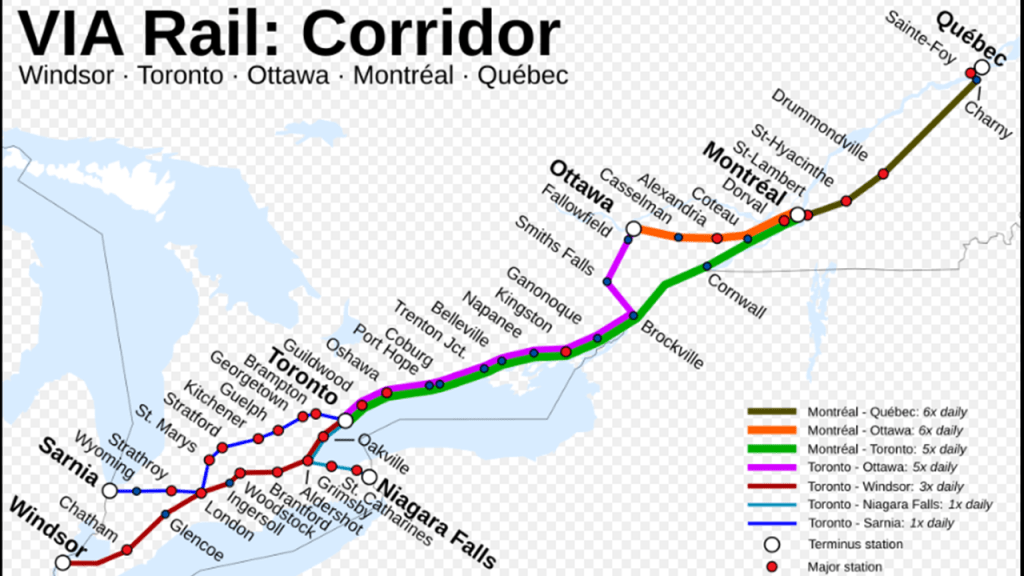
Today, VIA Rail provides the heaviest passenger train service in Canada in Quebec and Ontario in what is called “The Corridor” on what was previously tracks operated by the Canadian National and Canadian Pacific Railways.
The VIA Rail Corridor runs mostly along the north shores of Lake Erie and Lake Ontario, and alongside the St. Lawrence River.
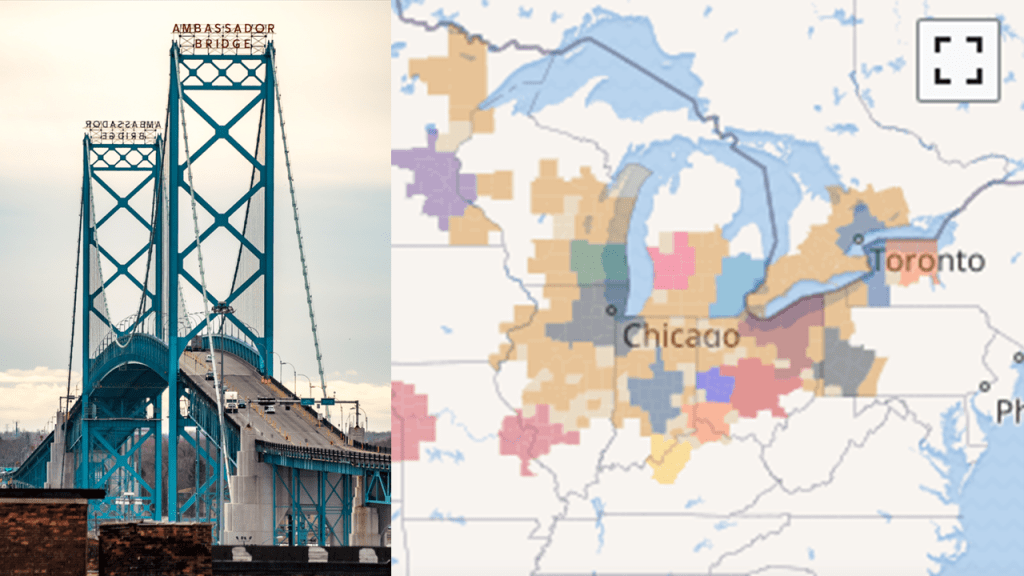
The urban area of Detroit-Windsor is North America’s most populated trans-border conurbation, which is a region consisting of a large number of metropolises, large cities and towns, and other urban areas.
The busiest commercial crossing on the International Border between the United States and Canada, the Ambassador Bridge between Windsor and Detroit links what is called the “Great Lakes Megalopolis,” a region which runs roughly-speaking west from Minneapolis – St. Paul in Minnesota, and south to St. Louis, Missouri and Louisville in Kentucky, and east to Rochester in New York, and northeasterly to Quebec City.
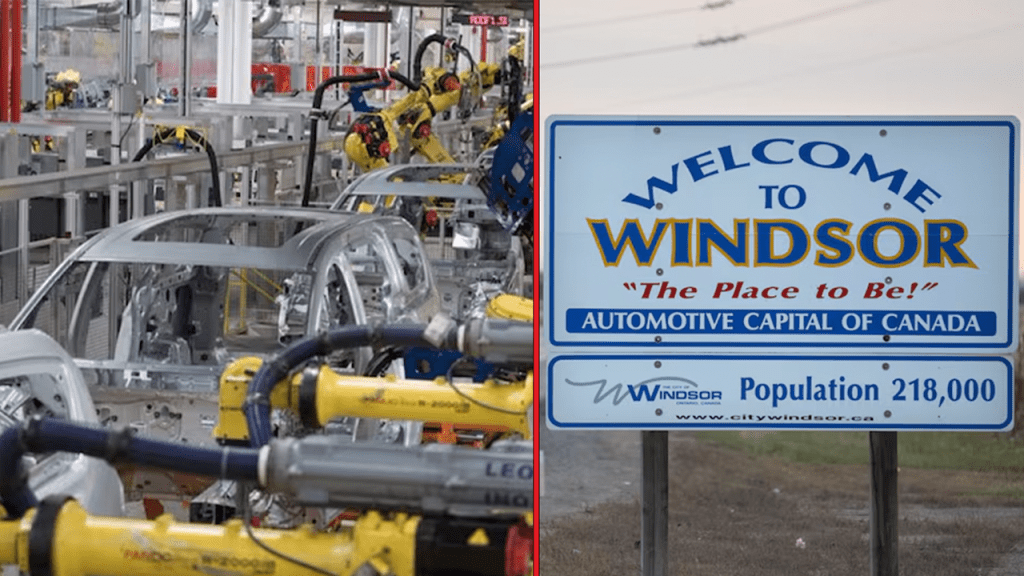
Windsor is a big contributor to Canada’s Automotive industry, and historically known as the “Automotive Capital of Canada,” like its American counterpart in Detroit, the widely-recognized automotive capital of the United States.
I picked out some locations in Windsor that looked interesting to me to see what kinds of thing come up here.
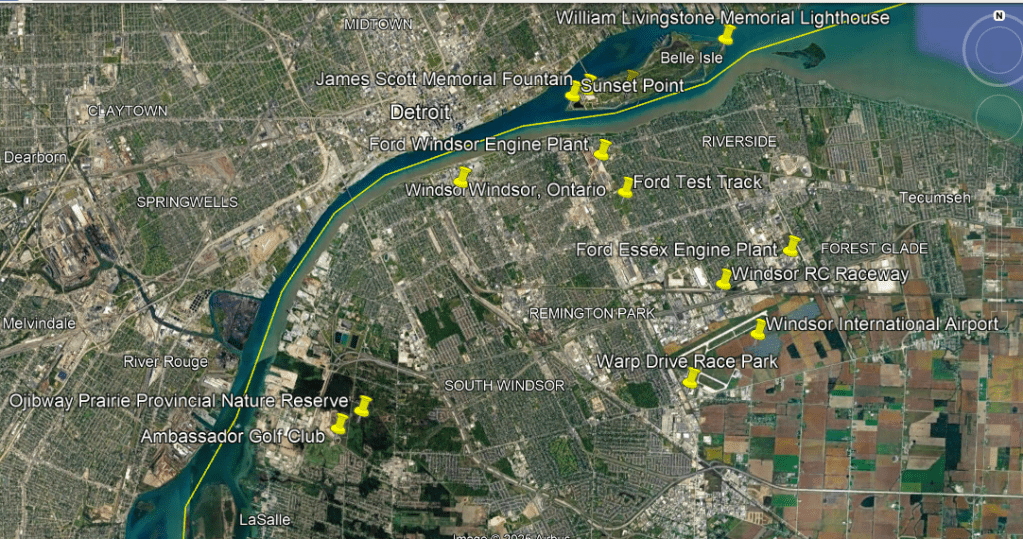
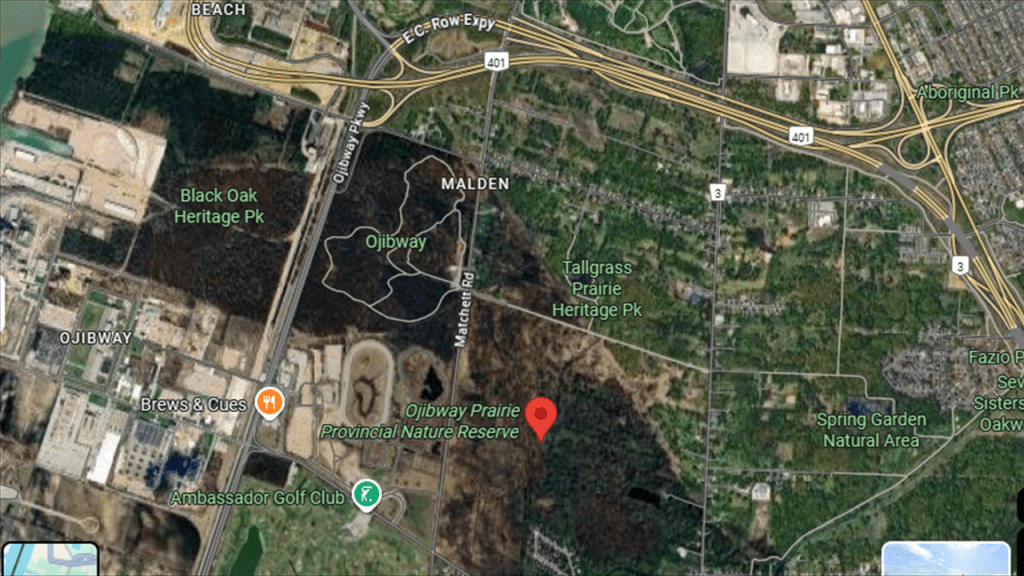
The first section I would like to take a closer look at is the location of the Ojibway Prairie Provincial Preserve in South Windsor.
The Ambassador Golf Club borders the southern edge of this nature reserve, and it is surrounded to the east by the Spring Garden Natural Area and Tallgrass Prairie Heritage Park, and to the west by the Black Oak Heritage Park.
And the area is bounded by Ontario Highway 401 on its northern-side; Highway 3 on its eastern-side, and the Ojibway Parkway is on the western-side of it.
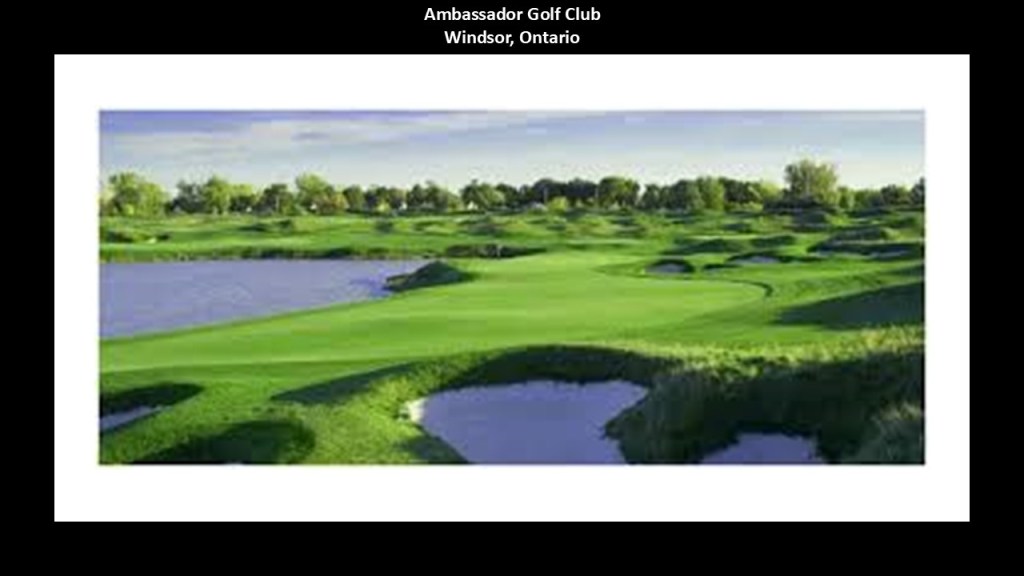
The Ambassador Golf Club is a golf course that is considered the venue of choice for public golf in Windsor and Essex County, and first opened in 2005.
We are told it was designed by architect Thomas McBroom, who transformed otherwise flat land into a dramatic golf course.
It is located a short-distance from the Ambassador Bridge and the Windsor/Detroit Tunnel.
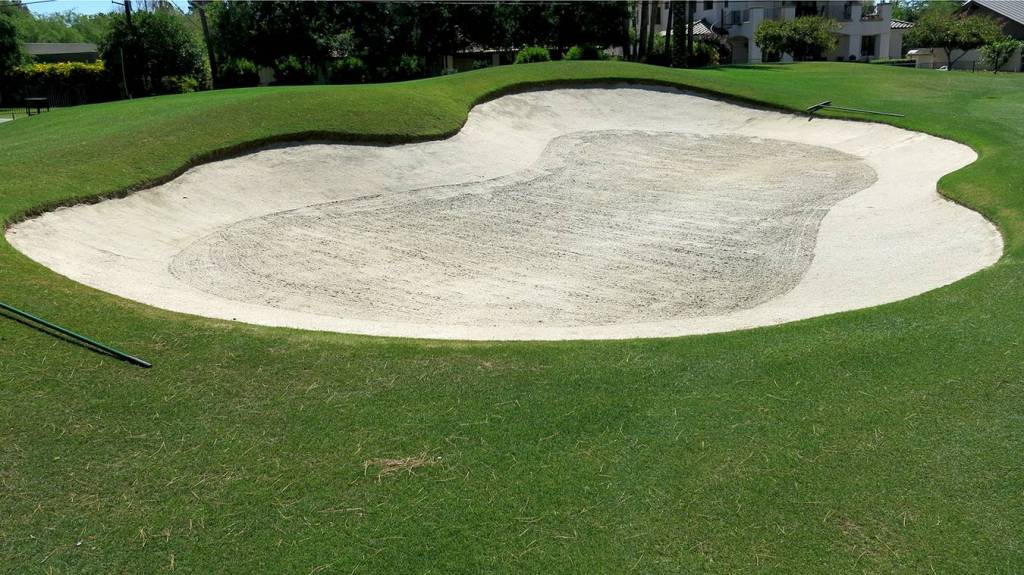
Personally, I have believed for quite awhile now that golf courses are repurposed mound, or earthwork, sites, and are a cover-up of mound sites.
Just carve out the top of a mound, and voila, you have a bunker.
The term “Links” is another name used for golf courses.
I think this name tells us their actual purpose in the Earth’s grid system, perhaps as “links” or “linkages” of the circuitry of electrical and magnetic components.
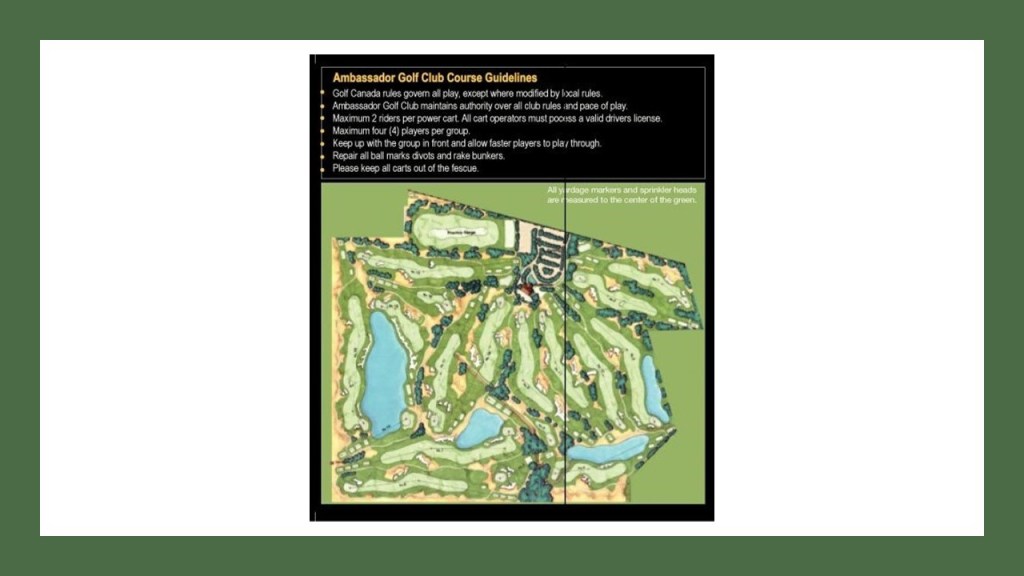
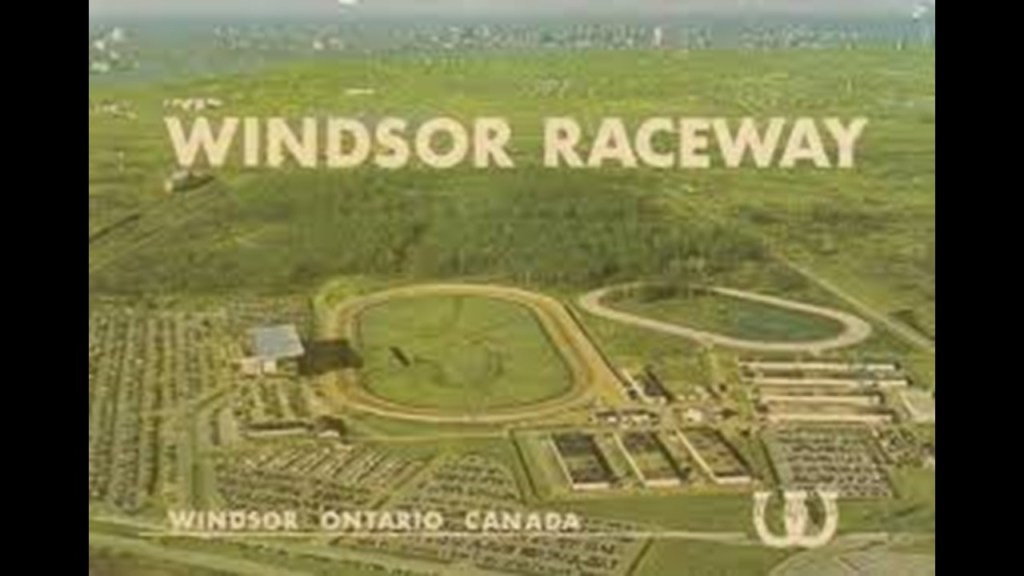
Next, between the Ambassador Golf Course and the Ojibway Nature Center of the Provincial Nature Park are two oval, or elliptical shapes.
Between the Ojibway Nature Center area and the Black Oak Heritage Park is the Essex Terminal Railway’s Ojibway Yard along Ojibway Parkway.
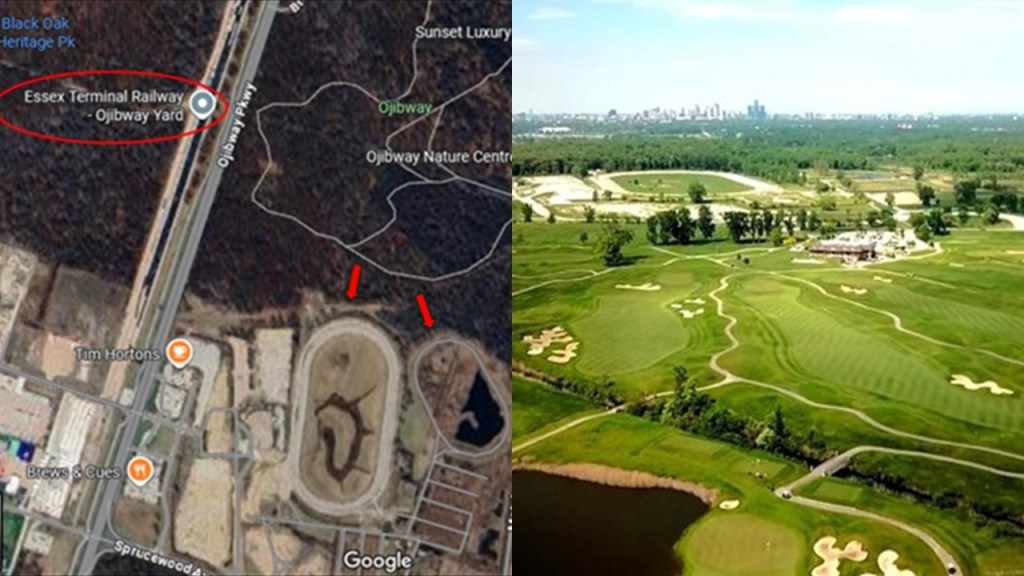
I have already come to see elliptical tracks as circuitry on the Earth’s electro-magnetic energy grid as a result of my research over the years.
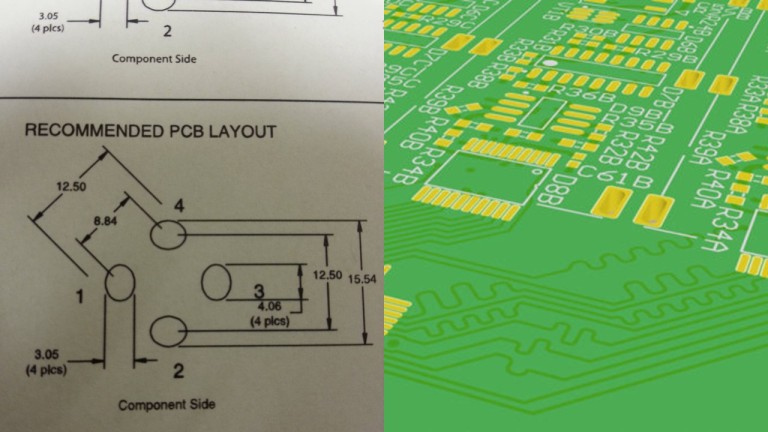
For example, when I investigated elliptical circuitry in past research, I came across elliptical PADS in Printed Circuit Boards (PCBs).
PADS are an electrical connection point for components, and most carry current for either signal transfer or heat.
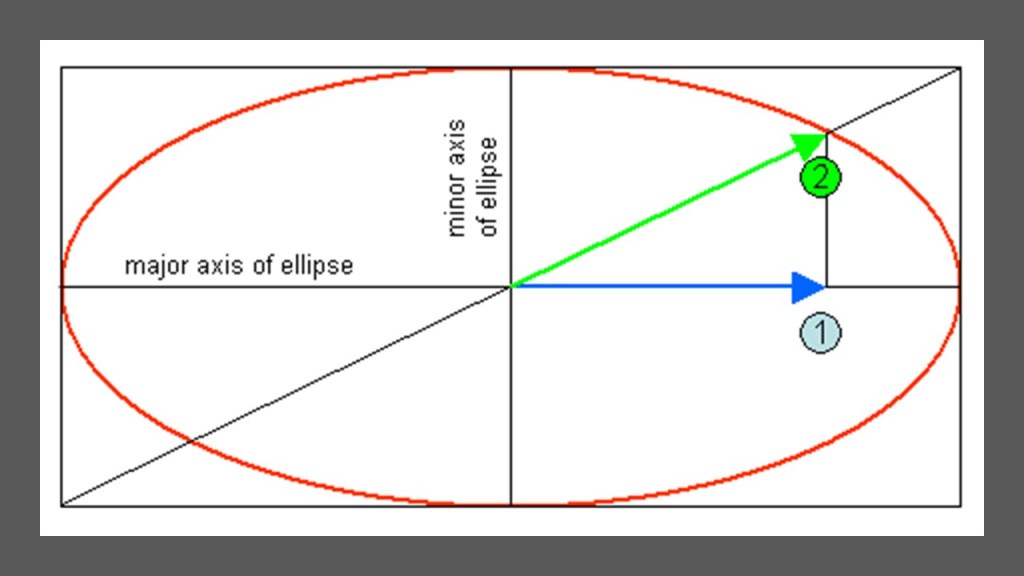
I also found the term “Elliptical Polarization,” which occurs when there is more than one source of a magnetic field at the same frequency, the magnetic field traces out an ellipse in space.
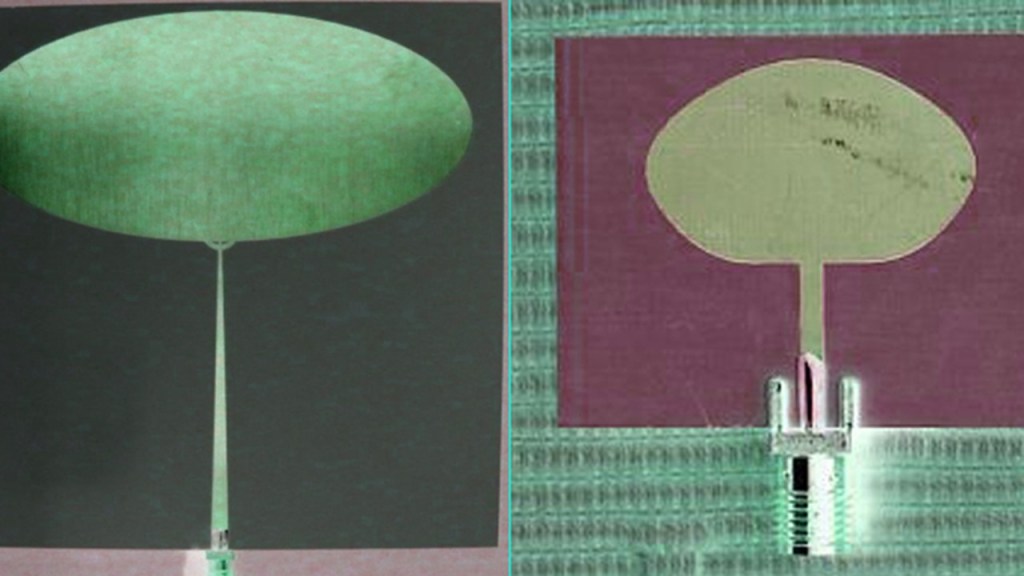
Then there are elliptical antenna for things like satellite dishes…

…and Ultra Wide-Band communications.
From what I was able to find, the two elliptical shapes in this location were once the Windsor Raceway and Casino.
Over the years, the Windsor Raceway was used both for standardbred and thoroughbred harness racing, and was in operation between October of 1965 until it closed in August of 2012.
Its facilities were demolished in 2015.
More thoughts on this finding to come.
The Essex Terminal Railway’s Ojibway Yard is located between the Ojibway Nature Center area and the Black Oak Heritage Park.
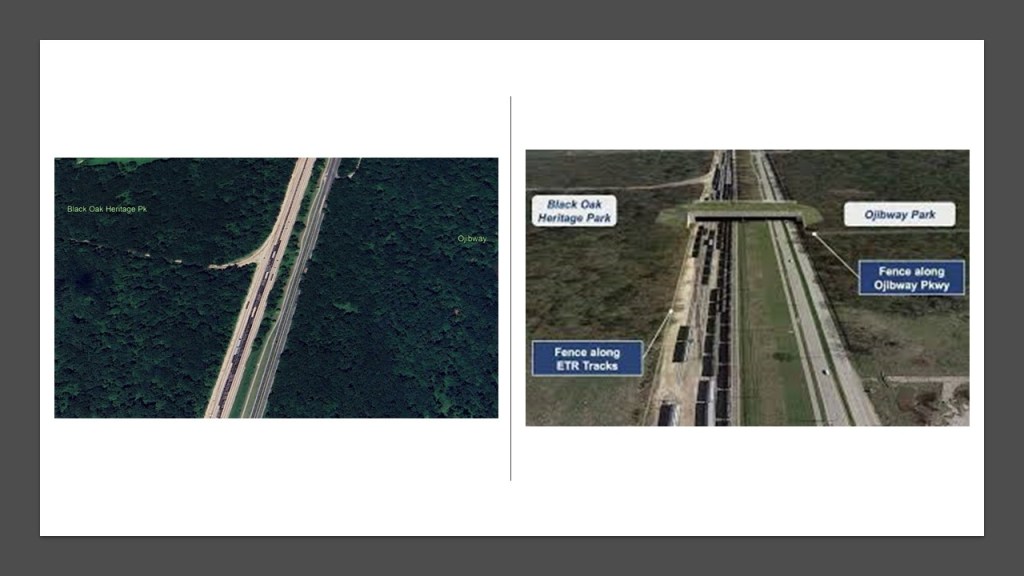
The Essex Terminal Railway is a short-line terminal railroad line that runs from Windsor to Amherstburg in Ontario for a distance of 21-miles, or 34-kilometers, and has direct connections to the Canadian National and Canadian Pacific Railways, as well as CSX.
Established in 1902, it is one of the oldest operating railroads in Canada.

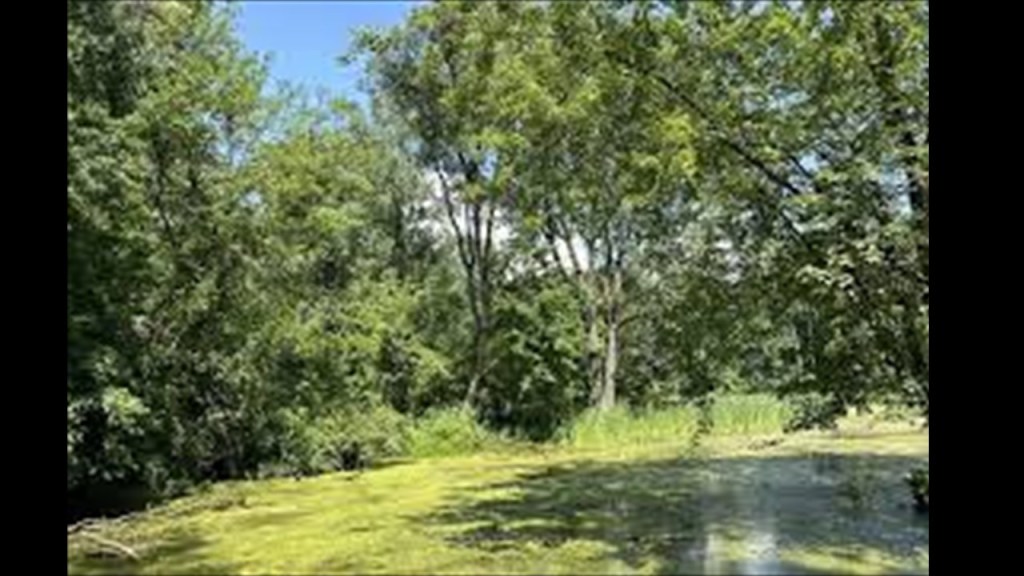
The Ojibway Prairie Provincial Preserve, also known as the Ojibway Prairie Complex, in South Windsor is described as one of the largest remnants of tallgrass prairie and Oak Savannah in Ontario.
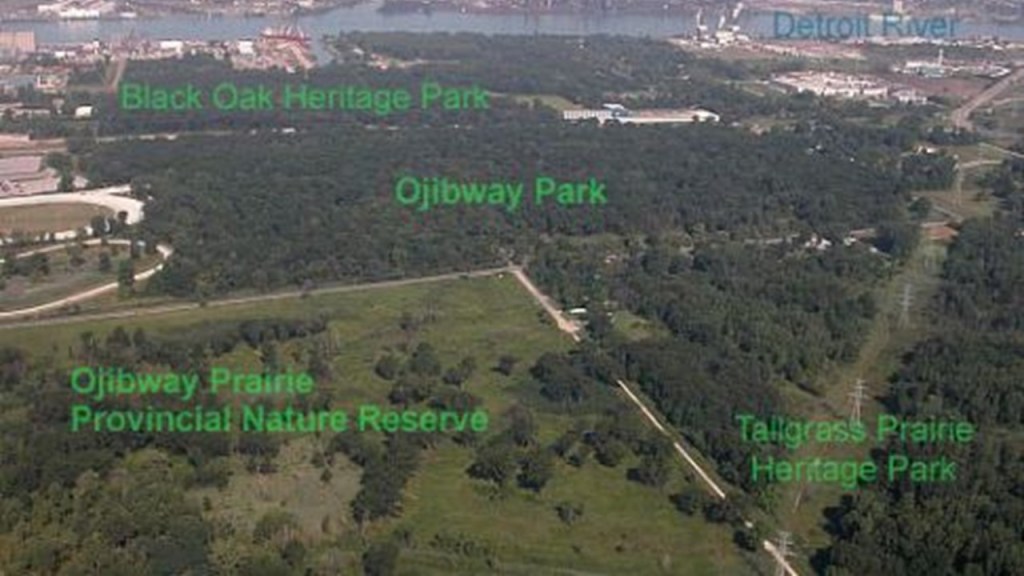
The soil there is described as very sandy and over a bed of clay, as well as having significant areas of wetlands.
It is under consideration for designation by the Canadian Government as a “National Urban Park.”
This brings to mind an area I found when I was doing research awhile back on Portland in Oregon, directly across the Columbia River from Vancouver, Washington, that is called the “Smith & Bybee Wetlands Natural Area.
Also on the Portland-side of the Columbia River, there is also a lot of railway activity showing-up in the western part of North Portland, all around the edges of what is called the Smith and Bybee Wetlands Natural Area.
Along with the rail-lines, the Smith and Bybee Wetlands Natural Area is surrounded by warehouses, port terminals, and commercial areas.
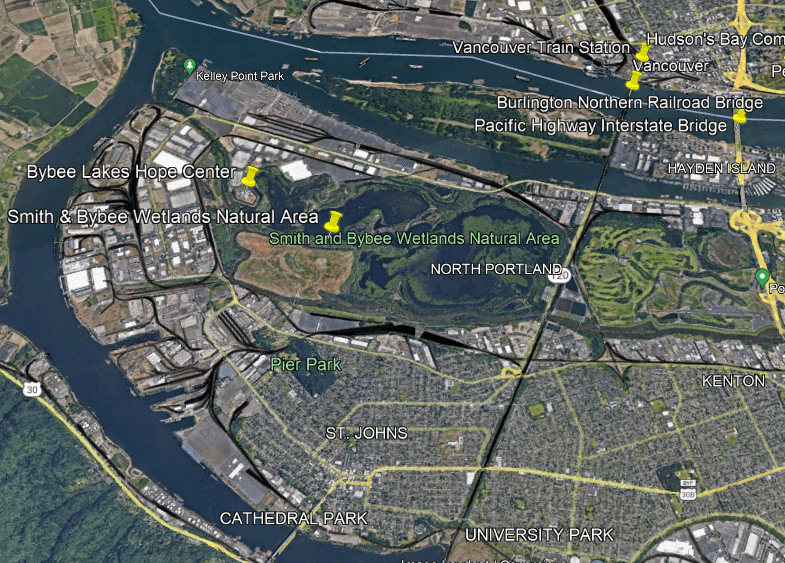
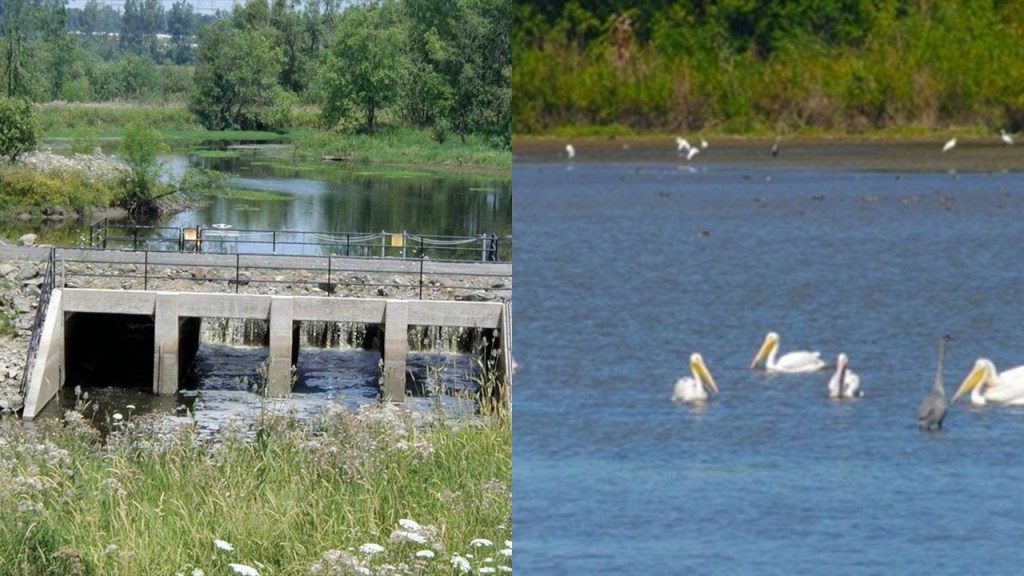
It is called one the largest urban freshwater wetlands in the United States, and provides habitat for a wide variety of wildlife.
I noticed a star fort-point-shape in the landscape I took a look around the Smith & Bybee Wetlands Natural Area, both of which are located right next to the still-operating BNSF Ford Railyard, which is located right next the Columbia River.
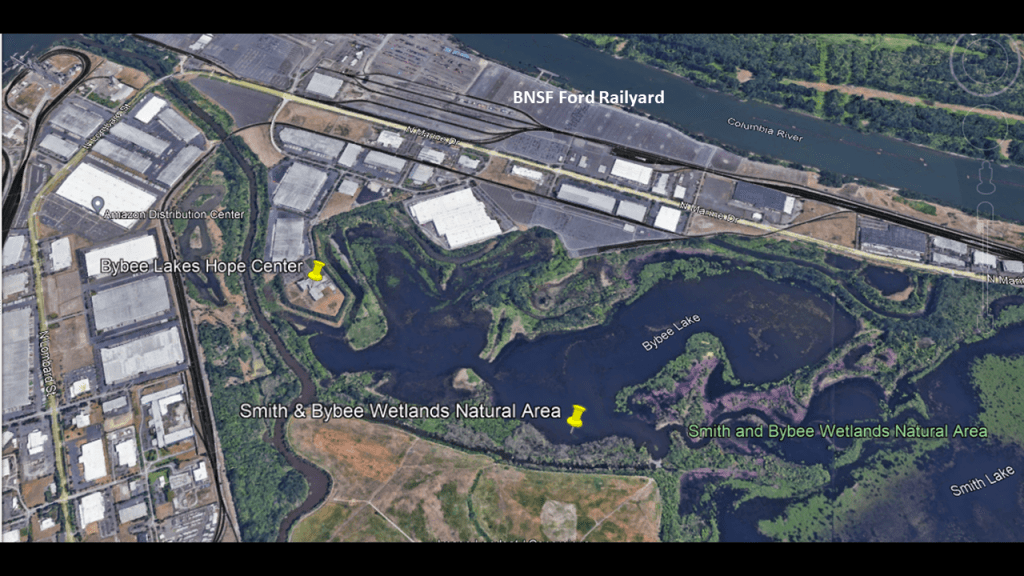
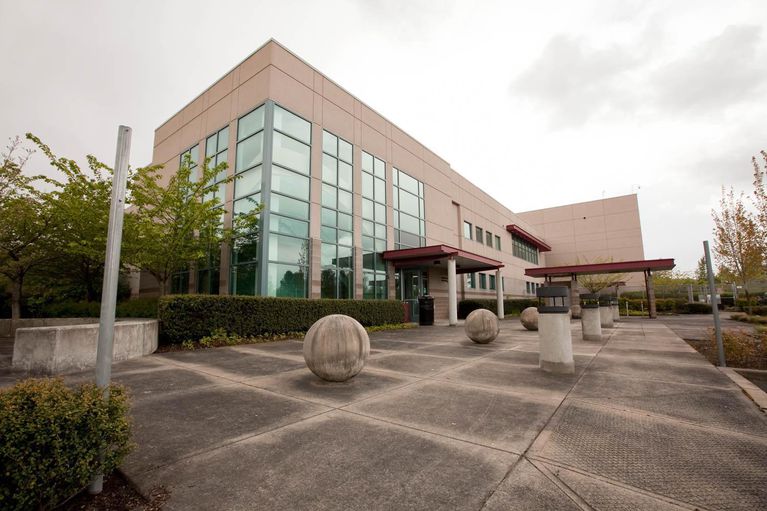
The Bybee Lakes Hope Center is located on top of the star-fort-point, which has been a homeless shelter since October of 2020.
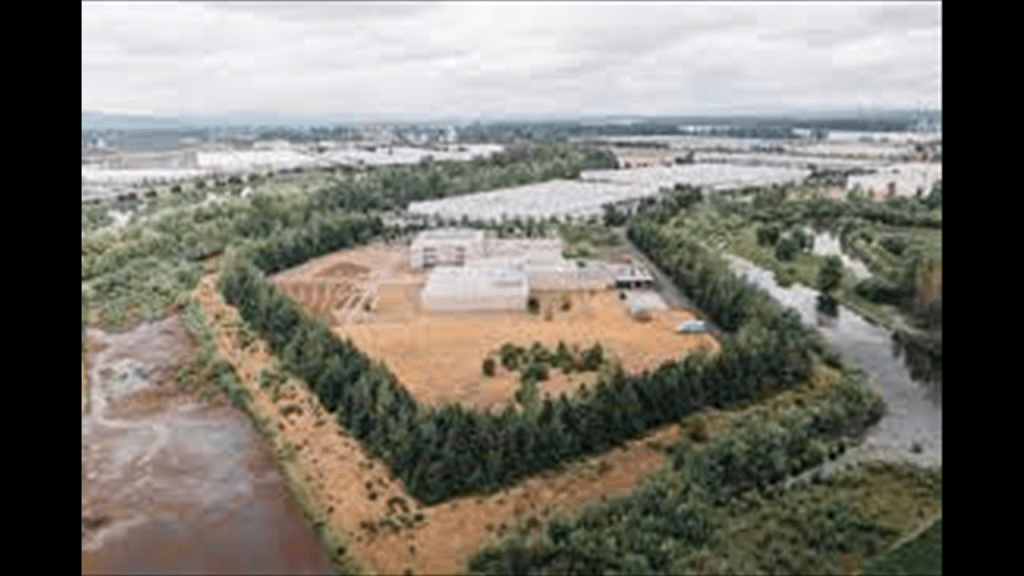
Prior to that, it was the Wapato Jail, said to have cost $58-million to build, but which was never used as a jail because Multonomah County could not afford to operate it as such.
It is very interesting to note what is found directly across Oregon Route 120 from the Smith & Bybee Wetlands Natural area.
First, Oregon Route 120 is a 2.71-mile, or 4.36-kilometer, – long, unsigned road next to railroad tracks.
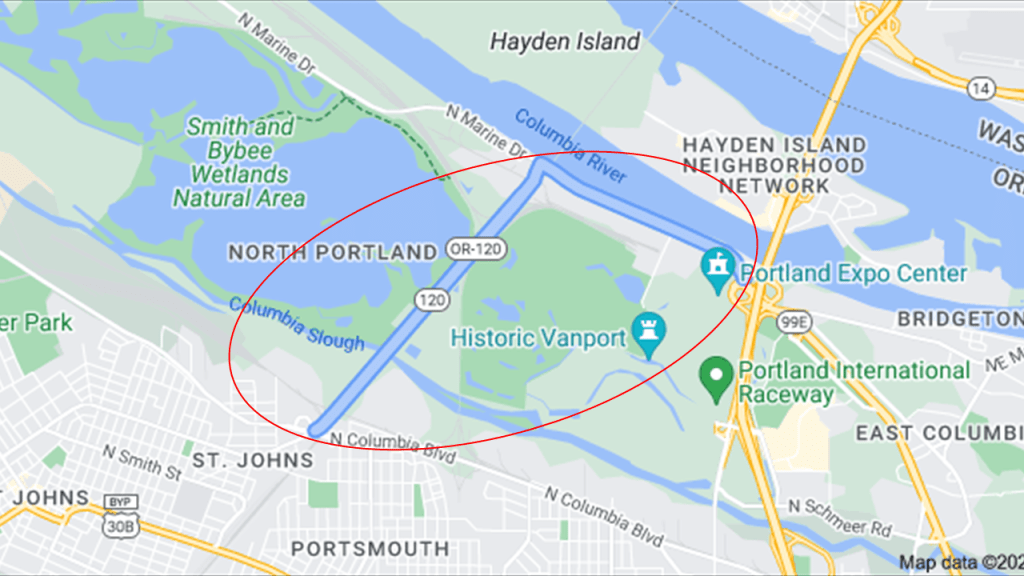
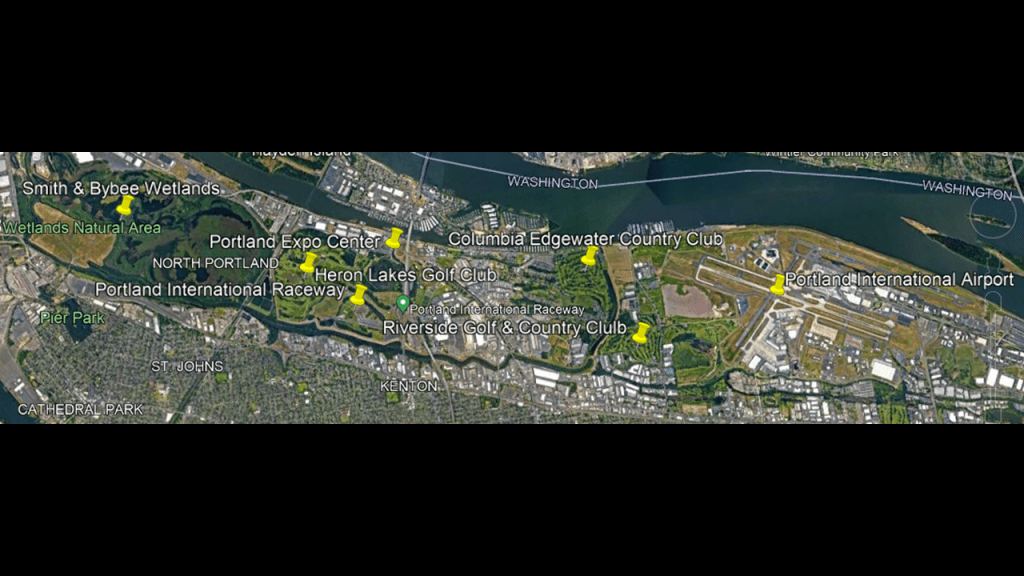
Directly on the other side of Oregon Route 120 from the Smith and Bybee Wetlands Natural area are the following in close proximity to each other:
Three golf courses – the Heron Lakes Golf Club; the Columbia-Edgewater Country Club; and the Riverside Golf and Country Club; the Portland International Raceway; the Portland Expo Center; and the Portland International Airport.
Let’s see how else the Portland location compares to the places I have selected to look at in Windsor as I go through them.
In Windsor, just above the Ojibway Prairie Complex, we find a whole slew of energy-related activity in the Brighton Beach neighborhood.
Brighton Beach is known for its generating station and industrial facilities.
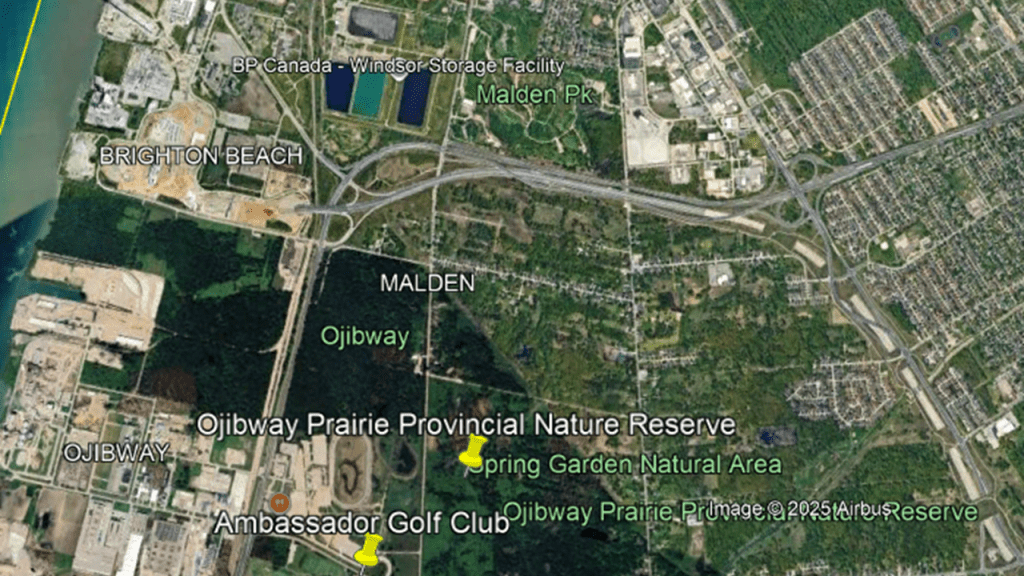
The Brighton Beach Generating Station, JC Keith Transformer Station and Southwestern Bridgeport are located right beside each other directly adjacent to the Detroit River; West Windsor Power is located across Highway 401 from those three locations, and the BP Canada-Windsor Storage Facility is across the Ojibway Parkway from West Windsor Power.
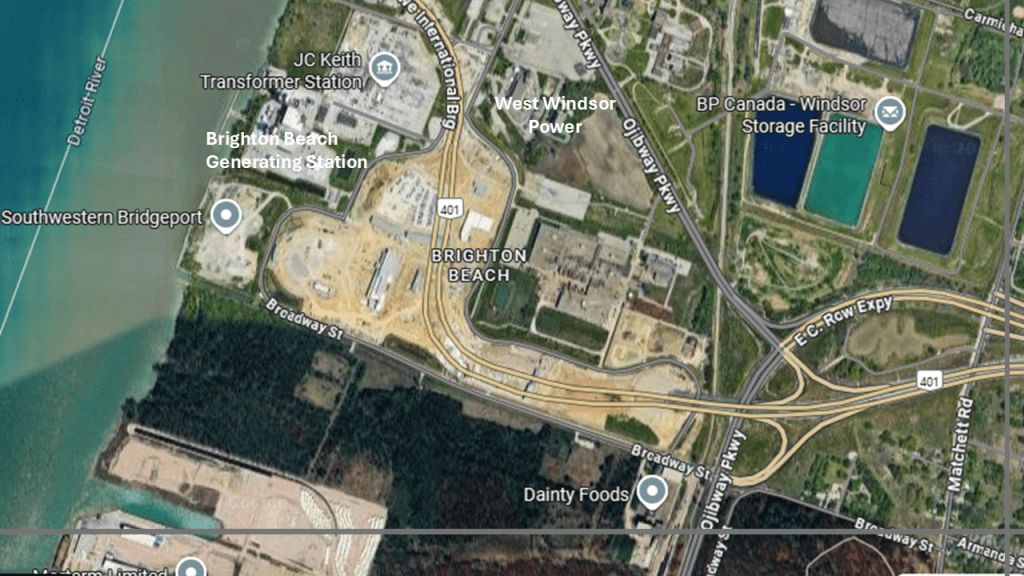
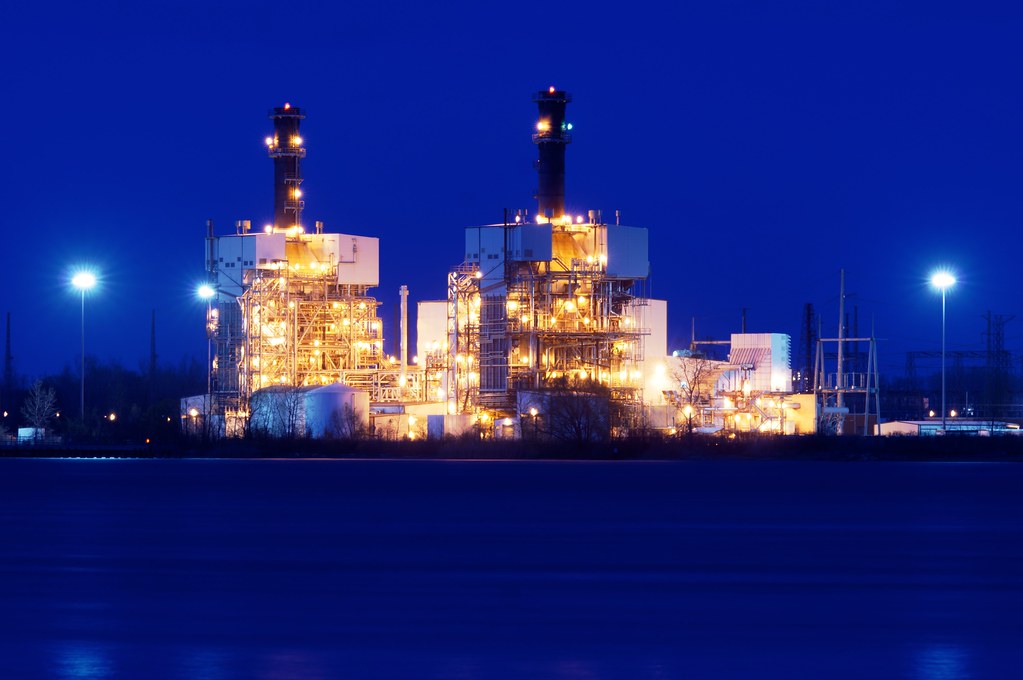
The Brighton Beach Generating Station is a natural gas and steam power station, and is connected to the Ontario grid.
It is owned by the Atura Power Subsidiary of Ontario Power Generation, a Crown Corporation responsible for half of the electricity generation in Ontario.
Coral Energy Canada, Inc, controls and markets the electricity, and is a subsidiary of Shell Gas and Power International, a Dutch company.
The natural gas is provided by Union Gas, now a subsidiary of Enbridge Gas.
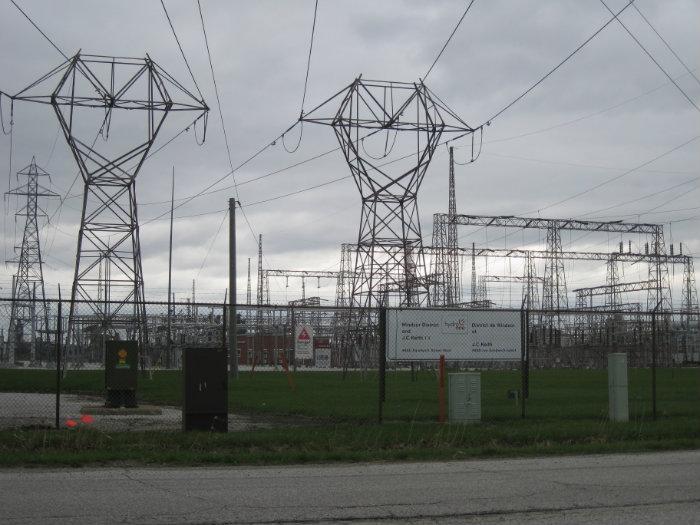
The JC Keith Transformer Station on one side of the generating station is an electrical substation connected to both the Ontario grid and the Michigan grid.
Southwestern Bridgeport on the other side of the generating station is a wholesaler and shipper of aggregate types, such as round stone and dolomite.
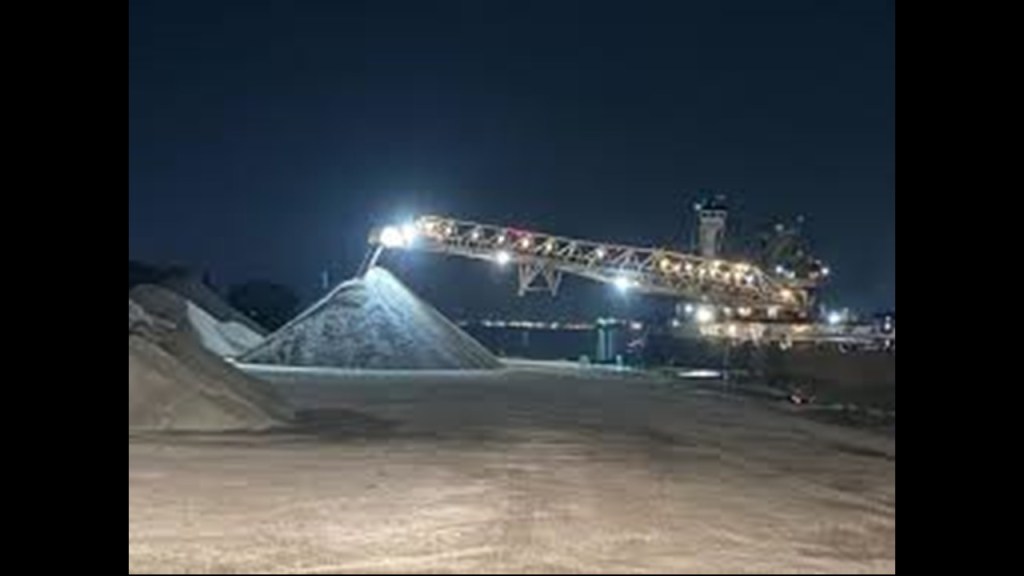
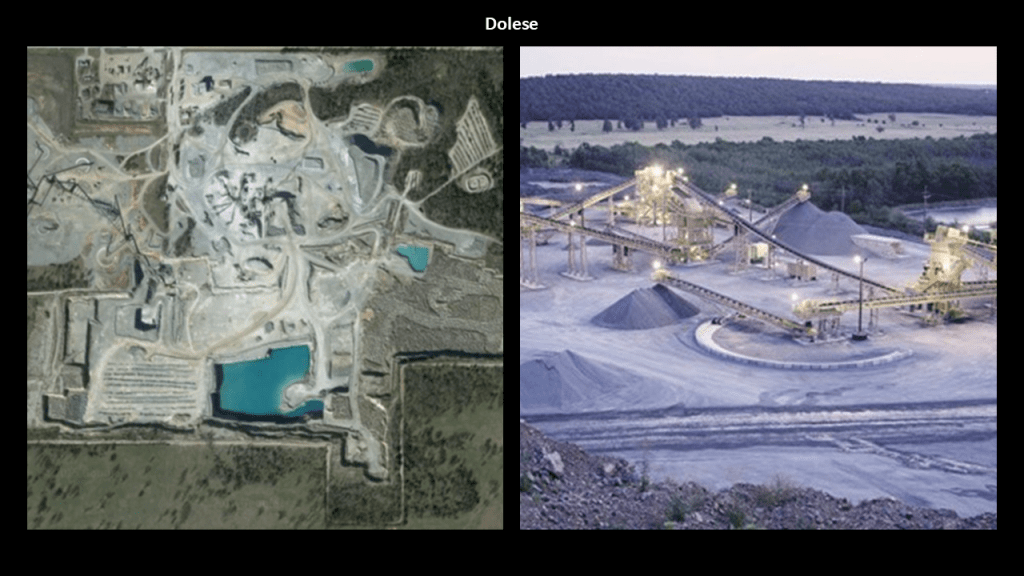
This is a good place to assert my belief that the aggregate and cement industry is built upon pulverizing ancient stone masonry.
It’s not supposed to be there in our historical narrative, so we don’t even conceive of it, so certain industries can do whatever they want because it doesn’t exist.
These photos are all connected with the Dolese Quarry, based in Oklahoma, which is a major company providing aggregates, concrete, and products used for building.
This was the first example that I became aware of when I started waking up to all of this when I was living in Oklahoma between 2012 and 2016.
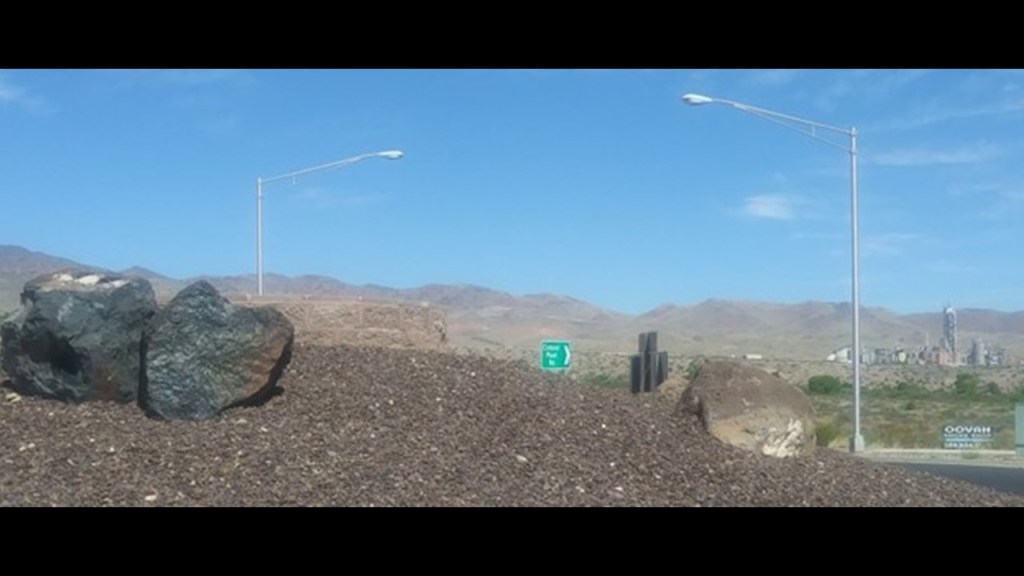
This next photo was taken of a roundabout in Arizona, with ancient masonry blocks in the foreground; the road sign saying Cement Plant Road in the middle of the picture; and in the distance you are seing the Cement Plant in Clarkdale, Arizona.
And there’s plenty of ancient masonry everywhere in this area, so they will never, ever run out of raw material.
There is an inexhaustible supply of unrecognized masonry all over the world.
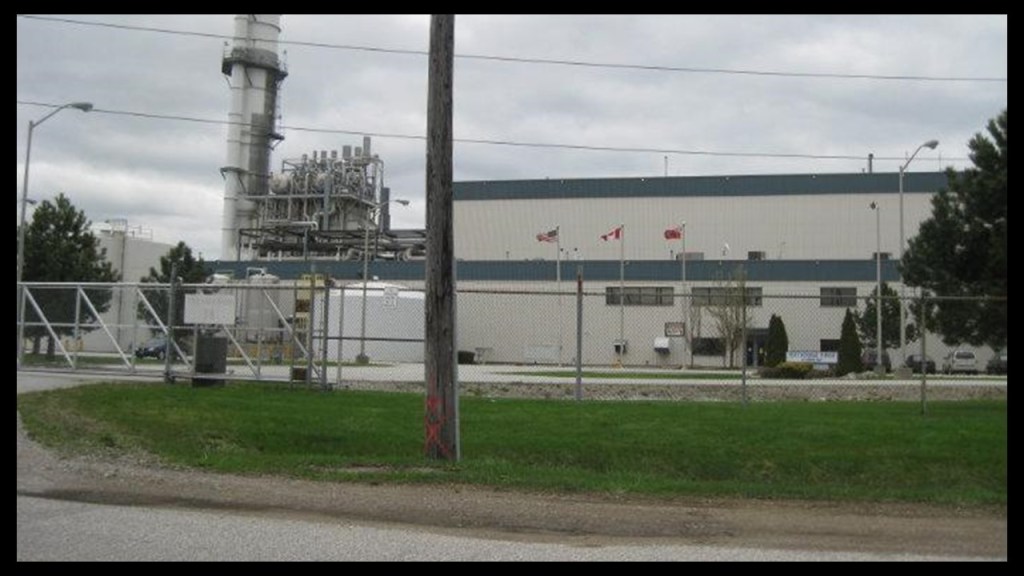
West Windsor Power across Highway 401 from those three locations in Brighton Beach is also a natural gas and steam power plant.
Lastly in this particular location, the BP Canada-Windsor Storage Facility across the Ojibway Parkway from the West Windsor Power Station.
It is described as an integrated Liquified Petroleum (LPG) storage facility for propane and butane with nine underground storage caverns in a salt bed 1200- to 1500-feet, or 366- to 457-meters, below the surface, with five brine ponds and there is a pipeline that goes underneath the Detroit River connecting it to Michigan.
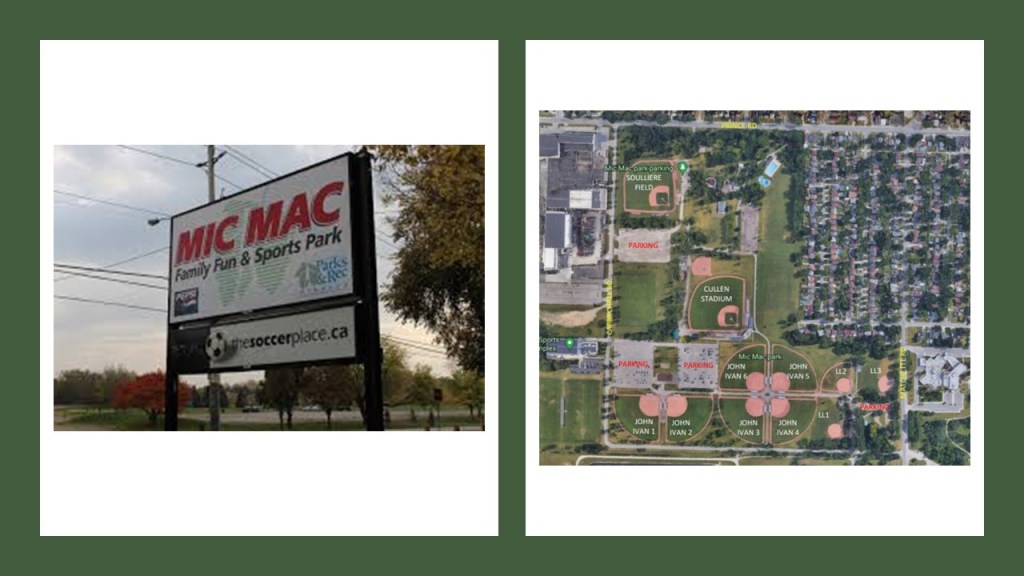
Interesting to note that this LPG Storage Facility is located right next to Mic Mac Park, with the Plains Midstream Canada facility in-between the two, which is a pipeline and midstream energy company, meaning it handles the processing, storage and transportation of crude oil and natural gas between extraction (upstream) and refining and retail (downstream) sectors.
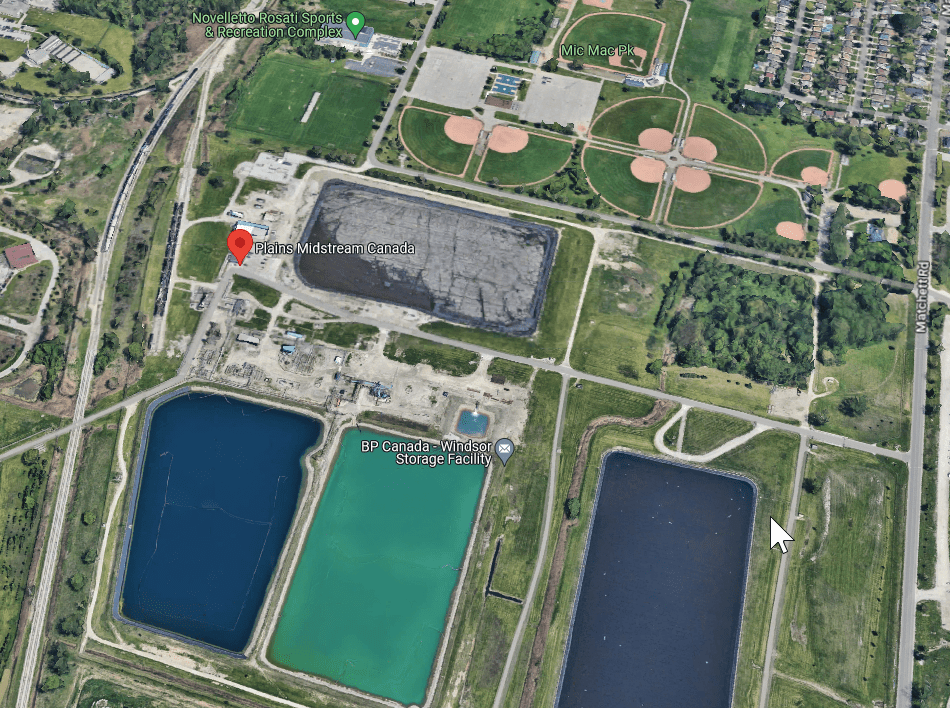
Mic Mac Park is one of the largest, if not the largest, park in Windsor, with playground facilities; soccer fields; four baseball diamonds; tennis courts and a swimming pool, and is a popular location for children during the summer months.
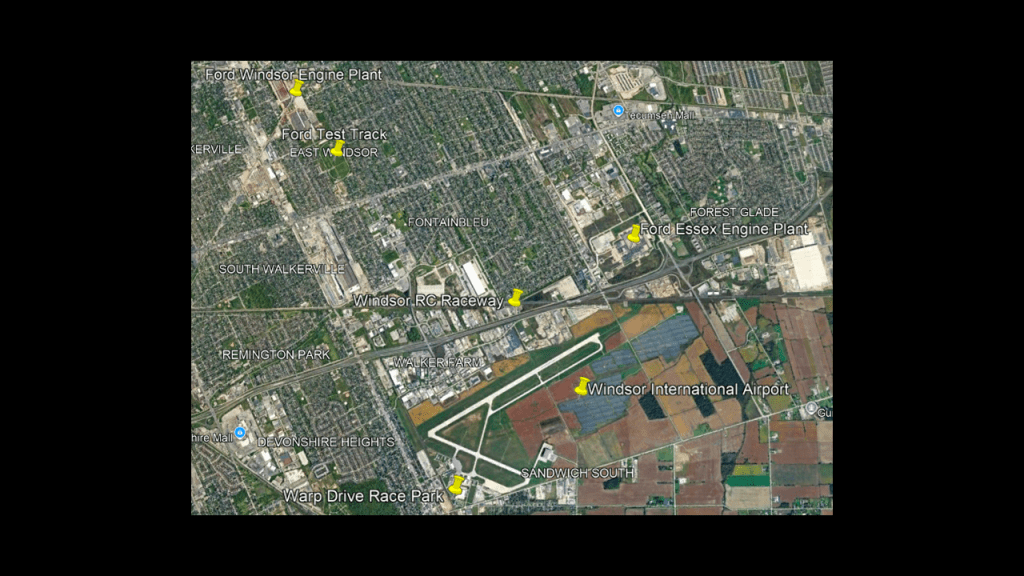
Heading in an easterly direction from the Brighton Beach location, we come to more golf courses like the Seven Lakes Golf Club and the Roseland Golf and Curling Club; more tracks, like the Warp Drive Race Park, the Windsor RC Raceway, and the Ford Test Track; the Ford Windsor Engine Plant; the Ford Essex Engine Plant; and the Windsor International Airport.
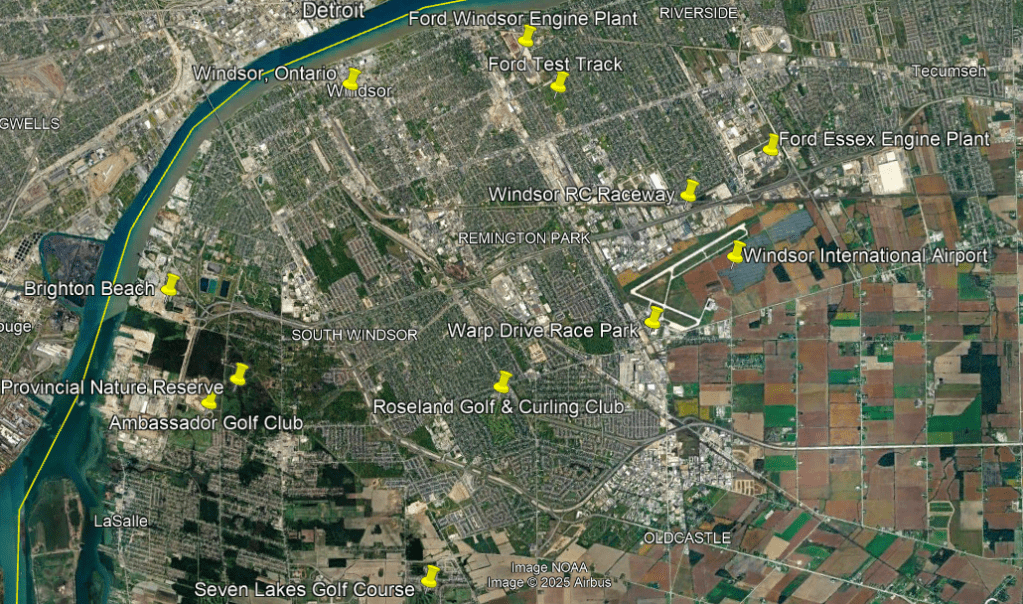
The first thing I would like to mention about this is that I have found countless examples in my past research of airports having racing tracks in angular relationships short distances away, just like what we see here in Windsor.
I first noticed this when I was doing research on the Shepherd’s Bush District of West London based on a commenter’s suggestion.
In the process of doing that, I realized I had seen the same angular relationship between London’s Heathrow Airport, and Shepherd’s Bush on the top left, where there had been a huge track at one time in White City, that had been used for Greyhound racing; and in my own research of the Tampa, Florida, neighborhood of Sulphur Springs, where I had noticed that the Tampa International Airport, and the Sulphur Springs neighborhood in Tampa, Florida, where there was a greyhound racing track, had the same angular relationship as the one mentioned in London.
After I made that initial connection, commenters left other examples of the same kind of relationship between airports and racing tracks, past and present, including, but not limited to, places like Montreal, Quebec, Canada, on the top right; Philadelphia, Pennsylvania on the middle left; Toronto, Ontario, Canada, in the middle; Los Angeles, California on the middle right; and Sydney, Australia, on the bottom.

As I mentioned previously, I have come to see elliptical tracks as circuitry on the Earth’s original electromagnetic energy grid as a result of my research over the years, and I think these different types of racing tracks were originally circuits on the grid.
The sport of racing uses the word “circuit” in the following ways:
The course over which races are run…
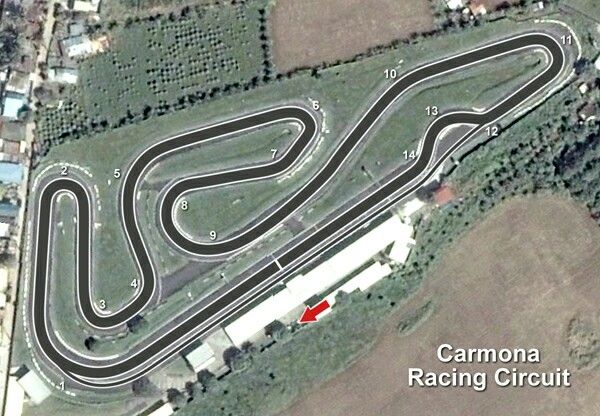
…the number of times the racers go around the track…
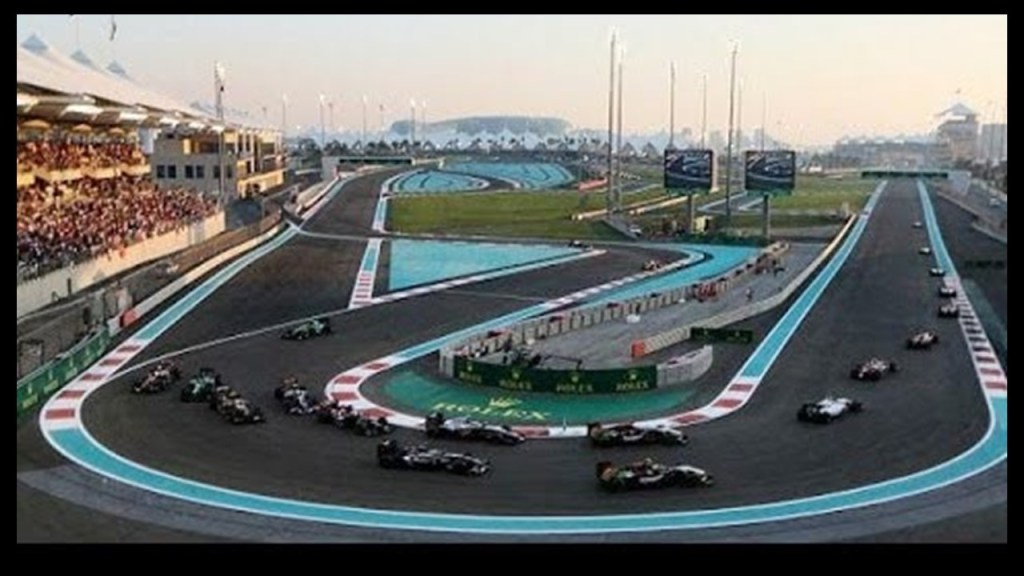
…an established itinerary of racing events involving public performance…

…and in bicyle racing, a circuit race is a mass-start road-cycle race that consists of several laps of a closed-circuit, where the length of the lap is slightly longer each time.
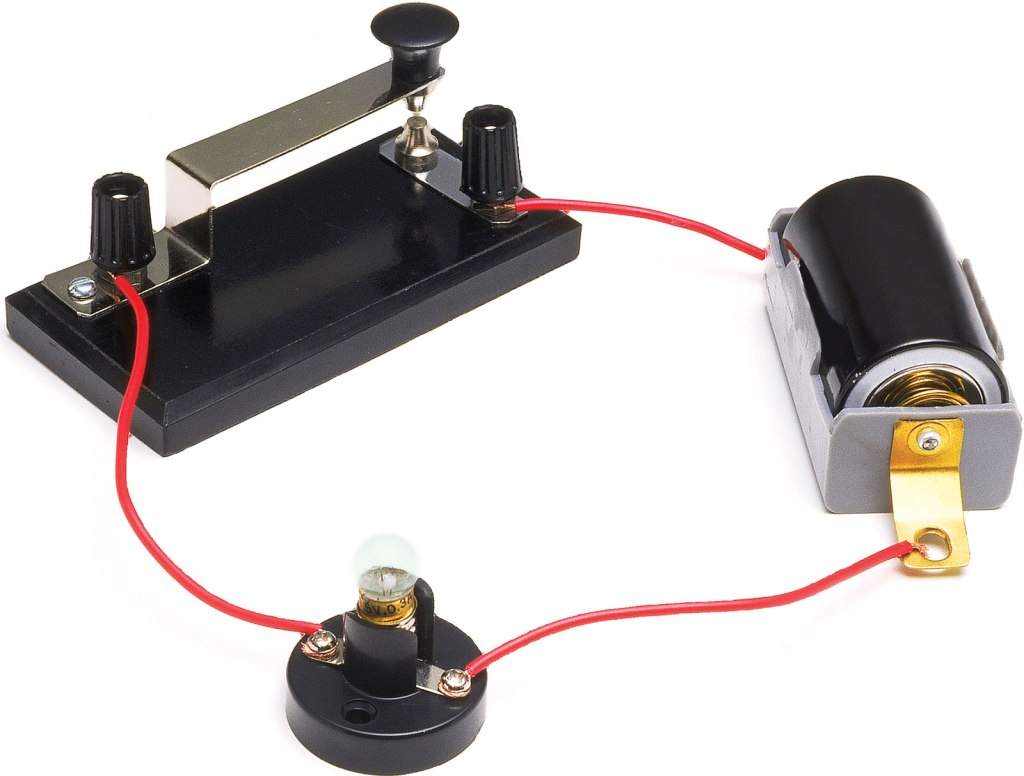
Electrical Circuit definitions include:
A closed path in which electrons from a voltage or current source flow, and includes devices that give energy to the charged particles the current is comprised of, such as batteries and generators…
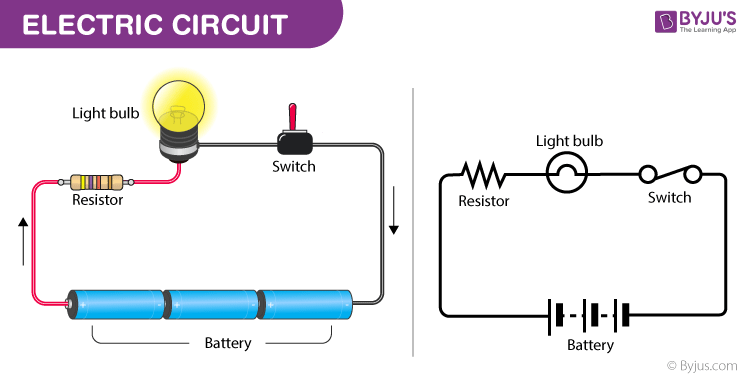
…devices that use current, like lamps, electric motors, and computers…

…and the connecting wires or transmission lines.
An electronic circuit is a complete course of conductors through which current can travel, and provide a path for current to flow.
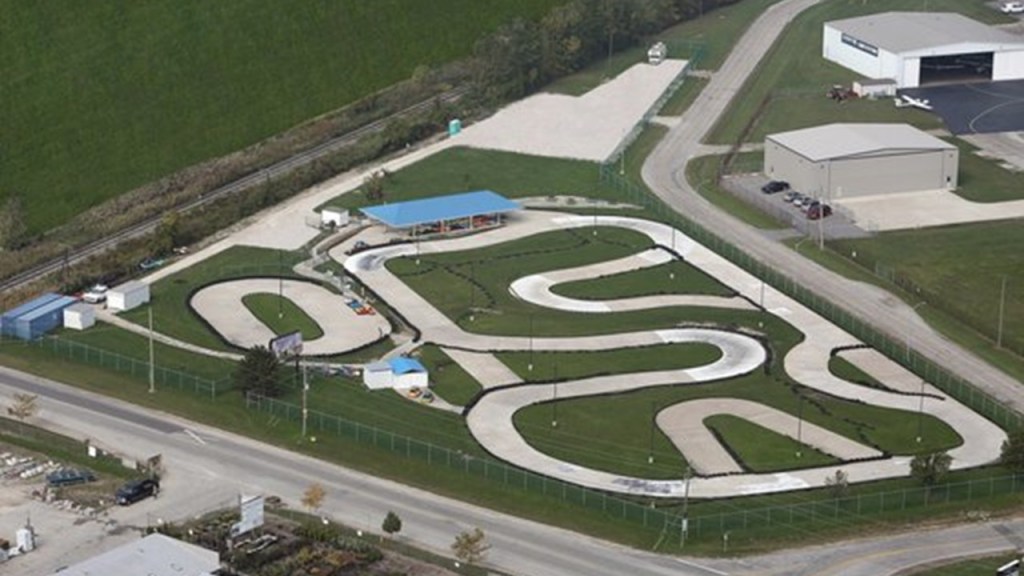
So, for example, there are two racing venues located in very close proximity to the Windsor International Airport – the Warp Drive Race Park and the Windsor RC Raceway.

The Warp Drive Race Park just a short-distance to the southwest of the Windsor International Airport is one of Canada’s largest outdoor concrete Go-Kart tracks.
The Windsor RC Raceway is a short-distance to the north of the Windsor International Airport.
It is an indoor facility for Remote Control racing.
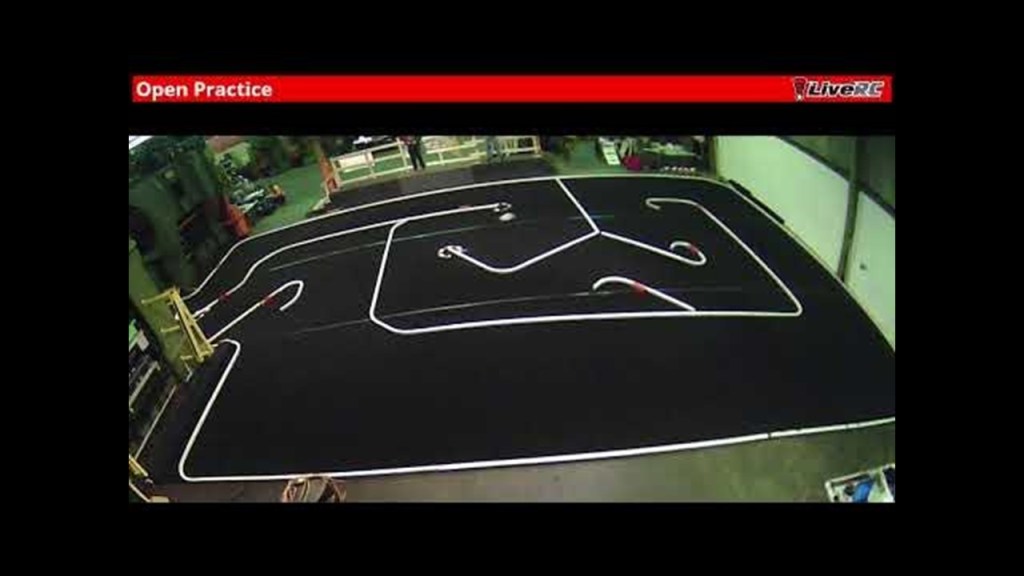
Further to the northwest of the airport we come to the Ford Test Track and the Ford Windsor Engine Plant and to the northeast of the airport is the Ford Essex Engine Plant.
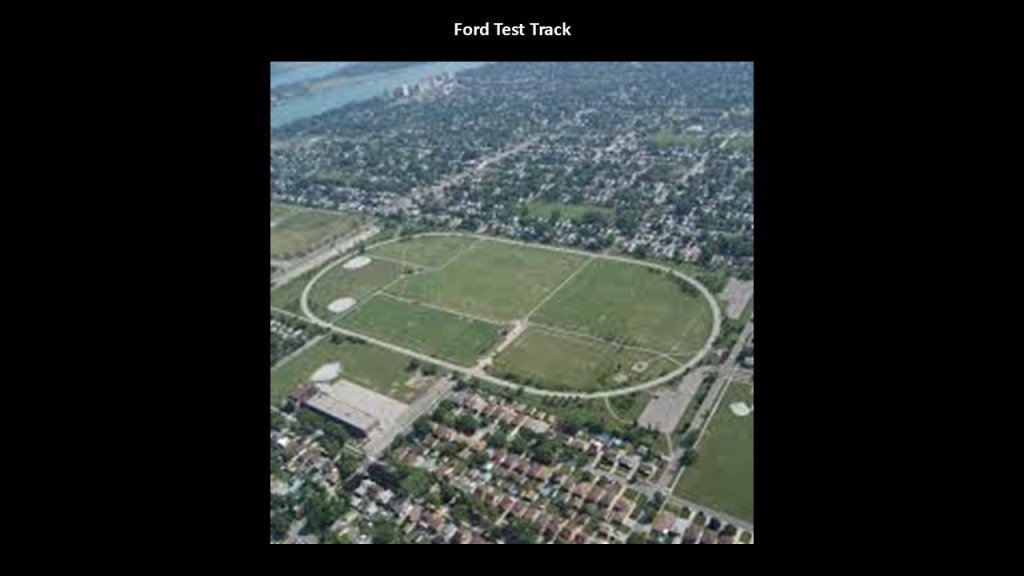
The Ford Test Track in Windsor today is a major venue for local sports activities.
It was originally the test track facility for the Ford Motor Company in Canada, until it was leased by the company as a park to the City of Windsor in 1979.
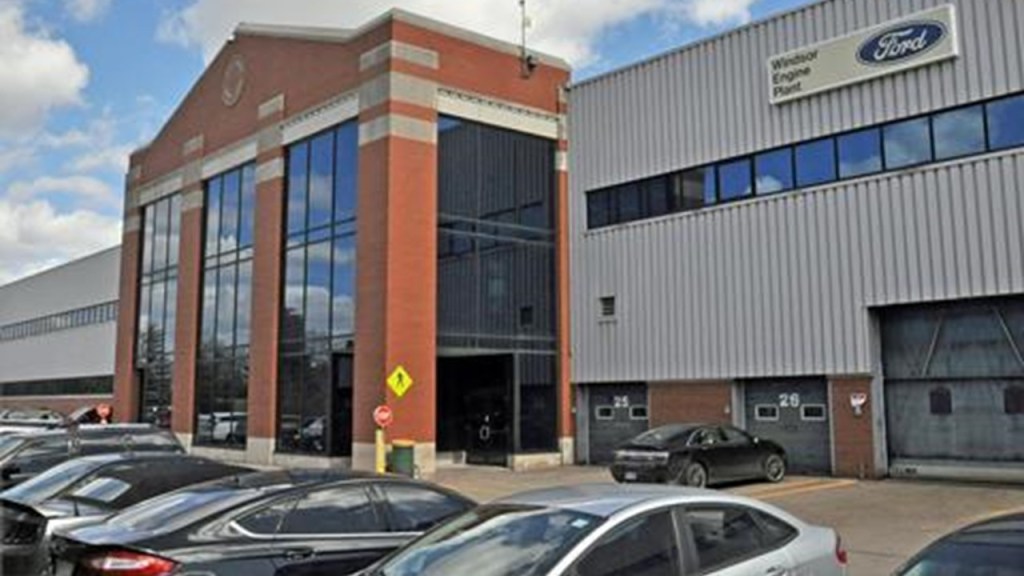
The Ford Windsor Engine Plant is the oldest facility owned by the Ford Motor Company of Canada, having first begun production in 1923.
This engine plant oversees the production of the Ford 6.8L Triton Engines used in the Ford E-Series utility vehicles.
The Ford Essex Engine Plant northeast of the Windsor International Airport is where Ford’s 5.0L V8 engines are produced, and first started operations in the early 1980s.
Henry Ford’s first automobile company was the Henry Ford Company, which he started in 1901, and left after less than a year after a dispute with investors with the rights to his name.
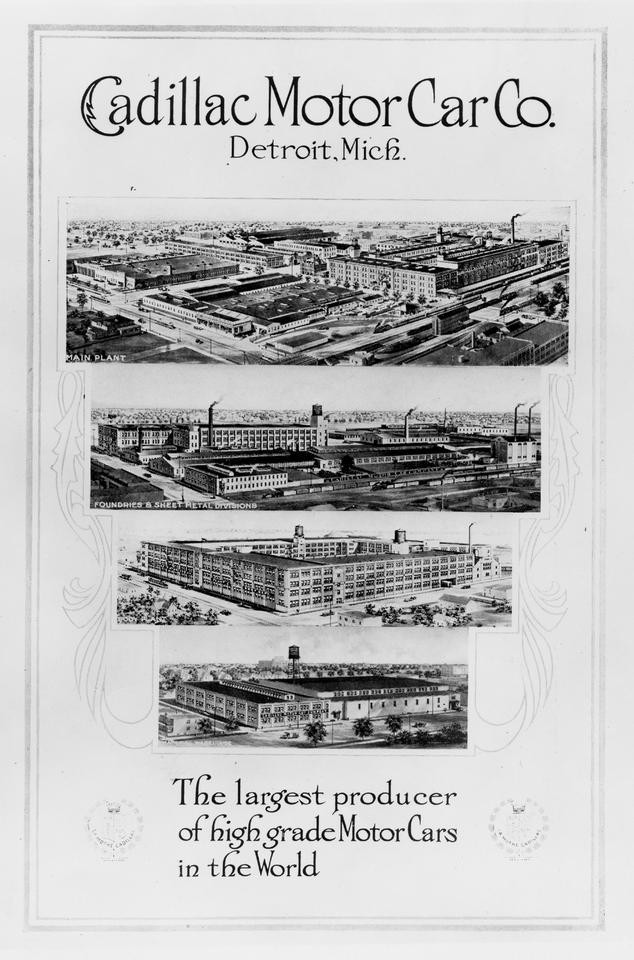
This first company subsequently became known as the Cadillac Motor Company under new ownership.
The Ford Motor Company was financed by twelve investors in 1903.

In the next ten years, the Ford Motor Company would lead the world in the expansion and refinement of the assembly line concept, which facilitated the mass production of new cars, which in turn made the purchase of a new car affordable for most people.
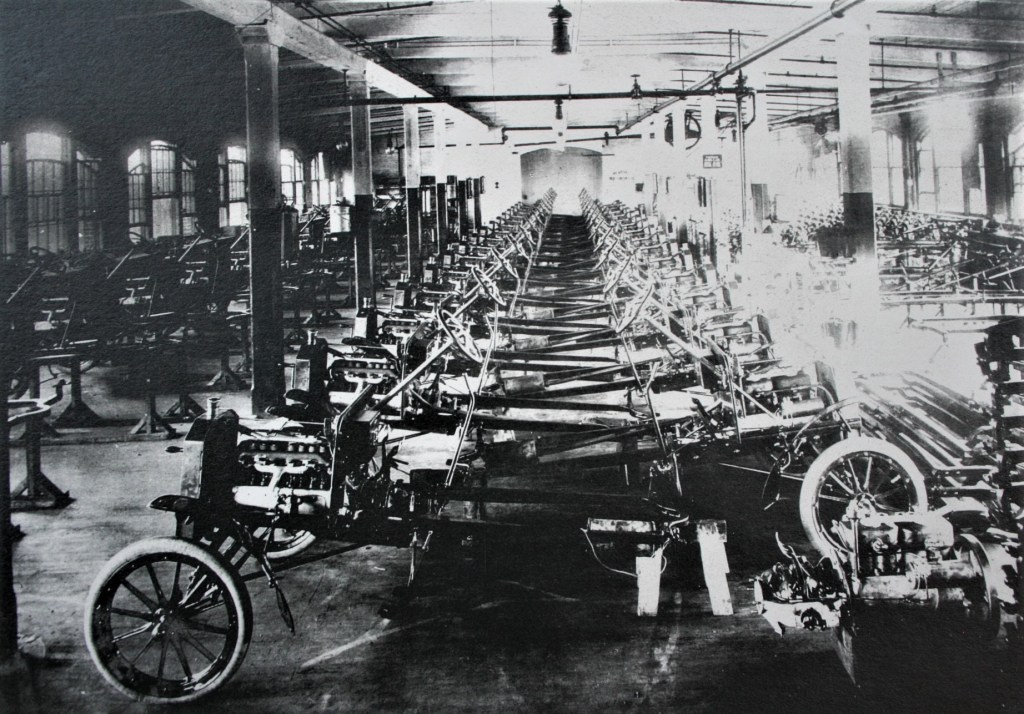
Henry Ford also brought part production in-house, thereby bringing vertical integration into his company, where the supply chain of a company is owned by the company.

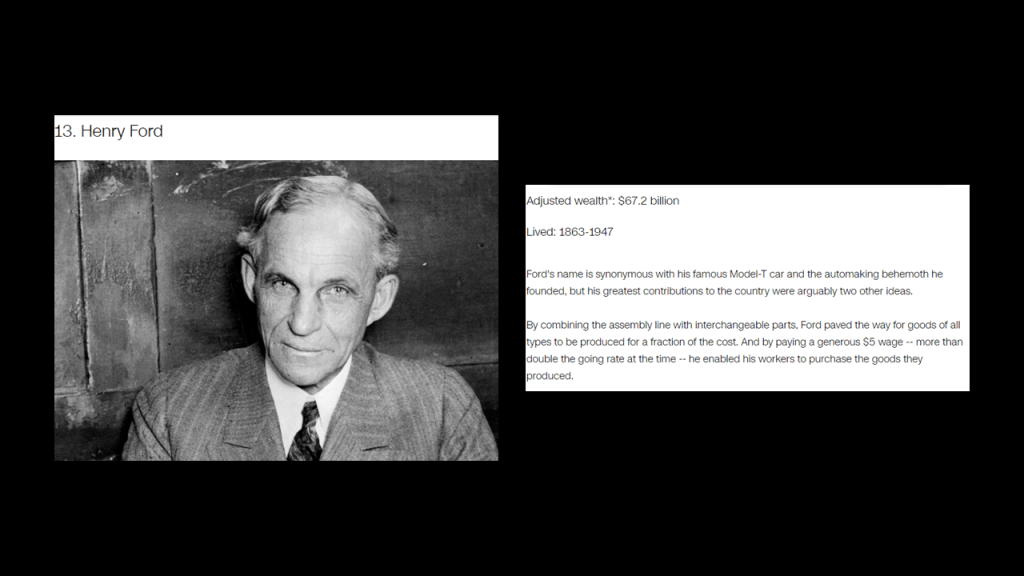
Henry Ford was also the 13th-wealthiest American of all-time according to CNN Business, with an adjusted wealth of $67.2-billion.
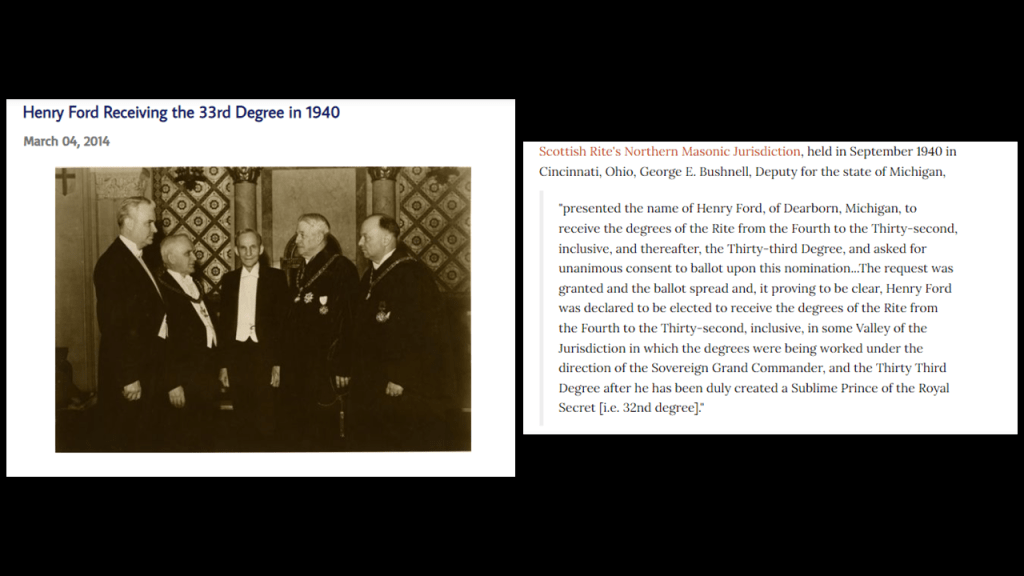
Henry Ford was also an acknowledged 33rd-degree Freemason.
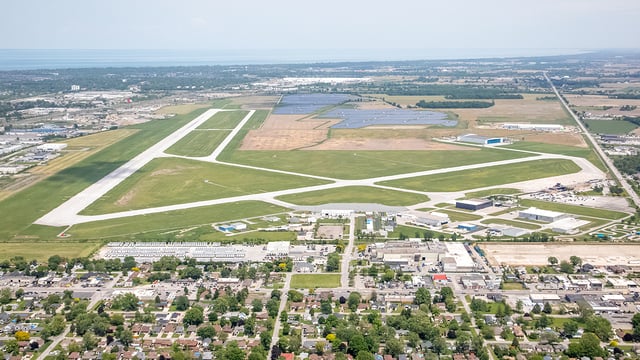
The last thing I want to mention before I leave this area is Windsor International Airport.
This airport first opened in 1928 as Walker Airport.
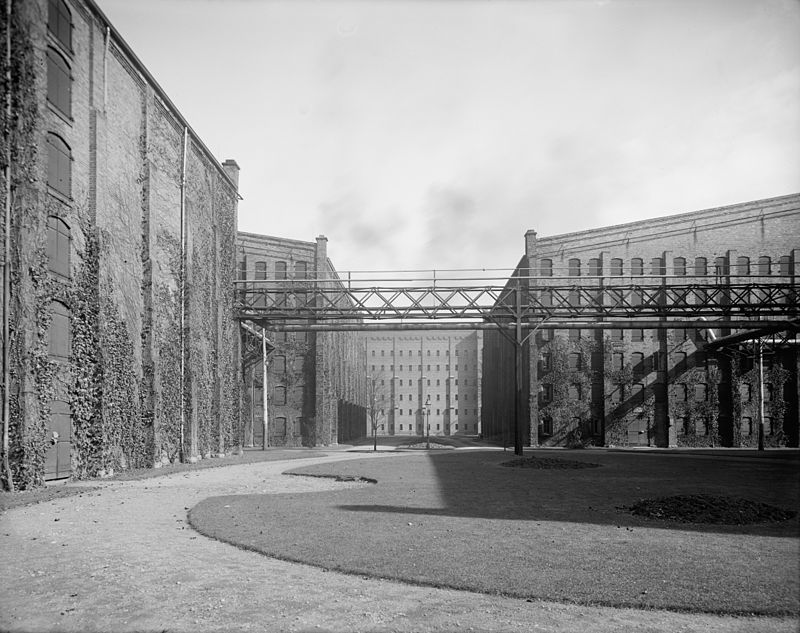
It was named after Hiram Walker, a 19th-century American entrepreneur that established a whiskey-distillery that produced the top export whiskey Canadian Club in Windsor in 1890, in what was called a model community specifically for the distillery that became known as “Walkerville.”
Now, I would like to take a moment to talk about the role of alcohol in the New World and findings about airports in my research along ley lines.
First, the subject of alcohol as an addiction, which is a subject I looked at in depth in March of 2023 in my blog post “Following the Money – the Ways we were Kept Asleep.”
So how were we put, and kept, asleep?
This is a big, multi-layered subject, and my research for this blog post was focused on who was behind intentional creation and promotion of addictions, distractions, and on the origins of companies and corporations.
An addiction is a compulsive, chronic, physiological or psychological need for a habit-forming substance, behavior, or activity having harmful effects.

Alcohol is classified as a Central Nervous System depressant, meaning that it slows down brain function and neural activity.
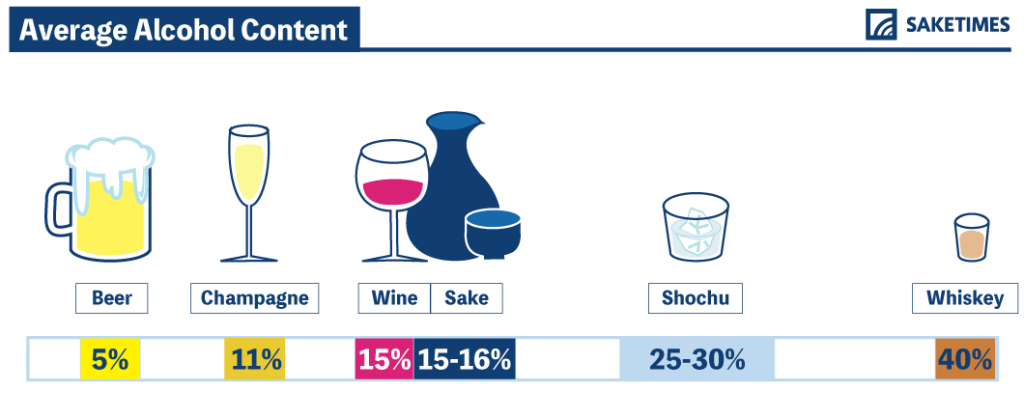
Alcohol proof is the measure of the percentage of content of ethanol in an alcoholic beverage.
Prominent individuals in our historical narrative behind the introduction of alcoholic beverages besides Hiram Walker in Windsor included people like John Molson, who established Molson’s Brewery in Montreal in 1786.
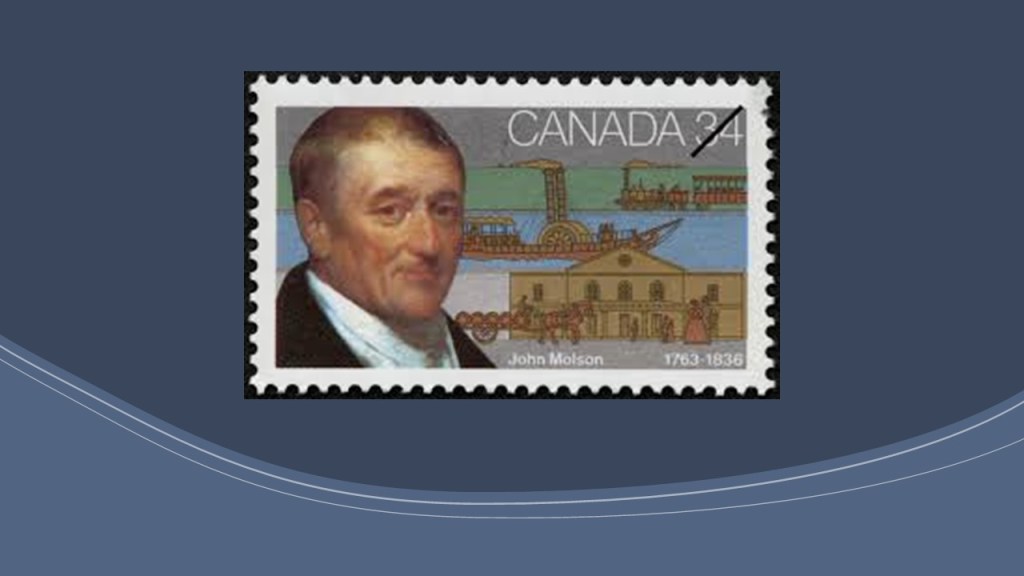
Between 1788 and 1800, his business quickly grew into one of the larger ones in Lower Canada, having sold 30,000 gallons, or 113,500-liters, of beer by 1791.
As his wealth grew, he started branching out into financing other interests, like the railroad and the steamship.
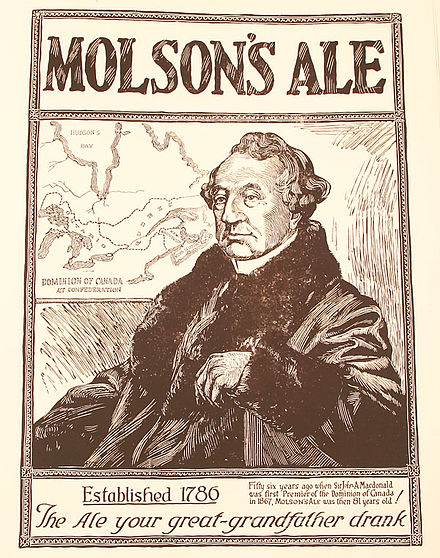
Molson was appointed the Provincial Grand Master of the District Freemasonic Lodge of Montreal by the Duke of Sussex in 1826, a position he held for five years before resigning in 1831.
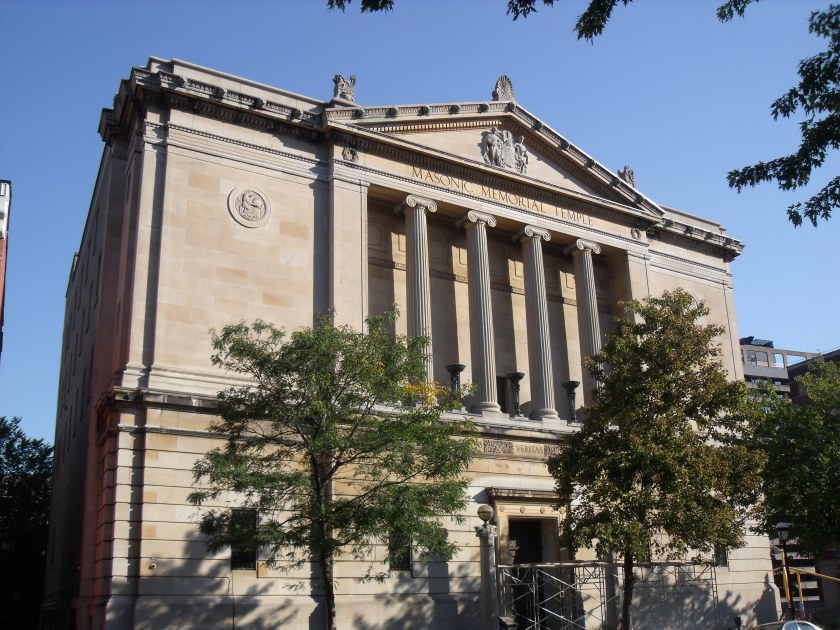
Another Canadian, distiller Joseph E. Seagram, was a confirmed Freemason.
Born in 1841 in what is now Cambridge, Ontario, his parents died when he was a child and he and his brothers were said to have been raised by clergy.

He received education at a business college and eventually learned about the distilling process at Waterloo Distillery, and ultimately bought out other owners to become the full owner, and renamed it Seagram’s.
His 1907 Creation of “VO Whiskey” became the largest-selling Canadian whiskey in the world.
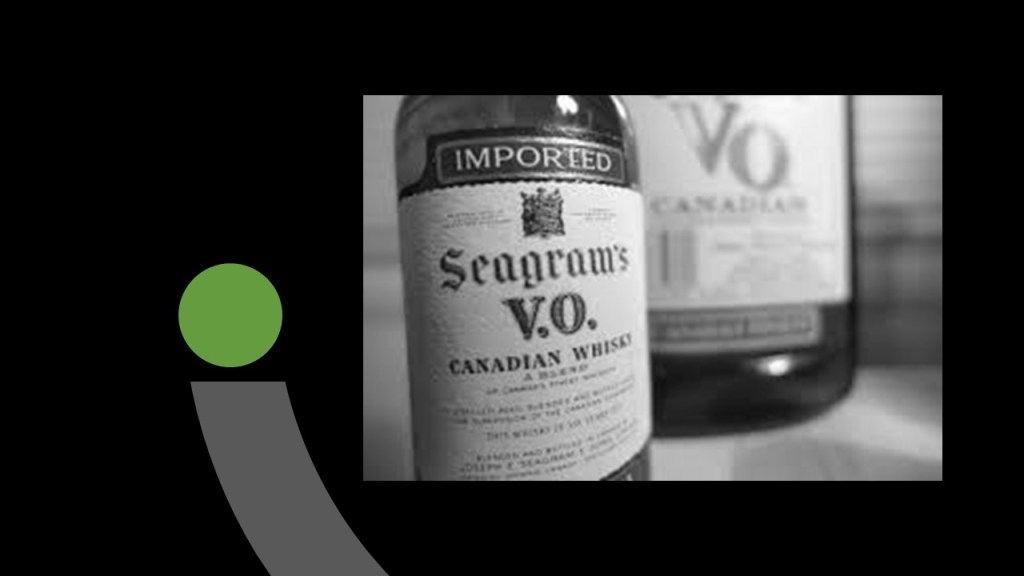
Seagram was at one time Senior Warden of the Grand River Lodge, Number 151, in what is now Kitchener, Ontario, which was previously known as Berlin.
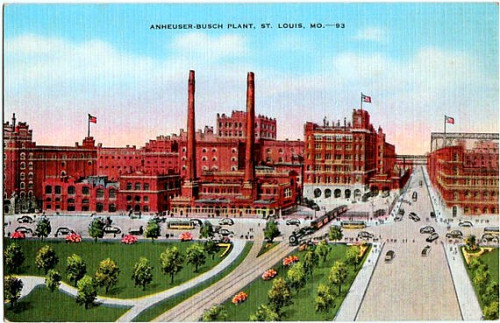
The Anheuser-Busch Brewing Company is headquartered in St. Louis, Missouri. This is a post card of it from the 1930s.
Today the company employs over 30,000 people, and operates twelve breweries in the United States.
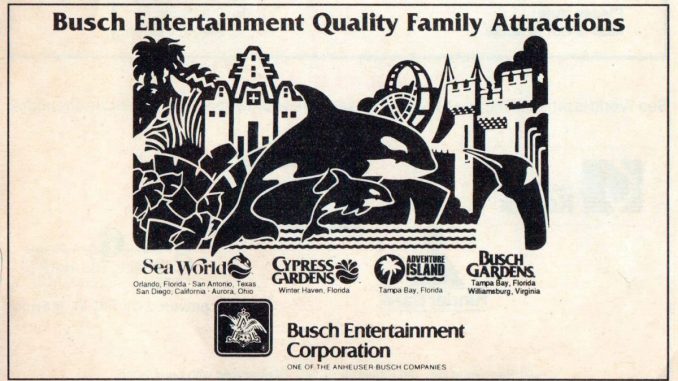
The Busch Entertainment Corporation, which was founded in 1959, became SeaWorld Parks & Entertainment in 2009 with its sale to the Blackstone Group, an American multinational private equity, asset management, and financial services firm based in New York City.
It was founded as the Bavarian Brewery in 1852 by George Schneider, but financial problems forced him to sell the brewery to various owners during the late 1850s, one of which was Eberhard Anheuser, a prosperous German-American soap and candle-maker. The name became E. Anheuser & Company in 1860.
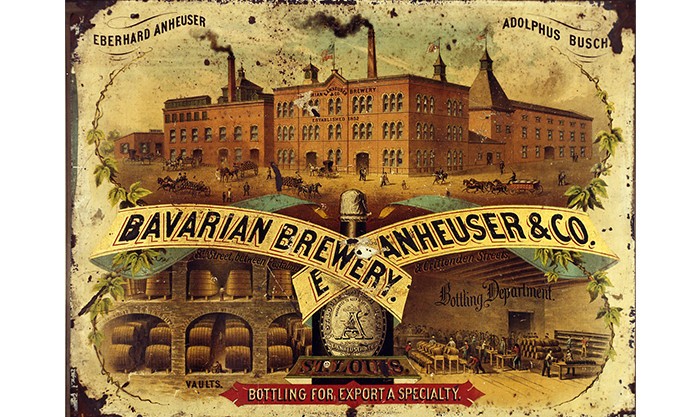
A wholesaler who had immigrated from Germany to St. Louis in 1857, Adolphus Busch, became Eberhard Anheuser’s son-in-law in 1861.
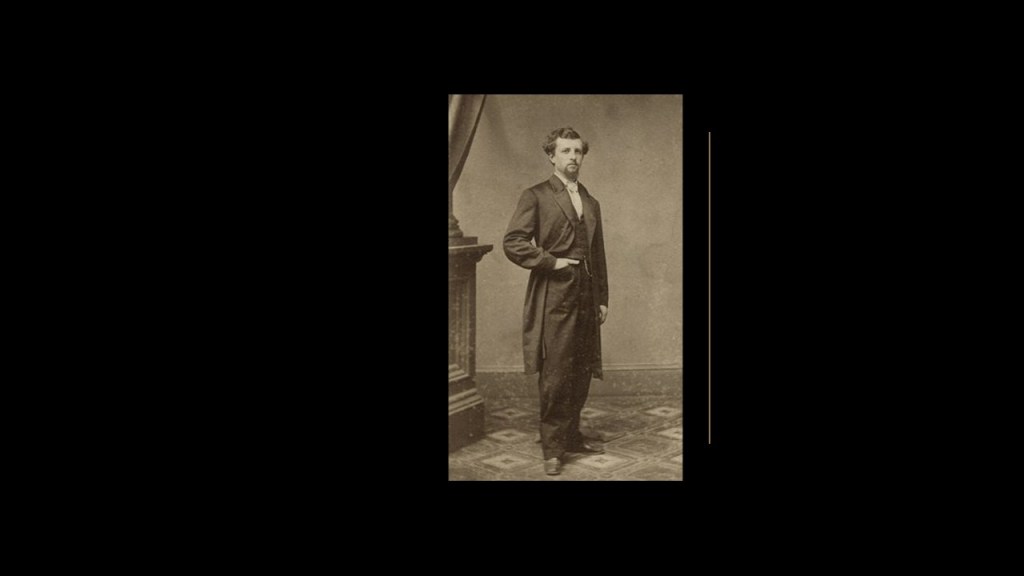
Soon Adolphus became a partner, and served as company secretary until his father-in-law died in 1880, at which time he became president of the business.
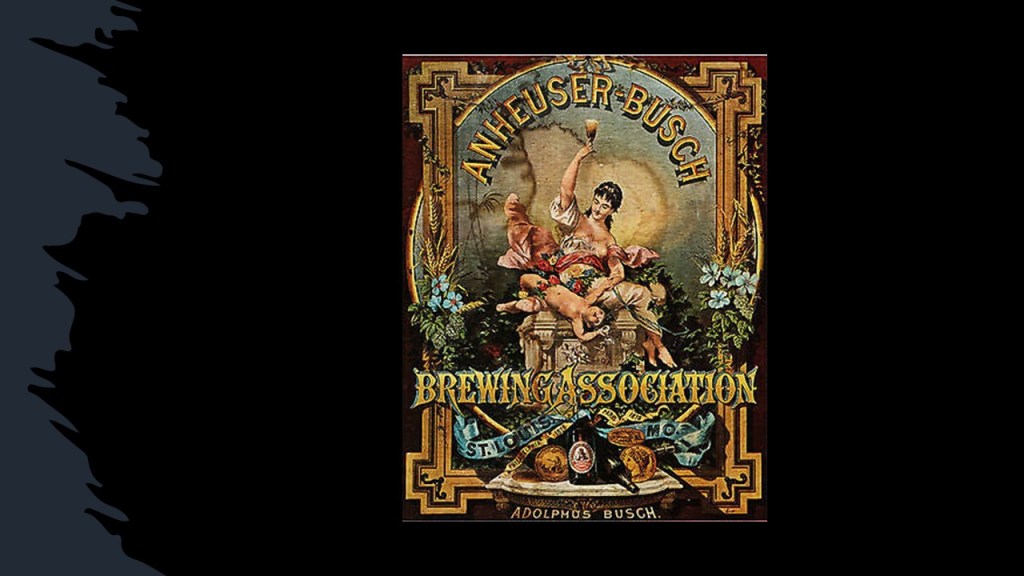
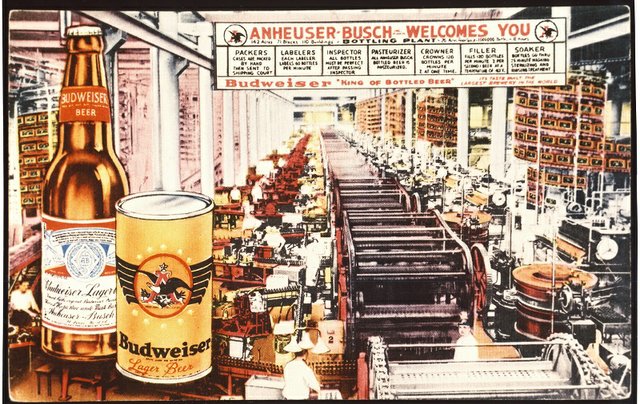
In addition, Busch was a pioneer in refrigeration and pasteurization, and like Henry Ford, also adopted vertical integration as a business practice, in which he bought all the components of his business, from bottling factories to ice-manufacturing plants to buying the rights from Rudolf Diesel to manufacture all diesel engines in America.
This illustration was of the Bevo Bottling Facility in St. Louis.
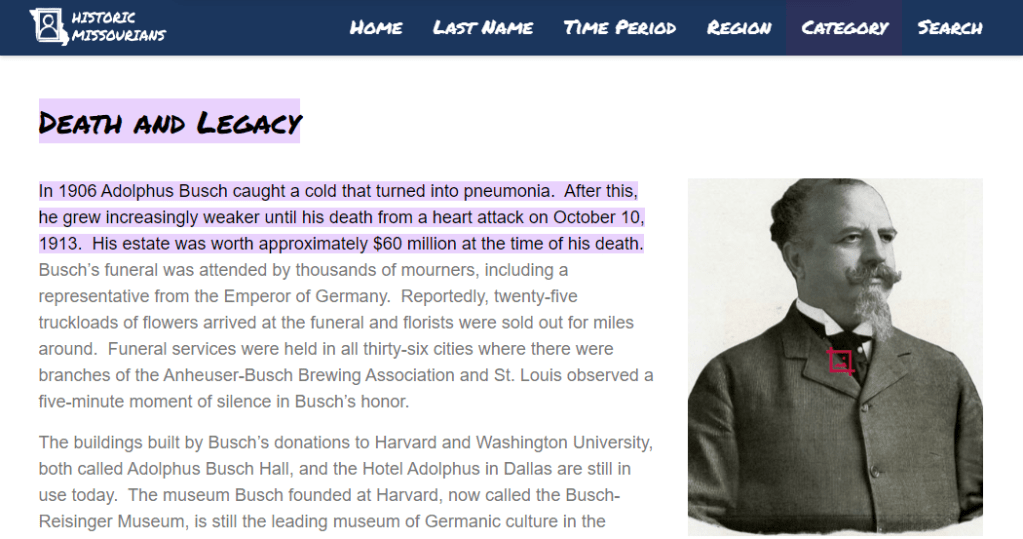
Adolphus Busch died in 1913, with a net worth of $60 million at the time of his death.
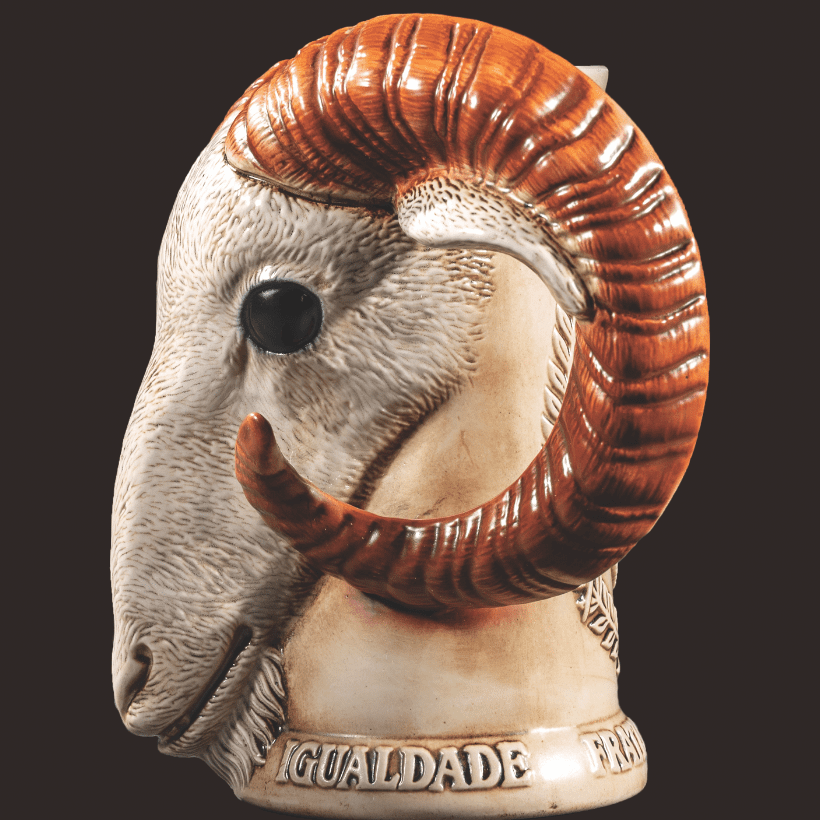
I couldn’t find any information showing that Adolphus Busch was a Freemason like I did John Molson and Joseph Seagram, but I did find this goat mug that was made in 1994 by Anheuser-Busch for the Freemasons of Rio Negrinho in Brazil, featuring a life-like goat-head, and the Portuguese words for “Liberty, Equality, and Fraternity” in the base.
With regards to the subject of Windsor International Airport, the other thing I would like to mention are my findings about airports in my research along ley lines.
I recently did a three-part series on “Pyramid Alignments on the Earth’s Grid and What They Reveal – Teotihuacan to Giza,” and it was very revealing.
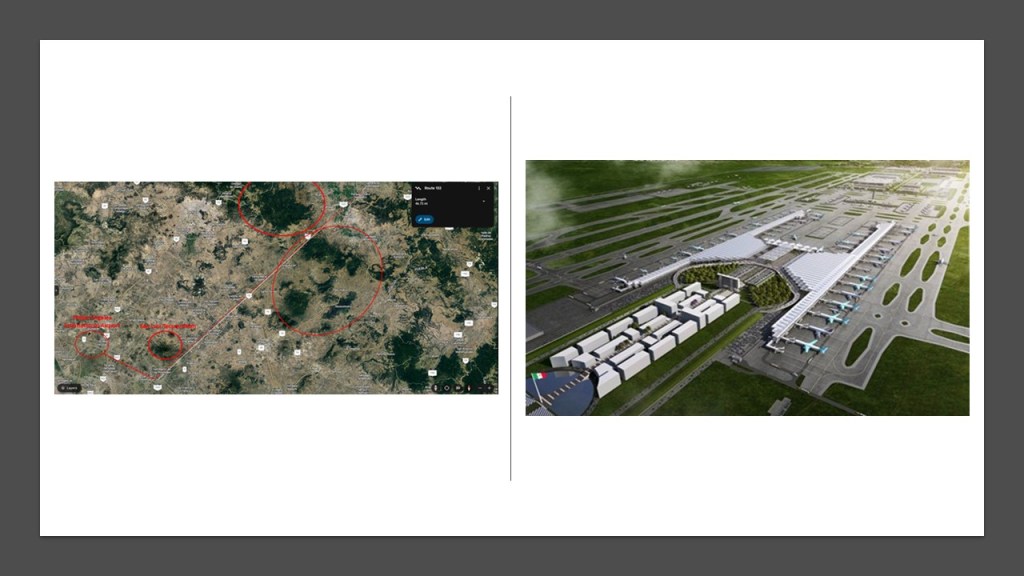
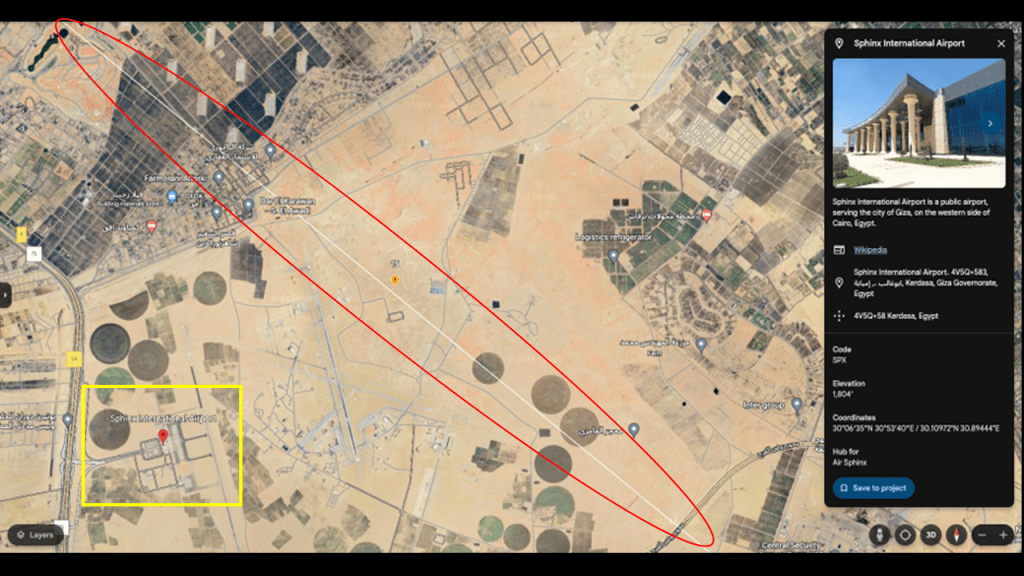
One of the many things it revealed was the presence of airports, airfields and military bases all the way along this long-distance pyramid alignment.

From the Felipe Angeles International Airport near Teotihuacan in Mexico.
The Felipe Angeles International Airport is 10.5 miles or 17 kilometers northwest of Teotihucan.
It was originally the Santa Lucia Air Force Base and established in 1952.
It became an international airport in 2022, and is set to become Mexico’s largest air cargo hub.
To the Sphinx International Airport that serves Giza and was first open to commercial flights in October of 2018.
It shares some infrastructure with the adjacent military airport, the Cairo West Air Base.
In this screenshot on this alignment, we come to the location of the Great Pyramid, which has the Marriott Mena House Hotel and it’s golf course right next to it.
I consistently find golf courses on these alignments, and in the second part of this series, there were eighteen golf courses that showed up on the alignment in the United States.
As I mentioned earlier, “links” is another name used to refer to golf courses, and I think that’s a clue to what they originally were on the energy grid system – “links” of some sort between the circuitry of the grid system.
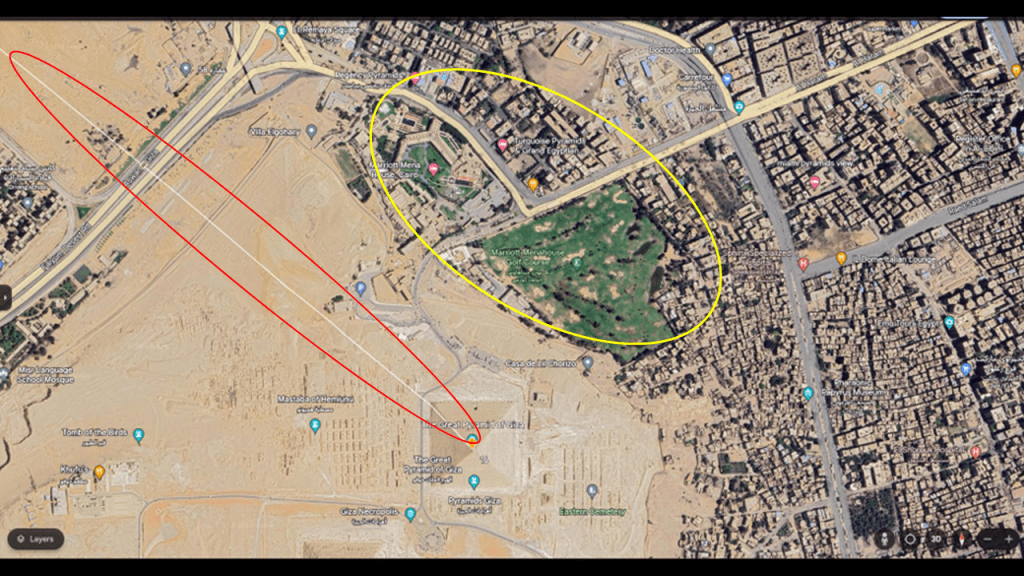
The Mena House Hotel is located approximately a half-mile, or 700-meters from the Great Pyramid.
We are told the Mena House Hotel was established in 1886.
It has been frequented by the powerful, rich and famous throughout its modern history.
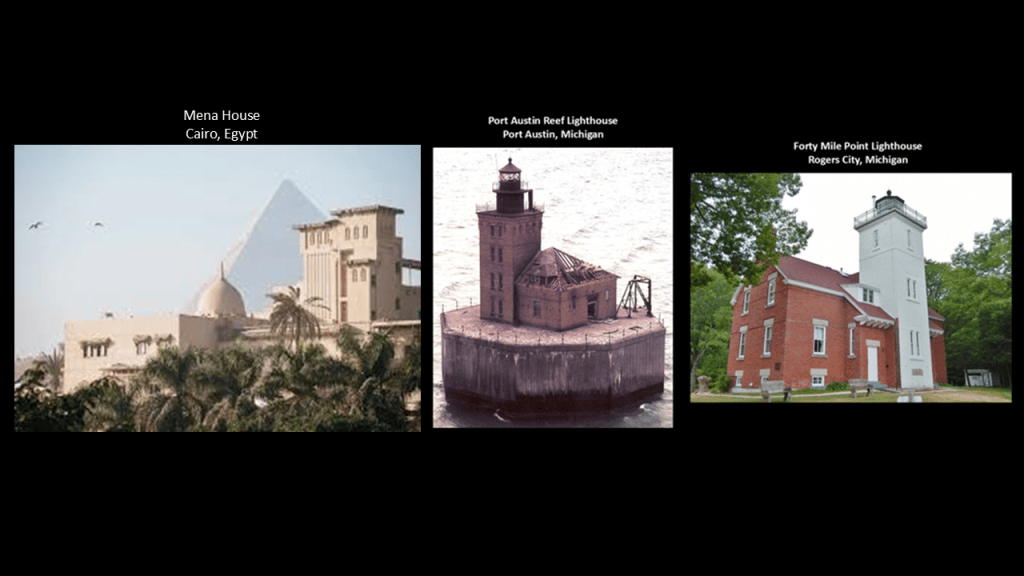
The Mena House Hotel on the left has the same kind of architectural-style that we saw in several lighthouse examples on the Michigan-side of Lake Huron, like the Port Austin Reef Lighthouse, which was said to have been constructed in 1878, and the Forty Mile Point Lighthouse near Rogers City, said to have been constructed sometime around 1896.
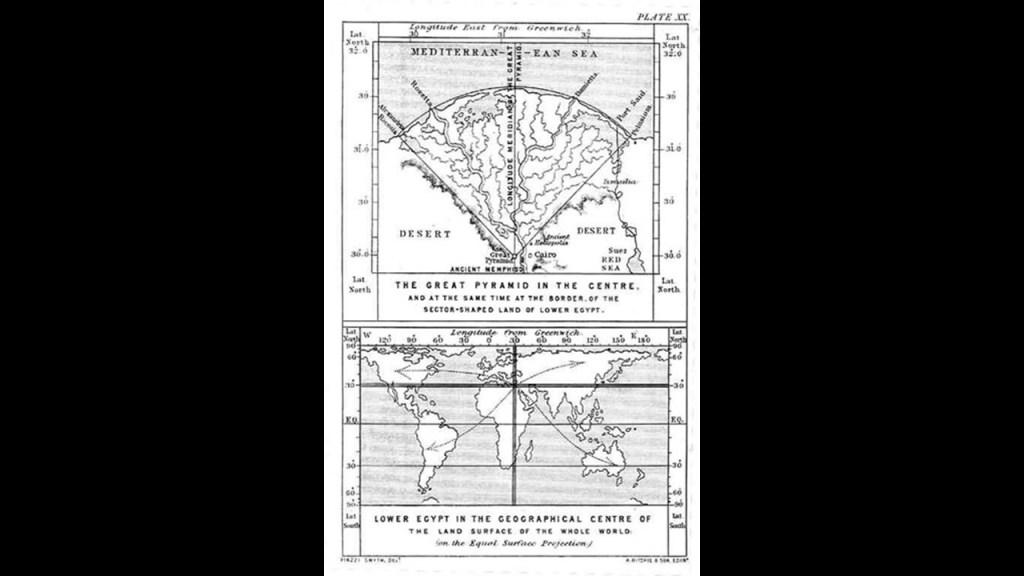
Up until 1851, the Great Pyramid was the Prime Meridian, located at the center of the Earth’s landmass.
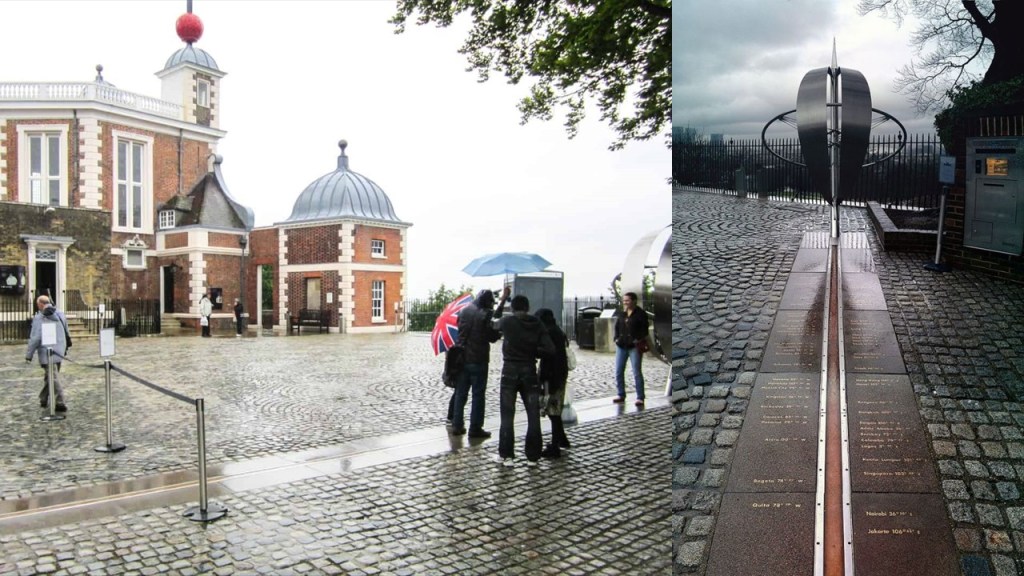
In 1851, the same year as the Crystal Palace Exhibition in London, Sir George Biddell Airy, the seventh Astronomer Royal from 1835 to 1881, established the new prime meridian of the Earth, a geographical reference line, at the Royal Observatory of Greenwich in London, and by 1884, over two-thirds of all ships and tonnage used it as the reference meridian on their charts and maps.
I believe this was originally a pyramid-based energy system that existed from ancient times to relatively modern, and provided the cosmic energy for the Earth’s energy grid for the benefit of all life.
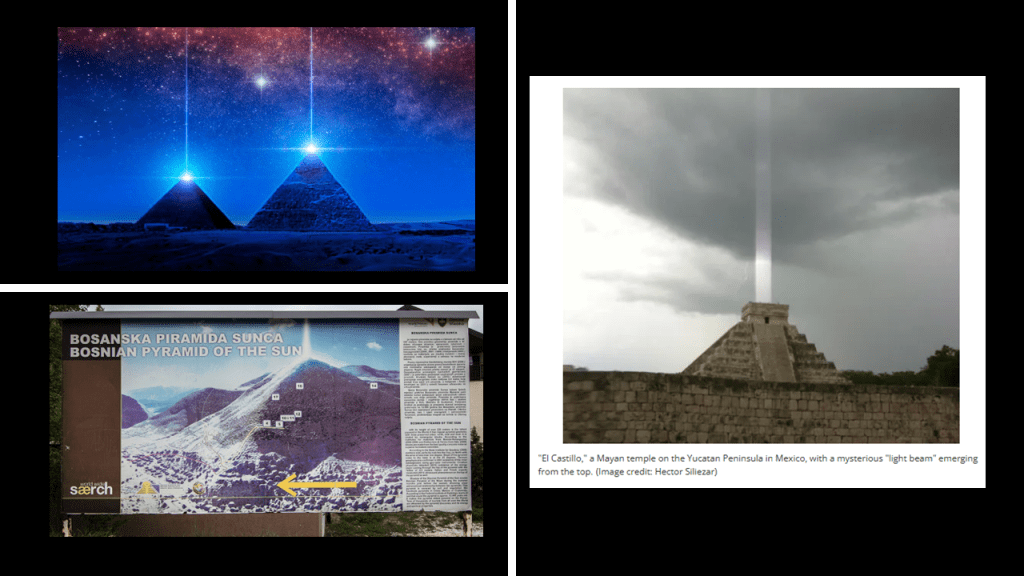
My working hypothesis is that the circuit board of the Earth’s original energy grid system was deliberately blown out by one or more forms of directed frequency or energy of some kind into different places on the Earth’s energy grid, causing the surface of the Earth to undulate and buckle, and destroyed the surface of the Earth.

I believe the beings behind the cataclysm were shovel-ready to dig enough of the original infrastructure out of the ruined Earth so they could be used and civilization restarted, which I think started in earnest in the mid-to-late 1700s and early 1800s.
Then they only used the pre-existing infrastructure until they found replacement fuel sources that could be monetized and controlled by them for what had originally been a free-energy power grid and transportation system worldwide, and when what remained of the original infrastructure was no longer useful to them, or inconvenient to their agenda, they had it destroyed, discontinued, or abandoned, typically in a very short time after it was said to have been constructed.
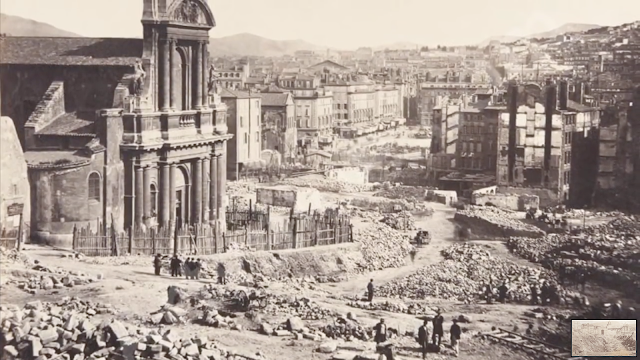
Not only that, but then these malevolent Controllers reverse-engineered the original energy grid system for the benefit of all life everywhere into what is commonly called the Matrix for power and control, as well as the harvesting of energy and resources, for the benefit of the very few.

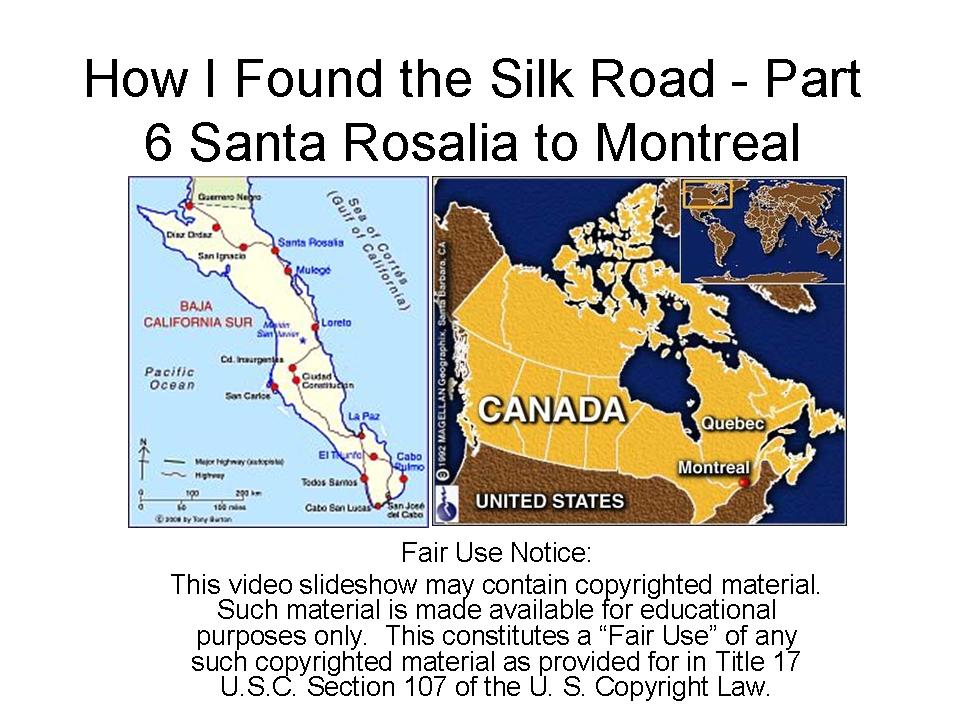
I first encountered the Detroit – Windsor area when I was tracking a long-distance alignment around the world which began and ended in Montreal, Quebec, Canada, back in September of 2018 in “How I Found the Silk Road – Part 6 Santa Rosalia to Montreal.
It was one of the long-distance alignments I tracked after I started researching and blogging in June of 2018.
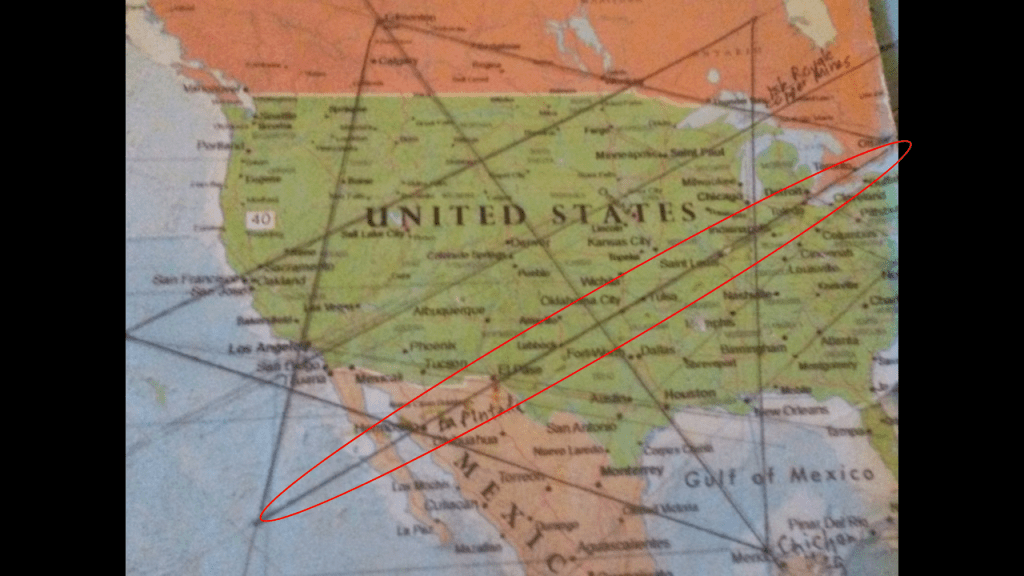
My original research is based on what I call the “North American Star Tetrahedron,”which I found after I connected the dots of cities in North America that lined-up in lines and uncovered the shape of a star tetrahedron, and then extended all of the lines coming off of it around the world.
I had learned about Sacred Geometry in 2007, so I knew about the sacred geometric shape called the star tetrahedron, which I found in North America by connecting cities in 2016.
At the time I found it, I believed this was the terminus, or key, of the Earth’s original energy grid system, and it has yielded a ton of information.
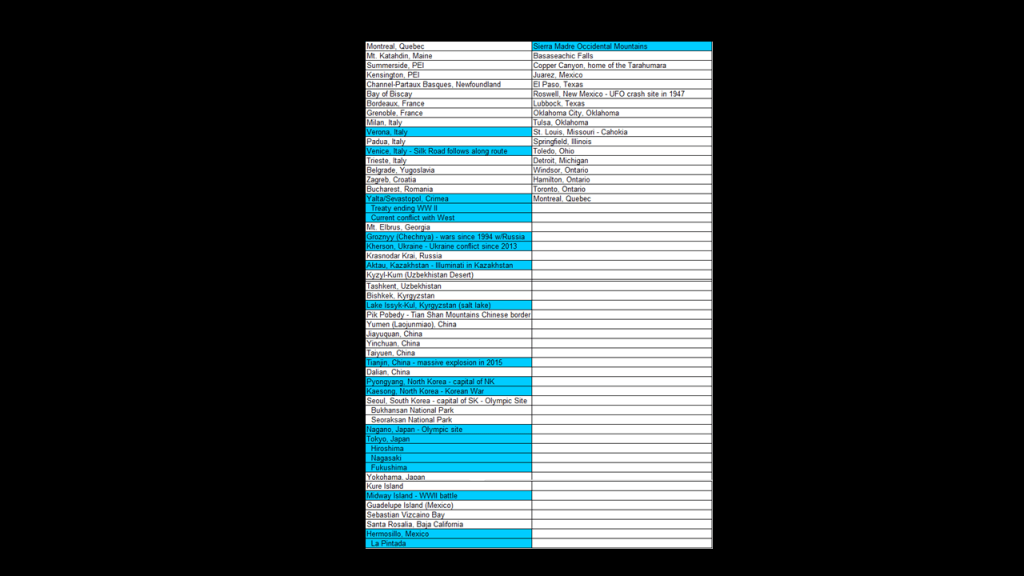
I wrote down the cities that were connecting in circular or linear fashion over long-distances in spreadsheets.
I started researching these alignments from place-to-place-to-place when I started blogging in June of 2018.
From the process of tracking cities and places in several different alignments I have collected a variety of puzzle pieces about different places that bring a bigger picture into focus that is not immediately apparent on the surface, and I have been engaging in this process over the course of over seven years of doing extensive research.
The more research I do, the more connections I find that show this ancient civilization was advanced, interconnected and worldwide, and when I go back and look at research I have done in the past, I can see these connections even more clearly than before.
As a result, I have been able to extrapolate common elements and piece together the bigger picture from this type of geographically-focused research and have been able to extrapolate common elements and piece together the bigger picture.
I know there is a lot more to find in Windsor but I am going to head back to the area around Point Edward and Sarnia in Ontario directly across from the area around Port Huron in Michigan that I looked at in the third-part of this series, and continue my journey around the shores of Lake Huron on the Ontario-side of it.
I have already looked at the Michigan-side of this location in the third-part of this series, including the busy international Blue Water Bridges that connect Port Huron and Point Edward, and places like the Fort Gratiot Lighthouse just to the north of the Blue Water Bridges, but I’m still finding some cross-over here, like the St. Clair River Railway Tunnel connecting Sarnia and Port Huron.
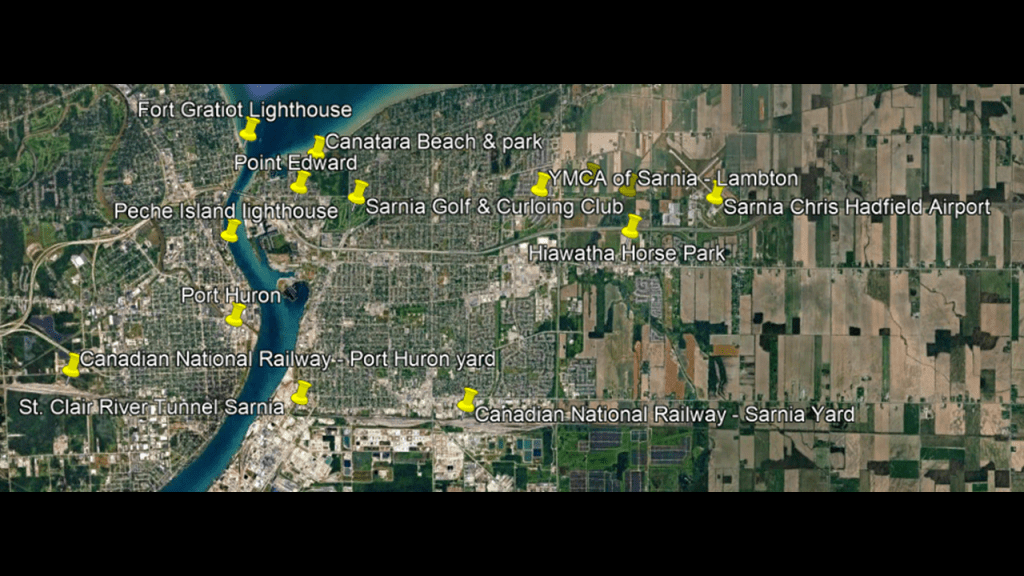
Point Edward is a village that is at the meeting point of Lake Huron and the St. Clair River, and is adjacent to the city of Sarnia.
Originally named Huron, in 1860, it was renamed to mark the visit of the then- Prince of Wales, who was to become King Edward VII.
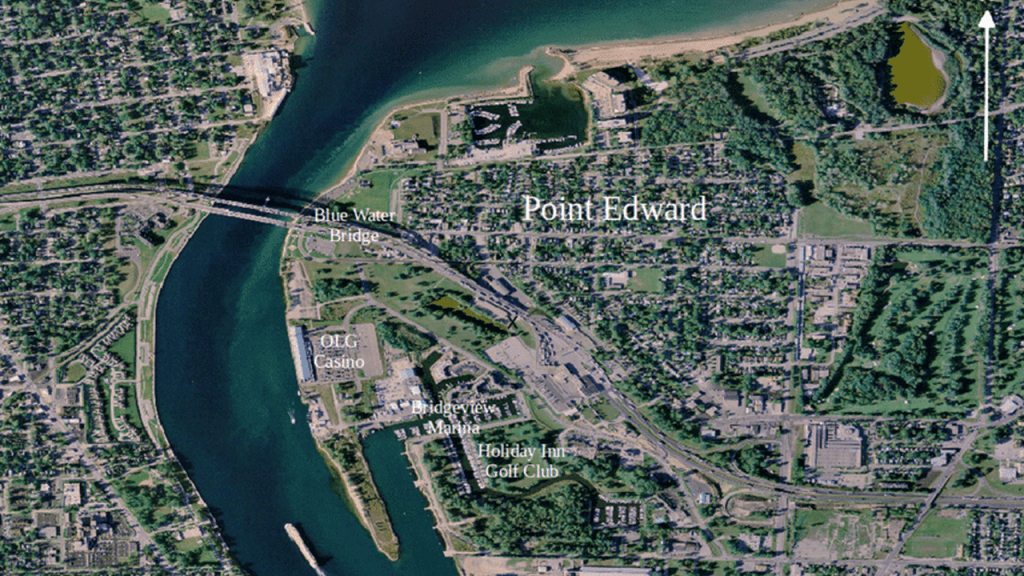
Historically, we are told there were a pair of private range lighthouses at Point Edward that were maintained by the Lake Carriers Association until 1899, when they were discontinued.
Then, four-years later, the Canadian government built a pair of range lights in 1903, to guide mariners between the lake and river along the axis of a channel dredged by the United States government.
Then the front range lighthouse was struck by lightning in 1910 and destroyed.
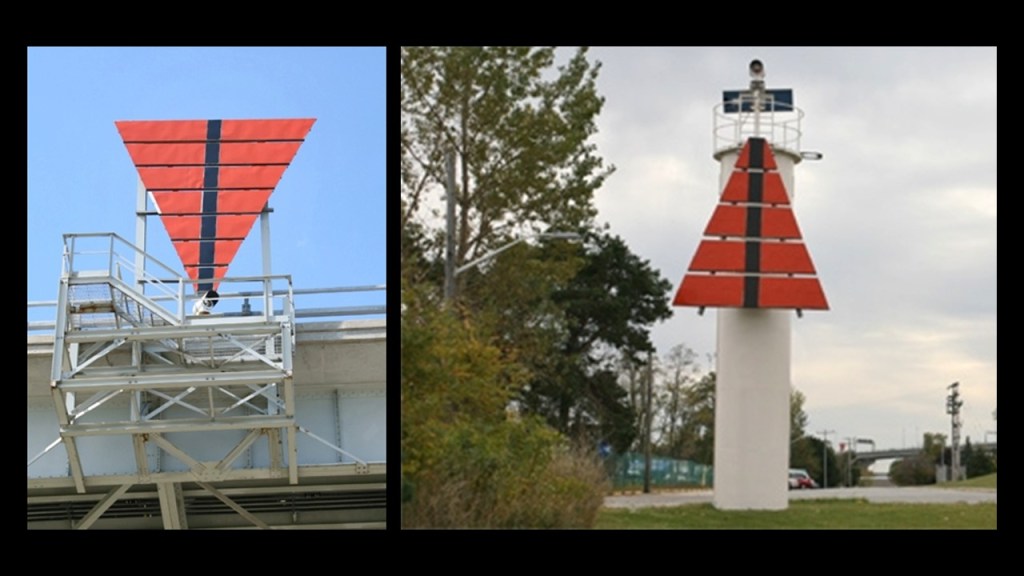
Today, there are still two range lighthouses at Point Edward.
One was said to have been constructed in 1939 on the Blue Water Bridge.
The other was said to have been erected in 1959.
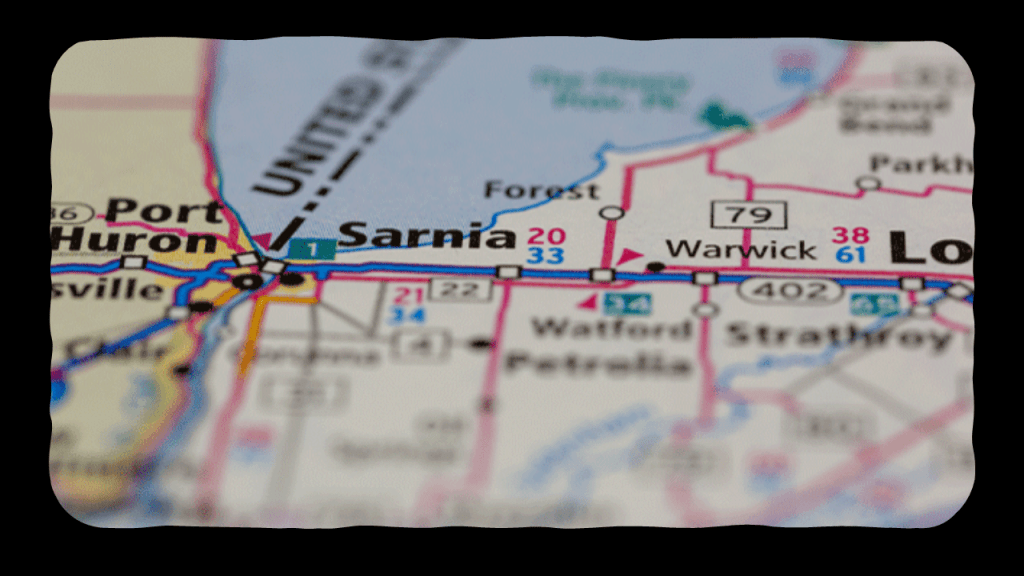
Sarnia is the largest city on Lake Huron.
The Sarnia port is an important center for shipping grain and petroleum products.
Oil was discovered here in 1858 at the nearby Oil Springs, the location of North America’s first commercial oil well and which triggered North America’s first oil rush and spurred the growth and development of the area.
In 1866, oil was struck at Petrolia, which quickly replaced Oil Springs as Canada’s Oil capital, though oil continued to be found and extracted from Oil Springs.
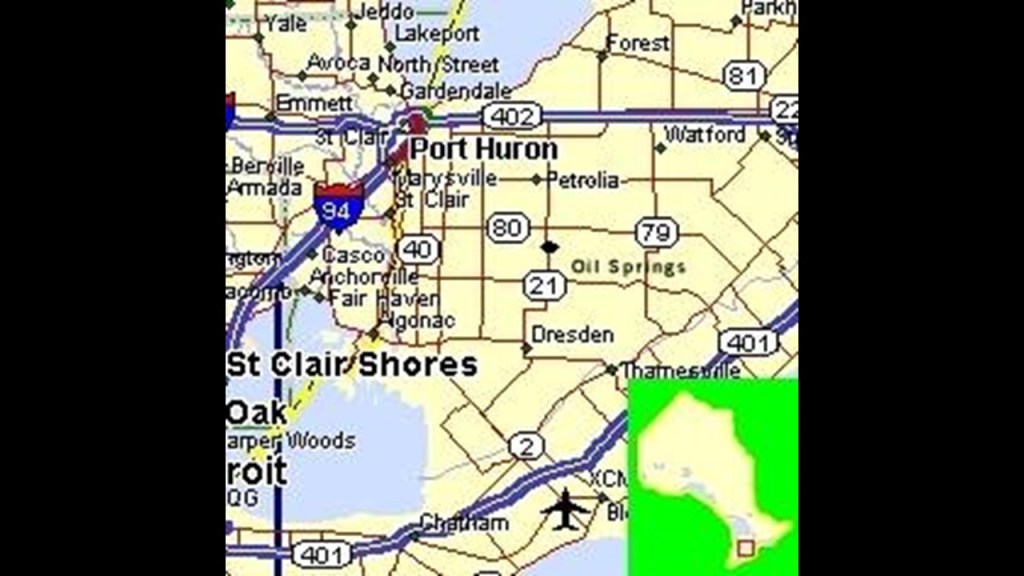
The discovery of oil in Canada in 1858 was contemporaneous in time with the discovery of oil in the United States.
The petroleum industry in the United States began in earnest in 1859 when Edwin Drake found oil on a piece of leased-land near Titusville, in what is now called Oil Creek State Park.
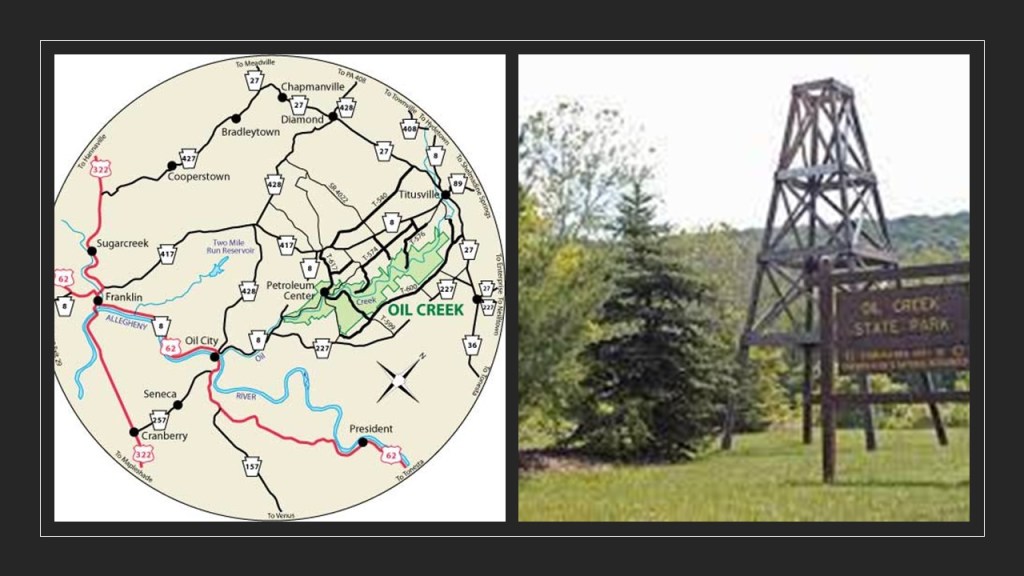
For this reason, Titusville is called the Birthplace of the Oil Industry, and for a number of years this part of Pennsylvania was the leading oil-producing region in the world.
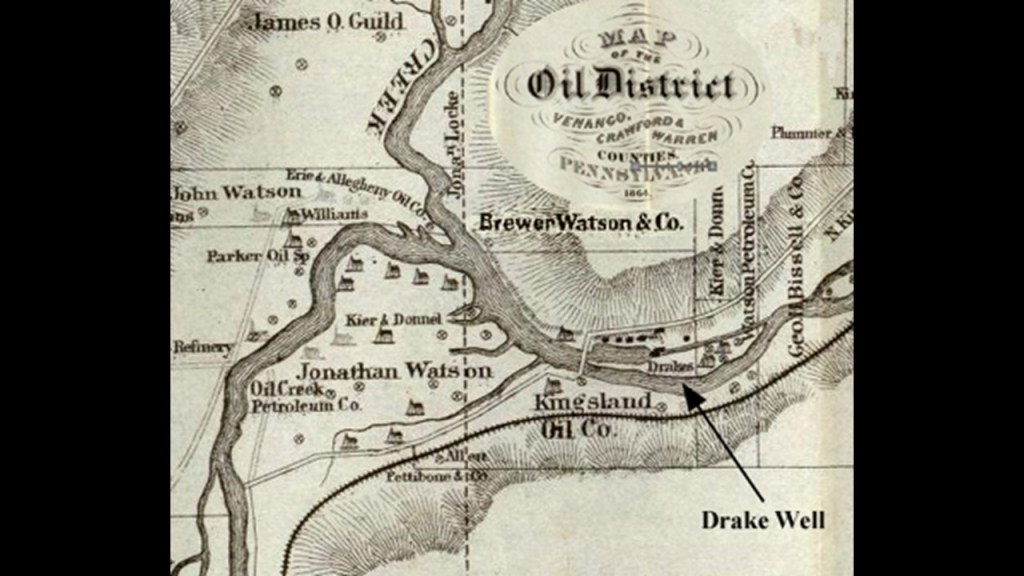
Titusville and Oil Creek State Park is located very close to West Hickory.
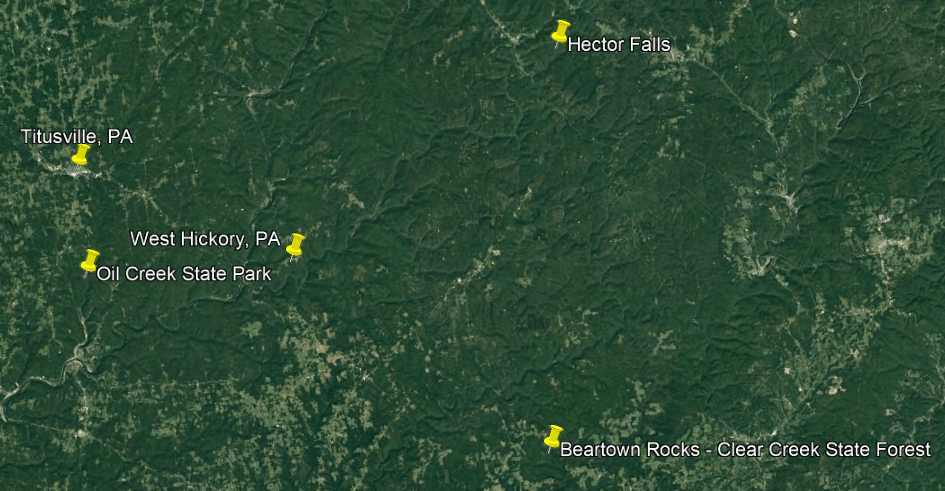
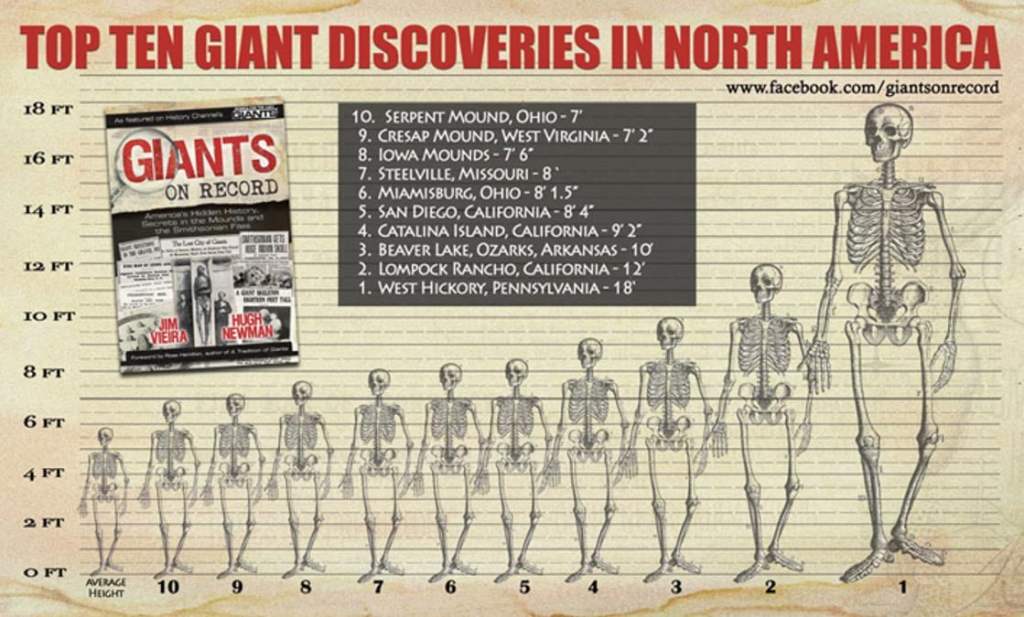
West Hickory was the location where the tallest recorded skeleton in North America was found, at 18-feet, 5.5-meters.
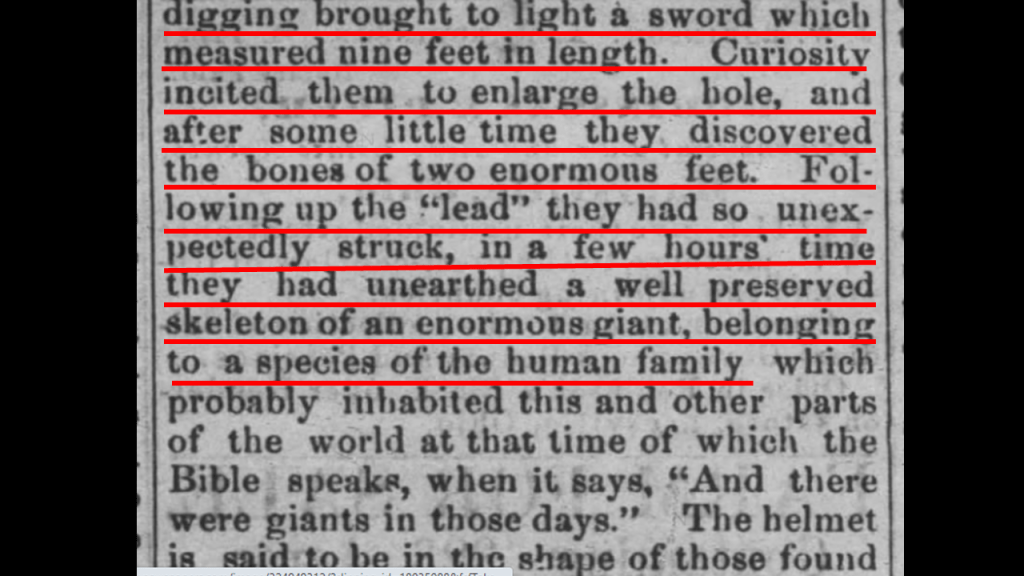
This 1870 newspaper article from the “Oil City Times” from the “Marysville Tribune” of Marysville, Ohio, dated January 26th of 1870 tells us that two men excavating near West Hickory in preparation for erecting a derrick exhumed the remains of an enormous rusty iron helmet…

…and then they unearthed a 9-foot, or almost 3-meter, – long sword.
So they made the hole bigger, and soon came upon the bones of two enormous feet.
After a few hours, they unearthed the well-preserved skeleton of an enormous human.
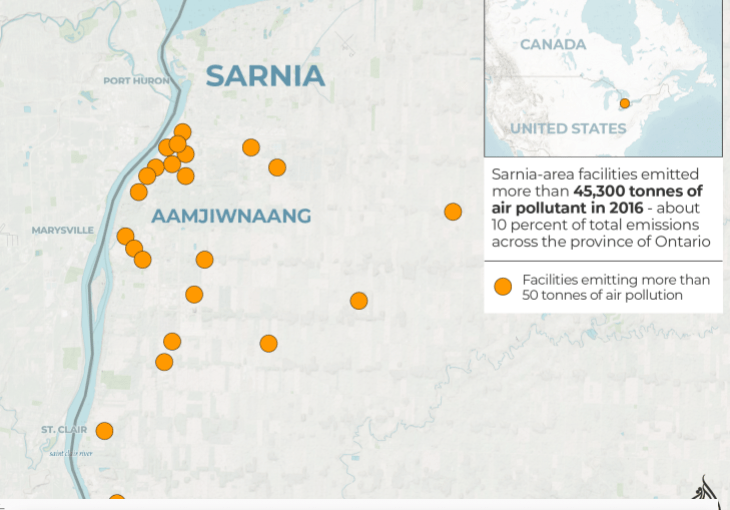
Back in Sarnia, there is a complex of refining and chemical companies south of downtown Sarnia in what is called “Chemical Valley,” and accounts for 40% of Canada’s chemical industry.
Sarnia is home to 62 chemical facilities and refineries, and has the highest level of pollutants in Ontario, and the worst air quality in Canada.
This area has high cancer rates, low birth rates, and contaminated water.
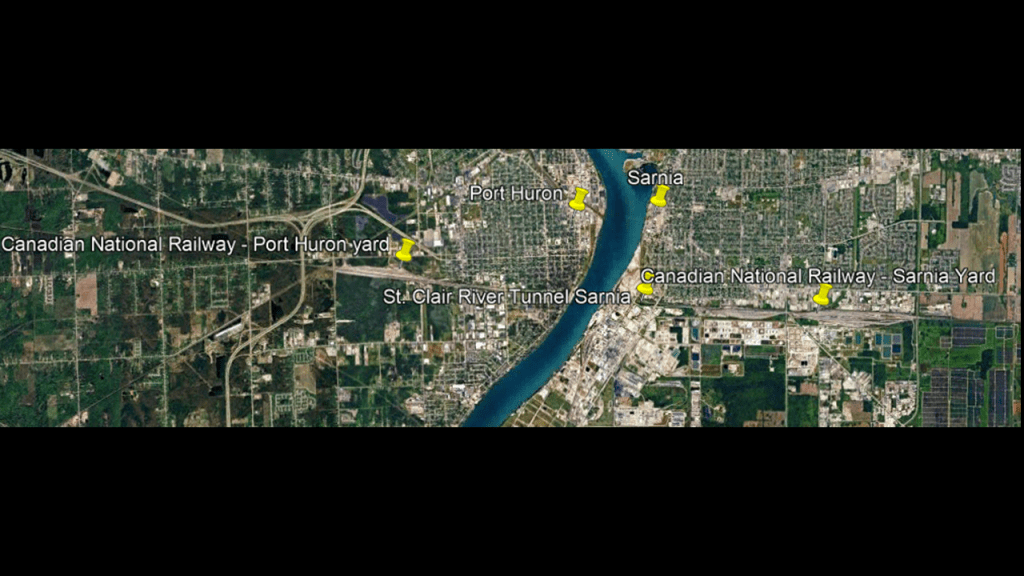
Then there is the Canadian National Railway’s St. Clair River Railway Tunnel.
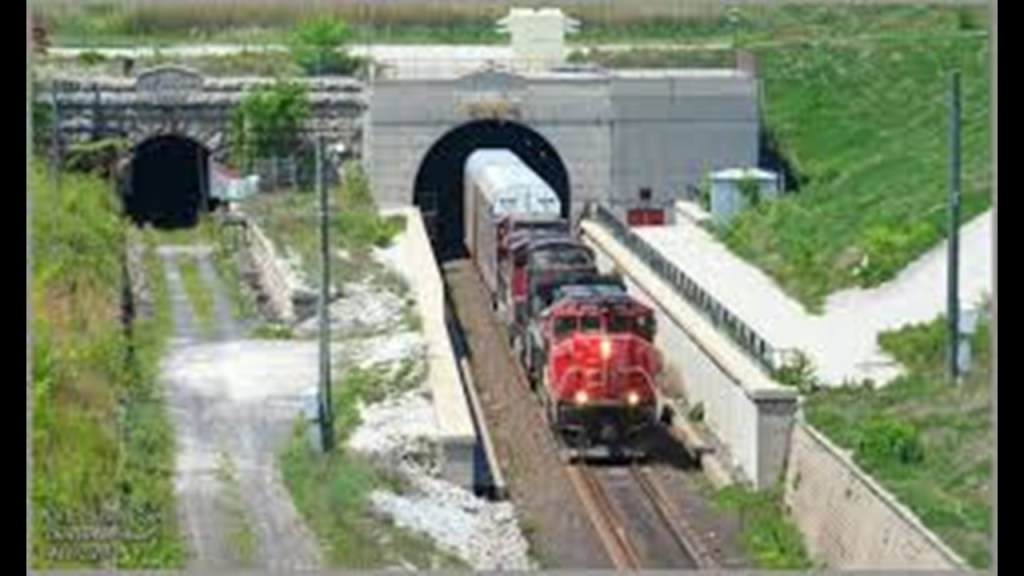
It connects the Sarnia Railyards with the Port Huron Railyards via an underwater railroad tunnel that can accommodate double-stacked railcars.
The first tunnel here was said to have opened in 1891, and that it was the first full-sized underwater tunnel in North America.
It was considered an engineering marvel in its day and has been designated as a civil engineering landmark by U. S. and Canadian engineering bodies.
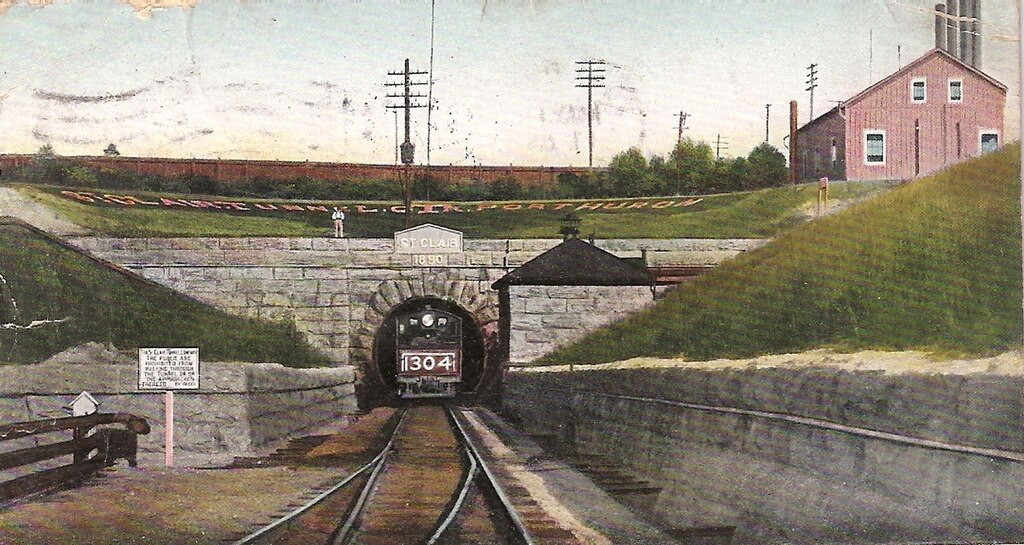
The original tunnel was said to have been replaced in 1995, when a second tunnel opened that could handle railcars with double-stacked shipping containers.
In June of 2019, forty railcars derailed in the tunnel, spilling 13,700-gallons, or 52,000-liters, of sulfuric acid, which resulted in the closure of the tunnel for about two-weeks.
Sulfuric acid is used in chemical and fertilizer manufacture; petroleum refining; battery production; cleaning agents and explosives.
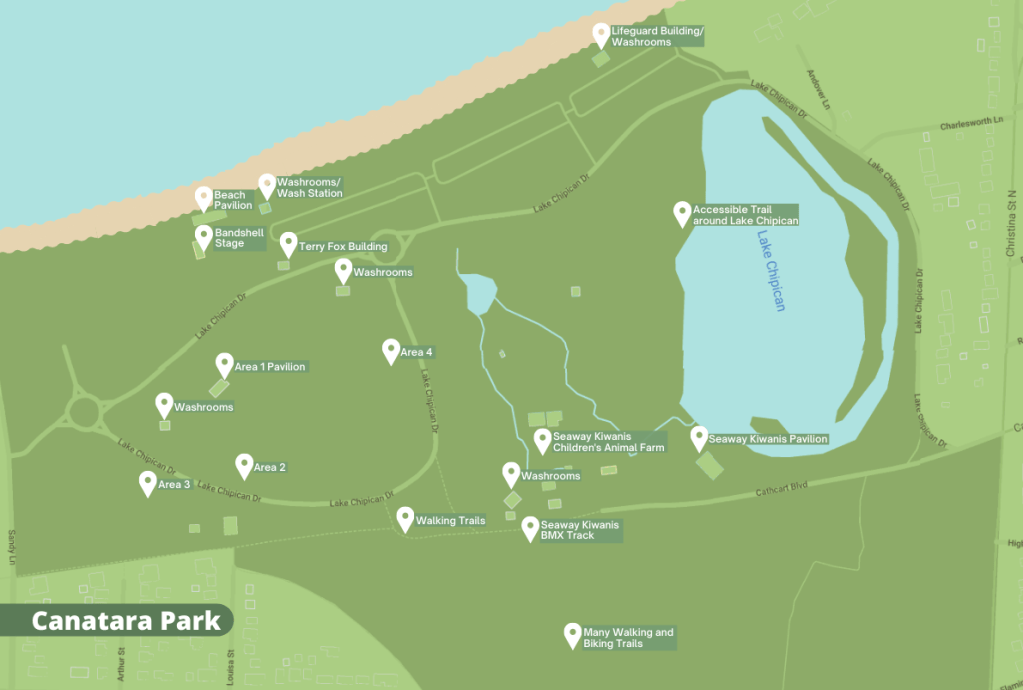
The next places I would like to look at in this area are as follows: Canatara Beach and Park; the Sarnia Golf and Curling Club; the YMCA of Sarnia/Lambton; Suncor Energy Foundation Nature Way; the Wawanosh Wetlands conservation Area; the Hiawatha Horse Park; and the Sarnia Chris Hadfield Airport.
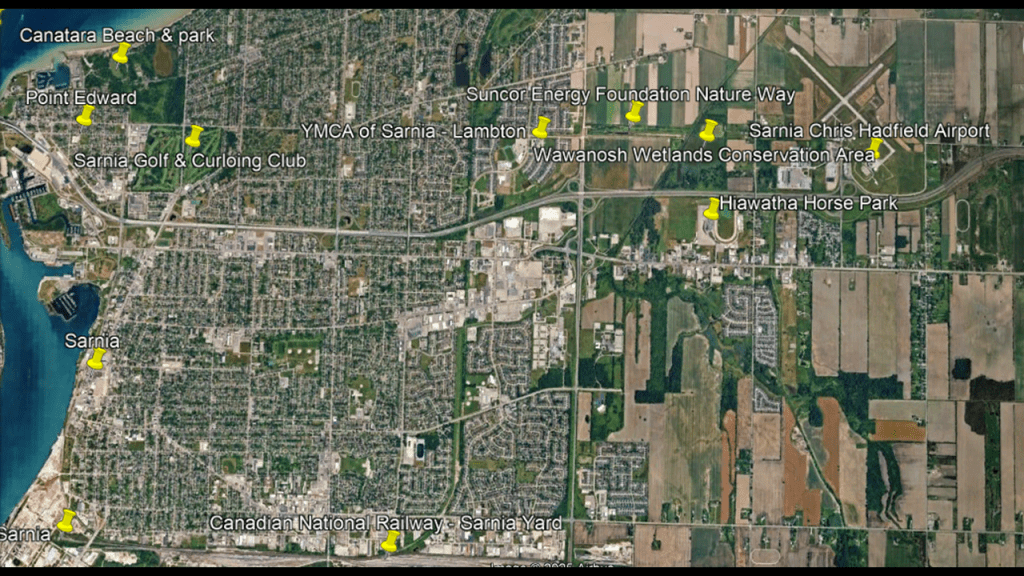
First, the Canatara Beach and Park.
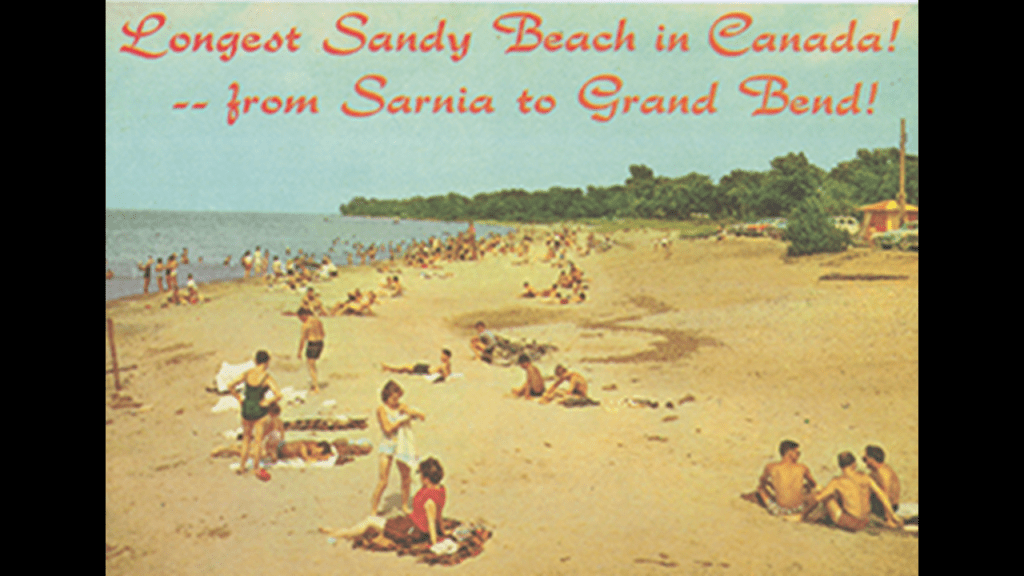
It is the largest and best-known park in the Sarnia area, with a long stretch of beach along the Lake Huron shore-line, and many other popular amenities.
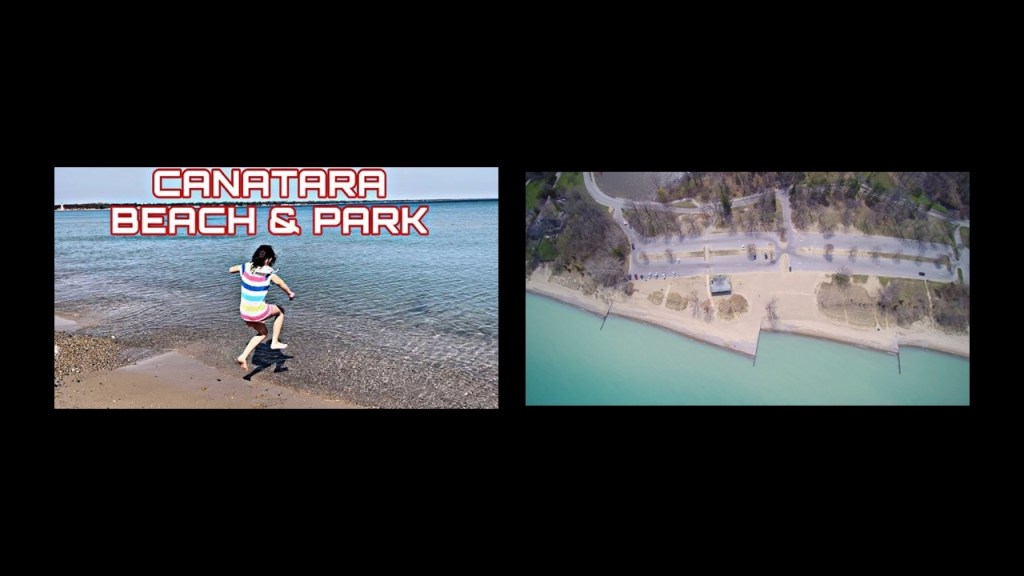
When I was looking at images of Canatara Beach, these jumped out at me, with a view of what appears to be a solid stone surface visible just below the surface of the water, and an aerial photo of a uniform, but jagged, looking shoreline.
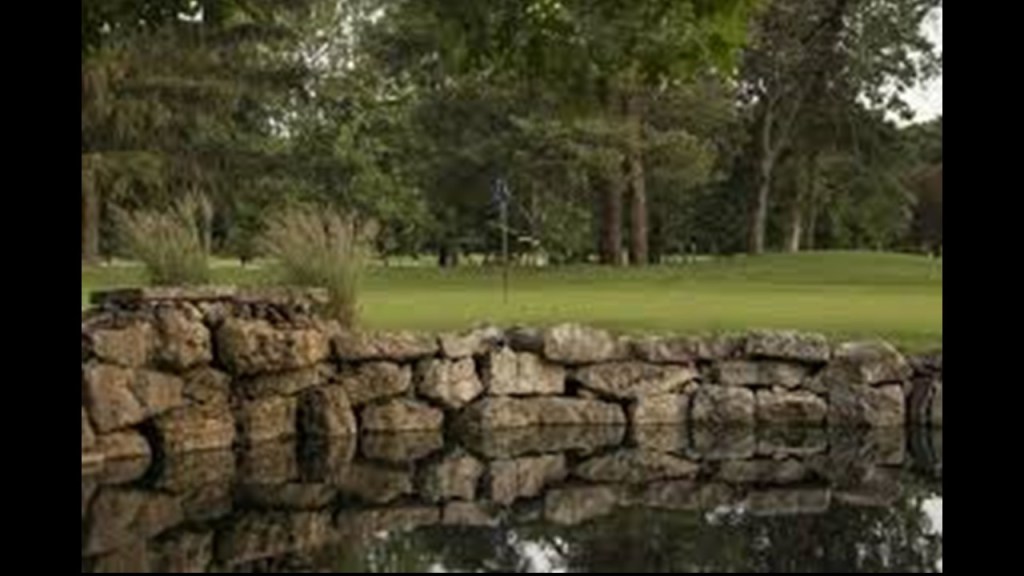
The Sarnia Golf and Curling Club is immediately adjacent to the Canatara Park.

Here is a photo showing megalithic stone blocks on the Sarnia Golf Course.
The Sarnia Golf and Curling Club had its origins as a private golf club that was officially founded in 1912.
We are told that the current venue was constructed between 1926 and 1927 on land that was secured on a long-term lease from the Grand Trunk Railway.
Said to have been constructed starting in 1852, the Grand Trunk Railway was officially opened in 1859 between Sarnia in Ontario and Portland in Maine.
We are told the Grand Trunk Railway was merged into the Canadian National Railway in 1923 because of financial difficulties.
In its hey-day, it operated in Ontario and Quebec in Canada, and in the United States, in Connecticut, Maine, Michigan, Massachusetts, New Hampshire, and Vermont.
We are told the original charter for the Grand Trunk Railway was for a line running from Montreal to Toronto along the north shore of the St. Lawrence River and then it went west to Sarnia and east to Portland.
I would be remiss if I didn’t talk about Portland here.
It is the largest city in the state of Maine, and the largest metropolitan area in northern New England, with the Greater Portland metro area having over a 500,000 people, which is one-third of Maine’s total population.
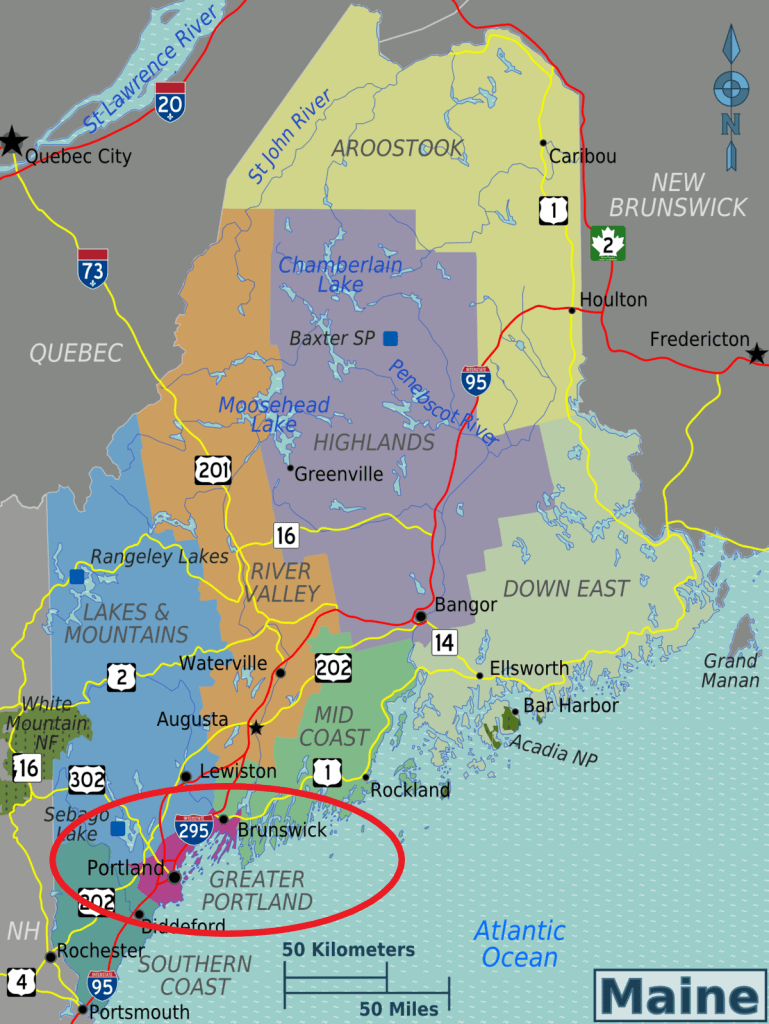
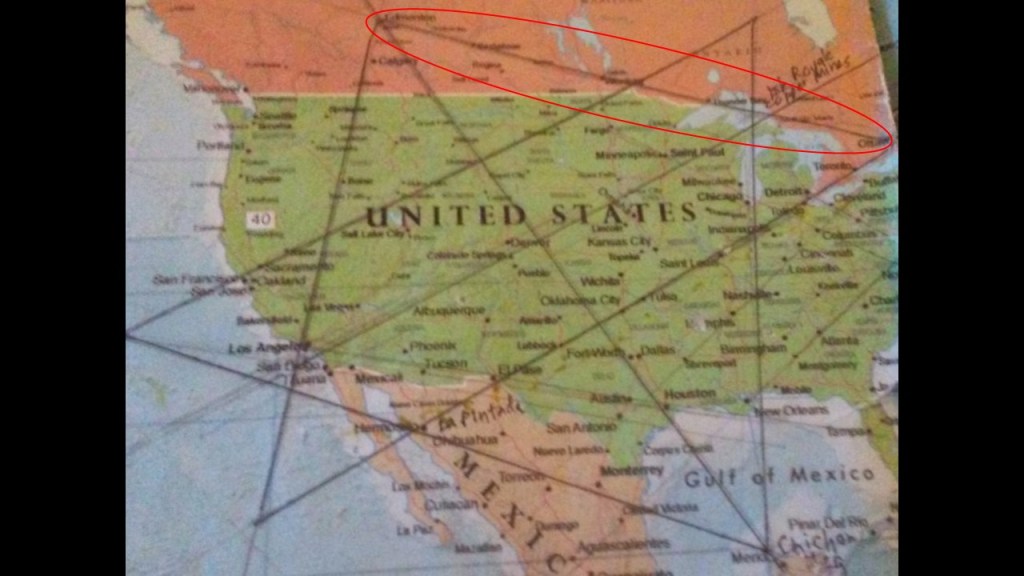
I looked at Portland in-depth when I was tracking an alignment from my starting point of Edmonton in Alberta, Canada, in August of 2024.

I was looking at the side of the North American star tetrahedron that extends from Edmonton and goes to Ottawa in southern Ontario, and the national capital of Canada.
From Ottawa, I extended the alignment out starting from Burlington, Vermont through to Portland in the United States, and subsequently followed cities and places in alignment with each other across oceans and continents.
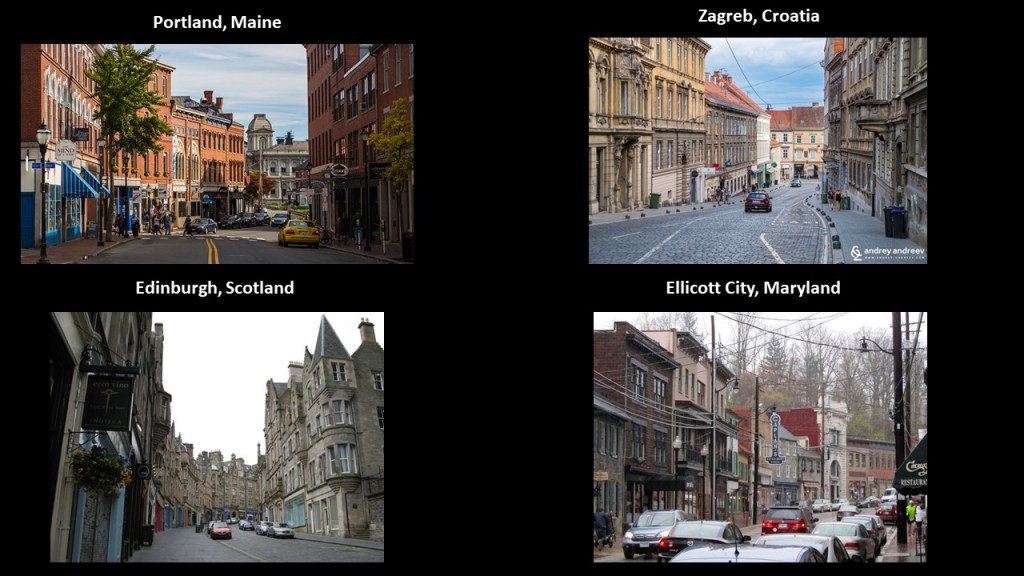
Here is a street view of Portland on the top left, compared with a very familiar look to me from other cities in very different places – on the top right is from Zagreb, Croatia; the bottom left is from Edinburgh, Scotland; and on the bottom right is Ellicott City, Maryland.
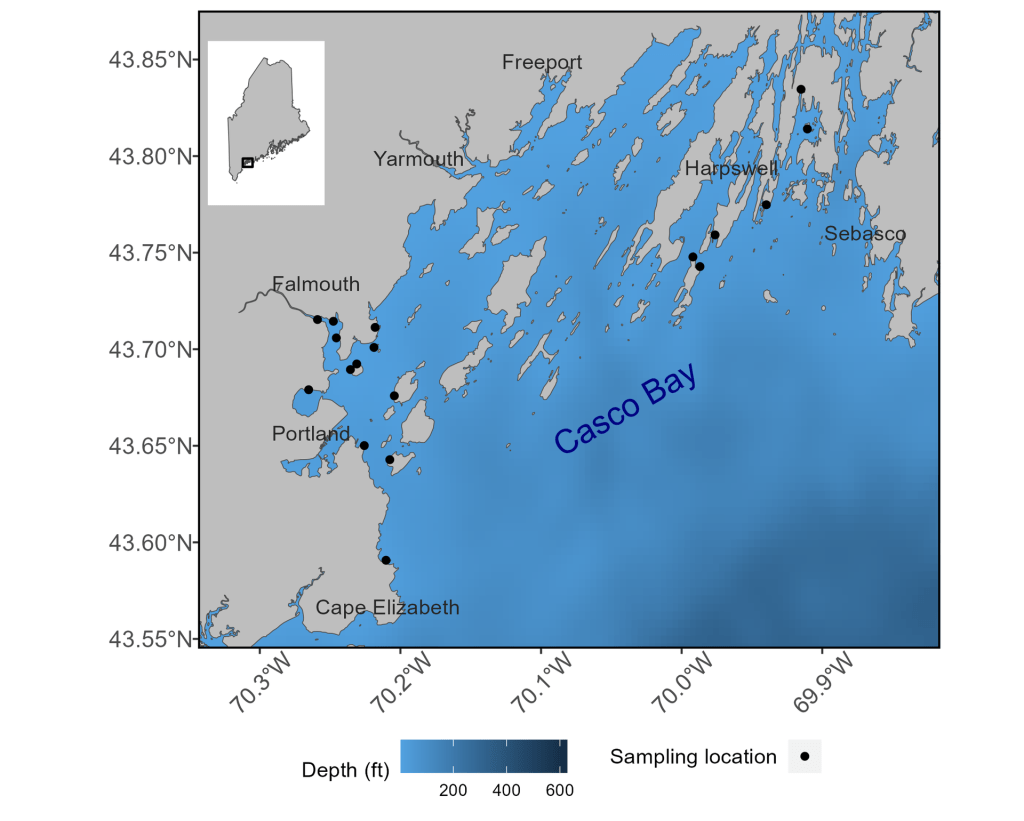
Portland is located on Casco Bay.
Like all the islands we see in the Great Lakes Region, like the estimated 30,000 islands in Lake Huron alone, Casco Bay is filled with what are named the “Calendar Islands,” so-called because there is said to be an island for every day of the year.
It is also classified as an estuary, which is defined as a partially-enclosed body of brackish water with one or more rivers flowing into it, and a connection to the open sea.
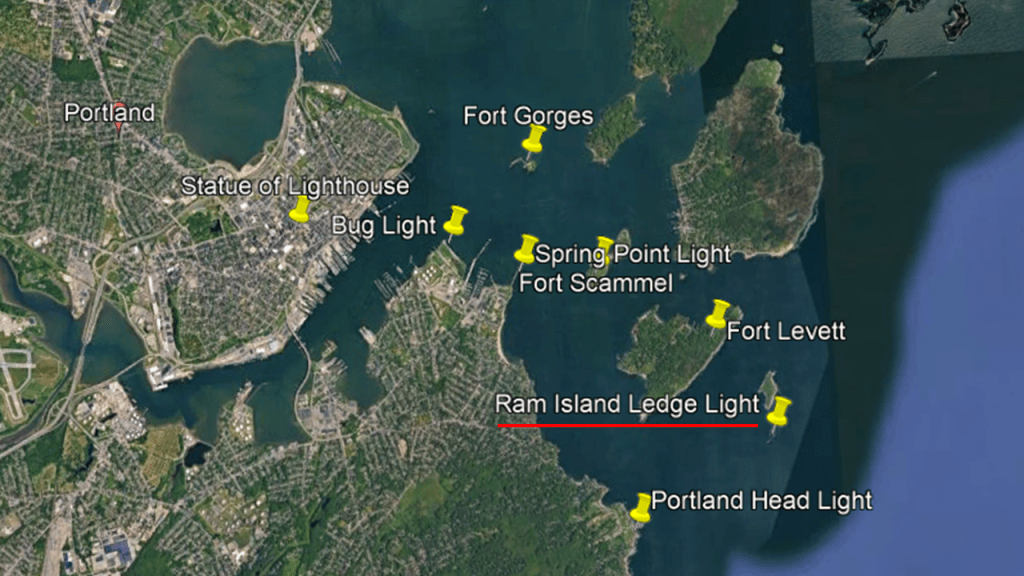
Also like what we see on the Great Lakes, there are numerous star forts and lighthouses in and around Casco Bay.
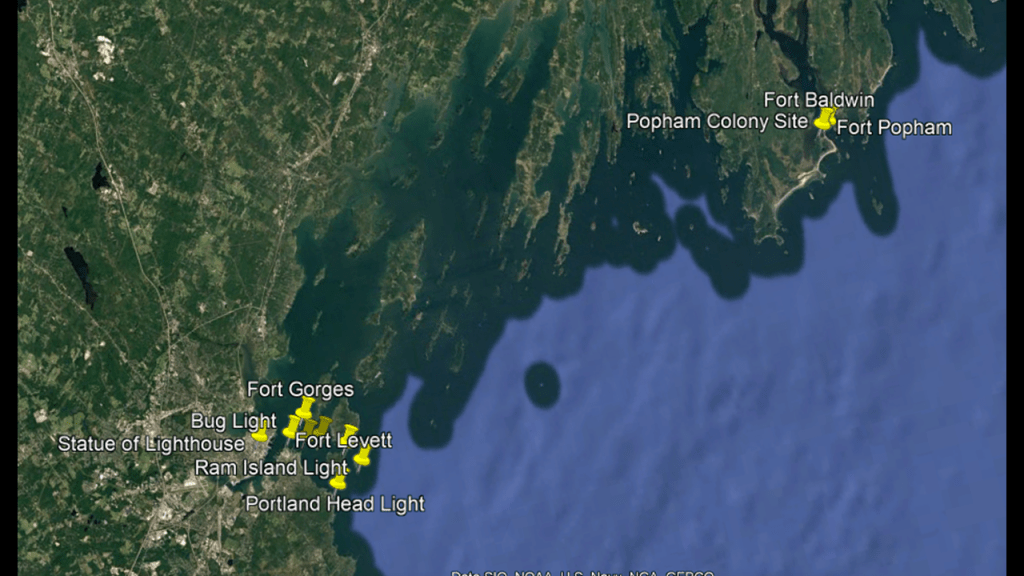
The Plymouth Company, officially known as the Virginia Company of Plymouth, established the Popham Colony near the mouth of the Kennebec River in present-day Phippsburg, Maine in 1607, a few months after the establishment of Jamestown Colony in Virginia, the first permanent English settlement in North America.
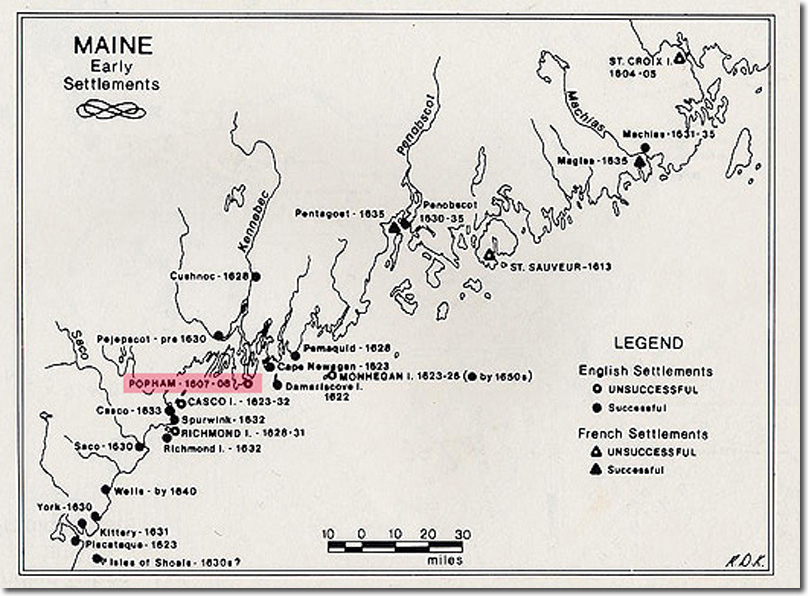
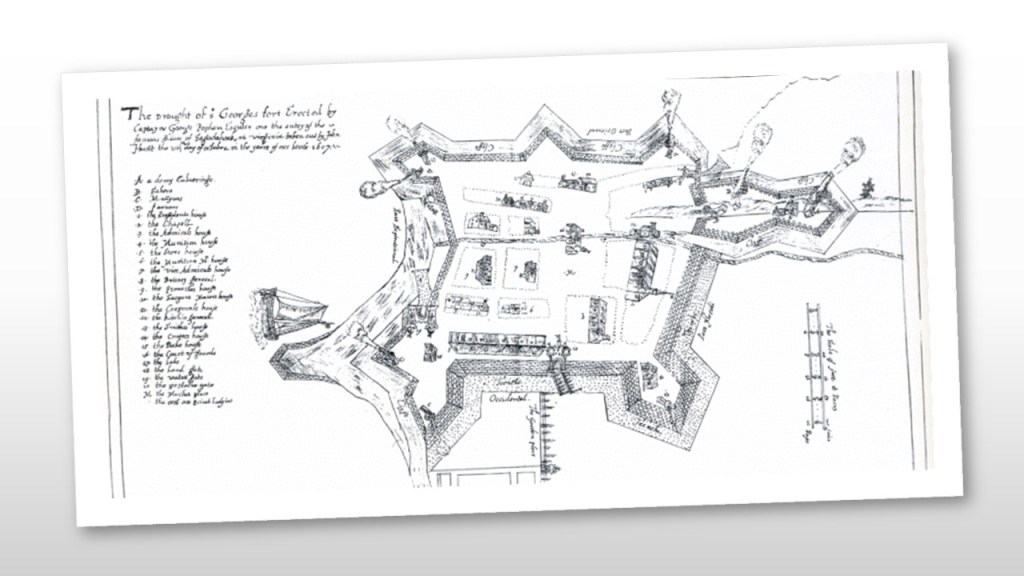
The Popham Colony, however, was short-lived, only lasting 14-months before being abandoned due to multiple problems, from lack of funding, to lack of surviving colonists.
Fort St. George was said to have been built there during that time.
The Council for New England was established by a Royal Charter from King James VI of Scotland and I of England as an English joint-stock company in order to found colonial settlements between 1620 and 1635.
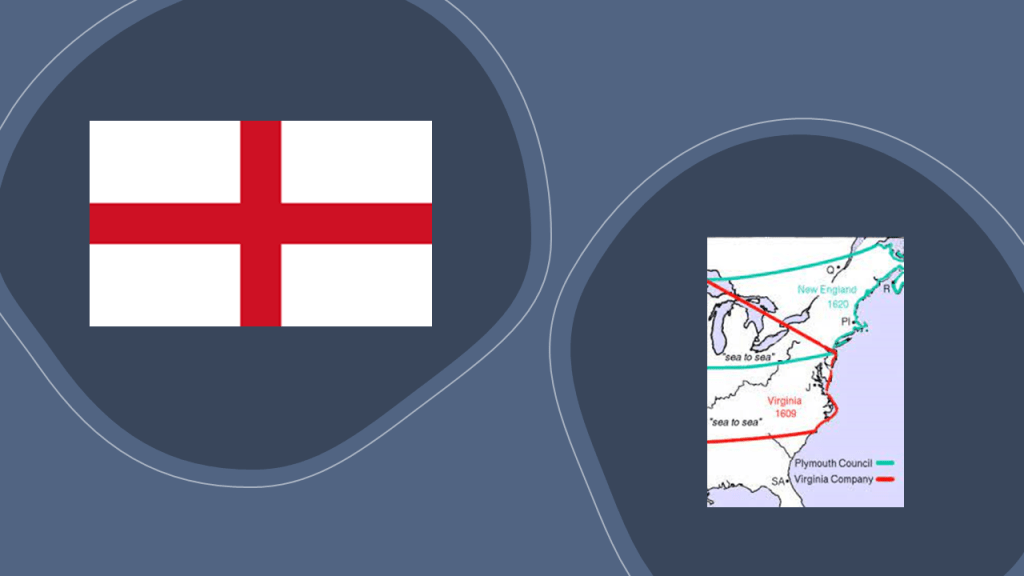
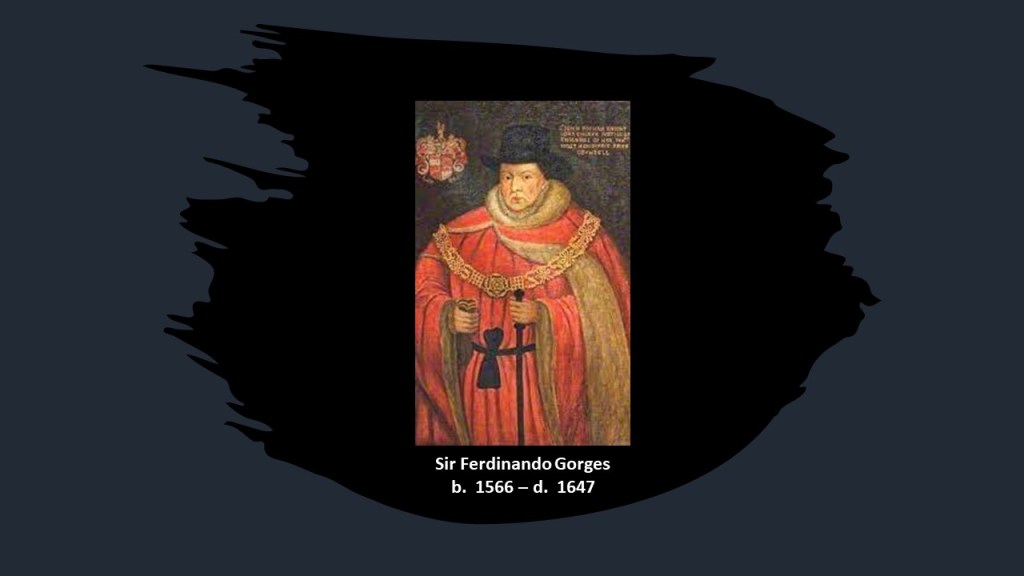
The Council for New England was largely the creation of Sir Ferdinando Gorges, a military commander and Governor of the Port of Plymouth in England who was called the “Father of English Colonization in North America,” and a member & beneficiary of the Council.
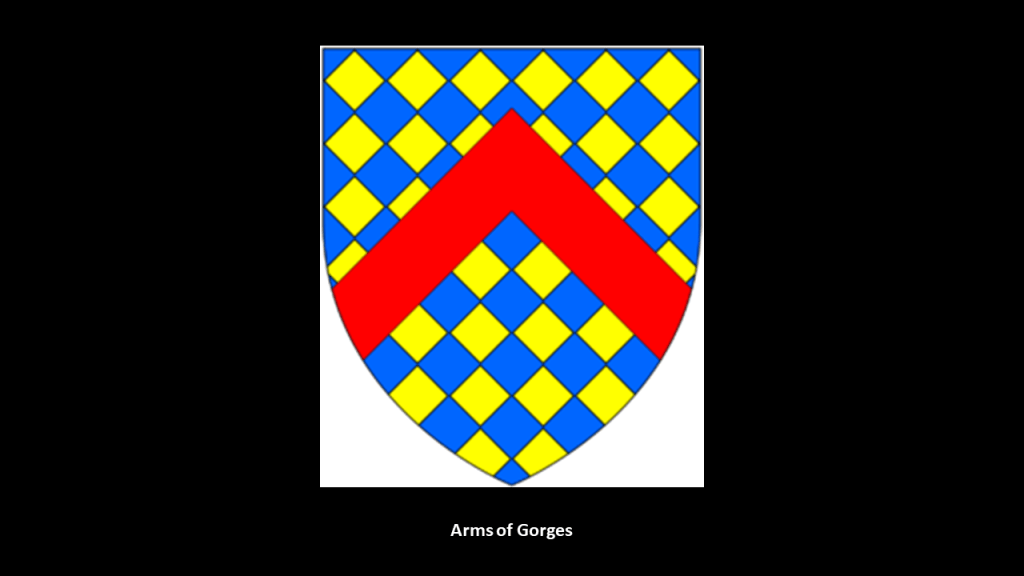
Gorges first became involved in colonization efforts in 1607, when he became a shareholder in the Plymouth Company, and helped to establish the short-lived Popham Colony.
He later received a land-patent in 1622 from the Council of New England for the Province of Maine, and was influential in the early settlement of Maine.
Fort Gorges was named after him and was said to have been built between 1858 and 1864.
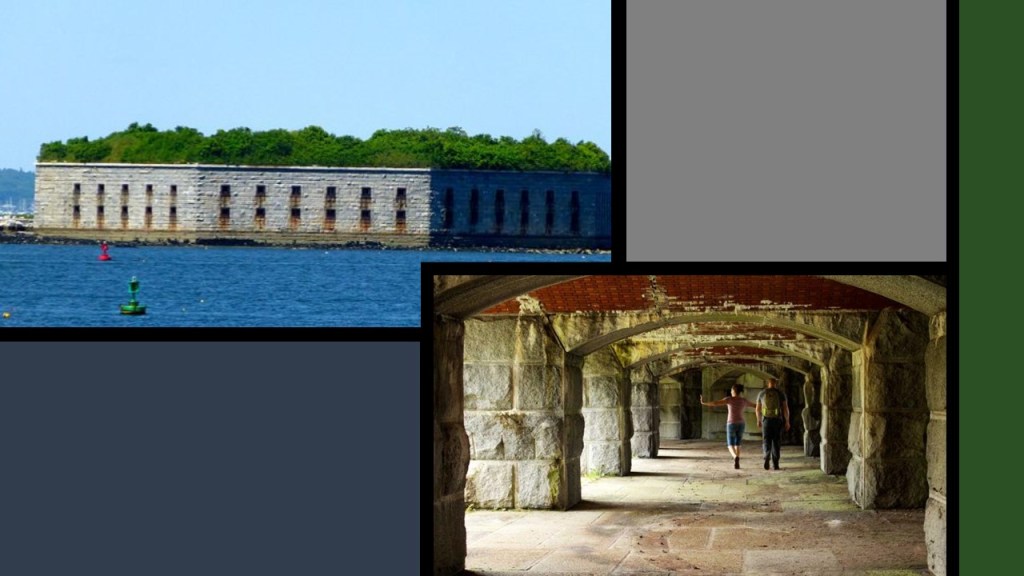
There were numerous other forts here as well.
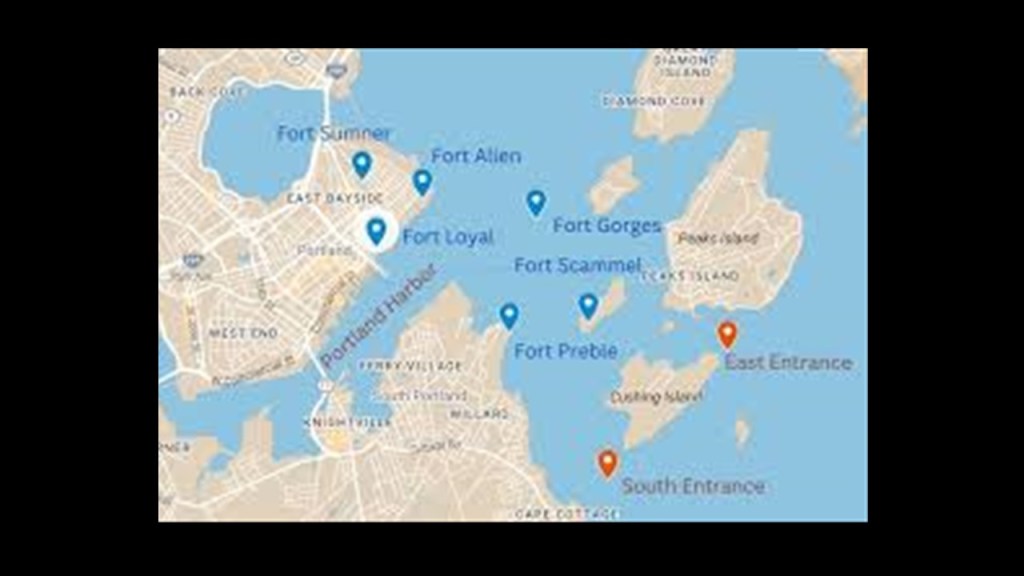
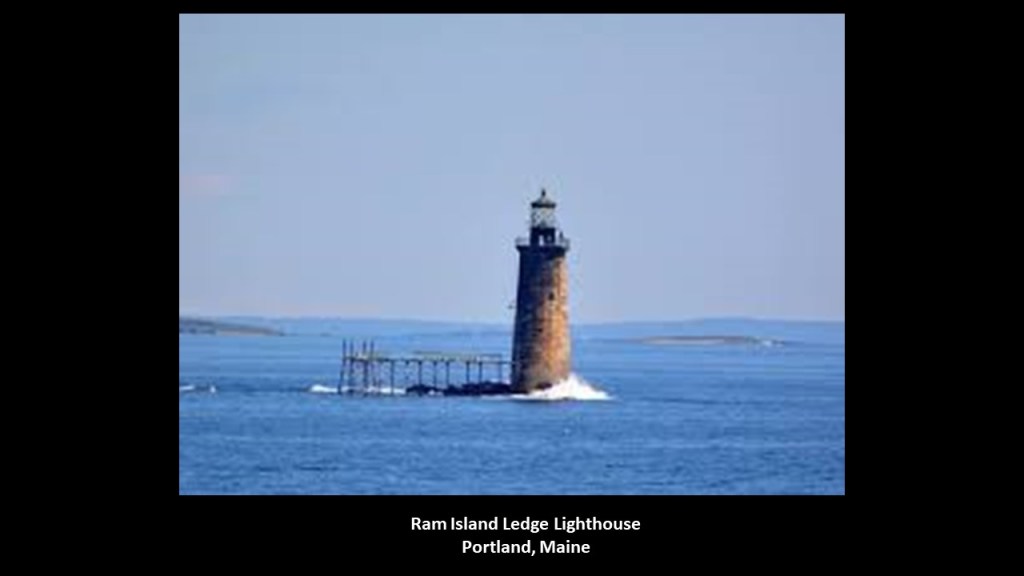
Same thing with lighthouses, like the Ram Island Ledge Lighthouse at the northern end of the main shipping channel into Portland.
Surrounded by water, the Ram Island Ledge Lighthouse was said to have been built in 1883 on rocky ledges.
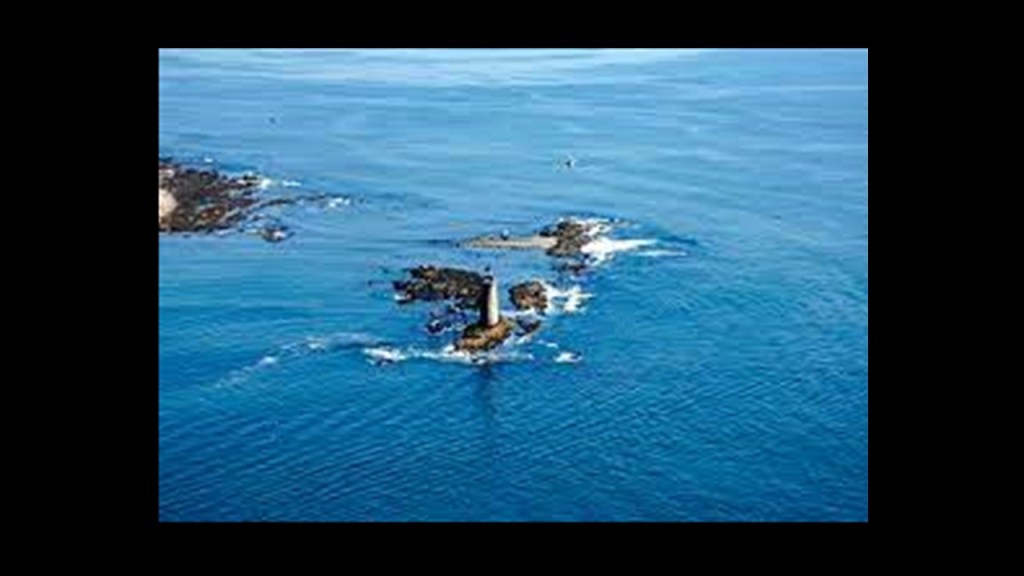
The Ram Island Ledges are a series of stone ledges, some of which break the waters at the southern end of Casco Bay, that also pose a hazard to shipping.
These are exactly the same kinds of things we see in the Great Lakes region.
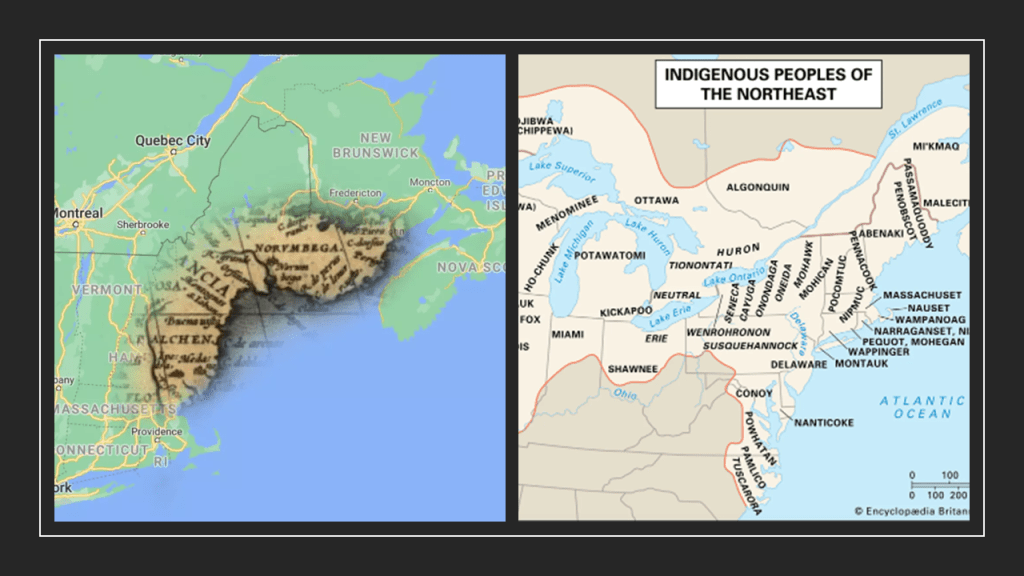
It is important to note that this region of northeastern North America has been long-believed to be the legendary Norumbega, and includes today’s New England states like Maine, New Hampshire, Vermont, and Massachusetts.
It is hard to find any information on Norumbega as it is very sparse.
Next, I am going to travel a short-distance east from this location of the Canatara Beach and Park and Sarnia Golf and Curling Club, and take a look at the following: the Sarnia-Lambton YMCA; the Suncor Energy Foundation Nature Way; the Wawanosh Wetlands Conservation Area; the Hiawatha Horse Park and the Sarnia Chris Hadfield Airport.
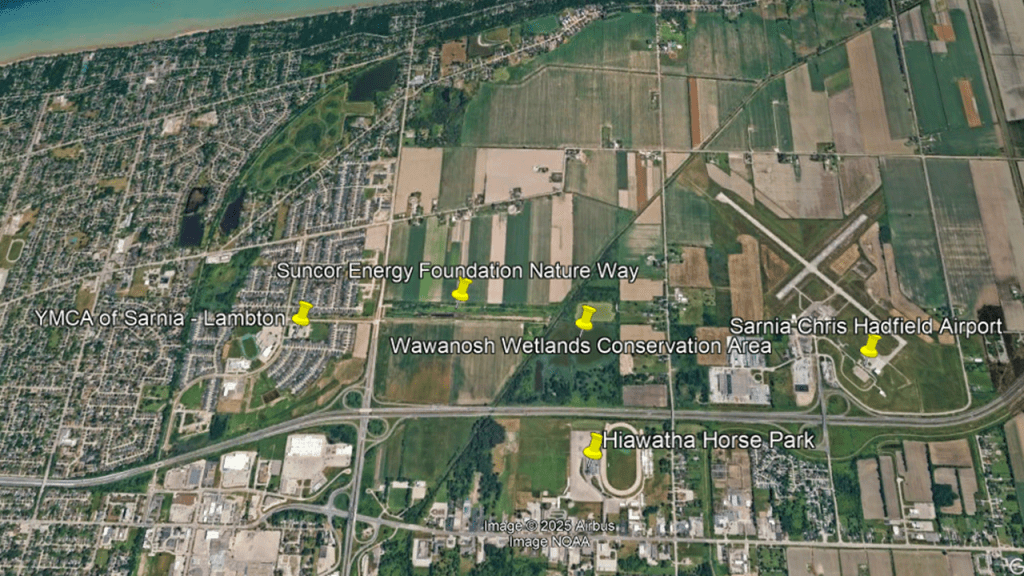
The Sarnia-Lambton YMCA is first.
The YMCA gets my attention because they were coming into existence about the same time as a lot of things were happening in our historical narrative.
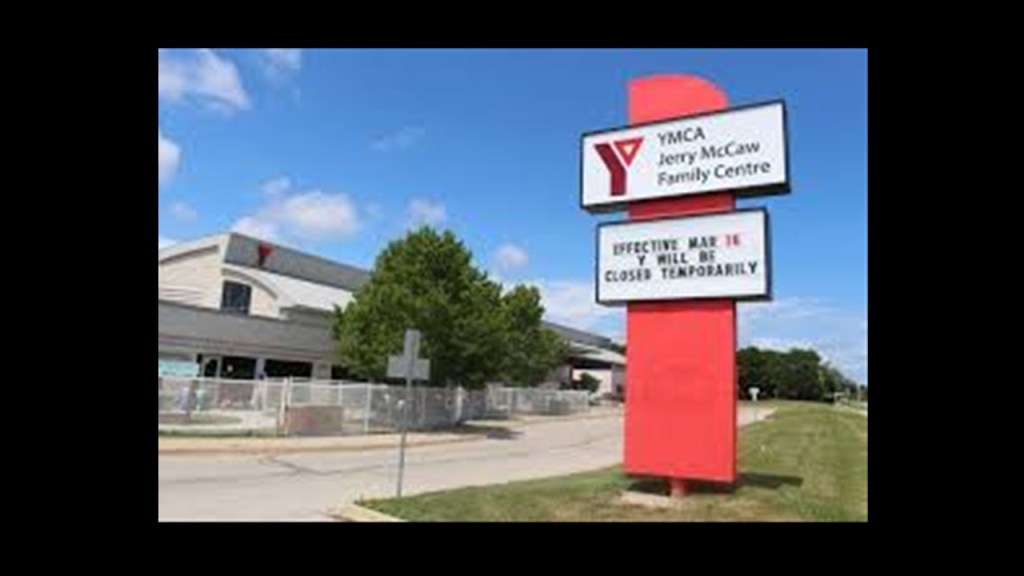
I did some research on the origins of the YMCA a few years back, and here is what I found when I looked into it, bearing in mind there is a lot going on in our historical narrative between 1800 and the 1850s with regards to setting up the new system and new history.
The “Young Men’s Christian Association,” or YMCA, is the world’s oldest and largest youth charity with a stated mission of supporting young people to belong, contribute, and thrive in their communities, and started in 1844.
The general history of the YMCA goes like this:
George Williams, in seeking to create a supportive community to help young men facing social challenges during England’s Industrial Revolution, founded the Young Men’s Christian Association in 1844.
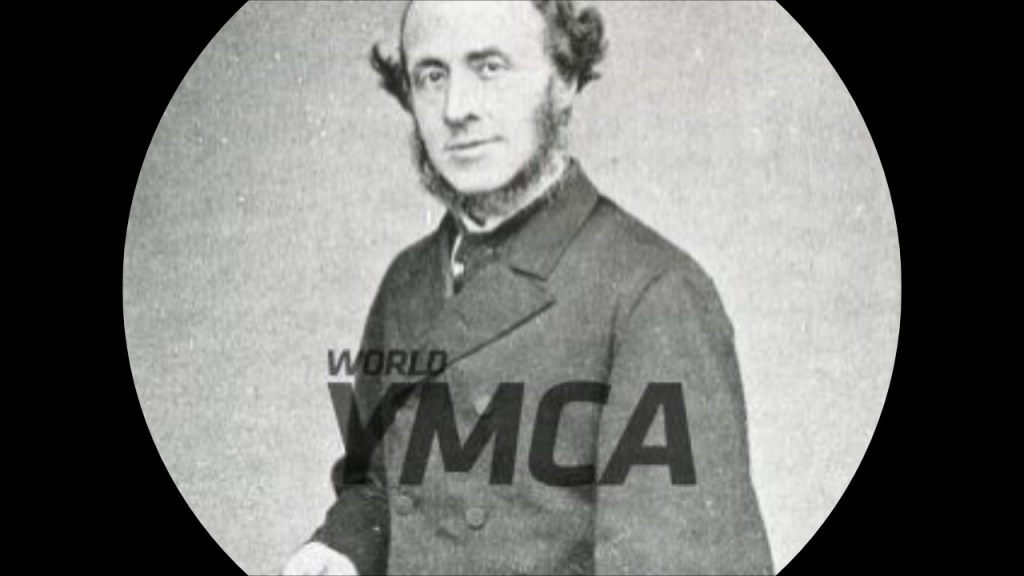
He worked as a draper at the Hitchcock-Williams store, where he became a department manager in 1844.
Drapers were retailers or wholesalers of cloth that was mainly for clothing, and there was a great deal about cloth and textile mills coming up as part of the new economic system.
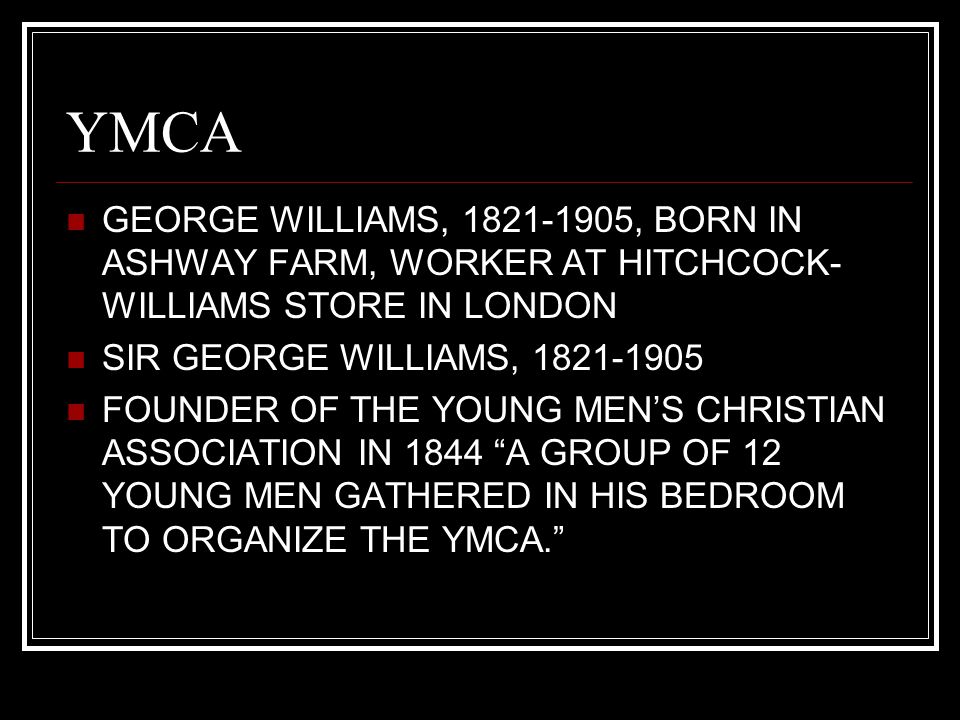
Also interesting to note that the use of Arms went from individuals to corporate bodies starting in 1438 with a Royal Charter of incorporation, and the earliest surviving grant of arms was for the “Worshipful Company of Drapers,” and since then have been made continously including, but not limited to, companies & civic bodies.
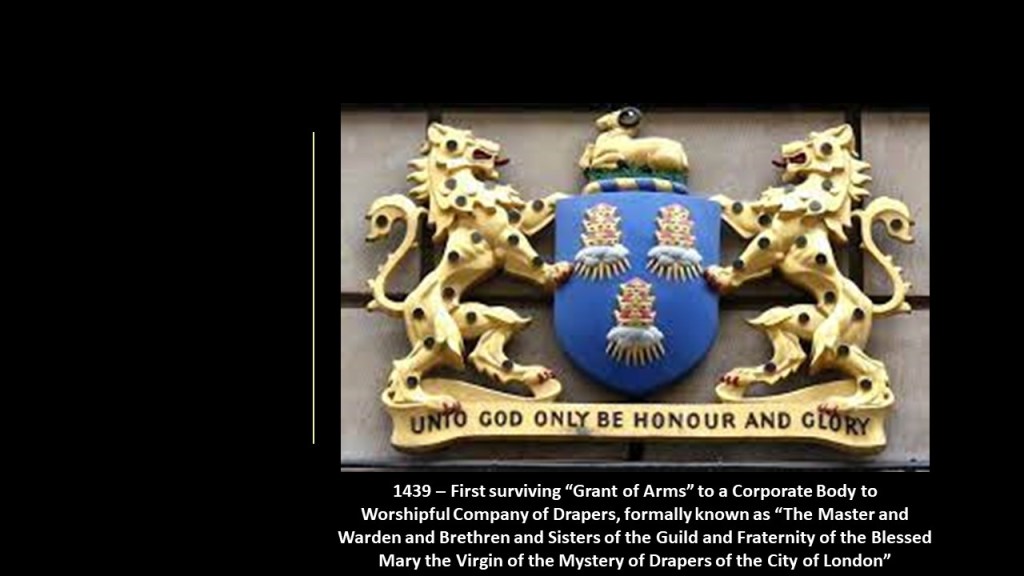
We are told that in the same year of 1844 that Williams became a Department Manager at Hitchcock-Williams, he gathered a group of fellow drapers together in the store where he worked, concerned about the appalling conditions in London for working young men, and was determined to do something about it by forming the YMCA.
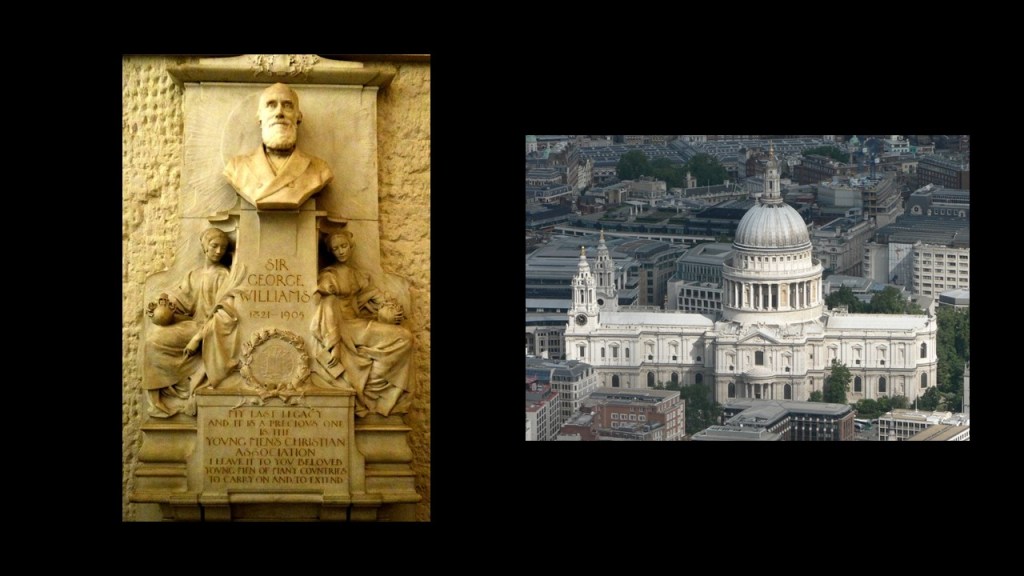
At Queen Victoria’s birthday honors in 1894, he was knighted and became Sir George Williams, and upon his death in 1905, he was buried in a crypt in London’s St. Paul’s Cathedral.
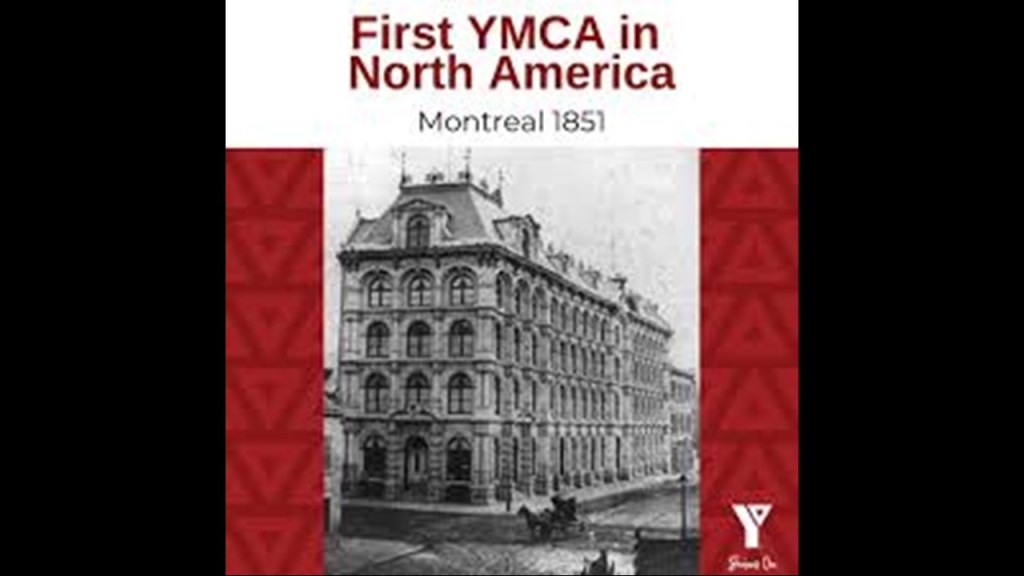
The YMCA first came to North America in Montreal, Quebec, Canada, opening November of 1851, the same year as the Crystal Palace Exhibition in London and the Prime Meridian was moved from the Great Pyramid to the Royal Observatory of Greenwich in London.
Also to put this time period of the 1850s into perspective with other things that were going on what in our historical narrative, our history tells us that on New Year’s Eve of 1857, Queen Victoria was presented with the responsibility of choosing the location for the permanent capital of Canada, with Ottawa being described as a small, frontier town.

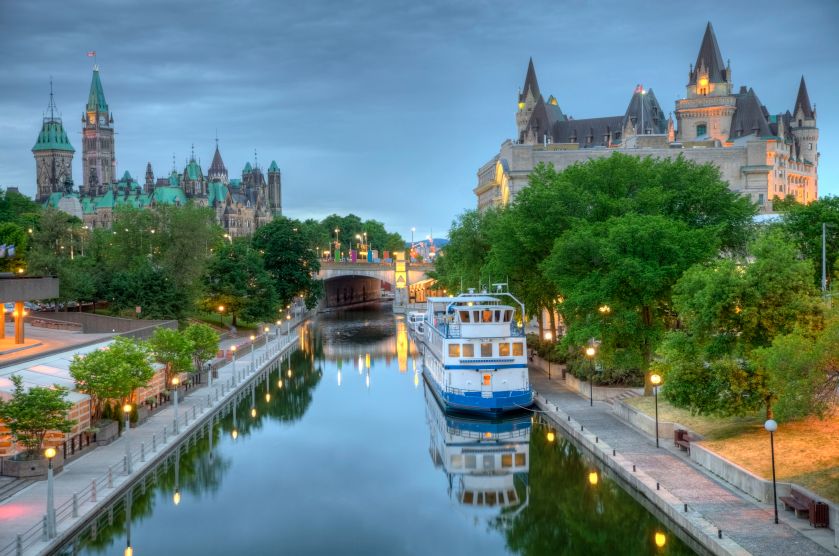
The Parliament buildings were said to have been constructed between 1859 and 1866, in an architectural style called Gothic Revival.
This is a view of Parliament Hill from the Rideau Canal.
Next I want to look at what is called the “Suncor Energy Foundation Nature Way.”
It is a long, narrow strip of land that extends westward from the Wawanosh Wetlands Conservation area.
Suncor Energy is a company based in Calgary, Alberta, that specializes in the production of synthetic crude oil from oil sands, and the Suncor Energy Foundation is a private, charitable foundation that was established in 1998 to fund philanthropic, community-based initiatives.
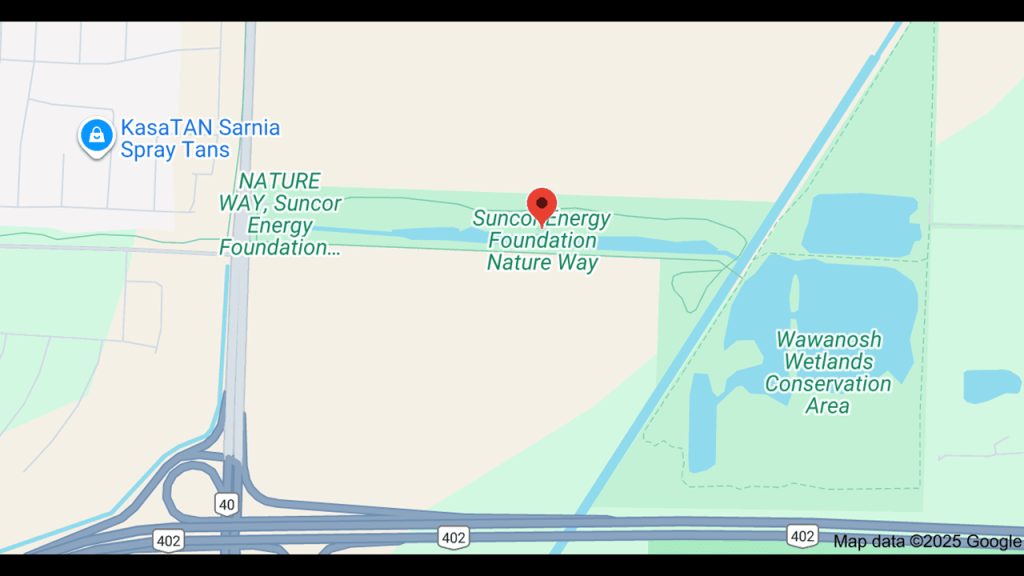
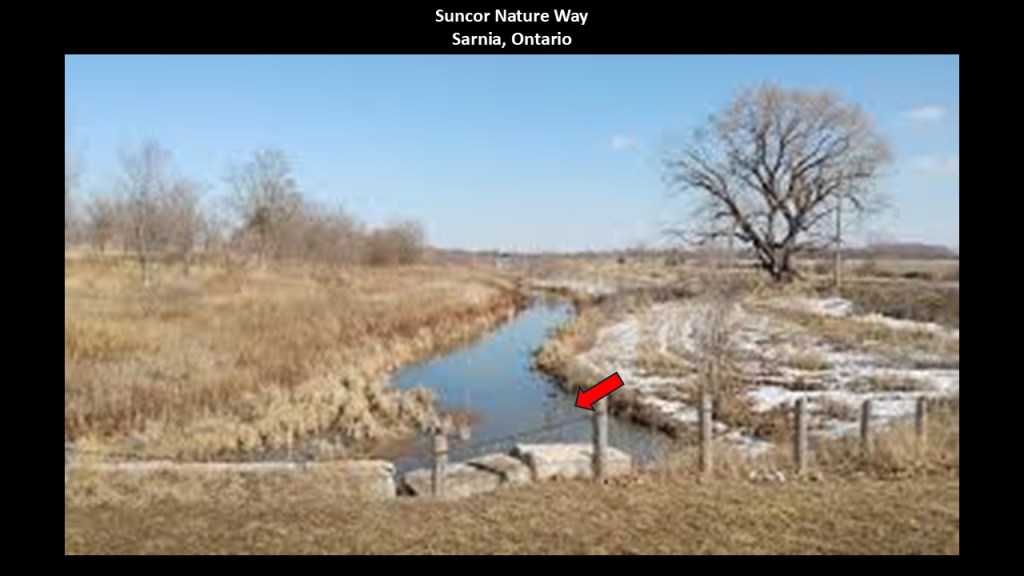
It has trails for walking and bicycling through wetlands and grass prairies, which, like the Sarnia Golf Club, has megalithic stone blocks along the way.
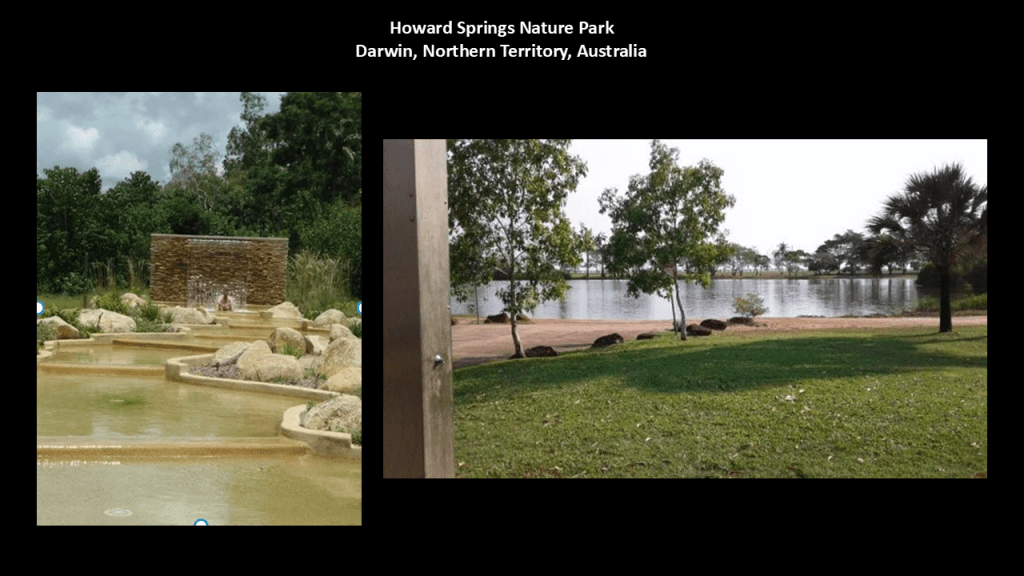
This brings to mind some other “nature” places that I know of, like the Howard Springs Nature Park on the outskirts of Darwin, in Australia’s Northern Territory.
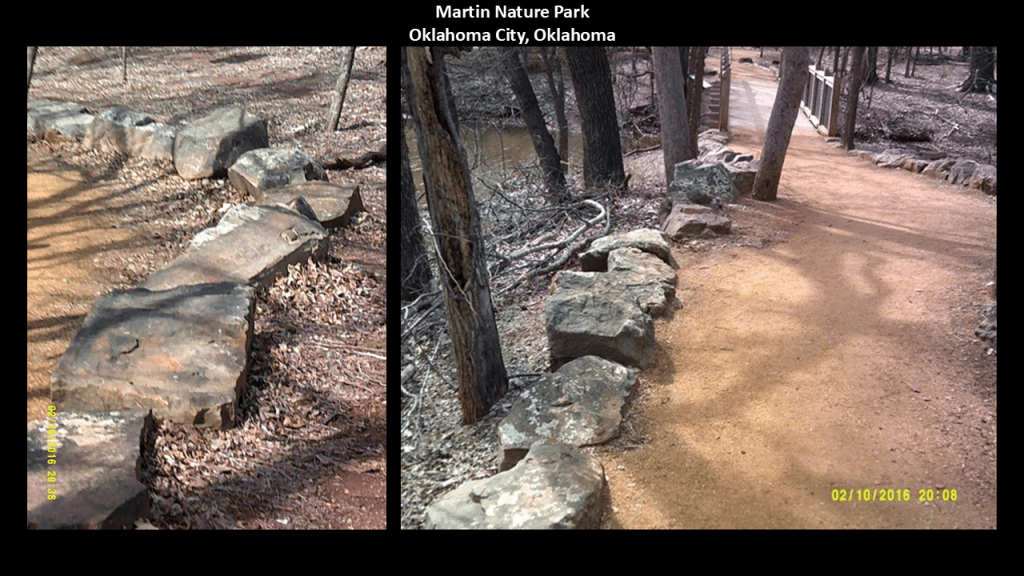
And this is Martin Nature Park in northwest Oklahoma City.
I took these photos at Martin Nature Park several years ago when I was first waking up to all of this.
We are taught that there was nothing special going on in these places, nothing to see, so we fail to recognize the ancient megalithic masonry laying all around us.
And only when you start realizing they are there.
Because until you notice them, they just blend in to the landscape.
These are cut and shaped stones, and not natural occurrences, contrary to what we have taught to believe by historical omission.
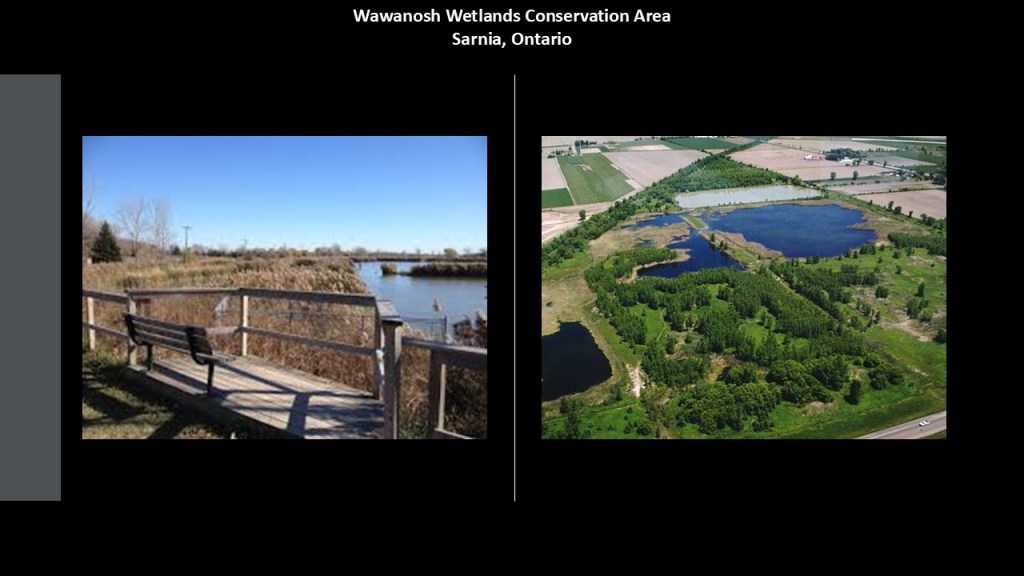
Next, the Wawanosh Wetlands Conservation Area is described as a significant marsh, and offers opportunities for recreational activities like fishing, hiking, and picnicking.
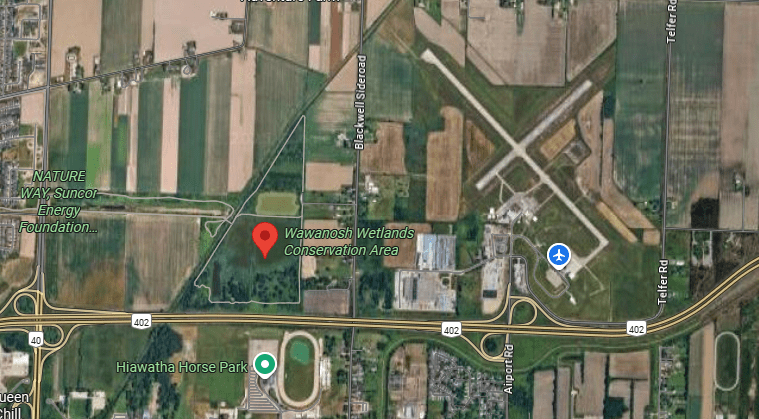
The Wawanosh Wetlands Conservation Area is directly situated in-between the Suncor Energy Nature Way to the west; the Hiawatha Horse Park to the south; and the Sarnia Chris Hadfield Airport directly to the east.
There is another elliptical shape directly to the east of the Horse Park, and to the southeast of the airport that is apparently part of a privately-owned stable.
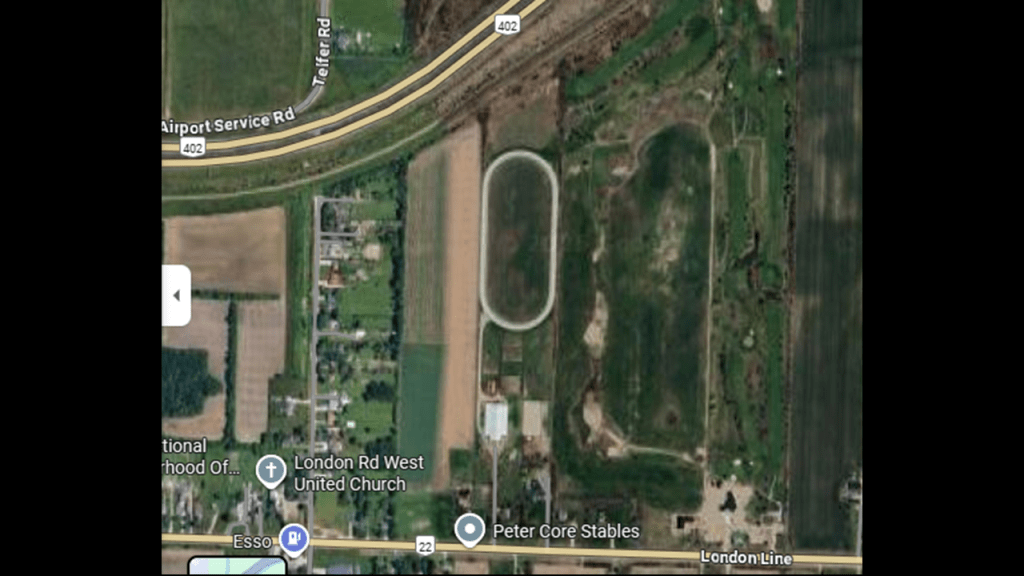
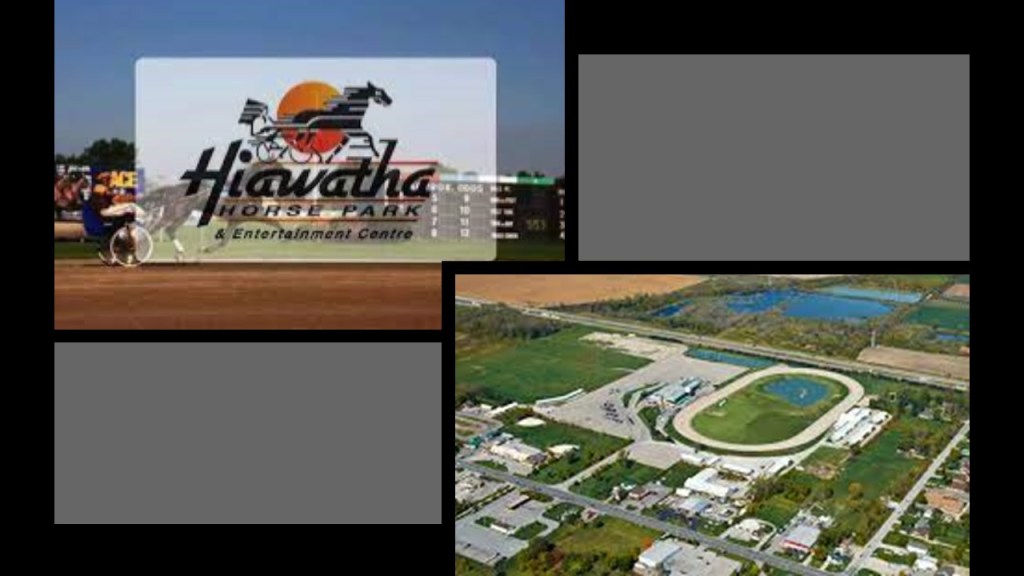
The Hiawatha Horse Park offers harness-racingfrom May through September.
It also has a full-service golf driving range as well as beach volleyball facilities, and it is a local venue for community events and concerts.
The last place I want to look at before I move on from here is the Sarnia Chris Hadfield Airport.
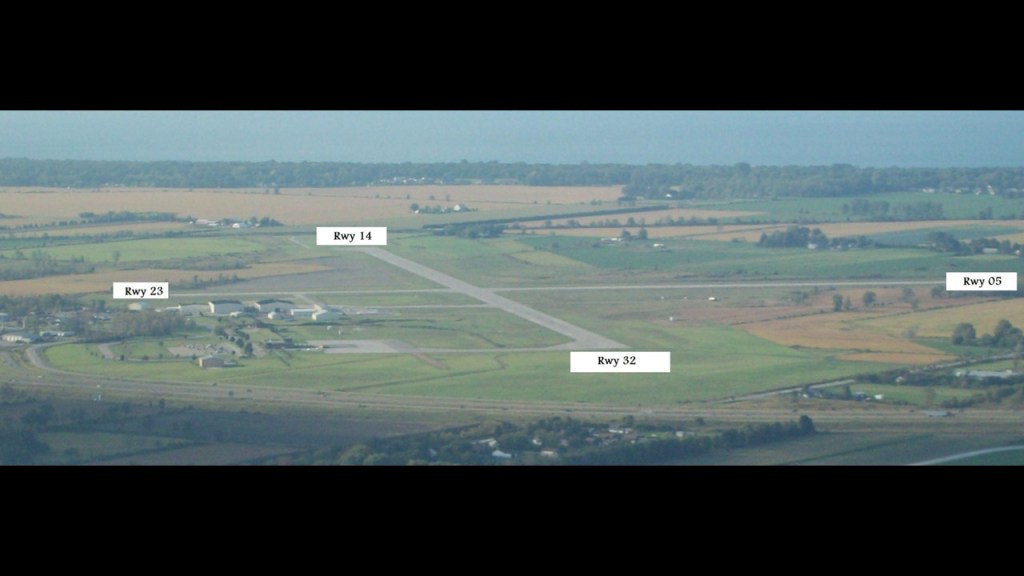
It first opened in 1958 for scheduled flights, and it offers commercial, corporate and general aviation service.s
It is classified as an “Airport of Entry,” where one may lawfully enter Canada.
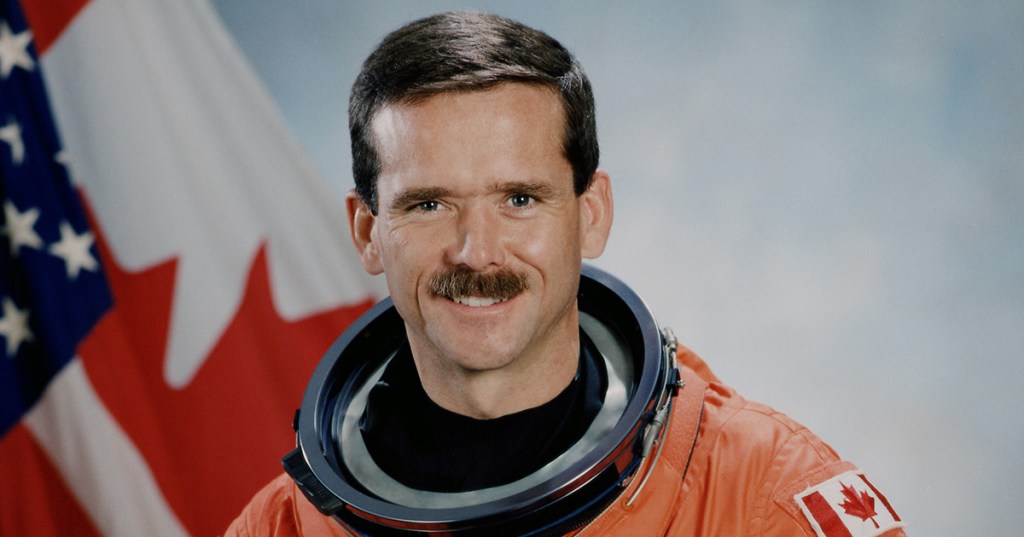
It was renamed for Canadian Space Agency astronaut and Sarnia Native Chris Hadfield in 1997.
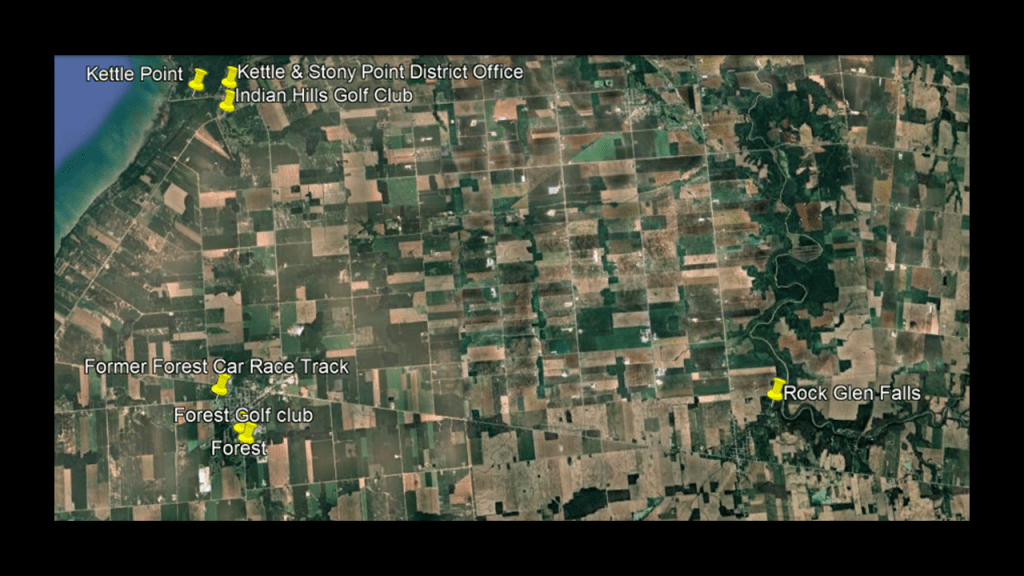
Now I am going to move northeast up along the Lake Huron shoreline to Kettle Point, Ipperwash Beach, Pinery Provincial Park and a little southeast to the Rock Glen Falls.
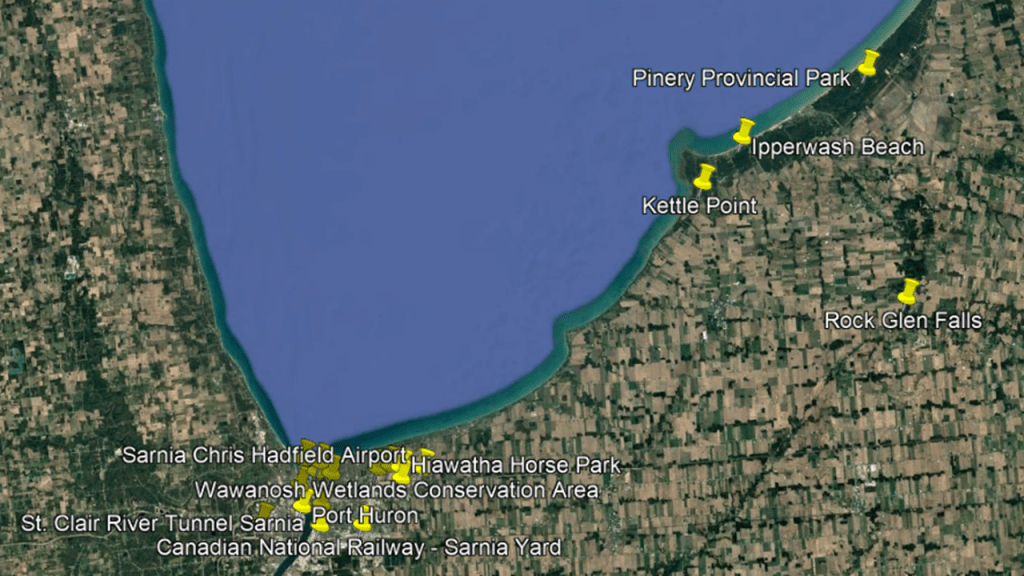
Kettle Point is unceded land of the Anishinabek Nation.
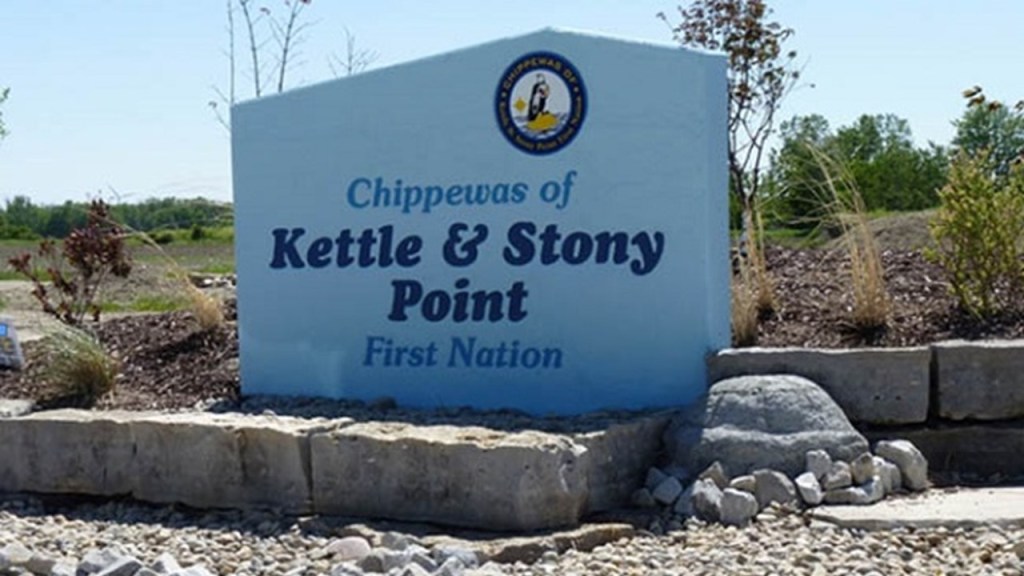
Known officially as the “Chippewas of Kettle and Stony Point,” this First Nations community has approximately 1,900 people, 1,000 of whom live on the reservation here, and 900 who don’t live on the reservation.
Besides the signage sitting on cut-and-shaped megalithic stone blocks, let’s take a look around and see what else we find here.
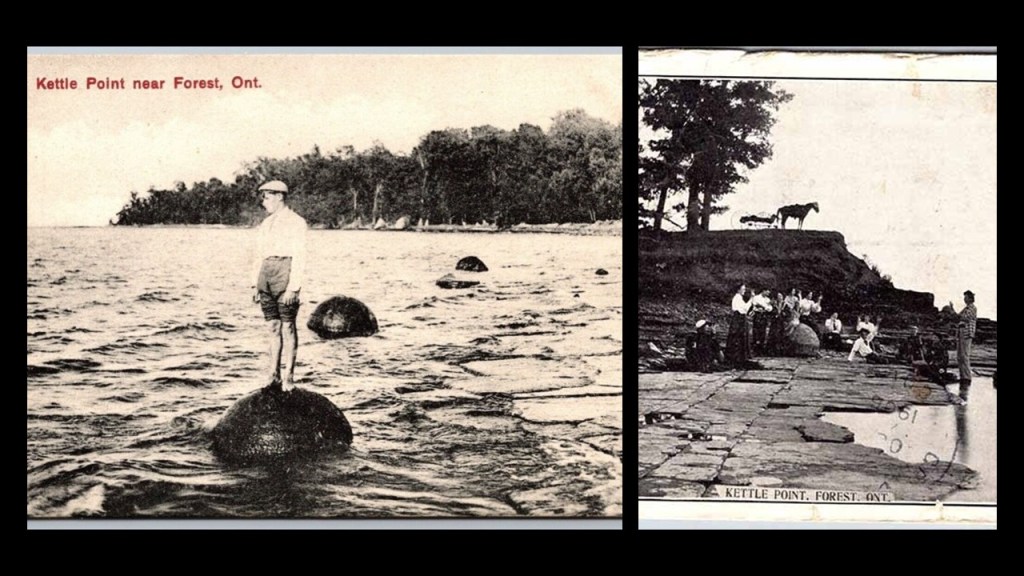
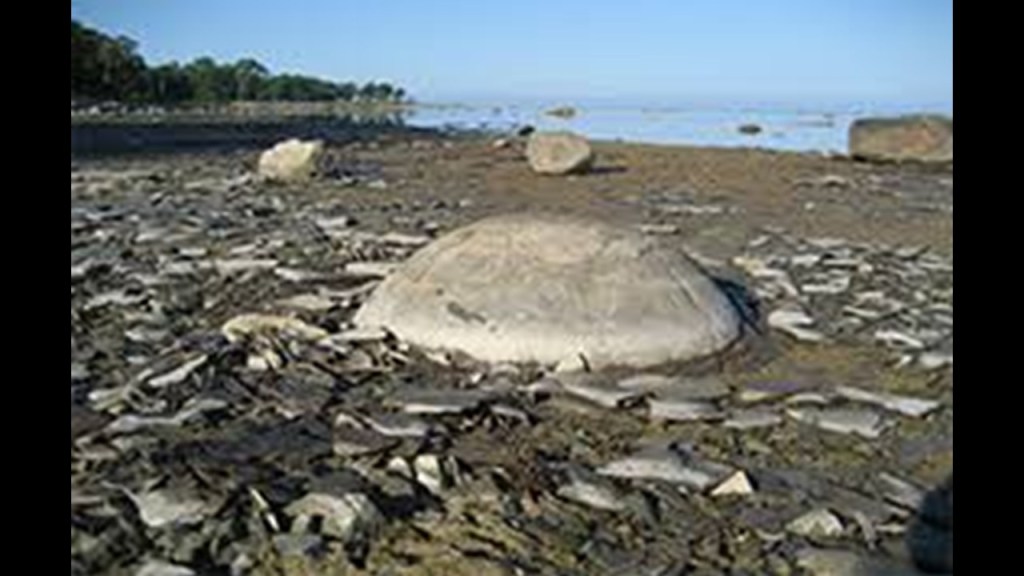
First, Kettle Point is so-named because of what are called unique concretions of calcite that emerge from an outcrop of sedimentary rock like spherical statues.
Alexander Murray of the Geological Survey of Canada described the phenomena of kettles in the mid-1800s.
They are attributed to having been formed 370-million years ago after layers of muddy sediment settled at the bottom of a very deep sea .
Subsequently bacteria caused tiny concretions to form, which over geologic time became the “kettles” there today.
The explanation from the knowledge-keepers of the indigenous Anishinabek Nation is that the kettles are the eggs of Thunderbirds who nest here.
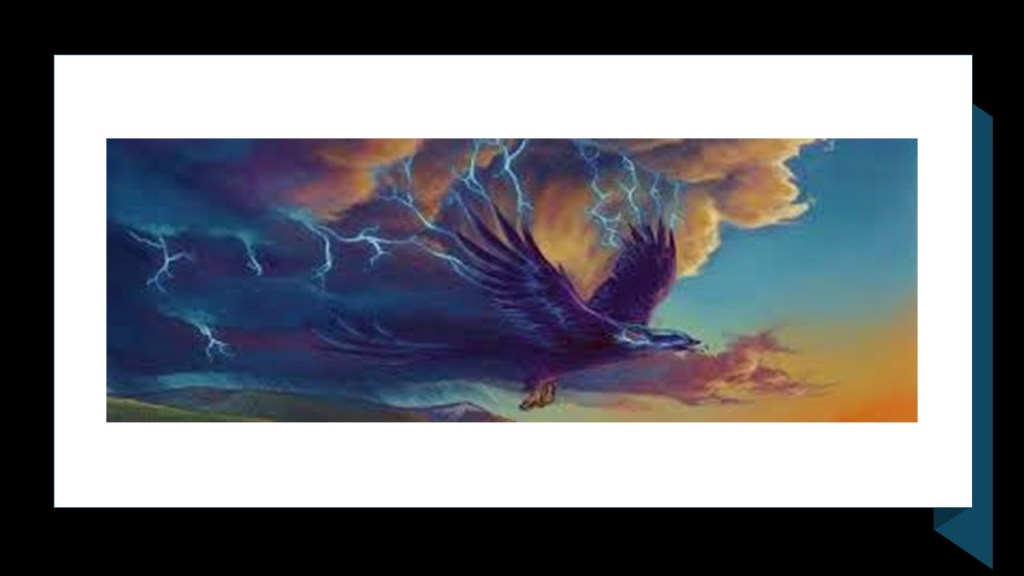
A thunderbird is a gigantic bird that is described as a mighty spirit that controls storms and causes thunder and lightning.
It symbolizes natural power and supernatural ability, acting as a protector against evil spirits and a connection to the spiritual world.
Hmmm.
The spirit of the thunderbird evokes themes of great power and electricity.
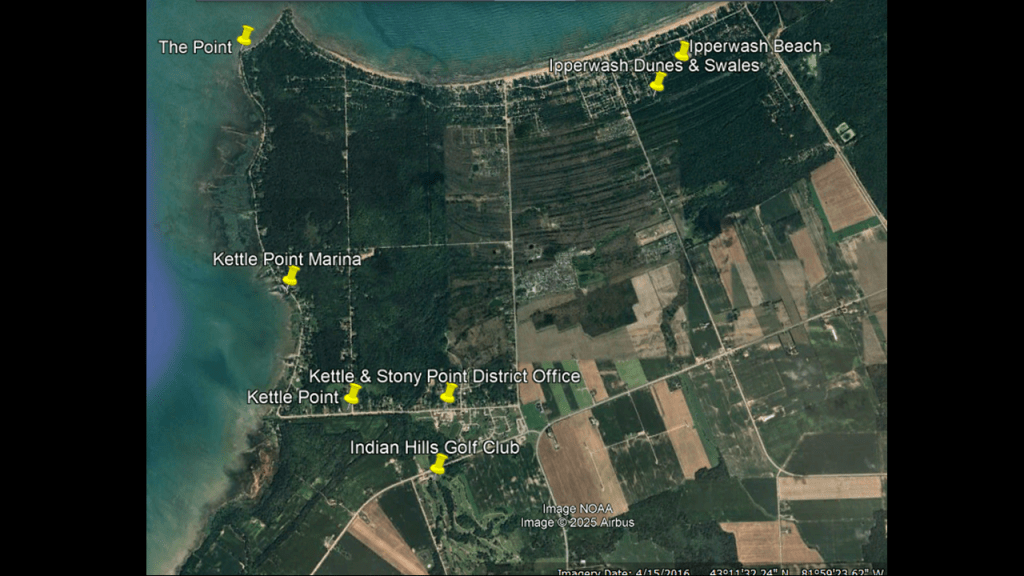
The Kettle & Stony Point First Nation District Office is located just a short-distance north of the Indian Hills Golf Club.
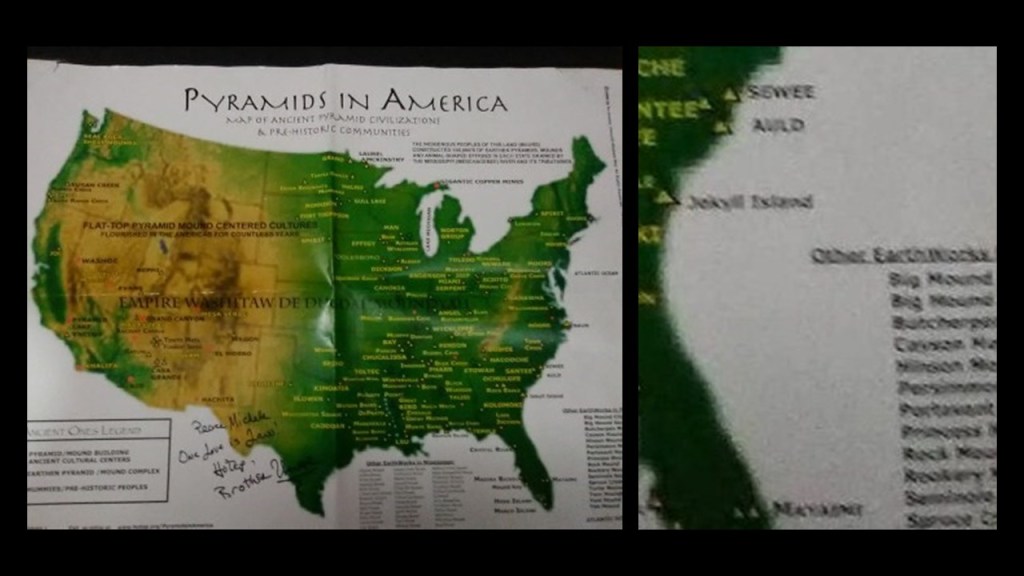
I first started waking up to golf courses as mound sites early in my journey of becoming aware of the ancient advanced civilization hidden in the landscape all around us.
When I received this map showing “Pyramids in America” a couple of years before I started doing my own research in 2018, I started looking up information on the different places shown on the map.
I noticed Jekyll Island had a yellow triangle next to it, indicating the presence of an earthen pyramid/mound complex.
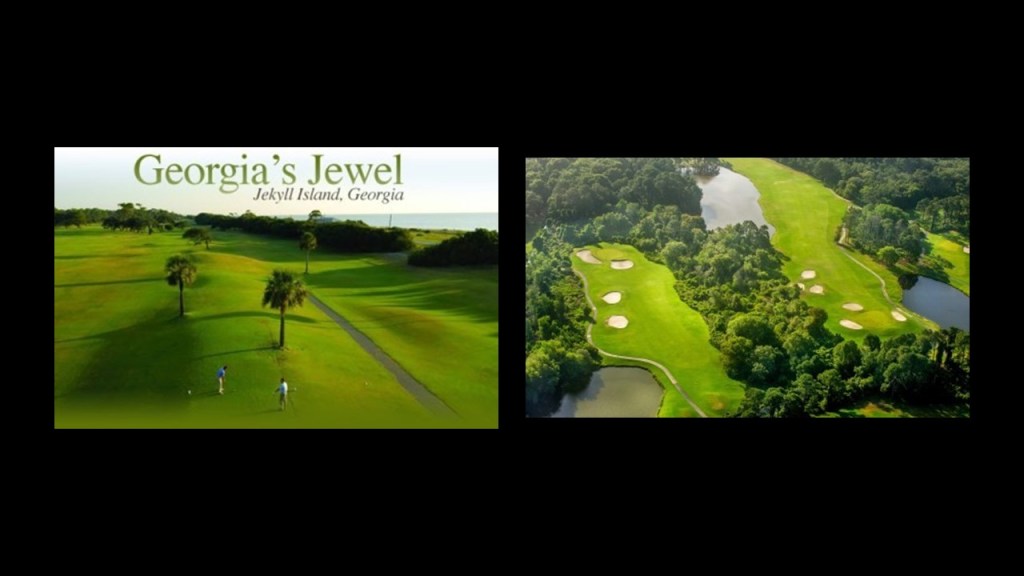
When I looked up Jekyll Island Mounds, this is what came up – the Jekyll Island Golf Club.
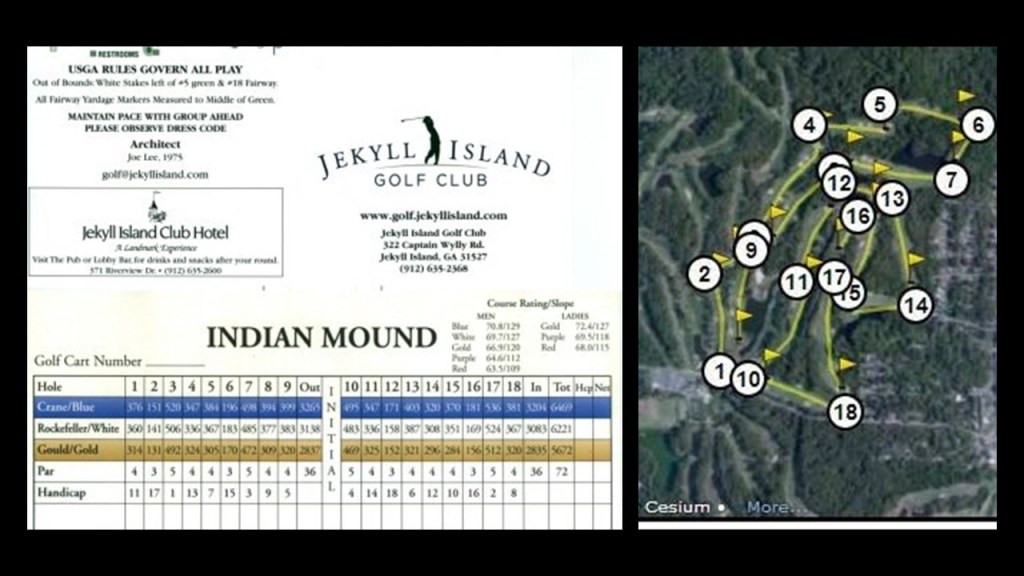
Jekyll Island has an interesting history of interest in it by the very wealthy.
Even now it is owned by the State of Georgia and run by a self-sustaining, self-governing body.
It became a retreat for the very wealthy in the late 1800s, and early 1900s, and the place where the Federal Reserve System was created.
When I was doing the research for part 3 of this series on the Michigan-side of Lake Huron, I found a connection between Jekyll Island and Lake Huron via Michigan State Trunkline Highway Route 25.
Michigan State Trunkline Highway 25, which follows the arc-like shape closely along the Lake Huron shore of the Thumb between Port Huron and Bay City.
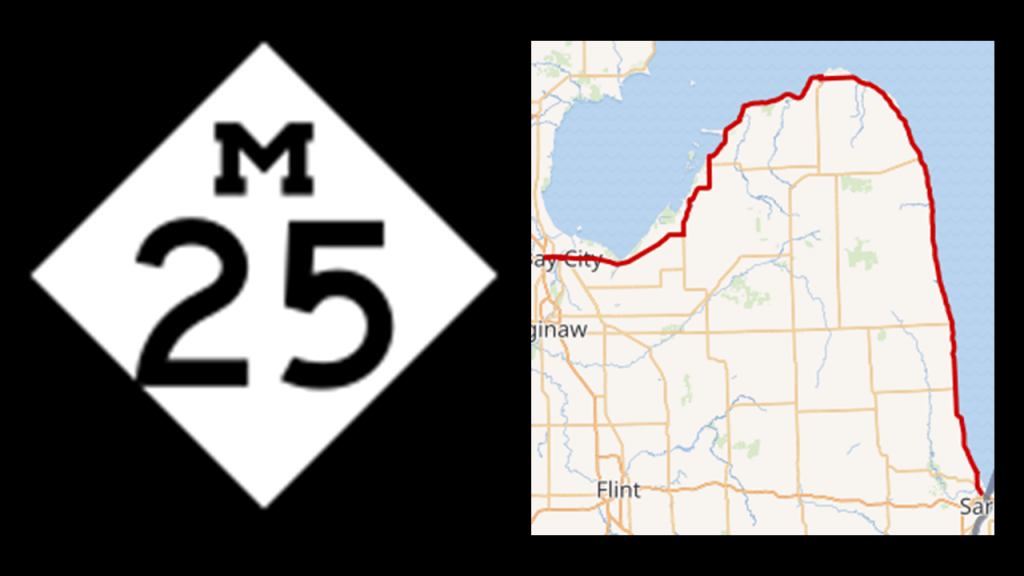
Michigan State Highway 25 was once part of the longer US Highway Route 25, when it was first established with the United States Numbered Highway System in 1926.
The original US-25 began at US Highway 17 in Brunswick, Georgia, and ended at Port Huron in Michigan, and was extended to Port Austin in 1933.
All of US-25 was deleted north of Cincinnati, Ohio, in the 1970s.
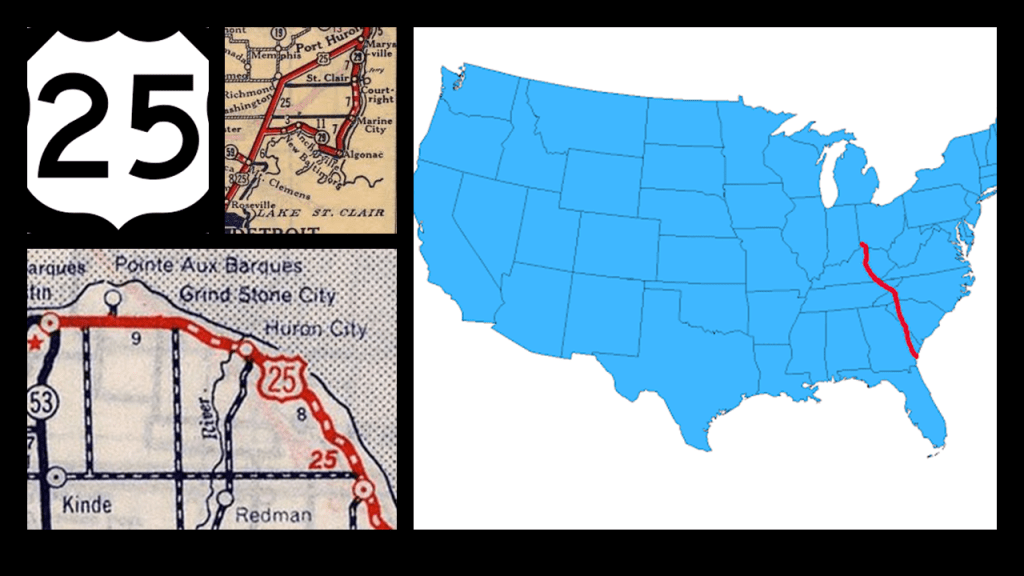
The southern terminus of US-25 is Brunswick, Georgia, which was the location of the train station on the Southern and Atlantic Coast Railroad that serviced Jekyll Island where the creators of the Federal Reserve met in 1910.

Going up the coast from the community of Kettle Point, it’s interesting to note a series of what appear to be man-made channels heading towards what is called “The Point.”
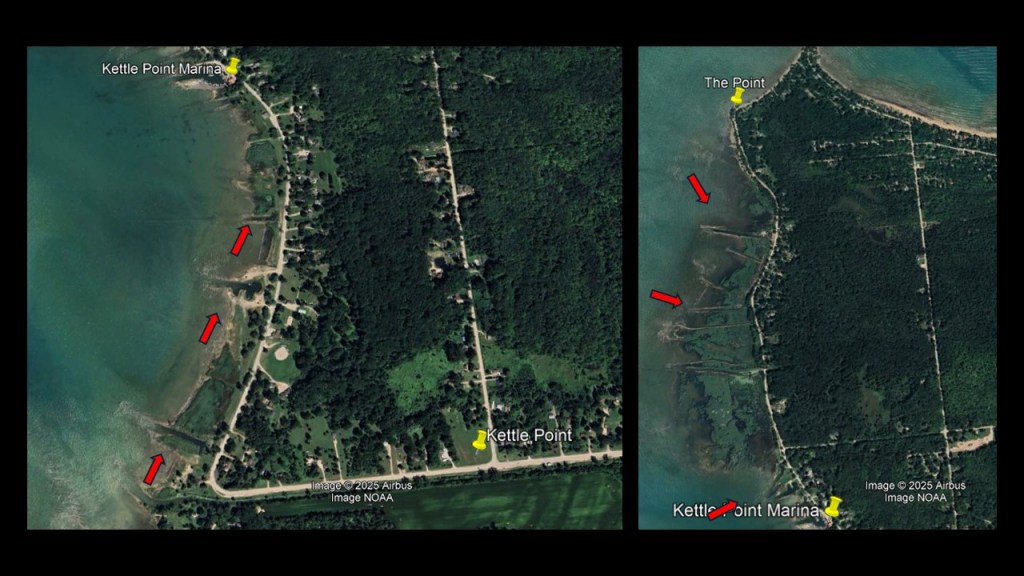
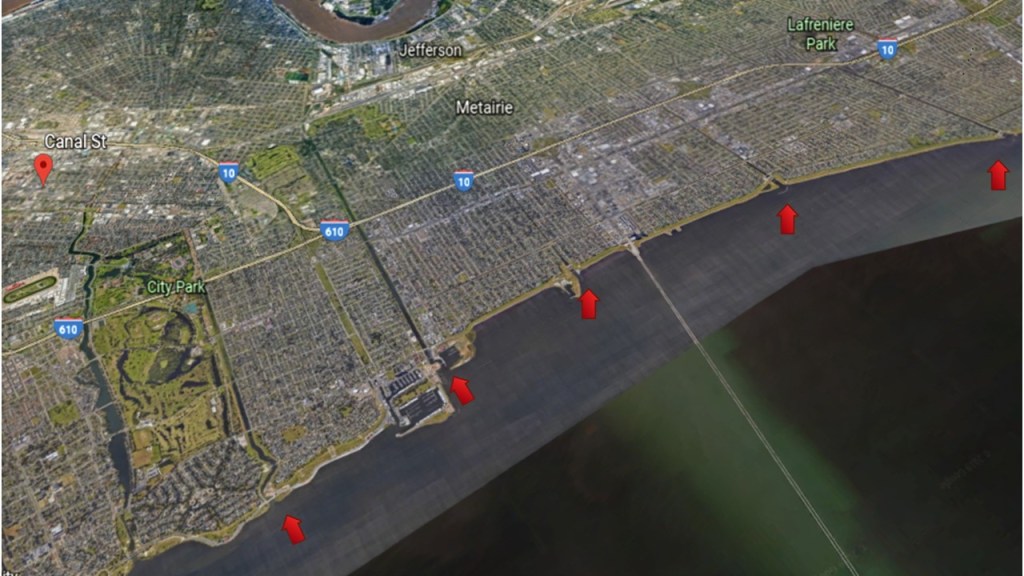
This reminds me of what I saw in New Orleans back in July of 2019 when I was tracking a long distance alignment that started and ended in Washington, DC.
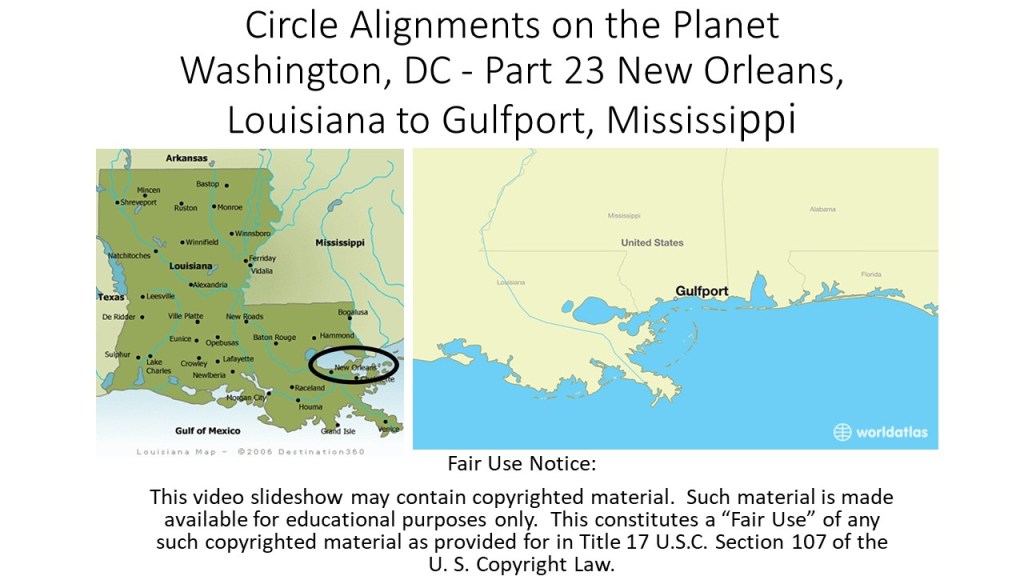
We are told that Canal Street was named for a canal that was never built.
Canal Street is a major thorough-fare in New Orleans.
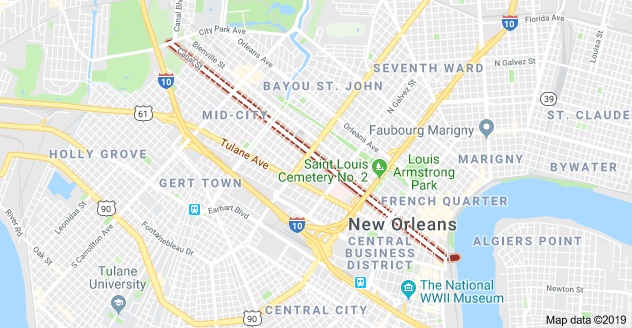
But there are plenty of still-existing canals in New Orleans, as seen in this Google Earth screenshot, and no telling how many have been filled-in!
The municipality called Lambton Shores includes places like Ipperwash Beach and Pinery Provincial Park, and Grand Bend, as well as Kettle Point, Forest, and Rock Glen Falls.
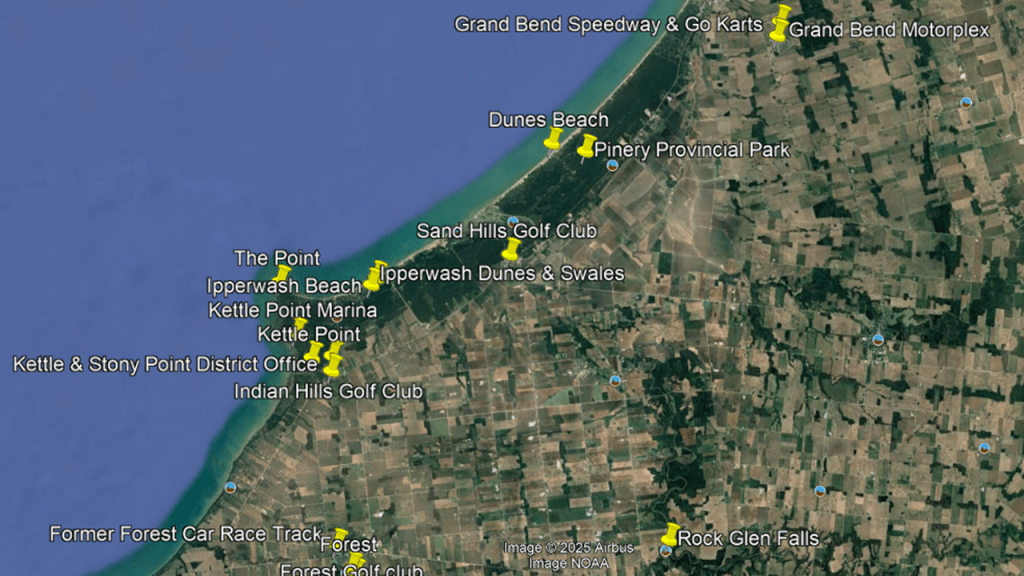
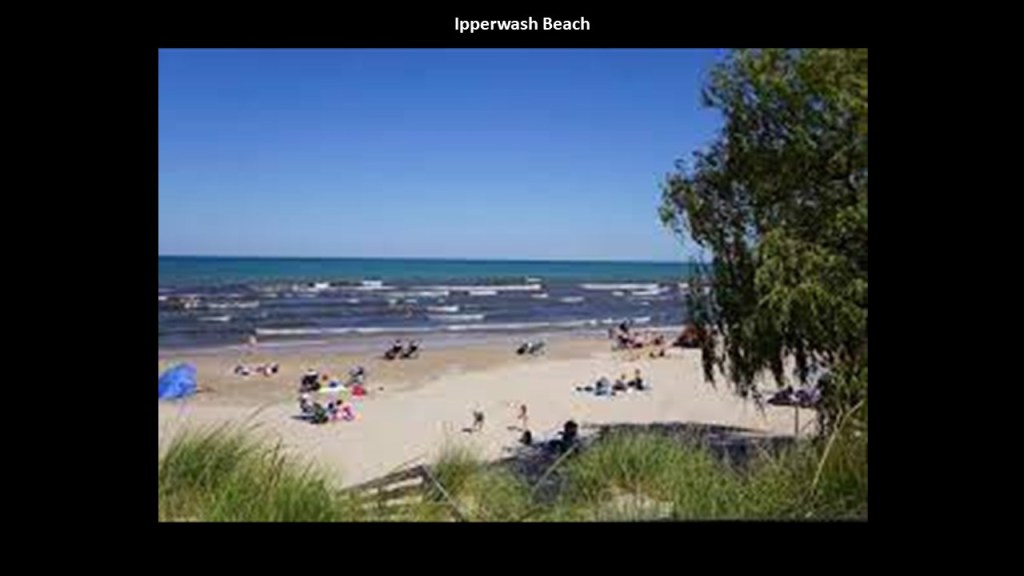
Along the shoreline, we come first to Ipperwash Beach, which is situated between what is called “The Point” and Pinery Provincial Park.
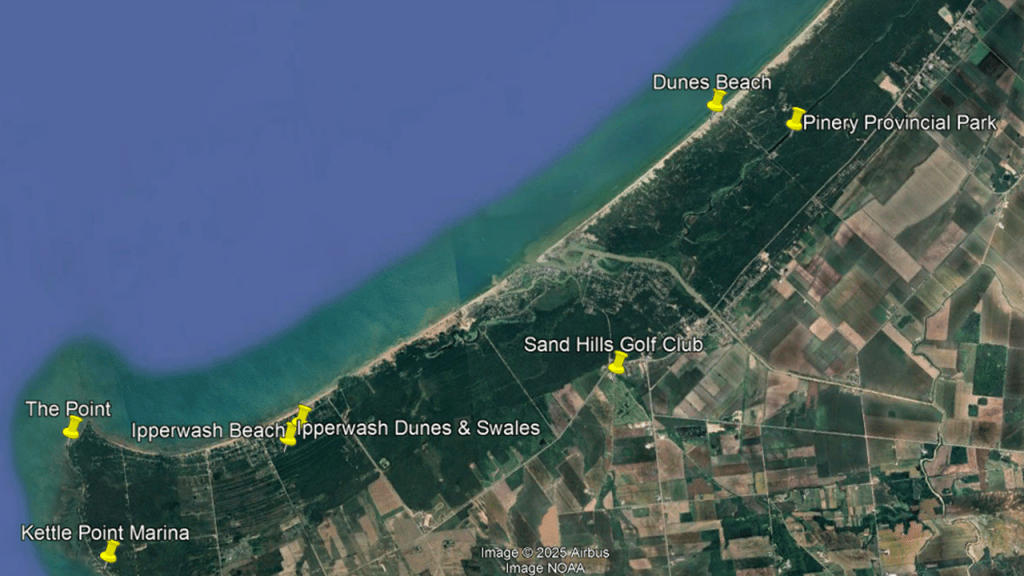
Ipperwash Beach is one of the longest freshwater beaches in Ontario.
Beach access here is limited to public access areas.
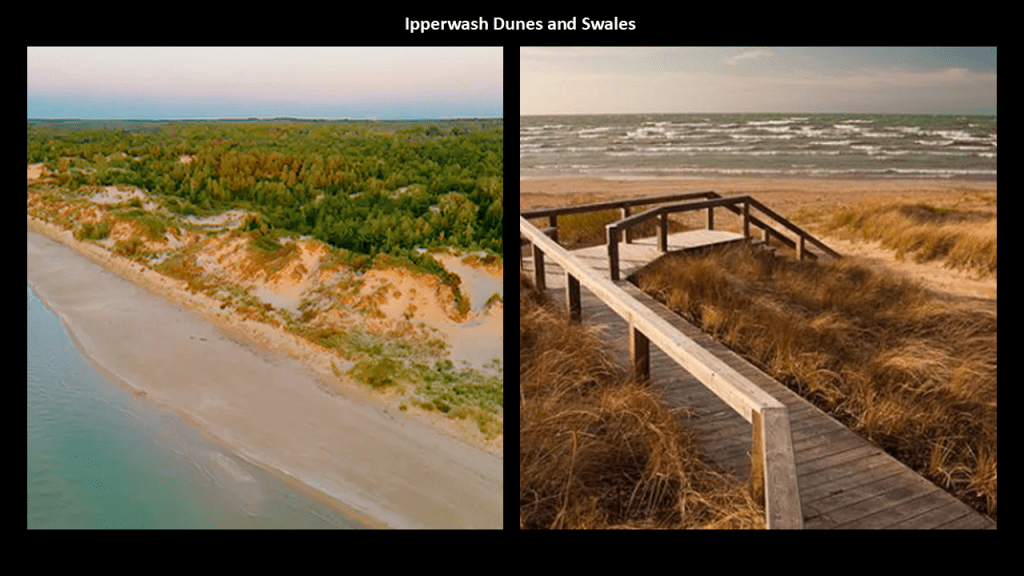
The Ipperwash Dunes & Swales is described as a Carolinian forest of sand ridges and wet swales that cover over 500-acres, or 202-hectares, that can be visited by way of a 3-mile, or 5-kilometer, boardwalk trail.
A Carolinian Forest features deciduous trees like beech, black walnut, hickory, maple and oak.
Swales are landforms that are defined as a sunken or marshy place.
Like I have mentioned previously, my working hypothesis is that the circuit board of the Earth’s original energy grid system was deliberately blown out by one or more forms of directed frequency or energy of some kind into different places on the Earth’s grid, causing the surface of the Earth to undulate and buckle.
From tracking leylines all over the Earth, looking from place-to-place at cities in alignment over long-distances, I consistently find the presence of swamps, marshes, bogs, deserts, dunes, and places where it appears land masses sheared-off and submerged under the bodies of water we see today.
The Sand Hills Golf Club and Resort is sandwiched in-between Ipperwash Beach, Dunes and Swales, and Pinery Provincial Park.
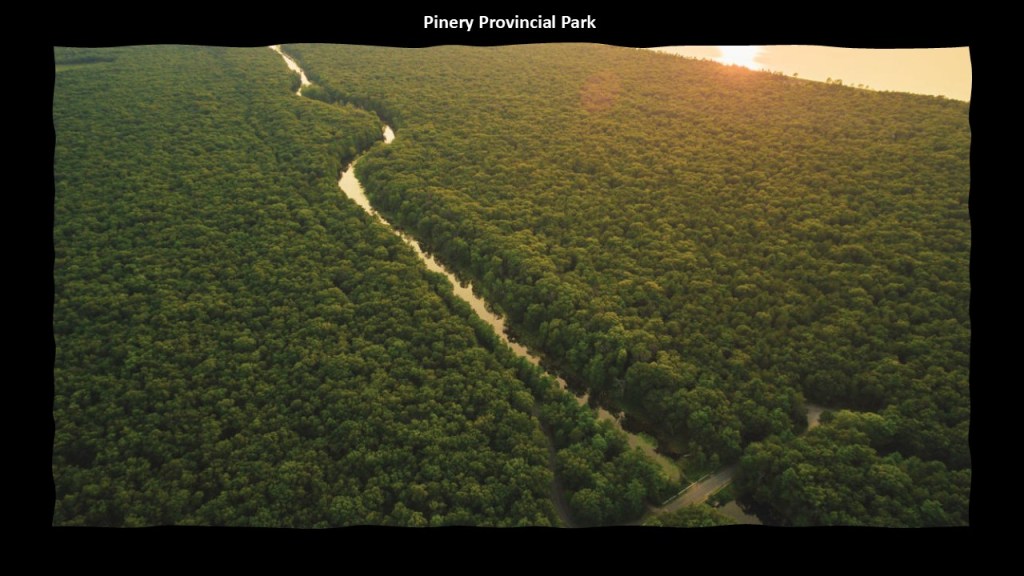
We are told the Pinery Provincial Park was created to help preserve an oak savannah and dune ecosystem, and that the initial package for the land was purchased from the Canada Company in 1957.
Like the previously-mentioned Council for New England, the Canada Company was created by Royal Charter.
The Canada Company was created in August of 1826, under the Canada Company Act of 1825 of the British Parliament to aid in the colonization of a large part of Upper Canada.
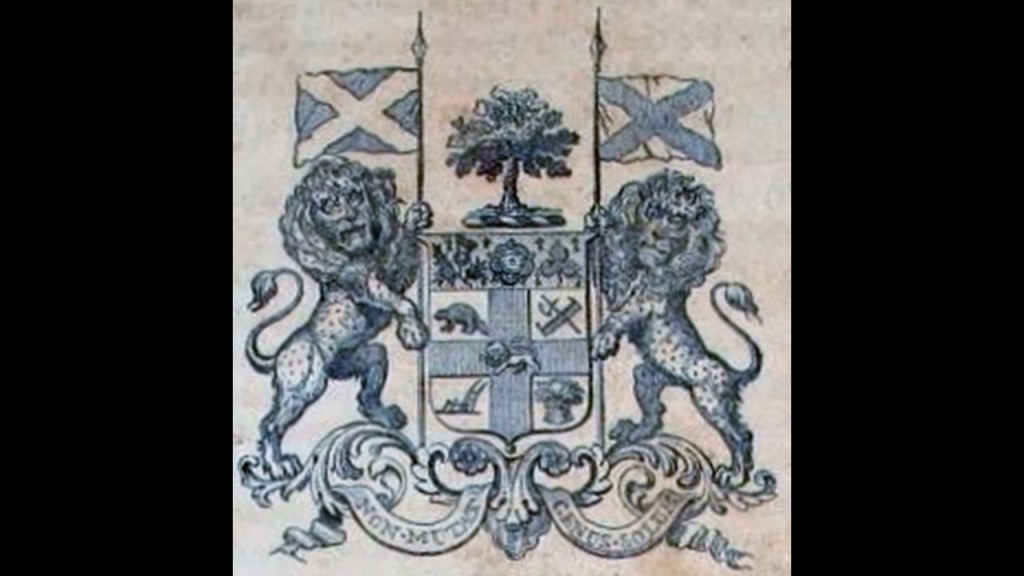
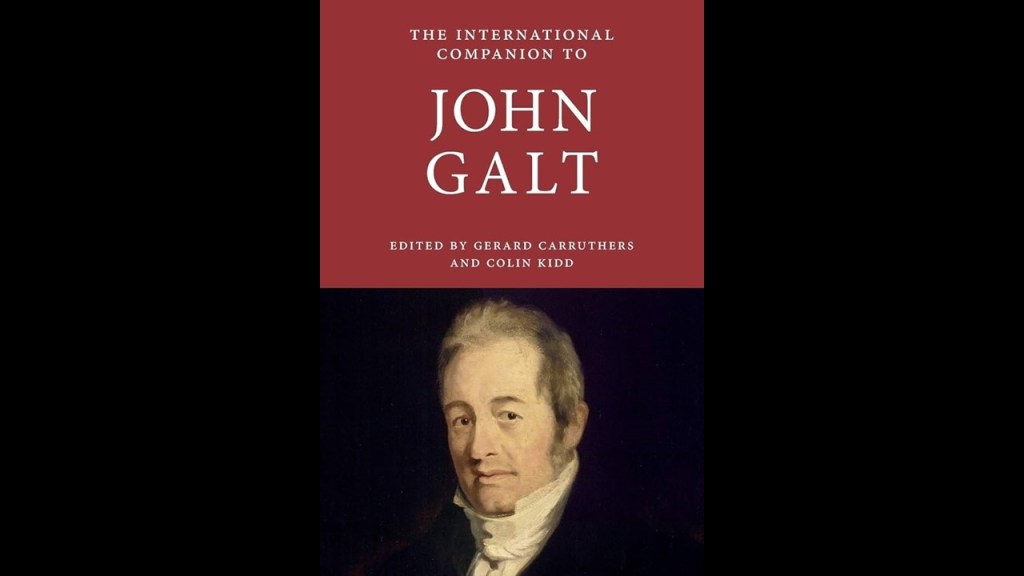
The Canada Company was founded by the Scottish novelist John Galt, and he was its first Superintendent.
John Galt was considered the first political novelist in the English language because he was the first to deal with issues of the Industrial Revolution.
We are told that the Canada Company under Galt’s leadership was successful in populating an area called the Huron Tract, which was called the “most single important attempt at settlement in Canadian history,” and which resulted in the Anishinabek people being dispossessed of their ancestral lands.
The Huron Tract happens to be the land that we are looking at through here.
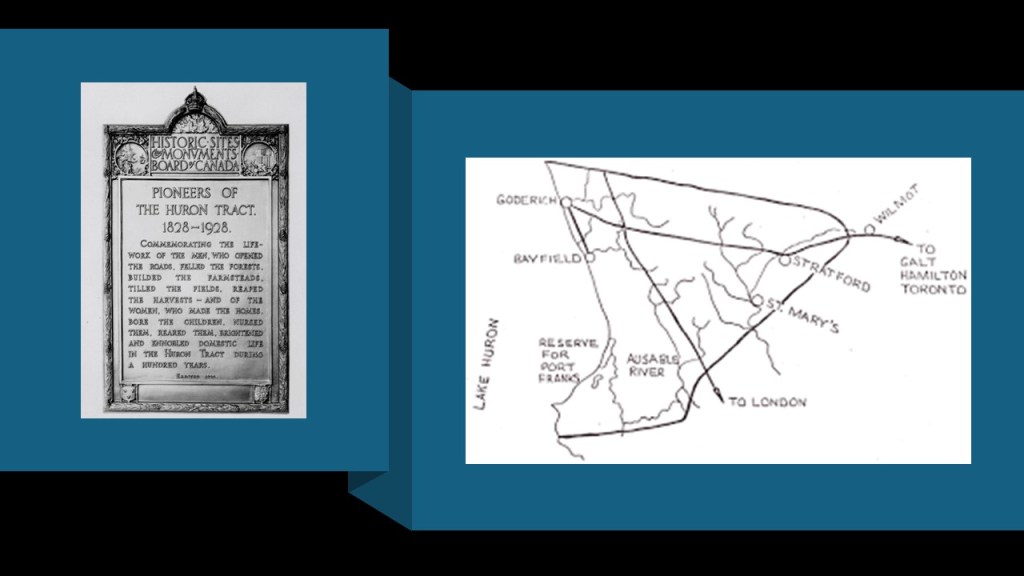
By the way, John Galt was only superintendent for three years, because in 1829, he was recalled to Great Britain for mismanagement of the Canada Company, particularly incompetent book-keeping.
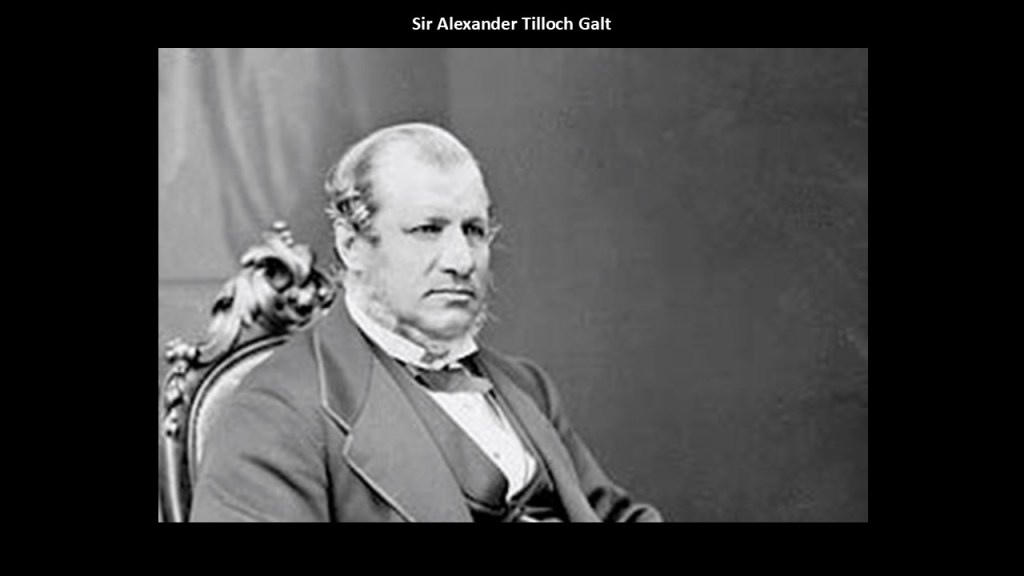
His son, Sir Alexander Tilloch Galt of Montreal was one of the leading Fathers of Confederation from Lower Canada in the 1860s.
He was Canada’s first Federal Finance Minister and the country’s first High Commissioner to the United Kingdom.
The community of Grand Bend is on other side of Pinery Provincial Park.
In Grand Bend, we find things like a lighthouse, the Grand Bend Motorplex, and the Grand Bend Speedway and Go-Kart Center.
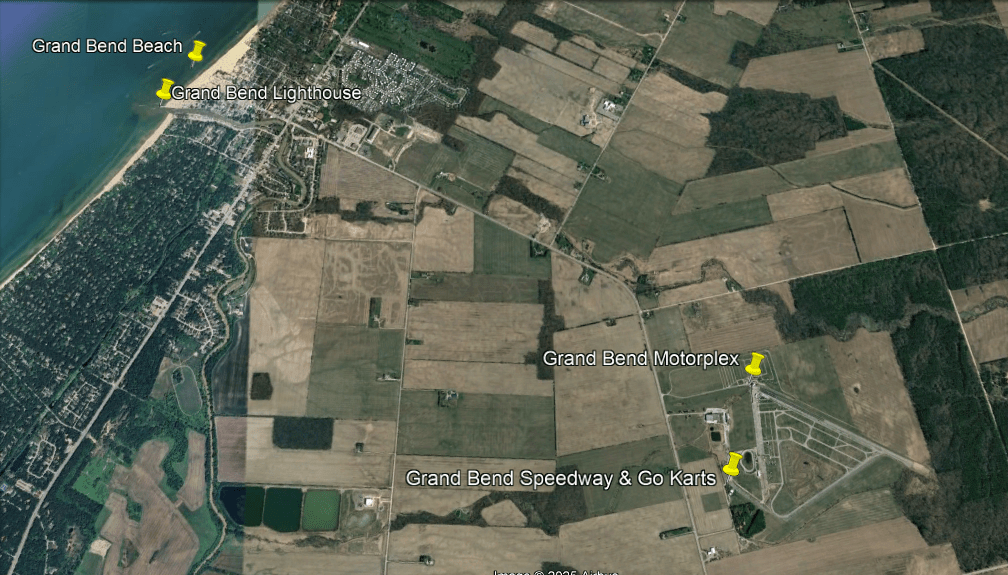
We are told the settlement in Grand Bend was started on the Ausable River in the 1830s when a group of English and Scottish settlers purchased land from the Canada Company .
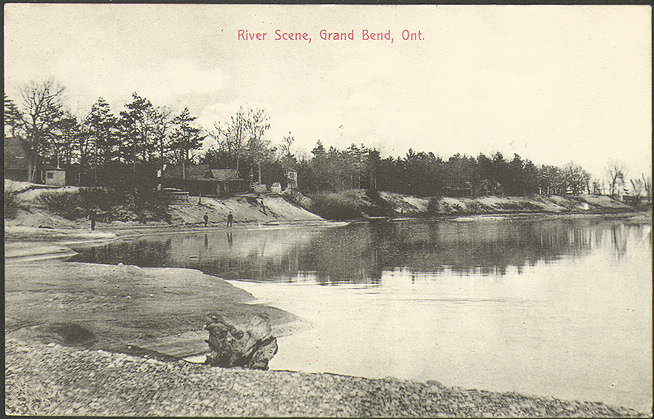
The “Grand Bend” refers to a “hairpin” turn in the Ausable River that flows into Lake Huron, near where sand dunes historically blocked the river’s outlet to the lake.
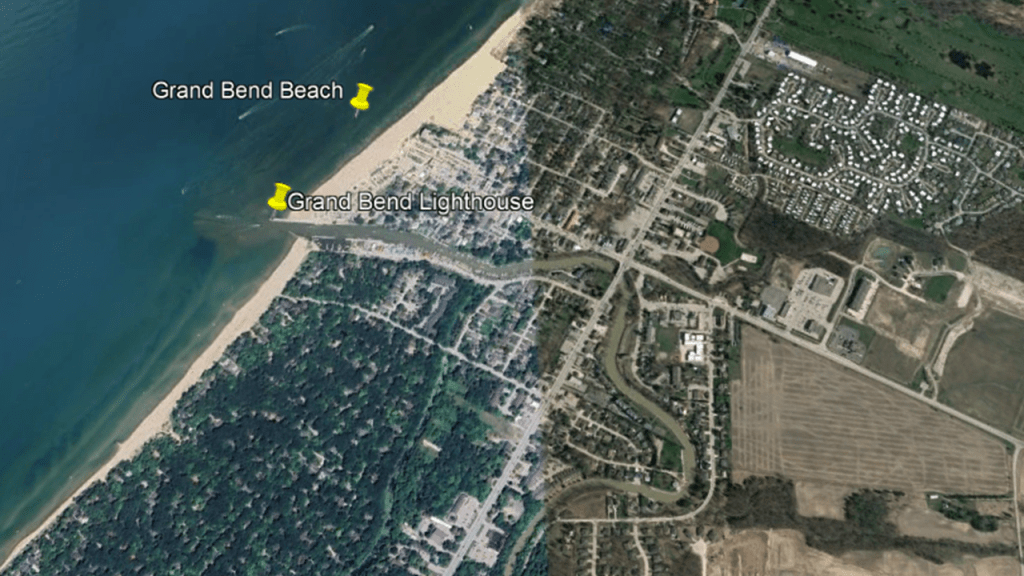
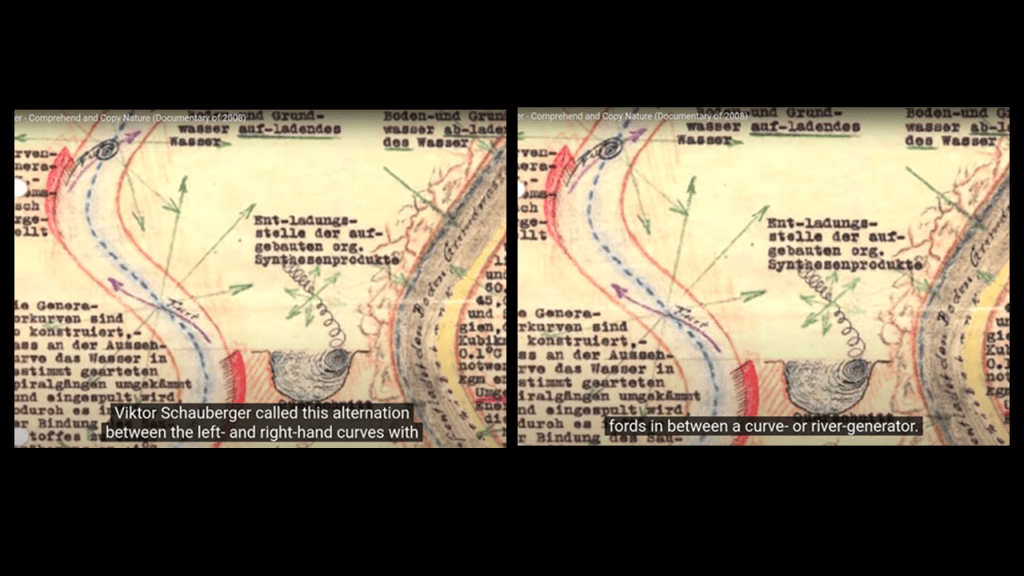
I believe the S-shapes of these rivers in our historical narrative were an intentional part of the original energy grid and are found all over the Earth, but called natural rivers, creeks, and streams.
Viktor Schauberger, an Austrian scientist, was a pioneer in the field of water and energy research in the early 20th-century, who specialized in the flow of water and natural energies, and the hydrodynamics of S-shapes.
Between 1928 and 1935, he worked on developing a device for the production of living water, water with an enhanced structure and necessary minerals.
Schauberger described the twisting and turning flow of water courses energizes water.
Conversely, he believed that modern industries destroy healthy water, including the processes of municipal water treatment plants, which decompose healthy water.
At any rate, a sawmill was established in Grand Bend, and it became an isolated lumbering community because there was no road access until the 1850s, at which time a highway was opened to Goderich, which we will be coming to shortly.
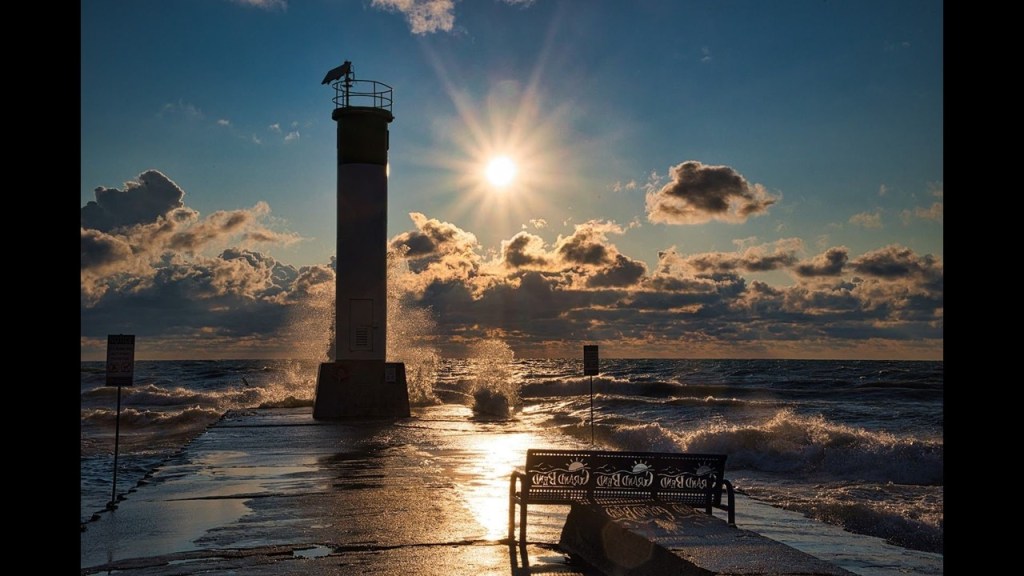
The Grand Bend Lighthouse is known for its stunning panoramic views of Lake Huron and a beautiful location to watch the sunset.
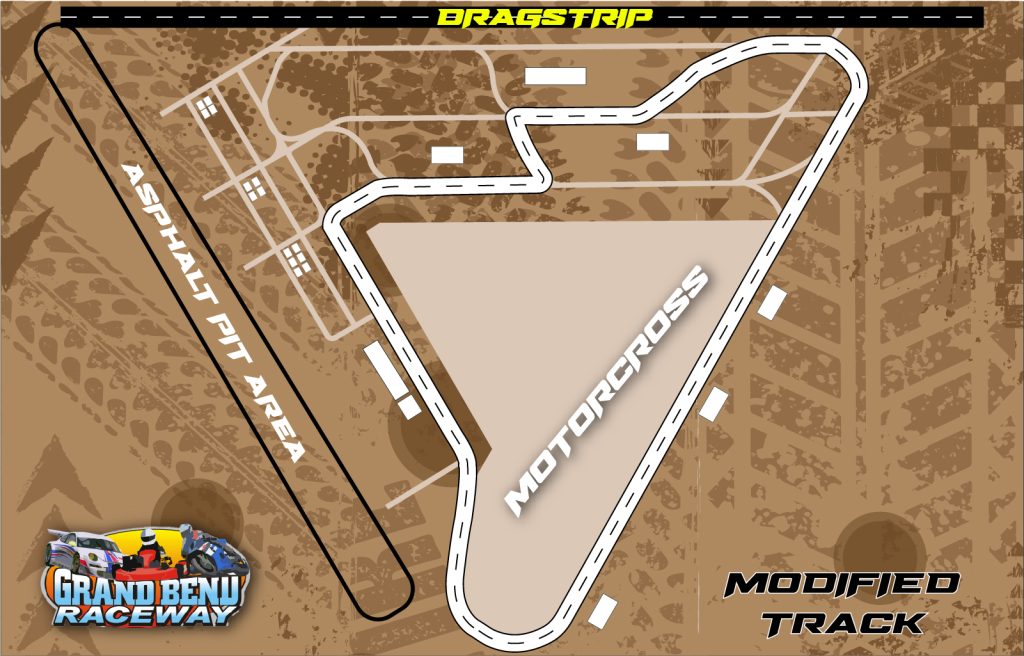
The Grand Bend Motorplex hosts things like national and international championship drag-racing events for the International Hot Rod Association and competitive motocross racing.
Then there is the Grand Bend Speedway and Go-Kart Center.
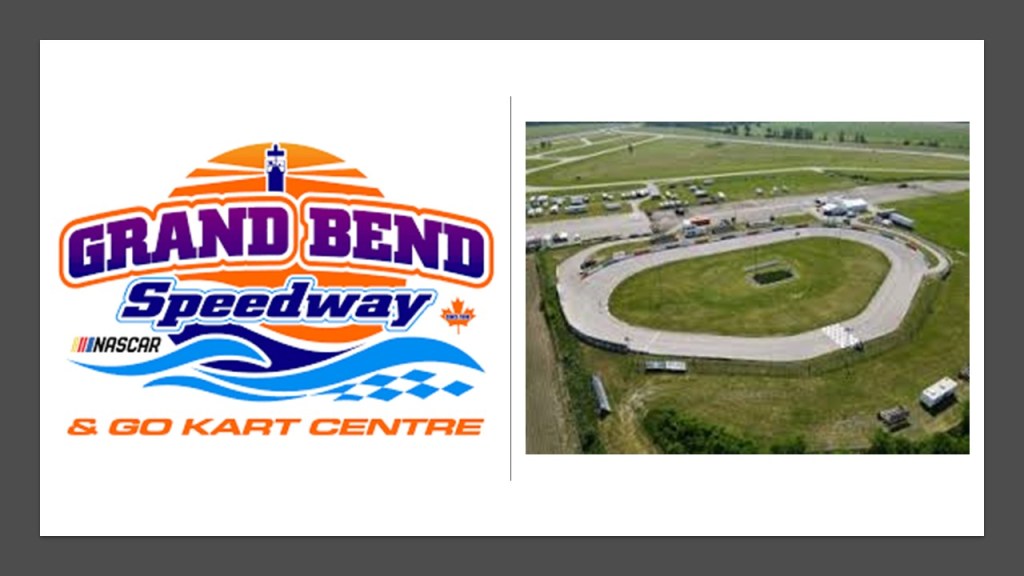
The Grand Bend Speedway hosts NASCAR races in addition to go-karts for family enjoyment.
Directly to the south of the community of Kettle Point is the community of Forest, and the Rock Glen Falls are to the southeast of Kettle Point.
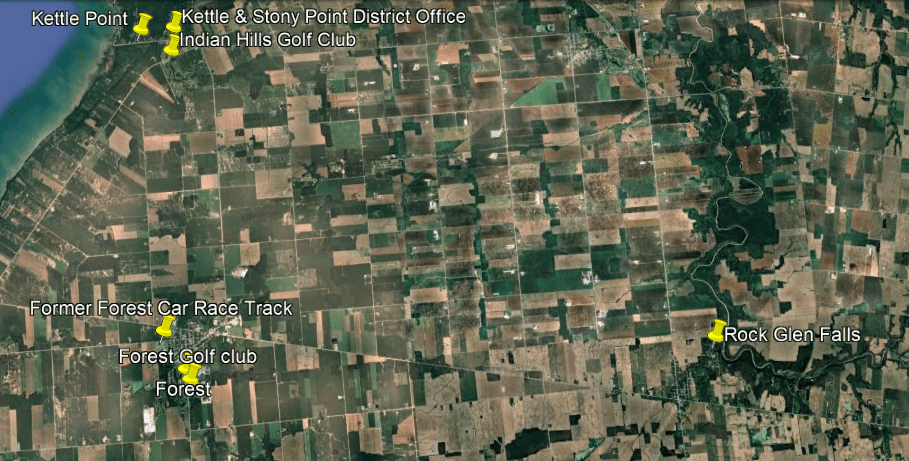
What we are told about Forest is that it was once-dense forest, and that when the Grand Trunk Railway was built through where the town is, it was named for the forest.
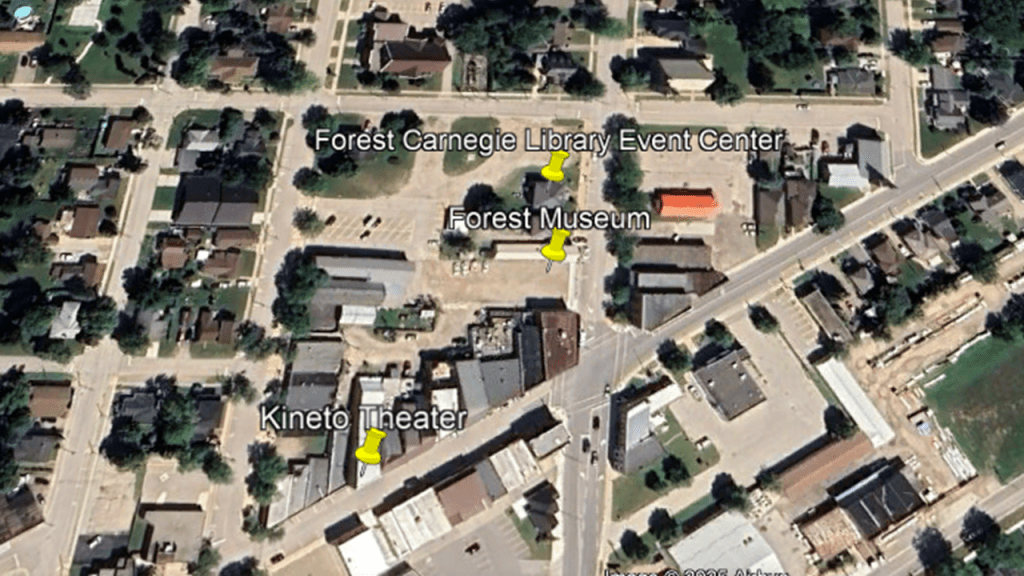
I had initially identified the Forest Golf Club and a large ellipse to mention, but then when I started looking for information on this small town of 2,429 as of the 2021 census, some really interesting things jumped out at me – the Forest Amphitheater in the Esli Dodge Conservation Area; the Forest Carnegie Library, which is now an event center; the Forest Museum, and the Kineto Theater.
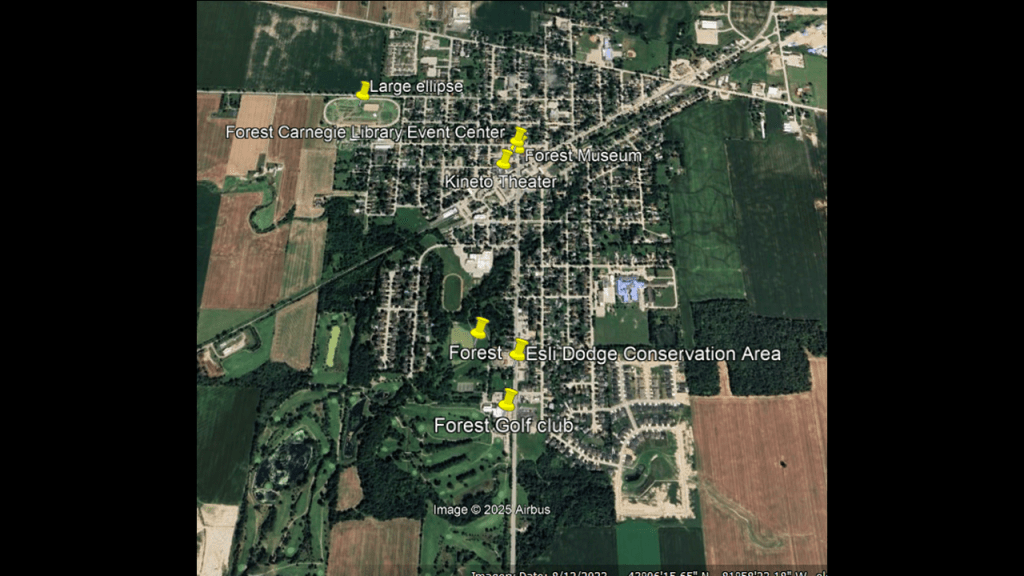
First, the Esli Dodge Conservation Area with the Forest Amphitheater and tennis courts, which is located between the Forest Golf Club and the North Lambton Secondary School and its track.
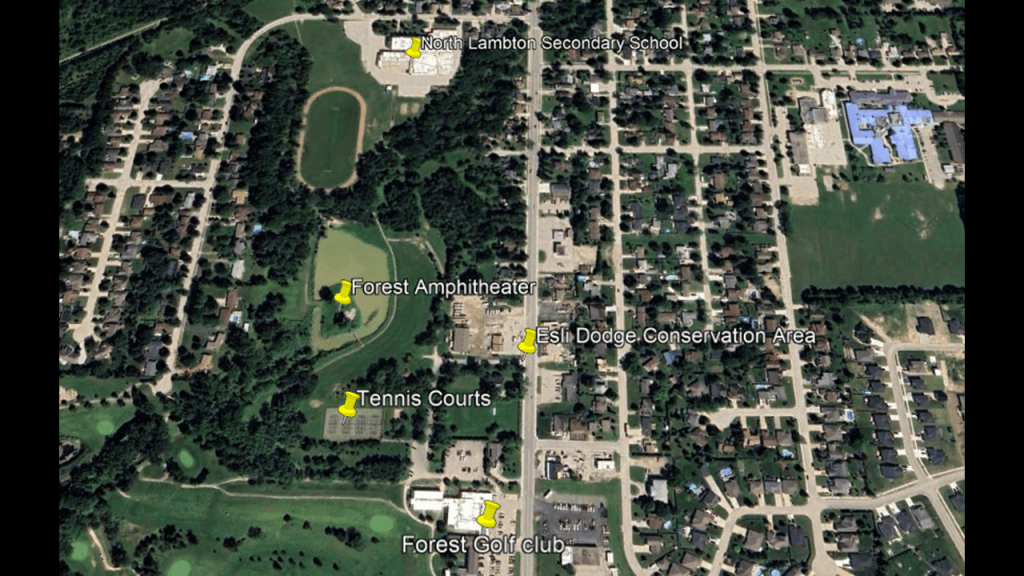
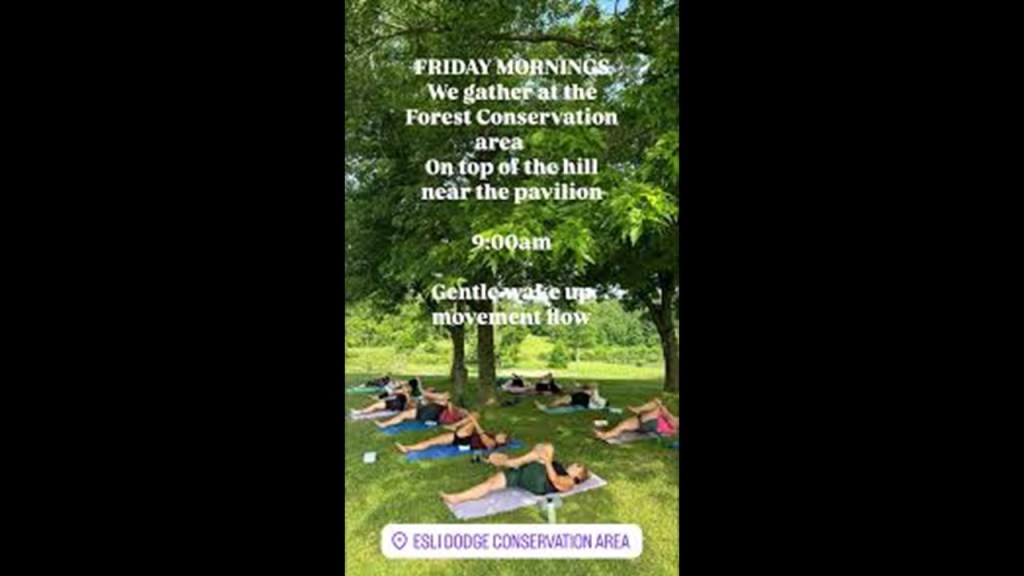
The Esli Dodge Conservation Area is considered ideal for concerts and weddings along with recreational activities of all kinds.
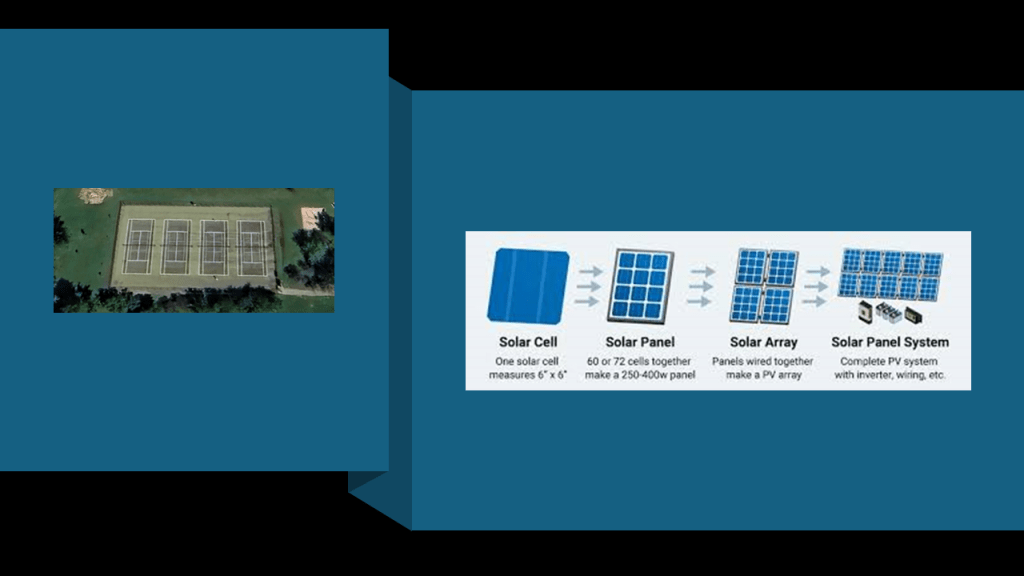
I think today’s tennis courts were also circuits on the Earth’s original energy grid.
The visuals of tennis courts bring solar array systems to mind for similarity of appearance.
I can’t find any photos of the Forest Amphitheater, but here is a description of it – a natural amphitheater on an island that is a popular summertime performance venue.
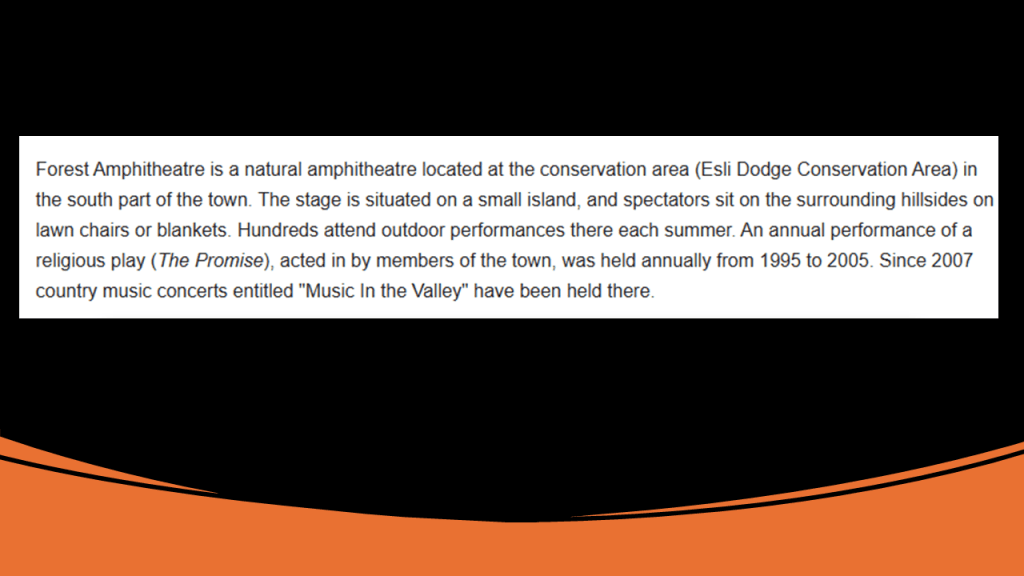
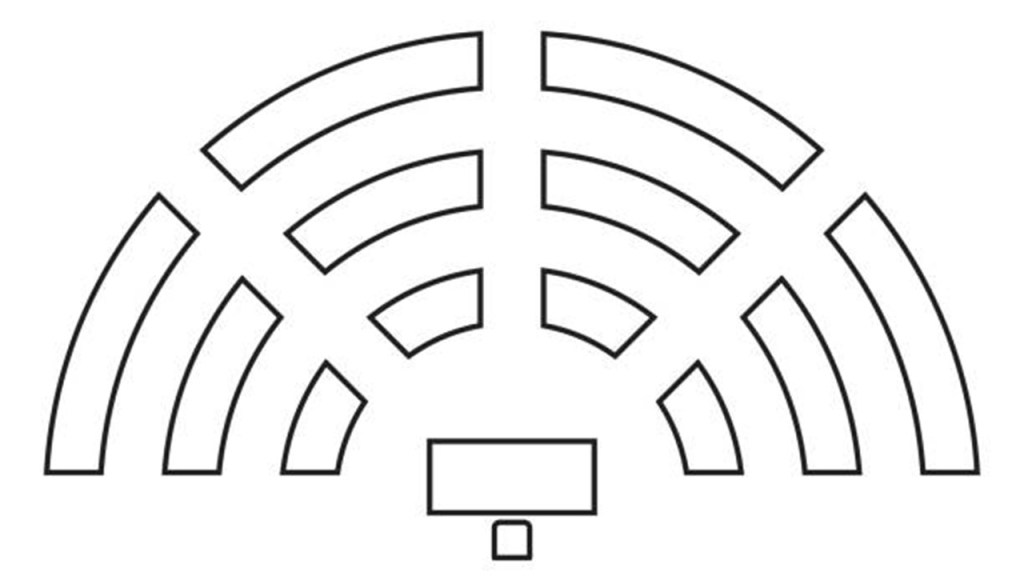
Amphitheaters are described as acoustically-vibrant performance spaces that are circular, semi-circular, or curved, and seemingly another important component of the Earth’s original energy grid system.
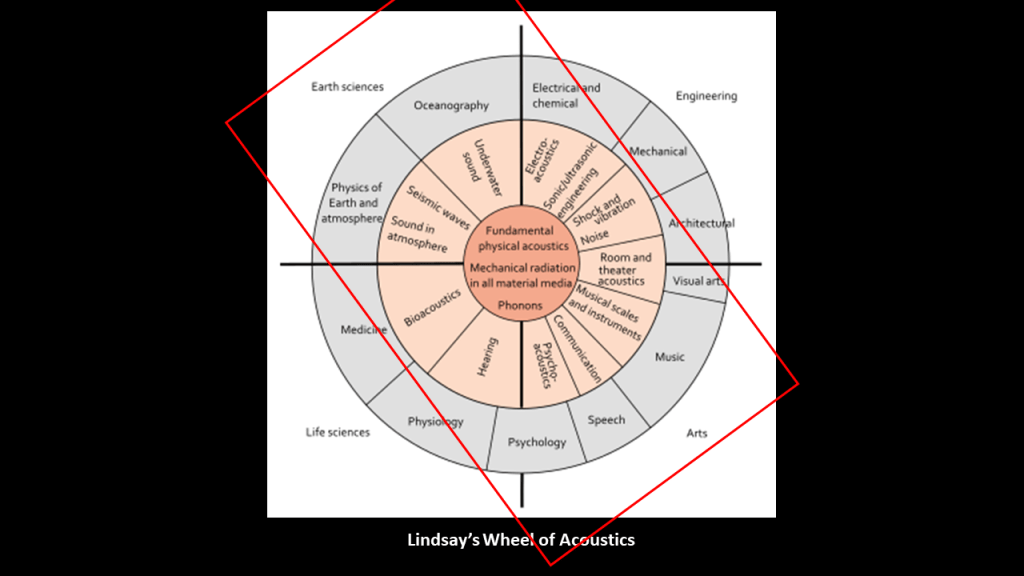
Acoustics is the branch of physics that deals with the study of mechanical waves in gases, liquids, and solids, and includes vibration, sound, ultrasound (higher frequencies audible to human hearing), and infrasound (lower frequencies below the range of our hearing).
It is interesting to note on Robert Lindsay’s “Wheel of Acoustics,” that the fields within acoustics of Earth Sciences, which includes seismic waves and sound in the atmosphere, as well as underwater sound, is opposite the field of acoustics of the Arts, which includes room and theater acoustics; musical scales and instruments; communication; and psychoacoustics on the psychology of sound.
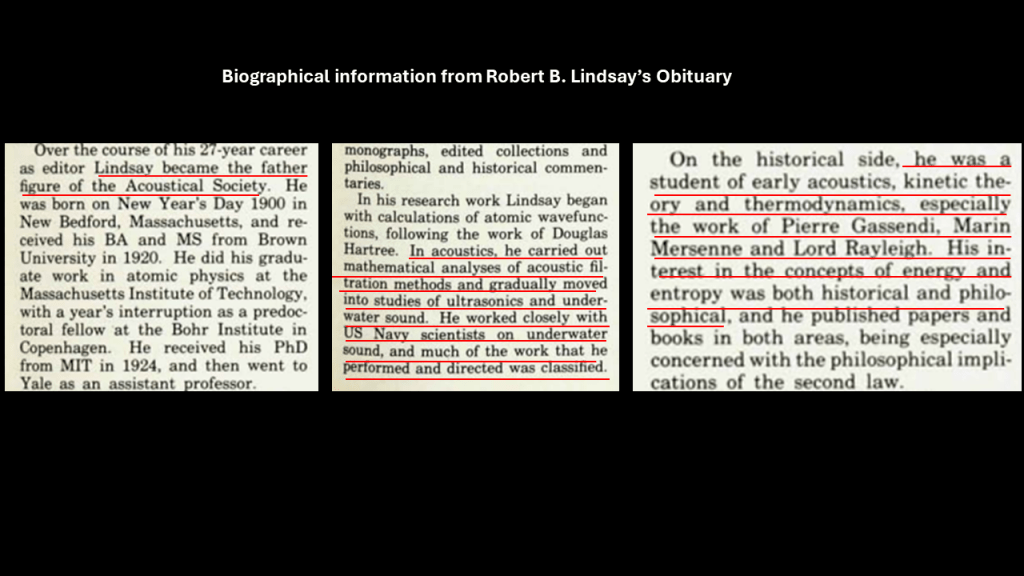
Robert Lindsay, a physicist who was born in 1900, authored numerous books on acoustics, and other historical and philosophical aspects of Physics.
Lindsay was considered a father figure of acoustics, and in particular, specialized in underwater sound. He worked with the U. S. Navy on classified studies of ultrasonics and underwater sound, according biographical information in his obituary.
He also was interested in the study of early acoustics, energy, and entropy.
The Esli Dodge Conservation Area is located on Ontario Highway 21, also known as the Bluewater Highway.
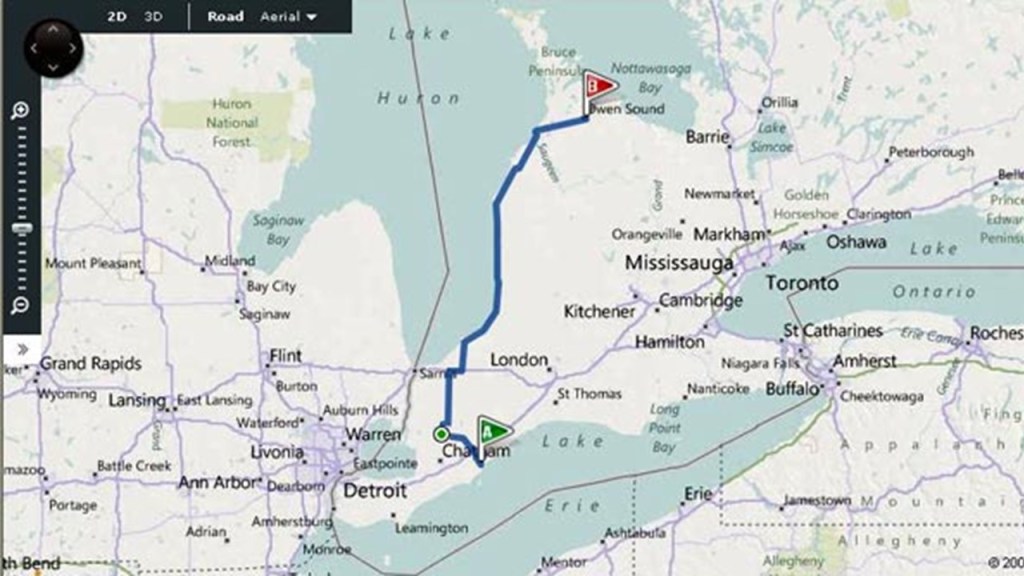
Ontario Highway 21 runs along the eastern shore of Lake Huron, through places we will be looking at as we make our way up the coast, and crosses the the Niagara Escarpment at the base of the Bruce Peninsula to Owen Sound, where it connects with Nottaswaga Bay on the southern end of Georgian Bay.
It is believed to be the most frequently-closed road in Ontario from lake-effect snow squalls.
Next, I will look at the Forest Carnegie Library Event Center, the Forest Museum, and the Kineto Theater, all of which are clustered together in downtown Forest.
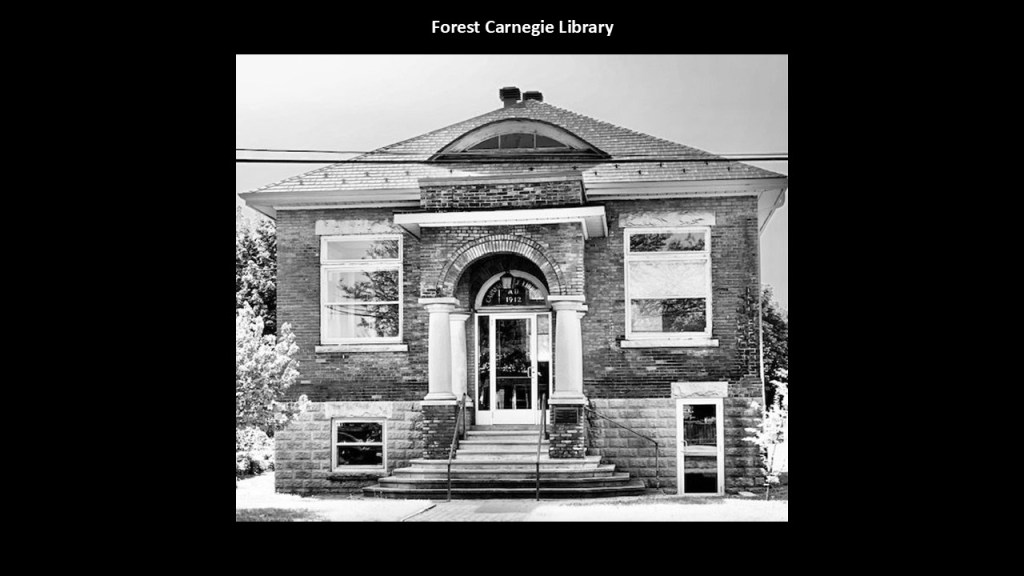
We are told that what is now the Forest Carnegie Library Event Center was said to have been funded and built in 1912 as part of the Andrew Carnegie Library program.
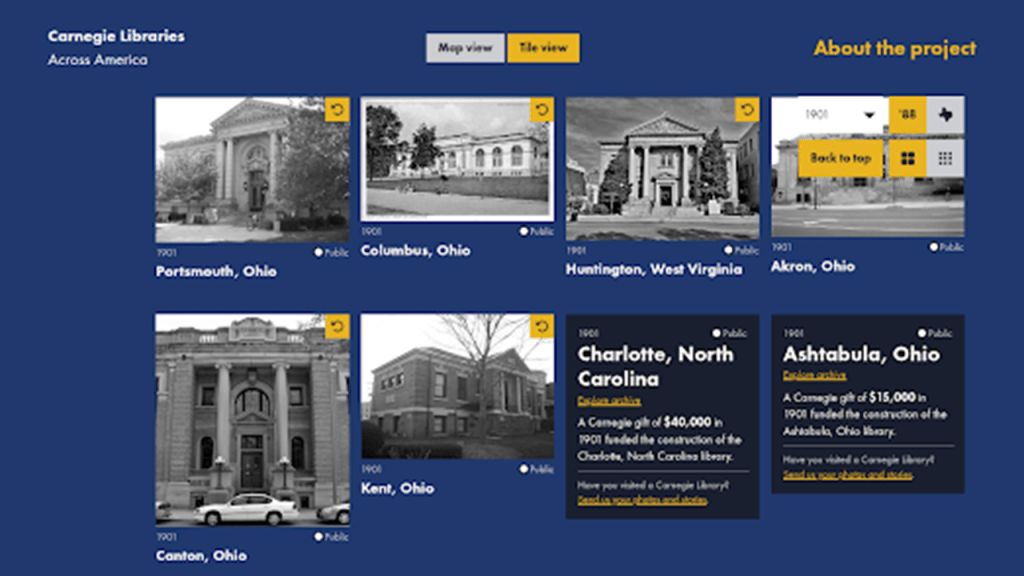
In our historical narrative, there were over 2,500 Carnegie Libraries built around the world between 1883 and 1929, with most of them being in the United States, but there were Carnegie Libraries in Canada, the United Kingdom, Australia, New Zealand, South Africa, Serbia, Belgium, France, the Caribbean, Mauritius, Malaysia and Fiji as well.
Andrew Carnegie was a Scottish immigrant to America, who came to Pittsburgh in 1848 with his parents at the age of 12, got his start as a telegrapher, and who by the 1860s, had investments in such things as railroads, bridges and oil derricks, and ultimately worked his way into being a major player in Pittsburgh’s steel industry.
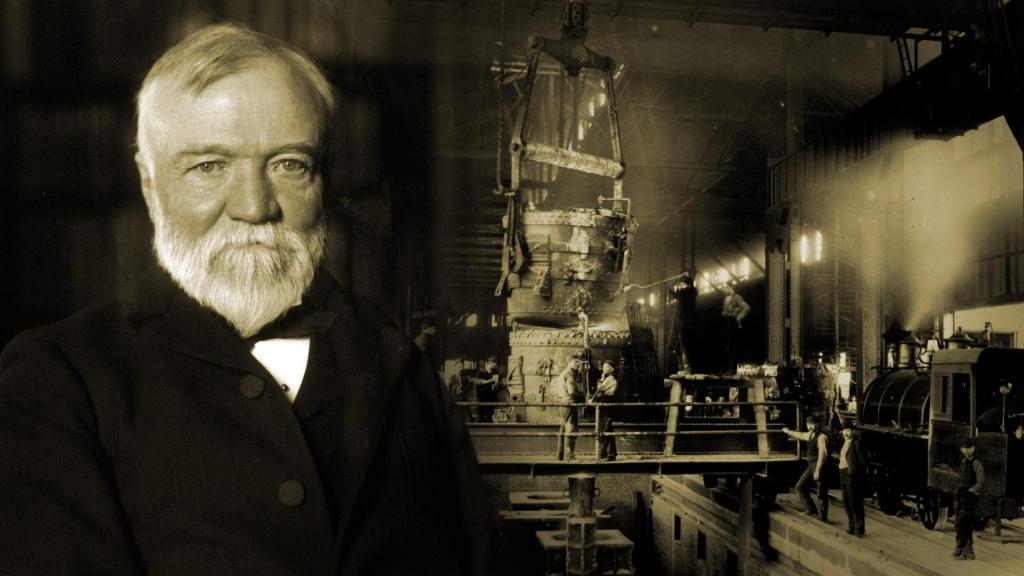
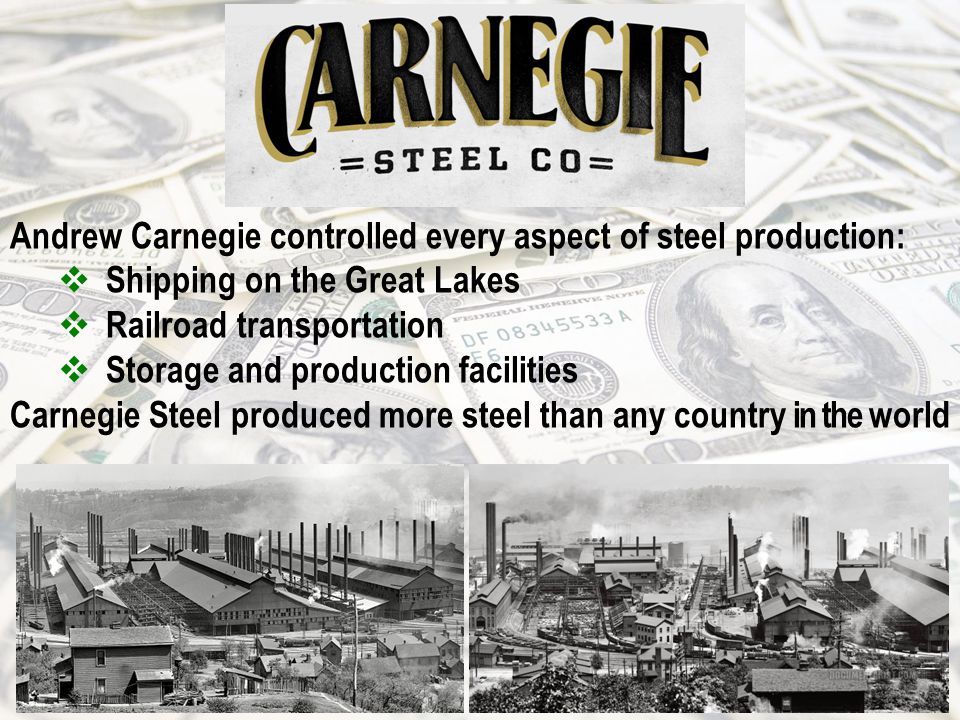
His first steel mill was operational by 1874, the Edgar Thomson Steel Works, named after the President of the Pennsylvania Railroad, with his partners, one of whom was Henry Clay Frick, the owner of a coke manufacturing company, a product used in making steel.

They subsequently acquired other steel mills, and in 1892, the Carnegie Steel Company was formed, of which Henry Clay Frick became chairman. and in 1897, Charles M. Schwab, who had gotten his start as an engineer at the Edgar Thomson Steel Works, became President of the Carnegie Steel Company in 1897.
In the first part of this series on Lake Superior, I talked about how John D. Rockefeller had acquired the largest iron ore deposit ever discovered.
Leonidas Merritt had purchased land in the Mesabi Range in northern Minnesota after he surveyed and mapped the surrounding area for iron ore, and opened the Mountain Iron Mine in the early 1890s.
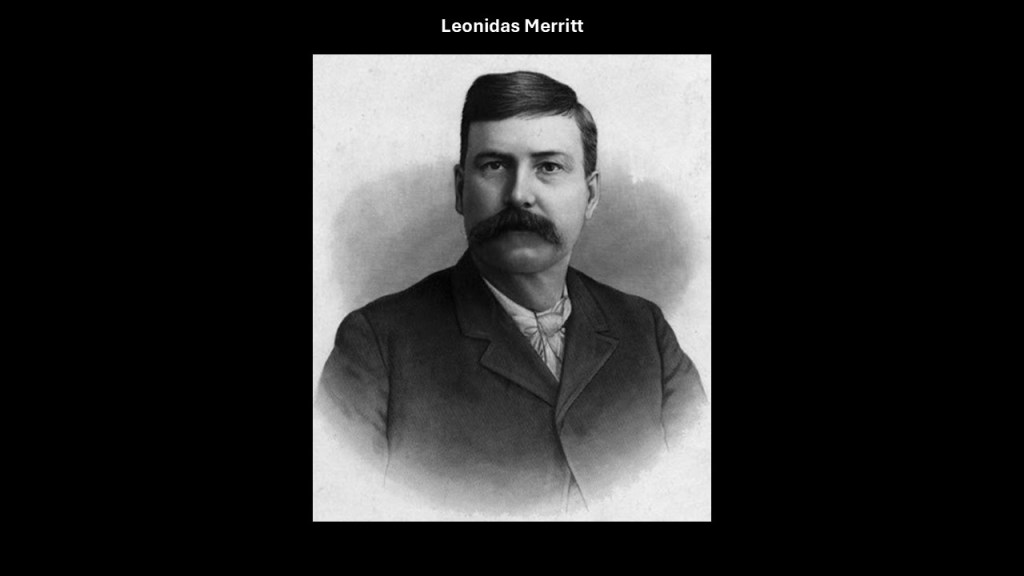
Leonidas was joined by 6 of his brothers, and what became known as the “Seven Iron Brothers” owned the largest iron mine in the world in the 1890s.
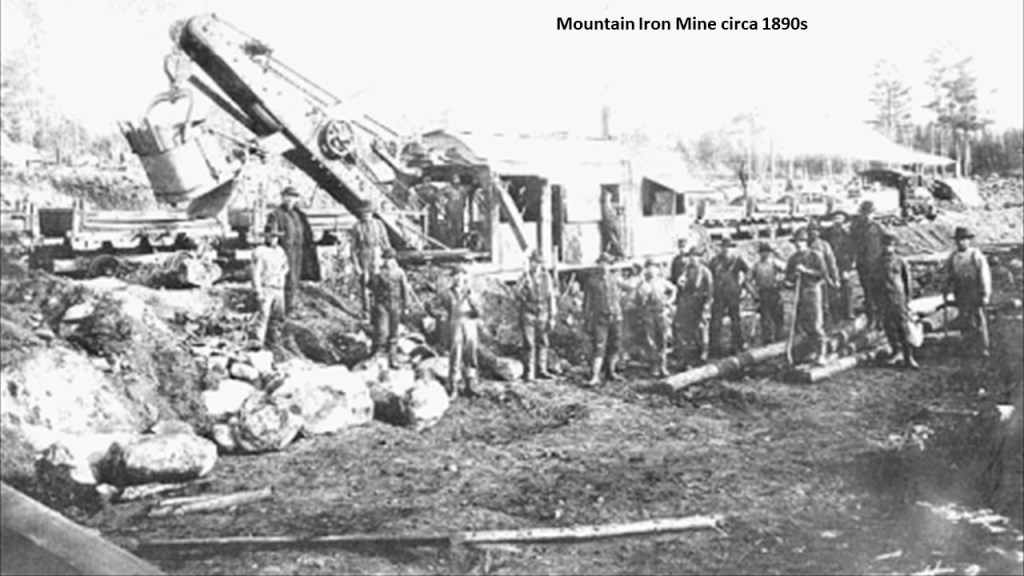
We are told that in 1891, the Merritt family incorporated the Duluth, Missabe, and Northern Railway Company to build a 70-mile, or 113-kilometer-long, railroad from the mine to the port at Superior, Wisconsin, which was just to the south of Duluth, raising the money needed in exchange for bonds from the railroad company.
Their success attracted the attention of John D. Rockefeller, who wanted to expand into the iron ore business, and the Merritts put their company stock up as collateral to borrow money from Rockefeller in order to fund the railroad.
Long story short, the Merritts ended up being financially ruined, and Rockefeller came to own both the mine and the railroad.
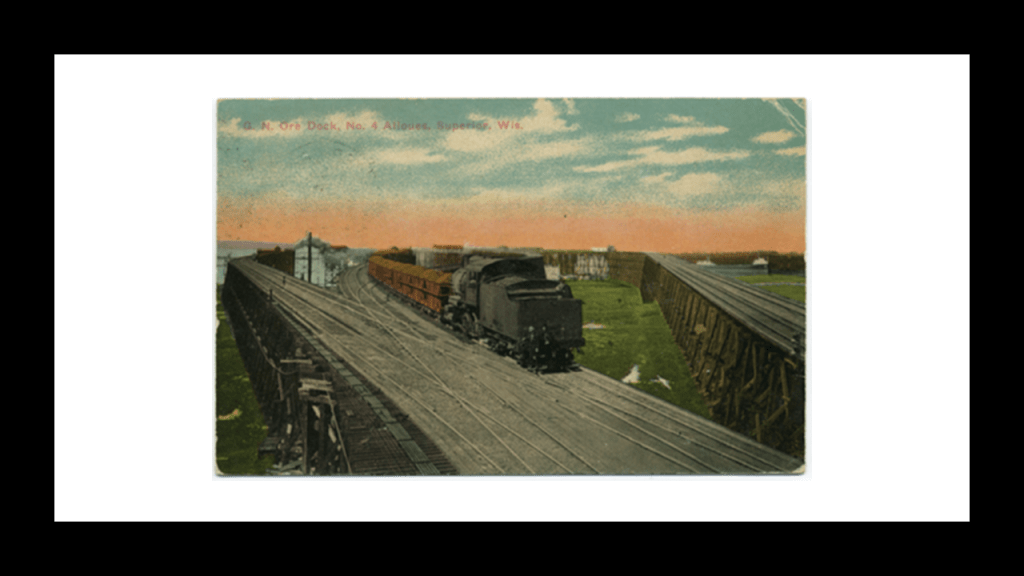
After Rockefeller assumed ownership in 1894, he leased his iron ore properties and the railroad to the Carnegie Steel Company in 1896.
In 1901, Charles M. Schwab helped negotiate the sale of Carnegie Steel with a merger involving it with Elbert Gary’s Federal Steel Company, and William Henry Moore’s National Steel Company to a group of New York City Financiers led by J. P. Morgan.
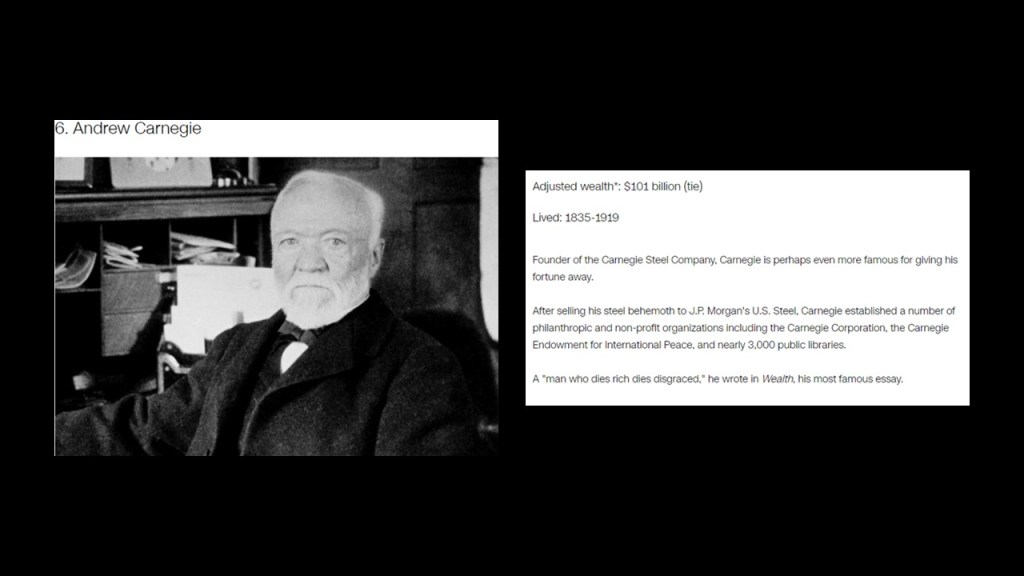
After the sale of Carnegie Steel, Andrew Carnegie surpassed John D. Rockefeller as the richest American at the time, and Charles M. Schwab became the first President of the newly minted U. S. Steel Company.

Andrew Carnegie was ranked as the 6th-richest American of all-time by CNN Business, with an adjusted wealth of $101-billion.
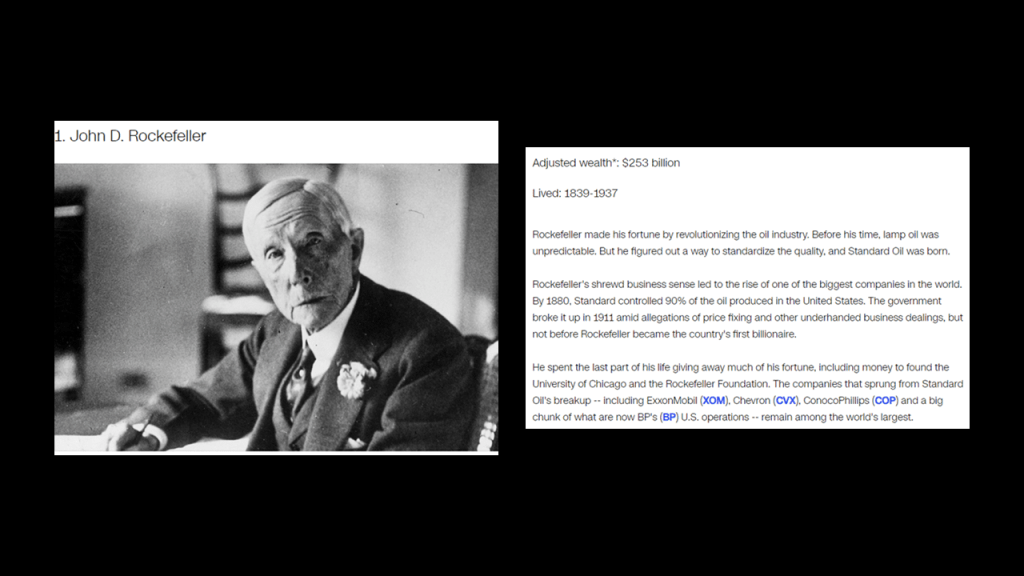
John D. Rockefeller, who was born in the United States in 1839, was the progenitor of the wealthy Rockefeller family.
He was considered to be the wealthiest American of all time, as seen in this ranking by CNN Business, with an adjusted wealth of $253-billion.
Among many other things, both the Rockefeller and Carnegie Foundations have been highly involved in the American Educational System.

Even as early as 1914, the National Education Association expressed alarm at the activity of the Carnegie and Rockefeller Foundations, and their efforts to control the policies of State educational institutions, and everything related to the educational system.

And they call us conspiracy theorists to discredit us, but that’s exactly what they have been involved in!

Next, the Forest Museum adjacent to the former Forest Carnegie Library is housed in the Old Forest Bakery, and besides having a bakery exhibit, it has exhibits on things like the First Nations, the railroad, the military, agriculture, and lots of local history exhibits.
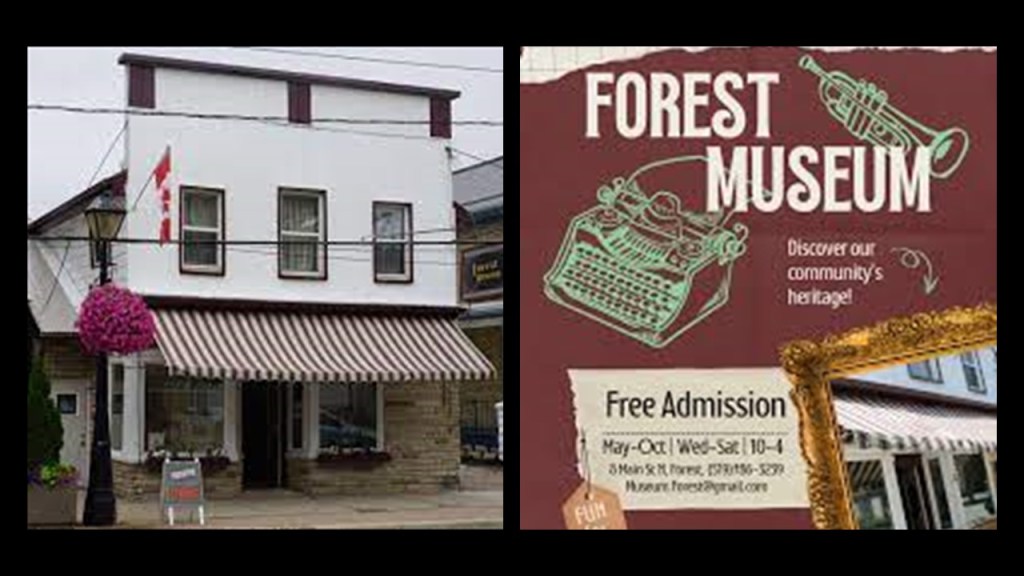
We are told the industry of the town was once tied to an abundant fruit-growing operation, like apples, with canning and basket-making factories in Forest.
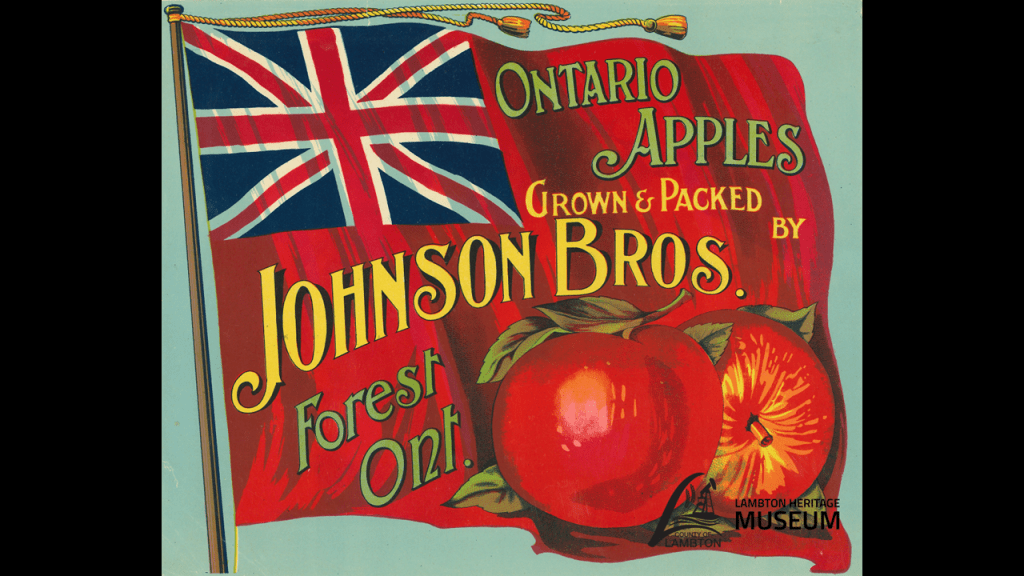
As a matter of fact, the fertile soil of this part of Ontario has a prominent history of fruit-growing and agriculture historically, and still has some local fruit-growers and farm markets.
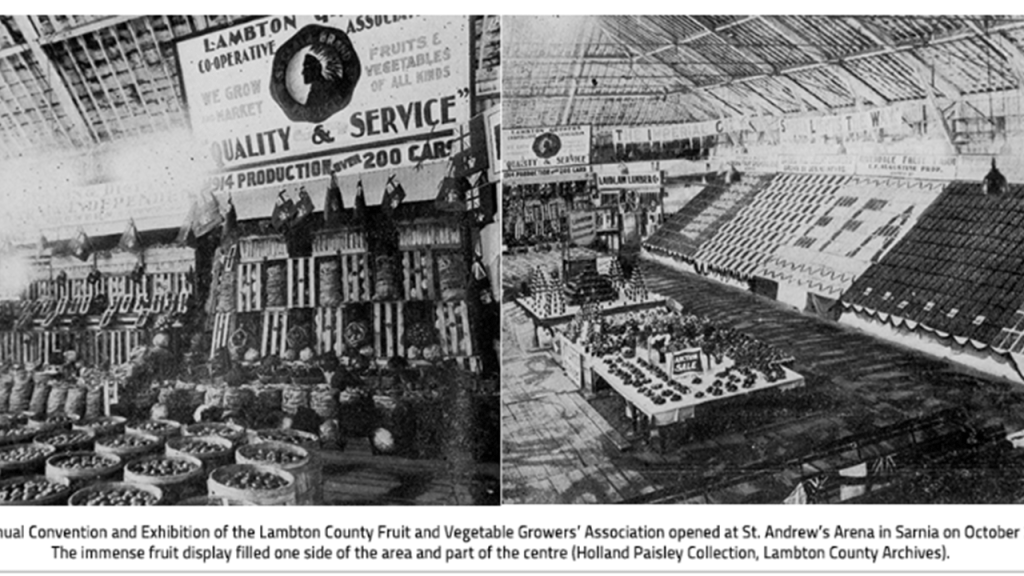
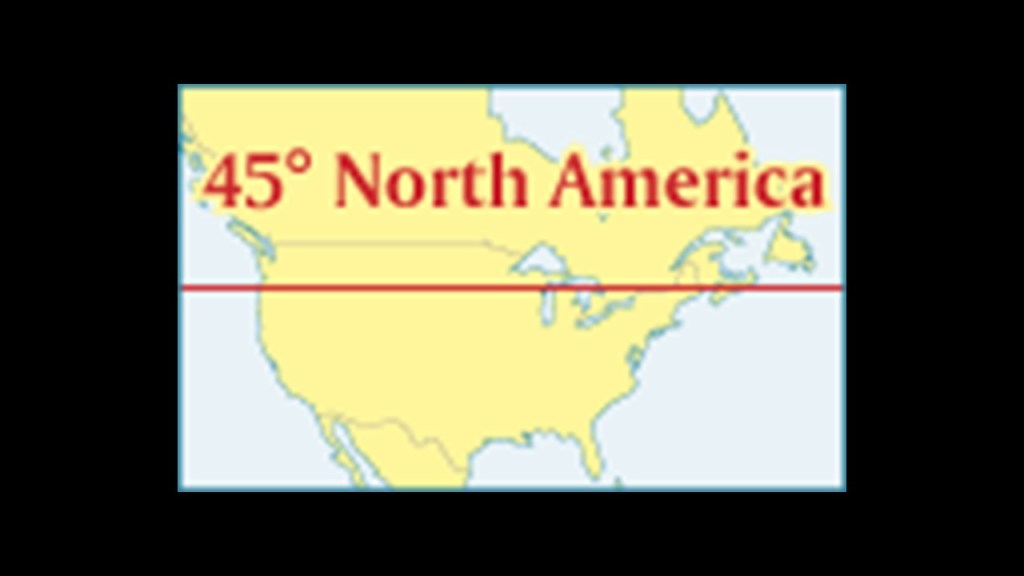
When I was looking around Lake Michigan in the second part of this series, the fruit orchards of the 45th-Parallel North came up, starting in Traverse City in Michigan.
The 45th-Parallel North goes right through the middle of the Great Lakes Region and the Niagara Escarpment.
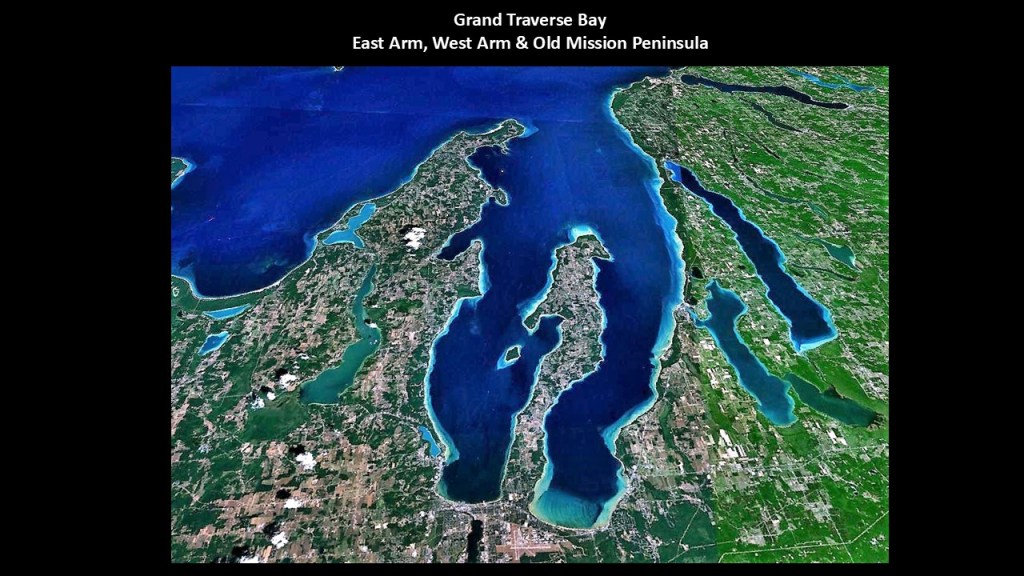
Grand Traverse Bay is divided into an “East Arm” and a “West Arm,” which are separated by what is called the “Old Mission Peninsula.”
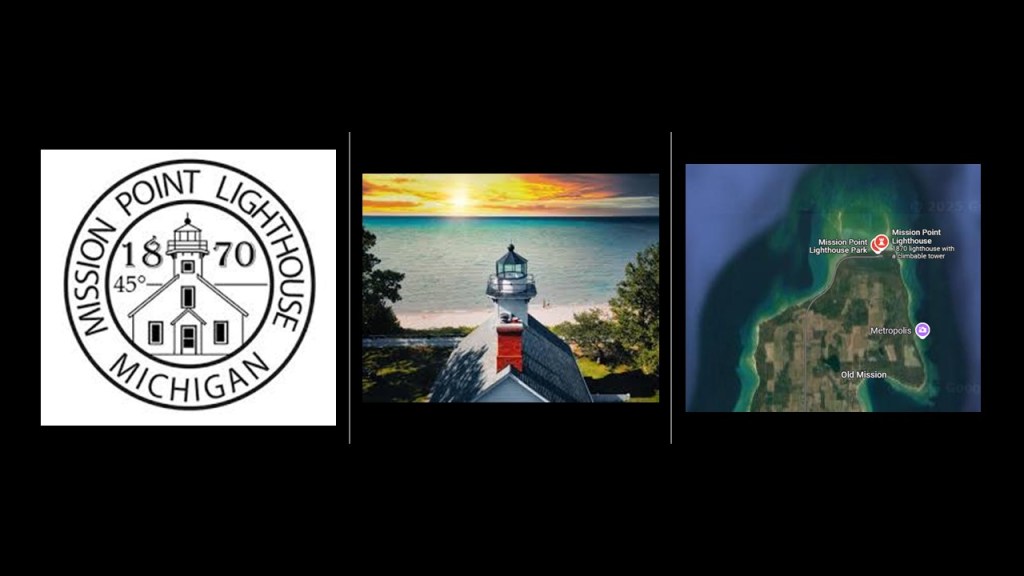
The Old Mission Peninsula has the Mission Point Lighthouse at its northern tip, which lies just a few yards south of the 45th Parallel North, which is halfway between the North Pole and the Equator.
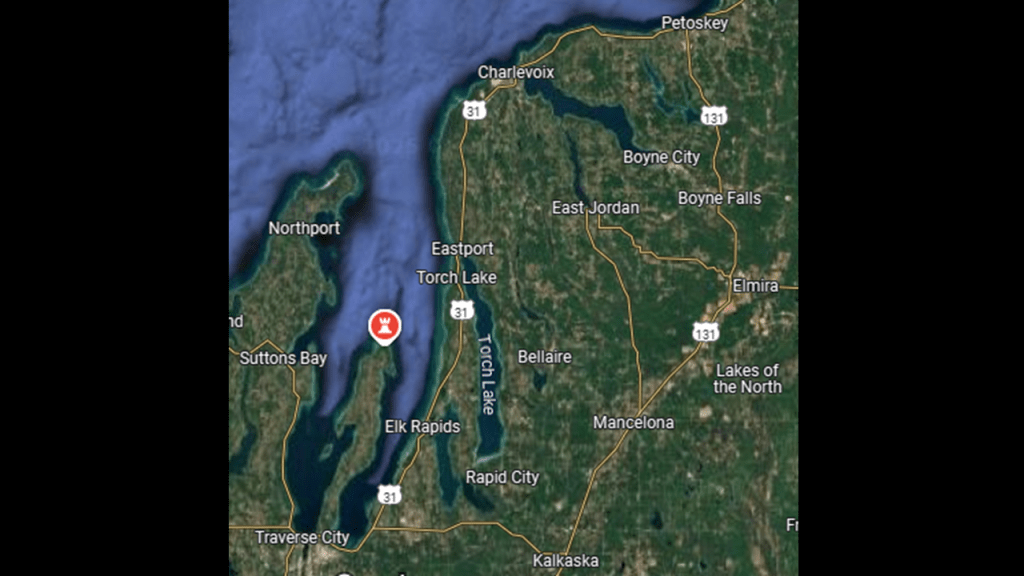
Traverse City is located at the base of the Old Mission Peninsula, and is the largest city in northern Michigan.
Traverse City is nicknamed “The Cherry Capital of the World,” and the whole Grand Traverse Bay region is known for its cherry production and its wine-grape-growing and Michigan wine.
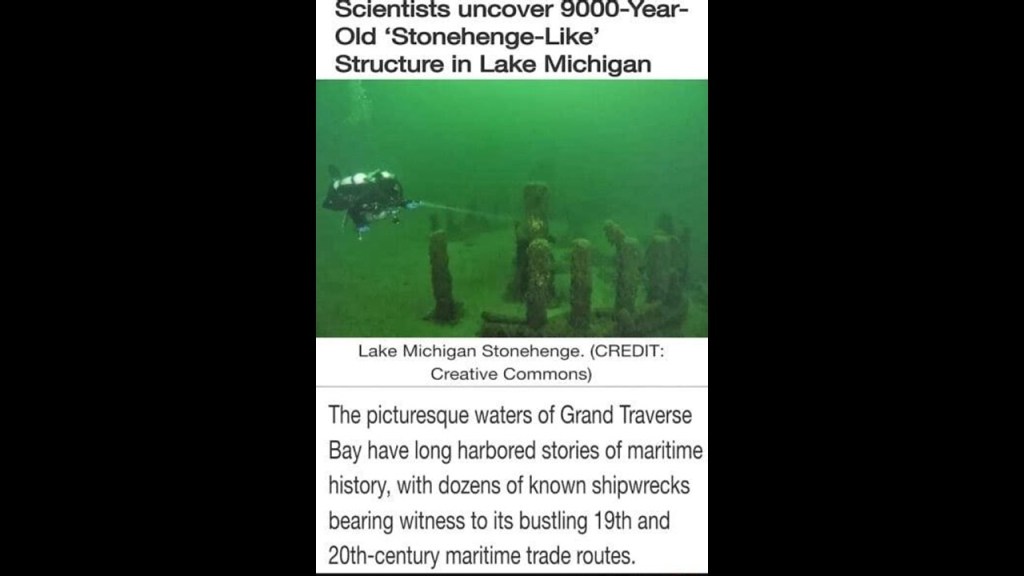
There was a stonehenge-type structure identified in the Grand Traverse Bay.
Dr. Mark Holley, Professor of Underwater Archeology at Northwestern Michigan University, discovered an arrangement of large granite stones resting on the lake bed about 40-feet, or 12-meters, below the surface of the water, in 2007.
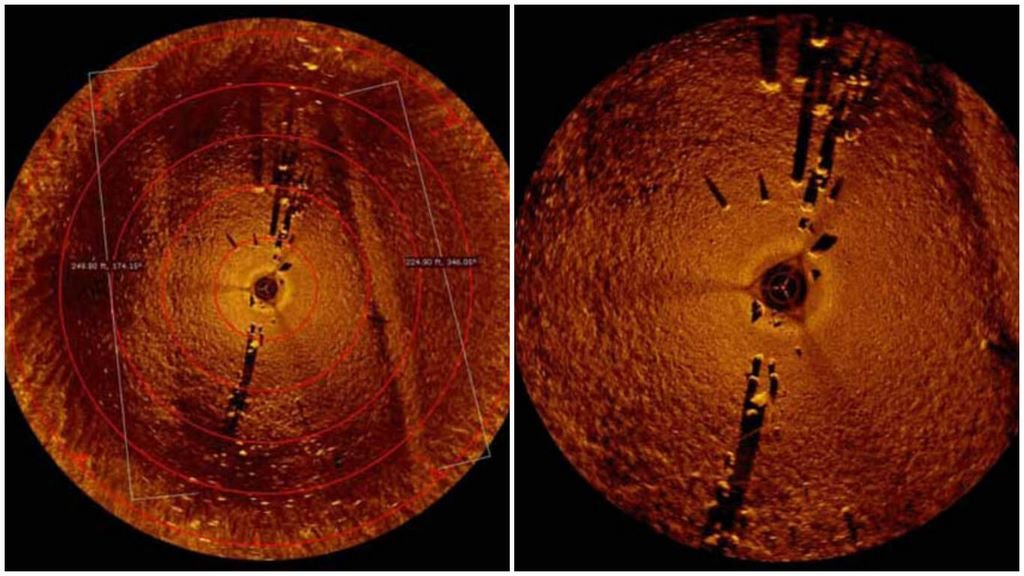
The stones are believed to date back 9,000-years, which is 4,000-years older than the date given to England’s famous Stonehenge.
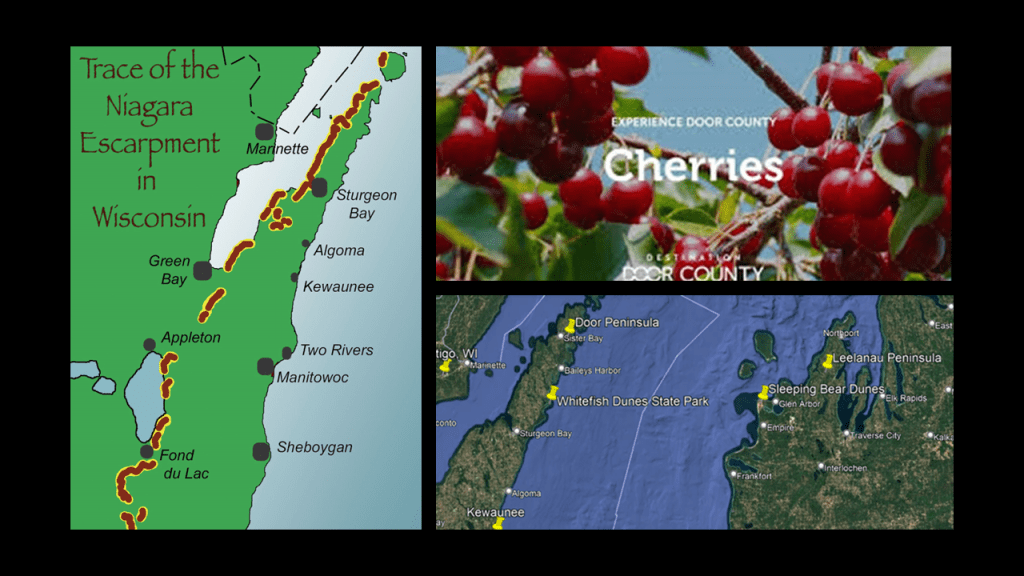
Right across Lake Michigan from Michigan’s Leelanau Peninsula and Grand Traverse Bay area is the Door Peninsula in Wisconsin, also well-known for its orchards, particularly cherry and apple
The Door Peninsula is on the western-side of the Niagara Escarpment, and separates the Green Bay from Lake Michigan.
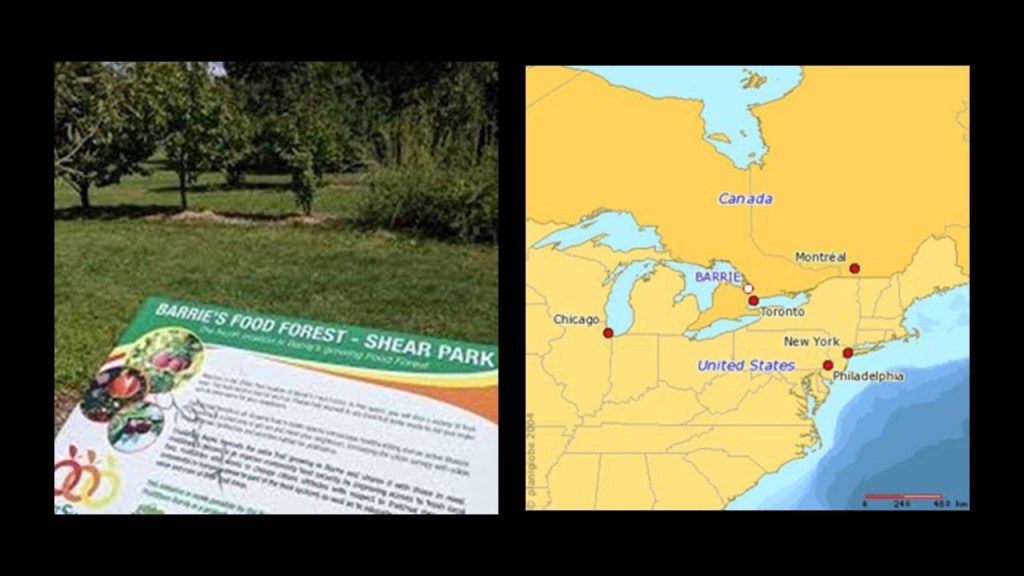
It’s interesting to note that not only are these two places known for its orchards on the 45th Parallel North, there are other places known for orchards on it as well, like Barrie, Ontario, near the eastern-side of the Niagara Escarpment on Lake Simcoe between the Georgian Bay of Lake Huron and Lake Ontario, is known for apple and cherry orchards…
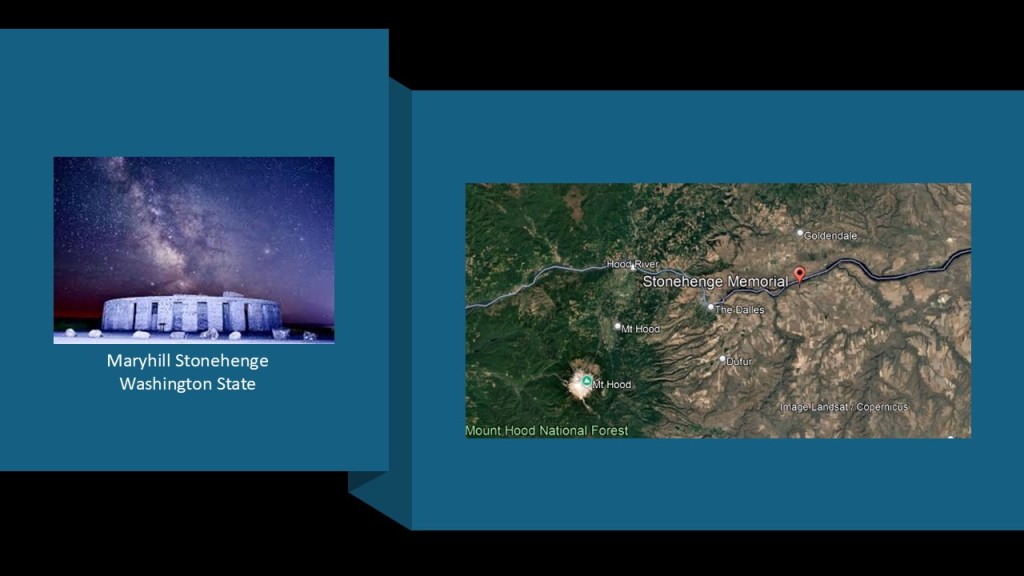
…and Maryhill brand peaches from Goldendale in Washington on the 45th-Parallel North.

It is intersting to note that there is also a stonehenge in Maryhill, Washington, on the Columbia River across from Oregon, and both Goldendale and the Maryhill Stonehenge are near Mt. Hood.
The Maryhill Stonehenge was said to have been built as a memorial for World War I veterans by entrepreneur Sam Hill, and dedicated on July 4th of 1918.
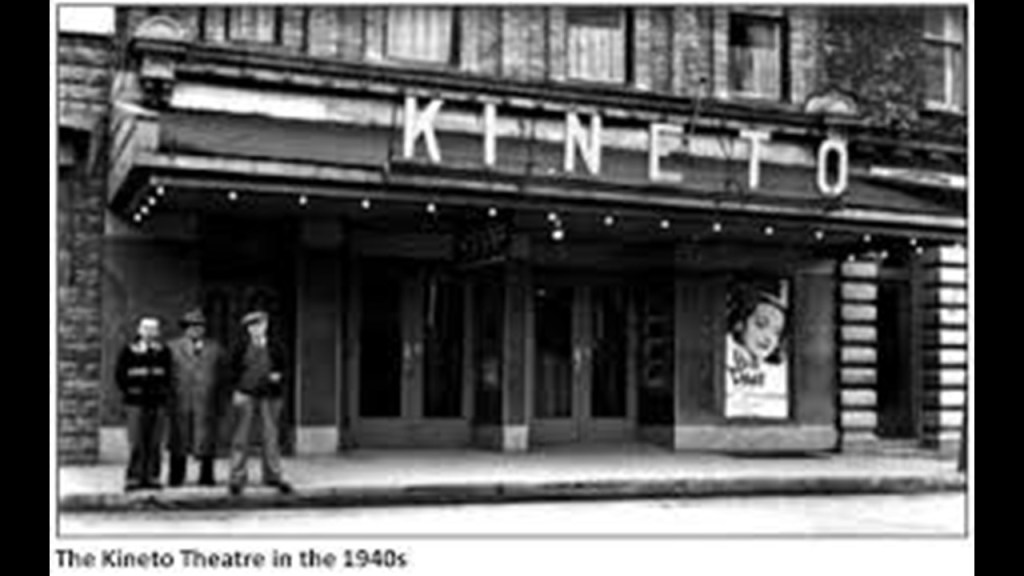
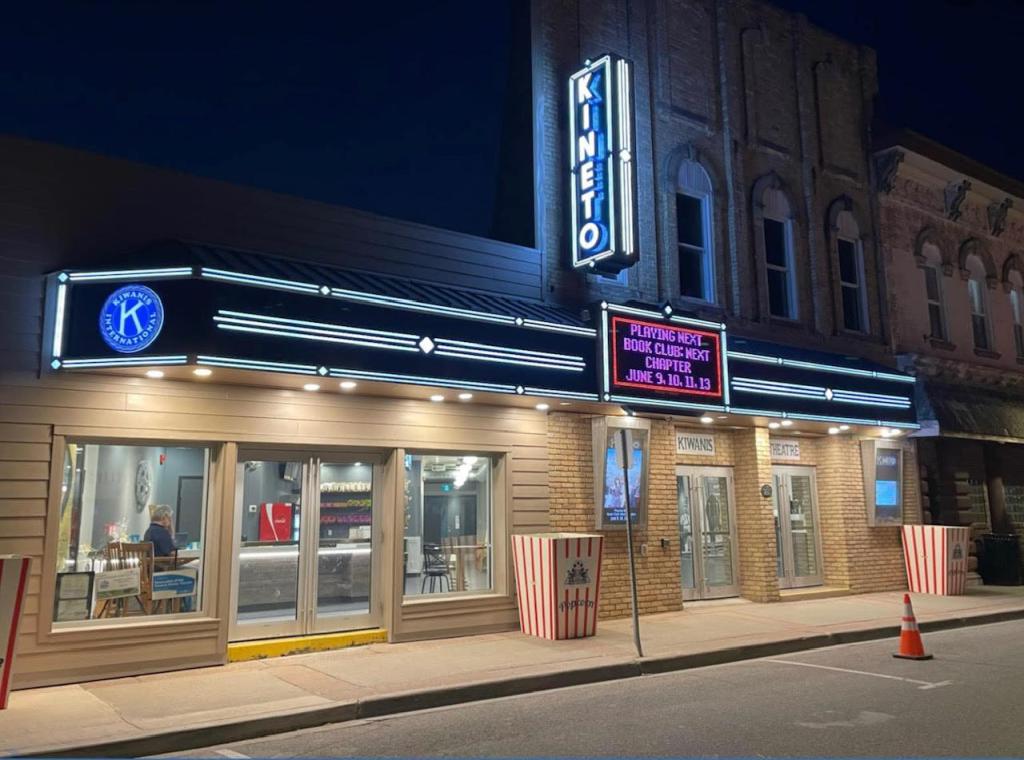
Lastly back in Forest, the Kineto Theater is said to be one of the oldest movie theaters in the world, having been in operation since 1917.
Today it is owned and operated by the Kiwanis Club of Forest.
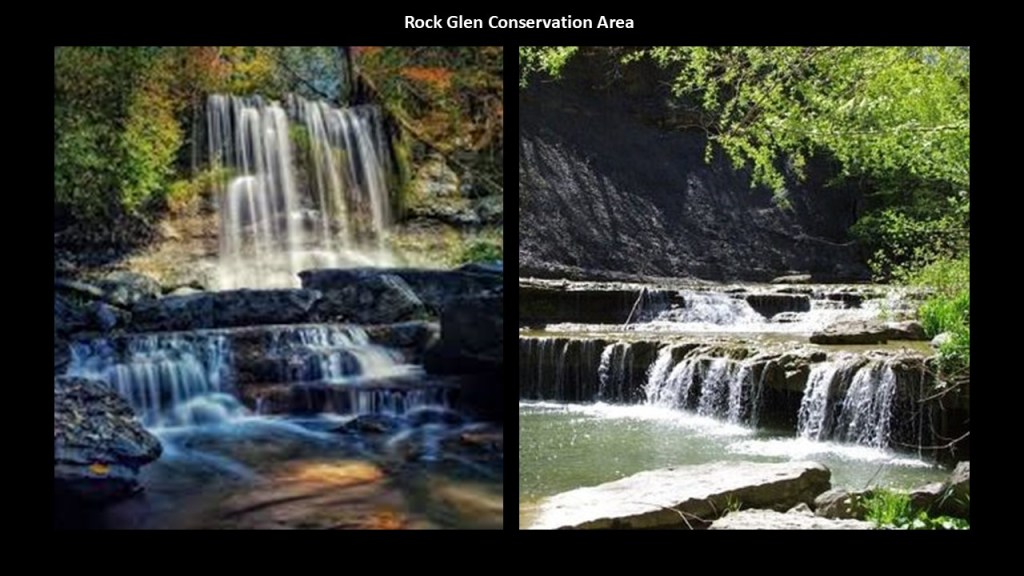
Next I’d like to take a look at Rock Glen Falls to the east of Forest and southeast of Kettle Point.
The Rock Glen Falls are in the Ausable Gorge on the Ausable River in the Rock Glen Conservation Area in Arkona in the Municipality of Lambton Shores.
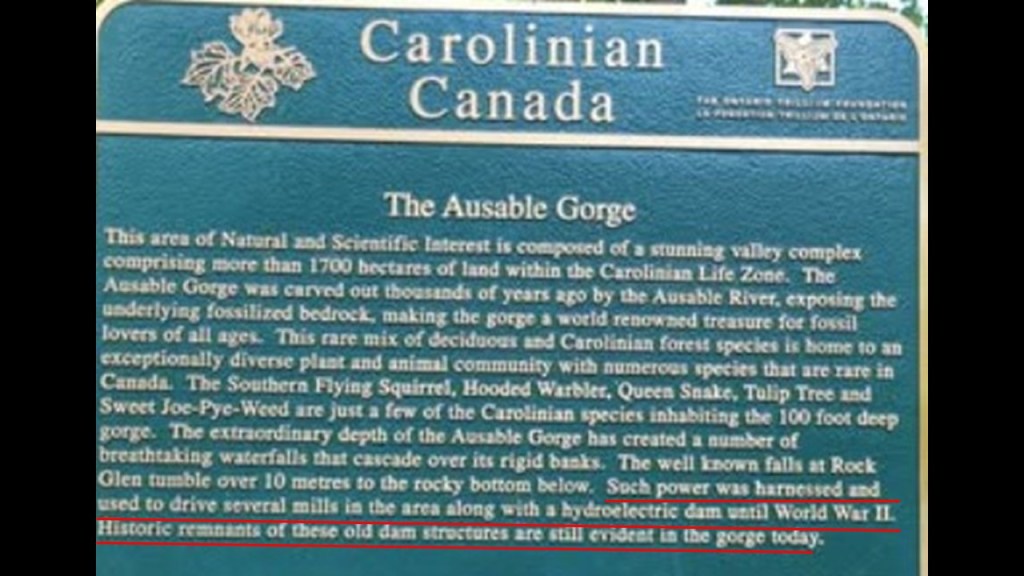
We are told that in the 1800s, several grist mills were established here.
Then in 1907, the Rock Glen Power Company constructed a small hydroelectric dam on the Ausable River at Rock Glen that was in use after World War II and the formation of Ontario Hydro.
We are told that because fish were unable to travel upstream to spawn, the Canadian Army demolition squad blew up the dam.
Parts of the old dam can still be seen in the Ausable River Gorge.
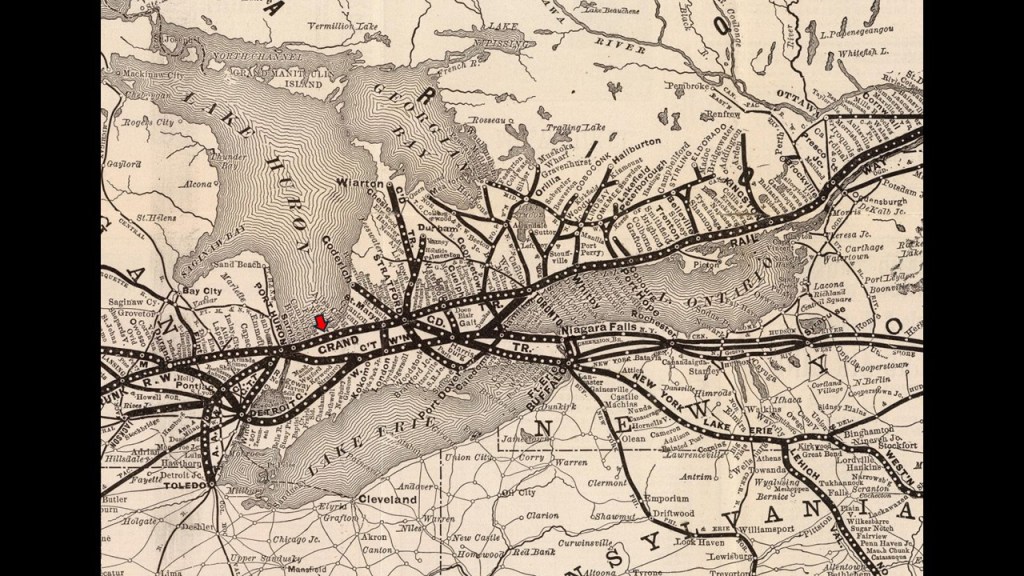
Arkona where the Rock Glen Conservation Area is located was once a stop on the Grand Trunk Railway in the late 19th- and early 20th-centuries.
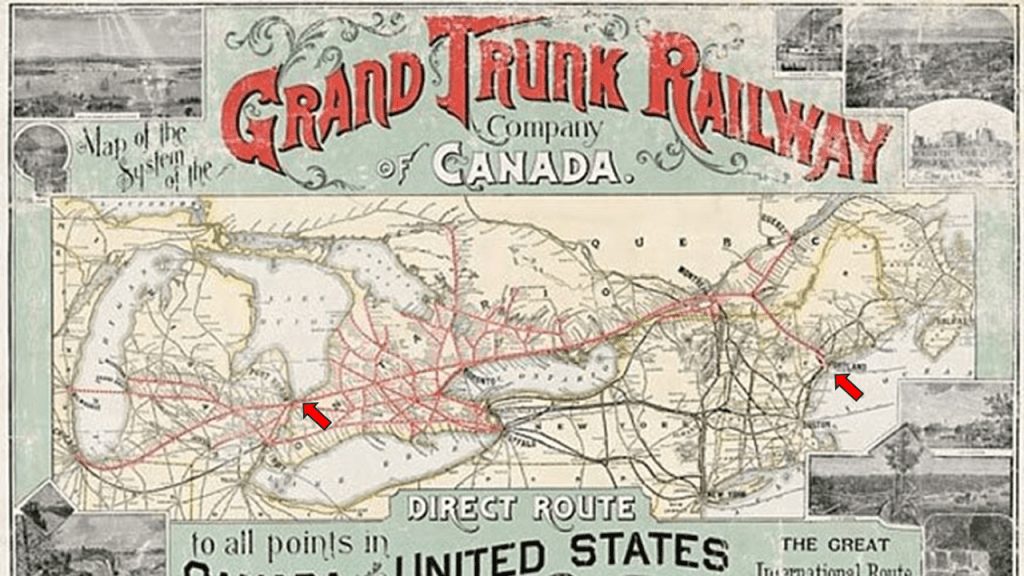
The red arrow is pointing to where it would have been adjacent to the Forest stop on this 1887 map of the Grand Trunk Railway.
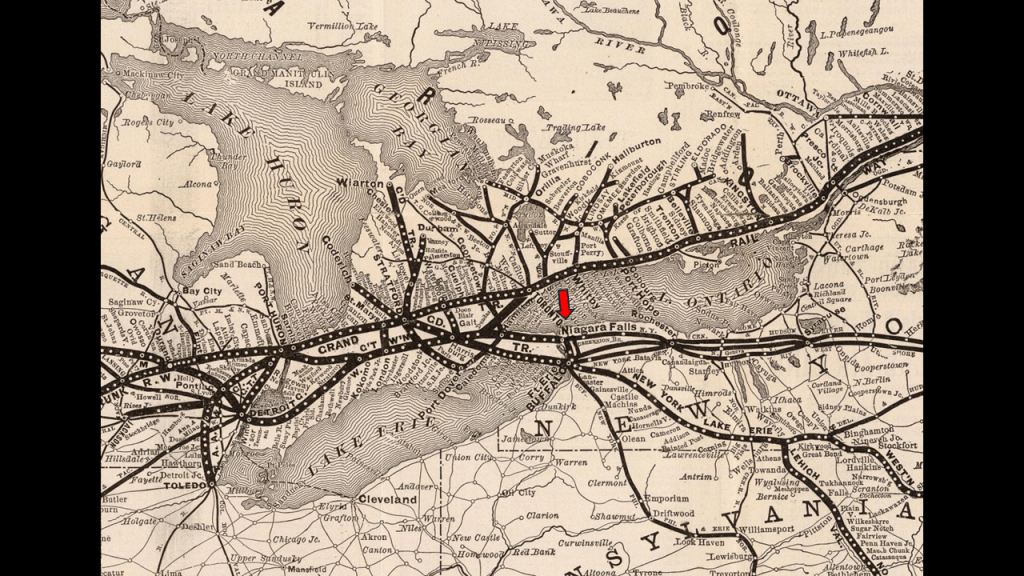
I have consistently found railroads in conjunction with S-shaped rivers and gorges and hydroelectric facilities in my research over the years, and looked at the subject in depth in my post “Of Railroads and Waterfalls, and Other Physical Infrastructure of the Earth’s Grid System.”
One example of this is Niagara Falls, which according to this same 1887 map of the Grand Trunk Railway had multiple railway lines connected to it.
This is just one of countless examples I could share with you.
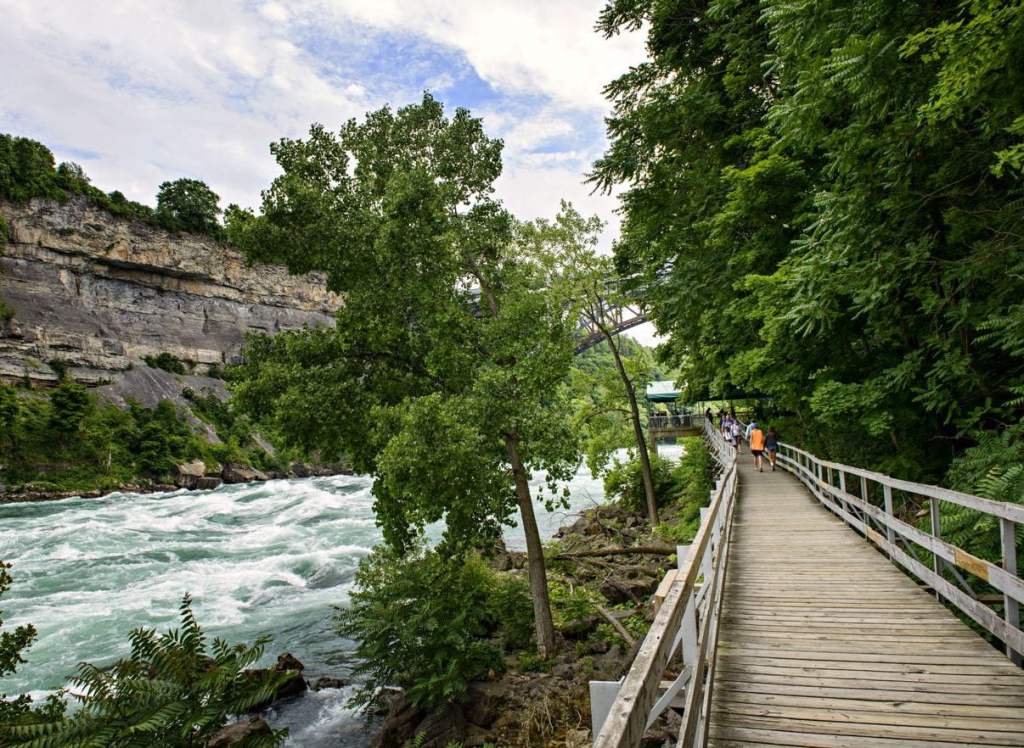
There was an historic train route called the Niagara Belt-Line, which traversed the Niagara Gorge alongside the Niagara River.

Today, you can take a leisurely stroll at the “White Water Walk” where the Niagara Belt-Line once was.
Niagara Falls is also noteworthy for its historic hydroelectric and power-generation facilities.
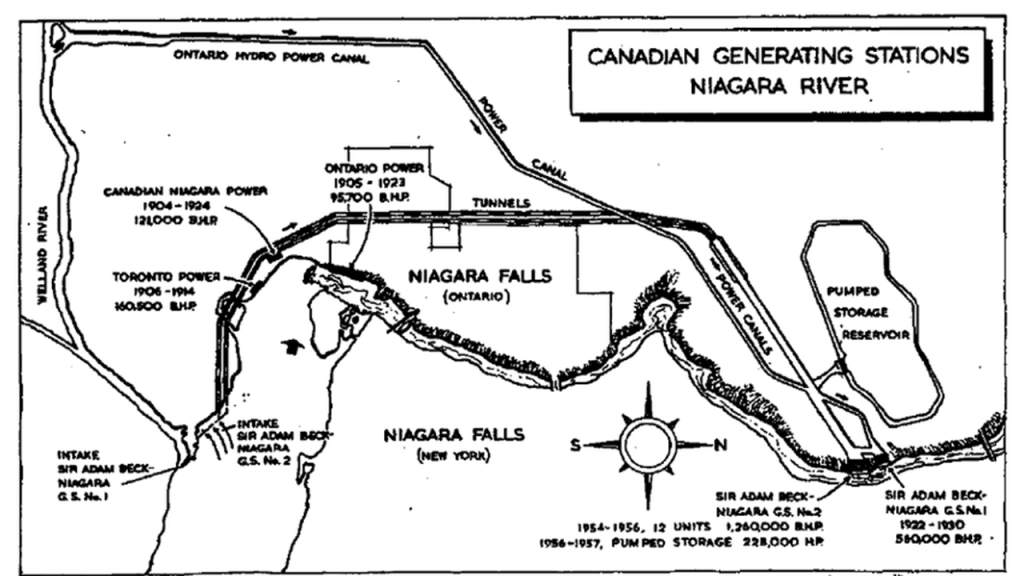
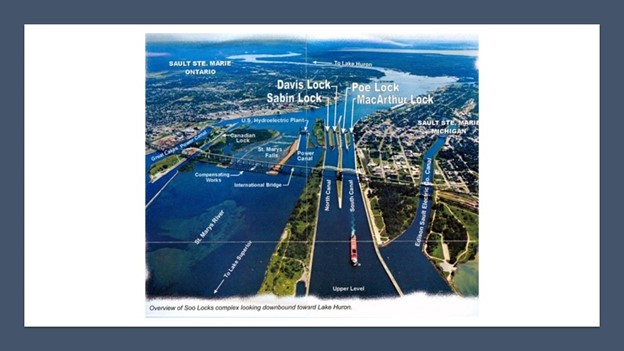
The same kind of hydroelectric and power-generation infrastructure is found in The Soo region of Michigan and Ontario on the St. Mary’s River which connects Lake Superior and Lake Huron.
Rock Glen is the second waterfall I have come to on my journey around Lake Huron, with the first being Ocqueoc Falls in Michigan.
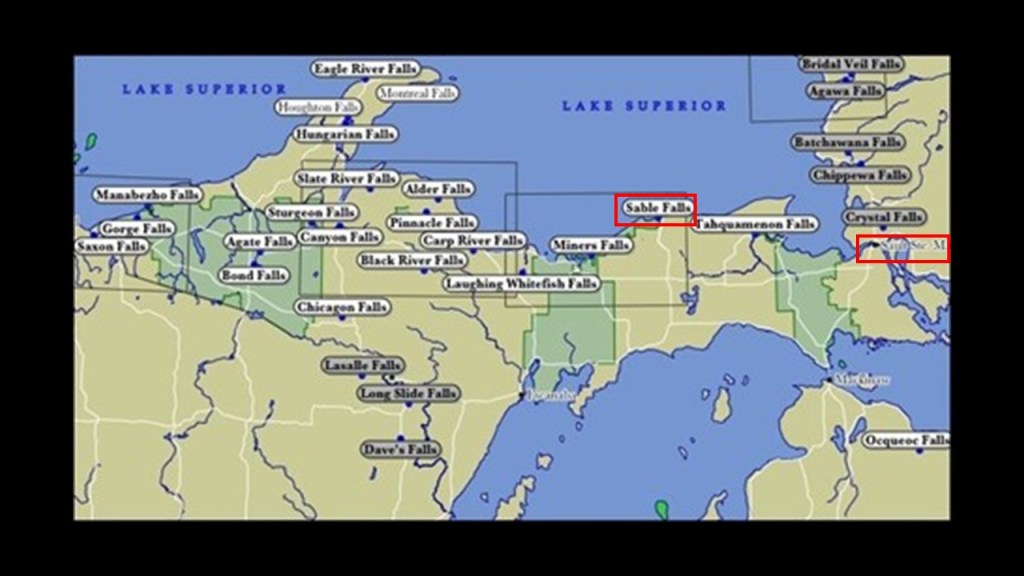
When I saw this map of the region’s waterfalls, it struck me how many there are on the Ontario side of Lake Huron and the Georgian Bay, including a series of waterfalls running along the Niagara Escarpment from Niagara Falls.
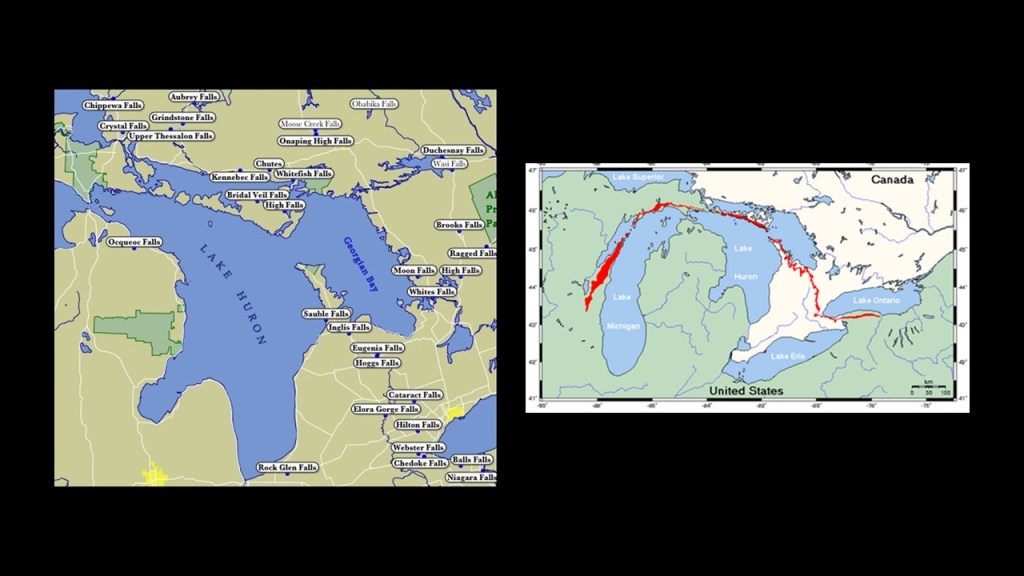
It is interesting to note what we are told about the origin of the Niagara Escarpment.
It is the most prominent of several escarpments in the bedrock running from eastern Wisconsin north through Northern Michigan, curving around southern Ontario through the Bruce Peninsula and Manitoulin Island and other islands in northern Lake Huron, before extending eastwards across the Niagara region between Ontario and New York, and formed over millions of years ago through weather and stream erosion through rocks of different hardnesses.
That’s what they tell us, anyway!!
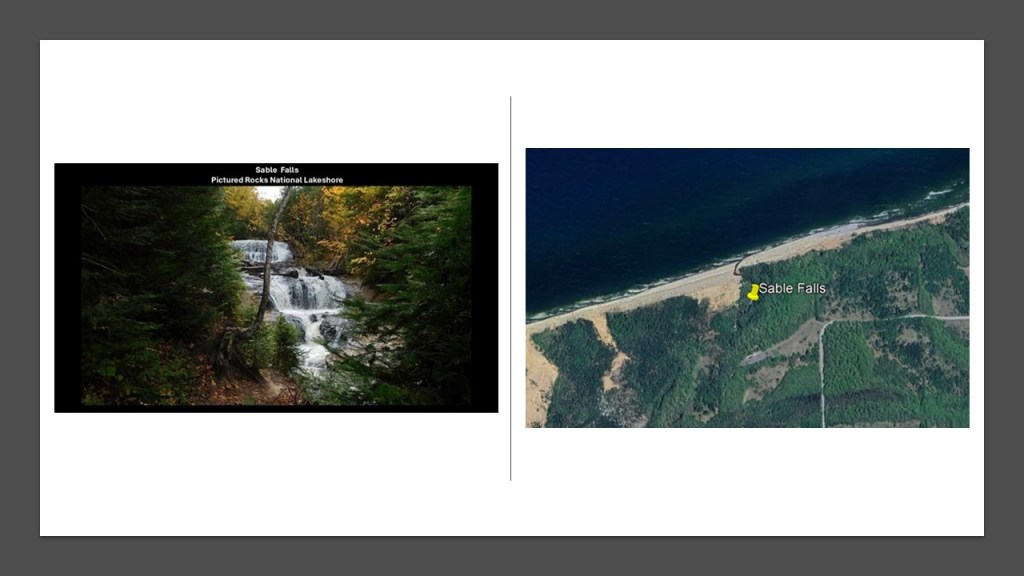
When I was looking at the shores of Lake Superior in the first part of this series, I found the Sable Falls at the northeastern end of the Pictured Rocks National Lakeshore in Michigan.
Sable Falls flow 75-feet, or 23-meters, over what is called Munising and Jacobsville sandstone formations, directly into Lake Superior.
As we go through the information available to find along the way, I will show you exactly why I believe the Great Lakes were formed by the outflow of the waterfalls of the region after the deliberate destruction of the energy grid, which subsequently destroyed the surface of the Earth.
I think there was a highly-sophisticated and highly-controlled hydrological and electrical system throughout the region as we saw with the examples of the hydrological powerhouses in the Niagara Region and in The Soo region.
I will talk more about the Niagara Region in my next video on Lake Ontario, and about The Soo region later in this video.
Going back to Lake Huron, the next places we come to moving up the shoreline are in the Bluewater Municipality.
The Bluewater Municipality, like the Lambton Shores Municipality, is known for its rich agriculture.

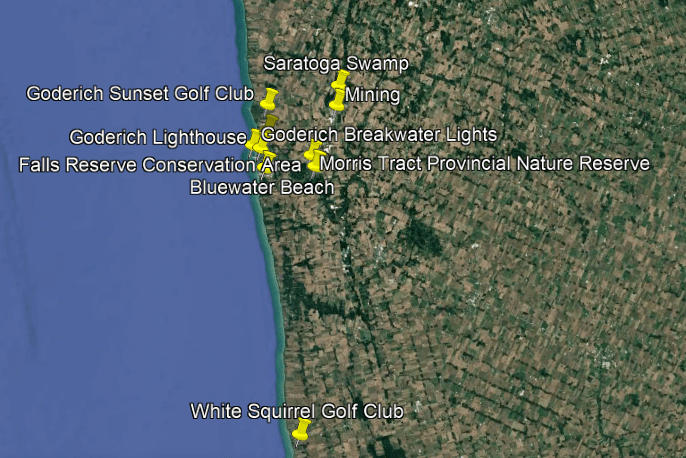
The White Squirrel Golf Club is located on the previously-mentioned Ontario Highway 21, also known as the “Bluewater Highway,” close to the interesting- looking shoreline where it looks to be quite shallow.
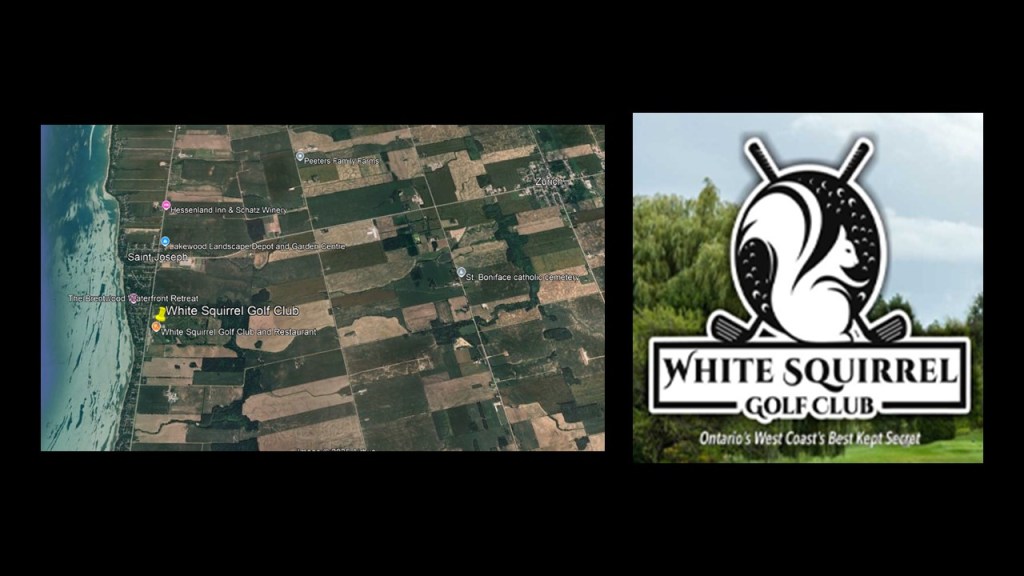
The small community of Zurich was founded in 1856 by Swiss immigant Frederick Knell, who established a post office, store, grist mill and saw mill here, and was settled mostly by immigrants coming from Germany and Switzerland.
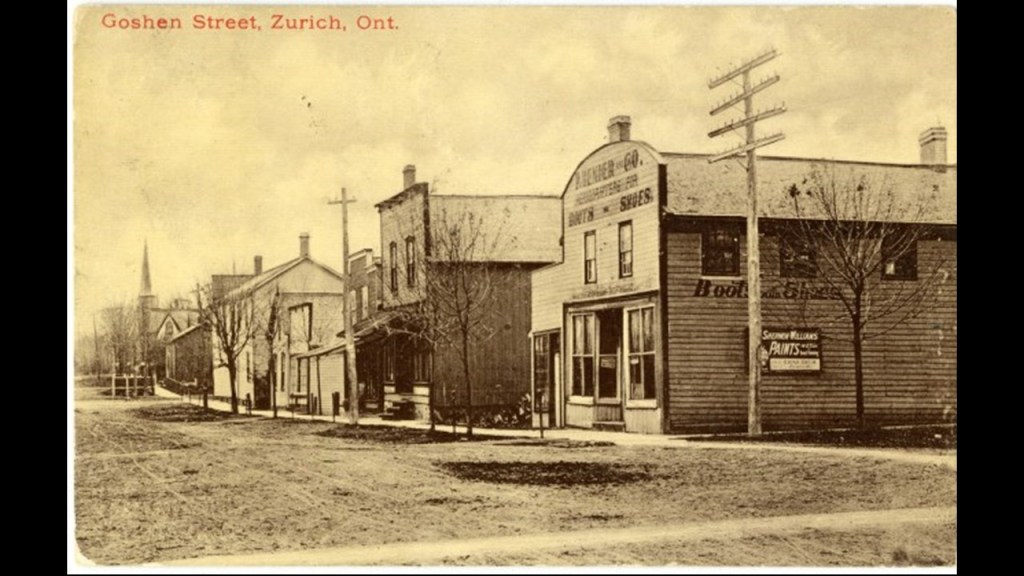
It is known for its annual bean festival in August as it is in the heart of the white bean agricultural area in Huron County.

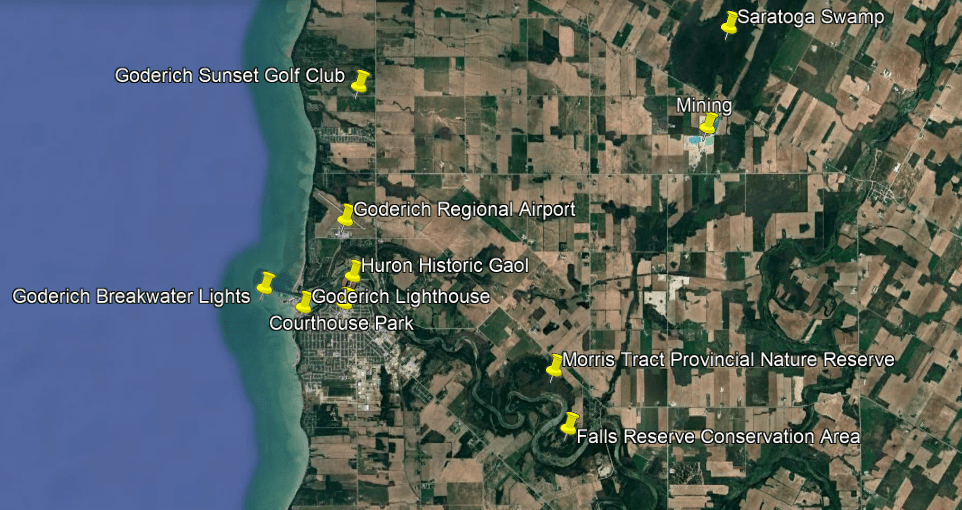
Further on up the shoreline, we come to the Goderich area.
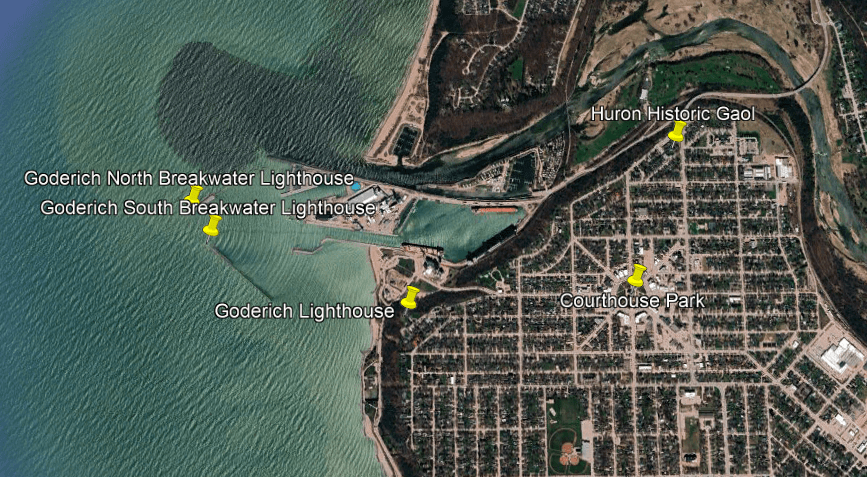
Among other things, Goderich has lighthouses, a regional airport, another golf club; the distinctive-looking Courthouse Park; the Huron Historic Gaol; salt mining, the Morris Tract Provincial Nature Reserve; the Falls Reserve Conservation Area; and the Saratoga Swamp.
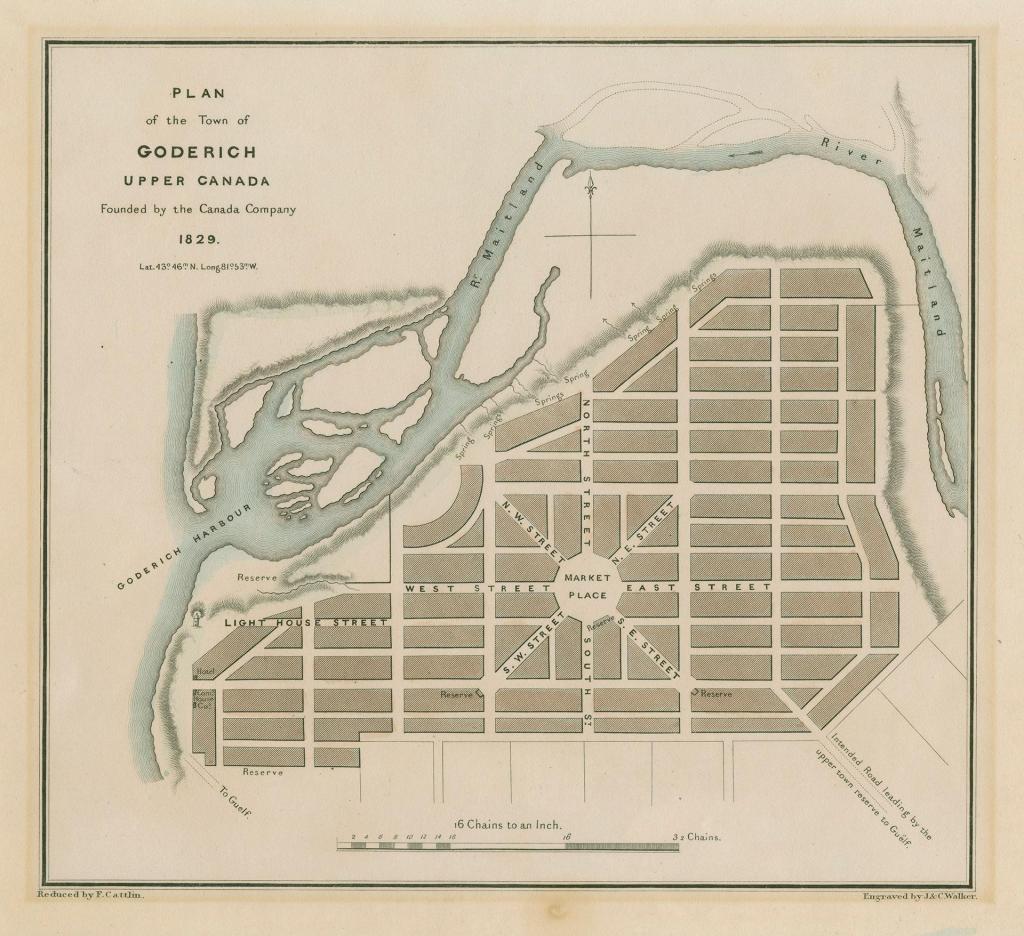
We are told in our historical narrative that Goderich was part of the Huron Tract, and founded by John Galt and William Dunlop of the Canada Company in 1827, and that it’s development was underway by 1829 as seen in this street plan of Goderich.
It was incorporated as a town in 1850, and we are told that by 1869 the population was 4,500 and that a railway station and steamship docks were in operation.
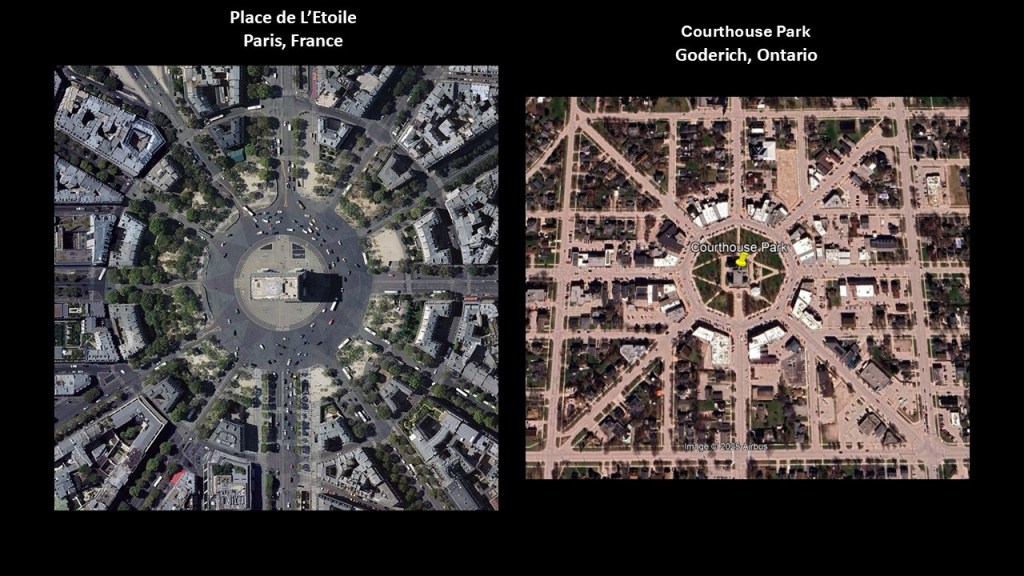
Today’s Courthouse Park is marked “Market Place” on the street plan of Goderich, centrally-placed in a geometric configuration where four thoroughfares meet.
Courthouse Park brings to mind the “Place de L’Etoile” in Paris, which has the Arch de Triomphe sitting in the center of twelve radiating avenues.
Goderich has three lighthouses – the Goderich Lighthouse; the North Breakwater Lighthouse and the South Breakwater Lighthouse.
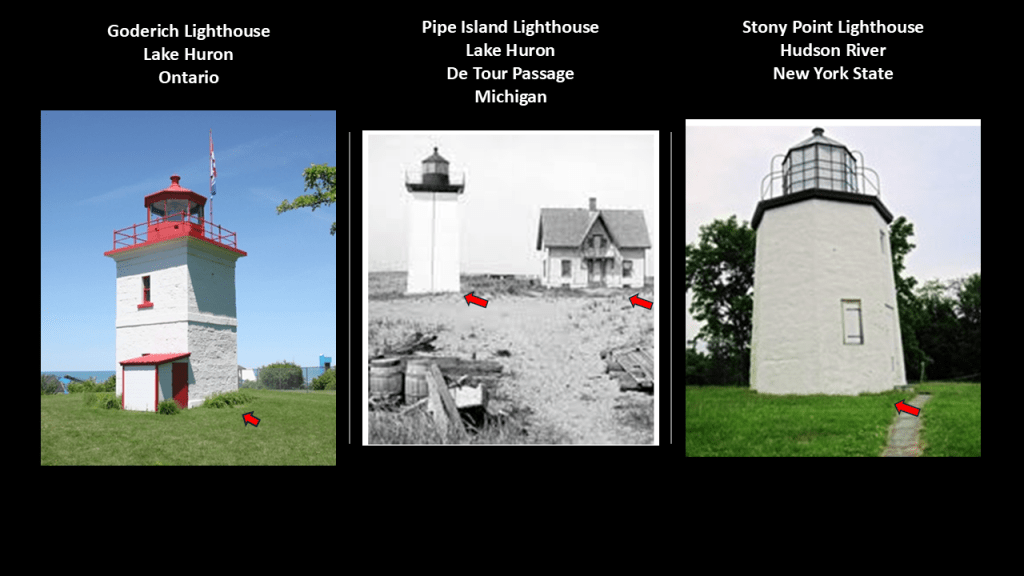
The Goderich Lighthouse on the left was said to be the first on the Canadian-side of Lake Huron and opened in 1847.
For comparison of similarity of appearance, here is the Pipe Island Lighthouse in the De Tour Passage which connects the St. Mary’s River to Lake Huron, and the Stony Point Lighthouse on the Hudson River in New York State, with all three places looking like there is more below the earth’s surface.
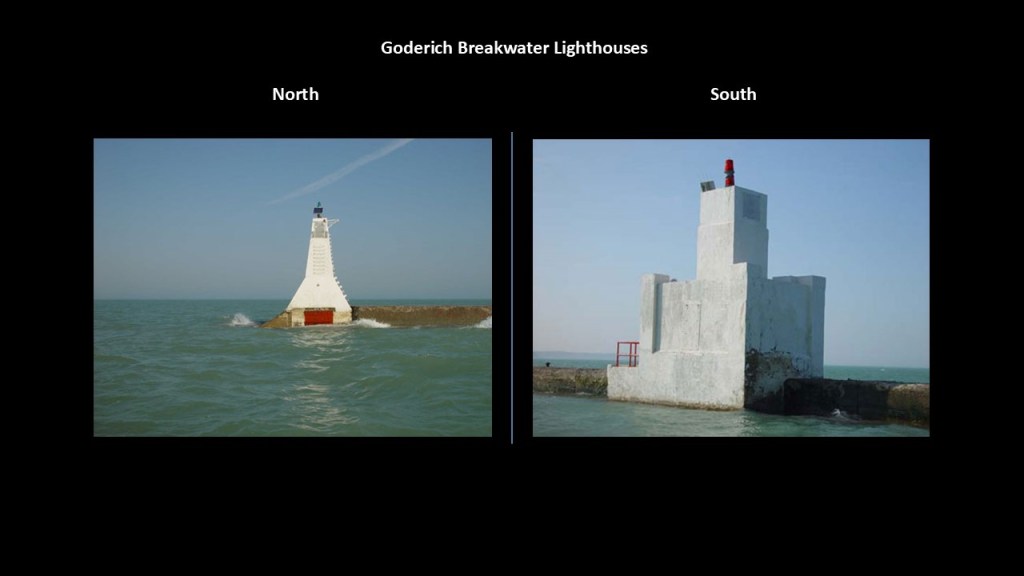
The Goderich North Breakwater Lighthouse on the left was said to have been erected in 1909, and the South Breakwater Lighthouse in 1952.
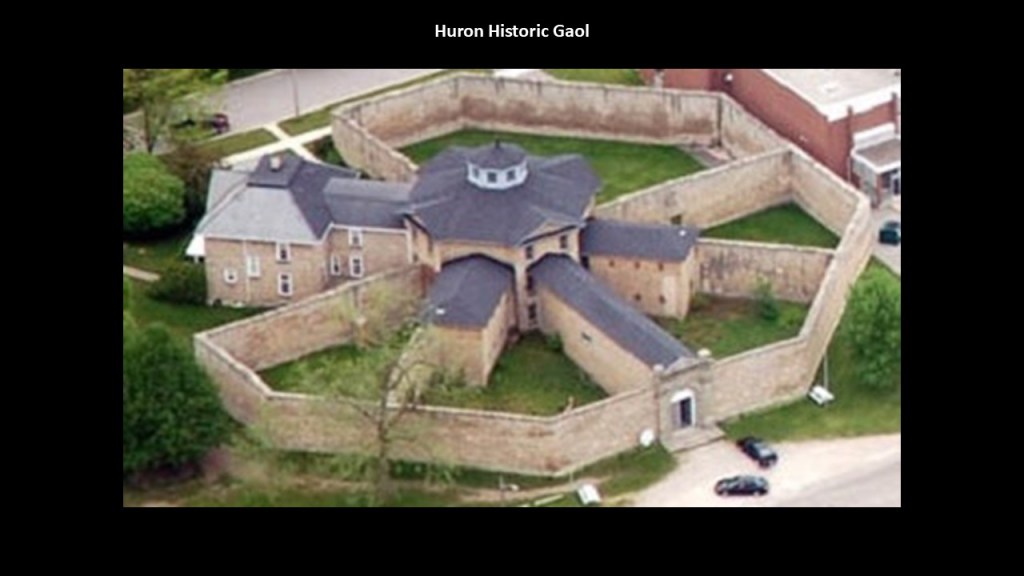
Today the Huron County Museum, the Huron Historic Gaol was said to have been constructed between 1839 and 1842 using stone from the Maitland River Valley and from Michigan.
It was in use as a jail until 1972, and was designated as a National Historic Site of Canada in 1973.
The octagonal jail was said to have been designed by Toronto architect Thomas Young.
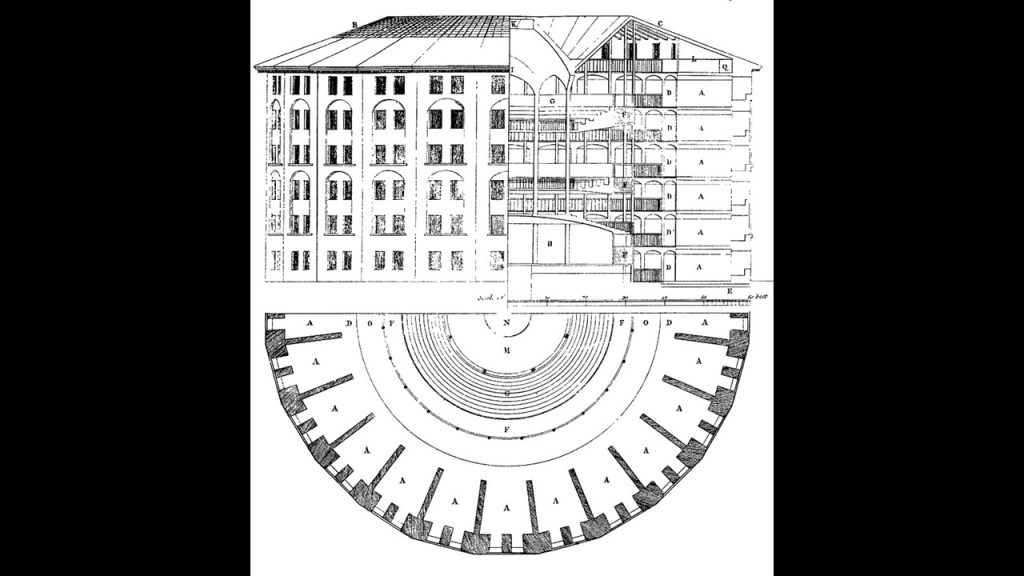
It was said to have been influenced by the English philosopher Jeremy Bentham’s Panoptican design for prison construction that was said to be common in mid-19th-century Britain and North America.
The Panoptican design was said to be touted because it allowed for all of the prisoners to be observed by a single prison officer.
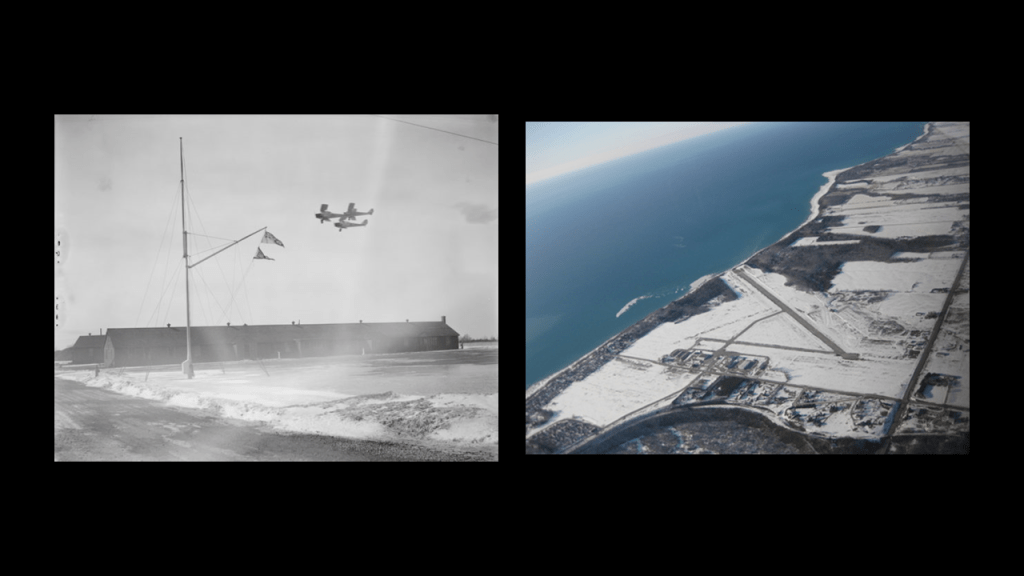
Early in World War II at what is now the Goderich Regional Airport, it was the site of one of Canada’s Air Training facilities, opening in December of 1939 and operated until March of 1945.
Goderich was quite an active railroad location in its history, including but not limited to the Grand Trunk Railway, with multiple rail lines and rail facilities located here, including a roundhouse.
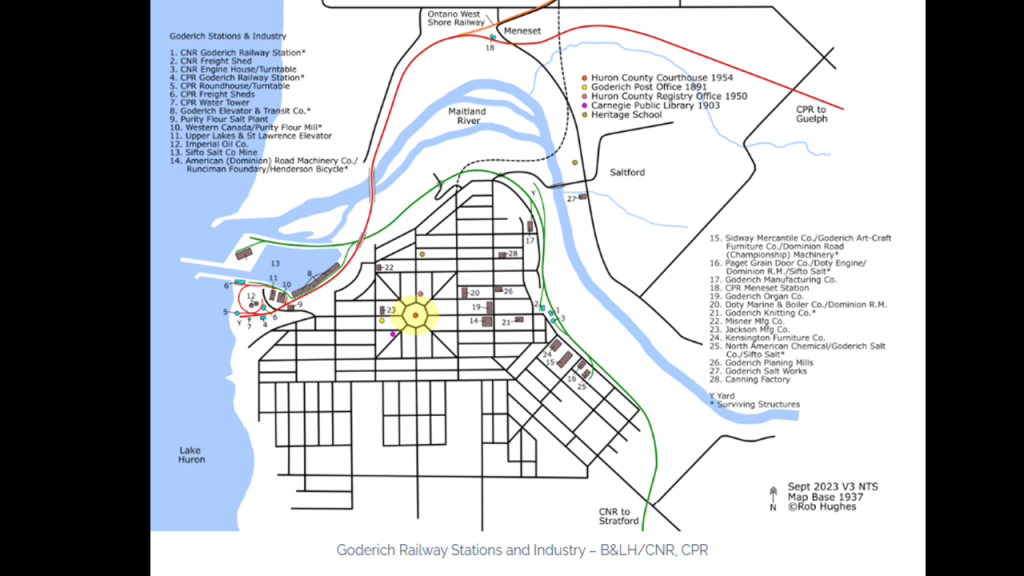
Today, the Goderich-Exeter Railway still operates to transport freight, though with limited traffic on the line.
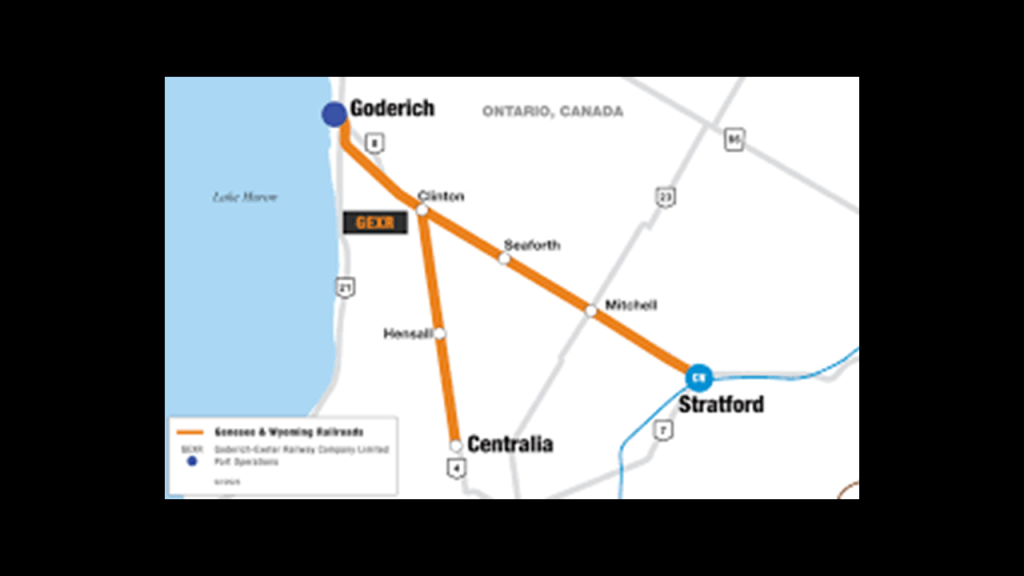
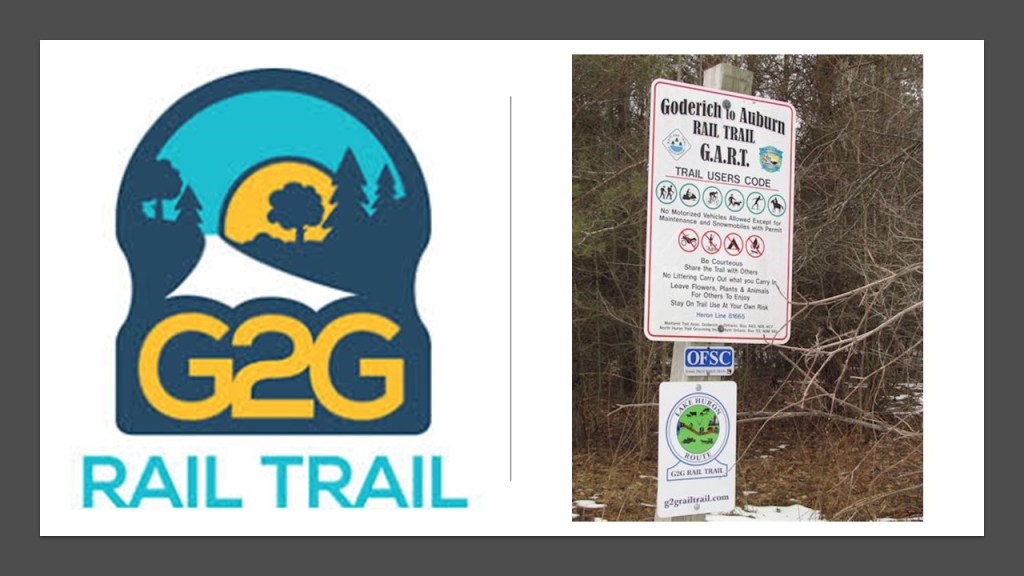
The two main recreational rail-trails in Goderich today are the Guelph to Goderich (G2G) and the Goderich to Auburn (G.A.R.T.).
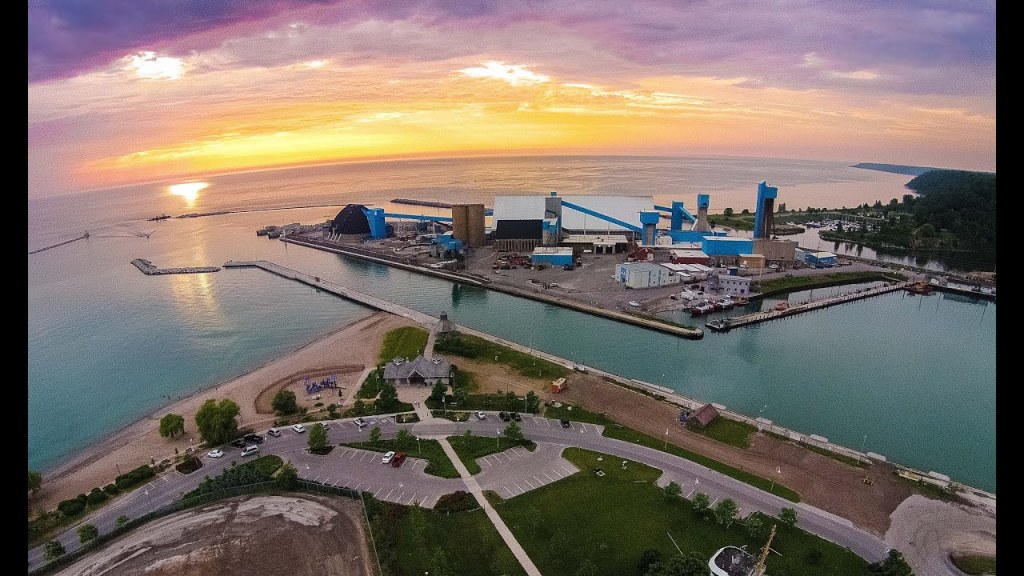
Goderich has significant salt mining operations at the Goderich Salt Mine, considered the largest underground salt mine in the world, and has been in operation since 1959.
The Goderich Salt Mine has a production capacity of 9-million-tons per year, and produces 7,250,000-tons per year.
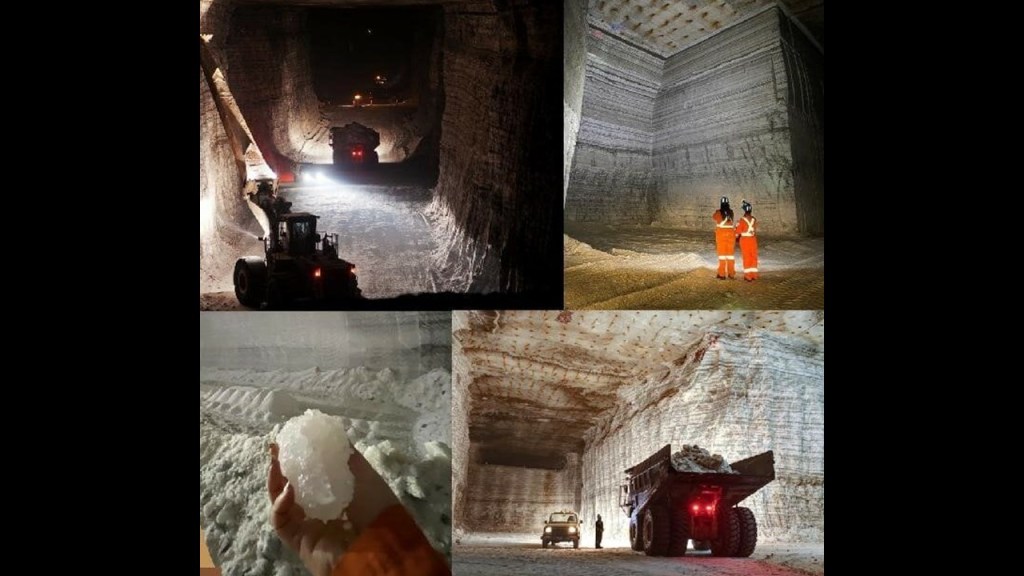
It is 1,800-feet, or 549-meters, under Lake Huron.
The mine is as deep as the CN Tower in Toronto is tall.
We are told the Goderich Salt Plant has been in operation since 1867 after an unsuccessful search for oil uncovered a vast bed of rock salt beneath Goderich.
The plant produces salt products of different kinds in packages and bulk for commercial, agricultural and industrial applications.
The next place I am going to look at is the Morris Tract Provincial Nature Reserve.
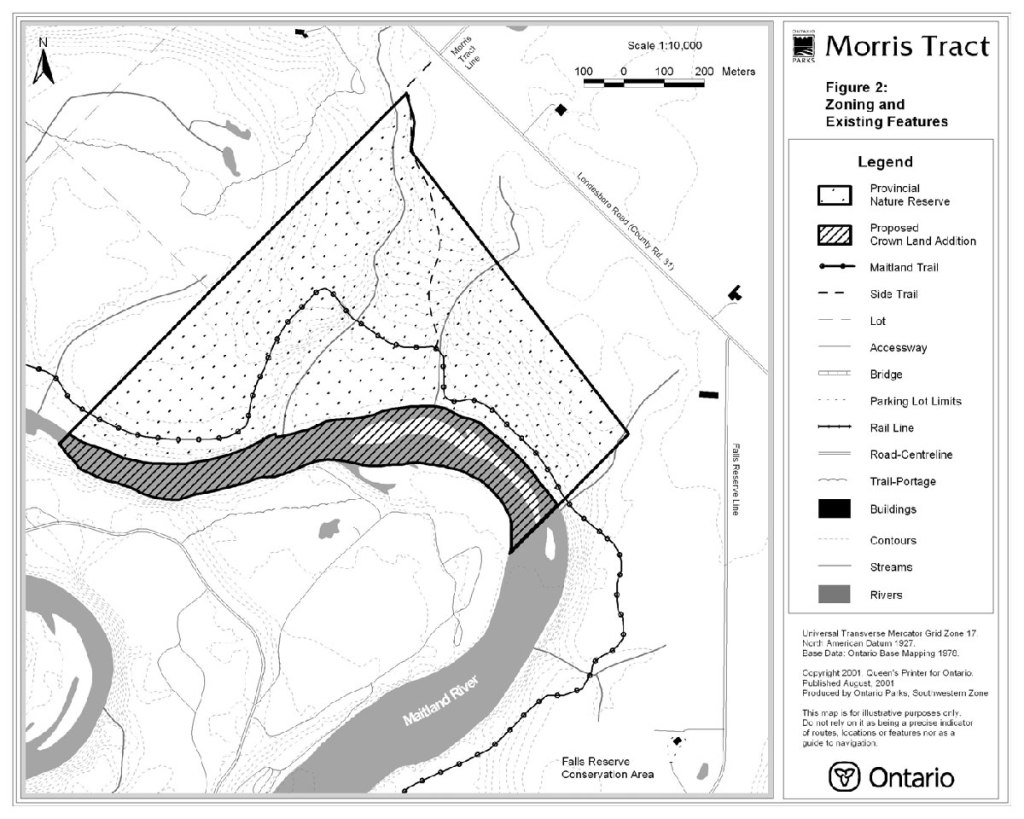
The Morris Tract Provincial Nature Reserve is described as a 143-acre, or 58-hectare, upland forestland comprised of sycamore, maple, and hickory, with steep valleys and fertile river-bottom that is adjacent to an S-shaped bend of the Maitland River.
There are hiking trails but no facilities for visitors.
The Maitland Trail runs alongside the Maitland River from Goderich to Auburn.
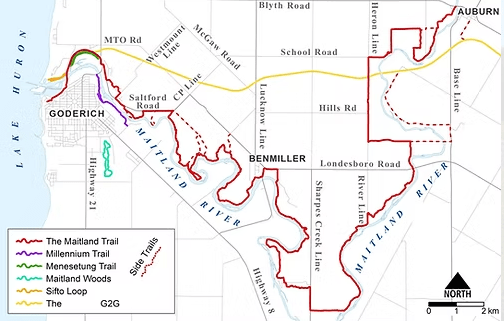
It wouldn’t surprise me at all to find out the Maitland Trail is a rail-trail, though for some reason we are not specifically told that it was.
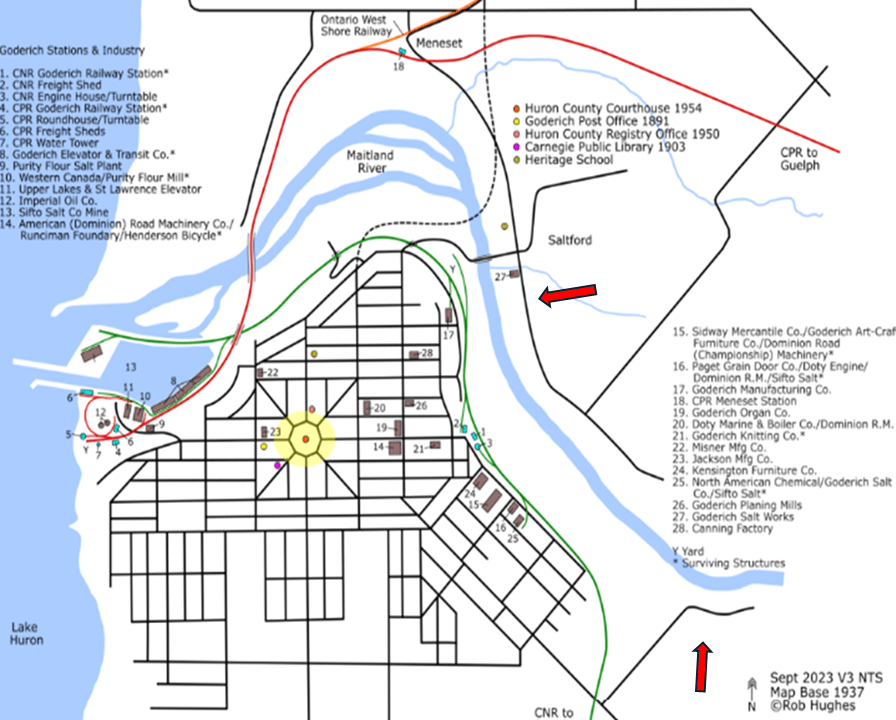
The Falls Reserve Conservation Area is also on an S-shaped bend of the Maitland River, adjacent to the Morris Tract Provincial Nature Reserve.
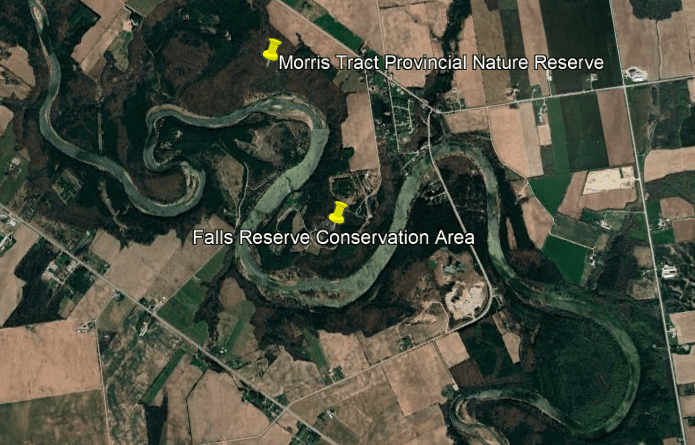
The Falls Reserve Conservation Area is on 235-acres, or 95-hectares, of land, and has a series of low waterfalls.
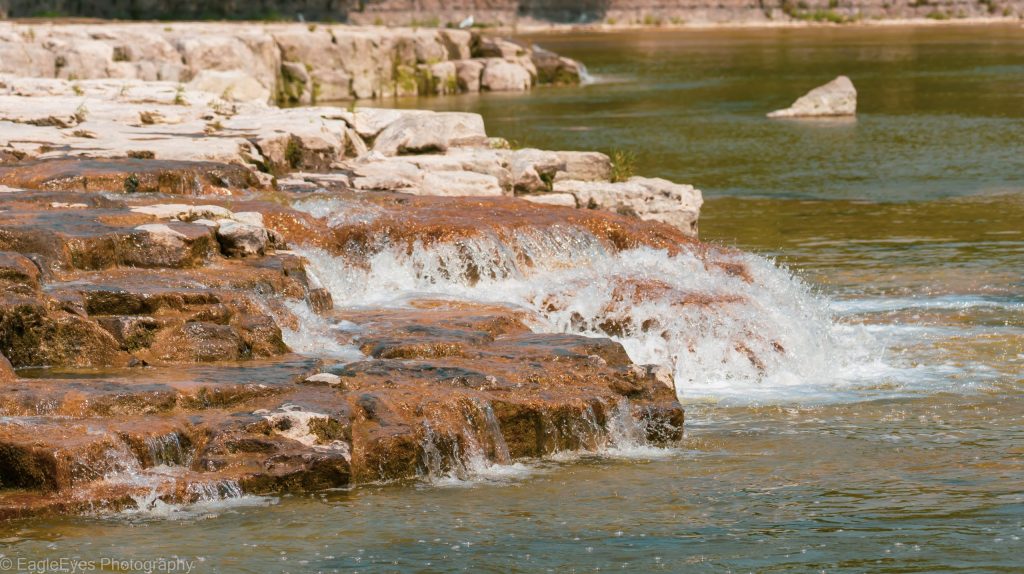
I am going to provide a good example from the New River Gorge in West Virginia, of the countless places I have consistently found, where there is a railroad running alongside S-shaped river bends, with waterfalls and hydroelectric plants.
The New River Gorge is one of the places where the railroad still operates and hasn’t been removed.
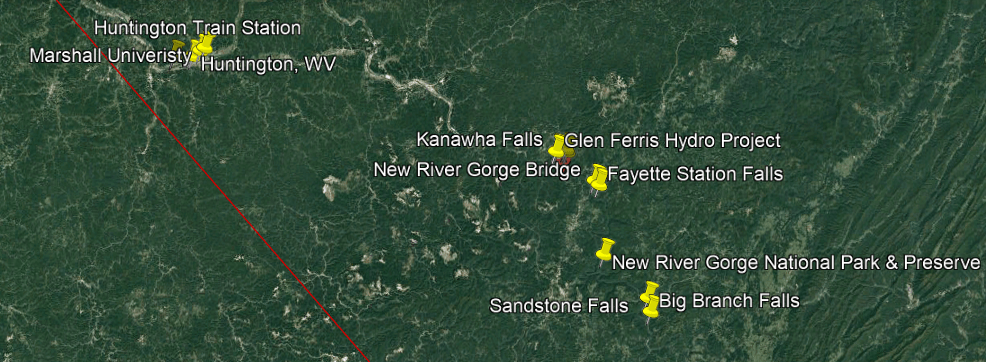
Along with the daily freight traffic of CSX, the Amtrak Cardinal passenger service still runs through the New River Gorge 3 days/week – on Sundays, Wednesdays and Fridays.
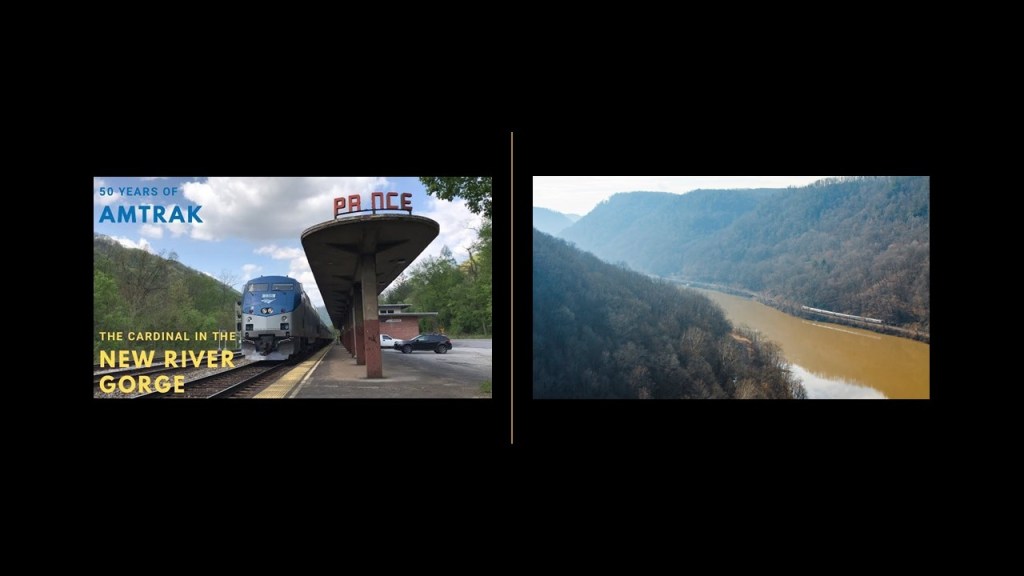
There are waterfalls and hydro projects found on the New River as it winds its way through the New River Gorge.
I was able to find several waterfalls here that are accessible by road, and reference to over 100 others .
The first two waterfalls I found that are accessible by road are the Kanawha Falls and Cathedral Falls.
They are directly across from each other on a river-bend, and they both have hydroelectric projects next to them.
The Glen Ferris Hydroelectric Project next to the Kanawha Falls was said to have been constructed between 1927 and 1932 by a subsidiary of Union Carbide & Carbon Corporation for a remote electro-metallurgical production facility.
There is a dam and two power houses at this location.
The Gauley Bridge Hydropower Project is on the other side of the river-bend from the Glen Ferris Complex, and located below the Cathedral Falls.
Gauley Bridge is this old railroad trestle bridge just upriver from the hydro facilities where the town of Gauley Bridge is located.
Today it is an abandoned railroad bridge on what had become the New York Central Railroad crossing of the Gauley River.
It was originally said to have been completed in 1893 as part of the Charleston & Gauley Railway as a coal-hauling railway between Charleston, West Virginia and coal mines along the Gauley River.
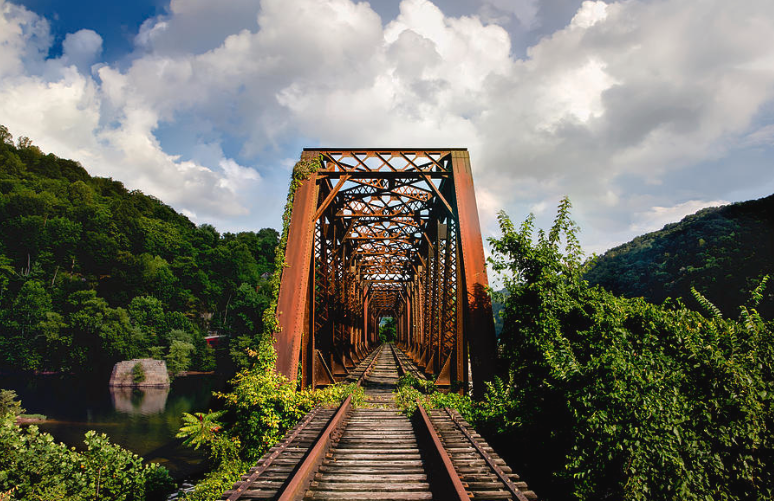
The Menesetung Bridge in historic Goderich was historically also a railroad bridge.
Today it is a pedestrian bridge on the Maitland Trail.
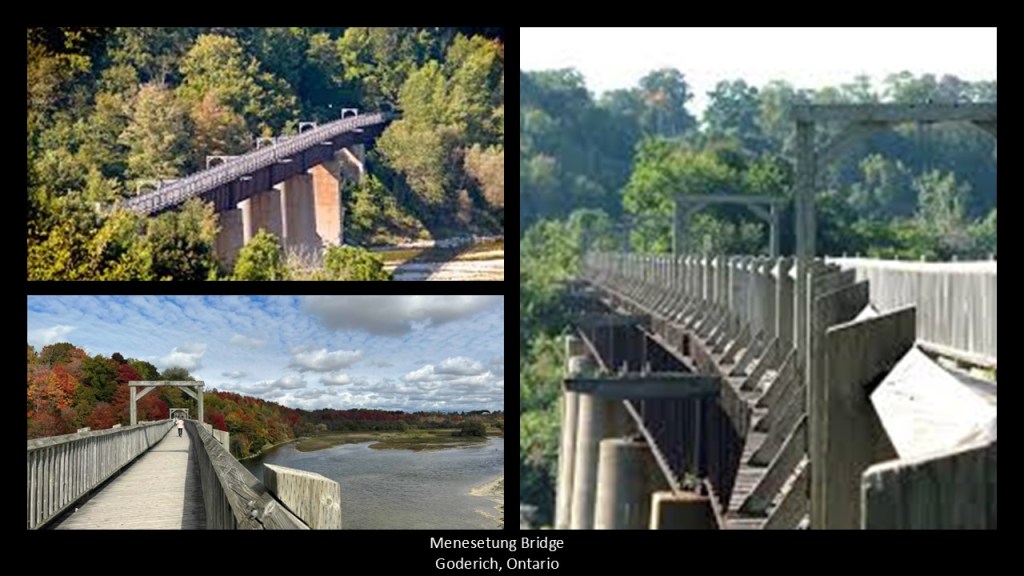
It crosses the Maitland River near its entrance to Lake Huron, and was said to have been constructed between 1906 and 1907.
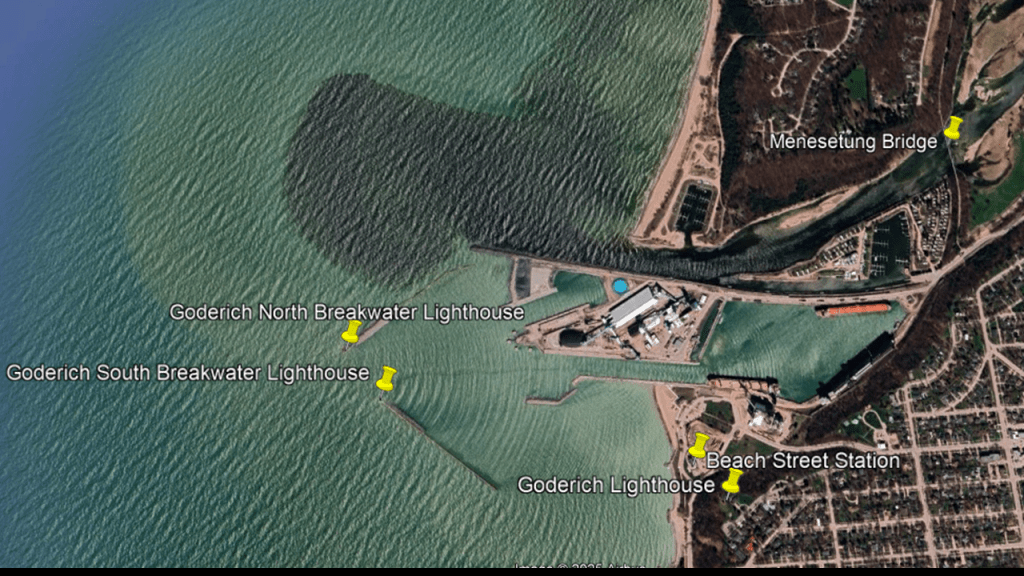
The train station in Goderich was said to have been built in 1907 at the terminus of the Guelph and Goderich Railroad, and served as a railway hub for passenger service until 1956 and freight until 1988, after which time it fell into disrepair.
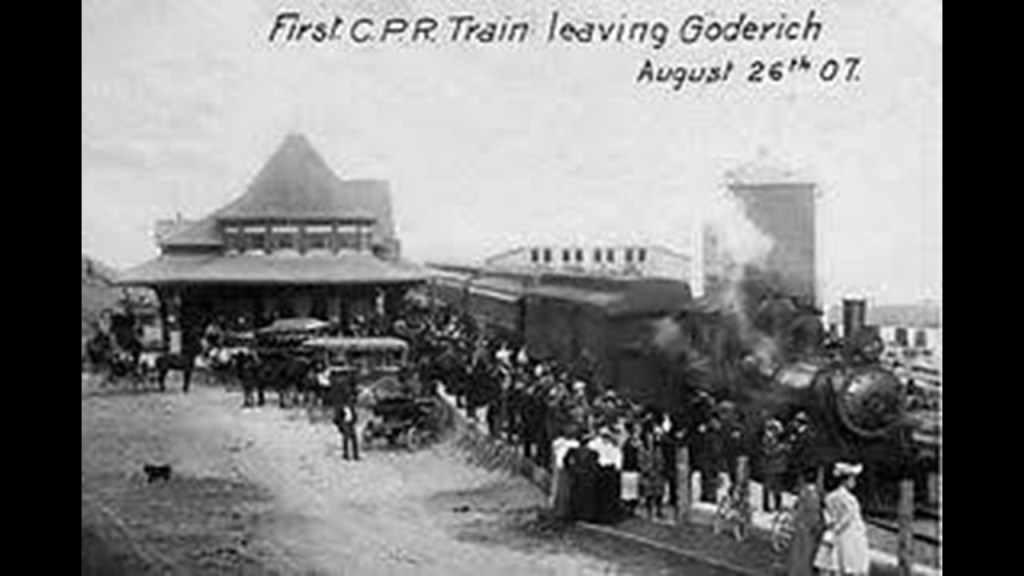
We are told that in 2013, the former railroad station was privately purchased and moved to its present location, and the building was re-opened as the Beach Street Station Restaurant in 2015.
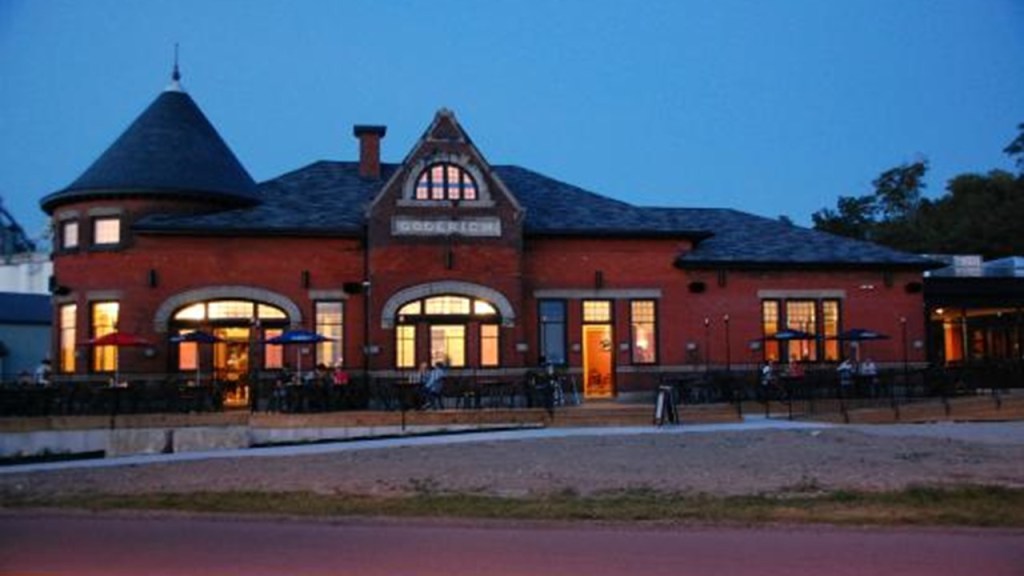
Lastly before I move on from the Goderich area, I want to look at the Saratoga Swamp.
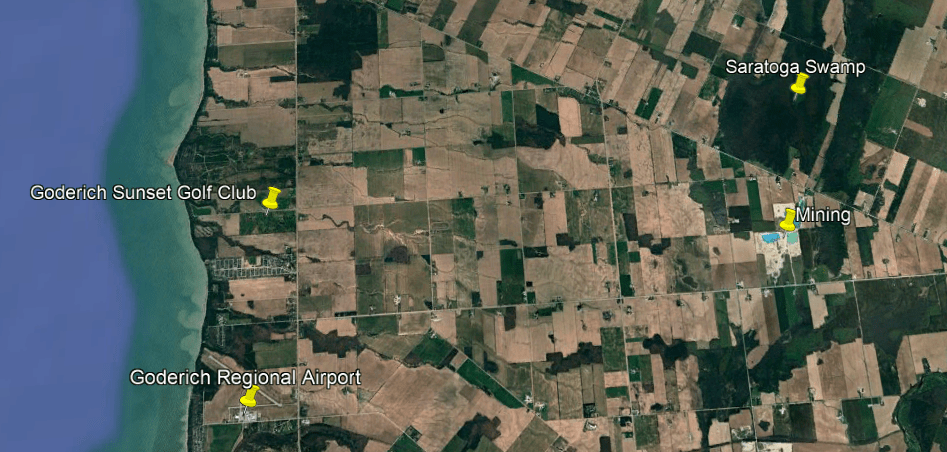
The Saratoga Swamp is the largest remaining wetland of the Maitland River watershed, consisting of 1,235-acres, or 500-hectares, of wetlands.
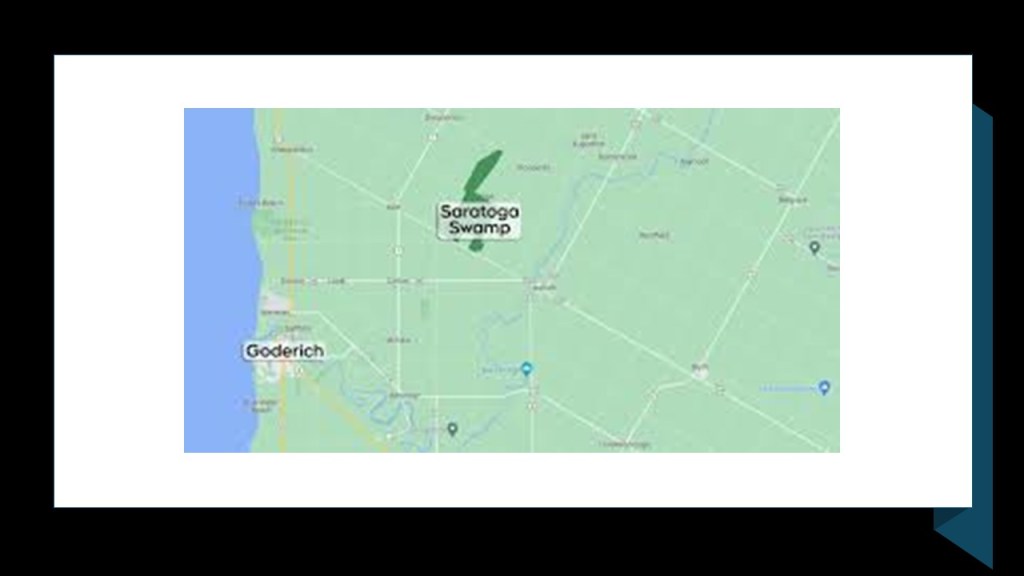
The Point Clark Lighthouse is up the coast from Goderich, before we get to the Kincardine area.
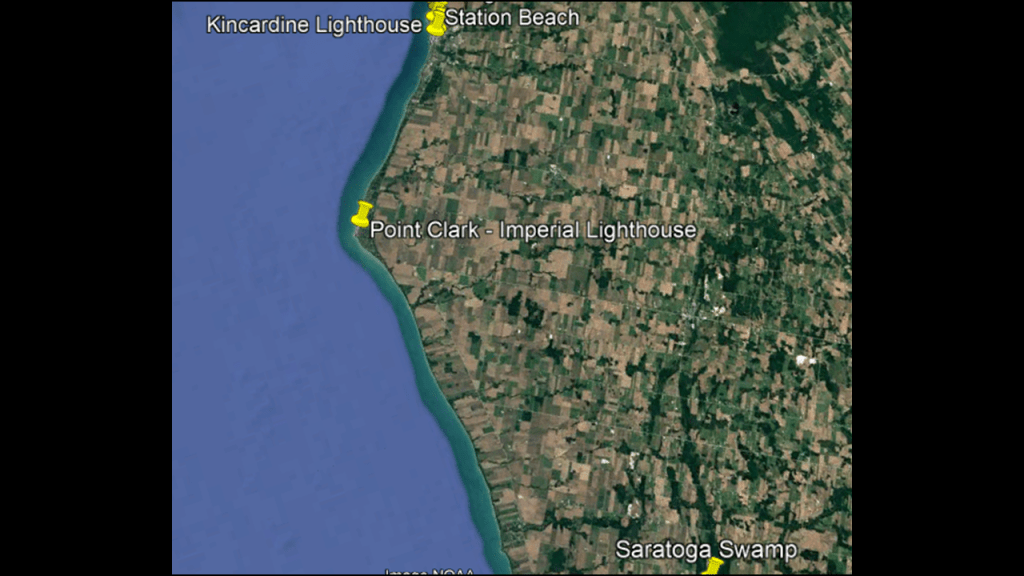
The Point Clark Lighthouse is one of what are called six “Imperial Towers” on Lake Huron and Georgian Bay.
We are told they were constructed primarily of stone, and that they were built by the Province of Canada during colonial times, when commercial shipping was increasing on the Great Lakes between Canada and the United States after the opening of the Sault Ste. Marie Canal locks in 1855.
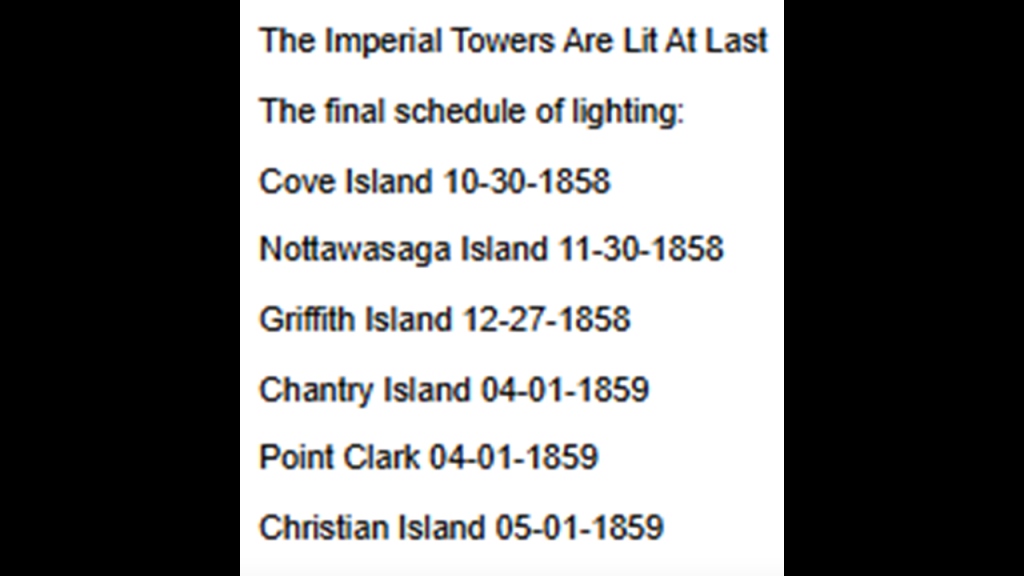
The Point Clark Lighthouse was said to have been built between 1855 and 1859, and one of the few lighthouses on the Great Lakes to have been built primarily from stone.
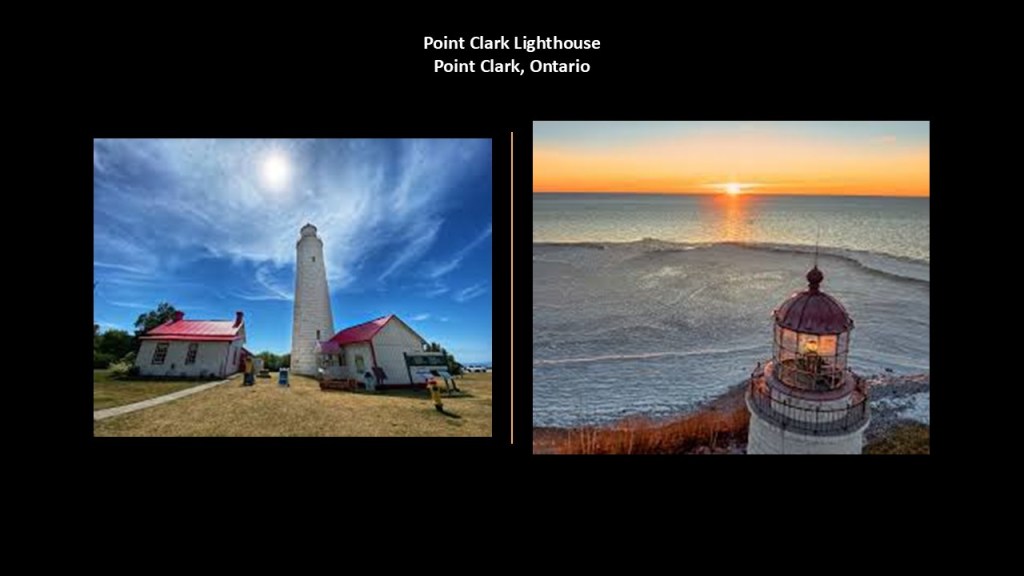
We are told this place was selected to build this lighthouse to warn sailors of the shoals 2-miles, or 3.2-kilometers off the coast here.
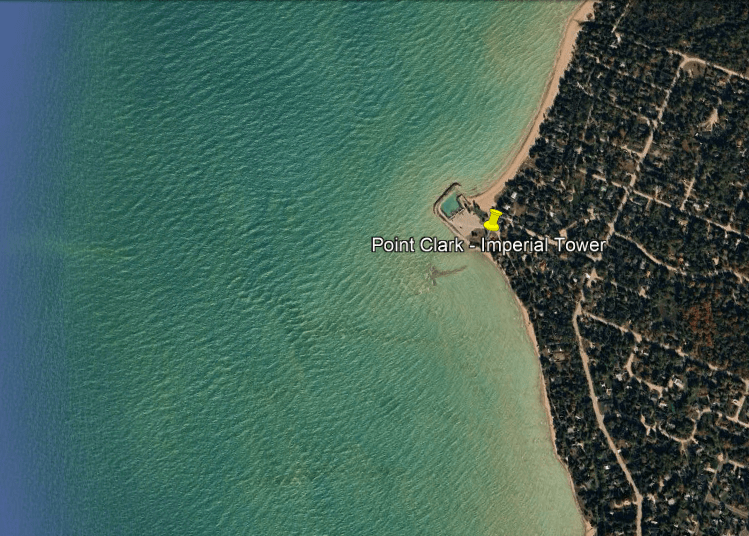
Kincardine is the next place we come to as we move up the Lake Huron shore.
It is a municipality in Bruce County at the mouth of the Penetangore River.
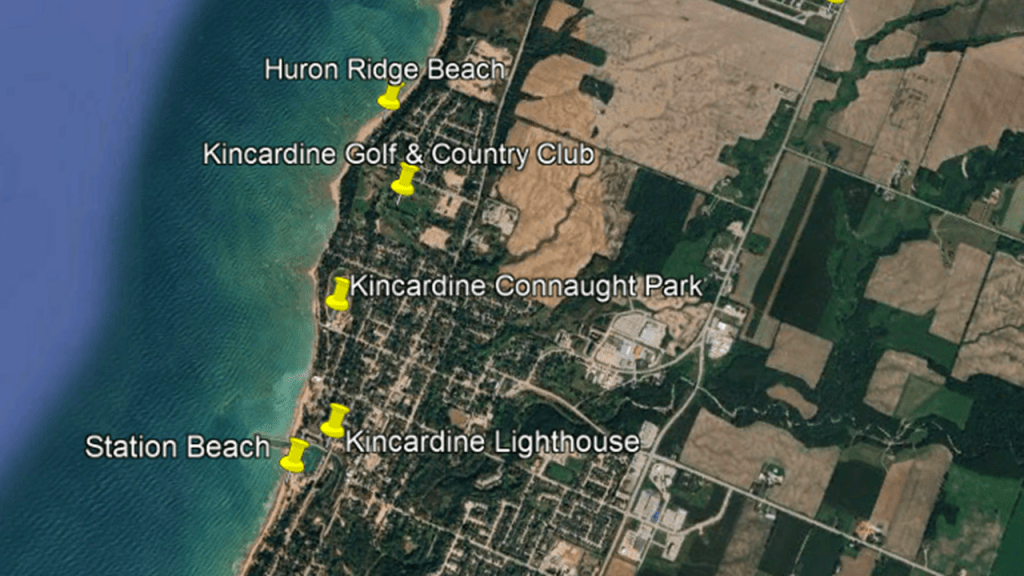
We are told that Penetangore is an Ojibwe word meaning “river with sand on one side,” referring to a sandbar at the mouth of the river.
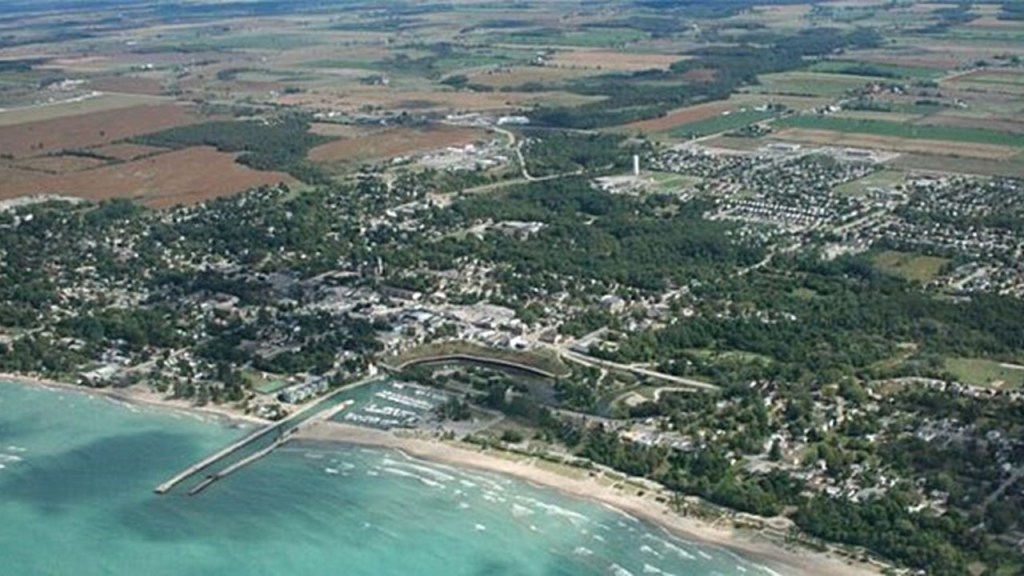
The Kincardine Lighthouse is located near the mouth of Penetangore River.
The octagonal lighthouse was said to have been built in 1881, and sits on a stone foundation.
Today it is the Yacht Club and a museum.
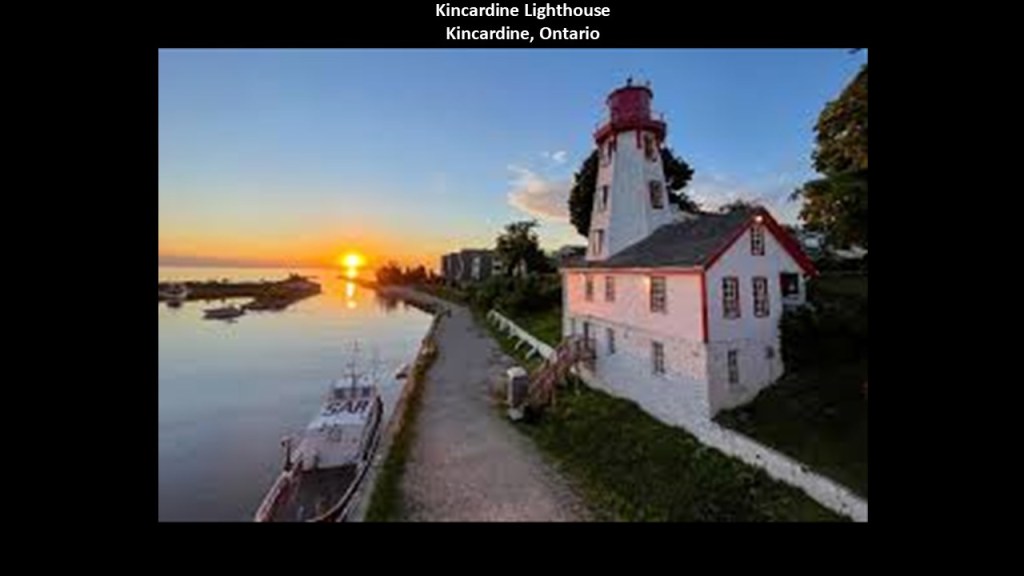
Station Beach is directly across the Kincardine Marina from the Lighthouse and the mouth of the Penetangore River.
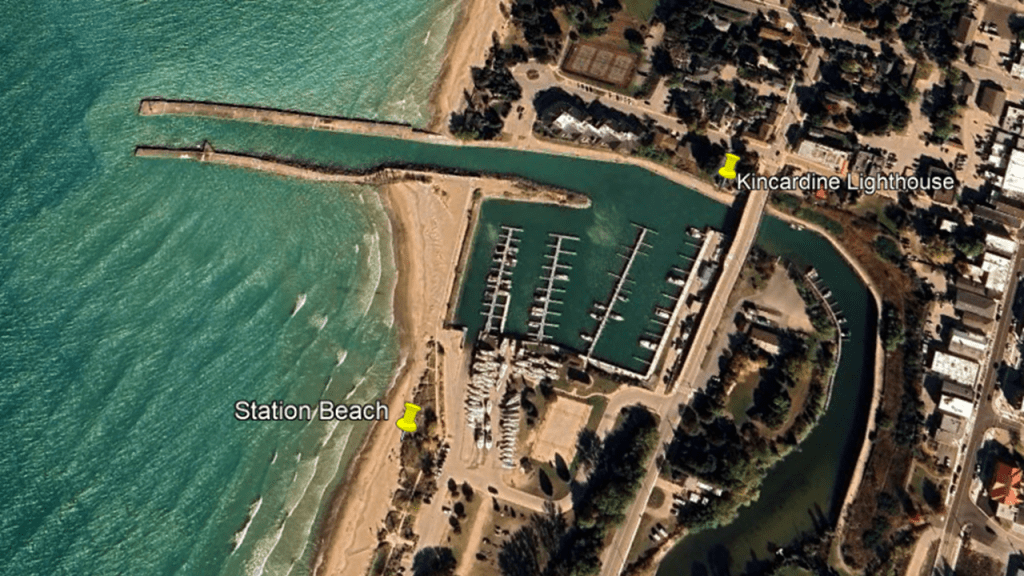
So I looked to see if there was a railroad connection, and found that yes in fact there was one.
Station Beach was at one time the location of the Kincardine Railway Station.
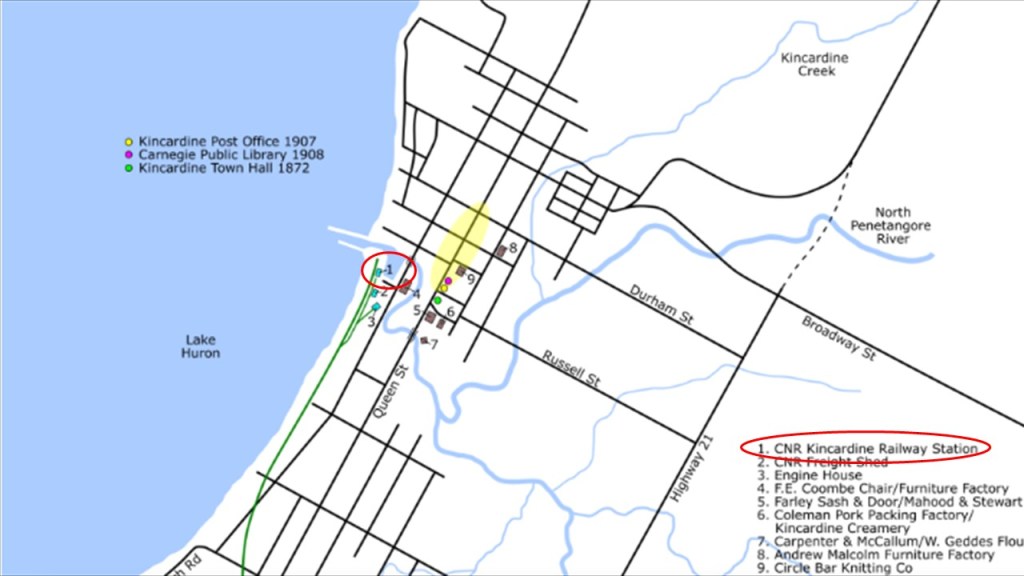
We are told that the train station was constructed with the opening of the Grand Trunk Railway line in 1872.
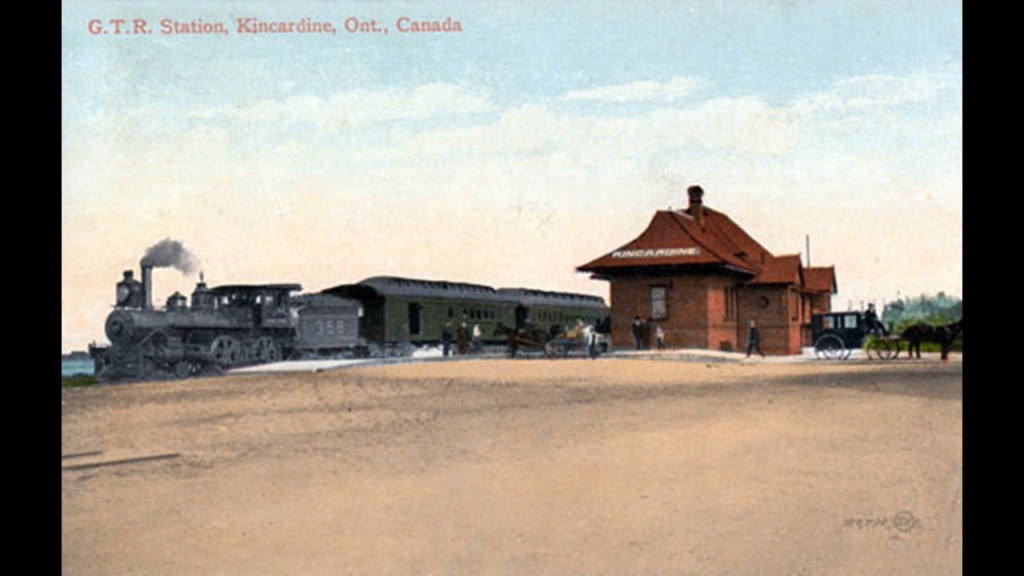
Trains stopped operating in Kincardine in 1983, and the tracks were removed.
The Kincardine Trails Association manages trails in the surrounding area, including the former railroad lines.
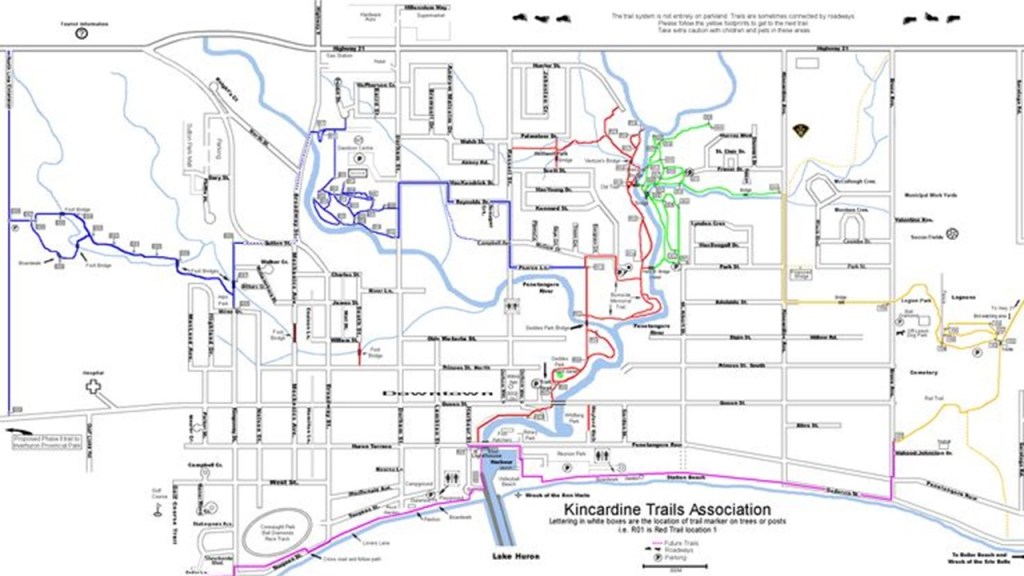
One of them is the Bruce County Rail-Trail.
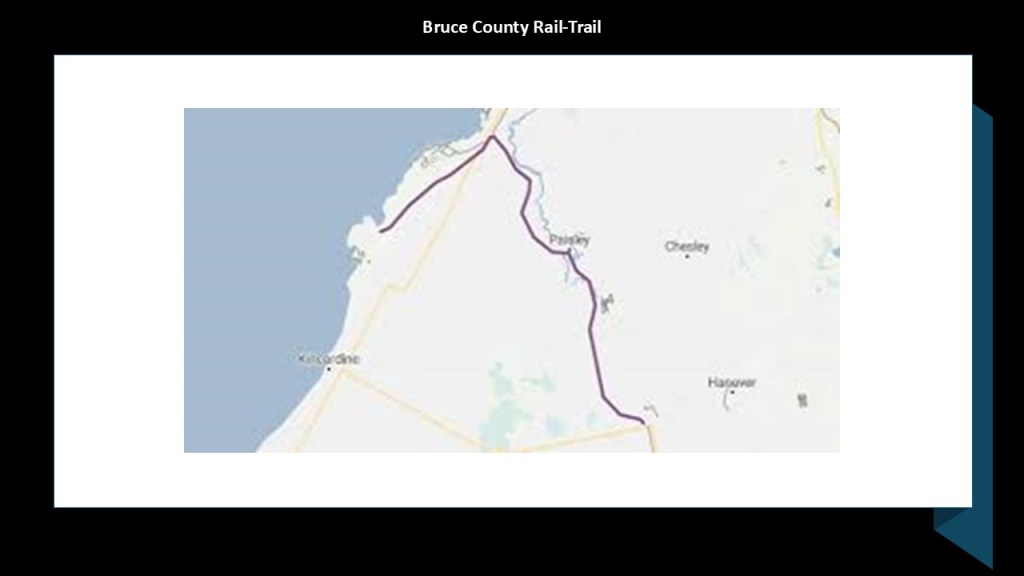
I noticed in the railroad map of Kincardine that there was a Carnegie Library here, like we saw back in Forest, and right next to it were the Post Office and Town Hall.
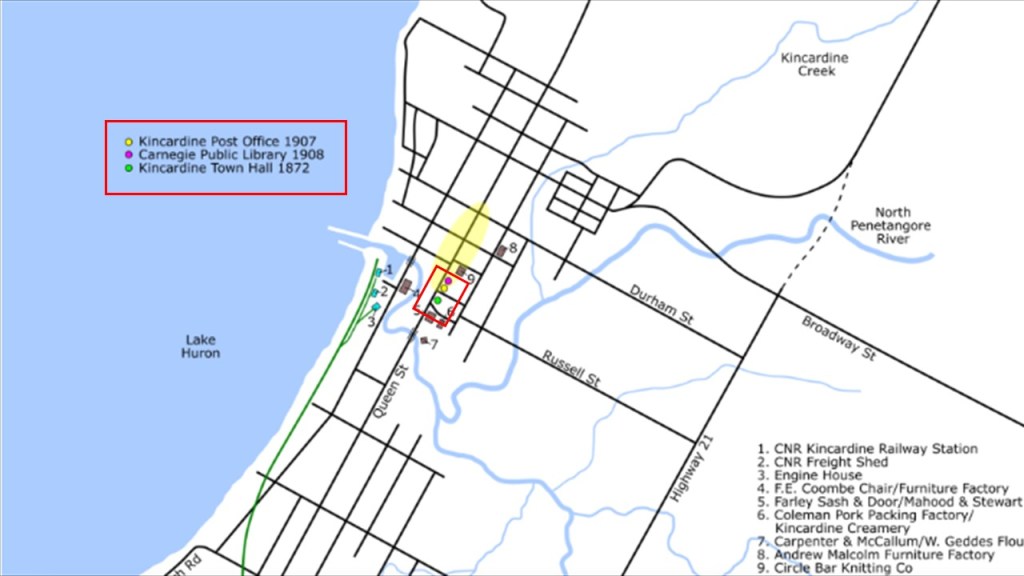
The Carnegie Library in Kincardine was said to have first opened in 1908 and enlarged in 1990, and is still in use as their public library today.
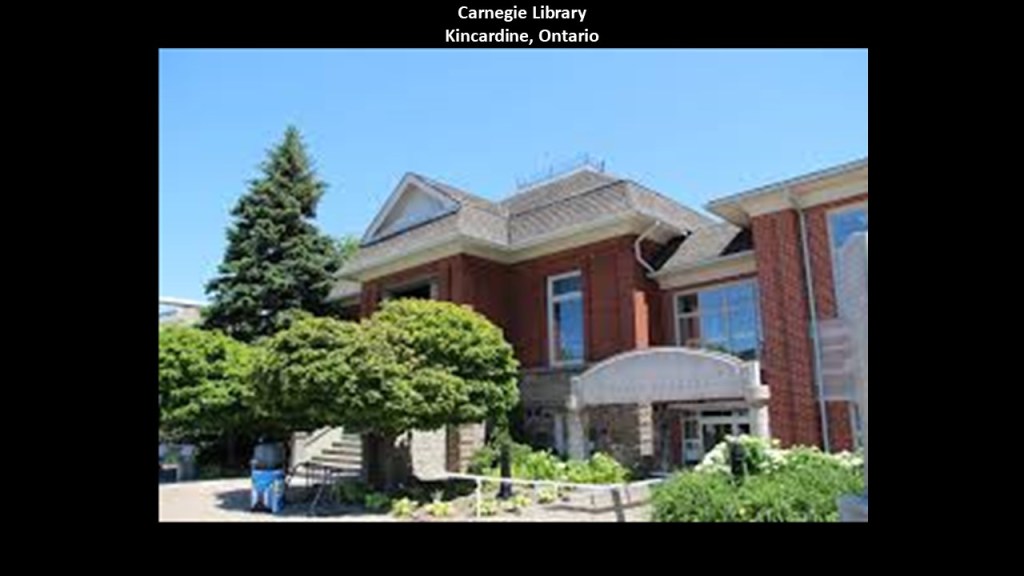
The former Kincardine Post Office and Customs House was said to have been built in 1907 in the Renaissance Revival Style.
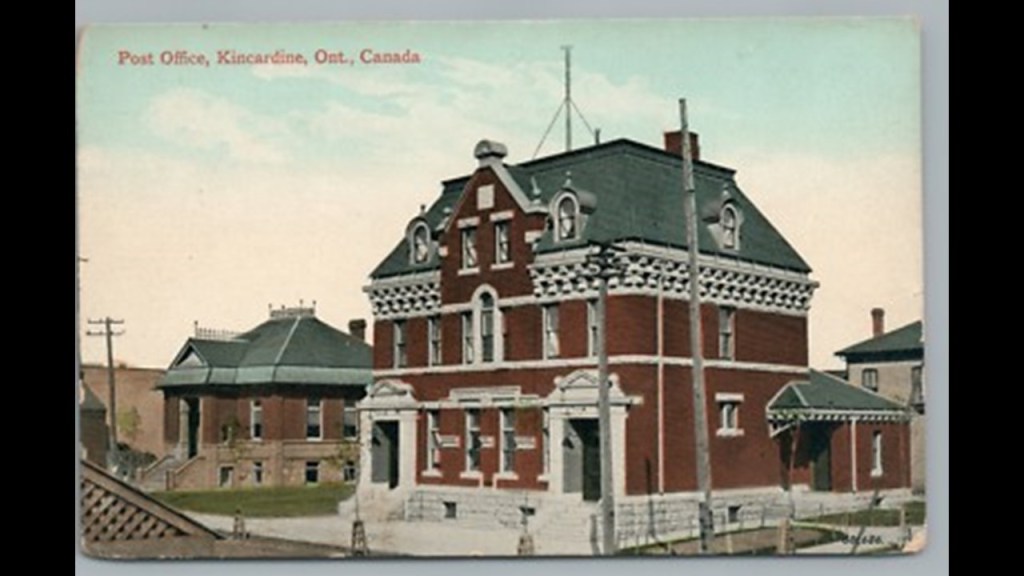
Though the former post office is still standing, it is an abandoned building today, even though it had received Heritage Designation in 1978 under the Ontario Heritage Act.
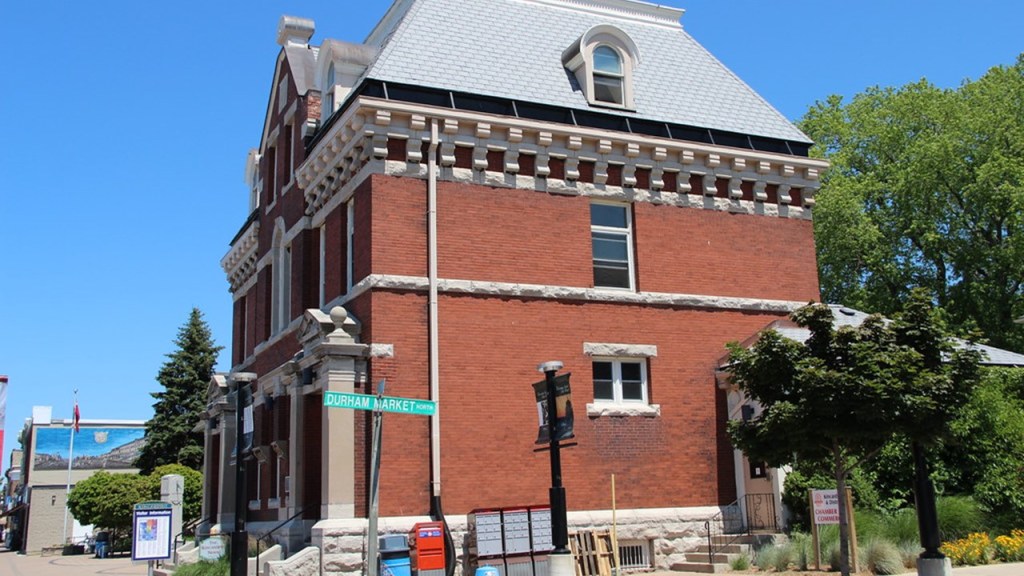
The historic Kincardine Town Hall is on the same stretch as the Carnegie Library and Post Office.
It was said to have been built circa 1900.
Today the building is utilized as the Kincardine Centre for the Arts.
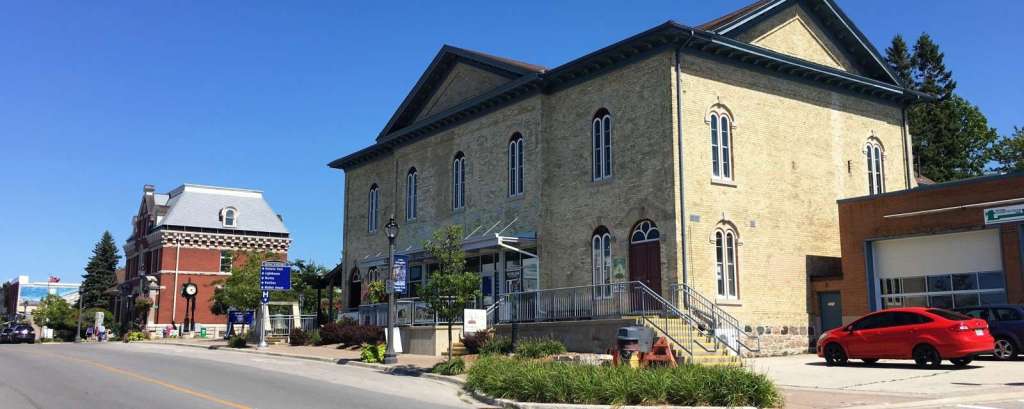
Next the Kincardine Connaught Park, Kincardine Golf & Country Club, and Kincardine Airport are located in close proximity to each other, with a linear relationship to the southwest existing between the airport and the large ellipse at the Kincardine Connaught Park.
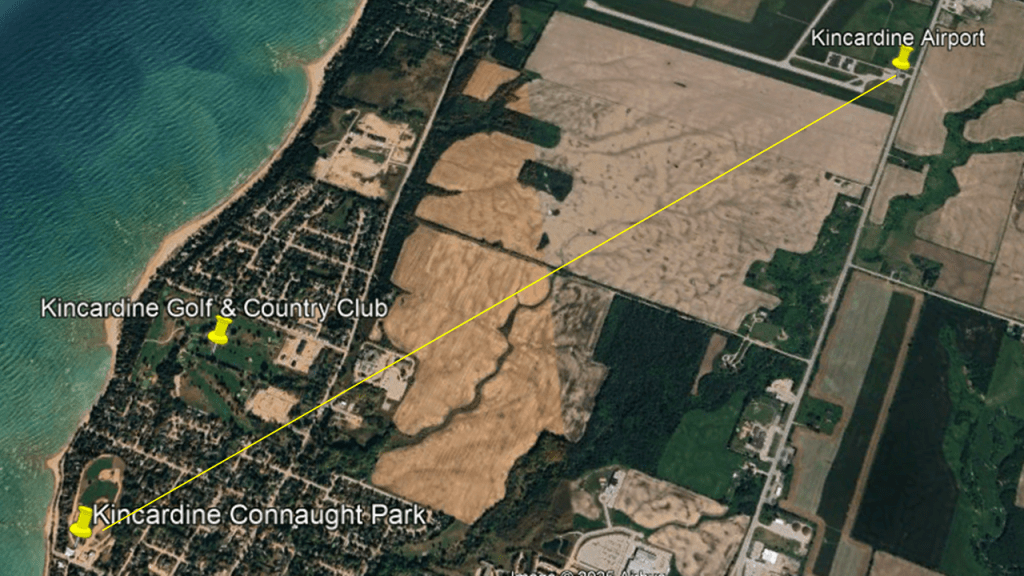
The Kincardine Connaught Park today is a large public green space for recreational activities and sports.
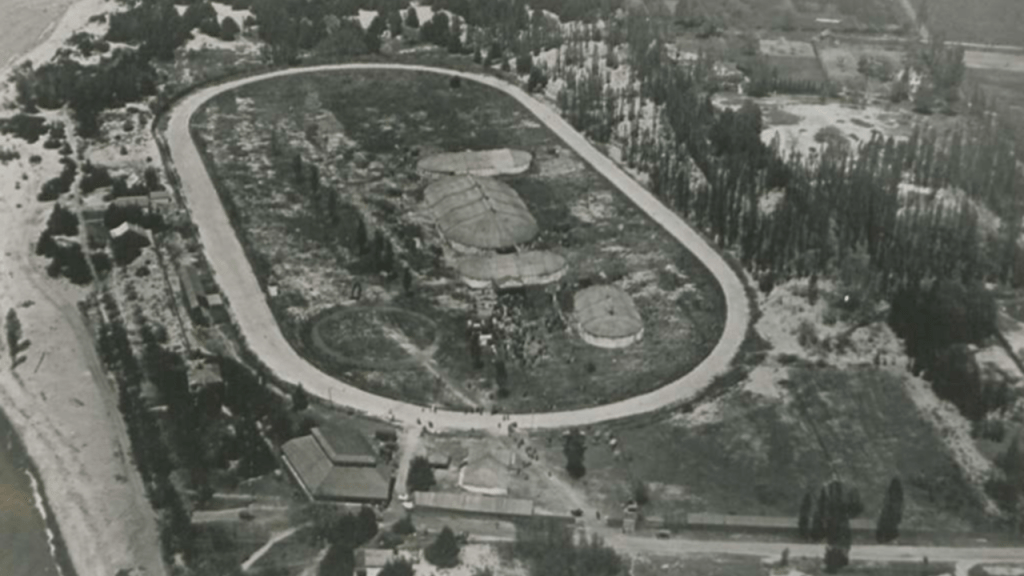
The Greenock Swamp Wetland Complex is due east of Kincardine.
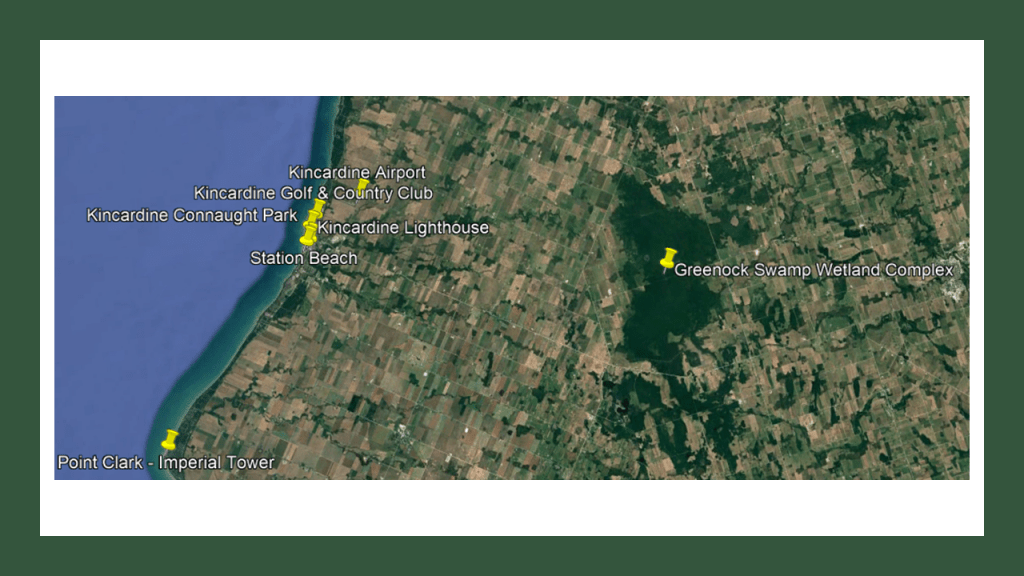
The Greenock Swamp Wetland Complex is southern Ontario’s largest wetland, covering over 20,000-acres, or over 8,000-hectares.
This swamp wetland complex features an old railroad bridge…
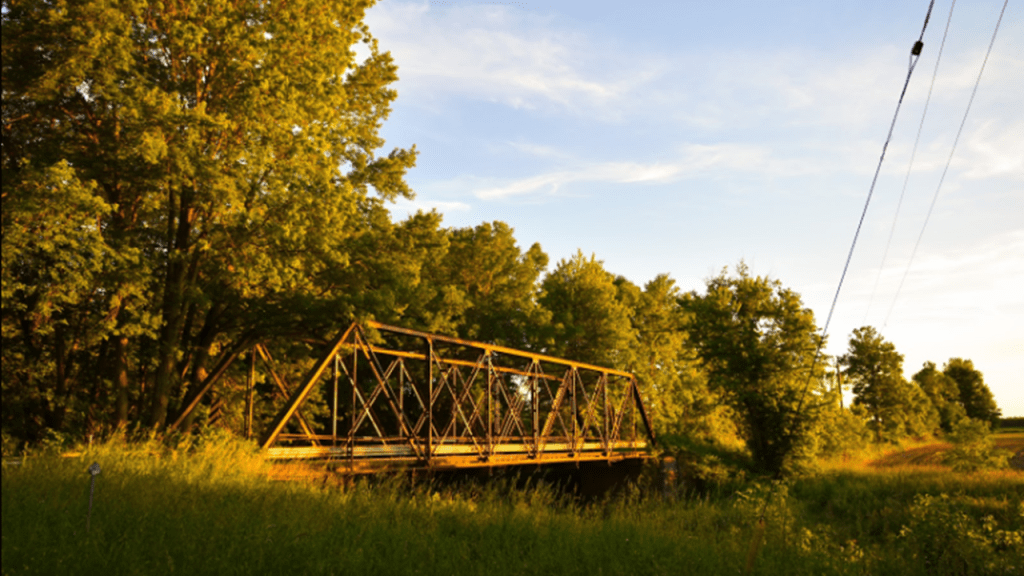
…and megalithic stone blocks.
Going further up along the coast from here we next come to the area around Port Elgin and Saugeen Shores; the location of another Imperial Tower on Chantry Island; the Saugeen Golf Club and MacGregor Point Provincial Park.
Port Elgin is a community within the municipality of Saugeen Shores.
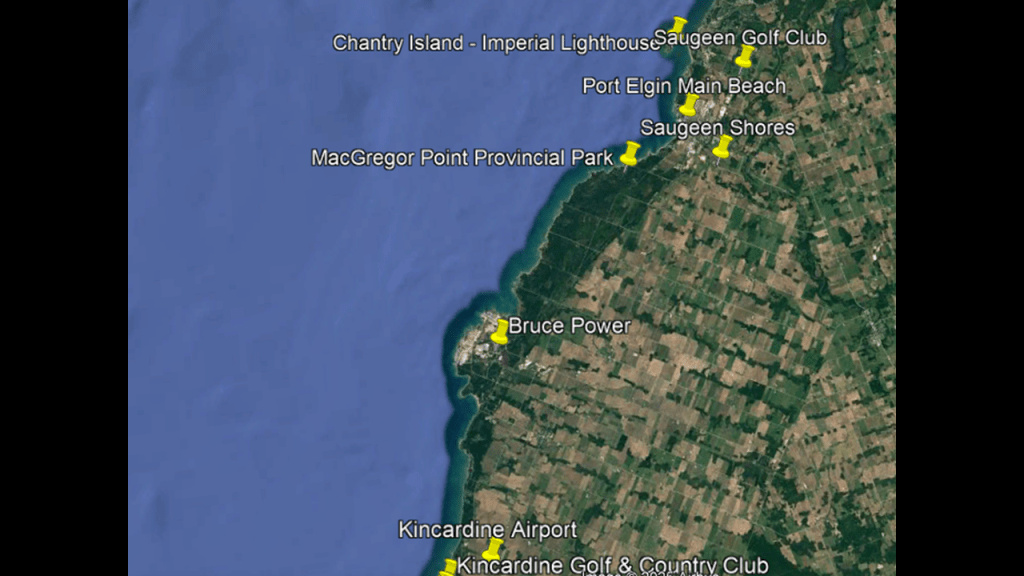
This is the traditional territory of the Saugeen Ojibway Nation which includes what is known as the Bruce Peninsula today and the direction in which we are heading.
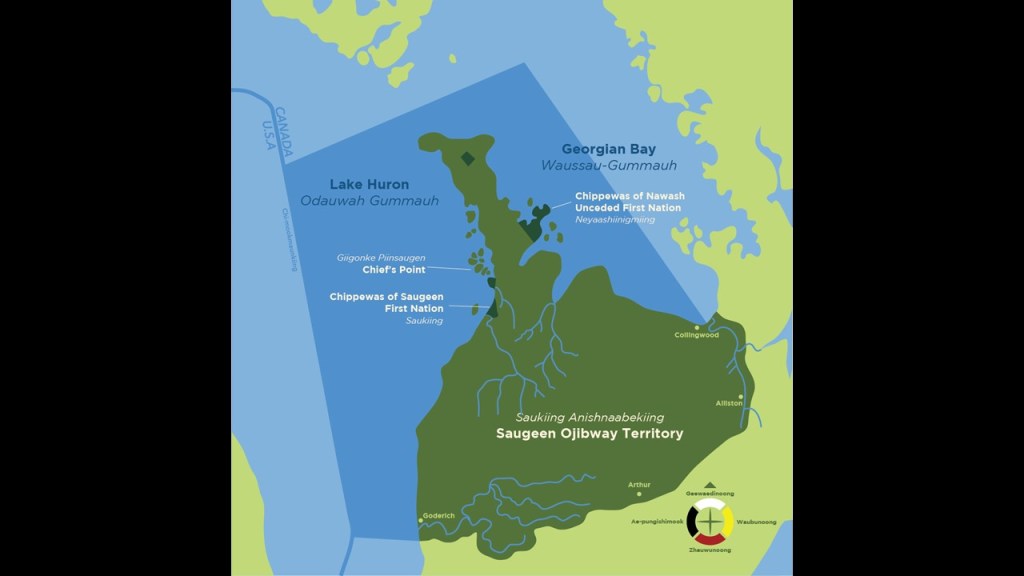
This is what our historical narrative tells us.
The development of what became Port Elgin begin in 1854.
It was incorporated as Port Elgin in 1874, and named for James Bruce, 8th Earl of Elgin, a former Governor-General of Canada.
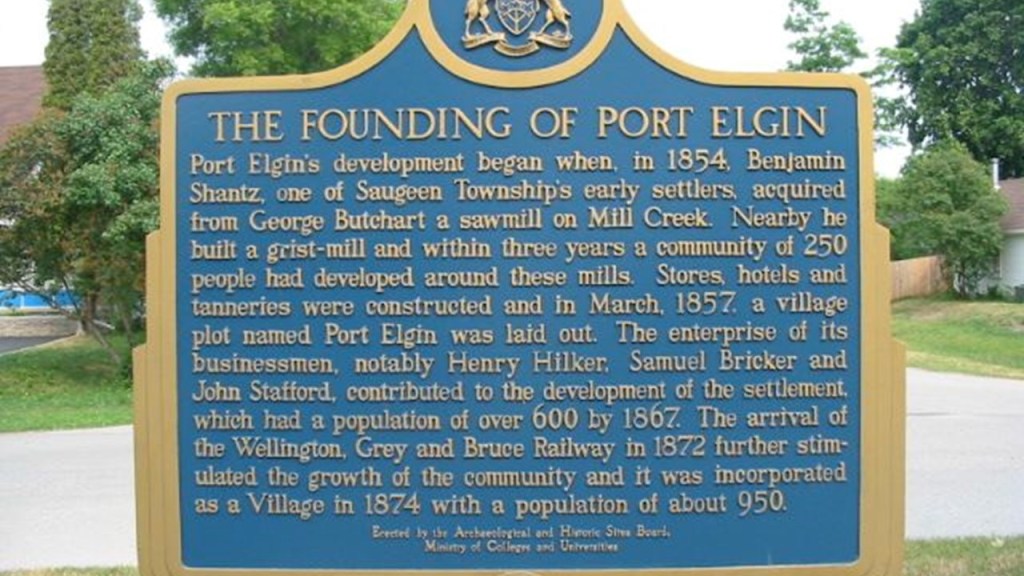
Along with being the 8th Earl of Elgin, James Bruce was the 12th Earl of Kincardine who held a number of high positions as a British Colonial Administrator and Diplomat.
The definition of “colony” we are most familiar with in our historical narrative is this one – A territory under the complete political control and occupied by settlers of a state.
Along with being the Governor-General of Canada from 1847 to 1854, Bruce was Governor of Jamaica from 1842 to 1846, and Viceroy of India from 1862 to 1863.
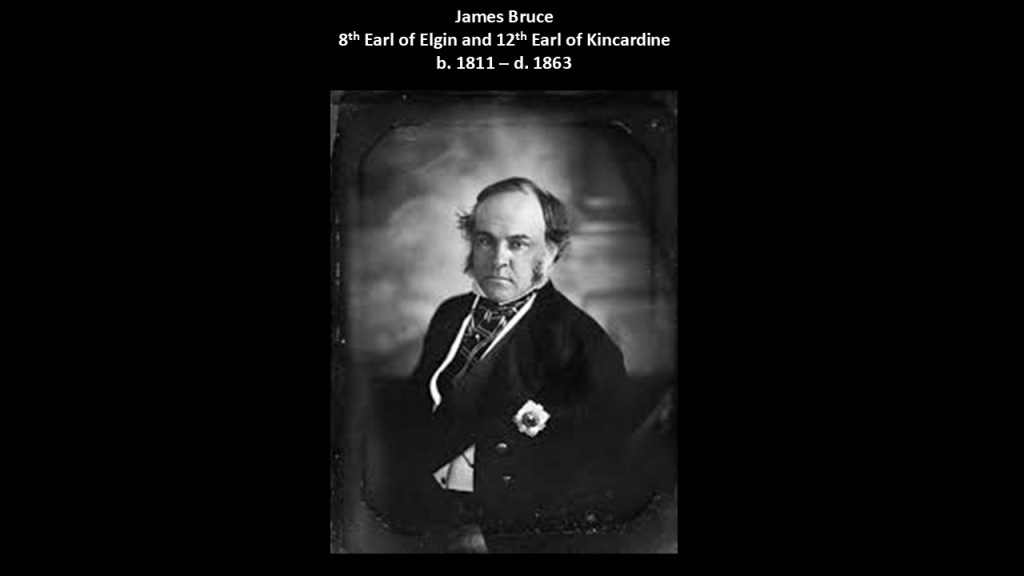
It is noteworthy that James Bruce was the British High Commissioner to China when he ordered the destruction of the Old Summer Palace in Beijing in 1860, during the Second Opium War.
In our historical narrative, it took 3,500 British troops to set the massive structure ablaze, and the fire lasted five days.
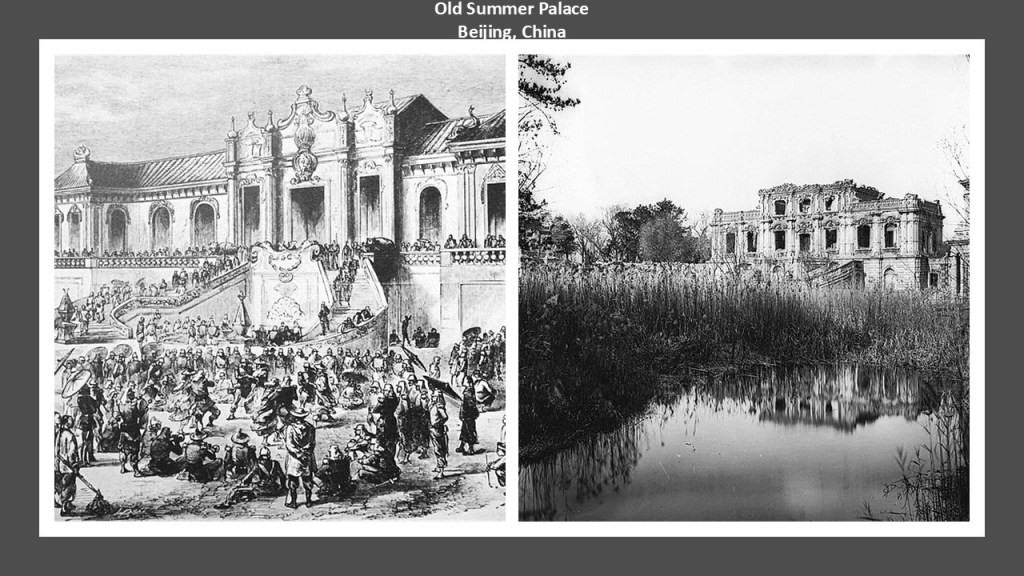
James Bruce’s father was Thomas Bruce, the 7th Earl of Elgin, and the famous “Elgin Marbles” were named after Thomas.
The “Elgin Marbles” were ancient Greek sculptures that he removed from the Parthenon in Athens between 1801 and 1812.
The British Museum acquired them in 1816 where they are still on display, though controversial to this day because the Greek government has requested their return.
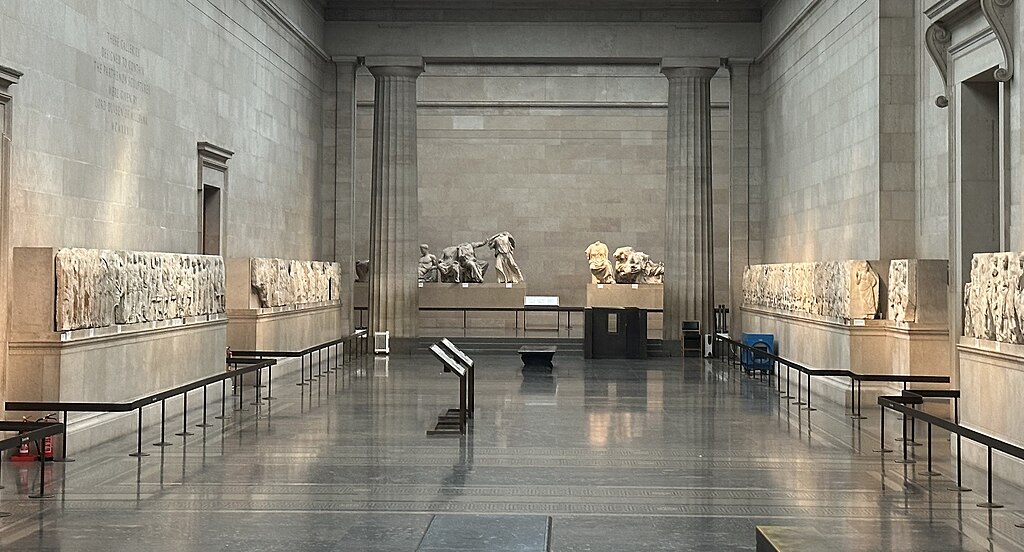
Back at Port Elgin, the Province of Ontario consolidated the towns of Port Elgin, Southampton, and Saugeen into the Municipality of Saugeen Shores in 1998.
Today, Point Elgin is largely a beach community, though the Bruce Power Nuclear Power Station is a big employer in the area, and is located between Kincardine and Saugeen Shores on the Lake Huron shore.
It is the fourth-largest operating nuclear plant in the world by capacity.
Interesting location for a nuclear plant here right at the edge of Lake Huron, and brings to mind my consistent research findings of nuclear plants in odd locations, including wetlands.
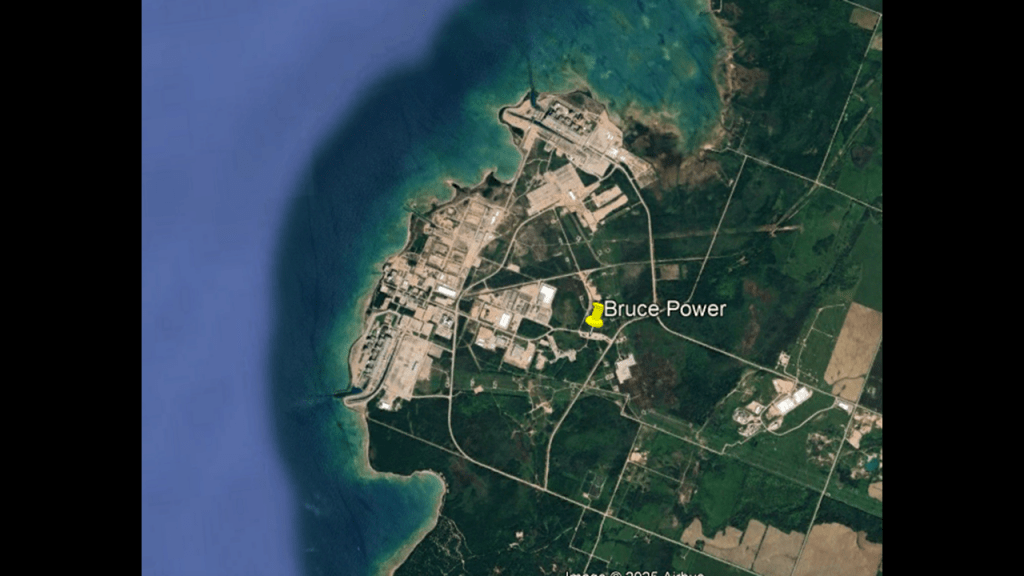
Like the Blayais Nuclear Power Plant, just a little ways up the right bank of the Gironde Estuary from the Citadel of Blaye in western France.
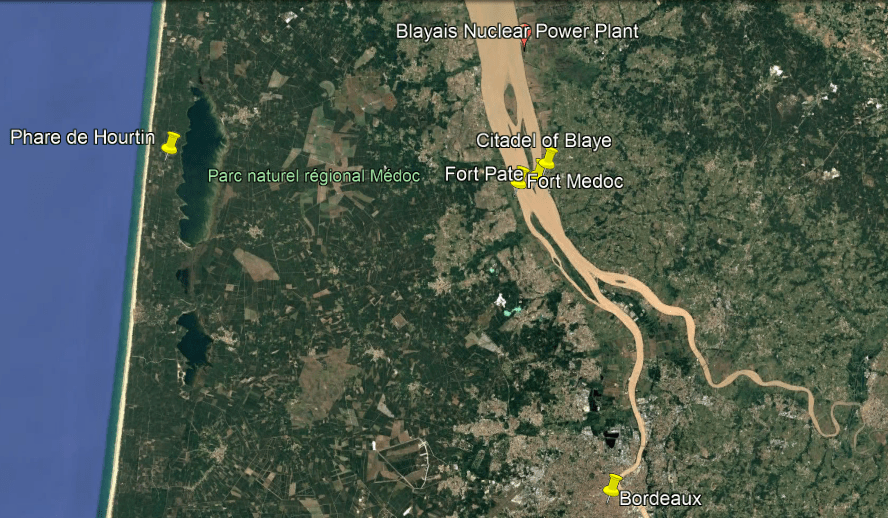
An “estuary” is defined as a partially-enclosed, coastal body of brackish water, which is water that is salty, dirty & unpleasant, with one or more rivers flowing into it, and a connection to the open sea.
After studying them extensively in my research, I have come to see these estuaries as ruined land that once had infrastructure, and not natural as we have been taught to believe.
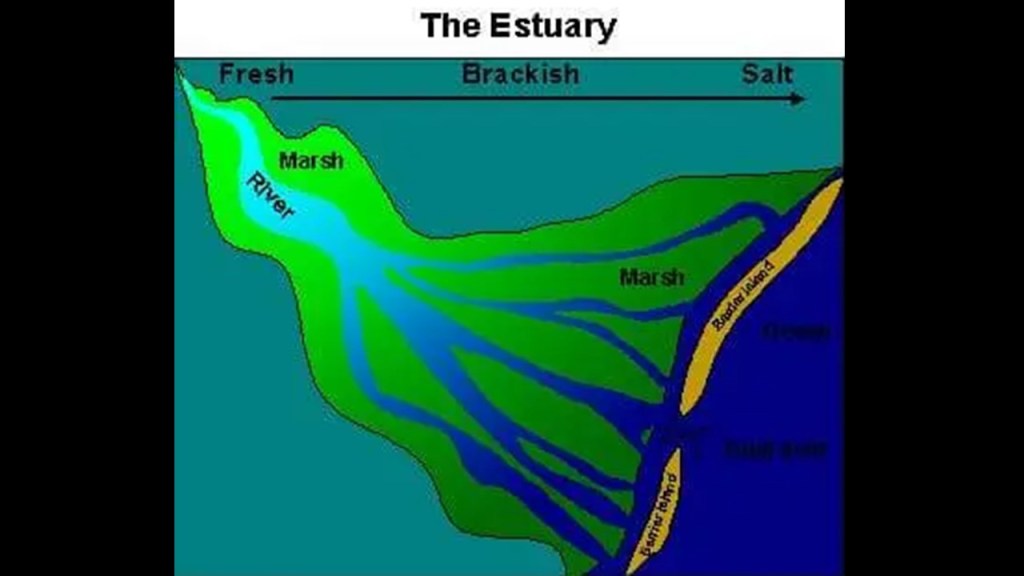
With the example of the Blayais Nuclear Power Plant in western France, it first became operational in 1981.
In December of 1999, parts of the nuclear power plant were flooded when a combination of wind and high-tides overwhelmed the sea-walls at the location, resulting in the loss of the plant’s off-site power supply, and knocked-out several safety-related back-up systems.
It was rated as an “Incident,” a number 2-level event on the “International Nuclear Event Scale.”
Shortly after it happened, it was reported by the regional newspaper as being “very close to a major accident,” which was never contradicted.
At this point, I think they were a pre-existing technology like everything else we see that we have been told was built in so-called modern times.
It just makes no sense that the builders of nuclear plants would select wetlands as a good building location.
I’ve got more examples, but this gives you the idea.

According to our historical narrative, the Wellington, Grey and Bruce Railway arrived in Port Elgin in 1872.
The Wellington (or Toronto), Grey and Bruce Railway ran roughly northwest for 101-miles, or 163-kilometers, from Guelph to Southampton, which as previously mentioned is part of the Saugeen Shores Municipality that Port Elgin is also part of.
It had a branch to Kincardine that split off from Palmerston, which was 66-miles, or 106-kilometers, -long.
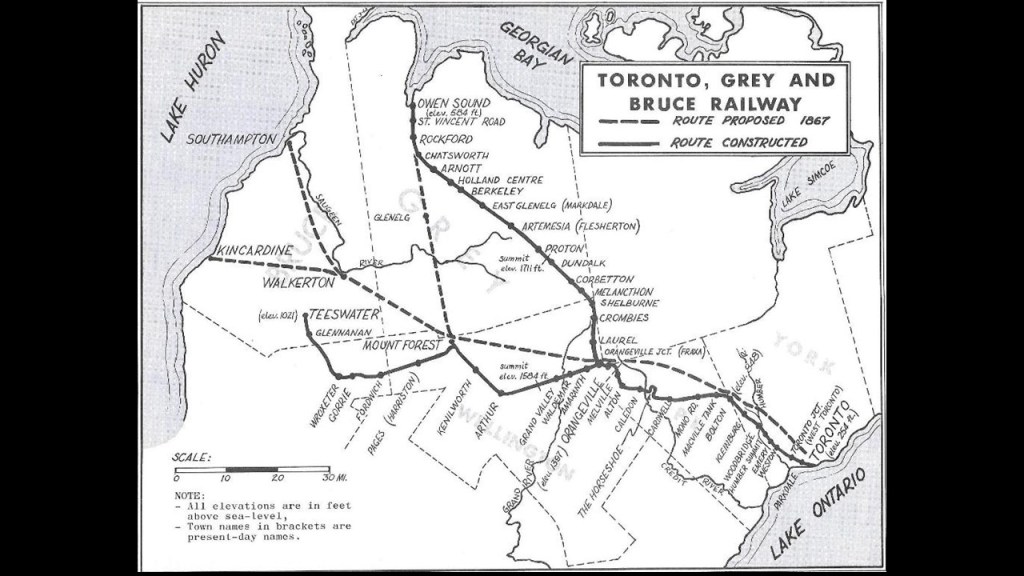
This graphic shows the presence of the historic Railway Station and rail-line in Port Elgin a couple of blocks from Goderich Street, and there is also an historic Carnegie Library here, and what looks like could be a railroad line along the shoreline.
The CNR main-line railway tracks were removed from Port Elgin in 1994.
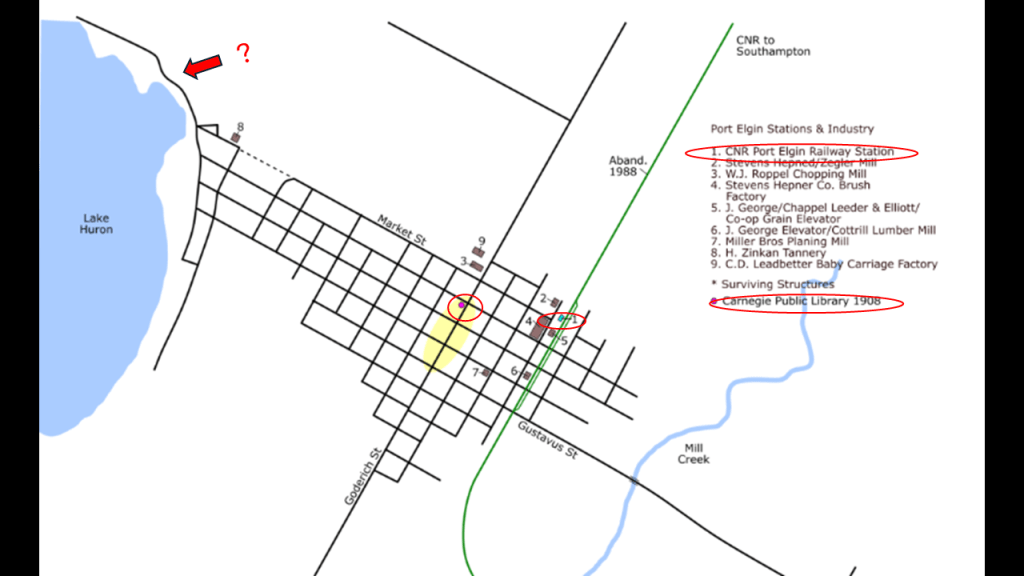
The train station in Port Elgin was said to have been constructed in 1872 with opening of the line by the Great Western Railway.
This building was believed to have been demolished some time in the early 1970s.
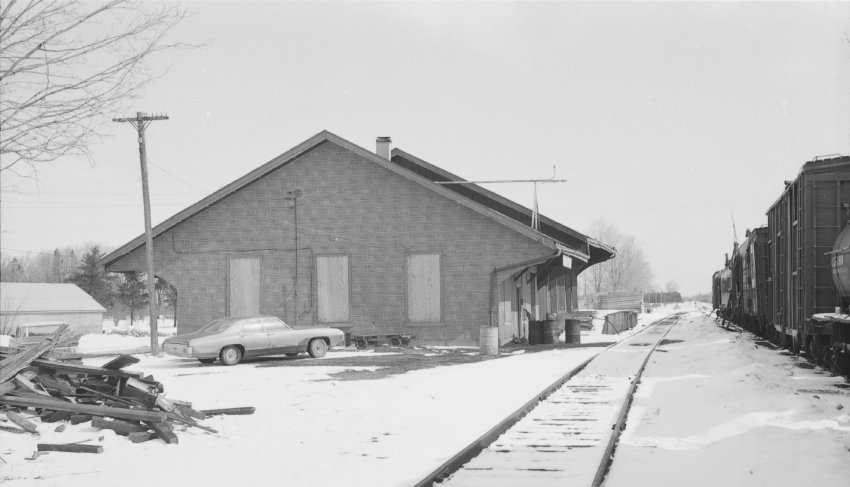
The former rail-bed is now the Saugeen Rail-Trail.
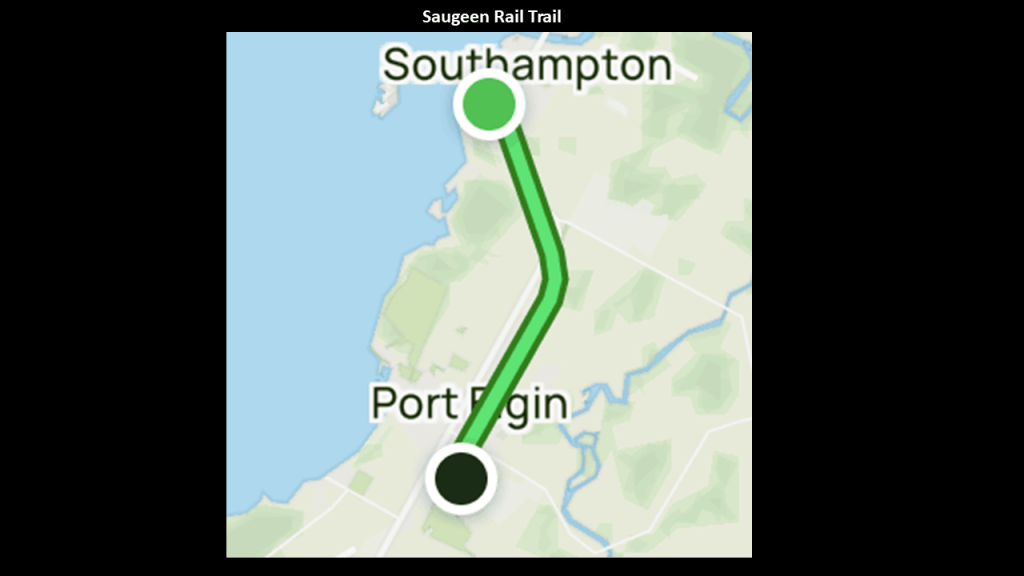
The steam-driven Waterfront Mini-Train was a tourist attraction in Port Elgin that was taken out-of-commission and demolished in May of 2020.
So far as we’ve travelled up the Ontario-side of Lake Huron, we have seen a consistent rail history in beach-side communities which has been removed and/or replaced by rail-trails.
I have seen this in other places, like Arcachon and Arcachon Bay in western France .
This location is on the coast near where the pyramid alignment between the Quetzelcoatl Pyramid in Mexico enters Europe on its way to the Great Pyramid of Giza.
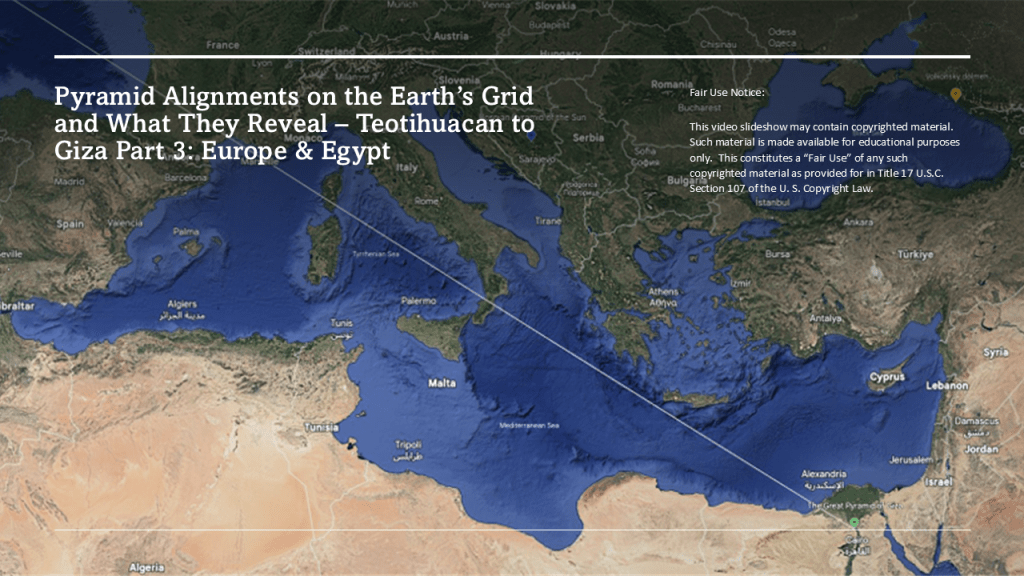
The general shape of Arcachon Bay is described as that of an equilateral triangle pointing north, and the southwest corner of which is open to the sea, between Cap Ferret and the town of Arcachon.
Arcachon Bay is also described as an estuary, where saltwater and freshwater mix, and in which we are told that tidal currents result in features like sand bars, sand flats and a channel system.
The Cap Ferret has a narrow-gauge tramway that links the shores of the Arcachon Bay with the beaches on the Atlantic Coast that runs from April to September.
The line first operated in 1879 and was pulled by a horse.
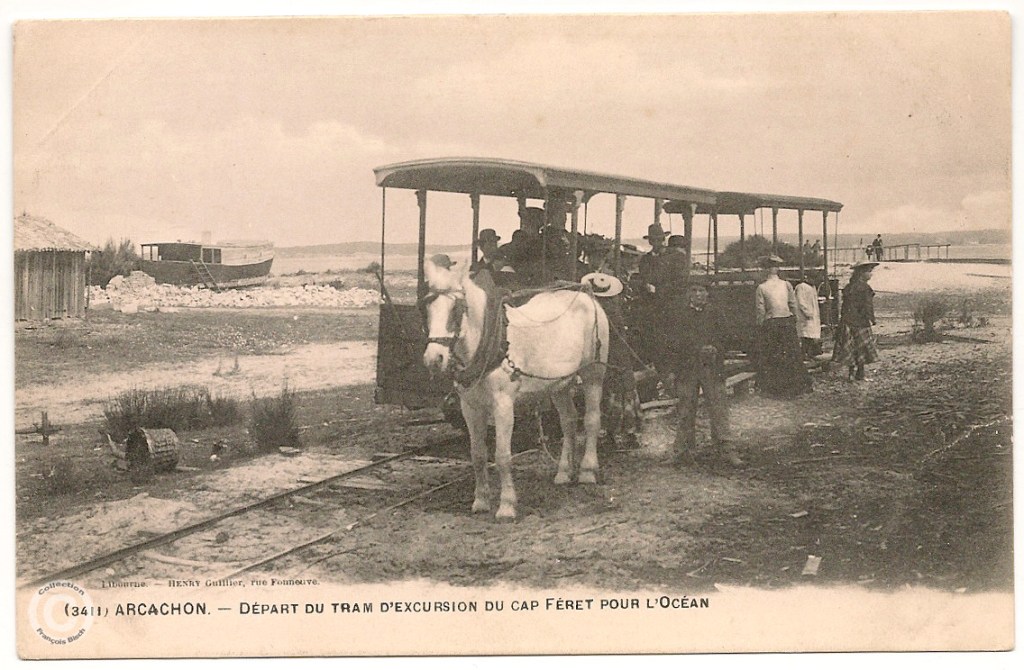
Locomotives took over in 1925 and it operated until 1935, and then service was started again in its current form in 1952.
The Dune of Pilat is located at the southern entrance of Arcachon Bay, and is the tallest sand dune in Europe.
Prior to being called the Dune of Pilat in the 1930s, the area was called “Les Sabloneys,” or “the New Sands.”
Back in Port Elgin, the historic Carnegie Library there is still being used as the public library for the community.
It was said to have been constructed in 1908 with building funds granted by the Carnegie Foundation.
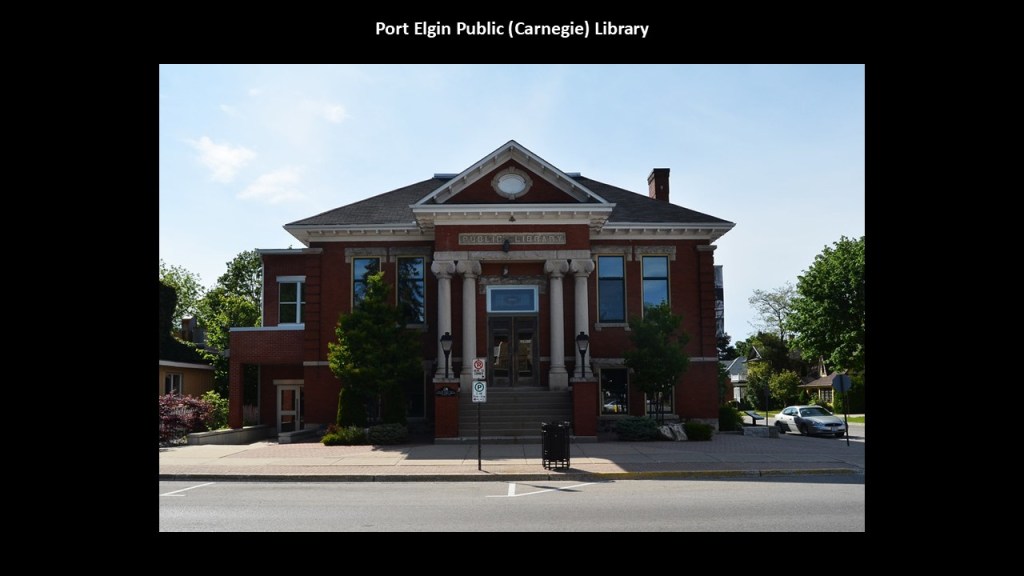
As I mentioned previously, the Chantry Island Lighthouse here is one of six so-called Imperial Towers on Lake Huron and Georgian Bay.
It is located off the coast at Southampton, and we are told also constructed between the years of 1855 and 1859 with cut limestone and granite building materials.
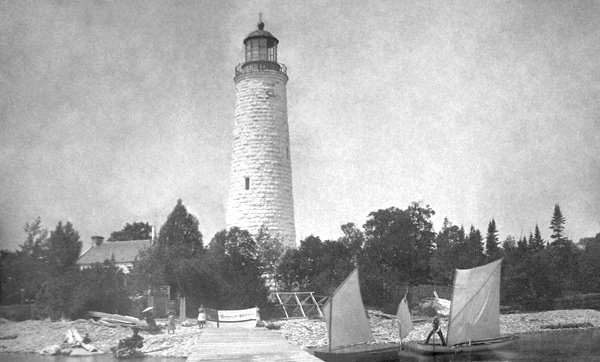
We are told the construction of this lighthouse was planned as early as 1850 because of the presence of underwater shoals of massive granite boulders that made navigation in the area dangerous.
The last place I want to take a look at before I move on from here is MacGregor Point Provincial Park.
MacGregor Point Provincial Park is along a 4-mile, or 7-kilometer, stretch of coast, coastal wetlands, forests, dunes, and rocky beaches.
Numerous recreational activities are available here.
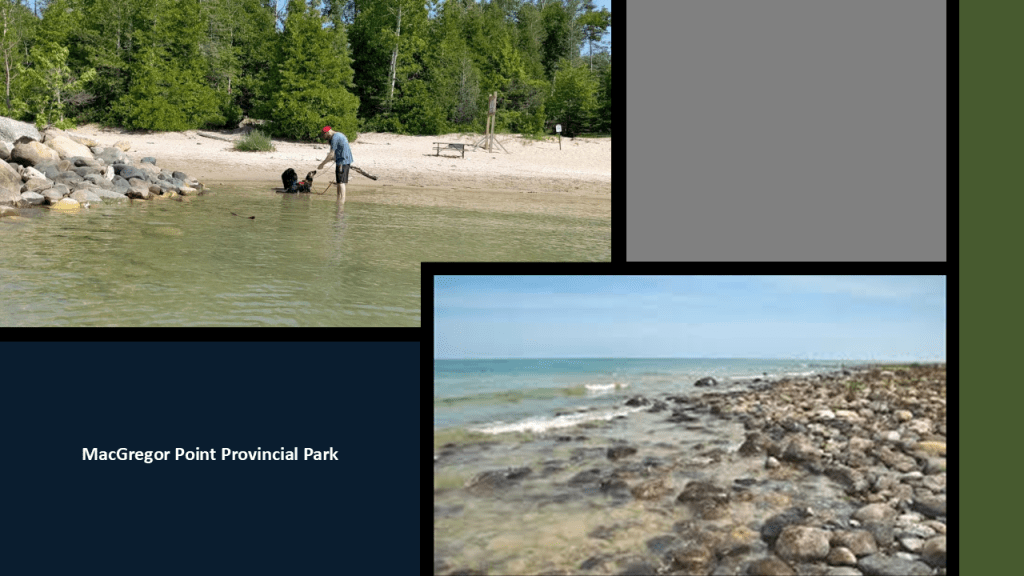
From here, we are heading into the region of the Bruce Peninsula and the Georgian Bay, and as I have already indicated, the Niagara Escarpment forms the land that separates Georgian Bay from Lake Huron.
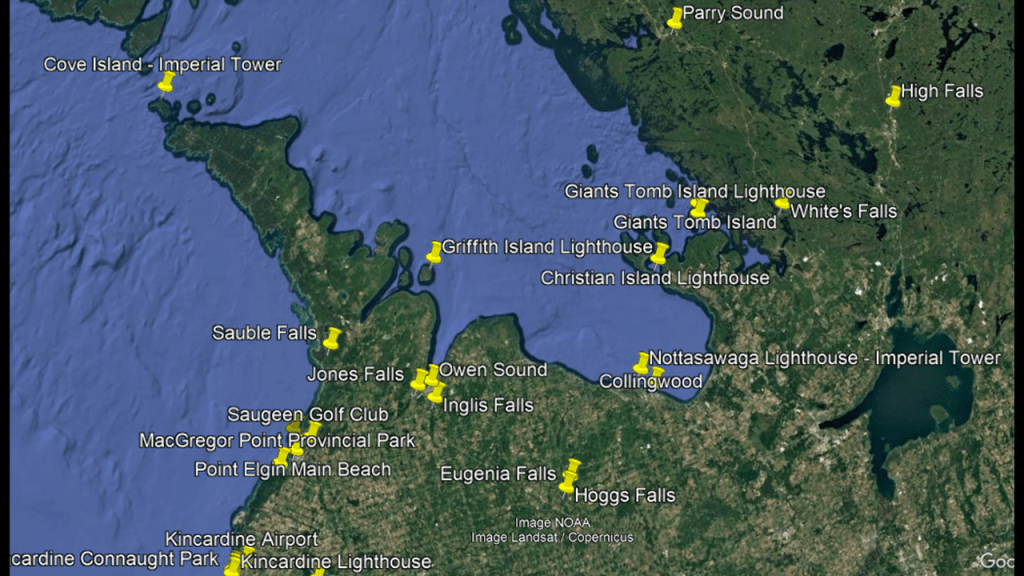
There’s a lot to unpack as we go through here, so the best place to start is looking at what is found in the location of the lower part of the Bruce Peninsula just to the north and northeast of Port Elgin and the Saugeen Shores Municipality – the Sauble Falls; Owen Sound, Jones Falls and Inglis Falls; and the Griffith Island Lighthouse.
I am going to start with Sauble Falls north of here on the Lake Huron shore.
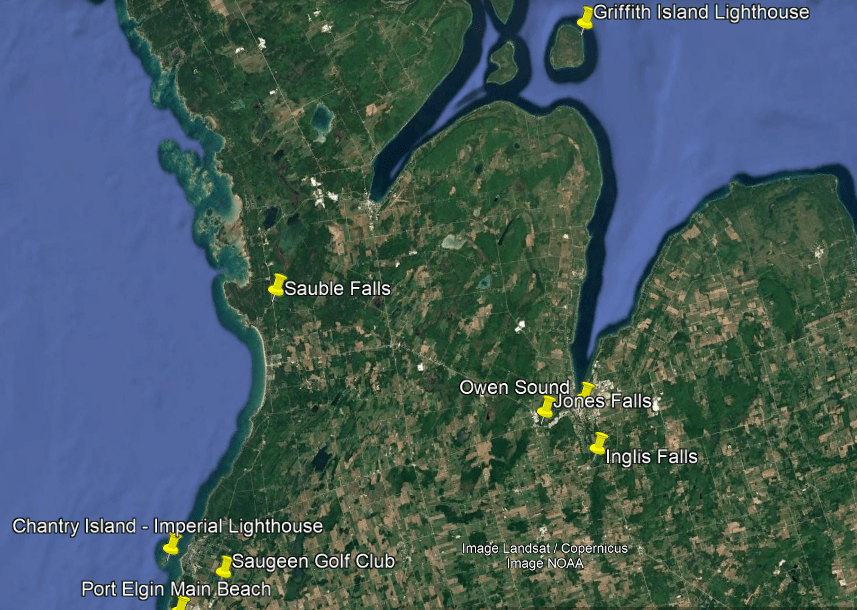
First, the Sauble Falls are located in the Sauble Falls Provincial Park in the town of South Bruce Peninsula, located 22-miles, or 36-kilometers west of Owen Sound.
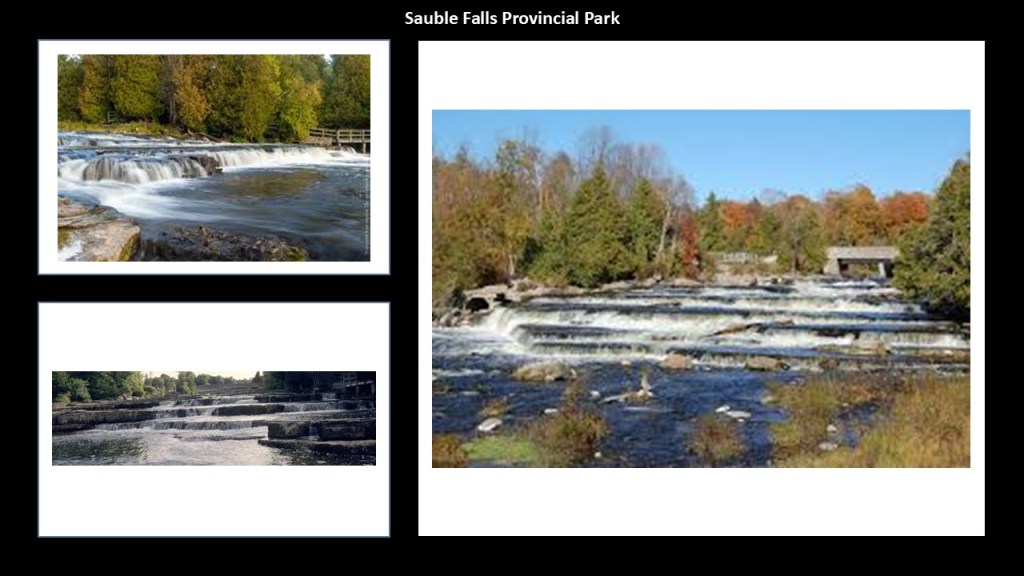
The Sauble Falls are in the lower drainage basin of the Sauble River, which flows directly into Lake Huron.
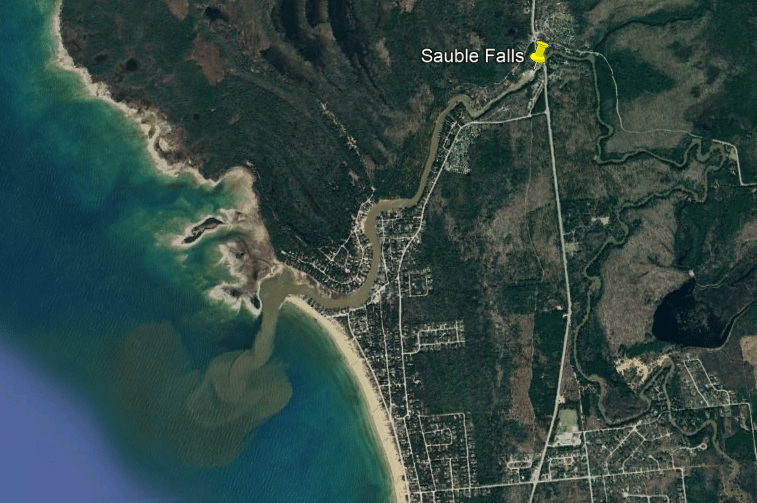
We are told that the former town of Sauble Falls was founded in 1864 to support the logging industry, and that a sawmill was built at the falls.
Then we are told between 1905 and 1907, the Sauble Falls Light and Power Company built a hydroelectric station and dam, which became part of Ontario Hydro in 1929.
We are told that around the same time, in the late 1920s, the lumber supply was depleted.
Over time, the townsite was gradually dismantled and that in 1957, the Ontario took 0wnership of the area, and opened the Sauble Falls Provincial Park.
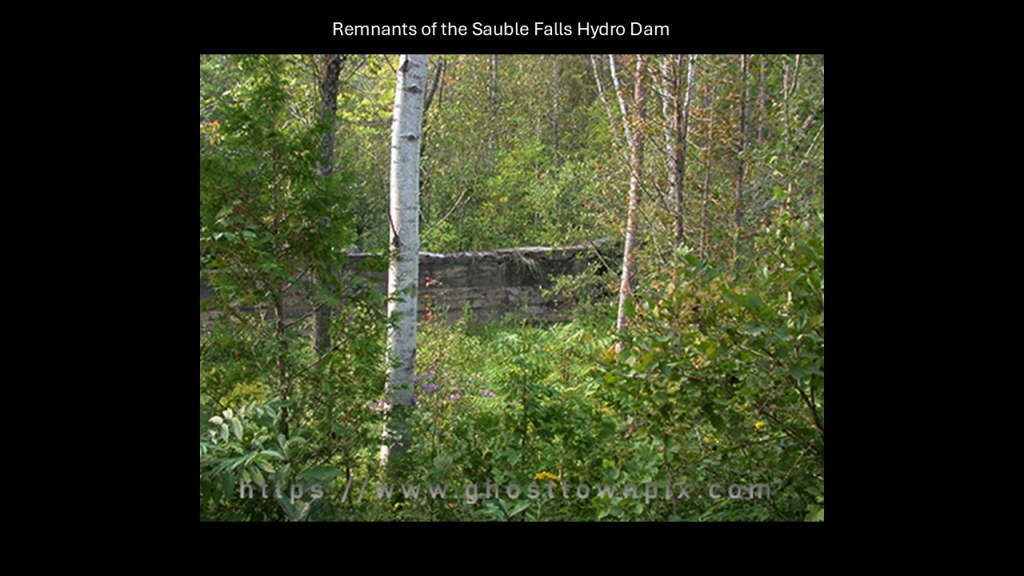
Next up, Owen Sound, Jones Falls and Inglis Falls.
Owen Sound is the seat of government for Grey County, and is located at the mouths of the Pottawatomi and Sydenham Rivers on an inlet of the Georgian Bay.
We are told the primary tourist attractions are the waterfalls here a short drive away.
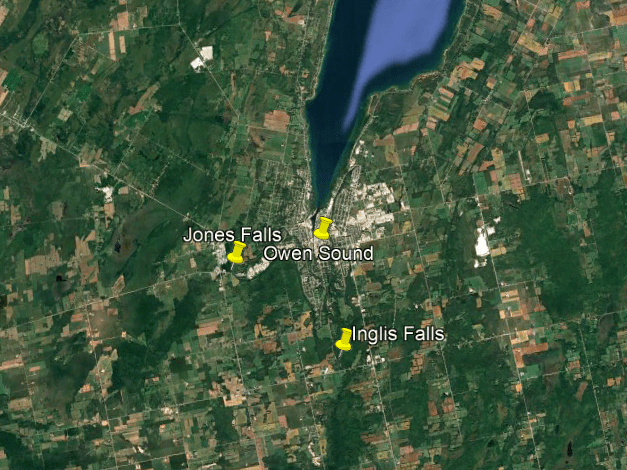
Owen Sound was first surveyed by Royal Naval Vice-Admiral William Fitzwilliam Owen in 1815 who named the inlet after his older brother, Royal Naval Admiral Edward Owen.
Then a European settlement was established here around 1840 and named Sydenham, and by 1846, a sawmill and gristmill were in operation.
Sydenham became the county seat for Grey County in 1852.
As I mentioned previously back in Forest, Ontario Highway 21 runs along the eastern shore of Lake Huron and crosses the Niagara Escarpment at the base of the Bruce Peninsula to Owen Sound, where it connects with Nottaswaga Bay on the southern end of Georgian Bay, a place we will be looking at shortly.
This is a photo of where Ontario Highways 21 and 6 go down and up on the Niagara Escarpment from Owen Sound
Southbound Highway 21 and northbound Highway 6 are concurrent in Owen Sound and considered the only “Wrong-way concurrency” in the Provincial Highway Network, which is where two (or more) numbered highways share the same physical roadway but are signed with opposite cardinal directions as the case here.
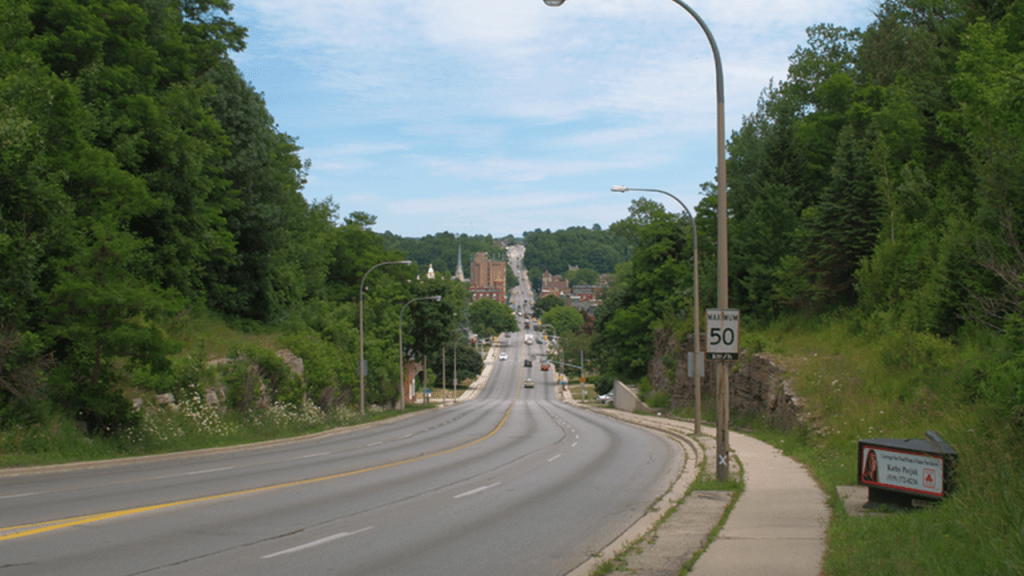
The Jones Falls cascade off the Niagara Escarpment 40-feet, or 12-meters, into the Pottawatomi River.
In this photo, the waterfall appears to be flowing over stonemasonry, but as with so many places, there is an element of doubt simply because we haven’t been taught the true history and instead that everything we see like this is natural.
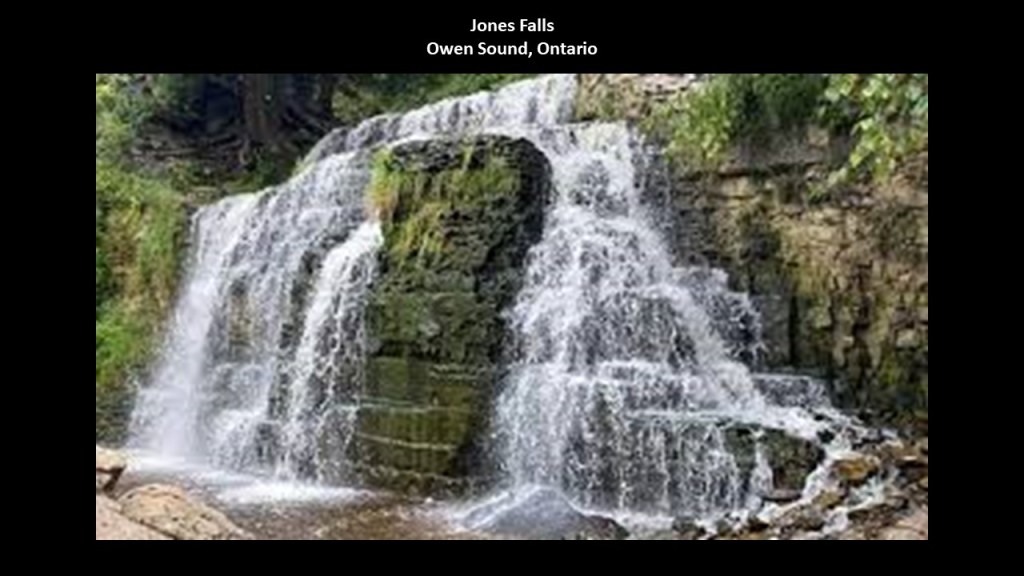
The Pottawatomi River flows into the Owen Sound.
Those wishing to visit the falls can access them by both Ontario Highways 21 and 6.
This map is showing the location of three waterfalls in Owen Sound.
Besides Jones Falls, there are the Inglis Falls and the Indian Falls.
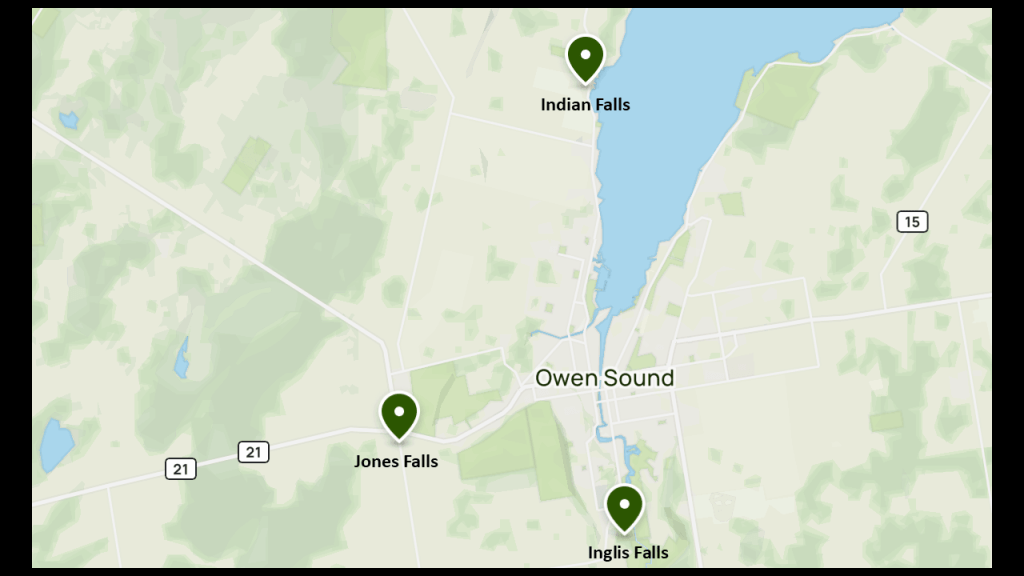
Several years ago a viewer sent me photos he had taken of Inglis Falls.
Here’s what his email to me said: “I’m in Owen Sound Ontario. Up on Georgian Bay, Lake Huron. I’m on the Niagara Escarpment. I came to a place called Inglis Falls. I took some trails through the forest so I could get to the bottom of the falls rather than the top where the public access leads. I definitely see the evidence of ancient brickwork. It seems to be totally inaccessible. It’s at the bottom of the Cliff face but I can’t cross that River to get there because it is too dangerous.”
Here old stonemasonry is clearly visible.
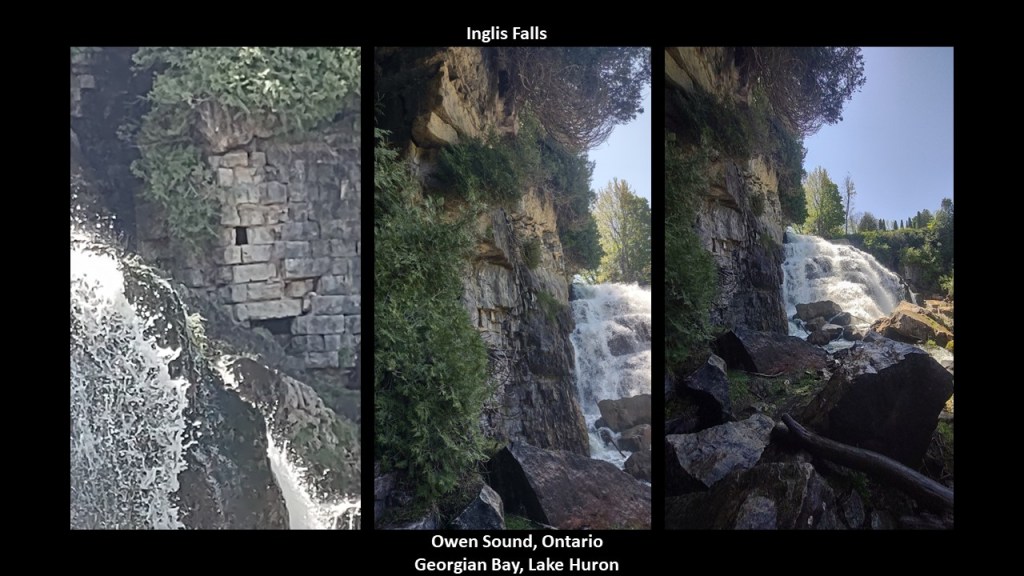
Inglis Falls are an 60-feet, or 18-meter, -high cascade where the Sydenham River meets the Niagara Escarpment.
Access to the base of the falls is strictly prohibited!
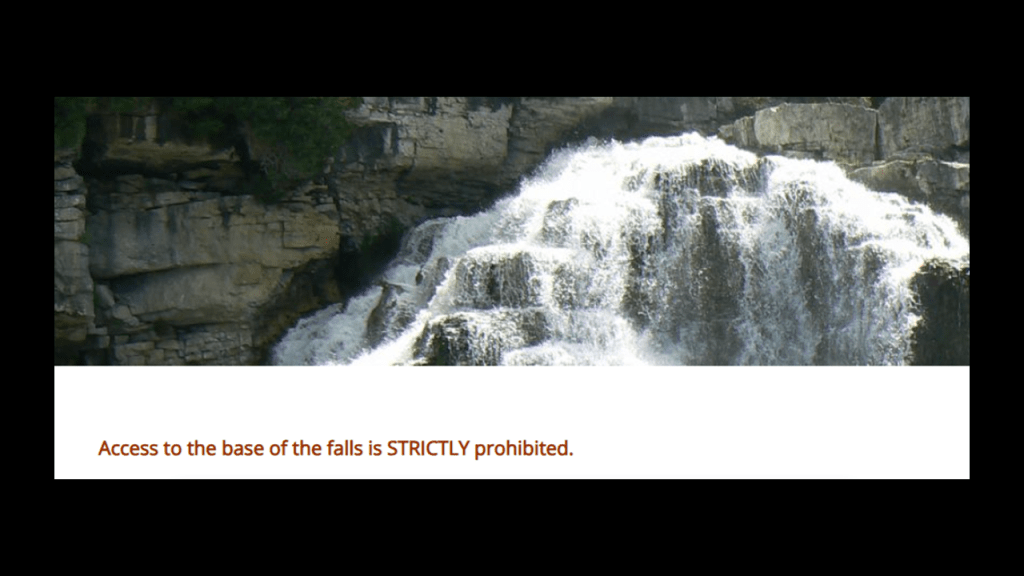
Indian Falls are located in the Indian Falls Conservation Area in the township of Georgian Bluff.
They cascade perfectly over the Niagara Escarpment from a height of 15-meters, or 49-feet.
And that sure looks like stonemasonry in the foreground, but they assure us all this is natural.
Like the Inglis Falls, access to the base of the Indian Falls is strictly prohibited.
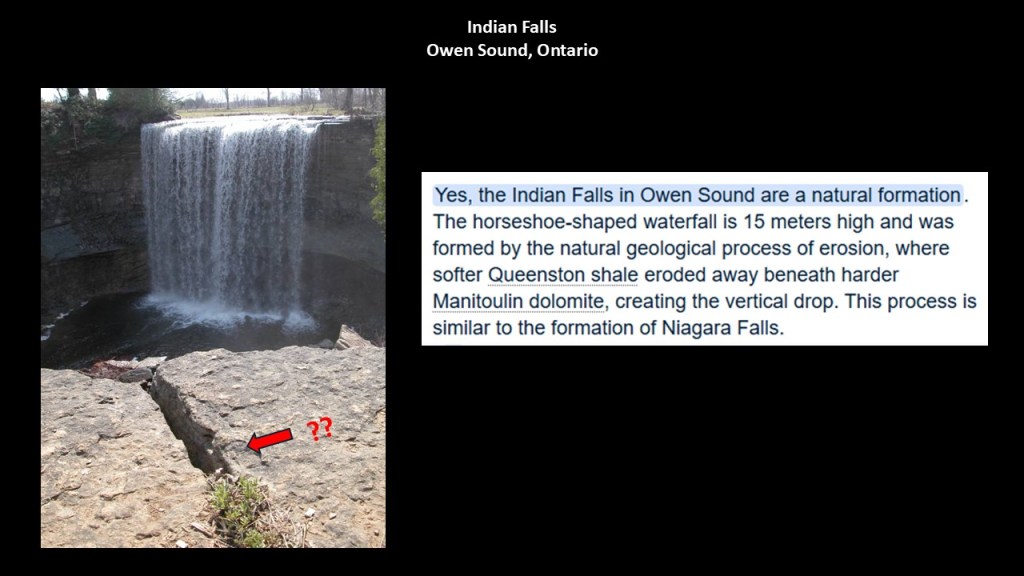
Like everywhere, there’s much more to find here, but now I am going to finish out this location at the Griffith Island Lighthouse a little ways to the north of Owen Sound.
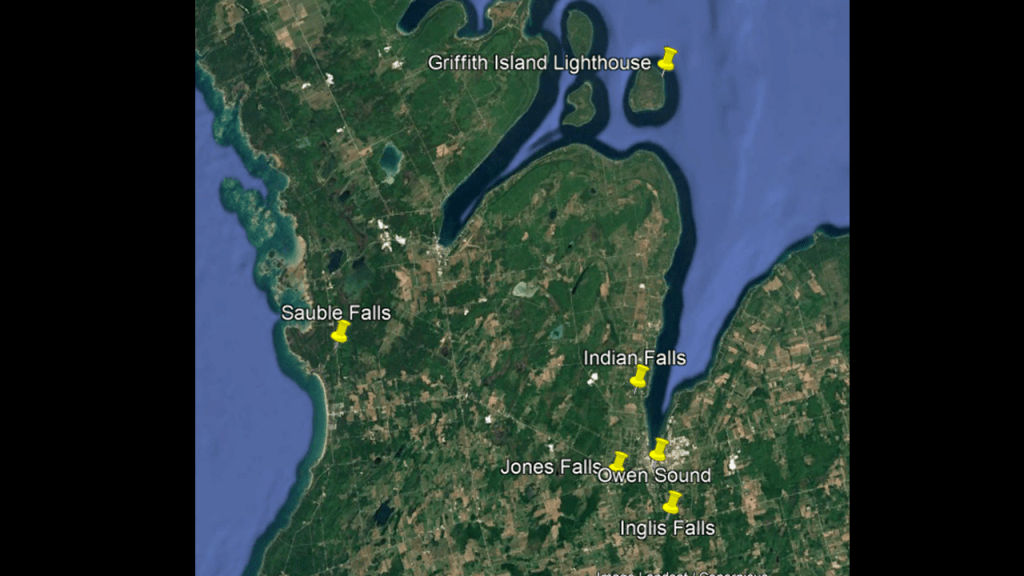
The Griffith Island Lighthouse is also one of the six so-called Imperial Towers, and like the others we’ve seen thus far, was said to have been constructed out of limestone between 1855 and 1859.
Stones are visible just beneath the surface of shallow water.
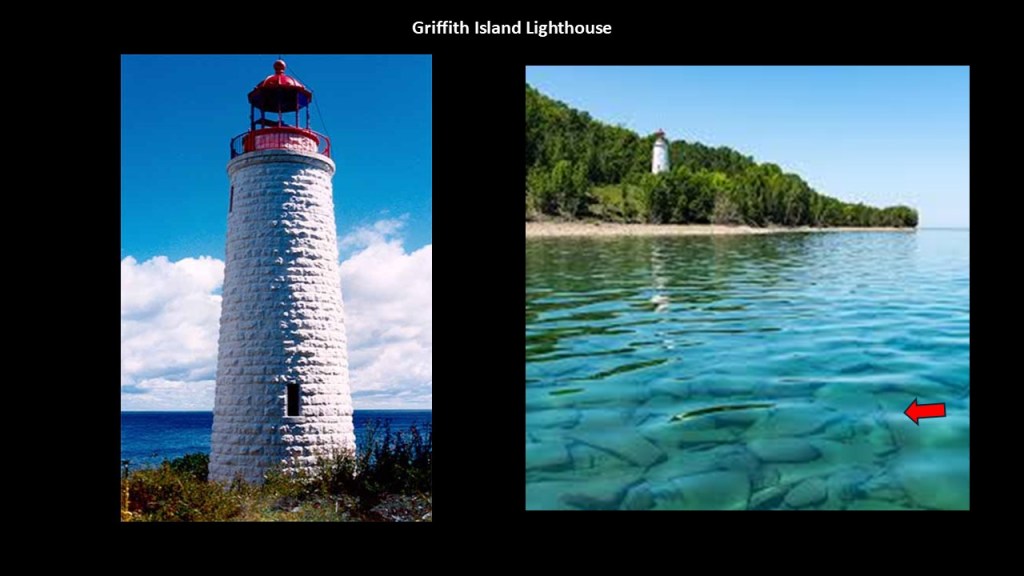
Next, I am going to move to the east of Owen Sound and the Bruce Peninsula and look at what is found around the southern end of the Georgian Bay.
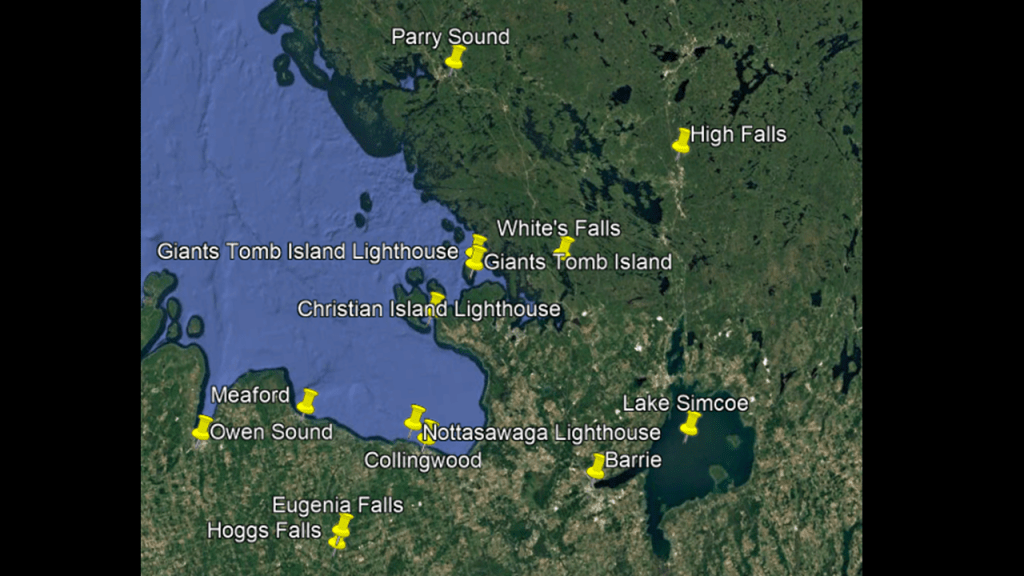
The first thing that I would like to point out about this region it was served by the Northern Railway of Canada.
The Northern Railway of Canada was the first steam railway to enter service in what was then known as Upper Canada.
First known as the Toronto, Simcoe and Huron Railway, and then as the Ontario, Simcoe, and Huron Railway, the aim was to provide a portage route from the Upper Great Lakes at Collingwood to Toronto.
The map on the right shows the maximum extent of the railway in the late 1800s.
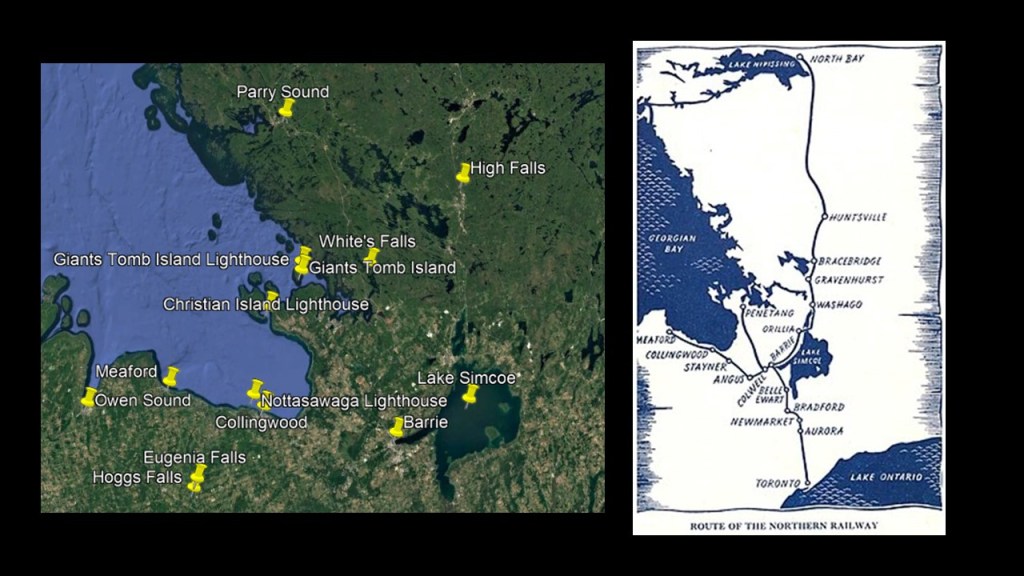
Here, I am going to look specifically at Meaford, Eugenia Falls, Hoggs Falls, Collingwood, and the Nottasawaga Lighthouse, as I make my way around the Georgian Bay.
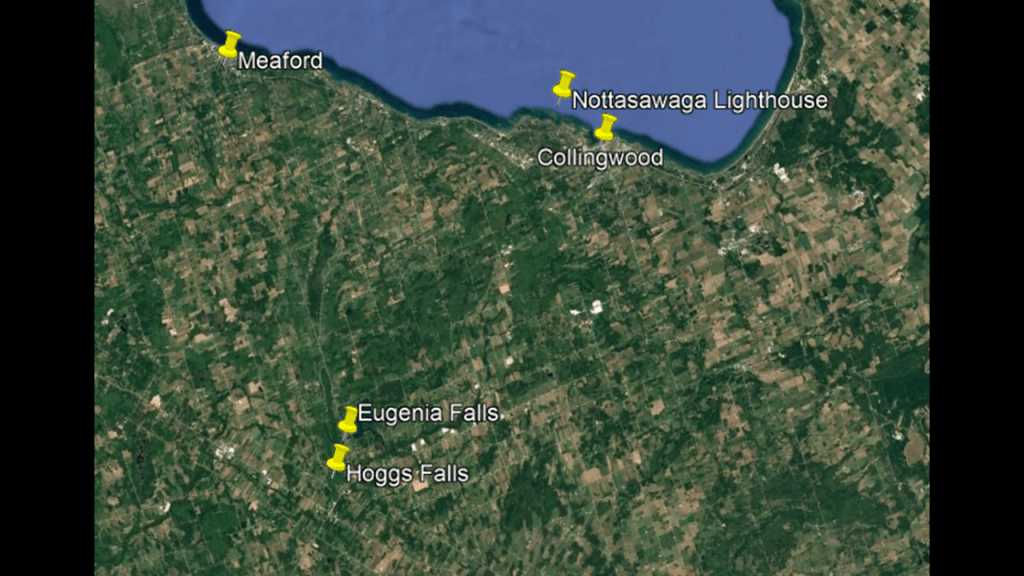
First, Meaford.
Meaford is a municipality in Grey County on Nottasawaga Bay, a sub-basin of Georgian Bay.
It has a proud heritage surrounding its apple trees.
And this region is in the agriculturally-fertile 45th-Parallel North we saw earlier, like Barrie on Lake Simcoe, which is known for the productivity of fruit and agriculture all the way across.
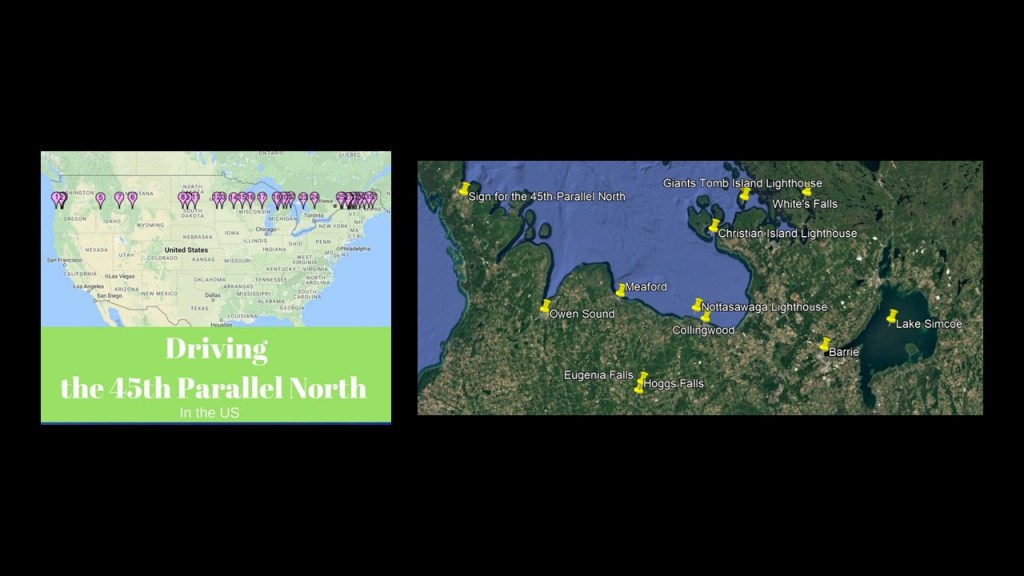
Next, the Eugenia Falls and Hoggs Falls are located to the southeast of Meaford and southwest of Collingwood, in a triangular configuration between the two cities.
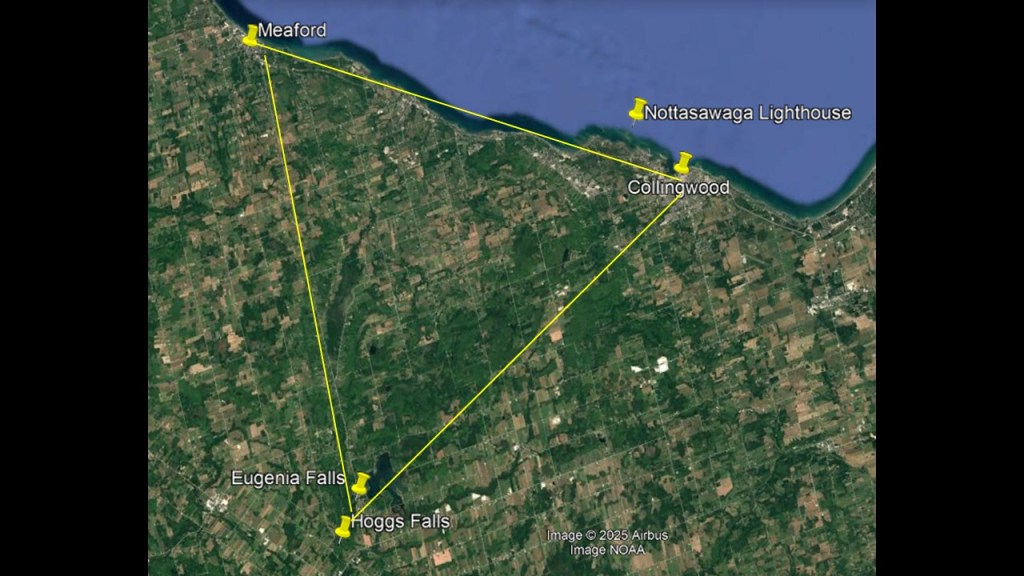
With regards to the Eugenia Falls, the tallest waterfall in the Eugenia Falls Conservation Area cascades 30-meters, or 98-feet, from the Niagara Escarpment.
Eugenia Falls became the location of five mills and a small private electric plant, and by 1905, was the chosen second hydroelectric plant in Ontario.
We are told that in 1915, Ontario Hydro moved the hydroelectric plant north and created Lake Eugenia.
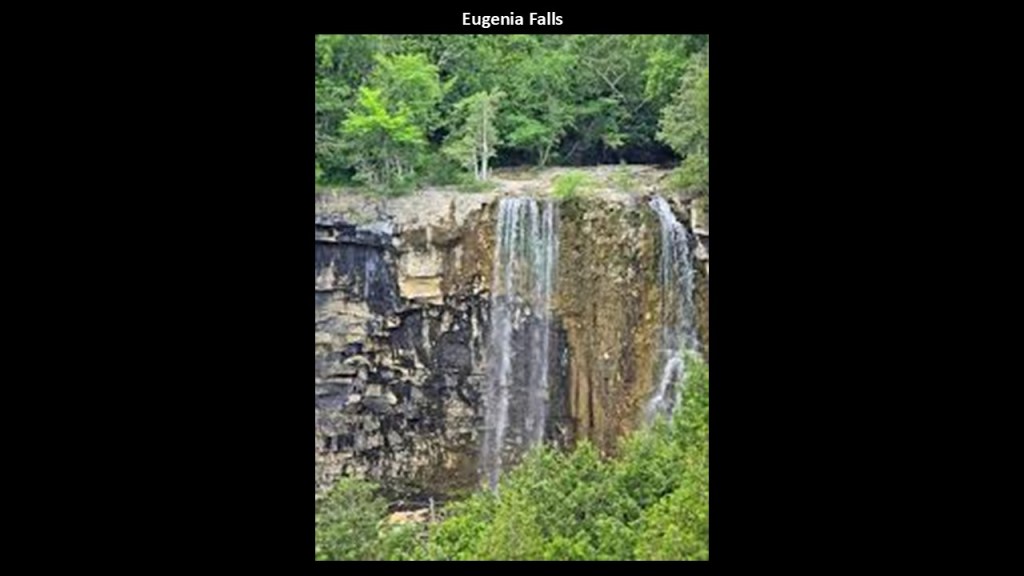
The nearby Hoggs Falls, also part of the Niagara Escarpment, is located on Provincial Crown Land.
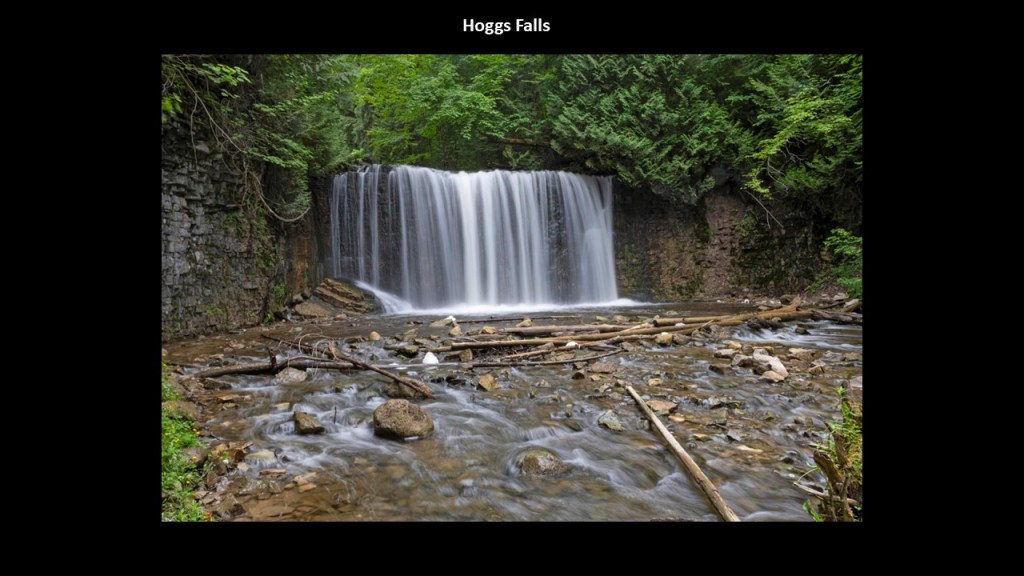
Both the Eugenia Falls and Hoggs Falls are on the Bruce Trail.
The Bruce Trail is a hiking trail that runs along the Niagara Escarpment for 250-miles, or 400-kilometers, from the Niagara River to Tobermary, a small community at the northern tip of the Bruce Peninsula.
It is the oldest and longest marked hiking trail in Canada.
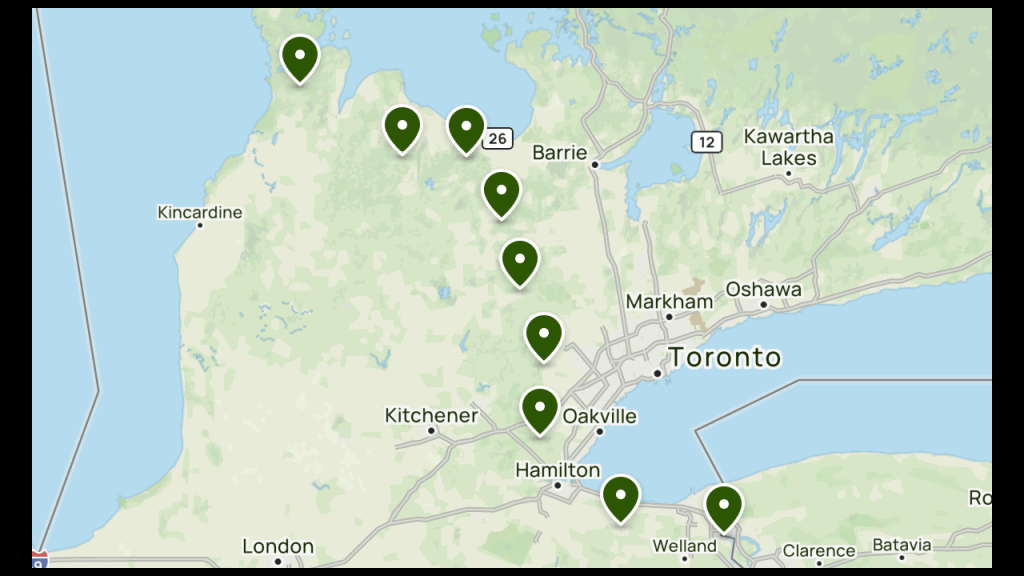
The trail mostly follows the edge of the Niagara Escarpment.
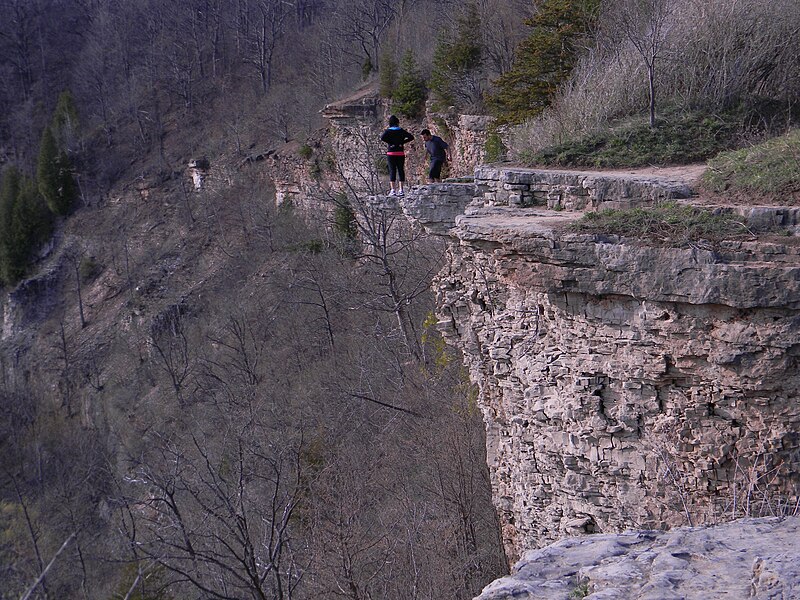
There are many waterfalls on the Bruce Trail, where streams or rivers flow over the edge of the Niagara Escarpment.
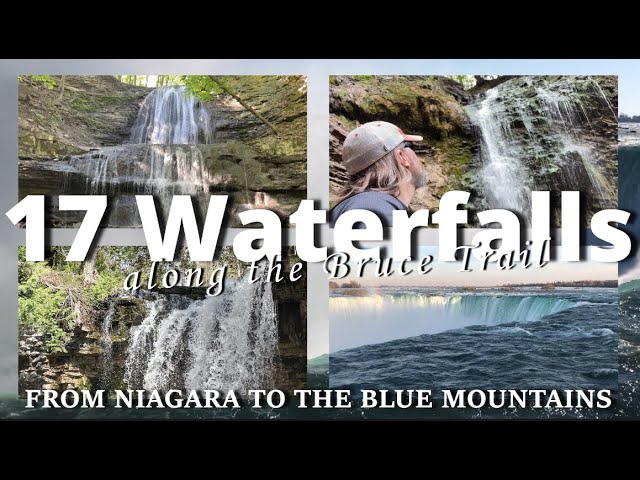
Next, lets go on up and take a look around Collingwood.
Collingwood is situated at the southern point of Georgian Bay at Nottasawaga Bay.
It is a well-known tourist destination for skiing in the winter months and limestone caves along the Niagara Escarpment in the summer.
It was incorporated as a town in 1858, and named after Admiral Cuthbert Collingwood, Lord Nelson’s Second-in-Command at the 1805 Battle of Trafalgar, and who assumed command of the British Fleet after Lord Nelson’s death in our historical narrative.
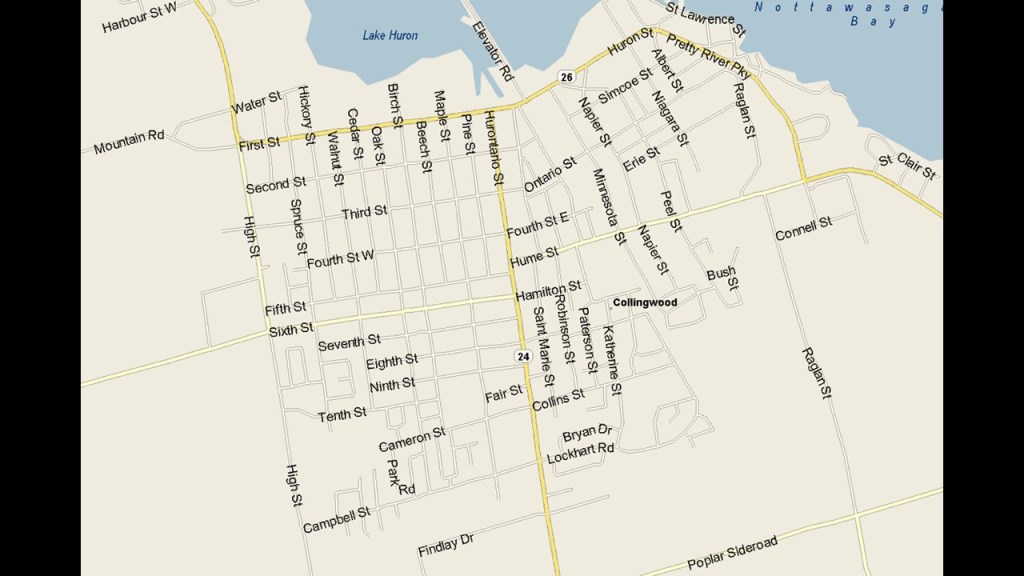
What became the Northern Railway entered Collingwood in 1855, and the harbor became a shipment point for goods destined for the Upper Great Lakes ports of Chicago on Lake Michigan and Port Arthur, today’s Thunder Bay, on Lake Superior, with grain being one of the primary products shipped.
We are told that the Collingwood Terminals Limited grain elevator was built for the shipment of grains to trucks and trains in 1929, and that it was in use until it closed in 1993.
It still stands today at the entrance to the harbor, though it has been in an abandoned state for over 30-years.
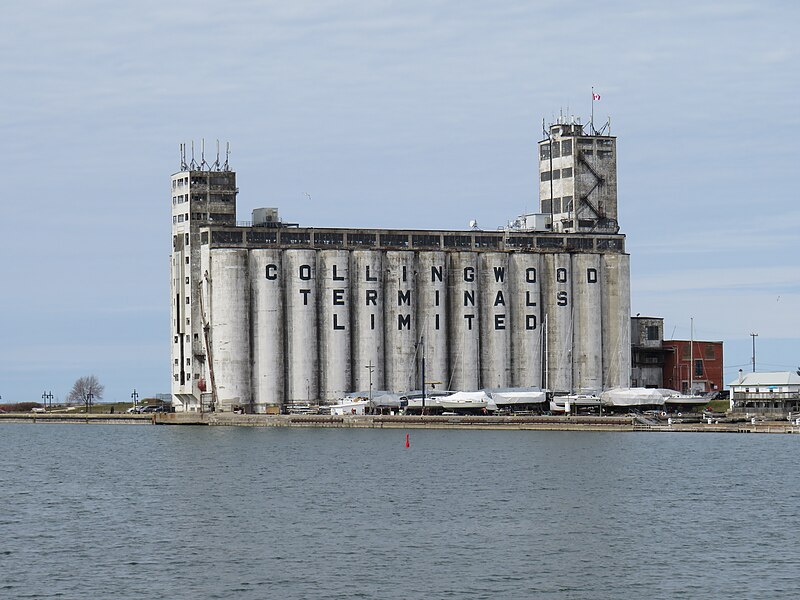
This is what we are told about the historic Collingwood Railway Station.
The original Collingwood Railway Station was built around 1855 by the Northern Railway of Canada.
In 1873, it was destroyed by fire and replaced by a magnificent structure befitting the community’s prominence as the northern terminus of the Northern Railway.
It survived under the Grand Trunk Railway and the Canadian National Railway, but was mostly destroyed by fire in 1932.
The Railway station was rebuilt with what was left of it and used by CN until 1960, when passenger service was discontinued.
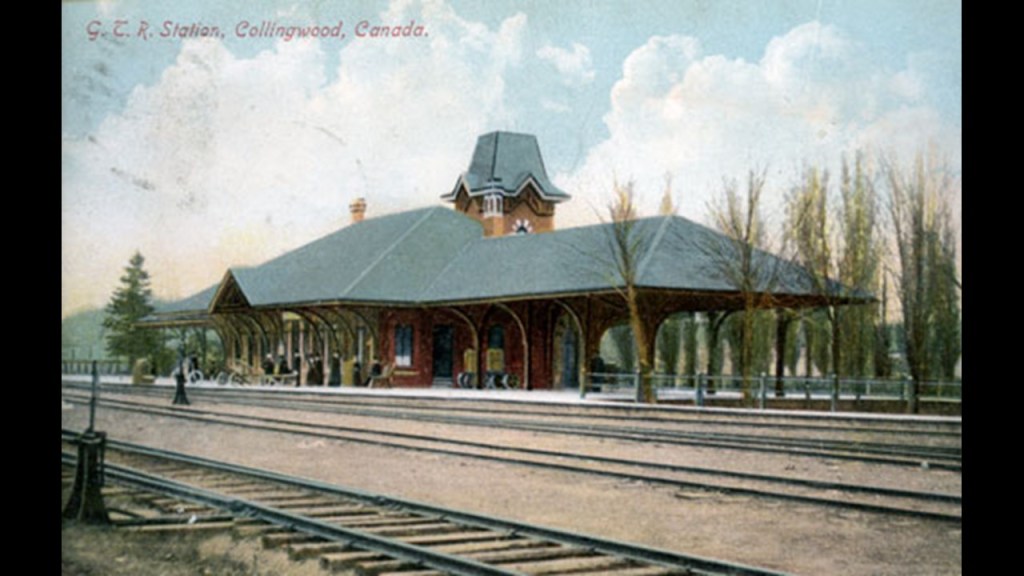
We are told the building was demolished in 1997, and then rebuilt from the original 1873 plans, and reopened as the Collingwood Museum in 1998.
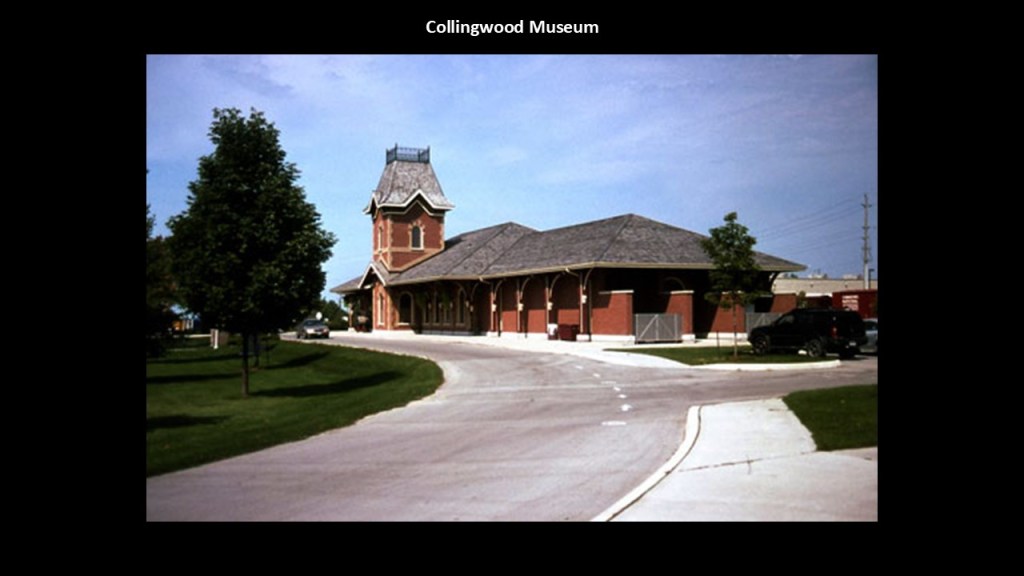
In our historical narrative, Collingwood turned into a ship-building and manufacturing center.
While much of its historic industrial base is gone, like with the demise of the ship-building industry here in September of 1986, which we are told was because of overseas competition and overcapacity of Canadian ship-building, it still has some manufacturing here, like Pilkington Glass of Canada, and the Goodall Rubber Company.
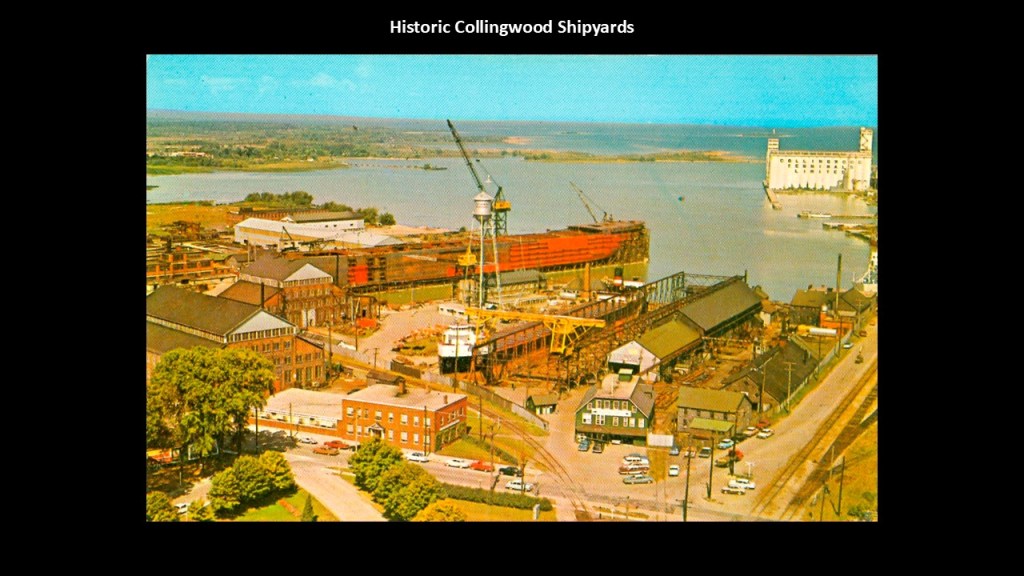
With regards to the winter skiing activities here and the summer caving opportunities, I was able to find out that they are available at the same location – a town named Blue Mountain, which is on what is called the Blue Mountain Formation.
Blue Mountain is located where the Beaver River flows into Nottasawaga Bay.
In the wintertime, there are all kinds of skiing and snow-related activities to choose from for enthusiasts at Blue Mountain.
For those visiting in the summertime, this is what I was able to find out with respect to the limestone caves here along the Niagara Escarpment.
There are approximately 18 limestone caves that are privately-owned and open for paying tourists to explore on a network of 9-miles, or 15-kilometers, of hiking trails.
What’s interesting to me about these so-called natural limestone caves in Collingwood like the one on the top left is that they look exactly like other places I have seen, and this is just to share a very few of countless examples.
Places like Giant City State Park in Makanda, Illinois, on the top right, also known as the “Star of Egypt,” in Southern Illinois, which is also nicknamed “Little Egypt;” Mineral Wells State Park in Texas near Fort Worth on the bottom left; and Beartown State Park in West Virginia in northern Greenbrier County.
It’s interesting to note that the Giant City State Park just south of Carbondale was where the longest period of totality was experienced in the total solar eclipses of August of 2017, and in the total eclipse of April of 2024, Giant City experienced a long duration of totality compared with other places.
Total solar eclipses occur when the moon completely blocks the view of the sun, and are only visible along a narrow track of the Earth’s surface.
For a few moments during totality, when the moon completely covers the sun, the day becomes night, the horizon displays the colors of sunset, and the heavenly bodies usually seen only at night appear.
The City of Carbondale in southern Illinois was at the exact center of both eclipse paths, separated in time from each other by approximately 7-years.
Well, according to our narrative, all of this had to have been coincidental because everything we see is natural, but I tsuggest that it is very compelling evidence that everything was intentionally built by the original Master Builders of the ancient advanced civilization, and that they knew exactly where they were in time and space.
So, let’s talk about a state park in southern Illinois with the name “Giant City.”
The finding of giant human remains was well-documented in the 19th-century, and yet these days, the very existence of giants seems to be vigorously denied, and/or fact-checked as a hoax, when their remains turn-up somewhere.
So in this excerpt from a historical book, talking about the Great Lakes Region, it says “Long Before the Indians…it is believed to have been inhabited by a superior people – of whom not even a tradition remans – whose only monuments are earthworks and tumuli, scattered here and there, in some places containing bones from men of gigantic size.”
It goes on to say further “Mounds and relics from these “Mound Builders” were formerly abundant throughout the Ohio and Mississippi Valleys, especially in this section. If a separate race from the Indians, when and by what agency they were destroyed will probably remain a mystery as deep as that of the lost island “Atlantis.”
So this acknowledges the presence of giants here who were Mound Builders, but shrouds what happened to them in mystery, just like the lost Atlantis, saying we don’t know who they were, or really anything about them, except that they were a superior people.
If the existence of giants is even acknowledged, their existence is pushed way back in time, with what happened to them being an unsolvable mystery.
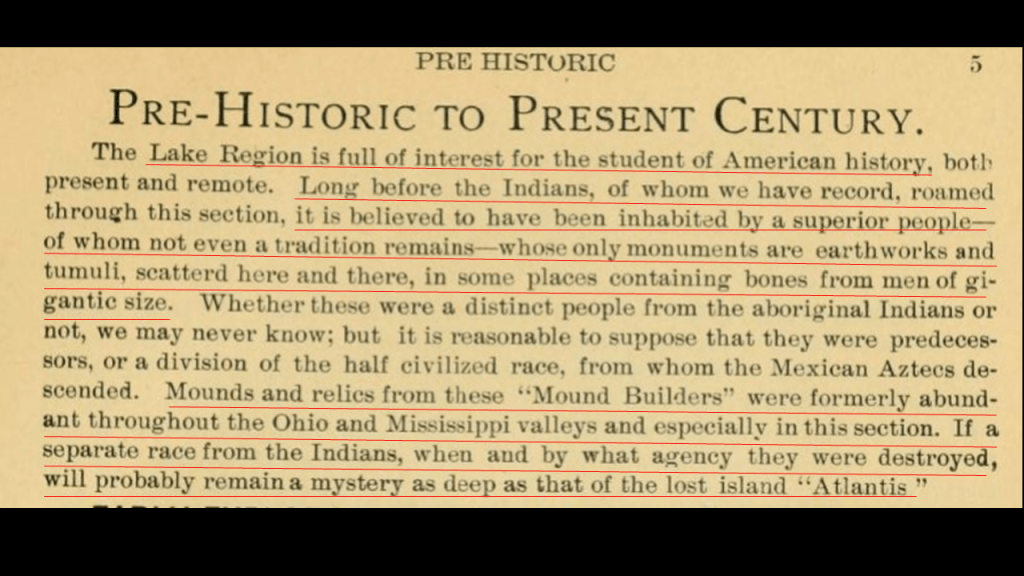
The last place I would like to look at here before I move along is the Nottasawaga Lighthouse, which is a short-distance off-shore from Collingwood.
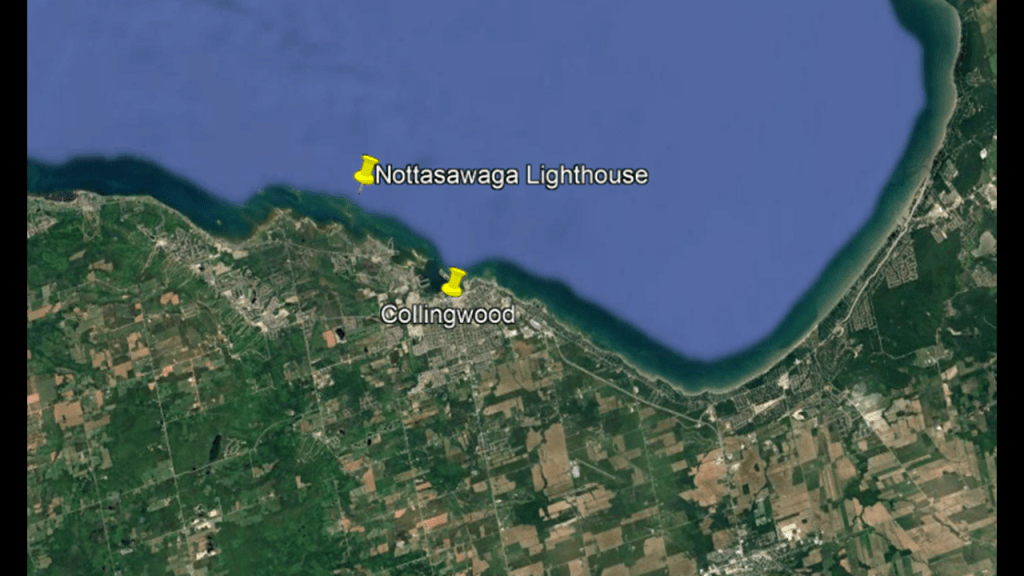
The Nottasawaga Lighthouse was also one of the six, previously-mentioned Imperial Towers said to have been built between between 1855 and 1859,
The Nottasawaga Lighthouse became operational in 1858.
Built of limestone, it stands at a height of 85-feet, or 26-meters.
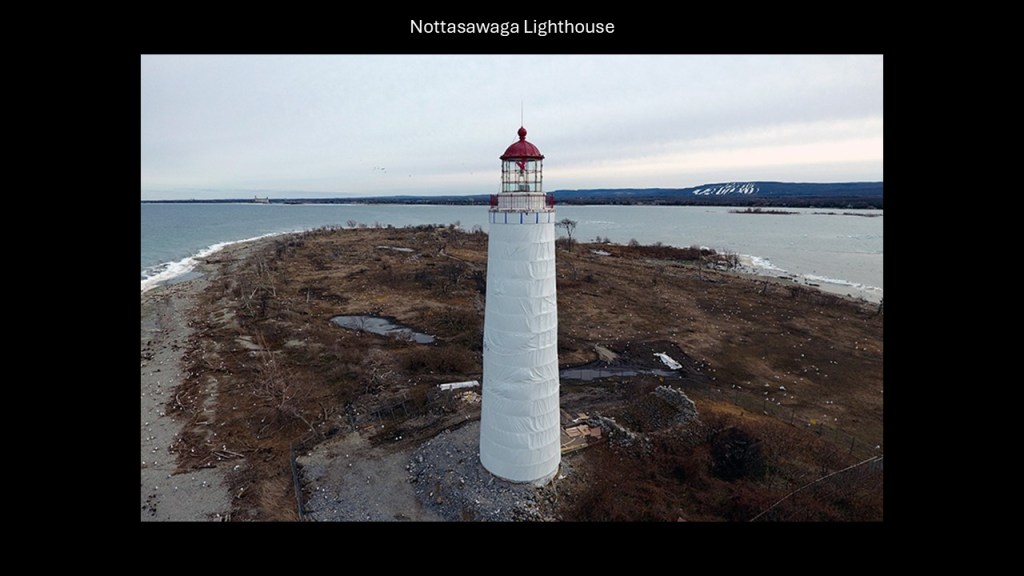
This lighthouse was decommissioned in 2003, and has been placed on the National Trust for Canada’s Endangered Places because of its advanced state of disrepair, even though we are told there are efforts being made to repair and restore it.
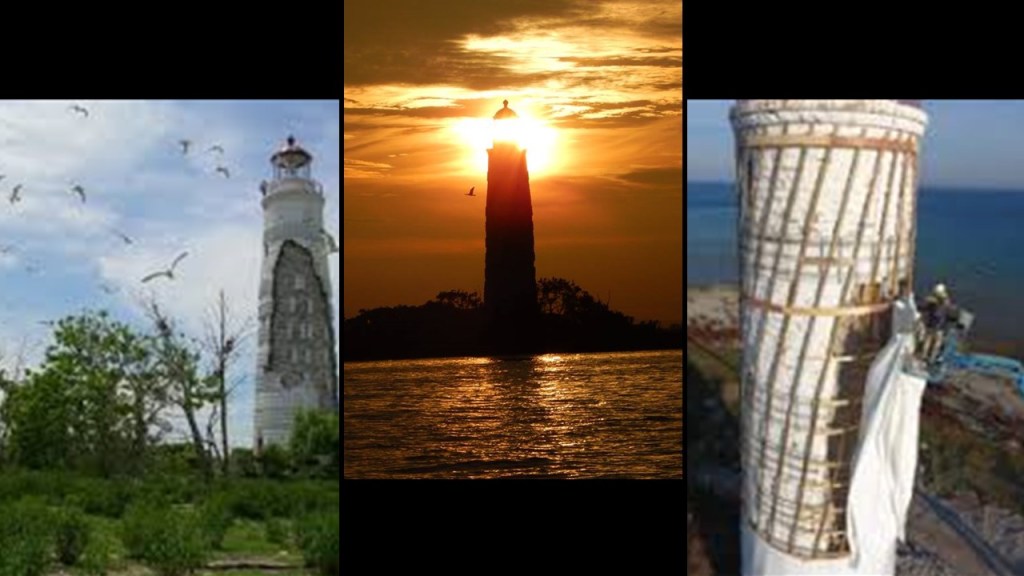
As we make our way around the southern end of Georgian Bay, we find that this land-area to the southeast is sandwiched-in by the presence of Barrie and Lake Simcoe, and that as we make our way up the Georgian Bay’s coastline, we come to the Christian Island Lighthouse; the Giants Tomb Island and its lighthouse; White’s Falls; High Falls; and Parry Sound.
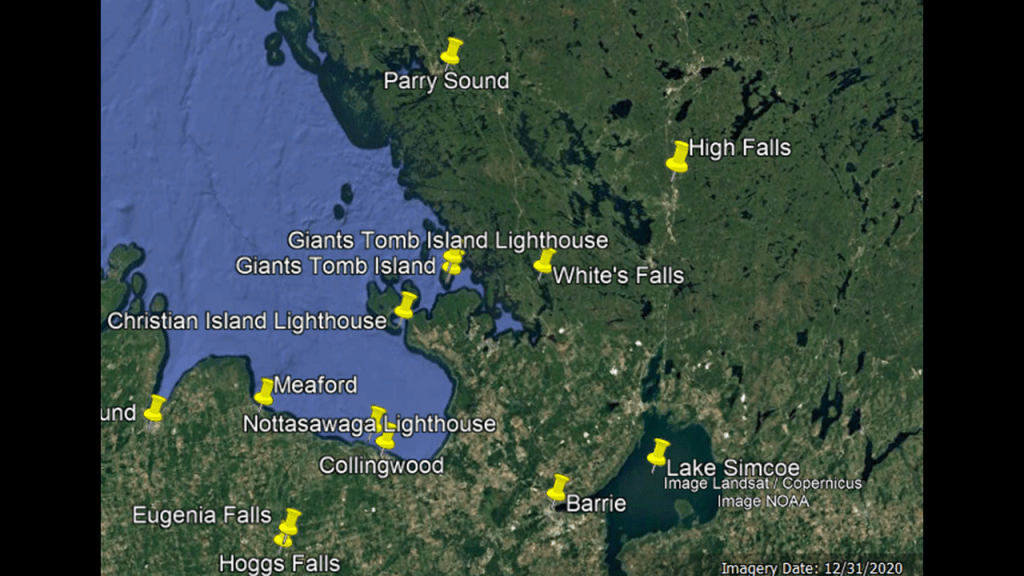
First I’ll mention a bit more about Barrie and Lake Simcoe, since I’ve already talked about the fruit-growing capacity of Barrie on the 45th-Parallel North.
First, Barrie.
Barrie is 56-miles, or 90-kilometers, north of Toronto, and part of what is called the “Greater Golden Horseshoe,” which is an extended urban area of southern Ontario between Lake Huron’s Georgian Bay; Lake Ontario; and Lake Erie.
This region is the most densely-populated, and most industrialized, in Canada.
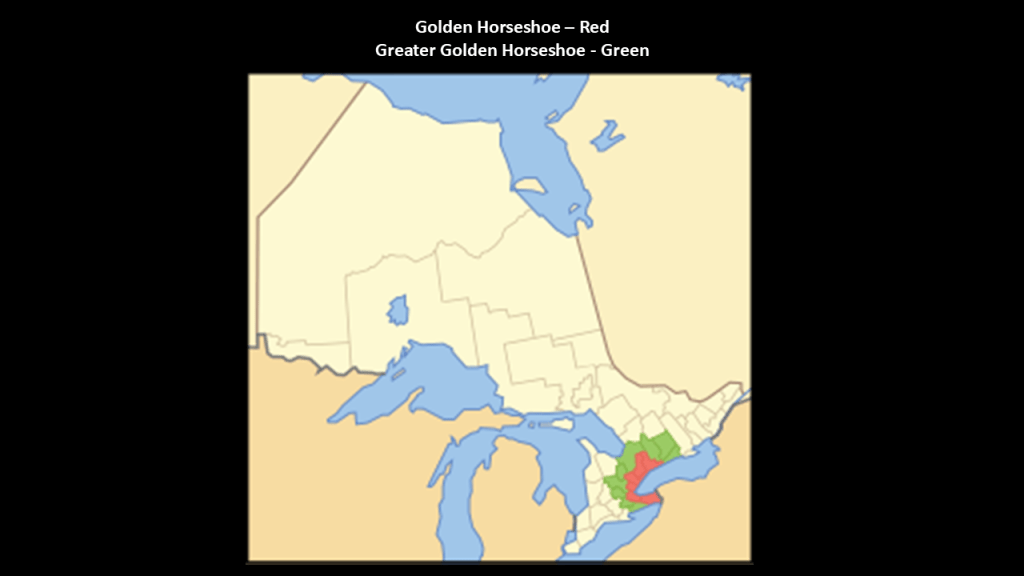
A few of the many things from its history to mention was the establishment in 1860 of the Anderton Brewery by the Anderton Brothers James and Joseph.
It was the largest employer in Barrie for years.
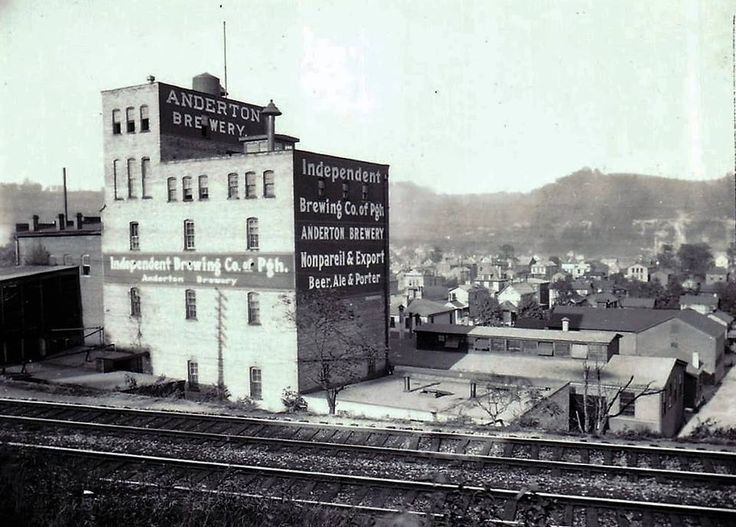
We are told that a line of the Northern Railway was opened in Barrie in 1853, and it connected Barrie with Toronto, and other municipalities in Simcoe County and Muskoka.
The Hamilton and North-Western Railway also ran through Barrie, and in June of 1879, these two railways organized into the Northern and North Western Railway.
Then the Grand Trunk Railway purchased the original Northern Railway, and the line serving Barrie became a branch of the Canadian National Railway.
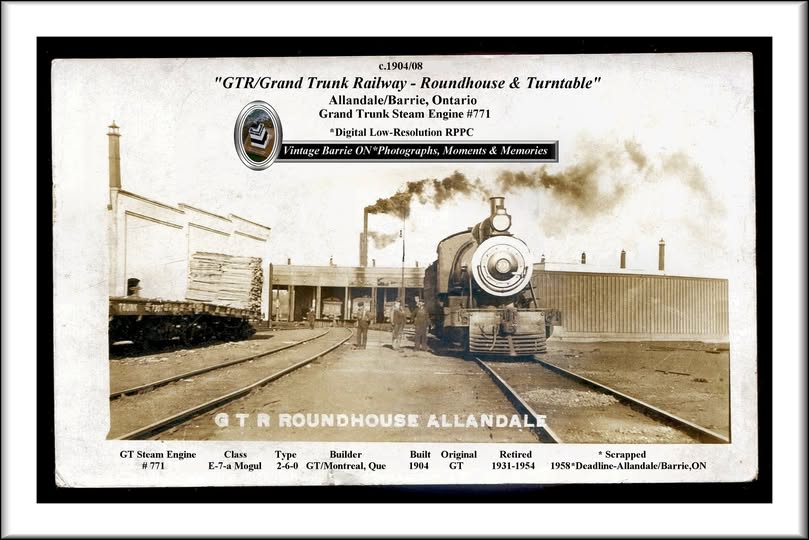
We are told that a roundhouse was built to service steam locomotives in Allandale in 1904, an historic neighborhood that was annexed to Barrie in 1896.
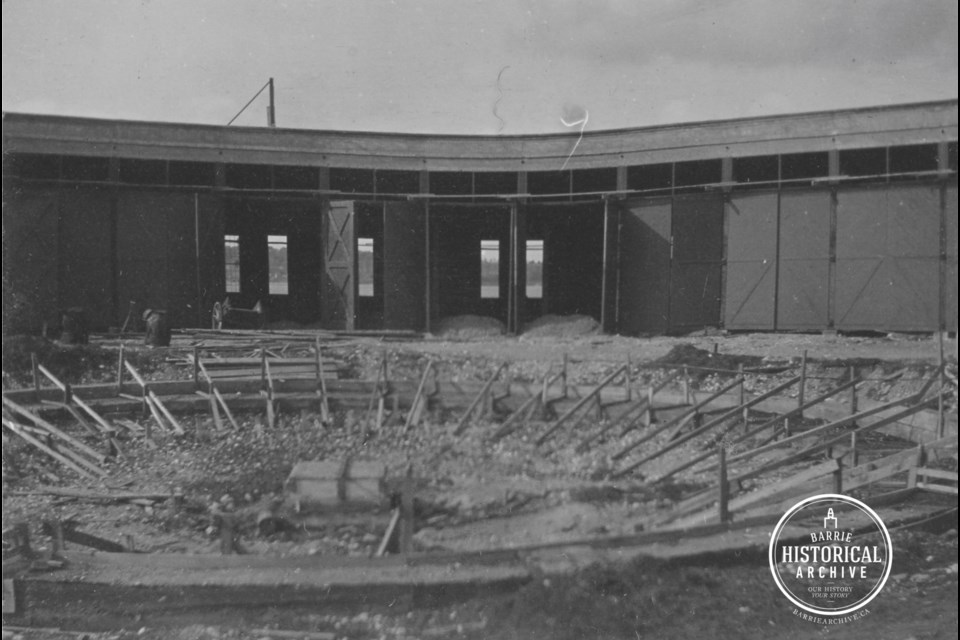
The Allandale Roundhouse was demolished and most of the turntable removed by the 1980s.
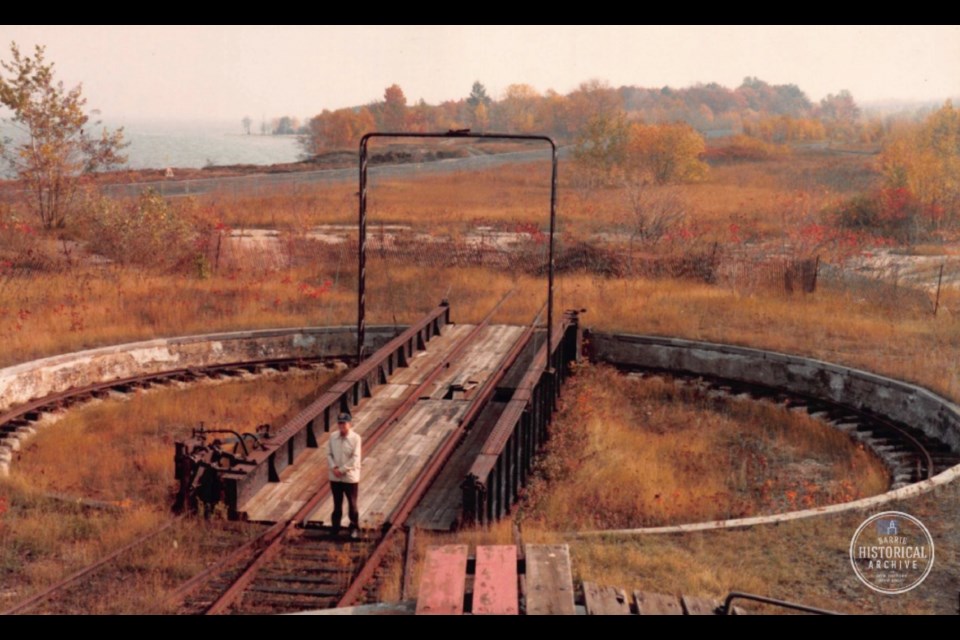
Today, the location of the former roundhouse is Barrie’s Military Heritage Park.
Rail Transportation in Barrie today is provided by GO Transit, which provides rail and bus service in the Barrie Area.
GO Transit is the regional public transportation system in the Greater Toronto and Hamilton area.
Lake Simcoe, like the Great Lakes we have seen thus far in this series, is relatively shallow.
It’s average depth is 49-feet, or 15-meters, with the deepest part of the lake being near the mouth of Kempenfelt Bay in the vicinity of Barrie.
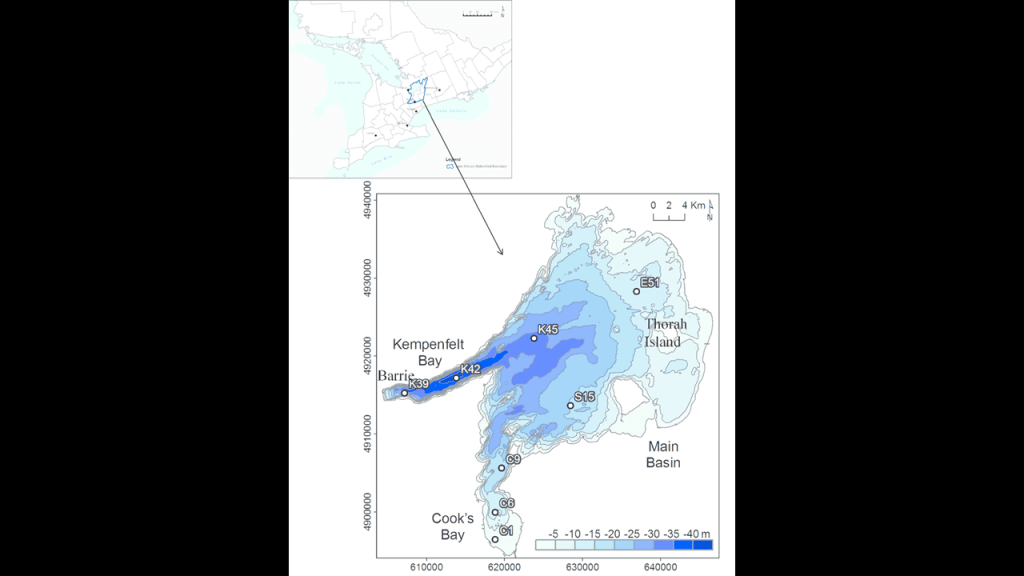
Like we’ve seen in other examples, in many places at the lake’s edge, stones of varying shapes and sizes can be seen just below the surface of the water.
As we go up the southeastern shoreline of the Georgian Bay from here, we next come to the Christian Island Lighthouse; the Giants Tomb Island and its lighthouse; White’s Falls; High Falls; and Parry Sound & Parry Island.
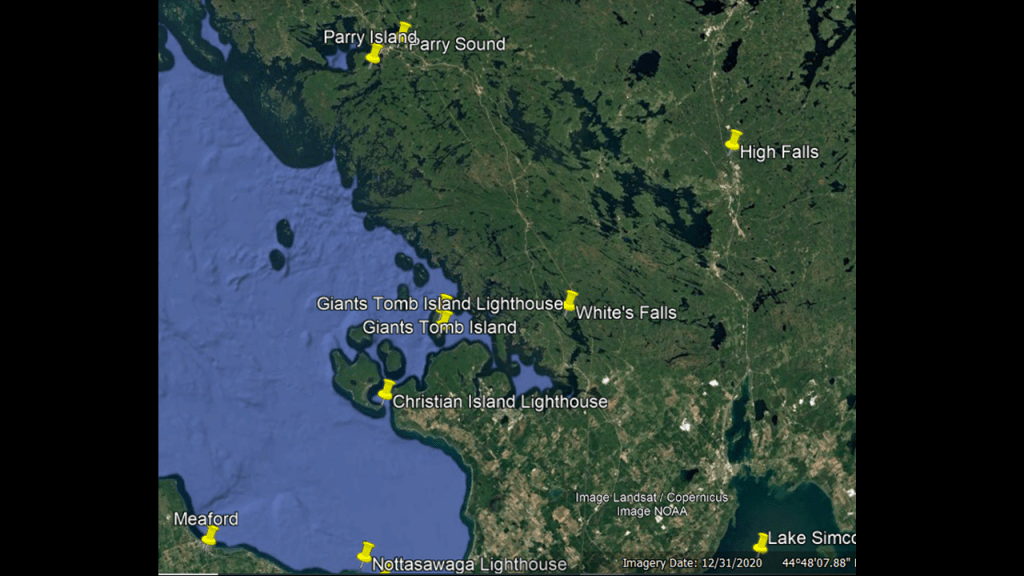
First up, the Christian Island Lighthouse.
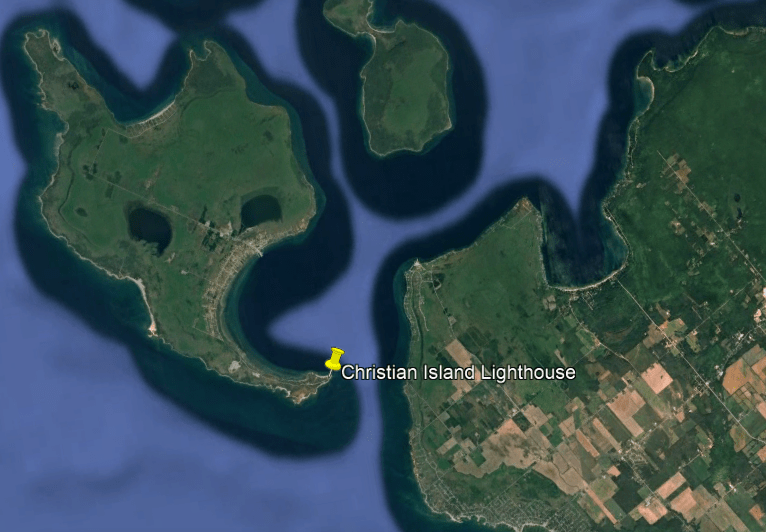
The Christian Island Lighthouse is the fifth Imperial Tower that we have come across on the journey in this part of the world.
It was said to be the first official lighthouse constructed on Georgian Bay in 1857.
Its walls were constructed of hand-faced limestone 6-feet, or almost 2-meters, at ground-level, and stands 55-feet, or 17-meters, -tall from its base.
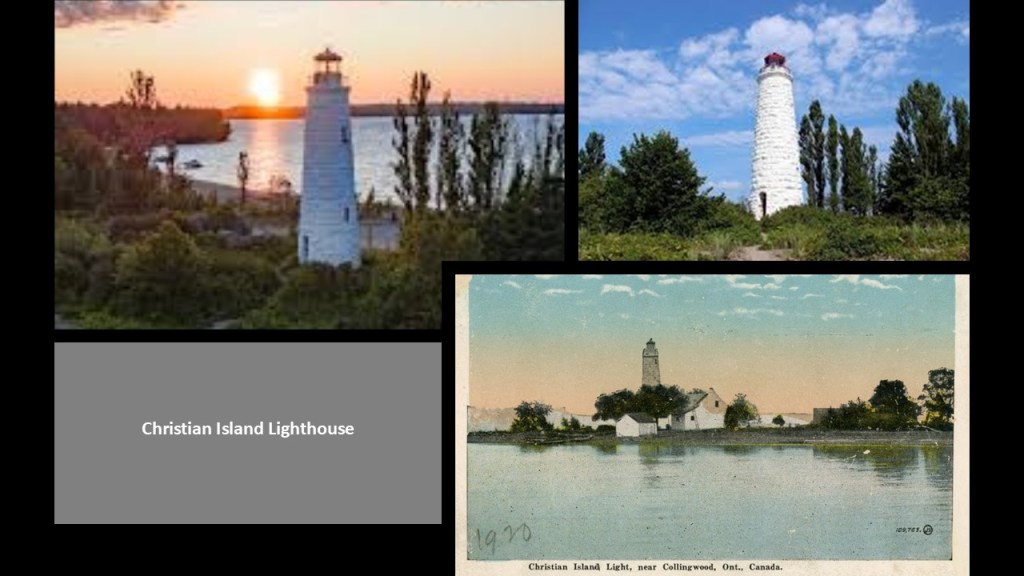
The Christian Island Lighthouse is in the vicinity of the first European settlement in Ontario, “Sainte-Marie Among the Hurons” in today’s Midland, Ontario, which we are told was founded by French Jesuit Missionaries in 1639, to serve as a fortified base for their missionary activity, though apparently its use as such was short-lived because of violent resistence from the indigenous people from what I could find in the historical narrative.
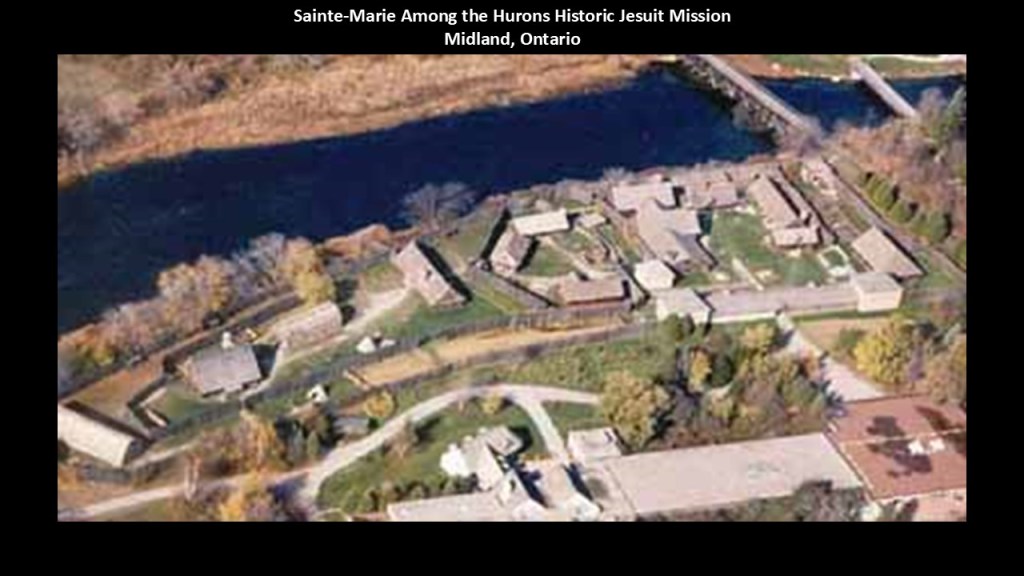
There’s a lot more to find here, but this gives you the idea.
I am going to move along to the next places we come to – Giants Tomb Island, Giants Tomb Lighthouse, and White’s Falls.
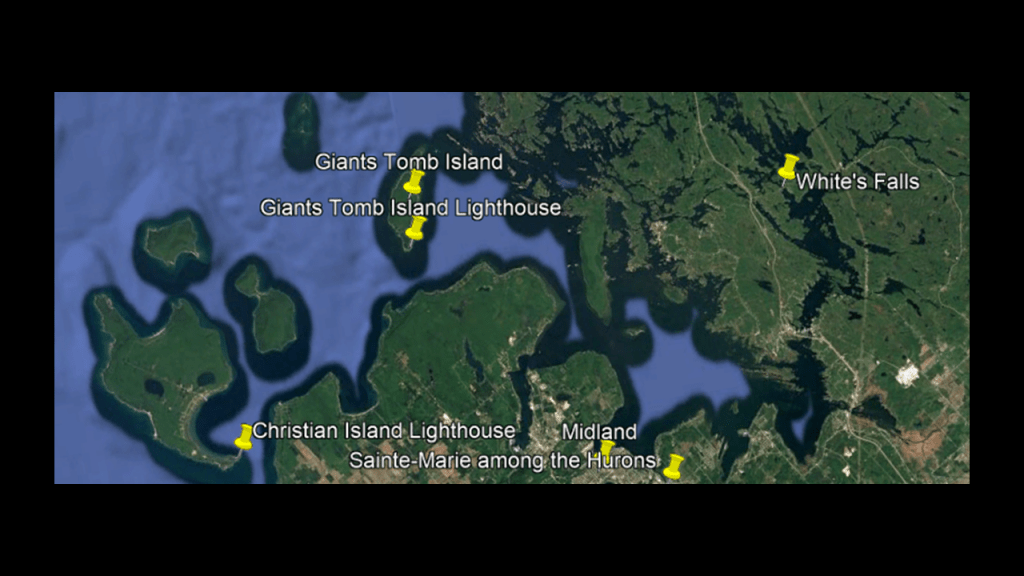
What is called “Giants Tomb Island” is a small island with no permanent residents.
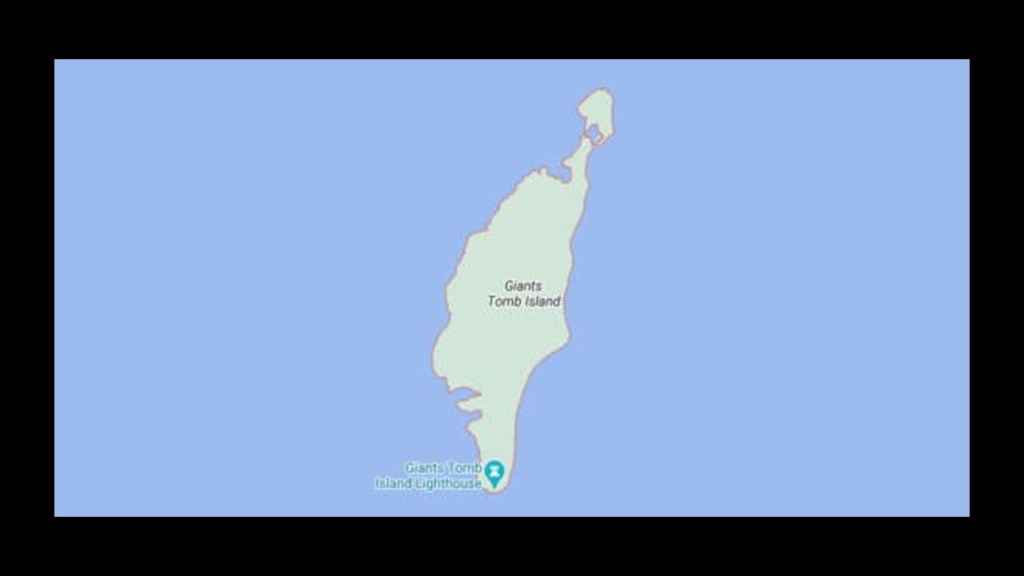
The western shore of the island is strewn with large granite boulders that go out into the Georgian Bay.
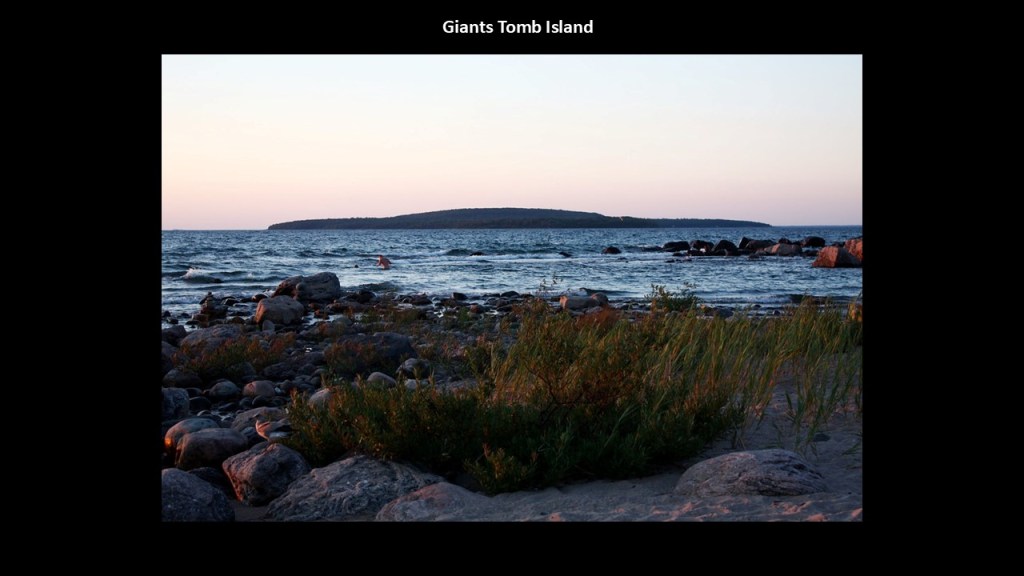
The original Giants Tomb Island Lighthouse on the southern tip of the island was said to have been constructed in 1893 and was in operation until 1967, after which time it was destroyed.
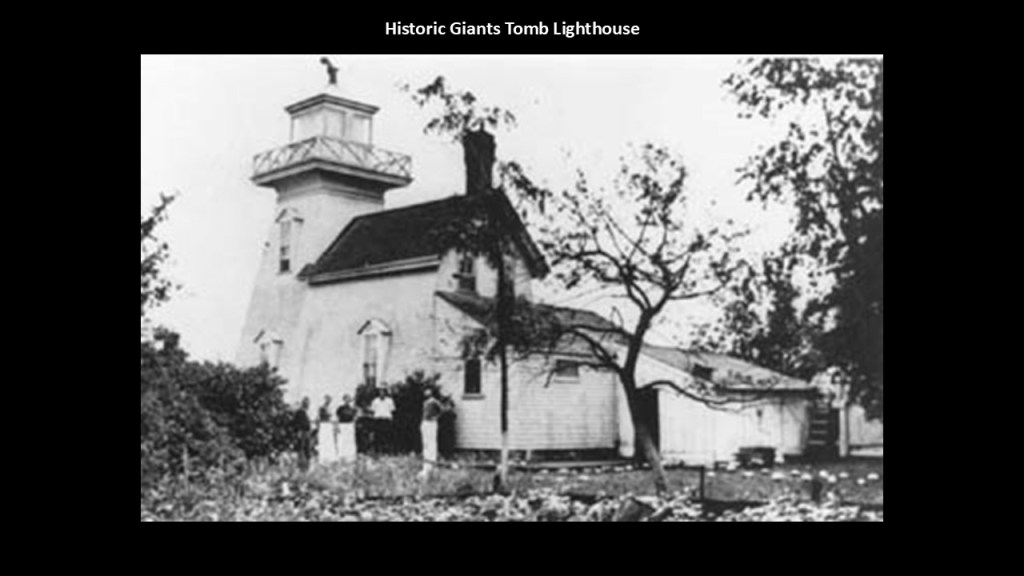
In 1969, the original lighthouse was replaced by a skeletal tower that is still in use today as a rectangular day-mark that flashes a light at the height of 51-feet, or 16-meters.
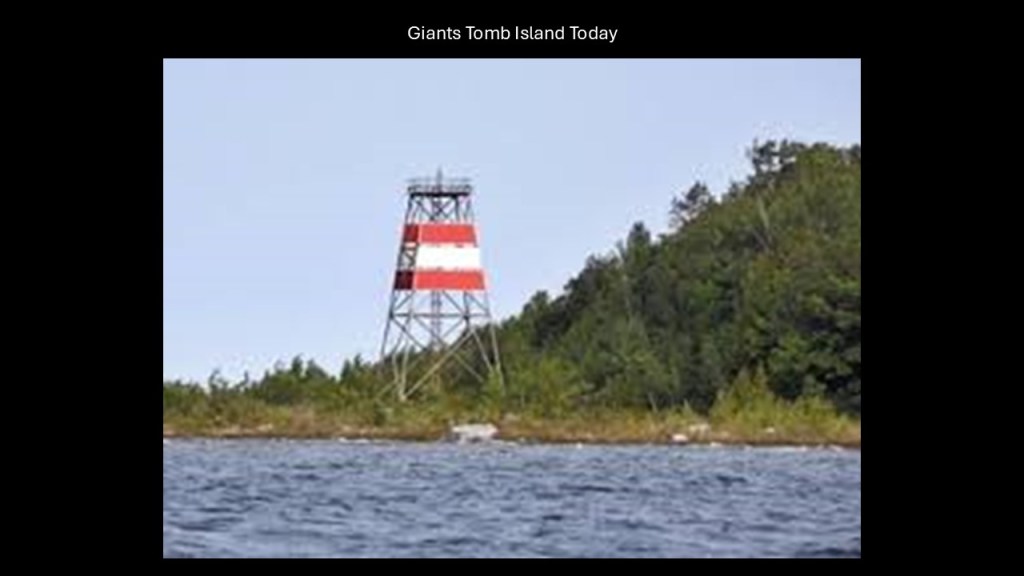
White’s Falls is directly to the east of Giants Tomb Island.
The White’s Falls are located in Gloucester Pool in Ontario, not far from Port Severn.
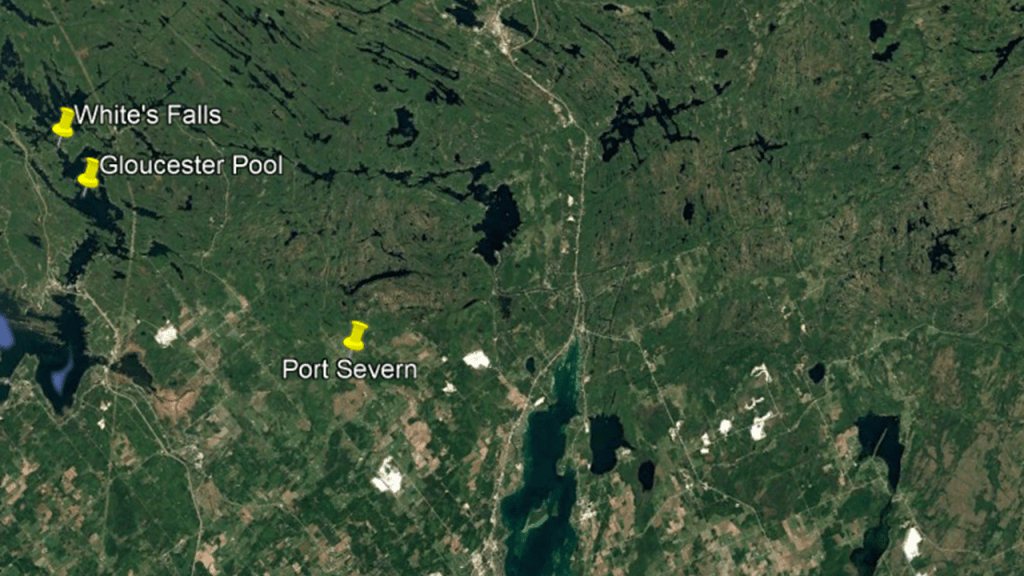
The upper portion of White’s Falls has been modified by a dam to maintain water levels in the Six-Mile Lake on the Trent-Severn Waterway in Georgian Bay Township.
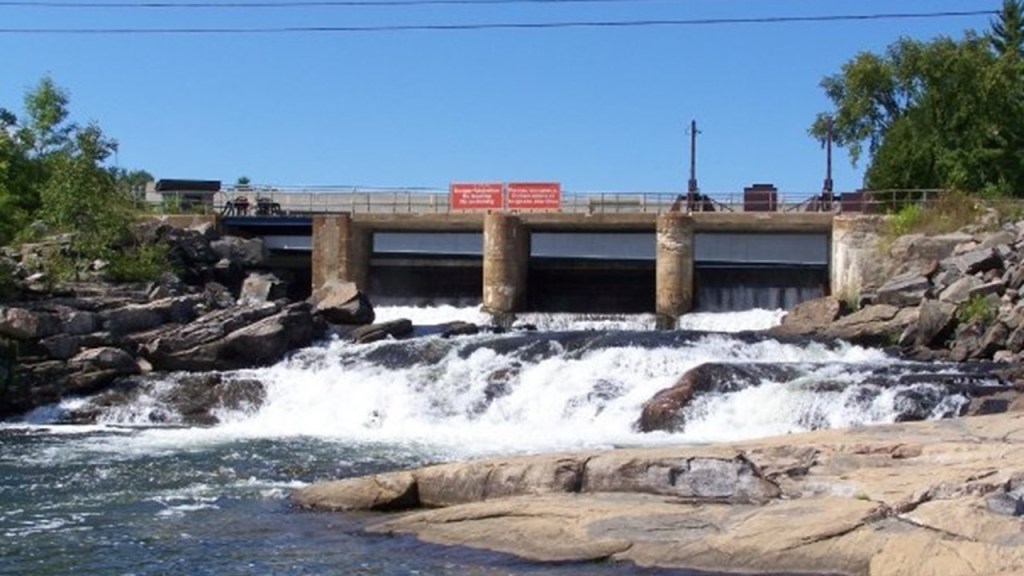
As such, the flow through the falls is seasonally-variable.
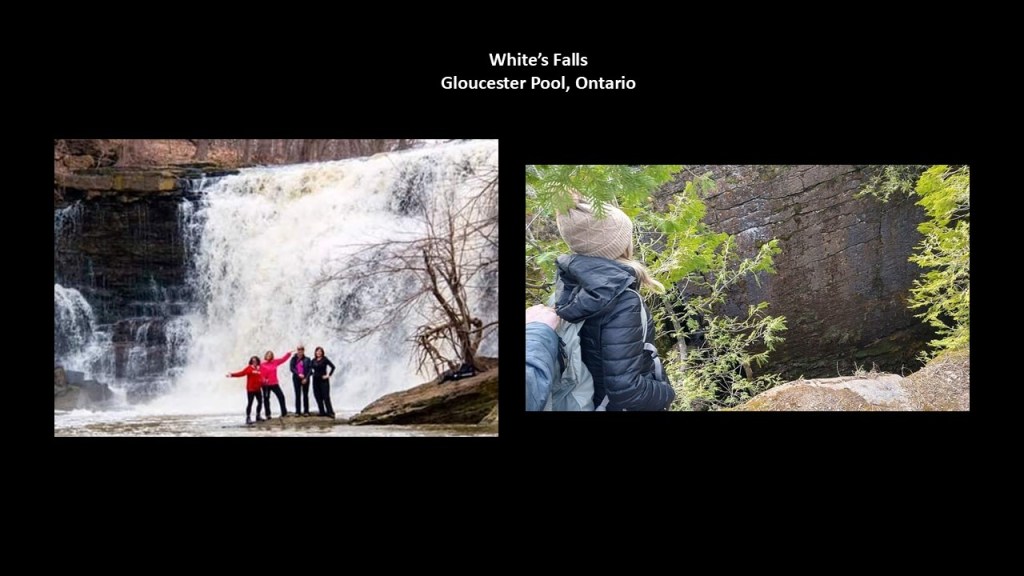
The Trent-Severn Waterway is a 240-mile, or 386-kilometer, -long canal route that connects Lake Ontario at Trenton to Lake Huron’s Georgian Bay at Port Severn.
It has been called one of the finest, interconnected systems of navigation in the world
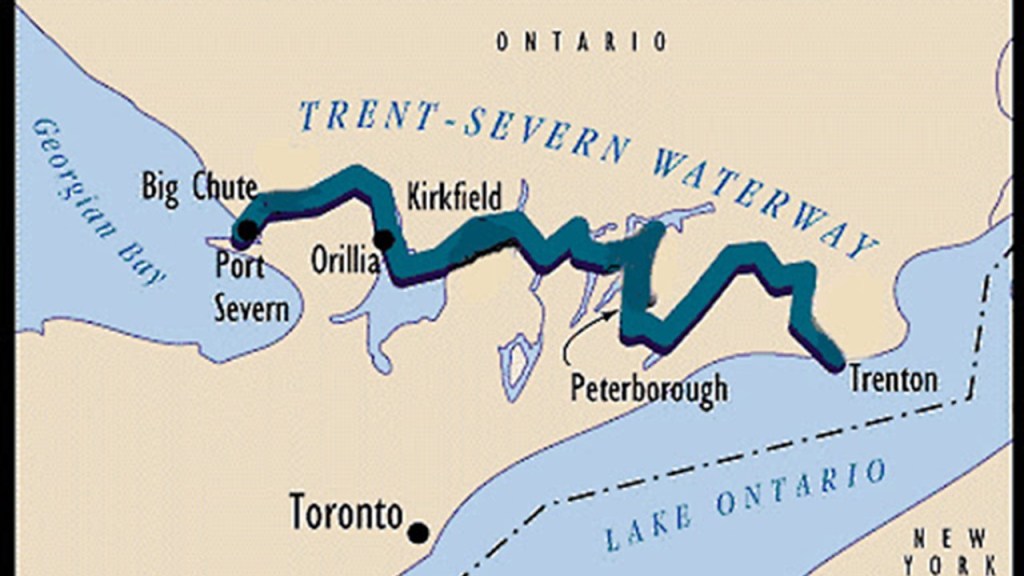
We are told that canal construction started in 1833 and it was completed by 1920, when the first complete transit of the waterway took place in July of that year.
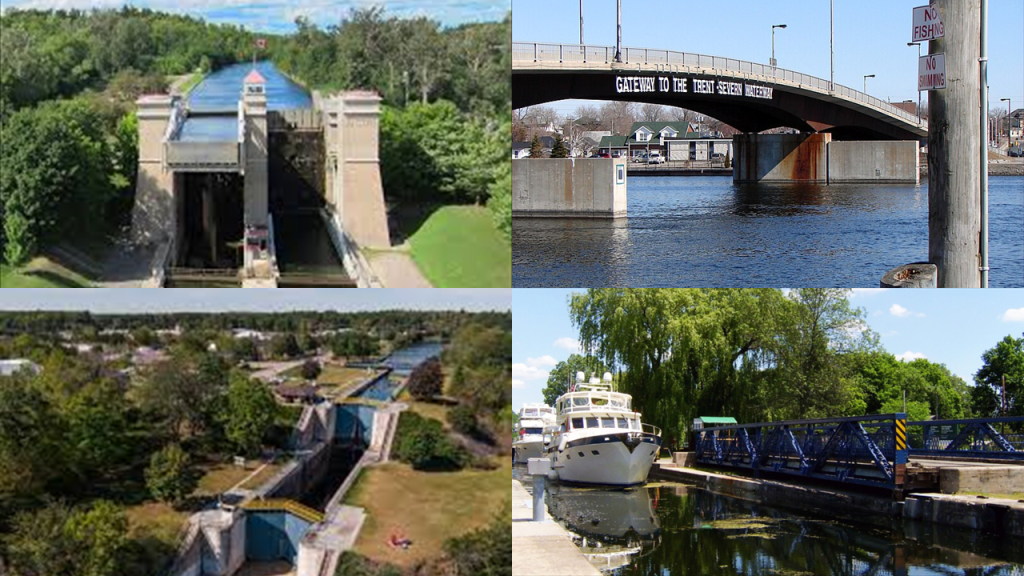
White’s Falls is located near the Big Chute Marine Railway and Ontario Highway 400.
The Big Chute Marine Railway is what is called a “patent slip” at Lock 44 of the Trent-Severn Waterway.
It works as an inclined plane to carry boats in individual cradles over a change in height of about 60-feet, or 18-meters.
It is the only marine railway, or canal-inclined plane, of its kind in North America, and is overseen by the federally-operated Parks Canada.
I will be talking more about past and present inclined planes in the next part of this series in Lake Ontario.
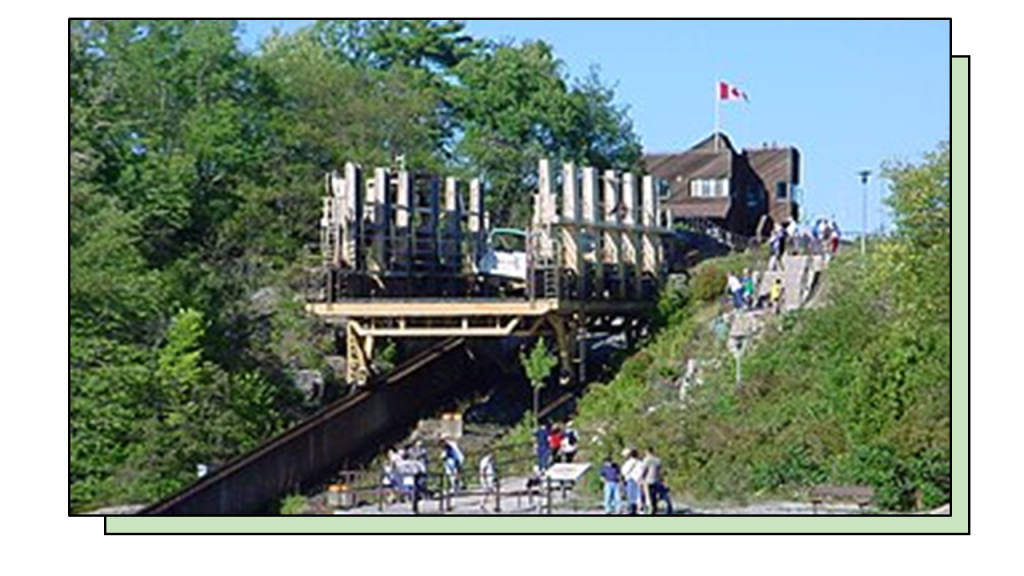
The nearby Ontario Highway 400 was originally known as the Toronto-Barrie Highway, the route has been extended well beyond Barrie to north of Parry Sound.
It was the first, fully controlled-access highway in Ontario when it opened between North York and Barrie on July 1st of 1952.
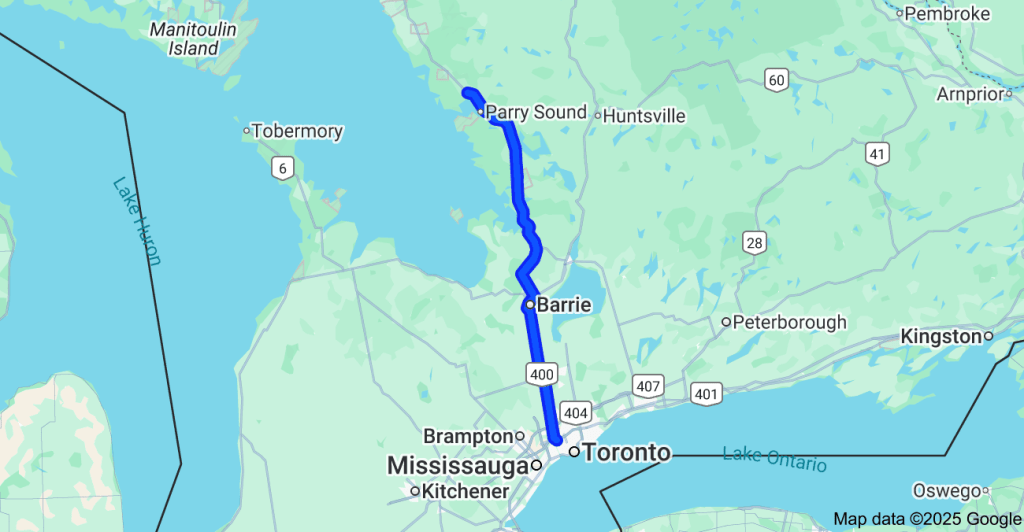
North of Port Severn, Highway 400 frequently passes through large, granite rock-cuts, and portions of the median also feature rock outcroppings.
The High Falls are to the northeast of the White’s Falls location, and Parry Sound & Parry Island are to the northwest closer to Georgian Bay.
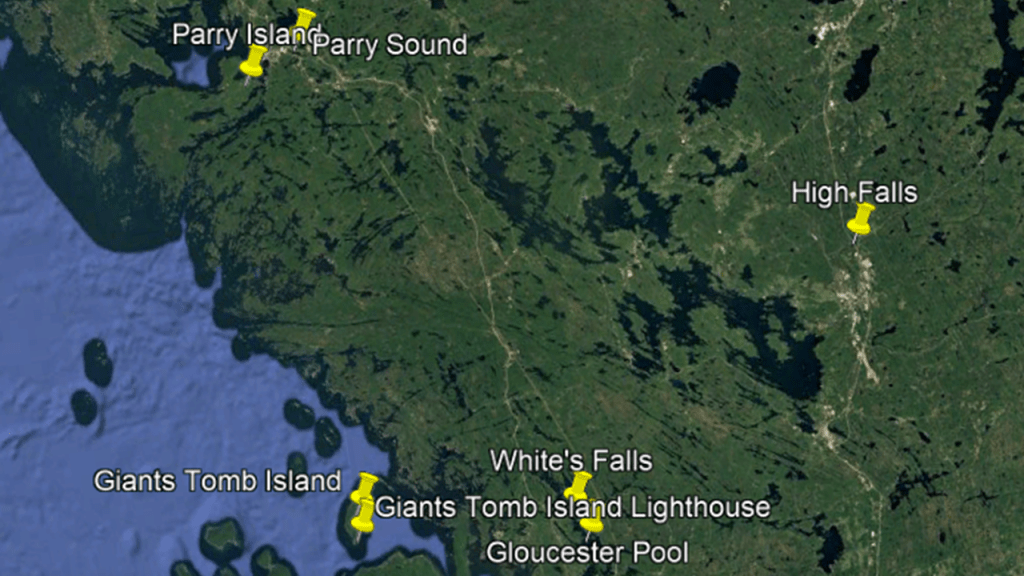
First High Falls.
High Falls is located a short-distance north of Bracebridge, Ontario, and is one of the largest waterfalls in the region and accessible to visitors.
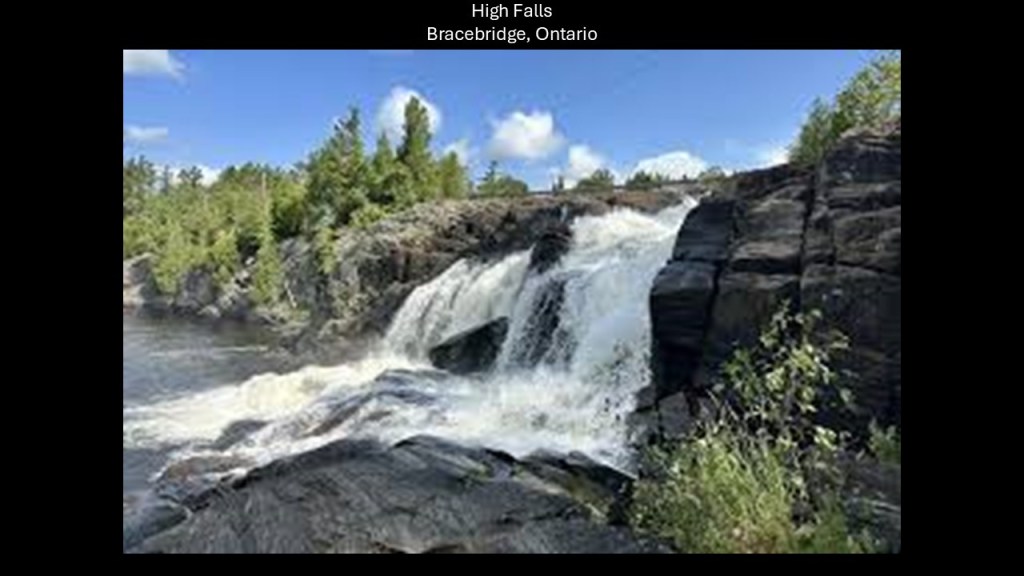
Bracebridge is considered the “waterfall capital of Muskoka.”
Muskoka is a regional municipality that extends from Georgian Bay in the west, to the northern tip of Lake Couchiching in the south, to the western border of Algonquin Provincial Park in the east.
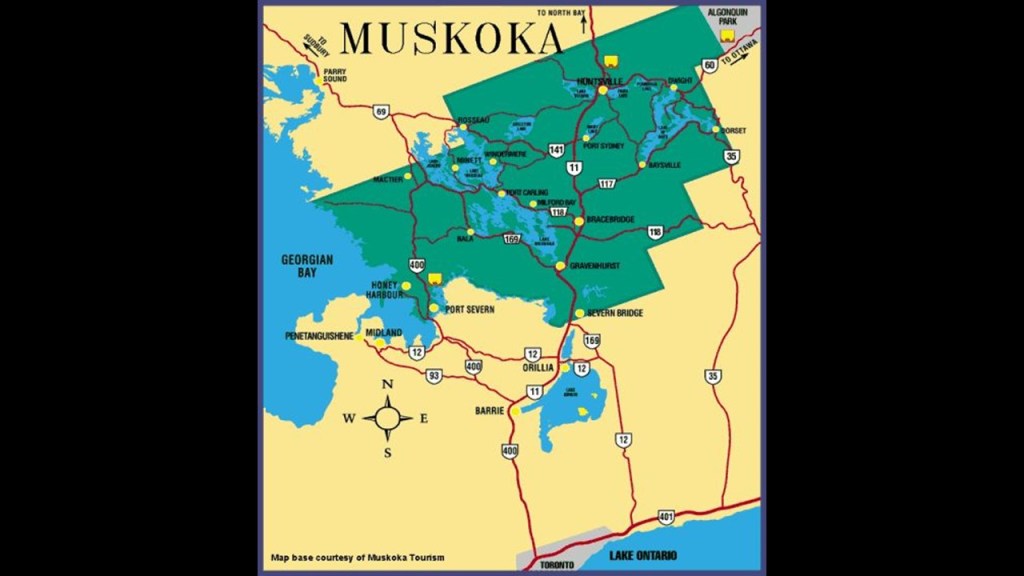
Bracebridge is the seat of regional government for the Muskoka Municipality.
First incorporated in 1875, we are told Bracebridge was built around a waterfall on the Muskoka River, and known for its proximity to other waterfalls, like the High Falls and Wilsons Fall’s.
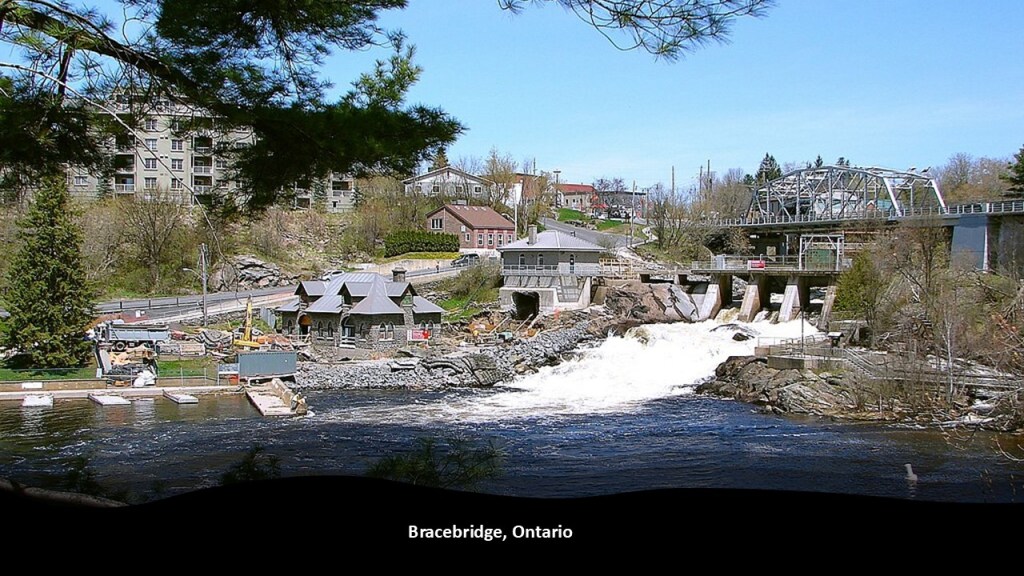
Bracebridge was a transportation hub in the area with the coming of the railroad.
I have circled here the location of the CNR Bracebridge Railway Station; the Bracebridge Post Office; the Muskoka District Courthouse, and the Carnegie Public Library.
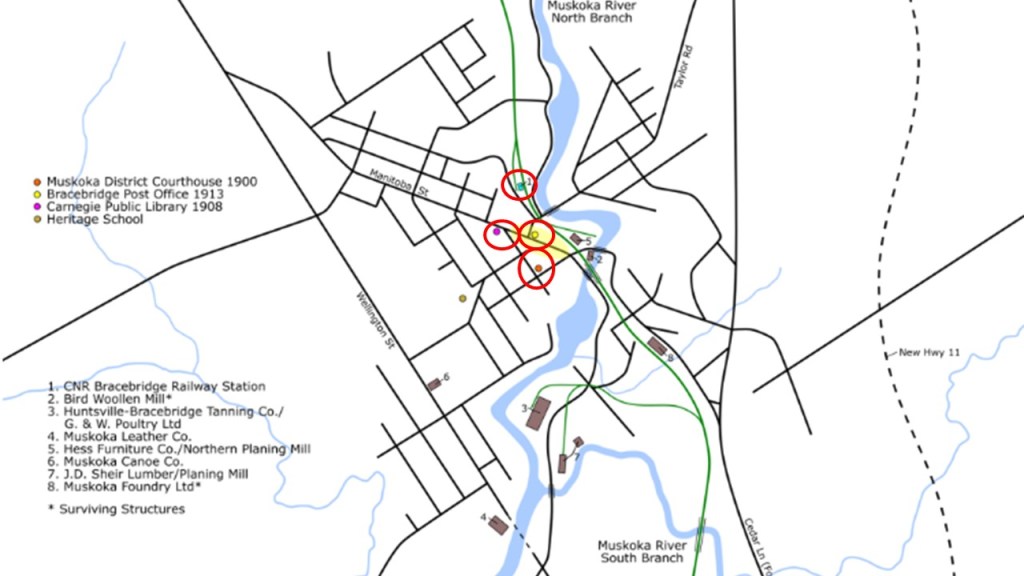
We are told that the original train station in Bracebridge was constructed with the opening of the Northern and North Western Line in 1885.
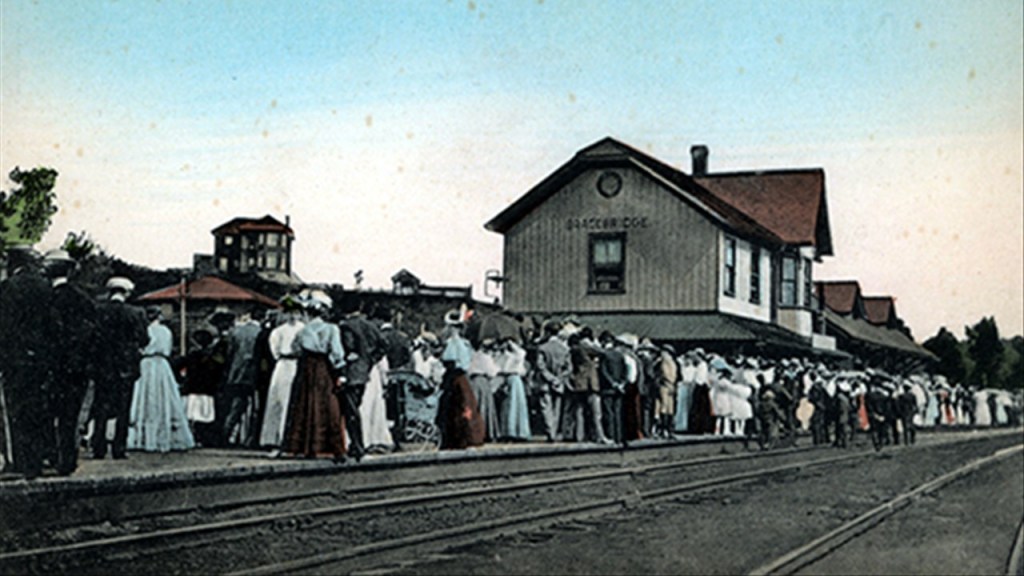
Apparently repairs were needed to the train station after a wreck right in front of it in 1906.
Service to the station ended in 1971, as we are told the building had fallen into disrepair, and was subsequently removed in 1972.
There has been no rail service in Bracebridge at all since the only existing service was ended in 2012.
The historic Bracebridge Post Office is still a distinctive community landmark with its impressive clocktower.
It was said to have been built between 1913 and 1915, and decommissioned as a post office in 1960.
Today the former post office houses the Muskoka Heritage Centre.
The Muskoka District Courthouse was said to have been constructed in 1900.
The building is still in use today as an active courthouse.
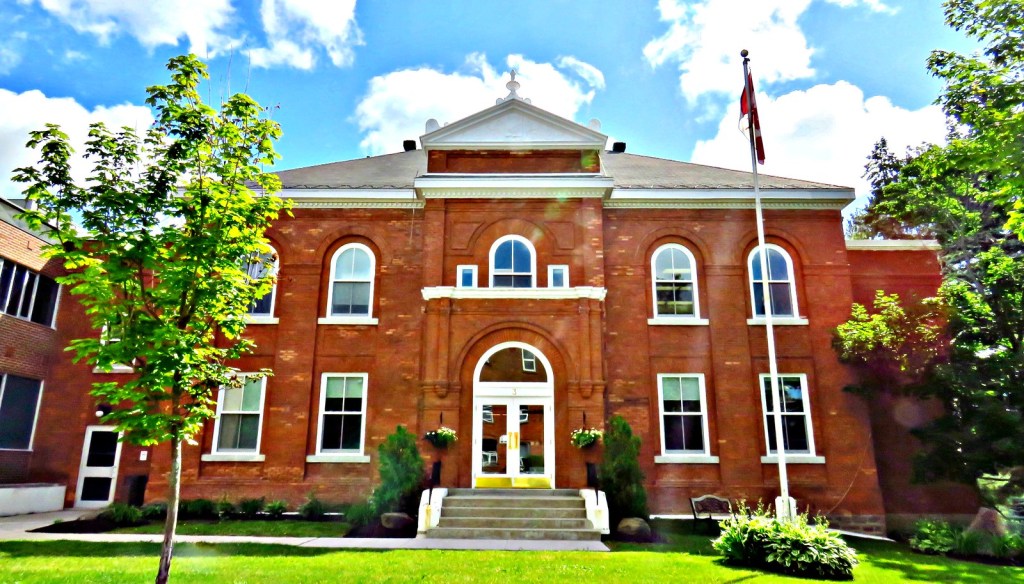
The former Carnegie Public Library in Bracebridge was said to have been built in 1906, and operated as such until July of 2024.
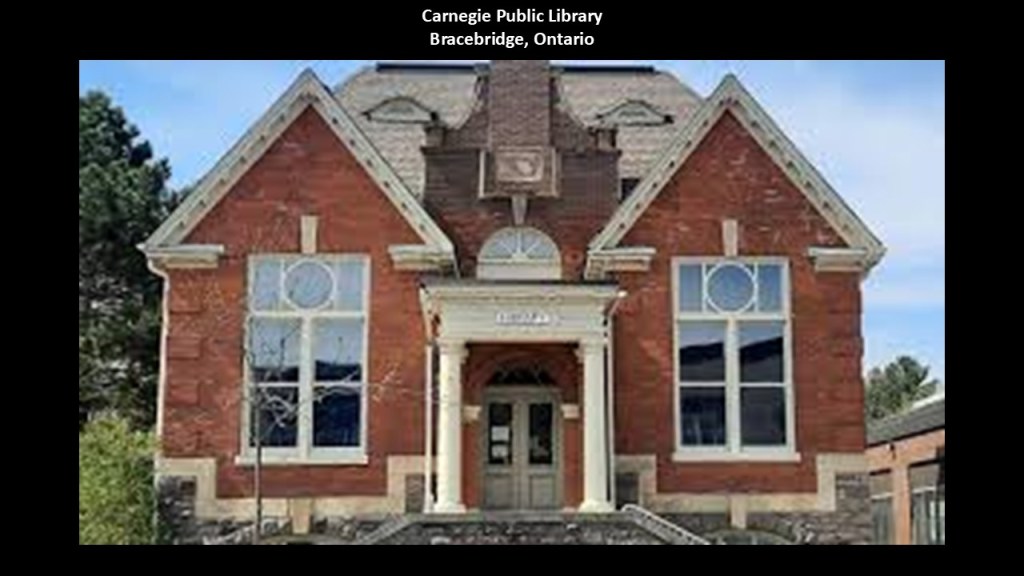
The public library for Bracebridge is now housed in the massive, multi-purpose Muskoka Lumber Community Center.

There are quite a few hydrolectric power generating facilities in Bracebridge and the surrounding area, as seen here on the Google Earth screenshot.
Bracebridge was the first municipality in Canada to own and operate a water-power electrical generating system beginning in 1894.
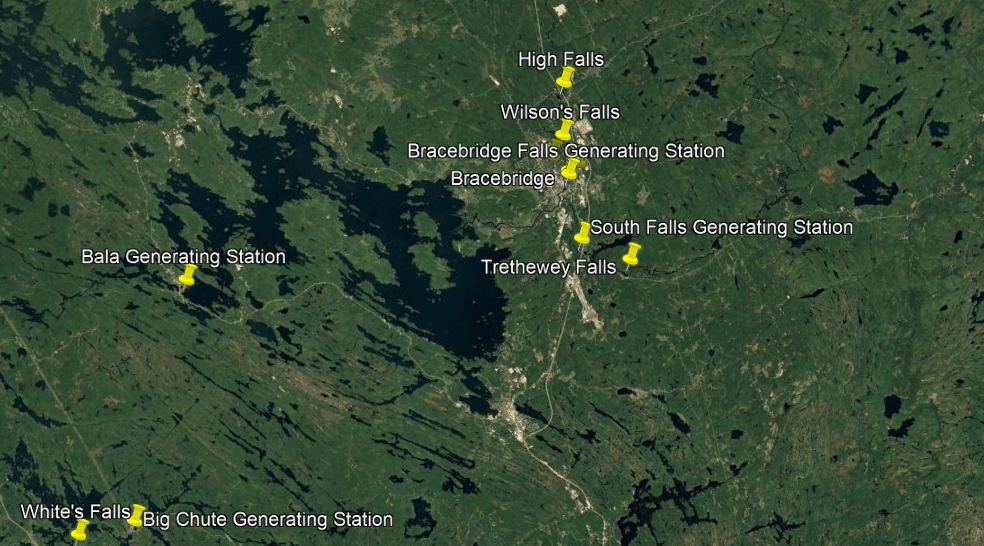
Further up the Georgian Bay Coast we come to Parry Sound and Parry Island, which is north of Giants Tomb Island and northwest of the Bracebridge area further inland.
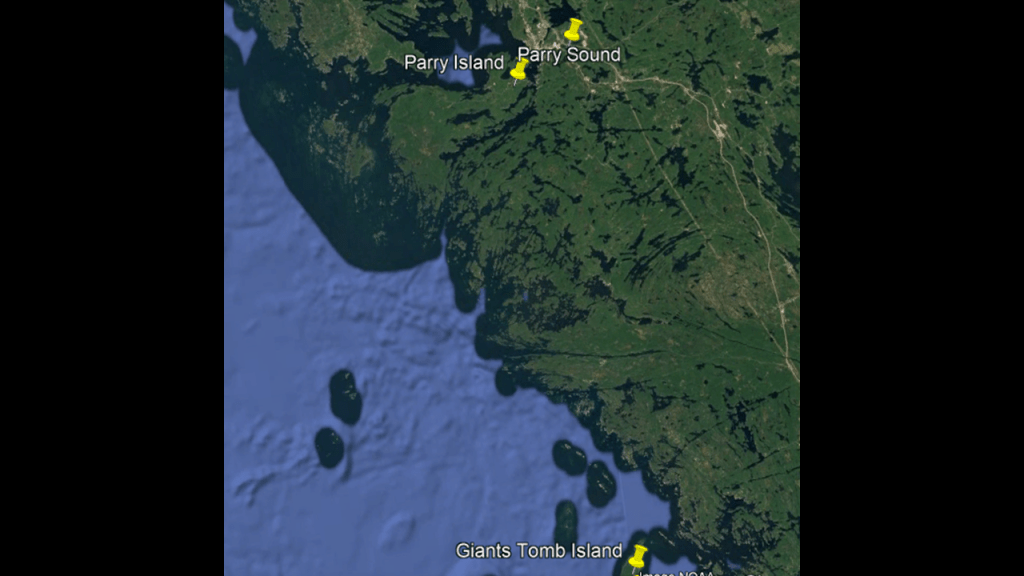
First, Parry Sound.
Parry Sound is a town located 99-miles, or 160-kilometers, south of Sudbury, and 140-miles, or 225-kilometers, north of Toronto.
It is a popular cottage country region for southern Ontario residents, and, also, we are told, has the world’s deepest, natural freshwater port.

We are told that Parry Sound was named in honor of Arctic Explorer Sir William Edward Parry by the man who surveyed it in the 19th-century, Henry Wolsey Bayfield.
We are told that the modern townsite was established in 1857 near the Ojibwe village of Wasauksing, or “shining shore,” at the mouth of the Seguin River.
Parry Sound became an important lumber center.
Parry Sound was incorporated as a town in 1887, and rail service established in the late 19th-century, making it an important depot along the rail-lines to western Canada.
Today, Via Rail offers passenger service to Parry Sound.
Historically, what started out as the Ottawa, Arnprior and Parry Sound Railway was in operation from 1897 to 1959, and was for a time the busiest railway route in Canada.
It later became the Canada Atlantic Railway.
It carried timber and wood products from today’s Algonquin Provincial Park area, and up to 40% of the grain traffic from the Canadian West from Depot Harbor at Parry Sound through to the St. Lawrence River Valley.
We are told the original railway was built by 19th-century Canadian lumber baron John Rudolphus Booth who owned timber rights in the Algonquin area as well a major sawmill in Ottawa.
Time saw the closure of the rail-lines the railway served, and by 1959, was no longer in operation.
Parry Island in the Georgian Bay near Parry Sound is the reserve of the Wausauksing First Nation, which is comprised of Ojibwe, Ottawa, and Pottawatomi First Nations people.
At 19,000-acres, or 77-kilometers-squared, with 78-miles, or 126-kilometers, of coastline, it is one of the largest islands in the Great Lakes.
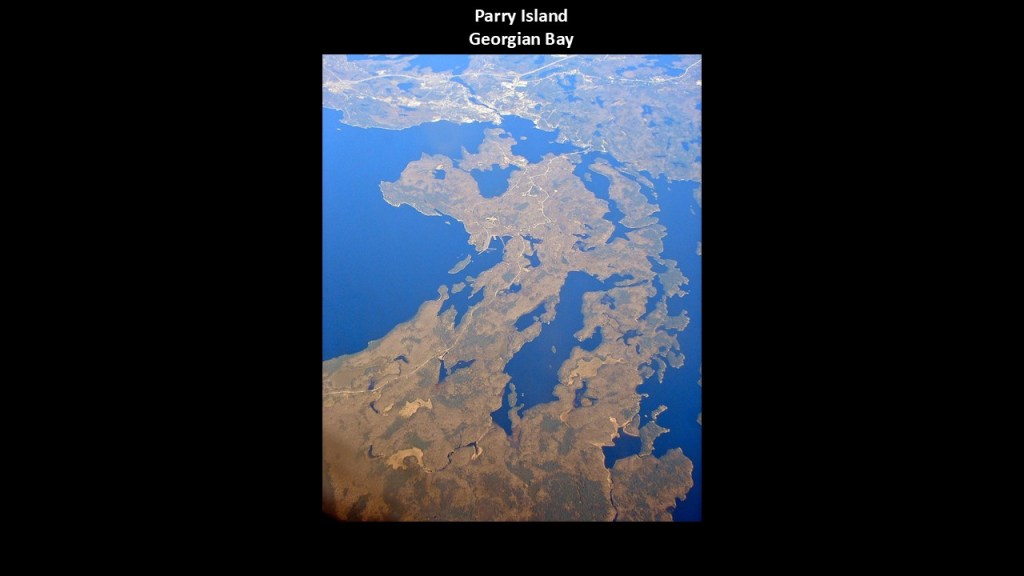
A couple of interesting things to point out about Parry Island.
One is that it was the historical location of Depot Harbor, which is today a ghost town on Parry Island.
It was once the western terminus of the Canada Atlantic Railway and a busy port on Georgian Bay.
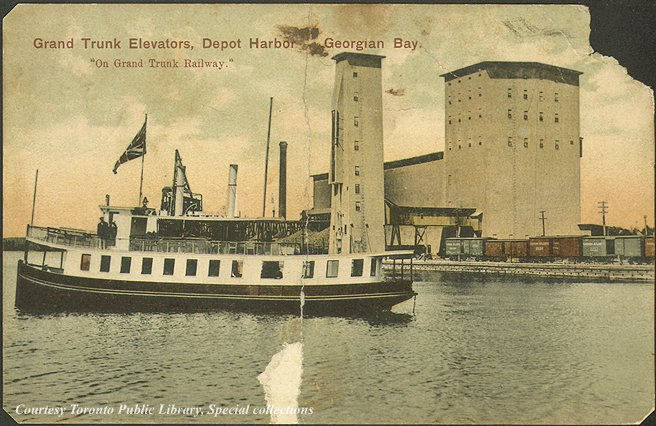
In 1891, the Ottawa, Arnprior, and Renfrew Railroad and the Ottawa and Parry Sound Railroad, both controlled by John Rudolphus Booth, amalgamated to form the Ottawa, Arnprior and Parry Sound Railway, and there was a further amalgamation with the Parry Sound Colonization Railway, which was acquired by Booth in 1893, and who we are told made Depot Harbor the western terminus instead of Parry Sound as originally planned.
The Parry Sound Colonization Railway formed a railway that would run from Georgian Bay through the southern Algonquin Provincial Park to Ottawa.
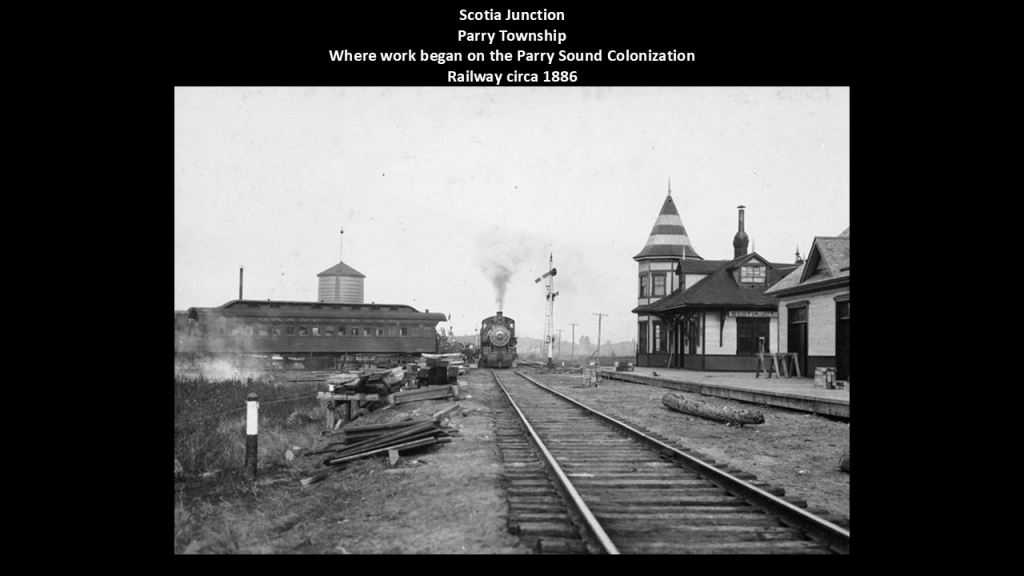
Depot Harbor became one of the most prominent ports on the Great Lakes.
We are told that John Rudolphus Booth built a town site with 110 houses, two large grain elevators, a railway station, hotel, and shops, and by 1926, the town’s permanent population had reached 1,600 residents, with the number doubling in the summer months.
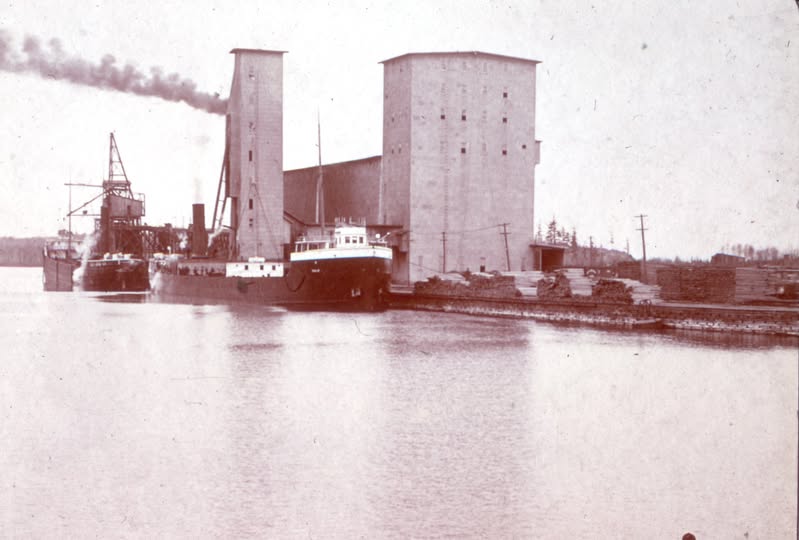
The decline of Depot Harbor started in our historical narrative in the 1920s and 1930s with the Great Depression and the closure of the rail facilities there.
The town fell into disrepair, and as people left, the town was abandoned.
Then we are told that during World War II, cordite, a family of smokeless propellants, was being stored in the railway’s dockside freight shed, and that in 1945, in preparation for V-J Day celebrations on August 14th, the also nearby timber-constructed grain elevators were being dismantled, and somehow, some way, caught fire, allegedly from flying embers caught by the wind that landed on the roofs of the freight-sheds and set-off these explosives which in turn destroyed whatever remained of the harbor facilities.
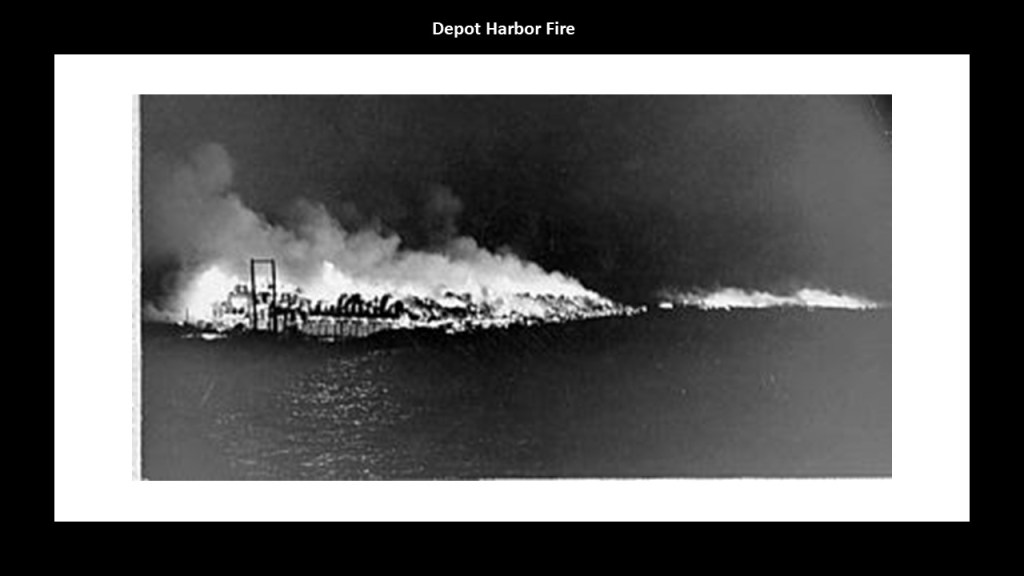
Thought this tidbit of information I found easily was interesting.
There was already a fire insurance plan on Depot Harbor in place as early as this one from 1899.
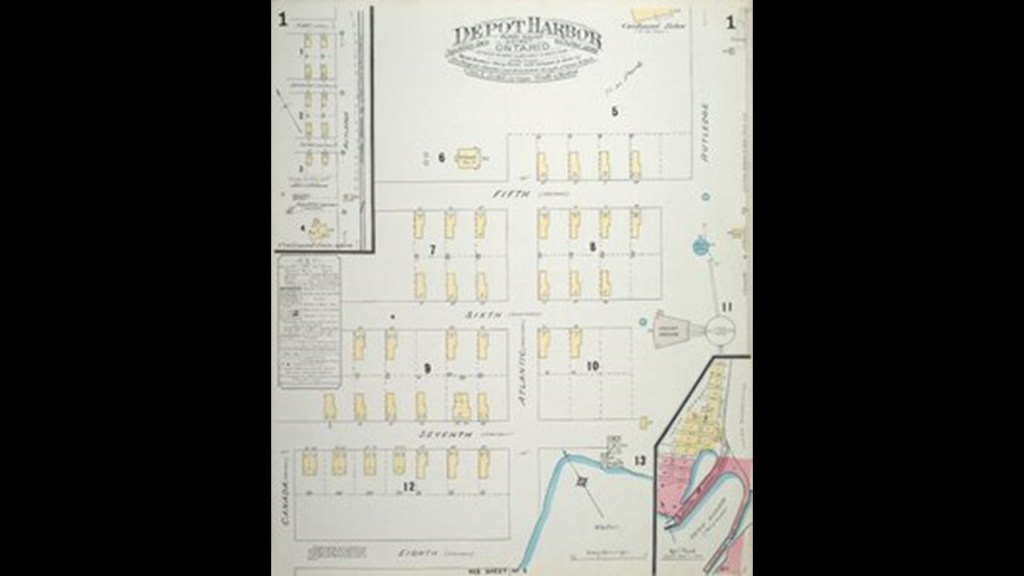
Directly across the Georgian Bay from Parry Island and Parry Sound is the small community of Tobermory at the northern tip of the Bruce Peninsula.
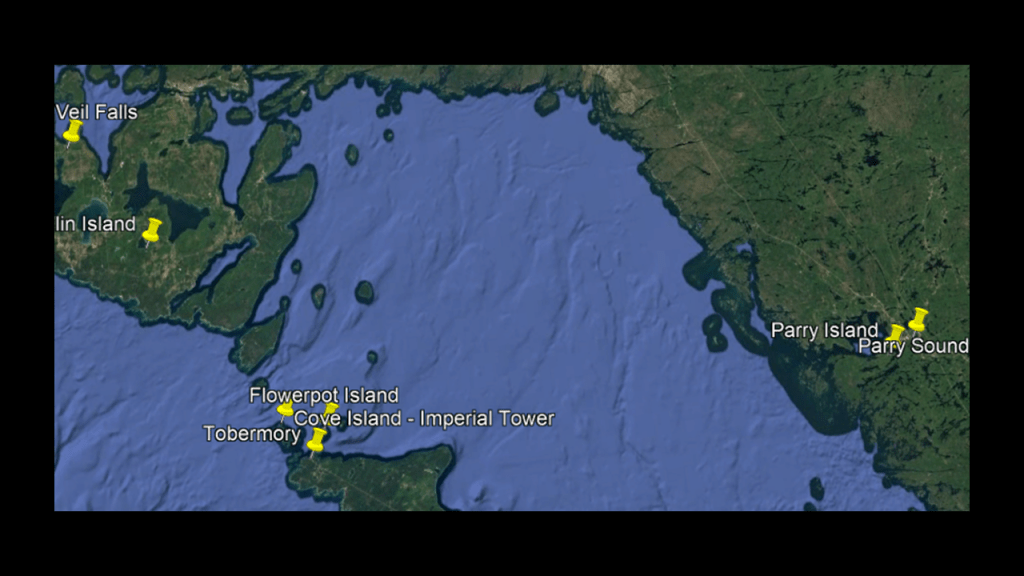
Tobermory is in close proximity to the lighthouse at Cove Island and Flowerpot Island.
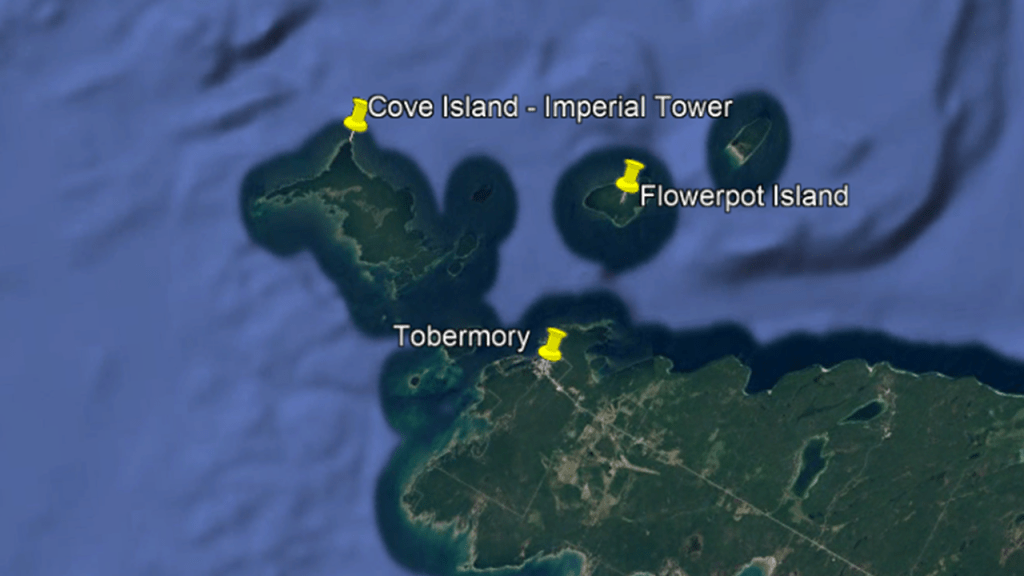
Tobermory is known as the “Freshwater Scuba Diving Capital of the World” because of the numerous shipwrecks that lie in the surrounding water, especially in the Fathom Five National Marine Park, which is also the location of Flowerpot Island.
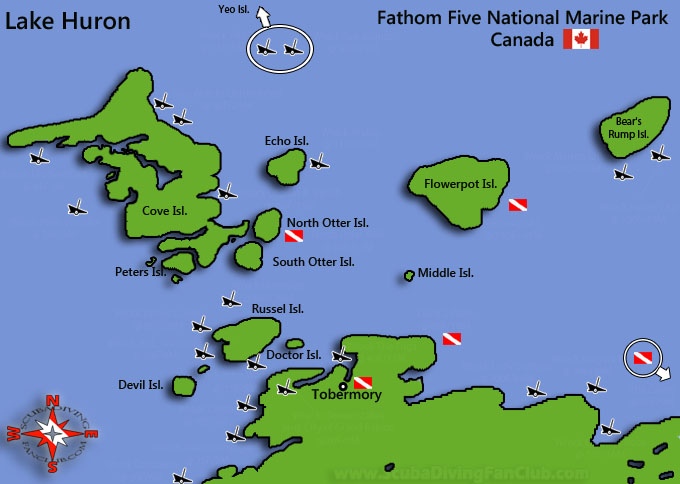
We are told the Fathom Five National Marine Park seeks to protect and display shipwrecks and lighthouses, and protect freshwater ecosystems.
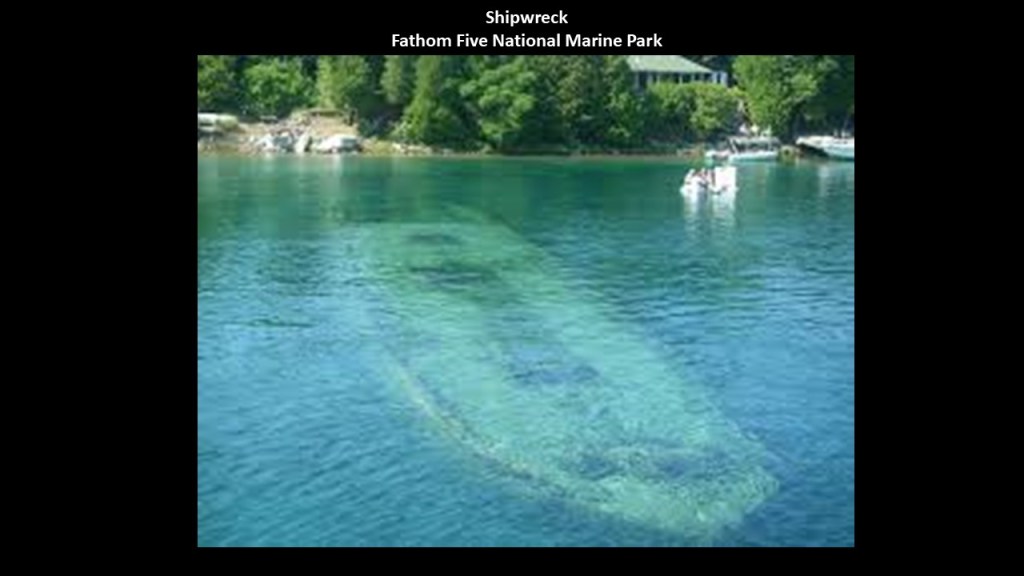
We are told Flowerpot Island in Fathom Five National Marine Park was so-named because of the two rock-pillars on its eastern shore, described as a type of “limestone stack,” formed over many years of “wind, rain, waves, and ice hammering away at the cliff that was once at the water’s edge.”
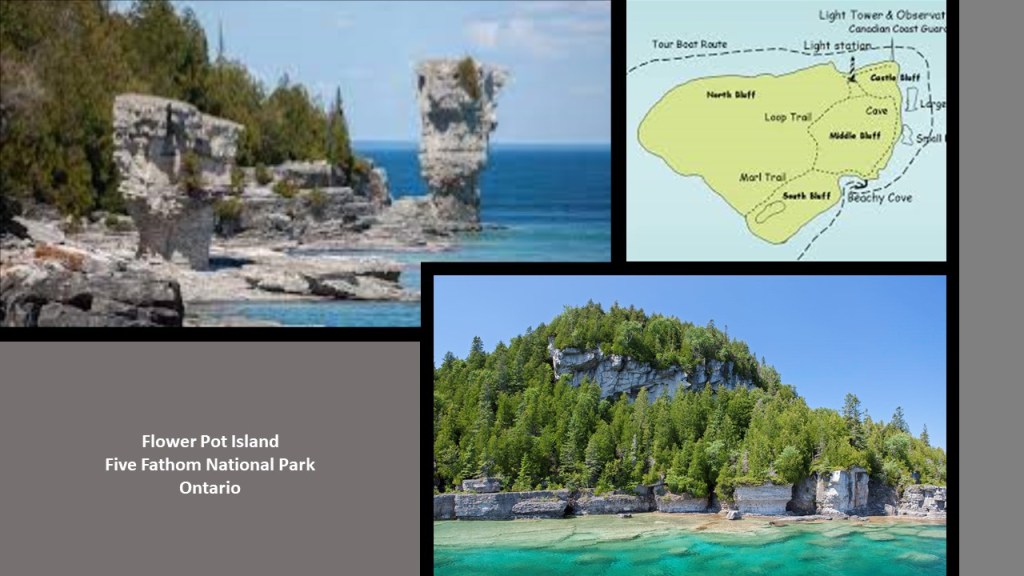
A third flower pot was said to have been here until 1903, at which time it tumbled.
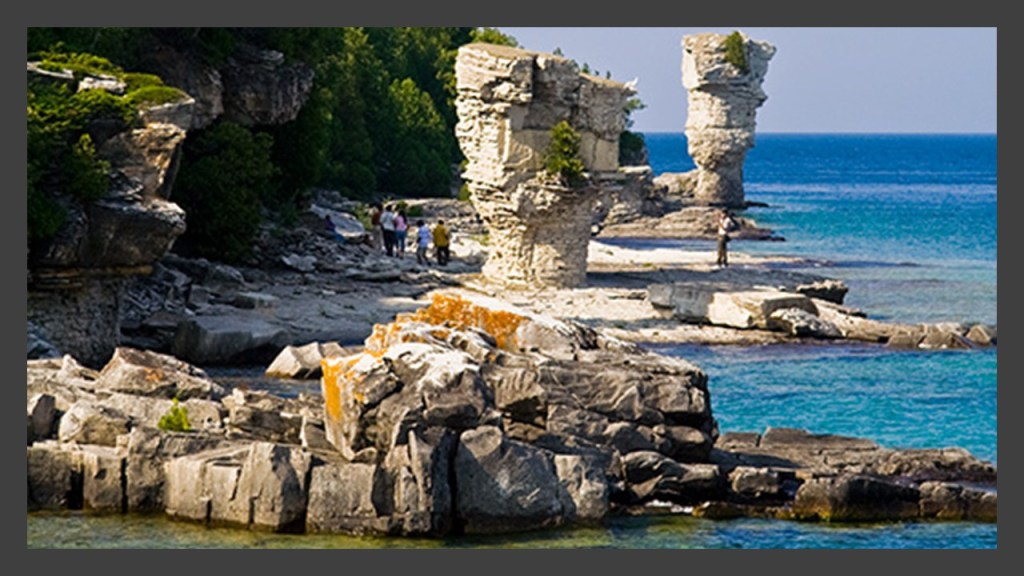
This is just like the examples of so-called “limestone stacks” we’ve been seeing all the way around Lake Huron, like St. Anthony’s Rock and Castle Rock in St. Ignace, and Turnip Rock at Port Austin at the tip of “The Thumb,” on the Michigan-side of Lake Huron,of many other examples seen in this series around the Great Lakes looked at thus far.
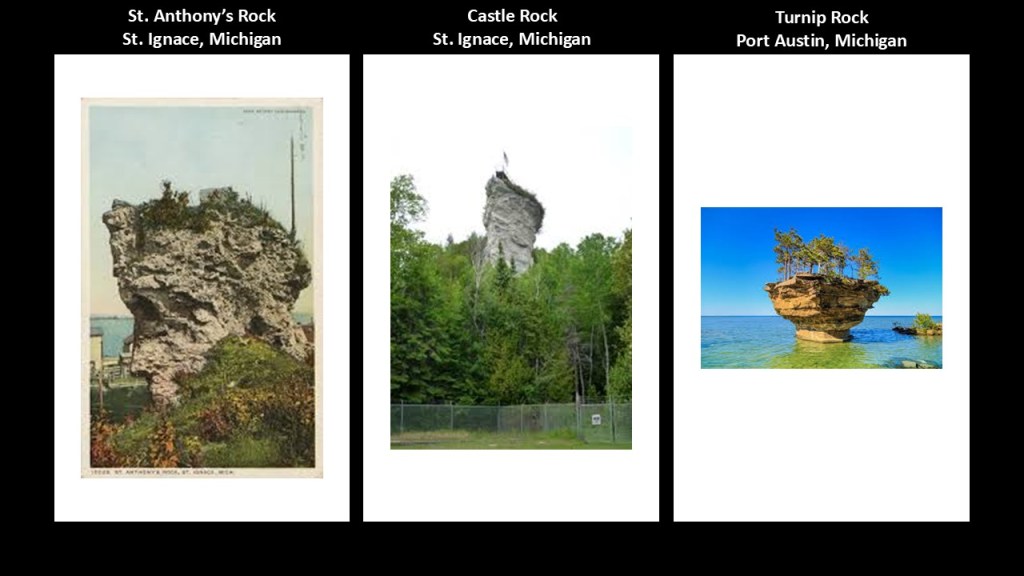
The Cove Island Lighthouse is the last of the six Imperial Towers in Georgian Bay, though it was said to have been the first of the six to have been completed.
Though it is located in the Five Fathom National Marine Park, it is separate from the park.
We are told that it has been a navigational aid in the narrow channel between Lake Huron and Georgian Bay since October 30th of 1858.
As I mentioned previously, the six lighthouses called “Imperial Towers” were said to have been built when commercial shipping traffic was increasing in the Great Lakes between Canada and the United States with new trade agreements, and the opening of the Sault Ste. Marie Canal Locks in 1855, which is the direction we are heading in.
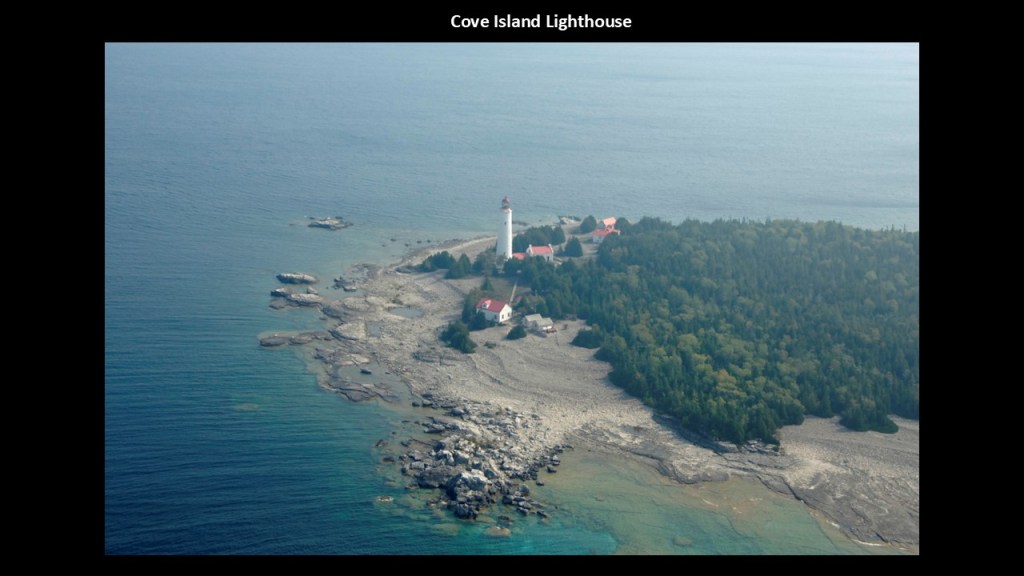
Manitoulin Island comes next as we move up the Niagara Escarpment.
There are also at least four waterfalls in the surroundings – Bridal Veil Falls on Manitoulin Island itself; and Whitefish Falls, Kennebec Falls, and Cataract Falls on the mainland of Ontario.
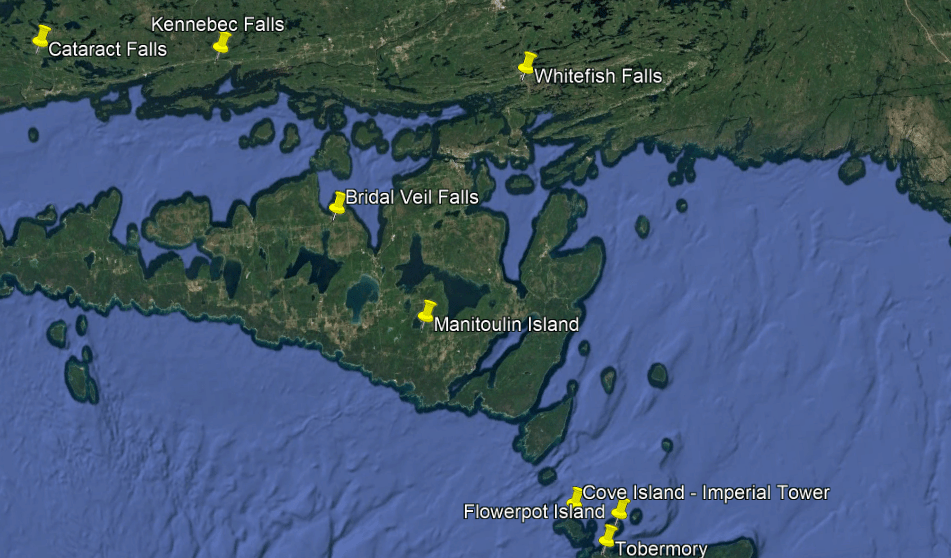
Manitoulin Island is located within in the borders of Ontario in Lake Huron, and with an area of 1,068-square-miles, or 2,766-kilometers-squared, is considered the “largest lake island in the world,” and has over one-hundred lakes of its own.
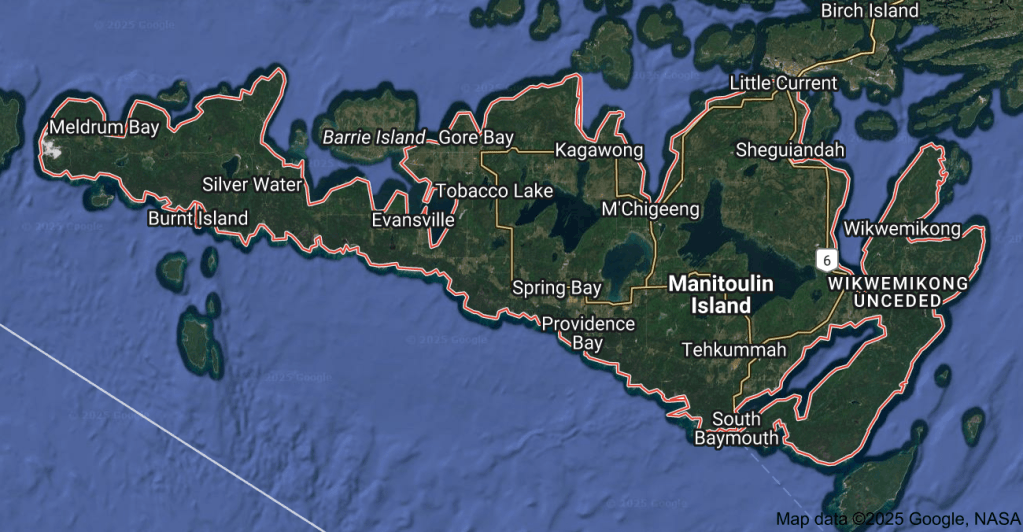
Manitoulin Island consists mainly of dolomite, and forms the eastern tip of a vast formation of dolomite on the Niagara Escarpment called the “Engadine Corona,” which extends to Manistique in Michigan’s Upper Peninsula.
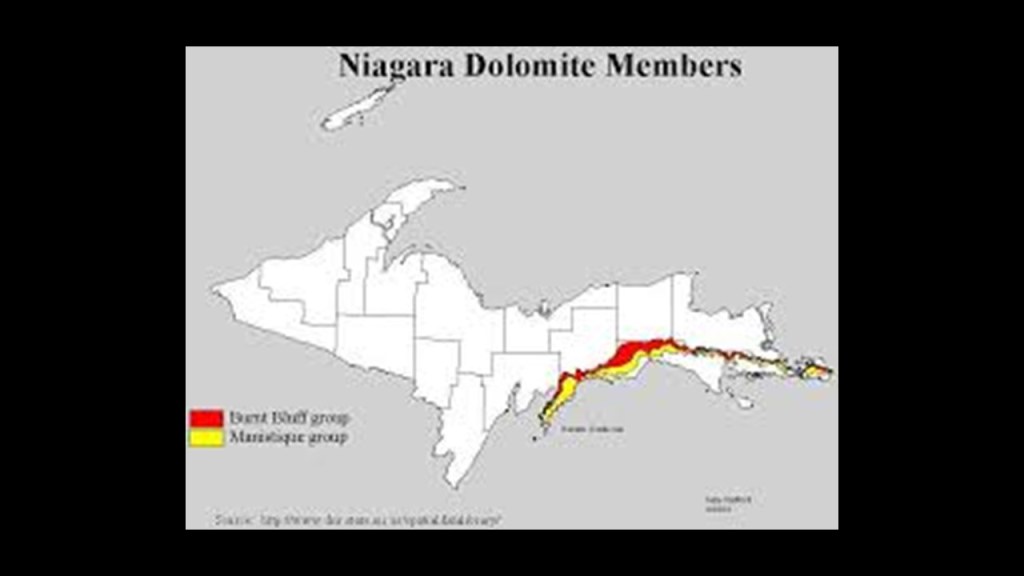
The dolomite of the “Engadine Corona” has been heavily mined at places like the historic Fort Drummond and Drummond Island in the De Tour Passage which connects the St. Mary’s River that connects Lake Superior and Lake Huron via Sault Ste. Marie that I talked about in the third-part of this series on the Michigan-side of Lake Huron.
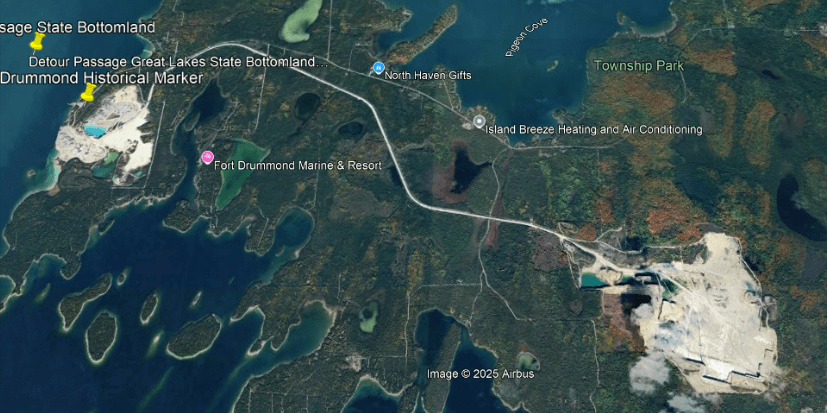
The “Cup and Saucer” Trail on Manitoulin Island climbs the Niagara Escarpment to the highest-point on the island, which is called the “Cup and Saucer,” and accessed by the trail of the same name.
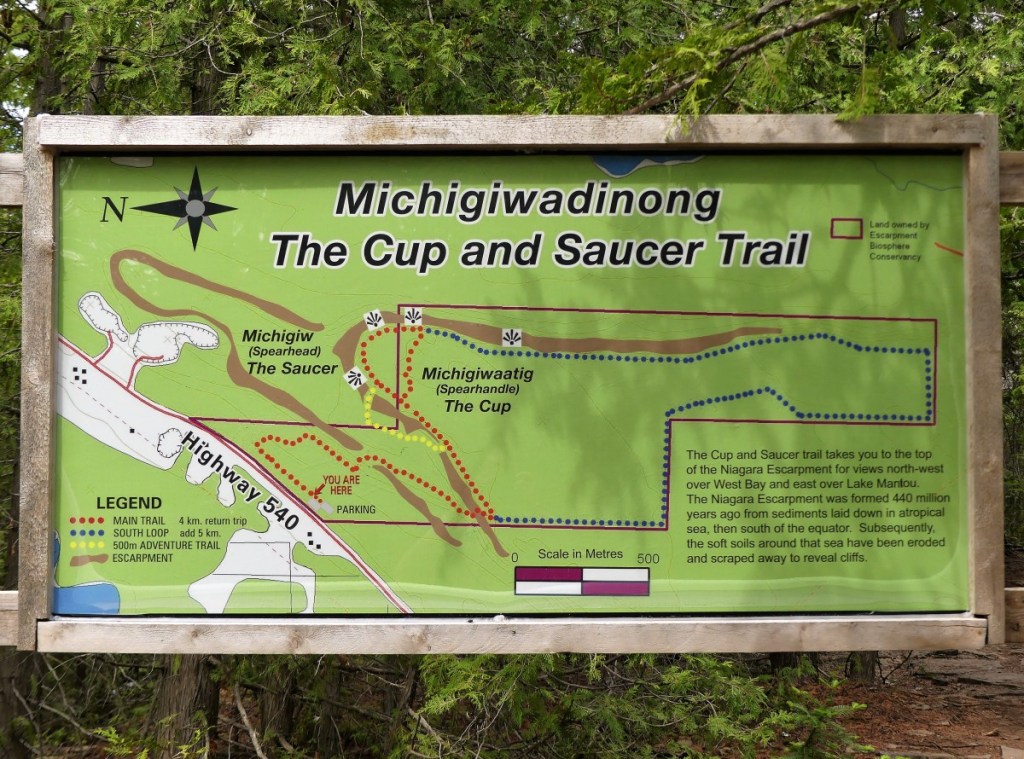
Here are some views of the flat surfaces, straight-edges, and right-angles of what we are told are natural rock formations on Manitoulin Island.
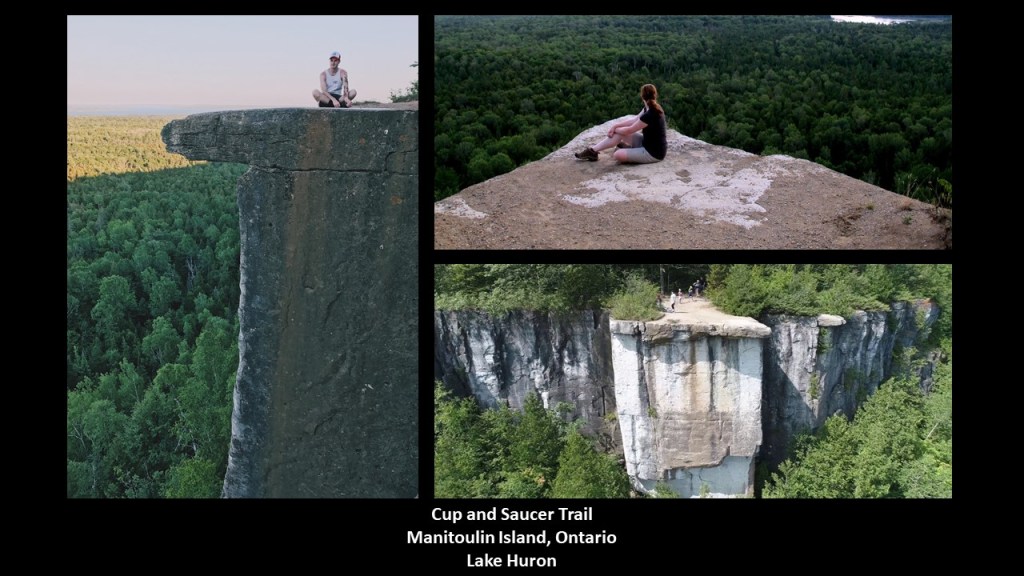
It reminded me of what is called Coffee Pot Rock in Sedona on the right, a great view of which I had out my bedroom window for two-years (I have recently moved).
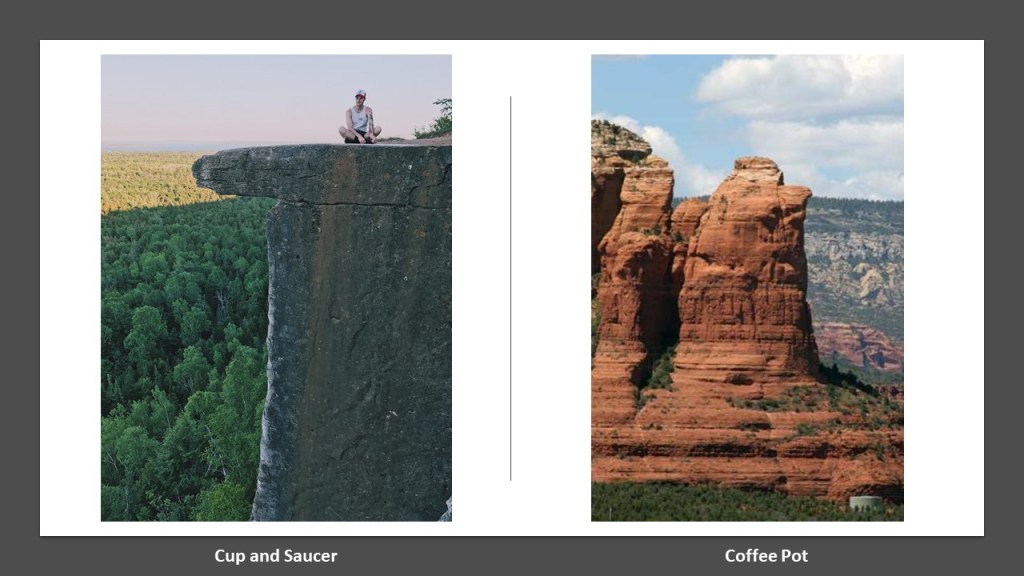
Here is a photo of the trail to Manitoulin Island’s Cup and Saucer formations on the left, at a place which looks like the previously-seen Giant City State Park in Makanda, Illinois.
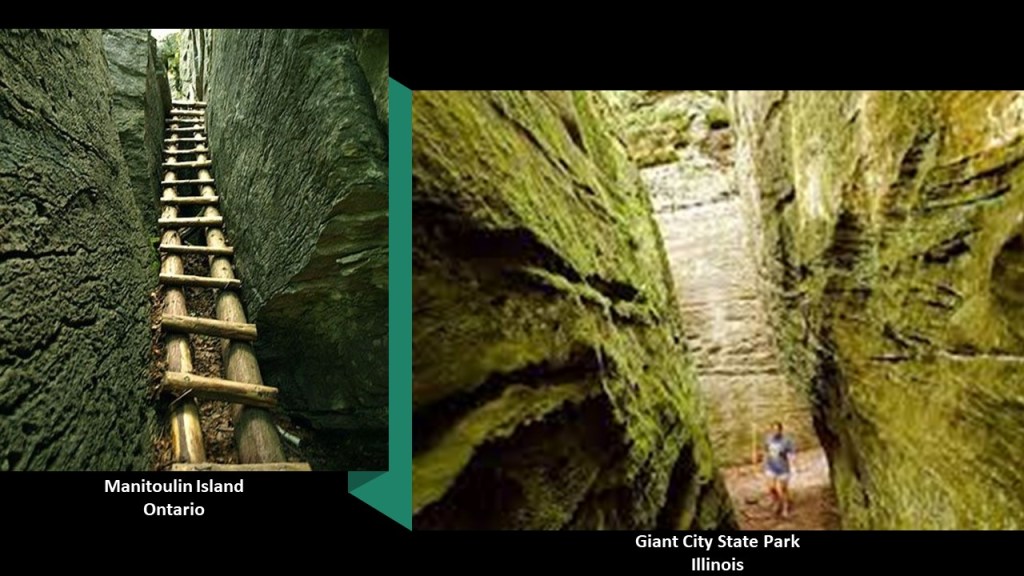
Bridal Veil Falls on Manitoulin Island is near the town of Kagawong.
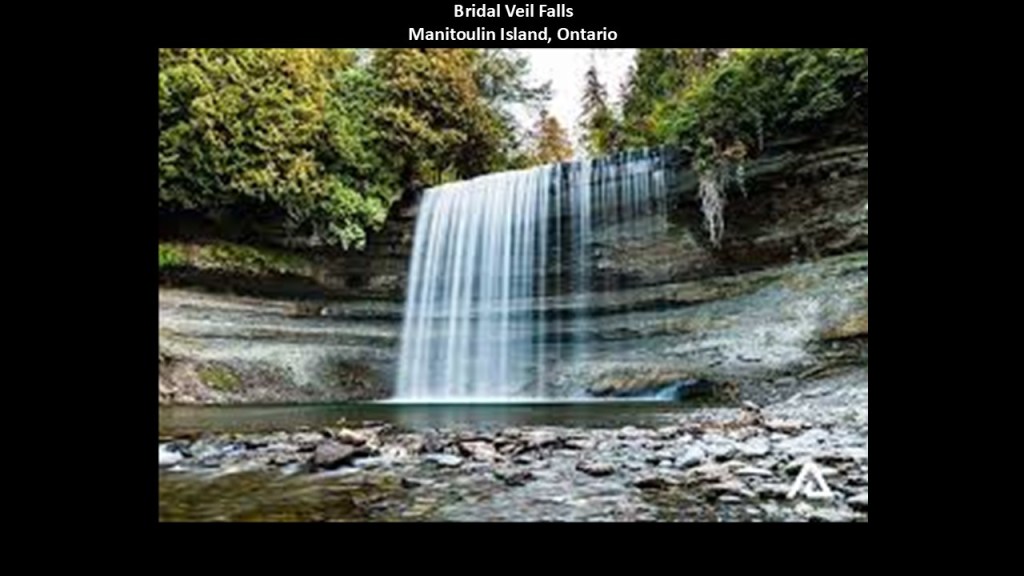
We are told its water source is the Kagawong River, which flows from Lake Kagawong to the North Channel of Lake Huron.
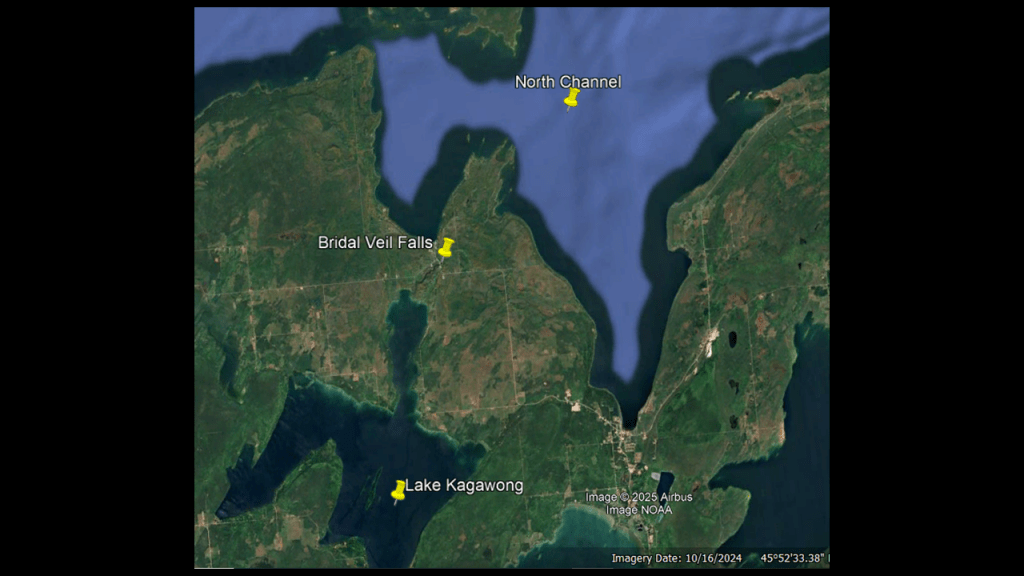
Whitefish Falls is located just off Ontario Highway 6 just north of Manitoulin Island.
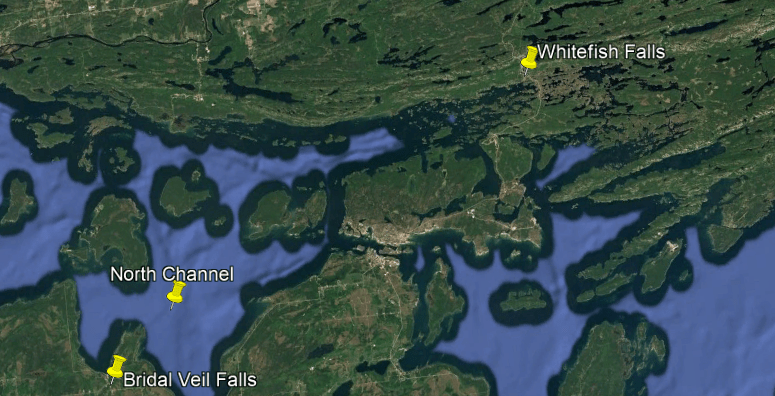
Whitefish Falls has a drop of 30-feet, or 9-meters.
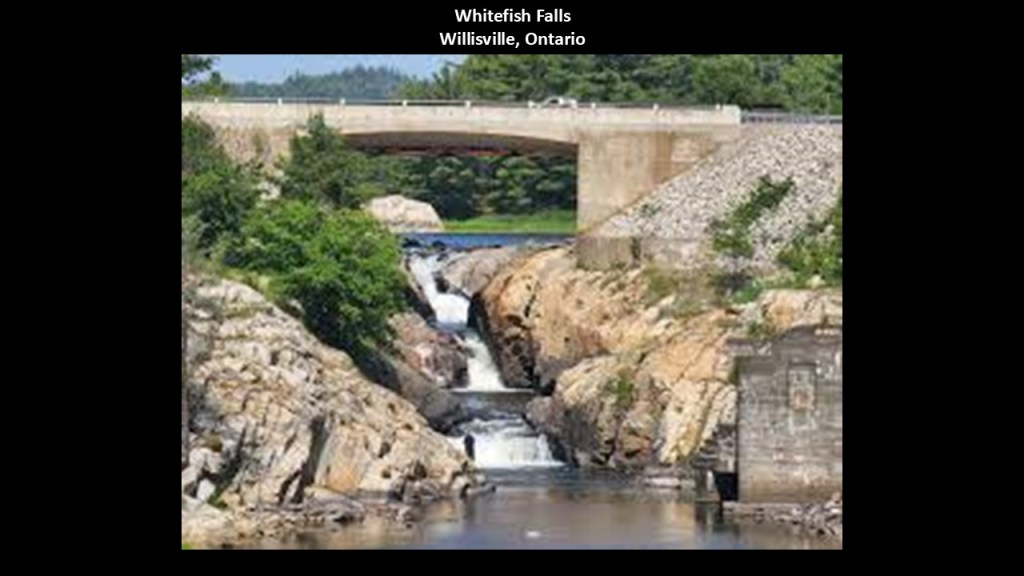
We are told there used to be a powerplant here, but there’s nothing left of it but ruins.
Next, Kennebec Falls.
We are told that one-hundred-years-ago, loggers sent their timber harvest down the Serpent River over Kennebec Falls to sawmills at the river’s mouth on Lake Huron.
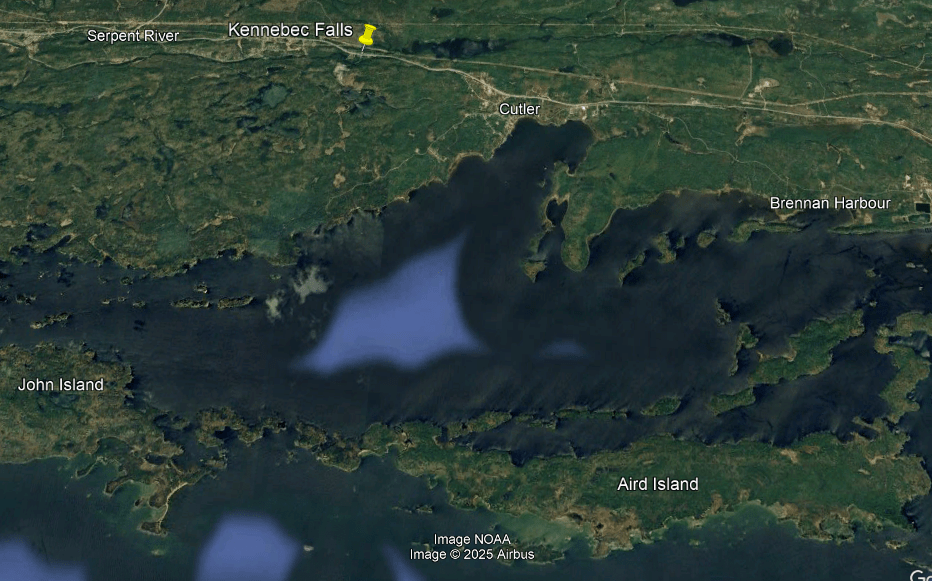
Even today there is a “run-of-the-river” hydroelectric power generation system at the waterfall that uses the natural flow of the river to produce electricity.
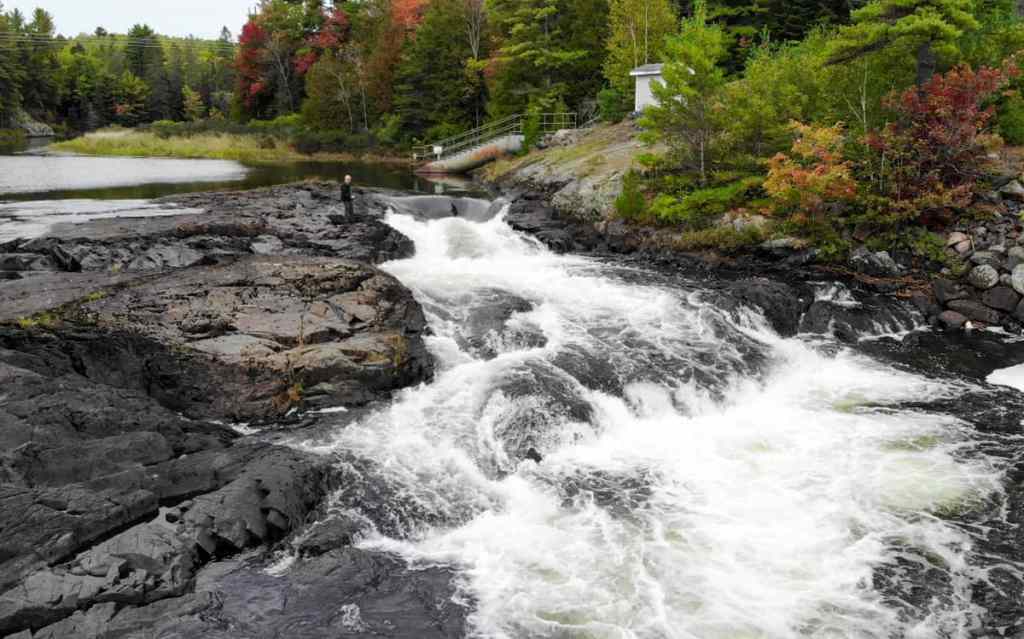
Cataract Falls are located to the west of Kennebec Falls.
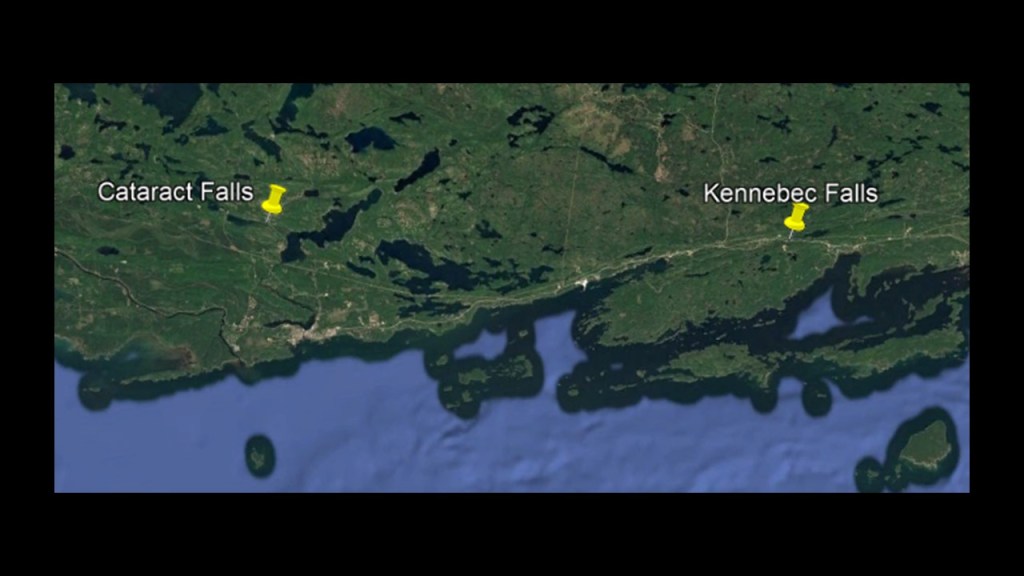
Cataract Falls are a long, low set of cascades on the Blind River about 656-feet, or 200-meters, upstream from the Ontario Highway 557 bridge located on the Crown Land.
The Huron Pines Golf & Country Club in the town of Blind River is noteworthy for being located near the water’s where the Mississagi River meets the North Channel of Lake Huron.
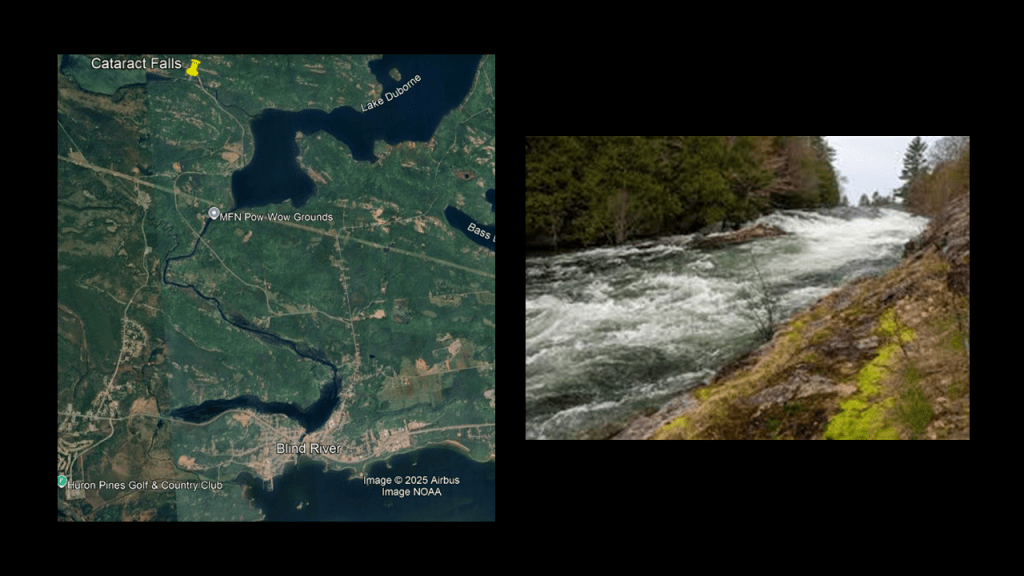
As we zoom out on the bigger picture of this part of what is considered northern Ontario, and north of where we were just looking, on the east-side of the Google Earth screenshot, we have Sudbury, Sturgeon Falls, and Lake Nipissing.
On west-side of it, we have Chippewa Falls, Upper and Lower Thessalon Falls, and Sault Ste. Marie.
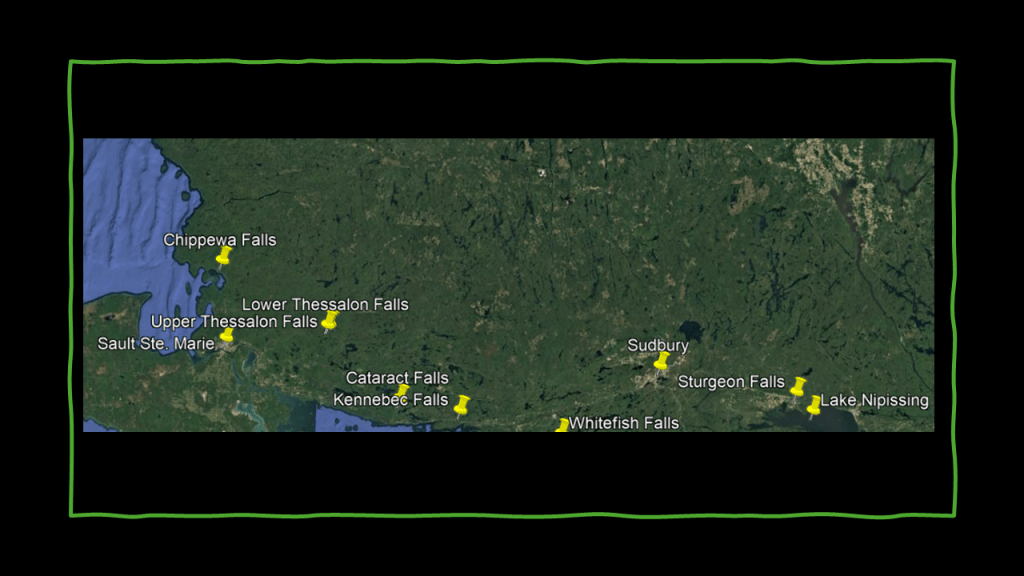
First, Sudbury.
Officially Greater Sudbury, it is the largest city in Northern Ontario, a geographic and administrative region of Ontario, but is administered as a Unitary authority, and not part of any district, county or regional municipality.
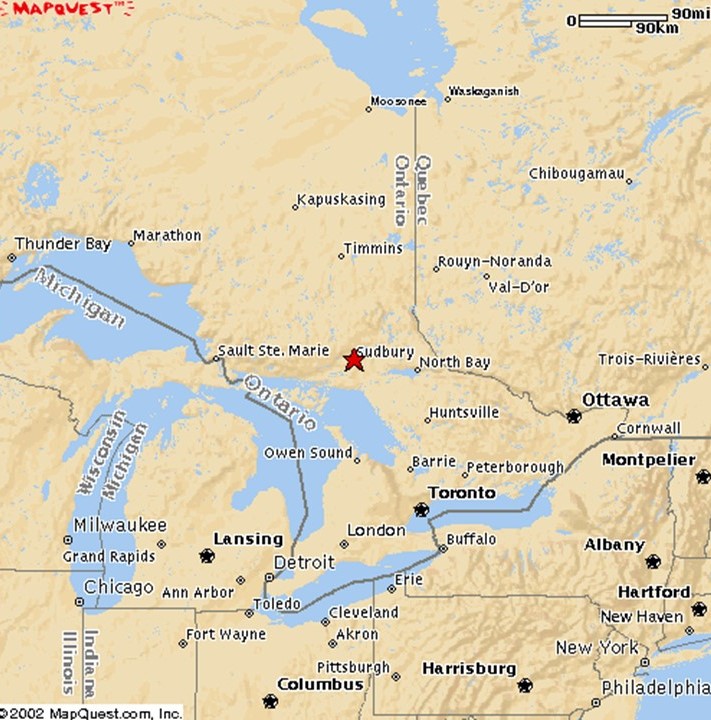
Prior to European settlement in our historical narrative, the Sudbury region was inhabited by the Ojibwe people for 9,000-years.
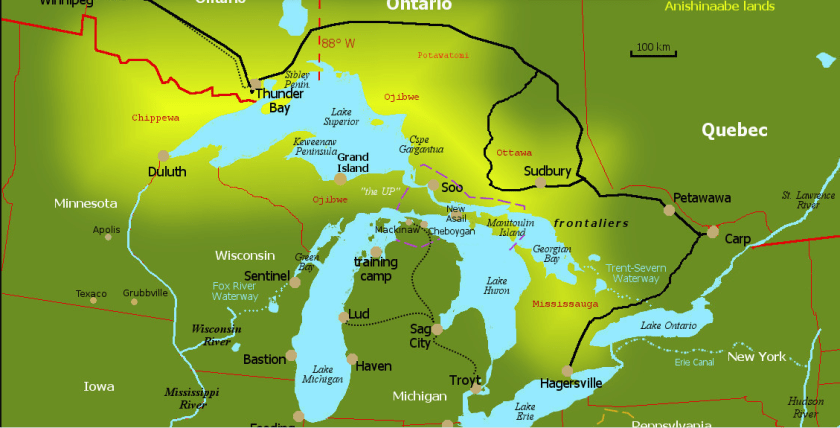
We are told a large tract of land, including what is now Sudbury, was signed over to the British Crown in 1850, by the local chiefs, as part of the Robinson-Huron Treaties.
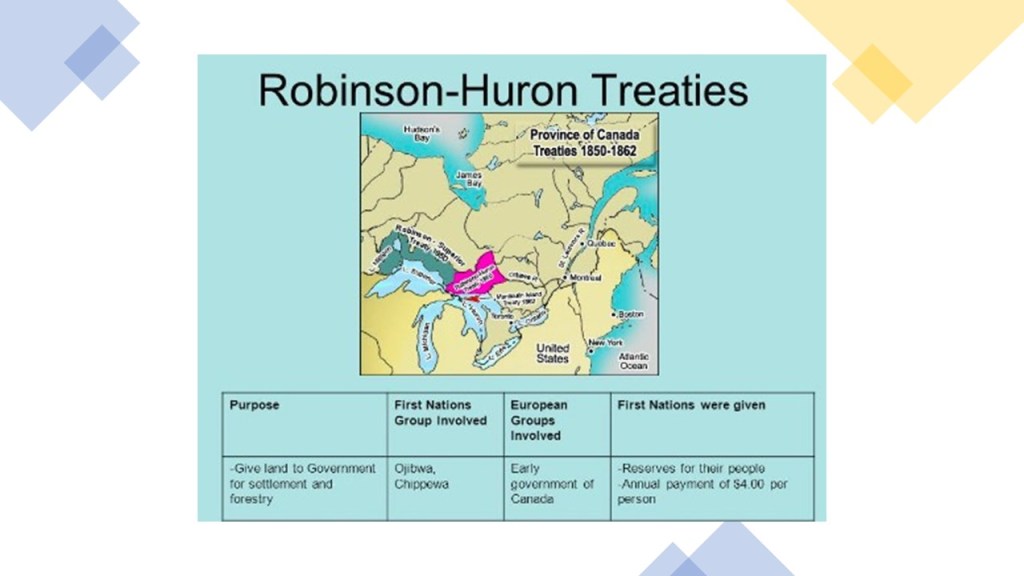
In return, the Crown pledged to pay an annuity to these First Nations people, originally set at $1.60 per treaty member, and it was last increased to $4 in 1874, where it is fixed to this day.
Reservations were also established as result of these Treaties.
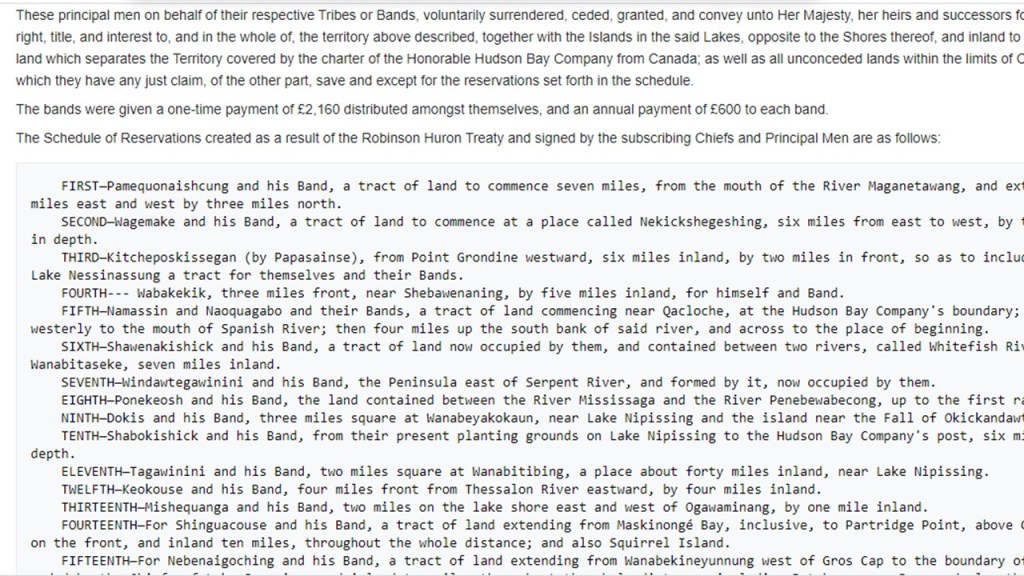
We are told nickel, and copper, ore was discovered in Sudbury in 1883, the same year as its founding, during the construction of the transcontinental railway.
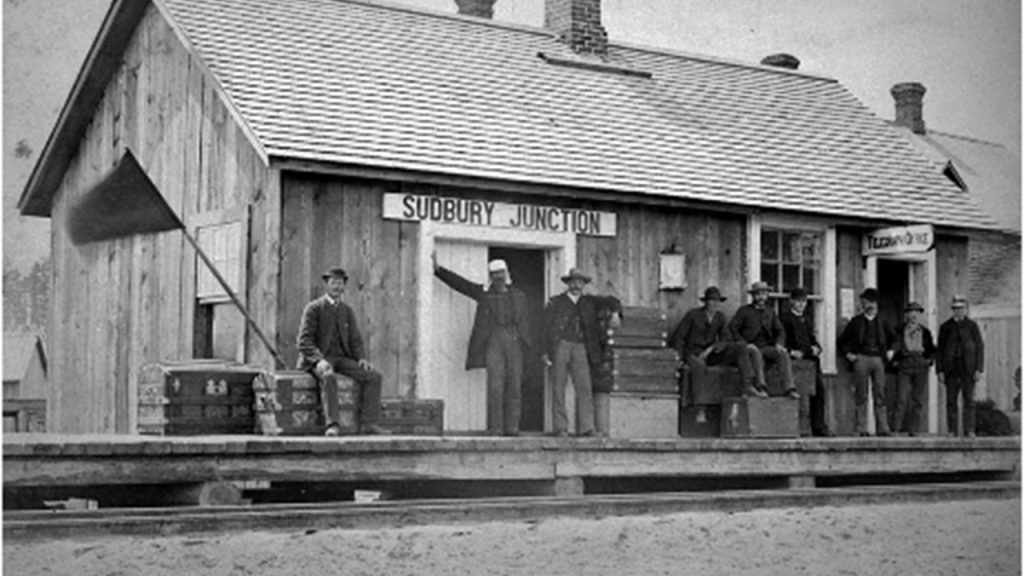
The Jesuits arrived here in 1883, the same year the railroad was coming through, and established the Sainte-Ann-des-Pins Mission.
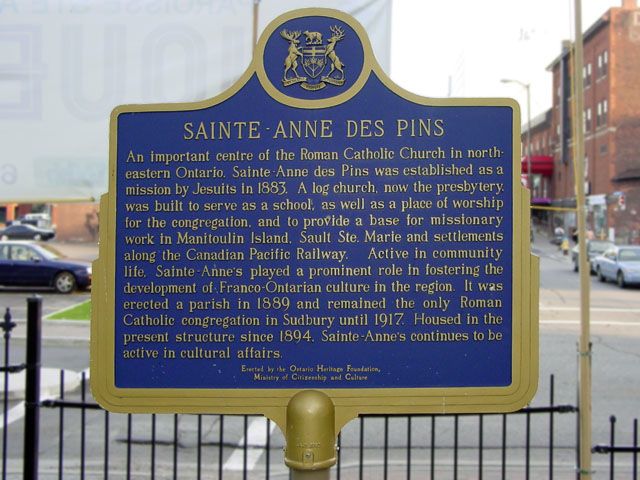
In its history, Sudbury has been a major world leader in nickel mining.
Mining and mining-related industries dominated the economy here for much of the 20th-century, and has expanded to emerge as the major retail, economic, health, and educational center for northeastern Ontario.
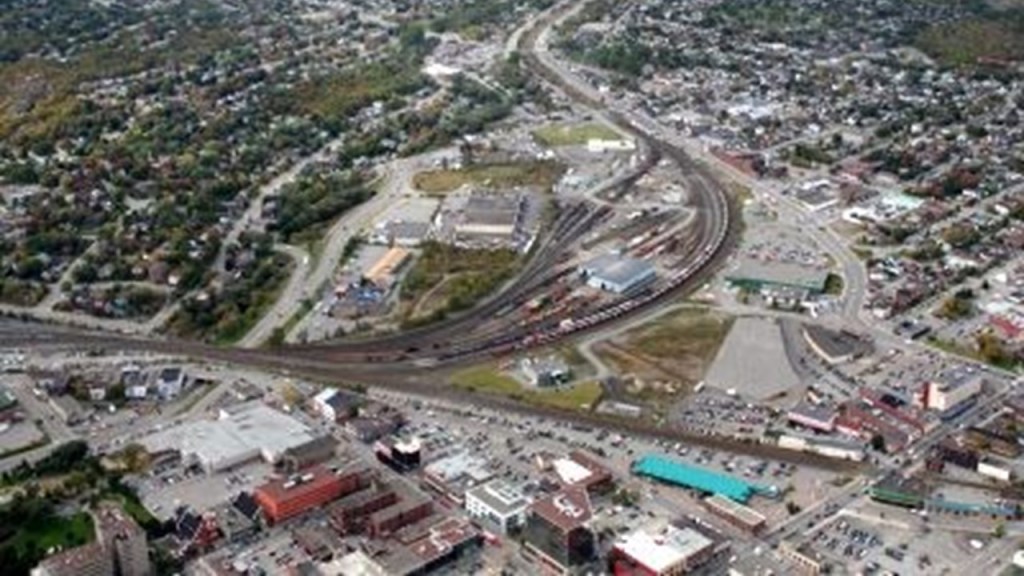
Next, Sturgeon Falls and Lake Nipissing.
Sturgeon Falls is a community in the Nipissing District of Ontario.
This is the Sturgeon River in Sturgeon Falls.
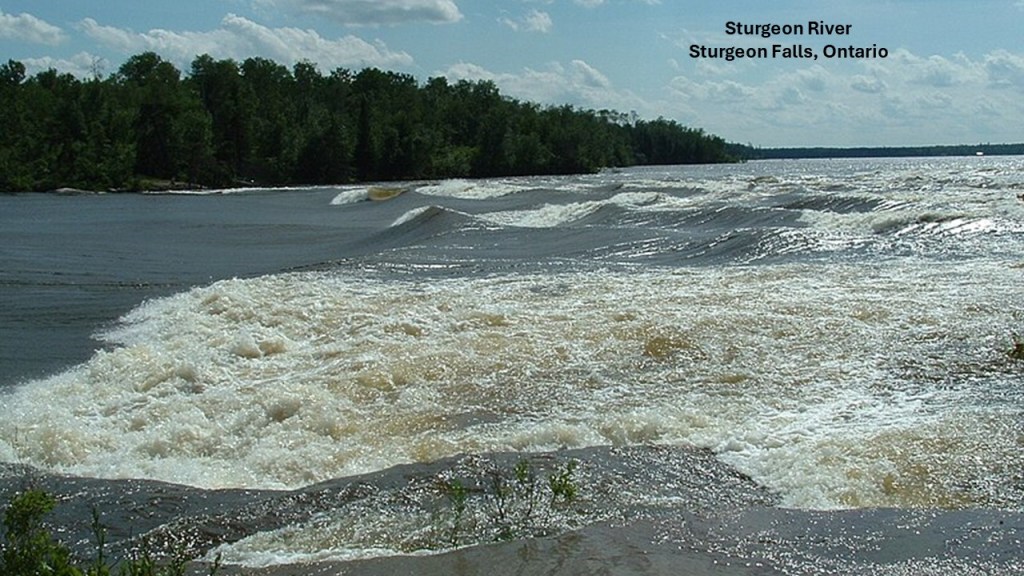
We are told the development of Sturgeon Falls began in 1881 with the construction of the Canadian Pacific Railway.
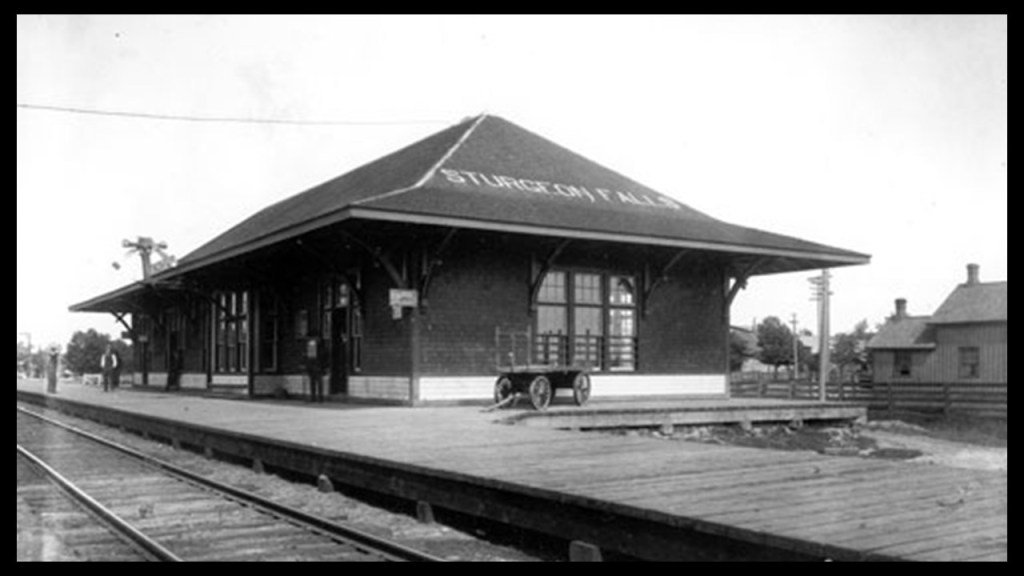
An Abitibi Power and Paper Company plant was established in Sturgeon Falls.
This company was originally founded in 1914, and was an important part of the Canadian newsprint industry in the first-half of the 20th-century.
Up until the time of its closure, the what had been the Abitibi mill was a primary employer for the community.
The mill in Sturgeon Falls closed in 2002 when it was owned by Weyerhauser, and its closure was controversial.
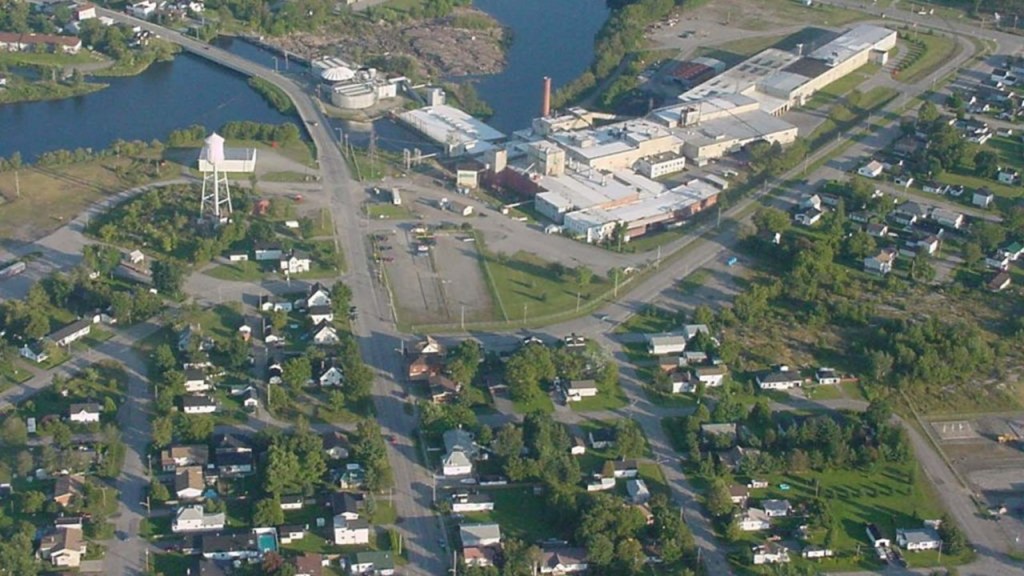
Next, Lake Nipissing is located between the Ottawa River and the Georgian Bay.
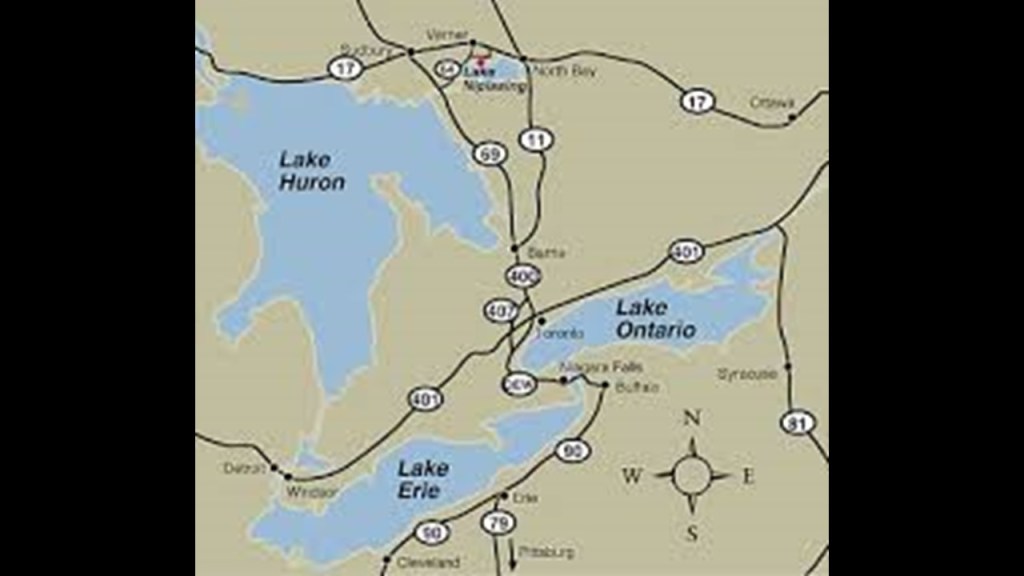
The third-largest lake entirely in Ontario, it is relatively shallow with an average depth of 15-feet or 4.5-meters, making for many sandbars along the shoreline.
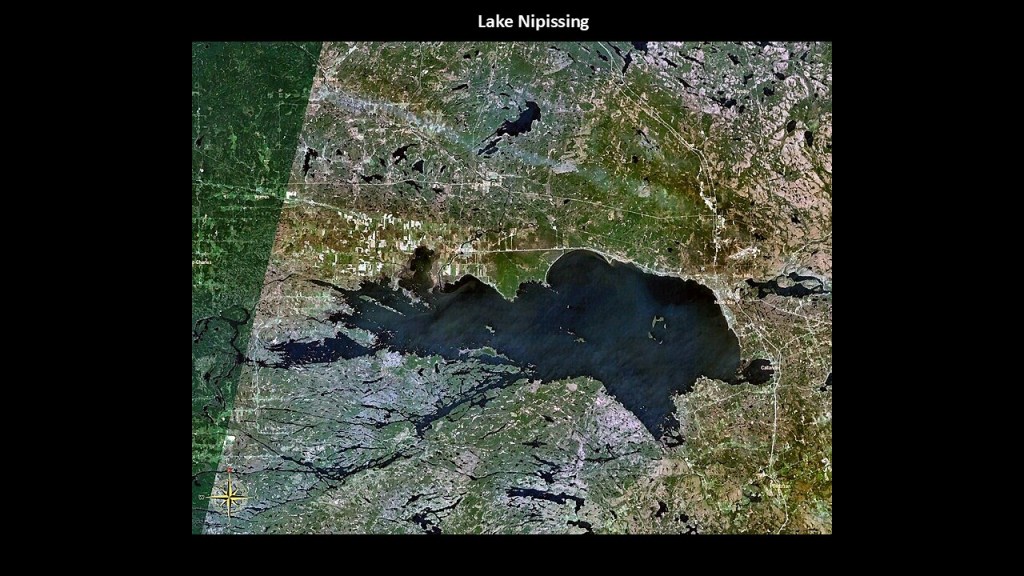
On the west-side of the screenshot, we have Chippewa Falls, Upper and Lower Thessalon Falls, and Sault Ste. Marie.
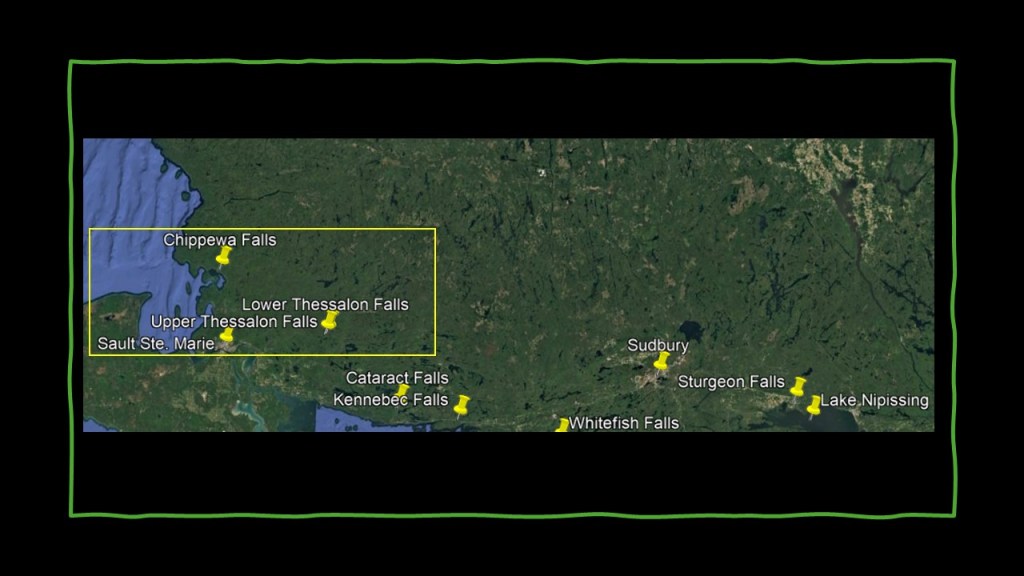
First, Chippewa Falls.
Chippewa Falls is about 55-miles, or 88-kilometers, north of Sault Ste. Marie, Ontario, on Trans-Canada Ontario Highway 17, and is the halfway-point of the Trans-Canada Highway.
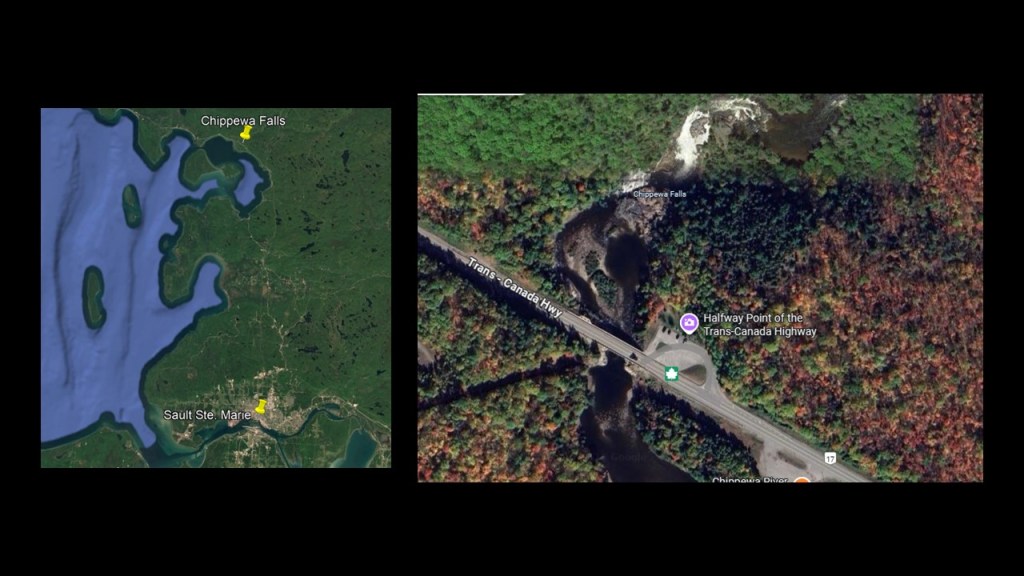
Chippewa Falls is a series of powerful cascades that drop over 82-feet or 25-feet.
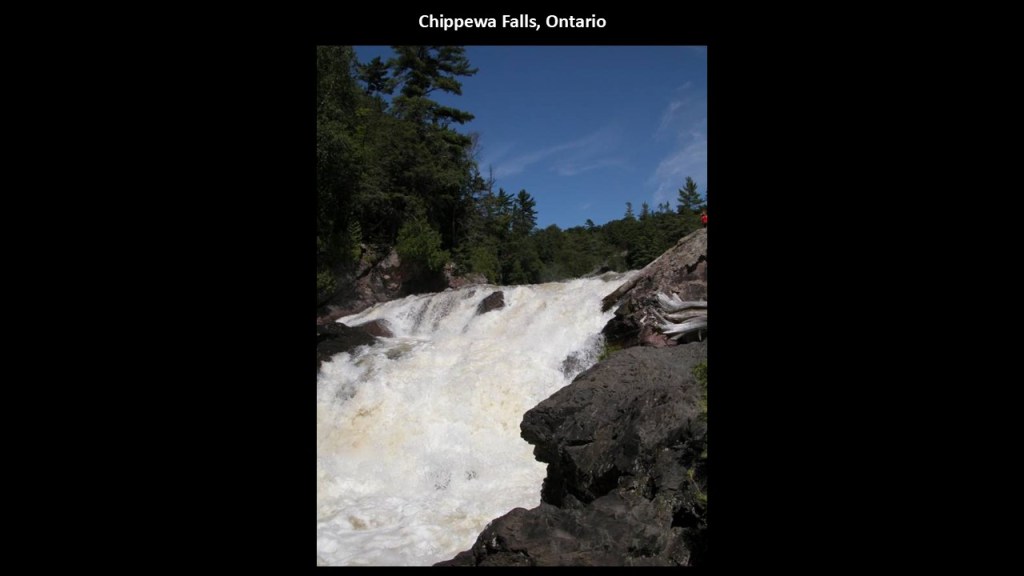
The Upper and Lower Thessalon Falls are to the northeast of Sault Ste. Marie.
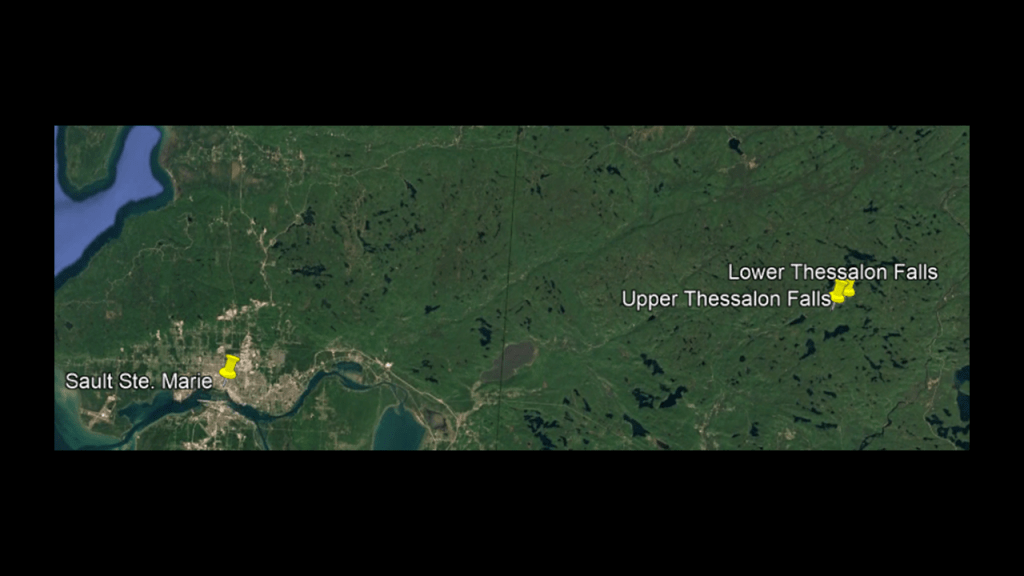
The Upper Thessalon Falls is the upper of two waterfalls on the Thessalon River between Carpenter Lake and Slide Lake.
These waterfalls consist of a big drop of 16-feet or 5-meters, and smaller cascades below.
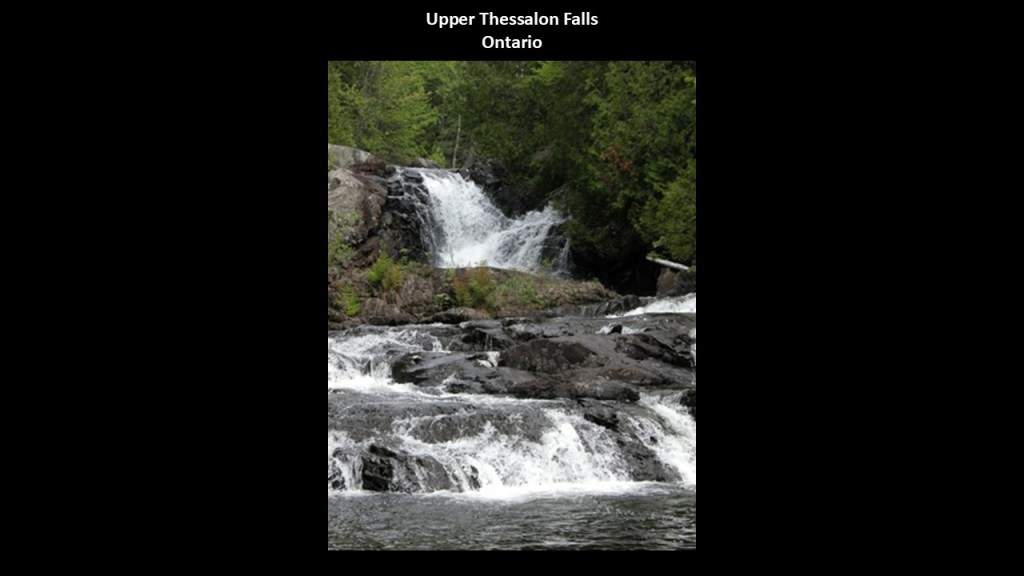
At the location of the Lower Thessalon Falls, the river drops about 26-feet, or 8-meters, in two distinct parts, before the river turns 45-degrees to the left, and drops down a steeper slide into a narrow gorge.
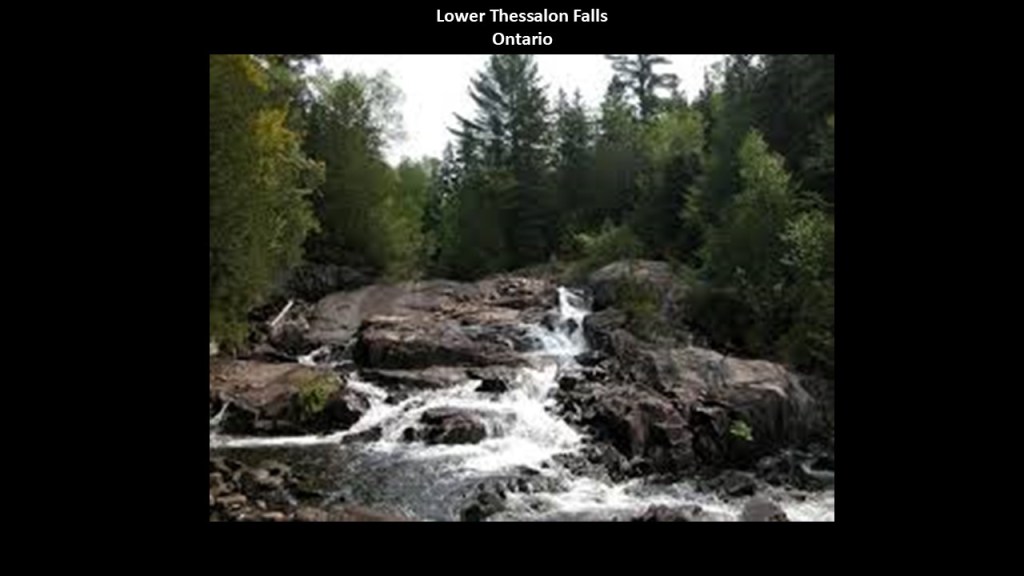
Sault Ste. Marie is the location of the Soo Locks, the largest waterway traffic system on Earth, and are called the “Linchpin of the Great Lakes,” allowing ships to travel between Lake Superior and the lower Great Lakes.
Lake Superior meets Lake Huron with a 21-foot, or 6.5-meter, drop in elevation.
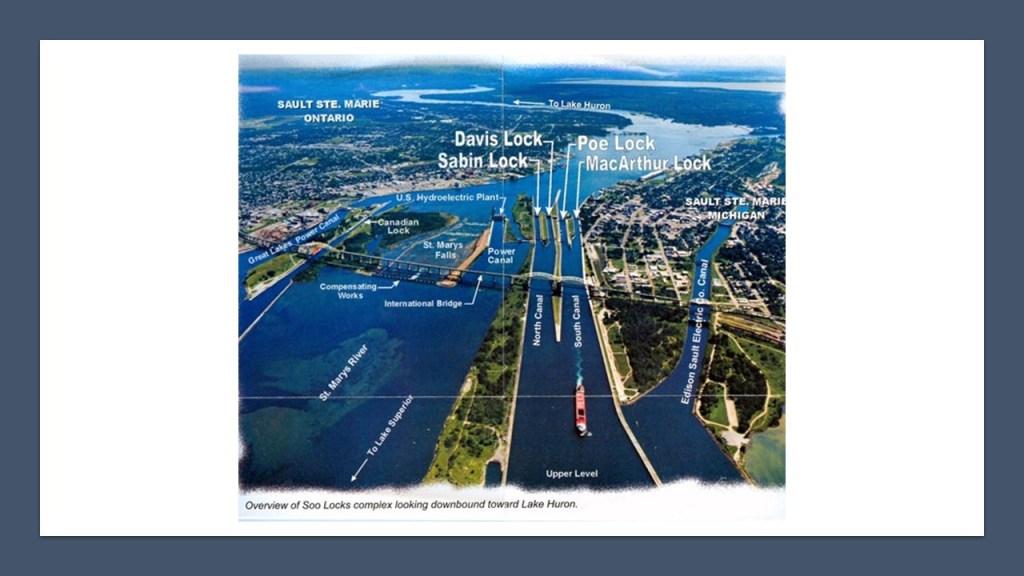
The city of Sault Ste. Marie was said to have been founded by the French Jesuit missionary, Father Jacques Marquette, in 1668. It was said to be named for both the “Sault,” the name given to the St. Mary’s River rapids, and the Virgin Mary, and called the first European city in the Great Lakes Region.
Sault Ste. Marie was one city until the border between the United States and Canada was established at the St. Mary’s River in a treaty after the War of 1812, creating Sault Ste. Marie, Michigan, and Sault Ste. Marie Ontario, and on both sides of the river, the area is referred to as “The Soo.”
Sault Ste. Marie is the oldest city in Michigan, and said to be the third-oldest city in the United States.
The main course of the St. Mary’s River, starts at Whitefish Bay at the eastern end of Lake Superior, and flows 74.5-miles, or 119.9-kilometers, southeast around Sugar Island into Lake Huron.
The St. Mary’s River also has what is called a branch going into what is called Lake Nicolet on the other side of Sugar Island.
Here is a close-up of what it looks like heading in that direction, including a golf course right next to the St. Mary’s River.
Brady Park is situated to the east of the Soo Locks on the St. Mary’s River waterfront.

What is Brady Park today is located on the grounds of the Old Fort Brady. …Here we find an obelisk said to have been designed by Charles McKim, of what is called the renowned New York architecture firm McKim, Mead, and White, to commemorate the 50th-Anniversary of the Soo Locks…This obelisk is situated on top of a triangular-looking earthwork, as seen here from Google Earth streetview.
This colossal stone is on the earthwork as well, near the obelisk, said to commemorate the location of what we are told was the French Fort Repentigny, said to have been established in 1750, and captured by the British in 1760 during the French and Indian War, and burned down and abandoned in 1762.
The original St. Mary’s Church was said to have been started by the Jesuits in 1668, and the current St. Mary’s Church is now called the St. Mary Proto-Cathedral, with this building said to have been erected in 1881.
This is the third-oldest Roman Catholic parish in the United States after St. Augustine, Florida, and Santa Fe, New Mexico.
An Irish-Canadian architect by the name of Joseph Connelly is given the credit in our historical narrative for the design of it.

Edison Sault Electric Company Canal on the Michigan-side, also known as the Edison Sault Power Canal, supplies the St. Mary’s Falls Hydropower Plant, an 18-MW, with capacity up to 30-MW, hydroelectric generating plant.

Made from sandstone masonry, it was said to have been built under the supervision of the U. S. Army Corps of Engineers, starting in 1898, with operation starting in 1902, and is one of the oldest, continuously-operating power plants in North America.
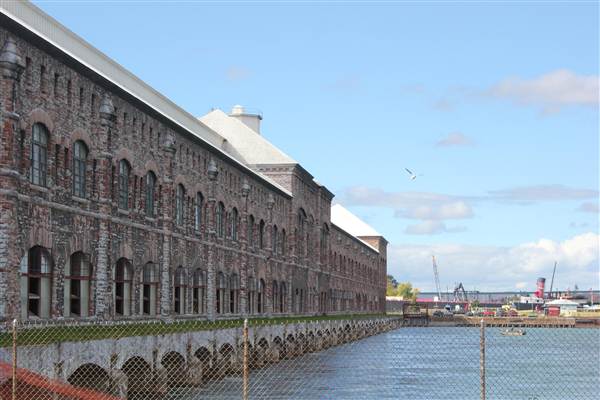
Just want to point out the doors in the middle of the building, above ground level. Seems to be an odd location for a full-size set of doors.
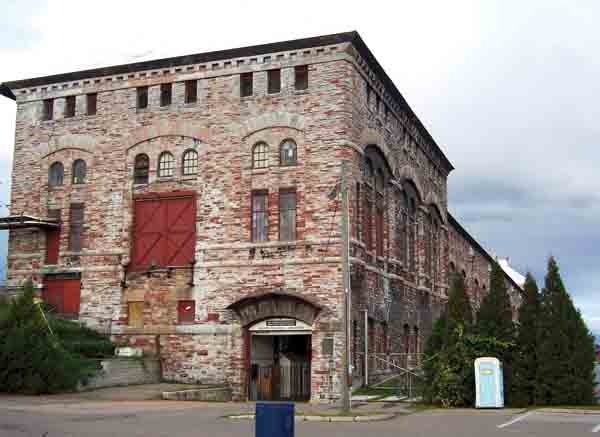
The water velocity of the power canal varies at times but can be up to 7-mph, or 11-kph, with the entrance being controlled by four steel headgates.
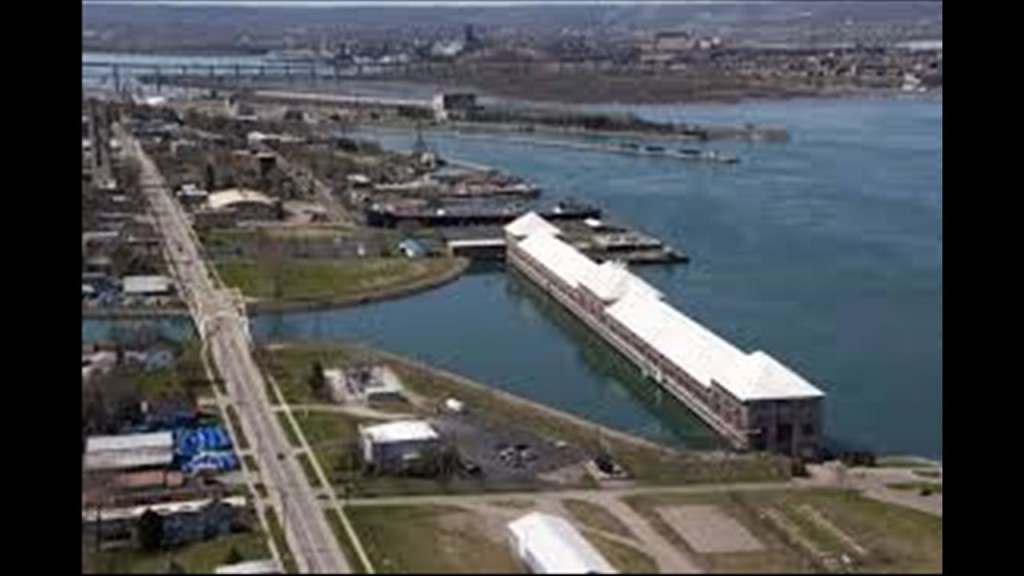
Moving across the graphic, the next place at which to look are the Soo Locks.
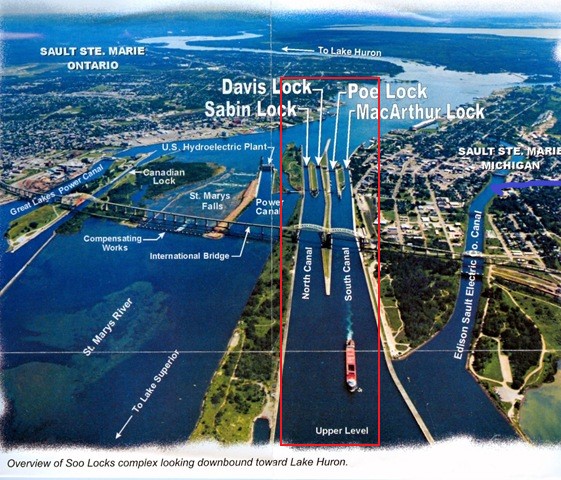
The Soo Locks are considered a wonder of engineering and human ingenuity.
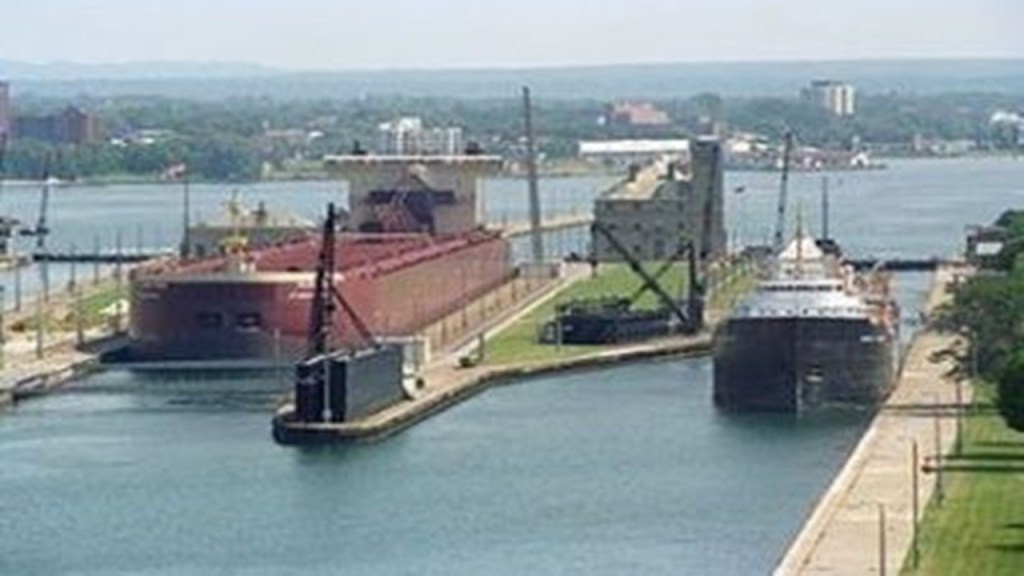
They by-pass the rapids of St. Mary’s River, and the river drops 21-feet, or 6.5-meters, over hard red sandstone in a short 3/4-mile, or 1.2-kilometer, stretch.
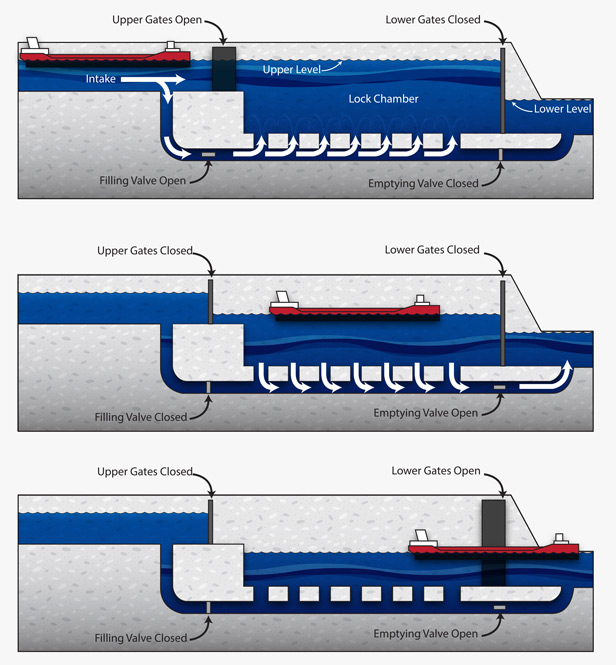
The first locks were said to have been built here in 1855, and operated by the State of Michigan until transferred to the U. S. Army Corps of Engineers in 1881, who own, maintain, and operate the St. Mary’s Falls Canal, within which the locks are located.
In the South Canal, the smaller MacArthur Lock was said to have been built in 1942, and the wider Poe Lock in 1896.

The two buildings seen here, the larger one beside the MacArthur Lock, and the smaller one beside the Poe Lock have all the hallmark features of the heavy masonry architecture of the advanced, ancient Moorish civilization that we’ve already seen many examples of in the Great Lakes region.
In the North Canal, the Davis Lock, said to have been built in 1919, is used infrequently for light freighters, tour boats, and small craft when the traffic warrants, and the Sabin Lock, said to have been built in 1914, is no longer in use.
There are two hydroelectric powerhouses next to the Soo Locks, together generating 18.4-MW for the Soo Locks complex.
In the next place in the graphic, I will start at the Sault Ste. Marie International Bridgr between the United States and Canada, which permits vehicular traffic to pass over the locks.
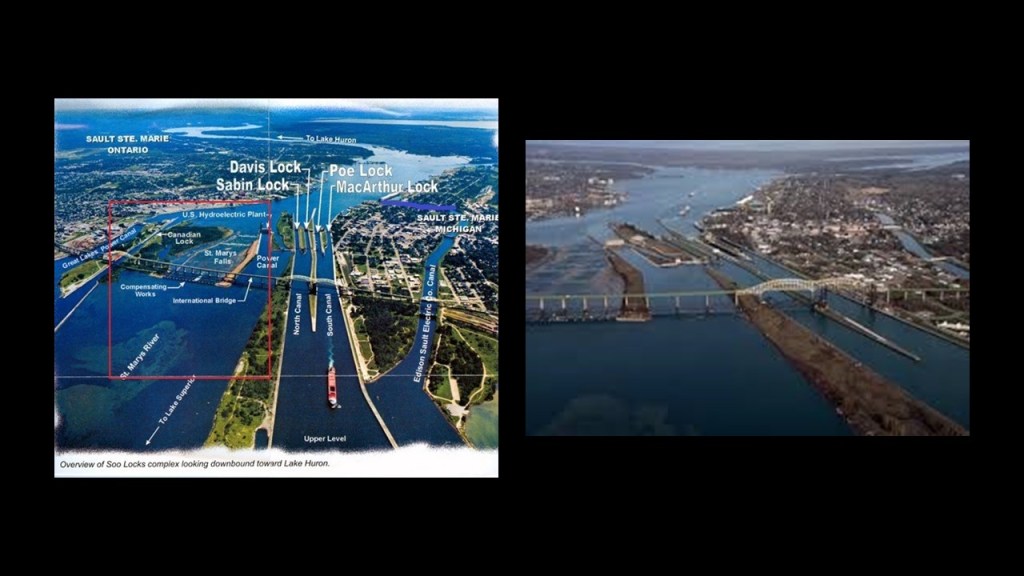
It is the northern terminus of I-75, which goes all the way to Miami, Florida.
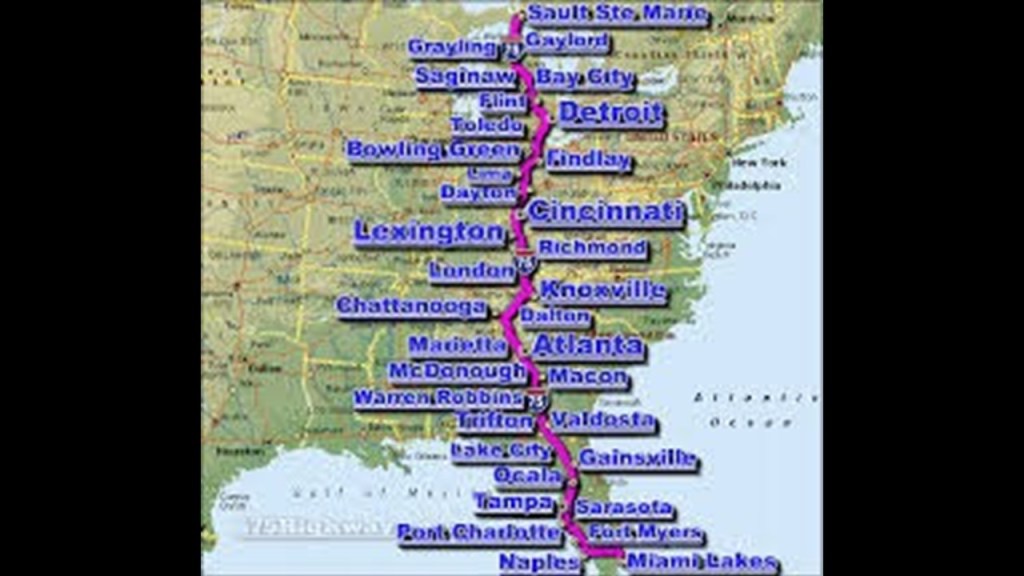
The Sault Ste. Marie International Railroad bridge runs adjacent to the International Bridge, and was said to have been built in 1887.
It has a vertical lift bridge and swing bridge features as well, which are really sophisticated engineering feats!
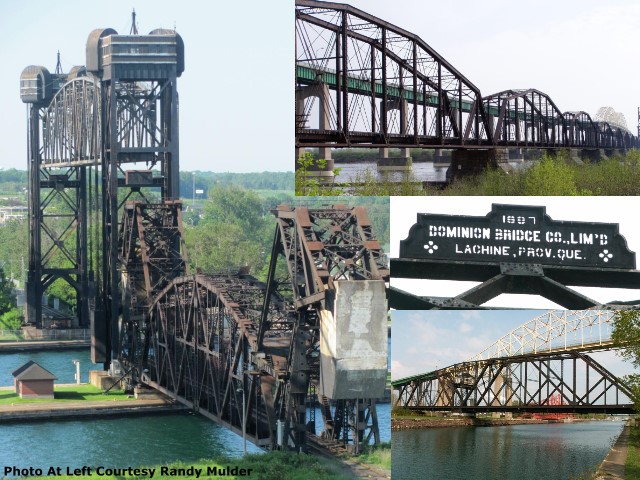
Next are the St. Mary’s Falls, of which the International boundary goes through the middle.
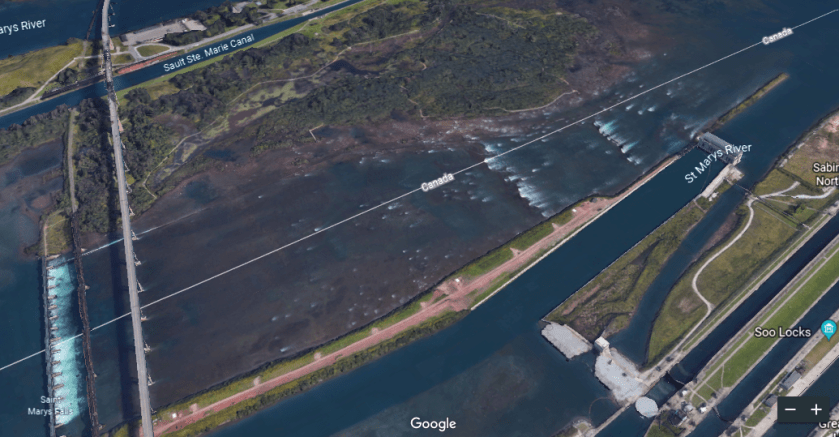
In the right foreground of this photo, in front of the International Bridges, is what are known as the Compensating Works.
They consist of 17 piers and concrete aprons bearing on sandstone bedrock. Piers 1 – 9 are in Canada, and Piers 10 – 17 are in the United States. These were said to have been constructed between 1913 and 1919 (with World War I occurring between 1914 and 1918), and has an extremely sophisticated sluice gate and gate machinery system.
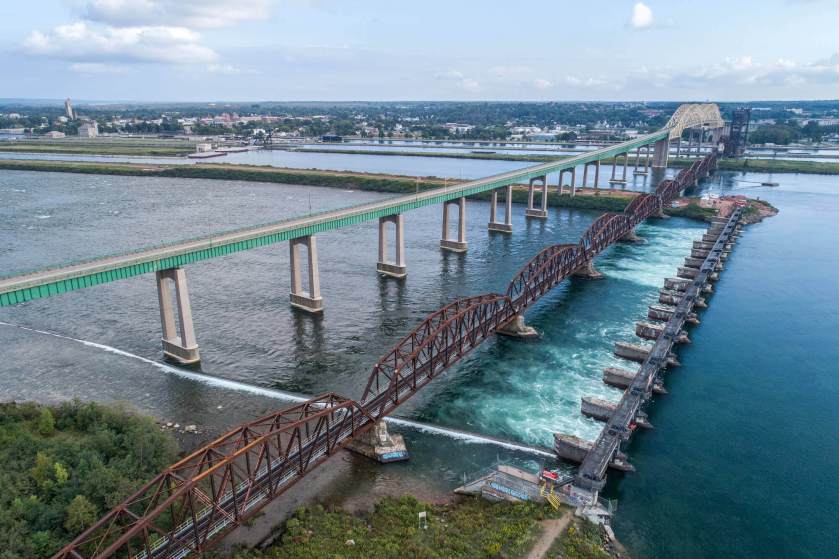
The Sault Ste. Marie Canal is in Canada, on the other side of the St. Mary’s Falls and Compensating Works.
It is a National Historic Site, and part of the National Park System of Canada.
The date of a lock here is said to go back to 1798, with its destruction in 1814 in an attack by U. S. forces in the War of 1812, and what is here presently was said to have been constructed in 1895.
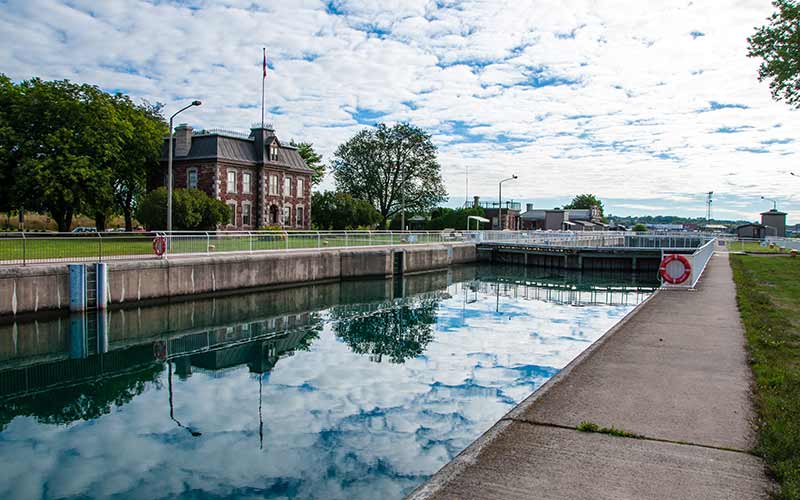
This is said to be depicting the upper entrance to the Sault Ste. Marie canal in 1857.
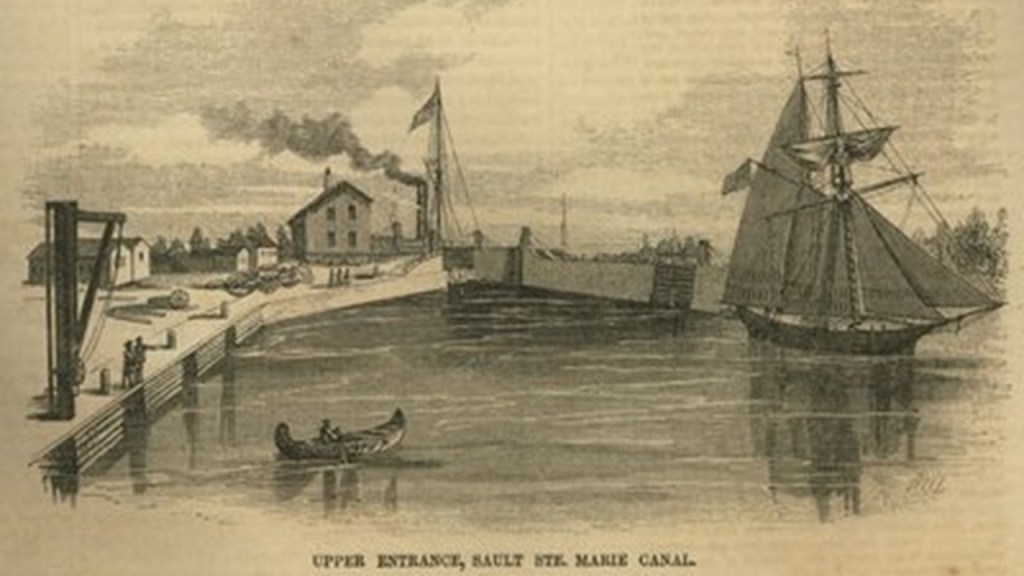
Next on the graphic is the Great Lakes Power Canal and the Ontario side of Sault Ste. Marie.
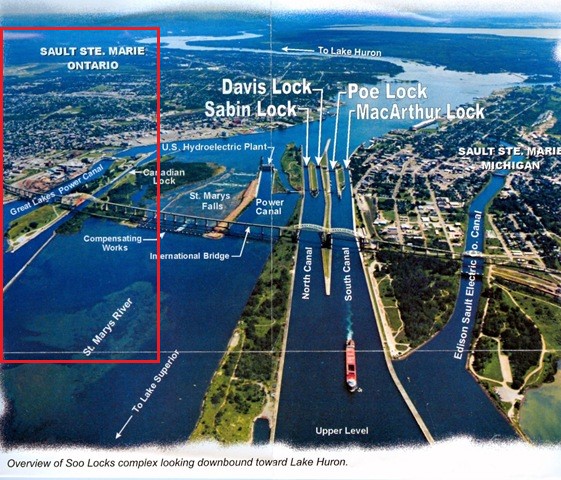
Great Lakes Power was established in the early 1900s by Francis H. Clergue.
Francis H. Clergue was an American businessman who became the leading industrialist of Sault Ste. Marie, Canada, in the late 1800s and early 1900s, who was also credited with the establishment of other industrial companies like the Sault Ste. Marie Pulp and Paper Company in 1895; the Algoma Steel Company in 1902, and bringing the Algoma Central Railway on-line through here as well, from when we are told it was first-chartered in 1899.
There’s always more, but there’s plenty here to give you the idea.

The River of History Museum is in downtown Sault Ste. Marie, Michigan.
Among other things, we find out at the River of History Museum that St. Mary’s River is 8,000-years-old, and “born out of the trauma of this land as it buckled and ruptured, and gave way amidst thunderous sound and gigantic force – carved and formed by nature’s relentless sculptor – the glacier. So, let’s take a look at what this violently-formed, nature-carved river looks like..
Before the St. Mary’s River even comes to the Lock Systems, from the direction of Lake Superior, this is what the shore-line looks like on the Ontario-side, with points and straight-edges.

There’s even another canal going up into the city as pointed out by the arrows, with the last arrow showing where it looks like the canal was cut-off and drained.

With regards to the River of History Museum in Sault Ste. Marie and other museums, they are performing exactly the same function in our culture as the great Expositions, Exhibitions and World’s Fairs that dominated the mid-19th-century through the mid-20th-century.
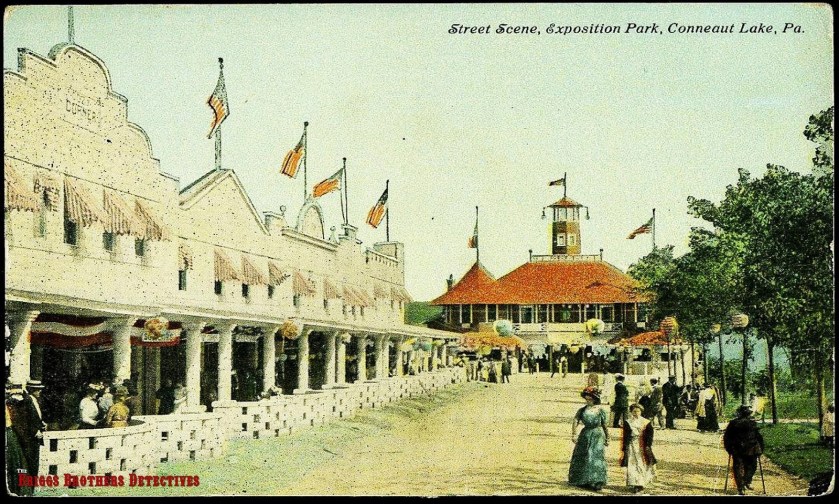
One of the definitions of the word exposition is a device used to give background information to the audience about the setting and characters of the story.
Exposition is used in television programs, movies, literature, plays and even music.

What better way to tell your audience the story you want them to believe than the other definition of exposition, a large exhibition of art or trade goods, which would include settings like museums.
They were needed to set-up the new historical narrative for the reset to explain, among other things, how everything came into existence, and the fabricated narrative about the original people being hunter-gatherers with no civilization instead of the advanced Master Builders of a completely-integrated worldwide civilzation.
I belive the original order of society was turned upside-down by a deliberately-caused cataclysmic event that destroyed the Earth’s original energy grid, and we have been the subjects of a vast human and social engineering project, not for our best interest but that of other beings.
It makes much more sense to view our true history from the perspective that Humanity was on a much more advanced civilization and timeline than we have been taught.
Most of the beautiful legacy of the Human Race has been destroyed, and we have been completely kept in the dark about it.
As we go through the information available to find along the way, I will continue to show you exactly why I believe the Great Lakes were formed by the outflow of the waterfalls of the region after the deliberate destruction of the energy grid, which subsequently destroyed the surface of the Earth.
I think there was a highly-sophisticated and highly-controlled hydrological and electrical system throughout the Great Lakes Region as we saw with the examples of the hydrological powerhouses in The Soo region, and we will see again in more depth as I go through the Niagara Region in my next video on Lake Ontario.
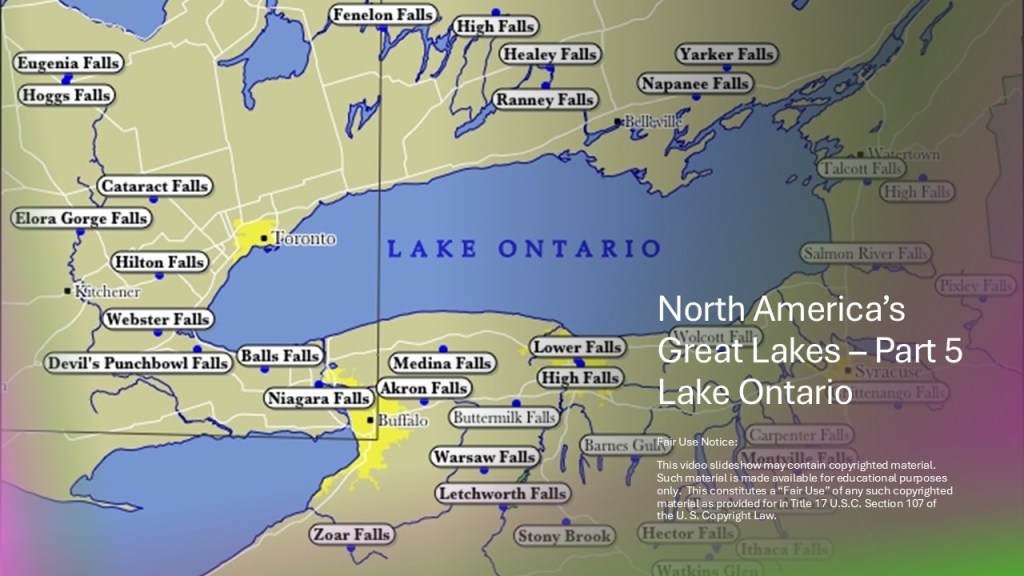
The definition of Statistical Significance is a determination that a relationship between two or more variables is caused by something other than chance.

The definition of random includes, among others, “lacking a definite plan, purpose, or pattern.’
Our historical narrative wamts us to believe that all of the Earth’s infrastructure came into existence as a result of random factors, like some guy in the past bought the land upon which _________________ eventually became a large city.
There is no mystery in my mind as to who and what we are looking at.
Nothing is random about it.
The evidence for a highly advanced worldwide civilization is literally right in front of our eyes.
We just have to interpret everything in a completely different manner than what we have always been taught to believe, and to do that we have to let go of everything we have ever believed to be true about our world.
Once one is able to do that, there is an incredible amount of new information just waiting to come into our awareness.
What I have shared here barely even scratches the surface of what is available to find when looking with new eyes.


 Revealing What Has Been Hidden in Front of Our Eyes