
I am going to be taking a close look in this post at the Strait of Messina, particularly the narrowest point between the eastern tip of Sicily, and the western tip of Calabria in Italy; in Sicily, the city of Messina, Mount Etna, one of the most active volcanos in the world; Catania, a city that lies at the foot of Mount Etna on the Sicilian coast; and Valletta, and capital of the island Republic of Malta.
The research in this post came from a 23-part series called “Sacred Geometry, Ley Lines & Places in Alignment” that I did back in 2020 tracking a long-distance alignment of cities and places that started in San Francisco.
I have been showcasing parts of this series in-between work I am doing on another project that is taking me longer to complete.
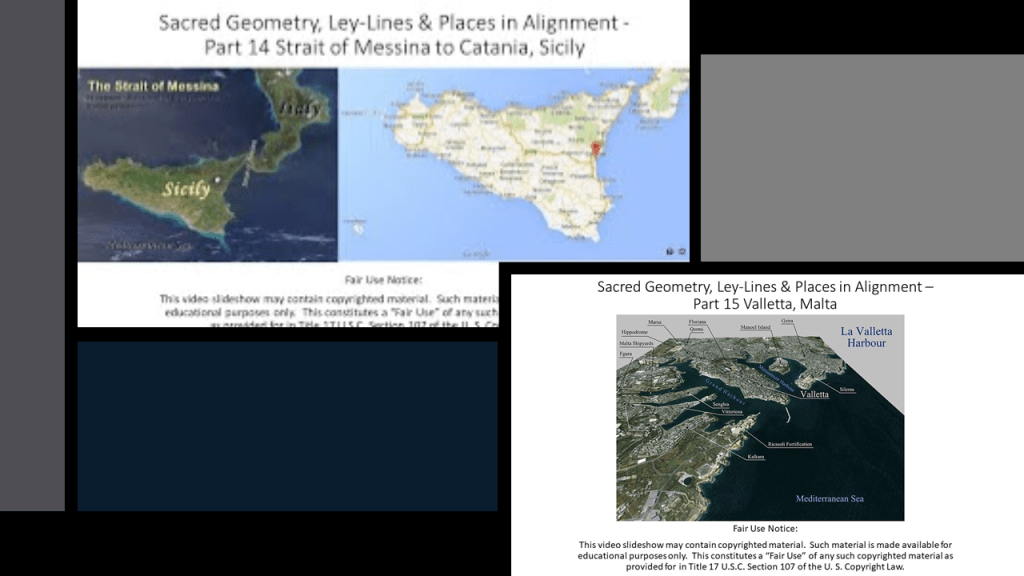
So far from the original 2020 series, I have posted ” The Ancient Advanced Civilization in Southeast Asia – From Manila in the Philippines to Dhaka in Bangladesh” and “The Ancient Advanced Civilization in Armenia, Anatolia & the Aegean Sea.”
From the process of tracking cities and places in several different alignments over the years, I have collected a variety of puzzle pieces about different places that bring a bigger picture into focus that is not immediately apparent on the surface from this type of geographically-focused research.
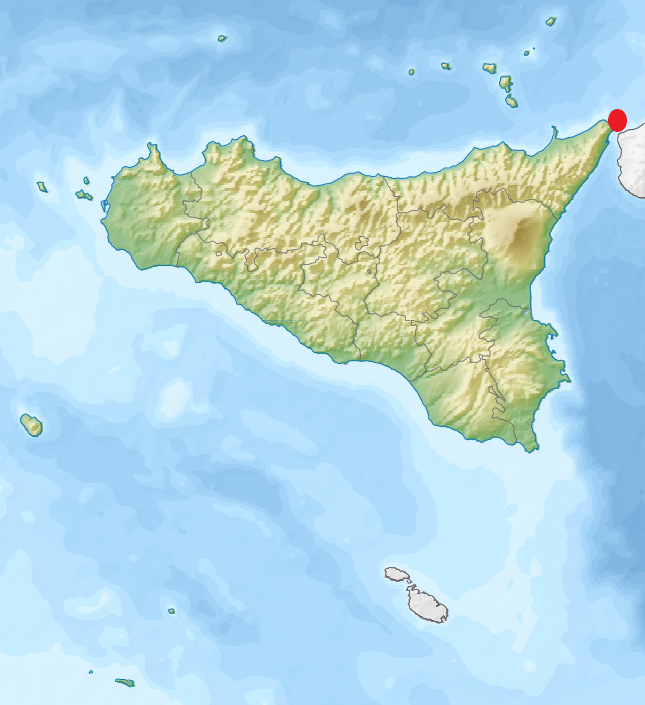
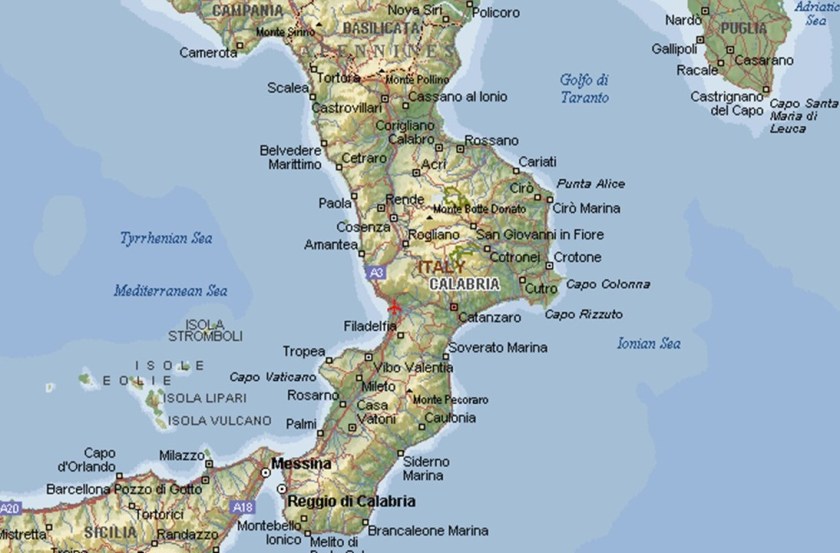
I am starting on the alignment at the Strait of Messina, a narrow strait between the eastern tip of Sicily and the western tip of Calabria in Italy.

The narrowest point of the Strait of Messina is between the Punta del Faro in Sicily…
…and the Punta Pezzo in Villa San Giovanni in Italy’s Calabria region.
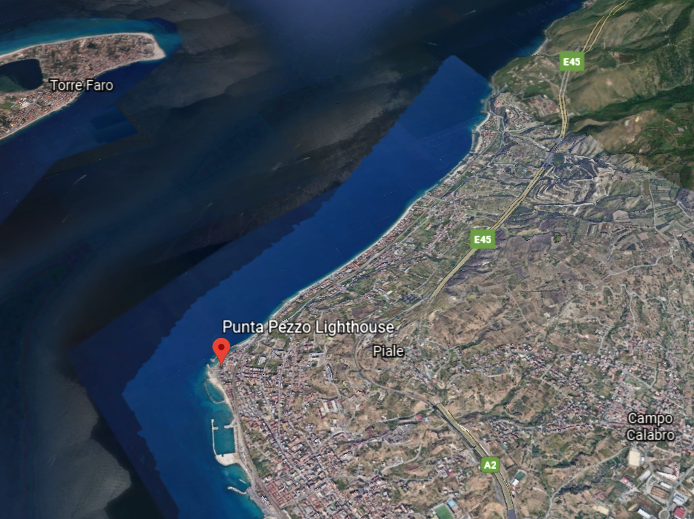
Punta del Faro in Sicily, located northeast of Messina, has a lot going on in a small space.
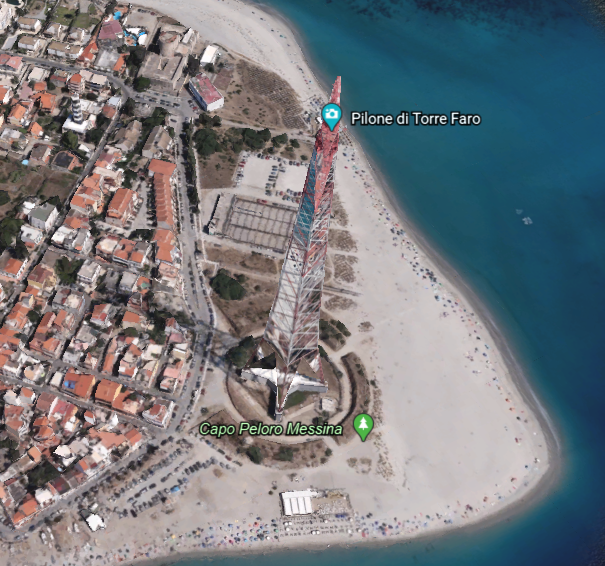
Let’s start with the Torre Faro Pylon.
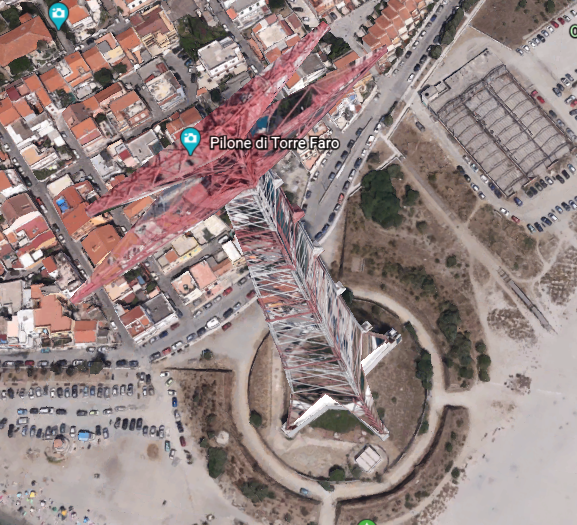
The Torre Faro pylon is one of two free-standing steel towers…
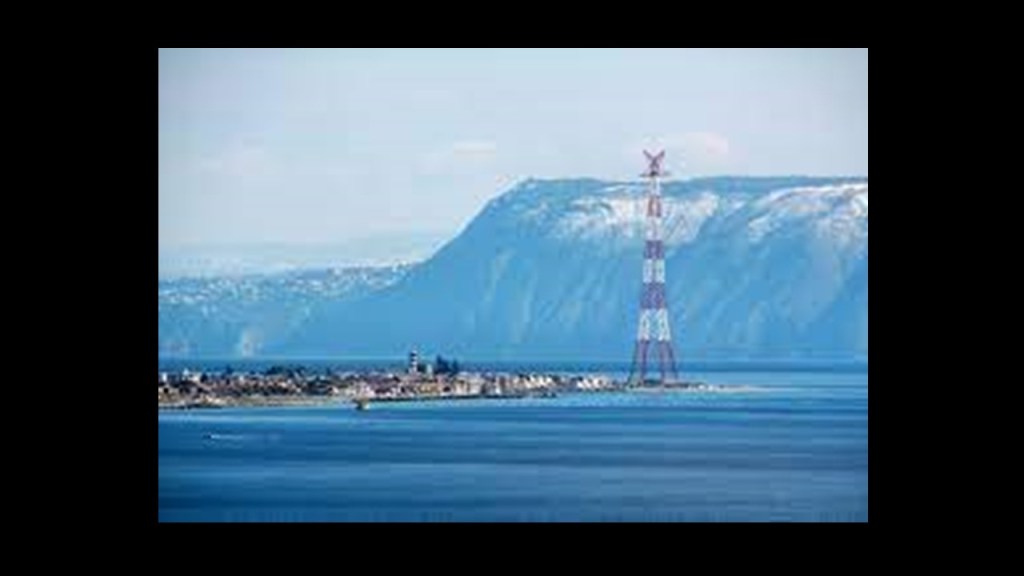
…with the other one, the Santa Trada pylon, being in the Villa San Giovanni across the strait, and standing on top of what looks like one of the more common star fort features.
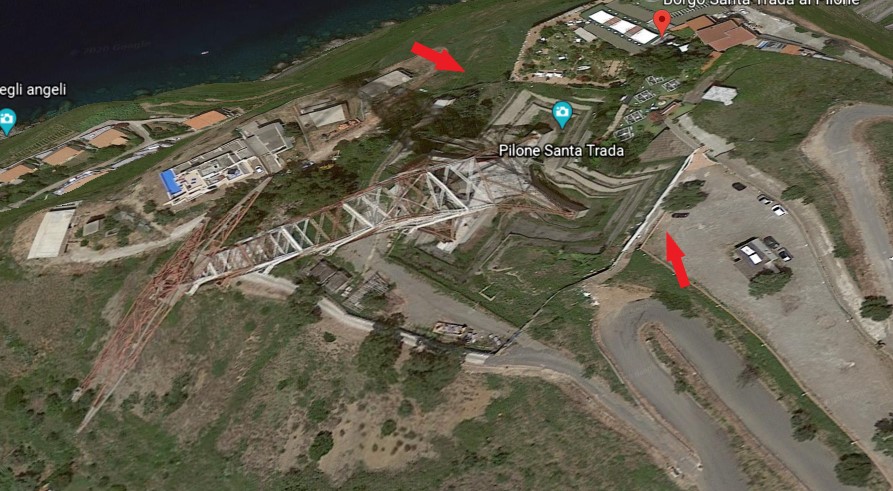
We are told that they were built in 1955, and used between 1955 and 1994 to carry first 150-kilovolt, and then in 1971, a 220-kilovolt power-line across the Strait of Messina to respective sub-stations on both sides of it.
They were decommissioned in 1993, and the conductors were removed a year later.

The Faro Point Lighthouse, also known as the Faro di Capo Pelori, is an active lighthouse that is completely automated, powered by mains electricity, or general purpose Alternating Current (AC) electric power supply.
It was said to have been first built in 1853, with periods of disuse in-between. It is operated by the Italian Navy.
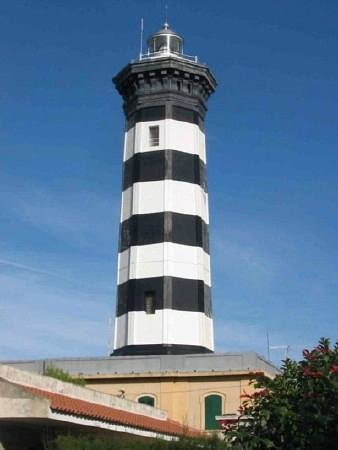
There is what is described as a fortificcation adjacent to the Punta del Faro lighthouse in Sicily…
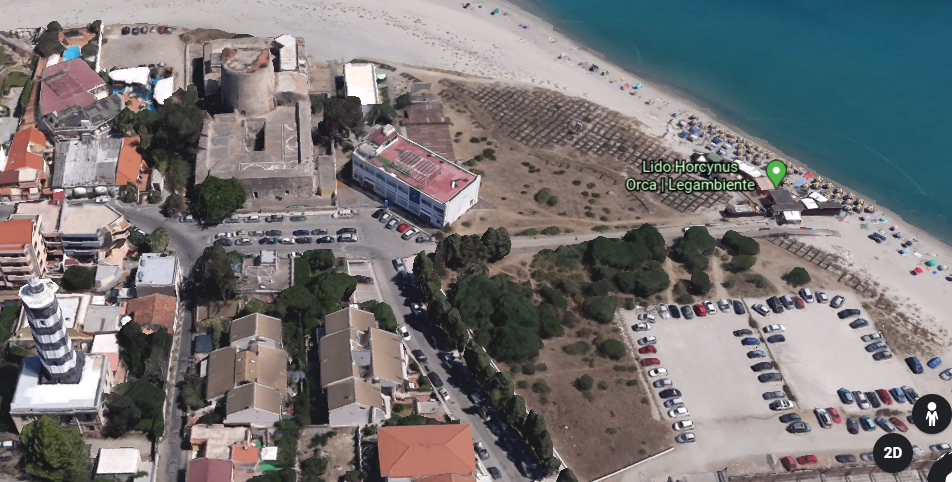
…that is now part of the Lido Horcynus Orca Park.
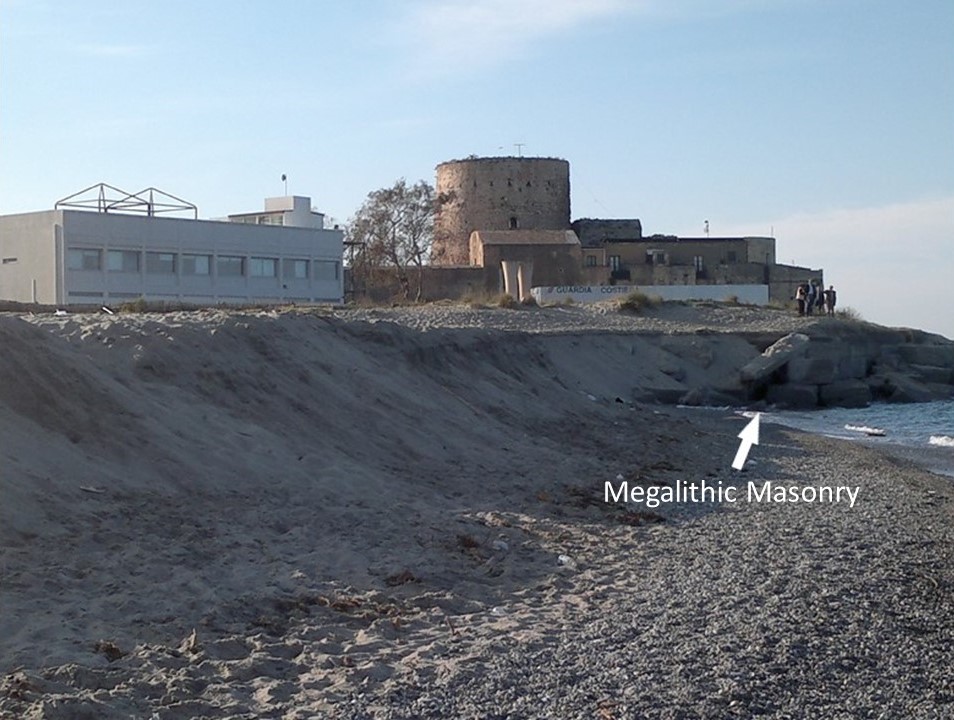
The fortification gets used for things like cinematographic festivals held here.
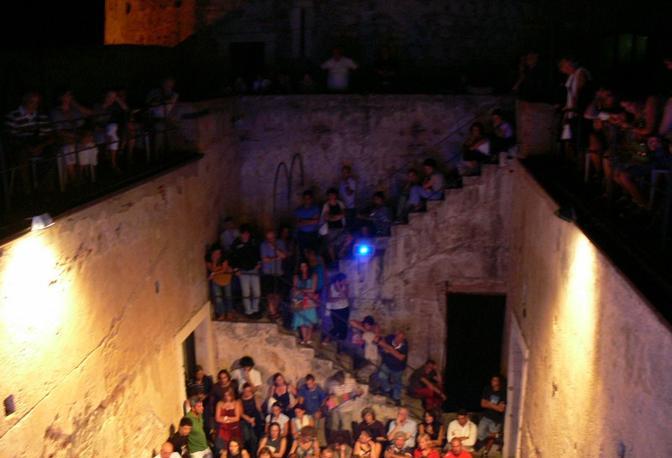
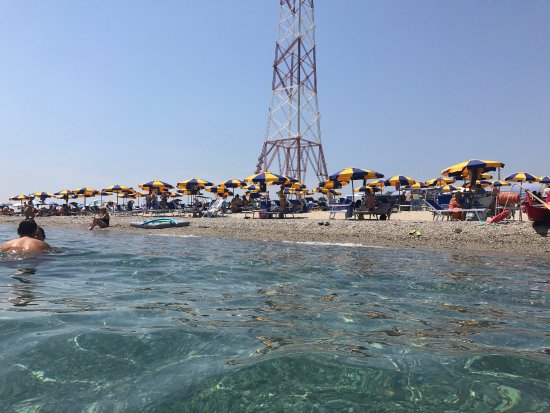
Lido Horcynus Orca Park is primarily a beach resort.
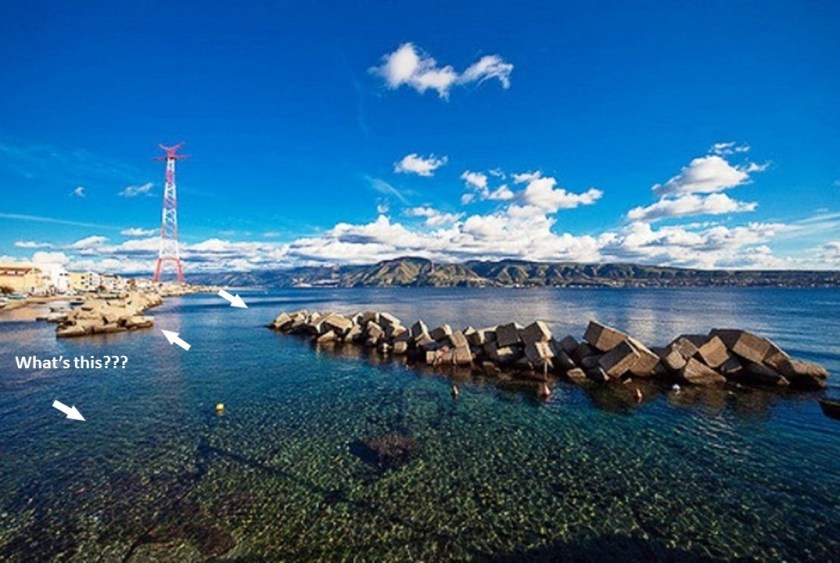
Does that look like a beach resort you would like to go to, even if the tower was decommissioned like they tell us?
And Lido Horcynus Orca really has some interesting features surrounding the beachfront. Like, what the heck are these squares covering the landscape?
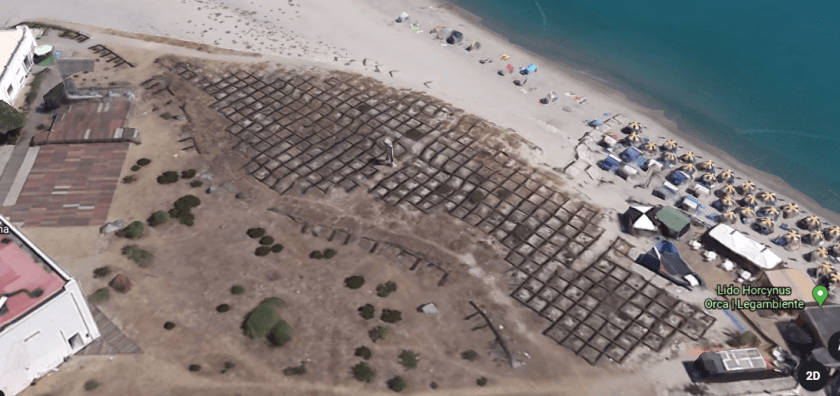
And what are those two white column-looking things?
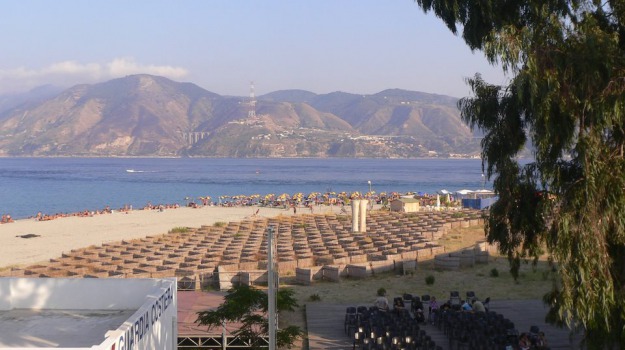
They brought to mind the square shapes I saw on Google Earth when I was looking at the coast of Iran across from Hormuz Island in the Strait of Hormuz…
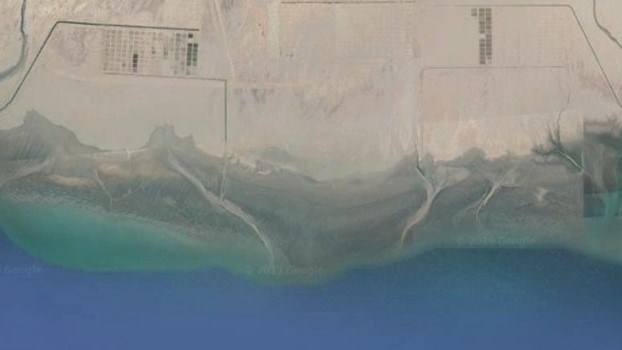
…and both lay-outs in the landscape resemble chips on a circuit board.

As the most northeastern point of Sicily, where the Ionian Sea meets the Tyrrhenian Sea…
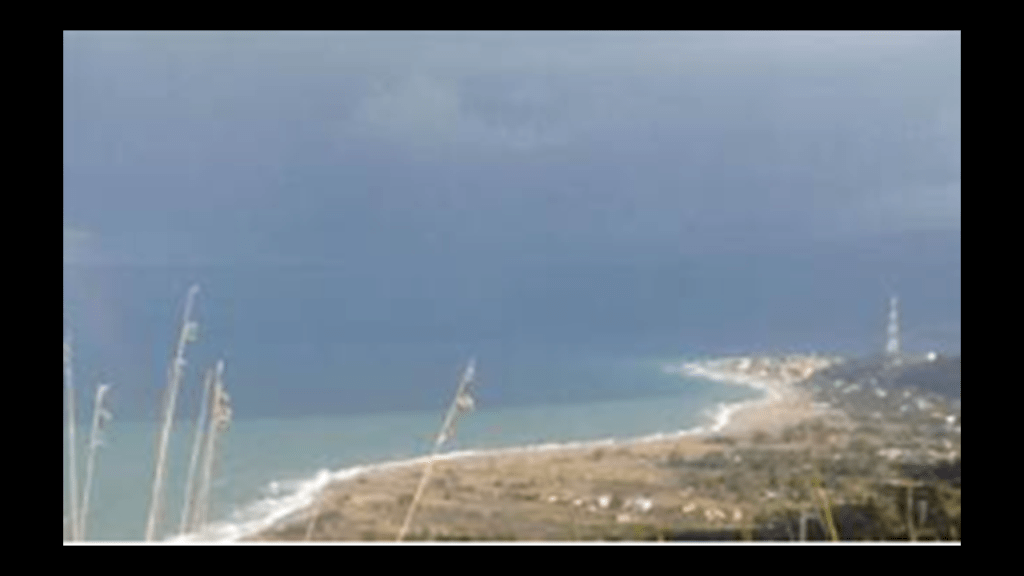
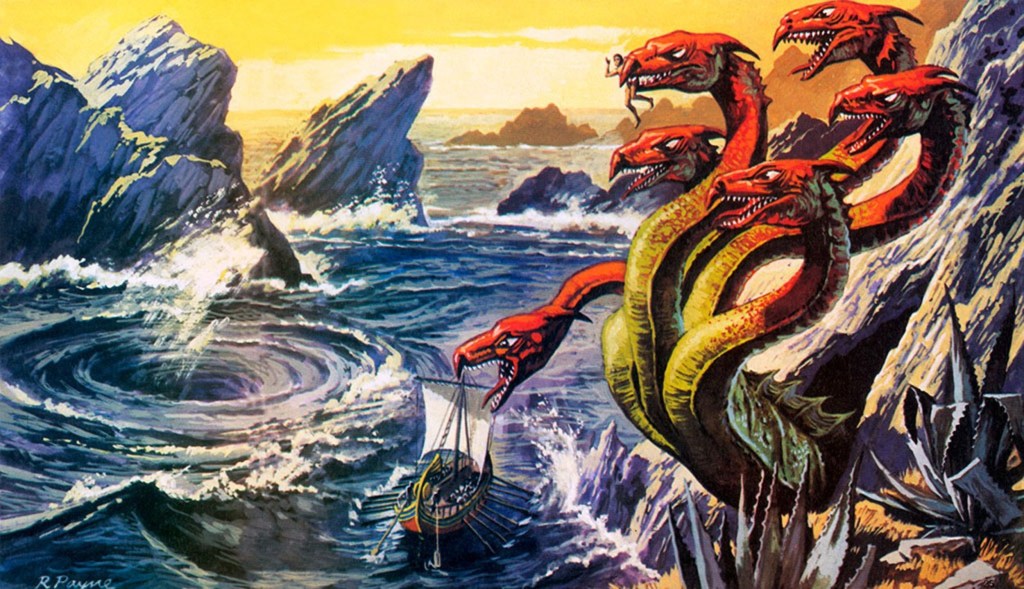
…Capo Peloro or Punta del Faro was supposedly the lair of Charybdis, one of the two beautiful women who had been turned into grotesque monsters by jealous goddesses in Greek mythology.
In one version of the myth, she would partially hide herself beneath a fig tree there, and would frequently leap out into the sea in order to swallow huge quantities of water, creating a whirlpool that would suck down passing ships, and she would belch the water up afterwards.
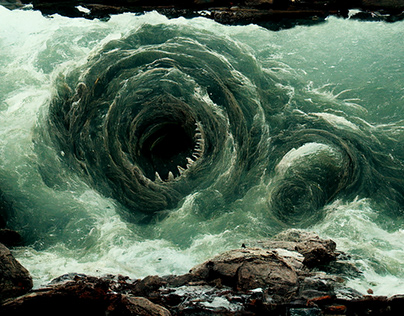
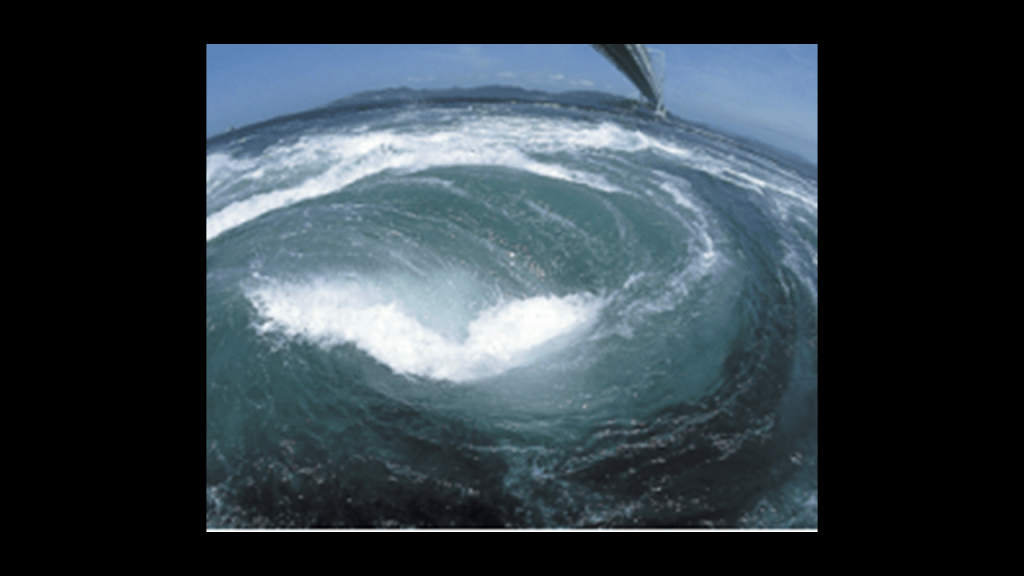
Garofalo, otherwise known to the world as Charybdis, is found in the Strait of Messina. While not technically a whirlpool, it occurs when the winds and tides meet at cross-purposes in the strait, producing rough seas that are hazardous for vessels.
It is also important to note that whirlpools can result from currents running into obstacles beneath the surface of the water.
One more thing before moving across the Strait of Messina to Calabria.
As the ancient Pelorus, Punta del Faro is one of the most celebrated promontories of Sicily, and one of three promontories which were considered to give it the triangular form.
Trinacria, the ancient name of Sicily, was said to derive from an ancient Greek word meaning “three legs” and is synonymous with the sun and said to convey motion.
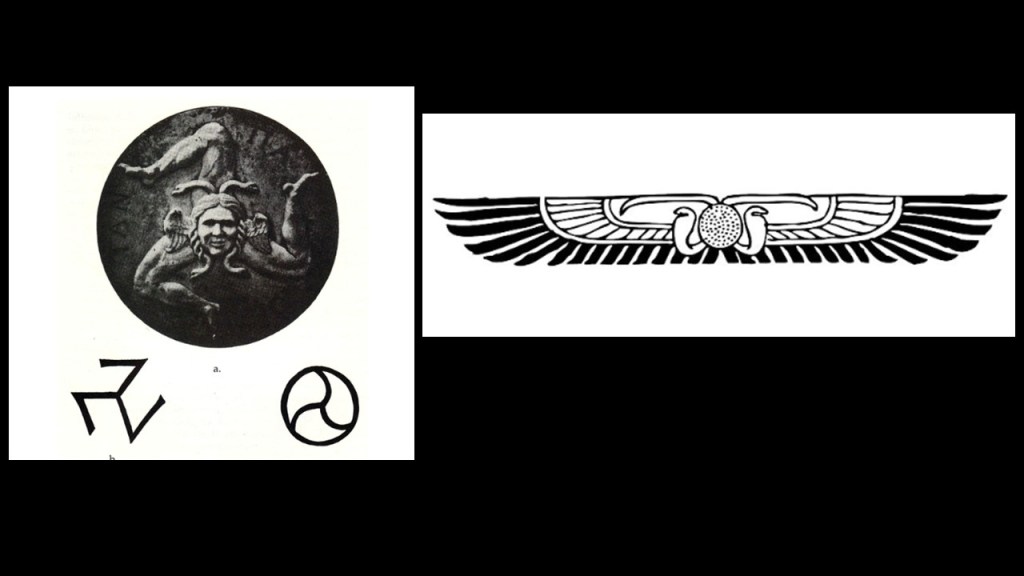
When I looked up the word “Trinacria,” versions of this image popped up all over the place.
This particular version on the left includes a human head with serpents and wings. similar to the winged disk symbol on the right, most commonly associated with Ancient Egyptian and Mesopotamian cultures…
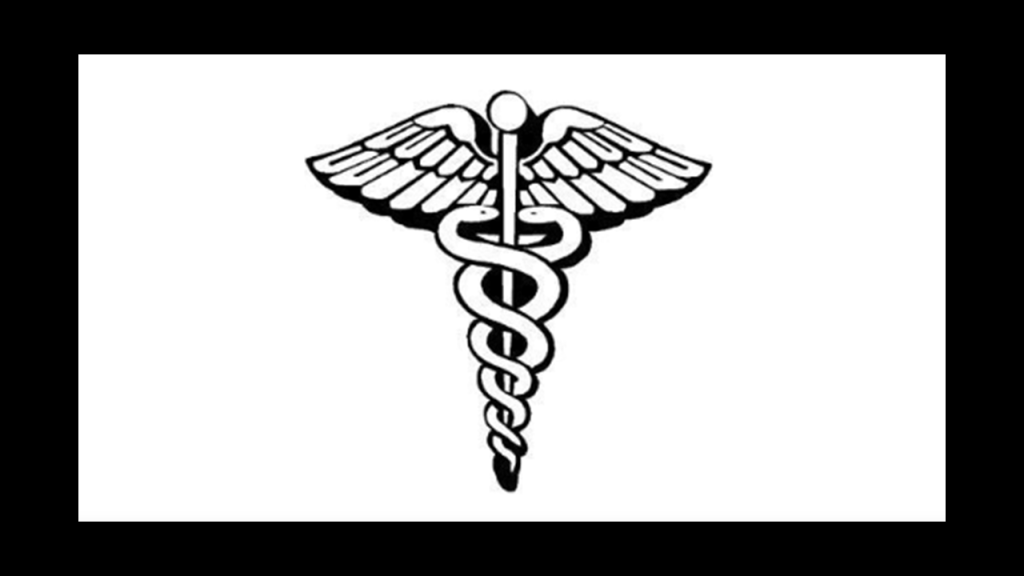
The caduceus, the staff of Hermes in Greek mythology, has the same imagery of serpents and wings, and is an emblem of the medical profession in today’s world.
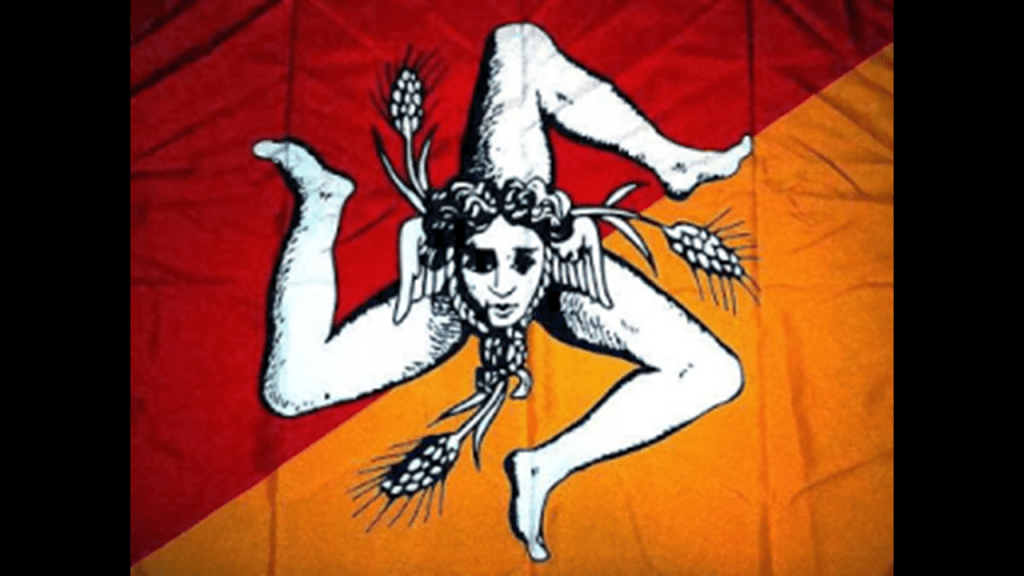
This version of the Trinacria is on the flag of Sicily. The head still has wings, but the serpents aren’t clearly defined as in the first head, kind of looking more like ropes, and the addition of what looks like three ears of wheat.
Why was the image modified?
When I looked more deeply into it, I found out that the Trinacria is a symbolic representation of the zenith of the soul in its present state of existence, and the setting of the spiritual essence in its totality, and that it represents self-realization and ascension.
This is the flag of the Isle of Man, with a very similar shape called the Triskelion…
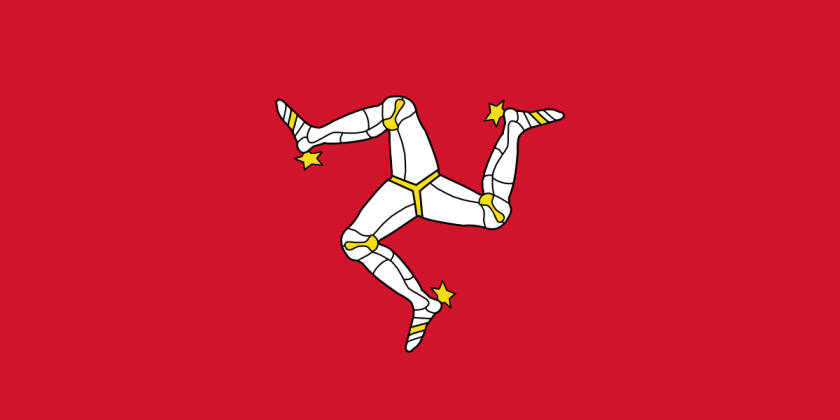
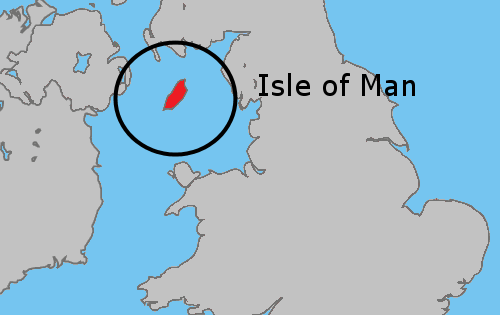
…and the Isle of Man is located in the Irish Sea between Ireland and Great Britain.
Interesting that there is information like this about ancient knowledge to be found in flags, as well as information about the true identity of the missing civilization.
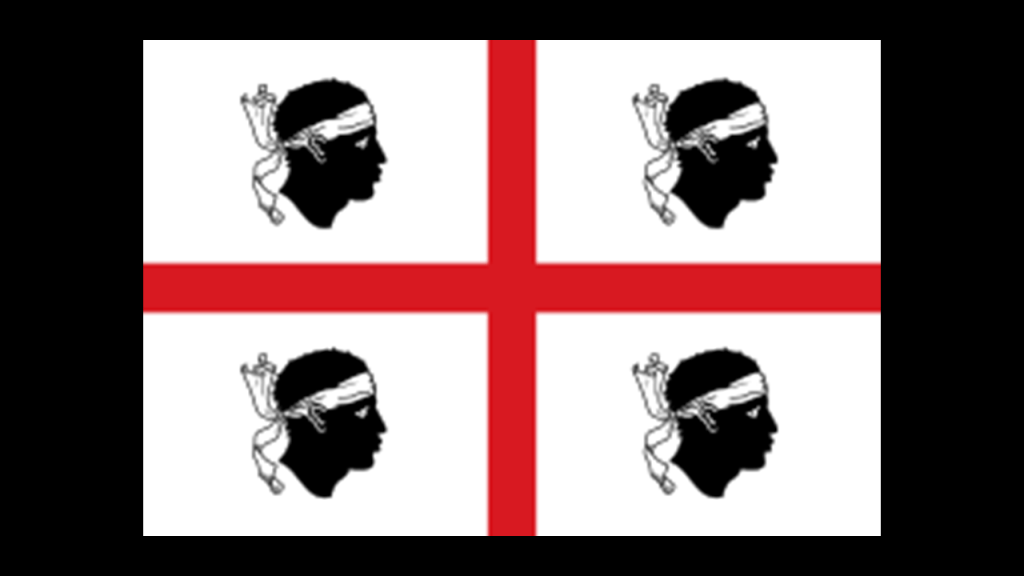
This is the flag of Sardinia, a large island region of Italy in the Mediterranean Sea, northwest of the Strait of Messina.
It is also called the flag of the Four Moors…
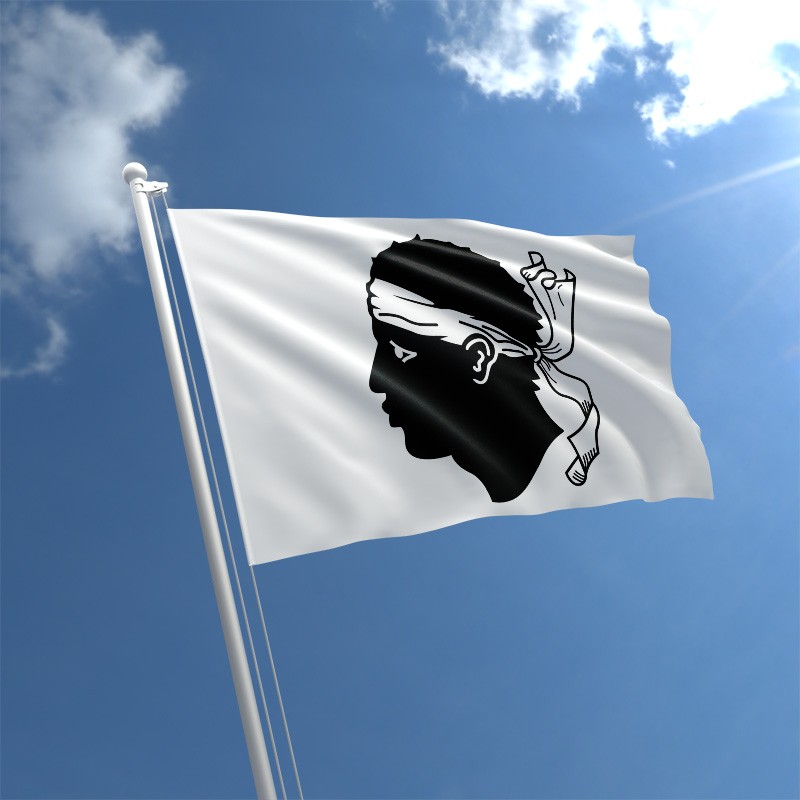
…and this is the flag of Corsica, an island region of France, just north of Sardinia, with only one Moor’s head displayed on it.
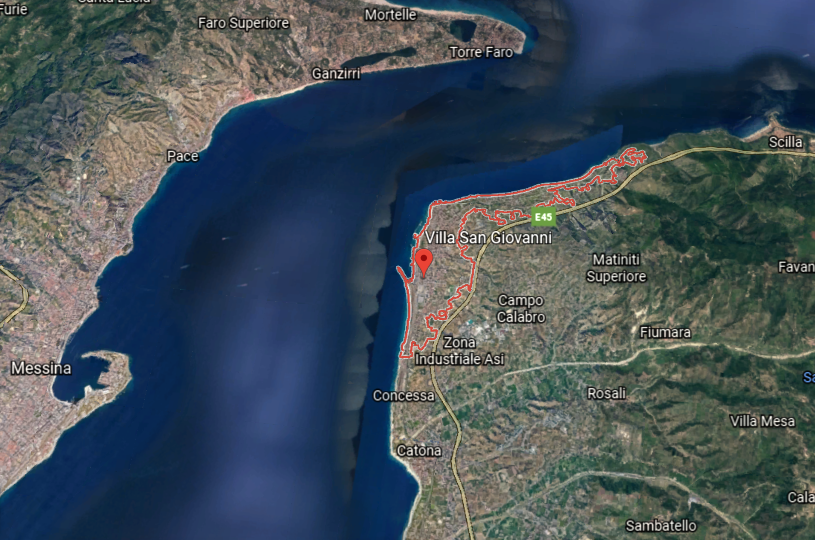
Now changing my focus to look at Punta Pezzo, the closest point between Italy’s Calabrian shore in the Villa San Giovanni, and Punta del Faro in Sicily.
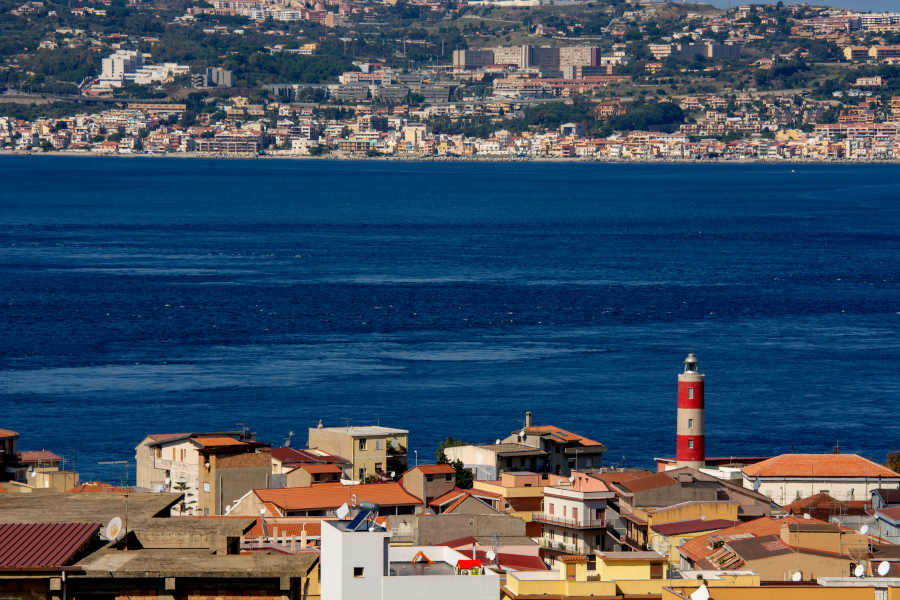
The city of Villa San Giovanni faces the city of Messina across the strait.
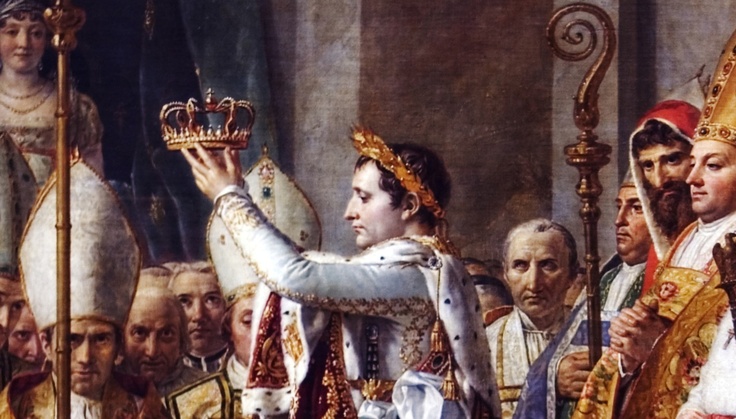
This part of Calabria was a focal point for Napoleon Bonaparte, after he proclaimed himself emperor of France in 1804.
I most definitely think that Napoleon and the Napoleonic Wars were part of the reset of our history.
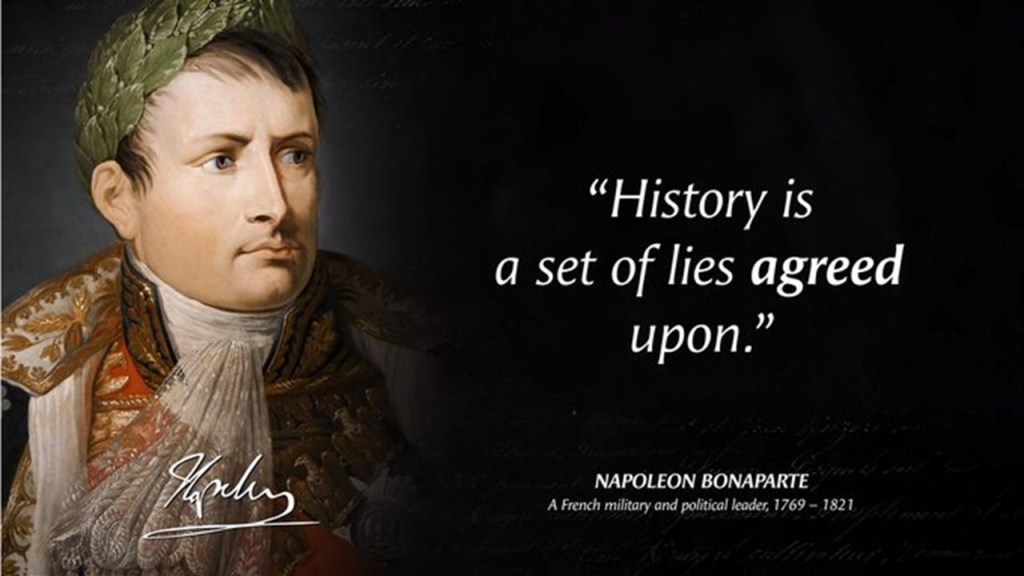
He is, after all, attributed in our historical narrative with making the statement that “History is a set of lies agreed upon.”
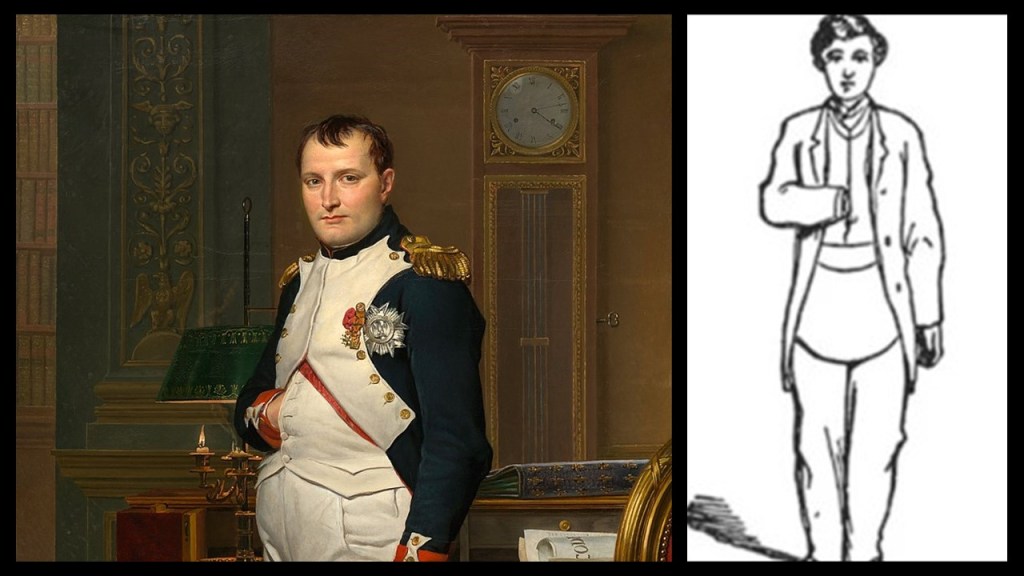
He was also the first historical figure I ever remember seeing early on in my life depicted with the Freemasonic “hidden hand” tucked into his waistcoat, a hand-sign signifying “Master of the Second Veil.”
As a matter of fact, this pose and Napoleon go “hand-in-hand” so to speak!
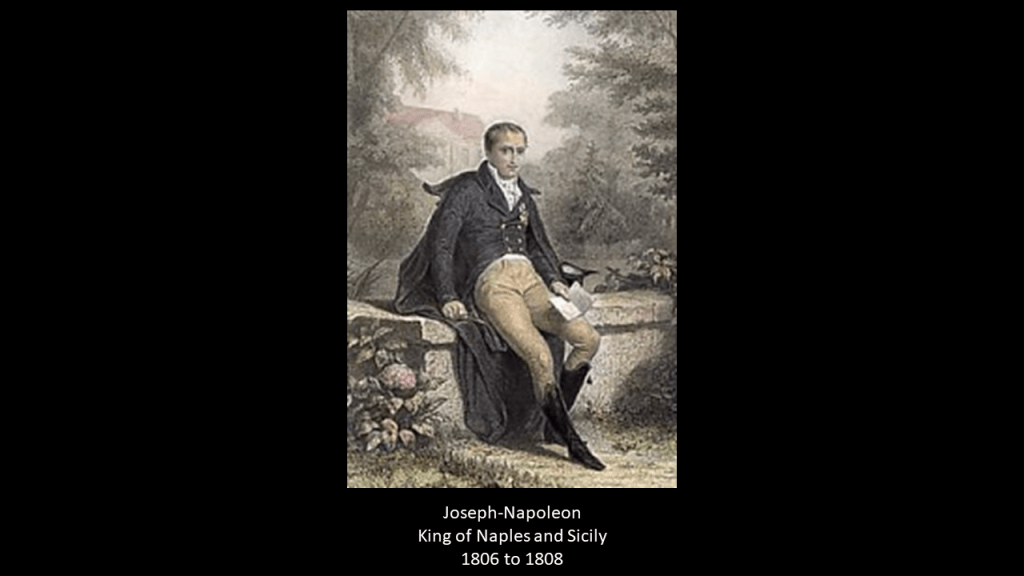
Napoleon made his older brother, Joseph-Napoleon, the King of Naples and Sicily between 1806 and 1808, who we are told, implemented administrative reforms in 1806 that abolished the ruling system that was in place here, and the original Lordship of Fiumara disappeared.
Then, starting in June of 1810, we are told the new King of Naples, Joachim Murat, and also the brother-in-law of Napoleon, ruled the southern Kingdom from the heights of Piale for four months, during which that short period of time he was given the credit for having built the fort of Punta Pezzo, or Piale, with a telegraph tower…
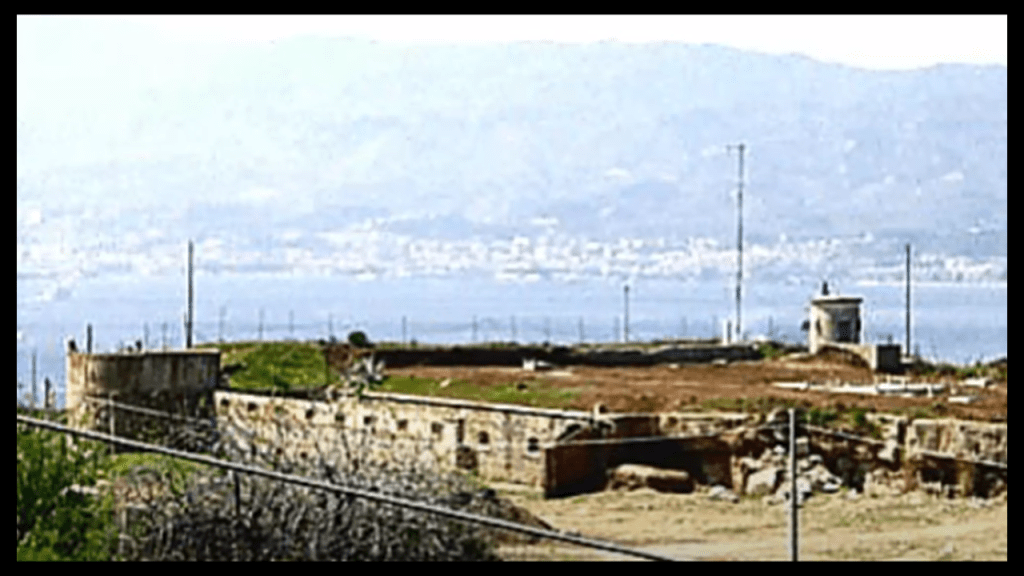
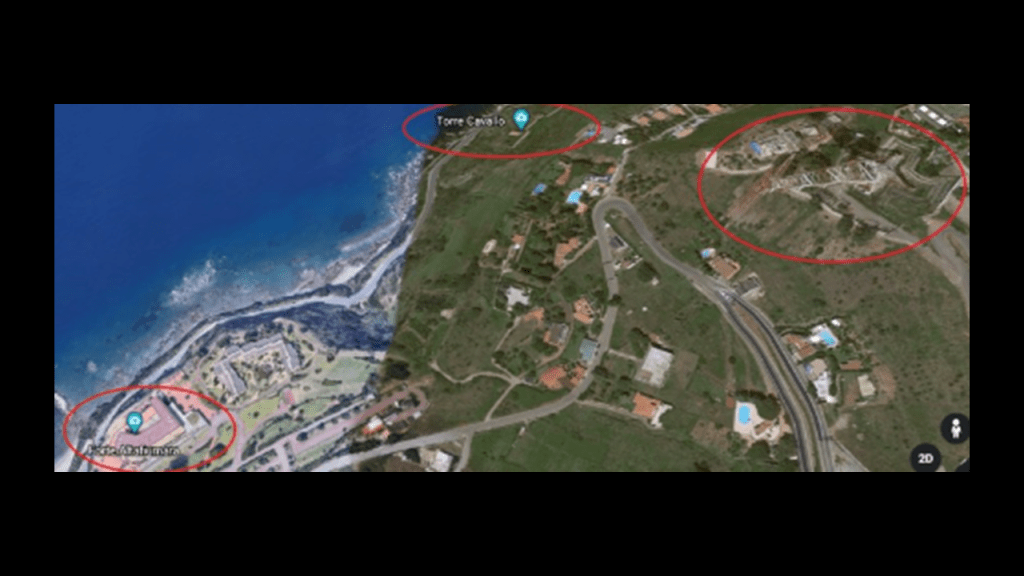
…the Torre Cavallo…
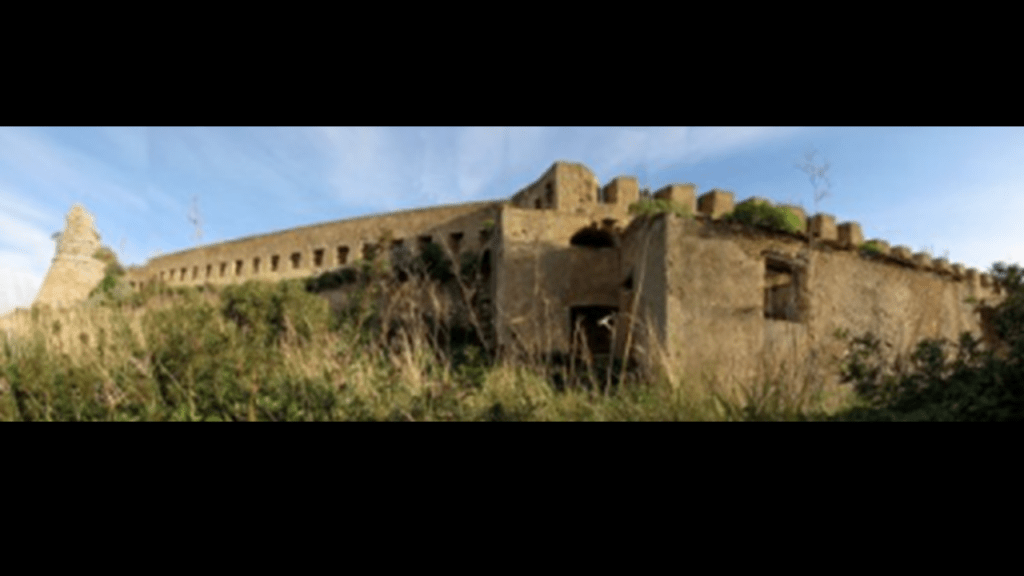
…and the Castello Altafiumara…
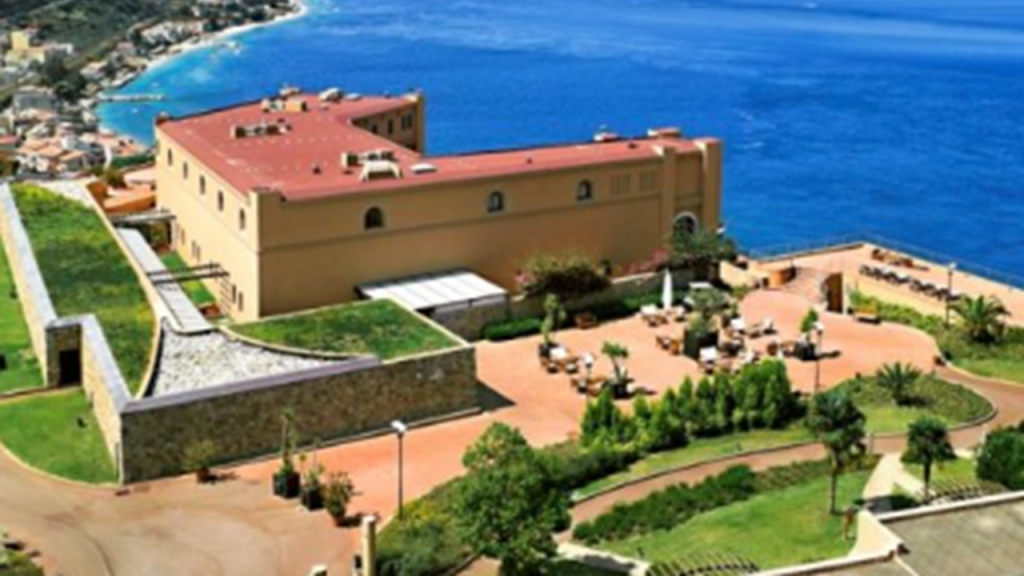
…with the Castello Altafiumara and Torre Cavallo both being in close proximity to the Santa Trada Pylon we saw earlier.
This particular geographic location appears to have been a particularly important place on the Earth’s grid system, similar in scope of what’s here to what I found in Sault Ste. Marie, Michigan and Sault Ste. Marie, Ontario, situated across from each other with the Saint Mary’s River in-between them.
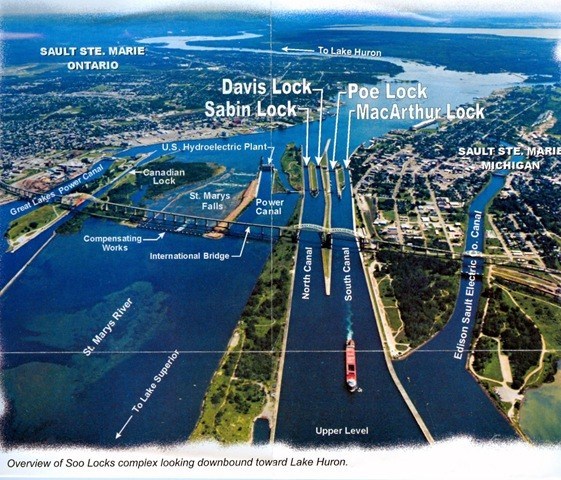
See my blog post “Sault Ste. Marie – A Microcosm of the Advanced & Global Moorish Civilization” for an in-depth analysis of the region nicknamed “The Soo.”
Just a short distance north of Calabria’s Punta Pezzo , we find the Ruffo Castle of Scilla, described as an ancient fortification, and situated on a promontory in the Strait of Messina in the town of Scilla…
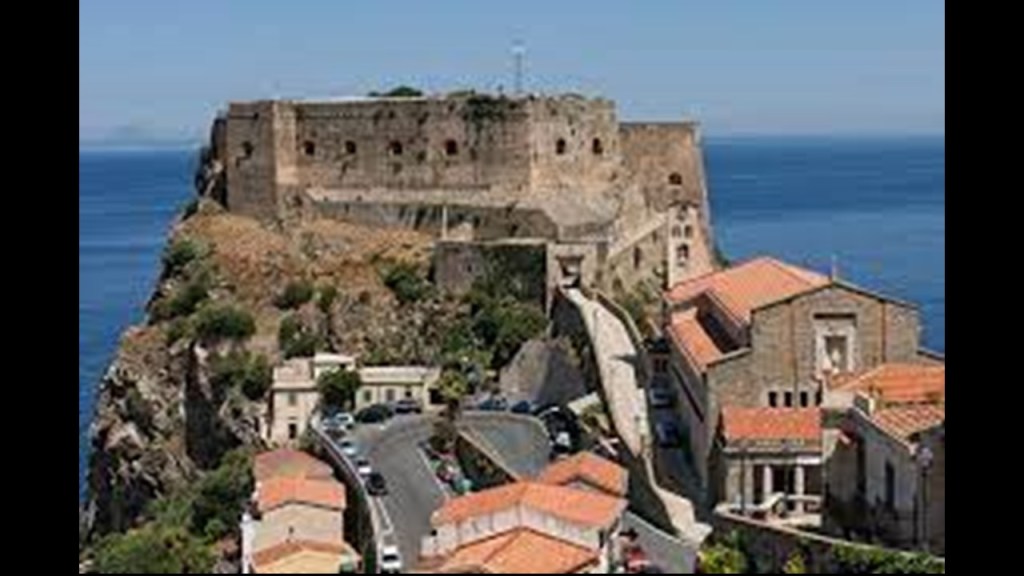
…and which houses the Scilla Lighthouse, also operated by the Italian Navy, like the Faro del Cape Peloro in Sicily.
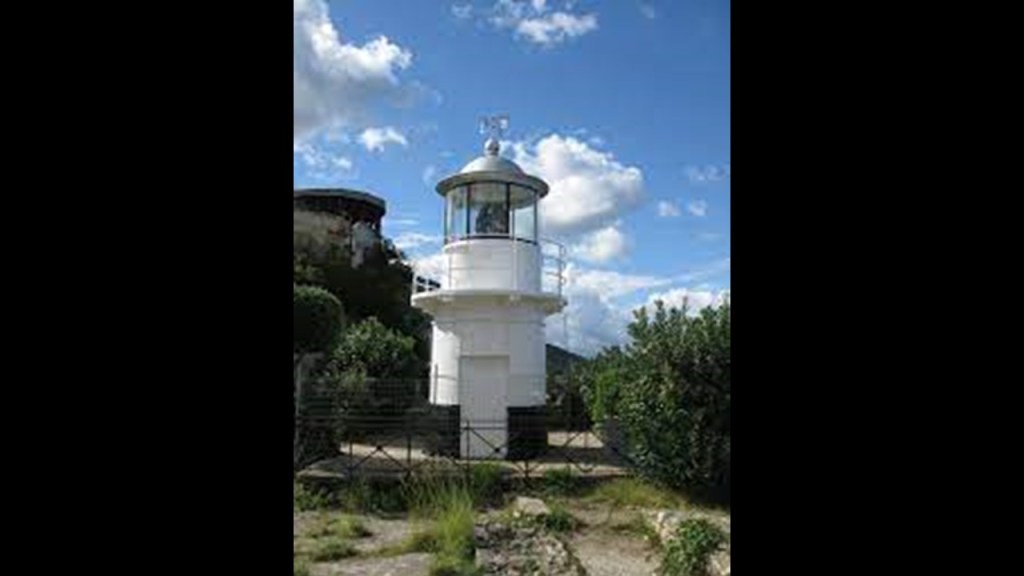
Scilla is also the traditional site associated with the sea monster Scylla of Greek mythology, with its location right at the entrance to the Strait of Messina.
The linguistic idiom “between Scylla and Charybdis” means having to choose between two similarly dangerous situations, like the more common idiom “between a rock and a hard place.”
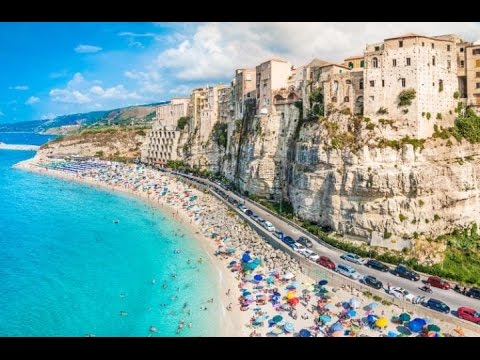
Other places of interest in Calabria, known in antiquity as Bruttium, include Tropea, an ancient seaside town built on top of a cliff, with a legend of having been founded by Hercules when returning from his labors at the Pillars of Hercules (in the Strait of Gibraltar)…
…and Reggio di Calabria, known as Rhegium in ancient times, located on the toe of the boot of the Italian peninsula.
It is interesting to note the presence of the same design pattern in the architecture of Reggio di Calabria that you find at the Supreme Court in Washington, DC; at Leconte Hall at the University of Georgia in Athens, Georgia; and at the National Library of Greece in Athens, Greece.
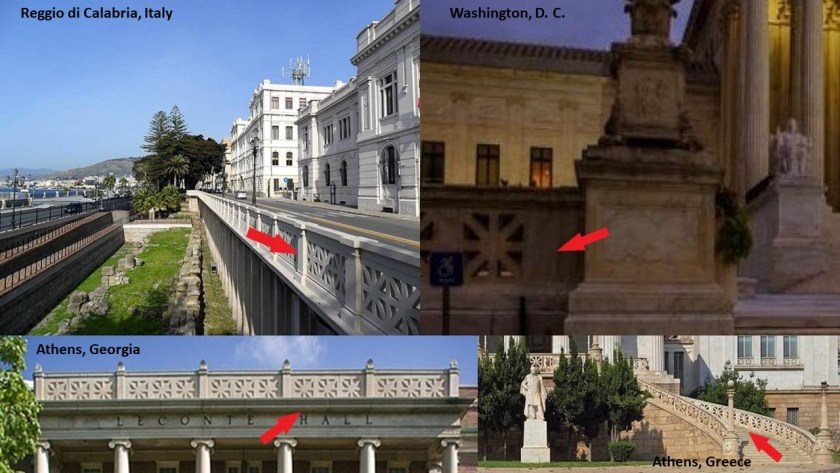
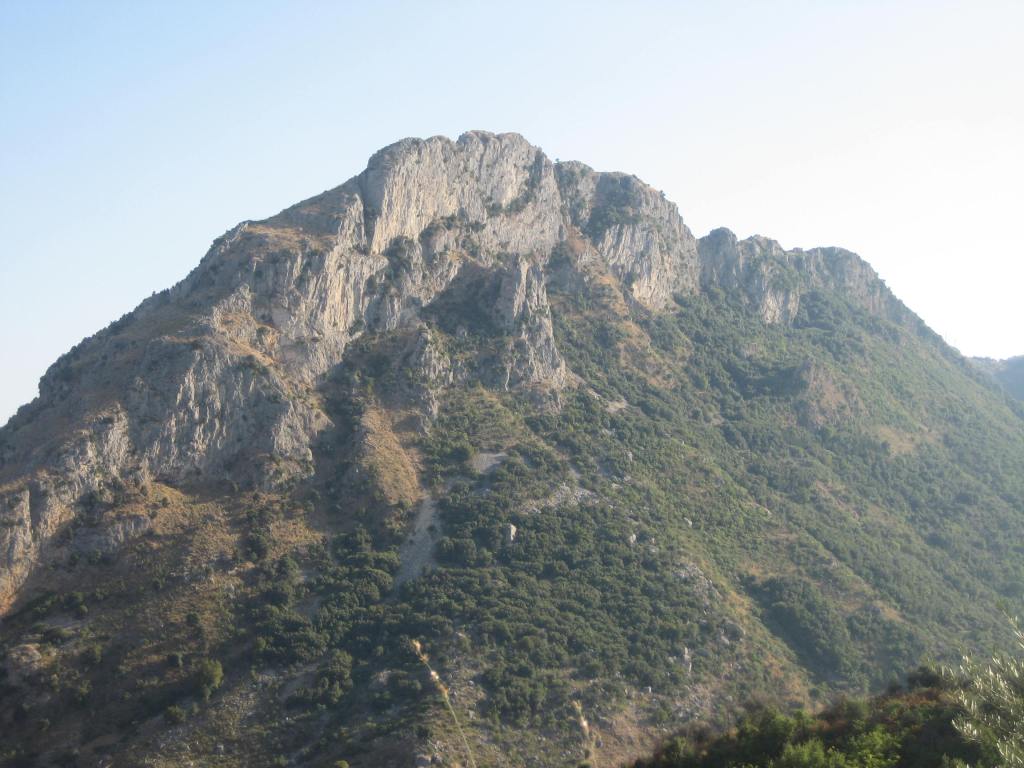
Reggio di Calabria is located on the Aspromonte, a long craggy mountain range that runs up through the center of the region, and described as resembling a giant pyramid.
This is Mount Consolino in the Aspromonte…
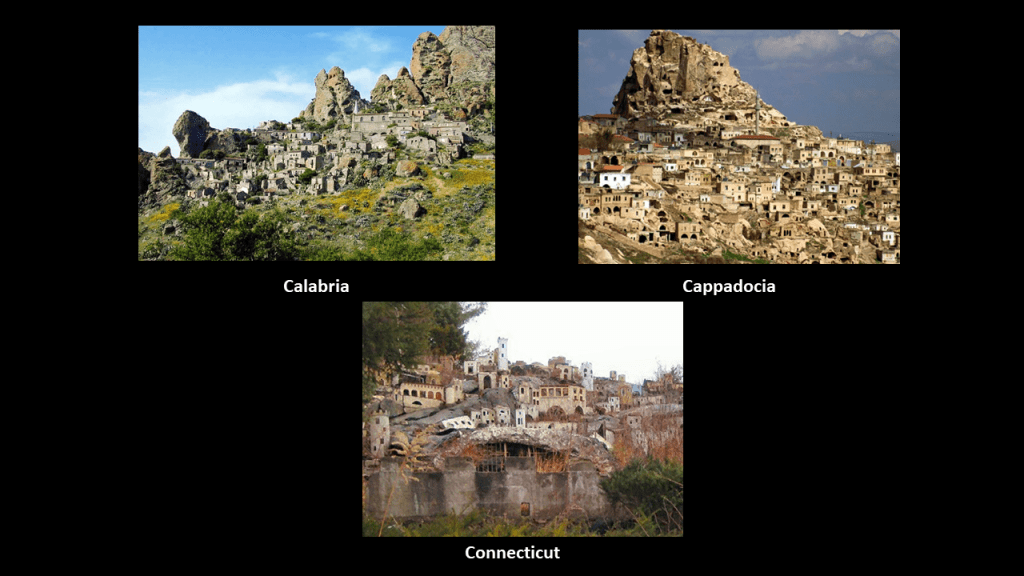
…and within the boundaries of Aspromonte National Park, you find places like the ghost towns of Pentedattilo on the top left, which brought to mind similar-looking places in Cappadocia, and what was Holy Land USA on the bottom, in Waterbury, Connecticut, which we are told was a theme park inspired by passages from the Bible that opened in 1955 and closed and abandoned in 1985…
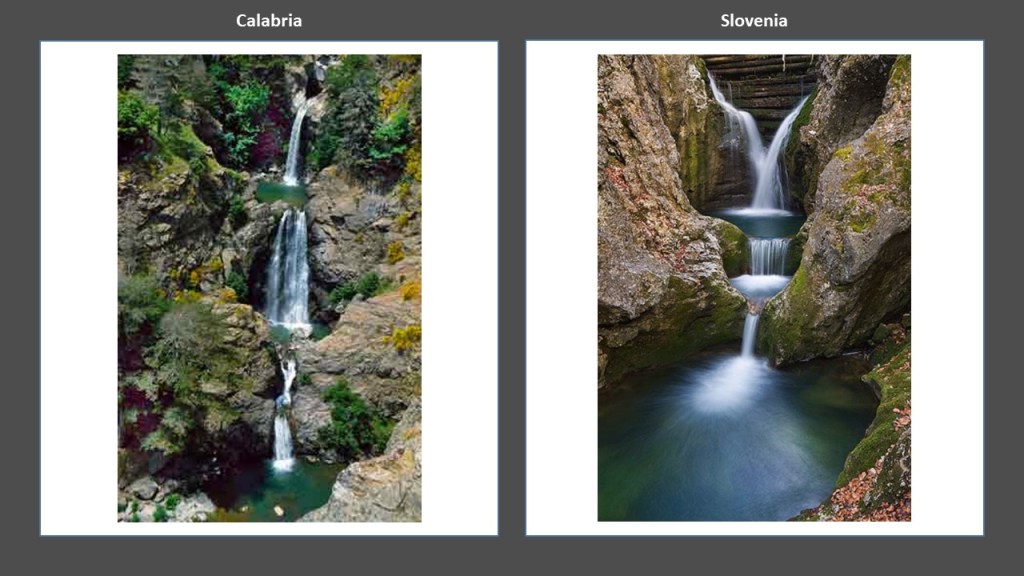
…as well as waterfalls, like the multi-storied Maesano waterfalls on the left, compared with these waterfalls in Slovenia on the right that are also multi-storied
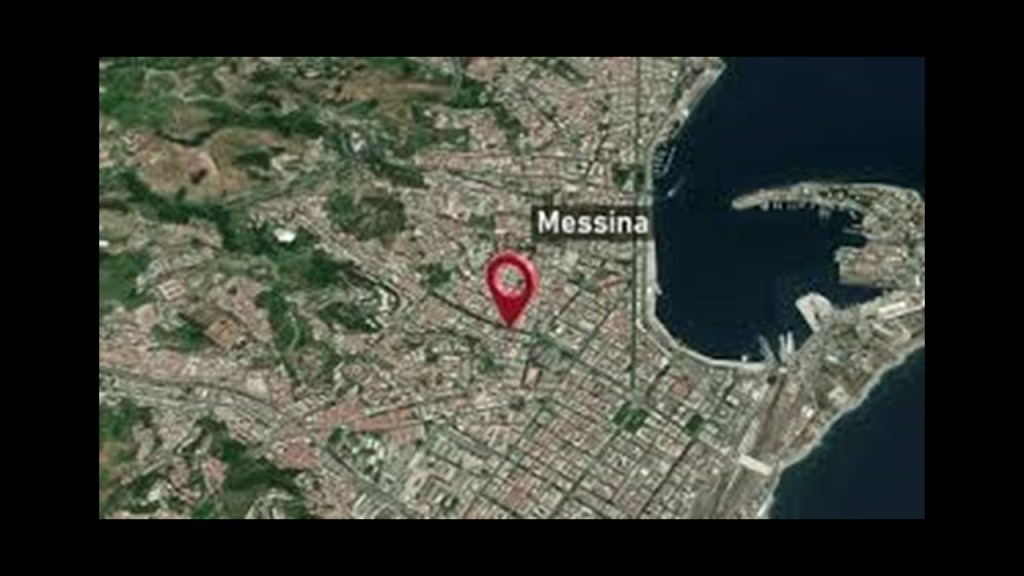
Back across the Strait to take a look at Messina proper, with a population of over 230,000, and the metropolitan area of Messina, which includes Punta del Faro, is around 650,000, making it the third-largest city in Sicily, and the thirteenth largest in Italy.
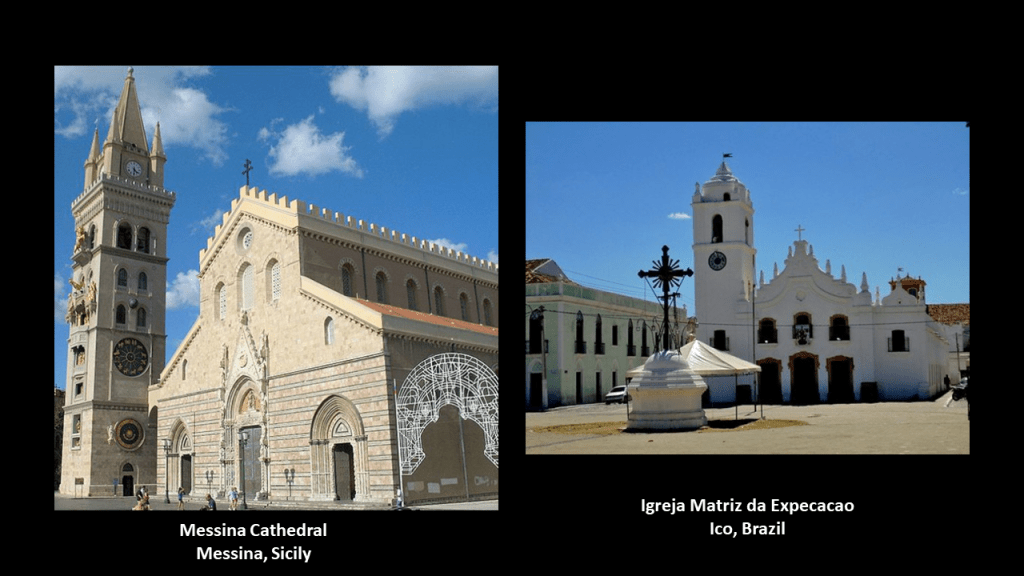
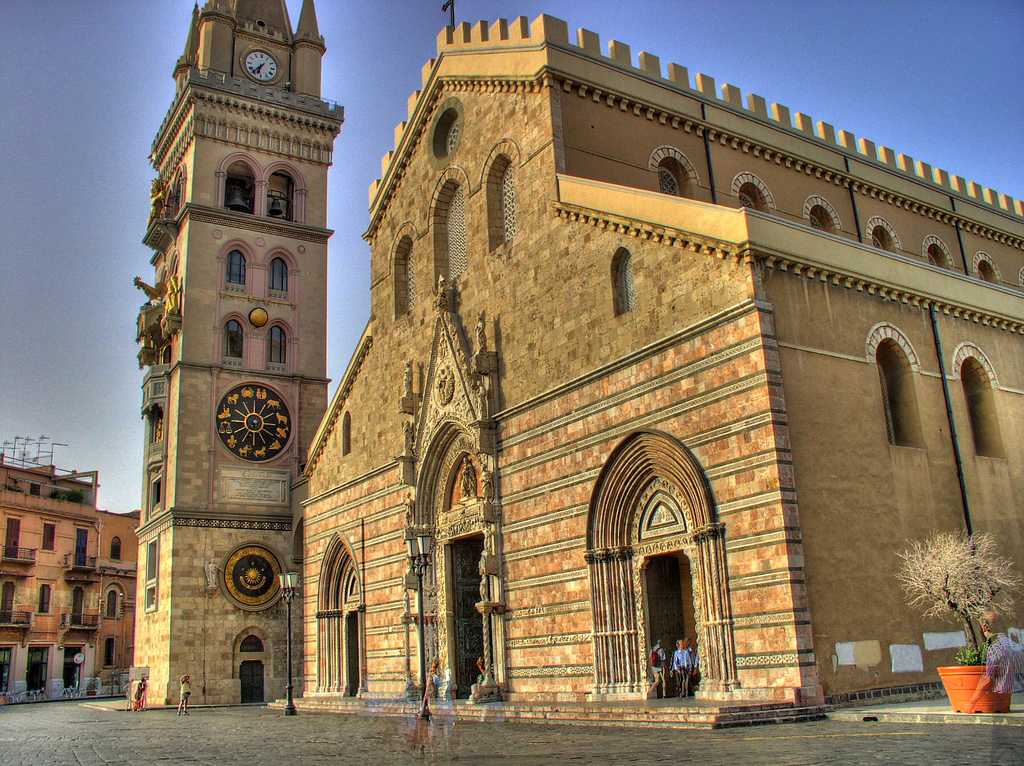
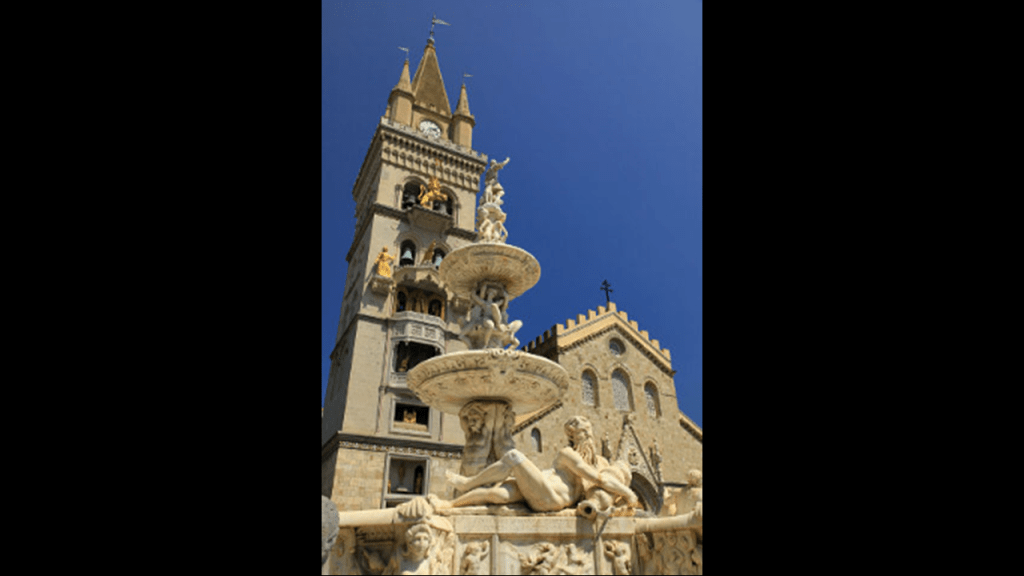
The Messina Cathedral is said to be an example of Norman architecture, built on the orders of the Norman King Ruggero II in 1120 AD.
For comparison in appearance, this is the Igreja Matriz da Expecacao in Ico, Brazil, on the right.
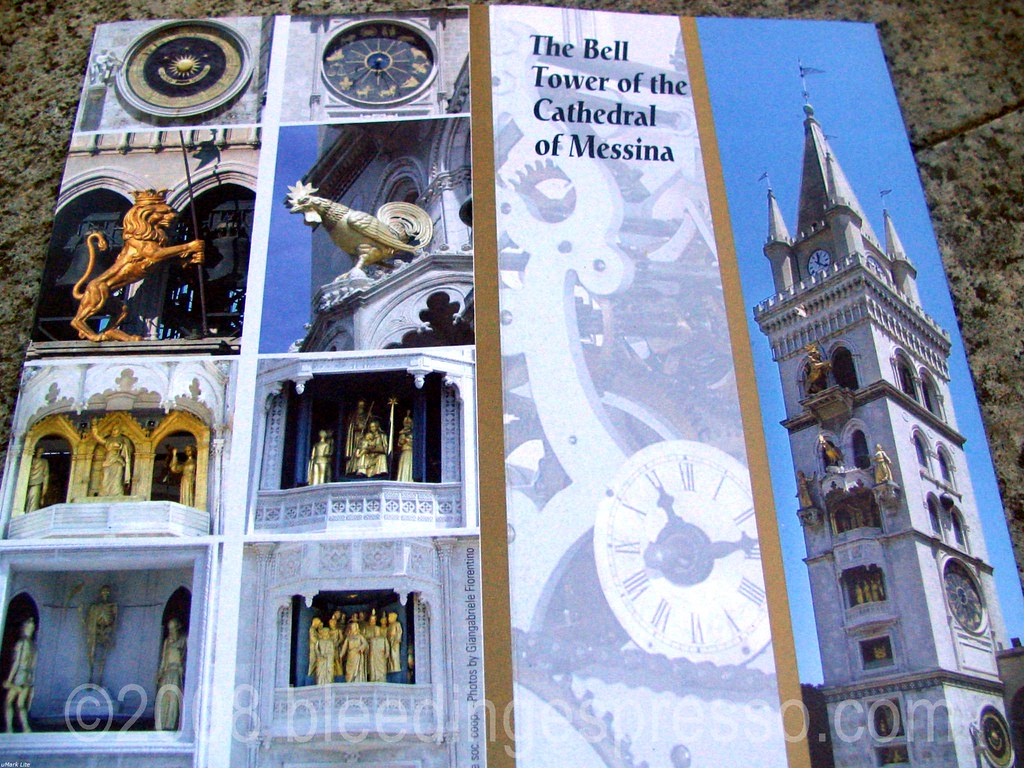
We are told the current Bell-Tower next to the Messina Cathedral was inaugurated in 1933, after having been designed by the firm of Ungerer of Strasbourg, and is famous for having the biggest and most complex astrological clock in the world.
Every day at noon, a complex system of counterweights, leverages, and gears moves gilded bronze statues located in the facade.
The Fountain of Orion is in front of the Messina Cathedral, and said to have been finished in 1553, commemorating both the city’s mythical founder, and the completion of the first aqueduct of Messina in 1547.
Messina is a major port city.
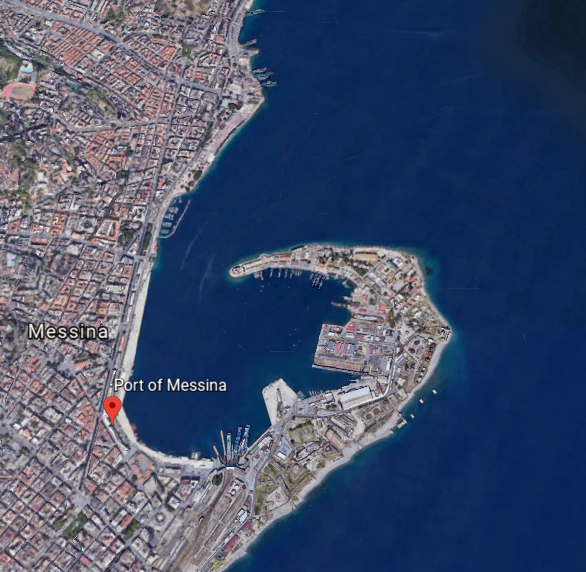
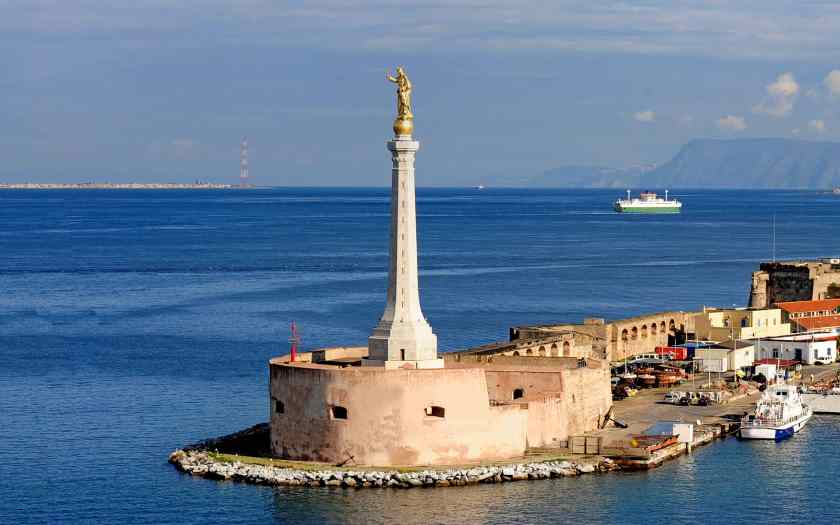
…and the said-to-be 16th-century Forte del Santissimo Salvatore is located at the port’s entrance.
The Stele of the Madonna Lettera, erected on the fort, was said to have been consecrated and inaugurated in 1934.
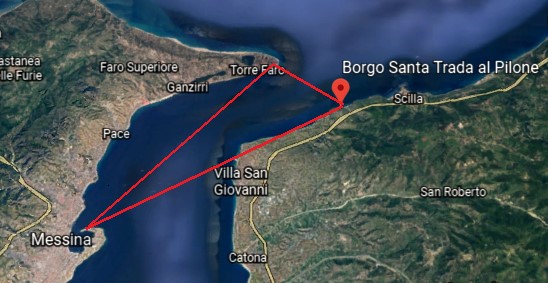
I see the Torre Faro pylon in the distance.
It looks like there could be a triangulated relationship between the Stele, the Torre Faro pylon, and the Santa Trada pylon.
The next place we come to on the alignment is Mount Etna, on the east coast of Sicily, in what is called the Metropolitan City of Catania, formerly the Province of Catania.
It is located between the cities of Messina and Catania.
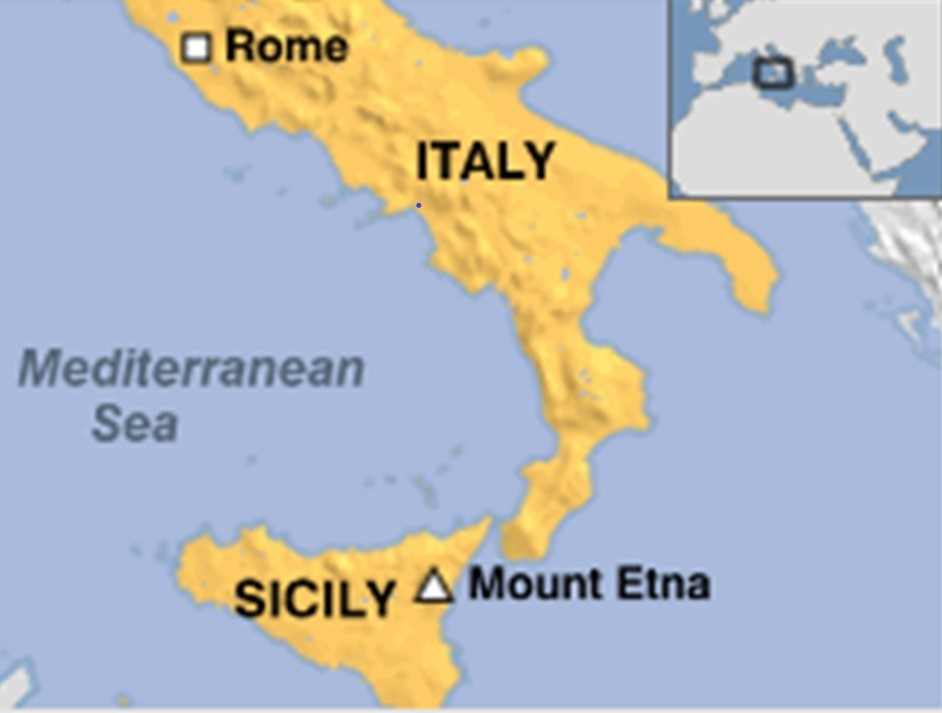
It is a stratovolcano that is one of the most active in the world, and is in an almost constant state of activity.
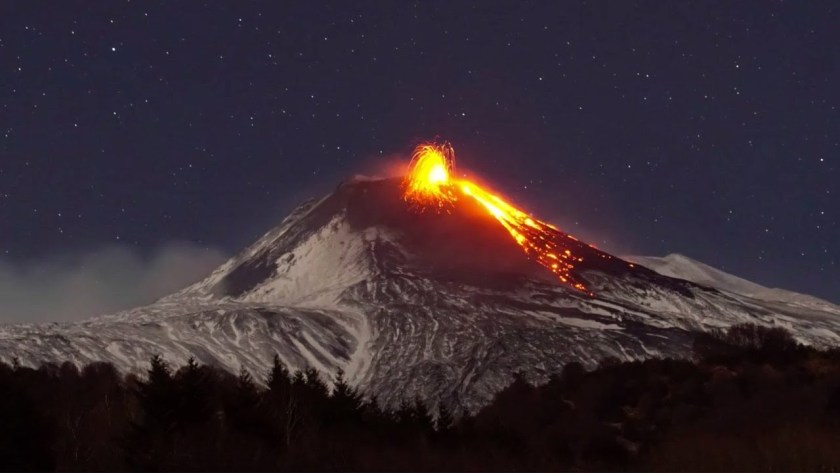
I learned several years ago in a Megalithomania presentation by Antoine Gigal about pyramids around Mount Etna, and I am drawing from her research in the next slides about this obscure subject.
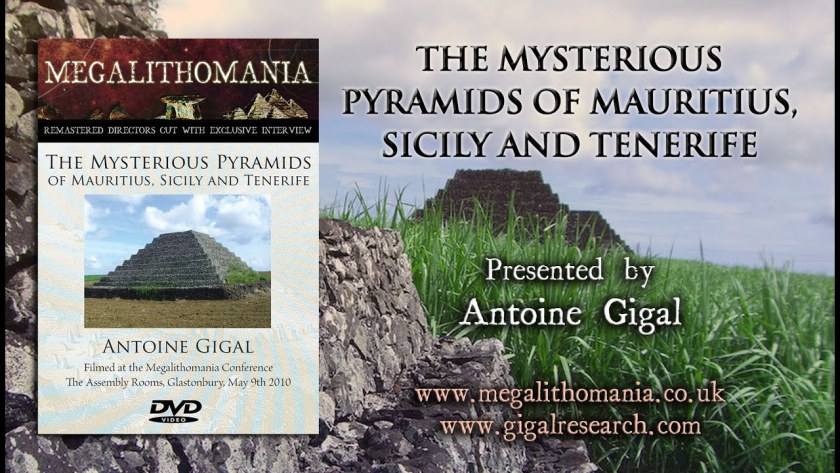
Antoine Gigal is a French writer, researcher and explorer, and the founder of Giza for Humanity who went to Sicily where she heard about 12 pyramids there.
Instead of finding the 12 pyramids she was told about, she found 23 pyramids around Mount Etna, and proceeded to literally do field research, as the pyramids were in the middle of fields.
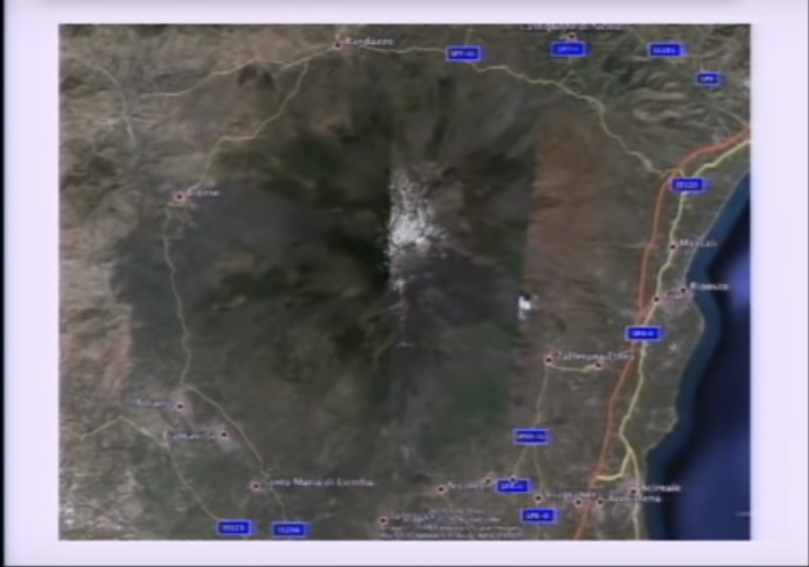
She found pyramids of different shapes and sizes…
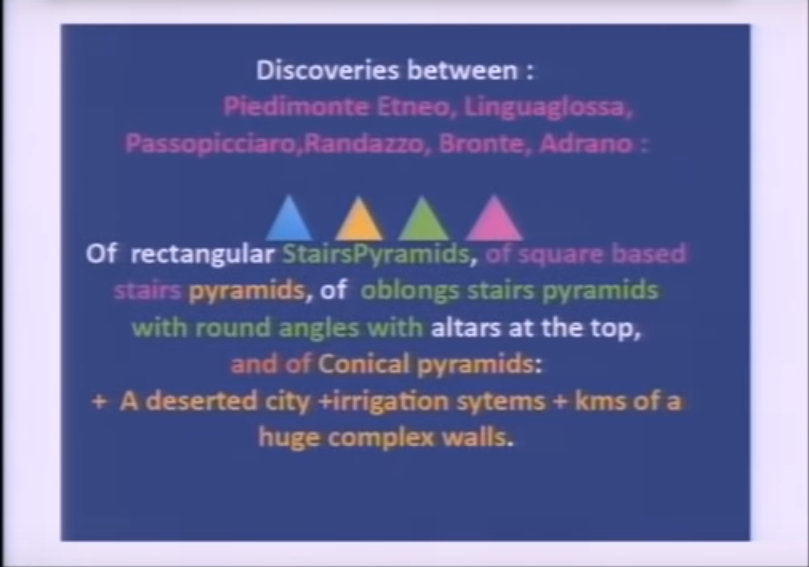
…like an oblong step pyramid between the towns of Passopisciaro and Francavilla…
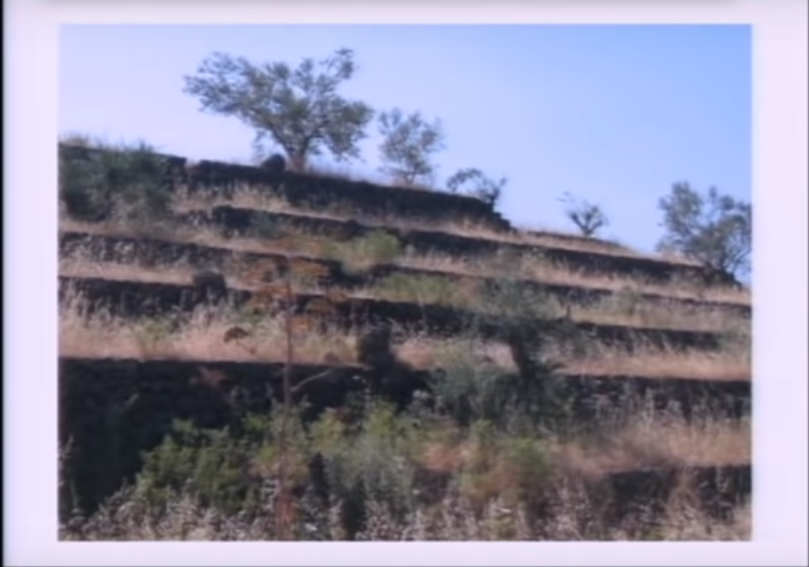
…which has a standing stone…
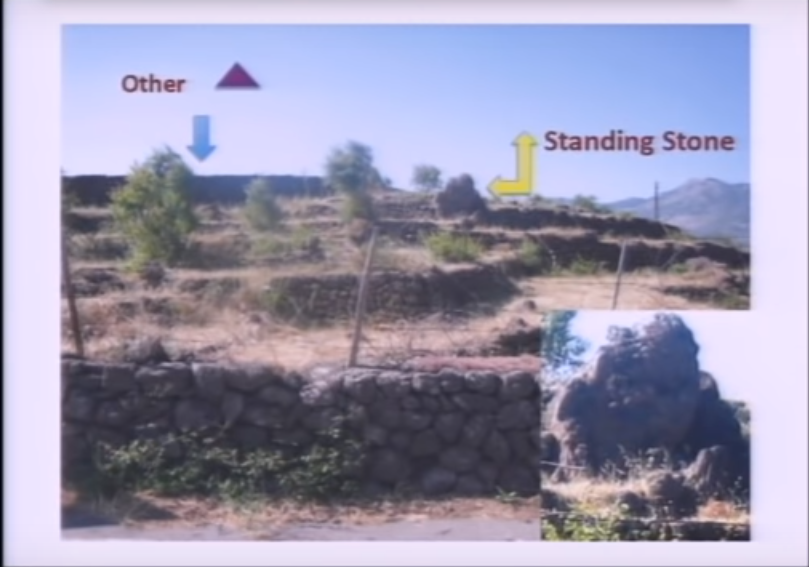
…a rectangular pyramid between Linguaglossa and Randazzo…
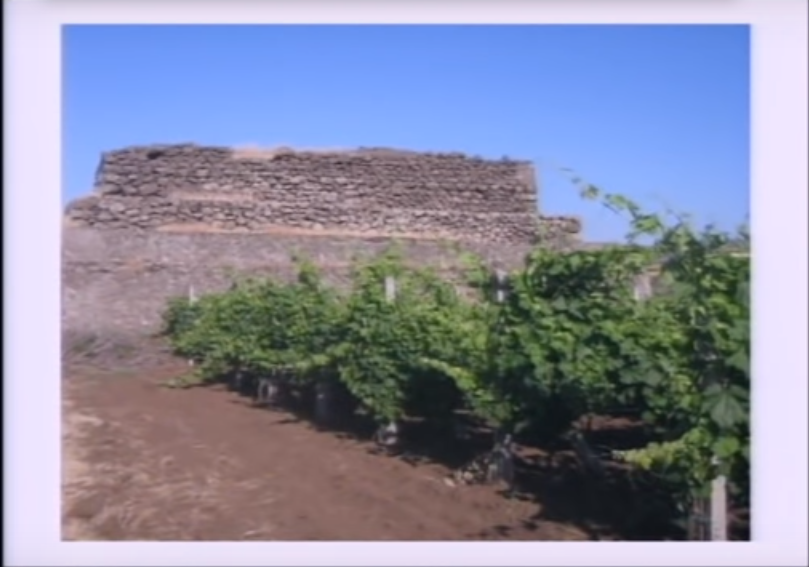
…and this rectangular pyramid on Mount Etna’s north side.
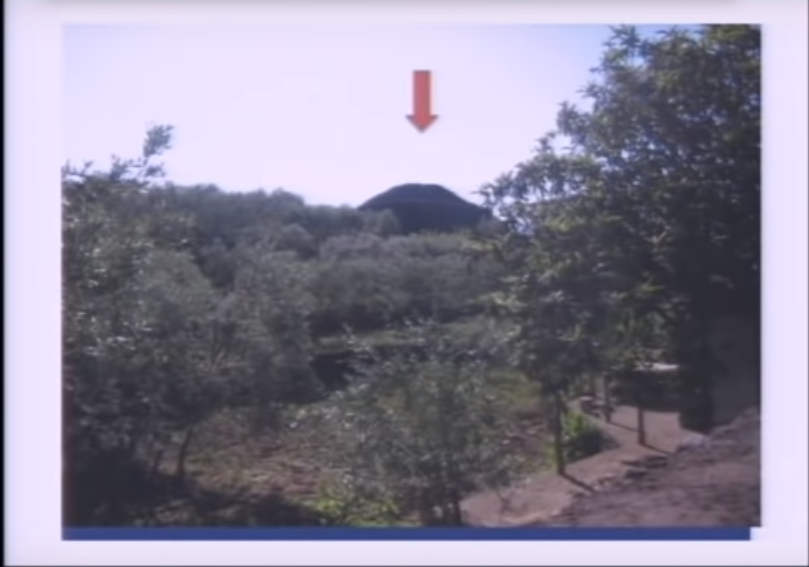
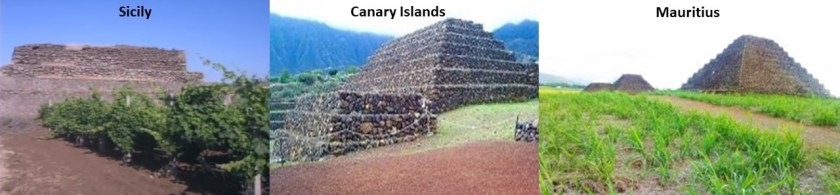
In Antoine Gigal’s presentation, she demonstrates that the construction style of the Sicilian pyramids is like that of the Guimar Pyramids of Tenerife in the Canary Islands in the Atlantic Ocean, and also like that of the pyramids of the island nation of Mauritius in the Indian Ocean.
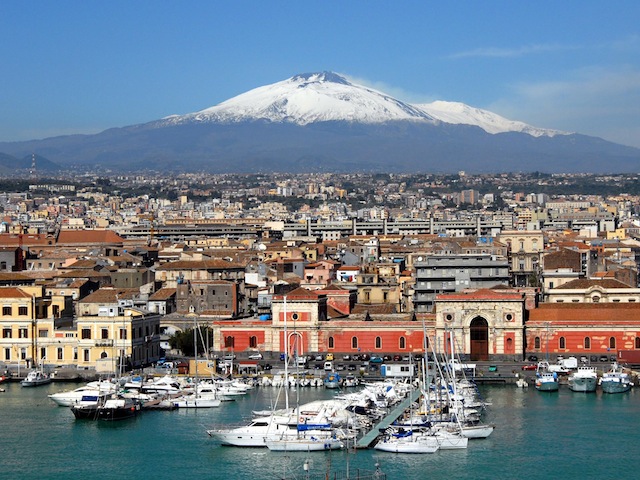
The last place I am going to be looking at in Sicily is Catania…
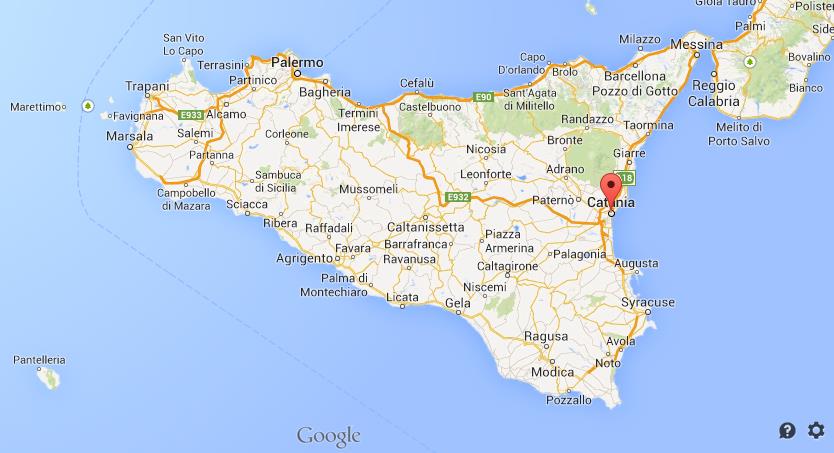
…located at the foot of Mount Etna.
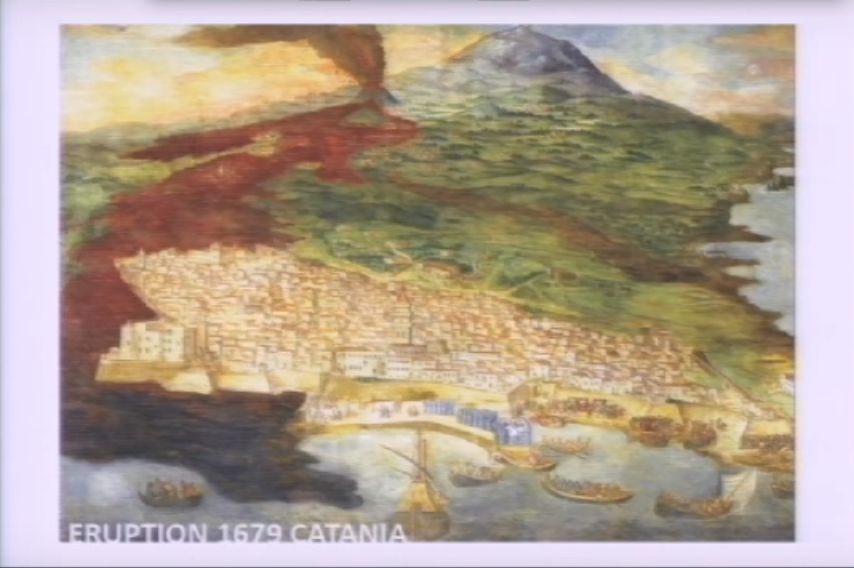
This illustration was said to be of a 1679 eruption of Etna that impacted Catania and also shows what looks to be a star fort around the city or a star city.
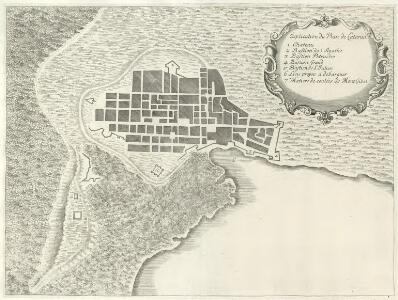
This prompted me to look for historic maps of Catania, and I found this old map of the city which confirms the finding.
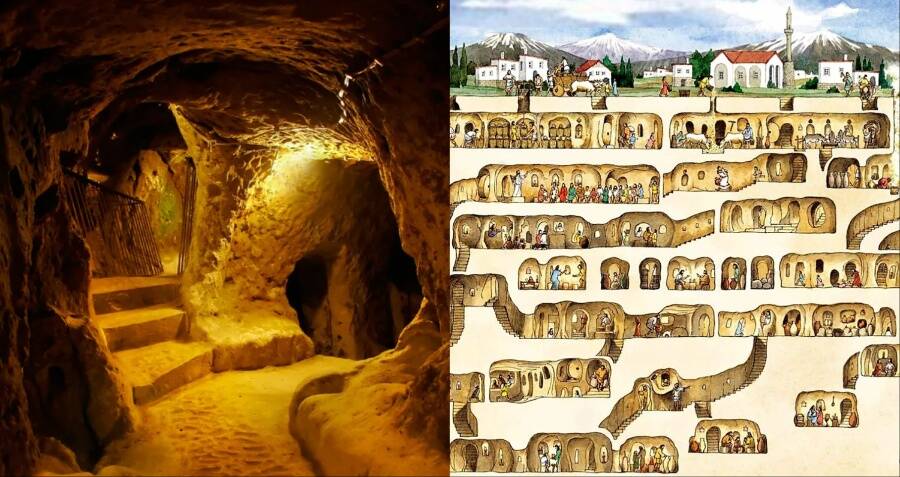
Beneath the surface-level city of Catania, there are said to be several layers of underground cities…
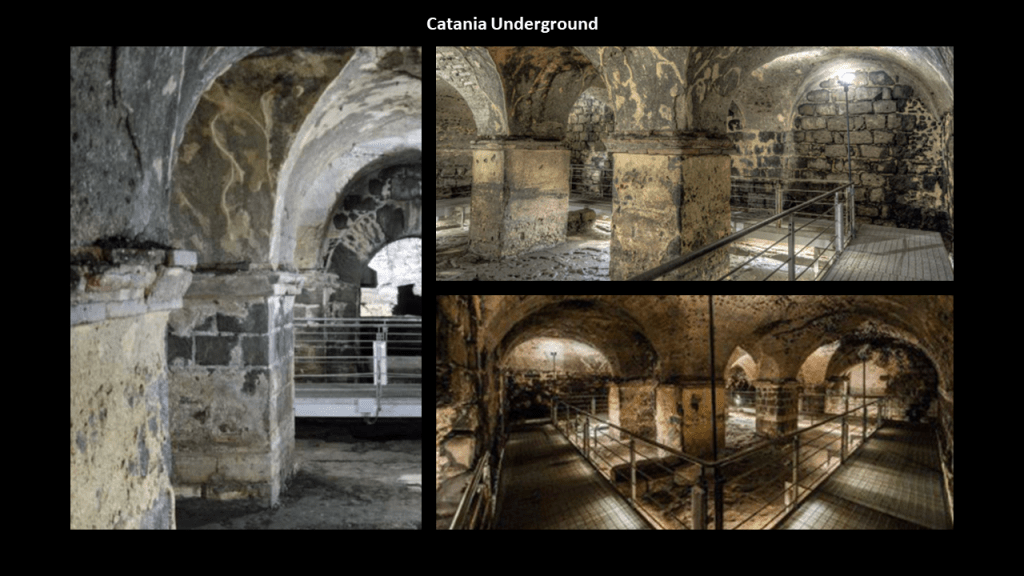
…like what is found in Central Anatolia in Cappadocia, which has been determined to have 40 underground cities, of which 6 are open to the public, like Derinkuyu, an ancient, deep multi-level underground city said to be large enough to shelter 20,000 people together with their livestock and food supply, and opened to visitors in 1969.
Catania also has an underground river, named Amenano…
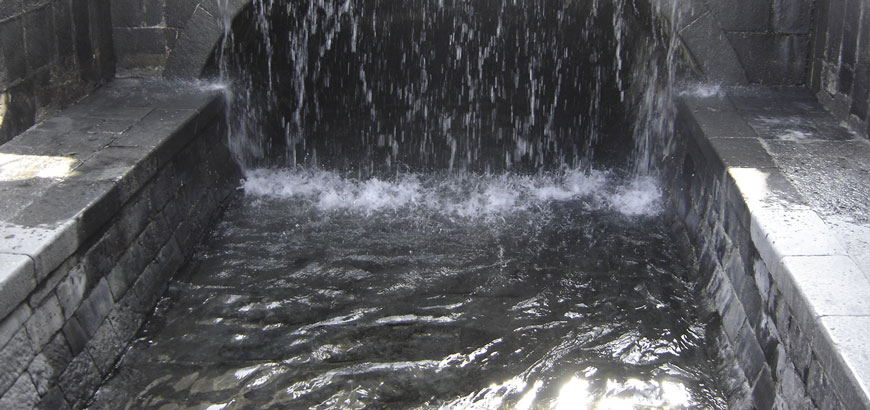
…and in the Piazzo del Duomo, the main square of the city, is the Amenano Fountain of the Amenano River, said to have been sculpted in 1867 by Italian sculptor Tito Angelini, with a young man atop the fountain said to represent the Amenano River, holding a cornucopia with water flowing from it in a basin…
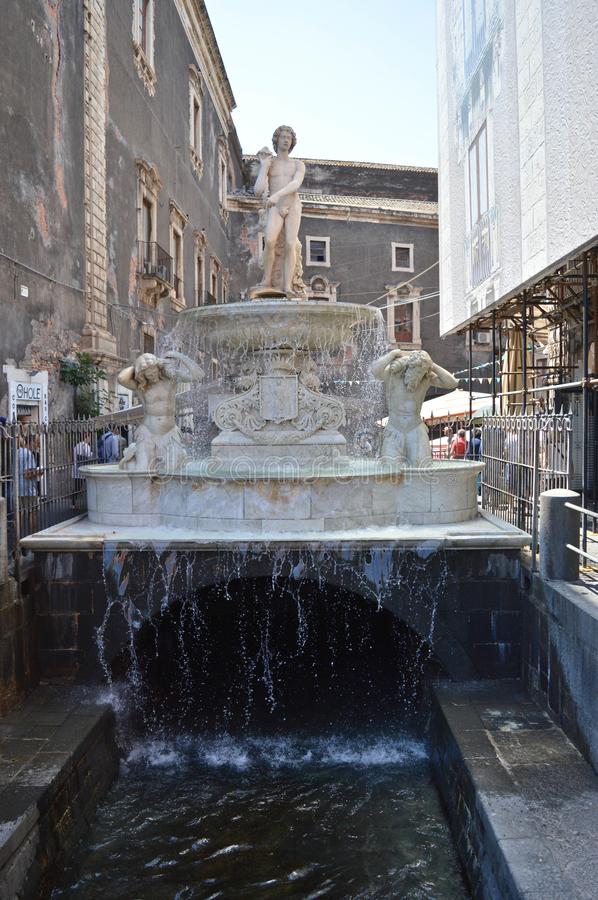
…and sculptures of Tritons on either side.
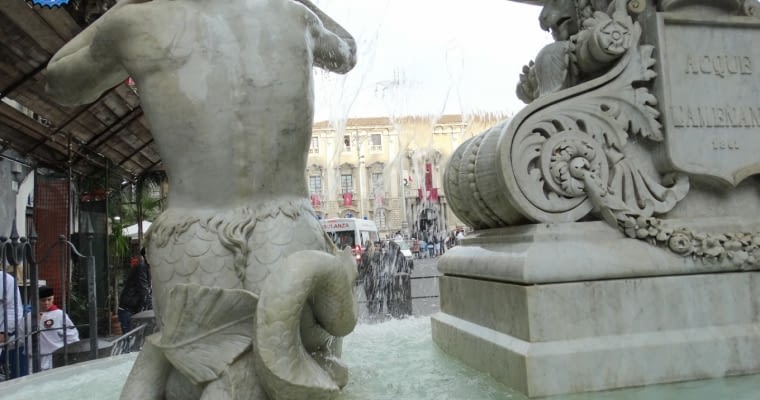
The Catania Town Hall, also known as the “Palace of the Elephants” is also in the Piazzo del Duomo…
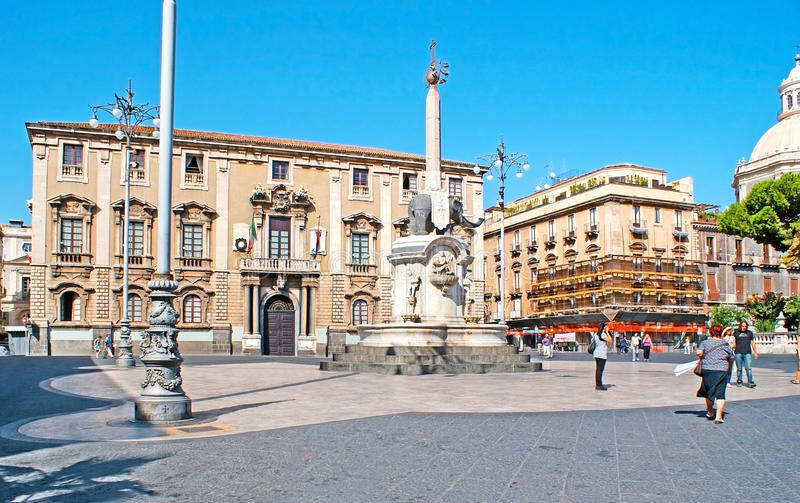
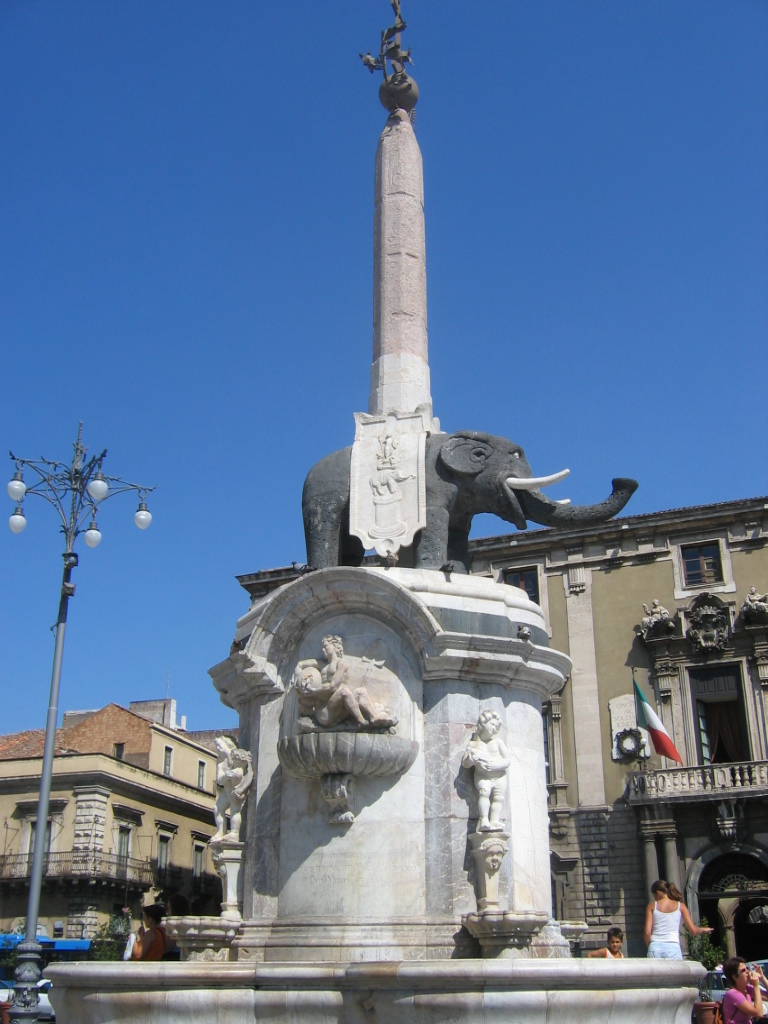
…with the U Liotru fountain, the elephant symbol of Catania, said to have been carved from ancient lava stone and topped by an obelisk from Syene (now called Aswan) in Egypt.
As with everywhere else, there is much more to find in Catania, and Sicily as a whole, but I am going to move along the alignment across the Mediterranean Sea over to Malta.
Before I get to Malta, I would like to take an opportunity to ponder something here that just now struck me.
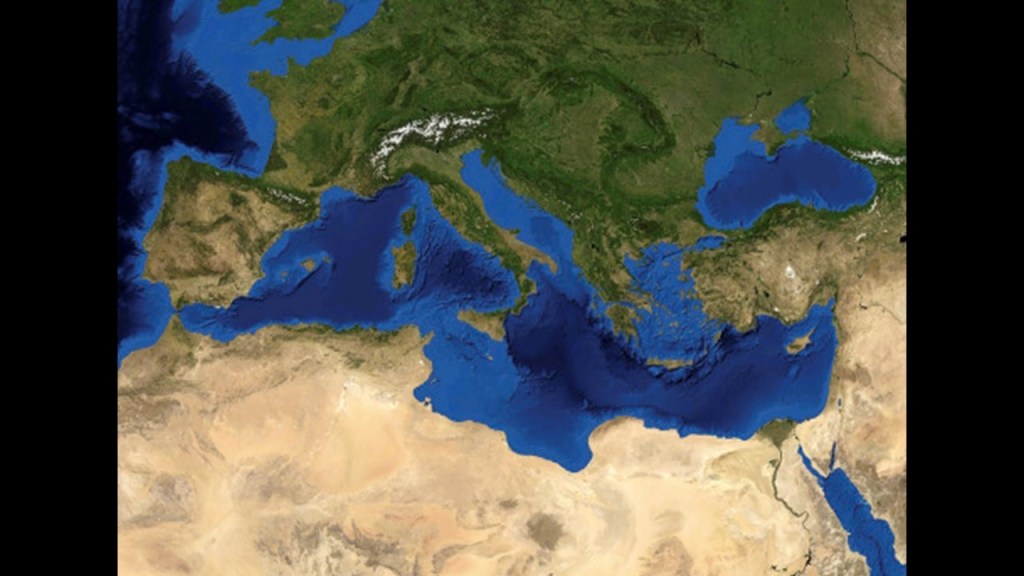
The literal meaning of “Mediterranean” from the Latin “medius” and “terra,” is “middle” and “earth or land.”
So it would be translated into English along the lines of “Middle Earth” Sea.
Just really wondering if there was more land than water here at one time in Earth’s history, and not the “sea” we see today.
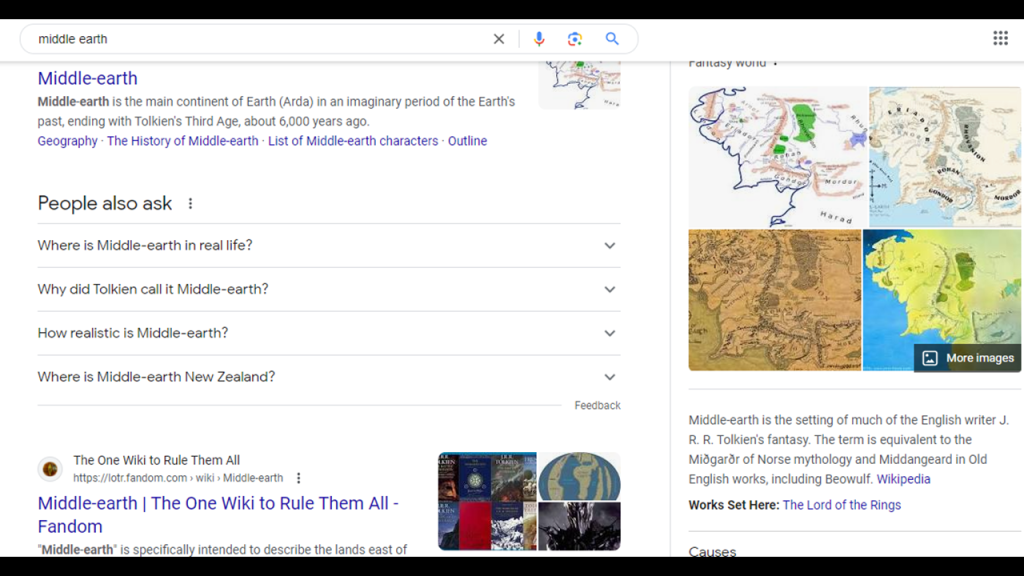
When you search for the term “Middle Earth,” it’s mostly the work of J. R. R. Tolkien that fills up the internet search page.
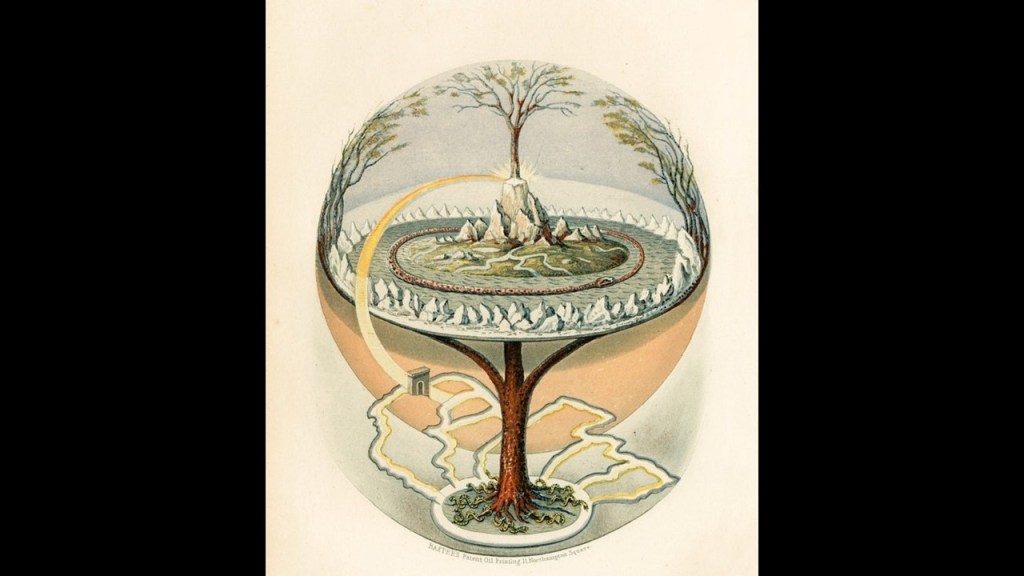
When you plug “Midgard” into the search engine, you get that “Midgard” is the abode of Human Beings in Norse Mythology, and the “middle realm” that is situated in the branches of Yggdrasil, the world tree. that provides the “Axis Mundi,” the “Axis of the Universe” that connects all realms.
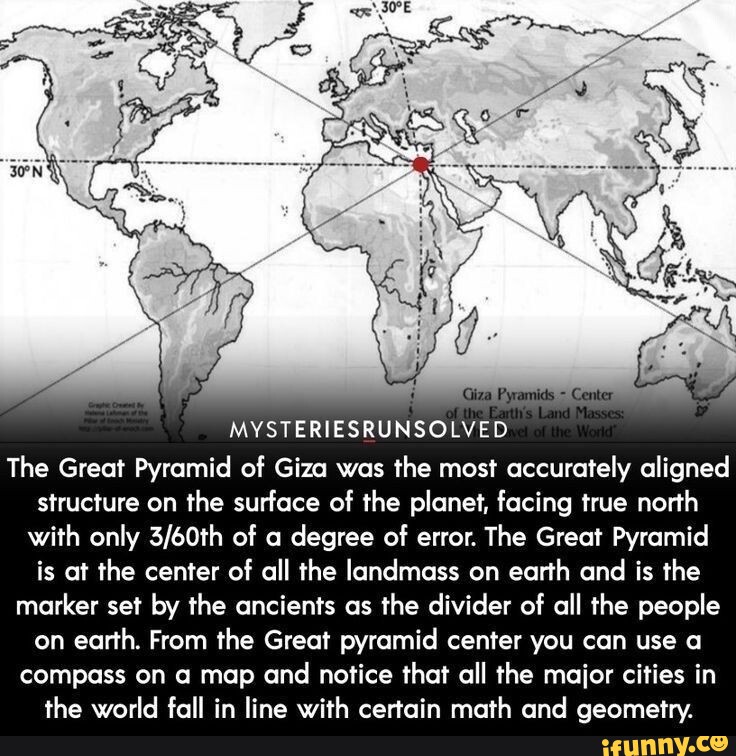
Also, we are told the Great Pyramid of Giza in Egypt, a country on the Mediterranean Coast of North Africa, is in the exact center of the Earth’s landmass.
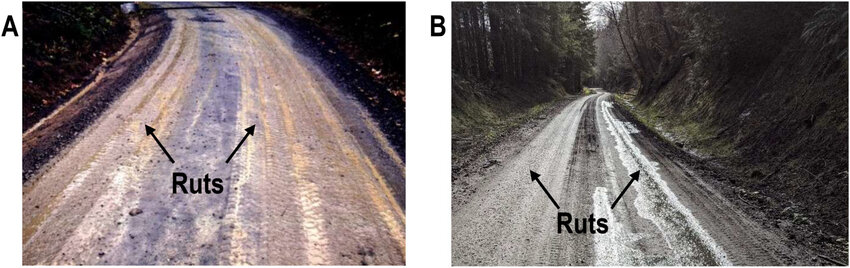
As we head into Malta, it is one place on the Earth that I can think off the top of my head that is known for its mysterious “cart ruts” leading into, and under, the water.
And that’s exactly what they are referred to as. Ruts.
Ruts are defined as “a long, deep track made by the repeated passage of the wheels of vehicles.”
Like the ruts you encounter on unpaved roads.
Just leaving all this here as something to think about, along with everything else.
the island Republic of Malta. in the vicinity of its capital, Valletta.
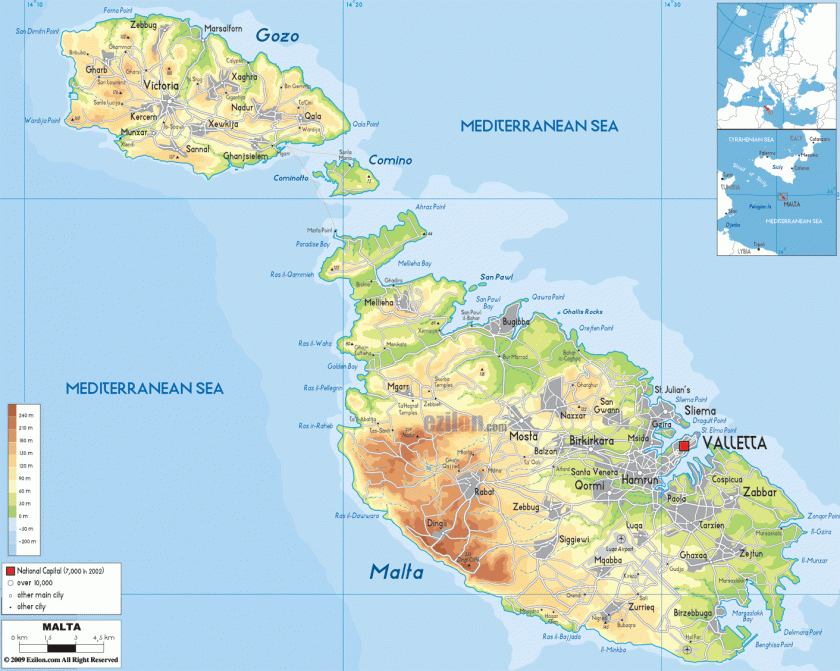
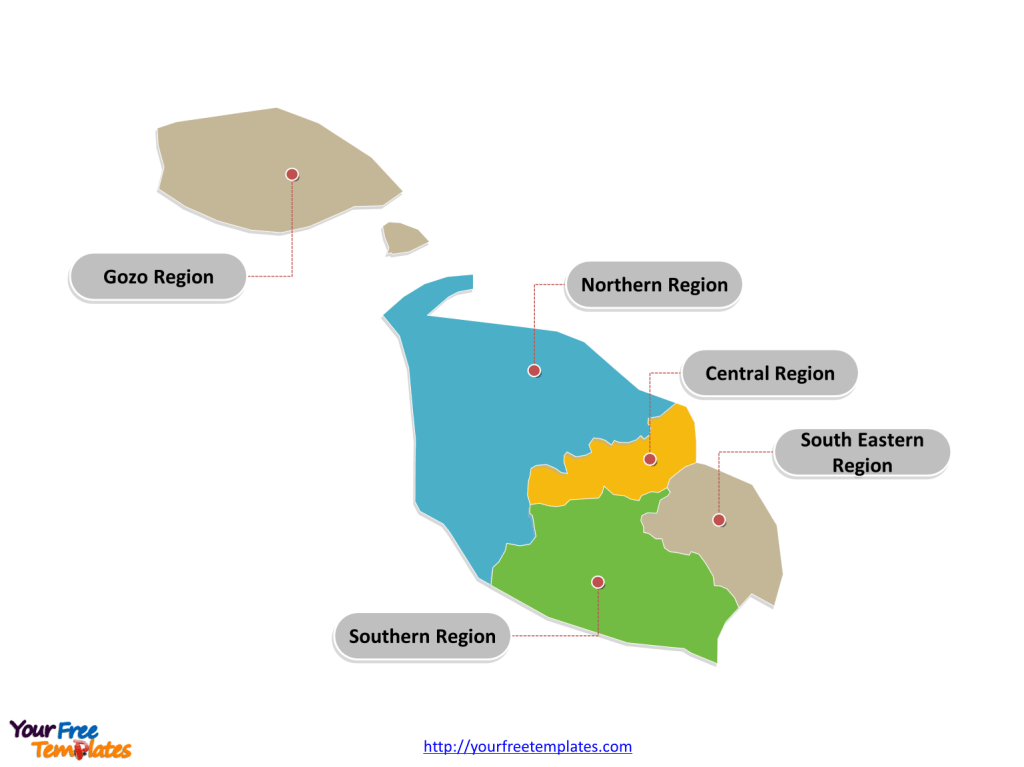
…and located in the Southeastern Region of the main island, one of the five regions of Malta.
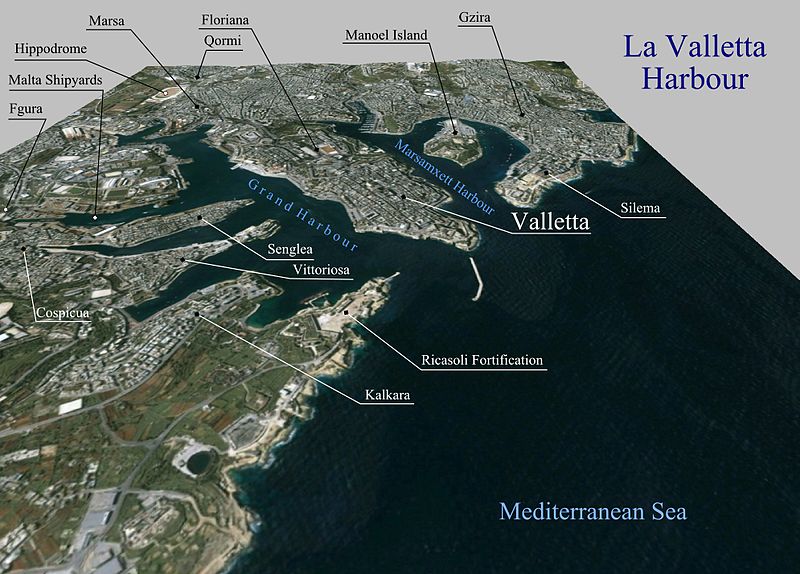
The city of Valletta is situated between the Marsamxett Harbort and the Grand Harbor.
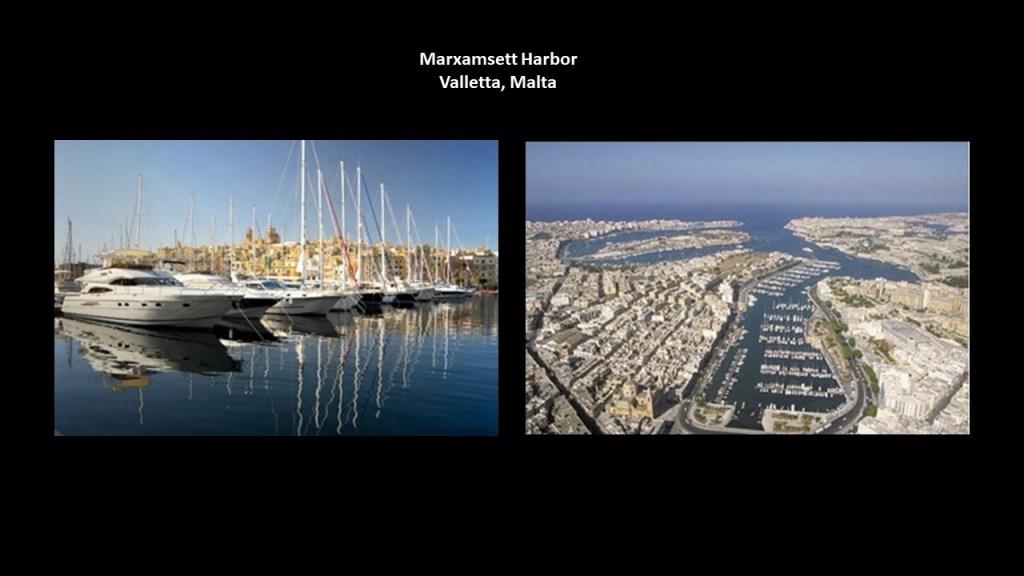
Marsamxett Harbor is described as a natural harbor generally more dedicated to leisure use than the Grand Harbor…
…and is bounded to the north by Dragut Point and Tigne Point…
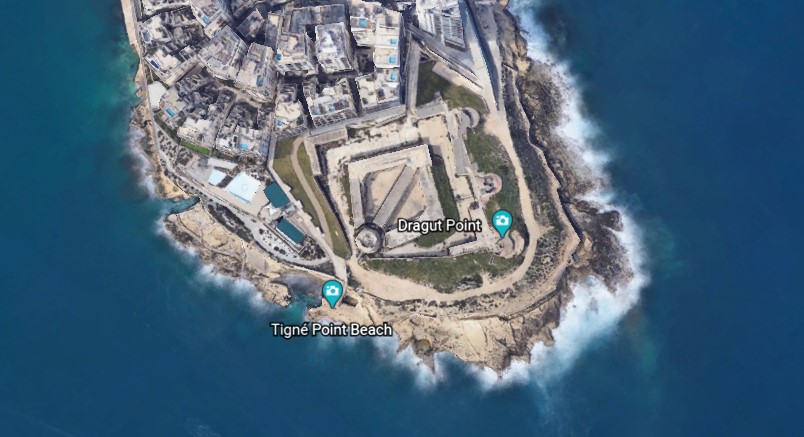
…where we find Fort Tigne…
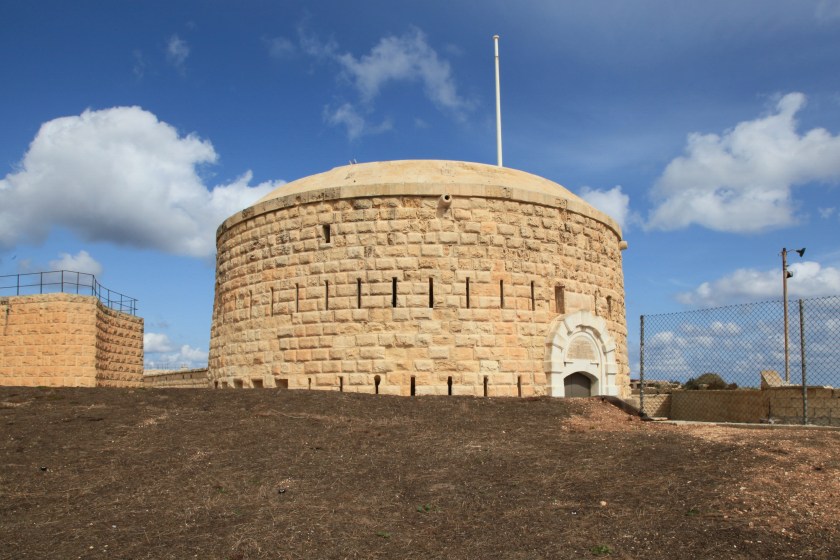
…said to have been built by the Order of the Knights Hospitallers of St. John between 1793 and 1795 and claimed to be one of the oldest polygonal forts in the world.
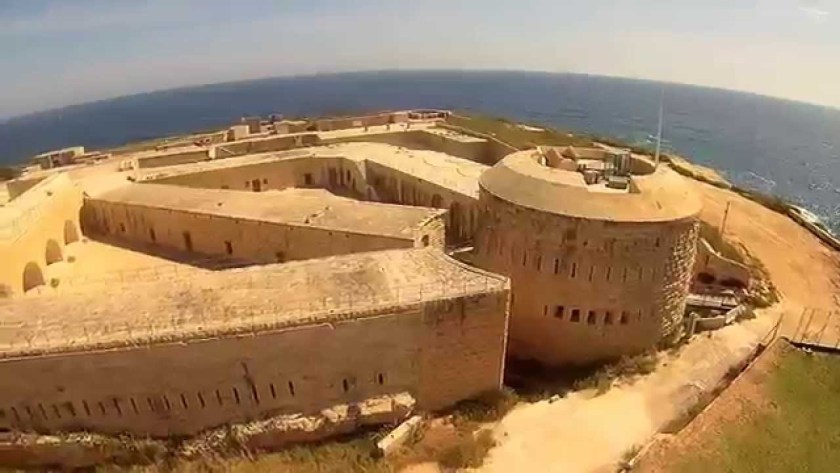
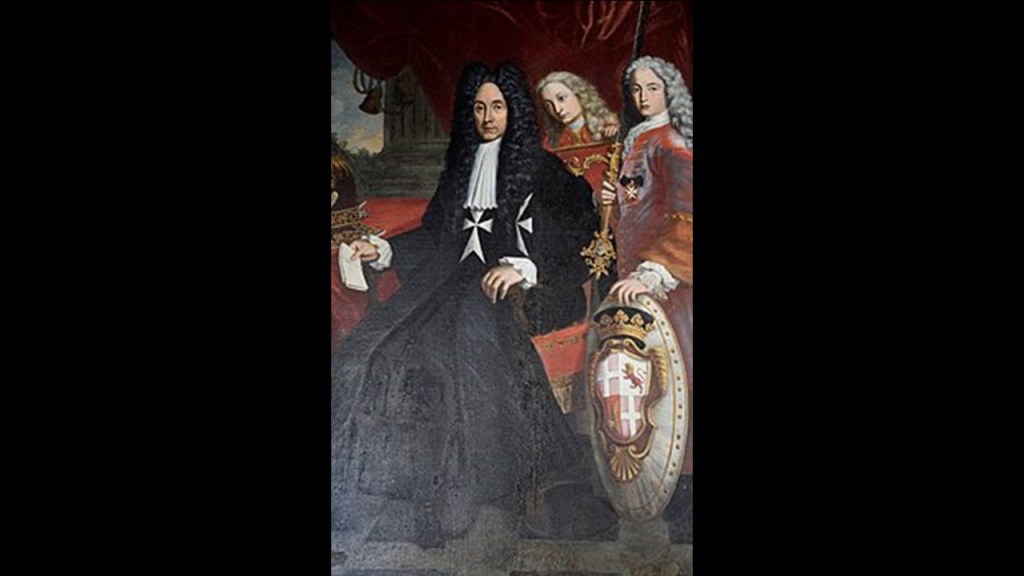
We are told the Order of the Knights Hospitallers of St. John ruled Malta from the time when the Emperor Charles V (who was also King Charles II of Sicily) gave the islands of Malta and Gozo to the Order in 1530, as well as Tripoli in Libya, until the time the Order surrendered to Napoleon when the French landed in Malta in 1798.
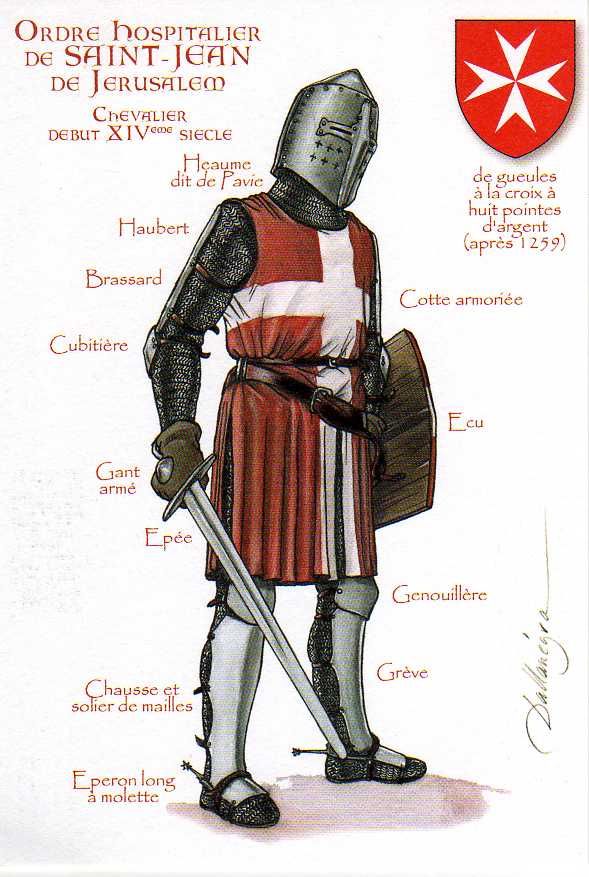
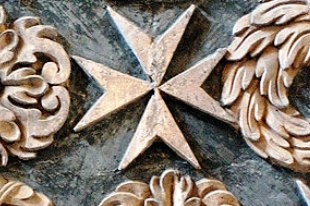
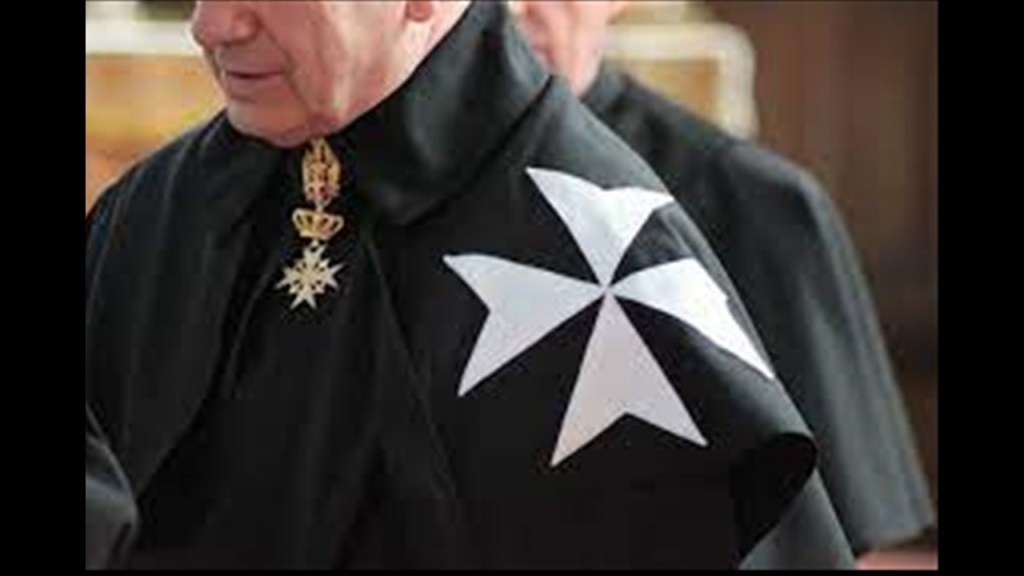
Known usually by the shorter Order of St. John, the Maltese Cross was said to have been officially adopted by the Order in 1126.
And today’s Order of St. John was chartered by Queen Victoria in 1888 as a British Royal Order of Chivalry.
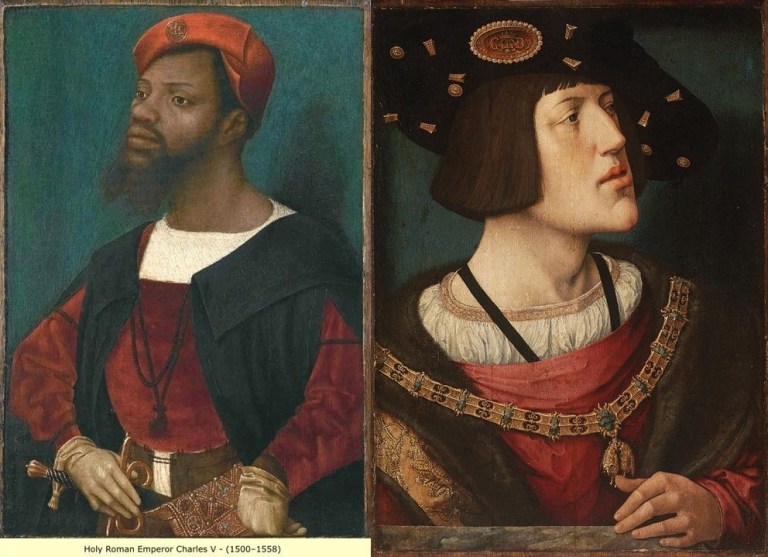
Interesting to note that I have found two different portraits of Charles V, Emperor of the Holy Roman Empire between 1500 and 1558, each having similar facial structure and tilts of the chin, and wearing similar clothing.
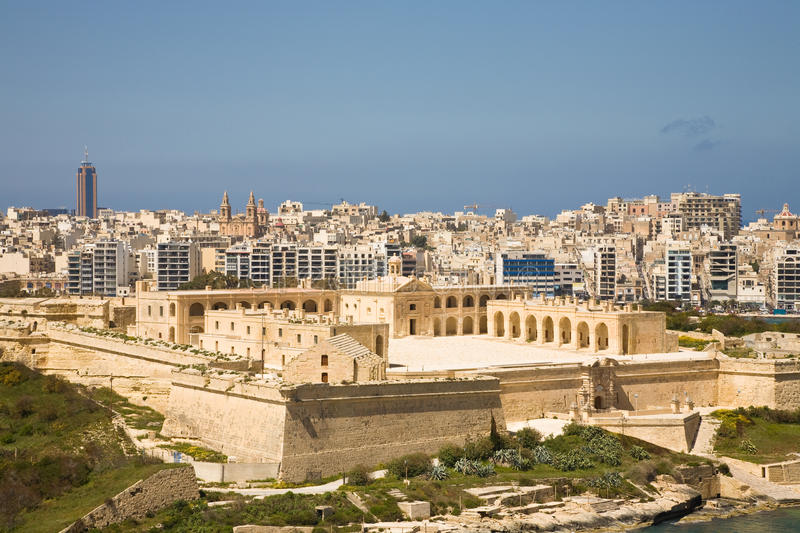
Manoel Island is a small island in Marsamxett Harbor, situated close to Tigne Point…
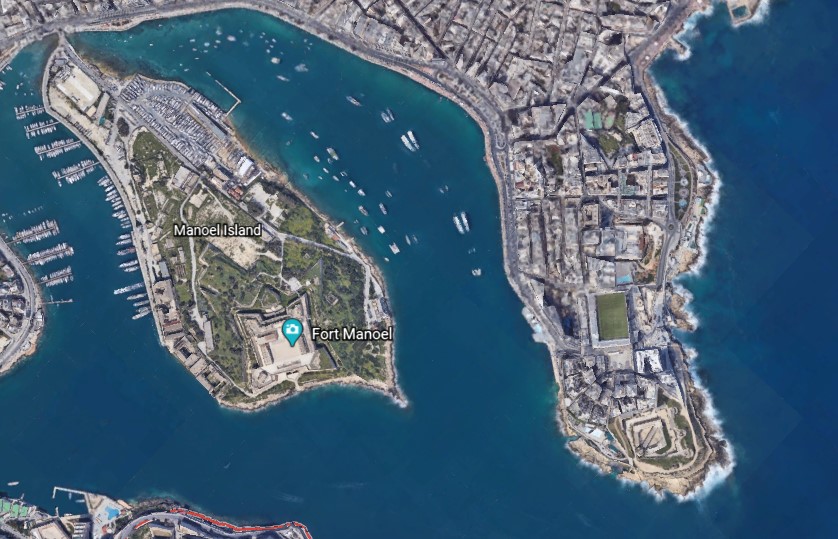
…and the location of Fort Manoel…
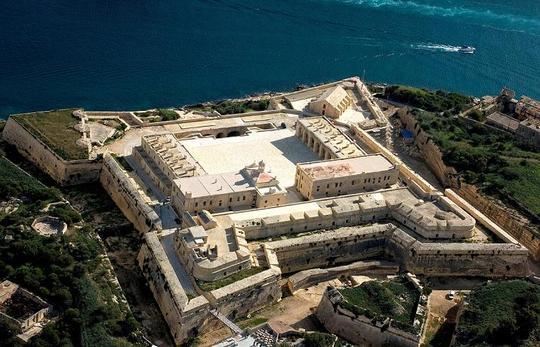
…said to have been built in the 1720s by the Portuguese 66th-Grand Master of the Knights of Malta, Antonio Manoel de Vilhena.
We are told the British military took over the fort in 1800, and renamed it HMS Phoenicia, who used it until 1964…relatively recently.
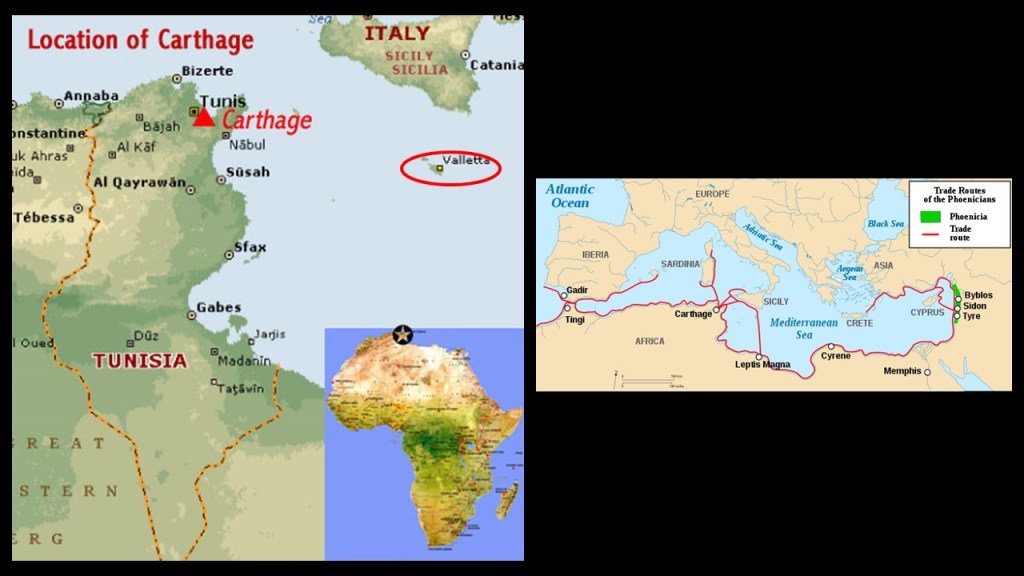
Interesting to note that Malta is geographically quite close to Carthage, and in the middle of the historic location of what was Phoenician, which became the Carthaginian, Empire in our historical narrative.
Manoel Island is connected to the town of Gzira, in Malta’s Central Region, by a bridge…
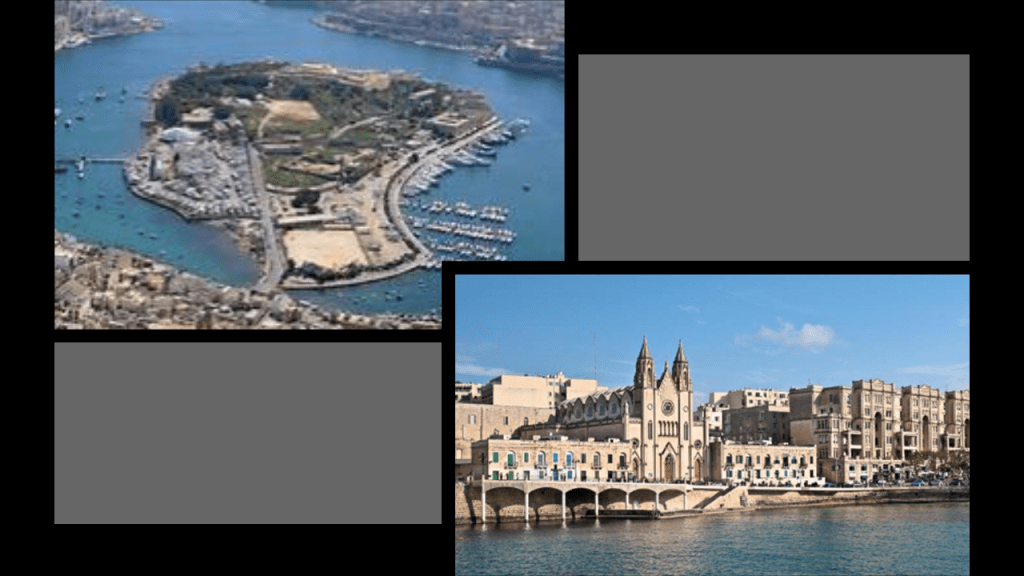
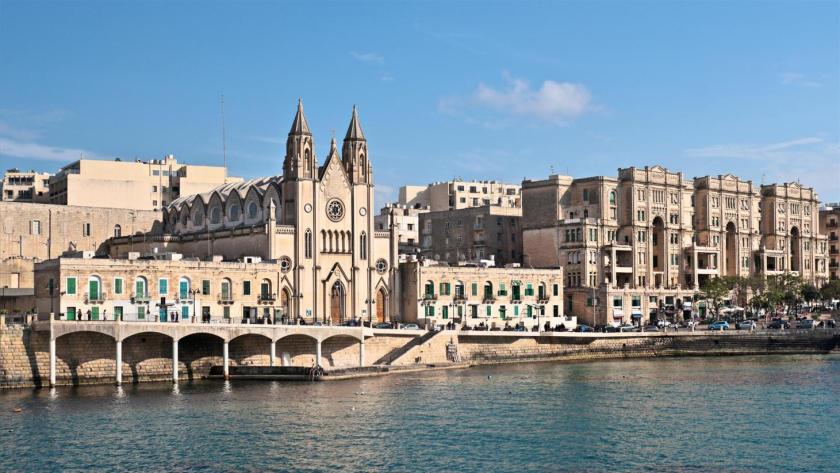
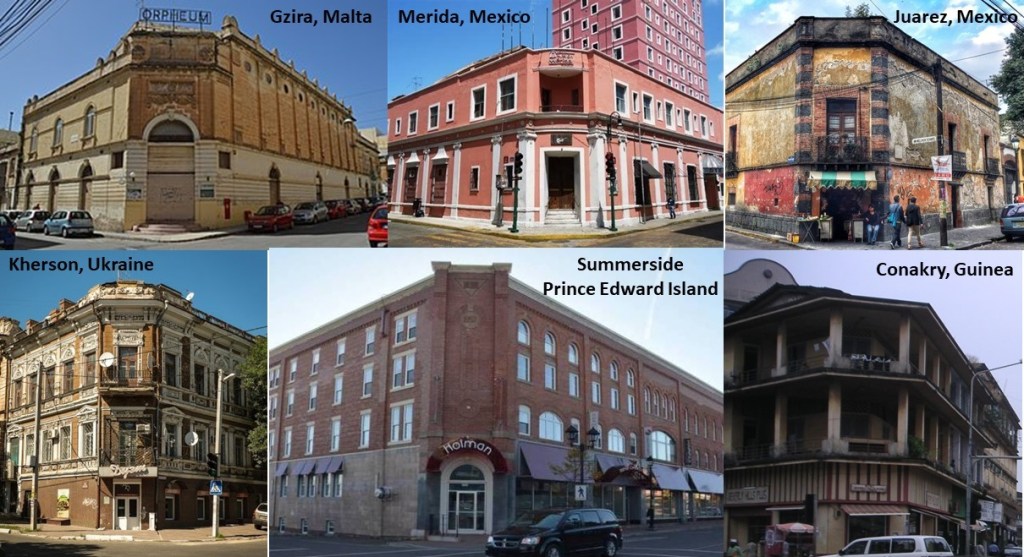
…where we find an Orpheum Theater, said to have been built in 1932.
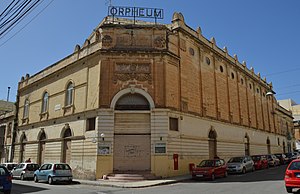
There are two points I would like to make about this finding.
This is the first point.
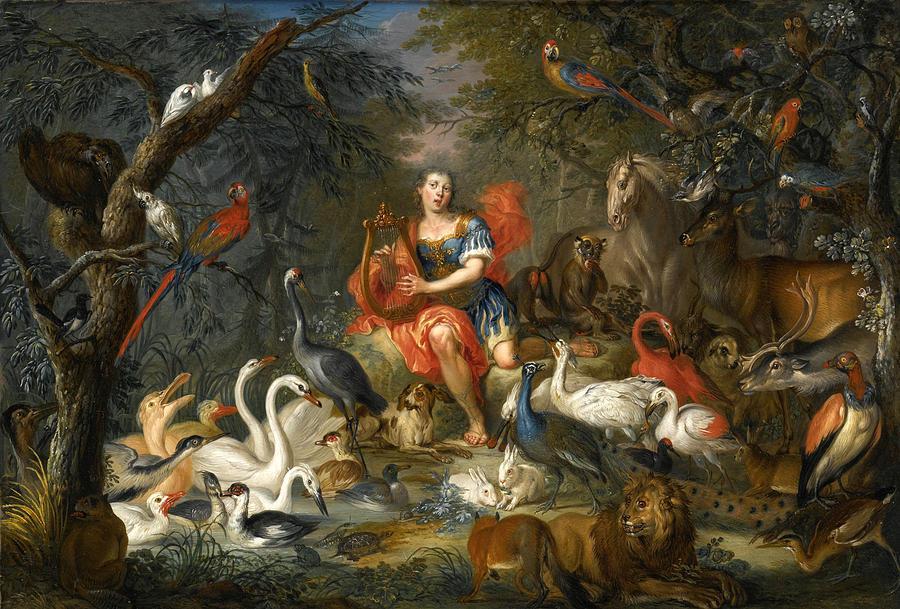
Orpheus was a musician and poet in Ancient Greek legend, said to have had the ability to charm all living things, and even stones, with his music, and even put them to sleep.
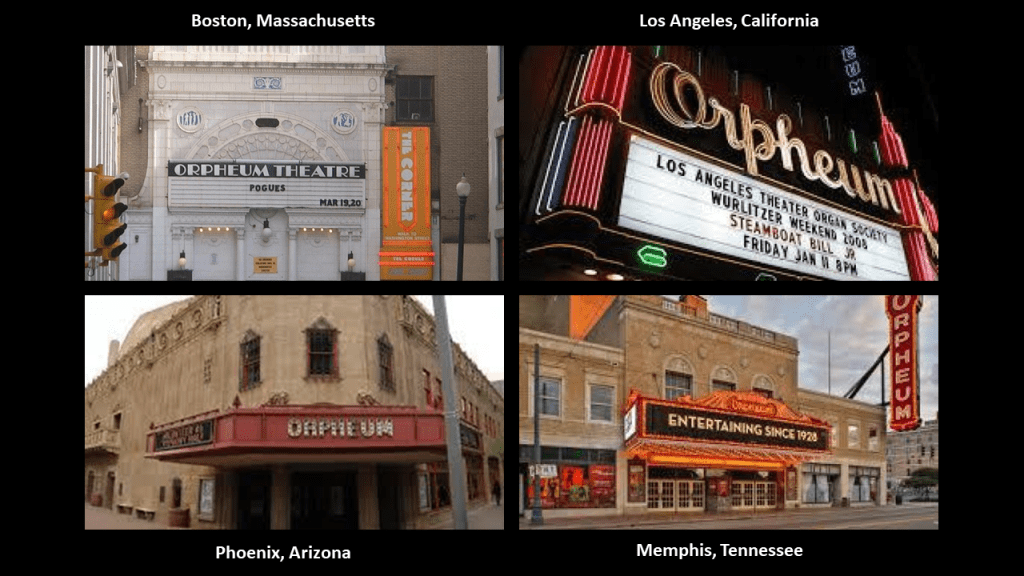
In the course of my research, I found numerous early theaters called “Orpheums,” like the one in Gzira in Malta, including the Orpheum Theater in Boston on the top left; Los Angeles on the top right; Phoenix on the bottom left; and Memphis on the bottom right.
What, exactly, caused us to go to sleep, and forget who we are, and what we were? How has the false information we have been taught in school been reinforced?
Why would this be important to whoever or whatever was responsible for removing the ancient advanced civilization from our collective awareness to begin with?
The second point that I would like to make about the Orpheum Theater in Gzira is its street-corner style of architecture…that I have found worldwide, like in Merida, Mexico in the top middle; Juarez, Mexico, on the top right; and on the bottom left, in Kherson, Ukraine; bottom middle, Summerside in Prince Edward Island; and on the bottom right, in Conakry, the capital of the African country of Guinea.
Fort St. Elmo stands on the seaward shore of the peninsula that divides Marsamxett Harbor from the Grand Harbor…
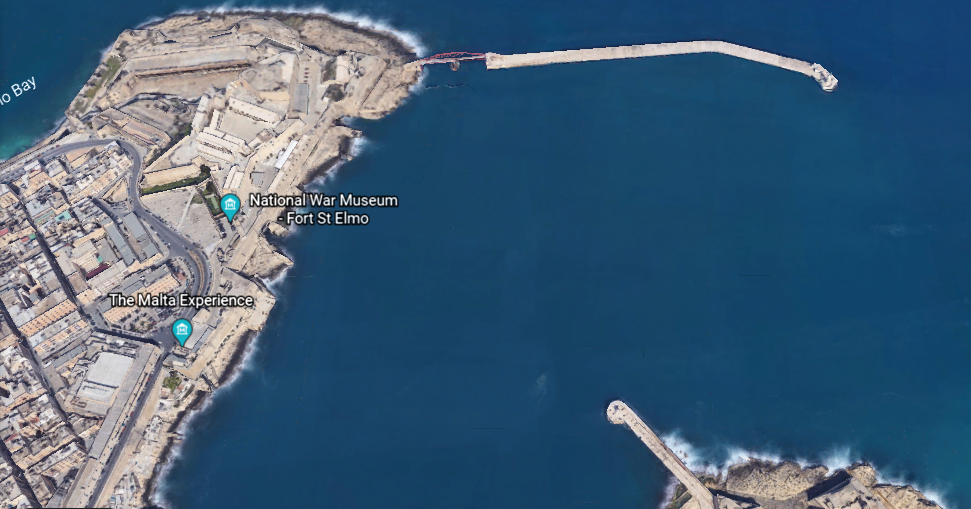
…and said to have been built in its present form as a star fort in the 1550s.
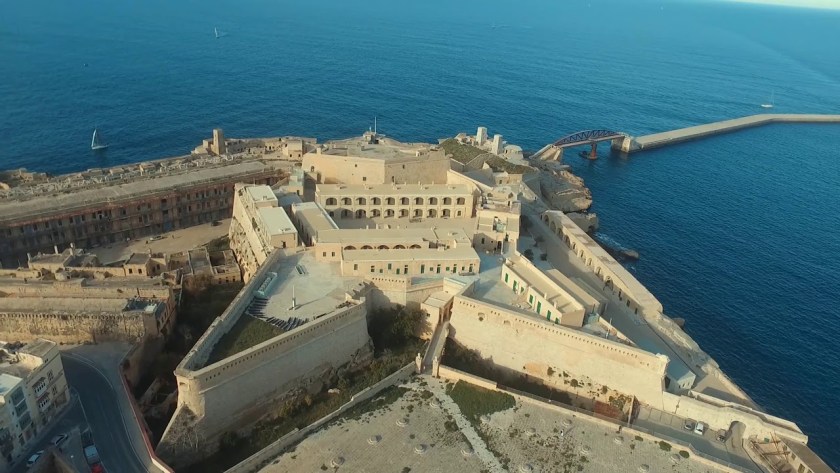
It was the target of aerial bombardment on the first day Malta became involved in the conflict of World War II.
Fort St. Elmo is situated in the middle at the entrance to the two main harbors, between Fort Tigne at the entrance to the Marsamxett Harbor, and Fort Ricasoli at the entrance of the Grand Harbor.
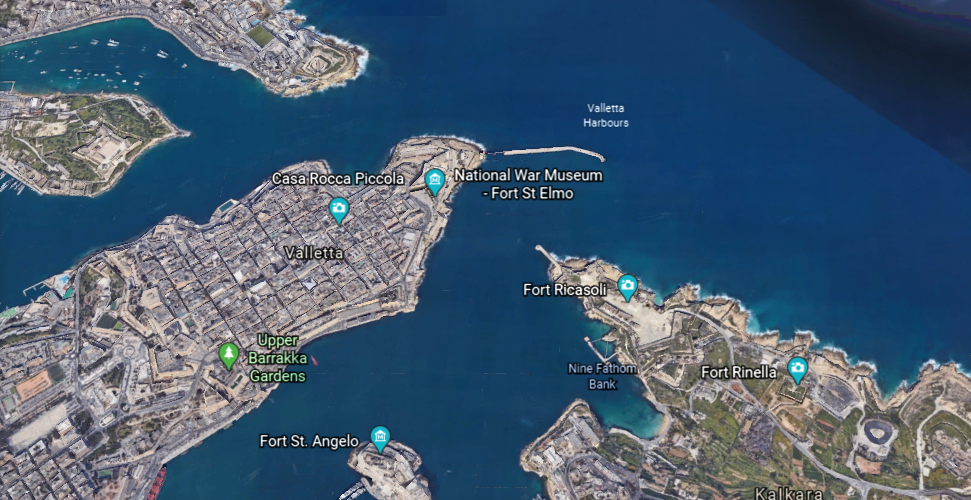
Fort Ricasoli was said to have been built by the Order of St. John between 1670 and 1698.
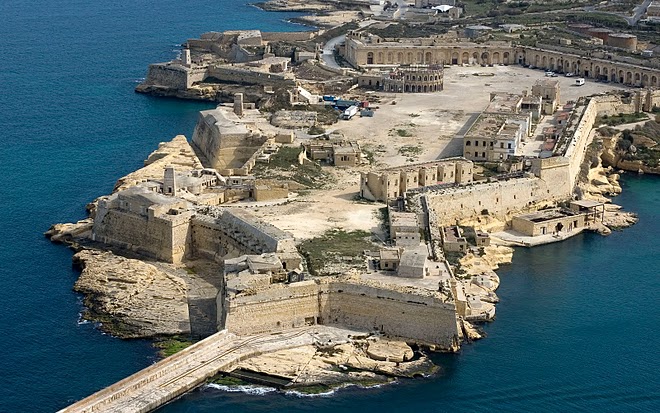
Fort Ricasoli was said to have seen use during the French invasion of Malta, led by Napoleon himself, in 1798, which was part of the Mediterranean Campaign in the War of the Second Coalition of the French Revolutionary Wars.
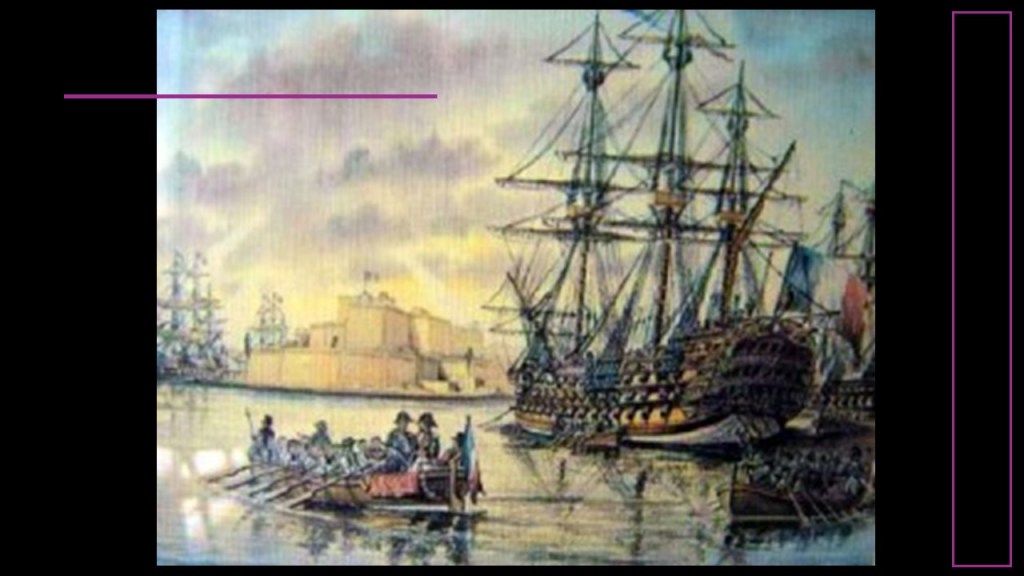
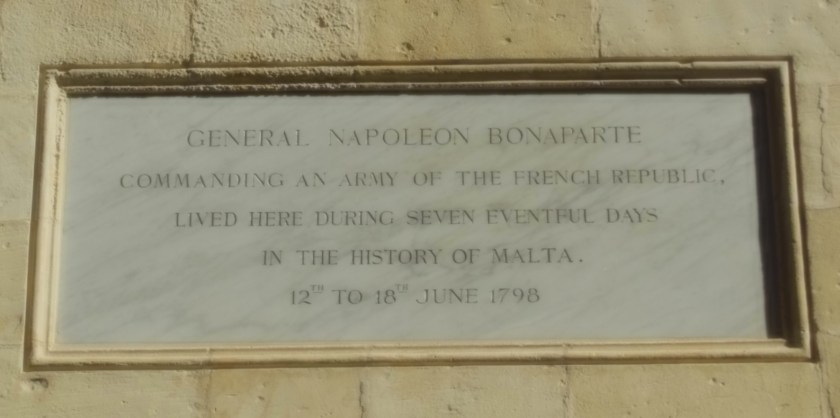
We are told that during the short time Napoleon was in Valletta, the capital city of Malta, between June 12th and 18th of 1798, he did such things as reforming, among other things, national administration with the creation of a Government Commission and twelve municipalities; creating a public finance administration, and the organization of public education, and providing for primary and secondary education, all before sailing for Egypt, and leaving a substantial garrison in Malta.
What?
All this in a week?
Why?
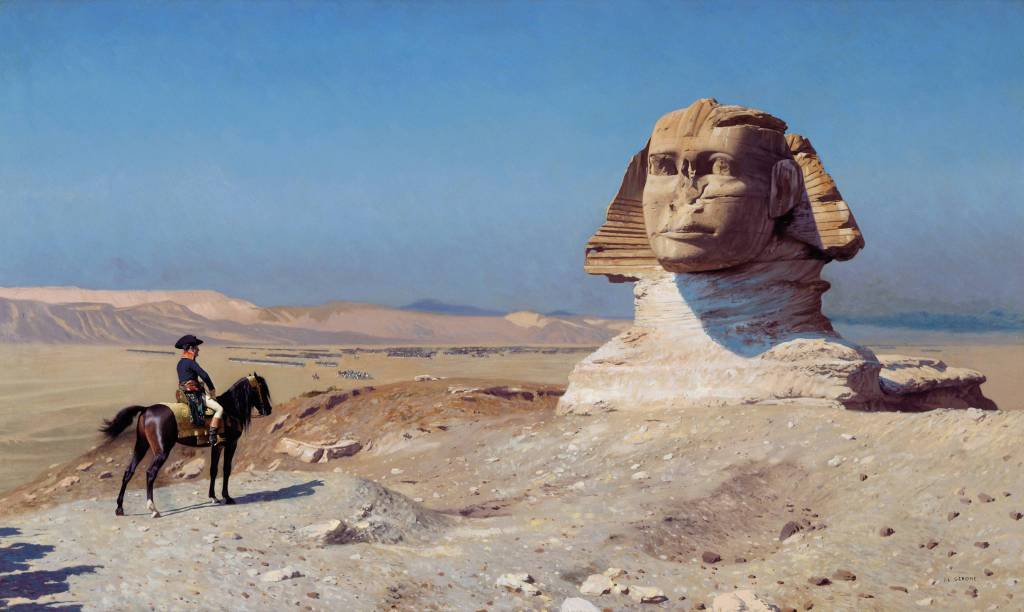
This famous painting of Napoleon Bonaparte before the Great Sphinx of Giza comes down to us as a depiction of him during his Egyptian Campaign, which took place between 1798 – 1799.
The 1886 painting “Bonaparte Before the Sphinx” was credited to the French artist Jean-Leon Gerome, and can be found at the Hearst Castle in San Simeon, California.
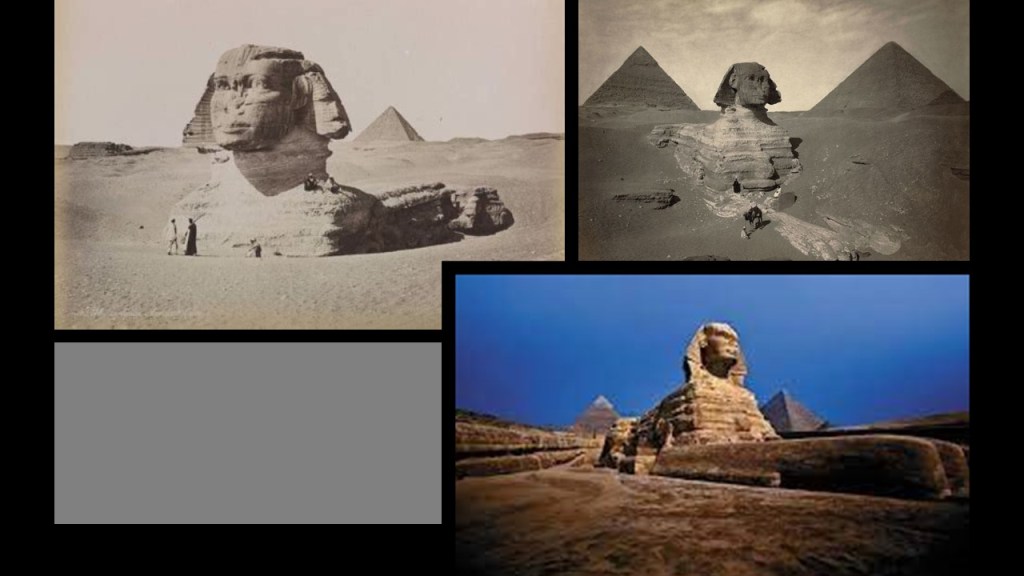
So even the Sphinx needed to be dug out from the sand that covered most of it up!
After the British Royal Navy destroyed the French Mediterranean fleet at the Battle of the Nile on August 1st, 1798, the British were able to initiate a blockade of Malta, assisted by an uprising of the native Maltese against French rule.
The blockade effectively ended the French Occupation of Malta in 1800, and replaced it with British Protectorate, returning control of the central Mediterranean to Great Britain.
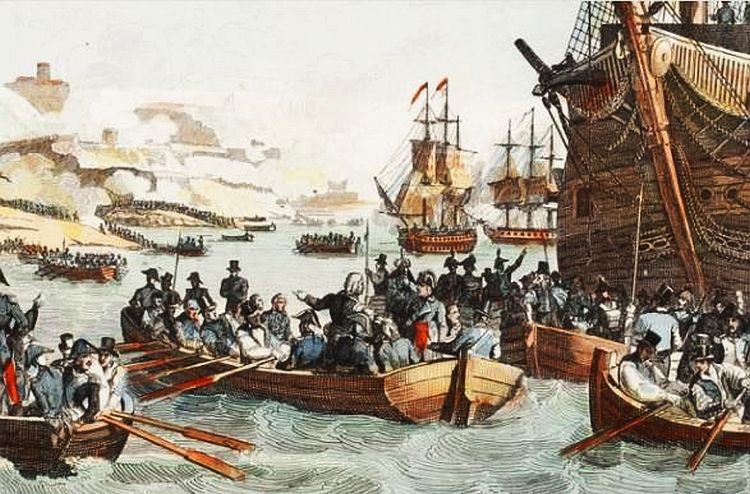
Malta held the status of British Protectorate for 164-years, until it gained its independence from Britain in 1964.
Though Fort Ricasoli, like Fort St. Elmo, was bombarded during World War II and parts of it destroyed, today the fort remains largely intact.
It is used as a filming location…and tank-cleaning facility for the Malta Drydocks, treating liquid waste from ships arriving in the Grand Harbor, removing oil and other chemicals prior to releasing the waste into the sea.
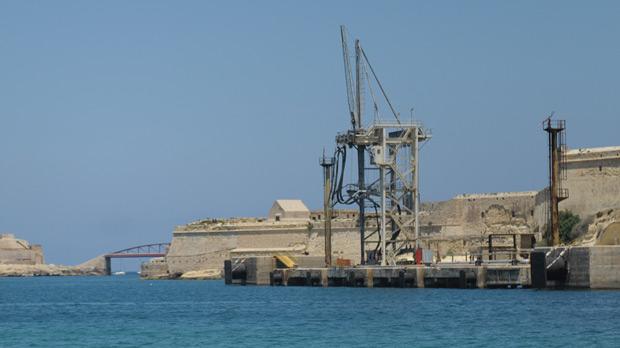
These are the pair of lighthouses, one at Fort St. Elmo and the other at Fort Ricasoli, located on man-made breakwaters at the entrance to the Grand Harbor.
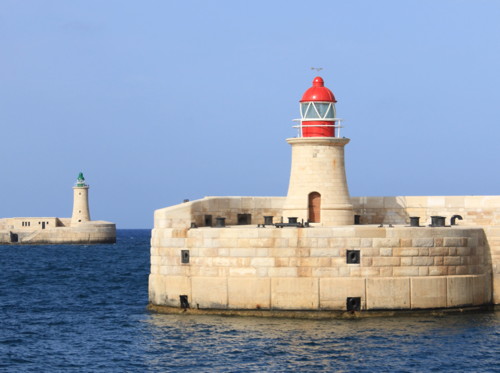
There are two more forts along the shore of the Mediterranean Sea next to Fort Ricasoli.
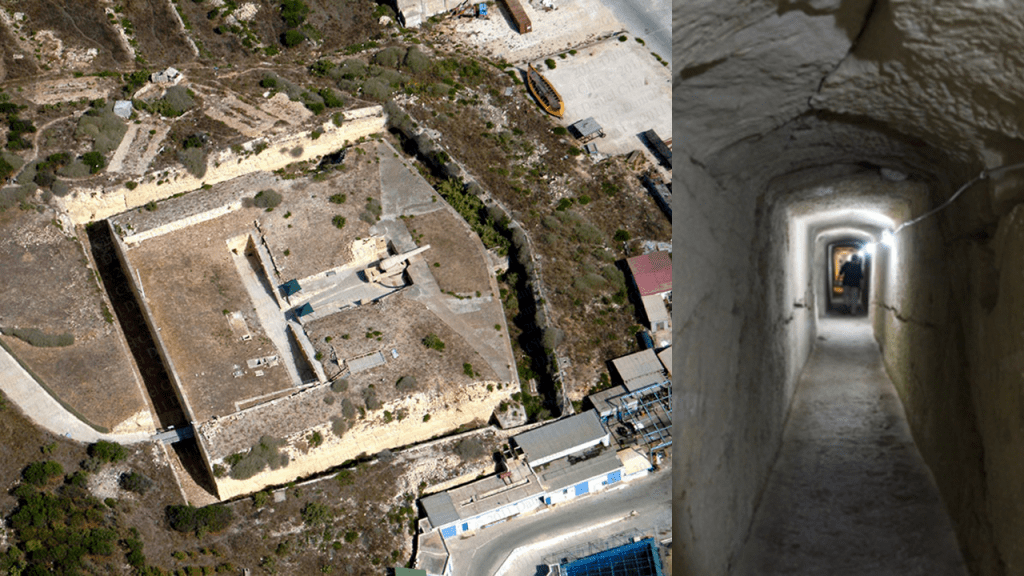
The first is Fort Rinella, described as a Victorian battery.
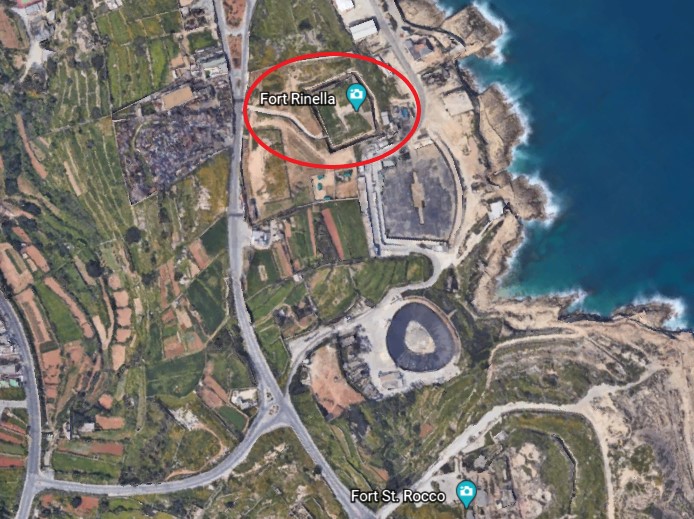
It was said to have been built by the British between 1878 and 1886.
Fort St. Rocco is found just a short distance down the Mediterranean coast from Fort Rinella.
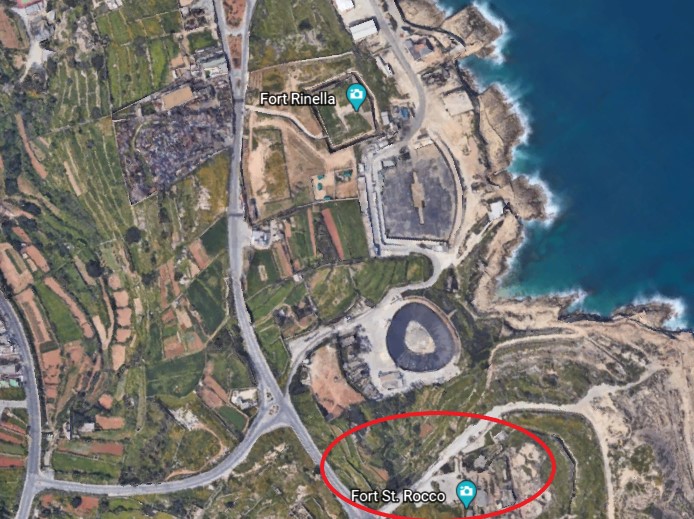
It is described as a polygonal fort, and as part of a complex of shore batteries built by the British to defend the coast east of the mouth of Grand Harbor between the 1870s and 1900.
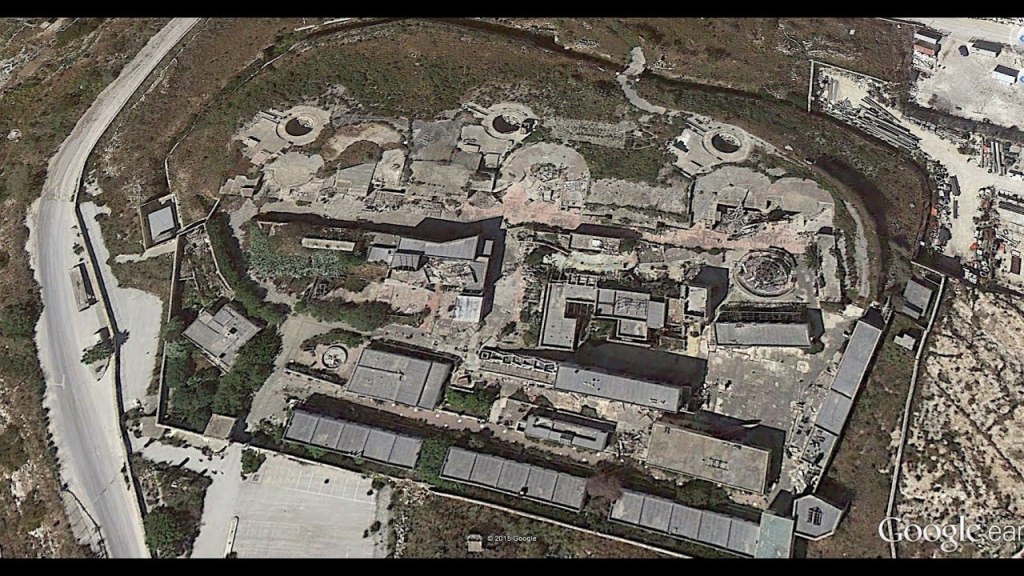
These three forts are part of Kalkara…
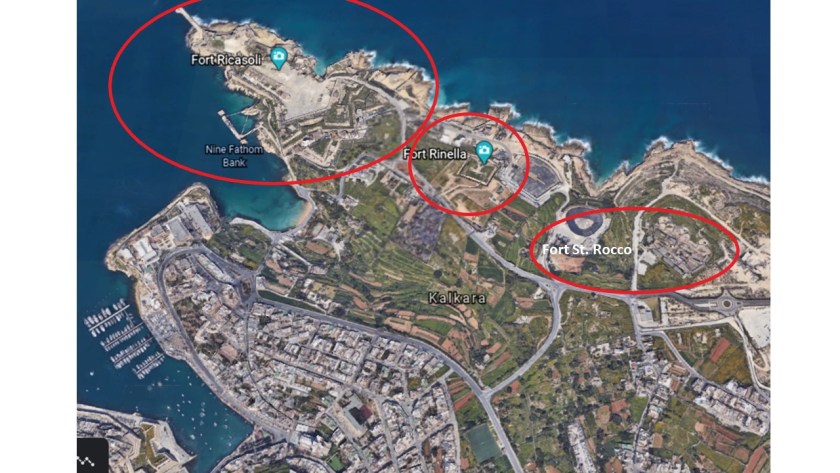
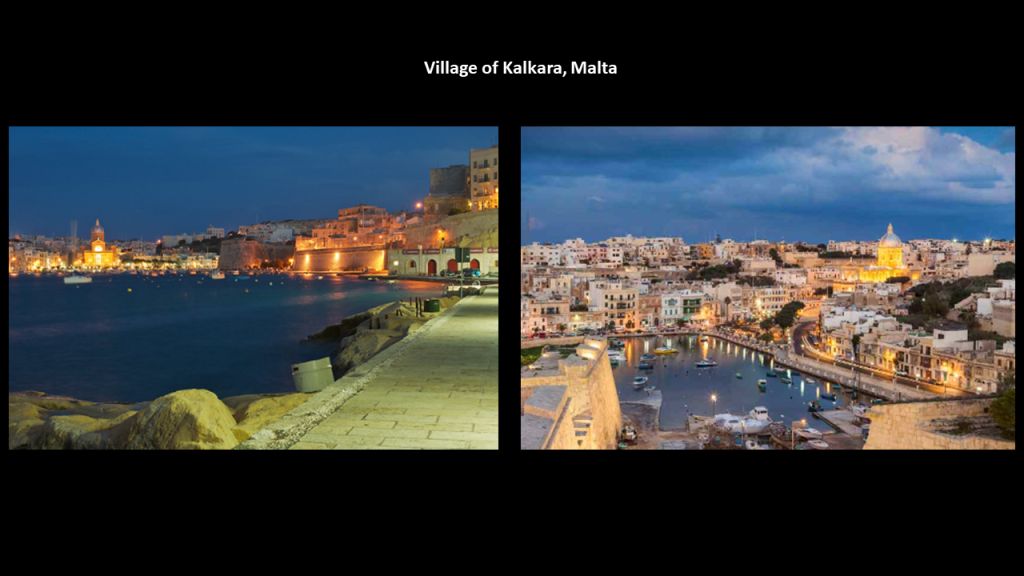
…described as a village on Kalkara Creek, shown here.
Moving from a short distance west from Kalkara, we come to Birgu, also known as the “Victorious City”…
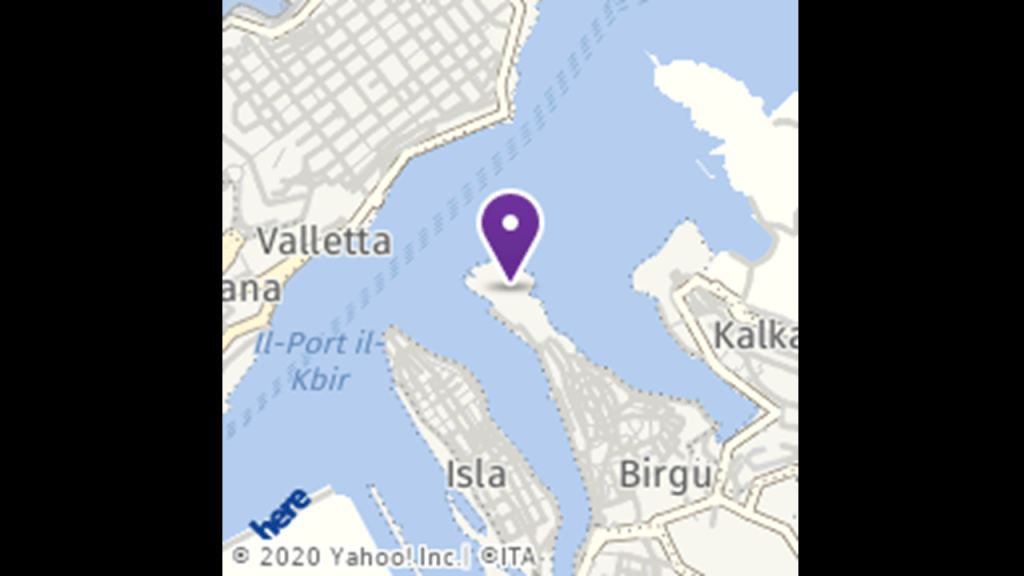
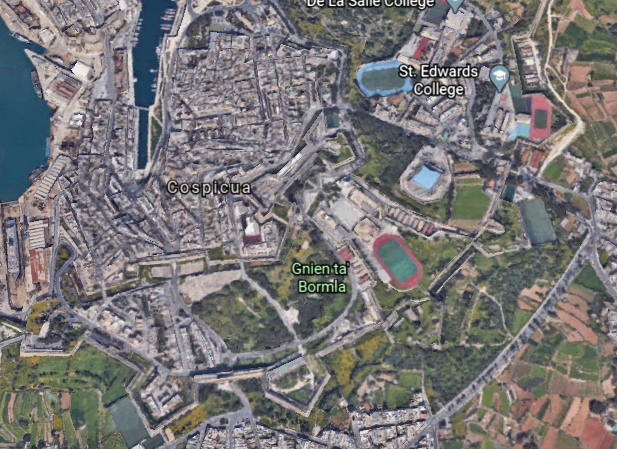
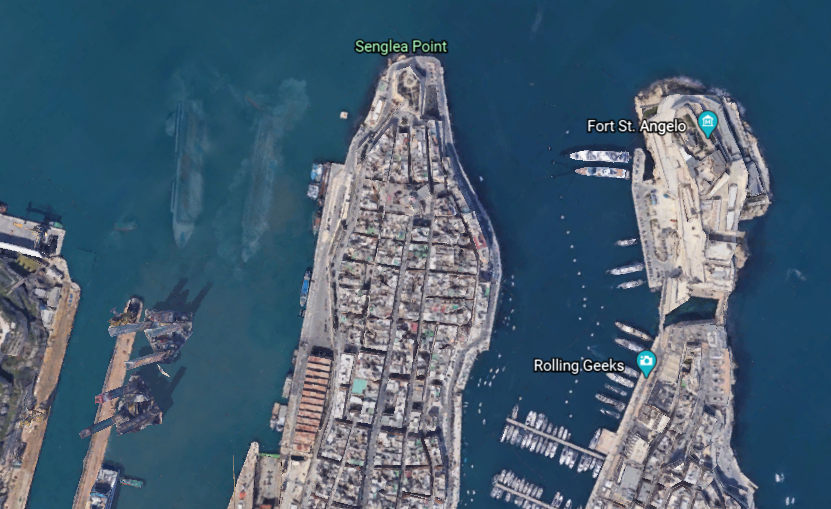
…and described as the oldest of an area in Malta referred to as “The Three Cities” – three fortified cities in very close proximity to each other, which also includes Senglea and Cospicua.
The city occupies a promonory of land in the Grand Harbor, with Fort Saint Angelo at the head…
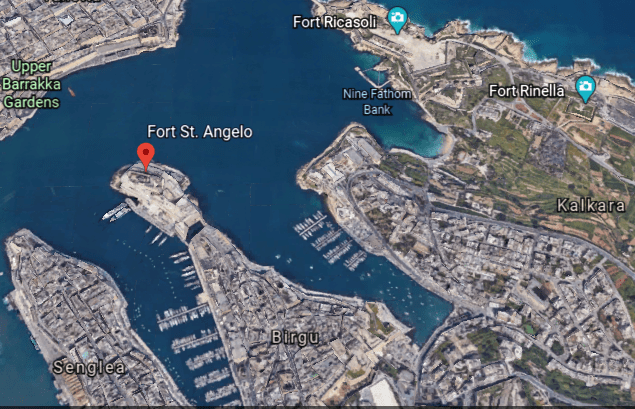
…and the city of Cospicua at the base.
Fort San Angelo served as the base of the Order of St. John, and we are told the de facto capital of Malta between 1530 and 1571…
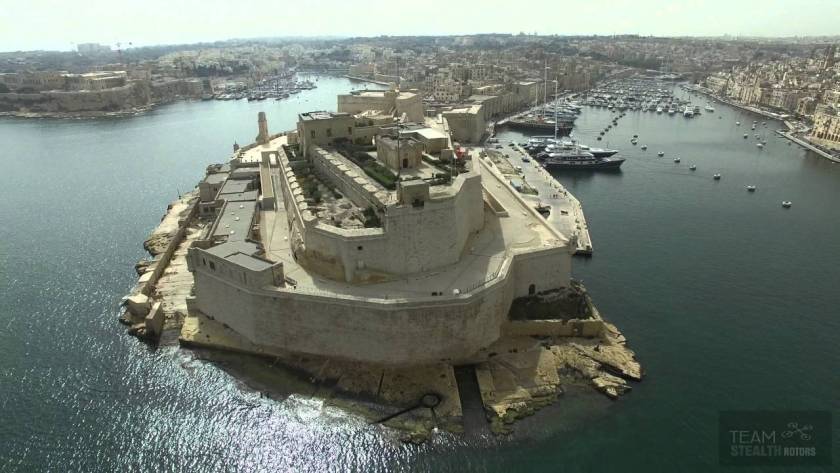
…and the British garrisoned the fort between 1800 and 1979.
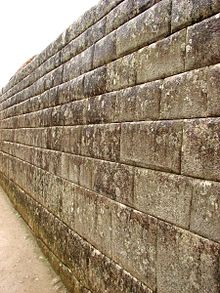
We are told the date of its original construction is unknown, but has large ashlar blocks, the finest stonemasonry unit…
…and an Egyptian pink granite column at the top of the fort inside a chapel.
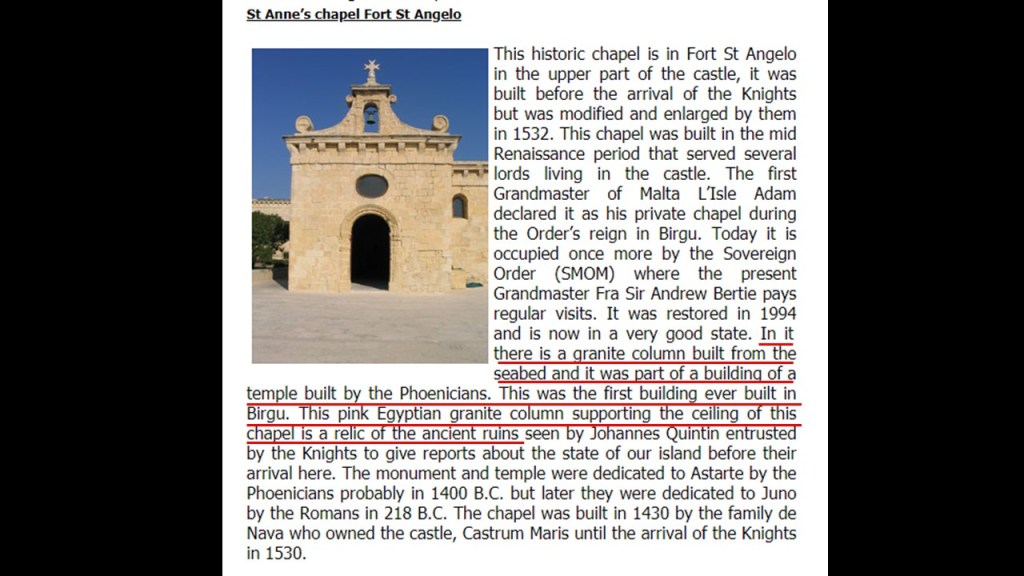
Fort San Salvatore is also in Birgu…

…said to have been built in 1724 on one of the bastions of the Cottonera Lines.
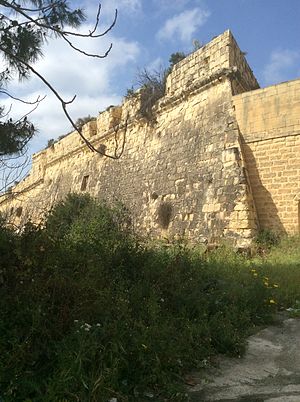
It was said to have been used as a Prisoner-of-War Camp during the Greek War of Independence between 1821 and 1830, as well as during World War I; and during World War II, as a kerosene depot and internment camp, which were used to imprison large groups of people, without charges, or the intent to file charges.
The Cottonera Lines were said to be a line of what are called fortifications in Conspicua and Birgu that were constructed in the 17th- and 18th-centuries to form the outer defenses of the Three Cities…
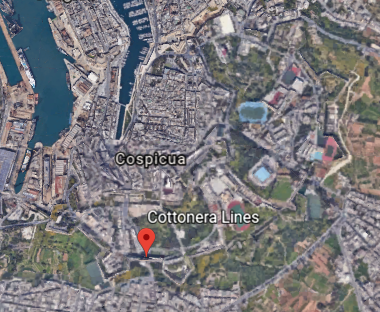
…and built around an earlier line of fortifications known as the Santa Margherita Lines.

Before leaving Birgu for the neighboring city of Senglea, I would like to point a place that caught my attention on Google Earth.
I noticed the Inquisitor’s Palace, and as it turns out, this was the seat of the Inquisition in Malta between 1574 and 1798, which was the first year Napoleon’s forces occupied Malta. It has been the National Museum of Ethnography since 1966, with permanent displays on Malta’s religious traditions as consolidated by the Inquisition.
The arrows are pointing to the building’s windows that are not level with the steep street beside it, which is a classic indicator for mud flood evidence.
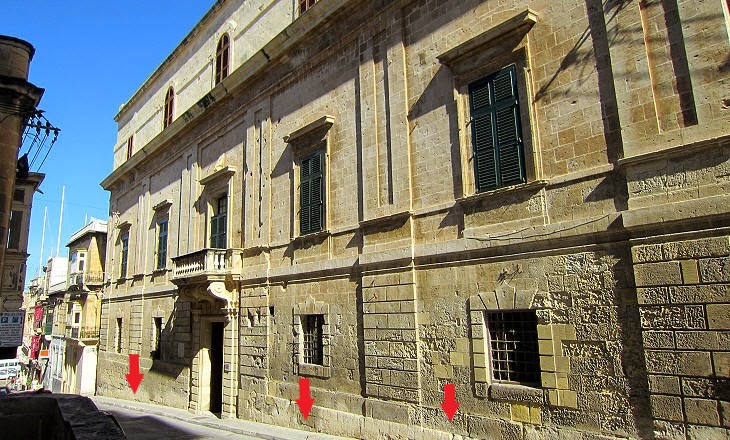
The Inquisitor’s Palace was said to have been originally constructed as a courthouse in the 1530s.
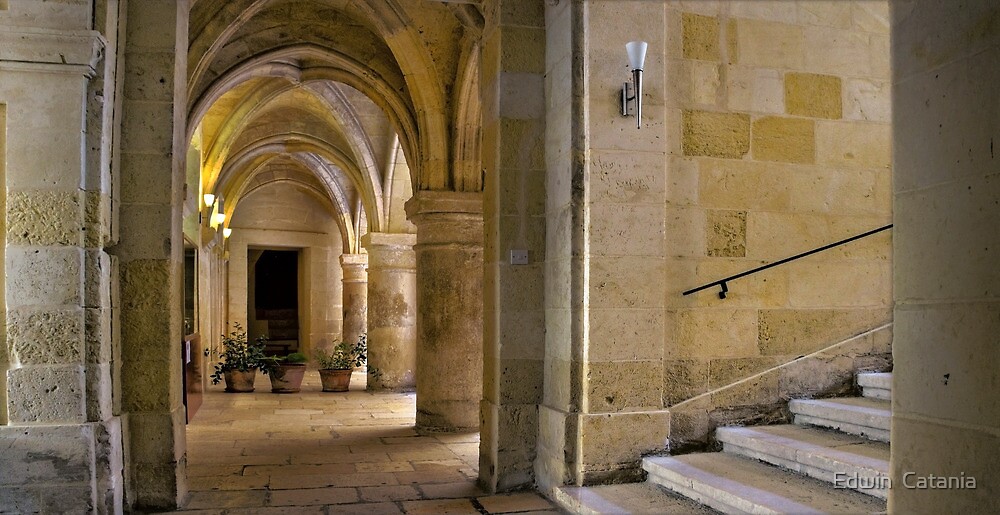
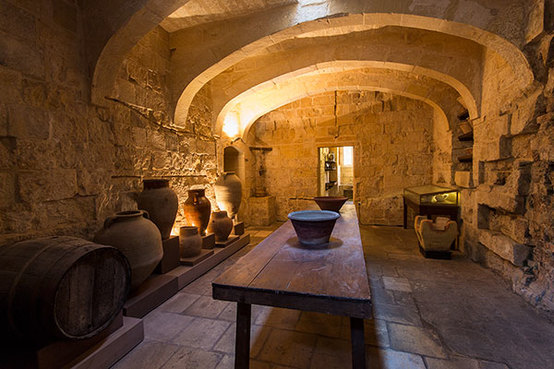
The Inquisition was a group of institutions within the Catholic Church with a stated aim of combating heresy, defined as the formal denial of the orthodox beliefs of the church, which is defined as the adherence to correct or accepted creeds in religion.
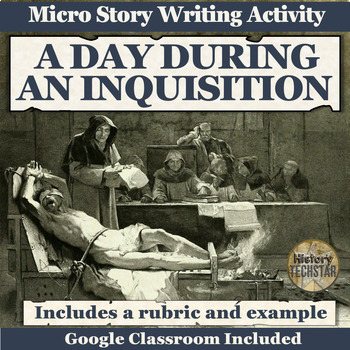
We are told it started with the French Inquisition in the 1200s in France, which over a period of about 20-years saw the Cathar Crusade and the genocide of the gnostic Cathars, which had been labelled as an heretical sect.

The Inquisitor’s Palace became the headquarters of the Inquisition in Malta in 1574, serving as tribunal and prison, as well as the palace of the Inquisitor.
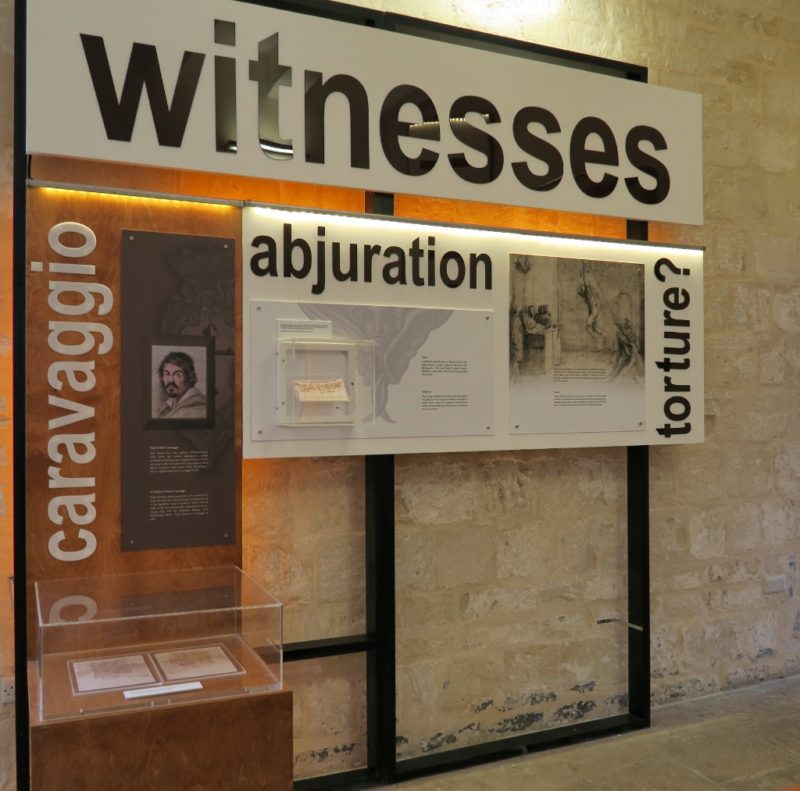
So we are taught that all of this is normal and matter of fact in history in school, like there is nothing out of the ordinary or wrong about the Inquisition…which was, by its very nature, violating basic Human Rights and dignity, including torture in the name of Christianity just for having dissenting views?
And the Office of the Inquisition it is still in existence to this day?
Only it is now called the “Congregation for the Doctrine of the Faith.”
The city of Senglea is a fortified city as well, we are told, and is also known as the “Civitas Invicta” or “Unconquered City.”
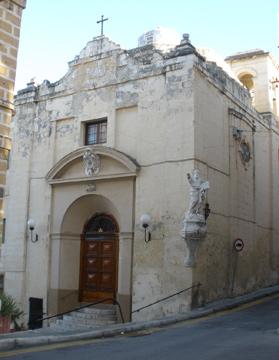
We are told there weren’t any buildings here until 1311, at which time St. Julian’s Church, or Chapel, was built, said to have been the first building constructed on what later became Senglea.
Then in 1552, we are told, the foundation stone was laid for Fort St. Michael, and its construction was said to have been completed in 1553.
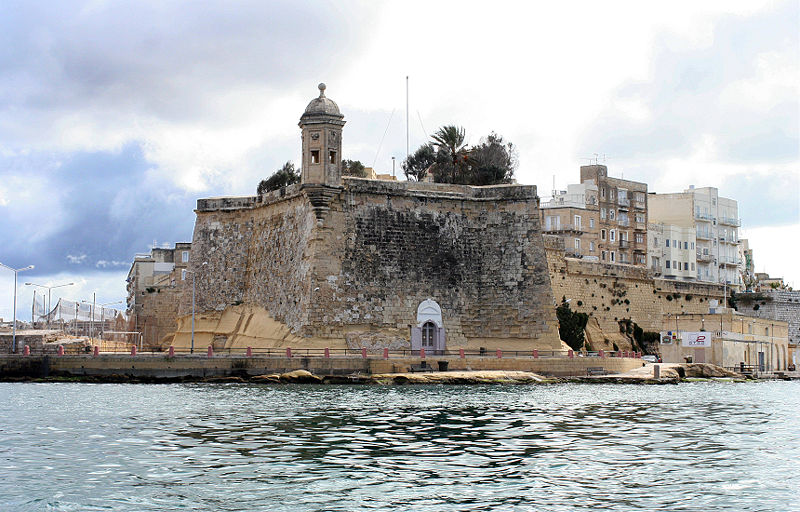
Then construction of the walled town of what at the time was known as St. Julian’s Island in the decade following the completion of Fort St. Michael, subsequently became known as Senglea…
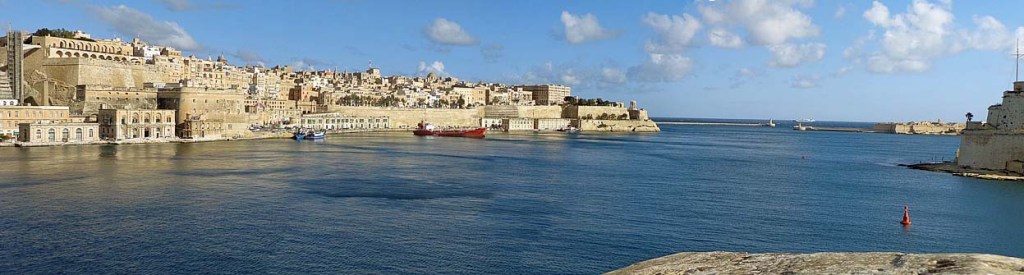
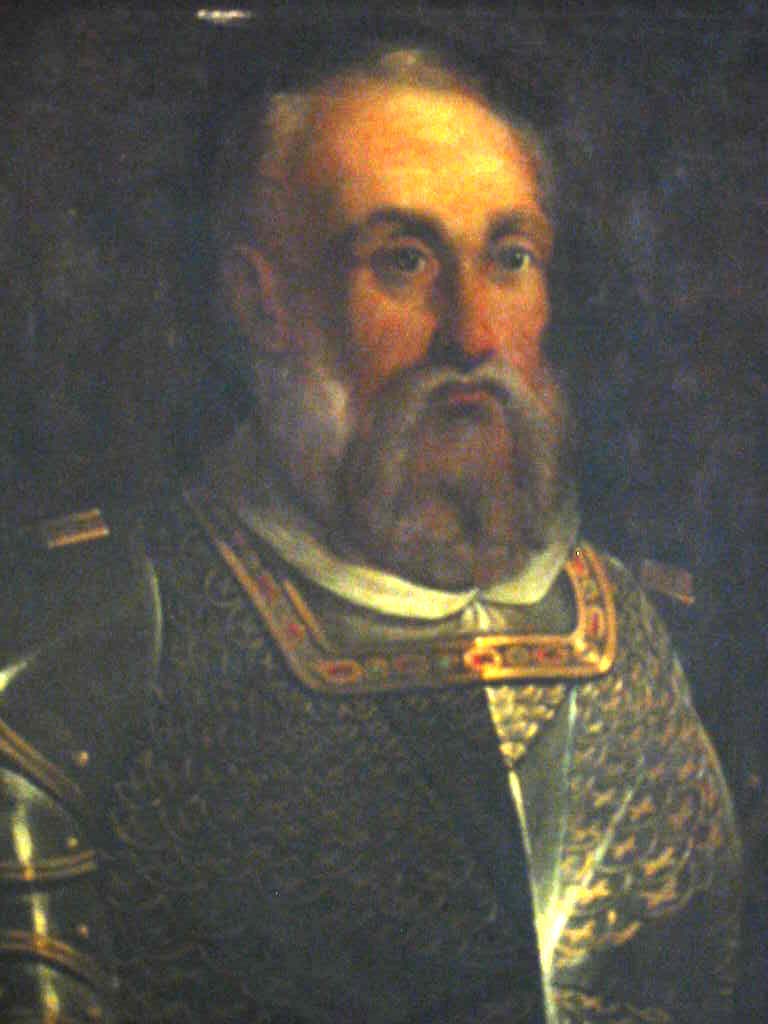
…in honor of the Grand Master Claude de la Sengle, of the Order of Malta, for giving St. Julian’s Island its city status.
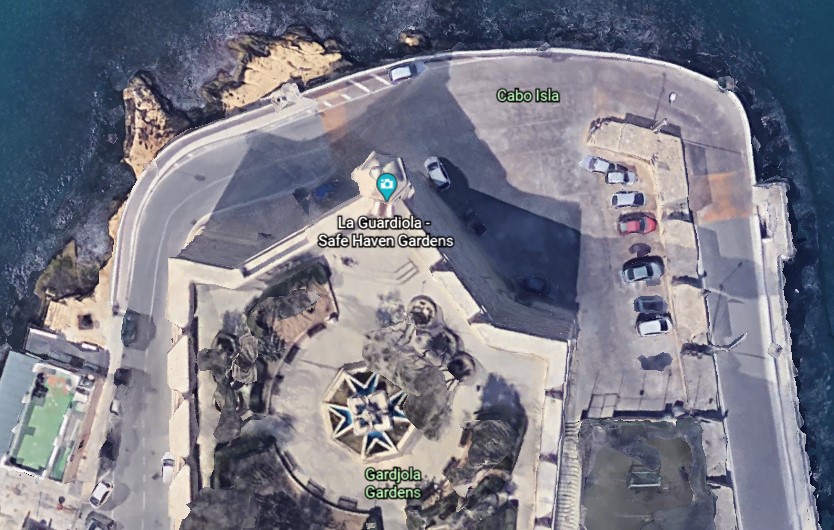
The Gardjola Gardens are located within the bastions of Fort St. Michael, also credited to Claude de la Sengle…
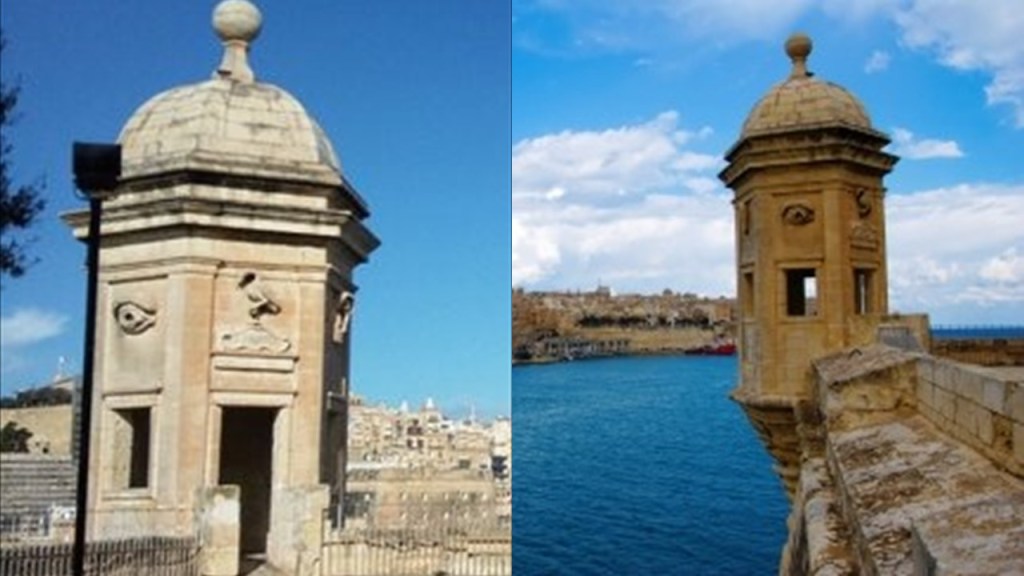
…and named for what is called the “Guard Tower” – “Il-Gardjola” – which has various symbols sculpted on it, such as an eye, ear, and crane bird, said to represent guardianship and observance protecting Maltese shores.
Now I am going to start a walking tour around the walls of Valletta…
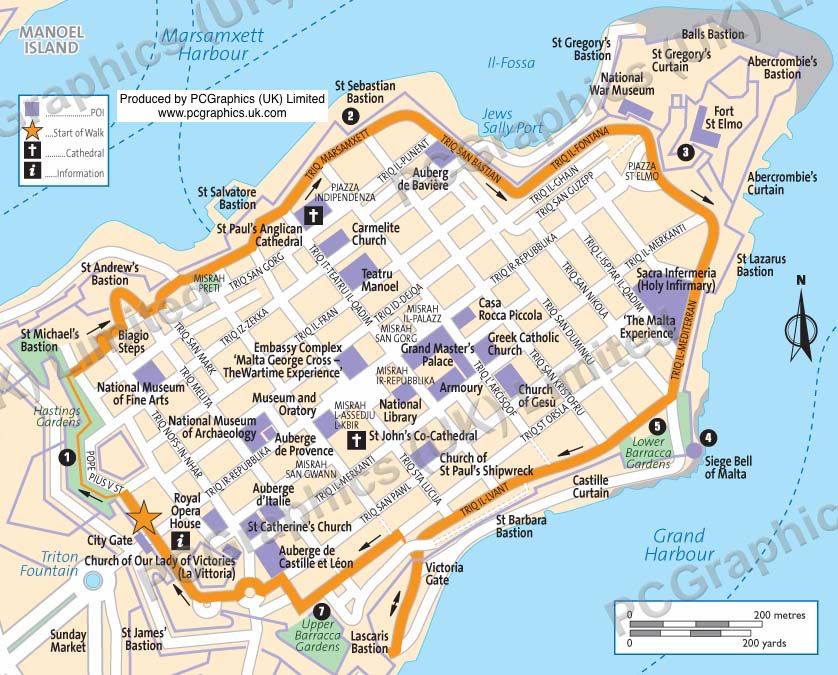
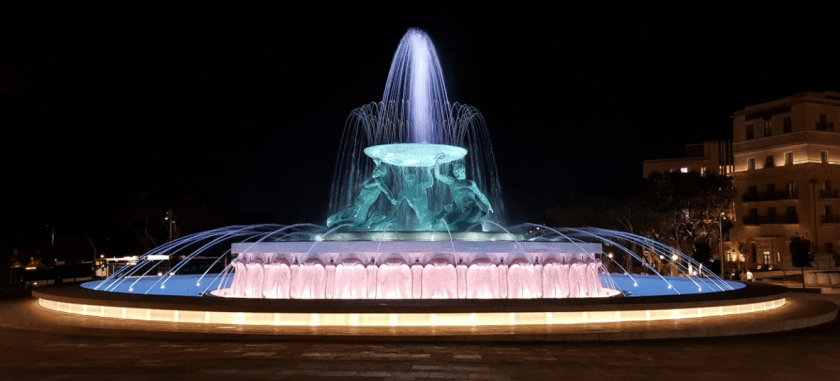
…starting at the Triton Fountain, just outside the main City Gate of Valletta.
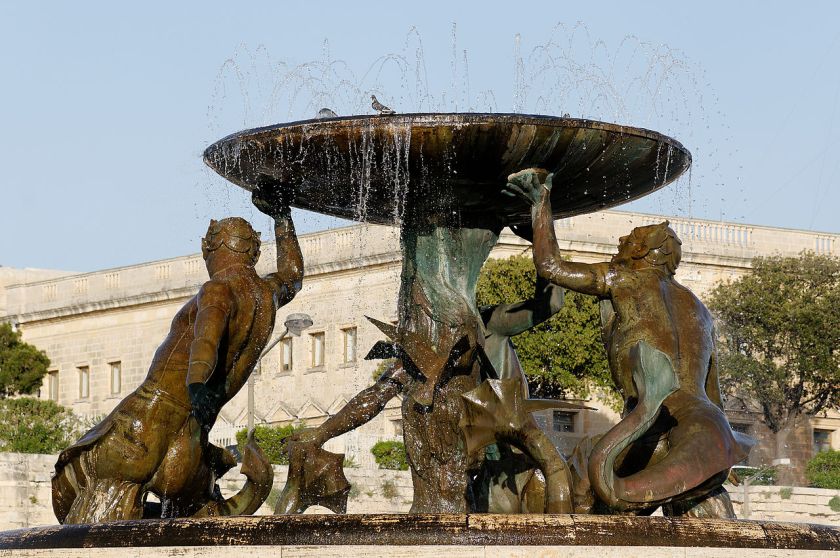
What exactly is a Triton?
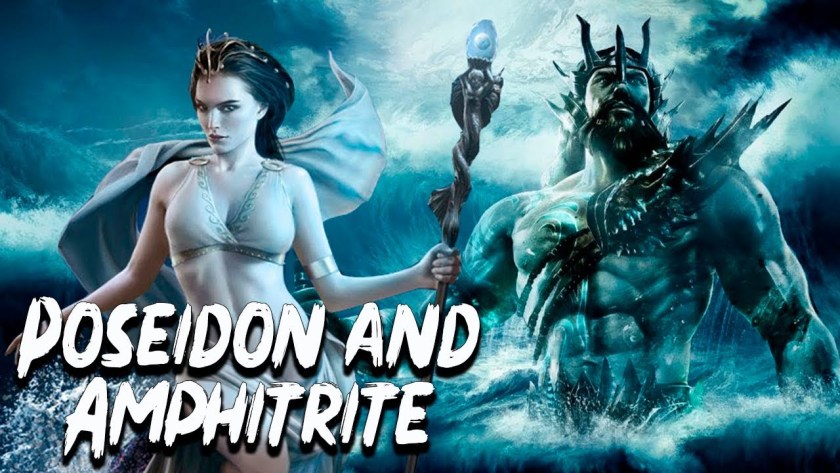
For one, in mythology, Triton was the son of Poseidon, the god of the sea, and Amphitrite, a sea goddess and Queen of the Sea.
Triton’s lower-half was that of a fish, and his top-half was that of a human.
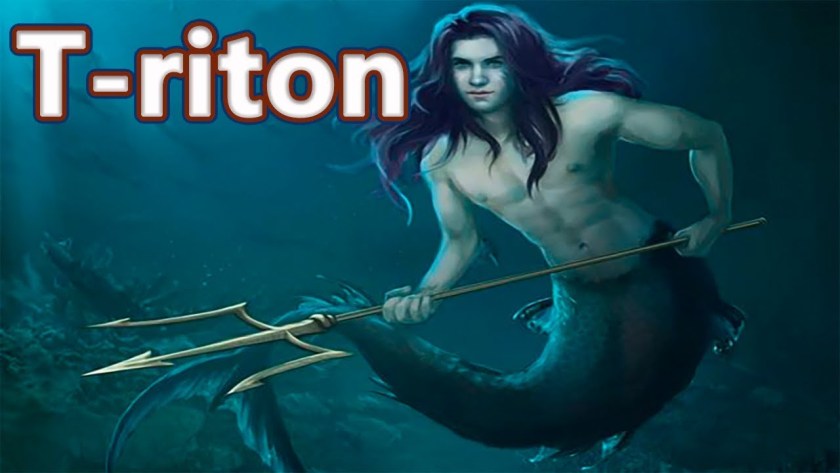
We are told that at some time during the Greek and Roman eras, triton became a generic term for a mer-person in art and literature.
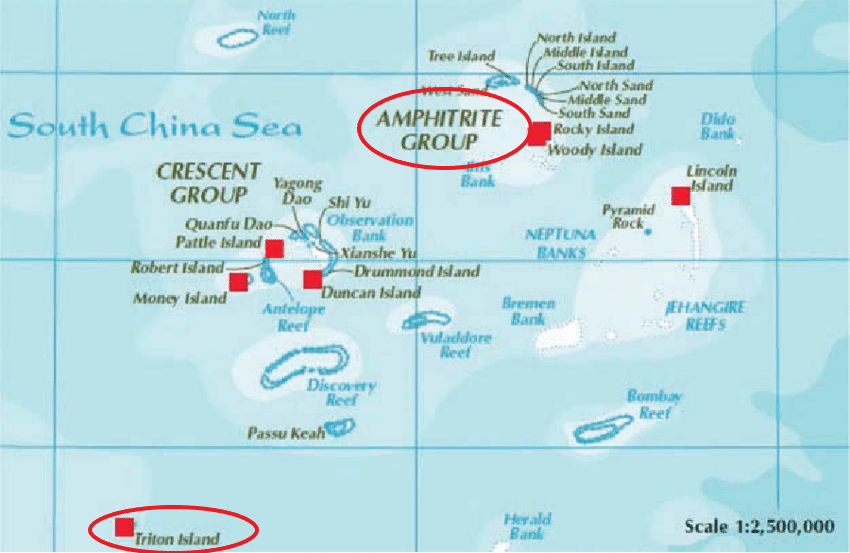
So some connections of interest to me from what I have found in my own research are, first, that in the Paracel Islands in the South China Sea, between the Philippines and south China’s Island of Hainan, we find an Amphitrite Group and a Triton Island…
…and that Poseidon’s Golden Palace was said to have been at Aegae, on the large Greek island of Euboea in the Aegean Sea.
Aegae was said to be located on the west coast of Euboea, north of Chalcis, and said to have been located near the modern town of Politika Kafkala…
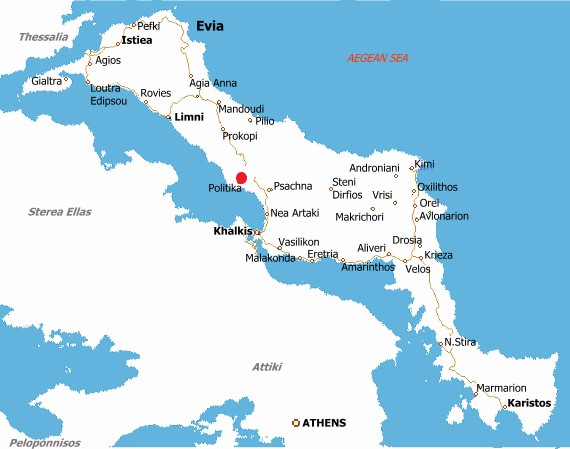
…under the sea.
And we just saw sculptures of tritons, or mer-people, in the Amenano Fountain back in Catania in Sicily.
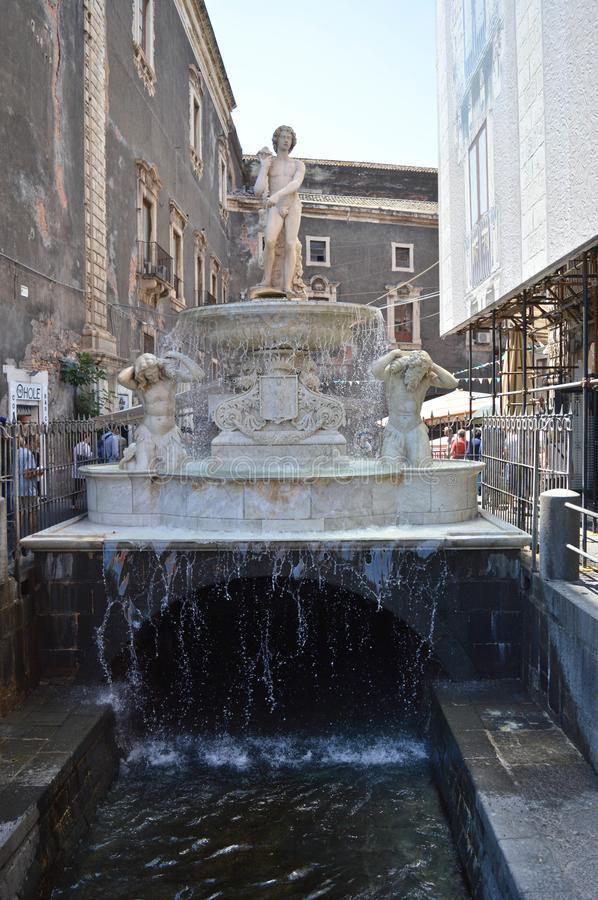
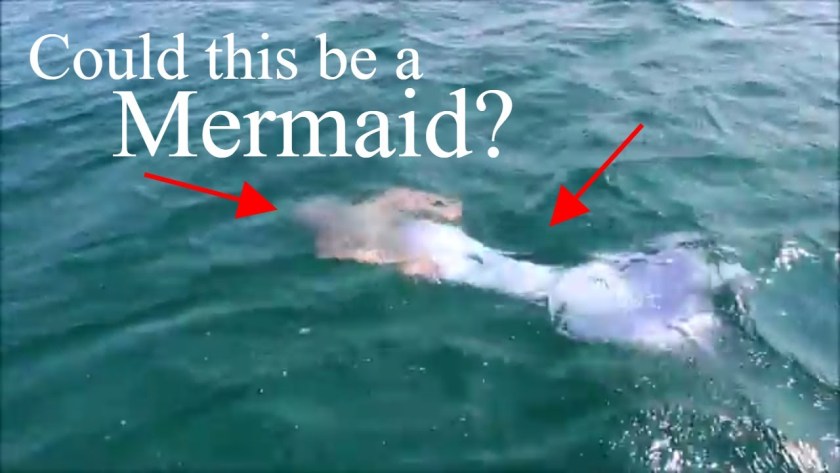
What is the meaning of the tritons?
Could they really have existed at one time?
How are they connected to these places?
Perhaps they still exist today as mer-people, who remain mostly hidden away, and were not mythical as we are taught to believe.
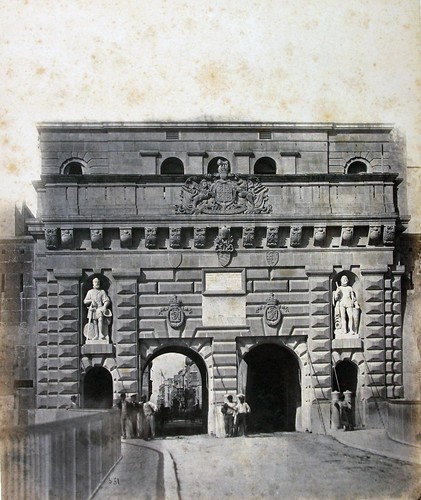
The Triton Fountain is located in front of the main city gate of Valletta.
This was the main city gate of Valletta, called the King’s Gate, circa 1871.
It was said to have been designed by Lt. Colonel Francis Ringler Thomson in 1853, and that this gate was demolished in 1964.
This is what we find at the main city gate today.
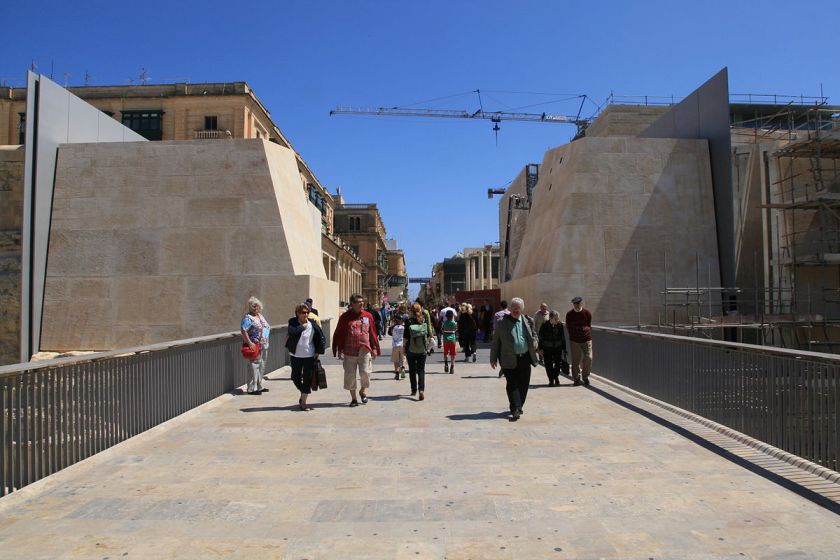
Directly upon entering Valletta, immediately to the right is what remains of the city’s Royal Opera House, though the site was developed into an open air theater which opened in August of 2013.
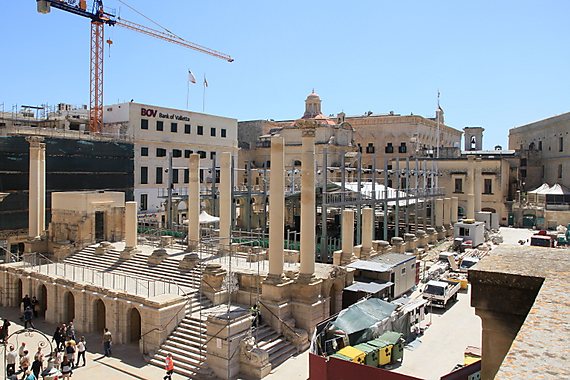
The Royal Opera Theater was said to have been designed by the English architect Edward Middleton Barry in 1866, and with windows and columns that are not level with the sloping street beside it, like what we saw back at the Inquisitor’s Palace.
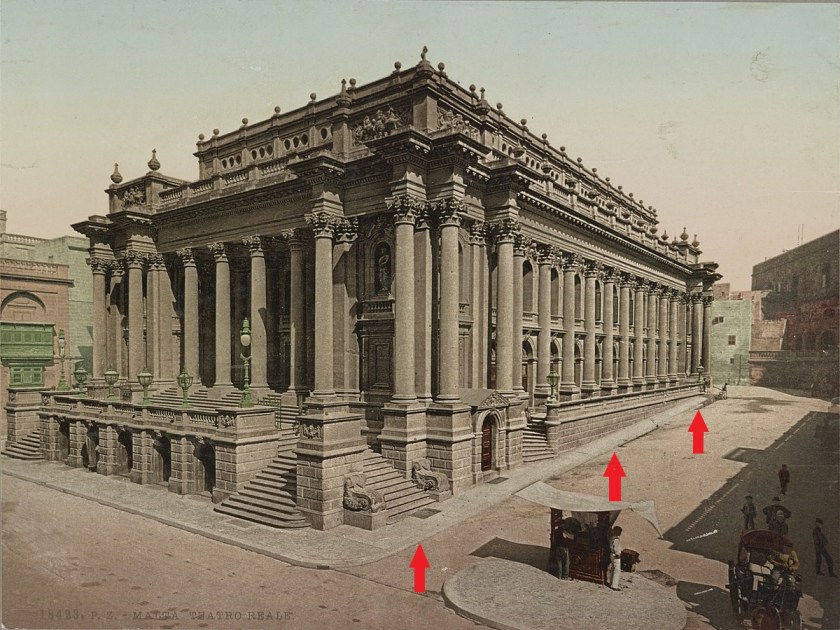
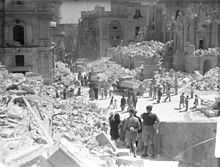
Then, only 76-years later, it took a direct hit in April of 1942 from German Air Force bombers, and was almost completely destroyed.
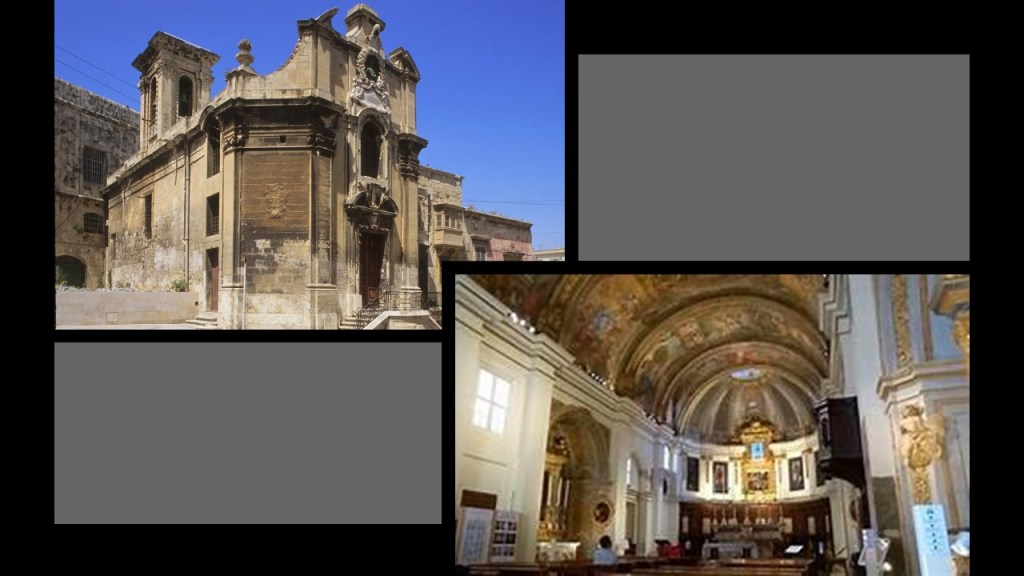
Making a right turn after entering the city through the gate, onto Pope Pius V Street, we come to the Church of Our Lady of Victories, or La Vittoria, said to have had its foundation stone laid in 1566, and built to commemorate the Victory of the Knights of the Order of St. John and the Maltese over Ottoman invaders in 1565.
Directly across from La Vittoria Church is the St. James Bastion, where the two places dove-tail with each other in shape.
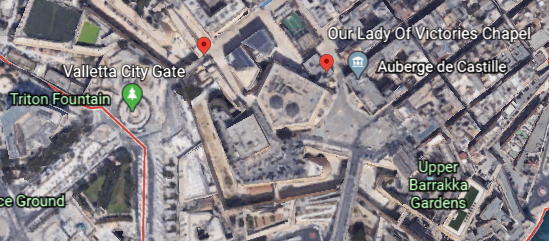
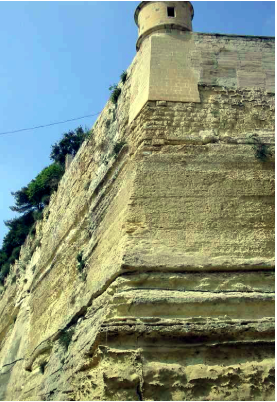
It was said to be one of the first bulwarks to be completed after the initiation of the construction of the fortified city in 1566.
The St. James Bastion forms one of the four important and massive bulwarks, and was carved largely out of bedrock.
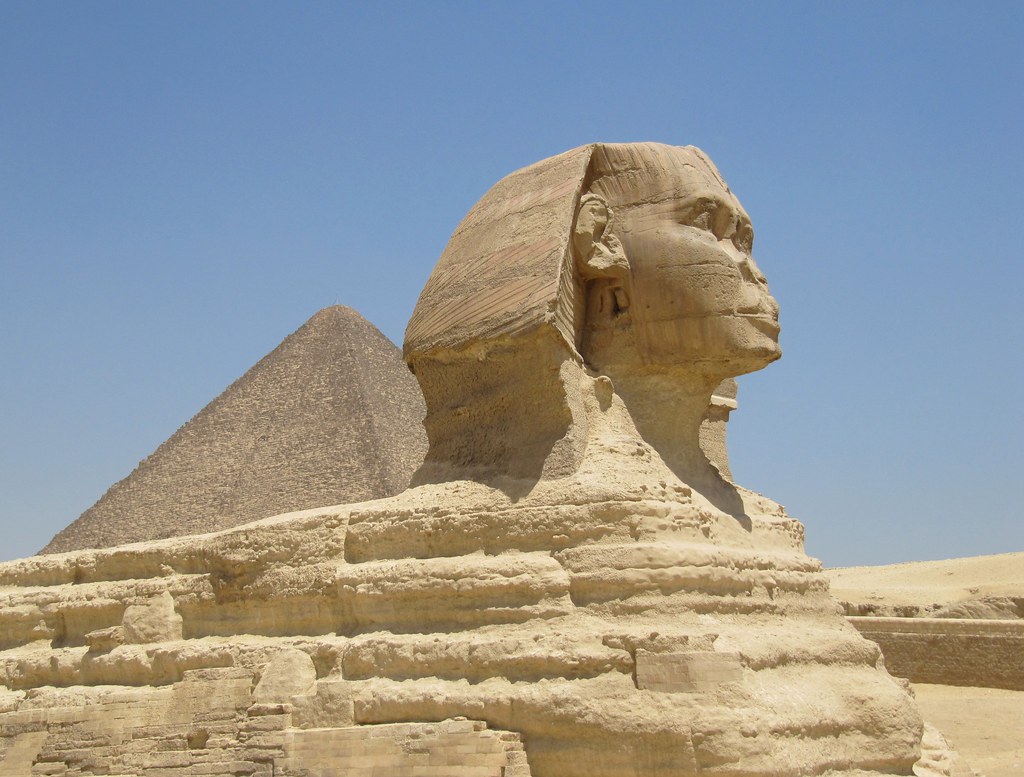
The Sphinx on the Giza Plateau of Egypt was also carved from bedrock.
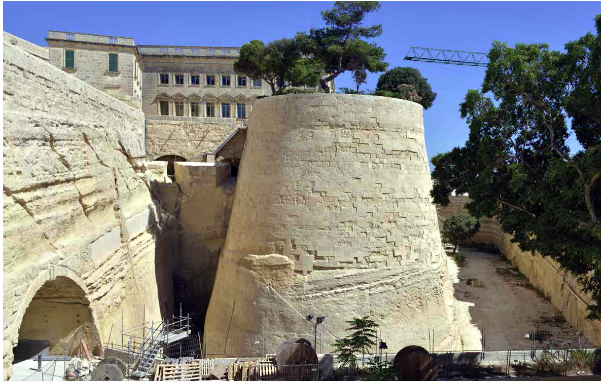
The bastion is said to contain to low “batteries” in its flanks, each protected by a massive rounded orillion, which we are told was an architectural element of a military fortification.
The next place we come to continuing around to the right from the main city gate are the Upper Barrakka Gardens.
Check out the height and depth of the stone work seen here!
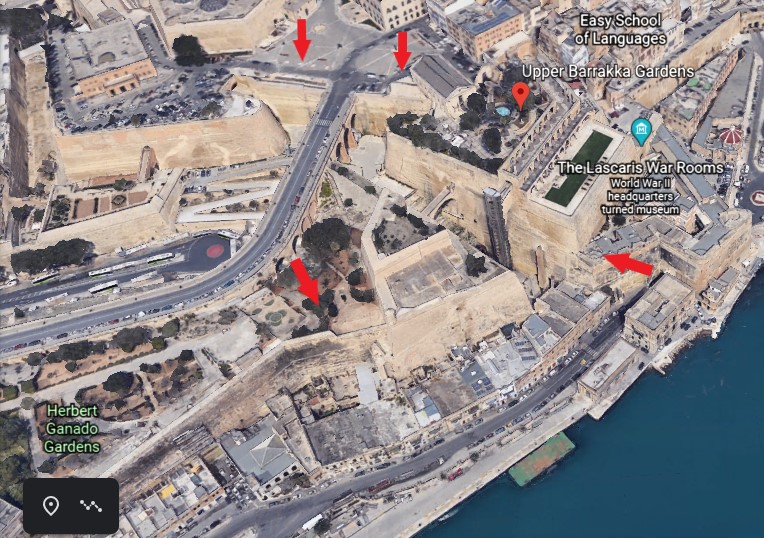
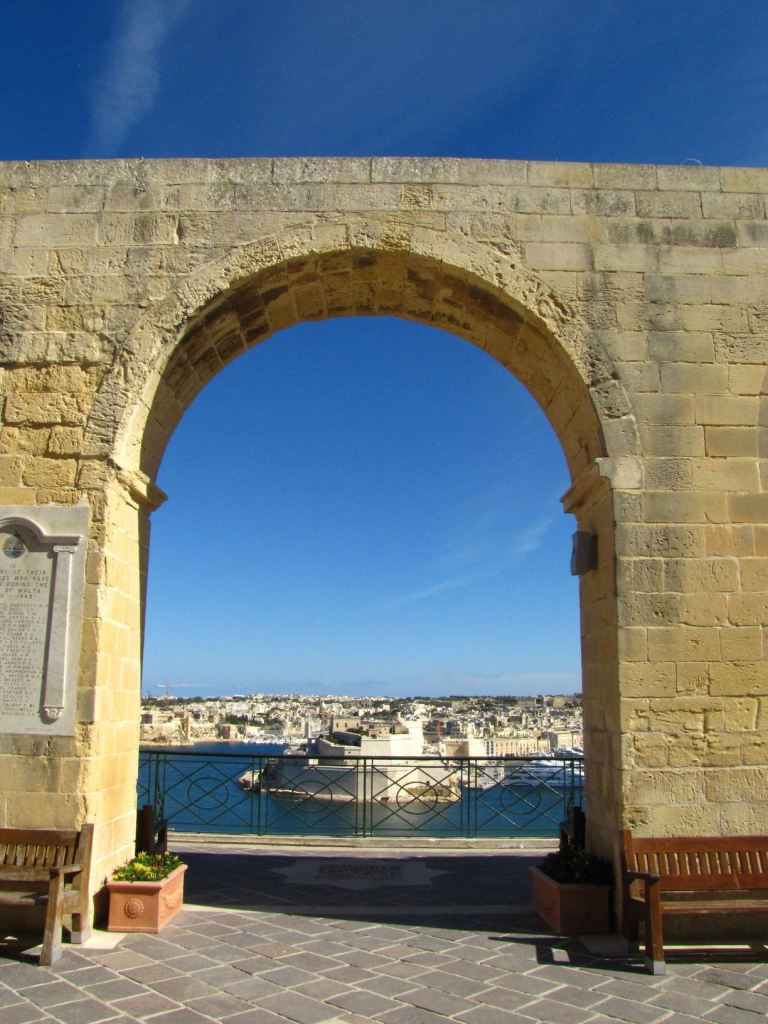
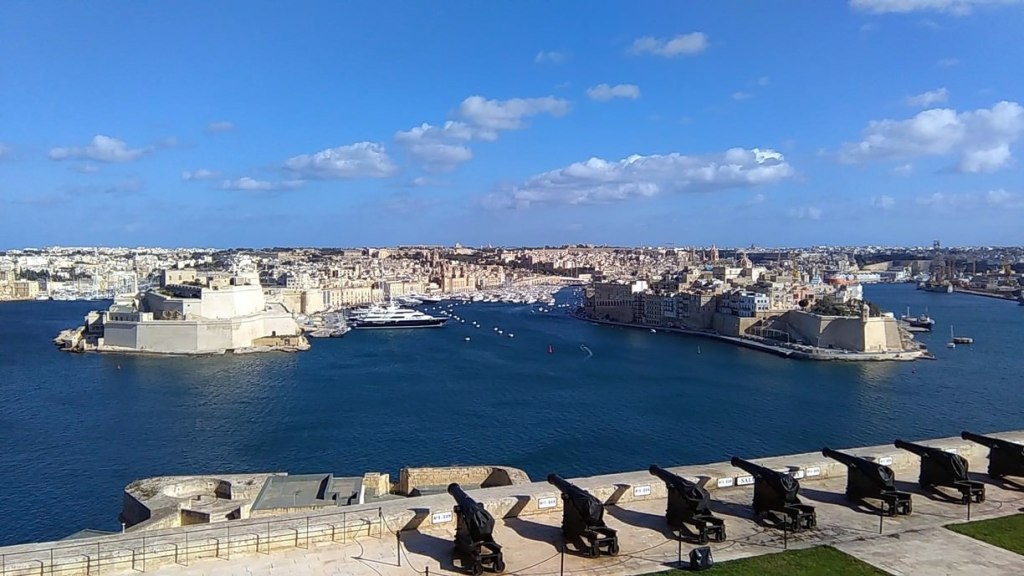
The Upper Barrakka Gardens are located on the upper tier of the St. Peter and Paul Bastion, and are a public garden…
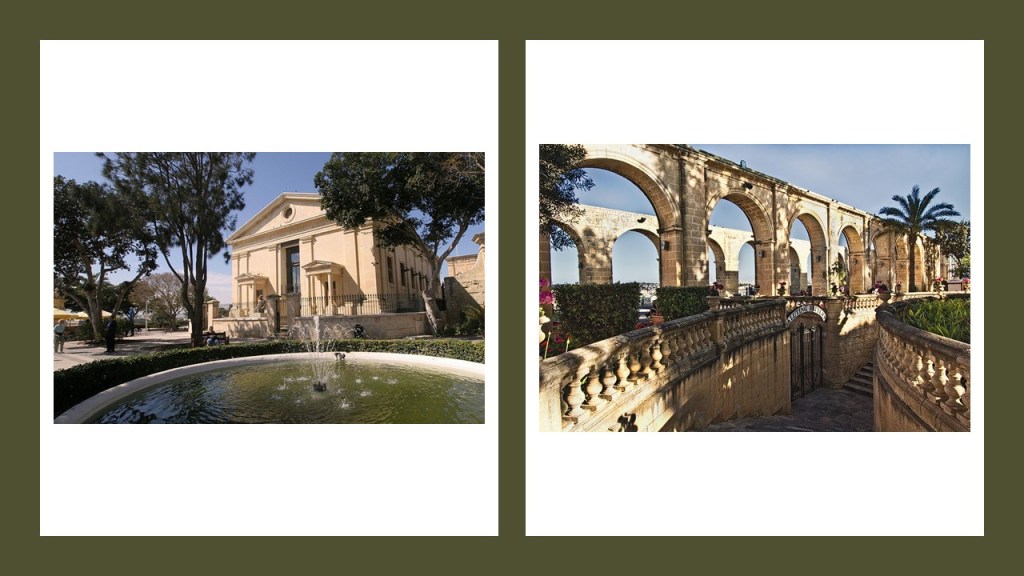
…offering a panoramic view of the Grand Harbor.
It is the highest point of the city walls.
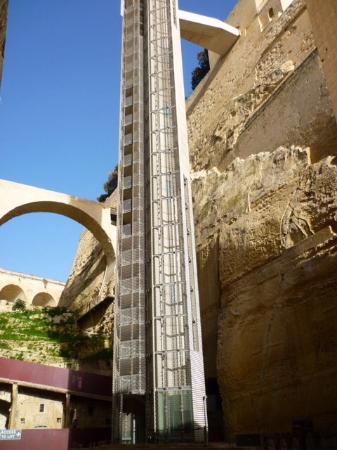
The gardens are linked to the Valletta Ditch and the nearby Lascaris Wharf by the Barrakka Lift, which was said to have first been constructed in 1905, closed in 1973, and dismantled in 1983…
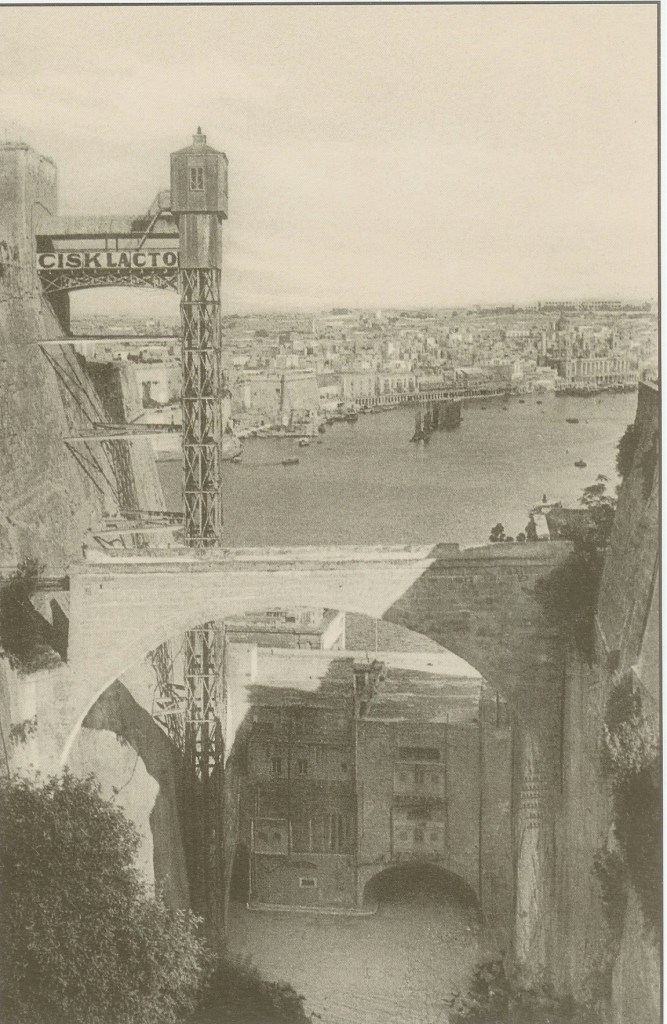
…then we are told a new lift was inaugurated in 2012.
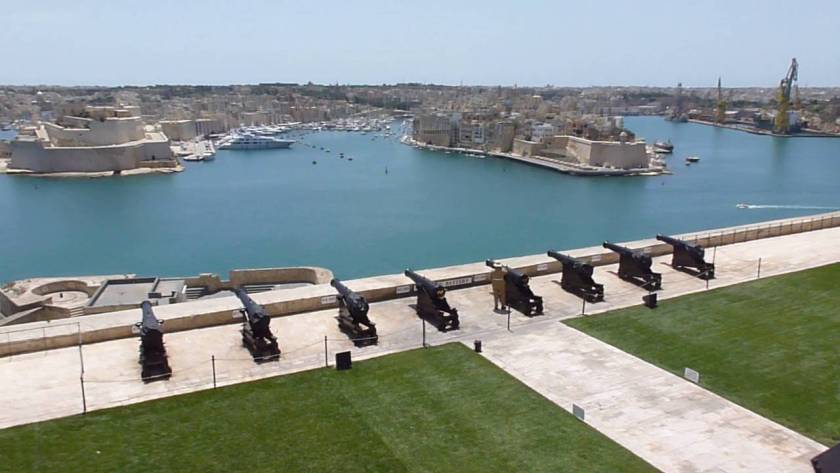
This is the Fort Lacaris Battery, said to have been built by the British in 1854, and connected to the Peter & Paul Bastion that the Upper Barrakka Gardens are located at the top of…
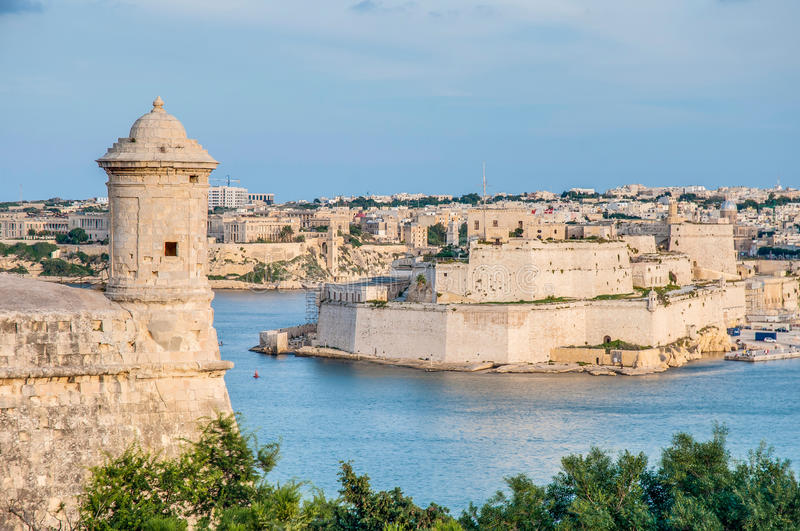
…and this is a view of the Lacaris Bastion Gardjola, or Guard Tower, like what we saw earlier at Fort St. Michael in Senglea.
The Victoria Gate is situated next to the Lacaris Bastion, the main entrance to the city from the Grand Harbor area,
It was said to have been built by the British in 1885, and named after Queen Victoria.
It is the only surviving gate within the fortifications of Malta, as all of the other gates, like the main city gate as I mentioned previously, were demolished between the 18th- and 19th-centuries.
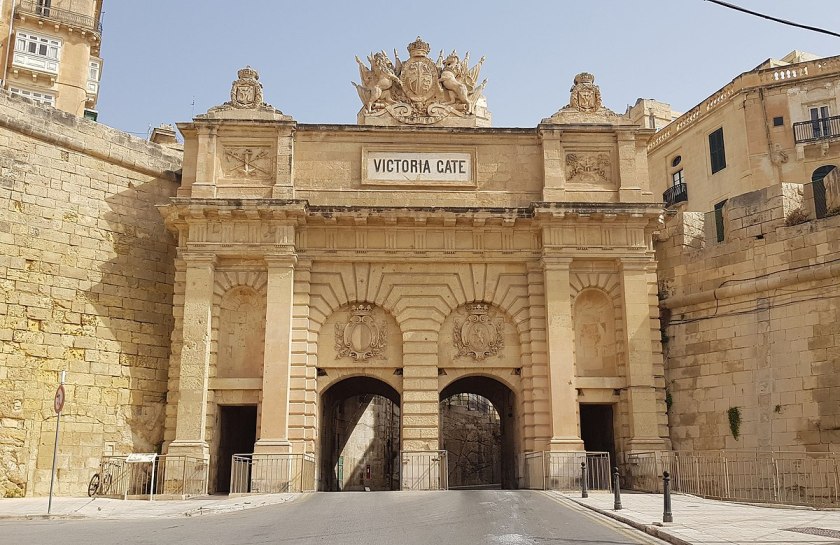
The St. Barbara Bastion comes next, and is situated in the historic center of Valletta…
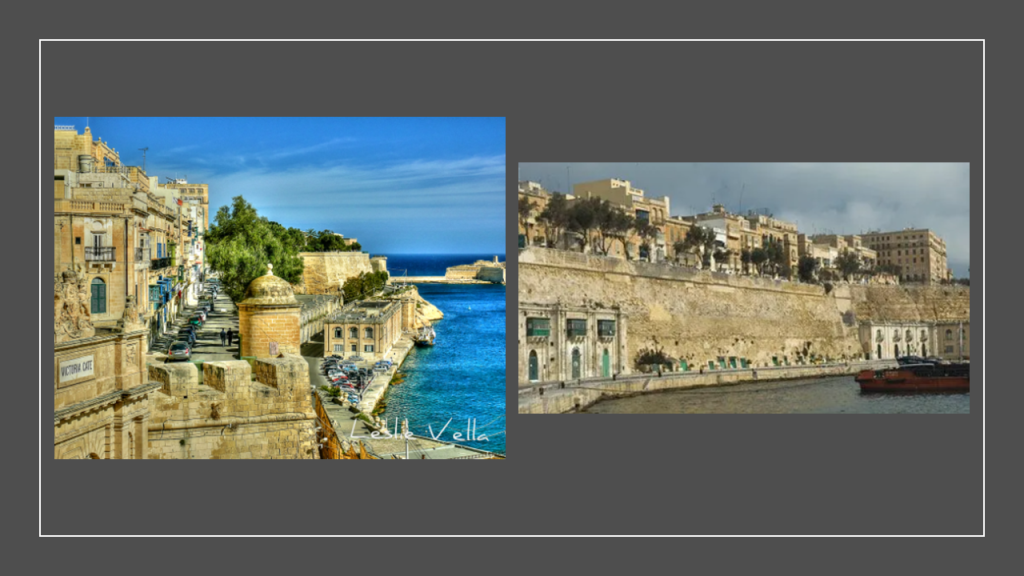
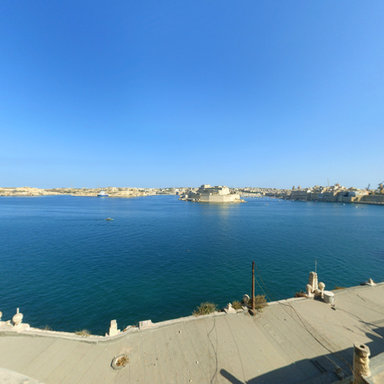
…and boasts of magnificent views of the Grand Harbor and the Three Cities.
Noteworthy churches near the St. Barbara Bastion are the Church of St. Paul’s Shipwreck, said to have been completed in 1582, is directly across the street from it and said to be one of the oldest churches in Valletta.
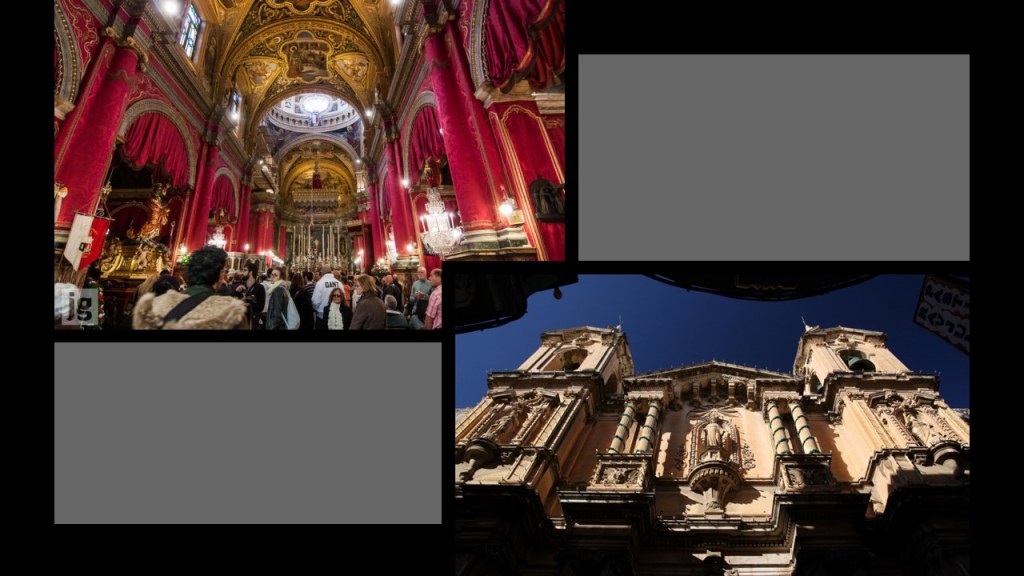
Across the street on the other side of the Church of St. Paul’s Shipwreck, we find St. John’s Co-Cathedral.
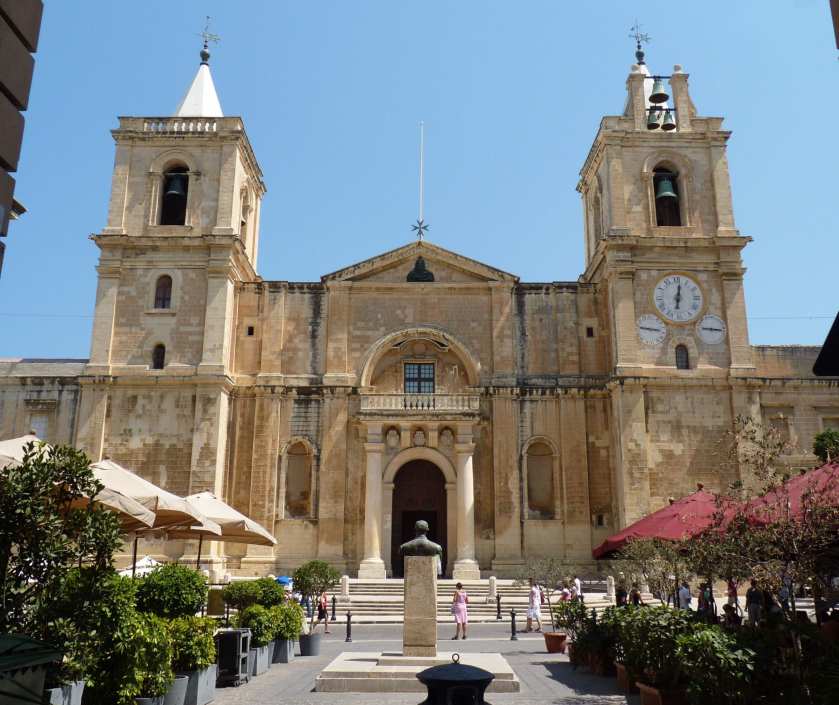
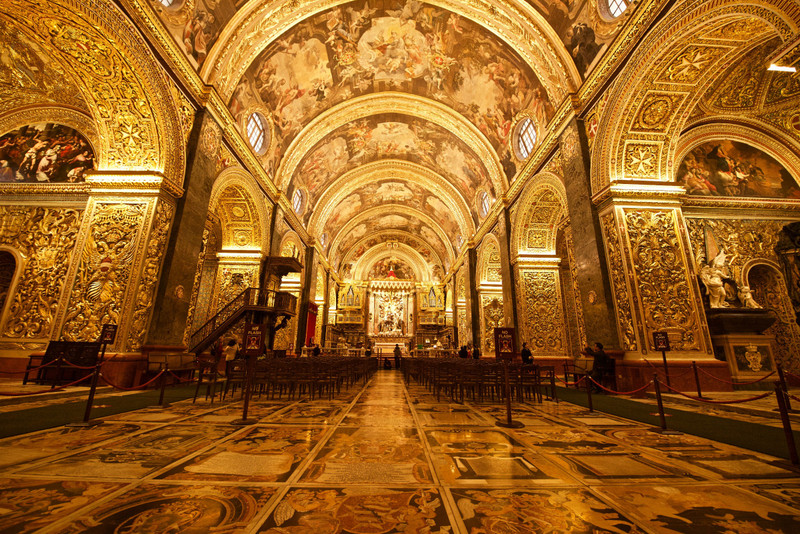
It was said to have been commissioned by the then Grand Master of the Order of St. John, Jean de la Cassiere; built by the Order between 1572 and 1577; and dedicated to St. John the Baptist.
The interior of the church is considered to be one of the finest examples of high Baroque architecture in Europe.
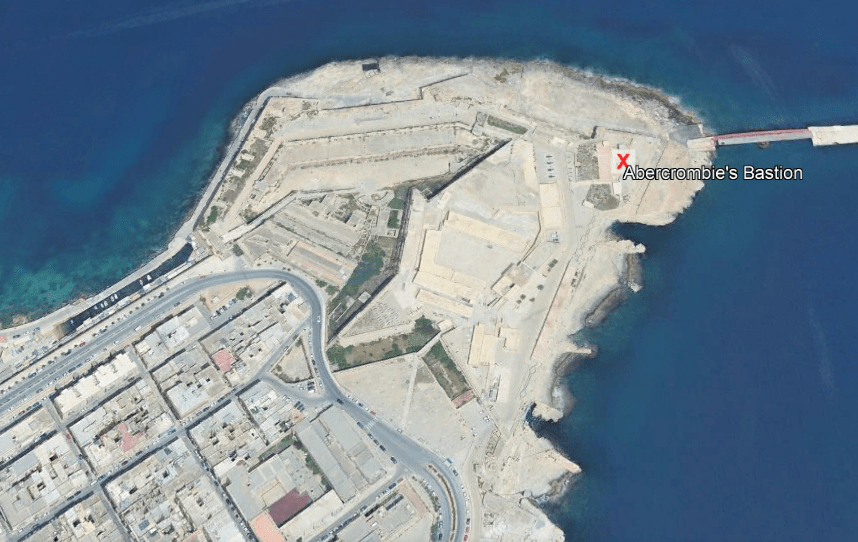
The next place along the City Walls of Valletta, I am going mention is the Abercrombie’s Bastion, which is located at the entrance to the previously mentioned Fort St. Elmo…
…after which we come to Ball’s Bastion in the upper part of Fort St. Elmo…
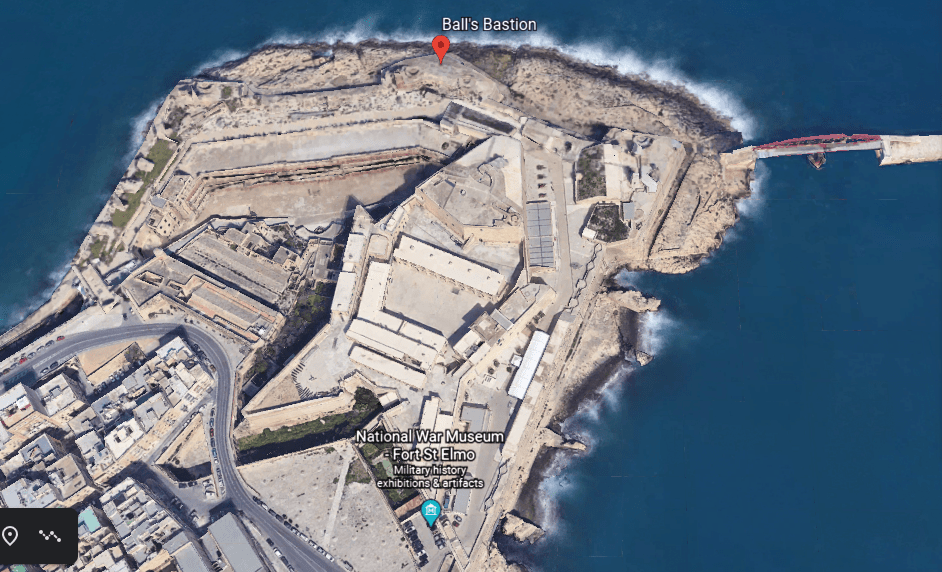
…which is next to St. Gregory’s Bastion.
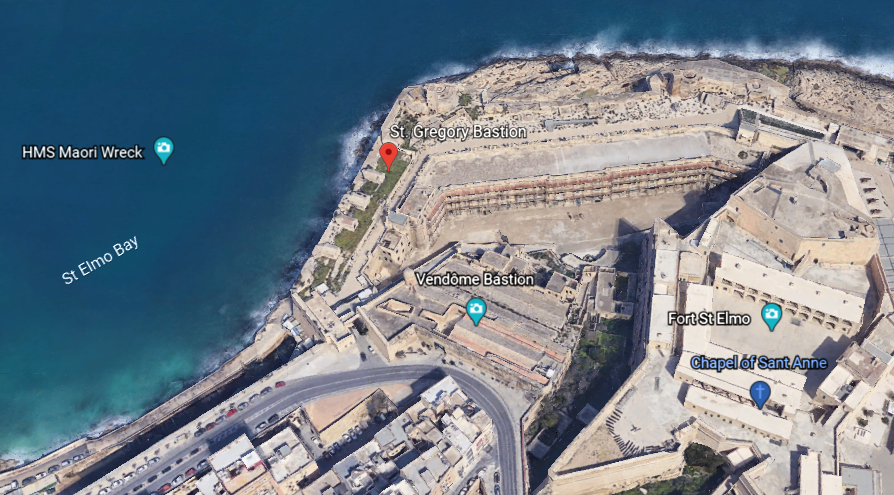
Next we come to the St. Sebastian Bastion…
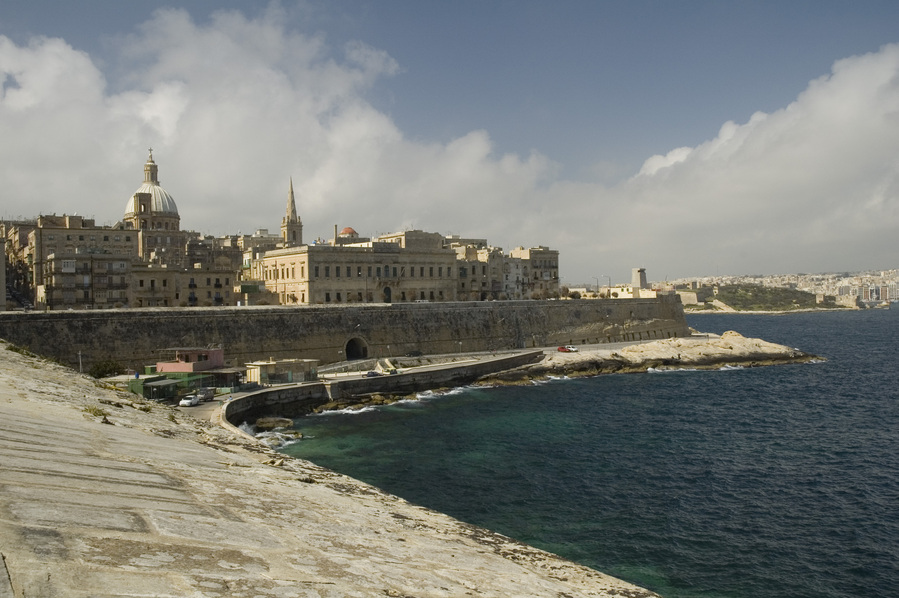
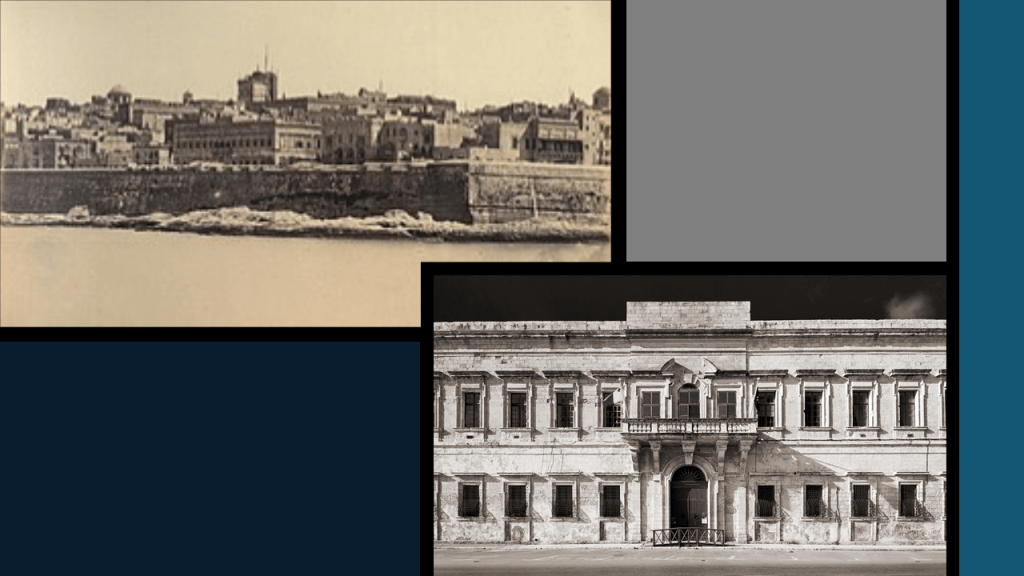
…which is in close proximity to the Auberg de Baviere.
The Auberge de Bauviere was said to have been built as the Palazzo Carneiro in 1696, and was the residence of the Grand Master Marc’Antonio Zondadari in the early 18th-century.
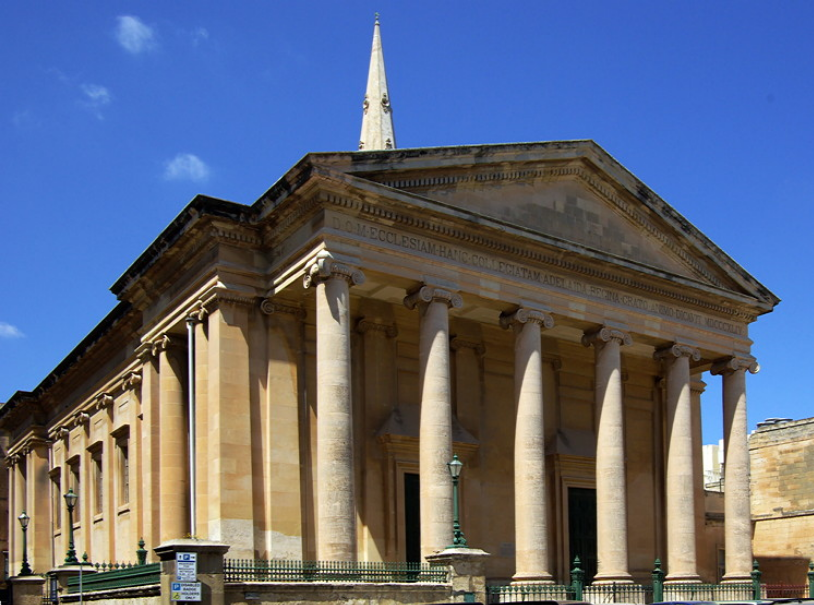
Next we come to the St. Salvatore Bastion and the nearby St. Paul’s Anglican Cathedral, also known as St. Paul’s Pro-Cathedral, one of three cathedrals of the Anglican Diocese of Gibraltar in Europe, and said to have been built between 1839 and 1844.
Moving along the wall, we come to St. Andrew’s Bastion…
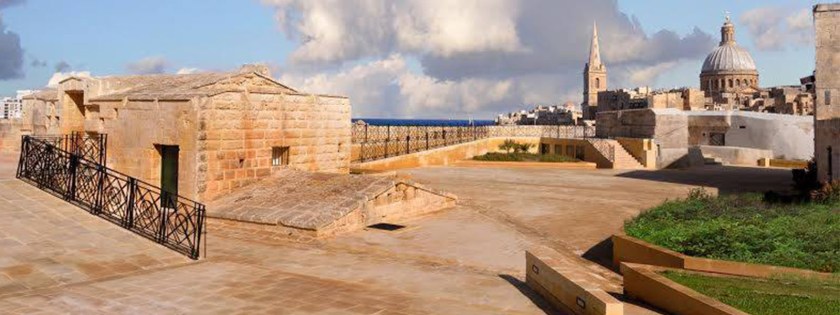
…a popular wedding venue in today’s day and age.

The Biaggio Steps are directly across from St. Andrew’s Bastion, and which are described as run-down.
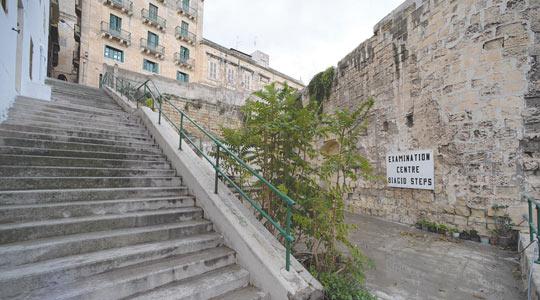
Next we come to St. Michael’s Bastion…
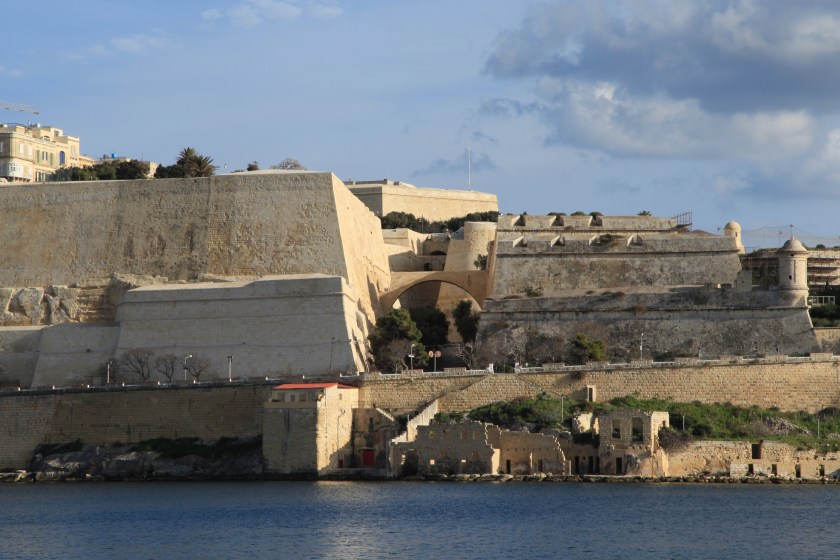
…where apparently there used to be several windmills overlooking Marsamxett Harbor, but the only reminder of this is a nearby street named “Windmill Street.”
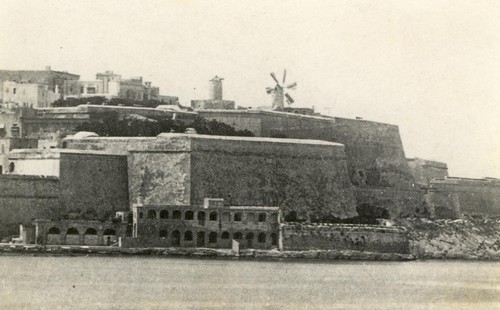
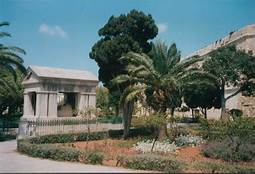
The last place I would like to look at around the city walls of Valletta, before returning to the main city gate, are the Hastings Gardens.
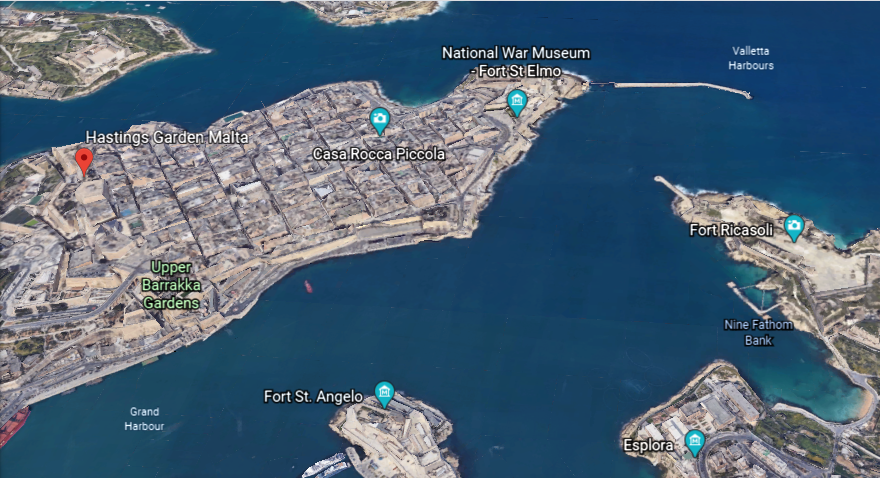
The Hasting Gardens are a public garden on top of St. John’s Bastion and St. Michael’s Bastion, located to the immediate west of the main city gate.
Three more things to look at before departing the relatively small islands of the Republic of Malta in the the Mediterranean Sea.
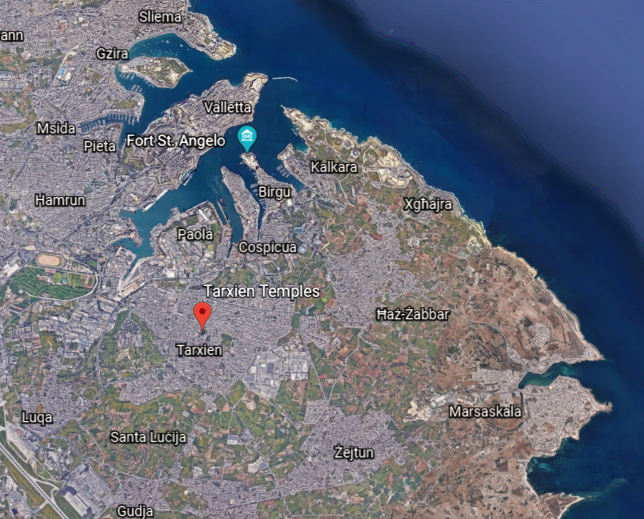
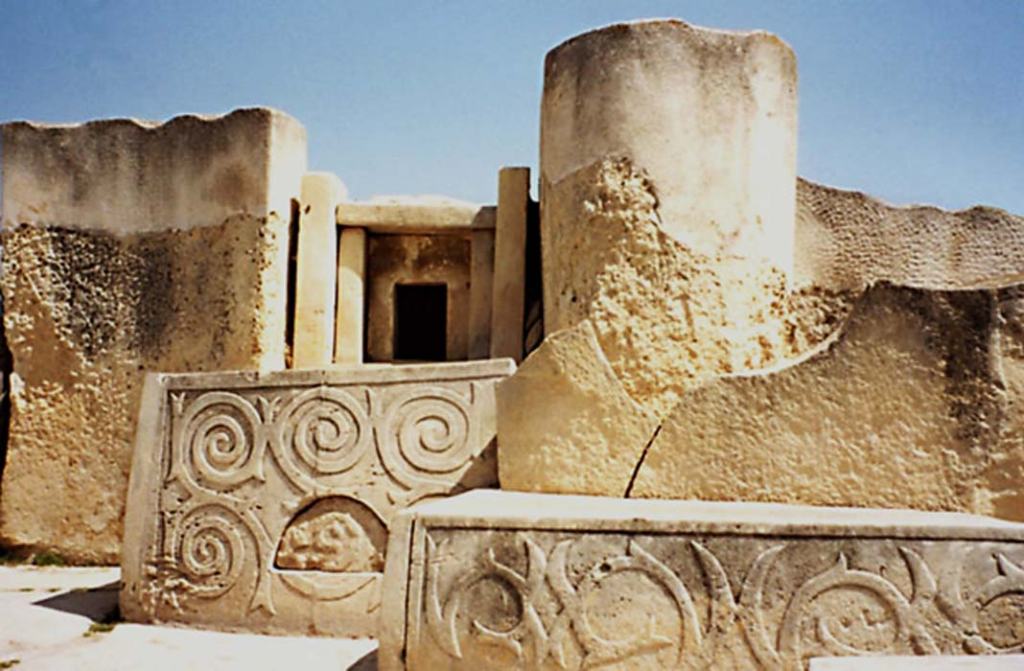
The first is bringing the megalithic Tarxien temples to your attention, located a short distance south of Valletta.
There is a significant megalithic presence in Malta. The Tarxien Temples are just one example of many in Malta.
The temples’ large stone blocks were discovered in 1914 by a farmer ploughing a field, and excavation was begun immediately by the director of the National Museum after the report of the finding was made.
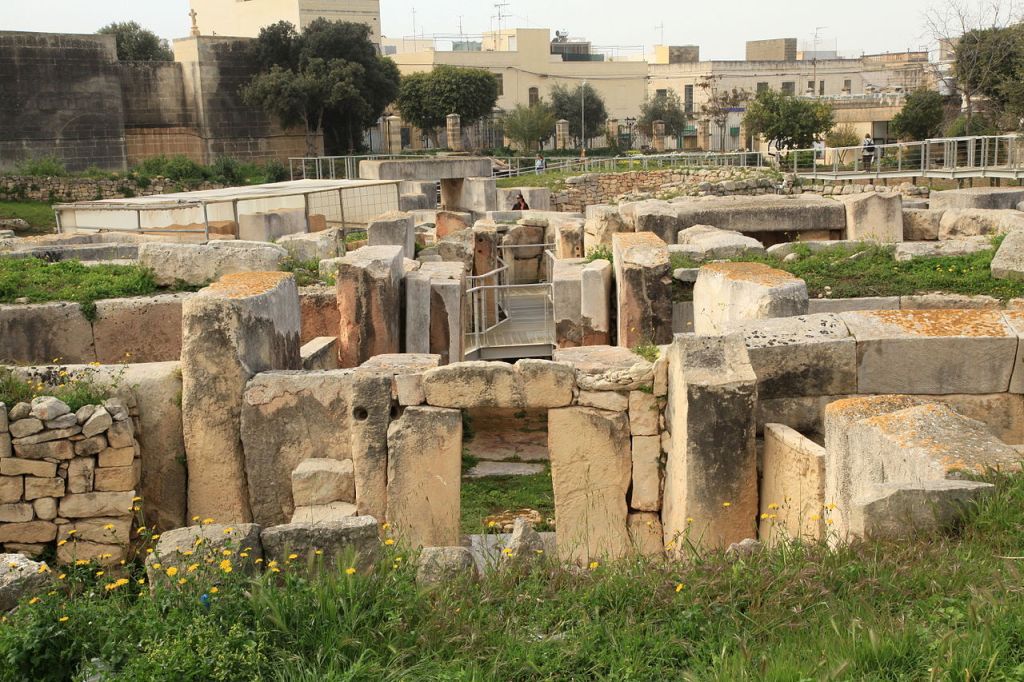
So apparently the temple complex was completely buried underground. We have come to see places being completely buried as a natural occurrence over the passage of time, but was this really the case?
The Tarxien temple complex has rich and intricate stonework decorated with spiral designs and other patterns, and was dated to 3,150 BC.
The second is speculation about the Knights’ Templar themselves.
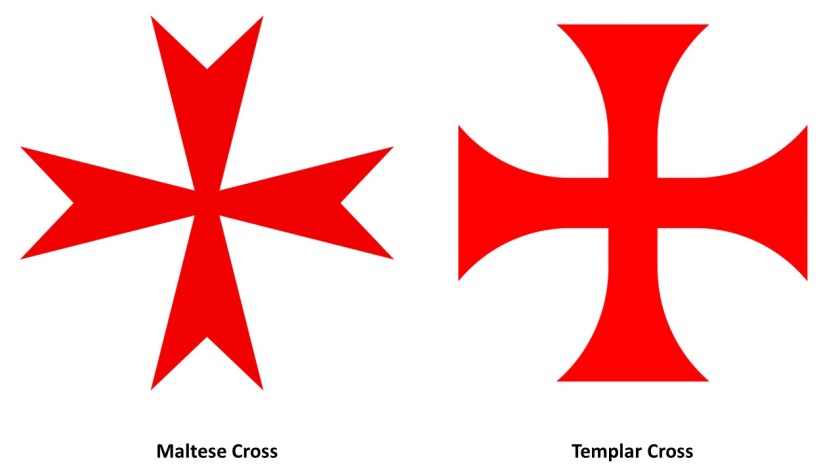
Given that Valletta appears to be a veritable Disney World of stone masonry, and that the Maltese Cross and the Templar Cross are virtually identical, I am thinking that Malta was at the very least a major Templar Center, if not the main headquarters of the Templars.
I do seriously question what we are told about who the original Templars were, also known as the Order of the Temple of Solomon.
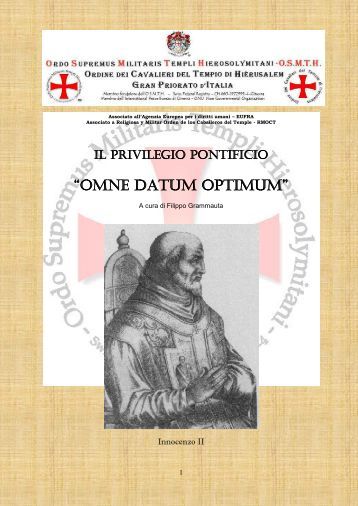
We are told it was Catholic military order recognized in 1139 AD by Pope Innocent II’s papal bull Omne Datum Optimum.
I personally think there is a substantial amount of information missing from the historical record about who the Templars really were, and about what their actual historical association with the Temple of Solomon was.
Like, were the original Templars Moorish Master Masons, and not anything like what we have been taught in our historical narrative?
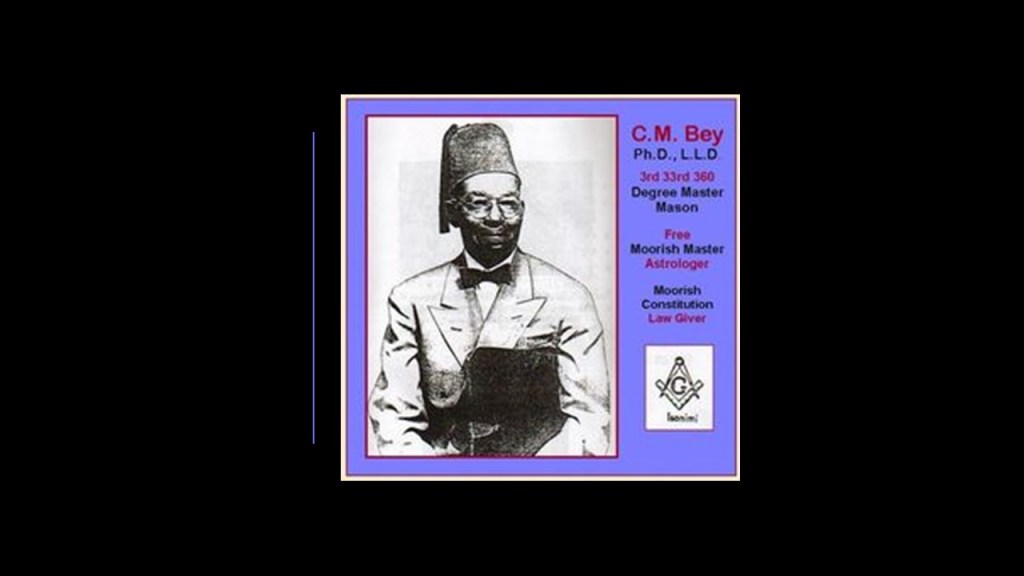
Whatever the Truth was about the original Templars, information is simply not available in the written historical record to make a connection directly to the Moors, and a connection in turn with the Temple of Solomon and the Lost Tribes of Israel.
Lastly, I have stated in previous posts my belief that I think places on the Earth, like Valletta in this example, with numerous star forts concentrated in close proximity, were significant power centers for the energy system of the planetary grid, and that star forts represented the definition of battery meaning “a device that produces electricity that may have several primary or secondary cells arranged in parallel or series, as well as a battery source of energy which provides a push, or a voltage, of energy to get the current flowing in a circuit…”
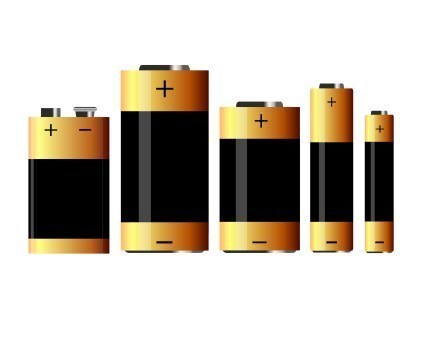
…and were not originally military in nature as we are led to believe in our current historical narrative, like the Lacaris Battery we saw earlier in this post.
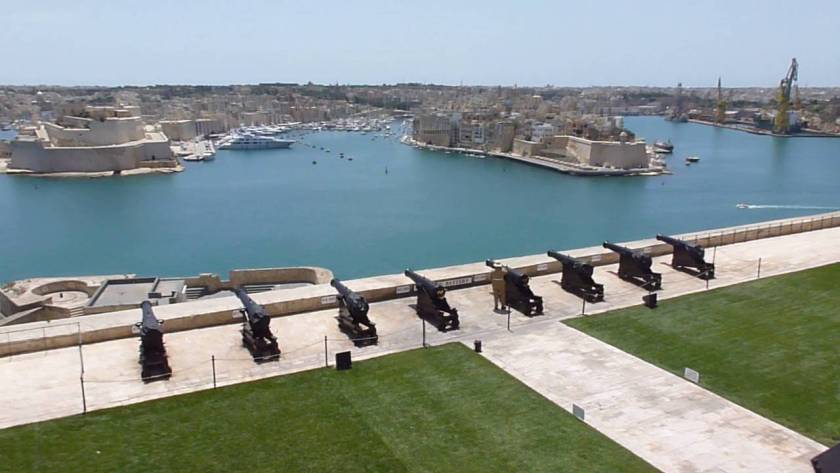
Like the many star forts I found that were bombarded in World War I’s Gallipoli Campaign in the Strait of Dardenelles in Turkey when I was looking at the Aegean Sea, the star-city of Valletta, and its surrounding star forts and star cities, appear to have been deliberately targeted for bombardment during the Siege of Malta between 1940 and 1942 in what was called the “Mediterranean ‘Theater’ of World War II.”
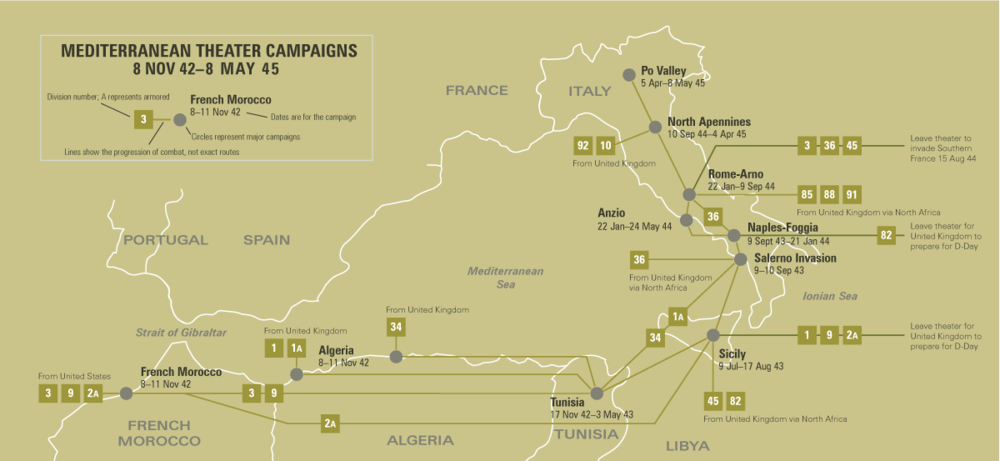
I have often wondered why the word “theater,” defined as a building or area used for dramatic performances, also used as a term to describe an area in which important military events are occurring.
It seems to me like they are actually describing one and the same thing – a dramatic performance – and not what we have been taught to believe in our historical narrative.
I think all wars and regional conflicts were deliberately contrived for the destruction of the original civilization in all ways.
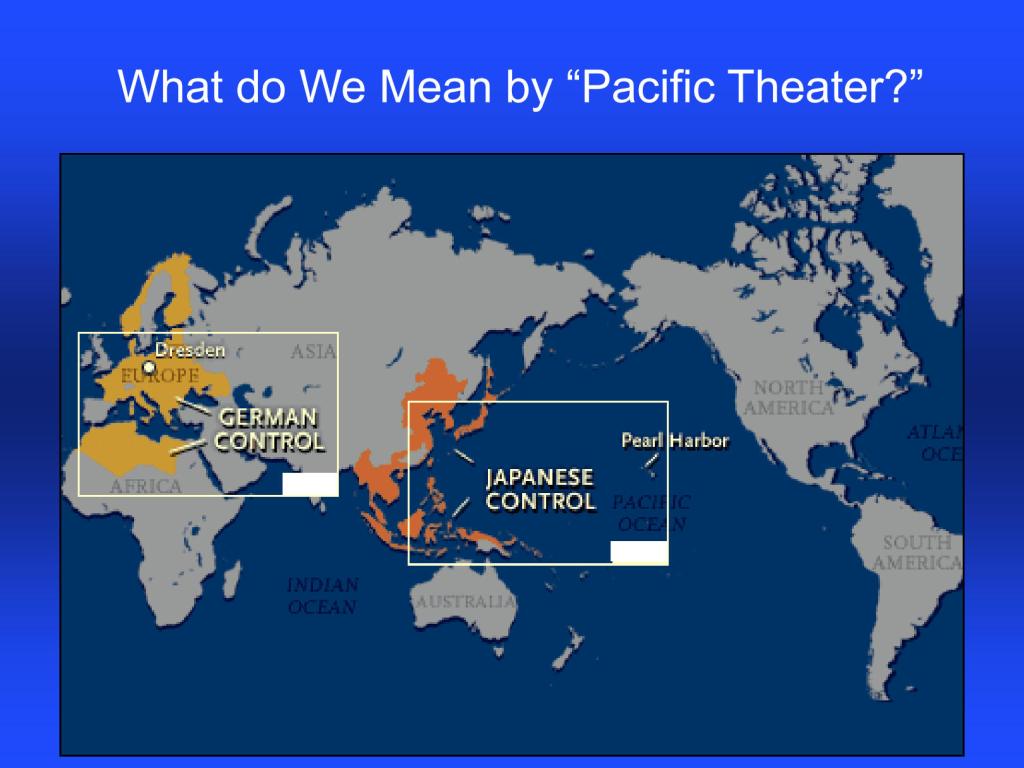
As such, I think wars and conflicts exemplify what known as “Controlled Opposition.”
Controlled Opposition is a strategy in which an individual, organization, or movement is covertly controlled or influenced by a 3rd-party and the controlled entity’s true purpose is something other than its publicly stated purpose.
The controlled entity serves a role of mass deception, surveillance or political/social manipulation.
The controlled party is portrayed as being in opposition to the interests of the controlling party.
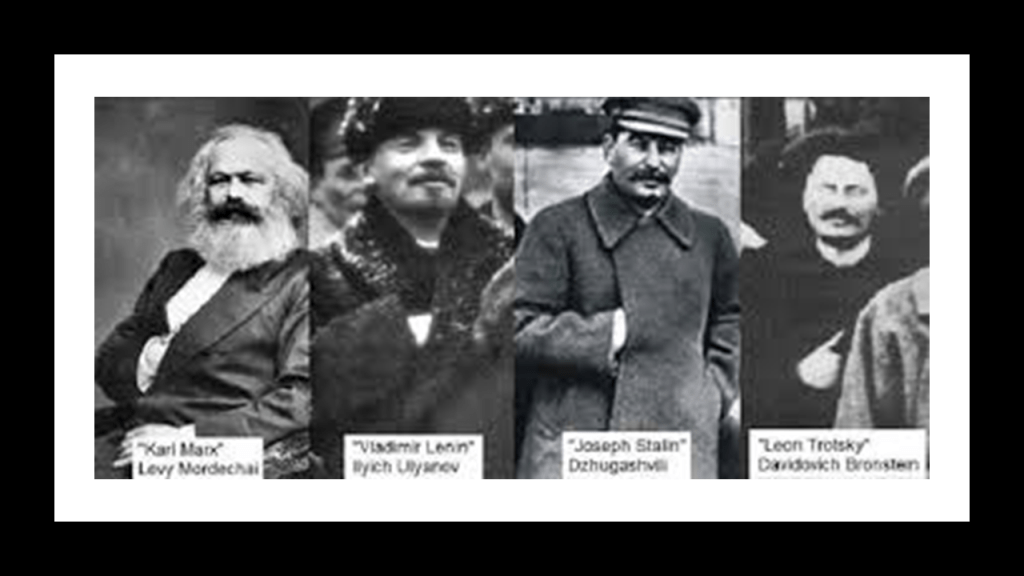
Something to consider in the quest to figure out what’s really been going on here without our knowledge or consent.
I am currently about two-thirds done with “On the Trail of Giants, in Appalachia and Beyond – The Cataclysm,” and I hope to be finished with it in the next week or so.
It is the last part of a four-part series in which I bring forward the main themes separately for your consideration that unfolded from my original post “On the Trail of Giants in Appalachia and Beyond.”
There’s a lot of material for it to work through, organize and piece together, and on top of that, invariably I find myself down interesting rabbit holes which can take me awhile to get out of.
When I do go down those rabbit holes and come back up, there’s even more information to bring to light.

 Revealing What Has Been Hidden in Front of Our Eyes
hi michelle. language is of utter importance for us. to be efficient in re
search. ARAMAIC appears to be not only the language of JESUS, but
and that is no surprise, also the worlds MOTHER LANGUAGE. only in
this language each character, has a name, and is something real, and
HAS A NUMBER. for more, see http://www.aramaicwords.nl . thank you, all
the best, john toet, and be blessed.
LikeLike