
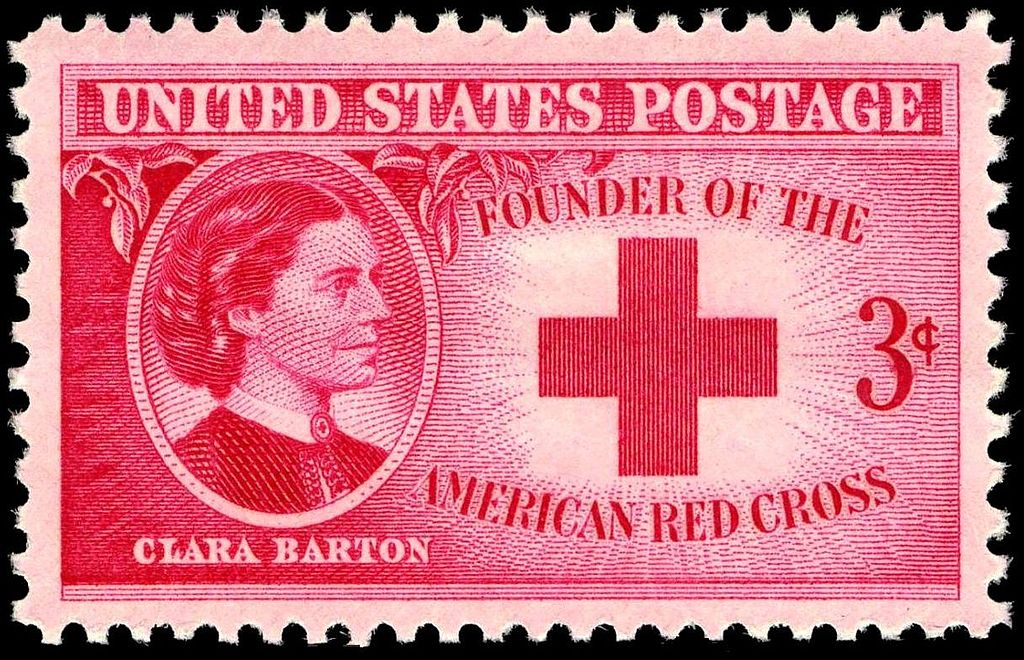
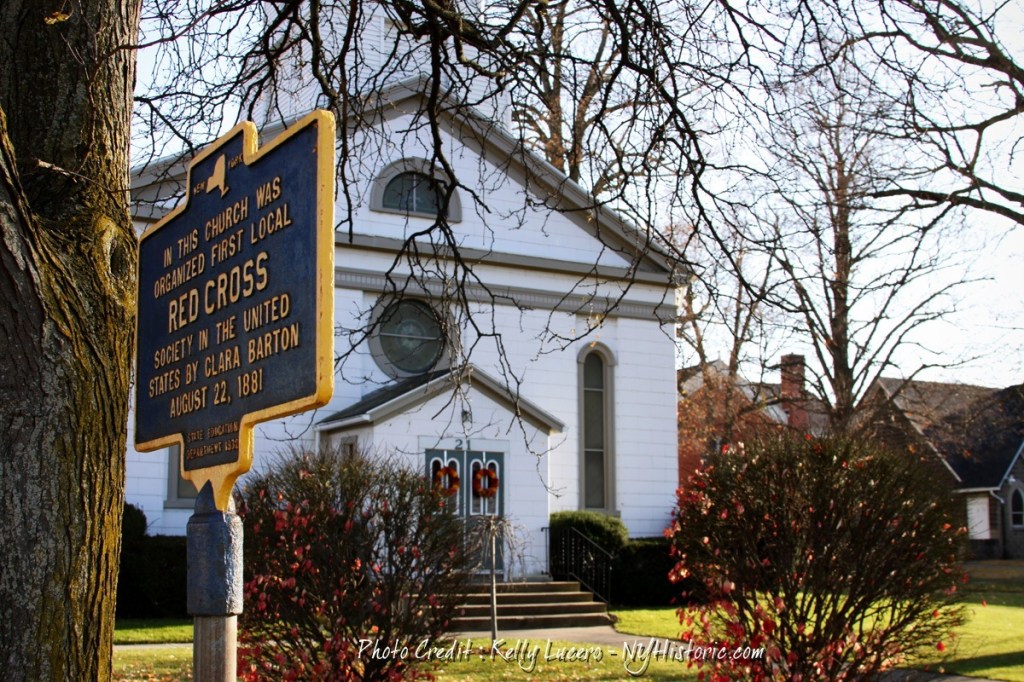
The American Red Cross was founded in 1881 by Clara Barton as a non-profit humanitarian organization that provides emergency assistance, as well as disaster relief and disaster preparedness education.
Clara Barton had been a hospital nurse during the American Civil War.
The International Committee of the Red Cross was founded in Geneva, Switzerland in 1863, with the stated purpose of protecting victims of conflicts and providing them with assistance.
Barton learned of the Red Cross in Switzerland, and went to Europe in 1869 and became involved in its work during the Franco-Prussian War between the Second French Empire under Emperor Napoleon III and the North German Confederation under Chancellor Otto von Bismarck.
The Second French Empire ended with the defeat of Napoleon III military forces to the Germans in the Franco-Prussian War.
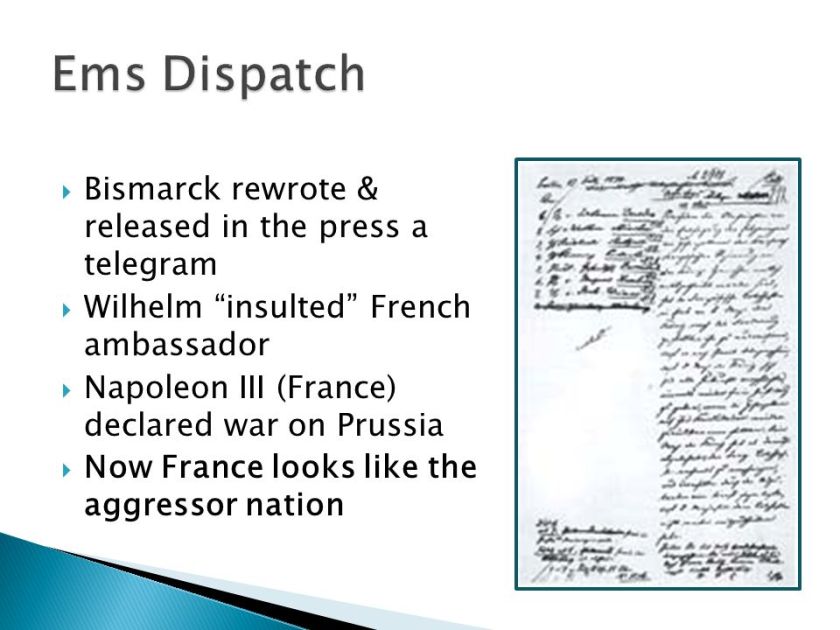
Interesting side-note about the Franco-Prussian War is that it was said that the German Chancellor Otto von Bismarck manipulated the situation to cause the war by dispatching the Ems Telegram on July 14th of 1870, inciting the Second French Empire to declare war on the Kingdom of Prussia on July 19th of 1870.
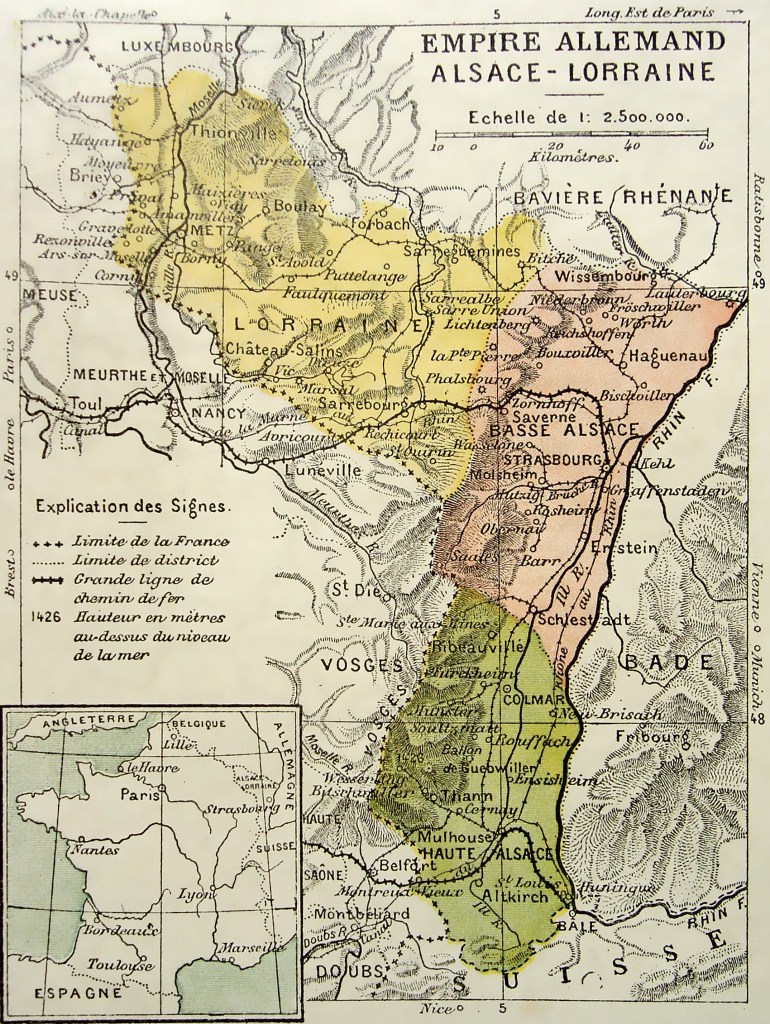
Bismarck also annexed Alsace-Lorraine on the border with Germany, which was part of France, as a result of the Franco-Prussian War of 1870 – 1871.
We are told that France’s determination to regain Alsace-Lorraine, and fear of another Franco-German war, as well as British apprehension about the balance-of-power, became factors in the causes of World War I.
At any rate, Clara Barton returned to the United States determined to start the Red Cross in America.
She had connections in upstate New York, and the American Red Cross was established on May 21st of 1881 in Dansville, New York, and the first local chapter was at the English Evangelical Lutheran Church of Dansville.
Other names involved in the establishment of the American Red Cross included Senator Omar D. Conger, who had a home in Dansville where its founders met…
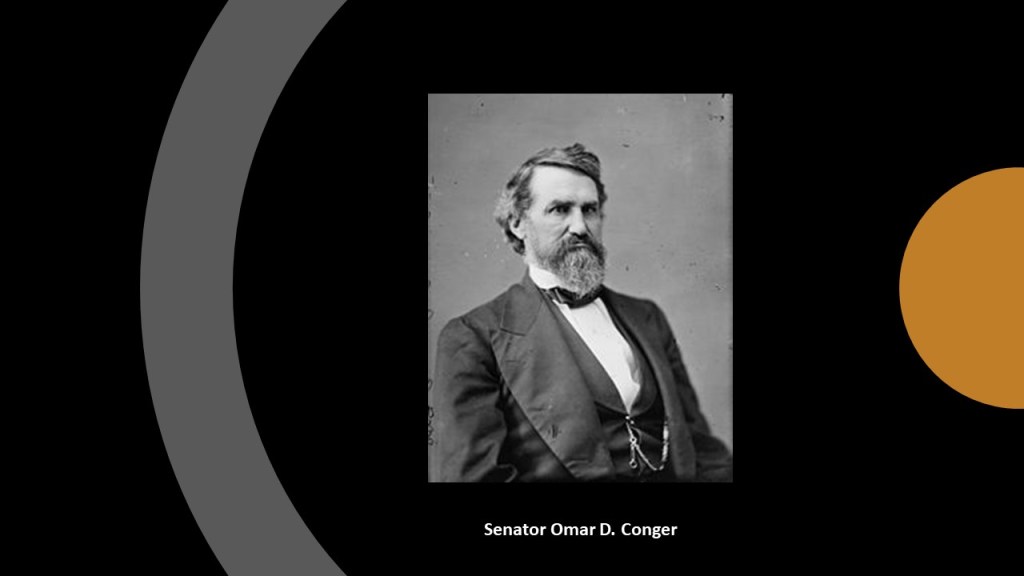
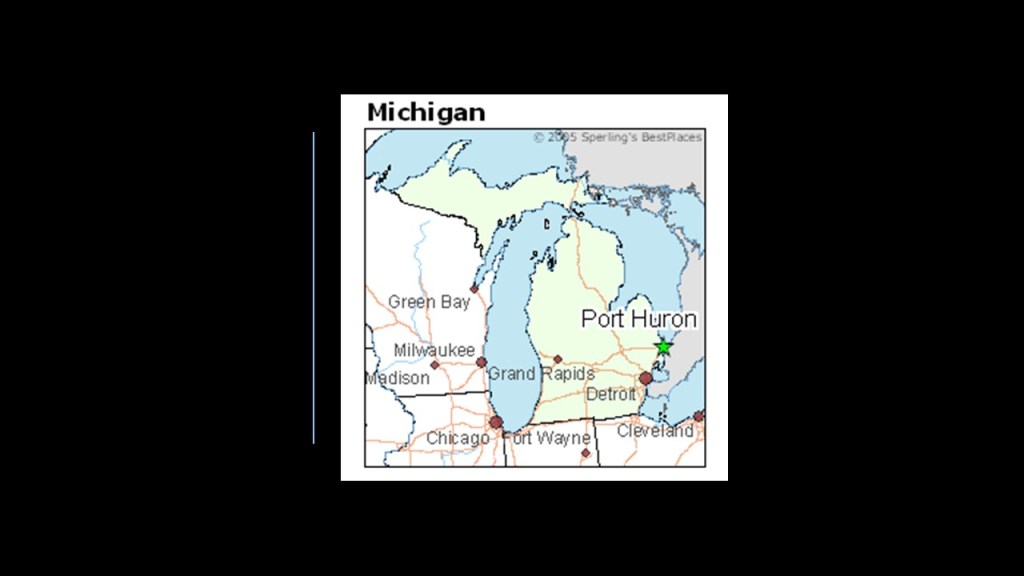
….even though he was one of the Senator’s for Michigan and had lived and worked in Port Huron, in Michigan’s region known as “The Thumb.”
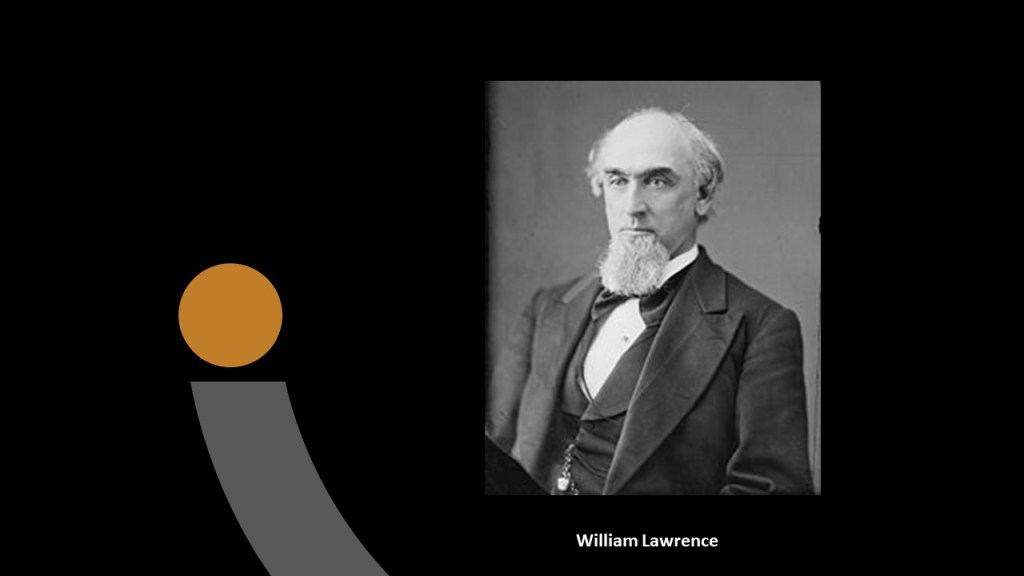
Ohio Representative William Lawrence was also involved, who was noted for attempting to impeach President Andrew Johnson in 1868 and for his role in creating the Department of Justice in 1870.
John D. Rockefeller was amongst several that donated to create a national headquarters near the White House in Washington, DC, said to have been built between 1915 and 1917.
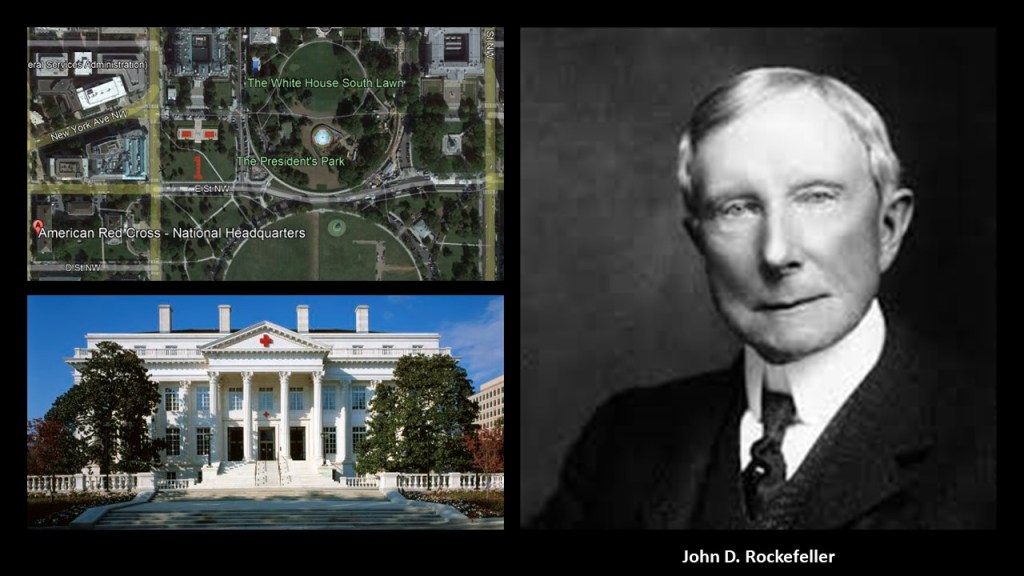
When I found this photo of John D. Rockefeller, I found this excerpt on a website called “Scientific Dictatorship…”
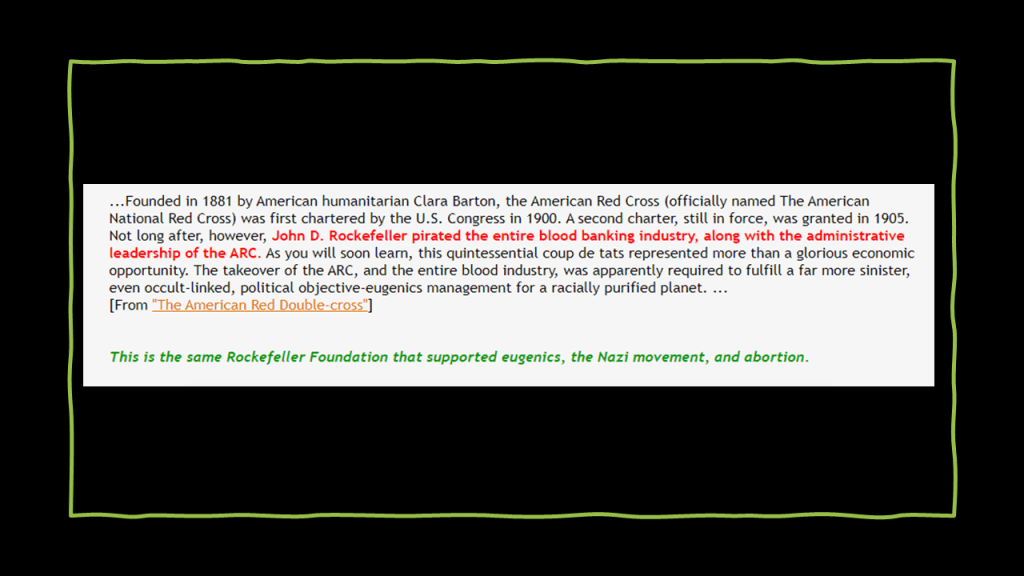
…and the article it was from called “The American Red Double Cross”can’t be found.
Moving right along…nothing to see here, right? Yeah, right!
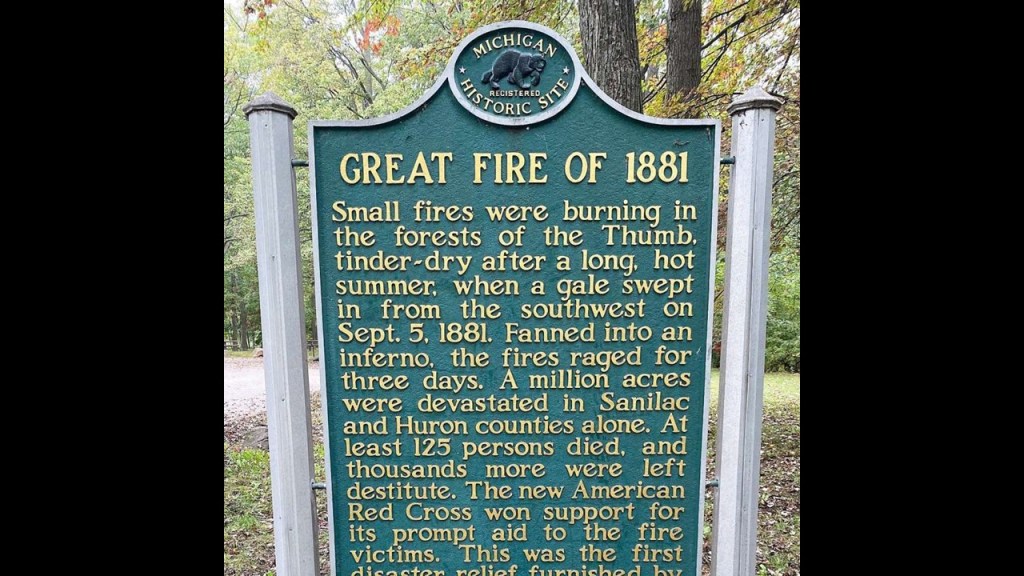
The first official disaster relief operation of the American Red Cross was responding to the Michigan Thumb Fire, which started on September 5th of 1881,with hurricane-force winds and hot and dry conditions this was less than four months after the establishment of the American Red Cross with the participation of the Michigan Senator Omar D. Conger who had lived and worked in Port Huron in the “The Thumb” as mentioned previously.
As a matter of fact, around 10-years earlier,there was a fire called the Port Huron Fire on October 8th of 1871, which burned a total of 1.2-million-acres, of Michigan’s Thumb region.
This was the exact same day as the Great Chicago Fire and the Peshtigo Fire in Wisconsin, as well as two other fires in Michigan – in Manistee and Holland.
All coincidences?
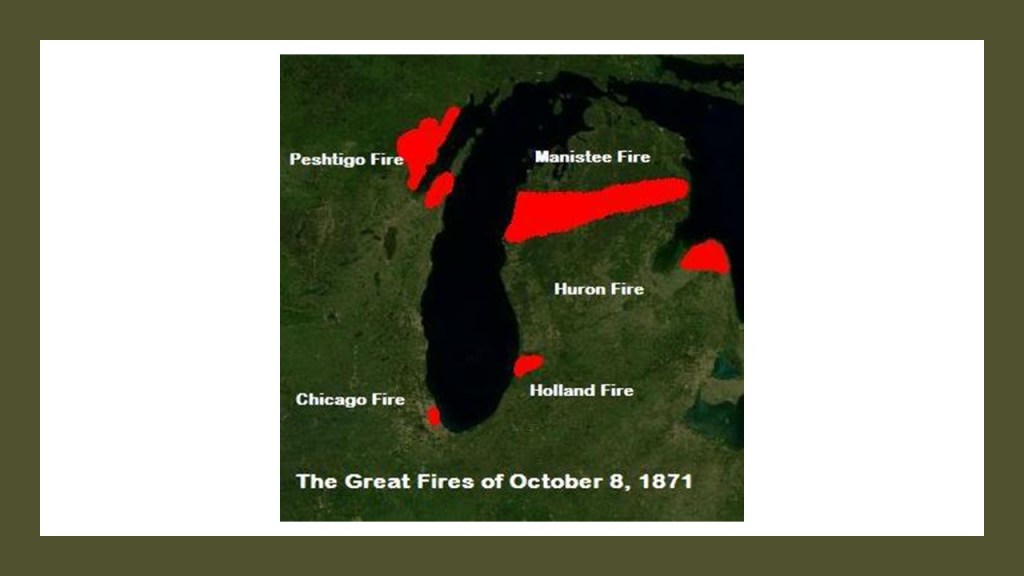
Interesting to note the following descriptions that accompanied the 1881 Michigan Thumb Fire.
Soot and ash from the fire caused sunlight to be obscured in places on the U. S. East Coast and in New England, the sky had a yellow appearance, and which caused a strange luminosity in and on buildings and vegetation, and Tuesday, September 6th of 1881, became known as “Yellow Tuesday” because of this unsettling event.
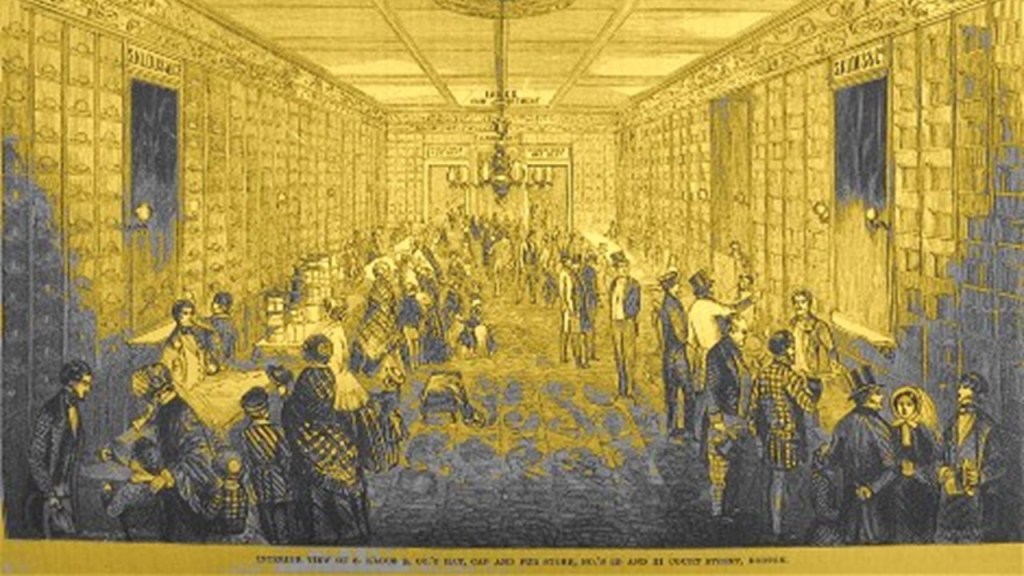
Early false flags?

Problem – Reaction – Solution?

Did they actually create the disasters, and then provide the response to the disasters?

Let’s take a close look at the next major disaster the American Red Cross responded to in this light, which was the Johnstown Flood in Pennsylvania that took place on May 31st of 1889.
The Johnstown Flood was caused by the catastrophic failure of the South Fork Dam.
The South Fork Dam was said to have been an earthwork built between 1838 and 1853 as part of a canal system as a reservoir for a canal basin in Johnstown by the Commonwealth of Pennsylvania.
But then after spending 15-years building the dam, it was abandoned by the Commonwealth, and sold to the Pennsylvania Railroad, who turned around and sold it to private interests.

In 1881, speculators had bought the abandoned reservoir and built a clubhouse called the South Fork Fishing and Hunting Club and cottages, turning it into an exlusive retreat for 61 steel and coal financiers from Pittsburgh, including Andrew Carnegie, Andrew Mellon, Philander Knox, John Leishman, Henry Clay Frick and Daniel Johnson Morrell.
The South Fork Fishing and Hunting Club was a Pennsylvania Corporation and owned the South Fork Dam.

What we are told was that the dam failed after after days of unusually heavy rain, and 14.3-million-tons of water from Lake Conemaugh, which devastated the South Fork Valley, including Johnstown which was 12-miles downstream from the dam, killing an estimated 2,209 people and causing $17-million in damages in 1889, which be $490-million in 2020.
Wow, look at all the electric poles and wires in this photo of the aftermath of the flood in Johnstown!

Though the were years of claims and litigation, the elite and wealthy members of the South Fork Fishing and Hunting Club were never found liable for damages.
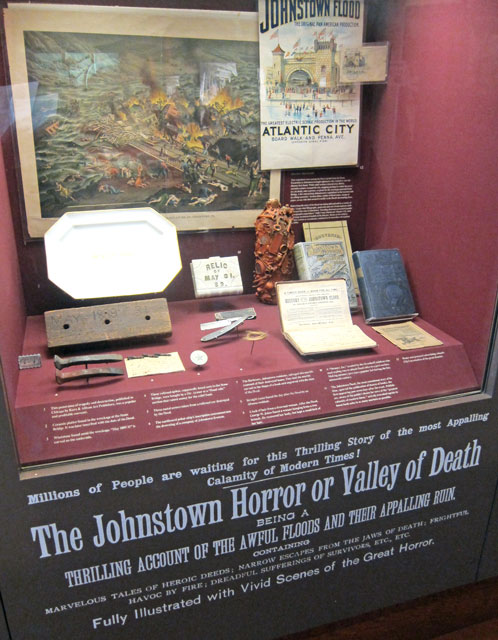
In 1904, the South Fork Fishing and Hunting Club corporation was disbanded and assets sold at a public auction by the sheriff, and there were permanent exhibits in many places, like Atlantic City, depicting the horrors of the Johnstown Flood experience for public consumption.
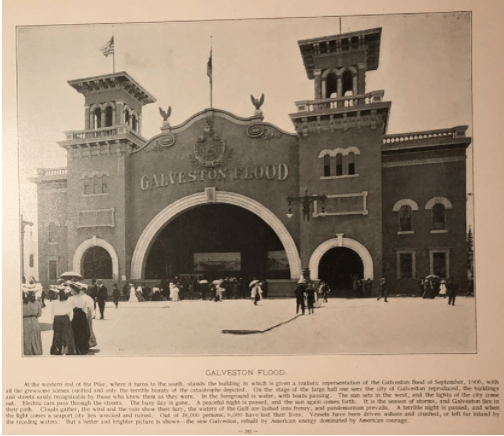
Along with exhibits depicting the Johnstown Flood, exhibits about the Galveston Flood were also to be found, like this one at the 1904, St. Louis World’s Fair , said to have resulted from a Hurricane on September 8th of 1900 in our historical narrative, and which has been described as the deadliest natural disaster in United States history.
Clara Barton was forced out as President of the American Red Cross in 1904.
Mabel Thorp Boardman stepped into the leadership role, and we are told worked with senior government officials; military officers; financiers; and social workers.
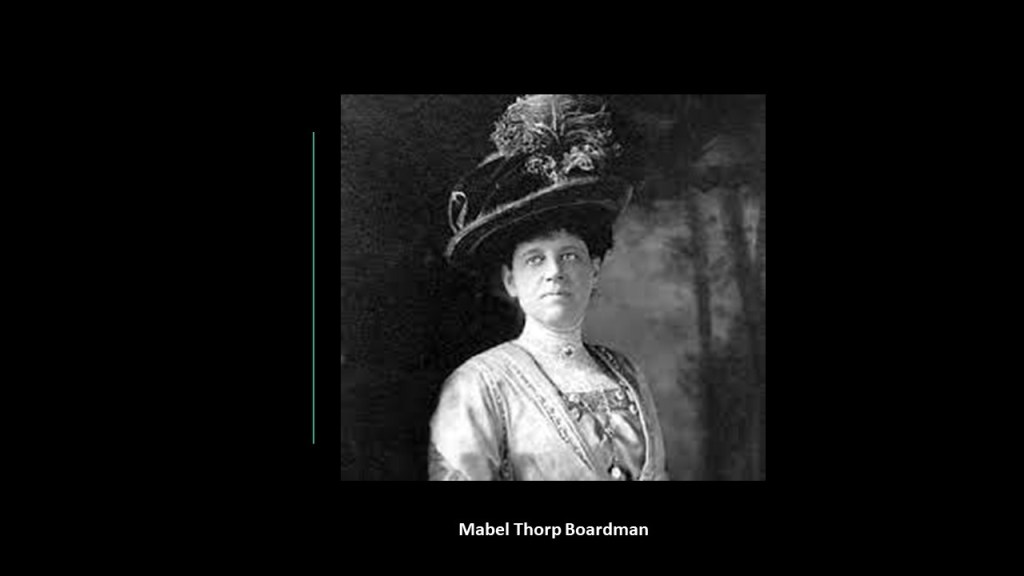
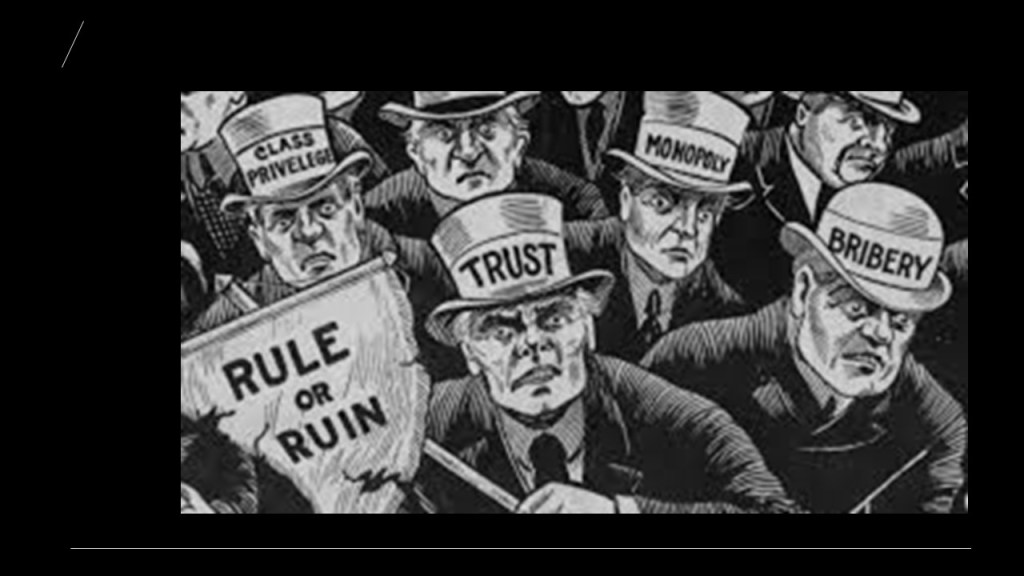
Professional social workers made the organization a model of Progressive Era scientific reform, which was described as a period of widespread social activism and political reform from the 1890s to the end of World War I in 1918.
The movement had the stated objectives of addressing social problems created by industrialization; urbanization; immigration; and political corruption.
It was the time of anti-trust laws, women’s suffrage, and during which time the U. S. Food and Drug Administration came into existence in 1906.
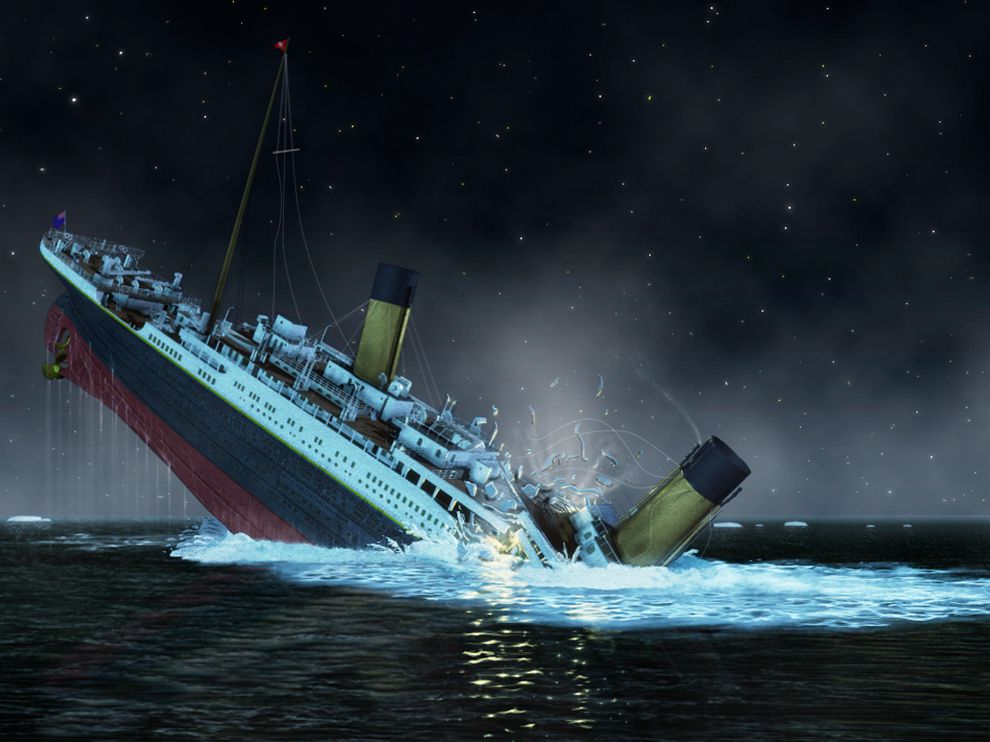
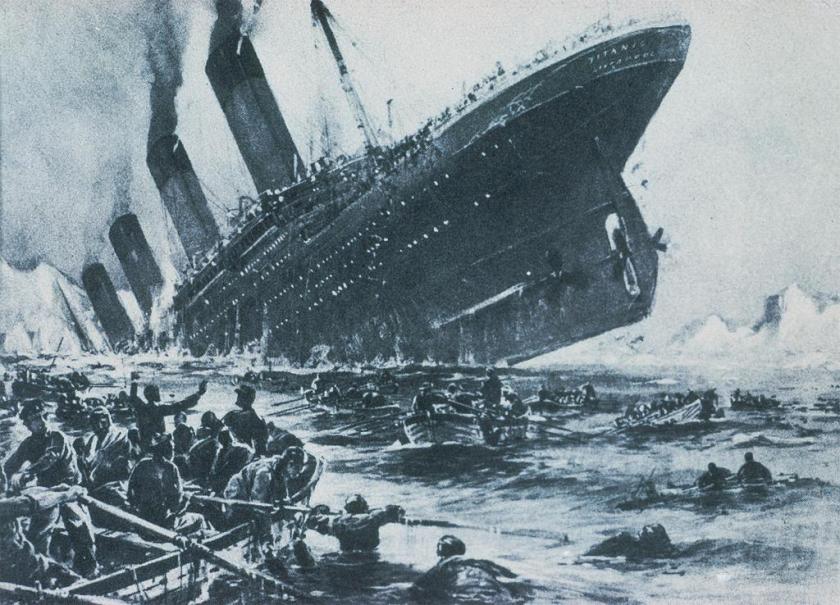
It was also the period of time during which the RMS Titanic sank, and for which the New York chapter of the American Red Cross, along with the Charity Organization Society, gave money to survivors and dependents of those who died after, we are told, the Titanic sank as a result of striking an iceberg on April 15th of 1912.
It was also the time period when a meeting took place at Jekyll Island off the coast of the State of Georgia to lay the foundations of the Federal Reserve, between November 20th and November 30th, in 1910.

Then the Titanic sank in 1912.
Prominent people opposed to the creation of the Federal Reserve were on board, including John Jacob Astor IV, Benjamin Guggenheim, and Isidor Strauss.
Then on December 23rd, 1913, the Federal Reserve Act Passed Congress, signed into law by Woodrow Wilson.
It created and established the Federal Reserve System, and created the authority to issue Federal Reserve Notes (commonly known as the US dollar) as legal tender.

When I looked at the names of past Chairpersons of the Board of Governors of the Red Cross, one name really jumped out at me, and that was E. Roland Harriman, who occupied that leadership position from 1950 to 1973.
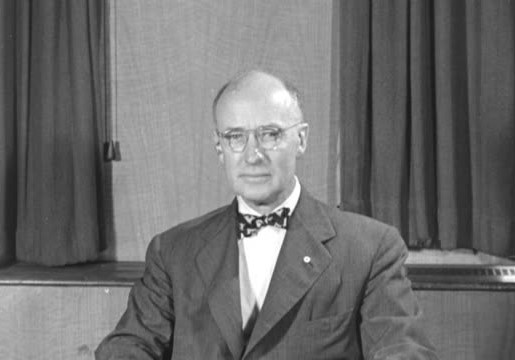
It jumped out at me because when I was doing research on the life of George Peabody, I encountered the merger of the Brown Brothers & Company with the Harriman Brothers & Company to become the “Brown Brothers Harriman & Company,” one of the oldest and largest private investment banks in the United States.
Founding partners of the “Brown Brothers Harriman & Company” included W. Averill Harriman, the son of railroad baron E. H. Harriman, and Secretary of Commerce under President Harry S. Truman, and brother of E. Roland Harriman.

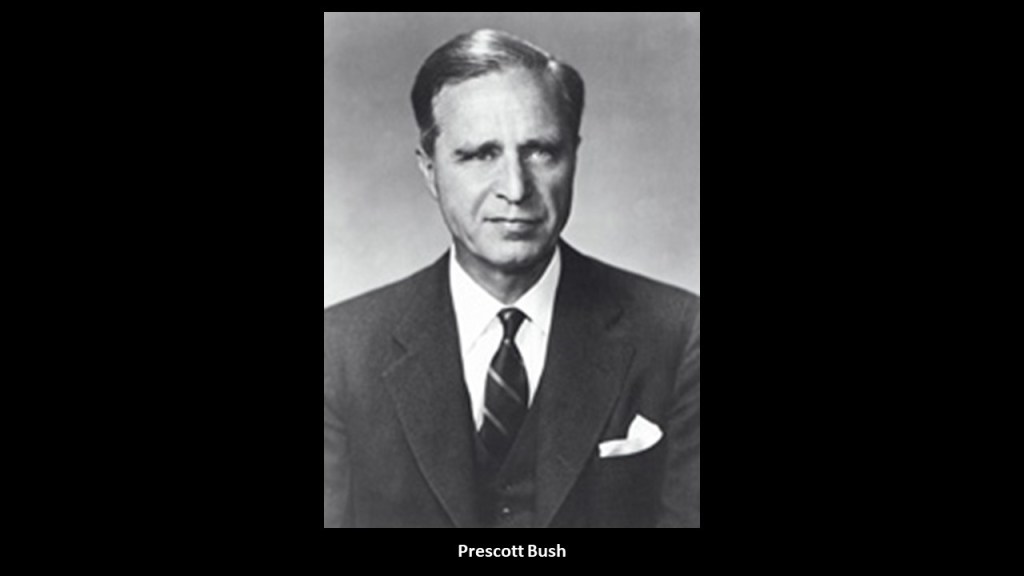
…and Prescott Bush, American banker and politican, and the father of President George H. W. Bush.
Roland, or “Bunny” as he was nicknamed, attended Yale University, where he was a member of the “Skull and Bones” Society with his friend and classmate… Prescott Bush.
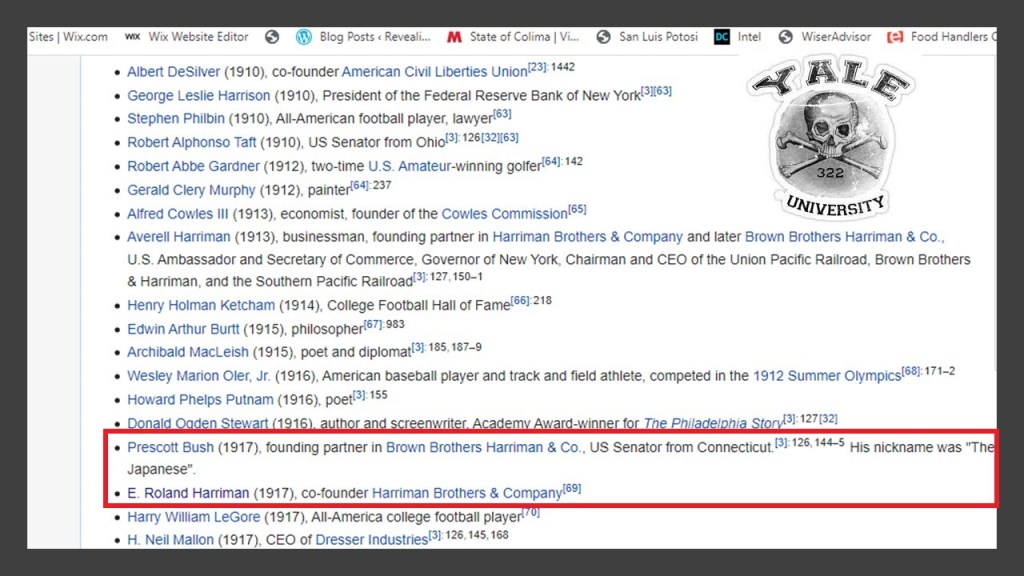
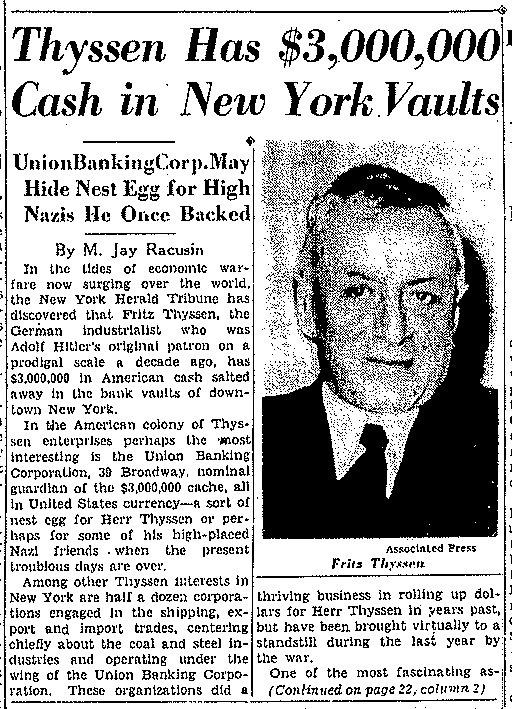
Also along with Prescott Bush, Bunny Harriman was one of the seven directors of the Union Banking Corporation, which financed Fritz Thyssen, a donor to the Nazi Party, and whose assets were seized by the United State government during World War II under the “Trading with the Enemy Act.”
Hmmm, wonder what that was really all about!
Brings to mind the Red Cross-marked boxes of cash that made the rounds on social media a couple of years ago that I happened to see.
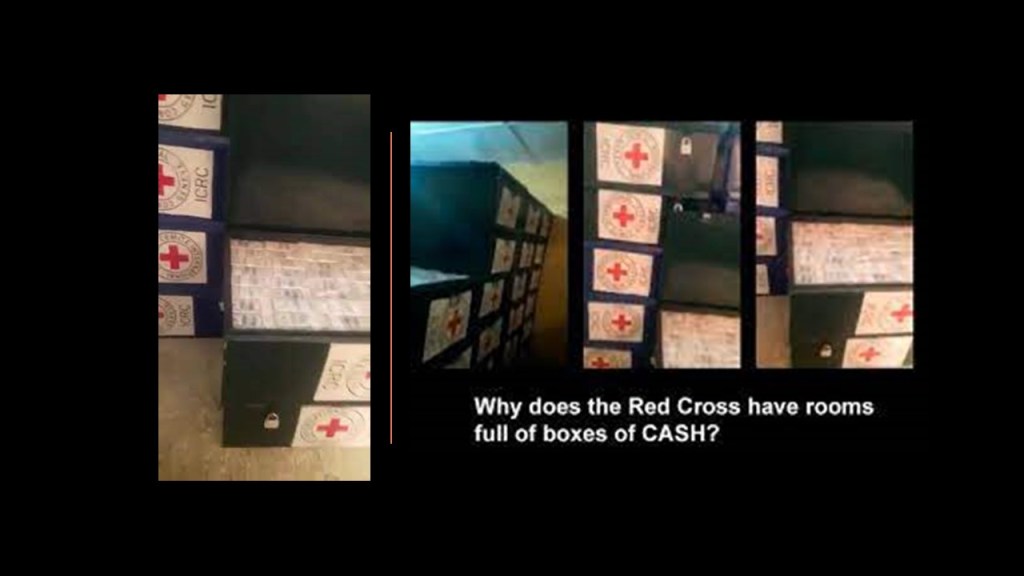
I am really getting the impression that the Red Cross doesn’t operate as advertised and is, among other things, a really sophisticated money-laundering scheme, only it didn’t start out as dirty money but as charitable donations!
I am sure there is a lot more I can dig up about the Red Cross, but this is more than enough to give you the idea that something ain’t right!


 Revealing What Has Been Hidden in Front of Our Eyes